


Abstract
The rapid emergence of antimicrobial resistance (AMR) is a major challenge to sustainable poultry production, food safety, and public health. It reduces the effectiveness of conventional antibiotics and highlights the need for alternative approaches to bacterial disease control. Bacteriophage therapy has re-emerged as a promising biological approach because of its high specificity, self-amplifying nature, and ability to target multidrug-resistant bacterial pathogens. Phages may also cause less disruption of beneficial intestinal microbiota than broad-spectrum antibiotics, although this effect depends on the phage, target bacterium, treatment conditions, and host context. This review synthesizes current knowledge on bacteriophage biology, mechanisms of action, and therapeutic applications against major poultry pathogens, including Salmonella enterica subsp. enterica, avian pathogenic Escherichia coli (APEC), Campylobacter spp., and Clostridium perfringens. It also examines the challenges associated with commercial implementation. Unlike previous reviews that have mainly focused on pathogen control, this review links bacteriophage therapy with antimicrobial stewardship and the One Health framework to provide a broader perspective on its role in sustainable poultry production. Evidence from experimental, field, and food-chain studies shows that phage therapy can reduce bacterial colonization, biofilm formation, pathogen shedding, and food contamination; and may contribute to antimicrobial stewardship. Recent advances in phage cocktails, genomics-guided phage selection, precision diagnostics, and formulation technologies have further increased their therapeutic potential. However, narrow host range, bacterial resistance, formulation stability, large-scale production, and differences in regulatory requirements continue to limit widespread commercial adoption. Overall, bacteriophage therapy is a promising approach for controlling bacterial diseases in poultry. It may contribute to more targeted antimicrobial use and improved food safety when integrated with other disease-control measures. Although direct reductions in antibiotic use require validation under commercial production conditions.
1. Introduction
Sustainable poultry production plays a critical role in attaining global food security through the provision of affordable, high-quality animal protein to a growing human population [1,2]. However, the poultry industry is increasingly threatened by antimicrobial-resistant (AMR) bacterial pathogens that compromise animal health, production efficiency, food safety, and public health [3,4,5,6]. Among the most important bacterial pathogens are Salmonella enterica subsp. enterica, avian pathogenic Escherichia coli (APEC), Campylobacter jejuni, and Mycoplasma gallisepticum, which cause substantial economic losses while serving as important sources of foodborne and zoonotic infections [7,8,9,10]. Non-typhoidal salmonellosis alone is estimated to affect approximately 93 million people and cause nearly 155,000 deaths annually worldwide [11]. The burden of these pathogens is evidently high in low- and middle-income countries, where expanding poultry production, inadequate biosecurity, limited diagnostic capacity, and inappropriate antimicrobial use accelerate the emergence and dissemination of AMR [12,13]. For decades, antibiotics have been the cornerstone of bacterial disease control in poultry production. However, the increasing prevalence of multidrug-resistant pathogens has substantially reduced their effectiveness [14,15]. Resistant Salmonella and Escherichia coli strains increasingly harbor resistance to critically important antimicrobials, including fluoroquinolones and colistin, thereby limiting treatment options and increasing the risk of zoonotic transmission [16]. Furthermore, excessive antimicrobial use disrupts the intestinal microbiota, promotes horizontal transfer of resistance genes, contaminates the environment with antimicrobial residues, and undermines antimicrobial stewardship efforts [17]. These challenges have intensified the search for sustainable alternatives capable of controlling bacterial pathogens while reducing dependence on conventional antibiotics.
Bacteriophage (phage) therapy has emerged as one of the most promising biological alternatives owing to advances in genomics, molecular biology, and phage engineering [18,19]. Bacteriophages are viruses that specifically infect bacteria and possess several characteristics that distinguish them from conventional antimicrobials. Their host specificity enables selective elimination of pathogenic bacteria and may reduce disruption of beneficial intestinal microbiota compared with broad-spectrum antibiotics. The extent of this effect depends on the nature of the phage, target bacterium, treatment conditions, and host context. Lytic phages can self-amplify at infection sites, disrupt bacterial biofilms, and effectively target multidrug-resistant bacteria [20,21]. Consequently, phage therapy is increasingly being investigated for controlling bacterial infections throughout the poultry production continuum, including on-farm disease management, food safety interventions, and antimicrobial stewardship [22,23]. Although several reviews have examined bacteriophage therapy in poultry, most have focused primarily on pathogen-specific efficacy, delivery approaches, or the potential of phages as antibiotic alternatives [14,24,25,26]. Previous reviews have addressed the general use of bacteriophages for poultry health and production, their successes and challenges in the poultry industry, and their application against enteric bacterial infections [24,25,26]. In contrast, earlier reviews have primarily focused on bacteriophage biology, mechanisms of action, or specific applications in poultry, with limited integration of antimicrobial stewardship, food safety, One Health, and practical implementation. The present review integrates these perspectives by evaluating bacteriophage biology, mechanisms of action, applications against major poultry pathogens, and the biological, technological, regulatory, and economic factors that influence their safe, scalable, and sustainable use in poultry production.
2. Literature Search and Review Methodology
This article is a narrative review of the current literature on bacteriophage therapy in poultry production. Literature searches were conducted by PAI, DEK, API, VO, and SOO using Scopus, Web of Science, and Google Scholar on 13 June 2026. Publications from January 2000 to 13 June 2026 were considered. The search used combinations of keywords related to bacteriophages, phage therapy, poultry production, chicken, bacterial pathogens, antimicrobial resistance, antimicrobial stewardship, food safety, and One Health. Additional terms related to major poultry pathogens, including Salmonella, Escherichia coli, Campylobacter, and Clostridium perfringens, were also considered. Articles were considered eligible when they were peer-reviewed publications addressing bacteriophage biology or mechanisms, phage-based control of bacterial pathogens relevant to poultry, therapeutic or preventive applications in poultry, food-safety applications, antimicrobial stewardship, or related One Health implications. Original research and relevant review articles were considered to provide both primary evidence and broader scientific context. Article selection was based on relevance to the objectives and scope of the review. Reference lists of key articles and reviews were also screened to identify additional relevant publications, and citation tracking was used where appropriate to identify related studies. Because the review was restricted to English-language publications, relevant evidence published in other languages may have been missed, introducing a potential language bias. As this was a narrative review, no formal systematic screening or risk-of-bias assessment was performed. Reference lists of key articles and reviews were examined for contextual purposes; however, citation tracking was not performed systematically.
3. Biology of Bacteriophages
Bacteriophages have considerable structural and genetic diversity, contributing to their ecological survival and therapeutic potential. They are among the most abundant biological entities on Earth, with an estimated 1031 particles distributed across soil, aquatic environments, animals, and food production systems [27]. Their close evolutionary ties to bacterial hosts allow phages to control microbial communities, affect bacterial evolution, and influence ecosystem dynamics [22]. Bacteriophages are composed of a nucleic acid genome in a protein capsid and frequently utilize tail structures that aid bacterial recognition and delivery of the genome. Even though phages show strong morphological diversity, tailed dsDNA phages are considered the main group used therapeutically due to their genetic stability, strong lytic activity, and wide distribution [28,29]. Historically, tailed phages were commonly grouped into the morphology-based families Myoviridae, Siphoviridae, and Podoviridae according to tail structure. Myoviruses were characterized by contractile tails, siphoviruses by long flexible non-contractile tails, and podoviruses by short non-contractile tails. These groupings are now regarded as historical morphology-based classifications, as comparative genomic analyses have shown that morphology does not necessarily reflect evolutionary relationships. Current phage taxonomy increasingly relies on genomic and phylogenetic relationships, including the class Caudoviricetes recognized by the International Committee on Taxonomy of Viruses (ICTV) [30]. This shift provides a more appropriate framework for understanding phage taxonomy and evolutionary relationships and supports the use of comparative genomics in the discovery and characterization of therapeutic phages [31]. Tail fibres and receptor-binding proteins determine bacterial host recognition, adsorption efficiency, and host range, whereas capsid structure contributes to genome makeup, particle stability, and environmental persistence [32,33]. Therefore, electron microscopy and whole-genome sequencing are now routinely integrated to characterize therapeutic phages and predict their biological performance before veterinary applications. Bacteriophages occur in virtually all environments where bacteria are present, including soil, freshwater and marine ecosystems, wastewater, animal-associated microbiomes, and food-production environments [27,34]. These environments represent important reservoirs for the isolation of phages with diverse host ranges and biological characteristics. Phages can also be broadly categorized according to their genome type, morphology, and life cycle, including DNA and RNA phages, tailed and non-tailed phages, and lytic and lysogenic phages [35]. For therapeutic applications, obligately lytic phages are generally preferred because they directly lyse susceptible bacterial hosts without establishing lysogeny. Environmental and host-associated phage diversity provides an important resource for identifying phages with complementary host ranges and biological properties, which can be combined in phage cocktails to improve coverage of genetically diverse bacterial populations. At the same time, differences in bacterial receptors and phage–host interactions contribute to the narrow or variable host ranges observed among many phages, making host-range characterization an important step in therapeutic phage selection.
Phage genomes are equally diverse and may consist of DNA or RNA in either single- or double-stranded forms. Nevertheless, most therapeutic bacteriophages possess linear DSDNA genomes ranging from fewer than 20 kb to more than 300 kb in jumbo phages [36,37]. Their genomes exhibit a modular structure in which genes involved in DNA replication, nucleotide metabolism, structural protein synthesis, host recognition, genome packaging, and bacterial lysis are organized into discrete functional clusters [38]. This structure facilitates genetic recombination and evolutionary adaptation while preserving essential biological functions, thereby contributing to the emergence of novel phages with expanded host ranges and potentially enhanced antibacterial activity. Also, advances in high-throughput sequencing have transformed therapeutic phage development from morphology-based characterization to genome-informed selection. Furthermore, whole-genome sequencing is now routinely used to identify structural and lysis-associated genes, determine evolutionary relationships, and evaluate biosafety by screening for AMR genes, virulence determinants, integrases, recombinases, and lysogeny-associated genes [36,37]. This genome-guided approach minimizes the risk of horizontal gene transfer and has become an essential requirement for selecting phages suitable for therapeutic use and regulatory evaluation. Current strategies prioritize obligately lytic phages that lack AMR genes, virulence determinants, and lysogeny-associated elements. Also, phages exhibit rapid adsorption, short latent periods, high burst sizes, activity against target pathogens, and environmental stability under poultry production conditions [39,40]. This integrated evaluation of genomic safety and biological performance reflects the transition toward precision phage therapy. Studies of poultry-associated phages illustrate the value of this approach. Therapeutic phages targeting Salmonella enterica subsp. enterica, avian pathogenic Escherichia coli (APEC), and Campylobacter spp. have been reported to possess well-characterized dsDNA genomes and obligately lytic life cycles and lack genes associated with AMR, bacterial virulence, or lysogeny [41,42]. Some therapeutic phages demonstrate broader host ranges and strong activity against multiple bacterial isolates. For example, Campylobacter phages exhibit greater genomic diversity due to extensive recombination and phage–host co-evolution, presenting both challenges and opportunities for developing phages with improved host specificity and therapeutic efficacy. Collectively, advances in comparative genomics, whole-genome sequencing, and phage taxonomy have transformed bacteriophage development from a morphology-driven process into a genome-informed precision strategy. Recent therapeutic phage selection integrates structural characterization, genomic architecture, biosafety assessment, and evolutionary analysis to identify phages that are both biologically effective and genetically safe. These structural and genomic characteristics ultimately determine how phages establish productive infections within susceptible bacterial hosts through the lytic and lysogenic life cycles, which are discussed in the following section.
3.1. Lytic and Lysogenic Life Cycles
Bacteriophages are broadly classified into lytic (virulent) and lysogenic (temperate) phages according to their replication strategies (Figure 1). This distinction is fundamental because the phage life cycle determines both its ecological role and its suitability for therapeutic application. During the lytic cycle, phages initiate infection by binding to specific receptors on the bacterial surface through receptor-binding proteins (Figure 1). After successful attachment, the phage injects its genome into the bacterial cytoplasm, where host cellular machinery is redirected towards viral genome replication, synthesis of structural proteins, assembly of progeny virions, and ultimately bacterial lysis through the coordinated action of phage-encoded lytic proteins. The release of numerous progeny phages enables repeated rounds of infection, resulting in rapid amplification of antibacterial activity at the site of infection [25,27]. In contrast, lysogenic phages can establish a lysogenic cycle, in which the phage genome integrates into the bacterial chromosome or is maintained as an extrachromosomal element, forming a prophage that replicates alongside the bacterial genome without immediately killing the host cell [43,44]. This lysogenic state may persist for multiple bacterial generations until environmental or physiological signals (DNA damage, nutritional stress, or changes in bacterial population density), trigger prophage induction and re-entry into the lytic cycle. A study by Shang et al. [45] further demonstrated that quorum-sensing signals and other bacterial communication systems can influence the lysis–lysogeny decision, thereby enabling lysogenic phages to optimize their replication strategy depending on the host availability and environmental conditions. Although lysogeny contributes significantly to phage evolution and bacterial adaptation, lysogenic phages are generally considered unsuitable for therapeutic applications [46]. During lysogeny, prophages may facilitate horizontal gene transfer and lysogenic conversion, promoting the dissemination of AMR genes, virulence determinants, and other accessory genetic elements among bacterial populations. Consequently, modern phage therapy relies almost exclusively on obligately lytic phages that lack lysogeny-associated genes and exhibit strong bactericidal activity, thereby minimizing biosafety risks while maximizing therapeutic efficacy [47]. Although the lytic cycle determines bacterial killing, successful infection cannot occur unless phages first recognize and attach to susceptible bacterial hosts. Consequently, receptor-mediated host recognition represents the critical biological event that governs host specificity and therapeutic efficacy.
Figure 1.
Lytic and lysogenic life cycles of bacteriophages. GenAI assistance (OpenAI ChatGPT, GPT-5.6 Luna) was used in generating the figure. The figure was reviewed and edited by the authors for scientific accuracy, clarity, and consistency with the concepts discussed in this manuscript.
3.2. Host Recognition and Specificity
The therapeutic efficacy of bacteriophage therapy depends on the ability of phages to recognize and infect susceptible bacterial hosts. Unlike conventional antibiotics, which target conserved cellular processes across multiple bacterial species, phages initiate infection through highly specific interactions between phage-encoded receptor-binding proteins (RBPs) and complementary receptors on the bacterial surface. This molecular recognition event determines host range, adsorption efficiency, and ultimately therapeutic success [48,49]. Phage adsorption is a sequential process involving reversible attachment followed by irreversible binding. Initial interactions occur through contact between the phage and bacterial surface structures, allowing the phage to encounter suitable receptors. Irreversible adsorption is mediated by high-affinity binding between RBPs and specific bacterial receptors, triggering conformational changes within the phage tail that facilitate genome injection into the host cell [50,51]. In tailed bacteriophages of the class Caudoviricetes, these interactions are mediated primarily by tail fibres, tail spikes, and baseplate-associated proteins. Some phages also encode depolymerases and virion-associated lysins that degrade extracellular polysaccharides or disrupt the bacterial cell wall, improving access to target receptors before DNA injection [52]. The remarkable specificity of bacteriophages reflects the structural diversity of RBPs, which recognize a wide range of bacterial surface molecules, including lipopolysaccharides (LPS), capsular polysaccharides (CPS), lipooligosaccharides (LOS), outer membrane proteins, wall teichoic acids, pili, and flagella. Because these receptors vary among bacterial species and even among strains, most phages possess relatively narrow host ranges. Small structural changes within receptor-binding domains can substantially alter receptor affinity and host tropism, making RBPs the principal determinants of phage specificity [49,53]. Host recognition frequently involves more than one receptor. Many phages initially establish reversible interactions with a primary receptor before engaging a secondary receptor that triggers irreversible adsorption and genome injection. Consequently, receptor accessibility, density, spatial organization, and bacterial physiological state all influence infection efficiency, demonstrating that successful phage infection depends on dynamic phage–host interactions rather than receptor presence alone [53,54].
Studies involving poultry-associated pathogens illustrate the diversity of receptor-recognition strategies. S. enterica subsp. enterica phages commonly recognize lipopolysaccharide O-antigens through tail fibre proteins, whereas many Campylobacter jejuni phages are flagellotropic, initially attaching to rotating flagella before interacting with secondary receptors such as lipooligosaccharides [55,56]. In contrast, bacteriophages targeting avian pathogenic E. coli (APEC) recognize receptors including O-antigens, outer membrane proteins, capsules, or pili, depending on the phage. These diverse adsorption mechanisms largely determine host specificity and influence the selection of therapeutic phages for different poultry pathogens [48]. Receptor-mediated specificity provides one of the major advantages of bacteriophage therapy. This is achieved by enabling selective elimination of pathogenic bacteria while potentially causing less disruption to beneficial intestinal microbiota than broad-spectrum antibiotics [57,58]. This specificity may reduce disruption of the microbiota and could reduce some forms of selective pressure associated with broad-spectrum antimicrobial use. However, the same specificity may limit therapeutic efficacy because receptor variation among circulating bacterial strains can prevent infection by individual phages. Consequently, accurate pathogen identification and careful matching of therapeutic phages to target bacterial populations remain essential for successful application. Recent advances in structural biology, comparative genomics, and artificial intelligence are improving our understanding of receptor-binding proteins and their interactions with bacterial receptors. Computational protein modelling and AI-assisted prediction of receptor-binding domains are facilitating the rational design of engineered phages with expanded host ranges while maintaining therapeutic specificity. These developments represent important steps toward precision phage therapy capable of overcoming one of the principal biological limitations of conventional phage applications. Therefore, host recognition is a key step in bacteriophage therapy because it determines whether phages can successfully infect their bacterial hosts and influences therapeutic efficacy. Understanding these highly specific phage–host interactions also provide the basis for interpreting bacterial resistance, phage adaptation, and host-range evolution, which are discussed in the following section on phage–bacteria co-evolution.
3.3. Phage-Bacteria Co-Evolution
Bacteriophages and bacteria have coexisted for billions of years, resulting in one of the most dynamic evolutionary relationships in nature [59,60,61]. Their continuous interactions have generated a continuous evolutionary process in which bacterial populations develop mechanisms to evade phage infection, while phages acquire counteradaptations that restore infectivity [62]. Rather than being a limitation for phage therapy, co-evolution is increasingly recognized as one of its distinguishing biological characteristics. Therapeutic phages have the capacity to evolve alongside their bacterial targets, unlike conventional antibiotics whose chemical structures remain unchanged after administration [57]. The earliest stages of co-evolution involve modifications to bacterial surface structures to serve as phage receptors. Nevertheless, changes (mutations) in lipopolysaccharides, capsular polysaccharides, outer membrane proteins, pili, or flagella can reduce or completely prevent phage attachment [63]. In response, phages may accumulate mutations within receptor-binding proteins that restore receptor recognition or, in other instances, exploit alternative bacterial receptors. Consequently, receptor-mediated adaptation represents one of the principal drivers of host-range diversification and phage evolution. These changes illustrate that host specificity is not a fixed biological characteristic, but a dynamic characteristic shaped by continuous evolutionary interactions between phages and their bacterial hosts [64]. Beyond receptor modification, bacteria possess multiple intracellular defense systems that reduce phage replication after genome entry [65]. These include restriction–modification systems, CRISPR-Cas adaptive immunity, and abortive infection systems among others that collectively recognize and eliminate invading phage genomes. Comparative genomic analyses have revealed that bacterial genomes encode several defense mechanisms acting simultaneously, providing layered protection against diverse phage populations [66]. In turn, phages have evolved counter-defence strategies, including anti-CRISPR proteins, DNA modification systems, and mechanisms that evade restriction enzymes, thereby enabling successful replication despite bacterial immunity [67]. This continual evolution of defensive and counter-defensive traits has generated extensive genetic diversity within bacterial and phage populations thus representing a major drive for microbial evolution [68]. Co-evolution is relevant in poultry production as bacterial pathogens such as S. enterica, C. jejuni, and APEC exhibit substantial genetic diversity across farms, production systems, and geographical regions. Environmental conditions, antimicrobial exposure, and bacterial population dynamics further influence the rate at which phage–host interactions evolve. Consequently, therapeutic phages selected against one bacterial population may display reduced infectivity against genetically divergent field isolates, emphasizing the importance of continuous surveillance and periodic updating of phage collections [69]. At the same time, naturally evolving phage populations provide opportunities to isolate new variants capable of infecting previously resistant bacterial strains, supporting the long-term sustainability of phage therapy [70]. Recent advances in comparative genomics and metagenomic sequencing have greatly improved understanding of phage–host co-evolution. Genome sequencing now enables simultaneous analysis of bacterial defense systems and phage counter-adaptation genes, allowing prediction of evolutionary compatibility before therapeutic application. Longitudinal genomic studies further demonstrate that phage populations can rapidly diversify during experimental evolution, often acquiring mutations within receptor-binding proteins and structural genes that enhance infectivity against resistant bacterial hosts [71]. Although co-evolution offers important therapeutic advantages, it also presents practical challenges for commercial implementation. Continuous bacterial evolution may reduce the effectiveness of individual phages over time, requiring periodic reformulation of phage preparations and ongoing monitoring of circulating bacterial strains. At the same time, phage evolution may broaden host range, improve infectivity, and restore antibacterial activity against newly emerged bacterial variants. Understanding these evolutionary processes is essential for developing durable phage therapies capable of maintaining efficacy under commercial poultry production conditions.
4. Direct Bacterial Killing Through the Lytic Process
The antibacterial activity of bacteriophage therapy is fundamentally driven by the lytic machinery encoded within lytic phages, which enables rapid and highly specific elimination of susceptible bacterial pathogens [72]. Unlike conventional antibiotics that inhibit bacterial growth by targeting cellular processes, lytic bacteriophages actively replicate within bacterial cells before inducing irreversible cell lysis and release infectious progeny capable of initiating successive rounds of infection [73]. Therefore, bacteriophage therapy represents a self-amplifying antimicrobial strategy in which antibacterial activity can increase in the presence of susceptible bacterial populations rather than declining after administration [25,74]. The efficiency of bacterial killing depends on the coordinated action of phage-encoded lytic proteins expressed during the late stage of infection [26]. Following successful receptor-mediated adsorption and intracellular replication, newly synthesized phage particles accumulate within the bacterial cytoplasm until activation of the lysis programme. Rather than occurring randomly, bacterial lysis is a genetically regulated process that supports efficient phage replication by balancing intracellular phage replication with timely release of progeny virions [75]. This coordination is achieved through the activities of holins, endolysins, and spanins in Gram-negative bacteria, to lyse the bacterial envelope and ensure efficient release of infectious particles [76]. The bactericidal activity of lytic phages is influenced by several biological parameters, including adsorption rate and burst size. The adsorption rate describes how phages attach to susceptible bacterial cells, while the burst size is the number of virions released from one infected bacterium. These parameters can influence phage performance. The faster the amplification within inoculated bacterial populations, the faster the clearance of pathogens. These characteristics, however, are not independent, and evolutionary inconsistencies tend to exist for replication versus progeny generation. Thus, therapeutic phage selection increasingly emphasizes infection rate alongside host range, genomic safety, and environmental stability, not only lytic activity in vitro [77,78].
It is important to note that productive phage replication depends on the availability of susceptible bacterial hosts and, thus, phage populations increase during active infection and decrease by natural means once the number of bacteria is decreased [79]. This self-limiting behavior may reduce exposure to antimicrobial agents and limit disruption of surrounding microbial communities. This is one of the major differences between phages and antimicrobials. This biological self-regulation is relevant to antimicrobial stewardship as, unlike broad-spectrum antibiotics, phage replication depends largely on the presence of susceptible bacterial hosts [25]. Bacterial killing may also have effects beyond direct cell lysis [80]. Rapid removal of groups of bacteria may reduce pathogen transmission and the production of bacterial virulence factors in poultry production systems. Furthermore, phages replicate at the site of infection, enabling them to continuously infect newly exposed susceptible bacteria. This sustained replication can maintain antibacterial activity and may reduce the need for repeated administration of high antimicrobial doses. This is beneficial in intensive poultry production, where pathogens such as S. enterica subsp. enterica, APEC, and C. jejuni can spread rapidly through densely populated flocks. Experimental studies have shown that lytic phages can limit bacterial colonization, fecal shedding, and environmental contamination in poultry flocks. This may improve flock health and reduce the risk of foodborne transmission. However, several biological and environmental factors influence phage efficacy. These include the physiological condition and growth stage of the bacteria, receptor accessibility, phage dose, bacterial abundance, temperature, pH, and bacterial density [81,82]. In addition, heterogeneous bacterial populations in commercial poultry systems may vary in their susceptibility as differences in receptor expression and physiological state. These features explain why phage performance under controlled laboratory conditions may not always translate directly to commercial poultry production. This highlights the need to optimize phage formulation, dosing strategies, and delivery systems for commercial farms to maintain therapeutic effectiveness. Therefore, mechanistic understanding should be combined with practical considerations for successful implementation. The coordinated lytic machinery therefore represents the biological foundation of bacteriophage therapy. However, bacterial lysis is not mediated by a single protein but instead results from the highly orchestrated activities of specialized phage enzymes that act sequentially to dismantle the bacterial envelope. Among these, endolysins have attracted attention because their antibacterial activity can be exploited independently of whole phage particles, offering new opportunities for precision antimicrobial development against multidrug-resistant poultry pathogens. The structure, function, and therapeutic applications of these enzymes are discussed in the following section.
4.1. Endolysins: Phage-Derived Antibacterial Enzymes
Among the proteins encoded by bacteriophages, endolysins are promising alternatives to conventional antibiotics due to their potent bacteriolytic activity and potential for therapeutic engineering [83]. During the late stage of the lytic cycle, endolysins are synthesized within infected bacterial cells and subsequently released into the periplasm following membrane permeabilization by holins [84]. Their primary function is to hydrolyze the peptidoglycan layer, thereby weakening the bacterial cell wall and facilitating osmotic lysis, which enables efficient release of progeny phages [85]. Although endolysins are known as antimicrobial agents capable of eliminating bacterial [86,87], their antibacterial activity arises from their specific enzymatic degradation of peptidoglycan. Depending on their catalytic domain, endolysins cleave distinct chemical bonds within the peptidoglycan network through glycosidase, amidase, endopeptidase, or lytic transglycosylase activities [85]. This diversity of catalytic mechanisms enables different endolysins to target a wide range of bacterial species while maintaining high specificity for bacterial cell walls. Unlike conventional antibiotics, which inhibit bacterial growth through metabolic interference, endolysins induce rapid physical destruction of the cell wall, leading to bacterial death and potentially reducing the opportunity for resistance development [88,89]. Structurally, most endolysins exhibit a modular organization comprising one or more enzymatically active domains, particularly in phages infecting Gram-positive bacteria, as well as a cell wall-binding domain that directs the enzyme towards specific bacterial targets [86]. This modular structure provides flexibility for protein engineering because catalytic and binding domains can be exchanged or modified to improve antibacterial activity, host specificity, thermostability, and environmental stability [90,91,92]. Consequently, recombinant endolysins, chimeric lysins, and engineered artilysins have attracted increasing attention as next-generation precision antimicrobials capable of overcoming limitations associated with conventional antibiotics [80,87,93].
Despite their considerable therapeutic potential, the activity of endolysins differs between Gram-positive and Gram-negative bacteria. In Gram-positive organisms, externally applied endolysins access exposed peptidoglycan and therefore exhibit rapid bactericidal activity. On the other hand, the outer membrane of Gram-negative bacteria acts as a permeability barrier that limits enzyme access to the underlying peptidoglycan layer. To overcome this challenge, several engineering strategies have been developed including fusion of endolysins with outer membrane-permeabilizing peptides, incorporation of membrane-disrupting domains, and construction of artilysins that can cross the outer membrane before degrading peptidoglycan. These advances have substantially expanded the therapeutic applicability of endolysins against clinically important Gram-negative pathogens mostly affecting poultry production [89,91]. Experimental studies have demonstrated the translational potential of endolysins in poultry systems. The recombinant endolysin LysP6 exhibited potent bactericidal activity against multidrug-resistant Salmonella isolates and disrupted established biofilms [94]. Furthermore, LysP6 significantly reduced bacterial colonization and shedding in experimentally infected ducklings. These findings support its potential as an alternative to conventional antimicrobial therapy. Similarly, LySP2 effectively reduced bacterial burden and improved survival in chicks experimentally infected with Salmonella Pullorum [95]. These findings support the potential of engineered endolysins to provide effective in vivo protection against economically important poultry pathogens. Other investigations have identified naturally occurring endolysins from poultry-derived bacteriophages that display broad antibacterial activity against Salmonella Enteritidis, further supporting their applicability within poultry production systems [96]. Collectively, these findings demonstrate that endolysins possess both prophylactic and therapeutic potential for controlling bacterial infections while reducing dependence on conventional antibiotics.
Beyond their direct bactericidal activity, endolysins offer several practical advantages that support antimicrobial stewardship. Their highly specific mode of action may limit disruption of beneficial microbiota, while rapid bacterial killing may reduce opportunities for the spread of AMR [97]. Furthermore, because endolysins target highly conserved structural components of the bacterial cell wall rather than metabolic pathways, resistance appears to emerge less frequently than with conventional antibiotics. However, adaptive changes in cell wall composition and enzyme accessibility have been reported in some bacterial species. Consequently, continued surveillance and rational engineering remain important to preserve long-term efficacy [98]. The rapid expansion of protein engineering, synthetic biology, and structural bioinformatics has further accelerated endolysin development. Advances in computational protein modelling now permit rational optimization of catalytic efficiency, substrate specificity, thermal stability, and antimicrobial spectrum before experimental validation. Such approaches are facilitating the development of next-generation lysins tailored for veterinary and food production systems, including enzymes designed specifically to target multidrug-resistant poultry pathogens while potentially limiting disruption of commensal bacterial communities. These findings support the potential of endolysins as phage-derived antimicrobial agents. Overall, endolysins represent one of the most extensively investigated phage-derived antimicrobial molecules and exemplify how understanding phage biology can generate novel therapeutic tools beyond whole-phage therapy. Nevertheless, efficient bacterial lysis requires coordinated activity with additional membrane-disrupting proteins. Among these, holins function as the molecular regulators that determine the timing of lysis, while spanins complete disruption of the outer membrane in Gram-negative bacteria. These complementary lytic proteins are discussed in the following section.
4.2. Holins and Spanins: Coordinating Bacterial Membrane Disruption
While endolysins catalyze degradation of the bacterial peptidoglycan layer, efficient bacterial lysis requires coordinated disruption of the surrounding cellular membranes [90]. This process is orchestrated primarily by holins and spanins, two classes of phage-encoded lytic proteins that regulate membrane permeabilization and complete destruction of the bacterial envelope. Rather than functioning independently, holins, endolysins, and spanins constitute a highly coordinated lysis system that ensures maximal release of progeny phages while maintaining precise temporal control over bacterial destruction [90]. This coordinated activity distinguishes phage-mediated lysis from the mechanisms employed by conventional antibiotics and underpins the remarkable efficiency of bacteriophage replication [76,77]. Holins are small transmembrane proteins that accumulate within the bacterial cytoplasmic membrane throughout the intracellular phase of phage replication without causing immediate damage [99]. Holin molecules undergo rapid oligomerization to form large membrane pores or lesions that abruptly increase membrane permeability [100]. These pores permit endolysins, previously confined within the bacterial cytoplasm, to access the peptidoglycan layer where enzymatic degradation of the cell wall is initiated. Thus, holins function as the molecular “timers” of phage infection, by coordinating the onset of bacterial lysis with completion of phage assembly. This temporal regulation is essential as premature lysis would reduce progeny production, whereas delayed lysis would unnecessarily prolong the infection cycle and reduce phage fitness [77,101]. Holin-mediated timing also affects the overall antibacterial activity of therapeutic phages. The timing of pore formation directly affects the latent period, burst size, and rate of bacterial clearance, thereby determining how rapidly phage populations expand during infection [95,102,103]. Comparative studies have demonstrated that different phages encode structurally diverse holins with distinct pore-forming properties and lysis kinetics [104], reflecting evolutionary adaptation to specific bacterial hosts and environmental conditions. Moreover, some phages possess pinholins, which generate smaller membrane lesions that activate specialized signal–arrest–release (SAR) endolysins rather than allowing direct cytoplasmic release [105]. This diversity illustrates that phages have evolved multiple strategies for regulating bacterial lysis while maintaining high reproductive efficiency [76,106]. Although degradation of peptidoglycan is sufficient to lyse Gram-positive bacteria, complete destruction of Gram-negative bacteria requires disruption of the outer membrane, which remains intact after endolysin activity. This final stage of bacterial lysis is mediated by spanins, which are essential components of the phage lysis machinery [107]. Spanins connect the inner and outer membranes of the bacterium. After the peptidoglycan layer is broken down, they cause the two membranes to fuse. This weakens the outer membrane, causing the bacterial cell to burst and release the newly formed phages [53,76]. Without functional spanins, phage progeny remains trapped within partially lysed bacterial cells despite successful degradation of the cell wall, demonstrating that membrane fusion is an indispensable step in the lysis of Gram-negative bacteria [77,107]. Current evidence indicates that spanins exhibit substantial structural diversity while maintaining a conserved biological function. Two principal spanin architectures have been described: two-component spanins, comprising separate inner- and outer-membrane proteins linked within the periplasm, and unimolecular spanins, in which both membrane-anchoring domains are encoded within a single polypeptide [108]. Despite these structural differences, both systems facilitate membrane fusion after peptidoglycan degradation, ensuring efficient completion of bacterial lysis. Recognition of spanins as essential lysis proteins has expanded understanding of bacteriophage biology and highlighted why coordinated disruption of all components of the bacterial envelope is necessary for optimal antibacterial activity [109]. Beyond their biological role in phage replication, holins and spanins have attracted increasing interest as translational antimicrobial tools. Holins are being investigated as programmable membrane-disrupting proteins capable of enhancing intracellular delivery of antibacterial molecules, whereas engineered holin–endolysin systems have shown promise for improving recombinant protein production, vaccine development, and targeted bacterial killing [104,110]. Similarly, greater understanding of spanin-mediated membrane fusion is informing the design of novel phage-derived antibacterial platforms against multidrug-resistant Gram-negative pathogens. Although most therapeutic applications remain experimental, advances in protein engineering and synthetic biology continue to expand the translational potential of these membrane-active proteins beyond their natural role in phage biology [77]. In poultry, coordinated activity of holins, endolysins, and spanins on S. enterica subsp. enterica, APEC, and Campylobacter jejuni is relevant to Gram-negative pathogens, which have both inner and outer membranes. Efficient disruption of the peptidoglycan layer and outer membrane is therefore essential for complete lysis. Understanding the molecular regulation of these lytic proteins not only informs selection of highly effective therapeutic phages but also supports the development of engineered lytic enzymes tailored for controlling multidrug-resistant pathogens within poultry production systems. Collectively, holins and spanins function as indispensable regulators of bacterial membrane disruption, coordinating the timing and completion of phage-mediated lysis. Their complementary interactions with endolysins ensure efficient bacterial destruction while maximizing phage reproductive success. However, successful elimination of bacterial pathogens frequently requires overcoming additional extracellular barriers, including capsules and biofilms, which impede phage access to bacterial cells. These barriers are addressed by phage depolymerases, specialized enzymes that facilitate penetration of protective polysaccharide matrices and are discussed in the following section.
4.3. Phage Depolymerases: Overcoming Bacterial Capsules and Biofilms
Successful bacteriophage therapy depends not only on efficient intracellular bacterial killing but also on the ability of phages to access bacterial cells that are protected by extracellular polysaccharide barriers [111]. Many clinically important poultry pathogens produce capsules, lipopolysaccharides, or extracellular polymeric substances that restrict phage adsorption and limit the penetration of antimicrobial agents. To overcome these barriers, numerous bacteriophages encode depolymerases, specialized carbohydrate-degrading enzymes that hydrolyze structural polysaccharides surrounding bacterial cells. Unlike endolysins, which degrade the peptidoglycan layer after intracellular phage replication, depolymerases act extracellularly during the initial stages of infection by exposing bacterial receptors and facilitating phage attachment [112]. Depolymerases are typically associated with tail fibres, tail spikes, or baseplate proteins, positioning their catalytic domains at the interface between the phage particle and the bacterial surface [113]. Upon contact with susceptible bacteria, these enzymes selectively degrade capsular polysaccharides, exopolysaccharides, or O-antigen components of lipopolysaccharides, thereby removing physical barriers that impede receptor accessibility. This enzymatic activity enhances irreversible phage adsorption and increases infection efficiency, particularly against heavily encapsulated or mucoid bacterial strains that are otherwise difficult to infect. Because depolymerases exhibit high substrate specificity, they selectively target defined polysaccharide structures while preserving surrounding microbial communities, reinforcing the precision characteristic of bacteriophage therapy [112]. Beyond facilitating phage adsorption, depolymerases contribute directly to bacterial virulence attenuation. Bacterial capsules and extracellular polysaccharides protect pathogens from environmental stress, complement-mediated killing, phagocytosis, and antimicrobial exposure. Enzymatic degradation of these protective layers therefore exposes bacteria to both phage infection and host immune defenses. Studies have demonstrated that capsule removal reduces bacterial fitness, increases susceptibility to innate immune clearance, and enhances the activity of conventional antibiotics [114]. Consequently, depolymerases function as antivirulence enzymes in addition to facilitating phage infection, expanding their therapeutic value beyond simple receptor accessibility [115,116]. One of the most significant applications of depolymerases is their ability to disrupt bacterial biofilms. Biofilms comprise highly organized microbial communities embedded within an extracellular polymeric matrix composed primarily of polysaccharides, proteins, extracellular DNA, and lipids. This matrix restricts penetration of antibiotics and host immune cells while creating physiological heterogeneity that promotes bacterial persistence and antimicrobial tolerance. Depolymerases degrade key polysaccharide components of the extracellular matrix, reducing biofilm structural integrity and permitting deeper penetration of both phages and antimicrobial agents. Rather than directly killing bacteria, these enzymes destabilize the biofilm architecture, creating conditions that enhance subsequent bactericidal activity [115,117]. The contribution of depolymerases is particularly relevant for poultry production because several economically important pathogens, including S. enterica subsp. enterica, APEC, and Campylobacter jejuni, form biofilms on drinking systems, hatchery equipment, processing surfaces, and other environmental reservoirs. Biofilm formation promotes bacterial persistence, facilitates horizontal transmission within flocks, and reduces the effectiveness of routine sanitation procedures. Phage-derived depolymerases therefore offer an attractive strategy for disrupting these environmental reservoirs while simultaneously improving phage access to bacterial cells. Their combined activity may contribute to reduced pathogen colonization, decreased environmental contamination, and improved food safety throughout the poultry production chain [118,119,120].
Recent advances in structural biology and protein engineering have further expanded the therapeutic potential of depolymerases. Comparative genomic analyses have identified numerous depolymerase families with distinct substrate specificities, while advances in recombinant protein expression have enabled production of purified depolymerases independent of whole phage particles [121,122]. Protein engineering approaches such as domain swapping, directed evolution, and computational modelling are increasingly being used to improve enzyme stability [123]. These approaches may expand substrate recognition and enhance catalytic efficiency against clinically relevant bacterial pathogens. These developments support the emergence of depolymerases as independent antimicrobial agents capable of complementing both phage therapy and conventional antibiotic treatment [124]. Unlike directly bactericidal agents, depolymerases primarily modify bacterial surface structures and have shown a comparatively low propensity to select resistant variants in experimental studies [125]. As these enzymes primarily remove protective polysaccharide structures rather than directly interfering with essential bacterial processes, they may impose different selective pressures from conventional bactericidal antibiotics. This antivirulence approach may therefore have potential value in antimicrobial stewardship. Nevertheless, variations in capsule composition and extracellular polysaccharide structure among bacterial strains may influence depolymerase activity [126]. This highlights the importance of matching enzyme specificity to the target pathogen and continued surveillance of circulating bacterial populations. Building upon these extracellular activities, the following section examines how whole bacteriophages disrupt mature biofilms and interfere with bacterial communication systems to further improve antibacterial efficacy.
4.4. Biofilm Disruption and Interference with Bacterial Communication
Beyond extracellular matrix degradation, phages can influence biofilm development through replication within biofilm-associated bacteria and interactions with bacterial communication systems. Unlike most antibiotics, bacteriophages actively replicate within susceptible bacterial cells following penetration of the biofilm matrix [127]. Initial adsorption to bacteria at the biofilm surface is followed by intracellular replication and bacterial lysis, releasing progeny phages that can infect neighbouring susceptible cells. This sequential amplification may enable phages to progressively access deeper regions of biofilms during successive infection cycles, thereby sustaining antibacterial activity against susceptible biofilm-associated bacteria [128,129]. Thus, phage activity within biofilms is dynamic, as bacterial killing may increase as phage populations replicate within susceptible cells. Increasing evidence also indicates that bacteriophages can influence bacterial communication systems involved in biofilm development [130,131,132]. Quorum sensing (QS) is a density-dependent signalling process through which bacteria coordinate collective behaviours using diffusible signalling molecules [133]. It regulates processes including extracellular matrix production, motility, virulence factor expression, stress adaptation, and biofilm maturation. These physiological changes can influence bacterial susceptibility to phage infection by altering receptor availability, extracellular matrix composition, and metabolic activity [133]. The relationship between QS and phages is therefore bidirectional. Bacterial QS systems can modify the expression of phage receptors and consequently affect phage adsorption and infection efficiency. Conversely, some phages can respond to bacterial communication signals to regulate their own life cycles. For example, certain phages use peptide-mediated communication systems such as the arbitrium system to adjust the balance between lytic replication and lysogeny according to environmental conditions [134]. These interactions indicate that phage–host relationships extend beyond direct bacterial killing and involve communication networks that can influence infection dynamics and biofilm development. Experimental studies further indicate that combining phages with matrix-degrading enzymes or conventional antimicrobial agents can produce greater biofilm reduction than either intervention alone [135,136,137]. Such enhanced activity may result from complementary mechanisms, including improved access to biofilm-associated bacteria, sequential phage amplification, increased antimicrobial penetration, and elimination of physiologically diverse bacterial populations within mature biofilms [134]. These multimodal approaches are relevant to poultry production, where persistent biofilms in water distribution systems, hatchery facilities, transport equipment, and processing environments can contribute to pathogen persistence and transmission [129]. The potential benefits of phage-mediated biofilm control extend beyond direct bacterial reduction. By decreasing environmental pathogen reservoirs, phage treatment may help reduce transmission within poultry production systems, improve hygiene, and limit contamination of poultry products intended for human consumption [138]. The selective activity of phages may also help preserve beneficial microbial communities compared with broad-spectrum antimicrobials [139]. However, microbiota preservation depends on factors including phage specificity, target bacterium, dose, administration route, and host context. Phage-based biofilm control may therefore complement conventional disinfection and antimicrobial strategies while supporting antimicrobial stewardship and One Health objectives. Overall, bacteriophage activity within biofilms involves more than direct bacterial lysis. Phage replication, interactions with bacterial communication systems, and combination with complementary antimicrobial approaches may collectively improve control of biofilm-associated pathogens. These mechanisms are particularly relevant to poultry production, where biofilm-associated persistence can compromise pathogen control and food safety. Beyond their interactions with bacterial populations, bacteriophages may also influence host immune responses, an emerging area discussed in the following section.
4.5. Immune Modulation by Bacteriophage Therapy
Beyond their direct antibacterial activity, bacteriophages are increasingly recognized as biological agents capable of modulating host immune responses. Traditionally, phages were regarded as passive antibacterial viruses whose therapeutic effects resulted solely from bacterial lysis. However, recent evidence demonstrates that phages interact with both innate and adaptive immune systems, influencing inflammatory signalling, immune cell activation, and microbial homeostasis. Successful phage therapy may depend not only on bacterial elimination but also on the regulation of inflammatory responses and restoration of immune balance [140,141]. The immune consequences of bacteriophage therapy arise from both direct and indirect mechanisms. Indirectly, rapid reduction in bacterial populations decreases the release of bacterial toxins, pathogen-associated molecular patterns (PAMPs), and other inflammatory stimuli that drive excessive immune activation during infection. Consequently, successful phage therapy frequently results in reduced production of pro-inflammatory cytokines, diminished tissue damage, and accelerated resolution of inflammation [142]. Directly, phage particles themselves can interact with immune cells, including macrophages, dendritic cells, neutrophils, and epithelial cells, thereby influencing cytokine production, antigen presentation, and innate immune signalling. Rather than inducing generalized immunosuppression, these interactions may contribute to the restoration of immune homeostasis while preserving protective antimicrobial responses. The magnitude and direction of these effects may vary with phage characteristics, dose, route of administration, bacterial target, and host context [140,141]. Macrophages play a central role in coordinating phage-mediated immune modulation. Following bacterial clearance, reduced inflammatory stimulation limits excessive macrophage activation and decreases secretion of cytokines such as tumour necrosis factor-α (TNF-α), interleukin-1β (IL-1β), and interleukin-6 (IL-6), which are commonly associated with tissue injury during severe bacterial infections. Simultaneously, phage therapy has been associated with increased bacterial phagocytosis and improved clearance of cellular debris, thereby facilitating tissue repair and resolution of infection. These findings suggest that phages act synergistically with innate immune mechanisms rather than replacing them, supporting efficient pathogen elimination while limiting immunopathology [140,141]. A study in chickens demonstrated that intracellular bacteriophage DNA is detected through the cyclic GMP–AMP synthase–stimulator of interferon genes (cGAS–STING) signalling pathway, resulting in activation of innate immune responses [143]. Although phage DNA triggered cGAS–STING signalling, the downstream antiviral response was interrupted, preventing excessive immune activation while preserving antibacterial efficacy [144]. These findings indicate that bacteriophage exposure can interact with host signalling pathways in the specific experimental systems studied. However, the implications of these responses for the safety of phage therapy in poultry remain uncertain. Podlacha et al. [145] described how avian hosts recognize bacteriophages at the molecular level and highlighted differences between antiviral immunity and phage-associated immune responses in poultry. Evidence from experimental poultry studies further supports the immunomodulatory potential of bacteriophage therapy [146]. In poultry, experimental studies have reported associations between phage treatment and changes in selected immune-related outcomes, including cytokine concentrations, intestinal morphology, gut barrier parameters, and inflammatory responses [136,137,147]. These findings indicate that phage treatment may influence host responses during bacterial infection, but they do not establish immunomodulation as an independent mechanism of therapeutic efficacy.
These improvements are accompanied by reduced bacterial colonization and decreased pathological lesions, suggesting that modulation of host immunity contributes to therapeutic efficacy beyond direct bacterial killing [148]. Unlike broad-spectrum antibiotics, which frequently disrupt intestinal microbial communities, phages may have a more targeted effect on the gut microbiota because of their host specificity. However, the extent to which beneficial microbiota is preserved depends on the phage, bacterial target, dose, administration route, and host context [149,150,151]. An additional mechanism through which bacteriophages influence immunity is the maintenance of intestinal microbial homeostasis. The gut microbiota plays a pivotal role in regulating nutrient metabolism, epithelial integrity, immune tolerance, and resistance to pathogen colonization [150]. Because bacteriophages generally exhibit narrow host specificity, they selectively reduce target pathogens while sparing much of the commensal microbiota. Preservation of microbial diversity supports continued production of microbial metabolites, maintenance of epithelial barrier function, and balanced immune signalling, thereby reducing dysbiosis frequently associated with prolonged antibiotic administration. This microbiome-preserving characteristic represents one of the principal biological advantages of phage therapy within intensive poultry production systems, where intestinal health directly influences growth performance, feed efficiency, and disease resistance [140].
Evidence from non-poultry models provides additional mechanistic context but should not be directly extrapolated to poultry. For example, study by Weissfuss et al. [152] reported anti-phage antibody responses following repeated phage exposure in mice; the clinical relevance of these findings to poultry remains uncertain. Similarly, observations concerning cGAS–STING signalling and other immune pathways should be interpreted within the specific experimental system in which they were demonstrated.
Overall, the available evidence supports further investigation of host–phage interactions in poultry rather than definitive conclusions regarding immunomodulatory or safety effects. Species-specific studies examining immune responses, repeated exposure, pharmacological parameters, microbiome interactions, and clinical outcomes are required before broader immunological, or safety conclusions can be drawn. Future studies integrating immunology, microbiome analysis, and systems biology will therefore be essential for optimizing phage-based interventions while minimizing unintended host responses. Collectively, current evidence demonstrates that bacteriophage therapy exerts therapeutic effects through a combination of direct antibacterial activity and modulation of host immune responses. Rather than functioning solely as bacterial predators, phages influence immune homeostasis, intestinal microbial ecology, and inflammatory responses that accompany bacterial infections. These complementary mechanisms provide an important biological rationale for integrating phage therapy into sustainable poultry health programmes. Building upon these host–phage interactions, the following section examines how bacteriophages interact with conventional antibiotics and how these combinations may further improve bacterial control while supporting antimicrobial stewardship.
4.6. Phage–Antibiotic Interactions and Implications for Antimicrobial Stewardship
The continued emergence of antimicrobial-resistant bacterial pathogens has stimulated growing interest in combination strategies that integrate bacteriophages with conventional antibiotics [37,57]. Rather than functioning as mutually exclusive therapies, increasing evidence indicates that phages and antibiotics frequently exert complementary antibacterial activities [153]. Such activities may enhance bacterial clearance and could potentially reduce reliance on prolonged antibiotic administration, although antimicrobial-sparing effects require direct evaluation under commercial production conditions This interaction, commonly referred to as phage–antibiotic interaction or, where appropriate, phage–antibiotic synergy, has emerged as a promising strategy for improving therapeutic efficacy against multidrug-resistant bacterial infections affecting both human and veterinary medicine [154,155]. Phage–antibiotic interactions arise because phages and antibiotics target bacteria through fundamentally different mechanisms of action. Whereas antibiotics inhibit essential cellular processes such as protein synthesis, DNA replication, or cell wall biosynthesis, bacteriophages eliminate bacteria through intracellular replication followed by phage-mediated lysis. Simultaneous disruption of multiple bacterial targets reduces the probability that bacterial populations will survive treatment through a single resistance mechanism. Furthermore, bacterial adaptations that confer resistance to one antimicrobial agent may increase susceptibility to the other, creating evolutionary trade-offs that improve overall therapeutic effectiveness. Consequently, appropriately designed combination therapies may achieve greater bacterial killing than either intervention alone while lowering the selective pressure associated with high-dose antibiotic use [154,155]. The magnitude and direction of phage–antibiotic interactions depend on several biological factors, including antibiotic class, phage characteristics, bacterial physiology, treatment sequence, and dosing strategy. Synergistic effects are frequently observed when antibiotics administered at sub-inhibitory concentrations alter bacterial morphology or physiology in ways that facilitate phage replication. For example, filamentation induced by certain β-lactam antibiotics can increase intracellular space for phage assembly, resulting in larger burst sizes and enhanced bacterial killing. Conversely, antibiotics that rapidly inhibit bacterial metabolism may reduce phage replication by limiting the cellular machinery required for viral reproduction. These observations demonstrate that phage–antibiotic interactions are highly context dependent and require careful optimization rather than an assumption of universal synergy [154,155]. One of the most important consequences of combined therapy is its potential to suppress the emergence of AMR. During phage infection, bacterial mutations that reduce phage adsorption often involve alterations in surface structures such as lipopolysaccharides, capsules, or outer membrane proteins. While these modifications may confer phage resistance, they can simultaneously reduce bacterial virulence or restore susceptibility to antibiotics by increasing membrane permeability or disrupting resistance-associated pathways. Similarly, antibiotic-induced selective pressures may favour bacterial phenotypes that remain susceptible to phage infection. These reciprocal evolutionary trade-offs may reduce the likelihood of simultaneous resistance to both agents and could therefore contribute to longer-term treatment effectiveness [154].
Phage–antibiotic combinations also demonstrate considerable potential for controlling biofilm-associated infections. Mature biofilms impede penetration of antimicrobial agents and contain metabolically diverse bacterial populations that exhibit increased tolerance to antibiotics [156]. Bacteriophages overcome these barriers through sequential replication within biofilm-associated bacteria and by producing depolymerases and other enzymes that degrade extracellular polymeric substances, thereby increasing antibiotic penetration [157]. Consequently, combination therapy frequently achieves substantially greater biofilm disruption than either phages or antibiotics administered individually [158]. This complementary activity is relevant within poultry production systems, where persistent biofilms contribute to environmental contamination and recurrent flock infections [159,160]. Evidence from experimental poultry studies supports the translational potential of these interactions. Comparative investigations have shown that phage therapy achieves bacterial control comparable to conventional antibiotic treatment while producing fewer adverse effects on liver function, hematological parameters, and intestinal microbial homeostasis. Other studies have demonstrated that combined or sequential administration of phages and antibiotics reduces bacterial colonization, improves clinical recovery, and decreases inflammatory responses more effectively than antibiotic monotherapy. Collectively, these findings indicate that phage–antibiotic combinations may improve bacterial control. However, reductions in bacterial colonization or improvements in clinical outcomes should not be interpreted as direct evidence of reduced antibiotic use. Any antimicrobial-sparing effect should be considered a potential benefit requiring direct evaluation in commercial poultry studies that measure antibiotic consumption, treatment duration, disease outcomes, and production performance.
Despite these promising findings, several challenges remain before phage–antibiotic combinations can be implemented routinely. Therapeutic outcomes are influenced by phage–host compatibility, bacterial growth phase, antimicrobial concentration, timing of administration, and infection site. Moreover, standardized protocols for selecting compatible phage–antibiotic combinations remain limited, making comparison among studies difficult. Future research should therefore focus on optimizing treatment schedules, identifying predictive biomarkers of therapeutic success, and developing evidence-based guidelines for combination therapy within veterinary production systems. Integration of genomic surveillance, pharmacodynamic modelling, and precision livestock management may further enhance the effectiveness and consistency of phage–antibiotic interventions. Overall, phage–antibiotic interactions represent a potential strategy for improving bacterial disease control, although whether these combinations reduce antimicrobial use requires validation under commercial production conditions. Overall, phage–antibiotic interactions represent a promising strategy for improving bacterial disease control while reducing dependence on conventional antimicrobials. Rather than replacing antibiotics entirely, bacteriophages are increasingly viewed as complementary biological agents capable of enhancing antibacterial efficacy, restoring antibiotic susceptibility, disrupting persistent biofilms, and slowing the evolution of AMR. These characteristics closely align with the principles of antimicrobial stewardship and One Health by promoting more targeted, sustainable, and responsible antimicrobial use within poultry production systems. The mechanistic concepts discussed throughout this section provide the biological foundation for understanding how bacteriophage therapy can be translated into practical disease-control strategies against the major bacterial pathogens affecting commercial poultry production.
5. Applications of Bacteriophage Therapy Against Major Poultry Bacterial Pathogens
Bacteriophage therapy has been investigated against several major bacterial pathogens affecting poultry production, with varying levels of experimental validation and translational readiness. As summarized in Table 1, S. enterica has been investigated across multiple application settings, including laboratory studies, experimental poultry studies, commercial field applications, food-processing studies, and commercially available food-safety products. These studies therefore span several translational settings, rather than representing a single hierarchical evidence pathway. This progression reflects the advanced stage of phage development for salmonellosis control and food safety interventions. In contrast, research on avian pathogenic E. coli (APEC) has expanded rapidly in recent years, driven by the increasing prevalence of multidrug-resistant strains. Most studies have focused on genomically characterized lytic phages, rationally designed phage cocktails, biofilm inhibition, and improved oral delivery systems, although large-scale commercial validation remains limited. Similarly, phage therapy against Campylobacter spp. has demonstrated consistent reductions in intestinal colonization and carcass contamination, highlighting its potential as an effective pre-harvest intervention for reducing foodborne transmission. Collectively, the available evidence demonstrates that bacteriophage therapy has progressed from proof-of-concept laboratory studies towards practical applications across the poultry production continuum. However, the level of translational maturity differs considerably among pathogens, emphasizing the need for additional commercial field trials, standardized treatment protocols, and regulatory frameworks to facilitate wider implementation in poultry production systems. To facilitate interpretation of the evidence summarized in Table 1, we developed a review-specific five-level translational framework based on the study setting and degree of practical application reported in the literature. Level I represents in vitro laboratory evidence; Level II represents in vivo experimental studies; Level III represents field or commercial poultry studies conducted under production conditions; Level IV represents experimental post-harvest food-safety or food-processing applications; and Level V represents commercially available or market-implemented phage products. Studies were assigned to the highest stage directly supported by the reported study setting or application, rather than by the magnitude of the antibacterial effect. Thus, the translational stages describe the stage of evidence and practical application rather than efficacy alone.
Table 1.
Representative applications of bacteriophage therapy against major bacterial pathogens in poultry production and their translational application category.
Across the studies reviewed, the translational evidence shows a clear progression from laboratory proof-of-concept to controlled poultry experiments, commercial field studies, and post-harvest food-safety applications. However, this progression is not uniform across pathogens or intervention types. Laboratory studies frequently demonstrate strong lytic activity, whereas controlled poultry studies show that therapeutic outcomes depend on phage–host matching, dose, timing, administration route, and the physiological and environmental conditions of the host. Commercial field studies remain relatively limited, making it difficult to determine whether reductions observed under experimental conditions are durable and reproducible across different production systems. Similarly, post-harvest studies demonstrate potential for reducing bacterial contamination, but these findings do not necessarily establish effectiveness during routine commercial processing. Overall, the available evidence supports the biological feasibility of phage therapy but indicates that its commercial readiness depends on resolving questions of treatment durability, standardized dosing and delivery, resistance monitoring, manufacturing scalability, cost-effectiveness, and regulatory acceptance.
5.1. S. enterica Subsp. enterica
Salmonella enterica remains one of the most important bacterial pathogens affecting poultry production, based on its substantial veterinary, economic, and public health impacts. Poultry serves as the principal reservoir for major serovars, including S. enteritidis, S. typhimurium, S. kentucky, S. infantis, and S. gallinarum, which readily colonize the intestinal tract and are transmitted through faecal shedding, contaminated litter, feed, water, and processing environments. Persistent intestinal carriage facilitates flock transmission and carcass contamination during slaughter, making poultry meat and eggs major sources of human salmonellosis worldwide [69,171]. The increasing prevalence of multidrug-resistant (MDR) Salmonella further limits antibiotic efficacy and highlights the need for sustainable control strategies that improve poultry health while reducing foodborne transmission. Among bacterial pathogens affecting poultry, Salmonella has one of the strongest types of evidence supporting bacteriophage therapy. Experimental and commercial studies consistently demonstrate that oral administration of lytic phages reduces intestinal colonization, faecal shedding, systemic dissemination, and carcass contamination, thereby improving flock health and enhancing food safety [162,166,172,177,178,179,180]. Reductions in caecal bacterial loads also decrease environmental contamination and interrupt bird-to-bird transmission within poultry houses, contributing to improved disease control under commercial production conditions [171]. Recent advances have focused on developing phage cocktails to overcome the limited host range of individual phages and reduce the emergence of phage-resistant bacterial variants. Optimized cocktails have demonstrated broad lytic activity against diverse Salmonella serovars, including MDR and biofilm-forming isolates, while maintaining efficacy under gastrointestinal conditions relevant to poultry production [181,182,183]. Similarly, whole-genome sequencing of therapeutic phages consistently confirms the absence of AMR genes, virulence determinants, and lysogeny-associated genes, supporting their biosafety for veterinary applications [184,185]. Recent studies have also improved oral delivery through encapsulation technologies that protect phages from gastric inactivation and enhance antibacterial activity against S. enteritidis and S. typhimurium following administration in feed or drinking water [182,186,187]. Beyond disease treatment, bacteriophage therapy has become an important component of food safety interventions. Lytic phages reduce Salmonella contamination on poultry meat, disrupt biofilms on food-contact surfaces, and improve bacterial control during processing, supporting a farm-to-fork approach to reducing foodborne salmonellosis [183,188,189]. Several commercial phage products, including SalmoFresh™ and PhageGuard S™, have already been approved for food safety applications, illustrating the advanced stage of Salmonella phage technology compared with other poultry pathogens [189,190]. Despite these advances, several challenges remain before widespread therapeutic implementation can be achieved. The extensive genetic diversity of circulating Salmonella serovars necessitates continuous surveillance and periodic reformulation of phage cocktails to maintain therapeutic coverage. Furthermore, although laboratory and experimental poultry studies consistently demonstrate efficacy, relatively few long-term commercial field trials have evaluated performance under intensive production systems. Future research should therefore prioritize precision phage cocktail design, optimized delivery systems, large-scale commercial validation, and harmonized regulatory frameworks to facilitate routine integration of bacteriophage therapy into antimicrobial stewardship programmes for sustainable poultry production.
5.2. Avian Pathogenic E. coli (APEC)
Avian pathogenic Escherichia coli (APEC) is the causative agent of colibacillosis, one of the most economically important bacterial diseases affecting commercial poultry worldwide. The disease causes localized and systemic infections, including airsacculitis, pericarditis, perihepatitis, salpingitis, cellulitis, and septicaemia, leading to increased mortality, carcass condemnation, poor production performance, and substantial economic losses [191,192,193,194,195]. Young birds are susceptible, and several APEC lineages share virulence determinants with human extraintestinal pathogenic E. coli (ExPEC), highlighting the importance of APEC control within a One Health framework [196,197,198]. Bacteriophage therapy has emerged as a promising alternative for controlling APEC infections, particularly against multidrug-resistant strains. Experimental studies consistently demonstrate that lytic phages reduce bacterial loads, mortality, and biofilm formation while preserving the normal intestinal microbiota [199]. Recent advances have focused on phage cocktails, which broaden bacterial coverage and improve therapeutic efficacy against genetically diverse APEC isolates. For example, a four-phage cocktail developed against high-risk APEC isolates from commercial broiler farms exhibited broad lytic activity, demonstrating the value of combining genomic characterization of bacterial hosts with rational phage selection [164]. Likewise, newly characterized phages, including CABI-SEA2301 and AG-MK-2022 bacteriophages, displayed broad host ranges, strong activity against multidrug-resistant APEC, and favourable stability in broiler and laying chickens, through oral administration (feed or drinking water) [163]. Whole-genome sequencing studies have strengthened the safety profile of therapeutic APEC phages by confirming the absence of AMR virulence factors, and lysogeny-associated genes [200,201,202]. In addition, several lytic phages effectively inhibited APEC biofilms, thereby reducing bacterial persistence in poultry houses and processing environments [110]. Beyond disease treatment, phages have also reduced pathogenic E. coli contamination in poultry products, demonstrating their potential as integrated farm-to-fork interventions that enhance both poultry health and food safety [203]. Despite these promising findings, routine implementation of phage therapy for colibacillosis remains limited by the genetic diversity of APEC populations, the potential emergence of phage-resistant variants, and the limited number of commercial field trials. Future research should therefore focus on precision phage cocktail design, optimization of oral delivery systems, large-scale commercial validation, and harmonized regulatory frameworks to facilitate integration of phage therapy into antimicrobial stewardship programmes for sustainable poultry production.
5.3. Campylobacter spp.
Campylobacter jejuni and Campylobacter coli are among the leading causes of bacterial gastroenteritis worldwide, with poultry serving as the principal reservoir for human infection through contaminated meat and cross-contamination during processing [204]. High intestinal colonization of broilers, coupled with increasing AMR, has intensified efforts to develop effective pre-harvest interventions that reduce bacterial carriage before slaughter [135]. Bacteriophage therapy has consistently demonstrated the ability to reduce intestinal Campylobacter colonization under both experimental and commercial poultry conditions. Early challenge studies showed that oral phage administration decreased cecal Campylobacter counts by approximately 2 log10 CFU/g, with reductions maintained throughout the production cycle [205,206]. Similar reductions were reported following pre-slaughter phage administration, where two sequential doses of field-isolated lytic phages lowered cecal colonization by up to 2 log10 CFU/g in broilers experimentally infected with antimicrobial-resistant C. jejuni [170]. More recently, commercial field studies demonstrated that phage cocktails reduced intestinal Campylobacter loads by approximately 1–3 log10 CFU/g under farm conditions, confirming that phage therapy remains effective outside controlled laboratory environments [135,207]. Although these reductions may appear modest, modelling studies indicate that a 2–3 log10 decrease in cecal colonization can substantially reduce carcass contamination and the subsequent risk of human campylobacteriosis [205,207]. Research trends have moved towards improving the durability of phage therapy through rational cocktail design and genomic characterization. Combining genetically distinct group II and group III phages broadens host range, enhances bacterial killing, and reduces the likelihood of resistance development compared with single-phage therapy [135]. Similarly, newly characterized lytic phages such as CC_R7 possess broad host ranges, remain stable across poultry-relevant temperature and pH conditions, lack detectable virulence genes, inhibit biofilm formation, and reduce Campylobacter contamination on chicken meat, supporting their application across both farm and processing environments [208]. These characteristics strengthen the potential of phage therapy as an integrated intervention extending from live-bird production to post-harvest food safety. Despite these encouraging outcomes, several challenges continue to limit widespread implementation. Therapeutic efficacy depends on the compatibility between phages and circulating bacterial strains, appropriate timing of administration, and sufficient phage replication within the intestinal tract. Although phage cocktails reduce the emergence of resistant variants, bacterial resistance and transient reductions in colonization remain important considerations under commercial production systems [135,170]. Nevertheless, the accumulated evidence indicates that bacteriophage therapy is one of the most promising pre-harvest strategies for controlling Campylobacter in poultry. By lowering intestinal colonization before slaughter, phages reduce carcass contamination, strengthen antimicrobial stewardship, and contribute to improved food safety within a One Health framework [209].
6. Challenges and Limitations of Bacteriophage Therapy
Despite the promising potential of bacteriophage therapy for controlling bacterial diseases in poultry, several biological, technological, regulatory, and economic challenges continue to hinder translation into routine commercial use. One of the major unresolved issues is whether the antibacterial effects observed in experimental studies can be maintained under the variable conditions of commercial poultry production. Phage efficacy depends strongly on compatibility between the selected phage and bacterial population. This makes the rapid pathogen characterization and appropriate phage–host matching important for treatment success. Bacterial resistance remains another concern as resistance can develop through changes in phage receptors, restriction–modification systems, CRISPR-Cas mechanisms, and other bacterial defence systems. Although phage cocktails and sequential administration may reduce this risk, frequency, persistence, and practical consequences of phage resistance under commercial conditions remain insufficiently characterized. Also, treatment durability remains unresolved. Short-term reductions in bacterial colonization or shedding do not necessarily indicate sustained control throughout a production cycle. Phage persistence and therapeutic effectiveness may vary with dose, timing, route of administration, bacterial density, environmental conditions, and the physiological state of the host. Similarly, delivery systems must ensure that sufficient viable phage reaches the intended site of action. Oral administration may require protection against gastrointestinal inactivation, whereas delivery through feed, drinking water, aerosolization, or other routes may introduce different formulation and dosing challenges. At the production level, the feasibility of manufacturing phage preparations at commercial scale remains insufficiently established. Standardized production, purification, quality control, genomic safety assessment, formulation stability, storage, and batch-to-batch consistency must be achieved without making treatment expensive. Cost-effectiveness therefore requires evaluation under commercial conditions, including the costs of phage production, formulation, delivery, pathogen surveillance, resistance monitoring, and periodic cocktail reformulation. Also, regulatory requirements remain variable across jurisdictions, particularly regarding phage characterization, manufacturing quality, environmental release, food-producing animal use, and product updates. These unresolved issues indicate that biological efficacy alone is insufficient to establish commercial readiness and that coordinated field, technological, economic, and regulatory evidence is still required.
7. Antimicrobial Stewardship and One Health Implications
The rise in AMR has increased interest in bacteriophages as potential components of antimicrobial stewardship in poultry production. Their specificity may allow targeted control of bacterial pathogens while causing less disruption to non-target bacterial communities than broad-spectrum antibiotics, although the extent of microbiota preservation depends on the phage, bacterial target, dose, route of administration, and host context [24,26,209]. Importantly, evidence of reduced bacterial burden should not automatically be interpreted as evidence of reduced antimicrobial use. Laboratory and controlled in vivo studies demonstrate antibacterial activity, but they do not necessarily show that antibiotic administration can be reduced under commercial production conditions. Evidence for antimicrobial-sparing effects therefore requires field studies that directly measure antibiotic use, treatment duration, disease outcomes, and production performance. The most realistic role of phage therapy may therefore be as a complementary intervention within integrated disease-control programmes rather than as a universal replacement for antibiotics. Phages may be particularly useful when combined with vaccination, biosecurity, surveillance, optimized nutrition, probiotics, or appropriately selected antimicrobials. This integrated approach is consistent with One Health as successful bacterial control could contribute to animal health and food safety while supporting more targeted antimicrobial use. However, the magnitude of these benefits remains dependent on the effectiveness, durability, and scalability of phage interventions under commercial conditions.
8. Future Directions
Future research should focus on resolving the translational uncertainties that currently limit the commercial implementation of bacteriophage therapy. More large-scale, standardized commercial poultry trials are needed to determine the durability and reproducibility of phage effects across production systems. These studies should use clearly defined phage doses, administration routes, treatment schedules, outcome measures, and follow-up periods to enable meaningful comparison among interventions. Phage–host matching and resistance monitoring should be incorporated into commercial trials to determine the frequency, persistence, and biological consequences of phage-resistant variants. Genetically diverse cocktails, sequential administration, and periodic phage reformulation should be evaluated as strategies for maintaining therapeutic coverage against evolving bacterial populations. Formulation and delivery systems also require further optimization. Comparative studies should evaluate feed, drinking water, aerosol, and other practical routes in terms of phage stability, dose delivery, distribution to the target site, treatment consistency, and production feasibility. Encapsulation technologies should be assessed for laboratory stability, shelf life, manufacturing scalability, and cost under commercial conditions. Genomic screening should be a standardized component of therapeutic phage selection. Candidate phages should be evaluated for host range, lytic activity, stability, and resistance profiles while excluding lysogeny-associated genes, AMR determinants, virulence-associated genes, and other undesirable genetic features. Also, economic and regulatory evaluation is essential for successful commercialization. Cost-effectiveness studies should compare phage-based interventions with conventional antimicrobial and other disease-control strategies under realistic production conditions. Finally, regulatory frameworks should address phage characterization, manufacturing quality, product consistency, safety, environmental considerations, and procedures for updating phage preparations as bacterial populations change. Collectively, these priorities will help determine whether bacteriophage therapy can progress from experimental efficacy to reliable, scalable, and economically feasible application in commercial poultry production.
9. Conclusions
Bacteriophage therapy shows considerable potential as a targeted biological approach for controlling bacterial pathogens across the poultry production chain. The evidence reviewed spans laboratory studies, controlled poultry experiments, selected commercial field applications, and post-harvest food-safety interventions. However, the strength of evidence varies substantially among pathogens and applications, and efficacy demonstrated under experimental conditions does not necessarily translate into durable and consistent effectiveness under commercial production conditions. The key challenge is therefore to determine when and under what conditions phages can provide consistent bacterial control at commercial scale. Phage–host matching, treatment durability, dose and delivery, resistance monitoring, formulation stability, manufacturing scalability, cost-effectiveness, and regulatory requirements remain important unresolved issues. Addressing these gaps through standardized commercial field trials and integrated technological, economic, and regulatory evaluation will be essential to determine the practical role of bacteriophage therapy in sustainable poultry production. Overall, bacteriophages are best considered complementary precision biological tools rather than universal substitutes for antibiotics. Their greatest value may be achieved when they are integrated with established disease-control measures, including biosecurity, vaccination, surveillance, appropriate nutrition, and responsible antimicrobial use. Continued collaboration among researchers, veterinarians, industry stakeholders, and regulatory authorities will be essential to translate promising experimental findings into safe, scalable, economically feasible, and evidence-based applications that support sustainable poultry production and antimicrobial stewardship.
Author Contributions
P.A.I.: Conceptualization, Literature search, Article Selection, Validation, Data curation, Writing—original draft, Writing—review and editing and Visualization. D.E.K.: Literature search, Article Selection, Data curation, Validation, Writing—review & editing. A.P.I.: Literature search; Article Selection, Validation, Writing and review. O.V.O.: Literature search; Article Selection, Validation, Writing—review & editing. S.O.O.: Literature search; Article Selection, Writing—review & editing, Validation. N.P.K.-K.: Writing—review & editing. L.M.: Validation; writing—review & Editing. All authors have read and agreed to the published version of the manuscript.
Funding
This research received no external funding.
Institutional Review Board Statement
Not applicable.
Informed Consent Statement
Not applicable.
Data Availability Statement
No new data were created or analyzed in this study. Data sharing is not applicable to this article.
Acknowledgments
During the preparation of this manuscript, the author used OpenAI ChatGPT (GPT-5.6 Luna) to assist in the creation of Figure 1. The authors reviewed and edited the generated output and take full responsibility for the content of this publication.
Conflicts of Interest
The authors declare no conflicts of interest.
Abbreviations
The following abbreviations are used in this manuscript:
| Abbreviation | Definition |
| AMR | Antimicrobial resistance |
| APEC | Avian pathogenic Escherichia coli |
| AI | Artificial intelligence |
| CRISPR | Clustered Regularly Interspaced Short Palindromic Repeats |
| Cas | CRISPR-associated proteins |
| CFU | Colony-forming units |
| CPS | Capsular polysaccharides |
| dsDNA | Double-stranded DNA |
| DNA | Deoxyribonucleic acid |
| EPS | Extracellular polymeric substances |
| ESBL | Extended-spectrum β-lactamase |
| ICTV | International Committee on Taxonomy of Viruses |
| IL-6 | Interleukin-6 |
| LOS | Lipooligosaccharides |
| LPS | Lipopolysaccharides |
| MDR | Multidrug-resistant |
| PAMPs | Pathogen-associated molecular patterns |
| PCR | Polymerase chain reaction |
| RBP | Receptor-binding protein |
| RBPs | Receptor-binding proteins |
| RNA | Ribonucleic acid |
| SAR | Signal–arrest–release |
| WHO | World Health Organization |
| WOAH | World Organisation for Animal Health (formerly OIE) |
References
- Vlaicu, P.A.; Untea, A.E.; Oancea, A.G. Sustainable Poultry Feeding Strategies for Achieving Zero Hunger and Enhancing Food Quality. Agriculture 2024, 14, 1811. [Google Scholar] [CrossRef] [Scilit]
- Nassar, F.S. Strategic Role of Poultry Production Sciences in Shaping the Future of Global Food Security and Strengthen Sustainability. Poult. Sci. 2026, 105, 106617. [Google Scholar] [CrossRef] [Scilit] [PubMed]
- Ajibola, A.T.; de Lagarde, M.; Ojo, O.E.; Balogun, S.A.; Vanier, G.; Fairbrother, J.M.; Shittu, O.B. Antimicrobial Resistance and Virulence Gene Profiles of Escherichia Coli Isolated from Poultry Farms Using One Health Perspective in Abeokuta, Nigeria. BMC Microbiol. 2025, 25, 440. [Google Scholar] [CrossRef] [Scilit] [PubMed]
- Ngene, A.C.; Umar, U. Bacteriophage Applications and Future Prospects for Addressing Challenges in African Agrifood Systems. Discov. Food 2025, 5, 429. [Google Scholar] [CrossRef] [Scilit]
- Pewan, S.B.; Kabantiyok, D.; Emennaa, P.E.; Dawurung, J.S.; Dawurung, C.J.; Duwil, R.K.; Olorundare, O.O.; Ngukat, H.Y.; Umaru, M.G.; Ugwuoke, G.M.; et al. Advancing Nigerian Indigenous Poultry Health and Production, Use of Probiotics as Viable Alternatives to Antibiotics: A Review. Antibiotics 2025, 14, 846. [Google Scholar] [CrossRef] [Scilit] [PubMed]
- Idowu, P.A.; Mbambalala, L.; Idowu, A.P. Probiotics as Sustainable Alternatives to Antibiotic Growth Promoters: Mechanisms, Applications, and Future Perspectives in Livestock Production. Lett. Anim. Biol. 2025, 5, 129–142. [Google Scholar] [CrossRef] [Scilit]
- Idowu, P.A.; Mpofu, T.J.; Zishiri, O.T.; Adelabu, O.A.; Nephawe, K.A.; Mtileni, B. Molecular Detection and Genetic Characterization of Mycoplasma Gallisepticum and Mycoplasma Synoviae in Selected Chicken Breeds in South Africa. BMC Infect. Dis. 2024, 24, 562. [Google Scholar] [CrossRef] [Scilit] [PubMed]
- Kipper, D.; Mascitti, A.K.; De Carli, S.; Carneiro, A.M.; Streck, A.F.; Fonseca, A.S.K.; Ikuta, N.; Lunge, V.R. Emergence, Dissemination and Antimicrobial Resistance of the Main Poultry-Associated Salmonella Serovars in Brazil. Vet. Sci. 2022, 9, 405. [Google Scholar] [CrossRef] [Scilit] [PubMed]
- Mak, P.H.W.; Rehman, M.A.; Kiarie, E.G.; Topp, E.; Diarra, M.S. Production Systems and Important Antimicrobial Resistant-Pathogenic Bacteria in Poultry: A Review. J. Anim. Sci. Biotechnol. 2022, 13, 148. [Google Scholar] [CrossRef] [Scilit] [PubMed]
- Mbai, J.; Njoroge, S.; Obonyo, M.; Otieno, C.; Owiny, M.; Fevre, E.M. Campylobacter Positivity and Public Health Risks in Live Bird Markets in Busia, Kenya: A Value Chain Analysis. Transbound. Emerg. Dis. 2022, 69, E1839–E1853. [Google Scholar] [CrossRef] [Scilit] [PubMed]
- Billah, M.M.; Rahman, M.S. Salmonella in the Environment: A Review on Ecology, Antimicrobial Resistance, Seafood Contaminations, and Human Health Implications. J. Hazard. Mater. Adv. 2024, 13, 100407. [Google Scholar] [CrossRef] [Scilit]
- de Mesquita Souza Saraiva, M.; Lim, K.; do Monte, D.F.M.; Givisiez, P.E.N.; Alves, L.B.R.; de Freitas Neto, O.C.; Kariuki, S.; Júnior, A.B.; de Oliveira, C.J.B.; Gebreyes, W.A. Antimicrobial Resistance in the Globalized Food Chain: A One Health Perspective Applied to the Poultry Industry. Braz. J. Microbiol. 2022, 53, 465–486. [Google Scholar] [CrossRef] [Scilit] [PubMed]
- Hedman, H.D.; Vasco, K.A.; Zhang, L. A Review of Antimicrobial Resistance in Poultry Farming within Low-Resource Settings. Animals 2020, 10, 1264. [Google Scholar] [CrossRef] [Scilit] [PubMed]
- Abreu, R.; Semedo-Lemsaddek, T.; Cunha, E.; Tavares, L.; Oliveira, M. Antimicrobial Drug Resistance in Poultry Production: Current Status and Innovative Strategies for Bacterial Control. Microorganisms 2023, 11, 953. [Google Scholar] [CrossRef] [Scilit] [PubMed]
- Farkas, Z.; Strang, O.; Zentai, A.; Csorba, S.; Farkas, M.; Bittsánszky, A.; Tóth, A.; Süth, M.; Jóźwiak, Á. Scoping Review of Factors Affecting Antimicrobial Use and the Spread of Antimicrobial Resistance in the Poultry Production Chain. Vet. Sci. 2025, 12, 881. [Google Scholar] [CrossRef] [Scilit] [PubMed]
- Assoumy, M.A.; Bedekelabou, A.P.; Teko-Agbo, A.; Ossebi, W.; Akoda, K.; Nimbona, F.; Zeba, S.H.; Zobo, A.A.; Tiecoura, R.C.T.; Kallo, V.; et al. Antibiotic Resistance of Escherichia Coli and Salmonella Spp. Strains Isolated from Healthy Poultry Farms in the Districts of Abidjan and Agnibilékrou (Côte d’Ivoire). Vet. World 2021, 14, 1020–1027. [Google Scholar] [CrossRef] [Scilit] [PubMed]
- Geetha, R. Environmental Impact of Ineffective Antibiotic Disposal: Strategies and Remedial Pathways: A Comprehensive Review. Environ. Qual. Manag. 2025, 34, e70034. [Google Scholar] [CrossRef] [Scilit]
- Bhale, B.; Shirodkar, S.; Sawarkar, S.; Omri, A. Phage Therapy: Innovations, Challenges, and Future Directions in Combating Superbugs and Antibiotic Resistance. Expert Rev. Anti-Infect. Ther. 2026, 24, 213–237. [Google Scholar] [CrossRef] [Scilit] [PubMed]
- Chopjitt, P.; Kanha, W.; Sachit, A.; Thongkam, J.; Kanthain, P.; Pradabsri, P.; Paiboon, S.; Thananchai, S.; Khankhum, S.; Kerdsin, A.; et al. Bacteriophage-Based Control of Methicillin-Resistant Staphylococcus Aureus: Anti-Biofilm Activity, Surface-Active Formulation Compatibility, and Genomic Context. Antibiotics 2026, 15, 155. [Google Scholar] [CrossRef] [Scilit] [PubMed]
- Strathdee, S.A.; Hatfull, G.F.; Mutalik, V.K.; Schooley, R.T. Phage Therapy: From Biological Mechanisms to Future Directions. Cell 2023, 186, 17–31. [Google Scholar] [CrossRef] [Scilit] [PubMed]
- Kurilovich, E.; Geva-Zatorsky, N. Effects of Bacteriophages on Gut Microbiome Functionality. Gut Microbes 2025, 17, 2481178. [Google Scholar] [CrossRef] [Scilit] [PubMed]
- Kobakhidze, S.; Koulouris, S.; Kakabadze, N.; Kotetishvili, M. Genetic Recombination-Mediated Evolutionary Interactions between Phages of Potential Industrial Importance and Prophages of Their Hosts within or across the Domains of Escherichia, Listeria, Salmonella, Campylobacter, and Staphylococcus. BMC Microbiol. 2024, 24, 155. [Google Scholar] [CrossRef] [Scilit] [PubMed]
- Rahimian, M.; Deyhim, H.; Shirazi-Zavaragh, S.; Zeynali, M.; Bonabi, E.; Zarghami, N. Phage Isolation, Characterization, and Antibiotic Resistance Profiling in Avian Pathogenic Escherichia Coli: Integrating Data for a Possible Novel AMR Surveillance Model. Microb. Pathog. 2025, 203, 107506. [Google Scholar] [CrossRef] [Scilit] [PubMed]
- Abbas, R.Z.; Alsayeqh, A.F.; Aqib, A.I. Role of Bacteriophages for Optimized Health and Production of Poultry. Animals 2022, 12, 3378. [Google Scholar] [CrossRef] [Scilit] [PubMed]
- Abd-El Wahab, A.; Basiouni, S.; El-Seedi, H.R.; E Ahmed, M.F.; Bielke, L.R.; Hargis, B.; Tellez-Isaias, G.; Eisenreich, W.; Lehnherr, H.; Kittler, S.; et al. An Overview of the Use of Bacteriophages in the Poultry Industry: Successes, Challenges, and Possibilities for Overcoming Breakdowns. Front. Microbiol. 2023, 14, 1136638. [Google Scholar] [CrossRef] [Scilit] [PubMed]
- Muneeb, M.; Ullah Khan, E.; Ahmad, S.; Hussain, I.; Batool, S.; Fatima, A.; Soumeh, E.A.; Al Sulaiman, A.R.; Abudabos, A.E. A Comprehensive Review of the Application of Bacteriophages Against Enteric Bacterial Infection in Poultry: Current Status, Challenges, and Future Prospects. Antibiotics 2025, 14, 1207. [Google Scholar] [CrossRef] [Scilit] [PubMed]
- Żbikowska, K.; Michalczuk, M.; Dolka, B. The Use of Bacteriophages in the Poultry Industry. Animals 2020, 10, 872. [Google Scholar] [CrossRef] [Scilit] [PubMed]
- Paul, A.J.; Chandra, M.; Kaur, G.; Narang, D. Isolation and Characterization of Lytic Bacteriophages against Staphylococcus Aureus. Braz. J. Microbiol. 2025, 56, 3059–3070. [Google Scholar] [CrossRef] [Scilit] [PubMed]
- Sanz-Gaitero, M.; Seoane-Blanco, M.; van Raaij, M.J. Structure and Function of Bacteriophages. In Bacteriophages; Springer International Publishing: Cham, Switzerland, 2021; pp. 19–91. [Google Scholar]
- Zhu, Y.; Shang, J.; Peng, C.; Sun, Y. Phage Family Classification under Caudoviricetes: A Review of Current Tools Using the Latest ICTV Classification Framework. Front. Microbiol. 2022, 13, 1032186. [Google Scholar] [CrossRef] [Scilit] [PubMed]
- Sisakhtpour, B.; Mirzaei, A.; Karbasizadeh, V.; Hosseini, N.; Shabani, M.; Moghim, S. The Characteristic and Potential Therapeutic Effect of Isolated Multidrug-Resistant Acinetobacter Baumannii Lytic Phage. Ann. Clin. Microbiol. Antimicrob. 2022, 21, 1. [Google Scholar] [CrossRef] [Scilit] [PubMed]
- Filik, K.; Szermer-Olearnik, B.; Oleksy, S.; Brykała, J.; Brzozowska, E. Bacteriophage Tail Proteins as a Tool for Bacterial Pathogen Recognition—A Literature Review. Antibiotics 2022, 11, 555. [Google Scholar] [CrossRef] [Scilit] [PubMed]
- Rai, N.K.; Shetty, V.A. Bacteriophage-Host Dynamics: Structural Basis, Receptor Interactions, and the Evolutionary Arms Race. J. Pure Appl. Microbiol. 2026, 20, 1148. [Google Scholar] [CrossRef] [Scilit]
- Batinovic, S.; Wassef, F.; Knowler, S.A.; Rice, D.T.F.; Stanton, C.R.; Rose, J.; Tucci, J.; Nittami, T.; Vinh, A.; Drummond, G.R.; et al. Bacteriophages in Natural and Artificial Environments. Pathogens 2019, 8, 100. [Google Scholar] [CrossRef] [Scilit] [PubMed]
- Hatfull, G.F.; Hendrix, R.W. Bacteriophages and Their Genomes. Curr. Opin. Virol. 2011, 1, 298–303. [Google Scholar] [CrossRef] [Scilit] [PubMed]
- Andrade-Martínez, J.S.; Camelo Valera, L.C.; Chica Cárdenas, L.A.; Forero-Junco, L.; López-Leal, G.; Moreno-Gallego, J.L.; Rangel-Pineros, G.; Reyes, A. Computational Tools for the Analysis of Uncultivated Phage Genomes. Microbiol. Mol. Biol. Rev. 2022, 86, e00004-21. [Google Scholar] [CrossRef] [Scilit] [PubMed]
- Banerjee, B.; Halder, S.; Kumar, S.; Chaddha, M.; Ali, R.; Mohite, R.; Bano, M.; Pandey, R. Genomic Insights into Bacteriophages: A New Frontier in AMR Detection and Phage Therapy. Brief. Funct. Genom. 2025, 24, elaf011. [Google Scholar] [CrossRef] [Scilit] [PubMed]
- M. Iyer, L.; Anantharaman, V.; Krishnan, A.; Burroughs, A.M.; Aravind, L. Jumbo Phages: A Comparative Genomic Overview of Core Functions and Adaptions for Biological Conflicts. Viruses 2021, 13, 63. [Google Scholar] [CrossRef] [Scilit] [PubMed]
- Khan, A.; Joshi, H. Isolation and Characterization of Stress-Tolerant Bacteriophages for Effective Biocontrol of Foodborne Pathogen. Food Bioprocess Technol. 2025, 18, 7443–7457. [Google Scholar] [CrossRef] [Scilit]
- Xu, T.; Yang, W.; Cao, J.; Wei, X.; Liu, H.; Li, Y.; Pan, S.; Ali, N.; Si, H. Isolation and Therapeutic Potential of Phage VB_EcoM_GXW16 against a Drug-Resistant Avian Pathogenic Escherichia Coli Strain. Poult. Sci. 2026, 105, 106701. [Google Scholar] [CrossRef] [Scilit] [PubMed]
- Dahiya, S.; Sharma, N.; Nehra, K. Bacteriophages as Emerging-Therapeutic Agents for Overcoming Antibiotic Resistance in Livestock Infections. Discov. Viruses 2026, 3, 11. [Google Scholar] [CrossRef] [Scilit]
- Lu, Q.; Jin, X.; Wang, Z.; Zhang, R.; Guo, Y.; Hu, Q.; Zhang, W.; Zhang, T.; Luo, Q. Genomic Characterization of APEC Phages and Evaluation of the Efficacy in Reducing the Loads of APEC O78 Infections in Chickens. Front. Microbiol. 2026, 17, 1670169. [Google Scholar] [CrossRef] [Scilit] [PubMed]
- Gummalla, V.S.; Zhang, Y.; Liao, Y.-T.; Wu, V.C.H. The Role of Temperate Phages in Bacterial Pathogenicity. Microorganisms 2023, 11, 541. [Google Scholar] [CrossRef] [Scilit] [PubMed]
- Zhang, M.; Zhang, T.; Yu, M.; Chen, Y.-L.; Jin, M. The Life Cycle Transitions of Temperate Phages: Regulating Factors and Potential Ecological Implications. Viruses 2022, 14, 1904. [Google Scholar] [CrossRef] [Scilit] [PubMed]
- Shang, J.; Wang, K.; Zhou, Q.; Wei, Y. The Role of Quorum Sensing in Phage Lifecycle Decision: A Switch Between Lytic and Lysogenic Pathways. Viruses 2025, 17, 317. [Google Scholar] [CrossRef] [Scilit] [PubMed]
- Cook, B.W.M.; Hynes, A.P. Re-Evaluating What Makes a Phage Unsuitable for Therapy. npj Antimicrob. Resist. 2025, 3, 45. [Google Scholar] [CrossRef] [Scilit] [PubMed]
- Arnau, V.; Díaz-Villanueva, W.; Mifsut Benet, J.; Villasante, P.; Beamud, B.; Mompó, P.; Sanjuan, R.; González-Candelas, F.; Domingo-Calap, P.; Džunková, M. Inference of the Life Cycle of Environmental Phages from Genomic Signature Distances to Their Hosts. Viruses 2023, 15, 1196. [Google Scholar] [CrossRef] [Scilit] [PubMed]
- Witte, S.; Zinsli, L.V.; Gonzalez-Serrano, R.; Matter, C.I.; Loessner, M.J.; van Mierlo, J.T.; Dunne, M. Structural and Functional Characterization of the Receptor Binding Proteins of Escherichia Coli O157 Phages EP75 and EP335. Comput. Struct. Biotechnol. J. 2021, 19, 3416–3426. [Google Scholar] [CrossRef] [Scilit] [PubMed]
- Costa, S.P.; Nogueira, C.L.; Cunha, A.P.; Lisac, A.; Carvalho, C.M. Potential of Bacteriophage Proteins as Recognition Molecules for Pathogen Detection. Crit. Rev. Biotechnol. 2023, 43, 787–804. [Google Scholar] [CrossRef] [Scilit] [PubMed]
- Thanki, A.M.; Taylor-Joyce, G.; Dowah, A.; Yakubu Nale, J.; Malik, D.; Rebecca Jane Clokie, M. Unravelling the Links between Phage Adsorption and Successful Infection in Clostridium Difficile. Viruses 2018, 10, 411. [Google Scholar] [CrossRef] [Scilit] [PubMed]
- Abedon, S.T. Bacteriophage Adsorption: Likelihood of Virion Encounter with Bacteria and Other Factors Affecting Rates. Antibiotics 2023, 12, 723. [Google Scholar] [CrossRef] [Scilit] [PubMed]
- Leprince, A.; Mahillon, J. Phage Adsorption to Gram-Positive Bacteria. Viruses 2023, 15, 196. [Google Scholar] [CrossRef] [Scilit] [PubMed]
- Dicks, L.M.T.; Vermeulen, W. Bacteriophage–Host Interactions and the Therapeutic Potential of Bacteriophages. Viruses 2024, 16, 478. [Google Scholar] [CrossRef] [Scilit] [PubMed]
- Boeckaerts, D.; Stock, M.; De Baets, B.; Briers, Y. Identification of Phage Receptor-Binding Protein Sequences with Hidden Markov Models and an Extreme Gradient Boosting Classifier. Viruses 2022, 14, 1329. [Google Scholar] [CrossRef] [Scilit] [PubMed]
- Gambino, M.; Sørensen, M.C.H. Flagellotropic Phages: Common yet Diverse Host Interaction Strategies. Curr. Opin. Microbiol. 2024, 78, 102451. [Google Scholar] [CrossRef] [Scilit] [PubMed]
- Gao, D.; Pang, S.; Zhao, Y.; Pan, S.; Kong, X.; Song, J.; Sun, D. Polyvalent Phage GSP004 Recognizes O-Antigen Polysaccharide Receptors in Salmonella and Escherichia coli through Tail Fiber Protein ORF208. J. Virol. 2025, 99, e00810-25. [Google Scholar] [CrossRef] [Scilit] [PubMed]
- Sahoo, K.; Meshram, S. The Evolution of Phage Therapy: A Comprehensive Review of Current Applications and Future Innovations. Cureus 2024, 16, e70414. [Google Scholar] [CrossRef] [Scilit] [PubMed]
- Li, J.; Zhang, H.; Yu, H.; Liang, P.; Xu, S.; Zhong, L.; Fu, X.; Zhang, Y.; Wang, Y. Application of Bacteriophages in the Prevention and Control of Bacterial Infectious Diseases in Animals. Front. Microbiol. 2026, 17, 1851321. [Google Scholar] [CrossRef] [Scilit] [PubMed]
- Pilati, G.V.T.; Cadamuro, R.D.; Filho, V.B.; Dahmer, M.; Elois, M.A.; Savi, B.P.; Salles, G.B.C.; Muniz, E.C.; Fongaro, G. Bacteriophage-Associated Antimicrobial Resistance Genes in Avian Pathogenic Escherichia Coli Isolated from Brazilian Poultry. Viruses 2023, 15, 1485. [Google Scholar] [CrossRef] [Scilit] [PubMed]
- Rahman, M.R.; Fliss, I.; Biron, E. Insights in the Development and Uses of Alternatives to Antibiotic Growth Promoters in Poultry and Swine Production. Antibiotics 2022, 11, 766. [Google Scholar] [CrossRef] [Scilit] [PubMed]
- Shanduka, R.B.; Sekano, K.; Adedokun, S.A.; Mnisi, C.M. Complementary Potential of Bacteriophage-Synbiotic Combination as an Alternative to Antibiotic Growth Promoters in Poultry Production. Poult. Sci. 2026, 105, 107309. [Google Scholar] [CrossRef] [Scilit] [PubMed]
- Antoine, C.; Mackay, D.; Midtlyng, P.; Kleppen, H.P.; Palić, D.; Pirnay, J.-P.; Thiry, D.; Thiry, E. Bacteriophage-Based Veterinary Products: Aligning Regulatory Framework and Development Challenges for Market Integration. Biologicals 2025, 91, 101847. [Google Scholar] [CrossRef] [Scilit] [PubMed]
- Chung, K.M.; Liau, X.L.; Tang, S.S. Bacteriophages and Their Host Range in Multidrug-Resistant Bacterial Disease Treatment. Pharmaceuticals 2023, 16, 1467. [Google Scholar] [CrossRef] [Scilit] [PubMed]
- Holtappels, D.; Alfenas-Zerbini, P.; Koskella, B. Drivers and Consequences of Bacteriophage Host Range. FEMS Microbiol. Rev. 2023, 47, fuad038. [Google Scholar] [CrossRef] [Scilit] [PubMed]
- Daaboul, R.; El Hayek, E.; Sarraf, F.; Yazbek, C.; Yazbek, C.; Al Khoury, C.; Tokajian, S. Epigenetic Regulation and Antimicrobial Resistance: Functional Roles of DNA Methylation. FEMS Microbiol. Rev. 2026, 50, fuag017. [Google Scholar] [CrossRef] [Scilit] [PubMed]
- Kuang, X.; Gorzynski, J.; Touchon, M.; Shkoporov, A.; Rocha, E.P.C.; Fitzgerald, J.R.; Chen, J.; Rostøl, J.T.; Penadés, J.R. Bacteriophages Mobilize Bacterial Defense Systems via Lateral Transduction. Sci. Adv. 2026, 12, eadx5749. [Google Scholar] [CrossRef] [Scilit] [PubMed]
- Ibrahim, R.; Aranjani, J.M. Bacterial Defense Mechanisms against Bacteriophages: An Evolutionary Arms Race. Arch. Microbiol. 2026, 208, 229. [Google Scholar] [CrossRef] [Scilit] [PubMed]
- Hampton, H.G.; Watson, B.N.J.; Fineran, P.C. The Arms Race between Bacteria and Their Phage Foes. Nature 2020, 577, 327–336. [Google Scholar] [CrossRef] [Scilit] [PubMed]
- Sorour, H.K.; Gaber, A.F.; Hosny, R.A. Evaluation of the Efficiency of Using Salmonella Kentucky and Escherichia coli O119 Bacteriophages in the Treatment and Prevention of Salmonellosis and Colibacillosis in Broiler Chickens. Lett. Appl. Microbiol. 2020, 71, lam.13347. [Google Scholar] [CrossRef] [Scilit] [PubMed]
- Rigvava, S.; Karumidze, N.; Kusradze, I.; Dvalidze, T.; Tatrishvili, N.; Goderdzishvili, M. Biological Characterization of Bacteriophages Against Streptococcus Agalactiae. Georgian Med. News 2021, 310, 182–186. [Google Scholar]
- Piracha, Z.Z.; Saeed, U. Next-Generation Bacteriophage Therapeutic Systems: CRISPR-Based Engineering, near-Infrared Bioimaging, and Precision Strategies for Treating Multidrug-Resistant and Extensively Drug-Resistant Bacterial Infections. Front. Microbiol. 2026, 17, 1748742. [Google Scholar] [CrossRef] [Scilit] [PubMed]
- Taati Moghadam, M.; Mohebi, S.; Sheikhi, R.; Hasannejad-Bibalan, M.; Shahbazi, S.; Nemati, S. Phage and Endolysin Therapy Against Antibiotics Resistant Bacteria: From Bench to Bedside. MedComm 2025, 6, e70280. [Google Scholar] [CrossRef] [Scilit] [PubMed]
- Osman, A.H.; Kotey, F.C.N.; Odoom, A.; Darkwah, S.; Yeboah, R.K.; Dayie, N.T.K.D.; Donkor, E.S. The Potential of Bacteriophage-Antibiotic Combination Therapy in Treating Infections with Multidrug-Resistant Bacteria. Antibiotics 2023, 12, 1329. [Google Scholar] [CrossRef] [Scilit] [PubMed]
- Shehata, A.A.; Abd El-Wahab, A.; Ruhnke, I. Tiny Viruses, Big Promise: Why Is Phage Therapy Still Lagging in Poultry? Ger. J. Vet. Res. 2026, 6, 30–43. [Google Scholar] [CrossRef] [Scilit]
- Young, R. Phage Lysis: Three Steps, Three Choices, One Outcome. J. Microbiol. 2014, 52, 243–258. [Google Scholar] [CrossRef] [Scilit] [PubMed]
- Abeysekera, G.S.; Love, M.J.; Manners, S.H.; Billington, C.; Dobson, R.C.J. Bacteriophage-Encoded Lethal Membrane Disruptors: Advances in Understanding and Potential Applications. Front. Microbiol. 2022, 13, 1044143. [Google Scholar] [CrossRef] [Scilit] [PubMed]
- Islam, M.R.; Martinez-Soto, C.E.; Lin, J.T.; Khursigara, C.M.; Barbut, S.; Anany, H. A Systematic Review from Basics to Omics on Bacteriophage Applications in Poultry Production and Processing. Crit. Rev. Food Sci. Nutr. 2023, 63, 3097–3129. [Google Scholar] [CrossRef] [Scilit] [PubMed]
- Jhandai, P.; Mittal, D.; Gupta, R.; Kumar, M.; Khurana, R. Therapeutics and Prophylactic Efficacy of Novel Lytic Escherichia Phage vB_EcoS_PJ16 against Multidrug-Resistant Avian Pathogenic E. coli Using In Vivo Study. Int. Microbiol. 2024, 27, 673–687. [Google Scholar] [CrossRef] [Scilit] [PubMed]
- Kasman, L.M.; Kasman, A.; Westwater, C.; Dolan, J.; Schmidt, M.G.; Norris, J.S. Overcoming the Phage Replication Threshold: A Mathematical Model with Implications for Phage Therapy. J. Virol. 2002, 76, 5557–5564. [Google Scholar] [CrossRef] [Scilit] [PubMed]
- Hibstu, Z.; Belew, H.; Akelew, Y.; Mengist, H.M. Phage Therapy: A Different Approach to Fight Bacterial Infections. Biologics 2022, 16, 173–186. [Google Scholar] [CrossRef] [Scilit] [PubMed]
- Ly-Chatain, M.H. The Factors Affecting Effectiveness of Treatment in Phages Therapy. Front. Microbiol. 2014, 5, 51. [Google Scholar] [CrossRef] [Scilit] [PubMed]
- Prabhu, C.; Kotian, A.; Aditya, V.; Deekshit, V.K. Environmental and Physiological Factors Influencing the Survival of Resistant Salmonella under Infection-Related Gut Conditions. Clin. Microbiol. Rev. 2026, 39, e00196-25. [Google Scholar] [CrossRef] [Scilit] [PubMed]
- Aitken, M.; Abeysekera, G.; Billington, C.; Dobson, R.C.J. Recent Advances in Endolysin Engineering. Antibiotics 2025, 14, 1285. [Google Scholar] [CrossRef] [Scilit] [PubMed]
- Grabowski, Ł.; Łepek, K.; Stasiłojć, M.; Kosznik-Kwaśnicka, K.; Zdrojewska, K.; Maciąg-Dorszyńska, M.; Węgrzyn, G.; Węgrzyn, A. Bacteriophage-Encoded Enzymes Destroying Bacterial Cell Membranes and Walls, and Their Potential Use as Antimicrobial Agents. Microbiol. Res. 2021, 248, 126746. [Google Scholar] [CrossRef] [Scilit] [PubMed]
- Golban, M.; Charostad, J.; Kazemian, H.; Heidari, H. Phage-Derived Endolysins against Resistant Staphylococcus spp.: A Review of Features, Antibacterial Activities, and Recent Applications. Infect. Dis. Ther. 2025, 14, 13–57. [Google Scholar] [CrossRef] [Scilit] [PubMed]
- Abdelrahman, F.; Easwaran, M.; Daramola, O.I.; Ragab, S.; Lynch, S.; Oduselu, T.J.; Khan, F.M.; Ayobami, A.; Adnan, F.; Torrents, E.; et al. Phage-Encoded Endolysins. Antibiotics 2021, 10, 124. [Google Scholar] [CrossRef] [Scilit] [PubMed]
- Zheng, T.; Zhang, C. Engineering Strategies and Challenges of Endolysin as an Antibacterial Agent against Gram-Negative Bacteria. Microb. Biotechnol. 2024, 17, e14465. [Google Scholar] [CrossRef] [Scilit] [PubMed]
- Gontijo, M.T.P.; Jorge, G.P.; Brocchi, M. Current Status of Endolysin-Based Treatments against Gram-Negative Bacteria. Antibiotics 2021, 10, 1143. [Google Scholar] [CrossRef] [Scilit] [PubMed]
- Kocot, A.M.; Briers, Y.; Plotka, M. Phages and Engineered Lysins as an Effective Tool to Combat Gram-Negative Foodborne Pathogens. Compr. Rev. Food Sci. Food Saf. 2023, 22, 2235–2266. [Google Scholar] [CrossRef] [Scilit] [PubMed]
- Wojciechowska, M. Endolysins and Membrane-Active Peptides: Innovative Engineering Strategies against Gram-Negative Bacteria. Front. Microbiol. 2025, 16, 1603380. [Google Scholar] [CrossRef] [Scilit] [PubMed]
- Haddad Kashani, H.; Schmelcher, M.; Sabzalipoor, H.; Seyed Hosseini, E.; Moniri, R. Recombinant Endolysins as Potential Therapeutics against Antibiotic-Resistant Staphylococcus Aureus: Current Status of Research and Novel Delivery Strategies. Clin. Microbiol. Rev. 2018, 31, 10-1128. [Google Scholar] [CrossRef] [Scilit] [PubMed]
- Tesema, M.Y. Outlooks of Endolysins with Innolysins Therapeutic Potentials against Antimicrobial Resistance. Discov. Med. 2025, 2, 188. [Google Scholar] [CrossRef] [Scilit]
- Lee, C.; Kim, H.; Ryu, S. Bacteriophage and Endolysin Engineering for Biocontrol of Food Pathogens/Pathogens in the Food: Recent Advances and Future Trends. Crit. Rev. Food Sci. Nutr. 2023, 63, 8919–8938. [Google Scholar] [CrossRef] [Scilit] [PubMed]
- Wang, Y.; Wu, J.; Li, J.; Yu, C.; Gao, J.; Song, F.; Zhou, L.; Zhang, R.; Jiang, S.; Zhu, Y. Isolation and Characterization of Duck Sewage Source Salmonella Phage P6 and Antibacterial Activity for Recombinant Endolysin LysP6. Poult. Sci. 2024, 103, 104227. [Google Scholar] [CrossRef] [Scilit] [PubMed]
- Deng, H.; Li, M.; Zhang, Q.; Gao, C.; Song, Z.; Chen, C.; Wang, Z.; Feng, X. The Broad-Spectrum Endolysin LySP2 Improves Chick Survival after Salmonella Pullorum Infection. Viruses 2023, 15, 836. [Google Scholar] [CrossRef] [Scilit] [PubMed]
- Tung, C.-W.; Julianingsih, D.; Canagarajah, C.; Sellers, G.; Scriba, A.; Alvarado-Martínez, Z.; Tabashsum, Z.; Biswas, D. The Effectiveness of Endolysin ENDO-1252 from Salmonella Bacteriophage-1252 against Nontyphoidal Salmonella enterica. FEMS Microbiol. Lett. 2024, 371, fnae051. [Google Scholar] [CrossRef] [Scilit] [PubMed]
- Rahman, M.U.; Wang, W.; Sun, Q.; Shah, J.A.; Li, C.; Sun, Y.; Li, Y.; Zhang, B.; Chen, W.; Wang, S. Endolysin, a Promising Solution against Antimicrobial Resistance. Antibiotics 2021, 10, 1277. [Google Scholar] [CrossRef] [Scilit] [PubMed]
- Ngene, A.C.; Umeh, M.N.; Ibeh, M.C.; Odo, E.S.; Ohaegbu, C.G. Translational Barriers to Phage Endolysin Deployment for Antimicrobial Resistance Control in Africa. Front. Antibiot. 2026, 5, 1815611. [Google Scholar] [CrossRef] [Scilit] [PubMed]
- Saier, M.H.; Reddy, B.L. Holins in Bacteria, Eukaryotes, and Archaea: Multifunctional Xenologues with Potential Biotechnological and Biomedical Applications. J. Bacteriol. 2015, 197, 7–17. [Google Scholar] [CrossRef] [Scilit] [PubMed]
- Nasiri Shoeibi, Z.; Kianian, F.; Jahanbin, B.; Abtahi, H.; Feizabadi, M.M. Phage-Encoded Lysis Proteins (Holins and Spanins): Mechanisms and Emerging Applications. PHAGE Ther. Appl. Res. 2026, 7, 62–79. [Google Scholar] [CrossRef] [Scilit] [PubMed]
- Pollenz, R.S.; Bland, J.; Pope, W.H. Bioinformatic Characterization of Endolysins and Holin-like Membrane Proteins in the Lysis Cassette of Phages That Infect Gordonia Rubripertincta. PLoS ONE 2022, 17, e0276603. [Google Scholar] [CrossRef] [Scilit] [PubMed]
- Abedon, S.T.; Hyman, P.; Thomas, C. Experimental Examination of BacteriophageLatent-Period Evolution as a Response to BacterialAvailability. Appl. Environ. Microbiol. 2003, 69, 7499–7506. [Google Scholar] [CrossRef] [Scilit] [PubMed]
- Nabergoj, D.; Modic, P.; Podgornik, A. Effect of Bacterial Growth Rate on Bacteriophage Population Growth Rate. Microbiologyopen 2018, 7, e00558. [Google Scholar] [CrossRef] [Scilit] [PubMed]
- Saeed, H.; Padmesh, S.; Singh, A.; Singh, S.P.; Siddiqui, M.H.; Sen, M.; Hussain, I.; Beg, M.M.A. Characterization of Holins, the Membrane Proteins of Coliphage ASEC2201: A Genomewide in Silico Approach. Front. Microbiol. 2025, 16, 1550594. [Google Scholar] [CrossRef] [Scilit] [PubMed]
- Pang, T.; Savva, C.G.; Fleming, K.G.; Struck, D.K.; Young, R. Structure of the Lethal Phage Pinhole. Proc. Natl. Acad. Sci. USA 2009, 106, 18966–18971. [Google Scholar] [CrossRef] [Scilit] [PubMed]
- Mondal, A.; Teimouri, H.; Kolomeisky, A.B. Molecular Mechanisms of Precise Timing in Cell Lysis. Biophys. J. 2024, 123, 3090–3099. [Google Scholar] [CrossRef] [Scilit] [PubMed]
- Kongari, R.; Rajaure, M.; Cahill, J.; Rasche, E.; Mijalis, E.; Berry, J.; Young, R. Phage Spanins: Diversity, Topological Dynamics and Gene Convergence. BMC Bioinform. 2018, 19, 326. [Google Scholar] [CrossRef] [Scilit] [PubMed]
- Cahill, J.; Young, R. Phage Lysis: Multiple Genes for Multiple Barriers. Adv. Virus Res. 2019, 103, 33–70. [Google Scholar] [CrossRef] [Scilit] [PubMed]
- Holt, A.; Cahill, J.; Ramsey, J.; Martin, C.; O’Leary, C.; Moreland, R.; Maddox, L.T.; Galbadage, T.; Sharan, R.; Sule, P.; et al. Phage-Encoded Cationic Antimicrobial Peptide Required for Lysis. J. Bacteriol. 2022, 204, e00214-21. [Google Scholar] [CrossRef] [Scilit] [PubMed]
- Masood, S.; Khan, M.; Khizar, A.; Niaz, H.; Ahsan, A.; Jalil, A.; Adnan, F. Isolation, Characterization and Genomic Analysis of Three Lytic Bacteriophages (PBM) Targeting Avian Pathogenic Escherichia coli. Microb. Pathog. 2026, 213, 108327. [Google Scholar] [CrossRef] [Scilit] [PubMed]
- Amankwah, S.; Abdusemed, K.; Kassa, T. Bacterial Biofilm Destruction: A Focused Review on The Recent Use of Phage-Based Strategies with Other Antibiofilm Agents. Nanotechnol. Sci. Appl. 2021, 14, 161–177. [Google Scholar] [CrossRef] [Scilit] [PubMed]
- Latka, A.; Leiman, P.G.; Drulis-Kawa, Z.; Briers, Y. Modeling the Architecture of Depolymerase-Containing Receptor Binding Proteins in Klebsiella Phages. Front. Microbiol. 2019, 10, 2649. [Google Scholar] [CrossRef] [Scilit] [PubMed]
- Knecht, L.E.; Veljkovic, M.; Fieseler, L. Diversity and Function of Phage Encoded Depolymerases. Front. Microbiol. 2020, 10, 2949. [Google Scholar] [CrossRef] [Scilit] [PubMed]
- Supina, B.S.I.; Dennis, J.J. The Current Landscape of Phage–Antibiotic Synergistic (PAS) Interactions. Antibiotics 2025, 14, 545. [Google Scholar] [CrossRef] [Scilit] [PubMed]
- Oliveira, H.; Drulis-Kawa, Z.; Azeredo, J. Exploiting Phage-Derived Carbohydrate Depolymerases for Combating Infectious Diseases. Trends Microbiol. 2022, 30, 707–709. [Google Scholar] [CrossRef] [Scilit] [PubMed]
- Islam, M.M.; Mahbub, N.U.; Shin, W.S.; Oh, M.H. Phage-Encoded Depolymerases as a Strategy for Combating Multidrug-Resistant Acinetobacter Baumannii. Front. Cell. Infect. Microbiol. 2024, 14, 1462620. [Google Scholar] [CrossRef] [Scilit] [PubMed]
- Al-Madboly, L.A.; Aboulmagd, A.; El-Salam, M.A.; Kushkevych, I.; El-Morsi, R.M. Microbial Enzymes as Powerful Natural Anti-Biofilm Candidates. Microb. Cell Fact. 2024, 23, 343. [Google Scholar] [CrossRef] [Scilit] [PubMed]
- Dakheel, K.H.; Rahim, R.A.; Al-Obaidi, J.R.; Razali, N.; Neela, V.K.; Hun, T.G.; Yusoff, K. Proteomic Analysis Reveals Phage-Driven Metabolic Shifts and Biofilm Disruption in Methicillin-Resistant Staphylococcus Aureus (MRSA). World J. Microbiol. Biotechnol. 2025, 41, 230. [Google Scholar] [CrossRef] [Scilit] [PubMed]
- Liu, S.; Lu, H.; Zhang, S.; Shi, Y.; Chen, Q. Phages against Pathogenic Bacterial Biofilms and Biofilm-Based Infections: A Review. Pharmaceutics 2022, 14, 427. [Google Scholar] [CrossRef] [Scilit] [PubMed]
- Behera, M.; Singh, G.; Vats, A.; Parmanand, M.; Roshan, M.; Gautam, D.; Rana, C.; Kesharwani, R.K.; De, S.; Ghorai, S.M. Expression and Characterization of Novel Chimeric Endolysin CHAPk-SH3bk against Biofilm-Forming Methicillin-Resistant Staphylococcus Aureus. Int. J. Biol. Macromol. 2024, 254, 127969. [Google Scholar] [CrossRef] [Scilit] [PubMed]
- Hernandez-Morales, A.C.; Lessor, L.L.; Wood, T.L.; Migl, D.; Mijalis, E.M.; Cahill, J.; Russell, W.K.; Young, R.F.; Gill, J.J. Genomic and Biochemical Characterization of Acinetobacter Podophage Petty Reveals a Novel Lysis Mechanism and Tail-Associated Depolymerase Activity. J. Virol. 2018, 92, 10-1128. [Google Scholar] [CrossRef] [Scilit] [PubMed]
- Huang, Y.; Huang, Y.; Wu, Z.; Fan, Z.; Zheng, F.; Liu, Y.; Xu, X. Characterization and Genomic Insights into Bacteriophages Kpph1 and Kpph9 against Hypervirulent Carbapenem-Resistant Klebsiella pneumoniae. Virulence 2025, 16, 2450462. [Google Scholar] [CrossRef] [Scilit] [PubMed]
- Huang, Y.; Wen, L.; Yang, B. Advances in the Modification of Enzymatic Properties Based on Protein Engineering Strategies. J. Agric. Food Chem. 2026, 74, 185–210. [Google Scholar] [CrossRef] [Scilit] [PubMed]
- Wang, H.; Liu, Y.; Bai, C.; Leung, S.S.Y. Translating Bacteriophage-Derived Depolymerases into Antibacterial Therapeutics: Challenges and Prospects. Acta Pharm. Sin. B 2024, 14, 155–169. [Google Scholar] [CrossRef] [Scilit] [PubMed]
- Oliveira, H.; Costa, A.R.; Ferreira, A.; Konstantinides, N.; Santos, S.B.; Boon, M.; Noben, J.-P.; Lavigne, R.; Azeredo, J. Erratum for Oliveira et al., “Functional Analysis and Antivirulence Properties of a New Depolymerase from a Myovirus That Infects Acinetobacter Baumannii Capsule K45”. J. Virol. 2020, 94, 10-1128. [Google Scholar] [CrossRef] [Scilit] [PubMed]
- Nieto-Fabregat, F.; Privitera, M.; Marseglia, A.; Takahashi, M.; Fallarini, S.; Napolitano, V.; Molinaro, A.; Olejniczak, S.; Drulis-Kawa, Z.; Squeglia, F.; et al. From Structure to Function: Binding Determinants of a Miniaturised Phage Depolymerase and Their Immunological Relevance in Klebsiella Pneumoniae Capsule Degradation. Int. J. Biol. Macromol. 2026, 381, 154278. [Google Scholar] [CrossRef] [Scilit] [PubMed]
- Mayorga-Ramos, A.; Carrera-Pacheco, S.E.; Barba-Ostria, C.; Guamán, L.P. Bacteriophage-Mediated Approaches for Biofilm Control. Front. Cell. Infect. Microbiol. 2024, 14, 1428637. [Google Scholar] [CrossRef] [Scilit] [PubMed]
- Mondal, D. Effect of Biofilm on Production of Poultry. In Focus on Bacterial Biofilms; IntechOpen: Rijeka, Croatia, 2022. [Google Scholar]
- Pires, D.P.; Meneses, L.; Brandão, A.C.; Azeredo, J. An Overview of the Current State of Phage Therapy for the Treatment of Biofilm-Related Infections. Curr. Opin. Virol. 2022, 53, 101209. [Google Scholar] [CrossRef] [Scilit] [PubMed]
- Oliveira, V.d.C.; Steixner, S.; Nascimento, C.D.; Pagnano, V.O.; Silva-Lovato, C.H.; Paranhos, H.d.F.O.; Wilflingseder, D.; Coraça-Huber, D.; Watanabe, E. Expression of Virulence Factors by Pseudomonas Aeruginosa Biofilm after Bacteriophage Infection. Microb. Pathog. 2021, 154, 104834. [Google Scholar] [CrossRef] [Scilit] [PubMed]
- Guła, G.; Majkowska-Skrobek, G.; Misterkiewicz, A.; Salwińska, W.; Piasecki, T.; Drulis-Kawa, Z. Klebsiella Lytic Phages Induce Pseudomonas Aeruginosa PAO1 Biofilm Formation. Viruses 2025, 17, 615. [Google Scholar] [CrossRef] [Scilit] [PubMed]
- Wang, Y.; Dai, J.; Wang, X.; Wang, Y.; Tang, F. Mechanisms of Interactions between Bacteria and Bacteriophage Mediate by Quorum Sensing Systems. Appl. Microbiol. Biotechnol. 2022, 106, 2299–2310. [Google Scholar] [CrossRef] [Scilit] [PubMed]
- León-Félix, J.; Villicaña, C. The Impact of Quorum Sensing on the Modulation of Phage-Host Interactions. J. Bacteriol. 2021, 203, 10-1128. [Google Scholar] [CrossRef] [Scilit] [PubMed]
- Manley, R.; Woodhams, R.; Arrowsmith, T.J.; Smith, E.; Bruce, J.; Blower, T.R.; Temperton, B.; Westra, E.R. Arbitrium Phages Can Manipulate Each Other’s Lysis/Lysogeny Decisions. Cell 2026, 189, 3039–3051.e17. [Google Scholar] [CrossRef] [Scilit] [PubMed]
- Peh, E.; Szott, V.; Reichelt, B.; Friese, A.; Rösler, U.; Plötz, M.; Kittler, S. Bacteriophage Cocktail Application for Campylobacter Mitigation-from In Vitro to In Vivo. BMC Microbiol. 2023, 23, 209. [Google Scholar] [CrossRef] [Scilit] [PubMed]
- Shaufi, M.A.M.; Sieo, C.C.; Chong, C.W.; Geok Hun, T.; Omar, A.R.; Han Ming, G.; Wan Ho, Y. Effects of Phage Cocktail, Probiotics, and Their Combination on Growth Performance and Gut Microbiota of Broiler Chickens. Animals 2023, 13, 1328. [Google Scholar] [CrossRef] [Scilit] [PubMed]
- Upadhaya, S.D.; Ahn, J.M.; Cho, J.H.; Kim, J.Y.; Kang, D.K.; Kim, S.W.; Kim, H.B.; Kim, I.H. Bacteriophage Cocktail Supplementation Improves Growth Performance, Gut Microbiome and Production Traits in Broiler Chickens. J. Anim. Sci. Biotechnol. 2021, 12, 49. [Google Scholar] [CrossRef] [Scilit] [PubMed]
- Fornal, E.; Pękala, A.; Łaszkiewicz, M.; Sakosik, M.; Muszyńska, W.; Psujek, M.; Matczak, J.; Stańczyk, M.; Holcombe, N.L.; Schaeffer, C.E.; et al. The Phage for PPLA Age: Effective Method for Salmonella-Free Poultry Feed. Microbiol. Spectr. 2026, 14, e02877-24. [Google Scholar] [CrossRef] [Scilit] [PubMed]
- Nazir, I.; Perez, D.; Vargas, S.J.R.; ur Rehman, S.; Arora, D.; Chandra, M.; Thimmapuram, J.; Ebner, P. Assessing the Impact of Phage Therapy on Growth Performance, Microbiome and Phage Specific Immune Response in Chickens. Sci. Rep. 2026, 16, 16600. [Google Scholar] [CrossRef] [Scilit] [PubMed]
- Górski, A.; Międzybrodzki, R.; Jończyk-Matysiak, E.; Kniotek, M.; Letkiewicz, S. Therapeutic Phages as Modulators of the Immune Response: Practical Implications. Clin. Infect. Dis. 2023, 77, S433–S439. [Google Scholar] [CrossRef] [Scilit] [PubMed]
- Roach, D.R.; Noël, B.; Chollet-Martin, S.; de Jode, M.; Granger, V.; Debarbieux, L.; de Chaisemartin, L. Human Neutrophil Response to Pseudomonas Bacteriophage PAK_P1, a Therapeutic Candidate. Viruses 2023, 15, 1726. [Google Scholar] [CrossRef] [Scilit] [PubMed]
- Li, H.; Fan, D.; Liu, X.; Chen, Y.; Xiao, J.; Hou, C.; Zeng, W.; Chen, F. Stage-Specific Therapeutic Strategies for Combating Bacterial Biofilm Infections: Recent Advances and Future Perspectives. J. Control. Release 2026, 393, 114815. [Google Scholar] [CrossRef] [Scilit] [PubMed]
- Wang, J.; Ba, G.; Han, Y.-Q.; Ming, S.-L.; Wang, M.-D.; Fu, P.-F.; Zhao, Q.-Q.; Zhang, S.; Wu, Y.-N.; Yang, G.-Y.; et al. Cyclic GMP-AMP Synthase Is Essential for Cytosolic Double-Stranded DNA and Fowl Adenovirus Serotype 4 Triggered Innate Immune Responses in Chickens. Int. J. Biol. Macromol. 2020, 146, 497–507. [Google Scholar] [CrossRef] [Scilit] [PubMed]
- Cheng, Z.; Dai, T.; He, X.; Zhang, Z.; Xie, F.; Wang, S.; Zhang, L.; Zhou, F. The Interactions between cGAS-STING Pathway and Pathogens. Signal Transduct. Target. Ther. 2020, 5, 91. [Google Scholar] [CrossRef] [Scilit] [PubMed]
- Podlacha, M.; Gaffke, L.; Grabowski, Ł.; Mantej, J.; Grabski, M.; Pierzchalska, M.; Pierzynowska, K.; Węgrzyn, G.; Węgrzyn, A. Bacteriophage DNA Induces an Interrupted Immune Response during Phage Therapy in a Chicken Model. Nat. Commun. 2024, 15, 2274. [Google Scholar] [CrossRef] [Scilit] [PubMed]
- Mohd Shaufi, M.; Chia, S.; Abu Hassim, H.; Yusof, M.; Akbar, M.; Song, A.; Mustafa, S. Effect of Bacteriophages on Growth Performance and Health Indicators in Broiler Chickens in the Absence of Bacterial Challenge—A Review. Vet. Med. 2026, 71, 35–53. [Google Scholar] [CrossRef] [Scilit] [PubMed]
- Kosznik-Kwaśnicka, K.; Podlacha, M.; Grabowski, Ł.; Stasiłojć, M.; Nowak-Zaleska, A.; Ciemińska, K.; Cyske, Z.; Dydecka, A.; Gaffke, L.; Mantej, J.; et al. Biological Aspects of Phage Therapy versus Antibiotics against Salmonella Enterica Serovar Typhimurium Infection of Chickens. Front. Cell. Infect. Microbiol. 2022, 12, 941867. [Google Scholar] [CrossRef] [Scilit] [PubMed]
- Zhao, D.; Tang, M.; Ma, Z.; Hu, P.; Fu, Q.; Yao, Z.; Zhou, C.; Zhou, T.; Cao, J. Synergy of Bacteriophage Depolymerase with Host Immunity Rescues Sepsis Mice Infected with Hypervirulent Klebsiella pneumoniae of Capsule Type K2. Virulence 2024, 15, 2415945. [Google Scholar] [CrossRef] [Scilit] [PubMed]
- Guo, Z.; Liu, M.; Zhang, D. Potential of Phage Depolymerase for the Treatment of Bacterial Biofilms. Virulence 2023, 14, 2273567. [Google Scholar] [CrossRef] [Scilit] [PubMed]
- Mahmud, M.d.R.; Tamanna, S.K.; Akter, S.; Mazumder, L.; Akter, S.; Hasan, M.d.R.; Acharjee, M.; Esti, I.Z.; Islam, M.d.S.; Shihab, M.d.M.R.; et al. Role of Bacteriophages in Shaping Gut Microbial Community. Gut Microbes 2024, 16, 2390720. [Google Scholar] [CrossRef] [Scilit] [PubMed]
- Emencheta, S.C.; Olovo, C.V.; Eze, O.C.; Kalu, C.F.; Berebon, D.P.; Onuigbo, E.B.; Vila, M.M.D.C.; Balcão, V.M.; Attama, A.A. The Role of Bacteriophages in the Gut Microbiota: Implications for Human Health. Pharmaceutics 2023, 15, 2416. [Google Scholar] [CrossRef] [Scilit] [PubMed]
- Weissfuss, C.; Wienhold, S.-M.; Bürkle, M.; Gaborieau, B.; Bushe, J.; Behrendt, U.; Bischoff, R.; Korf, I.H.E.; Wienecke, S.; Dannheim, A.; et al. Repetitive Exposure to Bacteriophage Cocktails against Pseudomonas Aeruginosa or Escherichia Coli Provokes Marginal Humoral Immunity in Naïve Mice. Viruses 2023, 15, 387. [Google Scholar] [CrossRef] [Scilit] [PubMed]
- Ikpe, F.; Williams, T.; Orok, E.; Ikpe, A. Antimicrobial Resistance: Use of Phage Therapy in the Management of Resistant Infections. Mol. Biol. Rep. 2024, 51, 925. [Google Scholar] [CrossRef] [Scilit] [PubMed]
- Tagliaferri, T.L.; Rhode, S.; Muñoz, P.; Simon, K.; Krüttgen, A.; Stoppe, C.; Ruhl, T.; Beier, J.P.; Horz, H.-P.; Kim, B.-S. Antiseptic Management of Critical Wounds: Differential Bacterial Response upon Exposure to Antiseptics and First Insights into Antiseptic/Phage Interactions. Int. J. Surg. 2024, 110, 5374–5384. [Google Scholar] [CrossRef] [Scilit] [PubMed]
- Gordillo Altamirano, F.L.; Kostoulias, X.; Subedi, D.; Korneev, D.; Peleg, A.Y.; Barr, J.J. Phage-Antibiotic Combination Is a Superior Treatment against Acinetobacter Baumannii in a Preclinical Study. EBioMedicine 2022, 80, 104045. [Google Scholar] [CrossRef] [Scilit] [PubMed]
- Sharif, S.; Yadav, A.K. Bacterial Biofilm and Its Role in Antibiotic Resistance. Microbe 2025, 7, 100356. [Google Scholar] [CrossRef] [Scilit]
- Chang, C.; Yu, X.; Guo, W.; Guo, C.; Guo, X.; Li, Q.; Zhu, Y. Bacteriophage-Mediated Control of Biofilm: A Promising New Dawn for the Future. Front. Microbiol. 2022, 13, 825828. [Google Scholar] [CrossRef] [Scilit] [PubMed]
- Pawłuszkiewicz, K.; Busłowicz, T.; Korgiel, M.; Faltus, A.; Kucharczyk, E.; Porębska, B.; Pochciał, P.; Kucharczyk, N.; Paluch, E. Bacteriophage-Based Approach Against Biofilm Infections Associated with Medical Devices: A Narrative Review of ESKAPE Pathogens. Int. J. Mol. Sci. 2025, 26, 8699. [Google Scholar] [CrossRef] [Scilit] [PubMed]
- Rodrigues, S.V.; Laviniki, V.; Borges, K.A.; Furian, T.Q.; Moraes, H.L.S.; Nascimento, V.P.; Salle, C.T.P. Biofilm Formation by Avian Pathogenic Escherichia Coli Is Not Related to In Vivo Pathogenicity. Curr. Microbiol. 2019, 76, 194–199. [Google Scholar] [CrossRef] [Scilit] [PubMed]
- Carvalho, D.; Chitolina, G.Z.; Wilsmann, D.E.; Lucca, V.; Dias de Emery, B.; Borges, K.A.; Furian, T.Q.; Salle, C.T.P.; Moraes, H.L.d.S.; do Nascimento, V.P. Adhesion Capacity of Salmonella Enteritidis, Escherichia Coli and Campylobacter Jejuni on Polystyrene, Stainless Steel, and Polyethylene Surfaces. Food Microbiol. 2023, 114, 104280. [Google Scholar] [CrossRef] [Scilit] [PubMed]
- Rizzo, N.N.; Núncio, A.S.P.; Levandowski, R.; Nascimento, C.A.D.; Borges, K.A.; Furian, T.Q.; Ruschel dos Santos, L.; Pilotto, F.; Rodrigues, L.B.; Nascimento, V.P. Whole Genome Analysis of Salmonella Gallinarum Strains Isolated from a Fowl Typhoid Outbreak in Southern Brazil. Br. Poult. Sci. 2025, 66, 92–97. [Google Scholar] [CrossRef] [Scilit] [PubMed]
- Zhang, Y.; Chu, M.; Liao, Y.T.; Salvador, A.; Wu, V.C.H. Characterization of Two Novel Salmonella Phages Having Biocontrol Potential against Salmonella spp. in Gastrointestinal Conditions. Sci. Rep. 2024, 14, 12294. [Google Scholar] [CrossRef] [Scilit] [PubMed]
- Karami, M.; Goudarztalejerdi, A.; Mohammadzadeh, A.; Berizi, E. In Vitro Evaluation of Two Novel Escherichia Bacteriophages against Multiple Drug Resistant Avian Pathogenic Escherichia coli. BMC Infect. Dis. 2024, 24, 497. [Google Scholar] [CrossRef] [Scilit] [PubMed]
- Norambuena, R.; Rojas-Martínez, V.; Tobar-Calfucoy, E.; Aguilera, M.; Sabag, A.; Zamudio, M.S.; Lara, P.; Martín, D.S.; Zabner, M.; Tichy, D.; et al. Development of a Bacteriophage Cocktail with High Specificity against High-Risk Avian Pathogenic Escherichia Coli. Poult. Sci. 2025, 104, 105038. [Google Scholar] [CrossRef] [Scilit] [PubMed]
- Rafiq, M.S.; Chen, J.; Akmal, M.; Ma, D.; Asif, A.; Wang, J.; Gu, S.; Gu, Y.; Tao, P.; Hao, H. Characterization and Application of a Novel Campylobacter Phage CC_R7 as a Biocontrol Agent in Chicken Meat. Curr. Res. Food Sci. 2025, 11, 101182. [Google Scholar] [CrossRef] [Scilit] [PubMed]
- Grabowski, Ł.; Węgrzyn, G.; Węgrzyn, A.; Podlacha, M. Phage Therapy vs. the Use of Antibiotics in the Treatment of Salmonella-Infected Chickens: Comparison of Effects on Hematological Parameters and Selected Biochemical Markers. Antibiotics 2022, 11, 1787. [Google Scholar] [CrossRef] [Scilit] [PubMed]
- Gohar, M.; Hyun, J.E.; Smith, K.R.; Shaukat, W.; Waldner, M.; Mehina, N.; Moqaddes, S.; Ding, Y.; Abd-Elsalam, R.M.; Fairbrother, J.M.; et al. Bacteriophage Cocktail in Drinking Water Suppresses Systemic Avian Pathogenic Escherichia Coli Infection and Pathology in Laying Hens. Curr. Res. Microb. Sci. 2026, 10, 100569. [Google Scholar] [CrossRef] [Scilit] [PubMed]
- Tawakol, M.M.; Nabil, N.M.; Samy, A. Evaluation of Bacteriophage Efficacy in Reducing the Impact of Single and Mixed Infections with Escherichia Coli and Infectious Bronchitis in Chickens. Infect. Ecol. Epidemiol. 2019, 9, 1686822. [Google Scholar] [CrossRef] [Scilit] [PubMed]
- Vela-Chauvin, M.G.; Ramirez-Villacis, D.X.; Armijos, C.E.; Narvaez, M.; Quelal-Madrid, F.; Bustamante, G.; Torres-Sobrevilla, C.; Debut, A.; Corredor, F.; Calero-Cáceres, W.; et al. Characterization and Evaluation of a Phage Cocktail Targeting Salmonella Enterica in a Turkey Farm. BMC Microbiol. 2026, 26, 383. [Google Scholar] [CrossRef] [Scilit] [PubMed]
- D’Angelantonio, D.; Scattolini, S.; Boni, A.; Neri, D.; Di Serafino, G.; Connerton, P.; Connerton, I.; Pomilio, F.; Di Giannatale, E.; Migliorati, G.; et al. Bacteriophage Therapy to Reduce Colonization of Campylobacter Jejuni in Broiler Chickens before Slaughter. Viruses 2021, 13, 1428. [Google Scholar] [CrossRef] [Scilit] [PubMed]
- Clavijo, V.; Baquero, D.; Hernandez, S.; Farfan, J.C.; Arias, J.; Arévalo, A.; Donado-Godoy, P.; Vives-Flores, M. Phage Cocktail SalmoFREE® Reduces Salmonella on a Commercial Broiler Farm. Poult. Sci. 2019, 98, 5054–5063. [Google Scholar] [CrossRef] [Scilit] [PubMed]
- Higgins, J.P.; Higgins, S.E.; Guenther, K.L.; Huff, W.; Donoghue, A.M.; Donoghue, D.J.; Hargis, B.M. Use of a Specific Bacteriophage Treatment to Reduce Salmonella in Poultry Products. Poult. Sci. 2005, 84, 1141–1145. [Google Scholar] [CrossRef] [Scilit] [PubMed]
- Pelyuntha, W.; Vongkamjan, K. Control of Salmonella in Chicken Meat by a Phage Cocktail in Combination with Propionic Acid and Modified Atmosphere Packaging. Foods 2023, 12, 4181. [Google Scholar] [CrossRef] [Scilit] [PubMed]
- Zampara, A.; Sørensen, M.C.H.; Elsser-Gravesen, A.; Brøndsted, L. Significance of Phage-Host Interactions for Biocontrol of Campylobacter Jejuni in Food. Food Control 2017, 73, 1169–1175. [Google Scholar] [CrossRef] [Scilit]
- Berhilevych, O.; Peh, E.; Vahle, J.C.; Plötz, M.; Kittler, S. Phage-Based Biocontrol of Salmonella and E. Coli in Raw Chicken Filets: Optimizing Phage-Based Solutions to Enhance Food Safety under Cooled Storing Conditions. Front. Microbiol. 2026, 16, 1696826. [Google Scholar] [CrossRef] [Scilit] [PubMed]
- Everhart, E.; Worth, A.; D’Amico, D.J. Control of Salmonella enterica Spp. Enterica in Milk and Raw Milk Cheese Using Commercial Bacteriophage Preparations. Food Microbiol. 2025, 128, 104725. [Google Scholar] [CrossRef] [Scilit] [PubMed]
- Atterbury, R.J.; Gigante, A.M.; Rubio Lozano, M.D.L.S.; Méndez Medina, R.D.; Robinson, G.; Alloush, H.; Barrow, P.A.; Allen, V.M. Reduction of Salmonella Contamination on the Surface of Chicken Skin Using Bacteriophage. Virol. J. 2020, 17, 98. [Google Scholar] [CrossRef] [Scilit] [PubMed]
- Hosny, R.A.; Shalaby, A.G.; Nasef, S.A.; Sorour, H.K. Antibiofilm Activity of a Lytic Salmonella Phage on Different Salmonella Enterica Serovars Isolated from Broiler Farms. Int. Microbiol. 2023, 26, 205–217. [Google Scholar] [CrossRef] [Scilit] [PubMed]
- Juliet, R.; Loganathan, A.; Neeravi, A.; Bakthavatchalam, Y.D.; Veeraraghavan, B.; Manohar, P.; Nachimuthu, R. Characterization of Salmonella Phage of the Genus Kayfunavirus Isolated from Sewage Infecting Clinical Strains of Salmonella Enterica. Front. Microbiol. 2024, 15, 1391777. [Google Scholar] [CrossRef] [Scilit] [PubMed]
- Kumar, A.; Malik, H.; Dubal, Z.B.; Jaiswal, R.K.; Kumar, S.; Kumar, B.; Agarwal, R.K. Isolation and Characterization of Salmonella Phages and Phage Cocktail Mediated Biocontrol of Salmonella Enterica Serovar Typhimurium in Chicken Meat. LWT 2022, 155, 112957. [Google Scholar] [CrossRef] [Scilit]
- Mondal, P.; Mallick, B.; Haldar, T.; Ramesh, A.; Sarbajna, A.; Koley, H.; Das, S. Utilizing the Effectiveness of Phage Cocktail to Combat Shigella and Salmonella Infections and Their Polymicrobial Biofilm Control Activity. BMC Microbiol. 2025, 25, 649. [Google Scholar] [CrossRef] [Scilit] [PubMed]
- Prachoochote, S.; Janesomboon, S.; Phothaworn, P.; Withatanung, P.; Nale, J.Y.; Galyov, E.E.; Clokie, M.R.J.; Korbsrisate, S.; Muangsombut, V. Alginate Encapsulation Enhanced the Gastrointestinal Stability and Bactericidal Efficacy of an Optimized Salmonella Phage Cocktail for Oral Delivery in Poultry Feed. Poult. Sci. 2026, 105, 106272. [Google Scholar] [CrossRef] [Scilit] [PubMed]
- Rizzo, N.N.; Pottker, E.S.; Webber, B.; Borges, K.A.; Duarte, S.C.; Levandowski, R.; Ruschel, L.R.; Rodrigues, L.B. Effect of Two Lytic Bacteriophages against Multidrug-Resistant and Biofilm-Forming Salmonella Gallinarum from Poultry. Br. Poult. Sci. 2020, 61, 640–645. [Google Scholar] [CrossRef] [Scilit] [PubMed]
- Mirmiran, S.D.; Li, X.; Li, X.; Qian, P. Isolation and Characterization of Salmonella Phages for Controlling Bacterial Infections. Front. Vet. Sci. 2025, 12, 1695255. [Google Scholar] [CrossRef] [Scilit] [PubMed]
- Murthy, N.; Rai, P.; D’Souza, L.; Priyadarshini, P. Unravelling the Genomic and Functional Potential of Bacteriophages against Non-Typhoidal Salmonella Enteritidis and Salmonella Typhimurium. Arch. Microbiol. 2026, 208, 101. [Google Scholar] [CrossRef] [Scilit] [PubMed]
- Zhang, B.; Wang, Y.; Wang, F.; Zhang, Y.; Hao, H.; Lv, X.; Hao, L.; Shi, Y. Microencapsulated Phage Composites with Increased Gastrointestinal Stability for the Oral Treatment of Salmonella Colonization in Chicken. Front. Vet. Sci. 2023, 9, 1101872. [Google Scholar] [CrossRef] [Scilit] [PubMed]
- Youssef, R.A.; Sakr, M.M.; Shebl, R.I.; Saad, B.T.; Aboshanab, K.M. Genomic Characterization, in Vitro, and Preclinical Evaluation of Two Microencapsulated Lytic Phages VB_ST_E15 and VB_ST_SPNIS2 against Clinical Multidrug-Resistant Salmonella Serovars. Ann. Clin. Microbiol. Antimicrob. 2024, 23, 17. [Google Scholar] [CrossRef] [Scilit] [PubMed]
- Korzeniowski, P.; Śliwka, P.; Kuczkowski, M.; Mišić, D.; Milcarz, A.; Kuźmińska-Bajor, M. Bacteriophage Cocktail Can Effectively Control Salmonella Biofilm in Poultry Housing. Front. Microbiol. 2022, 13, 901770. [Google Scholar] [CrossRef] [Scilit] [PubMed]
- Ortiz, X.; Gismondi, M.I.; Barrios, H. Study of a Lytic Bacteriophage as a Tool for the Control of Salmonella Gallinarum in Layer Poultry. Univ. Sci. 2024, 29, 57–80. [Google Scholar] [CrossRef] [Scilit]
- Hagens, S.; Vegt, B.d.; Peterson, R. Efficacy of a Commercial Phage Cocktail in Reducing Salmonella Contamination on Poultry Products- Laboratory Data and Industrial Trial Data. Meat Muscle Biol. 2018, 2, 156. [Google Scholar] [CrossRef] [Scilit]
- Kathayat, D.; Lokesh, D.; Ranjit, S.; Rajashekara, G. Avian Pathogenic Escherichia Coli (APEC): An Overview of Virulence and Pathogenesis Factors, Zoonotic Potential, and Control Strategies. Pathogens 2021, 10, 467. [Google Scholar] [CrossRef] [Scilit] [PubMed]
- Yao, L.; Bao, Y.; Hu, J.; Zhang, B.; Wang, Z.; Wang, X.; Guo, W.; Wang, D.; Qi, J.; Tian, M.; et al. A Lytic Phage to Control Multidrug-Resistant Avian Pathogenic Escherichia Coli (APEC) Infection. Front. Cell. Infect. Microbiol. 2023, 13, 1253815. [Google Scholar] [CrossRef] [Scilit] [PubMed]
- Nicolas, M.; Trotereau, A.; Culot, A.; Moodley, A.; Atterbury, R.; Wagemans, J.; Lavigne, R.; Velge, P.; Schouler, C. Isolation and Characterization of a Novel Phage Collection against Avian-Pathogenic Escherichia coli. Microbiol. Spectr. 2023, 11, e04296-22. [Google Scholar] [CrossRef] [Scilit] [PubMed]
- Wintachai, P.; Thaion, F.; Clokie, M.R.J.; Thomrongsuwannakij, T. Isolation and Characterization of a Novel Escherichia Bacteriophage with Potential to Control Multidrug-Resistant Avian Pathogenic Escherichia Coli and Biofilms. Antibiotics 2024, 13, 1083. [Google Scholar] [CrossRef] [Scilit] [PubMed]
- Kazibwe, G.; Katami, P.; Alinaitwe, R.; Alafi, S.; Nanteza, A.; Nakavuma, J.L. Bacteriophage Activity against and Characterisation of Avian Pathogenic Escherichia coli Isolated from Colibacillosis Cases in Uganda. PLoS ONE 2020, 15, e0239107. [Google Scholar] [CrossRef] [Scilit] [PubMed]
- Mellata, M. Human and Avian Extraintestinal Pathogenic Escherichia coli: Infections, Zoonotic Risks, and Antibiotic Resistance Trends. Foodborne Pathog. Dis. 2013, 10, 916–932. [Google Scholar] [CrossRef] [Scilit] [PubMed]
- Rezatofighi, S.E.; Najafifar, A.; Askari Badouei, M.; Peighambari, S.M.; Soltani, M. An Integrated Perspective on Virulence-Associated Genes (VAGs), Antimicrobial Resistance (AMR), and Phylogenetic Clusters of Pathogenic and Non-Pathogenic Avian Escherichia Coli. Front. Vet. Sci. 2021, 8, 758124. [Google Scholar] [CrossRef] [Scilit] [PubMed]
- Sattar, S.; Bailie, M.; Yaqoob, A.; Khanum, S.; Fatima, K.; Altaf, A.U.R.B.; Ahmed, I.; Shah, S.T.A.; Munawar, J.; Zehra, Q.A.; et al. Characterization of Two Novel Lytic Bacteriophages Having Lysis Potential against MDR Avian Pathogenic Escherichia Coli Strains of Zoonotic Potential. Sci. Rep. 2023, 13, 10043. [Google Scholar] [CrossRef] [Scilit] [PubMed]
- Huff, W.; Huff, G.; Rath, N.; Balog, J.; Donoghue, A. Evaluation of Aerosol Spray and Intramuscular Injection of Bacteriophage to Treat an Escherichia Coli Respiratory Infection. Poult. Sci. 2003, 82, 1108–1112. [Google Scholar] [CrossRef] [Scilit] [PubMed]
- Huang, Y.; Zhang, M.; Tian, Y.; Lan, X.; Jin, W.; Bai, Y.; Zang, Q.; Chen, M.; Su, Z.; Zhang, W.; et al. A Novel Broad-Spectrum Lytic Phage VB_EcoM_P3322: Isolation, Characterization, and Therapeutic Potential against Avian Pathogenic Escherichia coli. Front. Cell. Infect. Microbiol. 2025, 15, 1645263. [Google Scholar] [CrossRef] [Scilit] [PubMed]
- Cheng, P.; Li, Z.; Liu, L.; Li, R.; Zhou, J.; Luo, X.; Mu, X.; Sun, J.; Ma, J.; A, X. Characterization of the Novel Cross-Genus Phage VB_SmaS_QH3 and Evaluation of Its Antibacterial Efficacy against Stenotrophomonas Maltophilia. Front. Microbiol. 2025, 16, 1570665. [Google Scholar] [CrossRef] [Scilit] [PubMed]
- Lei, X.; Wang, X.; Shang, H.; Zhang, T.; Xu, J.; Zhang, L.; Chen, D.; Zhou, G.; Li, Y.; Si, Z.; et al. The Gp38 Protein Inhibits Host Adsorption of Phage VB_EcoM_SD286. Front. Microbiol. 2026, 17, 1751343. [Google Scholar] [CrossRef] [Scilit] [PubMed]
- Hoang Minh, D.; Hoang Minh, S.; Honjoh, K.; Miyamoto, T. Isolation and Bio-Control of Extended Spectrum Beta-Lactamase (ESBL)-Producing Escherichia Coli Contamination in Raw Chicken Meat by Using Lytic Bacteriophages. LWT Food Sci. Technol. 2016, 71, 339–346. [Google Scholar] [CrossRef] [Scilit]
- Amjad, M.; Zia, U.-U.-R. Poultry as A Source and Reservoir for Campylobacteriosis. Eur. J. Vet. Med. 2023, 3, 11–17. [Google Scholar] [CrossRef] [Scilit]
- Carvalho, C.M.; Gannon, B.W.; Halfhide, D.E.; Santos, S.B.; Hayes, C.M.; Roe, J.M.; Azeredo, J. The in Vivo Efficacy of Two Administration Routes of a Phage Cocktail to Reduce Numbers of Campylobacter Coli and Campylobacter Jejuni in Chickens. BMC Microbiol. 2010, 10, 232. [Google Scholar] [CrossRef] [Scilit] [PubMed]
- Loc Carrillo, C.; Atterbury, R.J.; El-Shibiny, A.; Connerton, P.L.; Dillon, E.; Scott, A.; Connerton, I.F. Bacteriophage Therapy to Reduce Campylobacter jejuni Colonization of Broiler Chickens. Appl. Environ. Microbiol. 2005, 71, 6554–6563. [Google Scholar] [CrossRef] [Scilit] [PubMed]
- Chinivasagam, H.N.; Estella, W.; Maddock, L.; Mayer, D.G.; Weyand, C.; Connerton, P.L.; Connerton, I.F. Bacteriophages to Control Campylobacter in Commercially Farmed Broiler Chickens, in Australia. Front. Microbiol. 2020, 11, 632. [Google Scholar] [CrossRef] [Scilit] [PubMed]
- Ruiz-Santamaría, E.; Lasagabaster, A.; Carregal, G.; Miranda-Cadena, K.; Mateo, E. Broad-Spectrum Phage Cocktail Targeting Campylobacter Improves Survival in Galleria Mellonella, a Bridging Host Model for Poultry Biocontrol. Front. Microbiol. 2026, 17, 1744469. [Google Scholar] [CrossRef] [Scilit] [PubMed]
- Abd El-Ghany, W.A.; Hamoud, M.M. Bacteriophage Therapy for Controlling Poultry Production Problems. Iran. J. Vet. Res. 2025, 26, 213–228. [Google Scholar] [CrossRef] [PubMed]
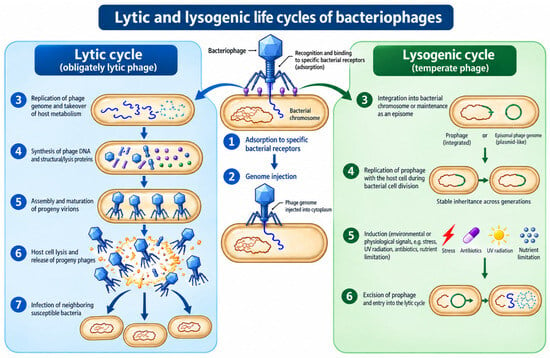
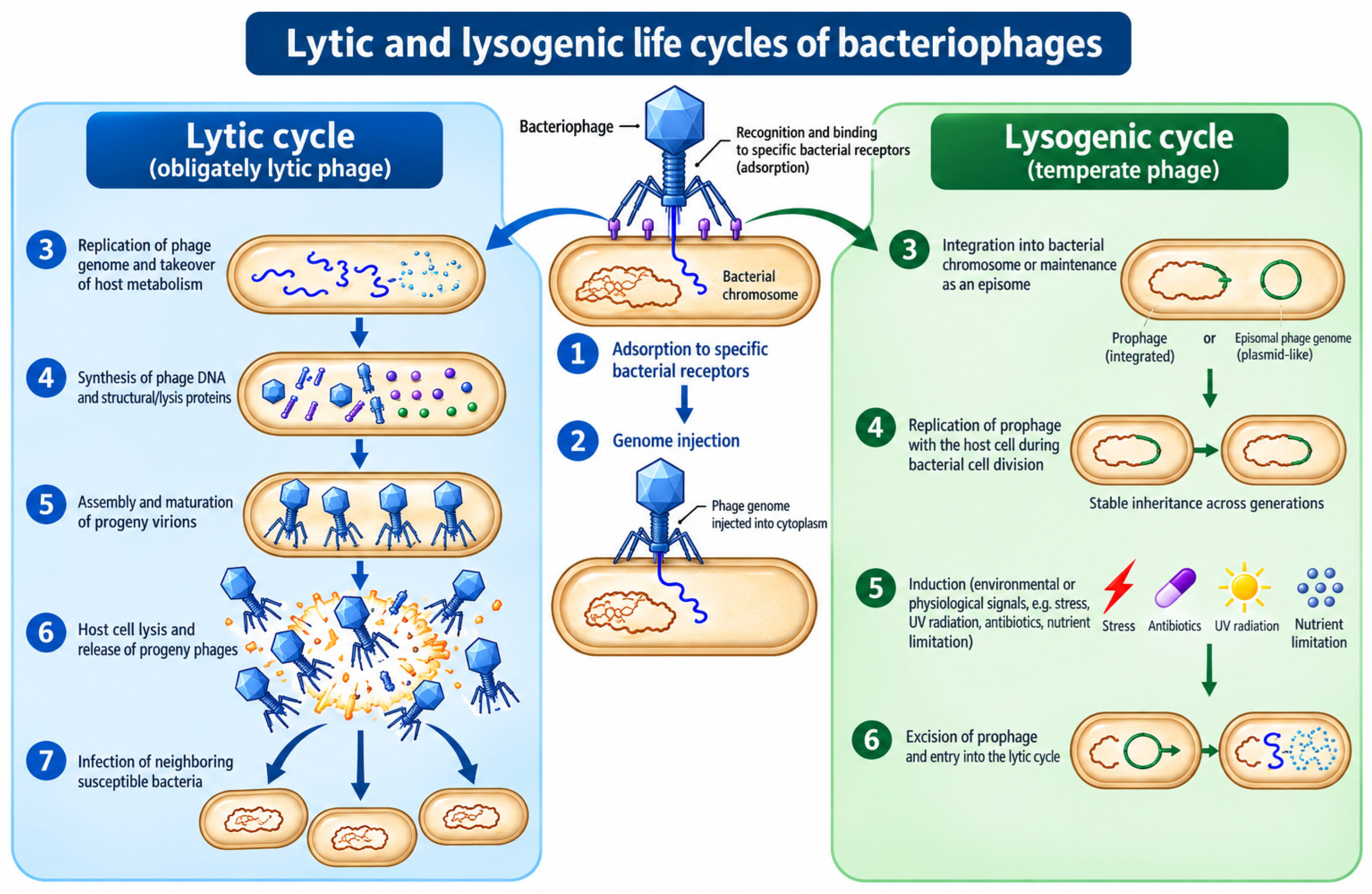

Disclaimer/Publisher’s Note: The statements, opinions and data contained in all publications are solely those of the individual author(s) and contributor(s) and not of MDPI and/or the editor(s). MDPI and/or the editor(s) disclaim responsibility for any injury to people or property resulting from any ideas, methods, instructions or products referred to in the content. |
© 2026 by the authors. Licensee MDPI, Basel, Switzerland. This article is an open access article distributed under the terms and conditions of the Creative Commons Attribution (CC BY) license.