


Abstract
Background/Objectives: Fungal peritonitis is a severe complication of peritoneal dialysis (PD) associated with catheter removal, technique failure, and increased mortality. Although Candida albicans was traditionally the predominant pathogen, non-albicans Candida (NAC) species are increasingly reported. This review summarizes the epidemiology and outcomes of PD-associated NAC peritonitis. Methods: A systematic review was performed following PRISMA guidelines. PubMed/MEDLINE, Scopus, and Google Scholar were searched (January 1990–March 2026) for NAC peritonitis studies. Case reports and series with species-level identification were included. Results: 31 studies met the inclusion criteria, comprising 25 individual case reports and 6 case series, totaling 89 NAC isolates. Candida parapsilosis was the most frequently reported species (n = 50), followed by Candida tropicalis (n = 15). Other pathogens included Candida glabrata, Candida guilliermondii, and several rare NAC species. Fluconazole was the most commonly used initial antifungal therapy. Catheter removal was performed in most cases, with the majority of patients requiring transition to hemodialysis. Overall mortality was 20% among individual case reports vs. 24% across case series. Species-specific differences were observed: C. parapsilosis and C. guilliermondii were generally associated with favorable outcomes, whereas infections involving C. glabrata and other emerging NAC species more frequently required treatment escalation and were linked to poorer outcomes. Conclusions: NAC species are an important cause of fungal peritonitis in PD patients and show considerable heterogeneity in clinical outcomes and antifungal susceptibility. Early species-level identification and prompt catheter removal remain essential for optimal management.
1. Introduction
Peritoneal dialysis (PD)–related peritonitis remains one of the most important complications associated with PD therapy and is a major cause of morbidity, technique failure, and transition to hemodialysis (HD). Despite improvements in dialysis technology, infection prevention strategies, and patient training, infectious complications continue to affect long-term PD outcomes. Current recommendations from the International Society for Peritoneal Dialysis (ISPD) emphasize the importance of early diagnosis and prompt treatment to improve clinical outcomes [1].
Fungal peritonitis represents a relatively uncommon but particularly severe form of PD-related infection [2]. Compared with bacterial peritonitis, fungal infections are associated with significantly higher rates of catheter removal, technique failure, and mortality [3,4]. Consequently, fungal peritonitis remains a serious clinical entity requiring rapid recognition and aggressive management.
Historically, Candida albicans has been considered the predominant pathogen in intra-abdominal candidiasis. However, infections caused by non-albicans Candida (NAC) species have been increasingly reported in recent years [4]. These organisms include Candida parapsilosis, Candida tropicalis, Candida glabrata, and Candida guilliermondii, among others. Importantly, NAC species may differ from C. albicans in epidemiology, virulence characteristics, and antifungal susceptibility patterns, with some species demonstrating reduced susceptibility to commonly used azole antifungal agents [5].
In patients undergoing PD, several factors have been associated with an increased risk of fungal peritonitis. Prior bacterial peritonitis and prolonged exposure to broad-spectrum antibiotics are among the most consistently reported risk factors, as they may disrupt the normal microbial balance and facilitate fungal colonization of the peritoneal cavity [2,4]. In addition, colonization of PD catheters and the ability of certain Candida species to form biofilms on synthetic surfaces may contribute to the development of infection.
Evidence regarding NAC peritonitis in PD remains limited and fragmented. Most published data derive from isolated case reports or small case series describing individual episodes of infection [6,7,8]. Consequently, the epidemiology, species distribution, and clinical outcomes of NAC peritonitis remain incompletely characterized.
Given these limitations, a comprehensive evaluation of the available evidence is warranted. Therefore, the objective of the present systematic review was to compile and analyze all published cases of PD-associated peritonitis caused by NAC species. Particular emphasis was placed on species distribution, patient characteristics, therapeutic strategies, and reported mortality outcomes.
2. Materials and Methods
2.1. Study Design and Reporting Framework
This systematic review was conducted in accordance with the Preferred Reporting Items for Systematic Reviews and Meta-Analyses (PRISMA) 2020 guidelines for transparent reporting of systematic evidence syntheses [9]. The review protocol was prospectively registered in the International Prospective Register of Systematic Reviews (PROSPERO; registration number CRD420261329285).
2.2. Eligibility Criteria and Definitions
Eligible studies included case reports and case series describing patients undergoing PD who developed microbiologically confirmed peritonitis caused by NAC species. Peritonitis was defined according to established clinical criteria, requiring the presence of compatible symptoms (e.g., abdominal pain, fever, nausea, or cloudy effluent) combined with a peritoneal effluent white blood cell count ≥100 cells/μL with ≥50% polymorphonuclear leukocytes. Microbiological confirmation required isolation of the NAC species from peritoneal fluid culture using conventional culture-based methods, with species-level identification performed by biochemical or phenotypic identification systems. When available, additional confirmatory techniques, such as matrix-assisted laser desorption/ionization time-of-flight mass spectrometry (MALDI-TOF MS) or molecular sequencing methods, were also recorded. Only cases with species-level identification were included. Reports limited to C. albicans were excluded. In mixed fungal or polymicrobial infections, cases were included only when outcome data could be clearly attributed to the NAC isolate.
Primary fungal peritonitis was defined as peritonitis caused by NAC occurring in the absence of a preceding episode of bacterial peritonitis. Secondary fungal peritonitis was defined as an episode occurring within 30 days following exposure to antimicrobial therapy for bacterial peritonitis or concomitantly with a documented bacterial infection. Early-onset peritonitis was defined as the first episode occurring within 6 months of PD initiation, whereas late-onset peritonitis was defined as occurring after 6 months.
Cases without microbiological confirmation of NAC species, without extractable individual patient-level outcome data, or not clearly associated with PD therapy were excluded from the analysis.
2.3. Information Sources and Search Strategy
A comprehensive literature search was conducted in PubMed/MEDLINE, Scopus, and Google Scholar from 1 January 1990 through 15 March 2026, in accordance with the predefined protocol registered in PROSPERO. The search strategy combined controlled vocabulary and free-text terms related to PD, peritonitis and NAC species using Boolean operators, including (“peritoneal dialysis” OR “PD” OR “CAPD” OR “automated peritoneal dialysis”) AND (“peritonitis”) AND (“non-albicans Candida” OR “Candida parapsilosis” OR “Candida tropicalis” OR “Candida glabrata” OR “Candida guilliermondii” OR “Candida lusitaniae” OR “Candida haemulonii” OR “Candida nivariensis” OR “Candida famata” OR other non-albicans Candida species names). In Google Scholar, the first 300 results ranked by relevance were screened as prespecified. Backward reference list screening and forward citation tracking were additionally performed. No language restrictions were applied; publications in languages other than English were translated using publicly available tools (e.g., Google Translate) and subsequently reviewed by the authors to ensure accuracy. When necessary, key clinical and methodological information was cross-checked against the original text to ensure consistency in data extraction.
2.4. Study Selection
All potentially relevant records were screened in two stages. Initially, titles and abstracts were independently assessed by two reviewers (J.D., A.P.) to determine eligibility. Full texts of studies meeting the inclusion criteria were subsequently retrieved and independently evaluated (J.D., A.P., M.F.) Reference lists of all included articles were manually screened to ensure comprehensive case identification. Discrepancies were resolved through discussion and consensus among the review team (J.D., A.P., M.F., M.P., I.K., and C.A.).
2.5. Data Extraction
Data were extracted independently by two reviewers (J.D., A.P.) using a predefined standardized data collection form. Extracted variables included year of publication, country, demographic characteristics (age and sex), underlying comorbidities, PD modality and vintage, prior episodes of peritonitis, identified NAC species, and method of microbiological identification. Treatment-related variables included the antifungal agent, route and duration of therapy, timing of peritoneal catheter removal, and, when applicable, the switch to HD. The primary outcome (mortality) and secondary outcomes (technique failure and catheter removal) were recorded as reported in each study. When data were incomplete or unclear, only extractable and explicitly reported variables were included in the analysis. Discrepancies in data extraction were resolved through discussion and consensus between authors. Publications were categorized according to study design as single-patient case reports or multi-patient case series. Analyses were primarily stratified by publication type to account for inherent differences in reporting structure and data completeness. Species-level summaries were subsequently derived from pooled individual cases across both publication types.
2.6. Risk of Bias Assessment
Risk of bias was assessed using the Joanna Briggs Institute (JBI) critical appraisal tools for case reports and case series. Two investigators (J.D. and A.P.) independently evaluated study quality, with disagreements resolved through discussion and consensus. The assessment considered key methodological domains, including clarity of patient description, diagnostic ascertainment, completeness of clinical data, and transparency of outcome reporting. The study-level appraisal is presented in Supplementary Tables S1 and S2. Overall, most studies were judged to be of moderate to high methodological quality.
2.7. Statistical Analysis
Extracted individual patient-level data were compiled into a master database using Microsoft Excel (Microsoft Corp., Redmond, WA, USA) and subsequently analyzed using GraphPad Prism version 8 (GraphPad Software Inc., San Diego, CA, USA). Categorical variables were summarized as frequencies and percentages, while continuous variables were reported as mean ± standard deviation or median (range), as appropriate. Species-specific mortality rates were calculated as proportions of deaths among reported cases for each NAC species.
3. Results
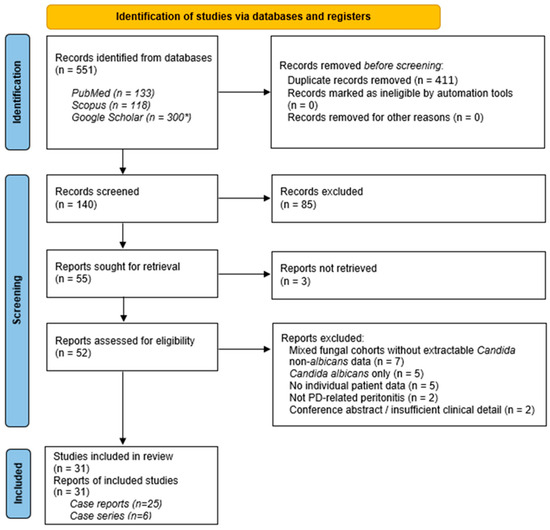
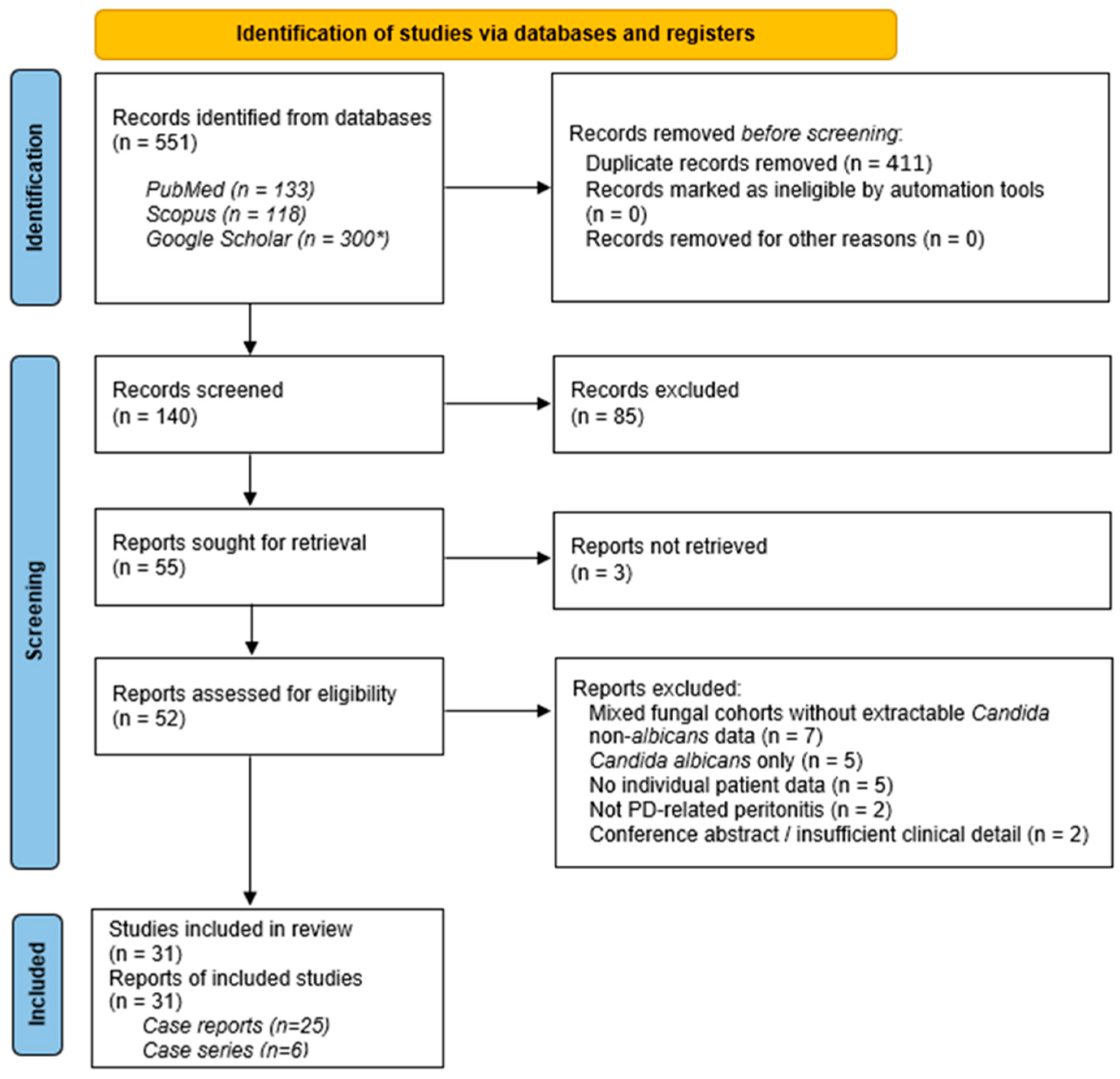
The selection process according to the PRISMA 2020 framework is illustrated in Figure 1. In total, 551 records were initially identified through database searches (PubMed, Scopus, and Google Scholar). After removal of duplicates, 140 records were screened by title and abstract, of which 85 were excluded. Fifty-five reports were sought for retrieval, and 52 were assessed for eligibility.
Figure 1.
PRISMA 2020 flow diagram of the study selection process. * Only the first 300 records retrieved from Google Scholar were screened.
Ultimately, 31 studies met the inclusion criteria, comprising 25 individual case reports [10,11,12,13,14,15,16,17,18,19,20,21,22,23,24,25,26,27,28,29,30,31,32,33,34] (Table 1) and six case series [6,7,8,35,36,37] describing 64 episodes of NAC peritonitis in 63 patients (Table 2). In total, 89 episodes were identified across 88 patients, as one patient experienced two episodes [7].
Table 1.
Individual case reports of NAC peritonitis in patients receiving PD.
Table 2.
Case series reporting NAC peritonitis in patients receiving PD.
The individual case reports originated from multiple geographic regions, including Europe, Asia, and North America. Most patients were adults receiving continuous ambulatory PD (CAPD), although one neonatal case undergoing acute PD [19] and one patient receiving automated PD (APD) [30] were also described. Catheter removal was performed in most individual cases (92%), and most patients were subsequently transitioned to HD (84%). Detailed analysis of available data confirmed HD use in 23/25 patients (92%; 100% among cases with reported data), while reinstitution of PD was documented in only 3/22 cases (14%). Overall mortality among the reported individual cases was 20% (Table 3).
Table 3.
Management and outcomes of reported cases.
Fluconazole was the most frequently used initial antifungal therapy in the individual reports (60%), followed by amphotericin B (28%) and echinocandins (12%). In several cases, treatment escalation or modification was required because of clinical non-response or suspected antifungal resistance.
The six-case series included 64 reported episodes of NAC peritonitis in 63 patients. In all studies, catheter removal was performed (100%), and most patients were transitioned to HD. In most instances, patients remained on HD permanently, while only a few resumed PD after delayed reinsertion of a new Tenckhoff catheter. However, detailed data regarding dialysis modality following the acute episode were limited and inconsistently reported across studies. Mortality rates in the individual series ranged from 0% to 60%, with an overall mortality of 24%. Fluconazole was the predominant initial antifungal therapy (72%), whereas amphotericin B and echinocandins were used less frequently (8% and 4%, respectively).
Across all included studies, 89 NAC isolates were identified (Table 4).
Table 4.
Species distribution of NAC peritonitis across all included studies.
The most frequently reported species was C. parapsilosis (n = 50), followed by C. tropicalis (n = 15). Less commonly reported species included C. glabrata (n = 4) and C. guilliermondii (n = 4), whereas several rare species were each represented by single reports, including rare NAC species. Species-specific mortality patterns varied across the included reports. Among individual case reports, deaths were observed in infections caused by C. famata (2/2), C. lusitaniae (1/2), C. haemulonii (1/1), C. nivariensis (1/1), and C. parapsilosis (1/5). In the case series, mortality occurred in 3 of 5 episodes of C. tropicalis peritonitis and in 5 of 31 episodes of C. parapsilosis peritonitis for which outcome data were available.
Evaluation of the individual case reports revealed notable species-specific clinical patterns (Table 5).
Table 5.
Clinical patterns and antifungal susceptibility signals according to the five most frequent NAC species.
Infections caused by C. parapsilosis were generally associated with favorable outcomes, with universal catheter removal. Similarly, infections due to C. guilliermondii showed consistently good outcomes in all reported cases. In contrast, infections caused by C. glabrata were frequently associated with prior antibiotic exposure (100%) and occasional polymicrobial infection (33%), often requiring escalation of antifungal therapy to echinocandins.
Finally, several reports involving emerging species suggested potential antifungal susceptibility challenges. Cases caused by C. glabrata frequently required treatment modification because of reduced susceptibility to fluconazole. In contrast, rare species, such as C. nivariensis and C. haemulonii, were associated with severe clinical courses or suspected antifungal resistance in the original reports. Overall, these findings illustrate the considerable heterogeneity in species distribution, clinical presentation, and therapeutic response among cases of NAC peritonitis in patients receiving PD.
4. Discussion
This systematic review provides an integrated overview of NAC peritonitis in patients undergoing PD. The available evidence indicates substantial heterogeneity among NAC species with respect to species distribution, antifungal susceptibility, and clinical outcomes. Specifically, C. parapsilosis and C. tropicalis were the most frequently reported pathogens. In contrast, infections caused by C. glabrata and several emerging NAC species were more often associated with reduced susceptibility to azole antifungal agents. These findings highlight the clinical importance of early species-level identification to guide targeted antifungal therapy and support timely management decisions in PD-associated fungal peritonitis.
One of the most notable findings of this analysis was the predominance of C. parapsilosis, which accounted for more than half of the identified NAC isolates. This observation is consistent with previous reports indicating that C. parapsilosis is frequently associated with catheter-related infections and the formation of biofilms on indwelling medical devices, including PD catheters. Its ability to adhere to artificial surfaces and produce biofilms may facilitate colonization of the PD system and contribute to subsequent infection [37,38,39]. Similar species distributions have been reported in regional PD cohorts, in which C. parapsilosis emerged as one of the most common fungal pathogens after C. albicans [7,8,39].
Despite its frequent occurrence, infections caused by C. parapsilosis in the present review were generally associated with favorable clinical outcomes, with only one death reported among individual case reports. This observation may reflect the relatively preserved susceptibility of this species to azole antifungal agents, particularly fluconazole, which was also the most common initial antifungal therapy in the included cases [3]. Nevertheless, C. parapsilosis has been reported to demonstrate reduced susceptibility to echinocandins compared with other NAC species, a factor that may influence therapeutic decision-making in severe infections [38].
The second most frequently reported pathogen was C. tropicalis, a species previously associated with invasive candidiasis in immunocompromised individuals and in patients exposed to broad-spectrum antibiotic therapy. Although the number of cases identified in the present review was relatively small, clinical outcomes were generally favorable when prompt antifungal treatment and catheter removal were implemented. Previous observational studies have similarly suggested that early therapeutic intervention combined with appropriate antifungal therapy can significantly improve outcomes in fungal PD peritonitis [36,39,40].
In contrast, infections caused by C. glabrata appeared to follow a more complicated clinical course. All reported cases were associated with prior antibiotic therapy, with some requiring escalation of antifungal treatment to echinocandins due to suspected or documented azole resistance. This observation is consistent with the well-documented reduced susceptibility of C. glabrata to fluconazole and other azole agents, which has been increasingly recognized in invasive candidiasis [5]. The relatively higher mortality observed in these cases further suggests that infections caused by this species may present greater therapeutic challenges.
Another notable observation from this review is the broad diversity of rare or emerging NAC species implicated in PD-associated peritonitis. Several unusual organisms, including C. haemulonii, C. nivariensis, Candida pelliculosa (Wickerhamomyces anomalus), and Candida subhashii, were identified in isolated reports. The increasing recognition of these organisms likely reflects advances in diagnostic technologies, particularly the implementation of MALDI-TOF mass spectrometry and molecular identification techniques in clinical microbiology laboratories [23,28]. Importantly, some of these species have been associated with reduced susceptibility to commonly used antifungal agents, raising concerns regarding treatment selection and potential clinical outcomes [2,5].
In line with current international recommendations, peritoneal catheter removal was performed in the vast majority of cases included in this review. Early removal of the PD catheter has long been considered a key component of management in fungal peritonitis, as catheter retention is associated with persistent infection and poorer clinical outcomes. The ISPD guidelines strongly recommend prompt catheter removal once fungal peritonitis is diagnosed, followed by systemic antifungal therapy and transition to HD [1]. The high rate of catheter removal observed in the present study likely reflects adherence to these widely accepted management recommendations.
Fluconazole was the most frequently administered antifungal agent across both individual case reports and case series. This likely reflects its broad availability, favorable pharmacokinetic properties, and well-established role in the treatment of susceptible Candida infections [3]. However, the need for treatment modification in several cases emphasizes the importance of species-level identification and antifungal susceptibility testing whenever feasible. Emerging resistance patterns among NAC species may necessitate the use of alternative antifungal agents, including echinocandins or lipid formulations of amphotericin B [5].
Overall mortality across the studies included in the present review ranged from approximately 20% in individual case reports to 24% in case series. These findings are generally consistent with previously reported mortality rates in fungal PD peritonitis, which ranged between 15% and 40% in earlier observational studies [36,39,40]. Although mortality remains considerable, outcomes appear to vary according to the infecting species, patient characteristics, and the timing of therapeutic interventions.
Several limitations of the present review should be acknowledged. First, the available evidence consists predominantly of single case reports and small case series, limiting the ability to perform robust statistical comparisons across species. Second, important clinical variables, including antifungal susceptibility data, timing of catheter removal, modality resumption, and detailed patient comorbidities, were inconsistently reported across studies. In addition, clinically relevant parameters, such as the duration of peritoneal dialysis and prior episodes of peritonitis and their treatments, were not consistently reported and could not be systematically analyzed. Third, publication bias cannot be excluded, as unusual or severe cases may be more likely to be reported in the literature. Consequently, the findings of this review should primarily be interpreted as descriptive and hypothesis-generating.
Despite these limitations, this study provides a comprehensive overview of the spectrum of NAC species responsible for PD-associated peritonitis and highlights potential differences in clinical presentation, management, and outcomes. These findings underscore the clinical relevance of species-level identification and support the importance of individualized antifungal management in PD-associated fungal infections. Continued multicenter surveillance and systematic case reporting will be important to improve understanding of species-specific epidemiology and guide appropriate antifungal management.
5. Conclusions
NAC species are increasingly recognized as a cause of PD–associated fungal peritonitis and exhibit substantial heterogeneity in species distribution, antifungal susceptibility, and clinical outcomes. In this systematic synthesis of published cases, C. parapsilosis and C. tropicalis emerged as the most frequently reported pathogens. In contrast, infections due to C. glabrata and other emerging NAC species were more often associated with therapeutic challenges. Early species-level identification, prompt initiation of appropriate antifungal therapy, and timely catheter removal remain key components of optimal management. Future prospective studies and multicenter surveillance are needed to better define species-specific risk factors, resistance patterns, and optimal treatment strategies for NAC peritonitis in patients receiving PD.
Supplementary Materials
The following supporting information can be downloaded at https://www.mdpi.com/article/10.3390/idr18030041/s1. Supplementary Table S1: Risk-of-bias assessment of included case reports; Supplementary Table S2: Risk-of-bias assessment of included case series.
Author Contributions
Conceptualization, J.D., A.P., M.F., and C.A.; methodology, J.D.; data curation, J.D. and A.P.; formal analysis, J.D.; investigation, J.D., A.P., M.F., M.P., and I.K.; writing—original draft preparation, J.D.; writing—review and editing, J.D., A.P., M.F., M.P., I.K., and C.A.; supervision, J.D. and C.A.; project administration, J.D. All authors have read and agreed to the published version of the manuscript.
Funding
This research received no external funding.
Institutional Review Board Statement
Not applicable.
Informed Consent Statement
Not applicable.
Data Availability Statement
The data supporting the reported results are from previously published studies. A list of all included studies is provided in the manuscript’s reference section. The original data presented in the study are openly available in all the academic databases mentioned in the method section.
Acknowledgments
The authors would like to acknowledge the investigators and researchers whose work was included in this review. Their contributions to the field made this synthesis of the available evidence possible.
Conflicts of Interest
The authors declare no conflict of interest.
Abbreviations
The following abbreviations are used in this manuscript:
| PD | Peritoneal Dialysis |
| NAC | Non-albicans Candida |
| APD | Automated Peritoneal Dialysis |
| CAPD | Continuous Ambulatory Peritoneal Dialysis |
| HD | Hemodialysis |
| ISPD | International Society for Peritoneal Dialysis |
| MALDI-TOF MS | Matrix-Assisted Laser Desorption/Ionization Time-of-Flight Mass Spectrometry |
| PRISMA | Preferred Reporting Items for Systematic Reviews and Meta-Analyses |
| PROSPERO | International Prospective Register of Systematic Reviews |
References
- Li, P.K.T.; Chow, K.M.; Cho, Y.; Fan, S.; Figueiredo, A.E.; Harris, T.; Kanjanabuch, T.; Kim, Y.L.; Madero, M.; Malyszko, J.; et al. ISPD Peritonitis Guideline Recommendations: 2022 Update on Prevention and Treatment. Perit. Dial. Int. 2022, 42, 110–153. [Google Scholar] [CrossRef] [Scilit] [PubMed]
- Prasad, N.; Gupta, A. Fungal Peritonitis in Peritoneal Dialysis Patients. Perit. Dial. Int. 2005, 25, 207–222. [Google Scholar] [CrossRef] [Scilit]
- Carneiro, H.A.; Mavrakis, A.; Mylonakis, E. Candida Peritonitis: An Update on the Latest Research and Treatments. World J. Surg. 2011, 35, 2650–2659. [Google Scholar] [CrossRef] [Scilit]
- Narain, U.; Gupta, A. Peritoneal Dialysis Related Candida Peritonitis: A 16-Year Single-Centre Experience. Arch. Clin. Microbiol. 2016, 7, 10. [Google Scholar]
- Arendrup, M.C.; Patterson, T.F. Multidrug-Resistant Candida: Epidemiology, Molecular Mechanisms, and Treatment. J. Infect. Dis. 2017, 216, S445–S451. [Google Scholar] [CrossRef] [Scilit]
- Wong, P.N.; Mak, S.K.; Lo, K.Y.; Tong, G.M.W.; Wong, A.K.M. A Retrospective Study of Seven Cases of Candida parapsilosis Peritonitis in CAPD Patients: The Therapeutic Implications. Perit. Dial. Int. 2000, 20, 76–79. [Google Scholar] [CrossRef] [Scilit]
- Kaitwatcharachai, C. Candida parapsilosis Peritonitis in Patients on CAPD. Mycopathologia 2002, 154, 181–184. [Google Scholar] [CrossRef] [Scilit] [PubMed]
- Levallois, J.; Nadeau-Fredette, A.C.; Labbé, A.C.; Laverdière, M.; Ouimet, D.; Vallée, M. Ten-Year Experience with Fungal Peritonitis in Peritoneal Dialysis Patients: Antifungal Susceptibility Patterns in a North-American Center. Int. J. Infect. Dis. 2012, 16, e41–e43. [Google Scholar] [CrossRef] [Scilit] [PubMed]
- Page, M.J.; McKenzie, J.E.; Bossuyt, P.M.; Boutron, I.; Hoffmann, T.C.; Mulrow, C.D.; Shamseer, L.; Tetzlaff, J.M.; Akl, E.A.; Brennan, S.E.; et al. The PRISMA 2020 Statement: An Updated Guideline for Reporting Systematic Reviews. BMJ 2021, 372, n71.1. [Google Scholar] [CrossRef] [Scilit]
- Quindós, G.; Cabrera, F.; Arilla, M.C.; Burgos, A.; Ortiz-Vigón, R.; Cañón, J.L.; Pontón, J. Fatal Candida famata Peritonitis in a Patient Undergoing Continuous Ambulatory Peritoneal Dialysis Who Was Treated with Fluconazole. Clin. Infect. Dis. 1994, 18, 658–660. [Google Scholar] [CrossRef] [Scilit]
- Maruyama, H.; Nakamaru, T.; Oya, M.; Miyakawa, Y.; Sato, N.; Ishizuka, Y.; Kourakata, H.; Nakagawa, Y.; Arakawa, M. Posthysteroscopy Candida glabrata Peritonitis in a Patient on CAPD. Perit. Dial. Int. 1997, 17, 600. [Google Scholar] [CrossRef] [Scilit]
- Asim, M.; Meigh, J.A.; Farr, M.J. Fungal Peritonitis Caused by Candida parapsilosis and Subsequently Rhodotorula glutinis in a CAPD Patient. Perit. Dial. Int. 1999, 19, 183–185. [Google Scholar] [CrossRef] [Scilit]
- Cinar, S.; Koc, A.N.; Taskapan, H.; Dogukan, A.; Tokgoz, B.; Utas, C. Candida lusitaniae Peritonitis in a Patient on Continuous Ambulatory Peritoneal Dialysis. Mycoses 2002, 45, 120–122. [Google Scholar] [CrossRef] [Scilit]
- Tarif, N. Candida lusitaniae Peritonitis in a Chronic Ambulatory Peritoneal Dialysis Patient. Saudi J. Kidney Dis. Transpl. 2004, 15, 170–173. [Google Scholar] [PubMed]
- Gupta, R.; Mi, H.; Wroe, C.; Jaques, B.; Talbot, D. Fatal Candida famata Peritonitis Complicating Sclerosing Peritonitis in a Peritoneal Dialysis Patient. Nephrol. Dial. Transplant. 2006, 21, 2036. [Google Scholar] [CrossRef] [Scilit] [PubMed]
- Adam, H.; Groenewald, M.; Mohan, S.; Richardson, S.; Bunn, U.; Gibas, C.F.C.; Poutanen, S.; Sigler, L. Identification of a New Species, Candida subhashii, as a Cause of Peritonitis. Med. Mycol. 2009, 47, 305–311. [Google Scholar] [CrossRef] [Scilit] [PubMed]
- Guclu, E.; Soypacaci, Z.; Yildirim, M.; Kucukbayrak, A.; Ozdemir, D. First Case of Continuous Ambulatory Peritoneal Dialysis Peritonitis due to Candida sake. Mycoses 2009, 52, 280–281. [Google Scholar] [CrossRef] [Scilit]
- Kocyigit, I.; Unal, A.; Sipahioglu, M.H.; Tokgoz, B.; Oymak, O.; Utas, C. Peritonitis Due to Candida rugosa: The First Case Report. Perit. Dial. Int. 2010, 30, 576–577. [Google Scholar] [CrossRef] [Scilit]
- Cheng, I.; Chen, Y.L.; Lin, C.H.; Jow, G.M.; Mu, S.C. Complicated Candida parapsilosis Peritonitis on Peritoneal Dialysis in a Neonate with Renal Failure Because of Bilateral Adrenal Abscesses. Kaohsiung J. Med. Sci. 2011, 27, 466–468. [Google Scholar] [CrossRef] [Scilit]
- Yuvaraj, A.; Rohit, A.; Koshy, P.J.; Nagarajan, P.; Nair, S.; Abraham, G. Rare Occurrence of Fatal Candida haemulonii Peritonitis in a Diabetic CAPD Patient. Ren. Fail. 2014, 36, 1466–1467. [Google Scholar] [CrossRef] [Scilit]
- Tatlı, E.; Gürsu, M.; Aydın, Z.; Uzun, S.; Karadağ, S.; Cebeci, E.; Pehlivanoğlu, F.; Savaş, Ö.; Kazancıoğlu, R. Peritonitis due to Candida guilliermondii in a Patient on Continuous Ambulatory Peritoneal Dialysis. Med. Bull. Haseki 2015, 53, 248–250. [Google Scholar] [CrossRef] [Scilit]
- Gayen, S.; Ziemba, Y.; Jaiswal, S.; Frank, A.; Brahmbhatt, Y. CDC Group EO-4 and Candida tropicalis Peritonitis in a Patient on Peritoneal Dialysis after Upper Endoscopy, Colonoscopy and Coil Embolization of the Gastroduodenal Artery. Case Rep. Gastroenterol. 2016, 10, 728–732. [Google Scholar] [CrossRef] [Scilit] [PubMed]
- Kim, M.; Bae, E.H.; Kim, S.W.; Ma, S.K. Candida guilliermondii Continuous Ambulatory Peritoneal Dialysis Peritonitis Confirmed by 16S rRNA Sequencing. Nephrology 2016, 21, 630. [Google Scholar] [CrossRef] [Scilit] [PubMed]
- Balafa, O.; Georvasili, V.; Duni, A.; Batistatou, A.; Bali, C. Candida parapsilosis Peritonitis—Macroscopic and Microscopic Appearances. Perit. Dial. Int. 2017, 37, 347–348. [Google Scholar] [CrossRef] [Scilit]
- Emami, A.; Lew, S.Q. Candida glabrata PD-Associated Peritonitis: A Case Report. Perit. Dial. Int. 2018, 38, 391–392. [Google Scholar] [CrossRef] [Scilit] [PubMed]
- Tong, R.; Hu, S.; Yang, H. Peritoneal dialysis related fungal peritonitis caused by Candida krusei: The first reported case. Nephrology 2018, 23, 703–704. [Google Scholar] [CrossRef] [Scilit]
- Evren, K.; Akçay, E.; Yücel, M.; Bal, A.Z.; Erdinç, F.Ş.; Dinç, B.; Kalkancı, A. A Case of Peritonitis Caused by Wickerhamomyces anomalus (Candida pelliculosa) Related to Peritoneal Dialysis. Mikrobiyol. Bul. 2021, 55, 665–672. [Google Scholar] [CrossRef] [Scilit]
- Ramírez Ramírez, M.G.; Ibarra Sifuentes, H.R.; Alvizures Solares, S.R.; Arteaga Muller, G.Y.; Cruz Valdez, J. Candida tropicalis in Peritoneal Dialysis-Related Peritonitis Diagnosed by MALDI-TOF Mass Spectrometry. Saudi J. Kidney Dis. Transpl. 2021, 32, 245–248. [Google Scholar]
- Roy, S.; Vantipalli, P.; Garcha, A.; Pokal, M.; Adapa, S. The Emerging Uncommon Non-Albicans Candida: Candida parapsilosis Peritonitis in a Peritoneal Dialysis Patient. Cureus 2021, 13, e17083. [Google Scholar] [CrossRef] [Scilit]
- Sadioğlu, R.E.; Karataş, G.; Memikoğlu, O.; Kutlay, S.; Nergizoğlu, G.; Ateş, K. An Unusual Association of Candida guilliermondii and Mycobacterium avium Complex in a Peritoneal Dialysis Patient with Refractory Peritonitis. Turk. J. Nephrol. 2021, 30, 87–89. [Google Scholar] [CrossRef] [Scilit]
- Chamroensakchai, T.; Sanaklang, N.; Hurdeal, V.G.; Banjongjit, A.; Hyde, K.D.; Kanjanabuch, T. Candida nivariensis, an emerging fungus causing peritonitis in a patient receiving peritoneal dialysis. Med. Mycol. Case Rep. 2022, 39, 5–7. [Google Scholar] [CrossRef] [Scilit]
- Mastroianni, A.; Vangeli, V.; Mauro, M.V.; Greco, F.; Urso, F.; Manfredi, R.; Greco, S. Candida guilliermondii Peritonitis During Peritoneal Dialysis: Case Report and Literature Review. Clin. Manag. Issues 2023, 17, 9–12. [Google Scholar] [CrossRef] [Scilit]
- Zhang, X.; Zhang, B.; Shen, L.; Zhu, C.; Mao, M.; Mei, Z.; Jin, L.; Yang, H. Peritoneal Dialysis-Associated Peritonitis Caused by Candida parapsilosis. Acta Pol. Pharm. Drug Res. 2024, 81, 513–516. [Google Scholar] [CrossRef] [Scilit]
- Yadav, R.; Brown, L.; Khan, H.; Suroya, N.; Yousman, W.; Wong, W.X. Entrapped in the Cocoon: A Rare Case of Sclerosing Encapsulating Peritonitis in a Patient on Dialysis. Cureus 2025, 17, e96918. [Google Scholar] [CrossRef] [Scilit] [PubMed]
- Yuen, K.Y.; Seto, W.H.; Ching, T.Y.; Cheung, W.C.; Kwok, Y.; Chu, Y.B. An Outbreak of Candida tropicalis Peritonitis in Patients on Intermittent Peritoneal Dialysis. J. Hosp. Infect. 1992, 22, 65–72. [Google Scholar] [CrossRef] [Scilit]
- Chen, K.H.; Chang, C.T.; Yu, C.C.; Huang, J.Y.; Yang, C.W.; Hung, C.C. Candida parapsilosis Peritonitis Has More Complications Than Other Candida Peritonitis in Peritoneal Dialysis Patients. Ren. Fail. 2006, 28, 241–246. [Google Scholar] [CrossRef] [Scilit]
- Juarez Villa, D.; Cano Escobar, K.B.; Toledo Ramirez, S.; Zepeda Quiroz, I. Fungal Peritonitis Associated with Peritoneal Dialysis Due to Non-Albicans Candida: A Case Series. Cureus 2022, 14, e32658. [Google Scholar] [CrossRef] [Scilit]
- Asogan, M.; Kim, H.Y.; Kidd, S.; Alastruey-Izquierdo, A.; Govender, N.P.; Dao, A.; Shin, J.H.; Heim, J.; Ford, N.P.; Gigante, V.; et al. A systematic review to inform the World Health Organization fungal priority pathogens list. Med. Mycol. 2024, 62, myad131. [Google Scholar] [CrossRef] [Scilit] [PubMed]
- Auricchio, S.; Giovenzana, M.E.; Pozzi, M.; Galassi, A.; Santorelli, G.; Dozio, B.; Scanziani, R. Fungal Peritonitis in Peritoneal Dialysis: A 34-Year Single Centre Evaluation. Clin. Kidney J. 2018, 11, 874–880. [Google Scholar] [CrossRef] [Scilit]
- Goldie, S.J.; Kiernan-Tridle, L.; Torres, C.; Gorban-Brennan, N.; Dunne, D.; Kliger, A.S.; Finkelstein, F.O. Fungal peritonitis in a large chronic peritoneal dialysis population: A report of 55 episodes. Am. J. Kidney Dis. 1996, 28, 86–91. [Google Scholar] [CrossRef] [Scilit] [PubMed]

Disclaimer/Publisher’s Note: The statements, opinions and data contained in all publications are solely those of the individual author(s) and contributor(s) and not of MDPI and/or the editor(s). MDPI and/or the editor(s) disclaim responsibility for any injury to people or property resulting from any ideas, methods, instructions or products referred to in the content. |
© 2026 by the authors. Licensee MDPI, Basel, Switzerland. This article is an open access article distributed under the terms and conditions of the Creative Commons Attribution (CC BY) license.