


Abstract
Lithium-ion batteries are widely used in portable devices and electronic vehicles (EVs) due to their excellent performance. Because of their internal chemistry, these batteries have non-linear characteristics, their parameters being dependent on temperature and varying over time due to aging. Since electric vehicles are marketed in different regions of the globe with different climates, this has led to increased attention to the problem of the reduced performance of EVs in colder environments. The purpose of this research is to study the effects of preconditioning on Li-ion cells and determine the need for preconditioning in EVs that operate under low-temperature conditions. Additionally, based on the results, alternative coping strategies are also suggested which can be used instead of preconditioning when this is not a viable option. Given this, the 18650 Li-ion cells studied were divided into two categories, cells to be charged/discharged permanently at low temperatures and cells that were to be exposed to the same low temperatures but then preconditioned to ambient temperature before the charge/discharge cycle for a total of 100 performed cycles. It was observed that low temperatures have a direct negative impact on the usable capacity of the cells, accounting for a drop of 8% of the initial value. These effects can be completely negated by preconditioning the cells prior to charging/discharging. After that, the effects of medium-term storage on the capacity of the batteries were investigated to study the possible recovery in the capacity of the cells. Finally, the need for preconditioning the cells is analyzed and alternative methods to mitigate the issues are suggested for equipment where preconditioning is not possible.
1. Introduction
With the onset of globalization and industrialization, energy has become an essential component of modern life, with the demand for energy constantly increasing. The negative effects of climate change produced by human activities, like greenhouse gas emissions, have led scientists and researchers to look for more environmentally friendly alternatives for energy use. The automotive field, being believed to be one of the main contributors to these problems, has developed new alternatives to conventional fossil fuel-powered cars, such as electric vehicles (EVs) and hybrid electric vehicles (HEVs) [1].
The main energy source of an electric vehicle is the battery. The most relevant characteristics of an EV propulsion system are, in general: high specific energy, good temperature characteristics, low self-discharge, long life, good recovery rate, consistency and recyclability. The batteries used in electric vehicles are nickel metal hydride (Ni-MH) or lithium-ion (Li-ion) batteries. Ni-MH batteries, although they are used less in new cars, are still found in some models of HEVs. They have better resistance in harsher environmental conditions and are considered to be safer, but they have the disadvantage of lower voltages and low energy densities compared to lithium-ion batteries [2]. Li-ion batteries have been widely used in recent years in portable devices and EVs due to their excellent performance [3]. These batteries have non-linear characteristics because their parameters, such as capacity and internal resistance, are dependent on temperature, state of charge, and charge/discharge rate and vary in time due to aging [4,5].
Operating regularly for long periods of time in extreme conditions, for example, at low or high temperatures or in overcurrent conditions, significantly affects the cycle life of Li-ion batteries and can produce safety issues. To avoid such non-compliant operating situations, the battery control strategy, which is carried out by means of a Battery Management System (BMS), must be constantly adapted. The BMS is an essential component of a battery-powered system. It controls the charge/discharge process; monitors battery parameters such as state of charge (SoC), DC resistance, voltage, current, and temperature; ensures communication with other devices; and prevents the risk of battery destruction or misuse [6]. Monitoring and controlling the temperatures of the cell helps ensure a longer lifespan for the battery.
The current rates (C-rates) for charging and discharging influence battery degradation. At higher discharge rates, the loss in capacity is accelerated as more heat is released and the active material of the battery is damaged [7,8,9,10,11]. The research reported in [12] shows the capacity reduction at different discharge rates, from 1C to 3C. The highest internal resistance increase of 27.7% and the highest capacity loss of 16.9% were observed for cells discharged at a 3C rate. In [13], Shun Sun et al. studied how the aging of LiFePO4/graphite battery cells is affected by different discharge rates, showing that capacity fading is accelerated by the increase in the discharge rate. Also, high discharge rates affect the performances of graphite anodes. Regarding high-rate charging, the most significant factor in terms of battery degradation is the lithium plating [14]. In research reported in [15], it was discovered that increasing the charging rate, thus generating an increase in the transport rate of lithium ions, causes stress to rise inside the cell. Impedance of battery cells and lithium plating were monitored in [16] in fast charging conditions, showing that low charge rates, under 1C, do not cause lithium plating nor a significant increase in impedance values compared to higher charging rates.
Studies of the effects of temperature on battery parameters are constantly being researched, and the results show that operating temperatures below 20 °C increase the in-ternal resistance significantly as the temperature decreases. This negatively influences the performance of the battery and thus decreases the energy storage capability of the battery [17]. The capacity fade of 18650-type cells under different ambient temperatures was studied in [18], showing that decreasing the operating temperature under 25 °C to 0 °C caused accelerated aging of the cells. In the scientific study reported in [19], which investigated how Li-ion batteries operate in cold climate conditions, it was shown that, at temperatures below 0 °C, for example, at −5 °C, the capacity of cells is reduced by 8% and at −10 °C by 15%. This phenomenon is related to the increase in the internal resistance of the cell in those conditions. In addition, certain aging mechanisms occur at temperatures below 0 °C that can lead to irreversible cell damage. The most important mechanism of this type is so-called lithium plating, which occurs when pure lithium is deposited on the anode during charging. This reduces the capacity of the cell, causing, in the worst-case scenario, an internal short circuit when the plated lithium forms dendrites that extend from the anode to the cathode [20,21]. Of course, a proper strategy can prevent lithium plating and thus aging by preventing energy input at sub-zero temperatures. Therefore, the task of the thermal management system is to heat the cells quickly and efficiently to temperatures higher than 0 °C, thus enabling optimal battery operation.
Electric vehicles are marketed in different regions of the globe with different climate rates, usage parameters, environmental codes and restrictions, a fact that has led to greater attention being paid to the problem of the reduced performance of electric vehicles at low temperatures [22,23]. Among the negative effects felt at low temperatures are a reduced range, reduced regenerative braking and poor acceleration [24,25].
A suitable solution to improve the performance of batteries is the identification of a suitable model of the Li-ion cell and the optimal management of the temperature. A classical equivalent electric model does not have good accuracy at low temperatures due to the electrochemical reactions that take place in its structure in such conditions (i.e., the low-speed kinetic transfer and the reduced conductivity of the electrolyte). The battery manufacturers provide data on the open-circuit voltage (OCV) vs. state-of-charge (SoC) characteristic curve for a temperature of 25 °C, but at low temperatures the characteristic is strongly non-linear compared to the one at 25 °C [26,27]. In the research paper [28], a complex mathematical formula for lithium-ion cell modeling which takes into consideration the temperature and the discharge process is introduced. However, in [29] the authors demonstrate that traditional model-based approaches struggle when batteries are exposed to variable loads, partial cycling, and rest periods typical of real-world operations. By applying advanced machine learning architectures (notably transformer-based or sequence-aware models), the study shows that it is possible to extract meaningful degradation signatures directly from operational data, proving that SOH prediction can be achieved without explicit electrochemical modeling, provided that temporal dependencies and usage history are adequately captured. This significantly improves the feasibility of deploying SOH diagnostics in fielded battery systems. Similarly, in [30] the authors propose a hybrid data-driven framework for lithium-ion battery state-of-health (SOH) estimation and remaining useful life prediction that integrates signal feature extraction and advanced machine learning optimization to improve accuracy and stability. In the study, the authors combine variational mode decomposition for extracting informative degradation features from battery current, voltage, and temperature signals with a multi-kernel support vector regression model whose parameters are optimized using an improved sparrow search algorithm incorporating elite chaotic opposition learning and adaptive weights. Validation on NASA battery datasets shows that the proposed framework significantly outperforms conventional methods, improving SOH estimation accuracy by approximately 0.16–1.67% while maintaining stable remaining useful life predictions even as the prediction starting point advances, demonstrating strong robustness, convergence performance, and suitability for practical battery health management applications.
In the study reported in [31] it was determined that the increase in battery impedance at low temperatures is not only due to the active material choice but it is also influenced by the electrolyte interface. Also, in [32], the chemical properties of the Li3V2(PO4)3 carbon-coated cathode were studied at temperatures between −20 °C and 65 °C. It was determined that the capacity value is reduced at low temperatures due to the decrease in electrolyte conductivity and the increase in the solid electrolyte interface impedance (SEI), as well as the resistance to charge transfer.
To compensate for the unwanted effects due to the operation of the battery at low temperatures, different techniques for preconditioning or preheating the battery before its use have been studied and implemented. In [21], preheating techniques are presented and divided into two main categories: external and internal. External heating has the advantage of lower complexity but has the disadvantage of a longer heating time, while internal heating has the advantage of shortening the heating time, although the risk of safety issues is increased [33]. The external heating procedures are further divided into procedures which are based on battery thermal management systems (BTMSs) and procedures that use electrothermal models. Also, the internal heating techniques are categorized into two types, ones that use current excitation and ones based on self-heating [34].
In [35], the effects of low temperatures on the charge/discharge process of lithium-ion batteries were studied. From the results it was observed that their capacity is reduced with the decrease in temperature. At temperatures below −10 °C, due to the significant increase in internal resistance, there is a sudden drop in the battery voltage at the beginning of the discharge process. The charging process is even more affected at temperatures below 0 °C, charging taking place extremely quickly even at low currents [36].
As a result, battery preconditioning is currently considered a critical function in electric vehicles, as low cell temperatures degrade power capability, charging performance, and cycle life. Consequently, a variety of preconditioning strategies have been proposed in the literature which differ fundamentally in their underlying heat generation mechanisms, heat transfer characteristics, and associated system-level energy consumption.
Air-based battery preconditioning relies on forced convection, where air is heated using electric heaters or HVAC subsystems and circulated around battery modules. Owing to air’s low thermal conductivity and heat capacity, heating rates are inherently slow and achieving temperature uniformity is challenging, particularly under sub-zero ambient conditions. Studies have shown that although airflow optimization strategies such as reciprocating or internal circulation can substantially reduce temperature gradients and improve effective energy use, the fundamental limitation of weak heat coupling between air and battery cells remains. As a result, air-based systems are primarily adopted in low-cost or compact EVs due to their structural simplicity, low manufacturing cost, and ease of integration, rather than superior thermal or energy performance [37,38,39]. A notable exception within this category is heat pump-assisted air heating, where thermal energy is transferred from the ambient environment rather than generated resistively. These systems can achieve coefficients of performance exceeding 2, enabling significant reductions in electrical energy consumption and measurable driving range extensions. However, their effectiveness is strongly dependent on ambient temperature and often declines under extremely cold conditions, where auxiliary resistive heating may still be required [40,41].
Liquid-based preconditioning methods employ heat transfer fluids with high specific heat and thermal conductivity to deliver energy to battery modules through either direct immersion or indirect contact via cooling plates or jackets. Compared to air-based approaches, liquid systems enable much faster warm-up rates and significantly improved temperature uniformity across cells. Direct immersion offers the highest heat transfer performance but introduces safety, sealing, and packaging challenges, making indirect liquid heating the preferred solution in most EVs produced [42,43]. While liquid systems are thermally effective, their energy efficiency varies depending on heat source, system architecture and operating conditions, ranging from moderate efficiency to high efficiency.
Conductive heating methods use resistive elements, such as PTC heaters, metallic films, or carbon-based thin films placed in direct contact with battery cells or module surfaces. Heat is generated through Joule losses and transferred efficiently via conduction, enabling compact designs and a relatively rapid and uniform temperature rise when well-integrated [44]. Advanced thin-film heaters improve heat distribution and reduce thermal contact resistance, but they do not alter the fundamental conversion efficiency, which remains close to unity. When powered by an onboard battery, conductive heating directly reduces usable state of charge, whereas external power supply during charging mitigates this drawback. Overall, conductive heating is attractive for its simplicity and controllability, but its energy performance is fundamentally limited by resistive conversion [45,46].
Inductive preconditioning employs alternating magnetic fields to induce eddy currents in conductive components, generating heat internally or in adjacent structures without physical contact. This approach enables rapid, volumetric heating and excellent temperature uniformity, while eliminating thermal interface resistances associated with conduction or convection. Recent studies demonstrate that inductive preconditioning can achieve rapid and uniform battery heating, with temperature increases from sub-zero conditions to near-operating levels within minutes while maintaining low degradation and high spatial uniformity. Implementations range from direct internal induction heating to wireless inductive systems integrated into EV charging infrastructure, enabling fast preheating with minimal additional hardware and modest energy consumption [47,48].
Current excitation, often referred to as internal self-heating, raises battery temperature by controlled DC, AC, or pulsed currents through cells, producing heat via the internal Joule effect. This method offers highly uniform heating and eliminates external thermal pathways, resulting in a rapid temperature rise and uniform distribution of heat. From a component-level perspective, nearly all electrical energy is converted into heat within the cell; however, from a system-level viewpoint, this energy is drawn directly from the battery, reducing the available state of charge and potentially impacting driving range [49,50]. While advanced excitation strategies and adaptive control algorithms have significantly reduced degradation risks, internal heating remains energetically less favorable at the vehicle level compared to externally powered methods.
As shown in Figure 1, from an energy-efficiency standpoint, heat pump-based preconditioning is unequivocally the most efficient approach, as it transfers environmental heat and achieves coefficients of performance greater than unity, often in the range of 2–3 under moderate ambient conditions. Among the other preconditioning methods, air-based resistive heating exhibits the lowest effective energy efficiency due to poor heat transfer characteristics and significant thermal losses, while internal current excitation incurs additional system-level penalties by consuming usable battery energy directly.
Figure 1.
Classification of battery preconditioning methods by energy efficiency.
While the influence of low temperatures on lithium-ion battery performance has been widely recognized, the current study provides a systematic and experimentally grounded comparison between permanently low-temperature operation and low-temperature exposure followed by preconditioning, which is rarely addressed in a unified framework. Unlike prior studies that focus either on low-temperature degradation or on thermal management strategies in isolation, the present work explicitly contrasts these two operational methods under identical cycling conditions over an extended sequence of 100 charge/discharge cycles. This approach allows for a more precise quantification of the reversible versus irreversible effects of cold exposure on usable capacity, thereby offering new insights into how much performance loss can be attributed to operational temperature alone rather than to long-term aging mechanisms.
Moreover, the paper contributes a practical, application-oriented perspective by extending the analysis beyond immediate cycling performance to include medium-term storage and capacity recovery effects, which are rarely examined in low-temperature battery studies. By linking experimental observations to real-world EV use cases, especially in regions where preconditioning may be energetically costly or technically infeasible, the study bridges a critical gap between laboratory characterization and operational decision-making. The resulting discussion of alternative mitigation strategies, grounded directly in experimental evidence, positions this work as an evidence-based guideline for EV designers and operators, rather than a purely phenomenological study. In this sense, the novelty of the paper lies not only in the measurements themselves, but in the integrated evaluation of preconditioning necessity, effectiveness, and practical trade-offs under realistic low-temperature scenarios.
Following Section 1, this paper is organized into the following sections: Section 2 describes the tested cells, experimental setup, conditioning procedures, and measurement methodologies employed to evaluate internal resistance, capacity, and thermal behavior under controlled conditions. Section 3 reports the experimental findings obtained from the tested cell batches, providing a comparative analysis of performance metrics. These results are then interpreted in Section 4, where the underlying physical and electrochemical mechanisms are examined and the implications of the findings are contextualized within the existing literature. Finally, Section 5 summarizes the main outcomes of the study, highlights its practical significance, analyzes its limitations and suggests directions for future research.
2. Materials and Methods
The main purpose of the present research is to determine the need for preconditioning batteries in electric vehicles operating under low-temperature conditions. Since preconditioning consumes valuable power, especially while an EV is not connected to a charging station, the preconditioning of the battery should bring sufficient advantages in order to compensate for this power consumption and loss in range when under battery power.
To achieve this, the study was divided into several areas, as presented in the following sections.
2.1. Selecting the Appropriate Temperature for Preconditioning Tests and Simulations
The first step when designing the experiments was to select the “low” temperature at which the Li-ion cells were to be tested. This value must fulfill a set of criteria to be valid and relevant. On the one hand, it needs to be the most statistically representative threshold at which low-temperature degradation mechanisms begin to dominate for Li-ion cells under real operating conditions. On the other hand, it cannot be the lowest operating temperature the battery might be subject to, as these temperatures usually occur as outliers and are not encountered on a regular basis and therefore would not represent a realistic operating scenario.
Therefore, in order to determine the appropriate temperature, 2024 meteorological data (available from the European Climate Assessment & Dataset project) was analyzed for two key cities in the northern hemisphere:
- Cluj-Napoca, Romania—Being not only the residence of the authors, but also lying on the 46th parallel, right in the middle of the northern hemisphere, this city can be considered statistically almost the ideal location to determine average winter conditions in the hemisphere.
- Helsinki, Finland—Found much further north (on the 60th parallel) and therefore enduring much harsher winter conditions, this city can be considered statistically a worst-case scenario, a location where EVs might still be regularly used but undergo much lower temperatures in the winter than the ideal operating conditions.
In the analyzed data, a “cold” day was considered as any given day where the minimum temperature dropped to a value lower than 5 °C. In Table 1 the distributions of low temperatures on cold days for both locations are presented. As can be seen, for Cluj-Napoca the days on which the minimum temperature is in the range of [+5 °C; −5 °C] represents the vast majority of cold days. Temperatures below −5 °C occur infrequently (16 days) and represent extremes rather than typical operating conditions. For Helsinki, while the occurrence of colder days is higher, most of the cold days still have minimum temperatures within the range of [+5 °C; −5 °C], while only 44 days in total encounter temperatures lower than −5 °C.
Table 1.
Minimum annual temperatures for the two relevant locations studied.
Calculating the mean temperature for cold days for both locations, we get a value of −0.48 °C for Cluj-Napoca and −2.54 °C for Helsinki. As a result, the temperature selected for running the preconditioning simulations and tests was chosen to be 0 °C. Taking into consideration that lower temperatures do not introduce fundamentally different degradation mechanisms—they only scale the severity of mechanisms already active at 0 °C—and that, while temperatures below −5 °C do occur, they represent edge-case exposure, testing exclusively at temperatures lower than 0 °C would bias degradation assessment toward non-representative conditions for EVs used in real-world conditions.
2.2. Choosing Charging and Discharging Currents
Depending on the type of charger used, Li-ion cells found in EVs may encounter significantly different charging rates. While home AC charging (Level 1 and Level 2) will usually charge the cells at rates between 0.2C and 0.5C, DC fast charges can often occur at rates as high as 1.5C to 2C, with supercharges typically exceeding 3C.
As has been analyzed in the Section 1 of this paper, charging rates can have a significant impact on the degradation and useful lifetime of Li-ion battery cells, with higher charging rates leading to faster degradation. An important note, however, is that these degradation mechanisms are also present when a cell is operating at its ideal working temperature. Therefore, preconditioning the battery will generally not negate the effects of degradation caused by charging rates. Furthermore, the aim of this study is to focus solely on the effects low temperatures have on the capacity and lifetime of the batteries and the possible advantages (or maybe lack thereof) of preconditioning.
Taking all these factors into account, the currents used for the experiments in this paper were 500 mA (~0.25C) for charging and 300 mA (~0.15C) for discharging the battery cells. These values were sufficiently low that the impact the charging rates had on the degradation of the cells would be completely negligible [7,12] and all the loss in capacity and deterioration of other parameters could be attributed solely to environmental factors.
2.3. Determining the Thermal Characteristics of Li-Ion Cells
The next stage was to determine the thermal properties of Li-ion cells with the aim of creating a digital twin for these types of cells to be used in thermal simulations. Specifically, thermal conductivity and specific heat needed to be determined.
Since some experimental studies have shown that thermal conductivity can vary by a non-negligible amount over the full SoC range, first the SoC at which the measurements would be carried out needed to be determined. For example, in [51] it is reported that the through-plane thermal conductivity of a Li-ion pouch cell exhibits a negative parabolic dependence on SoC, with measured changes in the range of about a few percent up to ~12% over the full 0–100% SoC span, depending on direction and SoC range, likely due to structural changes in electrode materials during lithiation/delithiation. Experimental work on LFP cells has also shown that increasing SoC tends to decrease cross-plane thermal conductivity relative to mid-SoC, with reported maximum values at ~50% SoC, which are approximately 16–17% higher than values at the extreme low or high SoC [52].
By contrast, multiple studies have found that the specific heat capacity of full cells tends to be much less sensitive to SoC. For example, a meta-analysis and experimental measurements reported in [53] indicate that the specific heat capacity of Li-ion cells shows negligible or no clear trend of association with SoC and is dominated by temperature dependence instead. In a detailed study of LFP pouch cells reported in [52], specific heat capacity was found to be essentially independent of SoC, even though it increases slightly with temperature. Based on these factors, the SoC was chosen to be 70% for the duration of the thermal characterization experiments of the evaluated cells. The selection of 70% state of charge for these experiments is justified by the fact that this operating point lies within the mid-SoC region, where both thermal conductivity and specific heat capacity are reported to be relatively stable and minimally influenced by SoC-dependent electrochemical phase transitions. At this SoC, lithium-ion cells avoid the structural and interfacial effects that tend to occur near very low or very high SoCs, thereby reducing measurement uncertainty and improving repeatability. Moreover, a mid-range SoC is representative of typical operating conditions in electric vehicle applications, enhancing the practical relevance of the measured thermal parameters.
To determine the thermal conductivity of an 18650 Li-ion battery cell, specifically the axial thermal conductivity, a controlled heat source was used to apply heat to one side of the cell, while the temperature on the other side of the cell was monitored. In order to reduce thermal losses on the sides of the cell during the experiment, the cell was wrapped in a thermal insulating material (polystyrene). This setup is presented in Figure 2. To calculate the thermal conductivity the temperature is monitored on the cold side until a steady state is achieved and the temperature gradient along the battery does not change in time. This steady state is considered to be reached when the temperatures at both ends do not change more than 0.1 °C over a period of 5 min.
Figure 2.
Experimental setup for determining axial thermal conductivity of a Li-ion cell.
Then, to calculate the thermal conductivity (k) of the battery cell from the measurements we can apply Fourier’s law of heat conduction:
where
k—thermal conductivity [W/m°C];
QP—heat flow rate [W];
V—voltage applied to the heating element [V];
I—current flowing through the heating element [A];
A—area of the cross section through which the heat flows [m2];
L—length over which the temperature gradient is measured [m];
r—radius of the cylindrical battery cell [m];
ΔT—temperature difference along L [°C].
Utilizing the same setup used to determine thermal conductivity, the specific heat capacity (C) of the tested battery cells could also be determined. First, the initial temperatures at both ends of the evaluated cell were measured before turning on the heating element. Then, by using a set power rate, the temperatures were monitored and recorded during the entire experiment until the system reached a steady state, where the temperatures stabilized and no longer changed significantly. Finally, to calculate the specific heat capacity, the formula for heat transfer can be applied:
where
Qc—heat energy applied [J];
m—mass of the battery cell [kg];
C—specific heat capacity [J/kg°C];
ΔT—temperature change recorded [°C].
2.4. Thermal Simulations for Li-Ion 18650 Cells
In order to perform testing on Li-ion battery cells inside the climatic chamber, there was a need to determine the time it takes for the given cell to reach thermal equilibrium under certain temperature variations. However, taking into account the volatility of physical Li-ion cells, it was impossible to mount sensors inside the battery cells to determine the exact time the whole cell reached thermal equilibrium. Therefore, the alternative was to use thermal simulations by building a digital twin of the 18650 Li-ion cells using the parameters determined in Section 2.1, as presented in Table 2.
Table 2.
Material characteristics used to build the digital twin for the 18650 lithium-ion cell.
After creating the digital twin of the battery cell (Figure 3), we needed to determine the time these cells take to be preconditioned, calculated as the time a cold cell (a cell well below the optimal working temperature) takes to fully reach thermal equilibrium and be heated to the optimal working temperature (18–25 °C). To achieve this, for the cell model, a simulation was set up to determine the time required to heat the cell from 0 °C to 23 °C using natural convection, considering both vertical and horizontal cell positions. The simulations were carried out considering an infinite air volume around the battery at an ambient temperature set at 25 °C. Simulations were run using FEM Flow Simulations in a dedicated engineering software solution.
Figure 3.
18650 Li-ion cell model created for thermal simulations.
The thermal simulations in this paper deliberately considered natural convection conditions in order to focus on the fundamental thermal response of 18650 lithium-ion cells under low-temperature exposure, independent of a specific vehicle-dependent cooling configuration. In practice, battery preconditioning can be achieved through various approaches, including systems based on forced convection (e.g., active air or liquid circulation) as well as configurations that rely primarily on natural convection, especially when the vehicle is stationary, as presented in the Section 1 of this paper. By adopting natural convection as the reference case, the model provides a conservative and generally applicable representation that is not tied to a particular preconditioning method or thermal management architecture.
In real electric vehicles, battery packs are typically installed in a dedicated compartment within the vehicle floor, which limits direct exposure to external airflow. While forced convection during driving may accelerate heat transfer and thus increase the cooling rate of the cells, it does not fundamentally alter the underlying low-temperature degradation mechanisms, which are governed by electrochemical processes within the cell. Instead, forced convection mainly affects the duration of exposure to low temperatures by potentially keeping the battery at reduced temperatures for longer intervals. Therefore, modeling natural convection captures the same degradation phenomena while avoiding assumptions about driving speed, airflow distribution, or vehicle-specific designs, ensuring that the conclusions remain generally applicable across different EV configurations.
Regarding the position of the cell, two possible positions were considered, as shown in Figure 4: the cell standing up and the cell laying on its side. Taking into account that only natural convection was used, the only influencing factors on airflow were gravity and the temperature of the air, and therefore all other positions would give results in between these two positions.
Figure 4.
Cell positions analyzed during the thermal simulations.
2.5. Low Temperature vs. Ambient Temperature Exploitation of Li-Ion Cells
As a result of the thermal simulations for the Li-ion 18650 cell, the time necessary for the cell to reach thermal equilibrium was determined. For the following practical experiments, the effect of preconditioning cells to ambient temperature versus charging/discharging the cell at constant low temperatures was executed. In this sense, the tested cells were divided into two categories: “cold”—cells to be charged and discharged permanently at low temperatures—and “preconditioned”—cells that will undergo cooling procedures but then will be preconditioned to ambient temperature before the charge/discharge cycle. Before starting the experiments, the “out-of-the-box” capacity and internal resistance of all cells used for the experiment were documented. Initial screening involved checking that the available capacity of the cells was not below the manufacturer’s stated nominal capacity and that the internal resistance fell between the nominal value and its accepted tolerance.
The detailed temperature cycle is presented in Figure 5. As can be observed, the “cold” batch of cells were kept at a constant temperature of 0 °C throughout the whole duration of the experiments. For the first 8 h they were kept unconnected to any loads. After this interval, they were placed in a battery cell evaluation module, which would charge them to 100% at a maximum current of 500 mA, then discharge them at a maximum current of 300 mA in order to measure their real-world capacity and then charge them again fully at a maximum current of 500 mA. The cells were then left in the charger until the 24 h mark and then disconnected from the circuit.
Figure 5.
Temperature cycle for practical experiments.
The “preconditioned” batch of cells was also left at 0 °C, unconnected to any electronic circuit for a period of 6 h. After that, they were exposed to ambient temperature (23 °C) and left for 2 h in order to achieve full thermal equilibrium. After that, the same charge → discharge → charge cycle was applied as for the “cold” batch but at ambient temperature. After the 24 h cycle the capacities for all cells were noted and the cycles were then repeated. In order to study the long-lasting effects of cold temperatures and the improvements preconditioning would have, a total of 100 such cycles were performed.
2.6. Medium-Term Storage and Recovery
Finally, the effects of medium-term storage on the capacity of the batteries were investigated. The cells used previously in the experiments described in Section 2.3 were stored for 8 months at ambient temperature. This simulated the long-term storage of vehicles, aircraft or other transportation equipment when not in use for extended periods of time. This study is relevant, as recently there have been several examples of used vehicles being stored, such as EVs during the pandemic or Boeing 737 MAX aircrafts during grounding due to MCAS issues [54]. After the storage period, the cells were again evaluated for their remaining capacity in order to determine how this impacted their energy retention capability and degraded their performance. To study the possible recovery in the capacity of the cells, they then were subjected to three charge → discharge → charge cycles, during which their capacity was noted.
2.7. Cells and Equipment Used
Both the “cold” and “preconditioned” batches contained a set of 12 Li-ion cells (18650) manufactured by KeepPower (Dongguan, China) with a nominal capacity of 2200 mAh (8.14 Wh) and a nominal voltage of 3.7 V (Part. No.: P1822C), as presented in Table 3.
Table 3.
Characteristics of the Li-ion cells used in the experiments.
For charging, discharging and capacity measurements, an XTAR VC8 Protected Battery Charger with Capacity Test Function was used. All cells were charged at a constant current of 500 mA, a value selected to balance measurement accuracy and thermal stability and minimize battery degradation due to high charging rates, as previously justified in Section 2.2. Following the charging phase, the capacity measurements were performed using the charger’s built-in “grading” mode, which automatically discharges each cell at a fixed current of 300 mA. This discharge method is based on a controlled constant-current regime, ensuring repeatable and comparable conditions across all tested cells. The use of a low and well-defined discharge current minimizes additional self-heating and reduces the influence of rate-dependent effects on the measured capacity, which was particularly important for comparative analysis of the cold-conditioned and preconditioned batches. After completion of the discharge phase and capacity calculation, the charger recharges the cells, allowing for consistent cycling and state-of-charge control throughout the experiments.
3. Results
3.1. Thermal Characteristic Measurements
Based on the experimental setup and formula described in Section 2.1, the thermal conductivity of each cell was evaluated and calculated. The results obtained are presented in Table 4. The “minimum” value represents the lowest thermal conductivity measured across the evaluated batch of cells, while the “maximum” value represents the highest measurement recorded. The “average” value is the mathematical average of all the measurements taken.
Table 4.
Measured thermal characteristics of the evaluated Li-ion cells.
Similarly, the specific heat capacity was also measured across the same batch of Li-ion cells in accordance with the methodology presented in Section 2.1. The obtained results are also presented in Table 4.
3.2. Thermal Simulation Results
The thermal simulations run for the 18650 model have shown that it takes around 3700 s for the average temperature of the volume of the cell to reach 23 °C when it is laid on its side and 4360 s for it to reach the same temperature when it is standing (positions presented in Figure 4). The results of the thermal simulations are presented in Figure 6.
Figure 6.
Thermal simulation results.
Once the cell has reached 23 °C, it can be considered to be preconditioned and can be charged/discharged accordingly. Still, based on the results obtained, for the practical experiment, a time interval of 7200 s (2 h) was chosen in order to allow for an additional safety margin and the temperature in the cells to completely stabilize at ambient temperature. Furthermore, since the simulations have shown that cells are quicker to reach thermal equilibrium when lain sideways, this is the position in which all future tests have been conducted.
3.3. Low Temperature vs. Ambient Temperature Exploitation of Li-Ion Cells
To evaluate the capacity evolution of the tested cells, each cell was individually measured after each cycle. The median evolution of each population can be seen represented in Figure 7.
Figure 7.
Average capacity evolution over 100 cycles.
As can be observed in the results, at the initial measurement, meaning after being unpacked, both the “cold” and “preconditioned” batches have the same average capacity value of about 2745 mAh. After the first cycle, the “cold” cells lose about 75 mAh of their initial capacity, with an additional drop of 140 mAh after the second cycle, coming to a total of 215 mAh of capacity depreciation in the first two cycles. This equates to about an 8% loss of useful capacity for the cells being exploited at constant 0 °C.
After these two cycles, a further five rounds of charge/discharge/charge raise the usable capacity value to around 2600 mAh, the value at which the cells seem to stabilize throughout the remainder of the experiment. This additional rise in capacity can be attributed to the reactivation of the battery chemistry after medium-term storage (storage after manufacturing and delivery), while the initial drop in capacity can be explained by the usage of the cell in low-temperature conditions.
Meanwhile, for the preconditioned cells, no drop in usable capacity can be observed. The capacity of the cells starts rising with the very first cycle and keeps rising until the tenth cycle, where they stabilize until the 15th cycle. Since these cells are not impacted by the cold temperature, this rise in capacity can be credited to the reactivation of the battery chemistry after being stored and unused after manufacturing and during transportation. After the 15th cycle, a slow and steady drop in capacity can be observed throughout the duration of the experiment, with the final value around 2725 mAh, about 20 mAh less than the initial starting value and about 75 mAh less than the value measured at peak performance. This drop can be ascribed to the degradation of the cells over time.
Throughout the duration of the measurements the capacity values of the cells were constantly monitored for statistical anomalies and unacceptable deviations. After 100 charge/discharge cycles, the capacity measurements for both the “cold” and “preconditioned” batches exhibited stable, well-behaved statistical distributions, with no evidence of anomalous values or outliers. The cold batch showed a standard deviation of σ = 85 mAh, while the preconditioned batch exhibited an σ = 75 mAh. These deviations correspond to relative dispersions of approximately 3.3% and 2.8%, respectively, which are well within the range typically reported for homogeneous Li-ion cell populations originating from the same manufacturing lot. Under the assumption of a normal distribution, ±3σ acceptance bounds yield capacity intervals of approximately 2345–2855 mAh for the “cold” batch and 2500–2950 mAh for the “preconditioned” batch. All measured cell capacities fell comfortably within these limits, confirming the absence of statistical outliers and indicating consistent cell-to-cell behavior in both groups. Consequently, the observed difference in mean capacity between the two batches reflects a systematic effect of thermal preconditioning rather than random variability, manufacturer tolerance or isolated cell defects, and the reported values can be considered statistically representative for comparative analysis.
The evolution of the average internal resistance (IR) of the cells is presented in Figure 8. As can be seen, both batches start with the approximatively same internal resistance: 87 mΩ for the “cold” batch and 85 mΩ for the batteries to be preconditioned. However, at the first evaluation point, after 25 cycles, a stark contrast can be observed. While the average IR of the preconditioned cells increases only 3 mΩ (+4%), for the cells kept at constant cold temperatures we see a spike of 28 mΩ (+32%). In the following measurements after 50, 75 and 100 cycles, the trend continues for the preconditioned cells, and all IR increases between measurements are less than 3 mΩ. The final IR of these cells is 93 mΩ, which equates to a mere 9% rise with respect to the initial measured value.
Figure 8.
Average internal resistance evolution over 100 cycles.
In contrast with the preconditioned cells, the “cold” cells manifest a much more drastic increase in their internal resistance values. While the first 25 cycles do have the highest impact in terms of raising the internal resistance (+32%), the effect seems to taper off in the following cycles, leading to a +17% increase after 50 cycles, an 8% increase after 75 cycles and a 5% increase after 100 cycles. This equates to a total rise in IR for the “cold” cells of +62%, with a final value of 141 mΩ.
It is to be noted, however, that if we consider the standard definition for failed cells as any cell that has a 100% increase in its internal resistance [55], none of the cells failed, nor came close to failing. Across both batches quality screens were performed and did not find any statistical anomalies or outliers. The “cold” batch showed a standard deviation of σ = 9 mΩ, while the “preconditioned” batch exhibited an σ = 7 mΩ. Assuming a normal distribution, which is appropriate for internal resistance variations in homogeneous Li-ion cell populations, more than 99.7% of the expected values lie within ±3σ of the mean. This corresponds to accepted statistical ranges of approximately 114–168 mΩ for the “cold” batch and 72–114 mΩ for the “preconditioned” batch. All measured values fell well within these bounds, confirming the absence of statistical outliers and indicating a narrow dispersion relative to the mean in both cases. The modest standard deviations further demonstrate that cell-to-cell variability remained limited throughout cycling and that the observed difference in average internal resistance arises from systematic usage under cold thermal conditions rather than random measurement scatter or isolated defective cells. Consequently, the reported resistance values are statistically representative and suitable for comparative analysis of low-temperature effects.
3.4. Medium-Term Storage and Recovery
As can be observed in Figure 7, when accounting for all cells, during medium-term storage, the capacity of both batches decreases. The graph starts at the median value of the capacities measured after the final (100th) cycle for both the “cold” and the “preconditioned” batches of cells used in the experiments presented in Section 3.2, specifically 2585 mAh for the “cold” batch and 2735 mAh for the “preconditioned” batch. After removing the cells from storage and reevaluating their capacities, an 85 mAh drop in capacity was observed for the “cold” cells, while the “preconditioned” cells suffered a 65 mAh decrease in capacity. However, after a single charge/discharge/charge cycle at room temperature (25 °C) both batches of cells started to regain their lost capacity, and after a mere two cycles their usable capacity almost converged at around 2690 mAh.
It is to be noted here that from the “cold” batch there were two cells that were identified as outliers during these tests. Both of these cells failed the initial measurement, their capacity values registering as unmeasurable during the first cycle and far below the median of the group (at around 1500 mAh) after the second cycle. However, both cells followed suit after a third cycle and converged to the same value as the rest of the cells after the fourth cycle. This behavior is consistent with recovery due to electrochemical conditioning effects after severe electrochemical deconditioning. This phenomenon is further analyzed and explained in Section 4.
4. Discussion
The most relevant observation arising from the analysis of the results is that low temperatures have a pronounced negative impact on the usable capacity of Li-ion cells, leading to a reduction of 8% of the initial value. However, it is important to note that this drop occurs immediately after the first 1–3 cycles, after which the capacity stabilizes and does not suffer further decreases due to this low-temperature condition.
One plausible explanation of the accelerated capacity loss observed in the cells operated continuously under cold conditions is the presence of enhanced mechanical and thermo-mechanical stresses. Even when maintained nominally at 0 °C, batteries experience local temperature gradients during charging and discharging due to internal heat generation. In cold environments, these gradients can be more pronounced, as heat dissipation to the surroundings is more efficient, leading to non-uniform expansion and contraction within the cell. Repeated cycling under such conditions may induce mechanical fatigue in electrode materials, particularly in composite electrodes where active particles, binders, and current collectors possess differing thermal expansion coefficients. Over time, this can result in microcracking of active material particles, delamination at the electrode–current collector interface, or loss of electronic percolation within the electrode matrix. These mechanically driven degradation processes reduce the amount of electrochemically active material available for lithium intercalation, manifesting as accelerated capacity fade. In contrast, preconditioned cells, which are brought to a higher temperature prior to cycling, experience reduced thermal gradients and more homogeneous stress distributions, thereby mitigating mechanically induced damage. While the present study does not directly quantify mechanical degradation, the observed divergence in capacity retention is consistent with well-documented thermo-mechanical aging mechanisms in Li-ion cells operating near the lower end of their recommended temperature range.
In addition to mechanical effects, temperature-dependent chemical reactions likely play a significant role in the faster capacity loss of cells cycled under cold conditions. At low temperatures, electrochemical reactions proceed more slowly, which can promote unfavorable side reactions during charging, particularly under conditions where lithium intercalation kinetics are limited. One such mechanism is lithium plating on the negative electrode, which may occur transiently even at moderate C-rates when ion transport and charge-transfer processes are hindered. Although some plated lithium can be re-intercalated during subsequent discharge, repeated cycling increases the probability of forming electrically isolated “dead lithium,” directly reducing the cyclable lithium inventory and contributing to irreversible capacity loss. Furthermore, low-temperature operation can alter the formation and evolution of the solid electrolyte interphase, leading to thicker or less ionically conductive layers that continuously consume lithium during growth and repair. These chemically driven processes are cumulative in nature and can dominate long-term capacity degradation even in the absence of severe mechanical damage. Preconditioning the cells before charging and discharging reduces the severity of these effects by improving reaction kinetics and interfacial stability, thereby limiting parasitic reactions. Consequently, the enhanced capacity fade observed in the cold cells likely reflects a combined influence of temperature-dependent chemical degradation pathways rather than a single dominant mechanism.
As a result, a notable remark is that the effects of low temperatures can be completely negated by preconditioning the cell prior to charging/discharging. By raising the cell of the temperature to ambient conditions before exploitation, the effects of being stored at low temperatures can be entirely eliminated and the useful capacity of the cell kept at initially expected values. It is to be observed, however, that in this case the aging process of the cells will be slightly more pronounced than that of cells kept at constant temperatures. As can be seen in the results, while the “cold” cells undergo no notable aging, the “preconditioned” cells do show a slight decrease in capacity during cycling.
A third worthwhile point is that capacity loss that occurs due to the inactivity of the cells when under storage or transport is entirely reversible by simple cycling (running several charge/discharge cycles). And while it may take up to five cycles for this strategy to be completely effective, as long as the internal chemistry of the battery is not damaged their capacity will return to nominal values. This effect can actually be observed twice during the executed experiments. The most obvious case is when analyzing the data from Figure 9, in which the capacity recovery of the cells is much more prominent after a storage period of 8 months. However, the same recovery effect can be observed both for the “cold” and “preconditioned” cells in the data presented in Figure 7. Although the recovery is much more tapered, there is still an initial usable capacity increase in the cells after the first charge/discharge cycles. An explanation of this phenomenon is that during storage, the solid electrolyte interphase (SEI) layer continues to evolve slowly and lithium ions can become temporarily “trapped” in less accessible intercalation sites. Initial cycling can reactivate parts of the electrode surfaces, promote a more uniform lithium distribution, and restore a reversible lithium inventory that was not fully participating prior to cycling. This results in an increase in measured capacity as the cell transitions from a dormant to an active, electrochemically equilibrated state. For example, in [56] it is noted that an initial capacity rise can occur due to “activation processes such as reduction of surface films and gradual wetting of the electrode surfaces,” which improve ion transport and utilization of active material during early cycling.
Figure 9.
Average capacity evolution after long-term storage and then three charge/discharge cycles.
In essence, early cycling will result in lost capacity recovery, with the cells shifting from a less active, partially passivated condition toward a stable operational regime. After this initial break-in period, capacity typically stabilizes and then gradually declines with further cycling, consistent with standard aging behavior [57].
Additional attention must be paid to the two outlier cells, the capacity of which could not be graded after the prolonged period of storage but which fully recovered by the fourth charge/discharge cycle. This behavior is consistent with a severe but reversible electrochemical deconditioning state induced by storage and does not necessarily indicate permanent cell damage. After prolonged storage the solid electrolyte interphase (SEI) can become highly resistive and non-uniform, while lithium ions may become temporarily trapped in inactive regions of the graphite anode. In the first charge/discharge cycle, the cell may reach voltage cutoffs prematurely due to very high internal resistance, causing the tester to terminate the cycle almost immediately; as a result, the extracted or delivered charge is too small to register as a meaningful capacity. During the second cycle, partial reactivation of ionic pathways and gradual SEI restructuring reduce the impedance slightly, allowing some charge transfer but still yielding an abnormally low apparent capacity. By the third and fourth cycles, continued lithium redistribution, improved electrolyte wetting of the porous electrodes, and partial healing or thinning of the SEI restore effective ionic and electronic transport across the electrode interfaces. This allows the cell to access a much larger fraction of its reversible lithium inventory, leading to recovery of the nominal capacity.
This process reflects electrochemical conditioning, and once the cell reaches this stabilized state, its subsequent cycling behavior typically follows normal aging trends. Such delayed recovery is most commonly observed in cells that have experienced long storage periods, low-temperature storage, or transport-related mechanical and thermal stress. These findings are consistent with the experiments shown in [58] and confirm the results. In that paper the authors investigate abnormal capacity evolution during early cycling and after storage, including cases where cells initially exhibit very low or even immeasurable capacity before partially or fully recovering. The authors attribute this behavior primarily to reversible degradation mechanisms, such as lithium inventory redistribution, electrode wetting delays, temporary loss of electrical contact, and interphase reorganization. Similar to our conclusions, Chen Y, et al. also distinguish these reversible effects from permanent degradation modes like active material loss. The results highlight that early-cycle performance can be misleading if interpreted naively, especially after prolonged storage or unfavorable thermal histories.
Finally, the much higher rise in internal resistance values in the “cold” cells versus the “preconditioned” cells must be addressed. Cells operated permanently at a low temperature exhibit higher internal resistance primarily due to temperature-dependent electrochemical and transport limitations. At reduced temperatures, the ionic conductivity of the electrolyte decreases significantly, leading to increased ohmic resistance and slower lithium-ion transport through both the electrolyte and the porous electrode structures. Simultaneously, charge-transfer kinetics at the electrode–electrolyte interfaces are impeded, as reaction rate constants follow Arrhenius-type behavior and decrease with temperature. These effects collectively increase polarization during both charging and discharging, which is reflected as a higher measured internal resistance. In addition, low temperatures promote non-uniform lithium intercalation and raise the risk of transient lithium plating during charging, even at moderate C-rates. Although such plating may be partially reversible, repeated exposure can lead to localized surface roughening and the formation of electrically isolated lithium, both of which increase interfacial resistance. Over extended cycling, these phenomena accumulate, resulting in a systematic elevation of the apparent internal resistance of cells operated continuously at 0 °C. In contrast, preconditioned cells benefit from improved ion mobility and reaction kinetics at elevated temperatures prior to cycling, allowing more homogeneous lithium transport and reduced interfacial polarization, which stabilizes resistance at lower values.
Beyond immediate transport limitations, permanent operation at low temperatures accelerates several degradation pathways that contribute to long-term increases in internal resistance. One key factor is the growth and modification of the solid electrolyte interphase (SEI). At low temperatures, SEI formation and repair processes tend to be less uniform, often resulting in thicker, more resistive layers with poorer ionic conductivity. Repeated cycling under these conditions can therefore progressively increase interfacial resistance. Additionally, low-temperature operation exacerbates mechanical stress within electrode materials due to non-uniform lithiation and delithiation, which can induce microcracking in active material particles or loss of electronic contact within the electrode matrix. These structural changes increase electronic resistance and reduce the effective electrochemically active surface area. Preconditioning cells to higher temperatures before charging and discharging mitigates these effects by promoting more uniform reaction distributions and enabling partial annealing or stabilization of interfacial layers. As a result, preconditioned cells experience less pronounced SEI thickening and reduced mechanical degradation, leading to lower and more stable internal resistance values over repeated cycling. Consequently, the higher internal resistance observed in cells operated continuously at 0 °C reflects both instantaneous temperature effects and the cumulative impact of temperature-dependent aging mechanisms.
5. Conclusions
Based on the results and the above discussions, for EVs and electronic equipment meant to operate under low-temperature conditions several recommendations can be made. First of all, if the design requirements are such that Li-ion cells will be exploited under constant low-temperature conditions, the capacity loss which occurs due to this factor needs to be compensated. Since this capacity loss occurs early on, in the first few cycles, compensation can be easily achieved by adding an additional 10% margin to the nominal capacity of the cells that will be used under these conditions. This strategy can be used in equipment where the available power is limited and therefore preconditioning the cells is not a viable alternative. By employing this technique, the expected endurance by the user can still be achieved without any additional power consumption or hardware components for implementing the heating mechanism. However, the limitations of this strategy should be taken into consideration. Employing this approach would also entail an 8–10% rise both in the weight of the EV’s battery pack, as well as a non-negligible increase in its cost. Considering a general average of about 500 kg and $15,000 for an EV battery pack, this would result in a 40–50 kg rise in the weight of the EV and a possible $800–$1500 increase in its cost.
Secondly, the designers of the equipment should consider which trade-off to accept for the equipment being produced. If maintaining the initially stated capacity is of the essence, then preconditioning the Li-ion cells before usage is recommended, as this strategy completely eliminates the capacity loss induced by cold temperatures. However, as has been shown, this has the trade-off of introducing slightly faster aging of the cells. On the other hand, if compensating for the lost capacity due to the low temperatures can be included in the design, then preconditioning can be eliminated altogether, resulting in slower aging but also less consumed power.
It is to be noted, however, that battery preconditioning is not energetically free, especially in pure EVs where “free” heat sources such as the internal combustion engine (ICE) are not available. Therefore, in the case of these vehicles, preconditioning only makes sense when two relevant conditions are met. First, preconditioning should not use power from the battery of the EV. Taking into account the limited gains this offers, decreasing the available driving range to slightly increase the available energy storage capacity of the batteries does not make sense. Secondly, since preconditioning the whole battery pack to the optimal working temperature might take a significant amount of time (1–2 h), preconditioning should only occur when the user of the EV has time or desires for this. Based on these observations, EV charging software should either decide itself when preconditioning can or needs to be done (i.e., if the vehicle is plugged into a charger overnight, programmed to be fully charged for the morning, preconditioning can be done) or give the user the option to activate/deactivate preconditioning when starting the charging process (i.e., if the vehicle is plugged into a public charger, the user can decide if they will leave the EV long enough to precondition the battery).
The final observation we can make is that battery degradation for EVs during storage and transport should not be a major concern, as the cells will recover to their initial capacity as long as the duration of their inactivity is kept within a reasonable timeframe of a few months.
Although the experimental investigation was limited to a single 18650-format lithium-ion cell from one manufacturer, the conclusions are expected to be applicable primarily to cylindrical lithium-ion cells employing the same cell chemistry, independent of their specific size (e.g., 18650, 21700, or 4680). The degradation mechanisms identified in this paper, such as a slight useful capacity drop and increased internal resistance at low temperatures, reduced ionic conductivity, hindered charge-transfer kinetics, and enhanced susceptibility to lithium plating, are intrinsic electrochemical phenomena governed by temperature-dependent transport and interfacial reactions. In cylindrical cells using identical electrode chemistries and similar electrolyte systems, these mechanisms are expected to scale with cell dimensions and thermal mass, rather than change in nature. While the magnitude and rate of degradation may differ due to variations in electrode thickness, current density distribution, and heat dissipation, the underlying failure modes remain comparable. Therefore, the observed trends regarding low-temperature operation and the beneficial role of preconditioning are likely to be directionally valid across most cylindrical lithium-ion cells with the same chemistry, even though quantitative outcomes cannot be directly transferred without accounting for geometric and design differences.
Nonetheless, the exclusive use of a single cell chemistry and cylindrical 18650 format, which restricts direct extrapolation of the results to other lithium-ion variants, is a key limitation of the present study. Different chemistries exhibit markedly different low-temperature behavior; for example, LFP cells generally tolerate higher charge C-rates at low temperatures compared to NMC or NCA cells, while silicon-containing anodes may be more susceptible to mechanical degradation. Likewise, cell format influences internal temperature gradients, mechanical constraint, and current density distribution. Prismatic and pouch cells, which dominate modern EV battery packs, may experience different aging trajectories due to their larger dimensions and distinct electrode stacking architectures. Consequently, the absolute values of internal resistance increase, and the capacity loss reported here should not be interpreted as universally representative but rather as indicative of trends specific to the tested configuration.
Another important limitation arises from the use of cells from a single manufacturer, whose material choices, electrode formulations, and manufacturing tolerances may differ significantly from those of other suppliers. Variations in electrolyte composition, SEI-forming additives, electrode porosity, and coating uniformity can substantially influence low-temperature performance and degradation rates. In addition, the experimental protocol does not capture the full complexity of real-world EV operations, where active thermal management systems, variable load profiles, and adaptive charging strategies are employed to mitigate cold-temperature effects. As a result, the study does not account for manufacturer-specific control strategies that may partially offset the degradation mechanisms observed under controlled laboratory conditions. Future work incorporating multiple chemistries, formats, and manufacturers, as well as pack-level thermal management considerations, would be required to fully generalize the conclusions to the diversity of lithium-ion batteries deployed in modern electric vehicles.
As a final conclusion, we can state that preconditioning the Li-ion cells of an electric vehicle is best suited to mild hybrid or plug-in hybrid vehicles. For these, battery preconditioning is virtually energetically free when using residual heat from already existing sources. The heat generated by the ICE can be recirculated to precondition the cells before charging (during travel), and power from the charger can be used to generate heat in the cells before traveling when connected to a charging station.
For fully electric vehicles, however, intelligent or even AI-based control systems must be designed to decide when preconditioning is necessary. This decision can be made based on several factors. If range is of the utmost importance, then preconditioning should be done while connected to a charger, before travelling. During travelling, however, when additional power is needed to precondition the cells, the outside temperature, the temperature of the cells, the remaining range, and the intentions of the driver to stop should be taken into consideration when determining whether to precondition the cells. The number of preconditioning events, however, should be limited and performed only when needed to extend the capacity of the cells (the range of the vehicle). This way the health of the Li-ion cells will be preserved for a longer period of time.
Author Contributions
Conceptualization, R.J. and A.I.I.; methodology, R.J., A.I.I. and V.B.; validation, V.B.; formal analysis, R.J. and A.I.I.; investigation, R.J. and A.I.I.; resources, R.J.; data curation, R.J. and A.I.I.; writing—original draft preparation, R.J.; writing—review and editing, R.J.; visualization, R.J.; supervision, R.J.; project administration, V.B.; funding acquisition, R.J. All authors have read and agreed to the published version of the manuscript.
Funding
This research was funded by the National Program for Research of the National Association of Technical Universities and Technical University of Cluj-Napoca, under grant GNAC ARUT 2023, contract no. 16/1 July 2024.
Data Availability Statement
The original contributions presented in this study are included in the article. Further inquiries can be directed at the corresponding author.
Conflicts of Interest
The authors declare no conflicts of interest. The funders had no role in the design of the study; in the collection, analyses, or interpretation of data; in the writing of the manuscript; or in the decision to publish the results.
Abbreviations
The following abbreviations are used in this manuscript:
| EV | Electric Vehicle |
| HEV | Hybrid Electric Vehicle |
| BMS | Battery Management System |
| SoC | State of Charge |
| OCV | Open-Circuit Voltage |
| FEM | Finite Element Model |
| ICE | Internal Combustion Engine |
References
- Dinçer, I.; Hamut, H.S.; Javani, N. Thermal Management of Electric Vehicle Battery Systems, 1st ed.; Wiley: Hoboken, NJ, USA, 2017. [Google Scholar] [CrossRef] [Scilit]
- Jiang, J.; Zhang, C. Fundamentals and Applications of Lithium-Ion Batteries in Electric Drive Vehicles, 1st ed.; Wiley: Hoboken, NJ, USA, 2015. [Google Scholar] [CrossRef] [Scilit]
- Ralls, A.M.; Leong, K.; Clayton, J.; Fuelling, P.; Mercer, C.; Navarro, V.; Menezes, P.L. The Role of Lithium-Ion Batteries in the Growing Trend of Electric Vehicles. Materials 2023, 16, 6063. [Google Scholar] [CrossRef] [Scilit]
- Grandjean, T.R.B.; Groenewald, J.; McGordon, A.; Widanage, W.D.; Marco, J. Accelerated Internal Resistance Measurements of Lithium-Ion Cells to Support Future End-of-Life Strategies for Electric Vehicles. Batteries 2018, 4, 49. [Google Scholar] [CrossRef] [Scilit]
- Buidin, T.I.C.; Mariasiu, F. Parametric Evaluation of Thermal Behavior for Different Li-Ion Battery Chemistries. Batteries 2022, 8, 291. [Google Scholar] [CrossRef] [Scilit]
- Tan, X.; Vezzini, A.; Fan, Y.; Khare, N.; Xu, Y.; Wei, L. (Eds.) Battery Management System and Its Applications, 1st ed.; Wiley: Hoboken, NJ, USA, 2022. [Google Scholar] [CrossRef] [Scilit]
- Saxena, S.; Xing, Y.; Kwon, D.; Pecht, M. Accelerated degradation model for C-rate loading of lithium-ion batteries. Int. J. Electr. Power Energy Syst. 2019, 107, 438–445. [Google Scholar] [CrossRef] [Scilit]
- Zhang, Z.; Min, H.; Yu, Y.; Cao, Q.; Li, M.; Yan, K. An optimal thermal management system heating control strategy for electric vehicles under low-temperature fast charging conditions. Appl. Therm. Eng. 2022, 207, 118123. [Google Scholar] [CrossRef] [Scilit]
- Wang, X.; Zhang, Y.; Deng, Y.; Yuan, Y.; Zhang, F.; Lv, S.; Zhu, Y.; Ni, H. Effects of Different Charging Currents and Temperatures on the Voltage Plateau Behavior of Li-Ion Batteries. Batteries 2023, 9, 42. [Google Scholar] [CrossRef] [Scilit]
- Abo Gamra, K.; Zähringer, M.; Ladner, A.; Allgäuer, C.; Lienkamp, M. Examining Model-Based Fast-Charging and Preconditioning on a Vehicle Level. World Electr. Veh. J. 2024, 15, 377. [Google Scholar] [CrossRef] [Scilit]
- Liu, T.; Ge, S.; Yang, X.-G.; Wang, C.-Y. Effect of thermal environments on fast charging Li-ion batteries. J. Power Sources 2021, 511, 230466. [Google Scholar] [CrossRef] [Scilit]
- Ning, G.; Haran, B.; Popov, B.N. Capacity fade study of lithium-ion batteries cycled at high discharge rates. J. Power Sources 2003, 117, 160–169. [Google Scholar] [CrossRef] [Scilit]
- Sun, S.; Guan, T.; Cheng, X.; Zuo, P.; Gao, Y.; Du, C.; Yin, G. Accelerated aging and degradation mechanism of LiFePO4/graphite batteries cycled at high discharge rates. RSC Adv. 2018, 8, 25695–25703. [Google Scholar] [CrossRef] [Scilit]
- Qu, J.G.; Jiang, Z.Y.; Zhang, J.F. Investigation on lithium-ion battery degradation induced by combined effect of current rate and operating temperature during fast charging. J. Energy Storage 2022, 52, 104811. [Google Scholar] [CrossRef] [Scilit]
- Wang, Y.; Li, H.; Wang, Z.; Lian, C.; Xie, Z. Factors affecting stress in anode particles during charging process of lithium ion battery. J. Energy Storage 2021, 43, 103214. [Google Scholar] [CrossRef] [Scilit]
- Gargh, P.; Sarkar, A.; Lui, Y.H.; Shen, S.; Hu, C.; Hu, S.; Nlebedim, I.C.; Shrotriya, P. Correlating capacity fade with film resistance loss in fast charging of lithium-ion battery. J. Power Sources 2021, 485, 229360. [Google Scholar] [CrossRef] [Scilit]
- Korthauer, R.; Wuest, M. Lithium-Ion Batteries: Basics and Applications; Springer: Berlin, Germany, 2018. [Google Scholar]
- Waldmann, T.; Kasper, M.; Wohlfahrt-Mehrens, M. Optimization of Charging Strategy by Prevention of Lithium Deposition on Anodes in high-energy Lithium-ion Batteries—Electrochemical Experiments. Electrochim. Acta 2015, 178, 525–532. [Google Scholar] [CrossRef] [Scilit]
- Aris, A.M.; Shabani, B. An Experimental Study of a Lithium Ion Cell Operation at Low Temperature Conditions. Energy Procedia 2017, 110, 128–135. [Google Scholar] [CrossRef] [Scilit]
- Zeng, Y.; Chalise, D.; Lubner, S.D.; Kaur, S.; Prasher, R.S. A review of thermal physics and management inside lithium-ion batteries for high energy density and fast charging. Energy Storage Mater. 2021, 41, 264–288. [Google Scholar] [CrossRef] [Scilit]
- Wang, Y.; Zhang, X.; Chen, Z. Low temperature preheating techniques for Lithium-ion batteries: Recent advances and future challenges. Appl. Energy 2022, 313, 118832. [Google Scholar] [CrossRef] [Scilit]
- Hu, X.; Zheng, Y.; Howey, D.A.; Perez, H.; Foley, A.; Pecht, M. Battery warm-up methodologies at subzero temperatures for automotive applications: Recent advances and perspectives. Prog. Energy Combust. Sci. 2020, 77, 100806. [Google Scholar] [CrossRef] [Scilit]
- Yu, C.; Zhu, J.; Wei, X.; Dai, H. Research on Temperature Inconsistency of Large-Format Lithium-Ion Batteries Based on the Electrothermal Model. World Electr. Veh. J. 2023, 14, 271. [Google Scholar] [CrossRef] [Scilit]
- Zhang, S.; Li, T.; Chen, L. Fuzzy Logic Control of External Heating System for Electric Vehicle Batteries at Low Temperature. World Electr. Veh. J. 2023, 14, 99. [Google Scholar] [CrossRef] [Scilit]
- Hamednia, A.; Murgovski, N.; Fredriksson, J.; Forsman, J.; Pourabdollah, M.; Larsson, V. Optimal Thermal Management, Charging, and Eco-Driving of Battery Electric Vehicles. IEEE Trans. Veh. Technol. 2023, 72, 7265–7278. [Google Scholar] [CrossRef] [Scilit]
- Qasemi, R.; Frank, K. Thermal Management of Lithium-Ion Battery Pack. 2021. Available online: https://urn.kb.se/resolve?urn=urn:nbn:se:hj:diva-51609 (accessed on 21 November 2025).
- Chaoui, H.; Gualous, H. Online parameter and state estimation of lithium-ion batteries under temperature effects. Electr. Power Syst. Res. 2017, 145, 73–82. [Google Scholar] [CrossRef] [Scilit]
- Yi, J.; Kim, U.S.; Shin, C.B.; Han, T.; Park, S. Modeling the temperature dependence of the discharge behavior of a lithium-ion battery in low environmental temperature. J. Power Sources 2013, 244, 143–148. [Google Scholar] [CrossRef] [Scilit]
- Chen, Y.; Huang, X.; He, Y.; Zhang, S.; Cai, Y. Edge–cloud collaborative estimation lithium-ion battery SOH based on MEWOA-VMD and Transformer. J. Energy Storage 2024, 99, 113388. [Google Scholar] [CrossRef] [Scilit]
- Chen, Y.; Duan, W.; He, Y.; Wang, S.; Fernandez, C. A hybrid data driven framework considering feature extraction for battery state of health estimation and remaining useful life prediction. Green Energy Intell. Transp. 2024, 3, 100160. [Google Scholar] [CrossRef] [Scilit]
- Jansen, A.N.; Dees, D.W.; Abraham, D.P.; Amine, K.; Henriksen, G.L. Low-temperature study of lithium-ion cells using a LiySn micro-reference electrode. J. Power Sources 2007, 174, 373–379. [Google Scholar] [CrossRef] [Scilit]
- Qiao, Y.Q.; Tu, J.P.; Wang, X.L.; Gu, C.D. The low and high temperature electrochemical performances of Li3V2(PO4)3/C cathode material for Li-ion batteries. J. Power Sources 2012, 199, 287–292. [Google Scholar] [CrossRef] [Scilit]
- Hughes, R.; Vagg, C. Assessing the Feasibility of a Cold Start Procedure for Solid State Batteries in Automotive Applications. Batteries 2022, 8, 13. [Google Scholar] [CrossRef] [Scilit]
- Widyantara, R.D.; Zulaikah, S.; Juangsa, F.B.; Budiman, B.A.; Aziz, M. Review on Battery Packing Design Strategies for Superior Thermal Management in Electric Vehicles. Batteries 2022, 8, 287. [Google Scholar] [CrossRef] [Scilit]
- Lei, Z.; Zhang, C.; Li, J.; Fan, G.; Lin, Z. Preheating method of lithium-ion batteries in an electric vehicle. J. Mod. Power Syst. Clean Energy 2015, 3, 289–296. [Google Scholar] [CrossRef] [Scilit]
- Liu, Y.; Li, B.; Chen, M.; Li, W. Low-Temperature-Aged Synthesis of CeO2-Coated Li-Rich Oxide as Cathode for Low-Cost High-Energy Density Li-Ion Batteries. Batteries 2023, 9, 330. [Google Scholar] [CrossRef] [Scilit]
- Ji, Y.; Wang, C.Y. Heating strategies for Li-ion batteries operated from subzero temperatures. Electrochim. Acta 2013, 107, 664–674. [Google Scholar] [CrossRef] [Scilit]
- Sharma, D.K.; Prabhakar, A. A review on air cooled and air centric hybrid thermal management techniques for Li-ion battery packs in electric vehicles. J. Energy Storage 2021, 41, 102885. [Google Scholar] [CrossRef] [Scilit]
- Qin, P.; Sun, J.; Yang, X.; Wang, Q. Battery thermal management system based on the forced-air convection: A review. eTransportation 2021, 7, 100097. [Google Scholar] [CrossRef] [Scilit]
- Qin, F.; Xue, Q.; Albarracin Velez, G.M.; Zhang, G.; Zou, H.; Tian, C. Experimental investigation on heating performance of heat pump for electric vehicles at −20 °C ambient temperature. Energy Convers. Manag. 2015, 102, 39–49. [Google Scholar] [CrossRef] [Scilit]
- Lee, H.-S.; Lee, M.-Y. Steady state and start-up performance characteristics of air source heat pump for cabin heating in an electric passenger vehicle. Int. J. Refrig. 2016, 69, 232–242. [Google Scholar] [CrossRef] [Scilit]
- Zhang, C.; Huang, J.; Sun, W.; Xu, X.; Li, C.; Li, Y. Research on liquid preheating performance for battery thermal management of electric vehicles at low temperature. J. Energy Storage 2022, 55, 105497. [Google Scholar] [CrossRef] [Scilit]
- Wang, Y.; Rao, Z.; Liu, S.; Li, X.; Li, H.; Xiong, R. Evaluating the performance of liquid immersing preheating system for Lithium-ion battery pack. Appl. Therm. Eng. 2021, 190, 116811. [Google Scholar] [CrossRef] [Scilit]
- Kang, H.S.; Sim, S.; Shin, Y.H. A Numerical Study on the Light-Weight Design of PTC Heater for an Electric Vehicle Heating System. Energies 2018, 11, 1276. [Google Scholar] [CrossRef] [Scilit]
- Yang, W.; Zhou, F.; Liu, Y.; Chen, X. Preheating Performance by Heating Film for the Safe Application of Cylindrical Lithium-ion Battery at Low Temperature. Fire Technol. 2023, 59, 1115–1135. [Google Scholar] [CrossRef] [Scilit]
- E, J.; Qin, Y.; Zhang, B.; Yin, H.; Tan, Y. Effects of heating film and phase change material on preheating performance of the lithium-ion battery pack with large capacity under low temperature environment. Energy 2023, 284, 129280. [Google Scholar] [CrossRef] [Scilit]
- Wang, B.; Yan, M. Research on the Improvement of Lithium-Ion Battery Performance at Low Temperatures Based on Electromagnetic Induction Heating Technology. Energies 2023, 16, 7780. [Google Scholar] [CrossRef] [Scilit]
- Xiong, R.; Zhang, K.; Qu, S.; Tian, J.; Shen, W. A fast pre-heating method for lithium-ion batteries by wireless energy transfer at low temperatures. eTransportation 2023, 16, 100227. [Google Scholar] [CrossRef] [Scilit]
- Zhu, J.; Sun, Z.; Wei, X.; Dai, H. An alternating current heating method for lithium-ion batteries from subzero temperatures: Heating method for lithium-ion batteries. Int. J. Energy Res. 2016, 40, 1869–1883. [Google Scholar] [CrossRef] [Scilit]
- Qin, Y.; Du, J.; Lu, L.; Gao, M.; Haase, F.; Li, J.; Ouyang, M. A rapid lithium-ion battery heating method based on bidirectional pulsed current: Heating effect and impact on battery life. Appl. Energy 2020, 280, 115957. [Google Scholar] [CrossRef] [Scilit]
- Kovachev, G.; Astner, A.; Gstrein, G.; Aiello, L.; Hemmer, J.; Sinz, W.; Ellersdorfer, C. Thermal Conductivity in Aged Li-Ion Cells under Various Compression Conditions and State-of-Charge. Batteries 2021, 7, 42. [Google Scholar] [CrossRef] [Scilit]
- Bazinski, S.J.; Wang, X. Experimental study on the influence of temperature and state-of-charge on the thermophysical properties of an LFP pouch cell. J. Power Sources 2015, 293, 283–291. [Google Scholar] [CrossRef] [Scilit]
- He, J.; Youssef, R.; Hosen, M.S.; Akbarzadeh, M.; Van Mierlo, J.; Berecibar, M. A novel methodology to determine the specific heat capacity of lithium-ion batteries. J. Power Sources 2022, 520, 230869. [Google Scholar] [CrossRef] [Scilit]
- Gannous, A. Interstices in the Certification of Safety Critical Avionics Software: Boeing 737-MAX MCAS Case Study. In 2023 Congress in Computer Science, Computer Engineering, & Applied Computing (CSCE); IEEE: New York, NY, USA, 2023; pp. 2664–2667. [Google Scholar] [CrossRef] [Scilit]
- Broussely, M.; Biensan, P.; Bonhomme, F.; Blanchard, P.; Herreyre, S.; Nechev, K.; Staniewicz, R.J. Main aging mechanisms in Li ion batteries. J. Power Sources 2005, 146, 90–96. [Google Scholar] [CrossRef] [Scilit]
- Guo, J.; Li, Y.; Meng, J.; Pedersen, K.; Gurevich, L.; Stroe, D.-I. Understanding the mechanism of capacity increase during early cycling of commercial NMC/graphite lithium-ion batteries. J. Energy Chem. 2022, 74, 34–44. [Google Scholar] [CrossRef] [Scilit]
- Xie, X.; Wang, L.; Feng, X.; Ren, D.; He, X. High-temperature Aging Behavior of Commercial Li-Ion Batteries. Int. J. Electrochem. Sci. 2020, 15, 4586–4591. [Google Scholar] [CrossRef] [Scilit]
- Chen, Y.; Li, D.; Huang, X.; Hong, J.; Mu, C.; Wu, L.; Li, K. Exploring life warning solution of lithium-ion batteries in real-world scenarios: TCN-transformer fusion model for battery pack SOH estimation. Energy 2025, 335, 138053. [Google Scholar] [CrossRef] [Scilit]
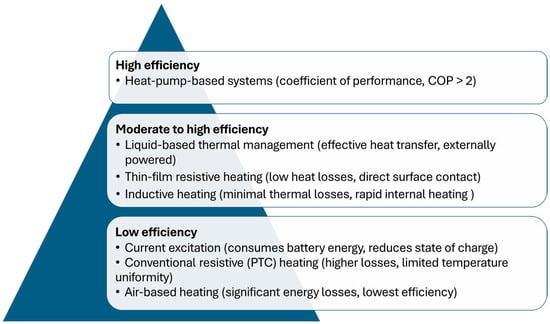
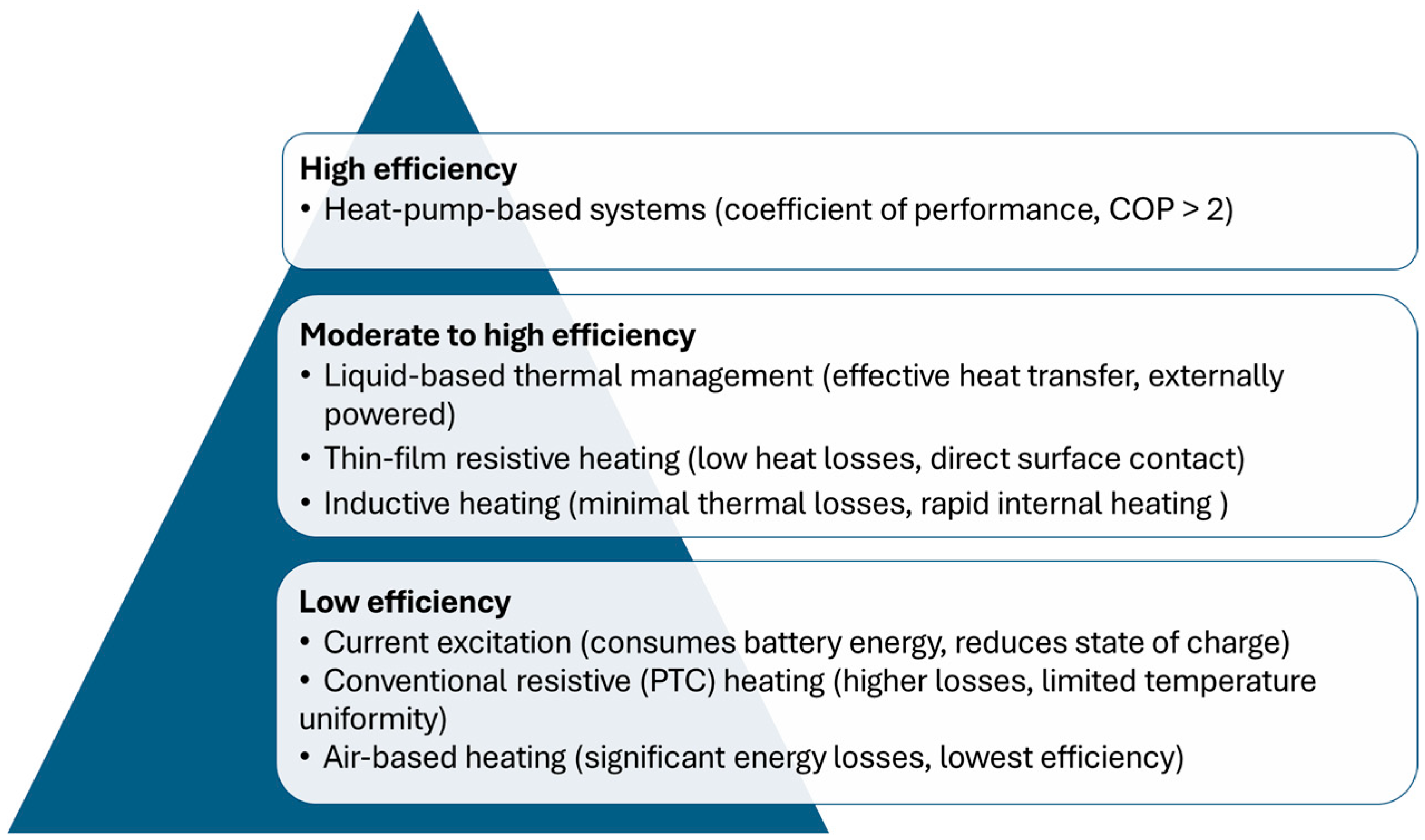
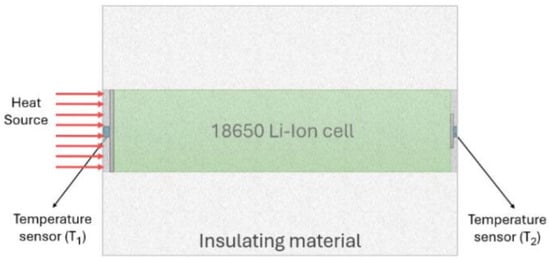
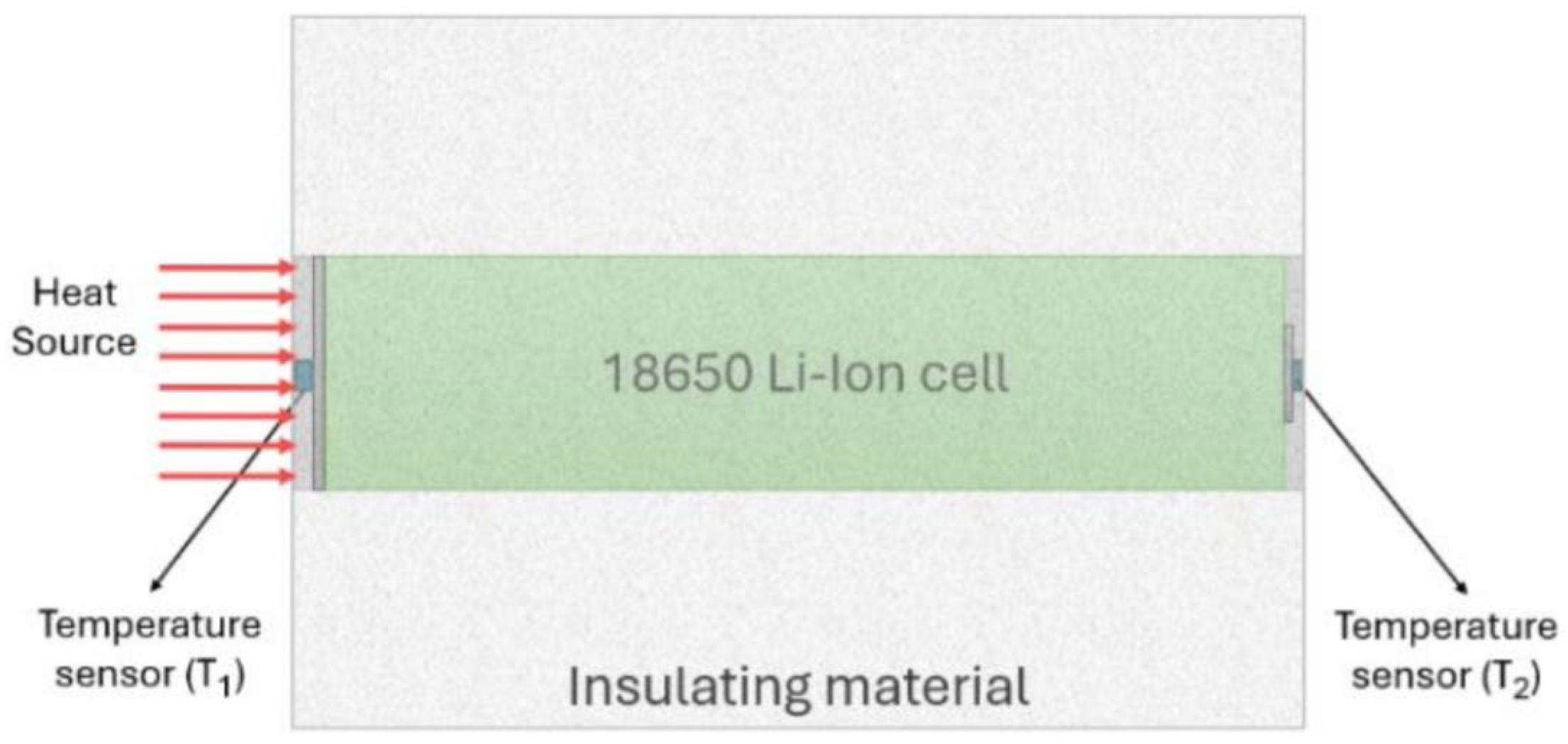
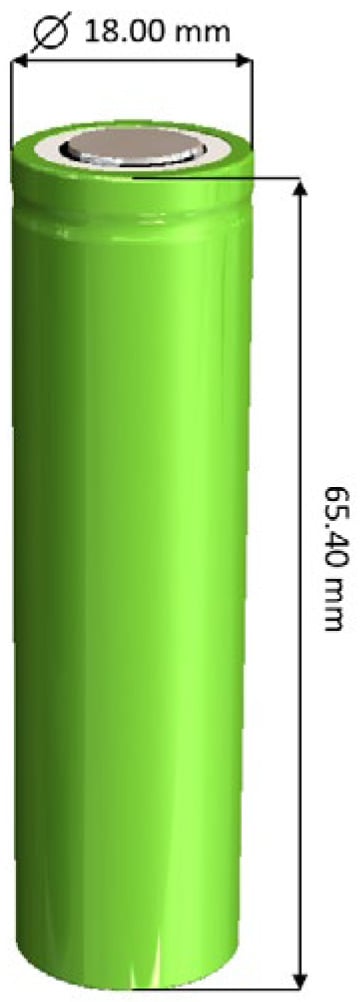
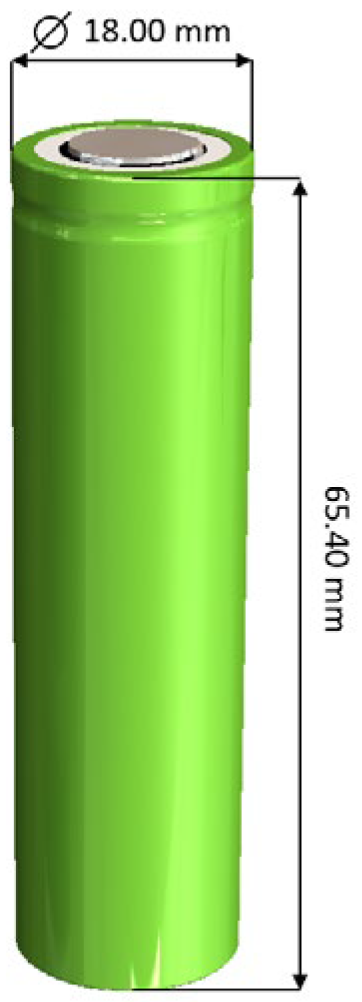
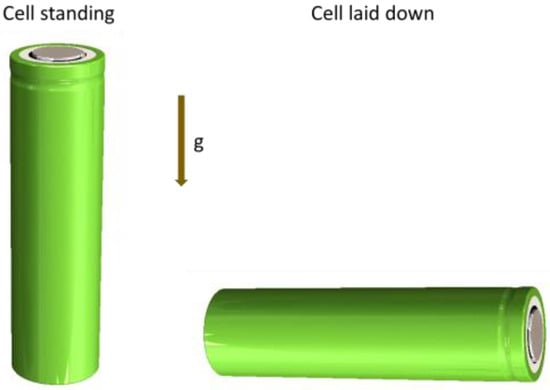
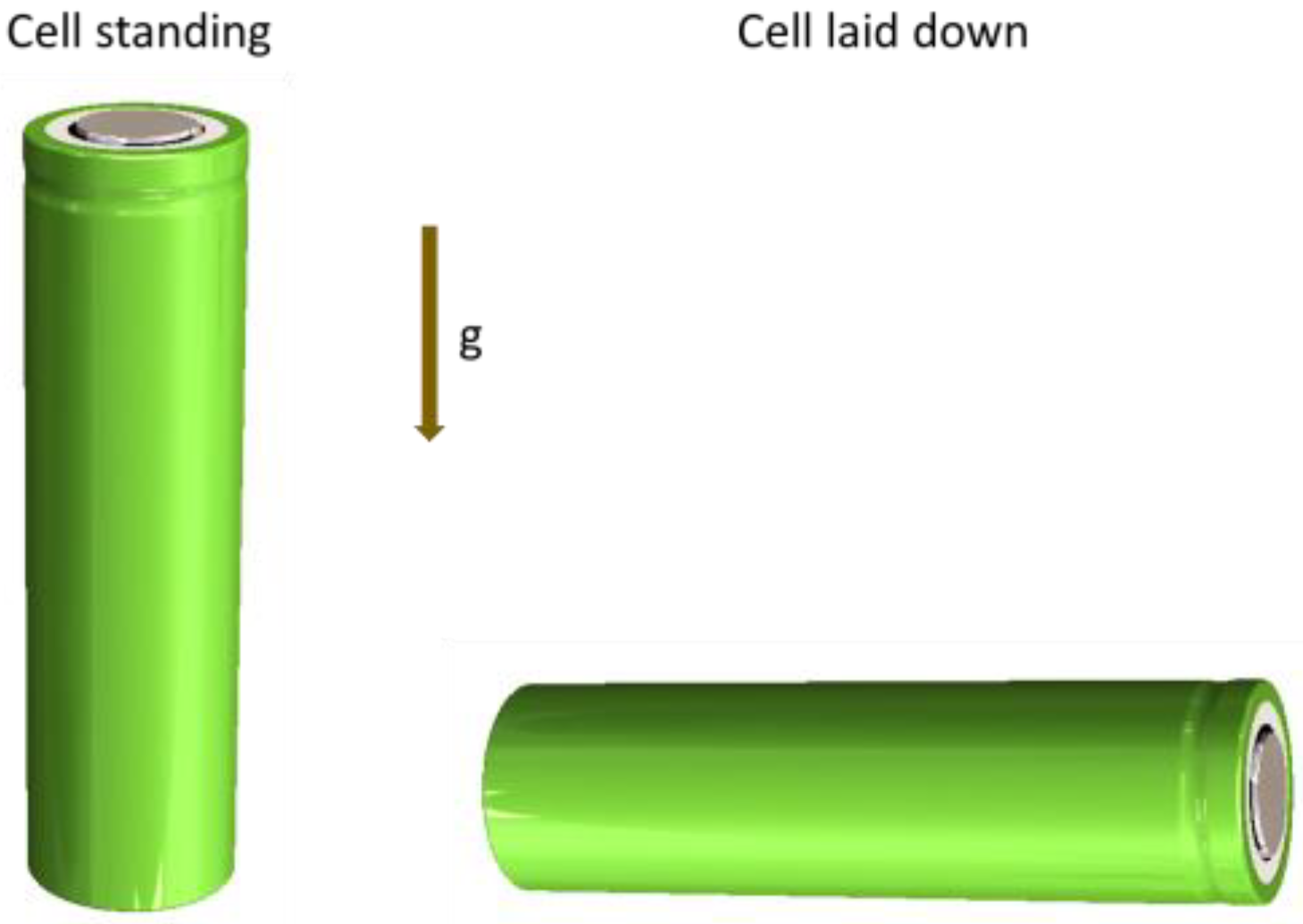
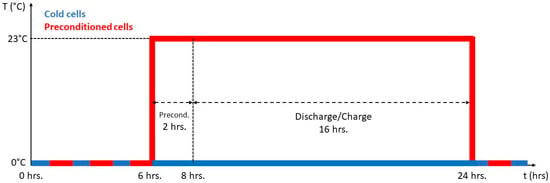
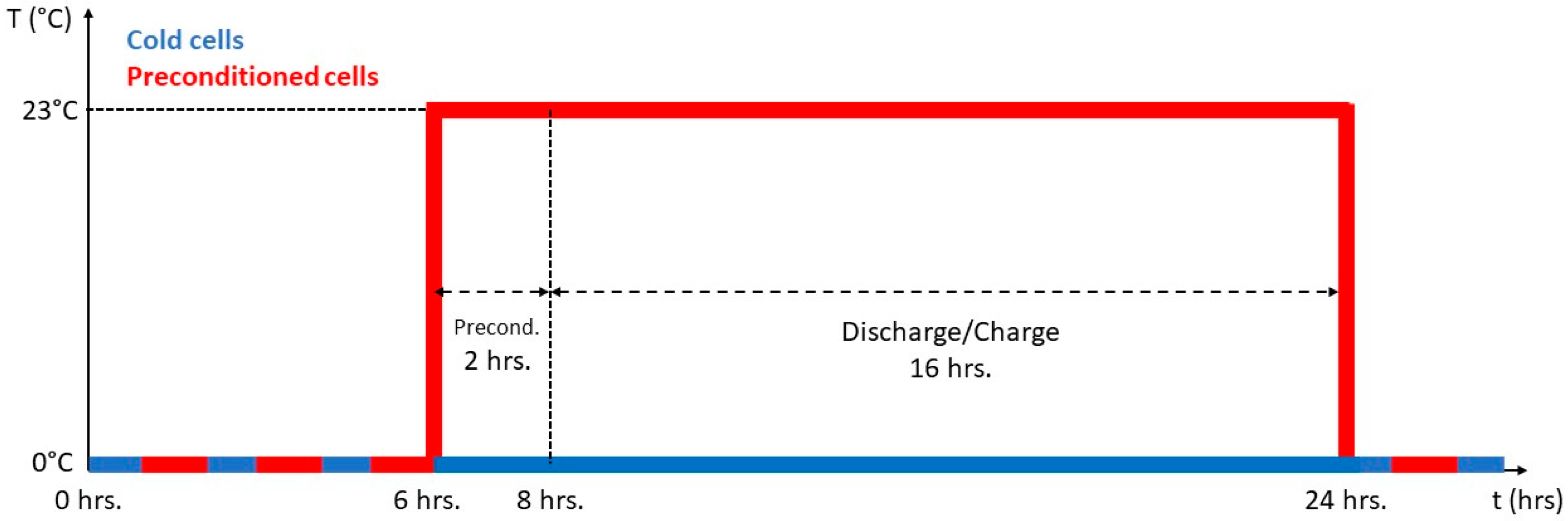
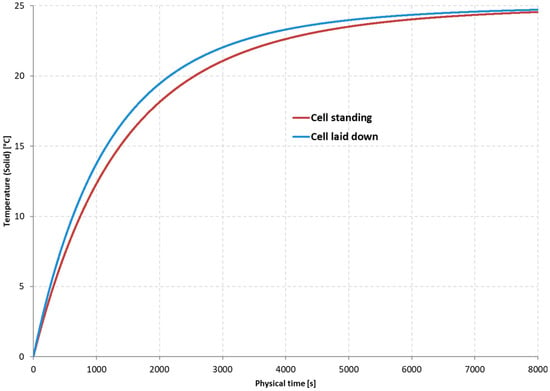
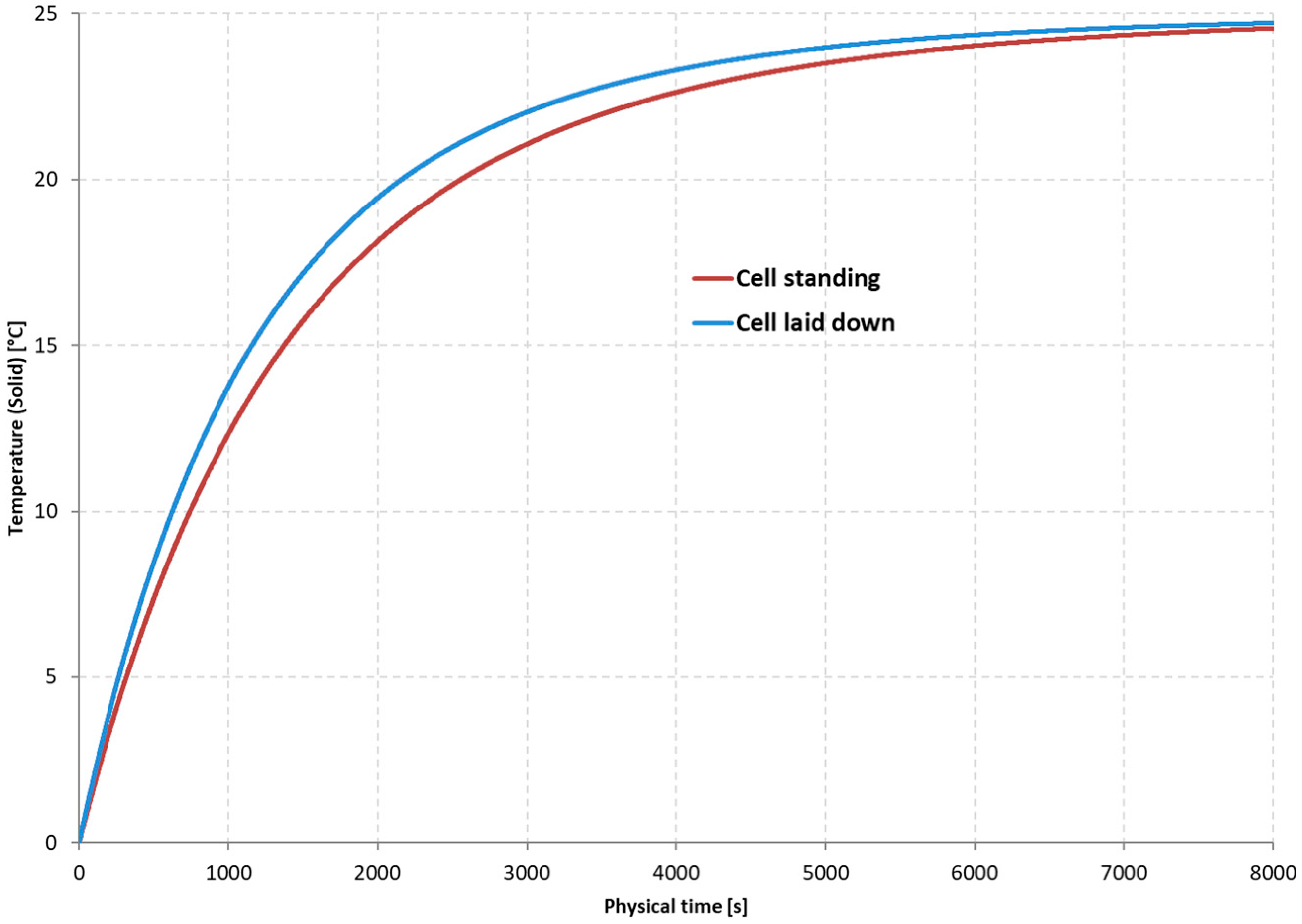
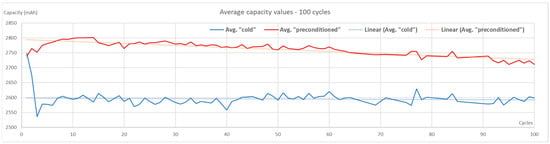
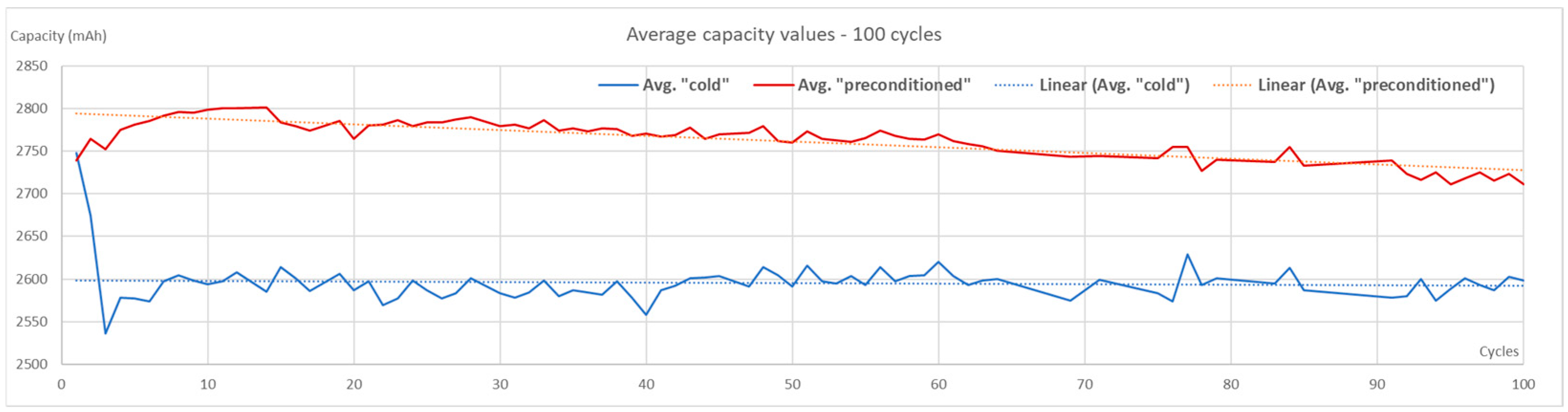
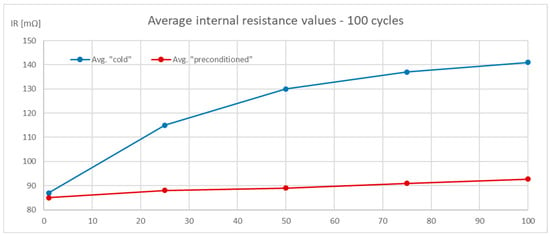
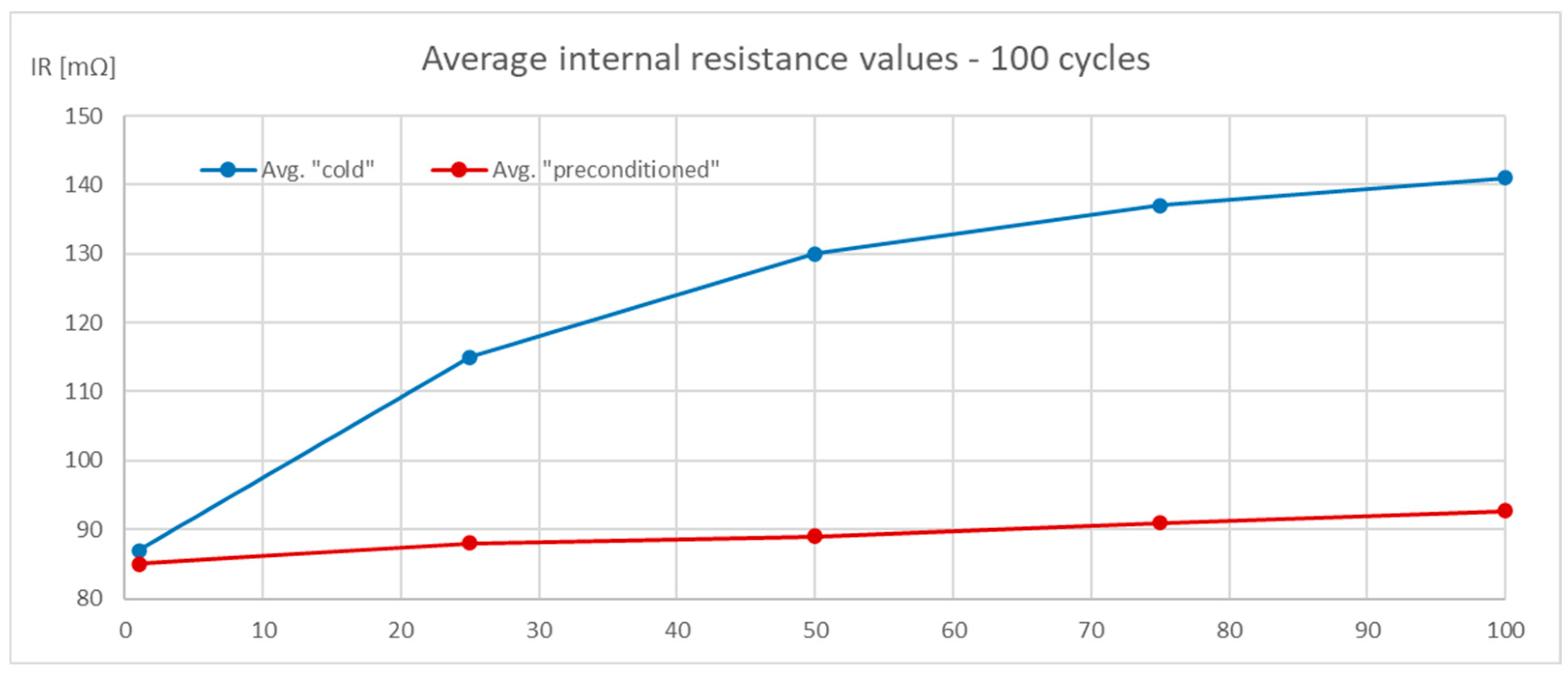
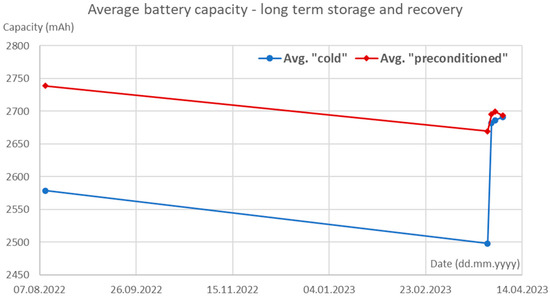
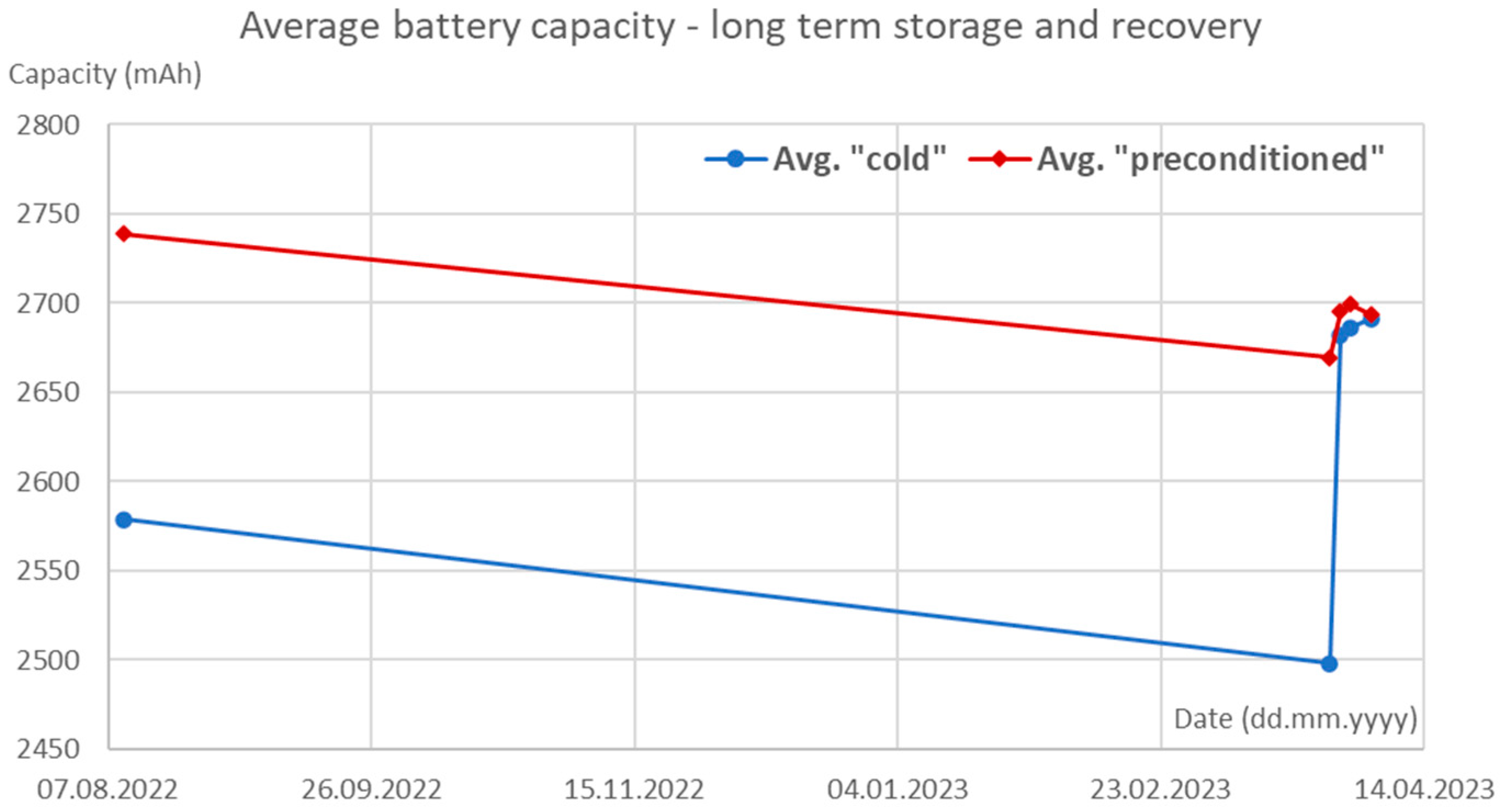

Disclaimer/Publisher’s Note: The statements, opinions and data contained in all publications are solely those of the individual author(s) and contributor(s) and not of MDPI and/or the editor(s). MDPI and/or the editor(s) disclaim responsibility for any injury to people or property resulting from any ideas, methods, instructions or products referred to in the content. |
© 2026 by the authors. Published by MDPI on behalf of the World Electric Vehicle Association. Licensee MDPI, Basel, Switzerland. This article is an open access article distributed under the terms and conditions of the Creative Commons Attribution (CC BY) license.