Article

Fuzzy Logic-Based Driving Style Classification for Lane-Change Prediction in Intelligent Transportation Systems


by
Muhammed Fatih Koc
*,
Nouman Ashraf
,
Pramod Pathak
and
Sachin Sharma
*
Built Environment & Apprenticeships, Faculty of Engineering, School of Electrical and Electronic Engineering, Technological University Dublin, D07 ADY7 Dublin, Ireland
*
Authors to whom correspondence should be addressed.
Future Internet 2026, 18(5), 256; https://doi.org/10.3390/fi18050256
Submission received: 18 March 2026 / Revised: 24 April 2026 / Accepted: 8 May 2026 / Published: 13 May 2026

Abstract

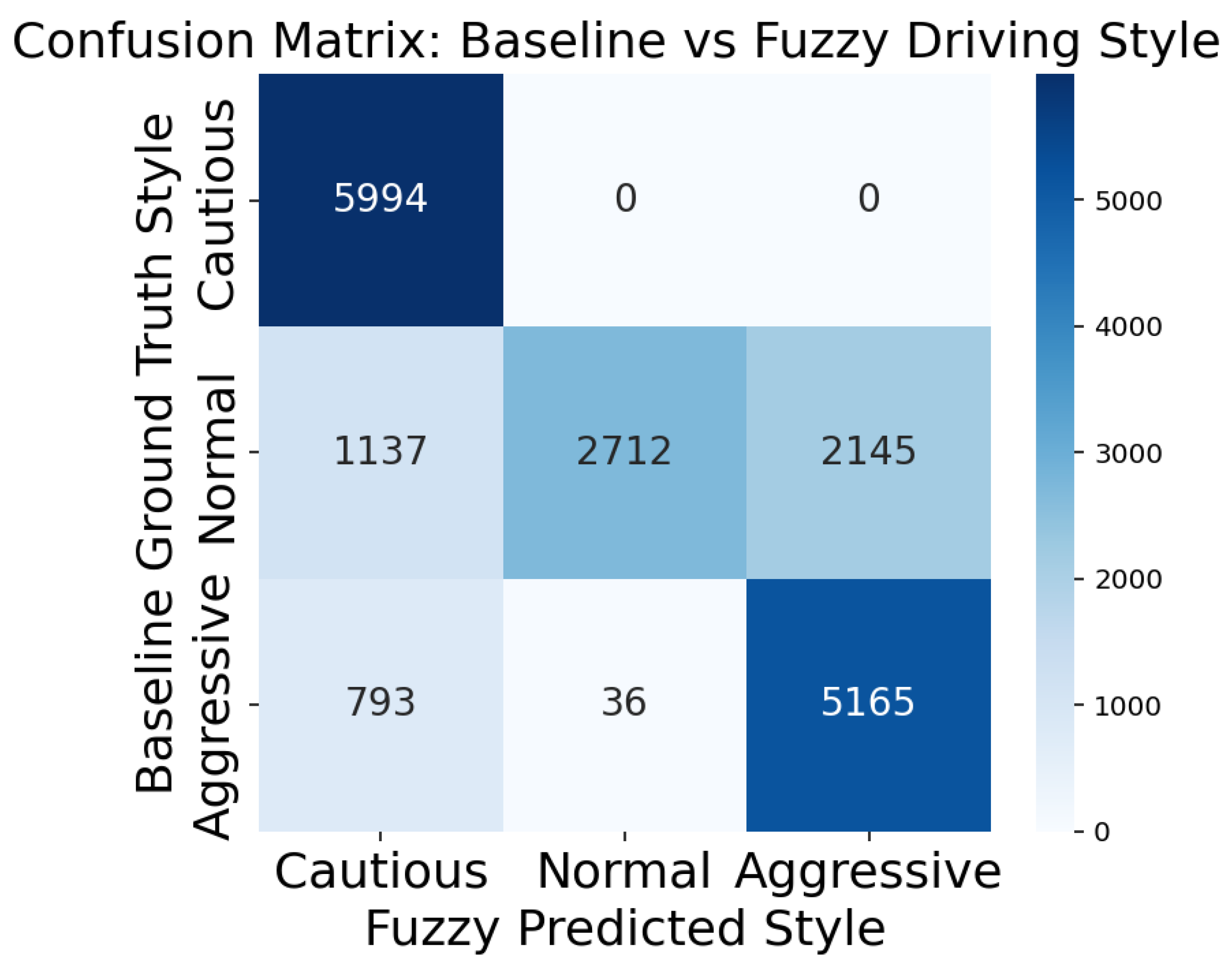
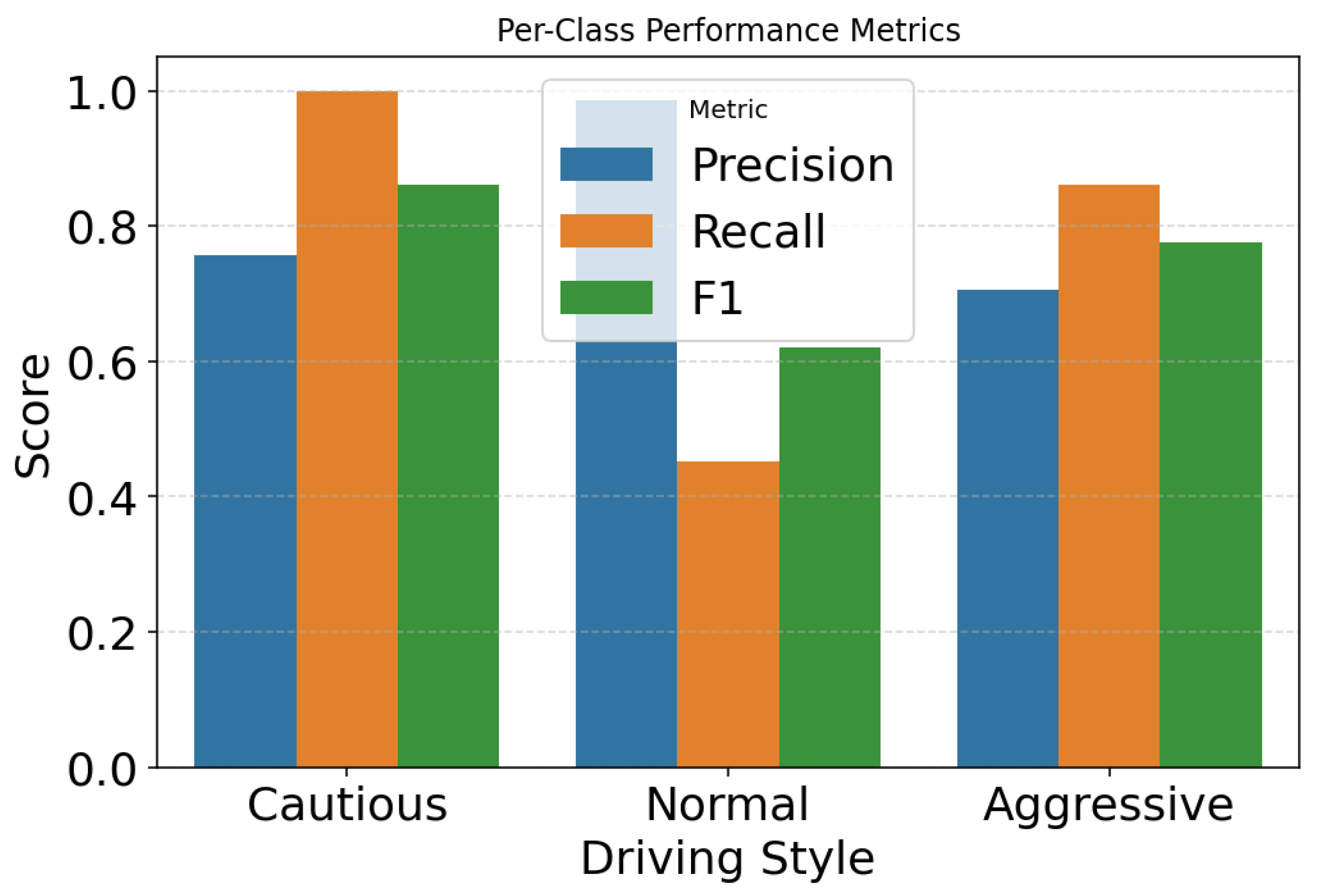
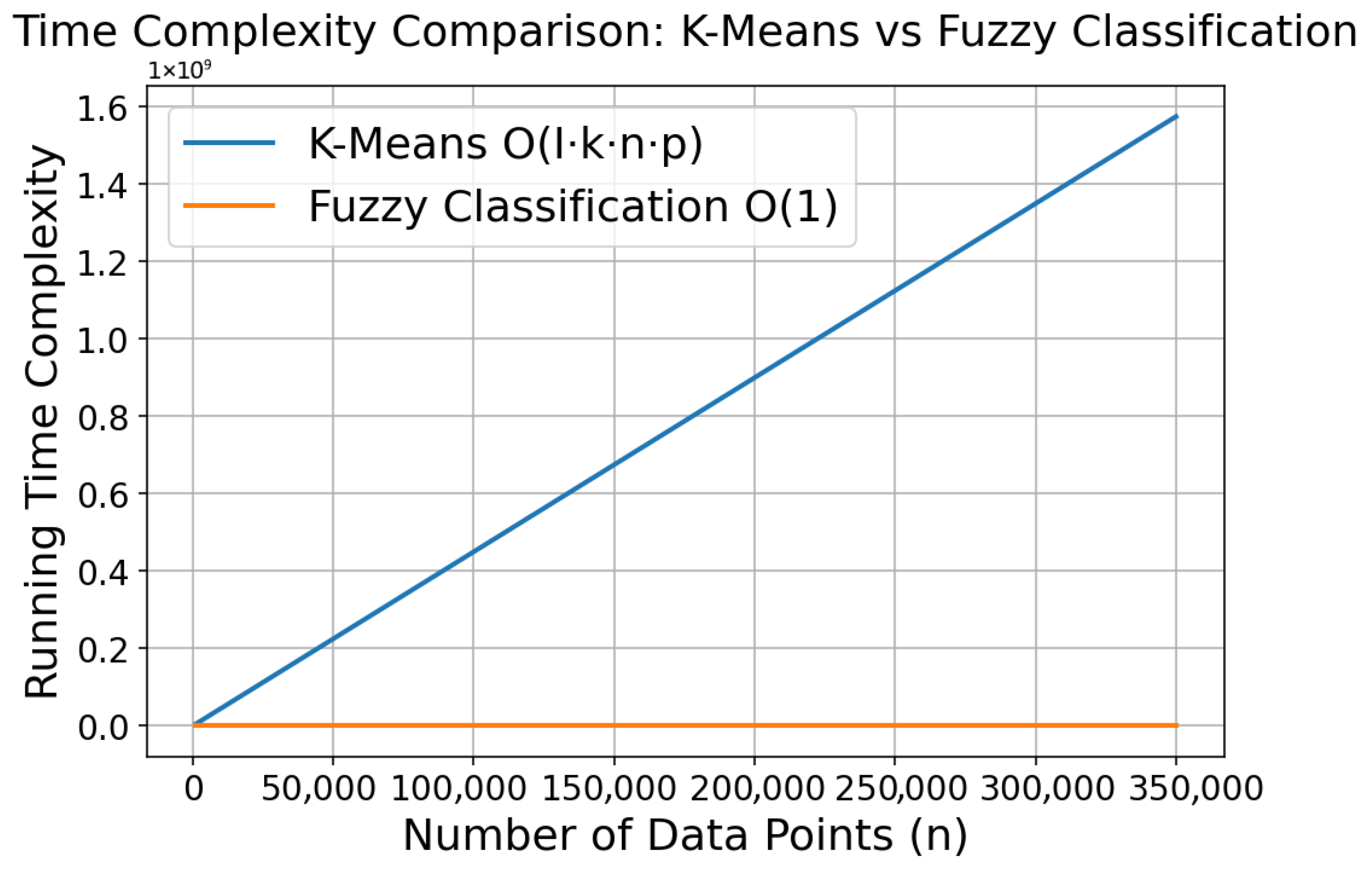
In recent years, Intelligent Transportation Systems (ITSs) have emerged as a solution to mitigate the problem of traffic congestion. Understanding human driving styles such as aggressive, normal, and cautious is crucial for safe driving. In particular, predicting lane-change manoeuvres may be further supported by combining vehicle state information with driving style information. However, existing vehicle trajectory datasets lack driving style information, making classification challenging. To address this limitation, this paper proposes a fuzzy logic-based driving style classification framework in a Vehicle-to-Everything (V2X) environment. The model uses vehicle state information, including speed, longitudinal acceleration, lateral acceleration, and distance headway to classify style as cautious, normal, or aggressive. The proposed system is interpretable, aligns with human reasoning, and remains computationally efficient for real-time applications. The performance of the proposed work has been evaluated through comprehensive experiments on highway data. Results show a separation of driving styles, achieving 77% accuracy on a balanced dataset, showing moderate agreement with deterministic labelling while maintaining interpretability. In V2X-enabled lane-change prediction scenarios, computational latency is essential, as Roadside Units (RSUs) must understand driving style and update prediction models. Since lane-change intentions should be predicted around 3 s before manoeuvre, delays in inference reduce reaction time. The proposed classifier achieves an inference latency of approximately 8 ms, ensuring that it does not become a bottleneck in real-time systems. Furthermore, the usefulness of driving style information is tested by integrating it into a lane-change prediction task. Experimental results demonstrate that incorporating driving style enhances prediction accuracy from 75% to 84%. Lastly, the proposed method provides a balanced result between interpretability, computational efficiency, and predictive performance, supporting RSUs to issue timely warnings and support safer decision-making in highway environments.
Keywords: intelligent transportation system (ITS); vehicular networks; driving style classification; fuzzy logic; lane change prediction intelligent transportation system (ITS); vehicular networks; driving style classification; fuzzy logic; lane change prediction