


Abstract
The rapid evolution of Internet-enabled smart systems has accelerated the adoption of the Internet of Things (IoT), Cyber–Physical Systems (CPS), Big Data, Artificial Intelligence (AI), and Human–Computer Interaction (HCI/AR–VR) across distributed digital ecosystems. Despite these advances, the architectural integration of sensing, information processing, and system-level reasoning remains fragmented, limiting system coherence and accountability. This study derives an architectural foundation through a systematic synthesis of smart system architectures. An activity-mediated socio-technical perspective is employed to analyze diverse paradigms—including IoT-centric frameworks, AI-driven infrastructures, digital twins, Big Data pipelines, and cyber–physical systems—as well as reference architectures such as RAMI 4.0, IIRA, and other representative smart system architectures. Here, activity-mediated denotes an architectural mediation mechanism that coordinates sensing, data-driven reasoning, and human–AI interaction. The synthesis reveals a lack of explicit mechanisms for vertical integration and alignment between bottom-up data flows and top-down goal propagation. In response, this study derives three architectural pillars that integrate interaction, governance, and smart technologies. Their operationalization reveals a structured transformation process in which activity-derived signals are translated into actionable intelligence and adaptive interventions, enabling feedback-driven behavior and cross-layer traceability.
1. Introduction
The rapid advancement of digital technologies—including Artificial Intelligence (AI), the Internet of Things (IoT), Cyber–Physical Systems (CPS), Big Data, Human–Computer Interaction (HCI), and Augmented/Virtual Reality (AR/VR)—has ushered Internet-enabled socio-technical ecosystems, including large-scale organizational environments, into a new era of smart systems. These systems have evolved beyond mere automation into adaptive, interactive, and analytics-driven environments that support complex decision-making and enable seamless human–machine collaboration [1,2,3,4]. As Internet-enabled smart systems increasingly operate across distributed platforms and infrastructures, organizations are compelled to undertake profound structural transformations to sustainably integrate intelligent technologies with human-centered processes and decision-making logics [5,6].
Despite these advances, the architectural integration of heterogeneous Internet-enabled technologies remains a critical challenge. Effective integration requires more than technical interoperability; it demands architectural foundations capable of mediating human–content interaction, supporting cognition and reasoning, and enabling coordinated decision-making across distributed system layers [7,8]. Existing reference architectures—such as the Industrial Internet Reference Architecture (IIRA) [9], the Reference Architecture Model Industrie 4.0 (RAMI 4.0) [10,11], and SITAM [12,13,14]—have contributed significantly to standardizing integration patterns, data flows, and interoperability within Internet-connected industrial and infrastructural systems. Nevertheless, these architectures primarily emphasize the integration of physical and digital assets, while offering limited support for modeling dynamic human–AI roles, cross-layer coordination, and the epistemic dimensions of AI-driven decision-making.
Similar limitations can be observed in enterprise and platform-oriented architecture frameworks, including business–IT alignment models and agile architecture approaches, which seek to align information systems with organizational processes [15]. While effective in improving operational alignment, these approaches tend to underrepresent emerging AI agency, dynamic human role configurations, and the layered structure of adaptive decision-making in contemporary Internet-enabled systems [16]. Consequently, a substantial gap persists in the literature: the absence of a comprehensive architectural perspective that coherently integrates smart technologies, organizational structures, and human–AI interaction within distributed Internet-based ecosystems.
To address this gap, this study employs a systematic synthesis of existing smart system architectures to identify recurring structural limitations and coordination challenges. Activity Theory is not treated as a social theory in this work; rather, it is operationalized as an activity-mediated socio-technical architectural mechanism to analyze how sensing, reasoning, and interaction are coordinated across Internet-enabled smart systems [17,18]. In addition, the analysis considers system hierarchy layers—ranging from technical to strategic levels—to evaluate alignment, traceability across system level [19,20]. This approach is further enriched by assessing the architectural integration of core Internet-enabled technologies, including IoT, AI, Big Data, and HCI/AR–VR, as foundational components of modern smart systems [19,20,21].
The evolution of Internet-enabled smart systems has been accompanied by the proliferation of diverse reference architectures designed to ensure interoperability, scalability, and adaptability in complex environments. Over the past decade, models such as RAMI 4.0, IIRA, SITAM, LASFA+, HORSE, HCPS, BIGQA, ARTI, FEAMI, GoalID, have shaped the discourse on digital transformation across industrial, service, and public domains [13].
While these models provide structured approaches to aligning physical assets, cyber infrastructures, and operational processes, most remain predominantly technology-driven, emphasizing vertical and horizontal integration of cyber–physical components while falling short in fully representing:
- The dynamics of human–AI roles in socio-technical activities.
- Explicit coordination across system layers, from sensing and operation to strategic decision-making; and
- Comprehensive and traceable integration of smart technologies (IoT, AI, Big Data, HCI/AR–VR) across all layers.
To systematically evaluate these limitations, this study applies an integrated three-dimensional evaluation framework encompassing: (i) activity-mediated architectural elements, assessing how roles, tools, rules, and coordination mechanisms are represented; (ii) system hierarchy layers, evaluating coverage from technical to strategic levels; and (iii) smart technology integration, examining the explicit adoption of IoT, AI, Big Data, and HCI/AR–VR across layers. Applying this framework enables a structured taxonomy and comparative analysis of existing architectures, revealing recurring conceptual and structural gaps that motivate the derivation of architectural pillars for Internet-enabled smart systems, as elaborated in the subsequent sections. This study extends our prior work [4], which introduced a conceptual four-layer architecture grounded in Activity Theory, by providing a systematic and evidence-based synthesis of smart system architectures. Unlike the conceptual focus of [4], the present work employs a structured SLR methodology, derives architectural patterns and gaps from a corpus of 50 studies, and develops a traceable analytical framework leading to the formulation of architectural pillars.
1.1. Research Objectives
The primary objective of this study is to derive a foundational architectural synthesis for Internet-enabled smart systems by systematically identifying, classifying, and integrating recurring conceptual and structural gaps in existing smart system architectures. This objective is operationalized through the following sub-objectives:
- To evaluate existing smart system reference architectures using a three-dimensional architectural evaluation framework encompassing Human–Content Interaction (HCI+) perspective adoption, system hierarchy layer coverage, and smart technology integration, with Activity Theory operationalized as an activity-mediated socio-technical architectural mechanism.
- To identify and classify a Gap Taxonomy (G1–G6) capturing structural, interactional, and technological deficiencies in current architectures, ensuring architectural traceability to the reviewed literature through structured evidence matrices.
- To synthesize the identified gaps into three architectural pillars—Human–Content Interaction Foundations, Multi-Level Organizational Coherence and Governance Alignment, and Integrated Smart Technology Ecosystems—that collectively establish an architectural foundation for Internet-enabled smart systems.
- To provide a Gap–Pillar Mapping Matrix and visual synthesis artifacts that operationalize the linkage between empirical architectural evidence, identified gaps, and synthesized pillars, thereby supporting methodological transparency and reproducibility.
Collectively, these objectives aim to establish a transferable meta-architectural synthesis approach that can inform future studies and architectural design efforts, including Pillars-to-Viewpoint Mapping, for coherent, traceable, and technology-integrated Internet-enabled smart systems.
1.2. Research Questions
This study is guided by the following research questions:
- RQ1: What structural, interactional, and technological gaps (G1–G6) persist in existing Internet-enabled smart system architectures when evaluated through an activity-mediated socio-technical architectural framework encompassing HCI+ perspective adoption, system hierarchy layers, and smart technology integration?
- RQ2: How can these identified gaps be systematically synthesized into architectural pillars that collectively support completeness in HCI+, coherence across distributed system layers, and comprehensive integration of core Internet-enabled smart technologies?
These research questions directly support the study’s architectural agenda by (i) diagnosing recurrent architectural deficiencies in Internet-enabled smart systems and (ii) synthesizing these deficiencies into actionable architectural foundations. Methodologically, the study employs a systematic literature synthesis, supported by a three-dimensional evaluation matrix and a Gap–Pillar Mapping Matrix, to ensure that the transition from gap identification to architectural synthesis is grounded in transparent and reproducible logic.
2. Materials and Methods
This study employs systematic literature synthesis as an analytical instrument to derive architectural foundations for Internet-enabled smart systems. The methodology follows established Systematic Literature Review (SLR) protocols to ensure transparency, repeatability, and rigor, while positioning the review to support architectural synthesis rather than as an end. The analysis focuses on how smart system architectures are conceptualized and structured within distributed Internet-based socio-technical environments. In this context, organizational systems are treated as representative instantiations of broader Internet-enabled smart systems, enabling a consistent analytical perspective across heterogeneous application domains.
2.1. Overview of the Systematic Literature Review (SLR)
The SLR is adopted as a structured approach to identify, assess, and synthesize relevant studies on smart system architectures. Following Kitchenham’s guidelines [22], the process minimizes selection bias and ensures methodological rigor. In this study, Activity Theory (AT) is operationalized as an activity-mediated socio-technical architectural mechanism rather than a purely social theory. It supports the analysis of coordination, interaction, and decision-making across sensing, information, and reasoning layers in Internet-enabled smart systems. This perspective is particularly relevant for modeling distributed socio-technical systems, where interactions between human actors, AI components, and digital infrastructures must be explicitly coordinated.
2.2. Research Questions and Picoc Framework
The research questions were formulated using the PICOC (Population, Intervention, Comparison, Outcome, Context) framework, as summarized in Table 1. The PICOC dimensions were defined to capture smart system architectures within Internet-enabled socio-technical ecosystems.
Table 1.
PICOC Framework.
2.3. Protocol Design and Search Strategy
A review protocol was developed to ensure methodological consistency, including:
- Definition of inclusion and exclusion criteria;
- Selection of digital libraries;
- Formulation and iterative refinement of search strings;
- Quality assessment procedures.
The literature search was conducted across major databases, including IEEE Xplore, Scopus, ACM Digital Library, SpringerLink, ScienceDirect, and Taylor & Francis.
The search targeted studies at the intersection of smart system architecture, organizational design, and human–technology interaction. Activity-oriented concepts were incorporated to capture studies addressing mediated coordination in socio-technical systems. The corpus includes studies published up to 2024.
2.4. Inclusion and Exclusion Criteria
The study selection criteria are presented in Table 2. Inclusion criteria focused on peer-reviewed journal articles in English that explicitly or implicitly address smart system architectures, including those grounded in Activity Theory or related socio-technical frameworks. Studies were excluded if they were non-peer-reviewed, inaccessible, duplicated, or not directly related to architectural aspects of smart or organizational systems.
Table 2.
Study Selection Criteria.
The selected time window reflects the rapid evolution of smart system architectures, ensuring that the review captures both foundational and recent developments in the field.
2.5. Data Extraction and Quality Assessment
Data was systematically extracted from each selected study using a structured extraction form. The extracted data include publication metadata, architectural models, theoretical frameworks, organizational context, and system characteristics. To ensure the reliability of the synthesis, a quality assessment was conducted using a five-criteria rubric evaluating:
- Relevance to research questions;
- Theoretical contribution;
- Methodological clarity;
- Empirical evidence;
- Journal impact and peer-review status.
Only studies meeting the defined quality threshold were retained. Extracted data were also mapped to the research questions (Table 3), ensuring traceability between the literature and the analytical objectives.
Table 3.
Data Mapping with RQs.
2.6. Iterative Protocol Development
The review protocol was refined iteratively throughout the study. Pilot searches, adjustments to inclusion criteria, and refinement of search terms were conducted to improve both precision and recall. Feedback from preliminary analysis informed minor refinements to the scope and selection criteria, resulting in a balanced and representative literature corpus suitable for architectural synthesis.
The search process yielded an initial pool of 250 records from major digital libraries. Through staged screening and eligibility assessment, a final corpus of 50 primary studies was retained for analysis. While the review does not aim for exhaustive enumeration, it ensures systematic coverage of conceptually representative studies that capture recurring architectural patterns across the literature, enabling robust pattern-based synthesis. AI-assisted tools were used during manuscript preparation to support language refinement and structural organization. All generated outputs were carefully reviewed and validated by the authors to ensure accuracy and integrity.
2.7. Analytical Derivation Process
To ensure a transparent, systematic, and reproducible transformation from literature evidence to architectural insights, this study adopts a structured analytical derivation process (see Figure 1). The analysis is conducted on the full corpus of 50 primary studies identified through the systematic literature review (Section 2.6) and proceeds through sequential stages of abstraction, pattern formation, and evaluation.
Figure 1.
Literature search and screening process, followed by the analytical derivation process (Section 2.7), from feature extraction and pattern clustering to architectural form abstraction, representative architecture selection, and multi-dimensional evaluation.
- Step 1: Feature Extraction
Architectural characteristics are systematically extracted from each of the 50 studies using a structured coding scheme. These characteristics include structural configurations, interaction mechanisms, decision-making constructs, and technology integration elements. The extraction process is aligned with the three analytical dimensions defined in this study: activity-mediated interaction (HCI+), organizational layer coverage, and smart technology integration.
- Step 2: Pattern Identification
Cross-study comparison is performed to identify recurrent architectural features and structural regularities. This step focuses on detecting consistent patterns in how architectures organize sensing, information processing, interaction, and decision-making across distributed socio-technical environments.
- Step 3: Pattern Clustering
Identified patterns are iteratively grouped into higher-level architectural categories through clustering. This process continues until pattern saturation is achieved. Saturation is defined as the point at which successive clustering iterations yield no new architectural categories, relationships, or structural variations across the three analytical dimensions.
Importantly, this clustering process is conducted on the entire corpus (n = 50), ensuring that all retained studies contribute to the formation of the architectural pattern space.
- Step 4: Architectural Form Abstraction
From the clustered patterns, generalized architectural forms are abstracted. These forms represent structurally consistent configurations observed across multiple studies and serve as intermediate analytical constructs bridging empirical evidence and architectural interpretation.
- Step 5: Representative Architecture Analysis
To enable structured and tractable evaluation, a set of ten representative architectures is selected as analytical instantiations of the abstracted architectural forms. The selection follows explicit criteria:
- (i)
- Conceptual completeness and clarity of architectural description;
- (ii)
- Representation of distinct architectural forms identified during clustering; and
- (iii)
- Relevance to distributed socio-technical system contexts.
The selection of ten architectures does not constitute a reduction in the dataset. Instead, it reflects a pattern-based representational strategy, where each selected architecture represents one or more architectural patterns derived from the full corpus. Multiple architectures may correspond to the same pattern to capture structural variation within a category. Collectively, the selected architecture ensures full coverage of the identified architectural pattern space.
The outcome of the representative architecture selection process is summarized in Table 4, which presents the coverage mapping between clustered architectural patterns, the number of supporting studies, and their corresponding representative architectures. Each architectural pattern is supported by multiple studies derived from the full corpus, and the selected representative architectures collectively span all identified pattern categories. This mapping establishes an explicit linkage between pattern-level abstraction (Step 3), architectural form instantiation (Step 5), and subsequent multi-dimensional evaluation (Step 6), ensuring that the evaluation remains grounded in the complete dataset rather than a reduced subset.
Table 4.
Coverage Mapping of Architectural Patterns and Representative Architectures. Each architectural pattern is supported by multiple studies from the full corpus. The complete mapping of all 50 studies to patterns and representative architecture is provided in Appendix A Table A1.
Disposition of the Retained Study Corpus. All 50 primary studies retained after screening are fully utilized in the analytical derivation stages (Steps 1–3), including feature extraction, pattern identification, and clustering. No studies are excluded during these stages. The reduction to ten architectures occurs exclusively at the level of representative instantiation (Step 5) and is performed for analytical tractability rather than dataset reduction. To ensure full transparency and traceability, all retained studies are explicitly mapped to their corresponding architectural patterns and representative architectures, as provided in Appendix A Table A1. This mapping demonstrates that the subsequent evaluation remains grounded in the complete dataset.
Importantly, the analytical generalization in this study is not derived from the direct evaluation of individual architectures, but from pattern-level convergence established across the full corpus of 50 studies (Step 3). The representative architectures (n = 10) are evaluated as instantiations of these abstracted architectural forms, enabling analytical tractability without reducing empirical coverage. Each architectural pattern identified during clustering is supported by multiple studies, and the selected representative architectures collectively span all identified pattern categories.
- Step 6: Multi-dimensional Evaluation
The representative architectures are evaluated using the three-dimensional analytical lens comprising:
- (i)
- HCI+ perspective adoption (based on Activity Theory constructs);
- (ii)
- Organizational layer coverage;
- (iii)
- Smart technology integration.
This evaluation enables systematic comparison across heterogeneous architectures while preserving traceability to the underlying patterns derived from the full corpus.
Importantly, the evaluation results should be interpreted as pattern-level representations, rather than case-specific findings. The observed structural tendencies reflect convergent characteristics identified across multiple studies within each architectural pattern.
Analytical Generalization Strategy. The generalization in this study follows an analytical generalization approach, in which findings are derived from pattern-level convergence across the full corpus (n = 50), rather than from statistical inference based on the evaluated architectures.
Accordingly, the identified gap classes (G1–G6) are grounded in recurring structural deficiencies observed across clustered patterns, ensuring that the resulting architectural synthesis reflects the collective evidence of the entire dataset.
The architectural patterns and representative abstractions were derived exclusively from the core corpus of 50 primary studies. To account for recent developments, selected studies published in 2024 were incorporated as complementary evidence. These studies are not included in the formal analytical dataset, but are used to confirm the continued relevance and applicability of the identified architectural structures.
3. Review of Existing Literature
This section presents an analytical synthesis of the reviewed literature, derived through the systematic literature review (SLR) process described in Section 2.7. Specifically, the analysis applies pattern identification and pattern clustering to extract recurring architectural structures and organize them into dominant architectural categories, forming the empirical basis for subsequent taxonomy and evaluation.
3.1. Existing Research on Smart System Architecture and Activity Theory
Smart System Architecture
In recent years, smart system architecture has emerged as a prominent research area, driven by the rapid proliferation of Internet-enabled technologies such as the Internet of Things (IoT), Cyber–Physical Systems (CPS), Big Data platforms, Artificial Intelligence (AI), and interactive digital interfaces. Prior studies increasingly conceptualize smart systems as distributed and interconnected environments rather than isolated automation solutions, emphasizing interoperability, scalability, and data-driven operation across networked infrastructures.
A wide range of architectural approaches have been proposed to address specific smart system concerns. IoT-oriented architectures primarily emphasize device connectivity and data exchange, while Big Data architectures focus on large-scale data storage, processing, and analytics pipelines. CPS and digital twin architectures integrate computational and physical components to support real-time monitoring and control and AI-centric architectures embed learning and reasoning capabilities into system behavior. Collectively, these architectures reveal a pattern of specialization without systemic integration, reinforcing the need for a unifying architectural synthesis.
Despite these advances, existing architectures are commonly designed around single dominant concerns, such as connectivity, analytics, or control. As a result, mechanisms for coordinating interaction, reasoning, and decision-making across system layers remain weakly specified—particularly in Internet-enabled environments where smart systems must mediate activities involving humans, AI components, digital tools, and system objectives across distributed infrastructures.
Across the reviewed literature, multiple technological orientations—including Industry 4.0-driven frameworks, Big Data–oriented architectures, digital twin systems, IoT-centric runtime models, and human-centered AI-augmented designs—exhibit recurring architectural patterns in Internet-enabled smart systems. Rather than representing isolated domain-specific approaches, these studies collectively reveal convergent structural tendencies in how connectivity, data processing, cyber–physical integration, intelligent reasoning, and human–system interaction is organized across system layers.
Industry 4.0-driven frameworks emphasize standardization, interoperability, and cyber–physical integration to support smart manufacturing environments, with particular attention to data governance, system scalability, and organizational alignment [13,14,15,16,17,18,19,20,21,22,23,24,25,26,27,28,29,30,31,32,33,34,35,36,37,38,39,40,41,42,43,44,45,46,47,48,49,50,51,52,53,54,55,56,57,58,59,60,61,62,63,64,65,66,67,68,69,70,71,72,73,74,75,76,77,78,79,80,81]. Big Data–oriented architectures prioritize large-scale data pipelines, analytics, and decision support, enabling the management of complex data flows in data-driven organizations [34,37,60,61]. Digital twin–based architectures focus on synchronization between virtual and physical systems, supporting real-time monitoring, simulation, and human–machine collaboration [12,32,41,47,70]. IoT-centric architectures highlight distributed sensing, model-driven design, and runtime adaptability in heterogeneous environments [22,23,24,25,28,29]. Meanwhile, human-centered and AI-augmented architectures increasingly incorporate activity-oriented coordination, integrating human roles, intelligent reasoning, and system functionality within unified architectural structures [42,43,44,48,54,55,82,83].
Despite their diverse technological foundations, these architectural orientations consistently demonstrate a pattern of specialization, where individual architectures emphasize specific functional dimensions—such as connectivity, analytics, control, or interaction—while under-specifying cross-layer coordination, integrated reasoning, and activity-mediated decision-making mechanisms. These recurring tendencies form the empirical basis for the pattern clustering presented in Table 5.
Table 5.
Pattern-Based Architectural Clusters Derived from Analytical Synthesis of Internet-Enabled Smart System Literature.
These architectural clusters represent the outcome of the pattern clustering process (Step 3) and constitute the structural abstraction of recurring architectural patterns identified across the reviewed studies. Together with their associated structural limitations, they provide the empirical foundation for selecting representative architectural instantiations and conducting the subsequent multi-dimensional evaluation in Section 4.
4. Taxonomy and Analysis of Smart System Reference Architectures
This section operationalizes the analytical derivation process defined in Section 2.7 by translating the architectural patterns identified through pattern identification and clustering (Step 2–3) and synthesized in Section 3 (Table 4) into representative architectural instantiations (Step 5). These instantiations are subsequently evaluated using the three-dimensional analytical framework (Step 6), as presented in Table 5 and Table 6. Building upon this process, the section presents a taxonomy and multi-dimensional evaluation of smart system reference architectures, enabling systematic comparison across socio-technical, organizational, and technological dimensions.
Table 6.
Operational Mapping of Activity Theory Constructs to Architectural Feature.
Overview of Reference Architectures in Smart Systems
This subsection introduces the selected reference architectures as analytical subjects for evaluation, rather than providing an exhaustive literature review. The purpose is twofold: first, to outline the conceptual and structural characteristics of these architectures as reported in the literature; and second, to position them within the broader state-of-the-art landscape that will be systematically evaluated in the following subsections. By synthesizing both industry-driven and research-oriented models, this overview offers a coherent entry point for mapping each architecture against the socio-technical, organizational, and technological dimensions introduced earlier in the methodology. This section presents a results-driven taxonomy and analysis; synthesis is deferred to the subsequent sections.
The diversity of these reference architectures, in terms of their intended scope, domain orientation, and structural abstraction, underscores the need for a consistent analytical lens. While each model offers distinct strengths ranging from interoperability frameworks to domain-specific functional mappings their heterogeneity makes direct comparison challenging. To address this, the following section outlines the evaluation framework and methodological basis used in this study, integrating socio-technical, organizational, and technological dimensions to enable systematic taxonomy and comparative analysis.
4.1. Three-Dimensional Evaluation Lens
To enable a structured comparison across heterogeneous reference architectures, this study adopts a three-dimensional evaluation lens that integrates Human–Content–Interaction (HCI+), organizational hierarchy, and smart technology perspectives. The lens operationalizes the taxonomy criteria and captures both explicit and implicit architectural characteristics as reported in the literature.
- Human–Content–Interaction (HCI+) Perspective—Evaluates the extent to which an architecture explicitly models interactions among human actors, digital content, and intelligent systems. It is operationalized through six architectural constructs derived from Activity Theory, as formalized in Table 6: Subject, Object/Goals, Tools, Rules, Community, and Division of Labor. Architectures are classified as implicit, partial, or explicit based on the number and completeness of explicitly represented constructs.
- Organizational Hierarchy Layers—Assesses the vertical coverage of decision-making levels, from Technical (infrastructure and instrumentation) through Operational (day-to-day management), Tactical (mid-term coordination), to Strategic (long-term planning and policy). This dimension distinguishes between single-layer, partial multi-layer, and full multi-layer integration.
- Smart Technology Integration—Analyzes the breadth and depth of integration of the four primary smart system technologies: IoT, AI, Big Data, and HCI/AR–VR. Integration levels are categorized as Single-Tech, Dual-Tech, or Full-Tech Integration.
By applying these three dimensions in combination, the evaluation not only classifies existing architectures but also reveals systemic gaps in their HCI+ completeness, organizational coverage, and technological comprehensiveness. These insights form the analytical backbone for the taxonomy and synthesis presented in the subsequent sections.
This figure illustrates the three-dimensional analytical space used to evaluate and classify smart system reference architectures in this study. The X-axis represents HCI+ Perspective Adoption, ranging from implicit to explicit modeling of human–content–system interaction. The Y-axis denotes Organizational Layer Coverage, spanning from single-layer to full multi-layer integration across technical, operational, tactical, and strategic levels. The Z-axis represents Smart Technology Integration, progressing from single-technology to full integration of IoT, AI, Big Data, and HCI/AR–VR.
This three-dimensional framework enables systematic comparison of heterogeneous architectures and supports the identification of cross-dimensional structural gaps. To ensure that the HCI+ perspective functions as an architectural evaluation mechanism, the six Activity Theory constructs are operationalized into observable architectural features, as defined in Table 6. This mapping establishes a direct linkage between abstract constructions and concrete system elements, enabling consistent and reproducible assessment across architectures.
To ensure that the mapping presented in Table 6 is directly operationalized in the evaluation process, each HCI+ classification is determined based on the explicit presence of the six AT-derived architectural features.
Architecture is classified as:
- -
- HCI+—Implicit (Code 1) when most AT-derived features are absent or only implicitly inferred from general system descriptions.
- -
- HCI+—Partial (Code 2) when at least three AT-derived features (e.g., Subject, Tools, Object/Goals) are explicitly identifiable, but others (particularly Rules, Community, or Division of Labor) remain under-specified.
- -
- HCI+—Explicit (Code 3) when all six AT-derived features are explicitly represented and structurally integrated within the architecture.
This rule-based classification ensures that coding decisions are grounded in observable architectural features rather than interpretive judgment, thereby reinforcing the operational use of Activity Theory as an architectural evaluation mechanism.
In this study, Activity Theory is not applied as a conceptual or interpretive framework but is operationalized as an architectural abstraction layer that defines observable system structures. Through the mapping presented in Table 6, each AT construct is translated into concrete architectural elements and evaluated based on explicit design features reported in the literature. This operationalization ensures that the use of Activity Theory is grounded in structural analysis rather than theoretical interpretation, enabling consistent and reproducible coding across heterogeneous reference architectures. This mapping establishes a direct linkage between AT constructs and observable architectural features used in the evaluation.
For example, in the evaluation of the HCPS framework, the “Subject” construct is identified through explicit human-in-the-loop roles and system agents, while “Tools” correspond to the integration of sensing infrastructure and AI modules. “Object/Goals” are partially represented through system objectives and control functions. However, the absence of explicitly defined “Rules” (governance constraints), “Community” (multi-actor coordination structures), and “Division of Labor” (formal task allocation mechanisms) results in the identification of only three out of six AT-derived architectural features. Based on the classification rule, this leads to an HCI+–Partial (Code 2) assignment.
4.2. Justification for Dimension Selection
The three dimensions applied in this study, Human–Content Interaction (HCI+) Perspective Adoption, Organizational Layer Coverage, and Smart Technology Integration, were selected based on both theoretical relevance and practical necessity in evaluating smart system reference architectures.
First, the HCI+ Perspective Adoption dimension extends the Human–Computer Interaction (HCI) paradigm by explicitly incorporating the interaction between humans, digital content, and intelligent systems, grounded in the systemic lens of Activity Theory [6,17]. This extension moves beyond conventional HCI, which primarily focuses on user–interface dynamics, by addressing how architectural elements mediate user goals, organizational objectives, and contextual rules through tools, communities, and division of labor. As human system interactions increasingly determine the effectiveness of smart systems, the HCI+ lens ensures that cognitive, contextual, and content-related dimensions are embedded into architectural evaluations.
Second, the Organizational Layer Coverage dimension reflects the multi-level nature of decision-making in complex engineered systems. Drawing from [13] organizational architecture framework, the four-tier hierarchy Technical, Operational, Tactical, and Strategic provides a structured view of governance and responsibility. Evaluating architectures through this dimension highlights whether they ensure continuity and traceability across layers, enabling technical implementations to remain aligned with organizational strategy.
Third, the Smart Technology Integration dimension examines the extent to which architectures incorporate the four foundational smart system technologies: Internet of Things (IoT), Artificial Intelligence (AI), Big Data analytics, and Human–Computer/Content Interaction including AR–VR interfaces. The value of smart systems is realized through the synergy of sensing, reasoning, analytics, and interaction capabilities. Assessing the breadth of technology integration reveals whether architectures provide a holistic and interoperable technological foundation or remain siloed within domain-specific constraints.
Collectively, these three dimensions establish a comprehensive evaluative framework that bridges extended HCI principles, organizational governance structures, and enabling technologies. This integrated approach ensures that the taxonomy and analysis capture the capacity of smart system architectures to function as coherent, adaptive, and strategically aligned solutions within diverse organizational contexts.
4.3. Classification Criteria and Coding Scheme
The evaluation follows the three-dimensional lens defined in Section 4.1. To operationalize this lens, each dimension is translated into explicit classification criteria and corresponding coding schemes, enabling systematic and reproducible mapping of heterogeneous reference architectures.
4.3.1. Human–Content–Interaction (HCI+) Perspective Adoption
This dimension assesses the degree to which a reference architecture explicitly incorporates the principles of extended Human–Computer Interaction (HCI) by integrating human, content, and intelligent system elements, interpreted through the six components of Activity Theory (Subject, Object/Goals, Tools, Rules, Community, and Division of Labor). The coding scheme is defined as follows:
- HCI+-Implicit (Code: 1)—Minimal or no explicit consideration of HCI+ principles; interactions are limited to basic system operation or user interface control.
- HCI+-Partial (Code: 2)—Partial integration of HCI+ elements; some Activity Theory components are addressed but without holistic coverage.
- HCI+-Explicit (Code: 3)—Full and explicit incorporation of HCI+ principles, addressing all six Activity Theory components in a structured and traceable manner.
4.3.2. Organizational Layer Coverage
This dimension measures the vertical scope of the architecture in terms of organizational decision-making levels, adapted from [13] organizational hierarchy. The coding scheme is:
- Single-Layer Focus (Code: 1)—Architecture addresses only one organizational layer, typically technical or operational.
- Multi-Layer Partial (Code: 2)—Architecture spans more than one layer but lacks complete coverage across technical, operational, tactical, and strategic levels.
- Full Multi-Layer (Code: 3)—Architecture fully covers all four organizational layers, with clear mechanisms for traceability and integration between levels.
4.3.3. Evaluating Smart Technology Integration in Reference Architecture
This dimension evaluates the inclusion of the four foundational smart system technologies: IoT, AI, Big Data analytics, and Human–Computer/Content Interaction (including AR–VR). The coding scheme is:
- Single-Tech (Code: 1)—Only one smart technology is integrated into the architecture.
- Dual-Tech (Code: 2)—Two smart technologies are integrated, with partial interoperability.
- Full-Tech Integration (Code: 3)—All four smart technologies are integrated with explicit interoperation mechanisms.
By applying this classification and coding scheme, the evaluation process can systematically position each architecture within the three-dimensional analytical space (Figure 2). This approach ensures that variations in human–system interaction design, organizational scope, and technological integration are captured and compared on a consistent basis.
Figure 2.
Three-Dimensional Evaluation Lens for Smart System Reference Architectures.
4.4. Comparative Synthesis of HCI+ Perspective Adoption Across Reference Architectures
The evaluation follows the three-dimensional lens defined in Section 4.1. Table 5 summarizes the HCI+ adoption scores across the ten representative architectures, accompanied by concise justifications for each classification. The results indicate a spectrum of HCI+ adoption, ranging from implicit treatment of human roles to more structured socio-technical representations. Technically oriented frameworks tend to underrepresent interaction flows and content mediation, whereas human-centered models often lack scalability across organizational layers. These architectures correspond directly to those mapped in Table 7 and represent concrete instantiations of the architectural patterns identified in Table 4, ensuring traceability between pattern-level abstraction and architectural evaluation. This synthesis provides a comparative basis for identifying recurring structural limitations, which are further analyzed through the multi-dimensional evaluation in the subsequent section (Step 6).
Table 7.
HCI+ Perspective Adoption Across Ten Reference Architectures Based on Activity Theory Components.
4.5. Assessing Organizational Layer Coverage in RA
This dimension evaluates the extent to which each reference architecture explicitly represents the four organizational levels—technical, operational, tactical, and strategic—in a coherent and traceable manner. The coding scheme adopts a three-level ordinal structure: implicit, partial, and explicit coverage of organizational layering. Table 8 presents the evaluation results across the selected reference architectures:
Table 8.
Organizational Layer Coverage Across Ten Reference Architectures.
- Code 1—Implicit: The architecture does not explicitly model organizational levels; any reference to hierarchy is incidental or inferred.
- Code 2—Partial: The architecture addresses some organizational levels explicitly but omits others or covers them only indirectly.
- Code 3—Explicit: The architecture provides a structured and traceable representation of all four organizational levels, including bidirectional feedback mechanisms across them. Table 6 presents the evaluation results across the same set of representative architectures.
Most architectures are classified as partial, indicating incomplete integration across organizational layers.
4.6. Evaluating Smart Technology Integration in Reference Architecture
This dimension evaluates the extent to which reference architectures explicitly integrate the four foundational smart system technologies: intelligent systems Internet of Things (IoT), Artificial Intelligence (AI), Big Data analytics, and Human–Computer Interaction/Extended Reality (HCI/AR–VR) into its structural and functional design. This evaluation adopts a strict criterion: full integration (Code 3) requires that all four technologies are not only present but are structurally mapped across the architecture’s layers, with traceable linkages to organizational functions and bidirectional interaction pathways.
The coding scheme is defined as follows:
- Code 1—Implicit: Mentions one or more smart technologies without explicit integration into the architecture’s structure or functional flows.
- Code 2—Partial: Explicitly integrates at least two smart technologies into the architecture’s components or layers, but lacks complete coverage or fails to establish traceable mappings for all four.
- Code 3—Explicit: Fully integrates all four smart technologies across relevant system layers, with clear and traceable mapping to organizational roles, decision-making processes, and operational feedback loops.
4.7. Comparative Evaluation Across Three Architectural Dimensions
This subsection synthesizes the results presented in Table 5 and Table 6, representing the multi-dimensional evaluation defined in Step 6 of the analytical derivation process (Section 2.7). The comparative analysis of the ten reference architectures using the three-dimensional evaluation lens—Human–Content–Interaction (HCI+) Perspective Adoption, Organizational Layer Coverage, and Smart Technology Integration—reveals a heterogeneous maturity landscape, with no single framework achieving comprehensive, fully explicit integration across all three dimensions. From the perspective of HCI+ adoption, only a minority of architectures move beyond implicit or partial treatment of content-mediated human interaction. Frameworks such as RAMI 4.0, BIGQA, and GoalID Architecture rely on implicit or task-specific human interfaces, with limited formal mediation through Activity Theory (AT) constructs. In contrast, ARTI and HCPS Framework demonstrate more deliberate modeling of human–machine roles and content flows, albeit without fully addressing contradictions, community-mediated rules, or division of labor—critical AT elements for holistic socio-technical integration.
The evaluation of organizational layer coverage reveals a similar pattern of partial adoption. None of the examined frameworks provide explicit, bidirectional traceability from strategic governance to technical execution across all four organizational layers (strategic, tactical, operational, and technical). While RAMI 4.0 and IIRA present relatively comprehensive multi-layer mapping, strategic-level governance and policy feedback loops remain largely absent. Architectures such as SITAM and HORSE exhibit strong technical–operational modeling but fail to extend design rationale into tactical and strategic decision-making contexts. GoalID Architecture, conversely, demonstrates strategic alignment but does not operationalize these objectives within lower organizational layers. For smart technology integration, explicit convergence of IoT, AI, Big Data, and HCI/AR–VR remains limited. Most architecture demonstrates selective adoption, focusing on one or two dominant technologies while neglecting immersive interaction or comprehensive analytics pipelines. For example, HCPS Framework and LASFA+ Framework incorporate IoT sensing and partial AI integration but lack formal immersive HCI/AR–VR modeling. Conversely, Digital Twin CPS Hybrid leverages AI and immersive simulation for operational control but does not embed IoT or Big Data as first-class architectural components. Frameworks such as BIGQA and ARTI remain predominantly AI-centric, omitting broader technological ecosystems necessary for adaptive, context-aware smart systems.
Overall, the comparative evaluation reveals pronounced disparities in dimensional coverage among existing reference architectures, with none achieving explicit maturity across all three analytical dimensions simultaneously. Three recurring structural patterns emerge. First, fragmented HCI+ adoption, where frameworks demonstrate only implicit or partial integration of human–computer interaction and immersive interface capabilities. Second, partial organizational traceability, where architecture fails to model the full four-layer governance structure with explicit feedback loops. Third, selective technology convergence, where designs prioritize specific technological domains while omitting integrated analytics pipelines and immersive interaction environments required for adaptive system behavior. Taken together, these findings indicate a fragmented maturity landscape in which strengths in one architectural dimension rarely translate into comparable capabilities in others. These results provide the empirical basis for identifying recurring structural gaps (G1–G6), as elaborated in the following section. The generalizability of these gap classes is supported by their derivation from pattern-level convergence across the full corpus of 50 studies, rather than from the representative architecture alone. The evaluated architecture serves as analytical instantiations of these abstracted forms, ensuring that the gap formulation remains grounded in the complete dataset.
5. Identified Gaps in Current Literature
This section synthesizes evidence from the three-dimensional evaluation HCI+ Perspective Adoption, Organizational Layer Coverage, and Smart Technology Integration to derive a compact, verifiable gap taxonomy. For each gap class, we (i) provide a precise definition, (ii) trace evidence, (iii) identify the affected Activity Theory (AT) components and organizational layers, and (iv) specify objective measurement indicators to support replication and benchmarking. The outputs of this section are two artifacts designed for review transparency.
5.1. GAP Taxonomy Narrative (G1–G6)
- G1—Under-specification of HCI+ principles
Many architectures fail to explicitly represent key socio-technical mediation structures, particularly Rules, Community, and Division of Labor, as defined through the AT-to-architecture mapping (Table 6). This limitation is consistently reflected in the HCI+ evaluation results (Table 5), where architectures classified as HCI+–Implicit or HCI+–Partial lack complete coverage of the six AT-derived architectural features. As a result, Activity Theory constructs are not structurally operationalized, limiting the completeness and traceability of human–content interaction modeling.
- G2—Incomplete vertical organizational traceability
Whereas G1 reflects limitations in socio-technical representation, a distinct gap emerges at the structural level of organizational alignment. Many architectures lack explicit mechanisms to maintain end-to-end traceability across strategic, tactical, operational, and technical layers, particularly in the form of formalized inter-layer contracts, policy-to-execution mappings, and bidirectional governance feedback loops.
- G3—Selective smart-technology convergence
Architectures exhibit selective and partial integration of IoT, AI, Big Data, and HCI/AR–VR, with no framework demonstrating fully integrated, co-dependent convergence across all domains.
- G4—Cross-dimensional misalignment
Maturity in one evaluation dimension rarely translates into others, indicating a lack of coordinated integration between socio-technical interaction, organizational structure, and technology layers.
- G5—Methodological and reporting weaknesses
Architectural evaluation remains methodologically inconsistent, with heterogeneous criteria and limited reproducibility. Few architectures are supported by longitudinal or field validation, and supporting artifacts such as datasets, codebooks, or evaluation rubrics are rarely available.
- G6—Contextualization and transferability limitations
Many architectures are designed for domain-specific contexts and lack mechanisms for adaptation across organizational settings such as SMEs, public-sector environments, or resource-constrained systems. Cross-domain deployment evidence is limited, and architectural models rarely incorporate organizational change processes or cost–benefit trade-off considerations.
Taken together, these six gap classes define a fragmented maturity landscape in which socio-technical alignment, organizational traceability, and integrated smart-technology convergence remain systematically underdeveloped. As these gaps are consistently observed across multiple architectures and evaluation dimensions (Table 5 and Table 6), they represent structural deficiencies rather than isolated design limitations. This structured problem space provides the empirical foundation for deriving the proposed architectural pillars and viewpoints presented in the subsequent sections.
5.2. Constructing the Gap Taxonoy Traceability Matrix
To ensure transparency and reproducibility, the identified gap classes (G1–G6) are systematically mapped to their supporting evidence, affected Activity Theory components, impacted organizational layers, and measurable indicators. Table 7 presents this traceability matrix, where each row corresponds to a specific gap class and explicitly links it to observable evidence derived from the multi-dimensional evaluation (Table 5 and Table 6). By structuring each gap in terms of evidence, theoretical components, organizational scope, and measurable indicators, the matrix establishes a direct analytical connection between the evaluation results and the gap taxonomy. This explicit traceability ensures that each identified gap is empirically grounded and provides a structured basis for the subsequent gap-to-pillar mapping. The complete gap taxonomy traceability matrix is presented in Table 9.
Table 9.
Gap Taxonomy Traceability Matrix.
5.3. Gap-to-Pillar Mapping
The gap taxonomy (G1–G6) is consolidated into three architectural domains through a structured mapping process, as presented in Table 8. Rather than reiterating individual gap definitions, this section focuses on how recurring structural deficiencies converge into higher-level architectural requirements.
Three dominant convergence domains emerge. First, interaction and mediation deficiencies, reflected in incomplete HCI+ coverage and weak coordination between human roles, content flows, and intelligent system functions. Second, organizational alignment deficiencies, characterized by fragmented vertical traceability and the absence of consistent governance linkages across technical, operational, tactical, and strategic layers. Third, technology integration deficiencies, where smart system technologies are incorporated selectively rather than as interdependent, cross-layer enablers.
As explicitly illustrated in Table 10, these domains provide the structural basis for deriving the three architectural pillars, each representing a consolidated response to the observed pattern of limitations. The mapping establishes a direct traceability between empirically identified gaps and the resulting architectural synthesis, ensuring that each pillar is grounded in systematically identified deficiencies rather than abstract design assumptions.
Table 10.
Gap–Pillar Mapping Matrix: Tracing G1–G6 to the Three Architectural Pillars.
5.4. Implications for Smart System Architecture Design
The identified structural deficiencies have significant implications for the design and evolution of smart organizational systems across three interrelated dimensions.
From a socio-technical perspective, the absence of explicit mediation structures limits the system’s ability to coordinate interactions between human actors, digital content, and intelligent components. This results in fragmented interaction flows and reduced adaptability in dynamic operational contexts.
From an organizational perspective, incomplete vertical integration across decision-making layers weakens governance continuity and disrupts the alignment between strategic objectives and technical execution. The lack of traceable inter-layer linkages reduces the system’s capacity to respond coherently to changing conditions.
From a technological perspective, selective integration of smart technologies constrains the system’s ability to operate as a cohesive, adaptive environment. Without coordinated integration of sensing, reasoning, data processing, and interaction mechanisms, architectural capabilities remain isolated and underutilized.
Taken together, these implications highlight the need for a unified architectural approach that integrates interaction, organizational structure, and technology as interdependent design dimensions.
5.5. Three Architectural Pillars
The three architectural pillars represent the primary outcome of the systematic synthesis conducted in this study. Rather than being introduced as prescriptive or exhaustive constructs, they provide a conceptual foundation for structuring smart system architectures through the integration of interaction, organizational alignment, and technological orchestration.
- Pillar 1—Human–Content Interaction as the Core Design Unit
This pillar establishes activity-mediated interaction as the core design unit of the architecture. It models the relationships among human roles, content flows, and system functionalities through structured mediation mechanisms, including rules, community, and division of labor. This representation allows interaction processes to be explicitly described, traced, and adapted across system components.
- Pillar 2—Organizational Layered Governance Continuity
This pillar introduces a layered governance structure spanning technical, operational, tactical, and strategic levels. It provides mechanisms for inter-layer coordination, enabling alignment between system execution and organizational objectives. Through decision support and governance control, this pillar facilitates the incorporation of analytical outputs into structured decision-making processes.
- Pillar 3—Holistic Smart Technology Convergence
This pillar defines the coordinated integration of IoT, AI, Big Data, and HCI/AR–VR as interdependent architectural components. It structures sensing, data processing, analytical reasoning, and interaction capabilities into a coherent system, supporting the transformation of activity-derived signals into context-aware intelligence and adaptive responses.
Collectively, these pillars provide a structured conceptual framework for analyzing and designing smart system architectures. Their applicability and operational realization are further illustrated through a structured domain-specific instantiation.
5.6. Integrated Architectural Realization of the Three Pillars
Figure 3 presents the integrated architectural realization of the proposed three pillars, demonstrating how activity-mediated interaction (Pillar 1), organizational layered governance (Pillar 2), and holistic smart technology convergence (Pillar 3) are operationalized as a unified socio-technical system.
Figure 3.
Integrated Socio-Technical Architecture of the Three Pillars with Cross-Layer Functional Propagation. The figure illustrates the integrated architectural realization of the three proposed pillars: activity-mediated interaction (Pillar 1), organizational layered governance (Pillar 2), and holistic smart technology convergence (Pillar 3). The architecture is structured into four functional layers—Instrumentation, Information System, Business Intelligence, and Gamification—enabling the transformation of activity-derived behavioral signals into actionable intelligence and strategic interventions.
The architecture is structured into three interrelated domains. On the right, Pillar 1 models interaction as an activity system, where behavior emerges from the mediated relationship between subject, object, and tools, governed by rules, community, and division of labor. This interaction is hierarchically organized into four layers: behavioral interaction, system interaction, analytical interaction, and strategic interaction. Observable activity at the lowest layer produces behavioral signals, which serve as the primary input to the system.
On the right, Pillar 1 models interaction as an activity system, where behavior is structured through subject–object–tool relationships mediated by rules, community, and division of labor. These interactions generate behavioral signals that serve as system inputs. In the center, Pillar 3 operationalizes the transformation of these signals through layered processing, from phenomena acquisition to analytical reasoning and strategic behavioral intervention. On the left, Pillar 2 represents organizational governance, where decision-making spans technical to strategic layers, supported by analytical outputs and enforced through governance control mechanisms.
The architecture establishes a bidirectional flow in which behavioral signals propagate upward from interaction to intelligence, while intervention strategies propagate downward from governance and system layers back to interaction. This process forms a closed-loop socio-technical system, represented by the functional chain: activity → signals → intelligence → decision → intervention. Through this loop, the architecture achieves cross-layer traceability, functional propagation, and continuous alignment between system behavior and organizational objectives.
These behavioral signals are propagated to the central architecture represented by Pillar 3, which transforms raw activity into actionable intelligence. At the Instrumentation Layer, interaction is captured as phenomena acquisition, formalizing behavioral signals as system inputs. These signals are structured within the Information System Layer to ensure data consistency and traceability. At the Business Intelligence Layer, analytical mechanisms compute system-level indicators, such as the engagement index, representing the system’s decision core.
At the highest functional level, the Gamification Layer translates analytical outputs into strategic behavioral interventions. To avoid misinterpretation, this layer is not defined as a conventional reward-based engagement mechanism, but as an architectural abstraction of behavioral intervention processes. In this context, gamification is reinterpreted as a system-level mechanism that operationalizes adaptive intervention logic, transforming analytical outputs into actionable responses such as feedback modulation, task adaptation, decision nudging, or policy-driven adjustments.
From a cyber–physical and intelligent systems perspective, this layer aligns with feedback control and human-in-the-loop adaptation mechanisms, where system-generated intelligence is reintegrated into the interaction space to influence subsequent activity. It therefore represents the closure of the socio-technical loop, enabling the transition from analysis to action within a continuous functional cycle:
activity → signals → intelligence → decision → intervention
On the left, Pillar 2 provides the governance structure that orchestrates decision-making across four organizational layers: technical, operational, tactical, and strategic. Governance interacts with the system through two mechanisms: decision support, where analytical outputs inform coordination and policy-making, and governance control, where strategic decisions propagate downward to influence system behavior.
The interplay between these pillars establishes a bidirectional flow in which behavioral signals move upward from interaction to intelligence, while intervention mechanisms propagate downward from governance and system layers back to interaction. This closed-loop structure enables continuous alignment between system behavior and organizational objectives.
Overall, Figure 3 illustrates that the proposed architecture operates as a closed-loop socio-technical system rather than a linear data-processing pipeline. This integration enables cross-layer traceability, functional propagation, and adaptive system behavior grounded in continuous feedback.
5.7. Domain-Specific Instantiation: Smart Learning System
To demonstrate the applicability of the proposed architectural framework, this section presents a domain-specific instantiation within a smart learning system designed for engagement monitoring and adaptive intervention. As illustrated in Figure 4, the three architectural pillars are instantiated as an integrated socio-technical system that aligns interaction processes, analytical intelligence, and organizational decision-making within an educational context.
Figure 4.
Domain-Specific Instantiation of the Three Architectural Pillars in a Smart Learning System.
The figure illustrates the domain-specific instantiation of the proposed three architectural pillars within a smart learning system for engagement monitoring and adaptive intervention. Pillar 1 represents activity-mediated interaction, where learning processes are modeled as structured interactions among learners, digital platforms, and learning activities, generating observable behavioral signals. Pillar 3 operationalizes holistic smart technology convergence through a four-layer architecture consisting of learning activity instrumentation, learning information systems, engagement intelligence, and pedagogical intervention, enabling the transformation of multimodal behavioral data into actionable insights. Pillar 2 captures organizational layered governance, where decision-making spans technical, operational, tactical, and strategic levels, supporting data-driven pedagogical policies and intervention strategies.
The architecture establishes a closed-loop socio-technical system in which behavioral signals propagate from interaction to intelligence, while intervention mechanisms are propagated back to influence learning activities. This process is represented through the functional chain: learning activity → behavioral signals → engagement intelligence → pedagogical decision → adaptive intervention. Through this loop, the system enables continuous alignment between learner behavior, analytical reasoning, and educational governance, ensuring adaptive, context-aware, and traceable learning interventions.
Within this instantiation, Pillar 1 (Activity-Mediated Interaction) models learning as a structured activity system involving learners, digital learning platforms, and instructional activities. Learning interactions, such as content access, task completion, and participation in learning sessions, generate observable behavioral signals. These signals represent the primary interface between human activity and computational processing and are organized across multiple layers, ranging from behavioral learning interaction to pedagogical interaction at higher levels.
These activity-derived signals are processed within Pillar 3 (Holistic Smart Technology Convergence), which implements a four-layer architecture. At the Learning Activity Instrumentation Layer, multimodal engagement signals are captured from LMS activity logs and camera-based observations. These signals are structured and managed within the Learning Information System Layer, enabling consistent data integration and traceability. At the Engagement Intelligence Layer, analytical mechanisms transform structured signals into engagement representations, including the computation of engagement intelligence as a decision-support construct. This process reflects functional propagation, where low-level behavioral data is progressively refined into actionable knowledge. At the Pedagogical Intervention Layer, analytical outputs are translated into AI-driven adaptive interventions, enabling dynamic adjustment of learning processes and engagement strategies.
Simultaneously, Pillar 2 (Organizational Layered Governance) provides a hierarchical decision-making structure that aligns system behavior with educational objectives. At the technical level, infrastructure and data provisioning ensure reliable acquisition of behavioral signals. At the operational level, learning processes are executed through LMS orchestration and system workflows. At the tactical level, engagement monitoring and analytical coordination support real-time evaluation of learning states. At the strategic level, pedagogical policies and intervention strategies are defined, guiding system-level adaptation and instructional decision-making.
The integration of these pillars establishes a bidirectional control mechanism. Behavioral signals propagate upward from interaction layers to analytical intelligence, providing decision support for governance processes. Conversely, governance decisions are propagated downward as control signals, shaping intervention strategies and influencing learner interaction. This interaction is explicitly represented in Figure 4 through the flows of behavioral signals and intervention feedback.
At the system level, this interaction forms a continuous closed-loop process:
learning activity → behavioral signals → engagement intelligence →
pedagogical decision → adaptive intervention
pedagogical decision → adaptive intervention
This process is structurally instantiated across system layers, components, and functions, as presented in Table 11.
Table 11.
Mapping of the Three Architectural Pillars to System Layers, Components, and Functions.
The loop ensures that learning systems operate as adaptive and context-aware environments, where interaction, computation, and governance are continuously aligned. Specifically, Table 11 illustrates how each stage of the loop is mapped onto distinct architectural layers and system components, enabling a coherent distribution of analytical and decision-making functions. The architecture thereby establishes cross-layer traceability, linking low-level behavioral observations to high-level pedagogical decisions and their resulting impact on learner engagement. This traceability is not merely conceptual but is operationalized through the layered mapping between interaction events, analytical transformations, and intervention mechanisms, as detailed in Table 11.
Overall, this instantiation demonstrates that the proposed architectural pillars can be operationalized in a real-world system, providing a coherent and scalable framework for integrating human interaction, AI-driven analytics, and organizational governance in smart learning environments. The mapping of primary studies to architectural patterns and representative architectures is summarized in Table 12.
Table 12.
Mapping of Primary Studies to Architectural Patterns and Representative Architectures.
This domain-specific instantiation serves as a structured worked example that demonstrates the applicability of the proposed architectural pillars within a real Internet-enabled system context, as synthesized from the mapping of primary studies to representative architectural patterns in Table 12. By explicitly mapping interaction processes, analytical transformation, and governance mechanisms into a coherent system, the instantiation provides analytical validation of the framework, showing how activity-derived signals are operationalized into intelligence, decision-making, and adaptive intervention.
As reflected in Table 12, the alignment between primary studies and established architectural patterns (e.g., IIRA and RAMI 4.0) further substantiates the structural grounding of the proposed approach. While not intended as an empirical evaluation, this structured demonstration establishes the feasibility and internal consistency of the proposed architecture by anchoring its design logic in observed patterns from the literature.
6. Conclusions
This study systematically identifies persistent structural, interactional, and technological limitations in contemporary smart system reference architectures, revealing recurring deficiencies in socio-technical mediation, cross-layer organizational coherence, and integrated technology deployment.
In response, the study proposes a unified architectural foundation that reorients smart system design toward activity-mediated interaction, multi-level governance alignment, and coordinated smart technology integration. This contribution shifts the focus from isolated architectural components to system-level coherence, enabling traceable, adaptive, and context-aware organizational systems.
By grounding architectural synthesis in a structured analytical process, the proposed framework provides a transferable basis for designing next-generation smart organizational systems across diverse domains.
Future work will focus on operationalizing the proposed architectural foundation into viewpoint-level models and validating its applicability through empirical implementations in real-world environments.
Author Contributions
Conceptualization, A.S. and A.S.P.; methodology, A.S.; software, A.S.; validation, A.S., R.Y., and D.T.; formal analysis, A.S.; investigation, A.S.; resources, A.S.P.; data curation, A.S.; writing—original draft preparation, A.S.; writing—review and editing, A.S.P., R.Y., D.T., and A.Z.; visualization, A.S.; supervision, A.S.P. All authors have read and agreed to the published version of the manuscript.
Funding
This research received no external funding.
Data Availability Statement
The data used in this study consist of bibliographic records obtained from publicly accessible scientific databases. All data analyzed during this study are included in this article and its references.
Acknowledgments
This research is supported by the Hibah PPMI ITB program. In addition, the author gratefully acknowledges financial assistance provided to the student by The Indonesian Education Scholarship, Center for Higher Education Funding and Assessment, Endowment Fund for Education. During the preparation of this manuscript, the authors used ChatGPT (OpenAI, GPT-5 series) to assist with language refinement and structural organization of the manuscript. The authors reviewed and edited the generated output and take full responsibility for the content of this publication.
Conflicts of Interest
The authors declare no conflict of interest. The funders had no role in the design of the study; in the collection, analyses, or interpretation of data; in the writing of the manuscript; or in the decision to publish the results.
Appendix A
Table A1.
Feature-Level Mapping and Pattern Derivation of Included Studies.
References
- Lu, Y.; Liu, C.; Kevin, I.; Wang, K.; Huang, H.; Xu, X. Digital Twin-driven smart manufacturing: Connotation, reference model, applications and research issues. Robot. Comput. Integr. Manuf. 2020, 61, 101837. [Google Scholar] [CrossRef] [Scilit]
- Paschen, U.; Pitt, C.; Kietzmann, J. Artificial intelligence: Building blocks and an innovation typology. Bus. Horiz. 2020, 63, 147–155. [Google Scholar] [CrossRef] [Scilit]
- Treviño-Elizondo, B.L.; García-Reyes, H.; Peimbert-García, R.E. A Maturity Model to Become a Smart Organization Based on Lean and Industry 4.0 Synergy. Sustainabliity 2023, 15, 13151. [Google Scholar] [CrossRef] [Scilit]
- Prihatmanto, A.S.; Sukoco, A.; Budiyono, A.; Tresnawati, D.; Lestari, N.; Sukmana, H.T.; Atiah, U.; Wahyuni, S.; Ratnawati, W.; Munastha, K.A. Architecture Transformation: Integrating Smart Systems for Intelligent Agent-Based Service Management in Smart Organizations. IEEE Access 2024, 12, 146968–146995. [Google Scholar] [CrossRef] [Scilit]
- Kaplan, A.; Haenlein, M. Siri, Siri, in my hand: Who’s the fairest in the land? On the interpretations, illustrations, and implications of artificial intelligence. Bus. Horiz. 2019, 62, 15–25. [Google Scholar] [CrossRef] [Scilit]
- Kaptelinin, V.; Nardi, B. Acting with technology: Activity theory and interaction design. First Monday 2007, 12, 1772. [Google Scholar] [CrossRef] [Scilit]
- Prihatmanto, A.S.; Sukoco, A.; Budiyon, A. Next generation smart system: 4-layer modern organization and activity theory for a new paradigm perspective. Arch. Control Sci. 2024, 34, 589–623. [Google Scholar] [CrossRef] [Scilit]
- Dignum, V. Artificial Intelligence: Foundations, Theory, and Algorithms; Springer Nature: Berlin/Heidelberg, Germany, 2019. [Google Scholar]
- Habib, M.K.; Chimsom, C. Characteristics, Architectures and Future Potentials. Procedia Comput. Sci. 2022, 200, 1347–1358. [Google Scholar] [CrossRef] [Scilit]
- Pisching, M.A.; Pessoa, M.A.O.; Junqueira, F.; dos Santos Filho, D.J.; Miyagi, P.E. An architecture based on RAMI 4.0 to discover equipment to process operations required by products. Comput. Ind. Eng. 2018, 125, 574–591. [Google Scholar] [CrossRef] [Scilit]
- Lindner, M.; Bank, L.; Schilp, J.; Weigold, M. Digital Twins in Manufacturing: A RAMI 4.0 Compliant Concept. Science 2023, 5, 40. [Google Scholar] [CrossRef] [Scilit]
- Resman, M.; Pipan, M.; Šimic, M.; Herakovič, N. A new architecture model for smart manufacturing: A performance analysis and comparison with the RAMI 4.0 reference model. Adv. Prod. Eng. Manag. 2019, 14, 153–165. [Google Scholar] [CrossRef] [Scilit]
- Nakagawa, E.Y.; Antonino, P.O.; Schnicke, F.; Capilla, R.; Kuhn, T.; Liggesmeyer, P. Industry 4.0 reference architectures: State of the art and future trends. Comput. Ind. Eng. 2021, 156, 107241. [Google Scholar] [CrossRef] [Scilit]
- Kaiser, J.; McFarlane, D.; Hawkridge, G.; André, P.; Leitão, P. A Review of Reference Architectures for Digital Manufacturing: Classification, Applicability and Open Issues. Comput. Ind. 2023, 149, 103923. [Google Scholar] [CrossRef] [Scilit]
- Kassahun, A.; Tekinerdogan, B. BITA*: Business-IT alignment framework of multiple collaborating organisations. Inf. Softw. Technol. 2020, 127, 106345. [Google Scholar] [CrossRef] [Scilit]
- Malatji, M. Augmented Intelligence Framework for Human–Artificial Intelligence Teaming in Cybersecurity. Hum.-Centric Intell. Syst. 2025, 5, 151–180. [Google Scholar] [CrossRef] [Scilit]
- Engeström, Y. Learning by Expanding: An Activity-Theoretical Approach to Developmental Research; Cambridge University Press: Cambridge, UK, 1987; Volume 20. [Google Scholar]
- Mironenko, I.A.; Sorokin, P.S. Activity Theory for the De-Structuralized Modernity. Integr. Psychol. Behav. Sci. 2022, 56, 1055–1071. [Google Scholar] [CrossRef] [Scilit]
- Lampropoulos, G. Intelligent Virtual Reality and Augmented Reality Technologies: An Overview. Futur. Internet 2025, 17, 58. [Google Scholar] [CrossRef] [Scilit]
- Zeng, J.; Yang, L.T.; Lin, M.; Ning, H.; Ma, J. A survey: Cyber-physical-social systems and their system-level design methodology. Futur. Gener. Comput. Syst. 2020, 105, 1028–1042. [Google Scholar] [CrossRef] [Scilit]
- Siqueira, F.; Davis, J.G. Service Computing for Industry 4.0: State of the Art, Challenges, and Research Opportunities. ACM Comput. Surv. 2021, 54, 188. [Google Scholar] [CrossRef] [Scilit]
- Kitchenham, B.A.; Charters, S. Guidelines for Performing Systematic Literature Reviews in Software Engineering; Technical Report EBSE-2007-01; Keele University: Keele, UK; Durham University: Durham, UK, 2007. [Google Scholar]
- Mendhurwar, S.; Mishra, R. Integration of social and IoT technologies: Architectural framework for digital transformation and cyber security challenges Integration of social and IoT technologies: Architectural. Enterp. Inf. Syst. 2019, 15, 565–584. [Google Scholar] [CrossRef] [Scilit]
- Alulema, D.; Criado, J.; Iribarne, L.; Fernández-García, A.J.; Ayala, R. SI4IoT: A methodology based on models and services for the integration of IoT systems. Futur. Gener. Comput. Syst. 2023, 143, 132–151. [Google Scholar] [CrossRef] [Scilit]
- Sobhy, D.; Minku, L.; Bahsoon, R.; Chen, T.; Kazman, R. Run-time evaluation of architectures: A case study of diversification in IoT. J. Syst. Softw. 2020, 159, 110428. [Google Scholar] [CrossRef] [Scilit]
- Chahed, H.; Usman, M.; Chatterjee, A.; Bayram, F.; Chaudhary, R.; Brunstrom, A.; Taheri, J.; Ahmed, B.S.; Kassler, A. Internet of Things AIDA—A holistic AI-driven networking and processing framework for industrial IoT applications. Internet Things 2023, 22, 100805. [Google Scholar] [CrossRef] [Scilit]
- Magaia, N.; Gomes, P.; Silva, L.; Sousa, B.; Mavromoustakis, C.X.; Mastorakis, G. Development of Mobile IoT Solutions: Approaches, Architectures, and Methodologies. IEEE Internet Things J. 2021, 8, 16452–16472. [Google Scholar] [CrossRef] [Scilit]
- Thomas, A. Digitally transforming the organization through knowledge management: A socio-technical system (STS) perspective. Eur. J. Innov. Manag. 2024, 27, 437–460. [Google Scholar] [CrossRef] [Scilit]
- Luckner, M.; Grzenda, M.; Kunicki, R.; Legierski, J. IoT Architecture for Urban Data-Centric Services and Applications. ACM Trans. Internet Technol. 2020, 20, 29. [Google Scholar] [CrossRef] [Scilit]
- Pivoto, D.G.S.; de Almeida, L.F.F.; Da Rosa Righi, R.; Rodrigues, J.J.P.C.; Lugli, A.B.; Alberti, A.M. Cyber-physical systems architectures for industrial internet of things applications in Industry 4.0. J. Manuf. Syst. 2021, 58, 176–192. [Google Scholar] [CrossRef] [Scilit]
- Fischer, L.H.; Baskerville, R. Explaining sociotechnical change: An unstable equilibrium perspective Explaining sociotechnical change: An unstable equilibrium perspective. Eur. J. Inf. Syst. 2023, 32, 634–652. [Google Scholar] [CrossRef] [Scilit]
- Human, C.; Basson, A.; Kruger, K. Computers in Industry A design framework for a system of digital twins and services. Comput. Ind. 2023, 144, 103796. [Google Scholar] [CrossRef] [Scilit]
- van Wessel, R.M.; Kroon, P.; de Vries, H.J. Scaling Agile Company Wide: The Organizational Challenge of Combining Agile Scaling Frameworks and Enterprise Architecture in Service Companies. IEEE Eng. Manag. Rev. 2023, 51, 25–32. [Google Scholar] [CrossRef] [Scilit]
- Villar, E.; Toral, I.M.; Calvo, I.; Barambones, O.; Fernández-Bustamante, P. Architectures for Industrial AIoT Applications. Sensors 2024, 24, 4929. [Google Scholar] [CrossRef] [Scilit]
- Pourmirza, S.; Peters, S.; Dijkman, R.; Grefen, P. BPMS-RA: A Novel Reference Architecture for Business Process Management Systems. ACM Trans. Internet Technol. 2019, 19, 13. [Google Scholar] [CrossRef] [Scilit]
- Bastidas, V.; Bezbradica, M.; Bilauca, M.; Healy, M.; Helfert, M. Enterprise Architecture in Smart Cities: Developing an Empirical Grounded Research Agenda Enterprise Architecture in Smart Cities: Developing an Empirical Grounded Research Agenda. J. Urban Technol. 2023, 30, 47–70. [Google Scholar] [CrossRef] [Scilit]
- Yu, H.; Ogbeyemi, A.; Lin, W.; He, J.; Sun, W.; Zhang, W. A semantic model for enterprise application integration in the era of data explosion and globalisation. Enterp. Inf. Syst. 2021, 17, 1989495. [Google Scholar] [CrossRef] [Scilit]
- Ryś, A.; Lima, L.; Exelmans, J.; Janssens, D.; Vangheluwe, H. Model management to support systems engineering workflows using ontology-based knowledge graphs. J. Ind. Inf. Integr. 2024, 42, 100720. [Google Scholar] [CrossRef] [Scilit]
- Delaram, J.; Valilai, O.F. Computers in Industry An architectural view to computer integrated manufacturing systems based on Axiomatic Design Theory. Comput. Ind. 2018, 100, 96–114. [Google Scholar] [CrossRef] [Scilit]
- Resman, M.; Turk, M.; Herakovič, N. Methodology for planning smart factory. Procedia CIRP 2023, 97, 401–406. [Google Scholar] [CrossRef] [Scilit]
- Ramos, L.F.P.; Loures, E.d.F.R.; Deschamps, F.; Venâncio, A.L.A.C.; Leal, G.d.S.S. Assessment framework for Proof of Concept (PoC) in Industry 4.0—An interoperability approach. Int. J. Comput. Integr. Manuf. 2023, 36, 1482–1506. [Google Scholar] [CrossRef] [Scilit]
- Ordieres-Meré, J.; Gutierrez, M.; Villalba-Díez, J. Toward the industry 5.0 paradigm: Increasing value creation through the robust integration of humans and machines. Comput. Ind. 2023, 150, 103947. [Google Scholar] [CrossRef] [Scilit]
- Zhang, M.; Yi, S.; Chen, H.; Luo, A.; Liu, J.; Zhang, X. Modeling the dynamic alignment of business and information systems via the lens of human-centered architecture evolution. J. Syst. Eng. Electron. 2021, 32, 881–888. [Google Scholar] [CrossRef] [Scilit]
- La Bella, A.; Nigro, L.; Scattolini, R. Predictive Control and Benefit Sharing in Multi-Energy Systems. IEEE Trans. Control Syst. Technol. 2024, 32, 368–383. [Google Scholar] [CrossRef] [Scilit]
- Traganos, K.; Grefen, P.; Vanderfeesten, I.; Erasmus, J.; Boultadakis, G.; Bouklis, P. The HORSE framework: A reference architecture for cyber-physical systems in hybrid smart manufacturing. J. Manuf. Syst. 2021, 61, 461–494. [Google Scholar] [CrossRef] [Scilit]
- Peruzzini, M.; Prati, E.; Pellicciari, M. A framework to design smart manufacturing systems for Industry 5.0 based on the human- automation symbiosis. Int. J. Comput. Integr. Manuf. 2023, 37, 1426–1443. [Google Scholar] [CrossRef] [Scilit]
- Sparrow, D.E.; Kruger, K.; Basson, A.H. An architecture to facilitate the integration of human workers in Industry 4.0 environments. Int. J. Prod. Res. 2022, 60, 4778–4796. [Google Scholar] [CrossRef] [Scilit]
- Rožanec, J.M.; Novalija, I.; Zajec, P.; Kenda, K.; Ghinani, H.T.; Suh, S.; Bian, S.; Veliou, E.; Papamartzivanos, D.; Giannetsos, T.; et al. Human-centric artificial intelligence architecture for industry 5.0 applications. J. Prod. Res. 2023, 61, 6847–6872. [Google Scholar] [CrossRef] [Scilit]
- Cimini, C.; Pirola, F.; Pinto, R.; Cavalieri, S. A human-in-the-loop manufacturing control architecture for the next generation of production systems. J. Manuf. Syst. 2020, 54, 258–271. [Google Scholar] [CrossRef] [Scilit]
- Li, J.; Zhang, M.; Li, N.; Weyns, D.; Jin, Z.; Tei, K. Generative AI for Self-Adaptive Systems: State of the Art and Research Roadmap. ACM Trans. Auton. Adapt. Syst. 2024, 19, 13. [Google Scholar] [CrossRef] [Scilit]
- Damm, W.; Fränzle, M.; Kerscher, A.J.; Laine, F.; Bengler, K.; Biebl, B.; Hagemann, W.; Held, M.; Hess, D.; Ihme, K.; et al. A Reference Architecture of Human Cyber-Physical Systems—Part III: Semantic Foundations. ACM Trans. Cyber-Phys. Syst. 2024, 8, 4. [Google Scholar] [CrossRef] [Scilit]
- Bengler, K.; Damm, W.; Luedtke, A.; Jochem, R.; Austel, B.; Biebl, B.; Fränzle, M.; Hagemann, W.; Held, M.; Hess, D.; et al. A References Architecture for Human Cyber Physical Systems—PART II: Fundamental Design Principles for Human-CPS Interaction. ACM Trans. Cyber-Phys. Syst. 2023, 8, 3. [Google Scholar] [CrossRef] [Scilit]
- Damm, W.; Hess, D.; Held, M.; Kerscher, A.J. A Reference Architecture of Human Cyber-Physical Systems—PART I: Fundamental Concepts. ACM Trans. Cyber-Phys. Syst. 2023, 8, 2. [Google Scholar] [CrossRef] [Scilit]
- Poursoltan, M.; Pinède, N.; Traore, M.K.; Vallespir, B. A new descriptive, theoretical framework for Cyber-physical and human systems based on Activity Theory. IFAC-PapersOnLine 2021, 54, 918–923. [Google Scholar] [CrossRef] [Scilit]
- Zolotová, I.; Papcun, P.; Kajáti, E.; Miškuf, M.; Mocnej, J. Computers & Industrial Engineering Smart and cognitive solutions for Operator 4.0: Laboratory H-CPPS case studies. Comput. Ind. Eng. 2020, 139, 105471. [Google Scholar] [CrossRef] [Scilit]
- Qian, C.; Guo, Y.; Hussaini, A.; Musa, A.; Sai, A.; Yu, W. A New Layer Structure of Cyber-Physical Systems under the Era of Digital Twin. ACM Trans. Internet Technol. 2024. [Google Scholar] [CrossRef] [Scilit]
- Martínez, P.L.; Dintén, R.; Drake, J.M.; Zorrilla, M. A big data-centric architecture metamodel for Industry 4.0. Future Gener. Comput. Syst. 2021, 125, 263–284. [Google Scholar] [CrossRef] [Scilit]
- Zhang, X.; Ming, X.; Yin, D. Reference architecture of common service platform for Industrial Big Data (I-BD) based on multi-party co-construction. Int. J. Adv. Manuf. Technol. 2019, 105, 1949–1965. [Google Scholar] [CrossRef] [Scilit]
- Tamym, L.; Benyoucef, L.; Moh, A.N.S.; El Ouadghiri, M.D. A big data based architecture for collaborative networks: Supply chains mixed-network. Comput. Commun. 2021, 175, 102–111. [Google Scholar] [CrossRef] [Scilit]
- Francia, M.; Gallinucci, E.; Golfarelli, M.; Leoni, A.G.; Rizzi, S.; Santolini, N. Making data platforms smarter with MOSES. Futur. Gener. Comput. Syst. 2021, 125, 299–313. [Google Scholar] [CrossRef] [Scilit]
- Davoudian, A.; Liu, M. Big Data Systems: A Software Engineering Perspective. ACM Comput. Surv. 2020, 53, 110. [Google Scholar] [CrossRef] [Scilit]
- Elhabbash, A.; Elkhatib, Y.; Nundloll, V.; Marco, V.S.; Blair, G.S. Principled and automated system of systems composition using an ontological architecture. Futur. Gener. Comput. Syst. 2024, 157, 499–515. [Google Scholar] [CrossRef] [Scilit]
- López, A.; Casquero, O.; Estévez, E.; Armentia, A.; Orive, D.; Marcos, M. An industrial agent-based customizable platform for I4.0 manufacturing systems. Comput. Ind. 2023, 146, 103859. [Google Scholar] [CrossRef] [Scilit]
- Antonino, P.O.; Capilla, R.; Pelliccione, P.; Schnicke, F.; Espen, D.; Kuhn, T.; Schmid, K. A Quality 4.0 Model for architecting industry 4.0 systems. Adv. Eng. Inform. 2022, 54, 101801. [Google Scholar] [CrossRef] [Scilit]
- Valckenaers, P. Perspective on holonic manufacturing systems: PROSA becomes ARTI. Comput. Ind. 2020, 120, 103226. [Google Scholar] [CrossRef] [Scilit]
- Binder, C.; Neureiter, C.; Lüder, A. Towards a Domain—Specific Information Architecture Enabling the Investigation and Optimization of Flexible Production Systems by Utilizing Artificial Intelligence; Springer: London, UK, 2022. [Google Scholar]
- Maldonado, D.; Cruz, E.; Torres, J.A.; Cruz, P.J.; Gamboa, P. Multi-Agent Systems: A Survey About Its Components, Framework and Workflow. IEEE Access 2024, 12, 80950–80975. [Google Scholar] [CrossRef] [Scilit]
- Zorrilla, M.; Yebenes, J. A reference framework for the implementation of data governance systems for industry 4.0. Comput. Stand. Interfaces 2022, 81, 103595. [Google Scholar] [CrossRef] [Scilit]
- Sun, S.; Zheng, X.; Villalba-Díez, J.; Ordieres-Meré, J. Data Handling in Industry 4.0: Interoperability Based on Distributed Ledger Technology. Sensors 2020, 20, 3046. [Google Scholar] [CrossRef] [Scilit]
- Villalobos, K.; Ramírez-Durán, V.; Diez, B.; Blanco, J.; Goñi, A.; Illarramendi, A. A three level hierarchical architecture for an efficient storage of industry 4.0 data. Comput. Ind. 2020, 121, 103257. [Google Scholar] [CrossRef] [Scilit]
- Dedic, N. FEAMI: A Methodology to Include and to Integrate Enterprise Architecture Processes into Existing Organizational Processes. IEEE Eng. Manag. Rev. 2020, 48, 160–166. [Google Scholar] [CrossRef] [Scilit]
- Bhatt, N.; Bhatt, N.; Prajapati, P.; Sorathiya, V.; Alshathri, S.; El-Shafai, W. A Data-Centric Approach to improve performance of deep learning models. Sci. Rep. 2024, 14, 22329. [Google Scholar] [CrossRef] [Scilit]
- Rodrigues, G.S.; Guimarães, F.P.; Rodrigues, G.N.; Knauss, A.; de Araújo, J.P.C.; Andrade, H.; Ali, R. GoalD: A Goal-Driven deployment framework for dynamic and heterogeneous computing environments. Inf. Softw. Technol. 2019, 111, 159–176. [Google Scholar] [CrossRef] [Scilit]
- Makarius, E.E.; Mukherjee, D.; Fox, J.D.; Fox, A.K. Rising with the machines: A sociotechnical framework for bringing artificial intelligence into the organization. J. Bus. Res. 2020, 120, 262–273. [Google Scholar] [CrossRef] [Scilit]
- Uren, V.; Edwards, J.S. Technology readiness and the organizational journey towards AI adoption: An empirical study. Int. J. Inf. Manag. 2023, 68, 102588. [Google Scholar] [CrossRef] [Scilit]
- Toba, A.-L.; Boire, L.D.; Roni, M. Interdependent water and power infrastructure model (IWPIM): A modeling approach for water and energy resource management in rural communities. Heliyon 2024, 10, e32122. [Google Scholar] [CrossRef] [Scilit]
- Adamides, E.D. Activity theory for understanding and managing system innovations. Int. J. Innov. Stud. 2023, 7, 127–141. [Google Scholar] [CrossRef] [Scilit]
- Leitão, P.; Karnouskos, S.; Strasser, T.I.; Jia, X.; Lee, J.; Colombo, A.W. Alignment of the IEEE Industrial Agents Recommended Practice Standard with the Reference Architectures RAMI4.0, IIRA, and SGAM. IEEE Open J. Ind. Electron. Soc. 2023, 4, 98–111. [Google Scholar] [CrossRef] [Scilit]
- Heinrich, R.; Strittmatter, M.; Reussner, R.H. A Layered Reference Architecture for Metamodels to Tailor Quality Modeling and Analysis. IEEE Trans. Softw. Eng. 2021, 47, 775–800. [Google Scholar] [CrossRef] [Scilit]
- Baldwin, M.S.; Mankoff, J.; Nardi, B.; Hayes, G. An activity centered approach to nonvisual computer interaction. ACM Trans. Comput. Interact. 2020, 27, 12. [Google Scholar] [CrossRef] [Scilit]
- Chignell, M.; Wang, L.; Zare, A.; Li, J. The Evolution of HCI and Human Factors: Integrating Human and Artificial Intelligence. ACM Trans. Comput. Interact. 2023, 30, 17. [Google Scholar] [CrossRef] [Scilit]
- Keegan, B.J.; Dennehy, D.; Naudé, P. Implementing Artificial Intelligence in Traditional B2B Marketing Practices: An Activity Theory Perspective. Inf. Syst. Front. 2022, 26, 1025–1039. [Google Scholar] [CrossRef] [Scilit]
- Chita, P. Agile Software Development—Adoption and Maturity: An Activity Theory Perspective; Springer International Publishing: Berlin/Heidelberg, Germany, 2018; Volume 314. [Google Scholar]
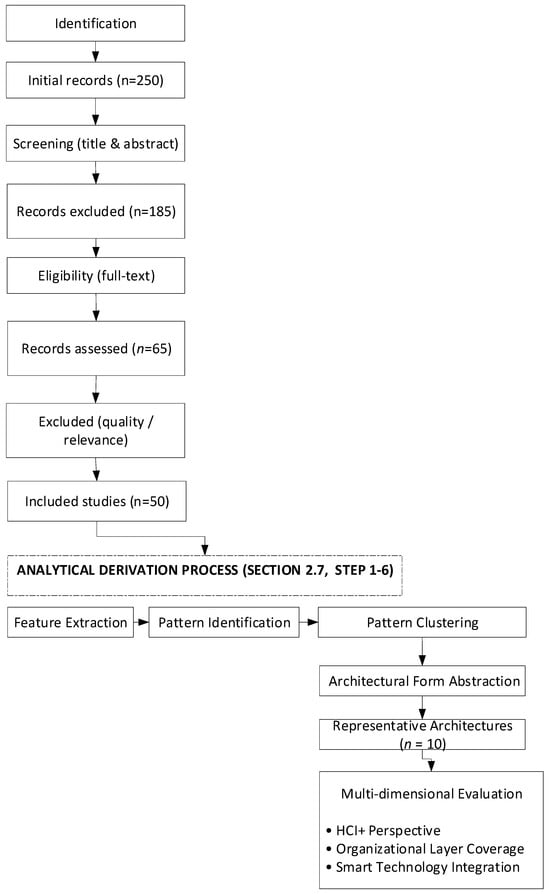
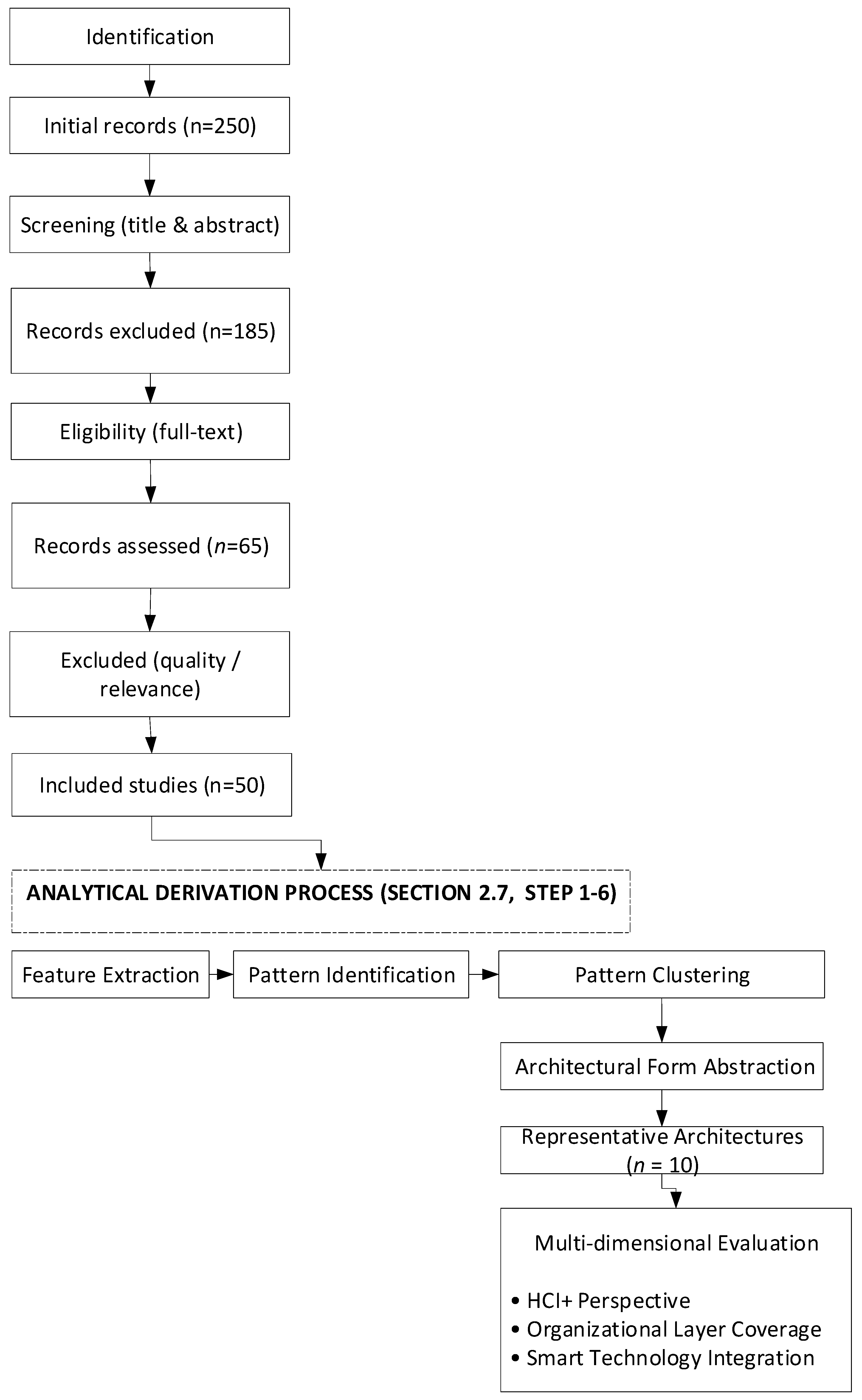
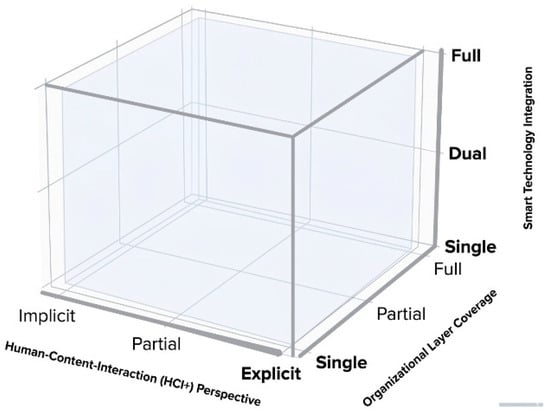
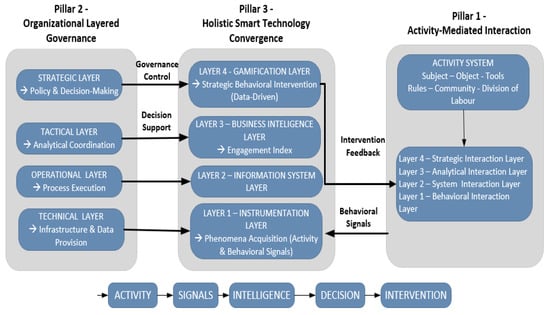
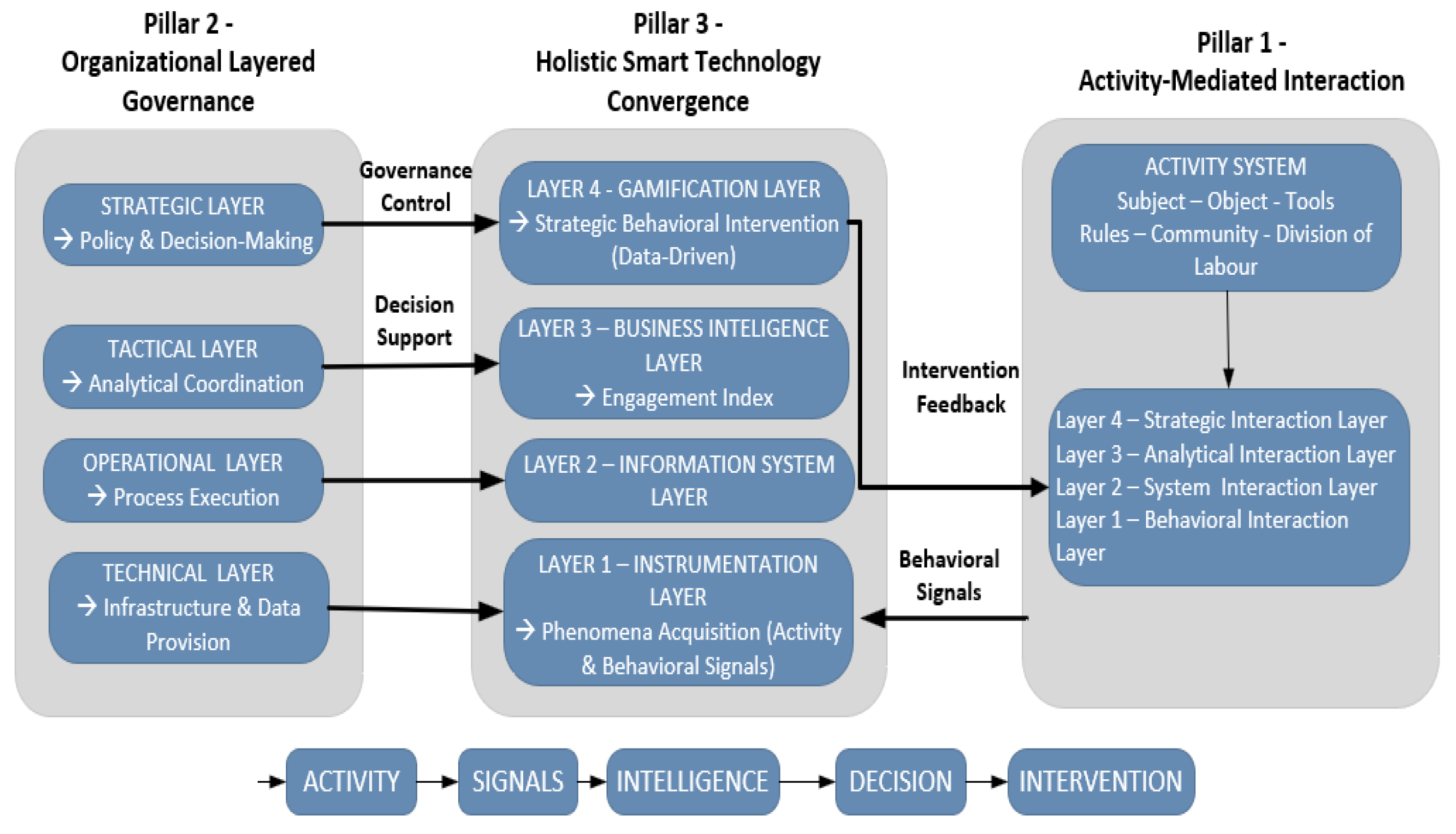
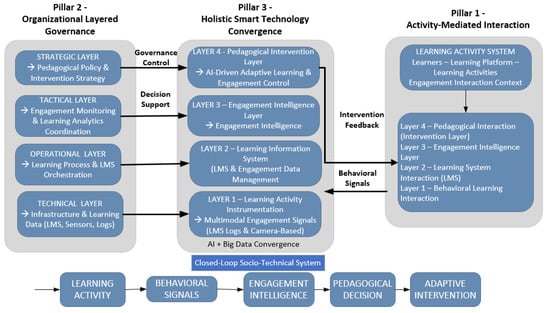
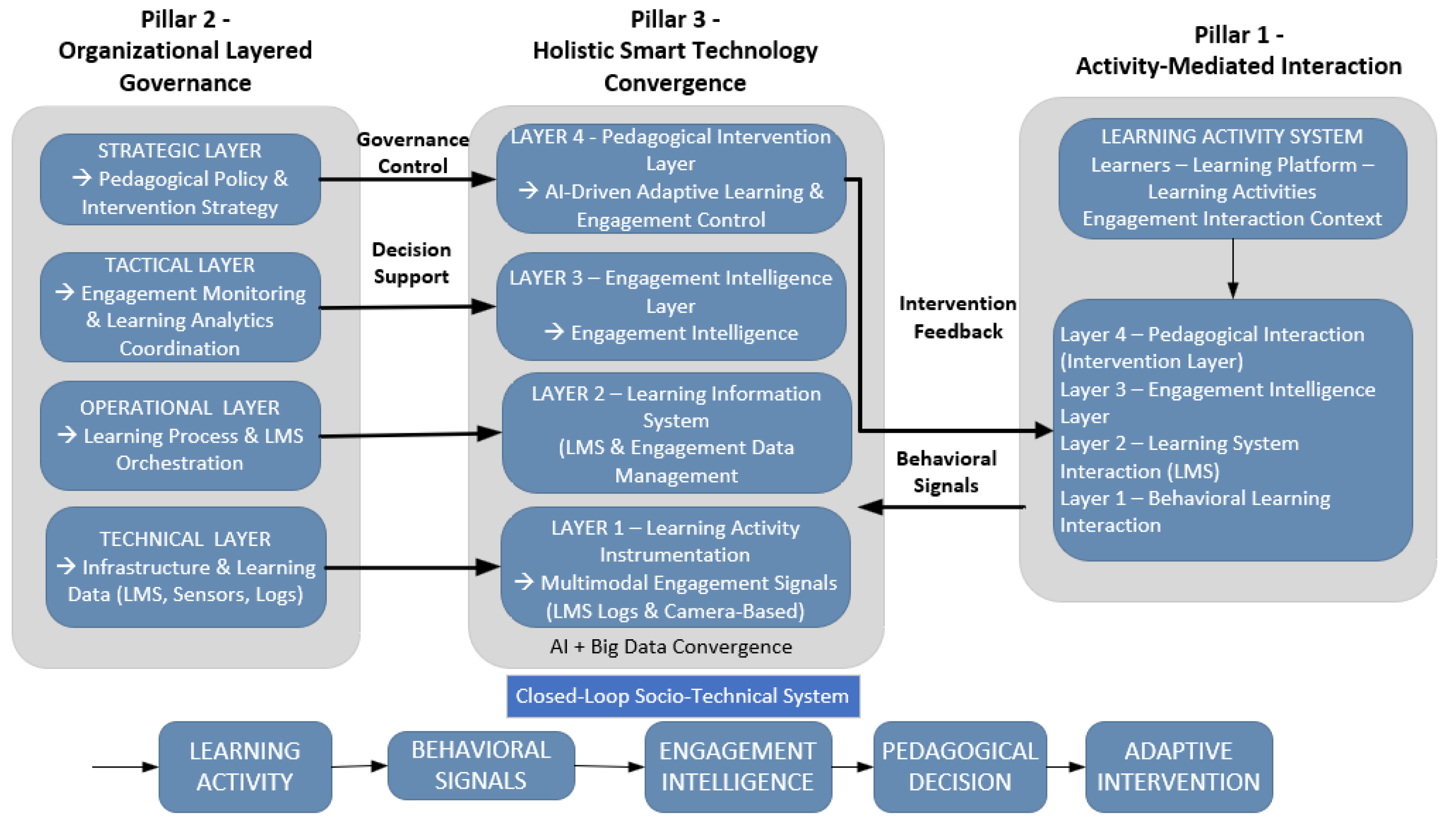

Disclaimer/Publisher’s Note: The statements, opinions and data contained in all publications are solely those of the individual author(s) and contributor(s) and not of MDPI and/or the editor(s). MDPI and/or the editor(s) disclaim responsibility for any injury to people or property resulting from any ideas, methods, instructions or products referred to in the content. |
© 2026 by the authors. Licensee MDPI, Basel, Switzerland. This article is an open access article distributed under the terms and conditions of the Creative Commons Attribution (CC BY) license.