


Abstract
The Metaverse has become a central concept in the evolution of digital transformation, but its current development is marked by conceptual ambiguity, technological fragmentation and the limited presence of structured frameworks for the systematic assessment of its maturity. The Metaverse is currently approached from partial perspectives that often focus on virtual worlds rather than conceptualizing it as a multidimensional digital ecosystem. This study proposes a multidimensional model of Metaverse maturity divided into three stages (Emergent, Developed and Integrated) and five analytical dimensions (experience, interoperability, standardization, technology and resources). The model is based on a systematic literature review of the academic and non-academic sources. It aligns these dimensions systematically with the layered architecture of the Metaverse and formalizes their interdependence through a structured impact-mapping procedure. This maturity model offers an analytical tool for comparing contexts and sectors, identifying bottlenecks, and guiding strategic planning. It establishes a conceptual framework for future empirical validation and sector-specific applications.
1. Introduction
The Metaverse has become one of the most significant concepts in the recent evolution of digital environments, attracting growing interest in the academic [1,2,3], social [4], professional [5] and institutional [6,7,8] spheres. Its transformative potential extends to multiple sectors, including education [9], industry [5], health [10] and construction [11], enabling new forms of interaction between the physical and virtual worlds. However, there is still no consensus on what the Metaverse is and how it may evolve.
Although definitions vary, the literature converges around several characteristics [12]. The Metaverse is commonly described as a set of real-time rendered three-dimensional virtual worlds enabling social interaction and economic exchange in which users live new experiences [13,14]. It is also frequently conceptualized as a persistent, decentralized and interoperable network of environments in which users have continuity of their identity and data across the virtual and the real world [13,15]. For the purpose of this study, the Metaverse is understood as a persistent, immersive, and interoperable digital environment of three-dimensional virtual and hybrid worlds, enabling experiential, social, and economic continuity across physical and digital domains.
Despite this conceptual convergence observed in the literature, ambiguity persists [12,14] because of its great complexity [16,17]. The Metaverse is often presented as the successor to the current internet [18,19]. This notion implies a technological and conceptual evolution that is more deeply interrelated than may initially appear. The Metaverse is based on the convergence of multiple enabling technologies [20,21,22]. It also depends on the existence of valuable user experiences [16,20,23,24,25,26,27], and the ability to manage information in a persistent [6,28,29] and interoperable [13,20,28,30,31] manner. Without a framework for describing this convergent complexity, the debate on the evolution of the Metaverse remains largely confined to speculative visions.
We therefore need tools for analysing the degree of development of the Metaverse, comparing contexts and guiding deployment strategies. Maturity models provide a suitable framework for synthesizing the evolution of a complex networked system and for establishing a shared vocabulary to describe different levels of consolidation [32]. While several frameworks include stages and, in some cases analytical dimensions [5], none explicitly maps these dimensions onto a layered operational architecture of the Metaverse [33] through a structured impact mapping procedure in a way that provides value for users.
This gap gives rise to the central research question: How can the maturity of the Metaverse be conceptualized systematically, integrating stages of development and analytical dimensions linked to its operational architecture?
This study aims to (i) define a conceptual framework operationalized through a multidimensional maturity model describing the development of the Metaverse, (ii) align its maturity dimensions with a layered Metaverse architecture, and (iii) formalize their interdependencies through an impact mapping procedure.
This paper is structured as follows: Section 2 reviews the existing approaches to Metaverse development and maturity. Section 3 describes the methodology used to design the maturity model. Section 4 presents the proposed maturity model and its structure. Section 5 discusses the results, limitations and directions for future research. Finally, Section 6 concludes the paper by summarizing the main contributions.
2. Related Work
The literature on the Metaverse includes a wide diversity of approaches [14,34], resulting in heterogeneous interpretations of its development and maturity. Because of this lack of consensus, many approaches address the Metaverse only partially, focusing mainly on immersive technologies [28,35] or on the connection between the physical and virtual worlds [16].
In recent years, several frameworks have been proposed to describe the evolution or maturity of the Metaverse (Table 1). Some focus on the degree of integration and bidirectionality between the physical and virtual worlds [16,36], others equate the Metaverse with the maturity of virtual worlds [37], while others adopt more holistic perspectives on the ecosystem [5,16,38,39]. Despite their contribution, these approaches exhibit a recurring limitation: they lack a clear articulation between the elements that make up the Metaverse and the way in which they manifest operationally. Table 1 summarizes representative approaches and highlights their main focus and scope.
Table 1.
Comparative overview of existing Metaverse maturity and development frameworks.
The limited articulation between multidimensional maturity constructs and architectural alignment makes it difficult to systematically analyse the maturity of the Metaverse and limits the ability of these models to compare contexts and prioritize challenges [19,21,44,45,46]. Although some frameworks incorporate stages and, in certain cases, analytical dimensions, they do not establish an explicit structural correspondence between these dimensions and the layered architecture of the Metaverse, nor do they formalize their relative impact across those layers. There is therefore a need for a conceptual framework to describe the maturity of the Metaverse as an interconnected system, integrating evolutionary stages and analytical dimensions while accounting for its operational dynamics.
In this article, the term conceptual framework refers to the overall analytical perspective [47] on Metaverse maturity, whereas the maturity model denotes its structured operationalization into stages and analytical dimensions.
3. Methods
This study adopts a conceptual modelling approach to define a maturity model of the Metaverse as a complex ecosystem. It focuses on the construction of a structured conceptual framework for describing and interpreting its degree of development in a systemic and operationally coherent manner.
The design was based on three main elements: the systematic review of scientific and professional literature following the PRISMA protocol [48], the application of established principles of maturity model development [32,47,49,50,51,52], and alignment between the analytical dimensions and the layers of the Metaverse architecture [33].
3.1. Systematic Literature Review
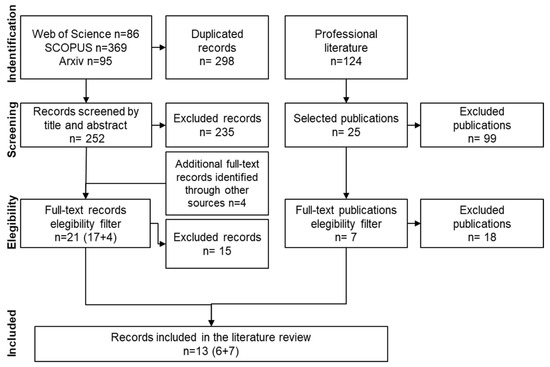
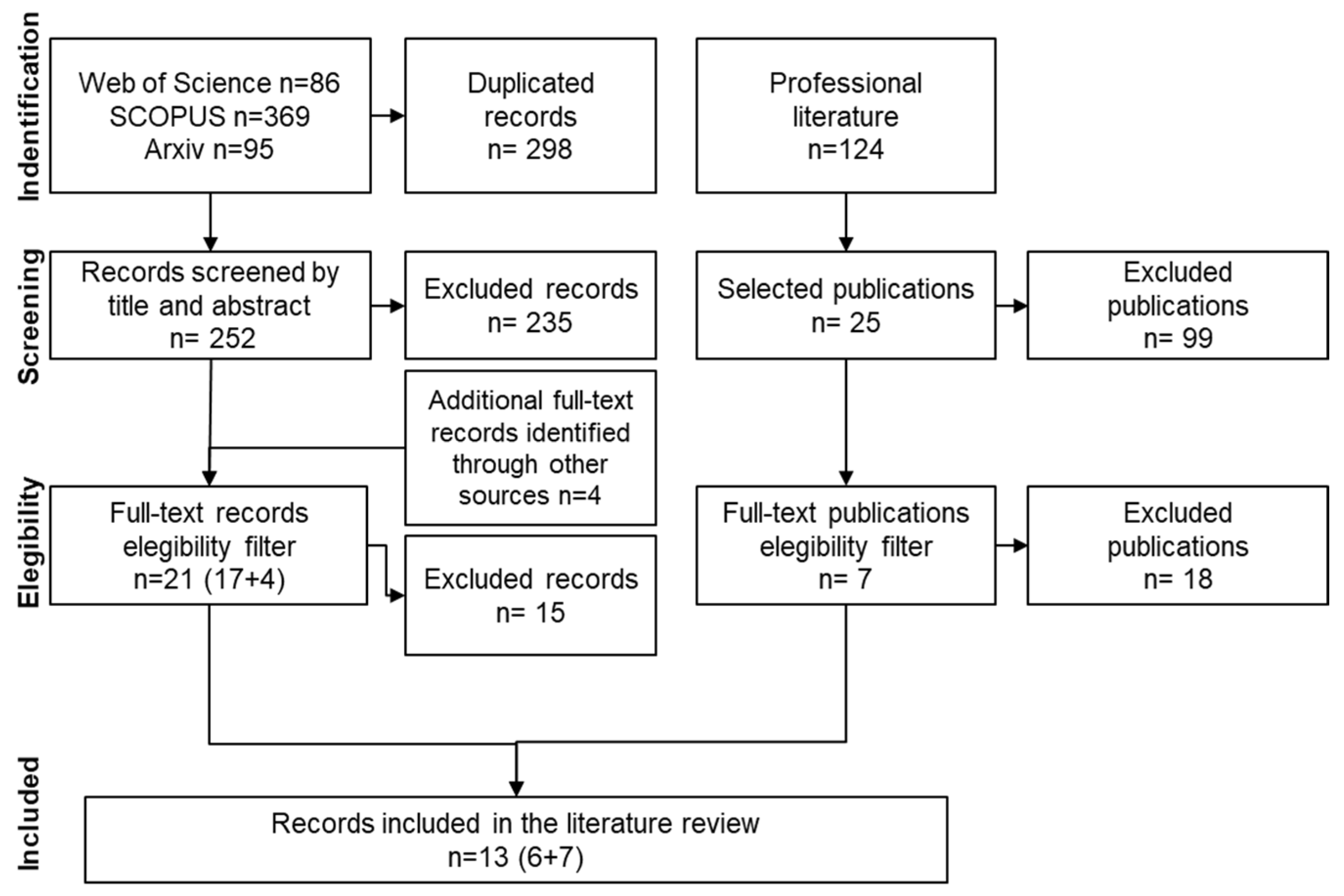
The definition of the maturity model was based on a systematic literature review following the PRISMA procedure (Figure 1), with the aim of identifying existing frameworks that address the development, phases or maturity of the Metaverse. This process integrated both academic and non-academic sources, allowing us to obtain a broad and comprehensive view of the Metaverse.
Figure 1.
PRISMA protocol applied.
For academic sources, the databases SCOPUS, Web of Science and arXiv were selected. The search was carried out using the search expressions: (“metaverse” AND “maturity”), (“metaverse maturity”), (“metaverse” AND “phases”), (“metaverse phases”), (“metaverse” AND “stages”), and (“metaverse stages”). These expressions were used identically in all three databases and were applied across all available fields (title, abstract, and keywords).
The search was limited to English-language, open-access publications, including journal articles, conference papers, reviews, and book chapters published between January 2022 and October 2024. As a result, n = 550 articles were identified, including n = 369 in SCOPUS, n = 86 in Web of Science and n = 95 in arXiv.
All records were exported and merged into a single dataset. Duplicates were removed across the merged dataset using title matching as the primary criterion. After this process, n = 298 records were removed, resulting in n = 252 unique records for screening. To ensure alignment with the research objective, inclusion and exclusion criteria were established. The review included publications that addressed the Metaverse as an ecosystem and that proposed, analysed or discussed stages, phases or levels of Metaverse maturity. For screening purposes “Metaverse as an ecosystem” was operationalized as publications framing the Metaverse as a multi-technology system and multi-actor environment, involving the interaction of platforms, technologies and stakeholders, rather than a single platform or isolated virtual world. Articles that equated the Metaverse concept with virtual worlds or used maturity terminology only rhetorically were excluded.
Screening was carried out in two stages, applying the criteria described, beginning with title and abstracts followed by full-text assessment and, resulting in n = 17 articles selected for full-text review. During the full-text assessment, only publications that provided defined stages or a structured progression of the Metaverse from an ecosystem perspective were retained. Also, during this phase n = 4 additional academic publications were identified through complementary manual search outside the initial database queries and were evaluated under the same inclusion criteria. In total, n = 21 full-text articles were assessed for eligibility. Publications lacking explicit characterization of maturity stages (n = 15) were excluded, leaving n = 6 academic sources.
In parallel, n = 124 non-academic documents were identified between January 2022 and October 2024 through a structured multi-step search engine strategy combining purposive institutional selection and backward reference analysis. The process began with a purposive identification of reports from globally recognized organizations influencing digital policy and technology strategy, including the European Commission, the World Economic Forum, the International Telecommunication Union, and McKinsey & Company. These organizations were selected due to their documented influence on international digital transformation and governance frameworks.
A manual search was conducted on the official websites and publication repositories of these organizations. Subsequently, references cited within the identified reports were examined to expand the corpus through backward reference tracking.
Only publicly accessible English-language publications addressing the Metaverse as an ecosystem were considered. After screening and applying the same inclusion and exclusion criteria, n = 25 documents were assessed in full, from which n = 7 were selected as relevant publications.
The complete PRISMA process resulted in n = 13 included sources that addressed the maturity of the Metaverse and formed the conceptual basis for defining the model. Earlier publications cited in the study were used exclusively as background literature for conceptual framing and were not part of the PRISMA inclusion set used for maturity framework identification.
3.2. The Design of the Maturity Model
According to the literature, maturity models are structured cumulatively in order to determine progress realistically [32,50,52], evaluate the capabilities and effectiveness of the processes [49], establish priorities for improvement, diagnose the current operational state, identify gaps [52] and establish roadmaps for continuous improvement [51]. Within this framework, the model construction process was organized into four phases [47,50,51]: scope definition, conceptual design, contextualization and empirical validation.
In this specific case, scope definition addressed the need to capture the Metaverse’s development as an ecosystem. This approach allowed the stages and limits of the evolution to be established cumulatively [32].
The conceptual design of the model was based on the synthesis of the results obtained from the systematic review of the academic and non-academic literature, with the aim of identifying relevant frameworks, practices and theories [52]. Existing knowledge was thus structured into a set of conceptual dimensions that underpinned the model and served as criteria for assessing the degree of development of the Metaverse.
Once the dimensions had been defined, they were linked to the functional architecture of the Metaverse in order to ensure an operational interpretation of the model. To perform this linkage, the seven layer architecture model proposed by J. Radoff (2021) [33] and later adopted in the academic literature [46,53,54] was used, as it provides a focus on creating user value. This linkage ensured coherence between the conceptual part and the functional levels at which the model is expressed.
Based on this correspondence, an impact map was developed to represent qualitatively the relationship of each dimension with each layer, providing the granularity necessary to understand the relative impact of each component within the ecosystem.
In accordance with the methodological principles of maturity model development, the final phases are contextualization, adaptation and validation [32,47,50,51], in which the model’s usefulness and applicability in real-world contexts are assessed. This study explicitly addresses the first two phases, scope definition and conceptual design, while contextualization, adaptation and validation have been planned as future work. Therefore, the model should be understood as an analytical heuristic framework pending future empirical validation.
3.3. Architectural Alignment and Impact Scale Rationale
To analyse the relationship between the dimensions and the seven layers of the Metaverse [33,55], a three-level ordinal impact scale was developed. This type of scale enables structured relationships to be established among the elements while capturing relevant differences between components without attributing a level of numerical precision [56] that is not justified in the conceptual design phase [32,47]. The scale includes three qualitative ordinal values:
- 0 (indirect): was assigned when the layer can operate without mature development of the dimension or the relationship exerts a secondary influence.
- 1 (complementary): was assigned when the dimension does not constitute a structural prerequisite for its existence or makes an important but non-essential contribution, acting as a complementary effect.
- 2 (structural): was used when the dimension represents an essential condition for the layer to function coherently within a mature Metaverse [57].
In this context “essential” refers to condition without which the layer would lose its defining functional logic within the architectural configuration, whereas “complementary” denotes dimensions that significantly enhance performance or coherence without constitutive of the layer’s core purpose.
The numerical values are intended to formalize qualitative structural dependencies within the layered architecture and do not imply numeral weighting, aggregation, or statical inference.
The scale values were assigned through an iterative analytical process structured in three phases:
- Functional analysis of each layer was carried out, reviewing its functional purpose and the conditions necessary for its operation [33,58]. Particular attention was paid to identifying the minimum conceptual requirements for a layer to operate coherently within the Metaverse.
- Qualitative evaluation of how each dimension relates to the layer, determining whether each dimension constituted prerequisite, a complementary contribution, or an indirect association [53,54,59]. In case of conceptual overlap, priority was assigned to the dominant functional dependency of the layer to avoid redundancy [60].
- Classification of each dimension’s contribution according to the ordinal scale, emphasizing structural dependencies while acknowledging secondary interactions that do not alter the core architectural alignment.
The coding reflects the authors’ analytic judgement based on the literature synthesis; no separate expert panel was used.
This explicit impact-mapping procedure underpins the model’s architectural alignment and represent the main methodological innovation of the proposed maturity model.
4. Results
This section presents the results derived from the methods described in Section 3 and explains how they lead to the proposed maturity model. The analysis first synthesises the literature review (Section 4.1), identifying staged maturity logics and the main conceptual clusters that inform the model, and then introduces the three maturity stages in Section 4.2 and the analytical dimensions that structure them in Section 4.3. Building on this basis, Section 4.4 presents the Metaverse maturity model, operationalising the relationship between stages and dimensions. Section 4.5 analyses how these dimensions are articulated across the functional layers of the Metaverse architecture. The results also include, in Section 4.6, an impact map that synthesises these relationships into structural patterns of dependence between the dimensions and the seven architectural layers, and, in Section 4.7, a final characterisation of how each maturity stage is expressed across the different analytical dimensions, illustrating the progressive consolidation of the Metaverse.
4.1. Analytical Synthesis of the Literature
The systematic review resulted in the identification of 13 sources that explicitly addressed the evolution, phases, or maturity of the Metaverse. Although these contributions vary in terminology, sectoral focus and methodological approach, the comparative synthesis presented in Table 2 shows the structural maturity logics and conceptual clusters identified across the corpus and reveals recurring patterns that informed the design of the proposed model. In Table 2, the ‘Main conceptual focus’ column reports the key constructs associated with each source’s dimensions, or, when explicit dimensions are not provided, the main conceptual focus of its phases or levels.
Table 2.
Comparative synthesis of maturity structures and main conceptual content identified in the reviewed literature.
4.1.1. Staged Maturity Logics
The corpus illustrates a staged understanding of Metaverse development. Multiple sources conceptualize its evolution through three macro-stages [5,16,36,38,39], while others operationalize maturity through four or five detailed phases [37,43,63]. Despite variations in denomination and granularity, all frameworks describe a progression from fragmented, basic infrastructure-oriented configurations to an integrated, interoperable, and systemically coherent digital environment.
The varying number of stages identified across the corpus revealed a recurring convergence toward a three-stage configuration. This pattern enabled the different evolutionary models to be integrated into three cumulative levels of systematic development. Therefore, the adoption of three stages reflects an interpretative synthesis aimed at ensuring analytical coherence, rather than a direct replication of any single framework.
4.1.2. Conceptual Clusters and Dimensions
In addition to staging, the review also revealed recurring thematic clusters describing the structural conditions required for Metaverse development (Table 2). The key constructs were grouped according to semantic proximity and functional interdependence. Five clusters were identified:
- User-centred experiential value, including immersion, engagement, presence, usability, content, and interaction [37,43,62,63].
- Cross-platform and physical–virtual interoperability, including data portability, platform connectivity, decentralization, and convergence and synchronization between these two realms [16,36,39,40,41,61].
- Governance, and standards, encompassing policy frameworks, ethical guidelines, identity management, security, privacy and the economic system [5,36,38,43].
- Enabling technological infrastructure, including emerging technologies such as blockchain, the Internet of Things, mixed reality, and rendering technologies [37,38,40,41,43,63].
- Material and resources, including infrastructure and accessibility [5,38,39,42,43,61,63].
Drawing on the constructs identified in Table 2, we conducted a thematic clustering of conceptually related elements, consolidating them into five higher-order analytical dimensions that structure the proposed maturity model. This abstraction enhances conceptual clarity, reduces conceptual fragmentation, and improves systemic interpretability.
4.2. Stages
The proposed model conceptualizes maturity through three stages: Emergent, Developed and Integrated. This pattern is conceptually coherent and methodologically viable [32], as it reflects a dual, cumulative progression: on the one hand, the evolution of the Metaverse itself as an ecosystem, and on the other, the progressive maturation of the interaction between the physical and virtual worlds [16,36].
In the context of maturity models, these are defined as “stages” rather than “phases,” since maturity models conventionally describe discrete levels of qualitative attainment that can be assessed and compared [47], rather than time-bound process periods.
4.3. Dimensions
The maturity stages are articulated through a set of analytical dimensions that capture the structural conditions required for the systemic development of the Metaverse. These dimensions encompass concepts, resources and processes. Together, they configure the necessary conditions for the Metaverse to evolve. They operate as interdependent components, progress in one dimension influences the evolution of others, and systemic maturity depends on their balanced advancement.
Other aspects such as governance, ethics, and legal and economic mechanism are not conceptualized as independent dimensions. Instead, they are embedded within the dimensions of interoperability and standardization [64]. The user is also considered a central element [65]. Based on this approach, the following dimensions for assessing the evolution of Metaverse maturity were established:
- Experience: This dimension focuses on the user experience within the Metaverse, which represents the ultimate expression of the other dimensions. It includes aspects such as the quality of immersion [62], usability, accessibility [14], presence [6], socialization, humanization [65] and perceived real-world value [66]. An integrated Metaverse offers not only technically advanced environments but also experiences that are valuable, useful and accessible to a wide range of users [44,67].
- Interoperability: This dimension covers cross-platform interoperability, and the degree of integration and synchronization between physical and virtual domains [68]. Both aspects aim to ensure the continuity of identity, digital assets and data [13,69] in a seamless, secure and decentralized manner [70], regardless of access devices [14], communication between the physical and virtual worlds and the creation of a digital economy. Without interoperability, the Metaverse fragments into isolated worlds; with it, it becomes possible to aspire to a true Metaverse [28].
- Standardization: This dimension addresses the development and adoption of protocols [71], formats [46], regulatory frameworks [71,72] and ethical principles that guarantee security, governance [67] and interoperability. The lack of open standards carries the risk of creating a fragmented, incompatible and insecure space.
- Technology: This dimension includes the enabling technologies of the Metaverse [13,16]. Their development and combination are essential to achieve a scalable, efficient and valuable Metaverse.
- Resources: This dimension focuses on the infrastructure and devices needed to access and sustain the Metaverse: high-speed networks with low latency and high bandwidth [18,20,73,74,75,76], immersive devices [17,77] and graphics hardware [46,78,79]. Without adequate resources, the maturity of the other dimensions may be affected.
4.4. The Metaverse Maturity Model
Table 3 synthesizes the relationship between the three stages and the five dimensions derived from the analytical process described in Section 4.1. The table operationalizes the model by characterizing how each dimension manifests at different degrees of systemic consolidation.
Table 3.
The Metaverse maturity model: stages and dimensions.
4.5. Mapping with Architectural Layers
The dimensions of the model include various elements that are distributed across the functional architecture of the Metaverse. On the basis of this correspondence, we analysed how the different dimensions of the model materialise in the functional layers of the Metaverse [46,53,54]. Accordingly, the dimensions define what needs to be developed, and the layers determine where and how this evolution materialises. The correspondence between dimensions and layers allows us not only to visualize the distribution of maturity in the architecture of the Metaverse but also to interpret the specific role that each layer plays within the dimensions. This relationship is described below for each layer:
- Experience: This layer is reflected in the homonymous dimension, as it represents the outcome of the combination of all the dimensions. The quality of immersion, the usability and the value provided depend on technological progress, available resources and the ability to design inclusive [16,44,67], relevant and transparent experiences.
- Discovery: This layer depends on experience and standards, especially those that ensure the visibility and management of content, avoiding monopolies and opaque algorithms.
- Creator economy: This layer concerns the generation of an economic system. Interoperability and standards are needed to ensure the security and trustworthiness of operations [21,30,80]. Resources are also needed to ensure the accessibility and sustainability of the digital economy.
- Spatial computing: This is the central layer of computation and simulation [20,21]. Experiences are developed in this layer, as their operation depends on technology and resources.
- Decentralization: This layer requires mechanisms that ensure the secure and seamless management and exchange of data [81] and assets [80,82,83]. Interoperability is essential for seamlessness, and standardization is necessary to establish protocols and procedures.
- Human interface: This layer refers to the devices through which users access the Metaverse, which determine the quality and level of immersion of the experience [84]. Their operation depends on technology, resources [25], and their adaptation to the needs of users.
- Infrastructure: This layer is the material and energy base [44] of the Metaverse. Without 5G/6G networks, high bandwidth [6] and low latency [19], neither the technology nor the experiences can be deployed. This layer also requires resources that are related to sustainability.
4.6. Impact Map
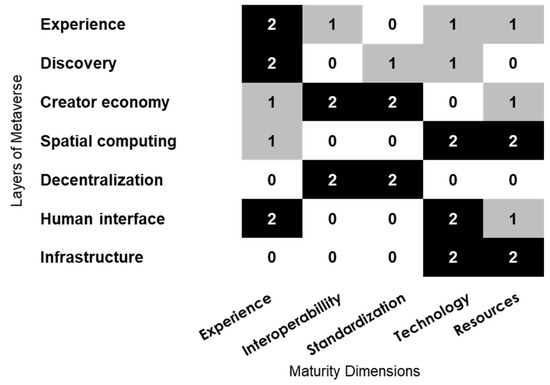
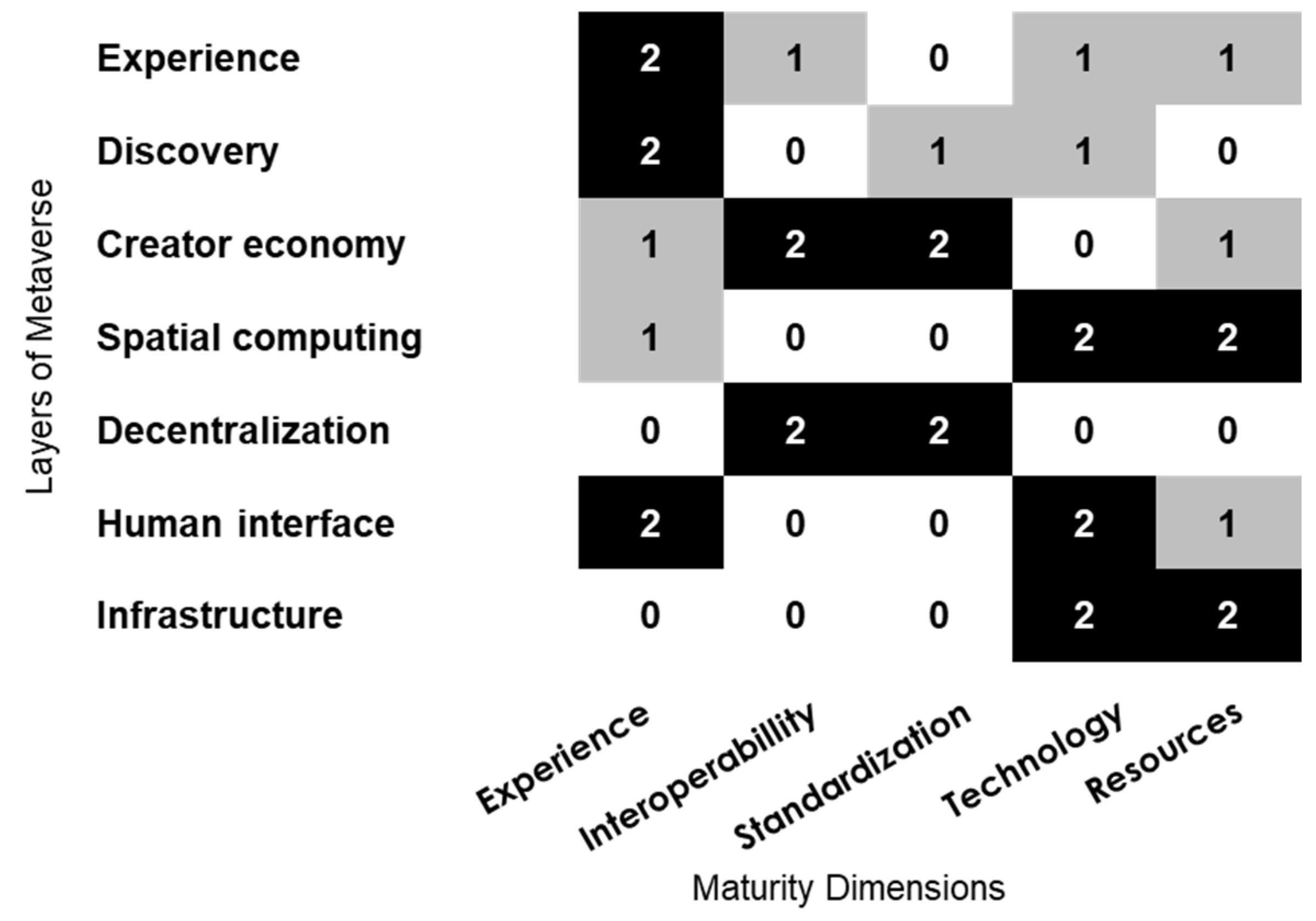
The impact map (Figure 2) synthesizes the relationship between the dimensions of the model and the seven layers of the Metaverse. This map does not aim to quantify intensities but rather to identify structural patterns of dependence that condition the maturity of the ecosystem. Three qualitative impact patterns were identified:
Figure 2.
Impact relationship map between analytical dimensions and architectural layers.
- Structural layers (infrastructure, spatial computing and the human interface): these depend mainly on the dimensions of technology and resources.
- User-centred layers (experience and discovery): these have a predominant impact on experience but also need substantial support from the other dimensions.
- Governance layers and data flows (decentralization and digital economy): these are strongly linked to interoperability and standardization and are complemented by experience and resources.
The impact map allows the precise identification of the dimensions that are essential to the development of each layer and provides evidence that the maturity of the Metaverse does not depend on a single factor but rather on a balanced and complementary combination of factors.
At the level of specific relationships, the qualitative structure of the map becomes more explicit. For example, the Technology dimension was classified as structural (2) for the Spatial Computing layer, since rendering engines and computational integration are necessary conditions for its operation. By contrast, the Standardization dimension was classified as complementary (1) for the Discovery layer, as it needs common standards, but is not a prerequisite. Similarly, the Experience dimension was assigned as indirect (0) in relation to the Infrastructure Layer, as this layer can operate independently of user experience. The complete impact matrix is presented in Appendix A, Table A1.
4.7. The Stages of Metaverse Maturity
The three stages of the model represent degrees of systemic consolidation of the Metaverse as a cohesive and interoperable digital ecosystem [13,17,27,30] rather than isolated technological stages. They are therefore conceived as atemporal structural states rather than fixed chronological periods within a linear timeline. Each stage reflects a specific combination of maturity across the dimensions, as well as their integration with the physical world. As a result, different sectors or territories may reach the same stage at different moments, and multiple stages can coexist across contexts. Progress between stages is neither automatic nor linear: it depends on the overall balance of the system.
Section 5.1 uses these stages to outline prospective maturity configurations that may materialise under different contextual conditions, without implying a single linear temporal trajectory.
4.7.1. Emergent
The Emergent stage is characterized by widespread conceptual confusion [13,26], resulting in a strongly unbalanced level of maturity across dimensions. Consequently, it gives rise to an ecosystem [69] that is fragmented and focused on isolated experiences. Though significant technological advances are achieved [16,70,73,80,85,86,87,88,89], they do not translate into systemic value due to a lack of coherence, interoperability [30,46,71] and shared governance [34,38,71,72,90].
At this stage, the Metaverse functions primarily as a set of independent platforms with limited accessibility [17,38,91] and a limited and superficial relationship with the physical world [16,36,38], which restricts its impact [6,9,19] and the continuity [5] of the user experience.
4.7.2. Developed
The Developed stage represents an intermediate maturity, in which several dimensions begin to evolve in a more coordinated manner, allowing for an expansion of use cases and a greater contribution of value [5,38]. However, the system still exhibits tensions arising from the asymmetric evolution of the dimensions [5,92], which prevent full integration. The Metaverse begins to acquire functional relevance in sectors beyond entertainment [3,93,94], thanks to its partial bidirectionality with the physical world [16,36,38]. Its scalability and sustainability continue to be conditioned by structural bottlenecks, especially in interoperability [19,21,44,71,91,95,96] and standardization [38].
4.7.3. Integrated
The Integrated stage [39,97] represents a high degree of systemic coherence, in which the dimensions reach a sufficiently balanced level of maturity to allow for continuous [38], persistent [38] and fully bidirectional [36] integration between the two worlds. At this stage, the Metaverse ceases to be perceived as a sum of worlds or technologies and becomes consolidated as a single, interoperable and cohesive networked system [73]. This stage symbolizes the system’s ability to generate sustained [5], scalable [44,98,99] and people-centred value, giving rise to a new phase of human socio-digital evolution [34].
5. Discussion
The Metaverse is an ecosystem involving a large number of factors. For this reason, interpreting and applying this model requires discussion of key aspects such as temporality, prospective scenarios [100,101], the asymmetric progression of the dimensions, the challenges that must be addressed in order to advance, and the current position of the Metaverse within the stages of the model.
5.1. Temporality
Building on the atemporal stages defined in Section 4.7, this subsection interprets them as prospective maturity configurations rather than as fixed chronological phases. In this perspective, the stages are understood as qualitative states of development that can appear at different moments and in different contexts, instead of being tied to specific dates or periods.
Within this prospective framework [100,101], the model is used to contextualize how different maturity configurations might manifest under certain systemic conditions. From this perspective, the three stages can be discussed in terms of potential evolutionary trajectories, without implying temporal determinism or a single linear path.
The Emergent configuration corresponds to contexts in which fragmentation, a lack of interoperability [30,71,102], the absence of dedicated Metaverse business models [74,91], rapid technological advancement, sporadic interest across all scales, and persistent conceptual ambiguity [103] dominate the ecosystem. All these characteristics are typical of an initial phase of development or adoption [28,104].
The Developed configuration reflects contexts in which technological maturation is accompanied by standardization, increased interoperability and economic stabilization. Its emergence depends on multidimensional convergence rather than on chronological progression alone.
The Integrated configuration represents the attainment of a mature, interoperable, open and cohesive ecosystem [39,97]. Rather than denoting a future date, this configuration conceptualizes the systemic equilibrium required for a sustained and scalable operation.
These configurations are not part of the model but complement its interpretation. Their purpose is to provide an exploratory framework for analysing how structural maturity states may unfold under varying contextual conditions. In this way, the same atemporal stages can be read as multiple coexisting configurations, whose realization depends on the specific combination of technological, organizational, and contextual factors present in each case.
5.2. An Asymmetric Evolution of Dimensions
One of the key aspects of the model is the recognition that the dimensions may not evolve at the same pace, a factor that may constrain the achievement of overall maturity of the Metaverse. Socioeconomic factors can prioritize the progress of certain elements in the dimensions. For example, though the development of technologies is not symmetrical [28], it is usually faster than interoperability, data governance and standardization, as they depend on consensus, regulations or collective processes. At this point, it is important to keep in mind that the advancement of one element may require the attainment of another.
This may mean that, although a specific dimension may reach a higher stage of maturity than that established in the model, the whole continues to be immature. The model therefore emphasizes that the maturity of the Metaverse is systemic rather than partial. The Metaverse can only progress to the next stage if all dimensions do so together.
5.3. The Challenges and the Structural Bottleneck
Addressing the maturity of the Metaverse entails recognizing that its dimensions can only progress if a set of structural challenges are overcome. A wide range of challenges affecting the Metaverse are identified in the literature, including social [21,44,67,69], ethical [67,82,91,96], economic [67,73,91], environmental [44,65], technological [25,68,71,76,90,91,96] and legal [6,22,72,91,105] issues. These challenges must be linked to the stages of the maturity model. Not all challenges carry the same influence or manifest with the same intensity in each stage; therefore, associating them with the stages allows them to be prioritized in a coherent and systematic manner.
Within this set of challenges, interoperability emerges recurrently [19,21,31,44,73,83,90,96,102] as the most critical and cross-cutting challenge for attaining the highest level of maturity. Despite technological advances, this challenge includes many factors such as standards, processes, technologies, governance, and investments that affect all dimensions of the model. Consequently, it is not merely another challenge but a structural bottleneck that will determine the Metaverse’s capacity to evolve [28]. This highlights the need to address challenges in a coordinated and prioritized manner, culminating in the definition of roadmaps for overcoming them.
5.4. Limitations
The proposed maturity model has three limitations that must be acknowledged but that open new lines of research for further exploring its applicability. First, the model has been developed to the conceptual design stage, which means that it has not yet been empirically validated.
Second, technological inequalities between territories and sectors can significantly affect how the Metaverse matures in each context. Differences in infrastructure and in people’s digital maturity directly influence the ability to progress between stages, which means that contextualized studies are needed to complement and validate the model.
Finally, the speed with which the enabling technologies of the Metaverse evolve can cause mismatches within the stages of the model. This means that the model must be treated as a revisable construct, and measurable instruments must be developed to guarantee its operability, coherence and validity.
5.5. Future Research Directions
This model establishes a conceptual framework for the systemic analysis of Metaverse maturity. An initial line of research is the empirical validation and population of the model in different contexts, with the aim of evaluating its explanatory capacity and refining the stages and dimensions. Within this line, the Architecture, Engineering, Construction, and Operations sector is a relevant setting, due to its trajectory of digital transformation and the growing incorporation of tools such as immersive technologies and digital twins, and its structural efforts to enhance interoperability across heterogeneous systems, standards, and organizational actors.
The second line of research involves the operationalization of the model through the development of indicators or assessment instruments to enable its systematic and comparable application.
6. Conclusions
This study demonstrates that the Metaverse can only be understood through a multidimensional approach, in which experience, interoperability, standardization, technology and resources operate as interdependent dimensions. These dimensions also manifest operationally in the various layers of the Metaverse’s architecture, highlighting that its maturity does not depend on isolated elements but rather on the coordinated convergence of multiple factors.
The proposed maturity model (Table 3) provides a structured framework for describing degrees of maturity and comparing contexts. It also helps clarify the systemic nature of Metaverse development. The atemporal structure of the model enables the assessment of maturity levels independently of predefined timelines.
The main contribution of this study lies explicitly in aligning maturity dimensions with a layered Metaverse architecture and formalizing their relationships through a structured impact mapping procedure (Figure 2). This architectural alignment enhances the operational interpretability of the model and supports its application in strategic planning and decision-making processes.
Beyond its conceptual contribution, the model also provides a practical tool to guide the strategic adoption of the Metaverse by public and private organizations. It may be used in an organizational context through three steps: first, conducting a diagnostic assessment of the organization’s position across the five dimensions, identifying critical gaps; second, defining a target maturity profile by strategic objectives based on the results of the diagnostic assessment and designing a phased roadmap linking investments, standard adoption, and capability development with measurable improvement; and finally, establishing a way to benchmark the organization’s progress against other organizations and identify which areas require strategic priority. The model may assist public entities in designing new digital policies, establishing procurement criteria, and setting up interoperability frameworks. In doing so, it helps ensure coherence between Metaverse initiatives and public strategies. Private entities can use it to innovate their businesses, market themselves more effectively and prioritize their capital investments accordingly.
Although the model is cross-cutting, its application and validation in specific contexts [51] will allow the proposal to be refined and provide empirical indicators to reinforce its usefulness and solidity.
By making the relationships between dimensions and layers explicit, the model helps to prioritize and anticipate challenges that condition Metaverse maturity. In particular, it highlights structural bottlenecks, such as interoperability, without reducing maturity to a single technological factor. The model can also serve as a reference framework and tool for understanding and planning the transition towards a cohesive, open, interoperable and human-centred Metaverse.
It thus contributes to the advancement of a shared analytical foundation for the systematic assessment of the Metaverse.
Author Contributions
Conceptualization, J.-M.G.S. and E.C.P.; methodology, J.-M.G.S. and E.C.P.; material preparation, data collection and analysis, J.-M.G.S.; writing—original draft preparation, J.-M.G.S. and E.C.P.; writing—review and editing, J.-M.G.S. and E.C.P.; supervision, E.C.P.; funding acquisition, J.-M.G.S. and E.C.P. All authors have read and agreed to the published version of the manuscript.
Funding
This research is partially supported by a grant from the Industrial Doctorate Plan of the Departament de Recerca i Universitats of the Generalitat de Catalunya to Joan-Marc Garcés (grant 2024 DI 00043).
Data Availability Statement
There is no data repository beyond the content of this manuscript.
Conflicts of Interest
The authors do not have any potential conflict of interest as regards the publication of this paper.
Appendix A
Table A1.
Complete impact matrix.
References
- Gökçe Narin, N. A Content Analysis of the Metaverse Articles. J. Metaverse 2021, 1, 17–24. [Google Scholar]
- Sami, H.; Hammoud, A.; Arafeh, M.; Wazzeh, M.; Arisdakessian, S.; Chahoud, M.; Wehbi, O.; Ajaj, M.; Mourad, A.; Otrok, H.; et al. The Metaverse: Survey, Trends, Novel Pipeline Ecosystem & Future Directions. IEEE Commun. Surv. Tutor. 2024, 26, 2914–2960. [Google Scholar] [CrossRef] [Scilit]
- Aydın, Ö.; Karaarslan, E.; Yazıcı Yılmaz, S.; Tınmaz, H.; Eken, S.; Gökçe Narin, N.; Cali, U.; Özkaynar, K.; Gürcan, Ö.; Fanea-ıvanovici, M.; et al. Shaping the Future of Metaverse Research: Innovation, Collaboration, and Journal of Metaverse’s Academic Impact. J. Metaverse 2025, 5, 73–91. [Google Scholar] [CrossRef] [Scilit]
- Duan, H.; Li, J.; Fan, S.; Lin, Z.; Wu, X.; Cai, W. Metaverse for Social Good: A University Campus Prototype. In Proceedings of the 29th ACM International Conference on Multimedia, Virtual Event, China, 20–24 October 2021; pp. 153–161. [Google Scholar]
- Bohné, T.; Li, C.; Triantafyllidis, K. Exploring the Industrial Metaverse: A Roadmap to the Future; World Economic Forum: Geneva, Switzerland, 2023. [Google Scholar]
- Lu, Y.; McCalman, L.; Simpson-Young, B.; Wallace, C. The Metaverse and the NSW Government; NSW Government: Sydney, Australia, 2022.
- European Commission. Directorate General for Communications Networks, Content and Technology. An EU Initiative on Web 4.0 and Virtual Worlds: A Head Start in the Next Technological Transition; Publications Office: Luxembourg, 2023.
- European Metaverse Research Network. The Concept of the Metaverse. Available online: https://metaverse-research-network.info/ (accessed on 14 August 2024).
- Arbelaez, J.; Kurian, J.; Beydoun, G. Metaverse in Education: A Dynamic Capability Theory Approach. In Proceedings of the 2023 AIS SIGED International Conference on Information Systems Education and Research, Hyderabad, India, 9–10 December 2023; p. 14. [Google Scholar]
- Anwar, S.; Sanober, A. MetaBlock: A Revolutionary System for Healthcare Industry Fusing Metaverse and Blockchain. J. Metaverse 2024, 4, 116–125. [Google Scholar] [CrossRef] [Scilit]
- Claßen, H.; Bartels, N.; Riedlinger, U.; Oppermann, L. Transformation of the AECO Industry through the Metaverse: Potentials and Challenges. Discov. Appl. Sci. 2024, 6, 461. [Google Scholar] [CrossRef] [Scilit]
- Weinberger, M. What Is Metaverse?—A Definition Based on Qualitative Meta-Synthesis. Future Internet 2022, 14, 310. [Google Scholar] [CrossRef] [Scilit]
- Ball, M. El Metaverso y cómo lo Revolucionará todo, 1st ed.; Deusto: Mimetiz, Spain, 2022; ISBN 978-84-234-3427-5. [Google Scholar]
- Ritterbusch, G.D.; Teichmann, M.R. Defining the Metaverse: A Systematic Literature Review. IEEE Access 2023, 11, 12368–12377. [Google Scholar] [CrossRef] [Scilit]
- Peña de San Antonio, Ó. Metaversos. La Gran Revolución Inmersiva; Espacio de Diseño; Anaya: Madrid, Spain, 2022. [Google Scholar]
- Lee, L.-H.; Braud, T.; Zhou, P.; Wang, L.; Xu, D.; Lin, Z.; Kumar, A.; Bermejo, C.; Hui, P. All One Needs to Know about Metaverse: A Complete Survey on Technological Singularity, Virtual Ecosystem, and Research Agenda. arXiv 2021, arXiv:arXiv:2110.05352. [Google Scholar] [CrossRef] [Scilit]
- Mystakidis, S. Metaverse. Encyclopedia 2022, 2, 486–497. [Google Scholar] [CrossRef] [Scilit]
- Hadavi, A.; Alizadehsalehi, S. From BIM to Metaverse for AEC Industry. Autom. Constr. 2024, 160, 105248. [Google Scholar] [CrossRef] [Scilit]
- Jim, J.R.; Hosain, M.T.; Mridha, M.F.; Kabir, M.M.; Shin, J. Toward Trustworthy Metaverse: Advancements and Challenges. IEEE Access 2023, 11, 118318–118347. [Google Scholar] [CrossRef] [Scilit]
- Nleya, S.M.; Velempini, M. Industrial Metaverse: A Comprehensive Review, Environmental Impact, and Challenges. Appl. Sci. 2024, 14, 5736. [Google Scholar] [CrossRef] [Scilit]
- Ning, H.; Wang, H.; Lin, Y.; Wang, W.; Dhelim, S.; Farha, F.; Ding, J.; Daneshmand, M. A Survey on the Metaverse: The State-of-the-Art, Technologies, Applications, and Challenges. IEEE Internet Things J. 2023, 10, 14671–14688. [Google Scholar] [CrossRef] [Scilit]
- Li, C.; Collins, K. Demystifying the Consumer Metaverse; World Economic Forum: Geneva, Switzerland, 2023. [Google Scholar]
- Han, B.; Leite, F. Generic Extended Reality and Integrated Development for Visualization Applications in Architecture, Engineering, and Construction. Autom. Constr. 2022, 140, 104329. [Google Scholar] [CrossRef] [Scilit]
- Burian, B.K.; Ebnali, M.; Robertson, J.M.; Musson, D.; Pozner, C.N.; Doyle, T.; Smink, D.S.; Miccile, C.; Paladugu, P.; Atamna, B.; et al. Using Extended Reality (XR) for Medical Training and Real-Time Clinical Support during Deep Space Missions. Appl. Ergon. 2023, 106, 103902. [Google Scholar] [CrossRef] [Scilit] [PubMed]
- Khlaif, Z.N.; Mousa, A.; Sanmugam, M. Immersive Extended Reality (XR) Technology in Engineering Education: Opportunities and Challenges. Technol. Knowl. Learn. 2024, 29, 803–826. [Google Scholar] [CrossRef] [Scilit]
- Lowry, P.B.; Boh, W.F.; Petter, S.; Leimeister, J.M. Long Live the Metaverse: Identifying the Potential for Market Disruption and Future Research. J. Manag. Inf. Syst. 2025, 42, 3–38. [Google Scholar] [CrossRef] [Scilit]
- Yazıcı, A.M.; Özkan, A.; Özkan, H. Meta: XR-AR-MR and Mirror World Technologies Business Impact of Metaverse. J. Metaverse 2024, 4, 21–32. [Google Scholar] [CrossRef] [Scilit]
- Meige, A.; Abascal, J.; Eagar, R.; Papadopoulos, M. The Metaverse Beyond Fantasy; Blue Shift; Arthur D. Little: London, UK, 2022. [Google Scholar]
- Meige, A.; Eagar, R. The Industrial Metaverse Making the Invisible Visible to Drive Sustainable Growth; Blue Shift; Arthur D. Little: London, UK, 2023. [Google Scholar]
- Li, C.; Collins, K. Interoperability in the Metaverse; World Economic Forum: Geneva, Switzerland, 2023. [Google Scholar]
- Ghirmai, S.; Mebrahtom, D.; Aloqaily, M.; Guizani, M.; Debbah, M. Self-Sovereign Identity for Trust and Interoperability in the Metaverse. In Proceedings of the 2022 IEEE Smartworld, Ubiquitous Intelligence & Computing, Scalable Computing & Communications, Digital Twin, Privacy Computing, Metaverse, Autonomous & Trusted Vehicles (SmartWorld/UIC/ScalCom/DigitalTwin/PriComp/Meta), Haikou, China, 15–18 December 2022. [Google Scholar]
- Mettler, T. Maturity Assessment Models: A Design Science Research Approach. Int. J. Soc. Syst. Sci. 2011, 3, 81–98. [Google Scholar] [CrossRef] [Scilit]
- Radoff, J. The Metaverse Value-Chain. Building the Metaverse, 7 April 2021.
- Maciejewski, M. Metaverse; Policy Department for Citizens’ Rights and Constitutional Affairs Directorate-General for Internal Policies: Brussels, Belgium, 2023. [Google Scholar]
- Pamucar, D.; Deveci, M.; Gokasar, I.; Tavana, M.; Köppen, M. A Metaverse Assessment Model for Sustainable Transportation Using Ordinal Priority Approach and Aczel-Alsina Norms. Technol. Forecast. Soc. Change 2022, 182, 121778. [Google Scholar] [CrossRef] [Scilit]
- Wang, Y.; Su, Z.; Zhang, N.; Xing, R.; Liu, D.; Luan, T.H.; Shen, X. A Survey on Metaverse: Fundamentals, Security, and Privacy. IEEE Commun. Surv. Tutor. 2023, 25, 319–352. [Google Scholar] [CrossRef] [Scilit]
- Weinberger, M.; Gross, D. A Metaverse Maturity Model. Glob. J. Comput. Sci. Technol. 2022, 22, 39–45. [Google Scholar] [CrossRef] [Scilit]
- Global Future Council on Metaverse. Responsible Metaverse Maturity Model; World Economic Forum: Geneva, Switzerland, 2024. [Google Scholar]
- Bacry, J.; Embry, A. On the Path to the Industrial Metaverse; CAPGEMINI: Frankfurt, Germany, 2022. [Google Scholar]
- Di Bartolo, T. The 3 Phases of the Metaverse. Available online: https://www.forbes.com/councils/forbesbusinesscouncil/2022/10/05/the-3-phases-of-the-metaverse/ (accessed on 26 June 2024).
- Palušová, P. Metaverse—Stages of Digital Convergence. Available online: https://petrapalusova.com/articles/metaverse-stages-of-digital-convergence (accessed on 28 July 2024).
- Nguyen, T.; Lee, A.; Verma, A. Metaverse Evolution Will Be Phased; Here’s What It Means for Tech Product Strategy. Available online: https://www.gartner.com/en/articles/metaverse-evolution-will-be-phased-here-s-what-it-means-for-tech-product-strategy (accessed on 26 June 2024).
- Veenman, F.N.A. Navigating the Metaverse: A Roadmap Towards the Design of Educational Metaverse Applications in Enterprise Context; Master Business Information Technology (M-BIT); University of Twente: Enschede, The Netherlands, 2023. [Google Scholar]
- Di Porto, F.; Foà, D. Defining Virtual Worlds: Main Features and Regulatory Challenges; Centre on Regulation in Europe: Brussels, Belgium, 2023. [Google Scholar]
- Park, S.-M.; Kim, Y.-G. A Metaverse: Taxonomy, Components, Applications, and Open Challenges. IEEE Access 2022, 10, 4209–4251. [Google Scholar] [CrossRef] [Scilit]
- Hatami, M.; Qu, Q.; Chen, Y.; Kholidy, H.; Blasch, E.; Ardiles-Cruz, E. A Survey of the Real-Time Metaverse: Challenges and Opportunities. Future Internet 2024, 16, 379. [Google Scholar] [CrossRef] [Scilit]
- Becker, J.; Knackstedt, R.; Pöppelbuß, J. Developing Maturity Models for IT Management. Bus. Inf. Syst. Eng. 2009, 1, 213–222. [Google Scholar] [CrossRef] [Scilit]
- Moher, D.; Liberati, A.; Tetzlaff, J.; Altman, D.G. Preferred Reporting Items for Systematic Reviews and Meta-Analyses: The PRISMA Statement. Int. J. Surg. 2010, 8, 336–341. [Google Scholar] [CrossRef] [Scilit] [PubMed]
- Sijm-Eeken, M.; Ossebaard, H.C.; Čaluković, A.; Temme, B.; Peute, L.W.; Jaspers, M.W. Linking Theory and Practice to Advance Sustainable Healthcare: The Development of Maturity Model Version 1.0. BMC Health Serv. Res. 2024, 24, 1350. [Google Scholar] [CrossRef] [Scilit]
- Bruin, T.D.; Rosemann, M.; Freeze, R.; Kaulkarni, U. Understanding the Main Phases of Developing a Maturity Assessment Model. In Australasian Conference on Information Systems (ACIS); Bunker, D., Campbell, B., Underwood, J., Eds.; Australasian Chapter of the Association for Information Systems: CD Rom; Queensland University of Technology: Brisbane, Australia, 2005; pp. 8–19. [Google Scholar]
- Myrberg, K.; Wiger, M.; Björkman, A. Development of a Maturity Model for Demand and Capacity Management in Healthcare. BMC Health Serv. Res. 2024, 24, 1109. [Google Scholar] [CrossRef] [Scilit] [PubMed]
- Vance, D.; Jin, M.; Price, C.; Nimbalkar, S.U.; Wenning, T. Smart Manufacturing Maturity Models and Their Applicability: A Review. J. Manuf. Technol. Manag. 2023, 34, 735–770. [Google Scholar] [CrossRef] [Scilit]
- Setiawan, K.D.; Anthony, A.; Meyliana; Surjandy. The Essential Factor of Metaverse for Business Based on 7 Layers of Metaverse–Systematic Literature Review. In Proceedings of the 2022 International Conference on Information Management and Technology (ICIMTech), Semarang, Indonesia, 11–12 August 2022; pp. 687–692. [Google Scholar]
- Banaeian Far, S.; Imani Rad, A. Applying Digital Twins in Metaverse: User Interface, Security and Privacy Challenges. J. Metaverse 2022, 2, 8–15. [Google Scholar]
- Garg, S. A Brief Guide on 7 Layers of the Metaverse; Solulab: Los Angeles, CA, USA, 2024. [Google Scholar]
- Flanz, J.; Schecker, H.-G. Categorization and Combination of Safety-Related Data for Quantitative Risk Assessments in Screening Methods. Saf. Sci. 1998, 31, 1–18. [Google Scholar] [CrossRef] [Scilit]
- HoloNext Metaverse 101: Understanding the Seven Layers of the Metaverse. Available online: https://holonext.com/metaverse-101-understanding-the-seven-layers/ (accessed on 15 July 2023).
- Rawat, D.B.; El Alami, H. Metaverse: Requirements, Architecture, Standards, Status, Challenges, and Perspectives. IEEE Internet Things Mag. 2023, 6, 14–18. [Google Scholar] [CrossRef] [Scilit]
- Bujari, A.; Calvio, A.; Garbugli, A.; Bellavista, P. A Layered Architecture Enabling Metaverse Applications in Smart Manufacturing Environments. In Proceedings of the 2023 IEEE International Conference on Metaverse Computing, Networking and Applications (MetaCom), Kyoto, Japan, 26–28 June 2023; pp. 585–592. [Google Scholar]
- Allen, K. Understanding the Seven Layers of the Metaverse. Available online: https://cloudwars.com/metaverse/understanding-the-seven-layers-of-the-metaverse/ (accessed on 6 May 2023).
- Guan, J.; Morris, A.; Irizawa, J. Cross-Reality for Extending the Metaverse: Designing Hyper-Connected Immersive Environments with XRI. In Proceedings of the 2023 IEEE Conference on Virtual Reality and 3D User Interfaces Abstracts and Workshops (VRW), Shanghai, China, 25–29 March 2023; pp. 305–311. [Google Scholar]
- Javed, A.; Javed, N.; Umar, A. Pixels to Reality: A Maturity Spectrum of Immersion. In Proceedings of the 2024 2nd International Conference on Intelligent Metaverse Technologies & Applications (iMETA), Dubai, United Arab Emirates, 26–29 November 2024; pp. 78–85. [Google Scholar]
- Tang, M.; Cao, J.; Fan, Z.; Zhang, D.; Pandelica, I. A Data-Driven Assessment Model for Metaverse Maturity. Int. J. Comput. Commun. Control 2024, 19, 4. [Google Scholar] [CrossRef] [Scilit]
- Sang, Z.; Wu, H. Standardization Roadmap for Metaverse; ITU Focus Group on Metaverse; International Telecommunication Union: Geneva, Switzerland, 2024. [Google Scholar]
- Mourtzis, D. The Metaverse in Industry 5.0: A Human-Centric Approach towards Personalized Value Creation. Encyclopedia 2023, 3, 1105–1120. [Google Scholar] [CrossRef] [Scilit]
- Buchholz, F.; Oppermann, L.; Prinz, W. There’s More than One Metaverse. i-com 2022, 21, 313–324. [Google Scholar] [CrossRef] [Scilit]
- Pearlman, K.; Visner, S.; Magnano, M.; Cameron, R. Securing the Metaverse-Virtual Worlds Need REAL Governance; Simulation Interoperability Standards Organization—SISO: Orlando, FL, USA, 2021. [Google Scholar]
- Sebastian, G. A Descriptive Study on Metaverse: Cybersecurity Risks, Controls, and Regulatory Framework. Int. J. Secur. Priv. Pervasive Comput. 2022, 15, 1–14. [Google Scholar] [CrossRef] [Scilit]
- Schöbel, S.; Tingelhoff, F. Overcoming Challenges to Enable the Potential of Metaverse Platforms: A Qualitative Approach to Understand Value Creation. THCI 2023, 15, 1–21. [Google Scholar] [CrossRef] [Scilit]
- Li, T.; Yang, C.; Yang, Q.; Lan, S.; Zhou, S.; Luo, X.; Huang, H.; Zheng, Z. Metaopera: A Cross-Metaverse Interoperability Protocol. IEEE Wirel. Commun. 2023, 30, 136–143. [Google Scholar] [CrossRef] [Scilit]
- Yang, L.; Ni, S.-T.; Wang, Y.; Yu, A.; Lee, J.-A.; Hui, P. Interoperability of the Metaverse: A Digital Ecosystem Perspective Review. IEEE Eng. Manag. Rev. 2025, 53, 29–54. [Google Scholar] [CrossRef] [Scilit]
- Zaman, S.; Dantu, R.; Badruddoja, S.; Talapuru, S.; Upadhyay, K. Layerwise Interoperability in Metaverse: Key to Next-Generation Electronic Commerce. In Proceedings of the 2023 IEEE International Conference on Metaverse Computing, Networking and Applications (MetaCom), Kyoto, Japan, 26–28 June 2023; pp. 9–16. [Google Scholar]
- Chen, Z.; Gan, W.; Sun, J.; Wu, J.; Yu, P.S. Open Metaverse: Issues, Evolution, and Future. In Companion Proceedings of the ACM Web Conference 2024; Association for Computing Machinery: New York, NY, USA, 2024; pp. 1351–1360. [Google Scholar]
- Elmasry, T.; Hazan, E.; Khan, H.; Kelly, G.; Srivastava, S.; Yee, L.; Zemmel, R. Value Creation in the Metaverse: The Real Business of the Virtual World; McKinsey & Company: New York, NY, USA, 2022. [Google Scholar]
- Lyu, Z.; Fridenfalk, M. Digital Twins for Building Industrial Metaverse. J. Adv. Res. 2024, 66, 31–38. [Google Scholar] [CrossRef] [Scilit]
- Wang, J.; Medvegy, G. Exploration the Future of the Metaverse and Smart Cities. In Proceedings of the International Conference on Electronic Business, Bangkok, Thailand, 13–17 October 2022; Volume 22, pp. 106–115. [Google Scholar]
- Cárdenas-Robledo, L.A.; Hernández-Uribe, Ó.; Reta, C.; Cantoral-Ceballos, J.A. Extended Reality Applications in Industry 4.0.—A Systematic Literature Review. Telemat. Inform. 2022, 73, 101863. [Google Scholar] [CrossRef] [Scilit]
- Ismail, L.; Buyya, R. Metaverse: A Vision, Architectural Elements, and Future Directions for Scalable and Realtime Virtual Worlds. arXiv 2023, arXiv:2308.10559. [Google Scholar] [CrossRef] [Scilit]
- Xu, M.; Guo, Y.; Hu, Q.; Xiong, Z.; Yu, D.; Cheng, X. A Trustless Architecture of Blockchain-Enabled Metaverse. High-Confid. Comput. 2023, 3, 100088. [Google Scholar] [CrossRef] [Scilit]
- Huynh-The, T.; Gadekallu, T.R.; Wang, W.; Yenduri, G.; Ranaweera, P.; Pham, Q.-V.; da Costa, D.B.; Liyanage, M. Blockchain for the Metaverse: A Review. Future Gener. Comput. Syst. 2023, 143, 401–419. [Google Scholar] [CrossRef] [Scilit]
- Guo, J.; Leng, J.; Zhao, J.L.; Zhou, X.; Yuan, Y.; Lu, Y.; Mourtzis, D.; Qi, Q.; Huang, S.; Song, X.; et al. Industrial Metaverse towards Industry 5.0: Connotation, Architecture, Enablers, and Challenges. J. Manuf. Syst. 2024, 76, 25–42. [Google Scholar] [CrossRef] [Scilit]
- Mourtzis, D.; Angelopoulos, J.; Panopoulos, N. Metaverse and Blockchain in Education for Collaborative Product-Service System (PSS) Design towards University 5.0. Procedia CIRP 2023, 119, 456–461. [Google Scholar] [CrossRef] [Scilit]
- Yang, Q.; Zhao, Y.; Huang, H.; Xiong, Z.; Kang, J.; Zheng, Z. Fusing Blockchain and AI with Metaverse: A Survey. IEEE Open J. Comput. Soc. 2022, 3, 122–136. [Google Scholar] [CrossRef] [Scilit]
- Dincelli, E.; Yayla, A. Immersive Virtual Reality in the Age of the Metaverse: A Hybrid-Narrative Review Based on the Technology Affordance Perspective. J. Strateg. Inf. Syst. 2022, 31, 101717. [Google Scholar] [CrossRef] [Scilit]
- Clawson, G. A Technology Readiness Level for Blockchain. In Proceedings of the 38th ACM/SIGAPP Symposium on Applied Computing, Tallinn, Estonia, 27–31 March 2023; pp. 249–257. [Google Scholar]
- European Network of Transmission System Operators for Electricity Internet of Things (IoT). Available online: https://www.entsoe.eu/technopedia/techsheets/internet-of-things-iot/ (accessed on 20 May 2025).
- European Network of Transmission System Operators for Electricity Cloud and Edge Computing. Available online: https://www.entsoe.eu//technopedia/techsheets/cloud-and-edge-computing/ (accessed on 11 May 2025).
- Soliman, M.M.; Ahmed, E.; Darwish, A.; Hassanien, A.E. Artificial Intelligence Powered Metaverse: Analysis, Challenges and Future Perspectives. Artif. Intell. Rev. 2024, 57, 36. [Google Scholar] [CrossRef] [Scilit]
- Basyoni, L.; Qayyum, A.; Shaban, K.; Elmahjub, E.; Al-Ali, A.; Halabi, O.; Qadir, J. Generative AI-Driven Metaverse: The Promises and Challenges of AI-Generated Content. IEEE Open J. Comput. Soc. 2025, 7, 49–68. [Google Scholar] [CrossRef] [Scilit]
- Asif, R.; Hassan, S.R. Exploring the Confluence of IoT and Metaverse: Future Opportunities and Challenges. IoT 2023, 4, 412–429. [Google Scholar] [CrossRef] [Scilit]
- Chen, Z.-S.; Chen, J.-Y.; Chen, Y.-H.; Pedrycz, W. Construction Metaverse: Application Framework and Adoption Barriers. Autom. Constr. 2024, 163, 23. [Google Scholar] [CrossRef] [Scilit]
- Joint Research Centre. AI Watch, Revisiting Technology Readiness Levels for Relevant Artificial Intelligence Technologies; Publications Office: Luxembourg, 2022. [Google Scholar]
- Piccarozzi, M.; Silvestri, C.; Fici, L.; Silvestri, L. Metaverse: A Possible Sustainability Enabler in the Transition from Industry 4.0 to 5.0. Procedia Comput. Sci. 2024, 232, 1839–1848. [Google Scholar] [CrossRef] [Scilit]
- MIT Technology Review Insights. The Emergent Industrial Metaverse; Siemens: Munich, Germany, 2023.
- Cho, Y.; Park, M.; Kim, J. XAVE: Cross-Platform Based Asymmetric Virtual Environment for Immersive Content. IEEE Access 2023, 11, 71890–71904. [Google Scholar] [CrossRef] [Scilit]
- Noroozinejad Farsangi, E.; Shehata, A.O.; Rashidi, M.; Ghassempour, N.; Mirjalili, S. Transitioning from BIM to Digital Twin to Metaverse. Front. Built Environ. 2024, 10, 1486423. [Google Scholar] [CrossRef] [Scilit]
- Anderson, J.; Raine, L. The Metaverse in 2040; Pew Research Center: Washington, DC, USA, 2022. [Google Scholar]
- Ray, N.; Bhanot, A.; Mutsuddi, I.; Bose, I. Impact of Metaverse Initiatives on Sustainability. In Advances in Computational Intelligence and Robotics; Al Aqad, M.H., Sorayyaei Azar, A., Albattat, A., Singh, A., Eds.; IGI Global: Hershey, PA, USA, 2025; pp. 521–536. [Google Scholar]
- Stoll, C.; Gallersdörfer, U.; Klaaßen, L. Climate Impacts of the Metaverse. Joule 2022, 6, 2668–2673. [Google Scholar] [CrossRef] [Scilit]
- Bugeau, A.; Ligozat, A.-L. How Digital Will the Future Be? Analysis of Prospective Scenarios. arXiv 2023, arXiv:2312.15948. [Google Scholar] [CrossRef] [Scilit]
- Oliveira, A.S.; de Barros, M.D.; de Carvalho Pereira, F.; Gomes, C.F.S.; da Costa, H.G. Prospective Scenarios: A Literature Review on the Scopus Database. Futures 2018, 100, 20–33. [Google Scholar] [CrossRef] [Scilit]
- Perey, C. Interoperability Is a Fundamental Requirement for the Open Metaverse. In Proceedings of the 2024 IEEE International Symposium on Emerging Metaverse (ISEMV), Bellevue, WA, USA, 21 October 2024; pp. 21–24. [Google Scholar]
- Ioannıdıs, S.; Patapios Kontıs, A. The 4 Epochs of the Metaverse. J. Metaverse 2023, 3, 152–165. [Google Scholar] [CrossRef] [Scilit]
- Cheng, R.; Wu, N.; Chen, S.; Han, B. Will Metaverse Be NextG Internet? Vision, Hype, and Reality. IEEE Netw. 2022, 36, 197–204. [Google Scholar] [CrossRef] [Scilit]
- Paredes Otero, G. El estudio del metaverso en tiempos de pandemia. Revisión de la literatura científica sobre la última frontera digital. Ambitos. Rev. Int. Comun. 2023, 61, 132–148. [Google Scholar] [CrossRef] [Scilit]

Disclaimer/Publisher’s Note: The statements, opinions and data contained in all publications are solely those of the individual author(s) and contributor(s) and not of MDPI and/or the editor(s). MDPI and/or the editor(s) disclaim responsibility for any injury to people or property resulting from any ideas, methods, instructions or products referred to in the content. |
© 2026 by the authors. Licensee MDPI, Basel, Switzerland. This article is an open access article distributed under the terms and conditions of the Creative Commons Attribution (CC BY) license.