


Abstract
In the increasingly complex landscape of global supply chains, traditional procurement processes often struggle with data silos, manual inefficiencies, and delayed risk assessments. This paper proposes a novel framework for automating supplier selection via an agentic AI approach, focusing on a supplier scoring agent. Our approach decomposes the selection process into four specialized stages managed by agent entities: a requirement gathering agent, a supplier discovery agent, a supplier scoring agent, and a negotiation strategy agent. Additionally, within the risk-based evaluation phase, we introduce a unified NLP-Entropy-TOPSIS framework as the core underlying computational engine of the scoring agent. This agent continuously synthesizes disparate, unstructured data sources, such as global trade news and corporate sustainability reports, by filtering textual streams through Transformer architectures. The agent dynamically transitions the criteria states of the decision matrix using sentiment analysis. By automating the perception-reasoning loop, this modular architecture could reduce the cognitive load on procurement professionals while maintaining a critical human-in-the-loop component for final strategic oversight.
1. Introduction
Effective supplier selection is important for a resilient supply chain, as it directly influences a company’s operational costs, product quality, and risk exposure [1]. By identifying and partnering with reliable vendors, organizations can mitigate potential disruptions, ensure consistency in production, and foster innovation through strategic collaboration [2]. Ultimately, a robust selection process transforms procurement from a simple transactional function into a competitive advantage that drives long-term sustainability and efficiency. Despite its importance, supplier selection is fraught with challenges, primarily due to the overwhelming volume of fragmented data and the volatility of global markets. Procurement teams often struggle with information asymmetry and hidden risks, such as financial instability or unethical labor practices, which are difficult to detect through manual auditing alone. Furthermore, the pressure to balance cost reduction with sustainability goals and regional compliance creates a complex web of trade-offs that can lead to biased or suboptimal decision-making without the aid of advanced analytical tools.
Recent advancements in multi-criteria decision-making have focused heavily on enhancing the flexibility of the Technique for Order of Preference by Similarity to Ideal Solution (TOPSIS) for supplier selection. In particular, the contemporary literature emphasizes the mitigation of subjective bias through automated and data-driven modifications to criteria weight allocation. For instance, to address subjective bias in weight allocation, in [3], the Objective Weighting-TOPSIS (OWH-TOPSIS) method is introduced, which incorporates data-driven mechanisms to align rankings with decision-maker preferences and data variance. Additionally, innovative hybrid methods [4] have combined the Analytic Hierarchy Process (AHP) and entropy weights within a TOPSIS framework to balance economic and environmental criteria using real-world manufacturing case studies. However, these conventional frameworks heavily rely on static, two-phase questionnaire surveys and periodic executive interviews, which inherently fail to capture real-time supply chain volatility and operational risk transitions. More recent research has explored the use of artificial intelligence to automate expert judgment within multi-criteria frameworks; for example, in [5], a multi-agent system supported by big data analytics is proposed to enhance supplier selection through a data-driven evaluation process. The framework integrates multiple intelligent agents and a layered architecture that combines supplier information, knowledge management, analytics, and decision-making functions. The system improves the effectiveness and quality of supplier selection while considering sustainability, resilience, and digitalization capabilities. An approach [6] combines the AHP with Generative Pre-trained Transformers acting as virtual agents to mimic human expert evaluations. While these methodologies confirm the reliability of large language models in optimizing supplier selection and improving operational efficiency, they primarily rely on text-based expert simulation rather than real-time contextual adaptation. Consequently, a gap remains for frameworks that dynamically adjust criteria weights based on fluctuating environmental data streams. Similarly, in [7], the authors have evaluated the capacity of large language models to act as autonomous multi-criteria decision-makers by replicating human expert evaluations. They show that these models can process supplier datasets to generate assessments that closely align with traditional methods like AHP, thus offering a faster and more cost-effective alternative to human panels.
However, while approaches like OWH-TOPSIS enhance mathematical consistency, their efficacy remains constrained by the requirement of complete, static datasets and a rigid understanding of the user profile. This limitation highlights a critical research gap in volatile environments, which this paper addresses through an automated, agent-based dynamic adjustment mechanism.
Unlike the existing literature on multi-agent systems (MAS) applied to the Supplier Selection Problem (SSP), which conventionally limits agent capabilities to static role definitions and rigid communication protocols without modifying their core underlying mathematical engines, this work introduces an adaptive, self-reconfiguring agent, referred to as the supplier scoring agent, within a general multi-agent architecture. To the best of our knowledge, no previous study has proposed an approach with the same combination of adaptive agent behavior and dynamic reconfiguration of the underlying mathematical decision-making engine for supplier selection. Consequently, the primary contributions of this paper are summarized as follows:
- Dynamic Autonomous Perception-Reasoning Loop: We propose a multi-agent architecture where the decision-making agent goes beyond traditional passive environmental interaction. The agent dynamically reconfigures the internal operational state of the Multi-Criteria Decision-Making matrix in response to unstructured textual streams extracted from digital news media.
- Unified Natural Language Processing-Entropy-TOPSIS Framework: We propose a closed-loop adaptive system that unifies a Natural Language Processing inference pipeline with the normalized Shannon entropy mechanism. This framework autonomously adjusts criteria states and dynamically updates criteria weights over a discrete time horizon.
2. Theoretical Preliminaries
To establish the technical basis of the proposed dynamic supplier selection framework, this section delineates the core components that govern the autonomous decision-making process. First, the mathematical mechanics of the Technique for Order of Preference by Similarity to Ideal Solution are presented to define how alternative rankings are computed through multi-criteria matrix operations. Second, the integration of agentic systems within supply chain management is explored, highlighting how decentralized software agents capture environmental data to enable adaptive and real-time optimization in volatile procurement markets.
2.1. The TOPSIS Method and Decision Matrix Formulation
TOPSIS is a robust multi-criteria decision-making method grounded in the geometric principle that the chosen alternative should have the shortest Euclidean distance from the positive ideal solution and the farthest distance from the negative ideal solution. The algorithm initiates with the construction of a decision matrix D, which represents the performance of m alternatives across n evaluation criteria, structured as follows:
where denotes the raw performance rating of alternative i with respect to criterion j. To eliminate anomalies arising from different measurement scales, the raw decision matrix is transformed into a normalized decision matrix using vector normalization, calculated as follows:
Subsequently, the weighted normalized decision matrix is generated by multiplying the normalized matrix elements by their corresponding criteria weights , such that . Following this step, the method identifies the positive ideal solution and the negative ideal solution , which represent the best and worst performance bounds, respectively:
where if (benefit criteria) or if (cost criteria), and if or if . The separation distances of each alternative i from these ideal bounds are calculated using Euclidean distances:
Finally, the relative closeness coefficient for each alternative i is determined to establish the final preference ranking:
2.2. Agentic Systems in Supply Chain
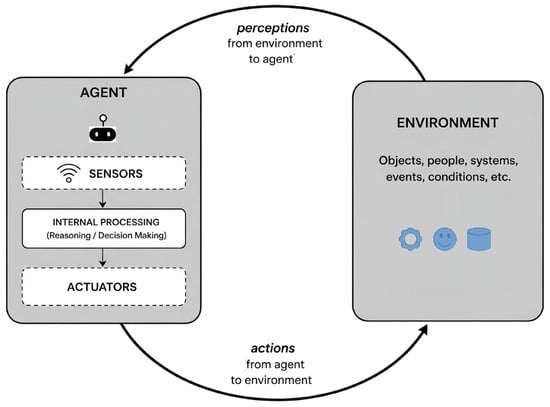
An intelligent agent is defined as an autonomous entity that perceives its environment through sensors and acts upon it via actuators to achieve specific objectives [8]. Unlike passive software, an agent operates through a continuous cycle of perception and action, where its primary goal is to maximize a performance measure based on its internal logic and external stimuli. In a research context, this relationship is known as the agent–environment interface, and the quality of an agent is often judged by its rationality or its ability to consistently choose the most effective action given its available information and computational resources.
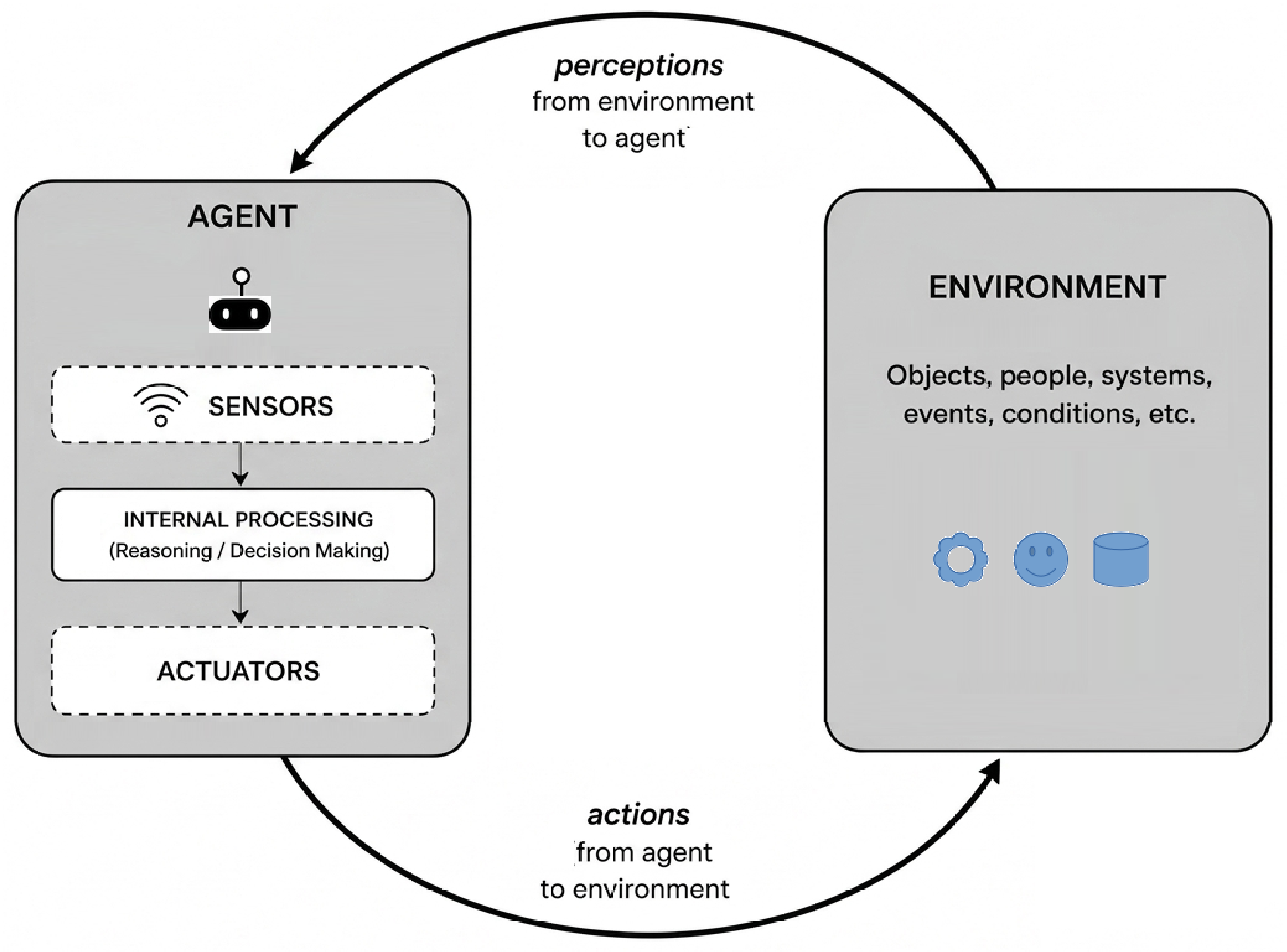
The architecture of an agent consists of three primary components that facilitate this interaction (Figure 1). First, the sensors allow the agent to gather data from its surroundings, effectively translating physical or digital states into internal representations. Second, the agent program or decision-making logic processes this information to determine the most appropriate course of action based on its design, whether that involves simple reflex rules or complex optimization algorithms. Finally, the actuators or effectors are the mechanisms through which the agent executes its decisions, physically or digitally altering the environment to move closer to its desired goal state.
Figure 1.
Interaction cycle between the agent and its environment.
In the domain of supplier selection, the attributes defining an agent’s sophistication and suitability are critical for the automation and optimization of operational decisions across the supply chain [9,10]. Within this context, autonomy serves as a key factor, determining the extent to which an agent can learn and adapt its behavior over time instead of relying exclusively on pre-programmed knowledge. This capacity for self-governance facilitates autonomous decision-making and real-time optimization by automatically parsing forecasting, inventory, and production status reports [11].
Furthermore, the deployment of agents based on large language models represents a major paradigm shift in supplier selection and procurement decision support [12]. While traditional automated approaches rely strictly on structured numerical data, contemporary multi-agent systems enable the seamless synthesis of highly heterogeneous and unstructured information, such as legal contracts and environmental, social, and governance reports. This integration of generative AI agents drives significant improvements in supply chain management efficiency, accuracy, and adaptability. Consequently, these technologies enhance supply chain responsiveness, minimize operational costs, and boost customer satisfaction by facilitating more accurate demand predictions, optimized inventory levels, and agile decision-making [13].
Finally, AI agents empower complex multi-agent synchronization and orchestration, allowing autonomous entities to reason and coordinate decisions across organizational silos. When combined with digital twins, this convergence accelerates the reinvention of optimization and simulation methodologies within contemporary supply chain and management operations [14].
Throughout the manuscript, the static decision matrix refers to the classical TOPSIS matrix with unchanged supplier evaluations; the dynamically updated matrix with fixed equal weights updates supplier evaluations over time while maintaining equal criterion weights; and dynamic entropy-weighted TOPSIS refers to the proposed method, which dynamically updates both supplier evaluations and entropy-based criterion weights.
3. Methodology for Agent-Based Dynamic Weight Adjustment
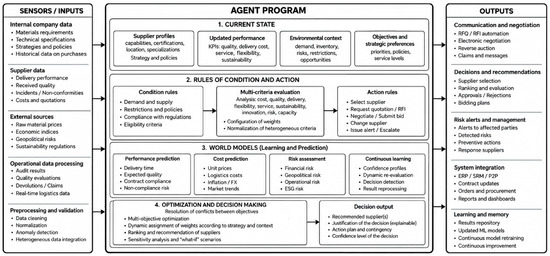
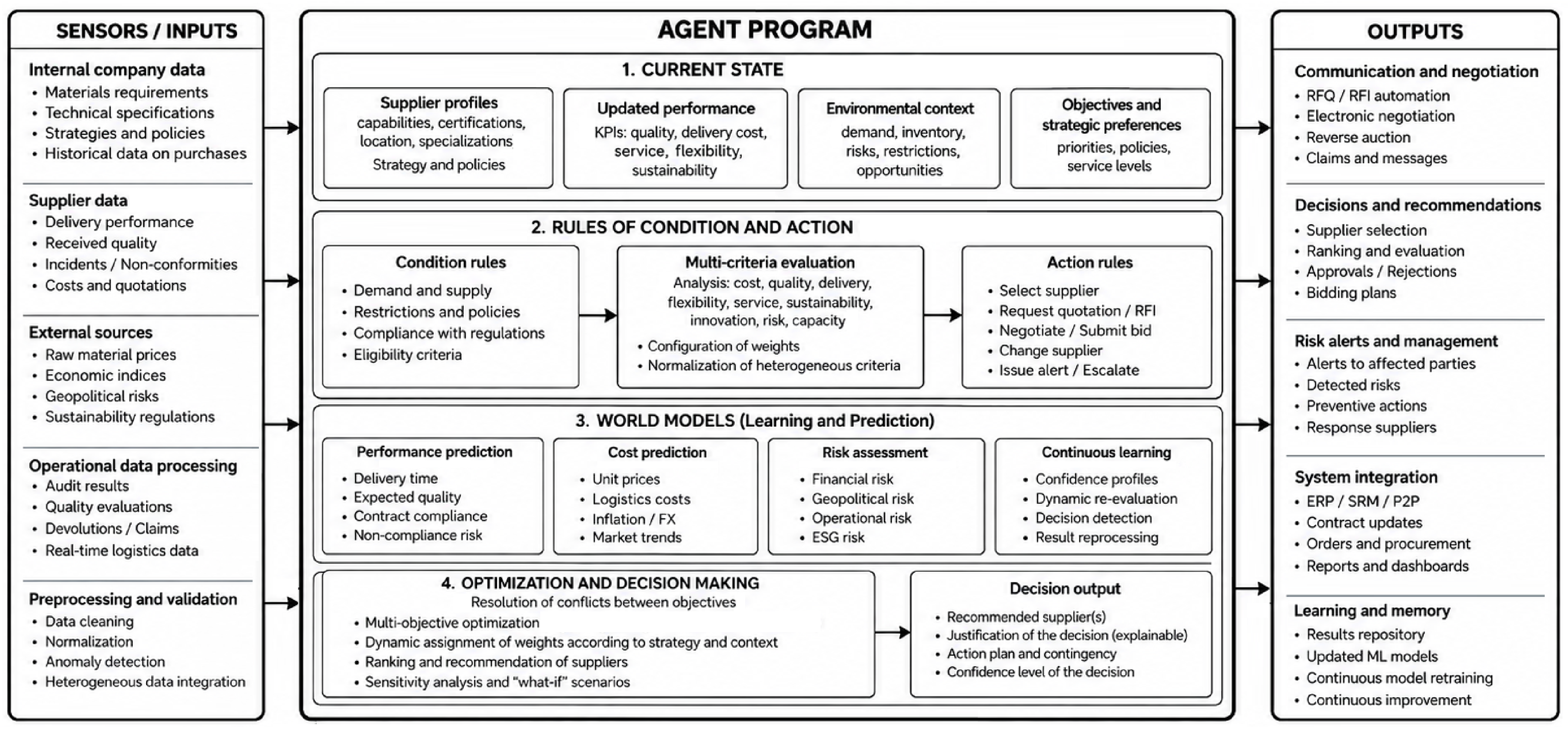
In the context of supply chain management, an agent designed for supplier selection must possess an advanced capacity for multi-criteria evaluation. This implies that a multidimensional analysis attribute is critical, as the decision cannot rely solely on unit cost, but rather on a complex weighting of heterogeneous variables such as quality, lead times, operational flexibility, and sustainability compliance. The agent must be capable of integrating these diverse factors through optimization models that resolve the natural conflicts between objectives, allowing for a balanced decision-making process aligned with the strategic goals of the organization. In Figure 2, the requirements and inputs to formulate the proposed system are listed.
Figure 2.
Requirements and inputs for supplier selection.
Another desired attribute for the proposed system is autonomy linked to continuous monitoring of supplier performance. Through machine learning, the agent monitors the actual performance of suppliers and dynamically adjusts their trust profiles or reputation scores. If data indicate a systematic discrepancy between contractual promises and physical deliveries, the agent updates its internal knowledge base accordingly. This adaptive capacity ensures that the system does not depend on static historical data but instead responds to the current operational reality of the market and its commercial partners.
Finally, it is also desired that agents have communication capabilities to enable interaction within multi-agent systems, participating in negotiation protocols, reverse auctions, or automated requests for quotes with supplier systems. By possessing these capabilities, the agent can suggest or execute a shift toward backup suppliers.
3.1. Multi-Agent System Design
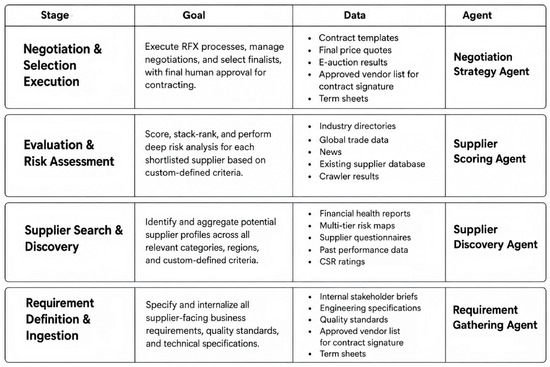
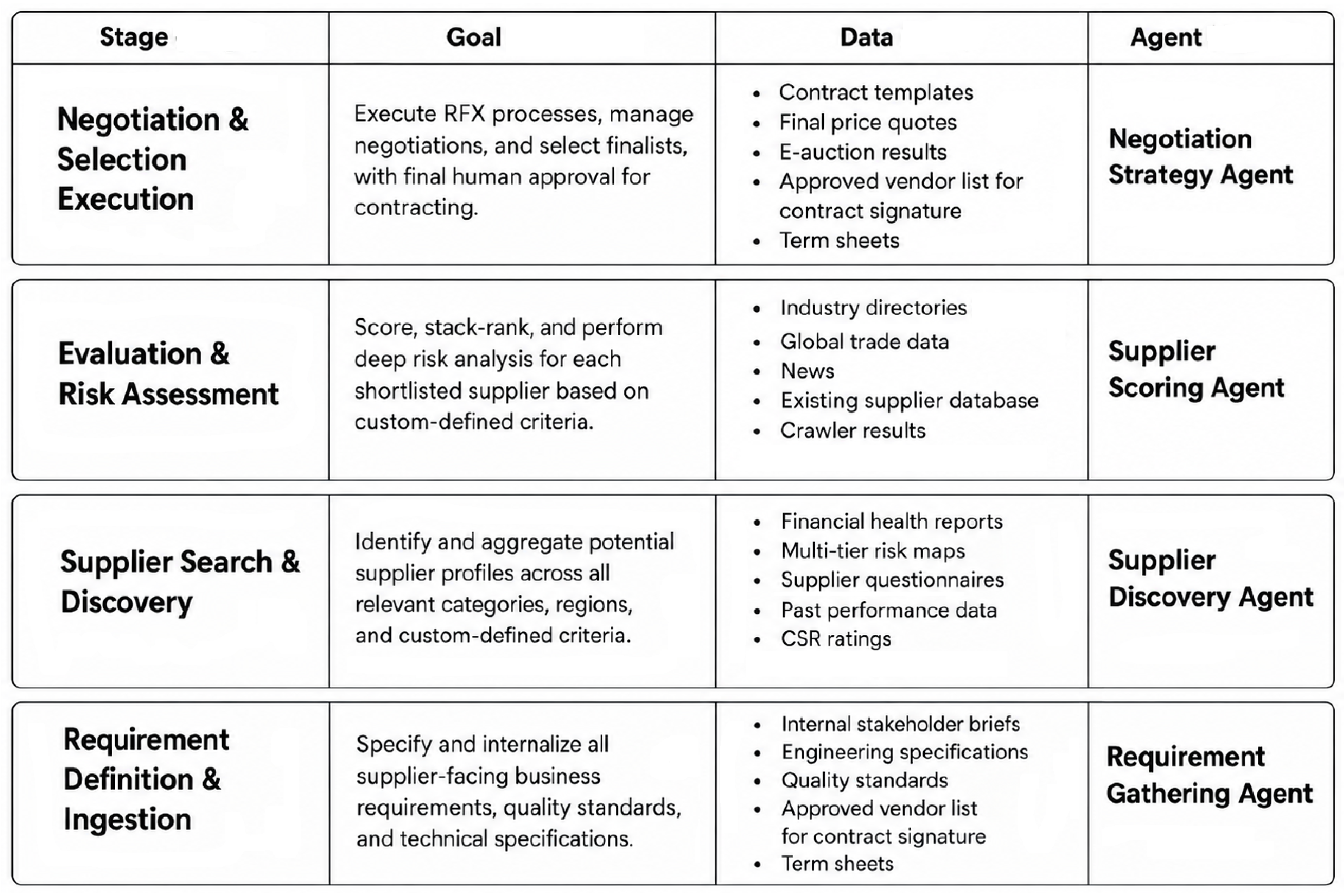
In this section, we describe the set of agents designed to support the autonomous procurement workflow, as illustrated in Figure 3. We propose a series of specialized agents: requirement gathering agent, supplier discovery agent, supplier scoring agent, and negotiation strategy agent. Here, we describe the overall multi-agent system; however, our main focus is on the supplier scoring agent, as it is responsible for evaluating suppliers and supporting the decision-making process for supplier selection.
Figure 3.
Autonomous workflow for procurement.
We begin with requirement definition and ingestion, where the requirement gathering agent identifies and internalizes supplier-facing business requirements, quality standards, and technical specifications based on internal stakeholder briefs and engineering specifications. Other agent-based architectures for requirement gathering have been described in the literature, such as the approach presented in [15], as well as more recent applications in the context of software engineering [16,17].
This transitions into supplier search and discovery led by the supplier discovery agent, which uses big data analytics to extract and aggregate potential supplier profiles from unstructured web data and enterprise systems [18]. The agent dynamically maps technical capabilities, certifications, and viability criteria such as resilience and digitalization [5], delivering accurate and interpretable supplier scouting across global supply networks.
Once candidates are found, the evaluation and risk assessment stage takes over; here, the supplier scoring agent scores and stack-ranks each supplier through risk analysis using industry directories, news, and global trade data. Several approaches have been proposed in the literature for supplier evaluation and risk assessment, incorporating machine learning and artificial intelligence techniques [19,20,21].
Finally, the workflow reaches the negotiation and selection stage, where the negotiation strategy agent manages RFX (Request for X) processes and evaluates final price quotations to identify the finalists. To maintain tactical consistency across multi-turn interactions, the agent relies on structured preparation metrics, explicitly defining its strategic target price and walk-away point prior to engagement [22]. Each counteroffer or proposal generated by the agent includes explicit rationales and justifications [23], preventing the LLM from accepting misleading claims or ungrounded discounts from counterparts. The stage concludes with a human-in-the-loop validation framework, by subjecting final supplier selection, strategic risk audit, and contract execution to human approval. Negotiation agents are explored in several works [24,25].
The human-in-the-loop mechanism distinguishes between autonomous analytical tasks and decisions requiring explicit human authorization. The requirement gathering, supplier discovery, and supplier scoring agents can autonomously process requirements, collect supplier information, update the decision matrix and entropy-based criterion weights, calculate TOPSIS scores, and generate supplier rankings. The negotiation strategy agent can prepare requests for quotations, evaluate price quotations, and generate negotiation proposals within predefined strategic targets and walk-away limits. However, final supplier selection, strategic risk approval, and contract execution require human authorization.
To support informed decisions, the system presents decision makers with supplier rankings, criterion-level scores and weights, relevant supporting evidence from supplier records, news, and sustainability reports, and the rationale behind each recommendation or negotiation proposal. If a recommendation is rejected or overridden, the human decision takes precedence and the rejected recommendation is not treated as an approved outcome. The decision maker may select another supplier or request a reassessment based on revised requirements or additional evidence. This mechanism preserves human accountability for strategic procurement decisions while allowing the agents to automate information processing and analytical tasks. It is important to clarify that the multi-agent framework operates under a strict human-in-the-loop paradigm. While the agents autonomously handle information retrieval, sentiment extraction, and dynamic weight reconfiguration, the final supplier selection and contract execution remain under human strategic oversight.
Beyond decision-making performance, the practical deployment of the proposed framework requires consideration of auditability, data security, supplier fairness, and accountability. Auditability requires traceable decision updates and transparent explanations of supplier rankings, while security requires appropriate protection of supplier data. Supplier fairness calls for consistent evaluation criteria and attention to potential biases in textual information, and accountability requires clearly defined human oversight and authorization for consequential procurement decisions. These aspects are important design requirements that have not been experimentally evaluated in the present study and should be addressed in future implementations of the framework.
The following section provides a more detailed description of the supplier scoring agent, as it plays a central role in the supplier selection process. Particular attention is given to its architecture and decision-making process, since these elements determine how supplier information is evaluated and ultimately transformed into a selection decision.
3.2. Dynamic NLP-Entropy-TOPSIS Agent Engine
The proposed supplier selection framework integrates a supplier scoring agent designed to function as a continuous feedback control loop for the TOPSIS algorithm. Traditional multi-criteria decision-making models conventionally rely on a static weight vector, which fails to account for the inherent change of global supply chains. The supplier scoring agent addresses this limitation by executing a perception–response cycle that ingests heterogeneous data streams from the external environment. This environment, denoted as , encompasses multi-dimensional latent variables such as stakeholder perceptions, market opinions, industry trends, operational risks, and corporate reputation, all extracted from unstructured text including news media, blogs, and social networks. Through NLP, the framework converts these unstructured textual streams into quantified sentiment metrics [26].
We define an adaptive framework for the supplier scoring agent who is operating over a discrete time horizon . In this agent’s architecture, an NLP pipeline acts as the system’s perception layer, while the adaptive weight adjustment and TOPSIS routines govern the reasoning and optimization layer.
Let be the dynamic decision matrix at time t, where m represents the number of alternative suppliers () and n denotes the number of evaluation criteria (). The system state at any given timestamp is uniquely defined by the matrix and its corresponding Dynamic Criteria Weight Vector .
The complete pipeline is formalized as an integrated three-step recursive loop executed at each interval t as follows.
3.2.1. Sentiment-Driven Attribute State Transition
The decision matrix transitions from state to by incorporating the semantic impact of news articles on the specific supplier attributes they concern. Let denote the set of news articles associated with supplier i on day t, and let denote the attribute evaluated by criterion j. Each article is processed by an NLP sentiment classifier . To ensure that sentiment updates are applied only to relevant attributes, a relevance function is introduced:
The state transition of each decision matrix element is then defined as
The semantic mapping function discretizes the textual inference into directional score adjustments:
The semantic mapping function accounts for both the sentiment polarity of a news article and the direction of the corresponding criterion, ensuring that positive and negative news produce consistent adjustments for both cost and benefit attributes.
The relevance function can be implemented using different approaches to semantic classification to identify the attribute or criterion to which each news article pertains. Possible implementations include sentence transformer models, large language models (LLMs), supervised text classifiers, and rule-based approaches using criterion-specific keywords. In this study, the relevance function is instantiated using the criterion labels provided in the dataset, whereas we provide an evaluation of different Transformer-based models for sentiment analysis, represented by the function , which determines the direction of the score adjustment associated with each news article. It should be noted that positive sentiment does not necessarily indicate improved performance for every criterion, as its interpretation depends on the nature and direction of the criterion being evaluated. The update mechanism presented here represents one possible approach to incorporating sentiment into the decision matrix; alternative mechanisms could account for contextual meaning and the magnitude of the reported change. Exploring such alternatives is beyond the scope of the present study and remains an opportunity for future research.
3.2.2. Adaptive Criteria Weight Reconfiguration
Simultaneously, the agent dynamically reconfigures the importance vector to reflect the information entropy and changes introduced by the news pipeline. The dynamic weight for each criterion j is computed utilizing a normalized Shannon entropy mechanism adapted from [4,27] over the transient state of .
First, the projection value is derived to measure the relative performance of each alternative:
The information entropy contained within criterion j at time t is formulated as follows:
where is a smoothing parameter preventing undefined states. The dynamic weight vector is subsequently updated by calculating the diversification degree , forcing a strict sum-to-one constraint:
Through this mechanism, if the news pipeline creates severe performance divergence among suppliers for a particular green attribute, the agent automatically increases its weight , identifying it as a high-discrimination risk factor. However, note again that the entropy weighting procedure adopted in this study follows an established entropy-TOPSIS approach [4,27] and derives criterion weights from the distribution of observed values across supplier alternatives. These weights reflect the relative information provided by the available data and should not be interpreted as direct measures of managerial importance or temporal volatility. Moreover, although the procedure provides a data-driven weighting mechanism, it does not eliminate all sources of subjectivity associated with criterion selection and data preparation. Future extensions could combine entropy-based weights with expert-defined priorities or policy-based constraints to ensure that mandatory environmental and regulatory requirements remain adequately represented in the supplier evaluation process.
3.2.3. Dynamic Multi-Criteria Ranking
Once the state matrix and the adaptive weights are unified, the agent solves the instant multi-criteria optimization problem using TOPSIS.
The elements of the Dynamic Weighted Normalized Decision Matrix are computed via vector normalization:
Because the system state is moving, the coordinates for the Dynamic Positive Ideal Solution () and the Dynamic Negative Ideal Solution () become mobile vectors calculated instantly at time t:
where J and represent the benefit (green attributes) and cost criteria sets, respectively.
The Euclidean distance separation measures from the dynamic ideals are calculated for each supplier:
Finally, the Dynamic Closeness Coefficient is derived. This coefficient represents the unified adaptive metric utilized by the agent to sort and output the optimal supplier ranking at day t:
4. Results
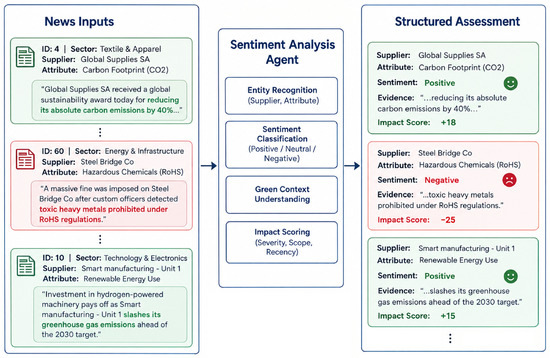
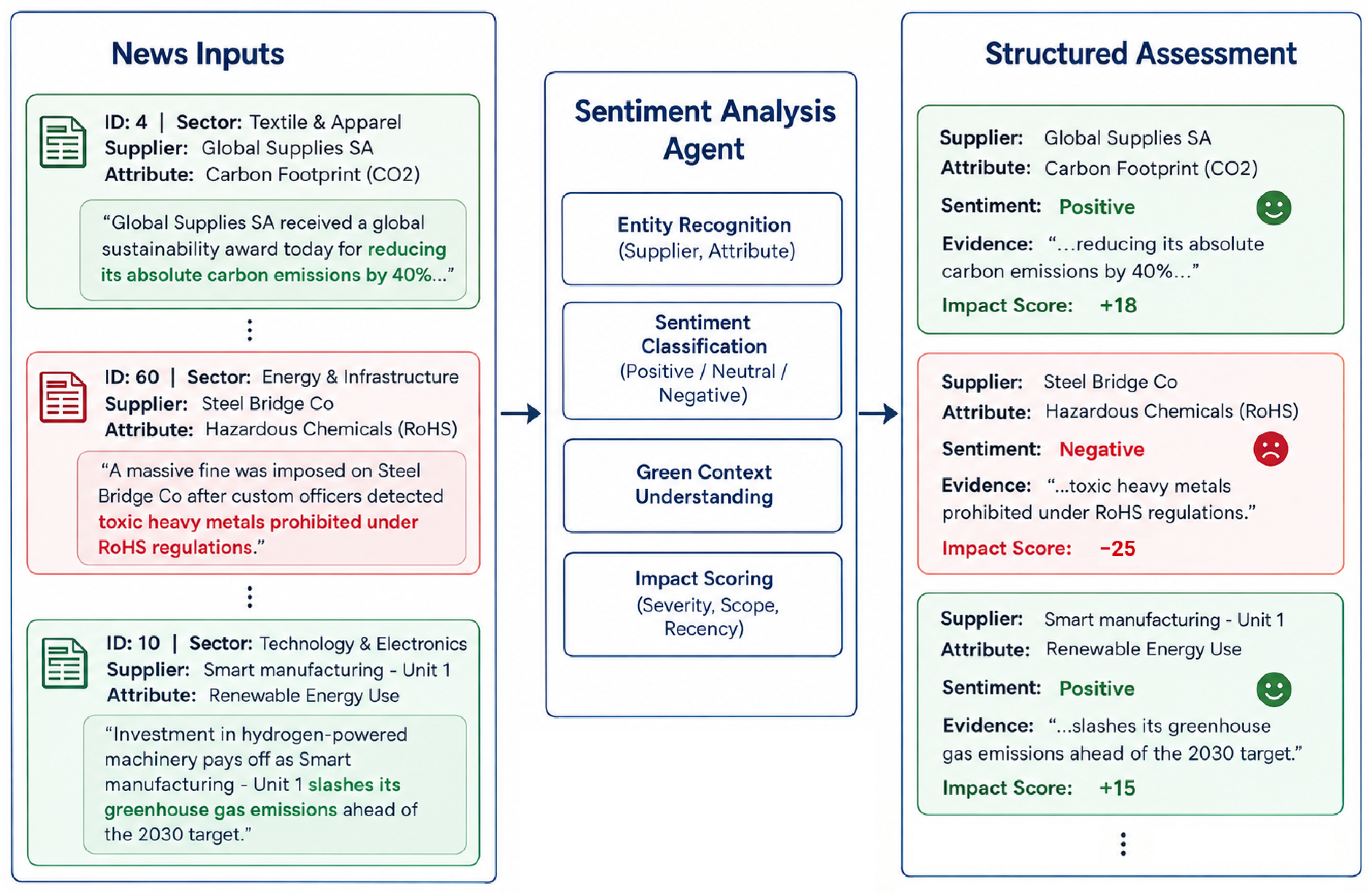
To validate the efficiency of the proposed conceptual agent-based dynamic TOPSIS model, a series of computational simulations were conducted across distinct scenarios. The experimental setup was established by simulating a procurement database consisting of seven suppliers and their respective attributes, designed to mimic a real-world manufacturing supplier roster. The synthetic supplier profiles and news items used in our experiments were generated with the assistance of artificial intelligence, GPT-6, through the publicly accessible version. The supplier names are fictitious, and the news items were designed to resemble realistic news reports for the purpose of the experimental evaluation. To represent the continuous stream of market updates that the agent would monitor in an online environment, we include in the database simulated corporate news, specialized blogs, and industry articles directly related to the environmental performance of these suppliers; see Figure 4.
Figure 4.
The pipeline used by the agent to perform sentiment analysis on textual elements.
4.1. Evolution of Criteria Values
To test the operational efficacy of the unified framework, a 20-month simulation was conducted on five green attributes. For this evaluation, three state-of-the-art Natural Language Processing models were selected as the core inference engines () for the agent: RoBERTa-base [28], DeBERTa-v3-base [29,30], and DistilBERT-base [31].
The Transformer models were implemented using the Transformers Python library (Python version: 3.13.18, Transformers version: 5.22.0). The following pretrained models were used for sentiment analysis, in the same order as the models described above: cardiffnlp/twitter-roberta-base-sentiment-latest, MoritzLaurer/DeBERTa-v3-base-mnli-fever-anli, and distilbert-base-uncased-finetuned-sst-2-english. This experiment evaluates the temporal evolution of the performance ratings, , for a specific alternative supplier (i) by leveraging the agent’s continuous tracking of unstructured news streams. The dynamic state-space simulation is validated across five distinct sustainability criteria: Carbon Footprint (), Renewable Energy Use (), Eco-friendly Packaging (), Reverse Logistics (), and Water Efficiency (). By mapping and simulating the corresponding dynamic trajectories over a time horizon, the experiment illustrates how textual updates systematically reconfigure the multi-criteria decision matrix.
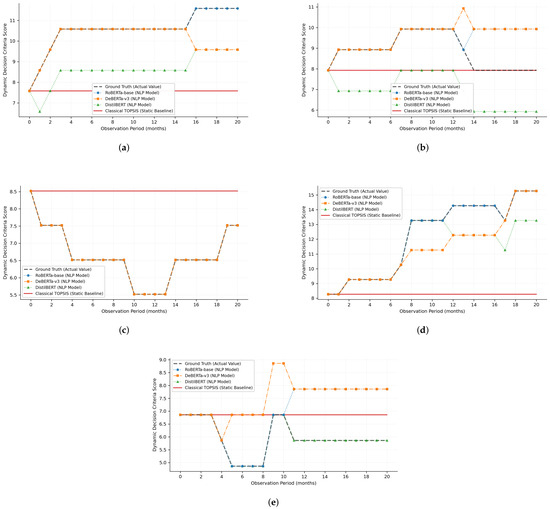
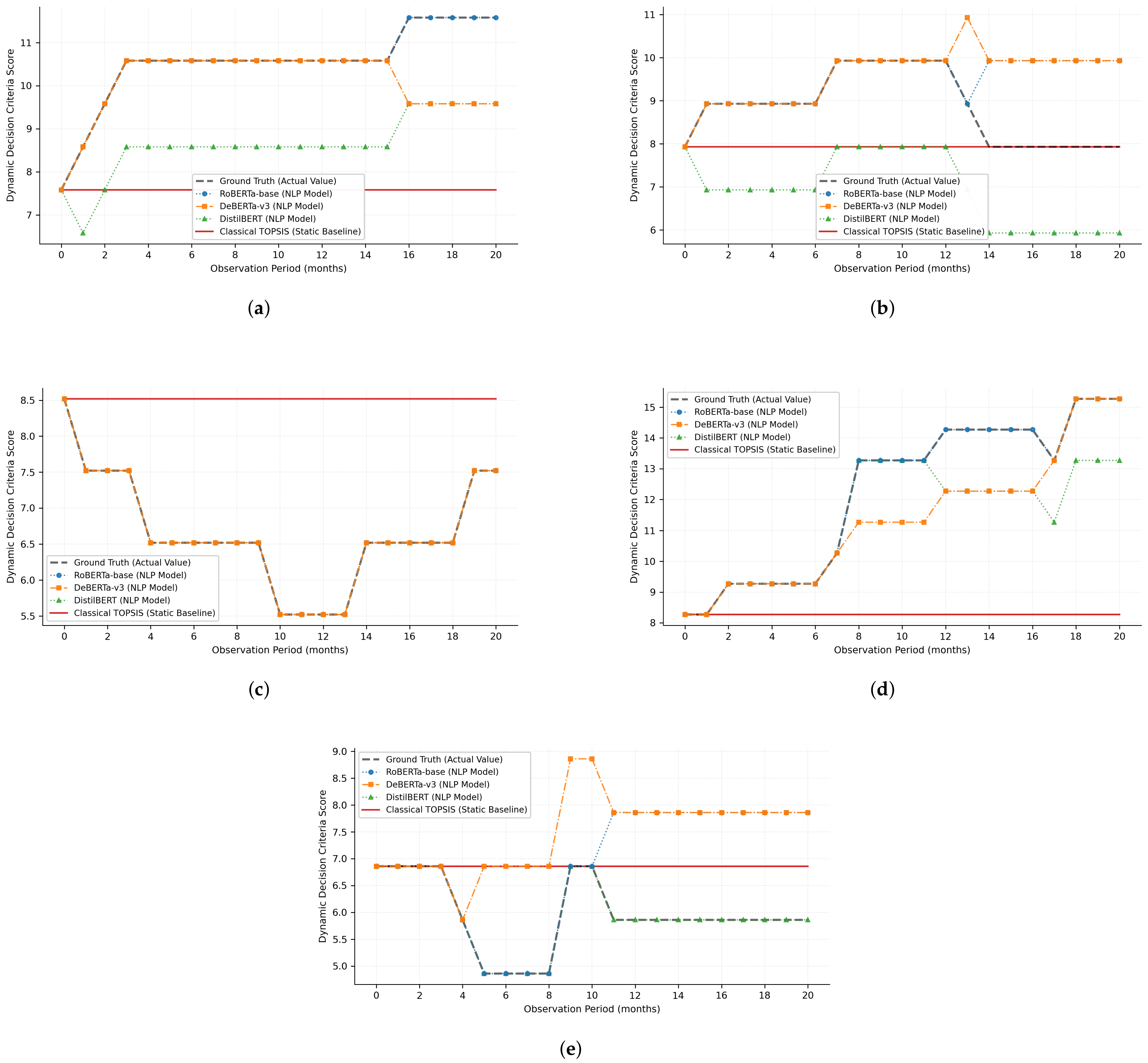
Figure 5 illustrates the transient trajectories for the first supplier () across all evaluated green criteria (). To conduct a comparative analysis, each sub-figure contrasts the empirical performance of the three distinct NLP inference classifiers. The resulting curves are evaluated against both the error-free classifier Ground Truth trajectory and the horizontal fixed-weight baseline generated by the classical static decision matrix, showing the impact of temporal blindness under conventional assessment models.
Figure 5.
Trajectories across evaluated green criteria: (a) Carbon Footprint, (b) Renewable Energy Use, (c) Eco-Friendly Packaging, (d) Reverse Logistics, and (e) Water Efficiency.
The behavioral trajectories under environmental stress reveal distinct patterns of degradation and expansion. For Carbon Footprint (Figure 5a) and Eco-friendly Packaging (Figure 5c), the Ground Truth tracks severe degradation, dropping to steady-state floors of 3.58 and 7.52, respectively. While all language models perfectly synchronized with the packaging crisis, DistilBERT introduced a positive bias during the initial carbon footprint collapse, and DeBERTa-v3 exhibited a false-positive drift at Month 16. In contrast, the Reverse Logistics (Figure 5d) and Renewable Energy (Figure 5b) curves captured substantial sustainability expansions, peaking at 15.27 and 9.93, respectively. Because the supplier’s performance in reverse logistics diverged aggressively from its competitors due to positive news updates, the agent’s adjustments using RoBERTa-base successfully minimized the error by adjusting the performance ratings accordingly.
A cross-architecture benchmarking underscores the trade-offs in NLP model selection for corporate risk mitigation. RoBERTa-base achieved the highest overall robustness in this test, showing capable tracking and prompt error-correction across both market crises and growth milestones. DeBERTa-v3 proved highly capable but showed sporadic classification lags during sudden market changes and a slight tendency toward overestimating final states under fluctuating conditions, for example, scoring 7.86 in Water Efficiency against the true state of 5.86. Due to its highly compressed parameter architecture, DistilBERT yielded systematic negative biases in expansion metrics and a continuous processing lag.
These results are summarized in Table 1, contrasting the adaptive NLP trajectories against the rigid baseline of classical TOPSIS, exposing the severe risks of temporal blindness in traditional procurement. Throughout the simulation, the classical TOPSIS Static model remained entirely horizontal and unresponsive, locking critical attributes at their initial Month 0 values, for example, Carbon Footprint at 7.58 and Packaging at 8.52, thereby masking critical multi-criteria state transitions that could occur in real-world supply chains.
Table 1.
Dynamic Green Criteria State Trajectories and Performance Summary for the first supplier () at Checkpoint Months.
Note that the fixed-weight Baseline evaluated in this experiment represents a conventional procurement assessment where the decision matrix remains completely fixed at its initial state (), disregarding any incoming news or sentiment updates throughout the 20-month observation horizon.
Evaluating suppliers statically could lead to selecting risky companies. However, integrating NLP sentiment tracking into criteria update equations could help to alleviate these problems.
4.2. Dynamic Criterion Weights, Supplier Rankings, and Selection Outcomes
To further evaluate the dynamic behavior of the proposed supplier evaluation framework, an additional 20-day experiment was conducted using a set of seven fictitious suppliers with fictitious names and news. The data were generated using AI. The analysis was performed for the five green criteria considered in the proposed framework: Carbon Footprint, Renewable Energy Use, Eco-friendly Packaging, Reverse Logistics, and Water Efficiency. No Transformers were used; the sentiment of the news and associated criteria was taken from the database. For each day, the decision matrix was updated according to the available news events.
4.2.1. Evolution of Dynamic Criterion Weights
The dynamic entropy analysis shows that the greatest discriminating information of the five criteria changes substantially over the observation horizon. Table 2 reports the criterion weights at five representative checkpoints: Days 0, 5, 10, 15, and 20.
Table 2.
Dynamic entropy weights at representative points of the 20-day experiment.
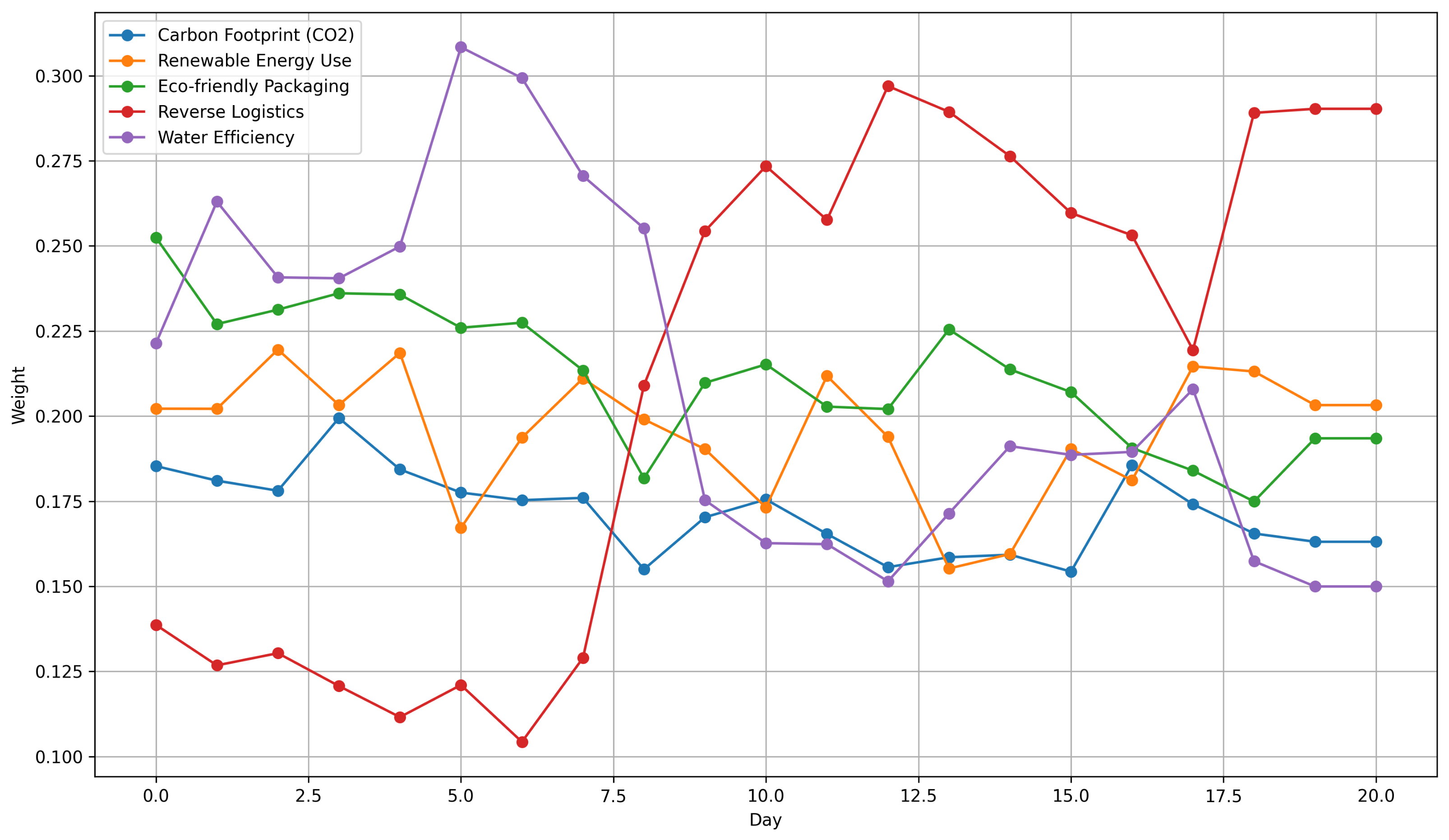
The results indicate that the weights do not remain constant during the experiment. In particular, reverse logistics exhibits the largest increase in discriminating information¸, rising from 0.13 on Day 0 to 0.31 on Day 20. Consequently, it becomes the highest data-derived weight at the end of the observation period. In contrast, Carbon Footprint decreases from 0.19 to 0.16. Water Efficiency also exhibits substantial temporal variability, reaching a weight of 0.32 on Day 5 before declining to 0.16 on Day 20. Renewable Energy Use shows a more moderate increase toward the end of the experiment, whereas Eco-friendly Packaging gradually decreases from 0.25 to 0.20.
These results provide evidence that the proposed entropy-based weighting mechanism responds to changes in the dynamic decision matrix rather than imposing a fixed importance structure throughout the evaluation period. Therefore, the relative importance of the sustainability criteria can adapt as new information becomes incorporated into the supplier evaluation process.
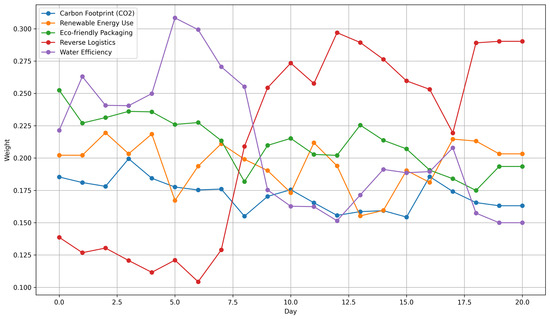
Figure 6 presents the complete trajectory of the five criterion weights over the 20-day period. The figure complements Table 2 by showing that the changes are not restricted to the selected checkpoints but occur progressively throughout the dynamic experiment.
Figure 6.
Evolution of the dynamic entropy weights over the 20-day observation horizon.
4.2.2. Dynamic TOPSIS Rankings
The dynamic weights were subsequently incorporated into TOPSIS to obtain a complete ranking of all seven suppliers for each day of the experiment. To isolate the impact of the dynamic entropy weighting mechanism from the sentiment updates, the baseline Equal-Weight TOPSIS model in this experiment utilizes the exact same dynamically updated decision matrix as the proposed method. However, instead of reconfiguring criteria weights based on data entropy, it assigns fixed, equal weights across all criteria at each time step t. Table 3 summarizes the resulting rankings at five representative checkpoints and provides the corresponding rankings. Note that Table 3 only shows the top five suppliers at each checkpoint.
Table 3.
Supplier rankings at representative checkpoints under Dynamic Entropy-TOPSIS and the baseline method.
The ranking trajectories show that the dynamic weighting mechanism can produce supplier-order changes that are not captured by the baseline approach. At the beginning of the experiment, the approaches produce highly similar rankings because they are applied to the same initial decision matrix. However, as new information is incorporated, the rankings progressively diverge.
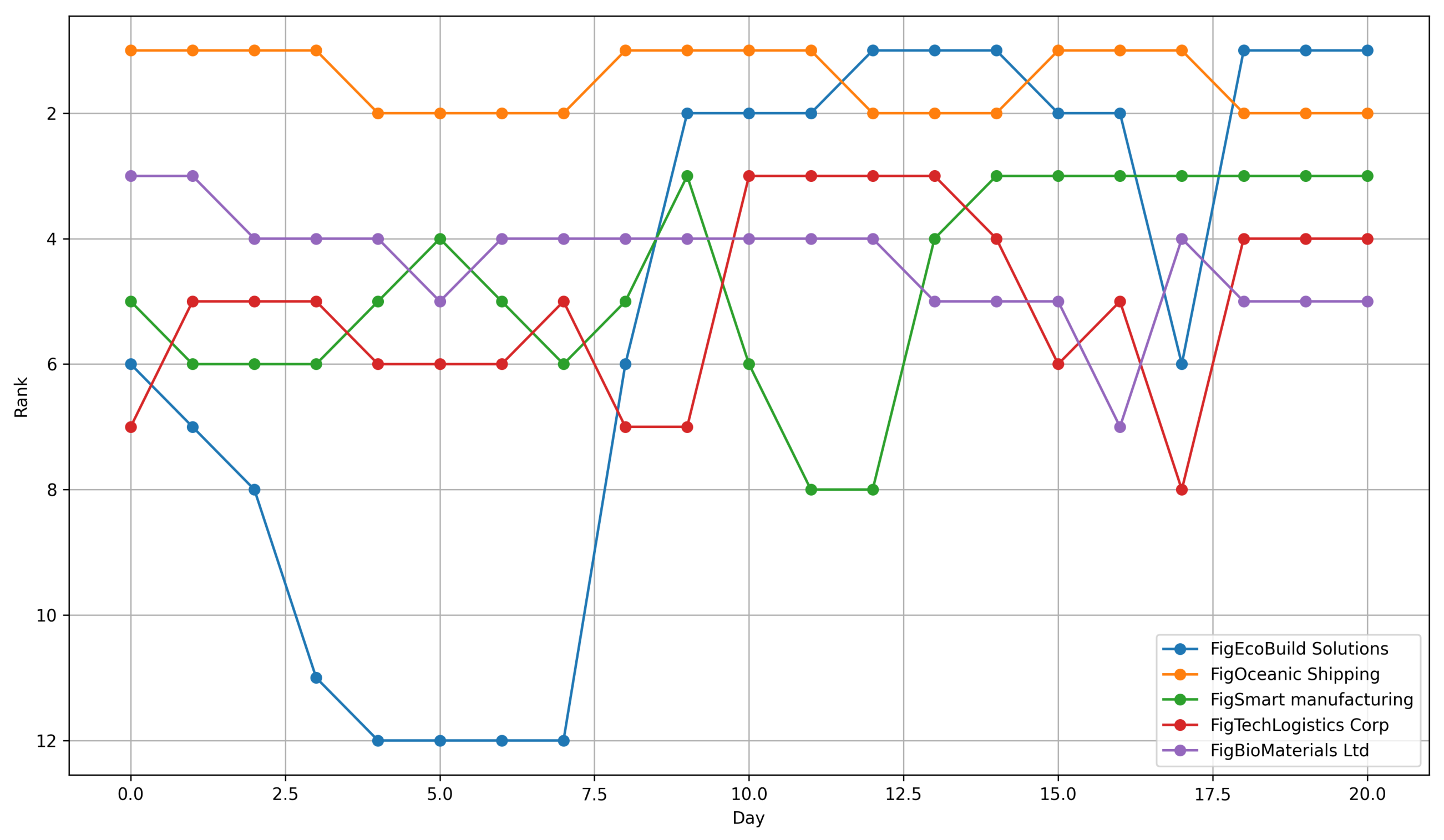
A notable example is FigEcoBuild Solutions. This supplier is ranked sixth by the Dynamic Entropy-TOPSIS approach on Day 0 but reaches the first position by Day 10 and remains the highest-ranked supplier through Day 20. At Day 20, FigEcoBuild Solutions is ranked first by Dynamic Entropy-TOPSIS and third by Equal-Weight TOPSIS. Similarly, FigTechLogistics Corp reaches fourth position under Dynamic Entropy-TOPSIS on Day 20, whereas it occupies seventh under Equal-Weight TOPSIS.
These differences indicate that recalculating the criterion weights in response to changes in the decision matrix can affect the resulting supplier priorities. In contrast, the fixed-weight baseline cannot adapt its criterion importance after the initial weighting stage and assumes that all criteria remain equally important.
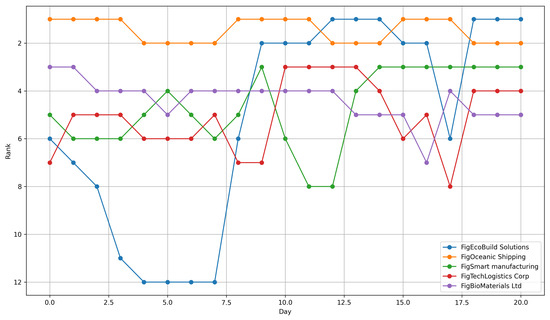
Figure 7 illustrates the temporal evolution of the supplier rankings and highlights the changes produced by the incorporation of dynamic information.
Figure 7.
Dynamic TOPSIS rank trajectories for the suppliers occupying the highest positions at the end of the experiment.
4.3. Ablation and Sensitivity Analysis
An ablation study was conducted to evaluate the individual contributions of dynamic decision scores and entropy-based weighting. Three configurations were compared: dynamic scores with fixed equal weights, static scores with entropy weights, and the proposed combined model. Table 4 summarizes the results.
Table 4.
Ablation analysis.
The results show that both simplified configurations selected FigOceanic Shipping as the top-ranked supplier, whereas the combined model selected FigEcoBuild Solutions. The Spearman correlations with the combined ranking were 0.821 for dynamic scores with fixed equal weights and 0.393 for static scores with entropy weights. The corresponding mean absolute rank changes were 1.143 and 1.714 positions, respectively. These results indicate that the integration of dynamic score updates and entropy-based weighting has an influence on the resulting supplier ranking.
A sensitivity analysis was conducted to examine the effects of simulated sentiment classification errors and variations in the magnitude of score updates; see Table 5. Sentiment errors were simulated by randomly reversing sentiment labels at rates of 7%, 15%, and 25%. Each error scenario was evaluated using 30 random seeds (42–71), and the mean and standard deviation of the Spearman correlation were calculated against the reference ranking. The mean correlation decreased from 1.000 in the reference scenario to 0.586, 0.429, and 0.350 as the simulated error rate increased. The most frequent top-ranked supplier also changed at the highest error level. In contrast, varying the update magnitude between 1.0 and 2.0 preserved FigEcoBuild Solutions as the top-ranked supplier, with Spearman correlations of 1.000, 1.000, and 0.964, respectively. These results indicate that the ranking is more sensitive to sentiment classification perturbations than to variations in update magnitude within the evaluated range.
Table 5.
Sensitivity analysis.
5. Discussion and Conclusions
This paper presented a novel multi-agent architecture for the supplier selection process, shifting from traditional static procurement assessments to an autonomous multi-agent system. By embedding the unified NLP-Entropy-TOPSIS framework as the computational engine of the scoring agent, the system integrates unstructured environmental data streams and quantitative multi-criteria decision-making. The integration of continuous sentiment analysis allows the agent to adjust as new information becomes available.
This study provides a proof of concept for the proposed dynamic NLP–Entropy–TOPSIS decision-making framework using simulated supplier-related information. The results illustrate how incoming information can influence criterion weights, supplier scores, and rankings.
The observed changes in supplier rankings show that the proposed dynamic framework responds to updated information. Because the evaluation is based on simulated data, the results illustrate the behavior of the proposed NLP–Entropy–TOPSIS framework rather than demonstrate improvements in actual procurement outcomes. Establishing whether these updates lead to better decisions would require an evaluation against predefined decision-quality criteria, ground-truth outcomes, or real procurement data. Also, the use of a small, balanced synthetic dataset could limit the generalization of the findings. Thus, the present evaluation does not establish real-time operational feasibility, robustness under real-world conditions, reliable early risk detection, or the prevention of poor supplier selection. Future work should validate the framework using real-world supplier data and operational scenarios to assess its practical effectiveness.
Future research directions could focus on expanding the agentic AI architecture to integrate multimodal data streams, including quantitative financial health indexes and structured logistics metadata alongside textual news. Additionally, exploring the deployment of lighter, fine-tuned large language models within the agent architecture could enhance semantic understanding without compromising computational efficiency. Also, the incorporation of sentiment prediction confidence, source credibility, and news recency into the news-driven score update mechanism. Additional improvements could include duplicate news detection to avoid redundant updates and explicit score bounds to maintain supplier attribute values within predefined ranges.
Author Contributions
Conceptualization, J.-M.M.-M. and L.A.-S.; methodology, J.-M.M.-M., L.A.-S., L.O.-M., J.L.G.-A., A.D.-O. and O.C.-M.; software, J.-M.M.-M., L.O.-M. and A.D.-O.; validation, J.L.G.-A., O.C.-M. and L.A.-S.; Investigation, A.D.-O., J.-M.M.-M., O.C.-M., L.O.-M., L.A.-S. and J.L.G.-A.; data curation, J.-M.M.-M., L.A.-S. and O.C.-M.; writing—original draft preparation, J.L.G.-A. and J.-M.M.-M.; writing—review and editing, L.O.-M., L.A.-S., J.L.G.-A., A.D.-O. and O.C.-M.; supervision, J.-M.M.-M. and J.L.G.-A. All authors have read and agreed to the published version of the manuscript.
Funding
This research received no external funding.
Data Availability Statement
The data presented in this study are simulated and are available from https://drive.google.com/file/d/1lB3hRSBkqYdPg86wyjpNss4CECPhNco4/view?usp=sharing (accessed on 23 November 2026).
Acknowledgments
We would like to thank the Universidad Autónoma de Ciudad Juárez (UACJ) for providing the infrastructure necessary to carry out this work. We declare the use of AI for grammar and spelling review and the use of AI to generate synthetic experimental data, as explained in the manuscript. The methodology, analyses, originality, validity, and integrity were carried out exclusively by the authors. No AI was used for such a purpose.
Conflicts of Interest
The authors declare no conflicts of interest.
Abbreviations
The following abbreviations are used in this manuscript:
| AHP | Analytic Hierarchy Process |
| LLM | Large Language Model |
| MAS | Multi-Agent Systems |
| NLP | Natural Language Processing |
| TOPSIS | Order of Preference by Similarity to Ideal Solution |
| SSP | Supplier Selection Problem |
References
- Ghadge, A.; Jena, S.K.; Kamble, S.; Misra, D.; Tiwari, M.K. Impact of financial risk on supply chains: A manufacturer-supplier relational perspective. Int. J. Prod. Res. 2021, 59, 7090–7105. [Google Scholar] [CrossRef] [Scilit]
- Chowdhury, A.R. A systematic review of risk-based procurement strategies in retail supply chains: Sourcing flexibility and vendor disruption management. Am. J. Adv. Technol. Eng. Solut. 2025, 1, 466–505. [Google Scholar] [CrossRef] [Scilit]
- Sulistiani, H.; Setiawansyah; Pasaribu, A.; Pasaribu, A.; Palupiningsih, P.; Anwar, K.; Saputra, V.H. New TOPSIS: Modification of the TOPSIS Method for Objective Determination of Weighting. Int. J. Intell. Eng. Syst. 2024, 17, 991. [Google Scholar] [CrossRef] [Scilit]
- Freeman, J.; Chen, T. Green supplier selection using an AHP-Entropy-TOPSIS framework. Supply Chain. Manag. Int. J. 2015, 20, 327–340. [Google Scholar] [CrossRef] [Scilit]
- Zekhnini, K.; Chaouni Benabdellah, A.; Cherrafi, A. A multi-agent based big data analytics system for viable supplier selection. J. Intell. Manuf. 2024, 35, 3753–3773. [Google Scholar] [CrossRef] [Scilit]
- Sadeghi, N.; Dehghani, M.; Kabadayi, N. The AI-driven Decision-Making (AIDM) Framework: Integrating AHP and ChatGPT for Supplier Selection: N. Sadeghi, M. Dehghani, N. Kabadayi. Ann. Oper. Res. 2026, 359, 2593–2615. [Google Scholar]
- Wang, X.; Wu, X. Can ChatGPT serve as a multi-criteria decision maker? A novel approach to supplier evaluation. In Proceedings of the ICASSP 2024–2024 IEEE International Conference on Acoustics, Speech and Signal Processing (ICASSP); IEEE: New York, NY, USA, 2024; pp. 10281–10285. [Google Scholar]
- Russell, S.J.; Norvig, P. Artificial Intelligence: A Modern Approach, 4th ed.; Pearson: London, UK, 2020. [Google Scholar]
- Jannelli, V.; Schoepf, S.; Bickel, M.; Netland, T.; Brintrup, A. Agentic LLMs in the supply chain: Towards autonomous multi-agent consensus-seeking. Int. J. Prod. Res. 2025, 1–31. [Google Scholar] [CrossRef] [Scilit]
- Hendriksen, C. Artificial intelligence for supply chain management: Disruptive innovation or innovative disruption? J. Supply Chain. Manag. 2023, 59, 65–76. [Google Scholar] [CrossRef] [Scilit]
- Sharifmousavi, M.; Kayvanfar, V.; Baldacci, R. Distributed artificial intelligence application in agri-food supply chains 4.0. Procedia Comput. Sci. 2024, 232, 211–220. [Google Scholar] [CrossRef] [Scilit]
- Liu, J.; Li, P. Large Language Models as Decision Support Tools in Procurement and Supplier Selection. Front. Artif. Intell. Res. 2026, 3, 167–186. [Google Scholar] [CrossRef] [Scilit]
- Gaddala, V.S. Unleashing the Power of Generative AI and RAG Agents in Supply Chain Management: A Futuristic Perspective. IRE J. 2023, 6, 1411–1417. [Google Scholar]
- Ivanov, D. Agentic digital twins: Bridging model-based and AI-driven decision-making support for a new era of supply chain and operations management. Int. J. Prod. Res. 2026, 64, 6574–6590. [Google Scholar] [CrossRef] [Scilit]
- Chiu, D.K.; Leung, H.f. Towards ubiquitous tourist service coordination and integration: A multi-agent and semantic web approach. In Proceedings of the 7th international Conference on Electronic Commerce; ACM: New York, NY, USA, 2005; pp. 574–581. [Google Scholar]
- Sami, M.A.; Waseem, M.; Zhang, Z.; Rasheed, Z.; Systa, K.; Abrahamsson, P. Early results of an ai multiagent system for requirements elicitation and analysis. In Proceedings of the International Conference on Product-Focused Software Process Improvement; Springer: Berlin/Heidelberg, Germany, 2024; pp. 307–316. [Google Scholar]
- Huang, J.; Jin, D.; Sun, W.; Liu, Y.; Jin, Z. Envisioning intelligent requirements engineering via knowledge-guided multi-agent collaboration. In Proceedings of the 2025 40th IEEE/ACM International Conference on Automated Software Engineering (ASE); IEEE: New York, NY, USA, 2025; pp. 3876–3880. [Google Scholar]
- Li, Y.; Ko, H.; Ameri, F. Integrating graph retrieval-augmented generation with large language models for supplier discovery. J. Comput. Inf. Sci. Eng. 2025, 25, 021010. [Google Scholar] [CrossRef] [Scilit]
- Khan, M.M.; Bashar, I.; Minhaj, G.M.; Wasi, A.I.; Hossain, N.U.I. Resilient and sustainable supplier selection: An integration of SCOR 4.0 and machine learning approach. Sustain. Resilient Infrastruct. 2023, 8, 453–469. [Google Scholar] [CrossRef] [Scilit]
- Gidiagba, O.J.; Tartibu, L.; Okwu, M. Integrating machine learning with multi-criteria decision-making models for sustainable supplier selection in dynamic supply chains. Logistics 2025, 9, 152. [Google Scholar] [CrossRef] [Scilit]
- Ali, A.A.M.; Kassam, A.E.H. Supplier selection enhanced by big data analytics using deep learning. AIP Conf. Proc. 2024, 3232, 020038. [Google Scholar] [CrossRef] [Scilit]
- Shea, R.; Kallala, A.; Liu, X.L.; Morris, M.W.; Yu, Z. ACE: A LLM-based negotiation coaching system. In Proceedings of the 2024 Conference on Empirical Methods in Natural Language Processing; ACL: Kerrville, TX, USA, 2024; pp. 12720–12749. [Google Scholar]
- Hua, W.; Liu, O.; Li, L.; Amayuelas, A.; Chen, J.; Jiang, L.; Jin, M.; Fan, L.; Sun, F.; Wang, W.; et al. Game-theoretic llm: Agent workflow for negotiation games. arXiv 2024, arXiv:2411.05990. [Google Scholar]
- Schneider, J.; Haag, S.; Kruse, L.C. Negotiating with llms: Prompt hacks, skill gaps, and reasoning deficits. In Proceedings of the International Conference on Computer-Human Interaction Research and Applications; Springer: Berlin/Heidelberg, Germany, 2024; pp. 238–259. [Google Scholar]
- Zhan, H.; Wang, Y.; Li, Z.; Feng, T.; Hua, Y.; Sharma, S.; Qu, L.; Azad, Z.S.; Zukerman, I.; Haf, R. Let’s negotiate! a survey of negotiation dialogue systems. In Proceedings of the Findings of the Association for Computational Linguistics: EACL 2024; ACL: Kerrville, TX, USA, 2024; pp. 2019–2031. [Google Scholar]
- Farhadloo, M.; Rolland, E. Fundamentals of Sentiment Analysis and Its Applications; Springer: Berlin/Heidelberg, Germany, 2016; pp. 1–24. [Google Scholar]
- Yu, X.; Suntrayuth, S.; Su, J. A comprehensive evaluation method for industrial sewage treatment projects based on the improved entropy-topsis. Sustainability 2020, 12, 6734. [Google Scholar] [CrossRef] [Scilit]
- Liu, Y.; Ott, M.; Goyal, N.; Du, J.; Joshi, M.; Chen, D.; Levy, O.; Lewis, M.; Zettlemoyer, L.; Stoyanov, V. Roberta: A robustly optimized bert pretraining approach. arXiv 2019, arXiv:1907.11692. [Google Scholar]
- He, P.; Liu, X.; Gao, J.; Chen, W. Deberta: Decoding-enhanced bert with disentangled attention. arXiv 2020, arXiv:2006.03654. [Google Scholar]
- He, P.; Gao, J.; Chen, W. Debertav3: Improving deberta using electra-style pre-training with gradient-disentangled embedding sharing. arXiv 2021, arXiv:2111.09543. [Google Scholar]
- Sanh, V.; Debut, L.; Chaumond, J.; Wolf, T. DistilBERT, a distilled version of BERT: Smaller, faster, cheaper and lighter. arXiv 2019, arXiv:1910.01108. [Google Scholar]

Disclaimer/Publisher’s Note: The statements, opinions and data contained in all publications are solely those of the individual author(s) and contributor(s) and not of MDPI and/or the editor(s). MDPI and/or the editor(s) disclaim responsibility for any injury to people or property resulting from any ideas, methods, instructions or products referred to in the content. |
© 2026 by the authors. Licensee MDPI, Basel, Switzerland. This article is an open access article distributed under the terms and conditions of the Creative Commons Attribution (CC BY) license.