


Abstract
Orchestrating artificial intelligence services in sixth-generation (6G) networks requires application requirements to be linked to data, models, and execution resources within specified time and cost budgets. Integrating generative large language models (LLMs) into decision points introduces simultaneous requirements for judgment quality, response latency, and software integration. This article proposes a framework that integrates System One models, using context-aware judgments and typed outputs to orchestrate services across device–edge–cloud infrastructure. The framework specifies when to invoke models and organizes the processing chain from context preparation and selection through binding, validation, and confirmation of execution outcomes; supporting components are invoked according to need and the remaining budget. Application opportunities are examined in offloading, model orchestration, data management, and operational monitoring. Discrete-event simulation combined with live model application programming interface (API) calls illustrates context-aware service selection. Under the evaluated configuration, a representative System One implementation completes 94.49% of requests for supported functions with the correct functionality, within their deadlines, and in compliance with policy, compared with 38.17–71.11% for four baseline LLMs configured for structured output; its median API response latency is 43.3–79.2% lower. These results provide a basis for developing decision-oriented models with service-level performance as an objective. The article also identifies research directions in context generalization, uncertainty calibration, multistep coordination, and controlled execution.
1. Introduction
1.1. From Intelligent Connectivity to Service Orchestration and Distributed AI
The vision for sixth-generation (6G) mobile networks expands the role of telecommunications infrastructure to support services that integrate communication, computing, and artificial intelligence (AI). ITU-R Recommendation M.2160-0 identifies Artificial Intelligence and Communication as an IMT-2030 usage scenario, encompassing computation offloading, distributed inference, and the orchestration of computing resources. The recommendation also envisages data and computing services as components of IMT-2030 systems. This vision provides a basis for investigating extended reality (XR), digital twin, and industrial automation services, in which connectivity must support coordination among data, processing, and interaction with the environment [1].
Collaboration among end devices, edge infrastructure, and the cloud provides an important foundation for these services. The cloud offers substantial computing and storage capacity, whereas processing at the edge or on devices can shorten data transmission paths and improve local responsiveness. However, limited edge resources and device heterogeneity make it difficult to meet quality, latency, and cost requirements simultaneously by placing all tasks at a single tier. Research on collaborative device–edge–cloud computing therefore considers three components jointly—data, models, and computing resources—together with mechanisms for coordinating training, inference, and model updates [2].
At the AI service layer, this collaboration gives rise to specific operational choices: where to process a task, which model to use, and when to offload it to another node. Studies of generative AI have identified the links between service provisioning and computation offloading, edge model caching, mobility, and personalization requirements [3]. One example is the edge–cloud collaboration framework proposed by Tian et al.: upon receiving a request, the edge node checks whether a suitable model is available and then either performs inference or requests the model from the cloud [4]. This example shows that service provisioning includes selecting and preparing execution components before a model processes the task.
Recent advances in AI-driven service orchestration emphasize linking requirement interpretation to infrastructure management and resource allocation. Brodimas et al. [5] develop an LLM-based multi-agent architecture in which specialized agents coordinate intent decomposition, computing infrastructure provisioning, and service deployment through infrastructure-as-code tools. Miyaoka et al. [6] separate the workflow into an Interpreter, which uses either Sentence-BERT with support vector machine classifiers or an LLM to determine how CPU demands and latency bounds should be updated, and an Optimizer, which uses integer linear programming to obtain feasible virtual machine placement and routing under the specified constraints. For service function chain orchestration, Moazzeni et al. [7] propose FISO, combining federated learning to model resource–performance relationships from distributed profiling data with reinforcement learning to guide placement and resource allocation, jointly considering CPU, memory, link capacity, end-to-end latency, and energy consumption. From a broader architectural perspective, Zou et al. [8] discuss LLM-enabled intent-driven control and context-aware adaptation in 6G, emphasizing model compression, telecom-specific adaptation, and multi-agent coordination across cloud, edge, and on-device deployments. Together, these studies highlight that intelligent orchestration requires not only an appropriate AI model but also coordination among requirement interpretation, resource decisions, and execution conditions. This motivates investigating System One as a context-aware judgment component within a service orchestration workflow governed by time and cost constraints.
On this basis, this article treats service orchestration in the 6G ecosystem as the process of linking application requirements to appropriate data, models, and execution resources. For example, an IoT data analysis task may require local processing, whereas an interactive service may prioritize response time and select a model accordingly. When a service spans multiple administrative domains, orchestration must also account for access policies and the availability of each component. These problems build on the foundations of edge computing; the 6G context places them within a broader vision of support for distributed AI. The research question is how to coordinate context-aware decisions so that software can execute them within the time and cost budgets of the overall service.
1.2. Operational Decision Bottlenecks: Context, Latency, and Execution
Orchestration decisions in the device–edge–cloud ecosystem must combine task requirements, operational policies, service descriptions, and resource states. These inputs may differ in representation and freshness, requiring context preparation before an action is selected. Their language processing and tool use capabilities make large language models (LLMs) a potential means of interpreting requirements and coordinating processing steps [9]. For example, an image analysis task with a completion deadline and restrictions on where its data may be processed must be mapped to a service that meets functional, resource, and policy requirements simultaneously. Formalized constraints can be checked in code; semantic descriptions must be linked consistently to those constraints.
Using LLMs at these decision points introduces a processing-time tradeoff. For commonly used autoregressive generative LLMs, inference involves processing the input context (prefill) and generating output through dependent decoding steps (decode). Context length, response length, hardware, and scheduling mechanisms all affect response time. Thus, even a request requiring only a short answer incurs input-processing and serving overhead. Acceleration techniques have improved performance, but time to first token (TTFT) must still be distinguished from response completion time [10]. For decisions consumed by software, the relevant milestone is when all necessary information has been received and validation is complete, allowing the dependent execution step to begin.
From a systems design perspective, when an LLM selects an offloading destination, model, or subsequent service, waiting for the decision can lie on the task’s critical path. For remotely hosted model services, this wait also includes communication and serving queue delays. It reduces the time remaining for data transmission, resource waiting, and service execution. During this interval, the load or availability of the destination node may also change, leaving the decision based on stale state information. If the workflow requires multiple sequentially dependent inference rounds and tool calls, these delays accumulate; for concurrent branches, the critical path must be evaluated rather than summing all durations. The significance of latency must therefore be assessed relative to the task deadline and decision frequency. This approach is consistent with allocating computing and time budgets across output generation, verification, and tool calls in LLM-based network management [11].
Closely related to latency is the ability to translate model outputs into valid operations. LLMs can be integrated with structured representations and output-constraining mechanisms, but schema compliance alone does not establish semantic correctness or action feasibility. Research on network optimization and management therefore emphasizes linking intent to variables, constraints, and validation mechanisms before execution [11]. In the offloading example above, the returned service identifier must also be checked against the service catalog, data-processing permissions, and current resource state. If the answer must be corrected, the model called again, or an alternative selected, the time and cost of these additional steps must be included in the decision process. This article therefore focuses on coordinating the quality of context-aware judgments, time to a usable decision, and software integration, with the aim of completing services correctly and on time.
1.3. Opportunities for System One and Research Gaps
These requirements motivate research into models designed specifically for judgments consumed by software. In this article, System One is considered as an approach to model design that uses context to answer bounded questions, with typed outputs for selection, assessment, and routing [12]. This approach targets orchestration points where a program needs a decision value to continue execution, such as selecting an appropriate service or determining a task’s priority. The research focus is the alignment among contextual interpretation capabilities, the answer domain, and software integration requirements.
The technical opportunity for System One lies in organizing context-aware judgments as composable components within a service workflow. The model performs assessments with a clearly defined scope, while the program retains the aggregation rules, operational priorities, and execution flow. Questions for which the same state provides sufficient data may be grouped into a single call if they do not depend on one another’s results and the deployment supports this arrangement. For service orchestration, this organization provides a basis for investigating reductions in unnecessary answer-sequence generation and the number of model interactions, thereby reducing waiting time and cost. LLMs can be invoked at steps requiring content generation or more extensive reasoning. The value of this collaboration must be established in terms of both decision quality and operational budgets.
This research direction builds on advances in AI for networking and efficient inference. The survey by Miao et al. analyzes mechanisms for coordinating multiple models according to request requirements to balance quality, time, and cost [10]. In network management, Wei et al. emphasize linking semantic interpretation to computational and verification components and mechanisms for handling uncertainty [11]. At the model level, NetLLM [13] uses a task-specific output head to map LLM representations directly to answers for networking tasks rather than generating token sequences. At the service level, Li et al. [14] compare direct model-based placement with versioned contract interpretation, reuse of interpreted results, and numerical scheduling. The study in [15] evaluates interpreter substitution using a four-field intent contract and shared validation and scheduling mechanisms. The proposed framework focuses on organizing the use of System One at judgment points throughout the device–edge–cloud service orchestration workflow.
The framework specifies a contract for each judgment, associating the request with context, policy, and catalog versions, the candidate set, the expected answer type, and the deadline. This contract defines how the result is bound to an execution entity and which conditions must be checked before it is used. Validity rules distinguish changes that require only updated checks from changes that invalidate the basis of the selection. Direct decision, supplementary computation, and evidence acquisition are coordinated according to the time and cost budgets remaining for service completion; outputs from support branches return to validation before an execution command is issued. The framework’s contribution lies in linking judgment points, result validity, and the allocation of processing responsibilities within a common orchestration workflow. Jev serves as a representative System One implementation in the service-selection evaluation.
1.4. Contributions and Article Organization
In response to these issues, this article develops a systems perspective on integrating System One into service orchestration and distributed AI in the 6G ecosystem. Figure 1 illustrates this perspective: requests and events from envisioned 6G services are combined with the operational context and passed to System One at selected decision points; orchestration software binds and checks the resulting typed outputs before dispatching tasks to devices, edge infrastructure, or the cloud, while observations and service outcomes are fed back into the context. It focuses on identifying the conditions for using decision-oriented models and how to coordinate them with software to meet quality, latency, and cost requirements. The following three main contributions are proposed:
Figure 1.
System One integration across envisioned 6G services, orchestration software, and distributed execution.
- An analytical framework for selecting where to use System One. The framework considers four requirements: the need for semantic interpretation; the output domain and consequences across multiple steps; the time budget and state validity; and the consequences of errors and ability to obtain additional evidence. On this basis, the article clarifies the role of System One in relation to deterministic logic, language models, and supporting computational components, with a focus on reducing latency and cost at decision points along the service execution path.
- A framework linking context-aware judgments to service execution. The framework organizes the processing chain from requests, context preparation, and answer-domain specification to binding typed outputs to software objects, validating execution conditions, and confirming results. The allocation of responsibilities among the model, orchestration software, and execution components clarifies how decisions are used in device–edge–cloud infrastructure. Branches that provide additional information, reasoning, or computation are selected according to task requirements and the remaining budget.
- A systematic account of application opportunities and a proposed service-level evaluation design. The article maps the framework to four application groups: offloading and the service lifecycle; AI and tool orchestration; data and knowledge management; and operational monitoring and adaptation. A comparative illustrative design for AI task orchestration is proposed to investigate the relationships among decision quality, processing time, cost, and the proportion of tasks completed correctly and on time. Changes in context, service availability, and the need for assistance are considered to identify favorable conditions, applicability limits, and further research questions.
The remainder of this article is organized as follows. Section 2 analyzes the characteristics, roles, and opportunities of System One in intelligent networks. Section 3 presents the proposed framework, its architecture for allocating responsibilities, and the workflow from requests to service outcomes. Section 4 discusses application families and the design of an illustrative quantitative evaluation with baselines. Section 5 presents the simulation-based evaluation. Section 6 examines challenges and open research directions. Finally, Section 7 concludes the article.
2. System One Models for 6G Services
2.1. Decision Requirements at the Service Layer
In this article, service-layer decisions are considered at steps that require selecting a component or processing method to satisfy an application request. The selection may involve an execution service, an AI model, a data source, or an event-handling branch. This scope follows from the orchestration objective in Section 1.1: translating application requirements into operational choices. Selection links the requested outcome to a function or processing path offered by the system, providing a concrete point for examining how contextual interpretation contributes to service execution. Studies of device–edge–cloud collaboration show that inference configurations must account for quality requirements as well as the heterogeneity and variability of computing resources [2]. To identify where System One may be used, the article first examines requirements concerning context, the output domain, operational budgets, and the integration of results with software. These requirements are examined together to assess what information is available to the model, which outputs are admissible, whether the result can be obtained and used within the remaining time and cost budgets, and how software binds and validates it. This analysis complements classification by application or deployment tier, which describes the setting in which decisions arise.
The input context must link task objectives to service functionality and operational conditions. Research on intent-based networking has analyzed the representation of requirements through actions, service objects, attributes, priorities, and constraints, providing a basis for translating requests into deployment policies [16]. In the image analysis example introduced in Section 1, the system must know what content to analyze, the completion deadline, restrictions on where data may be processed, and the available services. When deterministic rules do not fully map the request description to service functionality, context-aware judgments can help identify an appropriate function. Operations such as calculating the remaining time, checking quotas, or comparing access permissions against formalized policies are performed in code. This allocation identifies the specific work that requires semantic interpretation within an orchestration workflow.
The selection domain must be linked to objects that the system can identify and use. Different requests may lead to the same type of decision, such as selecting a service from a catalog or routing an event to a handling group. The judgments may therefore recur while the request content and candidate set change. The capability to support a function must also be distinguished from the ability to deploy that function at the time of the decision; the survey on intent-based networking emphasizes checking both system capabilities and current state and resources [16]. This distinction is necessary because a service may support the requested function but lack available execution resources, be excluded by data-processing policies, or have an estimated completion time beyond the deadline. Functional capability may remain unchanged while these execution conditions vary. For the proposed framework, this requires updating the candidate set and specifying how to proceed when no suitable option is available or information is missing, rather than forcing the model to select an ineligible object.
Operational budgets must be defined in relation to task deadlines and decision frequency. Studies of LLMs for networking have shown that inference, result confirmation, and repeated processing rounds can pose difficulties for time-constrained tasks [9]. For the framework considered here, it is necessary to determine which events require a new judgment and which only require updated software checks. For example, once the service function has been identified, queue fluctuations may only require reassessing deadline feasibility, whereas a change in task objectives may require selecting an appropriate function again. Reusing results must be subject to conditions under which the relevant context remains valid. This distinction can reduce unnecessary model calls and their associated waiting time and cost, leaving more of the service budget for execution while software continues to reassess feasibility using updated operational information. The choice of a decision mechanism must therefore account for latency and cost per round, the number of rounds incurred, and the budget remaining for service execution.
Decision outputs must have clear meaning at the interface with orchestration software. A service identifier, routing label, or assessment value must be bound to the corresponding object and rules governing its use. Studies of LLM-based network management emphasize structured intermediate representations and constraint checks before optimization or execution [11]. On this basis, the article focuses on points that require context-aware judgments, have a defined answer domain, and require the program to use the result within a finite budget. This provides the basis for analyzing the characteristics of System One and its software integration boundary in the following subsections.
2.2. System One Models and Context-Aware Decision Mechanisms
In this article, context awareness refers to selecting a processing option based on the request’s objective together with relevant policies, service capabilities, and operational state. Data from the same source may require different processing functions depending on the intended outcome, while the same function may be executed at different nodes as operating conditions change. System One makes judgments using software-prepared context, a clearly specified question, and a defined answer domain; the software remains responsible for updating information, checking constraints, and validating execution conditions. Jev serves as a representative implementation, providing selection outputs, assessment values, and probabilities for yes/no questions.
The decision mechanism is organized around three components: context, questions, and the output domain. To describe the interface used in this article, a judgment at time t is denoted by
where is the prepared context, specifies the subject and criteria of the judgment, is the answer domain, and is the decision model. For service selection, includes task requirements, relevant policies, service capability descriptions, and timestamped operational observations; contains candidate identifiers together with an option to request additional information when needed. This organization builds on the requirement to link intent to functionality and deployment conditions in intent-based networking [16].
The ability to use context is particularly relevant when application requirements are expressed in language while the execution system is organized as a catalog of functions. Research on learning to use tools shows that tool selection requires understanding both the purpose of the request and the functions of available tools [17]. Applied to service orchestration, System One is placed at the step that matches these two sources of information. For example, the request to “detect anomalous objects in an image, prioritize a prompt response, and keep the data within the administrative domain” must be linked to an appropriate analysis service. The model judges which function to use; the software combines this result with data policies, deadlines, and current resources.
Individual judgments are designed around criteria with distinct meanings, such as functional suitability, urgency, or the need for additional verification. The program retains aggregation rules and priority ordering, allowing operational policies to be adjusted while reusing assessments that remain applicable. Questions for which the same context provides sufficient evidence can be placed in one processing stage; steps requiring further service profiles or tool outputs are placed after those data become available. At the framework level, this structure allows multiple focused judgments to be combined into a service workflow while clarifying the time spent on inference, data processing, and execution. System One is therefore investigated as a decision component at recurring orchestration points, with outputs linked directly to the application’s processing flow.
2.3. Typed Outputs and the Software Integration Boundary
Typed outputs establish a well-defined interface between model judgments and program operations. For orchestration decisions, this interface must specify the data type, value domain, application semantics, and binding to execution objects. A service identifier supports catalog lookup and routing; an assessment value supports ordering; and a distribution over candidates provides a signal for selecting the extent of subsequent processing. The technical value lies in incorporating semantic results into operations that can be validated and composed. Studies of LLM-based network management likewise emphasize structured intermediate representations that link intent to variables, constraints, and verification components [11].
In the proposed framework, integration proceeds through three levels: model output, a bound decision, and a validated execution command. At the first level, the model returns a value within the declared answer domain. At the second, the orchestrator binds that value to a task, service, catalog version, and parameters with identifiable sources. At the third, the system checks permissions, constraints, state validity, and deadline feasibility before dispatching the command. This separation clarifies the boundary between selecting a component and constructing a specific invocation, two functions distinguished in research on learning to use tools. It is also consistent with checking both supported capabilities and current operational conditions in intent-based networking [16,17].
For an image analysis task, the model may return the identifier of a recognition service suited to the request. The orchestrator uses that identifier to retrieve the service address, model version, input data format, and deployment information. Permissions to transfer data, processing-node availability, and the time budget are checked against current operational data. Thus, typed results simplify interpretation at the interface, while feasibility conditions are checked using data for the specific service. Mandatory attributes, such as data residency domains or access permissions, are handled through logical conditions; soft assessments, such as suitability or priority, are used to rank eligible options.
Uncertainty information extends the use of model outputs from making a single selection to orchestrating processing effort. When the model provides a distribution over candidates, the orchestrator can retain the leading option, further examine a subset of candidates, or request additional evidence. The value of this signal must be established through the relationship between confidence and observed errors on the target data. The survey by Shorinwa et al. analyzes probability calibration and distinguishes distribution concentration from output correctness [18]. On this basis, the framework proposes selecting orchestration thresholds according to task group, error consequences, and the remaining budget; effectiveness is assessed through the quality of accepted decisions and the proportion requiring escalation to a supporting step.
At the service level, the output contract also provides a basis for traceability from requests to execution outcomes. Each decision is associated with the context used, the selected object, and validation results, helping determine whether a failure arises during interpretation, binding, execution, or deadline compliance. Evaluation is therefore organized around five properties: schema compliance, semantic correctness, constraint satisfaction, correct service outcomes, and timely completion. This organization translates the benefits of typed outputs into measurable criteria for integration quality and operational effectiveness.
2.4. Positioning System One and Coordinating with Related Methods
The role of System One in service orchestration is determined by the substance of each decision. Resource calculations, permission checks, and checks of formalized constraints are performed by code or policy engines. Classification tasks within stable data domains can use specialized models. System One is placed at steps requiring contextual interpretation to select within a defined answer domain, such as linking requests to service functions, assessing events, or selecting processing configurations. This allocation builds on the principle of separating intent representation, policies, and deployment validation in network management [11,16].
For decisions whose consequences accumulate across multiple steps, reinforcement learning (RL) provides a mechanism for learning policies based on long-term rewards. The survey by Yang et al. analyzes RL applications in offloading, scheduling, and edge storage, including the use of observation histories in partially observable environments [19]. In the proposed framework, System One can provide task types, priority objectives, or request representations to an orchestration policy; RL uses operational state and long-term effects to select the next action. For example, a judgment about the need for a prompt response can be mapped to an objective configuration, while the scheduling policy balances that task against queued load and anticipated demand. Effectiveness is evaluated separately during policy learning, adaptation, and execution, since a trained policy can produce actions with short inference times [19].
LLMs handle steps that require constructing new plans, decomposing complex requests, or reasoning across multiple tools. Studies of learning to use tools have developed workflows that combine intent understanding, planning, and execution feedback [17]. The framework uses System One for focused judgments within these workflows and invokes LLMs when more extensive reasoning or replanning is required. Hybrid architectures also have a basis in prior work: NetLLM uses a language backbone, task-specific networking outputs, and RL-based adaptation to map representations directly to the decision domain [13]. When selecting components for the same orchestration point, comparative baselines must include LLMs with concise structured outputs and specialized models, using the same data, answer domain, and execution conditions.
This collaborative role is distinct from the use of LLMs as baseline selectors in the evaluation. At the framework level, LLMs support steps requiring task decomposition or extended reasoning, subject to the remaining time and cost budgets. In Section 5, the four LLMs return selections constrained by a strict JSON Schema, with consistent instruction content and context fields. Candidate filtering, binding, validation, and execution mechanisms are shared across methods, allowing selection quality and response time to be compared within the same service workflow.
Solvers and digital twins contribute two types of computational capability. A solver finds solutions according to a formalized objective function and constraint set; a digital twin simulates states and predicts the consequences of candidate solutions. The survey by Li et al. describes the coordination loop among simulation, optimization, and feedback from the physical network in network digital twins [20]. Applied to service placement or migration, System One can help select candidates that match the requirements; a solver determines a configuration subject to resource limits and deadlines; and a digital twin examines the configuration’s effects under different load scenarios. Real-world feedback is used to update state and assess prediction errors, providing evidence for the next orchestration decision.
Based on this allocation, the framework selects processing mechanisms according to four overarching requirements: the need for semantic interpretation; the output domain and consequences across multiple steps; the time budget and state validity; and the consequences of errors and need for additional evidence. These requirements are considered jointly because the choice of a processing mechanism depends on both the nature of the decision and the conditions under which its result can be used. Additional constraints, including cost budgets, resource availability, access permissions, and data-processing policies, further restrict the eligible mechanisms, processing locations, and execution options. System One provides context-aware judgments at steps with clearly specified outputs, while supporting components are invoked according to the work to be performed. This coordination allows a complex application to be organized into steps with explicit responsibilities, while concentrating reasoning and computing capabilities on the decisions that require them.
2.5. Reducing Latency and Cost in Software Decision Loops
Decision latency directly affects the time remaining for service execution. When a task must wait for the selection of a model, offloading destination, or tool, inference time becomes part of its critical path. For autoregressive LLMs, the survey by Miao et al. analyzes input-context processing and output decoding, together with the effects of hardware, scheduling, and serving load [10]. In a software workflow, the relevant milestone is when the result is usable and validation is complete, before the task is dispatched. Chains of dependent reasoning steps or tool calls further increase the time to this milestone. Decision-oriented design must therefore optimize both the inference path and the organization of processing steps.
To clarify the timing components, this article considers a decision round whose steps are processed sequentially:
The terms respectively represent the time spent on context preparation, request and response transmission, waiting for service, inference, and output binding and validation. ends when the orchestrator can dispatch the task; service completion time also includes task data transmission, waiting for execution resources, processing, and result confirmation. For workflows with multiple branches, time is determined along the critical path of dependent steps. This representation identifies the portion of time overhead that a model change can affect, while placing deployment-location selection within the broader context of device–edge–cloud collaboration.
System One offers two opportunities to shorten the path to a decision. At the model level, outputs designed directly for selection or assessment may reduce the work of generating answer sequences; NetLLM has illustrated the mechanism of reading decisions from representations. At the workflow level, judgments that have sufficient data from the same context and do not require one another’s outputs can be placed in the same stage, where supported by the deployment, to reduce interactions and repeated transmission of information. For example, both task type and urgency can be assessed from the initial request, after which the program determines how to combine them. The detailed profile of the selected service is retrieved in the next stage. These two approaches correspond to reducing inference work and reducing waiting time arising from workflow structure; their respective contributions must be measured separately.
Selective escalation provides an additional mechanism for controlling cost. Studies of LLM serving and coordination among multiple models at the edge analyze routing requests to suitable processing capabilities, reserving more capable models for cases that require them [21]. Applied to steps requiring semantic judgments, the initial processing path uses System One together with validation logic; requests requiring additional evidence are escalated to an LLM, solver, or digital twin according to their content. With sequential escalation, the expected decision cost is described by
where includes context preparation, data transmission, and initial inference; includes output binding, validation, and branch selection; is the escalation rate; and includes all additional processing after escalation. The components are accounted for separately and expressed in the same monetary unit. The mechanism is beneficial when this total cost is lower than that of the baseline at a comparable level of service quality.
Operational benefits must be evaluated at the levels of model response, usable decisions, and service outcomes. Reducing can increase the budget available for execution and reduce the age of information at the time of action. In MEC or fog environments, this effect also depends on queue load, node availability, and model placement; studies of edge inference coordination emphasize the roles of routing and resource allocation in this process [21]. Evaluation metrics should include median and 95th-percentile latency, the escalation rate, the proportion of tasks completed correctly and on time, and total operating cost divided by the number of tasks completed correctly and on time. Comparisons use the same context, candidate set, and validation mechanisms, and include LLMs returning concise structured outputs and appropriate serving optimizations. Table 1 summarizes the decision requirements discussed in this section, together with the corresponding mechanisms for using System One, their conditions for application, and key evaluation metrics. On this basis, the framework in Section 3 specifies how to coordinate rapid judgments, validation, and additional processing to improve service effectiveness.
Table 1.
Decision requirements and mechanisms for using System One in 6G-oriented services.
3. Proposed System One Framework
Building on the requirements in Section 2, this article proposes a framework that integrates System One into the service orchestration chain, from request reception to confirmation of execution results. The framework places context-aware judgments at steps that require a choice within a defined answer space, while organizing output binding, condition checks, and additional processing within a shared operating budget. It orchestrates services, models, and tasks across device–edge–cloud infrastructure, with a focus on meeting application requirements in distributed service environments for 6G.
3.1. Architecture and Hierarchy of Responsibilities
The architecture comprises three logical layers: service management, decision orchestration, and distributed execution. This division of responsibilities draws on the separation of intent processing from resource management and deployment orchestration in intent-based service management systems. The survey by Sharma et al. analyzes the coordination of these functions through the cycle of intent translation, orchestration, monitoring, and remediation [22]. The framework builds on this organization by explicitly defining the interface between System One judgments and execution software. The three layers distinguish responsibility for maintaining service objectives and policies, preparing validated task requests, and admitting and executing tasks. Alternative groupings could combine management with orchestration or split context preparation, model judgment, and validation into additional layers. These decision steps remain within orchestration because they jointly produce a checked task request under a shared decision contract and operating budget.
The service management layer maintains quality-of-service objectives, deadlines, data policies, and a catalog of available services or models. Each catalog entry associates a functional description with an identifier, version, deployment domain, and input–output characteristics. Mandatory conditions, such as the permitted scope of data processing, are managed separately from adjustable preferences, such as the desired quality or cost. This layer also defines fallback options and the scope of permitted changes when resource availability varies.
The decision orchestration layer prepares context, defines questions and candidate sets, invokes models, binds answers to operational entities, and selects the next step. The four requirements in Section 2.4 guide the assignment of processing responsibilities: calculations and formalized conditions are handled in code; semantic judgments with a clearly defined answer space are assigned to System One; and problems requiring optimization, prediction, or extended reasoning are routed to an appropriate component. The model adapter layer declares the answer types and uncertainty signals provided by each implementation, enabling the orchestrator to use them according to their defined semantics.
The distributed execution layer comprises components that receive and process tasks on devices, MEC, fog, or cloud infrastructure. This layer checks admission conditions at the destination node, performs authorized operations, and returns status information and results. The placement of functions across deployment locations must jointly account for data, models, and computing capacity, consistent with device–edge–cloud collaboration [2]. Observability spans all three layers, recording timestamps, versions, and validation outcomes to trace each request throughout the chain.
3.2. Context Preparation and the Decision Contract
The context for each decision is assembled from four groups of information: task requirements; operational observations and relevant history; policies from authoritative sources; and a versioned candidate catalog. Observations are tagged with their source and the time at which they were observed at that source, while fields for which data are unavailable are represented explicitly so that the orchestrator can determine what additional information is needed. Data policies are applied when preparing model inputs, including when invoking a remote inference service. This controls the scope of information sent to the model alongside the scope of data transferred to the task execution location.
Before invoking a model, the orchestrator removes options that violate conditions already specified in code, such as a model that has not been deployed, an incompatible input format, or a processing domain that is not permitted. The remaining candidates are evaluated for semantic suitability. When jointly selecting an execution location and an AI model, each candidate can represent a compatible service–execution node pair. If separate outputs are used, their compatibility is checked when they are combined. Checking supported capabilities and actual status before activating a service is also a requirement examined in intent-based networking [16].
The framework proposes a decision contract containing the request identifier, context and policy versions, catalog version, candidate identifiers, expected answer type, and deadline. The contract defines how the orchestrator interprets the result and which conditions must be checked before execution. Answer forms are designed around the judgment being made, such as selecting a service, assessing suitability, or determining the need for additional processing. The software also records the identifier of the model actually used, request and response timestamps, and validation outcomes for traceability. This organization makes explicit the binding of semantic representations to variables and constraints at the execution interface, a requirement emphasized in research on LLM-based network management [11].
Questions are separated according to criteria that can be assessed from the available data. For example, the required function and urgency can be assessed in the same stage if both can be determined from the initial request and the implementation supports this arrangement. Retrieving the profile of a selected service is placed in a subsequent stage. The program manages aggregation rules, applying mandatory conditions before soft preferences. Missing information and the absence of a suitable candidate are represented as distinct processing branches in the contract design.
3.3. Workflow from Request to Result
Figure 2 illustrates a six-step decision workflow in which the main processing path is connected to a branch for obtaining additional evidence and a termination branch used when operating conditions are not met.
Figure 2.
System One-assisted decision workflow for 6G service orchestration.
- Request reception and context establishment. The orchestrator assigns a task identifier, determines the deadline, obtains relevant information, and records the versions of the sources used.
- Decision request construction. The system filters candidates, defines the questions and answer space, and allocates time and cost budgets to the decision and the remaining execution. Branches that can be handled by deterministic logic are computed in code and proceed directly to binding and validation.
- Judgment. System One returns a typed result together with the uncertainty information supported by the implementation. The orchestrator receives the response according to the contract and handles errors, missing responses, or timeouts using a predefined policy.
- Binding and validation. The result is mapped to a specific entity; the system checks consistency across fields, permissions, current state, and the remaining budget. The judgment is assessed using an acceptance rule validated on the target data.
- Execution or selection of a support branch. When the conditions are met, the task is dispatched to the execution component. When additional evidence or computation is needed, the system enters the corresponding collaboration mode in Section 3.4. Deferral is permitted only within the deadline or under a revised service agreement.
- Result confirmation and recording. The system separately records command acceptance, execution, and completion states, and evaluates the output against service criteria. These data support monitoring and context preparation for subsequent orchestration cycles.
Consider an image analysis task with a deadline and a requirement to retain data within an administrative domain. The orchestrator constructs a set of permitted model–execution node pairs. If System One selects the identifier of a model at edge node A, the program looks up the catalog to obtain the model version, service address, and input format, then includes the task and its deadline in the invocation. Upon receiving the task, the destination node checks and confirms its ability to admit it. If the service has been withdrawn from the catalog or resources are no longer sufficient, the orchestrator updates the information and considers options that remain valid within the remaining budget. The functional judgment can be reused while the evidence on which it was based remains valid.
Results from the support branch return to validation before an execution command is issued. New information about requirements or state leads to corresponding updates to the context and contract. This design builds on the principle of distinguishing tool selection, action generation, and execution feedback in research on learning to use tools [17]. For AI tasks, completion confirmation includes processing status and output checks against service criteria; semantic quality requiring ground-truth labels or specialized assessment is recorded separately when supporting evidence becomes available.
3.4. Three Collaboration Modes
Direct decision with validation is used when a request can be mapped to an existing option, the context is sufficient, and operating conditions are met. System One makes the required judgment; the program binds the answer, validates it, and dispatches the task. This mode focuses on shortening processing paths at recurring decision points, such as selecting an analytics service, routing a request, or classifying an event. Deterministic calculations, permission checks, and budget calculations remain in the software.
Proposal and supplementary computation is used when a semantic choice must be combined with resource relationships or consequences across multiple steps. System One provides a requirement profile, priority, or candidate set; a scheduler or solver handles the formalized numerical problem. An RL policy can orchestrate actions according to a cumulative objective, consistent with its role in learning long-term policies for MEC [19]. A digital twin predicts the effects of an option under different load scenarios; this simulation and feedback role is examined in research on network digital twins [20]. Candidates screened by System One are considered alongside the possibility of expanding the search space if subsequent computation cannot find a configuration that meets the requirements.
Additional evidence or escalation is triggered when a request remains ambiguous, important data are missing, or a judgment does not satisfy the acceptance rule. The orchestrator selects the type of support according to the cause: retrieving more information, clarifying the request, invoking an LLM to decompose the task, or using a fallback authorized by service management. When decomposition produces judgment steps with a clear scope, System One continues to be used at those steps. Setting thresholds based on the relationship between uncertainty signals and observed errors draws on the calibration principles reviewed in [18]; thresholds are selected and validated on separate datasets.
To keep the collaboration modes within a shared budget, at time , the orchestrator screens processing branch r for task k using the following estimated conditions:
Here, is the absolute deadline, referenced to the same clock as ; is the cost budget; is the cost already incurred; and are the estimated time and cost from the current instant until a service result is obtained after branch r; and is the time margin. All durations use the same unit; costs are expressed in the same currency and accounting scope as in Section 2.5. The estimates include support processing, revalidation, task transmission, waiting for service, execution, and result confirmation. Estimates are updated using measurements from each deployment configuration; feasibility is assessed through actual operating outcomes. Permissions and mandatory constraints are checked separately before execution.
The escalation design also limits the number of calls and option revisions. When the remaining budget is insufficient, the system terminates the request or selects an authorized option with a reduced service level. This organization applies the principles of routing and cascaded inference to allocate processing capacity according to need, as studied in LLM serving and multi-model coordination at the edge [10,21]. Economic efficiency is determined across the entire chain using the accounting approach in Section 2.5.
3.5. Feedback, Deployment, and Operating Budgets
The orchestration loop is triggered by a new request, an objective change, a service event, or a change that invalidates the current decision. Each result is stored with the evidence used to determine the scope of its reuse. For example, a change in queue length may require only an updated assessment of deadline feasibility, whereas a change in the required function calls for a new semantic judgment. The age of each observation and the policy and catalog versions are checked before task dispatch; the execution component confirms admission conditions at the destination node. When a service is relocated or changes administrative domain, this process jointly updates its location, permissions, and permitted scope of data processing.
Decision model placement is tied to service needs. Deployment on a device or at the edge is considered in terms of available resources and local data; remote invocation is considered in terms of communication time, serving load, and data transmission policies. Studies of collaborative inference and multi-model coordination emphasize the interdependence of model selection, processing location, and resources [2,21]. For the proposed framework, the execution adapter layer can integrate with MEC functions for application lifecycle management and state relocation [23]; the catalog and branch selection mechanism can connect to ZSM functions for service catalog management and workflow execution [24]. Each integration requires the corresponding interfaces, permissions, and versions used for information exchange to be defined.
Measurements use the same milestones defined in Section 2.5. begins with context preparation and ends when the decision has undergone binding and validation and is ready for task dispatch. Service completion time is measured at the orchestrator interface, from request reception, including any waiting time before context preparation, until the result has passed online validation and is ready to return. For models invoked through an API, the request–response interval is measured as an aggregate component; internal durations are decomposed only when measurement data are available and the resulting intervals do not overlap. Retries, waits until timeout, and escalation fall within the original request’s measurement window. Alongside median and 95th-percentile latency, the system records judgment quality, constraint violations, the proportion of requests completed correctly and on time, and the total cost per task meeting both conditions.
Operational feedback first updates the context, service profiles, and discrepancies between estimates and observed outcomes. Monitoring data are compared against service objectives, drawing on the assessment of intent satisfaction in SLA management [22]. For AI tasks whose ground-truth labels arrive later, the labels are matched to result records to assess quality; waiting for labels belongs to the offline evaluation process and is excluded from serving latency. Changes to thresholds, aggregation rules, or model weights follow the corresponding evaluation and version management procedures. Figure 3 summarizes the framework’s responsibility layers and observability interfaces. This structure provides a common deployment foundation for the application families and evaluation design in Section 4.
Figure 3.
Hierarchical System One framework for 6G service orchestration.
4. Application Opportunities and Quantitative Illustration
The framework in Section 3 provides a way to integrate context-aware judgments into service orchestration across device–MEC/fog–cloud infrastructure. This section develops four families of application opportunities: offloading and service lifecycle management; orchestration of AI, tools, and agents; data and knowledge management; and operational monitoring and adaptation. In each family, System One is placed at points that require interpreting requirements, matching functions, or assessing evidence to select an answer within a defined space. The cited studies provide the basis for the problems and system mechanisms; the integration of System One and the evaluation design below are proposals of this article.
4.1. Offloading and Service Lifecycle Management
For distributed applications, the choice of execution location is closely tied to service functionality, dependencies, and task deadlines. Chen et al. study the placement of interdependent services in energy-harvesting MEC systems, combining initial placement with runtime orchestration; their method is evaluated using an extended YAFS simulator with task graphs from Alibaba. This study highlights the need to coordinate placement decisions with resource state and application progress [25].
One proposed integration point for System One is mapping task requirements to suitable services before dispatch. For example, requests to count vehicles, read road signs, and verify anomalous events may originate from the same image source but require different processing functions. After the software filters candidates by data permissions, format, and deployment feasibility, the model assesses the suitability of service–execution node pairs and returns an identifier from the candidate set. The program uses this identifier to bind the choice to a registered model version, service address, and configuration; the scheduler then considers waiting time, processing time, and the remaining budget. When multiple tasks compete for resources, judgments about function and priority can serve as inputs to an allocation algorithm under the collaboration mode in Section 3.4.
This organization also extends to session continuity and XR/metaverse service adaptation. Activity descriptions, state retention requirements, and acceptable levels of disruption can be mapped to a predefined operating profile, such as continuing service at the current node, migrating the session, or changing an authorized rendering configuration. Lifecycle management components handle state transfer, admission confirmation, and session restoration. Here, waiting for a judgment directly consumes the time remaining to migrate or serve the task. The benefit of System One that therefore needs to be verified is a shorter time to a usable decision while maintaining selection quality, session continuity, and the on-time completion rate.
4.2. Orchestration of AI, Tools, and Agents
When a service offers multiple models or execution tools, routing decisions must combine functional suitability with serving conditions. Xia et al. jointly consider model selection and digital twin placement for streaming data analytics in MEC, accounting for prediction loss, processing latency, update latency, and computing constraints. Their work uses an algorithm for a single query and an online admission mechanism for multiple queries, demonstrating the relationship between model selection and deployment location [26].
In the proposed framework, System One can match a request description to the declared capabilities of a model or tool. The output is a candidate identifier, a criterion-based suitability assessment, or a request for additional evidence. The software binds the result to the invocation interface, obtains arguments from identified data, and checks execution conditions. This structure is suitable for workflows containing multiple short routing steps: each judgment returns a value that the program can use to select a branch immediately after validation, while steps requiring content generation, planning, or numerical problem solving are assigned to dedicated components. When a workflow must wait for multiple interdependent decisions, the impact of latency at each step must be assessed across the entire workflow; selective collaboration in Section 3.4 allows extended processing to be reserved for steps that need additional reasoning capability.
Two extensions are service orchestration in industrial collaboration workflows and candidate screening for federated learning. In the first, the model matches task descriptions to the capabilities of services supporting robots or devices to propose a step and its execution location; the orchestrator checks precedence relationships and operating conditions. In the second, descriptions of data domains and local capabilities can be used to assess the suitability of participants for a learning task. Participation rights are determined from authoritative records, while participant set selection, representation balancing, and model aggregation belong to the federated learning algorithm. The effectiveness of these applications must be measured through task quality together with the additional orchestration time and cost.
4.3. Data and Knowledge Management
Computation placement must be accompanied by access to suitable data. Kolomvatsos and Anagnostopoulos propose a mechanism for selecting data recipient nodes at the edge based on current and historical data filters, and evaluate it through simulations using real sensor data [27]. At the video processing layer, the EHCI system developed by Wang et al. uses cached detection results to identify image regions that require processing, coordinating region cropping, region merging, and inference scheduling at the edge [28]. These approaches show that selecting storage locations and the amount of data to process is directly related to application requirements.
System One can add relevance judgments when needs are expressed through task descriptions, query content, or intended use. For caching, the model assesses whether available content satisfies a new request or whether additional evidence is needed; the software checks versions, permissions, validity periods, and capacity before reuse or refresh. For context retrieval, the model can select a relevant knowledge or memory source from a catalog, after which the retriever obtains the data and applies context limits. Answers such as source identifiers or reuse/refresh choices connect semantic judgments to specific data management operations.
In IoT applications or the analysis of UAV-collected data, another integration point is selecting an evidence transmission profile according to the task objective. The sensing component generates metadata, such as object type, timestamps, and event indicators; System One uses a representation compatible with the model interface to propose sending a summary, obtaining additional image regions, or forwarding an event to a verification service. Data generation and transmission follow the authorized profile. The research opportunity lies in balancing data volume, response time, and the risk of missing important information, while also accounting for the latency and cost of the selection step itself.
4.4. Operational Monitoring and Adaptation
Operational events often need to be assessed against service history, symptom descriptions, and handling procedures. The framework can use System One to classify incidents, select a runbook from a catalog, or determine what type of additional evidence is needed. Typed outputs are passed to the workflow manager to check conditions and trigger the appropriate processing step. For security alerts or proposed API operations, the judgment provides a risk level or response profile; authority to act and operational limits are checked against authoritative policies. These decision points are organized around events or service requests, with evaluation criteria including response time, miss rate, and the consequences of incorrect handling.
A digital twin provides a support branch when consequences need to be examined before changing the system. Vitale et al. develop a process-mining-based digital twin for industrial cyber–physical systems, combining data-driven model construction, scenario simulation, and conformance checking of event sequences during operation; the method is evaluated on an experimental water distribution system [29]. In the proposed architecture, System One can select scenarios to investigate based on the incident and service objectives, while the digital twin performs simulations and returns predicted quantities. The orchestrator validates an option using this information together with the current state before execution. Similarly, the relevance of a change to monitoring objectives can inform the selection of the twin update scope, combined with freshness criteria computed by the software.
The four application families are summarized in Table 2. For recurring judgments, decision-oriented models offer an opportunity to reduce processing time and cost at the software interface. The value of this opportunity is determined by the service quality obtained after validation and execution, including the costs of obtaining additional evidence, escalation, and recovery from incorrect decisions.
Table 2.
Map of System One application opportunities in 6G-oriented service orchestration. The mappings are research proposals; field names and answer spaces are illustrative only.
4.5. Illustrative Design: Context-Aware AI Task Orchestration
To test the value of the framework, this article proposes an illustrative design for orchestrating image analysis tasks across infrastructure comprising devices, multiple edge nodes, and a cloud, continuing the example in Section 3.3. Each request carries a functional description, metadata, a deadline, and the permitted scope of data processing. The service catalog associates models with deployment nodes, capability descriptions, versions, and serving profiles. The decision model receives the description and prepared state to select from the candidate set; the image analysis service processes the input data at the assigned location. This design focuses on three questions: whether System One reduces decision time and cost relative to the configured baselines; whether this change improves the rate of completion that meets requirements and deadlines; and how the results vary with load, context completeness, and changes in service availability.
The evaluation is organized at two levels. At the decision level, the methods receive the same state snapshot, candidate set, and validation conditions to isolate the effect of the model. At the closed-loop service level, the methods use the same initial conditions and sequence of exogenous events, including request arrivals and availability changes, while queues and execution states evolve according to each method’s actions. Inference time must be incorporated into the simulation timeline to reflect waiting and context aging. When combining real APIs with simulation, the response and duration of each request are recorded as a pair, linked to the context and configuration version. Replay uses a record that matches the decision input; if a state change makes the record no longer applicable, the system must make a new call or use a disclosed approximation model. The measurement configuration, simulated components, and API service load assumptions are reported separately.
The three main comparison methods are a rule-based/heuristic mechanism, a lightweight LLM returning a short answer under a constrained schema, and a versioned System One implementation. The methods use the same candidate filtering, binding, validation, scheduling, and scope of support, as well as the same policies and initial cache state. The rule-based baseline can use a functional mapping and ranking rules constructed on the development set. When escalation is investigated, the methods have access to the same support components and are subject to the same time and cost limits. This comparison evaluates the effectiveness of the models within a common orchestration mechanism, using an LLM baseline optimized for software-consumed outputs. Results are tied to the specific model and serving infrastructure configurations used.
The request set should cover cases with suitable candidates, requests with missing information or requirements outside the catalog, repeated requests whose supporting evidence remains valid, and cases where services change after the state is captured. The reference standard is constructed independently of the model being evaluated and may accept multiple options that meet the requirements. In the illustrative evaluation, the development, pilot, and test sets are separated by construction family and wording cluster within the same service-function domain, as detailed in Section 5.2. Service selection quality is measured separately from the quality of image analysis results. When executor quality is represented by a probabilistic model or configuration table in the simulation, the corresponding metric is reported as quality under the simulation model; assessing actual accuracy requires labeled image data and model execution.
Measurements follow the timing milestones in Section 2.5 and Section 3.5: the interval from sending a model request to receiving its response, the time to a decision ready for task dispatch , and service completion time. The 50th and 95th percentiles are reported together with the request set used to calculate them; expired, rejected, and failed cases are reported separately. The primary effectiveness metric is the proportion of all arriving requests that are completed correctly and on time, accompanied by the total cost per task meeting both conditions. Costs include failed calls, retries, and support within the declared accounting scope; the cost per successful task is reported as undefined when no task meets the requirements. Schema and identifier validity, judgment correctness, the proportion blocked before execution, and violations after dispatch are recorded separately to identify the causes of discrepancies.
The illustrative evaluation in Section 5 compares selection quality, client-observed response latency, and useful service completion under a shared execution mechanism. Controlled selection–latency swaps distinguish the effects of the two components while preserving the original response–context associations and common exogenous events. Judgment reuse, uncertainty-based escalation, and multistep assistance remain framework-level extensions discussed in Section 6.
5. Illustrative Simulation-Based Evaluation of the Framework
The evaluation addresses two related questions: which selector better meets service requirements, and whether the improvement arises from selection quality or decision waiting time. Live API calls are combined with discrete-event simulation on a common timeline. Jev, four structured-output LLMs, and a fixed keyword-based selector (Rules) share the same candidate filtering, binding, validation, and execution mechanisms. The design comprises fixed-context (snapshot) evaluation, closed-loop execution, and selection–latency swap ablations.
The experiment instantiates the framework’s direct-decision mode with validation: the model selects a service entry, the software verifies the execution conditions, and the task is then dispatched to a device, an edge node, or the cloud. Selections and response times are measured through the APIs, whereas data transfer, queueing, and service execution are simulated. Performance is therefore assessed by whether the required function is delivered within the task’s deadline and policy constraints.
5.1. Infrastructure and Simulation Scenarios
Table 3 describes the infrastructure, workload, and communication model. The catalog contains 16 service entries covering five functions: vehicle counting, verbatim text transcription, classification of traffic-sign rules, concrete-crack localization, and detection of visible smoke or fire regions. A function may have multiple deployments across processing tiers, allowing functional suitability and deployment selection to be evaluated jointly.
Table 3.
Infrastructure and workload configuration for the closed-loop experiment.
Three scenarios are considered: balanced load (balanced), high load (congested), and service churn (churn). Each scenario uses the 10 seeds listed in Table 4, with 10 s of background-load initialization followed by a 60 s task-arrival window. Each method processes 9526 arrivals in total. For a given seed, all methods share the same arrivals, background load, potential processing times, and exogenous event schedule; their queues evolve separately according to their selections.
Table 4.
Seeds, link-update phases, and event times in churn, measured from the start of the simulation.
In churn, foreground services at edge_A become unavailable for two seconds, while edge_B undergoes a service-version change at a separate time. Background jobs continue to be processed at edge_A. The phases in Table 4 vary the relative timing of arrivals, service events, and link-update cycles, whose cycle index is .
After the arrival window closes, background arrivals continue until the later of 70 s and the largest absolute deadline among the generated tasks. The simulator processes all remaining events, including late responses and jobs already in progress; the resulting termination times range from 98.23 to 120.39 s. Tasks that expire while waiting for processing are canceled, whereas jobs that have already started remain nonpreemptive.
5.2. Corpus and Measurement Protocol
The corpus contains 1260 synthetic English requests generated in a controlled manner from 30 construction families. These constructions cover request revisions, distinctions between quoted text and current instructions, identification of work that remains to be performed, and contextual reference resolution. Labels were derived from the functional contract and reviewed by members of the author team. The development, pilot, and test sets are separated by construction family and wording cluster within the same service-function domain (Table 5).
Table 5.
Corpus partitioning; each family contains 42 requests distributed equally across seven classes.
The test set contains 720 requests for the five supported functions, 144 ambiguous requests, and 144 out-of-catalog requests. NEED_INFO indicates that the required function or output is not yet determined; NO_MATCH indicates that the output is clear but no service can satisfy it in full. Missing ancillary information that does not affect selection does not trigger NEED_INFO. A functional label may admit multiple eligible deployment IDs. The policy-optimal selection metric additionally checks whether predicted completion time is prioritized, with processing cost used to break ties.
Descriptions are checked for duplicates after applying Unicode NFKC normalization and normalizing case, whitespace, and neutral item identifiers. Jaccard screening over word 5-g finds no pair reaching the 0.80 threshold. This split evaluates held-out linguistic constructions within the same functional domain. The configuration and Rules are fixed before the main evaluation; the pilot checks readiness on a separate set and is excluded from the test results.
Jev uses Choice with explicitly declared option IDs and descriptions. The four LLMs accessed through OpenRouter return responses constrained by a strict JSON Schema containing only the selection field, which accepts an eligible ID, NEED_INFO, or NO_MATCH; additionalProperties is set to false. Instruction content and context fields are held consistent across methods. Inputs include the request description, data format and size, remaining time to the deadline, data-domain policy, timestamp, and observation age. Each candidate specifies its function, node, domain, service version, predicted post-dispatch completion time, and estimated processing cost. The software computes these operational quantities and filters candidates against hard constraints before invoking the model.
The LLMs use a temperature of 0, a limit of 2048 output tokens, and nonstreaming responses. GPT-4.1 nano uses max_completion_tokens; the other LLMs use max_tokens. For Nemotron, reasoning.enabled is set to false. Providers are pinned using only, with allow_fallbacks set to false and require_parameters set to true; no generation seed is supplied. Requested model IDs, returned names, and catalog identifiers are recorded separately; the dated identifiers in Table 6 are catalog metadata for the measurement configuration. Instructions, schemas, and sample payloads are retained in the experimental materials.
Table 6.
Requested model IDs and provider routes for the measurements on 9–10 November 2026 (UTC).
Measurements were collected from 22:58:50 UTC on 9 November 2026 to 10:25:17 UTC on 10 November 2026 using macOS 15.5 arm64, Python 3.12.4, and requests 2.34.2. The campaign comprises 52,670 calls: 5040 for snapshots and 47,630 for closed-loop evaluation. The client reuses connections and sends one synchronous HTTP request at a time. Method order rotates by request in the snapshot stage and by request–seed combination in the closed-loop stage. Connection and read timeouts are 10 and 60 s, respectively; there are no automatic retries, response-repair calls, or provider fallbacks. All inference calls, including the first call in each session, are retained.
Snapshot evaluation uses the same 1008 contexts for every method. In the closed loop, each response remains paired with the context that generated its request and takes effect on the simulation timeline only after the measured waiting interval. Intervening events continue to be processed; sequential HTTP collection at the client is distinguished from concurrently pending decisions on the simulation timeline. State observations use a 0.5 s heartbeat and a configured observation age of 0.1 s. Before dispatch, the software rechecks the deadline, policy, availability, and version; the executor performs further checks at admission and at the start of processing. Expired responses are not executed. Context preparation and binding/validation each incur a modeled overhead of 1 ms; Rules has a modeled decision time of 0.1 ms. Each task uses one selection round, with NEED_INFO terminating in an information-required state.
5.3. Metrics and Statistical Analysis
HTTP latency is measured with a monotonic clock from request transmission to receipt of the complete response body. The time until a valid decision response is ready additionally includes decoding and output validation; context preparation and binding/validation are accounted for separately within . HTTP distributions include completed responses, including error responses, whereas decision-response distributions include only valid outputs. Calls that do not complete are reported separately.
A useful completion requires the correct function, deadline satisfaction, and policy compliance after dispatch. Let U denote the number of useful completions, N the total number of arrivals, and the number of arrivals requesting supported functions. The two rates are defined as follows:
evaluates the entire request stream, whereas evaluates service delivery within the catalog’s scope. Correct identification of NEED_INFO or NO_MATCH is credited at the selection level, separately from service completion. Pooled rates are calculated from aggregate counts; paired differences are calculated within each seed and then averaged.
The 95% confidence intervals (CIs) are obtained using paired bootstrap resampling: 2000 resamples of the 24 construction families for snapshot evaluation, 5000 resamples of the 10 seeds within each scenario for differences in service completion rates, and 2000 seed-level resamples for the swap ablations. Resampling preserves the pairing between methods. The empirical distribution curves describe observations separately for each evaluation stage and scenario.
5.4. Selection Quality and Response Latency
Table 7 and Figure 4 show that the main snapshot-level difference lies in the content of the selections. All methods produce valid outputs, but Jev achieves 97.02% accuracy, compared with 63.00% for GPT-4o mini, the best-performing LLM. The family-level paired CIs in Figure 4 show that the mean difference remains positive when variation across construction families is considered. Constraining the output allows the software to parse the decision; identifying the correct service remains a separate requirement.
Table 7.
Snapshot selection accuracy and policy-optimal selection (%).
Figure 4.
(a) Selection accuracy over 1008 contexts per method; (b) Jev-minus-comparator differences in percentage points (pp). Estimates are shown with 95% CIs from 2000 bootstrap resamples of the 24 construction families, preserving the pairing between methods.
The decrease from functional accuracy to policy-optimal selection in Table 7 is smaller for Jev than for the four LLMs. This indicates that Jev not only identifies the required function but also selects more consistently with the specified deployment priorities. For the LLMs, choosing the correct service type does not always lead to the deployment preferred under the predicted completion-time criterion. These operational quantities are computed in advance by the software; the model’s role is to match the request to the options and criteria already included in the context.
Jev’s errors are concentrated mainly among requests requiring additional information, whereas all out-of-catalog requests are identified correctly. Most correct selections by Rules occur in the special-response branches, while it rarely selects the correct service for supported requests. In a corpus containing request revisions, quotations, and references, the presence of function-related keywords is insufficient to identify the output currently requested. These results illustrate the value of contextual matching at the selection stage. An auxiliary check excluding flagged ambiguous cases preserves the ranking; the main evaluation retains the complete test set.
Figure 5 and Table 8 show that Jev has shorter response times than the LLM configurations at both the median and the 95th percentile (P95). Ministral and Nemotron have similar medians but differ more clearly in the distribution tails. In contrast, GPT-4o mini achieves the highest selection accuracy among the LLMs but responds more slowly than these two methods. Prioritizing speed alone therefore produces a different ranking from prioritizing selection quality.
Figure 5.
Empirical cumulative distribution functions (ECDFs) of client-side HTTP latency: (a–c) snapshot and (d–f) closed-loop evaluation; columns correspond to balanced, congested, and churn, respectively. Each snapshot panel contains 336 observations per model. Completed error responses remain in the distributions.
Table 8.
Median and 95th percentile (P95) of completed HTTP response times by evaluation stage (ms).
The valid decision-response distributions in Figure 6 retain the same trend after decoding and output validation are included. This waiting interval precedes data transfer and task processing, so an earlier response leaves more time for the remaining stages. HTTP latency, however, characterizes the endpoint configuration as observed at the client and includes communication, queueing, and provider-side serving. Its effect on service delivery is examined on the simulation timeline and through the swap ablations below.
Figure 6.
ECDFs of the time until a valid decision response is ready, including HTTP latency, decoding, and output validation, over 52,641 valid responses. Panels (a–c) show snapshots and (d–f) closed-loop evaluation; columns correspond to balanced, congested, and churn, respectively. Each snapshot panel contains 336 responses per model; the time axis is logarithmic and expressed in seconds.
A valid response must still be checked against the state at execution time. Jev’s pre-dispatch and admission-stage rejections occur when the remaining time budget is insufficient or a deployment has changed version or become unavailable. These events illustrate the distinction between functional suitability and execution feasibility. No post-dispatch policy violations are observed for any method; this outcome belongs to the shared validation pipeline, whereas selection accuracy is assessed separately for each selector.
5.5. Closed-Loop Service Completion
Jev’s selection advantage is maintained at the service level (Figure 7). Among tasks requesting supported functions, the pooled useful completion rate reaches 94.49%, compared with 71.11% for GPT-4o mini. The two denominators in the figure distinguish service delivery across the entire request stream from service delivery for requests within the catalog.
Figure 7.
Columns correspond to balanced, congested, and churn, respectively. Panels (a–c) show pooled and , with denominator pairs of 2367/1690, 4792/3424, and 2367/1690, respectively. Panels (d–f) show mean Jev-minus-comparator differences in across 10 paired seeds, with 95% CIs from 5000 bootstrap resamples. The CIs apply to seed-level differences, not to pooled rates.
The ranking among the LLMs shows that service benefits do not simply follow API speed. GPT-4o mini is slower than Ministral but produces more useful completions; Ministral and Nemotron have similar median HTTP latencies but markedly different service outcomes. For Nemotron, most tasks that finish processing still fail to satisfy all useful-completion criteria. Completing a job is therefore insufficient when the selected function or completion conditions do not match the request.
The congested scenario reduces the useful completion rate of every API-based method. Higher arrival rates and background load, together with lower bandwidth, mean that even a correct selection must accommodate longer transmission and processing waits. Jev retains the highest rate across the scenario–seed groups, and the paired differences against each LLM have 95% CIs above zero. The wider gap relative to GPT-4o mini in congested indicates that selection quality and waiting time must be considered together with resource pressure, rather than inferring orchestration effectiveness from snapshot results alone.
Figure 8 examines useful outcomes as a function of elapsed time since task arrival. With denoting the useful-completion indicator and the elapsed time until the result is returned, the subdistribution function is defined by
Figure 8.
Subdistribution functions of useful completion: (a) balanced, (b) congested, and (c) churn. Service delay is measured from task arrival to result reception in the simulation. All arrivals remain in the denominator; the final level of each curve equals .
The height of a curve at a given time is the proportion of all arrivals that have received a useful result; its final level equals . This representation captures both the speed of result delivery and the ability to satisfy requests.
Jev achieves a higher proportion of useful results in the early rising portions of the curves and maintains a higher final level. In congested, the curves extend over longer times because tasks require more time for communication and queueing. Jev’s continued delivery of more useful results at earlier times shows that the benefit at the decision stage remains visible after service execution, rather than only when the API responds.
Table 9 provides a complementary view across event schedules: Jev maintains a higher useful completion rate than GPT-4o mini in the phase groups considered. The phase-wise ranges reflect both the event schedules and their corresponding workloads; comparisons between methods remain paired within the same seed.
Table 9.
Minimum–maximum range of pooled across the three phase groups (%).
5.6. Communication Traffic and API Fees
Figure 9 and Table 10 assess resource use relative to service outcomes. Traffic is calculated as the sum of payload bytes over all hops on which transmission has begun, including failed tasks, divided by the number of useful completions and expressed in decimal MB-hop. Closed-loop API fees are normalized per 1000 useful completions. Jev’s fees are calculated from input tokens at the campaign’s fixed rate of USD 0.042 per million tokens, with no charge for output; LLM fees are taken from OpenRouter’s usage.cost field.
Figure 9.
Columns correspond to balanced, congested, and churn, respectively. Panels (a–c) show payload MB-hop per useful completion, including traffic from failed tasks. Panels (d–f) show recorded API fees in USD per 1000 useful completions. Rules appears only in the traffic row; each denominator includes all useful completions in the corresponding group.
Table 10.
Traffic and recorded API fees for the closed-loop task set.
Jev incurs less traffic per useful completion than the LLMs. The scenario-level data also show both lower total payload traffic and more useful results. The advantage in the normalized metric therefore combines the volume of data transferred with the service value obtained from those transfers. Rules has an MB-hop-per-useful-completion value close to Jev’s but serves very few tasks usefully; low resource consumption must be considered alongside the ability to deliver service.
Within the scope of the recorded fees, Jev has the lowest API fee per useful completion among the API configurations. The ranking of the remaining LLMs reveals a different tradeoff: Nemotron has a lower fee per useful completion than GPT-4o mini but produces fewer useful completions. Selecting a decision backend therefore requires aligning the budget with the desired service quality. Neither the fee per call nor traffic volume alone fully reflects a method’s value when its calls lead to different execution outcomes.
5.7. Disentangling the Effects of Selection and Latency
The swap ablations directly examine the two components that change together when the selector is replaced. Each scenario–seed combination pairs six selection sources—the five APIs and the label-aware Gold-aware reference—with six latency sources—the five APIs and Zero. The full matrix comprises 36 arms, supplemented by a Rules×Rules arm. The identity arms reproduce the closed-loop results before the swapped comparisons are interpreted.
The selection source retains the ID, validity/error status, and original context; the latency source supplies the recorded waiting interval. For failed calls, the interval ends when the error is recorded, while validity remains determined by the selection source. Each arm retains the same workload and exogenous events and revalidates the selection against its evolving state. This replays a fixed selection under different response timing, rather than obtaining a new model answer for a different context. Gold-aware selects greedily using the reference labels; Zero sets only the response latency to zero while retaining context-preparation and binding time.
Let denote for one seed using selection source s and latency source ℓ, where J denotes Jev and B the comparator. The difference is decomposed in two orders:
In (7), the latency component holds Jev’s selections fixed, while the selection component holds the comparator’s latency fixed. In (8), the two components hold the comparator’s selections and Jev’s latency fixed, respectively. Differences are calculated for each seed and then averaged, with paired bootstrap resampling. Both decompositions preserve the total difference while showing that the contribution of one component depends on the other.
The matrices in Figure 10 show that applying Jev’s latency to LLM selections closes only part of the gap. Conversely, retaining Jev’s selections while applying an LLM’s latency still yields a higher useful completion rate than the corresponding LLM’s own arm. The Jev–GPT-4o mini comparison in congested illustrates both directions. The gap persists even in the Zero column: reducing waiting time can improve deadline compliance but does not change the selected function.
Figure 10.
Mean across 10 seeds (%), with selection sources in rows and latency sources in columns: (a) balanced, (b) congested, and (c) churn. The matrices share a 0–100% scale. Each matrix contains 36 arms; Rules×Rules achieves 0.1802%, 0.1451%, and 0.1802%, respectively. Gold-aware uses greedy label-aware selection; Zero sets only the response latency to zero.
Figure 11 confirms that the selection-source component accounts for most of the difference under both decomposition orders. Relative to GPT-4o mini, this share ranges from 86.3% to 92.4% across scenarios. The latency contribution is larger when Jev’s selections are held fixed: time savings are more likely to translate into useful results when the service already matches the request. Changing dispatch timing also changes subsequent queue evolution, so the effect of latency depends on load and the execution schedule.
Figure 11.
Decomposition of Jev’s difference relative to each API, in percentage points. Columns correspond to balanced, congested, and churn, respectively; panels (a–c) follow (7), and (d–f) follow (8). Points are mean differences across 10 paired seeds, with 95% CIs from 2000 bootstrap resamples. The two point estimates under either order sum to the same total difference.
Gold-aware×Zero places the results within the same operational model under label-aware selection and zero response latency. The useful completion rate in congested remains lower than in the other scenarios because data transfer, resource waiting, and deadlines continue to govern the outcomes. Replacing only Jev’s latency with Zero, while retaining its selections, improves the rate by less than one percentage point in each scenario. The additional benefit of accelerating an already fast decision stage therefore depends on post-dispatch service conditions. Gold-aware×Zero is a greedy reference, not a global upper bound.
5.8. Implications for the Orchestration Framework
The results identify three complementary roles: the selection contract bounds and defines the options; the model matches requests to services; and the software checks the current state before execution. Snapshot accuracy reflects the second role, execution rejections reflect the third, and closed-loop outcomes show whether their combination delivers the correct function on time. The swap analysis shows that the advantage of the Jev configuration is primarily associated with the selection source and is further supported by a short response time.
In the study by Li et al. [15], the model returns four intent fields and the scheduler selects the execution node. Here, the model directly selects a service–node ID from the filtered candidates using functionality, predicted completion time, cost, and deployment version. The software retains authority over binding and dispatch. The distinction lies in how the judgment is linked to a deployment option and revalidated as the state changes, consistent with retaining control in code. The effectiveness of this integration is determined by service outcomes rather than output format or API speed alone.
6. Challenges and Research Directions
The results in Section 5 show that the value of context-aware judgments should be assessed alongside response time and service completion. To develop the framework for 6G-oriented device–MEC/fog–cloud infrastructure, further research should connect model design with decision contracts, coordination mechanisms, and execution conditions. The following six directions address factors that shape the effectiveness of the complete orchestration pipeline; Table 11 summarizes the corresponding challenges, priority research directions, and evaluation criteria.
Table 11.
Summary of challenges and research directions for the System One framework.
6.1. Context Generalization and Benchmark Development
In an open service ecosystem, the same request may be expressed in different ways, while function catalogs and policies vary across deployment domains. The challenge is to maintain selection quality as new descriptions, services, or combinations of constraints emerge. Research should prioritize compact context representations, domain adaptation, and benchmarks with dynamic catalogs. Data should be partitioned by intent, application domain, and time; reference labels should allow multiple valid choices and cover requests with insufficient information or functions outside the catalog. Generalization should be measured through both selection correctness and useful completion rates for each category of change.
6.2. Uncertainty Calibration and Selective Assistance
When a model provides probabilities or confidence signals, the orchestrator must determine whether to proceed, obtain further evidence, or escalate. Research on uncertainty quantification emphasizes comparing these signals with observed errors [18]. For System One, a research direction is to calibrate on target-domain data and select thresholds according to the consequences of errors, the deadline, and the remaining budget. Assistance policies should balance the expected improvement in quality against additional time and cost. Their effectiveness should be assessed through the relationship between the proportion of requests handled automatically and the error rate among accepted decisions, together with service outcomes after escalation.
6.3. Coordination of Multistep Decisions
A suitable choice at one step may increase waiting time or restrict options at subsequent steps. When multiple orchestrators share resources, local decisions may also create conflicts. A research direction is to organize workflows around their dependencies and associate each judgment with preconditions and a shared budget. Depending on workflow requirements, System One may work with an LLM to decompose requests, a solver to handle numerical constraints, an RL-trained policy to account for long-term consequences, or a digital twin to predict the effects of a candidate action. Coordination mechanisms should be evaluated through end-to-end workflow completion rates, resource conflicts, recovery time, and cumulative cost.
6.4. Context Validity and Execution Consistency
The interval between observation and task dispatch creates a risk of mismatch between the state used for a decision and the state at execution. Research on edge-based digital-twin analytics has treated state-update delay and processing delay separately [26]. For the framework, an open question is which information should be refreshed and when a selection should be reassessed. Promising directions include event-driven updates, catalog versioning, invalidation of cached results, and revalidation at the target node. Observation age, the rate of service changes, the proportion of decisions that remain valid, and the cost of updating context should be examined jointly.
6.5. Toward Local System One Deployment in Edge–Fog Infrastructure and Autonomous Vehicles
An important research direction is to develop compact System One decision models for deployment on edge and fog nodes, including MEC platforms, and onboard autonomous vehicles such as AAVs. The objective is to support context-aware service orchestration and local task execution without relying on remote inference services. Research on edge intelligence and on-device language models [8,30,31] provides a basis for investigating quantization, knowledge distillation, task-specific adaptation, and hardware-aware inference for this purpose. These techniques should be evaluated for their ability to preserve judgment quality and typed-output semantics within the available computing, memory, and energy budgets. Local context would combine mission objectives, processed sensor information, resource observations, and locally maintained policies and service catalogs to support service selection, priority assessment, and processing-configuration choices within defined answer domains. Model placement and any available assistance should be coordinated with batching and reuse of valid results according to service deadlines, data permissions, and serving capacity, building on research on model orchestration at the edge [21].
Autonomous operation during connectivity disruptions requires both local decision capability and access to the components needed to execute the selected task. An edge or fog node could continue serving connected devices during a cloud disconnection using locally provisioned models, data, and services. A vehicle disconnected from edge or fog infrastructure would instead require the inference runtime, task data, and execution functions to be available onboard. In both cases, orchestration software should check the validity of local evidence, execution permissions, resource availability, safety constraints, and the remaining time budget before dispatch, and reconcile operational state when connectivity is restored. The research objective is therefore to couple contextual interpretation with locally executable service workflows, rather than merely relocate model inference. Potential reductions in communication and remote-serving delays should be assessed against local inference, queueing, context-preparation, and validation overheads. Evaluation on the target hardware should jointly consider selection correctness, high-percentile time to a usable decision, deadline compliance, useful completion during disconnection periods, memory usage, and energy and operating cost per useful completion.
6.6. Context Protection and Outcome Verification
Service descriptions and external evidence may contain misleading information or instructions intended to influence selections. Research on prompt injection has demonstrated the risks of input manipulation in LLM-integrated applications. This motivates a dedicated evaluation of decision-oriented models’ robustness to adversarial context. The framework should track provenance, separate task data from authoritative policies, restrict execution privileges, and verify service outcomes. Experiments should jointly measure the rate at which incorrect actions pass through safeguards, the rate at which valid requests are incorrectly blocked, and validation overhead, allowing protection levels to be selected according to the consequences of each action.
7. Conclusions
This article has proposed a framework for integrating System One into 6G-oriented distributed service orchestration, linking context-aware judgments to typed outputs and execution conditions. Its central contribution is to identify where the model is used and to allocate responsibilities throughout the path from request to outcome: the model supports selection, software performs binding and validation, and the executor confirms execution status and service outcomes. In the illustrative evaluation combining live API measurements with simulation, the Jev configuration achieves higher selection accuracy and useful completion rates, together with shorter response times, than the evaluated LLM configurations. The swap analysis indicates that the service-completion advantage is primarily associated with the selection source, while shorter response times help preserve the time budget available for data transfer, resource waiting, and execution. The research question is addressed at the framework level through decision contracts, software validation, and checks against the remaining time and cost budgets. The evaluation provides initial evidence for service selection with one judgment per task, with cost assessed as API fees per useful completion. At the design level, the principle of linking contextual judgments to decision contracts and execution checks can be applied to computation offloading and service lifecycle management, model and tool orchestration, data and knowledge management, and operational monitoring and adaptation. For each application family, integration requires explicit specification of the relevant context, answer domain, execution entities, and conditions under which results may be used within the service’s time and cost budgets. Further priorities include evaluation with dynamic service catalogs, uncertainty calibration, selective coordination of processing, and maintenance of context validity and execution permissions. These directions provide a foundation for evaluating and developing decision-making AI aligned with the service objectives of the 6G ecosystem.
Author Contributions
Conceptualization, N.D.T., A.M. and A.K.; methodology, N.D.T.; software, N.D.T.; validation, N.D.T., L.G. and D.V.T.; formal analysis, N.D.T.; investigation, N.D.T., L.G. and D.V.T.; data curation, N.D.T.; writing—original draft preparation, N.D.T.; writing—review and editing, D.V.T., A.M., L.G., A.K., D.K. and J.S.; visualization, N.D.T.; supervision, A.M. and D.K.; project administration, A.M. and A.K.; funding acquisition, D.K. and J.S. All authors have read and agreed to the published version of the manuscript.
Funding
This research received no external funding.
Institutional Review Board Statement
Not applicable.
Informed Consent Statement
Not applicable.
Data Availability Statement
The original contributions presented in this study are included in the article. Further inquiries can be directed to the corresponding author.
Conflicts of Interest
The authors declare no conflicts of interest.
Abbreviations
The following abbreviations are used in this manuscript:
| 6G | Sixth generation (mobile networks) |
| AI | Artificial intelligence |
| API | Application programming interface |
| HTTP | Hypertext Transfer Protocol |
| IMT | International Mobile Telecommunications |
| IoT | Internet of Things |
| ITU-R | International Telecommunication Union Radiocommunication Sector |
| JSON | JavaScript Object Notation |
| KPI | Key performance indicator |
| LLM | Large language model |
| MEC | Multi-access edge computing |
| RL | Reinforcement learning |
| SLA | Service-level agreement |
| TTFT | Time to first token |
| UAV | Unmanned aerial vehicle |
| USR | Useful completion rate |
| XR | Extended reality |
| ZSM | Zero-touch network and service management |
References
- ITU-R. Recommendation ITU-R M.2160-0 (11/2023); Framework and Overall Objectives of the Future Development of IMT for 2030 and Beyond. International Telecommunication Union: Geneva, Switzerland, 2023.
- Wang, Y.; Yang, C.; Lan, S.; Zhu, L.; Zhang, Y. End-Edge-Cloud Collaborative Computing for Deep Learning: A Comprehensive Survey. IEEE Commun. Surv. Tutor. 2024, 26, 2647–2683. [Google Scholar] [CrossRef] [Scilit]
- Xu, M.; Du, H.; Niyato, D.; Kang, J.; Xiong, Z.; Mao, S. Unleashing the Power of Edge-Cloud Generative AI in Mobile Networks: A Survey of AIGC Services. IEEE Commun. Surv. Tutor. 2024, 26, 1127–1170. [Google Scholar] [CrossRef] [Scilit]
- Tian, Y.; Zhang, Z.; Yang, Y.; Chen, Z.; Yang, Z.; Jin, R. An Edge-Cloud Collaboration Framework for Generative AI Service Provision With Synergetic Big Cloud Model and Small Edge Models. IEEE Netw. 2024, 38, 37–46. [Google Scholar] [CrossRef] [Scilit]
- Brodimas, D.; Birbas, A.; Kapolos, D.; Denazis, S. Intent-Based Infrastructure and Service Orchestration Using Agentic-AI. IEEE Open J. Commun. Soc. 2025, 6, 7150–7168. [Google Scholar] [CrossRef] [Scilit]
- Miyaoka, Y.; Inoue, M.; Urata, K.; Harada, S. Chat-Driven Optimal Management for Virtual Network Services. IEEE Trans. Netw. Serv. Manag. 2026, 23, 7576–7589. [Google Scholar] [CrossRef] [Scilit]
- Moazzeni, S.; Huang, Z.; Zeb, S.; Zhang, X.; Ullauri, J.P.; Bravalheri, A. Federated Intelligent Service Function Chain Orchestration in Future 6G Networks. IEEE Trans. Netw. Serv. Manag. 2025, 22, 5690–5704. [Google Scholar] [CrossRef] [Scilit]
- Zou, H.; Zhao, Q.; Lasaulce, S.; Zhang, C.; Tian, Y.; Bariah, L.; Bader, F.; Debbah, M. Large language models in 6G from standard to on-device networks. Nat. Rev. Electr. Eng. 2026, 3, 123–134. [Google Scholar] [CrossRef] [Scilit]
- Liu, C.; Xie, X.; Zhang, X.; Cui, Y. Large Language Models for Networking: Workflow, Advances, and Challenges. IEEE Netw. 2025, 39, 165–172. [Google Scholar] [CrossRef] [Scilit]
- Miao, X.; Oliaro, G.; Zhang, Z.; Cheng, X.; Jin, H.; Chen, T.; Jia, Z. Towards Efficient Generative Large Language Model Serving: A Survey from Algorithms to Systems. ACM Comput. Surv. 2025, 58, 1–37. [Google Scholar] [CrossRef] [Scilit]
- Wei, B.; Jiang, R.; Zhang, R.; Liu, Y.; Niyato, D.; Sun, Y. Large Language Models for Optimization in Next-Generation Wireless Network Management: A Survey. IEEE Commun. Surv. Tutor. 2026, 28, 5713–5746. [Google Scholar] [CrossRef] [Scilit]
- TypeSafe AI. System One. Available online: https://docs.typesafe.ai/concepts/system-one (accessed on 27 September 2026).
- Wu, D.; Wang, X.; Qiao, Y.; Wang, Z.; Jiang, J.; Cui, S.; Wang, F. NetLLM: Adapting Large Language Models for Networking. In Proceedings of the ACM SIGCOMM 2024 Conference, Sydney, NSW, Australia, 4–8 August 2024; pp. 661–678. [Google Scholar] [CrossRef] [Scilit]
- Li, D.; Wang, X.; Gong, H.; Lang, R.; Yu, G. Fast Intent-Driven Service Orchestration with Jev for 6G Edge Networks. arXiv 2026, arXiv:2609.23136. [Google Scholar] [CrossRef]
- Li, D.; Wang, X.; Gong, H.; Lang, R.; Yu, G. Replacing Large Language Models with Jev Decision Models for Low-Latency Edge Service Orchestration. arXiv 2026, arXiv:2609.22753. [Google Scholar] [CrossRef] [Scilit]
- Leivadeas, A.; Falkner, M. A Survey on Intent-Based Networking. IEEE Commun. Surv. Tutor. 2023, 25, 625–655. [Google Scholar] [CrossRef] [Scilit]
- Qin, Y.; Hu, S.; Lin, Y.; Chen, W.; Ding, N.; Cui, G.; Zeng, Z.; Zhou, X.; Huang, Y.; Xiao, C.; et al. Tool Learning with Foundation Models. ACM Comput. Surv. 2024, 57, 1–40. [Google Scholar] [CrossRef] [Scilit]
- Shorinwa, O.; Mei, Z.; Lidard, J.; Ren, A.Z.; Majumdar, A. A Survey on Uncertainty Quantification of Large Language Models: Taxonomy, Open Research Challenges, and Future Directions. ACM Comput. Surv. 2025, 58, 1–38. [Google Scholar] [CrossRef] [Scilit]
- Yang, N.; Chen, S.; Zhang, H.; Berry, R. Beyond the Edge: An Advanced Exploration of Reinforcement Learning for Mobile Edge Computing, Its Applications, and Future Research Trajectories. IEEE Commun. Surv. Tutor. 2025, 27, 546–594. [Google Scholar] [CrossRef] [Scilit]
- Li, T.; Long, Q.; Chai, H.; Zhang, S.; Jiang, F.; Liu, H.; Huang, W.; Jin, D.; Li, Y. Generative AI Empowered Network Digital Twins: Architecture, Technologies, and Applications. ACM Comput. Surv. 2025, 57, 1–43. [Google Scholar] [CrossRef] [Scilit]
- Luo, H.; Liu, Y.; Zhang, R.; Wang, J.; Sun, G.; Niyato, D. Toward Edge General Intelligence With Multiple-Large Language Model (Multi-LLM): Architecture, Trust, and Orchestration. IEEE Trans. Cogn. Commun. Netw. 2025, 11, 3563–3585. [Google Scholar] [CrossRef] [Scilit]
- Sharma, Y.; Bhamare, D.; Sastry, N.; Javadi, B.; Buyya, R. SLA Management in Intent-Driven Service Management Systems: A Taxonomy and Future Directions. ACM Comput. Surv. 2023, 55, 1–38. [Google Scholar] [CrossRef] [Scilit]
- ETSI GS MEC 003 V3.2.1; Multi-Access Edge Computing (MEC); Framework and Reference Architecture. European Telecommunications Standards Institute (ETSI): Sophia Antipolis, France, 2024.
- ETSI GS ZSM 002 V1.1.1; Zero-Touch Network and Service Management (ZSM); Reference Architecture. European Telecommunications Standards Institute (ETSI): Sophia Antipolis, France, 2019. Available online: https://www.etsi.org/deliver/etsi_gs/ZSM/001_099/002/01.01.01_60/gs_ZSM002v010101p.pdf (accessed on 29 September 2026).
- Chen, S.; Oikonomou, P.; Hua, Z.; Tziritas, N.; Djemame, K.; Zhang, N.; Theodoropoulos, G. QoS-aware placement of interdependent services in energy-harvesting-enabled multi-access edge computing. Future Gener. Comput. Syst. 2026, 174, 108009. [Google Scholar] [CrossRef] [Scilit]
- Xia, Q.; Liu, P.; Xu, Z.; Ren, J.; Liang, W.; Xu, G. Enabling Streaming Analytics for Digital Twin Applications in Mobile Edge Computing Networks. IEEE Trans. Parallel Distrib. Syst. 2026, 37, 1295–1311. [Google Scholar] [CrossRef] [Scilit]
- Kolomvatsos, K.; Anagnostopoulos, C. Autonomous proactive data management in support of pervasive edge applications. Future Gener. Comput. Syst. 2024, 155, 108–120. [Google Scholar] [CrossRef] [Scilit]
- Wang, X.; Shen, M.; Yang, K. On-Edge High-Throughput Collaborative Inference for Real-Time Video Analytics. IEEE Internet Things J. 2024, 11, 33097–33109. [Google Scholar] [CrossRef] [Scilit]
- Vitale, F.; Guarino, S.; Flammini, F.; Faramondi, L.; Mazzocca, N.; Setola, R. Process Mining for Digital Twin Development of Industrial Cyber-Physical Systems. IEEE Trans. Ind. Inform. 2025, 21, 866–875. [Google Scholar] [CrossRef] [Scilit]
- Zheng, Y.; Chen, Y.; Qian, B.; Shi, X.; Shu, Y.; Chen, J. A Review on Edge Large Language Models: Design, Execution, and Applications. ACM Comput. Surv. 2025, 57, 1–35. [Google Scholar] [CrossRef] [Scilit]
- Qu, G.; Chen, Q.; Wei, W.; Lin, Z.; Chen, X.; Huang, K. Mobile Edge Intelligence for Large Language Models: A Contemporary Survey. IEEE Commun. Surv. Tutor. 2025, 27, 3820–3860. [Google Scholar] [CrossRef] [Scilit]
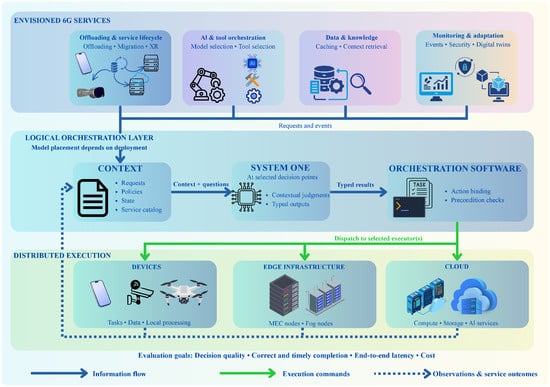
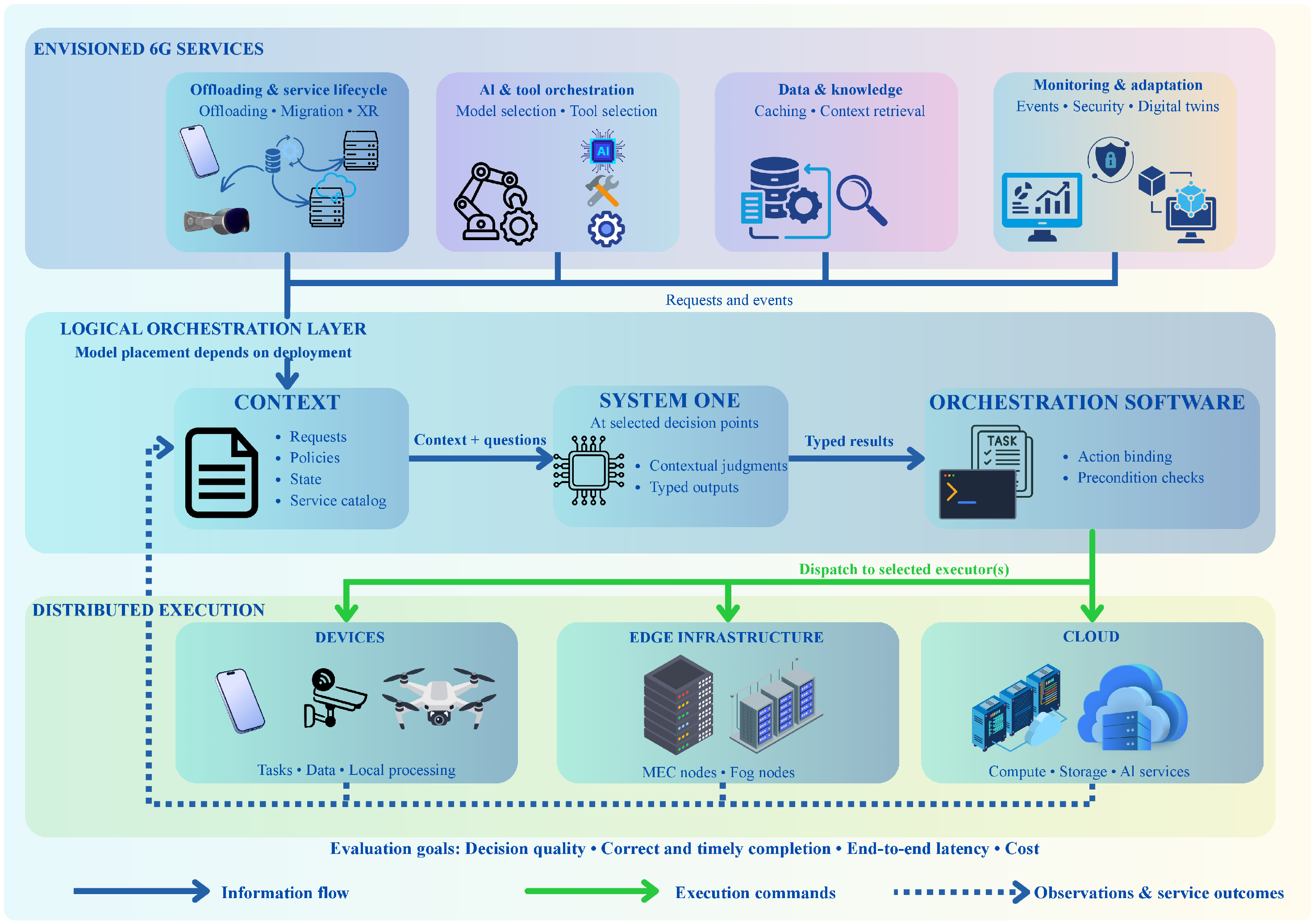
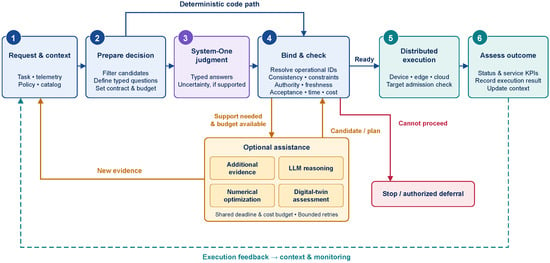
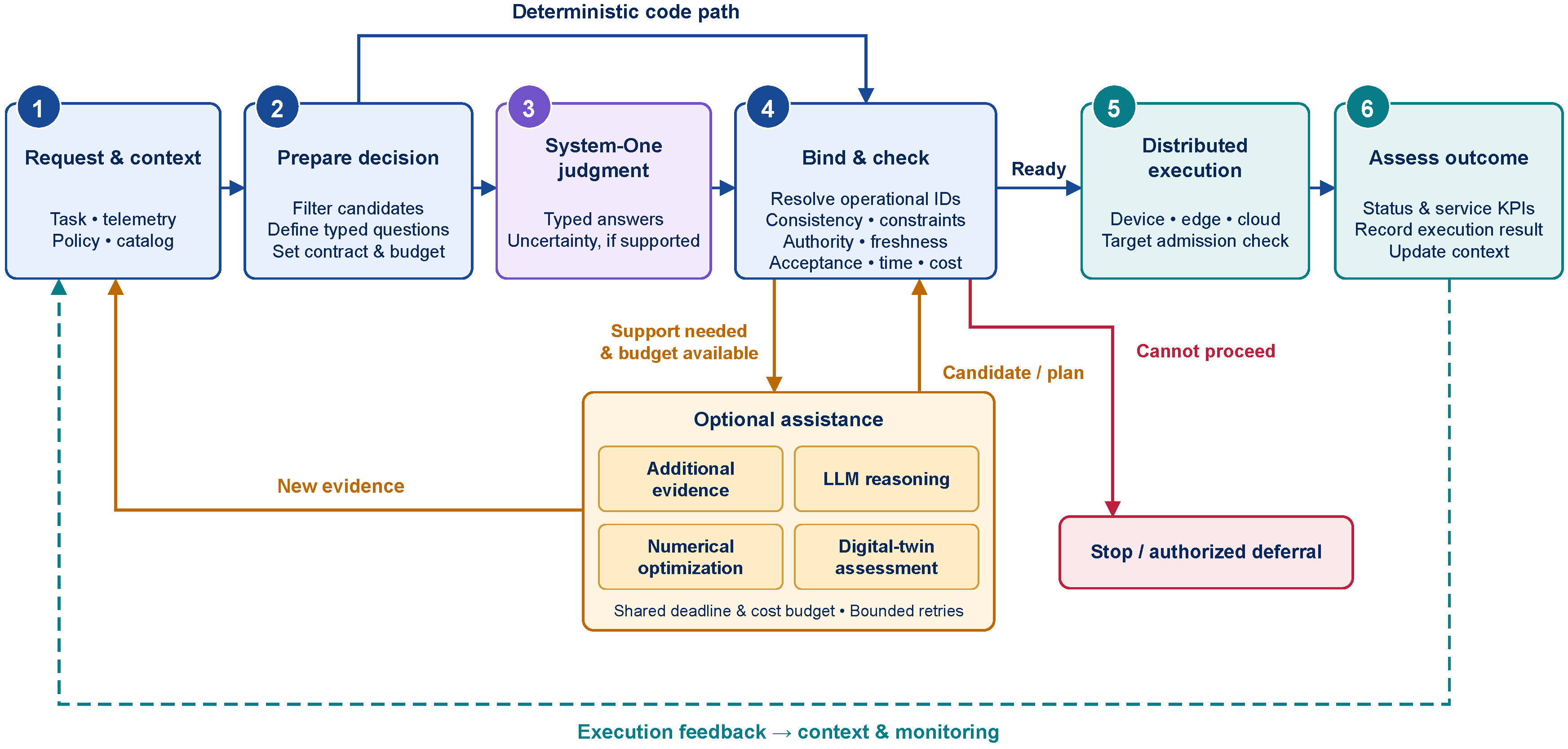
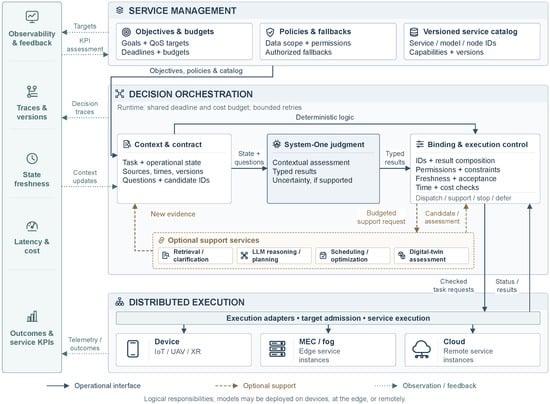
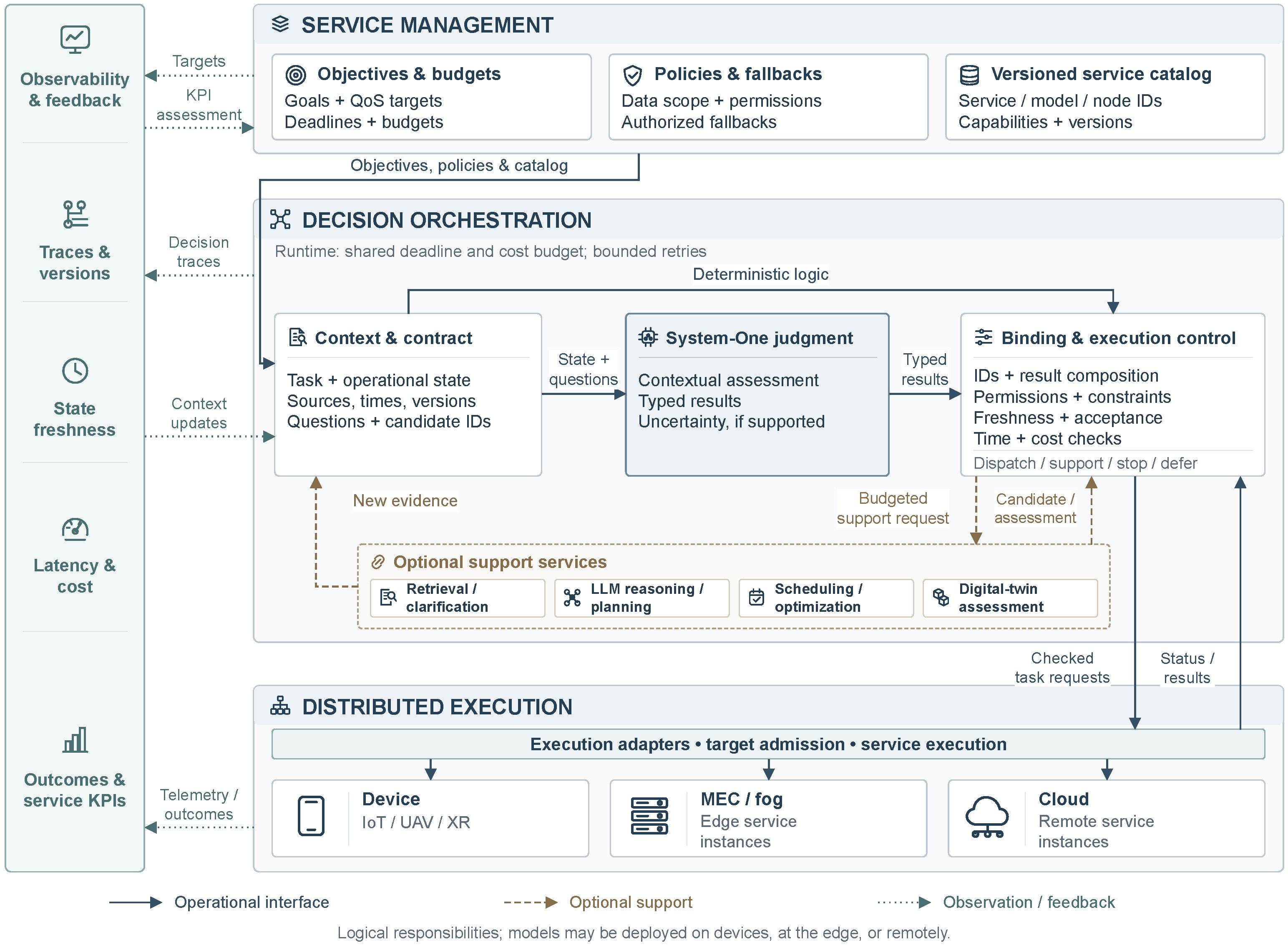
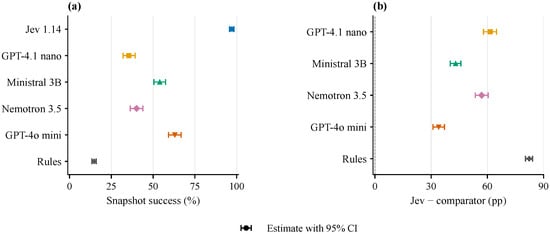
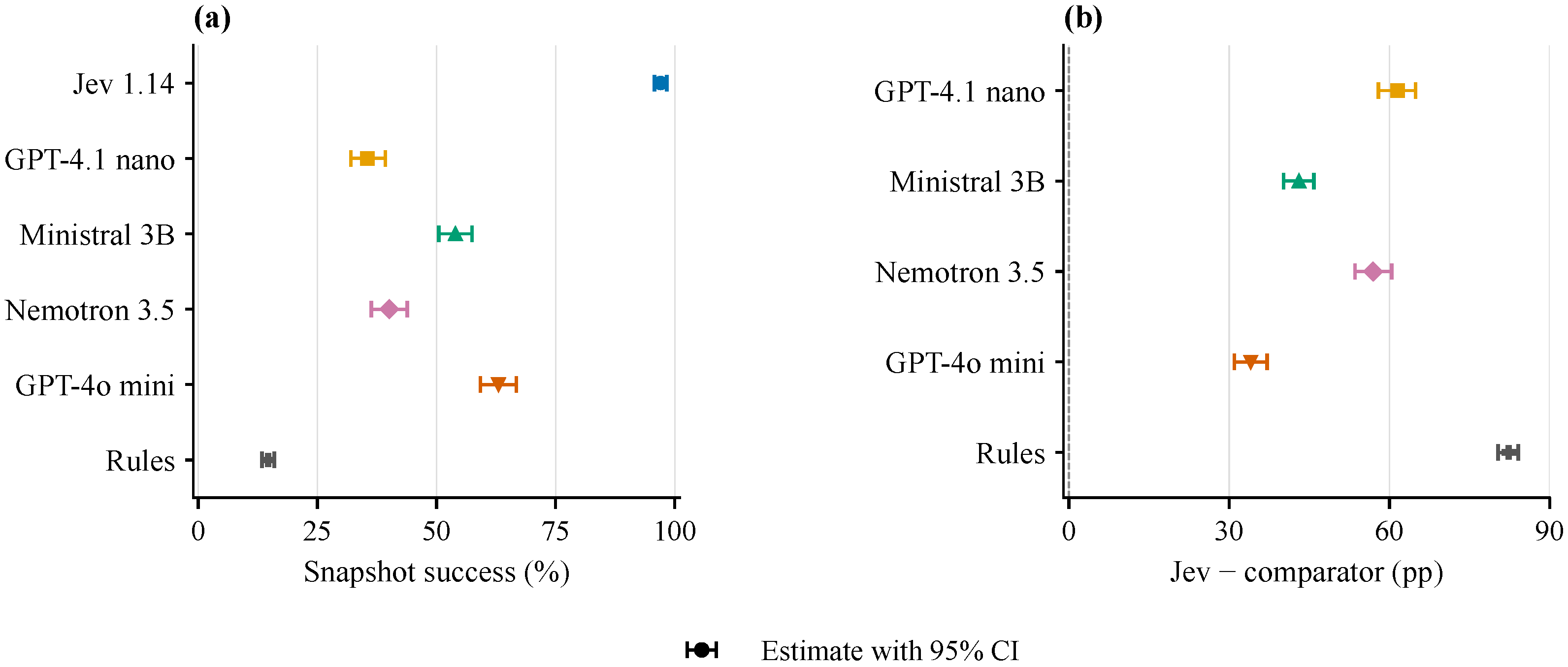
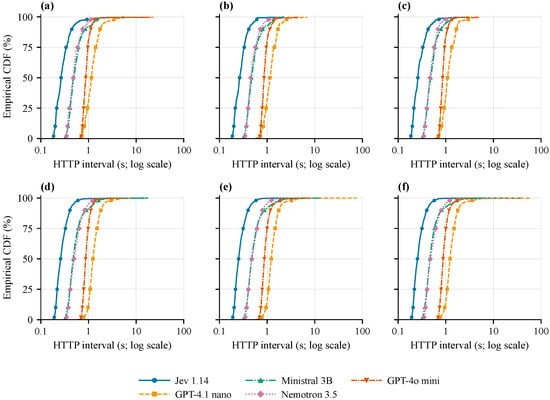
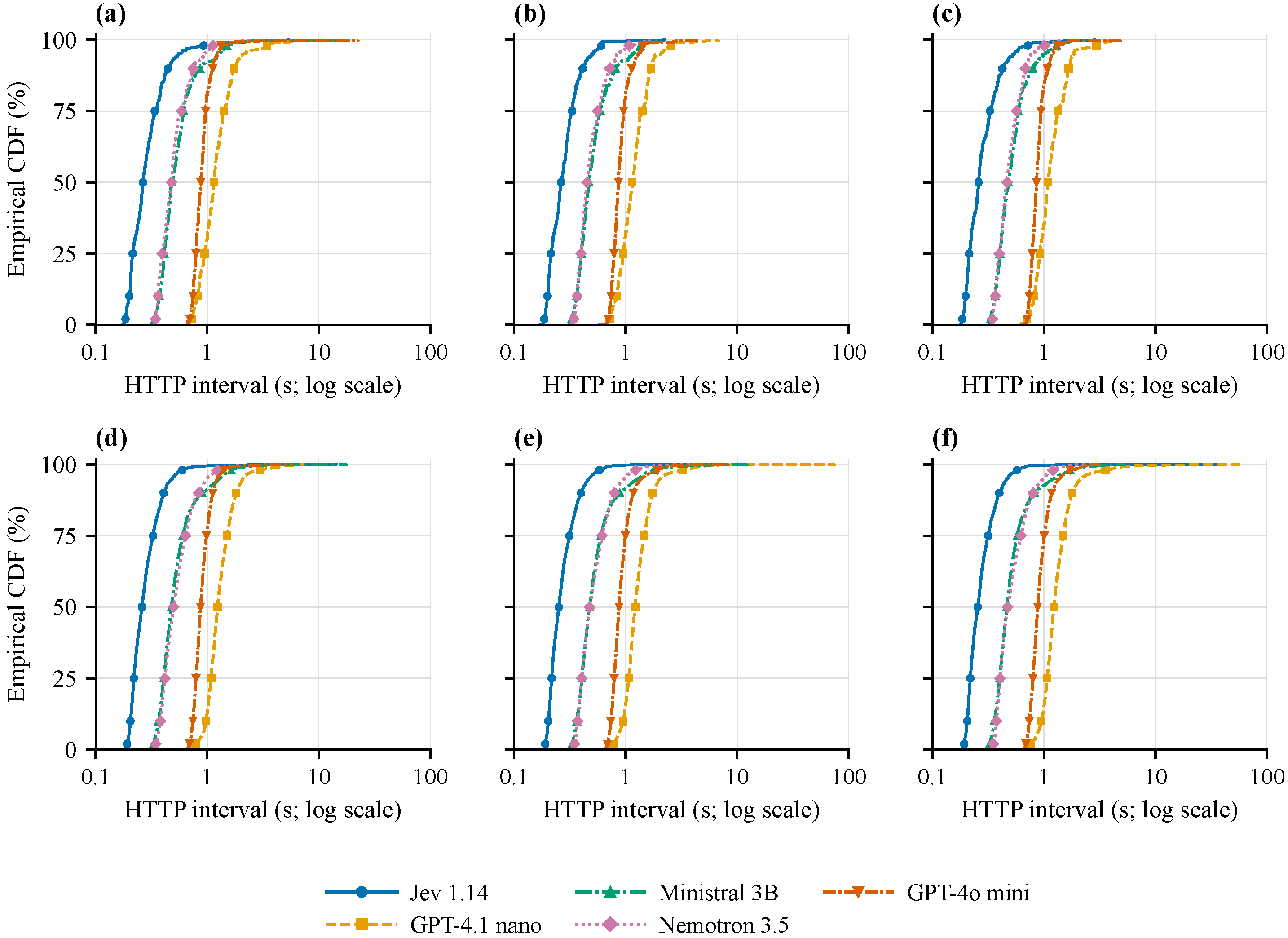
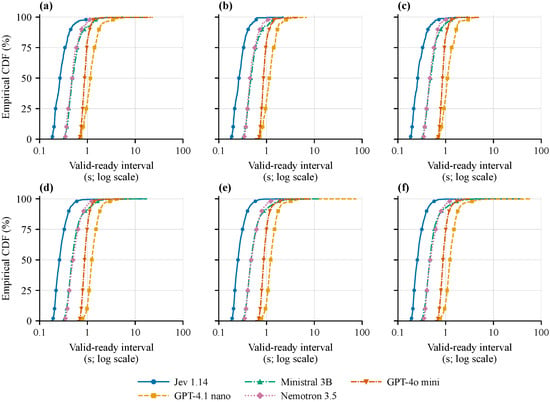
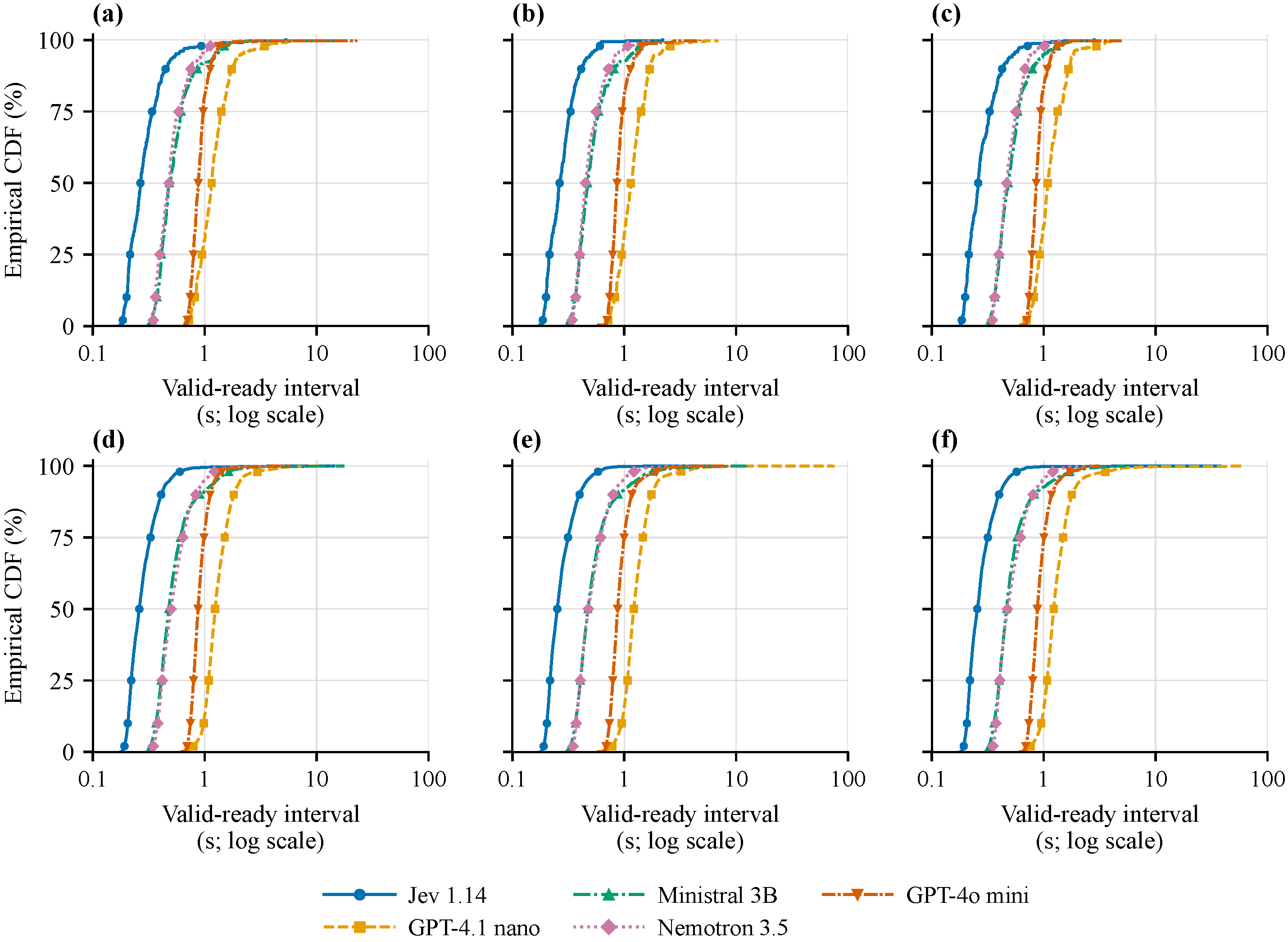
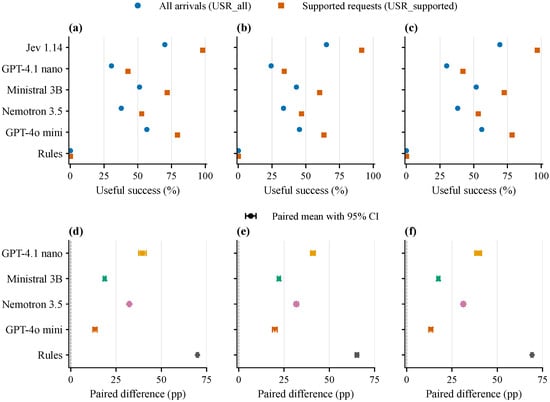
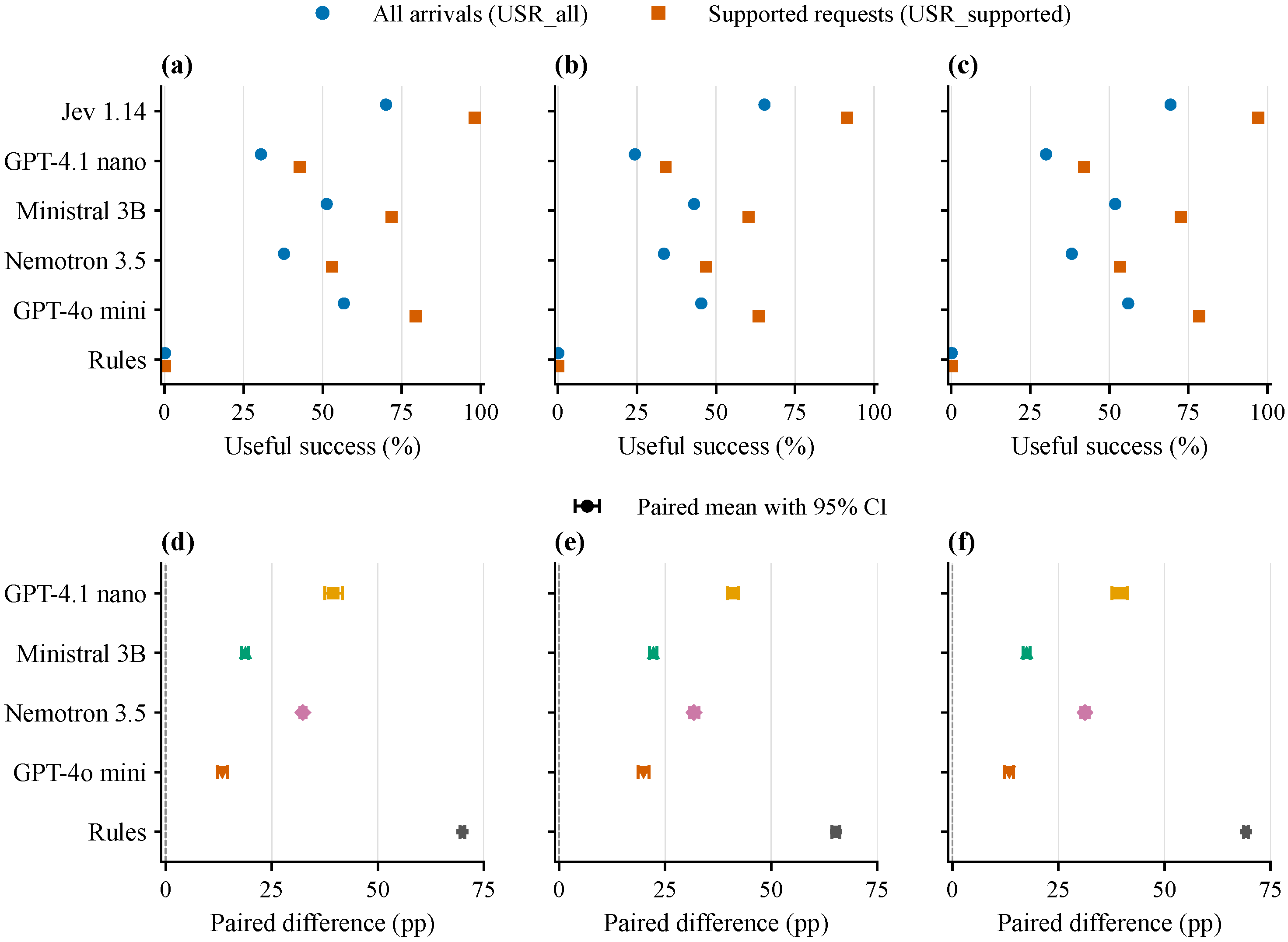
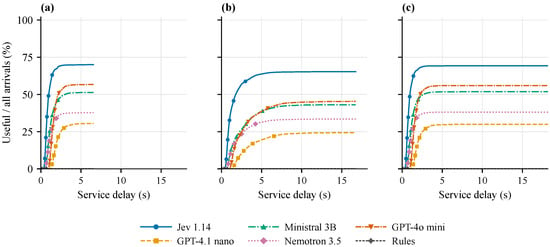
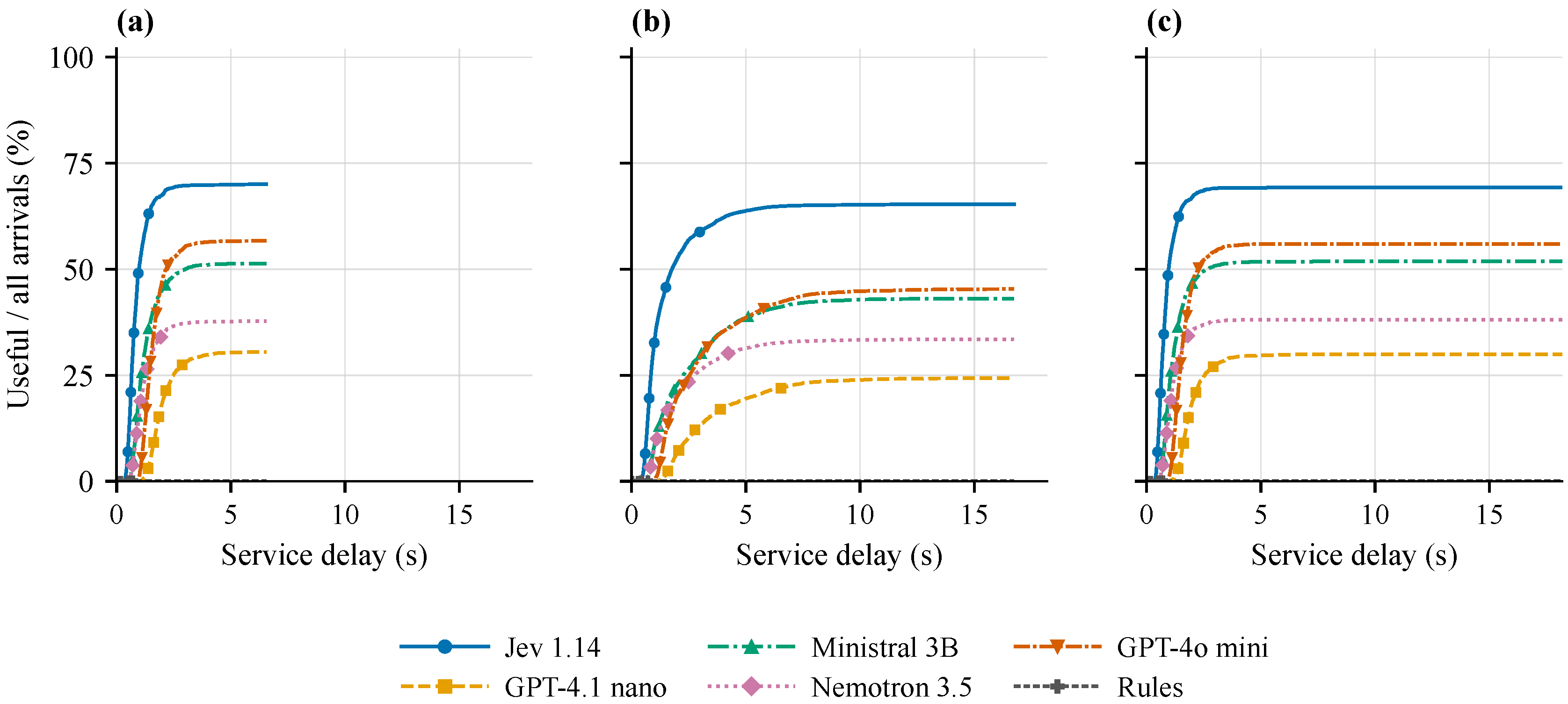
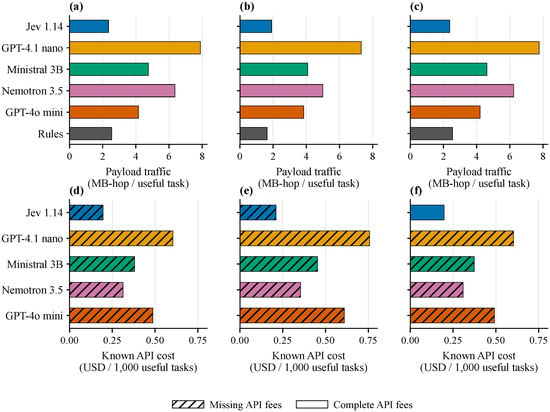
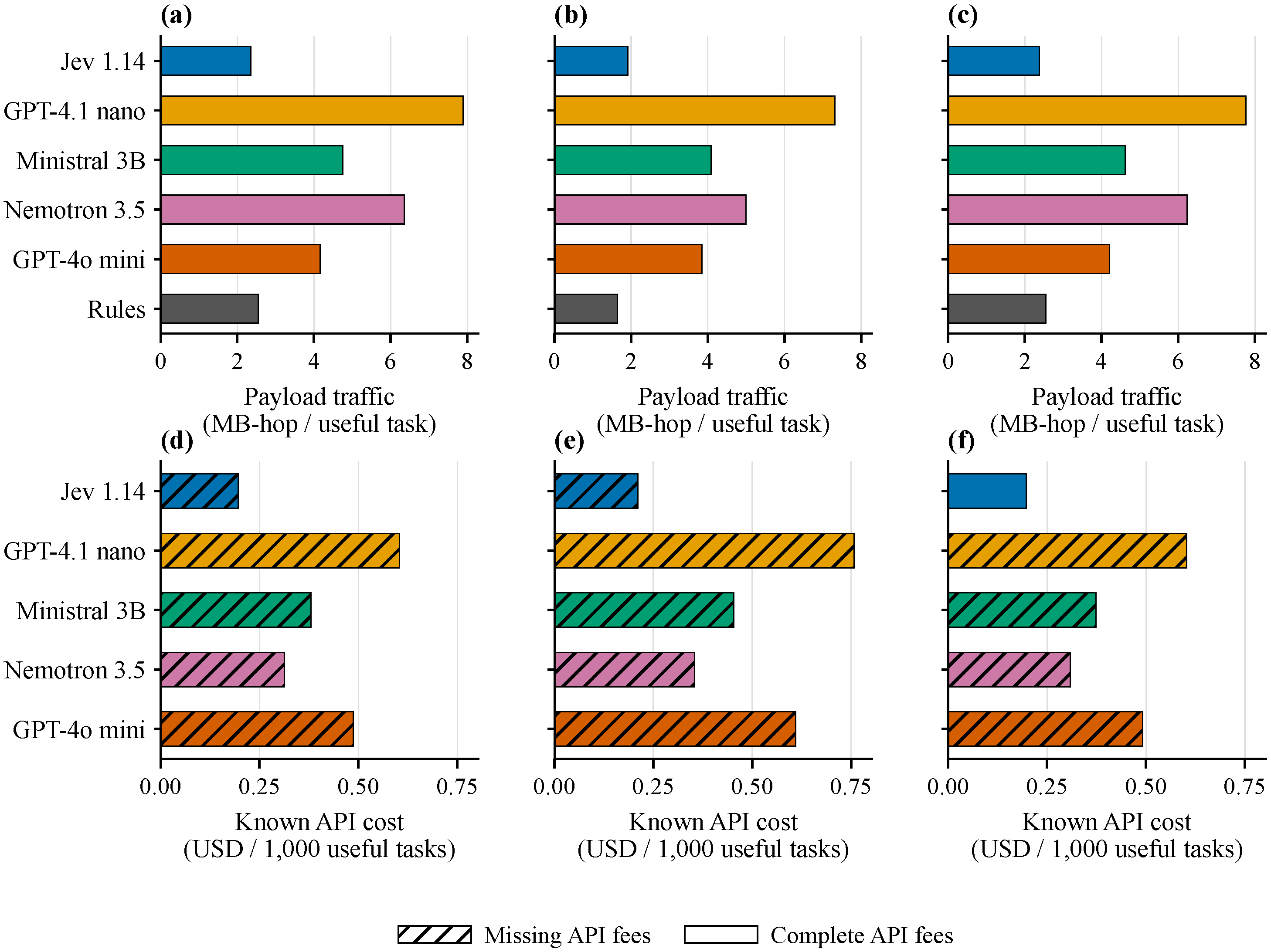
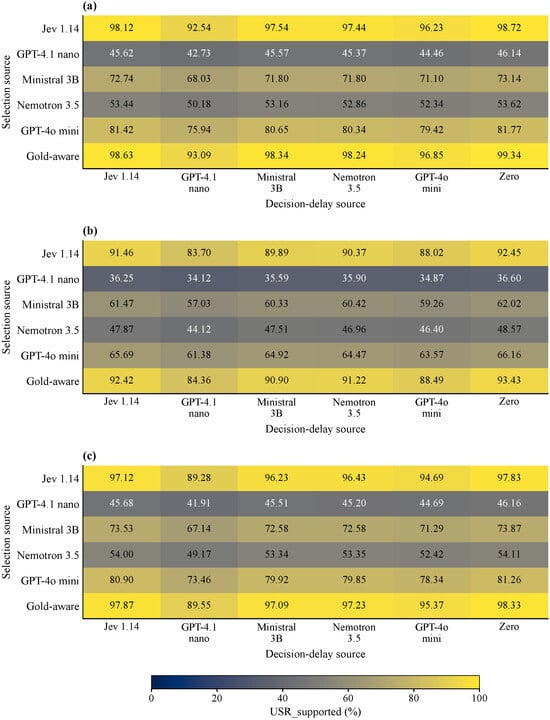

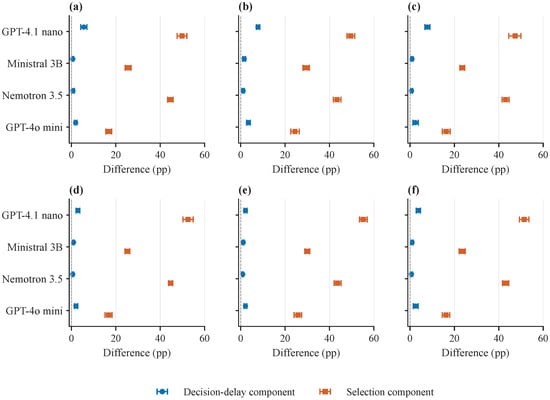
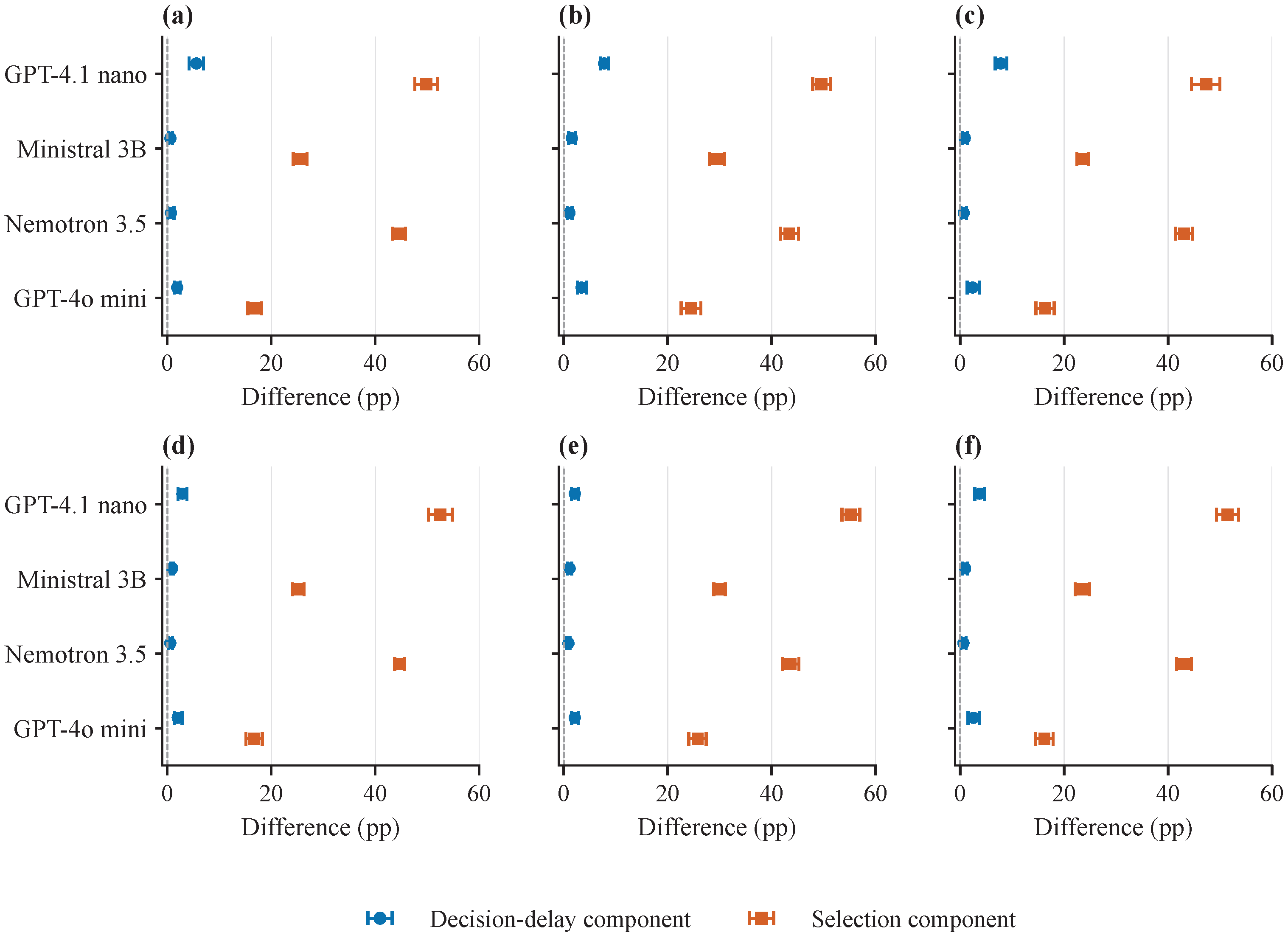

Disclaimer/Publisher’s Note: The statements, opinions and data contained in all publications are solely those of the individual author(s) and contributor(s) and not of MDPI and/or the editor(s). MDPI and/or the editor(s) disclaim responsibility for any injury to people or property resulting from any ideas, methods, instructions or products referred to in the content. |
© 2026 by the authors. Licensee MDPI, Basel, Switzerland. This article is an open access article distributed under the terms and conditions of the Creative Commons Attribution (CC BY) license.