


Abstract
The link between ABO/Rh blood groups and COVID-19 severity remains a topic of debate. We aimed to investigate the role ABO/Rh blood groups, rs8176746 and rs495828 single nucleotide polymorphisms (SNPs), in COVID-19 severity among COVID-19 patients in Mansoura City, Egypt. A total of 306 Egyptian patients were included in this cross-sectional study. They were grouped into 86 cases with non-severe infection and 220 with severe infection according to clinical, laboratory, and radiological findings. ABO/Rh blood groups were confirmed. A TaqMan real-time PCR SNP genotyping assay was used to examine the allelic discrimination of rs8176746 and rs495828 SNPs. Older age, male gender, and the presence of comorbidities were associated with severe COVID-19. AB blood group was significantly associated with a protective effect against severe COVID-19 (p = 0.029) in the unadjusted analysis. There was no statistically significant association between Rh type and disease severity. GT genotype was significantly associated with a higher frequency of AB blood groups in both rs8176746 and rs495828 (p < 0.001). However, there was no statistically significant association between the studied SNPs and COVID-19 severity. After adjusting for age, gender, and the presence of comorbidities, the protective effect of the AB blood group with severe COVID-19 did not remain significant. No association was observed between Rh type rs8176746 and rs495828 SNPs and COVID-19 severity. The impact of ABO/Rh blood types and related SNPs on COVID-19 severity can vary by the ethnic group and population being studied. This diversity emphasizes the need for specialized research approaches to better understand the demographic, clinical, and genetic factors that lead to variations in COVID-19 outcomes among various groups.
1. Introduction
The most catastrophic pandemic of the past ten years is thought to be the coronavirus disease 2019 (COVID-19) [1]. The WHO reports that, as of 5 April 2026, there were 779,213,537 confirmed COVID-19 cases globally, including 7,114,282 deaths [2]. In Egypt, 516,023 confirmed COVID-19 cases, including 24,830 deaths, were reported by the WHO as of 5 April 2026 [3]. COVID-19 has variable presentations, ranging from mild or even no symptoms (mostly in children and young adults) to severe disease with respiratory failure that requires mechanical ventilation (mostly in elderly people with underlying comorbidities) [4]. Severe acute respiratory syndrome coronavirus-2 (SARS-CoV-2), the causative organism of COVID-19, has a spike (S) protein that consists of two subunits, S1 and S2. The S1 protein expresses a receptor-binding domain that binds to the angiotensin-converting enzyme 2 (ACE2) receptor found in human cells. Meanwhile, with the S2 glycoprotein, the virus can fuse and invade the cell [5].
The ABO blood group system, discovered over 100 years ago, is the main system used in blood transfusion. Based on the agglutination patterns of their red blood cells (RBCs), people are divided into four major groups: A, B, O, and AB. The A and B antigens on red blood cells and the associated antibodies in the sera of people who do not have those antigens make up the ABO blood group system. RBCs, as well as the surfaces of other tissues and secretions, have ABO antigens. Immunocompetent people begin to naturally create anti-A and anti-B immunoglobulins around six months of age [6]. A robust association between ABO antigens and different systemic diseases has been recorded for infectious diseases, cardiovascular diseases, and cancer [7], and is a well-established determinant of thrombotic disease risk [8].
The link between the ABO/Rh blood group versus SARS-CoV-2 infection and COVID-19 severity remains a topic of debate and is not fully understood. Accordingly, it is a hot spot for global research [9,10,11,12,13,14,15,16,17,18,19,20,21,22,23,24,25,26,27,28,29,30,31,32,33,34,35,36,37,38,39,40,41,42,43,44,45,46,47,48]. Several studies reported important associations between the ABO/Rh blood group versus SARS-CoV-2 susceptibility/disease severity. On the other hand, some international research reported lack of significant associations in this regard, as presented in Appendix A, Table A1.
The receptor-binding domain within the spike protein was found to significantly mimic human galectin, especially glycan A [49]. Thus, it was hypothesized that people with O or B groups who have anti-A antibodies will be at less risk of infection than patients with group A or AB. This was attributed to the neutralizing effect of anti-A antibodies against infection [50]. Moreover, soon after the pandemic, Zhao and colleagues first documented that non-O blood group carriers are at increased risk of COVID-19 in comparison to O blood types [51].
The q34.2 region of chromosome 9 contains the blood group ABO gene, which codes for a glycosyltransferase that creates the unique A or B blood group antigen by adding the last monosaccharide to a glycoconjugate, resulting in glycan antigen formation with naturally occurring polyclonal antibodies to these defined antigens [6]. Certain single-nucleotide polymorphisms (SNPs) of this gene have been linked in recent research to cardiovascular disorders [52], hypertension [53], and SARS-CoV-2 infection/severity [54,55,56,57,58,59,60,61,62,63]. Moreover, genome-wide association studies (GWAS) in Chinese populations found that rs8176746 and rs495828 polymorphisms in the ABO gene are strongly related to ACE activity [64]. Therefore, it was hypothesized that these polymorphisms may have an important effect on COVID-19 severity, as the virus depends mainly on the ACE2 receptor for host–cell invasion.
Studying the relationship between blood groups and COVID-19 severity is challenging, since severity and prognosis rely on numerous factors, including the presence of comorbidities, disease stage, and immune system status [65]. Thus, it is necessary to clarify the link between ABO/Rh blood groups and COVID-19 severity in various populations. In this context, the current study aimed to investigate the role of ABO/Rh blood groups, rs8176746 and rs495828 SNPs, on COVID-19 severity among COVID-19-confirmed Egyptian patients at Mansoura City, Egypt.
2. Materials and Methods
2.1. Design of the Study
The Institutional Research Board of the Faculty of Medicine at Mansoura University in Egypt approved the study protocol (RP.20.05.70) on 10 May 2020. This research adheres to the ethical standards of the 1975 Declaration of Helsinki. We obtained written informed consent from all participants. For adults, this consent was obtained from the patient themselves or from a legally authorized representative. For children, consent was obtained from the child’s parents/legal guardians, with assents where appropriate. The sample size was calculated using an online (Raosoft) sample size calculator (https://raosoftcalculator.com/, last accessed on 1 March 2022) with a response distribution of 50%, confidence level 95%, margin of error of 5.61%, and a population of 607,500 in Mansoura City, Dakahlia Governorate, Egypt, during 2021 [66].
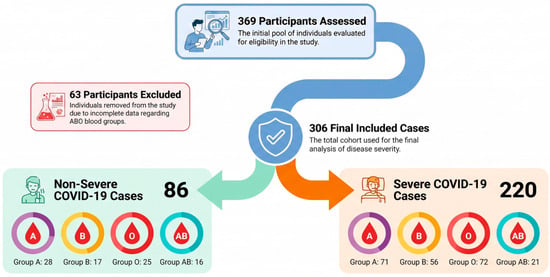
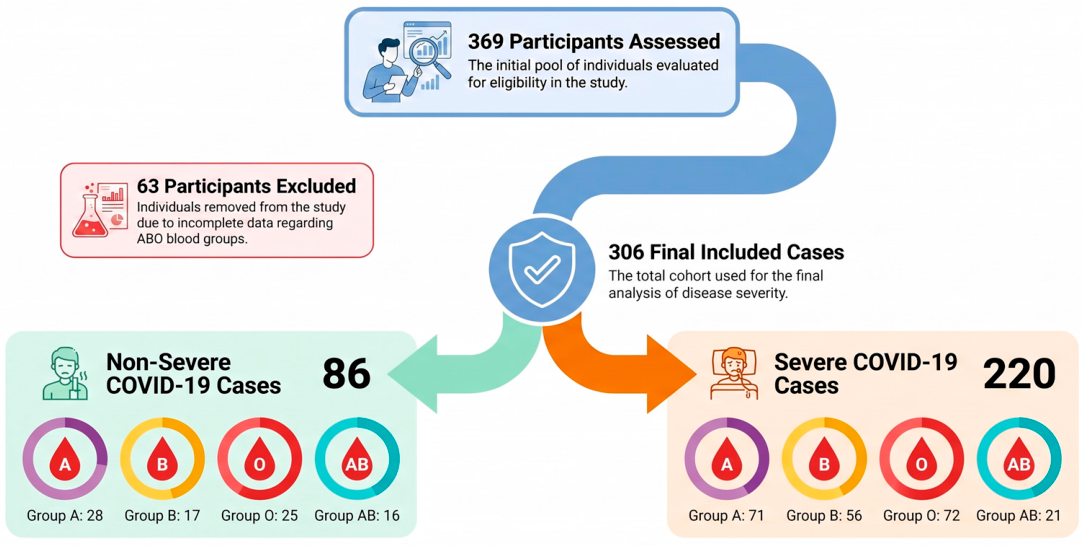
This cross-sectional study was carried out between August 2020 and March 2022. Detailed medical history, including age and gender, type of blood group (A, B, O, AB), and clinical examination, were performed for all subjects under study to detect comorbidities, signs of infection, and complications. Participants without complete ABO blood group information or those with unconfirmed COVID-19 diagnosis were excluded from the study. The study included 306 Egyptian COVID-19 patients that were confirmed by real-time reverse-transcription PCR (rRT-PCR) in at least one biological sample (Figure 1). Non-severe COVID-19 cases totaled 86, and severe COVID-19 cases totaled 220 patients. COVID-19 severity was defined according to the WHO’s Clinical Management of COVID-19: Interim Guidance [67]. All included cases were not vaccinated. Patients were excluded if they had any active viral infections like HBV, HCV, and HIV, autoimmune diseases, or previous history of documented SARS-CoV-2 infection. During the study period, all severe COVID-19 cases admitted to the Mansoura University Hospital Isolation Unit, Mansoura City, Egypt, were included according to their clinical, radiological, and laboratory data, including complete blood count, coagulation marker (D-dimers), and inflammation-related parameters (ESR, CRP, ferritin). The characteristics of non-severe versus severe patients are shown in Table 1. Non-severe cases were included from patients with symptoms that suggested non-severe illnesses like fever, sore throat, tiredness, cough, loss of taste, odor, muscle ache, bone ache, nausea, vomiting, diarrhea, chills, running nose, and conjunctivitis with a SARS-CoV-2 positive test [67].
Figure 1.
Flow diagram of participant inclusion.
Table 1.
Characteristics of the severity of COVID-19 cases.
2.2. Collection and Transport of Samples
Using aseptic techniques, blood samples were withdrawn cautiously from all patients on the 2nd day after the appearance of symptoms in mild cases, while in severe cases, samples were withdrawn on the 2nd day after admission and laboratory investigations were done. An amount of 5 mL of venous blood was withdrawn from all participants and then added in ethylenediaminetetraacetic acid (EDTA) tubes. The samples were transported in an ice bag for further processing at the Medical Biochemistry and Molecular Biology Department, Faculty of Medicine, Mansoura University. An amount of 2 mL was used for ABO/Rh blood testing, and the other 3 mL was used for genomic DNA extraction.
2.3. ABO/Rh Blood Testing
Blood grouping was confirmed using a direct testing method, as described before using blood group monoclonal anti-A, anti-B, anti-D antisera [68]. The absence of agglutination was confirmed by microscopic examination.
2.4. Genotyping of ABO rs8176746 (G/T) and rs495828 (G/T) SNPs
Following the manufacturer’s recommendations, genomic DNA was extracted from blood samples using a QIAamp DNA Extraction Mini Kit (Qiagen, Hilden, Germany). DNA purity and concentration were assessed using a NanoDrop 2000c spectrometer from Thermo Scientific (Waltham, MA, USA). DNA purity was accepted if the optical density at 260/280 was 1.7–2.0 and >1.5 at 260/230.
Genotyping of ABO rs8176746 (G/T) and rs495828 (G/T) SNPs was done using a TaqMan real-time PCR SNP genotyping assay (Azure Cielo 6, Azure, Dublin, CA, USA), as described by before [69]. The pre-designed TaqMan SNP Genotyping Assays that were used for allelic discrimination of the polymorphisms in ABO Leu266Met rs8176746 and ABO 5 UTR rs495828 were purchased from Thermo Fisher Scientific (assay IDs were C__25610772_30 and C__26744830_10, respectively). Each assay contained 2 different primers (forward and reverse) that flank the SNP site, as well as two TaqMan probes. Each one was labeled with either VIC or FAM fluorescent dyes that differ only at the site of the SNP. Regarding the rs8176746, the sequence was ACCGACCCCCCGAAGAACCCCCCCA[G/T]GTAGTAGAAATCGCCCTCGTCCTTG, while for rs495828, the sequence was CTGTAACTGTTGCAAGGGAGGTAAA[G/T]ATTTAGGTCATGAGTCCCTTCCATT. One probe complemented the wild-type allele, while the other complemented the mutant allele. For quality control, three water samples were used as blank controls in each run. Furthermore, to avoid genotyping errors, 10% of the samples were tested twice randomly, and every result was consistent.
2.5. Data Analysis
Collected data was revised, coded, tabulated, and entered into a computer using Statistical package for Social Science (IBM Corp., released 2017, IBM SPSS Statistics for Windows, Version 25.0., Armonk, NY, USA: IBM Corp.). The Hardy–Weinberg equation (HWE) equilibrium of the analyzed sample was investigated; p-value < 0.05 denotes non-consistency with HWE. The data was presented, and appropriate analyses were conducted based on the type of data for each parameter. The Kolmogorov–Smirnov test was used to assess normality; if the significance level was greater than 0.05, normality was assumed. Descriptive statistics were reported as mean ± standard deviation (SD) for numerical data and as frequency and percentage for non-numerical data. Student’s t-test was employed to evaluate the statistical significance of the difference between the means of the two study groups. The Chi-Square test (χ2) was utilized to examine the relationship between two or more qualitative variables. When more than 20% of the cells had an expected count of less than five, Fisher’s exact correction test (FET) was applied. The Mann–Whitney U test was employed to assess the statistical significance of the difference in a non-parametric variable between the two study groups. Univariate and multivariate logistic regression analyses were conducted to identify dependent and independent risk factors for a categorical outcome. In all the tests performed, p-values < 0.01 were classified as statistically highly significant, p-values < 0.05 as significant, and p-values ≥ 0.05 as non-significant.
3. Results
3.1. Participant Demographic and Clinical Data
The current study included 306 COVID-19 patients. Demographic and clinical data of the study participants are presented in Table 2. Their median age was 48 years, ranging from 2 months to 88 years. They were 38.2% males and 61.8% females. Hypertension and DM were the most prevalent comorbidities among COVID-19 patients, presenting at frequencies of 43.1% and 27.8%, respectively. The cases were categorized into non-severe (n = 86; 28.1%) and severe (n = 220; 71.9%) groups according to the clinical and radiological findings, following predefined WHO clinical criteria. Severe cases were significantly associated with decreased hemoglobin, leucocytosis, neutrophilia, lymphopenia, and platelet count, as well as increased CRP, SGOT, and creatinine, as shown in Table 3.
Table 2.
Demographic and clinical data of the study participants (Total n = 306).
Table 3.
Analysis of participant laboratory findings according to COVID-19 severity.
3.2. ABO/Rh Blood Testing
Regarding the frequencies of ABO/Rh blood groups among non-severe and severe COVID-19 cases, we found that the presence of AB blood groups was significantly linked with a protective effect against severe COVID-19 (p = 0.029), as listed in Table 4.
Table 4.
Analysis of participant blood grouping according to COVID-19 severity.
3.3. Genotyping of ABO rs8176746 (G/T) and rs495828 (G/T) SNPs
We studied two ABO gene polymorphisms: rs8176746 and rs495828. HWE was used to examine potential participant variations related to the genotypes under study. As the p-value was greater than 0.05, there was no deviation between the observed and anticipated frequencies of the ABO rs8176746 (G/T) and rs495828 (G/T) genotypes. Table 5 shows the genotype frequencies in the studied cases. We found that the GG genotype represents 66.7% and 67.0% in rs8176746 and rs495828, respectively. Table 6 analyzes each SNP according to ABO type. Regarding rs8176746, we detected that the GG genotype was significantly associated with a higher frequency of the A and O blood groups (96.0% and 95.9%, respectively) while the GT genotype was significantly associated with a higher frequency of the AB and B blood groups and TT with blood group B. Regarding rs495828, the GG genotype was significantly associated with a higher frequency of the B and O blood groups (95.9% and 89.7%, respectively), while GT genotypes were significantly associated with a higher frequency of the AB and A blood groups and the TT genotype with the A blood group. There was no statistically significant association between Rh with rs8176746 and rs495828 genotype, as shown in Table 7.
Table 5.
ABO genotypes among the participants (total n = 306). Data shown are frequencies; n (%).
Table 6.
Genotypic distribution of rs8176746 and rs495828 among the participants (total n = 306) according to ABO blood groups. Data shown are frequencies; n (%).
Table 7.
Genotypic distribution of rs8176746 and rs495828 among the participants (total n = 306) according to Rh blood groups. Data shown are frequencies; n (%).
Genotypic and allelic distribution of rs8176746 and rs2495828 among the participants according to COVID-19 severity are presented in Table 8. There was no statistically significant association between both SNP and COVID-19 severity for both genotypes and alleles. Regression analysis for prediction of COVID-19 severity was presented in Table 9. In univariate analysis, older age, male gender, and the presence of comorbidities were identified as predictors of disease severity, while the AB blood group was protective in this unadjusted model. In multivariate analysis, only male gender and the presence of comorbidities remained as predictors of disease severity. Adjusted models for each SNP for age, gender, and comorbidities are presented in Table 10.
Table 8.
Genotypic and allelic distribution of rs8176746 and rs495828 among the participants (total n = 306) according to COVID-19 severity. Data shown are frequencies; n (%).
Table 9.
Univariate and multivariate regression analysis for prediction of severe COVID-19.
Table 10.
Adjusted models for each SNP for age, gender, and comorbidities.
4. Discussion
There is debate and much complexity surrounding the relationship between ABO/Rh blood types versus susceptibility to SARS-CoV-2 infection and COVID-19 severity. The evidence is not yet conclusive, even though several studies point to possible links that might affect infection rates and disease consequences, as presented in Appendix A, Table A1. Consequently, more research in this field is still necessary to elucidate the underlying pathogenesis and public health implications. The conducted study aimed to investigate the impact of ABO/Rh blood groups, rs8176746 and rs495828 SNPs, on COVID-19 severity among Egyptian patients with COVID-19 in Mansoura City, Egypt. This is an observational, single-center, and exploratory study that found an unadjusted association of the AB blood group with a protective effect against the severity of COVID-19; we also found that male gender and comorbidities are robust predictors.
4.1. Participant Demographic and Clinical Data Versus COVID-19 Severity
In the conducted study, hypertension and DM were the most prevalent comorbidities among COVID-19 patients. Regression analysis, both univariate and multivariate, was used to predict COVID-19 severity. Severe COVID-19 was more prevalent among patients who were older, male, and had comorbidities. This agrees with the results of a study that determined the baseline characteristics and outcomes of patients infected with SARS-CoV-2 [70]. A study conducted in Saudi Arabia reported that exposure to SARS-CoV-2 infection is common among patients with type 2 diabetes, hypertension, cardiovascular, and chronic respiratory, and chronic inflammatory diseases, especially among males, and these patient groups require special care to prevent occurrence of COVID-19 complications [71]. According to a report from Egypt, young people without comorbidities exhibit a robust humoral immune response against SARS-CoV-2 [72]. There is limited knowledge about the immune responses to SARS-CoV-2 in children, who are typically asymptomatic or exhibit mild symptoms [73]. Cytokines and chemokines influence the child’s immunological response to SARS-CoV-2, affecting its initiation, duration, and downregulation. Even though COVID-19 is normally a minor condition in the pediatric population, certain children may experience severe clinical symptoms and require hospitalization, highlighting the need for further research [74]. In young people and those without cardiovascular conditions, blood group O clearly provided relative protection against SARS-CoV-2 susceptibility in Denmark [11]. In Pakistan, a strong relationship was noted between comorbidities (such as hypertension and diabetes) and severe outcomes in COVID-19 patients [47]. Research indicates that men may have larger levels of ACE2, a protein that allows viruses to infect human cells. ACE2 is present in multiple organs, including the lungs, heart, kidneys, blood vessel linings, and testes. This may explain why men are more prone to severe disease than women [75].
4.2. ABO Blood Group Versus COVID-19 Severity
SARS-CoV-2 outcomes may be attributed to the type of ABO blood group. We found that the AB blood group showed an unadjusted association with a protective effect against severe COVID-19 (p = 0.029) in older age male patients with associated comorbidities. These results are consistent with the results of researchers, who reported that blood type AB is linked to a favorable outcome. The research team reported that patients with A and B blood groups were more significantly impacted by severe COVID-19 compared to those with O and AB [75]. Similarly, in their meta-analysis, a research team, found that patients with blood group A are more vulnerable to COVID-19 infection and that blood type AB is linked to a lower risk of COVID-19 infection [76]. They observed that most complications were highly reported in group O, followed by A, and then B and AB. A study found that the lowest ratios of ICU admission (9.5%) and mortality (4.8%) were among the AB blood group [77].
In accordance with our results, after adjustment for age, gender, and the presence of comorbidities, a study from the USA reported that ABO blood type is not linked to the severity or mortality of COVID-19 [34]. Another study from the USA reported that ABO blood type was not linked to severe COVID-19 outcomes across the Delta, Alpha, and Omicron variants [38]. ABO and Rh blood types did not correlate with SARS-CoV-2 susceptibility or COVID-19 mortality in Saudi Arabia [37]. A recent Ethiopian study reported that the severity or mortality of COVID-19 is unrelated to variations in ABO blood types [42]. In Iran, ABO and Rh blood groups were not linked to the severity of COVID-19, ICU admission, or need for mechanical ventilation [46].
The pathogenesis underlying the association between different blood groups and COVID-19 severity might not be related to the ABO blood group itself. It could be linked to differences in ACE2 receptor expression, naturally occurring anti-A and anti-B antibodies, cytotoxic T cell response, and blood coagulation profiles. It was documented that, once SARS-CoV-2 infection occurs, infected individuals may produce antigens that are like ABO types that may induce anti-A and anti-B immunoglobulins [78]. Researchers suggested that if the virus spike proteins are produced in cells that already synthesize A and B antigens, the viral glycoprotein will carry the same A and B epitopes and would stimulate anti-B and anti-A production. These antibodies can prevent the binding of viral spike glycoprotein with cellular ACE2 receptors and the subsequent viral entry into the cell in a complement-dependent manner. They may also aid in the production of cytotoxic T cells. This leads to developing immunity to other viral antigens [79].
However, these mechanisms only support the protective role of blood group O [80], but cannot directly interpret the protection in AB individuals, who normally lack anti-A and anti-B antibodies, observed in our study. Indian research concluded that patients with blood group AB experienced severe COVID-19 [44,45]. Our study results do not support the above-mentioned reports.
Research confirmed the role of naturally occurring Anti-A antibodies in individuals with blood group O in protection against COVID-19 infection. In contrast, individuals with blood group A exhibit elevated ACE-1 activity, possibly resulting in more severe COVID-19 symptoms [65]. Therefore, the conflicting results in research may be multifactorial; they could arise from variations in populations and geographical locations, differences in the distribution of ABO groups across ethnicities, and the presence of factors such as comorbidities, age, or gender. Additionally, variants of SARS-CoV-2 may influence the findings of these studies.
4.3. Rh Blood Group Versus COVID-19 Severity
We found no statistically significant association between Rh blood groups and COVID-19 severity. Our results are in line with Turkish [26] and Indian [75] studies. On the other hand, it was reported that the risk of development of severe COVID-19 is decreased in Rh-negative blood group patients, suggesting that they are protected against severe SARS-CoV-2 infection [19]. Similarly, Rh-positive individuals were more susceptible to SARS-CoV-2 infection [21]. In Sudan, Rh-positive status has a positive effect on blood group O, but negatively impacts blood group A [25]. In Iraq, Rh-negative blood type provides a protective effect against SARS-CoV-2 [33]. It was reported that COVID-19 patients who had a negative Rh status were less likely to get infected, need to be intubated, or die [81]. However, there is no strong explanation as to why Rh-negative status is considered protective, particularly given that a higher percentage of the population is Rh-positive compared to Rh-negative individuals [82]. On the other hand, a study from the USA reported that Rh-negative patients have an increased risk of mortality [34].
4.4. The Studied SNPs Versus COVID-19 Severity
Host genetics can affect SARS-CoV-2 infection and COVID-19 severity. This may provide an important insight into the biological factors involved, paving the way to develop personalized treatment strategies for severe COVID-19 [83]. One potential pathogenesis that has been reported is the genetic polymorphism of the ABO blood system [65,83]. Thus, we aimed to evaluate the possible association between rs8176746 G/T and rs495828 G/T polymorphisms in ABO genes with COVID-19 severity in an Egyptian population. We found no statistically significant association between rs8176746 or rs495828 versus COVID-19 severity. Our results are in line with the results of Vargas-Alarcón and colleagues, who reported that there was no difference in the distribution of rs8176746 and rs495828 polymorphisms in Mexico [69]. In a Caucasian population, it was reported that rs8176746 ABO SNP was not associated with the severity of COVID-19 [84]. Contrary to our results, Tanha research team reported that there was genome-wide association between rs495828 in the ABO gene with severe COVID-19 risk [83]. ABO polymorphisms in rs495828 and rs8176746 lead to COVID-19 severity via increased ACE activity and cardiovascular disorders [50]. Moreover, it was documented that the GATC haplotype rs8176746–rs8176740–rs495828–rs12683493 at the ABO locus is common in people with non-O blood groups and was shown to be positively correlated to ACE activity [85]. Non-O-blood-type individuals have an increased risk of developing SARS-CoV-2 infection and poor outcome and an increase in ACE activity [81]. This may lead to disease progression and abnormal inflammatory and fibrotic processes in COVID-19 [86].
Significant associations between the minor allele T of ABO rs8176746 and rs495828 and low ACE activity were reported by Chung et al., 2010 [64]. However, we did not find a direct significant association between genotypes of rs8176746 and rs495828 with COVID-19 severity. Therefore, we cannot rule out the association of both rs8176746 and rs495828, at least in part, with COVID-19 severity. It could be considered that ABO phenotype and ACE activity are good intermediate phenotypes for mediating the effect of rs8176746 and rs495828. However, our results indicate that the ABO phenotype can predict the severity of COVID-19 than polymorphisms. Our study demonstrates that the AB blood group may be associated with lower odds of severe disease in unadjusted analysis. Our studied SNPs were found to be indirectly related to COVID-19 severity.
Many genome-wide significant associations between genetic variants at the ABO gene locus and SARS-CoV-2 infection and/or COVID-19 disease severity have been reported [63]. rs657152 shows a perfect correlation with COVID-19 severity among Europeans [54]. rs912805253 shows correlation with SARS-CoV-2 infection [59]/COVID-19 severity [55] among Europeans. Similarly, rs505922 shows a correlation with SARS-CoV-2 infection/COVID-19 severity [58,62]. rs9411378 [56] and rs879055593 [61] show a correlation with SARS-CoV-2 infection. rs8176719 [57] and rs687289 [60] show a correlation with COVID-19 severity.
5. Conclusions
In this single-center cohort of Egyptian patients with confirmed COVID-19, the AB blood group showed an unadjusted association with a lower frequency of severe COVID-19, but this association was not independent after adjustment for age, gender, and comorbidities. Male gender and comorbidities predict COVID-19 severity. Rh status and rs8176746/rs495828 were not significantly associated with COVID-19 severity.
6. Limitations
Our study limitations include small sample size, cross-sectional design, single-center design, a relatively small number of individuals with the AB phenotype, and a substantial imbalance between the number of severe and non-severe cases. The recruitment strategy for mild and severe cases may introduce selection bias related to age, comorbidity burden, referral pathway, timing, access to care, testing indication, and calendar period. The association between SARS-CoV-2 variants and ABO/Rh blood groups was not examined. Despite these limits, we have addressed an important issue and provided new insights into the impact of ABO/Rh blood groups on SARS-CoV-2 outcomes within the Egyptian population.
7. Recommendations
Large-scale multicenter studies with standardized severity definitions, adequate power for rare ABO/genotype categories, adjusted genetic models, and population stratification assessment are needed. More SNPs should be studied to better understand the relation between ABO blood types and COVID-19. Currently, there are no targeted COVID-19 interventions based on patients’ blood groups. Understanding the molecular pathogenesis underlying the associations between ABO blood group and COVID-19 can be translated to COVID-19 prevention or management strategies. Genotyping of other informative ABO variants is needed to predict disease severity. Both genetic and phenotypic markers should be considered in future prediction of COVID-19 severity. Integrating ABO blood typing with clinical and laboratory data may improve risk prediction for COVID-19 patients.
Author Contributions
Conceptualization, A.S., M.H.E., M.E. and A.M.; Data curation, A.S., M.H.E., A.M., A.E., A.H.E.-N., M.S.Z., M.E., A.E.T., E.A.E., B.M.A. and A.A.; Formal analysis, A.S., M.H.E., A.M., A.H.E.-N., M.A.R. and A.E.T.; Investigation, A.S., M.H.E., A.M., A.H.E.-N., M.E. and M.A.R.; Methodology, A.S., M.H.E., A.M., A.H.E.-N. and A.E.T., Project administration, A.S. and M.H.E.; Resources, A.S., A.E., M.A.N., A.E.T., E.A.E., B.M.A., A.A. and W.E.; Software, A.S., M.H.E., A.M., A.H.E.-N., M.A.R., A.E.T., E.A.E., B.M.A. and A.A.; Supervision, A.S. and M.H.E.; Validation, A.S., M.H.E., A.E., M.A.N., A.E.T., E.A.E., B.M.A., A.A. and W.E.; Visualization, A.S., M.H.E. and A.M.; Writing—original draft, A.S., M.H.E., A.M., A.E., A.H.E.-N., M.S.Z., M.E. and A.E.T.; Writing—review and editing, A.S., M.H.E., A.M., M.A.N., A.H.E.-N. and A.E.T. All authors have read and agreed to the published version of the manuscript.
Funding
This research received no external funding.
Institutional Review Board Statement
The Institutional Research Board of the Faculty of Medicine at Mansoura University in Egypt approved the study protocol (RP.20.05.70) on the 10th of May 2020. The research adheres to the 1975 Declaration of Helsinki’s ethical standards.
Informed Consent Statement
All participants or one of their family members provided written informed consent. All data were anonymized to ensure confidentiality.
Data Availability Statement
All data are available in the manuscript.
Acknowledgments
We are thankful to the participants and their parents for their cooperation.
Conflicts of Interest
The authors declare that there are no conflicts of interest.
Abbreviations
The following abbreviations are used in this manuscript: ACE2; Angiotensin-Converting Enzyme 2, AKI; Acute Kidney Injury, ARDS; Acute Respiratory Distress Syndrome, BA; Bronchial Asthma, CRP: C-reactive protein, CI; Confidence Interval, CKD; Chronic Kidney Disease, CLD; Chronic Liver Disease, CORAD; COVID-19 Risk Assessment Diagnosis, DM; Diabetes Mellitus, GWAS; Genome-Wide Association Studies, ICU; Intensive Care Unit, IQR; Interquartile Range, MOF; Multiorgan Failure, OR; Odds Ratio, SARS-CoV-2; Severe Acute Respiratory Syndrome Coronavirus-2, SGOT; Serum Glutamate Oxaloacetic Transaminase, SGPT; Serum Glutamate Pyruvic Transaminase, S protein; Spike protein, SPSS; Statistical Package for Social Science.
Appendix A
Table A1.
Overview of previous studies reporting the role of ABO/Rh blood groups in SARS-CoV-2 susceptibility and/or COVID-19 severity.
References
- Bhadoria, P.; Gupta, G.; Agarwal, A. Viral Pandemics in the Past Two Decades: An Overview. J. Fam. Med. Prim. Care 2021, 10, 2745–2750. [Google Scholar] [CrossRef] [Scilit] [PubMed]
- World Health Organization (WHO). Coronavirus COVID-19 Dashboard. Available online: https://data.who.int/dashboards/covid19/cases?n=c (accessed on 21 May 2026).
- World Health Organization (WHO). Egypt: WHO Coronavirus Disease (COVID-19) Dashboard with Vaccination Data. Available online: https://data.who.int/dashboards/covid19/cases?n=c&m49=818 (accessed on 21 May 2026).
- Almaeen, A.H.; Alduraywish, A.A.; Ghazy, A.A.; El-Metwally, T.H.; Alayyaf, M.; Alrayes, F.H.; Alinad, A.K.M.; Albulayhid, S.B.H.; Aldakhil, A.R.; Taha, A.E. The Pre-Vaccination Donated Blood Is Free from Severe Acute Respiratory Syndrome Coronavirus-2 (SARS-CoV-2) but Is Rich with Anti-SARS-CoV-2 Antibodies: A Cross-Section Saudi Study. Int. J. Environ. Res. Public Health 2022, 19, 7119. [Google Scholar] [CrossRef] [Scilit] [PubMed]
- Walls, A.C.; Park, Y.J.; Tortorici, M.A.; Wall, A.; McGuire, A.T.; Veesler, D. Structure, Function, and Antigenicity of the SARS-CoV-2 Spike Glycoprotein. Cell 2020, 181, 281–292.e6. [Google Scholar] [CrossRef] [Scilit] [PubMed]
- Romanos-Sirakis, E.C.; Desai, D. ABO Blood Group System. In StatPearls; StatPearls Publishing: Treasure Island, FL, USA, 2025. [Google Scholar]
- Abegaz, S.B. Human ABO Blood Groups and Their Associations with Different Diseases. BioMed Res. Int. 2021, 2021, 6629060. [Google Scholar] [CrossRef] [Scilit] [PubMed]
- Li, H.; Zhang, Z.; Chen, H.; Yang, Y.; Wan, J.; Xu, X.; Ji, Y.; Yang, G.; Zhang, P.; Han, J.; et al. Population-specific ABO haplotypes reveal distinct venous thromboembolism risk in East Asians: Insights from a large-scale genetic study. Lancet Reg. Health West. Pac. 2025, 66, 101781. [Google Scholar] [CrossRef] [Scilit] [PubMed]
- Fan, Q.; Zhang, W.; Li, B.; Li, D.J.; Zhang, J.; Zhao, F. Association Between ABO Blood Group System and COVID-19 Susceptibility in Wuhan. Front. Cell. Infect. Microbiol. 2020, 10, 404. [Google Scholar] [CrossRef] [Scilit] [PubMed]
- Hoiland, R.L.; Fergusson, N.A.; Mitra, A.R.; Griesdale, D.E.G.; Devine, D.V.; Stukas, S.; Cooper, J.; Thiara, S.; Foster, D.; Chen, L.Y.C.; et al. The association of ABO blood group with indices of disease severity and multiorgan dysfunction in COVID-19. Blood Adv. 2020, 4, 4981–4989. [Google Scholar] [CrossRef] [Scilit] [PubMed]
- Barnkob, M.B.; Pottegård, A.; Støvring, H.; Haunstrup, T.M.; Homburg, K.; Larsen, R.; Hansen, M.B.; Titlestad, K.; Aagaard, B.; Møller, B.K.; et al. Reduced prevalence of SARS-CoV-2 infection in ABO blood group O. Blood Adv. 2020, 4, 4990–4993. [Google Scholar] [CrossRef] [Scilit] [PubMed]
- Ad’hiah, A.H.; Abdullah, M.H.; Alsudani, M.Y.; Shnawa, R.M.S.; Al-Sa’ady, A.J.R.; Allami, R.H.; Misha’al, K.I.; Jassim, I.A.; Taqi, E.A. Association between ABO blood groups and susceptibility to COVID-19: Profile of age and gender in Iraqi patients. Egypt. J. Med. Hum. Genet. 2020, 21, 76. [Google Scholar] [CrossRef] [Scilit] [PubMed]
- Khalil, A.; Feghali, R.; Hassoun, M. The Lebanese COVID-19 Cohort; A Challenge for the ABO Blood Group System. Front. Med. 2020, 7, 585341. [Google Scholar] [CrossRef] [Scilit] [PubMed]
- Göker, H.; Aladağ Karakulak, E.; Demiroğlu, H.; Ayaz Ceylan, Ç.M.; Büyükaşik, Y.; Inkaya, A.Ç.; Aksu, S.; Sayinalp, N.; Haznedaroğlu, I.C.; Uzun, Ö.; et al. The effects of blood group types on the risk of COVID-19 infection and its clinical outcome. Turk. J. Med. Sci. 2020, 50, 679–683. [Google Scholar] [CrossRef] [Scilit] [PubMed]
- Kolin, D.A.; Kulm, S.; Christos, P.J.; Elemento, O. Clinical, regional, and genetic characteristics of COVID-19 patients from UK Biobank. PLoS ONE 2020, 15, e0241264. [Google Scholar] [CrossRef] [Scilit] [PubMed]
- Matzhold, E.M.; Berghold, A.; Bemelmans, M.K.B.; Banfi, C.; Stelzl, E.; Kessler, H.H.; Steinmetz, I.; Krause, R.; Wurzer, H.; Schlenke, P.; et al. Lewis and ABO histo-blood types and the secretor status of patients hospitalized with COVID-19 implicate a role for ABO antibodies in susceptibility to infection with SARS-CoV-2. Transfusion 2021, 61, 2736–2745. [Google Scholar] [CrossRef] [Scilit] [PubMed]
- Halim, M.R.; Saha, S.; Haque, I.U.; Jesmin, S.; Nishat, R.J.; Islam, A.S.M.D.A.; Roy, S.; Haque, M.M.A.; Islam, M.M.; Hamid, T.; et al. ABO Blood Group and Outcomes in Patients with COVID-19 Admitted in the Intensive Care Unit (ICU): A Retrospective Study in a Tertiary-Level Hospital in Bangladesh. J. Multidiscip. Healthc. 2021, 14, 2429–2436. [Google Scholar] [CrossRef] [Scilit] [PubMed]
- Adrielle Dos Santos, L.; Filho, P.G.G.; Silva, A.M.F.; Santos, J.V.G.; Santos, D.S.; Aquino, M.M.; de Jesus, R.M.; Almeida, M.L.D.; da Silva, J.S.; Altmann, D.M.; et al. Recurrent COVID-19 including evidence of reinfection and enhanced severity in thirty Brazilian healthcare workers. J. Infect. 2021, 82, 399–406. [Google Scholar] [CrossRef] [Scilit] [PubMed]
- Ray, J.G.; Schull, M.J.; Vermeulen, M.J.; Park, A.L. Association Between ABO and Rh Blood Groups and SARS-CoV-2 Infection or Severe COVID-19 Illness: A Population-Based Cohort Study. Ann. Intern. Med. 2021, 174, 308–315. [Google Scholar] [CrossRef] [Scilit] [PubMed]
- Mansour, M.G.; Abdelrahman, A.S.; Abdeldayem, E.H. Correlation between CT chest severity score (CT-SS) and ABO blood group system in Egyptian patients with COVID-19. Egypt. J. Radiol. Nucl. Med. 2021, 52, 194. [Google Scholar] [CrossRef] [Scilit] [PubMed Central]
- Rana, R.; Ranjan, V.; Kumar, N. Association of ABO and Rh Blood Group in Susceptibility, Severity, and Mortality of Coronavirus Disease 2019: A Hospital-Based Study From Delhi, India. Front. Cell. Infect. Microbiol. 2021, 11, 767771. [Google Scholar] [CrossRef] [Scilit] [PubMed]
- Kotila, T.R.; Alonge, T.O.; Fowotade, A.; Famuyiwa, O.I.; Akinbile, A.S. Association of the ABO blood group with SARS-CoV-2 infection in a community with low infection rate. Vox Sang. 2021, 116, 910–915. [Google Scholar] [CrossRef] [Scilit] [PubMed]
- Badedi, M.; Alnami, A.; Darraj, H.; Alrajhi, A.; Mutawwam, D.A.; Somaily, M.; Alshareefi, A.; Muhajir, A.; Majrabi, Y. Clinical characteristics and ABO blood groups in COVID-19 patients, Saudi Arabia. Medicine 2021, 100, e26738. [Google Scholar] [CrossRef] [Scilit] [PubMed]
- Domènech-Montoliu, S.; Puig-Barberà, J.; Pac-Sa, M.R.; Vidal-Utrillas, P.; Latorre-Poveda, M.; Rio-González, A.D.; Ferrando-Rubert, S.; Ferrer-Abad, G.; Sánchez-Urbano, M.; Aparisi-Esteve, L.; et al. ABO Blood Groups and the Incidence of Complications in COVID-19 Patients: A Population-Based Prospective Cohort Study. Int. J. Environ. Res. Public Health 2021, 18, 10039. [Google Scholar] [CrossRef] [Scilit] [PubMed]
- Taha, S.A.H.; Osman, M.E.M.; Abdoelkarim, E.A.A.; Holie, M.A.I.; Elbasheir, M.M.; Abuzeid, N.M.K.; Al-Thobaiti, S.A.; Fadul, S.B.; Konozy, E.H.E. Individuals with a Rh-positive but not Rh-negative blood group are more vulnerable to SARS-CoV-2 infection: Demographics and trend study on COVID-19 cases in Sudan. New Microbes New Infect. 2020, 38, 100763. [Google Scholar] [CrossRef] [Scilit] [PubMed]
- Dal, M.S.; Ata, N.; Altuntaş, F.; Başcı, S.; Yiğenoğlu, T.N.; Korkmaz, S.; Namdaroğlu, S.; Baştürk, A.; Hacıbekiroğlu, T.; Doğu, M.H.; et al. COVID-19 clinical course and blood groups: Turkish population-based study. Turk. J. Med. Sci. 2021, 51, 1659–1664. [Google Scholar] [CrossRef] [Scilit] [PubMed]
- Nalbant, A.; Aydın, A.; Yaylacı, S.; Kaya, T.; Wermeulen, C.L.; Cinemre, H. Association of ABO blood group and age with COVID-19 positive test. Rev. Assoc. Medica Bras. 2021, 67, 46–50. [Google Scholar] [CrossRef] [Scilit] [PubMed]
- Szymanski, J.; Mohrmann, L.; Carter, J.; Nelson, R.; Chekuri, S.; Assa, A.; Spund, B.; Reyes-Gil, M.; Uehlinger, J.; Baron, S.; et al. ABO blood type association with SARS-CoV-2 infection mortality: A single-center population in New York City. Transfusion 2021, 61, 1064–1070. [Google Scholar] [CrossRef] [Scilit] [PubMed]
- Jawdat, D.; Hajeer, A.; Massadeh, S.; Aljawini, N.; Abedalthagafi, M.S.; Alaamery, M. Correlation between ABO Blood Group Phenotype and the Risk of COVID-19 Infection and Severity of Disease in a Saudi Arabian Cohort. J. Epidemiol. Glob. Health 2022, 12, 85–91. [Google Scholar] [CrossRef] [Scilit] [PubMed]
- Jericó, C.; Zalba-Marcos, S.; Quintana-Díaz, M.; López-Villar, O.; Santolalla-Arnedo, I.; Abad-Motos, A.; Laso-Morales, M.J.; Sancho, E.; Subirà, M.; Bassas, E.; et al. Relationship between ABO Blood Group Distribution and COVID-19 Infection in Patients Admitted to the ICU: A Multicenter Observational Spanish Study. J. Clin. Med. 2022, 11, 3042. [Google Scholar] [CrossRef] [Scilit] [PubMed]
- Nishida, N.; Sugiyama, M.; Kawai, Y.; Naka, I.; Iwamoto, N.; Suzuki, T.; Suzuki, M.; Miyazato, Y.; Suzuki, S.; Izumi, S.; et al. Genetic association of IL17 and the importance of ABO blood group antigens in saliva to COVID-19. Sci. Rep. 2022, 12, 3854. [Google Scholar] [CrossRef] [Scilit] [PubMed]
- Hafez, W.; Ahmed, S.; Abbas, N.; Ahmed, K.; Kamran, S.; Arya, A.; Rao, S.R.; Abdelshakor, M.; Ali, S.; Sebastian, H.; et al. ABO Blood Group in Relation to COVID-19 Susceptibility and Clinical Outcomes: A Retrospective Observational Study in the United Arab Emirates. Life 2022, 12, 1157. [Google Scholar] [CrossRef] [Scilit] [PubMed]
- Khder Mustafa, S.; Zrar Omar, S.; Kamal Ahmad, K.; Basil Khudhur, L. The association of ABO blood group distribution and clinical characteristics in patients with SARS-CoV-2. J. Infect. Dev. Ctries. 2023, 17, 18–22. [Google Scholar] [CrossRef] [Scilit] [PubMed]
- Phan, A.T.; Ucar, A.A.; Malkoc, A.; Hu, J.; Buxton, L.; Tseng, A.W.; Dong, F.; Nguyễn, J.P.T.; Modi, A.P.; Deshpande, O.; et al. ABO blood group and rhesus factor association with inpatient COVID-19 mortality and severity: A two-year retrospective review. Blood Res. 2023, 58, 138–144. [Google Scholar] [CrossRef] [Scilit] [PubMed]
- Koucheka, M.; Miria, M.M.; Kamran Aghakhanib, K.; Memarianc, A. ABO blood group is related to the prevalence, severity, and mortality rate of COVID-19. Med. Clínica Práctica 2024, 7, 100442. [Google Scholar] [CrossRef] [Scilit]
- Asad, L.; Mirza, T.; Kumar, S.; Khatoon, A. Effect of ABO blood group on the severity and clinico-pathological parameters of COVID-19. Pak. J. Med. Sci. 2024, 40, 1022–1029. [Google Scholar] [CrossRef] [Scilit] [PubMed]
- Halawani, A.J.; Alhamoud, A.H.; Kabrah, S.M.; Al Eissa, M.M.; Daowd, R.A.; Algarni, A.M.; Alqarni, A.H.; Alshahrani, M.M.; Khan, A.A.; Jalal, N.A.; et al. Lack of association of ABO and RhD blood groups with COVID-19 mortality: A 2-center cross-sectional study in Saudi Arabia. Medicine 2024, 103, e39673. [Google Scholar] [CrossRef] [Scilit] [PubMed]
- Mielke, N.; Gorz, R.; Bahl, A.; Zhao, L.; Berger, D.A. Association between ABO blood type and coronavirus disease 2019 severe outcomes across dominant variant strains. J. Am. Coll. Emerg. Physicians Open 2024, 5, e13115. [Google Scholar] [CrossRef] [Scilit] [PubMed]
- Ahmed, T.; Breiman, A.; Akhtar, M.; Babu, G.; Pervin, N.; Firoj, M.G.; Akter, A.; Qadri, F.; Chowdhury, F.; Bhuiyan, T.R.; et al. COVID-19 and blood group-related antigens: Can natural anti-carbohydrate antibodies provide innate protection from symptomatic SARS-CoV-2 infection? Front. Med. 2025, 12, 1554785. [Google Scholar] [CrossRef] [Scilit] [PubMed]
- Stukas, S.; Goshua, G.; Conway, E.M.; Lee, A.Y.Y.; Hoiland, R.L.; Sekhon, M.S.; Chen, L.Y.C. ABO blood group and COVID-19 severity: Associations with endothelial and adipocyte activation in critically ill patients. PLoS ONE 2025, 20, e0320251. [Google Scholar] [CrossRef] [Scilit] [PubMed]
- Xu, Y.; Yang, J.; Guo, Z.; You, W.; Ye, A.; Yu, L.; Lin, L.; Fang, F.; Guo, H.; Qiu, D.; et al. A retrospective study on the association between ABO blood group and the severity and prognosis of hospitalized Chinese patients with COVID-19. BMC Infect. Dis. 2025, 25, 1835. [Google Scholar] [CrossRef] [Scilit] [PubMed]
- Kitaw, T.A.; Haile, R.N. Do certain blood groups increase COVID-19 severity and mortality? Glob. Epidemiol. 2025, 10, 100212. [Google Scholar] [CrossRef] [Scilit] [PubMed]
- Odoom, P.N.; Okoh, O.S.; Asare, Y.Y.; Mac-Arthur, C.O.; Azumah, J.D.; Mensah, A.; Yalley, A.K.; Sagoe, K.W.; Nii-Trebi, N.I. Blood type susceptibility to SARS-CoV-2 at a tertiary hospital in Accra, Ghana. Microbiol. Spectr. 2025, 13, e0110824. [Google Scholar] [CrossRef] [Scilit] [PubMed]
- Patnam, S.; Ranganathan, S.; Balakrishna, N.; Singh, A.D.; Koyyada, R.; Kuragayala, S.D.; Bommasamudram, P.; Manda, S.V.; Rao, P.V. Association between ABO blood groups and their clinical indices during COVID-19 infection. Asian J. Transfus. Sci. 2025, 19, 85–93. [Google Scholar] [CrossRef] [Scilit] [PubMed]
- Upadhyay, R.; Mahale, R.; Nandurkar, P.; Tripathi, S. Susceptibility and severity of COVID-19 in different blood groups. Bioinformation 2025, 21, 1581–1584. [Google Scholar] [CrossRef] [Scilit] [PubMed]
- Zendehdel, A.; Asoodeh, A.; Ansari, M.; JamaliMoghaddamsiyahkali, S. The Investigation of the Distribution of ABO/Rh Blood Group in Hospitalized COVID-19 Patients and Its Association with Disease Severity, Clinical Outcomes, Lab Tests, and Radiologic Findings. Health Sci. Rep. 2025, 8, e70250. [Google Scholar] [CrossRef] [Scilit] [PubMed]
- Saeed, M.N.; Rehman, M.; Nughman, M.; Khan, N.; Ahmed, F.; Ullah, S.; Shojonov, M.; Madaminov, B.; Naeem, R.; Kinki, A.B. Association of HLA-B gene polymorphism and blood groups with COVID-19 susceptibility and severity. Sci. Rep. 2025, 15, 31775. [Google Scholar] [CrossRef] [Scilit] [PubMed]
- Abudouleh, E.; Owaidah, T.; Alhamlan, F.; Al-Qahtani, A.A.; Al Sarar, D.; Alkathiri, A.; Alghannam, S.; Bagasi, A.; Alkhulaifi, M.M.; Al-Qahtani, A.A. Association Between ABO Blood Groups and SARS-CoV-2 RNAemia, Spike Protein Mutations, and Thrombotic Events in COVID-19 Patients. Pathogens 2025, 14, 758. [Google Scholar] [CrossRef] [Scilit] [PubMed]
- Wu, S.C.; Arthur, C.M.; Wang, J.; Verkerke, H.; Josephson, C.D.; Kalman, D.; Roback, J.D.; Cummings, R.D.; Stowell, S.R. The SARS-CoV-2 receptor-binding domain preferentially recognizes blood group A. Blood Adv. 2021, 5, 1305–1309. [Google Scholar] [CrossRef] [Scilit] [PubMed]
- Focosi, D. Anti-A isohaemagglutinin titres and SARS-CoV-2 neutralization: Implications for children and convalescent plasma selection. Br. J. Haematol. 2020, 190, e148–e150. [Google Scholar] [CrossRef] [Scilit] [PubMed]
- Zhao, J.; Yang, Y.; Huang, H.; Li, D.; Gu, D.; Lu, X.; Zhang, Z.; Liu, L.; Liu, T.; Liu, Y.; et al. Relationship Between the ABO Blood Group and the Coronavirus Disease 2019 (COVID-19) Susceptibility. Clin. Infect. Dis. 2021, 73, 328–331. [Google Scholar] [CrossRef] [Scilit] [PubMed]
- Zhang, H.; Mooney, C.J.; Reilly, M.P. ABO Blood Groups and Cardiovascular Diseases. Int. J. Vasc. Med. 2012, 2012, 641917. [Google Scholar] [CrossRef] [Scilit] [PubMed]
- Luo, J.Q.; He, F.Z.; Luo, Z.Y.; Wen, J.G.; Wang, L.Y.; Sun, N.L.; Tang, G.F.; Li, Q.; Guo, D.; Liu, Z.Q.; et al. Rs495828 polymorphism of the ABO gene is a predictor of enalapril-induced cough in Chinese patients with essential hypertension. Pharmacogenet. Genom. 2014, 24, 306–313. [Google Scholar] [CrossRef] [Scilit] [PubMed]
- Severe COVID-19 GWAS Group; Ellinghaus, D.; Degenhardt, F.; Bujanda, L.; Buti, M.; Albillos, A.; Invernizzi, P.; Fernández, J.; Prati, D.; Baselli, G.; et al. Genomewide Association Study of Severe COVID-19 with Respiratory Failure. N. Engl. J. Med. 2020, 383, 1522–1534. [Google Scholar] [CrossRef] [Scilit] [PubMed]
- COVID-19 Host Genetics Initiative. Mapping the human genetic architecture of COVID-19. Nature 2021, 600, 472–477. [Google Scholar] [CrossRef] [Scilit] [PubMed]
- Shelton, J.F.; Shastri, A.J.; Ye, C.; Weldon, C.H.; Filshtein-Sonmez, T.; Coker, D.; Symons, A.; Esparza-Gordillo, J.; 23andMe COVID-19 Team; Aslibekyan, S.; et al. Trans-ancestry analysis reveals genetic and nongenetic associations with COVID-19 susceptibility and severity. Nat. Genet. 2021, 53, 801–808. [Google Scholar] [CrossRef] [Scilit] [PubMed]
- Wu, P.; Ding, L.; Li, X.; Liu, S.; Cheng, F.; He, Q.; Xiao, M.; Wu, P.; Hou, H.; Jiang, M.; et al. Trans-ethnic genome-wide association study of severe COVID-19. Commun. Biol. 2021, 4, 1034. [Google Scholar] [CrossRef] [Scilit] [PubMed]
- COVID-19 Host Genetics Initiative. A first update on mapping the human genetic architecture of COVID-19. Nature 2022, 608, E1–E10. [Google Scholar] [CrossRef] [Scilit] [PubMed]
- Cruz, R.; Diz-de Almeida, S.; López de Heredia, M.; Quintela, I.; Ceballos, F.C.; Pita, G.; Lorenzo-Salazar, J.M.; González-Montelongo, R.; Gago-Domínguez, M.; Sevilla Porras, M.; et al. Novel genes and sex differences in COVID-19 severity. Hum. Mol. Genet. 2022, 31, 3789–3806. [Google Scholar] [CrossRef] [Scilit] [PubMed]
- Degenhardt, F.; Ellinghaus, D.; Juzenas, S.; Lerga-Jaso, J.; Wendorff, M.; Maya-Miles, D.; Uellendahl-Werth, F.; ElAbd, H.; Rühlemann, M.C.; Arora, J.; et al. Detailed stratified GWAS analysis for severe COVID-19 in four European populations. Hum. Mol. Genet. 2022, 31, 3945–3966. [Google Scholar] [CrossRef] [Scilit] [PubMed]
- Horowitz, J.E.; Kosmicki, J.A.; Damask, A.; Sharma, D.; Roberts, G.H.L.; Justice, A.E.; Banerjee, N.; Coignet, M.V.; Yadav, A.; Leader, J.B.; et al. Genome-wide analysis provides genetic evidence that ACE2 influences COVID-19 risk and yields risk scores associated with severe disease. Nat. Genet. 2022, 54, 382–392. [Google Scholar] [CrossRef] [Scilit] [PubMed]
- Roberts, G.H.L.; Partha, R.; Rhead, B.; Knight, S.C.; Park, D.S.; Coignet, M.V.; Zhang, M.; Berkowitz, N.; Turrisini, D.A.; Gaddis, M.; et al. Expanded COVID-19 phenotype definitions reveal distinct patterns of genetic association and protective effects. Nat. Genet. 2022, 54, 374–381. [Google Scholar] [CrossRef] [Scilit] [PubMed]
- Ellinghaus, D. COVID-19 host genetics and ABO blood group susceptibility. Camb. Prism. Precis. Med. 2023, 1, e10. [Google Scholar] [CrossRef] [Scilit] [PubMed]
- Chung, C.M.; Wang, R.Y.; Chen, J.W.; Fann, C.S.; Leu, H.B.; Ho, H.Y.; Ting, C.T.; Lin, T.H.; Sheu, S.H.; Tsai, W.C.; et al. A genome-wide association study identifies new loci for ACE activity: Potential implications for response to ACE inhibitor. Pharmacogenom. J. 2010, 10, 537–544. [Google Scholar] [CrossRef] [Scilit] [PubMed]
- Shibeeb, S.; Khan, A. ABO blood group association and COVID-19. COVID-19 susceptibility and severity: A review. Hematol. Transfus. Cell Ther. 2022, 44, 70–75. [Google Scholar] [CrossRef] [Scilit] [PubMed]
- World Population Review. Available online: https://worldpopulationreview.com/cities/egypt/el-mansoura (accessed on 21 May 2026).
- WHO (2020) Clinical Management of COVID-19: Interim Guidance. 27 May 2020. Available online: https://www.who.int/publications/i/item/WHO-2019-nCoV-clinical-2021-2 (accessed on 21 May 2026).
- Tada, S.; Kanayama, S.; Miyagawa, A.; Murao, K. Method for ABO Blood Group Testing Using a General-Purpose Automated Biochemical Analyzer. Clin. Lab. 2019, 65. [Google Scholar] [CrossRef] [Scilit] [PubMed]
- Vargas-Alarcón, G.; Ramírez-Bello, J.; Posadas-Sánchez, R.; Rojas-Velasco, G.; López-Reyes, A.; Martínez-Gómez, L.; Ortega-Peña, S.; Montúfar-Robles, I.; Barbosa-Cobos, R.E.; Arellano-González, M.; et al. The rs8176740 T/A and rs512770 T/C Genetic Variants of the ABO Gene Increased the Risk of COVID-19, as well as the Plasma Concentration Platelets. Biomolecules 2022, 12, 486. [Google Scholar] [CrossRef] [Scilit] [PubMed]
- Grasselli, G.; Zangrillo, A.; Zanella, A.; Antonelli, M.; Cabrini, L.; Castelli, A.; Cereda, D.; Coluccello, A.; Foti, G.; Fumagalli, R.; et al. Baseline Characteristics and Outcomes of 1591 Patients Infected with SARS-CoV-2 Admitted to ICUs of the Lombardy Region, Italy. JAMA 2020, 323, 1574–1581. [Google Scholar] [CrossRef] [Scilit] [PubMed]
- Taha, A.E.; Alduraywish, A.A.; Almaeen, A.H.; El-Metwally, T.H.; Alayyaf, M.; Mallick, A.; Abouelkheir, M. High Seroprevalence of Anti-SARS-CoV-2 IgM/IgG among Inhabitants of Sakaka City, Aljouf, Saudi Arabia. Vaccines 2022, 11, 26. [Google Scholar] [CrossRef] [Scilit] [PubMed]
- Taha, A.E.; Amer, I.; Sharawy, S.E.; Ghazy, A.A. Estimation of Anti-SARS-CoV-2 IgM/IgG Seroprevalence Among Non-Vaccinated and Vaccinated University Students: A Cross-Sectional Egyptian Study. Viruses 2025, 17, 378. [Google Scholar] [CrossRef] [Scilit] [PubMed]
- Filippatos, F.; Tatsi, E.B.; Michos, A. Immune response to SARS-CoV-2 in children: A review of the current knowledge. Pediatr. Investig. 2021, 5, 217–228. [Google Scholar] [CrossRef] [Scilit] [PubMed]
- Filippatos, F.; Tzanoudaki, M.; Tatsi, E.B.; Dessypris, N.; Koukou, D.M.; Georgokosta, C.; Syriopoulou, V.; Michos, A. Comparison οf Immune Responses Through Multiparametric T-Cell Cytokine Expression Profile Between Children with Convalescent COVID-19 or Multisystem Inflammatory Syndrome. Children 2024, 11, 1278. [Google Scholar] [CrossRef] [Scilit] [PubMed]
- Garg, I.; Srivastava, S.; Dogra, V.; Bargotya, M.; Bhattar, S.; Gupta, U.; Jain, S.; Hussain, J.; Hembrom, A.A.; Ghosh, N.; et al. Potential association of COVID-19 and ABO blood group: An Indian study. Microb. Pathog. 2021, 158, 105008. [Google Scholar] [CrossRef] [Scilit] [PubMed]
- Kabrah, S.M.; Kabrah, A.M.; Flemban, A.F.; Abuzerr, S. Systematic review and meta-analysis of the susceptibility of ABO blood group to COVID-19 infection. Transfus. Apher. Sci. 2021, 60, 103169. [Google Scholar] [CrossRef] [Scilit] [PubMed]
- Yaylacı, S.; Dheir, H.; İşsever, K.; Genc, A.B.; Şenocak, D.; Kocayigit, H.; Guclu, E.; Suner, K.; Ekerbicer, H.; Koroglu, M. The effect of abo and rh blood group antigens on admission to intensive care unit and mortality in patients with COVID-19 infection. Rev. Assoc. Medica Bras. 2020, 66, 86–90. [Google Scholar] [CrossRef] [Scilit] [PubMed]
- Faroug Mohamed, M.; Ahmad, A.; Mohammed Elmahi, O.; Babker, A.M.; Ali Waggiallah, H. Susceptibility of Blood Groups Infection with COVID-19 Disease Among Sudanese Patients Suffering from Different Chronic Diseases. Pak. J. Biol. Sci. PJBS 2021, 24, 815–820. [Google Scholar] [CrossRef] [Scilit] [PubMed]
- Breiman, A.; Ruvën-Clouet, N.; Le Pendu, J. Harnessing the natural anti-glycan immune response to limit the transmission of enveloped viruses such as SARS-CoV-2. PLoS Pathog. 2020, 16, e1008556. [Google Scholar] [CrossRef] [Scilit] [PubMed]
- Pereira, E.; Felipe, S.; de Freitas, R.; Araújo, V.; Soares, P.; Ribeiro, J.; Henrique Dos Santos, L.; Alves, J.O.; Canabrava, N.; van Tilburg, M.; et al. ABO blood group and link to COVID-19: A comprehensive review of the reported associations and their possible underlying mechanisms. Microb. Pathog. 2022, 169, 105658. [Google Scholar] [CrossRef] [Scilit] [PubMed]
- Zietz, M.; Zucker, J.; Tatonetti, N.P. Associations between blood type and COVID-19 infection, intubation, and death. Nat. Commun. 2020, 11, 5761. [Google Scholar] [CrossRef] [Scilit] [PubMed]
- Abuawwad, M.T.; Taha, M.J.J.; Abu-Ismail, L.; Alrubasy, W.A.; Sameer, S.K.; Abuawwad, I.T.; Al-Bustanji, Y.; Nashwan, A.J. Effects of ABO blood groups and RH-factor on COVID-19 transmission, course and outcome: A review. Front. Med. 2023, 9, 1045060. [Google Scholar] [CrossRef] [Scilit] [PubMed]
- Tanha, H.M.; Sathyanarayanan, A.; Mehta, D.; Nyholt, D.R. Shared genetic influences between blood analyte levels and risk of severe COVID-19. Cell Rep. 2022, 41, 111708. [Google Scholar] [CrossRef] [Scilit] [PubMed]
- Lehrer, S.; Rheinstein, P.H. ABO blood groups, COVID-19 infection and mortality. Blood Cells Mol. Dis. 2021, 89, 102571. [Google Scholar] [CrossRef] [Scilit] [PubMed]
- Deng, H.; Yan, X.; Yuan, L. Human genetic basis of coronavirus disease 2019. Signal Transduct. Target. Ther. 2021, 6, 344. [Google Scholar] [CrossRef] [Scilit] [PubMed]
- Avanoglu Guler, A.; Tombul, N.; Aysert Yıldız, P.; Özger, H.S.; Hızel, K.; Gulbahar, O.; Tufan, A.; Erbaş, G.; Aygencel, G.; Guzel Tunçcan, O.; et al. The assessment of serum ACE activity in COVID-19 and its association with clinical features and severity of the disease. Scand. J. Clin. Lab. Investig. 2021, 81, 160–165. [Google Scholar] [CrossRef] [Scilit] [PubMed]

Disclaimer/Publisher’s Note: The statements, opinions and data contained in all publications are solely those of the individual author(s) and contributor(s) and not of MDPI and/or the editor(s). MDPI and/or the editor(s) disclaim responsibility for any injury to people or property resulting from any ideas, methods, instructions or products referred to in the content. |
© 2026 by the authors. Licensee MDPI, Basel, Switzerland. This article is an open access article distributed under the terms and conditions of the Creative Commons Attribution (CC BY) license.