


Abstract
Objective: To evaluate the efficacy and safety of umifenovir for the treatment and prophylaxis of influenza and other acute respiratory viral infections (ARVIs), including evidence from Russian-language clinical trials not previously incorporated into international systematic reviews. Methods: PubMed, eLibrary, China National Knowledge Infrastructure, and national archives were searched for randomized controlled trials (RCTs) and prospective or retrospective studies comparing umifenovir with placebo, no antiviral therapy, or oseltamivir. Results: Twenty-three studies were included: 12 therapeutic (n = 5083) and 11 prophylactic (n = 13,663). In RCT subgroups, umifenovir reduced intoxication symptoms (MD: −0.94 days; 95% CI: −1.62 to −0.26) and overall illness duration (MD: −1.17 days; 95% CI: −2.23 to −0.10) but not fever duration (MD: −0.58 days; 95% CI: −1.31 to 0.16). In the overall analysis, umifenovir reduced the risk of complications (RR: 0.39; 95% CI: 0.24–0.62). Prophylaxis reduced laboratory-confirmed influenza (RR: 0.39; 95% CI: 0.28–0.54). Adverse events were infrequent 3.6% (95% CI: 2.4–4.8%) and did not differ significantly from placebo (RR 0.59; 95% CI: 0.34–1.03). Conclusions: Umifenovir was associated with improved clinical outcomes and reduced infection risk, with a favorable safety profile. Inclusion of regionally published evidence expands the available evidence base.
1. Introduction
Acute respiratory viral infections (ARVIs), particularly influenza, represent a persistent global public health challenge, contributing to substantial morbidity, mortality, and socioeconomic burdens. Annual epidemics result in millions of severe cases and hundreds of thousands of deaths, with complications such as viral and bacterial pneumonia driving adverse outcomes [1]. Furthermore, ARVIs often exacerbate pre-existing chronic respiratory conditions, including asthma and chronic obstructive pulmonary disease. Recent epidemiological data indicate that the circulation of respiratory viruses has not only rebounded to pre-pandemic levels but, in certain regions, surpassed them, underscoring the enduring clinical and public health relevance of these infections.
Accurate differentiation between influenza and other ARVIs based solely on clinical presentation remains a diagnostic challenge in routine practice. While molecular methods such as RT-PCR and rapid antigen detection tests are the gold standard for pathogen identification, their utilization remains inconsistent outside specialized healthcare settings. Moreover, the substantial overlap in clinical manifestations among influenza, other ARVIs, and COVID-19 further complicates both differential diagnosis and the timely initiation of targeted therapies.
Umifenovir (Arbidol), a broad-spectrum antiviral developed in Russia in the 1980s, is now widely used in Russia and China. It has demonstrated in vitro and in vivo activity against a wide range of viruses, including influenza A and B [2,3], coronaviruses [4], respiratory syncytial virus, adenovirus, coxsackievirus [5], and some others. During the COVID-19 pandemic, interest in umifenovir increased due to its antiviral effect against SARS-CoV-2 [6].
In 2024, the World Health Organization (WHO) published an updated edition of its Clinical Practice Guidelines for Influenza [7], which introduced significant revisions compared to the 2022 version [8]. Among the updates was the inclusion of umifenovir as a potential antiviral for influenza treatment, marking its first appearance in WHO recommendations. However, the guidelines issued a conditional recommendation against its use in patients. The WHO recommendation was based on the totality of evidence available to the guideline panel, which was judged to provide only low-certainty evidence for symptom alleviation and very low-certainty evidence for several other clinically important outcomes. Umifenovir is included in clinical guidelines for Russian adults, both for the management of influenza (ICD-10: J09–J11) and for the management of ARVI (ICD-10: B34.0–J22). Differences between WHO and Russian guidelines largely reflect the fact that the evidence base for umifenovir is derived almost exclusively from Russian and Chinese studies, limiting its global generalizability.
Despite this cautious stance, umifenovir’s inclusion signifies the WHO’s acknowledgment of its emerging role in influenza management, supported by accumulating evidence. A recent network meta-analysis by Gao et al. [9] evaluated 73 randomized clinical trials (RCTs) of antivirals and found that umifenovir may shorten the time to symptom alleviation compared to standard care (mean difference: −1.10 days; 95% CI: −1.57 to −0.63). The certainty of evidence was rated as low, highlighting the need for further high-quality studies to clarify its efficacy and safety in non-severe influenza.
Numerous clinical trials evaluating umifenovir’s efficacy and safety have been conducted since the early 1980s in Russia and published in Russian-language journals, limiting their visibility in the international scientific community. Many such studies are not indexed in international databases and remain inaccessible to the global scientific community. To address this gap, we conducted a comprehensive, historically inclusive literature search, incorporating not only international databases but also Russian national sources such as the Russian Science Citation Index (RSCI); archives of domestic medical journals; and original clinical trial reports, including data from registrations. In doing so, we performed a systematic, comprehensive literature review encompassing: international databases (Cochrane Library, Scopus, etc.) and Russian-language sources including RSCI, archives of national medical journals, and original clinical trial reports.
Our meta-analysis has three primary objectives: (1) to systematically collect and evaluate all available clinical trial data on umifenovir for influenza and ARVI treatment and prevention, (2) to critically assess evidence from previously under-represented Russian-language sources, and (3) to perform an evidence-based reappraisal of umifenovir’s therapeutic profile while integrating region-specific findings into global scientific discourse.
This study represents the first comprehensive effort to consolidate four decades of clinical research on umifenovir, with particular attention to incorporating historically excluded Russian studies. Our findings aim to inform clinical practice and contribute to more globally representative treatment guidelines.
2. Materials and Methods
2.1. Search Strategy
This systematic review and meta-analysis was conducted and reported in accordance with the PRISMA 2020 statement. The PRISMA 2020 for Abstracts Checklist is provided in the Supplementary Materials (Table S1). The protocol was registered in PROSPERO (CRD 420261459170). A comprehensive literature search was carried out to identify clinical studies evaluating the efficacy and safety of Arbidol (umifenovir) in the treatment and prevention of acute respiratory viral infections (ARVIs) including influenza.
PubMed (accessed on 15 August 2026), the Russian Science Citation Index (RSCI, www.elibrary.ru, accessed on 18 August 2026), and the China National Knowledge Infrastructure (CNKI, https://oversea.cnki.net/, accessed on 20 August 2026) databases were systematically searched during August 2026. Search terms included English and Russian keywords for PubMed and RSCI related to the intervention and target conditions. Boolean operators (AND, OR) were applied to combine terms appropriately. The terms used were: “Arbidol”, “umifenovir”, “respiratory viral infection”, “influenza”, “ARVI”, “antiviral therapy” and related synonyms. More detailed search strategies are provided in the Supplementary Materials. Reference lists of all included articles and relevant reviews were screened manually to identify any additional eligible studies not captured in the initial search.
Two investigators independently screened and reviewed each study (A.P. and I.L.). Discrepancies were resolved by consensus between two reviewers (A.P. and I.L.), with arbitration by a third (N.P.) when necessary.
For studies identified through the RSCI, full-text electronic versions were manually examined when paper copies were not available. In addition, we hand searched the archives of major Russian-language medical journals published between 1990 and 2000 to identify potentially relevant studies that may not have been indexed in the electronic RSCI database (August 2026).
The keyword used for the CNKI was “Arbidol”, as well as its Chinese-language equivalents. Chinese-language studies identified through the CNKI were screened by a native Chinese-speaking expert and translated into Russian for data extraction. The accuracy of extracted data and study interpretation in the final dataset and English-language manuscript were also verified by a native Chinese speaker.
Additionally, we reviewed regulatory documents from the registration of Arbidol submitted in the Russian Federation, which included full clinical trial reports and supporting clinical data used for regulatory approval. Eight trial reports were included. The results of the registration studies were summarized in the monograph by Guskova [10] and review by Pertov [11]. Original trial reports (regulatory documentation related to the original registration of umifenovir (Arbidol) in the Russian Federation) were additionally reviewed to obtain detailed information on study design, patient groups, and outcome assessment, as well as to verify the reported results. These materials included full clinical trial reports and supporting clinical data submitted for regulatory approval.
Importantly, the development of umifenovir and the corresponding clinical studies were conducted within the framework of state-funded research programs assigned to public scientific institutions. Trial reports were submitted directly to the Ministry of Health of the USSR through the Pharmaceutical Committee as part of the mandatory regulatory process. Archival searches were performed based on references contained in the historical registration dossier, allowing for identification of original clinical trial reports preserved in institutional and governmental archives. To ensure the integrity and reliability of data derived from unpublished regulatory reports, we performed an independent verification of the retrieved documents. All figures and tables include explicit identification of studies for which unpublished study reports and protocols were additionally analyzed (*), thereby allowing readers to distinguish analyses incorporating unpublished regulatory data from those based solely on published sources.
2.2. Inclusion and Exclusion Criteria
Eligible studies had to satisfy all of the following criteria:
- Conducted in humans, specifically adults (18 years and older);
- Evaluated the therapeutic or prophylactic effect of Arbidol in laboratory-confirmed or clinically diagnosed influenza (J10.0—influenza with pneumonia, seasonal influenza virus identified or J11—influenza, virus not identified), influenza-like Illnesses or ARVI.
- Used a randomized controlled trial (RCT) design or a prospective or retrospective trial;
- Reported at least one quantifiable clinical or virological outcome related to efficacy or safety.
Unpublished regulatory reports were also eligible if they met the same criteria.
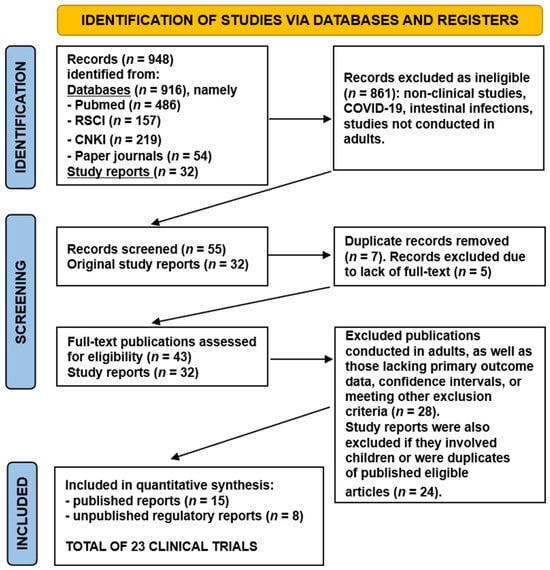
Studies were excluded if they met any of the following criteria: non-clinical investigations (in vitro or animal studies), publications focused on pharmacological or pharmacokinetic mechanisms, and reviews. The PRISMA 2020 flow diagram of study identification is presented in Figure 1.
Figure 1.
PRISMA 2020 flow diagram of study identification, screening, and inclusion. A total of 948 records were identified from electronic databases (PubMed, RSCI, and CNKI) and manual searches of Russian-language journal archives, together with 32 unpublished regulatory study reports. A total of 23 clinical trials were included, comprising 12 therapeutic and 11 prophylactic trials.
2.3. Study Selection and Data Extraction
Two reviewers (A.P. and I.L.) independently screened the titles and abstracts retrieved from the search, followed by full-text screening of potentially relevant articles. Discrepancies were resolved through discussion or consultation with a third investigator (N.P.). For unpublished regulatory reports, the same screening and extraction procedures were applied, with independent verification of reported results and risk-of-bias assessment as described above.
For each included study, the following data were extracted using a standardized data collection form:
- First author and year of publication;
- Country of study and study design;
- Patient characteristics (sample size, age, and diagnosis);
- Description of intervention (dosage and duration of umifenovir therapy, if it differs from the standard dosage regimen—200 mg 4 times per day for 5 days);
- Control-group intervention (placebo, standard of care or oseltamivir);
- Measured outcomes.
2.4. Outcomes
The assessed outcomes evaluate the therapeutic and prophylactic effects of umifenovir in the context of ARVI. Primary efficacy outcomes included the duration of fever, total illness duration, and the time to full resolution of clinical symptoms such as weakness, myalgia, headache, and nasal congestion. Additionally, the proportion of patients achieving complete symptom resolution within a defined period and the time to symptom relief were key clinical endpoints. Virologic outcomes included the PCR negativity rate at specific time points (e.g., Days 4–5), reflecting the presence of viral RNA at the sampling time. Secondary outcomes included the duration of specific symptoms—namely, intoxication symptoms (e.g., fatigue, appetite loss, and chills), catarrhal symptoms (e.g., rhinitis, cough, and pharyngeal hyperemia), and lower respiratory symptoms (e.g., bronchial obstruction and laryngeal or tracheal stenosis).
Several studies reported on complications and disease progression, including the incidence of pneumonia (bacterial or post-viral), bronchitis, sinusitis, and otitis media. Rates of hospitalization and length of hospital stay were assessed where data were available.
Adverse events (AEs) were collected in all trials reporting safety outcomes and included both general AE incidence and serious adverse events when specified.
Furthermore, several included studies evaluated the prophylactic use of umifenovir, with outcomes such as the incidence of laboratory-confirmed influenza or ARVI and the presence of viral pathogens via PCR or immunofluorescence assay (IFA) on follow-up days. These parameters provided a comprehensive assessment of the clinical impact of umifenovir across both treatment and prevention settings.
2.5. Statistical Analysis
All analyses were performed in MetaAnalysisOnline (A5 Genetics Ltd., Kutaso, Hungary) [12] using a random-effects model, applied consistently across the study and all end-points. Randomized controlled trials (RCTs) and non-randomized studies (non-RCTs) were analyzed separately. Where sufficient data were available, subgroup analyses were performed according to study design (RCT vs. non-RCT) to assess the consistency of treatment effects across study types. Between-study variance was estimated using the Sidik–Jonkman method. For sparse binary outcomes, continuity corrections and the choice of model are justified, and risk ratios (RRs) with 95% CIs were computed. Egger’s test was not interpreted for syntheses with fewer than ten studies. Clustering within families, workplaces, or other collectives was not adjusted for, as such designs were represented by too few studies; this is acknowledged as a limitation. All analyses reported two-sided p-values with α = 0.05.
2.6. Risk-of-Bias Assessment
Risk of bias was assessed at the study level. For randomized controlled trials (RCTs), we used the revised Cochrane Risk of Bias tool (RoB 2) [13], applied to each result entering the primary randomized syntheses. For non-randomized studies, we used the ROBINS-I tool [14]. The target comparison and key confounders were defined a priori for each study before assessment. Unpublished regulatory reports were assessed using the same tools. Two reviewers (A.P. and I.L.) independently performed all assessments, with disagreements resolved by a third reviewer (N.P.). The rationale for each judgment is provided in the Supplementary Materials. Risk-of-bias findings are reported alongside each pooled estimate and integrated into the interpretation of the corresponding synthesis and are summarized in Figure A1 and Figure A2.
2.7. Certainty of Evidence
The certainty of evidence for each principal outcome derived from randomized controlled trials was assessed using the GRADE approach. For each outcome, we evaluated the following domains: risk of bias, inconsistency, indirectness, imprecision, and publication bias. The initial certainty rating for RCT-derived evidence was high and was downgraded by one or two levels for serious or very serious limitations within each domain. The results of this assessment are presented in Table A3, which summarizes the number of RCTs and participants, pooled effect estimates with 95% confidence intervals, major limitations, and the overall certainty of evidence for each principal outcome. Certainty was not assessed for outcomes derived exclusively from non-randomized studies, as these were presented as supplementary and hypothesis-generating analyses.
3. Results
3.1. The Characteristics of Studies
A total of 15 articles were included in quantitative synthesis, along with eight full-text versions of unpublished clinical trial reports. Summarizing these data, in total, 23 clinical studies were included in this systematic review and meta-analysis, comprising 12 trials assessing the efficacy and safety of umifenovir (Arbidol) for the treatment of influenza and other ARVIs and 11 trials evaluating its prophylactic effect. These studies represent a range of randomized controlled trials (RCTs), retrospective cohort studies, and prospective comparative investigations conducted between 1983 and 2025 in Russia and China. A total of 5083 participants were enrolled across the therapeutic studies and 13,663 in the prophylactic studies.
Among the 12 therapeutic studies (Table A1), seven were randomized controlled trials (RCTs), of which five were placebo-controlled (including double-blind trials [15,16]), and one involved active comparators such as oseltamivir. Five studies were prospective (PT) or retrospective (RT) analyses. Study populations varied by setting (hospitalized vs. outpatient). In particular, in all therapeutic studies, influenza was defined clinically (ICD-10 J11) or as influenza-like illness; laboratory confirmation was reported in one study only. This diagnostic approach reflects routine clinical practice in the settings and periods in which these studies were conducted.
The prophylactic dataset included 11 studies (Table A2). Most were single-center trials performed during influenza epidemics or seasonal ARVI outbreaks. Study populations typically included healthy adults in organized collectives and family clusters. The majority of prophylactic studies focused on patients with PCR-confirmed influenza.
3.2. Fever Duration
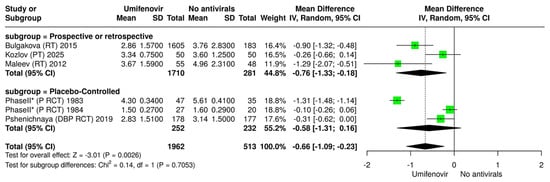
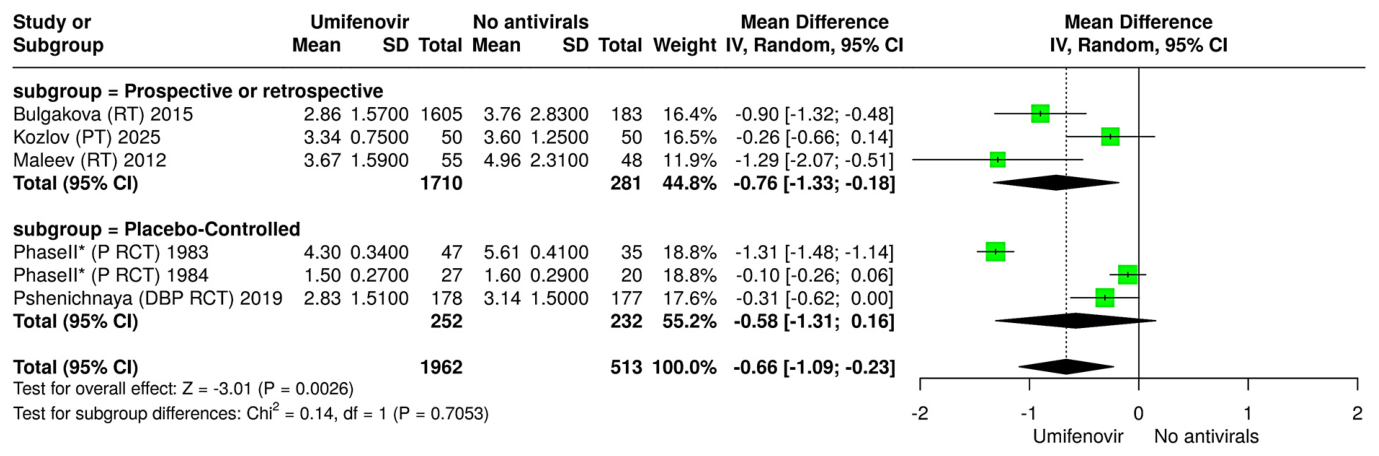
The average duration of fever in the umifenovir group was 3.08 days (95% CI: 2.15–4.01), compared to 3.77 days (95% CI: 2.08–5.47) in the no-antiviral group. A total of six studies were included in the analysis, comprising 1962 participants in the umifenovir group and 513 in the control group. The pooled analysis using a random-effects model with the inverse variance method showed a mean difference (MD) of −0.66 days (95% CI: −1.09 to −0.23; p < 0.05), favoring umifenovir (Figure 2). However, this overall estimate was driven predominantly by prospective and retrospective studies, which showed a statistically significant reduction in fever duration (MD: −0.76 days; 95% CI: −1.33 to −0.18; three studies, 1710 vs. 281 participants).
Figure 2.
Forest plot comparing the duration of fever in adult patients. Subgroups are presented separately for prospective/retrospective studies and placebo-controlled randomized trials (*—unpublished study protocols were additionally analyzed).
The group of placebo-controlled randomized trials demonstrated a numerically smaller and statistically non-significant reduction (MD: −0.58 days; 95% CI: −1.31 to 0.16; three studies, 252 vs. 232 participants). Significant heterogeneity was observed across studies (I2 = 96%; p < 0.01), with no statistically significant difference between subgroups (p = 0.71).
3.3. Duration of Intoxication Symptoms
All three included studies were randomized controlled trials, comprising 274 participants in the umifenovir group and 261 in the control group. The pooled analysis using a random-effects model with the inverse variance method showed a mean difference (MD) of −0.94 days (95% CI: −1.62 to −0.26; p < 0.05), favoring umifenovir (Figure 3). Significant heterogeneity was observed across studies (I2 = 82%; p < 0.01), indicating inconsistency in the magnitude and/or direction of effects.
Figure 3.
Forest plot comparing the duration of intoxication symptoms in adult patients. RTC—randomized controlled trial (*—unpublished study protocols were additionally analyzed).
3.4. Duration of Catarrhal Symptoms
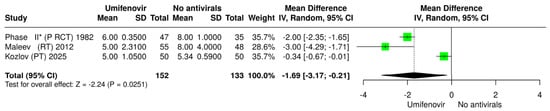
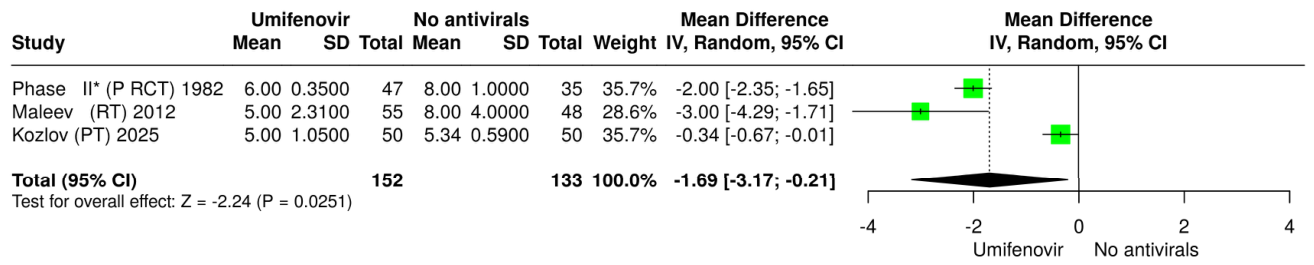
Umifenovir was associated with a significantly shorter duration of catarrhal symptoms compared to no antiviral treatment or placebo. Based on three studies including 152 participants in the umifenovir group and 133 in the control group, the pooled analysis using a random-effects model showed an MD of −1.69 days (95% CI: −3.17 to −0.21; p < 0.001), favoring umifenovir (Figure 4). Significant heterogeneity was observed across studies (p < 0.01; I2 = 58%). Because only one randomized controlled trial contributed to this outcome, this analysis should be regarded as supplementary and interpreted with caution.
Figure 4.
Forest plot comparing the duration of catarrhal symptoms in adult patients (*—unpublished study protocols were additionally analyzed).
3.5. Overall Disease Duration
All four included studies were randomized controlled trials, comprising 337 participants in the umifenovir group and 328 in the control group. The mean duration of illness was 5.98 days (95% CI: 4.37–7.90) in the umifenovir group, compared with 7.12 days (95% CI: 4.63–9.60) in the control group. The pooled analysis using a random-effects model showed a statistically significant reduction in overall disease duration (MD: −1.17 days; 95% CI: −2.23 to −0.10; p < 0.05), favoring umifenovir (Figure 5). Significant heterogeneity was observed across studies (I2 = 99%; p < 0.01).
Figure 5.
Forest plot comparing the disease duration in adult patients. RTC—randomized controlled trial (*—unpublished study protocols were additionally analyzed).
The durations of chills, headache, myalgia, nasal congestion, pharyngeal hyperemia, rhinitis, and weakness were not included in the meta-analysis due to insufficient data for quantitative synthesis, as each outcome was reported in only one or two trials.
3.6. PCR Negativity Rate
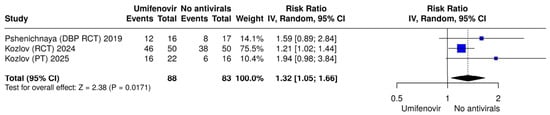
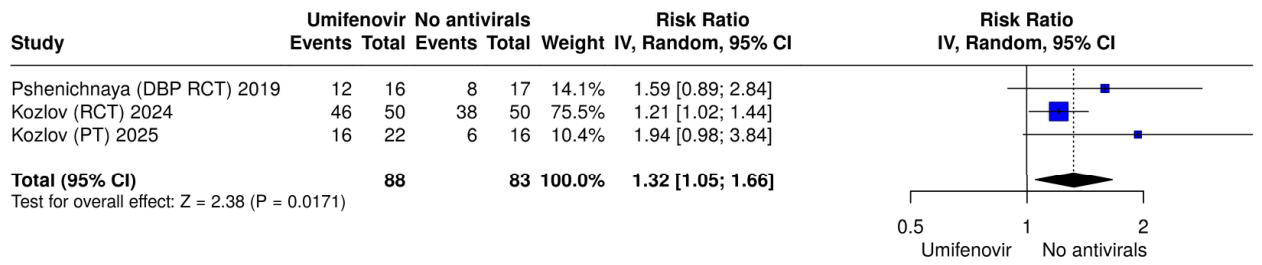
Umifenovir was associated with a significantly higher rate of PCR negativity at the assessed sampling time compared to no antiviral treatment. Three studies were included in the exploratory analysis, comprising 88 participants in the umifenovir group and 83 in the control group. Two of the three studies were randomized controlled trials (Pshenichnaya 2019 [16,17], Kozlov 2024 [18]). The third (Kozlov 2025 [19]) was a prospective comparative study in which randomization was mentioned only once without further detail; it was therefore classified as non-randomized. Using a random-effects model, the pooled risk ratio (RR) was 1.32 (95% CI: 1.05–1.66; p = 0.017), indicating a 32% higher likelihood of testing PCR-negative in the umifenovir cohort (Figure 6). Heterogeneity was low (I2 = 0%); however, given the small number of studies and participants, this should not be interpreted as evidence of true homogeneity.
Figure 6.
Forest plot comparing PCR negativity at the assessed sampling time in adult patients.
3.7. Complications
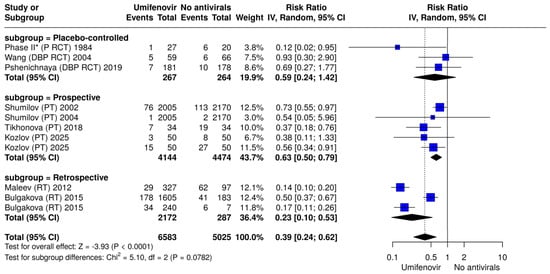
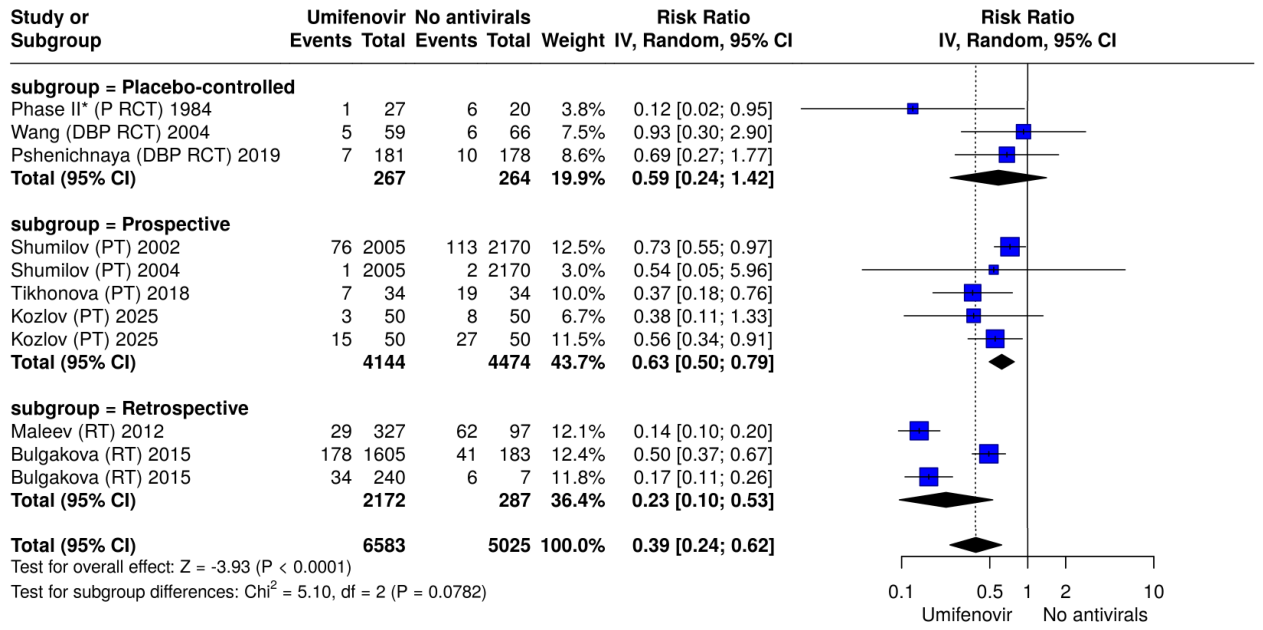
Umifenovir was associated with a significantly lower rate of complications compared to no antiviral treatment across nine studies involving 6583 participants in the umifenovir group and 5025 in the group with no antiviral treatment (including placebo or symptomatic care). The pooled analysis using a random-effects model demonstrated a significant reduction in risk (RR: 0.39; 95% CI: 0.24–0.62; p < 0.001). However, substantial heterogeneity was observed across studies (p < 0.01; I2 = 89%), suggesting variability in effect-size estimates (Figure 7).
Figure 7.
Forest plots comparing the effect of umifenovir versus no antiviral treatment on complication rates, including pneumonia and other bacterial incidence (*—unpublished study protocols were additionally analyzed).
In a subgroup analysis limited to randomized, placebo-controlled trials (three studies; 267 umifenovir vs. 264 placebo), no statistically significant difference in complication rates was observed (RR: 0.59; 95% CI: 0.24–1.43; p > 0.05).
In contrast, the analysis of seven prospective and retrospective cohort studies showed a significant reduction in complication rates among patients receiving umifenovir (RR: 0.63; 95% CI: 0.50–0.79; p < 0.01 and RR: 0.23; 95% CI: 0.10–0.53; p < 0.01). However, substantial heterogeneity was again present (p < 0.01; I2 = 93%), suggesting differences in study design, populations, or definitions of complications across included studies.
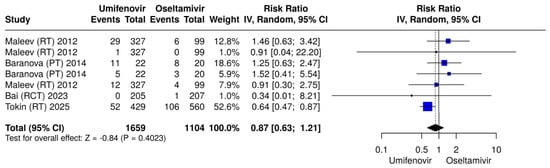
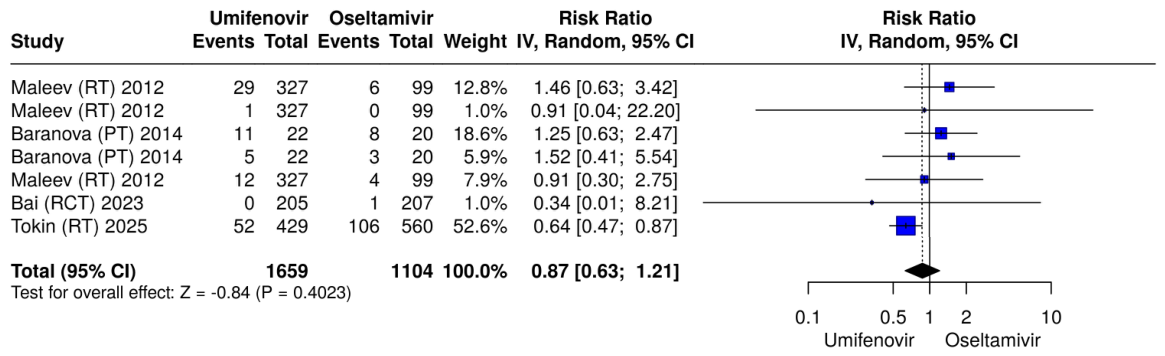
Umifenovir and oseltamivir showed comparable rates of bacterial complications, including pneumonia. Across six studies comprising 1659 participants in the umifenovir group and 1104 in the oseltamivir group (Figure 8), there was no statistically significant difference between the two cohorts (RR: 0.87; 95% CI: 0.63–1.21; p > 0.05). The analysis was conducted using a random-effects model with the Mantel–Haenszel method, and no notable heterogeneity was observed, suggesting consistency in effect sizes across study populations. Publication bias could not be reliably assessed due to the small number of studies (n = 6).
Figure 8.
Forest plots comparing the effect of umifenovir versus oseltamivir on complication rates, including pneumonia and other bacterial incidence.
3.8. Prophylactic Efficacy of Umifenovir Against Influenza and Other Acute Respiratory Infections
The prophylaxis dataset comprised 11 controlled comparative studies conducted in Russia between 1984 and 2025, including 7135 participants in the umifenovir group and 6283 participants in the control group (Table A2). Studies were performed during influenza epidemics or seasonal rises in ARVI and enrolled adults in organized collectives (industrial workers and military personnel), family clusters, and outpatient settings. Comparator groups received placebo, no antiviral prophylaxis, or standard care without antiviral agents.
The dataset was heterogeneous with respect to exposure setting, dosage regimen, and outcome definition. Dosing regimens ranged from daily administration for 10–18 days to twice-weekly administration for 3 weeks. Laboratory-confirmed influenza was the outcome in seven studies, while broader ARVI incidence was the outcome in four studies. The majority of studies were randomized controlled trials. Several studies used cluster-level units of exposure or randomization, including families and organized collectives, and clustering was not accounted for in the pooled analyses. To address the clinical and methodological heterogeneity of the prophylaxis dataset, we predefined three primary subgroup analyses. The primary causal synthesis was restricted to randomized controlled trials with laboratory-confirmed influenza (n = 3373 umifenovir vs. 2306 placebo), representing the most methodologically homogeneous and diagnostically specific evidence base.
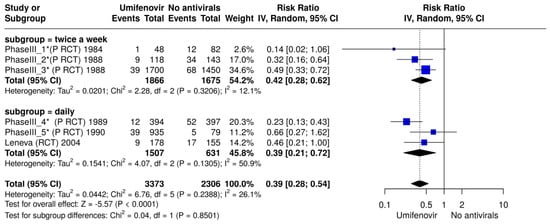
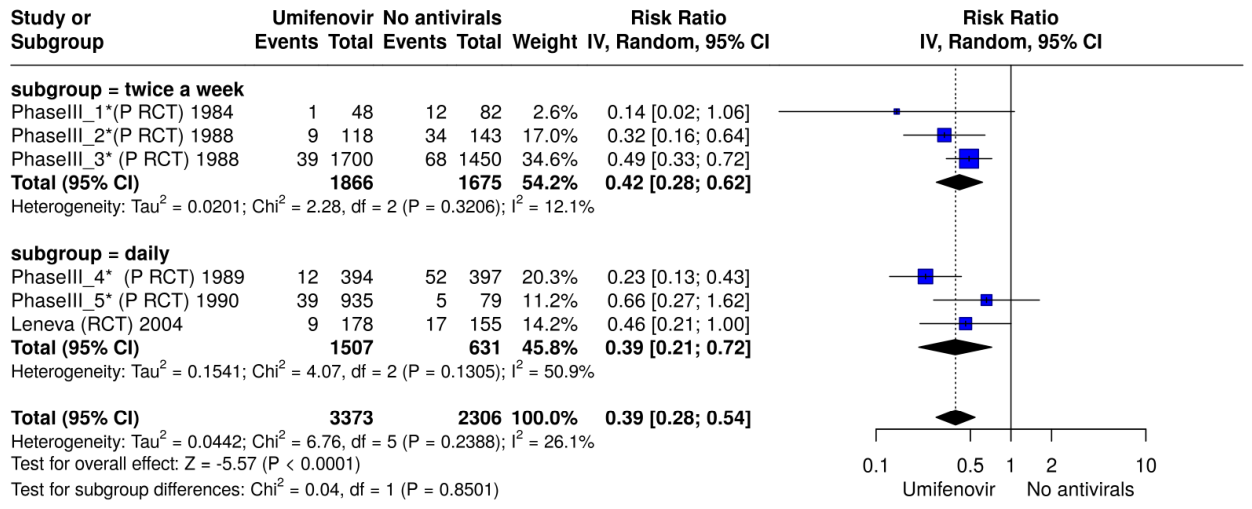
The primary subgroup (RCT + laboratory-confirmed influenza) demonstrated a statistically significant 61% reduction in the risk of laboratory-confirmed influenza (RR: 0.39; 95%: CI 0.28–0.54; Figure 9), with moderate heterogeneity (I2 = 26.1%). The twice-weekly and daily regimens showed comparable point estimates (RR: 0.42 and 0.39, respectively), but the daily-regimen subgroup included only three studies with substantial heterogeneity and a confidence interval crossing unity, precluding any conclusion regarding dose–response.
Figure 9.
Forest plots for the prophylactic efficacy of umifenovir versus placebo (no antiviral control) in preventing laboratory-confirmed influenza incidence in RCTs. Subgroups are presented separately for daily and twice-weekly administration (*—unpublished study protocols were additionally analyzed).
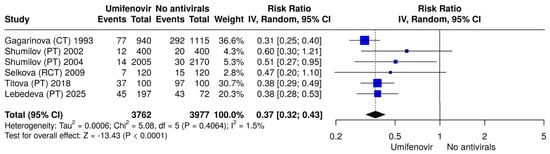
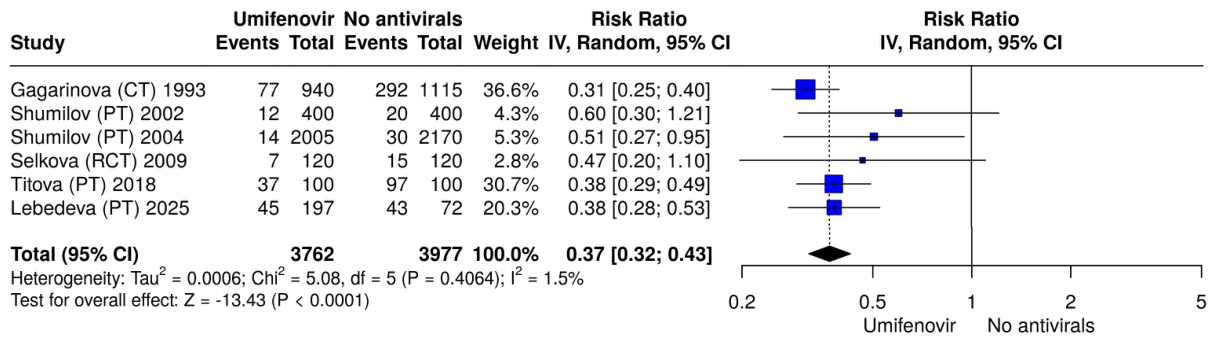
In the remaining studies (mixed designs including non-randomized and controlled trials), which included both laboratory-confirmed influenza and ARVI (including influenza), umifenovir demonstrated a consistent 63% reduction in incidence (RR: 0.37; 95% CI: 0.32–0.43; Figure 10).
Figure 10.
Forest plots for the prophylactic efficacy of umifenovir versus placebo or no-antiviral control in preventing laboratory-confirmed influenza incidence and ARVI (including influenza) in non-RCTs.
3.9. Adverse Events
The incidence of AEs associated with umifenovir was evaluated across four studies comprising 928 person exposures, with a total of 33 events reported (Table 1). Studies reporting zero adverse events were not encountered in the included dataset; safety data were either reported with at least one event or were not available at all. No serious adverse events were reported. No discontinuations due to adverse events occurred or were reported. Based on analysis using a random-effects model with the inverse variance method, the overall incidence rate was estimated at 3.6% (95% CI: 2.4–4.8%). However, significant heterogeneity was observed (p = 0.05; I2 = 61%).
Table 1.
Safety outcomes of umifenovir versus comparators (placebo and oseltamivir) during treatment.
In a subgroup analysis limited to randomized, double-blind, placebo-controlled trials, no statistically significant difference in AE rates was found between umifenovir and placebo (RR: 0.59; 95% CI: 0.34–1.03; p > 0.05), based on two studies including 294 participants in the umifenovir group and 297 in the placebo group.
In contrast, when comparing umifenovir and oseltamivir, a difference in adverse event rates was observed in favor of umifenovir (RR: 0.35; 95% CI: 0.20–0.61; p < 0.05), based on two studies (one RCT and one retrospective) with 634 and 767 participants in the umifenovir and oseltamivir groups, respectively. However, this comparison is limited by the small number of studies and the mixed designs, and the result should be considered exploratory rather than definitive. Heterogeneity was substantial (I2 = 94%), but given that only two studies contributed, this estimate is unreliable and should not be overinterpreted. For oseltamivir, 52 adverse events were reported across these two studies; the pooled incidence was 6.8% (95% CI: 5.0–8.6%), reflecting considerable statistical uncertainty.
4. Discussion
This systematic review and meta-analysis synthesized data from 23 clinical studies evaluating umifenovir in the treatment and prevention of influenza and other ARVIs, comprising over 18,000 participants across four decades. The therapeutic dataset included 12 studies; seven were randomized controlled trials (RCTs), and 11 studies assessed prophylactic efficacy. Importantly, in routine clinical practice in Russia, influenza is diagnosed clinically (ICD-10 J11) or as influenza-like illness (ILI) rather than by laboratory confirmation, which is performed only in specialized settings and is not required for treatment initiation. Consequently, with the exception of one Chinese trial, all therapeutic studies enrolled patients with clinically diagnosed influenza or ARVI, reflecting the real-world conditions in which umifenovir is actually used.
In the overall analyses, umifenovir was associated with statistically significant reductions in fever duration (MD: −0.66 days; 95% CI: −1.09 to −0.23), intoxication symptoms (MD: −0.94 days; 95% CI: −1.62 to −0.26), catarrhal symptoms (MD: −1.69 days; 95% CI: −3.17 to −0.21), and overall illness duration (MD: −1.17 days; 95% CI: −2.23 to −0.10), as well as a higher rate of PCR negativity (RR: 1.32; 95% CI: 1.05–1.66). However, in the subgroups of randomized controlled trials, the effects were consistently smaller and, for fever duration, not statistically significant (MD: −0.58 days; 95% CI: −1.31 to 0.16). These findings are broadly consistent with the network meta-analysis by Gao et al. [9], which estimated a reduction in time to symptom alleviation of 1.10 days, although the certainty of evidence was rated as low.
Umifenovir was associated with a lower risk of complications (RR: 0.39; 95% CI: 0.24–0.62); however, this association was not statistically significant in the subgroup of randomized, placebo-controlled trials (RR: 0.59; 95% CI: 0.24–1.43). The overall estimates are therefore driven predominantly by non-randomized studies, and the efficacy of umifenovir in randomized evidence appears more modest. This discrepancy should be interpreted in light of the fact that randomized trials typically exclude patients at high risk of severe outcomes, including older adults, individuals with comorbidities, and those with more severe presentation. In contrast, the non-randomized studies included in our analysis often enrolled precisely these vulnerable populations, and their findings suggest a potential benefit of umifenovir in reducing complications among patients usually underrepresented or excluded from RCTs. This complementary evidence, while methodologically less robust, provides clinically relevant insights into the potential utility of umifenovir in the groups that may derive the greatest benefit.
When compared with oseltamivir, umifenovir showed comparable rates of bacterial complications, including pneumonia, bronchitis, and sinusitis. Across six studies comprising 1659 participants in the umifenovir group and 1104 in the oseltamivir group, no statistically significant difference was observed (RR 0.87; 95% CI 0.63–1.21; p > 0.05), with no notable heterogeneity. However, these comparisons are limited by the small number of studies and by the predominance of non-randomized designs, and publication bias could not be reliably assessed. The available evidence therefore does not establish a difference between the two agents in terms of complication rates, nor does it establish their equivalence; adequately powered randomized trials are needed to clarify the comparative effectiveness of umifenovir and oseltamivir for preventing influenza-related complications.
In the primary subgroup analysis of prophylaxis trials restricted to randomized controlled trials with laboratory-confirmed influenza, umifenovir demonstrated a statistically significant 61% reduction in the risk of influenza (RR: 0.39; 95% CI: 0.28–0.54), with moderate heterogeneity (I2 = 26.1%). Twice-weekly and daily administration showed comparable point estimates (RR: 0.42 and 0.39, respectively), although the daily-regimen subgroup included only three studies with substantial heterogeneity and a confidence interval crossing unity, precluding any conclusion regarding dose–response. In non-randomized studies, which included both laboratory-confirmed influenza and ARVI, umifenovir demonstrated a consistent 63% reduction in incidence (RR: 0.37; 95% CI: 0.32–0.43). However, given the mixed study designs and comparators, this finding should be regarded as hypothesis-generating.
The pooled incidence of adverse events associated with umifenovir was low, at 3.6% (95% CI: 2.4–4.8%). No serious or severe adverse events and no discontinuations due to adverse events were reported. No significant difference in adverse event rates was found between umifenovir and placebo (RR: 0.59; 95% CI: 0.34–1.03). While a comparison with oseltamivir suggested lower adverse event rates with umifenovir (RR: 0.35; 95% CI: 0.20–0.61), this comparison combines randomized and non-randomized evidence and should be interpreted with caution; the available clinical data do not reveal a clear safety signal but are insufficient to establish definitive comparative safety relative to oseltamivir. These findings are consistent with the network meta-analysis by Gao et al. [9], in which umifenovir was associated with a reduction of 52 adverse events per 1000 patients, compared with an increase of 28 events for oseltamivir. The favorable safety profile is further supported by preclinical toxicological studies demonstrating low toxicity (LD50 > 3000 mg/kg in rats) and no pathological changes with long-term administration [22] and is consistent with regulatory approval for use in children from two years of age and from the second trimester of pregnancy when benefits outweigh risks [22].
The certainty of evidence ranged from moderate (for prophylaxis against laboratory-confirmed influenza) to very low (for fever duration, disease duration, and complications). The principal limitations were risk of bias (open-label designs and subjective outcomes), unexplained heterogeneity, and imprecision. These findings indicate that the estimates of umifenovir efficacy in randomized evidence should be interpreted with caution.
Several limitations should be acknowledged. First, the included studies differed substantially in the degree of etiological confirmation, with most therapeutic studies enrolling patients with clinically diagnosed influenza or ILI rather than laboratory-confirmed infection; the pooled estimates therefore reflect effects across heterogeneous respiratory infections rather than virologically confirmed influenza alone. Second, the evidence base was predominantly derived from studies conducted in Russia and China, with several older studies providing limited information on randomization, blinding, and allocation concealment, which may have introduced risk of bias and limits generalizability. Third, substantial heterogeneity was observed for several outcomes, likely reflecting differences in study design, patient populations, diagnostic criteria, outcome definitions, and treatment protocols; although subgroup analyses were performed where data permitted, heterogeneity could not be fully explained. Fourth, many historical studies were not prospectively registered, and reporting of adverse events was incomplete in some. Fifth, access to unpublished regulatory reports was facilitated by the current marketing authorization holder, which may introduce potential bias through selective provision of reports and the absence of fully independent verification of the complete set of historical trials; a sensitivity analysis excluding these reports was not performed, as they were classified as being at high risk of bias (Figure A1 and Figure A2). Finally, differences in diagnostic standards, trial conduct, reporting practices, and clinical care between historical and contemporary settings should be considered when interpreting these findings.
5. Conclusions
From a clinical perspective, the magnitude of the observed effects deserves careful consideration. Reductions in fever duration of approximately 0.7 days and in overall illness duration of approximately 1.4 days may appear modest at the individual level; however, even such reductions can be clinically meaningful when applied across large populations, particularly during seasonal epidemics, by reducing the burden on outpatient services, decreasing workplace absenteeism, and limiting household transmission. Furthermore, the reduction in intoxication and catarrhal symptoms suggests that umifenovir may alleviate the most debilitating manifestations of influenza and ARVI, which are often the primary reason for seeking medical care. The higher rate of PCR negativity may also have implications for interrupting viral transmission, although this endpoint is a surrogate and does not directly establish reduced infectiousness. Taken together, these findings suggest that umifenovir may offer a modest but potentially worthwhile symptomatic benefit in the treatment of clinically diagnosed influenza and ARVI, while its impact on complications and transmission requires further confirmation in adequately powered randomized trials. Notably, the recent WHO (2024, [7]) conditional recommendation against umifenovir for non-severe influenza, based primarily on limited international data, warrants reconsideration to incorporate the robust Russian–Chinese evidence base presented in this analysis.
Supplementary Materials
The following supporting information can be downloaded at: https://www.mdpi.com/article/10.3390/v18111180/s1. Table S1: PRISMA 2020 for Abstracts Checklist; File S1: Supplementary Methods.
Author Contributions
Methodology, I.L., N.P. and E.B.; data curation, A.P., A.Z. and I.L.; formal analysis A.Z. and A.P.; writing—original draft preparation I.L. and N.P.; writing—review and editing, D.L. and E.B. All authors have read and agreed to the published version of the manuscript.
Funding
This study did not receive any direct financial support, grants, or other funding from commercial entities. No non-financial support influencing the study design, data extraction, analysis, interpretation, or manuscript preparation was provided by the manufacturer.
Institutional Review Board Statement
Not applicable.
Data Availability Statement
Extracted datasets were created for this meta-analysis and are available in the Supplementary Materials.
Acknowledgments
We would like to thank Zifeng Yang and his team for assistance with the comprehensive search of Chinese-language publications and for providing valuable comments.
Conflicts of Interest
A.P. reports administrative support from JSC OTCPHARM and a professional relationship with JSC OTCPHARM, including paid expert testimony and honoraria for lectures and engagements. All other authors declare that they have no known competing financial interests or personal relationships that could have influenced the work reported in this manuscript. JSC OTCPHARM, the current marketing authorization holder of umifenovir (Arbidol), assisted in facilitating access to full versions of historical clinical trial reports. These reports originated from state-funded research programs and were originally submitted to governmental regulatory authorities as part of the historical registration dossier. The authors confirm that all retrieved reports corresponded to the original regulatory documentation and were not generated, commissioned, or modified by the current manufacturer for the purposes of this study. JSC OTCPHARM had no role in study selection, data extraction, statistical analysis, the interpretation of results, or manuscript preparation.
Abbreviations
The following abbreviations are used in this manuscript:
| AE | Adverse Event |
| ARVI | Acute Respiratory Viral Infection |
| CI | Confidence Interval |
| CNKI | China National Knowledge Infrastructure |
| CT | Clinical Trial |
| HR | High Risk |
| ILI | Influenza-Like Illness |
| LR | Low Risk |
| MD | Mean Difference |
| RCT | Randomized Controlled Trial |
| RR | Risk Ratio |
| RSCI | Russian Science Citation Index |
| ST | Standard Therapy |
| WHO | World Health Organization |
Appendix A
Table A1.
Characteristics of included studies on the efficacy and safety of umifenovir in patients with influenza and other acute respiratory infections. (*—full study reports and/or protocols were additionally analyzed). ST—symptomatic therapy/standard care (no antiviral). The approved dosage regimen in Russia for the treatment of influenza and other influenza-like illnesses (ILIs) is 200 mg administered four times daily for five days.
Table A2.
Characteristics of included studies of prophylactic efficacy of umifenovir against influenza and other acute respiratory infections (*—full study reports and/or protocols were additionally analyzed). All studies were single-center and conducted in Russia among outpatients.
Figure A1.
Summary risk-of-bias assessment of the included randomized studies (Table A1 and Table A2) using the Cochrane Risk of Bias tool (RoB 2). Study identifiers (ID) correspond to those listed in Table A1 (T—therapeutic studies) and A2 (P—prophylactic studies). *—full study reports and/or protocols were additionally analyzed.
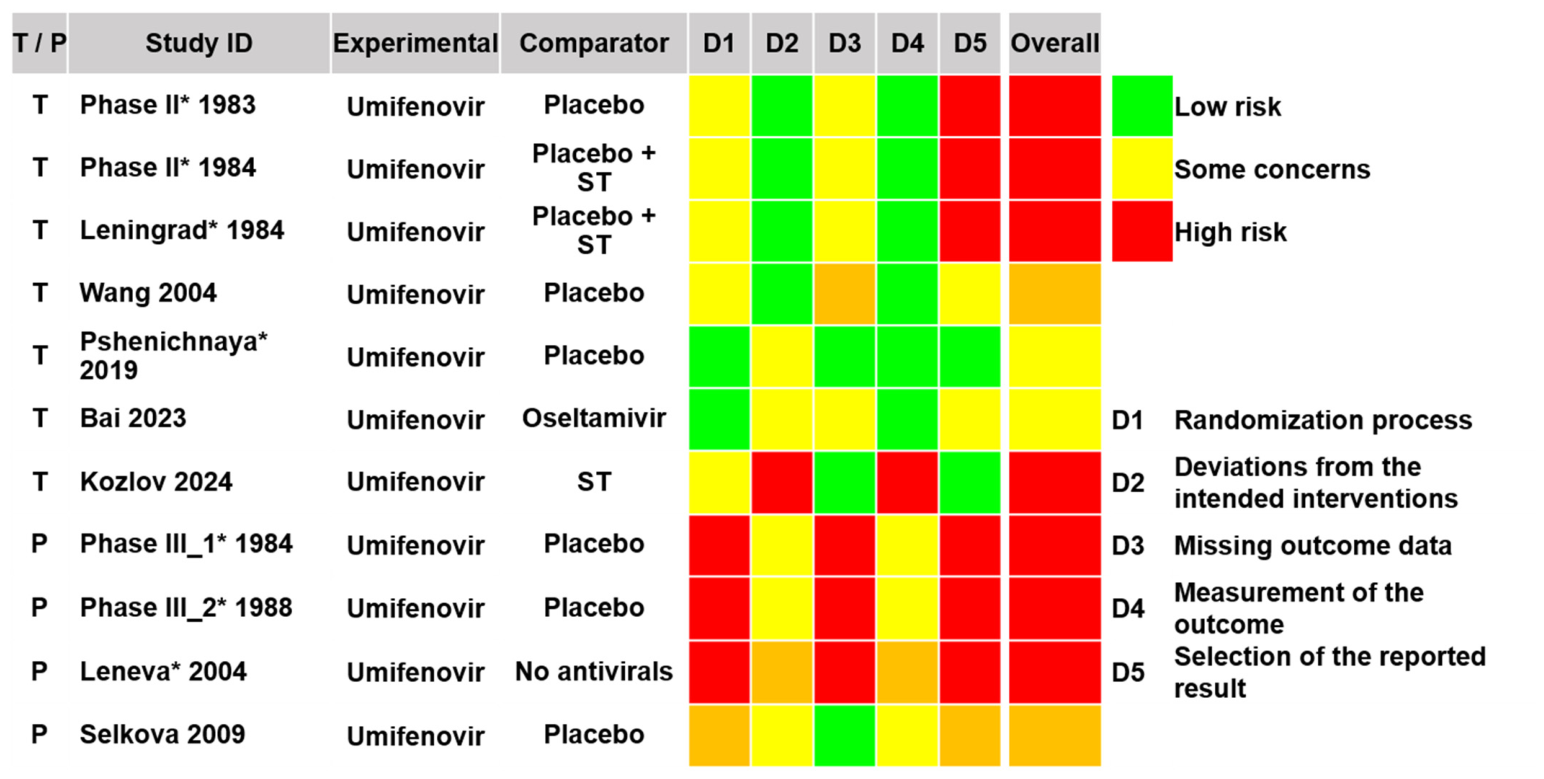
Figure A2.
Summary risk-of-bias assessment of the included non-randomized studies (prospective and retrospective, Table A1 and Table A2) using the ROBINS-I tool. Study identifiers (ID) correspond to those listed in Table A1 (T—therapeutic studies) and A2 (P—prophylactic studies). *—Full study reports and/or protocols were additionally analyzed.
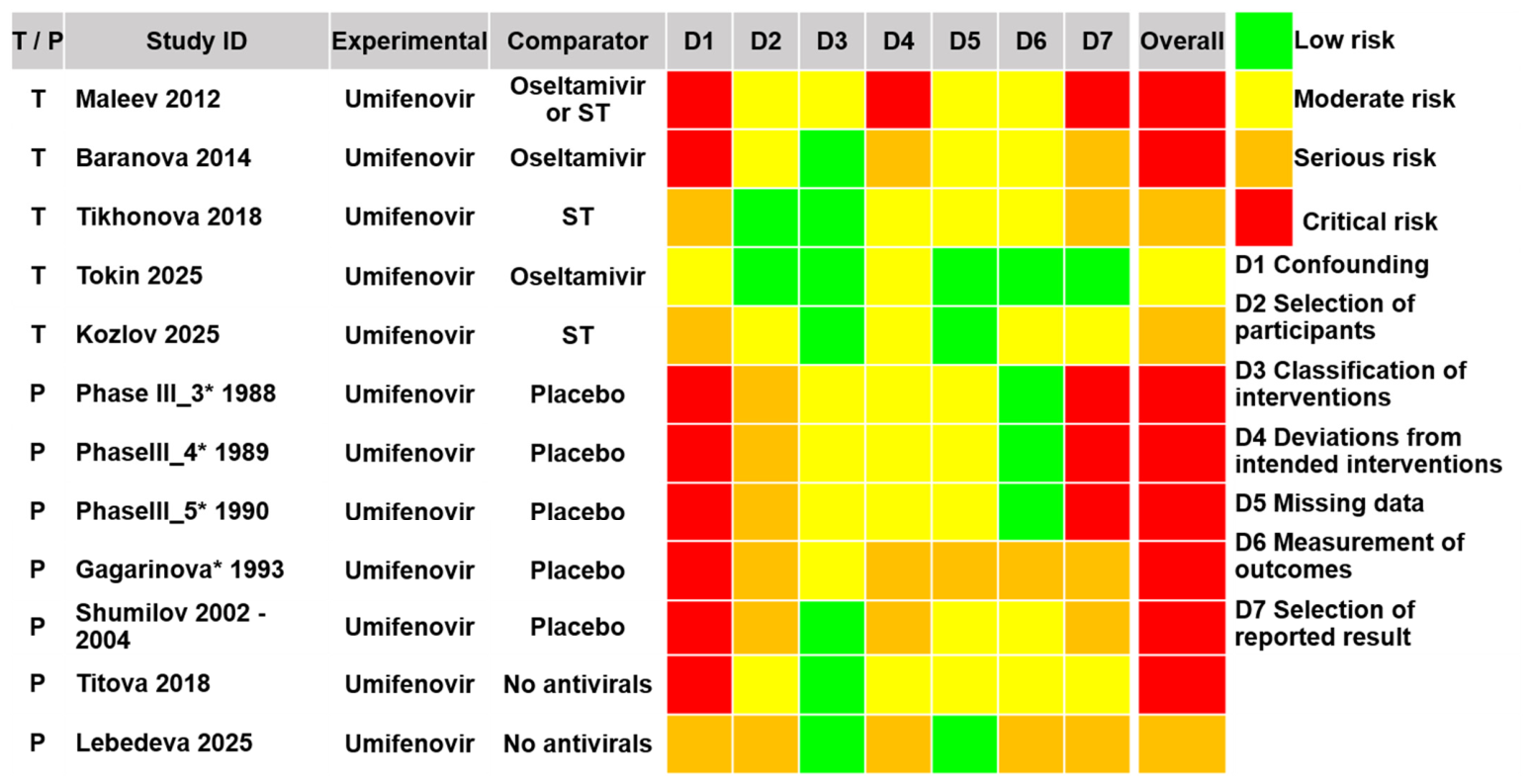
Table A3.
GRADE summary of findings: number of RCTs and participants, pooled effect estimates (95% CI), major limitations, and overall certainty of evidence for each principal outcome [32].
References
- Hanage, W.P.; Schaffner, W. Burden of acute respiratory infections caused by influenza virus, respiratory syncytial virus, and SARS-CoV-2 with consideration of older adults: A narrative review. Infect. Dis. Ther. 2025, 14, 5–37. [Google Scholar] [CrossRef] [Scilit] [PubMed]
- Blaising, J.; Polyak, S.J.; Pécheur, E.I. Arbidol as a broad-spectrum antiviral: An update. Antivir. Res. 2014, 107, 84–94. [Google Scholar] [CrossRef] [Scilit] [PubMed]
- Boriskin, Y.; Leneva, I.; Pecheur, E.I.; Polyak, S. Arbidol: A broad-spectrum antiviral compound that blocks viral fusion. Curr. Med. Chem. 2008, 15, 997–1005. [Google Scholar] [CrossRef] [Scilit] [PubMed]
- Leneva, I.; Kartashova, N.; Poromov, A.; Gracheva, A.; Korchevaya, E.; Glubokova, E.; Borisova, O.; Shtro, A.; Loginova, S.; Shchukina, V.; et al. Antiviral activity of umifenovir in vitro against a broad spectrum of coronaviruses, including the novel SARS-CoV-2 virus. Viruses 2021, 13, 1665. [Google Scholar] [CrossRef] [Scilit] [PubMed]
- Shi, L.; Xiong, H.; He, J.; Deng, H.; Li, Q.; Zhong, Q.; Hou, W.; Cheng, L.; Xiao, H.; Yang, Z. Antiviral activity of arbidol against influenza A virus, respiratory syncytial virus, rhinovirus, coxsackie virus and adenovirus in vitro and in vivo. Arch. Virol. 2007, 152, 1447–1455. [Google Scholar] [CrossRef] [Scilit] [PubMed]
- Ibrahim, S.; Siemieniuk, R.A.C.; Oliveros, M.J.; Islam, N.; Martinez, J.P.D.; Izcovich, A.; Qasim, A.; Zhao, Y.; Zaror, C.; Yao, L.; et al. Drug treatments for mild or moderate COVID-19: Systematic review and network meta-analysis. BMJ 2025, 389, e081165. [Google Scholar] [CrossRef] [Scilit] [PubMed]
- World Health Organization. Clinical Practice Guidelines for Influenza; World Health Organization: Geneva, Switzerland, 2024; Available online: https://iris.who.int/handle/10665/378872 (accessed on 17 August 2025).
- World Health Organization. Guidelines for the Clinical Management of Severe Illness from Influenza Virus Infections. 2022. Available online: https://iris.who.int/handle/10665/352453 (accessed on 17 August 2025).
- Gao, Y.; Zhao, Y.; Liu, M.; Luo, S.; Chen, Y.; Chen, X.; Zheng, Q.; Xu, J.; Shen, Y.; Zhao, W.; et al. Antiviral medications for treatment of nonsevere influenza: A systematic review and network meta-analysis. JAMA Intern. Med. 2025, 185, 293. [Google Scholar] [CrossRef] [Scilit] [PubMed]
- Guskova, T.A.; Glushkov, R.G. Arbidol—Immunomodulator, Interferon Inducer, Antioxidant; Timotek: Moscow, Russia, 1999. [Google Scholar]
- Petrov, V.I.; Nedogoda, S.V.; Leneva, I.A. The use of domestic antiviral drugs from the standpoint of evidence-based medicine. Lechaschiy Vrach 2011, 1, 71–79. [Google Scholar]
- Fekete, J.T.; Győrffy, B. MetaAnalysisOnline.com: Web-based tool for the rapid meta-analysis of clinical and epidemiological studies. J. Med. Internet Res. 2025, 27, e64016. [Google Scholar] [CrossRef] [Scilit] [PubMed]
- Sterne, J.A.C.; Savović, J.; Page, M.J.; Elbers, R.G.; Blencowe, N.S.; Boutron, I.; Cates, C.J.; Cheng, H.-Y.; Corbett, M.S.; Eldridge, S.M.; et al. RoB 2: A revised tool for assessing risk of bias in randomised trials. BMJ 2019, 366, l4898. [Google Scholar] [CrossRef] [Scilit] [PubMed]
- Sterne, J.A.; Hernán, M.A.; Reeves, B.C.; Savović, J.; Berkman, N.D.; Viswanathan, M.; Henry, D.; Altman, D.G.; Ansari, M.T.; Boutron, I.; et al. ROBINS-I: A tool for assessing risk of bias in non-randomised studies of interventions. BMJ 2016, 355, i4919. [Google Scholar] [CrossRef] [Scilit] [PubMed]
- Wang, M.; Zhao, B.; Cai, B.; Li, L.; Lin, J.; Su, N.; Yu, H.; Gao, H.; Zhao, J.; Liu, L. Efficacy and safety of arbidol in treatment of naturally acquired influenza. Acta Acad. Med. Sin. 2004, 26, 289–293. (In Chinese) [Google Scholar]
- Pshenichnaya, N.Y.; Bulgakova, V.A.; Lvov, N.I.; Poromov, A.A.; Selkova, E.P.; Grekova, A.I.; Shestakova, I.V.; Maleev, V.V.; Leneva, I.A. Clinical efficacy of umifenovir in influenza and ARVI (study ARBITR). Ter. Arkh. 2019, 91, 56–63. [Google Scholar] [CrossRef] [Scilit] [PubMed]
- Kiselev, O.I.; Maleev, V.V.; Deeva, E.G.; Leneva, I.A.; Sel’kova, E.P.; Osipova, E.A.; Obukhov, A.A.; Nadorov, S.A.; Kulikova, E.V. Clinical efficacy of arbidol (umifenovir) in the therapy of influenza in adults: Preliminary results of the multicenter double-blind randomized placebo-controlled study ARBITR. Ter. Arkh. 2015, 87, 88–96. [Google Scholar] [CrossRef] [Scilit] [PubMed]
- Kozlov, K.V.; Maltsev, O.V.; Kasyanenko, K.V.; Sukachev, V.S.; Lyashenko, Y.I.; Kosukhina, A.A. Comparative assessment of the clinical effectiveness of direct-acting antiviral drugs in outpatients with acute respiratory viral infections. Ter. Arkh. 2024, 96, 797–803. [Google Scholar] [CrossRef] [Scilit] [PubMed]
- Kozlov, K.V.; Maltsev, O.V.; Gorelov, A.V.; Zhdanov, K.V.; Brianskaia-Kasyanenko, K.; Sukachev, V.S.; Danila V, P. Efficacy of antiviral therapy initiated at a later stage of acute respiratory viral infections: Data from a comparative observational study. Infect. Dis. News Opin. Train. 2025, 14, 19–27. [Google Scholar] [CrossRef] [Scilit]
- Bai, X.; Xi, S.; Chen, G.; Fan, X.; Wang, K.; Li, Y.; Zhao, Y.; Wang, W.; Tian, Y. Multicenter, randomized controlled, open-label evaluation of the efficacy and safety of arbidol hydrochloride tablets in the treatment of influenza-like cases. BMC Infect. Dis. 2023, 23, 585. [Google Scholar] [CrossRef] [Scilit] [PubMed]
- Tokin, I.; Lioznov, D.; Poromov, A.; Zubkova, T.; Tsvetkov, V.; Nikitina, O.; Pobegalova, O.; Pshenichnaya, N.; Renev, V.; Podgornaya, A. Antiviral therapy for influenza in high-risk outpatients: A multicenter observational study of routine clinical practice in Russia. Ther. Adv. Infect. Dis. 2025, 12, 20499361251347726. [Google Scholar] [CrossRef] [Scilit] [PubMed]
- Rational choice of antiviral therapy for influenza and acute respiratory viral infections under the conditions of tridemic (consensus of the Expert Council). Infect. Dis. News Opin. Train. 2024, 13, 125–138. [Google Scholar] [CrossRef] [Scilit]
- Maleev, V.V.; Selkova, E.P.; Prostjakov, I.V.; Osipova, E.A. Pharmacoepidemiological study of the course of influenza and other acute respiratory viral infections in the 2010/11 season. Infect. Dis. 2012, 10, 15–23. [Google Scholar]
- Baranova, I.P.; Svistunova, N.V. Comparative study of the efficacy of antiviral drugs in the complex treatment of influenza. Infect. Dis. 2014, 12, 46–53. (In Russian) [Google Scholar]
- Tikhonova, E.P.; Kuz’mina, T.Y.; Andronova, N.V.; Tyushevskaya, O.A.; Elistratova, T.A.; Kuz’min, A.E. Study of effectiveness of antiviral drugs (umifenovir, triazavirin) against acute respiratory viral infections. Kazan Med. J. 2018, 99, 215. [Google Scholar] [CrossRef] [Scilit]
- Gagarinova, V.M.; Ignatieva, G.S.; Sinitskaya, L.V. New chemotherapeutic agent arbidol: Preventive efficacy during influenza epidemics. J. Microbiol. 1993, 5, 40–43. (In Russian) [Google Scholar]
- Shumilov, V.I.; Shuster, A.M.; Lobastov, S.P. Effectiveness of arbidol in prevention and treatment of acute respiratory infections in military personnel. Voen.-Meditsinskiy Zhurnal 2002, 323, 14–16. (In Russian) [Google Scholar]
- Leneva, I.A.; Glushkov, R.G.; Guskova, T.A. Drugs for chemotherapy and chemoprophylaxis of influenza: Mechanism of action, efficacy and safety (review). Pharm. Chem. J. 2004, 38, 8–11. [Google Scholar] [CrossRef] [Scilit]
- Selkova, E.P.; Semenenko, T.A.; Bondarev, V.A.; Gotvyanskaya, T.P.; Gaydarenko, A.D. Specific and non-specific prevention of influenza and acute respiratory viral infections in a large industrial enterprise. Epidemiol. Vaccinal Prev. 2005, 20, 49–53. (In Russian) [Google Scholar]
- Titova, O.N.; Petrova, M.A.; Shklyarevich, N.A.; Kuzubova, N.A.; Aleksandrov, A.L.; Kovaleva, L.F.; Kozyrev, A.G.; Kulikov, V.D. Efficacy of arbidol in the prevention of virus-induced exacerbations of bronchial asthma and chronic obstructive pulmonary disease. Ter. Arkh. 2018, 90, 48–52. [Google Scholar] [CrossRef] [Scilit] [PubMed]
- Lebedeva, N.N.; Maximov, M.L.; Malinnikova, E.Y. Clinical experience of using umifenovir for ARVI prevention during its seasonal increase in patients with secondary immunodeficiency conditions. Therapy 2025, 11, 66–72. [Google Scholar] [CrossRef] [Scilit]
- Guyatt, G.; Agoritsas, T.; Brignardello-Petersen, R.; Mustafa, R.A.; Rylance, J.; Foroutan, F.; Prasad, M.; Agarwal, A.; De Beer, H.; Murad, M.H.; et al. Core GRADE 1: Overview of the Core GRADE Approach. BMJ 2025, 389, e081903. [Google Scholar] [CrossRef] [Scilit] [PubMed]





Disclaimer/Publisher’s Note: The statements, opinions and data contained in all publications are solely those of the individual author(s) and contributor(s) and not of MDPI and/or the editor(s). MDPI and/or the editor(s) disclaim responsibility for any injury to people or property resulting from any ideas, methods, instructions or products referred to in the content. |
© 2026 by the authors. Licensee MDPI, Basel, Switzerland. This article is an open access article distributed under the terms and conditions of the Creative Commons Attribution (CC BY) license.