Characteristics of Hendersonia on Pinus mugo Needles Primarily Infected with Lophodermella sulcigena in the Tatra Mountains


Abstract
1. Introduction
2. Materials and Methods
2.1. Sampling and Microscopic Analyses
2.2. DNA Extraction, PCR, Sequencing and Phylogenetic Analyses
2.3. Antagonism of Hendersonia Isolates Against Pine Needle Fungi In Vitro
2.4. Statistical Analyses
3. Results
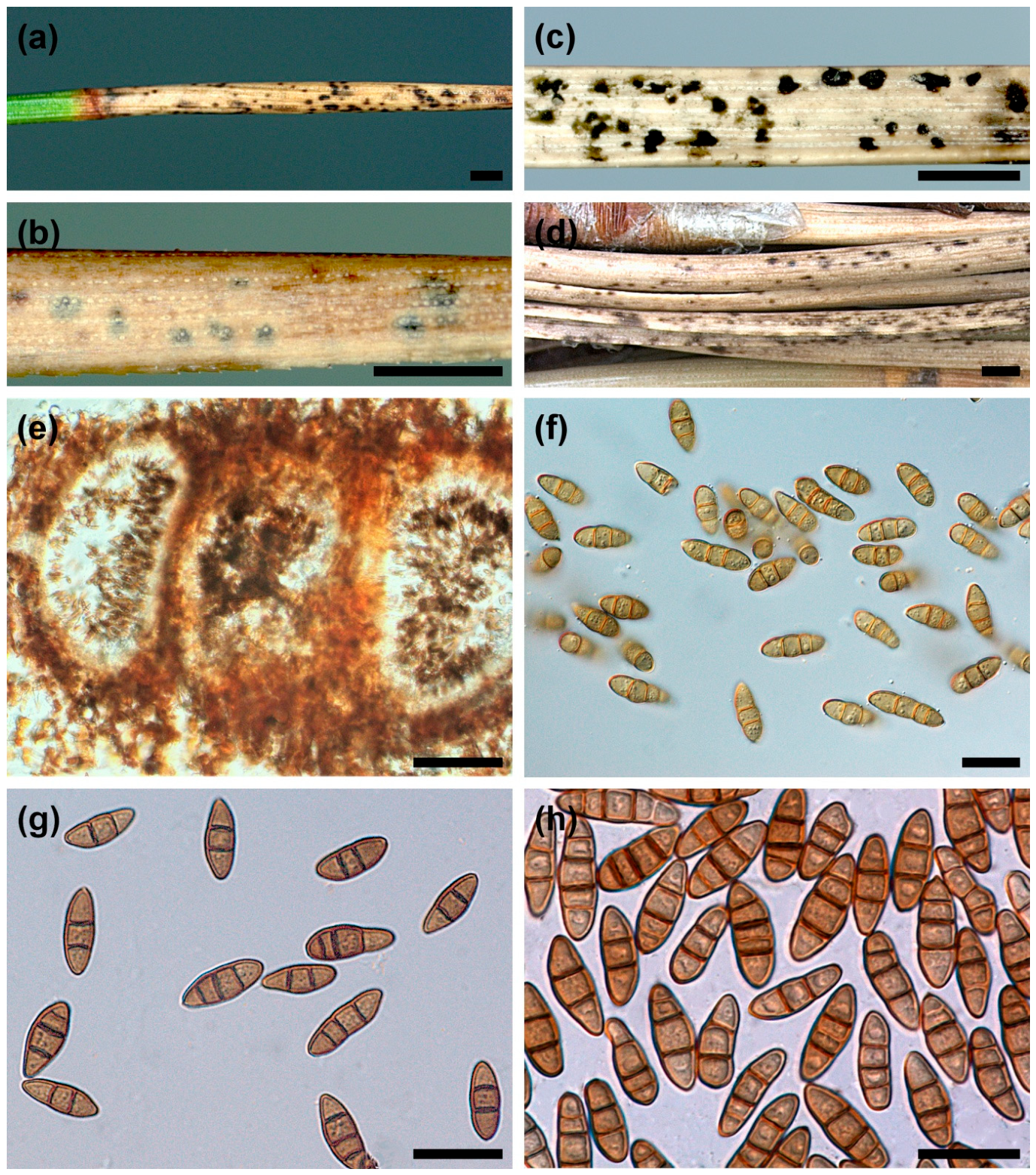
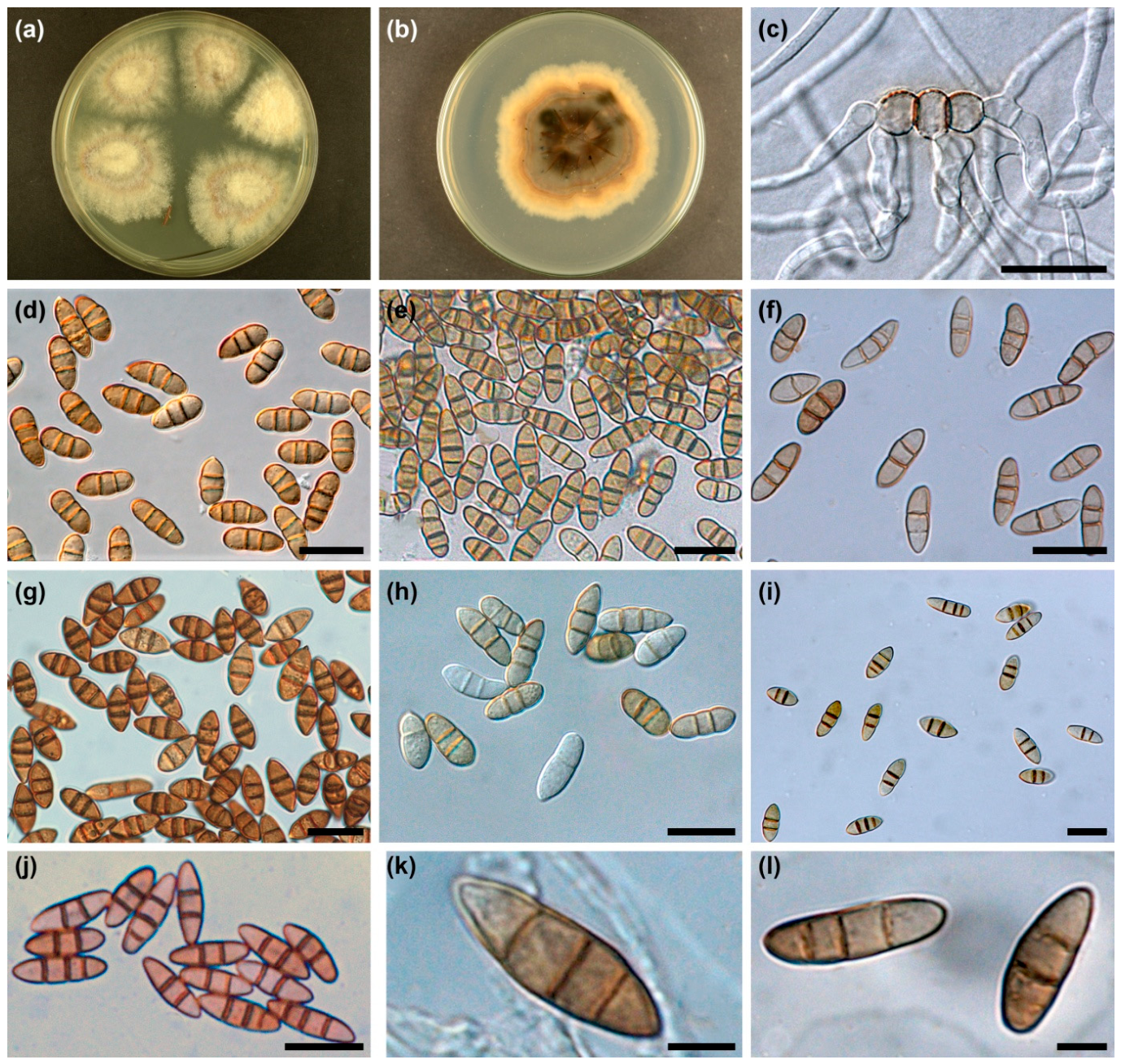
3.1. Morphology of Hendersonia Colonizing the Needles of Pinus mugo
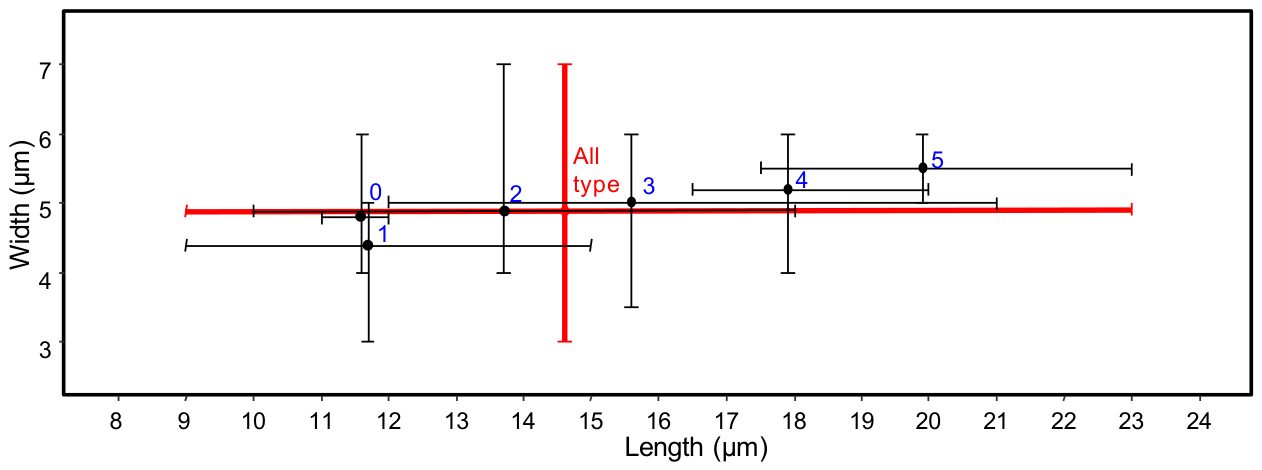
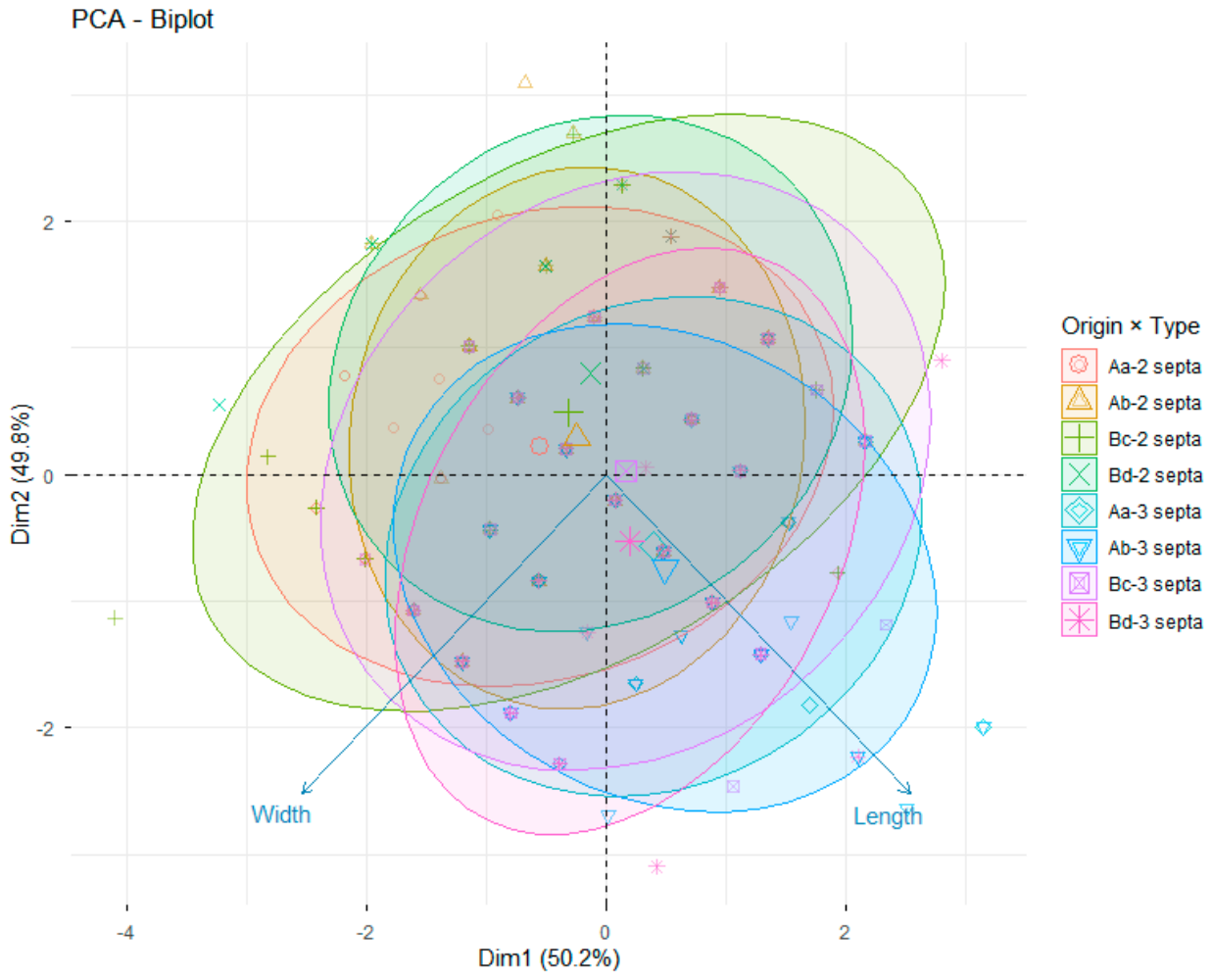
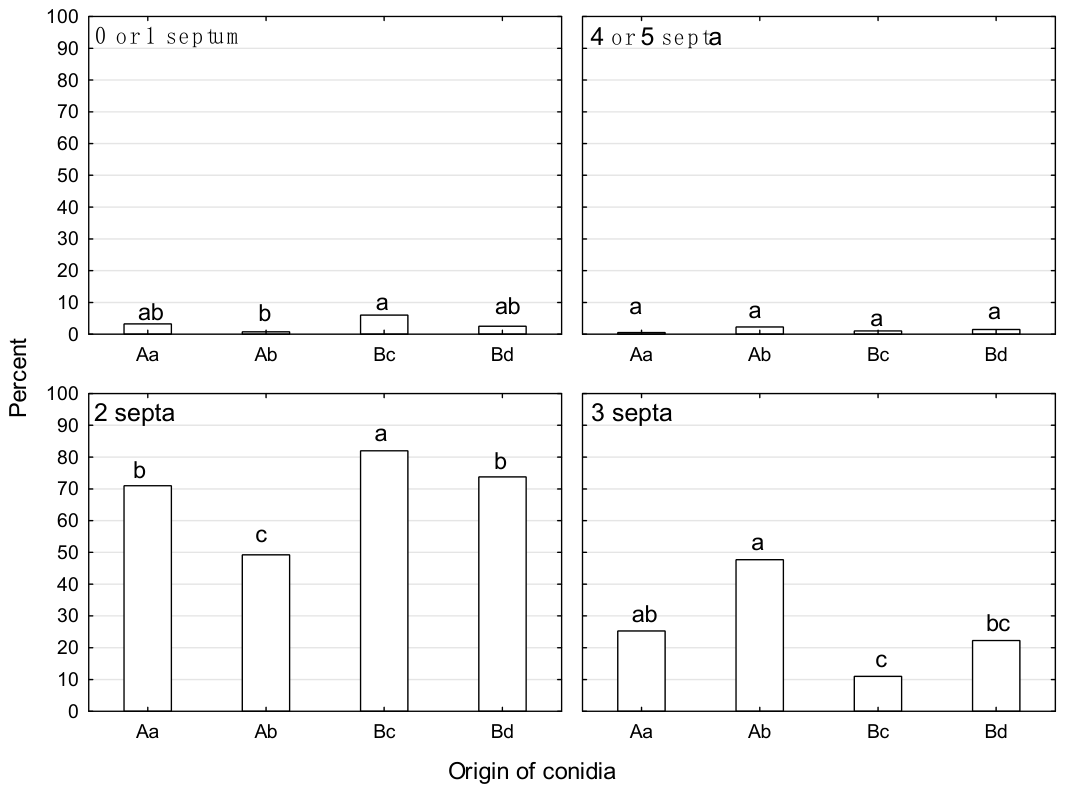
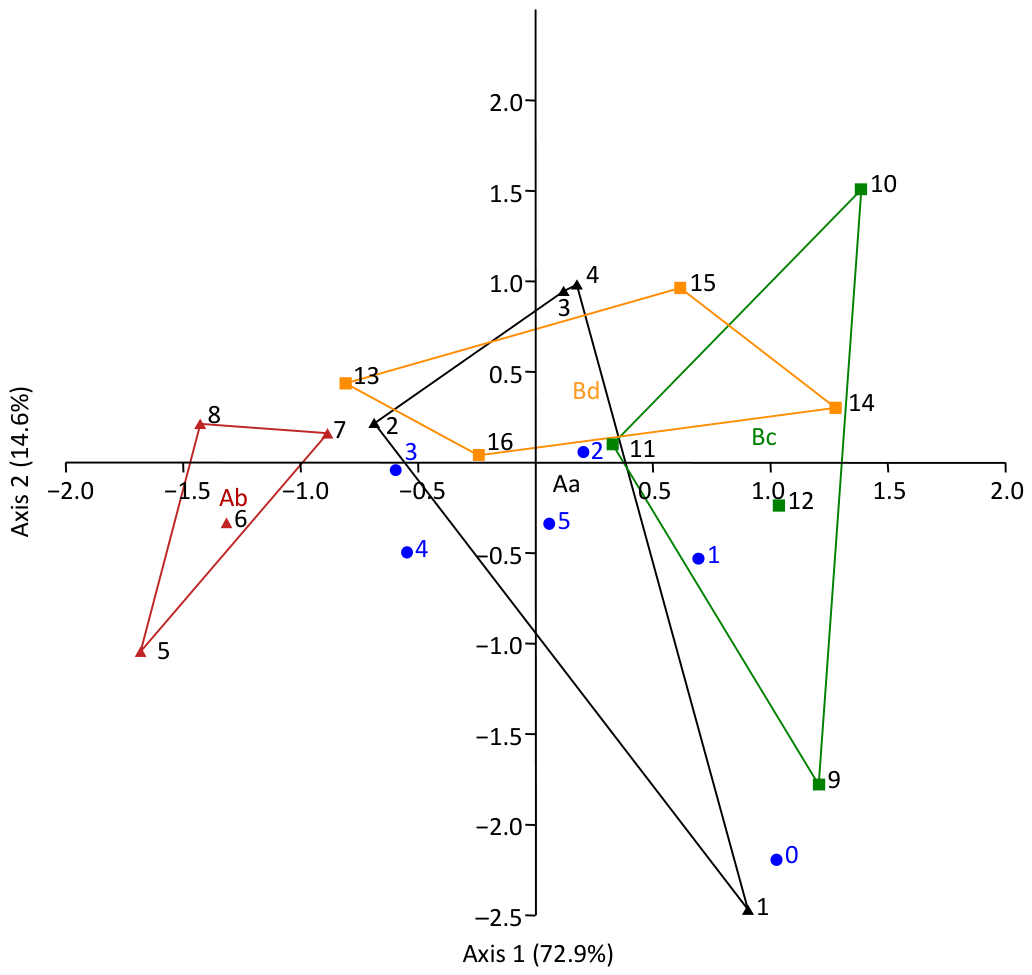
3.2. Statistical Analysis of Conidia Size and Septation Variation


| Taxon | Representative Strain 1 | Interaction Type with H. acicola Isolate 2 | Inhibition Zone for Type B (mm) Mean (Min–Max) | |||||
|---|---|---|---|---|---|---|---|---|
| Pm 379E | Pm 421E | Pm 436E | Pm 439E | Pm 440E | Pm 441E | |||
| Aureobasidium pullulans | PZ734645 | Bm | Bw | Bw | Bm | Bm | Bm | 10.0 (7–13) |
| Biscogniauxia nummularia | PZ734646 | Bm | Bm | Bm | D | D | D | 8.7 (8–9) |
| Botrytis cinerea | PZ734647 | Bm | Bm | Bw | Bm | Bm | A | 7.0 (6–11) |
| Epicoccum nigrum | PZ734650 | Bw | Bm | Bw | Bm | Bm | Bm | 9.3 (7–15) |
| Lophodermium conigenum | PZ734652 | Bw | Bw | Bw | Bm | Bw | Bw | 10.5 (7–12) |
| Lophodermium corconticum | PZ734666 | Bw | Bw | Bv | Bw | Bm | Bm | 13.7 (7–21) |
| Lophodermium sp. | PZ734671 | A | A | A | A | A | A | |
| Nemania serpens | PZ734672 | Bv | Bv | Bv | Bw | Bm | Bm | 13.3 (8–16) |
| Sydowia polyspora | PZ734673 | Bw | Bw | Bw | Bs | C | Bm | 10.8 (5–15) |
| Xylaria sp. | PZ734674 | Bm | Bs | Bm | Bs | Bs | Bs | 5.0 (2–10) |
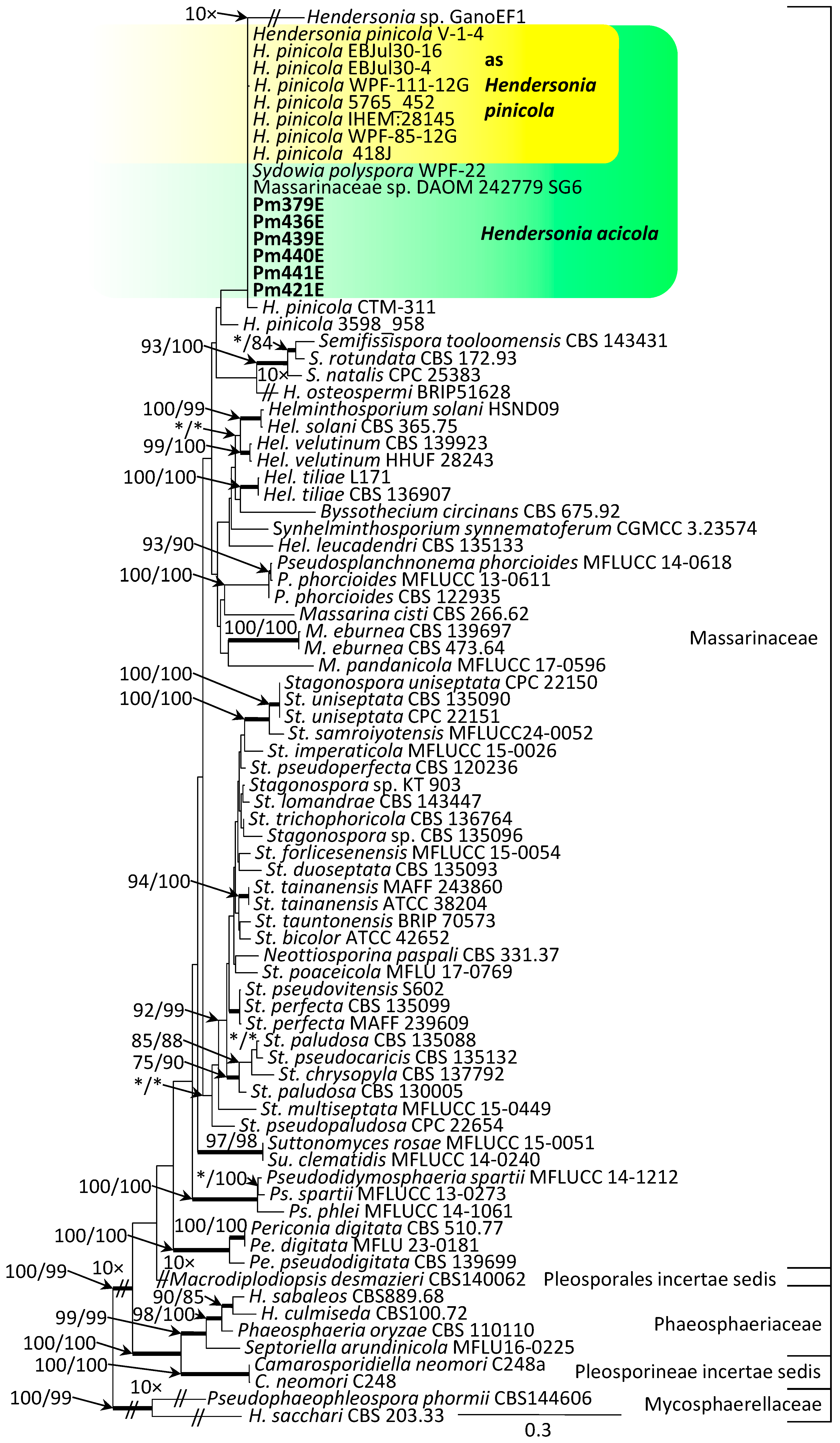
3.3. DNA Sequence Data and Phylogenetic Analysis
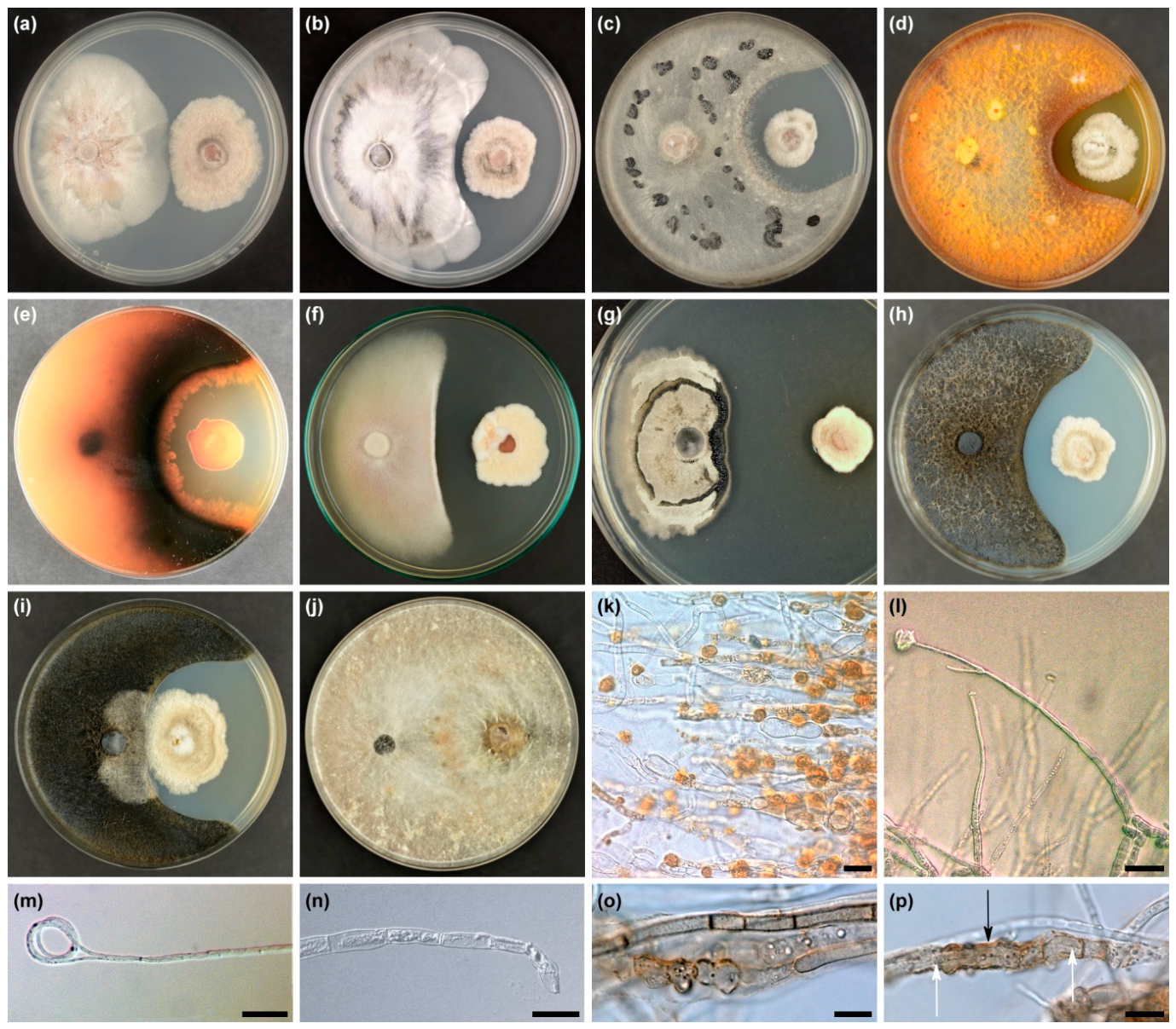
3.4. Dual Culture Assays
4. Discussion
4.1. Morphological Aspects of Hendersonia acicola on P. mugo Needles
4.2. Phylogenetical Aspects
4.3. Antagonistic Activity of Polish Isolates of Hendersonia acicola In Vitro
5. Conclusions
Supplementary Materials
Author Contributions
Funding
Data Availability Statement
Acknowledgments
Conflicts of Interest
References
- Lumbsch, H.T.; Huhndorf, S.M. Myconet Volume 14. Part One. Outline of Ascomycota—2009. Part Two. Notes on Ascomycete Systematics. Nos. 4751–5113. Fieldiana Life Earth Sci. 2010, 1, 1–64. [Google Scholar] [CrossRef] [Scilit]
- Sinclair, W.A.; Lyon, H.H. Diseases of Trees and Shrubs, 2nd ed.; Cornell University Press: Ithaca, NY, USA, 2005. [Google Scholar]
- Terrier, C. Über zwei in der Schweiz bisher wenig bekannte Schüttepilze der Kiefern: Hypodermella sulcigena (Rostr.) v.Tub. und Hypodermella conjuncta Darker. Phytopathol. Z. 1944, 14, 442–449. [Google Scholar]
- Mitchell, C.P.; Millar, C.S.; Williamson, B. The biology of Lophodermella conjuncta Darker on Corsican pine needles. For. Pathol. 1978, 8, 108–118. [Google Scholar] [CrossRef] [Scilit]
- Millar, C.S.; Minter, D.W. Lophodermella conjuncta. Descr. Fungi Bact. 1980, 66, Sheet 658. [Google Scholar] [CrossRef] [Scilit]
- Jalkanen, R.; Laakso, R. Hendersonia acicola in an epidemic caused by Lophodermella sulcigena with special reference to biological control. Karstenia 1986, 26, 49–56. [Google Scholar] [CrossRef] [Scilit]
- Elvira-Recuenco, M.; Cacciola, S.O.; Sanz-Ros, A.V.; Garbelotto, M.; Aguayo, J.; Solla, A.; Mullett, M.; Drenkhan, T.; Oskay, F.; Aday Kaya, A.G.; et al. Potential Interactions between Invasive Fusarium circinatum and Other Pine Pathogens in Europe. Forests 2019, 11, 7. [Google Scholar] [CrossRef] [Scilit]
- Ata, J.P.; Burns, K.S.; Marchetti, S.; Munck, I.A.; Beenken, L.; Worrall, J.J.; Stewart, J.E. Molecular characterization and phylogenetic analyses of Lophodermella needle pathogens (Rhytismataceae) on Pinus species in the USA and Europe. PeerJ 2021, 9, e11435. [Google Scholar] [CrossRef] [Scilit] [PubMed]
- Dubach, V.; Queloz, V.; Stroheker, S. Needle and Shoot Diseases of Pine; WSL Fact Sheet 70; Swiss Federal Institute WSL: Birmensdorf, Switzerland, 2022; 12p. [Google Scholar]
- Kowalski, T.; Bartnik, C.; Bilański, P. Involvement of Lophodermella sulcigena in Endemic Disease of Pinus mugo Needles in the Polish Tatra Mountains. Forests 2024, 15, 422. [Google Scholar] [CrossRef] [Scilit]
- Czabator, F.J.; Staley, J.M.; Snow, G.A. Extensive southern Pine needle blight during 1970–1971, and associated fungi. Plant Dis. Report. 1971, 55, 764–766. [Google Scholar]
- Funk, A. Foliar Fungi of Western Trees. Information Report BC-X-265; Canadian Forestry Service: Victoria, BC, Canada, 1985. [Google Scholar]
- Kowalski, T. Erstnachweis von Lophodermella sulcigena in Polen. Eur. J. For. Pathol. 1988, 18, 445–447. [Google Scholar] [CrossRef] [Scilit]
- Minter, D.W.; Millar, C.S. IMI descriptions of fungi and bacteria No. 1146: Lophodermella concolor. Mycopathologia 1993, 121, 53–54. [Google Scholar]
- Worrall, J.; Marchetti, S.; Mask, R. An Epidemic of Needle Cast on Lodgepole Pine in Colorado; Biological Evaluation R2-12-01; USDA Forest Service, Rocky Mountain Region, Forest Health Protection: Denver, CO, USA, 2012; 16p.
- Beenken, L. Lophodermella-Nadelschütte. In Waldschutzüberblick 2018; Queloz, V., Forster, B., Beenken, L., Stroheker, S., Odermatt, O., Hölling, D., Meyer, J., Dubach, V., Eds.; Forschungsanstalt WSL: Birmensdorf, Switzerland, 2019; pp. 18–19. [Google Scholar]
- Darker, G.D. A revision of the genera of the Hypodermataceae. Can. J. Bot. 1967, 45, 1399–1444. [Google Scholar] [CrossRef] [Scilit]
- Mitchell, C.P.; Williamson, B.; Millar, C.S. Hendersonia acicola on pine needles infected by Lophodermella sulcigena. For. Pathol. 1976, 6, 92–102. [Google Scholar] [CrossRef] [Scilit]
- Millar, C.S. Lophodermella species on pines. In Proceedings of the Recent Research on Conifer Needle Diseases; Peterson, G.W., Ed.; General Technical Report GTR-WO 50; USDA Forest Service: Gulfport, MS, USA, 1984; pp. 45–55. [Google Scholar]
- Hunt, R. Common pine needle casts and blights in the Pacific Region. In Forest Pest Leaflet; Pacific Forestry Centre, Canadian Forest Service: Victoria, BC, Canada, 1995; pp. 1–7. [Google Scholar]
- Münch, E.; von Tubeuf, C. Eine neue Nadelkrankheit der Kiefer, Pinus silvestris. Naturwissenschaftliche Z. Für Forst-Und Landwirtsch. 1911, 9, 20–25. [Google Scholar]
- Münch, E.; von Tubeuf, C. Eine neue Nadel-Krankheit der Kiefer, Pinus silvestris. Naturwissenschaftliche Z. Für Forst-Und Landwirtsch. 1910, 8, 39–44. [Google Scholar]
- Lagerberg, T. Om grabarrsjukan host allen, dess orsak och verkningar. Medd. Från Statens Skogsförsöksanst. 1910, 7, 127–174. [Google Scholar]
- Jalkanen, R. The occurrence and importance of Lophodermella sulcigena and Hendersonia acicola on Scots pine in Finland. Karstenia 1985, 25, 53–61. [Google Scholar] [CrossRef] [Scilit][Green Version]
- Kowalski, T.; Krygier, J. Mycological study on symptomless and diseased needles in pine stand attacked by Lophodermella sulcigena. Phytopathol. Pol. 1996, 11, 159–168. [Google Scholar]
- Bachinger, M. Lophodermella sulcigena an Latsche und Spirke. Forstsch. Aktuell 1991, 8, 7. [Google Scholar]
- Bingzhang, H.; Yujie, C.; Guoxin, Q.; Lixin, Y. Study on Biological Characteristics of Hendersonia acicola. J. Northeast For. Univ. 1994, 5, 37–40. [Google Scholar] [CrossRef] [Scilit]
- Saccardo, P.A.; Sydow, P. Supplementum Universale, Pars IV. Sylloge Fungorum 1899, 14, 1–1316. [Google Scholar]
- Kalandra, A. Nová sypavka u nás způsobená houbou Hypodermella sulcigena (Rostr.) Tub. na borovici obecné a kleči v Tatrách a na Šumavě. Ochr. Rostl. 1938, 14, 38–46. [Google Scholar]
- Moriondo, F. La diffusione della ruggine curvatrice nelle pinete italiane. Ann. Accad. It. Sci. 1963, 11, 247–263. [Google Scholar]
- Darker, G.D. The Hypodermataceae of Conifers; Jamaica Plain, Mass, The Arnold Arboretum of Harvard University: Boston, MA, USA, 1932; Volume 1. [Google Scholar]
- Staley, J.M.; Bynum, H.H. A New Lophodermella on Pinus ponderosa and P. attenuata. Mycologia 1972, 64, 722. [Google Scholar] [CrossRef] [Scilit]
- Wehmeyer, L.E. Studies on some fungi from North-western Wyoming. II. Mycologia 1946, 38, 306–330. [Google Scholar] [CrossRef] [Scilit]
- Chao, R. Conidium Morphology and Ontogeny in Species of Leptomelanconium, Gloeocoryneum and Hendersonia. Master’s Thesis, The University of Manitoba, Winnipeg, MB, Canada, 1969. [Google Scholar]
- James, R. Hendersonia Blight of Lodgepole Pine in Idaho; Nursey Disease Notes No. 9; USDA Forest Service Northern Region: Missoula, MT, USA, 1984; pp. 2–8.
- Minter, D.W. Some members of the Rhytismataceae (Ascomycetes) on conifer needles from central and north America. In Proceedings of the IUFRO Working Party Conference: Recent Research on Needle Diseases, Gulfport, MS, USA, 14–18 October 1984; pp. 71–106. [Google Scholar]
- Stahl, S.A.; Rogers, J.D.; Adams, M.J. Observations on Hendersonia pinicola and the needle blight of Pinus contorta. Mycotaxon 1988, 31, 323–337. [Google Scholar] [CrossRef] [Scilit]
- Munck, I.; Burns, B.; Ostrofsky, W.; Lombard, K.; Weimer, J. Eastern White Pine Needle Damage Survey, 2011. In Maine, New Hampshire, and Vermont; Durham Field Office, USDA Forest Service: Durham, NH, USA, 2012; pp. 1–12. [Google Scholar]
- Broders, K.; Munck, I.; Wyka, S.; Iriarte, G.; Beaudoin, E. Characterization of Fungal Pathogens Associated with White Pine Needle Damage (WPND) in Northeastern North America. Forests 2015, 6, 4088–4104. [Google Scholar] [CrossRef] [Scilit]
- Datta, D. Identification and Distribution of Fungal Pathogens Associated with Loblolly Pine Defoliation and Tree Mortality in the Southeastern United States; Auburn University: Auburn, AL, USA, 2021. [Google Scholar]
- Bartnik, C.; Kowalski, T.; Bilański, P.; Zwijacz-Kozica, T. Fungi associated with disease symptoms on Pinus mugo needles in the Polish Tatra Mountains. Plant Fungal Syst. 2021, 66, 53–65. [Google Scholar] [CrossRef] [Scilit]
- Kujala, V. Über die Kleinpilze der Koniferen in Finnland. Ascomycetes, Fungi Imperfecti, Uredinales. In Communicationes Instituti Forestalis Fenniae; Finnish Forest Research Institute: Vantaa, Finland, 1950; Volume 38, pp. 1–121. [Google Scholar]
- Ellis, M.B.; Ellis, J.P. Microfungi on Land Plants. An Identification Handbook; Macmillan Publishing Co.: New York, NY, USA, 1985. [Google Scholar]
- Bilański, P.; Grad, B.; Kowalski, T. Pyrenochaeta fraxinina as colonizer of ash and sycamore petioles, its morphology, ecology, and phylogenetic connections. Mycol. Prog. 2022, 21, 74. [Google Scholar] [CrossRef] [Scilit]
- White, T.J.; Bruns, T.; Lee, S.; Taylor, J.W. Amplification and direct sequencing of fungal ribosomal RNA genes for phylogenetics. In PCR Protocols: A Guide to Methods and Applications; Innis, M.A., Gelfand, D.H., Sninsky, J.J., White, T.J., Eds.; Academic Press Inc.: New York, NY, USA, 1990; pp. 315–322. [Google Scholar]
- Vilgalys, R.; Hester, M. Rapid genetic identification and mapping of enzymatically amplified ribosomal DNA from several Cryptococcus species. J. Bacteriol. 1990, 172, 4238–4246. [Google Scholar] [CrossRef] [Scilit] [PubMed]
- Rehner, S.A.; Samuels, G.J. Taxonomy and phylogeny of Gliocladium analysed from nuclear large subunit ribosomal DNA sequences. Mycol. Res. 1994, 98, 625–634. [Google Scholar] [CrossRef] [Scilit]
- Rehner, S.A.; Buckley, E. A Beauveria phylogeny inferred from nuclear ITS and EF1-α sequences: Evidence for cryptic diversification and links to Cordyceps teleomorphs. Mycologia 2005, 97, 84–98. [Google Scholar] [CrossRef] [Scilit]
- Gardes, M.; Bruns, T.D. ITS primers with enhanced specificity for basidiomycetes-application to the identification of mycorrhizae and rusts. Mol. Ecol. 1993, 2, 113–118. [Google Scholar] [CrossRef] [Scilit] [PubMed]
- Zhang, Z.; Schwartz, S.; Wagner, L.; Miller, W. A Greedy Algorithm for Aligning DNA Sequences. J. Comput. Biol. 2000, 7, 203–214. [Google Scholar] [CrossRef] [Scilit] [PubMed]
- Morgulis, A.; Coulouris, G.; Raytselis, Y.; Madden, T.L.; Agarwala, R.; Schäffer, A.A. Database indexing for production MegaBLAST searches. Bioinformatics 2008, 24, 1757–1764. [Google Scholar] [CrossRef] [Scilit] [PubMed]
- Konta, S.; Hyde, K.D.; Karunarathna, S.C.; Mapook, A.; Senwanna, C.; Dauner, L.A.P.; Nanayakkara, C.M.; Xu, J.; Tibpromma, S.; Lumyong, S. Multi-Gene Phylogeny and Morphology Reveal Haplohelminthosporium gen. nov. and Helminthosporiella gen. nov. Associated with Palms in Thailand and A Checklist for Helminthosporium Reported Worldwide. Life 2021, 11, 454. [Google Scholar] [CrossRef] [Scilit] [PubMed]
- Bhagya, A.T.; Phukhamsakda, C.; Tanaka, K.; Jones, E.B.G. Morphology and multigene phylogeny reveal a novel Stagonospora species (Massarinaceae, Dothideomycetes) from Thailand. Phytotaxa 2024, 644, 281–293. [Google Scholar] [CrossRef] [Scilit]
- Tian, W.-H.; Jin, Y.; Liao, Y.-C.; Faraj, T.K.; Guo, X.-Y.; Maharachchikumbura, S.S.N. Phylogenetic Insights Reveal New Taxa in Thyridariaceae and Massarinaceae. J. Fungi 2024, 10, 542. [Google Scholar] [CrossRef] [Scilit] [PubMed]
- Wanasinghe, D.N.; Maharachchikumbura, S.S.N. Exploring the Diversity and Systematics of Phaeosphaeriaceae: Taxonomic Novelties from Ecologically Diverse Habitats and Their Phylogenetic Resolution. J. Fungi 2023, 9, 853. [Google Scholar] [CrossRef] [Scilit] [PubMed]
- Hall, T.A. BioEdit: A user-friendly biological sequence alignment editor and analysis program for Windows 95/98/NT. Nucleic Acids Symp. Ser. 1999, 41, 95–98. [Google Scholar]
- Katoh, K.; Rozewicki, J.; Yamada, K.D. MAFFT online service: Multiple sequence alignment, interactive sequence choice and visualization. Brief. Bioinform. 2019, 20, 1160–1166. [Google Scholar] [CrossRef] [Scilit] [PubMed]
- Guindon, S.; Gascuel, O. A Simple, Fast, and Accurate Algorithm to Estimate Large Phylogenies by Maximum Likelihood. Syst. Biol. 2003, 52, 696–704. [Google Scholar] [CrossRef] [Scilit] [PubMed]
- Darriba, D.; Taboada, G.L.; Doallo, R.; Posada, D. jModelTest 2: More models, new heuristics and parallel computing. Nat. Methods 2012, 9, 772. [Google Scholar] [CrossRef] [Scilit] [PubMed]
- Guindon, S.; Dufayard, J.-F.; Lefort, V.; Anisimova, M.; Hordijk, W.; Gascuel, O. New Algorithms and Methods to Estimate Maximum-Likelihood Phylogenies: Assessing the Performance of PhyML 3.0. Syst. Biol. 2010, 59, 307–321. [Google Scholar] [CrossRef] [Scilit] [PubMed]
- Ronquist, F.; Huelsenbeck, J.P. MrBayes 3: Bayesian phylogenetic inference under mixed models. Bioinformatics 2003, 19, 1572–1574. [Google Scholar] [CrossRef] [Scilit] [PubMed]
- Swofford, D.L. PAUP* 4.0. Phylogenetic Analysis Using Parsimony (*and Other Methods); Sinauer Associates: Sunderland, MA, USA, 2003. [Google Scholar]
- Stöver, B.C.; Müller, K.F. TreeGraph 2: Combining and visualizing evidence from different phylogenetic analyses. BMC Bioinform. 2010, 11, 7. [Google Scholar] [CrossRef] [Scilit] [PubMed]
- Rambaut, A. FigTree. Tree Figure Drawing Tool Version 1.4.0; Institute of Evolutionary Biology, University of Edinburgh: Edinburgh, UK, 2006. [Google Scholar]
- Kowalski, T.; Bilański, P. Fungi Detected in the Previous Year’s Leaf Petioles of Fraxinus excelsior and Their Antagonistic Potential against Hymenoscyphus fraxineus. Forests 2021, 12, 1412. [Google Scholar] [CrossRef] [Scilit]
- Bilański, P.; Kowalski, T. Fungal endophytes in Fraxinus excelsior petioles and their in vitro antagonistic potential against the ash dieback pathogen Hymenoscyphus fraxineus. Microbiol. Res. 2022, 257, 126961. [Google Scholar] [CrossRef] [Scilit] [PubMed]
- Martínez-Álvarez, P.; Fernández-González, R.A.; Sanz-Ros, A.V.; Pando, V.; Diez, J.J. Two fungal endophytes reduce the severity of pitch canker disease in Pinus radiata seedlings. Biol. Control 2016, 94, 1–10. [Google Scholar] [CrossRef] [Scilit]
- R Core Team. R: A Language and Environment for Statistical Computing; R Core Team: Vienna, Austria, 2026. [Google Scholar]
- Hammer, Ø.; Harper, D.A.T.; Ryan, P.D. Past: Paleontological statistics software package for education and data analysis. Palaeontol. Electron. 2001, 4, 9. [Google Scholar]
- Dearness, J. New and Noteworthy Fungi: V. Mycologia 1928, 20, 235. [Google Scholar] [CrossRef] [Scilit]
- Hyde, K.; McKenzie, E.; KoKo, T. Towards incorporating anamorphic fungi in a natural classification—Checklist and notes for 2010. Mycosphere 2011, 2, 1–88. [Google Scholar] [CrossRef] [Scilit]
- Crous, P.W.; Schumacher, R.K.; Akulov, A.; Thangavel, R.; Hernández-Restrepo, M.; Carnegie, A.J.; Cheewangkoon, R.; Wingfield, M.J.; Summerell, B.A.; Quaedvlieg, W.; et al. New and Interesting Fungi. 2. Fungal Syst. Evol. 2019, 3, 57–134. [Google Scholar] [CrossRef] [Scilit] [PubMed]
- Yurlova, N.A.; De Hoog, G.S.; Gerrits van den Ende, A.H.G. Taxonomy of Aureobasidium and allied genera. Stud. Mycol. 1999, 43, 63–69. [Google Scholar]
- Bakys, R.; Bajerkevičienė, G.; Pliūra, A.; Marčiulynas, A.; Marčiulynienė, D.; Lynikienė, J.; Mishcherikova, V.; Menkis, A. Fungal Communities in Re-Emerging Fraxinus excelsior Sites in Lithuania and Their Antagonistic Potential against Hymenoscyphus fraxineus. Microorganisms 2022, 10, 1940. [Google Scholar] [CrossRef] [Scilit] [PubMed]
- Czachura, P.; Piątek, M. The Genus Aureobasidium From Sooty Mould Communities in Poland, Including A. epipinicola sp. nov. and A. insectorum, New to Europe. Plant Pathol. 2025, 74, 1593–1611. [Google Scholar] [CrossRef] [Scilit]
- Granata, G.; Sidoti, A. Biscogniauxia nummularia: Pathogenic agent of a beech decline. For. Pathol. 2004, 34, 363–367. [Google Scholar] [CrossRef] [Scilit]
- Nugent, L.K.; Sihanonth, P.; Thienhirun, S.; Whalley, A.J.S. Biscogniauxia: A genus of latent invaders. Mycologist 2005, 19, 40–43. [Google Scholar] [CrossRef] [Scilit]
- Patejuk, K.; Baturo-Cieśniewska, A.; Pusz, W.; Kaczmarek-Pieńczewska, A. Biscogniauxia Charcoal Canker—A New Potential Threat for Mid-European Forests as an Effect of Climate Change. Forests 2022, 13, 89. [Google Scholar] [CrossRef] [Scilit]
- Domański, S.; Kowalski, T. Untypical die-back of the current season’s shoots of Pinus sylvestris in Poland. Eur. J. For. Pathol. 1988, 18, 157–160. [Google Scholar] [CrossRef] [Scilit]
- Xie, J.; Li, B.; Li, J.; Zhang, K.; Ran, L.; Ge, B. Effect of Combining Wuyiencin and Pyrimethanil on Controlling Grape Gray Mold and Delaying Resistance Development in Botrytis cinerea. Microorganisms 2024, 12, 1383. [Google Scholar] [CrossRef] [Scilit] [PubMed]
- Koukol, O.; Pusz, W.; Minter, D. A new species of Lophodermium on needles of mountain pine (Pinus mugo) from the Giant Mountains in Poland. Mycol. Prog. 2015, 14, 23. [Google Scholar] [CrossRef] [Scilit]
- Butin, H. Krankheiten der Wald-und Parkbäume; Ulmer Verlag: Stuttgart, Germany, 2011. [Google Scholar]
- Madrigal, C.; Tadeo, J.L.; Melgarejo, P. Relationship between flavipin production by Epicoccum nigrum and antagonism against Monilinia laxa. Mycol. Res. 1991, 95, 1375–1381. [Google Scholar] [CrossRef] [Scilit]
- Schulz, B.; Sucker, J.; Aust, H.J.; Krohn, K.; Ludewig, K.; Jones, P.G.; Döring, D. Biologically active secondary metabolites of endophytic Pezicula species. Mycol. Res. 1995, 99, 1007–1015. [Google Scholar] [CrossRef] [Scilit]
- Nawrot-Chorabik, K.; Grad, B.; Kowalski, T. Interactions between callus cultures of Pinus silvestris and pine fungi with different trophic properties. For. Pathol. 2016, 46, 179–186. [Google Scholar] [CrossRef] [Scilit]
- Richardson, S.N.; Nsiama, T.K.; Walker, A.K.; McMullin, D.R.; Miller, J.D. Antimicrobial dihydrobenzofurans and xanthenes from a foliar endophyte of Pinus strobus. Phytochemistry 2015, 117, 436–443. [Google Scholar] [CrossRef] [Scilit] [PubMed]
- Tanney, J.B.; McMullin, D.R.; Miller, J.D. Toxigenic foliar endophytes from the Acadian Forest. In Endophytes of Forest Trees: Biology and Applications; Pirttilä, A.M., Frank, A.C., Eds.; Springer International Publishing AG: Cham, Switzerland, 2018; pp. 343–381. [Google Scholar]
- Williamson, B.; Mitchell, C.P.; Millar, C.S. Histochemistry of Corsican Pine Needles Infected by Lophodermella sulcigena (Rostr.) v.Höhn. Ann. Bot. 1976, 40, 281–288. [Google Scholar] [CrossRef] [Scilit]
- Brown, A.E.; Finlay, R.; Ward, J.S. Antifungal compounds produced by Epicoccum purpurascens against soil-borne plant pathogenic fungi. Soil Biol. Biochem. 1987, 19, 657–664. [Google Scholar] [CrossRef] [Scilit]
- Lee, A.J.; Cadelis, M.M.; Kim, S.H.; Swift, S.; Copp, B.R.; Villas-Boas, S.G. Epipyrone A, a Broad-Spectrum Antifungal Compound Produced by Epicoccum nigrum ICMP 19927. Molecules 2020, 25, 5997. [Google Scholar] [CrossRef] [Scilit] [PubMed]
- Sieber, T.N.; Ryś, J.; Holdenrieder, O. Mycobiota in symptomless needles of Pinus mugo ssp. uncinata. Mycol. Res. 1999, 103, 306–310. [Google Scholar] [CrossRef] [Scilit]


| Isolate Number | Origin | Collection Date | GenBank Accession Numbers | ||
|---|---|---|---|---|---|
| 18S | ITS-28S | TEF1 | |||
| Pm379E | Needles infected primarily with L. sulcigena | August-2016 | PZ735680 | PZ735686 | PZ740569 |
| Pm421E | August-2016 | PZ735681 | PZ735687 | PZ740570 | |
| Pm436E | August-2016 | PZ735682 | PZ735688 | PZ740571 | |
| Pm439E | September-2016 | PZ735683 | PZ735689 | PZ740572 | |
| Pm440E | September-2016 | PZ735684 | PZ735690 | PZ740573 | |
| Pm441E | September-2016 | PZ735685 | PZ735691 | PZ740574 | |
| Origin of Conidia | Isolate Number | Conidia with Number of Septa | |||||
|---|---|---|---|---|---|---|---|
| 0 | 1 | 2 | 3 | 4 | 5 | ||
| Aa | T1e68 | 11–12 × 4–4.5 (11.7 × 4.3) | 11–13 × 4.5–5 (12 × 4.9) | 11–14 × 5–6 (12.9 × 5.5) | 13–17 × 4.5–6 (15.4 × 5.1) | 17 × 6 | 19 × 6 |
| Aa | Pm436E | 10–12 × 4–4.5 (11 × 4.3) | 13–18 × 4–6 (14.9 × 4.9) | 14–21 × 4–6 (16.9 × 4.8) | |||
| Aa | T1e84 | 12 × 4.5 | 11–15 × 4.5–6 (13.8 × 5.2) | 14–19 × 4–6 (15.6 × 5.1) | |||
| Aa | T1h1 | 12 × 4 | 11–16 × 4–5.5 (13.3 × 4.8) | 14–17 × 4–6 (15.6 × 5.1) | |||
| Subtotal Aa | 11–12 × 4–4.5 (11.7 × 4.3) | 10–13 × 4–5 (11.8 × 4.6) | 11–18 × 4–6 (13.7 × 5.1) | 13–21 × 4–6 (15.8 × 5) | 17 × 6 | 19 × 6 | |
| Ab | T1g87 | 12–13 × 4–5 (12.5 × 4.5) | 10–17 × 4–6 (13.6 × 5) | 14–21 × 4–6 (16.8 × 5) | 18–20 × 4.5–6 (18.5 × 5.3) | ||
| Ab | T1e49 | 11–15 × 4–6 (14 × 4.9) | 14–20 × 4.5–6 (16.4 × 5.2) | 17–20 × 5–6 (19.2 × 5.4) | 22 × 5.5 | ||
| Ab | Pm440E | 12 × 4 | 10–17 × 4–6 (14.2 × 4.9) | 14–18 × 4–6 (15.8 × 5.1) | 17 × 5 | ||
| Ab | T1e69 | 12–16 × 4–5.5 (14.2 × 4.9) | 13–18 × 4–5 (15.9 × 4.8) | ||||
| Subtotal Ab | 12–13 × 4–5 (12.3 × 4.3) | 10–17 × 4–6 (14 × 4.9) | 13–21 × 4–6 (16.2 × 5) | 17–20 × 4.5–6 (18.6 × 5.3) | 22–22 × 5.5–5.5 (22 × 5.5) | ||
| Bc | Pm441E | 11–12 × 5–6 (11.5 × 5.5) | 11–12 × 4.5–5 (11.5 × 4.9) | 10–15 × 4–7 (12.9 × 5.1) | 12–17 × 4–6 (14.2 × 5) | 17 × 5 | |
| Bc | T1g71 | 12–13 × 4–5 (12.5 × 4.5) | 11–18 × 4–6 (13.9 × 4.8) | 12–19 × 4–6 (15.2 × 4.8) | |||
| Bc | T1g74 | 12–15 × 4–5 (13.5 × 4.5) | 11–18 × 4–6 (13.9 × 4.8) | 12–19 × 4–6 (15.2 × 4.8) | 17 × 4.5 | 18 × 5 | |
| Bc | Pm439E | 10–14 × 4–5 (12.1 × 4.3) | 11–16 × 4–6 (14 × 4.8) | 12–17 × 4–6 (14.7 × 4.9) | 17 × 4 | ||
| Subtotal Bc | 11–12 × 5–6 (11.5 × 5.5) | 10–15 × 4–5 (12.2 × 4.6) | 10–18 × 4–7 (13.7 × 4.9) | 12–19 × 4–6 (14.8 × 4.9) | 17–17 × 4–5 (17 × 4.5) | 18 × 5 | |
| Bd | Pm379E | 10–14 × 4–6 (13 × 4.8) | 13–18 × 4–6 (14.9 × 4.9) | 17 × 5 | |||
| Bd | Pm421E | 9–11 × 3–4 (10 × 3.6) | 12–15 × 4–5 (13.5 × 4.5) | 14–17 × 3.5–6 (15.4 × 4.9) | |||
| Bd | T2a71 | 13.5 × 5 | 10–16 × 4–6 (13.8 × 4.7) | 13–19 × 4–6 (16 × 5) | 16.5 × 5 | 17.5 × 5 | |
| Bd | T1s1 | 10–11 × 3.5–4 (10.5 × 3.8) | 12–18 × 4–5 (13.8 × 4.8) | 15–20 × 5–6 (16.1 × 5.5) | 17–18 × 5.5–6 (17.5 × 5.8) | 23 × 6 | |
| Subtotal Bd | 9–13.5 × 3–5 (10.6 × 3.8) | 10–18 × 4–6 (13.5 × 4.7) | 13–20 × 3.5–6 (15.6 × 5.1) | 16.5–18 × 5–6 (17.1 × 5.4) | 17.5–23 × 5–6 (20.3 × 5.5) | ||
Disclaimer/Publisher’s Note: The statements, opinions and data contained in all publications are solely those of the individual author(s) and contributor(s) and not of MDPI and/or the editor(s). MDPI and/or the editor(s) disclaim responsibility for any injury to people or property resulting from any ideas, methods, instructions or products referred to in the content. |
© 2026 by the authors. Licensee MDPI, Basel, Switzerland. This article is an open access article distributed under the terms and conditions of the Creative Commons Attribution (CC BY) license.
Share and Cite
Bilański, P.; Kowalski, T. Characteristics of Hendersonia on Pinus mugo Needles Primarily Infected with Lophodermella sulcigena in the Tatra Mountains. Forests 2026, 17, 1102. https://doi.org/10.3390/f17091102
Bilański P, Kowalski T. Characteristics of Hendersonia on Pinus mugo Needles Primarily Infected with Lophodermella sulcigena in the Tatra Mountains. Forests. 2026; 17(9):1102. https://doi.org/10.3390/f17091102
Chicago/Turabian StyleBilański, Piotr, and Tadeusz Kowalski. 2026. "Characteristics of Hendersonia on Pinus mugo Needles Primarily Infected with Lophodermella sulcigena in the Tatra Mountains" Forests 17, no. 9: 1102. https://doi.org/10.3390/f17091102
APA StyleBilański, P., & Kowalski, T. (2026). Characteristics of Hendersonia on Pinus mugo Needles Primarily Infected with Lophodermella sulcigena in the Tatra Mountains. Forests, 17(9), 1102. https://doi.org/10.3390/f17091102