


Abstract
Generally, forest trees with medicinal value present diverse chemotypes considered key determinants of efficacy, safety, and commercial valuation. Such heterogeneity varies among tissues, genotypes, and seasons, and stress exposure. This review summarizes how regulatory controls and genome architecture affect the stability and synthesis of secondary metabolites in woody medicinally important taxa. Detailed haplotypic and chromosomal analyses have recently identified diverse and repeatable architectural drivers. Among these, LTR/transposon-mediated revamping, neofunctionalization, biosynthetic gene clusters, and tandem duplication play a special role in reshaping pathway capacity. The enzymatic regulation of these drivers translates this “capacity” into harvest-pertinent chemistry by employing conserved TF modules, hormone crosstalk, and emergent chromatin/epigenetic layers. Nevertheless, major parameters pertaining to the tissue-specific storage, transport, and compartmentalization of these chemotypes are contextualized with certain limitations. In this review, the integration of GWAS/eQTL/TWAS with multi-tissue is explained in addition to the replacement of a single reference with pangenome/haplotype frameworks, and explicit modeling of G × E further strengthen genotype-to-chemotype mapping. Therefore, in this review we summarize practical workflows for chemotype discovery utilizing staged validation models of heterologous reconstitution, isotope/spatial evidence, and chemistry. These findings were supported by data on saponins, alkaloids, iridoids, and defense response. Such an integration links mechanistic understanding to authentication, standardization, and sustainable utilization strategies in woody medicinal trees.
1. Introduction
The anatomical organization, tissue-specific metabolism and complex chemical profile of forest tree species with medicinal value are of prime importance in natural product science [1]. These woody trees bear several secondary metabolites, which underscores their potential use in medicinal formulations. However, despite several health benefits, this complex chemical profile makes “standardization” and “quality control” a great challenge with batch-to-batch variability [2]. In fact, these issues generally arise due to complicated developmental pathways, genotype alterations due to environmental stress, and robust tissue specificity [3]. Practically, this variability is better defined as “chemotype structure>” rather than “noise” only [4], since intraspecies genetic diversity and regulatory differences can produce discrete phytochemical profiles [3]. One key example is the camphor tree (Cinnamomum camphora), where the major terpenoid profile outlines multiple chemotypes and is correlated to specific enzymes (terpene synthases) and their regulation [5,6]. A major challenge in medicinal trees is the lack of consistent efficacy caused by intraspecific chemotype variation. Different chemotypes within the same species can produce distinct levels or profiles of bioactive compounds, thereby affecting medicinal value and reproducibility [7]. In fact, it mainly depends on whether a genotype can produce a given metabolite in specific tissues through coordinated regulation of pathway genes across developmental and seasonal contexts [8]. This phenomenon is evident from several examples, including Aquilaria sinensis (agarwood), where mechanical injury triggers temporally structured transcriptional reprogramming during resin formation (induced resin biosynthesis systems) [9]. Thus, in addition to “basic biosynthesis pathways”, these “inducible regulatory systems” also play a critical role in determining the phytochemistry of certain woody trees [10]. The reproducibility of induced or constitutive phytochemical output is therefore of central importance for authentication, biological identity and quantitative standardization in both research and supply chains.
More recently, medicinal plant research has shifted from descriptive chemodiversity toward genome-informed pathway elucidation, with an increasing focus on how genome architecture and regulatory control shape specialized-metabolite biosynthesis in woody lineages [11]. An explicit genetic origin for pathway capacity and diversity is noticed in the genus Taxus. Here, the Taxus genome identified a biosynthetic gene cluster associated with paclitaxel biosynthesis, including taxadiene-related genes and CYP725A family members shaped by gene duplication events [12]. Similarly, an independent whole-genome duplication associates chromosomes with camptothecin biosynthesis in Camptotheca acuminata. By contrast, transcription factors and expression-based regulatory mechanisms are considered separately as components of regulatory control, because they determine when and where genomic capacity is realized rather than representing architectural properties of the genome itself [13]. In comparison, genomic architecture–metabolite descriptions are also noticed in other trees, where a chromosome-level genome associates longevity-related features. A typical example is of “dragon’s blood” formation in Dracaena cochinchinensis, which is associated with core transcription factors regulating the flavonoid synthesis pathway [14].
However, the phenomenon of diverse chemotypes identified across tissues or stresses in chemically similar genotypes cannot be fully explained by genome structure alone [15]. This gap is occupied by “regulatory control” that extends transcription factor modules, signaling integration, and chromatin state [16], well explained by a keen genetic analysis of champhor trees, where terpene synthase regulates the chemotype identity. This finding specifies that the regulatory tuning of enzyme families can be as critical as the expression of specific genes [6,17]. Similarly, concerning paclitaxel systems, an integration of the transcriptome–metabolome in Taxus chinensis var. mairei supports ERF-centered regulatory architectures and includes functional assays (e.g., promoter binding and reporter analyses) [18]. This association raises extrapolation from linkage to mechanism, considered a crucial step for standardizing chemotypes [18]. Simultaneously, the consideration of biosynthetic gene clusters and linked genes positions these arrangements within an epigenetic framework, directly relating stability and the emergence of heritable chemotypes [19,20].
Haplotype diversity and structural variations are factors vital for establishing the authenticity of chemotypes in medicinal woody trees, by resolving the “hidden layer” of chemoprofile-determining genetics [21]. A high-quality and phased analysis of the T. wallichiana genome is a key example of halplophyte-based resource utilization that necessitates determining the credibility of genotype → chemotype claims in large, repeat-rich tree genomes [22]. In addition, comparative genomics further explains that pathway completeness is lineage-dependent. As exhibited by the chromosome-level genome analysis of Pseudotaxus chienii, the taxane pathway terminates before the key step involving catalyzation by benzoyl transferase, thereby improving the evolutionary and functional elucidation of “capacity” vs. “output” among closely related taxa [23]. Thus, these findings emphasize that an integration of multi-omics with emerging computational tools into state-of-the-art techniques can help in pathway discovery and interpretation in medicinal trees [24].
In this review, chemotype stability refers to the reproducible maintenance of a characteristic metabolite profile across defined biological and environmental contexts. We distinguish three categories: (i) genetically fixed chemotypes, which are mainly associated with stable sequence-level variation at key pathway loci; (ii) environmentally plastic but reproducible chemotypes, which remain consistent only under defined seasonal, developmental, or ecological conditions; and (iii) induced or conditional chemotypes, which arise only after specific triggers such as wounding, pathogen challenge, or hormone signaling. This distinction is important because these classes differ in their implications for authentication, breeding, cultivation, and sustainable utilization. From the foremost genomics and multi-omics developments in medicinal trees, the mechanisms generating, stabilizing, and diversifying chemotypes in medicinal forest trees remain partially integrated. Most investigations have mainly focused on individual pathways, candidate genes, or metabolite profiles, whereas a unifying framework and chemotype validation remain missing. This gap limits both a mechanistic resolution of genotype–chemotype relationships and a practical translation of the insights obtained into sustainable use. This review focuses specifically on medicinal forest trees as systems in which chemotype expression is shaped by the interactions among genome architecture, regulatory control, and the tissue- and environment-dependent realization of metabolic capacity. In addition, condition-dependent metabolites and the tissue-specific output are determined by regulatory networks. We further discuss the mechanisms by which this framework can support chemotype-informed breeding, traceable sourcing, and improve the biotechnology-based production of valuable phytochemicals within medicinal trees.
2. Literature Search Strategy
A well-structured literature search was conducted using various databases, including WOS (Web of Science), PubMed, Scopus, and Google Scholar. All relevant manuscripts published in English (2020–2026) were included in the literature search. The “search terms” included “medicinal tress”, “medicinal tree genomics”, “medicinal tree chemotype”, “specialized metabolism in medicinal trees” “genome architecture in medicinal trees”, “hormonal crosstalk in medicinal trees” and “multi-omics integration in medicinal tress”. Our search priority was to include primary mechanism-based studies with in vitro or in vivo evidence. In the case of review articles, articles comprising interpretive comparisons and conceptual background were included. All the literature was evaluated based on experimental outcomes and the discussion was revised to differentiate animal evidence, in vitro and translational data. A clear indication was marked in the review for contradictory or unclear findings.
3. Medicinal Forest Trees as Chemotype Systems
Medicinal forest trees are best treated as chemotype systems when their intraspecific metabolite diversity forms recurrent, class-like profiles rather than continuous drift [25]. In practical terms, a chemotype is a reproducible chemical phenotype defined by the dominance or coordinated accumulation of a small subset of metabolites that strongly shape biological function and commercial value.; e.g., volatile terpenoids in essential oils or characteristic phenolic glycoside suites, especially in oil-bearing Texas [26]. However, such reproducibility may arise from genetically stable pathway states, environmentally constrained but repeatable outputs, or inducible metabolite programs that are expressed only under specific conditions. Genomics-enabled work in the camphor tree exemplifies how woody medicinal taxa naturally partition into discrete chemical classes: a population-scale metabolite profiling separated accessions into six chemotypes, with six principal terpenoids acting as major axes for metabolite diversity—an outcome consistent with these types reflecting structured biological programs with a genetic basis [27]. Such a framework bears direct relevance to the standardization of medicinal components because reliable chemotype identification determines phytochemical profile consistency and the reproducibility of downstream pharmacological or commercial traits.
Chemotypes emerge because a specialized metabolism is organized around branch-point logic and families of modular enzymes, which create multiple stable solutions for flux distribution. Terpenoid metabolism, which dominates the chemical profile of many medicinal trees, is not a single linear pathway but a coordinated network involving precursor supply, competing synthases, tailoring enzymes (notably CYPs), transport/sequestration, and feedback regulation [28,29]. A contemporary synthesis of studies on terpene-specialized metabolism emphasizes that plants evolve complex networks rather than single enzymes [30] to generate and maintain terpenoid diversity. This provides a mechanistic basis for why discrete chemotypes are common in long-lived woody taxa that rely heavily on chemical-based defenses and signaling [30].
Chemotypes also vary because their control at a genetic level spans a continuum from oligogenic (few loci with large effects at key steps) to polygenic (many loci modulating flux, regulation, and storage) [31]. Quantitative genetics in forest trees supports the idea that chemically meaningful variations can be mapped to defined genomic regions: a genome-wide association study in Eucalyptus grandis linked SNP markers and candidate genes to major terpene-related traits (including 1,8-cineole), illustrating that terpene contents can have tractable, heritable configurations suitable for marker-enabled selection when the phenotype is measured rigorously [32]. In parallel, omics-era literature syntheses in Populus frame salicinoid phenolic glycosides as a model for explaining the intersections between genome profile, ecological function, and pathway regulation to generate metabolite profile diversity within a tree lineage. This underscores that chemotype-like structures can arise in volatile-rich and non-volatile specialized metabolic systems [33].
The regulatory and physiological context is a second major source of variations in the chemical profile, which determines the extent to which genetically encoded pathway capacity is realized in a given tissue, season, or stress state [34]. Comparative transcriptomics of C. camphora chemotypes shows that a broad terpenoid backbone-based machinery is not necessarily the primary differentiator; instead, metabolite divergence can concentrate on a limited subset of rate-limiting precursor genes (e.g., specific DXS, HMGR, and GPPS members) and the choice of downstream pathways, consistent with chemotypes being governed by targeted tuning rather than wholesale pathway switching on/off [35]. Beyond genotype, seasonal and developmental programs reshape the accumulation of specialized metabolites in wood tree tissues through coordinated shifts in the expression of pathway-related genes. For example, seasonal transcriptomics–metabolomics in a conifer system linked winter-restricted upregulation of multiple flavonoid-pathway genes with enhanced flavonoid accumulation, illustrating how season and physiological state can act as deterministic modifiers of metabolite output [36]. Having drawn medicinal forest trees as chemotype systems, we next consider the genomic features that create or constrain pathway capacity.
4. Genome Architecture and Chemical Diversity in Medicinal Trees
Specialized metabolic pathways often operate through branch point organization and modular enzyme families which allow multiple stable outcomes of metabolic flux. In woody medicinal species, these general features interact with tissue specialization and anatomical compartmentalization to shape chemotype diversity [37,38,39,40,41]. These are especially relevant in medicinal trees since large, repeat-rich, heterozygous genomes magnify copy number and structural variations [42] while simultaneously increasing the risk of draft assemblies misrepresenting the contents of pathway-related genes. This issue was emphasized in a recent review documenting how heterozygosity, polyploidy, and repetitive sequences contribute to gene “missingness” and annotation errors in the genomes of medicinal plants [43].
4.1. Tandem Duplication and Neofunctionalization
Tandem duplication provides a reasonable and frequently recurrent mechanism for expanding enzyme families that define pathway branch points, especially TPS (terpene synthase) and CYPs (cytochrome P450 monooxygenase), thereby generating phytochemical diversity through dosage effects and catalytic divergence. In Taxus, the genomic regions associated with paclitaxel production demonstrate this principle with exceptional clarity. A distinctive physical and functional grouping of CYP725As maintains diterpenoid pathway capacitance, while a cluster associated with taxadiene biosynthesis appears to have originated largely through gene duplication, consistent with repeated genome-localized expansion followed by paralog specialization into pathway-relevant functions [41,44]. Similarly, chromosomal analyses of camphor and stout camphor (C. kanehirae) trees (Lauraceae) indicate that tandem, proximal, and other small-scale duplications have substantially expanded terpene synthase and terpenoid diversification, linking local duplication dynamics to lineage-specific terpene repertoires and chemotype formation [45,46]. These observations suggest that tandemly expanded loci are durable candidates for chemotype variation, particularly when copy number change or paralog divergence is accompanied by expression or functional evidence [47].
4.2. LTR/Transposon Expansion and Regulatory Rewiring
LTR (long terminal repeat) retrotransposons may influence chemodiversity chiefly through regulatory innovation rather than directly generating novel enzyme chemistry. By contributing cis-regulatory motifs, affecting localized chromatin and methylation states, and inducing insertion polymorphisms near genes, they expand the regulatory space governing the expression of specialized-metabolism-associated genes [48,49]. In Dracaena cochinchinensis, chromosomes link the genome with a history of gene repeats, including LTR bursts, to the inducible formation of dragon’s blood; a MYB/bHLH-centered flavonoid regulatory circuitry was identified. This provides a woody medicinal tree example of how genome context and regulation shape the biosynthesis of unique metabolites [50]. Additionally, recent reviews indicate that genes and gene clusters associated with such metabolism are regulated in part through chromatin context and epigenomic state, making TE-mediated regulatory rewiring a plausible source of chemotype divergence even when the pathway-associated gene content remains conserved [51,52].
4.3. Whole-Genome Duplication (WGD) and Subfunctionalization
Whole-genome duplication (WGD) differs from tandem duplication in terms of scale and consequence as it simultaneously duplicates enzymes, regulators, transporters, and related primary metabolism-related functions, thereby enhancing the probability of complete metabolic modules being retained and later categorized [53]. The C. acuminata genome revealed an independent WGD at the chromosome-level with many WGD-derived genes being associated with camptothecin biosynthesis. The study also demonstrated functional divergence in iridoid-pathway-associated enzymes, including the loss of canonical LAMT activity and the adaptive evolution of two secologanic acid synthases, directly linking genome-scale duplication to the emergence of the camptothecin biosynthesis pathway [53]. In C. camphora and related Lauraceae members, two WGD events, together with later small-scale duplications, may have created a genomic basis for the expansion and specialization of terpene biosynthesis-related gene families, explaining lineage-specific terpenoid diversity [45,47]. Thus, WGD can promote durable chemotypic variation by enabling paralogs to evolve complementary expression domains or substrate preferences rather than requiring the de novo invention of an entire pathway [46,53].
4.4. Gene Clustering in Medicinal Trees
The physical linkage of specialized-metabolism-related genes (arrays, pairs, or clusters) is not universal among plants. However, if present, it can materially influence chemical diversity by facilitating coordinated regulation and the cosegregation of multi-step traits. A rigorous framework for interpreting such arrangements is provided by a previous report, which treated clustering as part of a broader continuum of gene arrangements related to specialized metabolism and explicitly mapped cluster evolution within population variations and epigenetic regulation [52]. In trees, clustering can be partial or pathway-segmented rather than fully operon-like, yet it remains functionally meaningful. The Taxus genome’s taxadiene-related cluster exemplifies how duplication-driven local organization can align multiple early-pathway functions within a genomic neighborhood [41,44].
The detection and interpretation of gene clustering in medicinal trees require exceptional caution because the genomic features that promote chemodiversity high-repeat content, structural variation, and heterozygosity also increase the incidence of false positives and negatives during cluster calls. A recent commentary on medicinal plant genomes documents persistent assembly and annotation flaws. It emphasizes that high-quality, near-complete genomes are essential for reliable discovery and functional inference of biosynthetic gene clusters [54]. This point is consistent with broader genomics discussions showing that incomplete assemblies and uncertain annotation can mislead functional assignments of lineage-specific, specialized-metabolism-related genes, especially in non-model plants [55,56]. In practice, robust cluster identification in trees depends on convergent support: long-read or haplotype-aware assemblies that resolve duplicated regions, careful gene-level family annotation to avoid collapsing paralogs, co-expression data across relevant tissues and conditions, and ultimately functional validation that confirms pathway connectivity rather than proximity alone [51,57] (Table 1). Taken together, these examples demonstrate that genome architecture can strongly prioritize candidate pathway loci, but structural organization alone should not be interpreted as proof of functional coupling. Therefore, the consideration of how regulatory layers convert genomic capacity into condition-dependent metabolite output is important
Table 1.
Genome architecture, regulatory control, and inference constraints underlying chemotype diversification in medicinal trees.
5. Regulatory Control of Specialized Metabolism
As is evident from earlier investigations, the genome architecture defines the potential for specialized metabolism, whereas the regulatory control determines when, where, and to what extent that potential is realized. This distinction is central to chemotype stability since a stable chemotype may be constitutive and genetically anchored, recurrent but environmentally constrained, or inducible only after specific stress or signaling inputs.
5.1. Hormonal Crosstalk (JA/SA/ABA/GA/BR)
In woody medicinal plants, specialized metabolite production frequently operates as a stress-integrated program in which jasmonate signaling coordinates defense-related chemistry with broader physiological demands [71]. Across tree systems, JA is repeatedly linked to diterpenoid and terpene lactone accumulation, with MYC2-like transcription factors functioning as central nodes linking signal perception to pathway activation [72]. In Ginkgo biloba, this logic has been resolved mechanistically through a GbJAZ–GbMYC2–GbGGPPS module in which MeJA-induced MYC2 factors directly activate GbGGPPS, thereby connecting hormone signaling to a key precursor-supplying step involved in terpene trilactone biosynthesis [71]. Similarly, multiple transcriptomic and functional studies in Taxus show that JA-based induction activates paclitaxel pathway-related genes and that MYC/JAZ-centered signaling is a core component of taxane biosynthesis regulation [73,74].
Chemotype stability in woody medicinal plants is governed by the magnitude of jasmonate signaling and hormonal crosstalk that reallocates metabolic investment across environmental and developmental contexts. Reviews on JA-centered signaling identify MYC2 and JAZ modules as major points for integrating interactions with ABA, GA, and SA, thereby offering a mechanistic explanation for context-dependent variation in metabolite profiles among plants with similar genotypes [75,76]. More broadly, current perspectives on plant stress biology indicate that hormonal signaling and metabolism are reciprocally coupled, such that specialized metabolism contributes to feedback stabilization of the physiological state rather than serving as a passive endpoint [77]. Hence, the reproducible chemotyping of medicinal trees require the careful consideration of triggers relevant to hormone-based signaling—including drought, light regime, pathogen challenge, and tissue damage because these stimuli can predictably reshape transcriptional and metabolic outputs [78,79].
5.2. TF (Trancription Factor) Modules (MYB, bHLH, WRKY, and NAC)
Evidence for the involvement of transcription factor extends a gradient from expression association and promoter enrichment to direct target binding and functional perturbation. We therefore distinguish candidate regulators inferred from omics data from regulators supported by direct transcriptional assays. Specialized metabolic pathways in trees repeatedly draw on a limited set of transcription factor families, notably MYB, bHLH/HLH, WRKY, and NAC, that are recombined into lineage- and context-specific regulatory modules that respond to stress and hormonal cues [80,81]. Chromosome-scale genomes improve this field by enabling the collection of more complete TF inventories and the assignment of a more reliable promoter, as illustrated in Aquilaria sinensis, where genome-wide analyses employing bHLH, JAZ, and WRKY families reveal tissue- and hormone-responsive candidates associated with agarwood formation [82,83]. In Taxus, regulatory inference has advanced to a direct mechanism, involving a connection between TcMYB73 and salicylic acid-based signaling with paclitaxel biosynthesis through direct and indirect transcriptional control [84]. More recently, single-cell ATAC-seq of T. mairei has established a relationship between chromatin accessibility and cell-type-specific regulation of taxol-biosynthesis, thereby prioritizing of biologically plausible TF–target relationships [85].
5.3. Epigenetic and Chromatin-Level Regulation
Epigenetic regulation is fast emerging as a mechanistic explanation for persistent and context-dependent variations in specialized metabolism, particularly among long-lived woody plants and in vitro production systems. In Taxus, changes in DNA methylation accompanying prolonged cell culture have been linked to reduced paclitaxel productivity, indicating that the epigenetic state can directly affect biosynthetic consistency [86,87]. In Aquilaria sinensis, the histone-modification machinery is stress- and MeJA-responsive, supporting the idea that chromatin-level regulation contributes to prolonged transcriptional programs underlying agarwood formation [88]. More detailed reviews on plant defense associated epigenetics show that DNA methylation and histone marks help shape immune system and stress transcriptional reprogramming, making them plausible regulators of specialized metabolism in woody species under inducible conditions [89,90]. Future progress depends on integrating cell-type-resolved chromatin maps with high-quality genomes and on perturbation experiments that distinguish causal epigenetic regulation from correlation [54,85].
A crucial implication of this framework is that epigenetic variation provides a mechanistically distinct axis of chemotype diversity that operates independently of DNA sequence polymorphism [91]. Such effects are particularly relevant for medicinal trees and plant cell-based biofactories, where the reproducible production of unique metabolites is critical. Thus, integrating epigenomic profiling with transcriptomic and metabolomic datasets—and, where possible, experimentally testing epigenetic perturbations—is essential for distinguishing stable, heritable regulatory states [92].
5.4. Transport, Compartmentalization, and Tissue-Specific Storage
In woody medicinal plants, the accumulation of specialized metabolites is constrained by biosynthetic regulation and transport, sequestration, and storage. Reviews on plant secondary metabolite transport identify ABC, MATE, NPF, and related families of transporters as major determinants of vacuolar sequestration, intercellular exchange, and long-distance movement, making them central to the tissue-specific localization of bioactive compounds [93,94]. This distribution pattern is particularly relevant in trees because harvestable organs such as bark, heartwood, resinous xylem, or leaves may function as distinct sink compartments and therefore may not directly reflect the full biosynthetic potential of a plant [95]. In terpene-rich systems, compartmentalization and membrane transport also influence precursor supply, pathway efficiency, and product tolerance. Simultaneously, studies on agarwood indicate that the accumulation of sesquiterpene-rich resin is a staged anatomical and biochemical process rather than a unique transcriptional event [96,97]. Hence, robust chemotype assessment in trees must be anatomically standardized, and transporter discovery treated as a core component of pathway validation and metabolic engineering rather than as a downstream detail [98] (Figure 1).
Figure 1.
Regulatory layers that control specialized metabolism and chemotype stability in medicinal trees.
6. From Genotype to Chemotype
Moving further from genotype to chemotype in medicinal forest trees requires treating chemotype as a system trait shaped by DNA sequence variations at multiple scales including SNPs (single nucleotide polymorphism), indels, and copy number, structural, and presence–absence variations, as well as by context-dependent regulation. This is why the shift from single-reference genomes to pangenome and super-pangenome frameworks is important: a single reference inevitably misses rare alleles, lineage-specific genes, and structurally variable loci that may influence specialized-metabolism-related capacity or regulation. A genus-level Populus super-pangenome illustrates such a probability by revealing extensive structural variations and highlighting population-specific genes specifically associated with environmental adaptation, features that represent a plausible genomic basis for stable chemotype differences among populations [99]. At the species level, haplotype-resolved genomes provide an operational bridge between pangenome diversity and mechanistic chemotype models because they preserve phase information and identify the alleles and structural variants which occur on the same chromosome. In repeat-rich medicinal tree genomes, this localization improves the recovery of duplicated pathway-related genes and supports allele-specific interpretation of key biosynthesis-related loci, as seen in the phased T. wallichiana genome, which was explicitly presented as a corrected, high-quality haplotype-resolved reference for deeper exploration of the paclitaxel biosynthesis pathway [90].
Once genomic diversity is appropriately represented, genotype-to-chemotype mapping is strongest when the associated signals are integrated with a regulatory and biochemical context rather than interpreted solely based on proximity. Such mapping methods are most valuable for the prioritization of candidate loci and regulatory relationships. Yet, they do not create causality unless supported by biochemical, genetic or perturbation-based validation. In Populus tomentosa, a multi-omics framework combining metabolite-based GWAS, eQTL mapping, co-expression analysis, and haplotyping reconstructed regulatory networks underlying flavonoid variations. A complementary study in Populus validated most enzyme–substrate relationships predicted by mGWAS in UGTs using high-throughput biochemical assays [100,101]. Even with genotype and regulation resolved, chemotype stability in trees remains constrained by season and environment. An annual transcriptional roadmap in Populus demonstrated that seasonal cues reorganize major expression modules and that studies under controlled conditions miss important environmental responses [93]. Population-scale work in camphor trees demonstrated that essential oil composition varies robustly across environmental gradients [102]. Together, these studies reveal that robust chemotype inference in medicinal trees requires designs that jointly model genomic diversity, regulatory state, season, and environment rather than treating field variations as noise [45].
7. From Multi-Omics Signals to Causal Pathway Models
A central challenge in medicinal tree pathway discovery is that association-rich data sets can rank candidates effectively but can also overstate mechanistic certainty. Robust pathway discovery in medicinal forest trees increasingly depends on treating multi-omics as a hypothesis generator rather than a proof engine. Large enzyme families, extensive paralogy, and pronounced tissue heterogeneity inflate correlation-based false positives, especially when bulk RNA-seq averages across mixed cell states and when metabolite measurements pool source and sink tissues.
Co-expression analysis remains useful for prioritizing candidate genes, but its interpretability depends heavily on the biological breadth and resolution of the expression matrix. Multi-tissue, seasonal, and field-relevant transcriptome atlases improve inference by separating constitutive co-expression from context-dependent pathway regulation, as illustrated by the yearly growth-cycle atlas of Populus and its associated visualization framework [103]. At a wider phylogenetic scale, updateable resources, such as the JGI Plant Gene Atlas, further strengthen functional inference by enabling comparative expression-based consistency checks across lineages [104]. As bulk transcriptomes of medicinal trees can confound true regulatory coordination with shifts in cell-level composition, single-cell and single-nucleus approaches are especially valuable. In Taxus, multiplexed perturbation × single-nucleus profiling resolved paclitaxel pathway-related genes into distinct expression modules and enabled the functional reconstruction of unresolved steps, whereas single-cell ATAC-seq in T. mairei provided orthogonal cis-regulatory evidence linking chromatin accessibility to cell-type-specific taxol-related gene expression [85,105].
Moving beyond co-expression requires integrative models that explicitly connect metabolites, genes, and regulatory structures across conditions. Time-resolved multi-omics designs are particularly informative because they reduce static correlation artifacts and enable reliable inference of the order of transcriptional and metabolic changes, as illustrated by a recent genome-scale regulatory network derived from field-grown tobacco under contrasting environments [106]. Methodologically, network fusion and latent factor approaches are particularly useful because they integrate heterogeneous “omics” layers without segregating all data into pairwise associations. SNF (Similarity Network Fusion) combines modality-specific similarity graphs into a unified sample structure, whereas MOFA (Multi-Omics Factor Analysis) and MOFA + (advance) identify shared and modality-specific latent axes that often correspond to biological programs or technical effects [107,108]. In plant systems biology, such integrated frameworks are increasingly being employed to support predictive, mechanistic interpretations of molecular-level regulation rather for the descriptive layering of omics data [109].
Comparative genomics improves pathway inference in medicinal trees by applying evolutionary constraints to candidate gene selection. Those that genuinely participate in lineage-specific metabolism are expected to track the distribution of metabolites through coherent patterns of retention, loss, duplication, or conserved genomes, which is especially helpful in large, promiscuous enzyme families. Such a logic is illustrated by the chromosome-level Pseudotaxus chienii genome, which revealed a partial taxane pathway ending before TBT and thereby identified the steps and candidate genes that help distinguish the complete paclitaxel pathway in Taxus [41,110]. This comparative principle also applies to genome organization. As specialized-metabolism-associated genes can occur as arrays, pairs, or clusters, proximity alone is insufficient evidence of functional coupling. Smit and Lichman argued that gene cluster interpretation should be grounded in cross-species comparisons, population variations, and an epigenetic context, making comparative genomics a central tool for distinguishing functional organization from incidental linkage [52] (Figure 2). We next use selected species examples not to catalog diversity exhaustively, but to illustrate how different levels of evidence support different degrees of mechanistic confidence in genotype-to-chemotype inference.
Figure 2.
From multi-omics associations to causal pathway models in medicinal forest trees.
8. Selected Case Studies Across Evidence Levels
The species included in this section were selected as exemplar medicinal forest trees based on their characterized specialized metabolite profiles, their utility for examining chemotype variation and pathway regulation, and the availability of genomic, multi-omics, or functional data that permit comparison across different levels of mechanistic resolution. Accordingly, these examples were chosen to illustrate the evidential basis of genotype-to-chemotype inference rather than regional prominence.
8.1. Phellodendron amurense (Rutaceae; Alkaloids)
The near-telomere-to-telomere genome of P. amurense provides a high-resolution framework for interpreting BIA (benzylisoquinoline alkaloid) biosynthesis in a woody species. It is a 2.92 Gb paleooctoploid genome with four subgenomes and implicated the LTR-mediated re-expansion of the PaCNMT (coclaurine N-methyltransferase) family involved in berberine pathway evolution [111]. Biochemical follow-up established six key steps of the berberine pathway. Phellodendron uses a convergently evolved NAD(P)H-dependent monooxygenase, PaCYP71BG29 (cytochrome P450 monooxygenase), for berberine bridge formation rather than the canonical FAD-dependent mechanism known in Ranunculales [112]. Consistent with this finding, a metabolome–transcriptome analysis comprising 18 tissues validated a PR10/Bet v1 protein as NCS (norcoclaurine synthase) and nominated additional CYP450 and methyltransferase candidates for BIA diversification. This makes Phellodendron a particularly reliable example of how comparative analyses of genome architecture, pathway evolution, and enzyme validation can be integrated in medicinal tree research [113].
8.2. Cornus officinalis (Cornaceae, Iridoids/Loganins)
The chromosome-level genome of C. officinalis shows that the occurrence of a completion loganin pathway in a medicinal woody species depends not only on gene presence but also on genome architecture. Comparative analysis indicates that a recent expansion in transposable elements contributed substantially to genome enlargement and gene elongation. Simultaneously, the same assembly resolved biosynthetic gene clusters containing LAMT (loganic acid O-methyltransferase), SLS (secologanin synthase), and CYPs associated with sequential steps toward loganin formation [114]. Functional and docking analyses further distinguished active and inactive homologs of CoLAMT, supporting a mechanistic view of catalytic specialization within the LAMT-like family [114]. Together with earlier tissue-scale metabolome–transcriptome analysis, these data make C. officinalis a strong example of how repeat dynamics, clustered pathway organization, and tissue-specific regulation jointly shape iridoid chemotype [115].
8.3. Aralia elata (Araliaceae, Triterpenoids/Saponins)
A. elata provides a robust genotype-to-chemotype example because the absence of dammarane-type saponins can be traced to a specific genomic lesion: the loss of 12 exons in DDS, with complementation by Panax ginseng DDSs restoring dammarane-type saponin accumulation in the A. elata callus. The genome showed that tandem duplication extensively expanded triterpene tailoring families, including AeCYP72As, AeCSLMs, and AeUGT73s, and that these genes were sufficient for the heterologous production of more than 13 aralosides in yeast [116]. Complementary genomic and functional studies further show that A. elata now has a transformation-enabled reference genome and a modular enzyme toolkit whose OSC–P450 combinations can generate a broad sapogenin space in heterologous hosts [117,118].
8.4. Kalopanax septemlobus (Araliaceae, Saponins)
In K. septemlobus, mechanistic resolution was strongest at the sapogenin level. Transcriptome-guided enzyme discovery identified KsBAS, CYP716A94, and CYP72A397 as minimal sequential modules sufficient for heterologous hederagenin production in yeast, thereby establishing a validated core β-amyrin to hederagenin route [119]. As a result, K. septemlobus is best viewed as a moderate-evidence system in which the core aglycone pathway is experimentally established, but the full chemotype architecture is not yet genomically or biochemically terminated [120].
8.5. Pinus densiflora (Pinaceae, Terpenoid/Resins)
The haplotype resolved 21.7 Gb genome of P. densiflora provides a reference grade foundation for research into conifer chemotypes by resolving large-scale rearrangements, LTR retrotransposon proliferation, tandem- and LTR-mediated transcription factor expansion, and allele-aware PAV associated with adaptive traits [121]. At the defense–metabolism interface, MJ selectively induces PdDXS2, PdHDR2, and PdABS in wood, consistent with the transcriptional upregulation of MEP-linked precursor supply and resin acid biosynthesis. In contrast, nematode infection of pine wood activates broader defense programs involving phenylpropanoid and oxidative stress pathways [122,123]. These responses should not be interpreted as mutually exclusive models of chemotype regulation; rather, they indicate that different defense metabolism outputs can be triggered by different stimuli and may vary across conifer species according to their evolutionary history and regulatory organization [124] (Table 2).
Table 2.
Genome-enabled dissection of the biosynthesis of unique metabolites in representative medicinal woody plants.
8.6. Quillaja saponaria (Quillajaceae; Triterpenoid and Saponins)
The Quillaja saponaria is a medicinal tree that is exemplified of genome-enabled pathway discovery linked to sustainable utilization. A 2023 study sequenced the Q. saponaria genome, identified key genes involved in QS saponin biosynthesis, and reconstituted the pathway in a heterologous plant system. These saponins are of prime value since QS-21 is a licensed vaccine adjuvant component, and the same work highlighted the sustainability problem of bark-based extraction [128].
8.7. Daphniphyllum macropodum (Daphniphyllaceae; Terpene and Alkaloids)
Daphniphyllum macropodum is considered an emerging case of chemotype organization. Recent metabolomic investigations have proposed that mevalonate-derived C30 alkaloids form in phloem-associated regions before conversion into downstream C22 alkaloids. This case is therefore valued for demonstrating tissue compartmentalization and spatial organization of specialized metabolism in woody species [129].
9. Emerging Questions
A central unresolved issue in medicinal forest trees is whether chemotype stability is governed mainly by genetics, including structural variants, copy number variation, the presence/absence of variations, and haplotype structure, or by regulatory plasticity, such as cis-regulatory variations, chromatin state, inducibility, and tissue-specific programs. This distinction is crucial because the same chemotype label may arise either from stable genome-level changes at key branch-point loci or from context-dependent regulation that shifts with anatomy, season, or elicitation. Resolving this issue requires genome resources that accurately represent duplicated and structurally complex regions since incomplete or error-prone assemblies can distort pathway inference in medicinal plants [54,99]. Testable hypotheses now follow directly from this framework and, at present, many of these hypotheses remain at the level of informed candidate models and require targeted perturbation, biochemical testing, and spatially resolved validation before they can be treated as causal explanations of chemotype stability. The major chemotypes may map to a small number of high-leverage loci enriched for SVs (structural variations) and CNVs (copy number variations). The inducible chemotype differences may reflect cis-regulatory and transposon-linked chromatin variations; clustered pathway genes may show stronger co-regulation than dispersed genes [52,94].
Reproducibility is therefore as vital as discovery. Many apparent chemotype conflicts likely arise from poor provenance documentation, inconsistent tissue sampling, incomplete metabolite annotation, and the overinterpretation of low-quality genomic resources. At a minimum, robustly designed studies should report voucher-backed identity, exact anatomical source, developmental stage, harvest timing, environmental context, analytical settings, metabolite identification confidence, and genome/annotation quality when genome-level claims are made [54,95]. Looking ahead, the most powerful route to causal genotype-to-chemotype models in trees must combine haplotype-aware genomes, cell-resolved and perturbation-based regulatory mapping, and spatial metabolomics or spatial omics, so that variations in gene content, regulation, and anatomical localization can be co-interpreted rather than in isolation [105,130] (Figure 3).
Figure 3.
Key questions for future research and expected outcomes.
10. Conclusions
Medicinally important forest trees are best viewed as chemotype systems in which metabolite output is shaped by an interaction between genome architecture, regulatory control, and tissue anatomy, rather than by taxonomy alone. Recent chromosome-scale and haplotype-aware genomes indicate that recurring structural features—such as tandem duplications, transposon activity, whole-genome duplications, and occasional biosynthetic gene linkage—help build pathway efficiency and diversify key enzyme families. These genomic patterns explain why some chemotypes remain stable through differences in pathways that are genetically fixed, whereas others conceal structural or copy number variation that only manifest through pangenome and haplotype-aware analysis.
At the same time, genomic potential is translated into actual chemistry through hormonal signaling, transcription factor networks, chromatin state, and tissue-specific deployment. In woody medicinal species, the production of specialized metabolites is often strongly stress-responsive and anatomically restricted. Hence, the chemotype depends not only on which genes are present but also on where, when, and under what conditions they are activated and where the products are stored. As multi-omics, cell-resolved, and perturbation-based datasets improve, the field is moving from descriptive associations toward causal pathway models grounded in biochemical validation, spatial evidence, and more robust reporting standards. Together, these advances make genome-enabled chemotype prediction, traceable sourcing, and pathway-guided biotechnology-based production increasingly realistic while focusing on a central question: whether chemotype stability is primarily genetically fixed or regulatory and anatomical, a distinction that directly shapes breeding, cultivation, conservation, and standardization strategies. A key priority for the field is therefore to differentiate among candidate associations from validated mechanisms, particularly when chemotype claims are based on co-expression, genomic linkage or multi-omics integration without direct functional testing
Author Contributions
Conceptualization, writing—original draft preparation, resources, software, validation, visualization, A.A.; writing—review and editing, M.S.d.O. and A.A.; and supervision, A.A. All authors have read and agreed to the published version of the manuscript.
Funding
This research received no external funding.
Data Availability Statement
Data are contained within the article.
Conflicts of Interest
The authors declare no conflicts of interest.
References
- Davis, C.C.; Choisy, P. Medicinal Plants Meet Modern Biodiversity Science. Curr. Biol. 2024, 34, R158–R173. [Google Scholar] [CrossRef] [Scilit]
- Stobart, A.; Garcia, J.P.; Vieweger, A.; Westaway, S.; Whistance, L. Medicinal Tree Products Offer Therapeutic Benefits and Potential Diversification for Small Scale Agroforestry and Farm Woodlands: An Overview with Indications for Further Studies. In Medicinal Agroecology; CRC Press: Boca Raton, FL, USA, 2023; pp. 105–121. [Google Scholar]
- An, C.; Li, D.; Lu, L.; Liu, C.; Xu, X.; Xie, S.; Wang, J.; Liu, R.; Yang, C.; Qin, Y.; et al. Insights into the Genomic Background of Nine Common Chinese Medicinal Plants by Flow Cytometry and Genome Survey. Plants 2024, 13, 3536. [Google Scholar] [CrossRef] [Scilit] [PubMed]
- Rai, A.K.; Khan, S.; Kumar, A.; Dubey, B.K.; Lal, R.K.; Tiwari, A.; Trivedi, P.K.; Elliott, C.T.; Ch, R. Comprehensive Metabolomic Fingerprinting Combined with Chemometrics Identifies Species-and Variety-Specific Variation of Medicinal Herbs: An Ocimum Study. Metabolites 2023, 13, 122. [Google Scholar] [CrossRef] [Scilit]
- Min, Z.; Zheng, B.; Yan, D. Distinction and Pharmacological Activity of Monoterpenes and Sesquiterpenes in Different Chemotypes of Cinnamomum camphora (L.) Presl. Appl. Sci. 2025, 15, 8922. [Google Scholar] [CrossRef] [Scilit]
- Wang, X.-D.; Xu, C.-Y.; Zheng, Y.-J.; Wu, Y.-F.; Zhang, Y.-T.; Zhang, T.; Xiong, Z.-Y.; Yang, H.-K.; Li, J.; Fu, C.; et al. Chromosome-Level Genome Assembly and Resequencing of Camphor Tree (Cinnamomum camphora) Provides Insight into Phylogeny and Diversification of Terpenoid and Triglyceride Biosynthesis of Cinnamomum. Hortic. Res. 2022, 9, uhac216. [Google Scholar] [CrossRef] [Scilit]
- Dhami, N.; Mishra, A.D. Phytochemical variation: How to resolve the quality controversies of herbal medicinal products? J. Herb. Med. 2015, 5, 118–127. [Google Scholar] [CrossRef] [Scilit]
- Ciocan, A.-G.; Tecuceanu, V.; Enache-Preoteasa, C.; Mitoi, E.M.; Helepciuc, F.E.; Dimov, T.V.; Simon-Gruita, A.; Cogălniceanu, G.C. Phenological and Environmental Factors’ Impact on Secondary Metabolites in Medicinal Plant Cotinus coggygria Scop. Plants 2023, 12, 1762. [Google Scholar] [CrossRef] [Scilit] [PubMed]
- Shivanand, P.; Arbie, N.F.; Krishnamoorthy, S.; Ahmad, N. Agarwood—The Fragrant Molecules of a Wounded Tree. Molecules 2022, 27, 3386. [Google Scholar] [CrossRef] [Scilit]
- Xu, J.; Du, R.; Wang, Y.; Chen, J. Wound-Induced Temporal Reprogramming of Gene Expression During Agarwood Formation in Aquilaria sinensis. Plants 2023, 12, 2901. [Google Scholar] [CrossRef] [Scilit] [PubMed]
- Amin, A.; Park, S. Harnessing Molecular Phylogeny and Chemometrics for Taxonomic Validation of Korean Aromatic Plants: Integrating Genomics with Practical Applications. Plants 2025, 14, 2364. [Google Scholar] [CrossRef] [Scilit]
- Xiong, X.; Gou, J.; Liao, Q.; Li, Y.; Zhou, Q.; Bi, G.; Li, C.; Du, R.; Wang, X.; Sun, T.; et al. The Taxus Genome Provides Insights into Paclitaxel Biosynthesis. Nat. Plants 2021, 7, 1026–1036. [Google Scholar] [CrossRef] [Scilit]
- Kang, M.; Fu, R.; Zhang, P.; Lou, S.; Yang, X.; Chen, Y.; Ma, T.; Zhang, Y.; Xi, Z.; Liu, J. A Chromosome-Level Camptotheca acuminata Genome Assembly Provides Insights into the Evolutionary Origin of Camptothecin Biosynthesis. Nat. Commun. 2021, 12, 3531. [Google Scholar] [CrossRef] [Scilit]
- Liu, Y.; Gao, S.; Zhang, Y.; Zhang, Z.; Wang, Q.; Xu, Y.; Wei, J. Transcriptomics and metabolomics analyses reveal defensive responses and flavonoid biosynthesis of Dracaena cochinchinensis (Lour.) SC Chen under wound stress in natural conditions. Molecules 2022, 27, 4514. [Google Scholar]
- Ramos, Y.J.; Gouvêa-Silva, J.G.; Machado, D.d.B.; Felisberto, J.S.; Pereira, R.C.; Sadgrove, N.J.; Moreira, D.d.L. Chemophenetic and Chemodiversity Approaches: New Insights on Modern Study of Plant Secondary Metabolite Diversity at Different Spatiotemporal and Organizational Scales. Rev. Bras. Farmacogn. 2023, 33, 49–72. [Google Scholar] [CrossRef] [Scilit]
- Long, Y.; Wendel, J.F.; Zhang, X.; Wang, M. Evolutionary Insights into the Organization of Chromatin Structure and Landscape of Transcriptional Regulation in Plants. Trends Plant Sci. 2024, 29, 638–649. [Google Scholar] [CrossRef] [Scilit]
- Tian, Z.; Luo, Q.; Li, Y.; Zuo, Z. Terpinene and β-pinene acting as signaling molecules to improve Cinnamomum camphora thermotolerance. Ind. Crops Prod. 2020, 154, 112641. [Google Scholar] [CrossRef] [Scilit]
- Jiang, L.; Li, Y.; Jiang, X.; Shao, F.; Wu, W.; Xu, F.; Wilson, I.; Hoffman, A.; Yang, Y.; Qiu, D. Transcriptome and Metabolome Analyses of Taxus chinensis var. Mairei Tissues Provide New Insights into the Regulation of Paclitaxel Biosynthesis. Plants 2025, 14, 1775. [Google Scholar] [CrossRef] [Scilit] [PubMed]
- Polturak, G.; Liu, Z.; Osbourn, A. New and Emerging Concepts in the Evolution and Function of Plant Biosynthetic Gene Clusters. Curr. Opin. Green Sustain. Chem. 2022, 33, 100568. [Google Scholar] [CrossRef] [Scilit]
- Ji, W.; Osbourn, A.; Liu, Z. Understanding metabolic diversification in plants: Branchpoints in the evolution of specialized metabolism. Philos. Trans. R. Soc. Lond. B Biol. Sci. 2024, 379, 20230359. [Google Scholar] [CrossRef] [Scilit]
- Ebert, P.; Audano, P.A.; Zhu, Q.; Rodriguez-Martin, B.; Porubsky, D.; Bonder, M.J.; Sulovari, A.; Ebler, J.; Zhou, W.; Mari, R.S.; et al. Haplotype-Resolved Diverse Human Genomes and Integrated Analysis of Structural Variation. Science 2021, 372, eabf7117. [Google Scholar] [CrossRef] [Scilit]
- Li, Z.; Zong, H.; Liu, X.; Wang, X.; Liu, S.; Jiao, X.; Chen, X.; Wu, H.; Liu, Z.; Wang, Z.; et al. Phased High-Quality Genome of the Gymnosperm Himalayan Yew Assists in Paclitaxel Pathway Exploration. GigaScience 2025, 14, giaf026. [Google Scholar] [CrossRef] [Scilit] [PubMed]
- Kusano, H.; Tabata, H.; Li, H.; Kanazawa, K.; Minami, H.; Kato, Y.; Tobimatsu, Y.; Yazaki, K. Taxus NPF transporter involved in the uptake of 10-deacetylbaccatin III facilitates the biosynthesis of taxane compounds. Plant J. 2025, 122, e70146. [Google Scholar] [CrossRef] [Scilit]
- Reinhardt, J.K.; Craft, D.; Weng, J.-K. Toward an Integrated Omics Approach for Plant Biosynthetic Pathway Discovery in the Age of Ai. Trends Biochem. Sci. 2025, 50, 311–321. [Google Scholar] [CrossRef] [Scilit]
- Hao, D.C.; Gu, X.J.; Xiao, P.G. Medicinal Plants: Chemistry, Biology and Omics; Woodhead Publishing: Sawston, UK, 2015. [Google Scholar]
- Du, Y.; Zhou, H.; Yang, L.; Jiang, L.; Chen, D.; Qiu, D.; Yang, Y. Advances in Biosynthesis and Pharmacological Effects of Cinnamomum camphora (L.) Presl. Essential Oil. Forests 2022, 13, 1020. [Google Scholar] [CrossRef] [Scilit]
- Chen, C.; Zheng, Y.; Zhong, Y.; Wu, Y.; Li, Z.; Xu, L.-A.; Xu, M. Transcriptome Analysis and Identification of Genes Related to Terpenoid Biosynthesis in Cinnamomum camphora. BMC Genom. 2018, 19, 550. [Google Scholar] [CrossRef] [Scilit]
- He, F.; Bi, H.; Xie, Z.; Zuo, Z.; Li, J.; Li, X.; Zhao, L.; Chen, X.; Huang, M. Rapid Determination of Six Metabolites from Multiple Cytochrome P450 Probe Substrates in Human Liver Microsome by Liquid Chromatography/Mass Spectrometry: Application to High-Throughput Inhibition Screening of Terpenoids. Rapid Commun. Mass Spectrom. 2007, 21, 635–643. [Google Scholar] [CrossRef] [Scilit]
- Xiao, H.; Zhang, Y.; Wang, M. Discovery and Engineering of Cytochrome P450s for Terpenoid Biosynthesis. Trends Biotechnol. 2019, 37, 618–631. [Google Scholar] [CrossRef] [Scilit] [PubMed]
- Weng, J.-K.; Lynch, J.H.; Matos, J.O.; Dudareva, N. Adaptive Mechanisms of Plant Specialized Metabolism Connecting Chemistry to Function. Nat. Chem. Biol. 2021, 17, 1037–1045. [Google Scholar] [CrossRef] [Scilit]
- Bataillon, T.; Gauthier, P.; Villesen, P.; Santoni, S.; Thompson, J.D.; Ehlers, B.K. From genotype to phenotype: Genetic redundancy and the maintenance of an adaptive polymorphism in the context of high gene flow. Evol. Lett. 2022, 6, 189–202. [Google Scholar] [CrossRef] [Scilit] [PubMed]
- Mhoswa, L.; Myburg, A.A.; Slippers, B.; Külheim, C.; Naidoo, S. Genome-Wide Association Study Identifies Snp Markers and Putative Candidate Genes for Terpene Traits Important for Leptocybe invasa Resistance in Eucalyptus grandis. G3 2022, 12, jkac004. [Google Scholar] [CrossRef] [Scilit]
- Kaufman, N.J.; You, J.; Fox, B.G.; Mansfield, S.D. Populus Salicinoids: A Thriving Subfield in the Omics Era. Tree Physiol. 2025, 45, 45–56. [Google Scholar] [CrossRef] [Scilit]
- de Almeida, P.B.; Felisberto, J.S.; Villarreal, C.F.; Pereira, R.C.; Moreira, D.d.L.; Ramos, Y.J. Why Are There So Few Studies on Plant Diversity Chemical Types?—How Ecotypes and Chemotypes Can Unlock Insights into Environmental and Community Health. Int. J. Mol. Biol. Open Access 2024, 7, 28–30. [Google Scholar] [CrossRef] [Scilit]
- Yang, Y.; Zhou, S.; Ni, M.; Zhang, Y.; Lin, S.; Zhang, J.; Tong, Z. The Mining of Candidate Genes Involved in the Camphor Biosynthesis Pathway of Cinnamomum camphora. Plants 2025, 14, 991. [Google Scholar] [CrossRef] [Scilit] [PubMed]
- Zhang, Y.; Yang, L.; Yang, J.; Hu, H.; Wei, G.; Cui, J.; Xu, J. Transcriptome and Metabolome Analyses Reveal Differences in Terpenoid and Flavonoid Biosynthesis in Cryptomeria fortunei Needles across Different Seasons. Front. Plant Sci. 2022, 13, 862746. [Google Scholar] [CrossRef] [Scilit]
- Khanal Pokharel, S. Uncovering Conserved Biosynthetic Gene Clusters and Interbacterial Interactions of Myxobacteria in Polymicrobial Communities. Ph.D. Thesis, University of Mississippi, Oxford, MS, USA, 2025. [Google Scholar]
- Myburg, A.A.; Grattapaglia, D.; Tuskan, G.A.; Hellsten, U.; Hayes, R.D.; Grimwood, J.; Jenkins, J.; Lindquist, E.; Tice, H.; Bauer, D.; et al. The Genome of Eucalyptus grandis. Nature 2014, 510, 356–362. [Google Scholar] [CrossRef] [Scilit] [PubMed]
- Wei, C.; Yang, H.; Wang, S.; Zhao, J.; Liu, C.; Gao, L.; Xia, E.; Lu, Y.; Tai, Y.; She, G.; et al. Draft Genome Sequence of Camellia sinensis var. sinensis Provides Insights into the Evolution of the Tea Genome and Tea Quality. Proc. Natl. Acad. Sci. USA 2018, 115, E4151–E4158. [Google Scholar] [CrossRef] [Scilit] [PubMed]
- Wang, Y.; Chen, F.; Ma, Y.; Zhang, T.; Sun, P.; Lan, M.; Li, F.; Fang, W. An Ancient Whole-Genome Duplication Event and Its Contribution to Flavor Compounds in the Tea Plant (Camellia sinensis). Hortic. Res. 2021, 8, 176. [Google Scholar] [CrossRef] [Scilit]
- Ismail, M.A.M. Morphological Structures as Determinants of Secondary Metabolite Biosynthesis and Localization in Medicinal Plants: A Comprehensive Review. Aust. Herb. Insight 2025, 8, 1–8. [Google Scholar]
- Trost, B.; Loureiro, L.O.; Scherer, S.W. Discovery of genomic variation across a generation. Hum. Mol. Genet. 2021, 30, R174–R186. [Google Scholar] [CrossRef] [Scilit]
- Garg, V.; Bohra, A.; Mascher, M.; Spannagl, M.; Xu, X.; Bevan, M.W.; Bennetzen, J.L.; Varshney, R.K. Unlocking plant genetics with telomere-to-telomere genome assemblies. Nat. Genet. 2024, 56, 1788–1799. [Google Scholar] [CrossRef] [Scilit]
- Cheng, J.; Wang, X.; Liu, X.; Zhu, X.; Li, Z.; Chu, H.; Wang, Q.; Lou, Q.; Cai, B.; Yang, Y.; et al. Chromosome-Level Genome of Himalayan Yew Provides Insights into the Origin and Evolution of the Paclitaxel Biosynthetic Pathway. Mol. Plant 2021, 14, 1199–1209. [Google Scholar] [CrossRef] [Scilit]
- Jiang, R.; Chen, X.; Liao, X.; Peng, D.; Han, X.; Zhu, C.; Wang, P.; Hufnagel, D.E.; Wang, L.; Li, K.; et al. A Chromosome-Level Genome of the Camphor Tree and the Underlying Genetic and Climatic Factors for Its Top-Geoherbalism. Front. Plant Sci. 2022, 13, 827890. [Google Scholar] [CrossRef] [Scilit]
- Chaw, S.-M.; Liu, Y.-C.; Wu, Y.-W.; Wang, H.-Y.; Lin, C.-Y.I.; Wu, C.-S.; Ke, H.-M.; Chang, L.-Y.; Hsu, C.-Y.; Yang, H.-T.; et al. Stout Camphor Tree Genome Fills Gaps in Understanding of Flowering Plant Genome Evolution. Nat. Plants 2019, 5, 63–73. [Google Scholar] [CrossRef] [Scilit] [PubMed]
- Srinidhi, M.; Manoj, M.; Sravanalakshmi, M.; Kumari, P.; Sasikumar, J.; Swarnamughi, P.; Balaji, E.; Anand, A.V. Plant Whole Genome Duplication Mechanisms and Their Breeding Applications; Chen, J.-T., Ed.; CABI Biotechnology Series; CABI: Wallingford, UK; Boston, MA, USA, 2026; pp. 188–212. [Google Scholar]
- Papolu, P.K.; Ramakrishnan, M.; Mullasseri, S.; Kalendar, R.; Wei, Q.; Zou, L.; Ahmad, Z.; Vinod, K.K.; Yang, P.; Zhou, M. Retrotransposons: How the Continuous Evolutionary Front Shapes Plant Genomes for Response to Heat Stress. Front. Plant Sci. 2022, 13, 1064847. [Google Scholar] [CrossRef] [Scilit]
- Zervudacki, J.; Yu, A.; Amesefe, D.; Wang, J.; Drouaud, J.; Navarro, L.; Deleris, A. Transcriptional Control and Exploitation of an Immune-Responsive Family of Plant Retrotransposons. EMBO J. 2018, 37, EMBJ201798482. [Google Scholar] [CrossRef] [Scilit] [PubMed]
- Xu, Y.; Zhang, K.; Zhang, Z.; Liu, Y.; Lv, F.; Sun, P.; Gao, S.; Wang, Q.; Yu, C.; Jiang, J.; et al. A Chromosome-Level Genome Assembly for Dracaena cochinchinensis Reveals the Molecular Basis of Its Longevity and Formation of Dragon’s Blood. Plant Commun. 2022, 3, 100456. [Google Scholar] [CrossRef] [Scilit] [PubMed]
- Bharadwaj, R.; Kumar, S.R.; Sharma, A.; Sathishkumar, R. Plant Metabolic Gene Clusters: Evolution, Organization, and Their Applications in Synthetic Biology. Front. Plant Sci. 2021, 12, 697318. [Google Scholar] [CrossRef] [Scilit]
- Smit, S.J.; Lichman, B.R. Plant Biosynthetic Gene Clusters in the Context of Metabolic Evolution. Nat. Prod. Rep. 2022, 39, 1465–1482. [Google Scholar] [CrossRef] [Scilit]
- Shi, T.; Van de Peer, Y. Revisiting ancient whole-genome duplications in the seed and flowering plants through the lens of dosage-sensitive genes. Sci. Adv. 2026, 12, eaea9797. [Google Scholar] [CrossRef] [Scilit] [PubMed]
- Cheng, L.-T.; Wang, Z.-L.; Zhu, Q.-H.; Ye, M.; Ye, C.-Y. A Long Road Ahead to Reliable and Complete Medicinal Plant Genomes. Nat. Commun. 2025, 16, 2150. [Google Scholar] [CrossRef] [Scilit]
- Moghe, G.D.; Kruse, L.H. The Study of Plant Specialized Metabolism: Challenges and Prospects in the Genomics Era. Am. J. Bot. 2018, 105, 959–962. [Google Scholar] [CrossRef] [Scilit]
- Chavali, A.K.; Rhee, S.Y. Bioinformatics Tools for the Identification of Gene Clusters That Biosynthesize Specialized Metabolites. Brief. Bioinform. 2018, 19, 1022–1034. [Google Scholar]
- Zhan, C.; Shen, S.; Yang, C.; Liu, Z.; Fernie, A.R.; Graham, I.A.; Luo, J. Plant Metabolic Gene Clusters in the Multi-Omics Era. Trends Plant Sci. 2022, 27, 981–1001. [Google Scholar] [CrossRef] [Scilit] [PubMed]
- Hofberger, J.A.; Ramirez, A.M.; Bergh, E.V.D.; Zhu, X.; Bouwmeester, H.J.; Schuurink, R.C.; Schranz, M.E. Large-Scale Evolutionary Analysis of Genes and Supergene Clusters from Terpenoid Modular Pathways Provides Insights into Metabolic Diversification in Flowering Plants. PLoS ONE 2015, 10, e0128808. [Google Scholar] [CrossRef] [Scilit] [PubMed]
- Chen, Y.-C.; Li, Z.; Zhao, Y.-X.; Gao, M.; Wang, J.-Y.; Liu, K.-W.; Wang, X.; Wu, L.-W.; Jiao, Y.-L.; Xu, Z.-L.; et al. The Litsea Genome and the Evolution of the Laurel Family. Nat. Commun. 2020, 11, 1675. [Google Scholar] [CrossRef] [Scilit] [PubMed]
- Wang, W.; Liu, H.; He, Q.; Yang, W.; Chen, Z.; Wang, M.; Su, Y.; Ma, T. Characterization of the Complete Chloroplast Genome of Camptotheca acuminata. Conserv. Genet. Resour. 2017, 9, 241–243. [Google Scholar] [CrossRef] [Scilit]
- Ding, X.; Mei, W.; Huang, S.; Wang, H.; Zhu, J.; Hu, W.; Ding, Z.; Tie, W.; Peng, S.; Dai, H. Genome survey sequencing for the characterization of genetic background of Dracaena cambodiana and its defense response during dragon’s blood formation. PLoS ONE 2018, 13, e0209258. [Google Scholar] [CrossRef] [Scilit]
- Shahrajabian, M.H.; Sun, W.; Cheng, Q. DNA Methylation as the Most Important Content of Epigenetics in Traditional Chinese Herbal Medicine. J. Med. Plants Res. 2019, 13, 357–369. [Google Scholar] [CrossRef] [Scilit]
- Zhou, T.; Luo, X.; Zhang, C.; Xu, X.; Yu, C.; Jiang, Z.; Zhang, L.; Yuan, H.; Zheng, B.; Pi, E.; et al. Comparative Metabolomic Analysis Reveals the Variations in Taxoids and Flavonoids among Three Taxus Species. BMC Plant Biol. 2019, 19, 529. [Google Scholar] [CrossRef] [Scilit]
- Nan, S.; Zhang, L.; Hu, X.; Miao, X.; Han, X.; Fu, H. Transcriptomic Analysis Reveals Key Genes Involved in Oil and Linoleic Acid Biosynthesis During Artemisia sphaerocephala Seed Development. Int. J. Mol. Sci. 2021, 22, 8369. [Google Scholar] [CrossRef] [Scilit]
- Wang, C.; Tan, L.; Zhang, Z.; Li, X.; Xia, L.; Cao, P.; Tong, H.; Ou, X.; Li, S.; Zhang, J.; et al. Haplotype-Resolved Genome Reveals Haplotypic Variation and the Biosynthesis of Medicinal Ingredients in Areca catechu L. Mol. Hortic. 2025, 5, 24. [Google Scholar] [CrossRef] [Scilit]
- Templeton, A.R.; Maxwell, T.; Posada, D.; Stengard, J.H.; Boerwinkle, E.; Sing, C.F. Tree Scanning: A Method for Using Haplotype Trees in Phenotype/Genotype Association Studies. Genetics 2005, 169, 441–453. [Google Scholar] [CrossRef] [Scilit] [PubMed]
- Sun, H.-F.; Song, M.-F.; Zhang, Y.; Zhang, Z.-L. Transcriptome Profiling Reveals Candidate Flavonoid-Related Genes During Formation of Dragon’s Blood from Dracaena cochinchinensis (Lour.) Sc Chen under Conditions of Wounding Stress. J. Ethnopharmacol. 2021, 273, 113987. [Google Scholar] [CrossRef] [Scilit] [PubMed]
- Kim, T.-L.; Lim, H.; Chung, H.; Veerappan, K.; Oh, C. Elevated Co2 Alters the Physiological and Transcriptome Responses of Pinus Densiflora to Long-Term Co2 Exposure. Plants 2022, 11, 3530. [Google Scholar] [CrossRef] [Scilit] [PubMed]
- Gras, A.; Hidalgo, O.; D’ambrosio, U.; Parada, M.; Garnatje, T.; Vallès, J. The Role of Botanical Families in Medicinal Ethnobotany: A Phylogenetic Perspective. Plants 2021, 10, 163. [Google Scholar] [CrossRef] [Scilit]
- Pandita, D.; Pandita, A.; Wani, S.H.; Abdelmohsen, S.A.M.; Alyousef, H.A.; Abdelbacki, A.M.M.; Al-Yafrasi, M.A.; Al-Mana, F.A.; Elansary, H.O. Crosstalk of Multi-Omics Platforms with Plants of Therapeutic Importance. Cells 2021, 10, 1296. [Google Scholar] [CrossRef] [Scilit]
- Zheng, J.; Liao, Y.; Ye, J.; Xu, F.; Zhang, W.; Zhou, X.; Wang, L.; He, X.; Cao, Z.; Yi, Y.; et al. The Transcription Factor Myc2 Positively Regulates Terpene Trilactone Biosynthesis through Activating Gbggpps Expression in Ginkgo Biloba. Hortic. Res. 2024, 11, uhae228. [Google Scholar] [CrossRef] [Scilit] [PubMed]
- Zhang, M.; Jin, X.; Chen, Y.; Wei, M.; Liao, W.; Zhao, S.; Fu, C.; Yu, L. Tcmyc2a, a Basic Helix–Loop–Helix Transcription Factor, Transduces Ja-Signals and Regulates Taxol Biosynthesis in Taxus chinensis. Front. Plant Sci. 2018, 9, 863. [Google Scholar] [CrossRef] [Scilit] [PubMed]
- Li, S.-T.; Zhang, P.; Zhang, M.; Fu, C.-H.; Zhao, C.-F.; Dong, Y.-S.; Guo, A.-Y.; Yu, L.-J. Transcriptional Profile of Taxus chinensis Cells in Response to Methyl Jasmonate. BMC Genom. 2012, 13, 295. [Google Scholar] [CrossRef] [Scilit]
- Lenka, S.K.; Nims, N.E.; Vongpaseuth, K.; Boshar, R.A.; Roberts, S.C.; Walker, E.L. Jasmonate-Responsive Expression of Paclitaxel Biosynthesis Genes in Taxus cuspidata Cultured Cells Is Negatively Regulated by the Bhlh Transcription Factors Tcjamyc1, Tcjamyc2, and Tcjamyc4. Front. Plant Sci. 2015, 6, 115. [Google Scholar] [CrossRef] [Scilit]
- Yang, J.; Duan, G.; Li, C.; Liu, L.; Han, G.; Zhang, Y.; Wang, C. The Crosstalks between Jasmonic Acid and Other Plant Hormone Signaling Highlight the Involvement of Jasmonic Acid as a Core Component in Plant Response to Biotic and Abiotic Stresses. Front. Plant Sci. 2019, 10, 1349. [Google Scholar] [CrossRef] [Scilit] [PubMed]
- Aerts, N.; Mendes, M.P.; Van Wees, S.C.M. Multiple Levels of Crosstalk in Hormone Networks Regulating Plant Defense. Plant J. 2020, 105, 489–504. [Google Scholar] [CrossRef] [Scilit] [PubMed]
- Verma, V.; Ravindran, P.; Kumar, P.P. Plant Hormone-Mediated Regulation of Stress Responses. BMC Plant Biol. 2016, 16, 86. [Google Scholar] [CrossRef] [Scilit]
- Goossens, J.; Fernández-Calvo, P.; Schweizer, F.; Goossens, A. Jasmonates: Signal Transduction Components and Their Roles in Environmental Stress Responses. Plant Mol. Biol. 2016, 91, 673–689. [Google Scholar] [CrossRef] [Scilit]
- Riemann, M.; Dhakarey, R.; Hazman, M.; Miro, B.; Kohli, A.; Nick, P. Exploring Jasmonates in the Hormonal Network of Drought and Salinity Responses. Front. Plant Sci. 2015, 6, 1077. [Google Scholar] [CrossRef] [Scilit]
- Yang, C.; Medison, M.B.; Li, Y.; Shi, Y.; Medison, R.G.; Liu, H.; Wang, Y. Transcriptional and post-translational regulation of aquaporins in plants. Stress Biol. 2026, 6, 27. [Google Scholar] [CrossRef] [Scilit]
- Du, R.; Zhuo, Y.; Xu, J.; Ming, C.; Chen, J. Transcriptome Analysis Reveals Gene Expression Changes During Repair from Mechanical Wounding in Aquilaria sinensis. Forests 2022, 13, 1258. [Google Scholar] [CrossRef] [Scilit]
- Ma, Y.; Ran, J.; Li, G.; Wang, M.; Yang, C.; Wen, X.; Geng, X.; Zhang, L.; Li, Y.; Zhang, Z. Revealing the Roles of the Jaz Family in Defense Signaling and the Agarwood Formation Process in Aquilaria sinensis. Int. J. Mol. Sci. 2023, 24, 9872. [Google Scholar] [CrossRef] [Scilit]
- Xu, Y.-H.; Sun, P.-W.; Tang, X.-L.; Gao, Z.-H.; Zhang, Z.; Wei, J.-H. Genome-Wide Analysis of Wrky Transcription Factors in Aquilaria sinensis (Lour.) Gilg. Sci. Rep. 2020, 10, 3018. [Google Scholar] [CrossRef] [Scilit]
- Ren, Y.; Liu, D.; Zhao, W.; Wang, X.; Cao, X.; Wan, W. Tcmyb73, a Salicylic Acid-Responsive R2r3-Myb Transcription Factor, Positively Regulates Paclitaxel Biosynthesis in Taxus chinensis in Direct and Indirect Ways. BMC Plant Biol. 2025, 25, 723. [Google Scholar] [CrossRef] [Scilit]
- Zhan, X.; Zhang, H.; Liang, X.; Kailin, H.; Lin, W.; Ma, R.; Qiu, T.; Chen, C.; Wang, Z.; Wu, Q.; et al. Single-Cell Atac Sequencing Illuminates the Cis-Regulatory Differentiation of Taxol Biosynthesis between Leaf Mesophyll and Leaf Epidermal Cells in Taxus mairei. Ind. Crops Prod. 2023, 205, 117411. [Google Scholar] [CrossRef] [Scilit]
- Escrich, A.; Cusido, R.M.; Bonfill, M.; Palazon, J.; Sanchez-Muñoz, R.; Moyano, E. The Epigenetic Regulation in Plant Specialized Metabolism: DNA Methylation Limits Paclitaxel in Vitro Biotechnological Production. Front. Plant Sci. 2022, 13, 899444. [Google Scholar] [CrossRef] [Scilit]
- Sanchez-Muñoz, R.; Moyano, E.; Khojasteh, A.; Bonfill, M.; Cusido, R.M.; Palazon, J. Genomic Methylation in Plant Cell Cultures: A Barrier to the Development of Commercial Long-Term Biofactories. Eng. Life Sci. 2019, 19, 872–879. [Google Scholar] [CrossRef] [Scilit]
- Rong, M.; Gao, S.-X.; Huang, P.-C.; Guo, Y.-W.; Wen, D.; Jiang, J.-M.; Xu, Y.-H.; Wei, J.-H. Genome-Wide Identification of the Histone Modification Gene Family in Aquilaria sinensis and Functional Analysis of Several Hms in Response to Meja and Nacl Stress. Int. J. Biol. Macromol. 2024, 281, 135871. [Google Scholar] [CrossRef] [Scilit]
- Espinas, N.A.; Saze, H.; Saijo, Y. Epigenetic Control of Defense Signaling and Priming in Plants. Front. Plant Sci. 2016, 7, 1201. [Google Scholar] [CrossRef] [Scilit]
- Huang, C.-Y.; Jin, H. Coordinated Epigenetic Regulation in Plants: A Potent Managerial Tool to Conquer Biotic Stress. Front. Plant Sci. 2022, 12, 795274. [Google Scholar] [CrossRef] [Scilit]
- Cui, Q.; Hu, S.; Chu, R.; Chen, Y.; Taheri, A.; Yang, F.; Li, X.; He, X.; Zheng, L.; Zhou, M.; et al. How DNA Methylation Regulates Plant Natural Product Biosynthesis: From Epigenetics to Secondary Metabolism. Plant Cell Environ. 2025, 49, 1295–1308. [Google Scholar] [CrossRef] [Scilit] [PubMed]
- Maury, S. Epigenetics as a Regulator of Tree Specialized Metabolites in Vitro Production. Forests 2024, 15, 141. [Google Scholar] [CrossRef] [Scilit]
- Nogia, P.; Pati, P.K. Plant Secondary Metabolite Transporters: Diversity, Functionality, and Their Modulation. Front. Plant Sci. 2021, 12, 758202. [Google Scholar] [CrossRef] [Scilit] [PubMed]
- Xiao, C.; Zhou, G.; He, T.; Li, C. Transport of Secondary Metabolites in Plants: Mechanistic Insights and Transporter Engineering for Crop Improvement. Plant Commun. 2025, 6, 101536. [Google Scholar] [CrossRef] [Scilit] [PubMed]
- Zhao, J.; Li, P.; Xia, T.; Wan, X. Exploring Plant Metabolic Genomics: Chemical Diversity, Metabolic Complexity in the Biosynthesis and Transport of Specialized Metabolites with the Tea Plant as a Model. Crit. Rev. Biotechnol. 2020, 40, 667–688. [Google Scholar] [CrossRef] [Scilit] [PubMed]
- Jin, K.; Xia, H.; Liu, Y.; Li, J.; Du, G.; Lv, X.; Liu, L. Compartmentalization and Transporter Engineering Strategies for Terpenoid Synthesis. Microb. Cell Factories 2022, 21, 92. [Google Scholar] [CrossRef] [Scilit]
- Sampasivam, Y.; Razman, K.K.; Mazlan, N.S.M.; Azizan, K.A.; Ahlawat, Y.K.; Othman, R. Towards Sustainable Agarwood Production: Integrating Microbial Interactions, Anatomical Changes, and Metabolite Biosynthesis. J. Ind. Microbiol. Biotechnol. 2024, 52, kuaf025. [Google Scholar] [CrossRef] [Scilit] [PubMed]
- Gani, U.; Vishwakarma, R.A.; Misra, P. Membrane Transporters: The Key Drivers of Transport of Secondary Metabolites in Plants. Plant Cell Rep. 2020, 40, 1–18. [Google Scholar] [CrossRef] [Scilit] [PubMed]
- Shi, T.; Zhang, X.; Hou, Y.; Jia, C.; Dan, X.; Zhang, Y.; Jiang, Y.; Lai, Q.; Feng, J.; Feng, J.; et al. The Super-Pangenome of Populus Unveil Genomic Facets for Its Adaptation and Diversification in Widespread Forest Trees. Mol. Plant 2024, 17, 725–746. [Google Scholar] [CrossRef] [Scilit]
- Lu, W.; Du, Q.; Xiao, L.; Lv, C.; Quan, M.; Li, P.; Yao, L.; Song, F.; Zhang, D. Multi-Omics Analysis Provides Insights into Genetic Architecture of Flavonoid Metabolites in Populus. Ind. Crops Prod. 2021, 168, 113612. [Google Scholar] [CrossRef] [Scilit]
- Saint-Vincent, P.M.B.; Furches, A.; Galanie, S.; Prates, E.T.; Aldridge, J.L.; Labbe, A.; Zhao, N.; Martin, M.Z.; Ranjan, P.; Jones, P.; et al. Validation of a Metabolite–Gwas Network for Populus Trichocarpa Family 1 Udp-Glycosyltransferases. Front. Plant Sci. 2023, 14, 1210146. [Google Scholar] [CrossRef] [Scilit]
- Zhang, T.; Zheng, Y.; Fu, C.; Yang, H.; Liu, X.; Qiu, F.; Wang, X.; Wang, Z. Chemical Variation and Environmental Influence on Essential Oil of Cinnamomum camphora. Molecules 2023, 28, 973. [Google Scholar] [CrossRef] [Scilit]
- Marcon, A.; Romañach, L.G.; André, D.; Ding, J.; Zhang, B.; Hvidsten, T.R.; Nilsson, O. A Transcriptional Roadmap of the Yearly Growth Cycle in Populus Trees. Plant Cell 2025, 37, koaf208. [Google Scholar] [CrossRef] [Scilit]
- Sreedasyam, A.; Plott, C.; Hossain, S.; Lovell, J.T.; Grimwood, J.; Jenkins, J.W.; Daum, C.; Barry, K.; Carlson, J.; Shu, S.; et al. Jgi Plant Gene Atlas: An Updateable Transcriptome Resource to Improve Functional Gene Descriptions across the Plant Kingdom. Nucleic Acids Res. 2023, 51, 8383–8401. [Google Scholar] [CrossRef] [Scilit]
- McClune, C.J.; Liu, J.C.-T.; Wick, C.; De La Peña, R.; Lange, B.M.; Fordyce, P.M.; Sattely, E.S. Discovery of Foto1 and Taxol Genes Enables Biosynthesis of Baccatin III. Nature 2025, 643, 582–592. [Google Scholar] [CrossRef] [Scilit] [PubMed]
- Li, J.; Liao, Q.; Zhou, H.; Hu, R.; Li, Y.; Hu, Z.; Yu, B.; Liu, P.; Zheng, Q.; Pu, W.; et al. Multi-Omics Analyses Reveal Regulatory Networks Underpinning Metabolite Biosynthesis in Nicotiana Tabacum. Nat. Commun. 2025, 16, 10339. [Google Scholar] [CrossRef] [Scilit]
- Wang, B.; Mezlini, A.M.; Demir, F.; Fiume, M.; Tu, Z.; Brudno, M.; Haibe-Kains, B.; Goldenberg, A. Similarity Network Fusion for Aggregating Data Types on a Genomic Scale. Nat. Methods 2014, 11, 333–337. [Google Scholar] [CrossRef] [Scilit] [PubMed]
- Argelaguet, R.; Velten, B.; Arnol, D.; Dietrich, S.; Zenz, T.; Marioni, J.C.; Buettner, F.; Huber, W.; Stegle, O. Multi-Omics Factor Analysis—A Framework for Unsupervised Integration of Multi-Omics Data Sets. Mol. Syst. Biol. 2018, 14, MSB178124. [Google Scholar] [CrossRef] [Scilit] [PubMed]
- Kundu, B.K.; Tanti, B. Decoding Plant Physiology through Systems Biology: Integrative Multi-Omics and Computational Perspectives for Next-Generation Crop Design. Plant Commun. 2025, 7, 101668. [Google Scholar] [CrossRef] [Scilit]
- Wang, M.; Ma, R.; Fang, Z.; Zhang, L.; Zhang, Y.; Zheng, M.; Bai, E.; Lin, W.; Pei, Y.; Zang, Y.; et al. Analysis Genome of Pseudotaxus chienii Reveals Insights into the Origin and Evolution of Taxane Biosynthesis. Nat. Commun. 2025, 17, 1088. [Google Scholar] [CrossRef] [Scilit]
- Chen, S.; Yu, Y.; Wang, X.; Guo, Q.; Liu, W.; Lu, M.; Li, S.; Liu, Y.; Qu, G.; Wang, G.; et al. Analysis of a near Telomere-to-Telomere Genome of Phellodendron amurense Reveals Insights into Berberine Biosynthesis. Nat. Commun. 2025, 16, 11437. [Google Scholar] [CrossRef] [Scilit]
- Xu, Z.; Tian, Y.; Wang, J.; Ma, Y.; Li, Q.; Zhou, Y.; Zhang, W.; Liu, T.; Kong, L.; Wang, Y.; et al. Convergent Evolution of Berberine Biosynthesis. Sci. Adv. 2024, 10, eads3596. [Google Scholar] [CrossRef] [Scilit]
- Liu, T.; Zhang, W.; Wang, S.; Tian, Y.; Wang, Y.; Gao, R.; Chen, S.; Sun, W.; Ma, W.; Xu, Z. Metabolome and Transcriptome Association Study Reveals Biosynthesis of Specialized Benzylisoquinoline Alkaloids in Phellodendron amurense. Chin. Herb. Med. 2024, 17, 178–188. [Google Scholar] [CrossRef] [Scilit]
- Zhang, X.; Xie, J.; Wu, J.; Zhang, H.; Jin, Z.; Liu, Q.; Zhang, D. Chromosome-Level Genome Assembly of Cornus officinalis Reveals the Evolution of Loganin Biosynthesis. Hortic. Res. 2025, 13, uhaf259. [Google Scholar] [CrossRef] [Scilit] [PubMed]
- Rai, A.; Rai, M.; Kamochi, H.; Mori, T.; Nakabayashi, R.; Nakamura, M.; Suzuki, H.; Saito, K.; Yamazaki, M. Multiomics-Based Characterization of Specialized Metabolites Biosynthesis in Cornus Officinalis. DNA Res. 2020, 27, dsaa009. [Google Scholar] [CrossRef] [Scilit]
- Wang, Y.; Zhang, H.; Ri, H.C.; An, Z.; Wang, X.; Zhou, J.-N.; Zheng, D.; Wu, H.; Wang, P.; Yang, J.; et al. Deletion and Tandem Duplications of Biosynthetic Genes Drive the Diversity of Triterpenoids in Aralia elata. Nat. Commun. 2022, 13, 2224. [Google Scholar] [CrossRef] [Scilit]
- Liu, W.; Guo, W.; Chen, S.; Xu, H.; Zhao, Y.; Chen, S.; You, X. A High-Quality Reference Genome Sequence and Genetic Transformation System of Aralia Elata. Front. Plant Sci. 2022, 13, 822942. [Google Scholar] [CrossRef] [Scilit]
- Phyon, J.-M.; Zheng, D.; Cao, L.; Wang, X.; Ri, H.-C.; An, Z.; Yin, X.; Kim, C.-M.; Mun, N.-H.; Wu, H.; et al. Exploring Oxidosqualene Cyclases and Cytochrome P450s from Aralia elata for the Synthesis of Diverse Pentacyclic Triterpene Sapogenins in Nicotiana benthamiana. Plant Physiol. Biochem. 2025, 226, 110047. [Google Scholar] [CrossRef] [Scilit]
- Han, J.Y.; Chun, J.-H.; Oh, S.A.; Park, S.-B.; Hwang, H.-S.; Lee, H.; Choi, Y.E. Transcriptomic Analysis of Kalopanax Septemlobus and Characterization of Ksbas, Cyp716a94 and Cyp72a397 Genes Involved in Hederagenin Saponin Biosynthesis. Plant Cell Physiol. 2018, 59, 319. [Google Scholar] [CrossRef] [Scilit]
- Lee, N.N.; Lee, S.-A.; Kang, M.-J.; Joo, H.-J.; Kim, J.-A.; Park, E.-J. Comparative Transcriptome Analysis between Embryogenic and Nonembryogenic Callus of Kalopanax septemlobus. For. Sci. Technol. 2020, 16, 145–153. [Google Scholar] [CrossRef] [Scilit]
- Jang, M.-J.; Cho, H.J.; Park, Y.-S.; Lee, H.-Y.; Bae, E.-K.; Jung, S.; Jin, H.; Woo, J.; Park, E.; Kim, S.-J.; et al. Haplotype-Resolved Genome Assembly and Resequencing Analysis Provide Insights into Genome Evolution and Allelic Imbalance in Pinus densiflora. Nat. Genet. 2024, 56, 2551–2561. [Google Scholar] [CrossRef] [Scilit] [PubMed]
- Kim, Y.-B.; Kim, S.-M.; Kang, M.-K.; Kuzuyama, T.; Lee, J.K.; Park, S.-C.; Shin, S.-C.; Kim, S.-U. Regulation of Resin Acid Synthesis in Pinus densiflora by Differential Transcription of Genes Encoding Multiple 1-Deoxy-D-Xylulose 5-Phosphate Synthase and 1-Hydroxy-2-Methyl-2-(E)-Butenyl 4-Diphosphate Reductase Genes. Tree Physiol. 2009, 29, 737–749. [Google Scholar] [CrossRef] [Scilit] [PubMed]
- Lee, I.H.; Han, H.; Koh, Y.H.; Kim, I.S.; Lee, S.-W.; Shim, D. Comparative Transcriptome Analysis of Pinus densiflora Following Inoculation with Pathogenic (Bursaphelenchus xylophilus) or Non-Pathogenic Nematodes (B. Thailandae). Sci. Rep. 2019, 9, 12180. [Google Scholar] [CrossRef] [Scilit] [PubMed]
- Huynh, N.B.; Krokene, P.; Puentes, A.; Mageroy, M.H. Over 20 Years of Treating Conifers with Methyl Jasmonate: Meta-Analysis of Effects on Growth and Resistance. For. Ecol. Manag. 2024, 561, 121893. [Google Scholar] [CrossRef] [Scilit]
- Du, Y.; Song, W.; Yin, Z.; Wu, S.; Liu, J.; Wang, N.; Jin, H.; Qiao, J.; Huo, Y.-X. Genomic Analysis Based on Chromosome-Level Genome Assembly Reveals an Expansion of Terpene Biosynthesis of Azadirachta indica. Front. Plant Sci. 2021, 13, 853861. [Google Scholar] [CrossRef] [Scilit]
- Li, D.; Lin, H.-Y.; Wang, X.; Bi, B.; Gao, Y.; Shao, L.; Zhang, R.; Liang, Y.; Xia, Y.; Zhao, Y.-P.; et al. Genome and Whole-Genome Resequencing of Cinnamomum camphora Elucidate Its Dominance in Subtropical Urban Landscapes. BMC Biol. 2023, 21, 192. [Google Scholar] [CrossRef] [Scilit]
- Gao, J.; Chen, Y.; Gao, M.; Wu, L.; Zhao, Y.; Wang, Y. Lcwrky17, a Wrky Transcription Factor from Litsea cubeba, Effectively Promotes Monoterpene Synthesis. Int. J. Mol. Sci. 2023, 24, 7210. [Google Scholar] [CrossRef] [Scilit] [PubMed]
- Reed, J.; Orme, A.; El-Demerdash, A.; Owen, C.; Martin, L.B.B.; Misra, R.C.; Kikuchi, S.; Rejzek, M.; Martin, A.C.; Harkess, A.; et al. Elucidation of the pathway for biosynthesis of saponin adjuvants from the soapbark tree. Science 2023, 379, 1252–1264. [Google Scholar] [CrossRef] [Scilit] [PubMed]
- Eljounaidi, K.; Radzikowska, B.A.; Whitehead, C.B.; Taylor, D.J.; Conde, S.; Davis, W.; Dowle, A.A.; Langer, S.; James, S.; Unsworth, W.P.; et al. Variation of terpene alkaloids in Daphniphyllum macropodum across plants and tissues. New Phytol. 2024, 243, 299–313. [Google Scholar] [CrossRef] [Scilit] [PubMed]
- Argelaguet, R.; Arnol, D.; Bredikhin, D.; Deloro, Y.; Velten, B.; Marioni, J.C.; Stegle, O. Mofa+: A Statistical Framework for Comprehensive Integration of Multi-Modal Single-Cell Data. Genome Biol. 2020, 21, 111. [Google Scholar] [CrossRef] [Scilit] [PubMed]
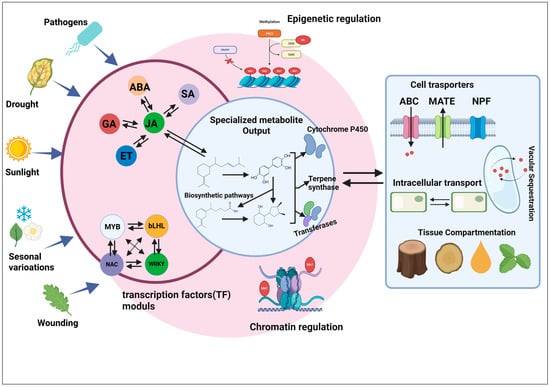
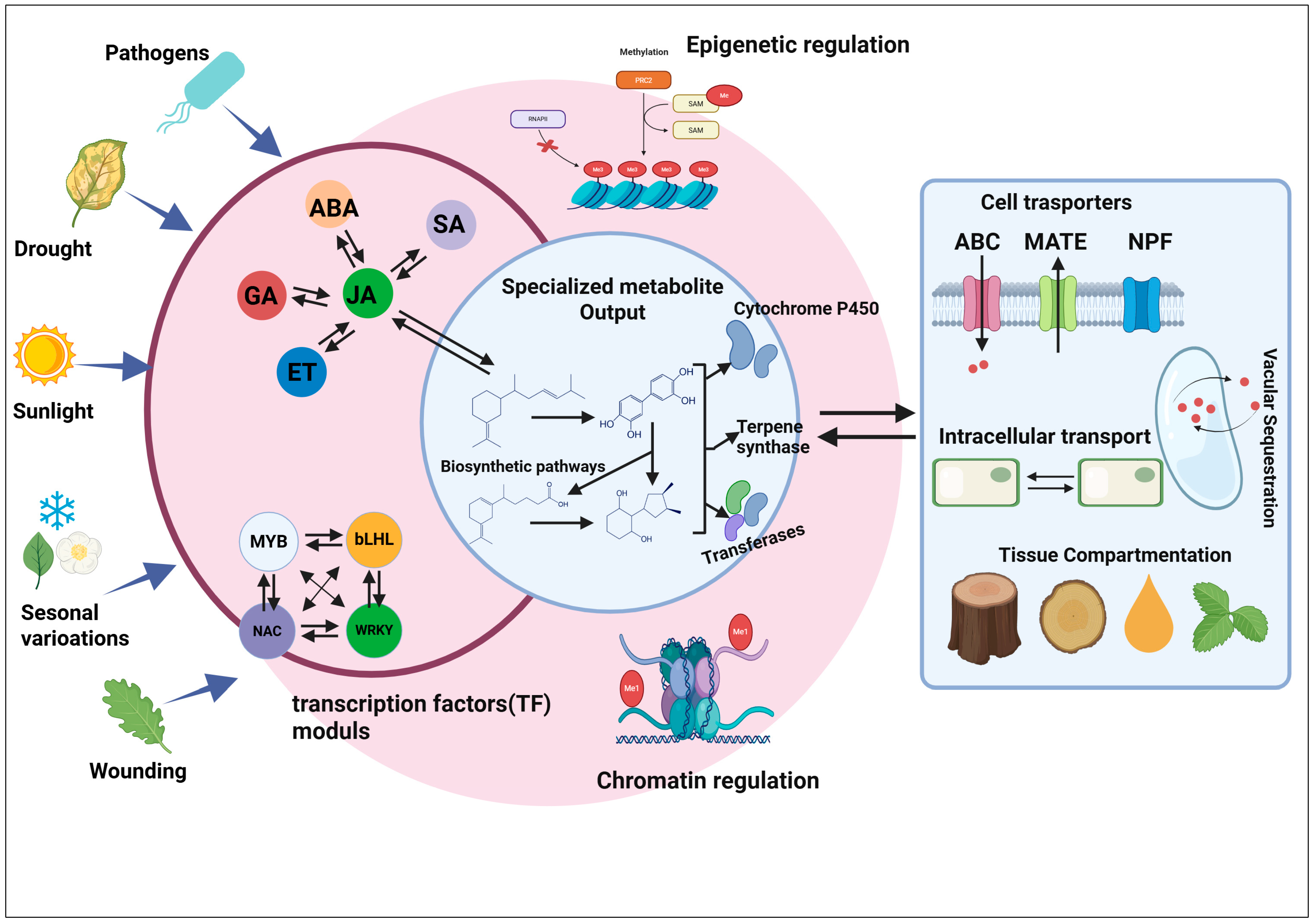
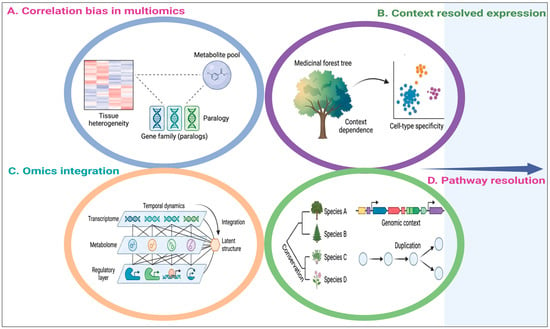
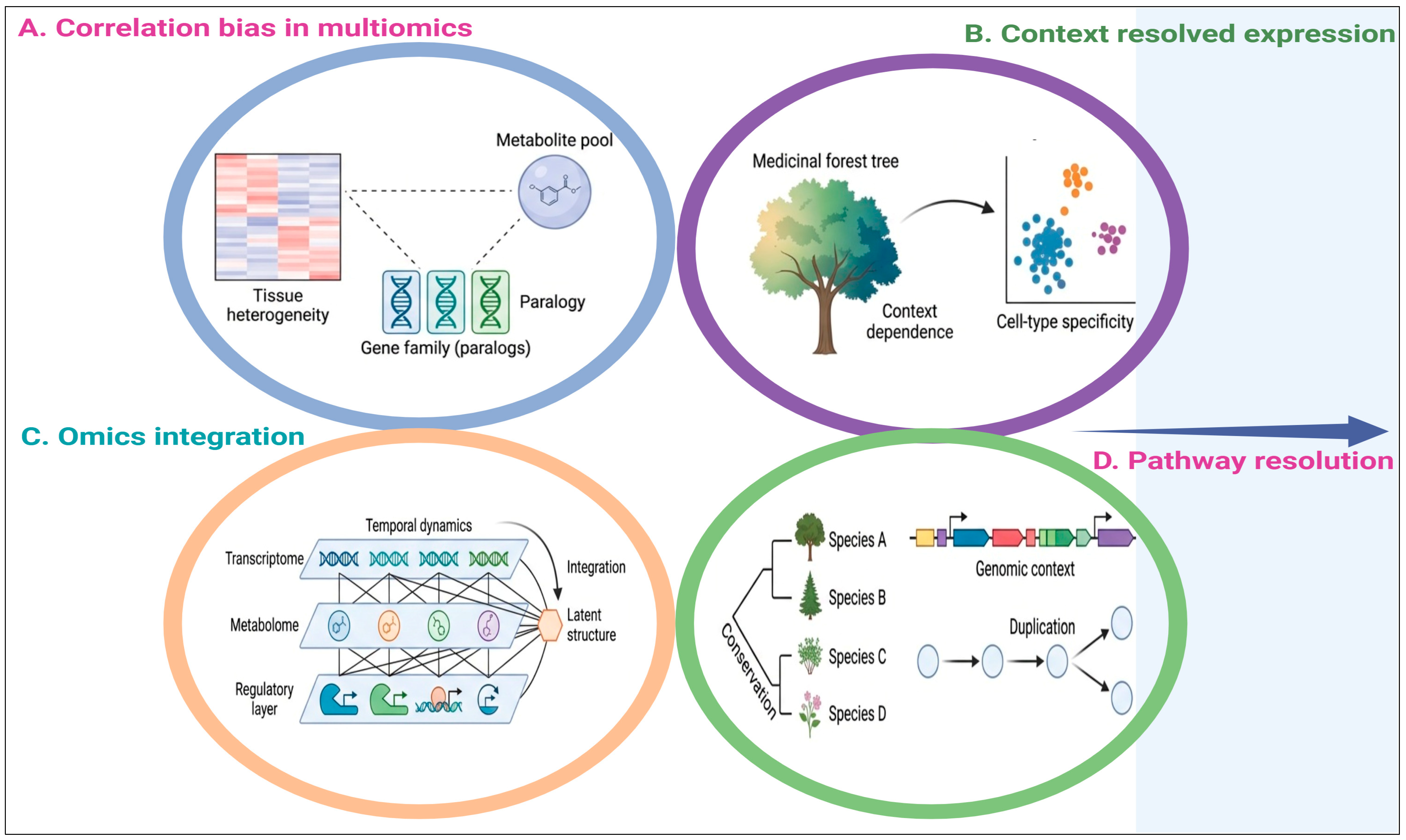
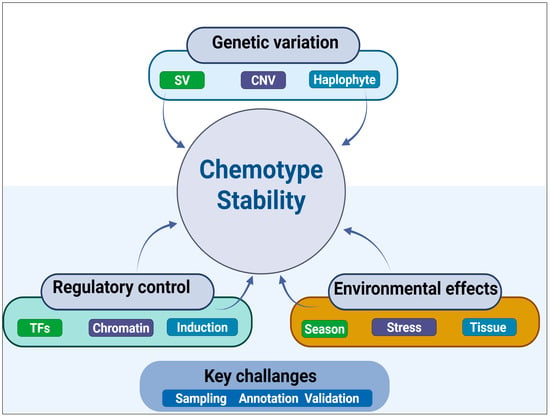
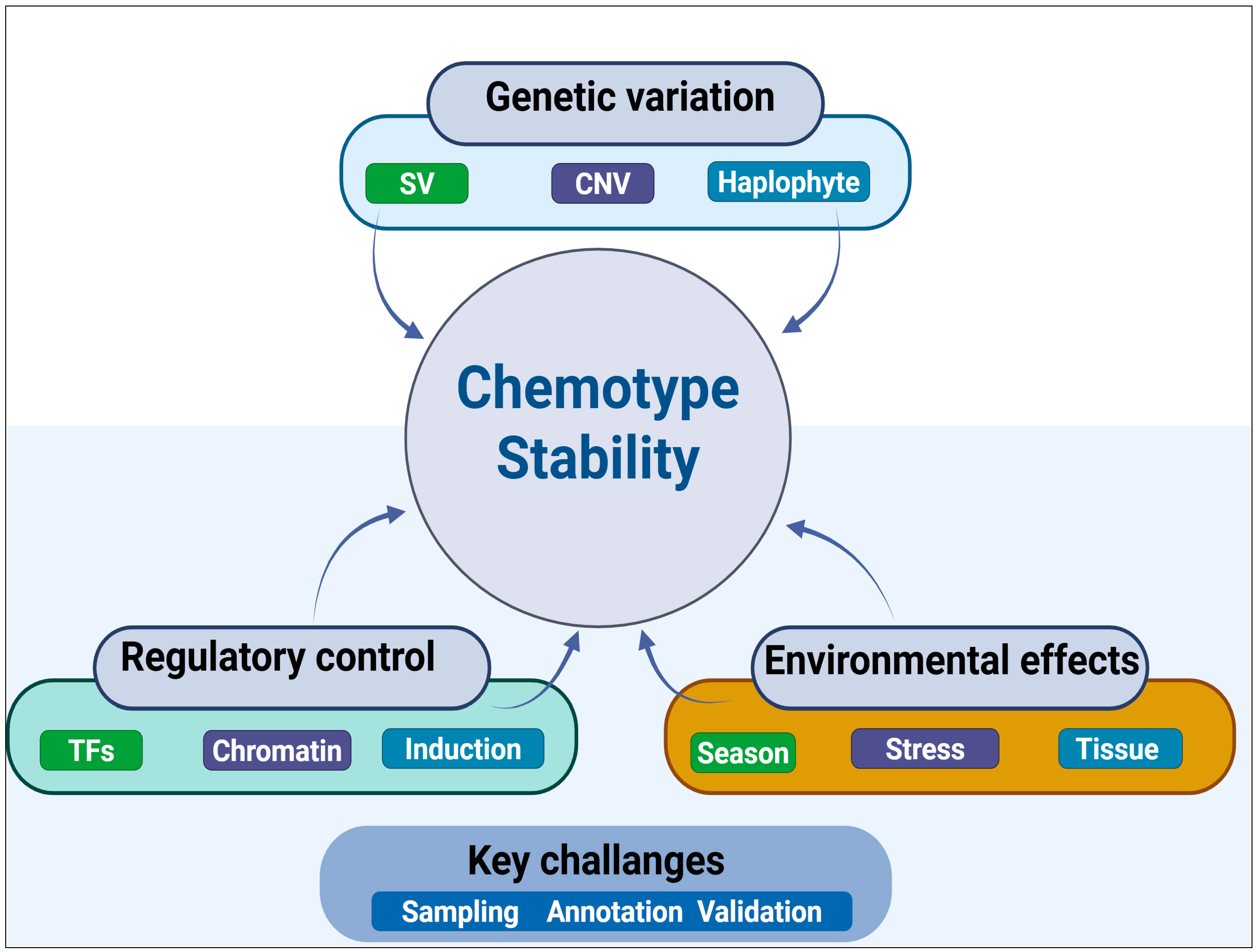

Disclaimer/Publisher’s Note: The statements, opinions and data contained in all publications are solely those of the individual author(s) and contributor(s) and not of MDPI and/or the editor(s). MDPI and/or the editor(s) disclaim responsibility for any injury to people or property resulting from any ideas, methods, instructions or products referred to in the content. |
© 2026 by the authors. Licensee MDPI, Basel, Switzerland. This article is an open access article distributed under the terms and conditions of the Creative Commons Attribution (CC BY) license.