


Abstract
This study examines how firms in low- and medium-technology (LMT) manufacturing industries improve product stability during technological upgrading. While existing innovation research has largely focused on high-technology sectors and radical innovation, relatively little attention has been paid to stability-oriented innovation in traditional manufacturing industries. In machinery manufacturing, however, product reliability and operational stability are often more critical to customers than frequent technological novelty. To address this gap, the study investigates the mechanisms through which firms enhance product stability in the wood-based panel machinery industry. The research adopts a longitudinal multiple-case study approach based on two leading Chinese machinery manufacturers located in the Linyi industrial cluster. Empirical data were collected through in-depth interviews, field observations, and secondary materials. The findings indicate that product stability improvements emerge from the interaction of industrial agglomeration, incremental innovation, and technological integration. Industrial clusters facilitate knowledge exchange among firms, suppliers, and downstream users. Continuous incremental improvements based on operational feedback enable firms to refine product designs, while technological integration allows them to combine internal capabilities with external technological components. By highlighting the importance of stability-oriented innovation, this study contributes to the literature on innovation in LMT industries and provides insights into the technological learning processes of machinery manufacturers. The findings also offer practical implications for managers and policymakers seeking to promote technological upgrading in traditional manufacturing sectors.
1. Introduction
The forest-based industry plays a crucial role in the global bioeconomy, providing essential materials for construction, furniture manufacturing, and a wide range of industrial applications [1,2]. The production of wood-based panels, such as plywood, particleboard, and medium-density fiberboard, has expanded rapidly over the past decades, particularly in emerging economies. This expansion has generated strong demand for specialized machinery capable of supporting large-scale and continuous production processes. In this context, the performance and reliability of industrial equipment have become critical determinants of manufacturing efficiency and product quality within the forest-products sector.
Innovation in the machinery manufacturing industry, however, differs significantly from innovation patterns observed in high-technology sectors. Many equipment manufacturers operate within low- and medium-technology (LMT) industries, where innovation tends to rely less on formal research and development (R&D) and more on cumulative learning, engineering experience, and incremental improvements [3]. In such industries, technological upgrading often occurs through the gradual refinement of existing products rather than through radical technological breakthroughs. Despite the economic importance of LMT industries, research on technological innovation has historically focused on high-tech sectors, leaving the mechanisms of innovation in traditional manufacturing sectors relatively underexplored.
One particularly important but understudied aspect of innovation in machinery manufacturing is product stability. Unlike consumer products, industrial machinery is expected to operate continuously under demanding production conditions for extended periods. As a result, customers often prioritize reliability, durability, and operational stability over frequent technological novelty. For manufacturers, improving product stability requires continuous learning from operational feedback, iterative product adjustments, and effective integration of various technological components. However, the processes through which firms achieve such stability-oriented innovation remain insufficiently understood in the existing literature.
Recent studies suggest that innovation in LMT industries is often shaped by interactions among industrial agglomeration, incremental innovation, and technological integration [4,5,6]. Industrial clusters can facilitate the exchange of tacit knowledge among firms, suppliers, and users, thereby accelerating learning processes within local production networks. Incremental innovation allows firms to continuously refine products through small but cumulative improvements [7,8,9]. Technological integration enables firms to combine internally developed capabilities with externally sourced technologies, thereby overcoming resource constraints [10]. While each of these mechanisms has been discussed in prior research, the ways in which they interact to enhance product stability in specialized machinery industries remain unclear.
China’s wood-based panel machinery industry provides a particularly interesting context for examining these mechanisms. Over the past two decades, several Chinese manufacturers have gradually improved their technological capabilities and narrowed the gap with international competitors in certain segments of the industry. This process has largely relied on incremental engineering improvements and close interaction with downstream producers, rather than on large-scale R&D investments. The industrial cluster in Linyi, Shandong Province, where numerous wood-processing firms and machinery manufacturers are co-located, offers a suitable empirical setting for studying the dynamics of knowledge exchange and technological learning in this sector.
Against this background, this study aims to explore how firms in the wood-based panel machinery industry improve product stability through the interaction of industrial agglomeration, incremental innovation, and technological integration. Drawing on a longitudinal multiple-case study of two leading Chinese machinery manufacturers, the study seeks to uncover the mechanisms through which stability-oriented innovation emerges in LMT manufacturing contexts.
Specifically, this study addresses the following research questions: (1) How do firms in the wood-based panel machinery industry improve product stability during technological catch-up? (2) How do industrial agglomeration, incremental innovation, and technological integration interact to facilitate this process? (3) How do knowledge conversion processes shape stability-oriented innovation in LMT industries?
By addressing these questions, the study contributes to the literature in three ways. First, it expands existing research on innovation in LMT industries by highlighting the importance of product stability as a central dimension of technological upgrading. Second, it develops a conceptual framework linking industrial agglomeration, incremental innovation, and technological integration in the context of machinery manufacturing. Third, it provides empirical insights into the technological learning processes within China’s forest-products machinery industry, which remains relatively underrepresented in the international literature.
2. Literature Review and Analytical Framework
2.1. Innovation in LMT Industries
Innovation research has traditionally focused on high-technology sectors characterized by intensive R&D activities and rapid technological breakthroughs. However, a growing body of literature highlights that LMT industries also play an important role in industrial innovation systems [11,12,13]. Unlike high-technology sectors, innovation in LMT industries often relies less on formal R&D activities and more on incremental improvements, engineering experience, and learning-by-doing processes. Firms typically improve their products and processes through continuous experimentation, production experience, and interactions with suppliers and customers. Previous studies have also emphasized that firms in traditional manufacturing industries frequently adopt incremental innovation strategies to gradually improve product performance and production efficiency [3]. In such contexts, innovation is often embedded in routine engineering practices rather than formal research laboratories.
More recent studies further suggest that technological upgrading in LMT industries frequently occurs through cumulative learning processes and inter-firm collaboration [14]. These findings highlight the importance of examining how firms accumulate operational knowledge and translate experiential learning into product improvements.
Despite these insights, existing studies have largely focused on innovation outputs such as patents or new product introductions. Relatively little attention has been paid to product stability as a key dimension of innovation performance in machinery manufacturing industries, where reliability and operational stability are often critical to industrial users.
2.2. Industrial Agglomeration and Innovation
Industrial agglomeration has long been recognized as an important driver of innovation and technological development. According to the theory proposed by Porter [15], industrial clusters enhance competitiveness by facilitating knowledge spillovers, specialized labor markets, and close interactions among firms.
Subsequent studies have further emphasized that geographical proximity among firms can promote localized knowledge exchange and collaborative learning [16,17]. In industrial clusters, firms often benefit from frequent interactions with suppliers, customers, and competitors, which enables them to access valuable technical information and industry knowledge. Research on regional innovation systems has also shown that industrial agglomeration can enhance firms’ innovation capabilities by creating dense networks of knowledge exchange [18,19,20]. Through these networks, firms can quickly obtain feedback on product performance, share technical expertise, and jointly address production challenges.
However, most existing studies examine the relationship between industrial clusters and general innovation performance, such as patent output or productivity growth. The role of industrial agglomeration in facilitating stability-oriented innovation in machinery manufacturing industries remains insufficiently explored.
2.3. Technological Integration and Knowledge Conversion
In addition to localized knowledge exchange, firms often enhance their technological capabilities through technological integration, which involves combining internal capabilities with external technological resources.
Previous research has shown that firms in traditional manufacturing industries frequently rely on external suppliers and partners to access specialized technologies and complementary knowledge [21,22,23]. Through collaboration with external partners, firms can integrate advanced components and technological modules into their existing products. The process of technological integration is closely related to organizational learning and knowledge conversion. According to Nonaka and Takeuchi [24], knowledge creation within organizations occurs through the interaction between tacit and explicit knowledge, which is described by the socialization externalization combination internalization (SECI) model [25]. This model emphasizes four processes—socialization, externalization, combination, and internalization—through which experiential knowledge can be transformed into explicit organizational knowledge. In machinery manufacturing industries, engineering knowledge is often embedded in practical experience and operational problem-solving [26,27,28,29]. Through interactions with suppliers and customers, firms gradually convert tacit operational knowledge into explicit engineering solutions, which can then be incorporated into product design improvements.
Nevertheless, previous research has rarely examined how knowledge conversion processes interact with incremental innovation and technological integration in LMT industries. Understanding this interaction is particularly important for explaining how firms improve product stability in complex machinery systems.
To provide a clearer overview of the existing literature and identify research gaps, Table 1 summarizes representative studies related to innovation in low- and medium-technology manufacturing industries.
Table 1.
Summary of Previous Research and Identified Research Gaps.
2.4. Analytical Framework
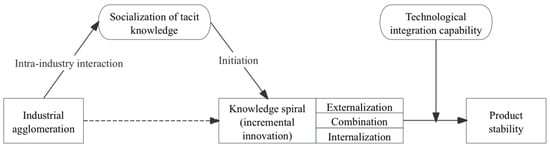
Building on the literature discussed above, this study develops an analytical framework to explain how firms in the wood-based panel machinery industry improve product stability during technological upgrading.
Previous studies suggest that industrial clusters facilitate knowledge exchange among firms, while incremental innovation enables continuous product improvement in LMT industries. At the same time, technological integration allows firms to combine internal engineering capabilities with external technological resources. Drawing on these insights, this study proposes that industrial agglomeration, incremental innovation, and technological integration interact to support stability-oriented innovation in machinery manufacturing industries. Industrial clusters provide a knowledge environment that facilitates learning from customers and suppliers. Incremental innovation translates experiential knowledge into iterative product improvements, while technological integration enhances system reliability by incorporating external technological modules. This interaction process can be understood as a form of knowledge conversion, in which tacit operational experience is gradually transformed into explicit engineering solutions and embedded in improved machinery designs.
Based on this reasoning, Figure 1 presents the analytical framework of the study, illustrating how industrial agglomeration, incremental innovation, and technological integration jointly contribute to the improvement of product stability in machinery manufacturing industries.
Figure 1.
Analytical framework of stability-oriented innovation in machinery manufacturing.
3. Methodology
3.1. Research Design
The purpose of this study is to examine the mechanisms through which firms in LMT manufacturing industries improve product stability during technological catch-up. Because these mechanisms involve tacit knowledge exchange, engineering problem-solving, and organizational learning processes that are difficult to quantify, a qualitative research design is appropriate.
Specifically, this research employs a multiple-case study design. Compared with single-case studies, multiple-case designs enable researchers to conduct cross-case comparison and improve analytical robustness through replication logic [30,31,32]. Each case can be treated as an independent analytical instance that helps confirm or refine the emerging theoretical framework.
It is important to emphasize that the goal of this research is analytical generalization rather than statistical generalization. In case study research, theoretical insights are developed through in-depth investigation of specific contexts rather than through large-sample statistical inference. The aim is therefore to uncover the underlying mechanisms linking industrial agglomeration, incremental innovation, technological integration, and product stability.
3.2. Case Selection
The study focuses on two leading manufacturers in China’s wood-based panel machinery industry: Tianli Machinery (Linyi, China) and Changxing Machinery (Linyi, China). These two firms were selected based on three criteria.
First, industrial representativeness. Both firms are located in the Linyi wood-processing industrial cluster in Shandong Province. Linyi is widely recognized as one of the largest wood-based panel production centers in China and hosts a dense network of machinery manufacturers, component suppliers, and downstream producers. This industrial agglomeration provides a suitable context for examining knowledge exchange and technological learning within manufacturing clusters.
Second, technological typicality. The two companies occupy leading positions in different segments of the wood-based panel machinery industry. Tianli Machinery specializes in hot-press equipment, which plays a critical role in the production of wood-based panels. Changxing Machinery focuses on core equipment used in plywood production, such as panel assembling machines. Both firms have undergone a development trajectory from initial imitation to gradual capability upgrading, making them appropriate cases for examining stability-oriented innovation in LMT industries.
Third, data accessibility. Through cooperation with industry associations, the research team obtained long-term access to both firms. This access enabled repeated field visits, in-depth interviews with employees at different organizational levels, and the collection of internal documents and technical materials. Such access is essential for conducting a longitudinal case study and obtaining reliable empirical evidence.
Although focusing on two leading firms may limit statistical representativeness, these cases provide rich contextual insights into the mechanisms of technological upgrading within the industry. Their experiences illustrate how firms can improve product reliability through cumulative learning and technological integration.
3.3. Data Collection and Analysis
The empirical data for this study were collected through a combination of in-depth interviews, direct field observations, and secondary sources. The fieldwork was conducted between 2023 and 2025, allowing the research team to longitudinally track the development trajectories of the two case firms. The use of multiple data sources enabled data triangulation, which is widely recommended in qualitative case study research to enhance analytical robustness and credibility [33,34,35].
3.3.1. Data Collection
- (1)
- Interviews
Interviews constituted the primary source of empirical evidence [36,37]. The respondents were selected through theoretical sampling, with the aim of covering multiple organizational levels and functional roles related to product development, manufacturing, and customer interaction. The interviewees included senior executives, middle-level managers, R&D engineers, production supervisors, frontline technicians, and sales or after-sales technical staff.
In total, 36 individuals participated in the study, and 44 interview sessions were conducted across the two firms. Some key informants participated in multiple rounds of interviews, which allowed the research team to observe the dynamic evolution of technological learning and product improvement processes over time. Approximately 60% of the core respondents were interviewed more than once during the three-year research period. Each interview lasted approximately 60–120 min, with an average duration of about 90 min. All interviews were conducted face-to-face during field visits, audio-recorded with participants’ consent, and subsequently transcribed verbatim for qualitative analysis.
The study adopted unstructured interviews rather than strictly structured or questionnaire-based formats. This choice was motivated by the nature of the research topic. The innovation processes investigated in this study rely heavily on tacit knowledge embedded in engineering practice and production experience, which is difficult to capture through predefined survey questions. Unstructured interviews allowed respondents to freely elaborate on technical experiences, problem-solving processes, and learning mechanisms, thereby enabling the research team to uncover rich contextual insights that would otherwise remain hidden [38,39,40]. To improve methodological transparency, Table 2 summarizes the distribution of interview respondents and interview rounds across the two case firms.
Table 2.
Overview of Interview Data.
As shown in Table 2, the interview sample covers multiple functional roles directly involved in technological development and product operation. This multi-level sampling strategy helps capture diverse perspectives on the mechanisms through which firms improve product stability.
- (2)
- Direct Observations
In addition to interviews, the research team conducted non-participant observations during field visits. These observations focused on production processes, equipment operation, technical discussions among engineers, and interactions between machinery manufacturers and downstream users. Observational insights helped the researchers better understand the practical context in which knowledge exchange and incremental innovation occur.
Observation notes were recorded immediately after each visit and subsequently converted into electronic documents. These records were incorporated into the qualitative database and analyzed together with the interview transcripts.
- (3)
- Secondary Sources
To complement the primary data, the study also collected a range of secondary materials, including internal company documents (e.g., technical manuals, troubleshooting guides, and quality reports), industry reports, and publicly available information about the wood-based panel machinery sector. These materials provided additional contextual information and supported the triangulation of evidence.
- (4)
- Ethical Considerations
This study followed standard ethical guidelines for qualitative research involving human participants. Prior to each interview, respondents were informed about the purpose of the research, the intended use of the data, and the principles of confidentiality and anonymity. All participants voluntarily agreed to participate in the interviews.
To protect corporate confidentiality, the research team signed non-disclosure agreements (NDAs) with both case firms before the fieldwork began. According to these agreements, sensitive technical information and commercially confidential data were excluded or anonymized in the manuscript. In addition, all interviewees are identified using anonymous codes in order to protect their identities and personal information.
3.3.2. Data Analysis
The data analysis followed an iterative coding process, combining inductive insights from empirical data with theoretical sensitivity derived from the SECI model of knowledge conversion.
In the first stage, the research team conducted open coding by carefully reviewing interview transcripts and observation notes to identify initial concepts emerging from the raw data. These concepts mainly related to knowledge acquisition, engineering problem-solving, product iteration, and collaboration with external suppliers.
In the second stage, axial coding was applied to group related concepts into higher-order categories. During this stage, the initial codes were clustered into broader analytical constructs such as knowledge socialization, incremental innovation, technological integration, and product stability.
In the final stage, selective coding was conducted to integrate these categories into a coherent analytical framework. This stage focused on identifying the relationships among the core constructs and clarifying how industrial agglomeration, incremental innovation, and technological integration interact to enhance product stability.
3.3.3. Reliability and Validity
Several measures were adopted to enhance the reliability and validity of the study.
First, data triangulation was implemented by combining interviews, field observations, internal company documents, and industry reports. The convergence of evidence from multiple sources strengthened the credibility of the findings.
Second, the study adopted a longitudinal research design. Repeated interviews with key respondents allowed the research team to verify the consistency of information over time and observe the dynamic evolution of technological learning processes.
Third, the coding process was conducted collaboratively by three authors. Each researcher initially coded the interview transcripts independently. The coding results were then compared and discussed in multiple rounds of meetings. When discrepancies occurred, the researchers revisited the original transcripts and field notes until consensus was reached. This procedure helped minimize individual interpretation bias.
Fourth, member validation was conducted by sharing preliminary findings with several technical managers from the case firms. Their feedback helped ensure that the interpretations accurately reflected the operational realities of the industry.
3.3.4. Theoretical Saturation
Data collection was discontinued once theoretical saturation was reached. In this study, theoretical saturation refers to the point at which additional interviews or observations no longer generate new conceptual categories, properties, or relationships relevant to the analytical framework.
During the later stages of the fieldwork, particularly between the 38th and 44th interviews, the information provided by respondents began to show a high degree of repetition. No new themes related to knowledge conversion or product stability emerged, and the coding structure remained stable. At this stage, the research team concluded that theoretical saturation had been achieved and therefore terminated further data collection.
4. Case Analysis
This section presents the empirical findings derived from the qualitative analysis of the two case firms, Tianli Machinery and Changxing Machinery. The analysis focuses on identifying the mechanisms through which firms in the wood-based panel machinery industry improve product stability during technological catch-up. Drawing on interview data, field observations, and secondary materials, the case analysis explores how industrial agglomeration, incremental innovation, and technological integration interact to shape stability-oriented innovation processes.
The analytical process followed an iterative procedure combining inductive coding of empirical data with theoretical sensitivity derived from the SECI model of knowledge conversion. Interview transcripts and observation notes were first carefully reviewed to identify recurring patterns related to engineering problem-solving, knowledge exchange, product development, and technological collaboration. These patterns were then grouped into higher-level conceptual categories that capture the key mechanisms underlying the improvement of product stability.
During the coding process, three stages of qualitative analysis were conducted. In the first stage, open coding was applied to identify initial concepts emerging from the empirical data. These concepts reflected various aspects of technological learning and production practices observed in the two firms. In the second stage, axial coding was used to cluster related concepts into broader analytical themes. In the final stage, selective coding was conducted to integrate these themes into a coherent framework explaining how different mechanisms interact to enhance product stability.
Through this iterative process, four main analytical dimensions were identified: industrial agglomeration, incremental innovation, technological integration, and product stability. These dimensions capture the key processes through which machinery manufacturers accumulate knowledge, refine product designs, and improve the reliability of industrial equipment.
To enhance transparency in the analytical process, Table 3 summarizes the coding structure and provides illustrative evidence from interview data supporting each analytical construct. The table presents representative quotations from respondents, demonstrating how the empirical observations were translated into conceptual categories during the coding process.
Table 3.
Coding Constructs and Illustrative Evidence.
4.1. Industrial Agglomeration: Timely Access to Industry Knowledge and Information
The production of wood-based panels involves four major processes: rotary cutting, panel assembly, hot pressing, and sanding. To enhance machinery stability, firms must consider not only mechanical operating rules—internal knowledge held by enterprises—but also the operating habits of workers, which represent external knowledge embedded in downstream manufacturers. Because these tacit practices are difficult to codify, firms need to engage directly with frontline workers and participate in daily production activities to effectively acquire and assimilate such knowledge.
To effectively capture tacit knowledge while minimizing distortion, Changxing Machinery and Tianli Machinery closely followed the relocation of plywood industry clusters and employed a team of “field engineers.” These engineers conducted regular client visits, collected user feedback, and occasionally joined production activities to troubleshoot unexpected failures. Through these interactions, enterprises were able to obtain two distinct types of tacit knowledge from their customers:
- (1)
- Informational Knowledge. By colocating within industrial clusters alongside numerous downstream customers, enterprises received frequent feedback on machinery usage. Frequent face-to-face interactions enabled them to capture timely shifts in user preferences. For instance, whereas the large-factory model relied on a single integrated machine for veneer production, Changxing—drawing on the separated-process model of small factories within the Linyi cluster—pioneered the development of small-scale machinery such as log debarkers, cross-cut saws, centering machines, rotary lathes, and veneer shears tailored to each sub-process. This allowed the company to gradually establish a competitive advantage in the niche market of small-scale wood-based panel machinery.
- (2)
- Technical Knowledge. Skilled workers in each stage of board production possess fragmented, non-codified operational know-how—such as gluing techniques or veneer lamination skills—that is typically transmitted informally through apprenticeships. This tacit knowledge is embedded in a specialized vocabulary. Such knowledge is characterized by a phenomenon often described as “knowledge stickiness”: it resists codification and cannot be easily transmitted remotely or asynchronously. To develop machinery capable of replacing manual operations, engineers (knowledge recipients) must immerse themselves in the same production environment as traditional craftsmen (knowledge holders). Such shared communication channels are essential for recipients to internalize tacit knowledge. By embedding field engineers into customers’ production environments, enterprises gained direct insights into workers’ habits and practices, thereby transferring firsthand tacit knowledge from outside the firm to inside. This process initiated socialization and laid the foundation for the knowledge transformation spiral.
4.2. Incremental Innovation: Identifying and Integrating Internal and External Knowledge
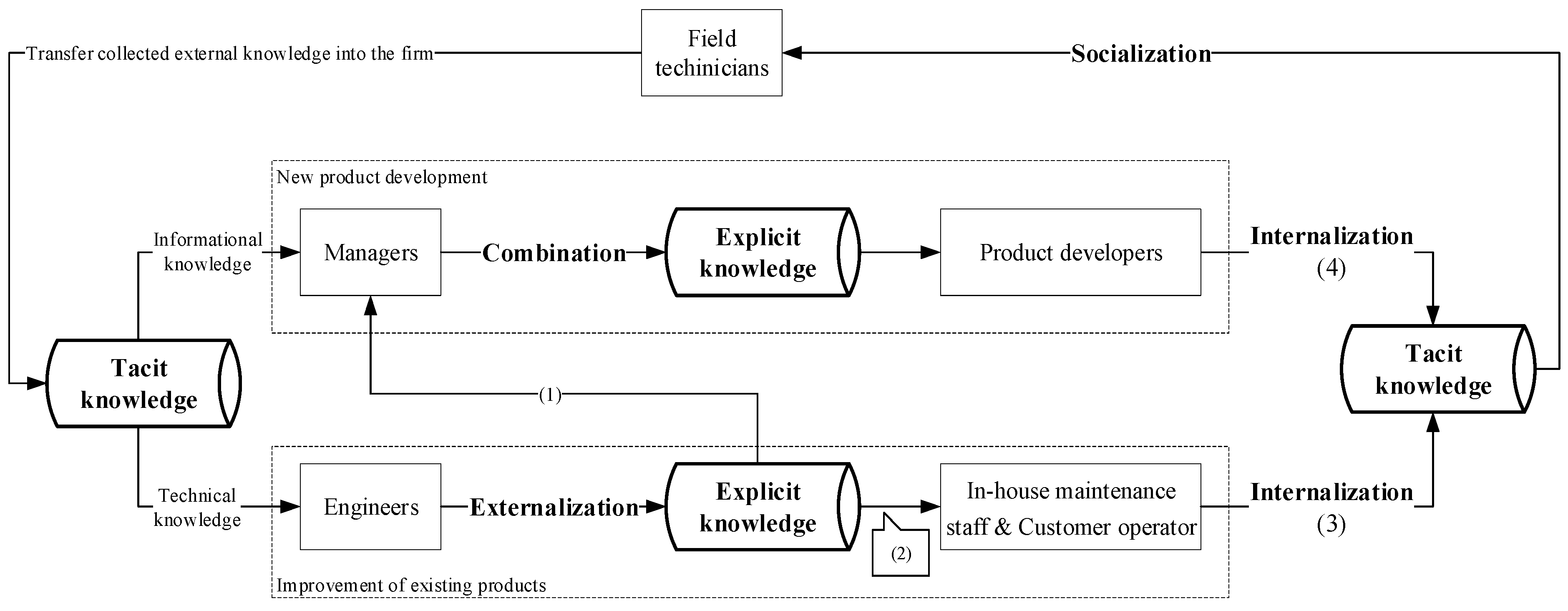
The development of Tianli Machinery’s non-carrier multi-layer press production line (Figure 2) provides a representative example of the incremental innovation process, illustrating how firms transform external knowledge and internal experience into stable product improvements.
Figure 2.
Knowledge conversion and incremental innovation in wood-based panel machinery firms. Note: (1) Document product defects and incorporate improvements in subsequent product development. (2) Product response guidelines and troubleshooting manuals. (3) Acquire new tacit knowledge by repairing products using manuals. (4) Gain new tacit knowledge through new product development.
First, based on information reported by field engineers, management identified strong market demand for multi-layer presses. They convened several technical leaders of existing products and communicated the product requirements. Through technical decomposition and integration, both sides concluded that the company had the capability to replicate foreign multi-layer press production lines, and thus launched the project. In this knowledge combination stage, little genuinely new knowledge was generated. Instead, external tacit knowledge was reorganized, relevant internal knowledge was identified, and the two were systematically integrated into a structured solution for a complex technical challenge.
Second, the prototype machine produced via imitation was soon found to suffer from a critical carrier-plate design flaw, which undermined product stability (The prototype’s pressing platen severely undermined product stability: it caused uneven heating during hot pressing, leading to cracks and surface indentations; its frequent thermal cycling resulted in deformation and short service life; and the unreliable return device often disrupted production steps, disturbing the rhythm of the entire line and causing frequent shutdowns.). To avoid triggering even greater unforeseen faults, the company chose not to modify the prototype immediately. Instead, the foreign product was fully replicated and commercialized as the company’s first-generation product, which was then launched into the market at a price advantage to compete with imported machinery. Once the machines were sold, engineers synthesized customer feedback collected by field engineers together with their own experiential knowledge. By continually adjusting operating parameters, they compiled the optimal parameter sets into troubleshooting manuals, which were then distributed to clients. This represents the knowledge externalization stage, where experiential know-how was codified into guides and manuals, enabling wider dissemination among maintenance personnel and operators.
Third, during the imitation and improvement process, engineers gradually developed a deeper understanding of the technical parameters and design rationale of the original product, recorded customer feedback, and internalized their own iterative trial-and-error experiences. They then re-translated these insights into explicit knowledge, accessible even to non-technical managers. Meanwhile, management continuously processed fragmented information sent back by field engineers. Eventually, as customers grew ready to abandon the existing product and carrier-plate technology reached its limits—where only a complete structural redesign could resolve the issue—management decided to develop a new generation of products. Drawing on internal resources, developers identified that the non-carrier hot-press process—originally applied in medium-density fiberboard production through a reciprocating wide-belt conveyor—could be transplanted into particleboard production. This led to the design of a second-generation multi-layer press production line. By eliminating the carrier plate, the new product achieved significantly greater stability. This stage exemplifies knowledge internalization, in which developers reused and extended internal technological knowledge to build a new system of knowledge embedded in the new product. Once diffused across the organization, this triggered a new cycle of the knowledge spiral.
4.3. Technological Integration: Leveraging External Technologies to Enhance Product Stability
When the intermediate components required for final products are highly complex, enterprises have strong incentives to collaborate with component suppliers to leverage suppliers’ specialized knowledge and improve overall product stability. However, unlike simple “assembly,” technological integration allows firms to rely on external suppliers for non-core components while maintaining control over core modules and critical knowledge, thereby avoiding excessive dependence on external partners. Collaboration between firms and component suppliers is not limited to task-oriented communication but extends to joint problem-solving in component integration and product upgrading. For instance, Tianli Machinery co-developed a hydraulic arm component with upstream supplier Shunde Rongxing Forging (Foshan, China), while Changxing Machinery provided parameters and application scenarios to its suppliers, who then produced components on demand.
A representative case is Changxing Machinery’s joint development of a machine-vision inspection module with its component supplier, which underscores the role of technological integration in enhancing product stability. Changxing was among the first domestic companies to apply machine vision to wood-based panel machinery, enabling real-time inspection and alarms for surface flatness, thickness, color variation, smoothness, holes, and seams during plywood production. After multiple failed attempts to independently develop the module, Changxing concluded that the technical barriers were insurmountable internally and decided to resolve the challenge through external integration.
Through information gathering, Changxing identified the Shenyang Institute of Automation of the Chinese Academy of Sciences as the most suitable partner, which possessed mature vision detection technologies already applied to standardized products such as steel sheets and glass. Importantly, Changxing did not simply purchase detection components for direct installation in wood-based panel machinery. Instead, the firm maintained frequent, iterative communication with the institute, providing operational scenarios, empirical parameters, and quantitative data while also engaging in mutual exchanges about process understanding. This process accelerated the adaptation of external components to the non-standardized context of plywood production.
According to Changxing, the external collaboration in machine-vision detection produced breakthroughs in three dimensions:
- (1)
- At the product level. Changxing became the first domestic enterprise to master online, continuous, and synchronous plywood inspection.
- (2)
- At the capability level. The interaction with the external institute clarified which parameters were critical in module development. Around these key parameters, the company maintained a focused internal engineering database compiled during communication and testing, thereby laying the groundwork for future in-house R&D capabilities.
At the strategic level. This experience convinced Changxing to adopt modularization as a pathway for industrial upgrading. By mastering several core modules of wood-based panel machinery, the firm seeks to transition from a machinery manufacturer to a module-based service provider—not only supplying complete machinery to plywood producers but also offering functional modules to industry peers, thereby gaining leverage in both market positioning and technological advancement.
5. The Logic of Stability-Oriented Innovation in the Wood-Based Panel Machinery Industry
Building on the empirical findings presented in the previous section, this section synthesizes the case evidence to explain the logic of stability-oriented innovation in the wood-based panel machinery industry. The analysis indicates that improvements in product stability do not primarily rely on radical technological breakthroughs. Instead, they emerge from the interaction of industrial agglomeration, incremental innovation, and technological integration, which together support continuous learning and product refinement.
In the context of LMT manufacturing industries, technological upgrading often occurs through cumulative engineering improvements and knowledge integration rather than through frontier technological discoveries. Firms gradually enhance equipment reliability by learning from operational experience, incorporating feedback from downstream users, and integrating external technological components.
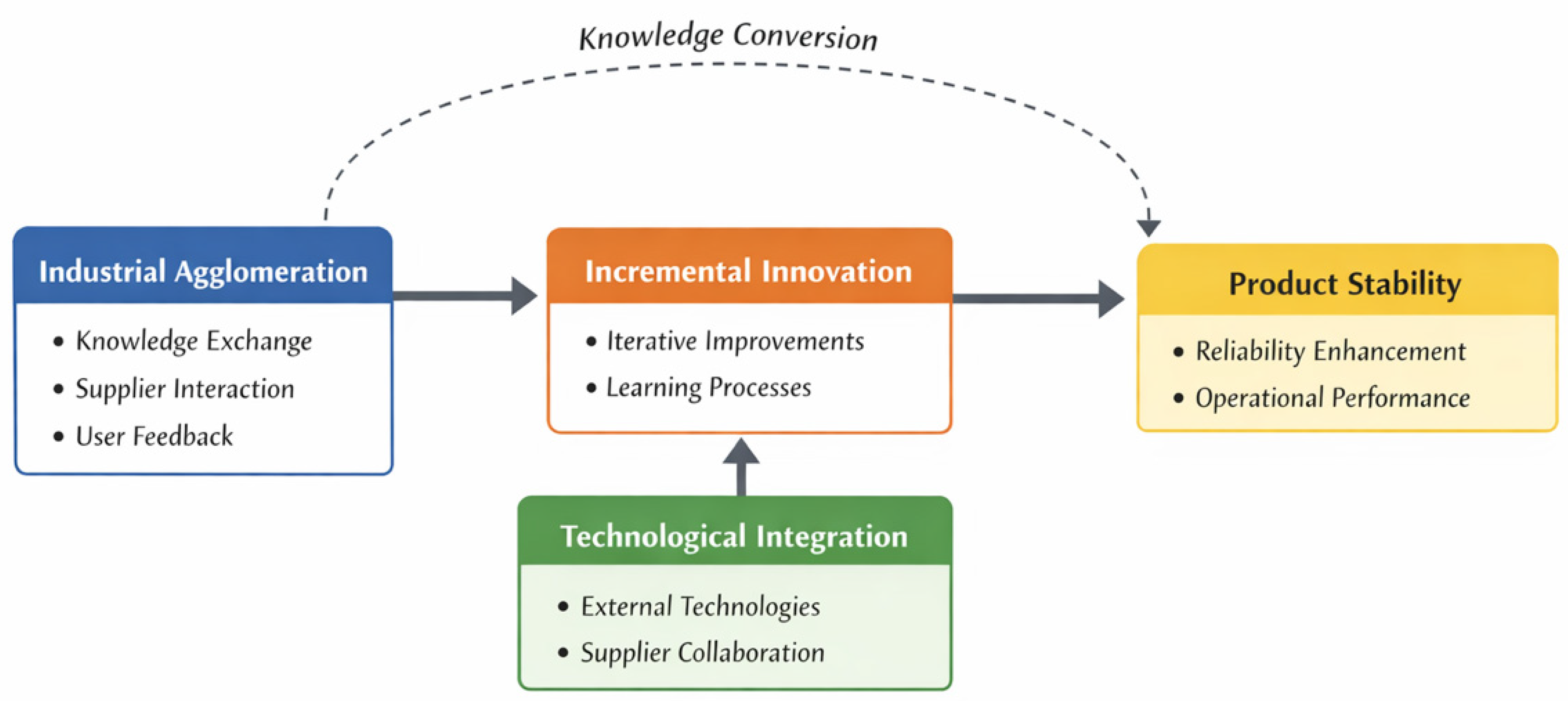
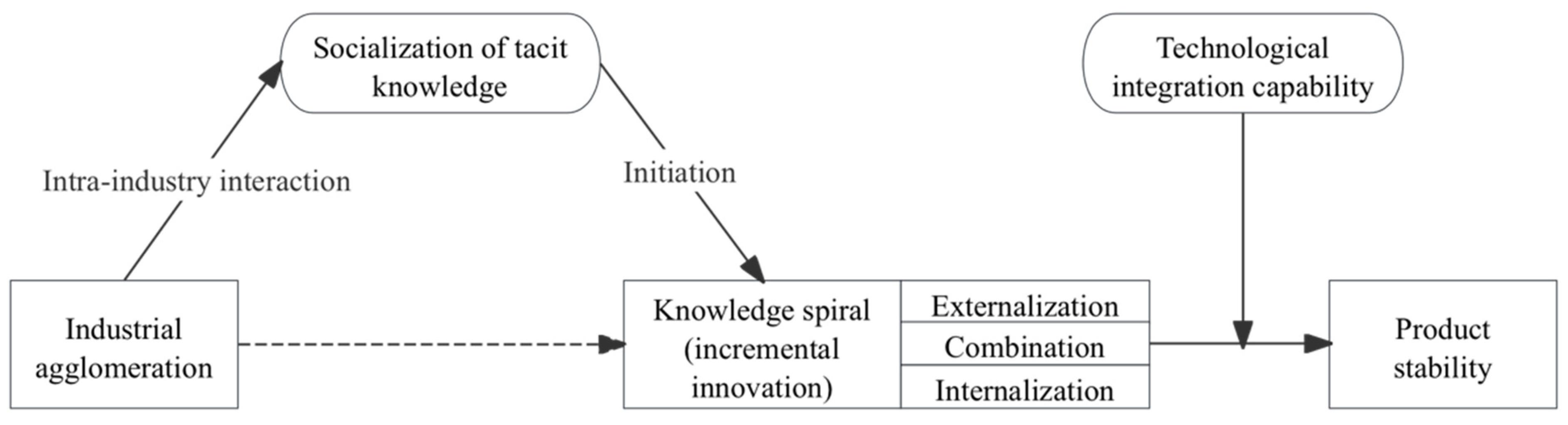
To illustrate this mechanism, Figure 3 presents the logic of stability-oriented innovation in LMT industries, highlighting how industrial agglomeration facilitates knowledge acquisition, incremental innovation translates experiential knowledge into product improvements, and technological integration enhances system reliability. Through repeated cycles of learning, experimentation, and integration, firms gradually improve the stability and operational performance of industrial machinery.
Figure 3.
Logic of stability-oriented innovation in the LMT industry.
5.1. Industrial Agglomeration and Knowledge Acquisition
Industrial agglomeration provides the institutional and spatial foundation for stability-oriented innovation in the wood-based panel machinery industry. Within industrial clusters, machinery manufacturers, component suppliers, and downstream panel producers are located in close geographical proximity, which facilitates frequent interactions and information exchange.
Such proximity allows firms to obtain real-time operational feedback from downstream users. Engineers often visit production sites to observe equipment performance, identify technical problems, and discuss potential improvements with machine operators and production managers. These interactions enable firms to access tacit knowledge embedded in practical production processes, which cannot easily be codified through formal documentation.
Furthermore, the presence of specialized suppliers within the cluster allows machinery manufacturers to quickly access technical support and replacement components when operational issues arise. This collaborative environment significantly reduces problem-solving time and enables firms to continuously improve machine designs.
Therefore, industrial agglomeration functions as a knowledge acquisition mechanism that allows firms to accumulate operational experience and technical insights. This knowledge flows provide the initial input for stability-oriented innovation.
5.2. Incremental Innovation and Iterative Product Improvement
The case analysis indicates that firms in the wood-based panel machinery industry improve product stability mainly through incremental innovation. Instead of pursuing radical technological changes, firms continuously refine existing machine designs through a series of small but cumulative engineering adjustments.
These adjustments are typically derived from operational feedback collected during equipment use. Engineers analyze machine performance data, identify recurring technical problems, and implement design modifications aimed at improving reliability and operational efficiency. For example, certain structural components may be reinforced, control parameters optimized, or material specifications adjusted to enhance durability.
Over time, the accumulation of these incremental improvements leads to significant enhancements in equipment performance. This iterative process enables firms to gradually transform operational experience into improved engineering solutions.
In machinery manufacturing industries, where equipment is expected to operate continuously under demanding production conditions, reliability and stability often represent more important performance indicators than rapid technological novelty. Incremental innovation therefore plays a crucial role in translating experiential learning into improvements in product stability.
5.3. Technological Integration and System Reliability
While incremental innovation improves machine designs through internal learning processes, technological integration allows firms to enhance product performance by incorporating external technological resources.
In the wood-based panel machinery industry, complex equipment systems often consist of multiple technological modules, including hydraulic systems, control units, and specialized mechanical components. Many of these components are supplied by specialized external firms that possess advanced technical expertise.
Machinery manufacturers integrate these external components into their equipment systems while adapting them to specific production requirements. Through this process, firms combine internal engineering capabilities with externally sourced technologies, thereby improving machine reliability and system performance.
Repeated collaboration with suppliers also allows firms to gradually absorb external knowledge and strengthen their system integration capabilities. As firms accumulate experience in integrating diverse technological modules, they become better able to design machinery systems that achieve high levels of operational stability.
5.4. Integrated Mechanism of Stability-Oriented Innovation
The empirical evidence suggests that stability-oriented innovation in the wood-based panel machinery industry emerges from the interaction of industrial agglomeration, incremental innovation, and technological integration.
Industrial agglomeration facilitates the acquisition of operational knowledge through close interactions with suppliers and downstream users. Incremental innovation enables firms to translate this knowledge into continuous product improvements through iterative engineering adjustments. Technological integration further enhances machine performance by incorporating external technological components into existing equipment systems.
These mechanisms interact through ongoing processes of knowledge conversion, in which tacit operational knowledge is gradually transformed into explicit engineering solutions and embedded in improved product designs. Through repeated cycles of learning, experimentation, and integration, firms progressively enhance the reliability and operational stability of industrial machinery.
As illustrated in Figure 3, this process forms a dynamic innovation logic in which knowledge acquisition, incremental improvement, and technological integration mutually reinforce one another. Over time, this cumulative learning process enables firms in LMT industries to achieve significant improvements in product stability and technological capability.
6. Discussion
6.1. Interpretation of the Findings
This study examined how firms in the wood-based panel machinery industry enhance product stability through the interaction of industrial agglomeration, incremental innovation, and technological integration. The empirical findings highlight that stability-oriented innovation in LMT manufacturing industries often emerges from cumulative learning processes rather than radical technological breakthroughs.
First, the results show that industrial agglomeration plays an important role in facilitating knowledge exchange. Firms located within the industrial cluster benefit from frequent interactions with downstream users and component suppliers, which provide valuable operational feedback and practical engineering knowledge. These interactions enable manufacturers to identify design problems and continuously refine their products. This finding is consistent with previous studies suggesting that industrial clusters promote innovation by strengthening localized knowledge spillovers and collaborative learning.
Second, the analysis demonstrates that incremental innovation is a central mechanism through which firms improve product stability. Rather than relying on large-scale R&D projects, the firms examined in this study continuously refine their products through small engineering adjustments derived from operational experience. Over time, the accumulation of these incremental improvements contributes to significant performance enhancements.
Third, technological integration enables firms to combine internal engineering capabilities with externally sourced technologies. By integrating specialized components and collaborating with suppliers, firms can improve the reliability and performance of key equipment modules without bearing the full cost of independent technological development. This strategy allows resource-constrained firms to gradually strengthen their technological capabilities.
Taken together, these mechanisms interact through ongoing knowledge conversion processes that transform tacit operational knowledge into improved product designs and engineering solutions. Through repeated cycles of feedback, experimentation, and technological integration, firms gradually enhance the stability and reliability of their industrial equipment.
6.2. Theoretical Contributions
First, the research extends existing studies on innovation in low- and medium-technology industries by highlighting the importance of product stability as a key dimension of technological upgrading. While prior research has largely focused on innovation outputs such as patents or new product introductions, the findings suggest that in machinery manufacturing industries, improving reliability and operational performance may be more important than pursuing frequent technological novelty.
Second, the study contributes to the literature on industrial agglomeration and innovation by demonstrating how cluster-based knowledge exchange supports stability-oriented innovation. Previous studies have emphasized the role of industrial clusters in promoting knowledge spillovers and collaboration. The findings of this research further illustrate how close interactions between machinery manufacturers and downstream users facilitate the continuous improvement of industrial equipment.
Third, the study enriches research on technological learning and knowledge conversion by linking the SECI model with innovation processes in LMT manufacturing industries. The empirical evidence suggests that knowledge conversion occurs through engineering discussions, technical troubleshooting, and collaborative experimentation, which help transform tacit operational knowledge into explicit engineering solutions.
Meanwhile, although the empirical evidence is drawn from China, the findings have broader relevance for other forest-product-producing countries. Many developing economies possess abundant forest resources but lack strong R&D capabilities in specialized machinery manufacturing. The stability-oriented innovation pathway identified in this study suggests that firms can achieve technological upgrading through cumulative incremental learning and strategic technological integration.
By integrating these perspectives, the study proposes a framework that explains how industrial agglomeration, incremental innovation, and technological integration jointly support stability-oriented innovation in machinery manufacturing.
6.3. Practical Implications
The findings of this study provide several practical implications for managers and policymakers in machinery manufacturing and other LMT industries. By examining the mechanisms through which firms improve product stability, the study highlights several strategies that can support technological upgrading in traditional manufacturing sectors.
First, the results emphasize the importance of continuous incremental improvement in machinery manufacturing industries. Rather than relying exclusively on large-scale R&D investments, firms can enhance product stability through systematic learning from operational experience. Managers should therefore establish mechanisms to collect and analyze production feedback, enabling engineering teams to identify technical problems and implement iterative design improvements.
Second, the findings highlight the value of close interaction with downstream users. In industrial equipment markets, customers play an important role in providing operational knowledge about machine performance under real production conditions. Maintaining long-term relationships with downstream manufacturers allows machinery producers to obtain valuable insights into equipment reliability and performance issues, which can guide future product refinement.
Third, the study shows that technological integration with external partners can help firms overcome resource constraints. Collaborating with specialized component suppliers and integrating external technological modules can improve the reliability and performance of complex machinery systems. Such partnerships allow firms to leverage external expertise while focusing their internal efforts on core engineering capabilities.
Fourth, the results underscore the role of industrial clusters in facilitating technological learning. Firms located in industrial agglomerations benefit from geographical proximity to suppliers, customers, and skilled workers. This proximity supports frequent knowledge exchange and collaborative problem-solving, which are particularly important in industries where innovation relies heavily on tacit engineering knowledge.
For policymakers, these findings suggest that supporting the development of industrial clusters and collaborative innovation networks can help accelerate technological upgrading in traditional manufacturing sectors. Policies that encourage interaction among manufacturers, suppliers, and downstream users may strengthen local knowledge ecosystems and enhance firms’ innovation capabilities.
Based on these findings, Table 4 summarizes the key practical recommendations derived from the research.
Table 4.
Practical Recommendations Derived from the Study.
7. Conclusions
7.1. Summary of the Study
This study investigated how firms in the wood-based panel machinery industry improve product stability during technological catch-up. Using a longitudinal multiple-case study of two Chinese machinery manufacturers, the research explored the mechanisms through which industrial agglomeration, incremental innovation, and technological integration interact to support stability-oriented innovation.
The findings suggest that technological upgrading in this sector does not primarily rely on radical innovation. Instead, firms enhance product stability through cumulative learning processes that involve continuous feedback from downstream users, iterative product refinement, and the integration of external technological components. Industrial clusters provide an important institutional context for these processes by facilitating knowledge exchange and collaboration among firms.
By highlighting the importance of stability-oriented innovation, the study contributes to a better understanding of how firms in low- and medium-technology manufacturing industries improve their technological capabilities under resource constraints.
7.2. Limitations and Future Research
Despite its contributions, this study has several limitations that should be acknowledged.
First, the analysis focuses on two firms within a single industrial cluster, which may limit the generalizability of the findings. Although the cases provide rich insights into the mechanisms of stability-oriented innovation, future research could examine additional firms in other regions or industries to test the broader applicability of the proposed framework.
Second, the study relies primarily on qualitative data, which limits the ability to statistically examine causal relationships among the identified mechanisms. Future research could employ quantitative methods or mixed-method approaches to further test the relationships between industrial agglomeration, incremental innovation, technological integration, and product stability.
Third, the research focuses on the machinery manufacturing segment of the forest-products industry. Future studies could explore whether similar innovation mechanisms exist in other sectors of the forest-based economy or in different types of manufacturing industries.
By addressing these limitations, future research can further deepen our understanding of technological learning and innovation processes in traditional manufacturing sectors.
Author Contributions
Conceptualization, C.Y. and N.Z.; methodology, C.Y.; software, C.Y. and N.Z.; validation, C.Y., H.G. and N.Z.; formal analysis, C.Y. and N.Z.; investigation, C.Y. and N.Z.; resources, C.Y., H.G.; data curation, C.Y., E.Z. and Y.C.; writing—original draft preparation, C.Y. and N.Z.; writing—review and editing, C.Y., H.G. and N.Z.; visualization, C.Y. and N.Z.; supervision, C.Y., H.G. and N.Z.; project administration, C.Y.; funding acquisition, C.Y. All authors have read and agreed to the published version of the manuscript.
Funding
This research was funded by the Key Project of the National Social Science Foundation of China (24BJY155).
Data Availability Statement
The dataset is available on request from the authors.
Conflicts of Interest
The authors declare no conflicts of interest.
References
- Li, N.; Toppinen, A. Corporate Responsibility and Sustainable Competitive Advantage in Forest-Based Industry: Complementary or Conflicting Goals? For. Policy Econ. 2011, 13, 113–123. [Google Scholar] [CrossRef] [Scilit]
- Bruzzese, S.; Brun, F.; Galati, A.; Borsellino, V.; Mirabella, C.; Brunori, A.; Blanc, S. Examining the Adoption of PEFC Chain of Custody Certification in the Italian Forest-Based Industry: An Empirical Study on Motivations and Impacts. For. Policy Econ. 2025, 170, 103385. [Google Scholar] [CrossRef] [Scilit]
- Santamaría, L.; Nieto, M.J.; Barge-Gil, A. Beyond Formal R&D: Taking Advantage of Other Sources of Innovation in Low- and Medium-Technology Industries. Res. Policy 2009, 38, 507–517. [Google Scholar] [CrossRef] [Scilit]
- Kwak, K.; Kim, D.; Heo, C. Sustainable Innovation in a Low- and Medium-Tech Sector: Evidence from an SME in the Footwear Industry. J. Clean. Prod. 2023, 397, 136399. [Google Scholar] [CrossRef] [Scilit]
- Simms, C.; Frishammar, J. Technology Transfer Challenges in Asymmetric Alliances between High-Technology and Low-Technology Firms. Res. Policy 2024, 53, 104937. [Google Scholar] [CrossRef] [Scilit]
- Nouman, M.; Yunis, M.S.; Atiq, M.; Mufti, O.; Qadus, A. ‘The Forgotten Sector’: An Integrative Framework for Future Research on Low-and Medium-Technology Innovation. Sustainability 2022, 14, 3572. [Google Scholar] [CrossRef] [Scilit]
- Abdin, J.; Sharma, A.; Trivedi, R.; Wang, C. Financing Constraints, Intellectual Property Rights Protection and Incremental Innovation: Evidence from Transition Economy Firms. Technol. Forecast. Soc. Change 2024, 198, 122982. [Google Scholar] [CrossRef] [Scilit]
- Yusof, N.A.; Kamal, E.M.; Lou, E.C.W.; Kamaruddeen, A.M. Effects of Innovation Capability on Radical and Incremental Innovations and Business Performance Relationships. J. Eng. Technol. Manag. 2023, 67, 101726. [Google Scholar] [CrossRef] [Scilit]
- Ferrigno, G.; Barabuffi, S.; Marcazzan, E.; Piccaluga, A. What “V” of the Big Data Support Firms’ Radical and Incremental Innovation? Technovation 2025, 146, 103295. [Google Scholar] [CrossRef] [Scilit]
- Unde, S.S.; Kurkute, V.K.; Chavan, S.S.; Mohite, D.D.; Harale, A.A.; Chougle, A. The Expanding Role of Multirotor UAVs in Precision Agriculture with Applications AI Integration and Future Prospects. Discov. Mech. Eng. 2025, 4, 38. [Google Scholar] [CrossRef] [Scilit]
- Trott, P.; Simms, C. An Examination of Product Innovation in Low- and Medium-Technology Industries: Cases from the UK Packaged Food Sector. Res. Policy 2017, 46, 605–623. [Google Scholar] [CrossRef] [Scilit]
- Del Carpio, J.F. Knowledge and Ambidexterity’s Impact on Product Innovation. J. Technol. Manag. Innov. 2022, 17, 40–48. [Google Scholar] [CrossRef] [Scilit]
- Tsai, K.H.; Wang, J.C. External Technology Sourcing and Innovation Performance in LMT Sectors: An Analysis Based on the Taiwanese Technological Innovation Survey. Res. Policy 2009, 38, 518–526. [Google Scholar] [CrossRef] [Scilit]
- Li, X.; Zhou, W.; Hou, J. Research on the Impact of OFDI on the Home Country’s Global Value Chain Upgrading. Int. Rev. Financ. Anal. 2021, 77, 101862. [Google Scholar] [CrossRef] [Scilit]
- Porter, M.E. Clusters and the New Economics of Competition. Harv. Bus. Rev. 1998, 76, 77–90. [Google Scholar]
- Golra, O.A.; Rosiello, A.; Harrison, R.T. Proximity and Its Impact on the Formation of Product and Process Innovation Networks among Producer Firms. Reg. Stud. 2024, 58, 768–786. [Google Scholar] [CrossRef] [Scilit]
- Hammervoll, T.; Halse, L.L.; Engelseth, P. The Role of Clusters in Global Maritime Value. Int. J. Phys. Distrib. Logist. Manag. 2014, 44, 98–112. [Google Scholar] [CrossRef] [Scilit]
- Casais, B.; Caldas, C. Leading Portuguese Shoes’ Digital Transformation: A Multiple Case Analysis of SMEs from a Cluster-Based Brand. J. Manag. Organ. 2024, 30, 2318–2335. [Google Scholar] [CrossRef] [Scilit]
- Shen, L.; Liu, Y. Exploring the Impact of Partner Match on Business Model Innovation: The Mediating Role of Interfirm Dynamic Capabilities-Based on Ecosystem Orchestration Perspective. Kybernetes 2025, 54, 1237–1261. [Google Scholar] [CrossRef] [Scilit]
- Han, Y. The Relationship between Ambidextrous Knowledge Sharing and Innovation within Industrial Clusters: Evidence from China. Interdiscip. J. Inf. Knowl. Manag. 2019, 14, 145–163. [Google Scholar] [CrossRef] [Scilit]
- Zhou, D.; Kautonen, M.; Wang, H.; Wang, L. How to Interact with Knowledge-Intensive Business Services: A Multiple Case Study of Small and Medium Manufacturing Enterprises in China. J. Manag. Organ. 2017, 23, 297–318. [Google Scholar] [CrossRef] [Scilit]
- Delgado-Verde, M.; Castro, G.M.-D.; Cruz-González, J.; Navas-López, J.E. Complements or Substitutes? The Contingent Role of Corporate Reputation on the Interplay between Internal R&D and External Knowledge Sourcing. Eur. Manag. J. 2021, 39, 70–83. [Google Scholar] [CrossRef] [Scilit]
- Črešnar, R.; Dabić, M.; Stojčić, N.; Nedelko, Z. It Takes Two to Tango: Technological and Non-Technological Factors of Industry 4.0 Implementation in Manufacturing Firms. Rev. Manag. Sci. 2023, 17, 827–853. [Google Scholar] [CrossRef] [Scilit]
- Nonaka, I.; Takeuchi, H.; Umemoto, K. A Theory of Organizational Knowledge Creation. Int. J. Technol. Manag. 1996, 11, 833–845. [Google Scholar]
- Farnese, M.L.; Barbieri, B.; Chirumbolo, A.; Patriotta, G. Managing Knowledge in Organizations: A Nonaka’s SECI Model Operationalization. Front. Psychol. 2019, 10, 2730. [Google Scholar] [CrossRef] [Scilit]
- Tseng, M.L.; Tran, T.P.T.; Ha, H.M.; Bui, T.D.; Lim, M.K. Sustainable Industrial and Operation Engineering Trends and Challenges Toward Industry 4.0: A Data Driven Analysis. J. Ind. Prod. Eng. 2021, 38, 581–598. [Google Scholar] [CrossRef] [Scilit]
- Arista, R.; Mas, F.; Morales-Palma, D.; Vallellano, C. An Ontology-Based Engineering Methodology Applied to Aerospace Reconfigurable Manufacturing Systems Design. Int. J. Prod. Res. 2024, 62, 2286–2304. [Google Scholar] [CrossRef] [Scilit]
- Sapel, P.; Molinas Comet, L.; Dimitriadis, I.; Hopmann, C.; Decker, S. A Review and Classification of Manufacturing Ontologies. J. Intell. Manuf. 2025, 36, 3669–3693. [Google Scholar] [CrossRef] [Scilit]
- Ullah, A.S. What Is Knowledge in Industry 4.0? Eng. Rep. 2020, 2, e12217. [Google Scholar] [CrossRef] [Scilit]
- Henry, M.; Iqbal, Z.; Johnson, K.; Akhter, M.; Costello, L.; Scott, C.; Jalal, R.; Hossain, M.A.; Chakma, N.; Kuegler, O.; et al. A Multi-Purpose National Forest Inventory in Bangladesh: Design, Operationalisation and Key Results. For. Ecosyst. 2021, 8, 12. [Google Scholar] [CrossRef] [Scilit]
- Min, S.; Lee, H.; Son, J.; Park, M.S. Structural Policy Coordination for Forest Ecosystem Services Management in the Legal Accountability System. For. Policy Econ. 2024, 166, 103282. [Google Scholar] [CrossRef] [Scilit]
- Abasian, F.; Rönnqvist, M.; Ouhimmou, M. Forest Fibre Network Design with Multiple Assortments: A Case Study in Newfoundland. Can. J. For. Res. 2017, 47, 1232–1243. [Google Scholar] [CrossRef] [Scilit]
- Köhl, M.; Lasco, R.; Cifuentes, M.; Jonsson, Ö.; Korhonen, K.T.; Mundhenk, P.; de Jesus Navar, J.; Stinson, G. Changes in Forest Production, Biomass and Carbon: Results from the 2015 UN FAO Global Forest Resource Assessment. For. Ecol. Manag. 2015, 352, 21–34. [Google Scholar] [CrossRef] [Scilit]
- Cheng, F.; Ou, G.; Wang, M.; Liu, C. Remote Sensing Estimation of Forest Carbon Stock Based on Machine Learning Algorithms. Forests 2024, 15, 681. [Google Scholar] [CrossRef] [Scilit]
- Plé, L. Managing Multichannel Coordination in Retail Banking: The Influence of Customer Participation. Int. J. Bank Mark. 2006, 24, 327–345. [Google Scholar] [CrossRef] [Scilit]
- Frecknall-Hughes, J.; Gangl, K.; Hofmann, E.; Hartl, B.; Kirchler, E. The Influence of Tax Authorities on the Employment of Tax Practitioners: Empirical Evidence from a Survey and Interview Study. J. Econ. Psychol. 2023, 97, 102629. [Google Scholar] [CrossRef] [Scilit]
- Bornemann, T.; Moosmann, A.L.; Novotny-Farkas, Z. The Consequences of Abandoning the Quarterly Reporting Mandate in the Prime Market Segment. Eur. Account. Rev. 2025, 34, 89–122. [Google Scholar] [CrossRef] [Scilit]
- Qu, S.Q.; Dumay, J. The Qualitative Research Interview. Qual. Res. Account. Manag. 2011, 8, 238–264. [Google Scholar] [CrossRef] [Scilit]
- Chauhan, R.S. Unstructured Interviews: Are They Really All That Bad? Hum. Resour. Dev. Int. 2022, 25, 474–487. [Google Scholar] [CrossRef] [Scilit]
- Dana, J.; Dawes, R.; Peterson, N. Belief in the Unstructured Interview: The Persistence of an Illusion. Judgm. Decis. Mak. 2013, 8, 512–520. [Google Scholar] [CrossRef] [Scilit]

Disclaimer/Publisher’s Note: The statements, opinions and data contained in all publications are solely those of the individual author(s) and contributor(s) and not of MDPI and/or the editor(s). MDPI and/or the editor(s) disclaim responsibility for any injury to people or property resulting from any ideas, methods, instructions or products referred to in the content. |
© 2026 by the authors. Licensee MDPI, Basel, Switzerland. This article is an open access article distributed under the terms and conditions of the Creative Commons Attribution (CC BY) license.