


Abstract
Each tree species occupies its own ecological niche along biogeographic gradients. Selecting suitable tree species with the principle of matching specific habitats is therefore of vital importance for ensuring the success and efficiency of afforestation, especially in harsh ecoregions. Therefore, if the ecological suitability of trees to the target area is not carefully considered in the selection of afforestation species, the establishment of plantation may not achieve the desired effect. Hence, to evaluate trees’ fitness to different environments along an altitude gradient and then select suitable tree species for afforestation in semiarid China, we investigated stem growth of the most common tree species in typical afforestation types, including larch (Larix principis-rupprechtii), pine (Pinus sylvestris) and birch (Betula pendula), at low, middle and high altitudes (~1400 m, 1500 m and 1600 m, respectively), via high-resolution dendrometers in 2021. We found that pine had the highest growth rate and cumulative stem growth amount at lower, rather than higher, altitude, while larch showed the opposite pattern. Compared to the two conifers, the growth rate of the secondary species birch is much lower. Water stress-related climatic variables during the growing season, including relative humidity and vapor pressure deficit, explained the most variation of tree stem growth among these three species (33%~44%). Specifically, larch revealed higher sensitivity to atmospheric water demand factors while pine indicated stronger drought tolerance. These results indicated higher potential mortality and decline risk of larch plantations with the climate becoming warmer and drier, especially at low altitudes in semiarid China. There are challenges in using larch for reforestation in areas with harsh environmental conditions.
1. Introduction
The vast afforestation potential of drylands worldwide [1,2], the implementation method of afforestation and the selection of suitable tree species are key factors in determining whether the afforestation potential of drylands can be fully realized. Different tree species have specific environmental adaptability, resulting in varying suitable distribution ranges in nature. Therefore, the selection of suitable tree species according to the principle of site-specific matching is critical to ensure the success and efficiency of afforestation and the sustainable development of artificial forests, especially in challenging arid and semi-arid regions [3,4,5]. In China, ecological restoration artificial forests are predominantly found in arid regions. However, the effects of climate warming and drying exacerbate water limitations in these arid and semiarid areas [6,7,8], resulting in widespread growth decline and increased mortality risks for artificial forests [9,10]. The emergence of these phenomena has sparked concerns regarding the capacity of artificial forests to fulfill carbon sink expectations amidst a changing climate. Consequently, tackling the widespread decline of artificial forests in recent years demands urgent focus on the adaptability traits of afforestation tree species across diverse regional environments [11]. Through the analysis of growth patterns for different tree species in specific environments, we can evaluate their adaptability to varying ecological conditions. This analysis enables the development of scientifically informed and precise forest management plans, as well as ecological protection strategies [12,13].
In natural environments, temperature is typically considered as the primary driver of tree growth distribution patterns along altitudinal gradients [14]. However, in regions with limited water availability, the influence of water becomes crucial [15,16]. As the altitude increases, the temperature generally decreases while atmospheric humidity rises. Consequently, in semi-arid regions, lower altitudes often experience drier and warmer conditions compared to higher altitudes, rendering trees in these lower areas particularly vulnerable to drought. This vulnerability can result in the formation of drought-controlled tree lines at specific altitudes, below which trees face significant challenges in surviving due to severe water stress [17,18]. These tree lines mark the boundaries of environments where trees can survive and serve as crucial benchmarks for selecting afforestation sites. Therefore, evaluating the tree survival capacity and fitness of trees along altitudinal gradients in water-limited areas is essential. It’s noteworthy that these dry tree lines also display species distinctions, arising from variations in the tolerance of different species to drought-induced mortality attributed to differences in their morphology and physiology responses during drought. For instance, Silver fir (Abies alba) and Douglas fir (Pseudotsuga menziesii) show stronger resistance to drought disturbances compared to Norway spruce (Picea abies), attributed to their longer and more developed root systems [19]. Oak (Quercus robur) has been observed to possess greater drought tolerance than beech (Fagus sylvatica) [20,21] due to difference in their root architecture and wood anatomy. The shallow fine root system of beech hampers water uptake during drought events, whereas oak, with a deep root system, is less afflicted by decreased water acquisition [22]. Ring-porous species—such as oak– are able to maintain higher stomatal conductance under drought stress than diffuse-porous species like beech [23]. Consequently, oak and fir are more likely to thrive along altitudinal gradients, while beeches and spruces may struggle to persist in an arid environment. Furthermore, it is imperative to consider not only the direct effects of temperature and water availability on tree growth, but also the complex interactions between these factors and other environmental variables such as soil composition, topography, and microclimate. Therefore, by analyzing the growth characteristics of different data under various environmental conditions, we can understand the adaptability of tree growth to the environment and provide a reference for the selection of afforestation trees under different site conditions.
This study focuses on one scientific inquiry: What are the differences in adaptability to environmental changes among three major afforestation tree species ((larch, Larix principis-rupprechtii; pine, Pinus sylvestris; and birch, Betula pendula)) in the semi-arid regions of Northern China? Solving this question is crucial for optimizing tree species selection in the context of afforestation, particularly for China’s new Three-North Shelter Forest Program. By identifying species with superior adaptability to environmental changes, this research will enhance afforestation success rates, improve ecological resilience and contribute to effective climate change mitigation and adaptation strategies in Northern China. To accomplish this, we measured the daily stem variation of three major tree species, larch, pine and birch, during 2020–2021 at three different altitudes in the Saihanba artificial forest area in semi-arid China to explore the differences in the responses of the studied tree species to environmental factors at different altitudes.
2. Materials and Methods
2.1. Study Area
The study area is located within the Saihanba artificial forest area in China (41°22′–42°58′ N, 116°53′–118°31′ E, Figure 1), recognized as the largest artificial forest farm globally. It falls within a temperate semi-arid monsoon climate zone, characterized by altitudes ranging from 1010 to 1939.9 m and significant diurnal temperature fluctuations. Meteorological records covering the past two decades indicate an average temperature of −0.7 °C, with an annual average precipitation of 468 mm and an annual average evaporation of 1286 mm. Notably, the annual average evaporation rate exceeds the precipitation levels by approximately threefold. The predominant soil types in this region include brown soil, gray forest soil and black calcareous soil.
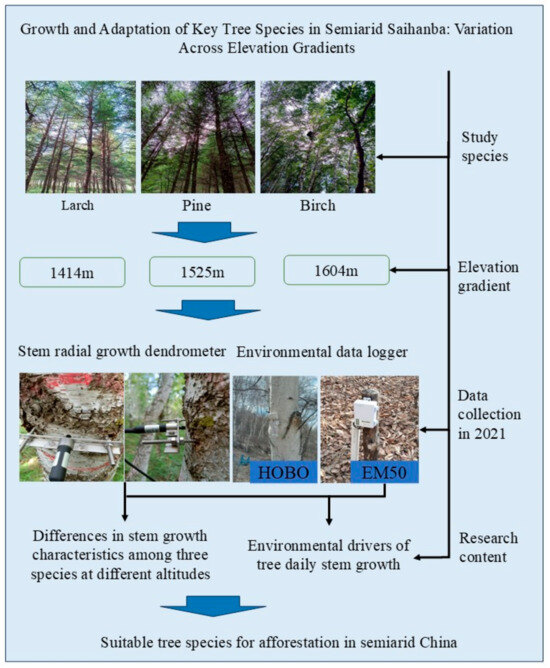
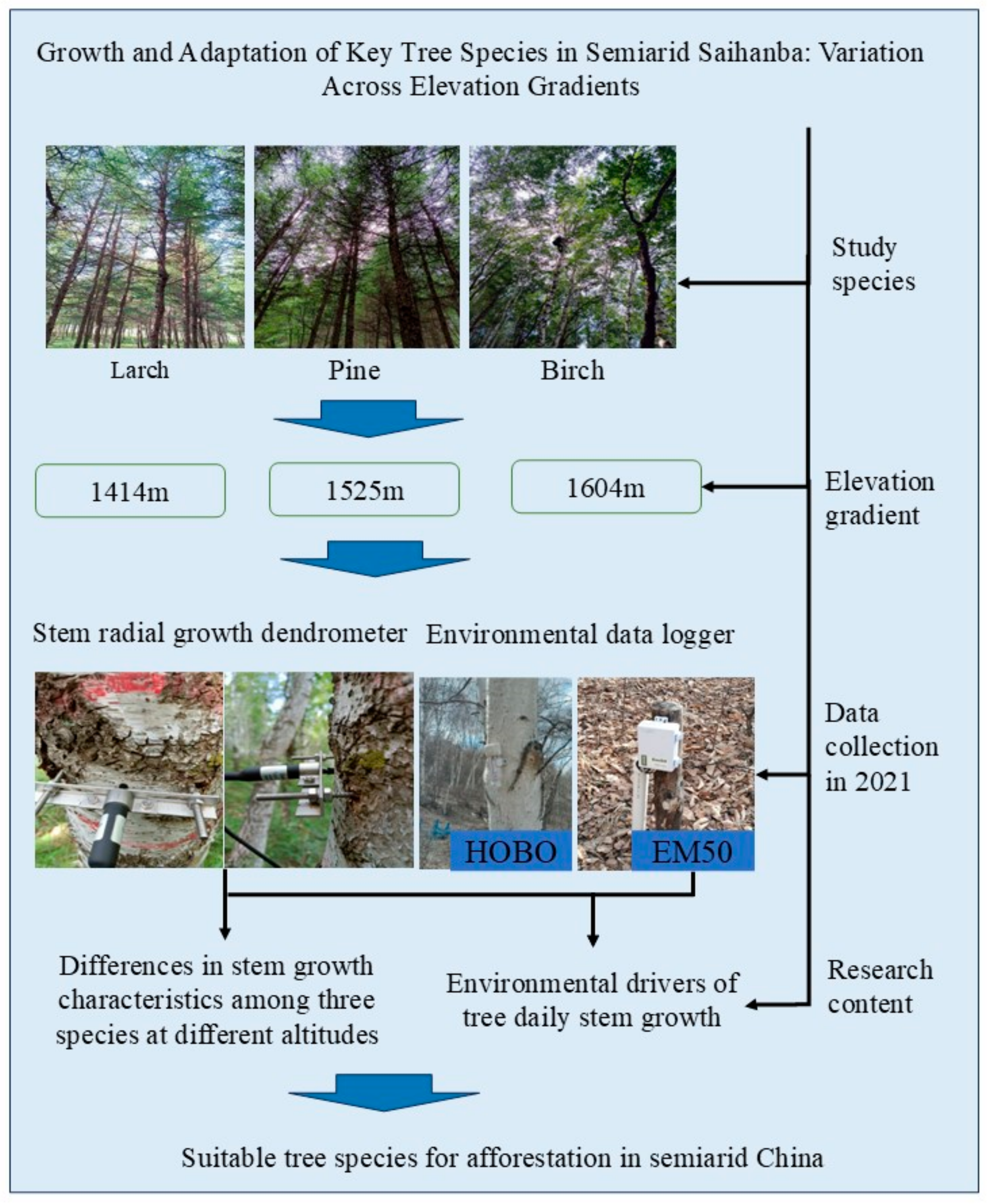
Figure 1.
Research framework illustrating the study of tree growth adaptation in semiarid Saihanba. The study assessed three tree species (larch, pine and birch) along an altitudinal gradient (1414 m, 1525 m and 1604 m) to investigate stem growth variability. Data were collected in 2021 using dendrometers to monitor stem radial growth and environmental data loggers (HOBO Pro v2 U23, Onset, Bourne, MA, USA; Em50/G, Decagon, Pullman, WA, USA) to measure environmental factors (e.g., temperature and soil moisture). The results identified differences in growth responses and the key environmental factors driving daily growth variations. These findings support the selection of resilient tree species for afforestation projects in semiarid environments.
The vegetation of the Saihanba area has historically endured the impact of climate fluctuations, resulting in sparse forest cover and frequent sandstorms, which gradually led to the formation of decertified areas. Positioned as the closest desert area and ecologically fragile region within the Beijing–Tianjin–Hebei area [24], the Saihanba area has been the focal point of efforts to combat desertification since 1962, primarily through afforestation projects. Via 60 years of persistent efforts by afforestation, the forest coverage here has now reached 82%, dominated by larch, pine and birch.
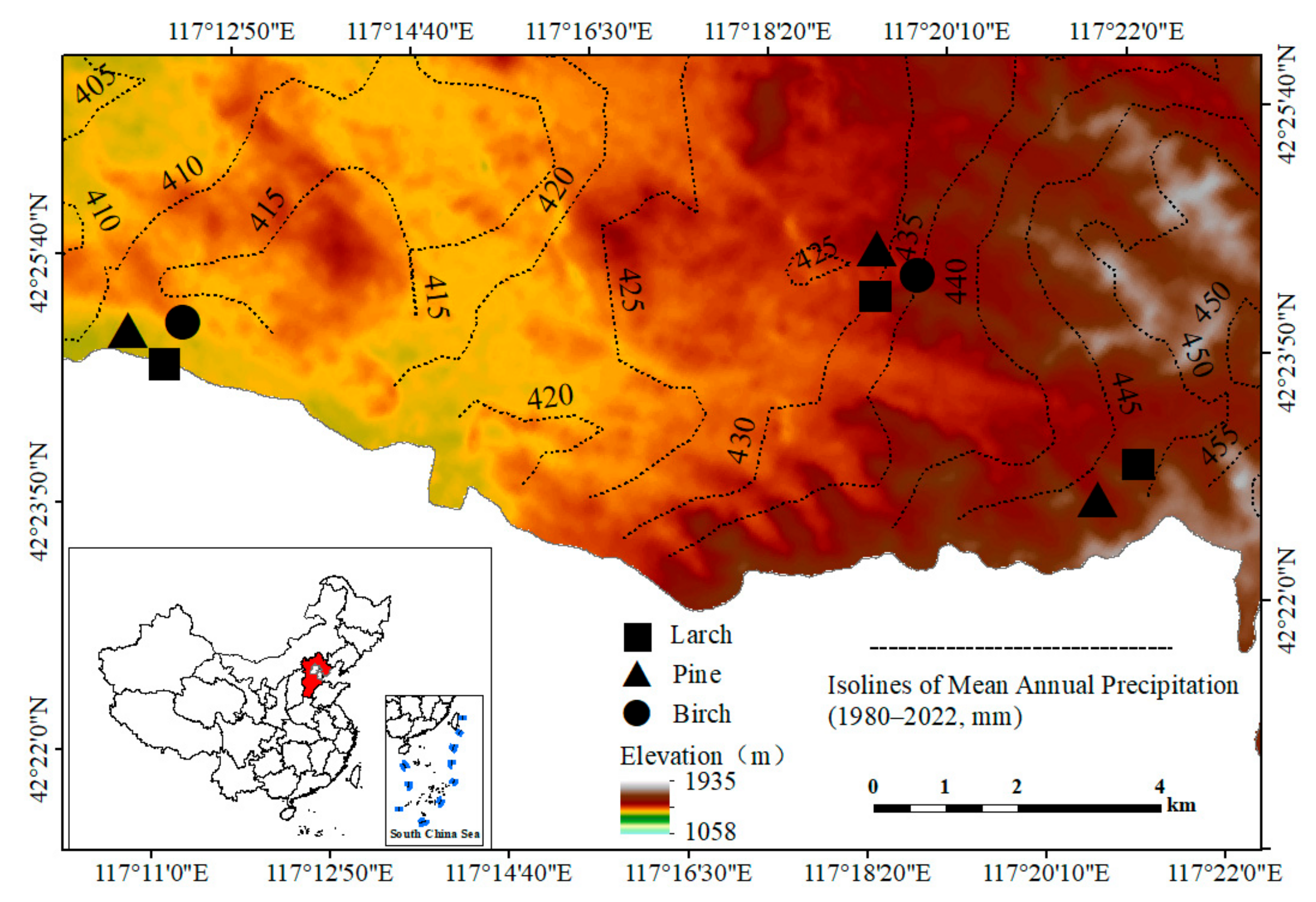
Larch is an endemic species of China, widely distributed in the northern regions, including various areas of Hebei and Shanxi Provinces, such as the Taihang Mountains, Wutai Mountains and Heng Mountains. This species is highly cold-tolerant and typically grows at elevations ranging from 1000 to 2800 m a.s.l. Due to its fast growth and adaptability, it has been the dominant species in the plantations of the Saihanba artificial forest area since the 1960s, now accounting for approximately 70% of the region’s plantations and primarily distributed at elevations between 1300 and 1800 m a.s.l. Pine is a geographical variety of Scots pine (Pinus sylvestris L.) native to Northeast Asia, primarily distributed in the Daxing’anling region of Northeast China and Hulunbuir in Inner Mongolia (47.58°–48.60° N, 118.97°–120.53° E). Due to its strong tolerance to cold and drought and its rapid growth, the species was artificially introduced in the 1950s and has been widely used for reclamation of desertified lands. In the late 1960s, pine was introduced to the Saihanba artificial forest area for large-scale afforestation. Today, it accounts for approximately 20% of the plantation area in Saihanba, primarily distributed in low-elevation areas with water deficits. As a pioneer tree species in the north, birch has good environmental adaptability. It is resistant to humidity, cold and barren soil. Most of them grow on slopes or in forests at elevations ranging from 400 to 4100 m a.s.l. In the Saihanba forest area, coniferous tree species are the main species, and birch natural forest plays a role in maintaining the overall stability of the artificial forest. Thus, in this study, we selected these three tree species—larch, pine and birch—for monitoring along an altitude gradient (1414 m, 1525 m and 1604 m) while simultaneously conducting real-time monitoring of atmospheric and soil hydrothermal factors (Figure 1). At each altitude, a plot was established for each tree species on a relatively flat terrain with a slope close to 0°, resulting in nine plots (three species × three altitudes). However, due to data loss caused by instrument damage, the birch plot at 1604 m was excluded, leaving eight plots for this study (Figure 2). In each plot, four healthy trees belonging to the upper canopy layer and representing the dominant species with similar growth conditions were selected as target specimens. Specific information about the plots is provided in Table 1.
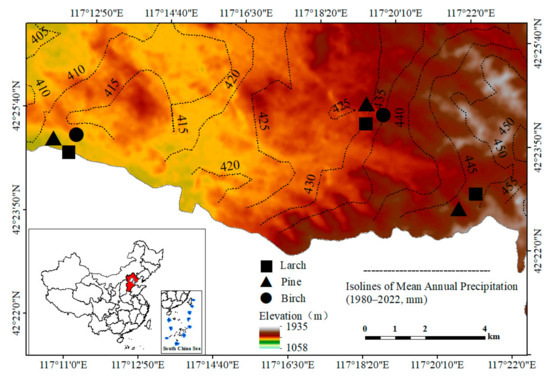
Figure 2.
Location of the monitoring sites of pine (Pinus sylvestris), larch (Larix principis-rupprechtii) and birch (Betula pendula) in the Saihanba artificial forest area.
Table 1.
Detailed information of the sampling plots.
2.2. Tree Stem Growth Data
A point dendrometer (DC2, Ecomatik, Dachau, Germany) was installed at 1.3 m breast height of each target tree. To minimize the influence of bark expansion or contraction on growth data, the dry bark surface at breast height (1.3 m) was removed before installing the sensor probe and metal wire [25]. The monitoring period spanned from January to December 2021, with dynamic growth shrinkage of the trees recorded at intervals of 30 min, resulting in 48 data points per day.
2.3. Meteorological Data
Around each sampling point, air temperature and humidity sensors (HOBO Pro v2 U23, Onset, Bourne, MA, USA) were deployed, and a soil profile with a depth of 90 cm was excavated around the sample trees on gently sloping terrain. Soil temperature and humidity sensors (Em50/G, Decagon, Pullman, WA, USA) were buried to monitor the temperature and humidity of the shallow layer (SM1, 0~40 cm) and deep layer soil (SM2, 40~60 cm). Data were recorded every hour. This provided hourly-scale atmospheric temperature and humidity, as well as soil temperature and humidity, at each sampling point. From this dataset, we calculated various meteorological variables, including daily mean air temperature (Tmean, °C), daily maximum temperature (Tmax, °C), daily minimum temperature (Tmin, °C), relative humidity (RH, %) and vapor pressure deficit (VPD, kPa), as well as daily mean soil temperature (ST1 and ST2, °C) and daily mean soil moisture content (SM1, SM2, m3/m3). Vapor pressure deficit was calculated from the daily mean air temperature and relative humidity using the following equation [26]:
where a = 0.6108, b = 17.27, c = 237.3.
2.4. Data Processing and Analysis
We utilized the ‘treenetproc’ R 4.3.1 package [27] to process the raw data from the Dendrometer based on the zero-growth model, obtaining cumulative stem growth data with a starting point at 0. The output included the starting and ending days of growth for each sampled tree. We employed the daily mean method [28] to extract the daily cumulative stem growth change curves during the growth period. The onset and cessation days of stem growth were defined as the days when 5% and 95% of the total cumulative stem growth amount were reached, respectively. The growth period length was calculated as the difference between the onset and cessation days. We further calculated the daily stem growth rate and the effective growth days (i.e., the number of days with a daily stem growth rate > 0) for each target tree during the growth period. Finally, the cumulative growth of the four target trees at each sampling point was averaged, and then, the logistic growth model was employed to fit the daily cumulative stem change curves.
We employed two-way analysis of variance (ANOVA) to test the differences in six key growth parameters (start of growth days, end of growth days, growth period length, effective growth days, cumulative stem growth amount and stem growth rate) of larch, pine and birch along an altitude gradient. Pearson correlation coefficient analysis was conducted to identify the environmental factors associated with the differences. Random forest analysis was utilized to assess the importance of environmental factors on the daily stem growth. Based on the results of the random forest analysis, we identified the most significant factor contributing to daily stem growth and further analyzed the differences in the responses of stem growth to this factor among the three tree species.
3. Results
3.1. Differences in Stem Growth Characteristics Among Three Species at Different Altitudes
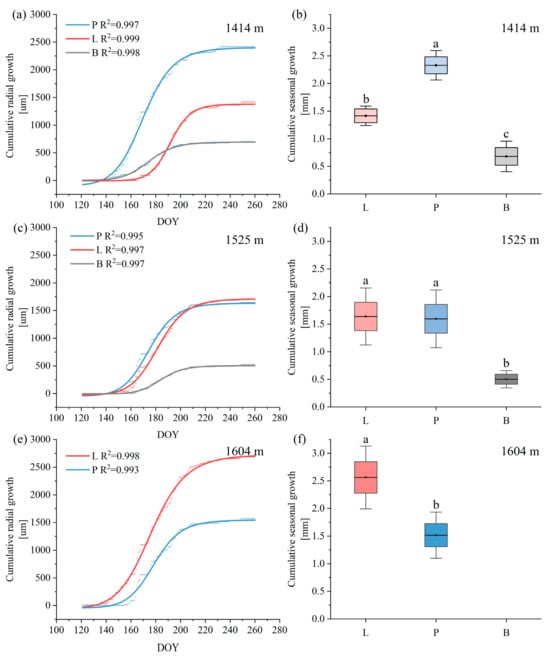
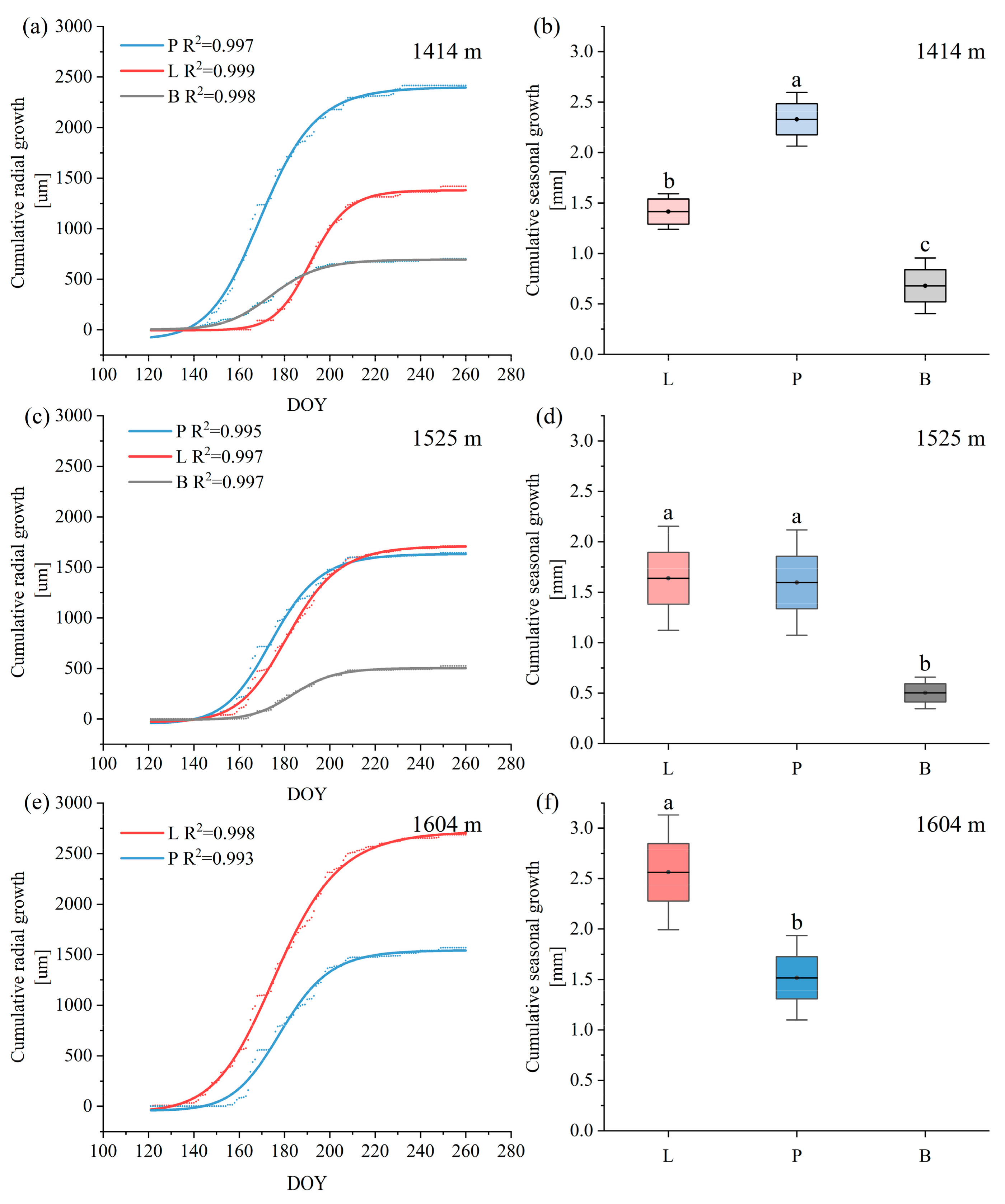
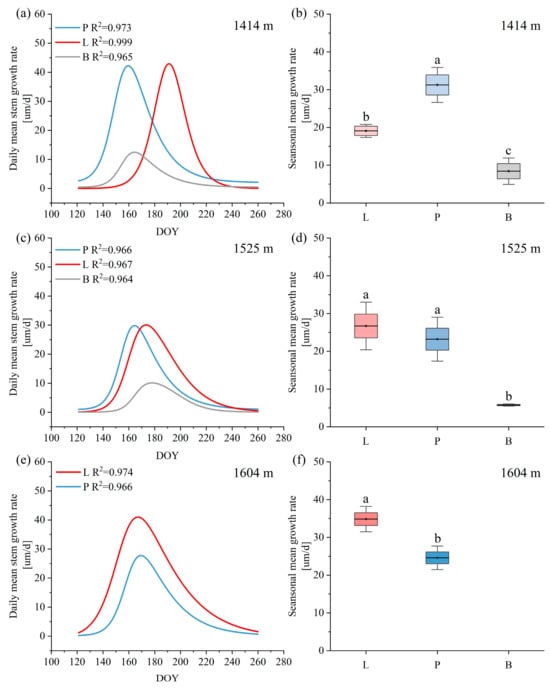
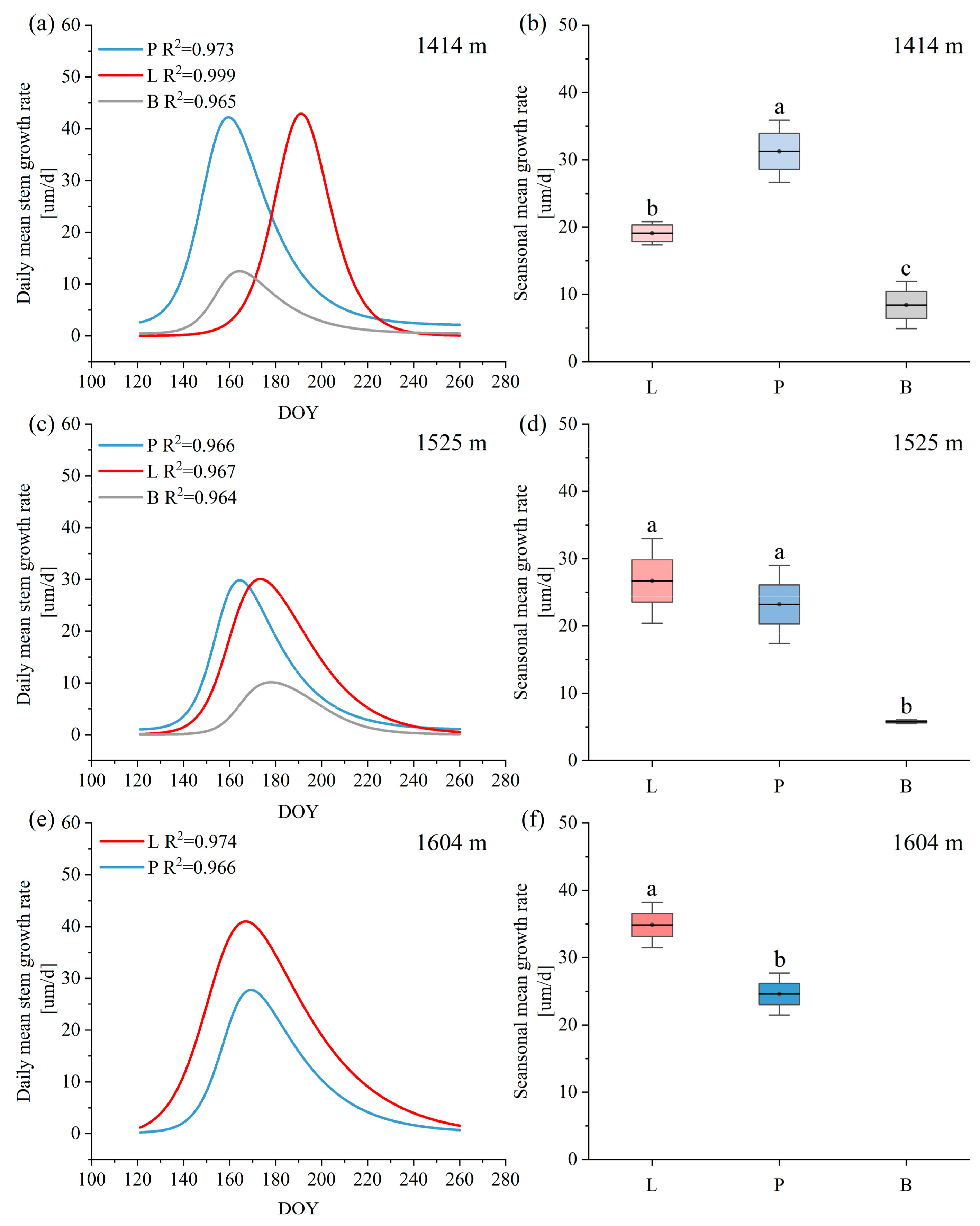
Three tree species consistently experienced sustained growth between 150 and 210 days, followed by a stabilization phase (Figure 3). However, cumulative growth amount and growth rate showed significant variations among three tree species at different altitudes. Altitude induces a shift in growth advantage among different tree species (Figure 3 and Figure 4). At lower altitudes (1414 m), pine trees grew significantly higher than larch, while, at higher altitudes (1604), the reverse pattern was observed (p < 0.05). Specifically, from low to high altitudes, the growth rate and cumulative growth amount of pine decrease, with the growth rate dropping from 31.25 μm/d to 24.60 μm/d and the cumulative growth amount decreasing from 2.42 mm to 1.57 mm. On the contrary, the growth rate and cumulative growth amount of larch were higher at high altitudes (p < 0.05), with the growth rate rising from 19.10 μm/d to 34.85 μm/d and the cumulative growth amount increasing from 1.42 mm to 2.69 mm. Overall, as altitude increases, the species with the fastest growth and the largest cumulative growth shifts from pine to larch. In comparison to coniferous species, birch has significantly lower growth rates and cumulative growth amounts than larch and pine. The growth rate and cumulative growth amount at 1400 m are slightly higher than 1525 m (Figure 3 and Figure 4).
Figure 3.
Cumulative growth amount and differences in growth amount for Larix principis-rupprechtii (L), Pinus sylvestris (P) and Betula pendula (B) at different altitudes (a–f). Red represents Larix principis-rupprechtii, blue represents Pinus sylvestris and gray represents Betula pendula, with color depth indicating altitude variation. DOY stands for “day of year”. Different letters represent significant difference among three species (p < 0.05).
Figure 4.
Daily growth rates and differences in average growth rates within the growing season for Larix principis-rupprechtii (L), Pinus sylvestris (P) and Betula pendula (B) at different altitudes (a–f). Red represents Larix principis-rupprechtii, blue represents Pinus sylvestris and gray represents Betula pendula. DOY stands for “day of year”. Different letters represent significant difference among three species (p < 0.05).
3.2. Variation in Stem Growth Phenology Across Species and Altitude
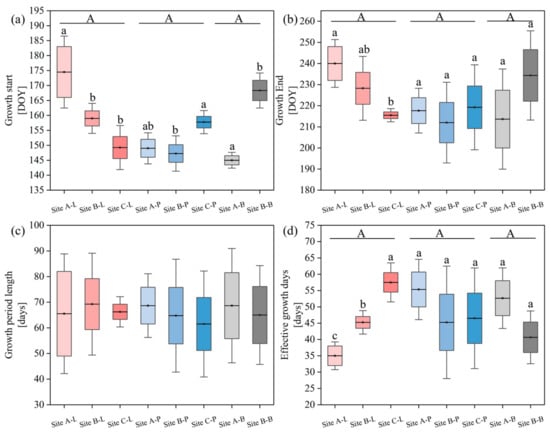
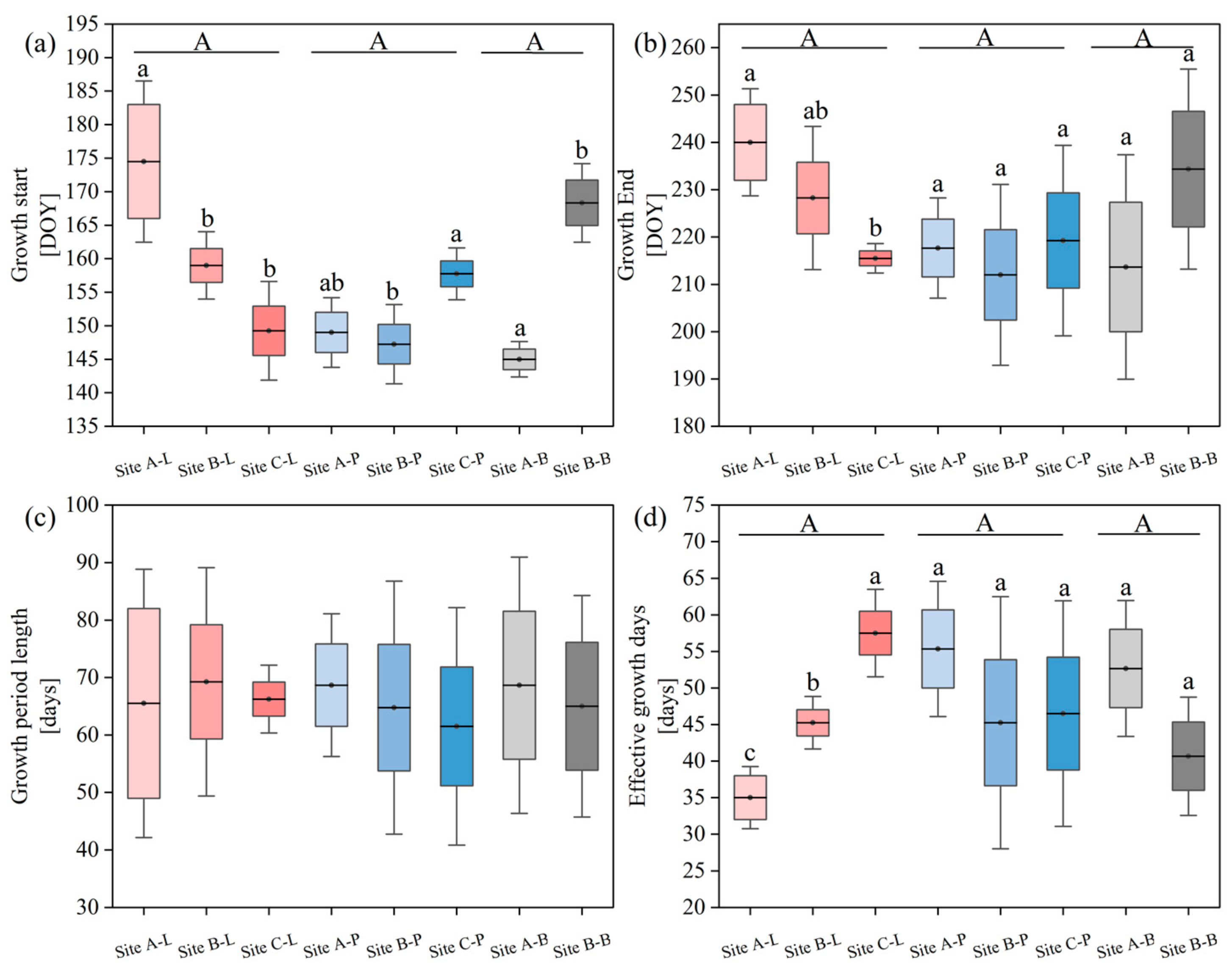
The growth seasons of the three tree species are mainly concentrated from May to September (Figure 5a,b), with average lengths of growth periods ranging from 60 to 70 days (Figure 5c). However, the responses of the start time, end time and effective growth days of the three species to altitude exhibit different patterns. The start and end times of larch growth were significantly advanced with the increase in altitude (p < 0.05). However, pine and birch showed the opposite trend of slight delayed start of growth, and the end time did not change significantly. There was no significant difference in the length of the growing season among the three species, and it did not change with the altitude gradient (Figure 5c, p > 0.05). However, the effective growth period of larch was significantly higher at high altitudes than at low altitudes (Figure 5d, p < 0.05).
Figure 5.
Differences in stem growth phenology among altitudes and species. (a–d) The analysis of significant differences in the start time of growth, end time of growth, length of the growth period and effective growth days for three species across different altitude gradients. Sites A, B and C correspond to altitudes of 1414 m, 1525 m and 1604 m, respectively. L represents Larix principis-rupprechtii, P represents Pinus sylvestris and B represents Betula platyphyll. Uppercase letters indicate significant interspecific differences, while lowercase letters indicate significant altitude differences (p < 0.05).
3.3. Environmental Drivers of Tree Daily Stem Growth
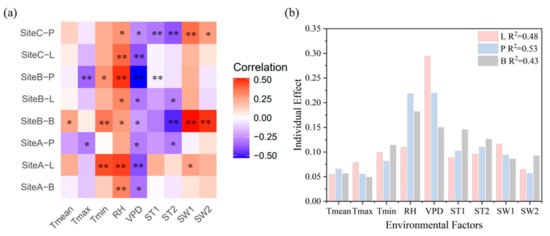
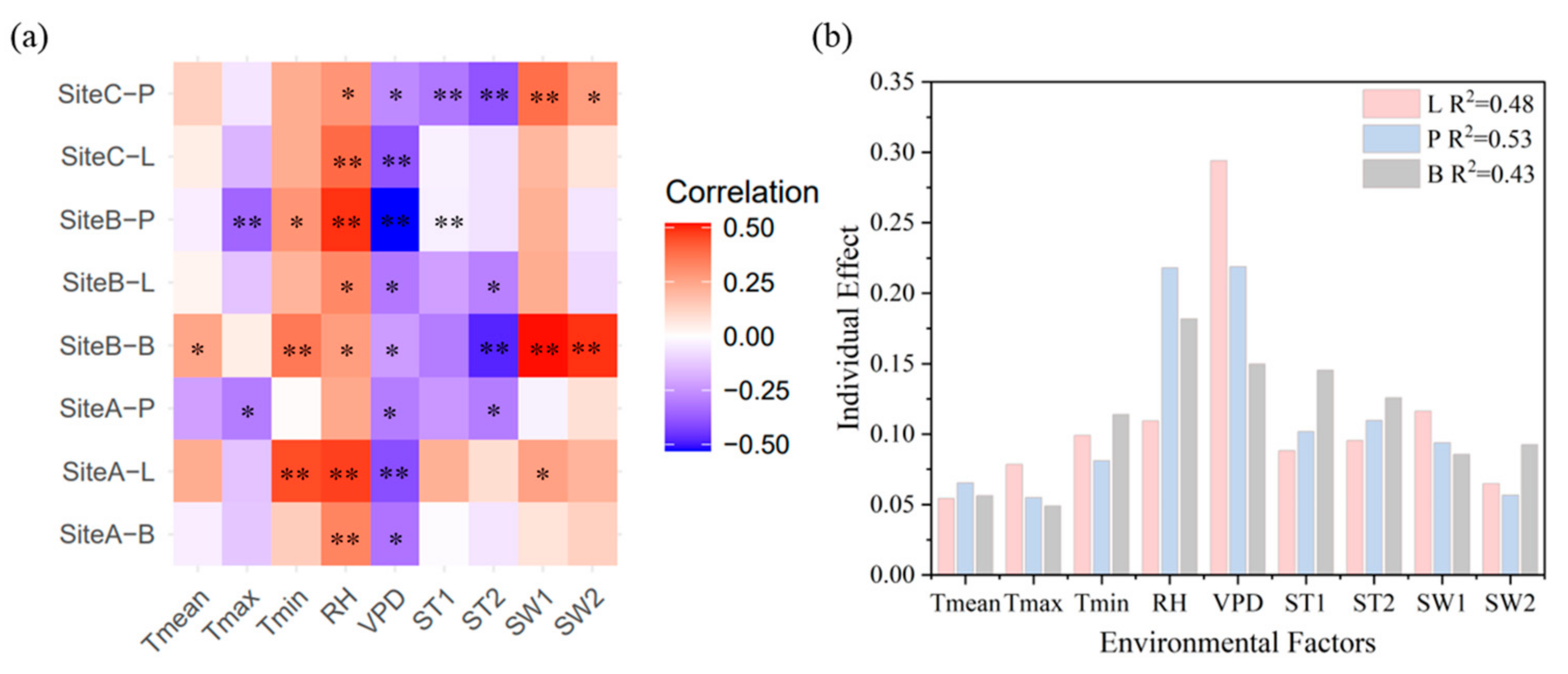
The correlation analysis between tree daily stem growth and environmental factors shows that VPD (negatively correlated) and RH (positively correlated) consistently emerge as significant environmental factors affecting radial tree growth across the three tree species, albeit with varying degrees of influence (Figure 6a, p < 0.05). Similarly, variable importance ranking from the random forest model identifies VPD and RH as the most critical environmental factors affecting tree daily stem growth (Figure 6b). Specifically, larch is more strongly impacted by VPD and RH compared to pine and birch (p < 0.05). At lower altitudes (1414 m), larch shows a heightened correlation with VPD and RH compared to medium and high altitudes. Conversely, pine trees are more vulnerable to the influence of VPD and RH at medium and high altitudes (1604 m). The impact of atmospheric temperature (Tmean, Tmin and Tmax) and soil temperature–humidity (ST1, ST2, SW1 and SW2) on stem growth appears relatively weak. Soil temperature and humidity exhibit contrasting effects: stem growth negatively correlates with soil temperature and positively correlates with soil humidity, possibly due to increased soil moisture loss with the local temperature rise. Furthermore, stem growth appears to be more influenced by shallow soil moisture (SW1) compared to deep soil moisture (SW2) (Figure 6).
Figure 6.
Relationship between daily stem growth amount of three tree species and environmental factors. (a) Correlation analysis: *, p < 0.05 and **, p < 0.01. (b) Variable importance ranking by random forest. Sites A, B and C correspond to altitudes of 1414 m, 1525 m and 1604 m, respectively. L represents Larix principis-rupprechtii, P represents Pinus sylvestris and B represents Betula platyphyll.
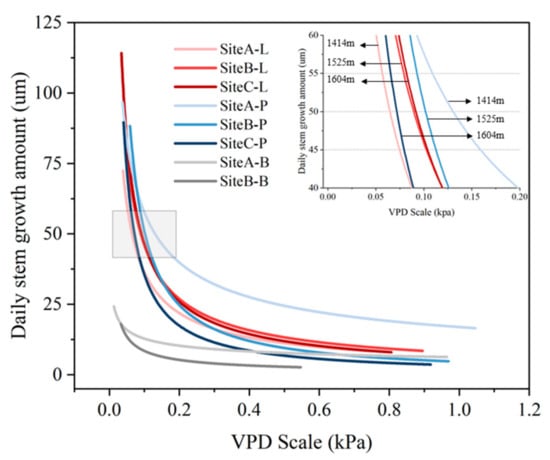
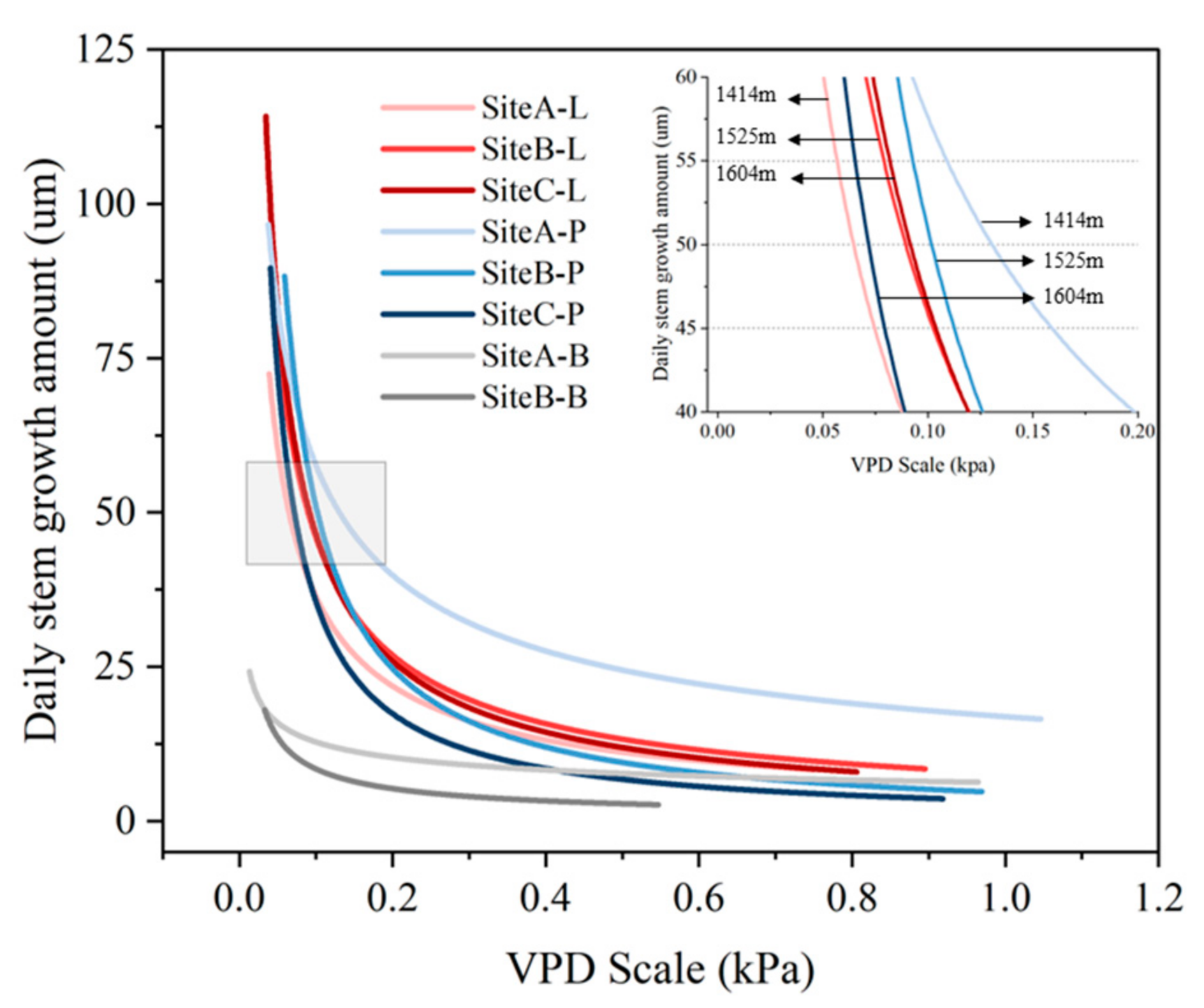
The fitting curves of daily stem growth with VPD (Figure 7) indicate a consistent pattern among the three tree species, where daily stem growth decreases with the increasing VPD. Within the VPD range of 0 to 0.1 kPa, all three species exhibit maximum daily stem growth. However, as VPD surpasses 0.5 kPa, growth becomes negligible for all species. Furthermore, there is an altitude-dependent effect on the VPD conditions required to achieve a specific daily stem growth amount: for larch, the VPD conditions increase with altitude.
Figure 7.
Relationship between daily stem growth of three tree species and VPD. Sites A, B and C represent altitudes of 1414 m, 1525 m and 1604 m, respectively. L represents Larix principis-rupprechtii, P represents Pinus sylvestris and B represents Betula platyphyll.
4. Discussion
This study identified significant differences in stem growth along an altitude gradient among larch, pine, and birch in semi-arid Northern China, consistent with variations in their stem phenology responses. These reflect the different growth adaptability and competitiveness of different tree species in semi-arid regions. Our findings suggest that larch exhibits superior growth advantages in relatively humid high-altitude areas, while pine performs better in relatively arid low-altitude areas. This implies that larch, which predominates in the main body of the Saihanba artificial forest area, might be more susceptible to drought-induced growth decline compared to pine with the rapid global climate changes.
4.1. Altitude-Induced a Shift in Growth Advantage Among Three Tree Species
The growth patterns observed among the three tree species in response to altitude reflect complex interactions influenced by environmental factors and species-specific strategies. In our study, we found that local environmental differences caused by altitude plays a pivotal role in shaping growth dynamics, particularly in relation to the onset, duration and rate of stem growth. Previous research has highlighted the significance of growth phenology in determining annual stem growth variability [29,30,31,32,33,34]. Our findings corroborate these insights, emphasizing that both the number of effective growing days and growth rate are critical factors influencing cumulative stem growth across altitudinal gradients. An earlier onset of growth, a greater number of effective growing days and faster stem growth rates contribute to greater radial cumulative growth. Our observations indicate that pine exhibits a significant growth advantage at lower altitudes. This pattern suggests an adaptation where pine optimizes its growth strategy to maximize annual carbon assimilation under less restrictive environmental conditions [35,36,37]. In contrast, larch has a different adaptive performance: as altitude increases, the phenology of larch becomes more favorable for its growth, resulting in a greater growth advantage at higher altitudes. Additionally, the stem growth of birch also aligns with the indication of growth phenology; notably, the stem cumulative growth amount and growth rate of birch are significantly smaller than those of the two conifer species. This difference may be attributed to varying growth strategies among tree species or different forest types. Broad-leaved tree species typically experience more severe drought stress in stem growth due to their larger leaf area and consequent higher transpiration rates compared to conifers [38]. In the Saihanba artificial forest area, birch belongs to historically remnant natural secondary forests [39], which are more susceptible to interspecific competition pressure compared to later selectively bred tree species in artificial forests. In summary, the local environmental differences caused by altitude changed the growth phenology of the three plants, thus changing their growth advantages.
4.2. Relationships Between Stem Growth of Three Tree Species and Environmental Factors
Changes in altitude can significantly impact the phenological characteristics of trees by altering environmental water and thermal conditions (Figure S1), consequently influencing stem growth. Our findings reveal that daily stem growth amount exhibits the strongest correlations with variables such as VPD (negative correlation), RH (positive correlation) and ST2 (negative correlation), with weaker relationships observed with other environmental factors. This observation aligns with previous studies [40,41]. The atmospheric demand for water, represented by variables such as VPD and RH, is considered a primary determinant of high-frequency variations in stem growth within water-limited regions [42], likely due to its influence on leaf transpiration processes. An increase in VPD enhances leaf transpiration, affecting cell turgor pressure, thereby limiting the rate of division and differentiation of cambial cells [43]. In addition, the acceleration of soil moisture evaporation with an increasing soil temperature exacerbates water limitation on stem growth. The results suggest that soil temperature influences stem growth differently throughout the growing season, promoting growth in the early stage and inhibiting it in the late stage (Figures S2 and S3). This phenomenon is primarily attributed to the long-term snow cover during winter in the Saihanba artificial forest area. The rising temperatures in spring cause snowmelt, which alleviates soil moisture limitations. However, in the late stage of the growing season, increased soil moisture evaporation due to high summer temperatures exacerbate water limitation, thereby inhibiting stem growth.
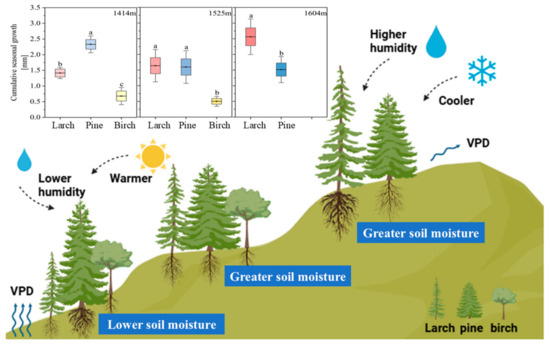
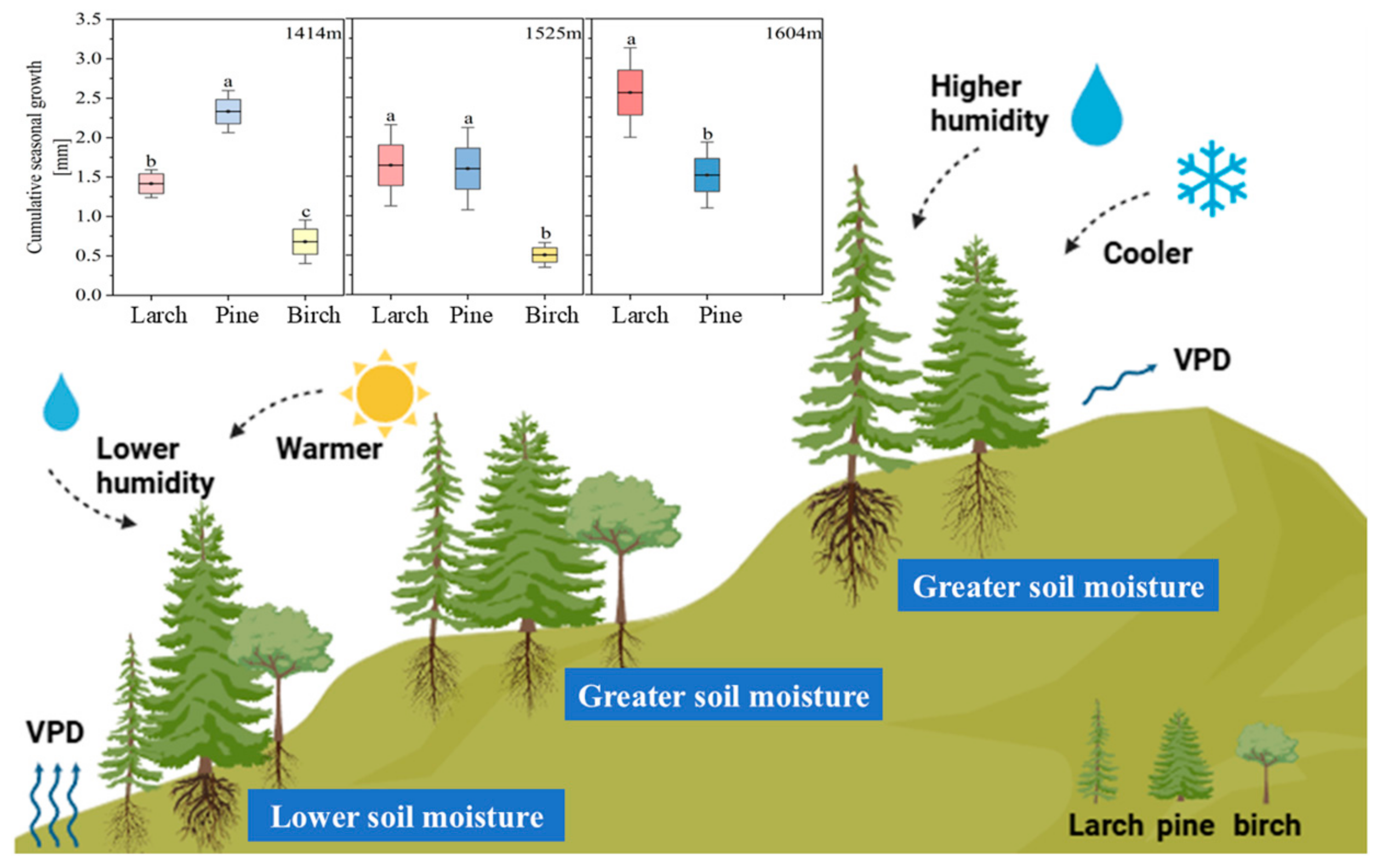
However, there are differences drought sensitivity between larch and pine, with larch showing greater sensitivity to changes in VPD and RH compared to pine. This suggests that larch is more susceptible to water stress, possibly due to its adoption of a non-isohydric regulation strategy in Larch species [44]. Larch cannot completely close their stomata to prevent embolism in the xylem, resulting in a higher transpiration rate and weakened drought resistance [45]. For example, European larch (Larix decidua) exhibits greater drought sensitivity compared to Douglas fir (Pseudotsuga menziesii) and Pinus thunbergii (Pinus nigra) due to its higher transpirational water loss [46]; Japanese larch (Larix kaempferi) faces greater water deficit stress under elevated temperature and drought conditions compared to red pine (Pinus densiflora) [47]. Conversely, pine exhibits a more conservative regulatory strategy, as evidenced by thicker cuticles and deeply sunken stomata in its needles, to balance water demand and risk [48]. For instance, during extreme drought, functional adjustments in the wood anatomical traits of pine clearly exhibit a trade-off between hydraulic efficiency and safety, ensuring a normal supply of crown moisture and enhancing survival capacity under these conditions. Thus, pine trees grow faster than larch in relatively dry low-altitude areas. However, as elevation increases and moisture conditions improve, larch shows a stronger growth advantage (Figure 8).
Figure 8.
Conceptual diagram summarizing the key findings on the growth performance of larch, pine and birch across an altitude gradient in the semiarid region. This figure illustrates the cumulative seasonal growth patterns of three tree species (larch, pine and birch) along three altitudinal gradients (1414 m, 1525 m and 1604 m). Tree size and root density qualitatively represent growth performance, where larger trees with denser roots indicate better growth. Lowercase letters represent the significance of differences in cumulative radial growth (p < 0.05).
4.3. Challenges in the Afforestation Promotion of Larch in Low-Altitude Areas
In water-limited environments, tree ring width indices in low-altitude regions are more susceptible to moisture fluctuations compared to high-altitude areas [49]. Consistent with these findings, our study reveals that, in low-altitude regions, larch relies more heavily on atmospheric moisture, resulting in significantly lower stem growth amount and rates compared to high-altitude areas. This suggests that the species is more susceptible to drought stress-induced growth decline, confirming its weaker drought resistance [50]. Larch exhibits poorer water retention capacity compared to many other tree species [51]. This characteristic is primarily attributed to its opportunistic growth strategy during drought events, which prioritizes rapid resource acquisition and accelerated growth within short periods. There exists a trade-off between tree growth and drought resistance [52,53], likely stemming from limitations in wood functional traits [54]. Enhancing wood structural properties may lead to reduced hydraulic efficiency and vice versa. Larch possesses a more efficient wood transport system and belongs to fast-growing species, which also imposes greater constraints on its hydraulic efficiency.
As the primary afforestation species in the semi-arid regions of Northern China, larch suitability for high-altitude and humid environments in its natural state implies its unsuitability for low-altitude and dry conditions. With increasing temperatures and aridification, this unsuitability is likely to become more pronounced, potentially leading to a contraction of its potential distribution area and a shift in vertical distribution towards higher altitudes. Many drought-sensitive tree species are gradually being replaced by more drought-tolerant species. For instance, in European forests, the distribution range of Norway spruce has significantly decreased and is gradually being supplanted by Silver fir and Douglas fir with greater drought resistance and resilience [55]. While tree species selected for afforestation in semi-arid regions typically exhibit strong drought resistance, the escalating drought stress caused by rising temperatures in recent decades may push some of these species to the brink of mortality. Our study revealed a significant decline in the stem growth of larch in the low-altitude areas of the Saihanba artificial forest area, indicating intensified drought stress. This suggests that, against the backdrop of global climate change, there may be challenges in future afforestation efforts involving larch in low-altitude areas. In China’s semi-arid regions, as afforestation efforts progress, the remaining areas available for future afforestation are primarily those with poor environmental and site conditions. Therefore, careful consideration is required to determine whether larch remains a suitable choice for afforestation in these challenging regions.
This study highlights growth differences among three tree species along an altitu-dinal gradient in semi-arid regions and their environmental responses, but several limitations remain. First, the sampling scope was limited; equipment failure excluded the high-altitude birch plot, impacting dataset completeness and species comparability. Future studies should expand sampling and increase plots to improve data comprehensiveness and generalizability. Second, the study relied on a single growing season, limiting insights into long-term adaptability. Multi-year monitoring and tree ring analysis are needed to capture long-term growth dynamics and climate responses. Finally, physiological and hydraulic traits, such as conductivity, stomatal regulation and wood anatomy, were not quantified. Integrating these traits in future research will enhance understanding of species-specific adaptability and growth strategies.
5. Conclusions
In summary, in the semi-arid region of Saihanba in Northern China, as the elevation increases, the tree species with the fastest growth rate and highest cumulative growth shifts from pine to larch. In low-altitude regions, larch shows greater sensitivity to climatic variables related to water stress during the growing season, contributing to its slower growth under these conditions. Global climate warming may heighten the risk of growth decline in the widely distributed larch plantations of the Saihanba artificial forest area. Conversely, pine, with its stronger drought resistance, may be a more suitable choice for future afforestation in semi-arid areas. Future research should focus on tree species in water-limited mountainous areas, integrating hydraulic traits to better inform the selection of afforestation species in semi-arid regions.
Supplementary Materials
The following supporting information can be downloaded at https://www.mdpi.com/article/10.3390/f16010050/s1, Figure S1: (a) Daily average temperature at Site A, B and C; (b) Relative humidity at Site A, B and C; (c) Vapor pressure deficit at Site A, B and C; (d) Daily average soil temperature at Site A, B and C (the mean value of ST1 and ST2); (e) Daily average soil moisture at Site A, B and C (the mean value of SW1 and SW2); Figure S2: Pearson correlation between atmospheric factors and daily radial growth; Figure S3: Pearson correlation between soil factors and daily radial growth.
Author Contributions
Conceptualization, M.W. and L.S.; methodology, M.W. and D.T.; software, M.W. and Y.M.; validation, M.W.; formal analysis, M.W.; investigation, Y.G. and G.Z.; data curation, M.W. and L.S.; writing—original draft preparation, M.W.; writing—review and editing, D.T. and L.S.; visualization, M.W. and C.X.; supervision, D.T.; project administration, D.T. and L.S.; funding acquisition, D.T. All authors have read and agreed to the published version of the manuscript.
Funding
This work was supported by the National Key R&D Program of China (No. 2022YFD2201600) and National Natural Science Foundation of China (No. 42161144008).
Data Availability Statement
The data underlying this article will be shared on reasonable request to the corresponding author.
Conflicts of Interest
The authors declare no conflicts of interest.
References
- Bastin, J.-F.; Berrahmouni, N.; Grainger, A.; Maniatis, D.; Mollicone, D.; Moore, R.; Patriarca, C.; Picard, N.; Sparrow, B.; Abraham, E.M.; et al. The extent of forest in dryland biomes. Science 2017, 356, 635–638. [Google Scholar] [CrossRef] [Scilit]
- Bastin, J.-F.; Finegold, Y.; Garcia, C.; Mollicone, D.; Rezende, M.; Routh, D.; Zohner, C.M.; Crowther, T.W. The global tree restoration potential. Science 2019, 365, 76–79. [Google Scholar] [CrossRef] [Scilit] [PubMed]
- Reisman-Berman, O.; Keasar, T.; Tel-Zur, N. Native and non-native species for dryland afforestation: Bridging ecosystem integrity and livelihood support. Ann. For. Sci. 2019, 76, 114. [Google Scholar] [CrossRef] [Scilit]
- Cai, L.; Li, J.; Bai, X.; Jin, Y.; Chen, Z. Variations in the growth response of Pinus tabulaeformis to a warming climate at the northern limits of its natural range. Trees 2020, 34, 707–719. [Google Scholar] [CrossRef] [Scilit]
- Jung, J.B.; Kim, H.J.; Jung, J.S.; Kim, J.W.; Park, P.S. Differences in climate and drought response of the exotic plantation species Abies firma, Cryptomeria japonica, and Chamaecyparis obtusa in southern Korea. J. For. Res. 2020, 25, 214–222. [Google Scholar] [CrossRef] [Scilit]
- Li, M.-Y.; Fang, L.-D.; Duan, C.-Y.; Cao, Y.; Yin, H.; Ning, Q.-R.; Hao, G.-Y. Greater risk of hydraulic failure due to increased drought threatens pine plantations in Horqin Sandy Land of northern China. For. Ecol. Manag. 2020, 461, 117980. [Google Scholar] [CrossRef] [Scilit]
- Arend, M.; Link, R.M.; Patthey, R.; Hoch, G.; Schuldt, B.; Kahmen, A. Rapid hydraulic collapse as cause of drought-induced mortality in conifers. Proc. Natl. Acad. Sci. USA 2021, 118, e2025251118. [Google Scholar] [CrossRef] [Scilit] [PubMed]
- Fang, L.-D.; Ning, Q.-R.; Guo, J.-J.; Gong, X.-W.; Zhu, J.-J.; Hao, G.-Y. Hydraulic limitation underlies the dieback of Populus pseudo-simonii trees in water-limited areas of northern China. For. Ecol. Manag. 2021, 483, 118764. [Google Scholar] [CrossRef] [Scilit]
- Trotsiuk, V.; Babst, F.; Grossiord, C.; Gessler, A.; Forrester, D.I.; Buchmann, N.; Schaub, M.; Eugster, W. Tree growth in Switzerland is increasingly constrained by rising evaporative demand. J. Ecol. 2021, 109, 2981–2990. [Google Scholar] [CrossRef] [Scilit]
- He, P.; Sardans, J.; Wang, X.; Ma, C.; Man, L.; Peñuelas, J.; Han, X.; Jiang, Y.; Li, M.H. Nutritional changes in trees during drought-induced mortality: A comprehensive meta-analysis and a field study. Glob. Change Biol. 2024, 30, e17133. [Google Scholar] [CrossRef] [Scilit]
- DeSoto, L.; Cailleret, M.; Sterck, F.; Jansen, S.; Kramer, K.; Robert, E.M.R.; Aakala, T.; Amoroso, M.M.; Bigler, C.; Camarero, J.J.; et al. Low growth resilience to drought is related to future mortality risk in trees. Nat. Commun. 2020, 11, 545. [Google Scholar] [CrossRef] [Scilit]
- Huang, L. A review on the climatic regulation effects of afforestation and its impact mechanisms. Acta Ecol. Sin. 2021, 41, 469–478. [Google Scholar] [CrossRef] [Scilit]
- D’Orangeville, L.; Itter, M.; Kneeshaw, D.; Munger, J.W.; Richardson, A.D.; Dyer, J.M.; Orwig, D.A.; Pan, Y.; Pederson, N. Peak radial growth of diffuse-porous species occurs during periods of lower water availability than for ring-porous and coniferous trees. Tree Physiol. 2022, 42, 304–316. [Google Scholar] [CrossRef] [Scilit]
- Dow, C.; Kim, A.Y.; D’Orangeville, L.; Gonzalez-Akre, E.B.; Helcoski, R.; Herrmann, V.; Harley, G.L.; Maxwell, J.T.; McGregor, I.R.; McShea, W.J.; et al. Warm springs alter timing but not total growth of temperate deciduous trees. Nature 2022, 608, 552–557. [Google Scholar] [CrossRef] [Scilit] [PubMed]
- Gazol, A.; Ribas, M.; Gutiérrez, E.; Camarero, J.J. Aleppo pine forests from across Spain show drought-induced growth decline and partial recovery. Agric. For. Meteorol. 2017, 232, 186–194. [Google Scholar] [CrossRef] [Scilit]
- Popkova, M.I.; Vaganov, E.A.; Shishov, V.V.; Babushkina, E.A.; Rossi, S.; Fonti, M.V.; Fonti, P. Modeled Tracheidograms Disclose Drought Influence on Pinus sylvestris Tree-Rings Structure From Siberian Forest-Steppe. Front. Plant Sci. 2018, 9, 1144. [Google Scholar] [CrossRef] [Scilit] [PubMed]
- Suarez, M.L.; Ghermandi, L.; Kitzberger, T. Factors predisposing episodic drought-induced tree mortality in Nothofagus—Site, climatic sensitivity and growth trends. J. Ecol. 2004, 92, 954–966. [Google Scholar] [CrossRef] [Scilit]
- Simeone, C.; Maneta, M.P.; Holden, Z.A.; Sapes, G.; Sala, A.; Dobrowski, S.Z. Coupled ecohydrology and plant hydraulics modeling predicts ponderosa pine seedling mortality and lower treeline in the US Northern Rocky Mountains. New Phytol. 2019, 221, 1814–1830. [Google Scholar] [CrossRef] [Scilit]
- Seidl, R.; Thom, D.; Kautz, M.; Martin-Benito, D.; Peltoniemi, M.; Vacchiano, G.; Wild, J.; Ascoli, D.; Petr, M.; Honkaniemi, J.; et al. Forest disturbances under climate change. Nat. Clim. Change 2017, 7, 395–402. [Google Scholar] [CrossRef] [Scilit]
- van der Maaten, E.; Pape, J.; van der Maaten-Theunissen, M.; Scharnweber, T.; Smiljanić, M.; Cruz-García, R.; Wilmking, M. Distinct growth phenology but similar daily stem dynamics in three co-occurring broadleaved tree species. Tree Physiol. 2018, 38, 1820–1828. [Google Scholar] [CrossRef] [Scilit]
- Meyer, B.F.; Buras, A.; Rammig, A.; Zang, C.S. Higher susceptibility of beech to drought in comparison to oak. Dendrochronologia 2020, 64, 125780. [Google Scholar] [CrossRef] [Scilit]
- Polle, A.; Chen, S.L.; Eckert, C.; Harfouche, A. Engineering Drought Resistance in Forest Trees. Front. Plant Sci. 2019, 9, 1875. [Google Scholar] [CrossRef] [Scilit] [PubMed]
- Yin, X.-H.; Hao, G.-Y.; Sterck, F. Ring- and diffuse-porous tree species from a cold temperate forest diverge in stem hydraulic traits, leaf photosynthetic traits, growth rate and altitudinal distribution. Tree Physiol. 2023, 43, 722–736. [Google Scholar] [CrossRef] [Scilit] [PubMed]
- Xing, B.; Wang, Y.; Yin, Z.; Shao, H.; He, Z. Influence of forest ecosystem on regional temperature and precipitation variation in Saihanba region. Geol. Bull. China 2023, 42, 2174–2184. [Google Scholar] [CrossRef]
- Zweifel, R.; Haeni, M.; Buchmann, N.; Eugster, W. Are trees able to grow in periods of stem shrinkage? New Phytol. 2016, 211, 839–849. [Google Scholar] [CrossRef] [Scilit]
- Campbell, G.S.; Norman, J.M. An Introduction to Environmental Biophysics, 2nd ed.; Springer: New York, NY, USA, 1998. [Google Scholar]
- Knüsel, S.; Peters, R.L.; Haeni, M.; Wilhelm, M.; Zweifel, R. Processing and Extraction of Seasonal Tree Physiological Parameters from Stem Radius Time Series. Forests 2021, 12, 765. [Google Scholar] [CrossRef] [Scilit]
- Deslauriers, A.; Rossi, S.; Anfodillo, T. Dendrometer and intra-annual tree growth: What kind of information can be inferred? Dendrochronologia 2007, 25, 113–124. [Google Scholar] [CrossRef] [Scilit]
- Rathgeber, C.B.K.; Rossi, S.; Bontemps, J.-D. Cambial activity related to tree size in a mature silver-fir plantation. Ann. Bot. 2011, 108, 429–438. [Google Scholar] [CrossRef] [Scilit]
- Rossi, S.; Anfodillo, T.; Čufar, K.; Cuny, H.E.; Deslauriers, A.; Fonti, P.; Frank, D.; Gričar, J.; Gruber, A.; King, G.M.; et al. A meta-analysis of cambium phenology and growth: Linear and non-linear patterns in conifers of the northern hemisphere. Ann. Bot. 2013, 112, 1911–1920. [Google Scholar] [CrossRef] [Scilit]
- Rossi, S.; Girard, M.-J.; Morin, H. Lengthening of the duration of xylogenesis engenders disproportionate increases in xylem production. Glob. Change Biol. 2014, 20, 2261–2271. [Google Scholar] [CrossRef] [Scilit] [PubMed]
- He, M.; Yang, B.; Shishov, V.; Rossi, S.; Bräuning, A.; Ljungqvist, F.C.; Grießinger, J. Relationships between Wood Formation and Cambium Phenology on the Tibetan Plateau during 1960–2014. Forests 2018, 9, 86. [Google Scholar] [CrossRef] [Scilit]
- Ren, P.; Ziaco, E.; Rossi, S.; Biondi, F.; Prislan, P.; Liang, E. Growth rate rather than growing season length determines wood biomass in dry environments. Agric. For. Meteorol. 2019, 271, 46–53. [Google Scholar] [CrossRef] [Scilit]
- Tian, Q.; He, Z.; Xiao, S.; Peng, X.; Lin, P.; Zhu, X.; Feng, X. Intra-annual stem radial growth of Qinghai spruce and its environmental drivers in the Qilian Mountains, northwestern China. Sci. Total Environ. 2024, 915, 170093. [Google Scholar] [CrossRef] [Scilit] [PubMed]
- Nord, E.A.; Lynch, J.P. Plant phenology: A critical controller of soil resource acquisition. J. Exp. Bot. 2009, 60, 1927–1937. [Google Scholar] [CrossRef] [Scilit]
- Li, M.-Y.; Leng, Q.-N.; Hao, G.-Y. Contrasting patterns of radial growth rate between Larix principis-rupprechtii and Pinus sylvestris var. mongolica along an elevational gradient are mediated by differences in xylem hydraulics. For. Ecol. Manag. 2021, 497, 119524. [Google Scholar] [CrossRef] [Scilit]
- Wu, H.; Fu, C.; Wu, H.-W.; Zhang, L. Influence of the dry event induced hydraulic redistribution on water and carbon cycles at five AsiaFlux forest sites: A site study combining measurements and modeling. J. Hydrol. 2020, 587, 124979. [Google Scholar] [CrossRef] [Scilit]
- Liu, W.; Li, J.; Gong, J.; Zhao, L.; Xiang, W.; Cheng, X.; Wang, W.; Zhang, Y. Variation in leaf functional traits and adaptation strategies of dominant tree species in a Lithocarpus glaber-Cyclobalanopsis glauca evergreen broad-leaved forest. Acta Ecol. Sin. 2022, 42, 7256–7265. [Google Scholar] [CrossRef] [Scilit]
- Yang, J.; El-Kassaby, Y.A.; Guan, W. The effect of slope aspect on vegetation attributes in a mountainous dry valley, Southwest China. Sci. Rep. 2020, 10, 16465. [Google Scholar] [CrossRef] [Scilit]
- Köcher, P.; Horna, V.; Leuschner, C. Environmental control of daily stem growth patterns in five temperate broad-leaved tree species. Tree Physiol. 2012, 32, 1021–1032. [Google Scholar] [CrossRef] [Scilit]
- Zhou, W.; Leung, L.R.; Lu, J. The Role of Interactive Soil Moisture in Land Drying Under Anthropogenic Warming. Geophys. Res. Lett. 2023, 50, e2023GL105308. [Google Scholar] [CrossRef] [Scilit]
- Oberhuber, W.; Gruber, A.; Kofler, W.; Swidrak, I. Radial stem growth in response to microclimate and soil moisture in a drought-prone mixed coniferous forest at an inner Alpine site. Eur. J. For. Res. 2014, 133, 467–479. [Google Scholar] [CrossRef] [Scilit]
- Yuan, W.; Zheng, Y.; Piao, S.; Ciais, P.; Lombardozzi, D.; Wang, Y.; Ryu, Y.; Chen, G.; Dong, W.; Hu, Z.; et al. Increased atmospheric vapor pressure deficit reduces global vegetation growth. Sci. Adv. 2019, 5, eaax1396. [Google Scholar] [CrossRef] [Scilit]
- Xiao, J.Y.; Zhang, W.Y.; Mou, Y.M.; Lyu, L.X. Differences of drought tolerance of the main tree species in Dongling Mountain, Beijing, China as indicated by tree rings. Chin. J. Appl. Ecol. 2021, 32, 3487–3496. [Google Scholar] [CrossRef] [Scilit]
- Matyssek, R.; Kozovits, A.R.; Wieser, G.; Augustaitiene, I.; Augustaitis, A. Biological reactions of forests to climate change and air pollution. Eur. J. For. Res. 2014, 133, 671–673. [Google Scholar] [CrossRef] [Scilit]
- Eilmann, B.; Rigling, A. Tree-growth analyses to estimate tree species’ drought tolerance. Tree Physiol. 2012, 32, 178–187. [Google Scholar] [CrossRef] [Scilit]
- Jo, H.; Chang, H.; An, J.; Cho, M.S.; Son, Y. Species specific physiological responses of Pinus densiflora and Larix kaempferi seedlings to open-field experimental warming and precipitation manipulation. For. Sci. Technol. 2019, 15, 44–50. [Google Scholar] [CrossRef] [Scilit]
- Xiong, Q.; Du, E.; Xue, F.; Li, W.; Zhou, Z.; Zhao, S.; Jiang, Y. Response of radial growth of artificial coniferous forest to hydrothermal conditions in Saihanba Area. Acta Ecol. Sin. 2022, 42, 5371–5380. [Google Scholar] [CrossRef] [Scilit]
- Marqués, L.; Camarero, J.J.; Gazol, A.; Zavala, M.A. Drought impacts on tree growth of two pine species along an altitudinal gradient and their use as early-warning signals of potential shifts in tree species distributions. For. Ecol. Manag. 2016, 381, 157–167. [Google Scholar] [CrossRef] [Scilit]
- Zhang, X.; Li, X.; Manzanedo, R.D.; D’Orangeville, L.; Lv, P.; Wang, C.; Xu, C.; Hou, M.; Huang, X.; Rademacher, T. High risk of growth cessation of planted larch under extreme drought. Environ. Res. Lett. 2021, 16, 014040. [Google Scholar] [CrossRef] [Scilit]
- Zhang, J.; Gou, X.; Pederson, N.; Zhang, F.; Niu, H.; Zhao, S.; Wang, F. Cambial phenology in Juniperus przewalskii along different altitudinal gradients in a cold and arid region. Tree Physiol. 2018, 38, 840–852. [Google Scholar] [CrossRef] [Scilit]
- McDowell, N.; Pockman, W.T.; Allen, C.D.; Breshears, D.D.; Cobb, N.; Kolb, T.; Plaut, J.; Sperry, J.; West, A.; Williams, D.G.; et al. Mechanisms of plant survival and mortality during drought: Why do some plants survive while others succumb to drought? New Phytol. 2008, 178, 719–739. [Google Scholar] [CrossRef] [Scilit] [PubMed]
- Roskilly, B.; Keeling, E.; Hood, S.; Giuggiola, A.; Sala, A. Conflicting functional effects of xylem pit structure relate to the growth-longevity trade-off in a conifer species. Proc. Natl. Acad. Sci. USA 2019, 116, 15282–15287. [Google Scholar] [CrossRef] [Scilit] [PubMed]
- Duan, C.Y.; Li, M.Y.; Fang, L.D.; Cao, Y.; Wu, D.D.; Liu, H.; Ye, Q.; Hao, G.Y. Greater hydraulic safety contributes to higher growth resilience to drought across seven pine species in a semi-arid environment. Tree Physiol. 2022, 42, 727–739. [Google Scholar] [CrossRef] [Scilit]
- Vitali, V.; Büntgen, U.; Bauhus, J. Silver fir and Douglas fir are more tolerant to extreme droughts than Norway spruce in south-western Germany. Glob. Change Biol. 2017, 23, 5108–5119. [Google Scholar] [CrossRef] [Scilit]

Disclaimer/Publisher’s Note: The statements, opinions and data contained in all publications are solely those of the individual author(s) and contributor(s) and not of MDPI and/or the editor(s). MDPI and/or the editor(s) disclaim responsibility for any injury to people or property resulting from any ideas, methods, instructions or products referred to in the content. |
© 2024 by the authors. Licensee MDPI, Basel, Switzerland. This article is an open access article distributed under the terms and conditions of the Creative Commons Attribution (CC BY) license (https://creativecommons.org/licenses/by/4.0/).