Article

Utilizing Grid Data and Deep Learning for Forest Fire Occurrences and Decision Support: A Case Study in the Ningxia Hui Autonomous Region


1
Precision Forestry Key Laboratory of Beijing, Beijing Forestry University, Beijing 100083, China
2
Research Centre of Ecology & Environment for Coastal Area and Deep Sea, Southern Marine Science and Engineering Guangdong Laboratory (Guangzhou), Guangzhou 511458, China
3
School of Ecology, Environment and Resources, Guangdong University of Technology, Guangzhou 510006, China
4
College of Mathematics and Computer Science, Zhejiang A & F University, Hangzhou 311300, China
5
Planning and Design Office, Ningxia Forestry Survey and Planning Institute, Yinchuan 750010, China
6
School of Geographical Sciences, Harbin Normal University, Harbin 150028, China
7
College of Materials Science and Engineering, Beijing University of Chemical Technology, Beijing 100029, China
*
Authors to whom correspondence should be addressed.
Forests 2023, 14(12), 2418; https://doi.org/10.3390/f14122418
Submission received: 20 November 2023 / Revised: 8 December 2023 / Accepted: 10 December 2023 / Published: 12 December 2023
(This article belongs to the Special Issue Integrated Measurements for Precision Forestry)

Abstract

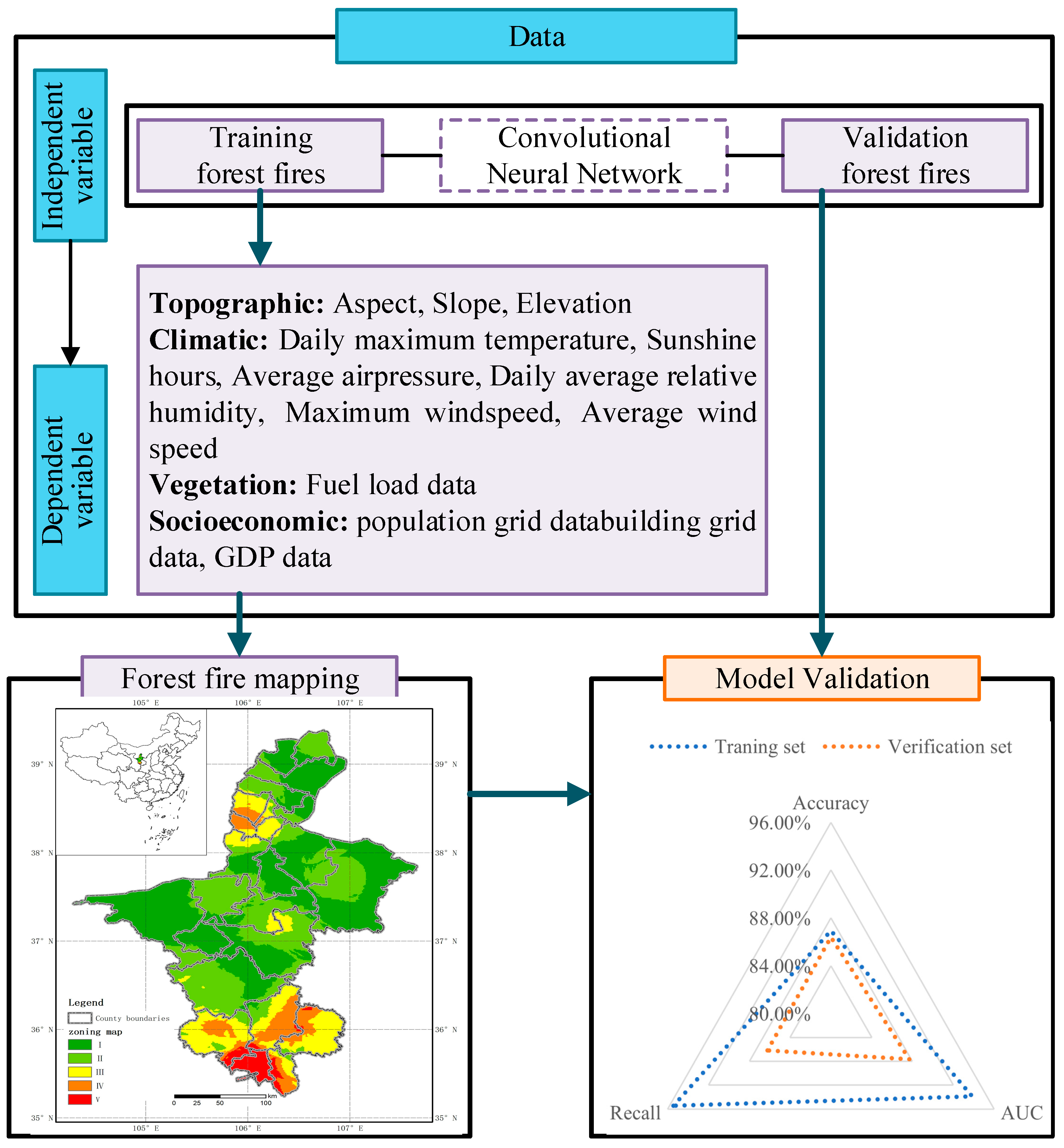
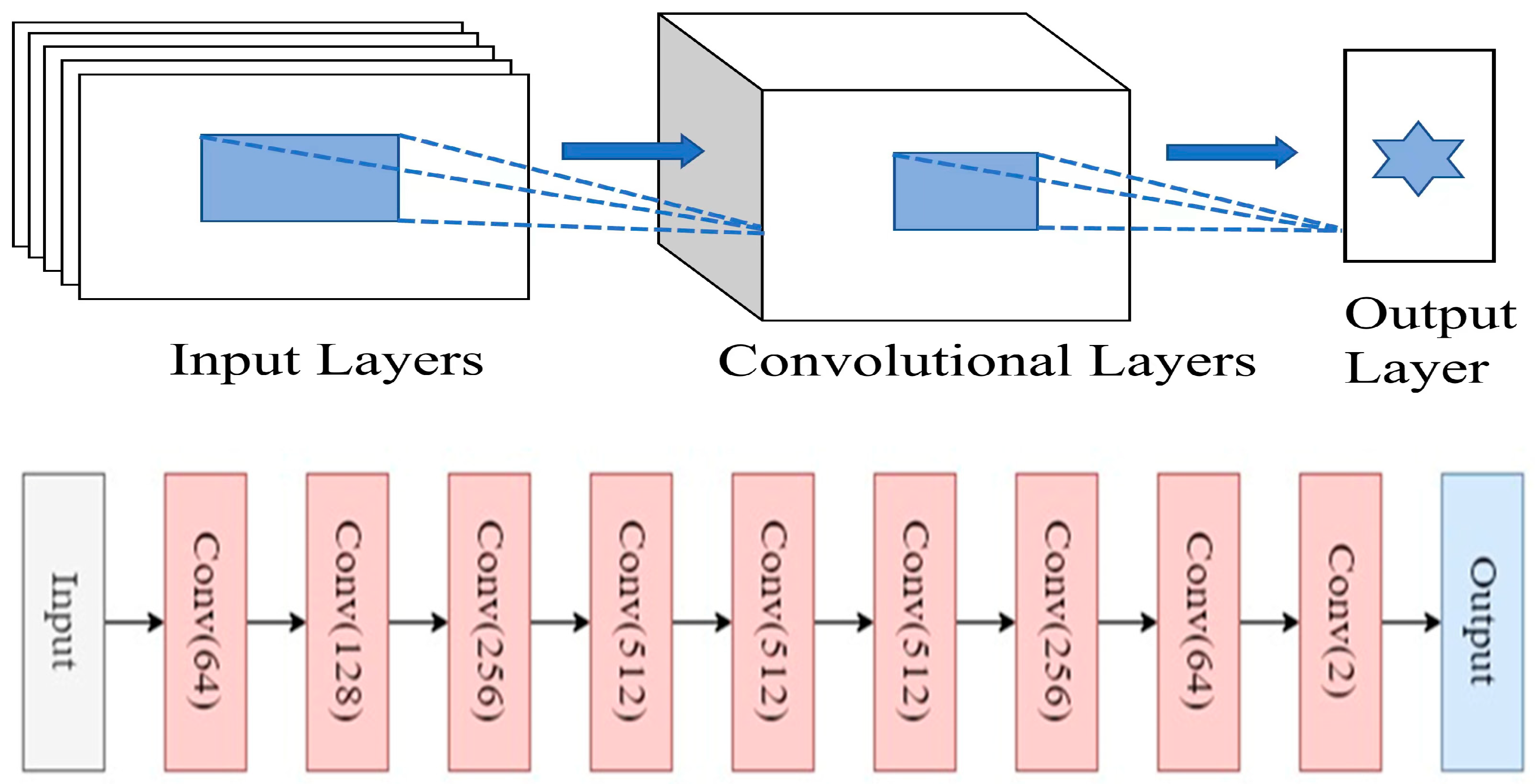
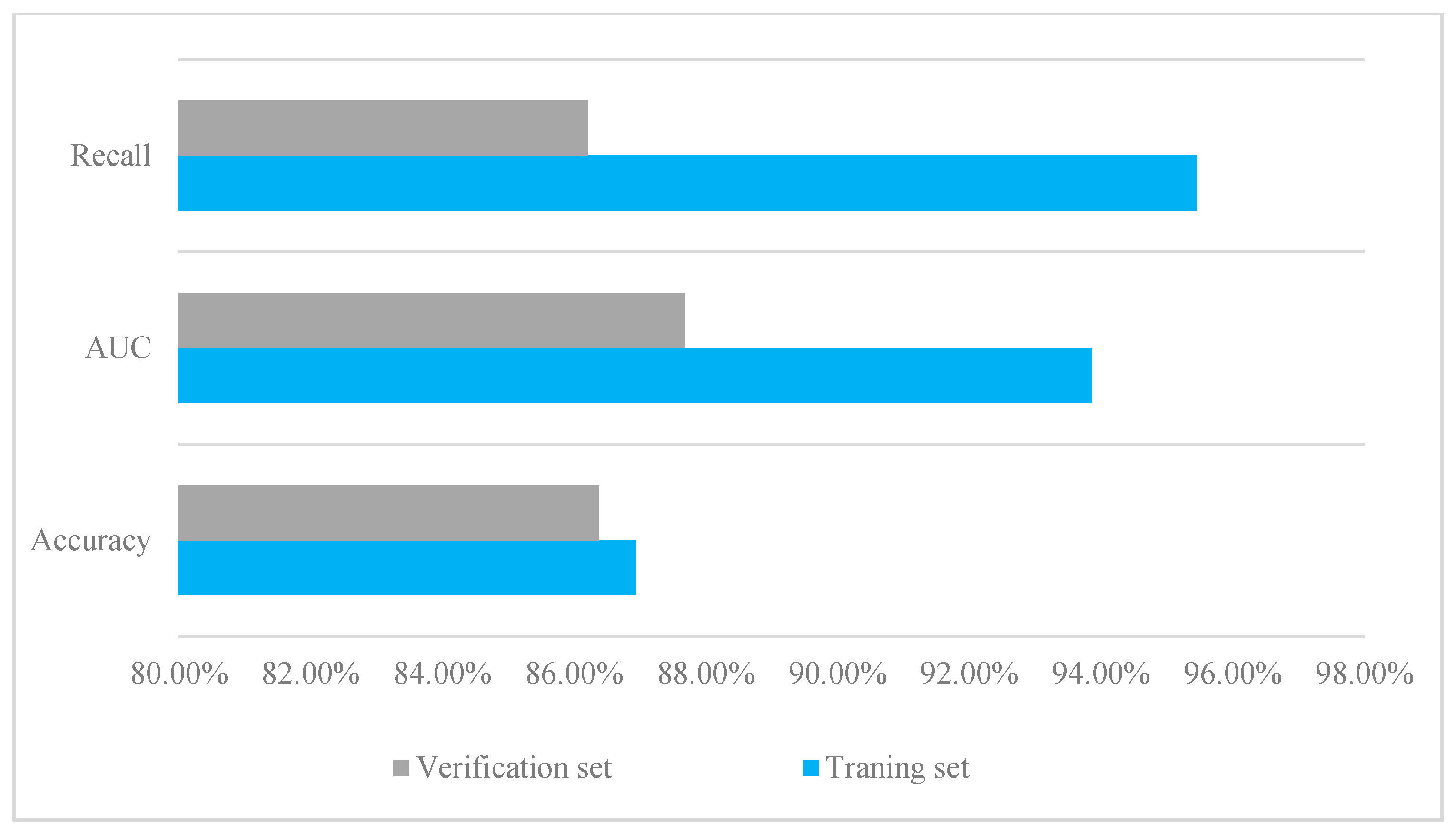
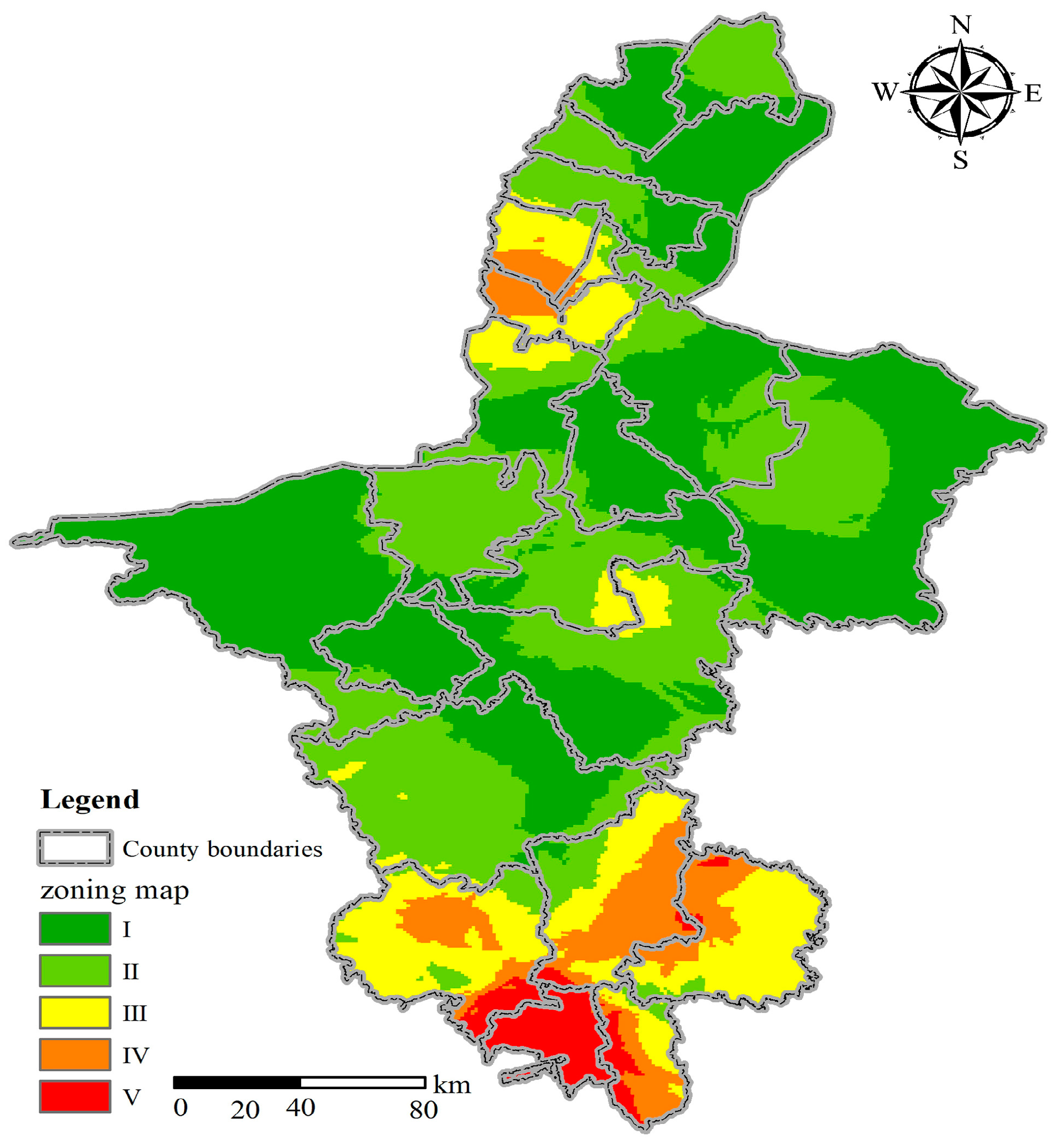
In order to investigate the geographical distribution of forest fire occurrences in the Ningxia Hui Autonomous Region, this study employs advanced modeling techniques, utilizing diverse data sources, including fuel, Gross Domestic Product (GDP), population, meteorology, buildings, and grid data. This study integrates deep learning Convolutional Neural Networks (CNNs) to predict potential fire incidents. The research findings can be summarized as follows: (i) The employed model exhibits very good performance, achieving an accuracy of 84.35%, a recall of 86.21%, and an Area Under the Curve (AUC) of 87.67%. The application of this model significantly enhances the reliability of the forest fire occurrence model and provides a more precise assessment of its uncertainty. (ii) Spatial analysis shows that the risk of fire occurrence in most areas is low-medium, while high-risk areas are mainly concentrated in Longde County, Jingyuan County, Pengyang County, Xiji County, Yuanzhou District, Tongxin County, Xixia District, and Yinchuan City, which are mostly located in the southern, southeastern, and northwestern regions of Ningxia Hui Autonomous Region, with a total area of 2191.2 square kilometers. This underscores the urgent need to strengthen early warning systems and effective fire prevention and control strategies in these regions. The contributions of this research include the following: (i) The development of a highly accurate and practical provincial-level forest fire occurrence prediction framework based on grid data and deep learning CNN technology. (ii) The execution of a comprehensive forest fire prediction study in the Ningxia Hui Autonomous Region, China, incorporating multi-source data, providing valuable data references, and decision support for forest fire prevention and control. (iii) The initiation of a preliminary systematic investigation and zoning of forest fires in the Ningxia Hui Autonomous Region, along with tailored recommendations for prevention and control measures.
Keywords: forest fires; occurrence prediction; Convolutional Neural Networks (CNNs); geographic distribution; multi-source data forest fires; occurrence prediction; Convolutional Neural Networks (CNNs); geographic distribution; multi-source data