


Abstract
Smart home provision faces many challenges, resulting from the growing demand for monitoring smart home services in uncertain environments, such as rural areas, and regions with high humidity, pollution, and unstable electricity supply. Effective data processing in decision-support cyber–physical systems for smart environments is challenging given that the raw data [collected from context-aware networked sensor-based systems under dynamic uncertainty] is typically imprecise, inaccurate, and potentially incomplete. Addressing this challenge requires effective data processing. To address this challenge, in this paper we present our proposed novel Fuzzy Knowledge Graph Model to enable the processing of raw data derived from a smart home environment. The experimental testing of the proposed model includes data preparation, reasoning, and action control. To evaluate the performance of the proposed model we utilise four evaluation metrics: accuracy, precision, recall, and F1-score. The evaluation shows that the proposed model achieves good statistically significant results in terms of accuracy (recall: 100% with low false positives; precision: 94.74%), leading to an F1-score of 97.3%. The results indicate that the proposed model demonstrates high levels of performance in terms of accuracy, with good precision, recall, and F1-score. Moreover, the reported results confirm the reliability, stability, efficacy, and utility of our proposed model, which we posit has the capability to be generalised to smart home domains.
1. Introduction
Smart home provision is a multi-factorial challenge driven by the increasing demand for the provision of multiple services, exacerbated by limitations in the availability of physical and financial resources. Moreover, the rapid advances in medical technologies typically involve increasingly complex care pathways and services. The challenges experienced by smart home systems and professionals are further exacerbated by increasing complexity in terms of conditions experienced by an ageing demographic [1,2].
The smart home, when viewed from the perspective of this study, is a topic closely interrelated with social-care provision [3], which is increasingly being considered in terms of remote patient monitoring in a domestic setting. Such an approach of applying monitoring highlights the need for a smart home to be in an expanded smart environment [1]. An expanded smart environment may incorporate, for example, a smart city, hospital, residential facility, and domestic setting (i.e., a home) under an uncertain environment. When considering smart environments, such an environment may incorporate interlinked smart Internet of Things (IoT) in systems implemented in FOG and edge computing systems [4,5]. In this research the data source is limited to a smart home, as discussed in Section 3.1, where data collection and processing is introduced.
While smart home provision forms an important underlying factor that motivates this research, the primary focus of this research lies not in smart home provision but in addressing the challenges inherent in the effective and intelligent processing of raw sensor-derived data obtained using context-aware sensor-based networked cyber–physical systems [6] for smart environments [1].
Given the multi-factorial and domain-specific nature of sensor-based networked systems [which include body-area networks in smart environments] it is beyond the scope of this paper to provide a detailed discussion on such systems and the related sensor technologies. In summary, smart environments have gained significant interest and traction [1,7,8], with a multiplicity of interconnected applications which enable autonomous function control using a centralised framework. The developments in sensor-based networked cyber–physical systems are implemented in, for example, wide-area networks, local-area networks, and increasingly body-area networks, where a mobile phone may collect and preprocess sensor data and transfer the data to a remote server for final processing [1]. For a detailed exposition on sensor technologies, including sensor types, networking technologies, testing, validation, and potential applications, see [9,10,11,12,13,14,15].
A further significant issue is the inherent uncertainty within the data, which is driven by continuous environmental changes and unpredictable human behaviours. For instance, motion sensors may misinterpret the presence of a pet as human activity, leading to inappropriate system responses. The ability to process imprecise information and make flexible decisions under uncertain conditions has thus become a crucial requirement for smart home systems to function effectively.
To address these challenges, the use of knowledge graphs (KGs), and the developments in fuzzy knowledge graphs (FKGs) [16], has emerged as a promising solution. By combining the strengths of fuzzy set theory with KG structures [17], an FKG provides an effective methodology to model relationships between devices and data while managing uncertainty and imprecision. This approach enables the provision of flexible and context-aware decision support in a smart environment system constrained by the need to process incomplete or ambiguous data, thereby improving system adaptability and ‘real-time responsiveness’.
In this paper we present our novel Fuzzy Knowledge Graph Model (hereafter termed FKGM), where the integration of FKGs into data processing systems enables significant potential advantages for a smart home. The contributions made by our study and the proposed novel FKGM model may be summarised as follows:
- Optimised system performance: The proposed data processing method provides an effective basis upon which the management and processing of dynamic imprecise, incomplete, uncertain, and potentially incorrect sensor-derived data in a smart environment may be realised.
- Improved adaptive capability: The proposed data processing method provides an effective basis upon which systems can adapt and respond to diverse and dynamically variable environmental contexts. An evaluation of the adaptability and efficiency of the proposed model shows improvement in data processing and related user experience.
- Enhanced user experience: The proposed FKGM model importantly provides an effective basis upon which adaptive systems can “learn” from environmental changes, offering intelligent, flexible, and context-specific responses. Moreover, the proposed model is demonstrated in experimental testing predicated on an analysis using simulations in complex scenarios.
The remainder of the paper is structured as follows: related research is considered in Section 2. The proposed FKGM model is introduced in Section 3, with a scenario-based example implementation provided in Section 4. The implementation and evaluation strategies are provided in Section 5 and Section 6, respectively. The results are set out with an analysis in Section 7 and a discussion in Section 8. Open research questions and directions for research are addressed in Section 8.1 along with practical managerial significance in Section 8.2. The paper closes with concluding observations in Section 9.
2. Related Research
In our review of related research, the literature review is limited to considering technologies that are relevant to the proposed FKGM model presented in this paper. Given that the fundamental principles that characterise such technologies are generally well known and understood, we provide references to where a comprehensive discussion may be found. The components are as follows: (i) fuzzy sets (FSs) [18,19]; and (ii) fuzzy inference systems (FISs) [20], which include knowledge graphs (KGs) and FKGs [21,22,23,24,25,26].
Turning to healthcare and diagnostics, the literature contains a multiplicity of methods and systems which have been applied to healthcare monitoring, as well as the related data processing. Such methods date back to the mid-1970s [27], where the physician’s medical knowledge was represented by fuzzy relations between symptoms and diseases by Sanchez, as discussed in [28]. For a comprehensive discussion on fuzzy sets and applications, see [27,29,30].
FKG technologies combine fuzzy logic with traditional KG structures to effectively manage data uncertainty and ambiguity, resulting in improved performance in terms of decision support across various fields, as discussed in [27,31]. Decision-support systems combining fuzzy logic with reinforcement learning methods have unlocked promising new approaches, particularly when addressing extreme cases. However, traditional FKG models often rely on a single pair for inference, potentially limiting the accuracy of approximations, whereas our proposed FKGM model addresses this limitation by utilising multiple pairs, thereby strengthening the system’s ability to classify new records that conventional rule-based systems might struggle to handle effectively [27,29].
An interesting study integrating Q-learning with FKG pairs (FKG-Pairs) was introduced by Long et al. in [32]. Here, the proposed method leverages Q-learning to learn from environmental interactions combined with the representational advantages of FKGs. The proposed FKGM model aims to enhance accuracy and efficiency in decision support under conditions of incomplete or uncertain input data. The results from the study demonstrated that this approach significantly outperformed traditional models when addressing extreme scenarios, highlighting its potential for widespread application in intelligent decision-support systems.
Khajeh et al. proposed a fuzzy logic-based control strategy for smart homes equipped with energy storage systems. The proposed system utilised battery energy storage systems connected via inverters combined with with flexible devices, such as air conditioning units and electric vehicles; the goal was to support frequency regulation and provide ancillary services to both transmission system operators and distribution system operators. Implementation employed a fuzzy logic control system to optimise power supply management while maintaining residents’ thermal comfort and scheduling preferences. The simulation results indicated that this method enhanced the economic efficiency of smart homes while improving grid reliability and stability in the presence of intermittent renewable energy sources.
Weerdt, in [33], considered the Internet of Things (IoT) as smart devices in smart environments in the context of the Semantic Web and satellite events, observing that this approach integrated heterogeneous data from smart devices in smart homes. Weerdt introduced a framework to leverage KGs to improve predictive capabilities in smart homes. The study focused on transforming data from IoT devices into KGs to provide a basis upon which machine learning algorithms could process heterogeneous data more effectively. By integrating external data sources and applying federated learning across multiple smart homes, the framework aimed to increase the accuracy of predictive models. The findings revealed that the use of knowledge graphs significantly enhanced the performance of predictive algorithms in smart home environments, demonstrating their potential in intelligent home automation systems.
Building on these advancements, recent studies have focused on integrating generative AI (GenAI) with FKG technologies, the aim being to enhance the functionality of smart environmental systems. In [34], the study explored the combination of hedge algebra and multilingual large language models to uncover hidden patterns in datasets, thus enabling the creation of adaptive, context-aware rules for decision-support systems. A prominent study demonstrated the transformational potential of multilingual large language models in GenAI systems by developing intelligent conversational agents for ‘real-time’ applications [35]. This work highlighted their ability to interact seamlessly with users across multiple languages, providing personalised dynamic responses. These developments underscore the synergy between GenAI and FKGs, empowering smart homes to intelligently process user inputs, extract actionable insights, and deliver tailored services with enhanced efficiency and adaptability.
3. Proposed Fuzzy Knowledge Graph Model
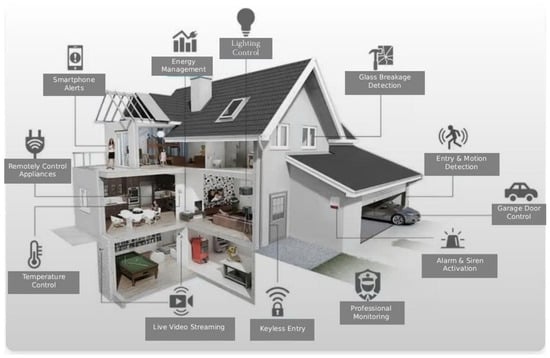
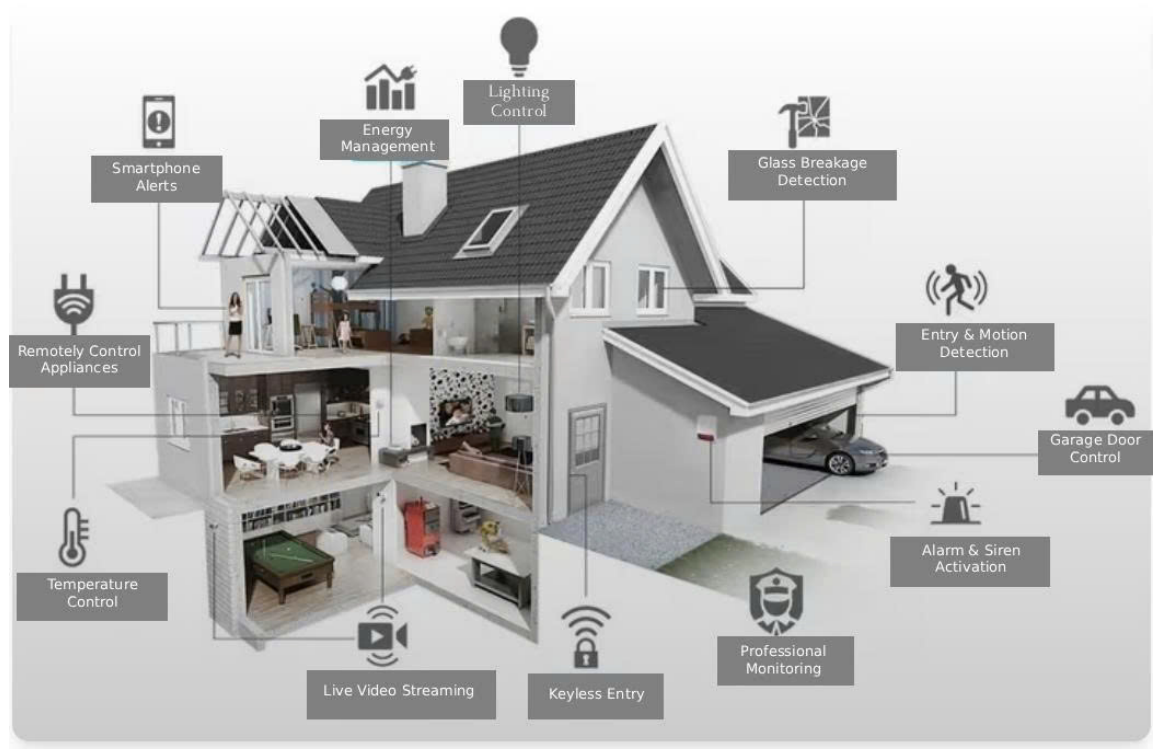
In this section we introduce the proposed FKGM model, including its data collection, data processing, implementation, and numerical examples, to clarify our posited method. We set out the key components of the FKGM model; specifically, we describe the model’s architecture, outline the implementation steps, and provide numerical examples to illustrate how the model operates within a smart home system. An illustrative example of the proposed FKGM model applied to a typical IoT-enabled smart home is shown in Figure 1.
Figure 1.
An illustrative example of the proposed Fuzzy Knowledge Graph Model (FKGM) as applied to a typical Internet of Things (IoT)-enabled smart home. The data sources will be interlinked with cloud-based systems, which include FOG and edge computing systems [5]. Data transfer will include the developing 5G and 6G mobile data systems, with data potentially preprocessed using body-area networks using, for example, a digital smart phone, where monitoring is not limited to Wi-Fi-enabled smart environments, but it may be exploited in an expanded smart environment, as discussed in Section 1. In such a scenario, the smart phone acts as a server enabling data collection, preprocessing, and transfer to a remote server(s) for further data processing.
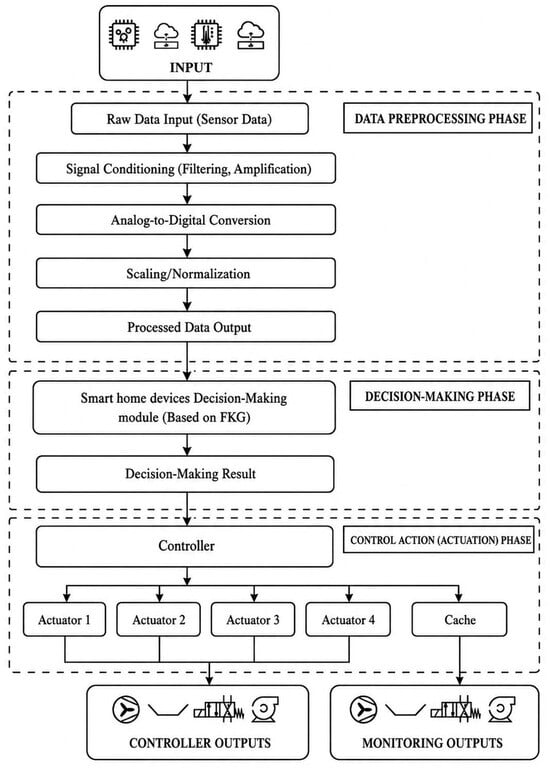
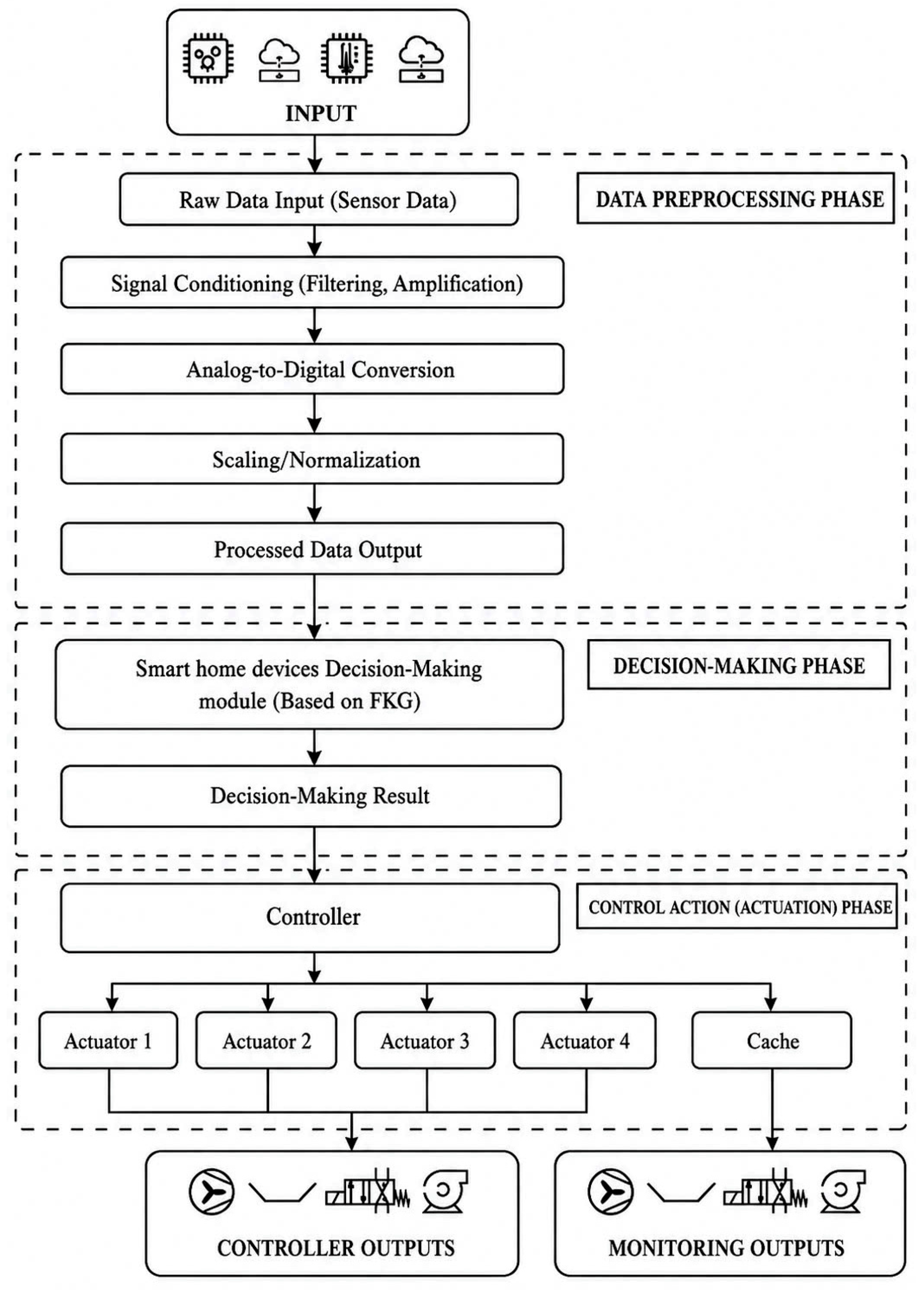
The data processing architecture for the proposed FKGM model is shown in Figure 2, where the input, output, processing, and output monitoring are modelled.
Figure 2.
The data processing architecture for the proposed Fuzzy Knowledge Graph Model (FKGM), illustrating the input, output, and output monitoring.
3.1. Data and Rule Processing
The data collected and processed in this study is set out in Section 4, while the sensor and data types in the control system used in the proposed FKGM model are presented in Section 5.
Given the domain-specific nature of sensor-driven raw data collection, sensor types, and data types, combined with the developments in information technology (IT) and the related information communications technology (ICT), it is beyond the scope of this paper to provide a detailed exposition on the sensor-driven data collection given that the sensors and data types are domain-specific. For a detailed discussion on sensor technologies, including sensor types, networking technologies, testing, validation, and potential applications, see [9,10,11,12,13,14,15].
Developments in IT and ICT have resulted in research into aspects beyond the scope of computer networks. A paper entitled “A Comprehensive Review of IoT Networking Technologies for Smart Home Automation Applications” [13] considers advances in micro-electro-mechanical systems (MEMSs) [14], which include micro-sensors, micro-actuators, micro-electronics, and other micro-structures. There are sensor types that incorporate data reprocessing functionality in BAN [1] using, for example, the Raspberry Pi, which is a micro-controller board [36] that is well suited to a variety of projects, including automation, remote monitoring, and smart sensors [37]. The experimental hardware implementation is presented in Section 5.
Processing data [including, for example, temperature, humidity, light intensity, wind, precipitation] collected using a range of networked sensors is discussed in [38]. Key features are selected to construct the FKGs [39]. Training and testing datasets are generated after applying data preprocessing techniques and rule-generation mechanisms [40]. The testing data comprises samples generated using the rule-generation mechanism drawn from [41], based on the rule structure [42]; the rules are shown in Table 1.
Table 1.
The fuzzy rule base, showing the rules and related attribute values combined with the output label.
The fuzzy rule base for the training dataset is detailed in Table 1; it shows rules in the fuzzy rule base for input attributes , which represent the input attributes; where (i) each attribute is expressed through linguistic variable values, and (ii) the output labels are , and represent control-state labels, as shown in the following example:
- IF is “” and is “” and … and is “”
- THEN the output label = 1.
The semantic terms such as “Very High” are extensions of the “concept learning” paradigm, as discussed in [43], where the potential benefits derived from the use of this approach have been demonstrated and validated in practical weather-based examples.
The goal of this study is to determine the output label for new records, where the sensor data is input into the system derived from the control module for smart environment sensors. To realise this aim we propose our novel Fuzzy Knowledge Graph Model (FKGM), where the raw data is collected from sensors in a smart home environment model.
The proposed FKGM model is based on FKG technology, as discussed in [44]. FKG technology consists of three main phases: (i) the data preparation phase, (ii) the data processing and decision-support phase, and (iii) the action-and-control phase. The proposed model enables the system(s) to process data from sensors and provide appropriate decision-support combined with effective autonomous and flexible control of sensors. Details of the model are illustrated in Figure 2. The three phases can be summarised as follows.
- Data preparation phase: In this first phase, sensor data are collected and processed through signal conditioning, which includes filtering and amplification, to ensure stable input signals. The sensor data is then scaled or normalised to a range of , facilitating further processing within the FKGM [45].
- Data processing and decision-support phase: In the second phase, the system utilises the FKG to ‘fuzzify’ the normalised data and apply fuzzy inference rules [16]. This process enables the system to handle ambiguous and uncertain data. The inference outcomes from this phase determine the control states of devices, such as , , , , and , based on ‘real-world’ environmental conditions.
- Action control phase: In this third phase, the results from the fuzzy inference [46] process are “defuzzified” [47] to derive specific values to control electrical sensors in the smart home. This ensures that the sensors operate according to the inferred decisions, providing a seamless and intelligent response to environmental changes [48].
3.2. The Proposed Model
To implement sensor control in a smart home system based on our FKGM model, strict adherence to the following steps is required:
3.2.1. Step 1: Data Collection
From the collected sensor data, relevant features [as identified above] for sensor control are extracted and stored in a database, which serves as the raw data source.
3.2.2. Step 2: Prepare the Fuzzy Rule Base
In this step, several tasks are carried out before constructing the FKG in the FKGM:
- Data processing: Raw sensor data is preprocessed to remove noise and inconsistencies.
- Rule generation: A mechanism is applied to generate rules for the fuzzy rule base.
3.2.3. Step 3: Representing the FKG
- Calculate the edge weight set by applying Equation (1):where , is the number of rules in the training dataset, and is the linguistic value of the attributes .
- Calculate the edge-weight set to connect the input attribute labels and output labels in the FKG [49]. The edge weight is computed by applying Equation (2):where and the output label is .
3.2.4. Step 4: Inference for Output Label Prediction
In step 4 we apply inference and reasoning to predict the output label(s). The process is as follows:
- Calculate the relation weighting: The total weight is determined by summing the weights of all relations connected to the output label using Equation (3) and (4):where is used to determine the degree of influence of each label on the linguistic values of attributes in the data, as shown in Equation (5):
- The output label: Find the output label after applying the max operator using Equation (6):
- Assign output labels and classify new samples: The final step in the FKGM model data processing is to classify new samples and assign the relevant output labels.
4. Illustrative Scenario-Based Implementation
In this section we introduce the data processing for the proposed FKGM model with an illustrative scenario-based numerical example. The scenario involves an automated window control system that adjusts the window’s state (fully open, half open, or closed) based on environmental attributes such as wind, light, and rain, as discussed in Section 3.1. The objective is to determine the window’s state using the predefined fuzzy rule base.
Inputs
Assume a set of fuzzy rules that encapsulate expert knowledge for controlling the smart window. The rules involve three input attributes, where the output labels define the window-opening state, where (1) equates to fully open, (2) equates to half open, and (3) equates to closed:
- Wind: Low (1), Medium (1), High (1).
- Light: Low (2), Medium (2), High (2).
- Rain: None (3), Light (3), Heavy (3).
The output labels are defined as follows: the initial fuzzy rule base contains seven predefined rules for an existing example; these are presented in Table 2, where each rule includes linguistic conditions for wind, light, and rain as well as the output label.
Table 2.
Predefined fuzzy rules for window control system.
We now turn to consider a new sample of data that does not exist in the predefined rules. For instance, suppose the sensor provides the following input values: wind = high (1), light = high (2), rain = heavy (3). This illustrative sample dataset does not directly appear in Table 2. The task is to determine the output label to control the window system based on the fuzzy rule base in Table 2. To address the requirements, the following steps are carried out.
- Step 1: Constructing the Fuzzy Knowledge Graph
We begin by representing the fuzzy rule base as an FKG. Each rule in Table 2 provides a semantic combination of the three input attributes along with the corresponding output label. There are seven rules, where each rule corresponds to a unique sample. The rules are processed as follows.
- Next, using Equation (5) the weights are calculated:Similarly, we compute and . The results obtained for from applying the six rules are shown in Table 3.Table 3. Results of weight coefficients .
The corresponding results for the weight coefficients are shown in Table 4.
Table 4.
Results of weight coefficients .
- Step 2: Quick Reasoning Search Algorithm
To implement effective reasoning, a metaphorless simple algorithm based on the ‘Rao algorithm’ [50], the Fully Informed Search Algorithm (FISA) [51], is employed. The FISA algorithm is used to assign labels to patterns that cannot be represented based on the rule base in the initial seven open rules. The reasoning mechanism of FISA is described as follows.
- Case 1: Assume that we assign labels to the first seven rules under the same condition as the seven initial open rules. This means that these rules are matched by the open rule base. Using Equation (6), we obtain for each label (1) (1: fully open, 2: half open, or 3: closed). Consider R1, for (fully open) we havePerforming similar calculations, we obtain the following for (half open) and (closed):
Then, using the min–max operator in Equation (6), we calculate for each label where (1 = fully open, 2 = half open, 3 = closed). For example, consider Rule R1:
Given that , according to Equation (6), the first label for rule () is (3: closed). By performing similar calculations, we obtain the first labels for rules , , , , , and as follows: 3: closed, 3: closed, 1: fully open, 1: fully open, 2: half open, 2: half open, respectively. These results indicate that the labels derived from FISA match those obtained by directly checking against the corresponding rules in the rule base.
The inference coefficients for output label (fully open) are shown in Table 5.
Table 5.
Output label (fully open).
The corresponding inference coefficients for output label (half open) are shown in Table 6.
Table 6.
Output label (half open).
The corresponding inference coefficients for output label (closed) are shown in Table 7.
Table 7.
Output label (closed).
- Case 2: Given that we assign the first three labels = High1, Light = High2, Rain = Heavy3 (which do not belong to any of the seven open rules), we need to handle cases where existing rules cannot be directly applied. Specifically, in the FKG graph there is no connection from High1 to High2 or from High2 to Heavy3. However, separate paths still exist. Using the fuzzy inference mechanism FISA, the labelling process follows the principle shown below.For Label 1 (fully open):For Label 2 (half open):For Label 3 (closed), given that , the first label of this rule is 3 (closed):Since , the first label of this rule is 3 (closed), as shown above.
5. Implementation
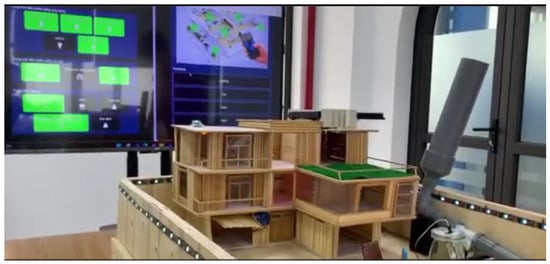
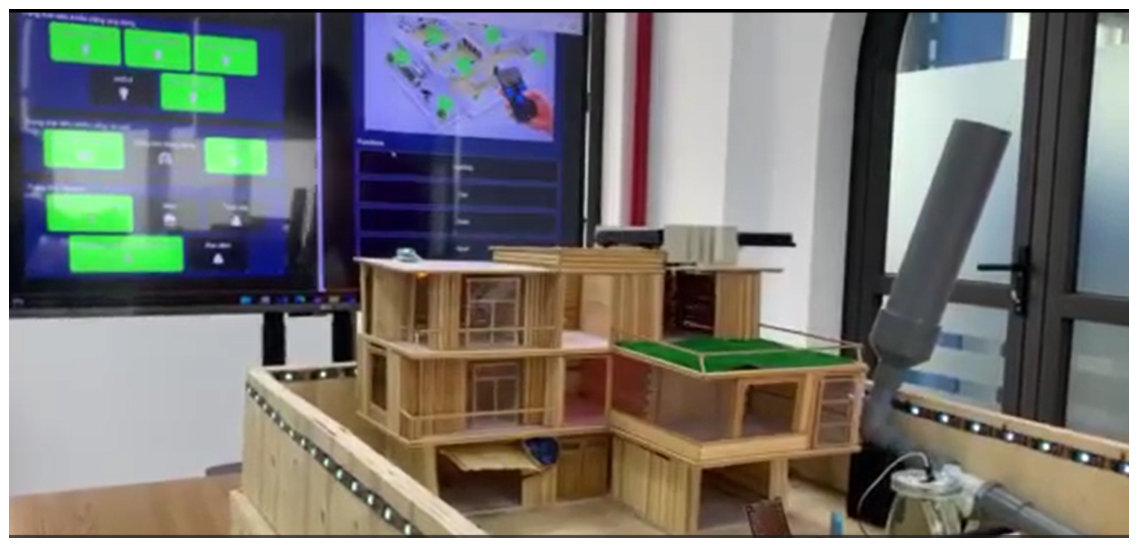
In this section we introduce the implementation for the FKGM model. To simulate the proposed model in a ‘real-world’ smart home environment, a range of sensors were used to collect ‘real-time’ data from multiple sources, including temperature, humidity, light intensity, soil moisture, and rain. Figure 3 shows the laboratory smart home model used to collect the sensor data and implement IoT-enabled monitoring control.
Figure 3.
The laboratory smart home model used in the study; illustrating the process of operating smart home Internet of Things (IoT)-enabled monitoring control.
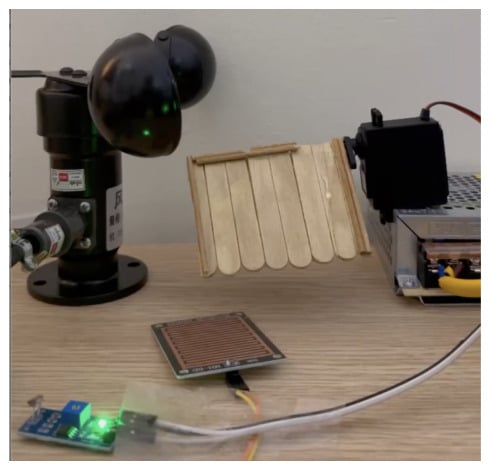
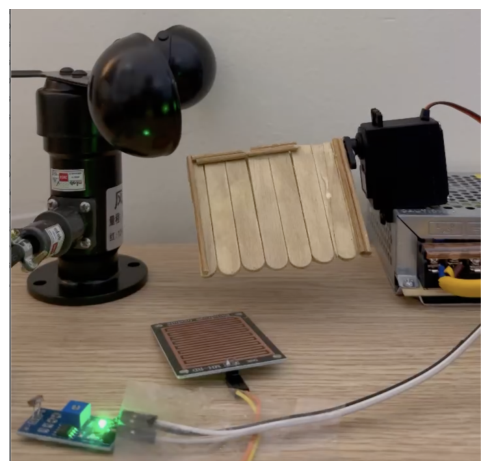
The hardware used to operate the window control system is shown in Figure 4.
Figure 4.
Hardware model; illustrating the process of operating the window control system.
The sensor technologies are addressed in Section 3, along with data collection. The sensor and data types used in the proposed FKGM control system are summarised in Table 8.
Table 8.
The sensor and data types in the control system used in the proposed FKGM model.
The FKGM model integrates the collected data into the FKG [52,53,54], processes the sensor inputs, and generates appropriate control actions. The output classification based on the resulting FKGM output labels is shown in Table 9.
Table 9.
The output classification for the FKGM system based on the output labels.
5.1. Experimental Testing Hardware
To run the proposed FKGM model, Python 3 was used on a MacBook equipped with an M3 Pro chip. The MacBook M3 Pro, with its 12-core CPU, 18-core GPU, 16-core neural engine, and 16 GB of unified memory, provided sufficient computational power to run simulations and process large datasets. Additionally, a Raspberry Pi Pico W, programmed with MicroPython v1.27.0, was employed to interact with sensors and actuators in the real-world smart home environment. The Pi Pico W, with its dual-core ARM Cortex-M0+ processor, 264 KB SRAM, and built-in Wi-Fi, handled lightweight sensor data processing and device control within the smart home network.
5.2. Experimental Testing Smart Home
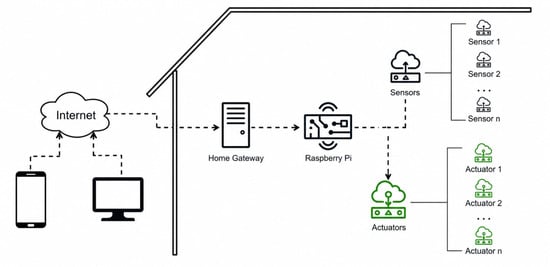
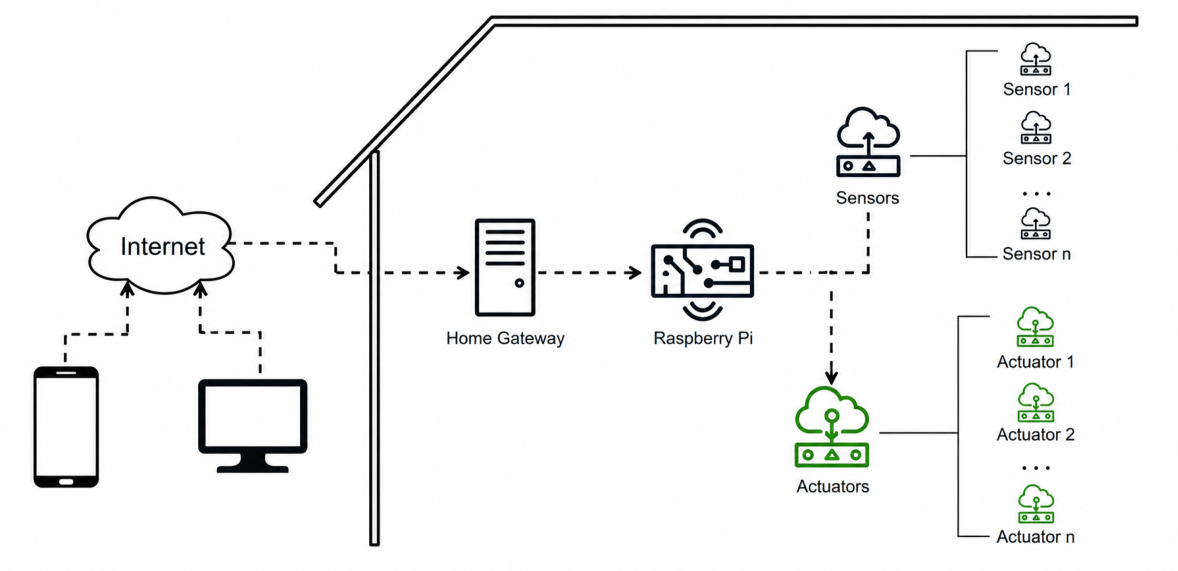
The proposed system supports access control through both mobile devices and personal computers, which can be operated as shown in Figure 5.
Figure 5.
The smart home with Internet of Things (IoT)-enabled monitoring control.
Users can conveniently authenticate and interact with the smart home system through a simple interface, requiring only a single touch or command on their mobile device. From a system development perspective, mobile-based access control offers high implementation efficiency, excellent scalability, and ease of integration with Internet-of-Things (IoT) infrastructures. Consequently, it represents an effective and practical solution for modern smart home environments, improving both system security and the overall user experience. To access and control the smart home system through their web-based or app mobiles, user commands and configuration settings are transmitted to the home gateway, which serves as the primary communication gateway between the Internet and the home’s internal network. Within the smart home environment, the Raspberry Pi functions as the central processing unit, collecting data from multiple sensors, including temperature, light intensity, rainfall, wind speed, soil moisture, and other environmental parameters. The collected data are subsequently processed using fuzzy reasoning techniques, such as fuzzy logic or a fuzzy knowledge graph (FKG), to infer the current environmental conditions and determine the most appropriate control actions.
The resulting control signals are transmitted to the corresponding actuators, including window control, lighting systems, ventilation fans, and other smart devices, enabling the system to interact directly with the physical environment. For example, the system can automatically adjust the window opening angle, regulate the brightness of lighting, and control the operating speed of ventilation fans according to the inferred environmental conditions. In addition, sensor measurements and the operational status of all connected devices are continuously transmitted back to the home gateway, which synchronises the information with the user interfaces. This enables users to monitor system status, configure operating parameters, and manage smart home devices in real time via web-based or app mobile interface.
In access-control mechanisms, the proposed approach significantly enhances accessibility, usability, and user convenience by enabling remote and real-time system access. Furthermore, it provides a cost-effective solution for secure identity management while simplifying system administration. By leveraging mobile computing technologies, users can seamlessly authenticate, monitor, and control smart home devices regardless of their location; the proposed smart home architecture provides flexible automation, robust decision making under uncertainty, and efficient real-time control. The incorporation of fuzzy reasoning techniques further enhances the system’s capability to process imprecise and uncertain sensor information, thereby improving the reliability, adaptability, and overall user experience of smart home management.
As compared to conventional fuzzy logic (FL) approaches, and the state of the art [55], the integration of the Fuzzy Knowledge Graph Model with the Fuzzy Inference System Algorithm (FISA) demonstrates several notable advantages in this study. Specifically, it provides a multi-dimensional knowledge representation framework, enables flexible reasoning under uncertainty, and exhibits greater adaptability to the complex and dynamic changes in the surrounding environment. By incorporating structured knowledge representation with fuzzy inference, the proposed model can effectively model intricate relationships among heterogeneous entities while maintaining robust decision-making capabilities in the presence of incomplete, imprecise, or uncertain data. Furthermore, the graph-based reasoning capability allows the smart home system to autonomously adapt the operation of connected devices in response to changing environmental conditions in the smart home.
5.3. Weighted Accuracy
To measure the accuracy of the control decisions, particularly when handling multi-level control actions (e.g., turning devices ON/OFF or adjusting intensity levels), the weighted accuracy method was used. This method accounts for the severity of errors made during decision making. Unlike binary output, which can be correct or incorrect, this approach assigns weights to different types of misclassification based on how far the system’s decision deviates from the expected result.
For example, if a decision is expected to be “High” (level 3) but the system predicts “Medium” (level 2), the error is considered less severe than predicting “Off” (level 0). The formula for weighted accuracy (WA), predicted output (PO), and expected output (EO) is as shown in Equation (7):
where
- : The total number of test cases (decisions).
- i: The PO is the anticipated output result for the test case.
- i: The EO where the output is correct for the test case.
- : The weight assigned to the test case (higher weights for larger deviations).
- : Measures the deviation of the prediction from the expected result.
This method provides a more nuanced perspective on system performance as it distinguishes between mild and severe misclassification. In smart home control systems, where incorrect decisions can vary in impact, weighted accuracy is more relevant for performance evaluation.
6. Evaluation
To evaluate the performance of the proposed FKGM model we use four evaluation metrics: accuracy (see Equation (8)), precision (see Equation (9)), recall (see Equation (10)), and the F1-score (see Equation (11)). The four metrics are introduced in Section 6.1 (accuracy), Section 6.2 (precision), Section 6.3 (recall), and Section 6.4 (F1-score). The time is estimated by the total execution time of the system.
6.1. Accuracy
Accuracy is calculated as the ratio of the number of correctly classified samples to the total number of samples, as estimated by Equation (8), where
- TP: The total number of true positive predictions; If .
- TN: The total number of true negative predictions; If .
- FP: The total number of false positive predictions—when the expected result is fully open but the control result is closed.
- FN: The total number of false negative predictions—when the expected result is closed but the control result is fully open.
6.2. Precision
To evaluate the accuracy when the system predicts a positive label, the precision metric is used, as shown in Equation (9), where
- TP: The total number of true positive predictions; If .
- FP: The total number of false positive predictions—when the expected result is fully open but the control result is closed.
A high precision score indicates that the system makes fewer false positive predictions, thus reducing the occurrence of “false alarms”. In the context of smart home control, minimising false positive predictions helps avoid unnecessary control actions (e.g., opening/closing windows at the wrong time).
6.3. Recall
Recall measures the system’s ability to identify all “positive” cases, as shown in Equation (10), where
- TP: The total number of true positive predictions; If .
- FN: The total number of false negative predictions—when the expected result is closed but the control result is fully open.
A high recall score indicates that the system misses fewer important cases. In the context of smart home applications, this ensures that the system detects all abnormal situations (such as heavy rain or strong winds) to make timely control decisions.
6.4. F1-Score
The F1-score is the harmonic mean between precision and recall, as shown in Equation (11). The F1-score reflects the balance between precision and recall. A system with a high F1-score indicates both good positive prediction accuracy (i.e., fewer false positives) and coverage of most positive cases (i.e., fewer false negatives).
7. Results
So far, we have introduced the FKGM model along with the implementation and evaluation strategy and provided an introduction to the fuzzy logic rules along with the methodology. In this section we set out the simulated results based on 27 test cases, where the results of the evaluation metrics, including the calculated results with respect to accuracy, precision, recall, and the F1-score, are as follows:
- Accuracy:
- Precision:
- Recall:
- F1-score:
The results indicate that the FKGM model achieves high accuracy levels and provides an effective basis to realise full recognition (recall = 100%), with low false positives (precision = 94.74%) leading to a high F1-score. This is evidence of the overall effectiveness of the FKGM system. For our reported results we also consider the following:
- Execution time: Turning to the execution time, the execution time for the entire inference and evaluation process is measured by taking the difference between the start and end times of the program. The result shows an execution time of approximately 0.00039 s. This demonstrates the efficiency or the proposed model.
- Distribution of output labels: The experimental testing was based on 27 samples. The system’s predictions are concentrated mainly in output labels 1 and 3, with fewer predictions for output label 2. However, the overall accuracy remains very high.
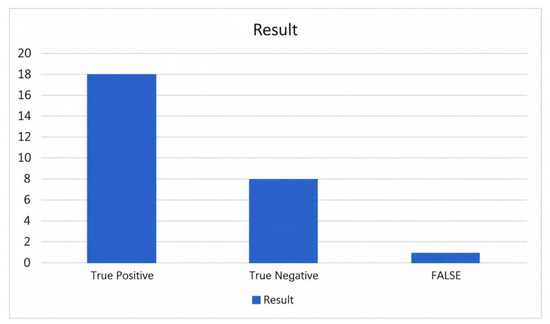
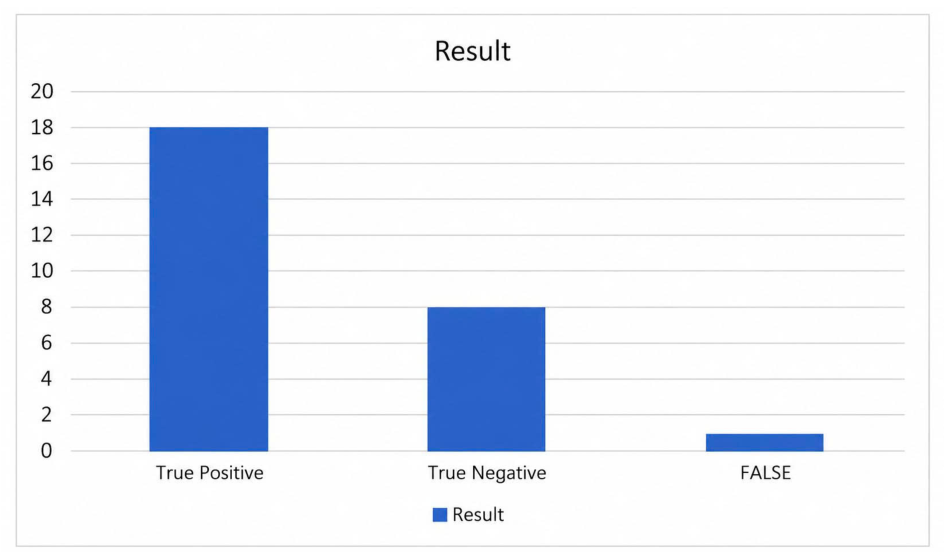
The distribution of samples classified as true positive, true negative, and false positive is shown in Figure 6.
Figure 6.
Bar chart showing the number of samples predicted as being in the true positive, true negative, and false positive categories. Each bar represents the number of times the system classified samples into the corresponding group, showing that most predictions belonged to the true positive group, fewer fell into the true negative group, and very few were incorrect.
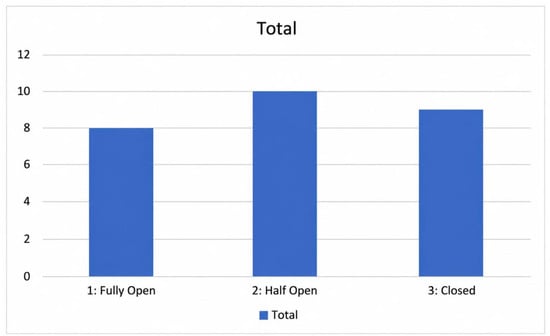
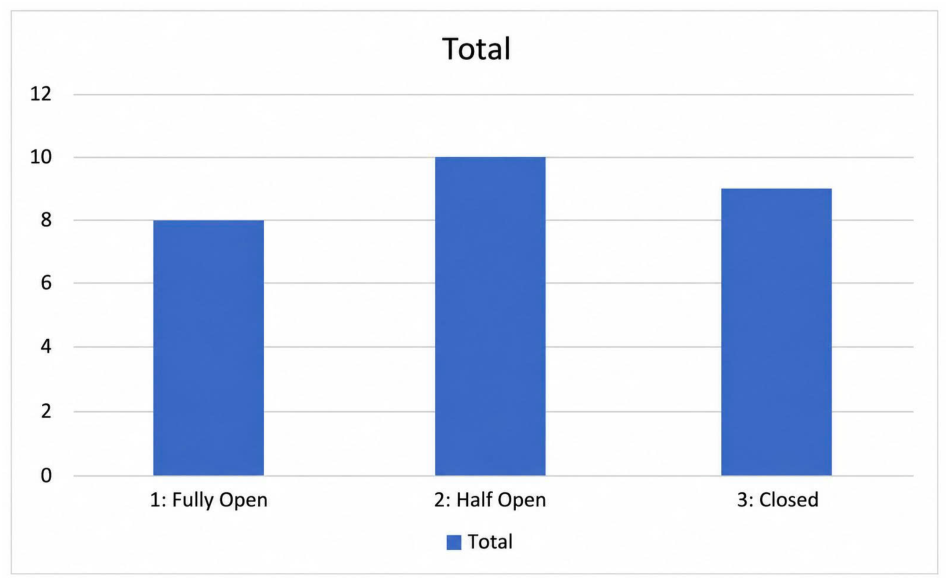
The expected output-label distribution for the fully open, half open, and closed states is shown in Figure 7.
Figure 7.
Bar chart showing the number of samples predicted, with the expected values for the output labels fully open, half open, and closed.
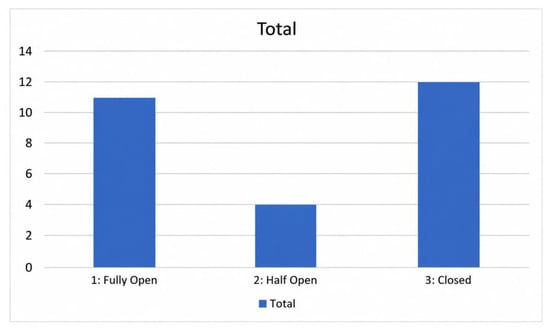
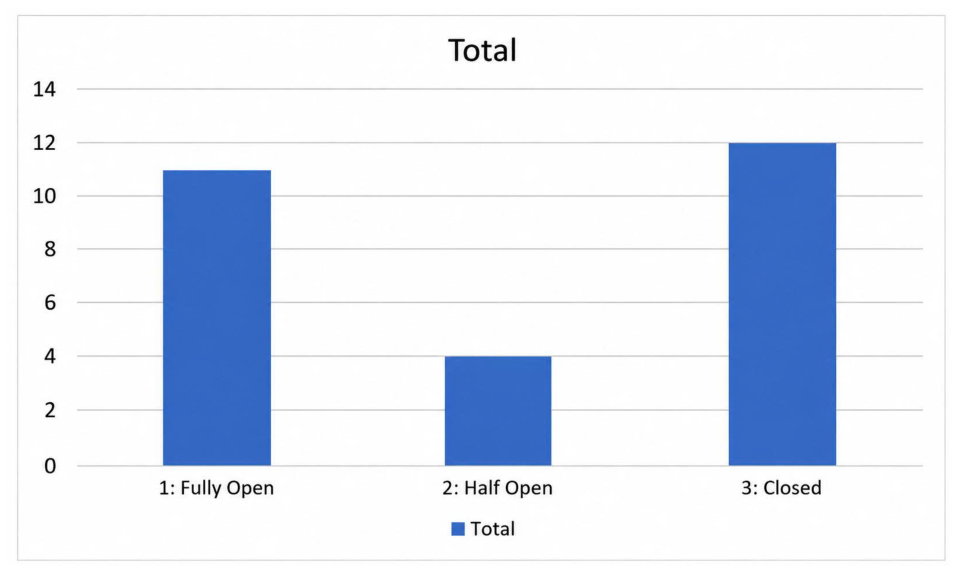
The corresponding distribution of the actual predicted output labels is shown in Figure 8.
Figure 8.
Bar chart showing the number of samples predicted, with the actual results for the output labels fully open, half open, and closed.
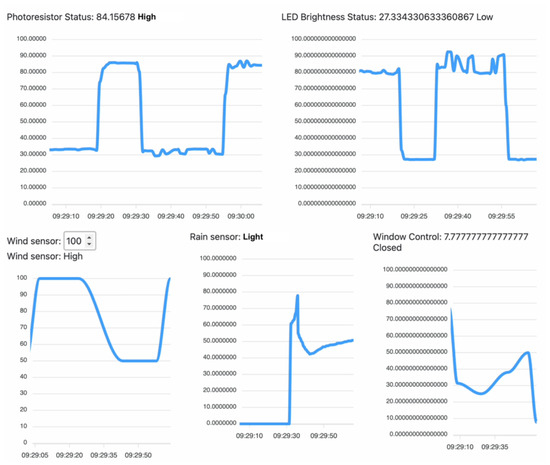
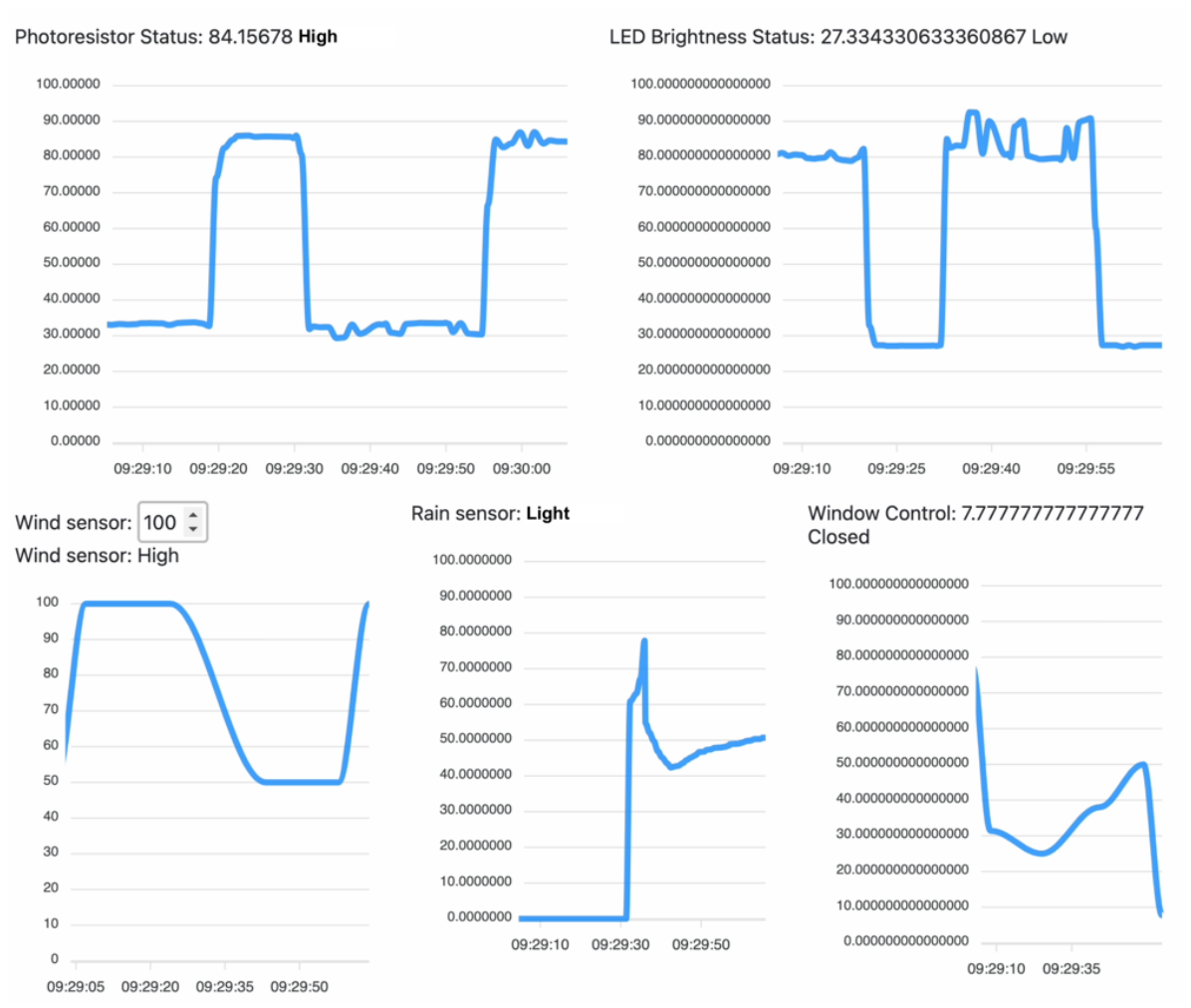
The smart home device and sensor monitoring interface used to display the system status is shown in Figure 9.
Figure 9.
Smart home device and sensor monitoring interface.
These results confirm the effectiveness of the model in making window open/close decisions based on input information (wind, sunlight, rain) with high reliability. Comparing the research in [56] [which uses traditional fuzzy logic in smart home control, focusing on energy storage systems], the FKGM model combined with the FISA algorithm demonstrates advantages in its ability to represent multi-dimensional knowledge, handle uncertain data flexibly, and adapt better to complex environmental variations. On the other hand, while traditional fuzzy logic solutions are easy to implement and suitable for specialised tasks such as energy control, they face challenges when it comes to scaling and managing knowledge in cases where data becomes complex and incomplete.
Moreover, when compared to the rule-based and context-based automated control method introduced in [57], which is a simple, intuitive, and effective solution in less dynamic environments, the FKGM model combined with the FISA algorithm proves to be superior due to its ability to process fuzzy and uncertain data without requiring the creation of specific rules for every scenario. It easily extends knowledge to minimise the need for re-defining numerous rules when the environment or control requirements change, while still ensuring high accuracy and fast response times to effectively meet the demands of real-time applications.
Comparing the FKGM model combined with the FISA algorithm to the context-aware rule-based automated control method introduced in [57], we can observe the following:
- While the method introduced in [57] is a relatively simple intuitive and effective solution in less dynamic environments, the proposed FKGM model can be seen to be superior due to its ability to process fuzzy and uncertain data without requiring the creation of specific rules for every scenario.
- The proposed FKGM model easily extends knowledge to minimise the need for re-defining numerous rules when the environment or control requirements change, while still ensuring high accuracy and fast response times to effectively meet the demands of real-time applications.
8. Discussion
As discussed in Section 1, healthcare provision represents a multi-factorial challenge, where a significant issue is the inherent uncertainty in the data, which forms the fundamental focus of this study. However, the focus of this study and article is on the processing of data derived from a smart environment. Accordingly, in this article we have introduced our novel FKGM model, which utilises FKG technology. We posit that our proposed model provides numerous significant advantages that importantly include the management and processing of data that is uncertain, lacks precision, and may be ambiguous. Addressing this challenge lies at the heart of our research, which has resulted in a number of contributions, which we have set out in Section 1.
As discussed in this paper, a KG is made context-aware by a collection of interlinked descriptions of concepts, entities, relationships, and events; this provides a framework for data integration, unification, analysis, and data sharing. The Resource Description Framework (RDF: https://www.w3.org/RDF/ (accessed on 30 July 2026)) (RDF) is a graph-based data model which provides an interesting framework to represent data and metadata. RDF is a Semantic Web Standard for describing resources and data interchange. RDF is developed, updated, and standardised by the World Wide Web Consortium (W3C: https://www.w3.org/ (accessed on 30 July 2026)) (W3C). RDF has influenced the KG concept and knowledge models, which form a critical component in this research and in the development of our FKGM model.
The FKG method enables the system to represent knowledge flexibly and multi-dimensionally, leading to more accurate decisions when the collected data is fuzzy, incomplete, or unstable. The reasoning capability of the FKG allows smart environments to automatically adjust devices in response to environmental changes, improving operational efficiency and user experience. In Section 2, we considered related research addressing KGs, FKGs, and related fuzzy systems as they relate to this study.
As identified in Section 2, the use of KGs, FKGs, and fuzzy systems has been shown to provide significant levels of utility. A KG is an important component in a knowledge model, which is a collection of interlinked descriptions of concepts, entities, relationships, and events. The integration of an FKG into an intelligent context-aware monitoring system offers numerous outstanding advantages, particularly in handling uncertain and ambiguous data, which we exploit in the development of the proposed FKGM model.
In the evaluation of the proposed FKGM model, the reported results (see Section 7) show that the proposed model achieves good statistically significant results in terms of accuracy (recall: 100% with low false positives; precision: 94.74%), leading to an F1-score of 97.3%. These metrics demonstrate the effectiveness of the proposed model along with its ability to fully identify situations requiring intervention in decision-support systems. Moreover, the evaluation confirms the reliability, stability, efficacy, and utility of our proposed model. Moreover, implementation on a standard commercial laptop computer demonstrates the benefit gained from low computational overhead with a rapid response time, which is an important consideration supporting the claim that the FKGM method has significant utility and is capable of responding rapidly in ‘real time’ in smart environments.
However, when considering ‘real-world’ implementation, we must carefully weigh the exceptional benefits of FKG (handling complex fuzzy data, high predictive performance) against resource costs, development complexity, and expertise requirements. This ensures stability, scalability, and practical deployment effectiveness for smart home applications in the long term. Additionally, there will be potential socio-technical and ethical issues [58], which need careful consideration. Such issues are beyond the scope of this article and in practice are the subject of a specific research field(s). Notwithstanding, the research addressing the potential and developing socio-technical and ethical issues must be considered in terms of information systems’ design and implementation [59].
8.1. Open Research Questions and Potential Directions for Research
While this research has addressed our primary research goal, which in summary relates to data management and processing under dynamic uncertainty in intelligent context-aware monitoring systems, there remain challenges, including the following:
- Noisy data: As we have discussed in Section 1, sensor-derived raw data can typically be imprecise, inaccurate, and/or incomplete [often characterised as ‘noisy data’], which can present a significant issue. As this relates to the FKGM model, future research will focus on expanding the model capability and the integration of additional data source devices to improve: (a) the ability to generalise to diverse domains of interest in more complex scenarios, and (b) the performance in diverse scenarios. These improvements are expected to enhance FKGM’s role in building flexible, efficient, and highly reliable smart home systems.
- Implementation and fuzzy theory: Implementing an FKGM model requires in-depth expertise in both fuzzy theory and knowledge representation. This is reflected in the need for a collaborative team-based approach where computer scientists (with limited or no medical expertise) work with clinicians (with limited or no computing expertise). This makes the process of building and maintaining the system complex. A potential solution may lie in developing a cloud-based systems such as software-as-a-service (SaaS), networking-as-a-service (NaaS), or infrastructure-as-a-service (IaaS).
- Knowledge management: Expanding or updating knowledge in the continuously evolving context of smart environments represents a significant challenge. Moreover, hardware devices with limited computational capacity may have issues when data processing aims to perform reasoning [60] on the fuzzy knowledge graph. As with the SaaS, NaaS, and IaaS approaches, a potential solution may be to implement sensor data preprocessing in a cloud-based system, as discussed in Section 1.
- Benefits: While our proposed system achieves significant results in terms of accuracy, recall. F1-score, and response time, implementation must consider the benefits (handling complex fuzzy data, high predictive performance) against the resource costs, development complexity, and expertise requirements. Such consideration is required to ensure stability, scalability, and generalisability in terms of practical deployment effectiveness [as briefly addressed in Section 8.2] in the long term in a diverse range of domains of interest.
- Security: As with all data-intensive applications, there will be security and ethical concerns; these are beyond the scope of this paper. Such concerns represent specific research fields but these considerations must form an important element in systems design and implementation.
8.2. Practical Managerial Significance
Considered from a practical managerial significance perspective, the FKGM model has been shown to run effectively on a MacBook M3 Pro with integration on Raspberry Pi Pico W hardware using MicroPython v1.27.0. The evaluation and analysis demonstrates the ability of the proposed model to operate effectively in ‘real time’ in ‘real-world’ environments using “low-powered” computer systems, where there is a need for flexibility of approach under various deployment conditions.
Moreover, we posit that the proposed FKGM model will generalise to a diverse range of domains of interest given that semantic representation [as discussed in Section 3.1] can be applied with a domain-specific nature, as in the use of semantic terms used in “concept learning”, as discussed in [43], where the potential benefits derived from the use of this approach have been demonstrated and validated in practical ‘real-world’ examples.
9. Concluding Observations
In this paper we have introduced our proposed novel FKGM model, which is predicated on FKG technology and has been conceived and developed to address data processing in dynamically complex and uncertain smart environments.
The implementation process, including data preparation, reasoning, and action control, has been validated through experimental testing. The reported results indicate that the model not only maintains high levels of accuracy, with good precision, recall, and F1-score, but the results also confirm the reliability, stability, and utility of our proposed method.
Source code: Smart home FKG source code is available at https://github.com/datalake-ekg/smarthome (accessed on 30 July 2026).
Author Contributions
Conceptualisation and methodology: P.S., H.V.P. and P.M.; software: P.S. and H.V.P.; validation: H.V.P., F.A. and P.M.; formal analysis: P.S., T.Q.N. and H.V.P.; investigation: P.S. and H.V.P.; data: T.Q.N. and F.A.; writing—original draft preparation: F.A. and H.V.P.; writing—review and editing: P.S., T.Q.N., H.V.P. and P.M.; project administration: H.V.P. All authors have read and agreed to the published version of the manuscript.
Funding
This research did not receive funding from any domestic or international research project. The open access publication fee and the other fee was partially supported by the School of Information and Communication Technology, Hanoi University of Science and Technology, and the Posts and Telecommunications Institute of Technology.
Data Availability Statement
The data used in this study are publicly available in benchmark datasets as stated in the paper.
Conflicts of Interest
The authors declare no conflicts of interest. The funder had no role in the design of the study; in the collection, analyses, or interpretation of data; in the writing of the manuscript; or in the decision to publish the results. In this study no Generative AI systems [which include MS Copilot and similar systems] have been used for any purpose in conducting this study with respect to research activity, literature review, and manuscript preparation. The authors have reviewed and edited the output and take full responsibility for the content of this publication.
References
- Moore, P.; Van Pham, H. A Fog Computing Model for Pervasive Connected Healthcare in Smart Environments. Int. J. Grid Util. Comput. 2019, 10, 375–391. [Google Scholar] [CrossRef] [Scilit]
- Van Pham, H.; Moore, P.; Cong Cuong, B. Applied picture fuzzy sets with knowledge reasoning and linguistics in clinical decision support system. Neurosci. Inform. 2022, 2, 100109. [Google Scholar] [CrossRef] [Scilit]
- Brett, J.; Staniszewska, S.; Mockford, C.; Herron-Marx, S.; Hughes, J.; Tysall, C.; Suleman, R. Mapping the impact of patient and public involvement on health and social care research: A systematic review. Health Expect. 2014, 17, 637–650. [Google Scholar] [CrossRef] [Scilit] [PubMed]
- Yi, S.; Li, C.; Li, Q. A Survey of Fog Computing: Concepts, Applications and Issues. In Mobidata ’15: Proceedings of the 2015 Workshop on Mobile Big Data; Association for Computing Machinery: New York, NY, USA, 2015; pp. 37–42. [Google Scholar] [CrossRef] [Scilit]
- Shahrour, G.; Junejo, A.; Al-Said Ahmad, A. Security and privacy challenges in healthcare IoT systems with cloud, edge, and fog computing: A systematic literature review. Comput. Sci. Rev. 2026, 62, 101005. [Google Scholar] [CrossRef] [Scilit]
- Marwedel, P. Embedded System Design: Embedded Systems Foundations of Cyber-Physical Systems, and the Internet of Things; Springer Nature: Cham, Switzerland, 2021. [Google Scholar] [CrossRef] [Scilit]
- Dasappa, N.S.; Kumar G, K.; Somu, N. Multi-sensor data fusion framework for energy optimization in smart homes. Renew. Sustain. Energy Rev. 2024, 193, 114235. [Google Scholar] [CrossRef] [Scilit]
- Tingvold, L.; Ingstad, K.; Devik, S.A. Social needs in home care for older adults: A qualitative exploration of recognition, expectations and opportunities. Geriatr. Nurs. 2026, 69, 103979. [Google Scholar] [CrossRef] [Scilit] [PubMed]
- Thomas, A.; Evans, C.; Moore, P.; Sharma, M.; Patel, A.; Shah, H.; Chima, P.; Rmeileh, S.A.; Dubb, G.; Bhana, R. eMonitoring for eHealth: Research Projects for Assisted Living. In Proceedings of the 2013 27th International Conference on Advanced Information Networking and Applications Workshops (WAINA), Barcelona, Spain, 25–28 March 2013; IEEE: Piscataway, NJ, USA, 2013; pp. 1197–1202. [Google Scholar] [CrossRef] [Scilit]
- Abdullahi, A.Y.; Bello, M.I.; Sani, S.A.; Baballe, A. Components utilized in the rain detector device’s implementation. Glob. J. Res. Eng. Comput. Sci. 2023, 3, 32–35. [Google Scholar]
- Horstmann, J.; Ramsbeck, M.; Bosse, S. Analog Sensor Signal Processing and Analog Digital Conversion. In Material-Integrated Intelligent Systems: Technology and Applications; Wiley Semiconductors: Hoboken, NJ, USA, 2018; pp. 257–280. [Google Scholar] [CrossRef] [Scilit]
- ResearchGate. Photoresistor Sensor. 2025. Available online: https://www.researchgate.net/figure/Photoresistor-sensor_fig4_353743435 (accessed on 7 January 2025).
- Orfanos, V.A.; Kaminaris, S.D.; Papageorgas, P.; Piromalis, D.; Kandris, D. A Comprehensive Review of IoT Networking Technologies for Smart Home Automation Applications. J. Sens. Actuator Netw. 2023, 12, 30. [Google Scholar] [CrossRef] [Scilit]
- Judy, J.W. Microelectromechanical systems (MEMS): Fabrication, design and applications. Smart Mater. Struct. 2001, 10, 1115. [Google Scholar] [CrossRef] [Scilit]
- Judvaitis, J.; Abolins, V.; Elkenawy, A.; Balass, R.; Selavo, L.; Ozols, K. Testbed Facilities for IoT and Wireless Sensor Networks: A Systematic Review. J. Sens. Actuator Netw. 2023, 12, 48. [Google Scholar] [CrossRef] [Scilit]
- Pham, H.V.; Long, C.K.; Khanh, P.H.; Trung, H.Q. A Fuzzy Knowledge Graph Pairs-Based Application for Classification in Decision Making: Case Study of Preeclampsia Signs. Information 2023, 14, 104. [Google Scholar] [CrossRef] [Scilit]
- Zhou, S.M.; Gan, J.Q. Low-level interpretability and high-level interpretability: A unified view of data-driven interpretable fuzzy system modelling. Fuzzy Sets Syst. 2008, 159, 3091–3131. [Google Scholar] [CrossRef] [Scilit]
- Zadeh, L.A. Fuzzy sets. Inf. Control 1965, 8, 338–353. [Google Scholar] [CrossRef] [Scilit]
- Zadeh, L.A. Fuzzy Logic and approximate reasoning (In memory of Grigore Moisil). Inf. Control 1975, 30, 407–428. [Google Scholar] [CrossRef] [Scilit]
- Ortega, L.C.; Otero, L.D.; Otero, C. Fuzzy Inference System Framework to Prioritize the Deployment of Resources in Low Visibility Traffic Conditions. IEEE Access 2019, 7, 174368–174379. [Google Scholar] [CrossRef] [Scilit]
- Wang, C.; Zhao, J.; Li, L.; Jiao, L.; Liu, F.; Liu, X.; Yang, S. Knowledge-aware evolutionary graph neural architecture search. Knowl.-Based Syst. 2025, 309, 112810. [Google Scholar] [CrossRef] [Scilit]
- Singhal, A. Introducing the Knowledge Graph: Things, Not Strings. Google. 2012. Available online: https://blog.google/products-and-platforms/products/search/introducing-knowledge-graph-things-not/ (accessed on 6 July 2024).
- Liu, X.; Tan, J.; Dong, S. Knowledge enhanced edge-driven graph neural ranking for biomedical information retrieval. Expert Syst. Appl. 2025, 263, 125787. [Google Scholar] [CrossRef] [Scilit]
- Li, Z.; Chen, L.; Jian, Y.; Wang, H.; Zhao, Y.; Zhang, M.; Xiao, K.; Zhang, Y.; Deng, H.; Hou, X. Aggregation or separation? Adaptive embedding message passing for knowledge graph completion. Inf. Sci. 2025, 691, 121639. [Google Scholar] [CrossRef] [Scilit]
- Tian, L.; Zhou, X.; Wu, Y.P.; Zhou, W.T.; Zhang, J.H.; Zhang, T.S. Knowledge graph and knowledge reasoning: A systematic review. J. Electron. Sci. Technol. 2022, 20, 100159. [Google Scholar] [CrossRef] [Scilit]
- Subahi, A.; Athama, A. Fuzzy Logic Inference System for Managing Intensive Care Unit Resources Based on Knowledge Graph. Comput. Mater. Contin. 2023, 77, 3801–3816. [Google Scholar] [CrossRef] [Scilit]
- Klir, G.; Yuan, B. Fuzzy Sets and Fuzzy Logic: Theory and Applications; Prentice Hall: New Jersey, NJ, USA, 1995; Volume 4. [Google Scholar]
- Umeyama, S. The complementary process of fuzzy medical diagnosis and its properties. Inf. Sci. 1986, 38, 229–242. [Google Scholar] [CrossRef] [Scilit]
- Berkan, R.C.; Trubatch, S.L. Fuzzy Systems Design Principles: Building Fuzzy IFTHEN Rule Bases; IEEE Press: Piscataway, NJ, USA, 1997. [Google Scholar]
- Klir, G.J. Review of: “FUZZY SYSTEMS DESIGN PRINCIPLES”: Building Fuzzy If-Then Rule Bases, by Riza C. Berkan and Sheldon L. Trubatch. IEEE Press, New York, 1997. XVII + 496 pages, ISBN 0-7803-1151-5, IEEE Order number PC5622. Int. J. Gen. Syst. 1999, 27, 423. [Google Scholar] [CrossRef] [Scilit]
- Tan, N.H.; Long, C.K.; Tuan, T.M.; Chuan, P.M.; Hai, P.V.; Khanh, P.H.; Son, L.H. A novel fuzzy knowledge graph structure for decision making of multimodal big data. Appl. Intell. 2025, 55, 490. [Google Scholar] [CrossRef] [Scilit]
- Long, C.K.; Van Hai, P.; Tuan, T.M.; Lan, L.T.H.; Ngan, T.T.; Chuan, P.M.; Son, L.H. A novel Q-learning-based FKG-Pairs approach for extreme cases in decision making. Eng. Appl. Artif. Intell. 2023, 120, 105920. [Google Scholar] [CrossRef] [Scilit]
- van der Weerdt, R. Using Knowledge Graphs for Machine Learning in Smart Home Forecasters. In The Semantic Web: ESWC 2021 Satellite Events; Verborgh, R., Dimou, A., Hogan, A., d’Amato, C., Tiddi, I., Bröring, A., Mayer, S., Ongenae, F., Tommasini, R., Alam, M., Eds.; Springer: Cham, Switzerland, 2021; Volume 12739, pp. 207–217. [Google Scholar] [CrossRef] [Scilit]
- Pham, H.V.; Moore, P. Applied Hedge Algebra Approach with Multilingual Large Language Models to Extract Hidden Rules in Datasets for Improvement of Generative AI Applications. Information 2024, 15, 381. [Google Scholar] [CrossRef] [Scilit]
- Tuan, N.T.; Moore, P.; Thanh, D.H.V.; Pham, H.V. A Generative Artificial Intelligence Using Multilingual Large Language Models for ChatGPT Applications. Appl. Sci. 2024, 14, 3036. [Google Scholar] [CrossRef] [Scilit]
- ResearchGate. Microcontrolador Raspberry Pi Pico W. 2025. Available online: https://www.researchgate.net/figure/Figura-5-Microcontrolador-Raspberry-Pi-Pico-W_fig1_381594633 (accessed on 7 January 2025).
- Raspberry Pi Ltd. Raspberry Pi Documentation: Pico Microcontroller Boards. 2024. Available online: https://www.raspberrypi.com/documentation/microcontrollers/raspberry-pi-pico.html (accessed on 8 December 2024).
- Bathre, M.; Das, P.K. Design & implementation of smart power management system for self-powered wireless sensor nodes based on fuzzy logic controller using Proteus & Arduino Mega 2560 microcontroller. J. Energy Storage 2024, 97, 112961. [Google Scholar] [CrossRef] [Scilit]
- Liu, C.; Wei, Z.; Zhou, L. Contrastive Predictive Embedding for learning and inference in knowledge graph. Knowl.-Based Syst. 2025, 307, 112730. [Google Scholar] [CrossRef] [Scilit]
- Nguyen Vu, S.L.; Nguyen, T.D.; Pham, V.H. A Robust Component-Based Template Matching Approach Using Document Layout Graph for Extracting Information. In Advances and Trends in Artificial Intelligence. Theory and Applications; International Conference on Industrial, Engineering and Other Applications of Applied Intelligent Systems; Springer: Singapore, 2024; pp. 10–22. [Google Scholar]
- Roldán-Gómez, J.; Boubeta-Puig, J.; Carrillo-Mondéjar, J.; Castelo Gómez, J.M.; del Rincón, J.M. An automatic complex event processing rules generation system for the recognition of real-time IoT attack patterns. Eng. Appl. Artif. Intell. 2023, 123, 106344. [Google Scholar] [CrossRef] [Scilit]
- Gonzalez, A.J.; Dankel, D.D. The Engineering of Knowledge-Based Systems Theory and Practice; Prentice-Hall: Piscataway, NJ, USA, 1993; p. 523. [Google Scholar]
- Mitchell, T. Machine-Learning; McGraw-Hill: Columbus, OH, USA, 1997. [Google Scholar]
- Salimi-Badr, A. UNFIS: A Novel Neuro-Fuzzy Inference System with Unstructured fuzzy rules. Neurocomputing 2024, 579, 127437. [Google Scholar] [CrossRef] [Scilit]
- Fang, Y.; Liu, X.; Lu, W.; Pedrycz, W.; Lang, Q.; Yang, J. Knowledge graph completion with low-dimensional gated hierarchical hyperbolic embedding. Knowl.-Based Syst. 2025, 309, 112804. [Google Scholar] [CrossRef] [Scilit]
- Demirci, M. An application of the theory of categorical many-valued partial orders to sets with fuzzy equalities. Fuzzy Sets Syst. 2025, 502, 109219. [Google Scholar] [CrossRef] [Scilit]
- Pourabdollah, A.; Mendel, J.M.; John, R.I. Alpha-cut representation used for defuzzification in rule-based systems. Fuzzy Sets Syst. 2020, 399, 110–132. [Google Scholar] [CrossRef] [Scilit]
- Pham, H.V.; Tuan, N.T.; Tuan, L.M.; Moore, P. IDGCN: A Proposed Knowledge Graph Embedding With Graph Convolution Network For Context-Aware Recommendation Systems. J. Organ. Comput. Electron. Commer. 2025, 35, 136–156. [Google Scholar] [CrossRef] [Scilit]
- Wieczynski, J.; Lucca, G.; Borges, E.; Urio-Larrea, A.; Molina, C.L.; Bustince, H.; Dimuro, G. Application of the Sugeno integral in Fuzzy Rule-Based Classification. Appl. Soft Comput. 2024, 167, 112265. [Google Scholar] [CrossRef] [Scilit]
- Suyanto, S.; Wibowo, A.T.; Faraby, S.A.; Saadah, S.; Rismala, R. Evolutionary Rao algorithm. J. Comput. Sci. 2021, 53, 101368. [Google Scholar] [CrossRef] [Scilit]
- Ghasemi, M.; Rahimnejad, A.; Akbari, E.; Rao, R.V.; Trojovský, P.; Trojovská, E.; Gadsden, S.A. A new metaphor-less simple algorithm based on Rao algorithms: A Fully Informed Search Algorithm (FISA). PeerJ Comput. Sci. 2023, 9, e1431. [Google Scholar] [CrossRef] [Scilit] [PubMed]
- Kim, Y.; Lee, Y.S.; Lee, M.; Wee, J.; Hong, J.; Cho, K. Exploring the optimal fuzzy rule-based modeling procedure to assess habitat suitability of indicator Collembola species in forest soils. Ecol. Model. 2024, 498, 110903. [Google Scholar] [CrossRef] [Scilit]
- Mikus, M.; Konecny, J.; Krömer, P.; Bancik, K.; Konecny, J.; Choutka, J.; Prauzek, M. Analysis of the computational costs of an evolutionary fuzzy rule-based internet-of-things energy management approach. Ad Hoc Netw. 2025, 168, 103715. [Google Scholar] [CrossRef] [Scilit]
- Cuong, B.C.; Thanh Huyen, P.; Van Chien, P.; Van Hai, P. Some Fuzzy Inference Processes in Picture Fuzzy Systems. In Proceedings of the 2019 11th International Conference on Knowledge and Systems Engineering (KSE), Da Nang, Vietnam, 24–26 October 2019; IEEE: Piscataway, NJ, USA, 2019; pp. 1–5. [Google Scholar] [CrossRef] [Scilit]
- Varol, A.; Motlagh, N.H.; Leino, M.; Tarkoma, S.; Virkki, J. Creation of AI-driven Smart Spaces for Enhanced Indoor Environments—A Survey. Internet Things 2026, 36, 101876. [Google Scholar] [CrossRef] [Scilit]
- Khajeh, H.; Laaksonen, H.; Simões, M.G. A fuzzy logic control of a smart home with energy storage providing active and reactive power flexibility services. Electr. Power Syst. Res. 2023, 216, 109067. [Google Scholar] [CrossRef] [Scilit]
- Reinisch, C.; Kofler, M.J.; Kastner, W. ThinkHome: A smart home as digital ecosystem. In Proceedings of the 4th IEEE International Conference on Digital Ecosystems and Technologies, Dubai, United Arab Emirates, 13–16 April 2010; IEEE: Piscataway, NJ, USA, 2010; pp. 256–261. [Google Scholar] [CrossRef] [Scilit]
- Capulli, E.; Druda, Y.; Palmese, F.; Butt, A.H.; Domenicali, M.; Macchiarelli, A.G.; Silvani, A.; Bedogni, G.; Ingravallo, F. Ethical and legal implications of health monitoring wearable devices: A scoping review. Soc. Sci. Med. 2025, 370, 117685. [Google Scholar] [CrossRef] [Scilit] [PubMed]
- Checkland, P.; Holwell, S. Chapter 3—Data, capta, information and knowledge. In Introducing Information Management; Hinton, M., Ed.; Butterworth-Heinemann: Oxford, UK, 2006; pp. 47–55. [Google Scholar] [CrossRef] [Scilit]
- Moore, P.; Pham, H.V. On Wisdom and Rational Decision-Support in Context-Aware Systems. In Proceedings of the 2017 IEEE International Conference on Systems, Man, and Cybernetics (SMC2017), Banff, AB, Canada, 5–8 October 2017; IEEE: Piscataway, NJ, USA, 2017; pp. 1982–1987. [Google Scholar]

Disclaimer/Publisher’s Note: The statements, opinions and data contained in all publications are solely those of the individual author(s) and contributor(s) and not of MDPI and/or the editor(s). MDPI and/or the editor(s) disclaim responsibility for any injury to people or property resulting from any ideas, methods, instructions or products referred to in the content. |
© 2026 by the authors. Licensee MDPI, Basel, Switzerland. This article is an open access article distributed under the terms and conditions of the Creative Commons Attribution (CC BY) license.