


Abstract
Under aqueous conditions, transition-metal catalysis offers an attractive platform for greener C–N bond formation by reducing reliance on hazardous organic solvents. Herein, we report a microwave-assisted palladium-catalyzed selective N-arylation of anilines with 2,3-dihalopyridines in water. Systematic optimization revealed that a catalyst system comprising PdCl2(1,10-phenanthroline)2 and (±)-BINAP in the presence of K3PO4 enables efficient coupling under microwave irradiation. Under the optimized conditions (PdCl2(1,10-Phenanthroline)2, 2 mol%; (±)-BINAP, 3 mol%; K3PO4, 3.5 equiv; H2O, 2.5 mL; 150 °C; 30 min), the coupling of aniline with 2,3-dichloropyridine afforded the corresponding aminopyridine product in up to 91% isolated yield. The method was extended to various 2,3-dihalopyridines and substituted anilines, providing moderate to excellent yields with good regioselectivity. Mechanistically, the transformation is consistent with a Pd(0)/Pd(II) catalytic cycle involving oxidative addition, amido complex formation, and reductive elimination.
1. Introduction
Transition-metal-catalyzed arylation has become a cornerstone strategy for constructing C–N bonds in organic synthesis. Palladium catalysis is particularly effective due to its broad ligand compatibility, enabling efficient bond formation across diverse substrates. Beyond palladium, other transition metals such as rhodium, copper, iridium, cobalt, iron, and nickel have also been explored for arylation reactions [1,2,3,4,5,6]. Related N-arylation processes mediated by nickel, iron, copper, cobalt, and rhodium have likewise been documented [7,8,9,10,11]. In addition to its pivotal role in arylation reactions, palladium can also catalyze other transformations, such as alkylation [12], hydrogenation [13], hydroformylation [14], oxidation [15], intramolecular hydroamination [16], and cyclocarbonylation [17]. These examples demonstrate that palladium still holds substantial value for research and development in the field of organometallic catalysis. However, the application of palladium in Buchwald–Hartwig type reactions in aqueous environments remains underexplored. Some studies have demonstrated the feasibility of conducting palladium-catalyzed reactions in water, significantly enhancing the environmental sustainability and efficiency of these processes [18,19,20,21]. This shift towards aqueous media not only aligns with green chemistry principles but also opens new avenues for research and development in sustainable synthetic methodologies.
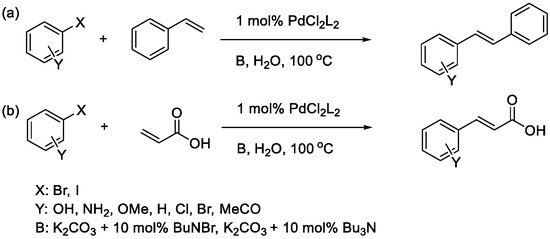
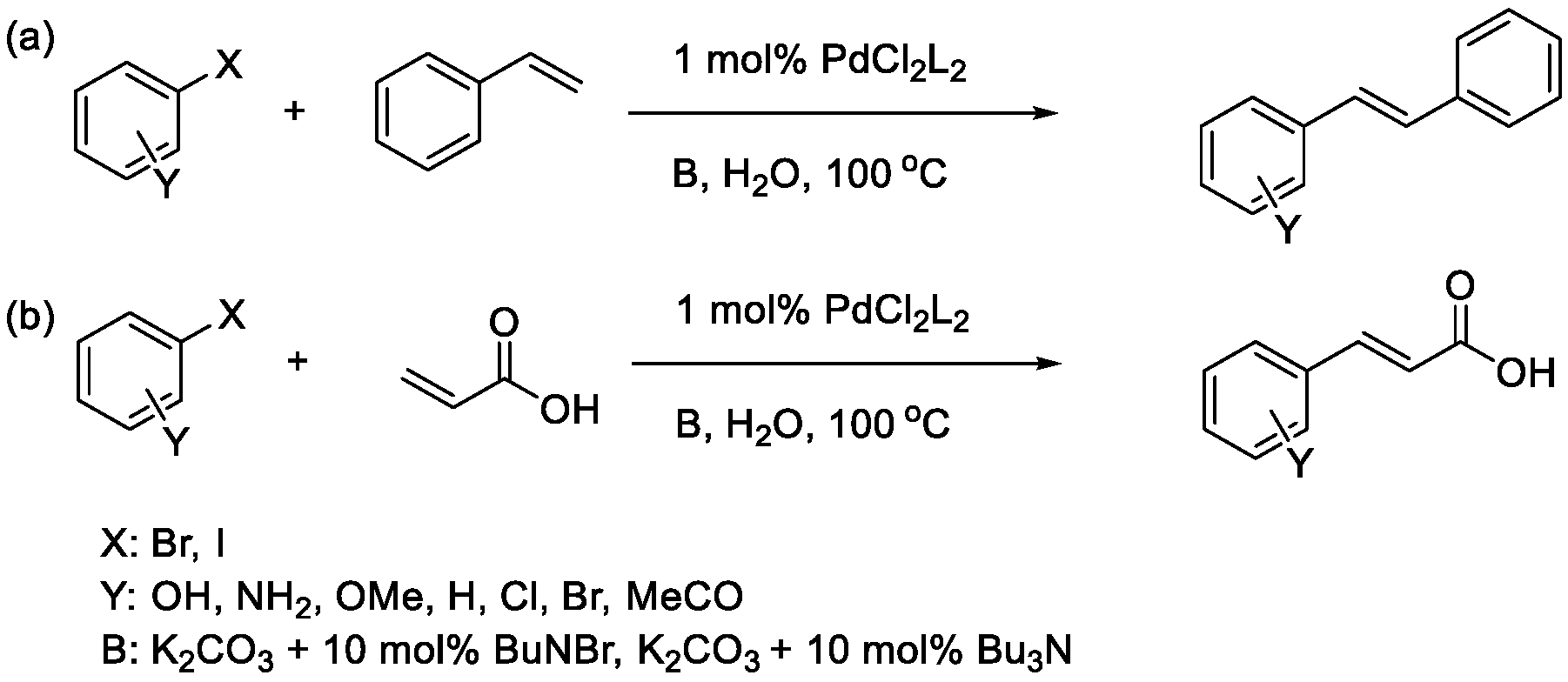
From a green chemistry standpoint, performing organic reactions in water is increasingly attractive because water is inexpensive, non-toxic, and sometimes confers unique reactivity compared with conventional organic solvents [22,23,24]. Early examples of aqueous Pd-catalyzed arylation reactions illustrate the feasibility of high yield C–C bond-forming processes in water (Figure 1) [25].
Figure 1.
Example: palladium-catalyzed arylation of haloarenes with styrenes (a) or acrylic acids (b) in water [25].
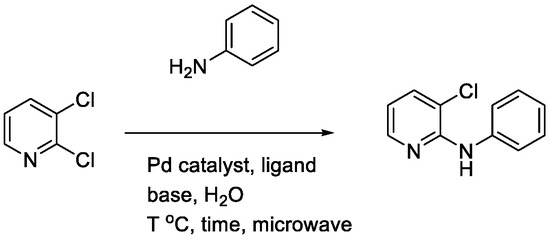
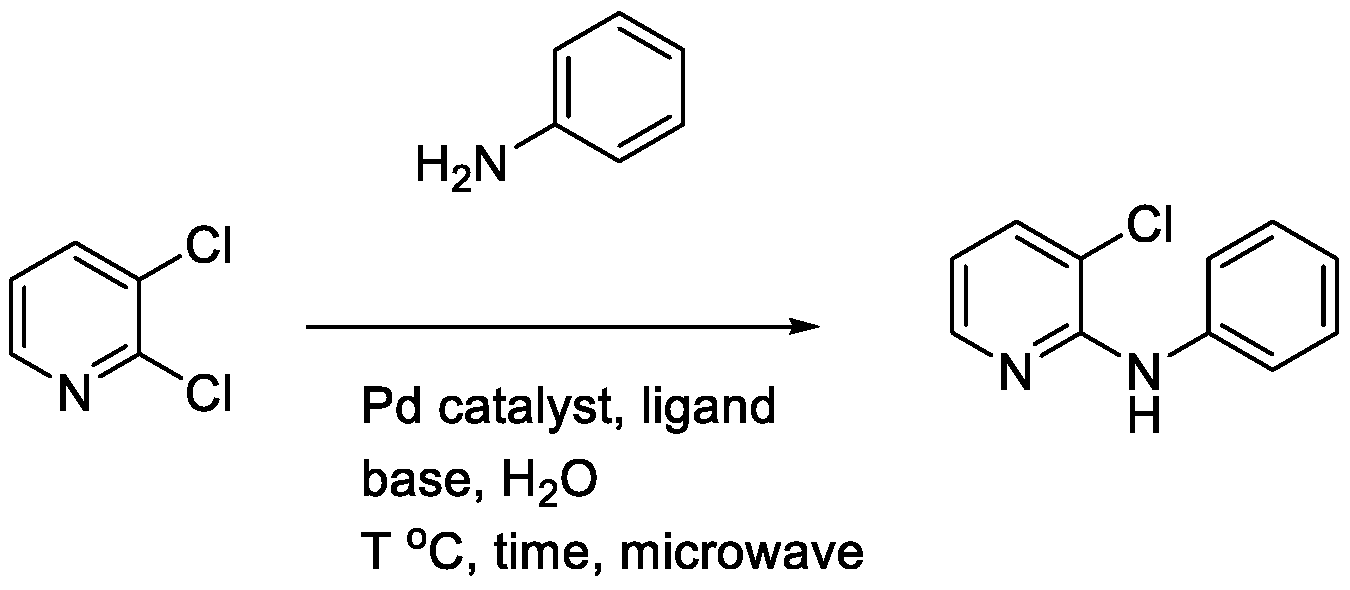
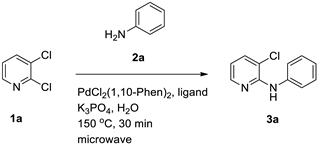
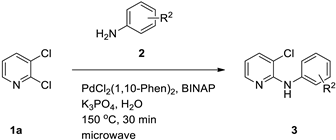
In addition to water, methanol and ethanol are also considered green solvents [26]. However, in terms of convenience, cost-effectiveness, and environmental friendliness, water has an overwhelming advantage over the latter two [27,28]. Accordingly, in our laboratory’s previous work on allylic reactions, we successfully employed transition-metal catalysts with water as the solvent and obtained products in high yields [29,30,31]. In parallel, microwave-assisted synthesis has emerged as a powerful enabling technology to accelerate reactions and improve reproducibility by rapid and homogeneous heating in sealed vessels [32]. Water demonstrates a high relative permittivity and substantial dielectric loss at microwave frequencies, thereby facilitating efficient coupling and expeditious heating within alternating electric fields. This renders it a more suitable microwave heating medium than most organic solvents [33,34]. Motivated by these developments and by precedent research for microwave-assisted N-arylation in toluene [35], we sought to develop a microwave-assisted Pd-catalyzed N-arylation in water for anilines with 2,3-dihalopyridines, aiming to improve operational simplicity and environmental footprint while maintaining high efficiency (Figure 2).
Figure 2.
Example: Optimization of conditions for the palladium-catalyzed reaction of aniline with 2,3-dichloropyridine in water.
Building on these themes, we sought to merge aqueous reaction media with microwave assistance for palladium-catalyzed N-arylation between anilines and 2,3-dihalopyridines. Prior work using toluene under microwave irradiation achieved a 71% yield for the N-arylation of aniline with 2,3-dichloropyridine. We hypothesized that water could replace organic solvent while retaining or improving efficiency under carefully selected catalytic systems and bases.
Herein, we report an optimized, selective N-arylation of anilines with 2,3-dihalopyridines in water using a PdCl2(1,10-phenanthroline)2 [PdCl2(1,10-Phen)2]/BINAP catalyst combination and K3PO4 as a base under microwave heating. We detail the effects of catalyst/ligand ratios, temperature and time, base identity, palladium precursors, phosphine ligands, and substrate scopes, achieving up to 91% yield in 30 min at 150 °C. This method advances sustainable cross-coupling chemistry by leveraging water as the solvent and microwave technology to enhance atom economy and operational simplicity.
2. Materials and Methods
2.1. General Information
Microwave irradiation was performed using a focused microwave synthesizer (CEM Discover S-Class, CEM Corporation, Matthews, NC, USA). IR spectra were recorded on a PerkinElmer System 2000 FT-IR spectrophotometer (PerkinElmer Inc., Shelton, CT, USA). NMR spectra were acquired on Varian Unity-plus 400, Varian Unity-inova 500, or Varian Mercury-plus 400 instruments (Varian Inc., Palo Alto, CA, USA). GC–MS analysis was performed on a Thermo-Finnigan GC–MS system (Thermo Finnigan, Waltham, MA, USA). HRMS measurements were obtained on a Shimadzu QP2010 instrument (Shimadzu Corporation, Kyoto, Japan). Chemical shifts are reported in ppm (δ) relative to TMS as an internal standard; coupling constants (J) are reported in Hz.
2.2. General Procedure for Microwave-Assisted N-Arylation in Water
A sealed microwave vial was charged sequentially with 2,3-dihalopyridines 1 (1.0 mmol), anilines 2 (1.2 mmol), PdCl2(1,10-Phen)2 (0.02 mmol), (±)-BINAP (0.03 mmol), K3PO4 (3.5 mmol), and H2O (2.5 mL). The mixture was irradiated under microwave heating at 150 °C for 30 min. After cooling, the reaction mixture was extracted with dichloromethane. The organic layer was dried over anhydrous MgSO4, filtered, and concentrated under reduced pressure. The crude residue was purified by silica gel column chromatography (hexanes/EtOAc = 4:1) to afford the desired aminopyridine products.
3. Results
3.1. Reaction Optimization
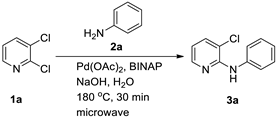
To establish an efficient aqueous N-arylation, 2,3-dichloropyridine (1a) and aniline (2a) were selected as model substrates. Initial experiments using Pd(OAc)2 and (±)-BINAP in water under conventional heating afforded only modest yield (Table 1, entry 1). Microwave irradiation substantially increased yield while reducing reaction time (Table 1, entry 2), in line with the general advantages of microwave-assisted synthesis [32].
Table 1.
Reaction of 2,3-dichloropyridine (1a) with aniline (2a): effects of ratio of catalyst to ligand a.
3.1.1. Optimization of Catalyst and Ligand Ratios
Varying the Pd(OAc)2/(±)-BINAP ratio indicated that excess ligand relative to palladium improved the isolated yield, consistent with ligand-enabled stabilization and catalytic turnover under aqueous microwave conditions (Table 1). Notably, omission of either palladium or ligand dramatically reduced conversion (Table 1, entries 7–9), supporting a bona fide catalyzed process.
3.1.2. Effects of Temperature, Time, and Stoichiometry
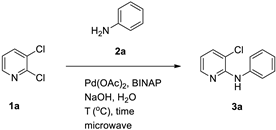
Optimization of reaction temperature and time revealed that 150 °C for 30 min delivered improved yield relative to 180 °C, whereas excessive heating (200 °C) or shorter reaction time reduced yield (Table 2). Altering the amount of aniline present did not further improve yields beyond the 1:1.2 ratio.
Table 2.
Reaction of 2,3-dichloropyridine (1a) with aniline (2a): effects of temperature and reaction time and ratio of reactant a.
3.1.3. Base Screening
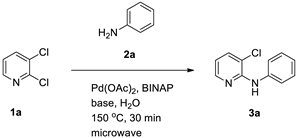
A variety of bases were examined (Table 3). Among them, K3PO4 provided the highest isolated yield (85%) under otherwise identical conditions, and was selected for further studies. Reactions in the absence of a base resulted in diminished yield even upon extended irradiation.
Table 3.
Reaction of 2,3-dichloropyridine (1a) with aniline (2a): effects of base a.
3.1.4. Palladium Sources and Ligand Effects
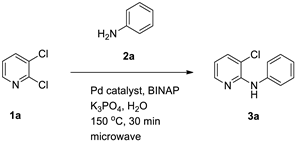
Commercially available palladium precursors were screened (Table 4), identifying PdCl2(1,10-Phen)2 as the most effective catalyst (91% isolated yield). Subsequently, phosphine ligands were evaluated with PdCl2(1,10-Phen)2 (Table 5). The bidentate ligand (±)-BINAP furnished the best outcome (91%), while many monodentate phosphines gave substantially lower yields. Collectively, these data defined the optimized conditions used for substrate scope evaluation.
Table 4.
Reaction of 2,3-dichloropyridine (1a) with aniline (2a): effects of palladium catalyst a.
Table 5.
Reaction of 2,3-dichloropyridine (1a) with aniline (2a): effects of phosphine ligand a.
3.2. Substrate Scope
3.2.1. Variation in 2,3-Dihalopyridines
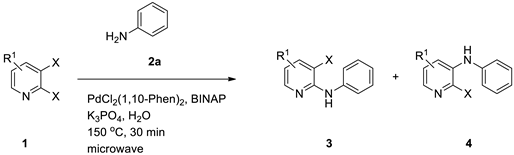
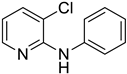
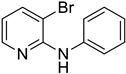
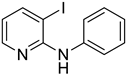
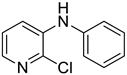
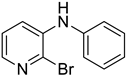
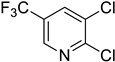
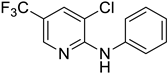
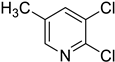
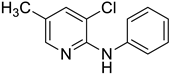
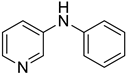
Using aniline (2a) as a coupling partner, various 2,3-dihalopyridines were evaluated (Table 6, Figures S1–S16). For symmetrical dihalides (same halogen at C2/C3), products were obtained with predominant coupling at C2 under the optimized conditions. For mixed halides, the major product generally corresponded to coupling at the position bearing the less electronegative halogen, reflecting the greater facility of oxidative addition into the weaker, more polarizable C–X bond at that site and thus the differential C–X bond activation tendencies early in the catalytic cycle [36].
Table 6.
Reaction of 2,3-dihalopyridines 1 with aniline (2a) under optimized conditions a.
3.2.2. Variation in Anilines
A series of substituted anilines were coupled with 2,3-dichloropyridine (1a) (Table 7, Figures S17–S46). Both electron-donating and electron-withdrawing substituents were tolerated, affording moderate to excellent yields. A plausible explanation is that the strongly electron-withdrawing nitro substituents generally reduced yield, plausibly due to decreased nucleophilicity of the aniline nitrogen. Ortho-disubstitution also diminished yield, consistent with steric hindrance effects.
Table 7.
Reaction of 2,3-dichloropyridine (1a) with anilines 2 under optimized conditions a.
4. Discussion
This study aimed to develop an efficient and more sustainable protocol for the Pd-catalyzed N-arylation of anilines with 2,3-dihalopyridines. A systematic evaluation of the catalytic system and reaction parameters identified a set of conditions that consistently provided superior performance under microwave irradiation. Overall, the results demonstrate that the combination of PdCl2(1,10-Phen)2 and (±)-BINAP in the presence of an inorganic base, using water as the reaction medium and heating at 150 °C by microwave irradiation, constitutes the most effective platform for this transformation.
The choice of Pd source was found to be a decisive factor in determining both conversion and isolated yield. Among the Pd precatalysts examined, PdCl2(1,10-Phen)2 delivered the most consistently high yields, whereas Pd(OAc)2 remained competent. This difference suggests that the pre-coordinated phenanthroline-containing Pd complex may generate the catalytically active species more efficiently under the aqueous microwave conditions and/or exhibit improved stability against deactivation pathways in this medium.
Ligand loading and the Pd:(±)-BINAP ratio also exerted a pronounced influence. When the Pd:BINAP ratio was varied from 1:1 to 1:4, the best results were obtained with ratios between 1:2 and 1:4, indicating that an excess of BINAP relative to Pd is beneficial. Practically, this behavior is consistent with the need to maintain a sufficient population of ligated Pd species to sustain productive turnover and to suppress off-cycle processes that can arise under high-temperature conditions.
The identity of the base strongly affected reaction efficiency. In the base screen, the effectiveness followed the trend: K3PO4 > Cs2CO3 ≥ K2CO3 > NaOH.
Notably, K3PO4 emerged as the optimal base, delivering superior yields and cleaner conversions relative to the carbonate bases.
Microwave heating enabled rapid attainment of productive reaction temperatures and significantly shortened reaction times. A temperature of 150 °C with a reaction time of 30 min provided the optimal balance between high conversion and operational efficiency. Shorter reaction times under otherwise identical conditions led to incomplete conversion, indicating that a minimum residence time is required for full consumption of the dihalopyridine substrate and completion of the coupling process, even under intensified microwave conditions.
On the basis of the combined optimization results, the following conditions were selected as standard for subsequent studies—a molar ratio of 2,3-dichloropyridine (1a):aniline (2a) = 1:1.2, PdCl2(1,10-Phen)2 (0.02 mmol) as the catalyst, (±)-BINAP (0.03 mmol) as the ligand, and K3PO4 (3.5 mmol) as the base—conducted in water at 150 °C under microwave irradiation for 30 min. Using this optimized protocol, the N-arylation of various 2,3-dihalopyridines (1) with diverse anilines (2) was investigated. The reaction exhibited robust performance across the examined substrate set, highlighting the generality of the catalytic platform under the chosen conditions.
Solvent screening revealed that water is not merely a viable alternative medium, but in this system, provides advantages in both yield and sustainability. While methanol and ethanol could also support product formation, they were less favorable overall relative to water. Importantly, when benchmarked against reported toluene-based microwave protocols (approximately 71% yield), the present aqueous method delivered higher yields (up to 91%), required shorter reaction times, and improved the overall environmental profile of the process.
From a green chemistry perspective [37], the use of water reduces reliance on volatile and flammable organic solvents, thereby lowering safety risks and minimizing environmental impact. Moreover, employing water as the reaction medium aligns with waste-reduction principles by limiting auxiliary materials associated with solvent handling and disposal. Collectively, these features position the developed aqueous microwave protocol as a practical and more sustainable approach to Pd-catalyzed N-arylation of dihalopyridines with anilines.
5. Conclusions
In summary, this study establishes that PdCl2(1,10-Phen)2/(±)-BINAP in combination with K3PO4 under aqueous microwave conditions (150 °C, 30 min) constitutes an efficient and operationally attractive system for the N-arylation of 2,3-dihalopyridines with anilines. The method offers improved yield and reduced reaction time relative to toluene-based microwave approaches, while simultaneously advancing sustainability through the use of water as a benign solvent.
Supplementary Materials
The following supporting information can be downloaded at https://www.mdpi.com/article/10.3390/ma19051003/s1, Figure S1: 1H NMR of 3a; Figure S2: 13C NMR of 3a; Figure S3: 1H NMR of 3b; Figure S4: 13C NMR of 3b; Figure S5: 1H NMR of 3c; Figure S6: 13C NMR of 3c; Figure S7: 1H NMR of 4e; Figure S8: 13C NMR of 4e; Figure S9: 1H NMR of 4f; Figure S10: 13C NMR of 4f; Figure S11: 1H NMR of 3h; Figure S12: 13C NMR of 3h; Figure S13: 1H NMR of 3i; Figure S14: 13C NMR of 3i; Figure S15: 1H NMR of 5; Figure S16: 13C NMR of 5; Figure S17: 1H NMR of 6; Figure S18: 13C NMR of 6; Figure S19: 1H NMR of 7; Figure S20: 13C NMR of 7; Figure S21: 1H NMR of 8; Figure S22: 13C NMR of 8; Figure S23: 1H NMR of 9; Figure S24: 13C NMR of 9; Figure S25: 1H NMR of 10; Figure S26: 13C NMR of 10; Figure S27: 1H NMR of 11; Figure S28: 13C NMR of 11; Figure S29: 1H NMR of 12; Figure S30: 13C NMR of 12; Figure S31: 1H NMR of 13; Figure S32: 13C NMR of 13; Figure S33: 1H NMR of 14; Figure S34: 13C NMR of 14; Figure S35: 1H NMR of 15; Figure S36: 13C NMR of 15; Figure S37: 1H NMR of 16; Figure S38: 13C NMR of 16; Figure S39: 1H NMR of 17; Figure S40: 13C NMR of 17; Figure S41: 1H NMR of 18; Figure S42: 13C NMR of 18; Figure S43: 1H NMR of 19; Figure S44: 13C NMR of 19; Figure S45: 1H NMR of 20; Figure S46: 13C NMR of 20.
Author Contributions
Writing—original draft preparation, data curation, H.-C.H.; writing—original draft preparation, data curation, C.-Y.C.; conceptualization, writing—review and editing, funding acquisition, S.-C.Y. All authors have read and agreed to the published version of the manuscript.
Funding
This research was funded by the National Science Council of Taiwan (Grant Number: NSC 95-2113-M037-011) and Kaohsiung Medical University (Grant Number: KMU-TB114005). Thanks to The Pharmacy Alumni Foundation for Culture and Education for supporting this research.
Data Availability Statement
The original contributions presented in this study are included in the article/Supplementary Material. Further inquiries can be directed towards the corresponding author.
Acknowledgments
Financial support of this work by the National Science Council of Taiwan, Kaohsiung Medical University, and The Pharmacy Alumni Foundation for Culture and Education is gratefully acknowledged.
Conflicts of Interest
The authors declare no conflicts of interest.
References
- Lewis, J.C.; Wiedemann, S.H.; Bergman, R.G.; Ellman, J.A. Arylation of Heterocycles via Rhodium-Catalyzed C−H Bond Functionalization. Org. Lett. 2004, 6, 35–38. [Google Scholar] [CrossRef] [Scilit] [PubMed]
- Do, H.Q.; Daugulis, O. Copper-Catalyzed Arylation of Heterocycle C−H Bonds. J. Am. Chem. Soc. 2007, 129, 12404–12405. [Google Scholar] [CrossRef] [Scilit]
- Join, B.; Yamamoto, T.; Itami, K. Iridium Catalysis for C−H Bond Arylation of Heteroarenes with Iodoarenes. Angew. Chem. Int. Ed. 2009, 48, 3644–3647. [Google Scholar] [CrossRef] [Scilit] [PubMed]
- Gao, K.; Yoshikai, N. Cobalt-Catalyzed Arylation of Aldimines via Directed C–H Bond Functionalization: Addition of 2-Arylpyridines and Self-Coupling of Aromatic Aldimines. Chem. Commun. 2012, 48, 4305–4307. [Google Scholar] [CrossRef] [Scilit]
- Liu, S.; Chen, R.; Guo, X.; Yang, H.; Deng, G.; Li, C.-J. Iron-catalyzed Arylation of Benzoazoles with Aromatic Aldehydes Using Oxygen as Oxidant. Green Chem. 2012, 14, 1577–1580. [Google Scholar] [CrossRef] [Scilit]
- Sengmany, S.; Vitu-Thiebaud, A.; Le Gall, E.; Condon, S.; Léonel, E.; Thobie-Gautier, C.; Pipelier, M.; Lebreton, J.; Dubreuil, D. An Electrochemical Nickel-Catalyzed Arylation of 3-Amino-6-Chloropyridazines. J. Org. Chem. 2013, 78, 370–379. [Google Scholar] [CrossRef] [Scilit]
- Brenner, E.; Schneider, R.; Fort, Y. Nickel-catalysed Selective N-Arylation or N,N′-Diarylation of Secondary Diamines. Tetrahedron 2002, 58, 6913–6924. [Google Scholar] [CrossRef] [Scilit]
- Guo, D.; Huang, H.; Xu, J.; Jiang, H.; Liu, H. Efficient Iron-Catalyzed N-Arylation of Aryl Halides with Amines. Org. Lett. 2008, 10, 4513–4516. [Google Scholar] [CrossRef] [Scilit]
- Suresh, P.; Pitchumani, K. Per-6-Amino-β-Cyclodextrin as an Efficient Supramolecular Ligand and Host for Cu(I)-Catalyzed N-Arylation of Imidazole with Aryl Bromides. J. Org. Chem. 2008, 73, 9121–9124. [Google Scholar] [CrossRef] [Scilit]
- Teo, Y.C.; Chua, G.L. Cobalt-Catalyzed N-Arylation of Nitrogen Nucleophiles in Water. Chem. Eur. J. 2009, 15, 3072–3075. [Google Scholar] [CrossRef] [Scilit] [PubMed]
- Kim, M.; Chang, S. Rhodium(NHC)-Catalyzed Amination of Aryl Bromides. Org. Lett. 2010, 12, 1640–1643. [Google Scholar] [CrossRef] [Scilit]
- Hegedus, L.S.; Williams, R.E.; McCuire, M.A.; Hayashi, T. Palladium-Assisted Alkylation of Olefins. J. Am. Chem. Soc. 1980, 102, 4973–4979. [Google Scholar] [CrossRef] [Scilit]
- Abe, H.; Amii, H.; Uneyama, K. Pd-Catalyzed Asymmetric Hydrogenation of α-Fluorinated Iminoesters in Fluorinated Alcohol: A New and Catalytic Enantioselective Synthesis of Fluoro α-Amino Acid Derivatives. Org. Chem. 2001, 3, 313–315. [Google Scholar] [CrossRef] [Scilit] [PubMed]
- Ishii, Y.; Miyashita, K.; Kamita, K.; Hidai, M. Selective Hydroformylation of Internal Acetylenes by PdCl2(PCy3)2: Remarkable Synergistic Effect of Cobalt. J. Am. Chem. Soc. 1997, 119, 6448–6449. [Google Scholar] [CrossRef] [Scilit]
- Dimitratos, N.; Lopez-Sanchez, J.A.; Meenakshisundaram, S.; Anthonykutty, J.M.; Brett, G.; Carley, A.F.; Taylor, S.H.; Knight, D.W.; Hutchings, G.J. Selective Formation of Lactate by Oxidation of 1,2-Propanediol Using Gold Palladium Alloy Supported Nanocrystals. Green Chem. 2009, 11, 1209–1216. [Google Scholar] [CrossRef] [Scilit]
- Qiu, S.; Wei, Y.; Liu, G. Palladium-Catalyzed Intramolecular Hydroamination of Allenes Coupled to Aerobic Alcohol Oxidation. Chem. Eur. J. 2009, 15, 2751–2754. [Google Scholar] [CrossRef] [Scilit]
- Pi, S.F.; Yang, X.H.; Huang, X.C.; Liang, Y.; Yang, G.N.; Zhang, X.H.; Li, J.H. Palladium-Catalyzed Cyclocarbonylation of Arynes with Methyl Allyl Carbonates: Selective Synthesis of 1H-Inden-1-ones. J. Org. Chem. 2010, 75, 3484–3487. [Google Scholar] [CrossRef] [Scilit]
- Wabner, P.; Bollenbach, M.; Doebelin, C.; Bihel, F.; Bourguignon, J.-J.; Salomé, C.; Schmitt, M. t-BuXPhos: A highly efficient ligand for Buchwald–Hartwig coupling in water. Green Chem. 2014, 16, 4170–4178. [Google Scholar]
- Pithani, S.; Malmgren, M.; Aurell, C.-J.; Nikitidis, G.; Friis, S.D. Biphasic Aqueous Reaction Conditions for Process-Friendly Palladium-Catalyzed C–N Cross-Coupling of Aryl Amines. Org. Process Res. Dev. 2019, 23, 1752–1757. [Google Scholar] [CrossRef] [Scilit]
- Cosgrove, S.C.; Thompson, M.P.; Ahmed, S.T.; Parmeggiani, F.; Turner, N.J. One-Pot Synthesis of Chiral N-Arylamines by Combining Biocatalytic Aminations with Buchwald-Hartwig N-Arylation. Angew. Chem. Int. Ed. 2020, 59, 18156–18160. [Google Scholar] [CrossRef] [Scilit]
- Hostyn, S.; Baelen, G.V.; Lemiere, G.L.F.; Maes, B.U.W. Synthesis of α-Carbolines Starting from 2,3-Dichloropyridines and Substituted Anilines. Adv. Synth. Catal. 2008, 350, 2653–2660. [Google Scholar] [CrossRef] [Scilit]
- Trost, B.M. The Atom Economy—A Search for Synthetic Efficiency. Science 1991, 254, 1471–1477. [Google Scholar] [CrossRef] [Scilit]
- Hailes, H.C. Reaction Solvent Selection: The Potential of Water as a Solvent for Organic Transformations. Org. Process Res. Dev. 2007, 11, 114–120. [Google Scholar] [CrossRef] [Scilit]
- Manabe, K.; Kobayashi, S. Catalytic Asymmetric Carbon–Carbon Bond-Forming Reactions in Aqueous Media. Chem. Eur. J. 2002, 8, 4049–4101. [Google Scholar] [CrossRef] [Scilit]
- Bumagin, N.A.; Bykov, V.V.; Sukhomlinova, L.I.; Tolstaya, T.P.; Beletskaya, I.P. Palladium-Catalyzed Arylation of Styrene and Acrylic Acid in Water. J. Organomet. Chem. 1995, 486, 259–262. [Google Scholar] [CrossRef] [Scilit]
- Capello, C.; Fischer, U.; Hungerbühler, K. What is a green solvent? A comprehensive framework for the environmental assessment of solvents. Green Chem. 2007, 9, 927–934. [Google Scholar] [CrossRef] [Scilit]
- Kaboyashi, S.; Lam, W.W.L.; Manabe, K. Remarkable Rate Enhancement of Palladium-Catalyzed Allylic Alkylation in Water Using a Colloidal Dispersion System. Tetrahedron Lett. 2000, 41, 6115–6119. [Google Scholar] [CrossRef] [Scilit]
- Rabeyrin, C.; Sinou, D. Catalytic Asymmetric Alkylation in Water in the Presence of Surfactants: Influence of the Nature of the Nucleophile and the Allylic Acetate on the Activity and Enantioselectivity. Tetrahedron Asymmetry 2003, 14, 3891–3897. [Google Scholar] [CrossRef] [Scilit]
- Yang, S.C.; Hsu, Y.C.; Gan, K.H. Direct Palladium/Carboxylic Acid-Catalyzed Allylation of Anilines with Allylic Alcohols in Water. Tetrahedron 2006, 62, 3949–3958. [Google Scholar] [CrossRef] [Scilit]
- Gan, K.H.; Jhong, C.J.; Shue, Y.J.; Yang, S.C. Platinum-Catalyzed Allylation of Aminonaphthalenes with Allylic Acetates in Water. Tetrahedron 2008, 64, 9625–9629. [Google Scholar] [CrossRef] [Scilit]
- Gan, K.H.; Jhong, C.J.; Yang, S.C. Direct Palladium/Carboxylic Acid-Catalyzed C-Allylation of Cyclic 1,3-Diones with Allylic Alcohols in Water. Tetrahedron 2008, 64, 1204–1212. [Google Scholar] [CrossRef] [Scilit]
- Gedye, R.; Smith, F.; Westaway, K.; Ali, H.; Baldisera, L.; Laberge, L.; Rousell, J. The Use of Microwave Ovens for Rapid Organic Synthesis. Tetrahedron Lett. 1986, 27, 279–282. [Google Scholar] [CrossRef] [Scilit]
- Gezahegn, Y.A.; Tang, J.; Sablani, S.S.; Pedrow, P.D.; Hong, Y.-K.; Lin, H.; Tang, A. Dielectric properties of water relevant to microwave assisted thermal pasteurization and sterilization of packaged foods. Innov. Food Sci. Emerg. Technol. 2021, 74, 102837. [Google Scholar] [CrossRef] [Scilit]
- Dallinger, D.; Kappe, C.O. Microwave-Assisted Synthesis in Water as Solvent. Chem. Rev. 2007, 107, 2563–2591. [Google Scholar] [CrossRef] [Scilit]
- Koley, M.; Wimmer, L.; Schnürch, M.; Mihovilovic, M.D. Regioselective Syntheses of 2,3-Substituted Pyridines by Orthogonal Cross-Coupling Strategies. Eur. J. Org. Chem. 2011, 10, 1972–1979. [Google Scholar] [CrossRef] [Scilit]
- Hansen, T.; Sun, X.; Tiezza, M.D.; Zeist, W.J.; Poater, J.; Hamlin, T.A.; Bickelhaupt, F.M. C(spn)-X (n = 1–3) Bond Activation by Palladium. Chemistry 2022, 28, e202103953. [Google Scholar] [CrossRef] [Scilit] [PubMed]
- Anastas, P.T.; Warner, J.C. Green Chemistry: Theory and Practice; Oxford University Press: New York, NY, USA, 1998. [Google Scholar]








Disclaimer/Publisher’s Note: The statements, opinions and data contained in all publications are solely those of the individual author(s) and contributor(s) and not of MDPI and/or the editor(s). MDPI and/or the editor(s) disclaim responsibility for any injury to people or property resulting from any ideas, methods, instructions or products referred to in the content. |
© 2026 by the authors. Licensee MDPI, Basel, Switzerland. This article is an open access article distributed under the terms and conditions of the Creative Commons Attribution (CC BY) license.