Physical, Rheological and Microstructural Properties of Asphalt Modified by Low-Molecular-Weight Polyolefin

Abstract
1. Introduction
2. Materials and Methods
2.1. Materials
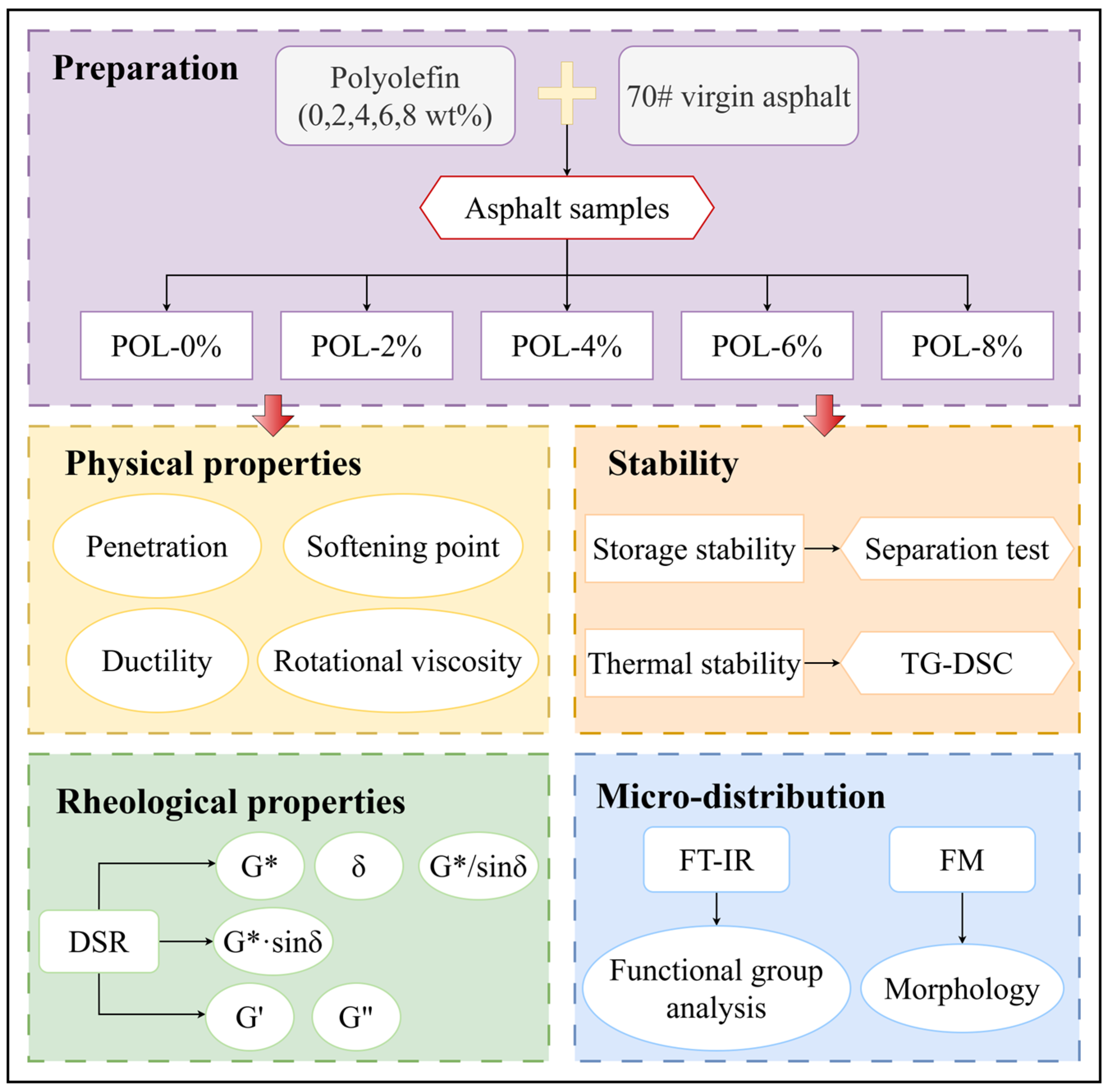
2.2. Sample Preparation
2.3. Experimental Methods
2.3.1. Physical Performance Tests
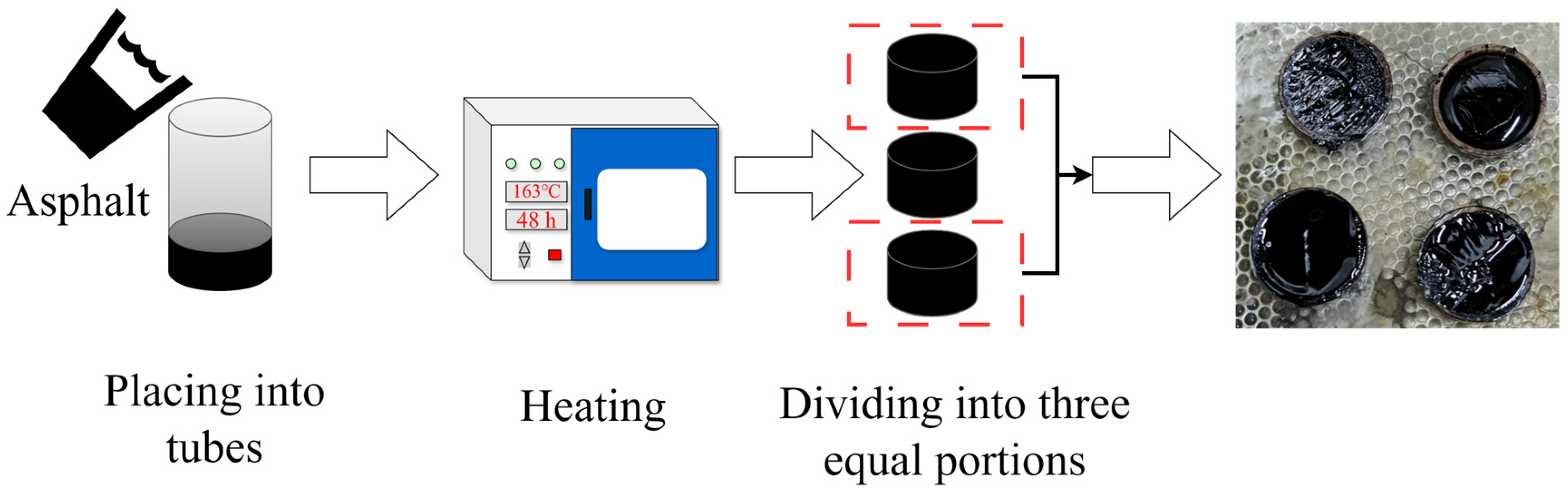
2.3.2. Separation Test
2.3.3. Thermogravimetric Analysis
2.3.4. Rotational Viscosity Test
2.3.5. Dynamic Shear Rheometer (DSR) Test
2.3.6. Fourier-Transform Infrared Spectrum (FT-IR) Test
2.3.7. Fluorescence Microscopy (FM) Test
3. Results and Discussion
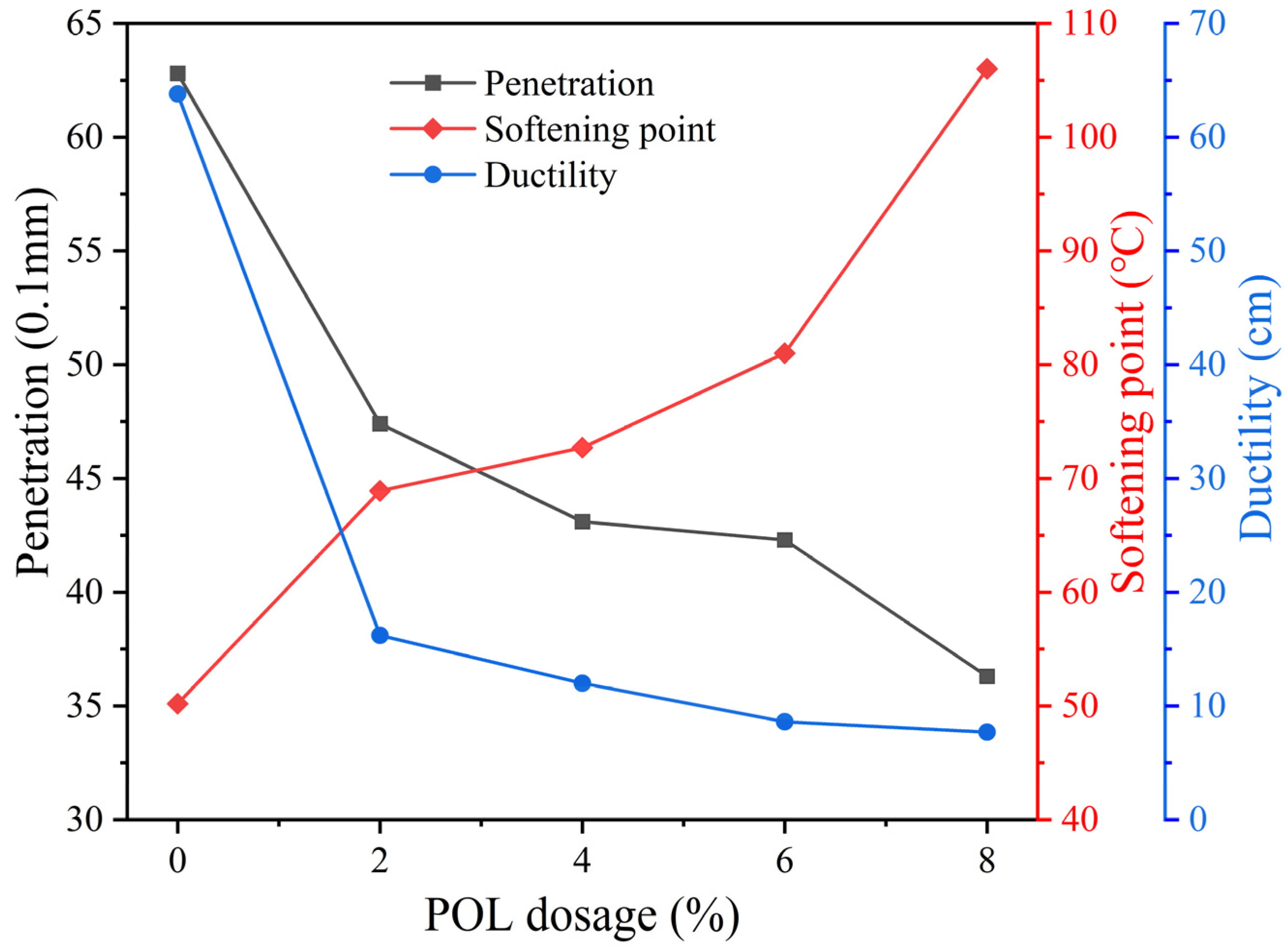
3.1. Penetration, Softening Point, and Ductility
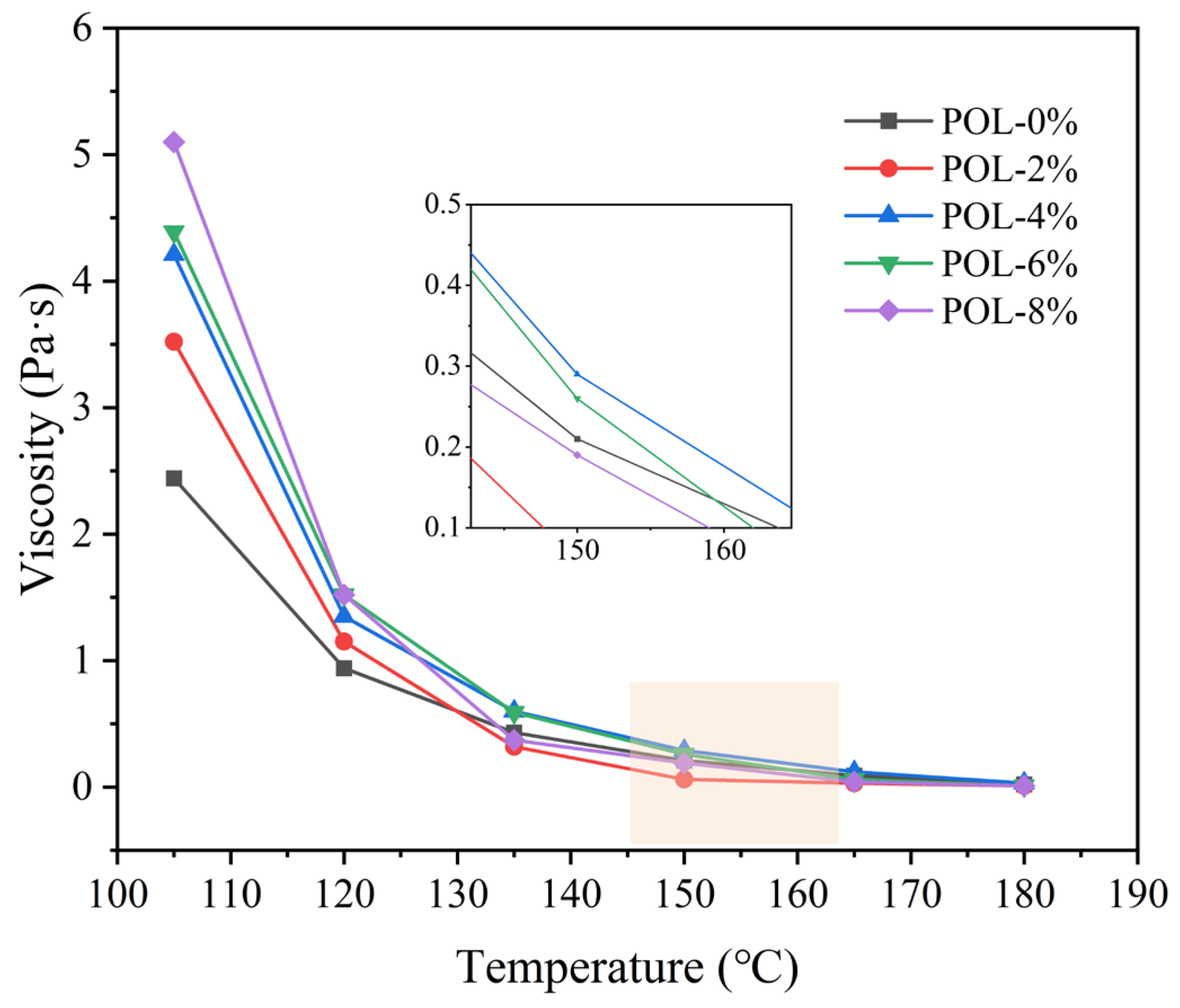
3.2. Rotational Viscosity
3.3. Storage Stability
3.4. Thermal Stability
3.5. High-Temperature Rheological Properties
3.5.1. Composite Modulus (G*) and Phase Angle (δ)
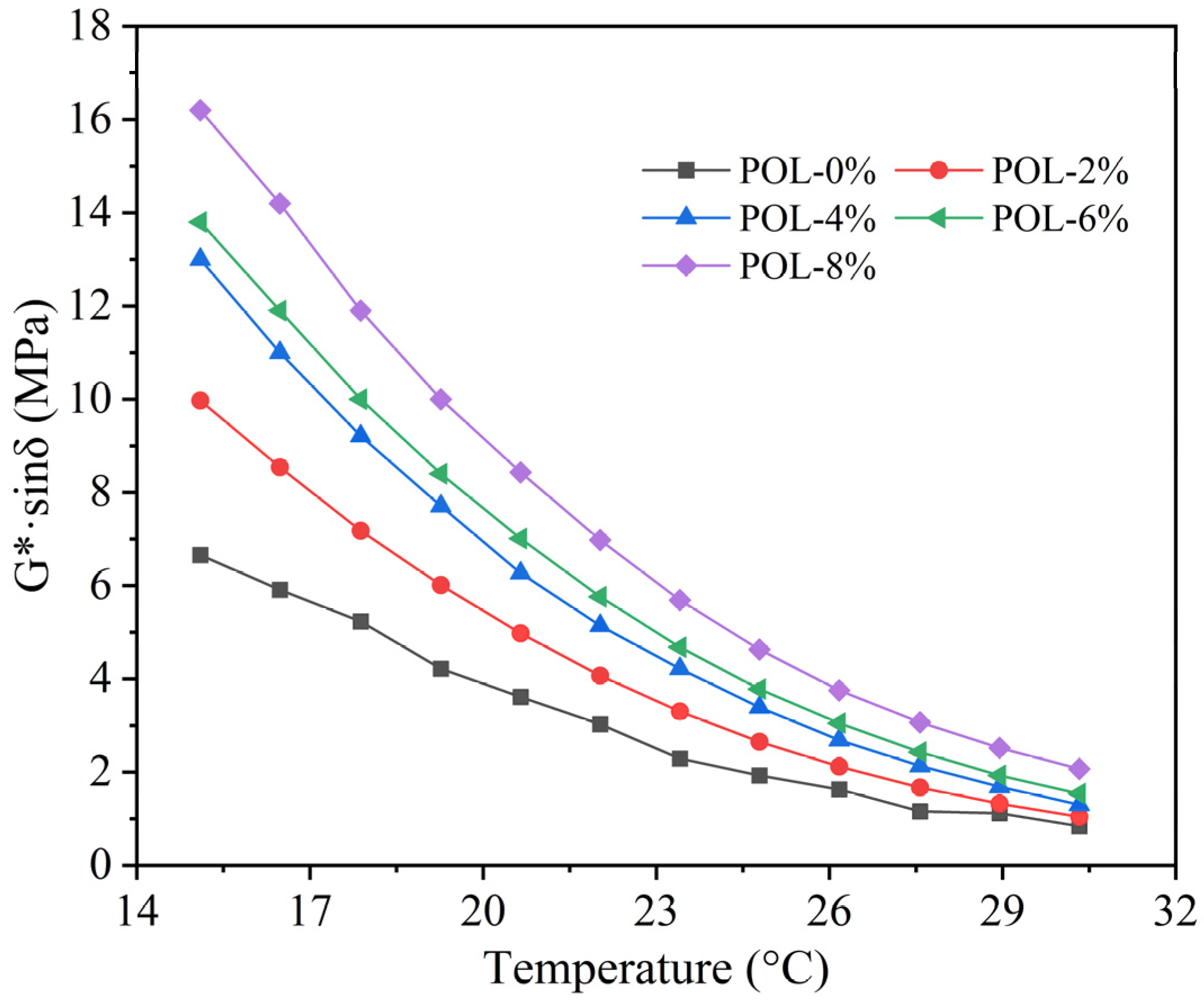
3.5.2. Rutting Factor (G*/sinδ)
3.6. Fatigue Properties
3.7. Low-Temperature Rheological Properties
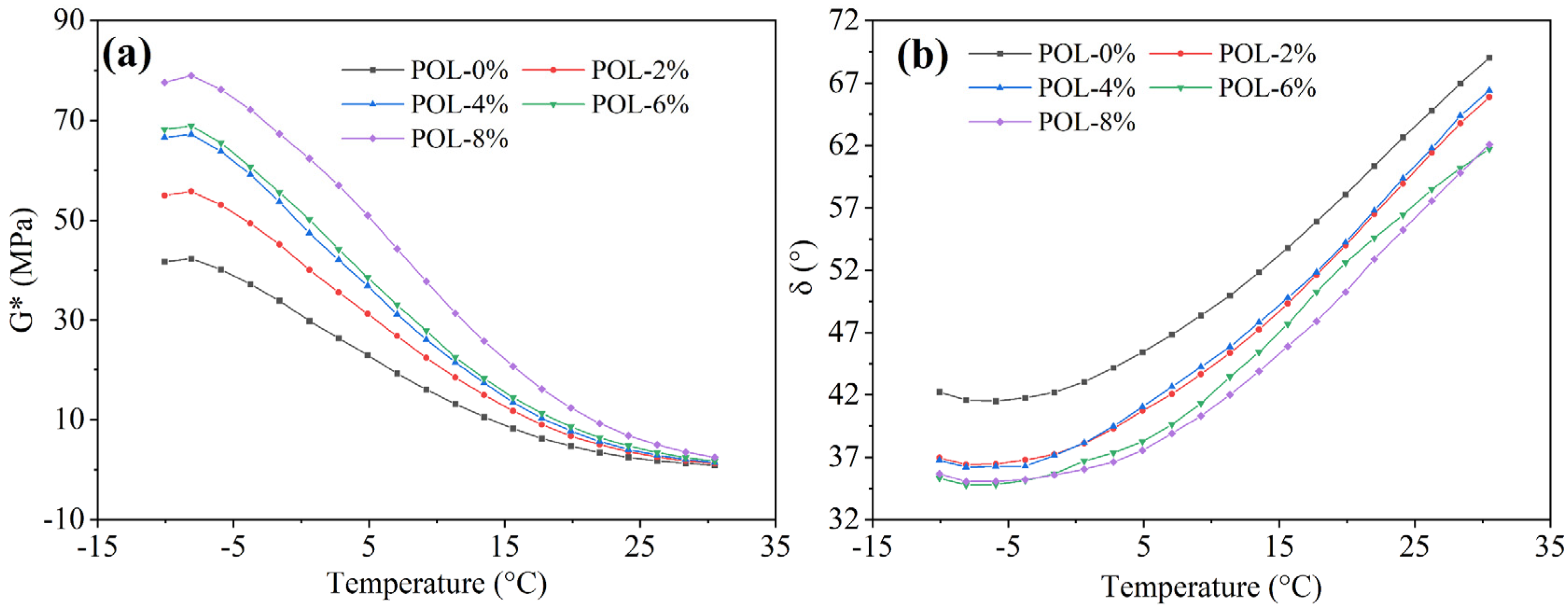
3.7.1. G* and δ
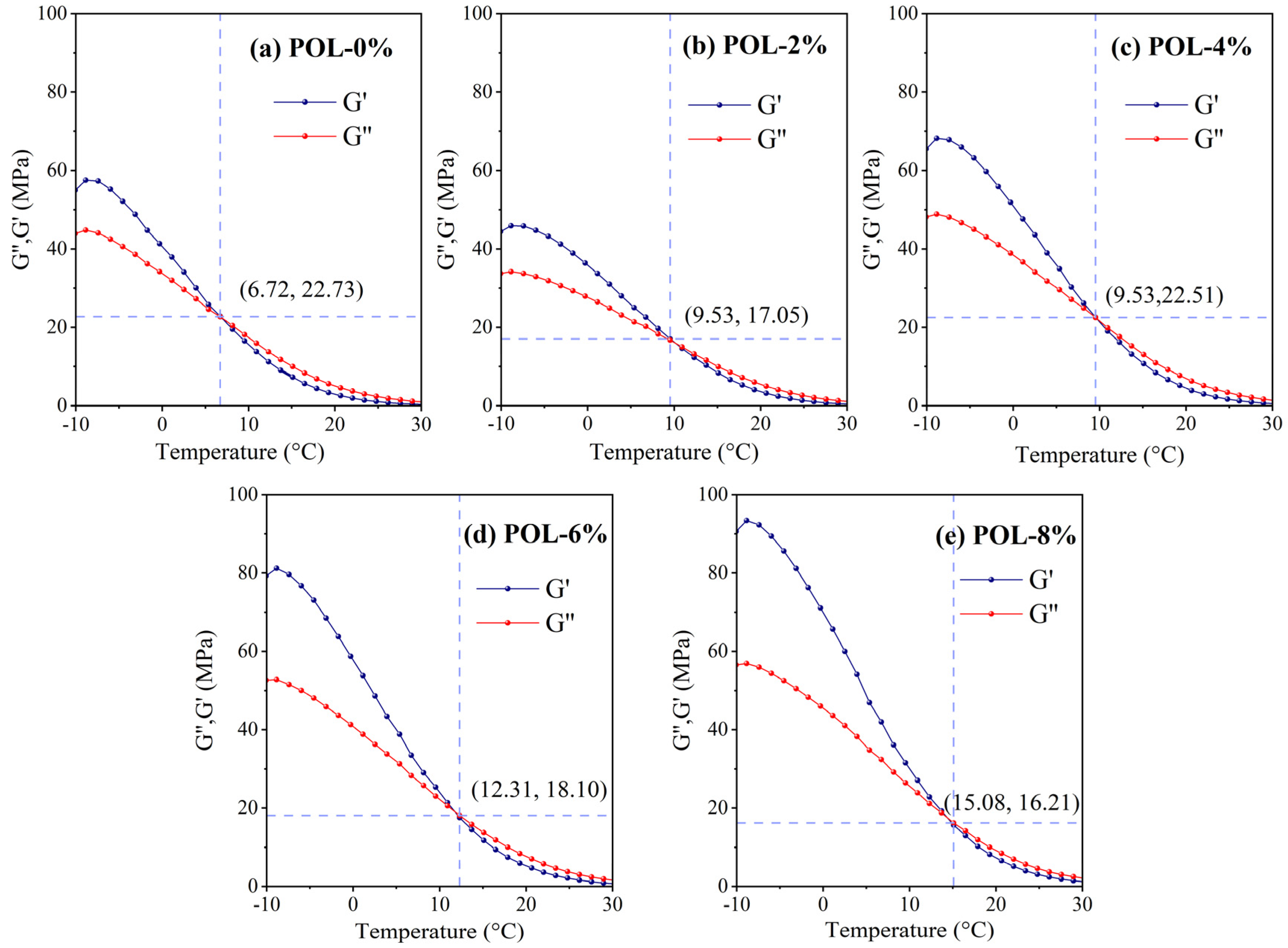
3.7.2. Storage Modulus (G′) and Loss Modulus (G″)
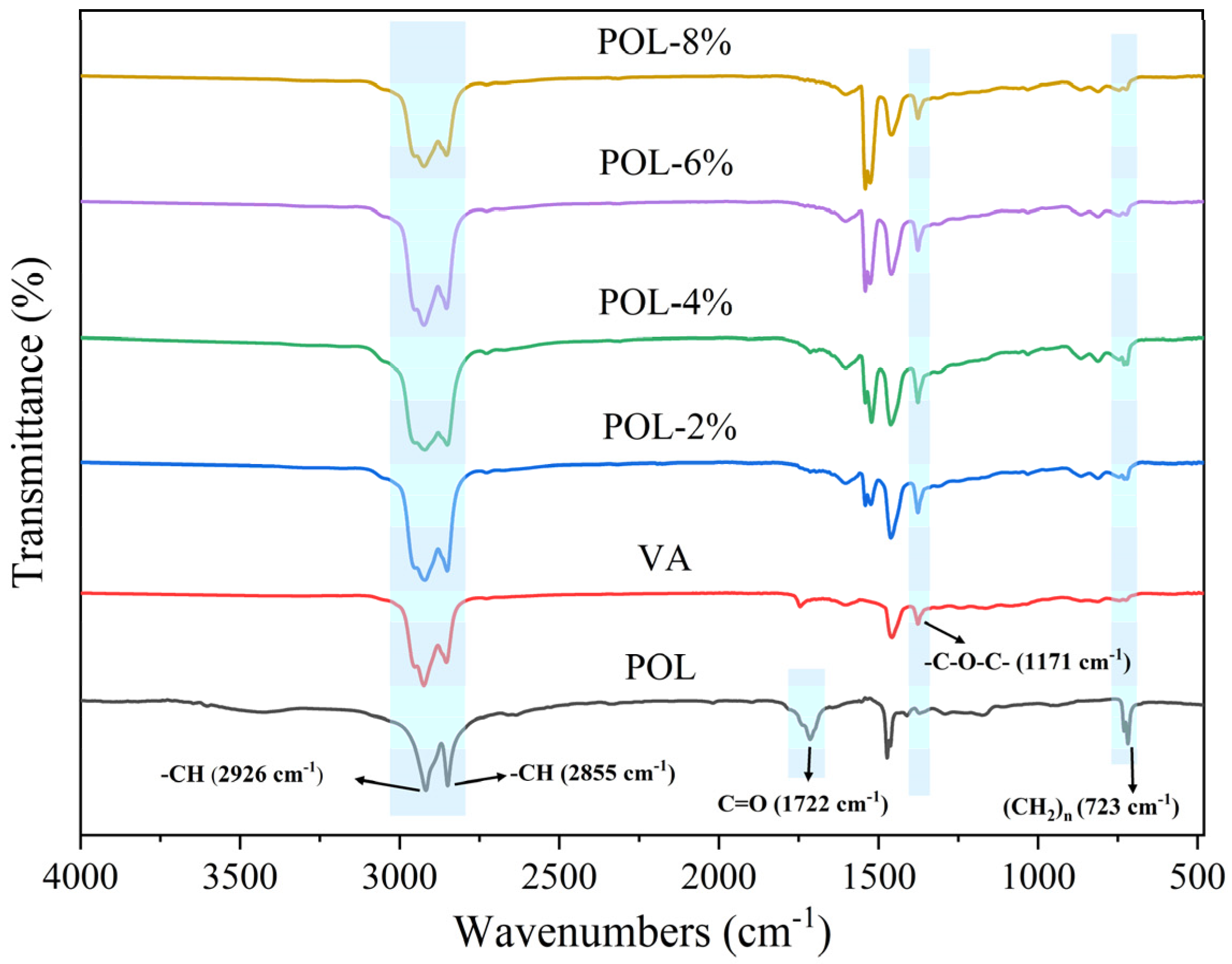
3.8. FT-IR Analysis
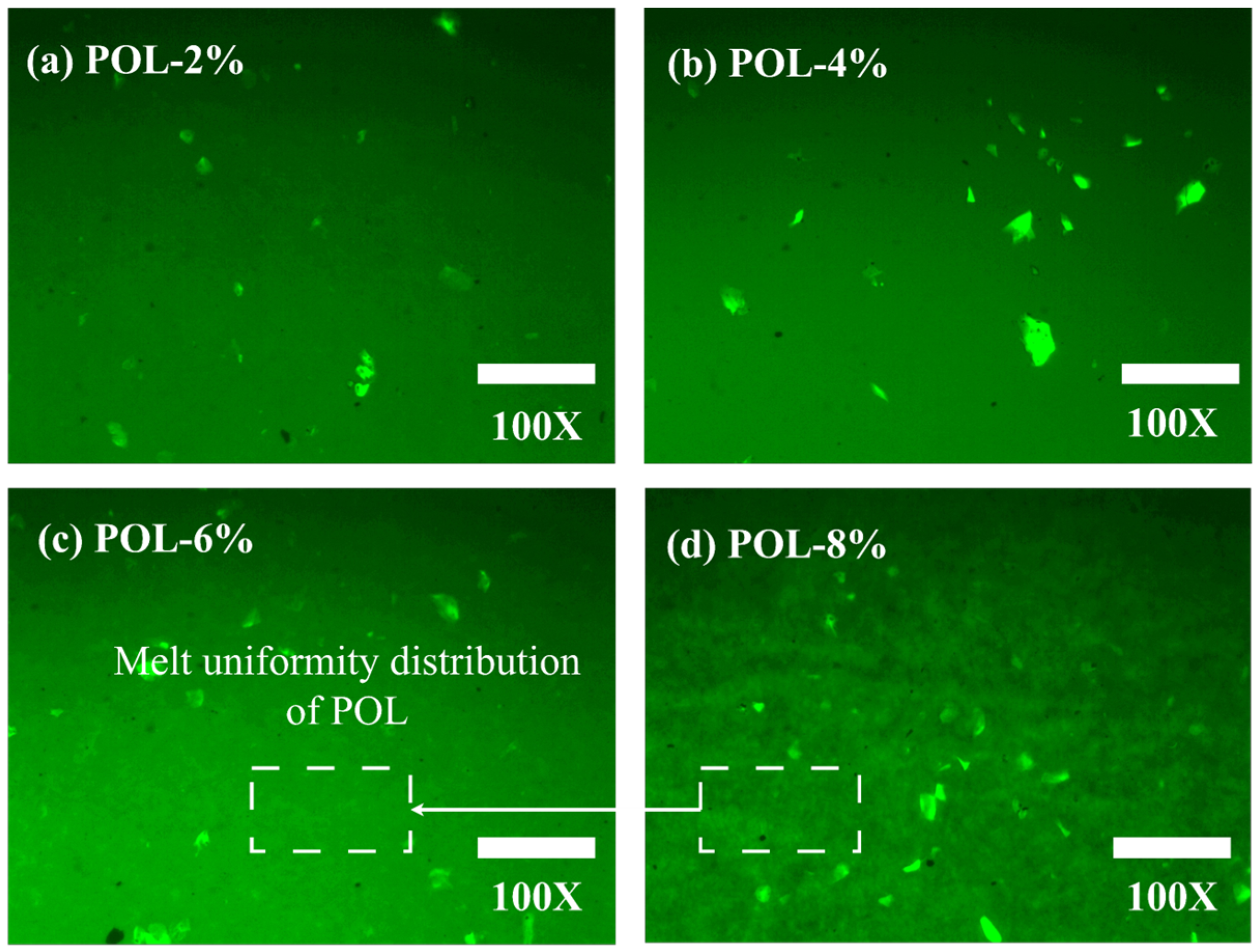
3.9. FM Analysis
4. Conclusions
- (1)
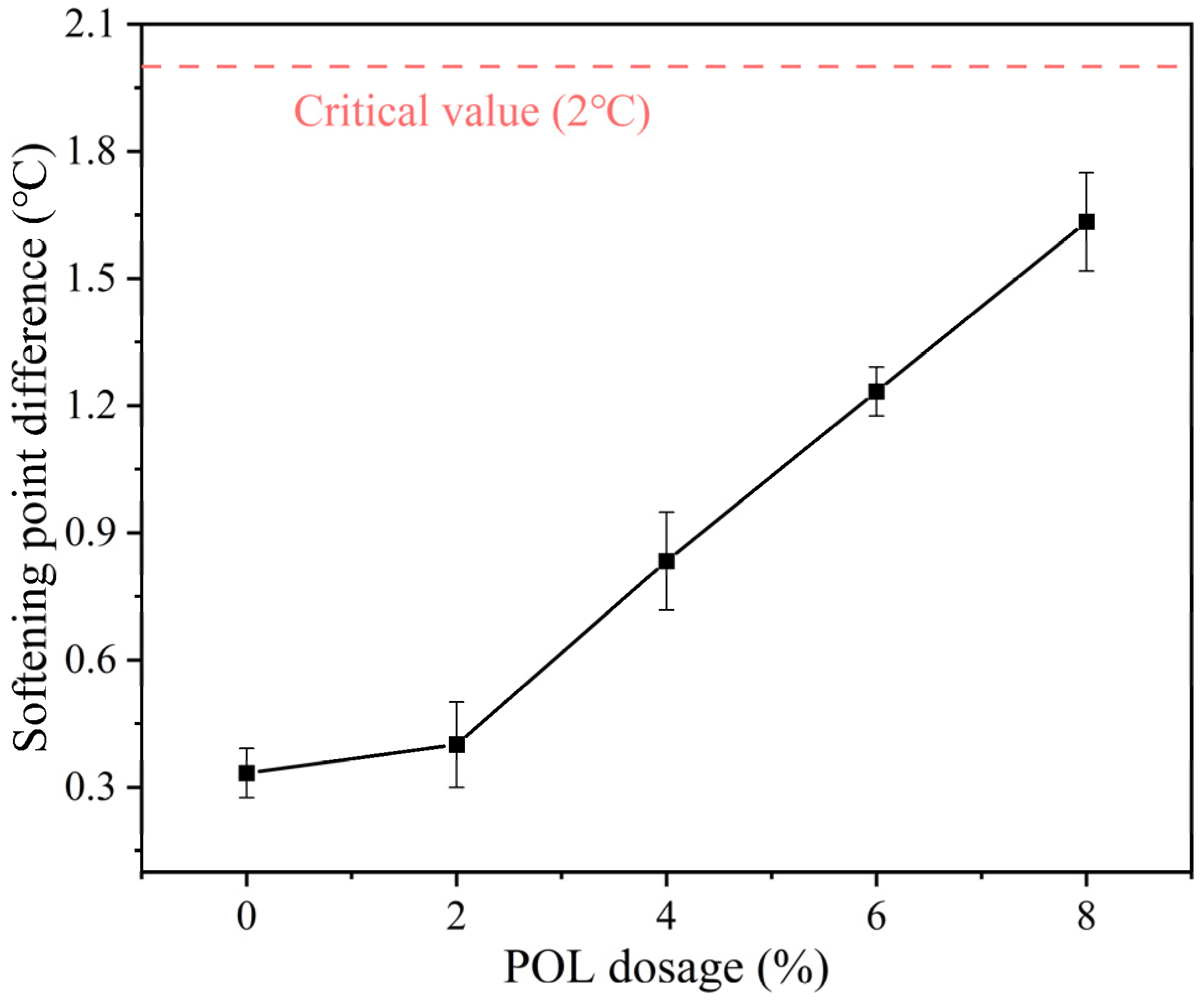
- Storage stability tests indicate that the softening-point difference of all POL-modified asphalt remains below 1.5 °C as the POL dosage increases, fully meeting the regulatory threshold of 2 °C. These results confirm the excellent compatibility and storage stability of POL within the asphalt matrix.
- (2)
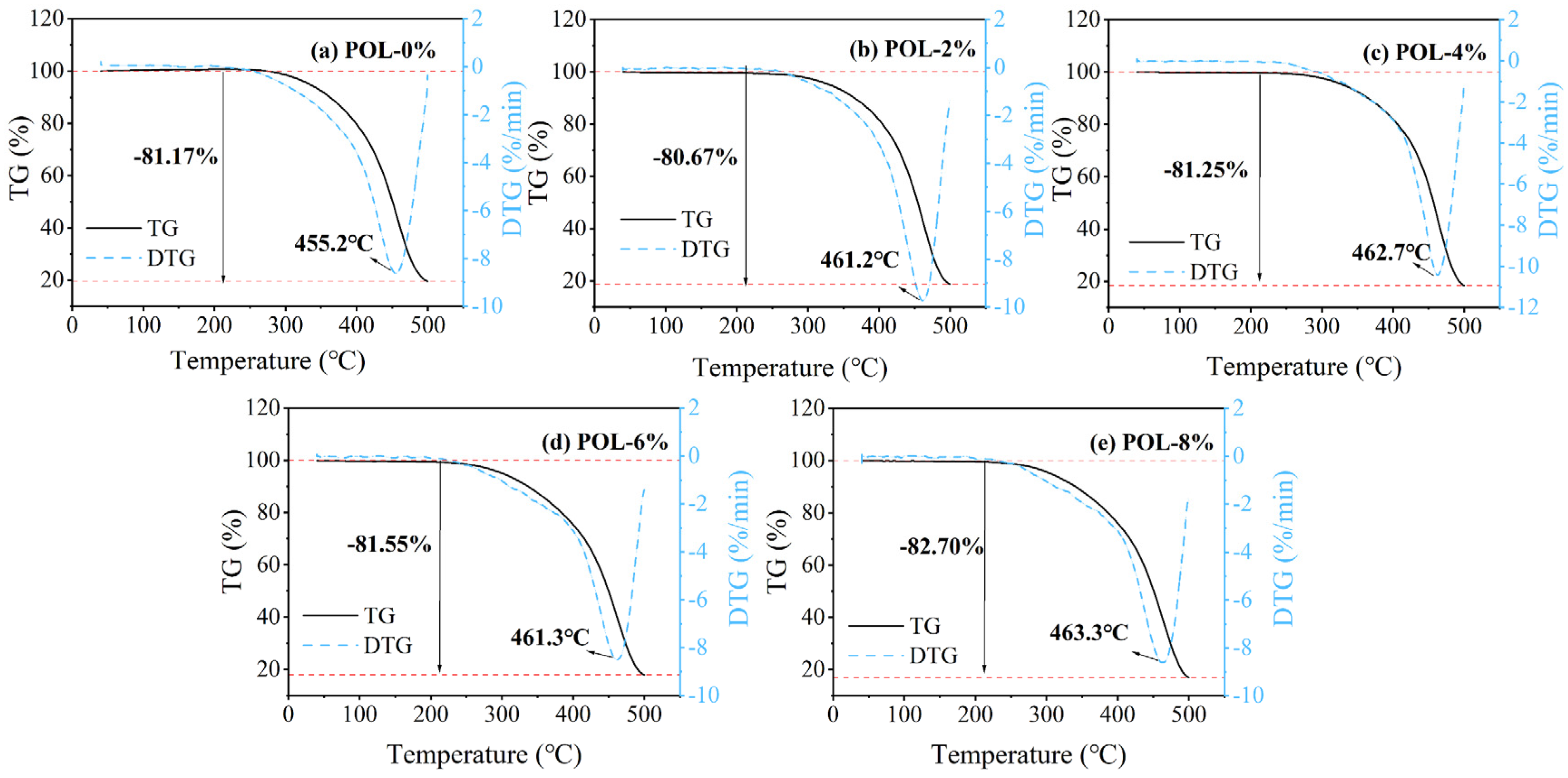
- Thermogravimetric analyses show that the incorporation of POL markedly retards thermal decomposition and enhances thermal stability. Across all dosages, the total mass loss of the samples stays within a narrow range of 80–83%. The most pronounced retardation effect occurs at POL loadings of 4–8%, where thermal stability is maximized.
- (3)
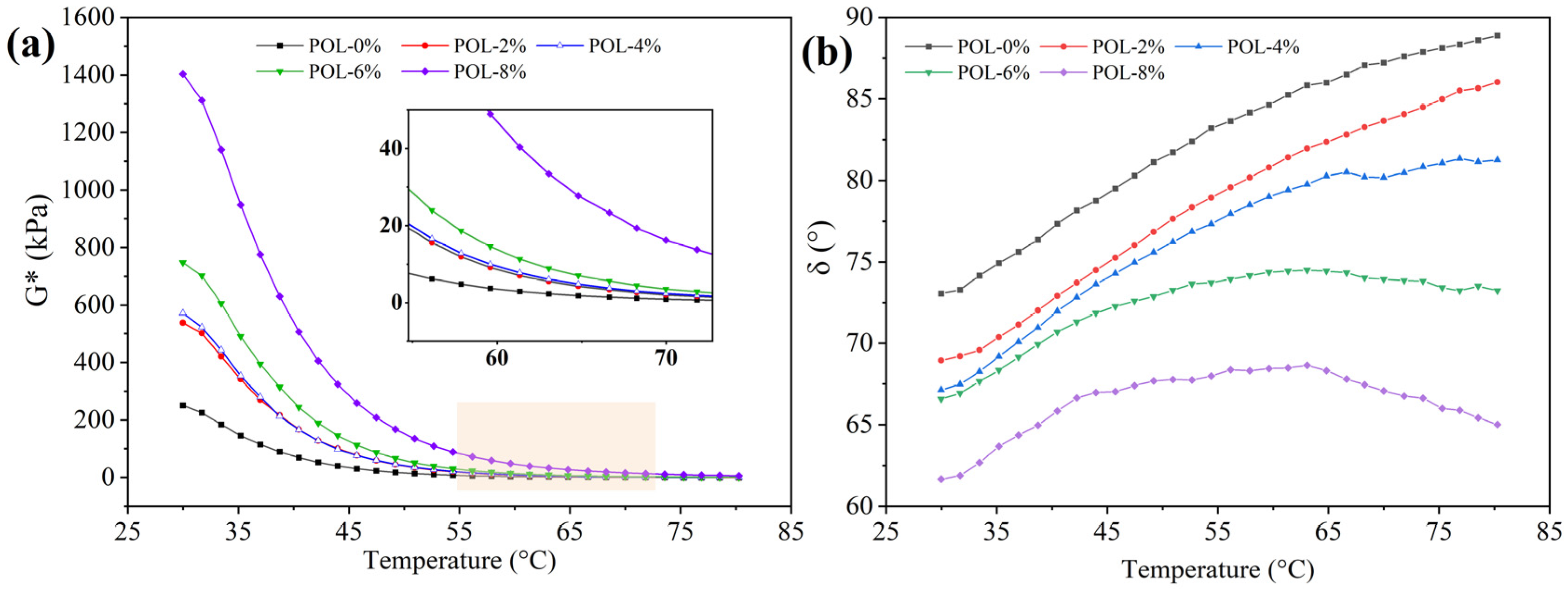
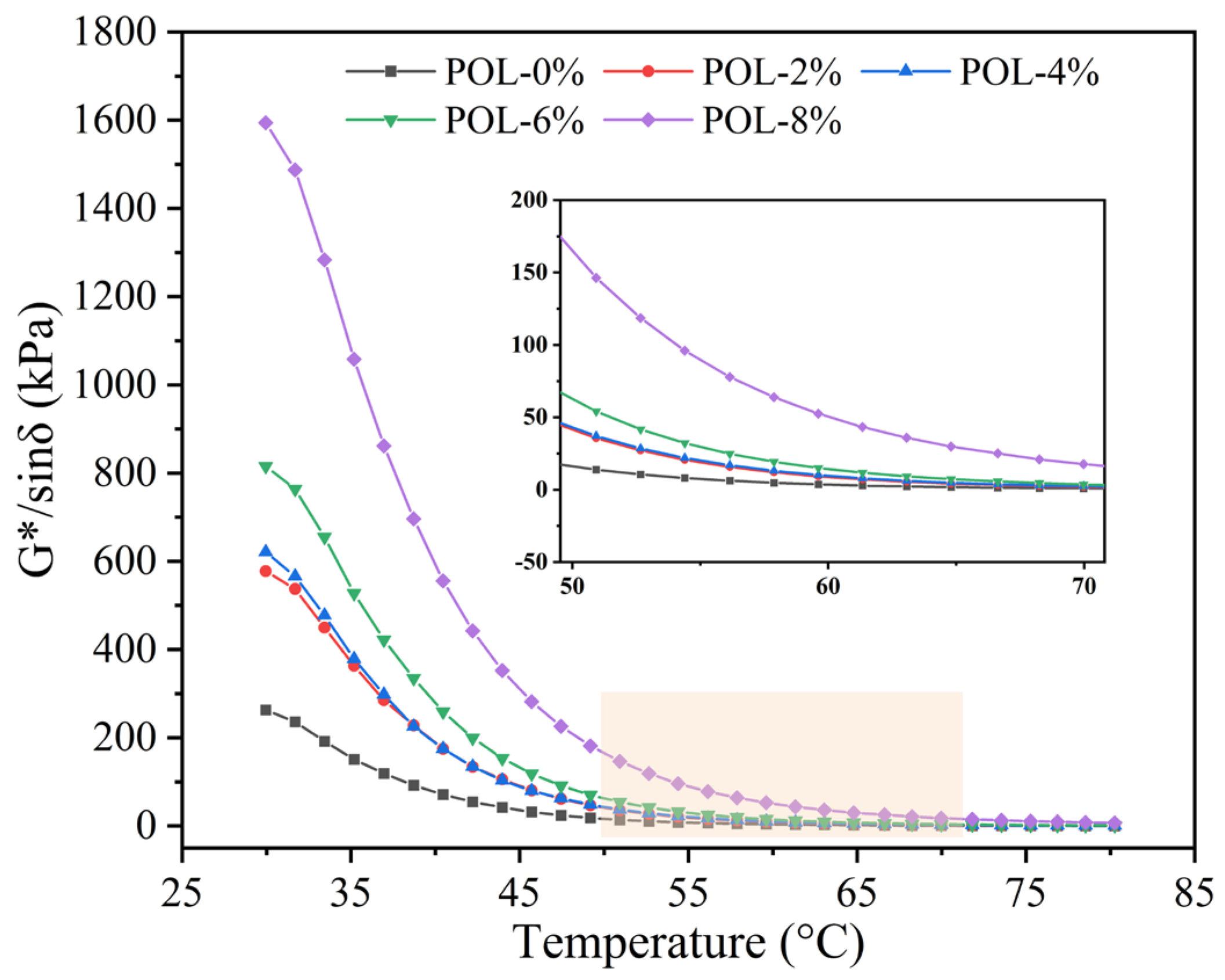
- DSR tests demonstrate that POL increases the composite modulus of asphalt, functioning as a high-modulus modifier and improving high-temperature rutting resistance. However, higher POL dosages reduce fatigue resistance and low-temperature rheological performance. Considering the overall performance, a POL dosage of 6% by asphalt mass is recommended.
- (4)
- FM tests reveal that with increasing dosage, POL gradually intertwines into a continuous network within the asphalt. When the dosage reaches 8%, however, partial and incomplete melting or phase separation appears.
Author Contributions
Funding
Data Availability Statement
Conflicts of Interest
References
- Yu, S.; Shen, S.; Steger, R.; Wang, X. Effect of Warm Mix Asphalt Additive on the Workability of Asphalt Mixture: From Particle Perspective. Constr. Build. Mater. 2022, 360, 129548. [Google Scholar] [CrossRef]
- Chen, Y.; Li, Z. High Temperature Stability of Modified Asphalt Concrete. In Civil Engineering, Architecture and Sustainable Infrastructure II, Pts 1 and 2; Zhao, S., Xie, Y.M., Liu, H., Gao, D., Eds.; Trans Tech Publications Ltd.: Stafa-Zurich, Switzerland, 2013; Volume 438–439, pp. 391–394. [Google Scholar]
- Rashid, F.L.; Al-Obaidi, M.A.; Hatem, W.A.; Almuhanna, R.R.A.; Redha, Z.A.A.; Al Maimuri, N.M.L.; Dulaimi, A. Assessing the Effect of Organic, Inorganic, and Hybrid Phase Change Materials on Thermal Regulation and Energy Efficiency in Asphalt Pavements—A Review. Processes 2025, 13, 597. [Google Scholar] [CrossRef]
- Bilema, M.; Wah Yuen, C.; Alharthai, M.; Hazim Al-Saffar, Z.; Oleiwi Aletba, S.R.; Md Yusoff, N.I. Influence of Warm Mix Asphalt Additives on the Physical Characteristics of Crumb Rubber Asphalt Binders. Appl. Sci. 2023, 13, 10337. [Google Scholar] [CrossRef]
- Eltwati, A.; Hainin, M.R.; Tarhuni, F.; Jusli, E.; Alamri, M. Effect of Waste Engine Oil and Warm Mix Additive on the Physical, Rheological, and Short-Term Aging Attributes of Styrene-Butadiene Rubber-Modified Asphalt Binders. Case Stud. Constr. Mater. 2024, 21, e03433. [Google Scholar] [CrossRef]
- Zhang, J.; Chen, M.; Wu, S.; Zhao, Y.; Fan, Y.; Chen, D. Aging Behavior and Microscopic Characteristics of Modified Asphalt Using Different Pretreated Crumb Rubber. Constr. Build. Mater. 2025, 462, 139955. [Google Scholar] [CrossRef]
- Zhang, J.; Chen, M.; Fan, Y.; Chen, D.; Han, M. Solid-Gas Emission Behavior of Rubber Powder Modified Asphalt: Component Identification and Suppression Method. J. Clean. Prod. 2025, 522, 146363. [Google Scholar] [CrossRef]
- Zhao, Y.; Gu, F.; Xu, J.; Jin, J. Analysis of Aging Mechanism of SBS Polymer Modified Asphalt Based on Fourier Transform Infrared Spectrum. J. Wuhan Univ. Technol.-Mat. Sci. Edit. 2010, 25, 1047–1052. [Google Scholar] [CrossRef]
- Zhang, L.; Wang, H.; Zhang, C.; Wang, S. Laboratory Testing and Field Application of Devulcanized Rubber/SBS Composite Modified Asphalt. Case Stud. Constr. Mater. 2023, 19, e02285. [Google Scholar] [CrossRef]
- Cao, Z.; Chen, M.; Yu, J.; Han, X. Preparation and Characterization of Active Rejuvenated SBS Modified Bitumen for the Sustainable Development of High-Grade Asphalt Pavement. J. Clean. Prod. 2020, 273, 123012. [Google Scholar] [CrossRef]
- Zhao, Z.; Xiao, F.; Toraldo, E.; Crispino, M.; Ketabdari, M. Effect of Crumb Rubber and Reclaimed Asphalt Pavement on Viscoelastic Property of Asphalt Mixture. J. Clean. Prod. 2023, 428, 139422. [Google Scholar] [CrossRef]
- Kumar, S.A.; Veeraragavan, A. Rheological and Rutting Characterization of Asphalt Mixes with Modified Binders. J. Test. Eval. 2012, 40, 66–77. [Google Scholar] [CrossRef]
- Yu, R.; Zhu, X.; Zhou, X.; Kou, Y.; Zhang, M.; Fang, C. Rheological Properties and Storage Stability of Asphalt Modified with Nanoscale Polyurethane Emulsion. Pet. Sci. Technol. 2018, 36, 85–90. [Google Scholar] [CrossRef]
- Qian, G.; Yang, C.; Huang, H.; Gong, X.; Yu, H. Resistance to Ultraviolet Aging of Nano-SiO2 and Rubber Powder Compound Modified Asphalt. Materials 2020, 13, 5067. [Google Scholar] [CrossRef]
- Singh, P.; Tophel, A.; Swamy, A.K. Properties of Asphalt Binder and Asphalt Concrete Containing Waste Polyethylene. Pet. Sci. Technol. 2017, 35, 495–500. [Google Scholar] [CrossRef]
- Roman, C.; Garcia-Morales, M. Linear Rheology of Bituminous Mastics Modified with Various Polyolefins: A Comparative Study with Their Source Binders. Mater. Struct. 2017, 50, 86. [Google Scholar] [CrossRef]
- Zhao, C.; Li, R.; Kuang, D.; Li, X.; Pei, J. Preparation of Direct Injection Waste PE/Rubber Powder Composite Modified Granules and Performance for Recycling Asphalt. Constr. Build. Mater. 2023, 367, 130124. [Google Scholar] [CrossRef]
- Alnadish, A.M.; Katman, H.Y.B.; Ibrahim, M.R.; Gamil, Y.; Mashaan, N.S. A Bibliometric Analysis and Review on the Performance of Polymer-Modified Bitumen. Front. Mater. 2023, 10, 1225830. [Google Scholar] [CrossRef]
- Li, H.; Han, Y.; Guangxun, E.; Sun, Y.; Wang, L.; Liu, X.; Ren, J.; Lin, Z. Recycling of Waste Polyethylene in Asphalt and Its Performance Enhancement Methods: A Critical Literature Review. J. Clean. Prod. 2024, 451, 142072. [Google Scholar] [CrossRef]
- Cheng, L.; Zhang, L.; Zhang, F.; Zhang, D.; Ma, Y. Evaluation of the Effects of Asphalt Binder Aging Degree on the Curing, Compatibility, and Mechanical Behaviors of Epoxy Asphalt Binders. Constr. Build. Mater. 2023, 377, 131131. [Google Scholar] [CrossRef]
- Mandrwalia, A.K.; Gaur, A.; Mittal, A. Laboratory Study on SBS Modified Bitumen with Titan Copolymer. J. Civ. Eng. Environ. Technol. 2014, 1, 5–8. [Google Scholar]
- Ilyas, M.; Hussain, A.; Khan, N.; Ding, H. Eco-Friendly Highways: Harnessing Waste Polystyrene and Reclaimed Asphalt Pavement for Sustainable Roadways and Environmental Mitigation. Int. J. Pavement Res. Technol. 2026, 19, 278–296. [Google Scholar] [CrossRef]
- JTG-3410; Standard Test Methods of Bitumen and Bituminous Mixtures for Highway Engineering. Highway Science Research Institute of the Ministry of Transport: Beijing, China, 2025.
- SH/T 0800-2007; Standard Test Method for Dropping Point of Waxes. National Development and Reform Commission of the People’s Republic of China: Beijing, China, 2007.
- SH/T 0739-2003; Standard Test Method for Viscosity Determination of Unfilled Asphalt Using the Brookfield Thermosel Apparatus. National Development and Reform Commission of the People’s Republic of China: Beijing, China, 2004.
- GB/T 27843; Chemicals—Determination of the Low Molecular Weight Content of a Polymer Using Gel Permeation Chromatography (GPC). China National Standardization Administration: Beijing, China, 2011.
- ASTMD-1505; Standard Test Method for Density of Plastics by the Density-Gradient Technique. American Society for Testing and Materials: West Conshohocken, PA, USA, 2018.
- Gao, Y.; Li, Y.; Huang, G. Synergistic Effects of Dilute H2SO4/KMnO4 Solution Soaking Pretreatments on Storage Stability of Crumb Rubber Modified Asphalt. Constr. Build. Mater. 2025, 485, 141942. [Google Scholar] [CrossRef]
- Zhang, F.; Hu, C. Preparation and Properties of High Viscosity Modified Asphalt. Polym. Compos. 2017, 38, 936–946. [Google Scholar] [CrossRef]
- Bessa, I.S.; Vasconcelos, K.L.; Castelo Branco, V.T.F.; Bernucci, L.L.B. Fatigue Resistance of Asphalt Binders and the Correlation with Asphalt Mixture Behaviour. Road Mater. Pavement Des. 2019, 20, S695–S709. [Google Scholar] [CrossRef]
- Rezaei, S.; Khordehbinan, M.; Fakhrefatemi, S.-M.-R.; Ghanbari, S.; Ghanbari, M. The Effect of Nano-SiO2 and the Styrene Butadiene Styrene Polymer on the High-Temperature Performance of Hot Mix Asphalt. Pet. Sci. Technol. 2017, 35, 553–560. [Google Scholar] [CrossRef]
- Han, Y.; Cui, B.; Tian, J.; Ding, J.; Ni, F.; Lu, D. Evaluating the Effects of Styrene-Butadiene Rubber (SBR) and Polyphosphoric Acid (PPA) on Asphalt Adhesion Performance. Constr. Build. Mater. 2022, 321, 126028. [Google Scholar] [CrossRef]
- He, J.; Chen, M.; Leng, B.; Guo, S.; Jiang, Q. Water Stability and Low-Temperature Performance of Polyolefin-Modified Recycled Asphalt Mixtures. J. Mater. Civ. Eng. 2026, 38, 04025485. [Google Scholar] [CrossRef]
- Pei, Y.; Jiang, S.; Ding, Z.; Cheng, L.; Li, P.; Jiang, X. Preparation and Performance Analysis of High-Viscosity Asphalt Containing High-Content SBS and Crumb Rubber by Oxygen-Free High-Temperature Treatment. Constr. Build. Mater. 2023, 402, 132763. [Google Scholar] [CrossRef]
- Luo, H.; Huang, X.; Tian, R.; Ding, H.; Huang, J.; Wang, D.; Liu, Y.; Hong, Z. Advanced Method for Measuring Asphalt Viscosity: Rotational Plate Viscosity Method and Its Application to Asphalt Construction Temperature Prediction. Constr. Build. Mater. 2021, 301, 124129. [Google Scholar] [CrossRef]
- Zhang, J.; Chen, M.; Zhou, X.; Chen, D.; Fan, Y. Feasibility and Mechanism Analysis of Functionalized Waste Biomass for Fume Suppression in Rubber Powder Modified Asphalt. Fuel 2026, 414, 138359. [Google Scholar] [CrossRef]
- Zhang, K.; Yang, B.; Xie, W.; Zhang, W.; Ye, Q. Evaluation Method for Compressive Properties of Segregated Asphalt Mixtures Based on Digimat and FEM Models. J. Mater. Civ. Eng. 2025, 37, 04024508. [Google Scholar] [CrossRef]
- Ouyang, J.; Meng, Y. Quantitative Effect of Droplet Size and Emulsion Viscosity on the Storage Stability of Asphalt Emulsion. Constr. Build. Mater. 2022, 342, 127994. [Google Scholar] [CrossRef]
- Xiang, Q.; Li, J.; Wu, J.; Xiao, F. Investigation of Dispersion Stability of Regenerated Asphalt Emulsions through Electric Potential-Particle-Surface Triad. Constr. Build. Mater. 2025, 493, 143212. [Google Scholar] [CrossRef]
- Sun, Z.; Li, S.; Zhang, J.; Zeng, Y. Adhesion Property of Bituminous Crack Sealants to Different Asphalt Mixtures Based on Surface Energy Theory. Constr. Build. Mater. 2020, 261, 120006. [Google Scholar] [CrossRef]
- Wang, S.; Huang, W.; Liu, X.; Lin, P. Influence of SBS on the Aging Properties of High-Content Terminal Blend Rubber Modified Asphalt. J. Mater. Civ. Eng. 2023, 35, 04023260. [Google Scholar] [CrossRef]
- Xu, G.; Zhou, Y.; Zhu, Y.; Wang, R.; Chen, X. Effect of Weather Aging on Viscoelasticity and Fatigue Performance of Asphalt Mastic. Materials 2021, 14, 6163. [Google Scholar] [CrossRef]
- Zhang, Q.; Cui, Y.; Qiu, H. Microstructure, Fatigue, and Self-Healing Properties of SBS-Modified Asphalt under Ultraviolet Radiation. J. Mater. Civ. Eng. 2023, 35, 04023163. [Google Scholar] [CrossRef]
- Zhao, Y.; Chen, M.; Shen, J.; Shi, P.; Wu, S.; Chen, D.; Zhang, J.; Zhao, Z. Aging Behaviors of Asphalt Binders Rejuvenated by Different Chemical Fractions from Waste Cooking Oil. Constr. Build. Mater. 2024, 435, 136867. [Google Scholar] [CrossRef]



| Performance Index | Unit | Result | Requirement | Specification |
|---|---|---|---|---|
| Penetration/25 °C, 0.1 mm | mm | 70.8 | 60–80 | JTG 3410-2025 [23] |
| Softening point | °C | 45.8 | ≥45 | JTG 3410-2025 [23] |
| Ductility/10 °C, 5 cm/min | cm | 63.4 | Measured value | JTG 3410-2025 [23] |
| Boulevard viscosity/135 °C | cp | 430.0 | Measured value | JTG 3410-2025 [23] |
| Density | g/cm3 | 1.034 | Measured value | JTG 3410-2025 [23] |
Disclaimer/Publisher’s Note: The statements, opinions and data contained in all publications are solely those of the individual author(s) and contributor(s) and not of MDPI and/or the editor(s). MDPI and/or the editor(s) disclaim responsibility for any injury to people or property resulting from any ideas, methods, instructions or products referred to in the content. |
© 2026 by the authors. Licensee MDPI, Basel, Switzerland. This article is an open access article distributed under the terms and conditions of the Creative Commons Attribution (CC BY) license.
Share and Cite
He, J.; Leng, B.; Chen, M.; Guo, S.; Yu, J. Physical, Rheological and Microstructural Properties of Asphalt Modified by Low-Molecular-Weight Polyolefin. Materials 2026, 19, 571. https://doi.org/10.3390/ma19030571
He J, Leng B, Chen M, Guo S, Yu J. Physical, Rheological and Microstructural Properties of Asphalt Modified by Low-Molecular-Weight Polyolefin. Materials. 2026; 19(3):571. https://doi.org/10.3390/ma19030571
Chicago/Turabian StyleHe, Jun, Binbin Leng, Meizhu Chen, Shijie Guo, and Jingjun Yu. 2026. "Physical, Rheological and Microstructural Properties of Asphalt Modified by Low-Molecular-Weight Polyolefin" Materials 19, no. 3: 571. https://doi.org/10.3390/ma19030571
APA StyleHe, J., Leng, B., Chen, M., Guo, S., & Yu, J. (2026). Physical, Rheological and Microstructural Properties of Asphalt Modified by Low-Molecular-Weight Polyolefin. Materials, 19(3), 571. https://doi.org/10.3390/ma19030571