


Abstract
This study proposes an innovative process of low-temperature soda roasting followed by water leaching to extract boron and produce borax from boron-rich slag. To further enhance the leaching rate of boron, pretreatment of the boron-rich slag with the nucleating agent TiO2 was conducted. The effects of roasting temperature and Na2CO3 addition on the boron leaching rate, as well as the roasting kinetics of the TiO2-nucleated furnace-cooled slag, were investigated. The results indicate that at a roasting temperature of 700 °C for 150 min, the maximum boron leaching rate can reach 88.65%. The reaction of low-temperature soda roasting for TiO2-nucleated furnace-cooled slag to produce Na2B6O10 is controlled by interfacial chemical reaction, with an apparent activation energy of 88.677 kJ/mol.
1. Introduction
Boron, a critical strategic element, plays an indispensable role across industrial, agricultural, and national defense sectors. With the continuous expansion of the global economy in the 21st century, the market demand for boron-containing compounds has been growing substantially [1,2,3,4]. Naturally occurring boron is primarily found in the form of minerals such as ascharite and ludwigite, with significant deposits located in China, Turkey, Russia, and the United States. In China, the depletion of high-quality ascharite reserves and the rising domestic demand have established ludwigite as a key substitute feedstock, which is now becoming the primary raw material for the boron industry [5,6,7]. For the exploitation and utilization of ludwigite, China has formulated a guiding principle centered on “Boron-focused, Comprehensive Utilization, and Environmental Protection” [8]. In this context, the pyrometallurgical process is widely regarded as the optimal pathway, as it enables the efficient extraction of boron while simultaneously achieving high utilization rates of iron and magnesium. This process involves smelting ludwigite in a blast furnace to produce two primary products: boron-containing pig iron and boron-rich slag.
Boron-rich slag is a type of boron-containing secondary resource with significant recovery value [9,10,11]. The B2O3 content in boron-rich slag can reach up to 17%, and the boron primarily exists in an amorphous glassy state [12,13,14,15,16]. Currently, the primary methods for recovering boron from boron-rich slag include the sulfuric acid method, the CO2-soda method, and the molten boron-rich slag sodification method. The sulfuric acid method [17,18,19] is hindered by significant drawbacks, including high acid consumption, severe equipment corrosion, and environmental pollution concerns. The CO2-soda method [20,21] requires the boron in the raw material to exhibit high reactivity. However, the reactivity of boron in boron-rich slag is relatively low [22]. The molten boron-rich slag sodification method [23,24] is plagued by significant drawbacks, including substantial loss of Na2CO3 and difficulties in controlling its dosage. The method of low-temperature soda roasting combined with water leaching offers an innovative route for borax preparation by enabling efficient boron extraction from boron-rich slag [25,26]. This process mainly involves two stages: first, roasting the boron-rich slag with Na2CO3 at low temperatures, followed by water leaching of the roasted product. During roasting, boron compounds in the slag are converted into water-soluble sodium borates, which are subsequently dissolved into the solution during the leaching step. Borax is finally obtained through concentration and crystallization of the leach solution. To enhance the boron leaching efficiency from roasted slag, current research emphasizes optimization of the low-temperature soda roasting process and investigation of its kinetics.
To address these challenges, this study systematically investigated the boron recovery process from boron-rich slag via low-temperature soda roasting and water leaching. Specifically, the slag was pretreated with TiO2 as a nucleating agent, roasted with Na2CO3 at varying temperatures and additive amounts, and then water-leached. The effects of key parameters were evaluated, and the kinetics of the roasting reaction were analyzed to determine the rate-controlling step and apparent activation energy.
2. Materials and Methods
2.1. Experimental Raw Materials
The boron-rich slag sample, sourced from Yingkou Guangda Industrial Co., Ltd. (Yingkou, China), had its chemical composition detailed in Table 1. Its B2O3 content was determined by titration with standard NaOH solution [27], and other oxides were quantified by X-ray fluorescence (XRF) spectrometry.
Table 1.
Chemical composition of the boron-rich slag [28].
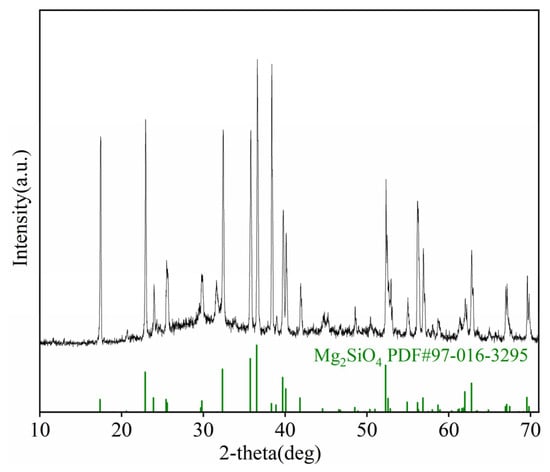
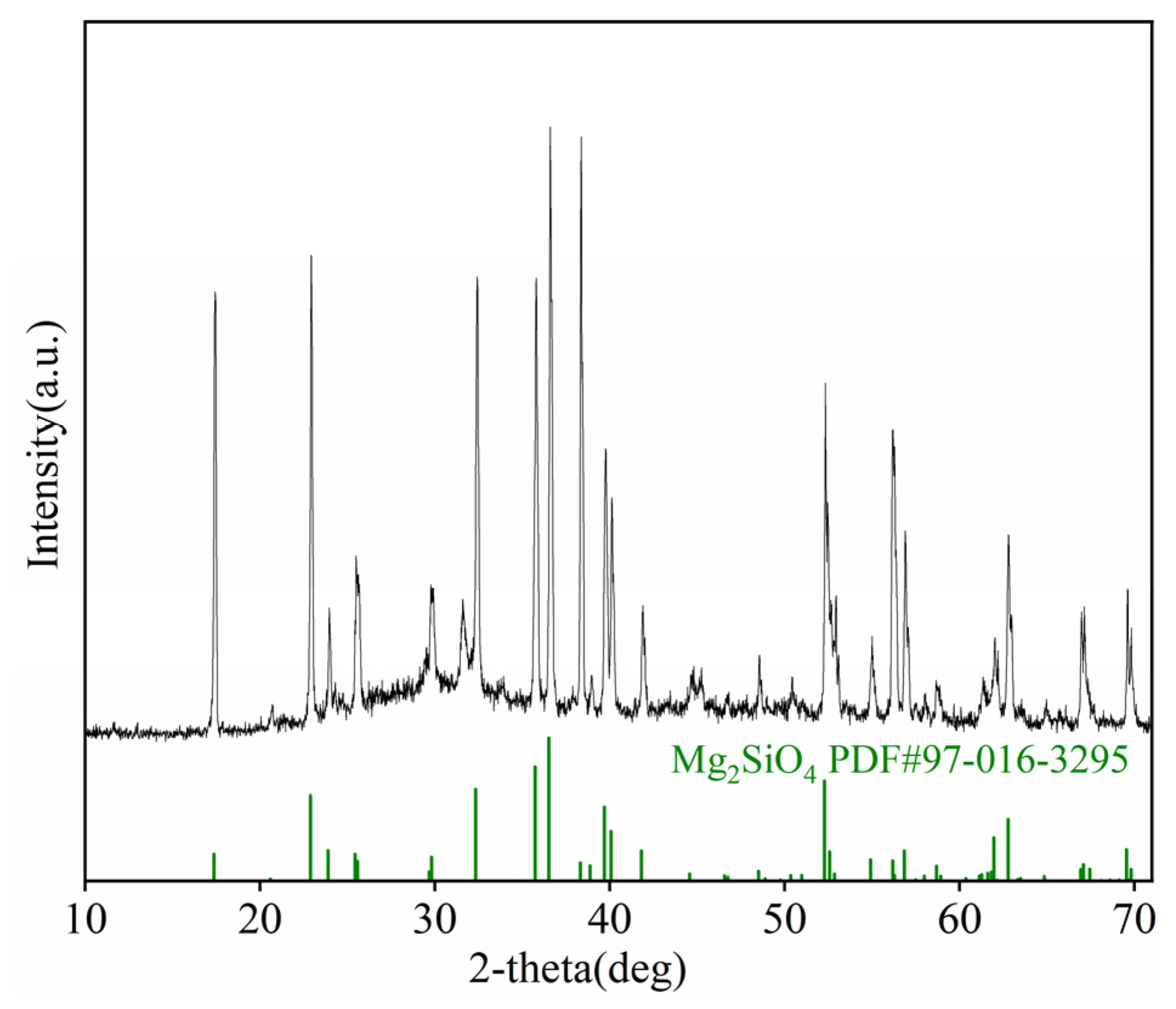
As shown in Table 1, the slag contains 11.38% B2O3, along with 32.73% MgO and 17.28% CaO. The mineralogical composition was analyzed using X-ray diffraction (XRD) performed on a Rigaku D/max 2500/PC diffractometer (Rigaku Corporation, Tokyo, Japan) with Cu-Kα radiation and a step size of 0.02°. The XRD pattern (Figure 1) indicates that magnesium olivine (Mg2SiO4) is the dominant crystalline phase. The few minor, low-intensity peaks are attributable to trace crystalline components within the predominantly amorphous slag matrix. The boron is predominantly present in an amorphous glass phase within the slag matrix, as evidenced by the absence of crystalline boron-containing phases in the XRD patterns.
Figure 1.
XRD pattern of the boron-rich slag.
2.2. Experimental Methods
The boron-rich slag was sieved to under 74 μm (200 mesh). Subsequently, 49.5 g of the sieved slag was thoroughly mixed with 0.5 g of analytically pure TiO2 in a ball mill. To prevent agglomeration, 1–2 drops of anhydrous ethanol were added during the mixing process. The mixing was conducted at a rotational speed of 240 r/min for a duration of 15 min. The homogenized powder was charged into a graphite crucible and subsequently transferred to a silicon-molybdenum bar muffle furnace for subsequent processing. The furnace was heated to 1450 °C at a rate of 10 °C/min under an air atmosphere, maintained at this temperature for 10 min, and then furnace-cooled to room temperature. The resulting product was designated as TiO2-nucleated furnace-cooled slag. This product was ground using a sample pulverizer to a particle size of less than 74 μm for subsequent roasting experiments.
15 g of the TiO2 furnace-cooled slag was weighed, and analytical pure Na2CO3 was added according to a specified molar ratio based on the B2O3 content in the slag. The entire mixture was loaded into a ball mill, followed by the addition of 1–2 drops of anhydrous ethanol. Blending was performed at 240 r/min for 15 min to achieve thorough homogenization. Subsequently, 15 g of the homogenized mixture was weighed and transferred into a corundum crucible. The crucible was then placed in a resistance furnace preheated to 700 °C for a low-temperature roasting process lasting 2 h. After roasting, the crucible was furnace-cooled to room temperature. The resulting product was denoted as Na2CO3-modifed slag (NMS).
NMS (10 g) was charged into a single-neck flask. Deionized water (100 mL) was added at a liquid-to-solid mass ratio of 10:1, followed by the introduction of several boiling chips to prevent bumping during the leaching process. The mixture was subjected to water leaching under boiling reflux conditions for 2 h. The resultant leachate was separated via a Buchner funnel, and the filter cake was rinsed three times with hot deionized water. The filter cake was then dried at 120 °C to constant weight and weighed.
The boron leaching rate from the boron-rich slag was calculated using Equation (1), with the B2O3 content in both the NMS and the leached residue being determined by titration against a standard NaOH solution [27].
Here, mNMS and wNMS are the mass and B2O3 content of the NMS, and mlr and wlr are those of the leached residue, respectively.
2.3. Experimental Principle
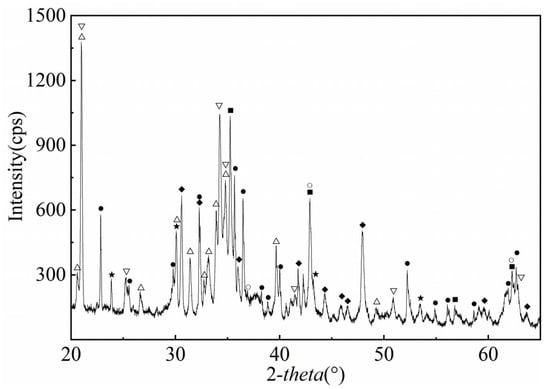
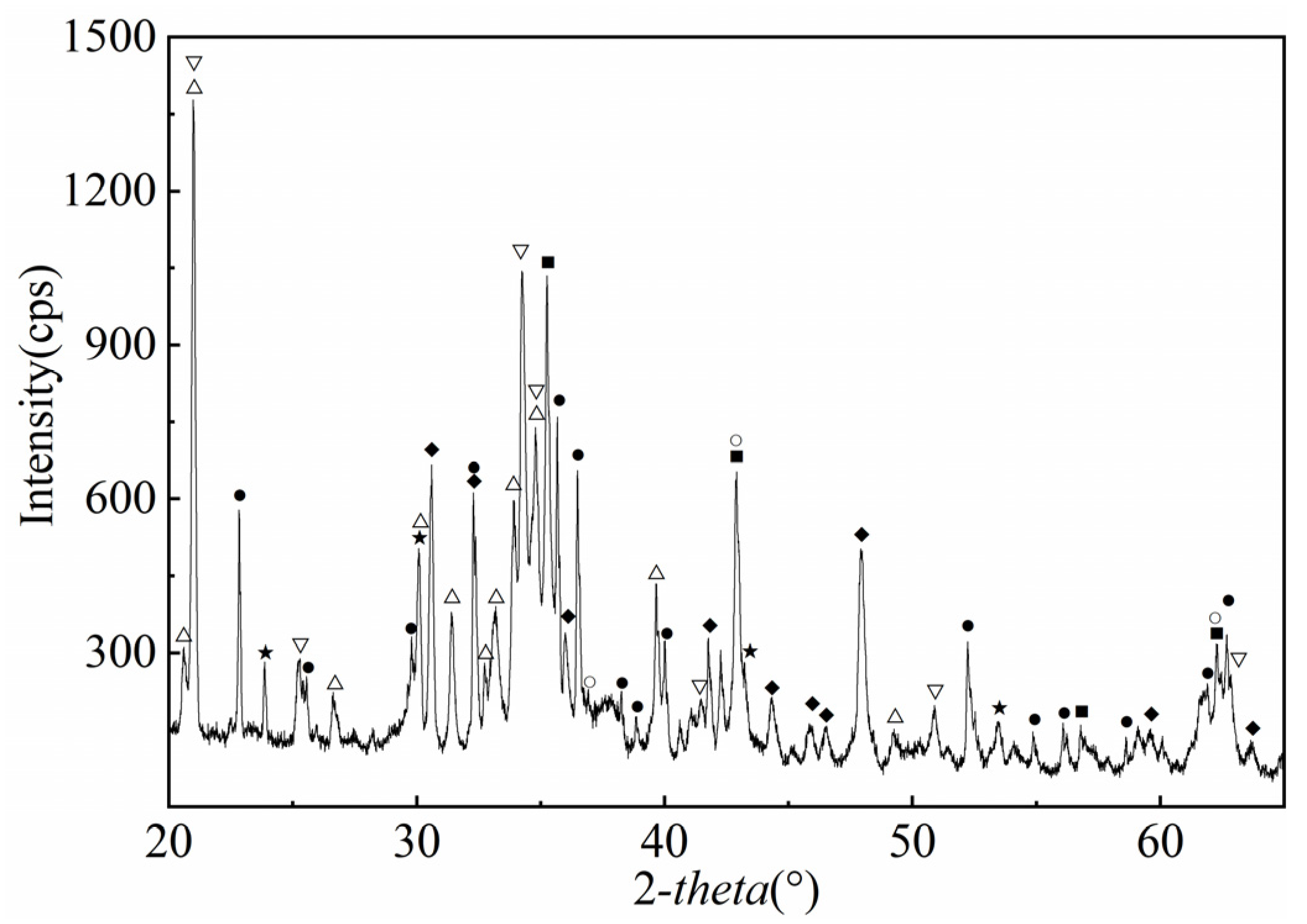
Figure 2 shows the XRD pattern of the NMS. As observed in Figure 2, the boron-containing crystalline phases in the slag primarily consist of Na2B6O10 and Ca3B2O6. At temperatures between 600 and 700 °C, the boron-rich slag reacts with Na2CO3 during low-temperature roasting, where Na2CO3 can interact with the boron components in the amorphous glassy phase to form Na2B6O10. The resulting Na2B6O10 subsequently crystallizes into the Na2B6O10 phase under the action of the nucleating agent TiO2. Additionally, a side reaction occurs during roasting between calcium and boron components, yielding Ca3B2O6 as a product. Ca3B2O6 is insoluble in water [29], whereas Na2B6O10 is readily soluble. Through water leaching of the NMS, Na2B6O10 can be transferred into the solution. Following the water leaching step, borax can be prepared through the subsequent concentration and crystallization of the obtained aqueous solution. The Na2MgSiO4, MgO, and Mg2TiO4 phases exist in the NMS; these phases are the reaction products of NMS with Na2CO3 and may undergo the reactions shown in Equations (2) and (3) [30,31].
Figure 2.
XRD pattern of NMS. ● Mg2SiO4; ○ MgO; ◆ Ca3B2O6; △ Na2MgSiO4; ▽ Na3MgAlSi2O8; ★ Na2B6O10; ■ Mg2TiO4.
3. Results and Discussion
3.1. Kinetics of Low-Temperature Soda Roasting of TiO2-Nucleated Furnace-Cooled Slag
3.1.1. The Effect of Roasting Temperature on the Boron Leaching Rate
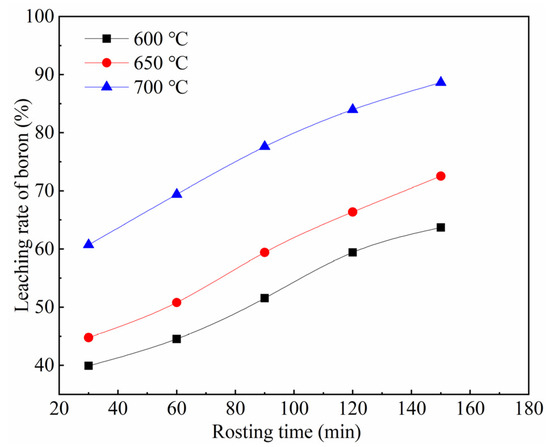
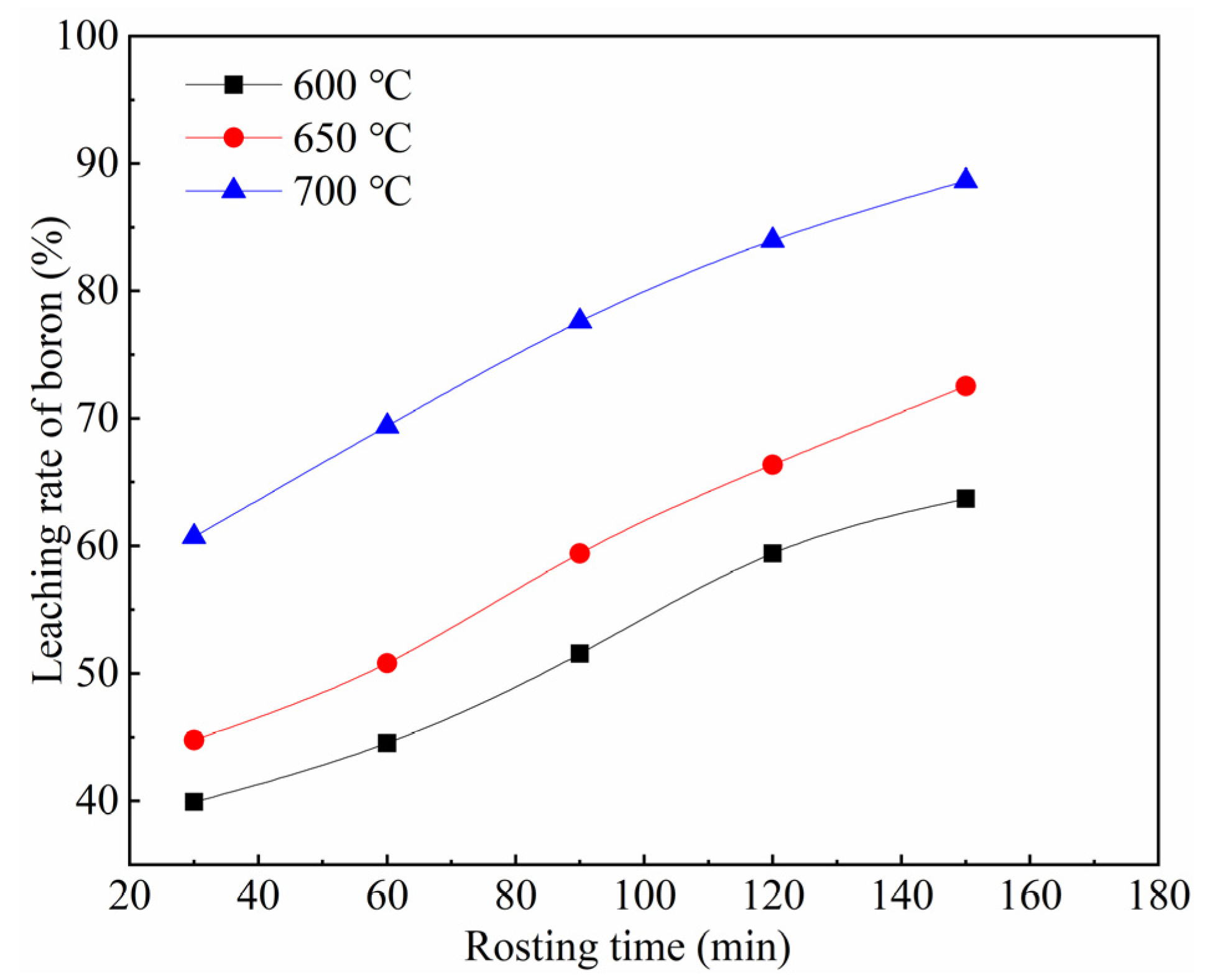
The influence of roasting temperature on the boron leaching rate was investigated with a Na2CO3 dosage of 4 times the theoretical amount (based on a 1:1 molar ratio of Na2CO3 to B2O3) and a liquid-to-solid ratio of 10:1, under 2 h of boiling reflux leaching. The experimental results are shown in Figure 3.
Figure 3.
Boron leaching rate versus roasting temperature.
As can be seen from Figure 3, the roasting temperature has a significant influence on the boron leaching rate from the TiO2-nucleated furnace-cooled slag. The boron leaching rate exhibits a positive correlation with the roasting temperature over the same time period. At a roasting time of 150 min, raising the temperature from 600 °C to 700 °C increased the boron leaching rate from 63.72% to 88.65%. This enhancement is due to the elevated temperature, which increases the solid-phase diffusion coefficient, accelerates the interfacial reaction, and promotes the nucleation and growth of Na2B6O10 [32].
3.1.2. Reaction Control Steps
The low-temperature soda roasting of boron-rich slag constitutes a solid–solid reaction [33], with three potential rate-controlling steps: chemical reaction control at the interface between reactant and product phases, nucleation and growth control during the reaction process, and diffusion control [34,35]. In solid-state reaction models, there are typically interfacial reaction-controlled models, nucleation-controlled models, and diffusion-controlled models, each with its unique kinetic model functions. The typical kinetic equations for the three types of solid-state reactions are shown in Equations (4)–(7). If the reaction during the low-temperature soda roasting of boron-rich slag is controlled by interfacial chemical reaction and follows a zero-order reaction, the kinetic model can be expressed as [33,36]
When the reaction follows first-order kinetics and the change in reaction interface area cannot be neglected, the kinetic model can be expressed as [33,36]
For a reaction controlled by nucleation and growth during low-temperature soda roasting, the kinetic model is expressed as [37,38]
For a diffusion-controlled reaction during low-temperature soda roasting, the kinetic model can be expressed as [39,40]
In these equations, x represents the boron leaching rate from the boron-rich slag, %; t denotes the roasting time, min; and k is the reaction rate constant, min−1.
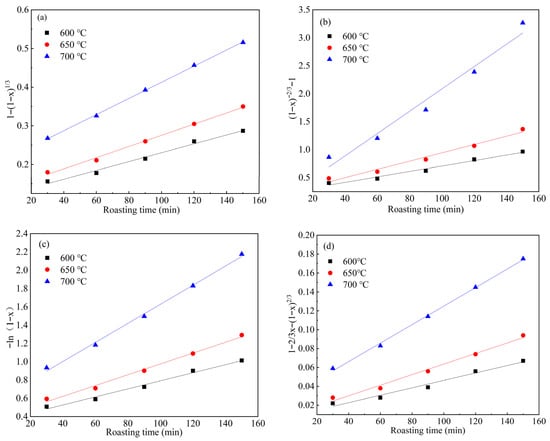
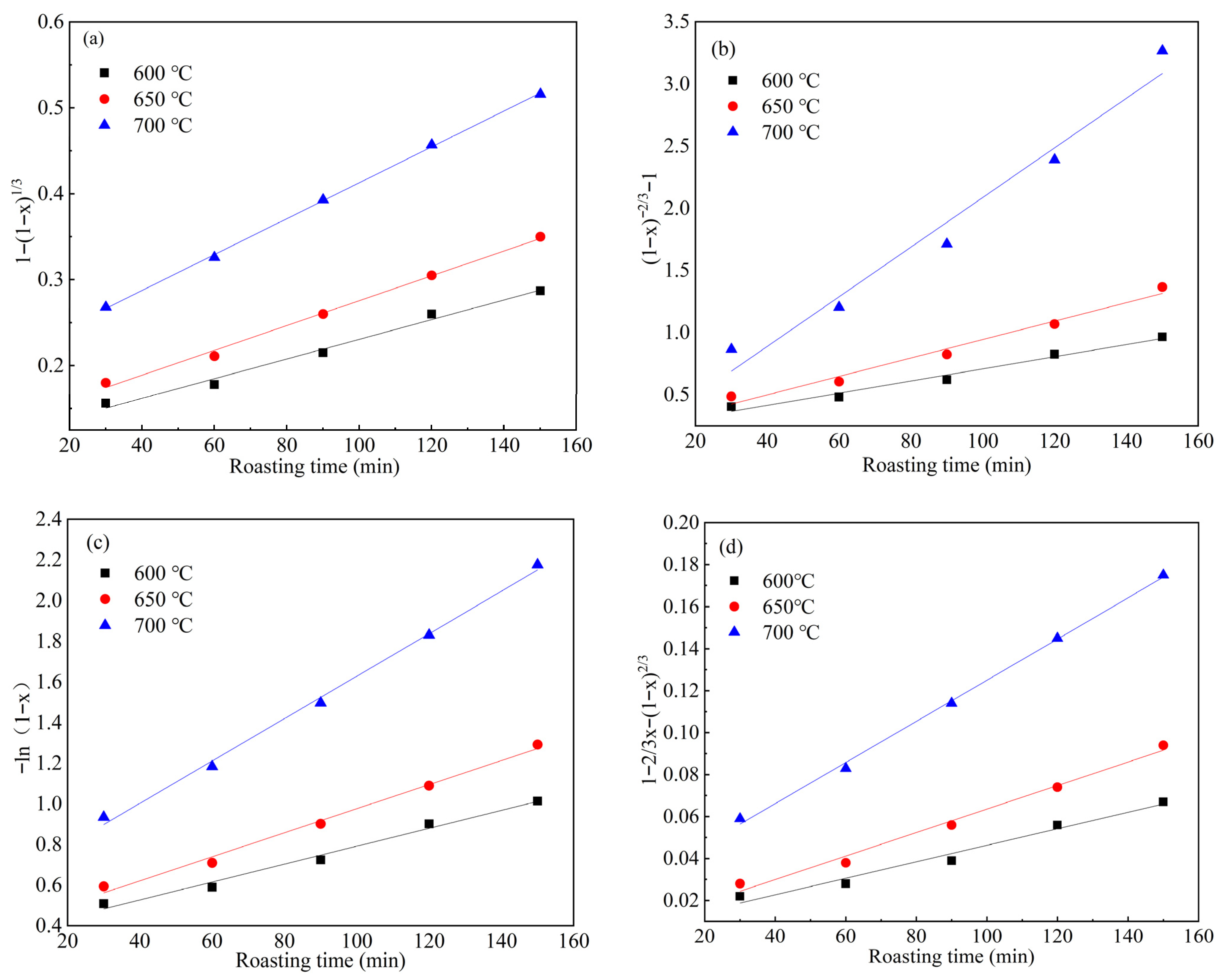
The experimental data from Figure 3 were substituted into Equations (4)–(7), respectively, and linear regression analysis was performed using the least squares method. The results are shown in Figure 4. As can be seen from Figure 4a, the relationship between 1 − (1 − x)1/3 and time t exhibits a good fit, with the experimental data closely distributed around the fitted straight line. Table 2 presents the linear fitting coefficients of determination (R2) and rate constants (k) for the different kinetic equations at various roasting temperatures. The average R2 value for Equation (4) across the three reaction temperatures was 0.9920, which is the highest and closest to 1, indicating the best fitting quality for Equation (4). Therefore, the optimal fit is observed between 1 − (1 − x)1/3 and time t, suggesting that the soda roasting reaction of TiO2-nucleated furnace-cooled slag to form Na2B6O10 at low temperatures is controlled by the interface chemical reaction.
Figure 4.
Linear fitting curves of kinetic equations at different temperatures. (a) vs. t; (b) vs. t; (c) vs. t; (d) vs. t.
Table 2.
R2 and k for different kinetic models at each temperature.
3.1.3. Calculation of the Apparent Activation Energy
The Arrhenius equation (Equation (8)), which describes the dependence of the chemical reaction rate constant on temperature, can be employed to calculate the apparent activation energy of the reaction.
Taking the logarithm of both sides of Equation (8) yields Equation (9):
where k is the reaction rate constant (min−1), Ea is the apparent activation energy (J/mol), T is the temperature (K), A is the pre-exponential factor, and R is the gas constant (8.314 J·K−1·mol−1).
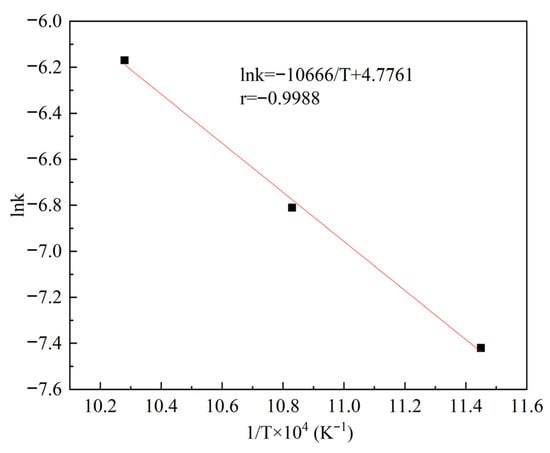
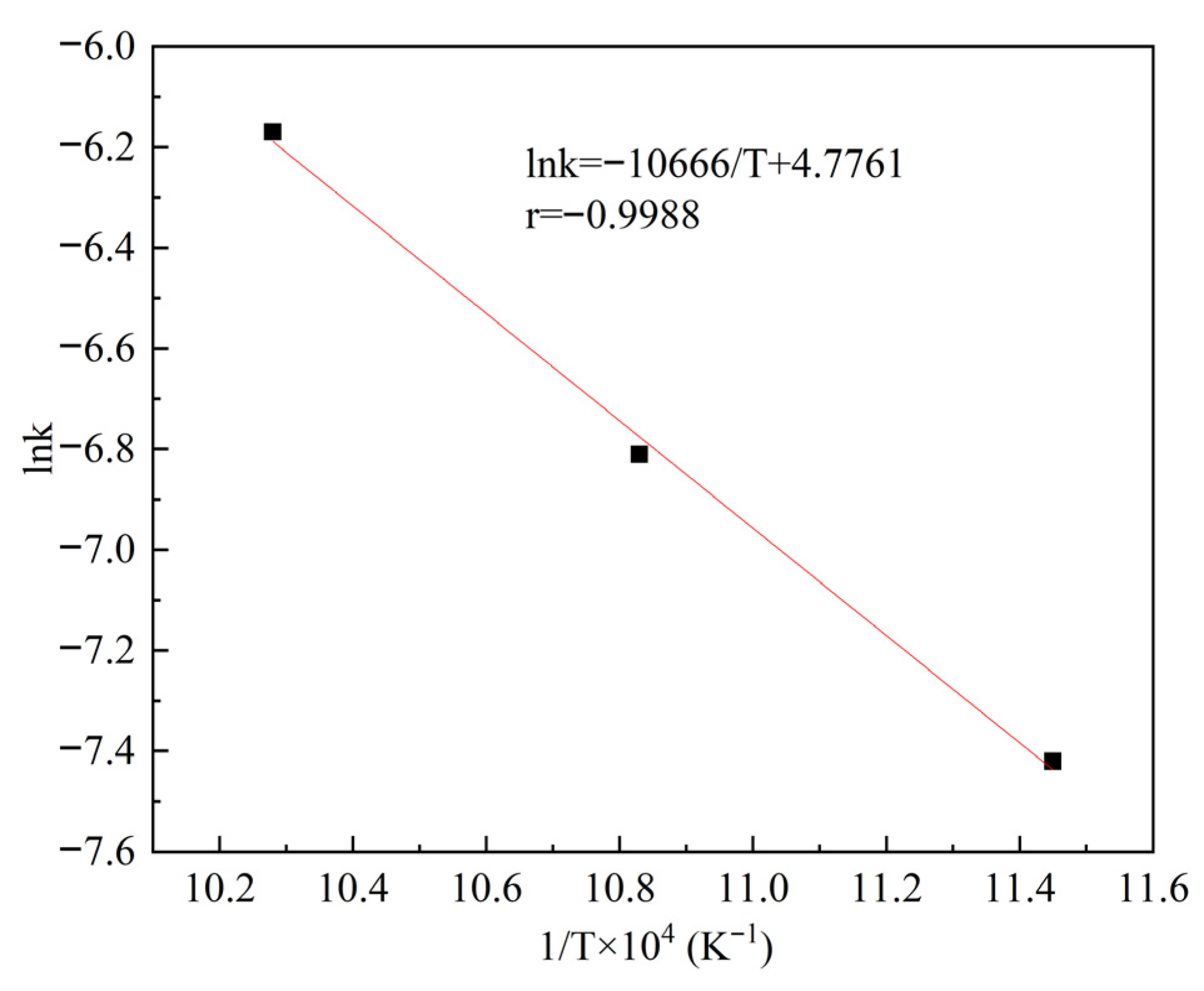
The Arrhenius plot (lnk vs. 1/T) derived from the rate constants in Table 2 (Equation (4)) is presented in Figure 5. A linear fit reveals a strong correlation, from which the apparent activation energy was determined to be 88.677 kJ/mol using Equation (9). The pre-exponential factor (A = 118.64) was obtained from the intercept of the fitted line. Thus, the kinetic equation for the roasting process is expressed as
Figure 5.
The relationship between lnk and 1/T for the low-temperature soda roasting reaction of TiO2 furnace-cooled slag.
According to previous research [28], in the absence of TiO2, the product was NaBO2, and the kinetics shifted from diffusion control to nucleation control with increasing Na2CO3 dosage. In contrast, with the addition of TiO2, the product becomes Na2B6O10, and the kinetics remain consistently interfacial chemical reaction-controlled across the entire temperature range. The apparent activation energy for the non-nucleated system was 54.45 kJ/mol, which increased significantly to 88.68 kJ/mol with TiO2 addition. This notable increase indicates that TiO2 alters the reaction pathway, most likely by facilitating the formation of a more complex, polymerized borate structure ([B6O10]2−). This structure possesses a higher intrinsic energy barrier for its interfacial formation step. Therefore, TiO2 acts not merely as a physical accelerator but as a mechanism-modifying agent that promotes a distinct and more structurally ordered crystallization pathway.
3.2. Effect of Na2CO3 Addition Amount on Boron Leaching Rate
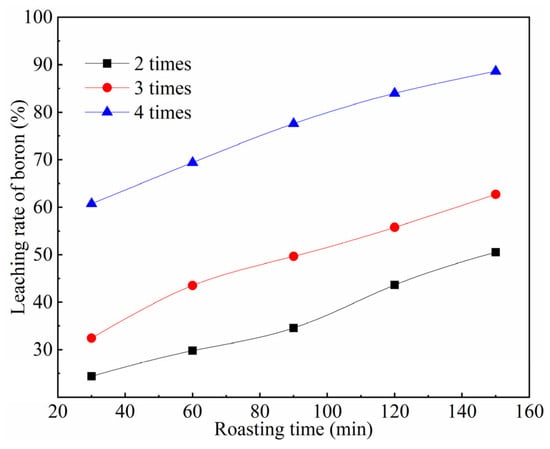
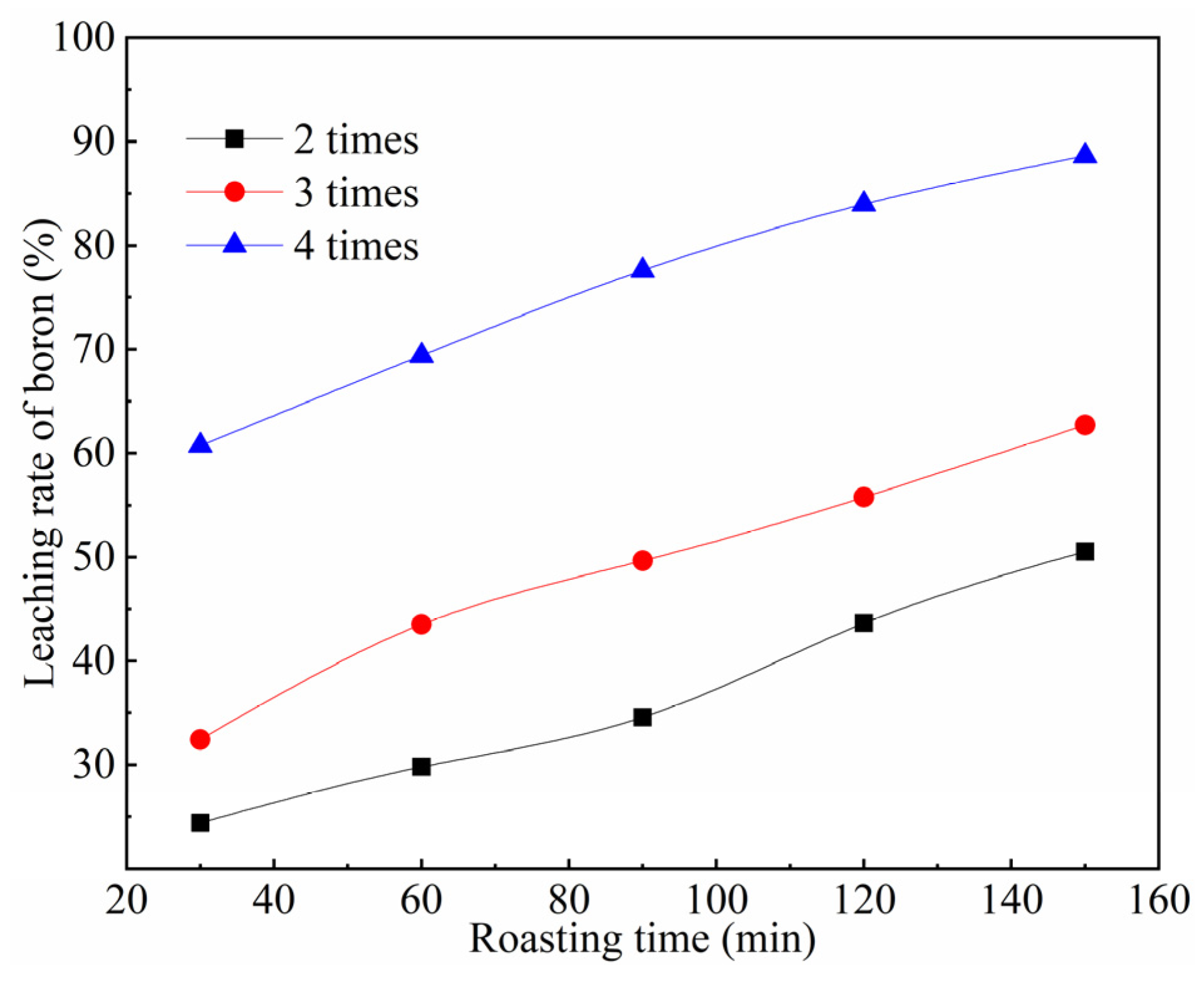
The effect of Na2CO3 addition on the boron leaching rate was investigated under fixed conditions of a roasting temperature of 700 °C, a liquid-to-solid ratio of 10:1, and a reflux leaching time of 2 h. The results are shown in Figure 6.
Figure 6.
The effect of sodium carbonate addition on boron leaching rate.
As illustrated in Figure 6, the amount of Na2CO3 added exerts a significant influence on the boron leaching rate from the TiO2-nucleated furnace-cooled slag. The boron leaching rate exhibits a positive correlation with the amount of Na2CO3 added over the same duration. Specifically, when the roasting time was 150 min, increasing the Na2CO3 addition amount from 2 to 4 times the theoretical amount resulted in a marked enhancement of the boron leaching rate from 50.53% to 88.65%. This improvement is attributed to the increased contact area between the slag particles and Na2CO3 at higher dosages, leading to a more complete reaction during roasting and thereby facilitating boron leaching.
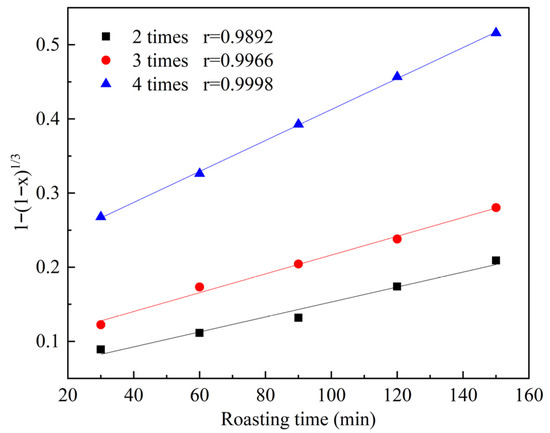
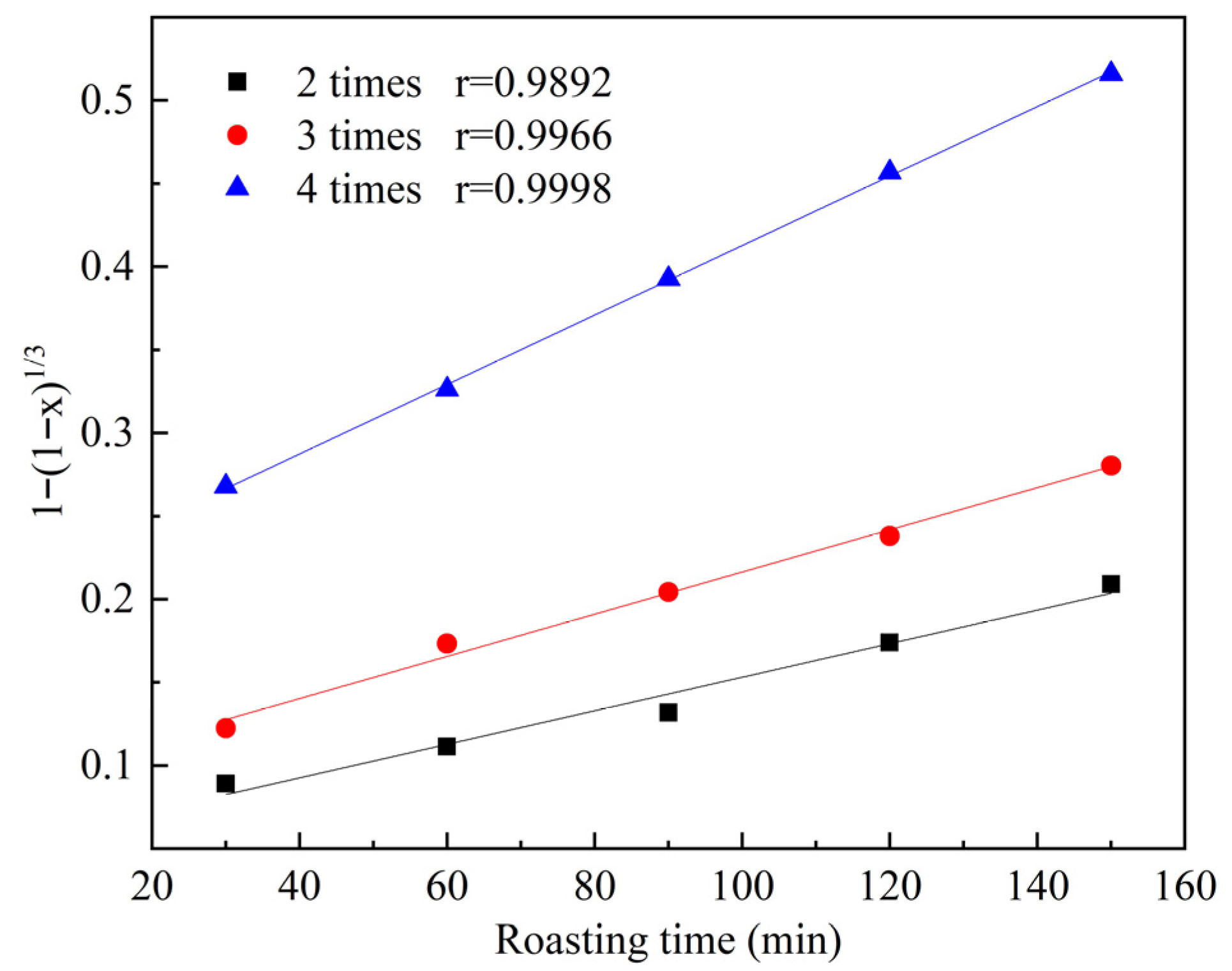
The data from Figure 6 were substituted into Equation (4) and subjected to linear fitting, with the resulting plot presented in Figure 7. As shown in Figure 7, the linear fitting correlation coefficients (R2) for Na2CO3 addition amounts of 2, 3, and 4 times the theoretical amount are 0.9892, 0.9966, and 0.9998, respectively. The strong linearity of the plot for Equation (4) confirms that, within the studied extent and timeframe, the roasting reaction is predominantly controlled by an interfacial chemical reaction mechanism.
Figure 7.
The relationship between 1 − (1 − x)1/3 and time at different amounts of sodium carbonate addition.
4. Conclusions
The pre-treatment of boron-rich slag with TiO2 as a nucleating agent, followed by roasting with the addition of four times the theoretical amount of Na2CO3 at 700 °C for 150 min, and subsequent water leaching with a liquid-to-solid ratio of 10:1 under boiling reflux for 2 h, achieved a maximum boron leaching rate of 88.65%.
Within the temperature range of 600–700 °C, the soda roasting reaction of the TiO2-nucleated furnace-cooled slag to form Na2B6O10 is controlled by an interfacial chemical reaction mechanism. For this temperature range, the apparent activation energy for this process was determined to be 88.677 kJ/mol, and the kinetic equation is described by .
Author Contributions
Conceptualization, J.L. (Jie Li), Q.M., and Y.L. (Yan Lu); data curation, J.L. (Jie Li) and J.L. (Jinbiao Li); funding acquisition, J.L. (Jie Li), Z.D., and Y.L. (Yanfen Li); methodology, J.L. (Jie Li) J.L. (Jinbiao Li), and Q.M.; visualization, G.L. and Z.D.; writing—original draft, J.L. (Jie Li), J.L. (Jinbiao Li), Y.L. (Yan Lu), and G.L.; writing—review and editing, J.L. (Jie Li), Y.L. (Yanfen Li), and Q.M. All authors have read and agreed to the published version of the manuscript.
Funding
This research is financially supported by the Program for Young Talents of Science and Technology in Universities of Inner Mongolia Autonomous Region (Grant No. NJYT25022), the Natural Science Foundation of Inner Mongolia Autonomous Region of china (Grant No. 2025LHMS05002), the First-class Discipline Research Special Project (Grant No. YLXKZX-NGD-002), the Natural Science Foundation of Inner Mongolia Autonomous Region of china (Grant No. 2025LHMS05054), and the National Natural Science Foundation of China (Grant No. 52064041).
Data Availability Statement
The original contributions presented in this study are included in the article. Further inquiries can be directed to the corresponding author.
Conflicts of Interest
Author Jinbiao Li was employed by the Process Technology Department, Hubei EVE Energy Co., Ltd., and is currently employed by company Shanxi Lucket New Material Technology Co., Ltd., Author Guolu Lv was employed by the company SPIC Inner Mongolia Baiyinhua Aluminum & Power Co., Ltd. The remaining authors declare that the research was conduced in the absence of any commercial or financial relationships that could be construed as a potential conflict of interest.
References
- Huang, W.; Liu, Y. Effect of microwave radiation on the magnetic properties of ludwigite and iron-boron separation. J. Microw. Power Electromagn. Energy 2021, 55, 93–106. [Google Scholar] [CrossRef] [Scilit]
- Jiang, T.; Zhang, Q.Y.; Liu, Y.J.; Xue, X.X.; Duan, P.N. Influence of microwave irradiation on boron concentrate activation with an emphasis on surface properties. Appl. Surf. Sci. 2016, 385, 88–98. [Google Scholar] [CrossRef] [Scilit]
- Gao, H.; Liu, Z.; Chu, M. Effect of Ludwigite on Pellet Preparation and Metallurgical Properties. J. Sustain. Metall. 2024, 10, 320–334. [Google Scholar] [CrossRef] [Scilit]
- Jiang, T.; Wu, J.B.; Xue, X.X.; Duan, P.N.; Chu, M.S. Carbothermal formation and microstrutural evolution of a-sialon-AlN-BN powders from boron-rich blast furnace slag. Adv. Powder. Technol. 2012, 23, 406–413. [Google Scholar] [CrossRef] [Scilit]
- Mergen, A.; Demirhan, M.H.; Bilen, M. Processing of boric acid from borax by a wet chemical method. Adv. Powder. Technol. 2003, 14, 279–293. [Google Scholar] [CrossRef] [Scilit]
- Liu, R.; Xue, X.; Jiang, T.; Zhang, S.; Huang, D. Comprehensive utilization of ludwigite and its prospect. Multipurp. Util. Miner. Resour. 2006, 6, 33–36. [Google Scholar]
- Zheng, X. Boron Iron Ore Processing; Chemical Industry Press: Beijing, China, 2009. [Google Scholar]
- Li, Z.H.; Han, Y.X. Research progress on comprehensive exploitation and utilization status of paigeit. Multipurp. Util. Miner. Resour. 2015, 36, 22–25. [Google Scholar]
- Wang, G.; Xue, Q.G.; Ning, X.Y.; An, X.W.; Yu, X.F. New technology for comprehensive utilization of boron-bearing iron concentrate by reduction and melting-separation of carbon-containing pellet. Min. Metall. Eng. 2014, 34, 65–69. [Google Scholar]
- Yu, J.W.; Han, Y.X.; Gao, P.; Sun, Y.S. Direct reduction and magnetic separation preliminary study of boron-containing magnetite coal-based ores. Min. Metall. Eng. 2014, 34, 235–237. [Google Scholar]
- Bao, Q.P.; Guo, L.; Sohn, H.Y.; Zuo, H.B.; Liu, F.; Gao, Y.L.; Guo, Z.C. New process for treating boron-bearing iron ore by flash reduction coupled with magnetic separation. Int. J. Miner. Metall. Mater. 2024, 31, 473–484. [Google Scholar] [CrossRef] [Scilit]
- Liu, R.; Xue, X.X.; Liu, X.; Wang, D.S.; Zha, F.; Huang, D.W. Progress on China’s boron resource and the current situation of boron-bearing materials. Bull. Chin. Ceram. Soc. 2006, 25, 102–107. [Google Scholar]
- Li, J.; Guo, X.D.; Jiang, T. Effect of calcification roasting on activity of boron-rich slag. Ind. Miner. Process. 2015, 44, 20–23. [Google Scholar]
- Wei, X.C.; Zhao, Q.Y.; Li, X.L.; Zhang, T.A. Study on the Intensification of the Boron-Rich Slag Subsection Cooling Process. JOM 2021, 73, 781–790. [Google Scholar] [CrossRef] [Scilit]
- Wang, G.; Wang, J.S.; Yu, X.Y.; Shen, Y.F.; Zuo, H.B.; Xue, Q.G. Innovative method for boron extraction from iron ore containing boron. Int. J. Miner. Metall. Mater. 2016, 23, 247–256. [Google Scholar] [CrossRef] [Scilit]
- Jiang, T.; Xue, X.X. Synthesis of (Ca, Mg)-α′-Sialon-AlN-BN powders from boron-rich blast furnace slag by microwave carbothermal reduction-nitridation. Trans. Nonferrous Met. Soc. China 2012, 22, 2984–2990. [Google Scholar] [CrossRef] [Scilit]
- Wang, L.J. Preparation of Science Boric Acid Using Acid Leaching Method and Recovery of Magnesium Sulfate Monohydrate from Boron-Rich Slag. Master’s Thesis, Northeastern University, Shenyang, China, 2010. [Google Scholar]
- Liu, S.L.; Chen, J.; Zhang, X.P. Study on leaching boron-rich slag with H2SO4. J. Northeast. Univ. Nat. Sci. 1996, 17, 378–380. [Google Scholar]
- Yu, X.Y.; Wang, G.; Xue, Q.G.; Wang, J.S. Study on leaching boron-rich slag with H2SO4. Inorg. Chem. Ind. 2015, 47, 49–52. [Google Scholar]
- Li, J.S. Preparation of Boric Acid, Magnesium Sulfate Monohydrate and Borax from Low-Grate Boron-Rich Slag. Master’s Thesis, Northeastern University, Shenyang, China, 2011. [Google Scholar]
- Chen, J.; Liu, S.L.; Zhang, X.P. Study of carbonate-alkaline leaching boron-rich slag for borax preparation. J. Northeast. Univ. Nat. Sci. 1996, 05, 508–511. [Google Scholar]
- Liu, R.; Gao, F.; Wang, X.J.; Lv, Q. Migration behavior of boron from boron-rich slag in carbothermic reduction process. Iron Steel 2014, 49, 74–77. [Google Scholar]
- Li, J.; Fan, Z.G. Experimental study on preparation of borax from boron-rich slag by adding sodium carbonate. Mater. Sci. Technol. 2011, 19, 144–148. [Google Scholar]
- Li, J.; Fan, Z.G. Study on influencing factors on preparing process of borax from boron-rich slag. J. Northeast. Univ. Nat. Sci. 2009, 30, 1755–1758. [Google Scholar]
- Li, J.; Guang, M. Preparation of borax from blast furnace boron-rich slag by low temperature sodium roasting and leaching. Ind. Miner. Process. 2019, 48, 66–70. [Google Scholar]
- Li, J.; Guang, M.; Lu, Y. Effect of cmposition on low-temperature soda roasting of boron-rich blast furnace slag. J. Sustain. Metall. 2023, 9, 1215–1225. [Google Scholar] [CrossRef] [Scilit]
- HG/T 2956.3-2001; Ascharite Ores-Determination of Boric Anhydride Content-Volumetric Method. State Council of the People’s Republic of China: Beijing, China; Standards Press of China: Beijing, China, 2001.
- Li, J.; Cao, X.R.; Mu, Q.H.; Lu, Y.; Gao, Y.S.; Bai, K.K. Kinetics study on the low-temperature soda roasting of boron-rich blast furnace slag. Heliyon 2024, 10, e35320. [Google Scholar] [CrossRef] [Scilit] [PubMed]
- Dean, J.A. Lange’s Handbook of Chemistry, 3rd ed.; Science Press: Beijing, China, 1991. [Google Scholar]
- Isobe, M.; Ueda, Y. Synthesis, structure and physical properties of spinel solid solutions Mg2TiO4–MgTi2O4. J. Alloys Compd. 2004, 383, 85–88. [Google Scholar] [CrossRef] [Scilit]
- You, J.X.; Wang, J.; Zhang, S.H.; Luo, J.; Peng, Z.W.; Rao, M.J.; Li, G.H. Thermodynamic properties of Na2MgSiO4: DFT calculation and experimental validation. Calphad 2022, 79, 102480. [Google Scholar] [CrossRef] [Scilit]
- Krbata, M.; Ciger, R.; Kohutiar, M.; Sozanska, M.; Eckert, M.; Barenyi, I.; Kianicova, M.; Jus, M.; Beronska, N.; Mendala, B. Effect of Supercritical Bending on the Mechanical & Tribological Properties of Inconel 625 Welded Using the Cold Metal Transfer Method on a 16Mo3 Steel Pipe. Materials 2023, 16, 5014. [Google Scholar] [CrossRef] [Scilit] [PubMed]
- Zhai, Y.C. Metallurgical Kinetics; Metallurgical Industry Press: Beijing, China, 2018. [Google Scholar]
- Huang, P.G.Y.; Lu, C.H.; Sheu, T.W.H. Numerical simulation of diffusion-controlled solid-state reactions in spherical particles. Mater. Sci. Eng. B 2004, 107, 39–45. [Google Scholar] [CrossRef] [Scilit]
- Yang, M.R.; Lv, X.W.; Bai, C.G.; Wang, H.Y. Isothermal kinetics model for solid-solid reaction of powders through surface area and size distribution of particles. Metall. Mater. Trans. B 2022, 53, 968–980. [Google Scholar] [CrossRef] [Scilit]
- Hua, Y.X. Introduction to Dynamics of Metallurgical Processes; Metallurgical Industry Press: Beijing, China, 2004. [Google Scholar]
- Luo, S.Y.; Zhang, J.Y.; Zhou, T.P. Solid state reaction kinetics of SrCO3 and TiO2. J. Chin. Ceram. Soc. 2000, 28, 458–461. [Google Scholar]
- Luo, S.Y.; Zhang, J.Y.; Ning, W. Kinetics of strontium titanate formation from solid state reaction between strontium carbonate and anatase. High Temp. Mater. Process. 2007, 26, 33–41. [Google Scholar] [CrossRef] [Scilit]
- Haruhiko, T. Thermal analysis and kinetics of solid state reactions. Thermochim. Acta 1995, 267, 29–44. [Google Scholar] [CrossRef] [Scilit]
- Sharp, J.H.; Brindley, G.W.; Narahari, A.B. Numerical data for some commonly used solid state reaction equations. J. Am. Ceram. Soc. 1966, 49, 379–382. [Google Scholar] [CrossRef] [Scilit]

Disclaimer/Publisher’s Note: The statements, opinions and data contained in all publications are solely those of the individual author(s) and contributor(s) and not of MDPI and/or the editor(s). MDPI and/or the editor(s) disclaim responsibility for any injury to people or property resulting from any ideas, methods, instructions or products referred to in the content. |
© 2026 by the authors. Licensee MDPI, Basel, Switzerland. This article is an open access article distributed under the terms and conditions of the Creative Commons Attribution (CC BY) license.