


Highlights
- Intermittent anodic protection tunes passive film growth in marine steels.
- Stable passive film resists long-term electrochemical degradation.
- Anodic polarization may generate active chlorine species that potentially inhibit bacterial colonization.
- Protected specimens show reduced fluorescence-associated surface coverage.
- Provides eco-friendly electrochemical route for marine metal protection.
Abstract
In seawater environments, 304 stainless steel (304SS) is susceptible to localized corrosion and microbial attachment. Conventional strategies for controlling corrosion and biofouling, such as organic coatings and chemical biocides, are limited by environmental concerns and inadequate long-term durability. In this study, an integrated electrochemical system was developed to combine intermittent anodic protection with microbial inhibition. Immersion tests were conducted for 45 days in natural seawater collected from the South China Sea to investigate the effects of anodic polarization parameters on the electrochemical passivation behavior and microbial attachment of 304SS. Characterization techniques included potentiodynamic polarization, electrochemical impedance spectroscopy (EIS), live/dead fluorescence staining, scanning electron microscopy (SEM), and energy-dispersive X-ray spectroscopy (EDS). Among the conditions investigated, the selected anodic protection regime used a target potential of 0.1 V versus the saturated calomel electrode (SCE), with 10 min of polarization followed by a 30 min interruption. Under these conditions, the protected specimens exhibited higher charge-transfer resistance than the blank controls at all sampled immersion times. The charge-transfer resistance of the anodic protection group reached a maximum of 106 Ω·cm2 at 15 days. At 45 days, the corresponding value was 1.93 × 10⁵ Ω·cm2, compared with 9.89 × 10⁴ Ω·cm2 for the blank control group. The polarization curves indicated lower corrosion current densities, more positive apparent pitting breakdown potentials, and wider passive potential ranges for the protected specimens. Fluorescence microscopy revealed less extensive green/yellow-green fluorescence on the protected surfaces, indicating lower fluorescence-associated surface coverage in the analyzed images. Local EDS measurements after 45 days showed carbon contents of approximately 3 wt% in the selected protected regions and 21 wt% in the selected control regions, with corresponding chromium contents of approximately 17 wt% and 14 wt%, respectively. These observations were consistent with improved interfacial protection under intermittent anodic polarization. Changes in interfacial chemistry and electrostatic interactions may contribute to the observed surface response, although their contributions were not established experimentally. Active chlorine was not measured using the N, N-diethyl-p-phenylenediamine (DPD) method. This study provides a theoretical basis and practical guidance for simultaneously mitigating localized corrosion and microbial attachment on 304SS equipment in marine engineering applications.
1. Introduction
Owing to its favorable mechanical properties and inherent corrosion resistance, 304 stainless steel (304SS) is widely used in marine engineering structures, seawater transport pipelines, and auxiliary equipment on offshore platforms. Its corrosion resistance is attributed to a spontaneously formed chromium oxide passive film with a thickness of 1–10 nm [1]. In seawater, however, high chloride concentrations and marine microbial biofilms can act synergistically to degrade this film, increasing the susceptibility of 304SS to localized pitting corrosion and potentially leading to failure [2].
Microbial attachment is a key contributor to pitting corrosion in stainless steel. Previous studies showed that marine microorganisms, including Pseudomonas aeruginosa [3] and sulfate-reducing bacteria, contributed to microbiologically influenced corrosion (MIC) [4] by promoting the reduction of iron oxides in passive films through extracellular electron transfer. These processes accelerated film dissolution, initiated pitting corrosion, and contributed to the degradation of marine structural materials [5]. Other studies examined the effects of barnacle attachment on the corrosion behavior of 304SS [6] and the influence of Pseudomonas aeruginosa on its corrosion resistance [7]. Atomic force microscopy observations revealed that both Pseudomonas aeruginosa and sulfate-reducing bacteria formed continuous biofilms on 304L stainless steel surfaces, ultimately inducing severe localized corrosion [3]. In addition to microbial activity, high chloride concentrations in seawater can destabilize passive films through chemical adsorption and subsequent penetration, promoting the formation of soluble metal chlorides and localized film dissolution [8,9,10,11]. Glow discharge optical emission spectrometry was used to investigate the effects of chloride on the passive film chemistry of 304SS in sulfuric acid solution [12]. Pronounced film degradation and stable pitting were also reported after only 168 h of seawater immersion [13].
Conventional strategies for protecting stainless steel against chloride-induced pitting corrosion and microbial fouling in seawater, including organic coatings and chemical biocides, have notable limitations. Organic coatings are susceptible to cracking and delamination, which compromise their long-term protective performance, while chemical biocides can pollute marine environments and complicate compliance with environmental regulations. Electrochemical protection has attracted increasing interest for simultaneous corrosion and biofouling control because it offers adjustable operating parameters and enables in situ regulation of the microenvironment at the metal–seawater interface. Previous studies combined seawater electrolysis for antifouling with impressed current cathodic protection of EH36 [14] and Q345 carbon steels [15]. These systems suppressed electrochemical corrosion and marine biofouling while promoting the formation of protective surface deposits. A study on titanium alloys further showed that combining seawater electrolysis with anodic protection improved corrosion resistance and increased microbial mortality from 33% to 92% as the polarization voltage increased [16]. These findings highlight the potential of integrated electrochemical strategies for simultaneous corrosion and biofouling control. However, studies of intermittent anodic protection of stainless steel have largely focused on acidic industrial media, such as sulfuric acid [17]. Systematic investigations into the effects of prolonged intermittent anodic polarization in seawater on passive film stability and microbial behavior at the metal–seawater interface remain limited.
Seawater electrolysis generates oxidizing species, including hypochlorite and other forms of active chlorine, that can inactivate attached microorganisms [18]. Anodic protection maintains metals in a stable passive state through controlled anodic polarization, thereby suppressing anodic dissolution and reducing corrosion rates [17]. These technologies offer complementary protection for 304SS: anodic protection maintains a passive barrier against chloride attack, while seawater electrolysis inhibits microbial colonization and mitigates biofilm-associated localized damage. However, systematic long-term studies of their combined application to corrosion control and microbial attachment inhibition on 304SS in seawater remain limited. In particular, the effects of polarization potential and intermittent energization schedules on electrochemical behavior during prolonged seawater immersion, and the mechanisms linking these changes to microbial inhibition, remain insufficiently understood.
In this study, an integrated experimental system was developed to combine intermittent anodic protection with microbial inhibition on 304SS. Operating parameters were optimized, and changes in electrochemical behavior and surface microbial attachment were compared under different protection conditions. Possible mechanisms linking the electrochemical response to surface-associated microbial accumulation were discussed based on the available experimental evidence. This controllable electrochemical protection strategy provides practical insights into the prevention and mitigation of microbiologically influenced corrosion of stainless steel in seawater.
2. Materials and Methods
2.1. Specimen Preparation
Commercial 304 stainless steel plates (Shanghai Luosong Electromechanical Equipment Co., Ltd., Shanghai, China) were cut into specimens measuring 10 mm × 10 mm × 3 mm by wire electrical discharge machining. Each specimen was embedded in epoxy resin, leaving only a 10 mm × 10 mm working surface exposed. The exposed surfaces were sequentially ground with 180-, 400-, 800-, 1200-, and 1500-grit silicon carbide abrasive papers under water cooling. The specimens were then ultrasonically cleaned in deionized water and anhydrous ethanol for 15 min each to remove surface contaminants and grinding debris. The measured chemical composition of 304SS is listed in Table 1. Natural seawater was collected from the South China Sea at a site approximately 209 m southeast of the Donghai Island Cross-Sea Bridge in Zhanjiang, Guangdong Province, China (21.1017° N, 110.3160° E)
Table 1.
Chemical composition of 304 stainless steel (wt%).
2.2. Electrochemical Measurements
Electrochemical measurements were performed using a CS350M single-channel electrochemical workstation (Wuhan Corrtest Instruments Corp., Ltd., Wuhan, China) in a conventional three-electrode configuration. The 304SS specimen, a saturated calomel electrode (SCE), and a high-purity platinum sheet served as the working, reference, and counter electrodes, respectively. Natural seawater collected from the South China Sea was used as the electrolyte. Before testing, the specimens were cathodically polarized at −1.0 V versus SCE for 10 min to remove the native surface oxide film and establish consistent initial surface conditions. Replicate electrochemical measurements showed similar curve shapes and response trends. One set of individual curves and the corresponding fitted parameters is presented for clarity. The reported values are not averages across replicate specimens, and between-specimen variability was not quantified.
The electrochemical testing procedures were as follows: (1) Open-circuit potential (OCP): OCP was recorded after stabilization, defined as a potential drift rate of less than 2 mV/min over 10 min. (2) Electrochemical impedance spectroscopy (EIS): measurements were performed at OCP using a sinusoidal perturbation with an amplitude of 5 mV over a frequency range from 105 to 0.01 Hz, with 70 sampling points. The impedance data were fitted to equivalent circuit models using ZSimpWin software (version 3.60) to determine interfacial electrochemical parameters. (3) Potentiodynamic polarization: the potential was swept from −1.0 to 1.0 V versus SCE at a scan rate of 0.333 mV/s.
2.3. Surface Morphology and Elemental Characterization
A Hitachi TM4000 scanning electron microscope equipped with an EDS detector was used to examine the surface corrosion morphology and passive film integrity of the specimens. Before SEM observation, the specimens were gently rinsed with deionized water, wiped with anhydrous ethanol to remove loosely attached deposits, and dried under a stream of nitrogen. This cleaning procedure was intended to reveal the underlying corrosion morphology rather than preserve biofilm structure. Accordingly, the SEM images were not used to assess biofilm morphology or microbial attachment. Observations were conducted at an accelerating voltage of 15 kV and a working distance of 10 mm. Surface elemental composition and distribution were analyzed simultaneously using EDS.
2.4. Microbial Fluorescence Staining Observation
Surface-associated microorganisms were quantitatively characterized using acridine orange/propidium iodide (AO/PI) dual-fluorescence staining and an IX73 inverted fluorescence microscope (Olympus Corporation, Tokyo, Japan) under blue-light excitation. The specimens were fixed in 4% paraformaldehyde for 15 min and then rinsed three to four times with precooled phosphate-buffered saline (PBS). They were subsequently stained in the dark for 20 min using a mixed solution containing AO (1 mg/mL) and PI (100 μg/mL). Green/yellow-green and red/orange-red fluorescence were recorded in separate image channels. Because fixation preceded staining, these signals were not interpreted as direct measurements of the live and dead cell populations before fixation. Fluorescence images acquired at different immersion times were analyzed using ImageJ (version 1.53t). Pixel-based analysis was used to quantify the areas occupied by green/yellow-green and red/orange-red fluorescence under each applied potential. The fluorescence area fraction for each channel was calculated by dividing the segmented fluorescent area by the total analyzed field area and multiplying by 100%.
2.5. Anodic Protection Experimental Setup
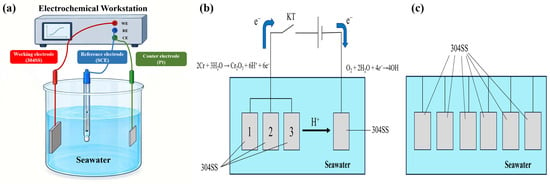
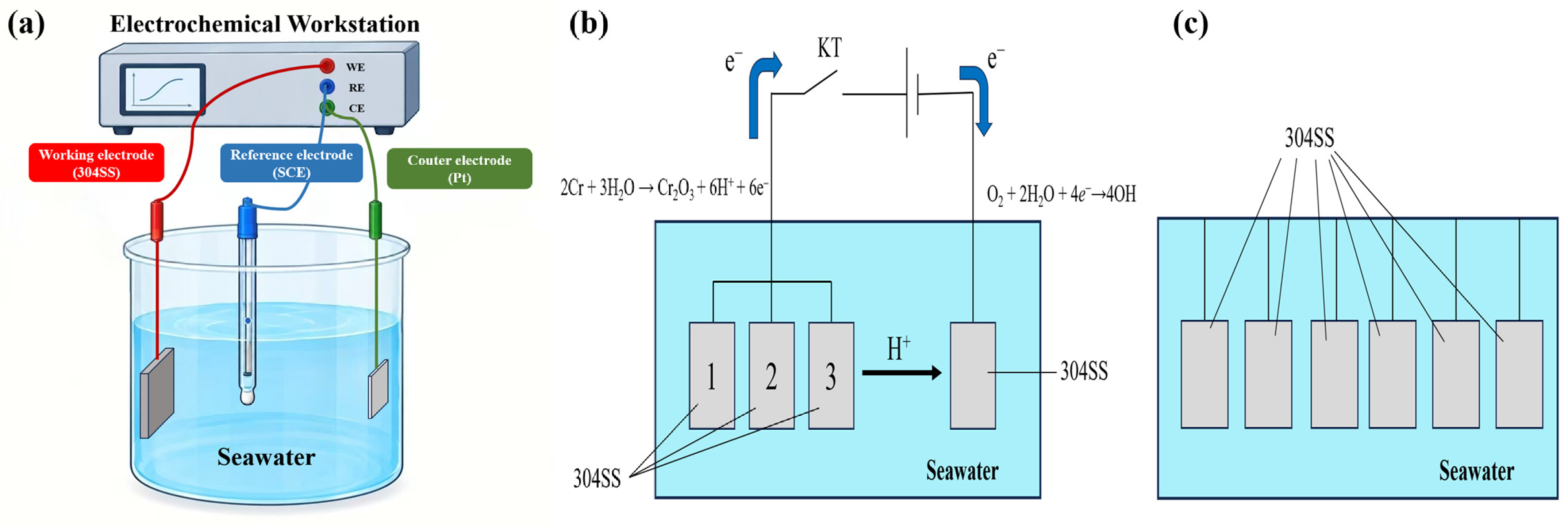
Preliminary electrochemical tests were conducted in a three-electrode configuration to identify the optimal anodic protection potential, which was determined to be 0.1 V versus SCE. A two-electrode power supply system was subsequently used for long-term protection, with a target working-electrode potential of 0.1 V versus SCE. During the long-term experiments, the working-electrode potential was periodically measured against an SCE using a high-impedance voltmeter. A timer relay (KT) controlled intermittent operation, with 10 min of polarization followed by a 30 min interruption. This schedule was selected to reduce the duration of polarization; however, energy consumption, gas evolution, and electrode service life were not quantified in this study. Two experimental groups were established: a blank control group and an anodically protected group. All specimens were immersed in seawater for 45 days and periodically retrieved for electrochemical measurements and surface characterization. Each specimen set comprised six specimens: three for electrochemical testing and three for microscopic characterization. Seawater was replaced weekly throughout the exposure period. Both groups were exposed concurrently under identical laboratory conditions and seawater replacement schedules, without shielding from ambient light. The preliminary three-electrode measurement system, long-term anodic protection setup, and blank control setup are shown in Figure 1a–c, respectively.
Figure 1.
Schematic diagrams of the experimental setups: (a) three-electrode electrochemical testing system; (b) intermittent anodic protection system; (c) blank control setup.
3. Results and Discussion
3.1. Parameter Optimization of the Anodic Protection System
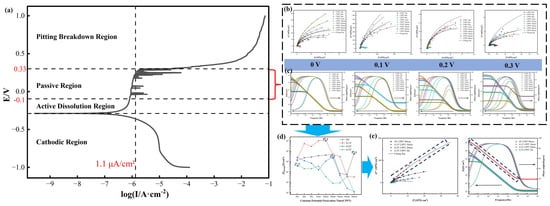
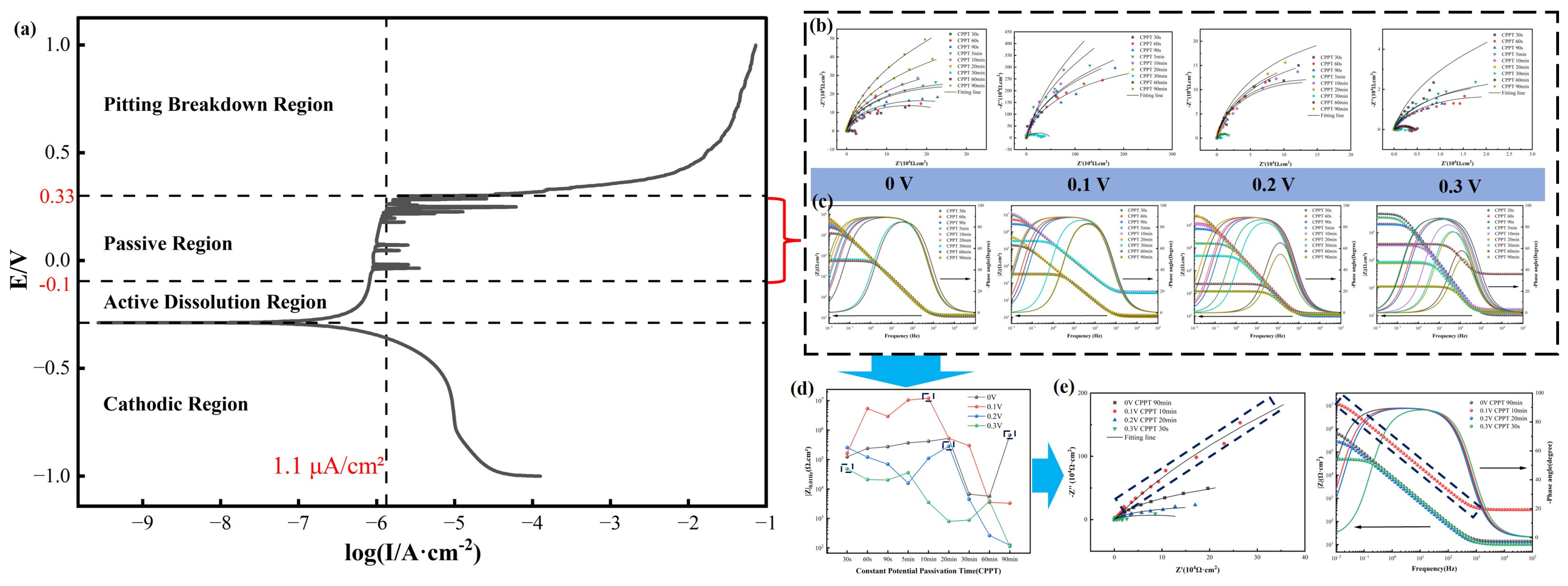
The anodic polarization potential and energization duration were optimized using linear sweep voltammetry and SEM observations. The potentiodynamic polarization (PS) curve of 304SS in seawater (Figure 2a) exhibited a passive potential range of −0.10 to 0.33 V versus SCE and a passive current density of approximately 1.1 μA·cm−2, indicating favorable passivation behavior [19]. Based on this range, four potentials (0, 0.1, 0.2, and 0.3 V versus SCE) were selected for potentiostatic polarization (PP). At each potential, polarization was applied for different energization durations, followed by EIS measurements. The impedance data were fitted to equivalent circuit models to obtain interfacial impedance parameters.
Figure 2.
PS curve of 304SS in seawater and EIS of 304SS under PP: (a) PS curve; (b) EIS Nyquist plot; (c) EIS Bode plot; (d) comparison diagram of |Z|0.01 Hz; (e) comparison of Nyquist and Bode plots under optimal energization time at different potentials.
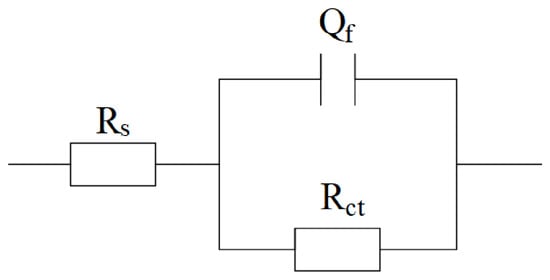
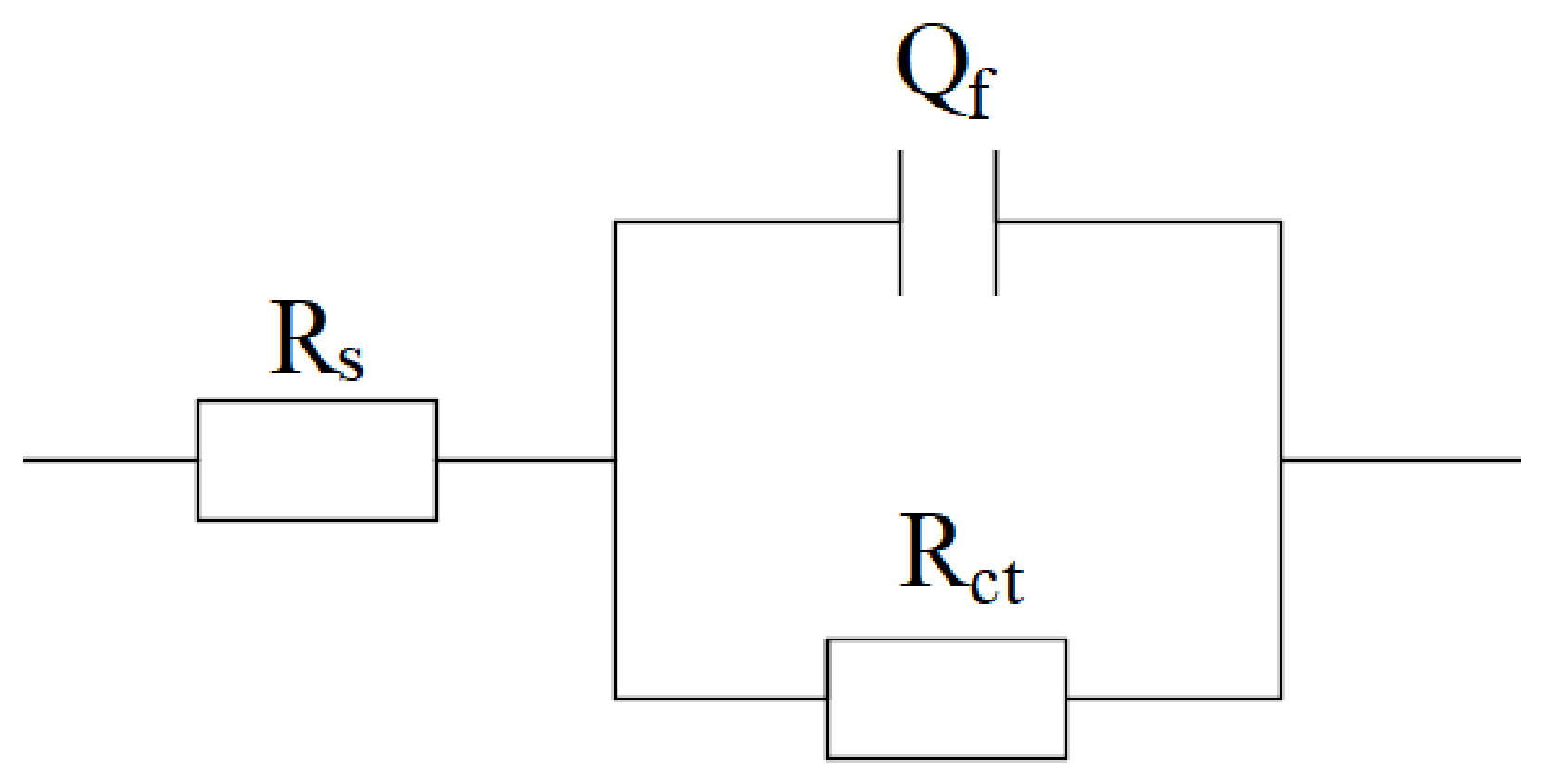
Figure 2b,c show the Nyquist and Bode plots of 304SS obtained at different polarization potentials and energization durations. The impedance spectra exhibited a single capacitive response and were fitted using the equivalent circuit model shown in Figure 3. Both the capacitive arc diameter and the impedance modulus at 0.01 Hz varied with polarization potential and energization duration. The maximum low-frequency impedance was obtained after 90 min at 0 V, 10 min at 0.1 V, 20 min at 0.2 V, and 30 s at 0.3 V. Figure 2d summarizes the changes in the low-frequency impedance modulus, which were consistent with those in the capacitive arc diameter. Comparison of the spectra obtained at the optimal energization duration for each potential (Figure 2e) showed that polarization at 0.1 V for 10 min produced the largest capacitive arc diameter. This result indicated the highest corrosion resistance among the tested conditions and suggested the formation of a more compact and intact passive film. Accordingly, the optimal polarization potential and energization duration were identified as 0.1 V versus SCE and 10 min, respectively.
Figure 3.
Equivalent circuit model (Rs(QfRct)) used to fit the electrochemical impedance spectra, where Rs denotes the solution resistance, Qf denotes the constant phase element, and Rct denotes the charge-transfer resistance.
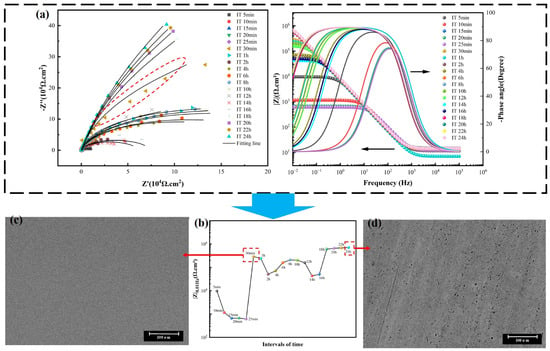
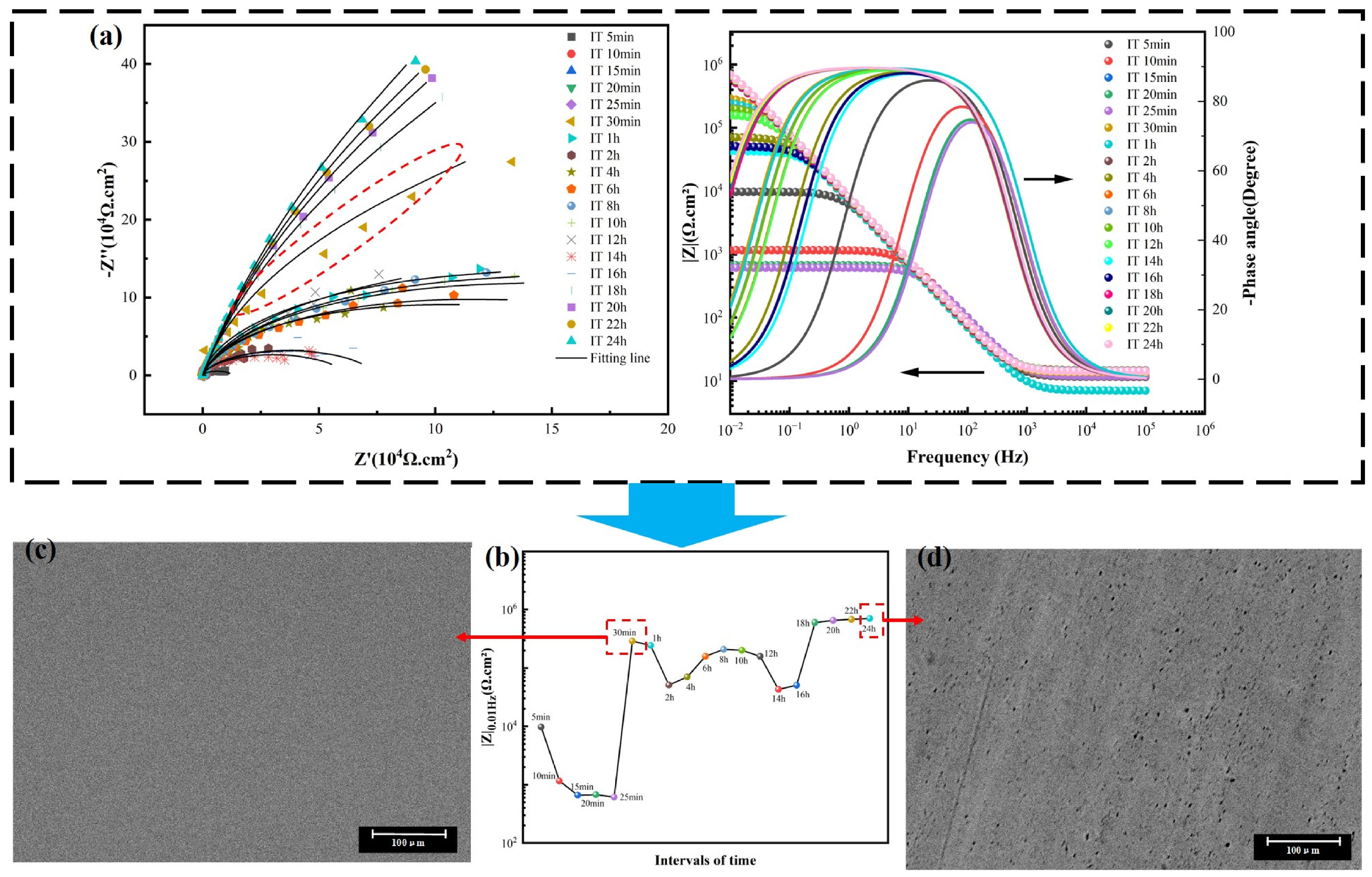
After the anodic polarization potential and energization duration were established, the effect of interruption duration on passive film stability was investigated. Based on the EIS results (Figure 4a,b), the interruption durations were classified into three categories: Category I (18–24 h), with the highest low-frequency impedance modulus; Category II (30 min–16 h), with intermediate values; and Category III (5–25 min), with the lowest values. The pronounced differences among these categories indicated a nonlinear relationship between interruption duration and passive film maintenance. Previous studies attributed the passivation and repassivation behavior of 304SS to competing and coupled interfacial electrochemical reactions, with protective performance varying nonmonotonically with polarization timing [20].
Figure 4.
Effects of interval time on EIS and SEM morphology of 304SS under PP in seawater (a) Nyquist and Bode plots; (b) |Z|0.01 Hz of 304SS with different IT; (c) SEM of 304SS with IT 30 min; (d) SEM of 304SS with IT 24 h.
Notably, the highest impedance modulus, obtained after a 24 h interruption, did not correspond to the most effective protection. The elevated impedance was tentatively attributed to the accumulation of surface corrosion products. To explore this interpretation, specimens subjected to interruption durations of 30 min and 24 h were examined by SEM. The specimen subjected to a 30 min interruption exhibited a smooth surface without obvious localized corrosion defects (Figure 4c). In contrast, numerous corrosion pits were observed after a 24 h interruption, covering 53.67% of the examined surface area and indicating extensive pitting damage (Figure 4d). These observations suggested that high interfacial impedance could arise from either a compact, intact passive film or accumulated corrosion products. Prolonged interruptions could allow continued chloride attack and delay the repair of passive film defects, thereby promoting pitting corrosion. The resulting corrosion deposits could increase the measured interfacial impedance, making impedance alone an insufficient indicator of passive film protection under these conditions [21].
The combined EIS and SEM results indicated that excessively long interruptions between anodic polarization periods prolonged exposure to chloride attack and promoted irreversible localized corrosion. Specimens subjected to a 30 min interruption exhibited smooth surfaces without obvious pitting defects, consistent with effective passive film protection. Accordingly, surface smoothness and high interfacial impedance were jointly used to evaluate protective performance. Among the conditions investigated, the optimal anodic protection regime was identified as a potential of 0.1 V versus SCE, with 10 min of polarization followed by a 30 min interruption.
3.2. Electrochemical Evolution of 304SS Under Long-Term Anodic Protection in Seawater
To quantitatively evaluate the long-term performance of anodic protection for 304SS in seawater, electrochemical measurements were performed periodically on the blank control and anodic protection groups throughout the 45-day immersion period. These measurements were used to assess changes in passive film stability during prolonged exposure.
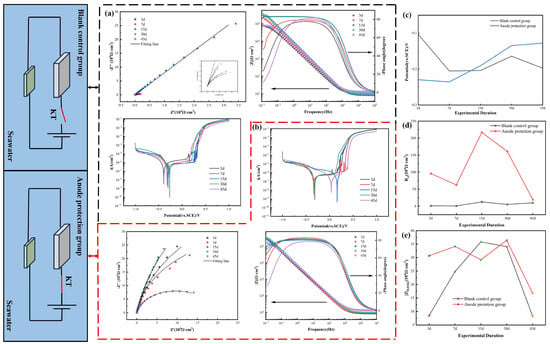
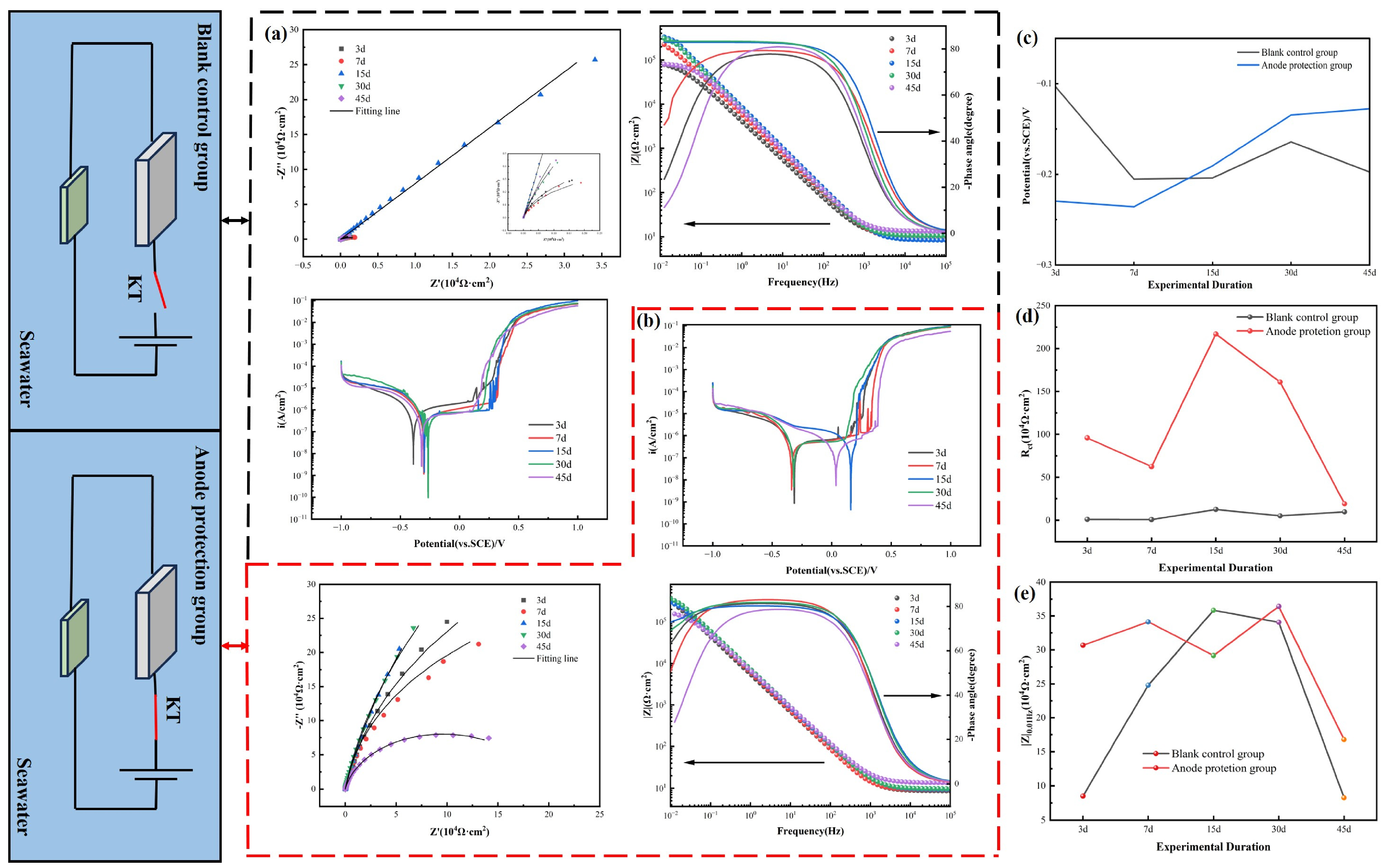
The electrochemical results for the blank control group are shown in Figure 5a. The capacitive arc diameter and charge-transfer resistance (Rct) varied nonmonotonically with immersion time. Rct decreased from 1.01 × 10⁴ Ω·cm2 at 3 days to 7.90 × 10³ Ω·cm2 at 7 days, then increased to 1.27 × 10⁵ Ω·cm2 at 15 days. It subsequently decreased to 5.18 × 10⁴ Ω·cm2 at 30 days, consistent with competing processes of corrosion product film formation and partial detachment. Between 30 and 45 days, Rct increased to 9.89 × 10⁴ Ω·cm2. A concomitant decrease in the low-frequency phase angle suggested deterioration of the protective film and increased interfacial corrosion activity.
Figure 5.
Electrochemical evolution of 304SS under long-term anodic protection in seawater: (a) blank control group: EIS Nyquist/Bode plots and potentiodynamic polarization curves at different immersion times; (b) anodic protection group: same measurements; (c) OCP vs. time; (d) Rct vs. time; (e) |Z|0.01 Hz vs. time. The curves and derived parameters shown are from individual measurements rather than averages across replicate specimens.
The electrochemical response of the anodic protection group is shown in Figure 5b. During the first 30 days, the capacitive arc diameter showed relatively limited fluctuations, while the low-frequency impedance remained high. At 30 days, the Bode plot exhibited a broad phase-angle plateau in the low-frequency region, and Rct remained in the range of 105–106 Ω·cm2, consistent with a predominantly capacitive response associated with a compact passive film. A slight decrease in impedance at 7 days was tentatively attributed to competition between metastable pit initiation and passive film repair [22]. Between 30 and 45 days, Rct decreased from 1.61 × 10⁶ to 1.93 × 10⁵ Ω·cm2, corresponding to a decline of approximately 88%. At 45 days, Rct was still approximately 1.95 times that of the blank control group, indicating that the electrochemical advantage persisted but had diminished substantially.
Comparison of the LSV curves showed that the anodic protection group exhibited lower corrosion current densities (Icorr) than the blank control group. The corrosion potential (Ecorr) shifted positively by 0.1–0.2 V, the passive potential range widened substantially, and the pitting breakdown potential increased from 0.2–0.4 V to 0.4–0.6 V versus SCE. These results suggested that anodic polarization promoted the formation of protective chromium oxide passive films and suppressed chloride-induced film degradation. Throughout the immersion period, Icorr for the blank control group remained on the order of 10−6 A·cm−2, indicating limited protection by the surface film. The anodic protection group exhibited its lowest corrosion current densities at 3–7 days, when Icorr approached 10−9 A·cm−2. Although its protective performance declined between 15 and 45 days, it remained superior to that of the blank control group throughout the exposure period.
The OCP curves (Figure 5c) provided complementary information on the surface electrochemical behavior of the specimens. The OCP of the blank control group fluctuated between −0.210 and −0.100 V without a consistent trend, suggesting an unstable surface condition associated with competing film formation and degradation processes. In contrast, the OCP of the anodic protection group shifted progressively toward more positive values from approximately −0.230 V during the first 3 days of immersion and stabilized between −0.135 and −0.128 V from 30 to 45 days. The overall positive shift was approximately 0.1 V. Together with the EIS and polarization results, this trend supported the interpretation that intermittent anodic polarization maintained a stable passive state on 304SS during prolonged seawater exposure.
Figure 5d shows changes in charge-transfer resistance (Rct) throughout the immersion period. The Rct values of the blank control group ranged from 7.90 × 10³ to 1.27 × 10⁵ Ω·cm2 and were lower than those of the anodic protection group at all sampled times. In contrast, Rct for the anodic protection group ranged from 1.93 × 10⁵ to 2.17 × 10⁶ Ω·cm2. It remained at or above 6 × 10⁵ Ω·cm2 from 3 to 30 days before decreasing to 1.93 × 10⁵ Ω·cm2 at 45 days. These higher values indicated greater resistance to interfacial charge transfer under anodic protection. A decrease was observed at 7 days, whereas a substantially larger decline occurred between 30 and 45 days. The mechanisms underlying these changes require further investigation.
Figure 5e shows changes in the low-frequency impedance modulus at 0.01 Hz (|Z|0.01Hz), an indicator of overall corrosion resistance. For the blank control group, |Z|0.01Hz increased to 5.18 × 10⁴ Ω·cm2 between 3 and 30 days before decreasing sharply to 8.2 × 10⁴ Ω·cm2 at 45 days, suggesting deterioration of the protective film. For the anodic protection group, |Z|0.01Hz ranged from 2.9 × 10⁵ to 3.6 × 10⁵ Ω·cm2 from 3 to 30 days and decreased to 1.7 × 10⁵ Ω·cm2 at 45 days. Despite this decrease, it remained higher than that of the blank control group at the same immersion time. These results were consistent with a sustained protective effect during prolonged seawater exposure.
Table 2 summarizes the equivalent circuit parameters obtained from fitting the EIS data at different immersion times. Throughout the test period, the anodic protection group exhibited higher Rct and lower Qf values than the blank control group. These differences indicated greater resistance to interfacial charge transfer and suggested the formation of a more compact protective film.
Table 2.
Fitted EIS equivalent circuit parameters of different specimens.
Natural seawater is a dynamic, multicomponent electrolyte in which variations in dissolved oxygen, temperature, flow velocity, and biological activity can substantially affect passive film stability, Cl− transport, and localized corrosion behavior. For example, elevated temperatures and changes in hydrodynamic conditions can accelerate Cl− diffusion and alter the repassivation kinetics of 304SS [23]. Therefore, the electrochemical parameters measured in this laboratory study, including charge-transfer resistance (Rct) and corrosion current density (Icorr), together with biofilm coverage, cannot be directly extrapolated to predict service life under actual marine operating conditions. Future studies should combine continuous in situ water quality monitoring with long-term open-sea field trials to assess the engineering applicability of this protection strategy.
Practical implementation also requires further evaluation of electrode durability, including localized corrosion and metal release under the operating conditions. Energy consumption should be calculated from the measured cell voltage, current, and energization duration and normalized to the protected area and exposure time. Installation, maintenance, and electrode replacement costs were not quantified in this study. If active chlorine is generated, its effects on passive film stability and the potential consequences of its release into the environment must also be evaluated. These limitations should be addressed before drawing conclusions about long-term durability, cost effectiveness, or environmental compatibility.
Collectively, the electrochemical results indicated that the surface film on unprotected 304SS underwent repeated formation, degradation, and partial repair during seawater immersion, with a marked decline in protective performance after 30 days. Under the selected intermittent anodic protection regime, the protected specimens exhibited higher fitted Rct values than the blank controls at all sampled times, although the difference narrowed substantially at 45 days. The polarization results and surface observations were consistent with improved corrosion resistance under the tested conditions. These findings indicated that intermittent anodic protection sustained passive film protection and mitigated chloride-induced corrosion of 304SS during prolonged seawater exposure, with potential benefits for its service life in marine environments.
3.3. Microbial Inhibition Effect and Mechanism of Anodic Protection for 304SS in Seawater
Dual-fluorescence staining, SEM, and EDS were used to characterize microbial colonization and corrosion product formation on specimen surfaces in the blank control and anodic protection groups to assess the effect of anodic protection on microbial attachment to 304SS in seawater. Because ethanol cleaning could remove loosely attached corrosion products and biofilm-associated deposits, the SEM results were interpreted only in terms of the underlying corrosion morphology. Information on passive film behavior was obtained from electrochemical measurements, while microbial attachment was evaluated using AO/PI fluorescence staining.
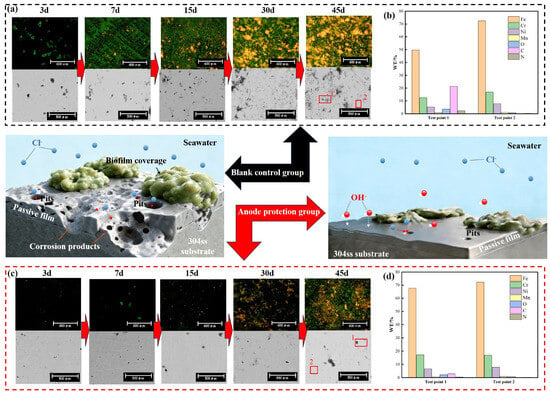
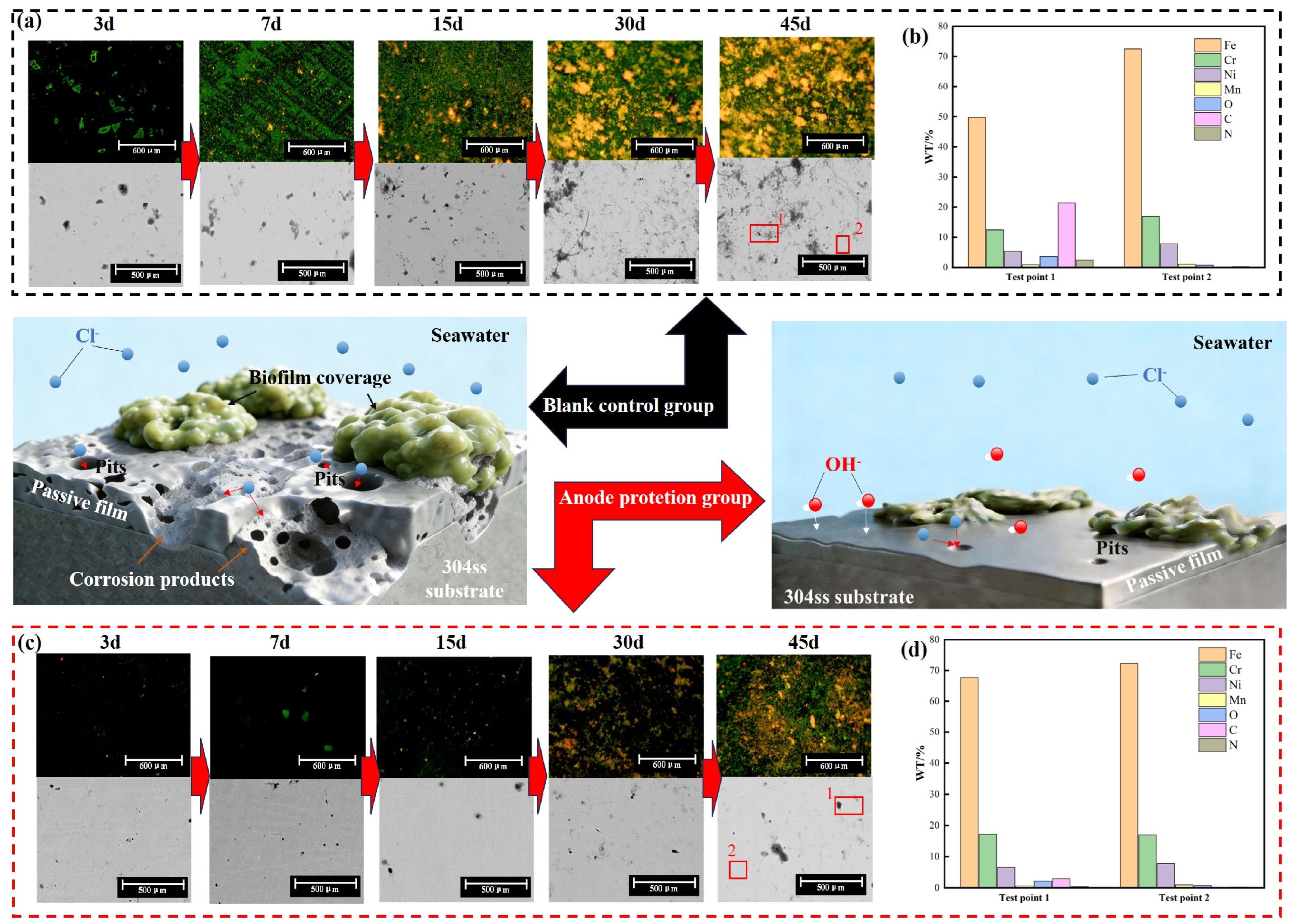
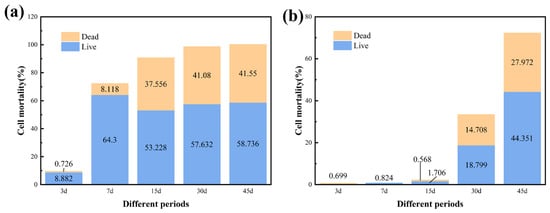
Fluorescence microscopy and SEM images of the blank control group are presented in Figure 6a, and the corresponding cell mortality rates at different immersion times are compared in Figure 7. Small corrosion pits were observed on the specimen surfaces after 3 days of immersion, and their number and size increased progressively with immersion time. By 45 days, extensive green fluorescence was observed, indicating widespread surface-associated microbial accumulation. These observations suggested that biofilm development might promote oxygen-depleted microenvironments and that microbial metabolites might contribute to localized corrosion, consistent with the extensive pitting observed after prolonged immersion.
Figure 6.
Local corrosion morphology and microbial adhesion of 304SS immersed in seawater: (a) fluorescence microscope and SEM images of the blank control 304SS; (b) elemental composition of selected positions of the blank control 304SS; (c) fluorescence microscope and SEM images of the anodic protection 304SS; (d) elemental composition of selected positions of the anodic protection 304SS.
Figure 7.
Comparison of cell mortality rates across different test periods. (a) Blank control group; (b) anodic protection group.
The combined characterization results for the anodic protection group (Figure 6c) showed that the specimen surfaces remained substantially smoother than those of the blank control group throughout the test period. Only a few small corrosion pits were observed between 3 and 30 days, and green fluorescence covered a markedly smaller area, consistent with reduced microbial attachment. After 45 days of immersion, only a limited number of small pits were observed, and surface damage was considerably less severe than in the blank controls at the same immersion time. These findings indicated that anodic protection inhibited microbial colonization and delayed the progression of localized corrosion.
Figure 6b,d show the EDS results for corroded regions of specimens from both groups after 45 days of immersion. In the analyzed regions of the blank control group, the carbon and chromium contents were 21 wt% and 14 wt%, respectively. The elevated carbon content was consistent with the accumulation of biofilm-associated organic matter, while the lower chromium content suggested less pronounced chromium enrichment in these regions [24]. In contrast, the analyzed regions of the anodic protection group contained 3 wt% carbon and 17 wt% chromium. These differences suggested reduced accumulation of biofilm-associated organic matter and better preservation of surface chromium under anodic protection.
The combined electrochemical, fluorescence microscopy, and SEM–EDS results suggested the following possible mechanisms underlying corrosion mitigation and microbial inhibition by anodic protection of 304SS in seawater. (1) Barrier protection by a stable passive film. Anodic polarization maintains the metal potential within the passive range and promotes the formation and maintenance of a compact, chromium-rich oxide film that limits the transport of aggressive species to the substrate [25]. Chromium redistribution and oxide formation at defective sites may contribute to film repair and help preserve barrier integrity [26]. The anodic protection group exhibited higher Rct values than the blank control group, indicating greater resistance to interfacial charge transfer. SEM observations revealed relatively few small corrosion pits, while local EDS measurements showed higher chromium contents in the analyzed protected regions. Together, these observations were consistent with the protective role of a stable passive film. (2) Potential antimicrobial effects of electrochemically generated active chlorine. Under suitable anodic polarization conditions, chloride oxidation can generate active chlorine species [27], including hypochlorous acid (HOCl) [28], which can inactivate surface-associated microorganisms and inhibit biofilm development. Such reactions may contribute to microbial inhibition in the present system. However, this contribution requires confirmation through measurements of active chlorine concentrations and characterization of interfacial reaction conditions. (3) Possible effects of interfacial electrostatic interactions on microbial attachment. Anodic polarization alters the interfacial potential distribution and electric double-layer structure, potentially affecting interactions between the metal surface and negatively charged bacterial cells, including Vibrio spp. and Pseudomonas aeruginosa [29,30]. These interactions may influence microbial transport and attachment. However, the direction and magnitude of their contribution depend on surface charge, solution chemistry, and ionic screening and therefore require further experimental verification.
Overall, anodic protection mitigated corrosion and microbial attachment on 304SS in seawater, consistent with the maintenance of a protective passive film and possible contributions from changes in interfacial chemistry and electrostatic interactions. These findings supported its potential for integrated corrosion and marine biofouling control. However, the contributions of active chlorine generation and electrostatic interactions require further verification. The lack of quantified between-specimen variability also limits conclusions about the reproducibility of the observed differences.
4. Conclusions
An integrated protection system combining intermittent anodic protection with microbial inhibition was developed to mitigate localized corrosion and microbial attachment on 304SS in seawater. The anodic polarization parameters were optimized, and protective performance was evaluated through 45-day seawater immersion tests. Changes in electrochemical passivation behavior and microbial attachment were systematically examined to assess the combined protective effects and explore possible mechanisms. The main conclusions are as follows:
- Among the conditions investigated, the optimal intermittent anodic protection regime for 304SS in seawater consists of a polarization potential of 0.1 V versus SCE, with 10 min of polarization followed by a 30 min interruption. The combined impedance and surface morphology results indicate that this regime provides effective passive film protection and the highest resistance to pitting corrosion.
- Intermittent anodic protection mitigates corrosion and reduces microbial attachment on 304SS during prolonged seawater immersion. At 45 days, the charge-transfer resistance is 1.93 × 10⁵ Ω·cm2 for the anodic protection group and 9.89 × 10⁴ Ω·cm2 for the blank control group, corresponding to a ratio of approximately 1.95. The protected specimens exhibit lower corrosion current densities and more positive pitting breakdown potentials of 0.4–0.6 V versus SCE. Their OCP also shifts positively and stabilizes between approximately −0.135 and −0.128 V during the later stages of immersion. Fluorescence images show lower fluorescence-associated surface coverage in the sampled protected regions, while SEM images reveal fewer and smaller visible localized defects. Local EDS measurements indicate a carbon content of approximately 3 wt% in the analyzed protected regions, compared with 21 wt% in the control regions, together with a higher chromium content. Collectively, these findings support a sustained protective effect during prolonged immersion, although the difference in charge-transfer resistance between the groups narrows substantially at 45 days.
- The observations are consistent with enhanced interfacial protection under intermittent anodic polarization. A protective passive film provides a barrier to chloride transport and protects the underlying substrate. Electrochemically generated oxidizing species, including active chlorine, may inhibit microbial activity and biofilm development, while changes in the interfacial electric double layer may influence bacterial attachment. These processes offer a possible explanation for the observed protective performance. However, the detailed passive film composition and the contributions of active chlorine generation and electrostatic interactions require further experimental verification.
This study was conducted under laboratory conditions during a 45-day immersion period using natural seawater collected from the South China Sea. The performance of intermittent anodic protection under actual marine service conditions was not systematically evaluated. Future research should combine long-term field trials with analyses of changes in microbial community composition to assess the durability and engineering applicability of this integrated protection strategy.
Author Contributions
Methodology, S.Y.; investigation, P.D., S.Y., B.G., J.H. and S.H.; data curation, J.H.; writing—original draft preparation, P.D. and S.Y.; writing—review and editing, P.D.; visualization, S.Y., B.G., J.H. and W.W. All authors have read and agreed to the published version of the manuscript.
Funding
This research was funded by the National Natural Science Foundation of China, grant number 51801033; the Natural Science Foundation of Guangdong Province, grant number 2021A1515012129; and the Innovation Team Project for Ordinary Universities in Guangdong Province, grant number 2024KCXTD041.
Data Availability Statement
The original contributions presented in this study are included in the article. Further inquiries can be directed to the corresponding author.
Conflicts of Interest
The authors declare no conflicts of interest.
Abbreviations
The following abbreviations are used in this manuscript:
| CPPT | Constant Potential Passivation Time |
| IT | Interval Time (the power-off duration between two consecutive anodic polarization periods; in this study, the optimized regime was 10 min polarization followed by a 30 min interval) |
| PS | Potentiodynamic Sweep |
| EIS | Electrochemical Impedance Spectroscopy |
| OCP | Open Circuit Potential |
| SEM | Scanning Electron Microscopy |
| EDS | Energy Dispersive X-ray Spectroscopy |
| AO/PI | Acridine Orange/Propidium Iodide |
| SCE | Saturated Calomel Electrode |
| PP | Potentiostatic Polarization |
| MIC | Microbiologically Influenced Corrosion |
References
- Chen, S.Y.; Zhang, X.; Li, T.; Liu, J.; Wu, K.M. Research progress on corrosion behavior of reactor plant materials in supercritical water oxidation environment of hazardous waste treatment. Mater. Rep. 2023, 37, 21100176. [Google Scholar] [CrossRef]
- Gudić, S.; Vrsalović, L.; Matošin, A.; Krolo, J.; Oguzie, E.E.; Nagode, A. Corrosion behavior of stainless steel in seawater in the presence of sulfide. Appl. Sci. 2023, 13, 4366. [Google Scholar] [CrossRef] [Scilit]
- Huang, L.; Chang, W.; Zhang, D.; Huang, Y.; Li, Z.; Lou, Y.; Qian, H.; Jiang, C.; Li, X.; Mol, A. Acceleration of corrosion of 304 stainless steel by outward extracellular electron transfer of Pseudomonas aeruginosa biofilm. Corros. Sci. 2022, 199, 110159. [Google Scholar] [CrossRef] [Scilit]
- Li, J.; Zhou, Y.; Zhou, E.; Yang, Q.; Wu, Y.; Li, L.; Tian, Y.; Ma, L.; Wang, F.; Xu, D. Microbiologically influenced corrosion of titanium alloys with distinct phase microstructures by sulfate-reducing bacteria in seawater. Bioelectrochemistry 2026, 173, 109436. [Google Scholar] [CrossRef] [Scilit]
- Lu, Y.; Jin, T.; Xu, J.; Wang, Y.; Yang, L. An advanced ultraviolet nanosecond pulsed laser cleaning oceanic micro-biofouling from steel surface. Opt. Laser Technol. 2025, 185, 112618. [Google Scholar] [CrossRef] [Scilit]
- Deng, P.C.; Shangguan, J.Y.; Hu, J.Z.; Geng, B.; Wang, P. Effect of barnacles on the corrosion behavior of 304 stainless steel. Metals 2023, 13, 1649. [Google Scholar] [CrossRef] [Scilit]
- Hamzah, E.; Hussain, M.Z.; Ibrahim, Z.; Abdolahi, A. Influence of Pseudomonas aeruginosa bacteria on corrosion resistance of 304 stainless steel. Corros. Eng. Sci. Technol. 2013, 48, 116–120. [Google Scholar] [CrossRef] [Scilit]
- Lorenzi, S.; Pastore, T.; Bellezze, T.; Fratesi, R. Cathodic protection modelling of a propeller shaft. Corros. Sci. 2016, 108, 36–46. [Google Scholar] [CrossRef] [Scilit]
- Tian, W.; Du, N.; Li, S.; Chen, S.; Wu, Q. Metastable pitting corrosion of 304 stainless steel in 3.5% NaCl solution. Corros. Sci. 2014, 85, 372–379. [Google Scholar] [CrossRef] [Scilit]
- Shabani-Nooshabadi, M.; Ghandchi, M.S. Santolina chamaecyparissus extract as a natural source inhibitor for 304 stainless steel corrosion in 3.5% NaCl. J. Ind. Eng. Chem. 2015, 31, 231–237. [Google Scholar] [CrossRef] [Scilit]
- Zhang, J.W. Analysis of corrosion mechanism of chemical pipeline and protective engineering measures. China Chem. Trade 2026, 18, 151–153. [Google Scholar]
- Deng, S.; Wang, S.; Wang, L.; Liu, J.; Wang, Y. Influence of chloride on passive film chemistry of 304 stainless steel in sulphuric acid solution by glow discharge optical emission spectrometry analysis. Int. J. Electrochem. Sci. 2017, 12, 1106–1117. [Google Scholar] [CrossRef] [Scilit]
- Sun, T.; Huang, G.; Lv, P.; Xu, L.; Ma, L. Evolution of calcareous deposits and passive film on 304 stainless steel with cathodic polarization in sea water. Coatings 2018, 8, 194. [Google Scholar] [CrossRef] [Scilit]
- Hu, J.; Wang, P.; Deng, P.; Geng, B.; Zeng, J.; Hu, X. A study of the EH36 surface sediment layer under joint protection from seawater electrolysis antifouling and impressed current cathode protection (ICCP) in a marine environment. J. Mar. Sci. Eng. 2024, 12, 1155. [Google Scholar] [CrossRef] [Scilit]
- Deng, P.; Wang, P.; Hu, J.; Zheng, G.; Yang, J.; Liu, D. Design and experimental study of a joint protection system for electrolytic seawater antifouling and impressed current cathodic protection. Constr. Build. Mater. 2025, 482, 141633. [Google Scholar] [CrossRef] [Scilit]
- Deng, P.; Liu, D.; Hu, X.; Geng, B.; Hu, J.; Liu, W. Study on the electrolytic seawater antifouling and passivation behaviour of titanium alloys. Electrochim. Acta 2026, 545, 147732. [Google Scholar] [CrossRef] [Scilit]
- Bazgir, M.; Rahmani, K. Anodic protection of 316L stainless steel piping in sulfuric acid service: Failure causes and remedial actions. Corros. Rev. 2021, 39, 453–464. [Google Scholar] [CrossRef] [Scilit]
- Liang, H.; Shi, X.L.; Li, Y.Z. Technologies in marine antifouling and anti-corrosion coatings: A comprehensive review. Coatings 2024, 14, 1487. [Google Scholar] [CrossRef] [Scilit]
- Zlatić Jelić, G.; Martinović, I.; Pilić, Z. Inhibition of microbiologically influenced corrosion of 304 stainless steel by Artemisia annua L. in simulated seawater. Alloys 2025, 4, 20. [Google Scholar] [CrossRef] [Scilit]
- Song, G.L.; Cao, C.N.; Lin, H.C. On the transpassivation-repassivation of type 304 stainless steel in high potential range. J. Chin. Soc. Corros. Prot. 1994, 14, 208–216. [Google Scholar]
- Annergren, I.; Zou, F.; Thierry, D. Application of localised electrochemical techniques to study kinetics of initiation and propagation during pit growth. Electrochim. Acta 1999, 44, 4383–4393. [Google Scholar] [CrossRef] [Scilit]
- Radojković, B.; Jegdić, B.; Pejić, J.; Eraković Pantović, S.; Marunkić, D.; Simović, A.; Milošević, M.; Alić, B. Passive film properties and corrosion resistance of AISI 304L stainless steel. Corros. Eng. Sci. Technol. 2025, 60, 233–249. [Google Scholar] [CrossRef] [Scilit]
- Yue, X.; Larsson, A.; Tang, H.; Grespi, A.; Scardamaglia, M.; Shavorskiy, A.; Krishnan, A.; Lundgren, E.; Pan, J. Synchrotron-based near ambient-pressure X-ray photoelectron spectroscopy and electrochemical studies of passivation behavior of N- and V-containing martensitic stainless steel. Corros. Sci. 2023, 214, 111018. [Google Scholar] [CrossRef] [Scilit]
- Zhu, W.; Wei, Z.; Ma, Y.; Ren, M.; Fu, X.; Li, M.; Zhang, C.; Wang, J.; Guo, S. Energy-efficient electrosynthesis of high value-added active chlorine coupled with H2 generation from direct seawater electrolysis through decoupling electrolytes. Angew. Chem. 2024, 136, e202319798. [Google Scholar] [CrossRef] [Scilit]
- Hirschorn, B.; Orazem, M.E.; Tribollet, B.; Vivier, V.; Frateur, I.; Musiani, M. Determination of effective capacitance and film thickness from constant-phase-element parameters. Electrochim. Acta 2010, 55, 6218–6227. [Google Scholar] [CrossRef] [Scilit]
- Chen, H.Y.; Liu, J.Y.; Yang, H.Y.; Dong, B.X.; Wang, B.B.; Liu, L.; Chang, F.; Shu, S.L.; Chen, D.L.; Qiu, F.; et al. A review of corrosion mechanisms, passive film dynamics, and material design strategies for stainless steels in seawater environments. J. Mater. Res. Technol. 2026, 45, 3222–3273. [Google Scholar] [CrossRef] [Scilit]
- Hamada, E.; Yamada, K.; Nagoshi, M.; Makiishi, N.; Sato, K.; Ishii, T.; Fukuda, K.; Ishikawa, S.; Ujiro, T. Direct imaging of native passive film on stainless steel by aberration corrected STEM. Corros. Sci. 2010, 52, 3851–3854. [Google Scholar] [CrossRef] [Scilit]
- Huang, Y.S.; Zeng, L.X.; Lei, B.; Yuan, X.; Shu, F.Y. Influence of sodium hypochlorite on the stability and degradation mechanisms of passive film on 304 stainless steel. J. Chin. Soc. Corros. Prot. 2026. advance online publication. Available online: https://link.cnki.net/urlid/21.1474.TG.20260922.1616.002 (accessed on 18 October 2026).
- Wang, J.; Lv, M.Y.; Du, M.; Li, Z.; Xu, T.; Li, G. Effects of cathodic polarization on X65 steel inhibition behavior and mechanism of mixed microorganisms induced corrosion in seawater. Corros. Sci. 2022, 208, 110670. [Google Scholar] [CrossRef] [Scilit]
- Luo, S.; Feng, X.; Chen, S.; Zhao, F.; Liu, C.; Yang, Y. Preparation and performance study of conductive membranes modified by in-situ polymerized hydrogel. J. Qingdao Univ. Technol. 2026, 47, 87–95. [Google Scholar]

Disclaimer/Publisher’s Note: The statements, opinions and data contained in all publications are solely those of the individual author(s) and contributor(s) and not of MDPI and/or the editor(s). MDPI and/or the editor(s) disclaim responsibility for any injury to people or property resulting from any ideas, methods, instructions or products referred to in the content. |
© 2026 by the authors. Licensee MDPI, Basel, Switzerland. This article is an open access article distributed under the terms and conditions of the Creative Commons Attribution (CC BY) license.