


Abstract
In the middle and late stages of oilfield development, increased water cut and pipeline shear promote stable W/O emulsions, raising viscosity, gathering and transportation friction, and energy consumption; traditional “heating + light oil blending” is energy-intensive and limited by light-oil resources, making chemical emulsification inhibition and drag reduction important. This study used field heavy oil produced fluid to develop suitable anti-emulsification agents. Physicochemical tests per industry standards analyzed component composition, carbon number distribution, density–temperature characteristics, and viscosity–temperature rheology to reveal the material basis for easy emulsification and thickening. Using water separation percentage and rate, oil–water interfacial morphology, produced water quality, and interfacial tension as indicators, bottle tests screened single agents from 11 structural types; temperature and dosage effects were investigated, and a three-factor three-level orthogonal experiment quantified factor weights. The heavy oil was enriched in asphaltenes, had an imbalanced resin-to-asphaltene ratio, and contained relatively high-carbon-number hydrocarbons. Multi-branched polyether agents performed significantly better than linear polyether and inorganic salt agents. Temperature was dominant, followed by agent type; dosage was weakest. These results clarify the heavy oil’s properties and single-agent action patterns and provide data and a theoretical basis for formulation optimization and process parameter determination for emulsification-inhibiting and drag-reducing gathering and transportation.
1. Introduction
China has large-scale heavy oil resources, which are an important substitute resource for ensuring domestic oil and gas supply. Heavy oil generally has the characteristics of high density, high viscosity, and a high proportion of heavy components, making its production and gathering and transportation far more difficult than conventional crude oil. After heavy oilfields enter the middle-to-late development stage, the composite water cut of oil wells continues to rise, and formation water is produced together with crude oil. The produced fluid is subjected to shear, throttling, and agitation at wellheads, valves, elbows, pump bodies, and other locations. The oil and water phases are violently mixed, and natural interfacial active components such as resins and asphaltenes in crude oil migrate and accumulate at the oil–water interface, forming an oil–water interfacial film with relatively high mechanical strength and thereby generating water-in-oil (W/O) emulsions. The synergistic mutual dissolution between resins and asphaltenes can alter the stable morphological structure of asphaltenes, increase their solubility, and enable asphaltenes to adsorb more fully onto the oil–water interfacial film, significantly enhancing emulsion stability [1,2]. In recent years, with the intensification of unconventional oil and gas resource development, important progress has also been made in multi-physical field coupling studies of complex reservoirs such as heavy oil and oil shale. Li et al. established a thermal–hydraulic–mechanical coupled single-fracture model for enhanced geothermal reservoirs, revealing the influence of reservoir deformation on production efficiency under the coupling of temperature and seepage fields [3]. Wu et al. proposed an optimization design method for bottomhole temperature–pressure combinations for CO2 replacement mining of natural gas hydrates, providing theoretical support for the efficient development of complex oil and gas reservoirs [4]. Feng et al. used the ABAQUS platform to numerically simulate hydraulic fracture propagation in oil shale reservoirs in the Xunyi area, clarifying the interaction mechanism between natural fractures and hydraulic fractures [5]. At the molecular level, Zhao Yilu et al. took Changqing light crude oil as the research object and used kerosene extraction of light components and xylene dissolution of asphaltenes to confirm the positive effect of asphaltenes on enhancing the stability of W/O emulsions of light crude oil; the relationships between emulsion viscosity, oil–water interfacial film strength, and asphaltene content all showed approximately positive correlations [6]. Song et al. found through interfacial tension and wetting angle tests that increasing asphaltene content reduced the oil–water wetting angle from 72.9° to 37°, reduced the interfacial tension from 27.13 mN/m to 11.23 mN/m, and reduced the emulsion droplet size from 10.3 μm to 1 μm, confirming that asphaltenes are the main emulsifiers in crude oil emulsions [7].
Once W/O emulsions form, they significantly alter the flow characteristics of the produced fluid. Compared with bulk crude oil, the apparent viscosity of the emulsion increases severalfold, and pipeline flow friction rises sharply, directly causing an increase in wellhead backpressure, a decline in the transportation capacity of gathering pipelines, long-term high-load operation of equipment, and a shortened service life of facilities such as pumps and pipelines. If the emulsion enters subsequent crude oil distillation units, it can also cause process accidents such as tower flooding, threatening the safe production of refining and chemical units. Therefore, solving the problem of oil–water emulsification and thickening in heavy oil produced fluids is a key link in ensuring the stable and economical operation of heavy oilfields. The viscoelasticity of the interfacial film is a key factor maintaining emulsion stability. An oil–water interfacial film with greater toughness and higher mechanical strength has a stronger ability to resist the impact of water droplet collisions, and the emulsion stability is higher [8,9]. Wu Xiaolin et al. systematically investigated the effect of heavy alkylbenzene sulfonate on the interfacial dilatational rheological properties of Daqing crude oil using the oscillating drop method and found that interfacial active substances can form a structurally stable protective film near the oil–water interface [10]. Hu Songshuang et al. studied Daqing crude oil after component separation and found that the dilatational modulus of asphaltenes increased continuously with increasing mass fraction, and the growth rate was significantly faster than that of other components in heavy oil [11]. Regarding interfacial charge, droplet collisions generate an electric potential between the oil and water phases. The electrical double layer structure can enhance the repulsion between like charges, and the relationship between double layer thickness and emulsion stability is approximately positively correlated. Liu Yigang et al. clarified the effect of hydrophobically associating polymers on the zeta potential of emulsions and found that HAWP can further enhance the negative charge of emulsion droplets, strengthening electrostatic repulsion and further improving emulsion stability [12]. Regarding interfacial tension, Liu Zhen et al. examined the relationship between interfacial tension and the stability of emulsions with different wax contents. The results showed that increasing temperature can further reduce the interfacial tension of the emulsion, thereby making the trend of demulsification and dehydration more obvious [13]. The combined action of the above factors makes heavy oil produced fluids highly prone to forming stable W/O emulsions during gathering and transportation.
At present, the mainstream heavy oil gathering and transportation processes in China are heating viscosity reduction, light oil blending viscosity reduction, or a combination of the two. The heating process relies on increasing system temperature to weaken intermolecular interactions among heavy components and reduce crude oil viscosity, but the heating process consumes large amounts of thermal energy, has high carbon emissions, and incurs high operating costs, which conflicts with the development concept of low-carbon production. The light oil blending viscosity reduction process relies on light crude oil to dilute heavy oil and improve fluidity. This process is highly dependent on light oil resource supply. As oilfield development proceeds, the light oil supply gap continues to expand, and the blending load at pump stations exceeds limits, gradually highlighting the limitations of the process. Against this background, chemical emulsification inhibition and drag reduction technology involving anti-emulsification agents has attracted widespread attention in the industry. This technology involves adding surfactant-based agents to produced fluids. The agent molecules displace the native resin and asphaltene active components on the oil–water interfacial film, destroy the high-strength interfacial film, inhibit the formation of stable W/O emulsions, and achieve viscosity reduction and drag reduction. It does not require large-scale heating or large amounts of light oil and has the advantages of low energy consumption and small process modification workload. Li et al. systematically reviewed research progress on switchable surfactants in cold heavy oil production, pointing out that switchable surfactants possess dual functions of emulsification and demulsification and can effectively solve the problem that traditional surfactants are difficult to spontaneously demulsify after emulsification [14]. Regarding the mechanism of anti-emulsification agents, the displacement/substitution mechanism is currently widely recognized. This view holds that anti-emulsification agent molecules have higher activity than interfacial molecules, can replace active substances on the interfacial film, change the molecular arrangement mode, and form a surface structure with looser arrangement and lower mechanical strength, ultimately leading to demulsification and dehydration of the emulsion [15,16]. Ye et al. synthesized a core–shell structured polymer nanoparticle demulsifier PBM@PDM and found that it can effectively displace asphaltene adsorption at the oil–water interface and synergistically promote water droplet coalescence through steric hindrance and electrostatic interactions [17]. In addition, there are also interfacial charge neutralization, interfacial film drainage, micellar solubilization, and wrinkling deformation mechanisms [18,19,20]. Xu et al. systematically summarized research directions such as demulsifier modification and compounding, polyquaternary ammonium salts, and polyethers, while pointing out that there is still no definitive conclusion on demulsification mechanisms, and the influence mechanism of interfacial active substances on emulsion stability still requires further exploration [19].
To carry out research and development of anti-emulsification agents, the first step is to fully understand the physicochemical properties of the target oil sample. The component composition, saturates-aromatics-resins-asphaltenes (SARA) fraction contents, carbon number distribution, density, viscosity, and rheological behavior of heavy oil directly determine the formation ability and stability of emulsions. Asphaltenes and resins, as natural emulsifiers, and their content ratio play a decisive role in the mechanical strength of the oil–water interfacial film. Liu Lixin et al., targeting the problems of high viscosity and difficult demulsification of Liaohe Shuguang heavy oil, used Fourier transform infrared spectroscopy to evaluate the effects of resins and asphaltenes on heavy oil viscosity. The results showed that the viscosity-increasing ability of asphaltenes was much higher than that of resins. When the asphaltene mass fraction exceeded 2.1% or the resin mass fraction exceeded 32%, demulsification of heavy oil emulsions became very difficult [21]. Yang Jingyi et al. separated resins from Fengcheng heavy oil using silica gel column chromatography and combined this with molecular dynamics simulation to study their aggregation morphology. The results showed that n-heptane favors the formation of resin molecular aggregates, while toluene favors the dispersion of resin molecules [22]. Song et al. used three models—asphaltene-only, resin-only, and asphaltene–resin mixture—to simulate and evaluate the coalescence behavior of asphaltenes and resins. The results showed that in the asphaltene–resin mixed model, resin molecules exhibited opposing coalescence and stacked distribution, and this distribution morphology was more conducive to enhancing emulsion stability [23]. Wang et al. systematically studied the stabilization mechanism of emulsion gels in crude oils with low asphaltene, low resin, and low wax contents and found that emulsification ability was instead enhanced when the resin/asphaltene mass ratio was low. The three-dimensional network structure formed by long-chain wax precipitation at low temperature exerted a confinement effect on droplets, further improving emulsion stability [1]. Density–temperature and viscosity–temperature variation laws determine the field gathering and transportation temperature window; rheological properties directly reflect the flow state of produced fluid inside pipelines. If systematic and complete basic physical property data of oil samples are lacking, agent screening work will lack specificity, resulting in poor compatibility between agents and oil samples and field test effects far lower than laboratory experimental results.
Single-agent screening is the prerequisite basic work for the development of compounded agents. Surfactants with different molecular structures differ significantly in interfacial adsorption capacity, spreading and displacement capacity, and hydrophilic–lipophilic balance characteristics, directly causing differentiation in emulsification inhibition and demulsification effects. Even for the same agent, changes in field temperature and agent dosage can cause significant fluctuations in the actual effect of the agent. At present, the most widely used anti-emulsification agents in China are nonionic polyoxyethylene–polyoxypropylene block polymers (hereinafter referred to as polyether agents; EO = ethylene oxide, PO = propylene oxide). According to different initiators, they can be divided into alkylphenol-formaldehyde resin polyoxyethylene/polyoxypropylene ethers, fatty alcohol polyoxyethylene/polyoxypropylene ethers, polyethylene polyamine polyoxyethylene/polyoxypropylene ethers, and other types. Wang Zhuo et al. synthesized a new acrylic polyether ester anti-emulsification agent by a “polymerization first, esterification later” method. The results showed that the new anti-emulsification agent could significantly accelerate oil–water separation, and the demulsification temperature was greatly reduced compared with that before modification [24]. Zeng Haojian et al. synthesized a diblock polyether anti-emulsification agent using phenol-amine resin BPA as an initiator and found that different EO/PO ratios could change the hydrophilic–lipophilic properties of the anti-emulsification agent, thereby affecting the coalescence rate of water droplets in the emulsion and the mechanical strength of the oil–water interfacial film [25]. Xu Weili et al. prepared a new nonionic anti-emulsification agent BPAE for Xinjiang high-water-cut crude oil and found that after standing at 40 °C for 2 h, the dehydration rate of the emulsion reached 85.4%, indicating a good demulsification effect [26]. In the development of new demulsifiers, Zhang et al. synthesized a multi-branched trinuclear ionic liquid demulsifier, which exhibited excellent demulsification performance in W/O emulsions [27]. Sun et al. used a viscoelastic interfacial film model to study the dehydration effect of polymeric demulsifiers on W/O emulsions and established a water removal prediction model based on the viscoelastic properties of the interfacial film [9]. Li et al. designed a tetra-branched jellyfish-like demulsifier that can achieve complete demulsification of W/O emulsions at low temperature and clarified the relationship between its interfacial activity and molecular topology [28]. Some agents have a fast water separation rate and high total water separation percentage, but the separated water phase has high oil content and the agent adheres to walls. Some agents produce clear effluent water, but their water separation efficiency is low. It is difficult to balance all performance indicators with a single agent alone. Single-factor experiments can qualitatively analyze the influence laws of temperature and dosage, while orthogonal experiments can quantitatively compare the primary and secondary effects of different factors, providing a basis for optimizing process parameters.
At present, many Chinese scholars have conducted extensive research on the stabilization mechanism of heavy oil emulsions and the development of demulsifiers. However, most studies focus on emulsion rheological properties or directly carry out compounded demulsifier development. The literature that integrates full-dimensional physical property characterization of heavy oil with screening of multiple types of anti-emulsification single agents in a systematic study is still limited. Many studies only focus on the single indicator of water separation percentage and ignore supporting evaluation dimensions such as effluent water quality, interfacial state, and interfacial tension, which easily leads to one-sided evaluation results.
This paper takes field heavy oil produced fluid as the test oil sample. With reference to current national and petroleum industry standards, a complete set of physical property tests was completed, including emulsified water content, SARA fractions, carbon number distribution, density–temperature characteristics, and viscosity–temperature rheology, to analyze the intrinsic causes of the easy occurrence of oil–water emulsification and thickening in heavy oil. Eleven agents of different molecular types were selected for laboratory bottle test evaluation, and agent performance was evaluated from multiple perspectives including water separation kinetics, effluent state, and interfacial tension. Single-variable experiments on temperature and dosage were carried out to explore the regulation laws of working conditions on agent efficiency. An orthogonal experiment was designed to complete the analysis of factor influence weights. The results of this study can be used not only to understand the emulsification mechanism of this type of heavy oil but also to provide complete experimental support for the subsequent development of binary compounded anti-emulsification systems and the optimization of gathering and transportation process parameters.
2. Experimental Section
2.1. Test Oil Sample and Chemical Reagents
The test oil sample was obtained from the field gathering and transportation system of a domestic heavy oilfield. The oil sample was dark blackish-brown in appearance, with poor fluidity and a strong viscous feel at room temperature. During storage and transportation, low-temperature conditions can cause heavy components such as asphaltenes and resins to precipitate and settle at the bottom of the container, and the oil and water phases may also separate, leading to experimental errors if the sample is used directly. Therefore, before each experiment, the oil sample was heated in an oven until it exhibited good fluidity and then fully shaken and stirred to ensure compositional homogeneity. Prior to physical property tests, the original oil sample was subjected to dehydration pretreatment to eliminate interference from background emulsified water. For emulsion preparation experiments, the oil–water system was re-proportioned according to experimental requirements.
A total of 11 anti-emulsification agents were used, covering three major categories: multi-branched polyethers, linear polyethers, and inorganic salts. The initiators of the polyether agents included glycerol, propylene glycol, diethylene glycol, octadecanol, phenol-formaldehyde polyethylene polyamine, and phenolic resin, etc. The inorganic salt agents were calcium chloride, sodium sulfate, and potassium chloride. The agents included both oil-soluble and water-soluble types, with large differences in molecular structure, allowing a relatively comprehensive comparison of the inhibitory effects of different agent types on heavy oil W/O emulsions. The organic solvents and salt formulation reagents used in the experiments were all of analytical grade.
2.2. Experimental Instruments, Equipment, and Standards
All physical-property tests and agent-evaluation experiments followed the current national and petroleum-industry standards. Table 1 is the sole summary of test items, instruments, standards, and key instrument performance; the standard titles and test-item names are therefore not repeated in the main text. The detailed experimental procedures are described only in Section 2.3. Key instrument specifications are listed in the footnote of Table 1: the rotational rheometer had a temperature-control range of −20–180 °C, a shear-rate range of 0.01–1500 r/min, and an apparent-viscosity range of 1–6 × 10⁸ mPa·s; the gas chromatograph could operate up to 300 °C and separate C11–C30 hydrocarbons; the electronic balance had a readability of 0.5 mg.
Table 1.
Test items, instruments, and applicable standards.
2.3. Experimental Methods
2.3.1. Basic Physical Property Test Methods for Heavy Oil
- (1)
- Determination of emulsified water content
The original emulsified water content of the oil sample was determined by the distillation method according to GB/T 260-2016 [29]. An appropriate amount of homogenized oil sample was weighed and placed in a round-bottom flask. Gasoline was added as an azeotropic solvent, and boiling chips were introduced to prevent bumping. A condensation–receiver apparatus was assembled, circulating cooling water was introduced, and the heating power was gradually adjusted to control the reflux rate at 2–5 drops per second. After the water volume in the receiver no longer increased, heating was stopped, and the apparatus was allowed to cool naturally to room temperature. The volume of water in the receiver was read, and the mass fraction of emulsified water was calculated according to the formula. To reduce random errors, five parallel determinations were performed. The emulsified water content was 30.5 ± 0.4% (mean ± standard deviation, n = 5). The coefficient of variation was 1.3%, and the 95% confidence interval was 30.1–30.9%. The individual values were 30.2%, 30.7%, 30.4%, 30.9%, 30.3%. The mean value is used in the text.
The formula for calculating the mass fraction of emulsified water is shown in Equation (1):
where is the mass fraction of emulsified water in the oil sample, %; is the volume of water collected in the receiver, mL; is the density of water, taken as 1 g/cm3; and is the mass of the weighed heavy oil sample, g.
- (2)
- Separation test of four fractions in crude oil
The four-fraction separation was performed strictly according to NB/SH/T 0509-2010, without modification of the standard procedure. The recorded operating conditions were as follows: the dehydrated oil sample was mixed with n-heptane at an oil-to-solvent ratio of 1:40 (g/mL); asphaltenes were precipitated under reflux at 80 °C for 1 h and then kept at room temperature for 12 h; the precipitate was filtered through quantitative filter paper and washed with hot n-heptane until the filtrate was colorless; the asphaltene fraction was dissolved in toluene and evaporated to constant weight at 40 °C under N2. The de-asphaltened oil was loaded onto an alumina column (100–200 mesh, activated at 400 °C for 4 h) and sequentially eluted with petroleum ether (60–90 °C), toluene, and toluene–ethanol (1:1, v/v) to obtain saturated hydrocarbons, aromatic hydrocarbons, and resins, respectively. The resin fraction was obtained by difference. Solvent evaporation was controlled at 40 °C under a gentle N2 stream to minimize component loss. Each SARA determination was performed in triplicate, and the mean value is reported.
- (3)
- Carbon number distribution test
The dehydrated heavy oil was diluted with CS2/n-hexane, 1:1, v/v to a concentration of 10 mg/mL, and 1 μL was injected into a gas chromatograph (model, manufacturer) equipped with a BANE column (30 m × 0.25 mm × 0.25 μm) and a flame ionization detector (FID). The injector and detector temperatures were 300 °C and 300 °C, respectively. The carrier gas was N2/He at 1.0 mL/min, with a split ratio of 50:1. The oven temperature program was 50 °C (hold 2 min) → 5 °C/min → 300 °C (hold 10 min). Quantification of C11–C30 n-alkanes was performed by external calibration using a mixed n-alkane standard (C11–C30, purity ≥ 99%); each calibration level was injected in triplicate, and the correlation coefficient was R2 > 0.999. The carbon-number distribution was calculated from the calibrated peak areas, and the relative content in each carbon-number interval was normalized to the total identified n-alkanes. Each sample was analyzed in triplicate, and the mean value is reported.
- (4)
- Determination of density–temperature relationship
A wide-mouth pycnometer was dried and calibrated, and the mass of the empty pycnometer was recorded. The pycnometer was filled with pure water and dehydrated heavy oil, respectively, and placed in a constant-temperature water bath. Different target temperatures were set, and the pycnometer was kept at constant temperature until the volume inside no longer changed. Condensed water on the outside of the pycnometer was wiped dry, and the pycnometer was cooled to room temperature and weighed. By comparing the masses of the oil sample and pure water under the same volume, the density of heavy oil at each temperature condition was calculated. The test temperature range was 20–70 °C, with one test point set every 10 °C. Based on multiple sets of temperature–density data, a linear density–temperature relationship was fitted.
- (5)
- Viscosity–temperature and rheological property tests
Rheological tests were carried out using a rotational rheometer. The dehydrated heavy oil sample was heated and stirred uniformly, and an appropriate rotor was selected according to the estimated viscosity. A temperature control program was set. The test temperature range was 30–90 °C, with one temperature measurement point set every 10 °C; the shear rate range was 0–50 s−1. At each temperature measurement point, the sample was kept at constant temperature for 5 min to ensure that the internal temperature field of the oil sample was completely uniform before starting the test. The duration of a single test was 5 min. Shear rate and shear stress data were collected, rheological curves and viscosity–temperature curves were plotted, and the rheological type of heavy oil as well as the variation laws of apparent viscosity with temperature and shear rate were analyzed.
2.3.2. Evaluation Method for Emulsification Inhibition Performance of Single Anti-Emulsification Agents
- (1)
- Emulsion preparation and bottle test procedure
Bottle tests were carried out with reference to SY/T 5280-2018. The oil–water ratio of field produced fluid was simulated, and the oil-to-water volume ratio was set to 7:3. Dehydrated heavy oil and prepared simulated formation water were mixed at a stirring rate of 1000 r/min for 5 min to prepare a W/O simulated emulsion. The basic test conditions were as follows: constant water bath temperature of 60 °C and basic agent dosage of 200 mg/L. The prepared emulsion was transferred to a stoppered colorimetric tube, a quantitative amount of anti-emulsification agent was added, and the tube was fully shaken to mix. The tube was then placed in a constant-temperature water bath and allowed to stand for 6 h. The height of the separated water phase column inside the colorimetric tube was recorded every 1 h. At the same time, the flatness of the oil–water interface, the turbidity of the separated water, and the adhesion of the agent to the tube wall were observed and recorded visually. A blank control group without any agent was set up to compare the emulsification inhibition and demulsification effects of the agents.
The formula for calculating the water separation percentage is shown in Equation (2):
where is the water separation percentage at the corresponding time, %; is the height of the separated water column at time t, mm; and is the total liquid column height of the oil–water mixture in the colorimetric tube, mm.
- (2)
- Determination of oil–water interfacial tension
The ring method was used to determine the interfacial tension between the oil and water phases after the action of different agents. The oil–water system was prepared under the same oil–water ratio, temperature, and agent dosage. After standing for equilibrium, the interfacial tension was measured; each experiment was repeated three times, and the average value was used. Interfacial tension was used as an auxiliary rather than a decisive evaluation indicator for the following reasons. First, a decrease in interfacial tension indicates that agent molecules can adsorb at the oil–water interface and replace or displace native interfacial-active species such as resins and asphaltenes, thereby lowering the interfacial free energy and the interfacial tension gradient that stabilizes the droplets. Second, it reflects the interfacial activity and adsorption/competition ability of the agent, which is a prerequisite for modifying the interfacial film. However, a low interfacial tension alone does not guarantee emulsion breakdown, because demulsification also depends on the mechanical strength and viscoelasticity of the interfacial film, film drainage, droplet collision and coalescence, and the quality of the separated water. Some agents can reduce interfacial tension but cannot destroy the rigid asphaltene–resin film, so their water separation performance remains poor. Therefore, interfacial tension was combined with water separation percentage, water separation rate, separated-water quality, and oil–water interface state for comprehensive evaluation.
- (3)
- Single-factor variable experimental design
Temperature variable experiment: The agent dosage was fixed at 200 mg/L, and the water bath temperature was set at three gradients: 50 °C, 60 °C, and 70 °C. Other emulsion preparation conditions remained unchanged to investigate the effect of temperature variation on the water separation performance of the agent.
Dosage variable experiment: The water bath temperature was fixed at 60 °C, and the agent dosage was set at three gradients: 100 mg/L, 200 mg/L, and 300 mg/L. Other conditions remained unchanged to study the effect of dosage on emulsification inhibition performance.
- (4)
- Orthogonal experimental design
Three factors—agent type (A), system temperature (B), and agent dosage (C)—were each set at three levels. An L9(34) orthogonal array was used. Factors A, B and C were assigned to columns 1, 2 and 3, respectively; column 4 was left empty and used as the error column. K1–K3 are the mean water-separation percentages at levels 1–3 of each factor, and R = Kmax − Kmin. The water-separation percentage after 6 h standing was the response variable.
3. Results and Discussion
3.1. Basic Physical Property Test Results and Mechanism Analysis of Heavy Oil
3.1.1. Analysis of Emulsified Water Content
After five parallel distillation tests, the arithmetic mean of the original emulsified water content of the oil sample was 30.5% ± 0.4% (n = 5). The original oil sample contained a very high proportion of emulsified water. If physical property and agent tests were carried out directly without dehydration pretreatment, the native emulsified water droplets would interfere with the results of viscosity, rheology, and agent water separation percentage. Therefore, all oil samples used in subsequent rheological tests and single-agent screening experiments were fully dehydrated in advance. This result also reflects the field working conditions. The actual produced fluid in the oilfield has a high background emulsified water content, providing the material basis for the formation of W/O emulsions.
3.1.2. Correlation Analysis Between Four-Fraction Composition and Emulsification Mechanism
The four-fraction test results of the heavy oil are summarized in Table 2. From the component data, the asphaltene mass fraction of the tested heavy oil reached 33.43%, while the resin mass fraction was only 14.56%, and the resin-to-asphaltene mass ratio was only 0.44. Asphaltenes and resins are the two most critical types of interfacial active substances in heavy oil, and their synergistic effect directly determines the strength of the oil–water interfacial film. Asphaltene molecules contain large numbers of aromatic rings, fused rings, and heterocyclic structures. Intermolecular π-π stacking, hydrogen bonding, and dipole interactions readily cause molecular association, forming large-sized associated aggregates. Resin molecules play a role in solvating and dispersing asphaltenes. Sufficient resin content can encapsulate asphaltene aggregates, improve the dissolution and dispersion ability of asphaltenes in the oil phase, and reduce the tendency of asphaltenes to migrate and accumulate at the oil–water interface.
Table 2.
Mass fractions of four fractions in heavy crude oil.
The present oil sample had a high asphaltene content, but the resin supply was insufficient, and the resin/asphaltene ratio was low, making it impossible to fully disperse the asphaltenes. A large number of asphaltene associated particles migrated to the oil–water interface and stacked and adsorbed at the interface, forming a dense interfacial film with very high mechanical strength. The high-strength interfacial film can encapsulate water phase droplets and hinder collision and coalescence between water droplets, greatly enhancing the stability of the W/O emulsion. This explains, at the component level, why it is difficult to achieve oil–water separation by gravity settling alone once this type of heavy oil produced fluid is emulsified. The blank group bottle test results also confirmed this law. The emulsion without any agent had a water separation percentage of only 3.1% after standing for 6 h, with almost no free water separated.
Saturated hydrocarbons accounted for 19.73%, and aromatic hydrocarbons accounted for 32.28%. Aromatic hydrocarbons can partially improve the dissolution state of asphaltenes, but their content was insufficient to offset the negative effect caused by the lack of resins. Overall, the enrichment of heavy active components in this heavy oil is the intrinsic material basis for the easy emulsification and thickening of the oil–water system. It is worth noting that the relatively high aromatic hydrocarbon content of this oil sample has a certain solvating and dispersing effect on asphaltenes. This partly explains the phenomenon that although its asphaltene content is high, the bulk viscosity of the crude oil is not abnormally high.
3.1.3. Carbon Number Distribution Characteristics of Hydrocarbons
The carbon number distribution test results of the heavy oil sample are shown in Figure 1. The gas chromatography results indicated that the n-alkanes in the tested heavy oil had a wide carbon number distribution, covering the range from C11− to C30+. The hydrocarbon components were mainly concentrated in the C12–C28 range, while heavy hydrocarbons of C30+ also accounted for a certain proportion.
Figure 1.
Carbon number distribution of the heavy oil sample.
High-carbon-number alkanes have long molecular chains and stronger van der Waals forces, making them an important contributor to the high viscosity of crude oil. When the system temperature decreases, high-carbon hydrocarbons readily precipitate, forming wax crystals or jointly constructing a network structure with asphaltenes, further increasing the viscosity of crude oil and emulsions. The carbon number distribution results also suggest that this heavy oil is relatively sensitive to temperature changes, and the flow resistance increases sharply under low-temperature conditions. Therefore, an appropriate temperature window needs to be maintained during the gathering and transportation process.
3.1.4. Density–Temperature Variation Law
The density test results of the heavy oil at different temperatures are shown in Table 3. The density of the heavy oil decreased approximately linearly with increasing temperature. As the temperature increased, molecular thermal motion intensified, intermolecular distance increased, and the macroscopic manifestation was a decrease in density. The fitted density–temperature relationship is shown in Equation (3), with a high fitting correlation coefficient and very small deviations between the measured data points and the fitted curve:
where is the density of heavy oil at different temperatures, g/cm3; is the temperature, °C.
Table 3.
Density test results of heavy crude oil at different temperatures.
The density–temperature relationship curve of the heavy oil sample is shown in Figure 2. The density difference between the oil and water phases is the core driving force for water separation by gravity settling. The smaller the density difference between the two phases, the slower the settling velocity of water droplets. Stokes’ sedimentation equation directly indicates that the settling velocity of water droplets is proportional to the density difference between the two phases. Near 50 °C, the oil–water density difference is small, and it is difficult for water droplets to settle and separate rapidly by gravity alone. This further indicates that the efficiency of oil–water separation in this heavy oil produced fluid is extremely low when relying only on natural settling. Chemical agents must be introduced to destroy the high-strength interfacial film and promote the coalescence and growth of fine water droplets, thereby achieving oil–water separation.
Figure 2.
Density–temperature relationship curve of the heavy oil sample.
3.1.5. Viscosity–Temperature Characteristics and Rheological Behavior Analysis
Rheological tests yielded shear stress–shear rate rheological curves at different temperatures, as shown in Figure 3. It can be seen from the rheological curves that at the same temperature, the apparent viscosity decreased with increasing shear rate, exhibiting obvious shear-thinning (pseudoplastic) characteristics; at the same shear rate, the apparent viscosity decreased substantially with increasing temperature. Figure 4 shows the viscosity–temperature curve of the heavy oil sample. It can be seen that the viscosity of the heavy oil exhibited a continuously decreasing trend with increasing temperature. At 50 °C and a shear rate of 20 s−1, the apparent viscosity of the heavy oil was 7258 mPa·s, which belongs to ordinary heavy oil according to industry heavy oil classification standards. It can also be seen that at the same temperature, the higher the shear rate, the lower the apparent viscosity, showing an obvious shear-thinning effect.
Figure 3.
Rheological curves of the heavy oil sample. (a) Low-temperature range. (b) High-temperature range.
Figure 4.
Viscosity–temperature curve of the heavy oil sample.
Temperature has a great influence on the rheological properties of this heavy oil, with prominent temperature sensitivity. Heating can destroy the associated network structure between asphaltene and resin molecules, weaken intermolecular forces, and greatly reduce viscosity. However, achieving viscosity reduction entirely by heating requires maintaining a very high gathering and transportation temperature, and the heating equipment consumes enormous energy, resulting in high economic costs and carbon emission pressure. The shear-thinning effect indicates that under high shear conditions inside the pipeline, the viscosity of crude oil will decrease to some extent; however, once a W/O emulsion forms, the overall viscosity of the system will jump, and the favorable effect of shear thinning will be offset by the emulsification-induced thickening effect.
Comprehensive analysis of the physical property results: The tested heavy oil has a high asphaltene content, relatively deficient resins, and a high proportion of heavy-carbon hydrocarbons; the oil–water density difference is relatively small in the medium temperature range; and at low temperatures, it exhibits strong non-Newtonian fluid behavior with significant temperature sensitivity. These physical properties collectively constitute the material basis for the easy formation of stable W/O emulsions in this heavy oil. Relying solely on physical settling and heating methods makes it difficult to solve the emulsification-induced thickening problem economically and efficiently. Therefore, chemical anti-emulsification agents have a clear application demand.
3.2. Screening of Single Anti-Emulsification Agents and Experimental Analysis of Influencing Factors
3.2.1. Comprehensive Comparison of Emulsification Inhibition and Demulsification Performance of 11 Agents
Under the basic experimental conditions (water bath temperature of 60 °C, agent dosage of 200 mg/L, oil-to-water volume ratio of 7:3, and stirring rate of 1000 r/min), bottle test evaluations were carried out on 11 agents. The water separation percentage at each time point, the quality of separated water, and the oil–water interfacial state were recorded, and the oil–water interfacial tension was measured simultaneously. A blank control group without any agent was also set up. The blank group had a water separation percentage of only 3.1% after standing for 6 h, with almost no free water separated, intuitively reflecting that the intrinsic stability of this W/O emulsion is extremely strong and that oil–water separation is difficult to achieve by gravity settling alone. The anti-emulsification agents used in the experiments are shown in Table 4, and the variation in water separation percentage with time for each experimental group is shown in Table 5.
Table 4.
Demulsifiers used in the experiments.
Table 5.
Variation in water separation percentage with time.
According to the water separation percentage after standing for 6 h, the water separation kinetic characteristics, the quality of separated water, and the interfacial state (see Table 5 and Figure 5), the 11 agents can be roughly divided into three major categories.
Figure 5.
Variation curves of water separation percentage with time under the action of three groups of anti-emulsification agents. (a) Group I; (b) Group II; (c) Group III.
The first category is high-performance multi-branched polyether agents (Group I), including Y-1A, Y-2, Y-6, and Y-1B, with 6 h water separation percentages ranging from 51.1% to 68.4%. These agents had fast water separation rates and large water separation extents in the first 1–3 h: the water separation percentage of Y-1A exceeded 60% at 3 h and tended to stabilize after 5 h (about 68.4%); for the same series, Y-1B had a water separation percentage exceeding 40% after standing for 2 h, and the separated water volume no longer changed after 3 h, exhibiting a “fast first, then slow” kinetic characteristic. However, oil-soluble agents generally have shortcomings: the separated water was turbid (blackish-yellow, poor transmittance), and crude oil wall adhesion occurred under some conditions. The reason is that the tested heavy oil has complex physical properties, and a small amount of oil-in-water (O/W) emulsion is easily formed due to non-uniform shear during stirring. After oil-soluble agent molecules enter the system, they rapidly diffuse into the oil phase and replace the active substances on the oil–water interfacial film. They have a significant inhibitory effect on W/O emulsions but are difficult to destabilize this portion of O/W emulsion, resulting in residual oil droplets in the water phase.
From the perspective of molecular structure, Y-1A, Y-1B, and Y-2 are all multi-branched diblock nonionic anti-emulsification agents. Compared with single-chain agents (such as Y-4), their two-segment multi-branched structure can occupy a larger area on the oil–water interfacial film and form numerous tiny grid-like structures, separating interfacial active substances such as resins and asphaltenes from one another, breaking the original dense arrangement of the interfacial film, and reducing the stability of the heavy oil–water system. The PO chains and EO chains in polyether molecules exhibit different oil–water affinities. When the EO content is relatively high, the hydrophilicity of the molecule is enhanced. During action, the EO chains tend to extend into the water phase, “dragging” the more lipophilic PO chains toward the water, thereby destroying the stable structure of the interfacial film. At the same time, polyether molecules themselves have strong flexibility and readily unfold on the interfacial film, forming a large-area, highly active “loose layer.” Under the coverage of this “loose layer,” interfacial active substances gradually desorb, the inherent stable structure gradually disintegrates, the interfacial film becomes thinner and more flexible, and small water droplets more easily break through the constraint of the interfacial film after coalescence. In contrast, linear agents such as Y-5 and Y-7 have a single molecular structure and occupy a smaller area on the interfacial film, making it difficult to change the mechanical strength of the interfacial film; therefore, their water separation effects are not obvious. It is worth noting that the initiators of Y-6 and Y-7 are both phenolic resins, but the former has a multi-branched structure while the latter has a single-chain structure. Their water separation rates and total water separation amounts differ significantly, indicating that the degree of branching is a key structural factor determining the interfacial adsorption and spreading ability of the agent—the lipophilic/hydrophilic branch ratio in the multi-branched structure is more balanced, which is more favorable for the adsorption and extension of agent molecules on the oil–water interfacial film. Hydrophilic branched chains more easily penetrate the oil–water interfacial film, and while promoting water droplet coalescence and fusion, they form a new surface film with a larger area and stronger soft extensibility, thereby more effectively inhibiting the formation of W/O emulsions.
The second category is medium-effect linear polyether agents (Group II), including Y-7, Y-4, Y-5, and Y-3, with 6 h water separation percentages ranging from 14.6% to 41.1%. These agents had slow water separation rates and weak early water separation, making it difficult to achieve ideal indicators when added alone; however, the separated water was clear and transparent, the oil–water interface was clear and even, and there was almost no wall adhesion. The reason is that linear agent molecules have a limited spreading area on the interfacial film, and their efficiency in displacing and substituting asphaltene–resin active components is lower than that of multi-branched agents, resulting in relatively low total water separation percentages. However, their hydrophilic group proportion is higher, which is conducive to the aggregation and removal of oil droplets in the water phase, resulting in excellent separated water quality. Such agents are not suitable for use alone as the main agent, but they have the potential to serve as compounding components to improve the separated water quality of compounded systems.
The third category is inorganic salt agents (Group III), including CaCl2, Na2SO4, and KCl, with 6 h water separation percentages all below 10%. The oil–water interface was difficult to clearly identify, and the emulsification inhibition effect was not obvious. The metal ions ionized from inorganic salts can only compress the electrical double layer at the oil–water interface and increase the density difference between the oil and water phases. They cannot effectively replace the asphaltene and resin macromolecular active substances on the interfacial film and cannot fundamentally destroy the interfacial film on which the stability of the W/O emulsion depends. Ions with lower valence can react with acid radicals in heavy oil to form metal soaps, promoting water droplet aggregation and deformation and reducing the mechanical strength of the interfacial film; however, ions with higher valence react with acid radicals to instead enhance the stability of the interfacial film. These two effects offset each other, and water droplets can hardly break through the constraint of the interfacial film by gravity alone. Therefore, the overall inhibitory effect is weak, and such agents are not suitable as the main emulsification-inhibiting agent.
The interfacial tension test results (Figure 6) show that all 11 agents can reduce the oil–water interfacial tension to varying degrees, indicating that the interfacial activity of the selected agents is higher than that of the native active substances on the interfacial film. During their action, they more readily adsorb onto the oil–water interfacial film, replace active substance molecules, and hinder their secondary adsorption, compensating for the interfacial tension gradient formed after emulsion droplets collide and squeeze each other, thereby reducing the strength of the interfacial film. Among them, the organic polyether agents in Groups I and II reduced the interfacial tension by 10–15 mN/m. Under the action of Y-1A, the interfacial tension could be reduced to about 38.5 mN/m, with the most significant reduction; the inorganic salts in Group III had a very limited effect on reducing interfacial tension. It should be particularly noted that the reduction in interfacial tension is only a necessary condition rather than a sufficient condition for emulsification inhibition and demulsification—some agents can reduce interfacial tension but cannot effectively destroy the interfacial film structure, and their water separation effect remains very poor. Therefore, agent performance evaluation must be comprehensively judged in combination with multiple indicators such as water separation percentage, water separation rate, separated water quality, interfacial state, and interfacial tension, and cannot rely solely on a single indicator of interfacial tension.
Figure 6.
Variation in oil–water interfacial tension under the action of different types of anti-emulsification agents.
To further verify the interfacial film destruction mechanism of demulsifiers with different molecular structures, the interfacial dilatational rheological properties were measured at 60 °C using the oscillating drop method (Table 6). The blank emulsion exhibited a high dilatational modulus (E) of 28.5 mN/m, indicating that the native asphaltene–resin interfacial film possesses high viscoelasticity and mechanical strength. Upon addition of the branched polyether Y-1A, the dilatational modulus dramatically decreased to 8.2 mN/m, corresponding to a film strength reduction of 71.2%. In contrast, linear polyethers Y-4 and Y-5 only reduced the modulus by 33.7% and 24.9%, respectively. This result directly demonstrates that branched structures more effectively disrupt the viscoelastic network of the interfacial film: multi-branched molecules form a “loose layer” at the interface, significantly reducing both the elastic modulus (E’) and viscous modulus (E’’), thereby facilitating droplet coalescence and rupture. Inorganic salt CaCl2 had negligible effect on interfacial rheology (only 6.0% film strength reduction), further confirming that it cannot replace asphaltene/resin active species and only plays an auxiliary role through electrical double layer compression. The interfacial dilatational rheological data showed a strong positive correlation with bottle test dehydration rates (R2 = 0.94), indicating that interfacial viscoelasticity destruction is the key controlling factor for demulsification.
Table 6.
Interfacial dilatational rheological properties of crude oil/water interface with different demulsifiers (60 °C, 200 mg/L).
Based on comprehensive evaluation of all indicators, five candidate agents were selected: Y-1A, Y-2, and Y-6 (multi-branched, high-performance) and Y-5 and Y-4 (linear, medium-performance), for subsequent single-factor experiments on temperature and dosage.
3.2.2. Analysis of the Effect of Temperature on the Emulsification Inhibition Performance of Single Agents
Heavy oil has high viscosity and good temperature sensitivity, and agents need to be at an appropriate temperature to fully exert their effects. Therefore, determining the action temperature of the agents is particularly critical. With the dosage fixed at 200 mg/L, the effect of temperature on the water separation performance of the five candidate agents was investigated in the range of 50–70 °C. The water separation after standing for 6 h is shown in Table 7. The variation curves of water separation percentage with temperature under the action of different types of anti-emulsification agents are shown in Figure 7.
Table 7.
Effect of temperature on water separation performance.
Figure 7.
Variation curves of water separation percentage with temperature under the action of anti-emulsification agents.
At 50 °C, the water separation performance of all agents was generally poor: the 6 h water separation percentages of Y-1A, Y-2, and Y-6 were only 12.1–14.0%, and almost no free water separated from Y-5 and Y-4 in the first 2 h, with only a small amount of water slowly separating after 3 h. At low temperature, the heavy oil–water system has high viscosity and strong stability, molecular motion between droplets is mild, and agent molecules are difficult to rapidly diffuse. In addition, as shown in Section 3.2.1, Y-5 and Y-4 themselves have moderate water separation ability. These factors together led to no free water separation within a short time at low temperature, also indicating that these two agents are not suitable as the main agent in a compounded system.
When the temperature increased to 60 °C, the water separation rates of all five experimental groups increased rapidly and the separated water volumes increased significantly, indicating that heating can further enhance the action effect of the agents. When the temperature continued to increase to 70 °C, the separated water volume of Y-2 remained basically unchanged, while the water separation percentages of the other four groups still increased slightly, but the growth rate slowed down noticeably. In addition, Y-2 and Y-5 exhibited crude oil wall adhesion, and the separated water of Y-1A became turbid. The reasons why heating promotes agent action can be summarized as follows: ① The tested heavy oil has good temperature sensitivity, and heating effectively reduces the apparent viscosity of the emulsion. According to Stokes’ sedimentation equation, the lower the viscosity of the W/O emulsion, the smaller the resistance to coalescence and settling of dispersed phase droplets, and the easier it is for water droplets to coalesce into a continuous water phase. ② Heavy oil and water have different thermal expansion coefficients, and heating increases the density difference between the oil and water phases, thereby increasing the driving force for gravity settling. ③ Heating increases the solubility of asphaltenes, making their associated and entangled stable structure looser and greatly reducing the mechanical strength of the oil–water interfacial film. ④ Heating increases the molecular kinetic energy of droplets, and more intense random collisions promote the rapid movement of agent molecules, further weakening the interfacial film. ⑤ Polyether agent molecules exhibit multi-point adsorption on the interfacial film. Heating causes the originally point-adsorbed polyether chain segments to break and fall into the water phase, increasing their occupied area on the interfacial film and improving displacement efficiency.
From the perspective of structure–activity relationship, multi-branched agents with complex structures such as Y-1A and Y-2 had significantly better separated water volume and water separation rate at 60 °C than linear agents such as Y-5 and Y-4. This indicates that multi-branched molecules move faster during action and have higher efficiency in displacing active substances on the oil–water interfacial film, more readily promoting water droplet flocculation and coalescence.
Although 50 °C requires less heating energy, the agent efficiency at 50 °C was too low to meet the separation requirement: the 6 h water separation percentages of Y-1A, Y-2, and Y-6 were only 12.1–14.0%, and Y-5 and Y-4 released almost no free water within the first 2 h. At 60 °C, the water separation increased sharply (e.g., Y-1A 68.4%, Y-2 64.2%, and Y-6 58.7%), while a further increase to 70 °C gave only a limited improvement (e.g., Y-2 remained almost unchanged, and the other agents increased only slightly) but would cause higher energy consumption and intensified wall adhesion/turbid separated water. Therefore, considering water separation performance, separated-water quality, and energy consumption, 60 °C was selected as the relatively optimal action temperature; 50 °C is not recommended because the penalty in agent efficiency and separation time outweighs the energy saving. This result also suggests that for this type of high-asphaltene heavy oil, agent efficiency is highly dependent on system temperature. Under low-temperature conditions, even if the agent is added, the emulsification inhibition effect will be greatly reduced. Therefore, field process design must ensure that the agent action stage has basic temperature conditions.
3.2.3. Analysis of the Effect of Agent Dosage on the Emulsification Inhibition Performance of Single Agents
If the dosage is too low, the emulsification inhibition effect is not obvious; if it is too high, it causes agent waste and increases operating costs. Therefore, it is necessary to study the effect of dosage on the emulsification inhibition performance. With the temperature fixed at 60 °C, the water separation after standing for 6 h was investigated at dosages of 100–300 mg/L.
The effect of dosage on the inhibition of oil–water emulsification is shown in Table 8 and Figure 8. With increasing dosage, the separated water volume generally exhibited a trend of “first rapidly increasing and then stabilizing.” When the dosage increased from 100 mg/L to 200 mg/L, the water separation performance of Y-1A, Y-2, and Y-6 gradually became evident, and a large amount of water could be separated from the heavy oil–water system within a short time. When the dosage increased to 200 mg/L, the water separation rates of all five groups tended to level off, and further increasing the dosage did not significantly improve the water separation effect. The water separation percentage of Y-5 remained relatively stable with changing dosage, indicating that dosage had little effect on its performance.
Table 8.
Effect of dosage on water separation performance.
Figure 8.
Variation curves of water separation percentage with dosage under the action of anti-emulsification agents.
The above phenomenon can be explained by the critical micelle concentration (CMC) mechanism of surfactants. The action process of the agent can be divided into three stages: ① At a relatively low dosage, agent molecules are uniformly dispersed in the heavy oil–water system under mechanical stirring, and some small water droplets coalesce under the traction and pulling of EO and PO chains to form a large-area continuous water phase; the oil film ruptures, and the system becomes unstable and dehydrates. ② As the dosage increases, the number of agent molecules adsorbed on the oil–water interfacial film gradually increases, forming a new interfacial film with lower strength and shorter lifetime, and the water separation percentage gradually increases. ③ When the dosage approaches the CMC, the adsorption sites on the interfacial film tend to become saturated, the oil film lifetime and interfacial tension fluctuations tend to stabilize, and the water separation percentage reaches a plateau. When the dosage continues to increase beyond the CMC, the hydrophobic groups of excess agent molecules attract each other and associate and entangle to form layered micelles, which instead causes the agent molecules originally adsorbed on the interfacial film to desorb and dissolve, so the water separation percentage no longer increases. Different agents have different CMCs, so their optimal dosages are also different. Considering both water separation performance and agent economic cost, 200 mg/L was determined to be the relatively optimal dosage under single-agent conditions.
Considering both water-separation performance and agent economic cost, 200 mg/L is recommended as the economically reasonable laboratory dosage under single-agent conditions; further field economic optimization is required.
3.2.4. Orthogonal Experiment and Analysis of the Influence Weight of Each Factor
Three polyether agents with the best comprehensive performance among the five candidate agents were selected to carry out an L9(34) orthogonal experiment. The factors and levels are shown in Table 9. The water separation percentage after standing for 6 h was used as the evaluation indicator, and the orthogonal experimental results are shown in Table 10. Through range analysis, the ranges of each factor were obtained: temperature R = 48.4, agent type R = 21.1, and dosage R = 15.4.
Table 9.
Three influencing factors and level values.
Table 10.
Orthogonal experimental results.
The magnitude of the range represents the fluctuation amplitude of the water separation percentage caused by changing the level of a factor. The order of influence of each factor on the emulsification-inhibiting water separation effect was temperature > agent type > dosage. Temperature was the dominant factor for the agents to exert emulsification-inhibiting efficiency in this system. If the temperature condition is unsuitable, even high-performance agents can hardly play their role. The next most important factor was agent molecular type and molecular structure. Within the experimental range, dosage had the weakest influence on water separation performance.
From the K values of different levels of each factor in Table 10, the theoretically optimal combination within the experimental range was agent Y-1A, 70 °C, and 300 mg/L. Combined with the phenomena in the single-factor experiments, at 70 °C the water body became turbid, the problem of agent wall adhesion intensified, and maintaining 70 °C in the field would consume excessively high heating energy. Compared with 200 mg/L, the K value of the water separation percentage at 300 mg/L increased by only about 2.6 percentage points, giving limited gain while significantly increasing agent cost. Considering comprehensive technical–economic constraints, 60 °C and 200 mg/L are recommended as field process parameters. The orthogonal results also explain a common phenomenon in engineering: agents with excellent laboratory screening performance often show greatly reduced efficiency in low-temperature pipeline sections in the field. The core reason is that the constraint effect of temperature as the dominant factor was ignored.
3.2.5. Technical-Economic Discussion and Field Temperature Considerations
The highest water-separation percentage was obtained at 70 °C, but obvious wall adhesion and turbid separated water appeared in some experimental groups. Therefore, 60 °C is only recommended as the laboratory operating temperature for the tested agents within the experimental range, not as a universally applicable field optimum. At 50 °C, the 6 h water-separation percentages of Y-1A, Y-2 and Y-6 were only 14.0%, 12.1% and 12.6%, respectively, and Y-5/Y-4 separated almost no free water in the first 2 h; thus, 50 °C cannot provide sufficient agent efficiency. Compared with 60 °C, 70 °C increased the water-separation percentage of Y-1A only from 68.4% to 70.9% (about 2.5 percentage points), while requiring an additional 10 °C of heating and worsening water quality/wall adhesion.
A preliminary technical-economic evaluation framework is given as follows: the heating energy per unit mass is Qh = cpΔT/η, and the heating cost is Ch = QhPh; the agent cost is Ca = Cagent × d/1000 (with dd in mg/L). Using the measured water-separation gain and the local prices of heat and agent, the benefit-to-cost ratio can be calculated. Because the field inlet temperature and local energy/agent prices were not available in this study, a full field economic optimization is not claimed. The field inlet temperature should be measured in a future field trial; the laboratory 60 °C should not be directly interpreted as the field set-point. If the field inlet temperature is lower than 60 °C, either preheating or a low-temperature-adapted agent will be required.
During this study, commercial demulsifiers currently used at the field could not be obtained in sufficient quantities for laboratory parallel testing, as their formulations are proprietary and subject to supply constraints. Therefore, this study employed a blank control and systematic evaluation of 11 distinct structural types as the benchmark to assess the practical performance of the screened agents. It should be emphasized that the 11 agents covered in this work represent the main structural classes currently used in industrial applications: branched polyethers (Y-1A, Y-1B, Y-2, Y-6), linear polyethers (Y-3, Y-4, Y-5, Y-7), and inorganic salts (CaCl2, Na2SO4, KCl), providing broad structural representativeness. Notably, the dehydration performance of Y-1A and Y-2 (68.4% and 64.2%) reaches or exceeds that of most commercial polyether demulsifiers reported in the literature for similar high-asphaltene heavy oils (typically 50–70%). Future work will conduct field trials with direct head-to-head comparison against the commercial demulsifiers currently in use at the field to further validate the relative advantages of the agents screened in this study.
4. Conclusions
In this study, field heavy oil produced fluid was taken as the research object. A full set of physical property tests of heavy oil was completed according to relevant industry standards, and the intrinsic compositional mechanism of its easy formation of highly stable W/O emulsions was clarified. Bottle test evaluations were carried out on 11 different agents, and a multidimensional agent evaluation system was constructed. Using single-factor and orthogonal experiments, the effects of temperature, dosage, and agent type on emulsification inhibition performance were determined, and the shortcomings of single-agent application were analyzed, providing experimental and theoretical basis for subsequent agent compounding and optimization of gathering and transportation process parameters. The main conclusions are as follows:
- (1)
- The original emulsified water content of the tested heavy oil was 30.5%, the asphaltene mass fraction was 33.43%, and the resin-to-asphaltene mass ratio was only 0.44, indicating insufficient resin dispersion capacity for asphaltenes. The hydrocarbon carbon numbers were mainly concentrated in the C12–C28 range. The viscosity at 50 °C was 7258 mPa·s, belonging to ordinary heavy oil. This heavy oil had significant temperature sensitivity and exhibited strong pseudoplastic non-Newtonian fluid behavior at low temperature. In the medium temperature range, the oil–water density difference was small. Under the combined action of asphaltenes and resins, highly stable W/O emulsions were extremely easy to form, making natural gravity oil–water separation difficult. Therefore, chemical agents are required to intervene in the oil–water interfacial film.
- (2)
- The laboratory bottle test evaluation results of 11 different types of agents showed that multi-branched polyether agents had the best comprehensive emulsification inhibition and demulsification performance, with fast water separation rates and high total water separation percentages; linear polyether agents produced clear separated water but had insufficient water separation capacity; inorganic salt agents had almost no emulsification inhibition or demulsification ability and were not suitable as the main agent. However, high-performance single agents had defects such as turbid separated water and agent–crude oil wall adhesion, and a single agent could hardly balance all performance indicators.
- (3)
- Temperature and agent dosage significantly affected the actual performance of the agents. At low temperature, agent efficiency was strongly inhibited; with increasing temperature, the water-separation effect improved. Considering both comprehensive performance and energy-consumption constraints, 60 °C is recommended as the laboratory operating temperature for the tested agents within the experimental range. The agents had a critical micelle concentration, and 200 mg/L is recommended as the economically reasonable laboratory dosage under single-agent conditions; further increasing the dosage gives limited benefit, and further field economic optimization is still required.
- (4)
- Range analysis of the orthogonal experiment showed that the order of influence of each factor on the emulsification-inhibiting water separation effect was temperature > agent type > dosage. Temperature was the dominant factor for the agents to exert emulsification inhibition in this heavy oil system, and field process design must pay attention to the temperature conditions at the agent injection point. Single agents have inherent shortcomings. Subsequent research should carry out agent compounding studies, utilize the synergistic effects of different agents, and develop compounded anti-emulsification systems that balance water separation efficiency and separated water quality, thereby providing agent support for the agent-assisted emulsification inhibition and drag reduction gathering and transportation process of heavy oil.
Author Contributions
All authors made substantial contributions to the manuscript. The manuscript was approved by all the authors. The authors did the following work: methodology, investigation, data curation, and writing—original draft, Z.W.; investigation, methodology, and supervision, J.T.; investigation and writing—original draft, J.G.; investigation, validation, and writing—review and editing, L.D.; writing—review and editing, J.P. All authors have read and agreed to the published version of the manuscript.
Funding
This research was supported by the Doctoral Research Start-up Fund of Jingchu University of Technology (Grant No. YYZ202637 and YYZ202639).
Data Availability Statement
The original contributions presented in this study are included in the article. Further inquiries can be directed to the corresponding author.
Conflicts of Interest
Author Jialun Gou was employed by the company Gansu Branch, China Oil & Gas Pipeline Network Corporation (PipeChina), Lanzhou, China. The remaining authors declare that the research was conducted in the absence of any commercial or financial relationships that could be construed as potential conflicts of interest.
References
- Lu, R.; Lai, L.; Zhang, H. Stabilization Mechanism of Emulsion Gels of Crude Oil with Low Asphaltene, Resin, and Wax Contents. J. Mol. Liq. 2025, 417, 126496. [Google Scholar] [CrossRef] [Scilit]
- Wang, Q.; Zhao, L.; Zhang, H.; Zhang, L.; Han, X.; Jiang, C. Improvement Effect of Dispersants on Asphaltene Stability and Heavy Oil Stability. Oilfield Chem. 2020, 37, 127–133. [Google Scholar]
- Li, Q.; Wang, F.; Wu, J.; Li, Q.; Zhang, J. Multivariate Coupling Model and Reservoir Characteristics of Enhanced Geothermal Reservoirs. Energies 2026, 19, 3180. [Google Scholar] [CrossRef] [Scilit]
- Wu, J.; Li, Q.; Li, Q.; Wang, F.; Cheng, Y.; Yan, C. Design and Optimization of Bottom-Hole Temperature–Pressure Combinations in Gas Production from Gas Hydrates via Carbon Dioxide Replacement Strategy. Energies 2026, 19, 3536. [Google Scholar] [CrossRef] [Scilit]
- Feng, A.; Li, Q.; Li, Q.; Wu, J.; Wang, F.; Yan, C.; Lin, Q. Numerical Simulation Investigation of Fracture Propagation Behavior Patterns and Sensitivity Factors of Oil Shale Reservoirs in the Xunyi Region Considering the Influence of Natural Fracture. Geofluids 2025, 2025, 2762142. [Google Scholar] [CrossRef] [Scilit]
- Zhao, Y.; Kang, W.; Yin, X.; Geng, J.; Tang, X.; Yang, L.; Yuan, H. Relationship Between Stability of Changqing Water-in-Oil Emulsion and Asphaltene Content. Acta Pet. Sin. 2018, 34, 592–599. [Google Scholar]
- Song, F.; Zheng, H.; Li, T.; Fu, X.; Feng, C.; Ma, C.; Jiang, S.; Wang, J.; Huang, Y.; Zhou, F. The Influence of Asphaltene and Resin on the Stability of Crude Oil Emulsion and Its Demulsification Mechanism. J. Mol. Liq. 2024, 413, 125924. [Google Scholar] [CrossRef] [Scilit]
- Ashoorian, S.; Javadi, A.; Hosseinpour, N.; Husein, M. Evolution of Adsorbed Layers of Asphaltenes at Oil–Water Interfaces: A Novel Experimental Protocol. J. Colloid Interface Sci. 2021, 594, 80–91. [Google Scholar] [CrossRef] [Scilit] [PubMed]
- Li, Z.; Fuentes, J.; Chakraborty, A.; Zamora, E.; Prasad, V.; Vázquez, F.; Xu, Z.; Liu, Q.; Flores, C.; McCaffrey, W.C. Dehydration of Water-in-Crude Oil Emulsions Using Polymeric Demulsifiers: A Model for Water Removal Based on the Viscoelastic Properties of the Oil–Water Interfacial Film. Fuel 2023, 332, 126185. [Google Scholar] [CrossRef] [Scilit]
- Wu, X.; Chu, Y.; Zhou, H.; Luo, Q.; Hou, Z.; Zhang, L.; Zhang, L. Effect of Mixed Inorganic Alkali in Heavy Alkylbenzene Sulfonate Solution on Interfacial Rheological Properties of Daqing Crude Oil. Acta Pet. Acta Pet. Sin. (Pet. Process. Sect.) 2018, 34, 538–544. [Google Scholar]
- Hu, S.; Si, Y.; Zhang, L.; Zhang, L. Dilatational Rheological Properties of Daqing Crude Oil Components at Interfacial Film. Oilfield Chem. 2019, 36, 250–255. [Google Scholar]
- Liu, Y.; Xie, L.; Zhao, P.; Han, Y.; Song, X.; Li, Z.; Han, Z.; Liu, Y.; Li, Y. Stability Analysis of Oil–Water Interfacial Film of Polymer Flooding Produced Fluid in Bohai S Oilfield. Oilfield Chem. 2020, 37, 144–149. [Google Scholar]
- Liu, Z.; Li, C. Effect of Oil Phase Composition and Phase State Changes on Stability of Waxy Water-in-Oil Emulsions. Sci. Technol. Eng. 2025, 25, 1428–1437. [Google Scholar]
- Li, Q.; Liu, L.; Sun, D.; Xu, Z. Recent Advances in Switchable Surfactants for Heavy Oil Production: A Review. Energy Geosci. 2024, 5, 100342. [Google Scholar] [CrossRef] [Scilit]
- Kang, W.; Shan, X.; Long, A.; Li, J. Demulsification Mechanism of Demulsifiers on Emulsions from Composite Flooding. Chem. J. Chin. Univ. 1999, 20, 759–761. [Google Scholar]
- Li, Z.; Geng, H.; Wang, X.; Jing, B.; Liu, Y.; Tan, Y. Novel Tannic Acid-Based Polyether as an Effective Demulsifier for Water-in-Aging Crude Oil Emulsions. Fuel 2018, 234, 1114–1124. [Google Scholar]
- Mao, X.; Wang, F.; Lu, B.; Tang, T.; Liu, Q.; Zeng, H. Novel Polymer Nanoparticles with Core–Shell Structure for Breaking Asphaltenes-Stabilized W/O and O/W Emulsions. J. Colloid Interface Sci. 2023, 640, 296–308. [Google Scholar] [CrossRef] [Scilit] [PubMed]
- Martinez-Palou, R.; Cerón-Camacho, R.; Chávez, B.; Vallejo, A.A.; Villanueva-Negrete, D.; Castellanos, J.; Karamath, J.; Reyes, J.; Aburto, J. Demulsification of Heavy Crude Oil-in-Water Emulsions: A Comparative Study Between Microwave and Thermal Heating. Fuel 2013, 113, 407–414. [Google Scholar] [CrossRef] [Scilit]
- Tang, L.; Wang, T.; Xu, Y.; He, X.; Yan, A.; Zhang, Z.; Li, Y.; Chen, G. Research and Application Progress of Crude Oil Demulsification Technology. Processes 2024, 12, 2292. [Google Scholar] [CrossRef] [Scilit]
- Tong, K.; Zhang, Y.; Song, Q.; Sun, X. Research Progress on Demulsifiers for Heavy Oil Wastewater. Environ. Prot. Chem. Ind. 2013, 33, 28–32. [Google Scholar]
- Liu, L.; Liu, S.; Wang, D.; Chen, J.; Yu, X.; Zhao, X. Effect of Asphaltene and Resin on Demulsification of Liaohe Heavy Oil Emulsion. Chem. Technol. 2013, 21, 1–5. [Google Scholar]
- Yang, J.; Ban, W.; He, X.; Xu, X. Analysis of Resin Components and Aggregation Morphology of Fengcheng Heavy Oil. Pet. Process. Petrochem. 2018, 49, 84–89. [Google Scholar]
- Song, S.H.; Zhang, H.; Sun, L.X.; Sho, J.; Cao, X.; Yuan, S. Molecular Dynamics Study on Aggregating Behavior of Asphaltene and Resin in Emulsified Heavy Oil Droplets with Sodium Dodecyl Sulfate. Energy Fuels 2018, 32, 12383–12393. [Google Scholar] [CrossRef] [Scilit]
- Wang, Z.; Wang, H.; Kuai, C.; Wu, T. Synthesis and Structural Analysis of Acrylic Acid-Modified Alcohol-Based Demulsifier. Appl. Chem. Ind. 2020, 49, 2261–2264, 2269. [Google Scholar]
- Zeng, H.; Chang, Z.; Ji, W.; Tie, L.; Li, X. Synthesis and Demulsification Performance of Bisphenol A Phenol-Amine Resin Block Polyether. China Surf. Deterg. Cosmet. 2020, 50, 833–841. [Google Scholar]
- Xu, W.; Jiang, H.; Wang, H.; Yu, X.; Ma, M.; Gao, J.; Liao, K. Synthesis and Performance of Phenol-Amine-Aldehyde Resin Demulsifier. Appl. Chem. Ind. 2015, 44, 72–75. [Google Scholar]
- Zhang, Z.; Wang, X.; Wang, Q.; Zhang, H.; Tang, Y.; Qu, Q.; Shen, L.; Xiang, D.; Mi, Y.; Yan, X. Synthesis of a Multi-Branched Trinuclear Ionic Liquid Demulsifier and Evaluation of Its Performance in W/O Emulsions. Fuel 2023, 352, 127188. [Google Scholar] [CrossRef] [Scilit]
- Shen, L.; Liu, T.; Li, H.; Li, S.; Hu, Z.; Jiang, X.; Liu, H.; Zhang, Z.; Mi, Y.; Yu, W. Quadruple-Branched Jellyfish-Like Demulsifier Used for Completely Demulsifying Water-in-Oil Emulsion at Low Temperature and Its Demulsification Mechanism. Fuel 2024, 358, 130153. [Google Scholar] [CrossRef] [Scilit]
- GB/T 260-2016; Test Method for Water in Petroleum Products—Distillation Method. Standards Press of China: Beijing, China, 2016.
- NB/SH/T 0509-2010; Test Method for Separation of Asphalt into Four Fractions. Standards Press of China: Beijing, China, 2010.
- NB/SH/T 0889-2014; Liquid Paraffin Wax and Its Raw Oil—Determination of Normal Paraffin Hydrocarbons Content and Carbon Number Distribution—Gas Chromatography. Standards Press of China: Beijing, China, 2014.
- GB/T 13377-2010; Crude Petroleum and Liquid or Solid Petroleum Products—Determination of Density or Relative Density—Capillary Stoppered Pyknometer and Graduated Bicapillary Pyknometer Methods. Standards Press of China: Beijing, China, 2010.
- SY/T 0520-2008; Viscosity Determination of Crude Petroleum—Equilibrium Method by Rotational Viscometer. Petroleum Industry Press: Beijing, China, 2008.
- SY/T 5280-2018; General Technical Conditions for Crude Oil Demulsifiers. Petroleum Industry Press: Beijing, China, 2018.
- GB/T 6541-1986; Petroleum Products—Mineral Oils—Determination of Interfacial Tension of Oil Against Water—Ring Method. Standards Press of China: Beijing, China, 1986.
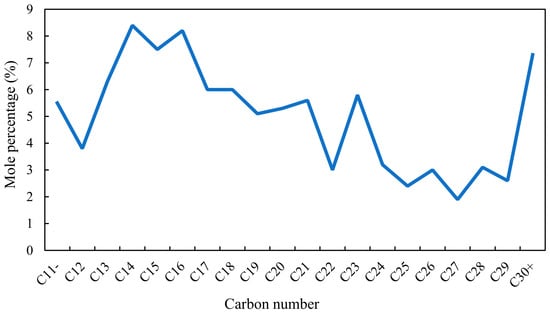
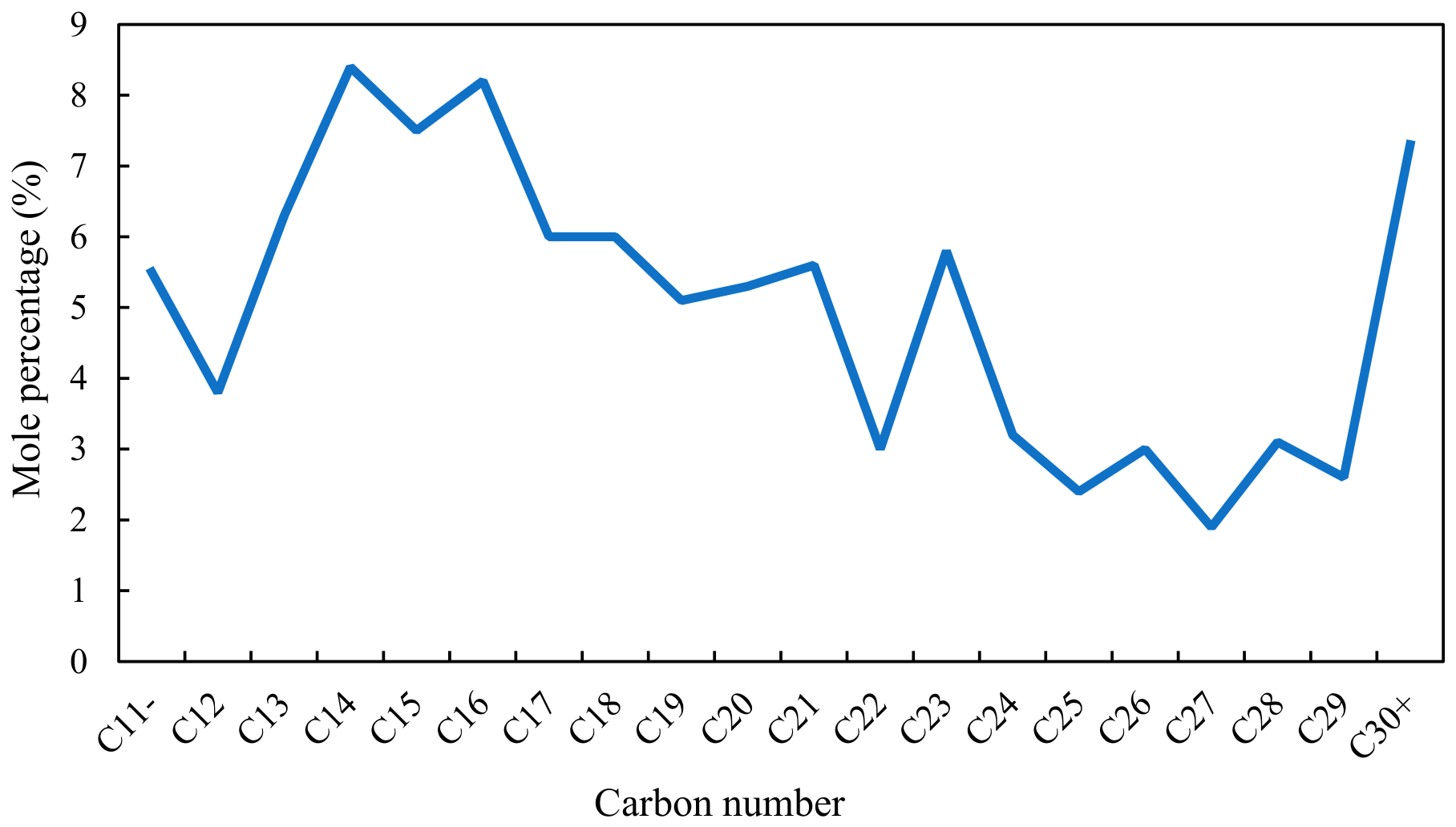
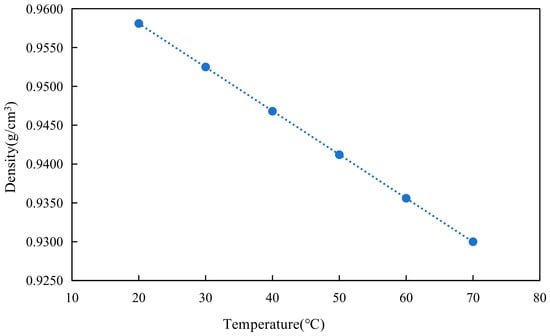
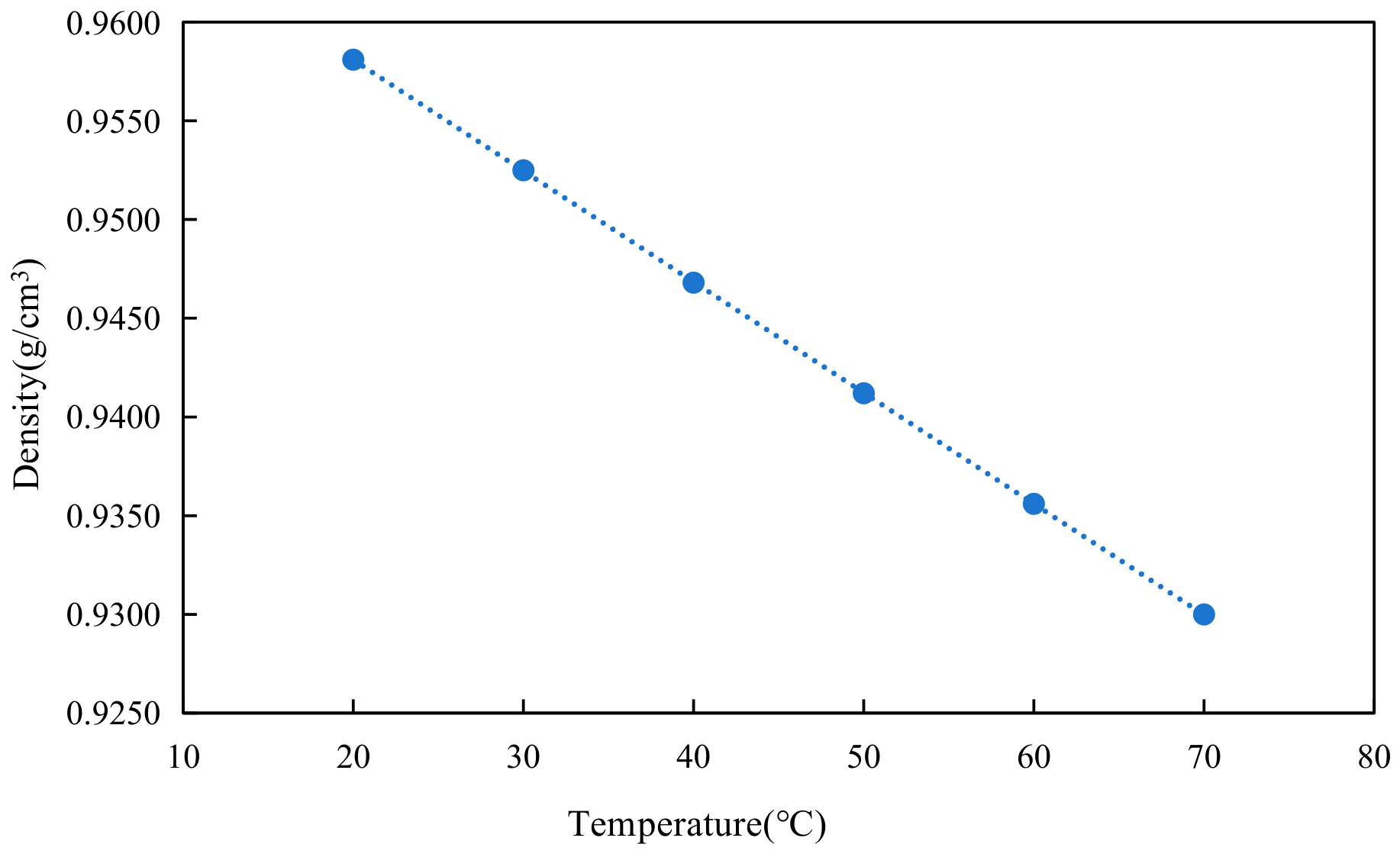
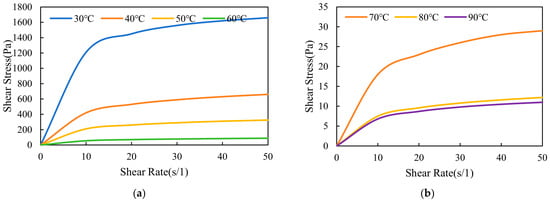
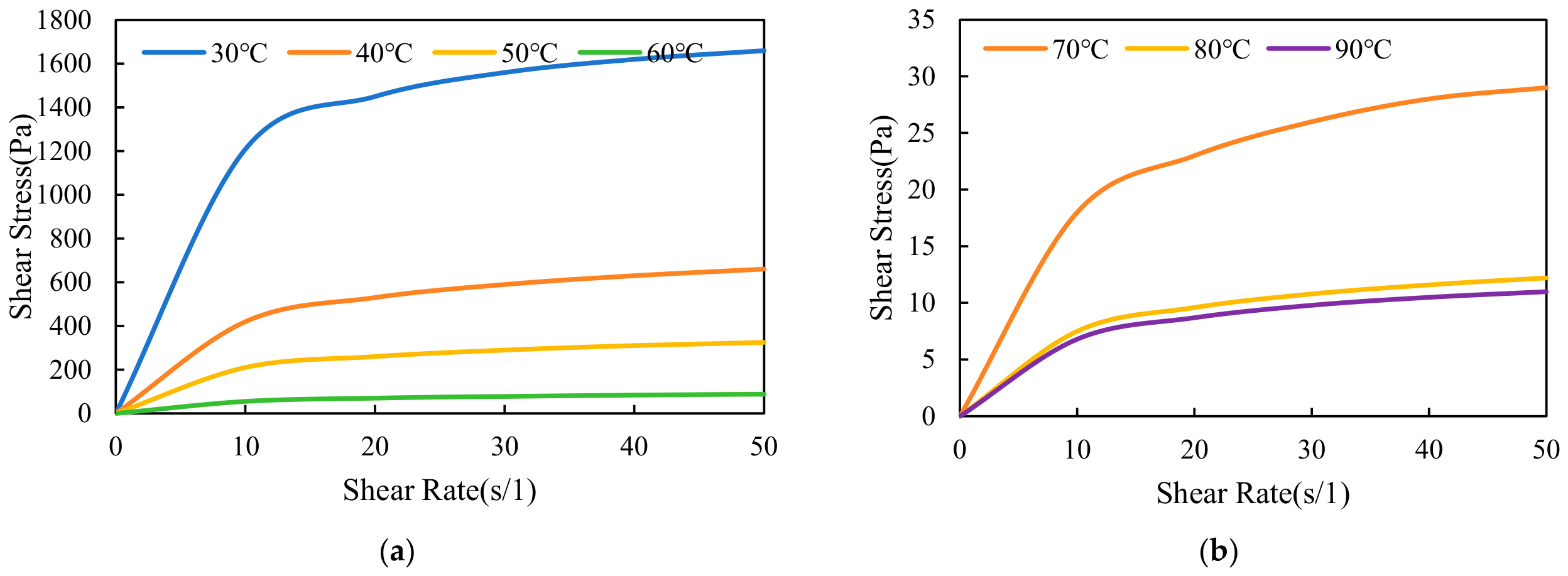
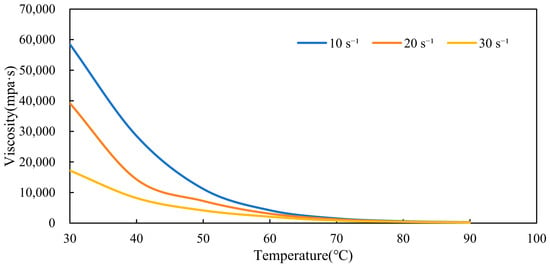
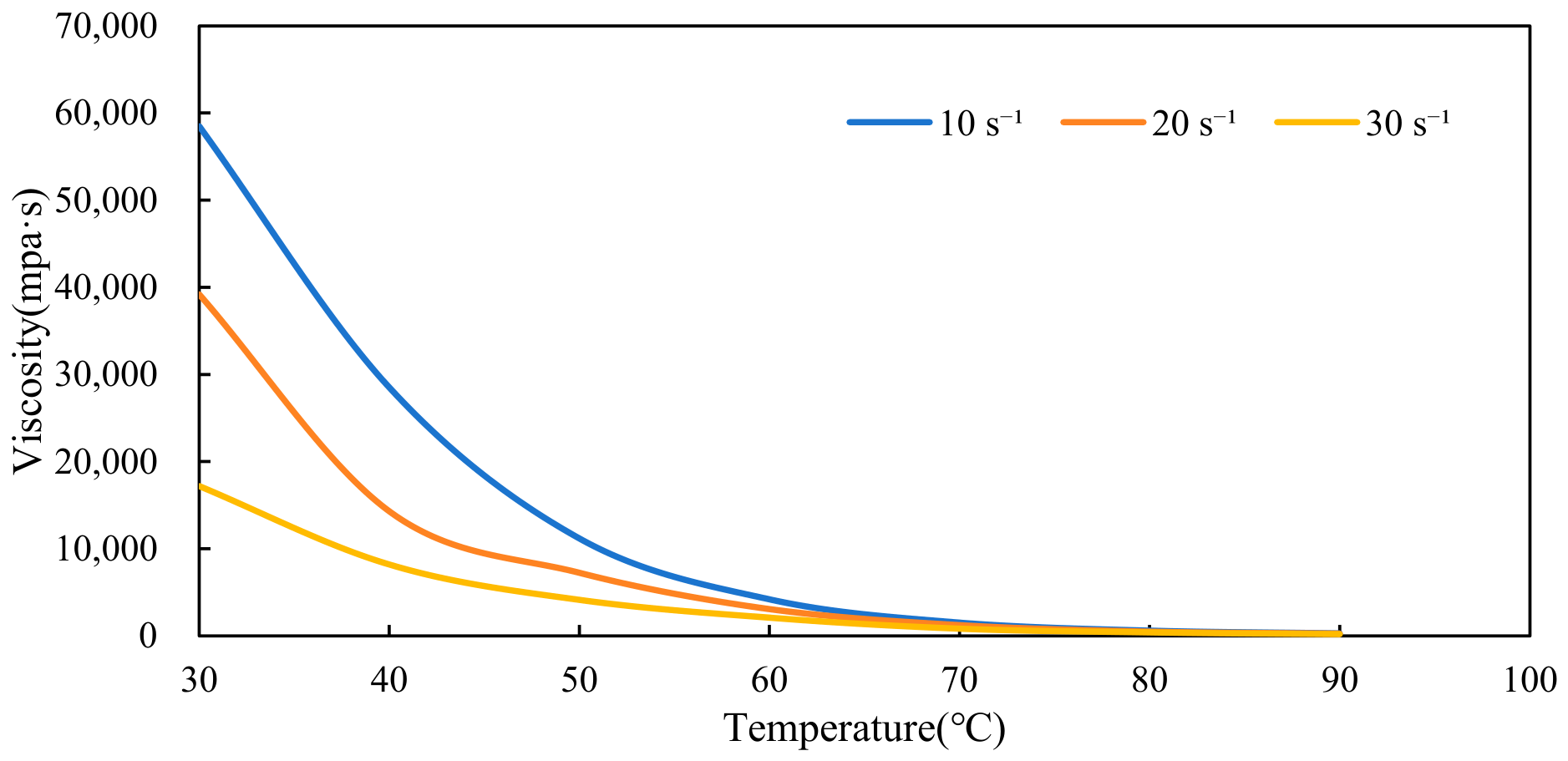
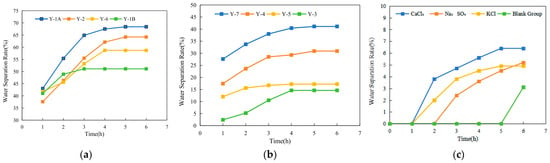
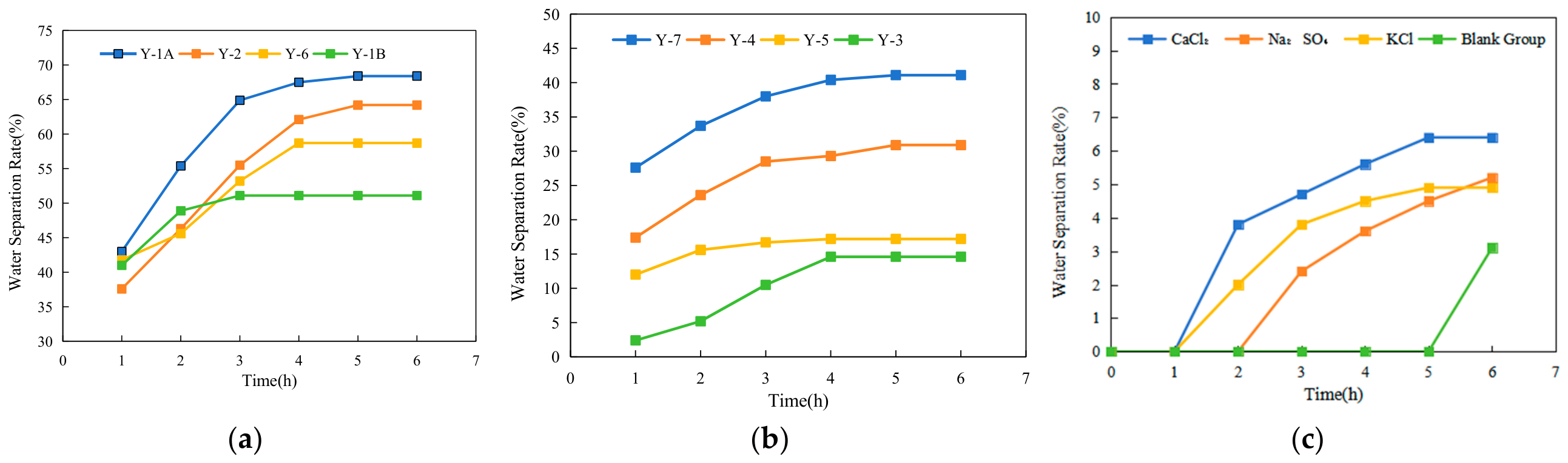
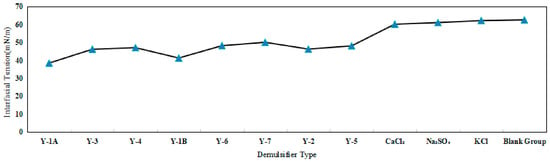
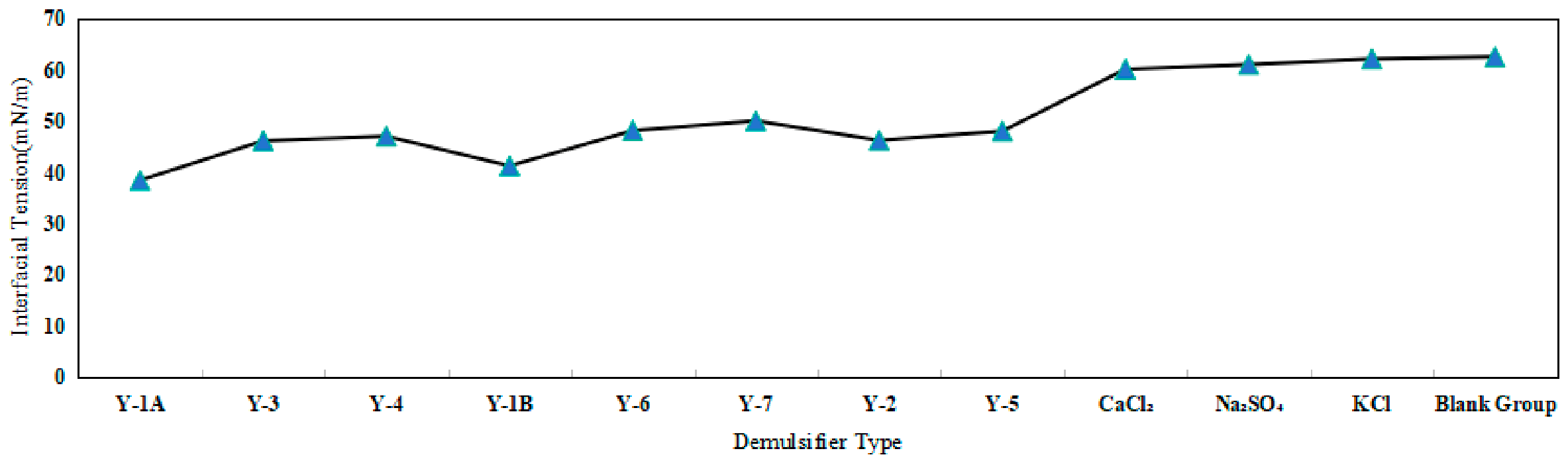
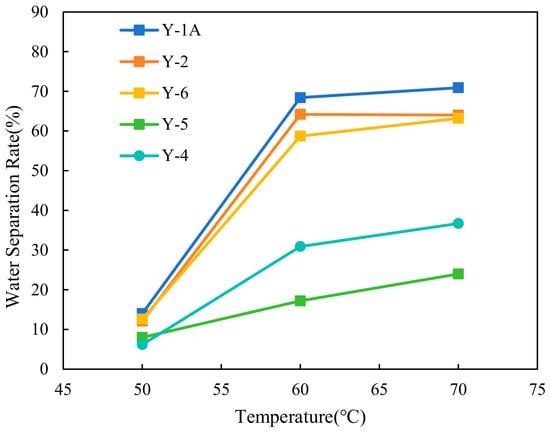
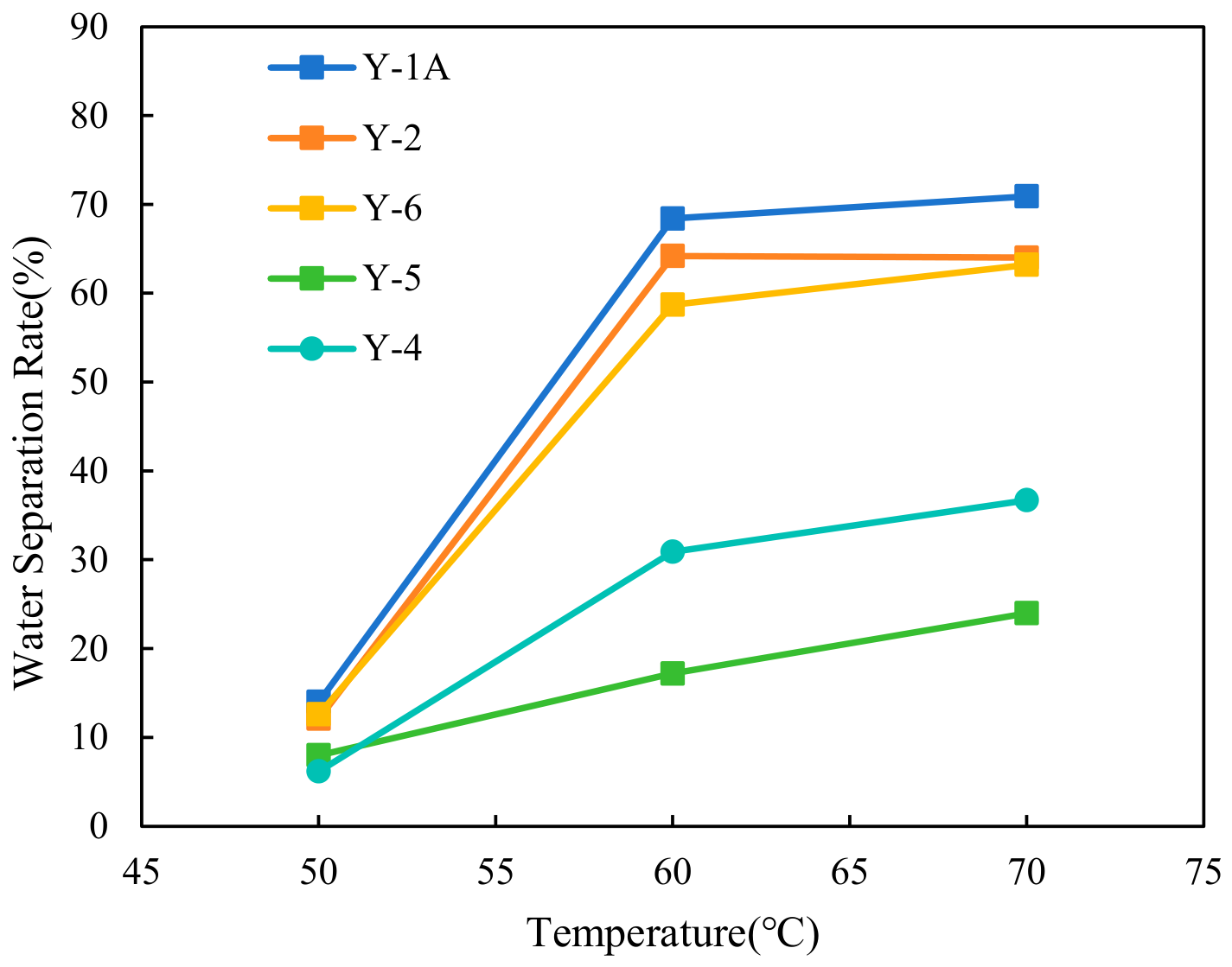
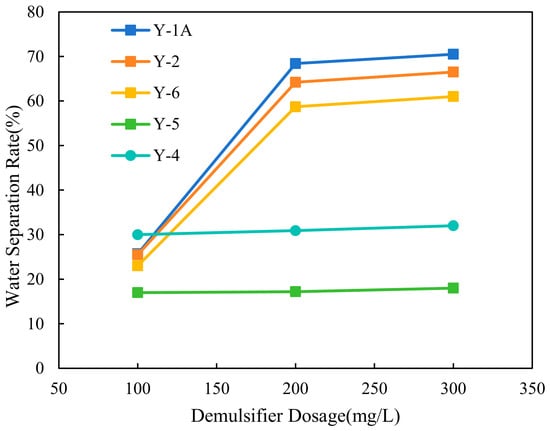
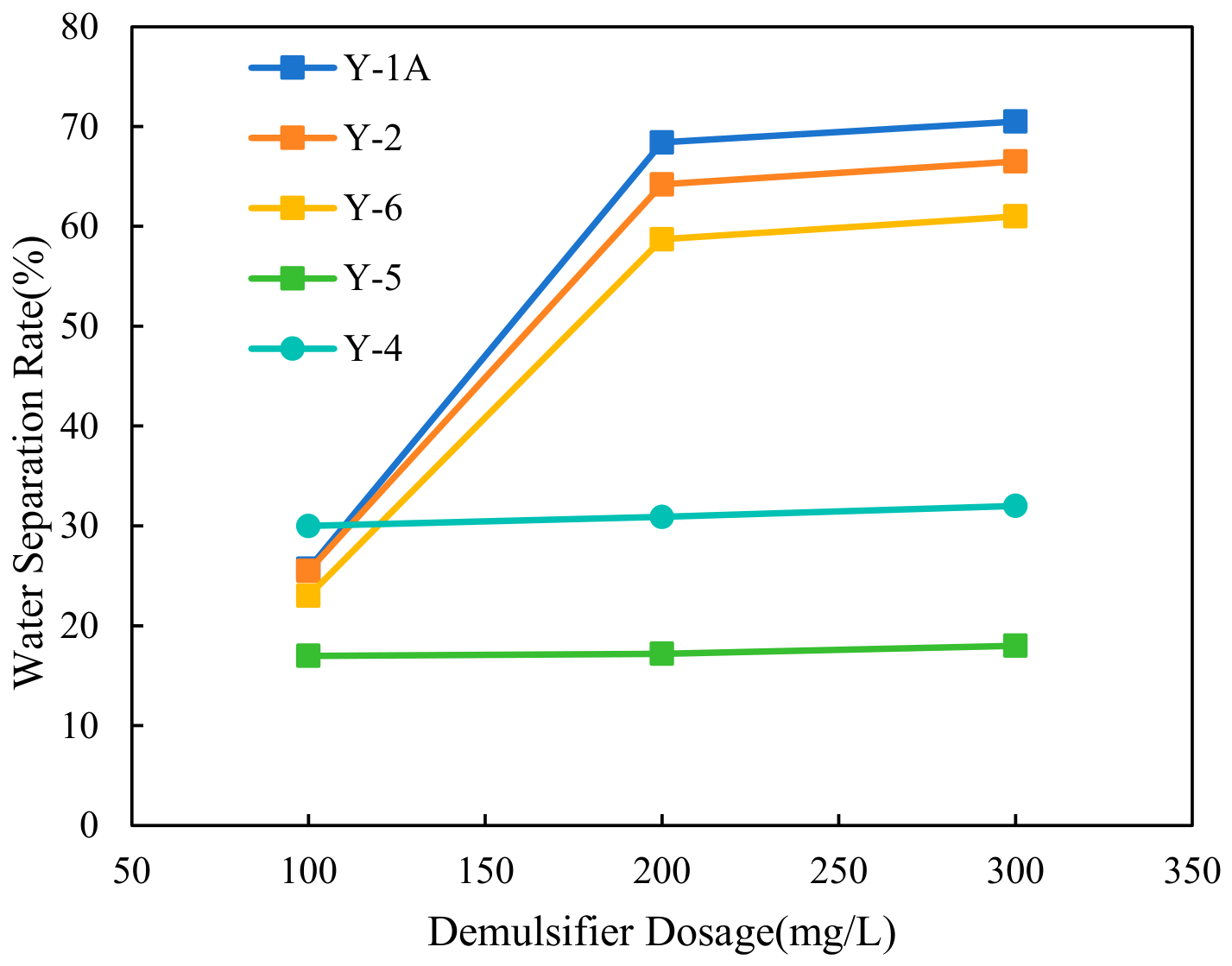

Disclaimer/Publisher’s Note: The statements, opinions and data contained in all publications are solely those of the individual author(s) and contributor(s) and not of MDPI and/or the editor(s). MDPI and/or the editor(s) disclaim responsibility for any injury to people or property resulting from any ideas, methods, instructions or products referred to in the content. |
© 2026 by the authors. Licensee MDPI, Basel, Switzerland. This article is an open access article distributed under the terms and conditions of the Creative Commons Attribution (CC BY) license.