Article

Effect of the Biodegradable Component Addition to the Molding Sand on the Microstructure and Properties of Ductile Iron Castings


by
Katarzyna Major-Gabryś
1,
Małgorzata Hosadyna-Kondracka
2,*,
Adelajda Polkowska
2 and
Małgorzata Warmuzek
2
1
Faculty of Foundry Engineering, AGH University of Science and Technology, Mickiewicza 30, 30-059 Krakow, Poland
2
Łukasiewicz Research Network-Krakow Institute of Technology, Zakopiańska 73, 30-418 Krakow, Poland
*
Author to whom correspondence should be addressed.
Materials 2022, 15(4), 1552; https://doi.org/10.3390/ma15041552
Submission received: 27 December 2021 / Revised: 12 February 2022 / Accepted: 14 February 2022 / Published: 18 February 2022
(This article belongs to the Topic Metallurgical and Materials Engineering)

Abstract

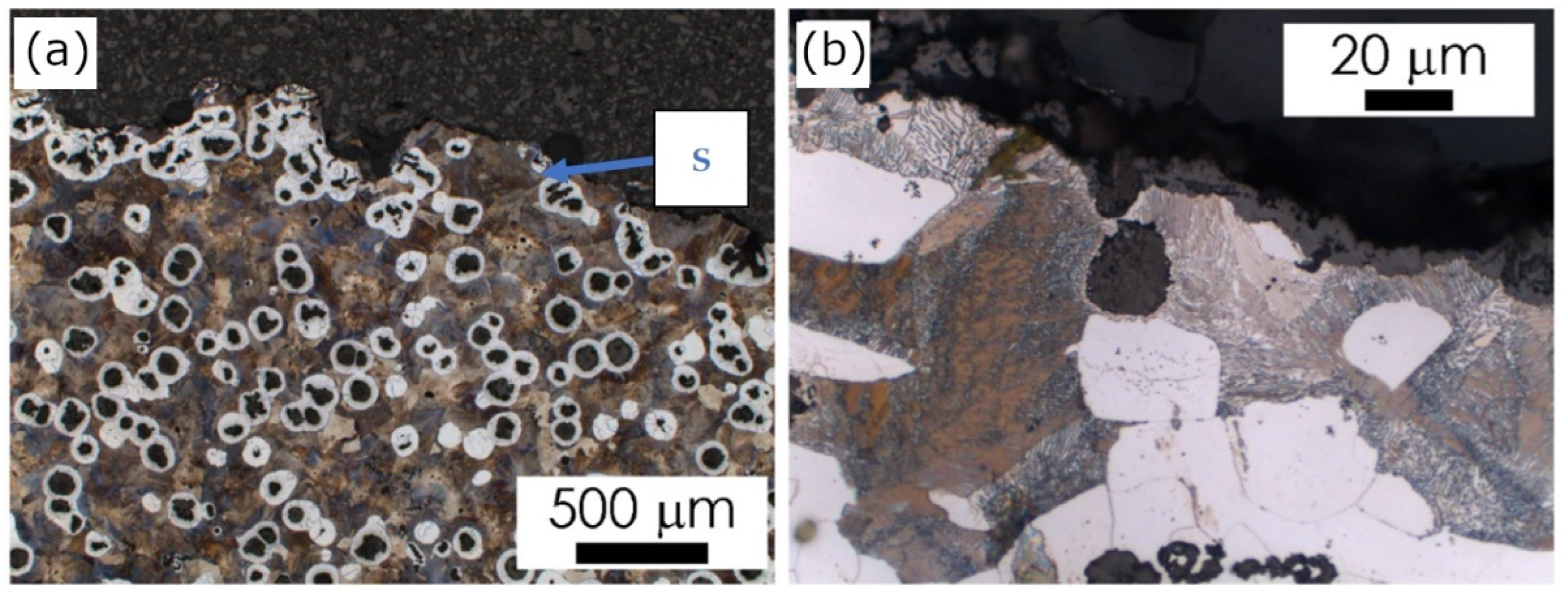
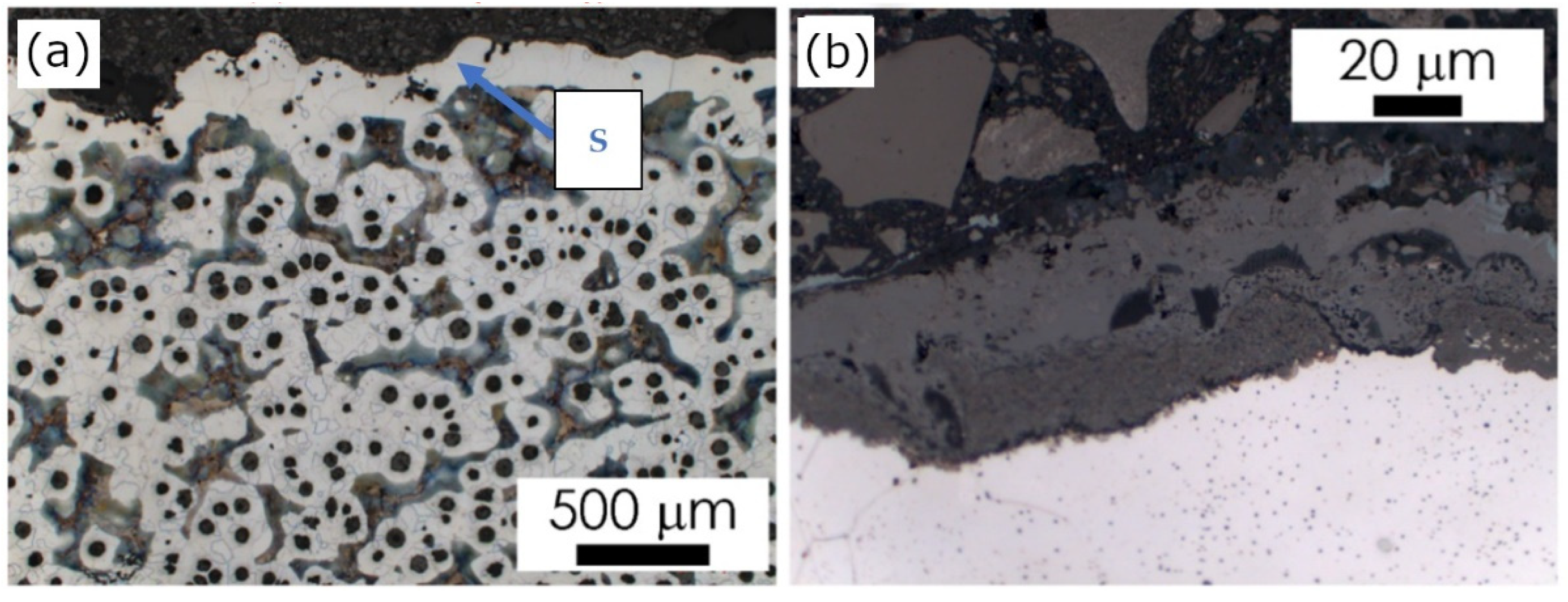
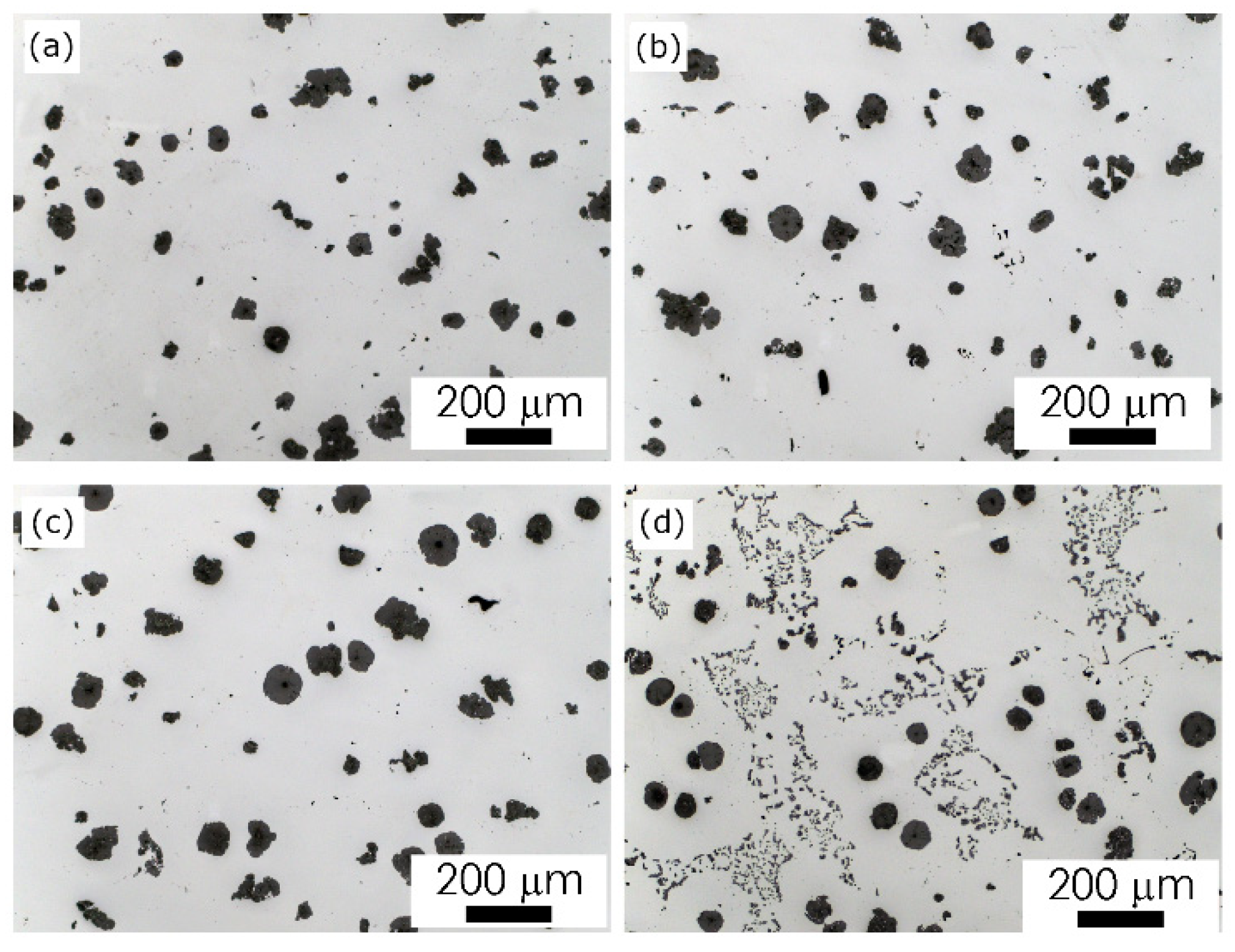
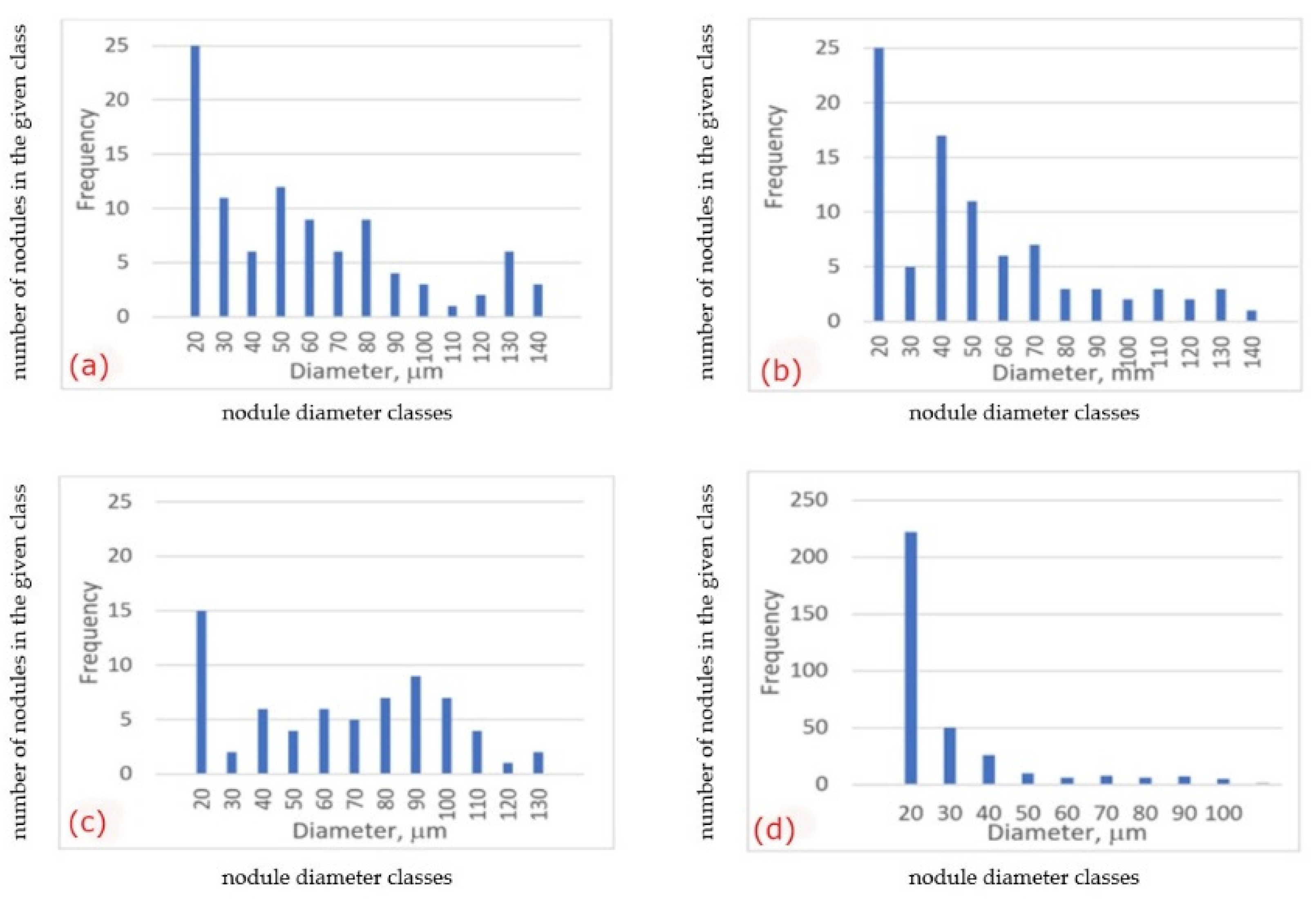
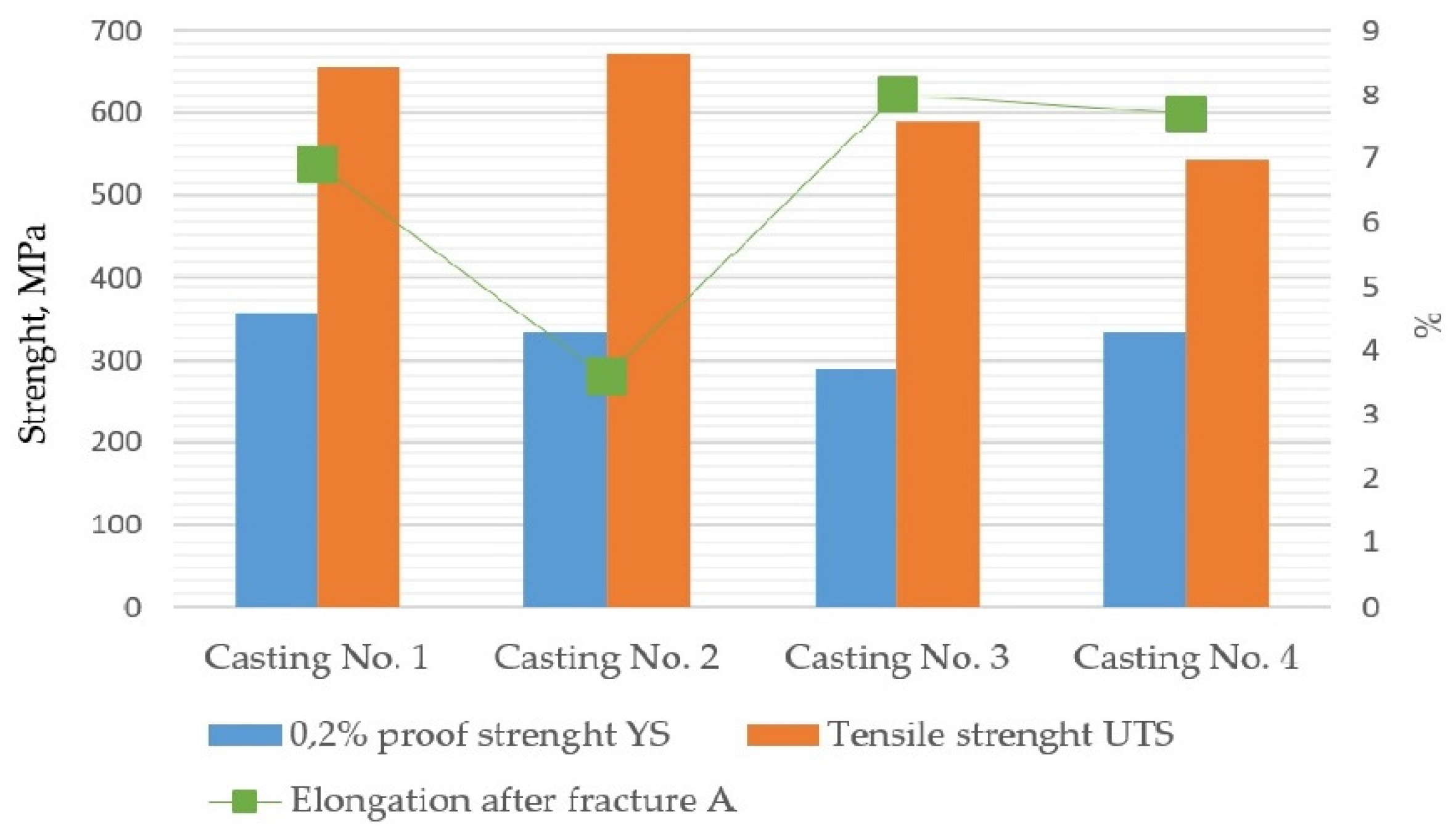
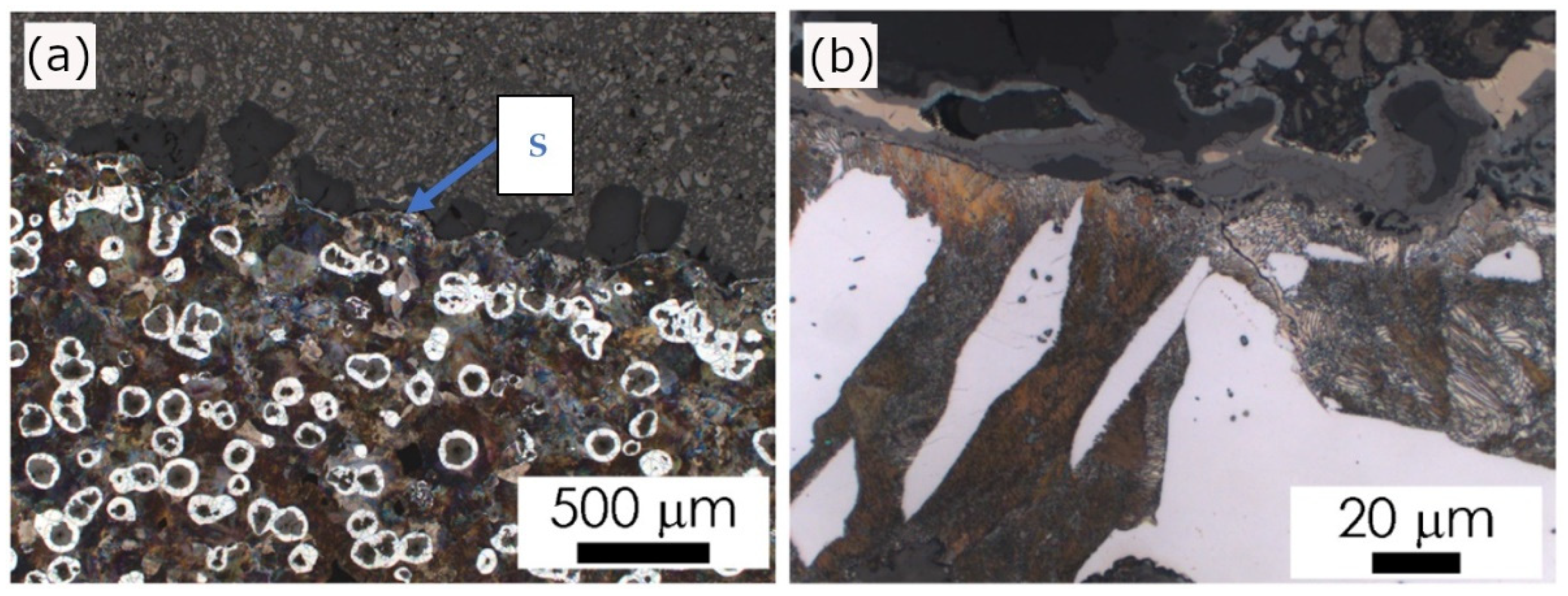
In this work, the results of the examinations of the effect of the mold material and mold technology on the microstructure and properties of the casts parts of ductile cast iron have been presented. Four different self-hardening molding sands based on fresh silica sand from Grudzen Las, with organic binders (no-bake process), were used to prepare molds for tested castings. A novelty is the use of molding sand with a two-component binder: furfuryl resin-polycaprolactone PCL biomaterial. The molds were poured with ductile iron according to standard PN-EN 1563:2018-10. The microstructure of the experimental castings was examined on metallographic cross-sections with PN-EN ISO 945-1:2019-09 standard. Observations were made in the area at the casting/mold boundary and in a zone approximately 10 mm from the surface of the casting with a light microscope. The tensile test at room temperature was conducted according to standard PN-EN ISO 6892-1:2016-09. Circular cross-section test pieces, machined from samples taken from castings, were used. In the present experiment, it was stated that interactions between the mold material of different compositions and liquid cast iron at the stage of casting solidification led to some evolution of casting’s microstructure in the superficial layer, such as a pearlite rim observed for acidic mold sand, a ferritic rim for alkaline sand, and graphite spheroids degeneration, especially spectacular for the acidic mold with polycaprolactone (PCL) addition. These microstructural effects may point to the interference of the direct chemical interactions between liquid alloy and the components released from the mold sand, such as sulfur and oxygen. Particularly noteworthy is the observation that the use of molding sand with furfuryl resin with the addition of biodegradable PCL material does not lead to an unfavorable modification of the mechanical properties in the casting. The samples taken from Casting No. 2, made on the acidic molding sand with the participation of biodegradable material, had an average strength of 672 MPa, the highest average strength UTS-among all tested molding sands. However, the elongation after fracture was 48% lower compared to the reference samples from Casting No. 1 from the sand without the addition of PCL.
Keywords: metal casting; ductile cast iron; molding sand; organic binder; biodegradable additive metal casting; ductile cast iron; molding sand; organic binder; biodegradable additive