


Abstract
To ensure the standard properties of half-warm asphalt (HWA) mixes produced with foamed bitumen, the binder needs to have the best possible characteristics. One way to attain this is to modify the bitumen before it is foamed. The 50/70 penetration bitumen used in this study, was modified with a surface active agent (SAA) at different rates (0.2%, 0.4%, and 0.6% by wt.). The effect of the modifier on the bitumen properties (penetration, softening point, the Fraass breaking point, dynamic viscosity at 60 °C, 90 °C, and 135 °C) and on the binder foaming parameters (expansion ratio - ER, half-life - HL, foam index - FI) was investigated and the optimum quantity of foaming water was determined. Statistical analysis of the results showed that the addition of 0.6% SAA had the most beneficial effect on the set of 50/70 bitumen standard properties and foaming characteristics.
1. Introduction
Currently, the majority of asphalt road surfaces are made of traditional hot bituminous mixtures (HMA). A classical layer of HMA is produced at high processing temperatures that can reach up to 180 °C, depending on the type of bitumen used [1,2].
Increased awareness of the need to improve sustainability and lessen the impact on the environment has been observed in the road construction industry since the beginning of the 21st century [3]. New technologies have been developed that contribute to the reduction in energy intensity of construction processes and the emission of greenhouse gases. One of the solutions found, Warm Mix Asphalt (WMA) technology [4,5,6], allows lowering the mixing and paving temperatures. The technology has evolved in two main directions. One of these directions is focused on the use of additives acting on the viscosity of the bitumen such that the mix production temperature can be reduced [7,8,9]. The most representative additive in this group is the Fischer-Tropsch (F-T) synthetic wax [10,11,12]. Not only does it reduce the mixing and paving temperature by 20 °C to 30 °C, but it also improves the standard [13] and rheological properties of the binder [14,15] and enhances the mix mechanical characteristics, such as stiffness modulus or resistance to permanent deformations [16]. Adding F-T wax has been proved to extend the service life of road surfaces [17,18].
The second direction makes use of foamed bitumen in the process of manufacturing bituminous mixes. The binder in the form of a foam coat the mineral mix particles at a much lower temperature than conventional binders [19]. Aggregates are to be dried at a temperature not higher than 100 °C to allow the particle pores to retain some membrane water thereby providing additional bitumen foaming [20]. Bitumen is foamed in two ways: either by adding zeolite to the mix [21] or by water acting on the binder [22]. Due to its chemical structure, zeolites are included in the group of aluminosilicates. They can be organic [23] or synthetic that is derived from the processing of various by-products, such as dust, generated in technological processes [24]. The crystalline structure of zeolites is responsible for their high absorption of water [24], which while being released gradually foams the binder in contact with hot bitumen [25]. The WMA technology produces bituminous mixtures at temperatures of about 120 °C. A technology that allows lowering the mix production temperature even further to around 100 °C is labelled half warm mix asphalt (HWA) and makes use of bitumen foamed with water [26,27,28]. The foaming process involves injecting cold water into hot bitumen at high pressure in an expansion chamber [19,29]. As a result, the water evaporates rapidly and produces the foam of reduced viscosity having the ability to coat the aggregate at a much lower temperature than in the traditional method [30].
The process of water-based foaming was originally applied in cold recycling to produce base course mixes [30,31]. Successful performance of foamed bitumen in the lower layers of the pavement structure encouraged researchers to search for solutions that would allow the technology to be implemented in upper layer mixes [32]. To ensure that the properties of foamed bitumen mixes are comparable to those of classical HMA, the quality of the binder, described with the foaming parameters such as half-life (HL) and expansion ratio (ER), must be high [19,29]. The requirements for foam characteristics (ER - 8 and HL - 10 s) developed at the turn of the 20th and 21st centuries were established for cold recycling binders [19,29]. The foam characteristics of the HWA binder should have higher values to meet the higher requirements set forth for the bituminous mixes intended for the upper layers of the pavement structure. For this purpose, before foaming the bitumen was modified by adding various types of additives. Favourable results were obtained with the addition of Fischer-Tropsch (F-T) synthetic wax. The F-T wax was found to significantly enhance the bitumen foam characteristics [33,34], reduce the viscosity of the bitumen within the operating temperature range [35], improve the rheological parameters of the binder [36] and increase the resistance of the bituminous mix to permanent deformations [37,38].
A disadvantage observed in the effects of F-T wax application is the limited reduction in compaction temperatures. Below 90 °C, F-T wax is released from the binder in the form of crystallites [39]. This makes compaction very difficult or impossible and the adequate quality of the pavement layer may not be achieved. In countries with a moderate climate, low ambient temperatures in the early spring and late autumn may prevent or restrict the use of F-T wax-based technology. Other types of asphalt additives are being tested for improved foam parameters, mix quality, and extended paving season [40].
One of the often-overlooked aspects in the investigations regarding foamed bitumen and foamed bitumen mixtures is the effect of widely used adhesion promoters, usually in the form of surface active agents (SAA), on the foamability and properties of different bituminous binders. These agents are often used as a mandatory means for providing adequate moisture resistance and durability of asphalt mixtures, but their effects are rarely investigated.
The aim of this study was to assess the impact of a surface active agent on the conventional and foaming properties of a 50/70 penetration bitumen and its prospects as a way for improving the foaming performance of the investigated bitumen.
2. Materials and Research Methodology
2.1. Tested Materials
The bitumen used was a 50/70 penetration grade, commonly used in the countries of central and eastern Europe in bituminous mixes for road pavements under traffic characterized by 2.5 × 10⁶ < ESAL100 kN < 7.3 × 10⁶ (ESAL – equivalent single axle load) [41]. Table 1 summarizes the properties of the binder.
Table 1.
Basic properties of 50/70 bitumen.
The SAA added to the 50/70 bitumen before foaming was a mixture of substances contributing markedly to the improved binder-aggregate adhesion. The SAA properties are compiled in Table 2.
Table 2.
Characteristics of the surface active agent surface active agent (SAA).
2.2. Experimental Program
Adequate preparation of the binder samples is very important as it affects the test quality and uniformity of test results. The binder samples were delivered directly from the refinery in 5-litre containers. The samples were then poured into 1-litre steel cans in compliance with EN 12594. The binder was prepared by combining two materials, 50/70 bitumen and SAA. An appropriate amount of additive was added to a 1000 g binder sample. Mixing the binder with the additive involved heating the binder to a temperature 100 °C higher than the softening point and mixing it at a speed of 150 rpm for 30 s and then at 600 rpm for 270 s. The hot binder samples were reduced to 250 g (test sample weight) in compliance with EN 12594. The samples were placed in a heated vacuum chamber to remove air bubbles. Since SAA is a liquid with a density lower than that of bitumen, it was necessary to check macroscopically whether a film of the additive formed on the surface of the binder, in which case the sample was rejected.
The SAA was added at a rate of 0.2%, 0.4% and 0.6% of virgin binder mass. The effect of SAA on the properties of the 50/70 bitumen was investigated in two phases. In the first phase of the present study, the basic and rheological properties of the bitumen containing SAA were examined prior to foaming with 9 replicates per test: penetration at 25 °C (Pen, EN 1426:2015-08), softening point (TR&B, EN 1427:2015-08), Fraass breaking point (TFraass, EN 12593:2015-08), dynamic viscosity at 60 °C, 90 °C and 135 °C (η60, η90, η135, EN 13302:2011).
The penetration index PI values were found as in Equation (1) by determining the bitumen temperature susceptibility taking into account its 25 °C penetration grade (Pen) and softening point (TR&B) and utilizing the formula according to EN 12591:
The calculation was based on the assumption that the penetration of the binder is 800 (0.1 mm) at the softening point TPiK, and the lower the PI value, the more easily the binder changes its consistency with temperature.
The temperature range of plasticity (plasticity range PR) of the binder, dependent on its softening point (TR&B) and breaking point (TFraass), was determined by Equation (2) in compliance with the requirements laid down in [2] according to the following formula:
The dynamic viscosity of the binder was determined on a Rheotest RN 4 rheometer. Both the binder sample preparation and the tests were carried out as per EN 12702-2.
The 50/70 bitumen foam characteristics of expansion ratio ER [18,28] and half-life HL [19,29] were determined in the second stage of the study with 9 replicates.
Physical properties of the foam were tested in a foaming plant type Wirtgen WLB-10S by applying different foaming water contents (FWC): 1.5%, 2.0%, 2.5%, 3.0%, 3.5% and 4.0% by wt. The conditions of the foam testing were as given in Table 3:
Table 3.
Bitumen foaming conditions.
Then, the optimum values of FWC-dependent ER and HL parameters were established from a mathematical relationship. The optimum FWC was also determined.
The quality of the foamed bitumen was evaluated using Equation (3) in accordance with the recommendation proposed by Jenkins [18] on the basis of the FI foaming index, which is measured as the time in seconds and calculated using the following formula:
where: C–the correction factor (ERm/ERa), HL–half-life (s), ts–bitumen spraying time (s), ERm–the measured expansion ratio (immediately after bitumen foaming), ERa–the actual expansion ratio.
The results were analysed using Statistica software [42] in order to ensure their reliability and to determine significant dependencies between the tested parameters of the binder and the quantity of SAA used. In the statistical results, red font denotes statistical significance (α = 0.05).
3. Results and Discussion
3.1. The Effects of The SAA Content on basic Bitumen Properties
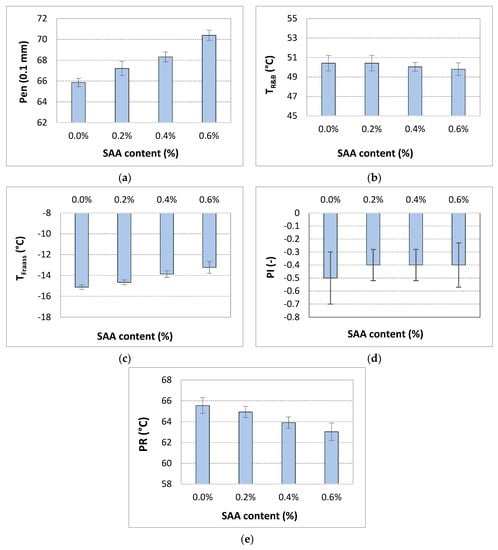
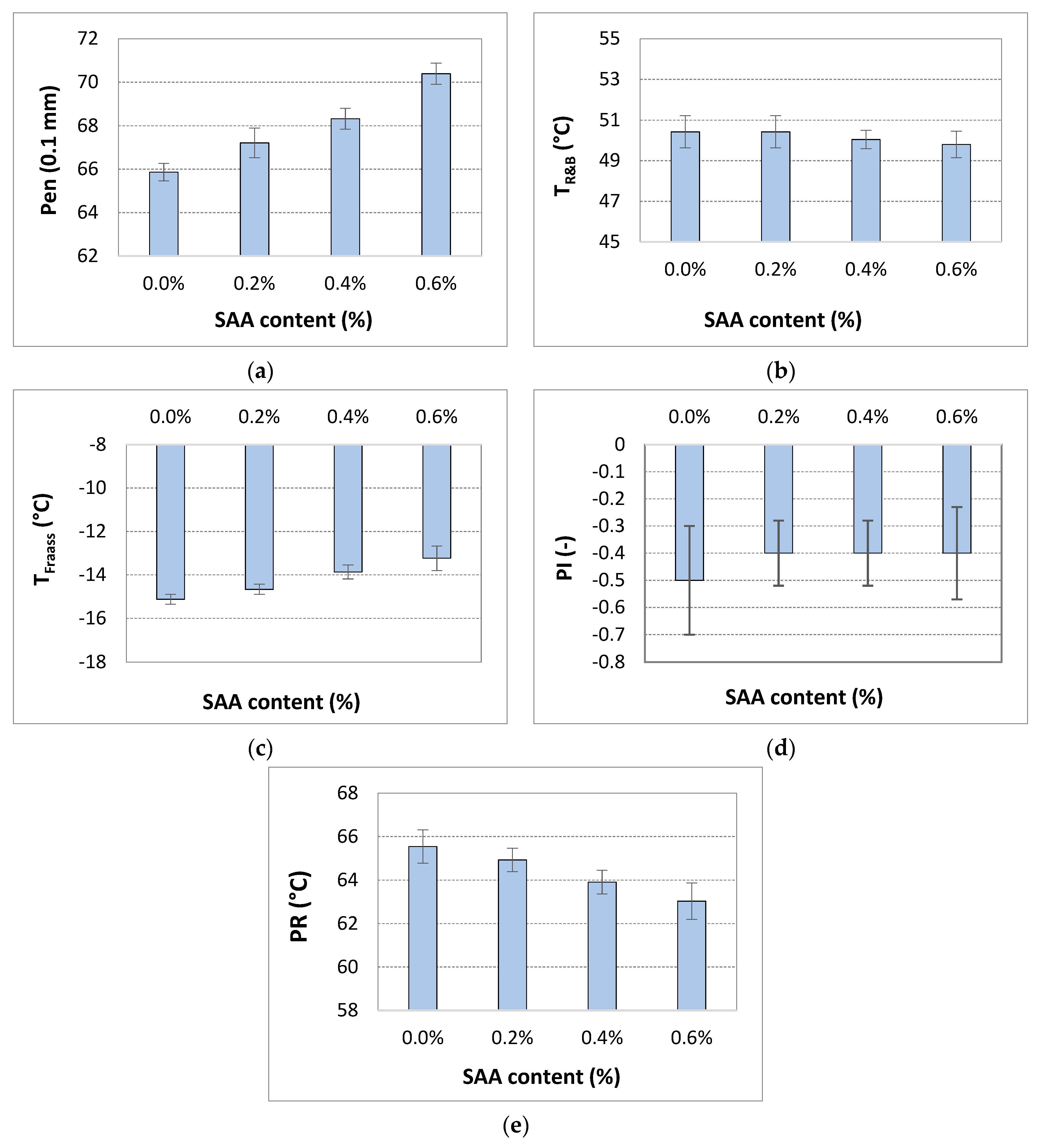
The results of the preliminary statistical analysis are compiled in Table 4 and their graphical interpretation is shown in Figure 1.
Table 4.
Statistical values of 50/70 bitumen properties versus SAA content.
Figure 1.
Effect of SAA content on the properties of 50/70 bitumen, a) penetration, b) softening point, c) Fraass breaking point, d) penetration index, e) plasticity range (error bars represent standard deviation).
The influence of SAA on the binder properties was evaluated with a one-way ANOVA variance analysis. The results are presented in Table 5.
Table 5.
Evaluation of significant influence (ANOVA) of the SAA factor on Pen, TR&B, and TFraass.
Statistical analysis of the results shown in Figure 1a–e and summarized in Table 4 clearly indicates that SAA content has a significant effect on penetration at 20 °C and Fraass breaking point because the p-value is less than the defined significance level α = 0.05. Only in case of softening point, there is no significant influence of SAA addition to 50/70 bitumen.
The use of the surface active agent has resulted in a slight increase in the penetration of the evaluated bitumen, which gradually changed from 65.9 [0.1 mm] to 70.4 [0.1 mm] with the increasing SAA content. The results show that the softening point was unchanged by the addition of SAA, regardless its concentration. The low temperature property of the bitumen measured by the Fraass breaking point was slightly affected by the addition of SAA in 0.2% concentration, resulting in its 0.4 °C increase. Further addition of the SAA up to 0.6% content resulted in significant changes of Fraass breaking point setting it at −13.2 °C marking a 1.9 °C total difference. Because the changes in penetration and softening point due to addition of SAA were minor, also the penetration index was nearly unaffected by the effects of the additive. A different situation was seen in regard to the plasticity range defined as the difference between the softening point and Fraass breaking point. The addition of SAA caused a small decrease in the PR values, associated mainly with the changes in Fraass breaking point.
3.2. Determining Dynamic Viscosity of The Binder with SAA
Dynamic viscosity is considered an important rheological parameter that has a significant influence on physical and mechanical properties and performance of pavement bituminous layers. The parameter was used to establish the influence of SAA on the changes occurring in the bitumen relative to the reference binder. For this purpose, samples of 50/70 bitumen were prepared with SAA contents ranging from 0.0% to 0.6% of binder mass. The test was performed using the methodology set forth in EN 13302 in a Rheotest rotary viscometer at a shear rate of 1 s−1.
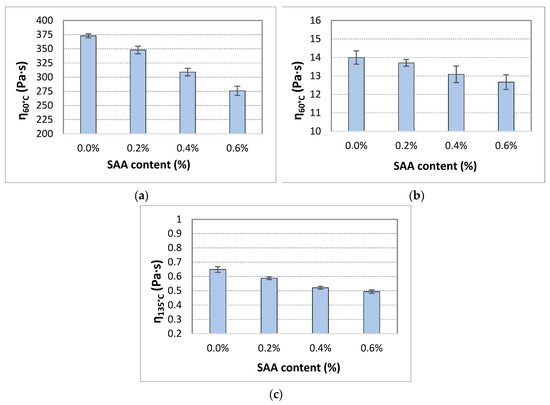
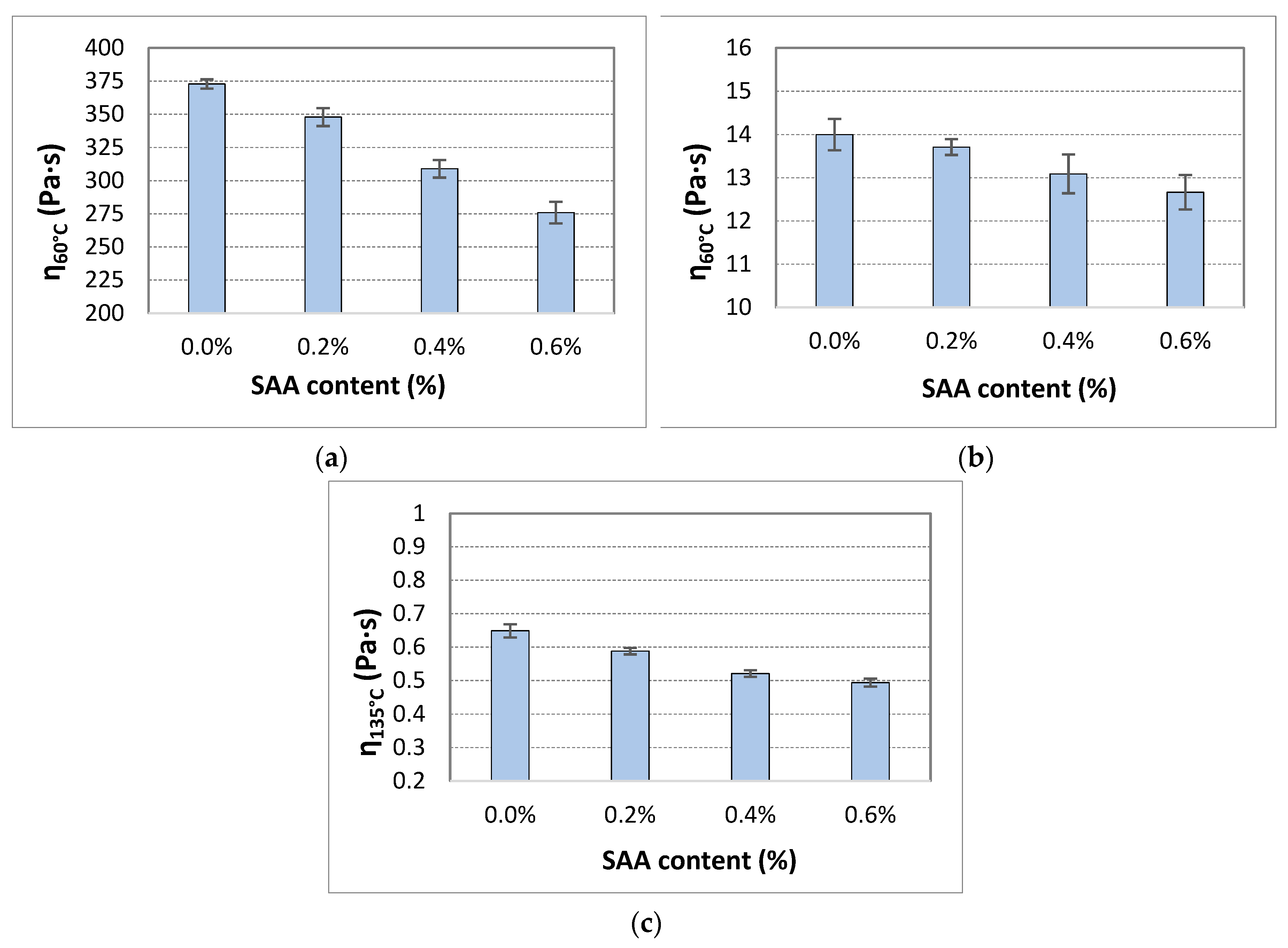
The range of dynamic viscosity of 50/70 bitumen with SAA was determined for temperatures 60 °C, 90 °C and 135 °C, which correspond to the significant operating ranges of compaction and binder performance in the pavement layers. Nine samples were used in the tests. The average values of dynamic viscosity at given test temperature and the respective coefficients of variation are tabulated in Table 6. The graphical interpretation is shown in Figure 2.
Table 6.
Mean values of 50/70 bitumen dynamic viscosity versus SAA content and test temperature (60 °C, 90 °C, and 135 °C).
Figure 2.
Effect of SAA addition on dynamic viscosity of 50/70 bitumen (box plot) at temperatures a) 60 °C, b) 90 °C, c) 135 °C (error bars represent standard deviation).
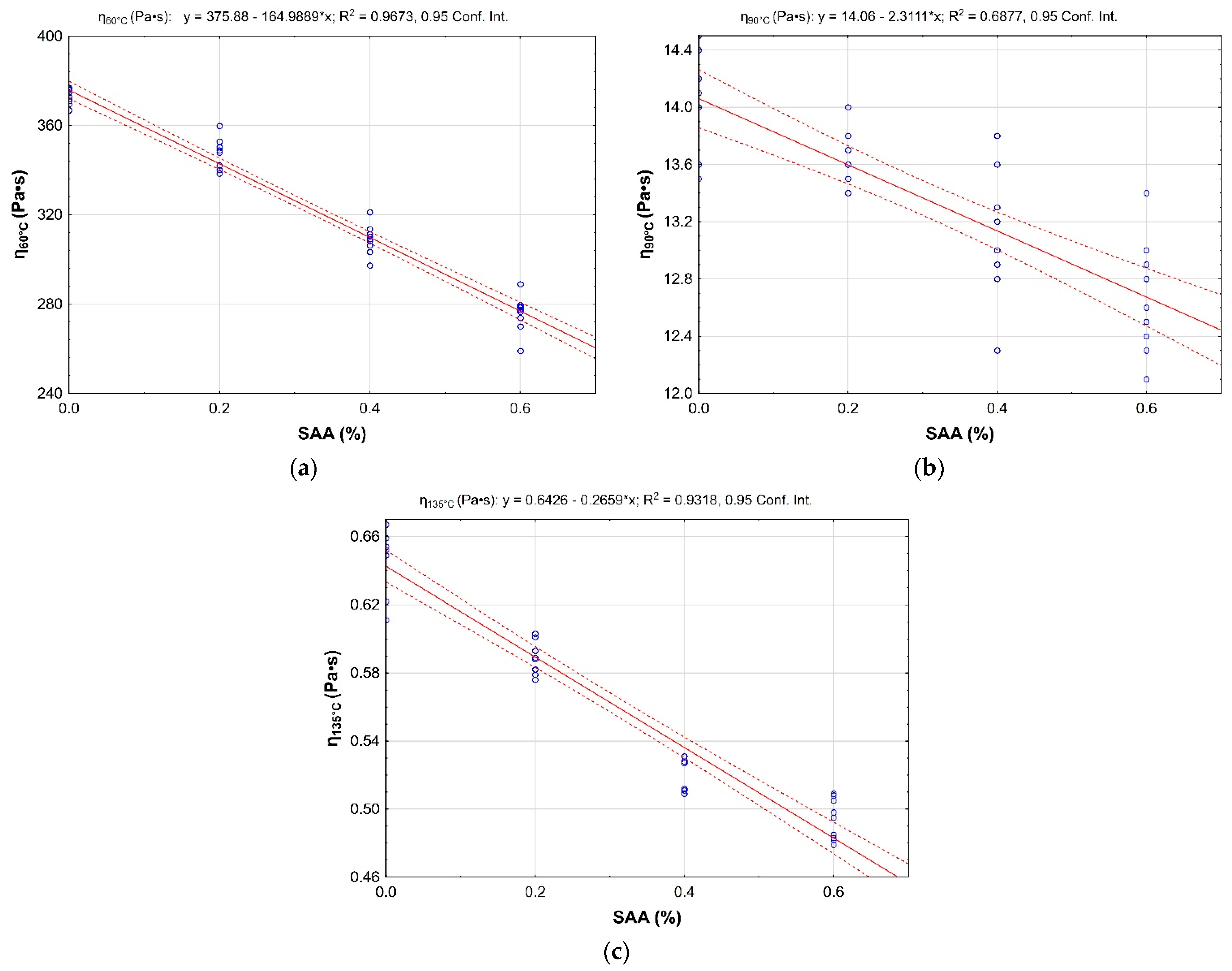
Analysis of the results of the SAA effect on the dynamic viscosity of 50/70 bitumen shows that dynamic viscosity decreases with increasing SAA content 0.0% to 0.6% across the whole temperature range under analysis. The decrease rate depends on the SAA content and test temperature. At 60 °C the use of 0.6% SAA by binder mass reduced dynamic viscosity of the reference bitumen by approx. 26%. Similarly, at 90 °C, the dynamic viscosity decreased by approx. 10%, and at 135 °C by approx. 24%. The correlation between the SAA content and dynamic viscosity was high in the measured data. The coefficient of determination (equal to the squared value of Pearson correlation coefficient) amounted to over 0.9 in the case of η60 and η135, and was equal to 0.688 in the case η90, thereby indicating a strong correlation.
In order to evaluate the influence of SAA on dynamic viscosity in the temperature range used in this study, a one-way ANOVA variance analysis was performed for each temperature. The ANOVA analysis results for dynamic viscosity at 60 °C, 90 °C and 135 °C are shown in Table 7.
Table 7.
Evaluation of the significant influence of the SAA factor on η60, η90, η135 (ANOVA).
Analysis of the obtained results indicates clearly that the SAA content in 50/70 bitumen is a significant factor influencing its dynamic viscosity at 60 °C, 90 °C, and 135 °C as shown by the p-value is less than the defined significance level α = 0.05.
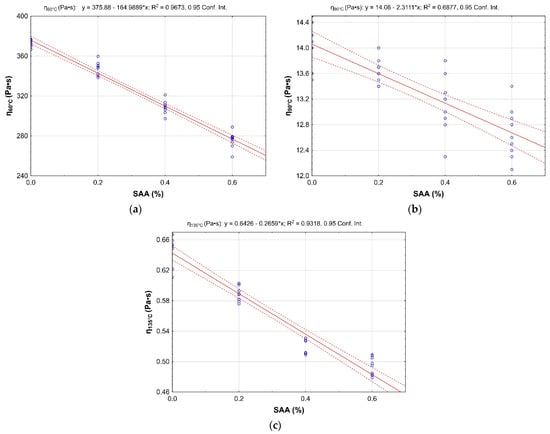
The relationship between dynamic viscosity at 60 °C, 90 °C, and 135 °C and the SAA content is shown in Figure 3.
Figure 3.
Effect of SAA on 50/70 bitumen viscosity versus test temperature a) 60 °C, b) 90 °C, and c) 135 °C. The plots represent discrete results, linear approximation of the results and the 95% confidence intervals.
The application of SAA reduces dynamic viscosity of 50/70 bitumen in the studied temperature range. The variation rate is dependent both on the bitumen-additive content proportion and on the test temperature.
In order to comprehensively describe the change in dynamic viscosity of the 50/70 bitumen in the studied temperature range, the model of the second-degree polynomial (4) was adopted:
where: x1 = SAA (%), x2 = Temp (°C), b0 − b5 – regression coefficients.
η = b0 + b1 × x1 + b2 × x2 + b3 × x1 × x2 + b4 × x12 + b2 × x22
In the first phase of the evaluation of the model, a statistical significance test was performed in an analysis of variance (ANOVA) via Statistica (Table 8).
Table 8.
Statistical significance of the effects of SAA and test temperatures on dynamic viscosity of 50/70 bitumen (ANOVA).
Analysis of the parameters listed in Table 7 shows clearly that the SAA content and test temperature are important factors having effects on the dynamic viscosity of 50/70 bitumen, as the p-value is less than the assumed significance level α = 0.05. It can also be concluded that there is an interaction between the SAA content and the test temperature which affects the dynamic viscosity of the binder (the p-value is less than α = 0.05). A regression model of the dependence of dynamic viscosity of 50/70 bitumen on the SAA content and test temperature was developed. The values describing the model are summarized in Table 9.
Table 9.
Parameters of the model for the effect of SAA content and test temperature on dynamic viscosity of 50/70 bitumen.
The procedure performed disclosed that the value of the corrected coefficient of determination R2 is more than 99%, which indicates that the model is adequate. Dynamic viscosity of 50/70 bitumen is significantly influenced by the SAA quantity used, test temperature and the interaction of these two factors.
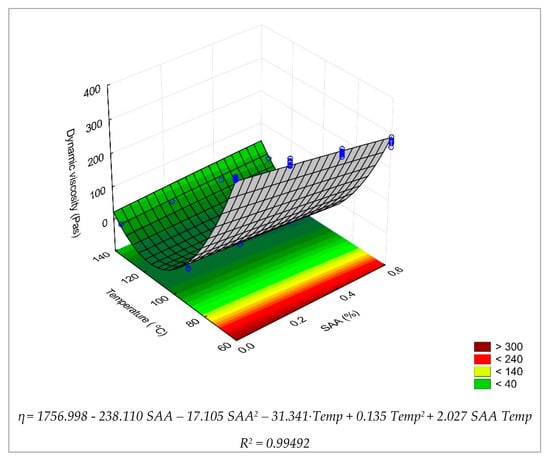
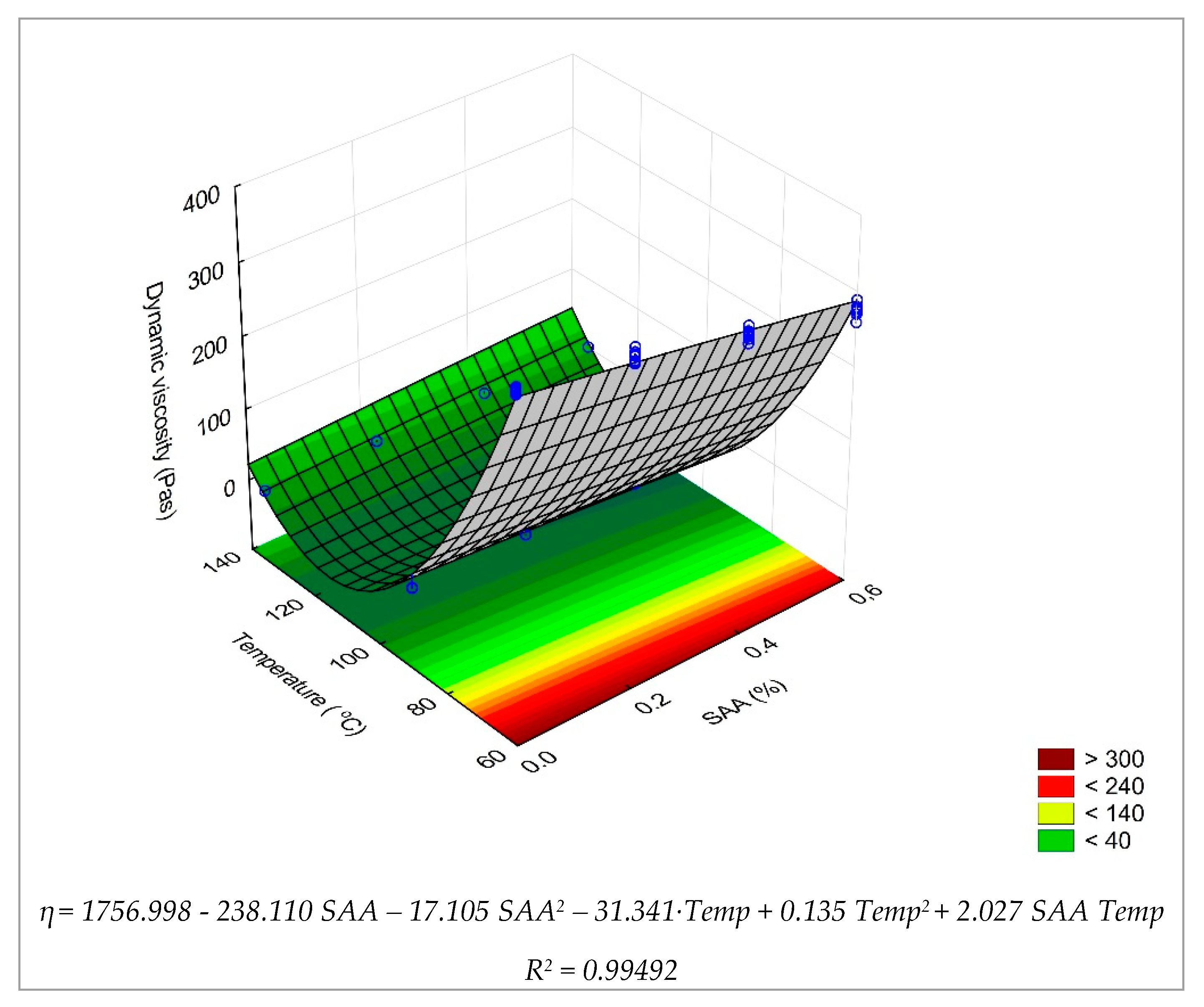
The graphical interpretation of dynamic viscosity variability in terms of SAA content and test temperature is shown in Figure 4 via the response surface.
Figure 4.
Dynamic viscosity of 50/70 bitumen versus test temperature and SAA content. The provided equation describes the relationship between the SAA content, temperature, and bitumen dynamic viscosity.
Analysis of the results in Figure 4 confirms that with the increase in the test temperature, the dynamic viscosity of the 50/70 bitumen decreases over the whole experiment range. This is in line with the general trend for bitumen binders. In the temperature range above 100 °C, the low viscosity of the 50/70 bitumen will ensure adequate coating of the mineral mix particles during mix production. Within a range of summer temperatures, because of its high viscosity, the bitumen will contribute to ensuring adequate resistance of the pavement to permanent deformation. The SAA affects the viscosity of 50/70 bitumen. The increased content of SAA reduces the value of this parameter over the whole range of test temperatures. This may be considered as an adverse effect but because the viscosity reduction is only slight, the characteristics of the bituminous mixture made with this binder should remain nearly unaffected.
3.3. Foamed Bitumen Properties
The objective of the second phase of the present study was to determine the effect of SAA on the value of maximum ER and half-life HL of 50/70 bitumen. The SAA was applied at 0.2%, 0.4%, and 0.6% of the binder mass. The maximum amount of SAA dosed was 0.6% by bitumen mass, as this value was recommended by the manufacturer as the limit value between applications in “hot” and “cold” bitumen mixes. The foaming characteristics (ER, HL) of the reference bitumen expressed as the average values from 9 determinations are shown in Figure 5.
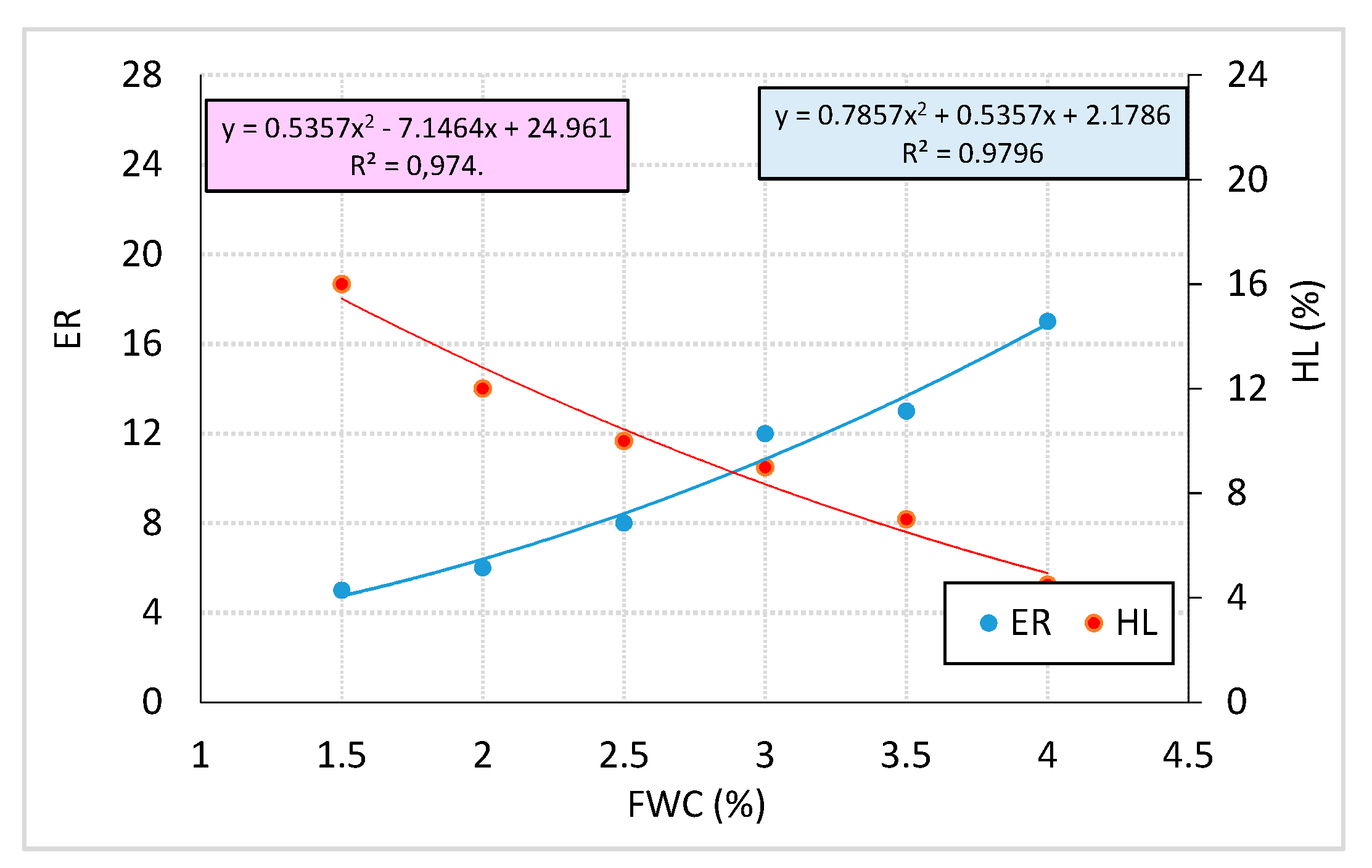
Figure 5.
Foamed 50/70 bitumen characteristics.
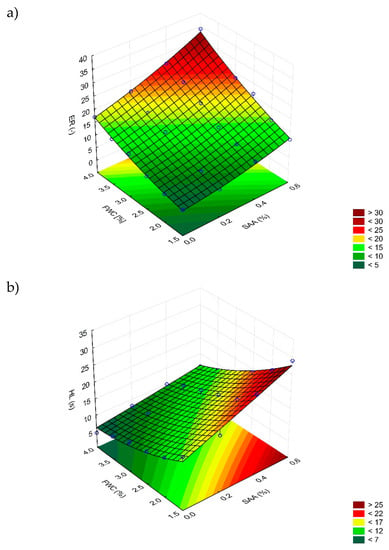
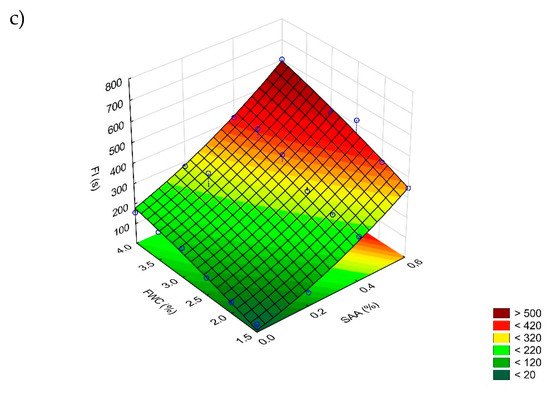
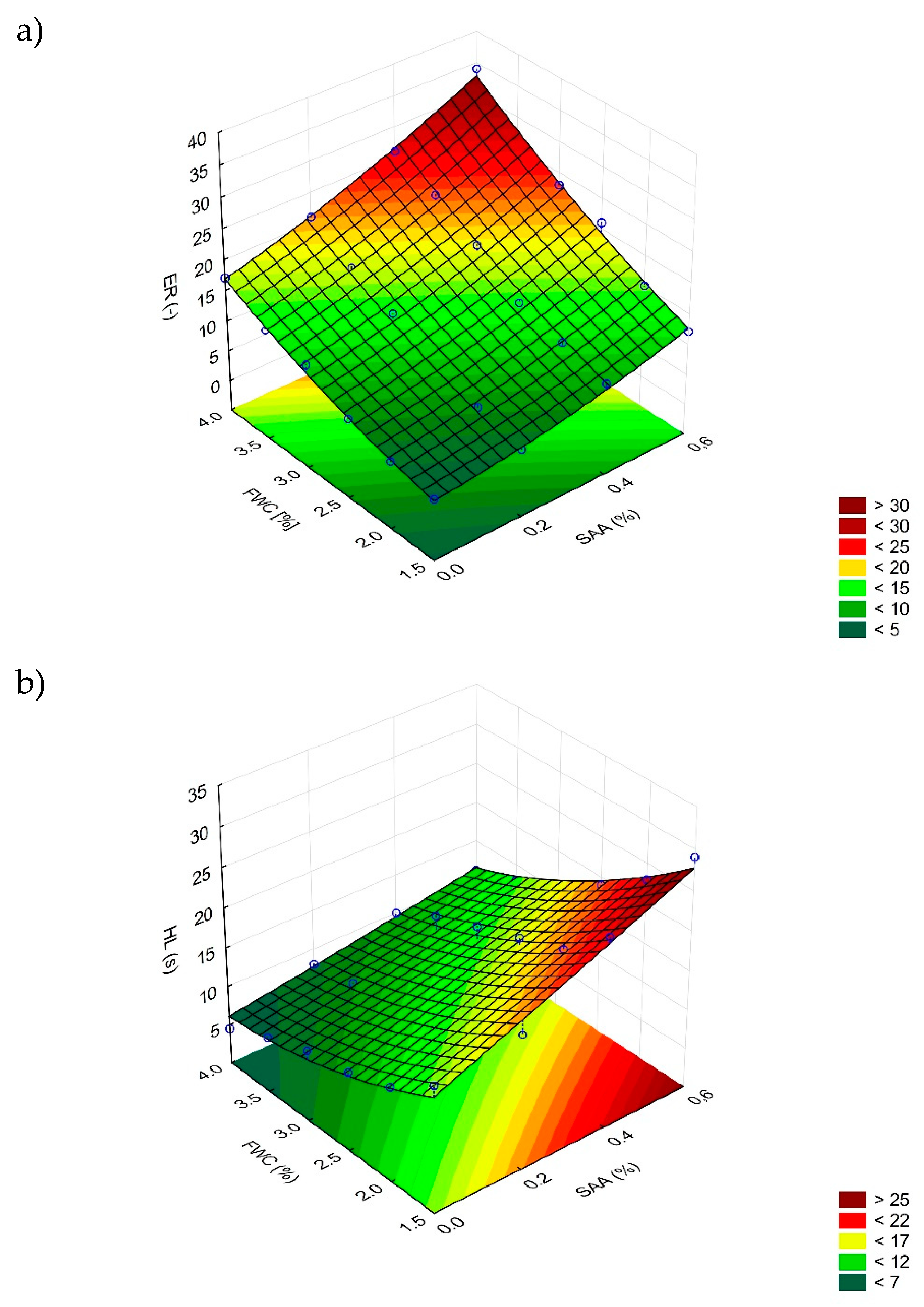
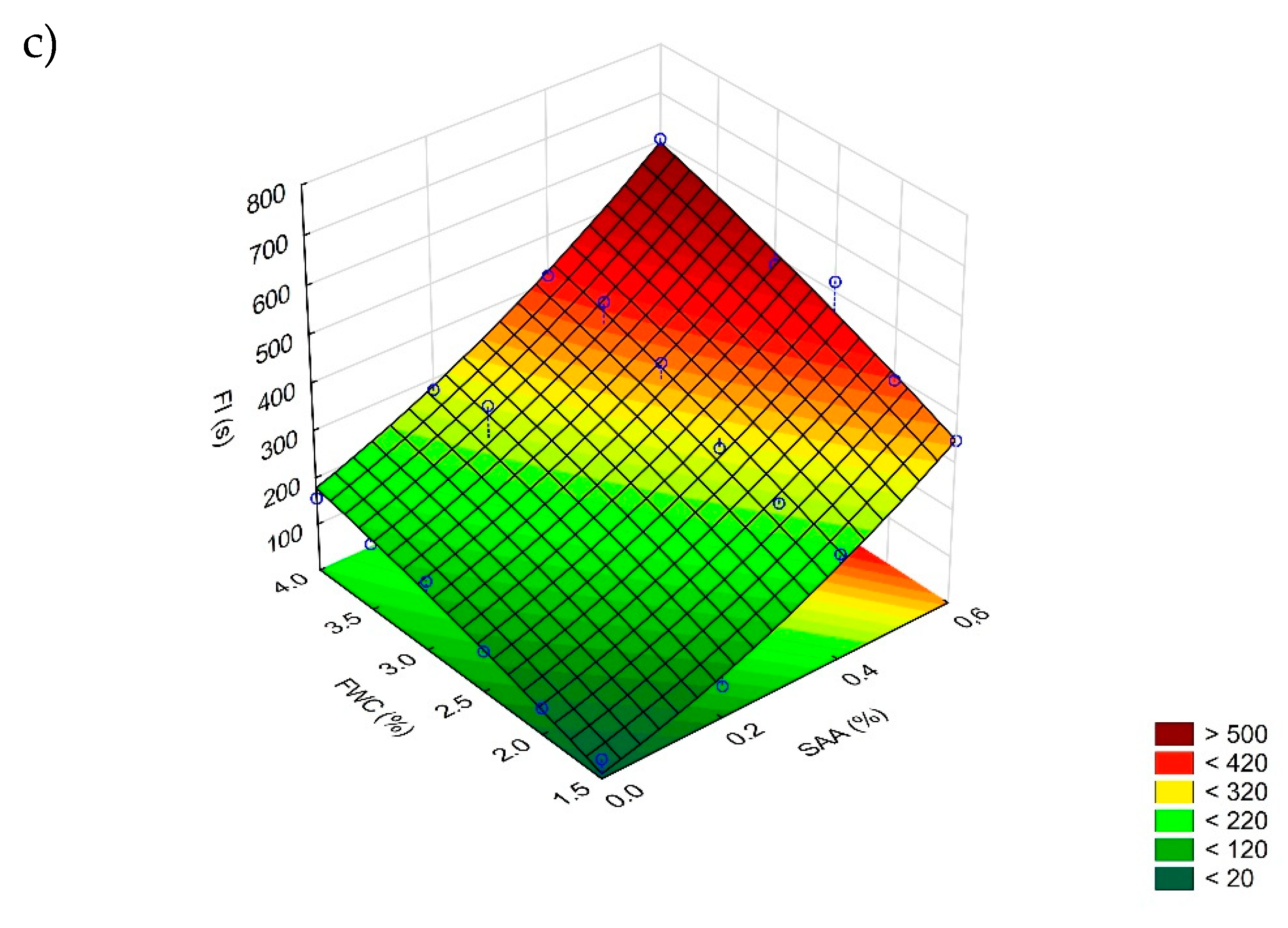
Figure 6 shows the obtained foamed 50/70 binder characteristics (ER, HL, FI) versus FWC and SAA content. Statistical analysis of these variables is presented in Table 10, while the estimation of the model parameters is given in Table 11.
Figure 6.
Response surface of the maximum (a) expansion ratio (ER), (b) half-life (HL) and (c) foam index FI against SAA content and foaming water content foaming water contents (FWC).
Table 10.
Evaluation of the effect of SAA and FWC on ER, HL, and FI of the foamed bitumen.
Table 11.
Parameters of the model of the relationship between ER, HL, FI, and SAA quantity and FWC.
Statistical analysis showed that all the evaluated responses (ER, HL, FI) were influenced by both independent variables: the foaming water content and the quantity of the surface active agent. In all cases both linear main effects were statistically significant. What is more, in the case of expansion ratio and half-life, the interactions also obtained p-values smaller than the assumed significance level (α = 0.05). In the evaluation of half-life and foam index, additionally quadratic effects of FWC and SAA content, respectively, were statistically significant. All effects in the assessment of expansion ratio resulted in p-values < 0.05.
Analysis of the obtained foamed 50/70 bitumen characteristics in terms of the quantity of SAA used shows its positive influence. The maximum expansion of the binder and the half-life of the bitumen foam increased with the increasing content of SAA. This binder will be efficient in coating the aggregate particles during mixing, thereby ensuring the mix durability and proper performance.
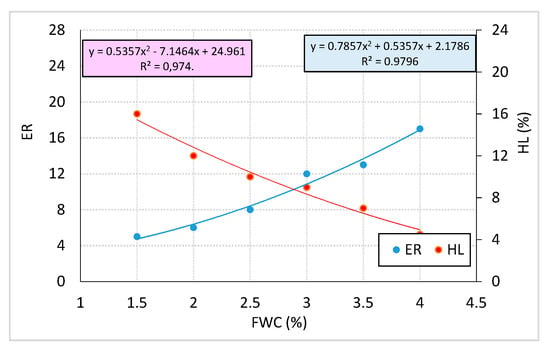
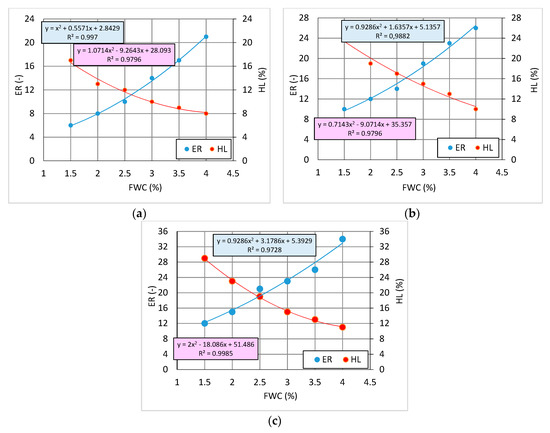
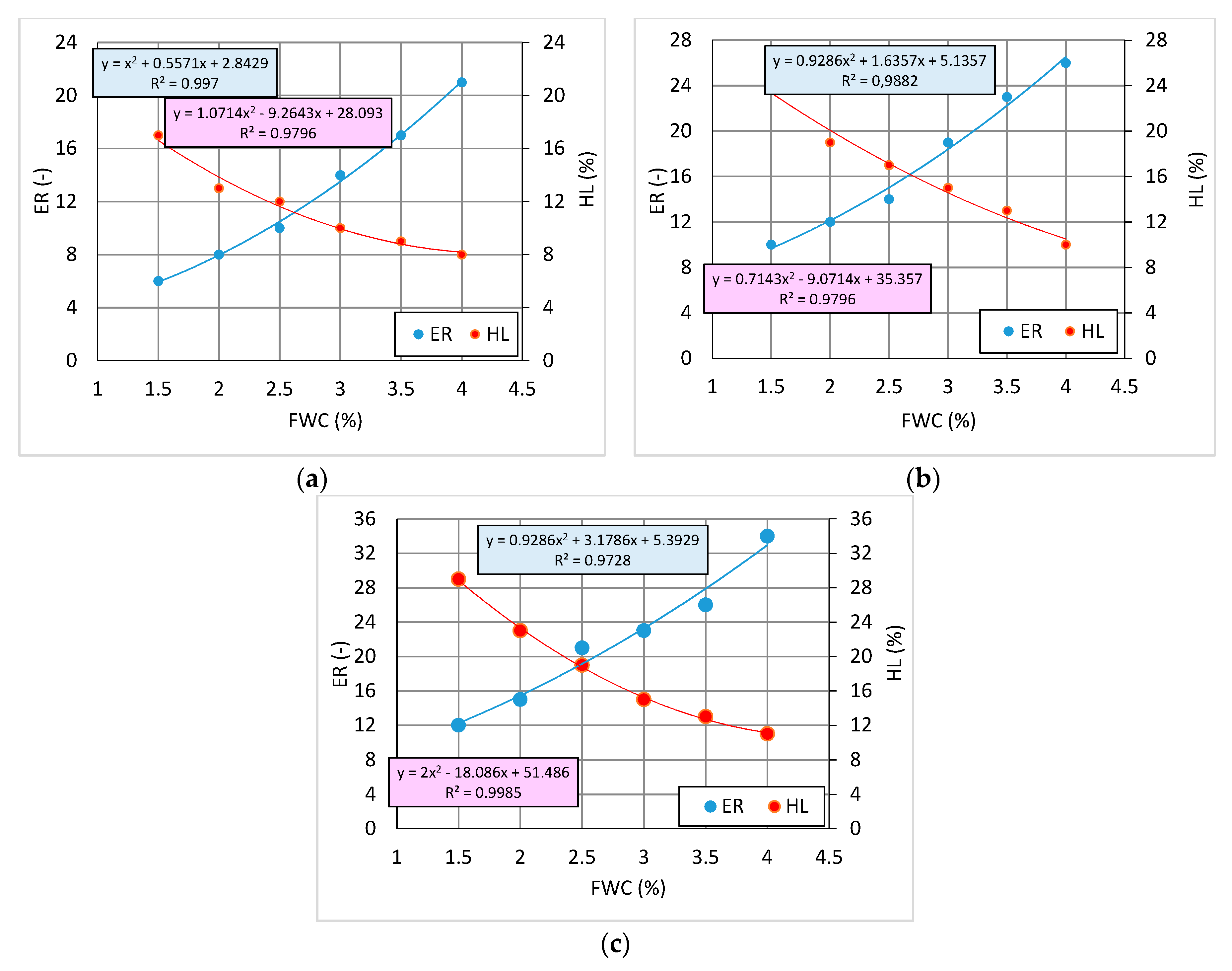
Figure 7 shows the plots of foamed 50/70 bitumen characteristics versus foaming water contents for the three evaluated SAA contents. The optimum FWC’s were established at the intersection of expansion ratio and bitumen foam half-live curves.
Figure 7.
Foaming characteristics of bitumen 50/70 + 0.2% SAA (a), 50/70 + 0.4% SAA (b), 50/70 + 0.6% SAA (c).
The results confirmed the positive influence of SAA on the foamed 50/70 bitumen characteristics. By reducing the bitumen surface tension, the SAA addition enhanced its foaming capability.
Average values of the obtained foaming characteristics with respect to the type of bitumen and quantity of the additive used are summarised in Table 12 and shown graphically in Figure 8.
Table 12.
Foamed 50/70 bitumen parameters versus binder type and additive content.
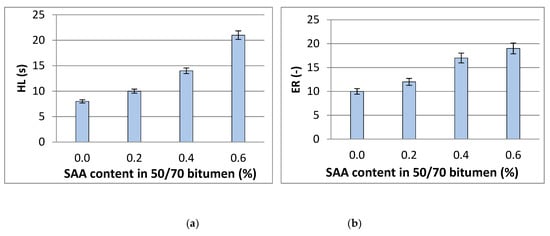
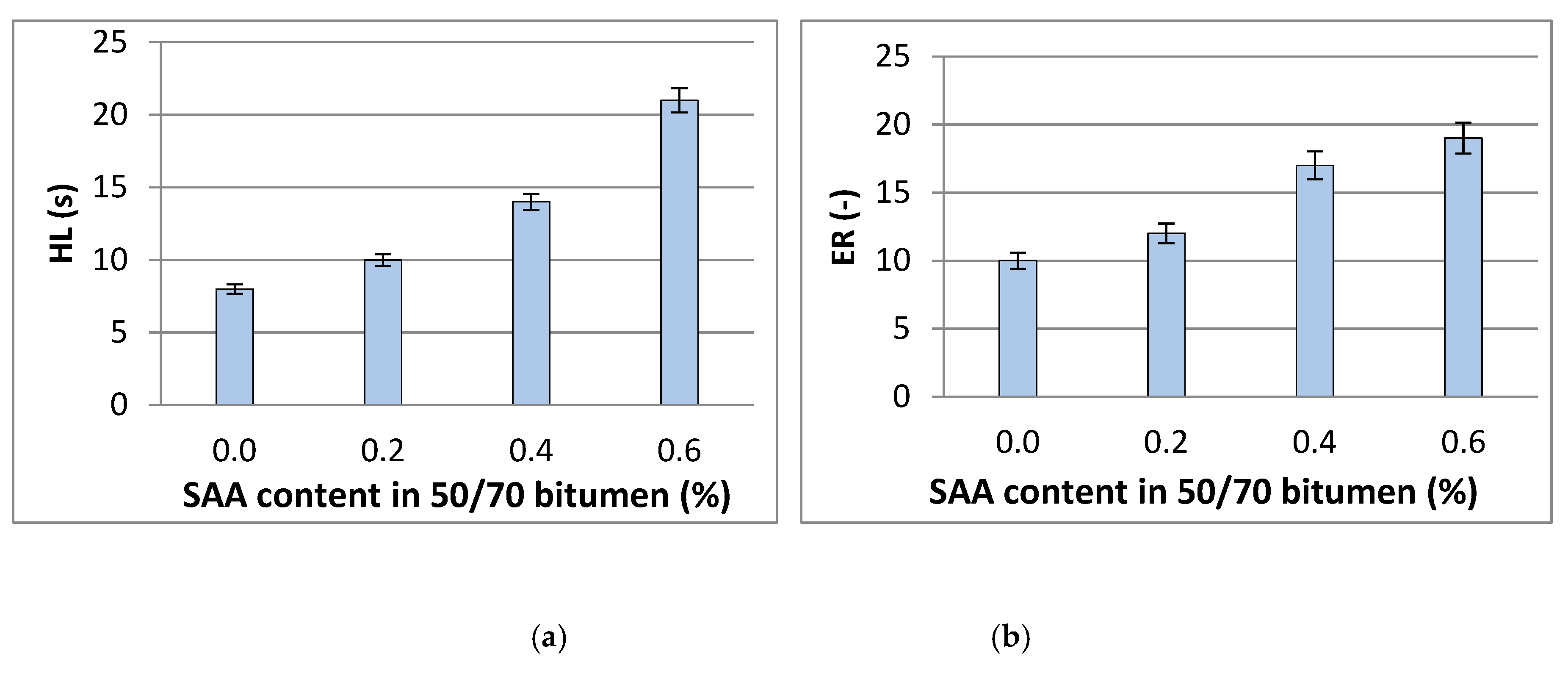
Figure 8.
Average values of foaming parameters of 50/70 bitumen with additives, a) half-life–HL, b) maximum expansion–ER (error bars represent standard deviation).
Analysis of the results indicates that the S AA contributes to the increase in the values of foamed 50/70 bitumen characteristics. The rate of ER and HL variation is dependent on the quantity of dosed additive and increases with the SAA concentration in the binder. The most favourable foam characteristics were obtained when 0.6% SAA by bitumen mass was applied. The value of ER almost doubled and the value of HL increased by a factor of 2.5 after adding 0.6% SAA.
Bitumen 50/70 with 0.6% of SAA has the most favourable foam parameters: ER–19, HL–21s and FWC–2.5%. These characteristics are better than those obtained from the recommended modification of 50/70 bitumen with F-T synthetic wax at 2.5% with respect to the binder (ER–18, HL–15s and FWC–2.0%) [35].
3.4. Optimisation of The SAA Content with Respect to The Standard Bitumen Properties
In order to determine the recommended quantity of SAA for the most favourable standard properties of 50/70 bitumen, Statistica software was used [42].
The following important parameters of 50/70 bitumen with the addition of SAA at 0%, 0.2%, 0.4% and 0.6% were evaluated:
- softening point (TPiK),
- Fraass breaking point (TFraass),
- penetration index (PI),
- dynamic viscosity at 90 °C (η90) and 135 °C (η135),
- maximum expansion (ER),
- half-life (HL).
The characteristics of the models describing the interactions among the binder parameters with respect to the SAA content are tabulated in Table 13.
Table 13.
Parameters of the model of the binder properties versus SAA.
The following equations (5-11) were determined in Statistica [42] to describe the changes in 50/70 bitumen properties with respect to SAA content:
TR&B = 50.4477 − 0.2055 × SAA (%) – 1.5277 × SAA (%)2
TFraass = -15.147778 + 2.5666 × SAA (%) + 1.1111 × SAA (%)2
η90 = 14.0266 – 1.8111 × SAA (%) – 0.8333 × SAA (%)2
η135 = 0.6510 – 0.3930 × SAA (%) + 0.2118 × SAA (%)2
PI = 0.6744 – 6.1833 × SAA (%) + 7.3611 × SAA (%)2
ER = 9.1777 + 18.6666 × SAA (%) – 2.7777 × SAA (%)2
HL = 8.1611 + 3.5833 × SAA (%) + 29.8611 × SAA (%)2
For assessing the performance characteristics of the binders, the best values of the characteristic were assigned a number of 1 and the least acceptable value was set at 0. Intermediate values ranged from 0 to 1 on a linear scale in line with the methodology described in [43]. The following criteria for the independent binder parameters were applied:
- softening point TR&B (max–1, min–0),
- Fraass breaking point TFraass (max–0, min–1),
- penetration index PI (max–1, min–0),
- dynamic viscosity at η90 and η135 (max–0, min–1),
- expansion ratio ER (max–1, min–0),
- half-life HL (max–1, min–0).
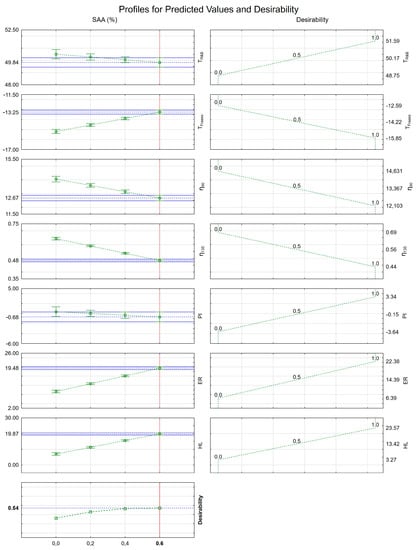
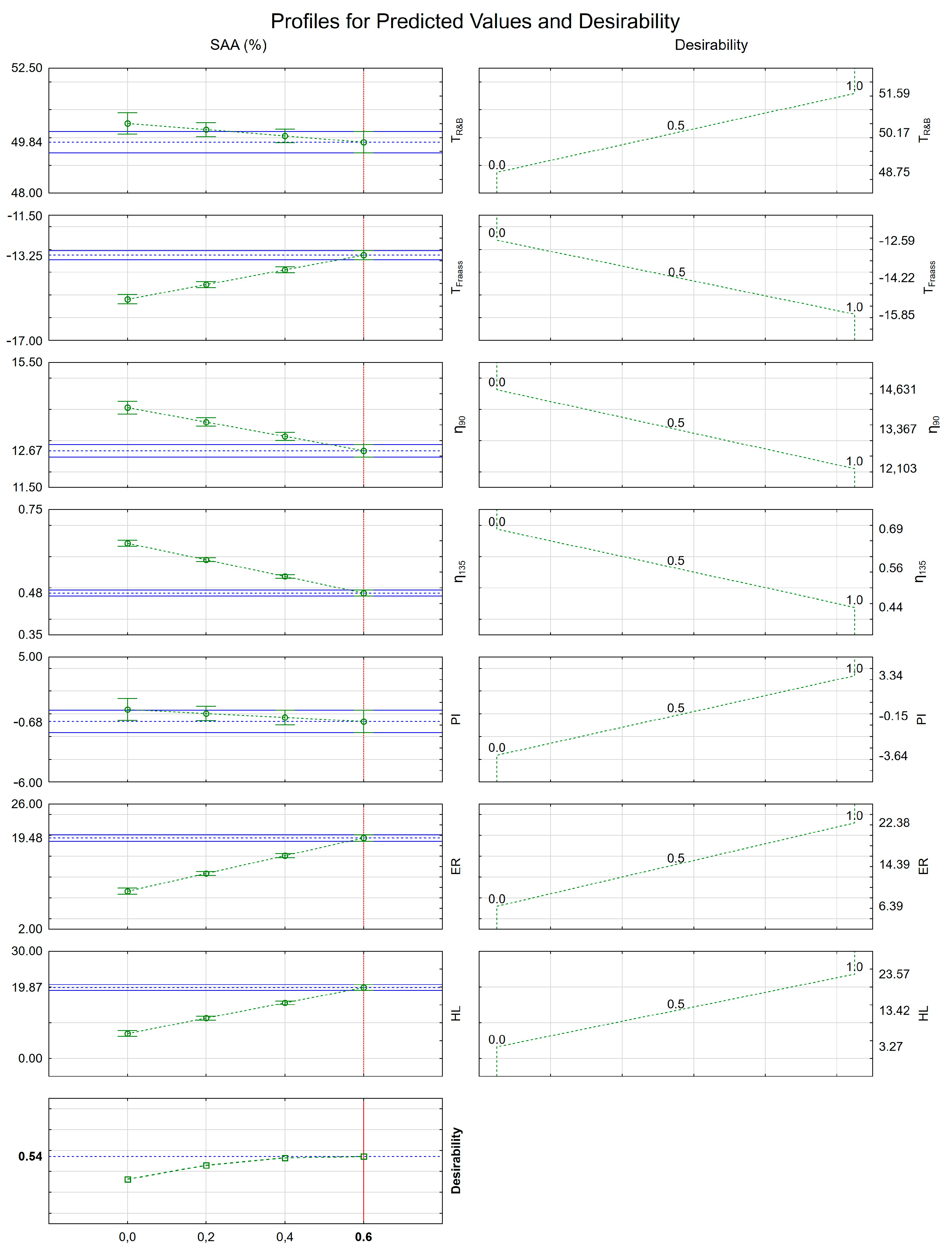
Then the values of usability function were calculated. The results in the form of approximated values and usability profiles are presented graphically in Figure 9.
Figure 9.
Determination of the best performing content of SAA for the best possible properties of 50/70 binder.
The results of the optimization show that the addition of the SAA had different impacts on the evaluated binder properties in terms of their desirability. The softening point and Fraass breaking point were negatively affected by the additive, but these changes should not be considered overly significant. All remaining properties elicited on the increased SAA content. The dynamic viscosities measured at 90 °C and 135 °C decreased after incorporating the additive in larger amounts, contributing to possible improvements mix coating and workability. The penetration index after the initial 0.2% addition of the SAA was hardly changed by its further increased concentration. As it was shown in the assessment of the foaming performance, the SAA has significantly supplemented the expansion ratio and bitumen foam half-life exhibited by the 50/70 bitumen, which should translate into improved workability and mixture homogeneity.
The combined assessment of the SAA effects on the overall performance of the 50/70 bitumen intended for use in half-warm asphalt mixes with foamed bitumen is given by the calculated desirability profile. As shown in Figure 9, the desirability values increased with the increase of the SAA content, reaching a maximum value of 0.543 at 0.6% concentration of the surface active agent.
Therefore, the analysis of desirability profiles shows that the best performing SAA content in 50/70 bitumen is 0.6% by bitumen mass, in which case the binder parameters reach the highest levels in overall.
4. Conclusions
In this paper, the effects of surface active agent (SAA) on the properties of 50/70 penetration bitumen used in foamed bitumen process were investigated. The analysis of the results showed that the SAA content affected the tested 50/70 bitumen characteristics in different ways depending on the evaluated properties:
- the penetration of the bitumen has increased consistently with the increase of the SAA from 65.9 [0.1 mm] of the base bitumen by as much as 4.5 [0.1 mm] in the bitumen with 0.6% SAA content.
- the Fraass breaking has also gradually increased in the function of the SAA content resulting in 1.9 °C change at 0.6% SAA content,
- there were no significant changes in softening point and penetration index associated with the addition of surface active agent,
- the SAA has reduced the bitumen dynamic viscosity in the measured range of temperatures (60 °C, 90 °C, and 135 °C),
- the addition of SAA resulted in profound improvement of foaming characteristics of 50/70 bitumen, showing increased values of half-life (HL), expansion ratio (ER) and foam index (FI) resulting in possible significant contribution of mixture coating and workability,
- the analysis of the desirability function has shown that the addition of surface active agent in 0.6% concentration should result in superior overall performance of the 50/70 penetration binder enhancing the HWA mix quality and workability, without significantly affecting the binder rheology.
In conclusion, the SAA will have a positive effect on the 50/70 bitumen foaming process and thus on its use in HWA. Its influence on the material characteristics of the bituminous mix, in particular on the resistance to permanent deformations, may vary, in which case it will be necessary to use another additive, such as hydrated lime, which favourably influences the mechanical characteristics of HWA mixtures. The future work in this field will include the verification of the aforementioned results based on investigations of half-warm asphalt mixtures with foamed bitumen in terms of their compactability, mechanical performance, and moisture resistance.
Author Contributions
Conceptualization, M.M.I.; methodology, M.M.I.; validation, M.M.I., A.C.-K.; formal analysis, K.M.; investigation, M.M.I.; resources, M.M.I.; data curation, K.M.; writing—original draft preparation, M.M.I.; writing— review and editing A.C.-K.; visualization, K.M.; supervision, A.C.-K.; project administration, M.M.I.
Funding
This research was co-funded by the National Centre for Research and Development (NCBR) and the Polish General Directorate for National Roads and Motorways (GDDKIA), grant number DZP/RID-I-06/1/NCBR/2016.
Acknowledgments
The study results were developed within the framework of the project entitled “The use of recycled materials” under “RID” co-funded by the National Centre for Research and Development and the General Directorate for National Roads and Motorways in Poland.
Conflicts of Interest
The authors declare no conflict of interest; the funders had no role in the design of the study; in the collection, analyses, or interpretation of data; in the writing of the manuscript, or in the decision to publish the results.
References
- Stefańczyk, B.; Mieczkowski, P. Mieszanki mineralno-asfaltowe: wykonawstwo i badania. In Bituminous Mixtures. Performance and Research; WKiŁ: Warszawa, Poland, 2008; p. 322. (In Polish) [Google Scholar]
- Piłat, J.; Radziszewski, P. Nawierzchnie asfaltowe: Podręcznik akademicki. In Asphalt Pavements; WKiŁ: Warszawa, Poland, 2010. (In Polish) [Google Scholar]
- Hofko, B.; Dimitrov, M.; Schwab, O.; Weiss, F.; Rechberger, H.; Grothe, H. Technological and environmental performance of temperature-reduced mastic asphalt mixtures. Road Mater. Pavement Des. 2017, 18, 22–37. [Google Scholar] [CrossRef] [Scilit]
- Van De Ven, M.F.C.; Jenkins, K.J.; Voskuilen, J.L.M.; Van Den Beemt, R. Development of (half-) warm foamed bitumen mixes: State of the art. Int. J. Pavement Eng. 2007, 8, 163–175. [Google Scholar] [CrossRef] [Scilit]
- Jenkins, K.J.; De Groot, J.L.A.; Van de Ven, M.F.C.; Molenaar, A. Half-warm Foamed Bitumen Treatment, A New Process”. In Proceedings of the 7th Conference on asphalt pavements for Southern Africa, Victoria Falls, Zimbabwe, 29 August–2 September 1999. [Google Scholar]
- Vaitkus, A.; Čygas, D.; Laurinavičius, A.; Perveneckas, Z. Analysis and evaluation of possibilities for the use of warm mix asphalt in lithuania. Balt. J. Road Bridge Eng. 2009, IV, 80–86. [Google Scholar] [CrossRef] [Scilit]
- Król, J.; Kowalski, K.; Radziszewski, P. Rheological behavior of n-alkane modified bitumen in aspect of Warm Mix Asphalt technology. Constr. Build. Mater. 2015, 93, 703–710. [Google Scholar] [CrossRef] [Scilit]
- Iwański, M.; Mazurek, G. The influence of the low-viscosity modifier on viscoelasticity behavior of the bitumen at high operational temperature. In Proceedings of the 8th International Conference Environmenal Engineering, Vilnius, Lithuania, 19–20 May 2011; Volume 1–3, pp. 1097–1102. [Google Scholar]
- Pszczola, M.; Jaczewski, M.; Rys, D.; Jaskula, P.; Szydlowski, C. Evaluation of asphalt mixture low-temperature performance in bending beam creep test. Materials 2018, 11, 100. [Google Scholar] [CrossRef] [Scilit] [PubMed]
- Hugo Silva, M.R.D.; Joel, R.M.; Oliveira, J.; Peralta, J.; Zooro, S.E. Optimization of warm mix asphalt using different blends of binders and synthetic paraffin wax contents. Constr. Build. Mater. 2010, 24, 1621–1631. [Google Scholar] [CrossRef] [Scilit]
- Leng, Z.; Gamez, A.; Al-Qadi, I.L. Mechanical property characterization of warm-mix asphalt prepared with chemical additives. J. Mater. Civ. Eng. 2014, 26, 304–311. [Google Scholar] [CrossRef] [Scilit]
- Jamshidi, A.; Hamzah, M.O.; You, Z. Performance of Warm Mix Asphalt containing Sasobit®: State-of-the-art”. Constr. Build. Mater. 2013, 38, 530–553. [Google Scholar] [CrossRef] [Scilit]
- Iwański, M.; Mazurek, G. Optimization on the syntetic wax content on example of bitumen 35/50. Procedia Eng. 2013, 57, 414–423. [Google Scholar] [CrossRef] [Scilit]
- Muthen, K.M. Foamed Asphalt Mixes. Mix Design Procedure; Contract Report CR 98/077; SABITA Ltd.&CSIR Transportek: Pretoria, South Africa, 2009. [Google Scholar]
- Wong, W.G.; Li, G. Analysis of the effect of wax content on bitumen under performance grade classification. Constr. Build. Mater. 2009, 23, 2504–2510. [Google Scholar] [CrossRef] [Scilit]
- Sanchez-Alonso, E.; Vega-Zamanillo, A.; Castro-Fresno, D.; Del Rio-Prat, M. Evaluation of compactability and mechanical properties of bituminous mixes with warm additives. Constr. Build. Mater. 2011, 25, 2304–2311. [Google Scholar] [CrossRef] [Scilit]
- Judycki, J.; Stienss, M. Badania mieszanek mineralno-asfaltowych o obniżonej temperaturze otaczania—Raport końcowy. In Evaluation of Low-Temperature Bituminous Mixtures—Final Report; GDDKiA: Warsaw, Poland, 2014. (In Polish) [Google Scholar]
- Lu, X.; Redelius, P. Effect of bitumen wax on asphalt performance. Constr. Build. Mater. 2006, 21, 1961–1970. [Google Scholar] [CrossRef] [Scilit]
- Jenkins, K.J. Mix Design Considerations for Cold and Half-Warm Bituminous Mixes with Emphasis on Foamed Bitumen. Ph.D. Thesis, Department of Civil Engineering, Faculty of Engineering, University of Stellenbosch, Stellebosch, South Africa, 2000. [Google Scholar]
- Chomicz-Kowalska, A.; Gardziejczyk, W.; Iwański, M.M. Moisture resistance and compactability of asphalt concrete produced in half-warm mix asphalt technology with foamed bitumen. Constr. Build. Mater. 2016, 126, 108–118. [Google Scholar] [CrossRef] [Scilit]
- Woszuk, A.; Zofka, A.; Bandura, L.; Franus, A. Effect of zeolite properties on asphalt foaming. Constr. Build. Mater. 2017, 139, 247–255. [Google Scholar] [CrossRef] [Scilit]
- Martinez-Arguelles, G.; Giustozzi, F.; Crispino, M.; Flintsch, G.W. Investigating physical and rheological properties of foamed bitumen. Constr. Build. Mater. 2014, 72, 423–433. [Google Scholar] [CrossRef] [Scilit]
- Sengoz, B.; Topa, A.; Gorkem, C. Evaluation of natural zeolite as warm mix asphalt additive and its comparison with other warm mix additives. Constr. Build. Mater. 2013, 43, 242–252. [Google Scholar] [CrossRef] [Scilit]
- Woszuk, A. Application of fly ash derived zeolites in warm-mix asphalt technology. Materials 2018, 11, 1542. [Google Scholar] [CrossRef] [Scilit]
- Barthel, W.; Marchand, J.; Von Devivere, M. Warm Mix Asphalt by adding a synthetic zeolite. In Proceedings of the Third Eurasphalt and Eurobitume Conference, Vienna, Austria, 12–14 May 2004; Foundation Eurasphalt: Breukelen, The Netherlands, 2004; pp. 1241–1249. [Google Scholar]
- Chomicz-Kowalska, A.; Iwański, M.M.; Mrugała, J. Basic Performance of Fibre Reinforced Asphalt Concrete with Reclaimed Asphalt Pavement Produced In Low Temperatures With Foamed Bitumen”. In IOP Conf. Series: Materials Science and Engineering; IOP Publishing: Bristol, England, 2017; Volume 245. [Google Scholar] [CrossRef] [Scilit]
- Ozturk, H.I.; Kutay, M.E. Novel testing procedure for assessment of quality of foamed warm mix asphalt binders. J. Mater. Civil Eng. 2014, 26, 04014042. [Google Scholar] [CrossRef] [Scilit]
- Saleh, M. Characterization of Foam Bitumen Quality and the Mechanical Properties of Foam Stabilized Mixes; University of Canterbury Research Repository: Christchurch, New Zealand, 2006. [Google Scholar]
- Recycling, C. Wirtgen Cold Recycling Technology, 1st ed.; Wirtgen GmbH: Windhagen, Germany, 2012. [Google Scholar]
- He, G.; Wong, W. Decay properties of the foamed bitumens. Constr. Build. Mater. 2006, 20, 866–877. [Google Scholar] [CrossRef] [Scilit]
- Jenkins, K.J.; Molenaar, A.; De Groot, J.L.A.; Van de Ven, M.F.C. Developments in the uses of foamed bitumen in road pavements. HERON 2000, 45, 167–176. [Google Scholar]
- Iwański, M.; Buczyński, P.; Mazurek, G. The use of gabbro dust in the cold recycling of asphalt paving mixes with foamed bitumen. Bull. Pol. Acad. Sci. Tech. Sci. 2016, 64, 763–773. [Google Scholar] [CrossRef] [Scilit]
- Iwański, M.; Chomicz-Kowalska, A.; Maciejewski, K. Application of synthetic wax for improvement of foamed bitumen parameters. Constr. Build. Mater. 2015, 83, 62–69. [Google Scholar] [CrossRef] [Scilit]
- Baranov, E.N. Formation and properties of bituminous foams. Chem. Technol. Fuels Oils 1990, 26, 544–548. [Google Scholar] [CrossRef] [Scilit]
- Mazurek, G. Optymalizacja składu betonu asfaltowego modyfikowanego woskiem syntetycznym w zakresie odkształceń plastycznych. [Optimization of the asphalt concrete aggregate modified with synthetic wax in the field of plastic deformation]. Ph.D. Thesis, Department of Civil and Environmental Engineering, Kielce University of Technology, Kielce, Poland, 2012; p. 303. [Google Scholar]
- Yu, X.; Wang, Y.; Luo, T. Impacts of water content on rheological properties and performance-related behaviours of foamed war-mix asphalt. Constr. Build. Mater. 2013, 48, 203–209. [Google Scholar] [CrossRef] [Scilit]
- Chomicz-Kowalska, A.; Gardziejczyk, W.; Iwański, M.M. Analysis of IT-CY stiffness modulus of foamed bitumen asphalt concrete compacted at 95 °C. In Proceedings of the 12th International Scientific Conference of Modern Building Materials, Structures and Techniques (MBMST), Vilius, Lithuania, 16–17 May 2017; Volume 172, pp. 550–559. [Google Scholar] [CrossRef] [Scilit]
- Mrugała, J.; Iwański, M.M. Resistance to permanent deformation of asphalt concrete with F-T wax modified foamed bitumen. In Proceedings of the 7th Scientific-Technical Conference Material Problems in Civil Engineering (MATBUD2015), Krakow, Poland, 22–24 June 2015; Volume 108, pp. 459–466. [Google Scholar] [CrossRef]
- Iwański, M.; Mazurek, G. Effect of Fischer-Tropsch synthetic wax additive on the functional properties of bitumen. Polimery 2015, 60, 272–278. [Google Scholar] [CrossRef] [Scilit]
- Chomicz-Kowalska, A.; Mrugała, J.; Maciejewski, K. Evaluation of Foaming Performance of Bitumen Modified with the Addition of Surface Active Agent. In IOP Conference Series: Materials Science and Engineering; IOP Publishing: Bristol, England, 2017; Volume 245. [Google Scholar] [CrossRef] [Scilit]
- Katalog Typowych Nawierzchni Podatnych i Półsztywnych. Generalna Dyrekcja Dróg i Autostrad. In Catalog of Typical Susceptible and Semi-rigid Paving Structures; General Directorate for National Roads and Motorways: Warsaw, Poland, 2014; p. 112. [Google Scholar]
- STATISTICA 13.3. Statsoft. Available online: www.statsoft.com (accessed on 20 August 2019).
- Chomicz-Kowalska, A.; Maciejewski, K. Multivariate Optimization of Recycled Road Base Cold Mixtures with Foamed Bitumen. Procedia Eng. 2015, 108, 436–444. [Google Scholar] [CrossRef] [Scilit]

© 2019 by the authors. Licensee MDPI, Basel, Switzerland. This article is an open access article distributed under the terms and conditions of the Creative Commons Attribution (CC BY) license (http://creativecommons.org/licenses/by/4.0/).