


Abstract
Ground-source heat pump (GSHP) systems are widely used because of their energy-saving and environmentally friendly characteristics. However, the long-term operation of a standalone GSHP system leads to heat accumulation in the soil for cooling load-dominated buildings, which results in a decline in system performance. To address this issue, in this study, a high-speed railway station in Jinan was considered as the research object, and a hybrid system scheme in which a GSHP is coupled with an air-source heat pump (ASHP) was developed. The system uses the outdoor dry-bulb temperature as the control parameter and establishes a multi-unit operation control strategy. A dynamic simulation model of the hybrid system was constructed using TRNSYS software, and then the energy consumption, soil thermal balance, economics and environmental benefits of the system under various schemes and operating conditions were simulated and analyzed. Through a comparative analysis of the operating strategies, the optimal strategy that achieved the best performance was determined. Under the optimal strategy, the soil thermal imbalance rate after 10 years of operation was only 1%, the total energy consumption was significantly lower than that of a standalone ASHP system, and the initial investment was clearly lower than that of a standalone GSHP system. The results demonstrate that the hybrid system ensures soil thermal balance and high-efficiency operation while providing significant energy savings (a 28% primary energy savings rate compared to a standalone ASHP) and environmental benefits (reducing annual CO2, SO2, NOx, and dust emissions by 56.5 t, 384.2 kg, 361.6 kg, and 339 kg, respectively). Therefore, the emission of atmospheric pollutants such as CO2, SO2, NOx, and dust can be effectively reduced, thus providing an important reference for the development of building energy-saving technologies under the “dual carbon” goals.
1. Introduction
Decarbonizing the energy sector has become a central task in achieving global climate targets, and the heating and cooling sector is one of the most difficult areas to transform [1]. In the European Union, heating and cooling account for around half of total gross final energy consumption, while the uptake of renewable energy in this sector remains comparatively slow [2]. Eurostat reported that the share of renewables in EU heating and cooling reached 24.8% in 2022 and increased further to 26.7% in 2024, indicating progress but also showing that fossil fuels still dominate a large part of thermal energy demand [3].
Heat pumps are widely regarded as one of the key technologies for decarbonizing building heating and cooling. According to the European Commission, heat pumps are typically three to five times more energy efficient than gas boilers and are expected to play an important role in replacing fossil-fuel-based heating systems [4]. A Joint Research Centre assessment further showed that replacing about one-third of the European Union’s 86 million residential fossil-fuel boilers with heat pumps could reduce final energy consumption by 36% and CO2 emissions by 28% for those households. These characteristics make heat pumps highly promising for reducing primary energy use and carbon emissions in future building energy systems [5].
At the global scale, heat pump deployment has expanded rapidly in recent years. The International Energy Agency reported that global heat pump sales grew by 11% in 2022, and heat pumps already met around 10% of global space-heating needs in 2021 [6]. Although market growth slowed in some regions in 2024, heat pumps continued to gain market share over fossil-fuel-based heating technologies, highlighting their growing strategic importance in the energy transition [7].
Ground-source heat pumps (GSHPs), as an important category of heat pump technology, have attracted increasing attention because of their stable heat-source conditions, high energy efficiency, and favorable long-term operating performance [8]. In general, GSHP systems can be divided into closed-loop and open-loop systems. Closed-loop systems mainly include horizontal ground heat exchangers, vertical ground heat exchangers, and surface-water or pond-loop systems, whereas open-loop systems usually extract groundwater directly for heat exchange [9]. Horizontal systems usually have lower drilling costs but require large land areas and are more strongly affected by seasonal surface temperature fluctuations. Open-loop systems can provide high heat-transfer efficiency but depend strongly on groundwater availability, water quality, and environmental regulations. By contrast, vertical closed-loop GSHP systems require less surface area, provide relatively stable thermal performance, and are more suitable for medium- and large-scale public buildings in dense urban environments. Therefore, a vertical closed-loop ground heat exchanger was selected in this study [10].
In addition to building heating and cooling, geothermal heat pump technologies have also been increasingly applied in industrial and commercial sectors, especially for low-temperature process heating, hot-water supply, and integrated heating–cooling systems [11]. IRENA has noted that heat pumps in buildings and industry are an efficient solution for decarbonizing sanitary hot water, space heating, and low-temperature process heat, while geothermal technologies can also be used for industrial processes and agri-food applications [12]. These broader applications further demonstrate the technical potential of GSHP-related systems in future low-carbon energy systems [13].
Under the guidance of the “dual carbon” strategic goals, the transformation of the energy structure in the building sector has become a significant step in achieving emission-reduction targets. The large-scale application of renewable energy in heating, ventilation and air conditioning (HVAC) systems has become a mainstream trend in industry. In recent years, the cooling and heating demand issues of cooling load-dominated buildings have become increasingly prominent. As a renewable energy cooling and heating technology, ground-source heat pumps (GSHPs) have been widely applied in the construction industry because of their advantages, such as the efficient utilization of shallow geothermal energy, low operating energy consumption, and minimal environmental impact [14,15]. However, when the cooling load is greater than the heating load, the long-term use of a standalone GSHP system can cause an imbalance between the cumulative heat absorbed and released by the ground heat exchangers (GHEs), thereby leading to heat accumulation in underground soil. This imbalance results in increased soil temperatures and a decrease in the performance of the heat pump unit [16,17]. To solve this problem, a GSHP system can be coupled with an auxiliary cooling source system to reduce the heat discharge from the buried-pipe system into the soil, thereby maintaining the soil temperature and improving the performance of the unit. In recent years, many scholars have extensively researched GSHP hybrid systems. Man Yi designed a hybrid GSHP system on the basis of the characteristics of cooling load-dominated buildings, proposed three different control strategies, and compared the hourly performance, long-term economic efficiency, and total investment; the results indicated that the hybrid system saves both operating costs and total investment [18]. Gu Juan focused on a GSHP–ASHP coupled system and used TRNSYS 18 software to analyze the annual average energy consumption and soil temperatures at the end of 10 years; from the results, the optimal strategy was concluded to involve 3 h of priority operation with an outdoor dry-bulb temperature of 33 °C and a temperature difference of 5 °C [19]. Yu Jikang et al. analyzed the operation of a hybrid system in the hot summer and cold winter zone, and the energy consumption of the hybrid system decreased by 27.9% compared with that of a standalone ASHP system [20]. Su Xiaofeng proposed a strategy for controlling the starting and stopping of units on the basis of partial load rates (35% and 65%), which effectively controlled the soil thermal imbalance rate [21]. Liu verified that a cooling tower-assisted hybrid GSHP system in Shanghai effectively alleviated heat accumulation and improved the annual average COP by 7.12% [22]. Qiu established a PVT–GSHP dynamic–thermodynamic model and optimized the buried-pipe length using genetic algorithms [23]. Zhang determined the optimal operating time for a cooling tower-assisted GSHP system in hot summer and cold winter regions, with stable soil temperatures maintained over a ten-year period [24].
This study is conducted on the composite systems of specific buildings. On the basis of a standalone GSHP system, an ASHP is added as an auxiliary cooling device. The cooling and heating source schemes of the GSHP–ASHP hybrid system are explored, and a corresponding operation strategy is proposed. TRNSYS software is used to simulate the standalone and hybrid systems, followed by a comparative analysis of energy consumption, economics and environmental friendliness.
Despite existing research on hybrid systems, there is a lack of comprehensive 3E (Energy, Environmental, Economic) evaluations coupled with multi-unit start–stop optimization for large-scale transportation hubs under varying climate boundaries. The necessity and novelty of this study lie in proposing a dynamic, multi-unit temperature-controlled operational strategy tailored for a high-speed railway station, addressing both the long-term soil thermal degradation and short-term equipment efficiency drop, thus providing a useful reference for the design and operation of cooling-dominated public buildings.
2. Overview of the Building and Cooling/Heating Source
2.1. Project Overview
A high-speed railway station with a total building area of 9954 m2 and dimensions of 156 m in length, 48 m in width and 22.6 m in height was considered. The floor height is 3 m, the roof is flat, and the total air-conditioned area is 9500 m2. The building consists of two floors above ground and includes a waiting hall, restrooms, duty rooms and offices. The window-to-wall ratio is 78% for the north and south exterior walls and 60% for the east and west walls. Owing to the large window-to-wall ratio, the cooling period in summer is relatively long. The building envelope parameters are shown in Table 1.
Table 1.
Parameters of the envelope structure of the building.
2.2. Meteorological Parameters
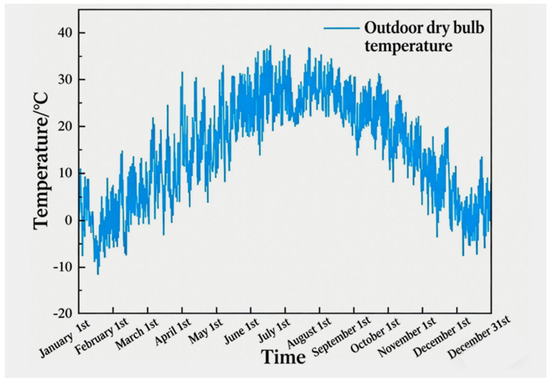
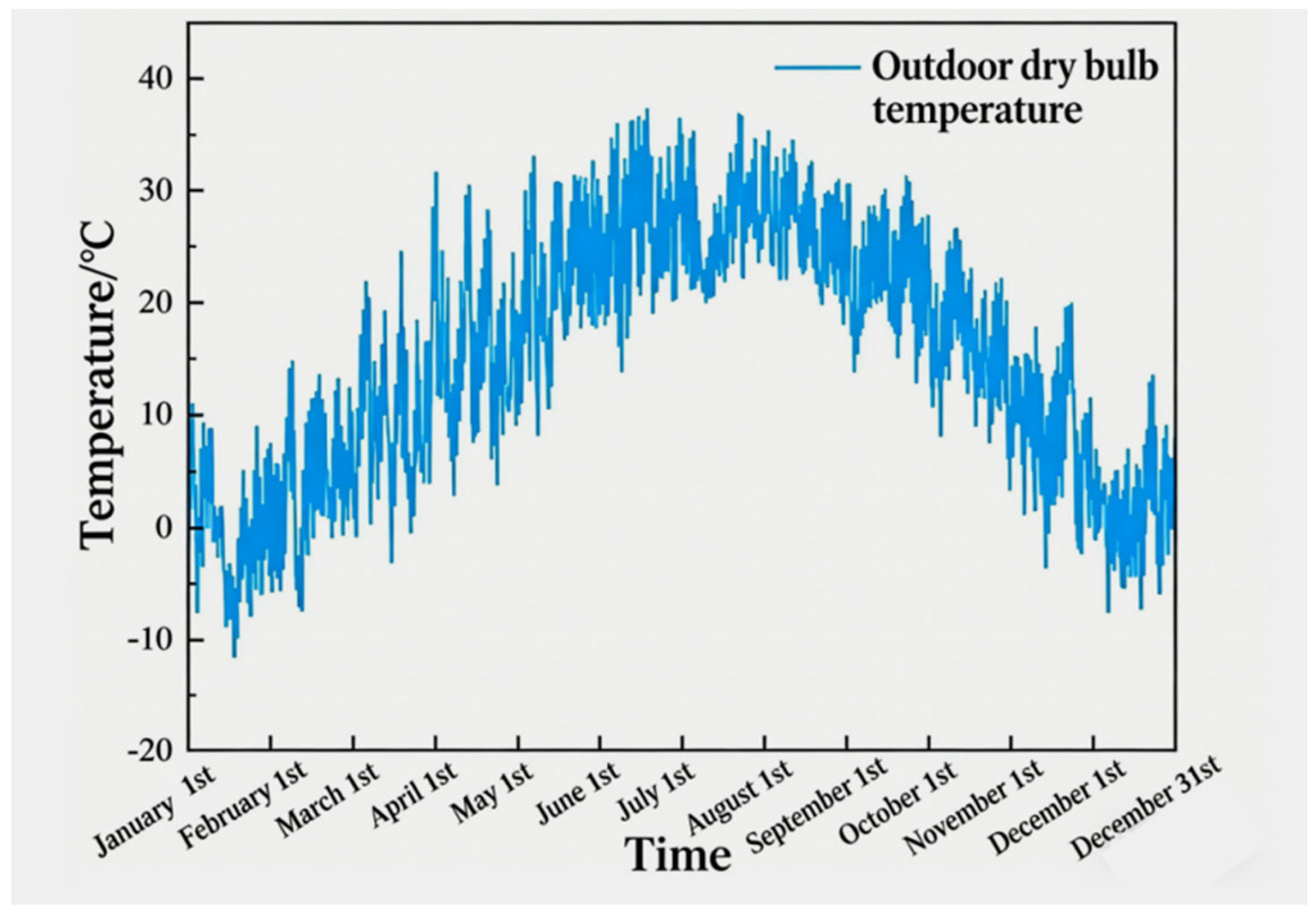
Meteorological parameters influence the cooling and heating loads of buildings. The meteorological data used in this study were obtained from the Meteonorm 8.0 database, and a typical meteorological year (TMY2) file for Jinan was generated based on long-term measured data from local weather stations. On the basis of a TMY2-formatted weather file exported from the Meteonorm meteorological database software, the meteorological conditions were simulated in detail. The TMY2-formatted weather file was imported into the simulation software, and the meteorological parameters, which included the annual hourly meteorological parameters of Jinan and formed the typical annual outdoor meteorological conditions, were output [25]. For the typical meteorological year (TMY), the average values of each month from the past 10 years of data are selected as the representative monthly values. By importing the meteorological data file into the simulation software, various meteorological parameters for the typical meteorological year in the project area were obtained, and these parameters were adopted for analysis. The outdoor dry-bulb temperature is a crucial factor that affects the intensity of cooling and heating loads and influences the operation of the air conditioning system of the building. The annual hourly outdoor dry-bulb temperature for the typical meteorological year is shown in Figure 1. The maximum temperature (37.2 °C) occurred on 21 July, and the minimum temperature (−11.5 °C) occurred on 18 January.
Figure 1.
Annual hourly outdoor dry-bulb temperature distribution for the Jinan TMY2 weather file generated from Meteonorm 8.0.
2.3. Building Load Simulation and Analysis
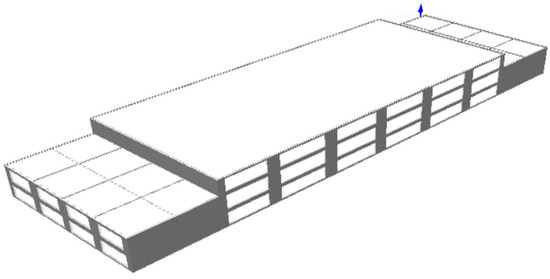
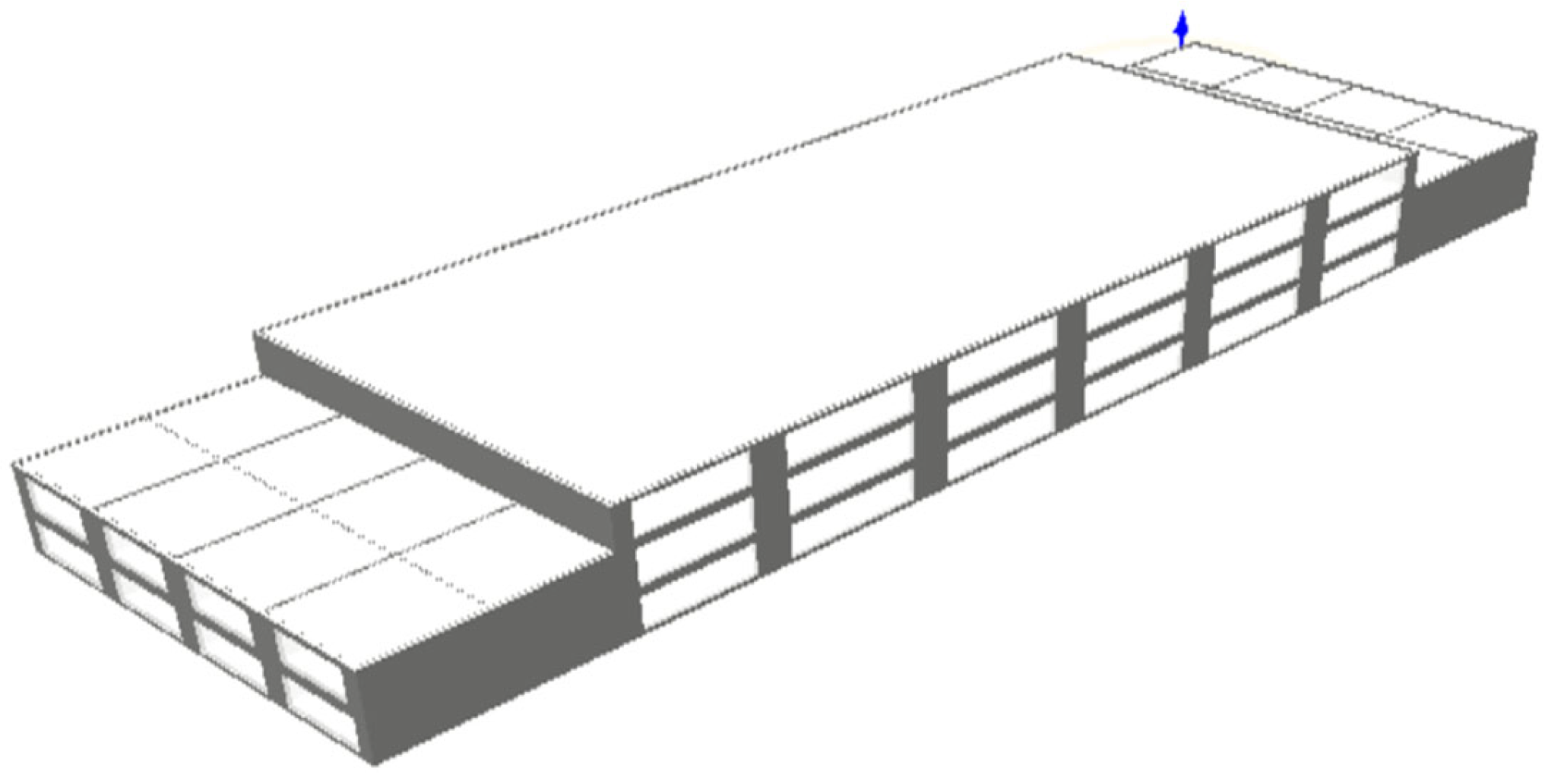
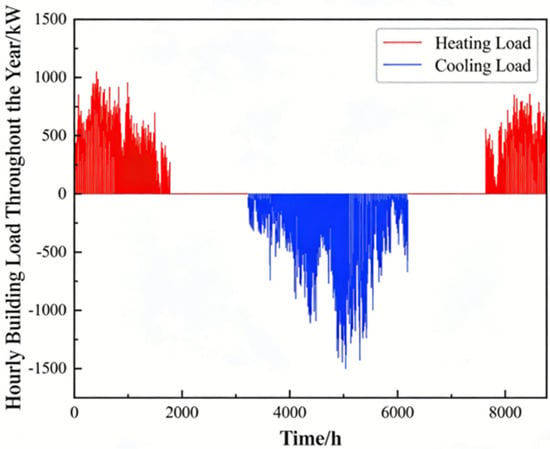
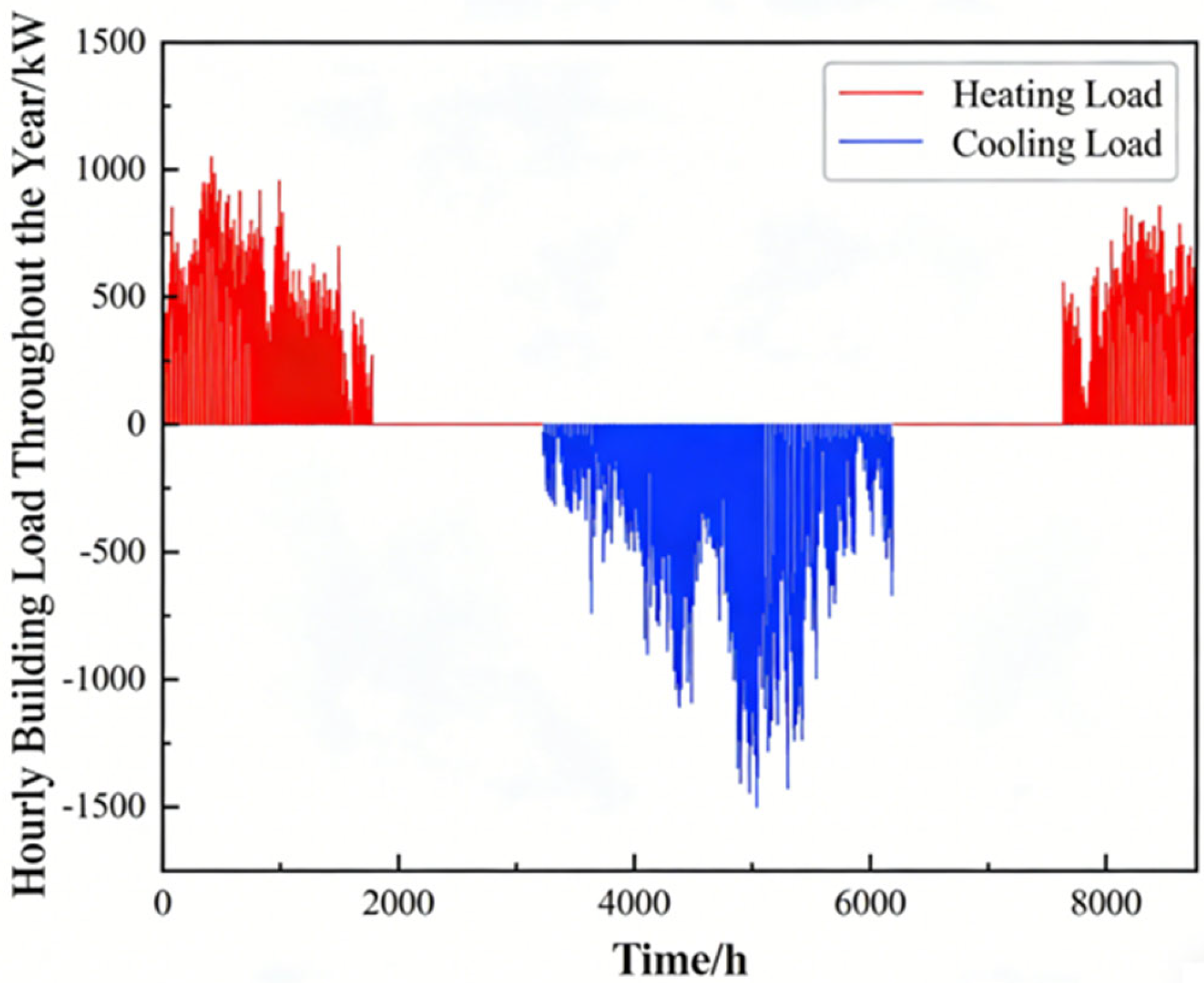
A three-dimensional model of the building was created using DeST 2.0 simulation software, as shown in Figure 2, and the annual hourly dynamic loads were simulated and calculated [26,27]. Both the heating loads and the cooling loads are shown in Figure 3. The theoretical dynamic loads were obtained via DeST simulation based on building envelope thermal properties and weather data. An engineering safety margin was then considered in determining the practical peak loads. The annual hourly load variation trend of the building was significantly positively correlated with the outdoor dry-bulb temperature. Owing to the relatively large window-to-wall ratio of the building and its unique characteristics, the summer cooling period was from May to September, whereas the winter heating period was from November to March of the following year. The maximum cooling load of the building occurred on 21 July and was 1500 kW; the maximum heating load occurred on 18 January and was 1050 kW. The annual cumulative cooling load was 1,192,480 kW·h, and the annual cumulative heating load was 1,032,560 kW·h, which indicated that the cooling load of the building was greater than the heating load.
Figure 2.
Physical 3D model of the building.
Figure 3.
Annual hourly cooling and heating loads of the building.
2.4. Determination of Heating/Cooling Sources
On the basis of the peak cooling and heating loads of the building, three different heating/cooling source schemes were developed:
- (1)
- Scheme A: Ground–air-source heat pump system
Two GSHP units and four ASHP units are selected and connected in parallel. The capacity of the GSHP units is determined on the basis of the peak heating load of the building; each unit has a rated heating capacity of 578 kW and a rated cooling capacity of 478 kW. The rated cooling capacity of each ASHP unit is 150 kW. Under winter heating conditions, the GSHP system operates alone to meet the heating demand of the building. During the summer cooling conditions, the GSHP system and the ASHP system operate jointly to share the peak cooling load of the building; the GSHP system can bear a maximum of 70% of the cooling load, and the ASHP system can bear a maximum of 30% of the cooling load.
In addition, the parallel multi-unit arrangement allows each unit to be controlled independently, which is beneficial for flexible load distribution and staged operation under varying load conditions. The increased number of units also improves the flexibility of start–stop control and helps optimize part-load efficiency by avoiding the energy waste associated with oversized single-unit operation during low-load periods. Therefore, the selected unit number and parallel configuration are more suitable for practical engineering operation and control.
- (2)
- Scheme B: Standalone GSHP system
Three GSHP units are selected to operate alone. The capacity of the heat pump units is determined on the basis of the peak cooling load of the building of 1500 kW; each unit has a rated cooling capacity of 547 kW and a rated heating capacity of 601 kW.
- (3)
- Scheme C: Standalone ASHP system
Three ASHP units for both cooling and heating are selected to operate alone to meet the cooling and heating demands of the building, with each unit having a rated cooling capacity of 535 kW and a rated heating capacity of 535 kW.
Both the standalone GSHP system and the combined system use single U-tube GHEs made of high-density polyethylene (HDPE) pipe. The inner diameter of the U-tube is 26 mm, the outer diameter is 32 mm, and the pipe spacing is 5 m. The average initial soil temperature is 17 °C, the thermal conductivity of the backfill material is 2.1 W/(m·K), the soil thermal conductivity is 1.63 W/(m·K), and the soil specific heat capacity is 1884 kJ/(m3·K). The heat exchange rate per linear meter is 53 W/m in the summer and 41 W/m in the winter, with a borehole depth of 120 m. The calculations show that if a standalone GSHP system is adopted, when the summer cooling load of the building reaches the peak value of 1500 kW, the number of boreholes required for the GHEs system will be 283. If the combined system that includes a GSHP system and an ASHP system is adopted, the GSHP system will need to bear the maximum building heating load of 1050 kW, and the number of boreholes required for the GHE system will be 160. The calculation processes are shown in Equations (1) and (2):
where nc represents the number of boreholes for the ground heat exchanger system under the standalone GSHP setup (Scheme B); Qbc represents the total building cooling load, W; COPgc represents the cooling coefficient for the performance of the GSHP unit; h represents the borehole depth, m; and qc represents the heat exchange rate per linear meter in summer, W/m.
where nh represents the number of boreholes for the ground heat exchanger system under the hybrid system setup (Scheme A); Qbh represents the total building heating load, W; COPgh represents the heating coefficient for the performance of the GSHP unit; h represents the borehole depth, m; and qh represents the heat exchange rate per linear meter in winter, W/m.
2.5. Physical System Configuration and Component Parameters
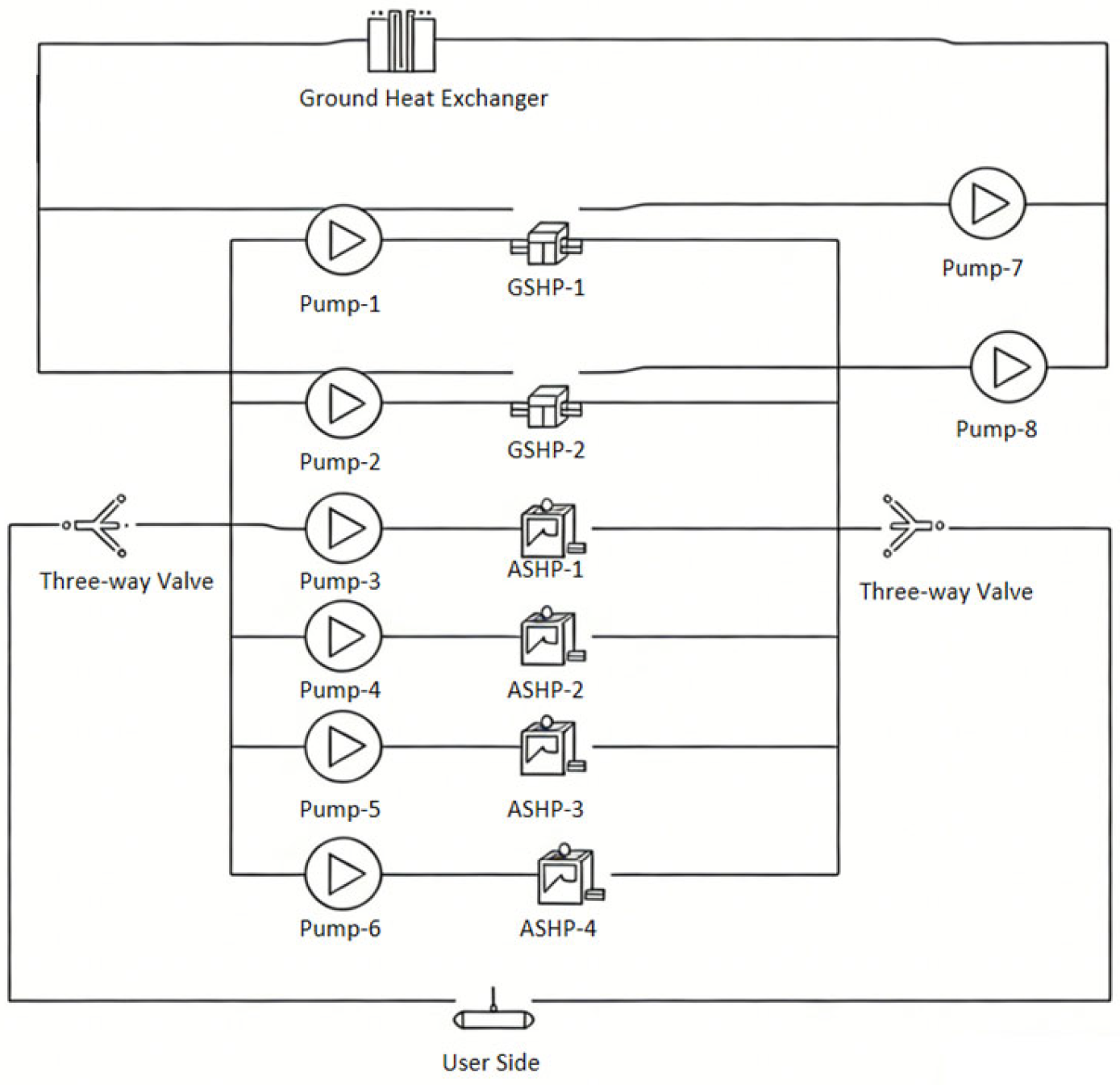
The core of this research is a hybrid configuration that integrates a ground-source heat pump (GSHP) system with an air-source heat pump (ASHP) system. This combined approach is specifically designed to leverage the high efficiency of the GSHP for base loads and the flexibility of the ASHP for peak shaving and soil thermal balancing. To optimize part-load operational efficiency, a parallel setup of two GSHP units and four ASHP units was selected. This multi-source integration provides excellent redundancy and enables dynamic capacity modulation: the ASHP units serve as an auxiliary cooling source to prevent excessive heat injection into the soil, while the GSHP units utilize the stable subsurface temperature to maintain high performance.
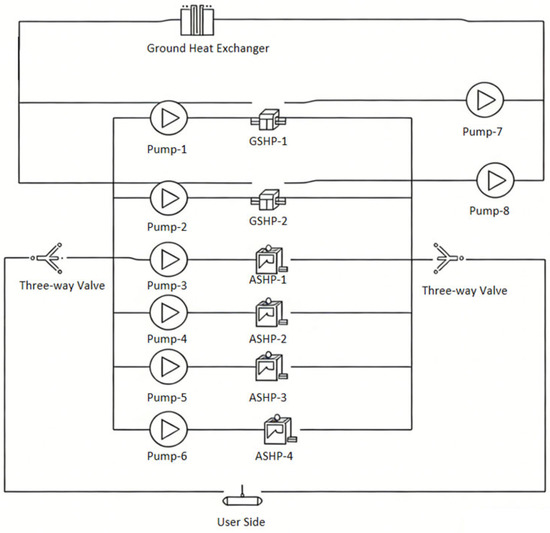
The physical architecture of this hybrid system is illustrated in Figure 4, showing how the dual heat sources are coupled to a shared user-side loop through three-way valves. This schematic highlights the synchronization between the ground heat exchanger (GHE) loop and the air-source ambient exchange units.
Figure 4.
Schematic diagram of the hybrid GSHP-ASHP system architecture.
The specific technical characterizations and parameter settings of the main components utilized in the dynamic simulation—covering both the ground-source and air-source sides—are detailed in Table 2 and Table 3.The nominal COP values listed in Table 2 were used as the rated performance parameters in the simulation, while the actual operating COP varied dynamically with load and source-side conditions.
Table 2.
Parameter settings for the GSHP and ASHP units.
Table 3.
Water pump parameter settings for the hybrid GSHP and ASHP system.
3. System Simulation Model and Operational Strategy
3.1. Mathematical Models of Heat Pump Units
3.1.1. Mathematical Model of the ASHP Unit
- (1)
- Summer cooling mode:
- (2)
- Winter heating mode
- (3)
- Effectiveness–number of transfer units (ε-NTU) method
Number of transfer units (NTU):
Heat capacity ratio (r):
Effectiveness:
Heat transfer:
where Aa represents the air-side heat transfer area, m2; represents the air-side convective heat transfer coefficient, W/(m2·°C); ε represents the heat exchanger effectiveness; NTU represents the number of transfer units; r represents the heat capacity ratio; Cp,a represents the specific heat capacity of air at constant pressure, kJ/(kg·°C); represents the air mass flow rate, kg/s; Ta,in represents the air-side inlet temperature, °C; and Tref represents the average refrigerant-side temperature, °C.
3.1.2. Mathematical Model of the Ground-Source Heat Pump Unit
- (1)
- Winter heating mode:
According to the law of energy conservation, the heat absorbed by the ground-source heat pump unit from the heat-source side is as follows:
where Qabs represents the heat absorbed from the soil by the unit during heating, kW. The condenser outlet water temperature is as follows:
where Tcon,out represents the condenser outlet water temperature, K; Tcon,in represents the condenser inlet water temperature, K; mcon represents the mass flow rate of water in the condenser, kg/s; and Cw represents the specific heat capacity of water, J/(kg∙K).
The evaporator outlet water temperature is as follows:
where Teva,out represents the evaporator outlet water temperature, K; Teva,in represents the evaporator inlet water temperature, K; and meva represents the mass flow rate of water in the evaporator, kg/s.
- (2)
- Summer cooling mode:
The heat rejected by the ground-source heat pump unit to the source side is as follows:
where Qrej represents the heat rejected by the unit to the heat sink in cooling mode, kW.
The condenser outlet water temperature is as follows:
The evaporator outlet water temperature is as follows:
- (3)
- Soil Thermal Imbalance Rate
To evaluate the long-term operational stability of the buried-pipe system, the soil thermal imbalance rate (K) is defined to quantify the difference between the heat absorbed and rejected by the soil:
where K represents the soil thermal imbalance rate; Qrea represents the cumulative heat absorbed by the soil, kW·h; and Qina represents the cumulative heat rejected to the soil, kW·h.
3.2. Comprehensive Evaluation Models
3.2.1. Energy Evaluation
The primary energy savings rate (PESR) is used to quantify the energy utilization efficiency of the hybrid system compared to a standalone air-source heat pump system:
where PESR represents the primary energy savings rate of the hybrid system; FSP represents the primary energy consumption of the standalone air-source heat pump system, kW·h; and Fon-site represents the primary energy consumption of the hybrid system, kW·h.
To facilitate the environmental calculation, the system electricity consumption is converted to an equivalent standard coal amount (M):
where M represents the equivalent standard coal amount, t (tons); k represents the standard coal equivalent coefficient, which is taken as 0.1229; and E represents the system electricity consumption, kW·h.
3.2.2. Environmental Evaluation
The environmental benefit is assessed by calculating the reduction in atmospheric pollutants (CO2, SO2, NOx, and dust). The annual emission amount (Qw) is calculated by
where Qw represents the emission amount of atmospheric pollutants, kg; V represents the emission factor of atmospheric pollutants per unit of standard coal combustion (kg/kgce); and M represents the equivalent standard coal amount, kg. The specific emission factors for various pollutants adopted in this study are listed in Table 4.
Table 4.
Emission factors of atmospheric pollutants per unit of standard coal combustion.
3.3. Simulation Model Setup
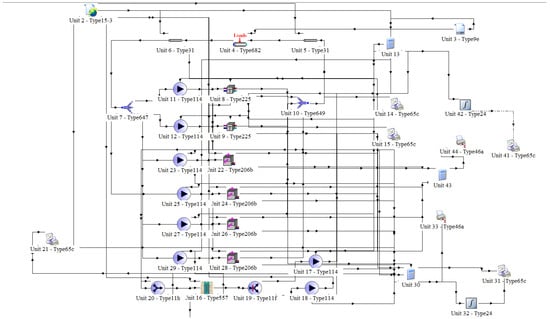
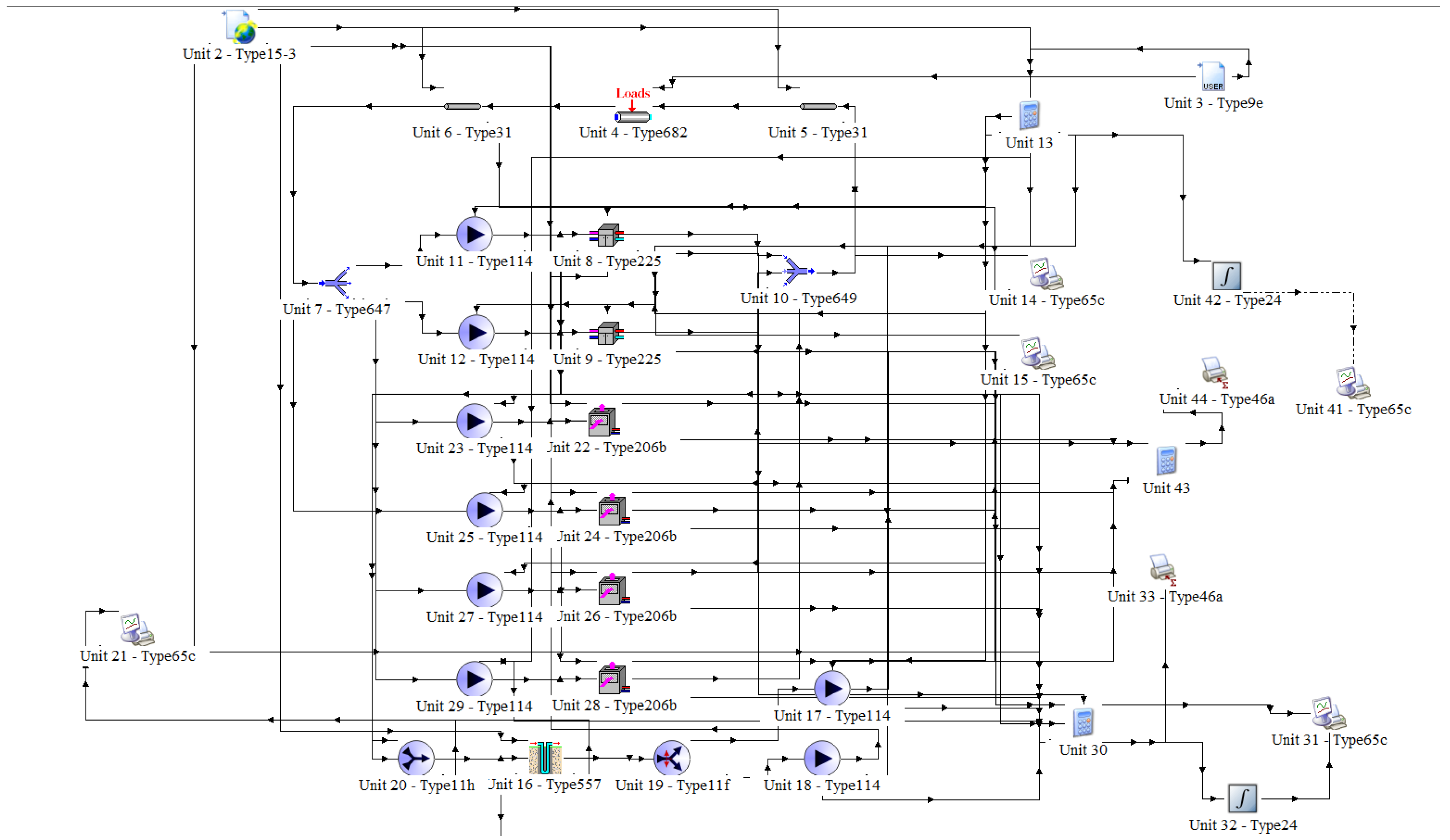
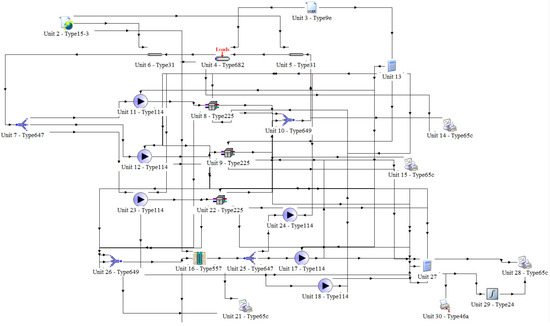
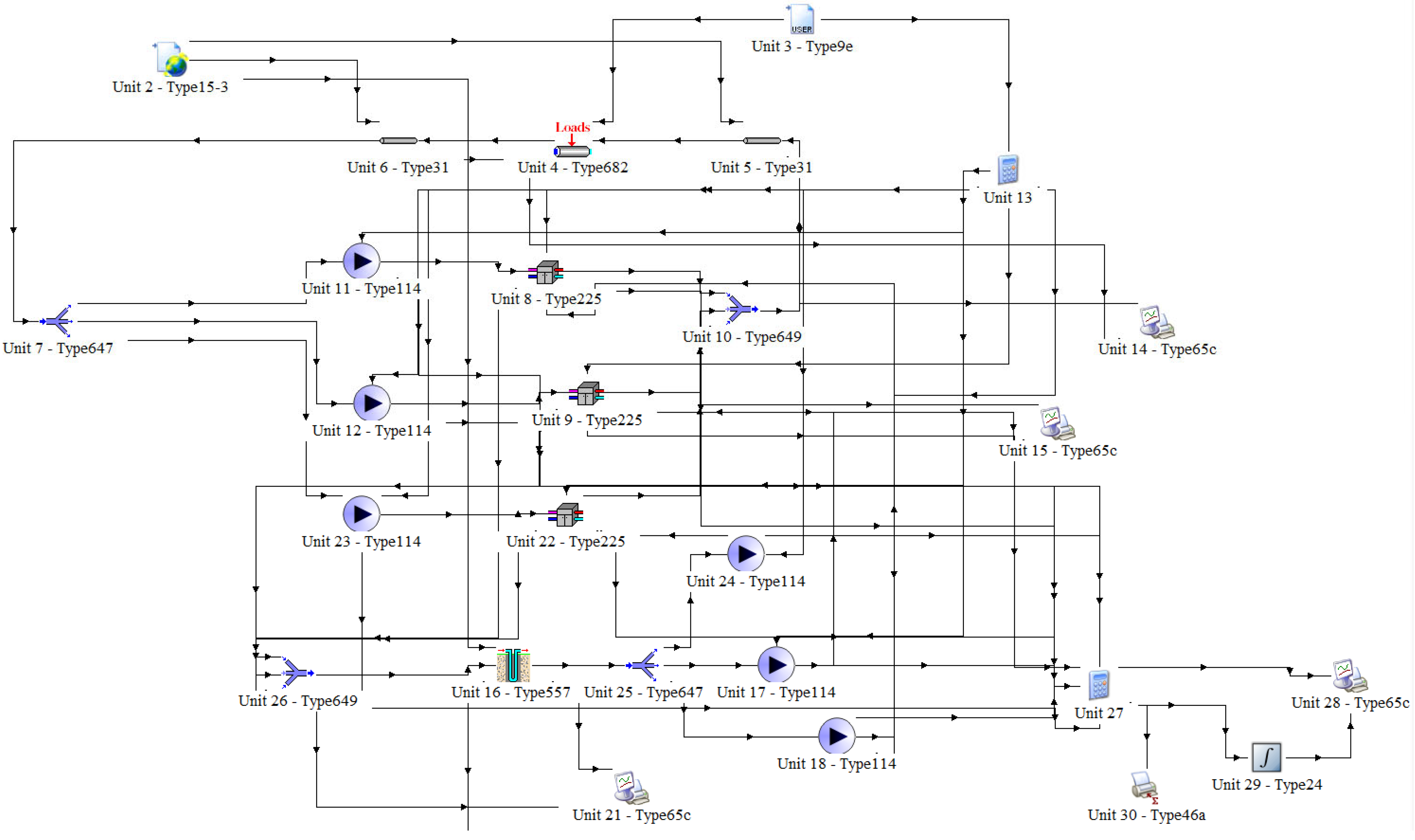
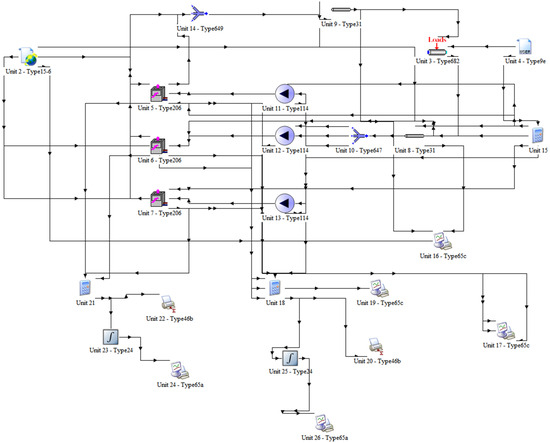
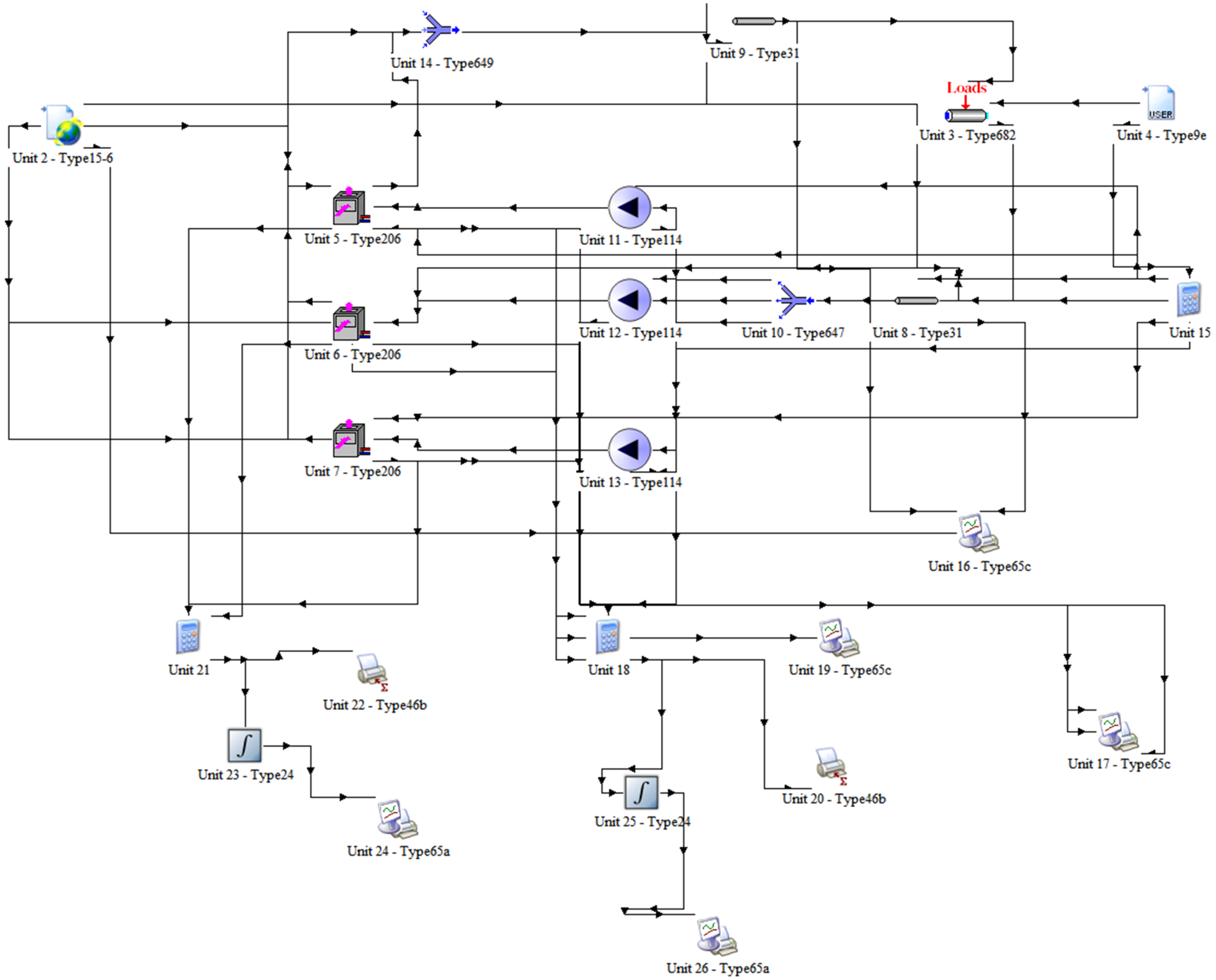
The transient system simulation program (TRNSYS) is a transient system simulation software that was originally developed by the Solar Energy Laboratory (SEL) at the University of Wisconsin–Madison. The software has since been gradually improved by several European organizations, such as CSTB and TRANSSOLAR [28]. TRNSYS was used as the platform for constructing the simulation model for the GSHP system. On the basis of the actual conditions of the building, the appropriate modules were selected, the parameters were set, and the connection relationships were established to construct the simulation system. The simulation system uses mainly the following modules: a load reading module, a water pump module, a heat pump unit module, and a buried-pipe heat exchanger module, among others. Details regarding the design modules are presented in Table 5. The system simulation models for various cooling and heating source schemes were built using TRNSYS software, as shown in Figure 5, Figure 6 and Figure 7.
Table 5.
Main modules of the system simulation model and their identification numbers.
Figure 5.
TRNSYS simulation model of Scheme A (combined GSHP and ASHP system).
Figure 6.
TRNSYS simulation model of Scheme B (standalone GSHP system).
Figure 7.
TRNSYS simulation model of Scheme C (standalone ASHP system).
3.4. Model Validation
To ensure the reliability of the simulation results, the developed model was validated from several aspects. Although physical experimental validation was not conducted for the Jinan railway-station case due to practical constraints, the model is considered reliable based on its construction basis and predicted results. The building load model was established according to the actual architectural characteristics, envelope thermal parameters, and local climatic data of the case-study building. In addition, the TRNSYS component types adopted in this study, particularly the vertical ground heat exchanger module (Type 557a) and the heat pump unit modules (Type 216 and Type 206), have been widely used and validated in related studies [29,30,31]. Moreover, the long-term trends predicted in this study, including soil temperature rise under the standalone GSHP scheme, mitigation of soil thermal imbalance after introducing an auxiliary cooling source, and improved operational stability of the hybrid system, are generally consistent with previous findings. Therefore, the present model can provide a reliable basis for comparing different system schemes and control strategies.
3.5. Operational Strategy of the Combined System
In this study, operational strategies for different cooling and heating source schemes were developed, and the operation of the system under each strategy was simulated using TRNSYS. For buildings with dominant cooling loads, long-term operation of a single GSHP system leads to heat accumulation in the soil, which causes an imbalance in the soil temperature field. Over time, this imbalance results in reduced system efficiency and a shorter equipment lifespan. Therefore, an ASHP system should be added to provide auxiliary cooling in summer, thereby reducing the operating time of the GSHP system and balancing the soil temperature.
For buildings with dominant cooling loads, the optimal operational strategy for the hybrid GSHP and ASHP system should allow the ASHP to run fully during the cooling period, thus maintaining the soil thermal balance. Accordingly, the circulating fluid outlet temperature of the GHEs will allow the GSHP unit to function properly and maintain the lifespan of the equipment after many years of operation. To reduce the energy consumption of the hybrid system, the ASHP should not always be given priority for operation during the cooling season. Instead, a start–stop control balance point must be found. This balance point not only enables the system to run more stably for a longer duration but also helps improve the immediate operational efficiency of the system, thereby ensuring that the hybrid GSHP and ASHP system can operate normally and stably.
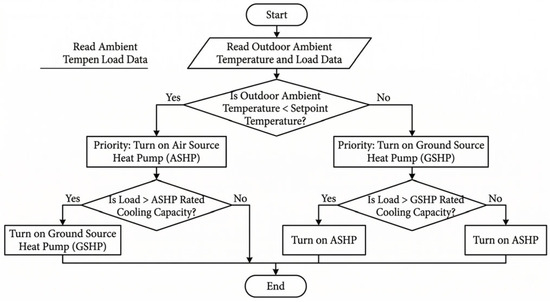
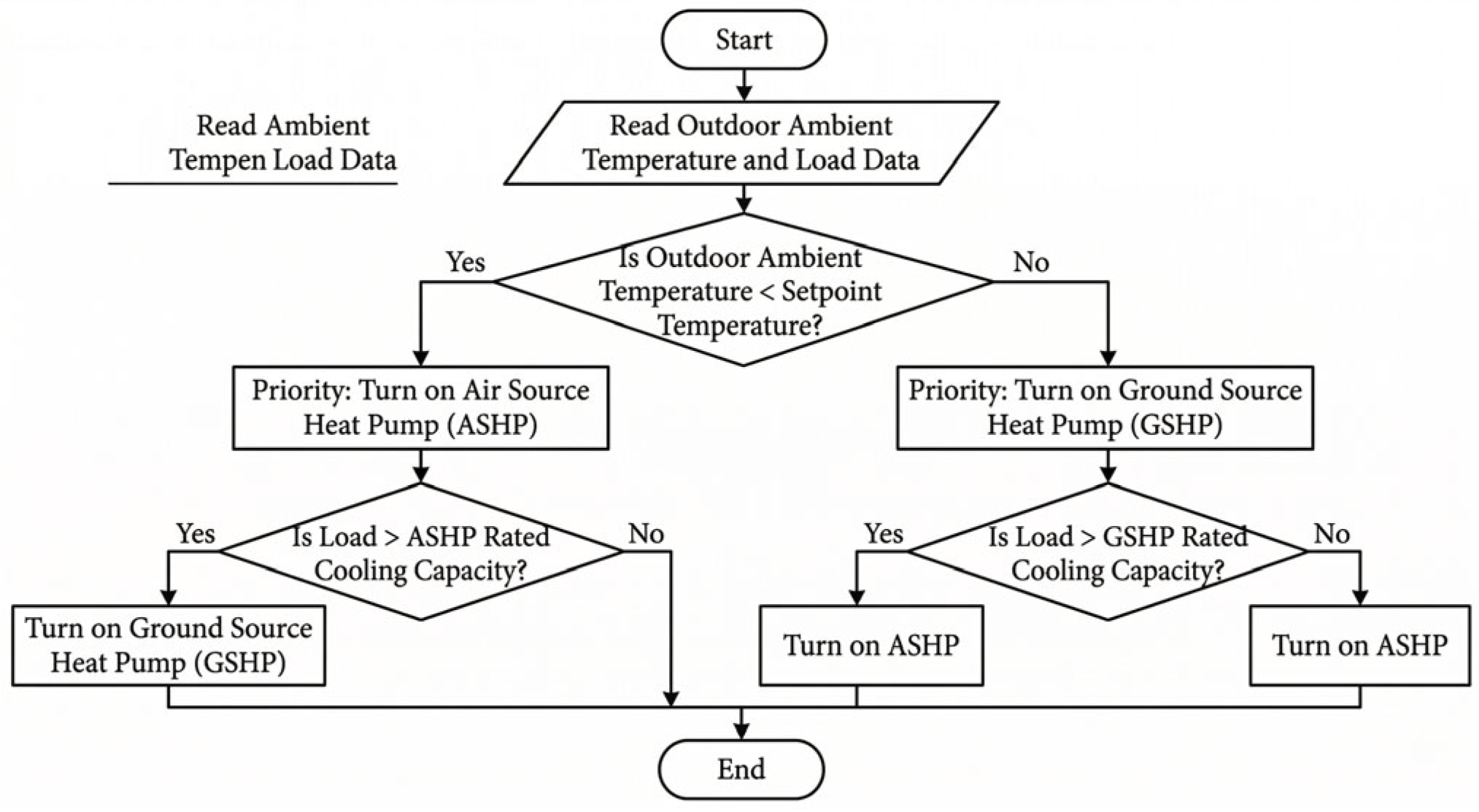
An outdoor dry-bulb temperature control strategy is used to manage the start–stop operation of the GSHP and ASHP units in the hybrid system [32,33]. In the winter, only the GSHP system is activated for heating, and the GSHP unit must meet the peak heating load of the building. The outdoor dry-bulb temperature is a key indicator of the efficiency of the ASHP unit, with lower outdoor temperatures corresponding to better ASHP performance. In summer, when the outdoor dry-bulb temperature is below a set threshold, the ASHP is prioritized for cooling. If the hourly cooling load of the building exceeds the rated cooling capacity of the ASHP, the GSHP unit is activated, and the GSHP and ASHP systems jointly bear the cooling load of the building. When the outdoor dry-bulb temperature exceeds a set threshold, the system switches to GSHP priority operation. The ASHP unit is activated when the hourly cooling load of the building exceeds the rated cooling capacity of the GSHP, and the GSHP and ASHP systems share the cooling load of the building. The set temperature values are 28 °C, 27 °C, 26 °C and 25 °C, which correspond to operational strategies A1, A2, A3, and A4, respectively. The operational strategies of the system are shown in Table 6. To clearly illustrate the operational logic of the hybrid GSHP-ASHP system, an algorithm flowchart of the control strategy is presented in Figure 8.
Table 6.
Outdoor dry-bulb temperature control strategy.
Figure 8.
Algorithm flowchart of the operation and control strategy for the hybrid heat pump system.
4. Simulation and Analysis of the Hybrid System
4.1. Thermal Balance of the Soil
To comprehensively evaluate the practical operational characteristics of the proposed hybrid GSHP-ASHP system, a dynamic simulation study is conducted in this chapter. Localized heat accumulation and thermal degradation of the soil surrounding the ground heat exchanger (GHE) are inherently gradual processes, typically requiring a decadal accumulation period to fully manifest their impacts on system performance. Adopting a shorter simulation timeframe could easily obscure the severe performance degradation induced by soil thermal imbalance. Therefore, to ensure the accuracy and long-term reference value of the findings, the simulation period for this study is uniformly set to 10 years. Based on this long-term model, this chapter provides an in-depth comparative analysis of system energy consumption, environmental benefits, and the evolution of the soil temperature field under different control strategies.
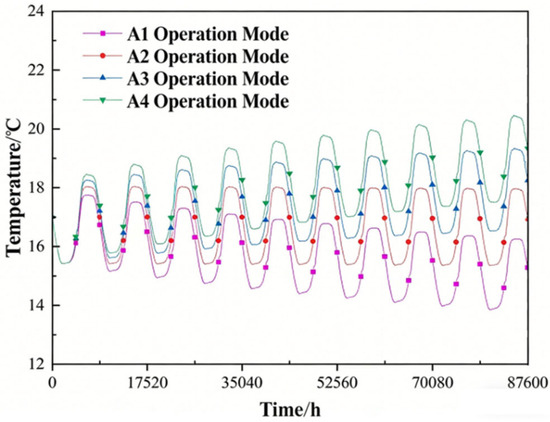
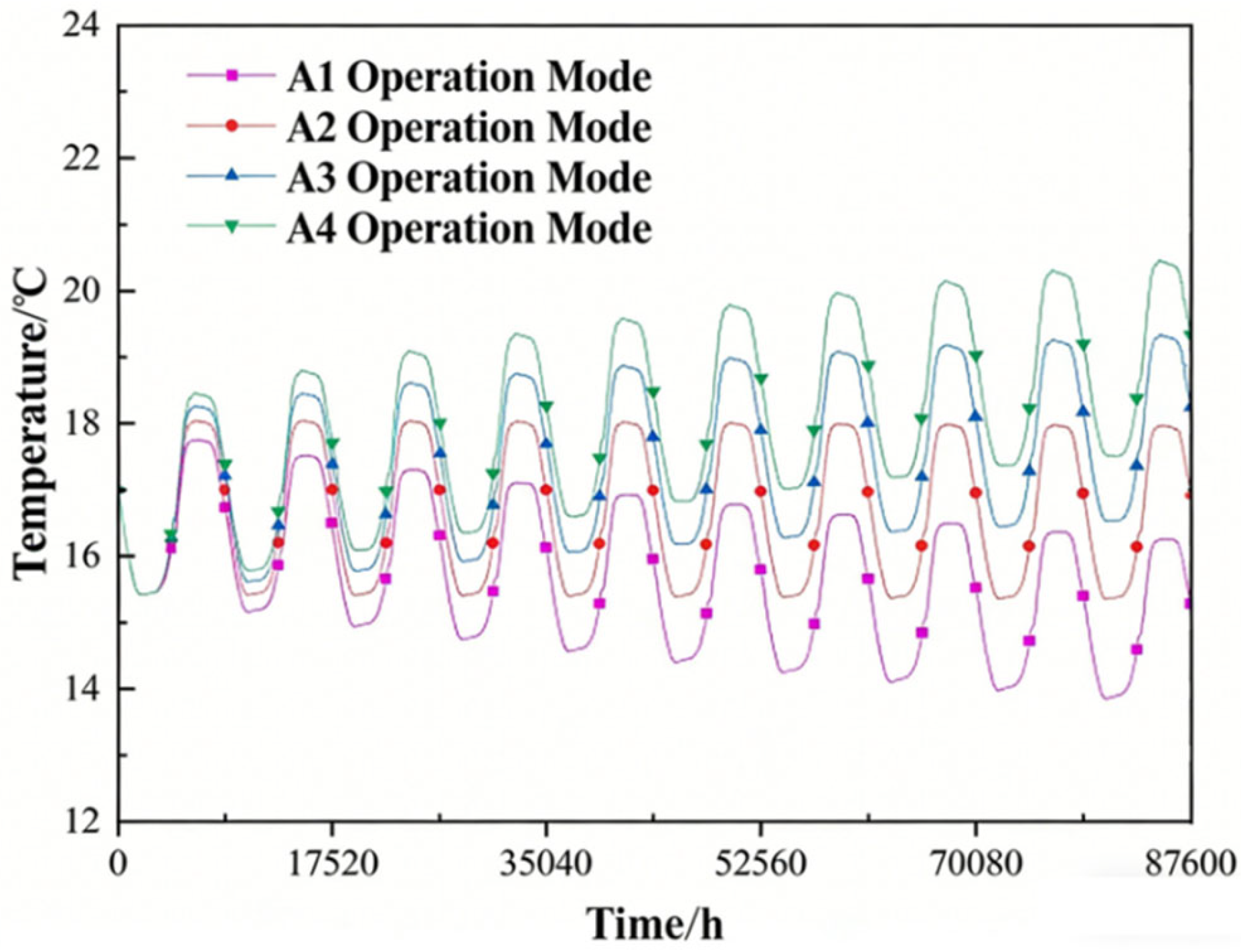
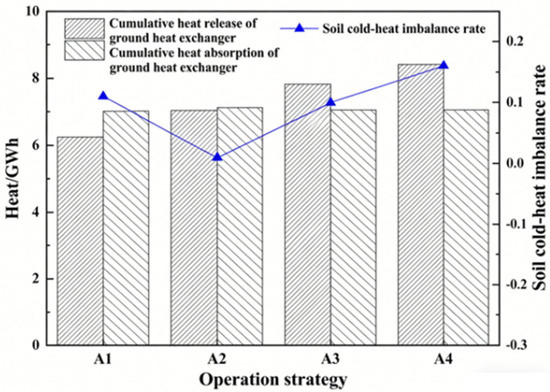
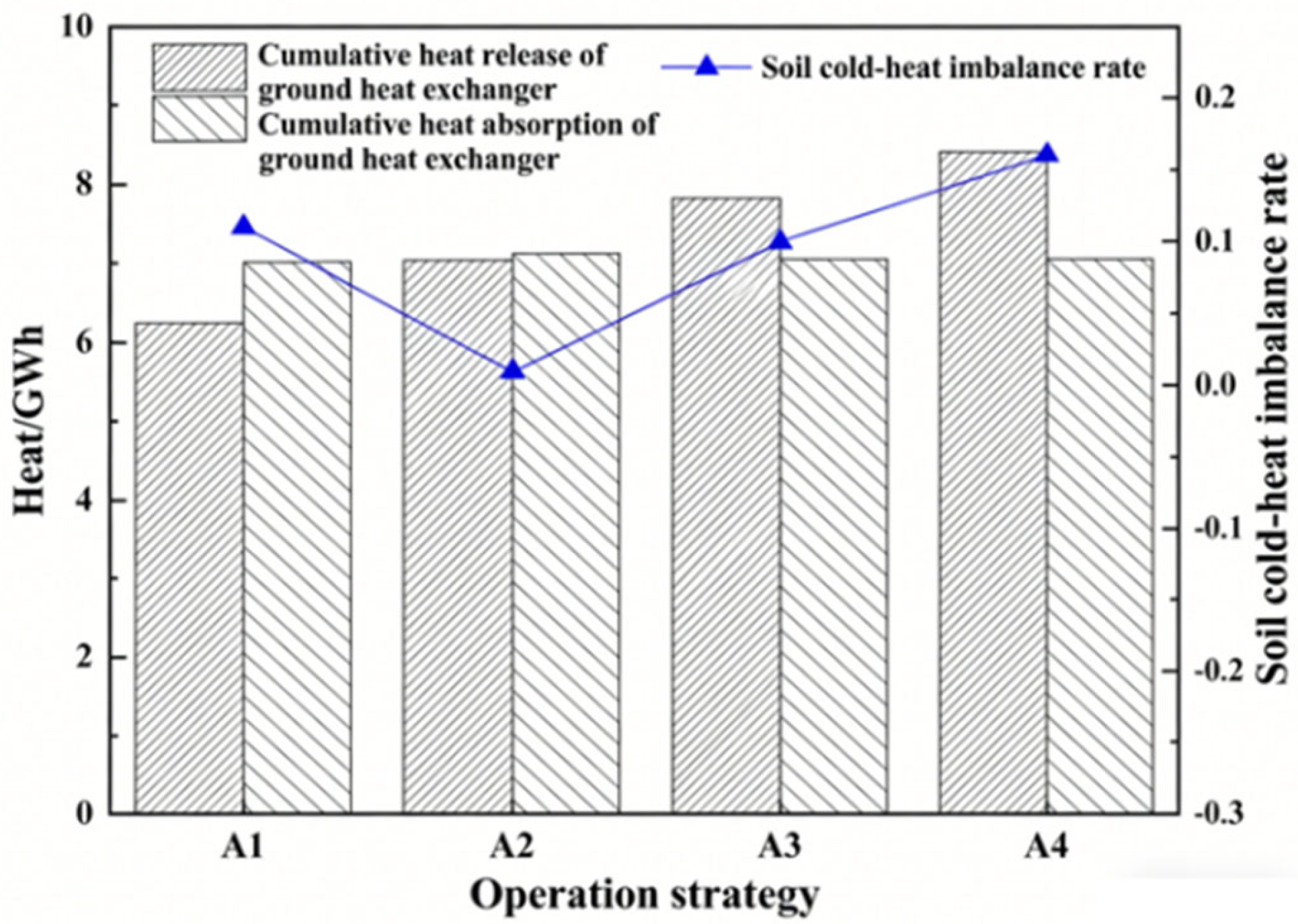
The hybrid system of GSHP and ASHP was simulated and analyzed, and the various control strategies were considered. The changes in the soil temperature, the cumulative heat exchange in the buried pipes, and the soil thermal imbalance rate after 10 years for strategies A1, A2, A3, and A4 are shown in Figure 9 and Figure 10. From the perspective of soil temperature variation, the lower the outdoor dry-bulb temperature setpoint is, the higher the soil temperature. After 10 years of operation, the soil temperatures under the four strategies were 15.28 °C, 16.94 °C, 18.27 °C, and 19.32 °C, respectively. The difference between the soil temperature and the initial soil temperature was smallest under strategy A2.
Figure 9.
Soil temperature variation trends after 10 years of simulated operation.
Figure 10.
Cumulative heat exchange and soil thermal imbalance rate after 10 years of simulated operation.
When operating strategy A2 was used to simulate operation for 10 years, the total heat absorbed by the buried pipes was 7.04 GW·h, and the total heat released was 7.12 GW·h; hence, the cumulative heat exchange was nearly balanced. The soil thermal imbalance rate was relatively low, at 1%, which was calculated via the method outlined in Equation (19). Operating strategy A2 effectively maintains soil thermal balance, thus enabling the system to operate stably and efficiently.
4.2. Operating Characteristics of the Buried-Pipe System
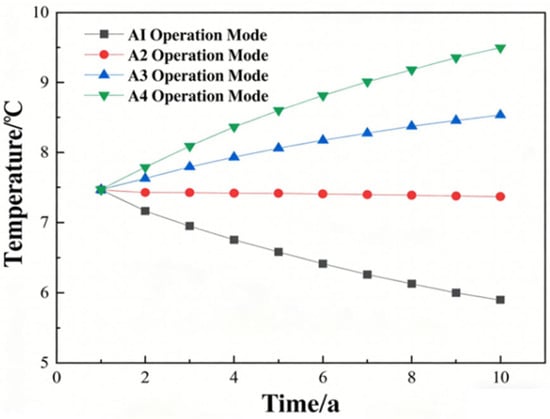
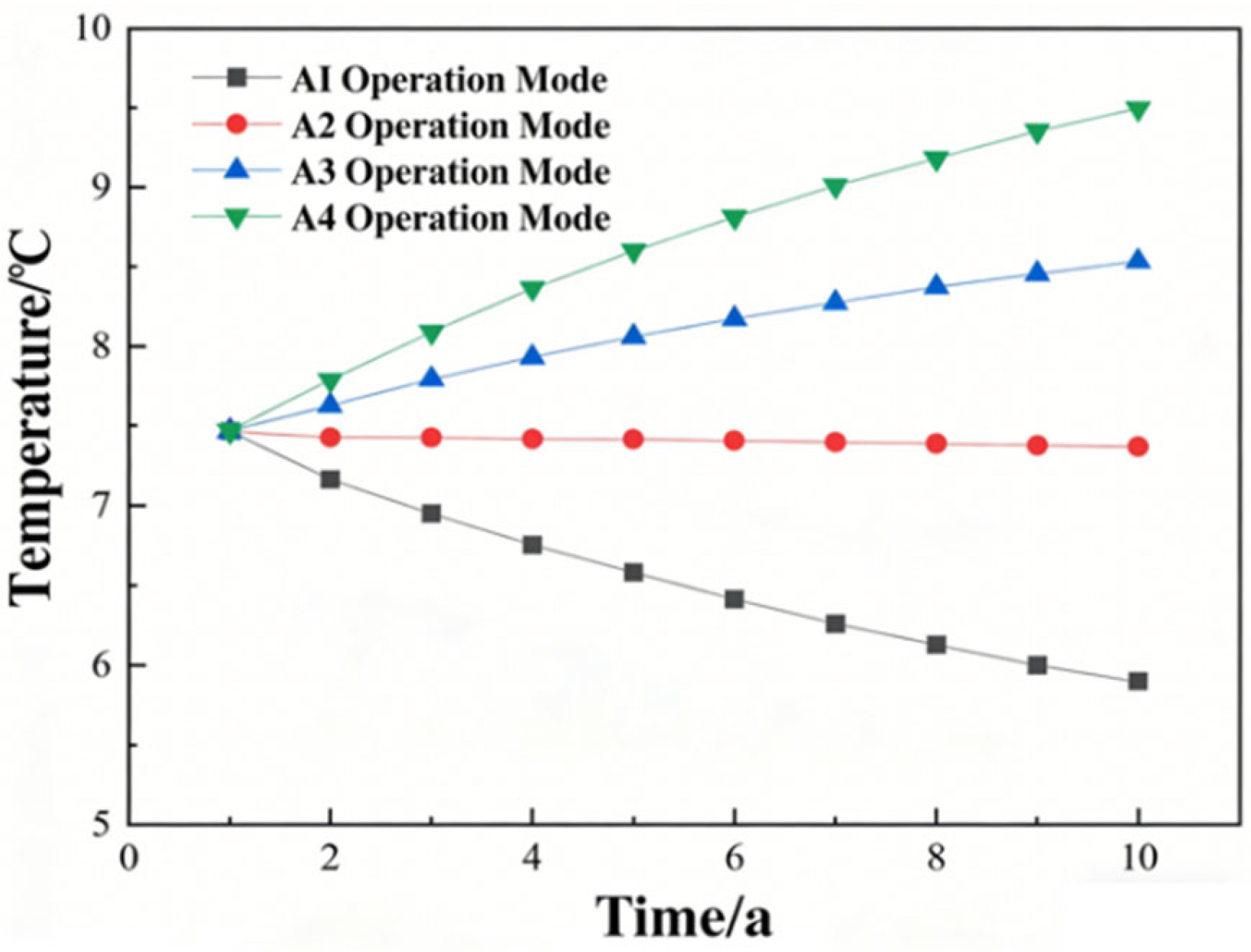
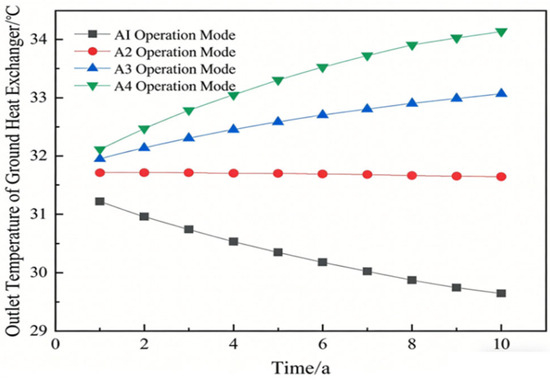
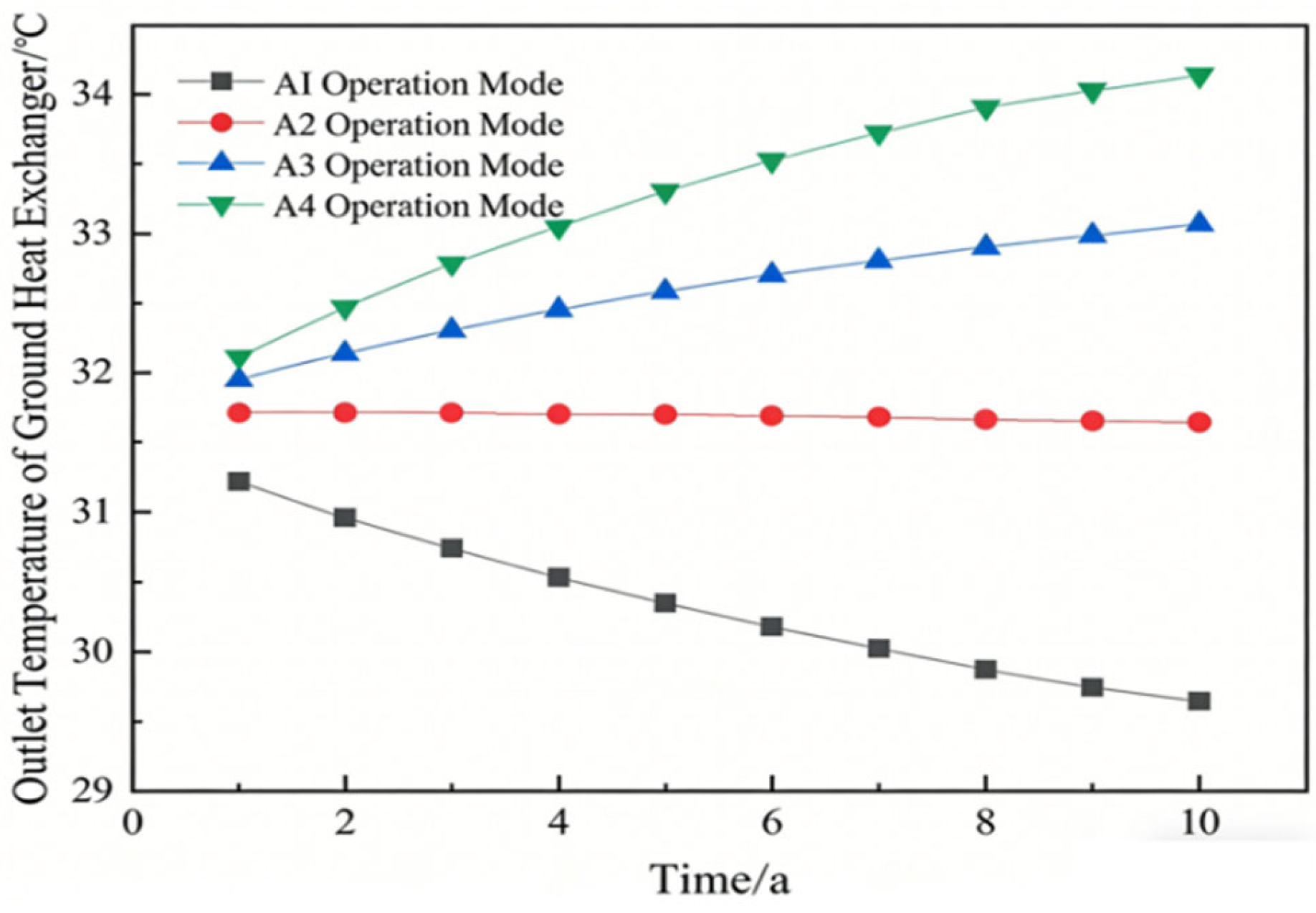
The changes in the minimum winter outlet temperature and maximum summer outlet temperature of the buried pipes after 10 years of operation under strategies A1, A2, A3, and A4 are shown in Figure 11 and Figure 12, respectively. The lower the outdoor dry-bulb temperature setpoint is, the higher the outlet temperature of the buried pipes.
Figure 11.
Winter minimum outlet temperature of the ground heat exchanger after 10 years.
Figure 12.
Summer maximum outlet temperature of the ground heat exchanger after 10 years.
Under operating strategy A1, the minimum winter outlet temperature of the buried pipes gradually decreases, and after 10 years of operation, the minimum outlet temperature is 5.78 °C. This finding is attributable to the ASHP operating for a longer period during the cooling season, whereas the GSHP unit operates for a shorter period. In summer, the buried-pipe system releases less heat into the soil, which causes the soil temperature to gradually decrease. During winter heating, the buried pipes are unable to absorb sufficient heat from the soil medium, thus resulting in a decrease in the outlet temperature over time. After long-term operation, the GSHP unit will struggle to operate normally in the winter.
Under operating strategies A3 and A4, the maximum summer outlet temperature of the buried pipes gradually increases with time and is 33.07 °C and 34.14 °C, respectively. This is because the outdoor dry-bulb temperature setpoint is lower and the ASHP operates for a shorter period. As the GSHP continues to run for an extended time, more heat is released into the soil, which causes the soil temperature and the outlet temperature of the buried pipes to increase. In contrast, under strategy A2, the system’s buried-pipe outlet temperature during the 10th year does not differ significantly from the initial temperature and remains relatively stable.
4.3. System Energy Consumption
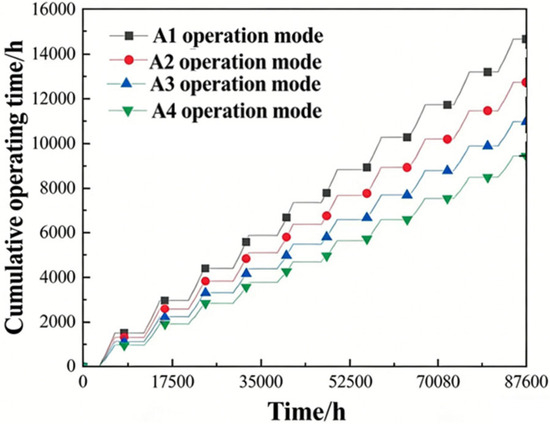
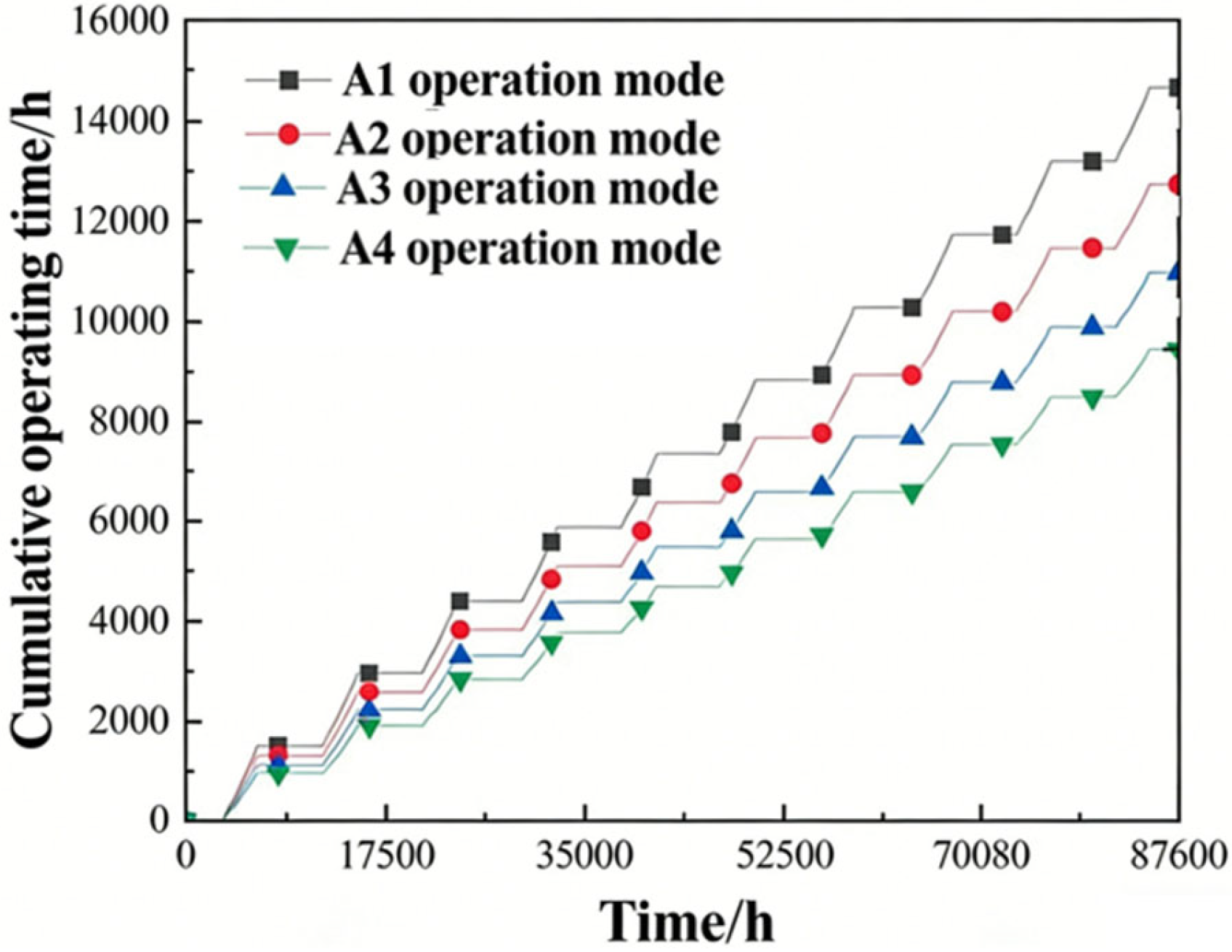
As shown in Figure 13, under different operating strategies, the lower the outdoor dry-bulb temperature setpoint is, the shorter the operating time of the ASHP system, thus resulting in an increased operating time for the GSHP in summer.
Figure 13.
Cumulative operating time of the ASHP after 10 years of simulation.
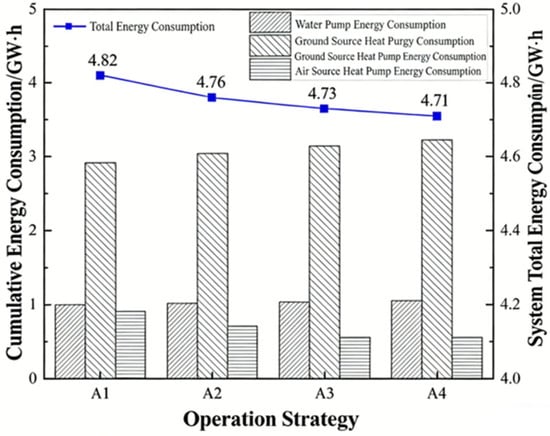
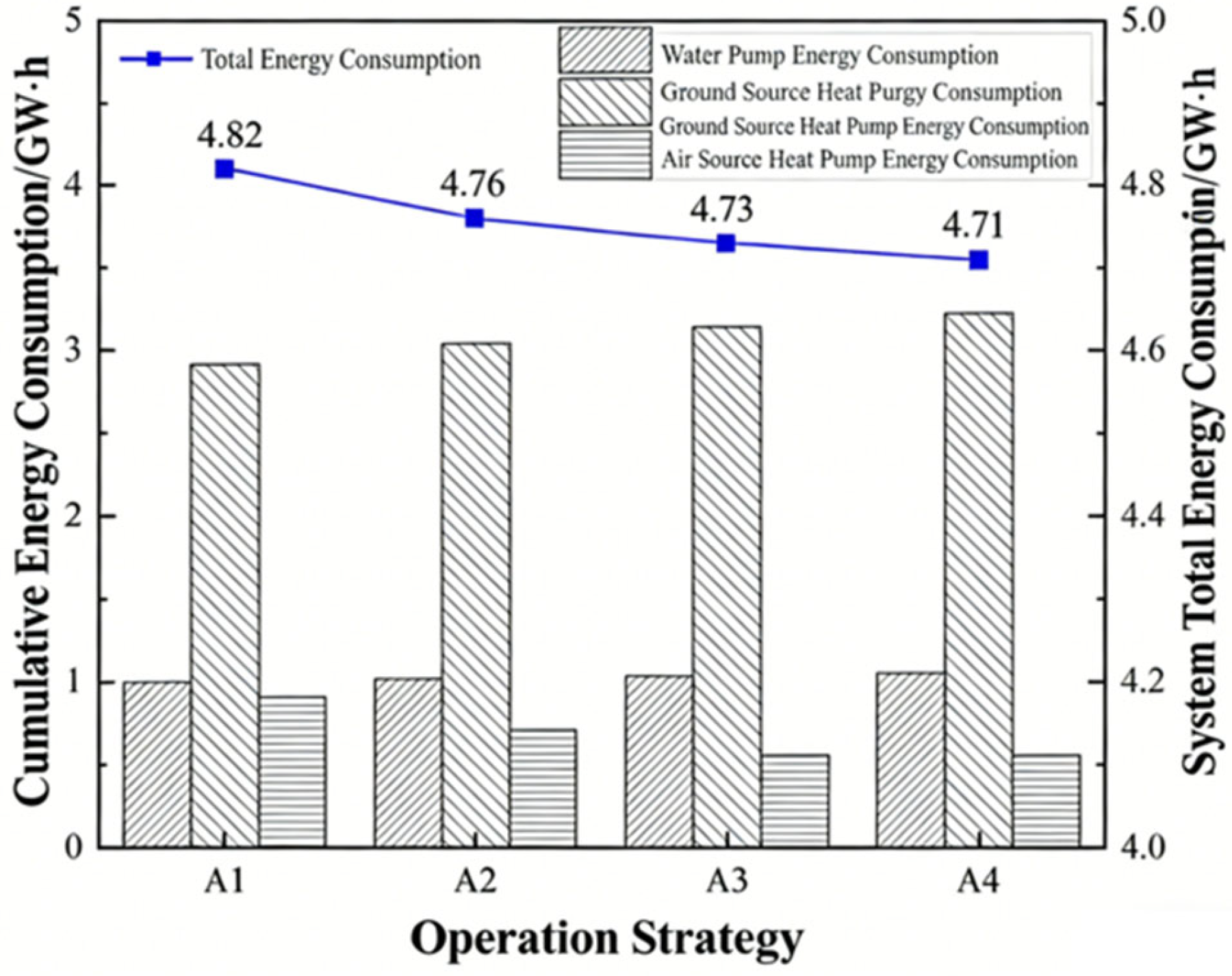
The cumulative energy consumption of the hybrid system with time is shown in Figure 14, and the values under strategies A1, A2, A3, and A4 are 4.82 GW·h, 4.76 GW·h, 4.73 GW·h, and 4.71 GW·h, respectively. As the energy consumption of the GSHP system gradually increases, the total energy consumption decreases. This decrease occurs because the energy efficiency of the GSHP unit is higher than that of the ASHP unit. The shorter the operating time of the ASHP in the hybrid system is, the more energy efficient the system becomes. The total energy consumption of strategy A4 is approximately 2.3% lower than that of strategy A1.
Figure 14.
Comparison of the total energy consumption after 10 years of simulated operation.
In this study, the soil thermal imbalance rate, buried-pipe inlet temperature, outlet temperature and system energy consumption under various operating strategies were comprehensively compared and analyzed. Operating strategy A2 was selected as the optimal control strategy. Under this strategy, the energy consumption of the hybrid system is reduced, and the soil thermal imbalance rate is minimized, which enables the system to operate efficiently and stably over the long term. Under operating strategy A4, the soil thermal imbalance rate is the highest after 10 years of operation, and long-term operation results in excessively high summer outlet temperatures from the buried pipes, thereby leading to reduced efficiency of the heat pump units. In summer, the GSHP unit does not operate normally. Under operating strategy A1, the system not only has the highest energy consumption but also experiences a high soil thermal imbalance rate. During the winter, the outlet temperature of the buried pipes decreases annually, and long-term operation causes the minimum winter outlet temperature of the buried pipes to fall below the required 4 °C, as reflected in Figure 11 and Figure 12. On this basis, operating strategy A2 is concluded to be the optimal system control strategy.
5. Comparative Analysis of the Hybrid System and Single Heat-Source Systems
5.1. Comparison Between the Hybrid System and Standalone GSHP System
Strategy A2 is selected as a representative of the control strategies, with the outdoor dry-bulb temperature setpoint as the switching temperature, and it is compared with standalone heat-source systems Scheme B (standalone GSHP) and Scheme C (standalone ASHP). The simulation and analysis results for the different systems built using TRNSYS software are shown in Figure 15, Figure 16, Figure 17 and Figure 18.
Figure 15.
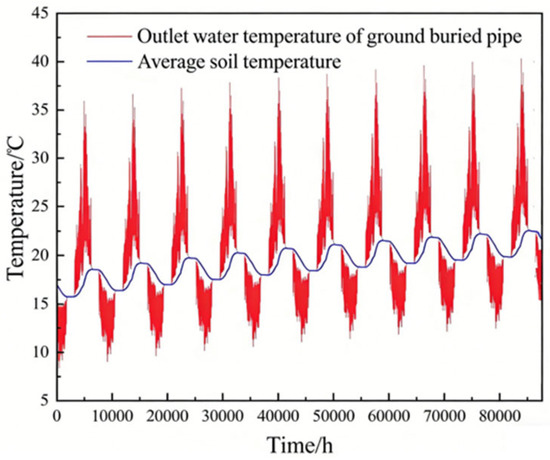
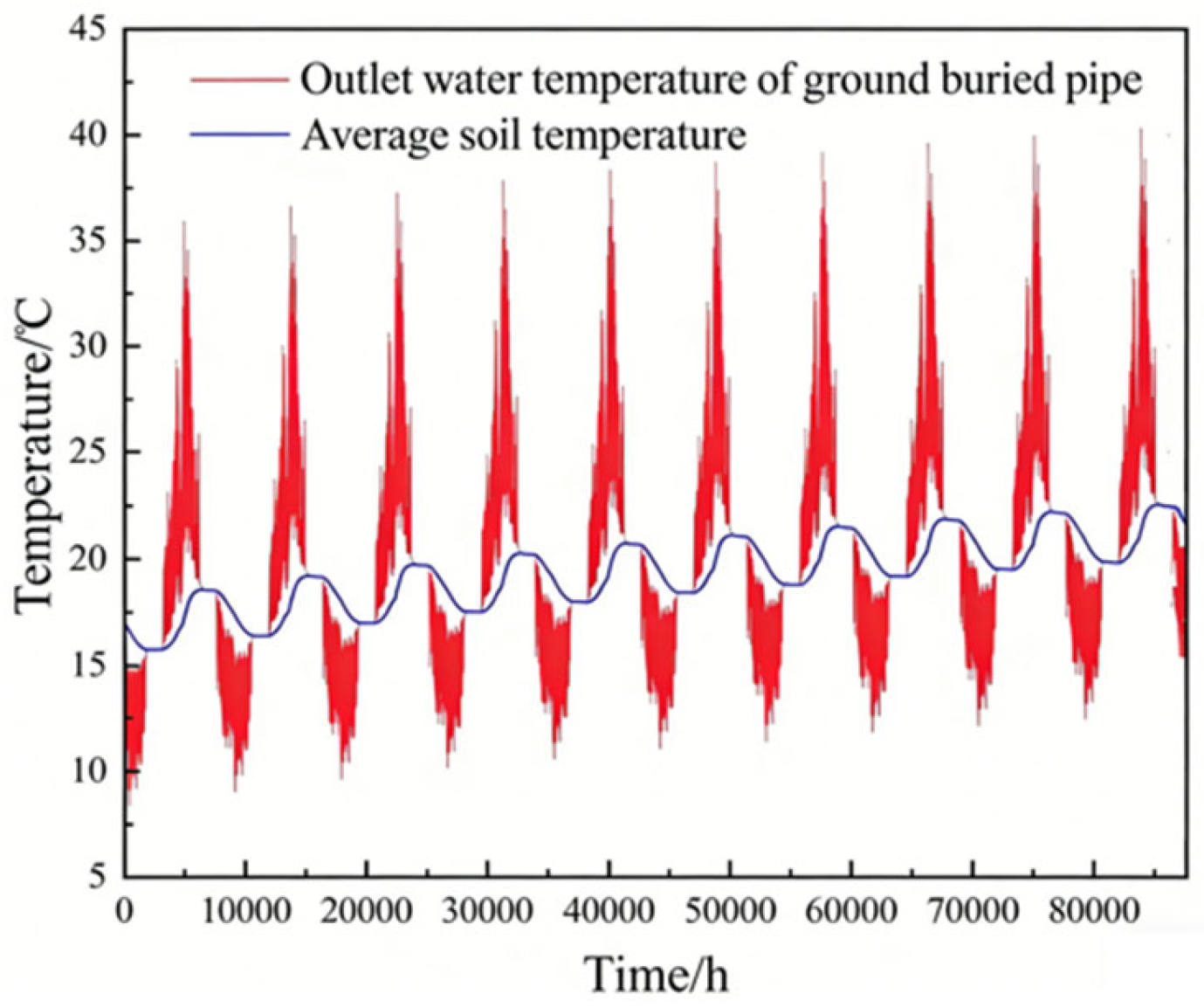
Outlet temperature of the GHE and average soil temperature for the standalone GSHP system after 10 years.
Figure 16.
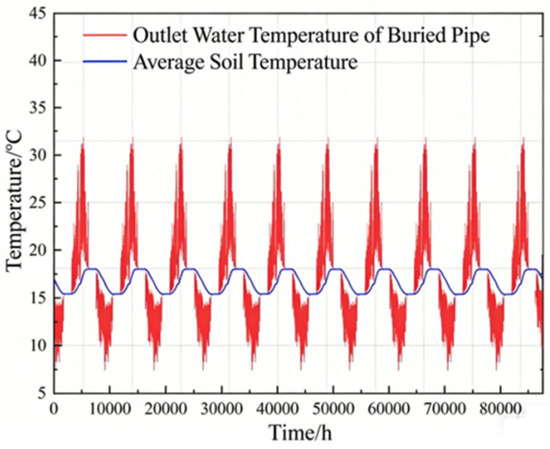
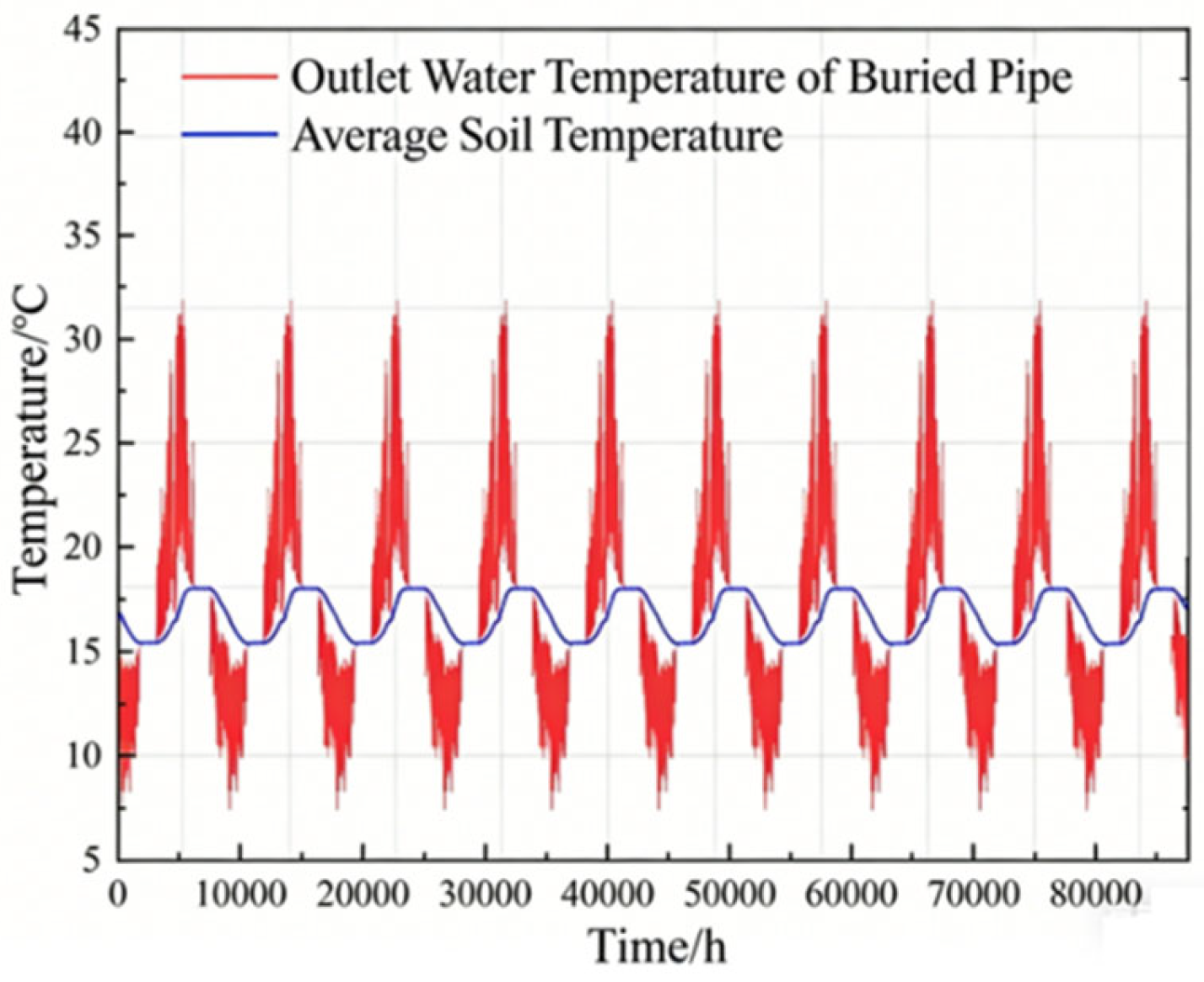
Outlet temperature of the GHE and average soil temperature under strategy A2 after 10 years.
Figure 17.
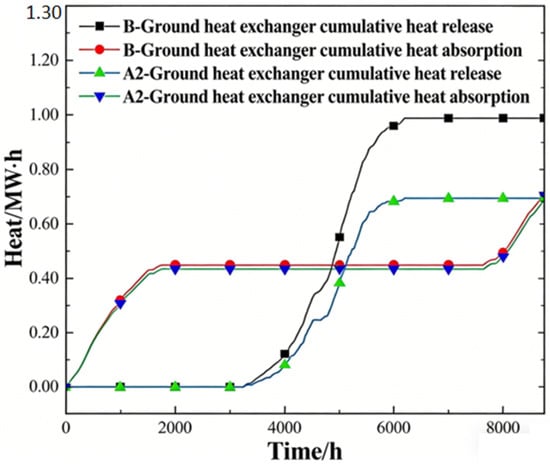
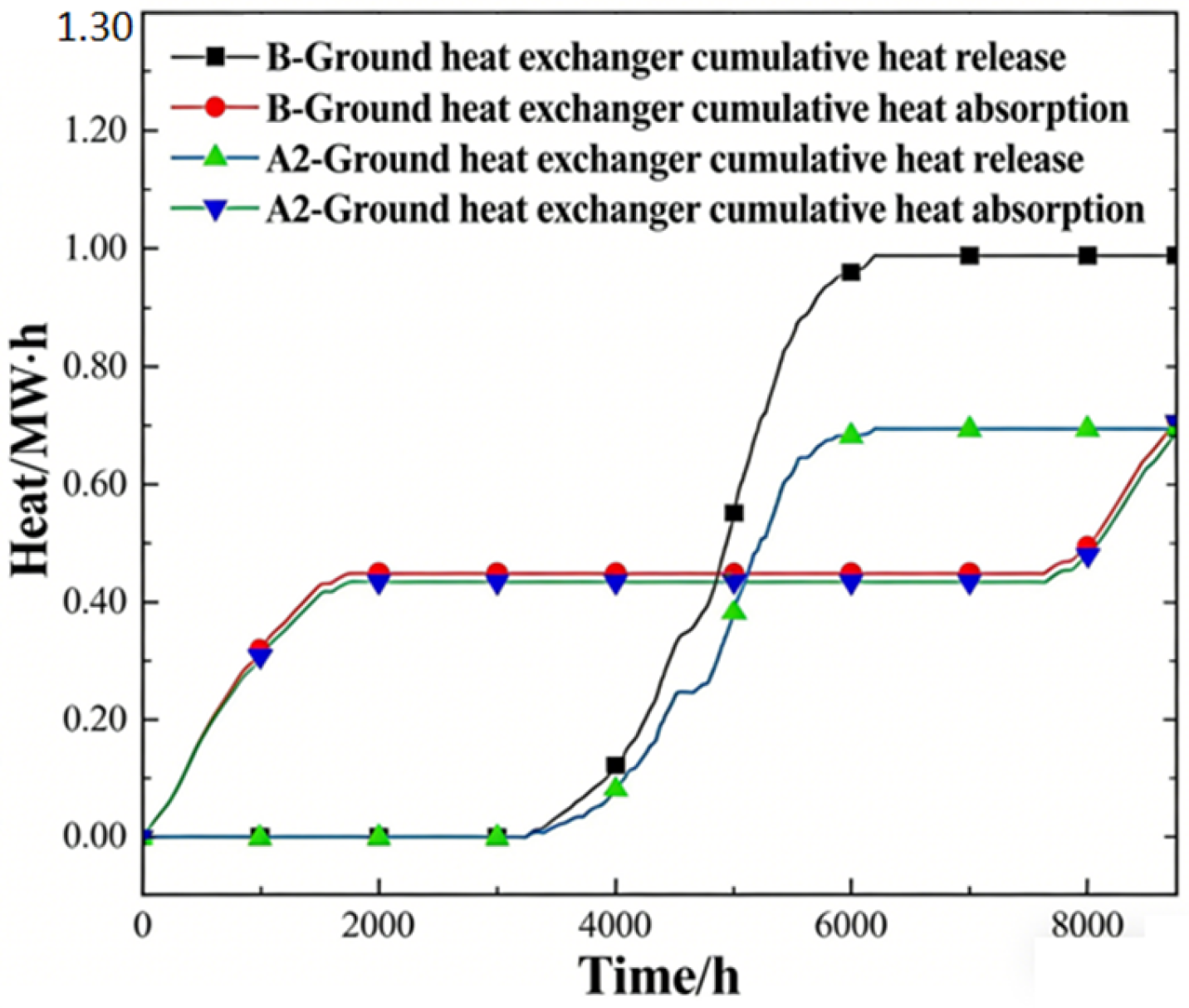
Annual cumulative heat exchange of the standalone GSHP system and composite system.
Figure 18.
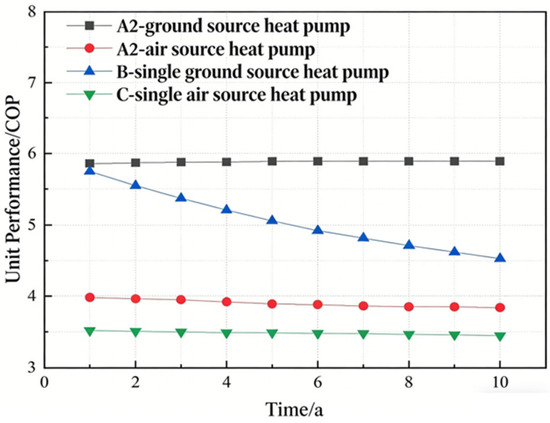
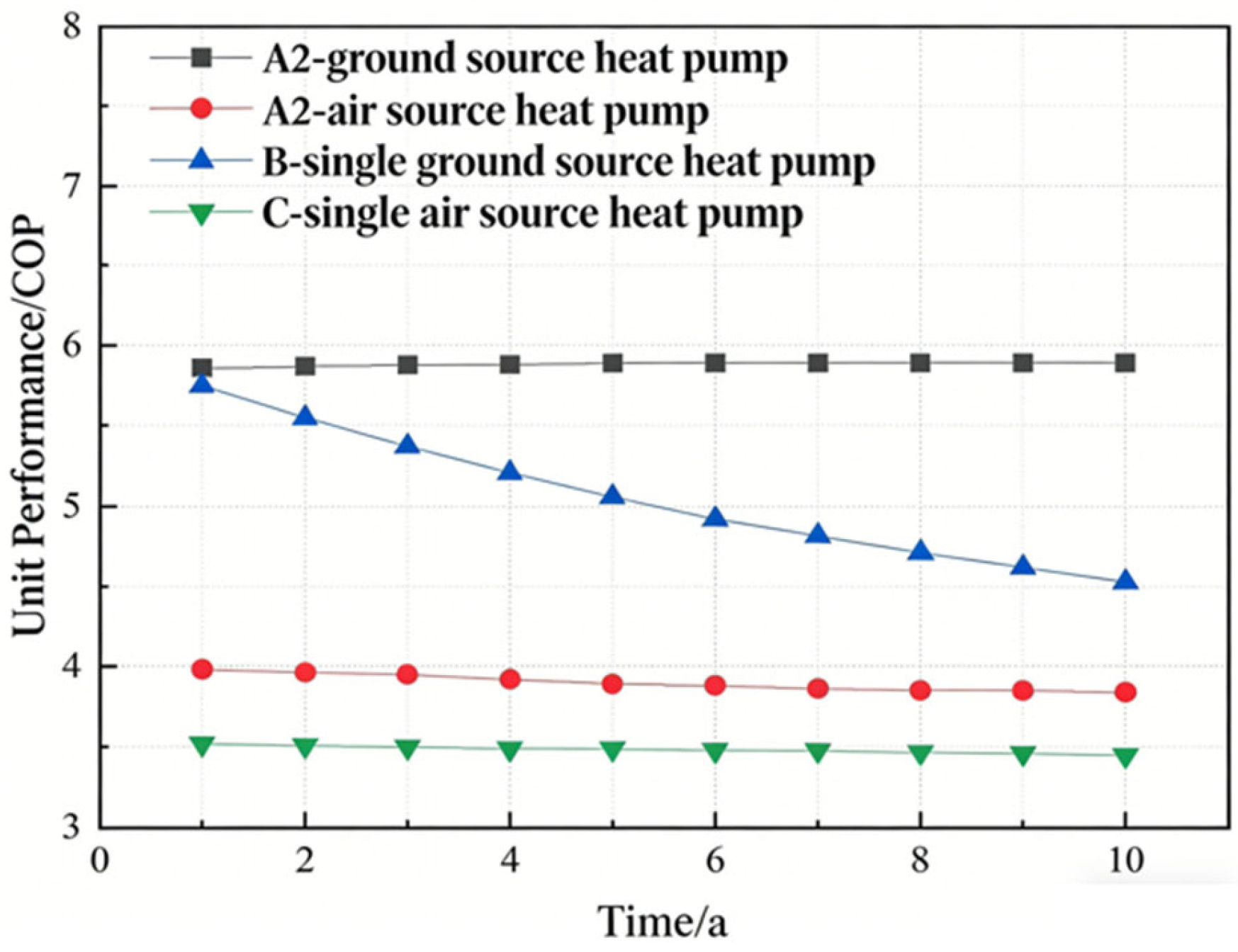
Comparison of the average COPs of different heat pump systems in the summer.
After 10 years of operation, the average soil temperature and the maximum outlet temperature of the buried pipes in the standalone GSHP system are 22.31 °C and 40.06 °C, respectively, which differ significantly from the initial temperature. The cumulative heat absorption and release in the buried pipes also differ greatly, with both the outlet temperature of the buried pipes and the soil temperature increasing annually. These increases result in a decrease in the efficiency of the GSHP units. As shown in Figure 18, the average summer cooling COP of the standalone GSHP unit decreases from the initial value of 5.73 to 4.51, and with long-term operation, the summer operational efficiency of the GSHP unit significantly decreases, which shortens its lifespan.
In contrast, for the hybrid system with operating strategy A2, the outlet temperature of the buried pipes and the average soil temperature remain stable during operation, with the cumulative heat absorption and release of the buried pipes being relatively balanced. The summer heat pump units maintain a higher average COP of approximately 5.8, which enables the system to run stably and efficiently.
Additionally, from an economic perspective, because the hybrid system adds an ASHP for auxiliary cooling, the workload of the GSHP units is reduced. As a result, the number of boreholes required for the buried-pipe system is lower than that for the standalone GSHP system. If the drilling cost is 10,000 RMB per hole and the pipe cost is 15 RMB per meter, the initial investment can be reduced by 1.6728 million RMB.
5.2. Energy Savings and Environmental Benefits
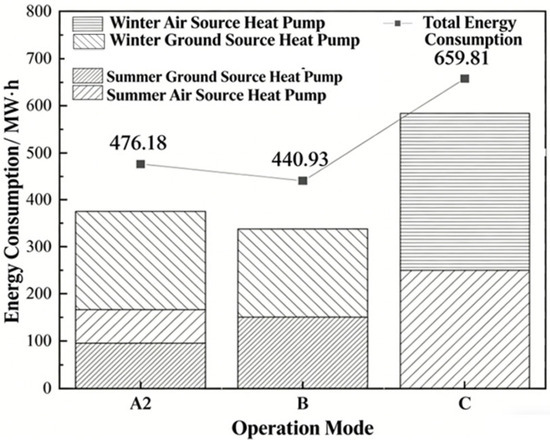
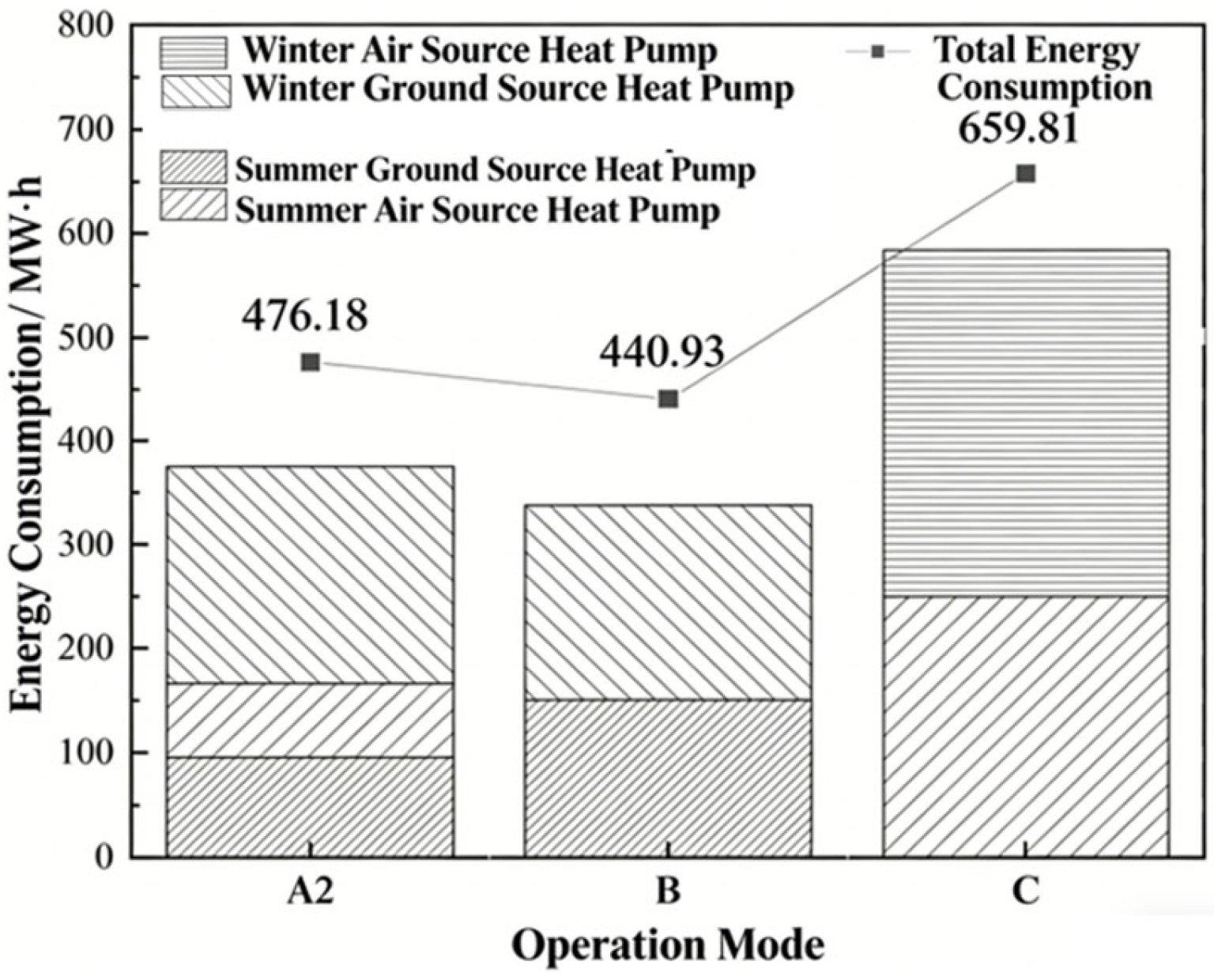
The total annual energy consumption and subenergy consumption for each strategy were simulated, as shown in Figure 19. The annual energy consumption for the standalone GSHP system is the lowest at 440.93 MW·h, with 149.88 MW·h of energy consumed during the summer and 187.19 MW·h during the winter. The annual energy consumption for the standalone ASHP system is the highest at 659.81 MW·h, with 249.6 MW·h consumed during the summer and 334.8 MW·h consumed during the winter. Compared with the ASHP, the energy-saving benefits of the GSHP are most evident in winter.
Figure 19.
Annual energy consumption breakdown of each strategy.
Although the standalone GSHP system has the lowest energy consumption, long-term operation causes an imbalance in the soil temperature field, which leads to a gradual decline in the efficiency of the system and an increase in energy consumption over time. Under operating strategy A2, the total energy consumption of the hybrid system is 476.18 MW·h, which is approximately 183.63 MW·h less than the energy consumption of the standalone ASHP system. The primary energy savings rate is 28%, which directly reflects the energy utilization efficiency of the system [34]. Based on the comprehensive evaluation models established in Section 3.2, the energy-saving and emission-reduction effects of each scheme were calculated. According to Equation (20), the primary energy savings rate of the hybrid system reached 28%.
According to our calculations, the standalone ASHP system requires 81.1 t of standard coal equivalent, whereas the GSHP and ASHP hybrid system consumes 58.5 t of standard coal equivalent. Therefore, compared with the standalone ASHP system, the hybrid system can save 22.6 t of standard coal. Compared with the standalone ASHP system, the GSHP and ASHP hybrid system has lower energy consumption during operation, thereby reducing electricity consumption [35]. The CO2, SO2, NOx, and dust emitted from coal combustion during power generation pose serious threats to air quality [36]. The emission amounts of atmospheric pollutants (CO2, SO2, NOx, and dust) for both systems were calculated separately. The calculation method is expressed in Equation (22).
The calculation results are shown in Table 7. According to the results, the hybrid GSHP and ASHP system has significant energy-saving and emission-reduction advantages. Compared with the standalone ASHP system, the hybrid system reduces the CO2, SO2, NOx, and dust emissions by 56,500 kg, 384.2 kg, 361.6 kg, and 339 kg, respectively.
Table 7.
Annual atmospheric pollutant emissions of different systems (kg/year).
6. Conclusions
In this study, the issues of soil thermal imbalance and reduced system performance caused by the long-term operation of a single GSHP system for heating and cooling in buildings with dominant cooling loads were addressed. The proposed solution is to add an ASHP system in the summer for auxiliary cooling. A hybrid system model was constructed, and different outdoor dry-bulb temperature settings were used as control strategies for the start–stop operation of the GSHP and ASHP units. The optimal strategy was determined for an outdoor dry-bulb temperature of 27 °C.
Under the optimal control strategy, the average COP of the GSHP unit in summer is relatively high (approximately 5.8), and the soil thermal imbalance rate is minimal (only 1%). Thus, this strategy helps stabilize the soil temperature and ensures that the system operates stably and efficiently over the long term. From an economic perspective, compared with the standalone GSHP system, the hybrid system reduces the number of boreholes required for the buried-pipe system, which results in a savings of 1.6728 million RMB in initial investment. From an energy-saving perspective, compared with the standalone ASHP system, the hybrid system reduces the energy consumption by 28%, thus demonstrating significant energy savings and emission-reduction potential. Furthermore, the hybrid system performs excellently in terms of environmental protection; it reduces the annual CO2, SO2, NOx, and dust emissions by 56,500 kg, 384.2 kg, 361.6 kg, and 339 kg, respectively.
The results are generally consistent with those reported in previous studies. Although long-term measured operating data for the case-study system were not available, the model was developed based on actual building characteristics, local climatic data, and equipment performance parameters, and the adopted simulation methods are consistent with those commonly used in related studies. Therefore, the model can provide a reasonable basis for comparing different system schemes and control strategies.
The findings of this study are mainly applicable to public buildings with cooling-dominated load characteristics under climatic conditions similar to those of Jinan. For regions outside China with comparable outdoor temperature distributions, building load characteristics, and soil thermal properties, the proposed hybrid system and control strategy may also provide useful reference. However, the specific switching temperature and system capacity allocation should still be optimized according to local climatic conditions and project requirements. Future work should focus on long-term experimental validation, multi-climate comparative analysis, and further optimization of control strategies.
Author Contributions
Conceptualization, Y.L. and Q.G.; methodology, Y.L. and Q.L.; software, Q.L. and P.C.; validation, Y.L., Q.G. and Q.L.; formal analysis, Q.G. and P.C.; investigation, Y.L. and Q.L.; resources, P.C.; data curation, Q.G.; writing—original draft preparation, Y.L.; writing—review and editing, Q.G., Q.L. and P.C.; visualization, Q.L.; supervision, Y.L. and P.C.; project administration, Y.L.; funding acquisition, P.C.; Data curation, W.Z. and T.H.; Conceptualization, W.Z. and T.H.; resources, W.Z. and T.H. All authors have read and agreed to the published version of the manuscript.
Funding
The financial supports provided by Natural Science Foundation of Shandong Province, China (No. ZR2022ME079), and the National Natural Science Foundation of China (Project No. 52278115).
Data Availability Statement
The original contributions presented in the study are included in the article, further inquiries can be directed to the corresponding authors.
Acknowledgments
During the preparation of this manuscript, the authors used TRNSYS18 for simulation purposes. The authors have reviewed and edited the output and take full responsibility for the content of this publication.
Conflicts of Interest
Author Tishi Huang was employed by the SDEG Geothermal New Energy Corporation. The remaining authors declare that the research was conducted in the absence of any commercial or financial relationships that could be construed as a potential conflict of interest.
Abbreviations
| GSHP | Ground-source heat pump |
| ASHP | Air-source heat pump |
| HVAC | Heating, ventilation and air conditioning |
| COP | Coefficient of performance |
| NTU | Number of transfer units |
| PESR | Primary energy savings rate |
| nc | number of boreholes |
| Qbc | total building cooling load, W |
| COPgc | cooling coefficient for the performance of the GSHP unit |
| h | borehole depth, m |
| qc | heat exchange rate per linear meter in summer, W/m |
| nh | number of boreholes |
| Qbh | total building heating load, W |
| COPgh | heating coefficient for the performance of the GSHP unit |
| qh | heat exchange rate per linear meter in winter, W/m |
| Qac | cooling capacity of the air-source heat pump unit (summer), kW |
| Win | actual input power of the compressor, kW |
| COPac | cooling coefficient for the performance of the air-source heat pump unit |
| mass flow rate, kg/s | |
| h1 | specific enthalpy of the refrigerant at the compressor suction inlet, kJ/kg |
| h4 | specific enthalpy of the refrigerant at the expansion valve outlet, kJ/kg |
| COPah | heating coefficient of performance of the air-source heat pump unit |
| Qah | heating capacity of the air-source heat pump unit (winter), kW |
| h2 | actual specific enthalpy of the refrigerant at the compressor discharge outlet, kJ/kg |
| h3 | specific enthalpy of the refrigerant at the condenser outlet, kJ/kg |
| Aa | air-side heat transfer area, m2 |
| air-side convective heat transfer coefficient, W/(m2·°C) | |
| ε | heat exchanger effectiveness |
| r | heat capacity ratio |
| Cp,a | specific heat capacity of air at constant pressure, kJ/(kg·°C) |
| air mass flow rate, kg/s; | |
| Ta,in | air-side inlet temperature, °C |
| Tref | average refrigerant-side temperature, °C |
| Tcon,out | condenser outlet water temperature, K |
| Tcon,in | condenser inlet water temperature, K |
| Mcon | mass flow rate of water in the condenser, kg/s |
| Cw | specific heat capacity of water, J/(kg∙K) |
| Teva, out | evaporator outlet water temperature, K |
| Teva,in | evaporator inlet water temperature, K |
| meva | mass flow rate of water in the evaporator, kg/s |
| Pr | electrical power consumed by the ground-source heat pump unit during cooling, kW |
| Qrej | heat rejected by the unit to the heat sink in cooling mode, kW |
| Qrea | cumulative heat absorbed by the soil, kW·h |
| Qina | cumulative heat rejected to the soil, kW·h |
| FSP | primary energy consumption of the standalone air-source heat pump system, kW·h |
| Fon-site | primary energy consumption of the hybrid system, kW·h |
| M | equivalent standard coal amount, t (tons) |
| k | standard coal equivalent coefficient, which is taken as 0.1229 |
| E | system electricity consumption, kW·h |
| Qw | emission amount of atmospheric pollutants, kg |
| V | emission factor of atmospheric pollutants per unit of standard coal combustion; |
| M | equivalent standard coal amount, kg |
References
- Mentel, G.; Tarczyński, W.; Dylewski, M.; Salahodjaev, R. Does renewable energy sector affect industrialization-CO2 emissions nexus in Europe and Central Asia? Energies 2022, 15, 5877. [Google Scholar] [CrossRef] [Scilit]
- Pacesila, M.; Burcea, S.G.; Colesca, S.E. Analysis of renewable energies in European Union. Renew. Sustain. Energy Rev. 2016, 56, 156–170. [Google Scholar] [CrossRef] [Scilit]
- Taušová, M.; Mykhei, M.; Čulkova, K.; Tauš, P.; Petráš, D.; Kaňuch, P. Development of the implementation of renewable sources in EU countries in heating and cooling, transport, and electricity. Sustainability 2025, 17, 766. [Google Scholar] [CrossRef] [Scilit]
- Abbasi, M.H.; Abdullah, B.; Ahmad, M.W.; Rostami, A.; Cullen, J. Heat transition in the European building sector: Overview of the heat decarbonisation practices through heat pump technology. Sustain. Energy Technol. Assess. 2021, 48, 101630. [Google Scholar] [CrossRef] [Scilit]
- Ahmadi, M.H.; Ahmadi, M.; Ahmadi, M.A.; Sadaghiani, M.S.; Ghazvini, M.; Shahriar, S.; Nazari, M.A. Ground source heat pump carbon emissions and ground-source heat pump systems for heating and cooling of buildings: A review. Environ. Prog. Sustain. Energy 2018, 37, 1241–1265. [Google Scholar] [CrossRef] [Scilit]
- Hadorn, J.C. IEA solar and heat pump systems Solar heating and cooling Task 44 & heat pump programme Annex 38. Energy Procedia 2012, 30, 125–133. [Google Scholar] [CrossRef] [Scilit]
- Marina, A.; Spoelstra, S.; Zondag, H.; Wemmers, A. An estimation of the European industrial heat pump market potential. Renew. Sustain. Energy Rev. 2021, 139, 110545. [Google Scholar] [CrossRef] [Scilit]
- Luo, J.; Zhang, Q.; Liang, C.; Wang, H.; Ma, X. An overview of the recent development of the Ground Source Heat Pump (GSHP) system in China. Renew. Energy 2023, 210, 269–279. [Google Scholar] [CrossRef] [Scilit]
- Liu, X.; Lu, S.; Hughes, P.; Cai, Z. A comparative study of the status of GSHP applications in the United States and China. Renew. Sustain. Energy Rev. 2015, 48, 558–570. [Google Scholar] [CrossRef] [Scilit]
- Xue, T.; Jokisalo, J.; Kosonen, R.; Ju, Y. Design of high-performing hybrid ground source heat pump (gshp) system in an educational building. Buildings 2023, 13, 1825. [Google Scholar] [CrossRef] [Scilit]
- Chaoran, W.; Xiong, Y.; Chanjuan, H. Operational strategy optimization of an existing ground source heat pump (GSHP) system using an XGBoost surrogate model. Energy Build. 2024, 318, 114444. [Google Scholar] [CrossRef] [Scilit]
- Zheng, Z.; Zhou, J.; Xu, F.; Zhang, R.; Deng, G. Integrated operation of PV assisted ground source heat pump and air source heat pump system: Performance analysis and economic optimization. Energy Convers. Manag. 2022, 269, 116091. [Google Scholar] [CrossRef] [Scilit]
- Li, H.X.; Okolo, D.E.; Tabadkani, A.; Arnel, T.; Zheng, D.; Shi, L. An integrated framework of ground source heat pump utilisation for high-performance buildings. Sci. Rep. 2023, 13, 371. [Google Scholar] [CrossRef] [Scilit] [PubMed]
- Hou, X.Y.; Zhong, S.; Zhao, J.A. A critical review on decarbonizing heating in China: Pathway exploration for technology with multi-sector applications. Energies 2022, 15, 1183. [Google Scholar] [CrossRef] [Scilit]
- Du, S.; Wang, X.R.; Zhang, Y.; Liu, X.; Chen, W.; Li, C.; Pan, S. Soil thermal balance research of buried pipe GSHP system based on TRNSYS. Build. Energy Effic. (Chin. Engl.) 2022, 50, 119–125. [Google Scholar] [CrossRef]
- Xu, K.W.; Wei, J.H.; Sun, L.N.; Bao, C.; Liu, Q. Comparative analysis of various auxiliary heat source schemes based on GSHP. Build. Energy Effic. (Chin. Engl.) 2023, 51, 73–79+119. [Google Scholar] [CrossRef]
- Ma, L.J.; Zhou, X.; Wang, Z.J. Introduction and operational status research of GSHP hybrid systems. Build. Energy Effic. 2018, 46, 17–21. [Google Scholar] [CrossRef]
- Man, Y.; Wang, Z.J.; Shi, S.W.; Yang, H.; Fang, Z. Simulation study of GSHP hybrid systems for buildings with dominant cooling loads. Build. Technol. Dev. 2006, 43, 43–47. [Google Scholar] [CrossRef]
- Gu, J.; Chen, J.B.; Hu, M.M. Research on the operation strategy of combined GSHP and ASHP systems for buildings in hot summer and cold winter regions. Refrig. Technol. 2017, 37, 41–47. [Google Scholar] [CrossRef]
- Yu, J.K.; Wen, Y.P.; Yu, G.Q. Design and operation strategy research of hybrid GSHP in hot summer and cold winter regions. Build. Energy Effic. 2020, 48, 60–64+79. [Google Scholar] [CrossRef]
- Su, X.F.; Fu, Z.Z.; Quan, W. Application study of GSHP and low-temperature ASHP coupled energy supply system. HVAC 2024, 54, 146–149. [Google Scholar]
- Liu, Z.; Li, Y.; Xu, W.; Yin, H.; Gao, J.; Jin, G.; Lun, L.; Jin, G. Performance and feasibility study of hybrid GSHP system assisted with cooling tower for one office building based on one Shanghai case. Energy 2019, 173, 28–37. [Google Scholar] [CrossRef] [Scilit]
- Qiu, G.; Li, K.; Cai, W.; Yu, S. Optimization of an integrated system including a photovoltaic/thermal system and a GSHP system for building energy supply in cold areas. Appl. Energy 2023, 349, 121698. [Google Scholar] [CrossRef] [Scilit]
- Zhang, H.; Hao, S.; Wen, M.; Bai, X.; Liu, L. Optimization of GSHP system based on TRNSYS in hot summer and cold winter region. Buildings 2024, 14, 2764. [Google Scholar] [CrossRef] [Scilit]
- Tan, Z.J.; He, S.Y.; Zhao, J.Y. Transient energy consumption prediction model and application research of subway station air-conditioning system. J. Xi’an Univ. Archit. Technol. (Nat. Sci. Ed.) 2023, 55, 147–153. [Google Scholar]
- Sun, L.N.; Liu, Q.M.; Xu, K.W.; Zhu, S.; Wei, J.H. Energy consumption model analysis of public buildings based on DeST and TRNSYS software. Build. Energy Effic. (Chin. Engl.) 2022, 50, 63–71. [Google Scholar]
- Yan, D.; Xie, X.N.; Song, F.T.; Jiang, Y. Introduction to building simulation technology and DeST development. HVAC 2004, 48–56. [Google Scholar] [CrossRef]
- Wu, J.H.; Gao, P.; Wen, L.; Sun, W.; Zhang, W. Simulation and control strategy analysis of GSHP hybrid system for buildings with dominant heating loads. Renew. Energy 2024, 42, 1458–1467. [Google Scholar] [CrossRef]
- Naili, N.; Nouicer, O.; Abbassi, F.; Kooli, S. Experimental study of ground source heat pump system coupled with a new auxiliary heat source for space heating: A case study of Tunisia. Renew. Energy 2025, 251, 123377. [Google Scholar] [CrossRef] [Scilit]
- Bina, S.M.; Fujii, H.; Tsuya, S.; Kosukegawa, H. Comparative study of hybrid ground source heat pump in cooling and heating dominant climates. Energy Convers. Manag. 2022, 252, 115–122. [Google Scholar] [CrossRef] [Scilit]
- Jathunge, C.B.; Dworkin, S.B.; Wemhöner, C.; Mwesigye, A. Performance investigation of a solar-assisted ground source heat pump system coupled with novel offset pipe energy piles and solar PVT collectors for cold climate applications. Appl. Therm. Eng. 2025, 265, 125568. [Google Scholar] [CrossRef] [Scilit]
- Sun, W.; Yao, H.; Liu, X.; Zhang, W.; Li, W.; Sun, Z. Analysis and Optimization of GSHP Hybrid System for Buildings with Unbalanced Cooling and Heating Loads. Energy Conserv. 2023, 20–24. [Google Scholar] [CrossRef]
- Yang, Q.C.; Shi, Y.K.; Zhao, J.Q.; Zhong, T.M.; Tang, Z.J. The effect of outdoor conditions on the performance of ASHP water heaters. Refrig. Air Cond. 2020, 20, 6. [Google Scholar] [CrossRef]
- Su, P.W. 3E Comprehensive Benefit Analysis of Distributed Energy Supply System with GSHP. Master’s Thesis, Dalian University of Technology, Dalian, China, 2019. [Google Scholar] [CrossRef]
- Pei, J.M. Comprehensive Benefit Evaluation of Different Hydrogen Production Technologies in Terms of Economics, Energy, Environment, and Society. Master’s Thesis, Shanxi University of Finance and Economics, Taiyuan, China, 2023. [Google Scholar] [CrossRef]
- Guo, S.W.; Wang, L.J. Comprehensive benefit analysis of cooling tower-assisted GSHP systems. Resour. Conserv. Environ. Prot. 2020, 9, 5–6+13. [Google Scholar] [CrossRef]

Disclaimer/Publisher’s Note: The statements, opinions and data contained in all publications are solely those of the individual author(s) and contributor(s) and not of MDPI and/or the editor(s). MDPI and/or the editor(s) disclaim responsibility for any injury to people or property resulting from any ideas, methods, instructions or products referred to in the content. |
© 2026 by the authors. Licensee MDPI, Basel, Switzerland. This article is an open access article distributed under the terms and conditions of the Creative Commons Attribution (CC BY) license.