


Abstract
The article provides a comprehensive overview of the role of hydrogen as a key vector in the decarbonization of the global transport sector. The study situates hydrogen within the broader context of energy transition and climate neutrality targets, emphasizing its potential to replace fossil fuels in road, rail, maritime, and aviation applications. The analysis integrates a review of current technological, infrastructural, and policy developments, covering both combustion-based and fuel-cell hydrogen propulsion systems. Quantitative and qualitative data were assessed from international reports, scientific publications, and ongoing industrial projects to evaluate performance, efficiency, safety, and cost parameters such as Levelized Cost of Hydrogen (LCOH) and Total Cost of Ownership (TCO). The results indicate that while hydrogen remains economically challenging, technological progress in electrolysis, fuel cells, and refueling infrastructure significantly improves its competitiveness, particularly in heavy-duty and long-range transport. The paper highlights the critical role of international strategies, including the European Hydrogen Strategy and Fit for 55 package, in driving market adoption and regulatory alignment. The conclusions suggest that by 2050, hydrogen could contribute up to one-quarter of total transport energy demand, positioning it as a cornerstone of sustainable mobility and a bridge toward a fully decarbonized transport ecosystem.
1. Introduction
1.1. Global Hydrogen Market and Current Trends
1.1.1. Overview of the Key Development Directions of the Global Hydrogen Market
In the last decade, hydrogen has increasingly been seen as a key energy vector in the context of decarbonizing industrial and transport systems. According to the Global Hydrogen Review 2024 report issued by the International Energy Agency (IEA), global demand for hydrogen reached approximately 97 Mt in 2023, with a growth of about 2.5% compared to the previous year, yet its use remains predominantly associated with oil refining and the chemical industry [1]. Simultaneously, there is significant interest in so-called low-emission hydrogen, including green (electrolysis from renewable energy sources) and blue hydrogen, produced from fossil fuels with carbon capture and storage as a component of the energy transformation [2,3]. Long-term scenarios indicate that major demand increases may occur after 2030 in sectors such as steelmaking, synthetic fuels, and heavy, marine, and aviation transport, which will lead to significant structural changes in hydrogen value chains [4,5].
The geographical differentiation of market development is clear. In Europe, the dominant goal remains the decarbonization of industry and transport in line with legal frameworks such as the RED III (Renevable Energy Directive), while in the United States, large-scale hydrogen hubs are forming within supporting government programs (including the Inflation Reduction Act). In regions like Australia, South America, and North Africa, the concept of exporting green hydrogen is developing due to favorable production conditions and geographical potential [1,6].
Another important direction is the development of international trade in hydrogen or its derivatives, such as ammonia or LOHC (liquid organic hydrogen carrier). Although the current global hydrogen market remains largely local, reports indicate that “a global hydrogen market does not yet exist,” and transformation towards mass trade requires coordinated actions in logistics, regulation, and financing [6]. In this context, technologies and models enabling the transport, storage, and conversion of hydrogen from pipelines and tankers to LOHC and ammonia technologies are gaining importance, which will enable market scaling beyond local boundaries [7].
The main directions of the global hydrogen market can be identified as:
- a shift from use in traditional sectors towards new applications (heavy transport, maritime, aviation);
- expansion of low-emission hydrogen technologies during the energy transition;
- geographical shift in production potential and the emergence of an international trade structure;
- development of infrastructure and value chains enabling mass production and distribution of hydrogen.
The above trends provide a clear background for the further development of the transport sector, which can benefit from the scale of development of the entire hydrogen market.
1.1.2. Investment Dynamics in Hydrogen Technologies, Number of Projects, and Development of HRS Infrastructure
The development of hydrogen technologies in transportation is characterized by a dynamic increase in the number of investment initiatives across the entire value chain, from hydrogen production, through its storage and distribution, to the construction of Hydrogen Refueling Station (HRS) infrastructure. According to the latest Hydrogen Council report “Hydrogen Insights 2024,” approximately 1572 hydrogen projects have been announced worldwide, with completion dates set by 2030. The largest number of these is in Europe (617 projects), followed by Asia (430 projects), North America (280 projects), and other regions. The total value of announced investments in Europe is estimated at approximately 199 billion US dollars [8]. Despite the impressive number of projects, a significant portion has not yet reached a Final Investment Decision (FID). In 2022, only about 10% of globally announced investments, totaling 220 billion dollars, secured confirmed financing [9]. This indicates a discrepancy between the declared and actual pace of implementing hydrogen initiatives.
In an infrastructural context, the development of hydrogen refueling stations holds particular significance as they are a key element enabling the practical application of fuel cells in transportation. According to data from the platform H2Stations.org, the number of operational HRSs worldwide exceeded 1000 in 2024, reaching 1160 active facilities [10]. In 2024 alone, around 125 new stations were launched—42 in Europe, 30 in China, 25 in South Korea, 8 in Japan, and 13 in North America. The highest density of infrastructure is observed in the Asia region, which accounts for about 62% of the global number of stations, while 294 facilities were operating in Europe, including 113 in Germany, 65 in France, 25 in the Netherlands, and 19 in Switzerland. According to forecasts by Interact Analysis, by 2030 the number of HRSs worldwide will rise to around 6080, representing almost a sixfold increase compared to the state in 2024 [10].
The growth dynamics of the hydrogen refueling infrastructure market are also reflected in economic analyses. The IEA 2024 report estimates that the global HRS market value in 2024 amounted to approximately USD 832.4 million, while by 2030 it will reach USD 3.21 billion, corresponding to a compound annual growth rate (CAGR) of about 26.3% [1]. Meanwhile, this market may grow from USD 986.7 million in 2025 to USD 5.46 billion in 2032, with a CAGR reaching 27.7% [1]. These data unequivocally confirm that the hydrogen infrastructure sector is one of the fastest-growing segments in zero-emission energy and transport.
However, the geographical distribution of hydrogen investments remains uneven. The East Asian region (China, South Korea, Japan) dominates in terms of the number of operational stations, while Europe, despite a smaller number of facilities, stands out for a large number of announced projects and a high level of public funding. In the USA and Canada, infrastructure development is mainly driven by state policies—for example, in California, under the AB 126 program, annual support of USD 15 million is planned until 2030 [11]. Common across all regions are the high unit costs of station construction and logistical challenges related to the distribution and storage of compressed hydrogen (700 bar) under transport safety conditions.
The analysis of investment dynamics indicates a clear acceleration in the development of the hydrogen sector, yet the pace of deployments is still constrained by regulatory factors, a lack of standardization, and delays in financial decision-making. In practice the limited number of HRSs slows the increase in the number of FCEVs (Fuel Cell Electric Vehicles), and a low number of vehicles reduces the profitability of infrastructure investments. In the long term, it will be crucial to coordinate the expansion of the refueling network with a parallel increase in green hydrogen production to ensure supply continuity and minimize the carbon footprint throughout the logistics chain. Ultimately, the development of HRS infrastructure is a necessary condition for achieving the mass adoption of hydrogen technologies in transport, especially in the heavy, rail, and maritime sectors, where hydrogen has the greatest decarbonization potential.
1.1.3. Role of International Initiatives
The development of hydrogen technologies in the transport sector requires not only government strategies but also coordinated cross-border actions in research and development, infrastructure, technical standards, and the trade of hydrogen or its carriers. International initiatives play several key roles here: they enable global research collaboration, accelerate infrastructure implementation, and support the creation of regulatory and technical frameworks that allow for the interoperability of hydrogen systems between countries.
Firstly, initiatives such as the International Partnership for Hydrogen and Fuel Cells in the Economy (IPHE) act as a forum for governments engaged in hydrogen and fuel cell technologies. Established in 2003, IPHE aims to facilitate and accelerate the transition toward clean and efficient energy and mobility systems utilizing hydrogen and fuel cell technologies [12]. Through IPHE, the exchange of knowledge on policies, technology status, codes, and standards is possible, which is crucial in the case of hydrogen transport (e.g., purity criteria, safety, and logistics).
Secondly, global actions like the Hydrogen Initiative within the Clean Energy Ministerial focus on accelerating the commercialization and implementation of hydrogen technologies across all economic sectors, including transport [13]. This initiative outlines specific tasks, such as increasing hydrogen’s share in heavy transport, mass public transport, and sea ports [13]. This kind of attention on “hard-to-abate” transport segments is particularly important due to the frequent lack of electronic alternatives.
Thirdly, regional initiatives—such as visions of hydrogen pipeline networks like the European Hydrogen Backbone—focus on specific infrastructural, logistical, and market challenges [14]. International work also involves specific infrastructure connections enabling the large-scale transport of hydrogen.
In relation to the transport sector, these initiatives comprise several essential mechanisms of influence. Firstly, joint research programs allow for the reduction in technological costs, shortening of implementation times, and enable technology transfer between countries with different resources and experiences. Secondly, multilateral cooperation affects the standardization of technical and safety standards; for hydrogen transport (e.g., vehicle fleets, refueling stations, logistics), it is crucial that different countries operate according to compatible regulations. Thirdly, international initiatives stimulate collaboration in financing and implementing infrastructure—for example, through joint infrastructure project maps, transmission network analyses, and data sharing. Lastly, fourthly, they facilitate the creation of inter-country markets, both in terms of hydrogen import and export or its carriers, and in shared development directions—which is particularly significant for large-scale transport or for countries lacking their renewable resources.
It is also worth considering the challenges associated with these initiatives. Despite the large number of national hydrogen strategies (around 60 governments and the EU already have hydrogen strategies), their implementation in the transport segment is still limited—for example, applications in transport account for less than 0.1% of global hydrogen demand in 2023 [15]. The reasons include high technology costs, insufficient transmission and refueling infrastructure, regulatory uncertainty, and lack of demand. International initiatives can help overcome these barriers, but success depends on effectively linking local markets, infrastructure, and financing with global frameworks.
In summary, the role of international initiatives in the development of hydrogen in transport is fundamental; they provide platforms for cooperation and harmonization, accelerate research, support infrastructure building, and prepare conditions for the development of cross-border markets. Without these actions, the hydrogen transport sector would face significantly greater difficulties in achieving scale and efficiency.
1.2. The Importance of Decarbonizing Transport
Transport is one of the key sectors responsible for greenhouse gas (GHG) emissions on a global scale. According to the International Energy Agency (IEA), this sector accounts for about 23% of total anthropogenic emissions from fossil fuels, with road transport making up over 70% of this share [16]. In the European context, based on data from the European Environment Agency, emissions from transport have increased by more than 20% compared to 1990 levels, making it the only sector where a sustained reduction in emissions has not been observed [17]. Given the ambitious climate goals of the European Union, outlined in the European Green Deal, decarbonizing transport has become one of the priority areas of the energy transition.
The process of decarbonizing transport involves a range of technical and systemic actions aimed at reducing carbon dioxide and other pollutant emissions. Key strategies include:
- electrification of drives, especially in the light vehicle segment;
- the use of alternative fuels with low or zero emissions, such as hydrogen, biomethane, or synthetic fuels;
- improving energy efficiency through logistics modernization, modal shifts, and the development of public transport [18].
Hydrogen, particularly in the form of fuel for fuel cells, plays a crucial role in sectors difficult to electrify—such as heavy, marine, and aviation transport [19].
From a technical standpoint, the decarbonization of transport is a process that integrates the energy system with the mobility system. Hydrogen produced by low-emission methods, such as electrolysis powered by renewable energy sources, can serve as an energy storage medium and carrier for sectors where direct electrification is not possible [20]. In a systemic approach, this fits into the concept of sector coupling, which means the integration of the energy, industry, and transport sectors within one balanced energy system [21].
The significance of decarbonizing transport goes beyond the technological aspect and also includes environmental and socio-economic consequences. Reducing emissions in this sector leads not only to a decrease in concentration in the atmosphere but also to improved air quality and the reduction in and particulate matter emissions, which directly impacts public health [22]. Economically, decarbonization allows for increased energy independence by reducing the import of fossil fuels and stimulates the development of innovations in the field of low-emission technologies [21].
On the other hand, the challenges related to decarbonization include high investment costs, limited availability of green hydrogen, lack of developed distribution infrastructure, and problems with integrating new technologies into the existing energy network. For electric vehicles, the barriers remain range, battery weight, and charging time, while for hydrogen, the costs of its production and transport [23]. According to Total Cost of Ownership (TCO) analyses conducted for heavy-duty vehicles, hydrogen technologies could achieve cost parity with conventional drive solutions in the second half of the 2030s, given an appropriate scale of investment in infrastructure [21].
The decarbonization of transport is a strategically significant process for achieving climate neutrality goals. It requires the parallel development of electric and hydrogen technologies, supported by appropriate regulatory policy, research and development funding, and extensive international cooperation. From a technical perspective, decarbonization is a crucial stage in transforming the mobility sector towards an integrated, flexible, and low-emission system capable of adaptation within a future energy mix based on renewable energy sources.
1.3. Strategic Goals
In the context of energy transformation and decarbonization of transport, hydrogen plays an increasingly important role as an energy carrier and alternative fuel for sectors that are difficult to electrify. In this perspective, strategic and regulatory frameworks become crucial, setting production, infrastructure, and usage goals for hydrogen. This chapter presents the main strategic objectives of the European Union (EU) and selected economies outside the EU, as well as quantitative indicators for various branches of transport.
According to the “Fit for 55” package, the European Commission aims to reduce greenhouse gas emissions by at least 55% by 2030 compared to 1990 levels [24]. Within this legislative package, the Hydrogen and Decarbonised Gas Markets Package plays a key role, aiming to transform existing gas sector regulations towards renewable and low-emission gases, including hydrogen [25]. The adopted goals envisage gradually increasing the share of renewable and low-emission gases in the EU gas mix, reaching approximately 66% of total gas consumption by 2050 [25].
Simultaneously, in July 2020, the European Commission presented the European Hydrogen Strategy, recognizing hydrogen as one of the key pillars for achieving climate neutrality by 2050 [26]. The strategy envisions at least 40 GW of electrolyzer capacity in the EU and the production of at least 10 Mt annually of renewable hydrogen within the Union by 2030 [27]. The REPowerEU document supplements these goals with an additional 10 Mt annually of renewable hydrogen intended for import into the EU, so that the total availability of renewable reaches 20 Mt in 2030.
In the transport aspect, the integration of hydrogen in sectors where electrification is challenging is crucial—particularly in heavy transport, rail, and maritime and aviation transport. The EU strategy and accompanying documents, such as the Sustainable and Smart Mobility Strategy, assume that hydrogen and renewable and low-emission-derived fuels constitute the primary technological pathway for these segments [28]. In the area of road heavy transport, a goal has been set to build at least 500 hydrogen refueling stations (HRS) in the EU by 2025 and approximately 1000 stations by 2030, primarily located along the TEN-T (Trans-European Transport Network) corridors.
The main strategic goals for hydrogen in the EU can be identified as:
- reducing greenhouse gas emissions by at least 55% by 2030 compared to 1990 (Fit for 55 package);
- developing the production and use of hydrogen from renewable sources and a guarantee of origin system;
- installing at least 40 GW of electrolyzer capacity and achieving the production of 10 Mt of renewable hydrogen within the EU and importing 10 Mt by 2030;
- developing the infrastructure for the transmission, storage, and distribution of hydrogen as part of the internal energy market;
- integrating the transport sector—particularly heavy, maritime, and aviation—with hydrogen technologies where direct electrification is less efficient or technically challenging [29].
From a technical standpoint, achieving the aforementioned goals requires the development of water electrolysis technology powered by renewable energy, the construction of a network of pipelines and storage facilities (including salt caverns) to ensure transport from production sites to demand centers, ensuring adequate demand in the transportation, industrial, and energy sectors, and establishing clear regulatory frameworks, standards, and certification systems [30,31].
Outside the European Union, several countries have adopted their own hydrogen strategies. Japan published the Basic Hydrogen Strategy in 2017, and its revision in 2023, outlining a path to a hydrogen economy by 2050 [32]. The strategy includes, among others, the introduction of approximately 800,000 FCVs by 2030 and the construction of 900–1000 HRSs [33,34]. South Korea adopted the Hydrogen Economy Roadmap 2040, which envisions the development of a hydrogen economy in the energy and transport sectors—6.2 million hydrogen vehicles and 1200 stations by 2040 [35]. The United States, as part of the U.S. National Clean Hydrogen Strategy and Roadmap, plans to produce 10 MMT of /year in 2030 and 50 MMT in 2050 [36]. The Hydrogen Shot program also set an additional goal to reduce the cost of producing clean hydrogen to 1 USD/kg within a decade [36].
Although many international strategies and energy transition roadmaps indicate a significant increase in hydrogen use in the transport sector by 2050, the scale of this deployment remains subject to considerable uncertainty. Different studies provide varying projections depending on assumptions regarding renewable electricity availability, technological cost reductions, infrastructure deployment, and policy support.
For example, scenarios developed by the International Energy Agency (IEA), Hydrogen Council, and various academic studies indicate that hydrogen could account for a substantial share of energy demand in heavy transport, maritime shipping, and aviation. However, the estimated penetration levels differ significantly between models, reflecting uncertainties in market dynamics, technological development, and regulatory frameworks.
In particular, competition with alternative decarbonization pathways such as battery electric vehicles, direct electrification of rail transport, and the use of synthetic fuels may influence the future role of hydrogen. The relative competitiveness of these technologies will depend on factors such as electricity prices, hydrogen production costs, infrastructure investments, and technological breakthroughs.
Therefore, long-term projections for hydrogen adoption in transport should be interpreted as scenario-based estimates rather than deterministic forecasts. The actual level of hydrogen deployment by 2050 will likely vary across regions and transport sectors depending on local energy resources, infrastructure development, and policy priorities.
Similar strategies exist in China, Australia, and Canada, and a literature review indicates a convergence of goals: hydrogen as fuel for heavy transport, shipping, and aviation [37].
1.4. Production Methods
Hydrogen production is a key component of the global energy transformation—serving as an industrial raw material, an energy carrier, and an alternative fuel in the transportation sector. The choice of production technology determines costs, emissions, scale of implementation, and the possibilities for integration with the transport and energy sectors. The most important currently used technologies are: steam methane reforming (SMR), gasification and pyrolysis of solid fuels, water electrolysis powered by electricity, as well as developing advanced methods such as thermochemical water splitting cycles, photolysis, and biological processes.
The dominant industrial method remains steam methane reforming (SMR). In this process, methane reacts with steam at temperatures of 700–1100 °C, creating synthesis gas ( + ), which is then subjected to conversion in the water-gas shift reaction (WGS)— + → + . The overall efficiency of the process reaches 60% (LHV) [38]. SMR technology is technically and economically mature but is characterized by high emissions—about 9–12 kg per 1 kg without CCS (carbon capture and storage) [39]. Versions with carbon capture and storage are referred to as “blue hydrogen,” reducing emissions by up to 90% [40].
An alternative is the gasification of coal or biomass at temperatures > 900 °C. This is an endoenergetic process that produces synthesis gas rich in and [39]. In recent years, there has also been increased interest in methane pyrolysis (turquoise hydrogen), where methane is decomposed into hydrogen and solid carbon without emissions [41]. However, this technology is at the pilot stage due to difficulties related to the removal and management of the carbon product.
The second main pathway for hydrogen production is water electrolysis powered by electricity. When powered by renewable energy, what is known as “green hydrogen” is obtained, which is practically free of emissions. Three types of electrolyzers are most commonly used: alkaline (AEL), membrane (PEM), and solid oxide (SOEC). The efficiencies of current systems are 70–80% (LHV), with the potential to increase to 85% in the years 2030–2035 [42]. Electrolysis is a key technology for the transport sector, enabling local production at refueling stations (HRS). The main limitations include the cost of electricity, the lifespan of membranes and catalysts, and the high investment cost.
Emerging technologies include thermochemical cycles (Fe–Cl, Cu–Cl, sulfur–iodine) that enable the decomposition of water using heat in the range of 500–1000 °C, allowing integration with nuclear or solar energy [43]. Another approach involves photocatalytic methods, where photons with energy ≥ 1.23 eV split water molecules using semiconductor catalysts (e.g., ), perovskites, MXene). Although current efficiencies are lower than 5%, intensive material research indicates the potential for radical improvement over the next decade.
An essential complement are biological processes: dark fermentation, photofermentation, and biocatalytic conversion of biomass. The efficiencies currently reach up to 2.5–4 mol from 1 mol of glucose. These methods can be part of a circular economy, utilizing organic waste, but their scaling remains limited.
From the perspective of transportation applications, the qualitative parameters of the produced hydrogen are of key importance: purity %, content < 5 ppm, < 5 ppm, and minimal presence of catalytic impurities (, , ) [44]. Technologies such as SMR + CCS and PEM powered by renewable energy sources enable achieving these parameters while maintaining a low carbon footprint. In Life Cycle Assessment (LCA) analyses, it is highlighted that the choice of production technology determines the actual fuel cycle emissions. It is estimated that for full decarbonization of transport, a shift from the dominance of “gray” hydrogen (from fossil fuels) to green or blue hydrogen by around 2035 is necessary, which requires infrastructure development and cost reduction to below 2 USD/kg [39].
Hydrogen production technologies include both mature industrial processes (SMR, gasification) and rapidly developing clean technologies (electrolysis, pyrolysis, photocatalysis). The choice of method depends on resource availability, energy costs, purity requirements, and intended application. For the transportation sector, low-emission pathways are preferred, with a priority for electrolysis powered by renewable energy sources and SMR with CCS, which provide an appropriate ecological and economic balance.
1.5. Methodology of the Literature Review
This study is based on a structured literature review focusing on hydrogen technologies and their applications in the transport sector. The literature search was conducted using major scientific databases, including Scopus, Web of Science, and Google Scholar, supplemented with institutional reports from international organizations such as the International Energy Agency (IEA), Hydrogen Council, European Commission, and IRENA.
The review primarily covers publications from the 2015–2025 period, reflecting the most recent developments in hydrogen production technologies, propulsion systems, infrastructure development, and policy frameworks. Earlier publications were included where necessary to describe fundamental technological principles or historical developments of hydrogen energy systems.
The selection criteria included relevance to hydrogen production pathways, transport applications, propulsion technologies (including fuel cells and hydrogen combustion engines), infrastructure requirements, economic indicators such as the Levelized Cost of Hydrogen (LCOH) and Total Cost of Ownership (TCO), as well as regulatory and safety aspects. Priority was given to peer-reviewed journal articles, while industry reports and institutional publications were used primarily for market data, infrastructure projections, and policy analysis.
The collected literature was analyzed thematically, with particular attention to technological maturity, infrastructure challenges, economic feasibility, and policy frameworks supporting the deployment of hydrogen technologies in transport.
2. Technology of Using Hydrogen in Transport
2.1. Hydrogen Combustion Engines
Hydrogen-powered internal combustion engines represent a technological path for using hydrogen as fuel in traditional piston engines. Unlike fuel cells, the combustion process occurs mechanically here—through the ignition of a hydrogen-air mixture and the expansion of combustion products, which generates work on the piston. The basic principle of operation does not differ from a classic piston engine: during the intake cycle, air (or a mixture of air and hydrogen) is introduced, followed by compression, ignition (e.g., spark ignition), and gas expansion, after which exhaust occurs [45].
The main modifications in ICE include appropriate hydrogen injection systems (e.g., port or direct injection), special ignition systems due to the very low ignition energy of hydrogen, materials more resistant to high combustion speeds and possible wall quenching, as well as proper ventilation of the crankcase and fuel system to prevent hydrogen accumulation in the system [45,46].
Chemically, the combustion of hydrogen in engine conditions can be represented by the simplified equation:
However, in a real engine, the mixture contains nitrogen (from the air) and as a result of the high-temperature reaction, nitrogen oxides (NOx) may form. Since hydrogen does not contain carbon, neither nor hydrocarbons () are directly produced, which is one of the main advantages of this solution [47].
From a thermodynamic perspective, an engine with hydrogen can achieve higher efficiency than a traditional gasoline engine, due to the higher burning speeds of hydrogen and the ability to operate with a very lean mixture. In practice, studies indicate that with the proper engine and injection configuration, the result can be an efficiency improvement of even +20–40% compared to diesel or gasoline engines under certain conditions [46].
As for performance, for example, in experimental studies for a single-cylinder engine with a 0.5 L displacement and hydrogen port injection, it was shown that using dual hydrogen injection instead of single allowed the brake power to increase from 4.3 kW to 6.12 kW [48].
Despite these advantages, there are a number of technical and operational limitations. Firstly, the energy density of hydrogen (per unit volume under tank conditions) is significantly lower than that of liquid fuels, which requires high-pressure or cryogenic tanks and modifications to vehicle design. Secondly, the combustion rate of hydrogen is very high, leading to the risk of early ignition (pre-ignition) and knocking combustion, particularly under lean mixture conditions or at high boost levels [45].
Moreover, when burning hydrogen in air, the intensification of formation must be considered due to the high combustion temperature and the presence of nitrogen-which necessitates the use of strategies to mitigate such emissions, such as exhaust gas recirculation (EGR), water injection, or very lean combustible mixtures.
Another constraint is material-related: hydrogen can cause the phenomenon of “embrittlement” (material brittleness due to hydrogen diffusion in metal), which requires the appropriate selection of materials for valves, valve seats, gaskets, and fuel lines.
During the engine operating parameter control stage, it was found that a very lean mixture (air excess coefficient significantly >1) is beneficial for reducing pumping losses and improving thermal efficiency, but it also leads to a longer combustion time, which may limit the maximum engine speed and torque at higher RPMs [49].
Hydrogen-powered internal combustion engines represent a promising technology for transportation, allowing the use of known mechanical solutions with a new, carbon-free fuel. Benefits include the reduction in , , and emissions and potentially higher efficiency. However, technical limitations remain significant: the issue of hydrogen storage, material adaptation, emissions, combustion aspects with very lean mixtures, and infrastructure. In the further development of this technology, solutions in hydrogen injection, ignition methods, emission control, and adaptation for mass application in vehicles will be crucial.
2.2. Fuel Cells
2.2.1. Proton Exchange Membrane and Solid Oxide Fuel Cells
Fuel cells are a key element in the development of hydrogen propulsion in transportation, enabling the direct conversion of chemical energy from fuel into electrical energy through electrochemical reactions without combustion [50]. Among the many types of cells, two dominate in transportation and stationary applications: Proton Exchange Membrane Fuel Cell (PEMFC) and Solid Oxide Fuel Cell (SOFC). Both types differ in their operating principles, operating temperature, and performance parameters.
In a PEMFC type cell, the fuel is typically pure hydrogen, which undergoes oxidation at the anode:
The resulting protons migrate through the polymer membrane (PEM), while electrons flow through the external circuit, generating an electric current. At the cathode, oxygen from the air reacts with protons and electrons to form water:
The overall reaction occurring in the cell is:
The operating temperature of PEMFC is 60–100 °C, which allows for quick start-up and dynamic power regulation, crucial in transportation applications [51]. The main structural components include a proton membrane, platinum catalyst electrodes, and bipolar plates to ensure gas distribution and current collection [52].
The efficiency of PEMFCs in practice reaches 50–60%, with a high volumetric power density of about 1–2 W/cm2 [53]. Advantages include quiet operation, low operating temperature, and high partial efficiency. Limitations include the necessity of using very pure hydrogen ( impurities deactivate the catalyst), high platinum cost, sensitivity to membrane dehydration or overheating, and limited durability (3–5 thousand hours under cyclic conditions) [50,52].
In the case of SOFCs, the electrolyte is a solid body—a ceramic oxide that conducts oxide ions O2−, operating at high temperatures of 600–1000 °C. The oxygen reduction reaction occurs at the cathode:
Oxide ions migrate through the electrolyte to the anode, where they oxidize hydrogen or carbon monoxide:
The high temperature allows for the internal reforming of hydrocarbon fuels (e.g., , biogas), eliminating the need for an external reformer [54]. This gives SOFC great fuel flexibility.
The electrical efficiency of a single SOFC is 50–60%, and in systems combined with a gas turbine or heat recovery (CHP), it can exceed 70% [55]. However, the drawbacks include a long start-up time and limited resistance to thermal cycles, as ceramic materials crack due to thermal shocks [56]. The high operating temperature also limits its application in light road transport but makes SOFC attractive for stationary systems and heavy transport [53].
PEMFC offers higher power density, faster response to load changes, and simpler integration with vehicle systems, but requires pure hydrogen and expensive catalysts. SOFC provides greater efficiency and fuel flexibility, but at the cost of weight, price, and material durability. Current development directions include the development of membranes with increased durability (in PEMFC), non-platinum catalysts, as well as low-temperature SOFC variants with high ionic conductivity electrolytes [53,54,55].
2.2.2. Emissions, Safety, and Energy Management in Fuel Cell Vehicles
Fuel Cell Electric Vehicles (FCEV) represent a complex energy system that combines a fuel cell, energy storage, and high-voltage systems. Their operation involves ensuring hydrogen storage safety, minimizing emission risk, and efficient energy management [50,57].
Hydrogen in FCEVs is typically stored in compressed form in composite tanks at pressures of 350 bar or 700 bar, compliant with UN GTR No. 13 regulations [57]. The high pressure and low molecular density of the gas mean that even minor leaks can lead to the formation of an explosive mixture with air. Therefore, FCEVs are equipped with detection systems, safety valves, and automatic shut-off valves that respond to collisions or installation damage. Additionally, the high voltage in the cell’s electrical system, usually 300–400 V DC, requires special protection against short circuits and electric shocks. Conductive components must have insulation with an appropriate dielectric class, and all connections are monitored by the BMS (Battery Management System) working in conjunction with the EMS (Energy Management System) [50].
Crash tests of hydrogen vehicles have shown that carbon fiber tanks exhibit high impact and fire resistance. They maintain structural integrity even after several minutes of exposure to flames at temperatures above 800 °C [57]. The deformation zones of the bodywork and ventilation channels are designed in such a way as to direct any potential hydrogen leak outside the passenger cabin.
FCEVs do not emit pollutants at the place of operation, as the only products of the reaction in the cell are water and heat. This means there is no local emission of , , or particulate matter. However, the total carbon footprint depends on the method of hydrogen production. In the case of the currently dominant method of steam methane reforming (SMR), indirect emissions can amount to 9–12 kg of /kg . In contrast, hydrogen from electrolysis powered by renewable energy (so-called “green hydrogen”) can reduce emissions in the entire “well-to-wheel” cycle by up to 90% [50]. An environmental risk is also a potential hydrogen leak, which affects the atmospheric balance of methane and ozone, indirectly increasing the greenhouse potential [57]. For this reason, FCEV systems are equipped with sensors with alarm thresholds below 0.4% vol. From the perspective of the drivetrain operation, the fuel cell serves as the main energy source, while the battery and supercapacitors are used to cover transient load changes and recover braking energy. A key element is the energy management strategy (EMS), which aims to optimize the system’s operation while maintaining durability and high efficiency.
The basic tasks of EMS include:
- maintaining the fuel cell within an optimal power range (usually 40–70% of nominal power),
- minimizing the number of start–stop cycles, which accelerate membrane degradation;
- managing the temperature and humidity of the cell;
- keeping the battery’s state of charge (SOC) within safe limits;
- and predicting power demand based on the driving profile [49].
Modern EMS strategies are divided into rule-based, optimization-based, and machine learning approaches, including neural networks analyzing driving cycles in real-time. Research shows that using route profile prediction can reduce hydrogen consumption by 5–10% and extend stack longevity by 15–20% [49].
The integration of EMS with high-voltage safety systems enables fault diagnostics, leak detection, and emergency disconnection of HV circuits. In second generation FCEV class vehicles (e.g., Toyota Mirai 2023), EMS functions are coupled with the cooling system of the cell and hydrogen storage, allowing for heat recovery to cabin heating and stabilization of the membrane temperature.
2.3. Comparison of Hydrogen Combustion Technology and Fuel Cells
In a hydrogen-powered internal combustion engine, the energy generation process occurs conventionally by burning a fuel–air mixture. Hydrogen, with its wide flammability range (from 4 to 75% volume in air) and high combustion speed (up to 2.65 m/s), allows for high specific power while maintaining low emissions. However, due to its low volumetric energy density and tendency for premature ignition, it requires an advanced injection system and appropriate temperature management. Typical configurations include lean-burn combustion or direct injection, which limits heat losses and nitrogen oxide () emissions.
On the other hand, fuel cells, particularly PEMFC (Proton Exchange Membrane Fuel Cell) and SOFC (Solid Oxide Fuel Cell), convert the chemical energy of hydrogen directly into electrical energy in an electrochemical reaction with oxygen from the air. This process does not require combustion, resulting in higher thermodynamic efficiency (up to 60% for PEMFC and 65–70% for SOFC) [4]. Fuel cells generate minimal emissions (only water vapor) and operate quietly, making them particularly attractive for urban applications and public transportation.
The main differences between the technologies are presented in Table 1.
Table 1.
Comparison of ICE technology and fuel cells.
Hydrogen-powered internal combustion engines are an attractive short-term alternative, especially due to the possibility of adapting existing power units and infrastructure. They can serve as a transitional solution for sectors difficult to electrify, such as heavy road transport or light aviation [58]. On the other hand, fuel cells, despite higher production costs and sensitivity to fuel contamination, offer higher energy efficiency, lower heat losses, and reduced noise levels, which make them suitable for the long-term decarbonization of transport. The choice between burning hydrogen and converting it in fuel cells depends on the type of application, energy and cost requirements, and the availability of infrastructure. In the context of market development, it is expected that ICE technologies will be developed in parallel with fuel cells, complementing each other depending on the transport segment.
2.4. Comparison with Alternative Decarbonization Pathways
Hydrogen technologies represent one of several technological pathways for decarbonizing the transport sector. Alternative approaches include battery electric vehicles (BEVs), direct electrification of rail systems, and synthetic fuels (e-fuels) produced through Power-to-Liquid pathways. A comparative perspective is therefore necessary to assess the potential role of hydrogen in future transport systems.
From an energy efficiency perspective, direct electrification typically offers the highest well-to-wheel efficiency (Table 2). Battery-electric vehicles can achieve overall efficiencies of approximately 70–80%, as electricity is directly converted into mechanical energy with relatively small conversion losses. In contrast, hydrogen-based propulsion systems require additional conversion steps, including electrolysis, compression or liquefaction, storage, and fuel cell conversion. As a result, the overall well-to-wheel efficiency of hydrogen fuel cell vehicles typically ranges from 25% to 35%.
Table 2.
Comparison of major transport decarbonization technologies.
Synthetic fuels represent another decarbonization pathway. These fuels are produced using renewable hydrogen and captured carbon dioxide in Power-to-Liquid processes. Although e-fuels allow the continued use of existing internal combustion engines and fuel infrastructure, the overall energy efficiency of the process is significantly lower due to multiple conversion steps, including electrolysis, synthesis reactions, and fuel refining.
Despite lower overall efficiency, hydrogen technologies may offer advantages in specific transport segments where direct electrification is technically challenging. These include long-distance heavy-duty road transport, maritime transport, and aviation, where energy density, refueling time, and operational flexibility play a crucial role.
Therefore, rather than replacing all alternative propulsion systems, hydrogen technologies are expected to complement other decarbonization pathways, particularly in hard-to-electrify sectors of the transport system.
3. Infrastructure and Supply Chain
3.1. Challenges Related to Hydrogen Storage
Hydrogen storage is one of the key technological challenges in the context of its use in transportation. Despite the high energy density per unit mass (120 MJ/kg), the low volumetric energy density of gaseous hydrogen under normal conditions (approx. 0.01 MJ/L) [59] means that its effective and safe storage requires advanced engineering solutions. The main research directions include three primary methods: storage in compressed form, liquid form, and in solid materials (including metal hydrides and porous materials) (Table 3).
In the case of compressed hydrogen, the most commonly used solution is tanks with an operating pressure of 350 or 700 bar, made of carbon fiber composites with an aluminum or polymer liner [60]. These tanks are characterized by a high strength-to-weight ratio, but their production is costly, and leak control and resistance to cyclic pressure changes require precise technologies [61]. An additional problem is the permeation of hydrogen through the tank walls, which can lead to losses of about 1–3% of volume per week and potential safety hazards due to its high flammability.
Table 3.
Comparison of basic parameters of hydrogen storage methods [62,63,64].
Storing hydrogen in liquid form allows for a significant increase in volumetric energy density (approximately 8.5 MJ/L), but it requires maintaining a temperature below −253 °C [62]. The liquefaction process is energy-intensive, requiring about 30–40% of the energy contained in the hydrogen itself, which significantly reduces the efficiency of the cycle. Additionally, even in well-insulated tanks, the phenomenon of boil-off occurs, causing fuel losses and complications during long-term storage. In transportation applications, such as aviation or long-range trucks, liquid hydrogen remains an attractive alternative due to the favorable fuel-to-total system mass ratio [63].
The third group of methods consists of storage in solid bodies, mainly through the formation of metal hydrides or adsorption in nanoporous structures, such as activated carbons, zeolites, and Metal–Organic Frameworks (MOFs) [64]. Hydrogenating metallic materials allows for high volumetric density at relatively low pressures (2–10 MPa), but the process of releasing hydrogen requires the input of thermal energy (150–350 °C). Porous materials offer lower desorption temperatures, but their gravimetric capacity usually does not exceed 5–7% by mass [65]. Furthermore, these systems are characterized by significant self-mass and long charging times, which limit their practical use in road transport.
Another important aspect is the integration of storage systems with vehicle infrastructure and the hydrogen supply chain. Safety requirements, for example, compliance with ISO 19881:2018 [66] or SAE J2579 standards [67], include resistance to mechanical damage, leak control, and maintaining structural integrity during collisions. Additionally, the need to reduce the weight of storage systems and production costs remains one of the main limitations for the widespread commercialization of hydrogen propulsion.
The overall hydrogen energy chain in the transport sector can be represented as a multi-stage system connecting energy production, hydrogen generation, storage, distribution, and final vehicle propulsion (Figure 1).
Figure 1.
Hydrogen energy chain in the transport sector. Schematic representation of the hydrogen supply chain including renewable electricity generation.
3.2. Infrastructure Costs
The development of hydrogen infrastructure is a key factor determining the scalability of hydrogen technologies in transportation. It includes the network for production, storage, transport, and distribution of hydrogen to end-users. High investment costs, stemming from the need to use materials resistant to hydrogen diffusion, high pressures, and low temperatures, represent one of the main barriers to the commercialization of this energy carrier. It is estimated that the total cost of infrastructure necessary to service 1 million hydrogen-powered vehicles could exceed USD 20 billion, assuming a full logistics cycle from production to distribution [68].
In terms of hydrogen refueling stations, the dominant cost factor is the compression and storage of the fuel. The average cost of building a station with a capacity of 200–400 kg /day ranges between USD 1 and 2 million, of which approximately 40% is for the compression system, 25% for storage tanks, and 20% for distribution modules. In comparison, the cost of setting up a conventional fuel station does not exceed USD 0.5 million. For high-capacity stations (1 ton/day), used, among others, in heavy transport, the total investment cost can reach USD 5–7 million [63].
The cost of hydrogen transport depends on the chosen form of storage. In the case of gas transport via pipelines, the unit transmission cost is approximately 0.1–0.2 USD/kg/100 km when fully utilizing capacity [68]. However, upgrading existing gas networks for hydrogen transmission requires significant investments in replacing steel pipes and seals, which can increase investment costs by 10–25% compared to networks built from scratch [69]. An alternative is the transport of hydrogen in liquid form or as a chemical compound (e.g., ammonia or liquid organic hydrogen carriers—LOHCs), each involving additional conversion costs and energy losses [70]. For instance, the transport of liquid hydrogen by cryogenic tankers generates costs in the range of 2–4 USD/kg/1000 km, with energy losses exceeding 30%.
Investments in production infrastructure depend on the manufacturing technology. Currently, PEM electrolyzers achieve installation costs in the range of 900–1500 USD/kW, while alkaline units are about 500–1000 USD/kW [39]. For a 10 MW installation, the total cost can exceed 10–15 million USD, with approximately 60% of expenditures constituting the cost of the electrolyzer and 40% for power, cooling, and compression systems. Further market development and production scaling could lead to cost reductions of up to 50% by 2030, according to analyses by the Hydrogen Council [71].
A significant cost element is also the maintenance of infrastructure, including station maintenance, safety control, and technical inspections. The annual operating costs for HRSs are estimated at 6–10% of the investment costs, while for electrolyzers—at 2–5% [39]. High electricity costs, crucial for the production of green hydrogen, significantly affect the total cost of the supply chain—in many cases accounting for even 60–70% of the final fuel cost.
Table 4 presents a comparison of indicative costs of hydrogen infrastructure elements per unit of efficiency. Despite high initial costs, the development of the economy of scale, standardization of components, and public subsidies (for example, under the Fit for 55 package or IPCEI Hydrogen) can significantly lower the entry barrier for private investors and transport operators in the coming years.
Table 4.
Comparison of estimated costs of hydrogen infrastructure elements [63,68,71].
The hydrogen infrastructure is currently characterized by high capital thresholds and significant operational costs, which limit the pace of its implementation. However, long-term prospects indicate a possible reduction in costs due to ongoing standardization, the development of more durable components, and the growing role of renewable energy sources as a basis for the production of green hydrogen.
3.3. Safety Regulations for the Storage, Transport, and Distribution of Hydrogen
The safety regulation system for hydrogen encompasses several overlapping levels: international regulations concerning the transport of dangerous goods, EU directives and regulations, national fire codes, and specialized technical standards such as ISO and EN related to refueling stations, tanks, fittings, and fuel quality [72,73,74]. Due to hydrogen’s very wide flammability range, low ignition energy, and high diffusivity, the regulations focus on reducing the likelihood of gas release, controlling explosion hazard zones, and ensuring appropriate safety distances and detection systems.
In the transport sector, hydrogen is classified as a class 2 dangerous good (gases), with the UN code 1049 for compressed hydrogen and UN 1966 for liquefied hydrogen (hydrogen, compressed and hydrogen, refrigerated liquid) [72]. The ADR agreement defines, among other things, the requirements for classification, vehicle marking, permissible packaging types, tankers and cylinder batteries, as well as driver training procedures, transport documentation, and protection measures against the effects of accidents [72,73]. Similar requirements for rail transport are specified by RID, for maritime transport by the IMDG code, and for air transport by ICAO–TI and IATA DGR regulations, in which hydrogen is classified as a class 2 flammable gas with additional quantity restrictions, certified packaging requirements, and procedures for obtaining the consent of relevant aviation authorities [73,75].
Hydrogen storage safety outside vehicles is regulated by a set of industry codes and standards. In the USA, the NFPA 2 Hydrogen Technologies Code plays a key role, defining basic requirements for the design, installation, operation, and fire protection of hydrogen installations, both for compressed and liquid hydrogen [74]. This code specifies, among other things, quantity limits for internal and external storage, requirements for ventilation, leak detection, hydrogen venting and dispersion systems, hazardous area classification, and separation distances from buildings, public roads, and ignition sources [74]. In Europe, EN standards concerning cylinders and tanks (EN 17339, EN 17533, for composite cylinders and pipes for hydrogen) [76] and the Pressure Equipment Directive PED 2014/68/EU play a significant role, outlining conformity assessment procedures and safety levels for pressure equipment, including high-pressure hydrogen tanks.
A specific regulatory area is hydrogen refueling stations. At the global level, ISO 19880-1:2020 standard defines the minimum requirements for the design, installation, commissioning, operation, inspection, and maintenance of compressed hydrogen refueling stations for road vehicles, including requirements for risk analysis, hydrogen detection systems, overpressure protection, vent systems, and minimum safety distances from adjacent objects [77]. In Europe, these requirements have been refined in standard EN 17127, which defines the interoperability of refueling points, refueling protocols, and operating parameters for stations supplying vehicles with PEM cells, and is directly linked to Directive 2014/94/EU and its successor—the AFIR Regulation on alternative fuels infrastructure [78,79]. These regulations include, among others, requirements for connector compatibility (EN ISO 17268 [80]), measurement systems (OIML R139), and informing users about refueling parameters [81].
An important element of the safety of distribution is also the quality of the fuel. ISO 14687 standard (2025 edition) and its European counterpart EN 17124 define acceptable levels of contaminants such as , , , , , olefins, particulate matter in hydrogen used in vehicles with PEM cells, to prevent catalyst and membrane degradation [44,82]. Meeting these requirements is a condition for safe operation and minimizing the risk of failures leading to hydrogen release [58,83]. Relevant standards also specify procedures for sampling from refueling nozzles and systems for ensuring fuel quality throughout the entire supply chain [83].
For devices operating in explosive hazard zones within the European Union, the key directives are ATEX: 2014/34/EU (ATEX 114) aimed at manufacturers of equipment and protective systems, and 1999/92/EC (ATEX 153) aimed at users, specifying the minimum requirements for health and safety protection of workers in potentially explosive atmospheres [84,85]. According to these regulations, operators of hydrogen installations must classify zones (0, 1, 2) based on the probability of an explosive atmosphere occurring and adapt the selection of equipment (equipment categories, Ex marking), ventilation systems, detection, and operational procedures to them [86]. In practice, this means, among other things, using explosion-proof electrical equipment in zones close to potential emission points (compressors, buffer tanks, HRS dispensers).
Table 5 synthesizes the main groups of regulations related to the safety of hydrogen storage, transport, and distribution in transportation.
Table 5.
Selected Safety Regulations for Hydrogen in Transport.
Safety regulations concerning the storage, transport, and distribution of hydrogen create a coherent, multi-level system designed to ensure a level of safety equivalent to or higher than that of conventional fuels. At the same time, the dynamic development of hydrogen technologies means that ISO/EN standards and national fire codes are regularly updated, among other things, in response to the emergence of new market segments (heavy road transport, rail, shipping) and the increase in power and energy density of storage systems, which requires continuous harmonization of technical requirements and legal regulations.
4. The Use of Hydrogen in Transportation
4.1. Road Transport
- Passenger Vehicles
In the road transport sector, the use of hydrogen as a fuel in the form of compressed gas or possibly liquid in combination with fuel cells represents one of the key pathways for decarbonizing mobility, alongside battery propulsion systems. The technology of hydrogen vehicles is based on fuel cells, often of the PEMFC type, which convert hydrogen and oxygen from the air into electricity, producing only water and heat as byproducts. This solution combines the features of vehicle electrification with quick refueling [87].
In the area of passenger vehicles, hydrogen technologies are already present on a limited commercial scale. An example is the Toyota Mirai model, which offers full refueling in a matter of minutes and a range of several hundred kilometers [88]. State-of-the-art analyses indicate that vehicles of this type feature high drive efficiency (the ratio of the chemical energy of hydrogen to vehicle movement) but also significant costs compared to battery and combustion engine drives [23]. Literature also emphasizes that the main issues remain the cost of hydrogen production, the cost and density of refueling station networks, and the Total Cost of Ownership (TCO) compared to alternatives [23]. From a technical standpoint, for passenger vehicles, hydrogen allows for fast refueling and long range (>500 km) with a relatively light tank (high mass energy density of hydrogen), which provides an advantage over batteries for users requiring a large range and short refueling time [89]. However, due to its small scale, limited number of stations, and high costs, this technology remains niche in the passenger segment. It is also worth noting that some analyses warn against excessive optimism: for instance, one comment indicates that “Comparison of hydrogen and battery electric trucks for long-distance transport ” due to enormous energy demands and costs [89]. In the European perspective, the development of hydrogen-powered passenger vehicles will largely depend on the expansion of infrastructure, the scale of hydrogen production (especially green hydrogen), and the improvement of fuel cell technology and high-pressure tank costs.
- Trucks
In the truck segment, hydrogen technology appears to be a promising path, especially where batteries become inconvenient due to weight, volume, or charging time. A review of the literature dedicated to fuel cell trucks indicates a significant increase in publications (>270% since 2019) [89]. Industry reports indicate that hydrogen-powered trucks can meet the operational requirements of long-distance transport or regional distribution, with refueling times similar to diesel (about 10–20 min) and a range of around 300–500 km or more [90]. Nevertheless, significant barriers arise: high Total Cost of Ownership (TCO), a limited vehicle production base, supply chain issues (tanks, cell stacks), and insufficient refueling infrastructure [91]. Economic analyses suggest that without significant deployment scale and public support, the technology may remain more expensive than conventional diesels or even battery-powered engines in short and medium distances [89]. From a technical point of view, the key elements for trucks are:
- high-capacity hydrogen tanks with pressures up to 700 bar;
- use of high-power and long-lasting fuel cells;
- cooling and heat management systems under high load conditions.
Moreover, the logistics infrastructure related to the delivery, storage, and refueling of hydrogen must be built differently than for passenger cars due to the higher fuel demand, regularity of use, and operational requirements such as fleet continuity. In the context of Europe, heavy transport is one of the most challenging links in decarbonization. Hydrogen technology can play a complementary role to batteries, especially where batteries are not competitive.
4.1.1. Buses
In the urban and suburban bus sectors, hydrogen technologies are also gaining increasing interest. A case analysis of implementing hybrid hydrogen buses has shown that transitioning to zero-emission propulsion can be strategically viable if refueling infrastructure and fleet operation are integrated. Worldwide data indicates that by the end of 2022, there were approximately 6460 fuel cell buses globally, with more than 80% of them in China [92]. Technically, hydrogen buses offer similar advantages to passenger vehicles: quiet operation, zero local emissions, as well as fast refueling and a suitable range in urban cycles above 300 km. Hydrogen tanks are typically placed on the roof of the vehicle or in the engine compartment, and the drive system combines a fuel cell with a buffer battery to manage peak power and capture energy from regenerative braking [92]. Moreover, buses have relatively fixed routes and depots, which simplifies the logistics of refueling and planning infrastructure. This makes them in some sense an “easier” case for implementation than passenger transport. Nevertheless, investment costs are still high, and cost-effectiveness depends on the number of trips and the intensity of fleet usage. From a European perspective, the use of hydrogen buses in cities can be a key element of sustainable mobility policies, especially in areas where battery charging infrastructure is limited or where quick turnaround and minimal downtime are priorities.
4.1.2. Refueling Infrastructure and HRS Network
One of the most important elements of any hydrogen transport system is the refueling infrastructure—hydrogen refueling stations, known as HRS (hydrogen refueling stations). The design, construction, and operation of such stations involve a number of technical, logistical, and economic challenges. The technical aspects of HRSs include: hydrogen storage, compressing hydrogen to the working pressure (typically 350 bar for buses, 700 bar for passenger cars and trucks), cooling hydrogen during refueling, refueling nozzles, safety features, as well as the monitoring and control of fuel quality from the source to the vehicle’s tank [87]. Planning the HRS network is one of the key barriers to development, as there is the so-called “chicken and egg” problem—without stations, users will not buy hydrogen vehicles, and without vehicles, it is not profitable to build stations. In the literature, optimization models for the placement of HRSs have been proposed, taking into account the uncertainty of demand and the interconnection of infrastructure, the transport network, and the energy system [93]. Macro-regional studies in the USA have developed strategies for implementing scalable refueling infrastructure for heavy transport, indicating that optimizing the location and construction schedule of stations can significantly reduce system costs [94].
Economically, an HRS requires significant capital investment both in construction and operation. The unit costs (e.g., installation cost per station, cost €/kg of dispensed hydrogen) are still high, which poses a barrier to mass implementation. Moreover, the production of hydrogen is crucial, preferably green (produced from renewable sources), as well as its logistics and distribution, which affect the final fuel cost in the vehicle.
An important element is also the synchronization of infrastructure development with the development of fleet vehicles, operators, public policy, and the energy market to avoid situations where stations are underutilized or the vehicle fleet does not have access to refueling. In a European context, the expansion of the HRS network should take into account the main transport corridors, supportive actions (subsidies, standards), and cooperation between the public and private sectors. For heavy vehicles and buses, base stations in depots or at logistics terminals may constitute the first stage of implementation.
4.1.3. Problems and Potential
A summary of the main barriers and simultaneously the potential of hydrogen technologies in road transport.
- High cost of technology: both vehicles and refueling infrastructure. For example, analyses indicate that in the case of trucks, hydrogen can lead to significantly higher costs than battery electric in some scenarios [89].
- Scale and efficiency of hydrogen production: currently, gray hydrogen (from fossil fuels) dominates. With green hydrogen, it is necessary to scale production and reduce the cost of each kg of hydrogen to a competitive level [23].
- Refueling infrastructure: the need to build an HRS network, including in strategic locations, and coordination between vehicle manufacturers, transport operators, and fuel suppliers [93].
- Hydrogen logistics and distribution: transporting and storing hydrogen can be expensive and energy-intensive, especially if hydrogen needs to be transported in compressed or liquid form over long distances [95].
- Lack of standardization: different tank pressures, different refueling protocols, regional differences in regulations and support.
- Technological risk: market dynamics including the development of batteries, other alternative fuels; demand uncertainty and competition from BEVs [89].
- Range and refueling speed: hydrogen allows for fast refueling, usually 3–5 min for passenger cars, 10–20 min for trucks, and a comfortable range for users of 300–500 km, in some city buses >300 km [23].
- Zero local emissions: the only exhaust emission is water vapor, which helps reduce air pollution and noise.
- Potential in the heavy and long-distance transport segment: where battery weight, charging time, or charging infrastructure limitations are significant barriers, hydrogen technology may be a better choice than BEV [89].
- Potential for integration with the energy system and hydrogen production from RES: hydrogen can act as an energy carrier, enabling the storage of surpluses from RES and their use in transport [87].
- Operational flexibility of the fleet: for base buses or trucks, dedicated HRSs in depots or terminals are possible, which simplifies refueling logistics and minimizes availability issues.
Hydrogen technology in road transport still represents a certain degree of niche, but its use has significant potential, especially in segments where batteries become less efficient. The key to success, however, is a comprehensive approach: the development of vehicles, HRS infrastructure, hydrogen production and distribution logistics, as well as political support. Important aspects include: identifying key road corridors, planning refueling stations in relation to truck and bus routes, and synchronizing infrastructure investments with vehicle orders and deployments. At the same time, TCO analyses should be conducted for different propulsion options under specific operational conditions to select optimal solutions depending on the case.
4.2. Rail Transport
4.2.1. Examples of Applied Technologies
Rail transport is a branch of transport where the application of hydrogen technologies can significantly reduce greenhouse gas emissions and improve the energy efficiency of propulsion systems. Despite the high level of electrification of railway networks in Europe (over 60%), a significant portion of lines—especially local and regional ones—remains unelectrified, leading to the continued operation of diesel-powered units. In this context, hydrogen emerges as an alternative fuel enabling decarbonization without the need for costly electrification of infrastructure [96].
The first practical implementations of hydrogen technologies in railways took place in Germany, where in 2018 the Alstom Coradia iLint train—the world’s first passenger train unit powered by fuel cells—began operation. This train uses two PEM fuel cells with a power of 200 kW each, which power the traction motors with a total power of 600 kW. The vehicle has a range of up to 1000 km on a single hydrogen refuel, and a maximum operating speed of 140 km/h. Tanks at a pressure of 350 bar store approximately 90 kg of hydrogen, providing operational parameters comparable to conventional diesel units, with a complete absence of local and emissions [97].
Another example is the HydroFLEX project conducted in the United Kingdom, which involved converting an existing Class 319 electric train into a hybrid unit with hydrogen propulsion. This vehicle serves as a research platform for analyzing the integration of 350 bar hydrogen storage, PEM fuel cells, and 100 kWh lithium-ion batteries. In Japan, the HYBARI project, developed by East Japan Railway Company, Toyota, and Hitachi, introduces a two-stage energy conversion system that combines fuel cells with buffer batteries, allowing for increased recuperation efficiency and optimization of hydrogen consumption [98].
4.2.2. Operational Efficiency
From a technical standpoint, hydrogen propulsion in railway transport can function in two main configurations: as a propulsion system based solely on fuel cells or as a hybrid system where fuel cells work in conjunction with traction batteries. The hybrid system allows for better utilization of regenerative braking energy and also reduces temporary overloads on the FC system, which translates to longer cell lifespan and greater energy efficiency of the entire system. The chemical-electrical conversion efficiency in PEMFCs is about 50–60%, and in a hybrid system with a battery, the total efficiency of the traction drive can exceed 80%. This relatively high efficiency results from the electrochemical conversion of hydrogen to electricity in the fuel cell stack, which avoids the thermodynamic limitations typical for combustion engines. In addition, overall drivetrain efficiency may be further improved through the use of regenerative braking systems, which allow part of the kinetic energy to be recovered and stored in onboard batteries or supercapacitors [4,88].
Comparing hydrogen to conventional railway fuels, a significant advantage is the lack of on-site emissions. However, the overall energy and emission balance depends on the method of hydrogen production. In the case of using hydrogen from steam methane reforming (so-called gray hydrogen), the total emission can be 10–12 kg per kilogram of hydrogen, which reduces the environmental benefits. On the other hand, with the use of green hydrogen, produced via electrolysis powered by renewable energy sources, emissions can be reduced to nearly zero [39,99].
The operational efficiency of hydrogen trains is comparable to diesel units in terms of speed and range, but operating costs are heavily dependent on the price of hydrogen and the availability of refueling infrastructure. In 2023, the average cost of traveling 1 km by hydrogen train in Europe was estimated at approximately 0.45–0.60 EUR, compared to 0.30 EUR for diesel units. However, it is expected that as the costs of producing green hydrogen decrease and fuel cell technology is scaled, these costs will systematically decrease.
4.2.3. Challenges and Potential of Hydrogen in Rail Transport
The construction of HRS infrastructure for railways is one of the key technological and economic challenges. It requires the development of systems capable of refueling large amounts of hydrogen at the level of several hundred kilograms per day while maintaining high safety standards. An example is the refueling station in Bremervörde (Germany), capable of storing 1800 kg of and refueling up to 14 trains daily in an operational cycle.
The main challenges related to the implementation of hydrogen propulsion in rail transport include high production and storage costs of hydrogen, a limited number of refueling stations, lack of standardization of refueling systems, and significant safety requirements. Moreover, due to the energy density of hydrogen (120 MJ/kg, but only 8 MJ/L in a compressed state at 350 bar), it is necessary to use lightweight yet capacious composite tanks, which affects the overall weight of the vehicle and its weight distribution [62].
Despite these limitations, the potential of hydrogen in rail transport remains significant. It is estimated that by 2035, more than 1000 hydrogen-powered units may be operating in Europe, and by 2050, the share of zero-emission propulsion in the regional train segment will exceed 80%. Thus, hydrogen represents a viable solution for lines with low traffic density, where electrification is economically unjustified. Combined with local production of green hydrogen, this technology can contribute to the creation of sustainable transport ecosystems with a low carbon footprint.
4.3. Maritime Transport
4.3.1. Selected Demonstration and Commercial Projects
The maritime transport sector accounts for about 2.7–3% of global carbon dioxide emissions, making it a significant area for decarbonization in the context of IMO (International Maritime Organization) goals [100]. In recent years, there has been increasing interest in using hydrogen as an alternative fuel or energy carrier in ship propulsion, especially in coastal and ferry navigation [101].
Energy Observer is a French research catamaran serving as a floating hydrogen energy laboratory, combining photovoltaic panels, wind turbines, an electrolyzer, a hydrogen storage unit, and a fuel cell [102]. The vessel produces hydrogen from seawater and uses it for propulsion and powering onboard devices. The project has a demonstration and educational character, allowing the testing of the integration of renewable energy sources with energy storage in the form of , although the amounts of fuel generated are limited (approx. 0.5 kg /day) [103].
MF Hydra (Norled) is the world’s first passenger ferry powered by liquid hydrogen and fuel cells [104]. The ship, measuring 82.4 m in length and 16.75 m in width, has an tank with a capacity of 80 m3 and two fuel cells of 200 kW each, supported by a battery of approximately 1.4 MWh [104]. The vessel operates in the Hjelmeland fjord in Norway, allowing for regular bunkering and safety monitoring. MF Hydra is the first commercially operated example of hydrogen navigation and an important step towards wider implementation of the technology.
RESHIP Horizon Europe is a research project dedicated to the development of energy-efficient drives and power systems for ships, with hydrogen considered as a primary or supplementary fuel. The goal is to develop solutions that standardize the integration of fuel cells and hydrogen storage systems with propulsion and port systems.
4.3.2. Hydrogen Infrastructure at Sea
The infrastructure encompasses the entire chain from the production of green hydrogen (electrolysis powered by renewable energy sources), through its transportation, bunkering in ports, storage, and distribution to ships. In maritime conditions, solutions that enable the safe storage of liquid or compressed hydrogen, taking into account the limited space and mass of the floating unit, are of key importance. Cryogenic tanks must maintain a temperature of –253 °C, and evaporation losses are one of the main operational problems.
Bunkering systems must comply with DNV GL and Lloyd’s Register standards, ensuring tightness, leak detection, ventilation, and emergency procedures [104]. The Clean Hydrogen Partnership report emphasizes that the integration of port bunkering stations with local hydrogen production and renewable energy networks is key to cost reduction. Simultaneously, the concept of so-called smart ports is being developed, where hydrogen serves as an energy buffer for port micro-grids powered by renewable energy sources.
For offshore units (e.g., wind farm service vessels), the possibility of local hydrogen production on platforms and its direct bunkering to ships is being analyzed [101]. Modeling work shows that technically this is feasible, although it requires specialized tanks, logistics, and cooling systems.
4.3.3. Challenges and Potential of Hydrogen in Maritime Transport
Hydrogen allows for practically zero and emissions during the operation of a fuel cell, with water as the only byproduct [101]. This meets the requirements of the IMO strategy to reduce emissions by at least 50% by 2050 [100]. Furthermore, hydrogen can be used as an energy buffer in hybrid systems (battery + ), increasing the flexibility and energy independence of units [101]. Another advantage is the possibility of adapting existing technologies—hydrogen can power both fuel cells and modified internal combustion engines or turbines.
The main barriers include:
- low volumetric density of hydrogen and large space requirements for tanks [101];
- high costs of producing and distributing green ;
- lack of developed bunkering infrastructure in ports;
- limited number of shipyards and delays in ramping up the production of hydrogen units [105];
- safety risks associated with bunkering and operating L at sea.
Additional factors include the lack of standardization in certification procedures, high insurance costs, and the conservatism of shipowners. Many experts indicate that the technology in shipping is currently at the demonstration stage and requires further research and public support [101].
4.4. Air Transport
4.4.1. Examples of Technology Application
Air transport is one of the most demanding branches of mobility in the context of decarbonization, due to the high energy density requirements of fuel, the mass of propulsion systems, and operational safety. Hydrogen, both in liquid and compressed forms, is considered a potential future fuel capable of significantly reducing emissions in aviation while maintaining high energy efficiency of propulsion systems [106].
One of the key arguments for using hydrogen in aviation is its high mass energy density (), which is more than twice that of conventional fuels such as Jet A-1 (). However, the volumetric energy density of hydrogen is significantly lower—for liquid hydrogen, it is around , while aviation fuels reach values of around . This means that despite mass benefits, the tanks need to be much larger, creating challenges for the integration of fuel systems into aircraft structures, especially in passenger aviation.
Airbus ZEROe is the most advanced European concept project aimed at developing zero-emission commercial aircraft. Airbus has unveiled three hydrogen-powered aircraft concepts—a turboprop, a turbofan, and a hybrid with distributed propulsion—planning to introduce them to the market around 2035 [107]. A key element of the project is the integration of cryogenic liquid hydrogen tanks in the rear sections of the fuselage and the development of high-temperature fuel cells (PEM and SOFC) enabling electric propulsion of propellers or turbines. Airbus, in collaboration with companies ArianeGroup and Safran, is also developing cryogenic technologies based on experiences from the space industry to enable the safe and efficient storage of fuel at a temperature of .
Another significant project is ZeroAvia, focusing on the development of hybrid propulsion systems based on PEM fuel cells. In 2023, ZeroAvia conducted the first demonstration flight of a Dornier 228 aircraft equipped with a 600-kilowatt hydrogen powertrain, marking a breakthrough in technology certification for regional aviation [108]. The company plans to introduce powertrains with a capacity of 2–5 MW in aircraft with a range of up to 1000 km, which will enable the operation of domestic and regional routes in the UK and the USA. As part of the project, they are collaborating with aircraft manufacturers such as MHI RJ Aviation and Alaska Airlines, aiming for powertrain certification by 2026.
On the other hand, Universal Hydrogen proposes a decentralized hydrogen supply model for aviation, based on interchangeable cryogenic modules that can be transported and loaded directly into aircraft without the need for extensive ground infrastructure. In March 2023, the company successfully conducted a test flight of an ATR 72 aircraft with one engine powered by hydrogen, confirming the practical application of this fuel in commercial regional aircraft [109]. The concept of modular hydrogen transport is expected to significantly simplify the logistics process and reduce implementation costs at small airports.
Recent years have also seen the emergence of several demonstrator projects exploring hydrogen-based propulsion systems for aviation. For example, the IE-FLIGHT program developed by Intelligent Energy aims to demonstrate a lightweight hydrogen fuel cell propulsion system suitable for small aircraft and unmanned aerial vehicles. In parallel, electrically driven aircraft concepts such as those developed by Joby Aviation illustrate the rapid progress of electric propulsion technologies in aviation, although these systems currently rely primarily on battery storage rather than hydrogen [110,111].
4.4.2. Challenges and Potential of Hydrogen in Air Transport
Despite numerous advantages, the use of hydrogen in aviation involves significant technical and safety challenges. Hydrogen, being the smallest and lightest element, easily penetrates the microstructures of materials, leading to the phenomenon known as embrittlement (hydrogen embrittlement), particularly in steels and aluminum alloys [64]. This necessitates the use of special composite materials and protective coatings. Moreover, hydrogen has a wide flammability range (4–75% in air) and a low ignition energy, which requires advanced leak detection systems and precise thermal safety management. Another limitation is the cost and complexity of ground infrastructure. Storing liquid hydrogen requires insulated cryogenic tanks, which generate boil-off losses and increase operational costs [106]. Concepts for airports with dedicated terminals for liquid hydrogen are being developed, such as the Hydrogen Hub at Airports project carried out by Airbus and ArianeGroup, which includes the integration of cryogenic refueling and storage stations [112].
From the perspective of emission reduction potential, hydrogen can reduce total emissions by over 70% compared to fossil fuels, provided it comes from low-emission production (e.g., electrolysis from renewable energy sources). Combined with fuel cells, which are characterized by high efficiency (up to 60% in net cycle), this enables the creation of fully zero-emission short- and medium-range aircraft. In the longer term, it is anticipated that hydrogen could become a key energy carrier in regional and cargo aviation, and for intercontinental flights, a fuel for mixed-cycle turbines or fuel cells supported by gas turbines.
The development of hydrogen aviation requires simultaneous progress in the fields of materials science, cryogenics, ground infrastructure, and safety certification. Projects such as Airbus ZEROe, ZeroAvia, and Universal Hydrogen are setting the direction for development, which may lead to a radical transformation of the aviation sector in the 2030–2040 timeframe. The main challenges remain the low volumetric energy density, safety issues, and the cost of producing green hydrogen, yet the potential for emission reduction and energy efficiency make hydrogen one of the most promising future fuels in aviation.
5. Barriers to Development and Prospects
5.1. Socio-Political Analysis Including Social Acceptance of Hydrogen Technologies
The implementation of hydrogen technologies in transport requires not only technological and economic solutions but also social acceptance and political support. The social acceptance of hydrogen technologies can be considered in three threads:
- public awareness and knowledge;
- perception of risk, benefits, and institutions;
- political-regulatory and institutional context.
Research shows that although the general attitude towards hydrogen may be positive, the actual level of knowledge and familiarity with the issue remains low. For example, in a study conducted in Albania, 70.7% of respondents agreed that hydrogen could reduce the country’s energy dependency, while 73.4% perceived its role in reducing emissions. At the same time, the level of independent knowledge was limited [113]. More broadly, a systematic literature review indicated that in most studies, over 59% of participants are in favor of hydrogen technology, and less than 9% express strong opposition [114]. Meanwhile, the “HyEfRe” report for the EU/UK indicates that barriers include a lack of information and skepticism regarding many technical and infrastructural aspects [115].
Perception of risk and benefits, as well as trust in institutional actors, play a key role. Concepts such as social trust, trust in the quality of product and services, and trust in the energy sector and governments are strong predictors of acceptance. For example, in a model based on analysis for the UK, it was found that social trust was the most important factor in achieving an acceptance threshold of 80% or more [116]. Moreover, the study “Different Risks-Different Views” demonstrated that different forms of risk (e.g., installation safety, environmental impact, change in social landscape) generate diverse attitudes among local communities, which may lead to resistance to local investments in hydrogen infrastructure [117]. Previous research also emphasized the importance of knowledge, perceived control, and social norms, as well as the fact that consumer acceptance (purchase of a hydrogen vehicle) and citizen acceptance (infrastructure near the place of residence) must be analyzed separately [118].
The political-regulatory and institutional context creates either conditions or barriers for the hydrogen transformation. National and European strategies indicate hydrogen as an element of long-term decarbonization, which in itself can generate positive signals for society and industry. Nevertheless, the signal alone is not sufficient if it is not accompanied by transparent communication, social participation, proper location procedures, and guarantees of safety and social justice. From a public policy perspective, key aspects include: early stakeholder engagement, considering the local context (e.g., what are the concerns of residents in a given municipality), building a narrative of benefits (employment, energy independence, climate impact), and simultaneously addressing concerns about costs, infrastructure, risk, and justice, both procedural (are residents consulted) and distributive (are benefits and burdens fairly distributed). The report “Social acceptance of hydrogen demonstration projects” noted that although hydrogen projects in Europe have so far met with relatively good local acceptance, the lack of knowledge among the wider public and the increasing visibility of infrastructure may lead to a phase of controversy if proper mechanisms for social dialog are not implemented [119].
Analyzing the causes of possible social resistance to hydrogen technologies in transportation, several main factors can be distinguished:
- Costs and efficiency: the high costs of hydrogen vehicles and refueling infrastructure may raise skepticism about the profitability of investments and the risk that the technology will remain niche.
- Infrastructure: the “chicken and egg” problem—users will not buy vehicles if there are no refueling stations, and investors will not build stations without demand. The lack of infrastructure can thus pose a social and political barrier.
- Risk and safety: although hydrogen as an energy carrier is well known from a physical standpoint, society may perceive it as dangerous (it is highly reactive, a light gas, and requires high pressures). Evidence shows that the less knowledge and the greater the uncertainty about risk, the lower the acceptance [119].
- Trust and institutions: if society does not trust those involved in the development of the technology, even well-planned projects may face resistance [116].
- Social justice and local participation: investments in hydrogen infrastructure may generate concerns about changes in the local landscape, noise, visual presence of devices, or concerns about who will bear the costs and who will benefit. If consultation procedures are inadequate, acceptance may be low [119].
- Knowledge and communication: as mentioned, a low level of familiarity with the technology means people are more susceptible to fears, misinformation, or media pressure. Communication strategy must be tailored to different segments of society (age, gender, education). For example, a study in Albania showed significant differences in support depending on gender and employment status [113].
From a socio-political perspective, the systemic outlook is also important: hydrogen technologies do not develop in a vacuum but under conditions of democracy, energy policy, state-market relations, and global technological and infrastructural chains. In this context, the following aspects can be distinguished:
- State strategy and legal framework: when the government formulates a hydrogen strategy and incorporates technology into decarbonization policies, it sends a signal of stability and development prospects. This facilitates acceptance by both investors and communities. However, if the policy is unclear or variable, the risk of perceiving the technology as experimental or uncertain increases.
- Subsidy policy, support instruments, and regulations: actions such as grants, tax breaks, infrastructure support, emission standards—all affect the cost of hydrogen technologies and thus their social perception.
- Stakeholder involvement and decision-making process: transparency, public consultations, involvement of local communities, inclusive decision-making processes—these are elements that enhance the legitimacy of the project and social acceptance. Projects implemented “over the heads” of residents are more likely to face resistance.
- Cross-sectoral coordination: hydrogen technologies in transport are linked to energy, infrastructure, the automotive industry, and local governments. Lack of consistency in policies or conflicts of interest (e.g., between the energy sector and local government) can create delays and uncertainty, which negatively affect acceptance.
- Narration and framing of technology: the way technology is presented—as “clean, modern, energy-independent” vs. “expensive, experimental, uncertain”—affects social attitudes. Research indicates that positive narratives of benefits (e.g., environmental, strategic) increase acceptance, provided they are accompanied by credible information about risks [113].
Hydrogen technologies in transport have relatively favorable conditions for social acceptance—there is initial support, noticeable environmental and political benefits, and growing interest in the strategies of countries and the European Union. However, success is not automatic, and the development condition is the parallel execution of communication activities, building institutional trust, ensuring fair procedures and social participation, solving cost and infrastructure barriers, and creating consistent political and regulatory frameworks.
From an operational perspective for the transport sector, the following action directions are recommended: ensuring transparency regarding the safety and risks of the technology (e.g., hydrogen refueling stations), educational campaigns addressed to specific social groups (e.g., women, older users), involving local communities in infrastructure planning, monitoring acceptance over time (as low awareness can lead to a sudden drop in support when new challenges are revealed), and integrating hydrogen strategies with mobility, energy, and industry policies, so that hydrogen technology is not “beside” but part of a broader systemic transformation.
In this way, social acceptance and political conditions cease to be merely secondary technical issues and become crucial elements of the success of implementing hydrogen technologies in transport.
5.2. Cost Analysis of Hydrogen Technologies–LCOH and TCO
The economic analysis of hydrogen technologies in transportation is based on two key indicators: Levelized Cost of Hydrogen (LCOH) and Total Cost of Ownership (TCO). Both parameters are used to assess the competitiveness and profitability of hydrogen solutions compared to conventional technologies and other renewable energy sources. The LCOH indicator determines the unit cost of hydrogen production throughout the life cycle of the installation, while TCO includes the total costs of owning and operating hydrogen-powered vehicles, taking into account investment, operational, service, and fuel costs.
LCOH (Levelized Cost of Hydrogen) is a commonly used analytical tool for comparing the costs of hydrogen production from various sources—from steam methane reforming (SMR), through reforming with carbon capture and storage (SMR-CCS), to electrolysis powered by renewable energy. Its general form is expressed by the equation:
where n total project lifetime, denotes investment expenditures in year t, —operating costs, —maintenance costs, —energy or raw material costs, —the amount of hydrogen produced [kg ], and r—the discount rate. The value of LCOH strongly depends on the type of technology used, the cost of electricity, the capacity factor (CF), and the length of the installation’s operating period. According to data from the International Renewable Energy Agency (IRENA), in 2024, the cost of hydrogen production via electrolysis powered by renewable energy ranged between 4 and 8 USD/kg , while for steam methane reforming with CCS, it was lower and amounted to 2–3 USD/kg [2,10]. Expected declines in the cost of renewable electricity and technological advances in electrolyzers (reduction in CAPEX below 400 USD/kW by 2030) could lower the LCOH to 1.5–2 USD/kg in regions with high solar or wind capacity factors.
In turn, the Total Cost of Ownership (TCO) includes the total cost of owning a hydrogen vehicle throughout its entire period of use, constituting the sum of capital expenditures (CAPEX), operational expenditures (OPEX), service costs, and fuel costs. TCO is a key indicator for assessing the viability of hydrogen technologies in road, rail, maritime, and aviation transport. The general formula can be written as:
where denotes the purchase cost of the vehicle, —fuel cost, —service costs, —operational costs, and —residual value after the period of use. Compared to vehicles with combustion engines, fuel cell vehicles (FCEV) are characterized by higher purchase costs (even 50–100% more), but lower operating costs due to fewer moving parts and high drivetrain efficiency (around 50–60%).
In the context of TCO for heavy transport, reports from the European Investment Bank indicate that FCEV vehicles may achieve cost competitiveness with diesel engine vehicles between 2035 and 2040, assuming a hydrogen cost below 3 EUR/kg and a vehicle cost reduction of around 40% [120]. For public transport, including city buses, a TCO analysis showed that with an annual mileage above 60,000 km and hydrogen costs in the range of 4–5 EUR/kg, FCEV technologies are already approaching the break-even point compared to battery electric buses (BEV), particularly in countries with an extensive HRS infrastructure [121].
The compilation of LCOH and TCO analyses allows for a fuller understanding of the economic landscape of the hydrogen transformation. Both indicators are closely connected—a decrease in LCOH directly impacts the reduction in TCO in transport. High investment costs in infrastructure and the limited scale of production are currently the main factors keeping LCOH and TCO at levels higher than in the case of fossil fuels. However, forecasts from international institutions (IEA, IRENA, Hydrogen Council) suggest that by 2050 the cost of hydrogen from renewables may decrease by over 70%, translating into a significant increase in the competitiveness of hydrogen transport [10,122].
It is also worth noting that the reduction in TCO is possible not only through a decrease in fuel costs but also through improved logistical efficiency, the integration of hydrogen storage and distribution with other energy sectors, and vehicle life cycle optimization. In the long term, these factors will determine the economic viability of the hydrogen transformation in various transport segments.
5.3. Development Forecast to 2050
By 2050, the transport sector will undergo a profound energy transformation, where the role of hydrogen and its derivatives is expected to be significant-though not dominant-in the decarbonization process, particularly in segments difficult to electrify. Key determinants of development include the cost of hydrogen production (especially green hydrogen), distribution and refueling infrastructure, the availability of renewable energy sources, regulatory environment, and competition with other low-emission technologies, including battery vehicles [10].
Global scenarios suggest that by 2050, the demand for hydrogen and its derivatives in transportation could reach several tens of millions of tons annually, although the range of forecasts is significant. According to analyses by the Joint Research Centre, global demand could be around 125 Mt , with a range of 91–188 Mt depending on the scenario [123]. In the European region, the share of hydrogen in total transport energy consumption could increase to approximately 12% by 2050 [124].
In heavy road transport, hydrogen-powered fuel cells are considered a key solution to achieving climate neutrality in emissions, due to their range and refueling time being competitive with battery vehicles. JRC forecasts for the EU+UK assume that by 2050, about 55% of trucks and 25% of buses could be hydrogen-powered [124]. In the passenger vehicle segment, hydrogen will remain a niche technology—DNV GL analysis indicates that by 2050, hydrogen will cover only about 1% of the road transport energy demand [125].
In aviation and shipping, the share of hydrogen or its derivatives (e.g., ammonia, e-methanol) will grow more slowly due to high safety, energy density, and infrastructure requirements. Forecasts for Europe predict the direct application of hydrogen in aviation at about 10% by 2050, while in shipping—20–30% [2,124].
The development of transmission and storage infrastructure is a key condition for the growth of the sector. According to IRENA, by 2050, about 55% of global hydrogen trade could occur through pipelines, with the remaining 45% transported by sea in the form of ammonia or other carriers [2]. In Europe, there is a forecast for converting a significant portion of the existing gas network to hydrogen [31].
Economically, a crucial factor will be the reduction in green hydrogen production costs through the lowering of electrolyzer and renewable energy prices. Analyses of global energy models indicate that in a moderate scenario, hydrogen could meet 0.8–2% of energy demand in transport by 2050. However, in segments such as heavy road transport, rail transport outside the traction network, regional aviation, and shipping, its significance will be pivotal [10].
By 2050, hydrogen will play an important, though complementary, role in the decarbonization of transport. Its development will require coherent regulatory strategies, infrastructural coordination, and investment support across the value chain, including production, storage, distribution, and end-use applications.
6. Research Gaps and Future Challenges
Despite the significant progress in hydrogen technologies for transport applications, several technological, economic, and infrastructural challenges remain unresolved. Identifying these gaps is essential for understanding the future development pathways of hydrogen-based mobility systems.
One of the most significant challenges concerns the cost of low-carbon hydrogen production. Although electrolyzer technologies have experienced rapid development in recent years, the Levelized Cost of Hydrogen (LCOH) produced from renewable electricity remains significantly higher than that of conventional hydrogen derived from fossil fuels without carbon capture. Achieving large-scale cost reductions requires further technological improvements in electrolyzers, access to low-cost renewable electricity, and large-scale industrial deployment.
Another important gap relates to hydrogen infrastructure development. The deployment of hydrogen refueling stations, storage systems, and transport networks remains uneven across regions. High capital costs and uncertainties in future hydrogen demand create investment risks that slow infrastructure expansion. The synchronization between vehicle deployment and infrastructure availability remains one of the key systemic challenges of the hydrogen economy.
Technological limitations also persist in several areas of hydrogen applications in transport. In fuel cell systems, challenges include catalyst cost, durability of membranes, and degradation under dynamic operating conditions typical of vehicle applications. In hydrogen internal combustion engines, issues related to nitrogen oxide () emissions, pre-ignition, and material durability under hydrogen exposure require further research and development.
In addition, uncertainties remain regarding the long-term role of hydrogen in comparison with competing decarbonization technologies, particularly battery electric propulsion and synthetic fuels. While hydrogen may offer advantages in heavy transport, aviation, and maritime sectors, direct electrification remains more energy-efficient in many transport applications.
Finally, further research is required to assess the system level integration of hydrogen technologies within the broader energy system, including interactions with renewable electricity generation, energy storage systems, and sector coupling strategies. Future studies should therefore focus on integrated techno-economic analyses, infrastructure optimization, and scenario modeling to better evaluate the long-term role of hydrogen in sustainable transport systems.
7. Conclusions
The development of hydrogen technologies in transportation is one of the key elements of the global energy transformation and decarbonization of the mobility sector. The analysis conducted in this article indicates that hydrogen, as an energy carrier with high environmental potential, can play a significant role in achieving climate neutrality by the middle of the 21st century. The use of hydrogen in transportation is not limited to road vehicles but also includes rail, maritime, and aviation segments, where it represents the only real alternative to fossil fuels in applications requiring high energy density.
In the case of road transport, the dominant development direction remains PEMFC fuel cells, characterized by high conversion efficiency and short refueling times, making them particularly competitive against battery technologies in the truck and fleet segments. Rail transport is gaining increasing importance thanks to applications of units such as the Alstom Coradia iLint, confirming the possibility of replacing diesel traction without the need to electrify entire lines. In the maritime and aviation sectors, despite high technological and economic barriers, intensive research and development efforts are underway to use liquid hydrogen and ammonia as alternative fuels, exemplified by projects like Airbus ZEROe or Energy Observer.
At the same time, economic analysis indicates that the cost of hydrogen production and distribution (LCOH) and the Total Cost of Ownership (TCO) of hydrogen vehicles remain key factors limiting their rapid proliferation. The decrease in the production costs of green hydrogen, resulting from technological advancements in electrolyzers and the decline in renewable energy prices, is a necessary condition for achieving competitiveness against fossil fuels. Additionally, the development of refueling infrastructure (HRS) and the standardization of safety and certification standards are essential elements for building a mature hydrogen ecosystem. From a socio-political perspective, social acceptance and regulatory support are crucial for the implementation of the hydrogen economy. Strategic international initiatives—such as the European Hydrogen Strategy, Fit for 55, Hydrogen Council, and ReFuelEU Aviation—create legal and financial frameworks that facilitate the integration of hydrogen across various transport sectors. Public support, including subsidy mechanisms, public–private partnerships, and long-term emission commitments, shapes the pace of implementation and the degree of commercialization. Forecasts up to 2050 indicate that hydrogen’s share in the global energy mix of the transport sector will systematically increase. In decarbonization scenarios of the International Energy Agency, it is anticipated that by then, hydrogen could account for 20–25% of energy consumption in heavy, maritime, and aviation transport, becoming one of the main pillars of sustainable mobility. However, the key condition for achieving these goals remains the sustainable development of technology, infrastructure, and regulations, as well as ensuring consistency in energy and industrial policy.
Hydrogen represents a technological and strategic bridge between the current fossil fuel system and the future of zero-emission transport. Although the sector faces significant economic, infrastructural, and social challenges, the long-term potential of hydrogen as a carrier of clean energy allows it to be considered as the foundation for the transformation of transport towards climate neutrality. By 2050, hydrogen has the opportunity to become not only an alternative but an integral element of the global mobility system based on the principles of sustainable development and energy efficiency.
Author Contributions
Conceptualization, A.L. and R.J.; methodology, D.M.; validation, R.J., A.Z. and D.M.; formal analysis, A.Z.; resources, D.M.; data curation, A.L.; writing—original draft preparation, A.L.; writing—review and editing, R.J. and R.W.; supervision, A.Z. and R.W.; project administration, A.Z. All authors have read and agreed to the published version of the manuscript.
Funding
This research received no external funding.
Data Availability Statement
No new data were created or analyzed in this study.
Conflicts of Interest
Author Dariusz Michalak was employed by the company Solaris Bus & Coach sp. z o.o. The remaining authors declare that the research was conducted in the absence of any commercial or financial relationships that could be construed as a potential conflict of interest. Author Robert Wysibirski was employed by the company Orlen s. a. The remaining authors declare that the research was conducted in the absence of any commercial or financial relationships that could be construed as a potential conflict of interest.
References
- International Energy Agency. Global Hydrogen Review 2024; Technical Report; IEA: Paris, France, 2024; Available online: https://www.iea.org/reports/global-hydrogen-review-2024 (accessed on 17 March 2016).
- International Renewable Energy Agency. Green Hydrogen Cost Reduction: Scaling up Electrolysers to Meet the 1.5 °C Climate Goal; IRENA: Abu Dhabi, United Arab Emirates, 2020; Available online: https://www.irena.org/-/media/Files/IRENA/Agency/Publication/2020/Dec/IRENA_Green_hydrogen_cost_2020.pdf (accessed on 17 March 2016).
- Boukhchina, R.; Hamdi, M.; El Alimi, S. Power-to-Hydrogen: A review of applications, market development, and policy landscape. AIMS Energy 2025, 13, 696–731. [Google Scholar] [CrossRef] [Scilit]
- Staffell, I.; Scamman, D.; Velazquez Abad, A.; Balcombe, P.; Dodds, P.E.; Ekins, P.; Shah, N.; Ward, K.R. The role of hydrogen and fuel cells in the global energy system. Energy Environ. Sci. 2019, 12, 463–491. [Google Scholar] [CrossRef] [Scilit]
- Fakhreddine, J.; Dodds, P.E.; Butnar, I. Global hydrogen trade pathways: A review of modelling advances and challenges. Int. J. Hydrogen Energy 2025, 129, 236–252. [Google Scholar] [CrossRef] [Scilit]
- Ajanovic, A.; Haas, R. Prospects and impediments for hydrogen and fuel cell vehicles. Energy 2021, 46, 10049–10058. [Google Scholar] [CrossRef] [Scilit]
- Xie, Z.; Jin, Q.; Su, G.; Lu, W. A review of hydrogen storage and transportation. Energies 2024, 17, 4070. [Google Scholar] [CrossRef] [Scilit]
- Hydrogen Council. Hydrogen Insights 2024. 2024. Available online: https://hydrogencouncil.com/wp-content/uploads/2024/09/Hydrogen-Insights-2024.pdf (accessed on 17 March 2016).
- Hydrogen Council. Hydrogen Insights 2022. 2022. Available online: https://hydrogencouncil.com/wp-content/uploads/2022/09/Hydrogen-Insights-2022-2.pdf (accessed on 17 March 2016).
- International Energy Agency. Global Hydrogen Review 2023; Technical Report; IEA: Paris, France, 2023; Available online: https://www.iea.org/reports/global-hydrogen-review-2023 (accessed on 17 March 2016).
- California Air Resources Board. Annual Hydrogen Evaluation Report 2024; Technical Report; California Air Resources Board: Sacramento, CA, USA, 2024. Available online: https://ww2.arb.ca.gov/resources/documents/annual-hydrogen-evaluation (accessed on 17 March 2016).
- International Partnership for Hydrogen and Fuel Cells in the Economy (IPHE). About IPHE–Purpose, Priorities and Activities, 2003. Available online: https://www.iphe.net/about (accessed on 17 March 2016).
- Clean Energy Ministerial. Hydrogen Initiative Work Plan 2023–2024. 2023. Available online: https://www.cleanenergyministerial.org/resource/hydrogren-initiative-workplan-2023-2024/ (accessed on 17 March 2016).
- European Hydrogen Backbone. The European Hydrogen Infrastructure Vision Covering 28 Countries. 2024. Available online: https://ehb.eu/files/downloads/ehb-report-220428-17h00-interactive-1.pdf (accessed on 17 March 2016).
- International Energy Agency. Global Hydrogen Review 2025; IEA: Paris, France, 2025; Available online: https://www.iea.org/reports/global-hydrogen-review-2025 (accessed on 17 March 2016).
- International Energy Agency. 2024. Available online: https://www.iea.org/energy-system/transport (accessed on 17 March 2016).
- European Environment Agency. Greenhouse Gas Emissions from Transport in Europe; Technical Report EEA Report No. 20/2023; EEA: Copenhagen, Denmark, 2023; Available online: https://www.eea.europa.eu/en/analysis/indicators/greenhouse-gas-emissions-from-transport (accessed on 17 March 2016).
- Rinaldi, A.; Syla, A.; Patel, M.K.; Parra, D. Optimal pathways for the decarbonisation of the transport sector: Trade-offs between battery and hydrogen technologies using a whole energy system perspective. Clean. Prod. Lett. 2023, 5, 100044. [Google Scholar] [CrossRef] [Scilit]
- SEKO Logistics. The Role of Green Hydrogen in Decarbonizing Freight Transportation. 2024. Available online: https://www.sekologistics.com/au-en/resource-hub/knowledge-hub/the-role-of-green-hydrogen-in-decarbonizing-freight-transportation/ (accessed on 17 March 2016).
- European Commission. Directorate-General for Energy (DG ENER). 2024. Available online: https://energy.ec.europa.eu/topics/eus-energy-system/hydrogen_en (accessed on 17 March 2016).
- He, G.; Mallapragada, D.S.; Bose, A.; Heuberger, C.F.; Gençer, E. Sector coupling via hydrogen to lower the cost of energy system decarbonization. Energy Environ. Sci. 2021, 14, 4649–4667. [Google Scholar] [CrossRef] [Scilit]
- World Health Organization. WHO Global Air Quality Guidelines: Particulate Matter (PM2.5 and PM10), Ozone, Nitrogen Dioxide, Sulfur Dioxide and Carbon Monoxide; Technical Report; WHO: Geneva, Switzerland, 2021; Available online: https://www.who.int/publications/i/item/9789240034228 (accessed on 17 March 2016).
- Manoharan, Y.; Hosseini, S.E.; Butler, B.; Alzhahrani, H.; Senior, B.T.F.; Ashuri, T.; Krohn, S. Hydrogen Fuel Cell Vehicles: Current Status and Future Prospect. Appl. Sci. 2023, 9, 2296. [Google Scholar] [CrossRef] [Scilit]
- European Parliament. Fit for 55 Package. 2024. Available online: https://www.consilium.europa.eu/en/policies/fit-for-55/ (accessed on 17 March 2016).
- Council of the European Union. Gas and Hydrogen Market Package. 2024. Available online: https://energy.ec.europa.eu/topics/markets-and-consumers/hydrogen-and-decarbonised-gas-market_en (accessed on 17 March 2016).
- European Commission. A Hydrogen Strategy for a Climate-Neutral Europe. 2020. Available online: https://ec.europa.eu/commission/presscorner/api/files/attachment/865942/EU_Hydrogen_Strategy.pdf (accessed on 17 March 2016).
- Norton Rose Fulbright. Understanding Hydrogen in the EU. 2025. Available online: https://www.nortonrosefulbright.com/en-pl/knowledge/publications/7b3fdaed/understanding-hydrogen-in-the-eu (accessed on 17 March 2016).
- European Commission. Sustainable and Smart Mobility Strategy. 2020. Available online: https://eur-lex.europa.eu/legal-content/EN/TXT/?uri=CELEX%3A52020DC0789 (accessed on 17 March 2016).
- Hydrogen Europe. A Regulatory Framework Fit for a European Hydrogen Market. 2022. Available online: https://hydrogeneurope.eu/wp-content/uploads/2022/06/220609-A-regulatory-framework-fit-for-a-European-h2-market-Final-2.pdf (accessed on 17 March 2016).
- European Environmental Bureau. Policy brief: A Sustainable Hydrogen Strategy for the EU. 2022. Available online: https://eeb.org/library/policy-brief-a-sustainable-hydrogen-strategy-for-the-eu/ (accessed on 17 March 2016).
- Hydrogen Europe. Hydrogen Infrastructure Report. 2024. Available online: https://hydrogeneurope.eu/wp-content/uploads/2024/10/2024.10_HE_Hydrogen-Infrastructure-Report.pdf (accessed on 17 March 2016).
- Ministry of Economy, Trade and Industry, Japan. Revised Basic Hydrogen Strategy. 2023. Available online: https://www.meti.go.jp/shingikai/enecho/shoene_shinene/suiso_seisaku/pdf/20230606_5.pdf (accessed on 17 March 2016).
- Ministry of the Environment, Japan. Summary of Japan’s Hydrogen Strategy. 2020. Available online: https://www.env.go.jp/seisaku/list/ondanka_saisei/lowcarbon-h2-sc/PDF/Summary_of_Japans_Hydrogen_Strategy.pdf (accessed on 17 March 2016).
- Center for Strategic and International Studies. Japan’s Hydrogen Industrial Strategy. 2021. Available online: https://www.csis.org/analysis/japans-hydrogen-industrial-strategy (accessed on 17 March 2016).
- Ministry of Trade, Industry and Energy, Korea. Hydrogen Economy Roadmap of Korea. 2019. Available online: https://h2council.com.au/wp-content/uploads/2022/10/KOR-Hydrogen-Economy-Roadmap-of-Korea_REV-Jan19.pdf (accessed on 17 March 2016).
- U.S. Department of Energy. Does the Use of Hydrogen Produce Air Pollutants Such as Nitrogen Oxides? 2021. Available online: https://www.energy.gov/eere/fuelcells/does-use-hydrogen-produce-air-pollutants-such-nitrogen-oxides (accessed on 17 March 2016).
- Nnabuife, S.G.; Oko, E.; Kuang, B.; Bello, A.; Onwualu, A.P.; Oyagha, S.; Whidborne, J. The prospects of hydrogen in achieving net zero emissions by 2050: A critical review. Sustain. Chem. Clim. Action 2023, 2, 100024. [Google Scholar] [CrossRef] [Scilit]
- Dincer, I.; Acar, C. Review and evaluation of hydrogen production methods for better sustainability. Int. J. Hydrogen Energy 2015, 40, 11094–11111. [Google Scholar] [CrossRef] [Scilit]
- International Energy Agency. Global Hydrogen Review 2022. 2022. Available online: https://www.iea.org/reports/global-hydrogen-review-2022 (accessed on 17 March 2016).
- D., A.; Haouari, M.; Trucco, P. It is not the same blue: A comparative LCA study of blue hydrogen supply network pathways. Int. J. Hydrogen Energy 2024, 81, 214–224. [Google Scholar] [CrossRef] [Scilit]
- Patlolla, S.R.; Katsu, K.; Sharafian, A.; Wei, K.; Herrera, O.E.; Mérida, W. A review of methane pyrolysis technologies for hydrogen production. Renew. Sustain. Energy Rev. 2023, 181, 113323. [Google Scholar] [CrossRef] [Scilit]
- Mansilha, C.; Barbosa-Póvoa, A.; Tarelho, L.; Fonseca, A. A comprehensive review of green hydrogen production technologies: Current status, challenges, research trends and future directions. Renew. Sustain. Energy Rev. 2025, 225, 116119. [Google Scholar] [CrossRef] [Scilit]
- Mehrpooya, M.; Habibi, R. A review on hydrogen production thermochemical water-splitting cycles. J. Clean. Prod. 2020, 275, 123–836. [Google Scholar] [CrossRef] [Scilit]
- ISO 14687:2025; Hydrogen Fuel Quality–Product Specification. ISO: New York, NY, USA, 2025. Available online: https://www.iso.org/standard/82660.html (accessed on 17 March 2016).
- U.S. Department of Energy. Hydrogen Fuel Cell Engines and Related Technologies Course Manual, Module 3: Hydrogen Use in Internal Combustion Engines. 2001. Available online: https://www.energy.gov/sites/default/files/2014/03/f11/fcm03r0.pdf (accessed on 17 March 2016).
- Skobiej, K. A Review of Hydrogen Combustion and Its Impact on Engine Performance and Emissions. Combust. Engines 2025, 200, 64–70. [Google Scholar] [CrossRef] [Scilit]
- Verhelst, S.; Wallner, T. Hydrogen-fueled internal combustion engines. Prog. Energy Combust. Sci. 2009, 35, 490–527. [Google Scholar] [CrossRef] [Scilit]
- Huang, M.; Luo, Q.; Sun, B.; Zhang, S.; Wang, K.; Bao, L.; Li, Q.; Tang, X.; Deng, W. Experimental Investigations of the Hydrogen Injectors on the Combustion Characteristics and Performance of a Hydrogen Internal Combustion Engine. Sustainability 2024, 16, 1940. [Google Scholar] [CrossRef] [Scilit]
- Wang, L.; Li, H.; Huang, Z.; Wang, L.; Chen, W. Impact of Hydrogen Direct Injection on Engine Combustion and Emissions in a GDI engine. J. Engine Res. 2023, 15, 16878132231189117. [Google Scholar] [CrossRef] [Scilit]
- U.S. Department of Energy. Fuel Cell Basics. 2023. Available online: https://www.energy.gov/eere/fuelcells/fuel-cell-basics (accessed on 17 March 2016).
- Plug Power Inc. PEM Fuel Cells 101: How They Work and Why They Matter. 2024. Available online: https://www.plugpower.com/blog/pem-fuel-cells-101-how-they-work-and-why-they-matter/ (accessed on 17 March 2016).
- Tellez-Cruz, M.M.; Escorihuela, J.; Solorza-Feria, O.; Compañ, V. Proton Exchange Membrane Fuel Cells (PEMFCs): Advances and Challenges. Polymers 2021, 13, 3064. [Google Scholar] [CrossRef] [Scilit]
- Ali, A.B.; Nemah, A.K.; Al Bahadli, Y.A.; Kianfar, E. Principles and performance and types, advantages and disadvantages of fuel cells: A review. Case Stud. Chem. Environ. Eng. 2024, 10, 100920. [Google Scholar] [CrossRef] [Scilit]
- Bianchi, F.R.; Bosio, B. Operating Principles, Performance and Technology Readiness Level of Reversible Solid Oxide Cells. Sustainability 2021, 13, 4777. [Google Scholar] [CrossRef] [Scilit]
- Wu, Z.; Zhu, P.; Huang, Y.; Yao, J.; Yang, F.; Zhang, Z.; Ni, M. A Comprehensive Review of Modeling of Solid Oxide Fuel Cells. ACS Chem. Rev. 2025, 125, 2184–2268. [Google Scholar] [CrossRef] [Scilit]
- Sikström, D.; Thangadurai, V. A Tutorial Review on Solid Oxide Fuel Cells: Fundamentals, materials, and applications. Ionics 2026, 32, 5–30. [Google Scholar] [CrossRef] [Scilit]
- Lee, K.B.; Lee, J.W.; Yong, G.J. Assessment of Safety for Hydrogen Fuel Cell Vehicle. Available online: https://h2tools.org/sites/default/files/2019-08/paper_56.pdf (accessed on 17 March 2016).
- Lee, J.; Kim, S.; Kim, G. Preparation of gas standards for quality assurance of hydrogen fuel. Int. J. Hydrogen Energy 2022, 47, 23471–23481. [Google Scholar] [CrossRef] [Scilit]
- Bossel, U. Does a Hydrogen Economy Make Sense? Proc. IEEE 2006, 94, 1826–1837. [Google Scholar] [CrossRef] [Scilit]
- Amos, W.A. Costs of Storing and Transporting Hydrogen; Technical Report; National Renewable Energy Laboratory: Golden, CO, USA, 1998. Available online: https://docs.nrel.gov/docs/fy99osti/25106.pdf (accessed on 17 March 2016).
- Züttel, A. Hydrogen storage methods. Naturwissenschaften 2004, 91, 157–172. [Google Scholar] [CrossRef] [Scilit]
- Barthélemy, H.; Weber, M.; Barbier, F. Hydrogen storage: Recent improvements and industrial perspectives. Int. J. Hydrogen Energy 2017, 42, 7254–7262. [Google Scholar] [CrossRef] [Scilit]
- Rivard, E.; Trudeau, M.; Zaghib, K. Hydrogen Storage for Mobility: A Review. Materials 2019, 12, 1973. [Google Scholar] [CrossRef] [Scilit] [PubMed]
- Schlapbach, L.; Züttel, A. Hydrogen-storage materials for mobile applications. Nature 2001, 414, 353–358. [Google Scholar] [CrossRef] [Scilit]
- Broom, D.P.; Hirscher, M. Irreproducibility in hydrogen storage material research. Energy Environ. Sci. 2016, 9, 3368–3380. [Google Scholar] [CrossRef] [Scilit]
- ISO 19881:2018; Gaseous Hydrogen—Land Vehicle Fuel Containers. ISO: Geneva, Switzerland, 2018.
- SAE J2579_202301; Standard for Fuel Systems in Fuel Cell and Other Hydrogen Vehicles. SAE International: Warrendale, PA, USA, 2023.
- International Energy Agency. Global Hydrogen Review 2021; Technical Report; IEA: Paris, France, 2021; Available online: https://www.iea.org/reports/global-hydrogen-review-2021 (accessed on 17 March 2016).
- Haeseldonckx, D.; D’haeseleer, W. The use of the natural-gas pipeline infrastructure for hydrogen transport in a changing market structure. Int. J. Hydrogen Energy 2007, 32, 1381–1386. [Google Scholar] [CrossRef] [Scilit]
- Bhandari, R.; Trudewind, C.A.; Zapp, P. Life cycle assessment of hydrogen production via electrolysis—A review. J. Clean. Prod. 2014, 85, 151–163. [Google Scholar] [CrossRef] [Scilit]
- Hydrogen Council. Global Hydrogen Flows: Hydrogen Council Insights; Technical Report; Hydrogen Council: Brussels, Belgium, 2023; Available online: https://hydrogencouncil.com/en/global-hydrogen-flows/ (accessed on 17 March 2016).
- European Agreement Concerning the International Carriage of Dangerous Goods by Road. 2023. Available online: https://www.un-ilibrary.org/content/periodicals/24118613 (accessed on 17 March 2026).
- Melaina, M.; Penev, M. Hydrogen Station Cost Estimates: Comparing Hydrogen Station Cost Calculator Results with Other Recent Estimates; National Renewable Energy Laboratory: Golden, CO, USA, 2013. [CrossRef] [Scilit]
- NFPA 2: Hydrogen Technologies Code; National Fire Protection Association: Quincy, MA, USA, 2023; Available online: https://www.nfpa.org/codes-and-standards/nfpa-2-standard-development/2 (accessed on 17 March 2016).
- Transport of Dangerous Goods: A Comprehensive Guide. 2025. Available online: https://intersolia.com/transport-of-dangerous-goods-a-comprehensive-guide/ (accessed on 17 March 2016).
- Standards–Hydrogen Fuel and Infrastructure. Summary of EN 17339, EN 17533 and Related Hydrogen Standards. 2022. Available online: https://observatory.clean-hydrogen.europa.eu/sites/default/files/2023-05/Chapter-4-Standards-2022-Final.pdf (accessed on 17 March 2016).
- ISO 19880-1:2020; Gaseous Hydrogen: Fuelling Stations–Part 1: General Requirements. ISO: New York, NY, USA, 2020. Available online: https://www.iso.org/standard/71940.html (accessed on 17 March 2016).
- EN 17127:2024; Outdoor Hydrogen Refuelling Points Dispensing Gaseous Hydrogen and Incorporating Filling Protocols. European Standard: Brussels, Belgium, 2024. Available online: https://standards.iteh.ai/catalog/standards/sist/ee2960a6-5fa3-4ec1-ba98-37e19161909b/sist-en-17127-2024 (accessed on 17 March 2016).
- Commission Delegated Regulation (EU) 2019/1745 Amending Directive 2014/94/EU as Regards Hydrogen Refuelling Points. 2019. Available online: https://eur-lex.europa.eu/legal-content/EN/TXT/?uri=CELEX:32019R1745 (accessed on 17 March 2016).
- EN ISO 17268:2020; Gaseous Hydrogen Land Vehicle Refuelling Connection Devices. CEN: Brussels, Belgium, 2020.
- Hydrogen Refuelling Infrastructure: Standardisation; Technical Report; Hydrogen Energy Association: London, UK, 2024; Available online: https://ukhea.co.uk/?jet_download=6645b92c3ec606bba9bf98eacf2389b589c0f5bb (accessed on 17 March 2016).
- EN 17124:2022; Hydrogen Fuel–Product Specification and Quality Assurance–PEM Fuel Cell Road Vehicle Applications. Technical Report; European Committee for Standardization (CEN): Brussels, Belgium, 2022. Available online: https://standards.iteh.ai/catalog/standards/cen/90016399-7325-4ffa-a34f-058be6306350/en-17124-2022?srsltid=AfmBOopErhAzsTyMZfWk1SNSLx5a_GJmv9bZ6mQTrK6HbuVgpmbjxrek (accessed on 17 March 2016).
- Bacquart, T.; Moore, N.; Storms, W.; Chramosta, N.; Morris, A.; Murugan, A.; Gozlan, B.; Lescornez, Y.; Férat, S.; Pinte, G. Hydrogen fuel quality for transport: First sampling and analysis comparison in Europe on hydrogen refuelling station 70 MPa according to ISO 14687 and EN 17124. Int. J. Hydrogen Energy 2021, 6, 100008. [Google Scholar] [CrossRef] [Scilit]
- Directive 2014/34/EU (ATEX 114) on Equipment and Protective Systems Intended for Use in Potentially Explosive Atmospheres. 2014. Available online: https://eur-lex.europa.eu/legal-content/EN/TXT/?uri=CELEX:32014L0034 (accessed on 17 March 2016).
- Directive 1999/92/EC (ATEX 153) on Minimum Requirements for Improving the Safety and Health Protection of Workers Potentially at Risk from Explosive Atmospheres. 1999. Available online: https://eur-lex.europa.eu/legal-content/EN/TXT/?uri=CELEX:31999L0092 (accessed on 17 March 2016).
- HelixEHS. ATEX Regulations: How to Prevent Explosive Atmospheres in the Workplace. 2025. Available online: https://www.helixehs.com/articles/atex-regulations (accessed on 17 March 2016).
- Sdanghi, G.; Maranzana, G.; Celzard, A.; Fierro, V. Review of the Current Technologies and Performances of Hydrogen Compression for Stationary and Automotive Applications. Renew. Sustain. Energy Rev. 2019, 102, 150–170. [Google Scholar] [CrossRef] [Scilit]
- Ahluwalia, R.; Peng, J.; Hua, T. Fuel cell systems for transportation: Status and challenges. J. Power Sources 2020, 177, 167–176. [Google Scholar] [CrossRef] [Scilit]
- de las Navas Camacho, M.; Jurburg, D.; Tanco, M. Hydrogen Fuel Cell Heavy-Duty Trucks: Review of Main Research Topics. Int. J. Hydrogen Energy 2022, 47, 29505–29525. [Google Scholar] [CrossRef] [Scilit]
- Roland Berger. Fuel Cells Hydrogen Trucks–Heavy-Duty’s High Performance Green Solution. Industry Report. 2024. Available online: https://www.rolandberger.com/publications/publication_pdf/roland_berger_fuel_cells_hydrogen_trucks.pdf (accessed on 17 March 2016).
- Wilson, S. Hydrogen-Powered Heavy-Duty Trucks. A review of the Environmental and Economic Implications of Hydrogen Fuel for on-Road Freight. 2023. Available online: https://www.ucs.org/resources/hydrogen-powered-heavy-duty-trucks (accessed on 12 November 2025).
- Ball, M.; Weeda, M. The hydrogen economy–Vision or reality? Int. J. Hydrogen Energy 2019, 40, 7903–7919. [Google Scholar] [CrossRef] [Scilit]
- Deng, H.; Yang, B.; Chow, M.; Yao, G.; Chen, C.; Guan, X. Hydrogen Supply Infrastructure Network Planning Approach Towards the Chicken-Egg Conundrum. arXiv 2023. [Google Scholar] [CrossRef] [Scilit]
- Sujan, V.; Fan, J.; Jatana, G. Nationally Scalable Hydrogen Fueling Infrastructure Deployment: A Megaregion Analysis and Optimization Approach. arXiv 2024. [Google Scholar] [CrossRef] [Scilit]
- Huang, Y.; Wang, K.; Shi, J. Designing a Multi-Period Model for Economic and Low-Carbon Hydrogen Transportation in Texas. arXiv 2025. [Google Scholar] [CrossRef] [Scilit]
- Ding, D.; Wu, X. Hydrogen fuel cell electric trains: Technologies, current status, and future. Appl. Energy Combust. Sci. 2024, 17, 100255. [Google Scholar] [CrossRef] [Scilit]
- Alstom. Coradia iLint: The World’s First Hydrogen Powered Passenger Train; Technical Report; Alstom: Saint-Ouen-sur-Seine, France, 2021; Available online: https://www.alstom.com/solutions/rolling-stock/alstom-coradia-ilint-worlds-1st-hydrogen-powered-passenger-train (accessed on 17 March 2016).
- JR East; Toyota; Hitachi. HYBARI: Japan’s First Hydrogen-Powered Test Train; Technical Report; JR East: Tokyo, Japan; Toyota: Tokyo, Japan; Hitachi: Tokyo, Japan, 2022; Available online: https://hydrogenindustryleaders.com/hybari-japans-first-hydrogen-powered-test-train/ (accessed on 17 March 2016).
- Tayarani, H.; Ramji, A. Life Cycle Assessment of Hydrogen Transportation Pathways via Pipelines and Truck Trailers: Implications as a Low Carbon Fuel. Sustainability 2022, 14, 12510. [Google Scholar] [CrossRef] [Scilit]
- International Maritime Organization. 2023 IMO Strategy on Reduction of GHG Emissions from Ships. 2023. Available online: https://www.imo.org/en/ourwork/environment/pages/2023-imo-strategy-on-reduction-of-ghg-emissions-from-ships.aspx (accessed on 17 March 2016).
- Kołodziejski, M. Review of hydrogen-based propulsion systems in the maritime sector. Arch. Thermodyn. 2024, 44, 335–380. [Google Scholar] [CrossRef] [Scilit]
- Energy Observer Organization. Energy Observer: The First Hydrogen-Powered Vessel Around the World. 2024. Available online: https://www.energy-observer.org (accessed on 17 March 2016).
- Barnard, M. More Hydrogen Maritime Trials Surface from the Sargasso Sea. 2024. Available online: https://cleantechnica.com/2024/12/14/more-hydrogen-maritime-trials-surface-from-sargasso-sea (accessed on 17 March 2016).
- Norled AS. MF Hydra: The World’s First Liquid Hydrogen Ferry–Port Presentation. 2021. Available online: https://www.scribd.com/document/880481554/Norled-Port-Presentation-27-05-21 (accessed on 17 March 2016).
- Stargardt, M.; Kress, D.; Heinrichs, H.; Meyer, J.C.; Linssen, J.; Walther, G.; Stolten, D. Global Shipyard Capacities Limiting the Ramp-Up of Global Hydrogen Transport. arXiv 2024. [Google Scholar] [CrossRef] [Scilit]
- Al Rikabi, A. Hydrogen Fuel Cells for Aviation: Challenges and Opportunities. 2023. Available online: https://www.researchgate.net/publication/369374713_Hydrogen_fuel_cells_for_aviation_Challenges_and_opportunities#fullTextFileContent (accessed on 17 March 2016).
- Airbus SE. ZEROe: Our Hydrogen-Powered Aircraft; Technical Report; Airbus SE: Leiden The Netherlands, 2023; Available online: https://www.airbus.com/en/innovation/energy-transition/hydrogen/zeroe-our-hydrogen-powered-aircraft (accessed on 17 March 2016).
- ZeroAvia. ZeroAvia Successfully Completes Initial Dornier 228 Flight Test Campaign. 2023. Available online: https://zeroavia.com/complete-flight-test/ (accessed on 17 March 2016).
- Svensson, C.; Oliveira, A.A.; Grönstedt, T. Hydrogen fuel cell aircraft for the Nordic market. Int. J. Hydrogen Energy 2024, 61, 650–663. [Google Scholar] [CrossRef] [Scilit]
- Intelligent Energy Ltd. IE-FLIGHT: Hydrogen Fuel Cell Power for Aviation. 2023. Available online: https://www.intelligent-energy.com (accessed on 17 March 2016).
- Joby Aviation. Electric Air Taxi for Zero-Emission Travel. 2024. Available online: https://www.jobyaviation.com (accessed on 17 March 2016).
- Airbus SE. Hydrogen Hubs at Airports. Available online: https://www.airbus.com/en/innovation/energy-transition/hydrogen/hydrogen-hubs-at-airports (accessed on 17 March 2016).
- Mehmeti, A.; Elezi, E.; Andoni, M.; Bezo, Y. Public Perceptions, Awareness, and Social Acceptance of Hydrogen Technologies. Int. J. Hydrogen Energy 2025, 6, 62. [Google Scholar] [CrossRef] [Scilit]
- Emodi, N.V.; Lovell, H.; Levitt, C.; Franklin, E. A systematic literature review of societal acceptance and stakeholders’ perception of hydrogen technologies. Int. J. Hydrogen Energy 2021, 46, 30669–30697. [Google Scholar] [CrossRef] [Scilit]
- Maketo, L.; Ashworth, P. Social acceptance of green hydrogen in European Union and the United Kingdom: A systematic review. Renew. Sustain. Energy Rev. 2025, 218, 115827. [Google Scholar] [CrossRef] [Scilit]
- Gordon, J.A.; Balta-Ozkan, N.; Nabavi, S.A. Fuelling hydrogen futures? A trust-based model of social acceptance. Sustain. Energy Fuels 2025, 9, 2510–2555. [Google Scholar] [CrossRef] [Scilit]
- Hildebrand, J.; Sadat-Razavi, P.; Rau, I. Different Risks—Different Views: How Hydrogen Infrastructure is linked to societal risk perception. Energy Technol. 2025, 13, 2300998. [Google Scholar] [CrossRef] [Scilit]
- Huijts, N.M.A.; Molin, E.J.E.; Steg, L. Understanding the Public Acceptance of Hydrogen Technologies in Transport: A Conceptual Framework. In Proceedings of the 18th World Hydrogen Energy Conference, WHEC 2010, Essen, Germany, 16–21 May 2010; pp. 137–144. Available online: https://www.academia.edu/20690935/Understanding_the_Public_Acceptance_of_Hydrogen_Technologies_in_Transport_a_Conceptual_Framework (accessed on 17 March 2016).
- van Bree, B.; Buzneck, I. Social Acceptance of Hydrogen Demonstration Projects; Technical Report; TNO: Hague, The Netherlands, 2010; Available online: https://publications.tno.nl/publication/34632069/2Y9HM4/o10032.pdf (accessed on 17 March 2016).
- European Investment Bank (EIB). Unlocking the Hydrogen Economy—Stimulating Investment Across the Hydrogen Value Chain; Technical Report; European Investment Bank: Luxembourg, 2022; Available online: https://www.eib.org/files/publications/unlocking_the_hydrogen_economy_en.pdf (accessed on 17 March 2016).
- Kim, H.; Hartmann, N.; Zeller, M.; Luise, R.; Soylu, T. Comparative TCO Analysis of Battery Electric and Hydrogen Fuel Cell Buses for Public Transport System in Small to Midsize Cities. Energies 2021, 14, 4384. [Google Scholar] [CrossRef] [Scilit]
- Hydrogen Council. Hydrogen Insights 2021; Technical Report; Hydrogen Council: Brussels, Belgium, 2021; Available online: https://hydrogencouncil.com/en/hydrogen-insights-2021 (accessed on 17 March 2016).
- Tarvydas, D. The Role of Hydrogen in Energy Decarbonisation Scenarios; Technical Report; European Commission: Brussels, Belgium, 2022; Available online: https://publications.jrc.ec.europa.eu/repository/handle/JRC131299 (accessed on 17 March 2016).
- European Hydrogen Backbone Initiative. Analysing Future Demand, Supply, and Transport of Hydrogen; Technical Report; European Hydrogen Backbone Initiative: Brussels, Belgium, 2021; Available online: https://www.natrangroupe.com/sites/default/files/2021-06/European-Hydrogen-Backbone-report-June2021.pdf (accessed on 17 March 2016).
- DNV GL. Energy Transition Outlook 2025. Hydrogen Insight. 2024. Available online: https://www.dnv.com/energy-transition-outlook/2025/?utm_source=google&utm_medium=search&utm_campaign=eto_2025_download/&gad_source=1&gad_campaignid=23088436235&gbraid=0AAAAAo9W8r00UyQE7C7oEsjhePtUjUs1r&gclid=CjwKCAiA8vXIBhAtEiwAf3B-gzcSTK6ylxlOkjngOGa70H1PKraZaD_tqWe3GiqZv2k6yW6wbXfj8hoCKqsQAvD_BwE (accessed on 17 March 2016).
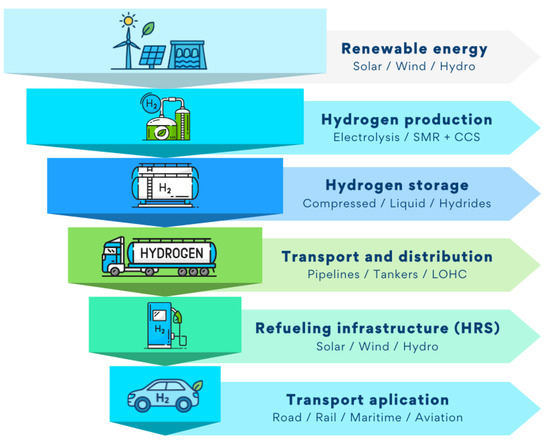
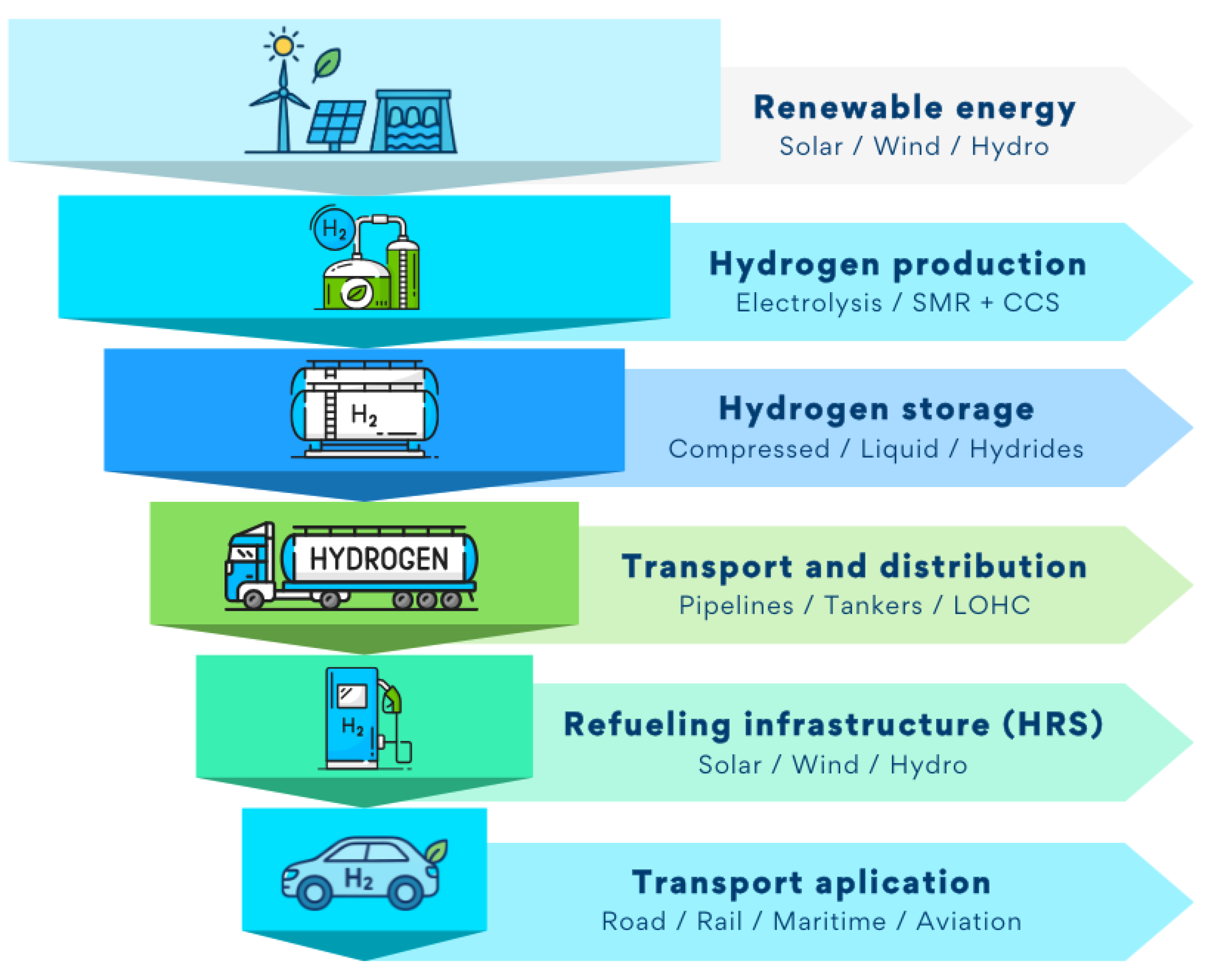

Disclaimer/Publisher’s Note: The statements, opinions and data contained in all publications are solely those of the individual author(s) and contributor(s) and not of MDPI and/or the editor(s). MDPI and/or the editor(s) disclaim responsibility for any injury to people or property resulting from any ideas, methods, instructions or products referred to in the content. |
© 2026 by the authors. Licensee MDPI, Basel, Switzerland. This article is an open access article distributed under the terms and conditions of the Creative Commons Attribution (CC BY) license.