


Abstract
The increasing generation of organic and liquid wastes calls for sustainable strategies to convert residues into valuable energy resources. This study investigates waste Oxytree biomass (Paulownia Clon In Vitro 112®) as a sorbent for producing impregnated solid fuels from selected liquid wastes, including used cooking oil, spent mineral oil, and pyrolysis condensate, targeting industrial energy applications. Oxytree biomass was selected due to its high and predictable yield, uniform composition, and favorable physical properties compared to conventional lignocellulosic residues such as pine sawdust. Biomass and liquid wastes were characterized in terms of fuel properties and elemental composition. Several empirical combinations of sorbent and liquid fractions were tested to optimize homogeneity and fuel quality, resulting in a final composition of sorbent:used cooking oil:used machine oil:pyrolytic condensate equal to 3:1:1:3. The temporal stability of this selected fuel was verified over 24 h, 3 days, and 1 week. The resulting fuels exhibited an energy value of approximately 15 MJ/kg, low ash content (<1%), and minimal concentrations of chlorine and sulfur (<0.08%). Overall, the findings demonstrate that Oxytree waste biomass can serve as an effective sorbent for integrating problematic liquid wastes into solid fuels, providing a practical route for waste valorization and supporting circular economy principles, and establishing a foundation for further research on sustainable energy applications of biomass and industrial residues.
Keywords:
biomass; oxytree; waste; alternative fuel; energy recovery; circular economy; pyrolysis; biomass valorization 1. Introduction
1.1. Impregnated Fuels
Impregnated fuels constitute a modern category of alternative solid fuels. The sorbent fraction—most often fine biomass, e.g., wood dust or other lignocellulosic waste, is enriched through impregnation with liquid waste of plant or industrial origin, such as waste oils, lubricants, adhesives, glycerin, syrups, or aqueous residues [1,2,3]. As a result of this process, a flowable-dense alternative fuel is produced, combining the energetic properties of solid biomass with the additional fuel values contained in the liquid wastes [2,4,5].
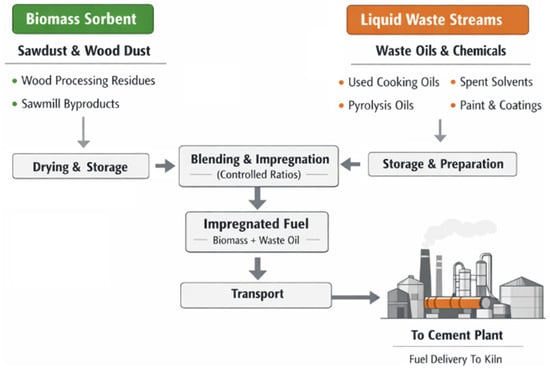
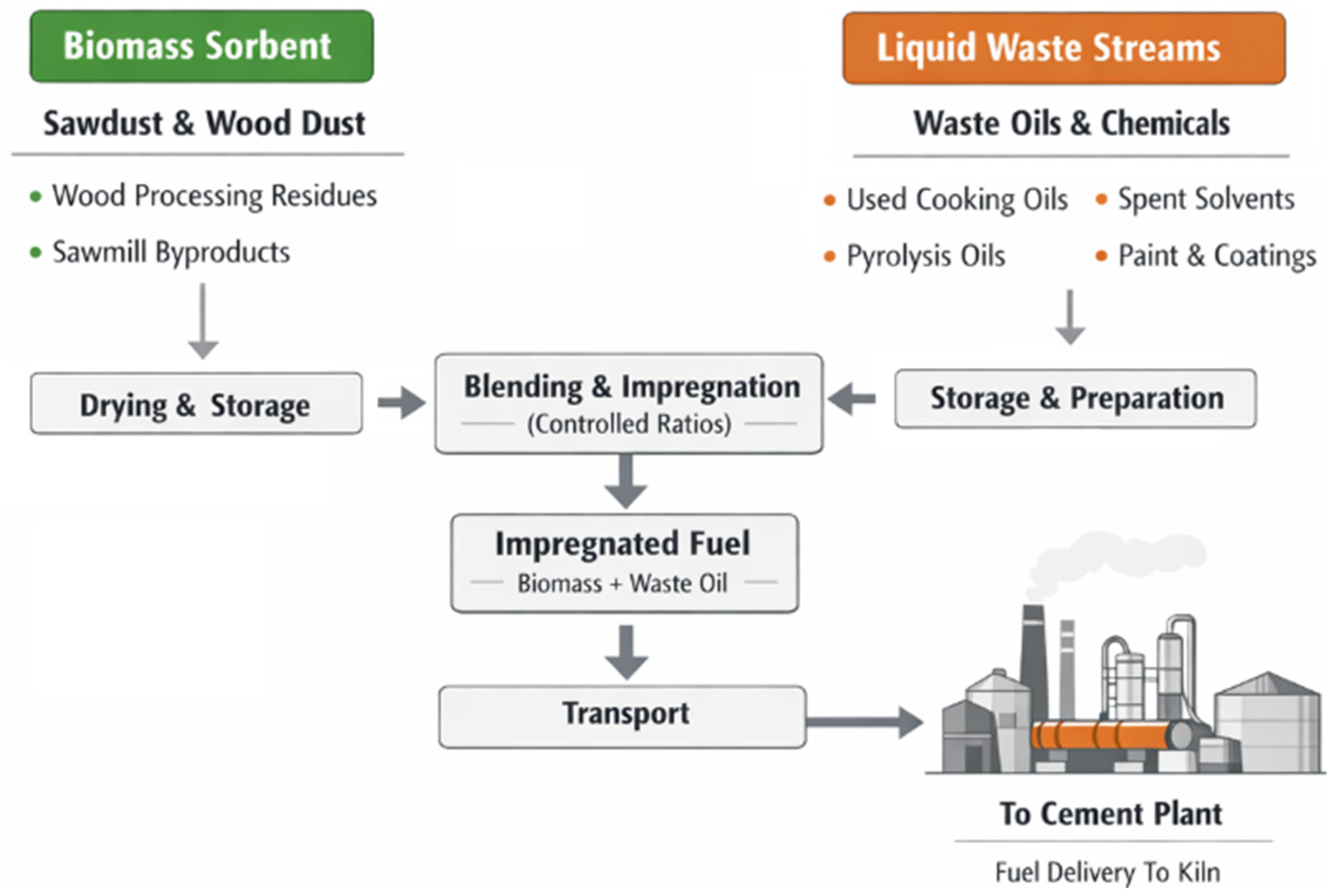
The production process of impregnated fuels has several key stages. The first of these is the preparation of the base biomass, usually in the form of wood dust with controlled moisture content and particle size fraction [6,7,8]. Subsequently, this material is mixed with liquid wastes under controlled conditions in order to evenly distribute the liquid and allow its absorption by the solid material. At this stage, a technological analysis of the utilized wastes and knowledge of their physical and fuel properties are crucial [9]. Selecting the appropriate proportions of the solid and liquid fractions is essential to ensure the parameters of the final product meet the requirements for its intended use (e.g., specifications imposed by the fuel recipient) [1,9]. The fuel prepared in this manner is ready for use in industrial installations, such as rotary kilns in cement plants or industrial boilers, where a constant supply of fuel with predictable properties is required [10,11,12]. Figure 1 presents a block diagram of the impregnated fuel production process.
Figure 1.
A block diagram illustrating the impregnated fuel production and usage processes (author’s own elaboration).
The primary motivation for developing impregnated fuels is to improve both the functional and energetic properties of liquid wastes, which in their unprocessed state pose technological and environmental challenges [13,14]. Direct combustion of liquid wastes in industrial furnaces is problematic for several reasons: the variability of their chemical and physical parameters complicates the control of the combustion process; high volatility and viscosity make it difficult to feed evenly into the furnace; and the risk of spontaneous ignition or fires requires additional safety measures [15,16,17]. Impregnating powdered biomass with liquid wastes allows for the stabilization of these properties and the production of a fuel with homogeneous physicochemical parameters, including consistent calorific value, controlled moisture content, and appropriate bulk density. As a result, the combustion process becomes safe, efficient, and predictable, and the fuel can be fed into industrial furnaces using standard transport and feeding systems typically designed for solid fuels [1,18]. Additionally, converting liquid wastes into impregnated fuel significantly improves transport logistics and storage conditions [16,19]. Compared to liquid wastes, which are difficult to transport safely and require sealed containers, the flowable-dense form of the fuel allows for the use of standard transport systems and silos, reducing the risk of leaks and environmental dispersion of the material [20,21,22]. This mitigates potential soil and water contamination, decreases hazards for personnel handling the installations, and minimizes the risk of spontaneous ignition or other accidents associated with unstable liquid wastes. Reduced susceptibility to leaks and contamination also translates into a decreased need for costly and time-consuming soil and water remediation processes [23,24]. In practice, this means that the industry can safely store and transport the fuel over longer distances, preserving its energetic properties and minimizing material losses, while simultaneously enhancing operational safety and ensuring compliance with environmental regulations [25,26].
Furthermore, the use of impregnated fuels significantly contributes to the reduction in the carbon footprint of industry. By partially replacing fossil fuels with fuels derived from biomass waste and liquid waste products, CO2 emissions associated with the combustion of coal or natural gas can be reduced, which is highly relevant in the context of global climate commitments and greenhouse gas reduction policies [27,28,29]. Available analyses indicate that substituting coal with alternative fuels at a rate of 30% may result in a reduction in CO2 emissions by approximately 20 to 30% [30,31].
Moreover, the incorporation of biomass waste into the energy process aligns directly with the concept of a circular economy, in which waste materials are reused as raw materials, reducing the need for waste disposal and the exploitation of primary resources [32,33]. This approach allows for the maximization of available resources, minimizes the negative environmental impact of industry, and supports sustainable development by integrating economic, environmental, and social objectives [34,35,36,37].
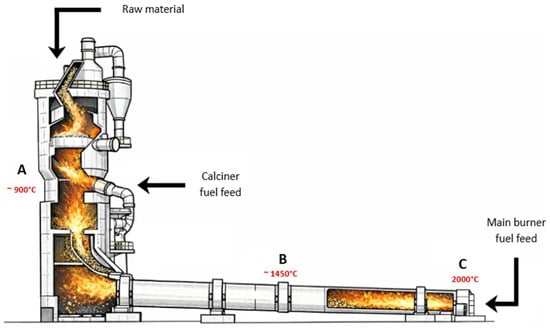
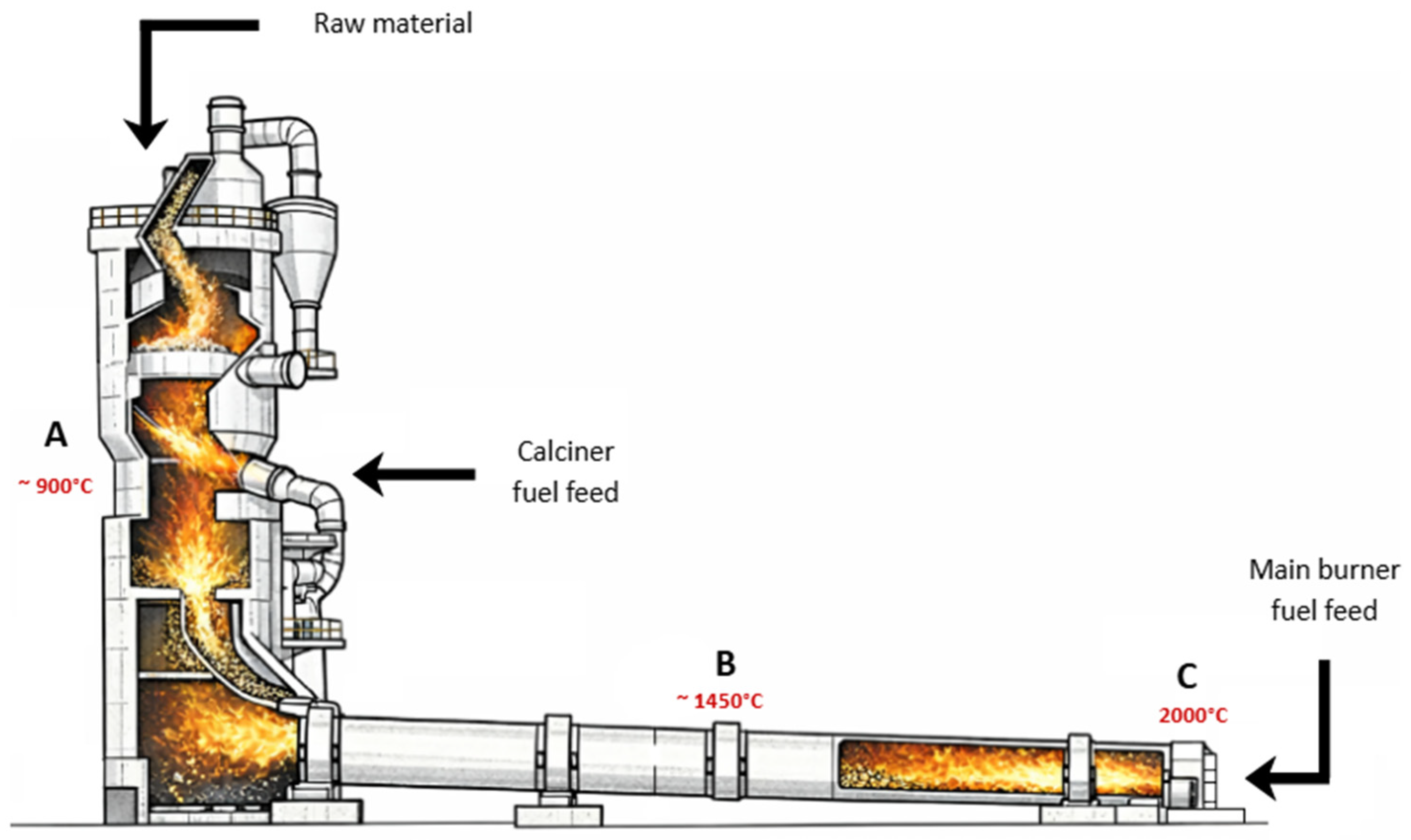
Impregnated fuels are primarily used in the cement industry, where they are typically fed into the rotary kiln calciner rather than directly into the main burner. The calciner, which constitutes the preliminary stage of the clinker firing process, is characterized by lower temperatures (850–900 °C) and longer fuel–material residence times, enabling efficient combustion of lower-calorific fuels, such as impregnated fuels, by allowing preliminary devolatilization and easier ignition [38,39,40,41,42]. In contrast, higher-calorific fuels, e.g., industrial RDF, are usually fed into the main burner, where the temperature reaches approximately 2000 °C directly at the burner flame and around 1450 °C within the combustion chamber of the kiln [43,44]. Impregnated fuels are best utilized in the calciner, where their energy is gradually released, ensuring stable and controlled combustion. A simple schematic of the rotary kiln, including the fuel inlets, is shown in Figure 2.
Figure 2.
Schema of a rotary kiln in a cement plant: A—calciner; B—main combustion chamber; C—main burner (author’s own elaboration).
It should be noted that the cement industry is highly emission-intensive and is responsible for approximately 7–8% of total global CO2 emissions [45,46], a significant portion of which is due to the use of fossil fuels in the clinker burning process. For this reason, the introduction of alternative fuels, particularly those based on biomass and waste, constitutes an important component of strategies aimed at reducing these emissions. Simultaneously, co-combustion of such fuels enables the energetic utilization of waste fractions for which no more environmentally favorable disposal or recycling methods exist [4,11,47,48].
Currently, there are 12 cement plants operating in Poland, located across eight voivodeships [49], and the Polish cement industry is a European leader in the use of alternative fuels—the average share of these fuels in domestic cement plants is approximately 70–80% [50] (with selected units running almost entirely on impregnated fuels), whereas the average in the European Union is around 56%. Annual consumption of alternative fuels by cement plants in Poland currently exceeds approximately 2 million tons [51,52,53]. As a result, cement plants play a key role in the waste management system, efficiently utilizing municipal and industrial waste. Table 1 presents exemplary quality parameters of impregnated fuels received by a local cement plants in Poland.
Table 1.
Boundary quality parameters for impregnated fuels, specified by selected cement plant receivers. The data are based on direct inquiries and consultations with the fuel recipients.
1.2. Oxytree—Source of Biomass
Oxytree, the commercial name for Paulownia Clon In Vitro 112®, is a special hybrid variety created by crossing Paulownia Elongata and Paulownia Fortunei [54,55]. Although native Paulownia species originate from East Asia, mainly China, Japan, and Korea [56], the Clon In Vitro 112® variety was developed in Spain in the laboratories of IN VITRO S.L. through in vitro selection and propagation [57]. This hybrid was designed to combine the advantageous traits of classical species: rapid growth, high-quality wood, and substantial leaf biomass, with resistance to the challenging climatic conditions of Central and Southern Europe, drought, and poor soils.
The Oxytree variety resulted from years of breeding efforts that combined traditional crossbreeding with modern in vitro techniques. This approach allowed for the elimination of the main drawbacks of classical Paulownia species, such as low frost resistance, susceptibility to diseases, and genetic variability, while retaining their benefits. As a result, a tree was developed that can be cultivated both for high-quality timber production and for energy, industrial, or land reclamation purposes [55,58,59,60].
These trees are sterile, and new seedlings are obtained exclusively from controlled tissue culture using in vitro methods, ensuring genetic uniformity of the plant material and full control over its quality. This feature is particularly important from an environmental safety perspective, as it eliminates the possibility of uncontrolled spread beyond cultivation areas. Consequently, the risk of impacting local biodiversity is significantly reduced, and the introduction of Oxytree into regions non-native to Paulownia species can be conducted in a controlled manner consistent with sustainable development principles [61,62,63]. Nevertheless, considering maintenance practices and plantation management, the parallel use of bioindicators can be considered to monitor biodiversity and local environmental quality [64,65].
These trees exhibit highly efficient photosynthesis, absorbing several times more CO2 than native tree species such as maple or linden. Under optimal conditions and with proper management, the trees can reach up to 16 m in four years, providing approximately 1.2 m3 of usable timber and around 0.5–0.6 m3 of residual biomass, including leaves, branches, sprouts, and sawdust generated during cutting or wood shredding, with additional residual biomass produced annually during cultivation. On one hectare of plantation, with the recommended planting density of approximately 400–500 trees, an average yield of 500–600 m3 of usable timber and around 250 m3 of residual biomass can be obtained. In the final year of growth, it is estimated that one hectare can produce on average 40–48 Mg of fresh timber and around 20 Mg of residual biomass (considering only the year of tree harvest) [57,60,66].
Compared to typical lignocellulosic residues, Oxytree residual biomass offers several advantages relevant to fuel production. Its predictable growth and uniform composition ensure consistent physical and energetic properties [66,67,68], which is particularly important for industrial applications requiring controlled material quality. The high growth rate and substantial annual biomass output provide a reliable and renewable feedstock, minimizing the variability commonly observed in conventional agricultural or forestry residues. Also, Oxytree can be cultivated as a dedicated crop supplies wood without increasing pressure on natural forests, while pruning residues and by-products from wood processing can be valorized as raw material for impregnated fuels [69,70].
1.3. Aim of the Research
The present study addresses a research gap concerning the suitability of Oxytree waste biomass as a sorbent for the production of impregnated fuels. The research focuses on evaluating the fuel properties of Oxytree wood dust and selected liquid wastes, combining them in appropriate proportions, and assessing whether the resulting materials meet the quality criteria required for cement plants. By testing the potential of Oxytree pruning biomass as a functional material, the study contributes to the valorization of waste biomass and supports the principles of a circular economy.
2. Materials and Methods
Waste biomass from Oxytree (Paulownia Clon In Vitro 112®), derived from small branches and sprouts obtained during the maintenance and pruning of annual seedlings, as well as branches from older trees, was used in the study. The biomass was mechanically shredded and subsequently subjected to preliminary analysis, including basic fuel properties, to characterize the raw material. Identical analyses were performed for selected liquid wastes to determine their properties and plan the production process of impregnated fuels. The shredded dust (sorbent) and liquid wastes were mixed in controlled proportions, and the resulting impregnated fuels were subjected to additional laboratory analyses for verification.
2.1. Preparation and Analysis of the Sorbent
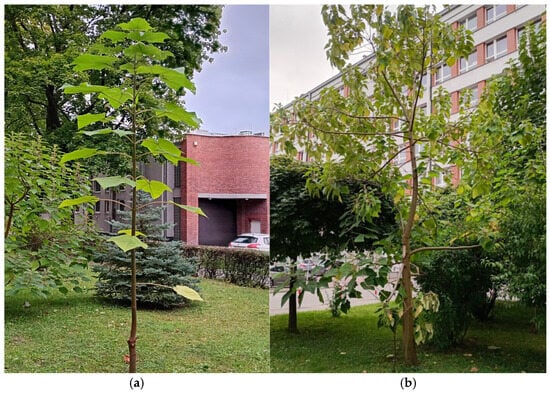
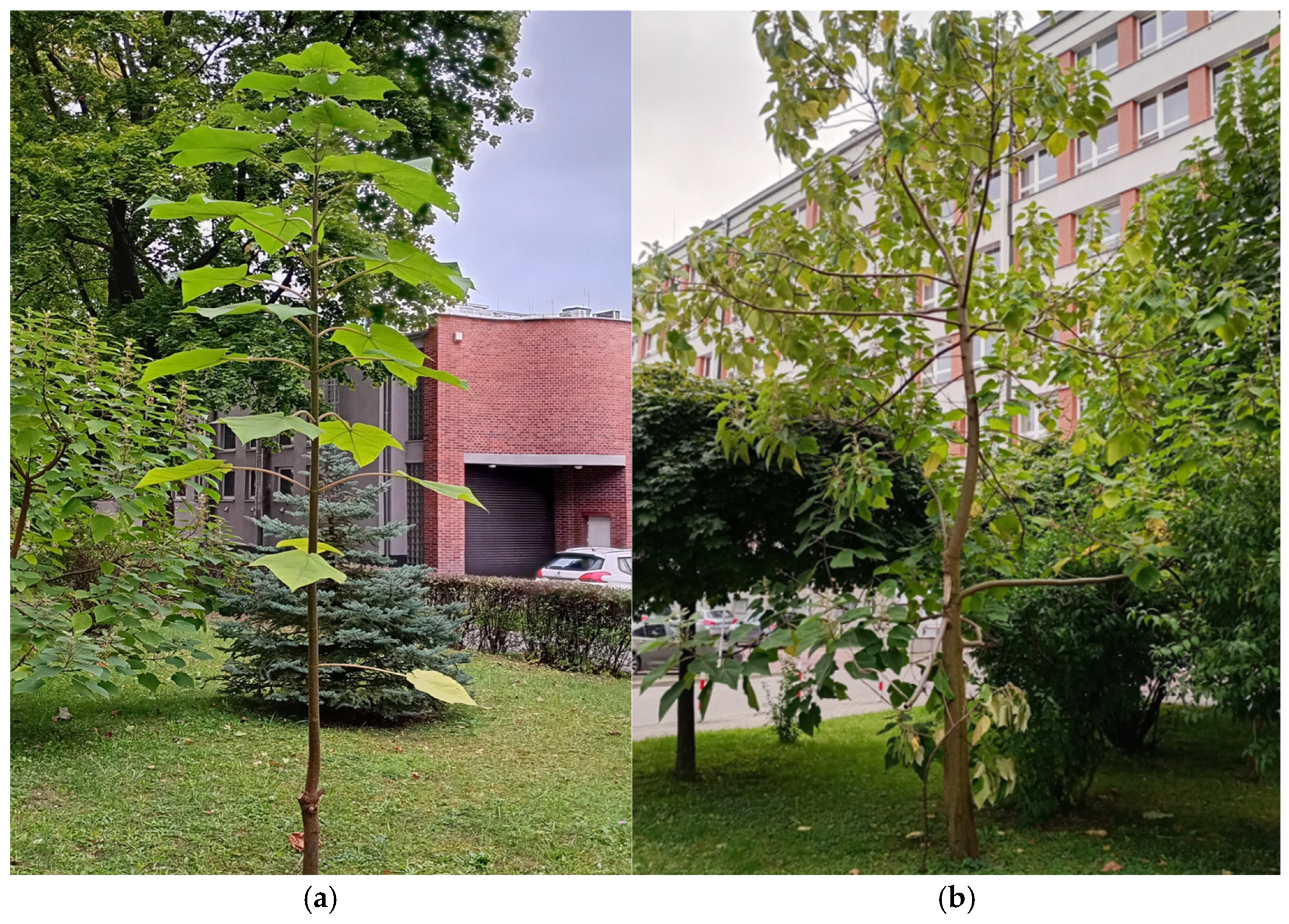
Plant biomass was collected during routine pruning of annual Oxytree seedlings and from individual branches of older trees (Figure 3).
Figure 3.
Oxytree trees used as the source of biomass for the analysis: (a) one-year-old sapling after pruning of lateral shoots; (b) older, three-year-old tree.
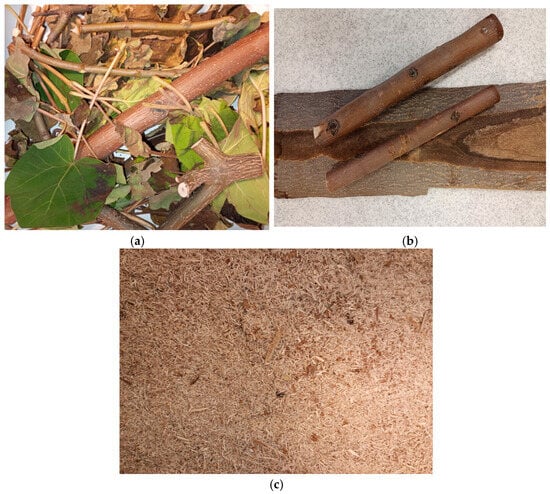
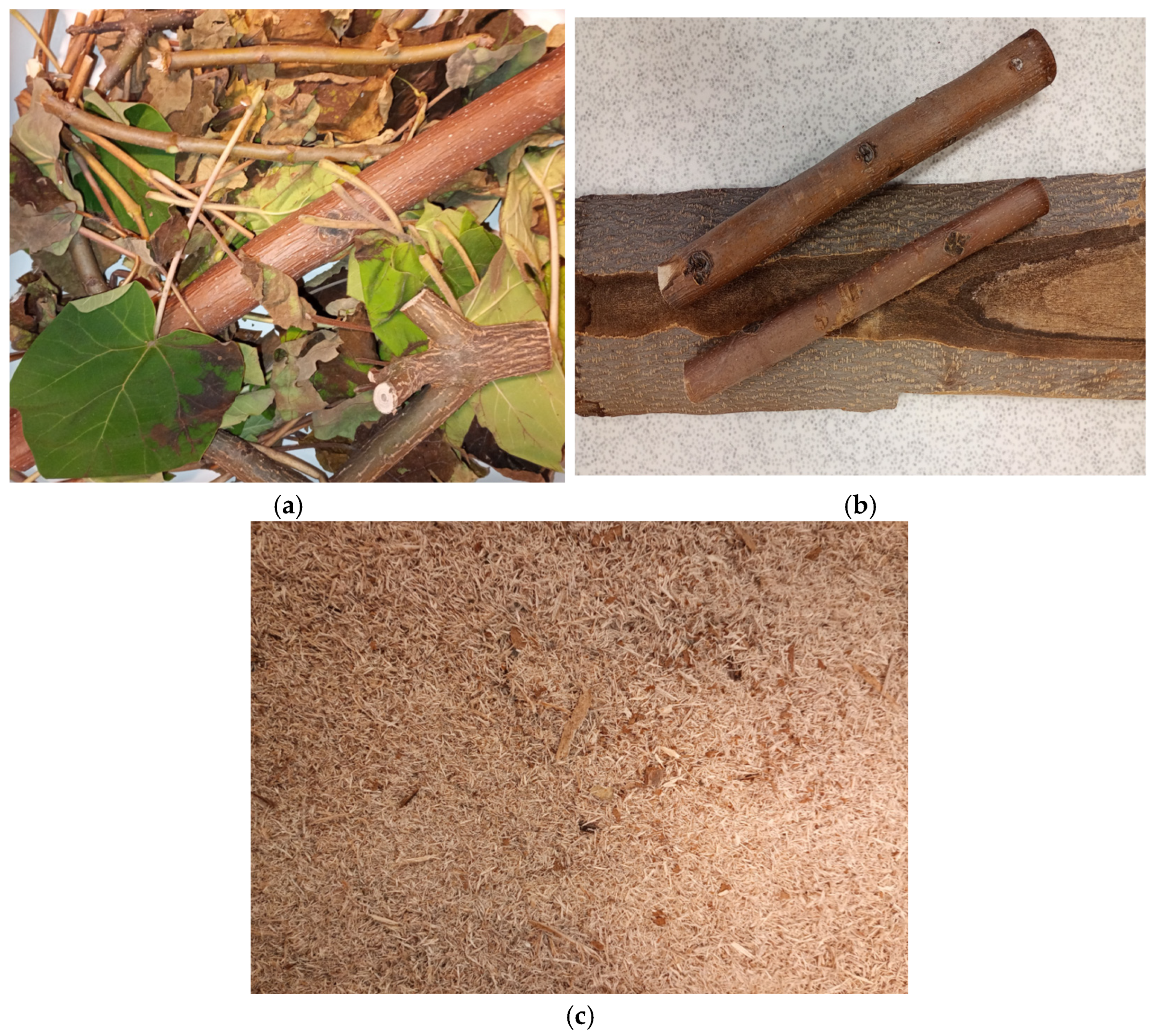
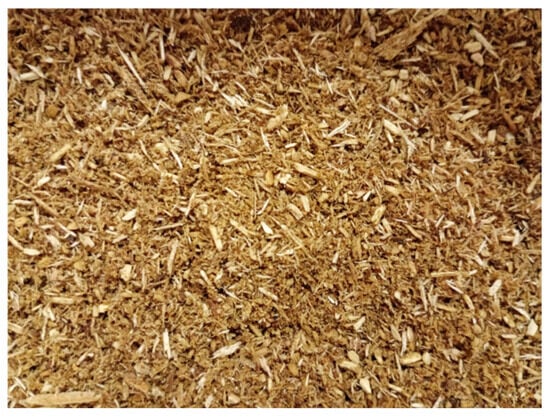
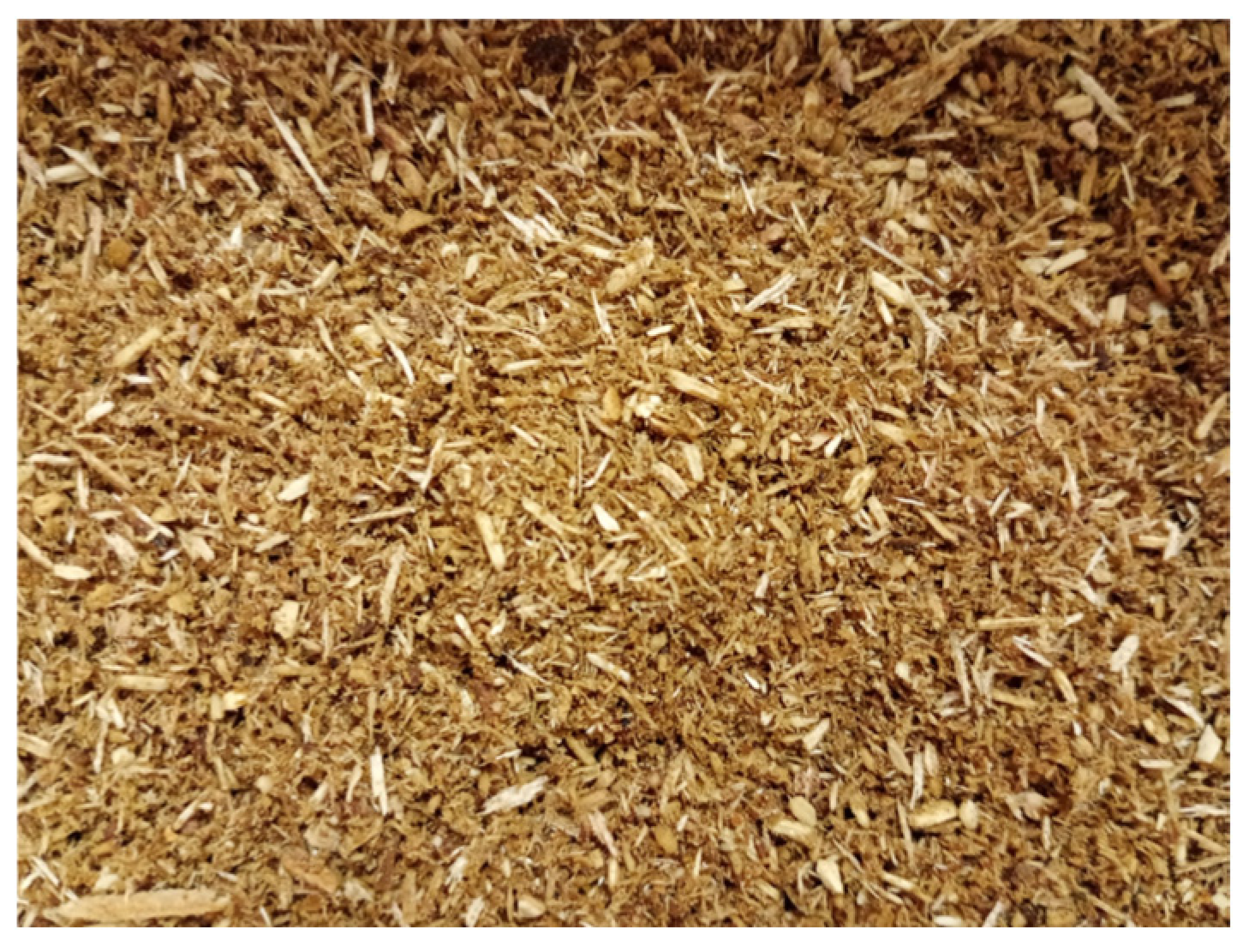
The collected biomass included small twigs, thicker branch fragments, and individual leaves (Figure 4a,b). The waste material was transported to the laboratory, where it was dried at 105 °C to constant weight, enabling easier and more efficient shredding. The finer biomass was then ground using an IKA-M20 laboratory mill into a homogeneous powder with an average particle size of approximately 500 µm, while thicker branches and wood fragments were mechanically shredded using a planer to obtain material in the form of sawdust. The resulting material served as the raw material for further analyses. The prepared sample is shown in Figure 4c.
Figure 4.
Biomass samples used for the study: (a) smaller Oxytree branches and twigs with individual leaves; (b) thicker branches and Oxytree wood; (c) obtained sawdust (sorbent) after processing.
The prepared dry sawdust was subsequently subjected to detailed fuel characterization to determine its basic energetic and functional properties. Its calorific value, moisture, and ash content were evaluated to estimate the energy potential of the material and the amount of residue after combustion. Elemental analysis was also performed, including key energetic elements (carbon, hydrogen) and elements that are problematic from the perspective of industrial processes, such as chlorine and sulfur, which can promote deposit formation and corrosion in installations, as well as nitrogen, which does not contribute to the fuel’s energy content but is important as a precursor of nitrogen oxides (NOx) in combustion. Additionally, the bulk density of the powder was determined, which is important for fuel transport, storage, and dosing processes. All determinations were carried out in accordance with appropriate laboratory standards, ensuring reproducibility and comparability of results.
All elemental and ash contents were initially determined on a dry basis and then recalculated to a raw, operating (wet) state, taking into account the measured moisture content of the material, as reported in Section 2.1.7. This allows impregnated fuel production operations to be performed using the raw material in its actual operating state. A summary of all results, including both dry and operating values, is presented in the Results section.
2.1.1. Heat of Combustion and Calorific Value
According to the standard PN-EN ISO 21654:2021-12 [71].
The heat of combustion (HHV) was determined using a calorimetric bomb. Approximately 1 g of powdered sample, weighed with an accuracy of 0.0001 g, was used for each analysis, and combustion was conducted under an oxygen pressure of 2 MPa. After the measurement, the increase in temperature of the water surrounding the bomb was recorded, allowing the calculation of the sample’s heat of combustion. Each determination was performed in triplicate, and the results are reported as the arithmetic mean with the corresponding standard deviation.
Subsequently, the calorific value (LHV) was calculated based on the mean calorific value, moisture and the average hydrogen content (1), and its standard uncertainty (u(LHV)) was determined by the uncertainty propagation method, taking into account the variability of these parameters (2).
LHV = HHV − r (9H + Mws)
Formula after simplification:
where
HHV—heat of combustion, kJ/kg
r—heat of water vaporization, r = 2442 kJ/kg
H—content of hydrogen, %
Mws—fuel moisture content, %
2.1.2. Ash Content
According to the standard PN-EN ISO 21656:2021-08 [72].
The ash content (Ash) was determined by combusting samples in porcelain crucibles in a muffle furnace. Approximately 1 g of previously weighed powder, with an accuracy of 0.0001 g, was placed into a pre-fired and weighed crucible and oxidized at 815 ± 10 °C until a constant residue mass was obtained. After this process, the crucible with ash was cooled in a desiccator to room temperature and weighed again. The ash content of the sample was calculated based on the mass difference. Each determination was performed in triplicate, and the results are reported as the mean value with the corresponding standard deviation.
2.1.3. Carbon and Hydrogen Contents
According to the standard PN-EN ISO 16948:2015-07 [73].
The carbon (C) and hydrogen (H) contents were determined by combustion of the sample in a stream of pure oxygen in a tubular furnace with detection of the combustion products. Approximately 200–300 mg of the ground sample, weighed with an accuracy of 0.0001 g, was placed in a quartz boat and introduced into the heating zone of the tubular furnace maintained at approximately 950–1050 °C. The combustion products (carbon dioxide and water vapor) were transported by a carrier gas to an absorber system, where their quantities were recorded. The measurements were used to calculate the percentage content of carbon and hydrogen in the tested material. Each determination was performed at least in triplicate, and the results are reported as mean values with the corresponding standard deviation.
2.1.4. Sulfur Content
According to the standard PN-ISO 351:1999 [74].
The sulfur content (S) in the samples was determined by combustion in a tubular furnace under an oxygen atmosphere. Approximately 200–300 mg of the ground sample, weighed with an accuracy of 0.0001 g, was placed in a quartz boat and introduced into the heating zone of the furnace maintained at approximately 950–1050 °C. During combustion, the sulfur in the material was oxidized to sulfur dioxide (SO2), which was then passed into an absorption system containing an absorbing solution (H2O2). The resulting sulfuric acid was subsequently titrated with a standardized NaOH solution using a pH indicator. The sulfur content in the tested sample was calculated based on the volume of NaOH consumed. Each determination was performed in triplicate, and the results are reported as the arithmetic mean with the corresponding standard deviation.
2.1.5. Chlorine Content
According to the standard PN-ISO 587:2000 [75].
The chlorine content (Cl) in the samples was determined using the Eschka method, which involves combustion of approximately 1 g of finely ground and dried sample (weighed with an accuracy of 0.0001 g) in the presence of a sodium–calcium mixture in a muffle furnace, resulting in the conversion of chlorine into calcium chloride. The formed chloride was extracted with water, and the solution was filtered. Subsequently, the solution was titrated with a silver nitrate (AgNO3) solution using a potassium chromate (K2CrO4) indicator to detect the reaction endpoint. The chlorine content in the tested sample was calculated based on the volume of AgNO3 consumed. Each determination was performed in triplicate, and the results are reported as the arithmetic mean with the corresponding standard deviation.
2.1.6. Nitrogen Content
According to the standard PN-EN ISO 5983-1:2006 [76].
The nitrogen content (N) was determined using the Kjeldahl method. Approximately 200–300 mg of the dried, powdered sample, weighed with an accuracy of 0.0001 g, was mineralized in concentrated sulfuric acid at around 350 °C for 1.5 h. After mineralization, the solution was distilled, and the released ammonia was collected in a receiver containing hydrochloric acid. The excess acid was subsequently titrated with a standardized NaOH solution. The amount of nitrogen in the sample was calculated based on the volume of titrant consumed. Each determination was performed in triplicate, and the results are reported as the arithmetic mean with the corresponding standard deviation.
2.1.7. Bulk Density
According to the standard PN-EN ISO 17828:2025-09 [77].
The bulk density (Density) of the powder was determined using a volumetric method, which involves weighing a known mass of the sample after filling it into a cylindrical vessel of known volume. The powder was added gradually, allowing it to settle freely without additional compaction, in order to reflect actual storage and transport conditions. The bulk density (kg/m3) was calculated from the ratio of the sample mass to the volume of the filled vessel. Each measurement was performed in triplicate, and the results are reported as the arithmetic mean with the corresponding standard deviation.
2.1.8. Moisture
According to the standard PN-EN ISO 21660-3:2021-08 [78].
The prepared powder was subsequently left under laboratory conditions in unsealed containers so that its moisture (Mws) content would approximate the actual moisture of sorbents used in practice, rather than being completely dried. This procedure aimed to reflect operational conditions, where wood dust and sawdust typically contain 5–10% moisture due to exposure to air. After 48 h, the powder samples were placed in a laboratory moisture analyzer to determine their current moisture content. Each measurement was performed in triplicate, and the results are reported as the arithmetic mean with the corresponding standard deviation.
2.2. Characterization and Analysis of Liquid Wastes
Three selected liquid wastes, differing in origin and physicochemical properties, were subjected to analysis: waste from the food service and food processing sectors—used cooking oil (UCO), used industrial oil (spent lubricating oil from machinery operation), and a pyrolytic condensate. These wastes were chosen as examples of fractions with diverse characteristics, representing sources from municipal/food waste, the industrial sector and thermochemical processes, respectively.
2.2.1. Characterization of Liquid Wastes
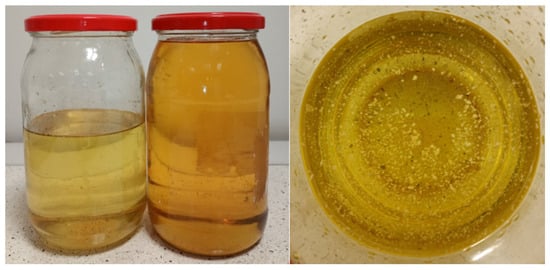
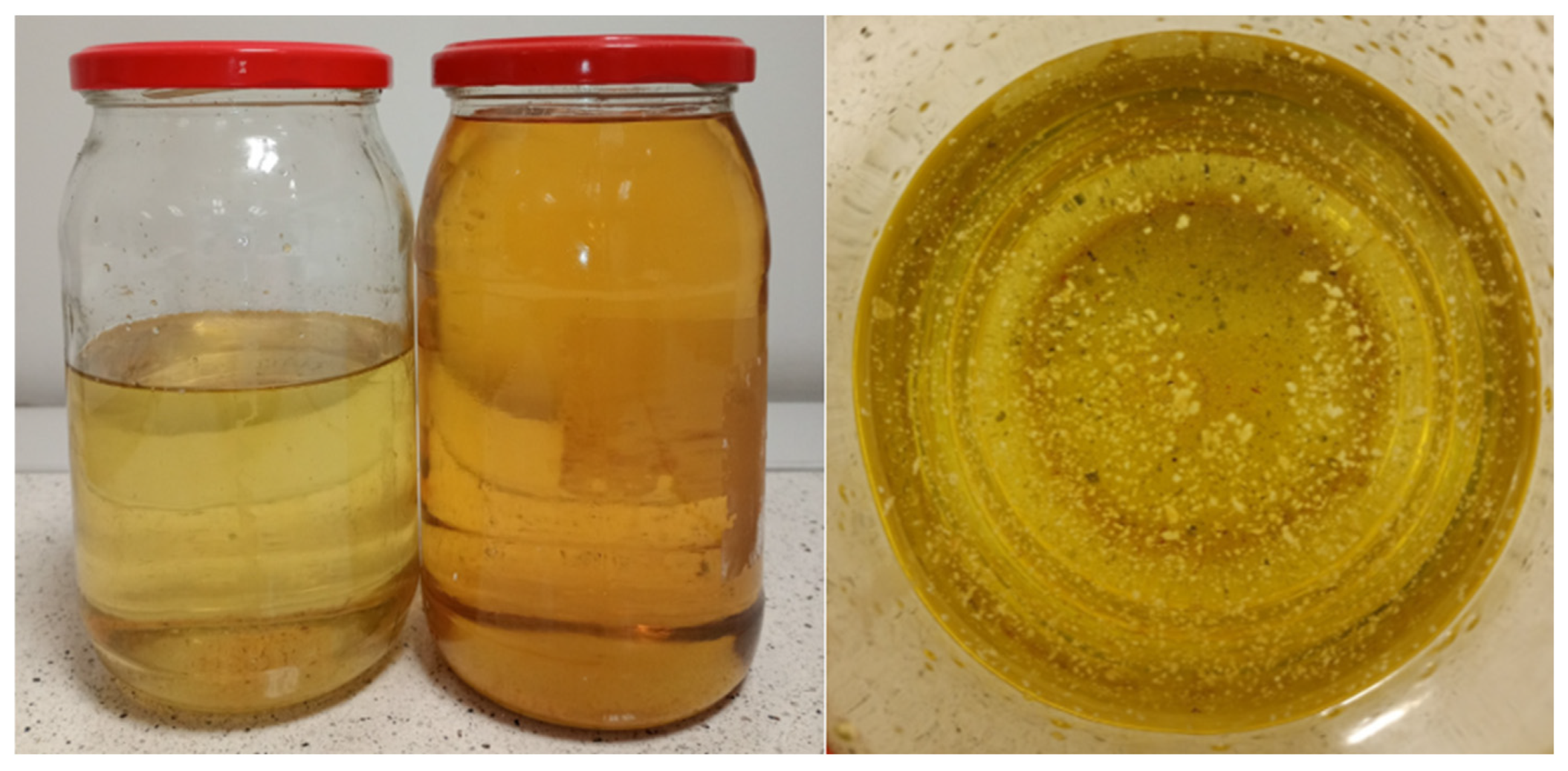
Used cooking oil (UCO) was generated as a waste in the food service sector and the food processing industry, primarily during prolonged high-temperature frying of food products. During use, it undergoes thermal and oxidative degradation, leading to the formation of free fatty acids, polar compounds, and polymerization products, which reduce its quality and stability. Additionally, the presence of residual food solids, water, and nitrogen- and sulfur-containing compounds further deteriorates the oil, accelerating degradation processes [79,80]. The degree of degradation depends on the type of oil, frying conditions (temperature, duration), and the characteristics of the fried product; for example, oils rich in polyunsaturated fatty acids oxidize more rapidly [81,82]. These processes alter the fatty acid profile, increase the content of free fatty acids and oxidation products, and negatively affect taste, odor, and consumption safety. While frying oil can be used as a feedstock for biodiesel production, this requires costly purification and transesterification due to the presence of contaminants and degradation products. Therefore, this oil represents an interesting raw material for research on impregnated fuels, where its physicochemical properties can be utilized without expensive pretreatment. Figure 5 presents the UCO oil sample prepared for analysis.
Figure 5.
Used cooking oil from the food industry, showing suspended solid impurities.
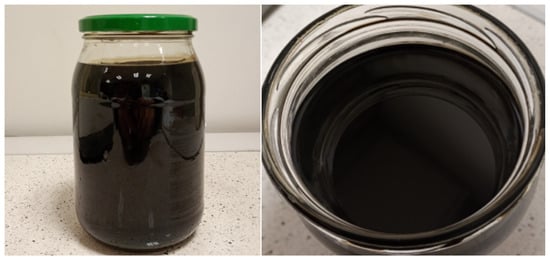
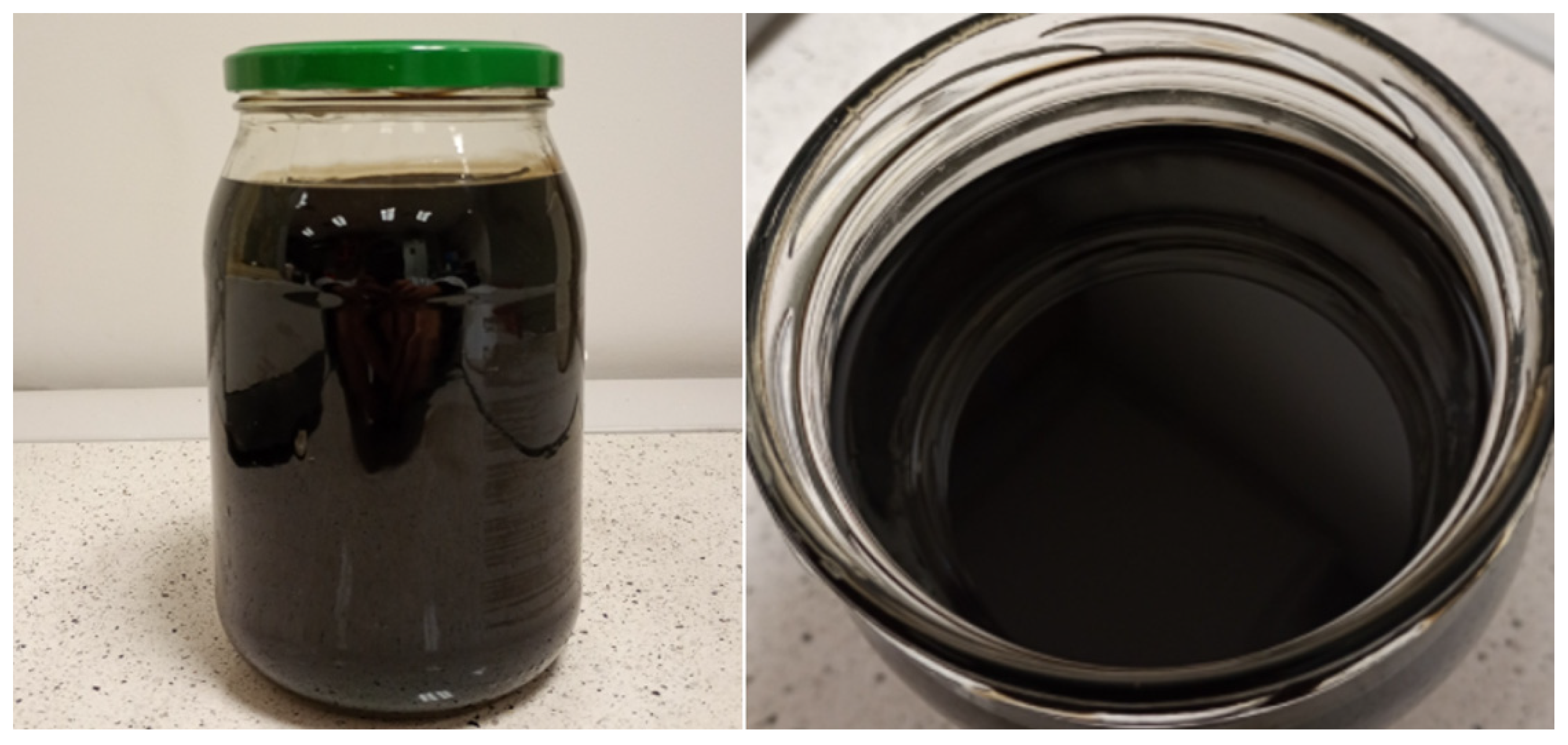
The used oil (MO) originated from the operation of agricultural machinery and vehicles, where it served as a lubricating medium. Over prolonged use, it loses its original functional properties and becomes contaminated with oxidation products, fine particles of worn metals, degraded additive residues, and fuel remnants. Traditional management of used oil, such as regeneration or co-combustion in specialized facilities, requires physico-chemical cleaning and stabilization, which generates additional costs and must comply with strict environmental regulations. For this reason, used oil is considered a problematic waste, and its reutilization in the form of impregnated fuels may represent an attractive and more economical alternative [83,84,85]. Figure 6 presents the MO sample prepared for analysis.
Figure 6.
Used machine oil from agricultural machinery—visually uniform.
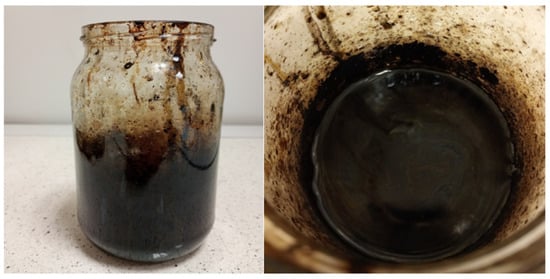
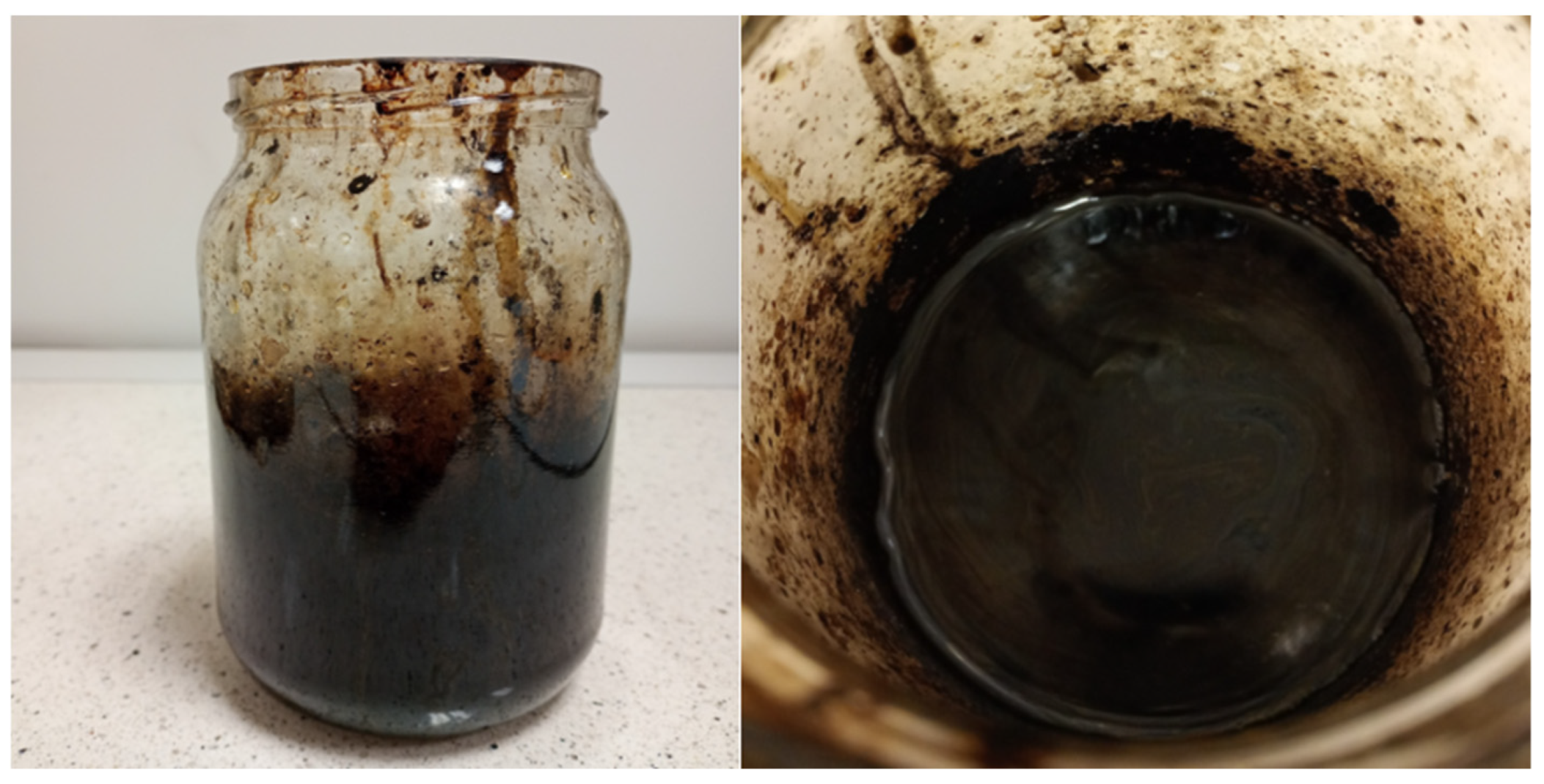
The pyrolytic condensate (PC) originated from the low-temperature pyrolysis of agricultural biomass, specifically waste cereal straw. It was produced as a by-product during the production of biochar intended for further technological applications (e.g., as soil amendments or adsorbents). This condensate is a mixture of liquid and oily fractions, which naturally separate into two phases: a water-rich phase, containing condensed moisture and products from the condensation of volatile organic compounds, and a heavier, oily phase, rich in aromatic and tar-like compounds. The chemical composition of the condensate depends on the type of feedstock and the pyrolysis conditions; the pyrolytic condensate often contains acids, alcohols, phenols, esters, and ketones, as well as aromatic and polycyclic hydrocarbons [86,87,88]. Such a composition makes pyrolytic condensate a challenging waste in traditional disposal methods, as its composition is variable and stabilization would require prior separation of the aqueous and oily phases—a process that is costly, time-consuming, and technologically demanding. Moreover, the high content of the aqueous fraction can prevent ignition and disqualify the material from independent, efficient thermal conversion, limiting its potential for direct energetic utilization. Figure 7 presents the PC sample prepared for analysis.
Figure 7.
Pyrolytic condensate, characterized by separation between aqueous and dense (oily) phases.
All liquid waste samples were collected from multiple sources to ensure representativeness. Used cooking oil (UCO) was obtained from two independent food services over a one-month period, with approximately 0.5 L collected per sampling event. Used machine oil (MO) was collected from two maintenance workshops over two months, with around 1 L obtained each time. Pyrolytic condensate (PC) was collected from repeated laboratory-scale pyrolysis runs of cereal straw, yielding approximately 0.3 dm3 per analysis. All samples were stored in sealed containers at ambient temperature until use.
2.2.2. Analysis of Liquid Wastes
For analysis, the liquid samples were prepared as homogenized batches. All described liquid wastes were then subjected to fuel characterization using the same methods and standards applied to the wood dust. Their calorific value, ash content, and elemental composition were determined, with particular attention to potentially problematic elements such as sulfur and chlorine. Due to their liquid nature, bulk density was omitted, as it is relevant only for the solid phase. Applying identical analytical procedures allowed for the evaluation of the energetic potential of each waste, and knowledge of their fuel properties provides an essential basis for further studies, enabling optimization of the proportions of sorbent (wood dust) and liquid waste during the production of impregnated fuels.
When determining the hydrogen content (H) and calculating the lower heating value (LHV), the water content of the examined liquid wastes, which has an impact on their actual energy potential, was taken into account. The moisture/water content (Mws) was determined by an external laboratory using standardized methods.
For hydrogen analysis, the water present in the samples was also evaporated and absorbed by the absorption system; therefore, an appropriate correction accounting for the mass of water in the sample was applied (3).
where
H = Has − 0.1119 ⋅ Mws
Has—measured content of hydrogen, %
Mws—moisture/water content, %
0.1119—mass fraction of hydrogen in water (H2O)
The lower heating value (LHV) of the liquid wastes was calculated according to the standard Equation (1).
All results of the liquid waste analyses are presented in the Results section.
2.3. Preparation of Impregnated Fuels
The preparation of impregnated fuels was carried out according to two primary criteria. The first was to obtain a stable, homogeneous solid fuel in which the liquid fraction is permanently bound to the biomass carrier, without tendencies for separation, stratification, or leakage during storage and transport. This condition is important both from the perspective of operational safety and for ensuring proper fuel dosing in industrial installations. At the same time, the aim was to ensure that the final product met fuel quality parameters required by the end user, characteristic of fuels intended for the calciner of cement kilns. The second, equally important objective was to maximize the utilization of liquid waste fractions whose direct energetic use is difficult or economically unviable. Accordingly, the impregnation process was conducted to maximize the share of liquid wastes while maintaining the physical and fuel properties of the final product, allowing safe storage, transport, and potential use under industrial conditions. The adopted proportions of sorbent and liquid fraction represented a compromise between efficient waste utilization and the quality requirements imposed on alternative fuels.
In the designed system, wood dust served as the solid phase and structural sorbent, responsible for physically binding the liquid fractions, providing the fuel with a stable, non-flowing form, and ensuring material homogeneity. Used lubricating oil and used cooking oil acted as energy carriers, characterized by relatively high calorific value and stable chemical composition. Their addition allowed an increase in the energy content of the impregnated fuel and functioned as an energy buffer, compensating for the less favorable fuel properties of the pyrolytic condensate, which is characterized by a high water content that prevents its effective independent energetic utilization.
The impregnation was performed manually at ambient laboratory conditions. Liquid fractions were gradually added to the wood dust while mixing with hand tools in a container, ensuring uniform absorption. The blending process continued until no free liquid was visible and the mixture had fully incorporated the liquids, resulting in a cohesive and homogeneous fuel. No pre-heating of the biomass or oils was applied, simulating industrial conditions in which impregnation is often performed using raw materials at ambient temperature. The fuel was prepared in batches of 0.5 dm3, and the total mixing duration was 5 min.
The impregnated fuel was prepared based on empirical calculations and previous experimental experience, establishing the following mass ratio of components:
Sorbent:Used Cooking Oil:Used Machine Oil:Pyrolytic Condensate (3:1:1:3)
The selection of this composition was guided by the objective of maximizing the utilization of pyrolytic condensate, which represents the most problematic waste. To support this choice, a simple empirical mass and energy balance of the mixture was performed. The contribution of each fraction to the total lower heating value (LHV) was estimated using a weighted average based on the mass ratio of the components:
This calculation also allowed assessment of the relative impact of the problematic pyrolytic condensate on the overall waste stream, confirming that the selected 3:1:1:3 ratio maximizes waste utilization while maintaining acceptable thermal and structural properties. Alternative ratios were evaluated in terms of calorific value, moisture content, and handling properties: lower condensate content resulted in insufficient energy density, higher oil content produced overly energetic fuels, and excessive condensate led to sticky, unstable mixtures. The final 3:1:1:3 ratio offered the best compromise, providing maximal waste valorization while meeting the structural and thermal criteria required for cement kiln fuels (LHV > 12.000 kJ/kg, moisture < 28%).
The main observations from the preliminary consideration of alternative ratios are summarized in Table 2. The table shows, in qualitative and empirically estimated terms, how varying the proportions of sorbent, oils, and condensate affected the calorific value (LHV), moisture content, consistency, and other handling-related characteristics, highlighting the rationale for selecting the final composition.
Table 2.
Empirically estimated properties and structural description of impregnated fuels prepared with different component ratios.
Upon completion of the impregnation process, homogeneous products with a stable, semi-bulk structure were obtained, showing no observable phase separation of liquids (Figure 8).
Figure 8.
Prepared impregnated fuel, showing homogeneous semi-bulk structure without visible phase separation.
The resulting impregnated fuel was finally subjected to a comprehensive quality control of fuel parameters, including elementary analysis, calorific value, and density. The results of the empirical analysis, based on the calculated proportions, as well as the final laboratory measurements of the fuel, are presented in the Results section.
In contrast to the solid sorbent, due to the presence of liquid waste fractions containing volatile compounds, the moisture/water content (Mws) of the impregnated fuel was not measured gravimetrically in an dryer; instead, it was determined by an external laboratory using standardized methods.
Additionally, the temporal stability of the selected impregnated fuel was assessed through repeated observations of material behavior over time. Samples were stored in container, under ambient laboratory conditions and monitored at intervals of 24 h, 3 days, and 1 week for changes in structure, bulk density, and the presence of any leachate.
3. Results
3.1. Sorbent Properties
The results of the fuel property analyses of dust obtained from Oxytree waste biomass are summarized in Table 3.
Table 3.
Summary of the fuel property analysis results for the Oxytree sawdust sorbent. Results are presented on a dry basis and recalculated to the working state for the operational moisture content.
The examined material was characterized by an average calorific value of 16 MJ/kg, which corresponds to typical values observed for wood biomass and confirms its suitability as an energy carrier in thermal conversion processes. Although this level is lower than that of fossil fuels, it is fully sufficient for alternative fuels used in industrial installations, particularly in co-combustion systems.
The analyzed dust also exhibited a highly favorable chemical composition, containing only trace amounts of undesirable elements from a combustion perspective, such as chlorine and sulfur. The low content of these components is particularly important for minimizing the risk of high-temperature corrosion and harmful emissions, which clearly constitutes an advantage of Oxytree biomass.
Another significant benefit of the tested material was its low ash content, indicating a high proportion of combustible components in the biomass structure. This means that thermal processing generates a minimal amount of solid residues requiring further management, which is advantageous both operationally and environmentally.
The bulk density of the examined dust was approximately 310–320 kg/m3, which falls within the typical range for finely ground wood biomass.
3.2. Liquid Wastes Properties
The results of the fuel property analyses of the examined liquid wastes are summarized in Table 4. These wastes exhibited significantly varied energy parameters and chemical compositions, which is important for their potential use in the production of impregnated fuels, particularly regarding the allowable proportion of addition in the fuel formulation.
Table 4.
Results of the fuel property analyses for the investigated liquid wastes.
Used cooking oil was characterized by a high calorific value, approximately 36–37 MJ/kg, typical for vegetable fats. Its high carbon content (approx. 80%) and hydrogen content (approx. 8.8%) result from the presence of long-chain fatty acid esters, which constitute the main component of vegetable oils. The measured moisture content, around 6.6%, is characteristic of oils originating from gastronomy and food processing, resulting from contact with moist and/or frozen food. Low ash content and trace amounts of chlorine and sulfur indicate a lack of significant mineral contamination.
Used machine oil exhibited the highest energy parameters among the analyzed liquid wastes, with a calorific value exceeding 42 MJ/kg. Its high carbon content (over 85%) and hydrogen content (approx. 11%) result from the dominance of aliphatic and aromatic hydrocarbons, typical of mineral oils. The low water content (approx. 2%) indicates a relatively limited degree of oil degradation and a minor presence of water emulsions. Sulfur content at around 0.4% may be related both to the original composition of the base oil and to the additives used in technical oils. The absence of chlorine indicates no contact with halogenated cleaning agents or industrial contaminants. The ash content (0.6%) likely originates from the accumulation of mineral contaminants generated by friction, corrosion, and wear of engine components.
The pyrolytic condensate displayed markedly different properties, with water content reaching approximately 55% by mass. This water originates both from the wet biomass used in the pyrolysis process and from reaction water formed during the thermal decomposition of organic compounds. The calculated lower heating value (LHV) of the condensate was highly negative (−1536 kJ/kg), reflecting that the energy required to evaporate the water exceeds the energy that could be released from the small hydrocarbon fraction present. This negative LHV represents a net energy deficit under the assumption of complete water evaporation and does not correspond to a physically negative combustion process. Consequently, even the oils and volatile organic compounds present in the condensate cannot burn efficiently without the addition of an external energy carrier. Analyses also showed trace ash content, likely resulting from the pyrolysis kinetics, where some solid particles and dust are carried into the vapor phase and subsequently incorporated into the liquid as minimal ash content.
3.3. Prepared Impregnated Fuels Properties
The impregnated fuel was prepared in a 3:1:1:3 ratio (sorbent:used cooking oil:used lubricating oil:pyrolytic condensate), selected to ensure that the calorific value and elemental composition of the final product fell within the quality requirements set by industrial consumers, specifically cement plants. The proportions were determined based on the weighted average properties of the individual components, allowing preliminary prediction of the final product parameters.
Table 5 presents both the theoretical calculations and the results of laboratory analyses of the prepared impregnated fuel. Good agreement was observed between the predictions based on the weighted average of the components and the empirical measurements, both for calorific value and elemental composition. Differences in the content of elements and ash were minimal, indicating a high predictability of the final outcome with the applied ratio.
Table 5.
Calculated and experimentally measured fuel properties of the impregnated fuel with numerical comparison of differences.
The addition of cooking and machine lubricating oils served as an energy carrier, effectively compensating for the low calorific value and high water content of the pyrolytic condensate. This allowed the problematic liquid fraction to be incorporated into the fuel efficiently, without deteriorating its energy or chemical properties. As a result, a stable and homogeneous product was obtained, with a calorific value of approximately 15 MJ/kg, low ash content (0.55–0.60%), and trace amounts of chlorine and sulfur (0.01–0.08%), as well as nitrogen (approx. 0.30%), reflecting the preserved advantageous properties of the sorbent and the high quality of the oils used for impregnation.
Furthermore, the introduction of the liquid fraction increased the bulk density of the fuel compared to the wood dust alone.
The obtained results confirm that the selected component ratio allows for the preparation of fuel meeting the quality requirements of industrial consumers while simultaneously enabling efficient utilization of liquid wastes.
Regarding stability of the fuel after 24 h, 3 days and one week, no leakage or separation of fractions was observed, and the product remained in the same consistency. The bulk density remained essentially constant, from 427 ± 4 to 425 ± 4 kg/m3 after one week. Fuel storage at that time did not affect the overall cohesion, compactness, or homogeneity of the material. Additionally, replicate batches of the same composition exhibited consistent structure, handling characteristics, and density, suggesting good reproducibility.
4. Discussion
The aim of this study was to investigate the potential of Oxytree waste biomass (Paulownia Clon In Vitro 112®) as a sorbent for the production of impregnated fuels using liquid wastes. The work aligns with the concept of a circular economy, focusing on converting waste materials into value-added products suitable for use in the cement industry. The analysis encompassed the evaluation of the energetic and chemical properties of the sorbent, the characterization of liquid wastes, and the subsequent preparation of impregnated fuels in proportions that ensured compliance with the quality requirements of the end user. This approach is consistent with previously reported studies on impregnated fuels, where lignocellulosic biomass is used as a sorbent for liquid waste valorization [1,2,4]. In this way, the study was aimed not only at optimizing fuel parameters but also at efficiently utilizing waste materials in a sustainable manner, supporting the reduction in the carbon footprint in industrial processes.
Oxytree plantations, due to the rapid growth of the trees, provide a predictable and stable stream of waste biomass, making them an efficient source of raw material. The wood waste from these plantations is characterized by regular availability and quantity, facilitating the planning of logistics for material collection and its systematic utilization [66,67,68]. Using Oxytree waste biomass allows for the minimization of resource losses and supports sustainable management strategies for organic resources, contributing to the optimization of plantation use and the benefits derived from it. In a broader sense, the by-product waste acquires added value, becoming an attractive energy product while simultaneously enabling the utilization of more problematic waste streams.
From an economic perspective, Oxytree cultivation is appealing because fast growth enables shorter harvest cycles and quicker returns on investment compared to conventional forestry. As mentioned in the introduction, the predictable biomass stream turns what would otherwise be waste into a marketable product, which can be used for energy, bio-based materials, or other industrial purposes, aligning with circular economy principles. This approach also helps reduce pressure on natural forests by partially substituting the demand for wood and energy feedstock, contributing to more sustainable forest management [69,70].
Nevertheless, there are limitations to consider. The introduction of fast-growing, non-native Oxytree plantations requires careful monitoring of local ecosystems to avoid negative impacts on soil quality, water resources, and biodiversity [61,62,63]. While Oxytree is still not widespread globally, it is gradually gaining popularity, particularly in Eastern Europe, where interest in fast-growing, multipurpose plantations is increasing. Economic viability and ecological benefits depend on proper planning and adaptation to regional conditions.
The main advantage of the prepared impregnated fuel is the ability to efficiently incorporate liquid wastes into installations designed for the combustion of solid wastes, which are far more common and accessible in the industry than facilities for processing liquids. The fuel exhibits a relatively homogeneous structure, making combustion kinetics predictable, although largely dependent on the quality of mixing and uniformity of sorbent impregnation. The fine fraction of wood dust ensures good contact with oxygen, facilitating complete and efficient combustion. In cement plants, where temperatures in the kiln center often exceed 1400 °C, the volatile compounds and residual organics in the fuel are almost entirely decomposed, minimizing the risk of undesirable emissions and enabling the safe utilization of diverse liquid wastes as fuel components [44].
An additional advantage is the solid form of the fuel, which significantly facilitates storage and transport. Unlike liquid wastes, it does not require tanks, tankers, or intermediate containers and can be transported in bulk or further processed, e.g., pelletized. The solid form also improves environmental safety by eliminating the risk of leaks, soil or surface water contamination, and the need for subsequent remediation measures. Moreover, impregnating the sawdust reduces dust formation, enhancing occupational safety and decreasing exposure to fine particles.
The fuel was prepared to meet the quality requirements specified by a selected cement plant in Poland, processing waste-derived fuels. During product design, two high-calorific-value wastes (oils) and one problematic waste (pyrolytic condensate) with low self-combustion potential were used. The component ratios were optimized to maximize the utilization of the problematic waste while maintaining all imposed fuel quality criteria, including calorific value, composition, and moisture content.
The obtained results confirm that the fuel meets the quality requirements defined by the specific end user, as previously discussed in the Introduction, allowing safe storage, transport, and potential use under industrial conditions [16,19]. They indicate preliminary potential for industrial application; however, combustion trials, storage stability tests, emission measurements, and scale-up validation are still required to fully confirm its suitability for broader implementation.
It should be noted that each production batch requires verification against the specific requirements of the consumer. Differences between industrial units may concern various aspects of the technological process that affect fuel behavior during combustion, including kiln and calciner configuration, fuel feeding and mixing methods, degree of material size reduction or homogenization, dust collection and flue gas filtration efficiency, and the required temperature and residence time in combustion zones. Additionally, facilities may apply varied fuel preparation procedures, such as preheating, drying, fractionation, or adaptation to specific energetic properties. Consequently, parameters that ensure stable and efficient combustion in one plant may require adjustment of component ratios, sorbent content, or the amount of problematic liquid waste in another. Such variability underscores the importance of thorough knowledge of both sorbent and liquid waste properties to produce a fuel that simultaneously utilizes problematic wastes and meets all quality criteria defined by a given facility.
From the perspective of a circular economy, the prepared impregnated fuel exemplifies the effective transformation of waste into value-added products. This approach is consistent with previously described circular economy strategies involving biomass and waste-derived fuels [32,33,34]. Incorporating waste biomass and liquid wastes into fuel production allows their safe and controlled utilization while reducing the amount of materials classified as problematic or hazardous waste. This makes the industrial process more sustainable by reducing reliance on fossil fuels, lowering greenhouse gas emissions, and maximizing the use of local biomass resources.
This approach aligns with sustainable development principles, combining efficient waste management with energy production and minimizing industrial environmental impact. Knowledge of the properties of components and potential fuel ratios enables the design of mixtures tailored to different consumers, supporting the implementation of circular strategies in which wastes become an energy substrate, allowing the cement industry to achieve environmental objectives without increased resource use or emissions.
For future research, it would be advisable to include a full life cycle analysis (LCA) and environmental footprint assessment of such a fuel production process. This would allow evaluation of the actual impact of combustion on greenhouse gas emissions, primary resource consumption, and benefits from waste utilization, as well as identification of potential areas for process optimization in terms of sustainability.
5. Conclusions
The conducted study confirmed the suitability of Oxytree biomass as a raw material for the production of impregnated fuels. In line with the initial hypothesis, the experiments demonstrated that Oxytree sawdust can be effectively utilized as a solid carrier for incorporating liquid wastes, providing a stable and manageable substrate for fuel preparation. These findings highlight the potential of Oxytree to serve as a reliable and sustainable component within industrial fuel production, supporting both waste valorization and energy recovery objectives.
The prepared impregnated fuel from Oxytree sawdust and liquid wastes demonstrated that it can meet the targeted quality requirements, exhibiting a relatively homogeneous structure and stable properties suitable for short-term storage (up to 7 days) and safe transport. The results confirm its preliminary potential for industrial application, allowing the safe utilization of liquid wastes as part of a solid fuel matrix.
Based on laboratory-scale tests and empirical observations, the fuel composition and properties can be reasonably predicted, which supports planning of production and adjustment of component ratios, sorbent content, and problematic waste inclusion for different industrial conditions.
Despite these promising results, several limitations and further research needs remain. These include testing various component ratios, alternative liquid wastes and sorbents, storage stability under longer-term conditions, behavior during combustion (including ash composition), and emission measurements. Scale-up trials and additional industrial validations are also required to fully confirm applicability across diverse facilities.
From a circular economy perspective, the approach effectively adds value to previously problematic wastes and reduces the environmental burden associated with disposal. While recycling remains the preferred solution, when certain wastes cannot be practically recycled, controlled combustion of impregnated fuels provides a safer and more sustainable alternative to landfilling. Further analyses, such as life-cycle assessment (LCA) of impregnated fuel technology, could provide a more complete evaluation of its environmental benefits.
Author Contributions
M.L.: Conceptualization; methodology; investigation; data curation; writing—review and editing; writing—original draft preparation; visualization. K.P.: validation; formal analysis; resources; supervision; project administration; funding acquisition. All authors have read and agreed to the published version of the manuscript.
Funding
This publication was funded by the research subsidy granted to Silesian University of Technology, allocated for 2026 (08/030/BK_26/0178).
Data Availability Statement
This study’s original contributions are detailed in this article; any further inquiries can be addressed to the corresponding author.
Conflicts of Interest
The authors declare no conflicts of interest.
References
- Konik, E.U.; Król, D. Wood waste as components of fuels used in cement plants. Drewno 2016, 59, 213–221. [Google Scholar] [CrossRef] [Scilit]
- Kraiem, N.; Jeguirim, M.; Limousy, L.; Lajili, M.; Dorge, S.; Michelin, L.; Said, R. Impregnation of Olive Mill Wastewater on Dry Biomasses: Impact on Chemical Properties and Combustion Performances. Energy 2014, 78, 479–489. [Google Scholar] [CrossRef] [Scilit]
- Chouchene, A.; Jeguirim, M.; Trouvé, G.; Favre-Reguillon, A.; Le Buzit, G. Combined Process for the Treatment of Olive Oil Mill Wastewater: Absorption on Sawdust and Combustion of the Impregnated Sawdust. Bioresour. Technol. 2010, 101, 6962–6971. [Google Scholar] [CrossRef] [Scilit]
- Dorokhov, V.V.; Nyashina, G.S.; Strizhak, P.A. Thermogravimetric, Kinetic Study and Gas Emissions Analysis of the Thermal Decomposition of Waste-Derived Fuels. J. Environ. Sci. 2024, 137, 155–171. [Google Scholar] [CrossRef] [Scilit]
- Xue, L.; Yang, G.; Lin, Z.; Li, J.; He, B.; Chen, J. Effect of Pulping Waste Liquid on the Physicochemical Properties and the Prediction Model of Wheat Straw Residue Granular Fuels. Polymers 2024, 16, 848. [Google Scholar] [CrossRef] [Scilit] [PubMed]
- Malico, I.; Nepomuceno Pereira, R.; Gonçalves, A.C.; Sousa, A.M.O. Current Status and Future Perspectives for Energy Production from Solid Biomass in the European Industry. Renew. Sustain. Energy Rev. 2019, 112, 960–977. [Google Scholar] [CrossRef] [Scilit]
- Ramos, A.; Monteiro, E.; Rouboa, A. Biomass Pre-Treatment Techniques for the Production of Biofuels Using Thermal Conversion Methods–A Review. Energy Convers. Manag. 2022, 270, 116271. [Google Scholar] [CrossRef] [Scilit]
- Clauser, N.M.; González, G.; Mendieta, C.M.; Kruyeniski, J.; Area, M.C.; Vallejos, M.E. Biomass Waste as Sustainable Raw Material for Energy and Fuels. Sustainability 2021, 13, 794. [Google Scholar] [CrossRef] [Scilit]
- Feoktistov, D.V.; Glushkov, D.O.; Nurpeiis, A.E.; Orlova, E.G.; Samoilo, A.S.; Zhizhaev, A.M.; Zhuikov, A.V. Impregnation of Different Coals and Biomass with Rapeseed Oil for Intensifying Their Ignition in a Heated Air Stream during Oil-Free Boiler Start-Up. Fuel Process. Technol. 2022, 236, 107422. [Google Scholar] [CrossRef] [Scilit]
- Hercog, J.; Lewtak, R.; Glot, B.; Jóźwiak, P.; Nehring, G.; Tavares, V.D.; Nunes, A.M.; Gaspar, D. Pilot Testing and Numerical Simulations of the Multifuel Burner for the Cement Kiln. Fuel 2023, 342, 127801. [Google Scholar] [CrossRef] [Scilit]
- Luo, Z.; Song, H.; Huang, Y.; Jin, B. Recent Advances on the Uses of Biomass Alternative Fuels in Cement Manufacturing Process: A Review. Energy Fuels 2024, 38, 7454–7479. [Google Scholar] [CrossRef] [Scilit]
- Tihin, G.L.; Mo, K.H.; Onn, C.C.; Ong, H.C.; Taufiq-Yap, Y.H.; Lee, H.V. Overview of Municipal Solid Wastes-Derived Refuse-Derived Fuels for Cement Co-Processing. Alex. Eng. J. 2023, 84, 153–174. [Google Scholar] [CrossRef] [Scilit]
- Vershinina, K.; Nyashina, G.; Strizhak, P. Combustion, Pyrolysis, and Gasification of Waste-Derived Fuel Slurries, Low-Grade Liquids, and High-Moisture Waste: Review. Appl. Sci. 2022, 12, 1039. [Google Scholar] [CrossRef] [Scilit]
- Xinjie, L.; Shihong, Z.; Xincheng, W.; Jinai, S.; Xiong, Z.; Xianhua, W.; Haiping, Y.; Hanping, C. Co-Combustion of Wheat Straw and Camphor Wood with Coal Slime: Thermal Behaviour, Kinetics, and Gaseous Pollutant Emission Characteristics. Energy 2021, 234, 121292. [Google Scholar] [CrossRef] [Scilit]
- Khan, A.A.; de Jong, W.; Jansens, P.J.; Spliethoff, H. Biomass Combustion in Fluidized Bed Boilers: Potential Problems and Remedies. Fuel Process. Technol. 2009, 90, 21–50. [Google Scholar] [CrossRef] [Scilit]
- Glushkov, D.; Kuznetsov, G.; Paushkina, K. Switching Coal-Fired Thermal Power Plant to Composite Fuel for Recovering Industrial and Municipal Waste: Combustion Characteristics, Emissions, and Economic Effect. Energies 2020, 13, 259. [Google Scholar] [CrossRef] [Scilit]
- Nyashina, G.S.; Vershinina, K.Y.u.; Shlegel, N.E.; Strizhak, P.A. Effective Incineration of Fuel-Waste Slurries from Several Related Industries. Environ. Res. 2019, 176, 108559. [Google Scholar] [CrossRef] [Scilit]
- Anufriev, I.S.; Kopyev, E.P.; Alekseenko, S.V.; Sharypov, O.V.; Vigriyanov, M.S. New Ecology Safe Waste-to-Energy Technology of Liquid Fuel Combustion with Superheated Steam. Energy 2022, 250, 123849. [Google Scholar] [CrossRef] [Scilit]
- Rahman, W.-U.; Patel, M.; Kurian, V.; Kumar, A. A Comparative Techno-Economic Assessment of Fast Pyrolysis, Hydrothermal Liquefaction, and Intermediate Pyrolysis of Municipal Solid Waste for Liquid Transportation Fuels Production. Energy Convers. Manag. 2022, 267, 115877. [Google Scholar] [CrossRef] [Scilit]
- Kuznetsov, G.; Dorokhov, V.; Vershinina, K.; Kerimbekova, S.; Romanov, D.; Kartashova, K. Composite Liquid Biofuels for Power Plants and Engines: Review. Energies 2023, 16, 5939. [Google Scholar] [CrossRef] [Scilit]
- Glushkov, D.; Paushkina, K.; Shabardin, D.; Strizhak, P.; Gutareva, N. Municipal Solid Waste Recycling by Burning It as Part of Composite Fuel with Energy Generation. J. Environ. Manag. 2019, 231, 896–904. [Google Scholar] [CrossRef] [Scilit]
- Yadav, V.; Karmakar, S. Sustainable Collection and Transportation of Municipal Solid Waste in Urban Centers. Sustain. Cities Soc. 2020, 53, 101937. [Google Scholar] [CrossRef] [Scilit]
- Lewandowski, M. Assessment of Heavy Metal Accumulation in Local Vegetation Due to Road Traffic. Archit. Civ. Eng. Environ. 2025, 18, 75–85. [Google Scholar] [CrossRef] [Scilit]
- Lewandowski, M.; Landrat, M.; Kowalczyk, A. The Impact of Continuous Heavy Metal Emissions from Road Traffic on the Effectiveness of the Phytoremediation Process of Contaminated Soils. Appl. Sci. 2025, 15, 9748. [Google Scholar] [CrossRef] [Scilit]
- Zanello, V.; Scherger, L.E.; Lexow, C. Assessment of Groundwater Contamination Risk by BTEX from Residual Fuel Soil Phase. SN Appl. Sci. 2021, 3, 307. [Google Scholar] [CrossRef] [Scilit]
- Feoktistov, D.V.; Glushkov, D.O.; Kuznetsov, G.V.; Orlova, E.G. Gel Fuels Based on Oil-Filled Cryogels: Corrosion of Tank Material and Spontaneous Ignition. Chem. Eng. J. 2021, 421, 127765. [Google Scholar] [CrossRef] [Scilit]
- Pitre, V.; La, H.; Bergerson, J.A. Impacts of Alternative Fuel Combustion in Cement Manufacturing: Life Cycle Greenhouse Gas, Biogenic Carbon, and Criteria Air Contaminant Emissions. J. Clean. Prod. 2024, 475, 143717. [Google Scholar] [CrossRef] [Scilit]
- Sofán-Germán, S.J.; Doria-Oviedo, M.E.; Rhenals-Julio, J.D.; Mendoza-Fandiño, J.M. Life Cycle Assessment of Biomass Waste and Coal Co-Firing: Advancing Circular Economy in Energy Production. Recycling 2025, 10, 151. [Google Scholar] [CrossRef] [Scilit]
- Sharma, P.; Sharma, A.K.; Ağbulut, Ü. A Comprehensive Review on Biomass-Derived Producer Gas as an Alternative Fuel: A Waste Biomass-to-Energy Perspective. J. Therm. Anal. Calorim. 2025, 150, 8913–8932. [Google Scholar] [CrossRef] [Scilit]
- Wojtacha-Rychter, K.; Kucharski, P.; Smolinski, A. Conventional and Alternative Sources of Thermal Energy in the Production of Cement—An Impact on CO2 Emission. Energies 2021, 14, 1539. [Google Scholar] [CrossRef] [Scilit]
- Li, Y.; Zhu, T.; Ling, Y.; Yin, Y.; Nong, G. Solid Waste of Calcium Lignin Replaces Fossil Fuel Power by Gasification to Reduce CO2 Emissions. Process Saf. Environ. Prot. 2024, 182, 857–865. [Google Scholar] [CrossRef] [Scilit]
- Schroeder, P.; Anggraeni, K.; Weber, U. The Relevance of Circular Economy Practices to the Sustainable Development Goals. J. Ind. Ecol. 2018, 23, 77–95. [Google Scholar] [CrossRef] [Scilit]
- Sanguino, R.; Barroso, A.; Fernández-Rodríguez, S.; Sánchez-Hernández, M.I. Current Trends in Economy, Sustainable Development, and Energy: A Circular Economy View. Environ. Sci. Pollut. Res. 2020, 27, 1–7. [Google Scholar] [CrossRef] [Scilit]
- Yang, M.; Chen, L.; Wang, J.; Msigwa, G.; Osman, A.I.; Fawzy, S.; Rooney, D.W.; Yap, P.-S. Circular Economy Strategies for Combating Climate Change and Other Environmental Issues. Environ. Chem. Lett. 2022, 21, 55–80. [Google Scholar] [CrossRef] [Scilit]
- Tripathi, N.; Hills, C.D.; Singh, R.S.; Atkinson, C.J. Biomass Waste Utilisation in Low-Carbon Products: Harnessing a Major Potential Resource. npj Clim. Atmos. Sci. 2019, 2, 35. [Google Scholar] [CrossRef] [Scilit]
- Sherwood, J. The Significance of Biomass in a Circular Economy. Bioresour. Technol. 2020, 300, 122755. [Google Scholar] [CrossRef] [Scilit]
- Casau, M.; Dias, M.F.; Matias, J.C.O.; Nunes, L.J.R. Residual Biomass: A Comprehensive Review on the Importance, Uses and Potential in a Circular Bioeconomy Approach. Resources 2022, 11, 35. [Google Scholar] [CrossRef] [Scilit]
- Beguedou, E.; Narra, S.; Agboka, K.; Kongnine, D.M.; Afrakoma Armoo, E. Alternative Fuel Substitution Improvements in Low NOx In-Line Calciners. Clean Technol. 2023, 5, 713–743. [Google Scholar] [CrossRef] [Scilit]
- Sharma, P.; Sheth, P.N.; Mohapatra, B.N. Recent Progress in Refuse Derived Fuel (RDF) Co-Processing in Cement Production: Direct Firing in Kiln/Calciner vs Process Integration of RDF Gasification. Waste Biomass Valor 2022, 13, 4347–4374. [Google Scholar] [CrossRef] [Scilit]
- Beguedou, E.; Narra, S.; Afrakoma Armoo, E.; Agboka, K.; Damgou, M.K. Alternative Fuels Substitution in Cement Industries for Improved Energy Efficiency and Sustainability. Energies 2023, 16, 3533. [Google Scholar] [CrossRef] [Scilit]
- Cortada Mut, M.D.M.; Nørskov, L.K.; Frandsen, F.J.; Glarborg, P.; Dam-Johansen, K. Review: Circulation of Inorganic Elements in Combustion of Alternative Fuels in Cement Plants. Energy Fuels 2015, 29, 4076–4099. [Google Scholar] [CrossRef] [Scilit]
- Nhuchhen, D.R.; Sit, S.P.; Layzell, D.B. Alternative Fuels Co-Fired with Natural Gas in the Pre-Calciner of a Cement Plant: Energy and Material Flows. Fuel 2021, 295, 120544. [Google Scholar] [CrossRef] [Scilit]
- Mateus, M.M.; Neuparth, T.; Cecílio, D.M. Modern Kiln Burner Technology in the Current Energy Climate: Pushing the Limits of Alternative Fuel Substitution. Fire 2023, 6, 74. [Google Scholar] [CrossRef] [Scilit]
- Rahman, A.; Rasul, M.G.; Khan, M.M.K.; Sharma, S. Recent Development on the Uses of Alternative Fuels in Cement Manufacturing Process. Fuel 2015, 145, 84–99. [Google Scholar] [CrossRef] [Scilit]
- Chaudhury, R.; Sharma, U.; Thapliyal, P.C.; Singh, L.P. Low-CO2 Emission Strategies to Achieve Net Zero Target in Cement Sector. J. Clean. Prod. 2023, 417, 137466. [Google Scholar] [CrossRef] [Scilit]
- Rivera Sasso, O.; Carreño Gallardo, C.; Ledezma Sillas, J.E.; Robles Hernandez, F.C.; Ojeda Farias, O.F.; Prieto Gomez, C.; Herrera Ramirez, J.M. Thermal Behavior and Gas Emissions of Biomass and Industrial Wastes as Alternative Fuels in Cement Production: A TGA-DSC and TGA-MS Approach. Energies 2025, 18, 2337. [Google Scholar] [CrossRef] [Scilit]
- Mikulčić, H.; Klemeš, J.J.; Vujanović, M.; Urbaniec, K.; Duić, N. Reducing Greenhouse Gasses Emissions by Fostering the Deployment of Alternative Raw Materials and Energy Sources in the Cleaner Cement Manufacturing Process. J. Clean. Prod. 2016, 136, 119–132. [Google Scholar] [CrossRef] [Scilit]
- Ige, O.E.; Von Kallon, D.V.; Desai, D. Carbon Emissions Mitigation Methods for Cement Industry Using a Systems Dynamics Model. Clean Technol. Environ. Policy 2024, 26, 579–597. [Google Scholar] [CrossRef] [Scilit]
- Igliński, B.; Buczkowski, R. Development of Cement Industry in Poland–History, Current State, Ecological Aspects. A Review. J. Clean. Prod. 2017, 141, 702–720. [Google Scholar] [CrossRef] [Scilit]
- Alicja Uliasz-Bocheńczyk, A.; Deja, J.; Mokrzycki, E. The use of alternative fuels in the cement industry as part of circular economy. Arch. Environ. Prot. 2023, 47, 109–117. [Google Scholar] [CrossRef] [Scilit]
- Bień, J. Production and Use of Waste-Derived Fuels in Poland: Current Status and Perspectives. Prod. Eng. Arch. 2021, 27, 36–41. [Google Scholar] [CrossRef] [Scilit]
- Niekurzak, M.; Lewicki, W.; Wróbel, J. Efficiency Assessment of the Production of Alternative Fuels of High Usable Quality within the Circular Economy: An Example from the Cement Sector. Sustainability 2024, 16, 8762. [Google Scholar] [CrossRef] [Scilit]
- Środa, B. Zużycie RDF w Cementowniach Wynosi 1,9 mln Ton (RDF Consumption in Cement Plants is 1.9 Million Tonnes), 2025, Portalkomunalny.pl. Available online: https://portalkomunalny.pl/bozena-sroda-spc-zuzycie-rdf-w-cementowniach-wynosi-19-mln-ton-584092/ (accessed on 20 March 2026).
- Stochmal, A.; Moniuszko-Szajwaj, B.; Zuchowski, J.; Pecio, Ł.; Kontek, B.; Szumacher-Strabel, M.; Olas, B.; Cieslak, A. Qualitative and Quantitative Analysis of Secondary Metabolites in Morphological Parts of Paulownia Clon In Vitro 112® and Their Anticoagulant Properties in Whole Human Blood. Molecules 2022, 27, 980. [Google Scholar] [CrossRef] [Scilit]
- Drzewiecka, K.; Gąsecka, M.; Magdziak, Z.; Budzyńska, S.; Szostek, M.; Niedzielski, P.; Budka, A.; Roszyk, E.; Doczekalska, B.; Górska, M.; et al. The Possibility of Using Paulownia Elongata S. Y. Hu × Paulownia Fortunei Hybrid for Phytoextraction of Toxic Elements from Post-Industrial Wastes with Biochar. Plants 2021, 10, 2049. [Google Scholar] [CrossRef] [Scilit]
- Litwińczuk, W.; Jacek, B. Growth of Paulownia Ssp. Interspecific Hybrid ‘Oxytree’ Micropropagated Nursery Plants under the Influence of Plant-Growth Regulators. Agronomy 2023, 13, 2474. [Google Scholar] [CrossRef] [Scilit]
- Paulownia Clon In Vitro. Available online: https://invitro.es/paulownia-clon-invitro-112/ (accessed on 20 February 2026).
- Świechowski, K.; Liszewski, M.; Bąbelewski, P.; Koziel, J.; Białowiec, A. Oxytree Pruned Biomass Torrefaction: Mathematical Models of the Influence of Temperature and Residence Time on Fuel Properties Improvement. Materials 2019, 12, 2228. [Google Scholar] [CrossRef] [Scilit]
- Mazurkiewicz, J. The Biogas Potential of Oxytree Leaves. Energies 2022, 15, 8872. [Google Scholar] [CrossRef] [Scilit]
- Landrat, M.; Lewandowski, M. Effect of low-temperature pyrolysis on fuel parameters of oxytree biomass. Chem. Rev. 2022, 1, 131–134. [Google Scholar] [CrossRef] [Scilit]
- Parrish, S.B.; Schaller, A.; Wilson, S.B.; Deng, Z. Interspecific Crosses Yield Sterile Triploid Porterweed: A Sustainable Alternative to Invasive Nettleleaf Porterweed. HortScience 2025, 60, 382–388. [Google Scholar] [CrossRef] [Scilit]
- Bechtloff, A.; Adams Dr, C.R.; Wilson Dr, S.; Deng Dr, Z.; Wiese, C. Insights from Southeastern US Nursery Growers Guide Research for Sterile Ornamental Cultivars 1. J. Environ. Hortic. 2019, 37, 9–18. [Google Scholar] [CrossRef] [Scilit]
- Corlett, R.T. Safeguarding Our Future by Protecting Biodiversity. Plant Divers. 2020, 42, 221–228. [Google Scholar] [CrossRef] [Scilit]
- Pawłowicz, T. Functional Ecological Role of Slime Moulds (Eumycetozoa) in Forest Biodiversity and Conservation. Glob. Ecol. Conserv. 2026, 65, e04032. [Google Scholar] [CrossRef] [Scilit]
- Pawłowicz, T.; Oszako, T.; Okorski, A. Forest Habitats, Management Intensity, and Elevation as Drivers of Eumycetozoa Distributions and Their Utility as Bioindicators. Forests 2025, 16, 1871. [Google Scholar] [CrossRef] [Scilit]
- Świechowski, K.; Liszewski, M.; Bąbelewski, P.; Koziel, J.A.; Białowiec, A. Fuel Properties of Torrefied Biomass from Pruning of Oxytree. Data 2019, 4, 55. [Google Scholar] [CrossRef] [Scilit]
- Sulis, D.B.; Lavoine, N.; Sederoff, H.; Jiang, X.; Marques, B.M.; Lan, K.; Cofre-Vega, C.; Barrangou, R.; Wang, J.P. Advances in Lignocellulosic Feedstocks for Bioenergy and Bioproducts. Nat. Commun. 2025, 16, 1244. [Google Scholar] [CrossRef] [Scilit]
- Dahmen, N.; Lewandowski, I.; Zibek, S.; Weidtmann, A. Integrated Lignocellulosic Value Chains in a Growing Bioeconomy: Status Quo and Perspectives. GCB Bioenergy 2019, 11, 107–117. [Google Scholar] [CrossRef] [Scilit]
- May, M.; Hirsch, S.; Abramson, M. Transformation of Plantation Forestry Productivity for Climate Change Mitigation and Adaptation. Cold Spring Harb Perspect Biol. 2023, 16, a041670. [Google Scholar] [CrossRef] [Scilit]
- Favero, A.; Daigneault, A.; Sohngen, B.; Baker, J. A System-wide Assessment of Forest Biomass Production, Markets, and Carbon. GCB Bioenergy 2022, 15, 154–165. [Google Scholar] [CrossRef] [Scilit]
- PN-EN ISO 21654:2021-12; Solid Recovered Fuels—Determination of Calorific Value. Polish Committee for Standardization: Warsaw, Poland, 2021.
- PN-EN ISO 21656:2021-08; Solid Recovered Fuels—Determination of Ash Content. Polish Committee for Standardization: Warsaw, Poland, 2021.
- PN-EN ISO 16948:2015-07; Solid Biofuels—Determination of Total Content of Carbon, Hydrogen and Nitrogen. Polish Committee for Standardization: Warsaw, Poland, 2015.
- PN-ISO 351:1999; Solid Mineral Fuels—Determination of Total Sulfur—High Temperature Combustion Method. Polish Committee for Standardization: Warsaw, Poland, 1999.
- PN-ISO 587:2000; Solid Mineral Fuels—Determination of Chlorine Using Eschka Mixture. Polish Committee for Standardization: Warsaw, Poland, 2000.
- PN-EN ISO 5983-1:2006; Animal Feeding Stuffs—Determination of Nitrogen Content and Calculation of Crude Protein Content—Part 1: Kjeldahl Method. Polish Committee for Standardization: Warsaw, Poland, 2006.
- PN-EN ISO 17828:2025-09; Solid Biofuels—Determination of Bulk Density. Polish Committee for Standardization: Warsaw, Poland, 2026.
- PN-EN ISO 21660-3:2021-08; Solid Recovered Fuels—Determination of Moisture Content Using the Oven Dry Method—Part 3: Moisture in General Analysis Sample. Polish Committee for Standardization: Warsaw, Poland, 2021.
- Manzoor, S.; Masoodi, F.A.; Rashid, R.; Ahmad, M.; Kousar, M. Quality Assessment and Degradative Changes of Deep-Fried Oils in Street Fried Food Chain of Kashmir, India. Food Control 2022, 141, 109184. [Google Scholar] [CrossRef] [Scilit]
- Abrante-Pascual, S.; Nieva-Echevarría, B.; Goicoechea-Oses, E. Vegetable Oils and Their Use for Frying: A Review of Their Compositional Differences and Degradation. Foods 2024, 13, 4186. [Google Scholar] [CrossRef] [Scilit]
- Chen, J.; Zhang, L.; Guo, X.; Qiang, J.; Cao, Y.; Zhang, S.; Yu, X. Influence of Triacylglycerol Structure on the Formation of Lipid Oxidation Products in Different Vegetable Oils during Frying Process. Food Chem. 2025, 464, 141783. [Google Scholar] [CrossRef] [Scilit]
- Multari, S.; Marsol-Vall, A.; Heponiemi, P.; Suomela, J.-P.; Yang, B. Changes in the Volatile Profile, Fatty Acid Composition and Other Markers of Lipid Oxidation of Six Different Vegetable Oils during Short-Term Deep-Frying. Food Res. Int. 2019, 122, 318–329. [Google Scholar] [CrossRef] [Scilit]
- Pinheiro, C.T.; Quina, M.J.; Gando-Ferreira, L.M. Management of Waste Lubricant Oil in Europe: A Circular Economy Approach. Crit. Rev. Environ. Sci. Technol. 2020, 51, 2015–2050. [Google Scholar] [CrossRef] [Scilit]
- Afiffa, M.; Warmadewanthi, I. Waste Lubricant Oil Management: A Review of Technical Aspects and Regulatory Compliance. Asian J. Eng. Soc. Health 2024, 3, 1300–1312. [Google Scholar] [CrossRef] [Scilit]
- Njuguna, J.; Siddique, S.; Bakah Kwroffie, L.; Piromrat, S.; Addae-Afoakwa, K.; Ekeh-Adegbotolu, U.; Oluyemi, G.; Yates, K.; Kumar Mishra, A.; Moller, L. The Fate of Waste Drilling Fluids from Oil & Gas Industry Activities in the Exploration and Production Operations. Waste Manag. 2022, 139, 362–380. [Google Scholar] [CrossRef] [Scilit]
- Fonts, I.; Azuara, M.; Gea, G.; Murillo, M.B. Study of the Pyrolysis Liquids Obtained from Different Sewage Sludge. J. Anal. Appl. Pyrolysis 2009, 85, 184–191. [Google Scholar] [CrossRef] [Scilit]
- Bezuszko, A.; Landrat, M.; Pikoń, K.; Ferreira, A.F.; Rodrigues, A.; Olejarz, G.; Lewandowski, M. Slow Pyrolysis as a Method of Treating Household Biowaste for Biochar Production. Appl. Sci. 2025, 15, 7858. [Google Scholar] [CrossRef] [Scilit]
- Fang, S.; Yu, Z.; Ma, X.; Lin, Y.; Lin, Y.; Chen, L.; Fan, Y.; Liao, Y. Co-Pyrolysis Characters between Combustible Solid Waste and Paper Mill Sludge by TG-FTIR and Py-GC/MS. Energy Convers. Manag. 2017, 144, 114–122. [Google Scholar] [CrossRef] [Scilit]

Disclaimer/Publisher’s Note: The statements, opinions and data contained in all publications are solely those of the individual author(s) and contributor(s) and not of MDPI and/or the editor(s). MDPI and/or the editor(s) disclaim responsibility for any injury to people or property resulting from any ideas, methods, instructions or products referred to in the content. |
© 2026 by the authors. Licensee MDPI, Basel, Switzerland. This article is an open access article distributed under the terms and conditions of the Creative Commons Attribution (CC BY) license.