


Abstract
The increasing proportion of renewable energy leads to frequent changes in turbine load, making the regulating stage more prone to degradation. Traditional anomaly detection methods lack sufficient sensitivity and generalization. To address this issue, this study proposes a method combining multi-attention gated fusion and physical information learning. A gated fusion mechanism is proposed to adaptively extract and fuse key temporal and feature information. Furthermore, the generalization ability of the model is improved by introducing physical constraints derived from the relationship between pressure, temperature, and valve position. Finally, a dynamic temperature prediction model is established using the multi-output long short-term memory neural network. Experiments using actual power plant data demonstrate that the proposed method effectively improves the accuracy of post-regulating-stage temperature prediction and the sensitivity of anomaly detection. The proposed gating fusion method improves prediction accuracy by 4.6% compared to direct addition, while the fusion of physical information reduces the generalization error by more than 6%. In addition, compared to traditional deep learning and machine learning models, the proposed method improves anomaly detection accuracy by at least 3.9%. This research is of great significance for the safe operation of thermal power units and the power grid.
1. Introduction
The rapid development of renewable energy and the ongoing reform of electricity markets have significantly changed the operating patterns of modern power systems [1]. Wind and solar power show strong volatility, which forces thermal power units to adjust their output more frequently [2,3]. These conditions increase the safety requirements for turbines, especially during deep peak shaving and frequent regulation [4,5]. Among all turbine components, the regulating stage in the inlet section is the most critical. This stage completes the first energy-conversion process and directly determines the steam flow entering downstream stages. Under frequent load changes, regulating stages operating in high-temperature and strong thermal-gradient regions are more susceptible to thermal fatigue, scaling, and corrosion [6,7]. Although these problems cause only minor parameter changes compared with load variations, they can significantly affect the unit’s efficiency and operational flexibility [8]. Therefore, a sensitive anomaly detection method is essential to prevent efficiency loss and unexpected shutdowns [9,10].
Traditional fault diagnosis methods are difficult to apply to steam turbine-regulating stages because they rely on well-labeled fault samples and are typically effective only after the problem has become severe [11]. Anomaly detection is thus a more suitable strategy, as it focuses on modeling normal behavior [12]. Existing anomaly detection methods mainly include physics-based and data-driven approaches. Physics-based methods are reliable, but they require complex modeling and are often difficult to generalize to changing operating conditions [8]. In contrast, data-driven methods use large amounts of historical data to build prediction models. The usual approach is to train a model only with normal data, and the training error is then used to determine a detection threshold. During testing, if the prediction error exceeds this threshold, an anomaly is identified [13,14]. Typical data-driven models include machine learning methods [15], fully connected networks (FNNs) [16], and convolutional neural networks (CNNs) [17]. Wang et al. [15] proposed a turbine anomaly detection method based on isolated forests. However, steam turbines are dynamic systems with strong temporal dependencies. Recurrent neural networks can better capture such time-varying characteristics [18]. Li et al. [19] proposed a steam turbine fault early-warning method based on the long short-term memory (LSTM) model. Bai et al. [20] applied the method to gas turbine fault detection. Even so, a single LSTM model still struggles to provide the accuracy and reliability required for real-world turbine monitoring.
Attention mechanisms have recently shown great potential for improving feature extraction and prediction accuracy. They allow a model to assign different weights to different inputs and time steps. This ability helps the model focus on key variables and improves prediction accuracy. Self-attention [21], channel attention [22], and temporal attention [23] have been widely applied in time-series forecasting. However, a single-attention module offers limited improvement. Multi-attention structures are more effective because they extract information from different perspectives [24]. The challenge arises when these features need to be effectively fused. Common fusion methods include direct addition [25], weighted summation [26], and sequential processing [23,27]. Wang et al. [28] combined time attention and channel attention directly to improve anomaly detection accuracy. These methods are simple, but the resulting fusion is not always optimal. Geng et al. [29] multiplied two CNNs after processing them with the sigmoid function and the Tanh function, respectively, and the improvement was obvious compared to the direct addition. However, this method significantly increases the complexity of the fusion process. Therefore, a more adaptive and intelligent fusion mechanism is needed to combine multiple attention features effectively.
Frequent load changes in modern power plants also increase the requirement for strong model generalization [30]. In real operation, steam turbines often run under working conditions that are not included in the training data. Purely data-driven models may produce large prediction errors under such conditions [31]. These errors may lead to false alarms or missed detections, both of which can cause economic losses or safety risks [32]. For this reason, physics-informed modeling has become an important direction [33]. By introducing basic physical relationships into the model, the prediction can remain stable even when the working conditions change. Some studies have applied physics-informed neural networks to gas turbines and steam turbines. Li et al. [34] established a physical information model considering the mass conservation of steam flow rate and used it for power prediction of ship steam turbines. Tang et al. [16] incorporated the symmetry characteristics of the blade temperature field into the network constraints. Chen et al. [35] introduced a direct proportional relationship between main steam pressure and load to improve the accuracy of turbine load prediction. However, no study has applied physics-informed and attention-enhanced deep learning specifically to anomaly detection of the regulating stage, which limits the monitoring capability of steam turbines under new operating conditions and highlights the importance of developing such a method.
To address the above limitations, this study proposes a turbine regulating-stage anomaly detection method that integrates gated multi-attention fusion with physics-informed learning. The core idea is to enhance the model’s feature extraction capability while improving its generalization under rapidly changing operating conditions. The contributions of this paper are as follows.
- (1)
- A unified multi-attention framework is designed to capture both channel-level and temporal dependencies. A gated fusion mechanism is introduced to adaptively combine different attention outputs, allowing the network to focus on the most informative features at each moment.
- (2)
- A physical constraint based on the inherent relationship among main steam pressure, regulating-stage pressure, and valve position is incorporated into the loss function. This constraint guides the model to follow basic thermodynamic behavior and reduces prediction drift under unseen conditions.
- (3)
- An anomaly detection scheme based on prediction error statistics is constructed to identify early-stage degradation of the regulating stage. With these components, the proposed method aims to achieve high prediction accuracy, reliable anomaly detection, and robust performance across diverse operating scenarios.
The remainder of this paper is organized as follows. Section 2 introduces the structure of the turbine inlet system and presents the proposed gated multi-attention and physics-informed modeling framework in detail. Section 3 describes the operational dataset and the evaluation metrics used in this study. Section 4 reports the experimental results, including model training, testing, ablation studies, interpretability analysis, and comparisons with traditional methods. Finally, Section 5 summarizes the main conclusions and discusses future research directions.
2. Methods
This section introduces the research object and the problems to be addressed, and then presents the working principle of the proposed model in detail.
2.1. Composition of the Steam Turbine Inlet Section
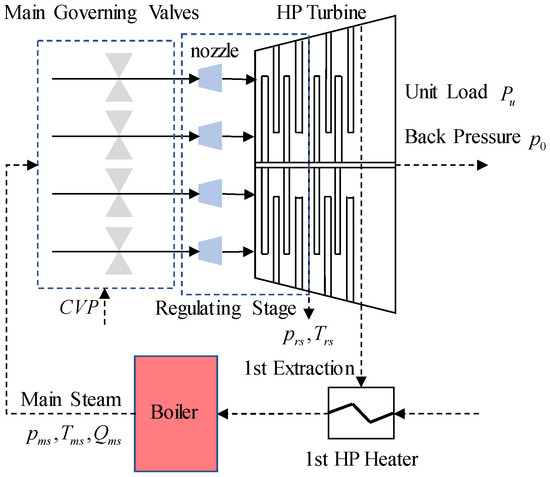
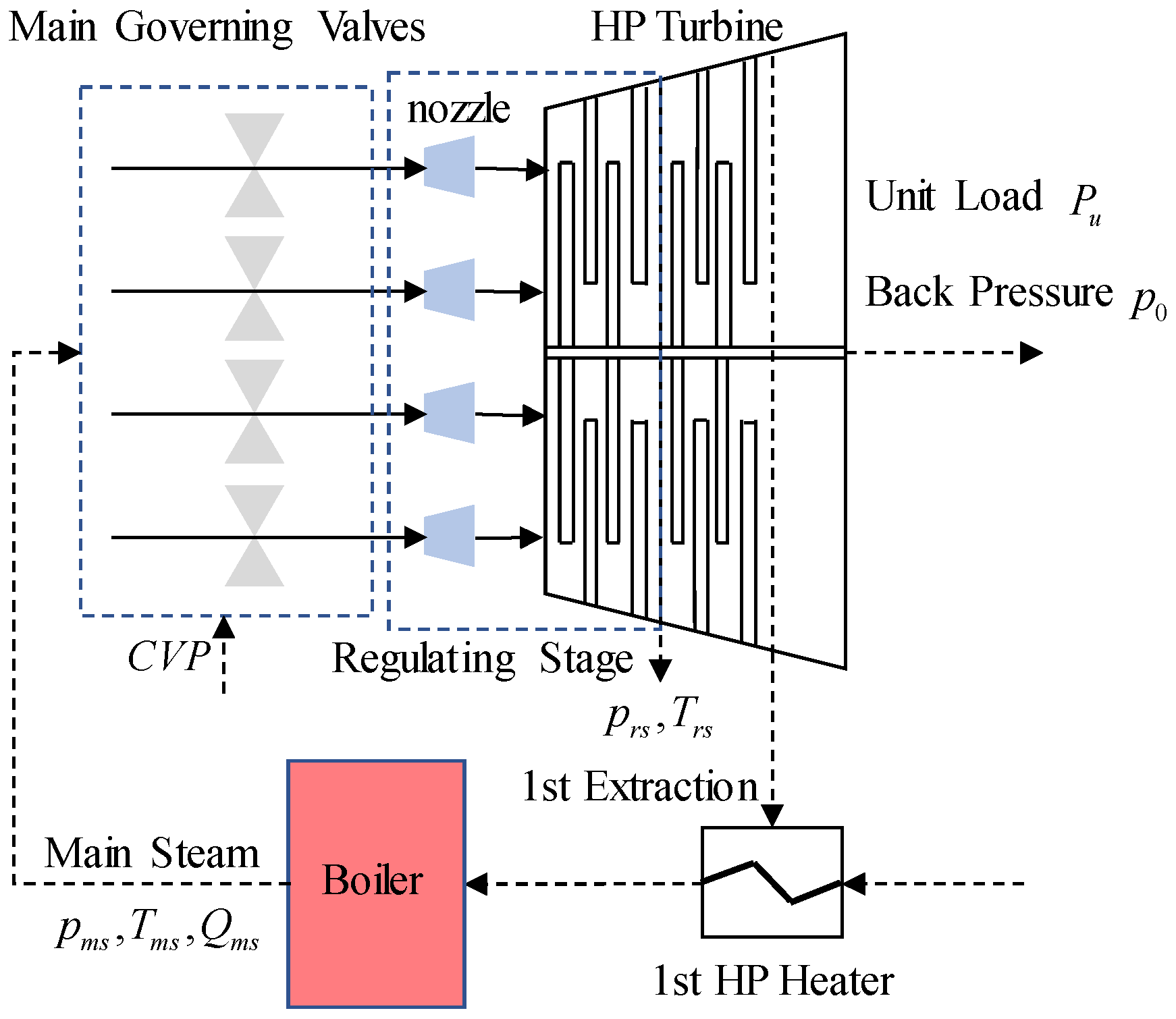
The inlet section of the high-pressure turbine consists of the main steam system, the governing valve group, and the regulating stage, as shown in Figure 1. This region is critical for controlling the turbine output power and the steam mass flow rate. The regulating stage is the first and most critical energy-conversion stage of the high-pressure turbine, where steam experiences the initial and largest enthalpy drop. It consists of a set of nozzles and rotor blades that form the first stator–rotor pair of the turbine. Because the regulating valves directly control the mass flow and thermodynamic state of the inlet steam, the regulating stage strongly influences the overall turbine efficiency and mechanical performance.
Figure 1.
Simplified model of the steam turbine.
In practical operation, the regulating stage is one of the most fault-prone components. Typical issues include valve sticking, asymmetric throttling, nozzle fouling, blade erosion, and flow distortion. With increasing renewable energy penetration and deep peak-shaving demand, turbines frequently operate under rapid load changes and off-design conditions, increasing the likelihood of abnormal behavior in the regulating stage. The operating condition of the regulating stage is conventionally evaluated using its relative internal efficiency, which is defined in Equation (1).
where is the steam specific enthalpy at the stage inlet, is the measured outlet enthalpy, and is the ideal isentropic outlet enthalpy. This indicator can evaluate stage performance, but its accuracy largely depends on quasi-steady-state operating conditions. According to existing research, anomaly detection methods based on relative internal efficiency fail when parameter fluctuations are significant [19].
Based on existing research, more sensitive and robust anomaly detection can be achieved by modeling prediction errors derived from key equipment parameters.
where represents the change in operating conditions; is the system model under state ; is the measurable output parameter. Equation (2) indicates that when degradation occurs, the will deviate under the same .
This paper conducts anomaly detection based on a data-driven model based on this principle. Specifically, a data-driven model for the regulating stage is first trained using a large volume of normal operating data. According to the operating principle shown in Figure 1, the model can be defined as Equation (3).
where is unit load, MW; is the main steam pressure, MPa; is the main steam temperature, °C; is the main steam volumetric flow rate, t/h; is the combined valve position; is the back pressure, MPa.
Compared with pressure-related parameters, the temperature downstream of the regulating stage provides a more accurate representation of blade work capacity and dynamic characteristics. Therefore, it serves as a more informative indicator for performance prediction and anomaly identification [32]. The anomaly detection threshold is obtained through Equation (4). Specifically, the threshold is set to three times the standard deviation of the prediction error computed from the training dataset and remains fixed during testing. This choice follows the widely used three-sigma rule in statistical process monitoring [15,17,19,20]. When the prediction model has sufficiently learned the system characteristics that are unrelated to degradation, the prediction errors mainly reflect stochastic noise and tend to follow an approximately normal distribution. Under this condition, about 99.7% of the prediction errors fall within three standard deviations. Values exceeding this range are statistically unlikely to correspond to normal operating conditions and are therefore identified as anomalies.
where is the temperature after the regulating stage, °C.
Accurate temperature prediction after the regulating stage of a steam turbine is challenging due to the system’s strong nonlinearity and dynamic behavior induced by inertial components such as the steam drum and valves. At the same time, frequent load changes can also affect the accuracy of forecasts. To develop a high-precision model, three critical issues must be addressed: (1) effective extraction of informative features from multiple parameter inputs to fully capture the nonlinear interactions, (2) leveraging dynamic temporal information to account for the system’s time-dependent behavior, and (3) enhancing model generalization to maintain reliable performance under varying operating conditions and unseen scenarios. Solving these challenges is essential for achieving robust and accurate temperature prediction, which is crucial for the safe and efficient operation of steam turbines.
2.2. Multi-Attention Gated Fusion
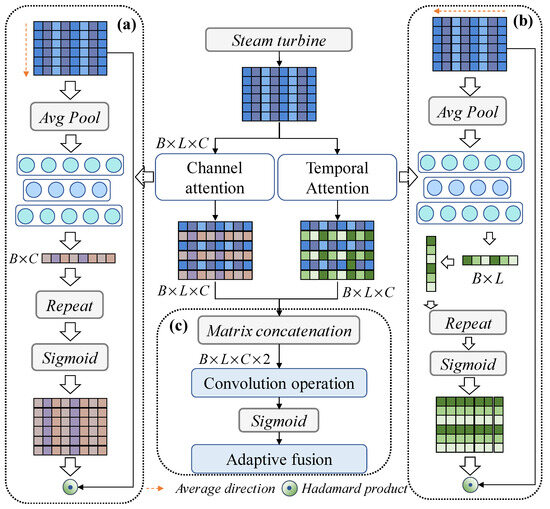
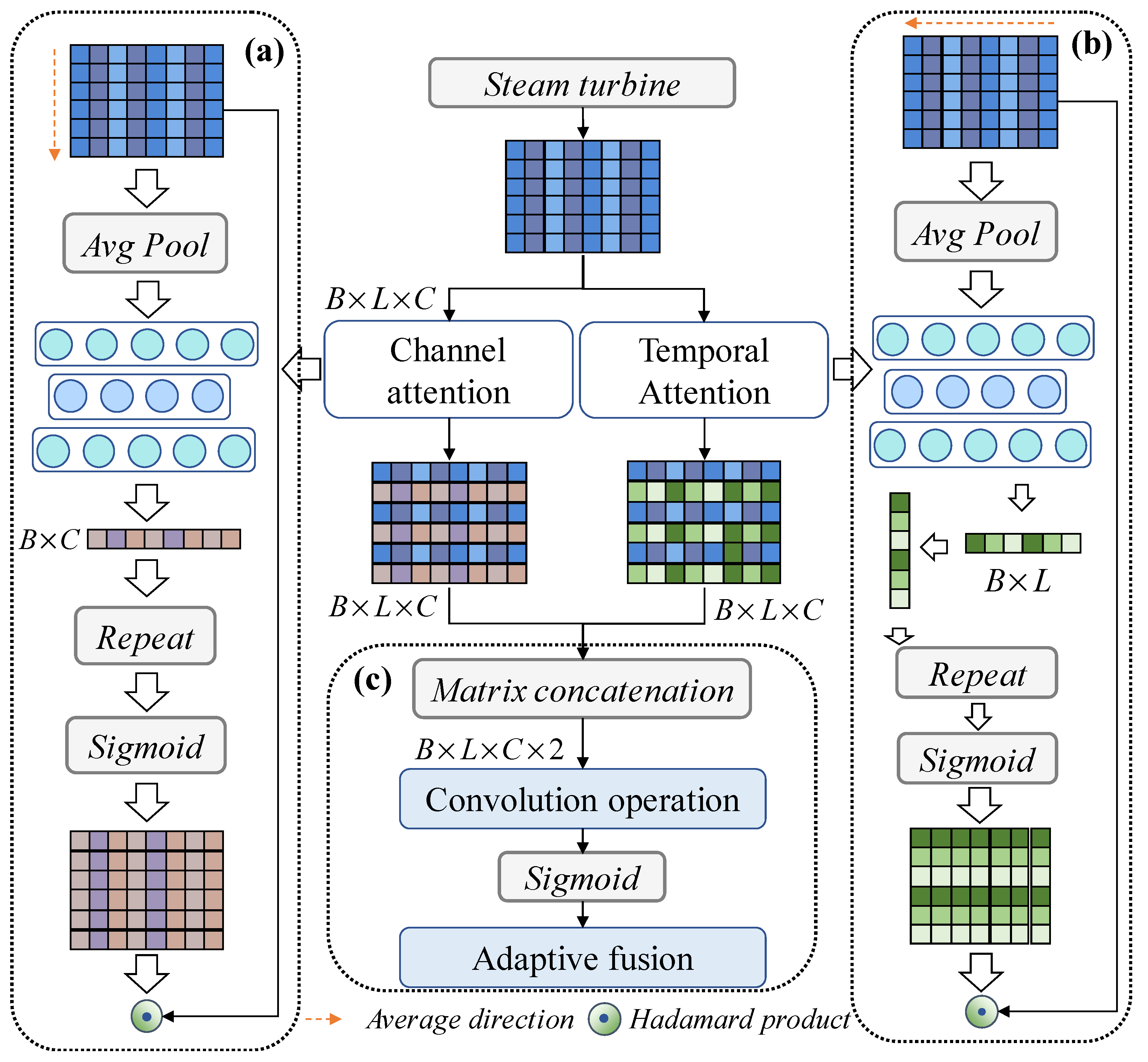
The temperature after a turbine governing stage is jointly affected by multiple operating variables that differ in their physical influence and evolve dynamically over time. In the proposed approach, a gated attention mechanism is employed to unify channel and temporal attention in a single framework, as shown in Figure 2.
Figure 2.
Principle of adaptive gating attention mechanism. (a) Channel attention; (b) temporal attention; (c) gated fusion process.
Assume the model input is , where is the batch size; denotes the time steps; denotes the number of input features. The model will utilize the following three models for adaptive feature extraction.
- (a)
- Channel attention
Channel attention is used to extract the importance of different input features. First, the input features are averaged over time, and then two fully connected layers (FCLs) are used for feature extraction. This process is shown in Figure 2a and Equation (5).
where is the averaging function. Finally, is copied times to return it to its original size, and the channel weights are obtained and normalized using the sigmoid function.
where is the function that copies; is the sigmoid function.
- (b)
- Temporal attention
Temporal attention is used to obtain the importance of different historical moments, and its structure is shown in Figure 2b. Temporal attention requires averaging over the channel dimension. Other steps are similar to channel attention. Finally, after replication and normalization, the final output is obtained.
where is temporal attention weight.
- (c)
- Gated Attention
Simply adding or combining features extracted by temporal attention and channel attention offers limited improvement in prediction accuracy. Referring to the gating structure in LSTM networks, an adaptive calculation method for fusion coefficients is proposed, the principle of which is shown in Figure 2c. First, and are concatenated and dimensionality reduced using convolution, and then normalized to serve as fusion weights. The implementation process is shown below.
where is the concatenation result; represents a two-dimensional convolution operation. Since is part of the trainable parameters, it can be considered the optimal choice. The proposed gating mechanism addresses the shortcomings of traditional fusion methods.
2.3. LSTM Model
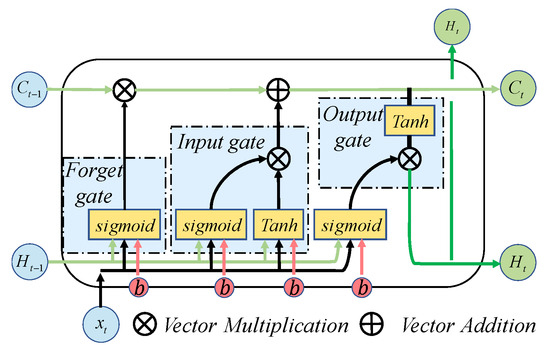
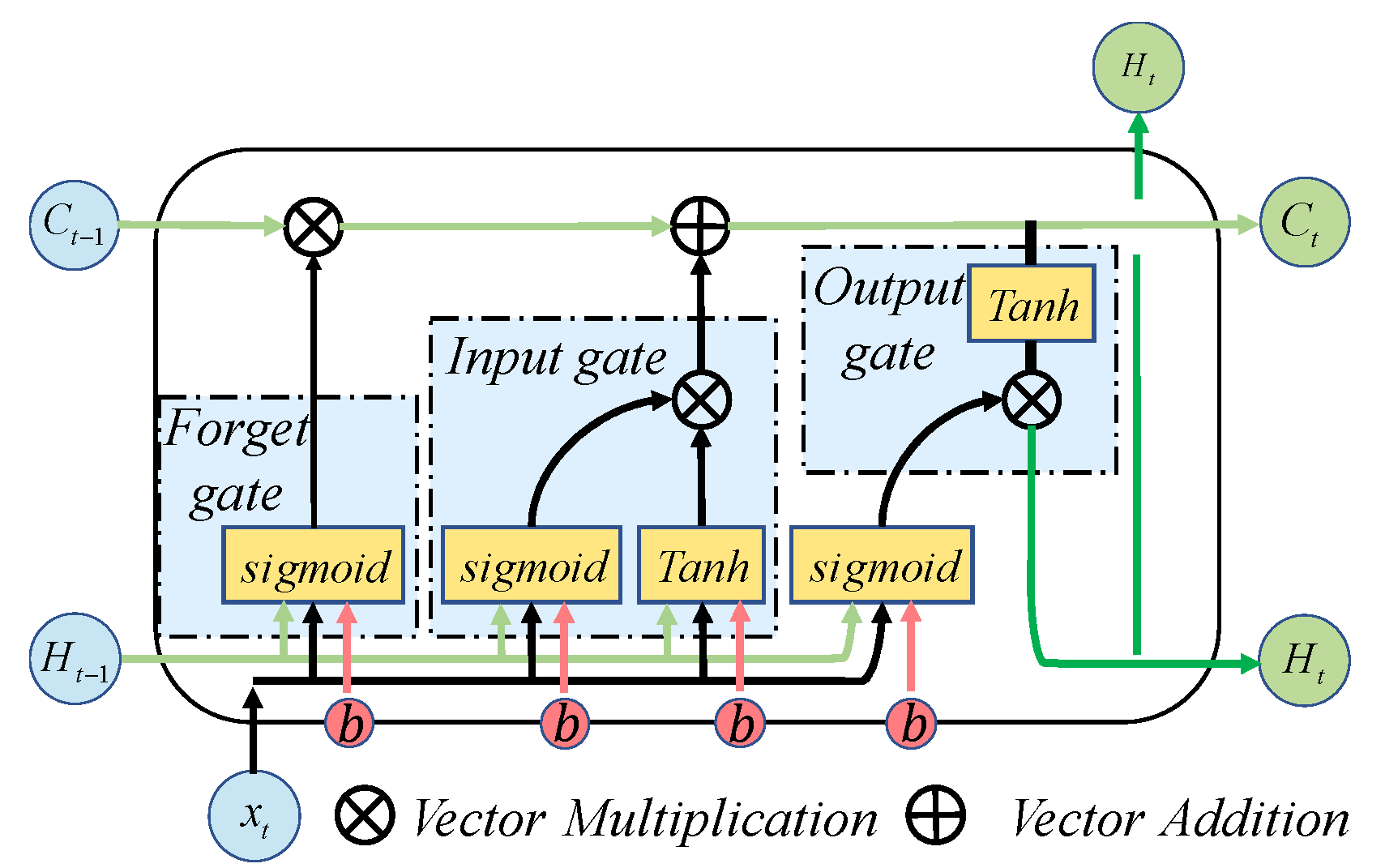
A steam turbine is a typical dynamic system, so the temporal information contained in the measured parameters must be considered during modeling. Traditional FNNs or CNNs cannot effectively utilize historical information. Although the time step of the input can be increased, it is difficult to consider the dynamic relationships between output information. LSTM, through its special gating structure, can adaptively select how much historical information to use. Therefore, LSTM is used as the backbone network for the temperature prediction, and its unit structure is shown in Figure 3.
Figure 3.
Principle of ordinary LSTM network.
The LSTM networks update their state using the previous cell state , previous hidden state , and current input . This process is shown in Equation (10):
where is the moment corresponding to the input data , is the state of the hidden layer, is the output of the forgetting gate, is the output of the input gate, is the cell state, and is the output of the output gate. is the sigma function and is the hyperbolic tangent function, and are the weights and biases in each structure. The final output of the LSTM network is shown in Equation (11).
The input to the LSTM model is the of the gated attention. Subsequently, two fully connected layers are used to map the LSTM output to the . Finally, the health status of the device can be determined using the test error .
2.4. Physics-Informed Modeling Methods
Steam turbines inevitably operate under conditions that deviate from the design range and are not covered by the training data. Anomaly detection aims to model normal patterns so that the system can identify deviations, but capturing all non-fault characteristics is difficult in practice. The prediction model must therefore exhibit strong generalization ability. Incorporating physical information into data-driven models is an effective way to improve both generalization and stability. However, the temperature downstream of the regulating stage is difficult to determine accurately, and estimating it often requires entropy-based thermodynamic calculations. Extracting the relationship between pressure changes and valve opening is a more effective approach. In normal mode, the valve flow characteristics have good linearity. The can be regarded as the equivalent flow area, and the satisfies Equation (12) [36].
where is the valve flow coefficient. After the regulating stage, all blades can be regarded as a variable-operating-condition stage group and satisfy the Flügel relation, as shown below [37].
where the subscript represents the rated operating condition. Generally, , so the . In addition, due to the large thermal inertia of steam in the regulating stage, the changes relatively slowly compared with . Therefore, the term can be treated as a slowly varying factor and absorbed into an equivalent coefficient. Accordingly, Equation (13) can be simplified to Equation (14).
where is the flow coefficient. Ignoring leakage, . Combining Equations (12) and (14), the following relationship can be obtained.
where is an equivalent flow coefficient reflecting valve characteristics, regulating-stage flow capacity, and thermodynamic factors in the Flügel relation. The specific value of can be obtained by directly fitting a large amount of real data and remains unchanged during training. This relationship can be further expressed as follows:
The above physical relationships hold under the following conditions:
- (1)
- The unit is not undergoing start-up or shutdown processes and is not operating under extremely low-load conditions; otherwise, Equation (12) becomes invalid.
- (2)
- There is no significant leakage or additional steam extraction between the regulating stage and the valves; otherwise, Equation (15) does not hold.
As the proposed anomaly detection method targets normally operating units with slight performance degradation, these conditions do not limit its applicability. Therefore, a multi-input, dual-output steam turbine regulating-stage model can be constructed. Utilizing the characteristics of pressure to constrain the model to conform to physical relationships improves the accuracy and reliability of temperature prediction. At this point, the model’s loss function is as follows.
where are the predicted values.
2.5. Framework
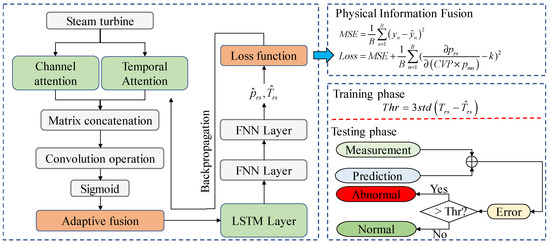
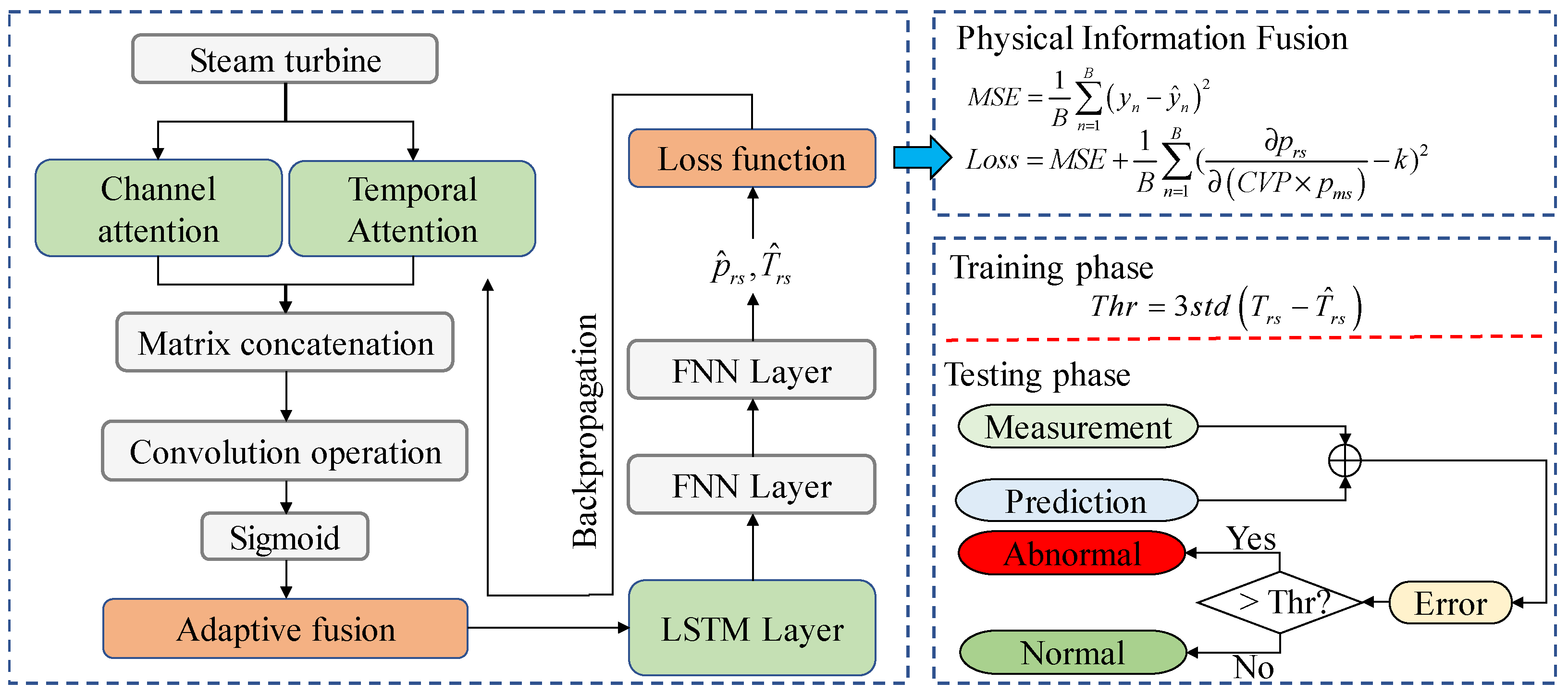
In summary, to address the three issues raised at the beginning of this section, we propose an advanced gated attention and physical information LSTM approach. The framework of this approach is shown in Figure 4.
Figure 4.
Methodological framework.
The main steps of the proposed methodology are as follows:
- (1)
- During the training phase, the temperature and pressure prediction model for the regulating-stage outlet is trained, and the model parameters are updated using the proposed loss function. Subsequently, three times the standard deviation of the temperature training error is calculated as the detection threshold.
- (2)
- During the testing phase, the real-time prediction error of the temperature after the regulating stage is calculated. If the error exceeds the threshold, the system is considered abnormal.
3. Data Introduction and Evaluation Metrics
This section will describe the experimental data and define the metrics needed for model comparison.
3.1. Data Sources and Introduction
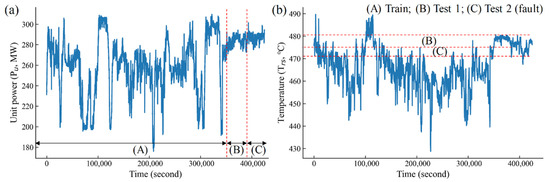
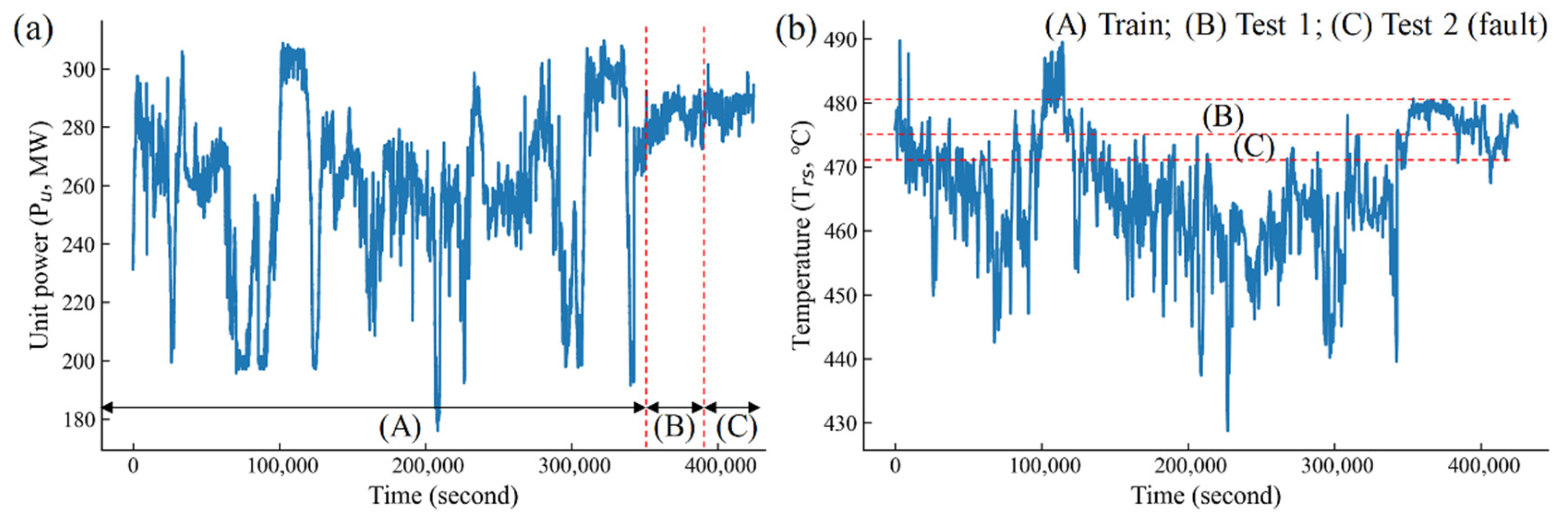
This study used operational data from a 300 MW subcritical coal-fired power unit in China. The time period was 5 days, and the sampling frequency was 1 Hz. Obvious abnormal points caused by sensor noise or recording errors were removed during data cleaning. The dataset contained almost no missing values after data cleaning. Therefore, no additional missing-data processing was required. After outlier removal, the data were divided into training and test sets, as shown in Figure 5. The training data consisted of 339,608 samples collected from 1 to 4 December 2023. The test dataset includes both normal and fault datasets. The first part consists of actual operating data from 7 December 2024, containing 40,000 normal samples. The second part contains data collected on 9 December 2024, including 40,000 abnormal samples, which show a steam temperature increase of approximately 1% compared with normal conditions. Analysis indicates that this may be caused by accelerated wear of the regulating-stage blades. However, this part of the data did not show any obvious anomalies, preventing field operators from detecting the problem in a timely manner. Furthermore, the test data shows few corresponding stable operating conditions in the training set, highlighting the importance of the generalization ability.
Figure 5.
Training and testing data: (a) changes in unit load; (b) changes in regulating-stage pressure.
According to Equation (3), six measurement points are selected as inputs. To facilitate loss calculation, is also constructed as an additional input. Before training and testing, all input variables were normalized using min–max normalization to ensure consistent numerical scales.
3.2. Evaluation Metrics
To verify the superiority of the proposed method, it is necessary to compare it from the aspects of modeling accuracy, detection accuracy, and generalization ability. First, the root mean square error (RMSE) is used to evaluate the prediction accuracy of the model, and its definition is shown in Equation (20).
where is the total number of samples. Secondly, Equation (21) is used to evaluate the model’s anomaly detection accuracy.
where denotes the number of normal samples whose residuals fall within the detection threshold, and is the total number of normal samples. Therefore, corresponds to the true negative rate. Similarly, denotes the number of abnormal samples whose residuals exceed the detection threshold, and is the total number of abnormal samples, making equivalent to the true positive rate.
The model generalization error (GE) is defined as shown in Equation (22) to reflect the degree of decrease in prediction accuracy on the test dataset. This metric is only applicable to comparisons of models with similar accuracy. When the test errors differ too much, this indicator becomes less meaningful.
Furthermore, three standard deviations of the training error defined in Equation (4) are also used as one of evaluation metrics. Among these metrics, smaller RMSE and GE indicate better models. A smaller indicates a more sensitive model to anomalies. and closer to 1 indicate superior anomaly detection capability.
4. Experimental Results and Analysis
This section presents the training and testing results, accompanied by ablation and comparative experiments to evaluate model performance.
4.1. Model Training Results
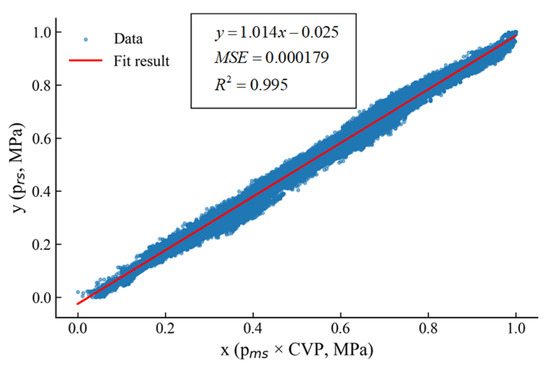
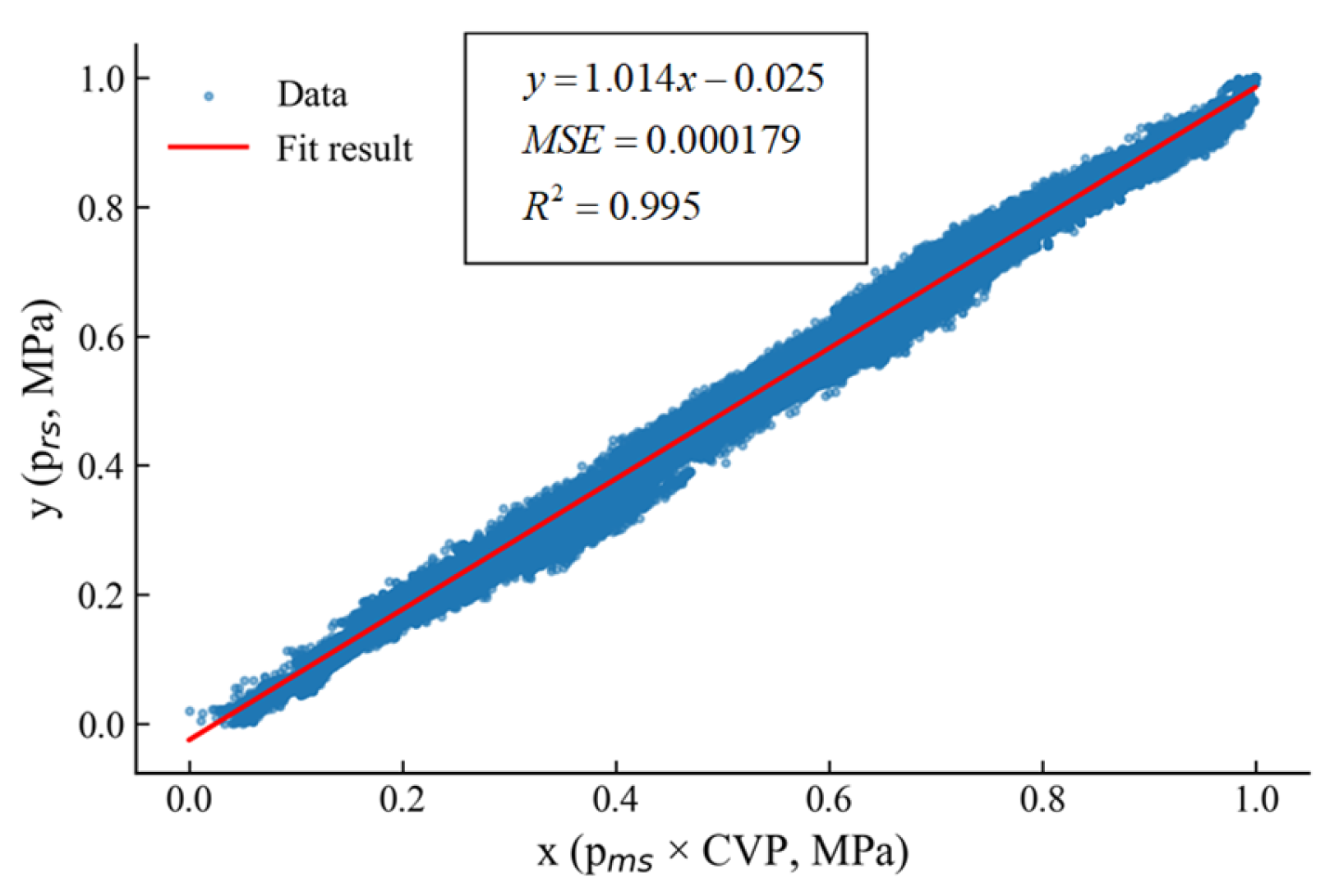
First, the proposed physical constraint loss function is constructed using , , and from the training data. The fitting results as shown in Figure 6.
Figure 6.
Fitting results of physical laws.
The fitting coefficient of determination (R2) reaches 0.995, indicating that the actual data satisfies the physical laws reflected in Equation (17), and in Equation (18) was used for model training. Five-fold cross-validation was employed for hyperparameter selection. Subsequently, the learning rate is set to 0.01, and the batch size is set to 32. The final input dimensions are 32 × 5 × 7, and the final network architecture is summarized in Table 1. All experiments were conducted on a workstation equipped with an NVIDIA RTX 4090 GPU an Intel Core i5-13400 CPU (Santa Clara, CA, USA), and PyTorch 2.0.1. The loss reduction process during training is shown in Figure 7.
Table 1.
Structure of the anomaly detection model.
Figure 7.
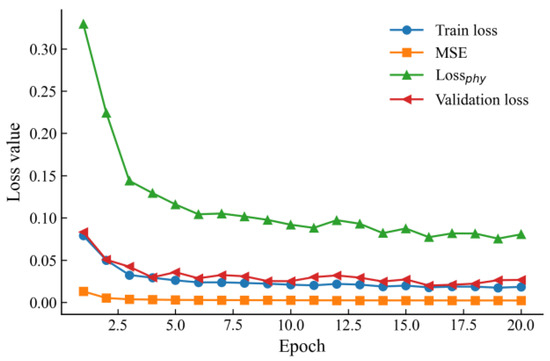
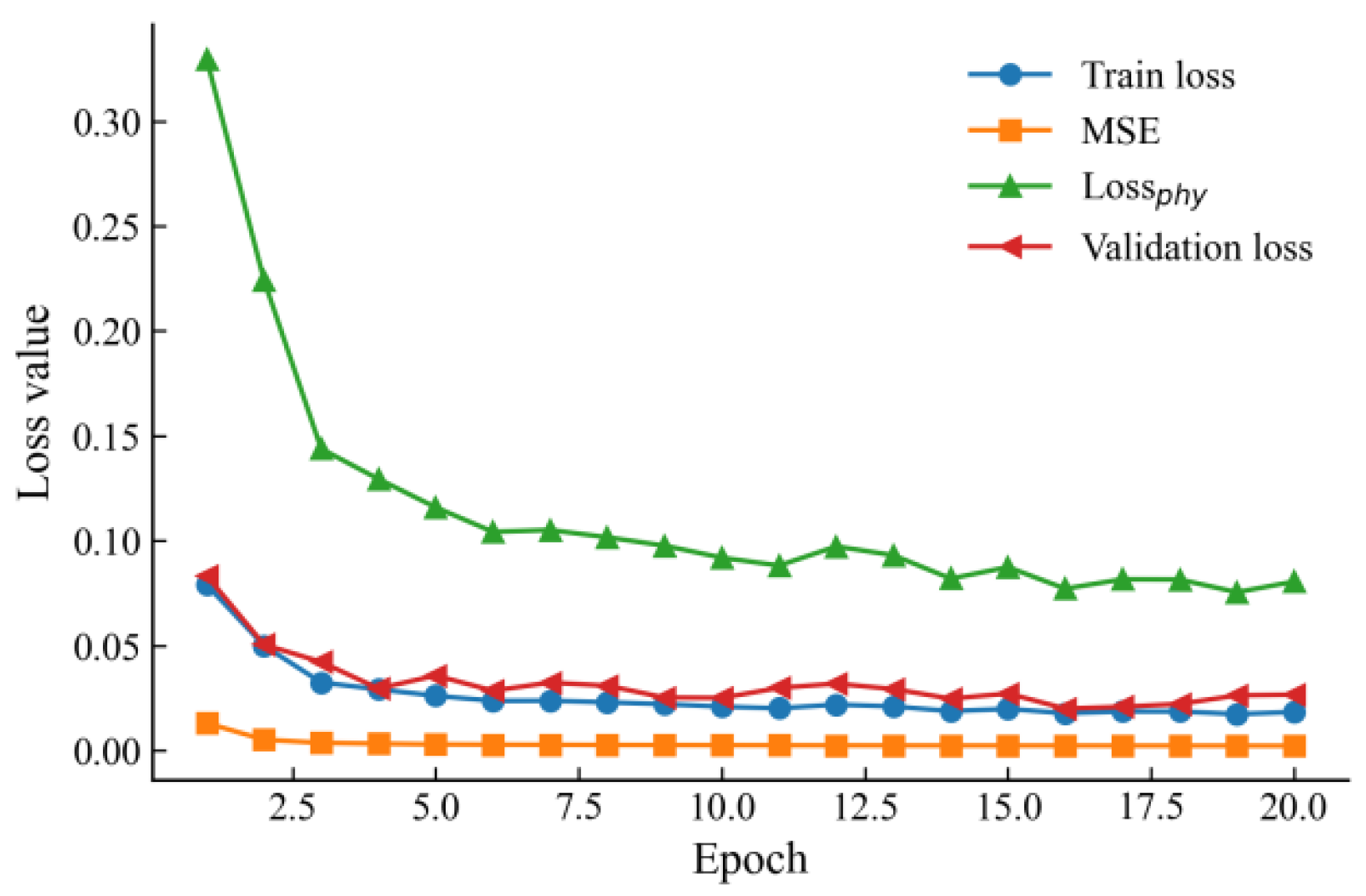
Convergence process of model training error.
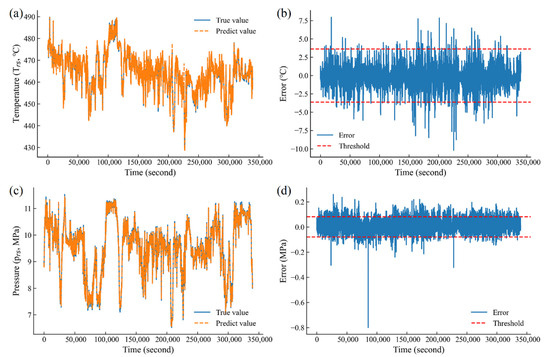
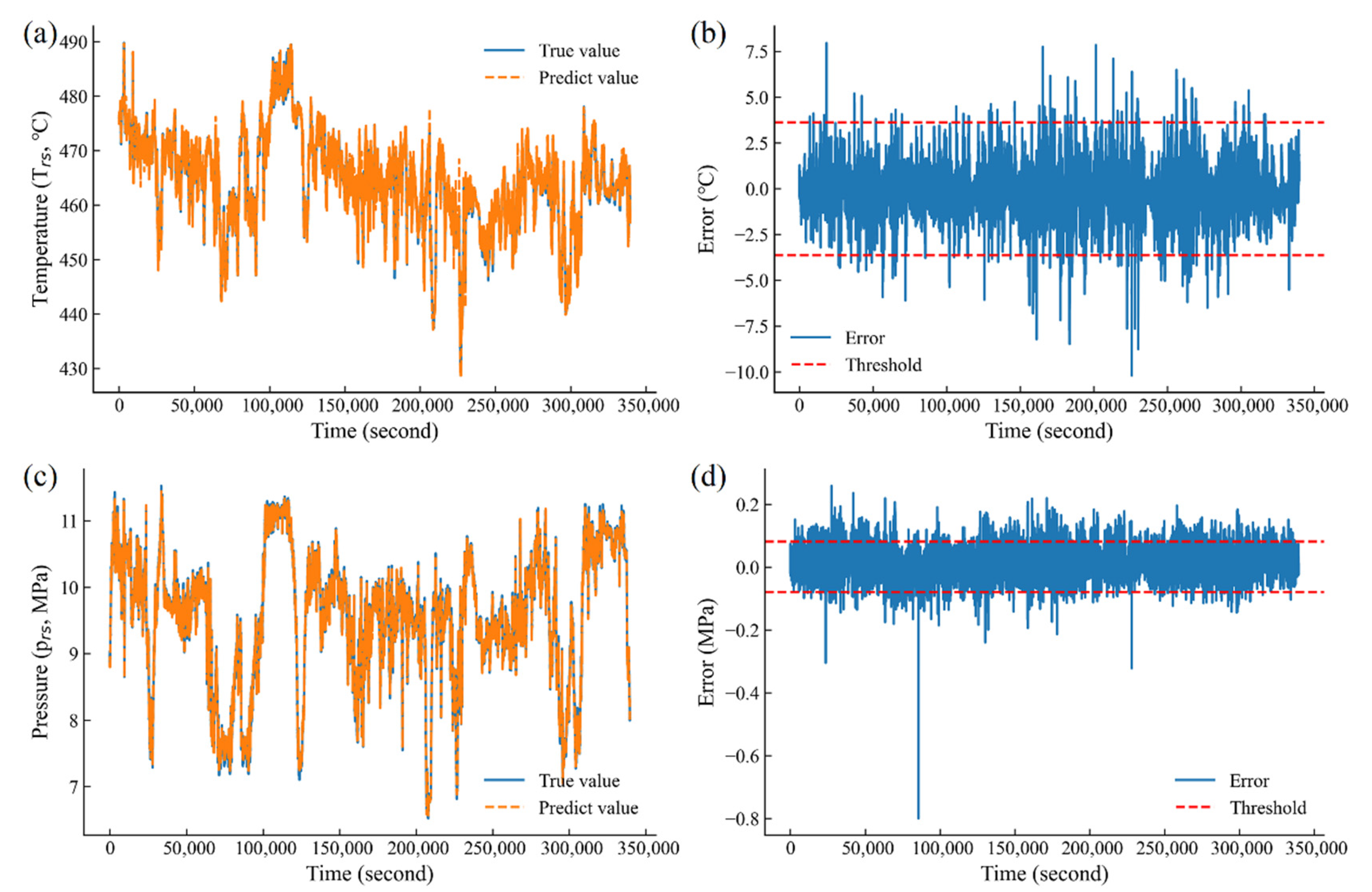
As can be seen from Figure 7, both the MSE and the gradient penalty of the physical constraints decrease, indicating that the model parameters are effectively updated. The validation error reaches its minimum at the 16th epoch, and the corresponding model is selected as the final model to prevent overfitting, with a total training time of 1820.63 s. The prediction results and prediction error on the training dataset are shown in Figure 8. After calculation, the training RMSE of the temperature prediction model is 1.22, and the detection threshold is 3.62 °C. The training RMSE of the pressure prediction model is 0.034.
Figure 8.
Model training results. (a) Predicted and actual temperature values; (b) predicted temperature error and threshold; (c) predicted and actual pressure values; (d) predicted pressure error and threshold.
4.2. Model Testing Results
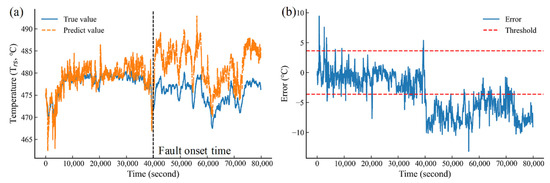
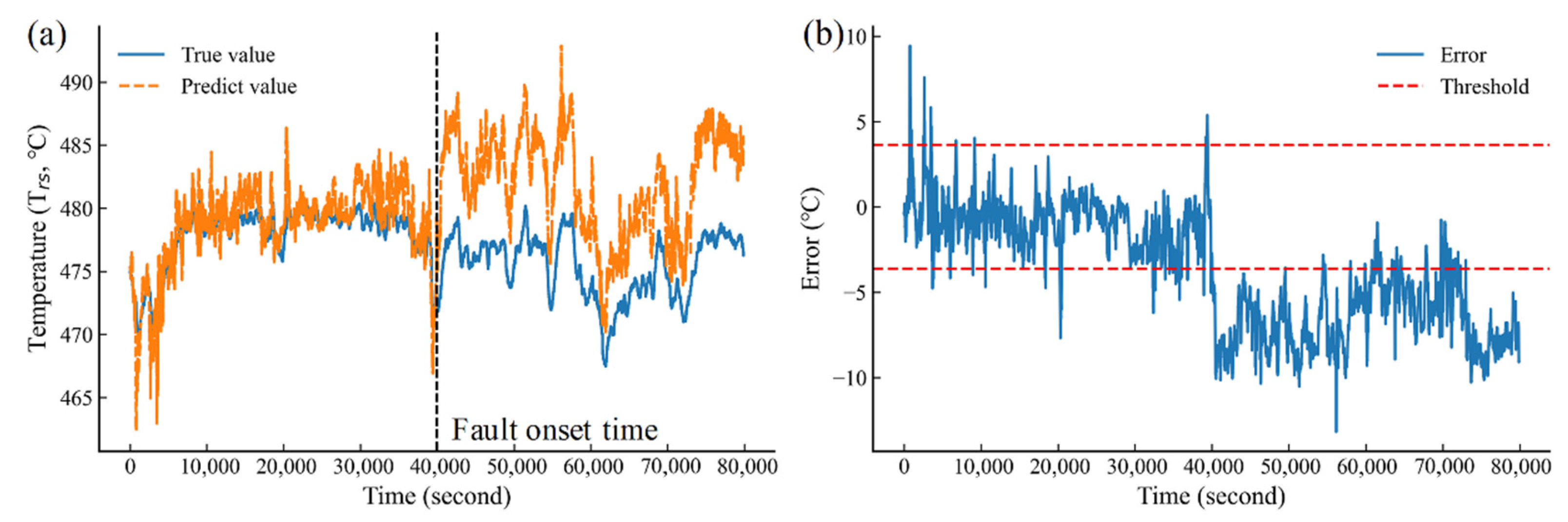
The trained model was tested on a test set, and the results are shown in Figure 9. According to Figure 9a, before the fault occurred, the model’s predicted values fit the measured values well. In Figure 9b, the prediction errors for normal data were mostly within the threshold band, indicating that the model did not deviate. After the fault occurred, the prediction results deviated significantly, and the prediction error also deviated markedly from the threshold band. This indicates that the model effectively learned the normal operating characteristics of the system and could effectively overcome the interference of operating conditions. The computational cost of the model was low, requiring only 2.16 s to process 80,000 test samples (approximately 0.027 ms per sample), demonstrating its suitability for real-time monitoring.
Figure 9.
Model testing results. (a) Predicted and actual temperature values; (b) predicted temperature error and threshold.
Calculations show that during the normal phase, the prediction RMSE was 2.28, and was 0.955. After the fault occurred, . These results demonstrate that the proposed model can achieve high-accuracy temperature prediction and sensitive anomaly detection.
4.3. Ablation Experiment Results
To verify the effectiveness of the proposed gating attention and fusion of physical information, a series of ablation experiments were conducted in this paper. The specific experimental structure is shown in Table 2, where a checkmark (√) denotes the inclusion of a specific component.
Table 2.
Configurations of different model variants for ablation studies.
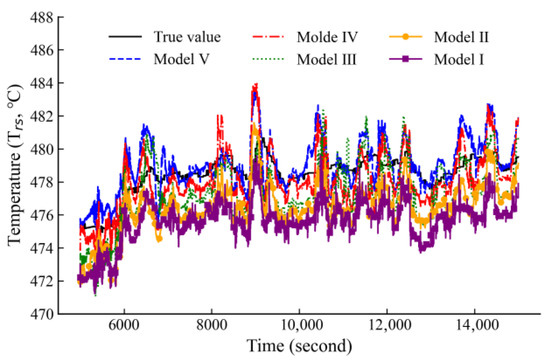
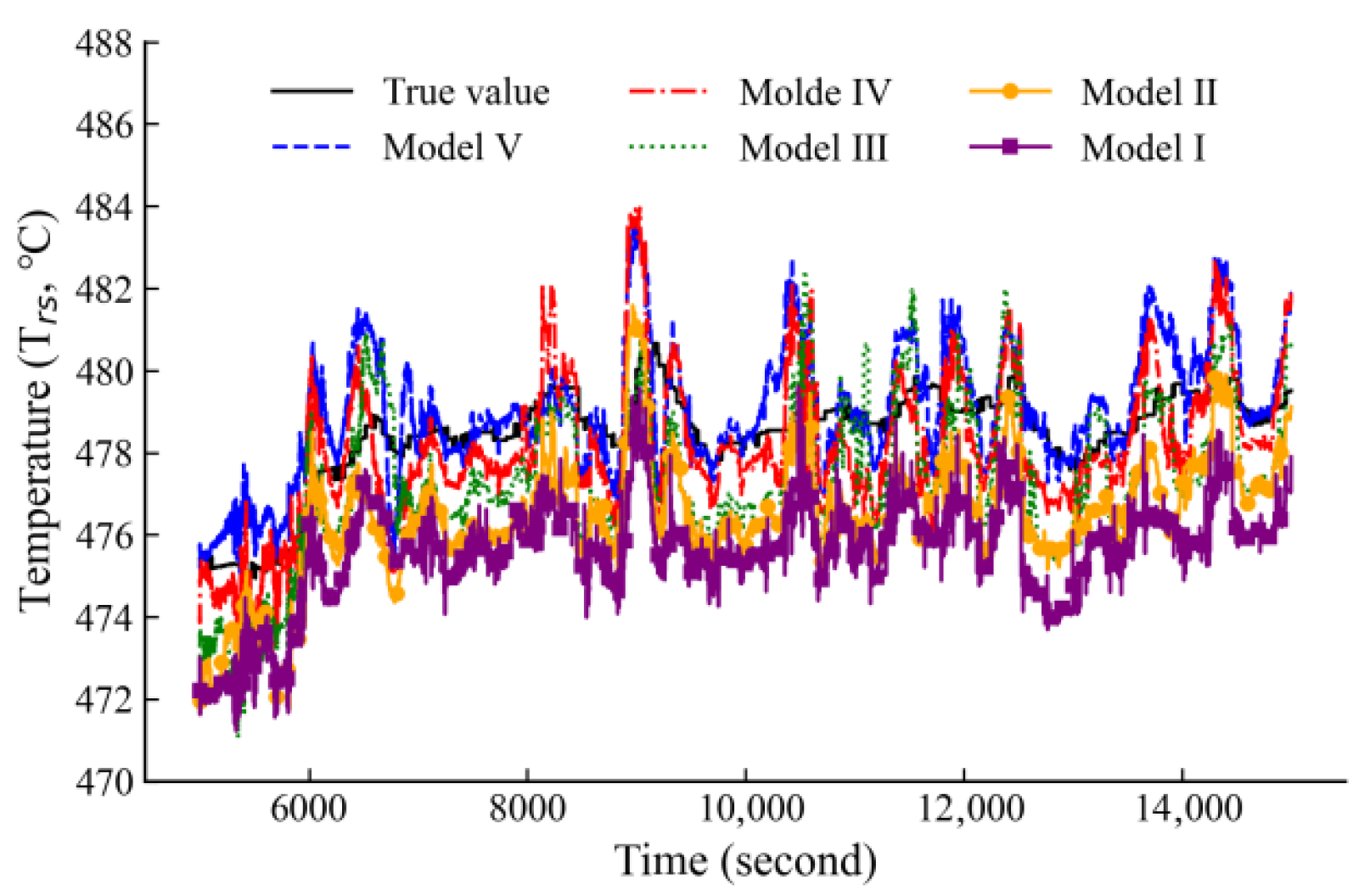
Different models used the same parameters and training conditions. The prediction results of different models on the first test set are shown in Figure 10. The proposed model has a clear advantage in accuracy, followed by a standard LSTM model using gated attention. The standard LSTM model performs the worst, with a significant discrepancy between the predicted and actual values.
Figure 10.
Comparison of prediction performance of different models.
Detailed metrics of the different models are summarized in Table 3. Comparing Models III and V shows that gated fusion improves prediction accuracy by 14.7%. The comparison between Models I and II highlights the importance of multi-attention mechanisms in enhancing prediction performance. Furthermore, comparisons between Models II and III as well as Models IV and V demonstrate that incorporating physical information further improves both prediction accuracy and model generalization. Compared to Model IV, Model V further reduces RMSE by 6.72% and GE by 6.5%, while also achieving the highest anomaly detection accuracy.
Table 3.
Performance comparison of different model variants in ablation studies.
4.4. Model Interpretability Analysis
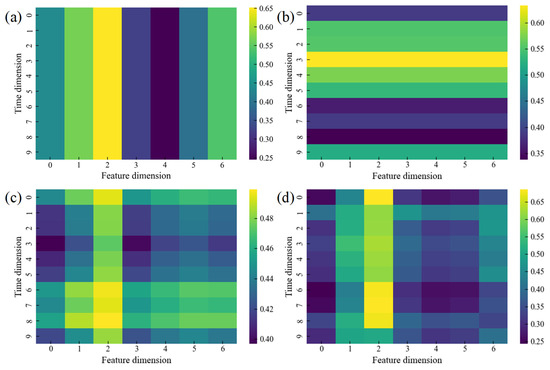
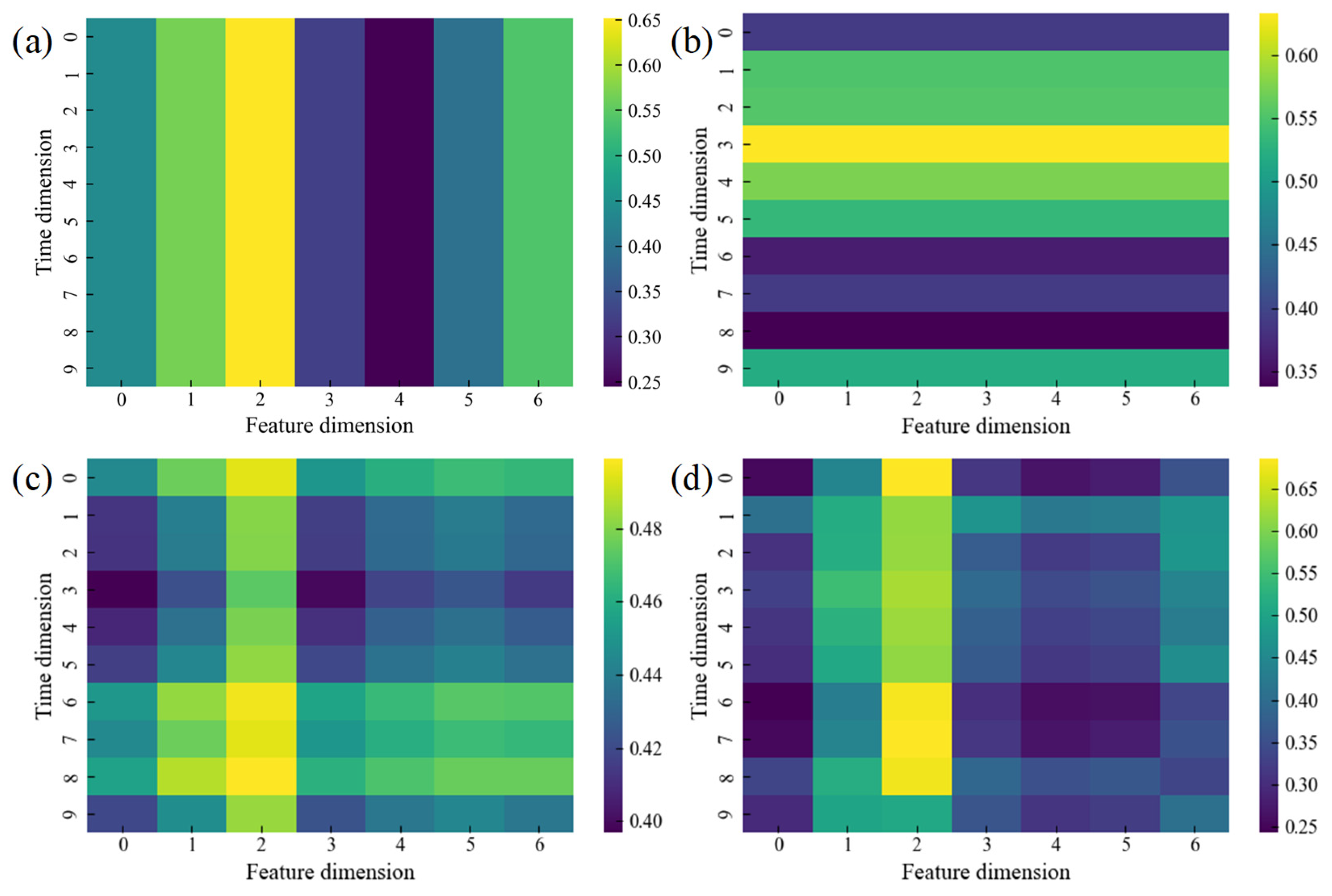
Figure 11 illustrates the attention weight distribution using the first test dataset as the model input. As shown in Figure 11a, the prediction model pays more attention to the main steam temperature, followed by the main steam pressure. In addition, significant attention is given to the product of the main steam pressure and the integrated valve position command, which is consistent with the underlying physical relationship. The temporal attention results in Figure 11b indicate that the earliest time step receives substantially lower weight than the subsequent steps, reflecting the dynamic evolution characteristics of the steam turbine system.
Figure 11.
Attention weight visualization results. (a) Channel attention; (b) temporal attention; (c) fusion coefficient; (d) fusion result.
As shown in Figure 11c, the proposed gated attention mechanism largely inherits the characteristics of channel attention while incorporating temporal attention information. Consequently, different sensors receive distinct attention levels. Furthermore, this method also considers the results of temporal and spatial attention. The final fused feature representation in Figure 11d demonstrates richer feature information, indicating that the proposed method effectively integrates channel and temporal features and enables more refined adaptive feature selection.
4.5. Comparison with Traditional Models
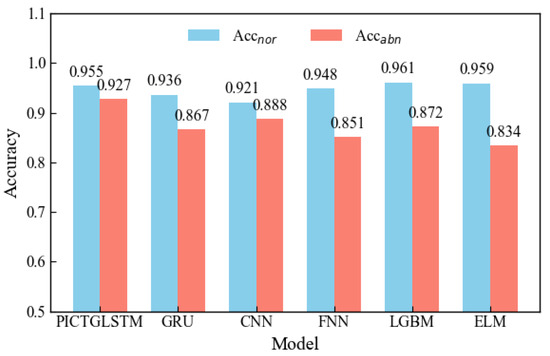
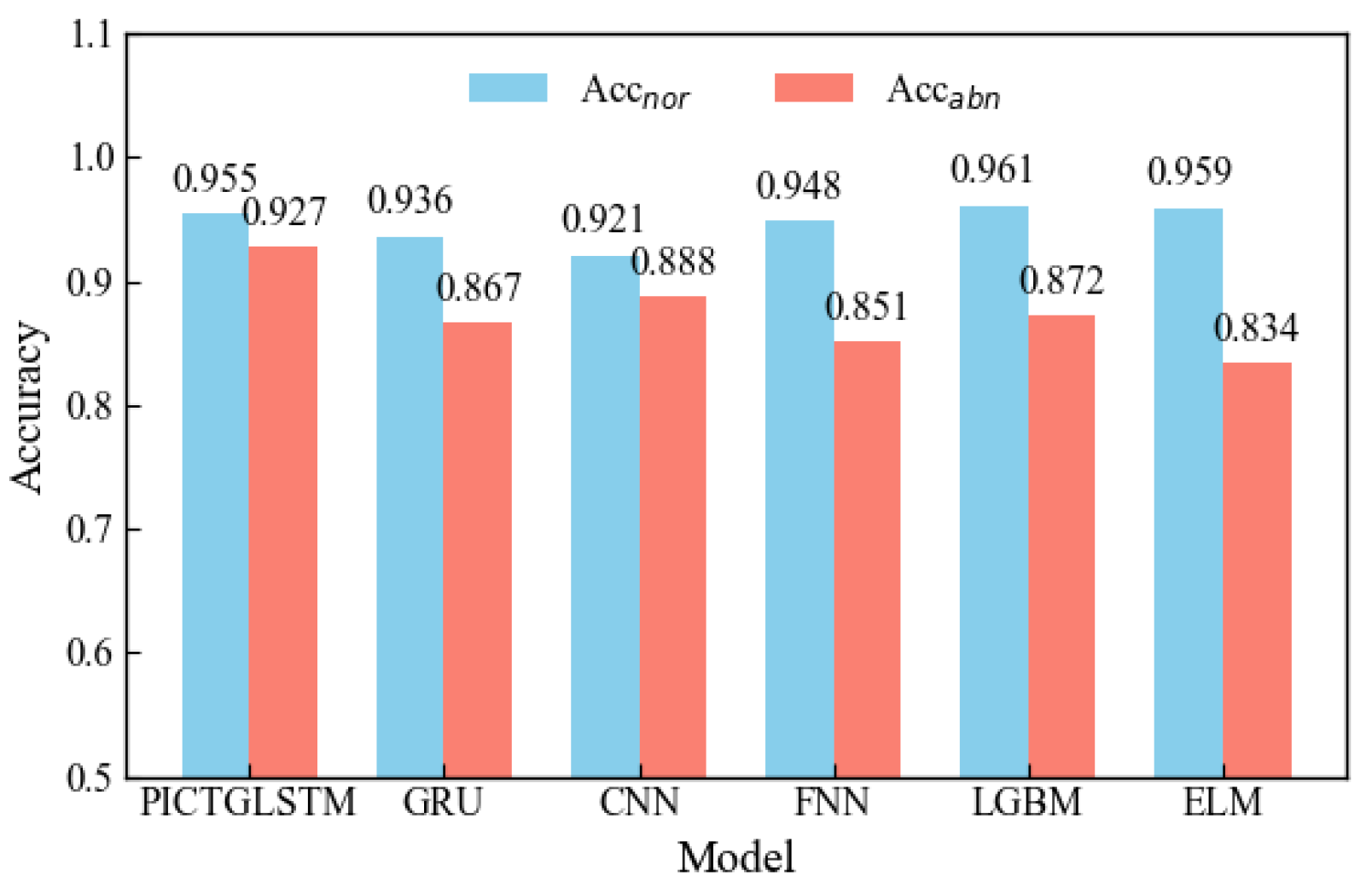
To highlight the superiority of the proposed method, the traditional methods are utilized for building steam turbine regulation stage temperature prediction models. Anomaly detection experiments are conducted using test data and the obtained model. Figure 12 shows the diagnostic accuracy of different methods. Comparison algorithms include GRU, CNN, FNN, Light Gradient Boosting Machine (LGBM), and Extreme Learning Machines (ELMs).
Figure 12.
Comparison of detection accuracy of different models.
The comparison results further show that the proposed method achieves the highest diagnostic accuracy on fault datasets, demonstrating a clear advantage over traditional methods. The maximum relative improvement reaches 10.9%. On normal datasets, the performance improvement is less pronounced because the proposed method adopts a relatively low detection threshold, which may cause prediction errors to exceed the threshold under frequent load fluctuations. This issue can be mitigated by applying moving-average filtering or predefined alarm rules. Nevertheless, the proposed method exhibits significantly higher sensitivity to abnormal conditions.
5. Conclusions
In this study, the anomaly detection problem of the steam turbine regulating stage is investigated. This subsystem operates under severe thermal and mechanical conditions and is particularly susceptible to degradation during deep peak-shaving operations. To enable accurate monitoring and early fault identification, a prediction model for the post-regulating-stage temperature with high accuracy and strong generalization capability is developed. The main conclusions of this work are summarized as follows:
- (1)
- The proposed multi-attention adaptive fusion framework effectively captures and fuses channel and temporal features. Compared to directly adding two attention levels, the proposed method improves prediction accuracy by 14.7% and anomaly detection accuracy by 4.6%. Visualization results show that this method effectively improves the ability to distinguish key features.
- (2)
- The proposed physical constraint loss function effectively improves the model’s generalization ability. By introducing physical constraints based on the inherent relationship between main steam pressure, regulating-stage pressure, and valve position, the model is successfully guided to follow basic thermodynamic behavior. Compared to pure data-driven methods, the generalization error is reduced by more than 6%.
- (3)
- The proposed model effectively improves the accuracy and sensitivity of anomaly detection in the turbine inlet regulating stage. The proposed method significantly outperforms traditional CNN, GRU, LSTM, and machine learning methods. Anomaly detection accuracy is improved by at least 3.9% compared to traditional models.
Despite the encouraging results, the proposed method still has several limitations. It is not applicable during start-up or shutdown processes where the adopted physical priors may not hold. The physical constraints are derived from empirical observations and data characteristics and therefore involve certain approximations, and extracting more rigorous constraints from the underlying heat transfer processes will be an important direction for future research. In addition, due to limited fault data, only one fault type is investigated through simulation, and further validation under other fault scenarios as well as in other turbine stages and cylinders is required. Future work will also investigate more advanced adaptive model optimization strategies and dynamic thresholding techniques to further improve the robustness and reliability of anomaly detection.
Author Contributions
Methodology, Y.M.; Software, J.Z. and Y.C.; Validation, Q.Z.; Formal analysis, G.D.; Investigation, J.Z.; Resources, G.D.; Writing—original draft, Y.M.; Writing—review and editing, Q.Z. and Y.C. All authors have read and agreed to the published version of the manuscript.
Funding
This research received no external funding.
Data Availability Statement
The original contributions presented in this study are included in the article. Further inquiries can be directed to the corresponding author.
Conflicts of Interest
Author Yuanli Ma was employed by the company Qinghai Qiaotou Power Generation Co., Ltd. Authors Gang Ding, Qiang Zhang were employed by the company Shanghai Power Equipment Research Institue Co., Ltd. Author Jiangming Zhou was employed by the company State Nuclear Electric Power Planning Design & Research Institute Co., Ltd. The remaining authors declare that the research was conducted in the absence of any commercial or financial relationships that could be construed as a potential conflict of interest.
References
- Bogdanov, D.; Ram, M.; Aghahosseini, A.; Gulagi, A.; Oyewo, A.S.; Child, M.; Caldera, U.; Sadovskaia, K.; Farfan, J.; Barbosa, L.D.S.N.S.; et al. Low-cost renewable electricity as the key driver of the global energy transition towards sustainability. Energy 2021, 227, 120467. [Google Scholar] [CrossRef] [Scilit]
- Kosowski, K.; Piwowarski, M.; Richert, M.; Stępień, R.; Włodarski, W. Isothermal turbines—New challenges. Numerical and experimental investigations into isothermal expansion in turbine power plants. Energy Convers. Manag. 2024, 315, 118772. [Google Scholar] [CrossRef] [Scilit]
- Aich, W.; Basem, A.; Ali Ghabra, A.; Mausam, K.; Ahmed, M.; Ben Said, L.; Zoghi, M.; Habibi, H. Multi-aspect assessment and optimization of a poly-generation layout composed of a geothermal power plant and a wind turbine. Therm. Sci. Eng. Prog. 2024, 51, 102660. [Google Scholar] [CrossRef] [Scilit]
- Liu, S.; Huang, X.; Zhang, J.; Gao, C.; Wan, Q.; Feng, D. Multi-criteria optimization next to a comparative analysis of a polygeneration layout based on a double-stage gas turbine cycle fueled by biomass and hydrogen. Renew. Energy 2024, 237, 121669. [Google Scholar] [CrossRef] [Scilit]
- Cao, L.; Tu, C.; Hu, P.; Liu, S. Influence of solid particle erosion (SPE) on safety and economy of steam turbines. Appl. Therm. Eng. 2019, 150, 552–563. [Google Scholar] [CrossRef] [Scilit]
- Banaszkiewicz, M. On-line monitoring and control of thermal stresses in steam turbine rotors. Appl. Therm. Eng. 2016, 94, 763–776. [Google Scholar] [CrossRef] [Scilit]
- Lee, J.J.; Kang, S.Y.; Kim, T.S.; Park, S.J.; Hong, G.W. The effect of hub leakage on the aerodynamic performance of high-pressure steam turbine stages. J. Mech. Sci. Technol. 2017, 31, 445–454. [Google Scholar] [CrossRef] [Scilit]
- Huang, B.; Peng, Y.-H.; Hu, L.-S.; Liang, X.-C. Incipient fault detection approach based on piecewise linear shape-based global embedding for steam turbine plants. Appl. Energy 2024, 370, 123563. [Google Scholar] [CrossRef] [Scilit]
- Zio, E. Prognostics and Health Management (PHM): Where are we and where do we (need to) go in theory and practice. Reliab. Eng. Syst. Saf. 2022, 218, 108119. [Google Scholar] [CrossRef] [Scilit]
- Kordestani, M.; Saif, M.; Orchard, M.E.; Razavi-Far, R.; Khorasani, K. Failure Prognosis and Applications—A Survey of Recent Literature. IEEE Trans. Reliab. 2021, 70, 728–748. [Google Scholar] [CrossRef] [Scilit]
- Xu, W.; Zhang, P. Steam turbine anomaly detection: An unsupervised learning approach using enhanced long short-term memory variational autoencoder. Appl. Therm. Eng. 2025, 278, 127138. [Google Scholar] [CrossRef] [Scilit]
- Chen, Z.; Zhou, D.; Zio, E.; Xia, T.; Pan, E. Adaptive transfer learning for multimode process monitoring and unsupervised anomaly detection in steam turbines. Reliab. Eng. Syst. Saf. 2023, 234, 109162. [Google Scholar] [CrossRef] [Scilit]
- Cheng, M.; Zhang, Q.; Cao, Y. An Early Warning Model for Turbine Intermediate-Stage Flux Failure Based on an Improved HEOA Algorithm Optimizing DMSE-GRU Model. Energies 2024, 17, 4521. [Google Scholar] [CrossRef] [Scilit]
- Ko, J.U.; Na, K.; Oh, J.-S.; Kim, J.; Youn, B.D. A new auto-encoder-based dynamic threshold to reduce false alarm rate for anomaly detection of steam turbines. Expert Syst. Appl. 2022, 189, 116094. [Google Scholar] [CrossRef] [Scilit]
- Wang, H.; Li, Y.; Zhang, X.; Yu, C.; Li, G.; Sun, S.; Shi, J. Research on anomaly detection and positioning of marine nuclear power steam turbine unit based on isolated forest. Nucl. Eng. Des. 2023, 412, 112466. [Google Scholar] [CrossRef] [Scilit]
- Tang, Z.; Xu, M.; Li, J.; Cao, S.; Zhang, W. Enhancing rotor temperature field prediction for steam turbines using EC-SSC-DNN: A structural-symmetry-constrained deep learning framework. Energy 2025, 340, 139155. [Google Scholar] [CrossRef] [Scilit]
- Zhang, Z.; Gao, H.; Sun, W.; Song, W.; Li, Q. Multivariate time series generation based on dual-channel Transformer conditional GAN for industrial remaining useful life prediction. Knowl.-Based Syst. 2025, 308, 112749. [Google Scholar] [CrossRef] [Scilit]
- Liu, Z.; Hou, M.; Sa, G.; Wang, Y.; Xin, X.; Tan, J. Gas turbine multi-working conditions identification and performance prediction based on deep learning and knowledge. Energy 2024, 308, 133011. [Google Scholar] [CrossRef] [Scilit]
- Li, X.; Liu, J.; Bai, M.; Li, J.; Li, X.; Yan, P.; Yu, D. An LSTM based method for stage performance degradation early warning with consideration of time-series information. Energy 2021, 226, 120398. [Google Scholar] [CrossRef] [Scilit]
- Bai, M.; Liu, J.; Chai, J.; Zhao, X.; Yu, D. Anomaly detection of gas turbines based on normal pattern extraction. Appl. Therm. Eng. 2020, 166, 114664. [Google Scholar] [CrossRef] [Scilit]
- Zhang, Z.; Song, W.; Li, Q. Dual-Aspect Self-Attention Based on Transformer for Remaining Useful Life Prediction. IEEE Trans. Instrum. Meas. 2022, 71, 2505711. [Google Scholar] [CrossRef] [Scilit]
- Woo, S.; Park, J.; Lee, J.-Y.; Kweon, I.S. CBAM: Convolutional Block Attention Module. In Computer Vision—ECCV 2018; Ferrari, V., Hebert, M., Sminchisescu, C., Weiss, Y., Eds.; Springer International Publishing: Cham, Switzerland, 2018; pp. 3–19. [Google Scholar]
- Tian, H.; Yang, L.; Ju, B. Spatial correlation and temporal attention-based LSTM for remaining useful life prediction of turbofan engine. Measurement 2023, 214, 112816. [Google Scholar] [CrossRef] [Scilit]
- Liu, L.; Song, X.; Zhou, Z. Aircraft engine remaining useful life estimation via a double attention-based data-driven architecture. Reliab. Eng. Syst. Saf. 2022, 221, 108330. [Google Scholar] [CrossRef] [Scilit]
- Zhou, Y.; Wang, H.; Jin, H.; Liu, Y.; Liu, X.; Cao, Z. Remaining useful life prediction for machinery using multimodal interactive attention spatial–temporal networks with deep ensembles. Expert Syst. Appl. 2025, 263, 125808. [Google Scholar] [CrossRef] [Scilit]
- Li, J.; Liu, H.; Li, K.; Shan, K. Heart Sound Classification Based on Two-channel Feature Fusion and Dual Attention Mechanism. In Proceedings of the 2024 5th International Conference on Computer Engineering and Application (ICCEA), Nanjing, China, 12–14 April 2024; pp. 1294–1297. [Google Scholar]
- Yu, W.; Pi, D.; Xie, L.; Luo, Y. Multiscale attentional residual neural network framework for remaining useful life prediction of bearings. Measurement 2021, 177, 109310. [Google Scholar] [CrossRef] [Scilit]
- Wang, B.; Hua, J.; Xia, L.; Lu, F.; Sun, X.; Guo, Y.; Su, D. A defect detection method for Akidzuki pears based on computer vision and deep learning. Postharvest Biol. Technol. 2024, 218, 113157. [Google Scholar] [CrossRef] [Scilit]
- Geng, Z.; Xu, J.; Wu, R.; Zhao, C.; Wang, J.; Li, Y.; Zhang, C. STGAFormer: Spatial–temporal Gated Attention Transformer based Graph Neural Network for traffic flow forecasting. Inf. Fusion 2024, 105, 102228. [Google Scholar] [CrossRef] [Scilit]
- Nguyen, T.N.; Ponciroli, R.; Bruck, P.; Esselman, T.C.; Rigatti, J.A.; Vilim, R.B. A digital twin approach to system-level fault detection and diagnosis for improved equipment health monitoring. Ann. Nucl. Energy 2022, 170, 109002. [Google Scholar] [CrossRef] [Scilit]
- Cheng, K.; Zhang, K.; Wang, Y.; Yang, C.; Li, J.; Wang, Y. Research on gas turbine health assessment method based on physical prior knowledge and spatial-temporal graph neural network. Appl. Energy 2024, 367, 123419. [Google Scholar] [CrossRef] [Scilit]
- Zhai, J.; Ye, J.; Cao, Y. An Unsupervised Fault Warning Method Based on Hybrid Information Gain and a Convolutional Autoencoder for Steam Turbines. Energies 2024, 17, 2235. [Google Scholar] [CrossRef] [Scilit]
- Lye, A.; Ong, T.K.C.; Xiao, S.; Chung, K.Y. Physics-enhanced machine learning for probabilistic risk assessment in nuclear safety: An overview, recent developments, and perspectives. Ann. Nucl. Energy 2025, 222, 111562. [Google Scholar] [CrossRef] [Scilit]
- Li, A.; Guan, F.; Hu, H.; Liu, Z.; Xiao, B.; Huang, W.; Yang, Y. Physics-informed DEEPLSTM for digital twin modeling of steam turbine full-operating condition. Appl. Thermal Eng. 2025, 278, 127439. [Google Scholar] [CrossRef] [Scilit]
- Chen, Y.; Qin, Z.; Lin, C.; Liu, J.; Yu, D. Accurate evaluation on peak shaving capacity of combined-heat-and-power thermal power units based on physical information neural network. Appl. Thermal Eng. 2025, 258, 124690. [Google Scholar] [CrossRef] [Scilit]
- Zhang, L.; Qiao, Z.; Hei, B.; Tang, Y.; Liu, S. Optimization of Steam Distribution Mode for Turbine Units Based on Governing Valve Characteristic Modeling. Energies 2022, 15, 9139. [Google Scholar] [CrossRef] [Scilit]
- Yu, J.; Liu, P.; Li, Z. Hybrid modelling and digital twin development of a steam turbine control stage for online performance monitoring. Renew. Sustain. Energy Rev. 2020, 133, 110077. [Google Scholar] [CrossRef] [Scilit]

Disclaimer/Publisher’s Note: The statements, opinions and data contained in all publications are solely those of the individual author(s) and contributor(s) and not of MDPI and/or the editor(s). MDPI and/or the editor(s) disclaim responsibility for any injury to people or property resulting from any ideas, methods, instructions or products referred to in the content. |
© 2026 by the authors. Licensee MDPI, Basel, Switzerland. This article is an open access article distributed under the terms and conditions of the Creative Commons Attribution (CC BY) license.