


Abstract
Electricity production is one of the most significant sources of environmental pollution. Traditional energy sources involve environmental devastation associated with the extraction of fossil fuels, greenhouse gas emissions, dust, and the byproducts of ash and other harmful substances. Therefore, the choice of energy source directly impacts the environmental impact of technological processes. Obtaining energy from sources that do not generate such a significant negative impact on the environment, such as hydroelectric power plants or wind farms, is not always possible, as it depends on the location of a given enterprise near rivers or areas with regularly strong winds. Therefore, the aim of our study was to assess the environmental impact of switching the power source for the technological process of mass bottle packaging from grid-connected to photovoltaic power. To this end, a 1 MW photovoltaic PV installation was designed to replace traditional grid-connected power. The design was carried out using PVsyst 7.4 software. An analysis of the monthly yields from the PV installation showed that it could power the analyzed technological process independently for ten months of the year, excluding January and December. Using Simapro 9.6 software and the Ecoinvent database, an environmental impact analysis of the change in electricity source was conducted. The study showed that powering the process with energy from the proposed photovoltaic farm reduces the potential environmental impact by approximately 75% in terms of human health, approximately 65% in terms of ecosystems, and approximately 50% in terms of resources.
1. Introduction
Electricity plays a crucial role in the economic development and prosperity of every country. It is closely linked to key global challenges, such as poverty reduction, climate change, and ensuring food security. The dynamic development of countries like Poland is associated with a constantly growing demand for large amounts of energy to power technological processes, among other things. Every day, many operating factories consume significant amounts of energy to ensure production processes. The use of energy from national energy mixes based primarily on fossil fuels contributes to increased environmental pollution [1]. It is estimated that in the process of generating one megawatt-hour energy from diesel fuel, 21.3 kg of carbon monoxide and 675 kg of carbon dioxide are emitted into the atmosphere [2]. To minimize the potential negative impact of industry on the environment, the European Union obliges member states to implement changes for sustainable development. Consequently, numerous regulations and directives are being created, requiring companies, for example, to report on changes they implement in their companies to comply with applicable directives. One example of such a directive is the Corporate Sustainability Reporting Directive (CSRD), which addresses sustainability reporting in the European Union. Under this directive, companies are required to report their energy consumption, including the share of renewable energy sources, and present strategies for reducing CO2 emissions in line with the EU’s climate goals [3,4,5]. The use of energy derived primarily from conventional sources is associated with numerous negative consequences, such as environmental degradation, climate change, resource depletion, and threats to energy security. Therefore, it is crucial to adopt renewable energy sources, which not only support the global development of a sustainable energy system but are also gaining increasing public acceptance. Due to their numerous long-term benefits, renewable energy sources are the most promising solution for the sustainable development of the global energy sector [6,7,8]. There is now a need for a global energy transition to help limit the increase in the average global temperature to below 2 °C [9]. Failure to act in this regard will result in further extreme weather events, which have increasingly serious consequences, as we have recently experienced. Electricity generates more greenhouse gases than road and air transport combined. Using clean energy sources further mitigates the negative impacts associated with coal and gas use. Therefore, improving energy efficiency plays a key role in mitigating climate change and building a sustainable energy system for the future [10,11,12].
In the available literature, one can find many works on the analysis of photovoltaic installations. Dellosa et al. [13] conducted a technical and economic analysis of the construction of a 5 MWp photovoltaic farm in Butuan, Philippines, using PVsyst simulation software and considering local market conditions and material availability. They demonstrated the significant ecological impact of the investment, indicating that 109,828.4 tons of CO2 emissions will be avoided during the farm’s operation. Shirzad et al. [14] conducted a feasibility study of building a photovoltaic power plant consisting of 116,592 Trina Solar modules with a capacity of 300 Wp. The authors designed and evaluated the photovoltaic installation, showing that its annual production is 60,513,314 MWh, and the performance coefficient (PR) is 75.16%. The results obtained indicated the profitability of the designed installation. Mishra et al. [15] carried out a simulation analysis of the energy production of a 5 MWp photovoltaic power plant using the PVsyst tool and then compared the obtained results with the actual energy production of the installed PV system of the same capacity. The comparison of results showed that PVsyst estimated a slightly higher system efficiency than the actual one, and the differences in the coefficient of performance and power utilization were minimal. The conducted studies showed the usefulness of PVsyst in the optimization of PV installation design. Walichnowska and Idzikowski [16] analyzed the effect of the tilt angle of photovoltaic panels on the efficiency of PV power plants using simulations in PVsyst. The study showed that increasing the angle from 20° to 25° increases the annual energy production by 1010 MWh, translating into almost 1% higher profits. Additionally, energy losses were assessed, and the average annual production of a 140 MW installation was estimated at 149,246 MWh/year.
The environmental assessment of various industrial processes and products has become the subject of intense research in recent years due to growing environmental awareness and the need to implement sustainable development principles. Key factors influencing environmental impact include energy consumption and the materials used, their origin, processing methods, transport, and recycling options. Considering these elements in analyses such as life-cycle assessment (LCA) allows for the identification of production stages that generate the greatest environmental impacts and the making of design and technological decisions aimed at minimizing them. Pacana et al. [17] used LCA to develop a simplified model to support product design considering both quality and environmental impact. This model was tested on the example of photovoltaic panels and is intended mainly for SMEs to facilitate decision-making in the product design phase. Turner et al. [18] proposed a dynamic life cycle assessment (LCA) concept that leverages the capabilities of intelligent products to incorporate up-to-date data and support decision-making, particularly in the context of disassembly and reuse of components at the end of a product’s life cycle. Ko et al. integrated LCA with the tools used by design engineers (such as PLM and CAD) to enable resource requirements to be assessed at the design stage. By mapping the links between design decisions and the product life cycle, they enabled the creation of more resource-efficient products before production begins. Witczak et al. [19] assessed the implementation of LCA tools in 46 small and medium-sized enterprises in Poland as part of a project supported by PARP. The aim was to check whether LCA can be an effective tool for environmental management in SMEs and to support their development by identifying new areas for improving products and services. Almudena et al. [20] reviewed the existing research on Life Cycle Assessment (LCA) in the wine sector, focusing on key methodological aspects and the identification of environmental hotspots. They also presented current industry practices and discussed the application of the harmonized Product Environmental Footprint methodology promoted by the European Commission. On this basis, they identified the main challenges and barriers to the implementation of LCA and circular economy approaches in the wine industry.
In the literature, apart from references to LCA studies, one can also find a few considerations regarding the importance of technological processes in the light of sustainable development. Silva and Palsson [21] conducted a systematic literature review to organize knowledge about industrial packaging and its role in sustainable supply chains and the circular economy. They identified four main areas of research: supply chain efficiency, environmental impact, packaging development, and regulatory compliance. They also pointed out that current research focuses primarily on environmental aspects and packaging reuse, neglecting, for example, packaging reduction as a direction for future research. Alam et al. [22] described the importance of changes in the food industry that increase efficiency and food safety and reduce waste. The limitations identified in the literature and the research’s focus primarily on environmental aspects and packaging reuse indicate the need for a broader, systematic approach to the analysis of technological processes (Jasinśki et al. [23], Pavón et al. [24]). In particular, the impact of the energy source powering packaging processes on the overall environmental footprint remains under-recognized. Therefore, planned research focuses on assessing the impact of changing the energy source for the packaging process, considering the LCA approach. The goal is to determine the extent to which energy transformation can be an effective tool supporting sustainable development in the field of industrial packaging and to complement existing research focused primarily on packaging materials and logistics.
In technological processes, energy is as important an element as the materials used, as it significantly impacts environmental impact. Its consumption influences, among other things, greenhouse gas emissions, the use of natural resources, and the overall environmental footprint of a product throughout its life cycle. Therefore, including energy in environmental analyses such as LCA is crucial for assessing and optimizing production processes. The increasing number of bottles used, both glass and plastic, is becoming a serious environmental problem, especially when they are additionally packaged in plastic films. This type of disposable packaging generates significant amounts of waste, which is often not recycled, ending up in the environment or in landfills. Packaging bottles in films, while facilitating transport and logistics, increases raw material and energy consumption and affects the emissions associated with their production and disposal. Therefore, it is crucial to conduct research into the potential reduction in the potential impact of processes related to these products to develop more sustainable packaging and production solutions. The aim of our study was to assess the environmental impact of switching the power source for the technological process of mass bottle packaging from grid-connected to photovoltaic power. Therefore, the following research questions were formulated:
- Does energy consumption in the process account for a significant share of the potential environmental impacts?
- Does changing the energy source powering the process from the national energy mix to solar energy reduce the environmental impact of the analyzed process?
- What is the scale of the reduction in environmental impact resulting from the use of photovoltaic energy instead of energy from the national energy mix in the analyzed process?
The study analyzed the electricity demand coverage of a photovoltaic installation designed using the PVsyst software. Simulations of the photovoltaic installation’s performance were conducted, considering variable solar radiation conditions and the installation’s energy efficiency. To determine the impact of switching electricity sources, it was necessary to obtain production data on the company’s annual energy consumption. Additionally, an environmental analysis was conducted using SimaPro 9.6 software to assess the cost-effectiveness of using photovoltaics in the context of reducing negative environmental impact.
2. Materials and Methods
2.1. Photovoltaic Farm Project
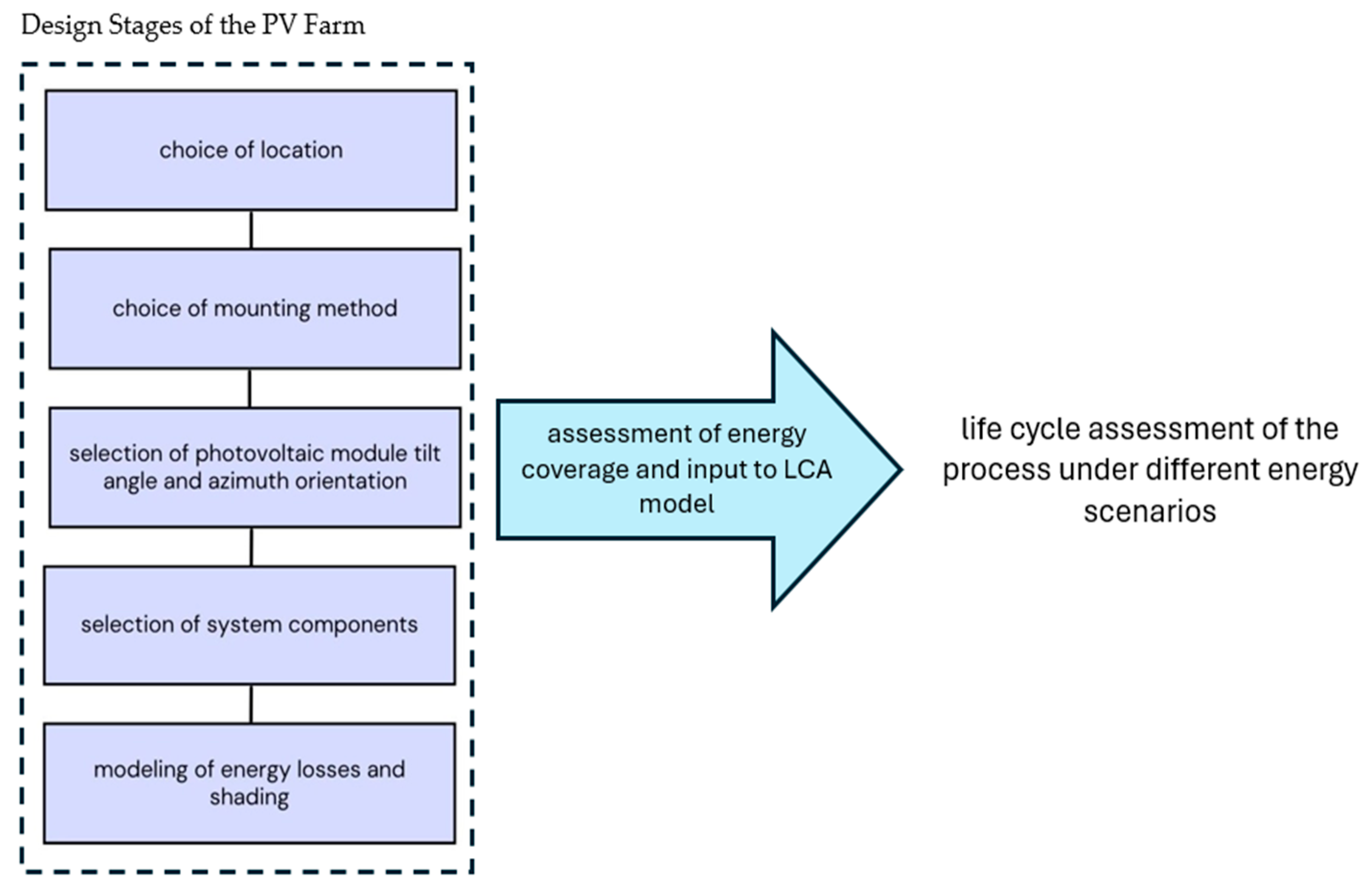
A typical, locally common technological line for packaging bottles in heat-shrinkable film was selected for analysis. Similar lines are common in Poland, primarily in the food industry, to produce bulk packaging for beverage bottles. As part of the project, a 1 MW on-grid photovoltaic farm was designed to partially meet the electricity demand for bulk bottle packaging. The photovoltaic farm will be located locally in the Kuyavian-Pomeranian Voivodeship in Poland, where average solar radiation is approximately 1000 kWh/m2. The photovoltaic farm was designed using PVsyst 7.4, a widely used program for simulating photovoltaic farms. This program allows for the design of various systems, both grid-connected and stand-alone, considering local climatic conditions, solar radiation, and component specifications. Additionally, PVsyst allows for the calculation of energy losses resulting from shading, module temperature, and the efficiency of selected photovoltaic farm components. Integrating the program with weather databases allows for accurate modeling of photovoltaic system operating conditions in various locations and seasons. This allows for realistic estimation of energy production and identification of factors affecting system efficiency [25,26]. To obtain potential energy yields from the photovoltaic installation, a photovoltaic farm was designed in the selected area according to the activities described in the diagram below (Figure 1). The photovoltaic farm was designed to assess whether it can cover the electricity demand of the analyzed packaging process.
Figure 1.
Methodological framework of the PV system design and its integration with LCA.
2.2. Environmental Analysis of the Tested Technological Process
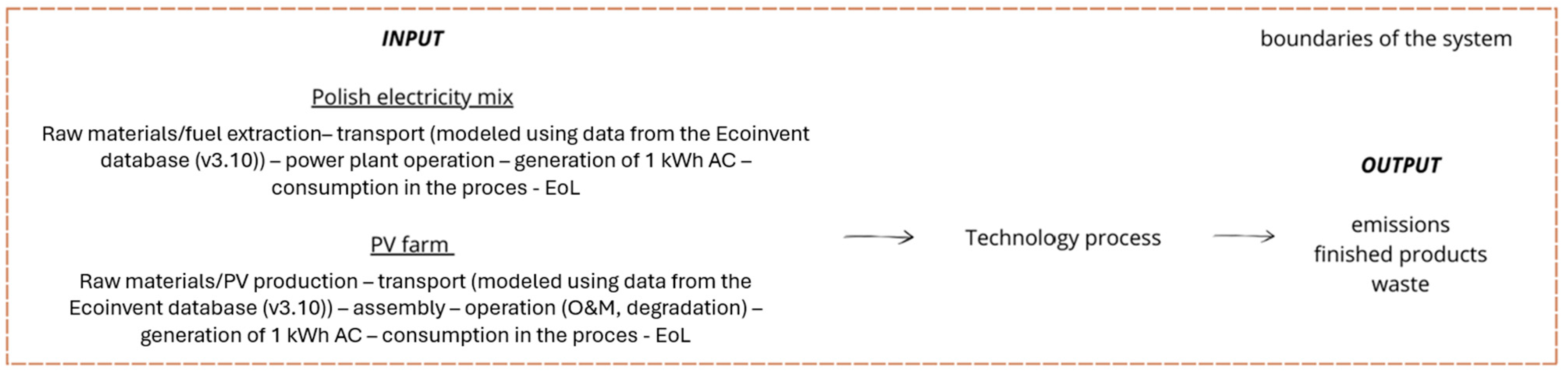
To compare the potential environmental impact of the process depending on the source of electricity used to power the process (VA: energy obtained from the national energy mix, which included approximately 60% coal, and VB: energy from a designed photovoltaic farm), a limited life-cycle assessment (LCA) was used. Despite the high annual energy demand coverage, periodic energy shortages occur during the winter months, particularly in December and January. The study assumed that these shortages are covered by electricity drawn from the national grid, while simultaneously purchasing certificates of origin confirming that the corresponding amount of energy was generated from the PV farm. Input data for electricity and energy processes came from the Ecoinvent database (v3.10), one of the most widely used and verified LCI databases in SimaPro 9.6 software. Data on actual energy consumption in the process came directly from industry from three companies operating a total of four lines of similar design, allowing for a good assessment of actual energy consumption. This data was integrated with LCA models to obtain representative results for the analyzed process. The analysis was conducted using SimaPro 9.6 software and the ReCiPe 2016 impact assessment method. The system boundaries included (Figure 2): raw material and fuel acquisition; transportation, generation, transmission, and distribution of electricity; infrastructure operation; and end-of-life (EoL) of the installation. For energy from photovoltaic farms, processes related to the production, assembly, and operation of photovoltaic modules (including efficiency degradation and inverter replacement), dismantling, and recycling were considered. For Poland’s national energy mix, the structural share of individual energy carriers (hard coal, lignite, gas, renewable energy sources, biomass, and others) was considered in accordance with national data. The adopted assumptions included a 25-year lifetime of the photovoltaic installation, a 10-year lifetime of the inverter, and a 0.7% annual module power degradation. Transmission losses were assumed to be in the range of 6–10%, consistent with the characteristics of the Polish power grid. The functional unit adopted in the analysis is 10,000 produced packages. This unit was adopted as it represents the average production volume in an eight-hour working day in the analyzed companies. This allows for the averaging of material and energy consumption and ensures the comparability of the LCA results. The ReCiPe 2016 H (Hierarchist) method was used to determine the environmental impact of the analyzed facility. This method allows for a comprehensive assessment of impacts throughout the product life cycle. This method transforms input data into measurable environmental impact indicators in three categories of damage: human health, ecosystems, and resource depletion. The main limitations of the study result from the use of average European data (RER) in the absence of detailed national data. Where possible, these data were adjusted to Polish conditions by updating the PV parameters.
Figure 2.
The boundaries of the technological process adopted for analysis.
The bulk bottle packaging process includes stages such as bottle grouping, film wrapping, film sealing, and package cooling. In the case analyzed, materials and energy are considered inputs, while greenhouse gas emissions, including CO2 and finished packaging are considered outputs. Based on data obtained from companies using these lines (3 companies together, one of them using two lines), it was determined that the production of 10,000 6 × 1.5 L packages involved recycled low-density polyethylene (rLDPE) for the shrink film, recycled polyethylene terephthalate (rPET) for the bottles, and 678 kWh of energy, as shown in Table 1. Data on energy and raw material consumption for rLDPE and rPET production comes directly from industry, ensuring that the modeling is based on actual technological processes.
Table 1.
Input data of the tested process for functional unit 10,000 packs.
3. Results and Discussion
3.1. Designed PV Farm
The designed photovoltaic farm consists of 1820 monocrystalline modules with a nominal power of 550 Wp and 13 inverters with a capacity of 60 kW. The electrical characteristics of the modules and inverters, including the power temperature coefficient, inverter efficiency curves, and nominal cell operating temperature (NOCT) parameters, were downloaded from the PVsyst library based on the manufacturers’ catalog data sheets. The modules were connected into 70 strings of 26 modules each. To assess the effect of tilt angle on energy yield, a series of simulations was conducted in PVsyst. The reference configuration was the baseline installation proposed in the article, with modules facing south and a tilt angle of 30° (this angle corresponds to the guidelines specified in the environmental decision issued for the given investment). In each of the cases studied, other parameters, such as the type of selected photovoltaic farm components, output power, and location, remained unchanged. The analysis results (Table 2) showed that reducing the module tilt angle in the selected location over the course of a year would result in a 1–9% decrease in energy production, while increasing the angle to 35° or 40° would provide an additional yield of less than 1%. The largest losses were observed at an angle of 10°, which is due to the unfavorable angle of solar radiation, especially in winter when the sun is low above the horizon. The results confirm that small deviations from the optimal angle are acceptable, but too flat a module orientation can significantly reduce annual energy yield.
Table 2.
The impact of changing the module inclination angle on energy production by the analyzed PV installation.
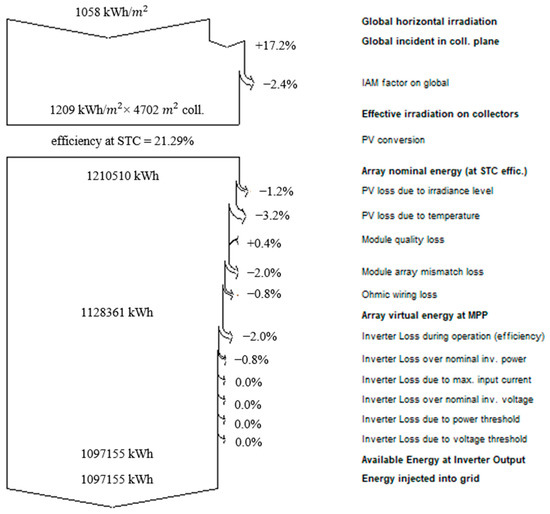
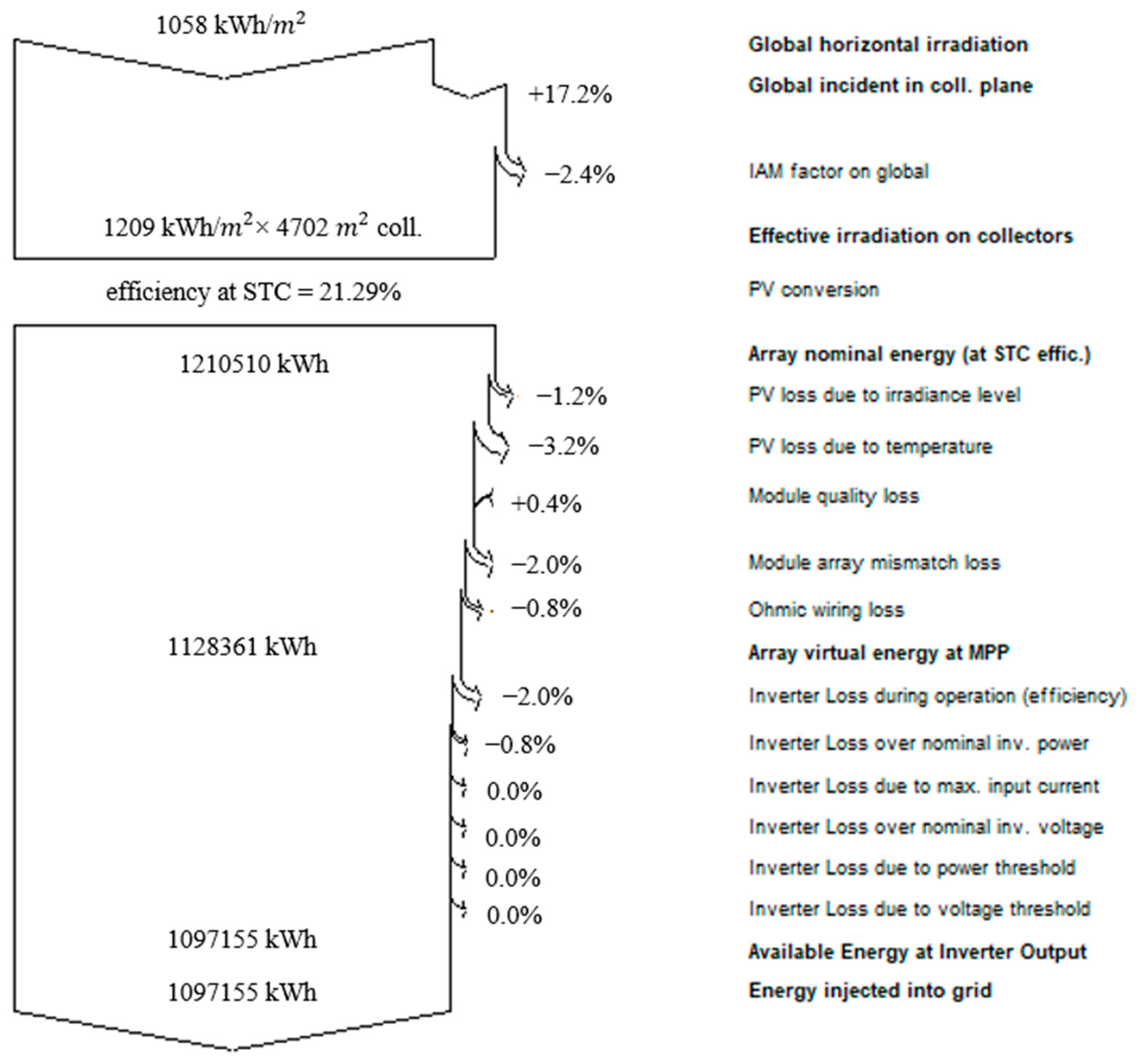
The modules produce energy at their nominal power only for a dozen or so hours a year, and their output is lower during other periods. Therefore, to increase annual yields, the PV system’s power was oversized relative to the inverter’s power. The PV system’s power-to-inverter ratio was 1.28. For the latitudes of Poland and Central Europe, the recommended oversizing is 20–30%, meaning that the 1.28 factor adopted in the design falls within this range and is consistent with industry recommendations, providing an optimal compromise between trimming losses and increased annual energy yield. The modules were tilted at a 30° angle to the south, and the distance between the PV panel rows was 3.5 m. In total, after accounting for annual losses, the designed installation could produce 1097 MWh (Figure 3). Total losses in the analyzed case were approximately 12%, of which losses at the PV module level were approximately 7%, inverter losses approximately 3%, and losses related to solar radiation and angle of incidence accounted for approximately 2.5%. All values presented in Figure 3 in this chapter are from simulations performed in PVsyst software. Climate data from the Meteonorm 8.1 database were used for the simulation, which enabled the generation of a typical meteorological year (TMY) for a given location. This means that hourly profiles of a representative year are created based on multi-year average measurements and satellite data. This allowed for the acquisition of a reliable characterization of solar radiation and climatic conditions.
Figure 3.
Loss diagram for simulated installation (source PVsyst).
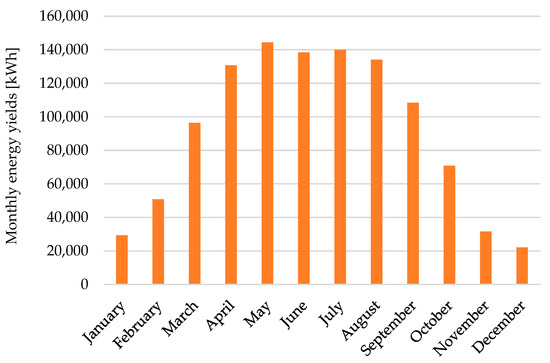
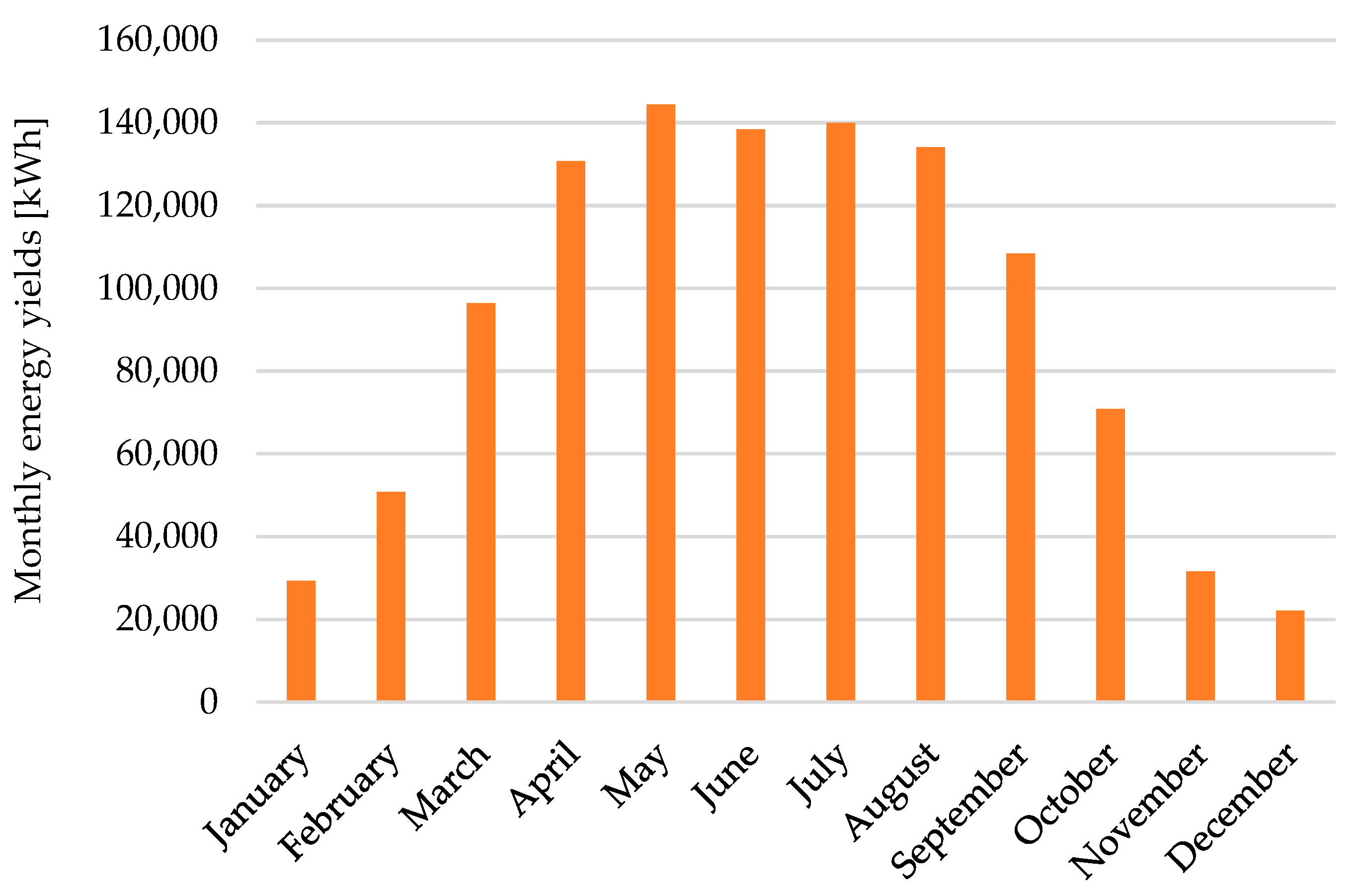
Monthly simulated energy yields from the installed system are shown in Figure 4. The highest production occurs from May to August. Energy yields were calculated in the PVsyst program based on meteorological data from the Meteonorm database. Solar radiation was converted to the module plane using the Perez model and then corrected for angle of incidence losses. The program calculated the cell temperature and DC generator power, considering system losses caused by factors such as shading.
Figure 4.
Monthly energy yields from PV installations.
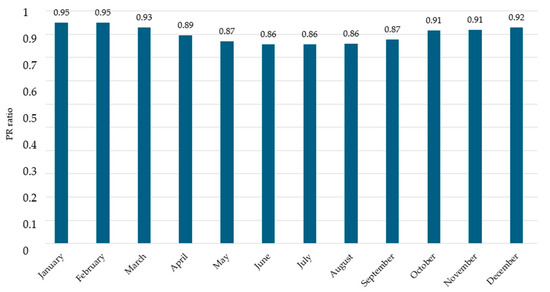
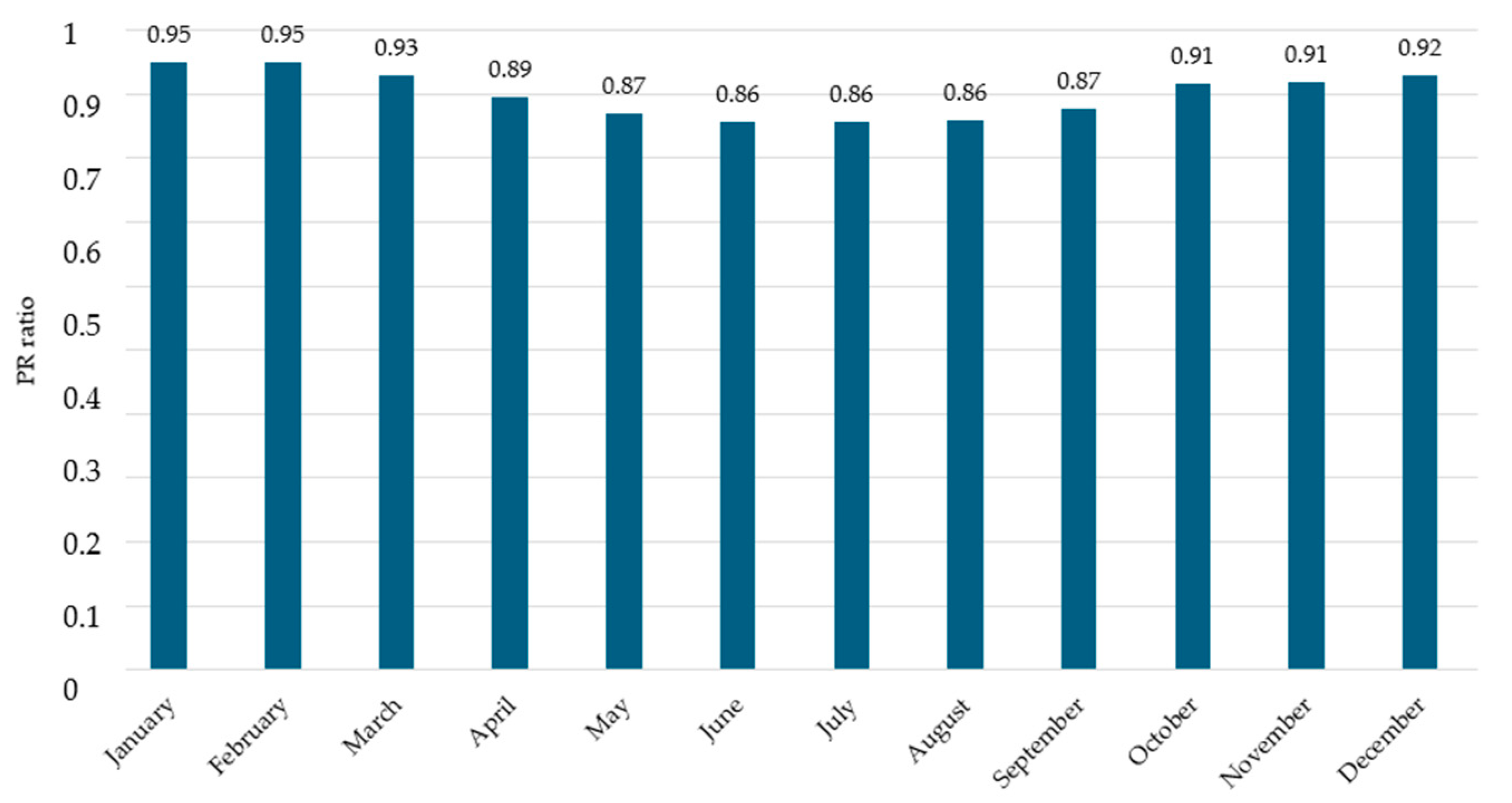
The performance ratio (PR), expressed as a percentage, defines the relationship between the actual and theoretical energy efficiency of a photovoltaic system [27]. The performance factor (PR) was calculated according to IEC EN 61724 [28] as the ratio of the energy fed into the grid (E_Grid) divided by the product of the total irradiance in the module plane (GlobInc) and the nominal system power at STC (PnomPV). The input data came from the Meteonorm database and included radiation and ambient temperature. It was assumed that each kWh/m2 of radiation at STC corresponds to 1 kWh of energy produced by a generator at nominal power. For the designed photovoltaic farm, the highest PR (Figure 5) was recorded in January and February (95%) due to the low temperature of the modules, and the lowest PR of 85.6% was obtained in July due to the high temperature of the PV module. The average annual PR was 89.8%.
Figure 5.
Performance ratio (PR) of the PV system.
A simulation conducted in PVsyst showed that the designed photovoltaic farm could produce 1,097,154 kWh per year. Table 3 presents the monthly energy consumption during the packaging process and the degree to which it is covered by the planned photovoltaic installation. The analysis shows that energy shortages occur only in January (94.07%) and December (57.98%), while in the remaining months, production exceeds demand, allowing the remaining energy to be used for other company processes. To ensure continuous production during the shortfall, it is necessary to cover the shortfall with energy drawn from the national grid.
Table 3.
Coverage of the process energy demand by the simulated PV farm.
The results indicate that the implementation of the photovoltaic system significantly reduces dependence on external energy sources, leading to improved energy efficiency of the process. The high level of energy self-sufficiency demonstrates the potential of integrating on-site renewable energy systems in industrial processes. Additionally, the presence of surplus energy in most months creates opportunities for further optimization, such as supplying other processes. However, the article assumes that the excess electricity generated by the photovoltaic system is exported to the grid. Based on the annual energy balance, the total surplus electricity generated by the PV installation amounts to 504,605 kWh, while the energy deficit in December and January is only 17,867 kWh, corresponding to approximately 3.5% of the annual surplus. This clearly indicates that the surplus energy produced during the remaining months of the year significantly exceeds the winter deficit. Therefore, covering the deficit through electricity purchases from the grid is more economically justified than investing in an additional energy storage system, whose utilization would be limited. Moreover, the cost of electricity purchased in winter can be compensated by the revenue from surplus electricity sold to the grid.
The designed installation meets the company’s expectations by eliminating the risk of energy shortages and contributing to energy independence, while also limiting the negative impact on the environment using green energy. The solutions implemented in the project can contribute to optimizing energy consumption using modern technology, thus increasing the energy efficiency of the process. The analyzed photovoltaic farm generates a significant surplus that could be used in other areas of the plant’s operations. Analyzing the efficiency of a photovoltaic installation is crucial because it allows us to demonstrate how changes in individual parameters, such as tilt angle, azimuth, and component selection, affect the amount of energy harvested. In addition, as Huld et al. [29] showed, the module efficiency, and consequently the energy yields, are also influenced by the module temperature, angle of incidence effect, and radiation intensity. The impact of temperature on the functioning of photovoltaic modules is related to the temperature coefficient, which determines to what extent the temperature change affects the key parameters of the module, such as output power, voltage, and efficiency of converting solar energy into electrical energy. In the case of silicon modules, the temperature is of great importance; their efficiency drops significantly at high temperatures [30,31].
This article describes the number of system components (modules, inverters, etc.) required to create a system with a given power output. These parameters should be treated as input data for an individual economic assessment, as they define the technical baseline for evaluating the feasibility of transitioning to a photovoltaic energy source. Therefore, they can serve as a basis for companies to develop a thorough economic analysis of the profitability of changing their power source, considering company-specific conditions. A detailed cost estimate for such a system is not possible due to the unique characteristics of each location. Depending on the company’s location and the type of buildings in which it operates, the cost of land required for installing the panels, as well as the feasibility and cost of installing them on company premises or on the roofs of existing buildings, may vary. Due to these factors, providing a single total installation cost applicable to all the companies analyzed is not feasible.
3.2. Results of the Environmental Analysis of the Adopted Technological Process
The results of the environmental analysis are expressed in relation to an assumed functional unit, defined as 10,000 packages. The research indicates that option A (VA), based on energy obtained from the national energy mix, has a significantly greater negative impact on human health, the environment, and resources compared to option B (VB), which relies on energy from a photovoltaic installation (Table 4). The results obtained for the first option confirm that, in addition to the emissions of pollutants into the atmosphere by coal-fired power plants, it is also important to consider the impact on local water resources. The coal mining process, regardless of its form, can lead to serious environmental damage. It affects groundwater levels and contributes to the contamination of nearby rivers, lakes, and aquifers [32,33]. Photovoltaic systems produce lower greenhouse gas emissions throughout their entire life cycle. Luo et al. [34] wrote that total greenhouse gas emissions amount to 1601.18 kg CO2 eq per 1 kWp installation and 1.35 kg CO2 eq for each kilowatt-hour produced. In comparison, coal-based systems emit as much as 4.81 kg CO2 eq per kWh, which clearly indicates a lower environmental impact of solar energy. The results presented in Table 4 also confirm this statement. Variant B showed almost 65% lower impact in the examined damage categories. It should be noted that the input data used in the analysis originate from a combination of industrial measurements and the Ecoinvent database. While industrial data increase the representativeness of the foreground system, background processes rely on generalized datasets, which may introduce a certain level of uncertainty. However, this approach is consistent with standard LCA practice and ensures comparability of results. It should be noted that Ecoinvent RER datasets were used only for processes related to the photovoltaic system (e.g., module production and infrastructure) due to the limited availability of country-specific data. In contrast, electricity from the national grid was modeled using data representative for Poland.
Table 4.
The impact of individual variants on the environment is expressed in environmental points, Pt (source: the analysis prepared in SimaPro).
The results presented in Table 5 indicate that Option A has more than twice the impact on climate change in terms of human health (VA: 0.00158 DALY and VB: 0.00068 DALY). This means that greenhouse gas emissions associated with the use of coal-fired energy contribute to a greater health burden, resulting, among other things, from an increase in the number of respiratory diseases [35,36]. A similar indicator was obtained for climate change ecosystems; here too, VA is characterized by an impact indicator that is more than twice as high. Obtaining energy from conventional sources has significantly higher negative effects on ecosystems than from PV installations. According to Telukder et al. [37], a serious threat to the environment is the increase in the concentration of heavy metals associated with the extraction of raw materials to produce conventional energy. Improper waste management and the uncontrolled release of metals into the environment lead to their bioaccumulation, which ultimately disrupts the proper functioning of plant and animal organisms. In terms of resource damage, metal depletion is responsible for almost three times the impact in the case of VA. Photovoltaic modules are composed of commonly used materials such as glass, copper, and aluminum. They also contain energy-intensive, highly purified components such as silicon wafers. These raw materials can be recovered and reused both in various industries and within the photovoltaic sector itself. In accordance with the principles of the circular economy, their recycling reduces the consumption of natural resources and supports the development of a growing number of solar installations [38,39,40].
Table 5.
Comparison of the environmental impact of the tested process variants (source: the analysis prepared in the SimaPro).
Analyzing the results for variant B, it was shown that within the ecosystems for variant B, the highest value among the impact categories studied was obtained for climate change ecosystems (Table 5). The construction of a photovoltaic farm is associated with the occupation of large areas, which results in the transformation of natural, agricultural or forest areas to its needs. Large-scale photovoltaic farms cause the degradation of habitats of wild fauna and flora, affecting biodiversity by reducing the available living space for species dependent on the original ecosystem. Adapting the area to the construction of PV farms disrupts the local hydrological cycle, changes the structure of the soil and limits traditional ways of using it, e.g., for agricultural crops or pastures. Consequently, there are often irreversible changes in the microclimate in each area. Covering a significant amount of land with PV modules blocks the access of sunlight to the soil, which, as Lewis and Nocera point out [41], means the surface under the PV installation receives less radiation than exposed ground. Also, Zhang et al. [42] showed that the construction of PV installations significantly affects the local climate, leading to an increase in air temperature and photosynthetically active radiation while reducing air humidity. Although the production of PV panels may generate some environmental burdens, in the long term, solar energy is a much more sustainable solution compared to traditional sources [43,44]. It should be emphasized, however, that the operation of photovoltaic modules has a minor negative impact on the environment, which may include several aspects. First, large solar farms limit access to light and space for plants and animals in each area. Second, the panel surfaces cause glare (reflection of light), which can be a nuisance to humans and animals.
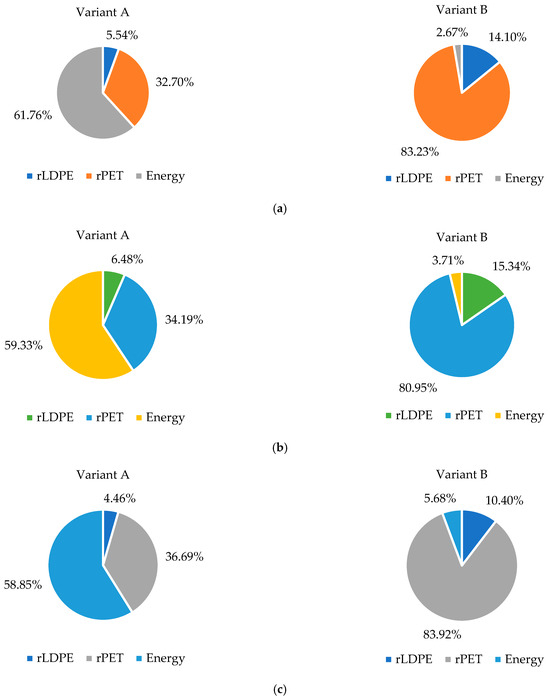
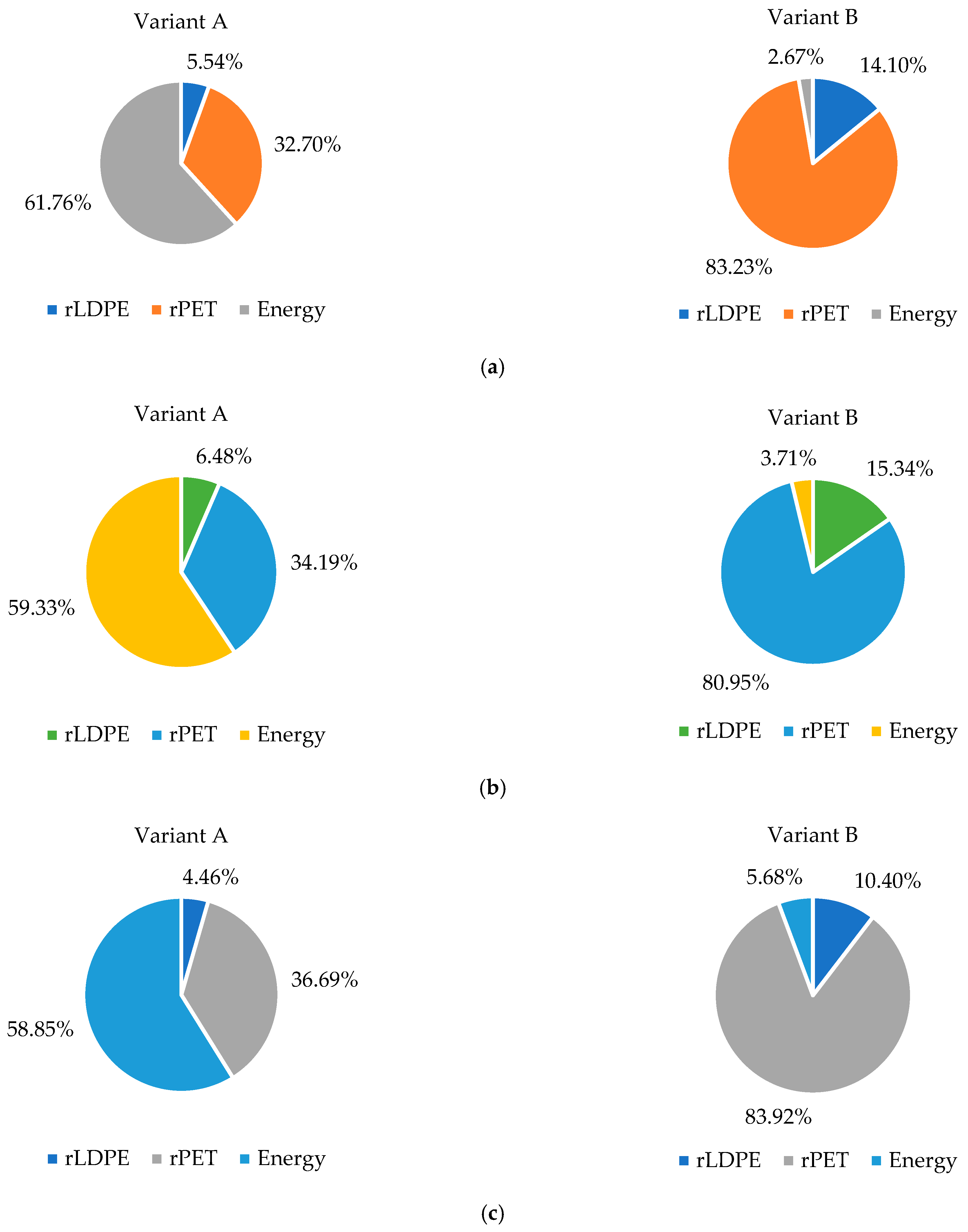
The conducted environmental analysis comparing two process variants depending on the energy source showed that in all three damage categories (Figure 6), variant A, in which the process was powered by energy from the national energy mix, was characterized by the greatest potential impact on the environment. The main factor responsible for the negative impact on the environment in this variant was energy consumption, which accounted for 61.76% of the total impact in the human health category, 59.33% in the ecosystem category and 58.85% in the resources category. On the other hand, in variant B, in all damage categories, the greatest potential impact resulted from the consumption of rPET, which accounted for 83.23% of the total impact in the category of human health, 80.95% in ecosystems and 83.92% in resources. This indicates that energy obtained from a renewable source has a potentially smaller impact on the environment. On the other hand, the higher impact of rPET over rLDPE results from a significantly larger amount of this raw material used per adopted functional unit.
Figure 6.
Percentage share of the impact of individual inputs on the studied system on damage in the three studied categories: (a) human health, (b) ecosystems, and (c) resources.
The results obtained in the analysis confirm the need to implement as much energy from renewable sources as possible. According to Finkelmann [35], one of the most important effects of using energy from traditional sources is the emission of carbon dioxide, which increases the greenhouse effect on Earth. Additionally, as Morris reports [45], in addition to the direct consequences of pollution, global CO2 emissions can pose a serious health risk, contributing to climate change. Excessive use of coal for energy production is not only negative for human health but also a danger for water. According to Gao et al. [46], coal-fired power generation is associated with high water demand. In 2012, China’s coal-fired power industry used 55.6 billion cubic meters of fresh water. This value constituted as much as 10% of the total water intake in China [47]. The increasing deployment of energy from renewable sources, such as solar energy, in industry is contributing significantly to slowing down climate change and the negative impacts associated with energy consumption worldwide. According to Osman et al. [48], due to the significant decline in the cost of PV technology since 2010, the cost of energy obtained from the sun per kilowatt-hour in 2021 was four times lower than the cost of fossil fuels in 2022. Lower costs of solar energy make renewable energy sources increasingly competitive with traditional fuels, which can accelerate the energy transformation process [49,50,51].
Energy is a crucial element in the economic growth of any country. Obtaining energy from sources such as photovoltaic installations is essential due to increasing energy consumption and the development of an economy based on sustainable development [52]. Boudet [53] highlighted the economic, social, and political importance of energy and the consequences of energy choices for the environment and public health. The introduction of new energy technologies often triggers social reactions, so understanding the factors that shape public acceptance is crucial for their effective implementation. This applies to both large energy infrastructure projects, such as wind and solar power plants, and consumer-facing solutions, such as electric vehicles or photovoltaic installations. Obaideen [54] indicates that the role of solar energy in achieving the Sustainable Development Goals (SDGs) still requires in-depth research. This energy is an important element of the energy transition, as it enables the production of clean and relatively inexpensive energy while simultaneously supporting the achievement of many SDGs. The development of solar technologies can contribute to mitigating the effects of climate change resulting from the intensive use of fossil fuels and foster the construction of low-emission societies, improving the quality of the environment, including air, water, and soil. In the context of sustainable development, energy transition should be analyzed not only from an environmental perspective but also from an economic and social perspective. The implementation of renewable energy sources can contribute to increased energy security, stabilized energy costs, and the creation of new jobs in the green economy. At the same time, social acceptance of new energy technologies and their availability to various consumer groups are essential conditions for the effective implementation of sustainable development goals. The results obtained in this study confirm these broader considerations. The designed photovoltaic system was able to cover approximately 94% of the annual energy demand of the analyzed industrial process, significantly reducing dependence on conventional energy sources. This high level of energy self-sufficiency translates directly into environmental benefits, as demonstrated by the life cycle assessment, which showed a reduction of nearly 65% in total environmental impact when photovoltaic energy was applied. At the same time, the presence of surplus energy in most months indicates the potential for further optimization of energy management within industrial systems. These findings highlight that the integration of on-site renewable energy sources can play a key role not only in reducing environmental burdens but also in improving energy efficiency and supporting the broader objectives of sustainable development. The study has several limitations. The analysis is based on a modeled photovoltaic system and typical meteorological data, which may not fully capture short-term variability in weather conditions. Additionally, the assumption of stable process energy demand may not reflect real operational fluctuations.
Studies have shown that after replacing conventional electricity with photovoltaic energy, the dominant source of environmental impact shifts from energy consumption to material consumption, particularly rPET, which accounts for over 80% of the total impact across all damage categories. This result indicates that further work on reducing the negative environmental impact of the studied technical system cannot be achieved solely through energy system optimization. Instead, the focus should be on material efficiency, recycling processes, and supply chain management. Therefore, the responsibility for reducing environmental impact shifts from energy system design to broader process and material management strategies.
3.3. Analysis of Input Data Uncertainty Using Monte Carlo Simulation
The Monte Carlo simulation was used to assess the propagation of input data variability and uncertainty through the LCA model. A Monte Carlo analysis was conducted, generating 2000 impact category values for each input and output, according to their range of variability. During the simulation, parameter values, such as material consumption, electricity, and emissions, were randomly selected, and then the impact values were calculated based on these values. The analysis enabled the determination of basic descriptive statistics for the result set, such as mean, median, standard deviation, and coefficient of variation. The human health category proved to be the key impact category for the studied process in both scenarios. Based on data obtained from the Monte Carlo simulation, the total emission level for the scenario with electricity coming from the national energy mix was 0.00312 DALY, the median of this indicator was 0.00304 DALY, and the standard deviation was 0.000557, which corresponds to a coefficient of variation of 17.8%. For the variant with electricity from a PV installation, the average result from all Monte Carlo simulations was 0.00131 DALY, the median of this indicator was 0.00131 DALY, and the standard deviation was 0.0000298, which corresponds to a coefficient of variation of 2.27%. In summary, the results for the first variant are characterized by greater variability and average stability, while for the second variant one can see high precision and small fluctuations in values, which makes it more reliable and less susceptible to random deviations in the input data. It should be emphasized that the variability in the results reflects the uncertainty and variability of input data, rather than the randomness of the model itself.
4. Conclusions
The pursuit of sustainable development in the technological process sector should be based on the optimal design and implementation of energy systems based on renewable sources. This article designed a photovoltaic installation capable of meeting the demand for the mass packaging of bottles in heat-shrinkable film. The annual energy yield from the proposed photovoltaic farm was 1097 MWh, and an efficiency coefficient of 89.8% indicates that the PV farm was properly designed. The article also included an environmental analysis using the ReCiPe 2016 method, which allowed for a comparison of the environmental impact of the process when switching electricity sources. The study showed that switching the energy source to a previously designed photovoltaic installation reduced the negative environmental impact of the process in the three studied harm categories. In the human health category, the change in energy source reduced the negative impact by approximately 75%, in the ecosystem category by approximately 65%, and in the resource category by approximately 50%. The proposed change in the bulk bottle packaging process aligns perfectly with the principles of sustainable development and the global economy’s efforts to reduce the negative impact of industry on the environment.
The results obtained indicate that changing the power source for the shrink-wrapped bulk bottle packaging line we analyzed is justified. It significantly reduces the negative environmental impact of this line. This translates directly into reduced emissions of greenhouse gases, dust, and other harmful substances generated during energy production in traditional power plants. Considering the number of such lines operating in the country, economies of scale can significantly reduce the negative environmental impact of this process. In the long term, such actions contribute not only to improving the natural environment but also to increasing the competitiveness of companies that invest in modern, sustainable production technologies.
Powering technological processes from a company-owned renewable energy source is a key element of sustainable business development efforts. This solution helps mitigate negative environmental impacts by reducing emissions associated with the use of electricity from conventional sources, while also enabling lower energy costs and aligning with the energy transition trends resulting from Poland’s membership in the European Union.
Author Contributions
Conceptualization, P.W., A.M., O.P. and J.M.M.V.; methodology, P.W.; software, P.W.; validation, P.W. and A.M.; formal analysis, P.W., A.M., O.P. and J.M.M.V.; investigation, P.W.; resources, P.W.; data curation, P.W.; writing—original draft preparation, P.W.; writing—review and editing, O.P. and J.M.M.V.; visualization, P.W. and A.M.; supervision, P.W.; project administration, P.W. All authors have read and agreed to the published version of the manuscript.
Funding
This research received no external funding.
Data Availability Statement
The raw data supporting the conclusions of this article will be made available by the authors on request.
Conflicts of Interest
The authors declare no conflicts of interest.
References
- Walichnowska, P.; Kruszelnicka, W.; Piasecka, I.; Flizikowski, J.; Tomporowski, A.; Mazurkiewicz, A.; Valle, J.M.M.; Opielak, M.; Polishchuk, O. Analysis of the Impact of the Post-Consumer Film Waste Scenario and the Source of Electricity on the Harmfulness of the Mass Mass Packaging Process. Polymers 2024, 16, 3467. [Google Scholar] [CrossRef] [Scilit]
- Vaziri, P. A review of the use of renewable energy in industry to reduce pollution. Chem. Methodol. 2022, 6, 174–183. [Google Scholar]
- European Parliament and Council. Directive (EU) 2022/2464 of 14 December 2022 amending Regulation (EU) No 537/2014, Directive 2004/109/EC, Directive 2006/43/EC and Directive 2013/34/EU as regards corporate sustainability reporting. Off. J. Eur. Union 2022, L322, 15–80. [Google Scholar]
- Celli, M.; Arduini, S.; Beck, T. Corporate sustainability reporting directive (CSRD) and his future application scenario for italian SMEs. Int. J. Bus. Manag. 2024, 19, 1–44. [Google Scholar] [CrossRef] [Scilit]
- Martinčević, I.; Primorac, D.; Dorić, B. Corporate Sustainability Reporting Directive (CSRD): Obligations, Challenges and Requirements for Companies. Entren. Enterp. Res. Innov. 2024, 10, 317–327. [Google Scholar] [CrossRef] [Scilit]
- Khan, J.; Arsalan, M.H. Solar power technologies for sustainable electricity generation–A review. Renew. Sustain. Energy Rev. 2016, 55, 414–425. [Google Scholar] [CrossRef] [Scilit]
- Lin, B.; Jia, Z. Economic, energy and environmental impact of coal-to-electricity policy in China: A dynamic recursive CGE study. Sci. Total Environ. 2020, 698, 134241. [Google Scholar] [CrossRef] [Scilit] [PubMed]
- Walichnowska, P.; Mroziński, A.; Idzikowski, A. The impact of selected parameters on the efficiency of PV installations-simulation test of the 1 MW PV farm in the PVSYST program. Syst. Saf. Hum. Tech. Facil. Environ. 2022, 4, 179–185. [Google Scholar] [CrossRef] [Scilit]
- Gielen, D.; Boshell, F.; Saygin, D.; Bazilian, M.D.; Wagner, N.; Gorini, R. The role of renewable energy in the global energy transformation. Energy Strategy Rev. 2019, 24, 38–50. [Google Scholar] [CrossRef] [Scilit]
- Strielkowski, W.; Civín, L.; Tarkhanova, E.; Tvaronavičienė, M.; Petrenko, Y. Renewable energy in the sustainable development of electrical power sector: A review. Energies 2021, 14, 8240. [Google Scholar] [CrossRef] [Scilit]
- Apergis, N.; Jebli, M.B.; Youssef, S.B. Does renewable energy consump-tion and health expenditures decrease carbon dioxide emissions? Evidence for sub-Saharan Africa countries. Renew. Energy 2018, 127, 1011–1016. [Google Scholar] [CrossRef] [Scilit]
- Brożyna, J.; Strielkowski, W.; Fomina, A.; Nikitina, N. Renewable energy and EU 2020 target for energy efficiency in the Czech Republic and Slovakia. Energies 2020, 13, 965. [Google Scholar] [CrossRef] [Scilit]
- Dellosa, J.T.; Panes, M.J.C.; Espina, R.U. Techno-economic analysis of a 5 MWp solar photovoltaic system in the Philippines. In Proceedings of the IEEE International Conference on Environment and Electrical Engineering, Bari, Italy, 7–10 September 2021. [Google Scholar]
- Shirzad, S.; Fazli, A.M.; Zgham, W.; Fatemi, S.A.Z. Design and Development of Grid-Connected Solar PV Power Plant Using PVsyst. Acad. J. Res. Sci. Publ. 2023, 5, 67–86. [Google Scholar] [CrossRef] [Scilit]
- Mishra, P.R.; Rathore, S.; Jain, V. PVSyst enabled real time evaluation of grid connected solar photovoltaic system. Int. J. Inf. Technol. 2024, 16, 745–752. [Google Scholar] [CrossRef] [Scilit]
- Walichnowska, P.; Idzikowski, A. Energy analysis of the PV farm with a capacity of 140 MW. In Conference Quality Production Improvement–CQPI; Quality and Production Managers Association: Częstochowa, Poland, 2021; Volume 3, pp. 369–376. [Google Scholar]
- Pacana, A.; Siwiec, D.; Bednárová, L.; Petrovský, J. Improving the process of product design in a phase of life cycle assessment (LCA). Processes 2023, 11, 2579. [Google Scholar] [CrossRef] [Scilit]
- Turner, C.; Oyekan, J.; Garn, W.; Duggan, C.; Abdou, K. Industry 5.0 and the circular economy: Utilizing LCA with intelligent products. Sustainability 2022, 14, 14847. [Google Scholar] [CrossRef] [Scilit]
- Witczak, J.; Kasprzak, J.; Klos, Z.; Kurczewski, P.; Lewandowska, A.; Lewicki, R. Life cycle thinking in small and medium enterprises: The results of research on the implementation of life cycle tools in Polish SMEs—Part 2: LCA related aspects. Int. J. Life Cycle Assess. 2014, 19, 891–900. [Google Scholar] [CrossRef] [Scilit]
- Hospido, A.; Rivela, B.; Gazulla, C. Life cycle methods and experiences of environmental sustainability assessments in the wine sector. In Improving Sustainable Viticulture and Winemaking Practices; Academic Press: Cambridge, MA, USA, 2022; pp. 351–370. [Google Scholar]
- Silva, N.; Pålsson, H. Industrial packaging and its impact on sustainability and circular economy: A systematic literature review. J. Clean. Prod. 2022, 333, 130165. [Google Scholar] [CrossRef] [Scilit]
- Alam, M.W.; Kumar, J.V.; Awad, M.; Saravanan, P.; Al-Sowayan, N.S.; Rosaiah, P.; Nivetha, M.S. Emerging trends in food process engineering: Integrating sensing technologies for health, sustainability, and consumer preferences. J. Food Process Eng. 2025, 48, e70035. [Google Scholar]
- Jasiński, D.; Djekic, I.; Dobrović, L. Sustainability assessment of employing chemical recycling technologies on multilayer packaging waste. Sustainability 2025, 17, 556. [Google Scholar] [CrossRef] [Scilit]
- Pavón Losada, J.A.; Ferrando, M.; Moncada, V.; Operato, L.; Gomes, L.; Rosenow, P.; Hamd, W. Food packaging business models as drivers for sustainability in the food packaging industry. Front. Sustain. Food Syst. 2025, 9, 1563904. [Google Scholar] [CrossRef] [Scilit]
- Kumar, R.; Rajoria, C.S.; Sharma, A.; Suhag, S. Design and simulation of standalone solar PV system using PVsyst Software: A case study. Mater. Today Proc. 2021, 46, 5322–5328. [Google Scholar] [CrossRef] [Scilit]
- Walichnowska, P.; Zawada, M.; Idzikowski, A. The Use of Renewable Energy Sources in the Food Industry and the Reduction of CO2 Emissions: A Case Study of a Simulated PV Installation. Energies 2025, 18, 3155. [Google Scholar] [CrossRef] [Scilit]
- Aryal, A.; Bhattarai, N. Modeling and simulation of 115.2 kWp grid-connected solar PV system using PVSYST. Kathford J. Eng. Manag. 2018, 1, 31–34. [Google Scholar] [CrossRef] [Scilit]
- IEC 61724-1:2021; Photovoltaic System Performance—Part 1: Monitoring. International Electrotechnical Commission: Geneva, Switzerland, 2021.
- Huld, T.; Gottschalg, R.; Beyer, H.G.; Topič, M. Mapping the performance of PV modules, effects of module type and data averaging. Sol. Energy 2010, 84, 324–338. [Google Scholar] [CrossRef] [Scilit]
- Hudișteanu, V.S.; Cherecheș, N.C.; Țurcanu, F.E.; Hudișteanu, I.; Romila, C. Impact of Temperature on the Efficiency of Monocrystalline and Polycrystalline Photovoltaic Panels: A Comprehensive Experimental Analysis for Sustainable Energy Solutions. Sustainability 2024, 16, 10566. [Google Scholar] [CrossRef] [Scilit]
- Hudișteanu, S.V.; Cherecheș, N.C.; Popovici, C.G.; Verdeș, M.; Ciocan, V.; Balan, M.C.; Țurcanu, F.E.; Scurtu, I.C. Effect of cooling on power generated by photovoltaic panels. IOP Conf. Ser. Mater. Sci. Eng. 2021, 1141, 012008. [Google Scholar] [CrossRef] [Scilit]
- Bódis, K.; Kougias, I.; Taylor, N.; Jäger-Waldau, A. Solar photovoltaic electricity generation: A lifeline for the European coal regions in transition. Sustainability 2019, 11, 3703. [Google Scholar] [CrossRef] [Scilit]
- Wright, I.A.; Paciuszkiewicz, K.; Belmer, N. Increased water pollution after closure of Australia’s longest operating underground coal mine: A 13-month study of mine drainage, water chemistry and river ecology. Water Air Soil Pollut. 2018, 229, 55. [Google Scholar] [CrossRef] [Scilit]
- Luo, J.; Yang, H.; Zhang, L.; Liu, H.; Wang, Y.; Hao, C. A comparative study on the combination of life cycle assessment and ecological footprints: Solar photovoltaic power generation vs. coal power generation in Ningxia. Front. Energy Res. 2024, 12, 1375820. [Google Scholar] [CrossRef] [Scilit]
- Finkelman, R.B.; Wolfe, A.; Hendryx, M.S. The future environmental and health impacts of coal. Energy Geosci. 2021, 2, 99–112. [Google Scholar] [CrossRef] [Scilit]
- Cortes-Ramirez, J.; Wraith, D.; Sly, P.D.; Jagals, P. Mapping the morbidity risk associated with coal mining in Queensland, Australia. Int. J. Environ. Res. Public Health 2022, 19, 1206. [Google Scholar] [CrossRef] [Scilit]
- Talukder, P.; Ray, R.; Sarkar, M.; Das, A.; Chakraborty, S. Adverse effects of mining pollutants on terrestrial and aquatic environment and its remediation. Environ. Qual. Manag. 2024, 33, 595–610. [Google Scholar] [CrossRef] [Scilit]
- Ansanelli, G.; Fiorentino, G.; Tammaro, M.; Zucaro, A. A life cycle assessment of a recovery process from end-of-life photovoltaic panels. Appl. Energy 2021, 290, 116727. [Google Scholar] [CrossRef] [Scilit]
- Aryan, V.; Font-Brucart, M.; Maga, D. A comparative life cycle assessment of end-of-life treatment pathways for photovoltaic backsheets. Prog. Photovolt. Res. Appl. 2018, 26, 443–459. [Google Scholar] [CrossRef] [Scilit]
- Gronba-Chyła, A.; Generowicz, A.; Alwaeli, M.; Mannheim, V.; Grąz, K.; Kwaśnicki, P.; Kramek, A. Municipal waste utilization as a substitute for natural aggregate in the light of the circular economy. J. Clean. Prod. 2024, 440, 140907. [Google Scholar] [CrossRef] [Scilit]
- Lewis, N.S.; Nocera, D.G. Powering the planet: Chemical challenges in solar energy utilization. Proc. Natl. Acad. Sci. USA 2006, 103, 15729–15735. [Google Scholar] [CrossRef] [Scilit]
- Zhang, Y.; Tian, Z.; Liu, B.; Chen, S.; Wu, J. Effects of photovoltaic power station construction on terrestrial ecosystems: A meta-analysis. Front. Ecol. Evol. 2023, 11, 1151182. [Google Scholar] [CrossRef] [Scilit]
- Asdrubali, F.; Baldinelli, G.; D’Alessandro, F.; Scrucca, F. Life cycle assessment of electricity production from renewable energies: Review and results harmonization. Renew. Sustain. Energy Rev. 2015, 42, 1113–1122. [Google Scholar] [CrossRef] [Scilit]
- Rossi, F.; Zuffi, C.; Parisi, M.L.; Fiaschi, D.; Manfrida, G. Comparative scenario-based LCA of renewable energy technologies focused on the end-of-life evaluation. J. Clean. Prod. 2023, 405, 136931. [Google Scholar] [CrossRef] [Scilit]
- Morris, S.C. Health risks of coal energy technology. In Health Risks of Energy Technologies; Routledge: Oxfordshire, UK, 2021; pp. 77–139. [Google Scholar]
- Gao, X.; Zhao, Y.; Lu, S.; Chen, Q.; An, T.; Han, X.; Zhuo, L. Impact of coal power production on sustainable water resources management in the coal-fired power energy bases of Northern China. Appl. Energy 2019, 250, 821–833. [Google Scholar] [CrossRef] [Scilit]
- Xiang, X.Z.; Jia, S.F. Estimation and trend analysis of water demand of energy industry in China. J. Nat. Resour. 2016, 31, 114–123. [Google Scholar]
- Osman, A.I.; Chen, L.; Yang, M.; Msigwa, G.; Farghali, M.; Fawzy, S.; Rooney, D.W.; Yap, P.-S. Cost, environmental impact, and resilience of renewable energy under a changing climate: A review. Environ. Chem. Lett. 2023, 21, 741–764. [Google Scholar] [CrossRef] [Scilit]
- Hayat, M.B.; Ali, D.; Monyake, K.C.; Alagha, L.; Ahmed, N. Solar energy—A look into power generation, challenges, and a solar-powered future. Int. J. Energy Res. 2019, 43, 1049–1067. [Google Scholar] [CrossRef] [Scilit]
- Khan, M.R.; Alam, I. A solar pv-based inverter-less grid-integrated cooking solution for low-cost clean cooking. Energies 2020, 13, 5507. [Google Scholar] [CrossRef] [Scilit]
- Prehoda, E.W.; Pearce, J.M. Potential lives saved by replacing coal with solar photovoltaic electricity production in the US. Renew. Sustain. Energy Rev. 2017, 80, 710–715. [Google Scholar] [CrossRef] [Scilit]
- Izam, N.S.M.N.; Itam, Z.; Sing, W.L.; Syamsir, A. Sustainable development perspectives of solar energy technologies with focus on solar Photovoltaic—A review. Energies 2022, 15, 2790. [Google Scholar] [CrossRef] [Scilit]
- Boudet, H.S. Public perceptions of and responses to new energy technologies. Nat. Energy 2019, 4, 446–455. [Google Scholar] [CrossRef] [Scilit]
- Obaideen, K.; Olabi, A.G.; Al Swailmeen, Y.; Shehata, N.; Abdelkareem, M.A.; Alami, A.H.; Rodriguez, C.; Sayed, E.T. Solar energy: Applications, trends analysis, bibliometric analysis and research contribution to sustainable development goals (SDGs). Sustainability 2023, 15, 1418. [Google Scholar] [CrossRef] [Scilit]

Disclaimer/Publisher’s Note: The statements, opinions and data contained in all publications are solely those of the individual author(s) and contributor(s) and not of MDPI and/or the editor(s). MDPI and/or the editor(s) disclaim responsibility for any injury to people or property resulting from any ideas, methods, instructions or products referred to in the content. |
© 2026 by the authors. Licensee MDPI, Basel, Switzerland. This article is an open access article distributed under the terms and conditions of the Creative Commons Attribution (CC BY) license.