Article

Assessment of Combined Cylinder Deactivation and Late Exhaust Valve Opening for After-Treatment Thermal Management in a Diesel Engine


by
Hasan Ustun Basaran
Department of Naval Architecture and Marine Engineering, Faculty of Naval Architecture and Maritime, Izmir Katip Celebi University, Cigli 35620, Izmir, Turkey
Energies 2026, 19(7), 1646; https://doi.org/10.3390/en19071646
Submission received: 27 February 2026 / Revised: 19 March 2026 / Accepted: 24 March 2026 / Published: 27 March 2026
(This article belongs to the Special Issue Internal Combustion Engines: Research and Applications—3rd Edition)

Abstract

Exhaust after-treatment (EAT) thermal management remains a critical challenge for diesel engines operating under low-load conditions, where low exhaust temperatures delay catalyst light-off and reduce emission control efficiency. This operating regime is common in marine auxiliary engines and onboard diesel generator sets during hoteling, maneuvering, and partial-electrical-load conditions. Conventional strategies such as late fuel injection or exhaust throttling can increase exhaust temperature but often result in significant fuel consumption penalties. This study numerically investigates the combined use of late exhaust valve opening (LEVO) and cylinder deactivation (CDA) to enhance EAT thermal management with a reduced fuel penalty. A six-cylinder diesel engine is analyzed at a low-load condition (1200 RPM, 2.5 bar BMEP) using a calibrated one-dimensional engine simulation model. LEVO applied to all cylinders increases exhaust temperature to approximately 250 °C, but with a considerable increase in fuel consumption. When two cylinders are deactivated and the remaining cylinders operate with LEVO, airflow and pumping losses decrease, enabling higher exhaust temperatures at comparable fuel consumption levels. Despite a 30% reduction in exhaust mass flow rate, the higher exhaust temperature dominates EAT heat transfer. Consequently, the combined strategy increases EAT heat transfer by up to 143% and achieves exhaust temperatures approaching 295 °C. These results indicate that combined valve timing and load redistribution through CDA can improve the exhaust temperature–mass flow trade-off, providing a potential pathway for enhanced EAT warm-up during low-load operation within the limitations of the numerical model.

1. Introduction

Nowadays, diesel vehicles are subject to increasingly stringent nitrogen oxide (NOx) and particulate matter (PM) emission regulations imposed by environmental agencies [1,2]. A widely adopted and effective approach to mitigate tailpipe NOx and PM emissions is the application of exhaust after-treatment (EAT) systems. Under most operating conditions, these systems provide high emission conversion efficiency and successfully control engine-out emissions. However, during cold-start and low-load engine operation, EAT performance deteriorates significantly due to insufficient exhaust gas temperature ( T e x h a u s t < 250 °C) [3,4,5]. In addition to automotive applications, similar challenges arise in marine diesel engines operating under prolonged low-load conditions, such as during port maneuvering, dynamic positioning, and auxiliary power generation, where insufficient exhaust temperature can significantly delay after-treatment activation [6]. Although conventional exhaust thermal management techniques can be employed to raise exhaust temperature and improve EAT activity, they are often associated with considerable fuel consumption penalties [7,8,9,10]. Therefore, considering the high demand for energy-saving technologies [11,12,13], developing fuel-efficient strategies to enhance exhaust thermal conditions under low-load operation remains a critical challenge for modern diesel engines [14,15].
Inner-engine EAT thermal management techniques are generally classified as fuel-based, valve-timing-based, and airflow/pumping-based measures. Fuel-based strategies, including late and post fuel injection, raise exhaust temperature by delaying heat release but often deteriorate combustion and require substantial fuel penalties [16,17,18]. Valve-timing-based approaches such as early or late exhaust valve opening (EEVO and LEVO) are effective in elevating exhaust temperature and accelerating EAT warm-up; however, they are typically accompanied by undesirable increases in fuel consumption when applied alone at low loads [19,20,21,22]. In contrast, intake valve timing strategies such as early or late intake valve closure (EIVC and LIVC) are generally more fuel efficient but ineffective for after-treatment heat-up due to excessive airflow reduction [23,24,25,26]. In particular, LEVO has demonstrated strong potential for rapid EAT warm-up, yet it remains strongly coupled with fuel inefficiency under sustained low-load operation [27,28]. Beyond valve timing, airflow- and pumping-based measures—including intake or exhaust throttling and cylinder deactivation (CDA)—have attracted attention as alternative means of increasing exhaust temperature with comparatively lower efficiency penalties [29,30,31].
Among airflow-based measures, CDA stands out due to its experimentally demonstrated ability to reduce pumping losses and improve indicated thermal efficiency at low-load operation [32,33]. By redistributing load to a reduced number of active cylinders, CDA lowers the effective air-to-fuel ratio (AFR) in the firing cylinders without increasing total engine fuel consumption, resulting in a noticeable rise in EAT inlet temperature [34,35,36]. This exhaust temperature increase is primarily achieved through load redistribution rather than additional valve timing manipulation or fuel-based enrichment, distinguishing CDA from exhaust valve timing and fuel injection strategies. From a marine engine perspective, CDA can be interpreted as a load redistribution strategy that increases per-cylinder thermal intensity under part-load operation, rather than a pure cylinder shut-off mechanism. However, CDA simultaneously causes a substantial reduction in exhaust mass flow rate, which limits the net exhaust enthalpy available for after-treatment heating and significantly impairs its effectiveness during the EAT warm-up phase [37,38]. This limitation is particularly critical during cold and semi-cold operating conditions, where rapid EAT activation is essential for effective emission control in diesel engine systems.
Previous studies based solely on variable valve timing (VVT) or CDA have demonstrated clear benefits for exhaust thermal management; however, when applied independently, these approaches are constrained by either elevated fuel consumption or insufficient exhaust mass flow at the after-treatment inlet. Consequently, achieving effective EAT warm-up at low load often necessitates the coordinated use of more than one inner-engine thermal management strategy [39,40]. While combinations of multiple valve timing techniques (e.g., LEVO with intake valve timing modulation) have been shown to mitigate fuel penalties, they inherently increase actuation and calibration complexity due to the simultaneous manipulation of multiple valve events [27,41,42]. In contrast, combining LEVO with CDA leverages load redistribution and airflow reduction without introducing additional valve timing degrees of freedom. Despite its potential to balance exhaust temperature elevation with acceptable fuel efficiency, the CDA + LEVO strategy has not been systematically examined with a primary focus on exhaust after-treatment thermal management. Accordingly, this approach represents a comparatively less complex and potentially effective pathway for accelerating EAT heat-up in diesel engine systems.
This study investigates the combined use of CDA and LEVO as an inner-engine strategy to enhance after-treatment thermal management in a diesel engine system. First, the effects of CDA alone are analyzed with respect to exhaust temperature elevation under low-load operation. Although CDA increases exhaust temperature, the accompanying reduction in exhaust mass flow results in a degradation of the net exhaust enthalpy available for after-treatment heating. To overcome this limitation, CDA is subsequently combined with LEVO to further elevate exhaust temperature and recover exhaust enthalpy at the EAT inlet. The CDA-alone, LEVO-alone, and combined CDA + LEVO modes are evaluated under identical operating conditions, considering exhaust temperature, exhaust mass flow rate, fuel consumption penalty, and heat transfer potential to the EAT unit. Under an equal fuel consumption penalty, the combined CDA + LEVO strategy is shown to deliver higher heat-transfer rates to the EAT system and improves its warm-up better than LEVO alone at steady-state conditions.
Although the present analysis is conducted on a representative diesel engine model, the operating conditions and constraints considered in this study are not limited to automotive applications. Sustained low-load operation with insufficient exhaust temperature is also encountered in other diesel-powered systems, such as marine auxiliary engines and propulsion systems during maneuvering, dynamic positioning, and port-related operation. In this context, the insights obtained from the combined CDA and LEVO strategy may be transferable to marine-relevant diesel applications, within the limitations inherent to numerical modeling.

2. Methodology

2.1. Engine Model and Baseline Configuration

A heavy-duty (HD) turbocharged diesel engine with six cylinders is considered in this study. The main engine specifications, including the baseline intake and exhaust valve timings, are summarized in Table 1.
Since EAT thermal management challenges are most pronounced under low-load operation, a low-load condition corresponding to 2.5 bar BMEP is selected, as listed in Table 2. The selected low-load operating condition is representative of sustained part-load operation commonly encountered in diesel-powered auxiliary systems, including marine generator sets during hoteling and partial electrical demand. All simulations are conducted under steady-state conditions at the specified engine speed and load. When CDA or LEVO is applied, the in-cylinder fuel injection rate is adjusted to maintain the same engine brake load, ensuring a consistent basis for comparison.
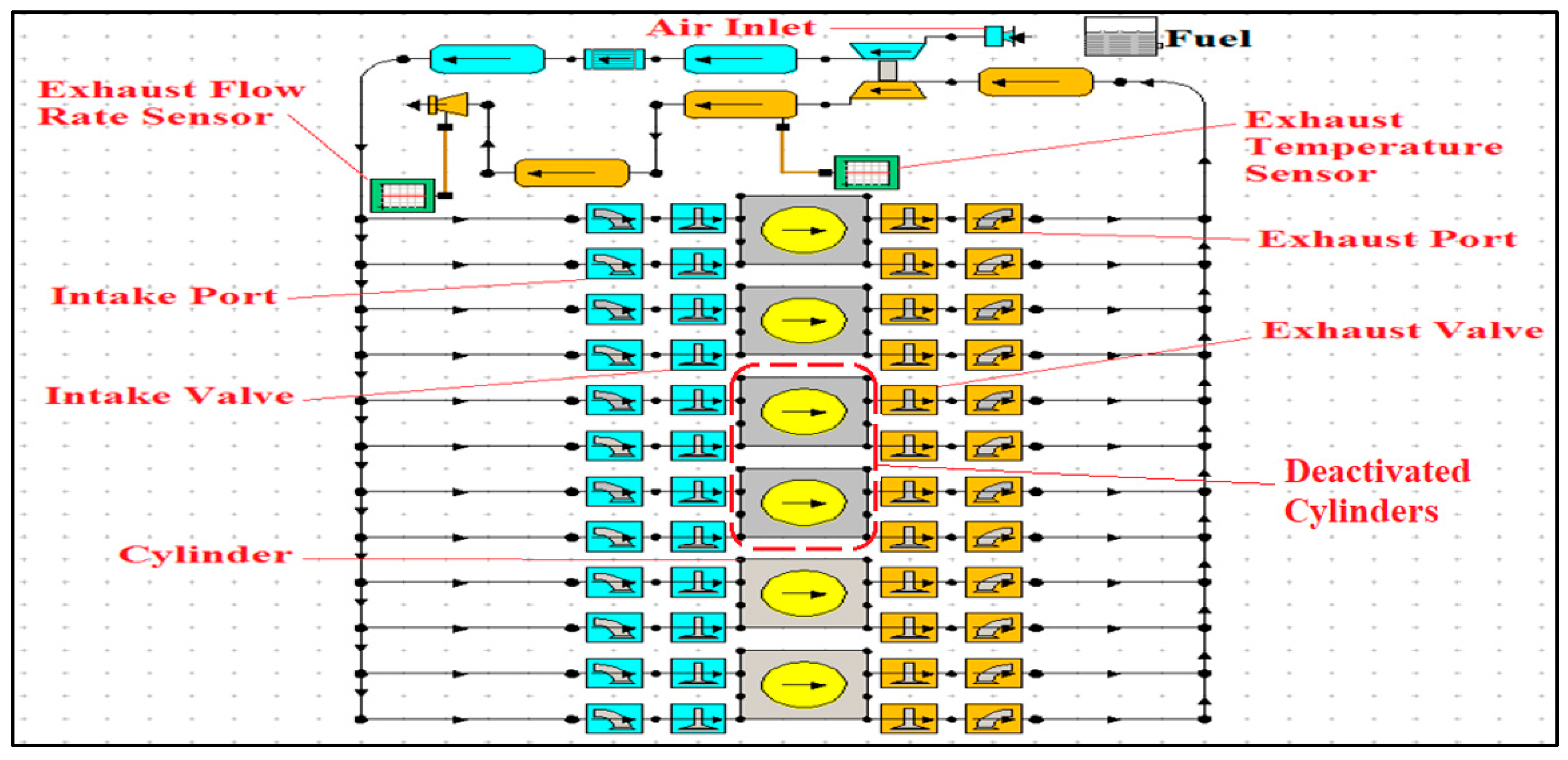
The engine model employed to assess the effects of CDA and LEVO on EAT warm-up is illustrated in Figure 1.
The modeling framework is identical to that presented in the authors’ previous work [27] and is therefore summarized here for completeness. The one-dimensional engine model shown in Figure 1 was previously calibrated in a prior study [23] against experimental data obtained from a six-cylinder heavy-duty diesel engine under steady-state operating conditions [24]. Key calibration parameters included turbine-out exhaust temperature, intake valve closure timing, and volumetric efficiency characteristics. The calibration procedure ensured that the predicted exhaust temperature levels and mass-flow trends under intake valve timing modulation were consistent with experimentally observed behavior reported in the literature [24,43], with deviations generally remaining below 5% compared to the measured data.
The model was developed using the Lotus Engine Simulation (LES) software version 6.01a [44,45], a one-dimensional engine simulation tool widely adopted for parametric studies of valve timing, fueling strategies, and airflow management in internal combustion engines [46,47,48,49]. The capability of LES to independently adjust valve events and fuel injection while maintaining steady-state operation makes it well suited for implementing and evaluating CDA and LEVO strategies in the present study.

2.2. Governing Equations and Numerical Setup

The engine model is based on one-dimensional conservation equations for mass, momentum, and energy, coupled with sub-models describing combustion, heat transfer, and gas exchange processes. The governing equations and numerical formulations employed in the present study are identical to those detailed in the authors’ previous work [27] and are therefore not repeated here for brevity.
All simulations are performed under steady-state operating conditions. Numerical convergence is ensured by iterating each case until cyclic variations in key performance parameters, including brake mean effective pressure, exhaust temperature, and fuel consumption, fall below prescribed tolerance limits. The same numerical settings and solver configurations as those reported in [27] are retained to ensure consistency across studies.
To enable a fair comparison between different thermal management strategies, all operating cases are evaluated at identical engine speed and brake load. When cylinder deactivation and/or late exhaust valve opening is applied, the in-cylinder fuel injection rate is adjusted to maintain the target brake mean effective pressure. Fuel consumption penalty, exhaust mass flow rate, exhaust enthalpy, and heat transfer potential to the after-treatment system are subsequently evaluated based on these converged steady-state solutions.
In the present analysis, particular attention is given to exhaust temperature, exhaust mass flow rate, and exhaust enthalpy, as these parameters directly govern after-treatment heat transfer performance under low-load operation.

2.3. Evaluation of Exhaust After-Treatment Heat Transfer Potential

To quantify the thermal interaction between the exhaust flow and the after-treatment system, an effective heat-transfer rate is estimated using a simplified correlation based on exhaust mass flow rate and temperature difference across the catalyst inlet. The heat transfer rate is expressed as [50]
Q ˙ t r a n s f e r = m ˙ e x h a u s t 4 / 5 × C p × ( T e x h a u s t T E A T   c a t a l y s t   b e d )
In Equation (1), engine-out exhaust mass flow rate is denoted by m ˙ e x h a u s t and C p is the specific heat at constant pressure of the exhaust gas flow to the EAT unit. The other terms, T e x h a u s t and T E A T   c a t a l y s t   b e d , represent the exhaust temperature at EAT inlet and characteristic catalyst bed temperature of the after-treatment unit, respectively.
This expression does not represent a detailed catalyst model, but provides a consistent metric for comparing the relative thermal effectiveness of different engine operating strategies under identical boundary conditions.

2.4. Implementation of Late Exhaust Valve Opening

In the present study, LEVO is implemented by delaying the exhaust valve opening (EVO) timing relative to the baseline condition. Under conventional diesel engine operation, EVO typically occurs near bottom dead center (BDC) during the expansion stroke to facilitate efficient blowdown. In LEVO operation, the EVO event is postponed into the exhaust stroke, thereby retaining a greater fraction of high-temperature exhaust gas within the cylinder during the expansion–exhaust transition.
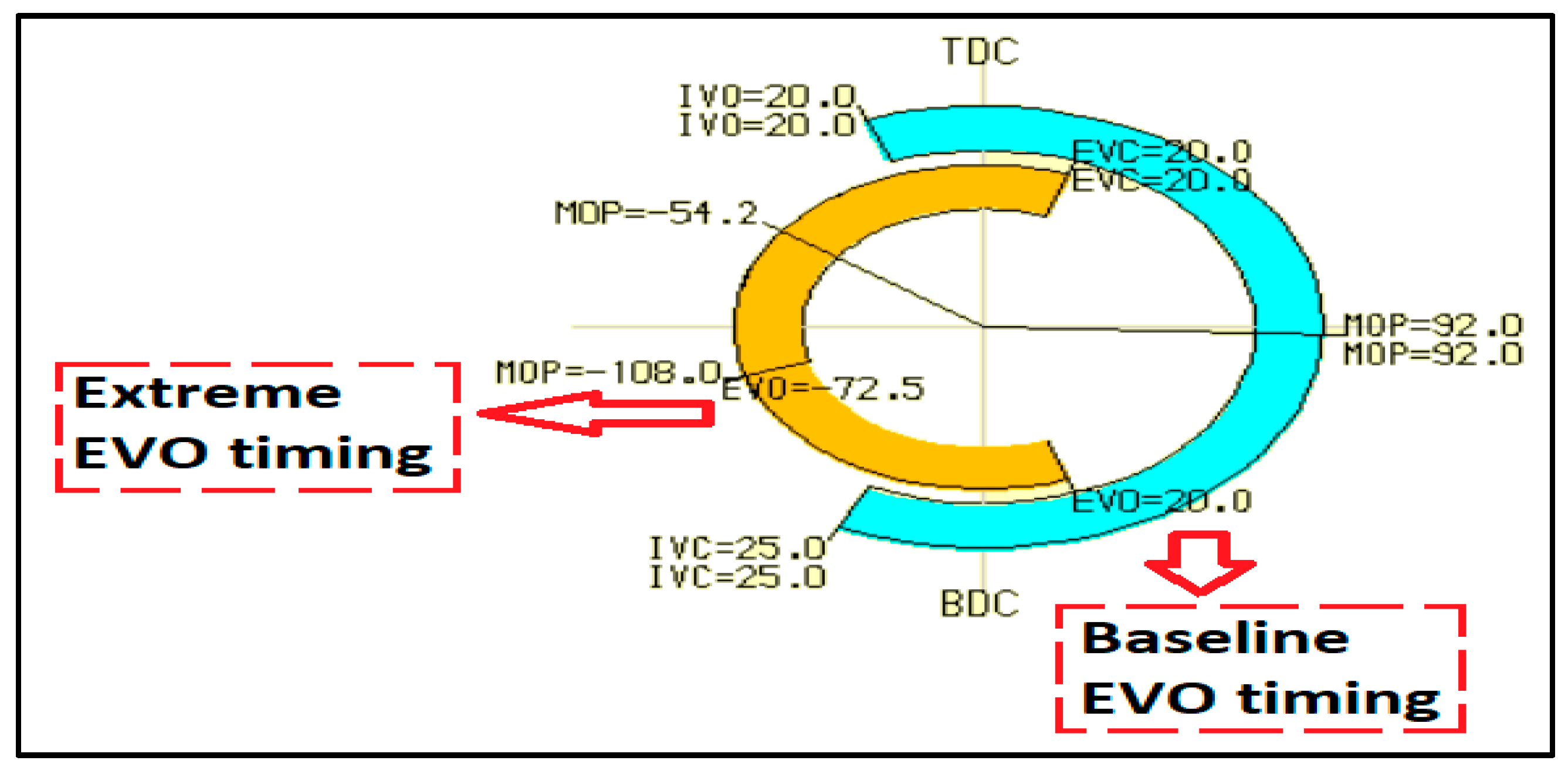
The LEVO strategy is applied to all active cylinders in both the LEVO-alone and combined CDA + LEVO modes. In the CDA-alone mode, baseline exhaust valve timing is retained, and no LEVO is applied. The range of EVO timing variation investigated in this study is illustrated schematically in Figure 2. Starting from the nominal EVO timing of 20 °CA before bottom dead center (BBDC), the EVO event is progressively delayed up to −72.5 °CA before bottom dead center (BBDC) with finer resolution at extreme delays to better capture the thermal sensitivity in that region.
The LEVO sweep is conducted using uniform delay increments of 12.5 °CA, as summarized in Table 3. This implementation enables a systematic assessment of the influence of EVO retardation on exhaust temperature, exhaust enthalpy, and after-treatment heat transfer characteristics under low-load operation.

2.5. Cylinder Deactivation Strategy

In addition to late exhaust valve opening, CDA is employed as a load redistribution strategy to enhance after-treatment thermal management under low-load operation. In the baseline configuration, all six cylinders are active, with fuel and air supplied uniformly such that the target engine brake load is achieved through evenly distributed cylinder operation. Exhaust mass flow is provided to the EAT unit from all cylinders.
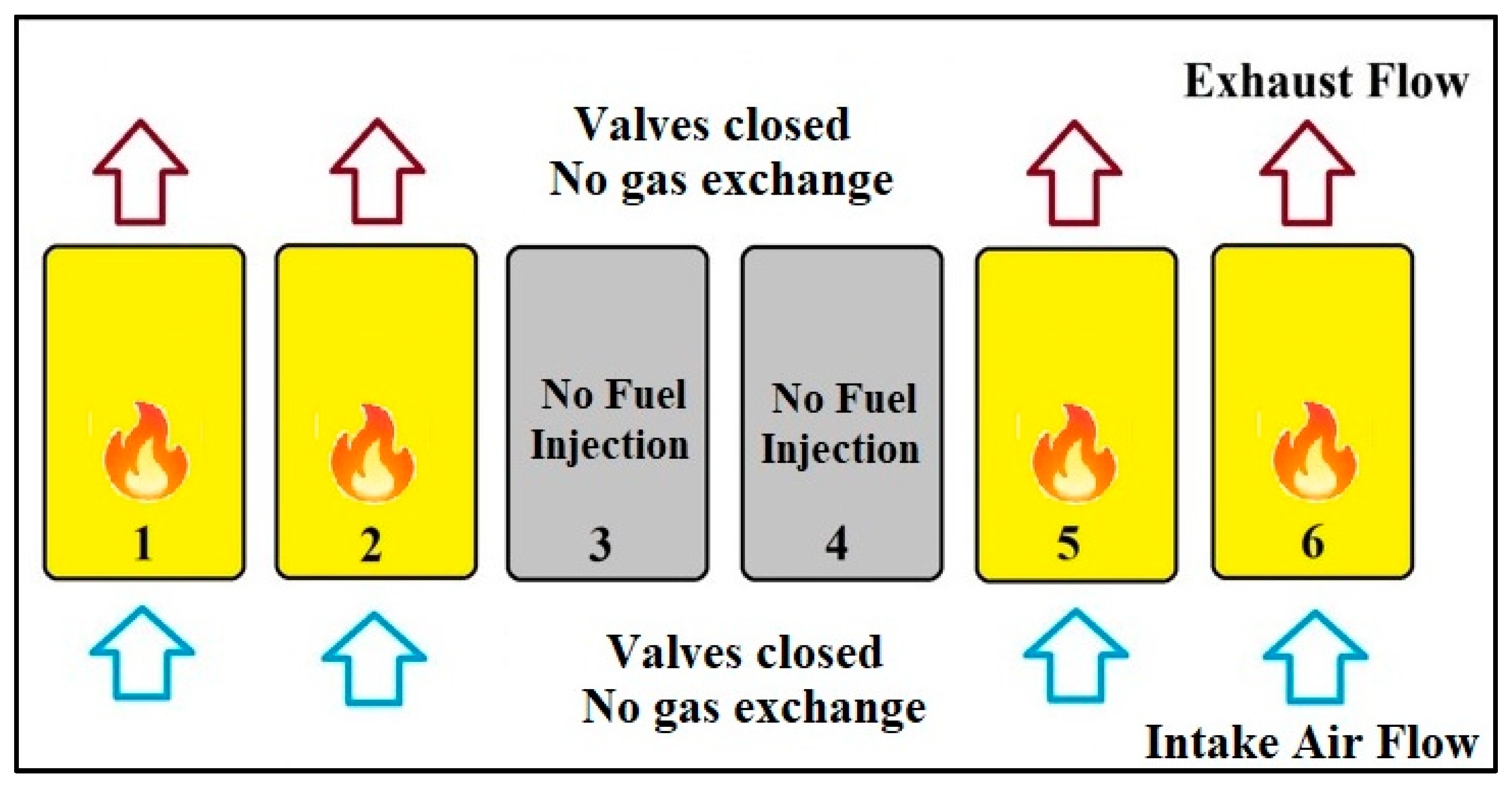
In the CDA mode, two centrally located cylinders are deactivated by disabling fuel injection and closing both intake and exhaust valves, resulting in no gas exchange in the deactivated cylinders. This configuration maintains a relatively symmetric load distribution along the crankshaft and avoids excessive thermal imbalance between the front and rear sections of the engine, while preserving a balanced firing sequence among the remaining active cylinders. Selecting adjacent middle cylinders also simplifies the implementation of the CDA strategy within the one-dimensional model while preserving representative thermodynamic trends. Alternative CDA patterns may influence vibration characteristics and firing balance [51,52]; however, the present study focuses on thermodynamic effects related to exhaust temperature and mass-flow behavior rather than detailed noise, vibration and harshness (NVH) analysis. Due to solver limitations, complete isolation of inactive cylinders is approximated; therefore, the predicted fuel consumption improvement should be interpreted as indicative of trends rather than absolute values.
To maintain the same overall engine brake load, fueling in the remaining active cylinders is increased accordingly. This implementation leads to higher per-cylinder thermal intensity in the firing cylinders while reducing the total exhaust mass flow rate supplied to the EAT system.
In practical applications, transitions between conventional operation and CDA mode may require careful control management [53], particularly in marine engine systems where load demand can fluctuate due to maneuvering operations, sea-state variations, or auxiliary power requirements. Rapid changes in engine load may introduce additional challenges during mode transitions [54,55], including temporary firing imbalance, vibration, and increased mechanical stresses. Therefore, practical implementation of CDA-based strategies would require coordinated control of fuel injection, valve timing, and cylinder activation to ensure smooth transitions and maintain engine stability. A detailed analysis of transient load response and vibration behavior is beyond the scope of the present steady-state thermodynamic study and represents an important direction for future investigations.
A schematic illustration of the CDA strategy, highlighting active and deactivated cylinders and the associated load redistribution, is provided in Figure 3.

2.6. Combined CDA + LEVO Strategy

In the combined CDA + LEVO mode, cylinder deactivation is first applied to reduce the number of firing cylinders under low-load operation. Similar to CDA-alone technique, 2 central cylinders (cylinder numbers 3 and 4) are kept as passive. Subsequently, LEVO is imposed on all remaining active cylinders using the same EVO delay range described in Section 2.4. This sequential implementation enables load redistribution via CDA while further increasing exhaust temperature through delayed exhaust blowdown.
The combined implementation increases system-level control complexity. Not only valve timing modulation, but also fuel injection control is required to maintain it in an engine system. The transition from nominal to CDA mode and vice versa can also be technically difficult in an engine system. However, it provides the potential to enhance EAT warm-up performance without a proportional fuel consumption penalty, as assessed in the present numerical framework.

3. Results and Discussion

3.1. Baseline vs. LEVO Alone

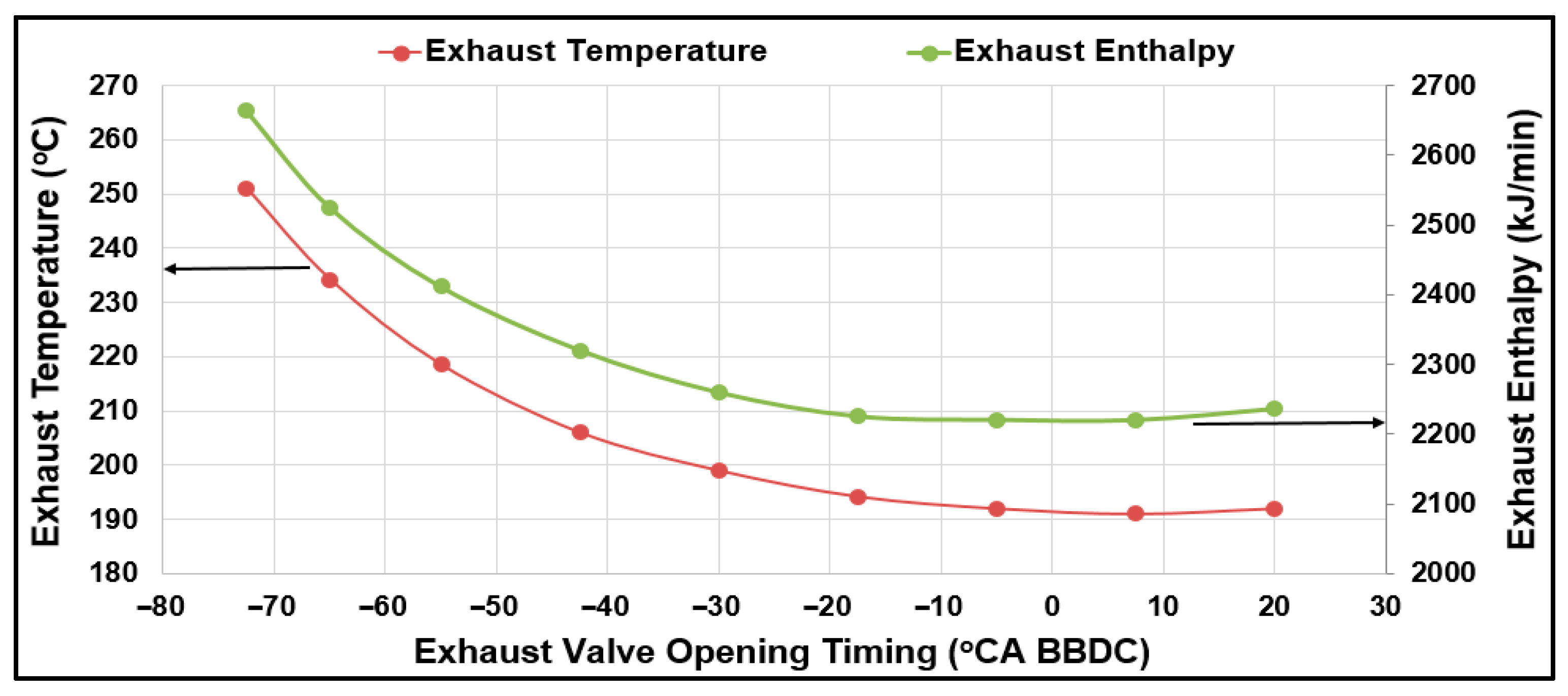
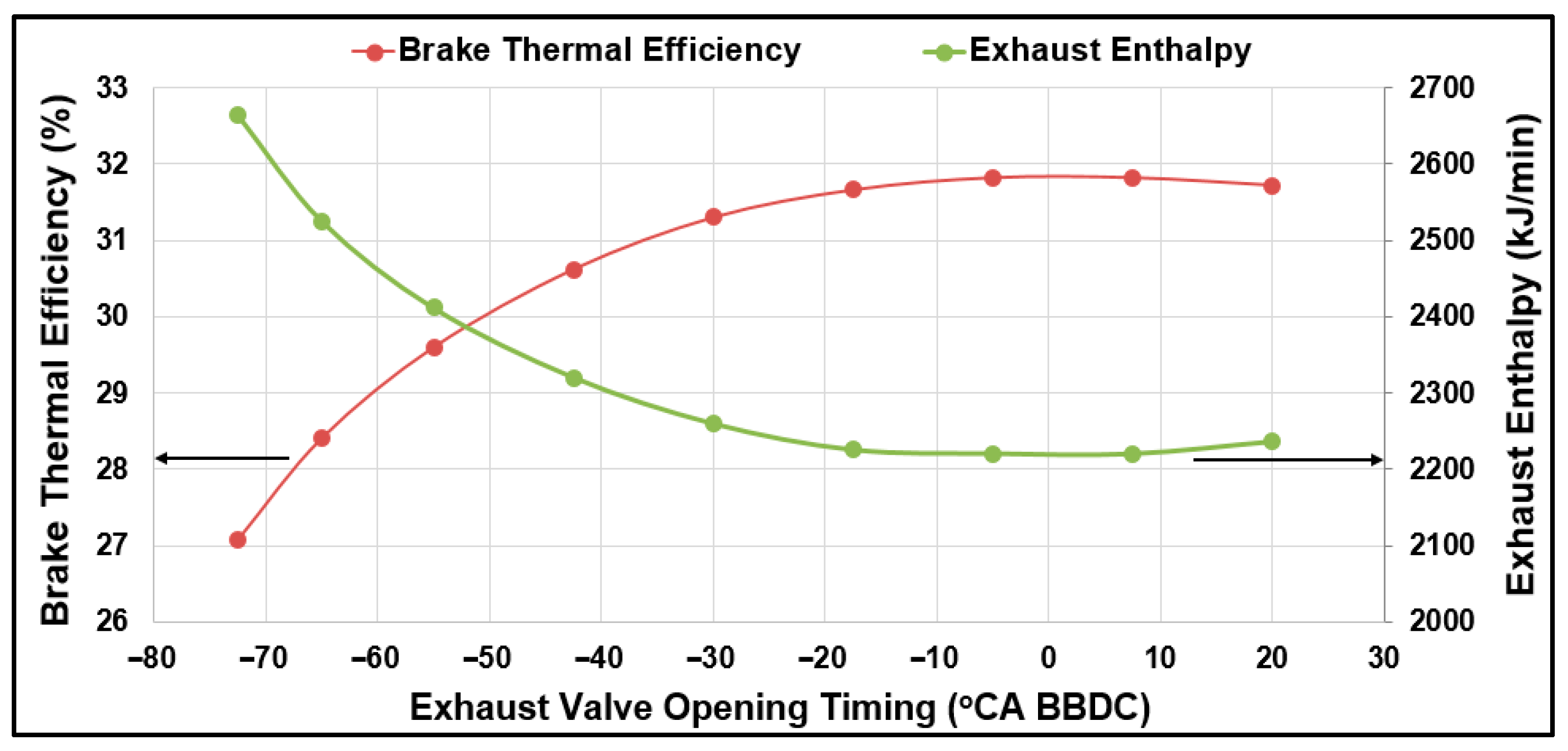
The influence of delayed exhaust valve opening (as LEVO) on exhaust temperature and exhaust enthalpy is evaluated relative to the nominal valve timing condition. Figure 4 summarizes the variation of these parameters with EVO timing at constant engine speed and load.
Under nominal timing, exhaust temperature remains slightly above 190 °C, well below the temperature typically required for efficient catalyst activation. Moderate EVO delays (≈55 °CA BBDC) increase exhaust temperature but remain below 220 °C. Substantial temperature elevation (≈250 °C) is obtained only under aggressive LEVO operation, accompanied by an exhaust enthalpy increase of approximately 20%. However, these gains are achieved at the expense of brake thermal efficiency, as shown in Figure 5. The increased expansion losses—together with potentially higher pumping losses reported in previous studies [22,25,27,28]—associated with late exhaust valve opening significantly increase fuel consumption, indicating that LEVO-alone operation introduces a substantial efficiency penalty.
Although LEVO improves exhaust thermal conditions, its efficiency deterioration limits standalone applicability. This motivates investigation of CDA as a load redistribution strategy to increase per-cylinder thermal intensity while moderating fuel penalty. The CDA-alone and combined CDA + LEVO cases are therefore examined in the following sections.
It is noted that such combined strategies are particularly relevant for diesel-powered auxiliary generator systems in marine vessels, where sustained low-load operation can delay after-treatment activation [56,57,58].

3.2. Effects of CDA Alone

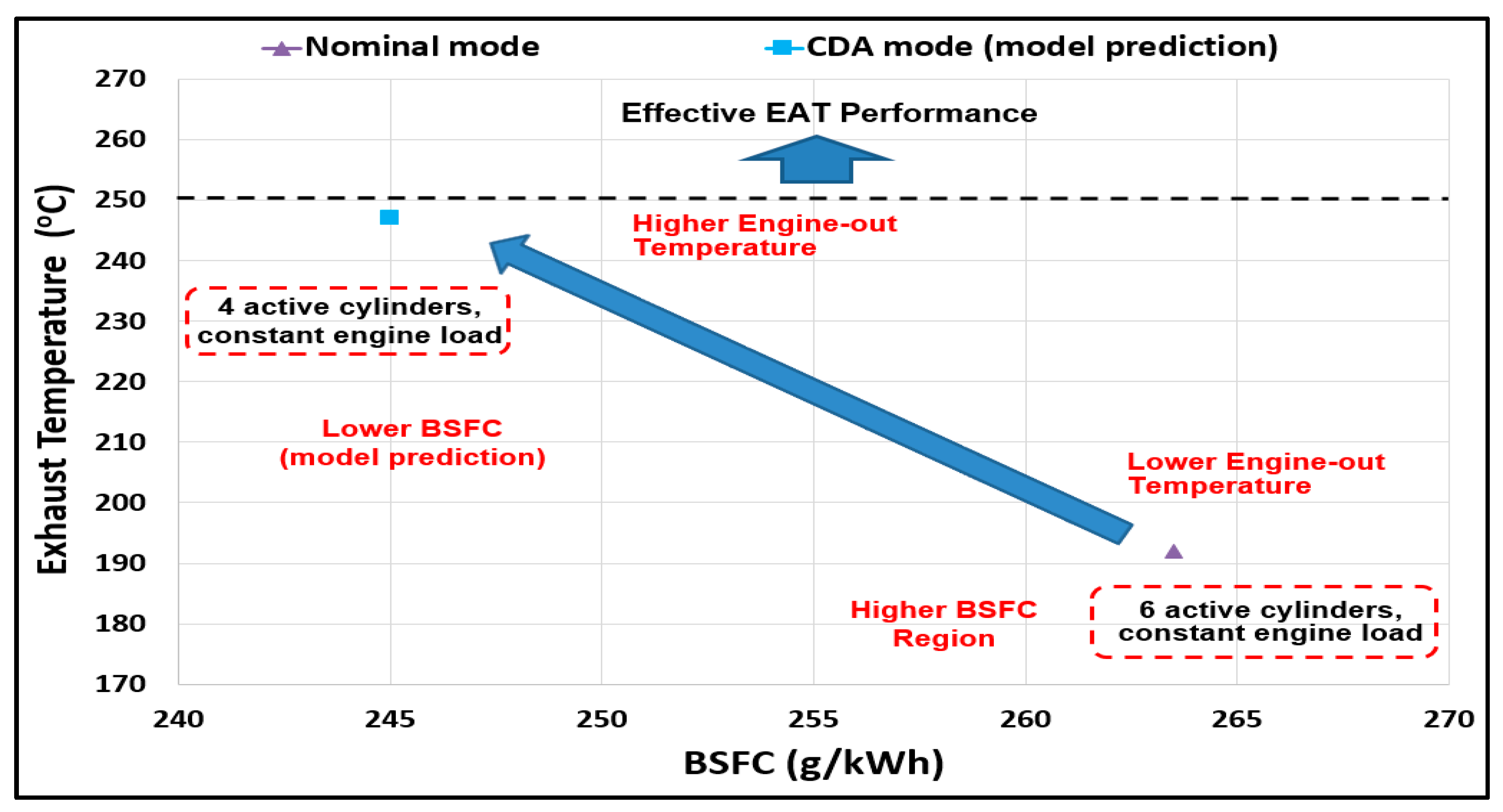
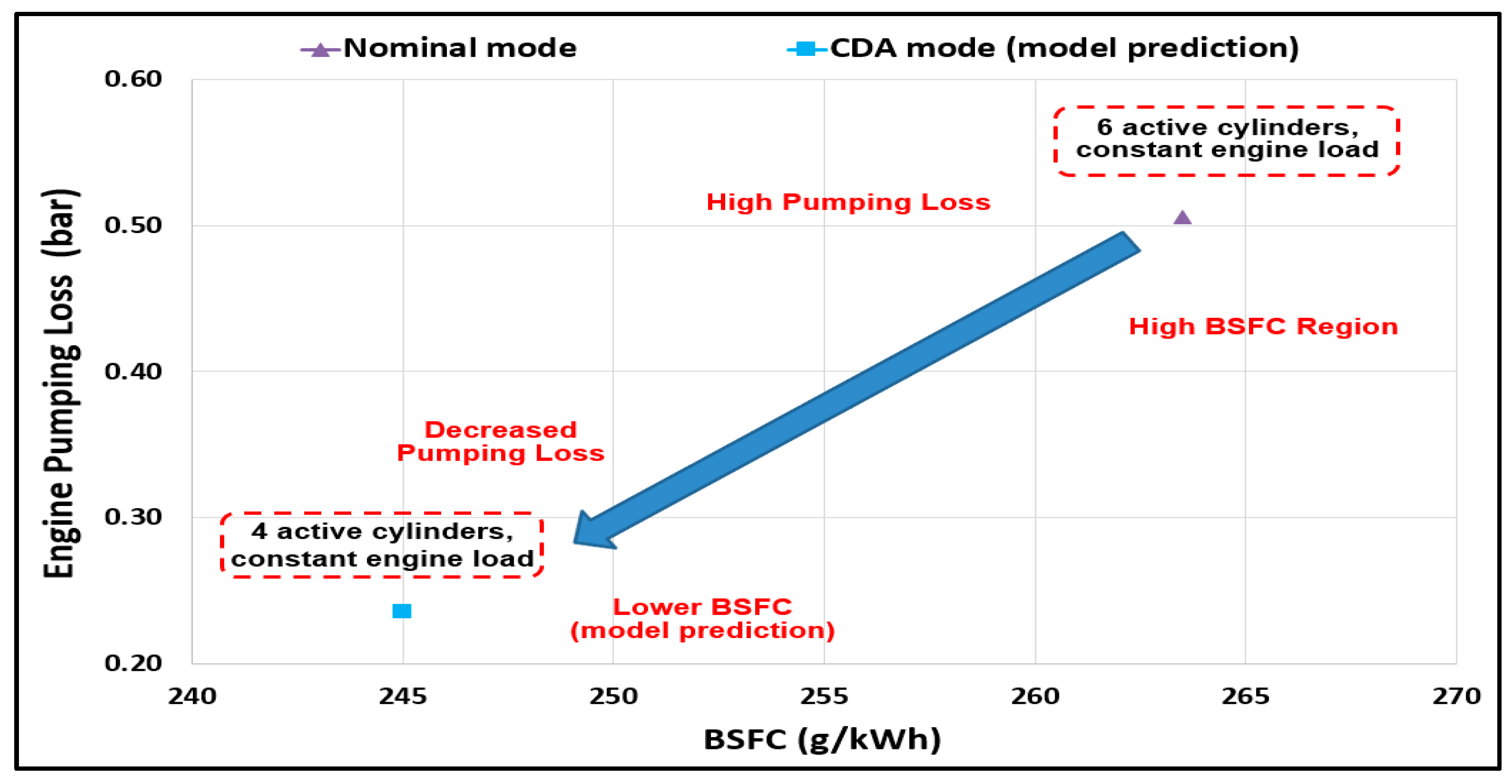
This section evaluates the impact of CDA on exhaust thermal management in the engine system. As illustrated in Figure 6, nominal operation at low load results in low engine-out exhaust temperature and high brake-specific fuel consumption (BSFC), which is unfavorable for efficient after-treatment operation, since selective catalytic reduction systems require sufficiently high exhaust temperatures for effective NOx conversion [59,60,61]. In contrast, CDA operation increases engine-out exhaust temperature while maintaining or slightly reducing BSFC due to reduced pumping losses in CDA mode, as further illustrated in Figure 7. This behavior makes CDA a promising strategy to combine with LEVO for both heavy-duty automotive diesel engines and auxiliary marine generator engines, where low-load operation is common and after-treatment thermal management is necessary to improve engine-out emission rates. It should be noted that the magnitude of the improvement is model-dependent and may differ in practical engines because of frictional losses, transient effects, imperfect cylinder isolation, and control constraints.
As shown in Figure 7, the BSFC can be reduced in the model through improved pumping losses in CDA mode. In nominal condition, the system is in full-engine mode, all cylinders are active and air is supplied to each of the six cylinders, which increases the total pumping loss during operation. However, in CDA mode, where two cylinders are passive (two-thirds-full engine load), similar engine load is maintained only by charging fresh air into the four active cylinders, which naturally requires lower engine pumping loss, as indicated in Figure 7. Redistributing the engine load into a lower number of cylinders, as the model predicts, enables decreased pumping loss and thus keeps the engine system in an operating region with a lower BSFC. With this characteristic, CDA is seen to be similar to the Miller cycle, which is also found to be fuel efficient due to diminished pumping losses [62,63,64,65]. However, unlike the Miller cycle, CDA requires modulation in some cylinders, not all of them.
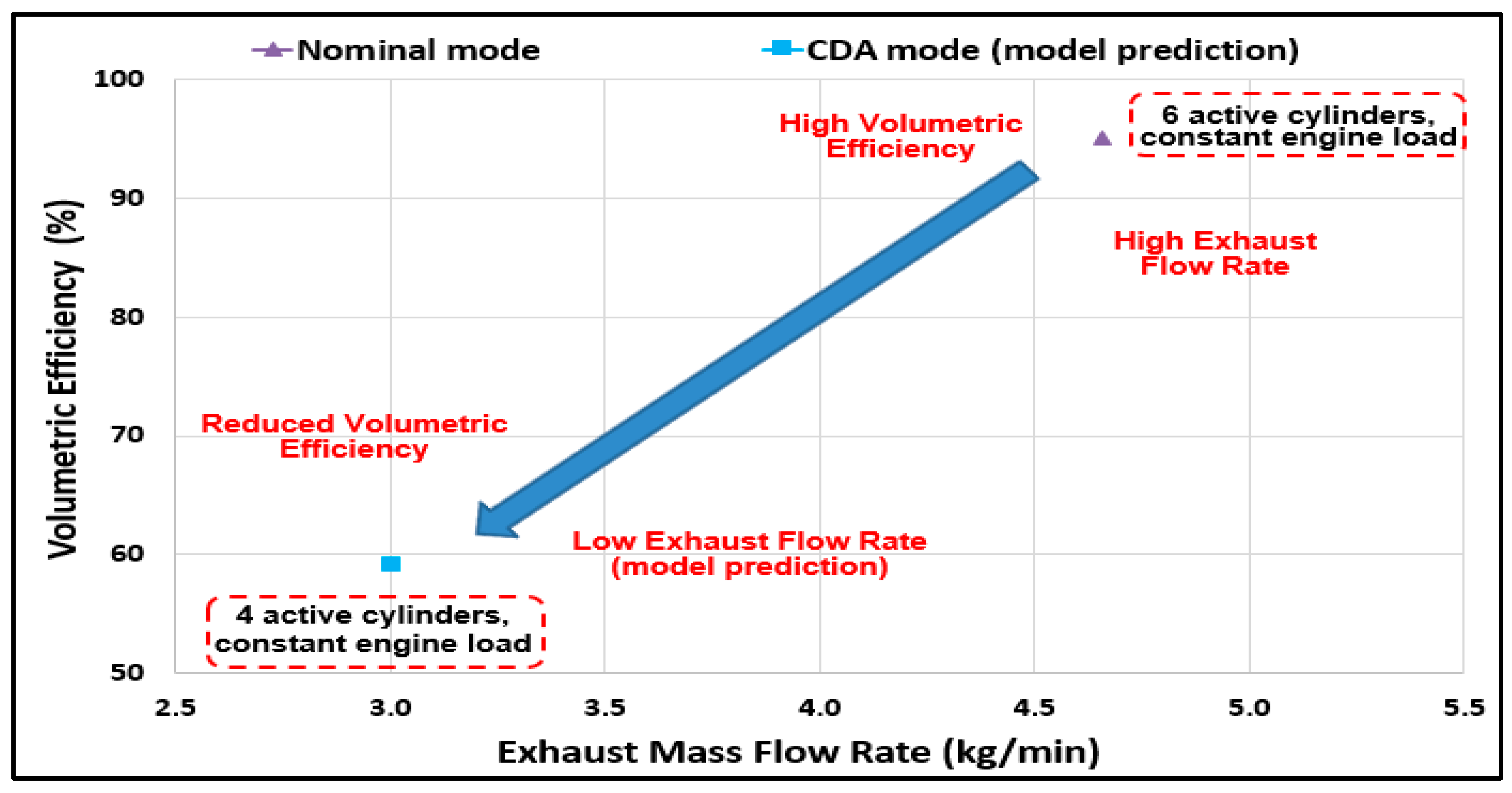
CDA is highly effective to elevate exhaust temperature in a fuel-saving manner. This is certainly advantageous relative to the LEVO technique, which incurs a major rise in fuel consumption. However, as illustrated in Figure 8, it results in a substantial reduction in exhaust mass flow rate in the system. The reduced volumetric efficiency due to inactive cylinders is seen to be the primary reason for the decreased exhaust mass flow rate. Considering that the after-treatment warm-up process is not only affected by engine-out temperature but also by exhaust flow rate, it is derived that, unlike LEVO alone, CDA alone is not expected to be very effective in improving exhaust enthalpy and thus EAT warm-up due to low exhaust mass flow rate. Therefore, although it provides high exhaust temperature at EAT inlet with a potential to improve BSFC, it is not seen as a favorable technique to shorten the EAT heat-up process when applied alone.
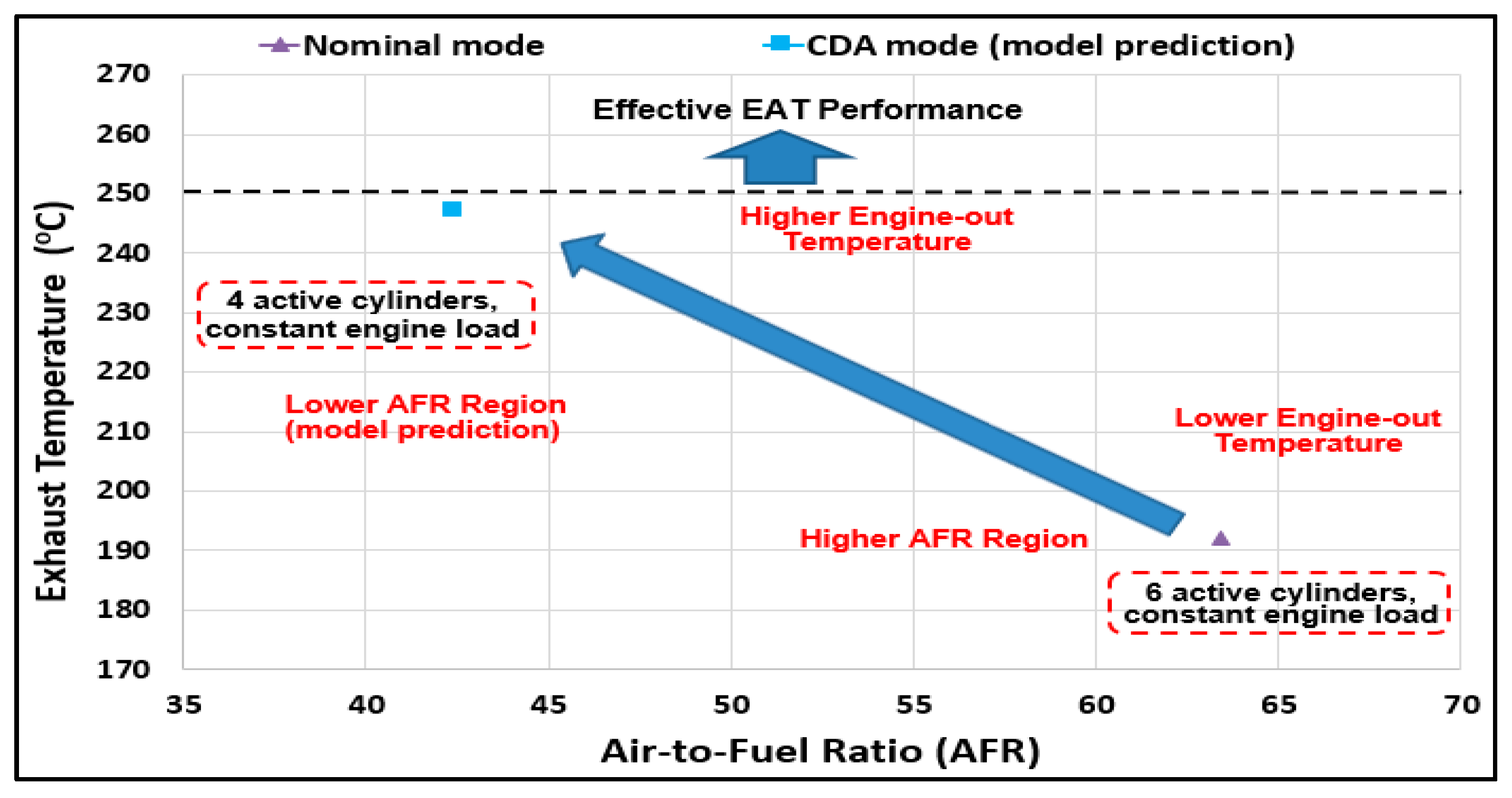
The reduced volumetric efficiency affects not only exhaust mass flow rate but also in-cylinder air-to-fuel ratio. The effect of CDA on AFR is demonstrated in Figure 9. It is seen that CDA is effective to modulate the AFR in the cylinders via maintaining the proper load redistribution in the engine system. The increased fuel injection in active cylinders in this mode can keep AFR below 45, which is significantly low relative to that in nominal mode (AFR > 60). The decreased AFR results in elevated thermal intensity inside the active cylinders and thus can keep exhaust temperature at high, favorable levels, where EAT can be performed reliably with high effectiveness, as in Figure 6. It is seen that the control of the AFR region that engine system operates has a direct influence on exhaust temperature. As shown in Figure 9, engine outlet temperature is inversely proportional to the AFR; the lower the AFR, the higher the engine outlet temperature.
To enhance the EAT warm-up process, particularly to prevent the substantial reduction in exhaust rate flowing through the EAT unit, CDA can be combined with LEVO in the engine model. In the next section, the impact of this combination is examined in terms of engine performance parameters.

3.3. Combined CDA + LEVO

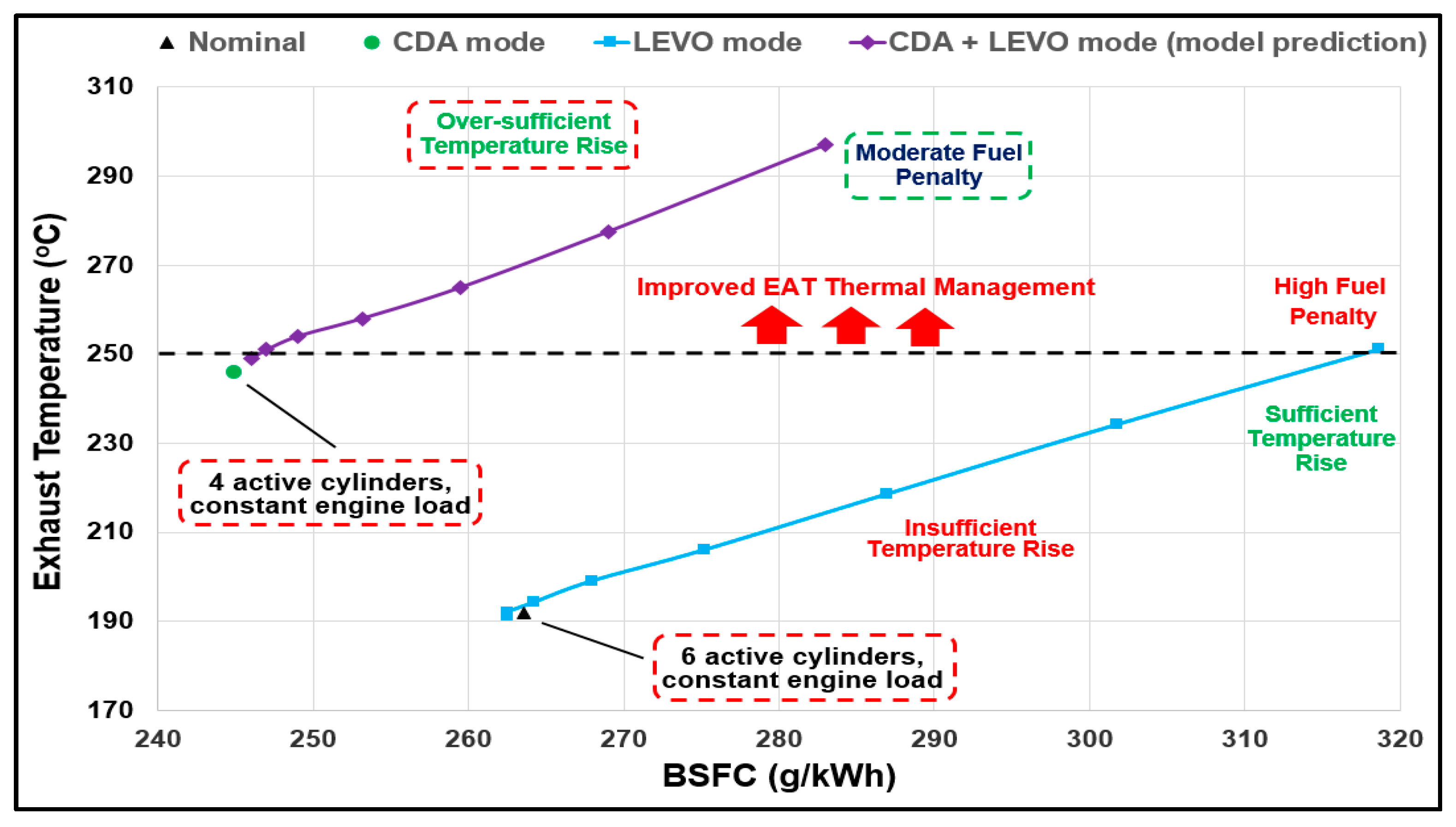
Figure 10 below compares the effects of nominal operation, CDA, LEVO, and their combined application (as CDA + LEVO) on exhaust gas temperature and brake-specific fuel consumption at constant engine load.
In Figure 10, CDA alone produces a substantial exhaust temperature increase with a moderate fuel penalty, while LEVO alone provides only limited temperature improvement despite a larger increase in fuel consumption. The combined CDA + LEVO strategy shifts the operating point toward higher exhaust temperature with a smaller additional fuel penalty compared with LEVO-alone operation. This indicates that CDA + LEVO can provide improved exhaust after-treatment thermal management while maintaining acceptable fuel efficiency.
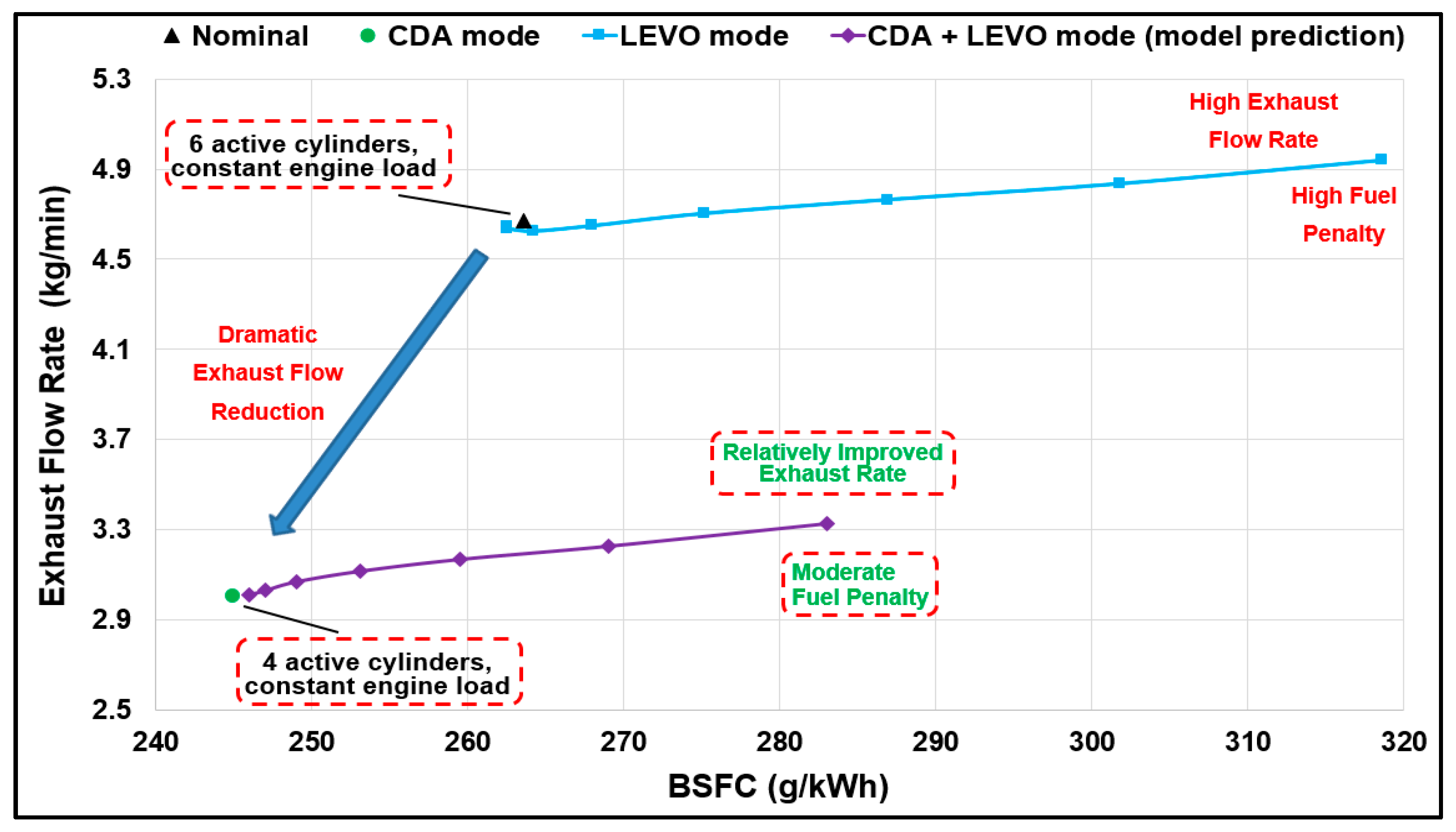
In addition to the change in exhaust temperature, the change in exhaust flow rate should be examined to assess the effectiveness of each method for the after-treatment heat-up. In Figure 11 below, the variation of exhaust mass flow rate with brake-specific fuel consumption for nominal, CDA, LEVO and combined CDA + LEVO operation at constant engine load is illustrated.
As expected, in Figure 11, CDA significantly reduces exhaust flow rate because, unlike nominal mode, fewer cylinders participate in combustion, leading to lower total gas throughput. Although this reduction improves exhaust temperature, as in Figure 10, it can significantly delay after-treatment activation due to insufficient exhaust mass flow and catalyst heat input.
In contrast, the LEVO strategy increases exhaust mass flow rate relative to CDA by modifying the exhaust blowdown process and increasing fuel consumption, which results in greater total exhaust gas throughput despite the altered valve timing. However, the fuel consumption penalty in this mode is so high (up to 20%) that it cannot be applied alone in an engine system. The combined CDA + LEVO mode provides a compromise: it maintains a relatively higher exhaust flow rate than the CDA-only mode while avoiding the excessive fuel penalty observed with LEVO-only operation. Given the high fuel penalty difference in Figure 11, the combined technique stands out as a more feasible approach relative to the LEVO-alone technique.
It is noted that CDA can also influence exhaust pulse characteristics reaching the turbocharger turbine. Deactivating cylinders reduces the number of firing events per cycle, which may lead to more intermittent exhaust pulses and could potentially affect turbine speed stability and intake air delivery. Such variations may influence the scavenging process and, under certain conditions, contribute to variations in BSFC. However, in the present study the combined CDA + LEVO strategy increases exhaust gas temperature and turbine inlet enthalpy, which may partially compensate for the reduced pulse frequency by maintaining sufficient turbine energy. Therefore, while detailed turbocharger transient behavior is beyond the scope of the present steady-state thermodynamic analysis, the predicted trends indicate that the thermal benefits for EAT warm-up can still be achieved despite the reduced number of active cylinders.
The trade-off between exhaust temperature and exhaust mass flow rate is critical for after-treatment thermal management under sustained low-load operation. Considering both exhaust temperature and exhaust mass flow rate, the combined strategy (CDA + LEVO) increases exhaust enthalpy flow to the exhaust after-treatment system more than other techniques (high exhaust temperature with moderate-level exhaust flow rate, as in Figure 10 and Figure 11). Therefore, it can be significantly helpful to shorten the EAT warm-up period in the engine system.
Rapid exhaust EAT warm-up depends not only on exhaust temperature but also on exhaust mass flow rate. Figure 10 and Figure 11 show that a thermal management strategy may increase exhaust temperature while simultaneously reducing exhaust flow, thereby limiting the total heat delivered to the after-treatment system. In fact, this can be particularly valid for airflow-based techniques such as the Miller cycle, CDA and intake throttling, which improve exhaust temperature through reduced in-cylinder mass. Evaluating a method based on a single parameter (e.g., exhaust temperature alone) can therefore be misleading, as insufficient heat transfer may still delay catalyst activation.
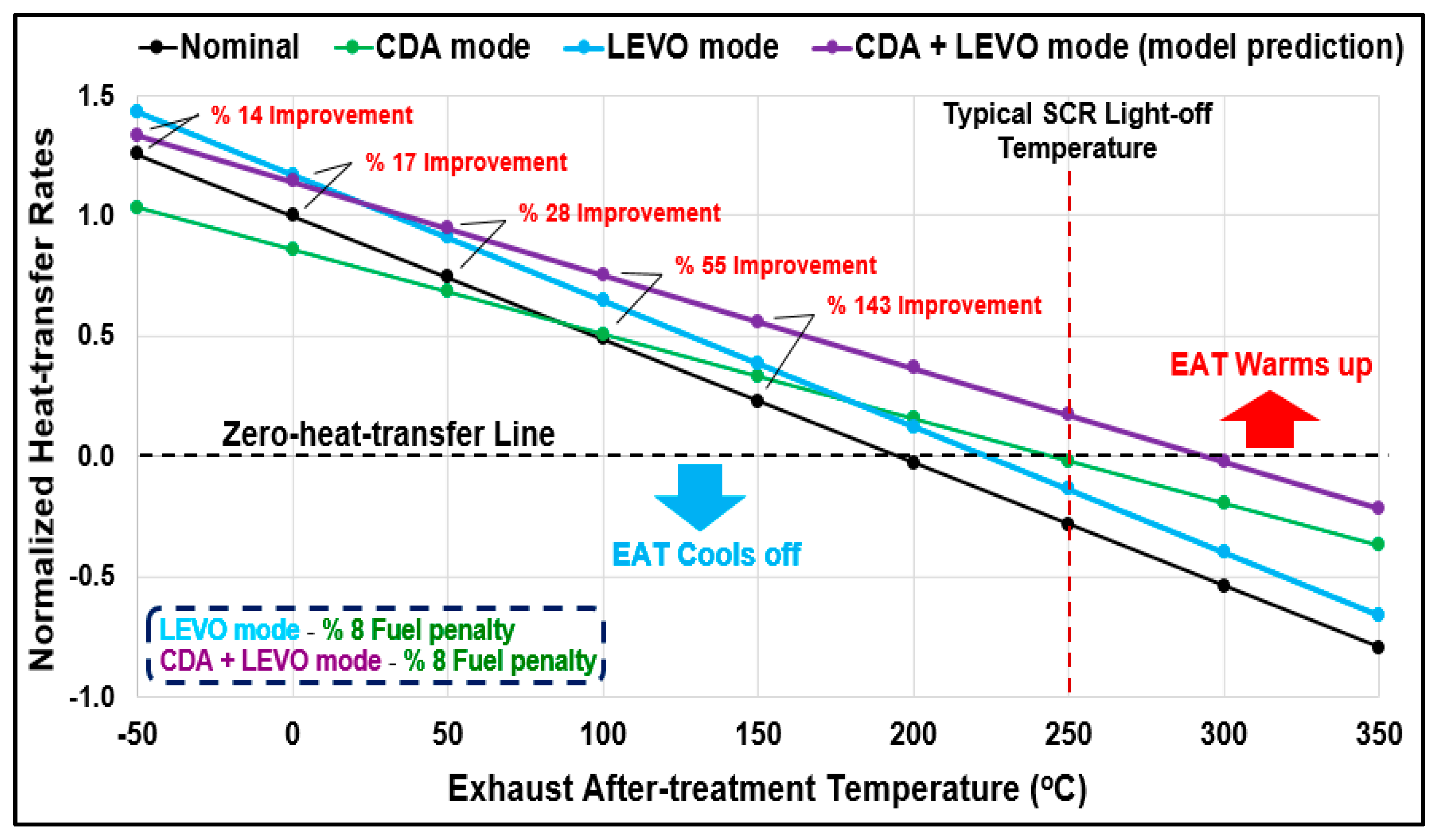
To assess the realistic impact of each strategy on EAT warm-up, the heat transfer rate to the after-treatment unit is evaluated using Equation (1), which accounts for exhaust mass flow rate, specific heat capacity, exhaust temperature, and catalyst bed temperature. To cover a wide range of realistic operating conditions, including cold-start situations in low ambient temperatures and fully warmed after-treatment operation, heat transfer rates are evaluated over an EAT temperature range of −50 °C to 350 °C. All results correspond to constant engine load (2.5 bar BMEP) and are normalized with respect to the nominal-mode heat transfer rate at an after-treatment temperature of 0 °C. Figure 12 presents the predicted normalized heat-transfer rates for nominal operation, CDA, LEVO, and their combined application (CDA + LEVO). The fuel penalty is limited to 8% for both LEVO and CDA + LEVO modes to assess the EAT warm-up potential of these techniques in a BSFC-equal manner.
For each strategy, the EAT catalyst bed is effectively warmed while the normalized heat-transfer curve remains above the zero-heat-transfer line in Figure 12. In this region, exhaust gas temperature exceeds catalyst temperature, resulting in positive heat flow to the EAT unit. Higher heat-transfer rates therefore correspond to faster catalyst warm-up. Below the zero line, however, the exhaust temperature becomes lower than the catalyst temperature, leading to net heat loss from the EAT unit. In this regime, lower heat-transfer rates are desirable to slow catalyst cool-down.
Under nominal operation, heat transfer rate decreases rapidly with increasing after-treatment temperature and crosses the zero-heat-transfer line slightly below 200 °C. This indicates a transition from catalyst warm-up to net cooling, which is typical of diesel engines operating at low load where exhaust enthalpy is insufficient to sustain catalyst light-off. Consequently, nominal operation alone is ineffective for accelerating EAT warm-up and also unfavorable for preventing catalyst cool-down due to relatively high exhaust flow with limited temperature increase.
CDA operation alone increases exhaust gas temperature (close to 250 °C, SCR light-off region) but significantly reduces exhaust mass flow rate, which limits the total heat delivered to the after-treatment system. Consequently, although CDA provides modest improvement in early warm-up, its benefit diminishes noticeably as after-treatment temperature rises. Similar to nominal operation, it is not consistent with the EAT warm-up process. However, it is highly effective to improve EAT cool off as it improves the negative heat-transfer rates due to low exhaust flow rates. It is noted that at loads below those considered in this study (2.5 bar BMEP), the effectiveness of CDA alone is expected to decrease further due to low cylinder pressure and a relatively small rise in fuel injected in active cylinders. The combined CDA + LEVO strategy may still improve exhaust temperature more than CDA alone, which is still favorable to enhance EAT warm-up. However, at such a low-load condition, the exhaust temperature is too low and even the combined technique may not always achieve SCR light-off without an additional measure such as post fuel injection.
In contrast to CDA operation, LEVO operation increases exhaust enthalpy flow by accelerating the discharge of recompressed in-cylinder gases and by increasing fuel consumption, which raises exhaust mass flow and heat transfer rate compared with CDA alone. However, LEVO alone cannot consistently reach the SCR light-off temperature despite an ~8% fuel consumption penalty and is less effective during catalyst cool-down due to higher heat loss at elevated flow rates.
The combined CDA + LEVO strategy provides the most favorable balance between exhaust temperature and mass flow rate. Across the investigated temperature range, CDA + LEVO maintains the highest heat-transfer rates—up to 143% higher than nominal operation—delaying the transition to net cooling and accelerating after-treatment catalyst warm-up. For a similar fuel-consumption penalty (~8%), CDA + LEVO achieves SCR light-off more rapidly than LEVO alone while also reducing catalyst cool-down at higher temperatures. These improvements can be attributed to substantially elevated exhaust temperature (close to 300 °C) in the combined strategy, which is not valid in LEVO alone, CDA alone or nominal modes. Overall, these results demonstrate that, in terms of fast after-treatment catalyst warm-up, simultaneous optimization of exhaust temperature and exhaust mass flow is more effective than improving either parameter independently.
Although the proposed strategy improves EAT warm-up conditions, CDA and modified valve timing may influence in-cylinder combustion characteristics and engine-out emissions. Previous studies have shown that CDA operation can alter combustion temperature and air–fuel mixing processes, potentially affecting NOx and particulate formation [66,67,68,69]. However, the present study focuses on thermodynamic aspects of EAT thermal management, and therefore a detailed analysis of engine-out emissions is not addressed in the present work.
For marine applications, implementation of advanced combustion control strategies such as CDA may also require consideration of regulatory compliance. Marine diesel engines are subject to emission limits defined by the International Maritime Organization under the NOx Technical Code [70,71,72]. Significant modifications to combustion control logic or operating modes may therefore require additional verification or certification procedures to ensure compliance with applicable NOx emission regulations. A detailed regulatory assessment is beyond the scope of the present thermodynamic study but should be considered in future practical implementation of the proposed strategy.
It should also be noted that the combined strategy still introduces a moderate fuel-consumption penalty (~8%), although it significantly improves EAT thermal management. A systematic investigation of optimal LEVO limits over a wider range of engine speeds and loads would provide further insight into the trade-off between exhaust temperature improvement and fuel consumption penalty. However, such a comprehensive parametric analysis is outside the scope of the present study and is therefore considered an important direction for future work.

4. Conclusions

This study numerically investigates the effects of LEVO, CDA, and their combined application (CDA + LEVO) on EAT thermal management in a six-cylinder diesel engine operating at a low-load condition (1200 RPM, 2.5 bar BMEP).
CDA alone increases exhaust temperature with a relatively low fuel-consumption penalty but substantially reduces exhaust mass flow, limiting the total heat transfer available for EAT warm-up. In contrast, LEVO alone maintains higher exhaust mass flow and increases exhaust enthalpy flow but results in a noticeable fuel-consumption penalty and does not consistently achieve SCR light-off conditions.
The combined CDA + LEVO method provides the most favorable compromise between exhaust temperature and mass-flow characteristics. Under the investigated operating condition, model predictions indicate exhaust temperatures approaching 295 °C and up to a 143% increase in EAT heat transfer rate relative to the baseline low-load operation without LEVO or CDA. This improvement accelerates catalyst warm-up and delays catalyst cool-down, although it is accompanied by an approximately 8% increase in BSFC.
These results indicate that coordinated control of valve timing and load redistribution through CDA can improve the exhaust temperature–mass flow trade-off in low-load diesel engine operation. The findings are particularly relevant for engines operating under prolonged low-load conditions, such as marine auxiliary engines and diesel generator sets. However, practical implementation would require advanced valve-train and cylinder-control capability. Future work should focus on experimental validation, transient operating conditions, and evaluation of control feasibility and durability implications.

Funding

This research received no external funding.

Data Availability Statement

All the data are provided within the manuscript.

Acknowledgments

The author would like to thank the Lotus Engine Simulation Company for access to the Lotus Engine Simulation Software version 6.01a in this study.

Conflicts of Interest

The author declares no conflicts of interest.

Nomenclature

CpSpecific heat at constant pressure, kJ/kgK
m . Mass flow rate, kg/h
TexhaustExhaust temperature, °C
TEAT catalyst bedEAT catalyst bed temperature, °C
ηEfficiency, %
ABDCAfter bottom dead center
AFRAir-to-fuel ratio
ATDCAfter top dead center
BBDCBefore bottom dead center
BDCBottom dead center
BMEPBrake mean effective pressure, bar
BSFCBrake-specific fuel consumption, g/kWh
BTDCBefore top dead center
CACrank angle, °
CDACylinder deactivation
EATExhaust after-treatment
EVCExhaust valve closure, °
EVOExhaust valve opening, °
IVCIntake valve closure, °
IVOIntake valve opening, °
LESLotus Engine Simulation
LEVOLate exhaust valve opening
LIVCLate intake valve closure
NOxNitrogen oxide
RPMRevolutions per minute
TDCTop dead center
VVTVariable valve timing

References

  1. Dieselnet. Emission Standards, United States, Marine Diesel Engines. Available online: https://www.dieselnet.com/standards/us/marine.php#stds (accessed on 23 February 2026).
  2. Dieselnet. Emission Standards, European Union, Passenger Cars. Available online: https://www.dieselnet.com/standards/eu/ld.php#stds (accessed on 23 February 2026).
  3. Boriboonsomsim, K.; Durbin, T.; Scora, G.; Johnson, K.; Sandez, D.; Vu, A.; Jiang, Y.; Burnette, A.; Yoon, S.; Collins, J.; et al. Real-world exhaust temperature profiles of on-road heavy-duty diesel vehicles equipped with selective catalytic reduction. Sci. Total Environ. 2018, 634, 909–921. [Google Scholar]
  4. Chen, Z.; Liu, Q.; Liu, H.; Wang, T. Recent advances in SCR systems of heavy-duty diesel vehicles—Low temperature NOx reduction technology and combination of SCR with remote OBD. Atmosphere 2024, 15, 997. [Google Scholar]
  5. Feng, R.; Hu, X.; Li, G.; Sun, Z.; Ye, M.; Deng, B. Exploration on the emissions and catalytic reactors interactions of a non-road diesel engine through experiment and system level simulation. Fuel 2023, 342, 127746. [Google Scholar] [CrossRef]
  6. Verschaeren, R.; Verhelst, S. Increasing exhaust temperature to enable after-treatment operation on a two-stage turbo-charged medium speed marine diesel engine. Energy 2018, 147, 681–687. [Google Scholar]
  7. Roberts, L.; Magee, M.; Shaver, G.; Garg, A.; McCarthy, J.; Koeberlein, E.; Holloway, E.; Shute, R.; Koeberlein, D.; Nielsen, D. Modeling the impact of early exhaust valve opening on exhaust after-treatment thermal management and efficiency for compression ignition engines. Int. J. Engine Res. 2015, 16, 773–794. [Google Scholar] [CrossRef]
  8. Wu, B.; Jia, Z.; Li, G.Z.; Liu, Y.G.; Zhong, L.X. Different exhaust temperature management technologies for heavy-duty diesel engines with regard to thermal efficiency. Appl. Therm. Eng. 2021, 186, 116495. [Google Scholar] [CrossRef]
  9. Nie, X.; Bi, Y.; Liu, S.; Shen, L.; Wan, M. Impacts of different exhaust thermal management methods on diesel engine and SCR performance at different altitude levels. Fuel 2022, 324, 124747. [Google Scholar] [CrossRef]
  10. Dev, S.; Lafrance, S.; Liko, B.; Guo, H. A study on effect of engine operating parameters on NOx emissions and exhaust temperatures of a heavy-duty diesel engine during idling. Int. J. Engine Res. 2023, 24, 982–998. [Google Scholar]
  11. Başaran, H.Ü.; Duranay, A. Advanced power systems to improve energy efficiency in modern marine vessels in operation: A review. In Research, Technology and Innovation in Shipbuilding and Maritime; Duvar Yayinevi: Izmir, Turkey, 2025; pp. 21–44. [Google Scholar]
  12. Dahham, R.Y.; Wei, H.; Pan, J. Improving thermal efficiency of internal combustion engines: Recent progress and remaining challenges. Energies 2022, 15, 6222. [Google Scholar] [CrossRef]
  13. Duranay, A. Numerical and experimental investigation of vortex formation modes on a freely vibrating circular cylinder at high Reynolds numbers. Appl. Ocean Res. 2024, 144, 103909. [Google Scholar] [CrossRef]
  14. Gao, J.; Tian, G.; Sorniotti, A.; Karci, A.E.; Di Palo, R. Review of thermal management of catalytic converters to decrease engine emissions during cold start and warm up. Appl. Therm. Eng. 2019, 147, 177–187. [Google Scholar] [CrossRef]
  15. Gosala, D.B.; Shaver, G.M.; McCarthy, J.E., Jr.; Lutz, T.P. Fuel-efficient thermal management in diesel engines via valvetrain-enabled cylinder ventilation strategies. Int. J. Engine Res. 2021, 22, 430–442. [Google Scholar] [CrossRef]
  16. Guan, W.; Zhao, H.; Ban, Z.; Lin, T. Exploring alternative combustion control strategies for low-load exhaust gas temperature management of a heavy-duty diesel engine. Int. J. Engine Res. 2019, 20, 381–392. [Google Scholar] [CrossRef]
  17. Wang, Z.; Shen, L.; Lei, J.; Yao, G.; Wang, G. Impact characteristics of post injection on exhaust temperature and hydrocarbon emissions of a diesel engine. Energy Rep. 2022, 8, 4332–4343. [Google Scholar] [CrossRef]
  18. Başaran, H.Ü. Enhanced after-treatment warm up in diesel vehicles through modulating fuel injection and exhaust valve closure timing. Eur. Mech. Sci. 2024, 8, 93–103. [Google Scholar] [CrossRef]
  19. Gosala, D.B.; Ramesh, A.K.; Allen, C.M.; Joshi, M.C.; Taylor, A.H.; Van Voorhis, M.; Shaver, G.M.; Farrell, L.; Koeberlein, E.; McCarthy, J., Jr.; et al. Diesel engine aftertreatment warm-up through early exhaust valve opening and internal exhaust gas recirculation during idle operation. Int. J. Engine Res. 2018, 19, 758–773. [Google Scholar] [CrossRef]
  20. Başaran, H.Ü. Utilizing exhaust valve opening modulation for fast warm-up of exhaust after-treatment systems on highway diesel vehicles. Int. J. Automot. Sci. Technol. 2020, 4, 10–22. [Google Scholar] [CrossRef]
  21. Soleimani, A.; Kim, J.; Axelsson, M.; Hyvonen, J.; Mikulski, M. Exhaust Thermal Management in a Dual-Fuel Marine Engine via Fully Variable Valve Actuation and Wastegate Lambda Control; SAE Technical Paper No. 2025-24-0085; SAE International: Warrendale, PA, USA, 2026. [Google Scholar]
  22. Kim, J.; Soleimani, A.; Nousiainen, P.; Axelsson, M.; Mikulski, M. Variable valve actuation (VVA) for next-generation marine and off-road engines: A comprehensive review for meeting future emissions legislation. Appl. Energy 2026, 406, 127133. [Google Scholar] [CrossRef]
  23. Basaran, H.U.; Ozsoysal, O.A. Effects of application of variable valve timing on the exhaust gas temperature improvement in a low-loaded diesel engine. Appl. Therm. Eng. 2017, 122, 758–767. [Google Scholar] [CrossRef]
  24. Garg, A.; Magee, M.; Ding, C.; Roberts, L.; Shaver, G.; Koeberlein, E.; Shute, R.; Koeberlein, D.; McCarthy, J.J.; Nielsen, D. Fuel-efficient exhaust thermal management using cylinder throttling via intake valve closing timing modulation. Proc. Inst. Mech. Eng. Part D J. Automob. Eng. 2016, 230, 470–478. [Google Scholar] [CrossRef]
  25. Kim, J.; Vallinmaki, M.; Tuominen, T.; Mikulski, M. Variable valve actuation for efficient exhaust thermal management in an off-road diesel engine. Appl. Therm. Eng. 2024, 246, 122940. [Google Scholar] [CrossRef]
  26. Vos, K.R.; Shaver, G.M.; Joshi, M.C.; Ramesh, A.K.; McCarthy, J. Strategies for using valvetrain flexibility instead of exhaust manifold pressure modulation for diesel engine gas exchange and thermal management control. Int. J. Engine Res. 2021, 22, 755–776. [Google Scholar] [CrossRef]
  27. Basaran, H.U. Enhanced Exhaust after-Treatment Warmup in a Heavy-Duty Diesel Engine System via Miller Cycle and Delayed Exhaust Valve Opening. Energies 2023, 16, 4542. [Google Scholar] [CrossRef]
  28. Joshi, M.C.; Gosala, D.; Shaver, G.M.; McCarthy, J.; Farrell, L. Exhaust valve profile modulation for improved diesel engine curb idle aftertreatment thermal management. Int. J. Engine Res. 2021, 22, 3179–3195. [Google Scholar] [CrossRef]
  29. Bai, S.; Chen, G.; Sun, Q.; Wang, G.; Li, G.X. Influence of active control strategies on exhaust thermal management for diesel particular filter active regeneration. Appl. Therm. Eng. 2017, 119, 297–303. [Google Scholar] [CrossRef]
  30. Tziolas, V.; Koltsakis, G.; Zingopis, N.; Chatzipartali, K. Evaluation of thermal management technologies for fuel efficient cold-start emissions reduction in diesel engines. Int. J. Engine Res. 2024, 25, 494–512. [Google Scholar] [CrossRef]
  31. Başaran, H.Ü. Combining Early Intake Valve Closure and Exhaust Throttling to Achieve Rapid Exhaust After-treatment Warm up in Diesel Engine Systems. Dokuz Eylul Univ. Muh. Fak. Fen Muh. Derg. 2025, 27, 206–215. [Google Scholar] [CrossRef]
  32. Gritsenko, A.; Shepelev, V.; Fedoseev, S.; Bedych, T. Increase in the fuel efficiency of a diesel engine by disconnecting some of its cylinders. Facta Univ. Ser. Mech. Eng. 2023, 21, 657–670. [Google Scholar] [CrossRef]
  33. Joshi, M.C.; Gosala, D.B.; Allen, C.M.; Vos, K.; Voorhis, M.V.; Taylor, A.; Shaver, G.M.; McCarthy, J.J.; Stretch, D.; Koeberlein, E.; et al. Reducing diesel engine drive cycle fuel consumption through use of cylinder deactivation to maintain aftertreatment component temperature during idle and low load operating conditions. Front. Mech. Eng. 2017, 3, 8. [Google Scholar] [CrossRef]
  34. Vos, K.R.; Shaver, G.M.; Ramesh, A.K.; McCarthy, J., Jr. Impact of cylinder deactivation and cylinder cutout via flexible valve actuation on fuel efficient aftertreatment thermal management at curb idle. Front. Mech. Eng. 2019, 5, 52. [Google Scholar] [CrossRef]
  35. Basaran, H.U. Fuel-saving Exhaust After-treatment Management on a Sparkignition Engine System via Cylinder Deactivation Method. Isı Bilim. Ve Tek. Derg. 2018, 38, 87–98. [Google Scholar]
  36. Hushion, C.; Thiruvengadam, A.; Pondicherry, R.; Thompson, G.; Baltrucki, J.; Janak, R.; Lee, J.; Farrell, L. Investigating cylinder deactivation as a low fuel-penalty thermal management strategy for heavy-duty diesel engines. Front. Mech. Eng. 2022, 8, 987170. [Google Scholar] [CrossRef]
  37. Ramesh, A.K.; Shaver, G.M.; Allen, C.M.; Nayyar, S.; Gosala, D.B.; Caicedo Parra, D.; Koeberlein, E.; McCarthy, J., Jr.; Nielsen, D. Utilizing low airflow strategies, including cylinder deactivation, to improve fuel efficiency and aftertreatment thermal management. Int. J. Engine Res. 2017, 18, 1005–1016. [Google Scholar] [CrossRef]
  38. Ramesh, A.K.; Gosala, D.B.; Allen, C.; Joshi, M.; McCarthy, J., Jr.; Farrell, L.; Koeberlein, E.D.; Shaver, G.M. Cylinder Deactivation for Increased Engine Efficiency and Aftertreatment Thermal Management in Diesel Engines; SAE Technical Paper No. 2018-01-0384; SAE International: Warrendale, PA, USA, 2018. [Google Scholar]
  39. Hu, J.; Wu, Y.; Yu, Q.; Liao, J.; Cai, Z. Heating and storage: A review on exhaust thermal management applications for a better trade-off between environment and economy in ICEs. Appl. Therm. Eng. 2023, 220, 119782. [Google Scholar] [CrossRef]
  40. Wu, G.; Feng, G.; Li, Y.; Ling, T.; Peng, X.; Su, Z.; Zhao, X. A review of thermal energy management of diesel exhaust after-treatment systems technology and efficiency enhancement approaches. Energies 2024, 17, 584. [Google Scholar] [CrossRef]
  41. Guan, W.; Pedrozo, V.B.; Zhao, H.; Ban, Z.; Lin, T. Miller cycle combined with exhaust gas recirculation and post-fuel injection for emissions and exhaust gas temperature control of a heavy-duty diesel engine. Int. J. Engine Res. 2020, 21, 1381–1397. [Google Scholar] [CrossRef]
  42. Arnau, F.J.; Martin, J.; Pla, B.; Aunon, A. Diesel engine optimization and exhaust thermal management by means of variable valve train strategies. Int. J. Engine Res. 2021, 22, 1196–1213. [Google Scholar] [CrossRef]
  43. Modiyani, R.; Kocher, L.; Van Alstine, D.G.; Koeberlein, E.; Stricker, K.; Meckl, P.; Shaver, G. Effect of intake valve closure modulation on effective compression ratio and gas exchange in turbocharged multi-cylinder engines utilizing EGR. Int. J. Engine Res. 2010, 12, 617–631. [Google Scholar] [CrossRef]
  44. Lotus Engineering Software. Lotus Engine Simulation (LES); Version 6.01a; Lotus Engineering: Hethel, UK.
  45. Lotus Engineering. Getting Started with Lotus Engine Simulation. Available online: https://lotusproactive.files.wordpress.com/2013/08/getting-started-with-lotus-engine-simulation.pdf (accessed on 25 February 2026).
  46. Pearson, R.J.; Bassett, M.D.; Fleming, N.P.; Rodemann, T. Lotus Engineering Software—An Approach to Model-Based Design; Lotus Engineering: Hethel, UK, 2002. [Google Scholar]
  47. Mishra, R.; Saad, S.M. Simulation based study on improving the transient response quality of turbocharged diesel engines. J. Qual. Maint. Eng. 2017, 23, 297–309. [Google Scholar] [CrossRef]
  48. Sezer, İ. Alternative gaseous fuels in port fuel injection spark ignition engines. J. Energy Inst. 2011, 84, 207–214. [Google Scholar] [CrossRef]
  49. Allawi, M.K.; Mejbel, M.K.; Oudah, M.H. Variable valve timing (VVT) modelling by Lotus engine simulation software. Int. J. Automot. Mech. Eng. 2020, 17, 8397–8410. [Google Scholar] [CrossRef]
  50. Incropera, P.; DeWitt, D.; Bergman, T.; Lavine, A. Fundamentals of Heat and Mass Transfer; John Wiley and Sons: Minneapolis, MN, USA, 2007. [Google Scholar]
  51. Fridrichová, K.; Drápal, L.; Vopařil, J.; Dlugoš, J. Overview of the potential and limitations of cylinder deactivation. Renew. Sustain. Energy Rev. 2021, 146, 111196. [Google Scholar] [CrossRef]
  52. Zsiga, N.; Ritzmann, J.; Soltic, P. Practical aspects of cylinder deactivation and reactivation. Energies 2021, 14, 2540. [Google Scholar] [CrossRef]
  53. Ritzmann, J.; Zsiga, N.; Peterhans, C.; Onder, C. A control strategy for cylinder deactivation. Control Eng. Pract. 2020, 103, 104566. [Google Scholar] [CrossRef]
  54. Gosala, D.B.; Allen, C.M.; Ramesh, A.K.; Shaver, G.M.; McCarthy, J., Jr.; Stretch, D.; Koeberlein, E.; Farrell, L. Cylinder deactivation during dynamic diesel engine operation. Int. J. Engine Res. 2017, 18, 991–1004. [Google Scholar] [CrossRef]
  55. Allen, C.M.; Gosala, D.B.; Shaver, G.M.; McCarthy, J., Jr. Comparative study of diesel engine cylinder deactivation transition strategies. Int. J. Engine Res. 2019, 20, 570–580. [Google Scholar] [CrossRef]
  56. Napolitano, P.; Liotta, L.F.; Guido, C.; Tornatore, C.; Pantaleo, G.; La Parola, V.; Beatrice, C. Insights of selective catalytic reduction technology for nitrogen oxides control in marine engine applications. Catalysts 2022, 12, 1191. [Google Scholar] [CrossRef]
  57. Magnusson, M.; Fridell, E.; Härelind, H. Improved low-temperature activity for marine selective catalytic reduction systems. Proc. Inst. Mech. Eng. Part M J. Eng. Marit. Environ. 2016, 230, 126–135. [Google Scholar] [CrossRef]
  58. La Rocca, A. Emission aftertreatment systems for marine internal combustion engines. In Marine Propulsion for Decarbonization; Elsevier: Amsterdam, The Netherlands, 2026; pp. 265–282. [Google Scholar]
  59. Wardana, M.K.A.; Lim, O. Review of improving the NOx conversion efficiency in various diesel engines fitted with SCR system technology. Catalysts 2022, 13, 67. [Google Scholar] [CrossRef]
  60. Wang, T.J.; Kim, J.H. Simulation study on thermal management strategy to achieve 99% SCR efficiency of a heavy-duty diesel engine over a transient cycle. Int. J. Automot. Technol. 2018, 19, 597–603. [Google Scholar] [CrossRef]
  61. Han, S.; Nie, X.; Cui, J.; Bi, Y.; Shen, L. Effect of Different Exhaust Heat Management Strategies on the Transient Emission Characteristics of Diesel Aftertreatment Systems. ACS Omega 2025, 10, 24272–24283. [Google Scholar] [CrossRef] [PubMed]
  62. Molina, S.; Garcia, A.; Monsalve-Serrano, J.; Estepa, D. Miller cycle for improved efficiency, load range and emissions in a heavy-duty engine running under reactivity controlled compression ignition combustion. Appl. Therm. Eng. 2018, 136, 161–168. [Google Scholar] [CrossRef]
  63. Zhang, J.; Wang, S.; Wang, Z.; Xie, Z.; Chang, Y. Investigation of intake and exhaust performance in heavy-duty diesel engines with variable Miller cycle. Appl. Therm. Eng. 2025, 265, 125547. [Google Scholar] [CrossRef]
  64. Shaikh, A.M.; Thomas, D.M.; Mathews, B.S.; Shaver, G.M.; Holloway, E.; Gosala, D.; Shipp, T. Impact of intake valve modulation on engine efficiency and emissions in a stoichiometric spark-ignition natural gas engine at low and mid loads. Energy Convers. Manag. 2025, 339, 119893. [Google Scholar] [CrossRef]
  65. Zhang, J.; Gan, Z.; Wang, S.; Guo, N.; Xie, Z. Effects of variable Miller cycle on combustion performance and fuel economy of highly intensified diesel engines. Case Stud. Therm. Eng. 2026, 78, 107656. [Google Scholar] [CrossRef]
  66. Morris, A.; McCarthy, J. The Effect of Heavy-Duty Diesel Cylinder Deactivation on Exhaust Temperature, Fuel Consumption, and Turbocharger Performance Up to 3 Bar BMEP; SAE Technical Paper No. 2020-01-1407; SAE International: Warrendale, PA, USA, 2020. [Google Scholar]
  67. Ram, S.; Yadav, R.K.; Singh, I. Engine adaptation to improve performance, combustion and emissions at low load by cylinder deactivation. J. Braz. Soc. Mech. Sci. Eng. 2023, 45, 464. [Google Scholar] [CrossRef]
  68. Baltrucki, J.; Matheaus, A.; Janak, R. Evaluation of Noise, Vibration, and Harshness—Optimized Cylinder Deactivation on a Class 8 Diesel Truck with Impact on Emissions and Fuel Consumption with Cylinder Deactivation While Providing an Acceptable Cabin Environment; SAE Technical Paper No. 2025-01-5074; SAE International: Warrendale, PA, USA, 2025. [Google Scholar]
  69. Brinklow, G.; Herreros, J.M.; Zeraati-Rezaei, S.; Tsolakis, A.; Millington, P.; Kolpin, A. Primary and secondary emissions reduction using cylinder deactivation strategies for gasoline direct injection engines in hybrid vehicles. Automot. Innov. 2025, 8, 508–518. [Google Scholar] [CrossRef] [PubMed]
  70. Onishchenko, O.; Bulgakov, M.; Melnyk, O.; Volianska, Y.; Storchak, O.; Kovalchuk, M. Environmental sustainability in maritime transportation through the development of strategies to reduce emissions from marine internal combustion engines. In Systems, Decision and Control in Energy VI: Volume I: Energy Informatics and Transport; Springer Nature: Cham, Switzerland, 2024; pp. 509–534. [Google Scholar]
  71. Zannis, T.C.; Katsanis, J.S.; Christopoulos, G.P.; Yfantis, E.A.; Papagiannakis, R.G.; Pariotis, E.G.; Rakopoulos, D.C.; Rakopoulos, C.D.; Vallis, A.G. Marine exhaust gas treatment systems for compliance with the IMO 2020 global sulfur cap and tier III NOx limits: A review. Energies 2025, 15, 3638. [Google Scholar] [CrossRef]
  72. Costagliola, M.A. Emissions regulations for maritime transportation. In Marine Propulsion for Decarbonization; Elsevier: Amsterdam, The Netherlands, 2026; pp. 39–58. [Google Scholar]
Figure 1. Engine model.
Energies 19 01646 g001
Figure 2. Implementation of LEVO.
Energies 19 01646 g002
Figure 3. Conceptual schematic of the cylinder deactivation strategy applied to a six-cylinder diesel engine. Active cylinders (1, 2, 5 and 6) are shown in yellow, while deactivated cylinders (3 and 4) are shown in gray.
Energies 19 01646 g003
Figure 4. Variation of exhaust temperature and exhaust enthalpy with EVO timing.
Energies 19 01646 g004
Figure 5. Variation of brake thermal efficiency and exhaust enthalpy with EVO timing.
Energies 19 01646 g005
Figure 6. Effect of cylinder deactivation on exhaust temperature and brake-specific fuel consumption at constant engine load (model prediction).
Energies 19 01646 g006
Figure 7. Effect of cylinder deactivation on engine pumping loss and brake-specific fuel consumption at constant engine load (model prediction).
Energies 19 01646 g007
Figure 8. Effect of cylinder deactivation on exhaust mass flow rate and volumetric efficiency at constant engine load (model prediction).
Energies 19 01646 g008
Figure 9. Effect of cylinder deactivation on air-to-fuel ratio and exhaust temperature at constant engine load (model prediction).
Energies 19 01646 g009
Figure 10. Comparison of nominal, CDA, LEVO and combined CDA + LEVO modes in terms of exhaust gas temperature and brake-specific fuel consumption at constant engine load (model prediction).
Energies 19 01646 g010
Figure 11. Comparison of nominal, CDA, LEVO and combined CDA + LEVO modes in terms of exhaust mass flow rate and brake-specific fuel consumption at constant engine load (model prediction).
Energies 19 01646 g011
Figure 12. Effect of CDA, LEVO, and CDA + LEVO on normalized EAT heat-transfer rate (normalized by nominal heat transfer at EAT = 0 °C) vs. after-treatment temperature at constant load (model prediction). Positive values accelerate warm-up; negative values indicate cooling.
Energies 19 01646 g012
Table 1. Diesel engine specifications.
Model6-Cylinder Diesel Engine
Air intakeTurbocharged
Bore (mm)107
Stroke (mm)124
Connecting rod length (mm)192
Compression ratio17.3:1
Maximum engine speed (RPM)2800
Maximum engine load (as) (bar)19.0
EVO20 °CA BBDC
EVC20 °CA ATDC
IVO20 °CA BTDC
IVC25 °CA ABDC
Start of injection (SOI)3 °CA BTDC
Cylinder firing order1-5-3-6-2-4
Table 2. Diesel engine operating point.
Engine Speed (RPM)Engine BMEP (Bar)
12002.5
Table 3. The LEVO sweep in the system.
MethodEngine ParameterNominal CaseDelay Increment
(°CA)
Extreme Case
LEVOEVO
(°CA BBDC)
+20
(°CA BBDC)
12.5−72.5
(°CA BBDC)
Disclaimer/Publisher’s Note: The statements, opinions and data contained in all publications are solely those of the individual author(s) and contributor(s) and not of MDPI and/or the editor(s). MDPI and/or the editor(s) disclaim responsibility for any injury to people or property resulting from any ideas, methods, instructions or products referred to in the content.