1. Introduction
Energy policy debates increasingly require a comprehensive understanding not only of the quantity and cost of energy resources, but also of the net energy delivered to society and its long-term systemic implications. In line with the emerging consensus within the Net Energy Analysis (NEA) community, net energy is defined as the energy supplied to society in the form of energy carriers after subtracting the energy invested for the production and distribution of those energy carriers [
1]. The capacity of societies to sustain economic and institutional functions depends in part on this net energy surplus. When net energy is high, surplus energy can support innovation, infrastructure, and governance; when it declines, a greater share of economic activity must be devoted to energy production itself, potentially influencing macroeconomic performance [
2,
3,
4].
A central metric for quantifying net energy is the Energy Return on Investment (EROI), defined as the ratio between the total energy returned and the total energy invested to accomplish the conversion over the entire life cycle of the system under study [
5]. The interpretation of EROI depends critically on the system boundary adopted. Following the stage-based taxonomy clarified by [
5], EROI can be defined at (i) the primary stage (extraction level), (ii) the point-of-use stage (including refining and distribution), and (iii) the useful stage (including end-use conversion efficiency; see also [
6]).
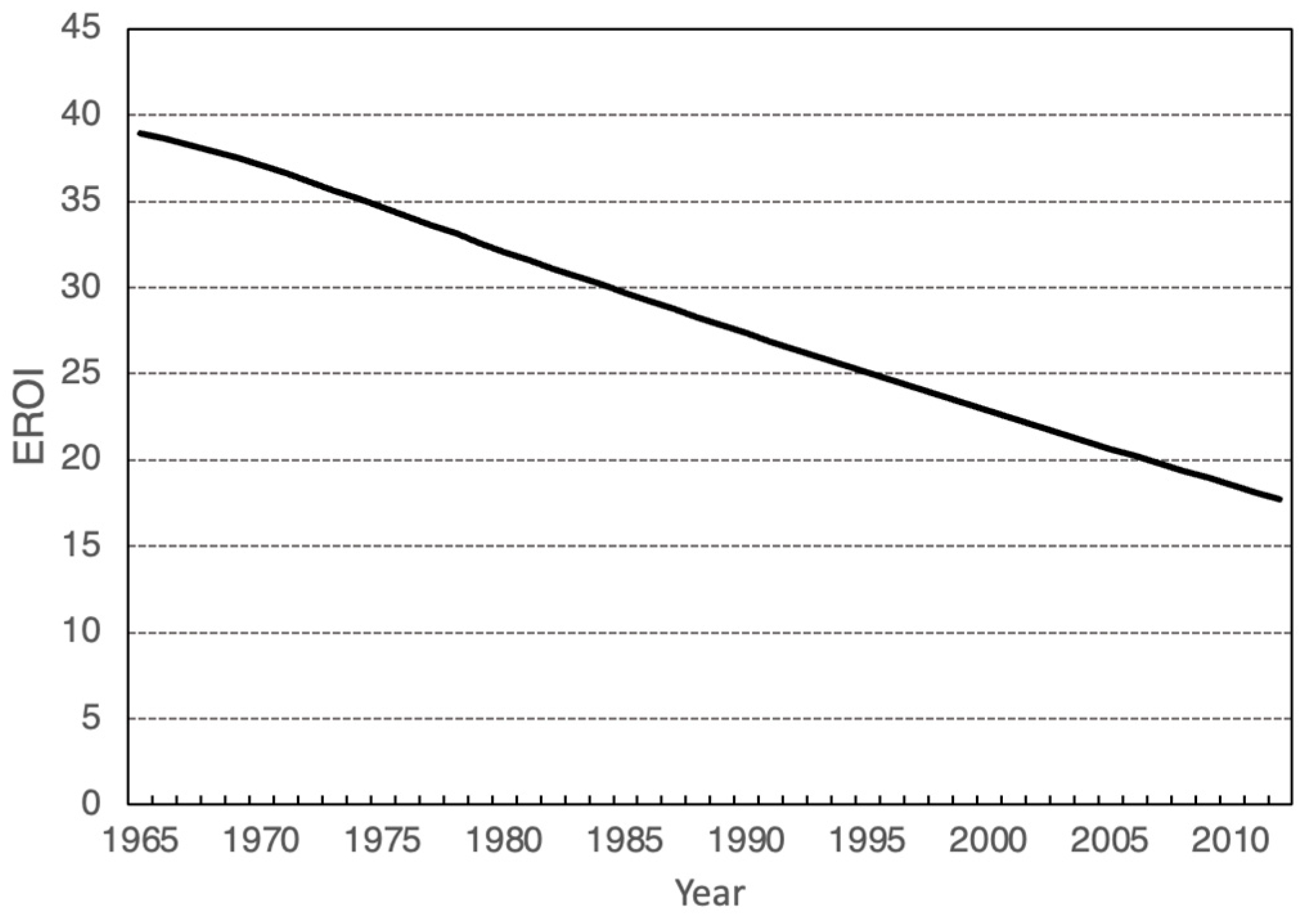
Historically, fossil fuels—particularly coal and conventional oil—exhibited high primary-stage EROI. Empirical analyses indicate that the primary-stage EROI of conventional oil has declined over time [
7,
8,
9]. A comprehensive reinterpretation of peak oil dynamics from a net-energy perspective was provided by [
1], who emphasized the potential divergence between gross production peaks and net energy availability under declining EROI. Engineering-based assessments of global oilfields have quantified long-term trends in extraction-stage EROI [
10,
11], while macroeconomic coupling approaches have explored interactions between energy return and economic output [
12,
13]. More recent analyses have examined the relationship between EROI and profitability in unconventional production systems [
14].
The observed decline in primary-stage EROI is broadly consistent with structural changes in global oil production, including the progressive shift from high-productivity conventional reservoirs toward more technically complex and energy-intensive sources such as deepwater, tight oil, and oil sands [
10,
15,
16]. These structural shifts provide a physical context for observed long-term EROI trends. Recent studies have also explored technological approaches to improving monitoring and operational efficiency in petroleum processing systems [
17]. Although global proven reserves have not uniformly decreased, changes in resource composition and productivity imply increasing capital and energy requirements per unit of output.
Energy inputs can be disaggregated following [
18] into direct energy used in extraction and processing, indirect energy embodied in capital goods and materials, and auxiliary energy requirements. Explicit specification of these components is essential for ensuring comparability across studies. Prior to the recent clarification of stage-based taxonomy, several studies adopted broader boundary definitions often described as “extended EROI,” incorporating infrastructure energy, indirect inputs, and multi-product system interactions [
19,
20,
21].
The extended EROI (EROIext) adopted in this study builds on this earlier extended-boundary tradition while aligning its definitions explicitly with the contemporary taxonomy proposed by [
5]. Conceptually, EROIext corresponds to the point-of-use stage, as it accounts for energy inputs required to deliver refined energy carriers to society. It differs from narrower point-of-use definitions by explicitly incorporating infrastructure-related indirect energy investments, including capital embodied in extraction, refining, transport, and distribution systems. It does not extend to the useful-stage boundary, as end-use conversion efficiencies are treated separately. The numerator corresponds to the gross energy content of refined petroleum products supplied to society within the defined boundary.
A substantial body of literature has incorporated EROI into long-term projections and macroeconomic frameworks. Dynamic biophysical and stock-flow consistent models have examined interactions between declining net energy and economic structure [
22,
23,
24,
25,
26]. Integrated global modeling efforts have explored transition feasibility under biophysical constraints [
27,
28,
29], while system-wide analyses have evaluated surplus energy availability and infrastructure requirements in low-carbon transitions [
30,
31,
32]. These studies demonstrate that net energy constraints can influence macroeconomic trajectories under certain structural conditions. At the same time, EROI represents only one biophysical indicator among many determinants of societal outcomes; institutional arrangements, technological innovation, distributional dynamics, and policy frameworks also play critical roles. Similar EROI levels may therefore correspond to different economic and social trajectories. Numerical modeling has become an essential tool across a wide range of energy-related engineering problems, including reservoir stimulation, drilling optimization, and enhanced recovery processes. Recent studies have applied numerical and data-driven approaches to improve energy extraction efficiency, fracture behavior prediction, and resource utilization [
33,
34,
35]. These approaches highlight the importance of integrating physical processes with computational modeling frameworks in understanding energy system performance. However, most existing studies focus on engineering-scale processes while fewer studies address system-level energetic efficiency and its thermodynamic implications.
Despite these advances, certain analytical combinations remain underexplored. In particular, while dynamic EROI modeling and macroeconomic frameworks have been developed, fewer studies explicitly couple extended-boundary EROI definitions with entropy-based thermodynamic interpretation within a unified Lotka–Volterra-type resource–capital dynamic structure applied specifically to the global petroleum system. The present study focuses on this integration rather than on asserting that EROI alone determines societal stability.
From a thermodynamic perspective, energy systems operate by importing concentrated (low-entropy) energy carriers and exporting degraded (high-entropy) outputs [
36,
37]. Incorporating entropy analysis provides an additional physical lens through which long-term net energy trajectories can be interpreted, without implying deterministic relationships between EROI and social outcomes.
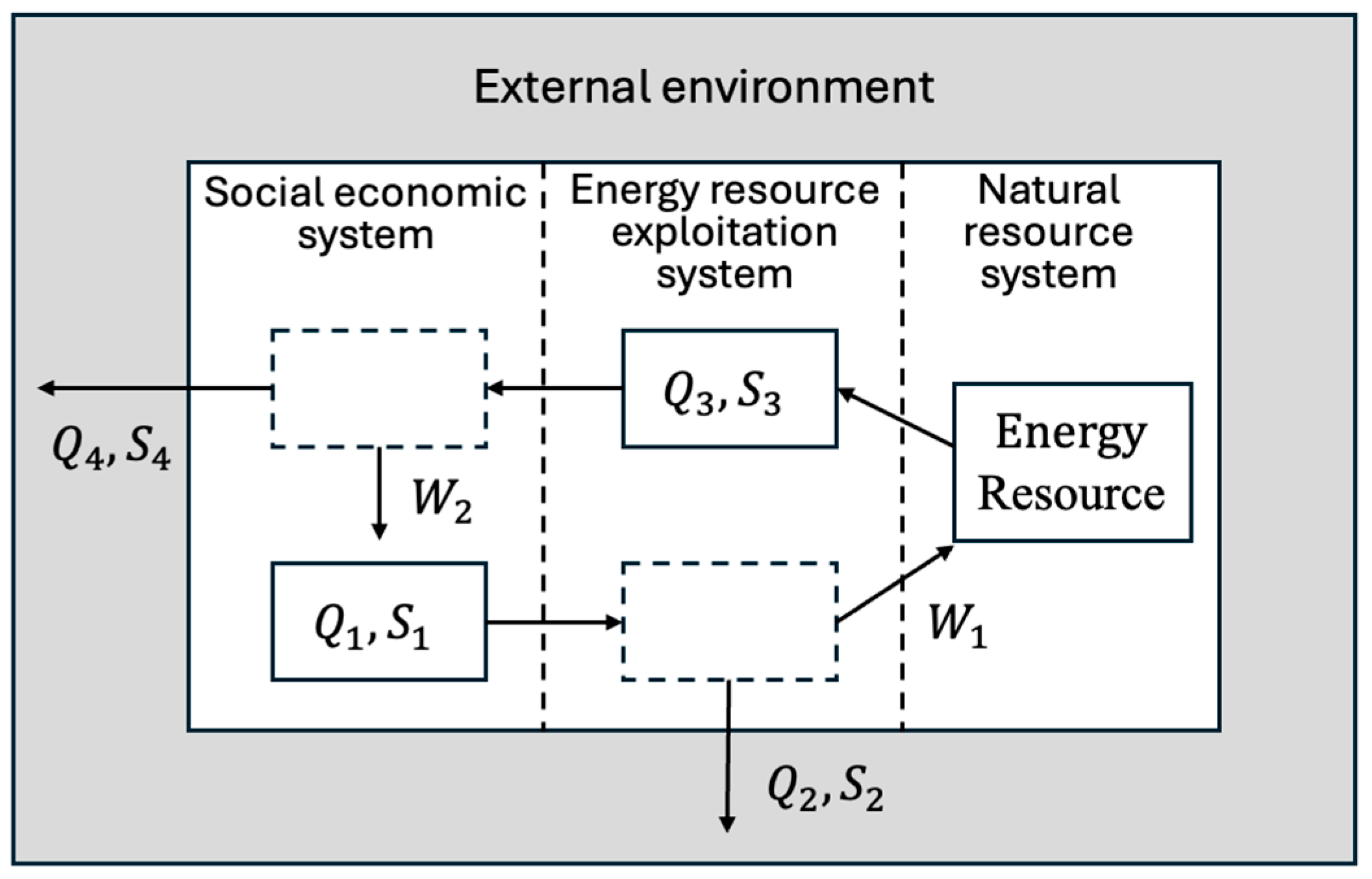
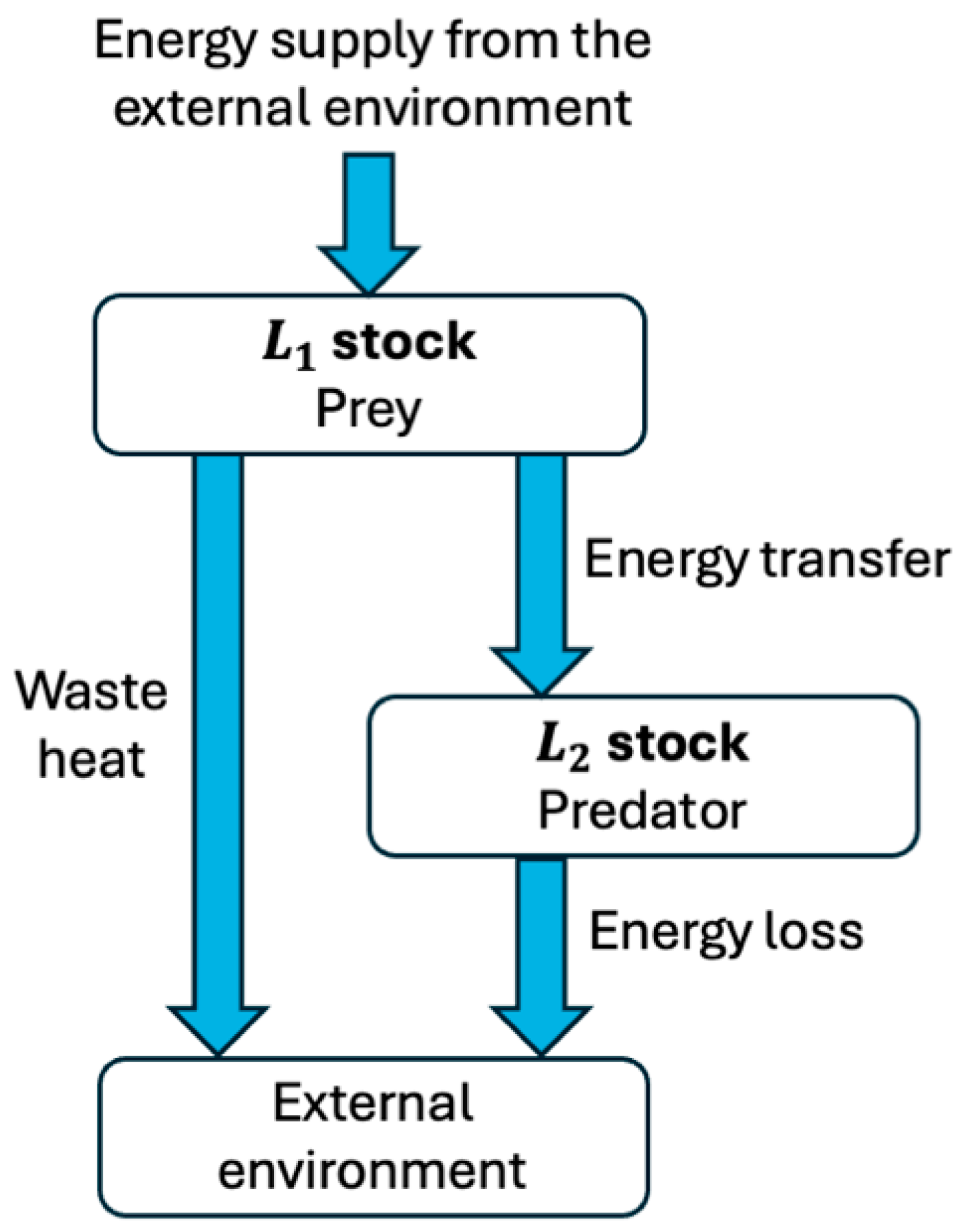
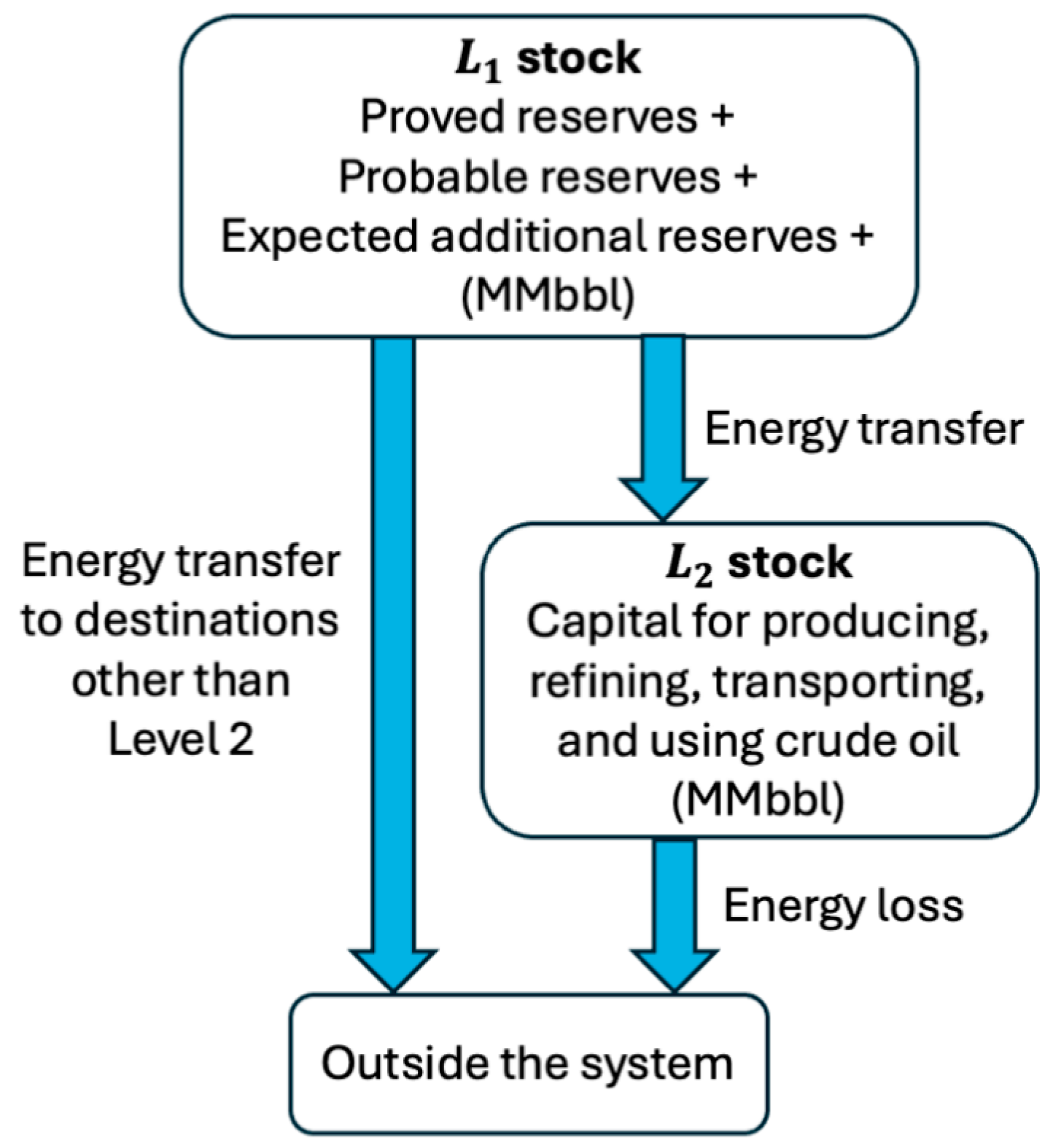
This study applies a Single-Cycle Lotka–Volterra (SCLV) model to the global petroleum system. Petroleum resources and the capital required for extraction, refining, transport, and utilization are represented as coupled energy stocks. EROIext is explicitly defined at the point-of-use stage with an extended boundary including both direct and indirect infrastructure-related energy inputs. The model is calibrated using historical data from 1965 to 2012 and projected through 2100. By integrating entropy analysis into this dynamic framework, we examine the co-evolution of extended EROI, capital accumulation, and resource productivity within a physically coupled system.
This integrated framework contributes in three principal ways. First, it models oil production, capital investment, EROIext, and entropy generation as interdependent trajectories within an explicit dynamic structure. Second, it identifies dynamic thresholds, including the projected year when EROIext falls below unity within the defined boundary. Third, it provides a thermodynamically informed interpretation of petroleum’s long-term net energy role under changing resource conditions.
Ultimately, the results underscore the importance of evaluating energy systems not solely by production volume or monetary cost, but by their capacity to sustain net energy flows over time within explicit physical and thermodynamic boundaries. In doing so, this study complements existing macro-level EROI modeling efforts by focusing on the dynamic integration of extended EROI accounting and entropy-based interpretation within a unified petroleum resource–capital framework.
3. Results
The results are presented in three interrelated parts. First, the baseline data on resource and capital stocks are introduced to provide the empirical foundation of the analysis. Second, the outcomes of fitting the SCLV model to the observed data are reported, allowing for parameter estimation and model validation. Finally, the time-series evolution of EROIext and the entropy ratio, derived from the calibrated model, is analyzed to highlight their dynamic interplay over the study period.
3.1. Baseline Data for Resource and Capital Stocks
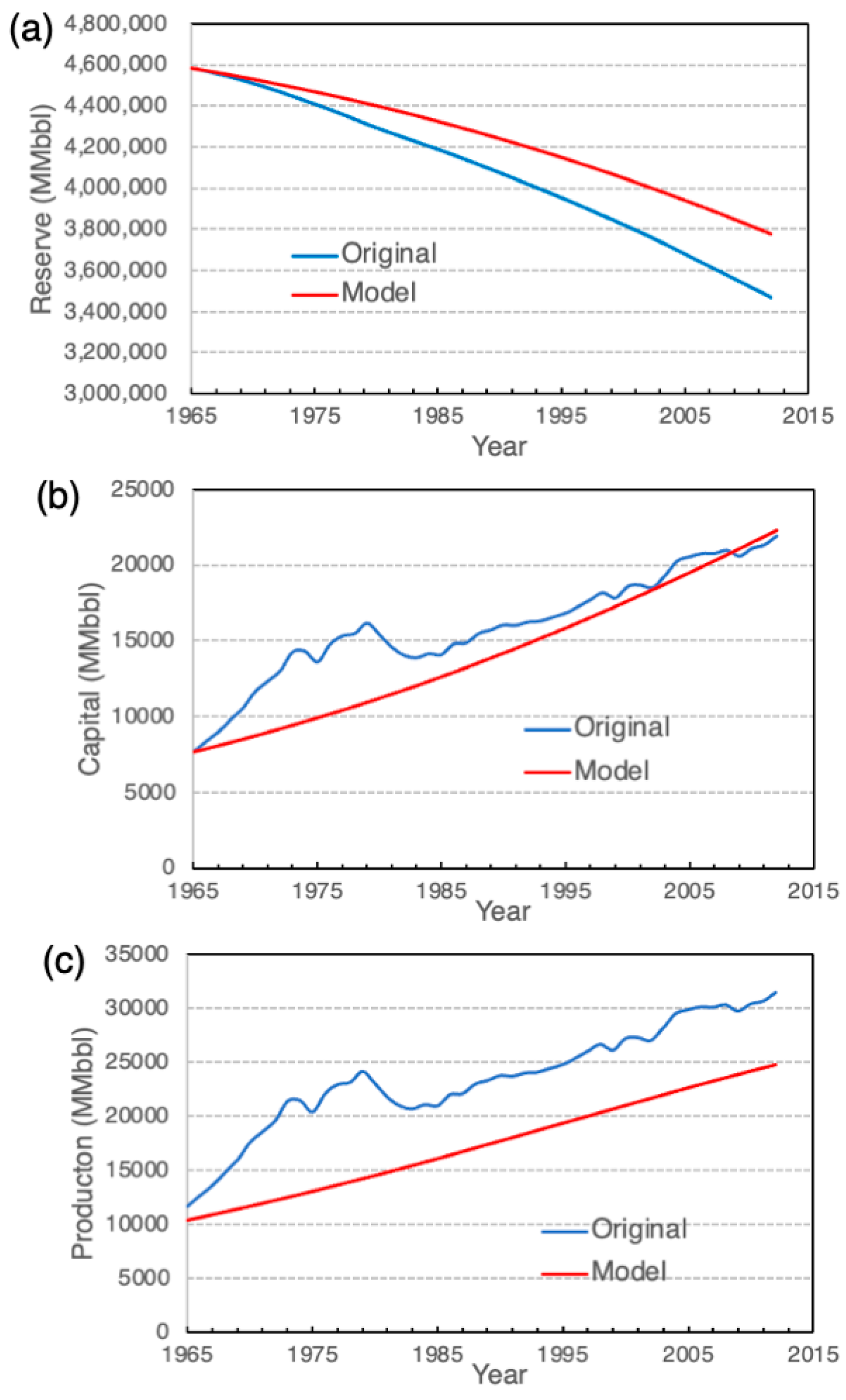
The “Original” blue solid line in
Figure 5a shows the baseline data for resource stock (
), while the “Original” blue solid line in
Figure 5b depicts the capital stock (
), and that in
Figure 5c represents production (
). At the start of the observation period in 1965, the total recoverable oil reserves amounted to 4,586,591 million barrels. As capital for petroleum utilization increased, annual production grew, leading to a steady decline in reserves. By 2012, the total recoverable reserves had decreased to 3,469,680 million barrels. The RMSE values are 1.79 × 10
5 for
, 2.38 × 10
3 for
, and 6.39 × 10
3 for production. These correspond to relative errors of approximately 4–5% for
, 10–15% for
, and about 20% for production, indicating moderate agreement between the model and historical data. The corresponding R
2 values are 0.71 for
, 0.53 for
, and –0.73 for production. The negative R
2 for production reflects the model’s simplified representation of short-term production variability rather than a failure to capture the long-term structural trend. The model is designed to capture long-term structural dynamics rather than precise historical matching, and therefore qualitative agreement is considered the primary evaluation criterion.
3.2. Fitting Results of the SCLV Model
Using the baseline data, the parameters of the SCLV model were fitted, with the resulting values and total squared error summarized in
Table 1. The modeled time evolution of the energy quantities for the resource stock, capital stock, and production is represented by the “Model” red solid lines in
Figure 5a,
Figure 5b and
Figure 5c, respectively.
To assess the model’s accuracy, the modeled values of L1 (resource stock), L2 (capital stock), and production (dL1/dt) were compared with their corresponding baseline data. For resource stock and production, the discrepancy between the simulated and observed values tends to increase over time. In contrast, for capital stock, the difference is pronounced between 1965 and 1980, but the modeled values subsequently align closely with the baseline data.
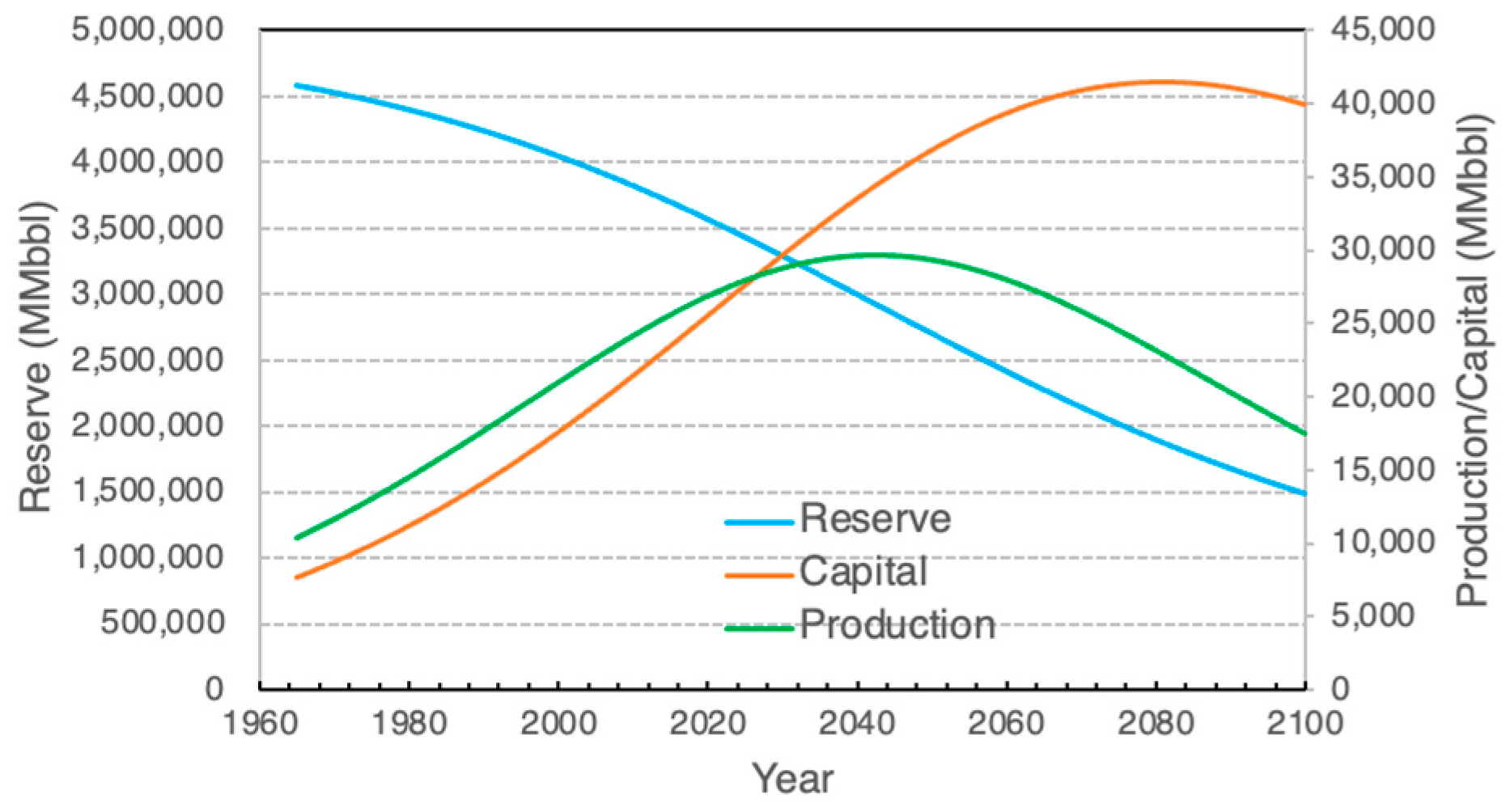
The model was then employed to project the future dynamics of resource stock, capital stock, and production through 2100 (
Figure 6). Resource stock declines at an accelerating rate until production reaches its peak around 2042, after which, depletion slows. The capital stock increases steadily until reaching a maximum in 2081, followed by gradual contraction. Production exhibits a bell-shaped trajectory, peaking around 2042 within the model simulation. This peak year represents a structural outcome of the calibrated SCLV framework rather than a predictive forecast of future production.
Structurally, depletion is governed by the nonlinear interaction term . Production is defined as indicating that both remaining reserves and accumulated capital positively influence output. The bell-shaped production curve arises from the dynamic coupling between resource depletion and capital accumulation.
EROIext is proportional to the remaining resource stock:
Hence, its decline mirrors the structural evolution of L1.
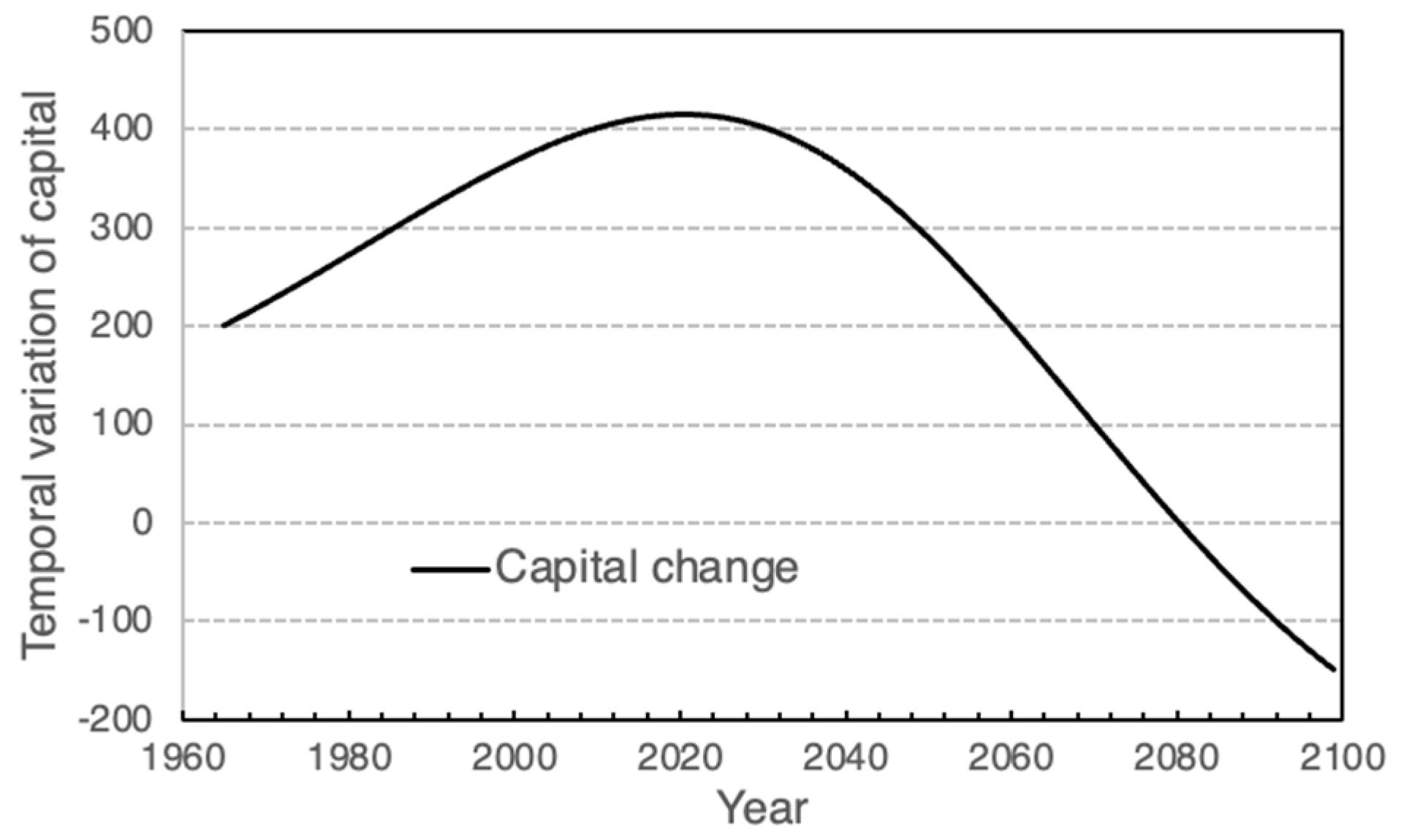
The capital stock evolves according to:
representing the balance between reinvestment from production and capital dissipation. The projected temporal evolution of L
2 is shown in
Figure 7, which exhibits a bell-shaped pattern that peaks in 2081.
Setting this equal to zero yields the condition:
which corresponds to
. In the calibrated model, this threshold occurs around 2081. This value should be interpreted as a model-derived energetic threshold under the assumed parameterization rather than a deterministic prediction of future oil-system dynamics. The peak coincides with the capital stock peak.
Similarly, the production peak condition in the SCLV structure can be expressed as
and the minimum deviation from this condition occurs in 2042, corresponding to the projected oil production peak.
3.3. Sensitivity Analysis
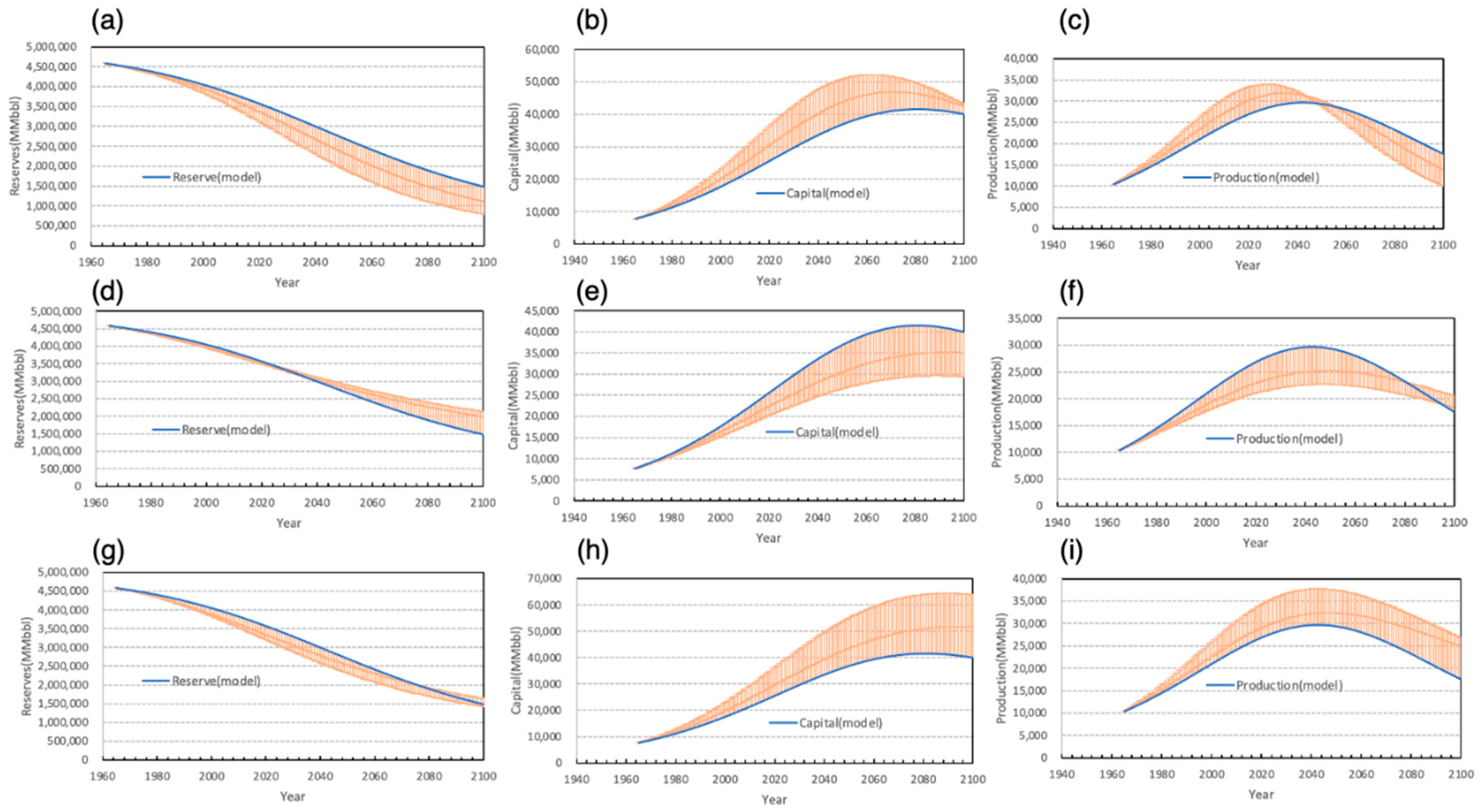
A sensitivity analysis was conducted for the model developed in this study. The parameters
,
, and
were individually varied by ±10%, and the resulting
stock,
stock, and production were calculated and plotted as error ranges (
Figure 8). The percentage used for estimating the
stock affects only the calibration stage and does not directly alter the structural parameters of the SCLV model. Therefore, although this assumption introduces some uncertainty into the L2 calibration, its influence on the overall system dynamics is limited.
According to
Figure 8a,d,g, the
stock shows low sensitivity to
, but its sensitivity to
and
increases over time. When the error rates in 2100 were calculated for variations in
,
, and
, the error rate for
was 10%, whereas those for
and
were 47% and 43%, respectively. In terms of qualitative behavior, for variations in any of the coefficients, the rate of decline increased over time, but around 2040, the rate of decline began to decrease.
According to
Figure 8b,e,h, the
stock exhibits high sensitivity to
from 2000 to 2080, after which, the sensitivity decreases toward 2100. Sensitivity to
and
, on the other hand, increases year by year. When the error rates in 2100 were calculated, variations in
,
, and
yielded error rates of 7%, 27%, and 60%, respectively. Qualitatively, in all cases, the
stock increases over time, reaches a peak, and then decreases. Changes in the timing of the peak position due to parameter variations are summarized in
Table 2. A ±10% change in
,
, or
resulted in a shift of approximately 10–20 years in the peak position.
According to
Figure 8c,f,i, production shows gradually increasing sensitivity to
from 1965 onward, but sensitivity decreases by 2050, after which, it increases again. Sensitivity to
increases annually, peaking around 2040 and then decreasing. Sensitivity to
also increases annually but remains almost constant from around 2040 onward. When the error rates in 2100 were calculated, variations in
,
, and
yielded error rates of 43%, 17%, and 57%, respectively. Qualitatively, similar to the capital stock, production increases over time, reaches a peak, and then decreases for variations in any of the parameters. Changes in the timing of the production peak due to parameter variations are summarized in
Table 3. Compared with
and
,
exhibits higher sensitivity with respect to the peak position.
While the present sensitivity analysis focuses on ±10% perturbations of key parameters to evaluate local stability of the model behavior, wider parameter ranges (e.g., ±20–30%) could further influence quantitative outcomes such as the timing of production and capital peaks, as well as the EROIext = 1 threshold. The current results therefore illustrate local sensitivity around the calibrated parameter set rather than a full exploration of parameter uncertainty. A more comprehensive sensitivity analysis over broader parameter ranges is an important direction for future work.
3.4. Time Evolution of EROIext and Entropy Ratio
The entropy ratio
was computed from the fitted parameters using the following relationship:
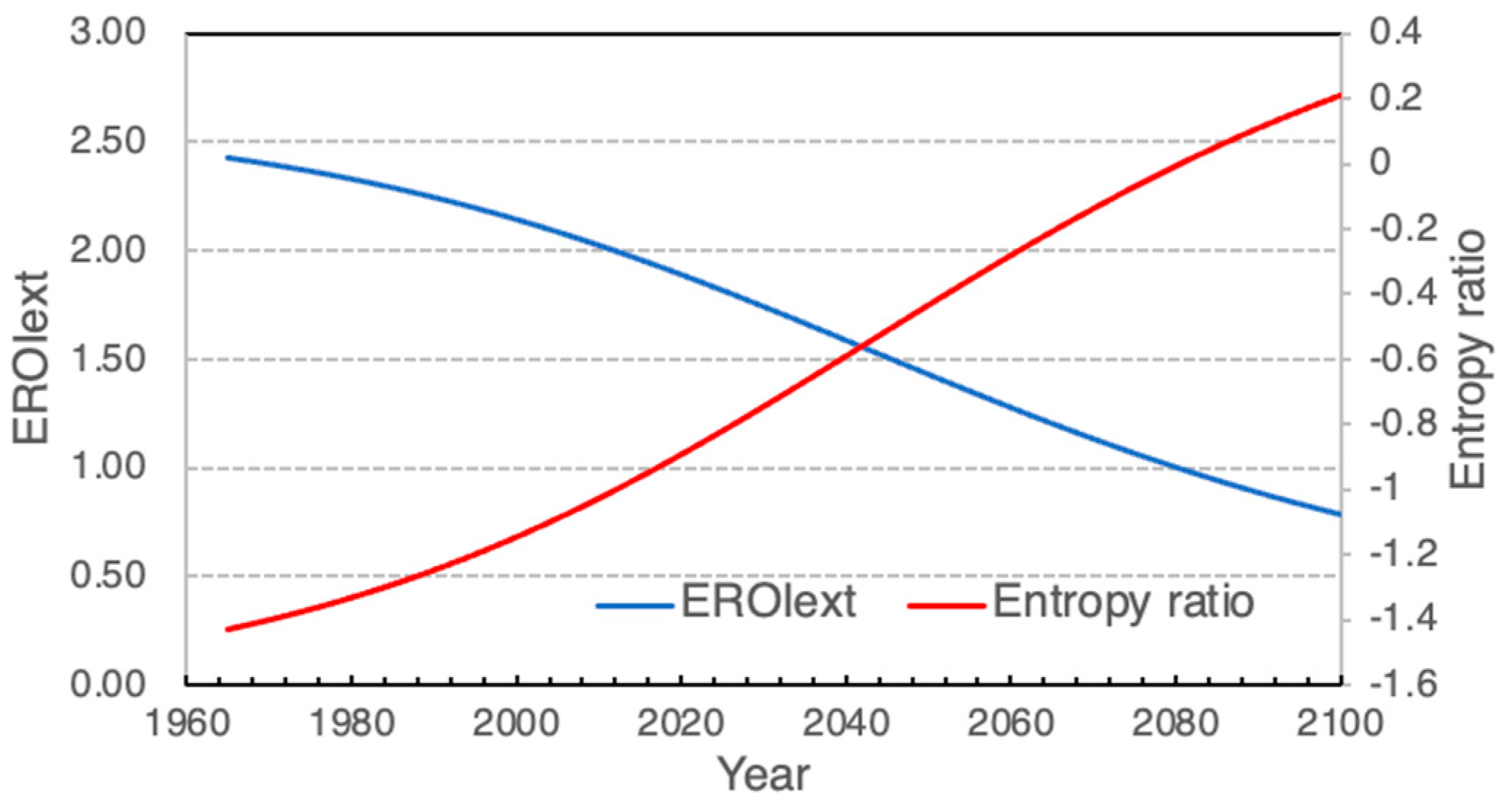
By substituting the fitted coefficients, the trajectories of EROIext (blue solid line in
Figure 9) and the entropy ratio (ΔS/ΔS
1) (red solid line in
Figure 9) from 1965 to 2100 were calculated. In 1965, the EROIext was approximately 2.5, but it had decreased to about 2.0 by 2010. The decline continues thereafter, falling below 1.0 in 2081 and reaching around 0.79 by 2100. The threshold EROIext = 1 has structural significance within the SCLV framework. Setting
in the capital stock equation yields
which corresponds exactly to the condition EROIext = 1. Thus, the capital stock reaches its maximum at the moment when net energy from oil becomes unity. In the calibrated model, this occurs in 2081, coinciding with the peak of the capital stock shown in
Figure 7.
Regarding the entropy ratio, the results indicate a continuous increase from 1965 to 2100. The entropy ratio represents the expected entropy reduction effect when energy is introduced into a system, where a smaller value corresponds to a larger reduction effect. Therefore, it can be interpreted that the entropy reduction effect of the oil production system steadily diminishes over the period from 1965 to 2100. By 2081, the value becomes greater than zero, indicating that investing energy into the oil production system is expected to increase entropy rather than reduce it.
4. Discussion
This section interprets the structural dynamics of the resource stock (L1), capital stock (L2), production, and within the SCLV framework. The emphasis is placed on endogenous peak formation, energetic thresholds, and structural interpretation rather than predictive forecasting.
4.1. Structural Interpretation of Peak Dynamics
The modeled production peak occurs before half of the ultimate recoverable resource has been depleted, which differs from the classical symmetric logistic formulation proposed by [
52]. In the SCLV framework, peak timing is not determined solely by geological depletion but by the nonlinear interaction term
, which couples remaining resources with capital intensity. As capital accumulates, depletion accelerates; as the resource base declines, the interaction weakens, generating an endogenous turning point.
This structural behavior contrasts with reserve-fraction-based peak interpretations and indicates that energetic reinvestment dynamics can modify peak timing independently of simple depletion ratios. While additional dissipative mechanisms—such as increasing system complexity—could in principle accelerate capital decline, such effects are not explicitly modeled and remain potential extensions rather than demonstrated outcomes. This interpretation is consistent with previous applications of SCLV-type models to resource systems [
38] while extending the framework to incorporate extended EROI dynamics.
4.2. Model Fit and Projection Scope
The SCLV model reproduces the broad qualitative co-evolution between resource depletion, capital accumulation, and production, but it does not perfectly replicate observed historical trajectories. As shown in
Figure 5, divergences between modeled and observed trends become more pronounced in the later portion of the calibration period. These discrepancies reflect structural simplifications of the model, including the assumption of a fixed resource base and the exclusion of technological change and unconventional resource expansion. These factors have played an increasingly important role in shaping global oil production in recent decades. While this divergence affects short- to medium-term accuracy, the model is designed to capture long-term structural dynamics rather than detailed historical matching. In addition, the capital stock formulation follows an energy-consistent approach. Production and refining capital are derived from EROIst and annual production (Equation (16)), while transportation and utilization capital are parameterized as a fixed share (64%) of produced energy. This simplification ensures consistency within the energy accounting framework, although it does not capture regional variability.
The framework assumes a fixed ultimate recoverable resource base and excludes endogenous reserve growth arising from technological innovation, new discoveries, unconventional resource development, and price-induced reclassification. The model assumes that if current structural relationships are maintained, the production peak may be reached around 2041. It also omits market-mediated feedback, capital reallocation, substitution dynamics, and policy interventions that have significantly shaped global oil production patterns in recent decades.
Accordingly, projections extending to 2100 should not be interpreted as forecasts. Instead, the reported peak year and energetic thresholds represent structural trajectories implied by the assumed parameters of the SCLV model. The long-time horizon is employed to illustrate asymptotic behavior and energetic threshold conditions under simplified structural assumptions. The resulting trajectories describe the implications of the estimated parameters within a stylized resource–capital system rather than deterministic predictions of future production levels.
4.3. Structural Lag Between Production and Capital Peaks
As illustrated in
Figure 6, production reaches its maximum in 2042, whereas capital stock peaks in 2081, producing an approximately four-decade lag. The temporal lag between production and capital peaks is a structural property of the model and arises from the reinvestment condition governing capital accumulation (Equations (22) and (23)). It is therefore not an emergent empirical phenomenon but a direct consequence of the model formulation. Capital continues to expand as long as reinvested energy exceeds dissipation and reaches its maximum when
At this threshold, energetic reinvestment becomes insufficient to sustain further expansion of capital stock.
This structural outcome differs from classical logistic peak models in which peak timing is directly tied to depletion fractions. In the SCLV framework, asynchronous turning points arise naturally from energetic feedbacks between resource stocks and capital stocks. Although the model abstracts from demand, price, and substitution mechanisms, it demonstrates that energetic constraints alone can generate temporally separated peaks in coupled resource–capital systems.
4.4. Relation to Previous Net Energy Modeling Approaches
Net energy research has advanced substantially through life-cycle assessment (LCA), environmentally extended input–output (EEIO) analysis, and hybrid methodologies. These approaches provide increasingly refined empirical estimates of EROI across multiple system boundaries and have, in some cases, been incorporated into macroeconomic or transition modeling frameworks.
Previous empirical EROI assessments using LCA and EEIO approaches [
53,
54] have focused on boundary specification and measurement accuracy. The present framework instead emphasizes structural feedback mechanisms within a reduced dynamical system.
The present study does not aim to replace these methods. Instead, it introduces a simplified dynamical representation in which energetic reinvestment conditions produce endogenous peak and threshold behavior. A distinctive feature of this framework is that the coincidence between the capital peak and the condition follows directly from the governing equations rather than from imposed assumptions about reserve exhaustion. The model therefore offers a structural complement to empirical estimation studies by highlighting internal energetic feedback mechanisms within a reduced-form dynamical system.
4.5. Entropy Representation Within the Model Framework
The entropy ratio introduced in this study follows the same structural trajectory as EROIext, as shown in
Figure 9. Within the SCLV formulation, it provides an alternative thermodynamic representation of declining energetic efficiency. The entropy index used in this study should be interpreted as a thermodynamic proxy rather than a directly measurable physical entropy. It reflects the relative increase in energetic dissipation associated with declining EROI in the modeled oil production system.
However, the entropy variable is defined strictly within the boundaries of the two-stock production subsystem and does not quantify societal entropy, institutional stability, or broader social order dynamics. It should therefore be interpreted as a thermodynamic proxy describing internal dissipation processes rather than as a comprehensive indicator of social outcomes. The alignment between the entropy threshold and the capital peak reinforces the internal consistency of the formulation but does not extend beyond the modeled subsystem.
4.6. Limitations and Future Extensions
The structural simplifications of the SCLV framework impose clear limitations on interpretation. The model assumes a fixed ultimate recoverable resource base and does not incorporate endogenous reserve growth, technological learning, unconventional resource expansion, or market-mediated adjustments. Price feedback, substitution effects, and policy interventions are excluded, and no explicit socioeconomic stock governs energy allocation decisions. The percentage used to estimate the transportation and utilization capital share (64%) is based on a U.S.-focused study and may not fully represent global variations. Although this assumption affects only the calibration stage, further sensitivity analysis (e.g., 50–70%) would be useful to assess its impact more rigorously. Parameter estimation in Equation (19) is performed using a nonlinear least-squares approach implemented in Excel Solver. In addition, the sensitivity analysis is limited to ±10% parameter variations, which primarily capture local stability around the calibrated parameter set. Broader parameter ranges (e.g., ±20–30%) could further influence quantitative outcomes such as peak timing and the EROIext threshold, and represent an important direction for future work. While this approach is sufficient to capture the structural behavior of the system, formal uncertainty quantification (e.g., confidence intervals based on the Hessian matrix) and comparison with alternative optimization algorithms were not conducted and remain subjects for future work. Furthermore, calibration relies on historical data up to 2012, limiting empirical alignment with more recent developments such as shale expansion and accelerated renewable deployment. Consequently, recent structural changes in global oil production, particularly the rapid expansion of shale oil production in the United States, are not explicitly represented in the model. These developments may affect the short- to medium-term dynamics of oil production but do not fundamentally alter the structural mechanisms represented in the SCLV framework.
These constraints restrict the model to structural analysis rather than predictive forecasting. Future extensions could introduce endogenous reserve growth, technological change, renewable energy stocks, and price–capital feedback mechanisms while preserving thermodynamic consistency. Expanding the framework to include an explicit socioeconomic subsystem would allow for a more realistic representation of energy allocation dynamics and facilitate exploration of more complex transition pathways.
5. Conclusions
This study employed a two-stock SCLV (System Coupled Lotka–Volterra) framework to examine the long-term dynamics of oil production from a thermodynamic perspective. By explicitly modeling the nonlinear interaction between resource stock (L1) and capital stock (L2), the analysis demonstrates how depletion, capital accumulation, and extended energy return on investment (EROIext) co-evolve within a structurally coupled system.
The results indicate that the production peak emerges endogenously from the interaction term governing resource extraction rather than from a fixed depletion fraction of ultimate recoverable resources. Furthermore, the capital stock reaches its maximum later than production, and this turning point coincides with the condition EROIext = 1. This threshold represents the moment at which reinvested energy becomes insufficient to sustain further capital expansion within the modeled subsystem. The alignment between the capital peak and the energetic threshold arises directly from the governing equations and constitutes a central structural feature of the model.
The primary contribution of this study lies in embedding EROIext within a dynamic resource–capital interaction framework. Rather than treating EROI as a static performance indicator, the model shows how energetic reinvestment constraints can generate endogenous turning points in resource-dependent systems. In this formulation, peak timing and structural transitions are not imposed exogenously but follow from the internal thermodynamic dynamics of the system.
Several limitations must be acknowledged. The model adopts a simplified two-stock structure and does not incorporate endogenous reserve growth, technological progress, price mechanisms, renewable substitution, or policy intervention. Climate constraints and environmental externalities are also not explicitly represented. Accordingly, the projections presented here should not be interpreted as forecasts but as structural trajectories implied by the assumed resource–capital dynamics under simplified conditions.
Moreover, while EROI provides insight into physical and thermodynamic constraints of energy systems, it is not a comprehensive metric for policy evaluation. The energetic thresholds identified in this study describe internal subsystem dynamics and must be interpreted alongside broader economic, environmental, and social considerations within multi-dimensional assessment frameworks.
Future research could extend the present framework by incorporating renewable energy stocks, technological learning effects, endogenous reserve growth, or explicit socioeconomic decision-making structures. Such extensions would allow for examination of how energetic constraints interact with transition pathways in more complex system configurations.
In summary, this study reframes resource depletion not solely as a function of remaining geological reserves, but as a dynamic process governed by declining reinvestable net energy. Within the SCLV framework, thermodynamic constraints can, within the SCLV formulation, generate endogenous structural turning points in resource-dependent energy systems, independent of externally imposed peak assumptions.