


Abstract
This study investigates the core optimization of a Prismatic Solid Molten-Salt Reactor (PSMSR) to meet key objectives of compactness, high power density, and extended operational life. With graphite irradiation resistance being a paramount concern in high-flux environments, the analysis focuses on the influence of core height-to-diameter ratio, active zone size, and reflector thickness on the graphite displacement per atom (DPA) distribution and burnup performance. The results indicate an optimal active core configuration characterized by a 1:1 height-to-diameter ratio, a 175 cm active zone radius, and a 55 cm reflector. Building on these findings, reactivity-control strategies were refined. An evaluation of burnable-poison addition against fuel-loading optimization revealed that the latter, by adjusting the TRISO (TRi-structural ISOtropic) packing factor and control-rod dimensions, can meet the safety shutdown margin requirements and substantially improve the fuel utilization efficiency, ultimately achieving a burnup depth of 50.3 MWd/kgU and a 10-year operation lifetime without refueling at a 500 MWt power level. This research provides an effective technical solution for the modular deployment of solid-state molten-salt reactors in remote areas and in special application scenarios. This research offers a viable technical pathway for implementing solid-fueled molten-salt reactors in remote and specialized scenarios, enabling their modular deployment.
1. Introduction
The Molten-Salt Reactor (MSR), a pivotal concept within the Generation IV nuclear energy systems [1], offers a range of distinctive advantages that address both the safety and efficiency challenges inherent in conventional nuclear power plants, including (1) operation at atmospheric pressure, which eliminates the need for robust pressure vessel systems and enhances overall safety; (2) high-temperature operation enabled by molten salt that improves thermal efficiency; (3) excellent heat transfer characteristics; (4) passive natural circulation cooling capability; (5) a strong negative temperature feedback coefficient; and (6) the potential for online refueling and reprocessing [2,3]. The pioneering Molten-Salt Reactor Experiment (MSRE) conducted at Oak Ridge National Laboratory in the 1960s [4,5] achieved successful operational testing and demonstrated the technical feasibility of the MSR concept, laying a foundation for subsequent research and development efforts worldwide.
In recent years, MSR technology has attracted renewed global interest as a promising candidate for sustainable and dispatchable energy [2]. Countries including China, the United States, Canada, and France are actively advancing experimental and demonstrable MSR projects, indicating the growing momentum towards commercial deployment [6]. Among MSR variants, the Solid-fueled Molten-Salt Reactors (S-MSRs)—which typically employ TRISO (TRi-structural ISOtropic)-coated fuel particles while utilizing molten salt solely as a coolant for heat exchange—have emerged as a particularly attractive concept [7,8]. The molten salt possesses inherent safety features and high-temperature capability under atmospheric pressure operating conditions. The TRISO particles have excellent high-temperature resistance and radiation resistance; their central fuel kernel is wrapped in Buffer, Ipyc, SiC, and Opyc coatings, and their overall size is approximately in the hundreds of μm range. The multilayer coating structure can effectively prevent the release and diffusion of fission products, maintaining the sealing and structural integrity of the particles. Thus, it is hailed as the “most robust nuclear fuel” and can greatly enhance the fuel safety characteristics of the reactor core [9]. This isolation of the radioactive source also significantly reduces the primary loop radioactivity level, alleviates the neutron-induced activation of core materials, and prevents the secondary loop from being contaminated in case of a leakage accident. Additionally, solid fuel eliminates the need for complex online chemical processing [10], thereby simplifying the fuel cycle, reducing operational complexity and maintenance demands. These attributes collectively make S-MSRs well-suited for use in decentralized power applications in challenging or remote, inaccessible environments [11].
The development of S-MSRs has seen several conceptual designs proposed globally, such as the Advanced High-Temperature Reactor (AHTR) [12], the Pebble-Bed Fluoride-salt-cooled High-temperature Reactor (PB-FHR) [13], and a more recent design from Kairos Power and Core Power [14]. In China, the “Thorium-based Molten-salt Reactor Nuclear Energy System (TMSR)” strategic program was launched by the Shanghai Institute of Applied Physics (SINAP) in 2011. The program defined a three-step development roadmap—“Experimental Reactor, Research Reactor, Demonstration Reactor”—in which solid-fueled MSRs play an indispensable role [15]. To address the corrosion issues of high-temperature molten salts, Chinese scientists successfully developed a new type of nickel-based alloy—GH3535, GH3539 [16,17]—which exhibits outstanding high-temperature tolerance and corrosion and oxidation resistance, and can be compatible with molten salts. Despite these advances, a persistent challenge in S-MSR design lies in balancing compactness, high power density, and long operational lifetime—particularly under the constraints of graphite irradiation damage in high-neutron-flux environments [18]. Graphite, a crucial moderator and structural material in prismatic S-MSRs, undergoes displacement damage (DPA) under neutron irradiation, leading to dimensional changes, cracking, and performance degradation that ultimately limit reactor lifetime.
To date, most existing S-MSR studies have focused on large-scale, grid-connected systems requiring periodic refueling (e.g., AHTR, PB-FHR) or specific fuel and coolant optimizations in isolation. A systematic design approach that concurrently optimizes core geometry, reflector configuration, and reactivity control to extend graphite lifetime while achieving deep burnup in a compact, long-life reactor remains unexplored. To address these gaps, this paper presents a Prismatic Solid Molten-Salt Reactor (PSMSR) designed specifically for 500 MWt power output and a 10-year operational lifetime without refueling. The PSMSR is expected to be a compact, portable device with plug-and-play capability, suitable for power supply in remote and off-grid applications. Building upon these constraints, the primary objective of this work is to achieve integrated core-geometry optimization. This optimization must comprehensively balance multiple key performance indicators, such as compact core dimension, high-neutron-flux irradiation, high power output, long operational lifetime, and graphite irradiation lifetime, in order to obtain the optimal solution. In addition, for the characteristics of “no refueling” and “high residual reactivity”, a safe and reliable reactivity control scheme must be developed to ensure the safe, stable, and controllable operation of PSMSR.
2. Core Model and Methods
This paper introduces the Prismatic Solid Molten-Salt Reactor (PSMSR), a next-generation nuclear system designed to integrate high power density, a long lifetime, and robust safety features. PSMSR, as a highly flexible and multi-purpose reactor concept, can cater to diverse decentralized energy demands, providing electricity for remote areas such as villages, deserts, mining operations, scientific research bases, and offshore platforms [19,20]. Its innovative core features a compact architecture that results in a system with small volume and mass. This design philosophy enables modular fabrication, easy transport over long distances, and swift setup in challenging environments. Moreover, the reactor is conceived as a “plug-and-play” unit, enabling rapid deployment and eliminating the need for refueling throughout its entire lifespan. This eliminates complex fuel logistics in remote areas, substantially cuts down on maintenance overhead, and inherently reduces the risk of radiation exposure to personnel, ensuring both operational simplicity and enhanced safety.
2.1. Model Introduction
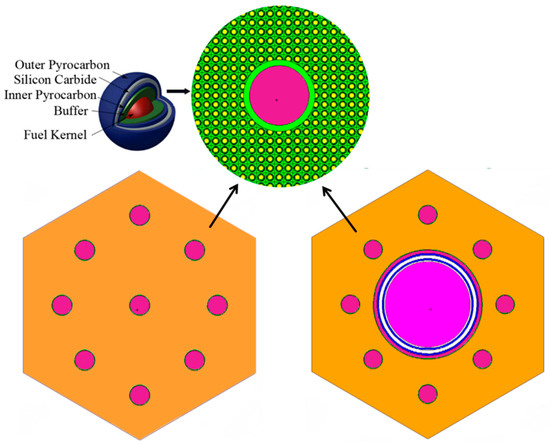
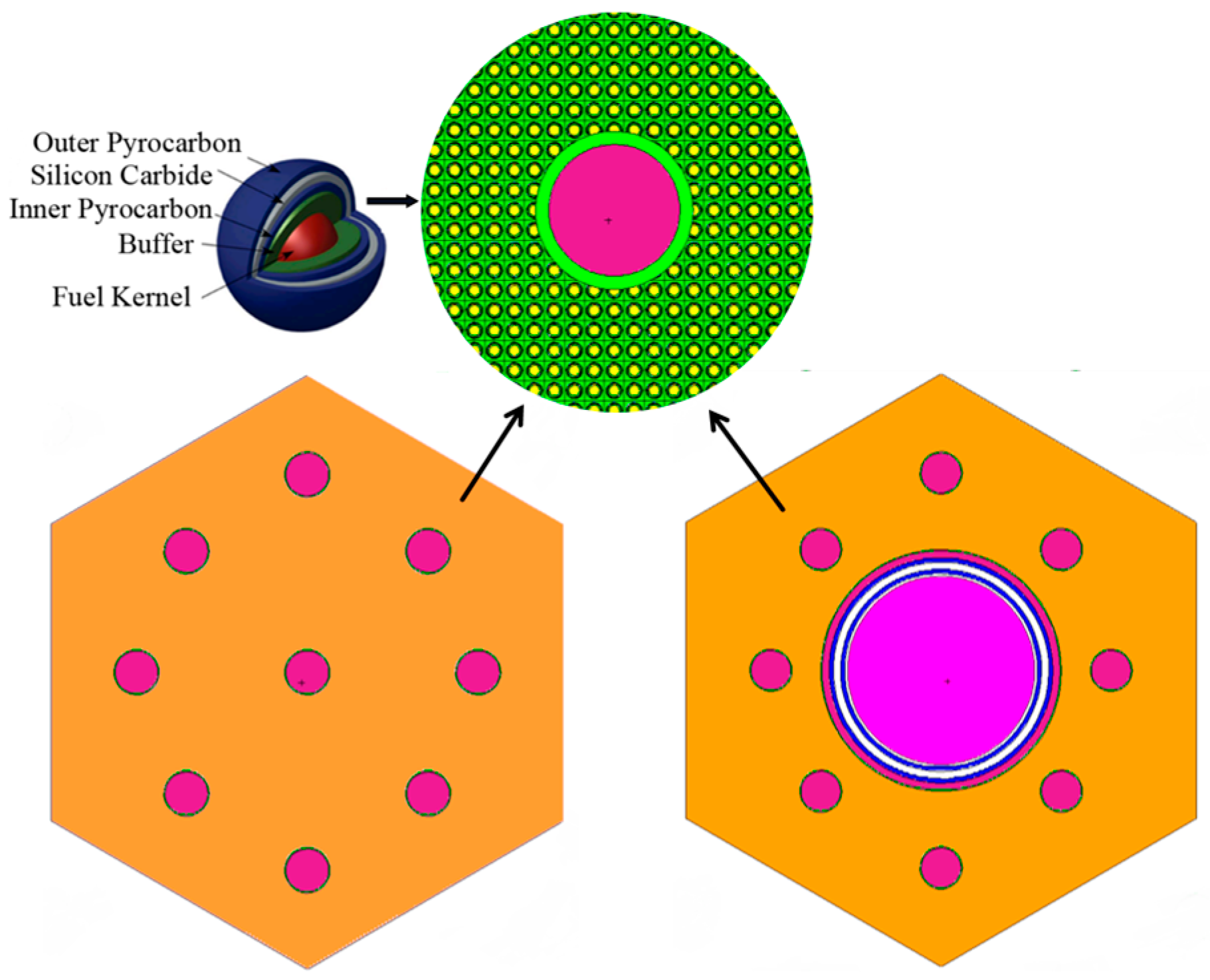
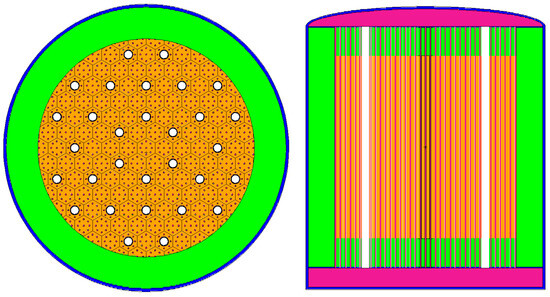
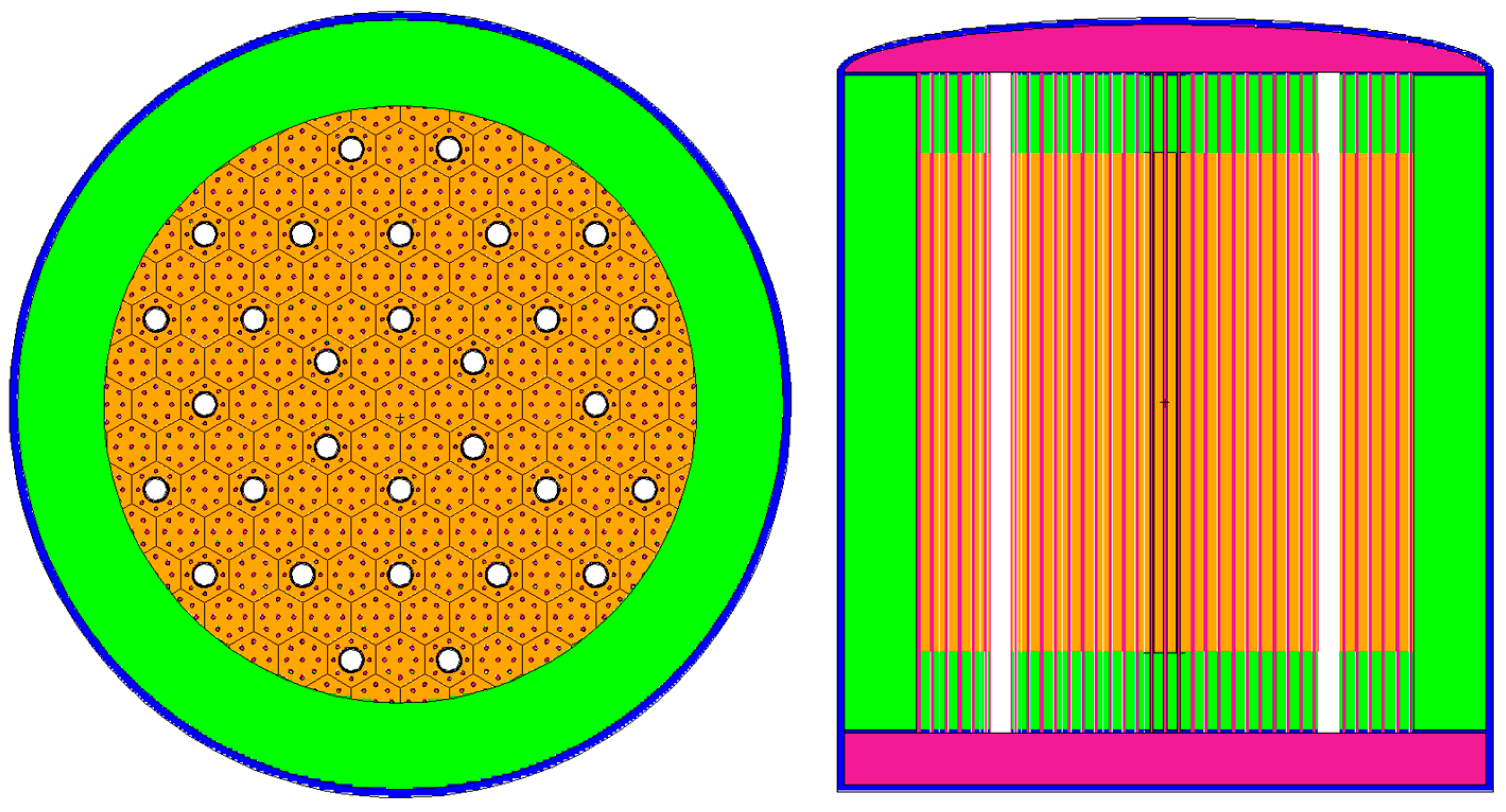
The PSMSR is designed for 500 MWt power output with a 10-year full-power operational lifetime. It employs hexagonal prismatic fuel assemblies that offer high fuel-loading capacity and excellent heat-transfer performance, enabling a compact core design. TRISO particles are adopted as fuel, which are uniformly dispersed and compacted within the graphite matrix to form solid, hexagonal fuel assemblies. These assemblies are arranged in a fixed and regular array within the core, and their positions remain unchanged during operation, as shown in Figure 1 and Figure 2. The TRISO packing factor does not exceed 40%.
Figure 1.
Structural diagram of the PSMSR fuel assembly.
Figure 2.
Radial and axial sectional views of the PSMSR reactor core.
The fuel assemblies are divided into two types: standard assemblies and control-rod assemblies, with their specific structures shown in Figure 1. Standard assemblies contain internal molten-salt coolant channels; each channel is lined with a 1 mm-thick graphite cladding. The coolant channels occupy roughly 5.6–5.7% of the volume in every assembly, and both the exact number and size of the channels can be adjusted to meet heat-transfer requirements. Control-rod assemblies are provided with a central control-rod channel. The channel wall is successively composed of a graphite cladding (1 mm), a molten-salt annulus (5 mm), and an alloy cladding (3 mm) from the inside to the outside. The salt annulus chiefly cools the structure. The material of control rod is B4C [21] sheathed in an alloy cladding (3 mm) whose outer diameter is smaller than the channel size to accommodate irradiation swelling and distortion of control rod.
Figure 2 illustrates the full-core structure layout. The active region is a close-packed array of fuel assemblies, capped, bottomed, and sided by graphite reflectors. Outside the reflector is a 5 cm-thick alloy vessel barrel that seals the entire core. PSMSR uses UNS-N10003 (also named GH3535) alloy as the structural material, as its corrosion resistance and excellent mechanical properties have been fully demonstrated. To suppress tritium generation, the coolant is FNaBe [22], chosen for its superior thermophysical and neutronic characteristics. Detailed geometric data are collected in Table 1.
Table 1.
The preliminary design parameters of the marine reactor core.
2.2. Computational Tools and Methods
The Displacements Per Atom (DPA) [23] refers to atomic displacements caused by irradiation, which leads to lattice dislocations and defects in materials. DPA rate is typically defined as follows:
Here, ϕ(E) represents the neutron flux (n/cm2/s) at energy E, and σd(E) is the atomic displacement cross-section (cm2) at energy E, which describes the probability of a neutron interacting with a target atom and causing the displacement of that atom.
The cumulative DPA is the integral of the DPA rate over time. It represents the degree of irradiation damage to materials and serves as a key indicator for evaluating a material’s radiation resistance. Under prolonged neutron irradiation, graphite exhibits a “size change reversal” phenomenon (initially shrinking and then swelling), and this behavior is closely related to the accumulated DPA in the graphite. Typically, the size reversal can be observed at 15–20 DPA, and the return to original volume occurs at approximately 30 DPA [24]. In this paper, to ensure the conservatism of the results, a maximum accumulated DPA safety limit of 20 for the core graphite is adopted. In fact, the irradiation lifetime of graphite is also affected by factors such as temperature and thermal stress. However, because this study focuses on neutronics and burnup, given the limitations of the simulation model, the influence of thermodynamic factors is not considered. Guided by the criteria of graphite irradiation damage and fuel burnup depth, this paper optimizes the aspect ratio, dimensions, and reflector thickness in the active core of PSMSR. Ultimately, safety characteristics analysis, such as reactivity control, was conducted for the core design scheme with the optimal structural dimensions.
All neutronics parameters, including the effective multiplication factor (keff) and DPA, were evaluated using the Monte Carlo N-Particle Transport (MCNP5) [25] code developed by Los Alamos National Laboratory. MCNP5 enables high-fidelity simulation of neutron, photon, and electron transport in complex three-dimensional geometries, making it particularly suitable for modeling nuclear systems with intricate material compositions and irregular geometries. For DPA calculation, MCNP will calculate the DPA value of the target material based on the neutron energy spectrum (using the F4 card) and the displacement cross-section library σd(E) (using the Fm card) of the specific material. These data are extracted and processed from the ENDF/B nuclear database. The burnup calculation, which accounts for the evolution of isotopic inventories and the associated changes in material properties over time, was performed using the MOBAT [26] burnup program that coupled MCNP and ORIGEN (Oak Ridge Isotope Generation and Depletion Code). Its applicability and reliability have been verified in the design of the Pebble-Bed Fluoride-salt-cooled High-temperature Reactor [27], the Small Modular Fluoride-cooled High-temperature Reactor [28], and the Vehicular Micro Reactor [29]. To ensure statistical accuracy, each simulation tracked a minimum of 3 × 10⁶ particle histories.
3. Graphite Lifetime Analysis
Variations in the neutron energy spectrum and flux within the reactor core result in an uneven spatial distribution of DPA values in graphite components. Generally, regions exposed to higher neutron fluxes experience significantly more severe radiation damage. Altering key core design parameters—such as the radial dimensions of the active core or the thickness of the surrounding reflector (which has an initial design value of 50 cm)—fundamentally reshapes the core power density, neutron flux distribution, and energy spectrum. This, in turn, profoundly affects the DPA values and their distribution in graphite. Consequently, altering the reactor’s structural design can reduce the peak DPA value in graphite, ultimately extending the service life of graphite components throughout the core. Therefore, strategically optimizing the reactor’s geometry can mitigate radiation damage. By flattening the neutron flux and softening the spectrum, peak DPA is reduced. Since service life is limited by the maximum irradiation damage, such design enhancements can delay degradation and extend the service life of the core graphite.
3.1. Core Height-to-Diameter Ratio Optimization
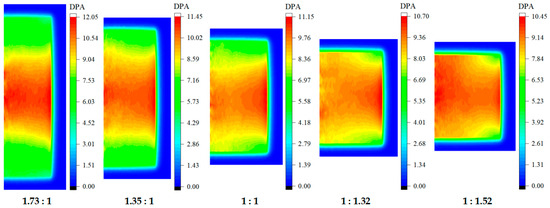
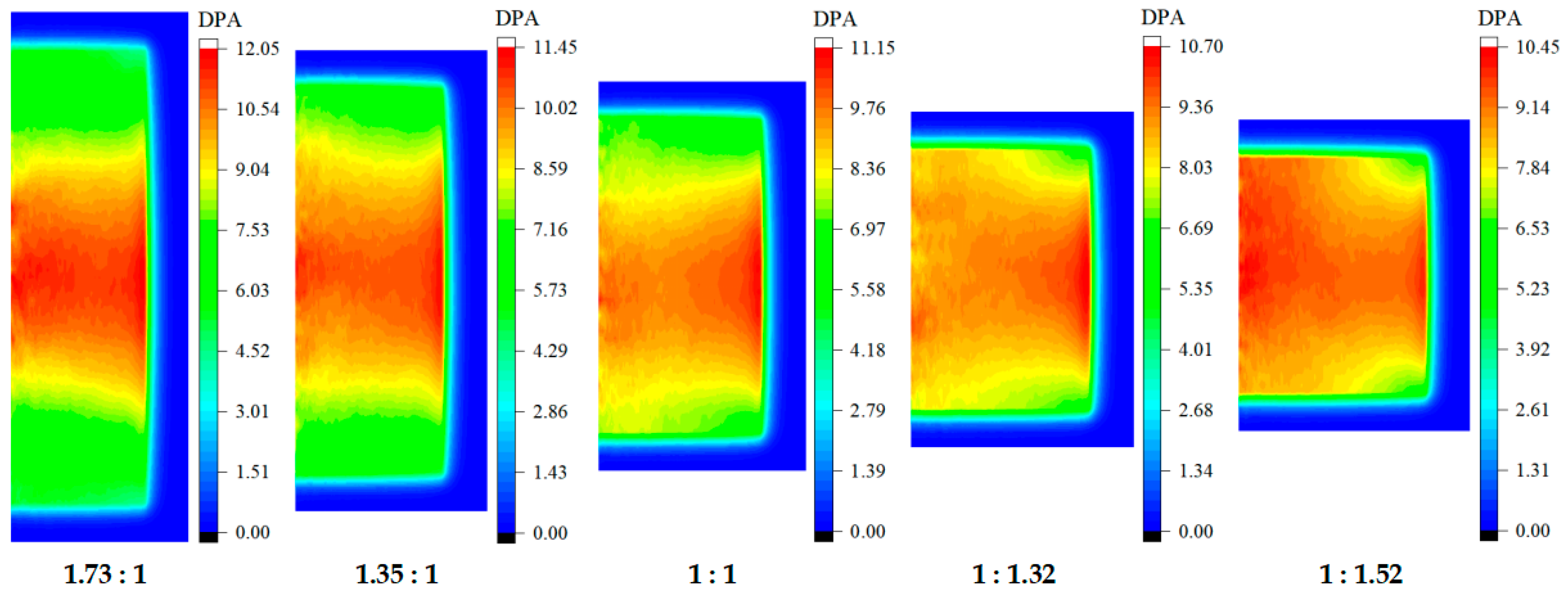
Under the constraint of a constant core active zone volume, adjusting only its height-to-diameter ratio can alter the radial and axial neutron flux distributions, thereby changing the spatial distribution characteristics of DPA in the core graphite. Figure 3 shows the two-dimensional distribution maps of the 10-year cumulative DPA values of graphite for PSMSR core graphite under different height-to-diameter ratios. Given that the neutron flux in the reflector is far lower than in the active zone, the resulting DPA is also considerably smaller. Thus, the graphite DPA in the active zone serves as the dominant factor limiting the overall service life of the PSMSR core.
Figure 3.
The distribution map of the 10-year DPA for graphite at different height-to-diameter ratios when the active zone volume is unchanged.
Analysis reveals that a core with a “tall and slender” geometric configuration exhibits pronounced radial neutron leakage and suppressed axial neutron leakage. This behavior leads to an axial neutron flux profile that peaks sharply in the central region and decreases steeply toward the upper and lower ends. As a direct consequence, graphite components in the central region experience higher irradiation, with a notably increased DPA accumulation rate, causing the central graphite to reach its material endurance limit prematurely and constraining the overall service life of the core. Conversely, as the height-to-diameter ratio decreases, the core geometry shifts toward a “short and flat” configuration. Under such conditions, the neutron flux distribution becomes more uniform, the axial peak flux is reduced, and the gradient of the distribution becomes gentler. This optimization produces a smoother graphite DPA profile, effectively avoiding localized concentration of irradiation damage, therefore significantly reducing the peak DPA value in the core’s graphite.
Pursuing an excessively low height-to-diameter ratio, however, introduces a different set of challenges. As the core radial dimension expands, the associated radial neutron leakage diminishes, while the neutron flux at the outer periphery experiences a marked surge. Consequently, the peak DPA shifts toward the outer graphite regions, establishing a pronounced “high-outside, low-inside” gradient. Such a profile is fundamentally incompatible with a homogeneous DPA distribution and leads to an asymmetric material aging. Hence, to achieve synchronized aging of graphite materials throughout the entire core—a key objective for core longevity and performance—employing a balanced height-to-diameter ratio of 1:1 for the active core emerges as the superior and most balanced structural design compromise.
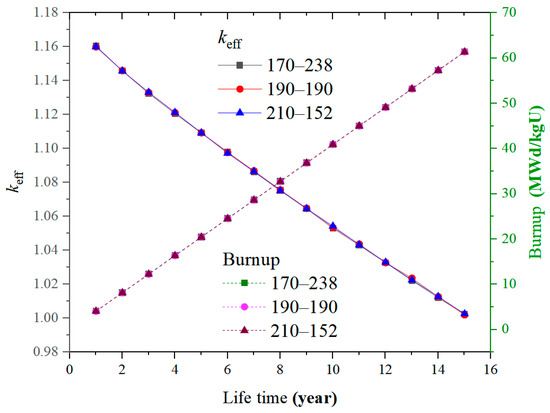
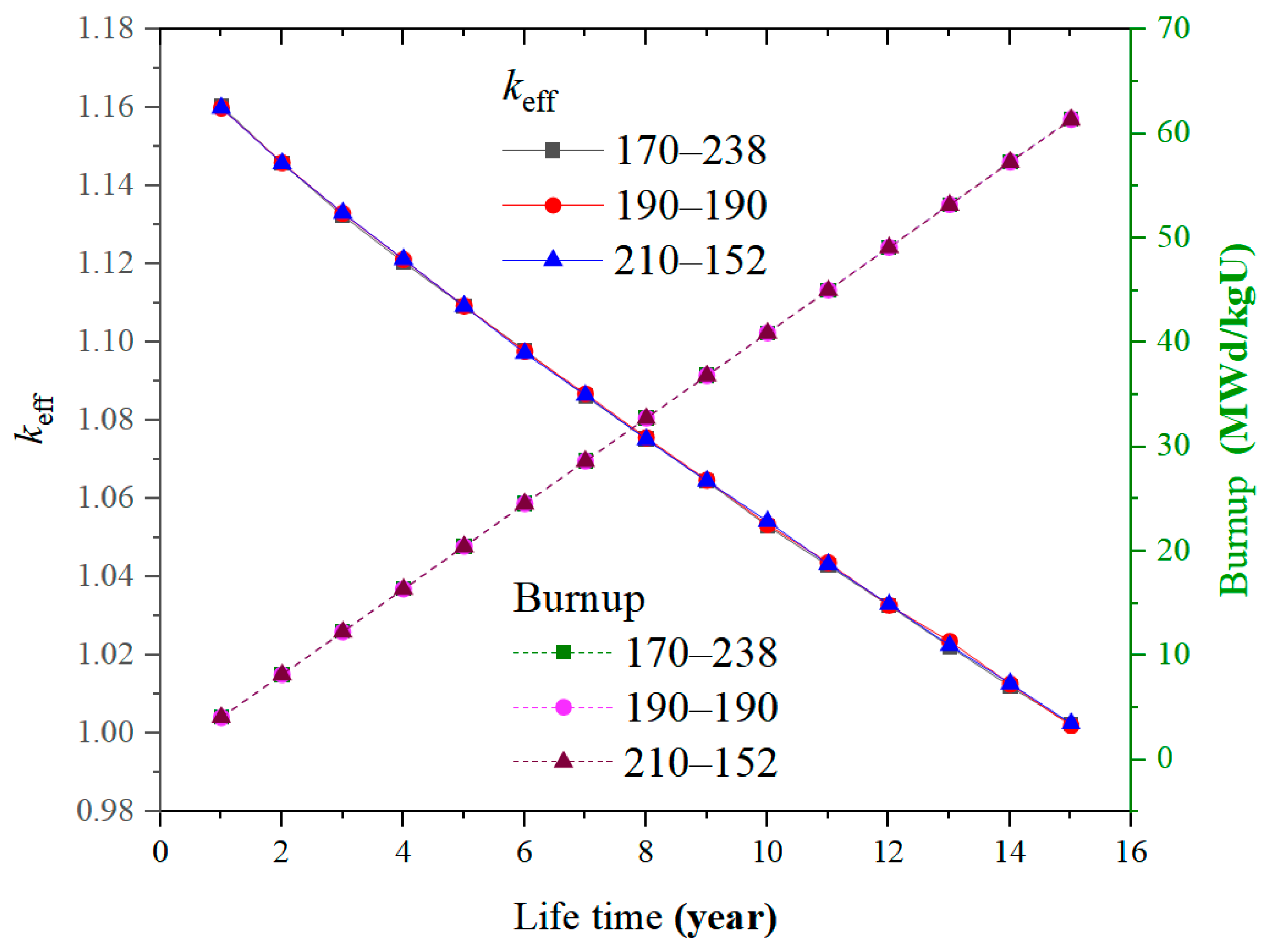
Furthermore, an analysis of burnup characteristics across various height-to-diameter ratios was conducted, with the results summarized in Figure 4. The data indicate that, for a fixed core volume and fuel loading, modifications to the height-to-diameter ratio are devoid of substantial influence on fuel burnup behavior. Both the operational lifetime and the burnup depth remain largely invariant. A comprehensive evaluation, therefore, led to the final determination of a 1:1 height-to-diameter ratio for the PSMSR core.
Figure 4.
Burnup characteristics at different height-to-diameter ratios when the active zone volume is unchanged.
3.2. Active Zone Size Optimization
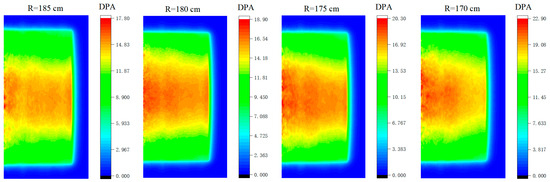
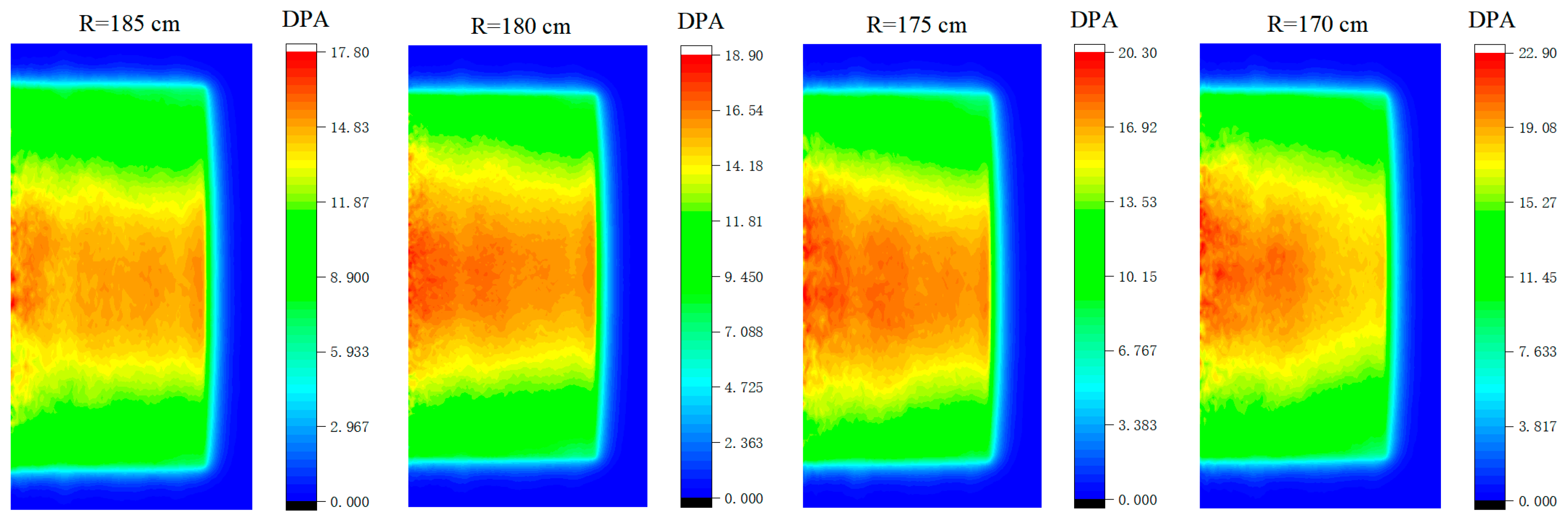
Based on the core thermal power of 500 MWt, any variation in the size of the active region—whether enlargement or reduction—directly affects the neutron flux level, and hence the graphite cumulative DPA. With the height-to-diameter ratio maintained at 1:1, a systematic analysis was conducted to evaluate the cumulative DPA in graphite across different core sizes by adjusting the active zone radius. The results are illustrated in Figure 5.
Figure 5.
The distribution map of the 10-year DPA of graphite under different core sizes when the height-to-diameter ratio of active zone is 1:1.
The analysis indicates that reducing the core radius leads to an increase in the average power density, which in turn elevates the neutron flux level; graphite, therefore, experiences heavier irradiation damage over the same operational period, causing the 10-year cumulative DPA to climb significantly. Conversely, expanding the core size lowers the neutron flux and leads to a corresponding reduction in cumulative DPA. As shown in Figure 5, when the active zone radius is approximately 175 cm, the graphite DPA reaches the design limit precisely at the end of service life. Any further reduction in radius beyond this point increases the flux to levels that would shorten the graphite’s usable lifetime to less than 10 years. Thus, to guarantee the graphite irradiation dose remains within the design limit throughout the target service life, the active zone radius must be maintained at or above 175 cm.
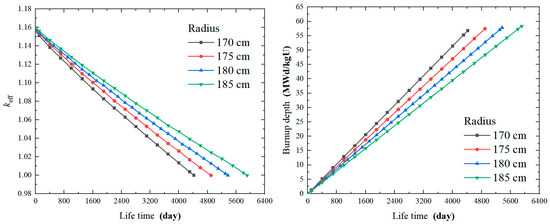
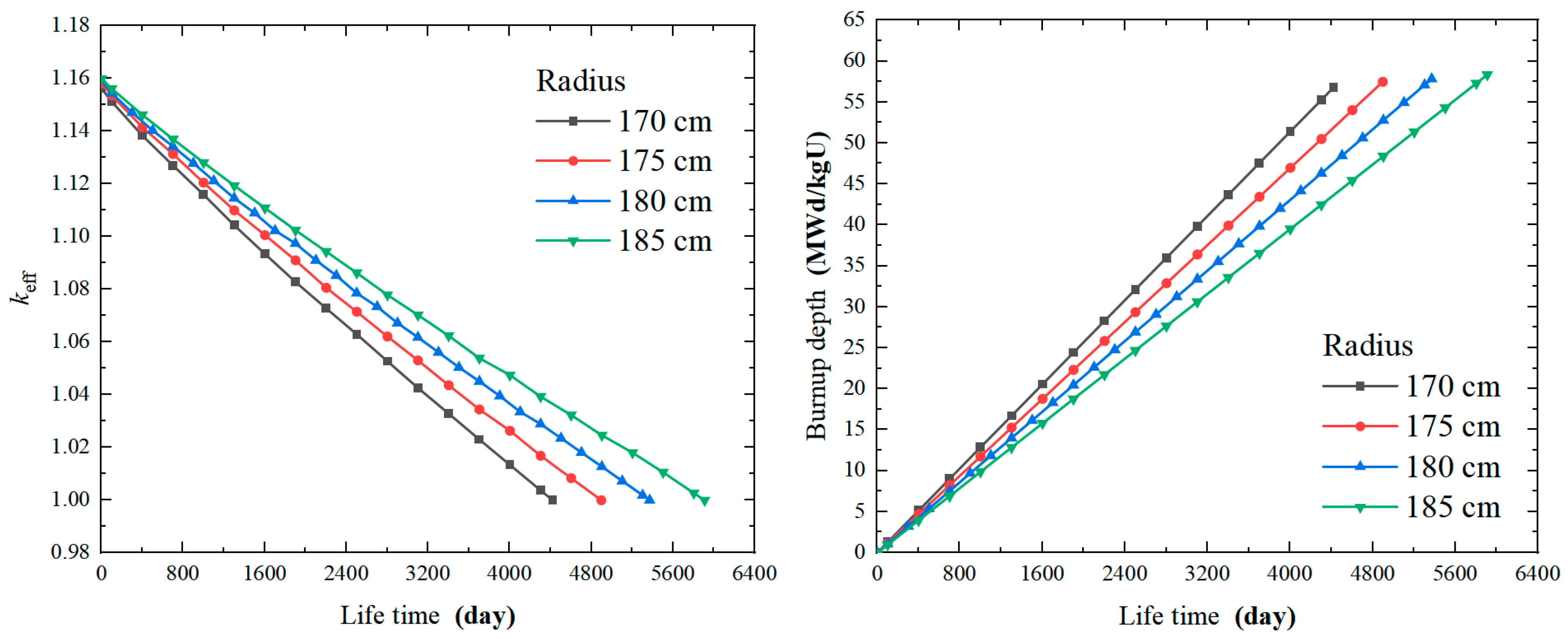
Based on the results presented in Figure 6, it is evident that neutron economy exhibits high sensitivity to the dimensions of the active core. A reduction in the active radius—while maintaining a constant TRISO packing factor of 40%—directly lowers the total fuel inventory. This reduction in fuel loading, in turn, leads to a corresponding shortening of the fuel cycle length due to accelerated fuel depletion. From the perspective of fuel utilization, the initial fuel loading demonstrates a clear inverse relationship with the achievable burnup depth at the end of a 10-year lifetime. A smaller core, with lower initial fuel mass, enables neutrons to interact with a higher proportion of fuel nuclei over the operational period, thereby facilitating a deeper burnup.
Figure 6.
Burnup characteristic of PSMSR under different core sizes when the height-to-diameter ratio of active zone is 1:1.
In summary, the core design must satisfy two critical constraints: fulfilling the target fuel cycle length while ensuring graphite irradiation damage remains within design limits. Analysis confirms that a smaller core size is advantageous for achieving superior fuel economy within this operational envelope. Therefore, a configuration with a 1:1 height-to-diameter ratio and an active zone radius of 175 cm has been regarded as the reference design. This optimized baseline will form the foundation for all subsequent detailed system optimization of the PSMSR.
3.3. Reflector Thickness Optimization
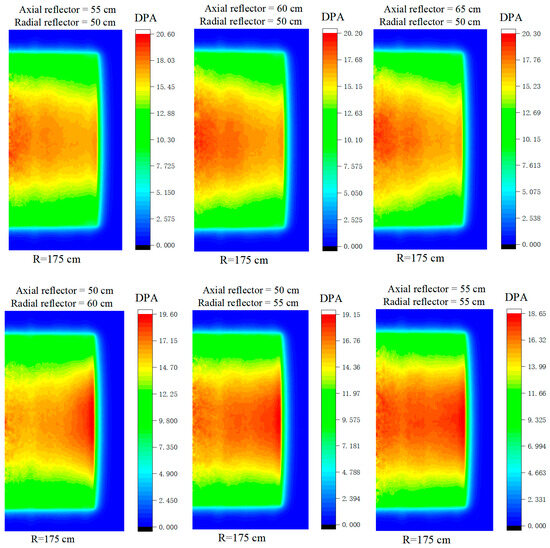
The analytical results presented above demonstrate that the peak DPA in graphite components occurs at the core center—coinciding with the region of maximum neutron flux—and exhibits a strong axial gradient. This correlation indicates that flattening the neutron flux distribution, which can be achieved by adjusting the reflector thickness, offers a viable approach for mitigating DPA non-uniformity. The effect of reflector thickness variations on the graphite DPA distribution is evaluated in Figure 7.
Figure 7.
The distribution map of the 10-year DPA of graphite under different reflector thicknesses.
The result indicates that, under a fixed radial reflector thickness, solely increasing the axial reflector thickness yields only a marginal improvement in DPA homogenization and peak reduction. The radial DPA gradient remains pronounced. Therefore, the priority must be focused on tuning the radial reflector thickness to directly moderate the radial neutron flux distribution, which is the root cause of the observed gradient. Such optimization enables a more uniform radial DPA distribution and a corresponding effective reduction in the peak damage level. It should be noted, however, that an excessive radial reflector thickness can be counterproductive. An overly thick reflector severely reduces neutron leakage at the core periphery, which conversely leads to a localized increase in neutron flux in these outer regions. Subsequently, the peak DPA shifts outward, merely relocating the damage concentration region rather than mitigating it. It is therefore essential to determine an appropriate radial reflector thickness.
Through a systematic comparison of various design configurations, the structure with equal radial and axial reflector thicknesses of 55 cm delivers the most favorable performance. It promotes a superior uniform DPA distribution throughout the core graphite. Critically, at the end of the 10-year design lifetime, it achieves a substantially reduced peak DPA value compared to the baseline, unoptimized design, thereby substantially increasing the core’s operational safety margin.
Based on a comprehensive analysis of graphite irradiation damage behavior and fuel burnup characteristics, this study informs the preliminary geometric configuration of the PSMSR core. The design incorporates an active zone characterized by a 1:1 height-to-diameter ratio and a radius of 175 cm, uniformly surrounded by 55 cm graphite reflectors in both the axial and radial directions. Subsequent research will be dedicated to a systematic exploration of reactivity control strategies, with particular emphasis on achieving the dual objectives of optimal fuel utilization efficiency and operational safety.
4. Reactivity Control Analysis
The safe and efficient operation of a nuclear reactor relies on a comprehensive control system capable of performing critical functions such as power regulation, reactor startup, and shutdown. This system must possess sufficient reactivity control capacity to ensure that adequate negative reactivity can be rapidly inserted during both normal operation and emergency accident conditions. This capability is essential for achieving the design-specified shutdown margin and for guaranteeing overall reactor safety and controllability. In the PSMSR, the initial control-rod configuration is illustrated in Figure 1. A total of 30 control rods, each containing a B4C poison rod with a radius of 6.1 cm, are distributed throughout the core.
4.1. Scheme of Adding Burnable Poisons
The burnup analysis detailed in Section 3 reveals that the PSMSR core exhibits large residual reactivity over its operational cycle, which leads to high requirements for the control-rod worth (the negative reactivity induced when rods move from a fully withdrawn to a fully inserted state). To solve this problem, burnable poisons B4C can be added to the fuel [29]. This material functions by capturing neutrons, thereby continuously suppressing the residual reactivity of the reactor throughout the fuel burnup period, ultimately achieving the goal of reducing the demand for control-rod worth.
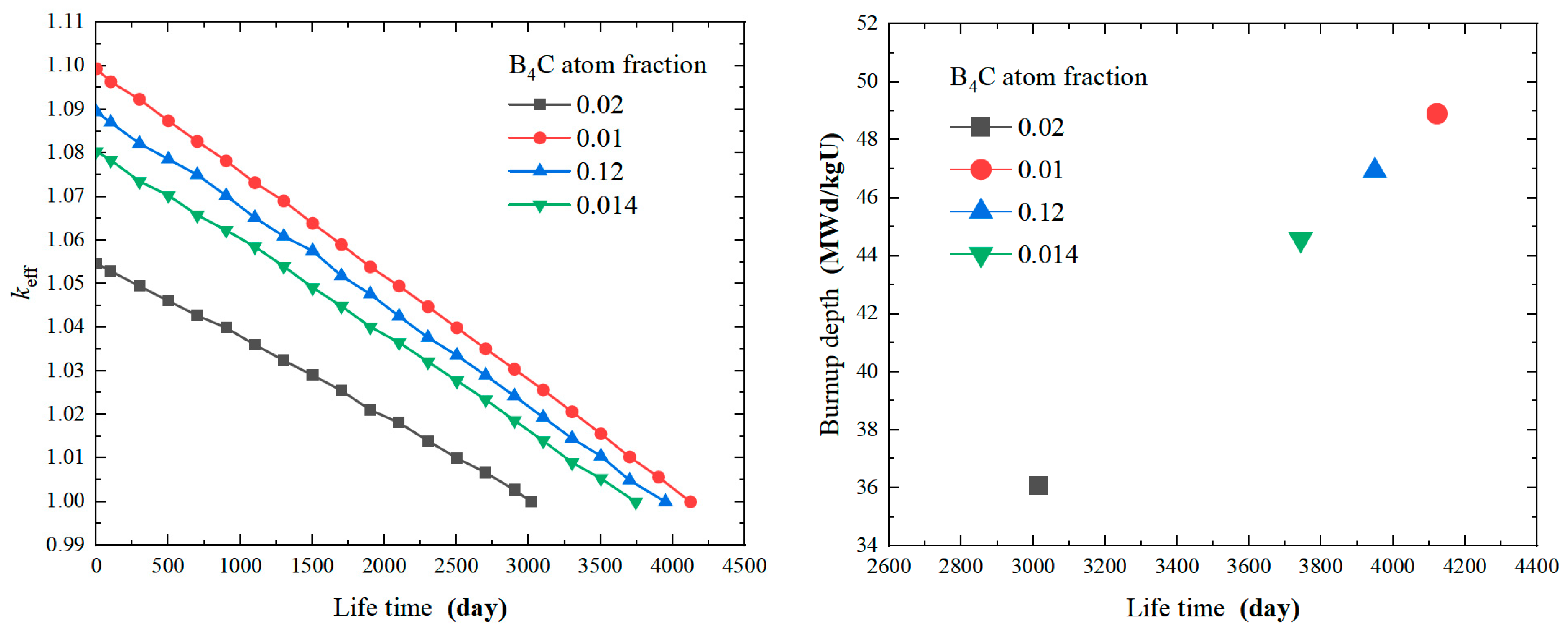
Figure 8 presents the burnup behavior of the core under different loadings of burnable poison. The results clearly substantiate that the addition of burnable poison can effectively suppress the initial residual reactivity, with a higher initial addition amount leading to a lower keff in the beginning-of-life (BOL), thereby decreasing the demand for the control rods. However, this approach can adversely affect the reactor core. An excessive initial loading of B4C poison may prevent it from being completely depleted during core lifetime, resulting in a significant amount of residue remaining at the end of life (EOL). The continuous neutron absorption by these residual poisons reduces the core’s neutron economy, thereby shortening the operating time and impairing the fuel utilization. Therefore, considering both the ease of reactivity control and the neutron economy in the reactor, an optimal burnable poison loading of 0.014 (atomic ratio) has been identified. At this loading, the core successfully achieves the target 10-year lifetime while attaining a discharge burnup of approximately 44.5 MWd/kgU, effectively balancing the objectives of reactivity control and fuel economy.
Figure 8.
Burnup curves and burnup depth of PSMSR under different proportions of burnable poisons.
For the optimal design scheme with a poison ratio of 0.014, the calculation of the total control-rods worth was performed for the entire operation period. As summarized in Table 2, when all the control rods are fully inserted into the core, the keff can be reduced from 1.08017 to 0.95244, and the total reactivity worth of the 30 control rods is −12,773 pcm. As the core operates, the gradual burning of fuel leads to a gradual reduction in the core’s residual reactivity. Naturally, the keff value attained with all control rods inserted decreases, resulting in a correspondingly deeper (more negative) shutdown margin (the magnitude of the deviation of keff from 1—keff-1). At any operation time, the measured shutdown depth of the control system is more negative than −4756 pcm, which significantly exceeds the margin of the design criterion (−1000 pcm), confirming the system’s effectiveness and the design’s robustness.
Table 2.
The control rods’ value at different lifetimes during the core life when the proportion of burnable poison is 0.014.
4.2. Scheme of Fuel Loading Optimization
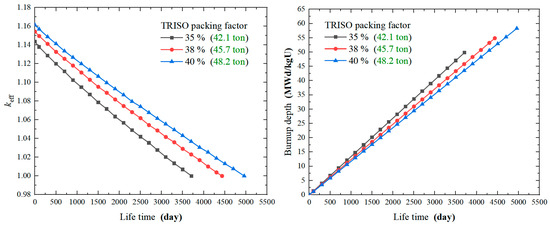
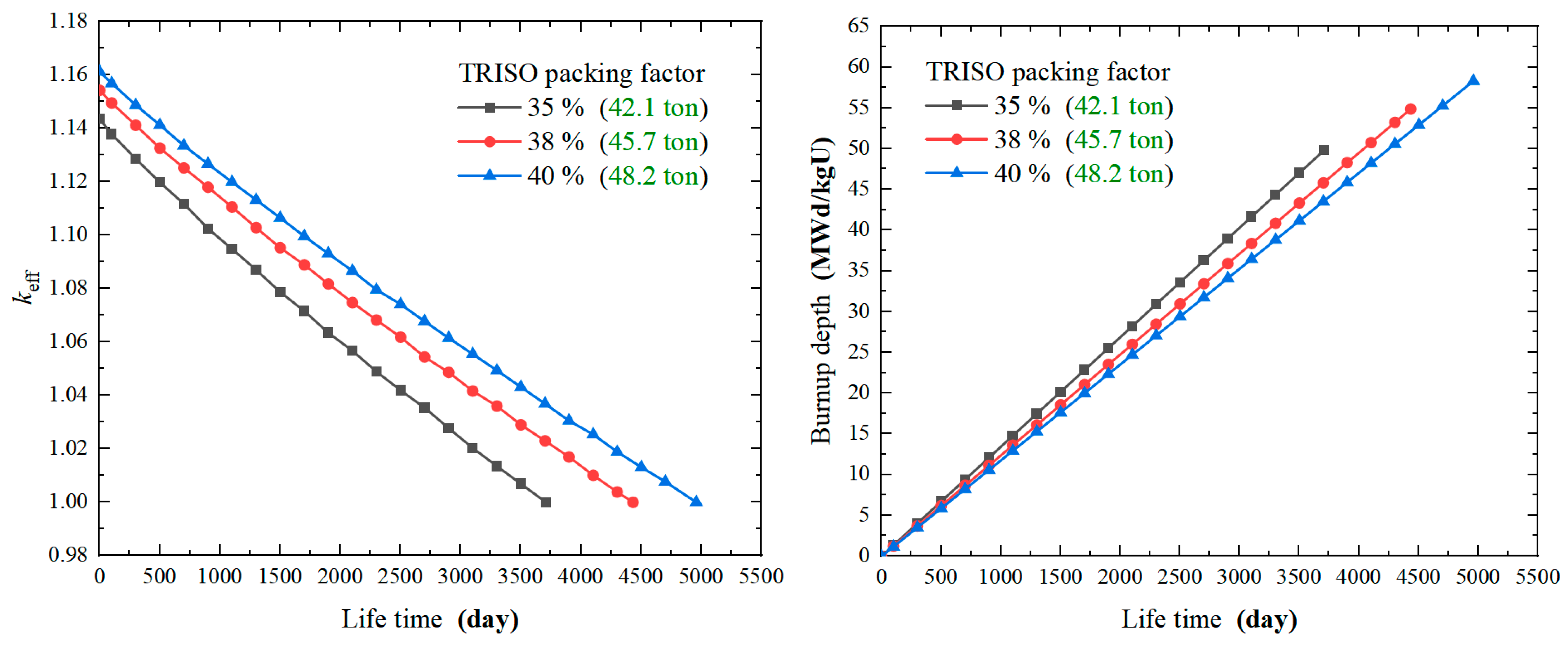
A 40% TRISO fuel particle packing factor was adopted in the initial design scheme. The burnup results in Figure 6 show that after ten years of full-power operation, there is still a considerable amount of residual reactivity remaining in the reactor core. Excessive initial fuel loading in the reactor core leads to incomplete depletion of the fuel at the EOL, which not only increases the fuel cost but also reduces the fuel utilization efficiency. This is contrary to the efficient and sustainable goals pursued by advanced nuclear energy systems. Furthermore, a higher residual reactivity requires an increased complexity in the design of the reactivity control system.
Therefore, it is necessary to adopt measures such as optimizing the packing factor of TRISO particles, adjusting the fuel enrichment ratio, or improving the core layout scheme, while ensuring the safe operation of the reactor, to achieve a precise match between the initial loading quantity and the operating cycle, thereby enhancing the overall fuel economy. In PSMSR, the method of reducing the TRISO packing factor is adopted to decrease the fuel inventory, in order to ensure that the remaining reactivity of the core would be precisely reduced to zero after 10 years of operation, and the fuel would be completely “exhausted”.
Figure 9 shows the burnup characteristics under different packing factors. It can be seen that the scheme with a packing factor of 35% (corresponding to a fuel mass of 42.1 tons) satisfies the requirement of a 10-year core lifetime. This configuration achieves a discharge burnup depth of 50 MWd/kgU, which is approximately 12.4% higher than the design with a packing factor of 40% (44.5 megawatt-days per kilogram of uranium), thereby effectively improving the economic efficiency of the fuel.
Figure 9.
The result of the burnup characteristic of the PSMSR core under different TRISO packing factors.
Table 3 presents the calculated control-rod worths for different fuel packing factors. In the absence of burnable poison, the core maintains substantial residual reactivity even at a reduced packing factor of 35%. Under such conditions, complete insertion of all 30 control rods remains insufficient to reduce core reactivity below unity, thus precluding attainment of a safe shutdown state. To resolve this limitation, enlargement of control-rod dimensions is proposed to enhance neutron absorption capacity, thereby increasing total control-rod worth to meet safe shutdown requirements. This modification, however, reduces the available fuel volume and consequently affects total fuel loading capacity. As established by the analysis in Figure 9, the PSMSR core requires approximately 42.1 tons of fuel to achieve its designed 10-year lifetime. Therefore, any increase in control-rod size must be accompanied by a corresponding increase in TRISO particle packing factor to maintain the requisite fuel inventory of 42.1 tons.
Table 3.
The control rods’ value under different TRISO packing factors when the radius of the B4C rod is 6.1 cm.
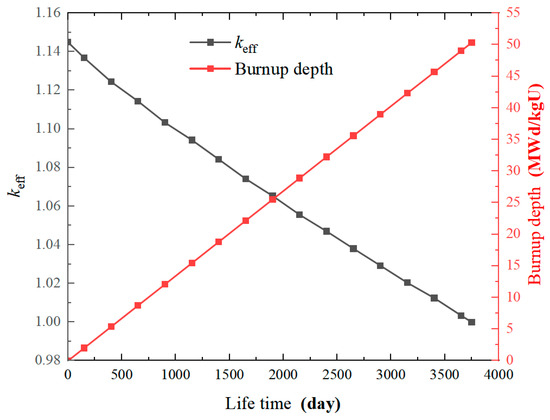
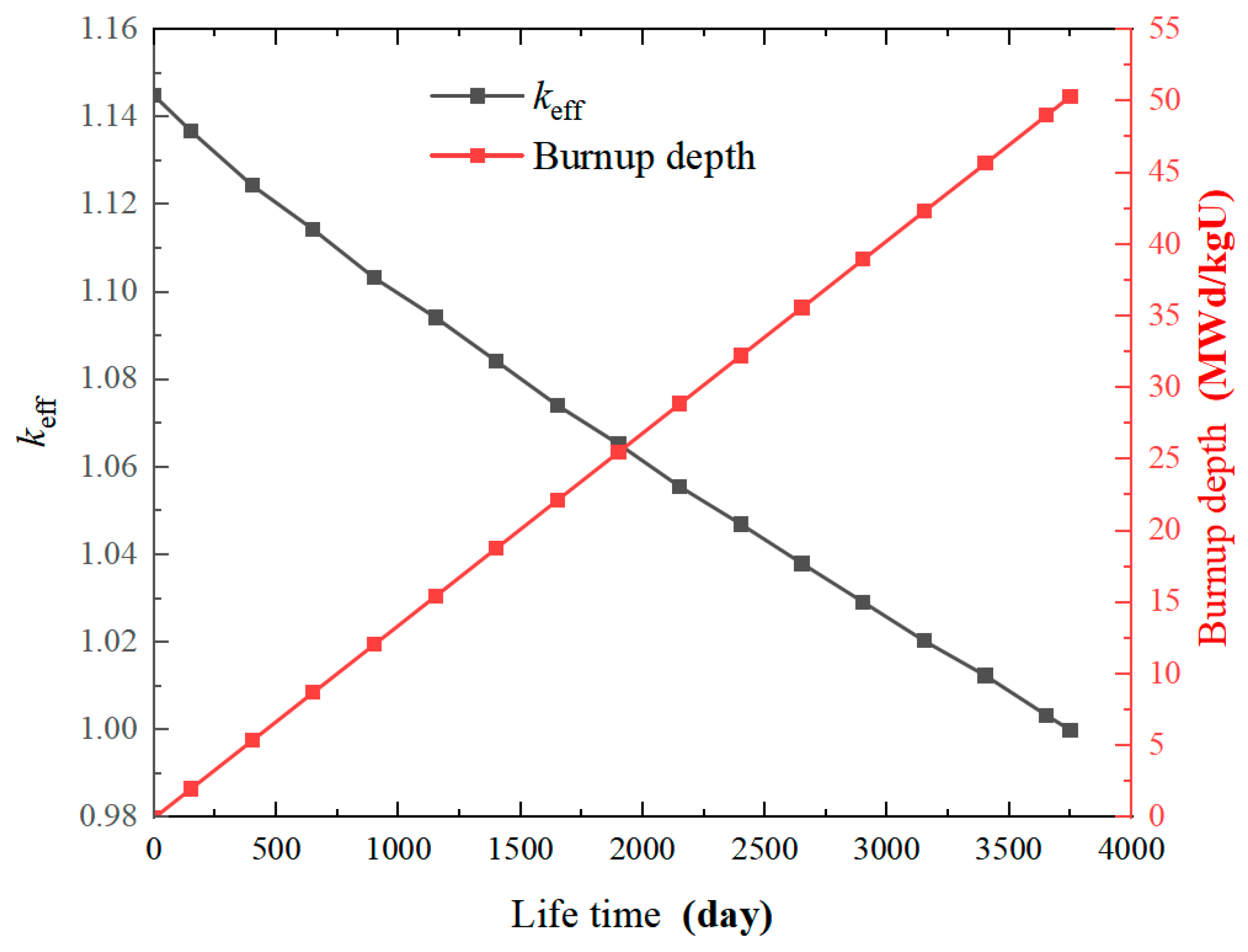
Table 4 presents the required TRISO packing factor and corresponding control-rod worth as functions of absorber-rod radius. As the B4C absorber-rod radius increases, a higher TRISO packing factor is required to compensate for the reduced fuel volume, while the reactivity worth of all control rods also increases significantly. When the absorber-rod radius reaches 6.8 cm, full insertion of control rods already drives keff below unity. Further increasing the radius to 8.0 cm reduces keff to 0.97584, corresponding to a shutdown margin of −2416 pcm, which satisfies the safety shutdown requirement. The required packing fraction is then 36.3%. Burnup results shown in Figure 10 confirm that this configuration meets the 10-year full-power operation target, achieving a burnup depth of 50.3 MWd/kgU.
Table 4.
The control rods’ value under different B4C rod sizes when the core fuel loading remains around 42.1 tons.
Figure 10.
The result of the burnup characteristics of PSMSR when the B4C rod radius increases to 8 cm.
Comparing the two reactivity control design schemes, the use of burnable poisons can suppress residual reactivity over the core lifetime and reduce the required control-rod worth; however, it also leads to a penalty in neutron economy and lower fuel utilization efficiency. In contrast, optimizing the TRISO fuel particle packing factor to reduce fuel loading—though its effect on initial residual reactivity is limited—still allows the safe shutdown requirement to be met by increasing the control-rod size. Furthermore, this approach significantly improves fuel utilization efficiency compared to the poison-based strategy. Therefore, in subsequent designs, the second reactivity control scheme is preferred to enhance the overall economics of the PSMSR. Therefore, this study prefers to adopt the second reactivity control scheme to improve the overall economic competitiveness of PSMSR.
5. Conclusions
The molten-salt reactor (MSR) operates at normal pressure and high temperatures, offering significant advantages. By integrating TRISO particles with a molten-salt coolant, the solid MSR achieves both inherent safety and high efficiency. This paper presents a prismatic solid molten-salt reactor (PSMSR) designed with the primary objectives of achieving 500 MWth power output, a 10-year operational lifetime, and a compact core configuration. A comprehensive analysis is conducted on the core structure, graphite irradiation damage, burnup characteristics, and reactivity control strategies. The following conclusions are drawn:
- (1)
- Active core optimization: Optimization of the active core structure yielded a configuration with a 1:1 height-to-diameter ratio and a radius of 175 cm. This design achieves the target power output and operational lifetime while homogenizing the graphite DPA distribution, thereby significantly lowering peak irradiation damage and extending graphite service life.
- (2)
- Reflective layer optimization: When the thickness of the radial and axial reflective layers is both set to 55 cm, the graphite DPA distribution becomes flatter, the DPA peak value is further reduced, and the safety margin of the reactor core is effectively improved.
- (3)
- Reactivity control strategy: A comparative of burnable poison addition and fuel loading optimization demonstrated that reducing the TRISO particle packing factor to 36.3% and increasing the B4C control-rod radius to 8 cm successfully achieves a sufficient shutdown margin (−2416 pcm) while fulfilling the design lifetime requirement. This configuration also significantly enhances fuel economy, attaining a burnup depth of 50.3 MWd/kgU.
In conclusion, the PSMSR demonstrates promising advantages in compact core geometry, high power output, and long lifetime, laying a solid physical foundation for subsequent detailed engineering design. However, it should be noted that the present study still has several limitations. For instance, the performance of the core graphite is governed by the interplay of multiple factors. Yet constrained by the adopted neutronics physics model, this work does not adequately account for thermodynamic effects. Subsequent research should incorporate coupled thermal-mechanical-irradiation multiphysics field analysis to more systematically evaluate the structural reliability of graphite under long-term service conditions. The application of FNaBe molten salt faces engineering and safety challenges arising from Na-24 activation, primarily including the generation of high-activity secondary source terms, complex shielding requirements, and special considerations for operation, maintenance, and decommissioning. Source term and shielding calculations based on a definite reactor system are necessary to comprehensively assess the engineering feasibility of this program. Furthermore, a complete and deployable reactor system requires in-depth studies of core heat transfer, thermal-hydraulic analysis of heat exchangers and circuits, verification of passive safety system performance, and economic evaluation. All of these will be critical areas for future research.
Author Contributions
Conceptualization, F.Z., R.Y., Y.D. and Y.Z.; software, Y.D.; validation, R.Y., Y.D. and Y.Z.; formal analysis, F.Z.; investigation, F.Z.; resources, R.Y. and Y.Z.; writing—original draft preparation, F.Z.; writing—review and editing, F.Z.; supervision, R.Y. and Y.D.; project administration, Y.Z. All authors have read and agreed to the published version of the manuscript.
Funding
This research was funded by the State Key Laboratory of Thorium Energy, grant number E4559610, and the Special Research Assistant Funding Program of the Shanghai Institute of Applied Physics, grant number E5598803.
Data Availability Statement
The original contributions presented in this study are included in the article. Further inquiries can be directed to the corresponding author.
Conflicts of Interest
The authors declare no conflicts of interest.
References
- Denisa, T.; Ionuţ, N.A.; Nicu, B. Generation IV Nuclear Energy Systems-Alternative Solutions to Carbon Emission Energy Sources. In Proceedings of the 2022 14th International Conference on Electronics, Computers and Artificial Intelligence (ECAI), Ploiesti, Romania, 30 June–1 July 2022; pp. 1–7. [Google Scholar] [CrossRef] [Scilit]
- Zhang, F.; Guo, B. Molten salt reactor technology: Progress, challenges, and prospects. South. Energy Constr. 2025, 12, 68–74. [Google Scholar] [CrossRef]
- Qiu, S.; Zhang, D.; Su, G.; Tian, W. Research on inherent safety and relative key issues of a molten salt reactor. At. Energy Sci. Technol. 2009, 43, 64–75. [Google Scholar] [CrossRef]
- Beall, S.E.; Haubenreich, P.N.; Lindauer, R.B.; Tallackson, J.R. MSRE Design and Operations Report. Part V. Reactor Safety Analysis Report; Technical Report ORNL-TM-732; Oak Ridge National Laboratory: Oak Ridge, TN, USA, 1964. [Google Scholar]
- Robertson, R.C. MSRE Design and Operations Report. Part I. Description of Reactor Design; Technical Report ORNL-TM-728; Oak Ridge National Laboratory: Oak Ridge, TN, USA, 1965. [Google Scholar]
- Wu, J.; Chen, J.; Cai, X.; Zou, C.; Yu, C.; Cui, Y.; Zhang, A.; Zhao, H. A Review of Molten Salt Reactor Multi-Physics Coupling Models and Development Prospects. Energies 2022, 15, 8296. [Google Scholar] [CrossRef] [Scilit]
- Holcomb, D.E.; Ilas, D.; Varma, V.K.; Cisneros, A.T.; Kelly, R.P.; Gehin, J.C. Core and Refueling Design Studies for the Advanced High Temperature Reactor; Oak Ridge National Lab (ORNL): Oak Ridge, TN, USA, 2011. [Google Scholar]
- Forsberg, C.; Wang, D.; Shwageraus, E.; Mays, B.; Parks, G.; Coyle, C.; Liu, M. Fluoride-Salt-Cooled High-Temperature Reactor (FHR) Using British Advanced Gas-Cooled Reactor (AGR) Refueling Technology and Decay Heat Removal Systems That Prevent Salt Freezing. Nucl. Technol. 2019, 205, 1127–1142. [Google Scholar] [CrossRef] [Scilit]
- Demkowicz, P.A.; Petti, D.A.; Sawa, K.; Maki, J.T.; Hobbins, R.R. 5.09-TRISO-Coated Particle Fuel Fabrication and Performance. In Comprehensive Nuclear Materials, 2nd ed.; Konings, R.J.M., Stoller, R.E., Eds.; Elsevier: Amsterdam, The Netherlands, 2020; pp. 256–333. ISBN 9780081028667. [Google Scholar] [CrossRef] [Scilit]
- Boyd, S.; Uhlíř, J. Chapter 8—Physical–chemical properties of molten salts and chemical technology of MSR fuel cycle. In Molten Salt Reactors and Thorium Energy, 2nd ed.; Dolan, T.J., Pázsit, I., Rykhlevskii, A., Yoshioka, R., Eds.; Woodhead Publishing Series in Energy; Woodhead Publishing: Cambridge, UK, 2024; pp. 335–390. ISBN 9780323993555. [Google Scholar] [CrossRef] [Scilit]
- Jiang, D.; Zhang, D.; Li, X.; Wang, S.; Wang, C.; Qin, H.; Guo, Y.; Tian, W.; Su, G.H.; Qiu, S. Fluoride-salt-cooled high-temperature reactors: Review of historical milestones, research status, challenges, and outlook. Renew. Sustain. Energy Rev. 2022, 161, 112345. [Google Scholar] [CrossRef] [Scilit]
- Avigni, P.; Petrovic, B. On-line refueling for the Advanced High Temperature Reactor (AHTR). Nucl. Eng. Des. 2018, 340, 166–182. [Google Scholar] [CrossRef] [Scilit]
- Andreades, C.; Cisneros, A.T.; Choi, J.K.; Chong, A.Y.K.; Fratoni, M.; Hong, S.; Huddar, L.R.; Huff, K.D.; Kendrick, J.; Krumwiede, D.L. Design Summary of the Mark-I Pebble-Bed, Fluoride Salt–Cooled, High-Temperature Reactor Commercial Power Plant. Nucl. Technol. 2016, 195, 223–238. [Google Scholar] [CrossRef] [Scilit]
- Rykhlevskii, A. Chapter 26—Kairos power pebble bed reactor. In Molten Salt Reactors and Thorium Energy, 2nd ed.; Dolan, T.J., Pázsit, I., Rykhlevskii, A., Yoshioka, R., Eds.; Woodhead Publishing Series in Energy; Woodhead Publishing: Cambridge, UK, 2024; pp. 945–952. ISBN 9780323993555. [Google Scholar] [CrossRef] [Scilit]
- Dai, Z.M. Thorium molten salt reactor nuclear energy system (TMSR). In Molten Salt Reactors and Thorium Energy; Woodhead Publishing: Cambridge, UK, 2017; pp. 803–814. [Google Scholar] [CrossRef] [Scilit]
- Liu, S. Alloy Design for Molten Salt Reactor Operated at 800 °C Based on GH3539 Alloy. Ph.D. Thesis, University of Chinese Academy of Sciences (Shanghai Institute of Applied Physics), Shanghai, China, July 2022. [Google Scholar] [CrossRef]
- Yu, K.; Zhang, Y.; Yuan, X.D.; Zhao, L.B.; Li, Z.J. Effect of long-term thermal exposure on microstructure of laser-welded UNS N10003 alloy. Nucl. Sci. Tech. 2024, 35, 75–83. [Google Scholar] [CrossRef] [Scilit]
- Krishna, R.; Jones, A.N.; McDermott, L.; Marsden, B.J. Neutron irradiation damage of nuclear graphite studied by high-resolution transmission electron microscopy and Raman spectroscopy. J. Nucl. Mater. 2015, 467, 557–565. [Google Scholar] [CrossRef] [Scilit]
- Dunn, M. Molten Salt Reactors: Current Technology Status and the Challenges for Maritime Applications; Institute of Marine Engineering, Science and Technology (IMarEST): Singapore, 2024. [Google Scholar] [CrossRef] [Scilit]
- Hejazi, D.; Alwafi, A.M.; Alzahrani, S.M.; Alqahtani, M.M.; Alshehri, S.M. The small modular molten salt reactor potential and opportunity in Saudi Arabia. Nucl. Eng. Technol. 2025, 57, 103203. [Google Scholar] [CrossRef] [Scilit]
- Atkinson, S.; Litskevich, D.; Merk, B. Small modular high temperature reactor optimisation part 2: Reactivity control for prismatic core high temperature small modular reactor, including fixed burnable poisons, spectrum hardening and control rods. Prog. Nucl. Energy 2019, 111, 233–242. [Google Scholar] [CrossRef] [Scilit]
- Zhang, X.; Dai, J.; Liu, Q.; Wang, Z.; Dou, Q.; Qian, Y.; Fu, H. Local structure and thermophysical properties of the molten salt FNaBe through ab initio molecular dynamics and experimental measurements. Mater. Today Commun. 2025, 42, 111193. [Google Scholar] [CrossRef] [Scilit]
- Piñera, I.; Cruz, C.M.; Leyva, A.; Abreu, Y.; Cabal, A.E.; Van Espen, P.; Van Remortel, N. Improved calculation of displacements per atom cross section in solids by gamma and electron irradiation. Nucl. Instrum. Methods Phys. Res. Sect. B Beam Interact. Mater. At. 2014, 339, 1–7. [Google Scholar] [CrossRef] [Scilit]
- Ishiyama, S.; Burchell, T.D.; Strizak, J.P.; Eto, M. The effect of high fluence neutron irradiation on the properties of a fine-grained isotropic nuclear graphite. J. Nucl. Mater. 1996, 230, 1–7. [Google Scholar] [CrossRef] [Scilit]
- Nguyen, T.H.; Chen, Y. Extended development of the Monte Carlo code MCNP for effective delayed neutron fraction calculation in molten salt reactors. Prog. Nucl. Energy 2024, 176, 105392. [Google Scholar] [CrossRef] [Scilit]
- Zhu, G. Study on Utilization of Thorium in High Temperature Reactor with Fluoride Salt Cooling Ball Bed. Ph.D. Thesis, Chinese Academy of Sciences, Shanghai, China, 2015. [Google Scholar]
- Zhu, G.; Zou, Y.; Xu, H.; Dai, Y.; Li, M.; Yan, R. Uranium utilization with thorium blanket in Pebble Bed Fluoride salt-cooled high temperature reactor. Prog. Nucl. Energy 2015, 83, 374–386. [Google Scholar] [CrossRef] [Scilit]
- Liu, S.; Yan, R.; Zou, Y.; Xu, H.; Zhu, G. Placement scheme of burnable poisons in a small modular fluoride cooled high temperature reactor. Nucl. Tech. 2020, 43, 050602. [Google Scholar] [CrossRef]
- Zhang, F.; Zhu, G.; Zou, Y.; Yan, R.; Xu, H. Analysis and flattening of power distribution during the whole life of the micro reactor based on SiC coated fuel particle. Nucl. Tech. 2025, 48, 170–180. [Google Scholar] [CrossRef]

Disclaimer/Publisher’s Note: The statements, opinions and data contained in all publications are solely those of the individual author(s) and contributor(s) and not of MDPI and/or the editor(s). MDPI and/or the editor(s) disclaim responsibility for any injury to people or property resulting from any ideas, methods, instructions or products referred to in the content. |
© 2026 by the authors. Licensee MDPI, Basel, Switzerland. This article is an open access article distributed under the terms and conditions of the Creative Commons Attribution (CC BY) license.