


Abstract
Power system control rooms are undergoing a profound transformation as renewable integration, distributed energy resources, sector coupling, and increasing operational uncertainty reshape the technical, organisational, and cognitive demands of grid operation. At the same time, Digital Twins and Agentic Artificial Intelligence offer new possibilities for monitoring, forecasting, reasoning, and decision support. However, existing control room architectures remain fragmented and insufficiently structured to support the coherent integration of digital models, intelligent reasoning systems, human operators, and regulatory accountability mechanisms in safety-critical power system environments. This article addresses that gap through a PRISMA ScR-informed scoping review combined with a structured architectural synthesis process. The study develops Infostructure as a reference architectural framework for situation awareness in future power system control rooms. The framework is derived from a synthesis of operational challenges, regulatory constraints, and human AI collaboration requirements identified across the scientific and regulatory literature. Infostructure formalises four interrelated architectural layers, Physical, Semantic, Orchestration, and Cognitive, constrained by cross cutting governance and compliance principles. The architectural coverage and internal coherence of the framework are illustrated through representative transmission and distribution system use cases, including wide area disturbance anticipation, distribution level congestion management, and cross organisational coordination during extreme events. A structured research and validation agenda is further outlined to support empirical evaluation and phased implementation. By transforming review-based synthesis into a coherent architectural formalisation, Infostructure contributes a rigorous foundation for the evolution of transparent, accountable, and resilient power system control rooms.
1. Introduction
Power system operation in Europe is undergoing a fundamental transformation driven by the rapid integration of distributed renewable energy sources and increasingly dynamic electricity markets. Transmission and distribution system operators are required to manage growing system complexity while maintaining high standards of reliability, safety, and regulatory compliance. Control rooms, as the operational centres of system supervision and intervention, face escalating demands for anticipatory decision-making, cross-organisational coordination, and sustained situation awareness under persistent uncertainty [1].
Digitalisation has introduced powerful new capabilities into control room environments, including continuously synchronised Digital Twins, predictive modelling, and artificial intelligence-supported decision processes. These technologies offer significant potential for enhancing monitoring, forecasting, and intervention planning [2,3]. However, the mere availability of these technologies does not guarantee effective or trustworthy decision-making in safety-critical contexts. Existing control room architectures often struggle to integrate heterogeneous models, autonomous reasoning components, and human expertise in a coherent and accountable manner [4].
This challenge is compounded by evolving regulatory expectations within the European context. Grid operators must ensure transparency, traceability, and human oversight in operational decisions, particularly as artificial intelligence becomes more deeply embedded in control room workflows. Regulatory frameworks governing critical infrastructure and artificial intelligence place explicit requirements on accountability, explainability, and auditability, which are not adequately addressed by platform-centric or technology-driven integration approaches [1].
Against this background, there is a growing gap between the sophistication of digital technologies and the architectural frameworks used to organise their interaction within control rooms. While Digital Twins and Agentic Artificial Intelligence offer complementary capabilities, their effective use requires a structured architectural approach that aligns technical coordination with cognitive, organisational, and regulatory constraints. Without such an approach, control rooms risk increased cognitive load, opaque decision processes, and fragmented responsibility [4].
Accordingly, this paper does not evaluate existing control room implementations but instead focuses on synthesising architectural requirements for future control rooms in which Digital Twins and Agentic Artificial Intelligence are employed to enhance situation awareness under regulatory and organisational constraints.
This paper addresses this gap by proposing Infostructure as a reference architectural framework for control rooms of the future. Infostructure provides an architectural lens for structuring coordination between Digital Twins, Agentic Artificial Intelligence, and human operators, while embedding governance and regulatory alignment as first-class design concerns. Rather than prescribing specific technologies, software platforms, or implementation blueprints, the framework develops a reference architecture through structured synthesis of operational, regulatory, cognitive, and technological dimensions. The contribution lies in the formalisation of architectural layers, interaction principles, and coordination mechanisms that organise how existing and emerging analytical methods can be coherently integrated under conditions of regulatory constraint, human oversight, and organisational accountability. Accordingly, the objective of this paper is not to introduce a new control algorithm, optimisation method, or automation scheme, but to provide a principled architectural foundation that clarifies system boundaries, preserves human decision authority, and supports transparent and auditable integration of advanced digital intelligence in complex grid operation environments.
The remainder of the paper is organised as follows. Section 2 describes the research design and framework development methodology, including the PRISMA-ScR-informed scoping review approach and the synthesis process underpinning the development of the proposed framework. Section 3 reviews the historical evolution of control room concepts in the energy sector, establishing the conceptual context for contemporary control room challenges. Section 4 analyses the operational challenges faced by transmission and distribution system operators in increasingly complex and dynamic power systems. Section 5 examines the European regulatory and policy drivers that shape the design of regulation-aligned control room architectures. Section 6 reviews the state of the art on Digital Twins and Agentic Artificial Intelligence in control room environments, identifying capabilities and persistent gaps. Section 7 analyses situation awareness and human–AI collaboration requirements, deriving system-level requirements for future control room environments. Section 8 introduces Infostructure as a concept reference architectural framework, detailing its architectural layers, design principles, and illustrative operational use cases. Section 9 discusses implementation pathways and alignment with European initiatives, including phased adoption strategies. Section 10 outlines future research directions structured around the Infostructure framework. Section 11 concludes the paper.
2. Methodology
This study adopts a PRISMA-ScR-informed scoping review methodology combined with a structured architectural synthesis process to develop Infostructure, a reference architectural framework for situation awareness in future power system control rooms. The methodological design reflects the dual purpose of the paper: first, to systematically identify and synthesise scientific and regulatory knowledge relevant to advanced control room digitalisation; and second, to translate this synthesis into a regulation-aligned reference architectural framework addressing the operational challenges faced by transmission and distribution system operators.
2.1. Research Questions
The objective of this study is to develop a reference architectural framework that supports situation awareness in future power system control rooms through the coordinated use of Digital Twins, Agentic Artificial Intelligence, and human operators under explicit regulatory and governance constraints. To structure the investigation in a manner consistent with scholarly inquiry, the study is guided by four interrelated research questions.
- RQ1: What operational challenges emerge in transmission and distribution system control rooms under conditions of high renewable penetration, increasing electrification, and cross-organisational interdependence?
- RQ2: How do European regulatory and governance requirements shape architectural constraints on transparency, accountability, human oversight, and interoperability in control room environments?
- RQ3: What architectural structure can coherently integrate Digital Twins, Agentic Artificial Intelligence, and human operators while preserving semantic alignment, decision boundary integrity, and governance by design?
- RQ4: How can the architectural coherence and practical relevance of the proposed framework be analytically demonstrated and systematically validated through representative operational scenarios?
Together, these research questions guide the scoping review, architectural synthesis, and use case analysis presented in the subsequent sections. Rather than evaluating isolated technologies, the study focuses on architectural coordination as the central analytical unit linking operational complexity, regulatory constraint, and human–AI collaboration.
2.2. Information Sources and Search Strategy
The scoping review was conducted using major scientific databases commonly employed in energy systems research, including Scopus, Web of Science, and IEEE Xplore. The search strategy combined keywords related to power system control rooms, system operation, Digital Twins, artificial intelligence, situation awareness, and decision support. Searches were limited to publications in English and focused on contemporary research reflecting recent digitalisation trends in transmission and distribution system operation.
In addition to peer-reviewed scientific literature, a structured analysis of European Union regulatory and policy documents was conducted. This included EU directives, regulations, and policy frameworks relevant to grid operation, digitalisation, cybersecurity, data governance, and artificial intelligence. Regulatory documents were treated as primary sources and analysed to identify architectural requirements related to accountability, human oversight, traceability, and operational responsibility.
2.3. Eligibility Criteria and Source Selection
Scientific publications were included if they addressed at least one of the following aspects in a power system control room or system operator context: Digital Twin-based modelling, artificial intelligence-driven decision support, human operator interaction, situation awareness, or governance and accountability in operational decision making. Studies focusing exclusively on other sectors, like smart homes and smart cities without a control room or system operator perspective, were excluded, as were purely theoretical artificial intelligence studies lacking operational relevance.
Study selection followed a two-stage screening process. Titles and abstracts were first screened for relevance, followed by full-text assessment to confirm alignment with the review objectives. The selection process prioritised conceptual relevance, architectural insight, and regulatory implications rather than quantitative performance evaluation. The identification, screening, eligibility, and inclusion process is reported using a PRISMA-ScR flow diagram, shown in Figure 1.
Figure 1.
PRISMA ScR flow diagram.
2.4. Data Charting and Synthesis
Data from the selected scientific and regulatory sources were charted using a structured extraction approach, capturing system context, architectural assumptions, roles of Digital Twins and artificial intelligence, human interaction models, and governance or compliance considerations. Rather than aggregating results statistically, the synthesis focused on identifying recurring patterns, gaps, and tensions across technical, organisational, cognitive, and regulatory dimensions.
The synthesis resulted in a consolidated set of operational challenges for transmission and distribution system operators, presented in Section 4. These challenges were subsequently translated into architectural requirements that guided the development of the Infostructure framework.
The final set of studies included in the PRISMA-ScR flow diagram defines the review corpus used throughout the subsequent narrative synthesis. Because the purpose of the study is architectural synthesis rather than bibliometric cataloguing, the included studies are introduced, cited, and consolidated across the thematic analysis in Section 3, Section 4, Section 5, Section 6 and Section 7 and in the synthesis, tables derived from those sections, rather than reproduced in a single exhaustive inclusion table. The tables, therefore, function as structured synthesis artefacts that organise representative evidence and analytical patterns drawn from the full included corpus.
2.5. Framework Development and Analytical Validation
The Infostructure framework was developed through an iterative architectural reasoning process grounded in the synthesis of scientific and regulatory findings. Identified operational challenges and regulatory requirements were mapped to architectural concerns related to semantic alignment, orchestration of intelligent components, human-centred cognition, and governance by design.
The purpose of this synthesis was not to evaluate existing control room implementations, nor to compare individual technologies or algorithms, but to consolidate forward-looking architectural requirements emerging from the literature on Digital Twins, Agentic Artificial Intelligence, and situation awareness in future power system control rooms.
Illustrative operational use cases were employed as an analytical validation mechanism to demonstrate the relevance, coverage, and internal coherence of the proposed framework. These use-cases reflect representative transmission and distribution system operation scenarios, including wide-area disturbances, distribution-level congestion management, and cross-organisational coordination, and serve to assess architectural adequacy rather than to provide empirical validation.
2.6. Derivation of Future Research Directions
The derivation of future research directions is directly grounded in the research questions defined in Section 2.1. In particular, RQ1 and RQ2 identify operational and regulatory constraints that shape architectural requirements, while RQ3 motivates the formalisation of Infostructure as a coherent coordination framework. RQ4 requires that the proposed architecture be analytically demonstrated and structured in a manner that enables systematic validation.
Accordingly, unresolved tensions and open challenges identified during the scoping review and architectural synthesis were not treated as isolated gaps, but as layer-specific research problems emerging from the interaction between operational complexity, regulatory constraints, and human–AI collaboration requirements. These research problems were then mapped explicitly to the Infostructure architectural layers and to representative transmission and distribution system scenarios introduced in Section 8.
This ensures analytical traceability from research questions to synthesis, from synthesis to architectural formalisation, and from formalisation to research agenda. The structured validation and research roadmap presented in Section 10, therefore, represents a logical extension of the framework development process rather than a speculative outlook. In this way, the methodological design preserves coherence across problem identification, architectural abstraction, and future empirical investigation.
3. Evolution of Power System Control Rooms
The operational challenges identified in RQ1 can only be understood in light of the historical evolution of power system control rooms under increasing system complexity, renewable integration, and cross-organisational interdependence. Rather than presenting a descriptive historical overview, this section analyses successive control room paradigms to identify structural limitations that motivate the need for a revised architectural coordination model.
Power system control rooms have evolved in response to changing operational demands, technological capabilities, and organisational arrangements within electricity systems. This evolution reflects shifts in how system operators perceive, interpret, and act upon system state information, rather than merely the introduction of new tools. Understanding this trajectory is essential for explaining why existing control room paradigms are increasingly strained under contemporary operational, regulatory, and cognitive pressures.
3.1. Early Control Rooms and Reactive System Supervision
Early power system control rooms were primarily designed for localised and relatively stable systems characterised by predictable generation patterns and limited interconnection. Operational supervision relied on manual monitoring, basic telemetry, and direct operator intervention. Situation awareness in this context was largely reactive, focusing on detecting deviations from nominal operation and restoring system stability after disturbances had occurred [5].
While these control room concepts were effective for systems with slow dynamics and limited complexity, they offered little support for anticipating future system states or coordinating actions across broader system boundaries. Decision making was heavily dependent on operator experience, and information processing demands remained within manageable cognitive limits [6].
3.2. Centralisation and Increased Observability
As power systems expanded and interconnections increased, control rooms evolved towards more centralised supervision models. Enhanced telemetry and supervisory control capabilities improved observability and enabled operators to monitor larger portions of the grid from a single operational centre. This transition supported more coordinated operation and improved reliability at the system scale [7].
However, the underlying operational logic remained largely reactive. Although operators had access to more data, the ability to synthesise information into predictive insight remained limited. Control room practices continued to emphasise real-time monitoring and rule-based responses, with limited support for reasoning about future system evolution or complex interdependencies [8].
3.3. Digitalisation and Decision Support Augmentation
Subsequent waves of digitalisation introduced advanced monitoring systems, data processing capabilities, and algorithmic decision support tools into control room environments. These developments expanded the range of information available to operators and enabled more sophisticated analyses of system conditions. Control rooms began to incorporate forecasting, contingency analysis, and automated alerts to assist operational decision-making [9].
Despite these advances, the integration of decision support into operational workflows often remained fragmented. Operators were required to interpret outputs from multiple tools with differing assumptions, representations, and temporal horizons. As a result, increased information availability did not always translate into improved situation awareness, particularly during time-critical events [10].
3.4. Emerging Limitations of Existing Control Room Paradigms
The ongoing transformation of power systems has exposed fundamental limitations in existing control room paradigms. The proliferation of distributed energy resources, increased coupling between transmission and distribution networks, and growing reliance on data-driven operational practices have altered the nature of control room decision-making. Operators are increasingly required to reason under uncertainty, coordinate across organisational boundaries, and anticipate system behaviour rather than merely respond to observed deviations [11,12].
At the same time, heightened expectations regarding accountability, transparency, and human oversight place additional demands on control room practices. Existing paradigms, which were not designed to integrate predictive reasoning, autonomous decision support, and human judgement within a coherent operational logic, struggle to meet these combined demands [13].
3.5. Implications for Contemporary Control Room Evolution
The historical evolution of power system control rooms reveals a gradual shift from localised reactive supervision towards more centralised and digitally supported operation. However, this evolution has not fully addressed the emerging need for anticipatory, coordinated, and cognitively supported decision making in complex and regulated operational environments. The limitations identified across successive control room paradigms highlight the need to re-examine how control room systems are structured and how human operators interact with increasingly sophisticated decision support capabilities.
These observations motivate a systematic analysis of current operational challenges faced by transmission and distribution system operators, which is undertaken in the following section. They also set the stage for examining regulatory drivers and human factors requirements that must inform the design of future control room architectures.
4. Operational Challenges for Transmission and Distribution System Operators
Power system operation is undergoing a profound transformation driven by the large-scale integration of renewable energy sources, increasing electrification of end-use sectors, and growing interdependence between transmission and distribution networks. These developments place new and escalating demands on the operational practices of transmission system operators and distribution system operators. Control rooms, as the focal point of operational decision making, are required to manage system states that are more dynamic, uncertain, and interconnected than in traditional centrally controlled power systems. This section identifies the key operational challenges that motivate the need for new control room concepts.
4.1. Increasing System Complexity and Operational Uncertainty
The integration of variable renewable energy sources, distributed energy resources, and power electronic interfaced generation has significantly increased the complexity of power system operation. Numerous studies document how reduced system inertia, higher volatility of generation, and tighter coupling between physical grid behaviour and market dynamics challenge established operational practices and stability assessment methods [1,14,15]. As a result, system states evolve more rapidly and exhibit stronger sensitivity to disturbances, making traditional deterministic operating assumptions increasingly fragile.
Operational uncertainty has consequently shifted from an episodic condition to a persistent characteristic of day-to-day system operation. Research on renewable-dominated power systems consistently highlights that stochastic generation, weather-dependent demand patterns, and forecast errors introduce uncertainty across multiple temporal horizons, affecting state estimation, security assessment, and operational planning [16,17,18]. These effects are particularly pronounced under high renewable penetration, where conventional reserve and contingency concepts are no longer sufficient to guarantee secure operation under all credible scenarios.
The growing presence of distributed energy resources further amplifies operational complexity by introducing new coordination requirements across network layers. Studies focusing on distribution-level operation show that local flexibility, electric vehicle charging, and prosumer behaviour create bidirectional interactions between transmission and distribution systems, increasing the need for coordinated situational awareness and joint operational reasoning [19,20]. Together, these developments substantially increase the cognitive and analytical burden placed on control room operators, who must reason about system behaviour under persistent uncertainty rather than stable operating envelopes.
4.2. Fragmentation of Information and Organisational Responsibilities
Modern power system operation involves a growing number of actors, assets, and information sources distributed across organisational and jurisdictional boundaries. Research on TSO–DSO coordination consistently reports that operational data, system models, and situational views are fragmented across heterogeneous information systems, limiting the ability to form a shared and coherent operational picture [21,22]. Differences in data granularity, update rates, and semantic interpretation further complicate the integration of information across transmission and distribution domains.
At the same time, operational responsibility remains formally assigned to system operators, even as decision-relevant information is increasingly generated outside their immediate organisational control. Institutional analyses of evolving power system governance highlight how this separation between information ownership and decision accountability creates structural tensions, particularly during time-critical events where rapid coordination is required [23,24]. These tensions are exacerbated by national regulatory differences and varying degrees of digital maturity across system operators.
Fragmentation is especially evident in congestion management and flexibility activation contexts, where distribution-level constraints, market signals, and operational limits must be reconciled under regulatory oversight. Studies on flexibility markets and DER coordination show that inconsistent information exchange mechanisms and unclear responsibility allocation hinder effective operational decision making and undermine trust between organisational actors [24,25]. As a result, control rooms increasingly operate with partial, delayed, or inconsistent situational awareness, despite growing volumes of available data.
4.3. Time-Critical Decision Making and Escalation Dynamics
Control room operations are characterised by long periods of routine monitoring punctuated by disturbances that require rapid escalation and decisive intervention. Extensive research on cascading failures demonstrates that power system disturbances can propagate dynamically across network components and spatial regions, often outpacing the response capabilities of traditional monitoring and protection schemes [26,27]. These dynamics significantly narrow the window for effective operator intervention.
Wide-area monitoring and situational awareness research explicitly frames this challenge as a need to support operators during fast-developing events by enabling early detection of emerging instability and assessment of potential intervention options [28,29]. However, empirical studies show that existing control room environments often struggle to translate increased observability into actionable insight under time pressure, particularly when alarms and analytical outputs are poorly prioritised [30].
Human factors research further indicates that time-critical escalation is tightly coupled with operator cognitive load [4,31]. Studies conducted in real or simulated energy control room environments demonstrate that stress, information overload, and uncertainty can degrade situation awareness and increase the likelihood of delayed or suboptimal decisions during disturbances [27,32]. These findings reinforce the limitation of predominantly reactive control room practices when confronted with high-impact, rapidly evolving system events.
4.4. Limitations of Current Control Room Practices
Despite ongoing digitalisation efforts, many control room practices remain predominantly reactive, relying heavily on operator experience and heuristic judgement. While such expertise remains indispensable, it is increasingly challenged by the volume, velocity, and heterogeneity of operational information. Traditional monitoring and alarm systems may overwhelm operators during critical events, while providing limited support for anticipating future system states.
Existing control room environments also often lack systematic mechanisms for integrating predictive insights into operational workflows. Decision support tools are frequently deployed as isolated components, requiring operators to reconcile outputs across multiple systems with differing assumptions, temporal horizons, and representations of uncertainty. As a result, increased analytical capability does not necessarily translate into improved situation awareness, particularly during time-critical situations.
These limitations give rise to a set of recurring operational challenges that are consistently reported in the scientific literature on power system operation and control room design. In particular, studies highlight increased cognitive load, fragmented situational understanding, delayed escalation, and reduced ability to anticipate cascading effects as direct consequences of predominantly reactive and tool-centric control room practices.
To consolidate these observations, Table 1 summarises the key challenges associated with current control room practices and links them to representative peer-reviewed studies identified through the scoping review. The table is intended as a concise synthesis rather than an exhaustive survey, providing empirical grounding for the limitations discussed in this section.
Table 1.
Operational challenges arising from limitations of current control room practices.
4.5. Implications for Future Control Room Concepts
Taken together, the challenges outlined above highlight a growing mismatch between the operational demands placed on transmission and distribution system operators and the capabilities of existing control room practices. Increasing complexity, fragmented information landscapes, time-critical decision requirements, and limitations of reactive operational models underscore the need for control room concepts that better support anticipatory decision making and coordinated action.
Importantly, these challenges cannot be addressed through isolated technological enhancements alone, but instead require an explicit architectural approach that structures coordination, responsibility, and cognition across digital systems and human operators.
These challenges define the operational problem space that future control room architectures must address. They provide the foundation for the subsequent analysis of regulatory drivers, situation awareness requirements, and architectural principles presented in the following sections.
5. European Regulatory and Policy Drivers for Regulation-Aligned Control Room Architectures
The architectural constraints identified in RQ2 arise from the evolving European regulatory environment governing grid operation, digitalisation, cybersecurity, data governance, and artificial intelligence. As control rooms integrate Digital Twins and Agentic Artificial Intelligence into safety-critical workflows, compliance can no longer be treated as an external procedural requirement. Instead, regulatory expectations increasingly shape the structural properties that control room architectures must exhibit, including transparency, traceability, human oversight, resilience, and accountability.
This section, therefore, examines European Union-level regulatory instruments not as legal artefacts in isolation, but as sources of architectural constraint. The objective is to translate regulatory principles into structural implications for control room design. By analysing energy market regulation, cybersecurity directives, data governance frameworks, and AI governance requirements through an architectural lens, the section clarifies how governance becomes a first-class design concern rather than an afterthought.
Rather than providing legal interpretation, the analysis abstracts common architectural consequences across regulatory instruments and identifies how they constrain the coordination of Digital Twins, intelligent reasoning components, and human operators within transmission and distribution system environments.
5.1. Scope and Regulatory Perspective
The regulatory analysis presented in this study focuses on European Union-level directives, regulations, and policy frameworks that directly influence the design and operation of control rooms operated by transmission and distribution system operators. This focus reflects the unique role of the European Union as a supranational regulatory environment in which harmonised legal instruments shape grid operation, digitalisation, cybersecurity, and artificial intelligence governance across multiple jurisdictions.
The emphasis is placed on regulatory requirements that have direct architectural implications for control room systems, including operational responsibility, decision authority, accountability, transparency, cybersecurity, and human oversight. National transpositions and country-specific implementations are outside the scope of this paper, as the objective is to identify common architectural drivers rather than implementation details.
Regulatory frameworks from other regions, such as the United States or China, are not included in this analysis. While these jurisdictions are highly relevant in their own right, their regulatory approaches to power system operation and artificial intelligence governance differ substantially in structure, scope, and degree of centralisation, as demonstrated in recent comparative regulatory analyses contrasting European, American, and Chinese governance models for digitalised power systems [36]. A comparative assessment would therefore require a fundamentally different methodological approach and would extend beyond the architectural focus of this study. Instead, the European regulatory context is treated as a coherent and internally consistent reference environment for developing and analysing regulation-aligned control room architectures.
Rather than providing a legal interpretation, the analysis translates European regulatory requirements into architectural considerations relevant for the design of future control room systems.
5.2. Energy System and Grid Operation Regulation
The European electricity market and grid operation regulation establishes clear responsibilities for system operators regarding secure and reliable system operation. The EU Electricity Regulation (Regulation (EU) 2019/943) [37] and the EU Electricity Directive (Directive (EU) 2019/944) [38] define obligations related to operational security, system balancing, cross-border coordination, and incident management. Together with associated network codes and operational guidelines developed under the European Network of Transmission System Operators for Electricity, these instruments implicitly assume that control room decisions are attributable, auditable, and executed by accountable transmission and distribution system operators.
From an architectural perspective, these regulatory requirements imply that control room systems must support explicit responsibility attribution, clear separation between advisory support and decision authority, and traceable operational actions. As grid operation becomes increasingly data-driven and predictive, control room architectures must ensure that advanced decision support does not obscure operator responsibility or undermine established accountability structures.
5.3. Digitalisation, Data Governance, and Cybersecurity Regulation
The digitalisation of control rooms brings them firmly within the scope of European cybersecurity and data governance regulation. The NIS2 Directive (Directive (EU) 2022/2555) [39] expands cybersecurity obligations for essential entities, including energy system operators, requiring systematic risk management, incident reporting, and organisational accountability. In parallel, the EU Cybersecurity Act (Regulation (EU) 2019/881) [40] establishes a European framework for cybersecurity certification, reinforcing expectations of secure and resilient digital systems supporting critical infrastructure.
In addition, emerging European data governance legislation promotes controlled data sharing across organisational boundaries while maintaining data sovereignty and security. The Data Governance Act (Regulation (EU) 2022/868) [41] introduces governance mechanisms for data sharing that are directly relevant to control room architectures relying on distributed data sources and cross-organisational coordination. Architecturally, these regulatory developments imply that cybersecurity and data governance considerations must be embedded across system layers through secure information flows, access control mechanisms, and audit-ready data handling practices, rather than addressed as add-on security controls.
5.4. Artificial Intelligence Governance and Human Oversight
The governance of artificial intelligence in operational contexts is formalised through the EU Artificial Intelligence Act (Regulation (EU) 2024/1689) [42]. Control room applications of artificial intelligence, particularly those influencing operational decisions in critical infrastructure, are expected to fall within high-risk classifications under this regulatory framework. The regulation emphasises requirements for human oversight, transparency, explainability, robustness, and risk management throughout the AI system lifecycle.
For control rooms integrating Agentic Artificial Intelligence, these requirements have direct architectural implications. AI-based reasoning and recommendation mechanisms must be designed to support human-in-command decision models, ensure that automated outputs can be interpreted and challenged by operators, and provide traceable links between input data, model behaviour, and operational recommendations. These requirements align with the accountability and data protection obligations established under the General Data Protection Regulation (GDPR, Regulation (EU) 2016/679) [43], which further reinforces the need for traceable and responsible handling of operational data. Architectures that obscure decision logic or delegate decision authority to autonomous systems without clear oversight mechanisms are therefore incompatible with emerging European regulatory expectations.
5.5. Architectural Implications for Control Rooms of the Future
The regulatory analysis presented in Section 5.2, Section 5.3 and Section 5.4 reveals that European energy, cybersecurity, data governance, and artificial intelligence regulation converge on a common set of architectural expectations for control rooms of the future. While these regulatory instruments address different policy objectives, they collectively constrain how operational decision-making, information exchange, and responsibility must be structured in safety-critical control room environments.
At an architectural level, these regulatory expectations do not prescribe specific technologies or system implementations. Instead, they impose structural requirements on control room architectures related to accountability, transparency, human oversight, resilience, and interoperability. Compliance therefore, cannot be achieved through isolated technical controls or procedural measures alone, but must be embedded into the foundational organisation of control room systems.
A central implication is that control room architectures must preserve clear attribution of operational responsibility. Decision support capabilities, including advanced analytics and artificial intelligence, must be architecturally separated from decision authority, ensuring that responsibility for operational actions remains explicitly assigned to human operators. This requirement holds independently of whether decision support is provided by conventional algorithms or more advanced agent-based systems.
In parallel, regulatory convergence around cybersecurity, auditability, and data governance implies that control room architectures must support traceable decision pipelines and controlled information flows across organisational boundaries. Architectural support for logging, provenance tracking, access control, and post-event reconstruction is therefore not optional, but a prerequisite for operating within the European regulatory environment.
Finally, emerging governance frameworks for artificial intelligence reinforce the need for architectural mechanisms that ensure human oversight, interpretability, and contestability of automated reasoning. These requirements further emphasise that intelligence in the control room must be orchestrated in a manner that enhances, rather than replaces, human judgement.
To make this convergence explicit, Table 2 synthesises the key European regulatory instruments discussed in this section and maps them to their corresponding architectural implications for control rooms. The table does not provide a legal interpretation of individual regulations, but abstracts their shared architectural consequences. In doing so, it establishes a clear bridge between the regulatory drivers analysed in this section and the reference architectural framework introduced in Section 8.
Table 2.
European regulatory drivers and architectural implications for control rooms of the future.
6. State of the Art on Digital Twins and Agentic AI for Power System Control Rooms
This section reviews the state of the art on Digital Twins and Agentic AI in power system operation, with a specific focus on control room contexts. The review concentrates on operationally relevant capabilities, dominant architectural patterns, and persistent limitations that affect situation awareness and coordinated decision making. Rather than providing an exhaustive survey, the section synthesises peer-reviewed literature to identify what is technically and organisationally mature, what remains fragmented, and which gaps motivate the need for a reference architectural framework.
6.1. Digital Twins in Power System Operation
Digital Twins in power systems are increasingly understood as cyber-physical constructs that maintain a continuous coupling between physical grid assets, data streams, and digital models across operational time scales. Foundational work positions Digital Twins as an evolution of traditional power system modelling and simulation toward continuously updated, operationally embedded representations that support monitoring, forecasting, and decision support rather than offline analysis alone [3,44].
Several reviews converge on the observation that a genuine power system Digital Twin must satisfy three conditions: persistent data-model synchronisation, explicit treatment of uncertainty and model validity, and integration into operational workflows [45,46]. Without these properties, digital models remain limited to offline studies or engineering analysis and do not meaningfully contribute to control room decision-making.
From an architectural perspective, recent work emphasises that Digital Twins in power systems should be viewed as ecosystems rather than monolithic artefacts [47,48]. This includes federated collections of models, analytics, and services that span transmission and distribution levels and interact with market and asset management systems [49,50]. This ecosystem view is particularly relevant for control rooms, where decision-making depends on the integration of heterogeneous models with different spatial scopes, temporal resolutions, and ownership structures.
6.2. Control Room-Relevant Digital Twin Applications
The literature identifies several application clusters where Digital Twins have direct relevance for control room operation.
A first application area concerns enhanced observability and situational assessment, where Digital Twins integrate heterogeneous measurements into coherent representations of system state [44]. Real-time wide-area monitoring and situational awareness research demonstrates that improved observability alone is insufficient unless information is structured to support operator comprehension under time pressure [28,29,51].
A second application area addresses predictive analysis and scenario evaluation, enabling operators to assess the potential evolution of system states under alternative actions [52]. Digital Twin-driven contingency analysis and forecasting extend traditional security assessment by allowing what-if exploration under uncertainty, which is increasingly recognised as essential for anticipatory operation [3,20,53].
A third application area links Digital Twins to automation and advanced decision support within energy management systems [54]. Research on next-generation control centre architectures highlights the role of Digital Twins in supporting dynamic security assessment and automated analytical workflows, while also cautioning that automation must remain transparent and operator-centred [29,33,35].
A fourth application area concerns simulation-based exploration and post-event assessment, where high-fidelity Digital Twins are used to analyse rare but high-impact system events [46,55]. Studies on distribution-level Digital Twins show that these applications often provide early operational value, while exposing challenges related to fidelity management and data quality [56,57].
Across these application areas, the literature consistently stresses that operational benefit depends less on model sophistication than on integration, interpretability, and trustworthiness from the operator’s perspective.
6.3. Barriers to Operational Digital Twin Deployment
Despite growing maturity, several barriers reappear in peer-reviewed studies.
A first barrier concerns data integrity, uncertainty propagation, and model governance. As Digital Twins integrate multiple models and data sources, errors and uncertainties can propagate in non-transparent ways, undermining trust and decision quality [47,50,58]. This creates a need for explicit lifecycle management, validation procedures, and model accountability.
A second barrier is interoperability across heterogeneous tools and organisations. Studies highlight that Digital Twins often remain isolated within specific vendors or organisational silos, limiting their usefulness for coordinated TSO–DSO operation [46,50,53].
A third barrier relates to operational usability and cognitive integration. Reviews consistently report that Digital Twin outputs are difficult to interpret during time-critical situations, particularly when uncertainty and assumptions are not communicated effectively [45,46,48].
A fourth barrier concerns regulatory and governance constraints on operational deployment. Legal requirements related to data protection, cybersecurity, and artificial intelligence governance impose additional demands for transparency, explainability, and accountability, complicating the integration of Digital Twins into operational workflows and slowing adoption in safety-critical control room environments [59].
These barriers indicate that Digital Twins alone do not resolve the broader coordination and governance challenges faced by control rooms and may even exacerbate them if introduced without architectural coherence.
6.4. Agentic AI in Power System Operation
Agentic AI refers to artificial intelligence systems that pursue goals through planning, coordination, and tool use, often involving multiple interacting agents [60,61,62]. In power systems, the most mature lineage of agentic approaches is the extensive body of work on multi-agent systems for smart grids. Surveys demonstrate that multi-agent systems have been applied to monitoring, protection, scheduling, and distributed control, offering scalable coordination mechanisms under decentralised conditions [63,64,65].
These studies show that agent-based approaches can support operational decision making, but also reveal persistent challenges related to coordination stability, robustness under stress, and integration with human operators. As a result, multi-agent systems are increasingly viewed as components of decision support rather than fully autonomous controllers in safety-critical contexts.
More recent work explores emerging agentic paradigms enabled by large language models, which act as orchestrators of analytical tools and information sources. Early peer-reviewed studies demonstrate the feasibility of using language-based agents to support power system analysis and operational reasoning, particularly as interfaces that assist human operators rather than replace them [66,67]. While promising, this line of research remains at an early stage, with limited evidence of robustness under real-time operational constraints.
6.5. Control Room-Relevant Agentic AI Functions
Across the literature, three agentic areas emerge as particularly relevant for control rooms.
First, information triage and situational synthesis, where agentic systems assist operators by filtering, correlating, and contextualising large volumes of information to support rapid comprehension [68,69].
Second, scenario coordination and option generation, where agents orchestrate predictions, analytics, and actions to propose candidate interventions and highlight trade-offs [70].
Third, distributed coordination, where multi-agent approaches support local optimisation and protection while interacting with higher-level operational objectives [65].
Fourth, focus is placed on the importance of in-command interaction models, emphasising transparency, interpretability, and explicit decision boundaries to prevent automation bias and maintain accountability [71,72].
6.6. Synthesis of State-of-the-Art Gaps Motivating Infostructure
Taken together, the state of the art indicates that Digital Twins and Agentic AI provide complementary capabilities for enhancing observability, prediction, and decision support in power system control rooms. At the same time, the reviewed literature consistently reveals unresolved challenges that are architectural rather than algorithmic in nature. These challenges include semantic consistency across heterogeneous models, orchestration of multiple intelligent components operating at different temporal horizons, controlled interaction between automated reasoning and human decision makers, and governance mechanisms that support traceability and accountability in multi-actor operational environments.
It is important to emphasise that this review does not seek to benchmark specific Digital Twin implementations, artificial intelligence models, or agent-based algorithms with respect to performance metrics. Such evaluations are highly context-dependent and closely tied to particular system configurations, data availability, and operational constraints. Instead, the focus of this section is on identifying recurring architectural patterns, coordination challenges, and governance gaps that persist across otherwise diverse technical approaches and application domains.
To consolidate these findings, Table 3 summarises the state-of-the-art capabilities and limitations of Digital Twins and Agentic AI with respect to control room requirements, highlighting areas of relative maturity as well as persistent gaps. The table makes explicit which capabilities are operationally established, which remain partial or emerging, and which challenges remain insufficiently addressed in current approaches. The identified gaps motivate the need for a reference architectural framework that structures how Digital Twins and Agentic AI are integrated into control room operations, rather than treating them as independent innovations.
Table 3.
State-of-the-art capabilities and gaps for Digital Twins and Agentic AI in power system control rooms.
7. Situation Awareness and Human–AI Collaboration Requirements
Situation awareness is a central determinant of performance in power system control rooms, particularly under conditions of high uncertainty, time pressure, and system complexity. As transmission and distribution system operation becomes increasingly data-intensive and predictive, control room environments must support operators in perceiving, comprehending, and anticipating system states across multiple temporal and spatial scales. The integration of advanced digital intelligence introduces new opportunities for enhancing situation awareness, but also raises fundamental requirements for how humans and artificial intelligence interact in safety-critical decision-making contexts.
7.1. Situation Awareness as a Cognitive Foundation for Control Room Operation
Situation awareness in control room contexts is commonly understood as comprising three interrelated levels: perception of relevant system elements, comprehension of their meaning, and projection of their future status [4]. In power system operation, these levels span real-time measurements, inferred system conditions, and anticipatory assessments of system evolution under alternative operating scenarios [29,33]. Effective situation awareness enables operators to detect emerging risks, evaluate response options, and intervene proactively rather than reactively [73].
The increasing complexity of modern power systems challenges traditional approaches to situation awareness. High volumes of heterogeneous data, distributed system dynamics, and interdependencies across grid layers and organisational boundaries can overwhelm human cognitive capacities if not structured appropriately [73]. As a result, future control room environments must explicitly support the cognitive processes underlying situation awareness, rather than merely increasing the amount of information presented to operators.
7.2. Human–AI Collaboration and Division of Cognitive Labour
Artificial intelligence has the potential to augment human cognition by supporting data processing, pattern recognition, and predictive reasoning [74,75]. In control room contexts, this implies a division of cognitive labour in which artificial intelligence assists with tasks that exceed human processing capacity, while human operators retain responsibility for judgement, contextual interpretation, and decision authority [76].
For such collaboration to be effective, clear boundaries must be established between automated reasoning and human decision making [77]. Artificial intelligence systems may generate assessments, forecasts, and recommendations, but these outputs must be presented in a manner that allows operators to understand their basis, assess their relevance, and integrate them into broader situational judgement [77]. Human–AI collaboration must therefore be designed to enhance, rather than replace, human situation awareness [78].
7.3. Requirements for Transparency, Interpretability, and Trust
Trust between human operators and artificial intelligence systems is a critical prerequisite for effective collaboration [79]. Excessive trust can lead to automation bias and over-reliance on algorithmic outputs, while insufficient trust can result in underutilisation of valuable decision support capabilities [80,81,82]. Achieving appropriate trust calibration requires that artificial intelligence systems operate transparently and provide interpretable representations of their assessments and recommendations [83].
From a requirements perspective, control room systems must support visibility into the assumptions, data sources, and uncertainty associated with AI-generated outputs [84]. Operators must be able to question, validate, and, when necessary, disregard automated recommendations [85]. Transparency and interpretability are therefore not optional features, but fundamental requirements for sustaining situation awareness and responsible decision making [79].
7.4. Cognitive Load Management and Operator Resilience
Control room operators routinely operate under high cognitive load, particularly during disturbances and emergency situations [86,87]. The introduction of additional digital intelligence risks exacerbating cognitive burden if not carefully designed. Future control room systems must therefore actively manage cognitive load by prioritising information, highlighting salient patterns, and suppressing non-essential detail during critical phases of operation [27].
Supporting operator resilience also involves accommodating varying levels of experience, stress, and situational complexity [88,89]. Human–AI interaction designs must be robust to degraded conditions, including partial information, conflicting signals, and rapidly evolving system states [89]. Requirements for situation awareness thus extend beyond information presentation to encompass adaptability, robustness, and support for sustained human performance over extended operational periods [88].
7.5. Human Authority and Responsibility in Decision Making
Despite increasing levels of automation and intelligence, control room operation remains fundamentally a human responsibility [4]. Situation awareness must ultimately support human decision-making, not substitute for it [74]. This requires that control room systems preserve clear human authority over operational decisions and ensure that responsibility is not diffused or obscured by automated processes.
Human operators must remain capable of forming independent assessments of system state and intervention options, even when supported by advanced artificial intelligence [82]. Human–AI collaboration models should therefore prioritise human-in-command decision making, where artificial intelligence augments situational understanding and option generation without undermining operator accountability or agency [90,91].
7.6. Implications for Control Room System Requirements
The analysis presented in Section 7.1, Section 7.2, Section 7.3, Section 7.4 and Section 7.5 highlights that situation awareness and effective human–AI collaboration in power system control rooms cannot be achieved solely through incremental improvements in monitoring or automation. Instead, they require control room systems to satisfy a set of explicit system-level requirements that align cognitive processes, intelligent decision support, and human authority within safety-critical operational contexts.
These requirements do not prescribe specific technologies or interface designs. Rather, they define properties that control room systems must exhibit to support perception, comprehension, and projection of system states while preserving human responsibility and resilience under stress. As such, they serve as an intermediate abstraction between human-centred considerations and the reference architectural framework introduced in Section 8.
To consolidate these implications, Table 4 summarises the key control room system requirements derived from the situation awareness and human–AI collaboration analysis and links them to their primary cognitive or operational rationale. The table is intended as a synthesis of the preceding discussion rather than an exhaustive specification, making explicit the requirements that future control room architectures must satisfy to support safe, transparent, and effective decision making.
Table 4.
Control room system requirements derived from situation awareness and human–AI collaboration considerations.
8. Control Room of the Future
The analyses conducted in Section 3, Section 4, Section 5, Section 6 and Section 7 reveal a convergence of operational, regulatory, and cognitive constraints that existing control room paradigms struggle to reconcile. Increasing system complexity, renewable variability, and cross-layer interdependence challenge traditional reactive supervision models. At the same time, European regulatory frameworks impose structural requirements concerning accountability, transparency, human oversight, interoperability, and auditability. In parallel, research on situation awareness and human–AI collaboration demonstrates that increased analytical capability alone does not guarantee improved operational judgement under time pressure and uncertainty.
Taken together, these findings establish the need for a coherent architectural coordination model capable of aligning physical grid behaviour, semantic interpretation, orchestrated reasoning, cognitive mediation, and governance constraints within a unified structural framework. The central question posed in RQ3 is therefore how Digital Twins, Agentic Artificial Intelligence, and human operators can be integrated in a manner that preserves decision boundary integrity, ensures semantic consistency, and embeds compliance by design.
To address this question, this section introduces Infostructure as a normative reference architectural framework for the control room of the future. Infostructure provides a structured architectural model for coordinating Digital Twins, Agentic Artificial Intelligence, and human operators while embedding governance and regulatory alignment as intrinsic architectural properties rather than external compliance mechanisms. In this study, the Control Room of the Future is not defined merely by the presence of advanced analytics or automation, but by a structural reorganisation of how physical system states, semantic representations, orchestrated intelligence, and human judgement are coherently integrated under explicit governance constraints. It represents a transition from tool-centric supervision toward architecturally constrained, human-in-command coordination of distributed digital intelligence across organisational and regulatory boundaries.
The section proceeds by deriving functional coordination requirements from the preceding analyses, formalising Infostructure as a layered reference architecture, and defining regulation-aware design principles that constrain interaction across architectural layers.
8.1. Functional Requirements for Coordinated Decision Making in Future Control Rooms
Future grid control rooms must support decision-making under conditions of increasing uncertainty, system complexity, and operational tempo. These conditions give rise to a set of functional requirements governing how Digital Twins, Agentic Artificial Intelligence, and human operators interact within the control environment.
Digital Twins are required to provide continuously synchronised representations of grid states that reflect both current conditions and plausible future system evolution. This includes the capability to perform predictive simulations under alternative operating assumptions, while explicitly exposing model scope, validity ranges, and uncertainty characteristics relevant for operational decision making.
Agentic Artificial Intelligence must reason over these Digital Twin representations in order to integrate heterogeneous data sources, coordinate analytical processes, and generate anticipatory insights, recommendations, and alerts. At the same time, its reasoning processes and outputs must remain inspectable, contestable, and overridable, ensuring that automated support augments rather than substitutes human judgement in safety-critical situations.
Human operators remain responsible for interpreting system states and decision support outputs, exercising professional judgement, and retaining final decision authority. Control room environments must therefore support operators in maintaining situation awareness across multiple temporal and spatial scales, without imposing excessive cognitive load or relying on opaque algorithmic behaviour.
Effective coordination between these elements further requires clearly defined information flows, decision boundaries, and escalation mechanisms. Control room systems must support shared situational understanding across organisational boundaries and enable traceable post-event analysis, ensuring that operational actions remain accountable and auditable.
It is important to emphasise that Infostructure does not replace established power system control methodologies such as optimal power flow, state estimation, contingency analysis, or dynamic security assessment. These analytical methods remain foundational to grid operation. Rather than introducing a new control law or optimisation technique, Infostructure structures how such methodologies are coordinated, contextualised, and governed within the control room environment, ensuring transparent interaction between analytical processes, intelligent reasoning components, and human decision authority.
Taken together, these functional requirements establish the need for an architectural framework that systematically structures interactions, responsibilities, and information mediation across technical and human components. The following subsections formalise this need through the introduction of the Infostructure framework.
8.2. Definition and Scope of the Infostructure Framework
Infostructure is defined as a normative reference architectural framework that organises the coordination, governance, and regulatory alignment of Digital Twins, Agentic Artificial Intelligence, and human operators within grid control rooms. It provides a shared architectural reference that structures how data, models, reasoning processes, and decisions are integrated and governed across organisational and technological boundaries.
As a reference architectural framework, Infostructure does not prescribe specific technologies, software platforms, or deployment architectures. Instead, it defines architectural concerns, roles, and relationships that must be addressed by any concrete implementation. It is not a middleware layer, a software platform, or a system blueprint. Rather, it serves as a normative and organisational framework that guides the design of control room architectures capable of supporting advanced digital intelligence while maintaining compliance with regulatory and safety requirements.
The scope of Infostructure explicitly includes semantic alignment, model governance, decision traceability, and accountability mechanisms. These aspects are treated as intrinsic architectural concerns rather than secondary properties that emerge from implementation choices. By positioning governance and compliance as architectural primitives, Infostructure enables consistent reasoning about responsibility, transparency, and trust in complex, multi-actor control environments.
8.3. Formal Architectural Abstraction of Infostructure
To clarify the structural logic of Infostructure beyond descriptive layering, the framework can be expressed as an architectural composition of constrained transformations between physical system states, semantic representations, coordinated reasoning processes, and human-centred decision mediation.
- Let:
- P denote the physical grid state space, comprising measurable system variables, asset states, and operational events.
- S denote a semantic mapping function that transforms heterogeneous physical measurements and model outputs into shared, structured representations with explicit ontological alignment and uncertainty annotations.
- O denote an orchestration function that coordinates Digital Twin evaluations, agent-based reasoning processes, and information flows under predefined decision boundary constraints.
- C denote a cognitive mediation function that transforms orchestrated analytical outputs into interpretable, context-aware representations supporting human situation awareness and anticipatory judgement.
- G denote a governance constraint set that enforces regulatory, accountability, traceability, and human-in-command requirements across all transformations.
- Infostructure can then be abstracted as a constrained architectural composition:where each transformation operates within governance-imposed constraints rather than independently. Importantly, G does not represent a sequential processing stage but a cross-cutting constraint that bounds permissible operations across all architectural layers.I = G ∘ C ∘ O ∘ S (P)
This abstraction clarifies that Infostructure is not a control algorithm but a coordination architecture governing how state representations are structured, how reasoning components are invoked, and how decision authority is preserved. The formalisation emphasises that semantic alignment, orchestration stability, cognitive interpretability, and governance compliance are interdependent architectural properties rather than isolated system features.
To clarify the dynamic interaction implied by the formal composition , Figure 2 visualises the transformation pathway from physical system states to human decision authority under governance constraints. The figure makes explicit how semantic alignment, orchestrated reasoning, and cognitive mediation are bounded by cross-cutting compliance requirements. Rather than depicting governance as an additional layer, the illustration presents it as a structural constraint that envelops all architectural transformations. This visualisation supports the interpretation of Infostructure as a coordination architecture rather than a sequential processing stack.
Figure 2.
Dynamic transformation and governance constraint within the Infostructure framework.
8.4. Regulation Aware Design Principles
The design of any control room architecture guided by the Infostructure framework must adhere to a set of regulation-aware design principles. These principles reflect both the operational demands of grid management and the regulatory expectations articulated in European frameworks governing critical infrastructure and artificial intelligence. They are derived directly from the European regulatory drivers and associated architectural implications analysed in Section 5, in particular from the synthesis presented in Table 2.
Human oversight must be preserved as a fundamental principle. While Agentic Artificial Intelligence may generate recommendations and anticipatory analyses, final decision authority remains with human operators, particularly in safety-critical contexts.
Explainability and transparency are required to ensure that automated reasoning can be understood, questioned, and justified. Models, assumptions, and decision rationales must be accessible to operators and auditors.
Traceability and auditability must be supported across the full decision lifecycle. This includes the ability to reconstruct how specific data inputs, model states, and reasoning processes contributed to operational decisions.
Accountability must be clearly defined across organisational boundaries. The framework must support explicit attribution of responsibilities for model development, system operation, and decision making.
Finally, interoperability and openness are essential to avoid vendor lock-in and to support cross-organizational coordination within the evolving European energy ecosystem.
8.5. Reference Architectural Layers of the Infostructure
The Infostructure framework is organised into a set of reference architectural layers that represent distinct but interrelated concerns in the design of future control room environments. These layers are conceptual in nature and are intended to structure architectural reasoning and design thinking rather than prescribe technologies or implementation stacks.
At the foundation of the framework lies the physical layer, which represents the electricity system itself, including grid infrastructure, generation assets, distributed energy resources, buildings, electric vehicles, and other cyber-physical components that constitute the operational environment. This layer provides the material basis upon which all higher-level digital representations and decision-support capabilities are constructed.
Architecturally, the physical layer anchors the entire Infostructure framework in the material realities of grid operation and prevents abstraction from drifting away from operational constraints. It defines the boundary at which measurements, events, and asset states are exposed to higher layers, while ensuring that physical limits, failure modes, and temporal dynamics remain faithfully represented rather than idealised. By grounding Digital Twin representations and higher-level reasoning in observable system behaviour, the physical layer constrains analytical and cognitive processes to remain consistent with real-world conditions, thereby safeguarding operational relevance and credibility across the control room architecture.
Above the physical layer, the semantic layer establishes shared meaning across data, models, and organisational contexts. It enables consistent interpretation of grid states, events, and predictions across Digital Twins and intelligent agents, supporting interoperability and reducing ambiguity in operational decision making. By providing a common semantic reference, this layer forms the first level of abstraction from the physical system.
Architecturally, the semantic layer decouples operational reasoning from the heterogeneity of underlying data sources and modelling formalisms by externalising assumptions about meaning and interpretation. It prevents analytical components, agentic reasoning processes, and human interfaces from embedding implicit assumptions about data structure, ownership, or modelling scope. By externalising these assumptions into a shared semantic frame, the layer limits tight coupling between tools, reduces propagation of inconsistent interpretations, and enables independent evolution of Digital Twin components without destabilising operational reasoning. In this way, the semantic layer functions as a stabilising boundary that protects situation awareness and coordination from fragmentation as system complexity and organisational diversity increase.
Building on this foundation, the orchestration and coordination layer structures the interaction between Digital Twins, Agentic Artificial Intelligence, and human operators. It governs information flows, synchronisation, and decision handovers, ensuring that autonomous reasoning components operate within clearly defined boundaries and that human oversight is preserved throughout operational workflows.
Architecturally, the orchestration and coordination layer functions as a control boundary that governs how analytical processes, agentic reasoning components, and human interactions are composed and sequenced during operation. Rather than performing analysis or decision making itself, the layer constrains when and how Digital Twin evaluations, agentic reasoning activities, and human interventions are invoked, combined, or escalated. By explicitly structuring these interactions, it prevents uncontrolled coupling between autonomous reasoning components, limits the emergence of opaque decision chains, and ensures that human oversight is preserved at critical decision points. In this way, the orchestration and coordination layer stabilises operational workflows under time pressure while maintaining traceability, predictability, and accountability in complex control room environments.
The cognitive layer sits closest to the human operator and supports the generation and maintenance of situation awareness. It integrates predictive insights, uncertainty representations, and contextual information into forms that can be meaningfully interpreted by operators. In doing so, this layer mediates between algorithmic reasoning and human cognition, enabling informed, timely, and accountable decision making under conditions of uncertainty and time pressure.
Architecturally, the cognitive layer functions as a mediation boundary between algorithmic reasoning and human sense-making. It prevents raw analytical outputs, intermediate model states, and fragmented alerts from being exposed directly to operators in forms that exceed human cognitive capacity or obscure situational relevance. By structuring how predictive insights, uncertainty, and alternative scenarios are synthesised and presented, the layer limits cognitive overload, automation surprise, and miscalibrated trust in automated reasoning. In doing so, it preserves the operator’s ability to form an independent, coherent understanding of system state and to exercise judgement under time pressure, even as underlying analytical complexity increases.
The governance and compliance layer spans and constrains all other layers of the framework. Rather than functioning as a processing layer, it embeds regulatory requirements, organisational policies, and accountability mechanisms across the architectural stack. This layer ensures that decisions can be traced to underlying data and reasoning processes, that responsibilities are clearly assigned, and that system behaviour can be audited both during operation and retrospectively.
Architecturally, the governance and compliance layer functions as a cross-cutting constraint that bounds the behaviour of all other layers, rather than as a standalone operational component. It prevents decision processes, data flows, and automated reasoning activities from evolving in ways that obscure responsibility, undermine auditability, or bypass human authority. By embedding requirements for traceability, accountability, and oversight into the architectural structure itself, the layer ensures that compliance with regulatory and organisational obligations is maintained continuously rather than assessed retrospectively. In this way, governance becomes an intrinsic property of system behaviour, shaping how coordination, reasoning, and human interaction are conducted across the control room environment.
Taken together, these layers provide a coherent reference architecture that clarifies how physical systems, digital intelligence, human cognition, and regulatory governance are aligned within the control room environment. The Infostructure framework thus supports coordinated, transparent, and human-centred decision making without prescribing specific technologies or operational implementations. Figure 3 delineates the four horizontal functional layers—Physical, Semantic, Orchestration, and Cognitive—illustrating the progression from raw grid asset data integration (bottom) to strategic, human-centred decision support (top). The vertical Governance & Compliance Layer on the right-hand side emphasizes the overarching operational requirements for traceability, accountability, and adherence to the “human-in-command” principle across the entire technical stack.
Figure 3.
Layered reference architecture of the Infostructure framework.
To complement the structural representation provided in Figure 3, it is necessary to illustrate how information and reasoning processes dynamically propagate across the Infostructure layers during operational events. While the layered architecture clarifies architectural separation of concerns, effective control room performance depends on coordinated transformation from physical system states to semantic interpretation, orchestrated analytical reasoning, cognitive mediation, and finally human decision authority under governance constraints. Figure 4, therefore, visualises the operational information flow across the Infostructure stack, highlighting transformation boundaries, decision checkpoints, and traceability pathways that preserve accountability in safety-critical contexts.
Figure 4.
Operational information flow across the Infostructure layers during a representative control room event.
Figure 4 shows how a disturbance originating in the physical grid layer is first captured and structured through semantic alignment, ensuring consistent interpretation of measurements, operational constraints, and uncertainty across models. Coordinated Digital Twin evaluations are then invoked within the orchestration layer to simulate potential system evolutions, while agentic reasoning components integrate analytical outputs and generate structured assessments or recommendations. These results are mediated through the cognitive layer, where predictive insights, risk indicators, and alternative scenarios are synthesised into representations that support operator comprehension and projection. At each stage, governance constraints bound permissible transformations, enforce decision boundary integrity, and ensure that final operational authority remains explicitly with the human operator.
8.6. Implications for Implementation and Interoperability
By defining Infostructure as a normative reference architectural framework, concrete implementations retain flexibility while being guided by consistent architectural principles. This enables phased adoption, incremental integration of Digital Twins and Agentic Artificial Intelligence, and alignment with emerging interoperability standards and data space initiatives. The framework provides a stable reference against which implementation choices can be evaluated, ensuring that technological innovation remains aligned with operational safety, regulatory compliance, and human-centred control room practices.
8.7. Illustrative Operational Use Cases for TSOs and DSOs
To demonstrate how the proposed Infostructure framework addresses the operational challenges identified in Section 4, this subsection presents three illustrative use cases grounded in realistic transmission and distribution system operation scenarios. The purpose of these use cases is not to prescribe implementations, but to analytically map identified challenges to architectural capabilities enabled by the Infostructure framework, thereby closing the conceptual loop between problem identification and solution proposal.
8.7.1. Use Case 1: TSO Wide Area Disturbance Anticipation and Mitigation
Transmission system operators increasingly face wide-area disturbances driven by high system loading, renewable variability, and cross-border power flows. As discussed in Section 4, such events are characterised by limited observability across control zones, rapidly evolving system states, and strong accountability pressures on operators to act decisively under uncertainty.
Within the Infostructure framework, this challenge is addressed through coordinated use of multiple Digital Twins representing regional grid segments, coupled with Agentic Artificial Intelligence reasoning across these representations. The semantic layer ensures that state variables, contingencies, and uncertainty metrics are interpreted consistently across models, while the orchestration and coordination layer governs how predictive simulations and agent-based reasoning processes are invoked and combined. The cognitive layer supports the presentation of emerging risk patterns to operators in an interpretable manner, enabling timely intervention without obscuring model assumptions.
The governance and compliance layer ensures traceability and regulatory alignment of recommended actions. In this way, the Infostructure framework directly addresses the TSO challenges of situation awareness degradation, time-critical decision making, and responsibility attribution identified in Section 4.
8.7.2. Use Case 2: DSO Congestion Management Under High Distributed Energy Resource Penetration
Distribution system operators are increasingly confronted with local congestion and voltage stability issues arising from high penetration of distributed energy resources, electric vehicles, and flexible loads. Section 4 highlights the resulting challenges of fragmented data sources, heterogeneous models, and heightened regulatory expectations regarding transparency and fairness in operational decisions.
In this scenario, Infostructure enables coordination between local Digital Twins of feeder segments, market-related flexibility models, and Agentic Artificial Intelligence tasked with evaluating congestion mitigation options. The semantic layer establishes a shared representation of network states, flexibility bids, and operational constraints across heterogeneous data sources. The orchestration and coordination layer mediates between automated recommendation generation and operator oversight, while the cognitive layer supports operator understanding of trade-offs and implications.
By embedding traceability and accountability within the governance layer, decisions related to curtailment or flexibility activation can be audited and justified, addressing regulatory concerns while reducing operator cognitive burden. This use case illustrates how Infostructure responds directly to DSO-specific challenges related to complexity management, data integration, and regulatory compliance.
8.7.3. Use Case 3: Cross TSO DSO Coordination During Extreme Events
Extreme weather events and large-scale system disturbances increasingly require close coordination between transmission and distribution system operators. Section 4 identifies the lack of shared situational awareness, organisational boundaries, and fragmented accountability structures as critical barriers to effective joint response.
Within the Infostructure framework, cross-organisational coordination is supported through shared but governed access to Digital Twins and decision support services. The semantic layer establishes a common operational vocabulary, while the orchestration layer manages information exchange and decision escalation paths across organisational boundaries. Agentic Artificial Intelligence can reason across aggregated system representations, supporting joint assessment of cascading risks without exposing unnecessary internal details.
Crucially, the governance and compliance layer constrains and frames information sharing in accordance with regulatory requirements, while preserving clear responsibility attribution. Human operators from both TSOs and DSOs retain authority over decisions within their respective domains, supported by a shared situational picture and traceable decision logic. This use case demonstrates how Infostructure addresses coordination, accountability, and trust challenges highlighted in Section 4, particularly in high-impact, cross-organizational scenarios.
8.8. Synthesis of the Infostructure Framework and Its Relevance for TSO and DSO Operations
This section has introduced Infostructure as a normative reference architectural framework designed to structure coordination between Digital Twins, Agentic Artificial Intelligence, and human operators in regulation-aligned control rooms. Building on the operational challenges identified in Section 4, the framework has been defined, structured, and illustrated through representative use cases covering both transmission and distribution system operation contexts.
The illustrative use cases demonstrate how Infostructure addresses key challenges faced by TSOs and DSOs, including limited observability, increasing operational complexity, time-critical decision-making under uncertainty, and heightened regulatory expectations regarding accountability and auditability. Rather than proposing isolated technical solutions, the framework organises these challenges across reference architectural layers that jointly support semantic alignment, coordinated reasoning, human-centred situation awareness, and governance by design.
Table 5 provides an analytical mapping between the operational challenges discussed in Section 4, the Infostructure reference layers, and the illustrative use cases presented in Section 8.7. This mapping highlights how multiple challenges are addressed simultaneously through the interaction of architectural concerns, reflecting the systemic nature of modern grid operation. Importantly, the table does not imply one-to-one correspondence between challenges and solutions but instead illustrates coverage and coherence across the framework.
Table 5.
Mapping of operational challenges for TSOs and DSOs to Infostructure framework elements and illustrative use cases.
By explicitly linking operational problem statements to architectural principles and illustrative scenarios, this synthesis clarifies the practical relevance of the Infostructure framework for real-world control room environments. It demonstrates how the framework supports both TSO and DSO decision-making while preserving human authority, enabling explainable and traceable use of advanced digital intelligence, and aligning control room evolution with European regulatory requirements. As such, Infostructure provides a coherent architectural reference that bridges strategic digitalisation objectives with the operational realities of secure and accountable grid management.
While the preceding subsections describe the three illustrative use cases narratively, it is beneficial to visualise how the Infostructure layers are activated differently across operational contexts. Figure 5 presents a composite architectural depiction of the three representative scenarios: TSO wide-area disturbance anticipation, DSO congestion management under high distributed energy resource penetration, and cross-organisational coordination during extreme events. The figure highlights which architectural layers are predominantly engaged in each case and how governance constraints frame coordination across transmission and distribution boundaries.
Figure 5.
Composite architectural visualisation of illustrative Infostructure use cases across TSO and DSO operational contexts.
In the first scenario, a wide-area disturbance propagating through the transmission network activates coordinated Digital Twin evaluations across multiple grid segments, with agentic reasoning integrating predictive assessments before mediated presentation to the TSO operator under explicit governance constraints. In the second scenario, distribution-level congestion emerging from high distributed energy resource penetration triggers semantic consolidation of feeder states and flexibility options, followed by orchestrated evaluation of mitigation strategies that are cognitively structured for DSO decision-making. In the third scenario, cross-organisational coordination during extreme events requires federated semantic alignment and synchronised orchestration across TSO and DSO domains, while governance mechanisms preserve responsibility attribution and controlled information exchange. Across all three cases, the figure highlights that different operational challenges activate distinct architectural layers with varying intensity, yet remain bounded by the same cross-cutting compliance structure.
9. Implementation Pathways and Alignment with European Initiatives
Building on the Infostructure reference architectural framework introduced in Section 8, this section discusses how the proposed architectural principles can be incrementally operationalised within existing control room environments. The focus is not on deployment of specific systems or participation in particular programmes, but on outlining generic implementation pathways that are compatible with prevailing European regulatory frameworks, interoperability standards, and coordination practices. References to European initiatives are therefore used illustratively to contextualise architectural compatibility rather than to imply formal alignment or institutional endorsement.
Accordingly, this section examines how transmission and distribution system operators can incrementally operationalise the Infostructure framework through phased adoption strategies, compatibility with prevailing European data space concepts and interoperability standards, and the progressive integration of Digital Twins and Agentic Artificial Intelligence. Throughout, emphasis is placed on supporting operational safety, preserving human authority, and maintaining regulatory compliance, rather than prescribing specific technologies or deployment solutions.
9.1. Incremental Adoption Within Existing Control Room Infrastructures
Rather than assuming greenfield deployment, Infostructure is designed to be introduced incrementally within existing control room environments. This allows system operators to progressively enhance coordination, cognition, and governance capabilities while maintaining continuity of operations. Incremental adoption also reduces organisational risk and enables learning and adaptation as new digital capabilities are introduced.
From an architectural perspective, this implies coexistence between legacy systems and emerging digital components, with Infostructure providing a reference structure for managing interfaces, responsibilities, and decision boundaries. Such an approach is consistent with regulatory expectations regarding operational reliability and change management in critical infrastructure contexts.
9.2. Interoperability and Alignment with European Data Spaces
Interoperability is a prerequisite for scalable and cross-organisational implementation of Infostructure-enabled control rooms. European data space initiatives and related interoperability frameworks provide a foundation for controlled data sharing, semantic alignment, and federated access across organisational boundaries. Rather than replacing existing systems, Infostructure can leverage these initiatives to support coordinated reasoning and shared situational awareness while respecting data sovereignty and responsibility allocation.
In this context, Digital Twins and Agentic Artificial Intelligence can be progressively integrated as consumers and producers of interoperable data services, operating within governance constraints defined at the architectural level. This approach supports alignment with European digitalisation strategies without introducing new centralised dependencies.
9.3. Standards and Reference Models
Existing standards and reference models in power system operation, automation, and information exchange remain essential enablers for Infostructure implementation. Rather than proposing new standards, the framework is designed to align with and build upon established practices, using them as stable anchors for semantic consistency and system integration.
From an implementation perspective, standards can support predictable interaction between Digital Twins, intelligent agents, and human interfaces, while also facilitating regulatory compliance and auditability. Infostructure provides a means of situating these standards within a broader architectural context that explicitly accounts for cognition and governance.
9.4. Organisational Readiness and Governance Considerations
Successful implementation of Infostructure-enabled control rooms depends not only on technical capabilities, but also on organisational readiness and governance structures. Incremental adoption allows roles, responsibilities, and decision processes to evolve alongside technical systems, reducing the risk of misalignment between automation and organisational practice.
Architecturally, this reinforces the importance of the governance and compliance layer, which structures accountability, traceability, and oversight across both human and automated components. Such considerations are particularly important in multi-actor settings involving both transmission and distribution system operators.
9.5. Phased Implementation Logic
Given the complexity, criticality, and regulatory sensitivity of power system control room operations, the introduction of Infostructure-enabled capabilities cannot be approached as a single-step deployment. Instead, implementation must be understood as a phased architectural progression, in which capabilities are introduced, validated, and governed incrementally.
From a research and design perspective, phased implementation supports controlled learning, risk mitigation, and progressive assurance. Early phases allow foundational architectural concerns such as semantic alignment, interoperability, and enhanced observability to be addressed before more advanced orchestration and agent-based reasoning capabilities are introduced. Subsequent phases can then build on this foundation while preserving human authority and organisational accountability.
Importantly, phased implementation should not be interpreted as a strictly linear or sequential execution model. Phases may overlap, iterate, or progress at different rates across organisational units, operational domains, or national contexts. Rather than representing project milestones, the phases reflect increasing architectural maturity and institutional readiness, allowing system operators to align technical evolution with organisational capacity and regulatory expectations.
9.6. Phased Implementation Pathways
To operationalise the phased logic discussed above, Table 6 summarises representative implementation phases for Infostructure-enabled control rooms. The table serves as the primary synthesis of implementation considerations discussed in this section, mapping architectural objectives to indicative actors and expected outcomes.
Table 6.
Summary of Implementation Phases.
The phases outlined do not prescribe specific technologies, timelines, or governance arrangements. Instead, they represent progressive levels of architectural capability, organisational integration, and governance maturity. Individual transmission and distribution system operators may adopt elements from multiple phases in parallel or pursue hybrid pathways depending on regulatory context, operational priorities, and existing infrastructure.
By framing implementation pathways in this manner, the phased model supports strategic planning and dialogue among technical, operational, and regulatory stakeholders without constraining local implementation choices. This flexibility is essential for accommodating the diversity of control room environments across Europe while maintaining coherence with the Infostructure reference architectural framework. Importantly, continuous validation and assurance in the final phase should not be interpreted as static certification or one-time compliance assessment, but rather as an ongoing process of operational monitoring, model validation, human–AI interaction assessment, and regulatory alignment that evolves alongside system behaviour, organisational practice, and regulatory interpretation.
10. Research and Development Outlook
The Infostructure framework introduced in Section 8 establishes a normative reference architecture for regulation-aligned and human-centred control rooms integrating Digital Twins and Agentic Artificial Intelligence. Section 9 outlined phased implementation pathways through which Infostructure may be progressively introduced into operational environments. However, deployment alone does not establish architectural validity. In line with RQ4, the decisive question is how the coherence, robustness, and practical relevance of the proposed framework can be systematically demonstrated and empirically evaluated under realistic transmission and distribution system conditions.
Each stage of adoption must therefore be accompanied by structured evidence generation to determine whether the framework genuinely enhances situation awareness, stabilises coordinated reasoning, preserves explicit human decision authority, and satisfies governance and accountability requirements. Although Infostructure is grounded in a structured synthesis of operational challenges, regulatory drivers, and human–AI collaboration requirements, its scientific contribution ultimately depends on enabling repeatable architectural evaluation and cumulative empirical validation across operational contexts.
This section consequently defines a research and validation agenda that specifies what must be evaluated, why architectural validation in safety-critical control rooms is methodologically demanding, and how future research can operationalise empirical assessment without reducing Infostructure to a technology-specific platform or an algorithmic control proposal.
10.1. Validation and Evaluation of Infostructure-Based Architectures
A central research challenge concerns the empirical validation of control room architectures guided by Infostructure. Validation must be approached as an architectural question rather than a single algorithm benchmark. Accordingly, architectural performance must be evaluated at the workflow level rather than at the component level. In practice, control room performance emerges from interactions between heterogeneous models, data pipelines, orchestration logic, operator cognition, organisational coordination, and governance constraints. Consequently, future evaluation must test whether Infostructure improves situation awareness and decision quality while preserving explicit human authority and regulatory accountability under realistic operational tempo and uncertainty.
To achieve this, future research should establish evaluation designs that compare Infostructure-guided configurations against plausible baselines representing contemporary tool-centric control room integration. The evaluation unit should not be an isolated model or agent, but an operational workflow segment such as disturbance anticipation, congestion mitigation, or cross-organizational escalation. Evaluation must further distinguish between effectiveness, which concerns whether decisions improve, and assurance, which concerns whether decisions remain traceable, contestable, and auditable under regulatory expectations. This dual requirement is essential in regulation-governed control rooms, where an apparently effective intervention may still be unacceptable if accountability cannot be reconstructed.
A further methodological challenge concerns ecological validity. Control room outcomes are sensitive to operator expertise, workload, organisational procedures, and event novelty. Future validation therefore, requires a layered evidence strategy that combines simulation-based experimentation, software in the loop integration testing, and controlled human in the loop studies. Simulation can provide coverage across rare but high-impact scenarios, while human-centred experiments are needed to establish whether cognitive mediation genuinely supports perception, comprehension, and projection rather than increasing information complexity. Finally, governance evaluation must be treated as a first-class empirical dimension, not as a compliance narrative, because auditability and responsibility attribution are measurable system properties when instrumented appropriately.
10.2. Evaluation Criteria and Measurement Logic
For Infostructure to function as more than a conceptual architectural proposal, its claims must be empirically testable. Evaluation criteria must therefore reflect the structural properties asserted by the framework and translate them into measurable characteristics of operational workflows, human–AI interaction patterns, and governance mechanisms. Rather than focusing solely on algorithmic performance, evaluation must assess whether coordinated Digital Twin and Agentic AI integration improves operational reasoning while preserving transparency, accountability, and human authority.
To achieve this, evaluation should be structured across five interrelated dimensions that correspond directly to the Infostructure architectural layers and their cross-cutting governance constraints.
The first dimension concerns situation awareness outcomes. Infostructure asserts that semantic alignment and coordinated orchestration improve perception, comprehension, and projection under dynamic system conditions. Empirical validation must therefore examine whether operators detect emerging instability earlier, construct more accurate mental models of system state under uncertainty, and anticipate cascading developments more reliably than under baseline control room configurations.
The second dimension concerns cognitive load and resilience under escalation. The cognitive layer is intended to mediate analytical outputs in ways that stabilise operator reasoning under stress. Evaluation must therefore assess whether information prioritisation, uncertainty representation, and orchestration logic reduce overload during alarm pressure and time-constrained disturbances, rather than introducing new complexity or automation surprise.
The third dimension concerns workflow-level decision quality. Because Infostructure is not a new optimisation method but an architectural coordination model, evaluation should examine whether combined Digital Twin and agentic reasoning pipelines generate intervention options that preserve security margins, reduce adverse outcomes, and support timely decision making within operational constraints.
The fourth dimension concerns orchestration stability and decision boundary integrity. The framework claims that explicit orchestration constrains autonomous reasoning within safe and predictable boundaries. Validation must therefore test whether coordinated agent behaviour remains stable under stress, whether conflicting recommendations are resolved transparently, and whether safety-critical actions remain subject to explicit human decision authority.
The fifth dimension concerns governance, traceability, and auditability. Architectural alignment with regulatory expectations requires that decisions be reconstructable end-to-end. Evaluation must therefore examine the completeness of decision provenance records, the clarity of responsibility attribution across organisational boundaries, and the ability to reconstruct model states, assumptions, and reasoning steps following operational events.
These evaluation dimensions replace qualitative performance characterisations with measurable architectural properties, thereby enabling structured comparison between Infostructure-guided configurations and baseline control room integrations.
Table 7 summarises these evaluation dimensions and provides representative measurement approaches. The purpose of the table is not to prescribe a single experimental design, but to clarify how architectural claims can be translated into measurable system properties that enable cumulative empirical research.
Table 7.
Evaluation dimensions and representative measurement approaches for Infostructure-based control rooms.
10.3. Research Challenges at the Semantic Layer
The semantic layer underpins shared interpretation across Digital Twins, agentic reasoning components, and organisational actors. A major research challenge concerns semantic alignment across heterogeneous modelling formalisms, data granularities, and ownership regimes. This is not only an interoperability issue but also a trust issue, because semantic inconsistency produces silent failure modes where components appear to agree while operating on incompatible assumptions.
Future research should therefore address how ontologies and semantic reference models can represent grid states, events, constraints, and uncertainty in a way that remains stable across changing system configurations. This includes the representation of model validity ranges and the explicit propagation of uncertainty through semantic abstractions. A second challenge concerns semantic drift during operational evolution, where new assets, market arrangements, and flexibility services continually change the meaning of operational concepts. Long-lived control room architectures require mechanisms for semantic versioning, governance of semantic change, and controlled rollout of semantic updates without destabilising operational decision support.
10.4. Orchestration and Coordination of Agentic Artificial Intelligence
The orchestration layer raises research questions that are architectural and safety-critical rather than purely algorithmic. Control rooms will increasingly combine multiple models and reasoning services operating at different temporal horizons, from sub-second protection-related assessments to longer horizon planning and coordination. Future research must investigate how orchestration can enforce predictable interaction structures, prevent unstable feedback between agents and models, and maintain traceability of reasoning chains.
A central technical challenge concerns bounded autonomy. Even when agents are restricted to advisory roles, their recommendations can influence human decisions and therefore operational outcomes. Research is needed on decision boundary mechanisms that separate recommendation generation from execution, as well as on escalation logic that determines when uncertainty or conflict requires explicit human resolution. Another challenge concerns graceful degradation. Under partial data loss or model failure, orchestration must preserve a coherent operational picture and avoid cascading analytic failures that increase cognitive burden precisely when resilience is required.
10.5. Human-Centred Cognition and Situation Awareness
The cognitive layer is where architectural promises meet operational reality. Future research must examine how to present uncertainty, alternative scenarios, and agent recommendations in forms that support comprehension and projection without overwhelming operators. This requires research that integrates control room human factors, cognitive systems engineering, and interface design for time-critical reasoning under uncertainty.
Particular emphasis should be placed on trust calibration. Operators must neither over-rely on automated reasoning nor disregard it. Research should therefore investigate interaction patterns that make assumptions visible, communicate confidence and uncertainty faithfully, and support rapid contestability when the operator suspects a mismatch between system behaviour and model reasoning. Another critical challenge concerns the coordination of team cognition across roles and organisations. In practice, situation awareness is distributed across multiple actors. The cognitive layer must therefore support not only individual sense-making but also shared and aligned understanding across TSO and DSO operational contexts.
10.6. Governance, Accountability, and Regulatory Compliance by Design
The governance and compliance layer positions regulation as a cross-cutting architectural constraint rather than an external checklist. Future research should operationalise governance as a set of technical mechanisms that can be evaluated. This includes decision provenance graphs linking data inputs, model versions, reasoning steps, and operator actions. It also includes methods for attributing responsibility across organisational boundaries where data is shared but decision authority remains separated.
Further research needs to concern continuous assurance. Control room systems evolve, models are updated, and regulatory expectations mature over time. Consequently, governance mechanisms must support ongoing validation of models and reasoning pipelines, including monitoring for semantic drift, model performance degradation, and unsafe interaction patterns between agents and operators. Research is needed on assurance regimes that are compatible with critical infrastructure operations, where change must be controlled but innovation cannot be frozen.
10.7. Cross Organisational Deployment and Scalability
Infostructure is motivated by the increasing interdependence between transmission and distribution operations. Cross-organizational deployment introduces technical and institutional challenges that cannot be solved by interoperability alone. Future research must investigate how federated access to Digital Twins and reasoning services can support shared situational awareness while preserving data sovereignty, cybersecurity requirements, and responsibility attribution.
This includes research on controlled information sharing mechanisms that support operational coordination without creating new centralised dependencies. It also includes the development of governance models that clarify which actor is accountable for which part of a decision pipeline, particularly when recommendations are generated through combined reasoning over partially shared representations. Scalability must be treated as both a computational and organisational property, because coordination overhead and trust breakdown can become limiting factors even when technical integration is feasible.
10.8. Architectural Synthesis of Research Directions
While the preceding subsections articulate layer-specific research challenges and validation logic, it remains essential to demonstrate how these research directions are structurally grounded in the Infostructure framework and operationally motivated by realistic control room scenarios. To consolidate this relationship, Table 8 maps the identified research directions to the Infostructure architectural layers and to the illustrative use cases presented in Section 8.6.
Table 8.
Mapping of future research directions to Infostructure layers, use cases, and core research focus.
This synthesis serves two purposes. First, it ensures architectural coherence by making explicit how semantic alignment, orchestration logic, cognitive mediation, and governance mechanisms each generate distinct but interrelated research problems. Second, it demonstrates operational grounding by linking each research direction to concrete transmission and distribution system contexts, including wide area disturbance anticipation, distribution level congestion management, and cross-organizational coordination during extreme events.
By preserving this structural mapping, the research agenda avoids fragmentation into isolated technical themes. Instead, it reinforces the systemic character of control room evolution, where improvements in one layer depend on corresponding advances in adjacent layers and where operational scenarios provide the ultimate test context for architectural adequacy.
11. Conclusions
The transformation of power system operation driven by renewable integration, digitalisation, and increasing system interdependence exposes structural tensions within existing control room paradigms. The analysis of evolving operational practices demonstrates that reactive supervision models are increasingly strained under persistent uncertainty, cross-layer coupling, and time-critical escalation dynamics. In parallel, European regulatory frameworks impose explicit architectural constraints concerning accountability, transparency, human oversight, cybersecurity, and auditability. Together, these operational and regulatory pressures require a re-examination of how Digital Twins, Agentic Artificial Intelligence, and human operators are coordinated within safety-critical environments.
This paper has addressed these challenges by developing Infostructure as a normative reference architectural framework for the control room of the future. Building on a structured synthesis of operational challenges, regulatory drivers, and human–AI collaboration requirements, the framework formalises a layered architecture encompassing Physical, Semantic, Orchestration, and Cognitive concerns, constrained by cross-cutting governance and compliance principles. Rather than introducing a new control algorithm, Infostructure specifies how existing analytical methods and intelligent reasoning components can be coherently integrated while preserving explicit decision boundaries and human-in-command authority.
The framework’s architectural coherence has been analytically demonstrated through representative transmission and distribution system use cases, illustrating how semantic alignment, coordinated reasoning, cognitive mediation, and governance mechanisms jointly address real-world disturbance management, congestion mitigation, and cross-organisational coordination challenges. A structured validation roadmap has further been articulated, clarifying how architectural claims can be empirically assessed through simulation-based experimentation, human-in-the-loop studies, orchestration stress testing, and governance traceability analysis.
By explicitly linking operational complexity, regulatory constraint, architectural formalisation, and validation methodology, Infostructure provides more than a conceptual integration narrative. It establishes a principled and testable foundation for the systematic evolution of transparent, accountable, and human-centred control rooms. In doing so, the framework contributes a coherent architectural reference that supports cumulative research progress and evidence-based deployment in increasingly complex and regulation-sensitive power system environments.
Author Contributions
Conceptualization, B.N.J.; methodology, Z.G.M.; validation, Z.G.M. and B.N.J.; formal analysis, B.N.J. and Z.G.M.; investigation, B.N.J. and Z.G.M.; resources, B.N.J.; data curation, Z.G.M.; writing—original draft preparation, B.N.J.; writing—review and editing, Z.G.M. and B.N.J.; visualization, B.N.J. All authors have read and agreed to the published version of the manuscript.
Funding
This research received no external funding.
Data Availability Statement
No new data were created or analyzed in this study. Data sharing is not applicable to this article.
Acknowledgments
This paper is part of dissemination activity in the project titled “Danish participation in IEA IETS Task XXII—Climate Resilience and Energy Adaptation in Industry under Uncertainty”, funded by EUDP (project number: 95-41006-2410288); the project titled “Danish Participation in IEA IETS Task XVIII Digitalization, Artificial Intelligence and Related Technologies for Energy Efficiency and GHG Emissions Reduction in Industry Subtask 4”, funded by EUDP (project number: 34251-549157); and the project titled “Danish Participation in IEA IETS Task XXI—Subtasks 4 & 5: Carbon Dioxide Capture in Industry and Facilitation of Industrial Symbiosis”, funded by EUDP (project number: 134252-556573).
Conflicts of Interest
The authors declare no conflicts of interest.
Abbreviations
The following abbreviations are used in this manuscript:
| AI | Artificial intelligence |
| DER | Distributed energy resources |
| DSO | Distribution system operator |
| EU | European Union |
| GDPR | General Data Protection Regulation |
| IEEE | Institute of Electrical and Electronics Engineers |
| NIS2 | Directive (EU) 2022/2555 on measures for a high common level of cybersecurity across the Union |
| PRISMA-ScR | Preferred Reporting Items for Systematic reviews and Meta-Analyses extension for Scoping Reviews |
| TSO | Transmission system operator |
References
- Panteli, M.; Mancarella, P. The Grid: Stronger, Bigger, Smarter?: Presenting a Conceptual Framework of Power System Resilience. IEEE Power Energy Mag. 2015, 13, 58–66. [Google Scholar] [CrossRef] [Scilit]
- Xin, Y.; Zhang, B.; Zhai, M.; Li, Q.; Zhou, H. A Smarter Grid Operation: New Energy Management Systems in China. IEEE Power Energy Mag. 2018, 16, 36–45. [Google Scholar] [CrossRef] [Scilit]
- Palensky, P.; Cvetkovic, M.; Gusain, D.; Joseph, A. Digital twins and their use in future power systems. Digit. Twin 2024, 1, 4. [Google Scholar] [CrossRef] [Scilit]
- Endsley, M.R. From Here to Autonomy:Lessons Learned From Human–Automation Research. Hum. Factors 2017, 59, 5–27. [Google Scholar] [CrossRef] [Scilit]
- Kundur, P.S. Power System Stability and Control; McGraw-Hill Education: New York, NY, USA, 1994. [Google Scholar]
- Wood, A.J.; Wollenberg, B.F.; Sheblé, G.B. Power Generation, Operation, and Control; Wiley: Hoboken, NJ, USA, 2013. [Google Scholar]
- Momoh, J.A. Smart Grid: Fundamentals of Design and Analysis; Wiley-IEEE Press: Hoboken, NJ, USA, 2012. [Google Scholar]
- Glover, J.D.; Sarma, M.S.; Overbye, T.J. Power System Analysis and Design; Cengage Learning: Boston, MA, USA, 2011. [Google Scholar]
- Amin, M. Toward self-healing energy infrastructure systems. IEEE Comput. Appl. Power 2001, 14, 20–28. [Google Scholar] [CrossRef] [Scilit]
- Abbas, A.N.; Amazu, C.W.; Mietkiewicz, J.; Briwa, H.; Perez, A.A.; Baldissone, G.; Demichela, M.; Chasparis, G.C.; Kelleher, J.D.; Leva, M.C. Analyzing Operator States and the Impact of AI-Enhanced Decision Support in Control Rooms: A Human-in-the-Loop Specialized Reinforcement Learning Framework for Intervention Strategies. Int. J. Hum. Comput. Interact. 2025, 41, 7218–7252. [Google Scholar] [CrossRef] [Scilit]
- Hernández-Callejo, L. A Comprehensive Review of Operation and Control, Maintenance and Lifespan Management, Grid Planning and Design, and Metering in Smart Grids. Energies 2019, 12, 1630. [Google Scholar] [CrossRef] [Scilit]
- Smith, E.J.; Robinson, D.A.; Elphick, S. DER Control and Management Strategies for Distribution Networks: A Review of Current Practices and Future Directions. Energies 2024, 17, 2636. [Google Scholar] [CrossRef] [Scilit]
- Pöhler, J.; Flegel, N.; Mentler, T.; Laerhoven, K.V. Keeping the human in the loop: Are autonomous decisions inevitable? i-com 2025, 24, 9–25. [Google Scholar] [CrossRef] [Scilit]
- Ulbig, A.; Borsche, T.S.; Andersson, G. Impact of Low Rotational Inertia on Power System Stability and Operation. IFAC Proc. Vol. 2014, 47, 7290–7297. [Google Scholar] [CrossRef] [Scilit]
- Milano, F.; Dörfler, F.; Hug, G.; Hill, D.J.; Verbič, G. Foundations and Challenges of Low-Inertia Systems (Invited Paper). In Proceedings of the 2018 Power Systems Computation Conference (PSCC), Dublin, Ireland, 11–15 June 2018; Institute of Electrical and Electronics Engineers: Piscataway, NJ, USA, 2018; pp. 1–25. [Google Scholar]
- Morales, J.M.; Conejo, A.J.; Madsen, H.; Pinson, P.; Zugno, M. Impact of Stochastic Renewable Energy Generation on Market Quantities. In Integrating Renewables in Electricity Markets: Operational Problems; Springer US: Boston, MA, USA, 2014; pp. 173–203. [Google Scholar]
- Fernández-Guillamón, A.; Gómez-Lázaro, E.; Muljadi, E.; Molina-García, Á. Power systems with high renewable energy sources: A review of inertia and frequency control strategies over time. Renew. Sustain. Energy Rev. 2019, 115, 109369. [Google Scholar] [CrossRef] [Scilit]
- Afzali, P.; Hosseini, S.A.; Peyghami, S. A Comprehensive Review on Uncertainty and Risk Modeling Techniques and Their Applications in Power Systems. Appl. Sci. 2024, 14, 12042. [Google Scholar] [CrossRef] [Scilit]
- Navidi, T.; El Gamal, A.; Rajagopal, R. Coordinating distributed energy resources for reliability can significantly reduce future distribution grid upgrades and peak load. Joule 2023, 7, 1769–1792. [Google Scholar] [CrossRef] [Scilit]
- Værbak, M.; Billanes, J.D.; Jørgensen, B.N.; Ma, Z. A Digital Twin Framework for Simulating Distributed Energy Resources in Distribution Grids. Energies 2024, 17, 2503. [Google Scholar] [CrossRef] [Scilit]
- Radi, M.; Taylor, G.; Cantenot, J.; Lambert, E.; Suljanovic, N. Developing Enhanced TSO-DSO Information and Data Exchange Based on a Novel Use Case Methodology. Front. Energy Res. 2021, 9, 670573. [Google Scholar] [CrossRef] [Scilit]
- Pérez, N.R.; Domingo, J.M.; López, G.L.; Ávila, J.P.C.; Bosco, F.; Croce, V.; Kukk, K.; Uslar, M.; Madina, C.; Santos-Mugica, M. ICT Architectures for TSO-DSO Coordination and Data Exchange: A European Perspective. IEEE Trans. Smart Grid 2023, 14, 1300–1312. [Google Scholar] [CrossRef] [Scilit]
- Entso-E. Towards Smarter Grids: Developing TSO and DSO Roles for the Benefit of Consumers. Available online: https://www.entsoe.eu/Documents/Publications/Position%20papers%20and%20reports/150303_ENTSO-E_Position_Paper_TSO-DSO_interaction.pdf (accessed on 5 January 2026).
- Lind, L.; Cossent, R.; Chaves-Ávila, J.P.; Gómez San Román, T. Transmission and distribution coordination in power systems with high shares of distributed energy resources providing balancing and congestion management services. WIREs Energy Environ. 2019, 8, e357. [Google Scholar] [CrossRef] [Scilit]
- Badanjak, D.; Pandžić, H. Distribution-Level Flexibility Markets—A Review of Trends, Research Projects, Key Stakeholders and Open Questions. Energies 2021, 14, 6622. [Google Scholar] [CrossRef] [Scilit]
- Guo, H.; Zheng, C.; Iu, H.H.-C.; Fernando, T. A critical review of cascading failure analysis and modeling of power system. Renew. Sustain. Energy Rev. 2017, 80, 9–22. [Google Scholar] [CrossRef] [Scilit]
- Afzal, U.; Prouzeau, A.; Lawrence, L.; Dwyer, T.; Bichinepally, S.; Liebman, A.; Goodwin, S. Investigating Cognitive Load in Energy Network Control Rooms: Recommendations for Future Designs. Front. Psychol. 2022, 13, 812677. [Google Scholar] [CrossRef] [Scilit] [PubMed]
- Terzija, V.; Valverde, G.; Cai, D.; Regulski, P.; Madani, V.; Fitch, J.; Skok, S.; Begovic, M.M.; Phadke, A. Wide-Area Monitoring, Protection, and Control of Future Electric Power Networks. Proc. IEEE 2011, 99, 80–93. [Google Scholar] [CrossRef] [Scilit]
- Giri, J.; Parashar, M.; Trehern, J.; Madani, V. The Situation Room: Control Center Analytics for Enhanced Situational Awareness. IEEE Power Energy Mag. 2012, 10, 24–39. [Google Scholar] [CrossRef] [Scilit]
- Simonson, R.J.; Keebler, J.R.; Blickensderfer, E.L.; Besuijen, R. Impact of alarm management and automation on abnormal operations: A human-in-the-loop simulation study. Appl. Ergon. 2022, 100, 103670. [Google Scholar] [CrossRef] [Scilit] [PubMed]
- Prostejovsky, A.M.; Brosinsky, C.; Heussen, K.; Westermann, D.; Kreusel, J.; Marinelli, M. The future role of human operators in highly automated electric power systems. Electr. Power Syst. Res. 2019, 175, 105883. [Google Scholar] [CrossRef] [Scilit]
- Roth, E.M.; Multer, J.; Raslear, T. Shared Situation Awareness as a Contributor to High Reliability Performance in Railroad Operations. Organ. Stud. 2006, 27, 967–987. [Google Scholar] [CrossRef] [Scilit]
- Panteli, M.; Kirschen, D.S. Situation awareness in power systems: Theory, challenges and applications. Electr. Power Syst. Res. 2015, 122, 140–151. [Google Scholar] [CrossRef] [Scilit]
- Noorazar, H.; Srivastava, A.; Pannala, S.; K Sadanandan, S. Data-driven operation of the resilient electric grid: A case of COVID-19. J. Eng. 2021, 2021, 665–684. [Google Scholar] [CrossRef] [Scilit]
- Stevens-Adams, S.; Cole, K.; Haass, M.; Warrender, C.; Jeffers, R.; Burnham, L.; Forsythe, C. Situation Awareness and Automation in the Electric Grid Control Room. Procedia Manuf. 2015, 3, 5277–5284. [Google Scholar] [CrossRef] [Scilit]
- Jørgensen, B.N.; Ma, Z.G. Regulating AI in the Energy Sector: A Scoping Review of EU Laws, Challenges, and Global Perspectives. Energies 2025, 18, 2359. [Google Scholar] [CrossRef] [Scilit]
- European Parliament; Council of the European Union. Regulation (EU) 2019/943 of the European Parliament and of the Council of 5 June 2019 on the internal market for electricity. In Official Journal of the European Union; European Union: Brussels, Belgium, 2019. [Google Scholar]
- European Parliament; Council of the European Union. Directive (EU) 2019/944 of the European Parliament and of the Council of 5 June 2019 on common rules for the internal market for electricity and amending Directive 2012/27/EU. In Official Journal of the European Union; European Union: Brussels, Belgium, 2019. [Google Scholar]
- European Parliament; Council of the European Union. Directive (EU) 2022/2555 of the European Parliament and of the Council of 14 December 2022 on measures for a high common level of cybersecurity across the Union, amending Regulation (EU) No 910/2014 and Directive (EU) 2018/1972, and repealing Directive (EU) 2016/1148. In Official Journal of the European Union; European Union: Brussels, Belgium, 2022. [Google Scholar]
- European Parliament; Council of the European Union. Regulation (EU) 2019/881 of the European Parliament and of the Council of 17 April 2019 on ENISA, the European Union Agency for Cybersecurity, and on information and communications technology cybersecurity certification and repealing Regulation (EU) No 526/2013. In Official Journal of the European Union; European Union: Brussels, Belgium, 2019. [Google Scholar]
- European Parliament; Council of the European Union. Regulation (EU) 2022/868 of the European Parliament and of the Council of 30 May 2022 on European data governance and amending Regulation (EU) 2018/1724. In Official Journal of the European Union; European Union: Brussels, Belgium, 2022. [Google Scholar]
- European Parliament; Council of the European Union. Regulation (EU) 2024/1689 of the European Parliament and of the Council of 13 June 2024 laying down harmonised rules on artificial intelligence and amending Regulations (EC) No 300/2008, (EU) No 167/2013, (EU) No 168/2013, (EU) 2018/858, (EU) 2018/1139 and (EU) 2019/2144 and Directives 2014/90/EU, (EU) 2016/797 and (EU) 2020/1828. In Official Journal of the European Union; European Union: Brussels, Belgium, 2024. [Google Scholar]
- European Parliament; Council of the European Union. Regulation (EU) 2016/679 of the European Parliament and of the Council of 27 April 2016 on the protection of natural persons with regard to the processing of personal data and on the free movement of such data, and repealing Directive 95/46/EC (General Data Protection Regulation). In Official Journal of the European Union; European Union: Brussels, Belgium, 2016. [Google Scholar]
- Fuller, A.; Fan, Z.; Day, C.; Barlow, C. Digital Twin: Enabling Technologies, Challenges and Open Research. IEEE Access 2020, 8, 108952–108971. [Google Scholar] [CrossRef] [Scilit]
- Mchirgui, N.; Quadar, N.; Kraiem, H.; Lakhssassi, A. The Applications and Challenges of Digital Twin Technology in Smart Grids: A Comprehensive Review. Appl. Sci. 2024, 14, 10933. [Google Scholar] [CrossRef] [Scilit]
- Yassin, M.A.M.; Shrestha, A.; Rabie, S. Digital twin in power system research and development: Principle, scope, and challenges. Energy Rev. 2023, 2, 100039. [Google Scholar] [CrossRef] [Scilit]
- Zomerdijk, W.; Palensky, P.; AlSkaif, T.; Vergara, P.P. On future power system digital twins: A vision towards a standard architecture. Digit. Twins Appl. 2024, 1, 103–117. [Google Scholar] [CrossRef] [Scilit]
- Heluany, J.B.; Gkioulos, V. A review on digital twins for power generation and distribution. Int. J. Inf. Secur. 2024, 23, 1171–1195. [Google Scholar] [CrossRef] [Scilit]
- Ma, Z. Energy Metaverse: A virtual living lab of the energy ecosystem. Energy Inform. 2023, 6, 3. [Google Scholar] [CrossRef] [Scilit]
- Jørgensen, B.N.; Ma, Z.G. Digital Twin of the European Electricity Grid: A Review of Regulatory Barriers, Technological Challenges, and Economic Opportunities. Appl. Sci. 2025, 15, 6475. [Google Scholar] [CrossRef] [Scilit]
- Kummerow, A.; Nicolai, S.; Brosinsky, C.; Westermann, D.; Naumann, A.; Richter, M. Digital-Twin based Services for advanced Monitoring and Control of future power systems. In Proceedings of the 2020 IEEE Power & Energy Society General Meeting (PESGM), Montreal, QC, Canada, 2–6 August 2020; Institute of Electrical and Electronics Engineers: Piscataway, NJ, USA, 2020; pp. 1–5. [Google Scholar]
- Kumar, A.; Kumar, N. State-Space Driven Digital Twin for Condition Monitoring and Predictive Health Assessment in Grid-Integrated Power Converter System. IEEE Trans. Ind. Cyber-Phys. Syst. 2025, 3, 464–471. [Google Scholar] [CrossRef] [Scilit]
- Zhaoyun, Z.; Linjun, L. Application status and prospects of digital twin technology in distribution grid. Energy Rep. 2022, 8, 14170–14182. [Google Scholar] [CrossRef] [Scilit]
- Fan, X.; Li, Y. Energy management of renewable based power grids using artificial intelligence: Digital twin of renewables. Sol. Energy 2023, 262, 111867. [Google Scholar] [CrossRef] [Scilit]
- Yin, Y.; Chen, H.; Meng, X.; Xie, H. Digital twin-driven identification of fault situation in distribution networks connected to distributed wind power. Int. J. Electr. Power Energy Syst. 2024, 155, 109415. [Google Scholar] [CrossRef] [Scilit]
- Numair, M.; Aboushady, A.A.; Arraño-Vargas, F.; Farrag, M.E.; Elyan, E. Fault Detection and Localisation in LV Distribution Networks Using a Smart Meter Data-Driven Digital Twin. Energies 2023, 16, 7850. [Google Scholar] [CrossRef] [Scilit]
- Abo-Khalil, A.G. Digital twin real-time hybrid simulation platform for power system stability. Case Stud. Therm. Eng. 2023, 49, 103237. [Google Scholar] [CrossRef] [Scilit]
- Islam, M.K.; Aslam, U.; Khan, M.Z.I.; Ebrahimi, S.; Ferdowsi, F.; Carbone, M.A. Power System Digital Twins in Action: What We Learnt and Where We Go Next. Digit. Twins Appl. 2025, 2, e70015. [Google Scholar] [CrossRef] [Scilit]
- Jørgensen, B.N.; Gunasekaran, S.S.; Ma, Z.G. Impact of EU Laws on AI Adoption in Smart Grids: A Review of Regulatory Barriers, Technological Challenges, and Stakeholder Benefits. Energies 2025, 18, 3002. [Google Scholar] [CrossRef] [Scilit]
- Hosseini, S.; Seilani, H. The role of agentic AI in shaping a smart future: A systematic review. Array 2025, 26, 100399. [Google Scholar] [CrossRef] [Scilit]
- Sapkota, R.; Roumeliotis, K.I.; Karkee, M. AI Agents vs. Agentic AI: A conceptual taxonomy, applications and challenges. Inf. Fusion 2026, 126, 103599. [Google Scholar] [CrossRef] [Scilit]
- Bandi, A.; Kongari, B.; Naguru, R.; Pasnoor, S.; Vilipala, S.V. The Rise of Agentic AI: A Review of Definitions, Frameworks, Architectures, Applications, Evaluation Metrics, and Challenges. Future Internet 2025, 17, 404. [Google Scholar] [CrossRef] [Scilit]
- Mahela, O.P.; Khosravy, M.; Gupta, N.; Khan, B.; Alhelou, H.H.; Mahla, R.; Patel, N.; Siano, P. Comprehensive overview of multi-agent systems for controlling smart grids. CSEE J. Power Energy Syst. 2022, 8, 115–131. [Google Scholar] [CrossRef] [Scilit]
- Izmirlioglu, Y.; Pham, L.; Son, T.C.; Pontelli, E. A Survey of Multi-Agent Systems for Smartgrids. Energies 2024, 17, 3620. [Google Scholar] [CrossRef] [Scilit]
- Binyamin, S.S.; Ben Slama, S. Multi-Agent Systems for Resource Allocation and Scheduling in a Smart Grid. Sensors 2022, 22, 8099. [Google Scholar] [CrossRef] [Scilit]
- Ghosh, S.; Mittal, G. Agentic AI Systems in Electrical Power Systems Engineering: Current State-of-the-Art and Challenges. arXiv 2025, arXiv:2511.14478. [Google Scholar]
- Zhang, Q.; Xie, L. PowerAgent: A Road Map Toward Agentic Intelligence in Power Systems: Foundation Model, Model Context Protocol, and Workflow. IEEE Power Energy Mag. 2025, 23, 93–101. [Google Scholar] [CrossRef] [Scilit]
- Chen, J.; Seng, K.P.; Smith, J.; Ang, L.M. Situation Awareness in AI-Based Technologies and Multimodal Systems: Architectures, Challenges and Applications. IEEE Access 2024, 12, 88779–88818. [Google Scholar] [CrossRef] [Scilit]
- Alfaro-Viquez, D.; Zamora-Hernandez, M.; Fernandez-Vega, M.; Garcia-Rodriguez, J.; Azorin-Lopez, J. A Comprehensive Review of AI-Based Digital Twin Applications in Manufacturing: Integration Across Operator, Product, and Process Dimensions. Electronics 2025, 14, 646. [Google Scholar] [CrossRef] [Scilit]
- Wu, X.; Chen, Z.; Jiang, H.; Luo, S.; Zhao, Y.; Zhao, D.; Dang, P.; Gao, J.; Lin, L.; Wang, H. From Forecasting to Foresight: Building an Autonomous O&M Brain for the New Power System Based on a Cognitive Digital Twin. Electronics 2025, 14, 4537. [Google Scholar] [CrossRef] [Scilit]
- Passi, S. Agentic AI Has a Human Oversight Problem. Available online: https://ssrn.com/abstract=5529058 (accessed on 15 September 2025).
- Borghoff, U.M.; Bottoni, P.; Pareschi, R. Human-artificial interaction in the age of agentic AI: A system-theoretical approach. Front. Hum. Dyn. 2025, 7, 1579166. [Google Scholar] [CrossRef] [Scilit]
- Salmon, P.M.; Stanton, N.A.; Jenkins, D.P. Distributed Situation Awareness: Theory, Measurement and Application to Teamwork, 1st ed.; CRC Press: London, UK, 2009; pp. 1–266. [Google Scholar]
- Parasuraman, R.; Riley, V. Humans and Automation: Use, Misuse, Disuse, Abuse. Hum. Factors 1997, 39, 230–253. [Google Scholar] [CrossRef] [Scilit]
- Endsley, M.R.; Kaber, D.B. Level of automation effects on performance, situation awareness and workload in a dynamic control task. Ergonomics 1999, 42, 462–492. [Google Scholar] [CrossRef] [Scilit] [PubMed]
- Sheridan, T.B.; Parasuraman, R. Human Versus Automation in Responding to Failures: An Expected-Value Analysis. Hum. Factors 2000, 42, 403–407. [Google Scholar] [CrossRef] [Scilit]
- Klien, G.; Woods, D.D.; Bradshaw, J.M.; Hoffman, R.R.; Feltovich, P.J. Ten challenges for making automation a “team player” in joint human-agent activity. IEEE Intell. Syst. 2004, 19, 91–95. [Google Scholar] [CrossRef] [Scilit]
- O’Neill, T.; McNeese, N.; Barron, A.; Schelble, B. Human–Autonomy Teaming: A Review and Analysis of the Empirical Literature. Hum. Factors 2022, 64, 904–938. [Google Scholar] [CrossRef] [Scilit]
- Lee, J.D.; See, K.A. Trust in Automation: Designing for Appropriate Reliance. Hum. Factors 2004, 46, 50–80. [Google Scholar] [CrossRef] [Scilit]
- Skitka, L.J.; Mosier, K.L.; Burdick, M. Does automation bias decision-making? Int. J. Hum. Comput. Stud. 1999, 51, 991–1006. [Google Scholar] [CrossRef] [Scilit]
- Skitka, L.J.; Mosier, K.; Burdick, M.D. Accountability and automation bias. Int. J. Hum. Comput. Stud. 2000, 52, 701–717. [Google Scholar] [CrossRef] [Scilit]
- Crompton, L. The decision-point-dilemma: Yet another problem of responsibility in human-AI interaction. J. Responsible Technol. 2021, 7–8, 100013. [Google Scholar] [CrossRef] [Scilit]
- Dzindolet, M.T.; Peterson, S.A.; Pomranky, R.A.; Pierce, L.G.; Beck, H.P. The role of trust in automation reliance. Int. J. Hum. -Comput. Stud. 2003, 58, 697–718. [Google Scholar] [CrossRef] [Scilit]
- Miller, T. Explanation in artificial intelligence: Insights from the social sciences. Artif. Intell. 2019, 267, 1–38. [Google Scholar] [CrossRef] [Scilit]
- Guidotti, R.; Monreale, A.; Ruggieri, S.; Turini, F.; Giannotti, F.; Pedreschi, D. A Survey of Methods for Explaining Black Box Models. ACM Comput. Surv. 2018, 51, 93. [Google Scholar] [CrossRef] [Scilit]
- Wickens, C.D. Multiple Resources and Mental Workload. Hum. Factors 2008, 50, 449–455. [Google Scholar] [CrossRef] [Scilit]
- Hart, S.G.; Staveland, L.E. Development of NASA-TLX (Task Load Index): Results of Empirical and Theoretical Research. In Advances in Psychology; Hancock, P.A., Meshkati, N., Eds.; North-Holland: Amsterdam, The Netherlands, 1988; Volume 52, pp. 139–183. [Google Scholar]
- Vicente, K.J. Cognitive Work Analysis: Toward Safe, Productive, and Healthy Computer-Based Work, 1st ed.; CRC Press: Boca Raton, FL, USA, 1999; pp. 1–416. [Google Scholar]
- Woods, D.D. Four concepts for resilience and the implications for the future of resilience engineering. Reliab. Eng. Syst. Saf. 2015, 141, 5–9. [Google Scholar] [CrossRef] [Scilit]
- Coeckelbergh, M. Narrative responsibility and artificial intelligence. AI Soc. 2023, 38, 2437–2450. [Google Scholar] [CrossRef] [Scilit]
- van der Waa, J.; Verdult, S.; van den Bosch, K.; van Diggelen, J.; Haije, T.; van der Stigchel, B.; Cocu, I. Moral Decision Making in Human-Agent Teams: Human Control and the Role of Explanations. Front. Robot. AI 2021, 8, 640647. [Google Scholar] [CrossRef] [Scilit] [PubMed]
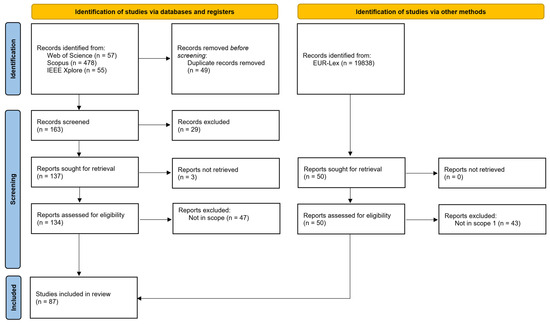
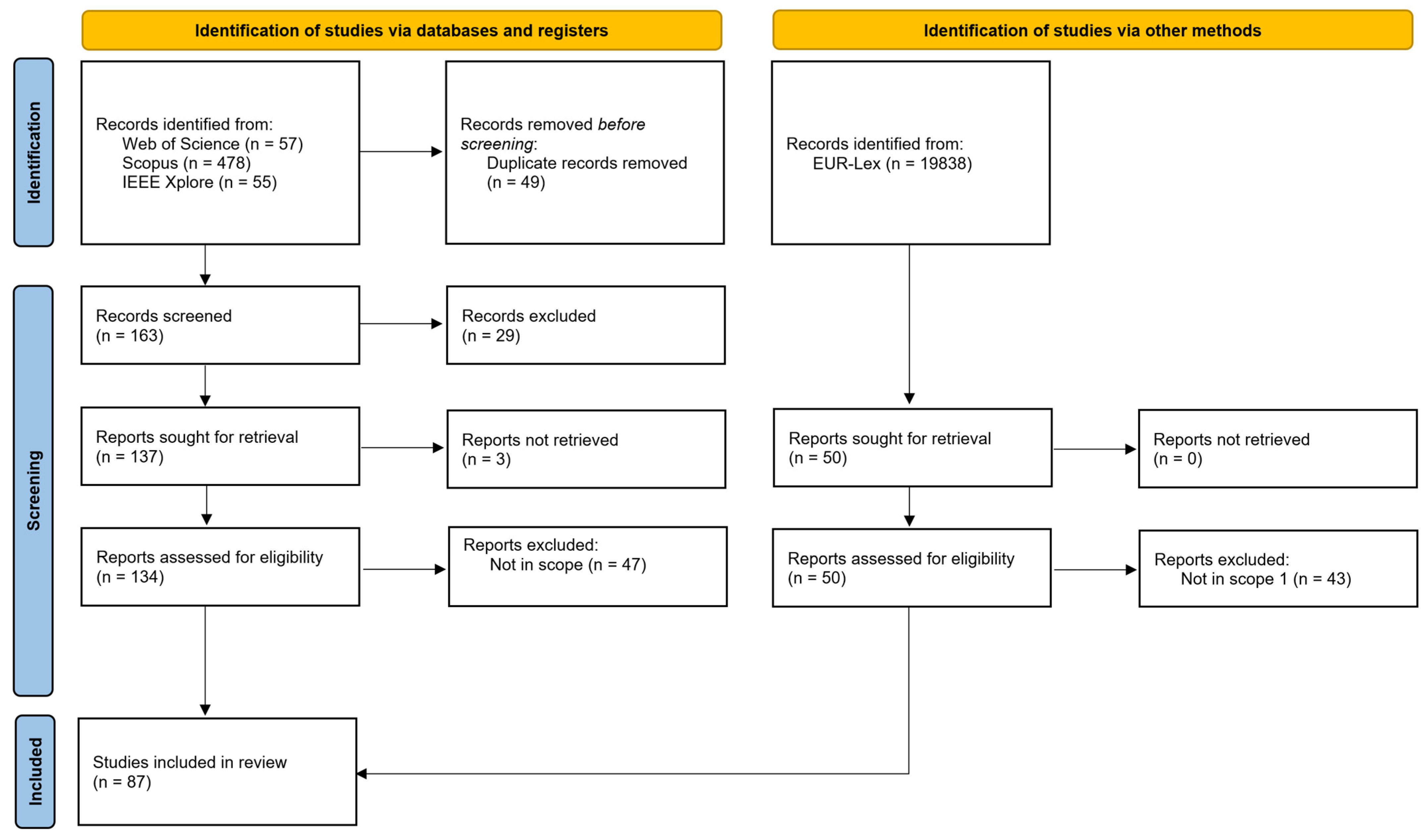
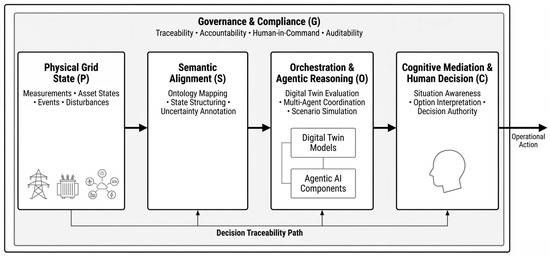
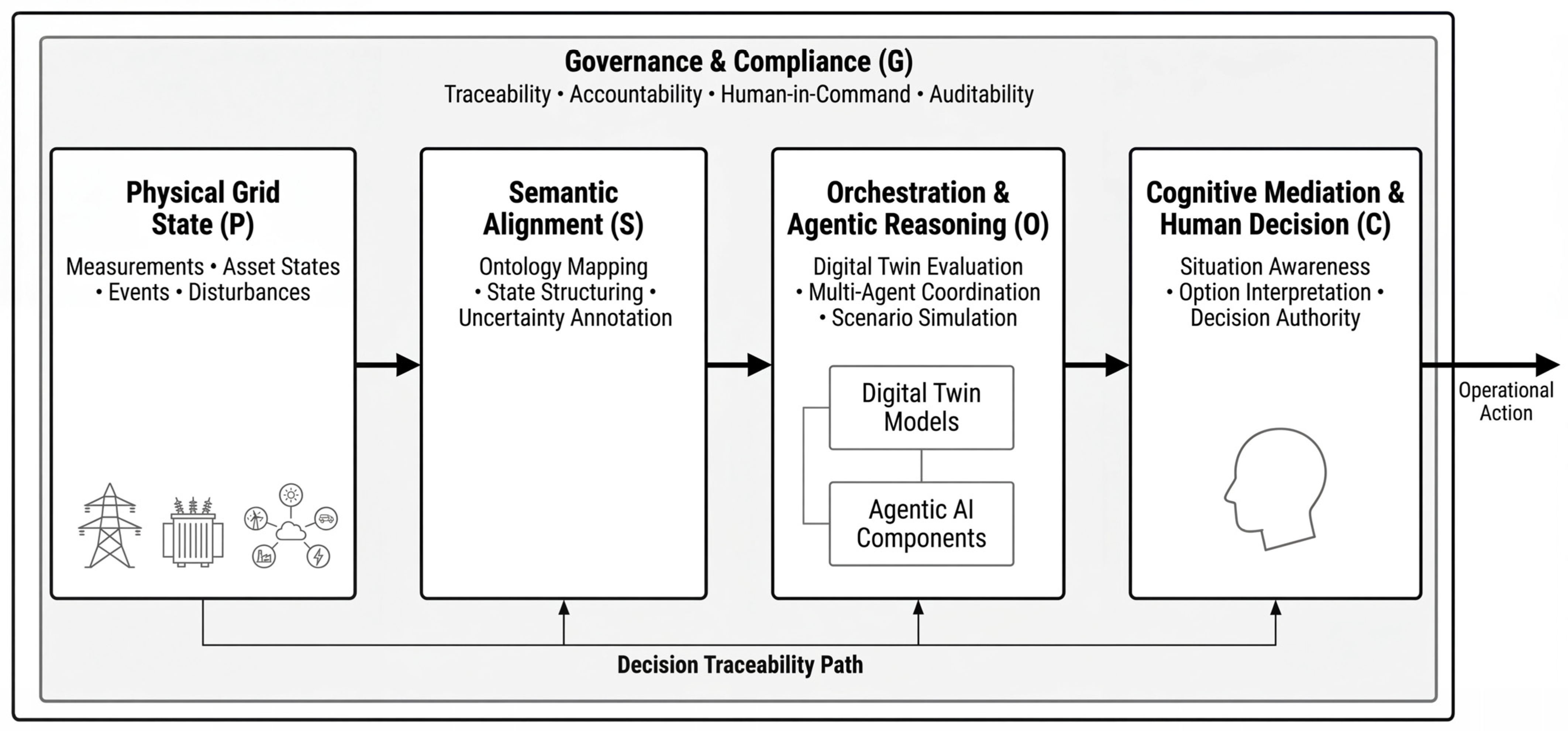
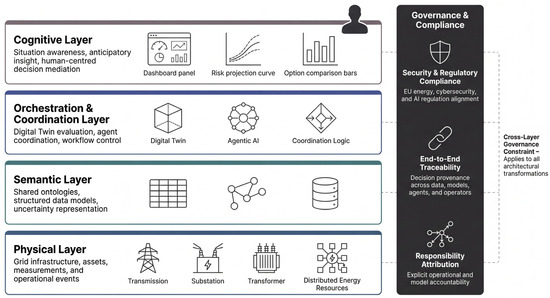
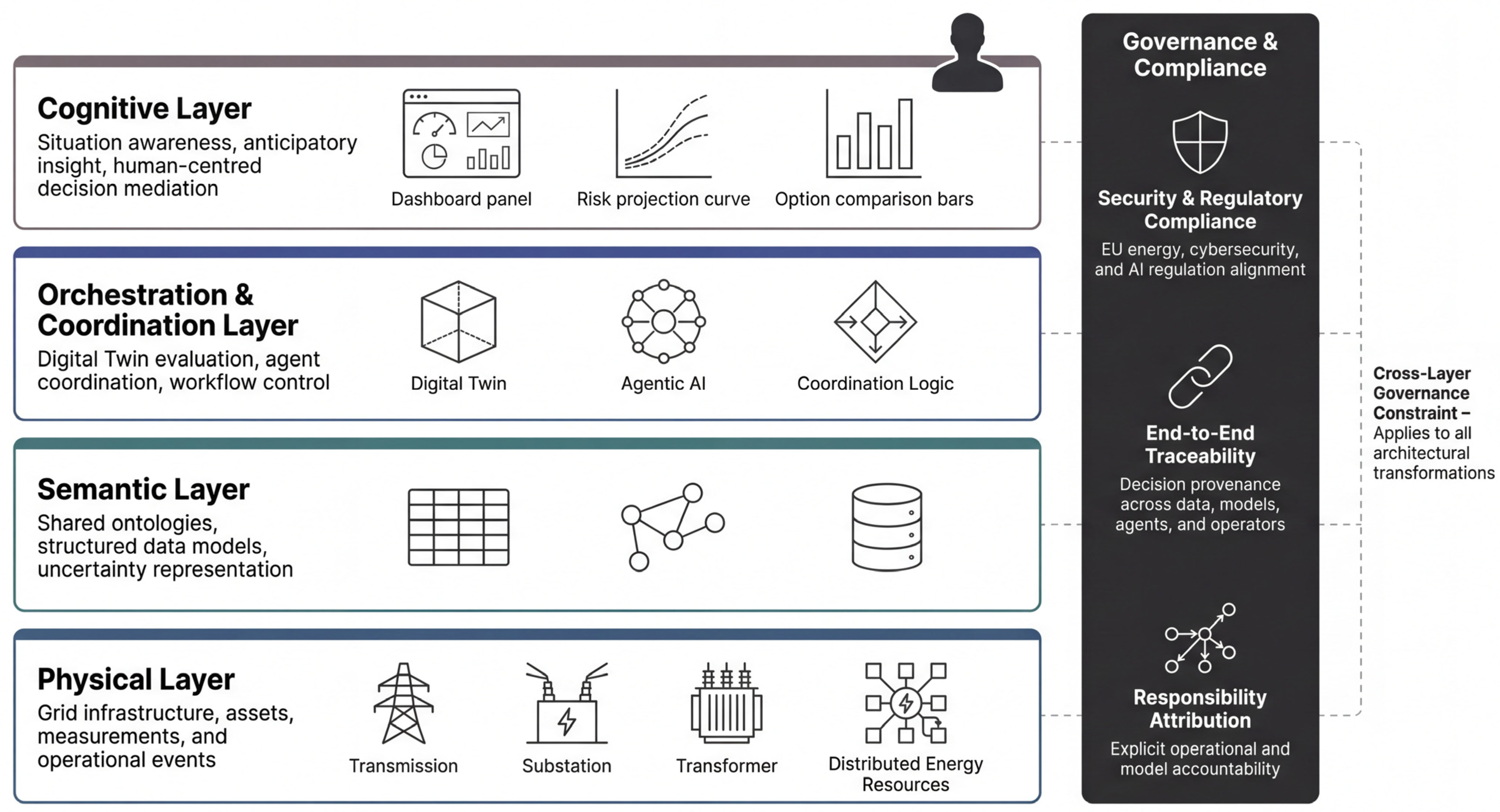
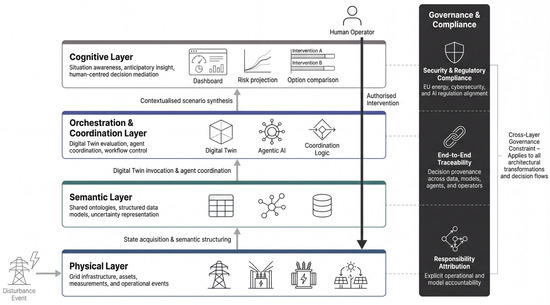
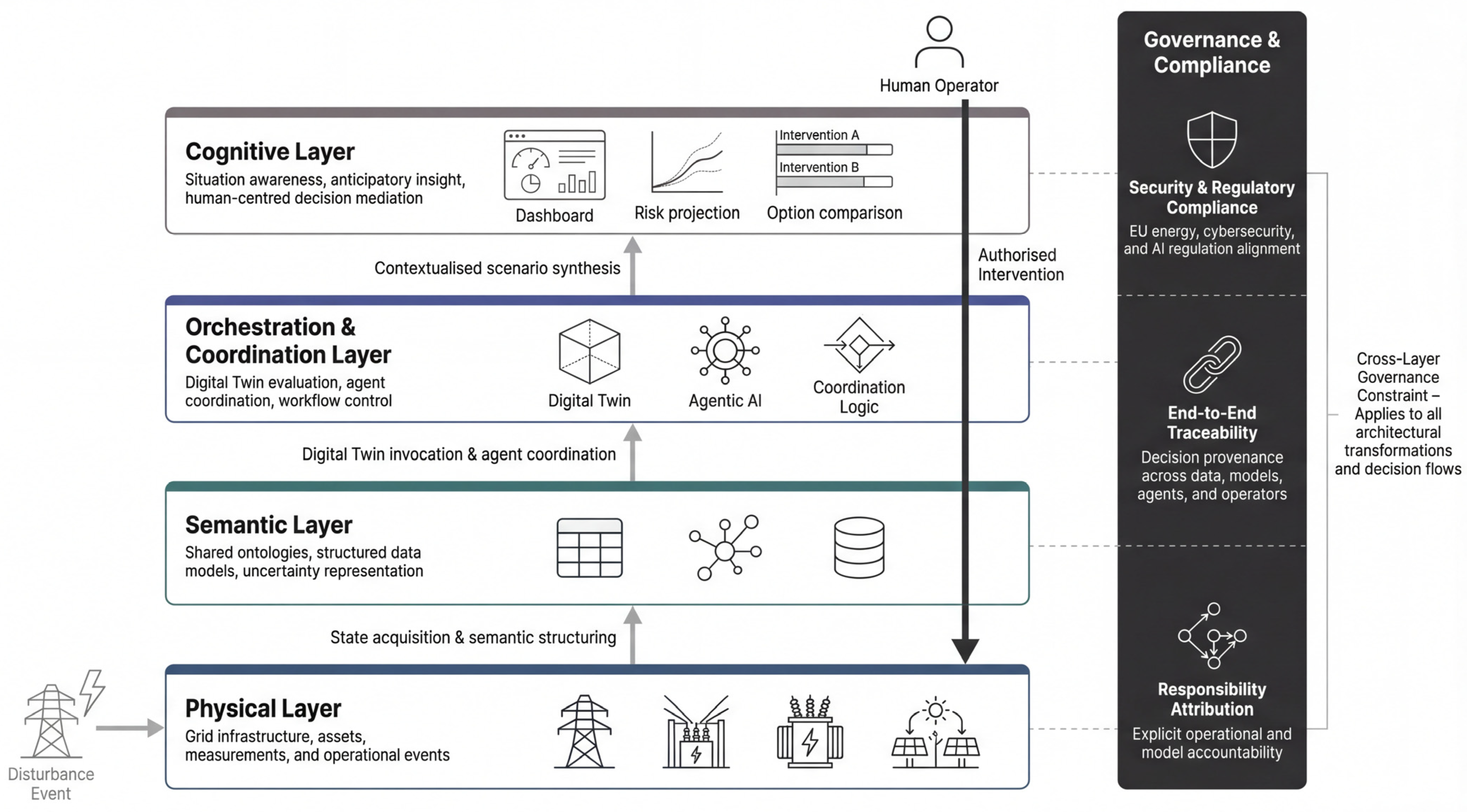
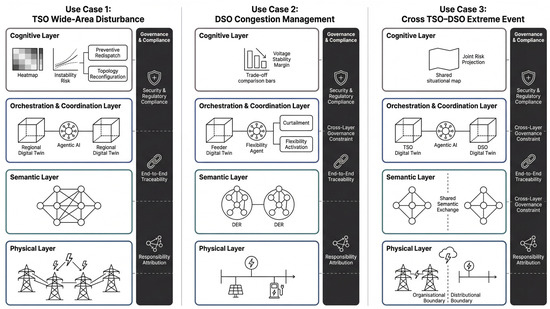
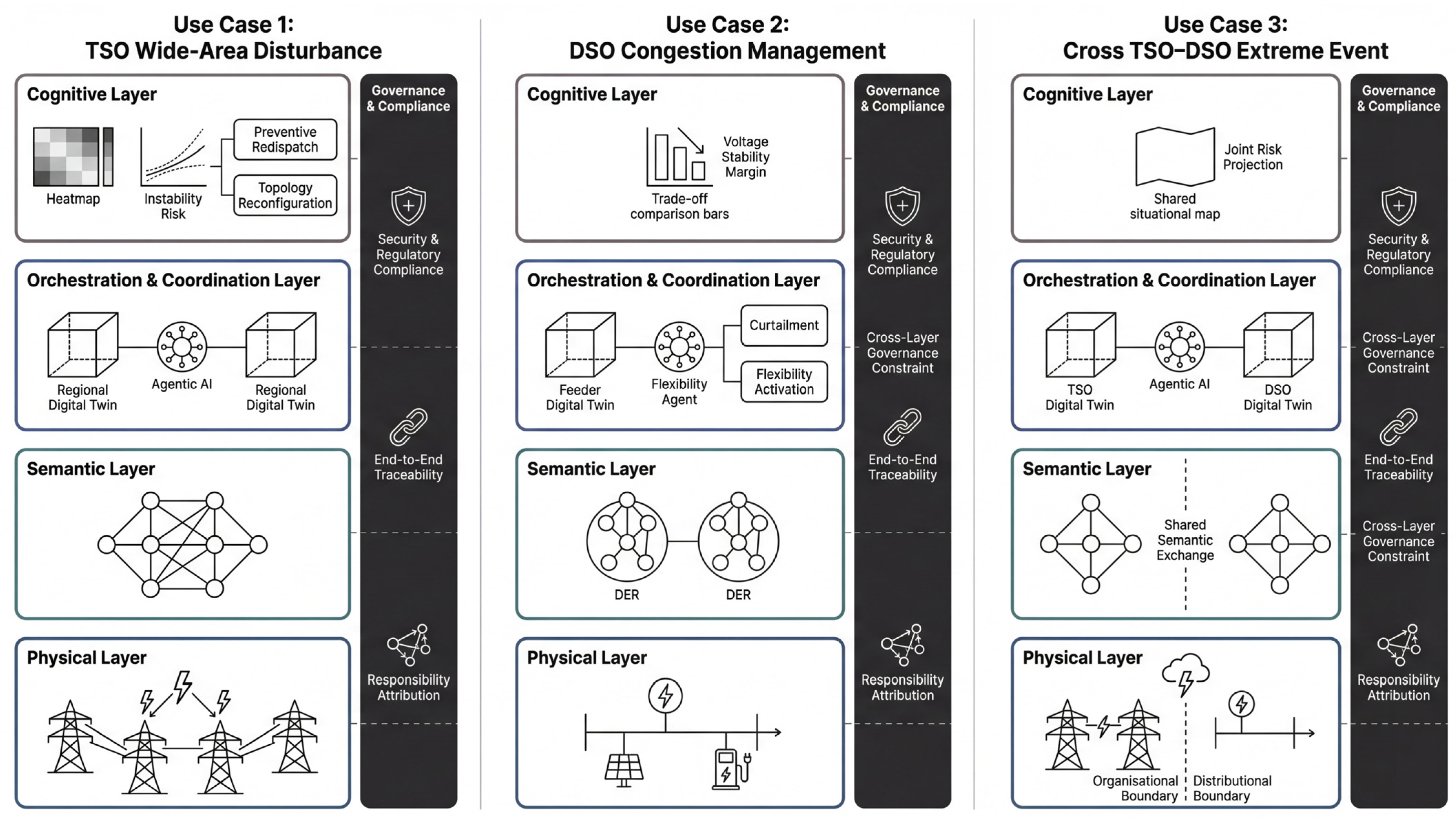

Disclaimer/Publisher’s Note: The statements, opinions and data contained in all publications are solely those of the individual author(s) and contributor(s) and not of MDPI and/or the editor(s). MDPI and/or the editor(s) disclaim responsibility for any injury to people or property resulting from any ideas, methods, instructions or products referred to in the content. |
© 2026 by the authors. Licensee MDPI, Basel, Switzerland. This article is an open access article distributed under the terms and conditions of the Creative Commons Attribution (CC BY) license.