Article

Novel Sampling and Sample Preparation Systems with Industrial Validation for Biomass–Coal Co-Combustion Ratios Based on 14C Determination
1
State Key Laboratory of Clean Energy Utilization, Zhejiang University, Hangzhou 310027, China
2
College of Agriculture and Biotechnology, Zhejiang University, Hangzhou 310013, China
3
Energy Cleaning and Low-Carbon Thermal Conversion Utilization Technology and Equipment Key Laboratory of Sichuan Province, Chengdu 611731, China
*
Author to whom correspondence should be addressed.
Energies 2026, 19(6), 1474; https://doi.org/10.3390/en19061474
Submission received: 30 January 2026 / Revised: 12 March 2026 / Accepted: 13 March 2026 / Published: 15 March 2026
(This article belongs to the Special Issue Sustainable Energy Systems: Progress, Challenges and Prospects)

Abstract

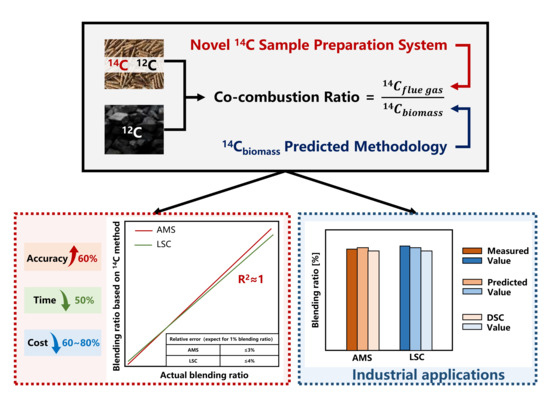
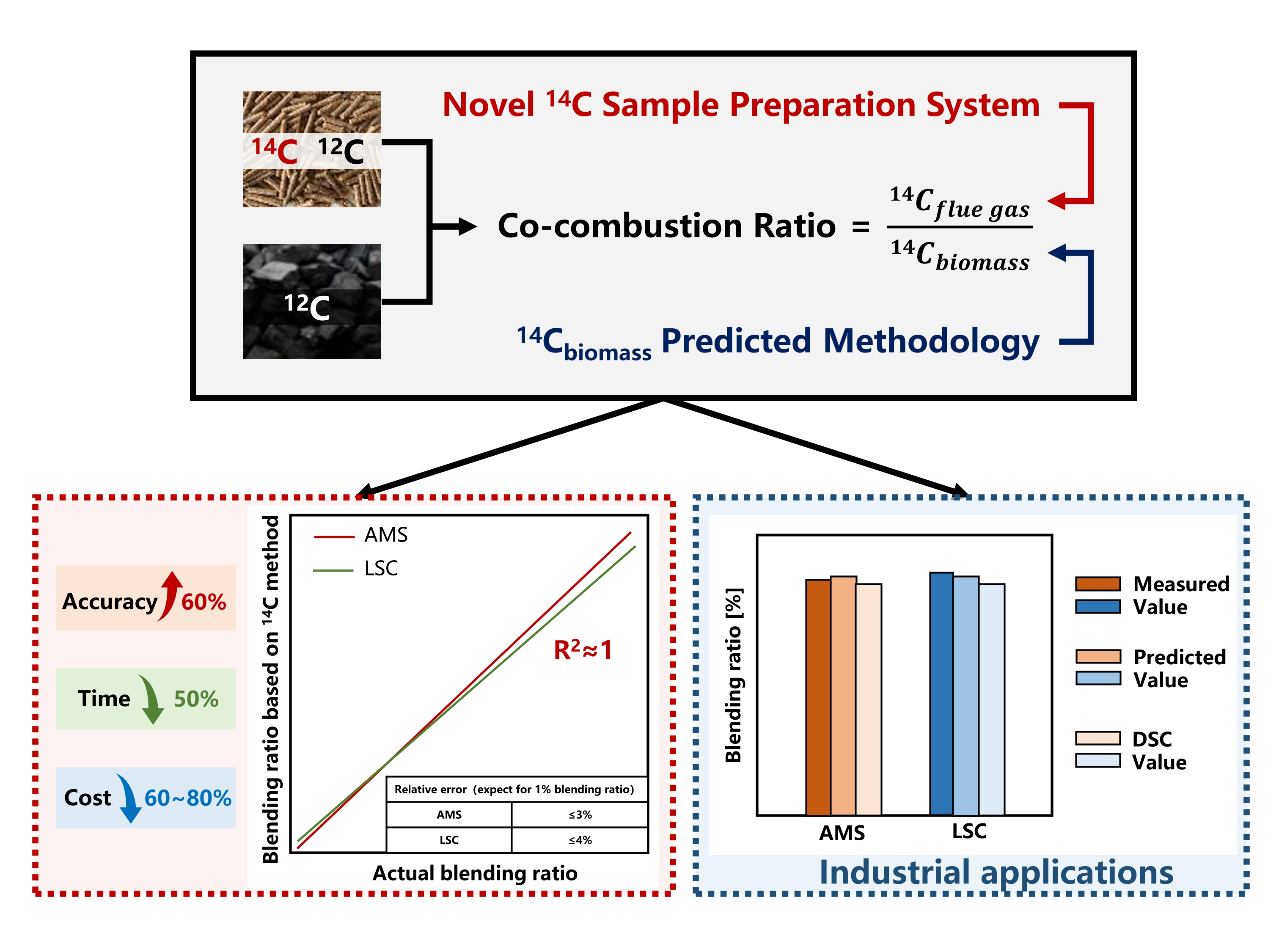
Focusing on enhancing the performance of the 14C method in determining biomass–coal co-combustion ratios, this study developed two novel sample preparation systems: a direct flue gas injection benzene synthesis system based on Liquid Scintillation Counting (LSC) and a direct flue gas sealing graphitization system based on Accelerator Mass Spectrometry (AMS). These systems reduced sample preparation time from 20–24 h to 6–8 h. Experimental validation showed relative errors in biomass blending ratios (1–40%) below ±4% for LSC and ±3% for AMS, except at the 1% blending condition. Compared with conventional methods, both accuracy and efficiency were significantly improved. An enhanced 14C-based industrial measurement scheme was established and successfully applied for monitoring biomass blending ratios (15–50%) in industrial facilities. Deviations between AMS and LSC were within ±3%, confirming the method’s accuracy, despite discrepancies with the Distributed Control System (DCS) estimates. Additionally, predictive formulas for 14C activity in biomass and air CO2 reduced economic investment, with relative errors from ±0.04% to ±3.25%. Overall, the new scheme improved accuracy by 50%, efficiency by 60%, and reduced detection costs by 60–80%, demonstrating feasibility and practical value for industrial applications.

Graphical Abstract

1. Introduction

The global pursuit of sustainable development and the urgent need to address climate change have led to increased concerns over greenhouse gas emissions and environmental pollution [1,2,3]. The power generation sector, which is a major emitter of carbon dioxide, faces significant challenges in transitioning towards cleaner and more sustainable operations [4,5,6]. Biomass, recognized for its renewability and carbon-neutral characteristics, is considered one of the most promising renewable energy sources globally [7,8,9]. Given China’s coal-dominated energy structure, biomass co-combustion with coal power generation is becoming an essential approach for large-scale biomass utilization among the various effective technologies for biomass utilization [10,11,12]. It is also the most feasible solution to reduce carbon emissions from coal-fired power plants [13]. However, a key challenge in its industrial application is the accurate determination of the biomass–coal co-combustion ratio. This parameter is crucial for carbon reduction accounting, green certification, and carbon trading pricing, and is vital for achieving the ‘dual carbon’ goals.
The key to accurately measuring biomass co-combustion ratio lies in identifying the distinct characteristics of biomass and coal fuels. The 14C method is based on the difference in 14C activity between carbon from different sources. Fossil-derived carbon has a 14C activity of zero, as its existence spans a period far exceeding the half-life of radioactive carbon (5730 years). In contrast, the 14C activity in biogenic carbon, influenced by the Earth’s carbon cycle, is nearly at the same level as that of the contemporary local atmosphere [14,15,16]. Therefore, by measuring the 14C activity of CO2 in the flue gas from biomass–coal co-combustion, it is possible to trace and quantitatively distinguish the carbon sources.
The 14C method was originally applied in archaeological dating. With advancements in technology, researchers have gradually extended its application to the detection of bio-carbon content in emerging bio-based products such as foam materials, plastic products, and rubber tires [17,18,19]. In 2007, Hämäläinen et al. [20] introduced the innovative use of the 14C method to quantify biogenic carbon emissions in power plants, marking the first successful application of this technique to assess biomass blending ratios and stimulating extensive research on its use in the energy and environmental fields. Subsequently, researchers conducted short-term and long-term flue gas sampling to monitor biogenic carbon ratios in various incineration plants [14,21,22]. After confirming the feasibility of this method, further studies aimed to improve accuracy by addressing issues such as atmospheric CO2 contamination during sampling [23], selecting appropriate reference values for the 14C activity of pure biomass [22,24], and determining optimal sampling intervals [25,26]. Comparisons with other methods, including selective dissolution [27,28,29,30,31], manual sorting, and mass-energy balance, have demonstrated the superior accuracy of the 14C method.
In parallel with the 14C method, some biomass–coal co-combustion power plants currently employ indirect, real-time estimation methods based on distributed control system (DCS) data, utilizing measurements such as fuel feed rates, boiler load, excess air coefficients, and flue gas composition (O2 and CO2 concentrations). While these DCS-based methods offer the advantage of continuous online monitoring, their accuracy is often limited by challenges in accurately metering biomass feed rates due to its low bulk density, variable moisture content, and unstable flow characteristics. In this context, the 14C method can serve as a high-accuracy reference tool for periodic verification and calibration of DCS estimates, providing a complementary approach that combines real-time monitoring capability with periodic precision.
As biomass–coal co-combustion technology advances and carbon reduction demands increase, researchers have begun to investigate the accuracy of the 14C method for determining the blending ratio of biomass during the co-combustion processes. Tang et al. [15] and He et al. [32] employed two techniques—Accelerator Mass Spectrometry (AMS)-graphitization and Liquid Scintillation Counting (LSC)-benzene synthesis—to measure this ratio. He et al. found that measurement accuracy decreases as the biomass blending ratio lowers, with the LSC method showing a relative error of 15% when the biomass ratio was 2.67%. By removing impurity carbon, Tang reduced the relative error to ±6%, while the AMS method achieved a relative error of ±5%. Wang et al. [33] reported similar results, with the relative error of the 14C method detection being less than 5.69%. Although existing research showed promising accuracy, the alkaline absorption method commonly used for flue gas sampling still presents certain limitations. Passive CO2 absorption by the alkaline solution introduces contamination, which is a major source of error in biomass blending ratio measurements [34]. This issue highlights the potential for further improving the accuracy of the 14C method. Moreover, both sample preparation methods require steps such as converting flue gas CO2 to SrCO3 or performing complex transfer and purification processes [15,32,35], with preparation times of 20–24 h. To further reduce the cost of industrial applications, both Tang et al. [36] and Wang et al. [37] developed a predictive model for biomass 14C activity, using predicted values to replace measured ones. Although the method is comprehensive, its accuracy and industrial applicability still require validation in industrial power plants.
This study developed two new 14C sample preparation systems: one using LSC benzene synthesis with direct flue gas injection, and another using AMS graphitization with direct flue gas sealing. Both systems were validated for accuracy in determining the biomass–coal co-combustion ratio using a double-stage tube furnace experimental setup. Based on these results, an improved industrial measurement scheme was designed and tested at two industrial power plants. In addition, a predictive model was established to estimate the 14C activity of biomass fuels, thereby reducing both time and cost. The model’s accuracy and industrial feasibility were confirmed through comparison with measured values. Overall, the findings support broader industrial adoption of the 14C method and contribute to the advancement of biomass–coal co-combustion power generation technology.

2. Materials and Methods

2.1. Double-Stage Tube Furnace Co-Combustion Experiment

2.1.1. Materials

Yuedian bituminous coal (YDC), bamboo wood (BW), and corn straw composite briquette fuel (CS_cbf) were used as feedstocks for the co-combustion experiment, as shown in Table 1. All raw materials were dried at 105 °C for more than 10 h before use, then ground and screened. Biomass with a particle size below 75 µm and coal with a particle size below 180 µm were blended for co-combustion. The mass-based co-combustion ratio of biomass ( R m b _ a c t u a l ) was set at 1–40%, with the actual carbon-based co-combustion ratio ( R c b _ a c t u a l ) determined based on the feeding amounts of the two fuels and their ultimate analysis. The experimental conditions are set as shown in Table 2.
It is important to note that the properties of CS_cbf listed in Table 1 are markedly different from those of the typical clean corn straw, which usually exhibits high volatile matter and low ash. For example, Park et al. [38] reported that clean corn straw contains 44.06% carbon, 76.14% volatile matter, 20.06% fixed carbon, and only 3.80% ash, with a higher heating value (HHV) of 18.44 MJ/kg. These differences arise from the nature of the feedstock used in this study. The fuel employed here was corn straw composite briquette fuel obtained from a commercial fuel plant. It contains a mixture of corn straw and other agricultural and forestry residues, and due to the production process, a small amount of soil is also incorporated. Therefore, the fuel is not a single-component agricultural residue but a commercially processed composite biomass fuel.
Despite these compositional differences, the 14C-based methodology proposed in this study remains broadly applicable. The core principle of the 14C method is based on the significant difference in 14C activity between biogenic carbon (from biomass) and fossil carbon (from coal). By measuring the 14C activity of the biomass fuel and comparing it to that of the CO2 in the flue gas produced during co-combustion, the actual blending ratio can be accurately determined. This method does not depend on the specific elemental composition of the biomass fuel, but rather on the fundamental difference in 14C activity between biomass and coal. As confirmed in Section 3.2.1, both biomass fuels used in this study (BW and CS_cbf) display 14C activities consistent with atmospheric CO2 and distinctly different from the near-zero 14C activity of coal. Therefore, the 14C-based method and the conclusions established in this study are valid for any biomass fuel that meets the basic condition of having 14C activity significantly different from coal.
The composition of CS_cbf reflects practical supply-chain conditions in industrial biomass utilization. Such feedstock represents an extreme yet realistic scenario in industrial biomass co-combustion, where fuel quality can vary considerably due to differences in collection, transportation, and handling practices. Therefore, this condition provides an opportunity to evaluate the robustness of the proposed 14C method under challenging fuel-quality conditions that may occur in practical industrial applications.

2.1.2. Experimental Equipment and Procedures

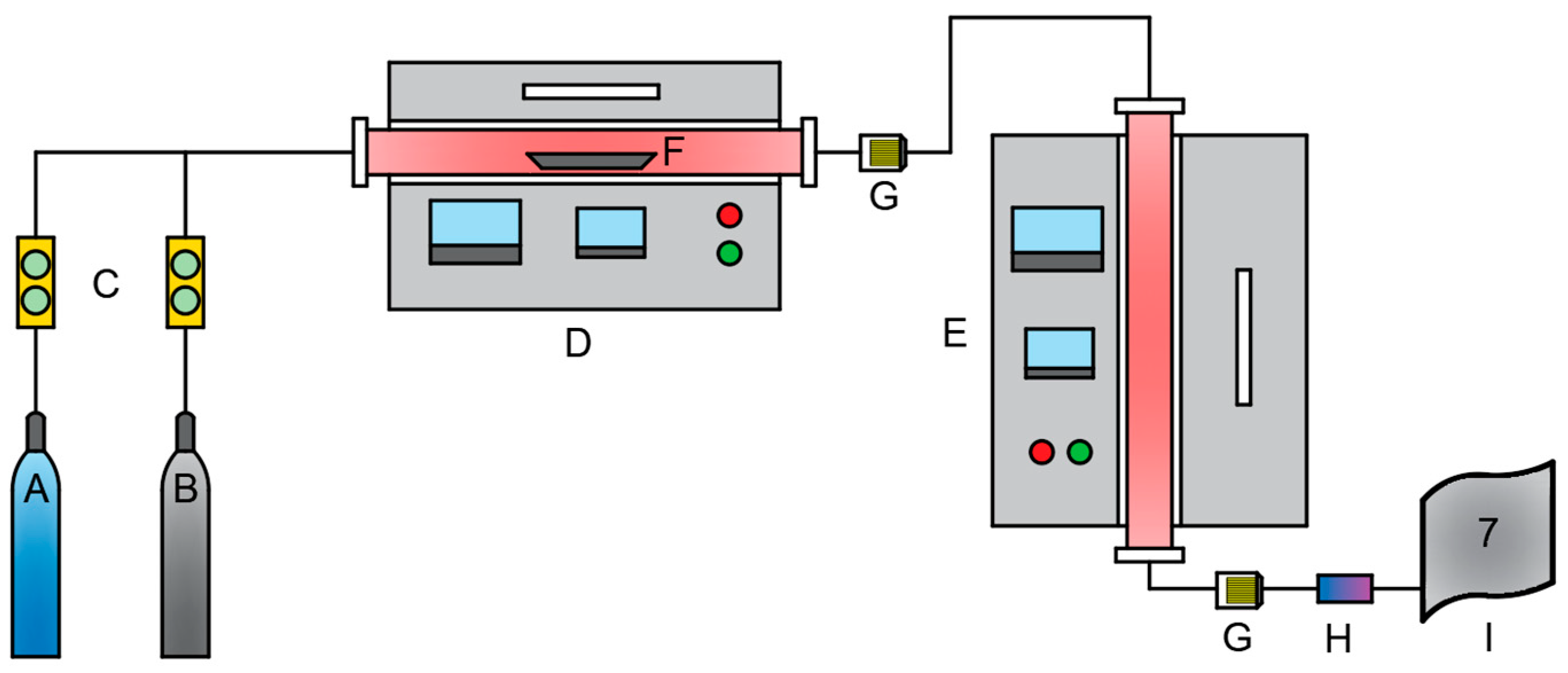
The double-stage tube furnace system consists of a gas supply system, a primary combustion system, a secondary burnout system, and the flue gas collection system, as shown in Figure 1. The gas supply system uses a gas cylinder for gas supply, with a mass flow meter used to control the gas flow rate. The primary combustion system is a horizontal tube furnace heated by silicon carbide rods, capable of reaching a maximum temperature of 1700 °C. The isothermal zone has a length of 400 mm, where a stainless-steel crucible containing a mixture of biomass and coal fuel is placed at the center of the isothermal zone. The secondary burnout system consists of a vertical tubular furnace designed to ensure complete combustion of residual gases.
A predetermined amount of air-dried coal and biomass was weighed, thoroughly mixed, and evenly spread in a stainless-steel crucible placed at the center of the isothermal zone in the primary combustion system. High-purity oxygen (99.999%) was used as the oxidizing agent. Prior to heating, oxygen was introduced at 2 L/min for 20 min to purge residual air. The secondary combustion system was first heated to 800 °C, and the oxygen flow rate was adjusted to 1 L/min. The primary combustion system was then heated to 800 °C at 20 °C/min and maintained for 1 h. Volatiles were released, and partial combustion of volatiles and fixed carbon occurred in the primary combustion zone, while unburned gaseous products were fully oxidized in the secondary combustion zone. The flue gas was purified to remove particulates and moisture and collected in aluminum foil gas sampling bags.
After combustion, the gas composition is analyzed using an Agilent 7890B gas chromatograph (Agilent Technologies, Santa Clara, CA, USA) to ensure that the CO concentration is below the detection limit (1 ppm), indicating nearly complete gaseous burnout. After cooling to room temperature, the residual ash was collected, and its carbon content was determined to verify complete solid-phase combustion.

2.2. Sample Preparation System

Two innovative flue gas 14C sample preparation systems were designed and constructed, based on the LSC method and the AMS method, which offer improved detection accuracy.

2.2.1. Direct Flue Gas Injection Benzene Synthesis System

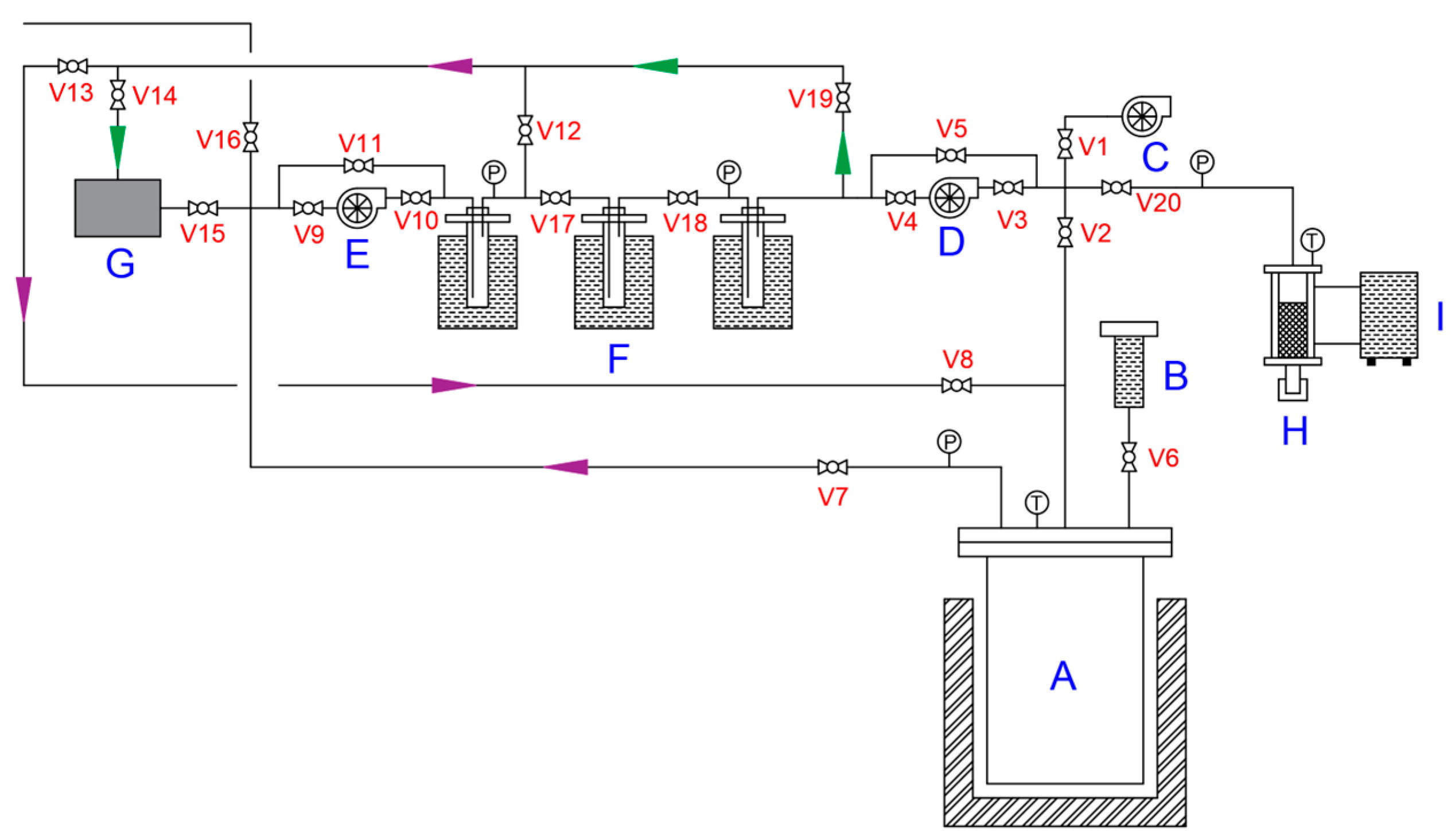
The direct flue gas injection benzene synthesis system is shown in Figure 2. The system includes a CO2 capture module, a high-temperature reactor module, an acetylene capture module, and a benzene synthesis module. It utilizes the principle of boiling point separation to capture CO2 from the flue gas while extracting other components, thus achieving effective CO2 separation and capture. In the high temperature reactor, a carbonation reaction between Ca and CO2 at 1000 °C is used to produce CaC2 [39]. C2H2 is then generated through the hydrolysis of CaC2. Both CO2 and C2H2 are captured using a recirculating absorption method, with CO2 captured by a 1-propanol cold trap placed in a liquid nitrogen bath, and C2H2 captured using a liquid nitrogen trap. The two circulation gas washing pipelines are indicated by the colored arrows in Figure 2. Finally, C2H2 is catalytically polymerized into benzene under the action of a CrO3-SiO2-Al2O3 catalyst. The chemical reactions involved in this system are as follows:
5Ca + 2CO2 → CaC2 + 4CaO
CaC2 + H2O → Ca(OH)2 +C2H2
3C2H2 → C6H6

2.2.2. Direct Flue Gas Sealing Graphitization System

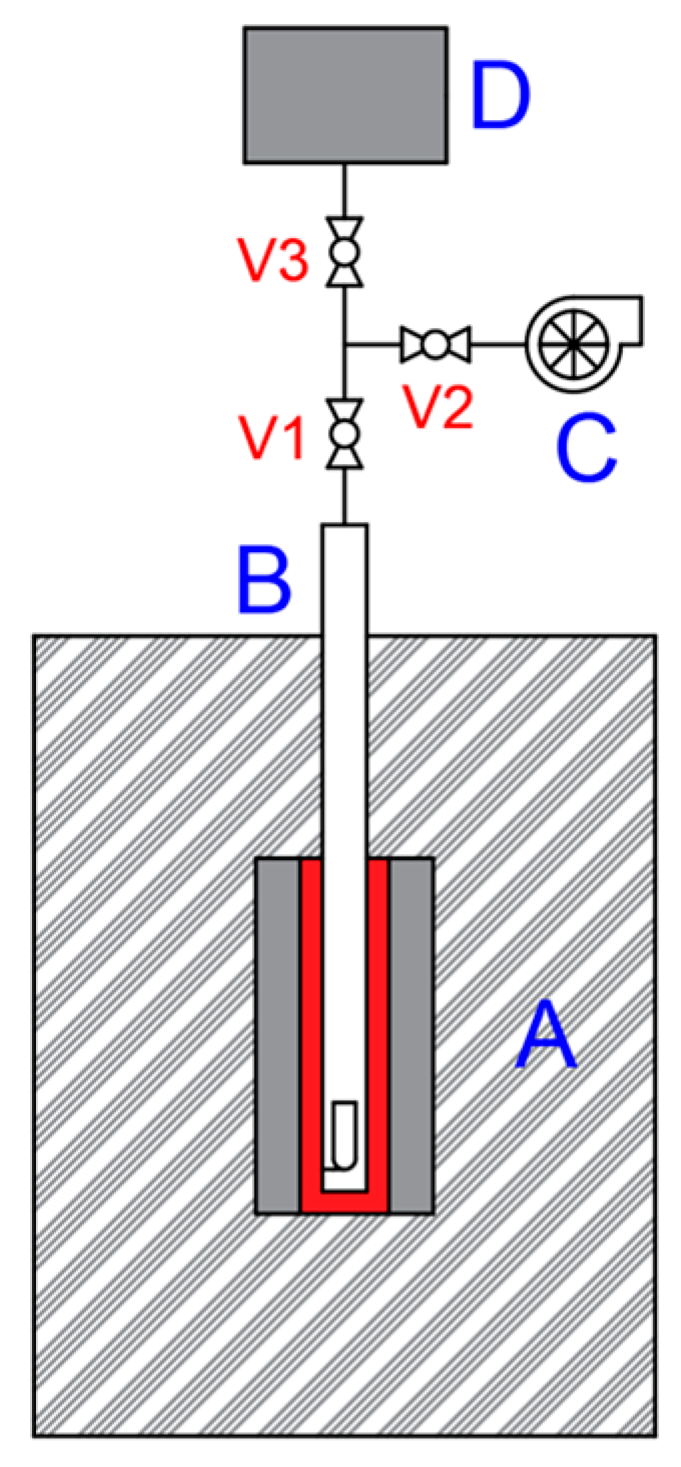
The innovative AMS-graphitization sample preparation system is shown in Figure 3. The sample preparation process for this system involves three steps: vacuum degassing, flue gas sealing, and high-temperature reaction. First, vacuum degassing is carried out using a vacuum pump (C), followed by flue gas scrubbing. The dry flue gas, which has been desulfurized and dewatered, is then sealed into the sample preparation system. This system contains pre-loaded reagents (Zn, TiH2, and Fe) that are used to reduce CO2 and CO. Finally, the system is heated to complete the preparation of the graphite target. The design of the graphitization reactor is based on the inner-outer tube nested structure proposed by Xu et al. [40]. Zn and TiH2 are placed in the outer tube as O2 absorbents and CO2 reductants, while Fe is placed in the inner tube as a catalyst for the reduction of CO to graphite. The chemical reactions involved in this system are as follows:
2Zn + O2 → 2ZnO
CO2 + Zn → CO + ZnO
TiH2 → Ti + H2
CO2 + H2 → CO + H2O
2CO → C (Graphite) + CO2

2.3. Industrial Applications and Measurement Scheme

2.3.1. Fuel and Operating Conditions

The biomass–coal co-combustion ratio determination method developed in this study was applied to a pilot platform of a 5 MW pulverized coal furnace in Sichuan, China, and a 220 t/h circulating fluidized bed (CFB) boiler at a power station in Jiangsu, China. The fuels used in the 5 MW pilot platform (PP) are bituminous coal and corn straw, while the fuels used in the 220 t/h CFB boiler were bituminous coal and 8 mm diameter wood pellets.
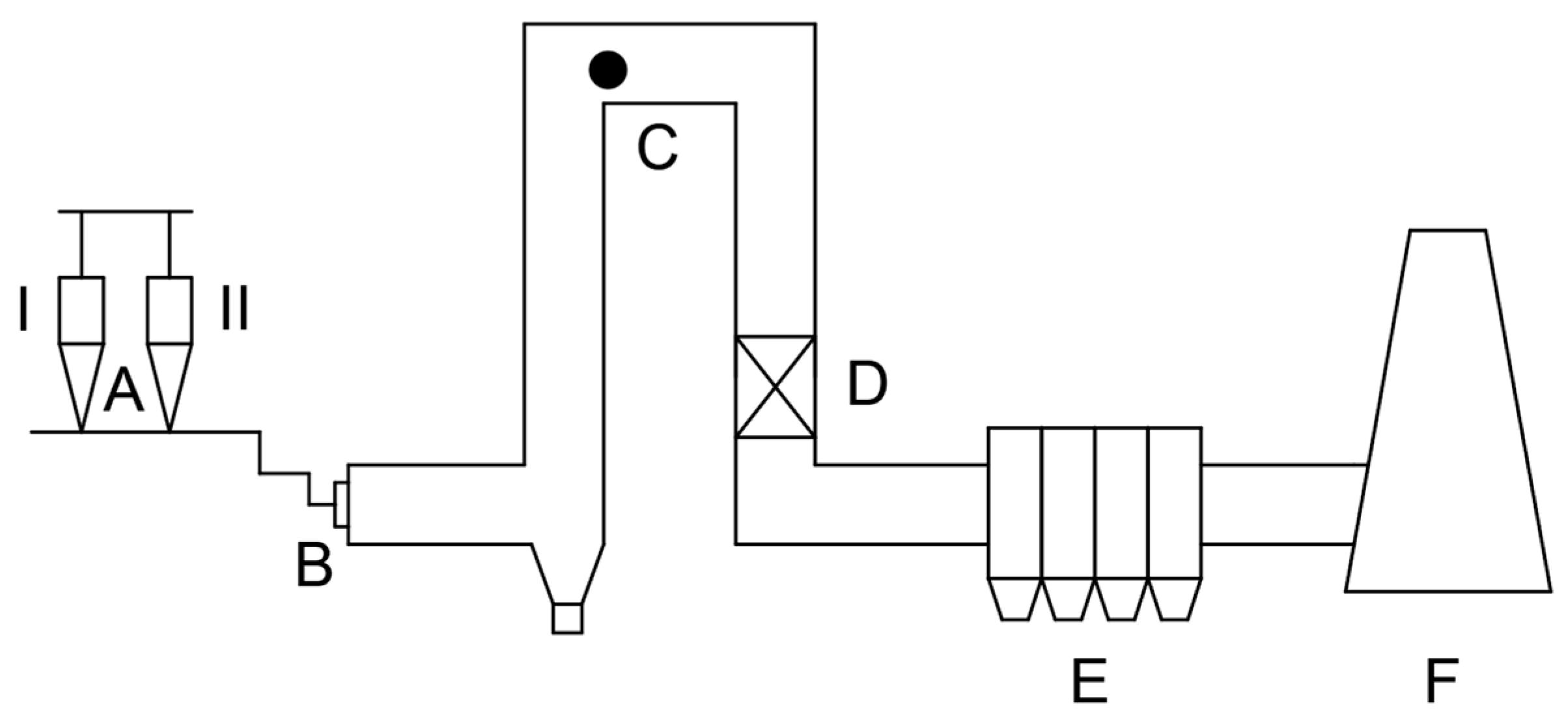
The 5 MW pilot platform comprises a fuel feeding system, a horizontal single-burner combustion section, a vertical tangential combustion section, a flue gas cooling section, and an integrated ultra-low-emission system (denitrification, desulfurization, and dust removal), as shown in Figure 4. The pulverized fuel delivery system of the 5 MW pilot platform uses a combined path for feeding. The coal and biomass powders can be fed in controlled amounts through independent feeders. A screw feeder ensures the stability of biomass powder delivery. After being mixed evenly under the influence of primary air, the fuel is then delivered to the burner. Prior to testing, both feeders were calibrated, and the blending ratio was controlled by adjusting feeder rotation speeds. The pilot furnace adopts an L-shaped configuration. The horizontal section serves as a test platform for pulverized coal and oil/gas single burners, while the vertical section is equipped with tangentially fired direct-flow burners along with the corresponding over-fire air (burnout air) burners.
The facility is equipped with a DCS for real-time monitoring and data acquisition. The fuel feeding subsystem records frequency setpoints and feedback signals of both feeders, enabling fuel supply control with an accuracy of up to 0.5%. The flue gas analysis subsystem continuously monitors O2, CO, CO2, SO2, and NOx concentrations.
The pulverized coal furnace pilot platform conducted co-combustion experiments with the estimated biomass energy-based blending ratio ( R D C S e b ) ranging from 15% to 50%. After each operating condition reached the designated load, the system was stabilized for 1 h before the test. The experimental run was then conducted for 1–3 h. The excess air coefficient (α) was controlled within the range of 1.1 to 1.3. During the operation of the pilot platform, experiments were conducted to determine the biomass blending ratios under three different operating conditions, as shown in Table 3. The combustion conditions for both the gas and solid phases inside the furnace were favorable. The CO concentration in the flue gas ( φ C O ) was relatively low (for PP-3, the CO concentration was ND (Non-Detectable), below the instrument detection limit), indicating that gaseous carbon is almost completely combusted. Similarly, the unburned carbon content in the ash ( x c a s h ) is also low.
The 220 t/h CFB power station conducted an industrial-scale combustion test with an estimated mass-based biomass–coal co-combustion ratio of 15%. To reduce sulfur oxide emissions, a proper amount of limestone was added to the boiler during operation. The specific operating condition is presented in Table 4. It can be inferred that the gaseous phase combustion was relatively complete. The carbon content in the slag ( x c s l a g ) is relatively low, while the carbon content in the ash ( x c a s h ) is slightly higher. This necessitates the sampling, sample preparation, and 14C analysis of the ash to quantify the unburned carbon originating from coal and biomass, thereby facilitating the calculation of the co-combustion ratio at the furnace inlet side.

2.3.2. Industrial Measurement Scheme of Co-Combustion Ratio

The enhanced industrial measurement scheme developed in this study maintains continuity with the traditional scheme. Both approaches involve the standard process of sampling, 14C sample preparation, 14C detection, and calculation. However, significant improvements have been achieved through technological innovations in key steps.
  • Sampling
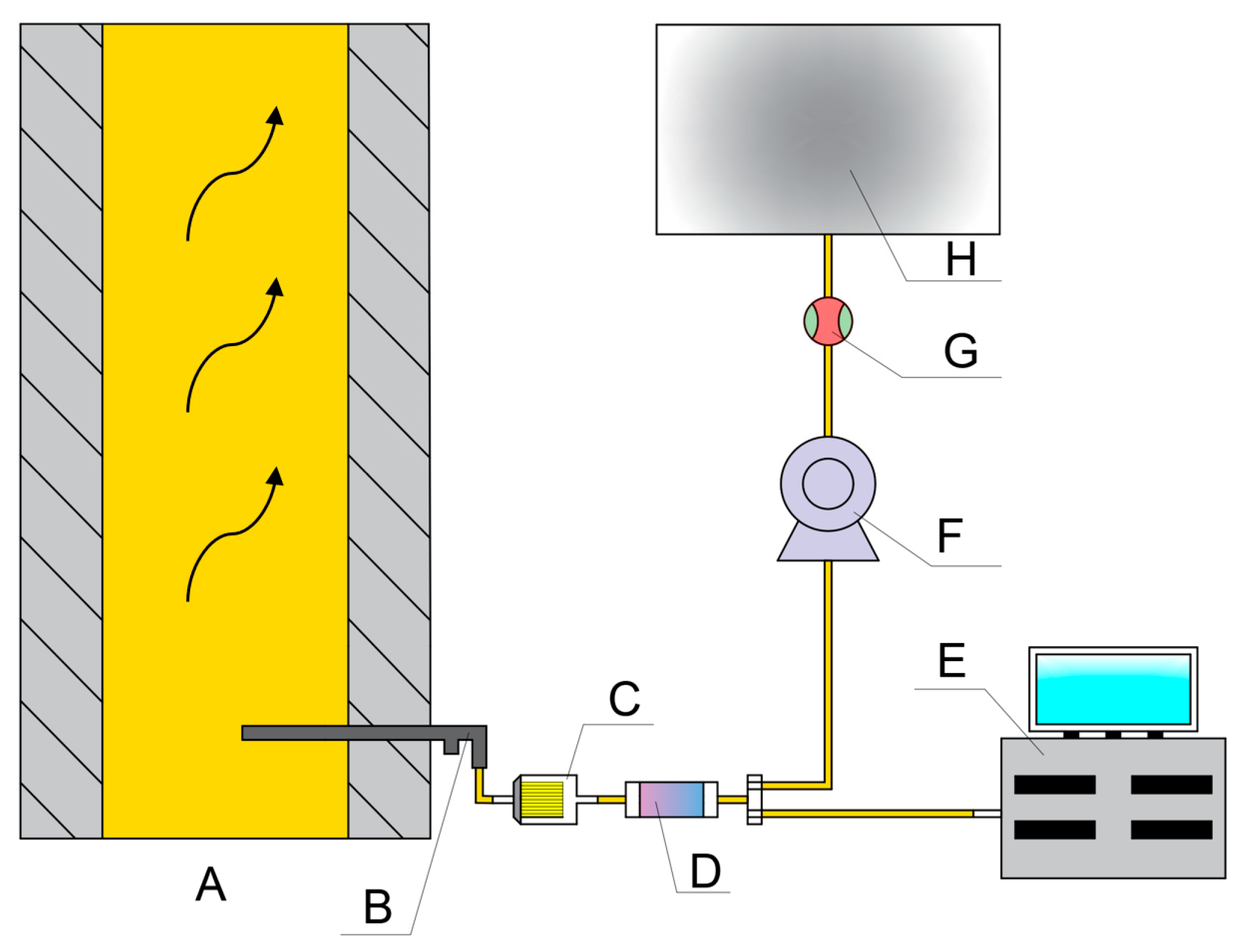
Figure 5 illustrates the flue gas sampling system. Unlike traditional methods that rely on alkaline solutions to absorb CO2, this system directly collects dry flue gas after water and dust have been removed, for subsequent sample preparation. This approach simplifies the sample treatment process and prevents contamination that may arise from CO2 absorption by the alkaline solution during sampling and sample preparation. Another notable advantage of this method is that the collected flue gas is temporarily stored in gas sampling bags, allowing uniform mixing of gas components over time. This ensures the determination of the average biomass blending ratio over a specified time interval.
Prior to flue gas sampling, the oxygen concentration distribution across the sampling cross-section was measured using a flue gas analyzer. After confirming uniform oxygen concentration at the measurement plane, single-point sampling was performed. The flue gas was collected in 200 L aluminum foil gas bags, with the sampling flow rate controlled at 5 L/min using a flowmeter. Intermittent sampling was adopted, consisting of 10 min sampling periods separated by 10 min intervals. For each operating condition, the total sampling duration was approximately 60 min to ensure that the collected flue gas samples adequately represented the steady-state operating conditions.
Simultaneously with the flue gas sampling, ash and slag samples are collected to calculate the biomass blending ratio on the furnace side based on the content of unburned carbon in these samples. To further reduce both time and economic investment, air and biomass sampling and sample preparation for 14C activity determination are no longer performed. Instead, the 14C activity of the air is accurately estimated using the formula: C 14 O 2 _ y e a r = 0.355 × y e a r + 816.82 based on existing research [41,42,43], and the 14C activity of the biomass is calculated using the methodology for predicting biomass 14C activity proposed by Wang et al. [37].
2.
14C sample preparation
This step involves the 14C sample preparation from flue gas CO2 (required), as well as from biomass and unburned carbon in ash (optional). The 14C sample preparation method for flue gas carbon dioxide follows the two techniques outlined in Section 2.2. If biomass and unburned carbon in ash need to be sampled, the traditional AMS-graphitization sample preparation system [35] previously proposed will be used.
3.
14C determination
The 14C analysis of flue gas samples can be performed using AMS or LSC. The choice between the two methods should be made by balancing the required accuracy, expected cost, and anticipated turnaround time. The prepared benzene samples are mixed with the scintillation cocktail (Ultima Gold F) and detected by an LSC (ALOKA LSC-LB7), which has a minimum detectable activity of approximately 1 pMC under the adopted counting conditions. The prepared graphite target samples are tested using an AMS, which offers a lower minimum detectable activity of approximately 0.3 pMC, making it more suitable for samples with very low biogenic carbon content. For 14C analysis of biomass samples and unburned carbon in ash, AMS is recommended due to its higher sensitivity.
4.
Calculation
The 14C activity of CO2 in the co-combustion flue gas ( A f l u e g a s ) is determined by the proportion of CO2 from different sources ( f x c b ) and their respective 14C activities ( A x ), with the superscript “cb” denotes the carbon-based ratio:
A f l u e g a s = A b i o m a s s × f b i o m a s s c b + A c o a l × f c o a l c b + A a i r × f a i r c b + A o t h e r s × f o t h e r s c b
The CO2 source can be divided into: CO2 from biomass combustion ( f b i o m a s s c b ), CO2 from coal combustion ( f c o a l c b ), CO2 from air introduced during combustion and sampling ( f a i r c b ), and CO2 from other sources ( f o t h e r s c b ), such as the CO2 generated from the decomposition of limestone ( f C a C O 3 c b ), which is added to the furnace to reduce sulfur oxide emissions. Since the age of coal is much higher than the half-life of 14C, its 14C activity is considered zero.
In the experiment, no alkaline solution was used to absorb the flue gas CO2, and the use of high-purity oxygen bottles avoided the introduction of air CO2 from the combustion air supply. Therefore, the only source of 14C activity in the flue gas is the CO2 produced from biomass combustion. The carbon-based biomass blending ratio ( R c b ) can be written as:
R c b = f b i o m a s s c b × 100 % = A f l u e g a s A b i o m a s s × 100 %
In the industrial power plant, there is a certain amount of unburned carbon present in the ash and slag. When comparing the biomass blending ratio measured using the 14C method with the ratio recorded by the DCS to verify the accuracy of the belt scale or to calibrate the belt scale and flowmeter, the unburned carbon loss of fuels ( C b i o m a s s l o s s / C c o a l l o s s ) in the ash and slag must be taken into account to calculate the blending ratio on the furnace inlet side ( R f c b ):
R f c b = R c b 1 C b i o m a s s l o s s R c b 1 C b i o m a s s l o s s + 100 R c b 1 C c o a l l o s s × 100 %
The unburned carbon content in ash samples was determined using the loss-on-ignition (LOI) method. Specifically, a known mass of ash sample was placed in a muffle furnace at 815 ± 15 °C and heated to constant weight. The unburned carbon content was calculated based on the mass loss according to the following equation:
C M a d = 100 A a d
C M a d refers to the unburned carbon content on an air-dried basis of ash and slag, and A a d refers to the ash content on an air-dried basis of ash and slag.
The mass-based ( R f m b ) and energy-based blending ratios ( R f e b ) on the furnace inlet side can be calculated based on the carbon content of the air-dried base ( C b i o m a s s / C c o a l ) and lower heating value of fuels ( Q b i o m a s s / Q c o a l ) using Equations (13) and (14):
R f m b = R f c b C b i o m a s s R f c b C b i o m a s s + 100 R f c b C c o a l × 100 %
R f e b = R f m b × Q b i o m a s s R f m b × Q b i o m a s s + 100 R f m b × Q c o a l × 100
The uncertainty of the measured/predicted values of the co-combustion ratio was calculated according to the above formula based on the error propagation principle, with a 95% confidence interval. The relative error ( ε ) between the measured coupled combustion ratio and the actual value was calculated using the following equation:
ε = R c b R c b _ a c t u a l R c b _ a c t u a l × 100

3. Results and Discussion

3.1. Improvement Analysis of the Sample Preparation Technologies

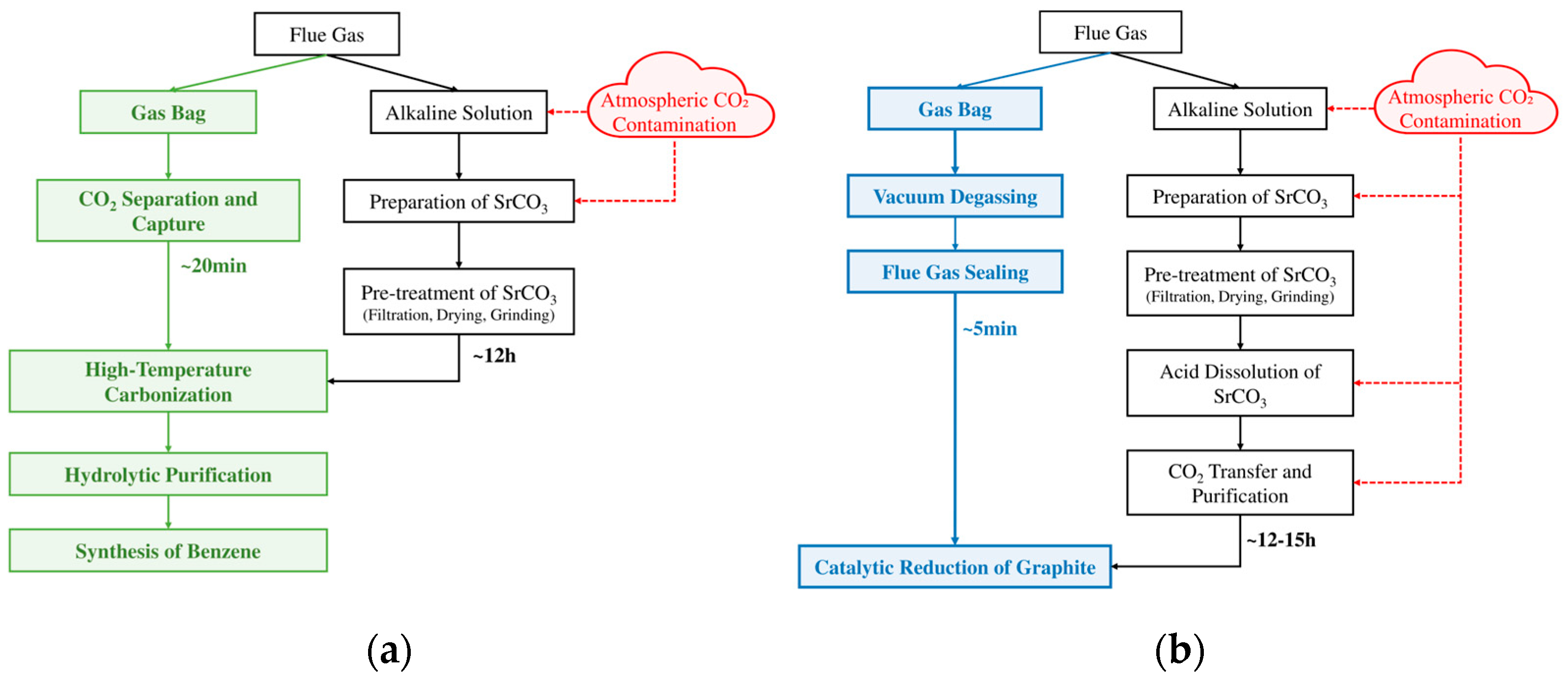
To reduce sample preparation time and enhance the accuracy of the 14C method for determining the biomass–coal co-combustion ratio, we developed two novel sample preparation technologies by optimizing the sample preparation process and system design. A comparison of these optimized processes with previous methods is shown in Figure 6.

3.1.1. Approaches for Improving Accuracy

In the approaches to improving accuracy, one of the most critical steps was minimizing the risk of atmospheric CO2 contamination during the sampling and sample preparation processes (as indicated by the red dashed arrow in Figure 6). Firstly, during sampling, we used gas bags to collect flue gas, which were then directly connected to the sample preparation system, replacing the traditional method of CO2 absorption using alkaline solutions. The method of sample collection using gas bags conforms to the principles specified in the Standard Practice for Collection of Integrated Samples for the Speciation of Biomass (Biogenic) and Fossil-Derived Carbon Dioxide Emitted from Stationary Emissions Sources (ASTM D7459) [44]. The direct introduction of flue gas avoids contamination from atmospheric CO2 absorbed by alkaline solutions. For the benzene synthesis sample preparation system, dry flue gas is directly introduced into the system, where CO2 is captured using a boiling point separation method. For the graphite sample preparation system, flue gas is directly sealed and processed without the need for complex purification steps. Compared with conventional sample preparation benches, the proposed system eliminates complex piping units for pretreatment, transfer purification, and quantification, thereby reducing the risk of vacuum leakage and minimizing the potential introduction of atmospheric CO2. In addition to reducing contamination during sampling, the sample preparation system in this study uses metal components and union fittings to replace the original glass apparatus. Specifically, for the graphite preparation process, this approach eliminates a series of complex tubing systems, such as pretreatment, transfer purification, and quantification units, thus reducing the potential for vacuum leakage and minimizing the introduction of atmospheric CO2.
Furthermore, the benzene synthesis sample preparation method proposed in this study replaces Mg powder with metallic Ca as the raw material for high-temperature carbonization. This change shifts the process from a solid–solid reaction to a gas–solid reaction, enhancing the reaction conversion rate and thereby increasing benzene yield. During the LSC testing stage, the accuracy of the results improves with the amount of benzene used, as larger quantities provide more reliable measurements.

3.1.2. Approaches for Reducing Sample Preparation Time

The traditional method requires the conversion of CO2 absorbed in alkali solution into SrCO3 before the preparation of benzene and graphite, followed by pretreatment steps such as filtration, drying, and grinding. This entire process is time-consuming. Additionally, the conventional graphite preparation method involves additional steps, including acid dissolution of SrCO3, CO2 purification, and CO2 flame sealing before the catalytic reduction reaction, typically taking 12 to 15 h. In contrast, the benzene preparation technique proposed in this study only requires the separation and capture of CO2 from flue gas using a cold trap, enabling immediate preparation. For the graphite preparation, the catalytic reduction reaction can proceed directly after the flue gas is sealed, reducing the time required for the sample pretreatment process to just 5 to 20 min. This significantly shortens the sample preparation time.
During the carbonization reaction in the benzene synthesis process, the reaction rate between CO2 and metallic Ca is much higher than that between SrCO3 and Mg powder, further reducing the carbonization time. Additionally, we have optimized the reaction times for each stage of the graphitization process, ensuring that the yield is unaffected. As a result, the graphitization preparation can be completed within 6 h, making it suitable for on-site sample preparation in industrial settings.

3.2. Accuracy Verification of the Sample Preparation Technologies

A series of experiments simulating the industrial application of the 14C method was conducted within the laboratory. The comparison between the calculated and actual values verified the improved accuracy of the novel 14C sample preparation technology compared to traditional methods.

3.2.1. The Co-Combustion Ratios Obtained by Two Technologies

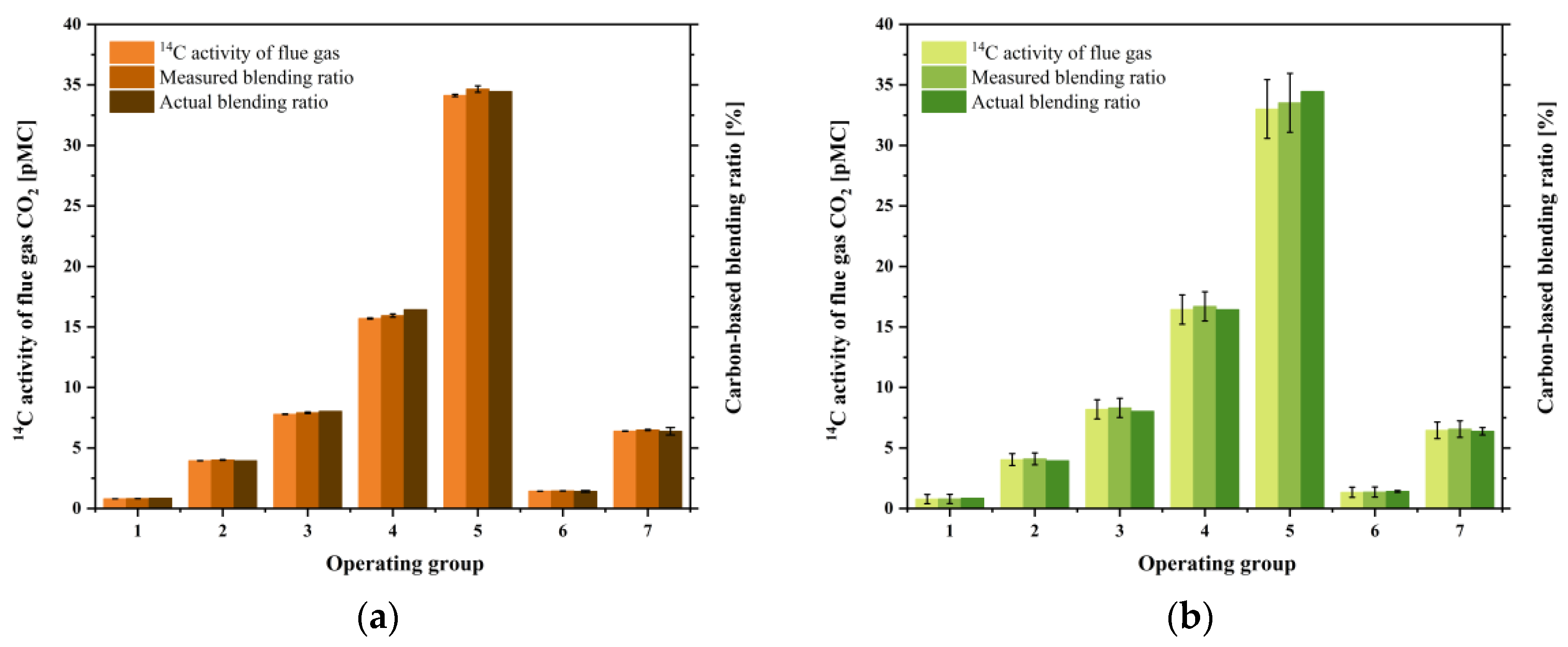
The 14C activity of the bamboo wood and corn straw composite briquette fuel used in the experiment was measured using the AMS-graphitization method, yielding values of 98.479 pMC and 98.492 pMC, respectively. Based on the flue gas CO2 and biomass 14C activity test results, the biomass blending ratio of co-combustion, along with the associated error, can be determined, as shown in Table 5 and Figure 7. The uncertainty of the carbon-based blending ratio measurement is calculated using the error propagation formula, with a confidence interval of 95%.
In this series of experiments, the 14C activity values of flue gas were not consistently higher than the biomass blending ratio, as observed in the study by Wang et al. [33], but instead were close to the biomass blending ratio. This indicates that the novel 14C sample preparation technology effectively reduced the introduction of air CO2 contamination. In industrial settings, the 14C activity of the flue gas will, to some extent, still be higher than the carbon-based biomass blending ratio, due to the inevitable introduction of air CO2 through the combustion air supply in the boiler. However, according to previous research, when the CO2 volumetric fraction in the flue gas can be accurately determined, this portion of air CO2 contamination can be reasonably deducted, ensuring that it does not affect the accuracy of the biomass blending ratio measurement.

3.2.2. Accuracy Analysis of the 14C Method

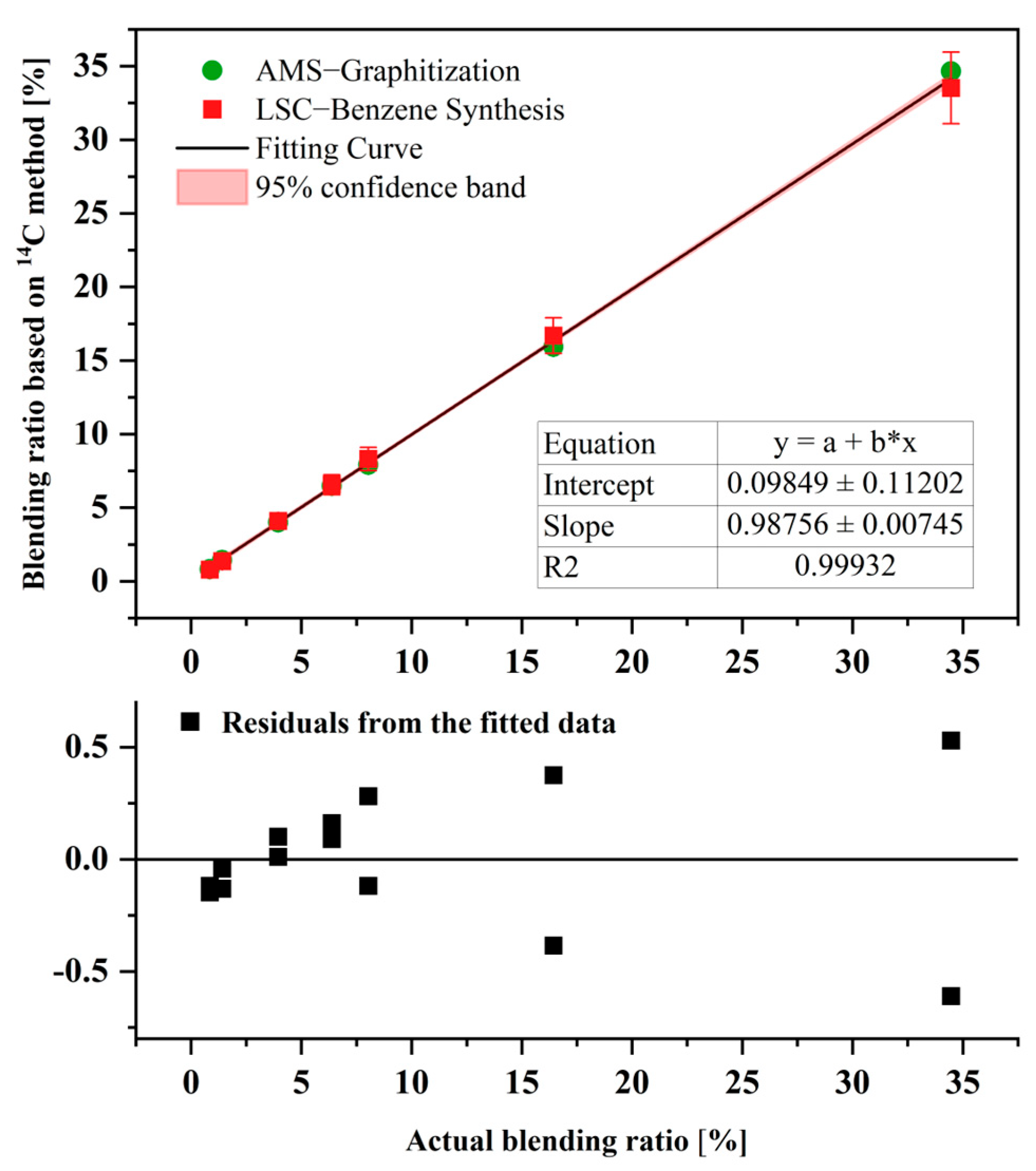
Figure 8 shows the fitted curve of the 14C method for determining the carbon-based biomass blending ratio, with the measured values and actual values. The curve fitting for the 14 data points results in the equation Y = 0.9876X + 0.0985, with an R2 value of 0.9993. Compared to the fitted curve results from accuracy validation with the traditional method [33], the slope is closer to 1, the intercept is closer to 0, and the correlation coefficient is closer to 1. This indicates that the co-combustion blending ratio measurement values are more accurate, with less pollution introduced throughout the entire process. Except for the group with a mass-based blending ratio of 1%, the relative errors of the AMS-graphitization method measurement for the other conditions are all below ±3%, with most groups falling below ±2%, and the minimum error being 0.06%. The relative errors of the LSC-benzene synthesis method measurements are all below ±4%, with the minimum error being 1.64%. For the group with a YDC and BW mass-based blending ratio of 1%, the carbon-based blending ratio is 0.85%. Although the relative errors of the AMS-graphitization method and LSC-benzene synthesis method measurements are −4.15% and −7.41%, respectively, the absolute errors are only −0.03% and −0.06%. Therefore, the measurement results are sufficiently accurate.
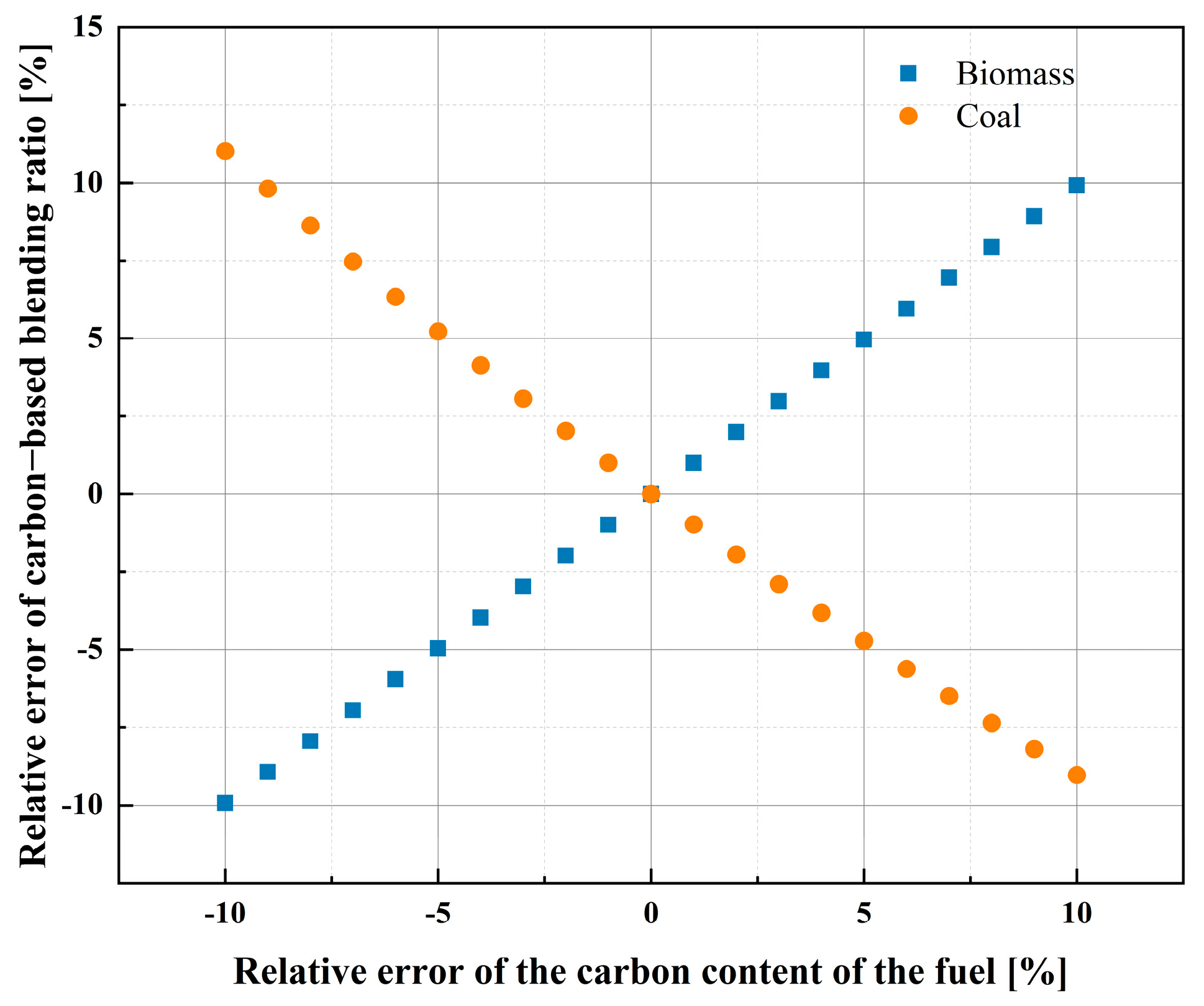
Compared to the biomass blending ratio determination experiments conducted on the traditional sample preparation systems of the two technical routes [33], both the AMS-graphitization method and the LSC-benzene synthesis method have shown a certain degree of improvement in accuracy, with a significant enhancement in timeliness. In this series of experiments, although the contamination from atmospheric CO2 was reduced and theoretically, no significant error-inducing factors were present during the sampling and preparation processes, the results show that the relative error in the biomass blending ratio measurement is still higher than the testing accuracy of LSC and AMS. This discrepancy may be due to the fact that the measured carbon content in the fuel may not be entirely accurate, leading to errors when converting the blending ratio from a mass-based to a carbon-based approach. Taking a mass-based blending ratio of 1% as an example, Figure 9 illustrates the impact of errors in the carbon content of coal and biomass on the calculation of the actual carbon-based ratio. A relative error of ±1%~10% in the carbon content of coal results in a relative error of ±0.98%~11.01% in the actual carbon-based ratio. Similarly, a relative error of ±1%~10% in the carbon content of biomass leads to a relative error of ±0.99%~9.93% in the actual carbon-based ratio. This may be the primary cause of the error observed in the results of this series of experiments.
Additionally, although the fuels used in this experiment were sourced from a high-temperature drying oven, the fuel weighing process was not instantaneous. During weighing, there may have been a slight absorption of moisture, leading to a non-zero moisture content. Since the calculations in this study were based on the dry basis carbon content, a small degree of error may exist. Nevertheless, overall, the timeliness and accuracy of the 14C method have been significantly improved, and it now meets the requirements for industrial applications in both aspects.

3.3. Comparison of the Two 14C-Based Sample Preparation Techniques

The two novel 14C sample preparation techniques, after improvements in the sample preparation process and system design, have greatly minimized the contamination of the 14C sample preparation process by atmospheric CO2. Both the LSC-benzene synthesis method and the AMS-graphitization method have seen a certain degree of accuracy enhancement. The relative error of the AMS-graphitization method is lower than that of the LSC-benzene synthesis method, as AMS offers higher testing precision. However, the accuracy of both methods is quite similar. The relative error of the LSC-benzene synthesis method is generally below ±4%, which is sufficient for determining the co-combustion blending ratio of bio-based fuels in industrial settings. Therefore, from an accuracy perspective, both approaches show strong potential for widespread application in industrial power plants.
The timeliness includes considerations of both sample preparation time and testing time. The sample preparation time for individual samples is similar for both methods, but the AMS-graphitization method is more convenient. In terms of testing time, due to differences in instrument costs, industrial power plants typically equip LSC rather than AMS. As a result, graphite samples generally need to be sent to specialized institutions for testing, which requires several days of waiting. In contrast, the LSC can complete the testing within a few hours after sample preparation. Consequently, the LSC-benzene synthesis method offers higher timeliness, although its operation is more complex and requires specialized technical personnel for industrial power plant applications. If bulk sample testing is required and cost permits, the AMS-graphitization method is also a good choice.
From an economic perspective, both the instrument and testing costs of AMS are ten times higher than those of LSC. This significantly limits the application of the AMS-graphitization method. Therefore, the LSC-benzene synthesis method appears to be a more suitable technology for industrial applications. However, the overall application cost of the 14C method remains high. One potential approach to reduce this cost in industrial settings is to use a prediction method for the 14C activity of biomass fuels.

3.4. Results of Industrial Applications

3.4.1. Co-Combustion Ratios of Three Benchmarks

Table 6 presents the key parameters for calculating the biomass blending ratio. The air 14C activity ( A a i r ) represents the estimated atmospheric 14C activity for the year of the experiments. The fractions of CO2 from air introduced during combustion and sampling ( f a i r c b ) and CO2 generated from the decomposition of limestone ( f C a C O 3 c b ) were calculated based on the limestone feed rate, total air volume, flue gas volume, and CO2 content in the flue gas. The 14C activity of ash ( A a s h ) from PP-1, PP-2, and CFB-1 was measured to be 4.337, 2.249, and 0.870 pMC, respectively. This suggests that the unburned carbon in the ash from the pilot platform and CFB boiler is primarily derived from coal. The consistency of the 14C activity in the flue gas ( A f l u e g a s ) measured by the AMS-graphitization method and the LSC-benzene synthesis method is relatively good, providing mutual verification of the accuracy of both methods.
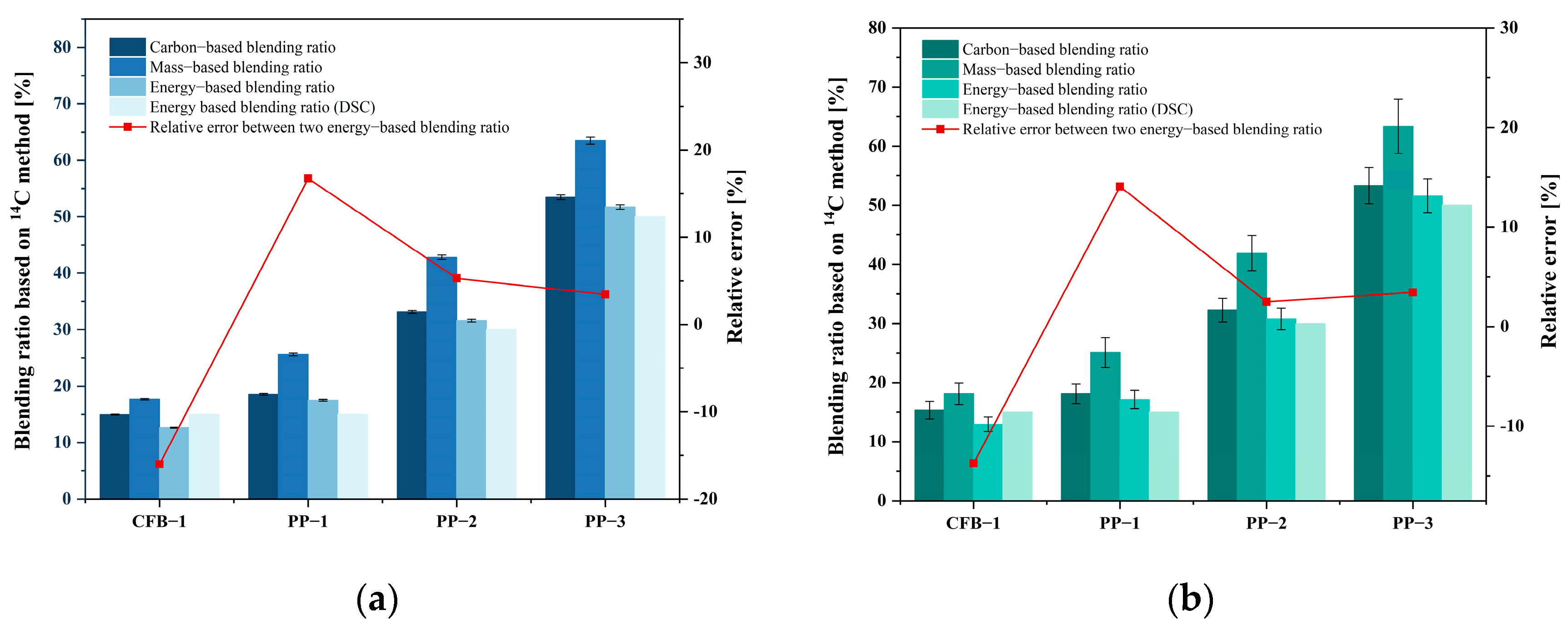
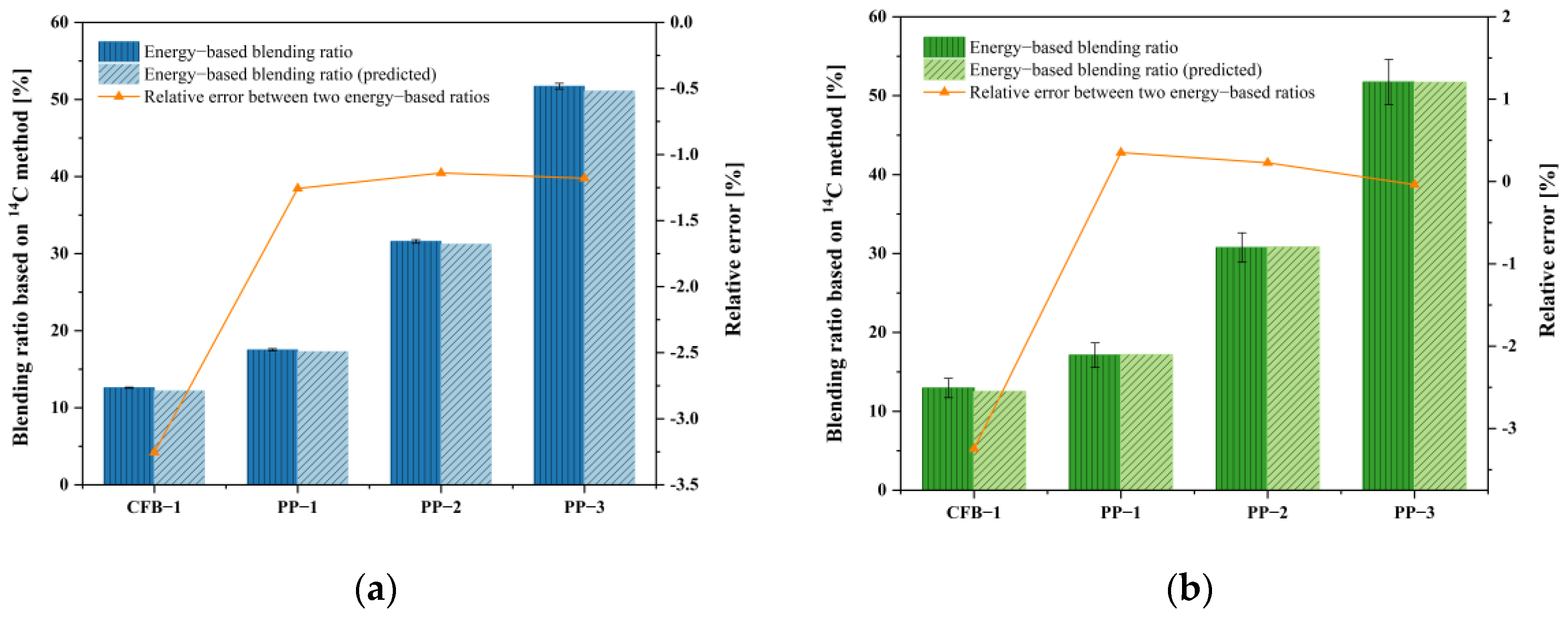
Based on the measured values of key parameters and the corresponding calculation formulas, the carbon-based ( R f c b ), mass-based ( R f m b ), and energy-based ( R f e b ) biomass blending ratios at the furnace inlet side were calculated, as shown in Table 7. Figure 10 provides a more intuitive display of the calculated results for the three blending ratios, as well as the deviation between the energy-based blending ratio determined in this study and the value estimated by the DCS ( R D C S e b ). The measurement results obtained by the AMS and LSC methods show good agreement, with deviations ranging from ±1% to 3%. These deviations may be attributed to the inherent measurement precision of the LSC method. However, the energy-based blending ratios determined using the 14C method exhibit certain discrepancies compared to the estimates provided by the DCS, with the maximum relative error exceeding ±16.73%. Overall, the blending ratio results based on 14C measurement on the pilot platform are slightly higher than those recorded by the DCS. This discrepancy may be due to the lower density of the biomass fuel, which can lead to an underestimation of its mass when measured by the belt scale.
Thus, it can be concluded that when high accuracy is required for the determination of the biomass blending ratio or carbon emission reduction, reliance solely on belt-scale recorded data is insufficient. In industrial power plants, the 14C method can be periodically employed to determine the biomass–coal co-combustion ratio. The resulting measurements can then be used to calibrate the belt-scale data, thereby enabling more accurate long-term online monitoring of the co-combustion blending ratio.

3.4.2. Industrial Applicability Analysis of Predicted 14C Activity

According to the methodology for predicting biomass 14C activity proposed by Wang et al., the predicted 14C activity values of the biomass fuels used in the pilot platform and CFB boiler were calculated. Meanwhile, to validate the accuracy of the predicted values, samples of the two types of biomass fuels were collected, and their 14C activity values were measured. The predicted and measured results are shown in Table 8.
The reduction factor of the local air 14C activity ( R F 1 ) was calculated based on the resident population and total fossil energy consumption at the location of the pilot platform and CFB boiler in 2024. The predicted value of the Northern Hemisphere’s atmospheric background 14C activity in 2024 ( C O 2 _ 2024 14 ) was calculated using the prediction formula mentioned in Section 2.3.2. Additionally, since the specific proportion of forestry waste and wood board fuels in the pellet fuel cannot be determined, the average 14C activity of all types of perennial biomass in 2024 was used as the predicted value for the original 14C activity ( C o r i 14 ).
The measured 14C activity value of corn straw shows a 1.3% deviation from the predicted value. Potential causes for this discrepancy include the fact that the corn straw growth area is not entirely located within the city of the pilot platform, which may lead to errors in the predicted atmospheric 14C activity reduction factor. Alternatively, deviation in predicting the Northern Hemisphere’s atmospheric background 14C activity could also be a factor. Currently, no recent publicly available data on atmospheric 14C background monitoring in the Northern Hemisphere has been published. Therefore, the predicted values based on historical trends may contain a certain degree of uncertainty. The measured 14C activity of wood pellets shows a 3.5% deviation from the predicted value. This deviation is primarily due to the uncertainty regarding the sources of the biomass pellets. However, if no significant errors occur at later stages, the deviation in the predicted value should still result in an acceptable range of error for the blending ratio determination.
Figure 11 shows a comparison between the energy-based blending ratio calculated using the measured biomass 14C activity values and those calculated using the predicted values. The results obtained from the predicted biomass 14C activity values are not significantly different from those obtained from the measured values. The relative error between the predicted and measured values ranges from ±0.04% to ±3.25%, demonstrating the accuracy and reliability of the prediction method. The biomass pellets used in the CFB boiler are not entirely sourced from wood board fuels, which have unpredictable 14C activity. Instead, they also include forestry waste materials such as wood chips, branches, leaves, and bark, which have relatively stable 14C activity. Therefore, the use of predicted values for calculation does not result in significant errors.
The use of predicted rather than measured 14C activity values for biomass fuels offers significant advantages in reducing sampling requirements, preparation time, and overall detection costs. However, predicted values are not applicable in all cases and must be determined based on specific conditions to assess when their use is appropriate.
Prediction of biomass 14C activity is acceptable when biomass sources are well-characterized and consistent, such as agricultural residues like corn straw from known geographical regions, where the deviation between predicted and measured values was only 1.3% in this study. Prediction is also suitable for biomass materials with inherently stable 14C activity, including forestry residues such as wood chips, branches, and bark from perennial plants. Furthermore, predicted values are appropriate for routine monitoring applications where moderate accuracy requirements apply, typically with a relative error tolerance greater than ±3% in the final blending ratio determination, and where cost reduction is prioritized over maximum precision.
Conversely, direct measurement of biomass 14C activity is recommended when biomass includes materials with potentially anomalous 14C activity, such as wood board fuels from unknown or aged sources, where the deviation between predicted and measured values reached 3.5% in the CFB boiler application. Direct measurement is also essential when high-precision determinations are required for regulatory compliance, carbon credit verification, or formal emissions reporting. Additionally, when the biomass supply chain involves multiple unknown or variable sources, or during the initial validation phase of a new biomass supply source, measurements should be performed to establish baseline values and calibrate prediction models before transitioning to predicted values for routine applications.

3.5. Performance Evaluation of Enhanced Industrial Measurement Scheme

Table 9 presents a comparison of the performance between the new industrial measurement scheme proposed in this study and the traditional one [33]. The performance improvements presented in Table 9 are calculated as relative reductions comparing the new industrial measurement scheme to the traditional scheme. Accuracy improvement refers to the reduction in the maximum relative error range; time improvement refers to the reduction in sample preparation duration; and cost improvement refers to the reduction in the number of required sample tests per experiment (which directly correlates with overall detection cost).
Firstly, through the optimization of the sampling and sample preparation processes, the measurement errors of both detection methods were significantly reduced, resulting in an approximate 50% improvement in detection accuracy. Additionally, due to the simplification of the sample preparation process, the sample preparation time was shortened from the original 20–24 h to 6–8 h, leading to a roughly 60% increase in preparation efficiency.
Furthermore, the new approach proposed in this study predicts the 14C activity of biomass samples and air using a formula, reducing the number of required samples per experiment from 3 to 1. In this case, only the 14C activity of CO2 in the flue gas needs to be measured. Taking into account the cost differences between LSC and AMS detection, the new method can reduce the detection cost by 60% to 80% compared to the traditional approach.

4. Conclusions

To enhance the accuracy of the 14C method for determining the biomass–coal co-combustion ratio and to reduce sample preparation time, this study developed two novel sample preparation systems: a direct flue gas injection benzene synthesis system based on the LSC-benzene synthesis method and a direct flue gas sealing graphitization preparation system based on the AMS-graphitization method. Both systems were designed by eliminating the traditional alkaline absorption method and optimizing the sample preparation process. Taking biomass–coal direct co-combustion as an example, experimental validation showed that the relative errors for determining the biomass blending ratio were below ±4% for the LSC method and ±3% for the AMS method, except for the 1% blending condition. Among these, the LSC-benzene synthesis method offers greater advantages for industrial applications due to its lower cost and fast turnaround time, while the AMS-graphitization method is more suitable for high-precision and large-scale detection scenarios.
Building on mature industrial co-combustion technology, this study developed an enhanced 14C-based industrial measurement scheme for determining the biomass blending ratio of co-combustion, covering sampling and sample preparation, 14C determination, and calculation. The scheme was successfully applied at a 5 MW pulverized coal furnace pilot platform and a 220 t/h CFB boiler. Industrial tests showed deviations over ±16.73% between the measured blending ratios and those estimated by the DCS, while differences between AMS and LSC results remained within ±3%, underscoring the reliability of the 14C method. Therefore, the periodic application of the 14C method to calibrate belt-scale measurements is recommended, which can support accurate long-term online monitoring and improved operational efficiency. Moreover, to further reduce both time and economic investment, the prediction formulas were used to calculate the 14C activity of biomass samples and air CO2. The results show that the predicted and measured biomass 14C activity values were highly consistent, with direct measurement needed only for wood board fuels to ensure accuracy. Compared to the traditional scheme, the enhanced scheme improves accuracy by about 50%, increases sample preparation efficiency by about 60%, and reduces costs by 60–80%. These improvements provide a standardized tool for precise carbon accounting in biomass energy applications.

Author Contributions

P.L.: Conceptualization, methodology, formal analysis, investigation, data curation, and writing—original draft preparation. Z.L.: Validation, resources, writing—review and editing, supervision, and funding acquisition. X.W.: Methodology. Y.W.: Conceptualization. C.Y.: Validation, resources, supervision, and funding acquisition. Z.Y.: Resources, methodology. S.L.: Investigation, Validation. S.R.: Investigation, Validation. All authors have read and agreed to the published version of the manuscript.

Funding

This research was funded by the National Key Research and Development Program of China (No. 2022YFB4202004).

Data Availability Statement

The data that support the findings of this study are available from the corresponding author upon reasonable request.

Acknowledgments

The authors gratefully acknowledge financial support from the National Key Research and Development Program of China (No. 2022YFB4202004). The benzene samples were tested on the radiation technology platform of Zhejiang University.

Conflicts of Interest

The authors declare no conflicts of interest.

Abbreviations

The following abbreviations are used in this manuscript:
AMSAccelerator mass spectrometry
BWBamboo wood
CFBCirculating fluidized bed
CS_cbfCorn Straw Composite Briquette Fuel
DCSDistributed control system
LHVLower heating value
LOILoss on ignition
LSCLiquid scintillation counting
NDNon-detectable
PPPilot platform
YDCYuedian bituminous coal

Nomenclature

The variables used in this document and their corresponding units are as follows:
A a d The ash content on an air-dried basis of ash and slag%
A a i r The 14C activity of airpMC
A a s h The 14C activity of ashpMC
A b i o m a s s m e a s u r e d The measured 14C activity of biomasspMC
A b i o m a s s p r e d i c t e d The predicted 14C activity of biomasspMC
A c o a l The 14C activity of pMC
A f l u e g a s The 14C activity of the flue gaspMC
αThe excess air coefficient-
C b i o m a s s The carbon content of biomass%
C c o a l The carbon content of coal%
C b i o m a s s l o s s The unburned carbon loss of biomass%
C c o a l l o s s The unburned carbon loss of coal%
C M a d The unburned carbon content on an air-dried basis of ash and slag%
ε The relative error%
ε A M S The relative error of the accelerator mass spectrometry method%
ε L S C The relative error of the liquid scintillation counting method%
f a i r c b The proportions of CO2 from the air introduced during combustion and sampling%
f C a C O 3 c b The proportions of CO2 generated from the decomposition of limestone%
φ C O 2 The CO2 concentration in the flue gas%
φ C O The CO concentration in the flue gasppm
Q b i o m a s s The lower heating value of biomasskJ/g
Q c o a l The lower heating value of coalkJ/g
R c b _ a c t u a l The actual carbon-based co-combustion ratio of biomass%
R m b _ a c t u a l The actual mass-based co-combustion ratio of biomass%
R D C S e b The estimated energy-based blending ratio of biomass%
R f c b The measured carbon-based co-combustion ratio of biomass at the furnace inlet%
R f e b The measured energy-based co-combustion ratio of biomass at the furnace inlet%
R f m b The measured mass-based co-combustion ratio of biomass at the furnace inlet%
R F 1 The reduction factor of the local air 14C activity-
t A M S The sample preparation time of the accelerator mass spectrometry methodh
t L S C The sample preparation time of the liquid scintillation counting methodh
x c a s h The unburned carbon content in the ash%
x c s l a g The unburned carbon content in the slag%
C 14 O 2 _ y e a r The predicted value of the Northern Hemisphere’s atmospheric background 14C activity in the year the test was conductedpMC
C O 2 _ 2024 14 The predicted value of the Northern Hemisphere’s atmospheric background 14C activity in 2024pMC
C 14 o r i The average 14C activity of all types of perennial biomass in 2024pMC

References

  1. Dirma, V.; Okuneviciute Neverauskiene, L.; Tvaronaviciene, M.; Danileviciene, I.; Tamosiuniene, R. The Impact of Renewable Energy Development on Economic Growth. Energies 2024, 17, 6328. [Google Scholar] [CrossRef]
  2. Elkhatat, A.; Al-Muhtaseb, S. Climate Change and Energy Security: A Comparative Analysis of the Role of Energy Policies in Advancing Environmental Sustainability. Energies 2024, 17, 3179. [Google Scholar] [CrossRef]
  3. Dang, H.; Guan, B.; Chen, J.; Ma, Z.; Chen, Y.; Zhang, J.; Guo, Z.; Chen, L.; Hu, J.; Yi, C.; et al. Research Status, Challenges, and Future Prospects of Carbon Dioxide Reduction Technology. Energy Fuels 2024, 38, 4836–4880. [Google Scholar] [CrossRef]
  4. Sakib, A.; Birouk, M. An integrated bed-gas phase modelling approach for biomass combustion. Biomass Bioenergy 2026, 206, 108601. [Google Scholar] [CrossRef]
  5. Suyatno, S.; Ghazidin, H.; Prismantoko, A.; Karuana, F.; Kuswa, F.M.; Dwiratna, B.; Prabowo, P.; Darmawan, A.; Syafri, E.; Sari, A.P.; et al. Evaluation of combustion characteristics and ash-related issues during co-firing of acacia and mahogany wood biomass fuels with coal. Biomass Bioenergy 2025, 196, 107763. [Google Scholar] [CrossRef]
  6. Lau, H.C. The Contribution of Carbon Capture and Storage to the Decarbonization of Coal-Fired Power Plants in Selected Asian Countries. Energy Fuels 2023, 37, 15919–15934. [Google Scholar] [CrossRef]
  7. Giakoumakis, G.; Sidiras, D. Production and Storage of Hydrogen from Biomass and Other Sources: Technologies and Policies. Energies 2025, 18, 650. [Google Scholar] [CrossRef]
  8. Jerzak, W.; Acha, E.; Li, B. Comprehensive Review of Biomass Pyrolysis: Conventional and Advanced Technologies, Reactor Designs, Product Compositions and Yields, and Techno-Economic Analysis. Energies 2024, 17, 5082. [Google Scholar] [CrossRef]
  9. Wang, T.; Zhou, T.; Li, C.R.; Song, Q.; Zhang, M.; Yang, H.R. Development Status and Prospects of Biomass Energy in China. Energies 2024, 17, 4484. [Google Scholar] [CrossRef]
  10. Hu, Y.; Peng, B.; Cao, S.S.; Hou, Z.H.; Wang, S.; Ge, Z.F. Multistage Reaction Characteristics and Ash Mineral Evolution in Coal-Biomass Co-Combustion Process. Energies 2025, 18, 5023. [Google Scholar] [CrossRef]
  11. Du, Z.H.; Liu, L.; Li, M.D.; Zhang, X.Y.; Li, Y.H.; Hao, M.M.; Gao, J.M.; Ren, X.H. Numerical Simulation of Co-Firing Biomass in a 660 MW Coal-Fired Boiler. Energies 2025, 18, 6082. [Google Scholar] [CrossRef]
  12. Deng, S.H.; Xu, K.; Hui, B.A.; Li, Z.F.; Xia, Z.; Yu, S.L.; Wang, X.B.; Tan, H.Z.; Zhang, X.Y.; Du, Z.H. Investigation on co-combustion characteristics of sewage sludge char with biomass: Thermal behavior, synergistic effect, ash melting characteristics and kinetic analysis. Biomass Bioenergy 2025, 202, 108239. [Google Scholar] [CrossRef]
  13. Tomlin, A.S. Air Quality and Climate Impacts of Biomass Use as an Energy Source: A Review. Energy Fuels 2021, 35, 14213–14240. [Google Scholar] [CrossRef]
  14. Mohn, J.; Szidat, S.; Zeyer, K.; Emmenegger, L. Fossil and biogenic CO2 from waste incineration based on a yearlong radiocarbon study. Waste Manag. 2012, 32, 1516–1520. [Google Scholar] [CrossRef]
  15. Tang, Y.; Luo, Z.; Yu, C.; Cen, J.; Chen, Q.; Zhang, W. Determination of biomass-coal blending ratio by 14C measurement in co-firing flue gas. J. Zhejiang Univ.-Sci. A 2019, 20, 475–486. [Google Scholar] [CrossRef]
  16. Yunoki, S.; Saito, M. A simple method to determine bioethanol content in gasoline using two-step extraction and liquid scintillation counting. Bioresour. Technol. 2009, 100, 6125–6128. [Google Scholar] [CrossRef] [PubMed]
  17. Norton, G.A.; Devlin, S.L. Determining the modern carbon content of biobased products using radiocarbon analysis. Bioresour. Technol. 2006, 97, 2084–2090. [Google Scholar] [CrossRef] [PubMed]
  18. Norton, G.A.; Hood, D.G.; Devlin, S.L. Accuracy of radioanalytical procedures used to determine the biobased content of manufactured products. Bioresour. Technol. 2007, 98, 1052–1056. [Google Scholar] [CrossRef] [PubMed]
  19. Saiz Rodriguez, L.; Bermejo Munoz, J.M.; Zambon, A.; Faure, J.P. Determination of the Biomass Content of End-of-Life Tyres; Book Chapter; IntechOpen: London, UK, 2017. [Google Scholar]
  20. Hämäläinen, K.M.; Jungner, H.; Antson, O.; Räsänen, J.; Tormonen, K.; Roine, J. Measurement of Biocarbon in Flue Gases Using 14C. Radiocarbon 2007, 49, 325–330. [Google Scholar] [CrossRef]
  21. Fuglsang, K.; Pedersen, N.H.; Larsen, A.W.; Astrup, T.F. Long-term sampling of CO2 from waste-to-energy plants: 14C determination methodology, data variation and uncertainty. Waste Manag. Res. J. A Sustain. Circ. Econ. 2014, 32, 115–123. [Google Scholar] [CrossRef]
  22. Mohn, J.; Szidat, S.; Fellner, J.; Rechberger, H.; Quartier, R.; Buchmann, B.; Emmenegger, L. Determination of biogenic and fossil CO2 emitted by waste incineration based on 14CO2 and mass balances. Bioresour. Technol. 2008, 99, 6471–6479. [Google Scholar] [CrossRef]
  23. Calcagnile, L.; Quarta, G.; D’Elia, M.; Ciceri, G.; Martinotti, V. Radiocarbon AMS determination of the biogenic component in CO2 emitted from waste incineration. Nucl. Instrum. Methods Phys. Res. Sect. B Beam Interact. Mater. At. 2011, 269, 3158–3162. [Google Scholar] [CrossRef]
  24. Fellner, J.; Rechberger, H. Abundance of 14C in biomass fractions of wastes and solid recovered fuels. Waste Manag. 2009, 29, 1495–1503. [Google Scholar] [CrossRef]
  25. Kang, S.; Cha, J.H.; Hong, Y.-j.; Lee, D.; Kim, K.-H.; Jeon, E.-C. Estimation of optimal biomass fraction measuring cycle for municipal solid waste incineration facilities in korea. Waste Manag. 2018, 71, 176–180. [Google Scholar] [CrossRef]
  26. Kang, S.; Cho, S.H.; Cho, C.; Jeon, E.-C. Fossil carbon fraction of industrial waste incineration and optimal cycle for measurement. Energy Environ. 2020, 31, 1191–1199. [Google Scholar] [CrossRef]
  27. Ariyaratne, W.K.H.; Melaaen, M.C.; Tokheim, L.-A. Determination of biomass fraction for partly renewable solid fuels. Energy 2014, 70, 465–472. [Google Scholar] [CrossRef][Green Version]
  28. Lee, Y.-J.; Go, Y.-J.; Yoo, H.-N.; Choi, G.-G.; Park, H.-Y.; Kang, J.-G.; Lee, W.-S.; Shin, S.-K. Measurement and analysis of biomass content using gas emissions from solid refuse fuel incineration. Waste Manag. 2021, 120, 392–399. [Google Scholar] [CrossRef] [PubMed]
  29. Muir, G.K.P.; Hayward, S.; Tripney, B.G.; Cook, G.T.; Naysmith, P.; Herbert, B.M.J.; Garnett, M.H.; Wilkinson, M. Determining the biomass fraction of mixed waste fuels: A comparison of existing industry and 14C-based methodologies. Waste Manag. 2015, 35, 293–300. [Google Scholar] [CrossRef]
  30. Schwarzböck, T.; Rechberger, H.; Cencic, O.; Fellner, J. Determining national greenhouse gas emissions from waste-to-energy using the balance method. Waste Manag. 2016, 49, 263–271. [Google Scholar] [CrossRef]
  31. Staber, W.; Flamme, S.; Fellner, J. Methods for determining the biomass content of waste. Waste Manag. Res. J. A Sustain. Circ. Econ. 2008, 26, 78–87. [Google Scholar] [CrossRef]
  32. He, A.; Li, Z.; Li, J.; Wang, X.; Zhang, L.; Wang, Z.; He, X.; Yang, S.; Xin, X.; Sun, T.; et al. Radiocarbon determination of the carbon-based biomass blending ratio by analysing flue gas emitted from coupled combustion. J. Biobased Mater. Bioenergy 2020, 14, 608–615. [Google Scholar] [CrossRef]
  33. Wang, Y.; Luo, Z.; Tang, Y.; Wang, Q.; Yu, C.; Yang, X.; Chen, Q. Establishment and verification of a metering scheme for biomass-coal blending ratios based on 14C determination. Fuel 2022, 327, 125198. [Google Scholar] [CrossRef]
  34. Wang, Y.; Luo, Z.; Yu, C.; Wang, X.; Wang, S.; Yu, Z. Determination of biomass-coal blending ratio during indirect cocombustion by the 14C-liquid scintillation count method. Energy Fuels 2024, 38, 4290–4301. [Google Scholar] [CrossRef]
  35. Sun, T.L.; Wang, R.S.; Xing, Y.D.; Wang, Y.; Shou, Y.B.; Yang, Y.T.; Liu, P.; Lei, T.Z. Experimental research on the biomass blending ratio during biomass-coal co-combustion using 14C measurement based on accelerator mass spectrometry. Fuel 2026, 406, 136988. [Google Scholar] [CrossRef]
  36. Tang, Y.; Luo, Z.; Yu, C. Accuracy improvement of the 14C method applied in biomass and coal co-firing power stations. Processes 2021, 9, 994. [Google Scholar] [CrossRef]
  37. Wang, Y.; Luo, Z.; Yu, C.; Wang, S.; Wang, X.; Zhu, P. Improving the methodology for determining the biomass/coal co-combustion ratio: Predictive modeling of the 14C activity of pure biomass. Energies 2024, 17, 942. [Google Scholar] [CrossRef]
  38. Park, S.; Kim, S.Y.; Oh, K.C.; Kim, S.J.; Paudel, P.P.; Park, D.S.; Kang, K.S.; Ryu, S.H.; Kim, D.H. Fuel Properties of Torrefied Pellets from Maize Residues and Cocopeat Byproducts. Biomass 2025, 5, 59. [Google Scholar] [CrossRef]
  39. Yuan, S.; Chen, T.; Wang, L.; Ma, L.; Du, Q.; Meng, Q. Report for radiocarbon dating: The part of geological samples. Seismol. Geol. 1980, 2, 73–78. (In Chinese) [Google Scholar]
  40. Xu, X.; Trumbore, S.E.; Zheng, S.; Southon, J.R.; McDuffee, K.E.; Luttgen, M.; Liu, J.C. Modifying a sealed tube zinc reduction method for preparation of AMS graphite targets: Reducing background and attaining high precision. Nucl. Instrum. Methods Phys. Res. Sect. B-Beam Interact. Mater. At. 2007, 259, 320–329. [Google Scholar] [CrossRef]
  41. Hua, Q.; Turnbull, J.C.; Santos, G.M.; Rakowski, A.Z.; Ancapichun, S.; De Pol-Holz, R.; Hammer, S.; Lehman, S.J.; Levin, I.; Miller, J.B.; et al. Atmospheric radiocarbon for the period 1950–2019. Radiocarbon 2022, 64, 723–745. [Google Scholar] [CrossRef]
  42. Reimer, P.J.; Brown, T.A.; Reimer, R.W. Discussion: Reporting and calibration of post-bomb 14C data. Radiocarbon 2004, 46, 1299–1304. [Google Scholar] [CrossRef]
  43. Stuiver, M.; Reimer, P.J.; Braziunas, T.F. High-precision radiocarbon age calibration for terrestrial and marine samples. Radiocarbon 1998, 40, 1127–1151. [Google Scholar] [CrossRef]
  44. ASTM D7459-08; Standard Practice for Collection of Integrated Samples for the Speciation of Biomass (Biogenic) and Fossil-Derived Carbon Dioxide Emitted from Stationary Emissions Sources. ASTM International: West Conshohocken, PA, USA, 2008.
Figure 1. Schematic diagram of the double-stage tube furnace combustion system. A: High-purity oxygen cylinder; B: High-purity nitrogen cylinder; C: Mass flow meter; D: Primary combustion system; E: Burnout system; F: Stainless steel crucible; G: Filter; H: Gas–liquid separator; I: Gas sampling bag.
Energies 19 01474 g001
Figure 2. Schematic diagram of the flue gas direct injection benzene producing system: The purple arrow indicates the C2H2 gas scrubbing cycle, and the green arrow indicates the CO2 gas scrubbing cycle. A: Reactor; B: Water tank; C: Vacuum pump; D: Booster pump; E: Circulating exhaust pump; F: Cold trap; G: Gas sampling bag; H: Benzene reactor; I: Circulating oil bath pump; V1-V20: Valve.
Energies 19 01474 g002
Figure 3. Schematic diagram of the flue gas direct sealing graphitization system. A: Trench-type reaction furnace; B: Quartz reaction tube; C: Vacuum pump; D: Gas sampling bag; V1–V3: Valve.
Energies 19 01474 g003
Figure 4. Schematic diagram of the 5 MW pilot platform. A: Hopper; B: Burner; C: Flue gas sampling point; D: Air heater; E: Dust collector; F: Chimney.
Energies 19 01474 g004
Figure 5. Schematic diagram of the flue gas sampling system. A: Gas duct; B: Sampling probe; C: Filter; D: Gas–liquid separator; E: Flue gas analyzer; F: Vacuum pump; G: Flow meter; H: Gas sampling bag.
Energies 19 01474 g005
Figure 6. Comparison of Sampling and Sample Preparation Process: Green and blue represent this study; black represents the previous method. (a) Benzene preparation. (b) Graphite preparation.
Energies 19 01474 g006
Figure 7. The carbon-based blending ratios determined based on the 14C method. (a) AMS; (b) LSC.
Energies 19 01474 g007
Figure 8. Fitted curves of biomass blending ratios from both technical routes compared to actual blending ratios.
Energies 19 01474 g008
Figure 9. Relative error of the carbon-based blending ratio caused by the carbon content of the fuel.
Energies 19 01474 g009
Figure 10. Industrial measurement results of the biomass blending ratio. (a) AMS; (b) LSC.
Energies 19 01474 g010
Figure 11. Comparison of the predicted energy-based blending ratio and the measured value. (a) AMS; (b) LSC.
Energies 19 01474 g011
Table 1. Proximate and ultimate analyses of three materials (in weight, on an air-dried basis).
Fuel PropertyYDCBWCS_cbf *
Proximate analysis [ad%]
M2.134.713.09 ± 0.20
A24.663.0961.12 ± 0.92
V27.2275.5529.94 ± 1.91
F45.9916.655.85 ± 2.41
Ultimate analysis [ad%]
C57.9544.3415.63 ± 0.83
H3.605.592.16 ± 0.41
N0.990.460.49 ± 0.16
S0.96NDND
O9.7141.8117.51 ± 1.57
LHV [kJ/g]22.1718.734.97 ± 0.12
* To ensure the accuracy of the proximate and ultimate analysis of CS_cbf, all measurements were performed in triplicate, and the results are presented as mean ± standard deviation (SD) (n = 3). For YDC and BW, a single determination was performed; therefore, the data are presented as single values (n = 1).
Table 2. Materials groups with different materials or blending ratios.
GroupMaterialsFeed Rate R m b _ a c t u a l [%] R c b _ a c t u a l * [%]
CoalBiomassCoal [g]Biomass [g]
1YDCBW18.330.201.080.85
217.800.934.983.95
317.021.8910.008.03
415.483.8720.0116.43
512.178.1440.0934.46
6CS_cbf17.750.934.991.41 ± 0.07
715.473.8720.016.38 ± 0.31
* For Groups 6 and 7 (YDC + CS_cbf), the standard deviations (SD) of R c b _ a c t u a l were calculated using the error propagation formula based on the SD of the carbon content of CS_cbf.
Table 3. The co-combustion operation parameters of the pulverized coal furnace pilot platform.
Operating
Condition
R D C S e b [%]α x c a s h [%] φ C O 2 [%] φ C O [ppm]
PP-115.001.151.0714.4427
PP-230.001.191.2015.3213
PP-350.001.211.0515.30ND
Table 4. The co-combustion operation parameters of the CFB boiler.
Operating
Condition
R D C S e b
[%]
Limestone Feed Rate
[kg/h]
x c a s h [%] x c s l a g [%] φ C O 2 [%] φ C O [ppm]
CFB-115.0014006.581.5813.7185
Table 5. Measured carbon-based biomass blending ratios and the corresponding actual blending ratios.
GroupMaterials R c b _ a c t u a l [%]AMSLSC
R c b [%] ε [%] R c b [%] ε [%]
1YDC + 1% BW0.850.82 ± 0.01−3.530.79 ± 0.38−7.06
2YDC + 5% BW3.954.01 ± 0.031.524.10 ± 0.493.79
3YDC + 10% BW8.037.91 ± 0.06−1.498.31 ± 0.793.49
4YDC + 20% BW16.4315.94 ± 0.13−2.9816.7 ± 1.211.64
5YDC + 40% BW34.4634.66 ± 0.27 0.5833.52 ± 2.43−2.73
6YDC + 5% CS_cbf1.41 ± 0.071.45 ±0.01 2.841.36 ± 0.42−3.55
7YDC + 20% CS_cbf6.38 ± 0.316.49 ± 0.531.726.56 ± 0.682.82
Table 6. The key parameters of the 14C method in industrial applications.
Operating
Condition
A f l u e g a s [pMC] A a i r [pMC] A a s h [pMC] f a i r c b
[−]
f C a C O 3 c b
[−]
AMSLSC
PP-117.99 ± 0.0617.63 ± 0.8097.954.3370.0020
PP-232.02 ± 0.0931.20 ± 0.952.2490.0020
PP-351.56 ± 0.1451.44 ± 1.470.0020
CFB-115.49 ± 0.0415.88 ± 0.7298.300.8700.00250.000026
Table 7. 14C method determination results for the industrial applications.
Operating Condition R D C S e b [%]AMSLSC
R f c b [%] R f m b [%] R f e b [%] R f c b [%] R f m b [%] R f e b [%]
PP-115.0018.5325.6117.5118.1225.0917.11
PP-230.0033.1042.8231.5932.2441.8630.75
PP-350.0053.4563.4751.7253.3263.3551.55
CFB-115.0014.9517.6712.6015.3418.1112.94
Table 8. Predicted and measured 14C activity values of the biomass fuels used for industrial testing.
Sample R F 1 C O 2 _ 2024 14 [pMC] C 14 o r i [pMC] A b i o m a s s p r e d i c t e d [pMC] A b i o m a s s m e a s u r e d [pMC]
Corn Straw0.990898.3097.4096.11
Wood Pellets0.9745106.98104.26100.68
Table 9. Comparison of performance between the new and traditional industrial measurement schemes.
SchemeAccuracyTimeCost
ε L S C ε A M S t L S C t A M S Number of Sample Tests
New Scheme≤±4%≤±3%6~8 h6 h1
Traditional Scheme≤±10%≤±5%24 h20 h3
Performance Improvement~50%~60%~60–80%
Disclaimer/Publisher’s Note: The statements, opinions and data contained in all publications are solely those of the individual author(s) and contributor(s) and not of MDPI and/or the editor(s). MDPI and/or the editor(s) disclaim responsibility for any injury to people or property resulting from any ideas, methods, instructions or products referred to in the content.