


Abstract
This paper presents the analysis and results of the numerical simulation of the biofuel combustion process: namely, the volumetric mixture of diesel oil (ON) and camelina seed oil methyl ester (CSME) in a diesel engine. The mathematical model used in the simulation is based on a four-stroke diesel engine acting as a power generator. To enable simulations depending on the type of biofuel, a model algorithm was developed in the MATLAB/Simulink environment that allowed for the conditions and parameters to be adjusted according to specific test requirements. The numerical simulation was built on the basis of a real stand, in order to confirm the results of previous research both theoretically and in real applications. The calculation approach starts with the elemental composition of the fuel and goes through the intake, compression, combustion, and expansion stages, culminating in the thermal balance of the engine. The mathematical model confirmed the obtained results, which are comparable to the results from the research station. The obtained results confirm the legitimacy of using CSME as an additive to diesel and show its impact on engine performance that can be optimized to achieve the desired results. The use of pure CSME (100%) resulted in an increase in engine power and torque, probably due to the oxygen content of the biofuel molecules and its higher cetane number, which improves its ignition characteristics. However, an increase in unit fuel consumption has been observed, indicating lower energy efficiency compared to clean diesel, which is partially offset by the higher density of biofuel. The model takes into account the physicochemical properties of the fuel, such as the viscosity, cetane number and density, which significantly affect the fuel injection and atomization processes. Although the simulation is based on simplified assumptions, its results highlight the potential of biofuels in heavy transport and their cost-effectiveness as an alternative to fossil fuels. The developed model is used not only to evaluate the engine performance, but also as a tool for assessing the thermal efficiency, and optimizing the composition of the fuel mixture.
1. Diesel Engines
Nowadays, it is almost impossible to imagine everyday life without vehicles that are equipped with an internal combustion engine. Of course, the design and construction of engines depends on the type of fuel burned. On the automotive market, you can find different types of car drives. The most popular are those with combustion, LPG, electric, hybrid and hydrogen [1], and the most common and popular are internal combustion engines and diesel engines, used in transport, agriculture, construction and energy. According to the latest operating data from the European Automobile Manufacturers’ Association, published in early 2025, diesel engines still form the backbone of European heavy-duty transport, accounting for around 93.6% [2], which plays a key role in global supply chains transporting goods and raw materials over long distances. Diesel engines also dominate the agricultural sector, as tractors and combine harvesters require high performance in demanding conditions [3]. Diesel engines can be up to 20–30% more fuel-efficient than petrol engines of a comparable size. Evolving diesel engine technology, including standard fuel injection systems and aftertreatment solutions, has reduced nitrogen oxide (NOx) and particulate matter emissions while meeting environmental standards. Diesel engines play a key role in ensuring the reliability and continuity of critical infrastructure. They are used, among other things, in central backup applications such as power generators, which must guarantee an uninterrupted power supply in emergency situations. This makes them important for the security and availability of services. Despite research on reducing their negative impact on the environment, diesel engines are likely to remain an important element of modern technology for a long time to come.
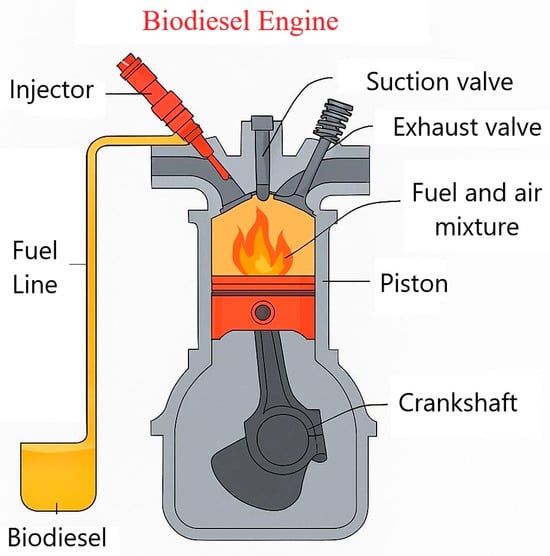
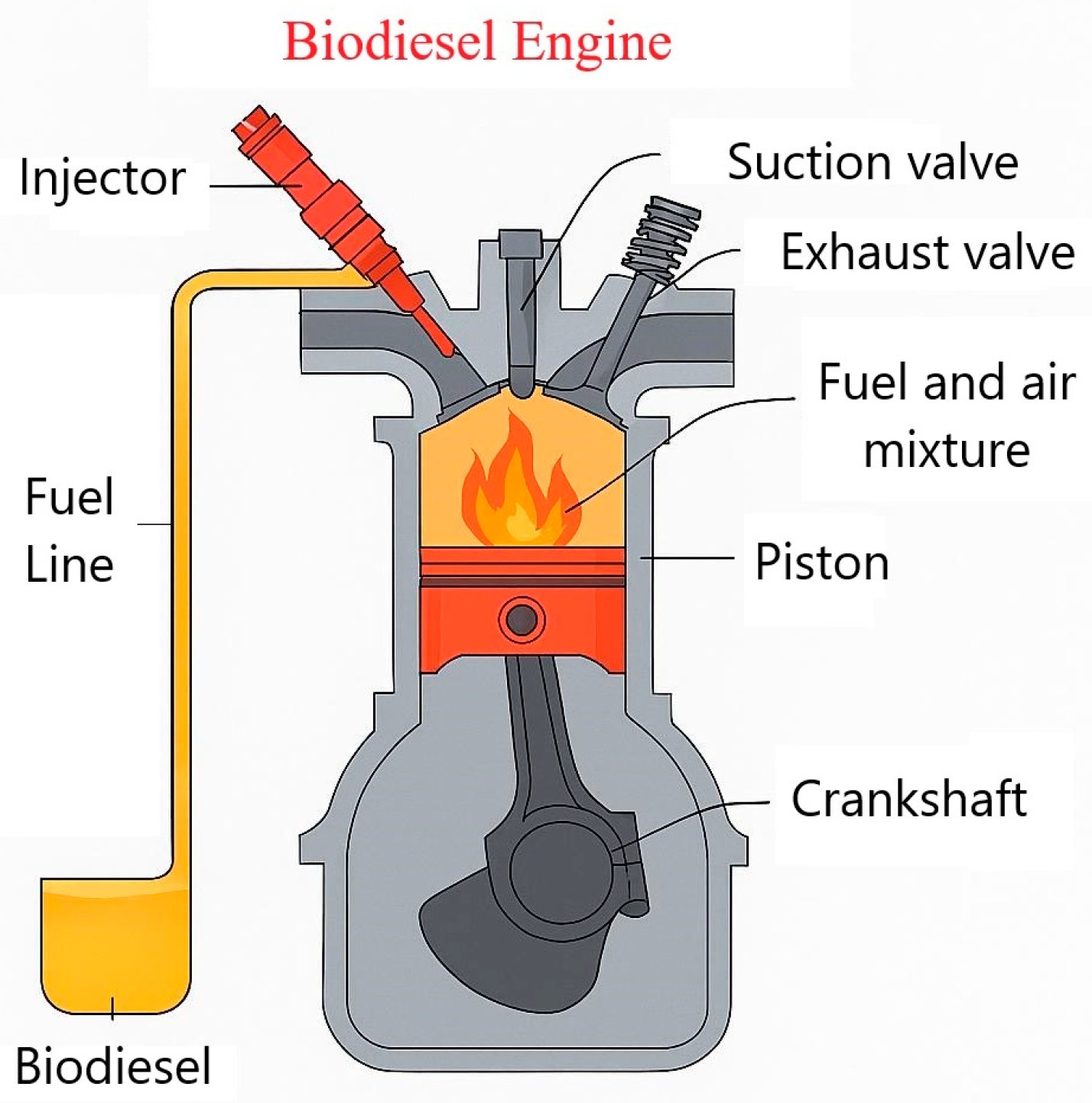
Diesel engines have evolved to run not only on diesel, but also on biofuels. Decreasing oil reserves, changes in the prices of this raw material and political influence forced the search for new types of fuel from renewable energy sources, and growing environmental awareness caused interest in vegetable oils and methyl esters, the so-called biodiesel. Over the years, diesel engines have evolved from simple designs that could burn a variety of vegetable oils to high-tech units that require very clean and properly prepared biofuel. Today’s solutions are enabling the increasing use of biofuels, and in the future, engines could become completely carbon neutral due to synthetic fuel and next-generation biofuel. Modern technology has allowed for a flexible diesel dual fuel power supply, where the engine burns a mixture of biofuel and diesel. In addition, the engine design has been adapted to meet strict emission standards, combining biofuels with modern exhaust gas treatment systems [3,4]. An example of the construction of a biodiesel engine is shown in Figure 1.
Figure 1.
Cross-section of the biodiesel powered motor.
2. Classification of Plant Biofuels Used in Diesel Engines
The use of biofuels dates back to the 19th century, when internal combustion engines were tested with vegetable oils and alcohols. In 1900, Rudolf Diesel demonstrated his engine powered by peanut oil [5], and in the 1920s, Henry Ford developed the ethanol-fueled Model T [5,6]. However, the rise in the oil industry and low fossil fuel costs hindered biofuel development for decades [7]. Interest was revived in the late 20th century, due to energy crises and climate concerns [8]. Today, biofuels—fuels derived from plant or animal biomass—play a key role in reducing greenhouse gas emissions and fossil fuel dependence [6]. In 2022, they accounted for ~4% of global transport energy use, with projections reaching 25% by 2050, assuming regulatory and technological progress [9]. Research focuses on improving conversion efficiency, minimizing agricultural impact, and promoting sustainability [10].
Renewable energy includes sources like biomass, landfill gas, and biogas [11]. Biomass, defined as biodegradable organic matter of plant or animal origin [12], includes wood waste, crop residues, straw, manure, and biodegradable fractions of municipal and industrial waste [13]. It serves as a feedstock for electricity, heat, and transport fuels. Biofuels are processed forms of biomass used in engines and energy systems. They are classified into three generations [14]:
- -
- First generation: From food crops (e.g., corn, sugarcane, rapeseed); includes bioethanol and biodiesel (FAME).
- -
- Second generation: From lignocellulosic biomass and waste; more efficient and less competitive with food production [15].
- -
- Third generation: From microalgae and high-yield biomass; still in research and pilot stages [16].
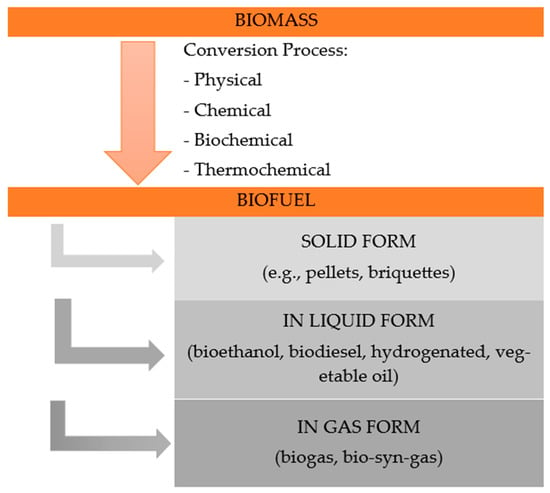
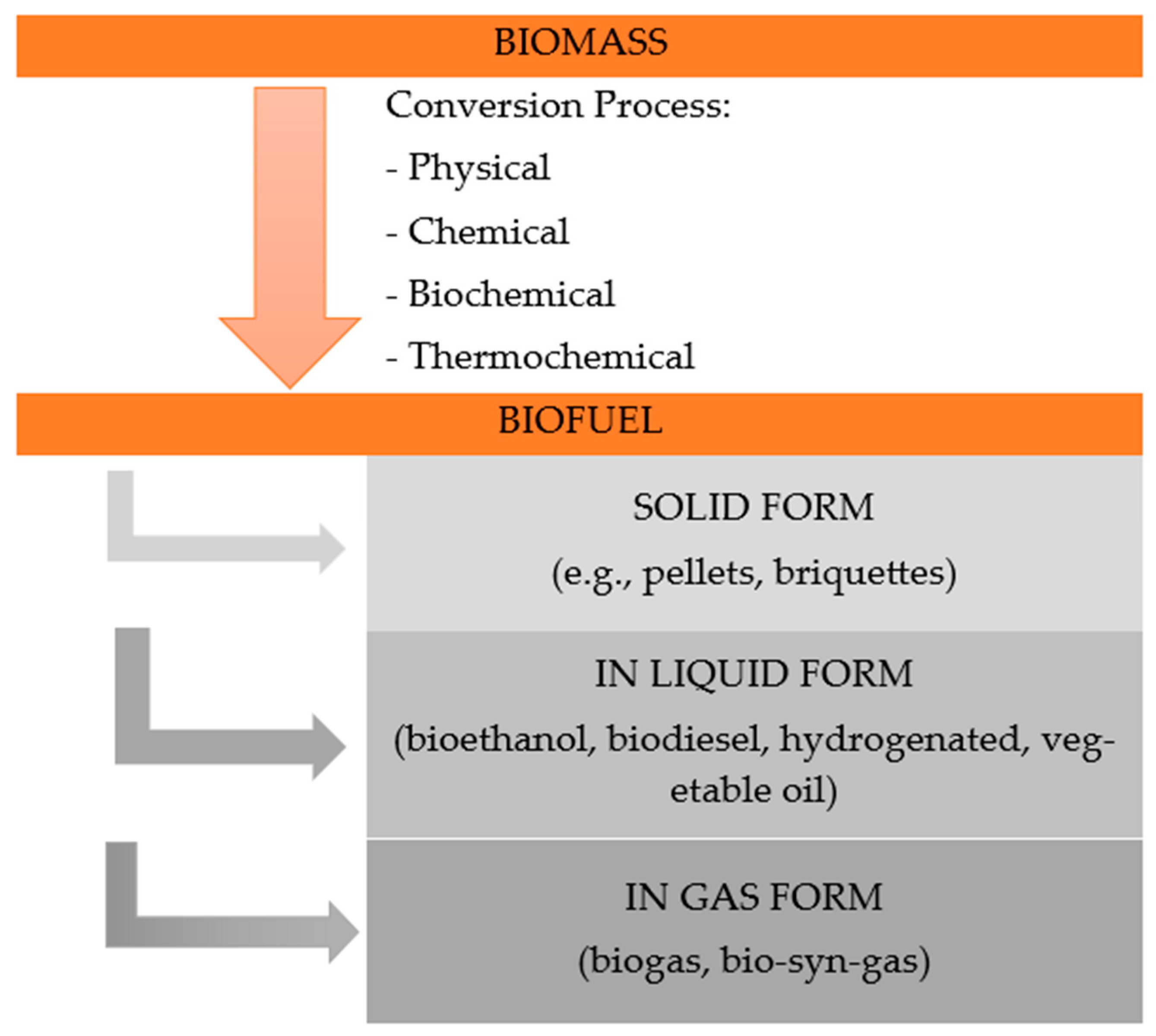
Biomass is the raw material, while biofuels are its converted form, obtained through physical, chemical, or biochemical processes. These include solid (pellets, briquettes), liquid (bioethanol, biodiesel, HVO), and gaseous fuels (biogas, bio-syngas) [17,18]. The classification of biofuel formation is presented in Figure 2.
Figure 2.
The relationship between the feedstock and the final product during the production of biofuel.
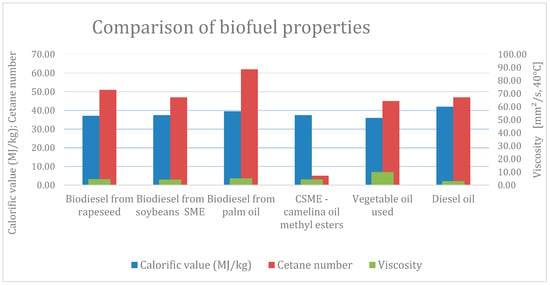
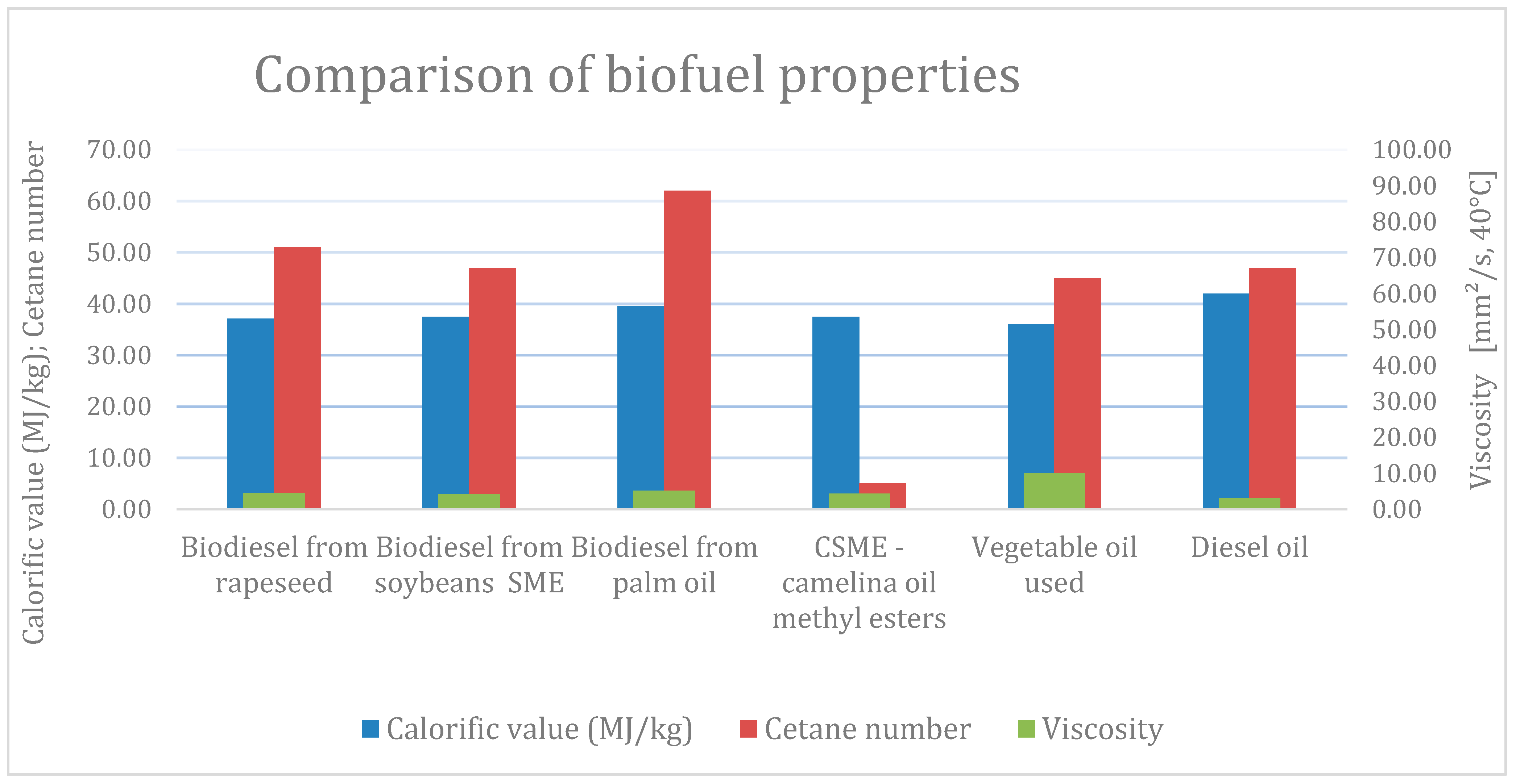
For further use and numerical simulation, we will use camelina oil methyl esters. Camelina sativa is a low-input oilseed crop with a short growing cycle, which is well-adapted to colder climates and low-intensity crops. The plant is externally similar to rapeseed, and its structure is based on small yellow flowers up to 1 m high. Its oil, due to its high content of unsaturated acids, is an attractive raw material for the production of methyl esters (FAME) by transesterification. Camelina sativa methyl esters (CSME) achieve high synthesis yields under alkaline catalyzing conditions and have favorable low-temperature properties and cetane numbers at the level of fossil diesel. At the same time, due to its very high C 18:3 content and high iodine index, pure CSME often does not meet the requirements of standards EN14214 [19,20] (m.in. oxidation stability, iodine and methyl linolenoate limit), while meeting ASTM D6751 [21] is sometimes possible. In diesel engine operation, the following are typically used: slightly higher fuel consumption, a decrease in CO and HC and a moderate increase in NOx, as for other FAMEs. Improvement strategies include: the selection of varieties/oils with lower unsaturation, treatments (winterization, partial hydrogenation), antioxidant additives and mixing with FAME with higher saturation or ON. LCA analyses indicate a significant potential for reducing GHG emissions compared to diesel oil [22,23,24]. There are many different characteristics of diesel oil and linanic oil and other oils, shown in Table 1 and Figure 3.
Table 1.
Comparison of properties and parameters of selected biofuels.
Figure 3.
Comparison of properties and parameters of selected biofuels.
Based on the comparison, it can be seen that biodiesel from palm oil has the highest calorific value and cetane number, right behind diesel, which makes it an efficient fuel in terms of energy and ignition. On the other hand, used vegetable oil shows the highest viscosity, which can cause problems with fuel injection. The other fuels exhibit balanced properties, making them suitable for use in diesel engines.
The altered physicochemical properties of CSME, such as a higher viscosity and cetane number, have a significant impact on the injection and combustion process. Higher viscosity can impair fuel atomization, especially in lower-pressure injection systems, which can lead to less efficient combustion. However, in modern high-pressure injection systems, this effect can be minimized. A higher cetane number, on the other hand, promotes faster ignition, which improves the combustion stability and reduces particulate emissions. In future work, we plan to expand the analysis with detailed studies of the impact of these parameters on injection characteristics and combustion patterns. The parameter that was used for numerical calculations is the calorific value .
3. Numerical Modeling of Diesel Engine Operation with CSME (Camelina sativa Methyl Esters)
The presented mathematical model of the engine was built based on the research station used in experimental work [25,26]. The model considers external conditions, engine operating parameters and the possibility of their modification. Empirical research was carried out on the PERKINS 1104C-E44T engine, a four-stroke engine with self-ignition with direct fuel injection into the combustion chamber. Designed to power agricultural tractors, small roller forklifts and small boats (mainly used in South Asia) [19] were used as a power unit for off-road use. The technical characteristics of the engine are four-cylinder design, the maximum rotational speed of the crankshaft is 2050 rpm, and the compression ratio reaches ε = 18. The calculations were made for the naturally aspirated variant, whose effective rated power according to the manufacturer’s indications is Ne = 75 kW. The simulation of the mathematical model begins with the introduction of data on the elementary composition of the tested fuel mixture. In the studies, the values of individual elements were assumed to be in proportion to the ratio of ON additives and methyl esters of CSME camelina oil in the mixture. The average elemental composition of CSME was used for calculations in accordance with Table 2, in the proportions of 10% CSME + 90% ON, 20% CSME + 80% ON and 30% CSME + 70% ON, and for comparison, the elemental compositions for fuel 100% ON and 100% CSME were considered.
Table 2.
Comparison of the elements of carbon, hydrogen and oxygen of the tested fuel mixtures [27,28].
For each of the analyzed mixtures, the calorific value was determined according to the following equation:
where
S—Sulfur, 0 for calculation.
W—Humidity, 0 is used for the calculation.
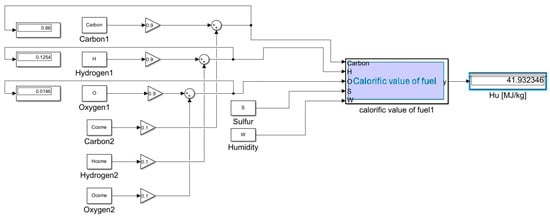
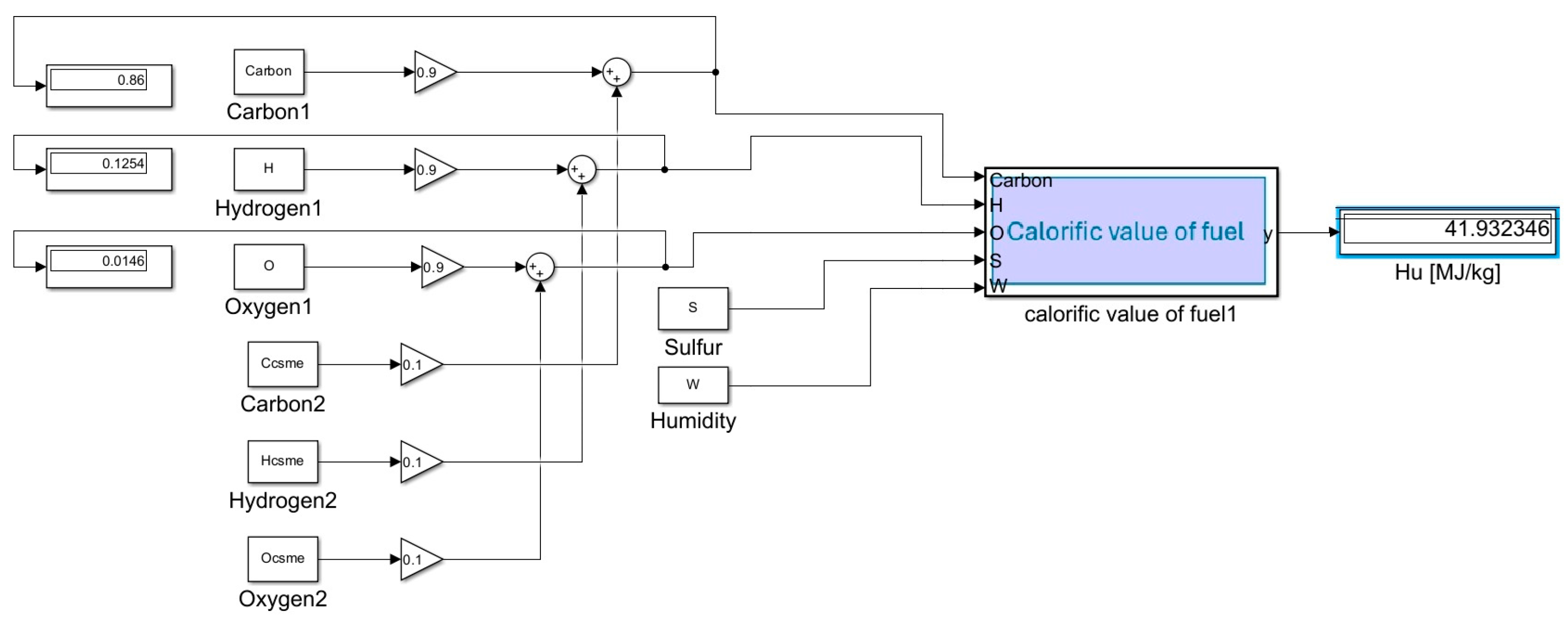
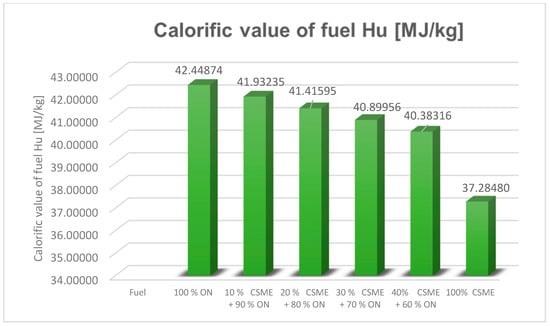
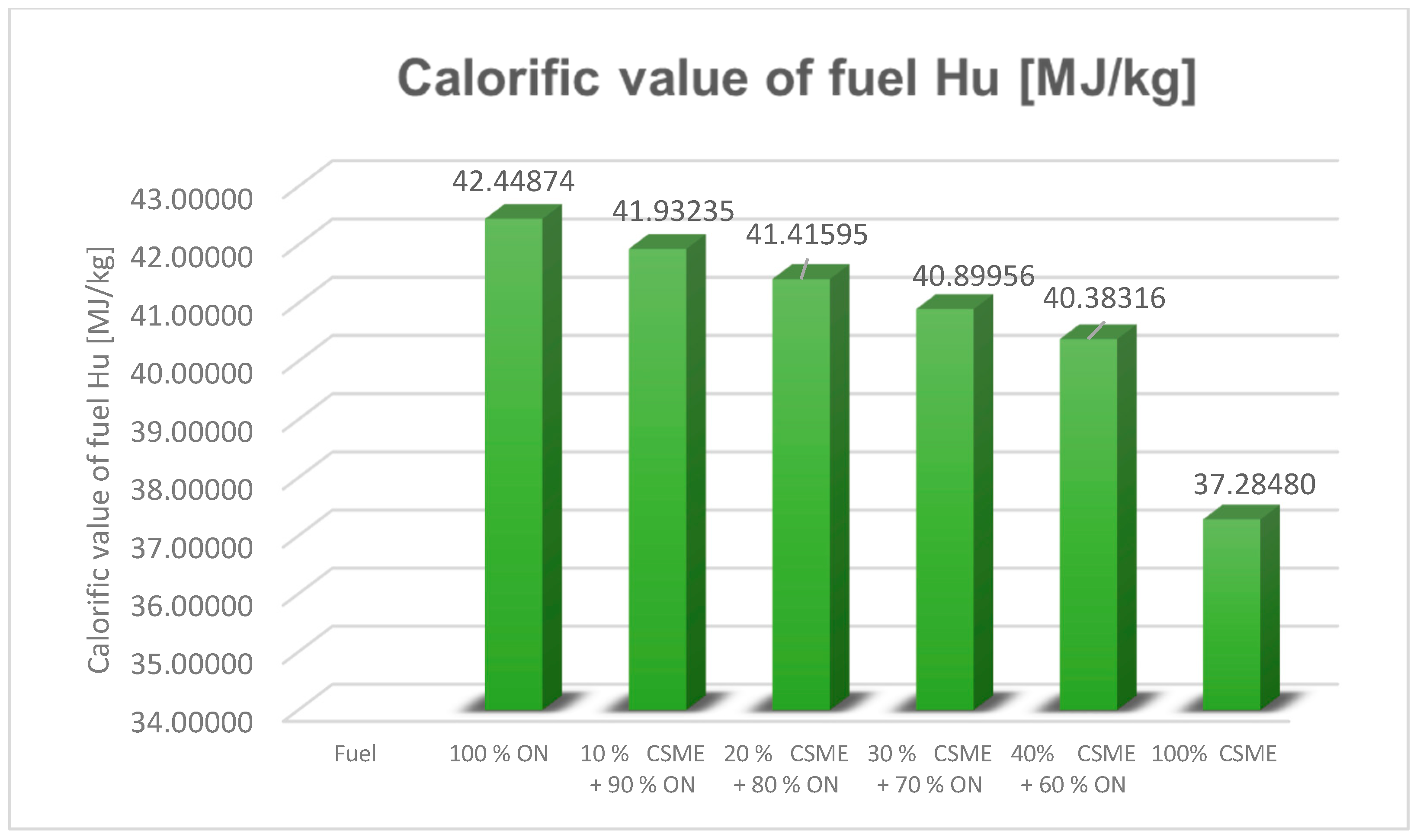
Figure 4 presents the calorific values of the analyzed fuel blends consisting of diesel oil and camelina oil methyl esters (CSME), with neat diesel fuel included as a reference. The results indicate a gradual decrease in the calorific value as the proportion of CSME in the blend increases. This reduction can be attributed to the lower carbon content of methyl esters in comparison with conventional diesel fuel, which directly influences the heating value of the fuel. Consequently, the addition of CSME leads to a decrease in the energy content of the blends. These findings demonstrate that the selection of blending ratios plays a crucial role in determining the energy-related properties of alternative fuels and should be carefully considered in the assessment of their applicability in compression ignition engines. Figure 5 shows a comparative comparison of the calorific values of the tested mixtures of diesel oil with methyl esters of camelina oil
Figure 4.
A block from MATLAB calculating the calorific value for each fuel mixture.
Figure 5.
Comparison of calorific values of tested mixtures of diesel oil with methyl esters of camelina oil.
The calculation is for a four-stroke engine with automatic ignition, designed for a truck and for use as a generator set. An eight-cylinder engine was used, with undivided combustion chambers, a volumetric fuel–air mixture, a crankshaft speed up to 2600 rpm and a compression ratio of Ɛ = 17. The calculations were carried out for a naturally aspirated motor with an effective power of Ne = 170 kW. They include calculations and specific physicochemical parameters, i.e.:
- -
- Calorific value of fuel.
- -
- Parameters of the working medium.
- -
- Parameters of the environment and residual gases.
- -
- Parameters when filling the load.
- -
- Parameters of the compression process.
- -
- Combustion process parameters.
- -
- Parameters of the expansion process.
- -
- Effective parameters of the engine.
The parameters and indicators of the engine without supercharging, powered by each of the mentioned mixtures, will also be specified. While biofuels may increase combustion temperatures and subsequent NO_x emissions, the model identifies optimal blend compositions where the maximum temperature is controlled to remain below critical thresholds, balancing thermal efficiency with environmental constraints.
- Operating Medium Parameters
Theoretical air demand to burn one kilogram of fuel (L0):
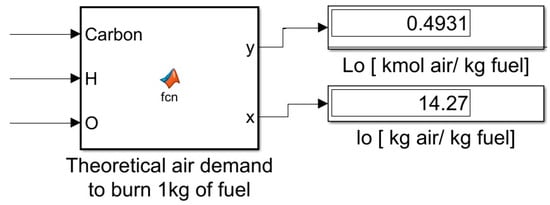
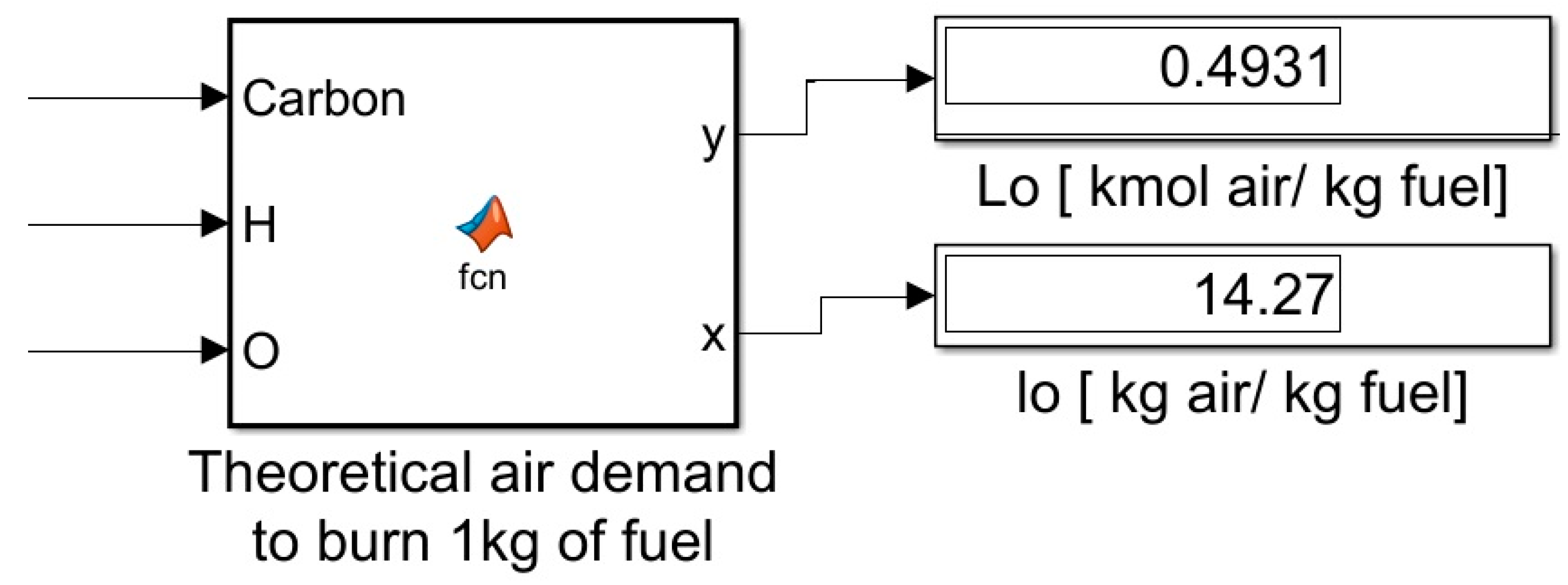
The oxygen content of CSME molecules affects the combustion process, especially in the pre- and post-ignition phases. It facilitates combustion initiation and accelerates oxidation reactions, which can reduce the combustion duration and increase the heat generation rates. In the literature, it is observed that aerobic biofuels lead to more homogeneous and faster combustion, which can result in a higher maximum temperature and cylinder pressure, and thus improved engine performance. Figure 6 shows a MATLAB block, which calculating the theoretical air demand to burn one kilogram of fuel with methyl esters of camelina oil.
Figure 6.
A MATLAB block calculating the theoretical air demand to burn one kilogram of fuel.
Here, 0.23—mass amount of oxygen in the air and 0.208—volume amount of oxygen in 1 kmol of air.
The excess air coefficient is assumed:
For a naturally aspirated motor, λ = 1.4 ÷ 1.5 was used for the calculation, λ = 1.4.
The combustion products in a diesel engine depend on many factors, related to both fuel and engine operating conditions. Ideally (stoichiometric and total combustion), the products would only be CO2, H2O, and N2. In fact, there is a whole range of additional ingredients. The following combustion products are taken into account in the theoretical calculations.
Fresh charge quantity Mt:
Quantity of components of combustion products:
Total quantity of combustion products:
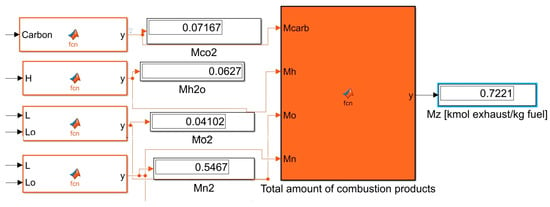
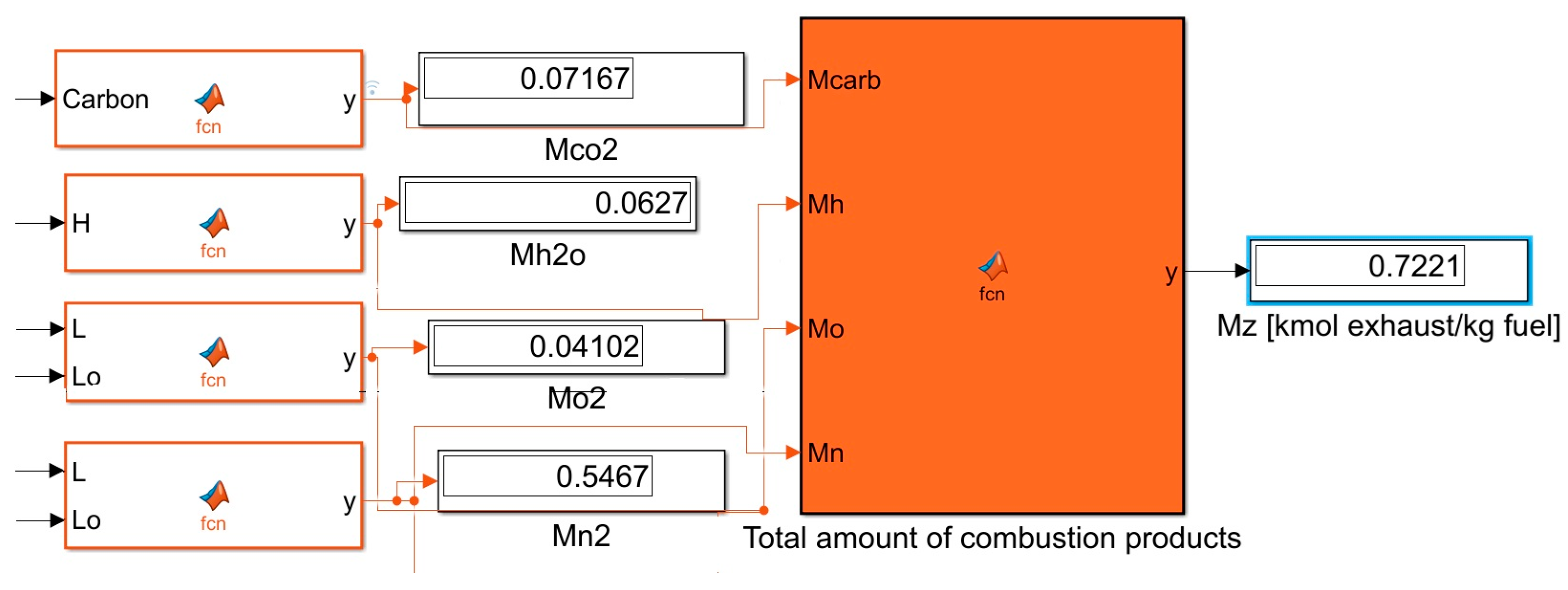
Figure 7 shows a MATLAB block, which calculating the quantity of combustion products and total quantity of combustion products.
Figure 7.
A block from MATLAB, calculating the quantity of combustion products and total quantity of combustion products.
Assuming that 1 kmol of gas under normal conditions (0 °C, 101.3 kPa) occupies approx. 22.41 m3, the total amount of combustion products, Mz = 0.722 kmol per volume, was calculated according to the formula.
Burning 1 kg of fuel in a diesel engine generates about 16 m3 of exhaust gases under normal conditions. The amount of exhaust gas is the result of the combustion process and can be calculated based on the chemical composition of the fuel and the amount of air needed for stoichiometric combustion. The obtained result of approx. 16 m3 is included in the commonly cited scientific literature. In practice, about 15–17 m3 of gases are always produced for each kilogram of diesel (≈0.7–0.75 kmol), but there is no regulation that would limit this amount.
The obtained value of the volume of combustion products is an important criterion in the analysis of the operation of an internal combustion engine. This parameter allows us to determine the volume load of exhaust systems and exhaust gas treatment systems and is also the basis for carrying out heat and mass transfer balances in the engine system.
Impact on the combustion process: A significant volume of gases generated because of combustion (approx. 16 m3 from 1 kg of fuel) determines the rapid increase in pressure in the cylinder, the expansion of which shapes the nature of the engine’s operation. The presence of components with a high heat capacity (N2, CO2, H2O) modifies the temperature distribution in the combustion chamber. On the one hand, this allows the appropriate operating pressure to be achieved, and on the other hand, it limits the maximum flame temperature, which affects the intensity of the formation of nitrogen oxides (NOx) and particulate matter. In addition, the presence of inert components leads to the dilution of the combustible mixture, stabilizing the combustion process, but at the same time, reducing the rate of the chemical reactions.
Impact on engine operation: The volume of exhaust gas generated during combustion is responsible for the high pressure exerted on the piston, which directly translates into the production of mechanical energy and engine power. At the same time, part of the energy of the exhaust gases leaves the cylinder with the exhaust gases, affecting the heat balance of the unit and the load on the cooling and exhaust systems. The amount and composition of exhaust gases also determine the requirements for treatment systems, including particulate filters and NOx reduction systems (e.g., SCR). In addition, the rapid expansion of large volumes of gases is associated with the generation of pressure waves, which are a source of characteristic noise and have an impact on the dynamics of the diesel engine.
To carry out a reliable energy analysis of the engine, a zero-dimensional model based on the Seiliger-Sabathé circuit was adopted, which was considered to be the most accurate theoretical approximation of the real processes taking place in a diesel engine [29,30]. The key assumption of the model is to treat the working medium as a semi-perfect gas, whose average specific heat is a function of the temperature and chemical composition of the combustion products. The modeling steps include:
- -
- Mass balance: Determination of the composition of exhaust gases based on the mass fractions of elements (C, H, O, S) in the fuel.
- -
- Energy balance: Application of the first law of thermodynamics to determine the temperature increase, considering the heat of combustion and heat losses to the cylinder walls.
- -
- Mechanical criterion: Implementation of the maximum pressure limitation to the level of 11–12 MPa, which determines the division of the combustion phase into: the following.
- -
- Phase I, isochoric , is responsible for the rapid increase in pressure immediately after ignition. It is characterized by the degree of increased pressure (). In the model, for supercharged engines, it is limited to 1.5 so that it does not exceed the mechanical strength of the bearings.
- -
- Phase II, isobaric, , shows the diffusion combustion of the rest of the fuel dose. The degree of pre-expansion () is key here. It is this phase that allows the p−V circuit to be increased without a further increase in the maximum pressure.
The complexity of this model allows for precise determination of theoretical parameters, and in particular theoretical efficiency, which depends on the degree of compression, specific heat ratio and combustion parameters.
- Combustion process
In the analysis of the operating processes of a compression ignition engine, the key aspect differentiating the combustion of diesel (ON) from its mixtures with camelina oil esters is the change in the molar coefficient of the charge . The molecular value of the fuel–air mixture changes as a result of the chemical reaction of the oxidation of hydrocarbons and esters. For a typical diesel component (e.g., n-dodecane) and linolenic acid ethyl ester (the main constituent of camelina oil), stoichiometric reactions show differences in the increase in the number of moles of products, relative to substrates.
- The influence of molecular composition on combustion process parameters
The combustion process in a diesel engine is a complex phenomenon in which the thermodynamic parameters and chemical transformations of the working medium play a key role. The analysis of the combustion process of ON mixtures with a biocomponent requires taking into account the changes in the molecular coefficient of the chemical transformation of the diesel fuel–air mixture. This value defines the ratio of the amount of combustion products (number of moles of exhaust gas) to the amount of fresh charge (number of moles of the combustible mixture before ignition) and is expressed using in the following formula:
From a thermodynamic and chemical point of view, the introduction of camelina oil ethers into diesel modifies the molecular value of the mixture, which has a direct impact on the indicated operation of the engine and the efficiency of energy conversion. The ethyl esters of camelina oil are characterized by a different molecular structure. The introduction of oxygen into the molecular structure of the biofuel causes the fuel–air mixture to have a higher molar mass in the injection phase. The molar change coefficient of the diesel mixture, , is as follows:
Due to the presence of oxygen in the ester molecule, a relatively larger number of moles of products is formed during combustion compared to moles of substrates. A higher molecular value of the combustion products of the ON–Camelina mixture generates an additional pressure gain resulting directly from an increase in the number of moles of gases, which may have a beneficial effect on the average pressure of the indicated. Although the calorific value of camelina esters is about 10–12% lower than ON, thanks to the higher density of the fuel and a favorable molecular balance, the unit energy consumption does not increase linearly. The higher molar mass of the biofuel molecules with the same injection volume allows for the high energy of the charge delivered to the cylinder to be retained.
Unlike gasoline engines, in diesel, fuel is injected into hot air at the end of the compression stroke. Because diesel works on lean mixtures, the amount of chemical energy contained per unit volume of the mixture is less than in spark engines. The heat of combustion of a working diesel mixture is defined using the formula below.
The mean specific heat of combustion products is a physical quantity that determines the ability of flue gases to store thermal energy in a given temperature range. In the thermodynamics of internal combustion engines, it is crucial; because the specific heat of exhaust gases is not constant with the increase in temperature in the cylinder, the specific heat also increases. In addition, the more total combustion products in the exhaust gas, the higher the average specific heat compared to clean air. Application in calculations is as follows:
The average specific heat of the flue gas determines how much of this combustion heat energy will be converted into temperature and pressure, and how much will remain “trapped” in the internal energy of the exhaust gases. Analysis of the molecular value of the mixture showed that the use of camelina oil esters modifies the composition of the exhaust gases by increasing the molar change coefficient. This means that the energy effect of combustion is intensified by the increase in the number of moles of gaseous products to a greater extent, which partially compensates for the lower calorific value of biofuel compared to pure diesel .
Modern self-ignition power units, characterized by direct fuel injection into the non-split combustion chambers and an optimized charge exchange process, demonstrate high overall efficiency. In naturally aspirated engines, this process takes place at standard thermodynamic parameters, while the use of supercharging (turbocharging) significantly modifies the working cycle. An increase in the temperature of the load and the boost pressure is conducive to the intensification of fuel oxidation processes, which translates into an improvement in the indicative and efficient parameters of the engine [28]. One of the key parameters determining the efficiency of circulation is the degree of pressure increase , which strictly depends on the fuel dose and the characteristics of its feeding. It should be noted, however, that the pursuit of maximizing combustion pressures is limited by the mechanical strength of the crank–piston system. To ensure the optimal service life of connecting rod bearings and to reduce thermomechanical loads, the maximum combustion pressure in modern designs should not exceed the limit of 11–12 MPa [29].
Due to the above limitations, different values of the degree of pressure increase are assumed, depending on the power supply variant:
- -
- For naturally aspirated engines, .
- -
- For supercharged engines, [31].
This configuration allows for high torque while maintaining a safe margin of mechanical load on the mating components.
The temperature at the end of the visible combustion process is as follows:
Modern diesel engines are designed for very high loads, but the maximum pressure limit depends on the purpose and advancement of the design. According to previous design assumptions, a safe limit of 11–12 MPa is assumed to maintain a high bearing life and limit the dead weight of the motor.
Maximum pressure for diesel:
In the thermodynamics of compression ignition engines (Seiliger-Sabathé cycle), the degree of pre-expansion (also called the degree of load or expansion) is denoted by the symbol. It determines the change in cylinder volume during heat delivery at a constant pressure (isobaric combustion) [21,30]. The key values for a diesel engine are as follows:
- -
- Naturally aspirated engines, usually with values in the range of 1.2–1.7.
- -
- Supercharged engines: due to the need to limit the maximum pressure (to the 11–12 Mpa), the combustion process is “stretched” over time. The value can be slightly higher here, reaching 2.0–2.5, which allows you to do more work while maintaining mechanical limits.
Degree of preparation of expansion for diesel:
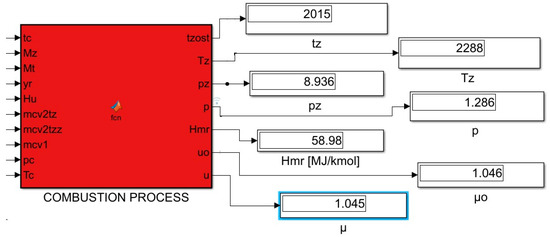
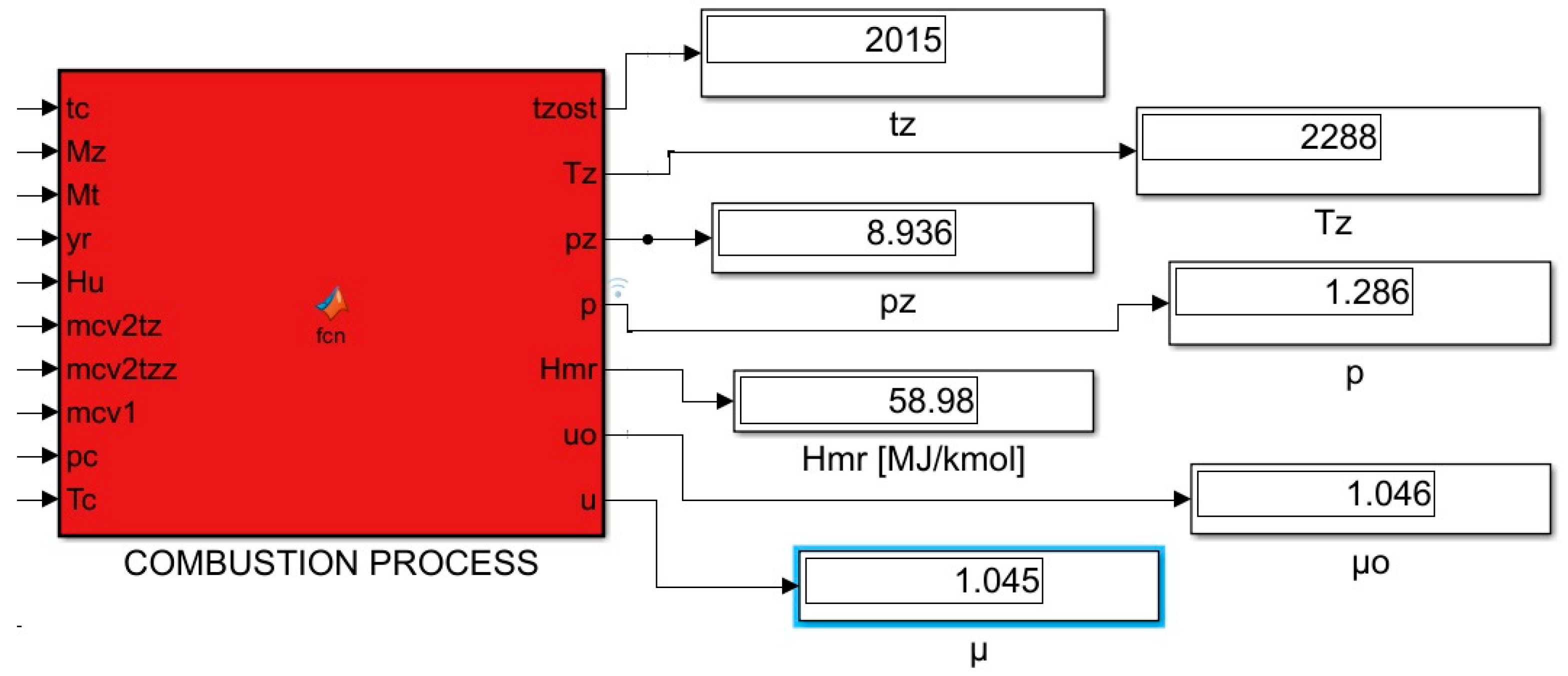
Increasing the degree of expansion while limiting the degree of pressure increase is an effective method of increasing torque without the risk of damaging the crankshaft bearings. Figure 8 shows a block from MATLAB, confirming the above formulas and their calculations necessary in the combustion process
Figure 8.
A section from MATLAB of the block calculating the combustion process.
The key operating parameters of an internal combustion engine are effective power, effective torque, fuel consumption and engine efficiency. Accurate knowledge of these parameters enables researchers to conduct analyses and interpret the results obtained during experiments. Determination of approximate values of operating parameters allows for the construction of mathematical models of the engine and simulation of its operation for specific power conditions. In addition, advanced diagnostic methods make it possible to monitor the technical condition of the engine, and in the event of irregularities—to identify defects and prevent their secondary effects [28,29].
To determine the effective efficiency of the engine and the Unit Fuel Consumption (), formulas are used that consider the effective parameters of an engine powered by a mixture of diesel and methyl esters of camelina. This allows for a quantitative assessment of the energy efficiency of the powertrain and for a comparison of the impact of different fuel mixtures on the engine’s operating characteristics.
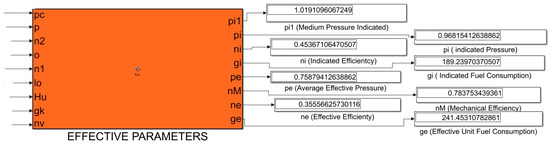
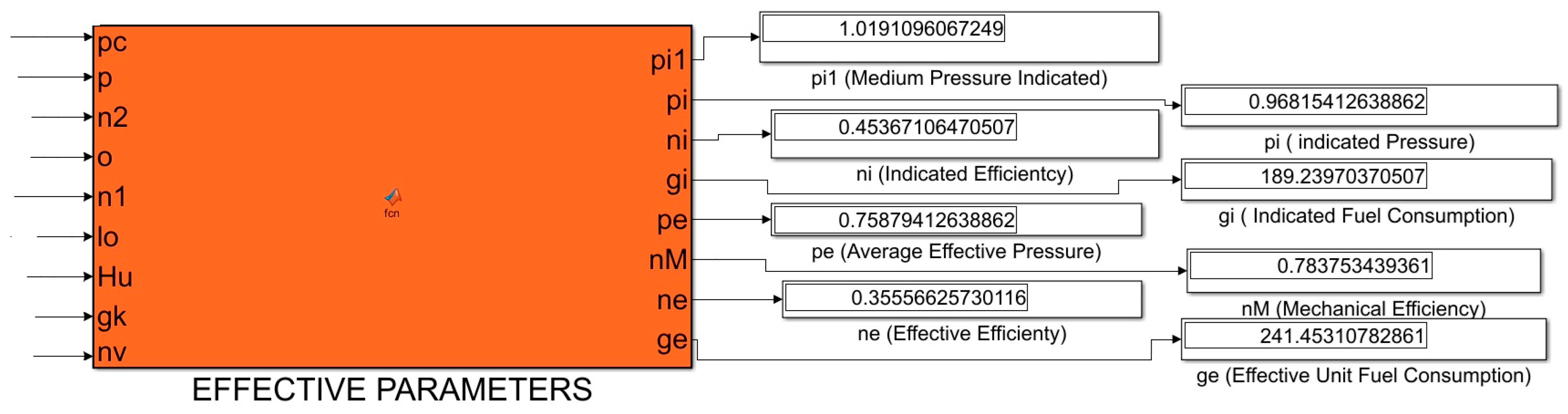
The effective efficiency results for individual fuel mixtures are shown in Figure 9.
Figure 9.
A section from MATLAB of the block calculating the effective parameters of the CSME powered motor.
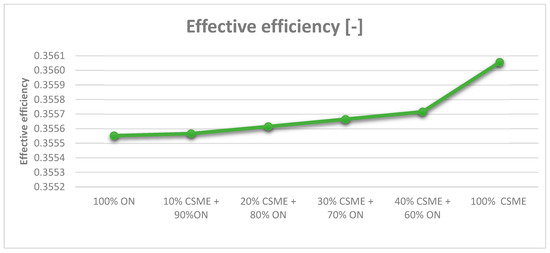
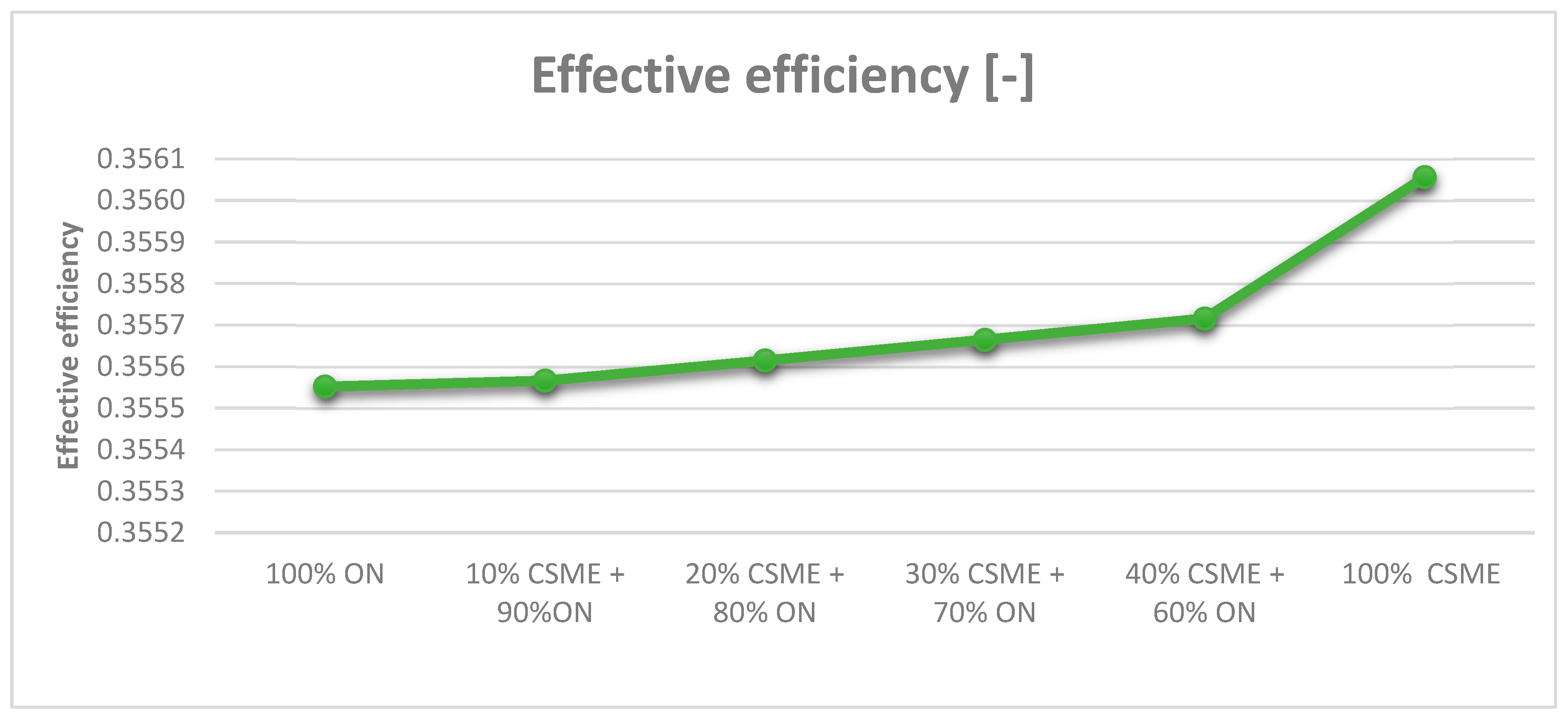
The effective efficiency results for individual fuel mixtures are shown in Figure 10.
Figure 10.
Graph showing the results of the effective efficiency simulations.
The results of the numerical simulation of the determination of the effective efficiency of an engine powered by a mixture of diesel oil (ON) and camelina oil methyl esters (CSME) indicate that the value of this parameter remains at a similar level to conventional fuel, and the observed differences are about 1%. It should be emphasized that the effective efficiency value is influenced by additional operating factors, such as engine operating conditions or crankshaft speed. When the power unit is powered by pure CSME or its mixtures with diesel, changes in effective efficiency are usually noted in relation to conventional fuel. This is a consequence of the lower calorific value of biofuel, resulting from the increased oxygen content in FAME molecules, which translates into a decrease in the amount of chemical energy per unit weight of fuel [30]. The increase in mechanical efficiency of the engine with an increased share of CSME (cottonseed oil methyl esters) can be explained by several physicochemical factors. CSME has a higher cetane number than conventional diesel, which promotes faster ignition and a more controlled combustion process. This, in turn, leads to a reduction in thermal and mechanical losses, which translates into higher efficiency. In addition, the presence of oxygen in CSME molecules supports the combustion process, reducing the amount of unburned particles and improving the use of the chemical energy of the fuel. Experimental studies conducted in diesel engines confirm that the effective efficiency when powered by biofuel is subject to changes of 1–3% compared to diesel, with the greatest differences observed with a high share of CSME in the mixture [32]. At the same time, the course of efficiency characteristics as a function of load and rotational speed remains similar, which suggests that the overall efficiency of the combustion process in the presence of methyl esters of camelina oil is maintained. The literature also indicates that the oxygen content in the chemical structure of CSME may promote a more complete combustion of the fuel mixture, which partially compensates for the decrease in calorific value. As a result, the effective efficiency of a biofuel-powered engine remains at a level that is comparable to that of a unit powered by traditional diesel [33,34].
In the developed 0D model, the effective efficiency is calculated as the product of indicated efficiency (ηi) and mechanical efficiency (ηm). The observed “flat line” is a direct result of several competing thermodynamic factors that neutralize each other in this specific simulation range. The constant trend observed in effective efficiency is primarily a result of the lower heating value (LHV) compensation mechanism within the model’s governor. While increasing, the CSME concentration reduces the overall energy density of the fuel blend; the simulation compensates for this by automatically increasing the fuel mass flow to maintain a constant brake power output. Furthermore, regarding the combustion characteristics, a constant combustion efficiency was assumed for all blends at this system-level stage to isolate the impact of fuel energy density from the complex chemical kinetics of CSME oxidation. This approach was supported by a simplified friction model, where mechanical losses (FMEP) were defined solely as a function of engine speed and load. Since these operational parameters remained constant across all compared scenarios, the mechanical efficiency stabilized, resulting in the uniform effective efficiency profile presented in Figure 10.
Another important parameter is the unit fuel consumption, described by the following formula:
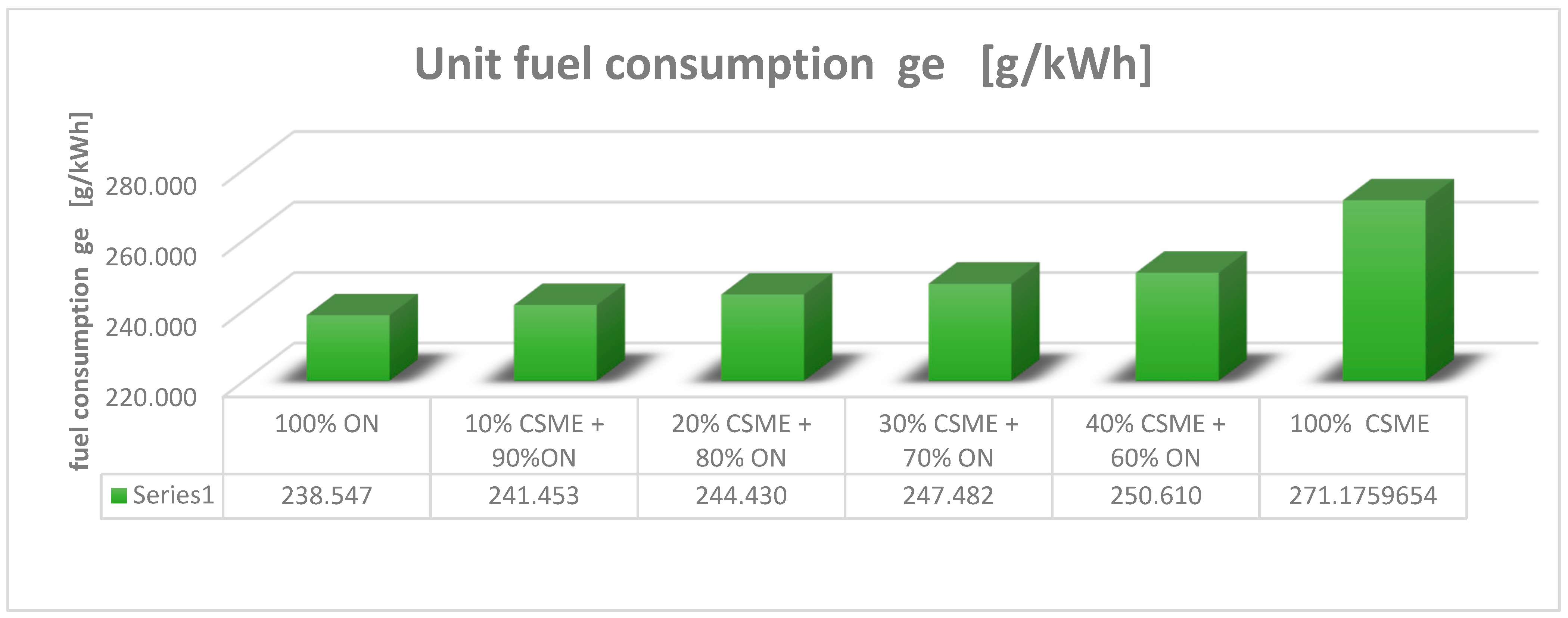
Figure 11 presents the results of the unit fuel consumption for mixtures of diesel and methyl esters of camelina oil.
Figure 11.
Presentation in the form of a graph of the results of unit consumption for the tested fuel mixtures.
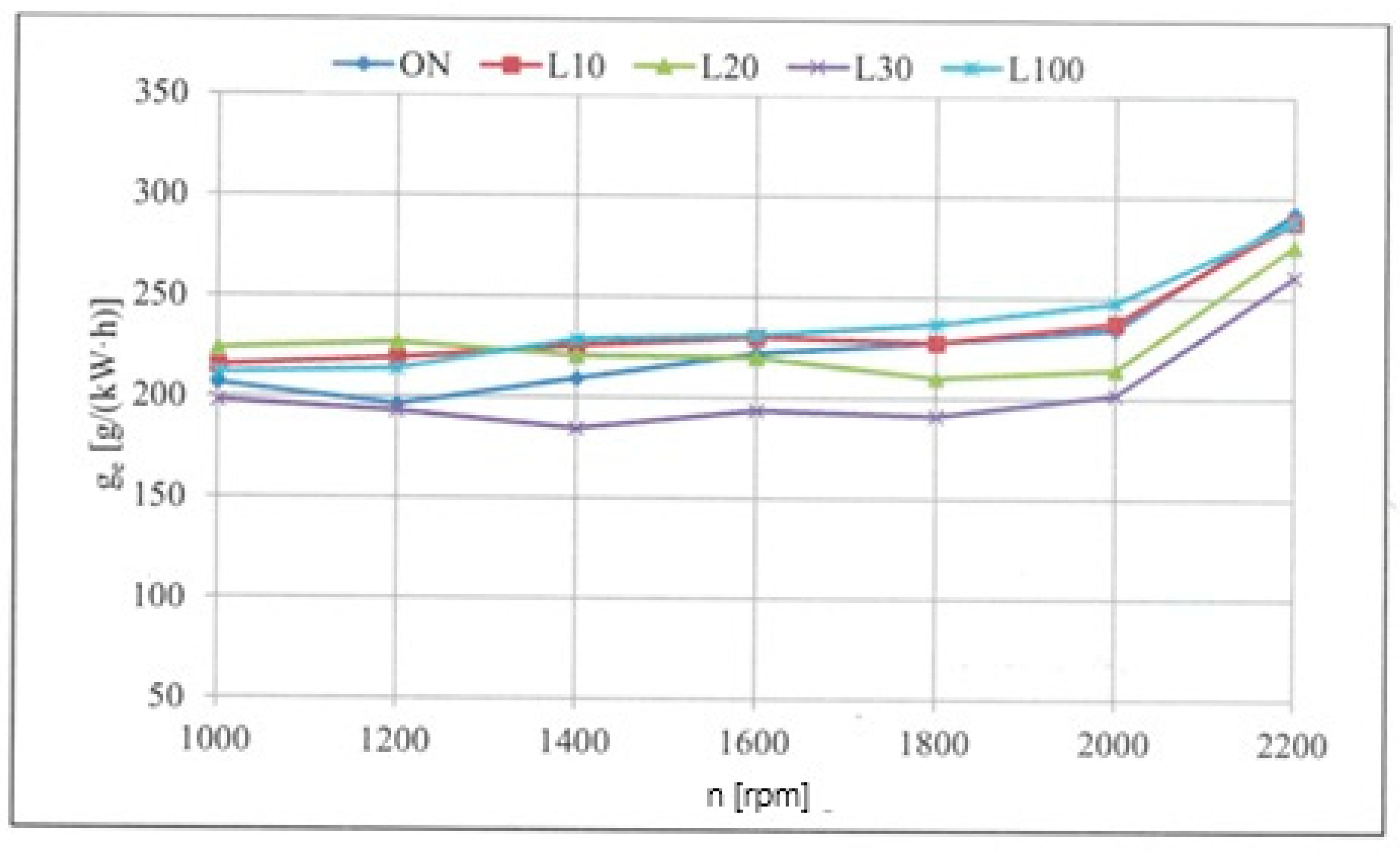
Data analysis shows that with the increase in the volume share of CSME in fuel, a systematic increase in its unit consumption is observed. This phenomenon is a direct consequence of the lower calorific value of biofuel compared to diesel, which results in the need to supply more fuel in order to obtain the same effective engine power. In the literature on the subject, it is emphasized that the increase in unit fuel consumption when powered by FAME mixtures is a common phenomenon and usually ranges from a few to several percent, depending on the type of ester used, the engine operating conditions and the share of the biocomponent [1,35,36]. In the case of methyl esters of camelina oil, however, this increase remains at an acceptable level from the point of view of operation, which confirms the practical application of CSME as an alternative fuel to diesel. Figure 12 shows the dependence of unit fuel consumption on crankshaft speed for other L10, L20, L30, L40, L100 and diesel fuel mixtures.
Figure 12.
Dependence of unit fuel consumption on crankshaft speed [1].
The analysis of the obtained characteristics indicates that with the increase in the rotational speed of the crankshaft, the unit fuel consumption shows an increasing tendency. However, it should be emphasized that at the highest speeds, in the order of 2200 rpm, the values of the unit fuel consumption for conventional fuel (ON) and a mixture with the addition of 10% methyl esters of camelina oil (L10) remain at a comparable level. This phenomenon may indicate similar characteristics of the combustion process in the range of high speeds, regardless of the amount of the biocomponent in the fuel. It should be noted that the presented results were obtained on a laboratory bench, under controlled conditions, with the use of high-accuracy measuring equipment. This may result in a partial discrepancy with the results obtained under operating conditions, where the influence of environmental and dynamic factors is much greater.
The basic indicators characterizing the operation of the engine are: effective power, effective torque, fuel consumption and total power. The following are the dependencies used to calculate these parameters. The engine effective power (Ne), also called useful or actual power, is defined as the amount of mechanical work that an engine can perform per unit of time, taking the friction losses in mechanisms and other internal resistances into account. Effective power reflects the actual performance of the engine under the operating conditions and is a key parameter when evaluating its efficiency.
Mathematically, effective power is expressed by the following formula:
The data for the above formula were accepted by calculating the conditions used to perform the numerical simulation, e.g.:
- -
- Average effective pressure.
- -
- Cylinder displacement.
- -
- Crankshaft speed.
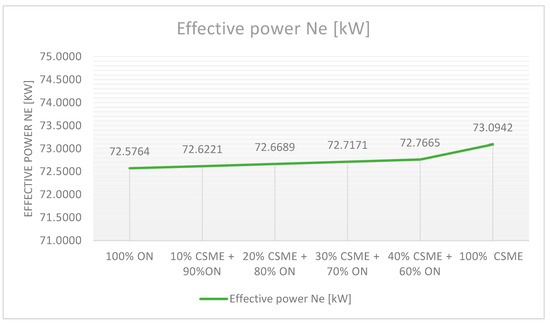
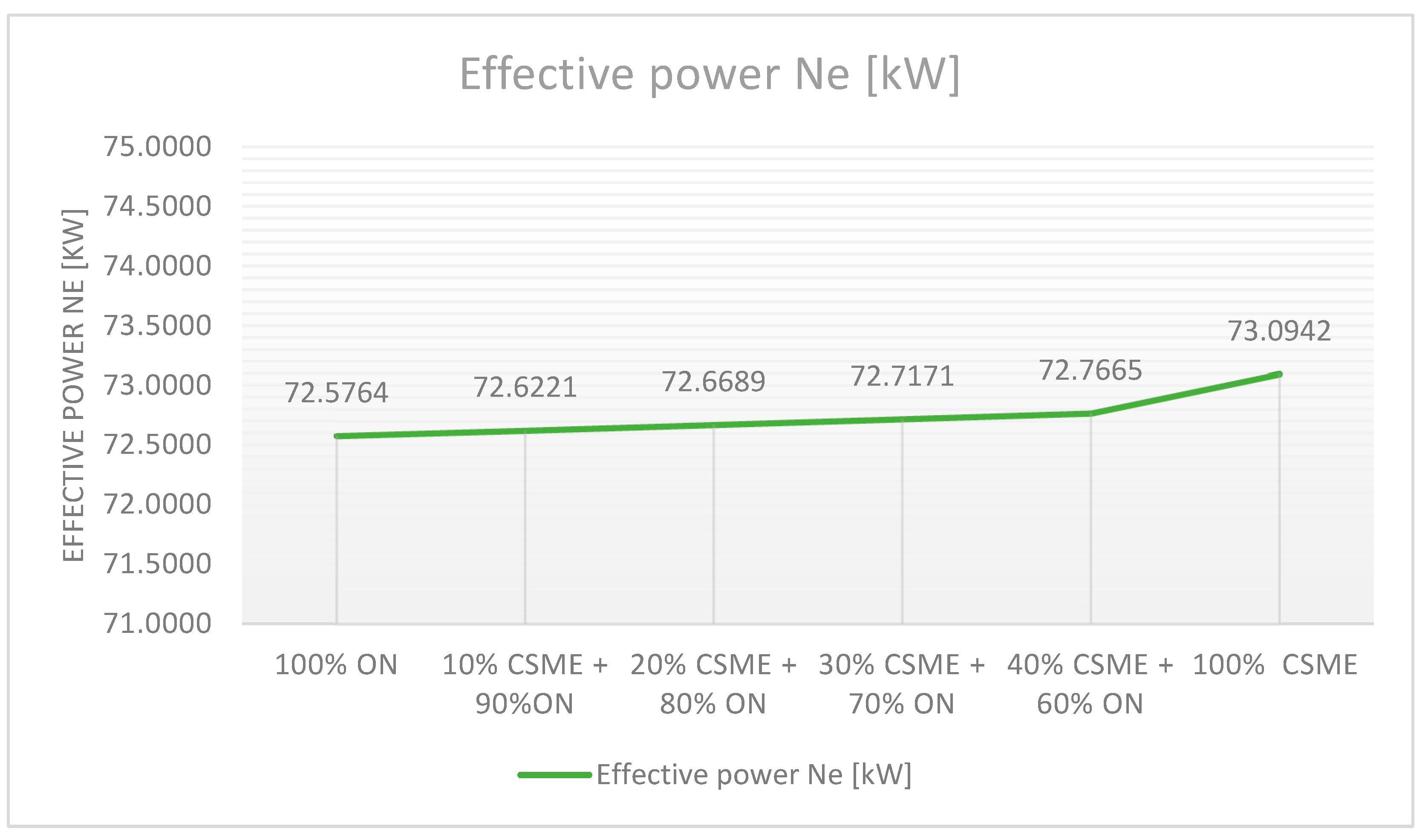
Figure 13 shows the change in effective power, depending on the type of fuel.
Figure 13.
Graph of the change in effective power, depending on the type of fuel.
Figure 13 presents the dependence of unit fuel consumption on crankshaft speed od fuel blends consisting of diesel oil and camelina oil methyl esters (CSME), with neat diesel fuel included as a reference. The results indicate a gradual decrease in the calorific value as the proportion of CSME in the blend increases. This reduction can be attributed to the lower carbon content of the methyl esters in comparison with conventional diesel fuel, which directly influences the heating value of the fuel. Consequently, the addition of CSME leads to a decrease in the energy content of the blends. These findings demonstrate that the selection of blending ratios plays a crucial role in determining the energy-related properties of alternative fuels and should be carefully considered in the assessment of their applicability in compression ignition engines.
Effective torque (Me) is the torque that the motor actually transmits to the shaft per unit of time, taking mechanical losses into account. This is a key indicator when assessing the ability of a motor to perform mechanical work at a certain speed. It is determined from the following formula:
where all symbols have the same meaning as in the case of effective power. The effective torque allows you to determine the characteristics of the engine torque as a function of rotational speed and optimize the operation of the powertrain.
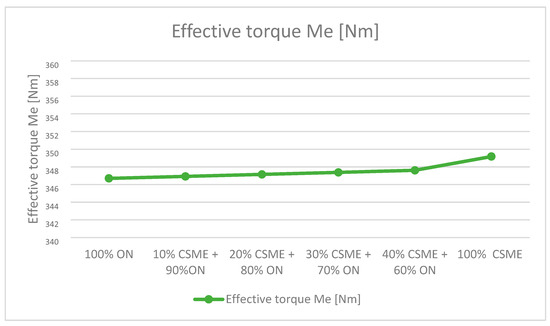
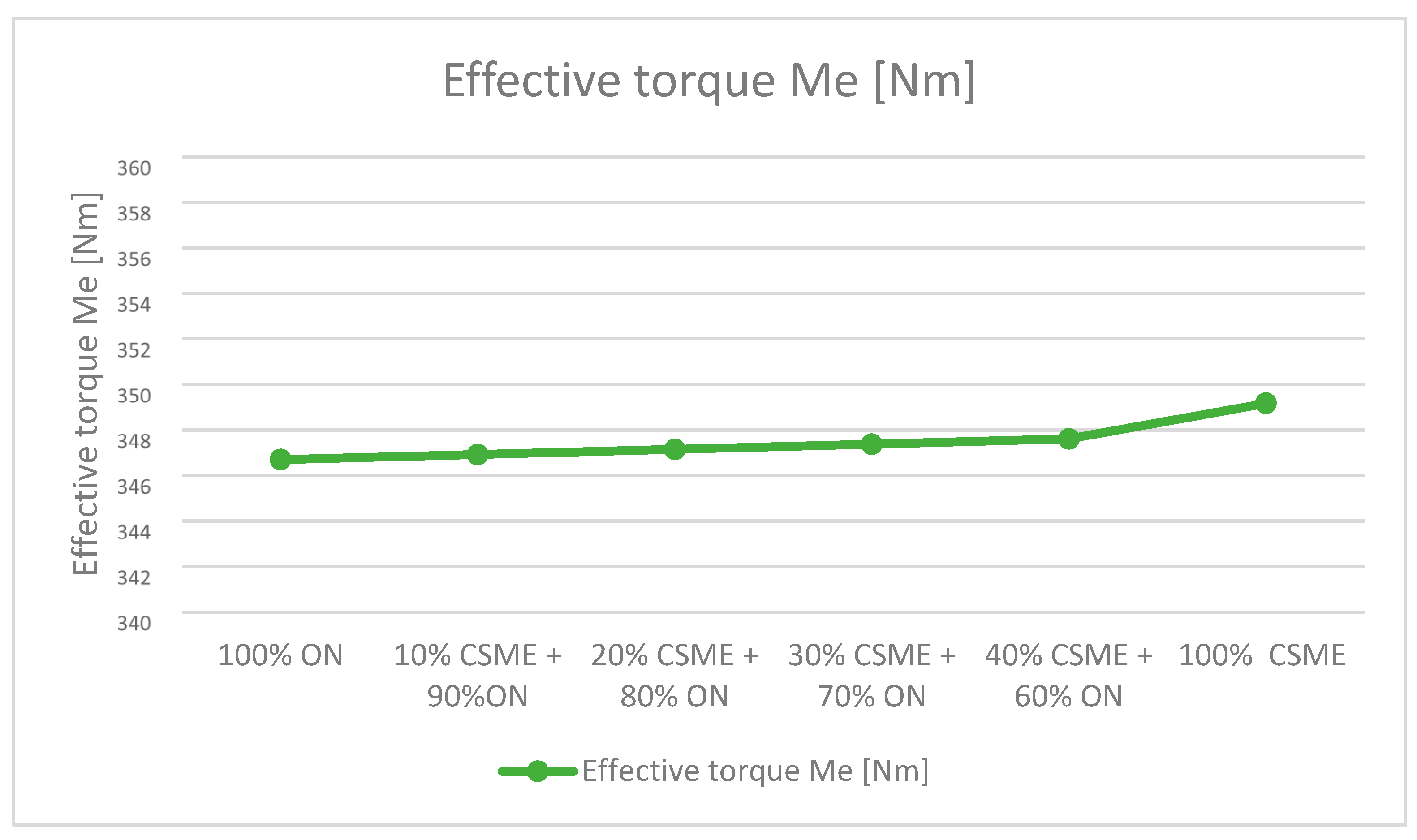
Figure 14 shows the effect of the fuel blend composition on the effective engine torque (Me) for mixtures of diesel oil and camelina oil methyl esters (CSME). The results indicate a gradual and nearly linear increase in effective torque with an increasing proportion of CSME in the fuel blend. The effective torque rises from approximately 347 Nm for neat diesel fuel to about 349 Nm when the engine operates on pure CSME. No abrupt changes or torque fluctuations are observed for intermediate blends, confirming stable engine operation over the entire range of tested fuel compositions.
Figure 14.
Graph of the change in effective torque, depending on the type of fuel.
The observed increase in effective torque can be attributed to the specific combustion characteristics of methyl esters. CSME contains a higher oxygen content within its molecular structure compared to conventional diesel fuel, which promotes more complete and efficient combustion, particularly under diffusion-controlled combustion conditions that are typical of compression ignition engines. The presence of bound oxygen facilitates improved oxidation of the fuel spray, leading to a more uniform heat release process and enhanced in-cylinder pressure development.
Additionally, the higher cetane number of camelina oil methyl esters, relative to diesel fuel, contributes to a shorter ignition delay, which reduces the amount of fuel accumulated in the premixed combustion phase. This results in smoother pressure rise rates and improved torque generation during the main combustion phase. Despite the lower calorific value of CSME, the combined effects of improved combustion efficiency, better air–fuel mixing, and enhanced oxygen availability compensate for the reduced energy content, leading to a slight increase in effective torque.
These findings suggest that the use of CSME as a partial or complete substitute for diesel fuel can positively influence torque characteristics without compromising engine stability, highlighting the potential of camelina-based biodiesel as a viable alternative fuel for compression ignition engines.
Fuel consumption is a measure of the amount of fuel used by an engine to produce a certain power or perform mechanical work. They are most often given in the form of the following:
Fuel consumption depends on engine efficiency, load, rpm and fuel type. Minimizing this indicator is crucial from both an economic and ecological point of view.
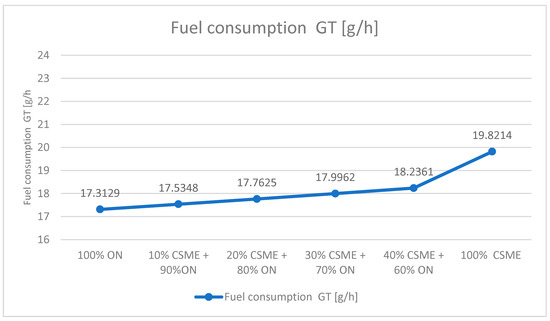
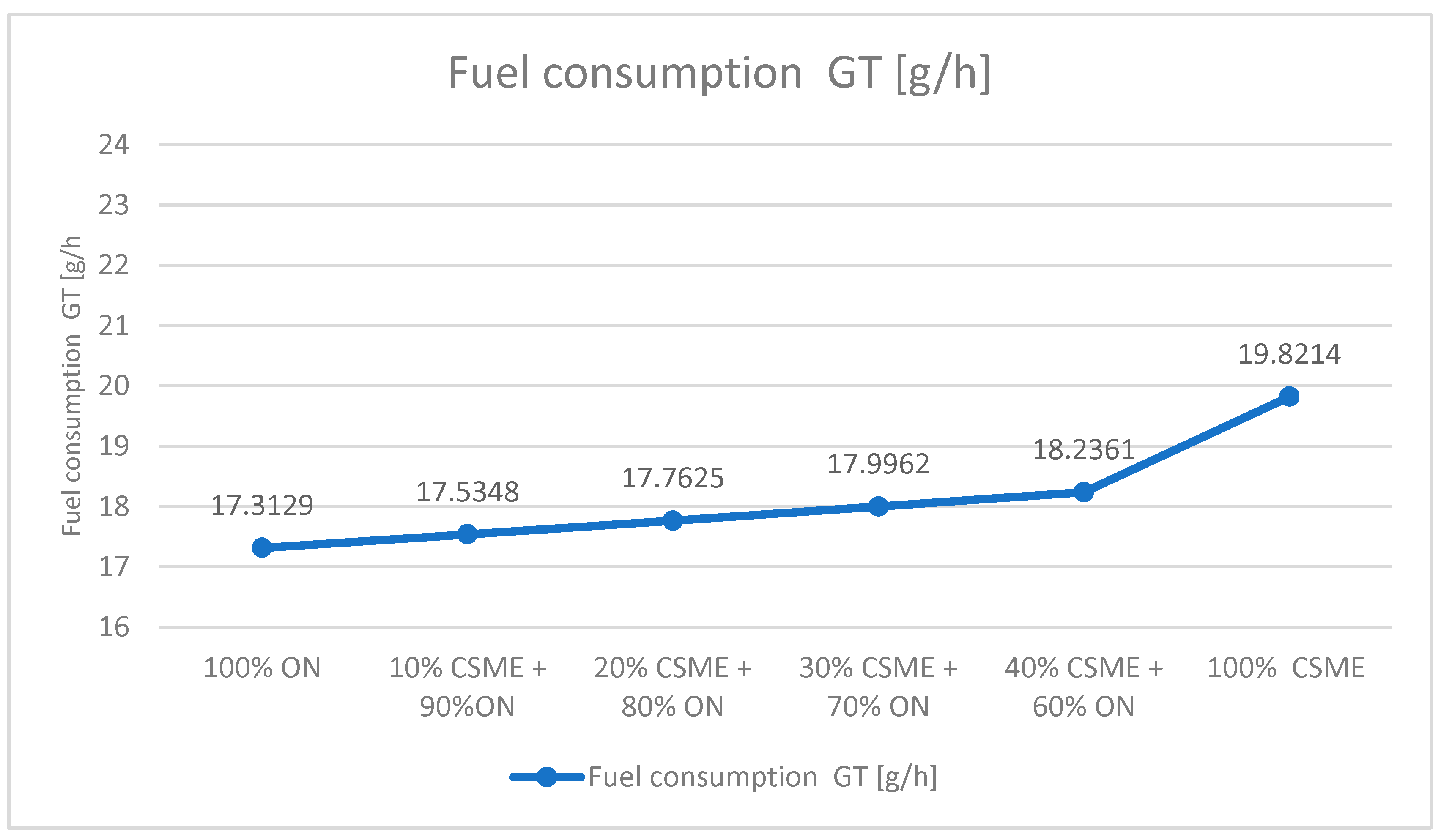
Figure 15 illustrates the changes in fuel consumption (in grams per hour) for fuel mix variants in which the share of CSME biofuel changes relative to conventional ON fuel. As the share of CSME biofuel in the fuel mix increases, a systematic increase in fuel consumption is observed. The highest consumption occurs at 100% CSME, which may indicate a lower calorific value or other physicochemical properties of the biofuel affecting combustion efficiency. Despite the environmental benefits of biofuels, their use may be associated with higher fuel consumption, which should be taken into account in energy and economic efficiency analyses. The results suggest the need for further research into the optimal composition of the fuel mixture to reduce fuel consumption while maintaining the environmental benefits of CSME. Increasing the share of CSME in the fuel mixture leads to an increase in fuel consumption. CSME biofuel may need to be adjusted to the engine or combustion system to improve its efficiency.
Figure 15.
Graph of the change in fuel consumption, depending on the type of fuel.
The total engine power is the theoretical power generated in the engine’s operating system (e.g., in cylinders in an internal combustion engine) without taking into account mechanical losses. The effective power is always less than the total power, and their ratio determines the mechanical efficiency of the engine:
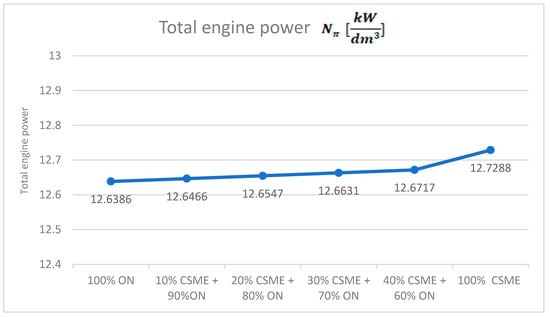
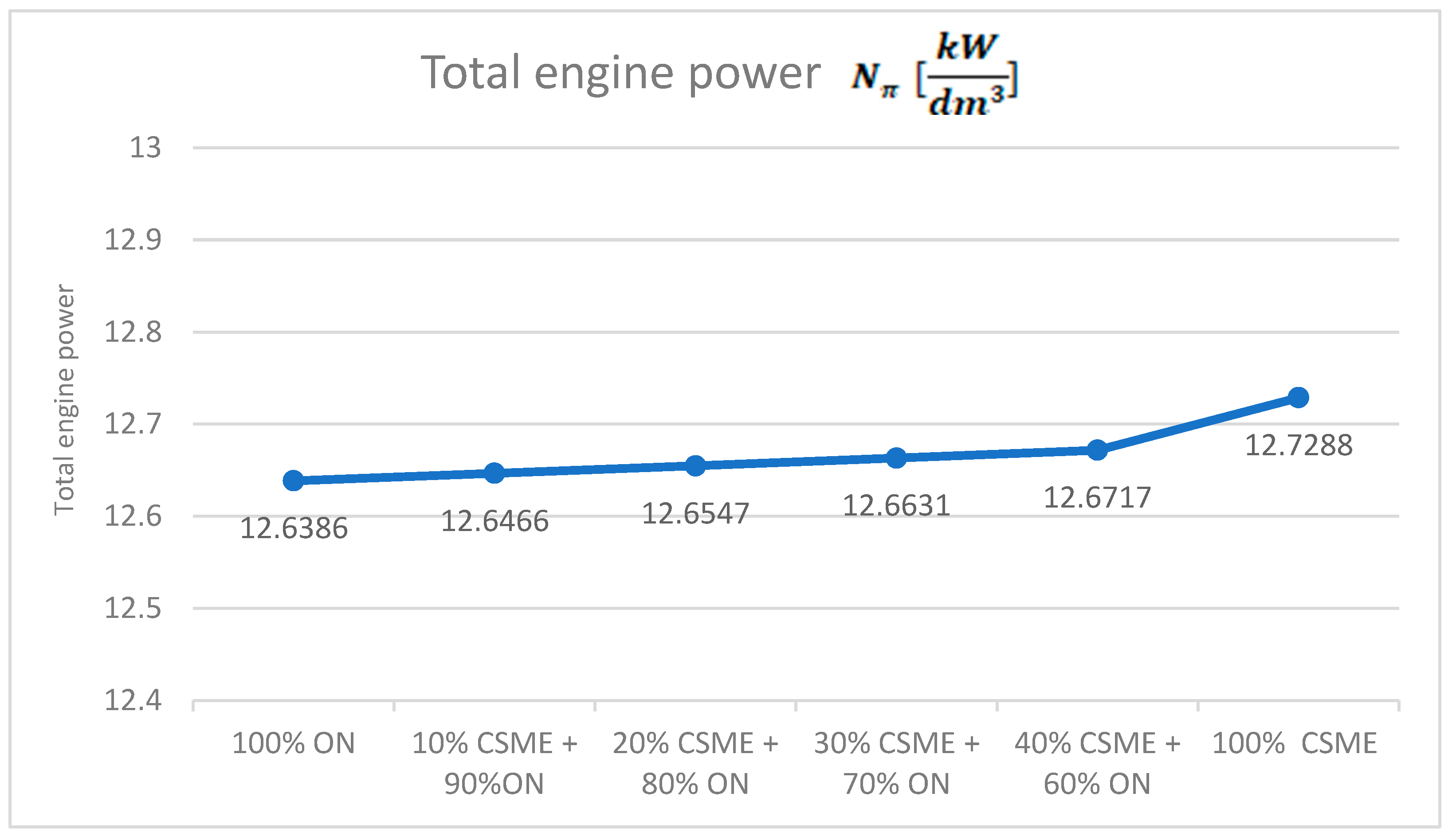
Figure 16 illustrates the variation in total engine power expressed as unit power Nπ [kW/dm3] as a function of the fuel blend composition, ranging from neat diesel oil (100% ON) to pure camelina oil methyl ester (100% CSME). The results demonstrate a slight but consistent increase in unit power with an increasing share of CSME in the fuel mixture. For neat diesel fuel, the unit power amounts to 12.64 kW/dm3, while the highest value of 12.73 kW/dm3 is observed for the engine operating on 100% CSME.
Figure 16.
Graph of the change in total engine power, depending on the type of fuel.
The addition of 10% CSME to diesel fuel leads to a modest increase in unit power compared to pure ON, which may be associated with the improved combustion characteristics of the blend. In the intermediate range of 20–30% CSME, the unit power continues to increase gradually, indicating stable combustion behavior and good compatibility between the biofuel and conventional diesel fuel. No deterioration in power performance is observed for any of the tested blends.
For higher CSME shares, including the case of neat CSME, the unit power reaches values close to the maximum recorded in the study. This trend suggests that the engine effectively adapts to the combustion of camelina oil methyl esters, despite their lower calorific value. The observed behavior can be attributed to the oxygenated nature of CSME, which promotes more complete fuel oxidation and enhances the combustion process. As a result, the potential reduction in the energy content is compensated for by the improved combustion efficiency, leading to maintained or slightly increased unit power.
Overall, the results confirm that CSME biofuel exhibits good compatibility with conventional diesel fuel and can be applied as a partial or full substitute without a significant loss of energy efficiency. The small magnitude of power variations across the tested fuel compositions further indicates stable engine operation under the analyzed conditions.
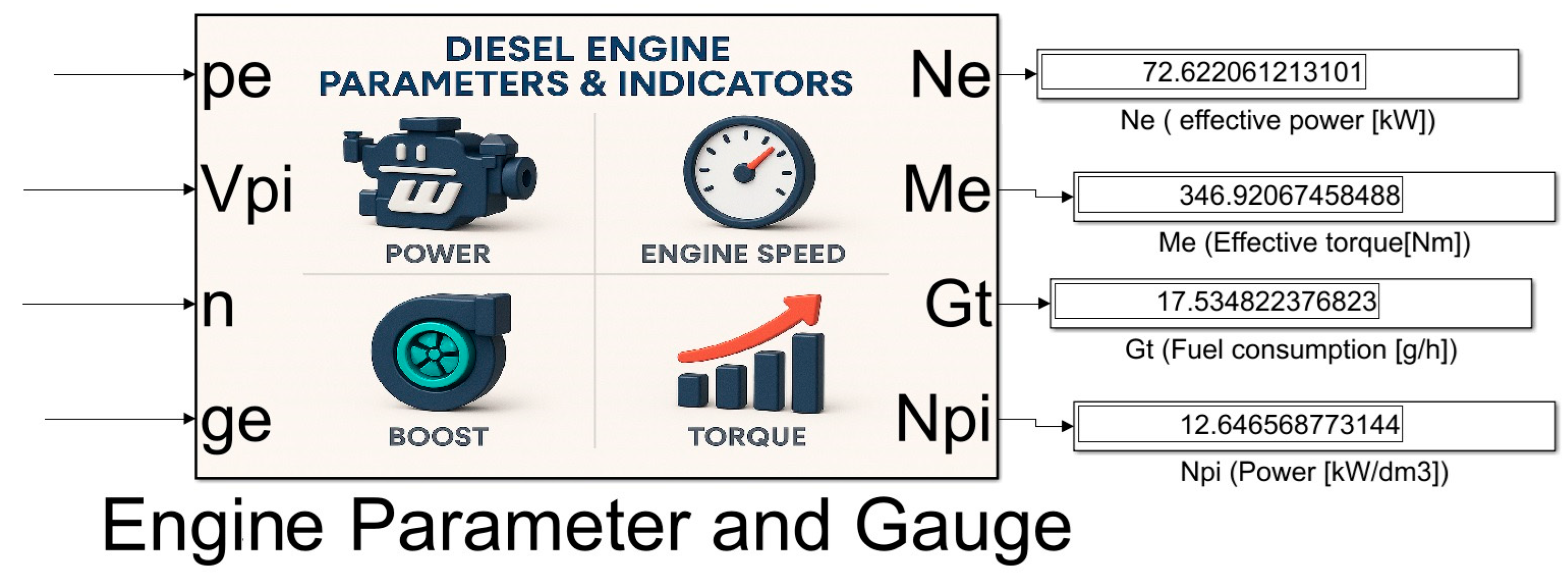
The calculations were carried out using a simulated environment, based on the analysis of the relationships between input signals and the corresponding output values. The block structure is illustrated in Figure 17.
Figure 17.
A block from MATLAB calculating the effective output parameters of the engine powered by the tested fuel.
Table 3 presents the calculated values of the selected engine parameters and performance indicators for different fuel blends, consisting of diesel oil (ON) and camelina oil methyl esters (CSME). The analyzed parameters include the lower heating value , indicated efficiency , mean effective pressure , effective efficiency , mechanical efficiency , and brake-specific fuel consumption .
Table 3.
Summary of parameters for each type of mixture CSME with ON.
A systematic decrease in the lower heating value is observed with increasing CSME content, from 42.45 MJ/kg for neat diesel fuel to 37.28 MJ/kg for pure CSME. This trend is consistent with the physicochemical properties of biodiesel fuels, which generally exhibit a lower carbon content and higher oxygen concentration than conventional diesel fuel. Similar reductions in heating value for camelina-based biodiesel have been reported in the literature [37].
Despite the decrease in heating value, the indicated efficiency remains constant across all tested fuel compositions, indicating that the combustion process is not adversely affected by the increasing share of CSME. The mean effective pressure shows a slight increase with higher CSME content, suggesting improved in-cylinder pressure development, likely due to enhanced combustion completeness resulting from the oxygenated nature of the methyl esters. Comparable behavior has been reported for camelina biodiesel blends in experimental engine studies [38,39].
The effective efficiency and mechanical efficiency exhibit minor increases with an increasing biodiesel share, reaching their highest value for pure CSME. This observation suggests that the improved combustion characteristics partially compensate for the lower calorific value of the biofuel. Similar improvements or stability in efficiency parameters have been observed for biodiesel blends derived from camelina and other vegetable oils [39,40].
In contrast, the brake-specific fuel consumption increases with a rising CSME content, from 238.5 g/kWh for neat diesel fuel to 271.2 g/kWh for pure CSME. This increase is a well-documented effect associated with biodiesel fuels and is primarily attributed to their lower heating value, which requires a higher mass flow rate to maintain comparable power output. Numerous studies on camelina biodiesel and other oxygenated fuels report similar trends in specific fuel consumption [36,40].
4. Conclusions
The aim of this study was to present and analyze the results of a numerical simulation of a compression ignition engine model developed in the MATLAB/Simulink environment and fueled with biofuel blends consisting of diesel oil and camelina sativa methyl esters (CSME). Particular attention was paid to evaluating the influence of different volumetric shares of CSME on the engine performance, fuel consumption, and combustion-related parameters.
Based on the simulation results obtained using the developed mathematical model, several quantitatively supported conclusions can be drawn regarding the applicability of CSME as an additive or substitute for conventional diesel fuel.
- Impact on Engine Performance
The simulations indicate that the use of CSME, especially at higher blend ratios and in its neat form (100% CSME), leads to a measurable increase in the engine performance parameters. Compared to conventional diesel fuel, the effective engine power increased by approximately 0.43%, while the effective torque increased by about 0.45%. These improvements can be attributed primarily to the higher oxygen content of CSME molecules and their relatively high cetane number, which contribute to improved combustion efficiency and more favorable heat-release characteristics.
At the same time, the brake-specific fuel consumption increased by approximately 2.43% for higher CSME shares. This effect is mainly associated with the lower calorific value of CSME compared to diesel fuel, which is only partially compensated for by its higher density.
- Combustion Characteristics and Fuel Properties
The mathematical model incorporates the elemental composition of the fuel blends, enabling a quantitative estimation of their calorific value and an analysis of combustion-related phenomena. An increasing CSME content results in a reduced carbon fraction and an increased oxygen fraction, which affects the combustion reaction pathways, heat release rate, and potentially the formation of exhaust pollutants.
Moreover, variations in key physicochemical properties such as viscosity, cetane number, and density were shown to influence fuel atomization, injection timing, and mixture formation. These factors may contribute to discrepancies between simulated results and real engine operation and should be considered when interpreting the simulation outcomes.
- Model Limitations and Future Research Directions
Although the proposed model enables the simulation of the complete four-stroke engine cycle, it is based on simplified assumptions concerning combustion kinetics, fuel injection processes, and the behavior of fuel mixtures. Additionally, the absence of variable operating conditions—such as changes in ambient temperature, engine load, and fuel system aging—limits the direct applicability of the results to real-world operating scenarios.
Future work should focus on extending the model to include these factors in order to improve the predictive accuracy and applicability to practical engine design and optimization tasks.
- Potential and Applicability of Biofuels
The simulation results support the technical feasibility of diesel–CSME blends as alternative fuels for compression ignition engines, particularly in the context of reducing dependence on fossil fuels and lowering net CO2 emissions. With ongoing advancements in biomass conversion technologies, fuels such as CSME, hydrogenated vegetable oils (HVO), and biomass-to-liquid (BTL) fuels may become viable substitutes for conventional diesel fuel, provided that technical performance and environmental requirements are met.
- Model Application and Further Development
The developed mathematical model provides a useful tool for the quantitative assessment of engine performance, thermal efficiency, and fuel consumption, as well as for the optimization of fuel blend composition. Future enhancements should include the integration of turbocharging systems, variable compression ratios, and advanced fuel injection strategies to increase the relevance of the model for modern compression ignition engines.
Author Contributions
Conceptualization, P.M.-Z.; Methodology, P.M.-Z.; Formal analysis, E.K. and I.D.; Resources, R.Z. and T.M.; Writing—original draft, P.M.-Z.; Writing—review & editing, P.M.-Z., E.K., I.D., R.Z. and T.M.; Project administration, I.D. All authors have read and agreed to the published version of the manuscript.
Funding
This research was funded by [Maritime University of Szczecin] grant number [1/MB/KAO/2026] and the APC was funded by [Maritime University of Szczecin, 2/SKAO].
Data Availability Statement
The original contributions presented in this study are included in the article. Further inquiries can be directed to the corresponding author.
Conflicts of Interest
The authors declare no conflict of interest.
Abbreviations
The following abbreviations are used in this manuscript:
| ON | Diesel oil |
| CSME | Camelina sativa methyl esters |
| C | Carbon |
| H | Hydrogen |
| O | Oxygen |
| S | Sulfur |
| W | Humidity |
| RME | Rapeseed oil methyl esters |
| SME | Soybean oil methyl esters |
| Hu | Calorific value |
| λ | Air excess coefficient |
| Theoretical air demand for the combustion of one kg of fuel | |
| Fresh cargo quantity | |
| Quantity of components of combustion products | |
| Quantity of components of combustion products | |
| Quantity of components of combustion products | |
| Quantity of components of combustion products | |
| Total quantity of combustion products | |
| GHG | Greenhouse gases |
| Effective engine efficiency | |
| Unit fuel consumption | |
| Indicative motor efficiency | |
| Mechanical efficiency of the motor | |
| FAME | Fatty acid methyl esters |
| L10 | Diesel fuel with an addition of 10% v/v methyl ester of flaxseed oil |
| L20 | Diesel fuel with an addition of 20% v/v methyl ester of flaxseed oil |
| L30 | Diesel fuel with an addition of 30% v/v methyl ester of flaxseed oil |
| L100 | 100% methyl ester of flaxseed oil |
| Average effective pressure | |
| Effective power | |
| Cylinder displacement | |
| n | Rotational speed |
| Effective torque | |
| Fuel consumption | |
| Power | |
| μ | Charge molar factor |
| Molecular coefficient of chemical transformation | |
| Residual gas coefficient | |
| Heat of combustion of the working mixture in diesel | |
| Mean molar specific heat at constant volume | |
| Mean molar specific heat at constant pressure | |
| Average specific heat | |
| Average specific heat | |
| Average specific heat | |
| Heat release coefficient (0.82) | |
| The temperature at the end of the visible combustion process | |
| Maximum pressure for diesel | |
| Pressure at the end of compression | |
| Degree of preparation of expansion for diesel | |
| Pressure increase | |
| Mechanical loss pressure | |
| Mean indicated pressure |
References
- Types of Car Drives—Check Which One to Choose! 2025. Available online: https://samoobrona.org.pl/rodzaje-napedow-samochodowych-sprawdz-ktory-wybrac/ (accessed on 6 September 2025).
- ACEA. New Commercial Vehicle Registrations in the EU: Vans +13.2%, Trucks +15.4%, Buses +4.4% in H1 2025; European Automobile Manufacturers’ Association: Brussels, Belgium, 2025; Available online: www.acea.auto (accessed on 11 February 2026).
- Understanding Diesel Engines: How They Work and What Components They Have. Available online: https://lj-machine.com/pl/blog/diesel-motor-diesel/# (accessed on 6 September 2025).
- How Do Diesel Vehicles Work Using Biodiesel? Available online: https://afdc.energy.gov/vehicles/how-do-biodiesel-cars-work (accessed on 7 September 2025).
- Knothe, G. Historical perspectives on vegetable oil-based diesel fuels. Inform 2001, 12, 1103–1107. [Google Scholar]
- Demirbas, A. Biodiesel: A Realistic Fuel Alternative for Diesel Engines; Springer: Berlin/Heidelberg, Germany, 2008. [Google Scholar]
- Wolańczyk, F. Biofuels. Sourcing and Use. KaBe. 2022.
- Klimiuk, E.; Pawłowska, M.; Pokój, T. Biofuels—Technologies for Sustainable Development; PWN Scientific Publishers: Warsaw, Poland, 2012. [Google Scholar]
- IEA. Renewables 2022. Analysis and Forecast to 2027; International Energy Agency: Paris, France, 2022. [Google Scholar]
- Zhang, Y.; Zhong, Y.; Lu, S.; Zhang, Z.; Tan, D. A comprehensive review of the properties, performance, combustion, and emissions of the diesel engine fueled with different generations of biodiesel. Processes 2022, 10, 1178. [Google Scholar] [CrossRef] [Scilit]
- Altin, R.; Çetinkaya, S.; Yücesu, H.S. The potential of using vegetable oil fuels as fuel for diesel engines. Energy Convers. Manag. 2001, 42, 529–538. [Google Scholar] [CrossRef] [Scilit]
- Demirbas, A. Biomass resource facilities and biomass conversion processing for fuels and chemicals. Energy Convers. Manag. 2001, 42, 1357–1378. [Google Scholar] [CrossRef] [Scilit]
- McKendry, P. Energy production from biomass (part 1): Overview of biomass. Bioresour. Technol. 2002, 83, 37–46. [Google Scholar] [CrossRef] [Scilit] [PubMed]
- Nigam, P.S.; Singh, A. Production of liquid biofuels from renewable resources. Prog. Energy Combust. Sci. 2011, 37, 52–68. [Google Scholar] [CrossRef] [Scilit]
- Naik, S.N.; Goud, V.V.; Rout, P.K.; Dalai, A.K. Production of first and second generation biofuels: A comprehensive review. Renew. Sustain. Energy Rev. 2010, 14, 578–597. [Google Scholar] [CrossRef] [Scilit]
- Chisti, Y. Biodiesel from microalgae. Biotechnol. Adv. 2007, 25, 294–306. [Google Scholar] [CrossRef] [Scilit]
- Balat, M.; Balat, H. Recent trends in global production and utilization of bio-ethanol fuel. Appl. Energy 2009, 86, 2273–2282. [Google Scholar] [CrossRef] [Scilit]
- Journal of Laws 2025, 426 1 Act in Force, Ordinance Minister of Industry and Minister of Climate and Environment (of 21 March 2025 on Quality Requirements for Liquid Biofuel). Available online: https://sip.lex.pl/akty-prawne/dzu-dziennik-ustaw/wymagania-jakosciowe-dla-biopaliw-cieklych-22129463 (accessed on 6 September 2025).
- Perkins Engines Company. Perkins1100 Series, Model RE, RF, RG, RH, RJ, RK USER’S HANDBOOK, 4-Cylinder Diesel Engines for Industrial, Agricultural and Construction Applications; Perkins Engines Company: Peterborough, UK, 2002. [Google Scholar]
- Standard BS EN 14214:2012+A2:2019; Liquid Petroleum Products. Fatty Acid Methyl Esters (FAME) for Use in Diesel Engines and Heating Applications. Requirements and Test Methods. Available online: https://standards.iteh.ai/catalog/standards/cen/0a2c5899-c226-479c-b277-5322cc71395d/en-14214-2012a2-2019?srsltid=AfmBOooJu_flBZlJNZu8ymA-gRyU8WjRqL1YWMtDkwL-gKWLQJeFC6PX (accessed on 23 February 2026).
- ASTM D6751; Standard Specification for Biodiesel Fuel Blend Stock (B100) for Middle Distillate Fuels. ASTM International: West Conshohocken, PA, USA, 2020.
- Neupane, D.; Lohaus, R.H.; Solomon, J.K.Q.; Cushman, J.C. Harnessing the potential of camelina as a bioenergy crop for a changing global climate. Plants 2022, 11, 772. [Google Scholar] [CrossRef] [Scilit] [PubMed] [PubMed Central]
- Ciubota-Rosie, C.; Ruiz, J.R.; Ramos, M.J.; Pérez, Á. Biodiesel from Camelina sativa: A comprehensive characterisation. Fuel 2013, 105, 572–577. [Google Scholar] [CrossRef] [Scilit]
- Žaglinskis, J.; Rimkus, A. Research on the Performance Parameters of a Compression-Ignition Engine Fueled by Blends of Diesel Fuel, Rapeseed Methyl Ester and Hydrotreated Vegetable Oil. Sustainability 2023, 15, 14690. [Google Scholar] [CrossRef] [Scilit]
- Wojs, M. The Influence of Camelina Oil Esters on the Combustion Process in a Compression Engine. Doctoral Dissertation, Warsaw University of Technology, Faculty of Automotive and Construction Machinery, Warsaw, Poland, 2016. [Google Scholar]
- Górski, K.; Olszewski, W.; Lotko, W. Alcohols and Ethers as Fuels for Compression Ignition Engines; Technical Journal 7-M/2008; Cracow University of Technology Publishing House: Kraków, Poland, 2008. [Google Scholar]
- Knothe, G.; Dunn, R.O. Biodiesel from Camelina sativa: A comprehensive characterisation. Fuel 2013, 111, 687–693. [Google Scholar]
- Heywood, J.B. Internal Combustion Engine Fundamentals; McGraw-Hill: New York, NY, USA, 2018. [Google Scholar]
- Kozaczewski, W. Crankshaft Design of Internal Combustion Engines; Wydawnictwa Komunikacji i Łączności: Warszawa, Poland, 2004. [Google Scholar]
- Wajand, J.A.; Wajand, J.T. Medium and High-Speed Piston Internal Combustion Engines; WNT: Warszawa, Poland, 2005. [Google Scholar]
- Luft, S. Basics of Engine Construction; Wydawnictwa Komunikacji i Łączności: Warszawa, Poland, 2006. [Google Scholar]
- Hajinezhad, F.; Jahanian, H.; Najafi, G. The effects of Camelina “Soheil” as a novel biodiesel fuel on engine performance and emission characteristics. Appl. Sci. 2018, 8, 1733. [Google Scholar]
- Moser, B.R. Biodiesel production, properties, and feedstocks. Vitr. Cell. Dev. Biol.—Plant 2009, 45, 229–266. [Google Scholar] [CrossRef] [Scilit]
- Knothe, G. Dependence of biodiesel fuel properties on the structure of fatty acid alkyl esters. Fuel Process. Technol. 2005, 86, 1059–1070. [Google Scholar] [CrossRef] [Scilit]
- Černý, J.; Pexa, M.; Mařík, J.; Holubek, M. Performance and emission analysis of a diesel engine fueled with Camelina sativa oil methyl ester. Renew. Energy 2017, 107, 207–214. [Google Scholar]
- Prankl, H.; Schindlbauer, H. Camelina sativa—An alternative oil crop. Ind. Crops Prod. 1998, 7, 237–242. [Google Scholar]
- Nadanakumar, V.; Loganathan, P.; Arivalagar, A.A.; Nandakumar, S.; Selvakumar, R. An Experimental Study on the Performance, Combustion, and Emission Characteristics of a Direct-Injection Diesel Engine Fueled with Various Blends of Camelina Sativa Biodiesel. Eng. Proc. 2024, 61, 25. [Google Scholar] [CrossRef] [Scilit]
- Karabektas, M.; Yilancilar, M.S. Investigation of the effects of high-carbon alcohol addition to camelina oil methyl ester on the performance parameters and soot emission of a diesel engine. Int. J. Low-Carbon Technol. 2022, 17, 206–213. [Google Scholar] [CrossRef] [Scilit]
- Orliński, P. The effect of diesel fuel mixture and camelina oil ester on selected parameters of combustion process. J. KONES Powertrain Transp. 2013, 20, 291–298. [Google Scholar] [CrossRef] [Scilit]
- Yıldız, M.M.; Özçelik, A. Investigation of the effects of camelina sativa biodiesel and eurodiesel blends on vehicle performance and emissions. Int. J. Automot. Eng. Technol. 2021, 10, 74–82. [Google Scholar] [CrossRef] [Scilit]

Disclaimer/Publisher’s Note: The statements, opinions and data contained in all publications are solely those of the individual author(s) and contributor(s) and not of MDPI and/or the editor(s). MDPI and/or the editor(s) disclaim responsibility for any injury to people or property resulting from any ideas, methods, instructions or products referred to in the content. |
© 2026 by the authors. Licensee MDPI, Basel, Switzerland. This article is an open access article distributed under the terms and conditions of the Creative Commons Attribution (CC BY) license.