


Abstract
As a key technology for achieving building heating electrification and decarbonization, the air-source heat pump (ASHP) has long been constrained by outdoor heat exchanger frosting in cold and humid regions. Frosting leads to increased thermal resistance, a sharp rise in air-side pressure drop, and the attenuation of heating capacity, while traditional active defrosting methods, such as reverse-cycle defrosting, suffer from high energy consumption and heating interruption. This review aims to systematically present the recent research progress of superhydrophobic surfaces (SHSs) as a highly efficient passive anti-frosting strategy. First, the complex phase-change dynamics of frosting and key influencing factors such as environment and surface characteristics are deeply analyzed. Second, it elucidates how superhydrophobic surfaces achieve delayed frosting and sloughing off defrosting by delaying nucleation, promoting droplet self-removal, and reducing ice adhesion. Furthermore, fabrication processes suitable for complex fin structures are systematically reviewed from the perspectives of subtractive manufacturing, in situ growth, and additive coatings, and their industrialization prospects are compared. Finally, the practical effects of this technology in improving heat transfer coefficients, reducing fan energy consumption, and improving defrosting efficiency are evaluated. Although superhydrophobic technology has significant energy-saving potential, it still faces challenges such as poor long-term durability, wettability failure under extreme conditions, and residual micro-droplets. Future research should focus on the development of highly durable materials, the matching design of micro–nano structures with macro flow channels, and active–passive synergistic anti-frosting strategies.
1. Introduction
Driven by the global imperative for energy transition and the dual goals of carbon peaking and carbon neutrality, clean heating in buildings has moved to the forefront of energy-saving and decarbonization strategies. The air source heat pump (ASHP), with its advantage of efficiently utilizing low-grade renewable energy, is widely considered one of the best solutions to replace traditional coal-fired and gas-fired boilers. However, in the Yangtze River Basin and most parts of northern China, the outdoor environment in winter often presents characteristics of low temperature and high humidity, making the surface of the outdoor evaporator of heat pumps extremely prone to frost formation.
Frosting is a complex thermophysical process involving heat and mass transfer and nonlinear phase changes. The accumulation of the frost layer acts like an insulating blanket, which not only increases thermal resistance but also leads to the blockage of flow channels between fins, causing a sharp increase in air-side pressure drop and airflow attenuation. Relevant studies indicate that, affected by frosting, the heating capacity of heat pumps in typical climatic regions of China drops by nearly half. To maintain operation, the unit must perform periodic defrosting. Currently, mainstream methods such as reverse-cycle defrosting or electric-heating defrosting belong to active means and have significant defects: first, the defrosting process consumes additional electrical or thermal energy, leading to a substantial reduction in the system’s periodic coefficient of performance (COP); second, during defrosting, the unit stops heating or even absorbs heat from the room, causing indoor temperature fluctuations and seriously affecting user comfort.
To break through the aforementioned bottlenecks, traditional solutions have mostly focused on optimizing system control strategies and improving the macrostructure of heat exchangers. However, these methods can only retard the frosting rate or improve frost distribution and cannot fundamentally change the phase-change behavior of water vapor on cold surfaces.
In recent years, inspired by the Lotus Effect in nature, the construction of superhydrophobic surfaces (SHSs) through surface microstructure design and chemical modification has received widespread attention from both academia and industry as a highly promising passive anti-frosting strategy. Superhydrophobic surfaces can significantly increase the condensation–nucleation energy barrier by regulating solid–liquid interfacial energy, inducing condensate droplets to spontaneously jump or slide off before freezing, thereby achieving frost-free or light-frost operation.
Although a large number of laboratory-level studies have confirmed the anti-frosting potential of superhydrophobic surfaces, there are still many controversies regarding their long-term effectiveness under actual heat pump operating conditions, the scalability of the process, and system matching.
Recent reviews have made significant contributions to this field from different perspectives. For instance, Wang et al. [1] and Ma et al. [2] provided comprehensive overviews of various anti-frosting strategies, but their discussions on SHSs were relatively brief and lacked a deep dive into the specific fabrication challenges for heat exchanger fins. On the other hand, reviews by Singh et al. [3] and Gao et al. [4] have systematically summarized the microscopic mechanisms of condensation-frosting and droplet dynamics. However, these reviews predominantly focus on fundamental behaviors on flat substrates in laboratory environments, often overlooking the scalability of these technologies for complex fin geometries and the durability gap under realistic cyclic frosting–defrosting conditions.
To bridge the gap between laboratory mechanisms and industrial applications, this review aims to systematically evaluate the recent progress of SHS technology specifically for ASHP systems. The distinct contributions of this work are:
- Scalable Fabrication Analysis: Unlike previous reviews focusing on material synthesis, this paper critically compares fabrication routes based on their applicability to complex fin structures and industrial scalability.
- Durability and Failure Focus: We provide a comprehensive analysis of wettability failure mechanisms (Cassie-to-Wenzel transition) specifically under the mechanical stresses of cyclic defrosting and environmental aging, which are often underrepresented in mechanism-focused reviews.
- System-Level Impact: Moving beyond droplet dynamics, this review quantitatively assesses the macroscopic benefits of SHSs on ASHP performance, including COP improvement, defrosting energy savings, and the active–passive synergistic strategies for future development.
Based on this, starting from the microscopic mechanism, this review is organized as follows: Firstly, it expounds on the physical process of frosting and its key influencing factors. Secondly, it focuses on analyzing the core anti-frosting and melting mechanisms of superhydrophobic surfaces. Thirdly, it systematically reviews surface fabrication processes suitable for heat pump heat exchangers, comparing their advantages and disadvantages. Subsequently, combined with the latest literature, the thermal-fluid performance and energy-saving effects of these surfaces in actual systems are evaluated. Finally, this paper deeply analyzes the challenges regarding durability failure and adaptability to extreme conditions and provides an outlook on future development directions, aiming to offer theoretical reference and engineering guidance for efficient anti-frosting technologies for air-source heat pumps.
2. Methodology
2.1. Search Strategy and Data Sources
This systematic review was conducted in accordance with the Preferred Reporting Items for Systematic Reviews and Meta-Analyses (PRISMA) guidelines. To ensure a comprehensive coverage of the literature, we performed an extensive search across three major scientific databases: Web of Science, Scopus, and Engineering Village. The literature search covered the period from January 2000 to February 2026, focusing on the most recent advancements in superhydrophobic surface (SHS) technology for air-source heat pumps (ASHPs).
The search strings were constructed using a combination of keywords related to the core subject. The primary boolean query employed was: (“Superhydrophobic” OR “Hydrophobic” OR “Wettability”) AND (“Frosting” OR “Defrosting” OR “Anti-icing” OR “Icephobicity”) AND (“Heat Pump” OR “Heat Exchanger” OR “ASHP” OR “Fins”). In addition to database searching, the reference lists of eligible articles and relevant review papers were manually screened to identify additional studies that might have been missed in the initial electronic search.
2.2. Inclusion and Exclusion Criteria
To align with the scope of this review—bridging the gap between laboratory mechanisms and industrial applications—the following inclusion criteria were applied: (1) Studies investigating the fabrication or application of superhydrophobic surfaces specifically on metal substrates (aluminum, copper) relevant to heat exchangers. (2) Experimental or numerical research focusing on frosting mechanisms, droplet dynamics (e.g., jumping droplets), and defrosting performance. (3) Articles reporting quantitative data on key performance indicators such as contact angle, frost delay time, and heat transfer coefficient. (4) Research explicitly addressing durability, scalability, or failure mechanisms under realistic operating conditions.
Studies were excluded if they (1) focused solely on anti-icing for aviation, power transmission lines, or wind turbines without relevance to heat transfer equipment; (2) lacked specific experimental validation or theoretical analysis of the frosting/defrosting process; (3) were written in languages other than English or were non-peer-reviewed conference abstracts with insufficient data.
2.3. Study Selection and Data Extraction
The initial search results were imported into a reference management software (Zotero 8.0.3), and duplicates were removed. Two reviewers independently screened the titles and abstracts. Potentially relevant articles were then subjected to a full-text review. Data regarding fabrication methods, durability tests, and system-level impacts were extracted and synthesized to construct the comparative analysis and Technology Readiness Level evaluation presented in Section 4 and Section 5. A total of 124 studies were finally selected for this review. The detailed screening process is illustrated in the PRISMA flow diagram (Figure 1).
Figure 1.
PRISMA flow diagram.
3. Frosting Process
3.1. Frosting Mechanism
The frosting phenomenon is essentially a complex phase-change process of water vapor in the air occurring on a low-temperature surface, involving nonlinear, variable-density heat and mass transfer. When the cold surface temperature is below both the dew point of moist air and the freezing point of 0 °C, water vapor must first overcome the Gibbs free energy barrier to form condensation nuclei [5]. Phase-change dynamics indicate that only condensation nuclei with a radius greater than the critical radius can survive [6], and this critical radius is closely related to the surface free energy of the cold surface. The larger the surface energy, the lower the nucleation barrier [7]. Due to the lower barrier for heterogeneous nucleation and the significantly higher activation rate of condensate liquid nuclei compared to desublimation frost nuclei, frosting in nature mostly manifests as a process of heterogeneous nucleation–condensation–freezing, except for direct desublimation occurring at extremely low temperatures [8].
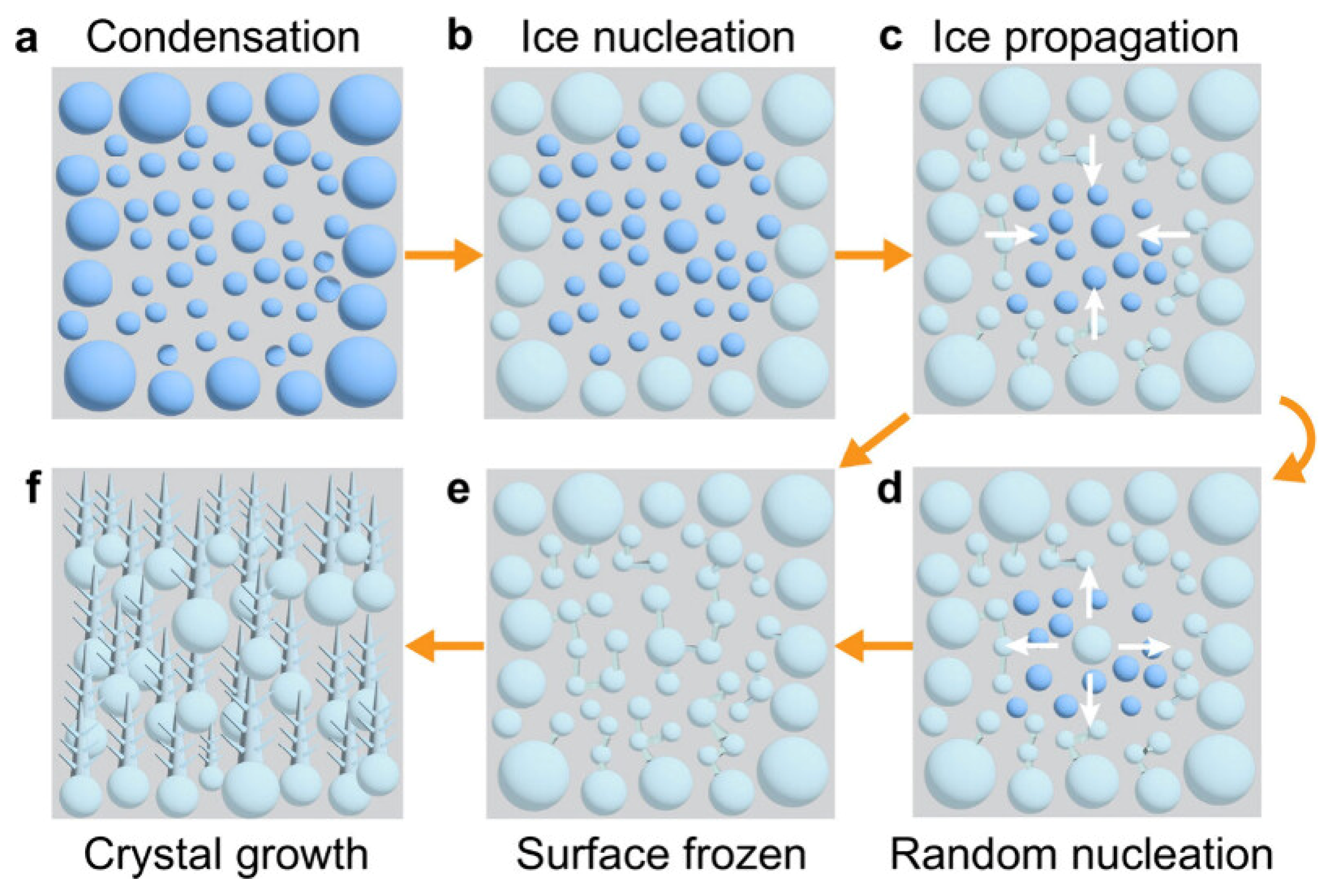
After nucleation, the microscopic process mainly manifests as the dynamic evolution and freezing of condensate droplets. Condensate nuclei grow by continuously adsorbing water vapor and merging with each other, with their size spanning up to six orders of magnitude [9]. Microscopic observation shows that this stage is subdivided into droplet formation, freezing, and frost crystal generation [10]. On rough surfaces, some droplets present a Cassie state due to air layer isolation and may undergo spontaneous jumping detachment after coalescence [11]. For undetached droplets, their freezing usually starts from the bottom and grows exponentially with time, significantly affected by the contact angle [12], eventually forming a peach-tip-like protrusion at the top [13], providing a base point for subsequent frost crystal growth. This dynamic evolution is systematically captured in Figure 2, which illustrates the microscopic pathways on a superhydrophobic surface. The process initiates with stochastic condensation and ice nucleation (a-b), where individual droplets grow independently within the surface textures. As shown in stages (c-d), the subsequent ice propagation across the droplet matrix is a critical phase that determines the overall frost induction period. By effectively suppressing droplet coalescence, the transition to full surface freezing (e) and subsequent dendritic crystal growth (f) are delayed, demonstrating the core mechanism of superhydrophobicity in retarding frost layer formation.
Figure 2.
Schematic diagram of paths for the completely frozen surface during condensation frosting on a surface: (a) condensation, (b) ice nucleation, (c) ice propagation, (d) random nucleation, (e) surface frozen, and (f) crystal growth [14].
From the perspective of macroscopic evolution, the three-stage classification of frosting proposed by Hayashi et al. [15] (frost crystal growth period, frost layer growth period, fully developed period) has become a consensus. During the frost crystal growth period, flake-like, feather-like, or needle-columnar initial frost crystals grow on the surface of frozen droplets [6], and their morphology and thickness significantly change with variations in cold surface temperature and humidity [16]. As dendritic crystals grow interlaced to form a porous frost layer, the frost layer enters the growth period, becoming an insulating layer with high thermal resistance. Finally, entering the fully developed period, surface frost crystals generate moisture due to melting back, which penetrates into the interior and refreezes. Although this cycle no longer increases the frost layer height, it significantly increases the density [17].
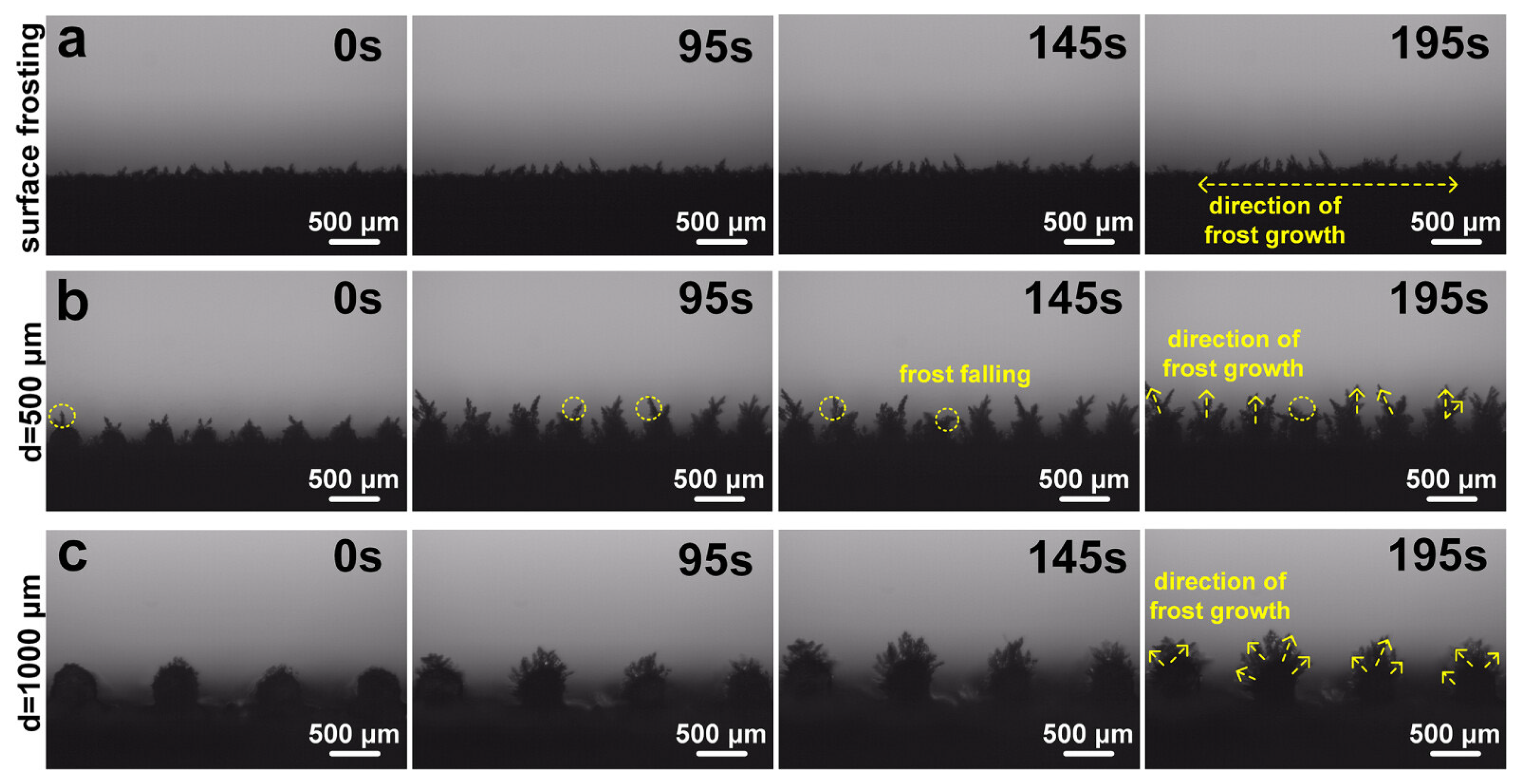
To deeply reveal the aforementioned complex mass transfer mechanisms, numerical simulation and theoretical models have become key research methods. Researchers have proposed various structural models such as series–parallel and Woodside models, combined with advanced algorithms for prediction. For example, Wu et al. [18] established a phase-change mass transfer model using Fluent, revealing the law of frost layer density diffusion from above the initial frost crystals. Chen et al. [19] achieved cross-scale prediction from mesoscopic nucleation to macroscopic frost layer thickening using the lattice Boltzmann method. Wang et al. [20], based on the porous media method, discovered the dominant role of convective heat transfer, pointing out that the frost layer formed under natural convection is thicker than that under forced convection. These theoretical works not only verify experimental phenomena but also provide a quantitative basis for predicting frost layer growth and densification. The experimental time-lapse in Figure 3 further elucidates these differences. On the superhydrophobic surface (a), frost crystals remain discrete and sparse even after 195 s, contrasting with the accelerated inter-crystal bridging observed on surfaces with pre-existing ice beads (b-c). A notable phenomenon in Figure 2b is the ‘frost falling’ at 145 s; this illustrates the mechanical instability of frost on hydrophobic textures, where gravity or airflow can trigger self-removal. These observations confirm that the microstructure spacing (d) is a decisive factor: when d > 2δ (as in case c), horizontal frost propagation is significantly inhibited, providing a clear design guideline for anti-frosting surfaces.
Figure 3.
(a–c) Frost growth process under different conditions: (a) frost growth on the superhydrophobic surface; (b) frost growth on ice beads spaced d = 500 µm apart, d < 2δ; and (c) frost growth on ice beads spaced d = 1000 µm apart, d > 2δ [21].
3.2. Key Influencing Factors of the Frosting Process
3.2.1. Macro-Environmental Parameters and Climatic Characteristics
External environmental parameters are the most direct factors affecting frosting. Experimental studies have also confirmed that the moisture content of the air has a significant effect on frost layer growth. As the humidity of the air flowing over the cold surface increases, the freezing time of condensate droplets shortens, and both the height and density of the frost layer on the cold surface increase [22]. Simulation studies further found that the frost layer is thickest when the moist air temperature varies between 1 and 3 °C [23]. Based on these characteristics, Xu [24] introduced the concept of frosting degree-hours to divide China into four frosting climate characteristic zones, among which Liaoning and northern Xinjiang have the highest frosting sensitivity. A survey by Li [25] showed that frosting causes the heating capacity of heat pumps in typical climatic cities in China to decrease by 43.8% to 50.0%. In addition, Zhu [26] suggested determining the condensation condition on the evaporator surface based on the air condensation line and grading the frosting regions to provide a basis for defrosting control.
3.2.2. Cold Wall State, Fluid Properties, and Surface Micro-Factors
Local physical states also play a decisive role in the frosting process. The lower the cold surface temperature, the more severe the frosting; Yang [27] found that even with the same average temperature, colder surfaces frost more significantly. Song Mengjie [28] pointed out that under natural convection, frost layer thickness rapidly increases as surface temperature decreases, while a smaller initial cooling rate can lead to reduced frost layer thickness [29]. In terms of fluid dynamics, air velocity affects frost layer growth in the laminar flow regime, while the effect is negligible in the turbulent regime [30]. Fine particulate matter (PM2.5) in the air also promotes frosting; excessive concentration leads to a significant increase in the heat transfer attenuation rate of the evaporator [31]. Although the presence of fouling accelerates the frosting process, the mass accumulation of the frost layer is less [32]. Modification studies on surface characteristics indicate that superhydrophobic surfaces can effectively inhibit frosting under different humidities, significantly delaying droplet freezing time, although their frost layer height still increases with increasing humidity.
3.2.3. Heat Exchanger Structure and Fin Geometric Parameters
The structural design of the heat exchanger is directly related to the speed and distribution of frosting. Increasing the area of the outdoor evaporator can significantly reduce frosting time [33]. Regarding microscopic parameters, an 8 mm tube diameter is superior to larger diameters, and increasing fin pitch can effectively retard frosting [34]. The choice of fin type is crucial; Westhaeuser [35] found that louvered fins retard frosting better than plain fins, and Hong [36] proposed that the frosting period of flat louvered fins in microchannel heat exchangers is 102.7% longer than that of corrugated louvered fins. In contrast, corrugated fin heat exchangers frost faster and suffer rapid performance degradation [37]. Additionally, refrigerant flow direction affects frosting uniformity. The frost layer distribution on the surface of counter-flow heat exchangers is more uniform than that of parallel-flow types, thereby reducing the impact of frosting on heat transfer capacity [38].
3.2.4. Regulatory Role of System Operation Control Strategies
Reasonable control strategies can actively intervene in the frosting process. In terms of fan control, constant air speed control mode accelerates frosting compared to constant flow control [39]. Although reducing the outdoor fan air volume leads to fluctuations in frosting rate and may cause severe performance degradation [40], appropriately increasing fan speed has been proven to have anti-frosting effects [41]. The dual-fan alternating operation mode proposed by Bai [42] can achieve uniform frosting and extend the heating time by up to 46.4%. In terms of compressor control, variable frequency technology has obvious advantages. Variable frequency units usually operate at low frequencies with less heat absorption, thus making them less prone to frosting than fixed frequency units [43]. Especially in severe cold regions, to meet large load demands, the unit capacity configuration is larger, making the compressor speed relatively low, which allows the evaporator surface temperature to be maintained at a higher level, thereby effectively inhibiting frosting [44].
4. Mechanism of Frost Suppression by Superhydrophobic Structures
A superhydrophobic surface (SHS) is a special functional surface exhibiting extreme water repellency, typically defined as having a static water contact angle (WCA) greater than 150° and a sliding angle (SA) or contact angle hysteresis (CAH) less than 10°. This concept originated from biomimetic studies of the Lotus Effect in nature. Its excellent hydrophobic performance is not caused by a single factor but is the result of the synergistic effect of surface microscopic geometric structure and material chemical composition.
At the physical structure level, superhydrophobic surfaces are usually constructed with hierarchical rough structures, modifying nanoscale protrusions or textures on a microscale skeleton. This unique micro–nano binary composite structure can effectively trap air, forming a stable air cushion between the droplet and the solid substrate, thereby greatly reducing the solid–liquid contact area. At the chemical property level, such surfaces are usually modified or directly constituted by low-surface-energy materials. The low-surface-energy characteristic reduces the intermolecular forces between water molecules and the solid surface, essentially weakening the hydrophilic tendency of the surface. It is the organic combination of this special micro–nano rough structure and low-surface-energy chemical modification that enables superhydrophobic surfaces to synergistically inhibit the frosting process from the following multiple levels.
4.1. Inhibition of Condensation Nucleation: Increasing Nucleation Energy Barrier
An important mechanism for superhydrophobic surfaces to inhibit frosting is to hinder water vapor condensation in the initial stage by increasing the nucleation energy barrier. According to classical nucleation theory, forming a stable liquid droplet nucleus on a rough surface requires overcoming a specific free energy barrier. The unique micro–nano structure of superhydrophobic surfaces, combined with low-surface-energy materials, significantly increases this barrier [1,45].
Relevant research analysis indicates that the energy barrier required for a droplet to condense and nucleate on a flat surface is positively correlated with the surface contact angle: the larger the surface contact angle, the higher the barrier for droplet condensation nucleation on its surface [46]. The contact angle of superhydrophobic surfaces is generally greater than 150°, which means their surface condensation nucleation barrier is significantly higher than that of ordinary flat surfaces. This high barrier directly leads to a reduction in the distribution density of condensate droplets. The distribution density of condensate droplets is determined by the nucleation site density, and the nucleation site density decreases as the contact angle increases. Therefore, compared to hydrophilic and bare surfaces, the distribution of condensate droplets on superhydrophobic surfaces is much sparser [47,48]. This also explains why, under the same environmental conditions, the number of initial condensate droplets formed on superhydrophobic surfaces is smaller and the distribution is sparser, effectively reducing the formation points of frost crystals at the source [49].
4.2. Droplet Self-Removal Effect: Weak Adhesion and Dynamic Detachment
The core feature of superhydrophobic surfaces is their extremely high water contact angle and extremely low contact angle hysteresis, which makes the adhesion force of the surface to water droplets very weak, promoting the removal of condensate droplets from the surface before freezing. This effect is mainly achieved through the following three mechanisms.
4.2.1. Cassie–Baxter State and Low Adhesion
At the microscopic level, the wetting behavior of droplets on rough surfaces mainly exists in two typical states: one is the Wenzel state (fully wetted state), where droplets completely penetrate into the microstructure gaps, and the other is the Cassie–Baxter state (non-wetted state), where droplets are suspended on top of the microstructures. On superhydrophobic surfaces, water droplets are usually in the Cassie–Baxter wetting state, suspended on top of micro–nano structures with a layer of trapped air underneath. This air cushion greatly reduces the actual contact area between the water droplet and the solid surface and is the key to achieving low adhesion [50]. A small contact angle hysteresis is an important condition for forming a stable Cassie state on the surface. The contact angle hysteresis of superhydrophobic surfaces is generally less than 10°, which is conducive to the formation of the Cassie state. This state significantly affects the freezing process. Relevant experiments found that condensate droplets on a bare surface began to freeze after 60 s, while on a superhydrophobic surface, freezing began after 620 s. This is because the contact area between the condensate droplet and the superhydrophobic surface is far smaller than that on the bare surface, which is closely related to the Cassie state of droplets on the superhydrophobic surface [51].
4.2.2. Droplet Coalescence and Self-Jumping
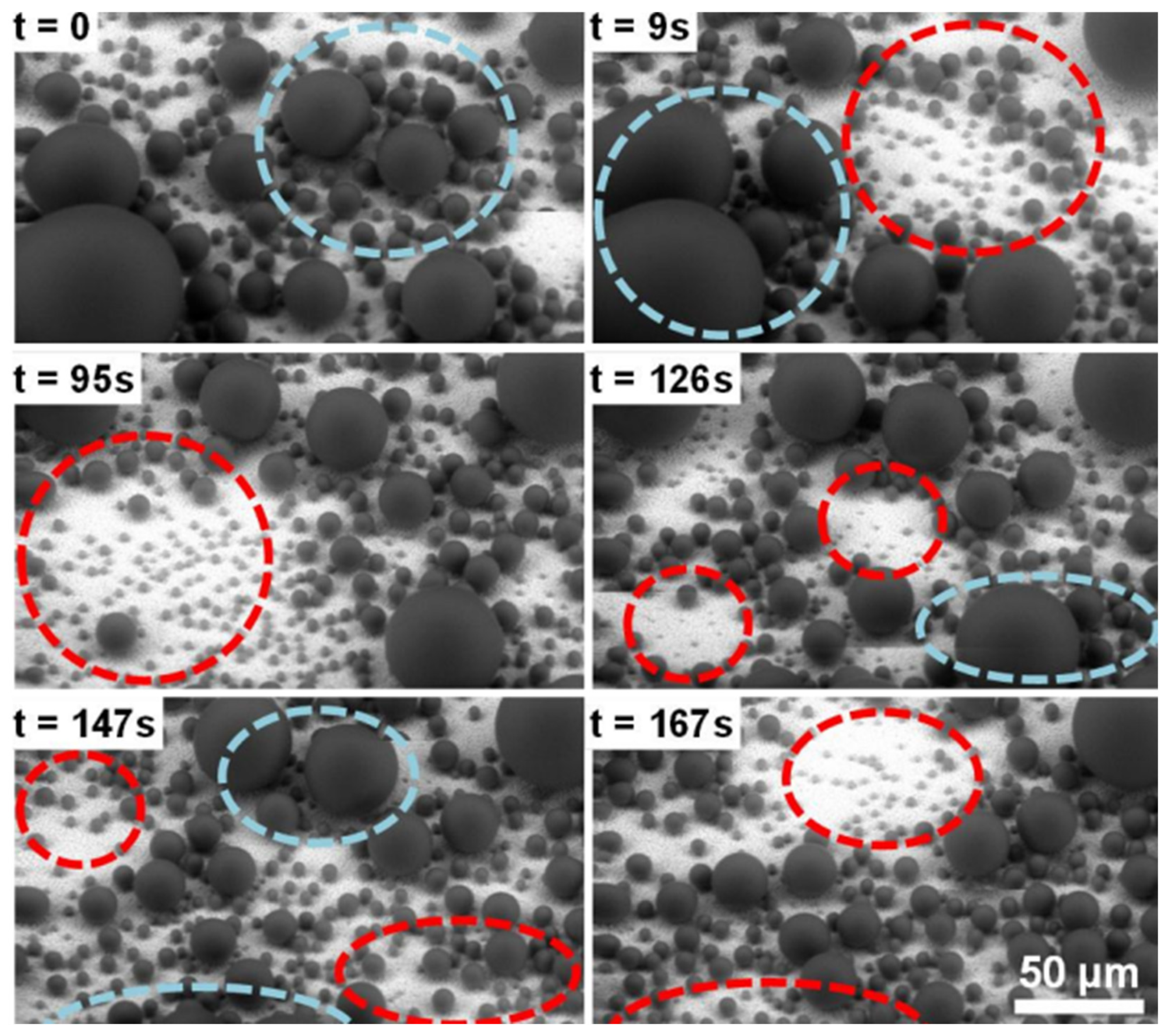
When two or more condensate droplets on the surface merge, the reduction in total surface energy releases a portion of energy. On superhydrophobic surfaces, this energy is sufficient to convert into kinetic energy, driving the merged droplets to spontaneously jump off the surface [52]. This spontaneous droplet removal mechanism is called self-jumping condensation, which can effectively remove moisture from the surface before droplets freeze, significantly delaying the occurrence of frosting [53]. The energy conversion process is visually confirmed by the time-series in Figure 4. Following initial nucleation (t = 0–9 s), the released surface energy during droplet coalescence triggers the self-jumping events observed at t = 95–126 s. This mechanism effectively refreshes the surface, as evidenced by the secondary nucleation in vacated areas at t = 147 s. Such spontaneous removal is the primary reason SHSs can significantly delay the onset of frosting compared to Wenzel-state surfaces. Key factors leading to condensate droplet jumping include coalescence of droplets in an unstable state, sufficient surplus interfacial free energy, and small three-phase contact line resistance on nano or micro–nano surfaces [54]. Further research points out that droplets in the Wenzel state have large hysteresis resistance and are difficult to remove. Only on nano or micro–nano hierarchical structure surfaces, where droplets are in the Cassie state, does removal occur more easily after coalescence [55].
From the perspective of energy balance, droplets will achieve self-jumping only when the difference between the driving force (change in surface free energy before and after coalescence) and resistance (viscous flow energy dissipation and adhesion work) is greater than 0 [53], and the smaller the contact angle hysteresis, the easier it is for droplets to jump [56]. In addition, the line tension generated by the surface structure can effectively enhance surface hydrophobicity. Increasing the surface line tension increases the droplet surface contact angle and reduces the minimum energy consumption required for droplet removal from the surface [57]. The jumping height depends on the microscopic surface roughness of the substrate, increasing as the truncated micro-cone features decrease [58]. Notably, by designing specific superhydrophobic structures, even ice droplets can jump in low-pressure environments [59].
Figure 4.
Droplet growth dynamics [60].
4.2.3. Rolling and Sliding
Even without droplet jumping, the extremely low sliding angle of superhydrophobic surfaces allows condensate droplets to easily roll off the surface under minor external forces such as gravity or airflow, thereby effectively keeping the surface dry. During the defrosting process, the frost layer on hydrophilic, ordinary, and hydrophobic fins accompanies decomposition and shrinkage upon melting, eventually shrinking into droplets under surface tension; whereas on superhydrophobic fins, once defrosting begins, the frost layer separates from the surface and falls off directly as a whole. Achieving this process requires the superhydrophobic fin to have both a large contact angle and a small contact angle hysteresis [61]. This easy removal characteristic mainly benefits from the minimal contact angle hysteresis, enabling even small meltwater droplets (diameter about 1 mm) to slide off the surface at a low inclination angle (≤15°) [62]. Furthermore, during the dynamic removal of the melting frost layer on a horizontal superhydrophobic surface, spontaneous dewetting occurs, followed by gravitational mobilization. This dynamic thawing phenomenon is also caused by the contact angle hysteresis effect of meltwater relative to the initial frost layer [63].
4.3. Delayed Freezing: Reducing Heat Conduction
Another key mechanism of superhydrophobic surfaces for frost suppression lies in their unique thermal insulation properties. The air layer trapped in the micro–nano structures not only reduces droplet adhesion but also acts as a thermal insulation layer. Since the thermal conductivity of air is far lower than that of water and the substrate material, this air cushion significantly weakens the heat conduction path from supercooled water droplets to the low-temperature solid surface. The slowing of heat transfer means that it takes longer for water droplets to lose heat and reach the freezing temperature. This freezing delay provides a valuable time window for droplets to leave the surface through self-removal mechanisms. Studies indicate that compared to hydrophilic or ordinary surfaces, the freezing time of water droplets on superhydrophobic surfaces can be delayed several times. For example, a study found that the freezing time of droplets on a surface with regular micro–nano structures was 4.42 times that on a surface with irregular structures [4]. In addition, the frost layer density and thermal conductivity of the superhydrophobic layer are lower than those of hydrophilic bare and hydrophobic surfaces [64]. Experimental research prepared two superhydrophobic surfaces with contact angle hysteresis of 49.1° (large, conforming to the Wenzel model) and 4.7° (small, in the Cassie state) for comparison. Analysis showed that the complete freezing time of droplets on the Cassie-state surface was as long as 1800 s, delaying it by two times compared to 600 s on the Wenzel-state surface. And after 60 min of frosting, the frost layer thickness on the Cassie-state surface was only 1.02 mm, significantly lower than the 1.53 mm on the Wenzel-state surface. The fundamental reason for this difference is that the Cassie-state structure significantly reduces heat conduction efficiency: on the one hand, the actual contact area between droplets and the surface is small; on the other hand, the air trapped in the microscopic structural gaps has extremely low thermal conductivity, effectively blocking heat transfer between the surface and the droplets as well as the subsequent frost layer, thereby retarding freezing and frost layer growth [65].
4.4. Key Role of Surface Microstructure
The anti-frosting performance of superhydrophobic surfaces is closely related to the specific morphology of micro–nano structures. Coatings with regular, optimized surface morphologies generally exhibit better anti-frosting effects than coatings with irregular structures. For example, surfaces with high-density fine nanostructures can more effectively promote droplet self-migration behavior, thereby achieving better anti-frosting effects. Relevant experimental results show that the frost coverage rate on nanostructured surfaces is 55% lower than that on microstructured surfaces [66]. Additionally, theoretical calculations further indicate that microscopic dimensional parameters are crucial. The defrosting temperature decreases with the increase in nanostructure height or the decrease in nanostructure diameter [67]. However, if the microstructure is improperly designed, it may cause water droplets to fall into the Wenzel state (fully wetted), thereby losing superhydrophobicity and accelerating frosting instead. Moreover, it should be noted that in ultra-low temperature environments where water vapor directly desublimates into ice crystals, the above anti-frosting mechanisms based on droplet behavior may fail, leading to insignificant anti-frosting effects of superhydrophobic coatings.
4.5. Transition from Idealized Droplets to Realistic Frosting
It is crucial to acknowledge that the aforementioned mechanisms (e.g., jumping droplets, Cassie-state stability) are primarily observed under controlled laboratory conditions with low vapor supersaturation. In actual ASHP operation, however, mixed-mode condensation often dominates. High airflow shear forces and particulate fouling can disrupt the delicate micro–nano structures, leading to forced wetting (filmwise condensation). Under these conditions, the jumping effect is suppressed, and the primary anti-frosting benefit shifts from droplet removal to delayed ice bridging between fins, which maintains the airflow channel open for a longer duration.
5. Fabrication Methods of Superhydrophobic Surfaces on Heat Pump Heat Exchangers
The fabrication of superhydrophobic surfaces is a key link in achieving efficient frost suppression for heat pump heat exchangers. According to the latest industry in-depth research reports, fabrication processes are evolving from traditional single morphology control towards multi-functionality, low cost, and greenization [68]. Unlike ideal flat surfaces in laboratory environments, coatings applied to heat pump fins must balance superhydrophobicity for rapid droplet removal with extremely low thermal resistance to avoid impairing heat transfer efficiency, as well as wear resistance and corrosion resistance under harsh conditions. Furthermore, whether the preparation process possesses feasibility for industrial mass production is key to its implementation [69,70]. This chapter will strictly elaborate on four dimensions based on the physicochemical mechanisms of surface construction: subtractive manufacturing, in situ growth, additive/coating technologies, and surface-functionalized structures.
5.1. Subtractive Manufacturing
Subtractive manufacturing removes part of the material from the substrate surface through physical or chemical means, directly constructing rough structures on the metal surface. It has the inherent advantages of strong bonding between the coating and substrate and low thermal resistance.
5.1.1. Chemical Etching
Chemical etching is one of the most mature industrial surface treatment technologies. Rahman et al. [71] showed that etching with Beck’s solution (acidic) for 65 s can rapidly form micron-scale step-like structures, achieving a contact angle of 151.75° after fluoro-silane modification, while etching with sodium hydroxide (alkaline) takes longer (4 min) but can form petal-like microstructures closer to the lotus leaf surface, with a slightly higher contact angle (152.03°). This method is low-cost, but reaction time must be strictly controlled to prevent over-corrosion, and the disposal of chemical waste liquid is a major environmental challenge it faces [68].
5.1.2. Physical Processing
Compared to chemical methods, physical processing is more environmentally friendly and offers stronger structural controllability. In terms of laser processing, Huang et al. [72] used femtosecond lasers to construct full-surface micro–nano structures on aluminum surfaces, combining high-temperature stearic acid modification to achieve superhydrophobicity, and created a striped surface with alternating hydrophilic and hydrophobic regions by removing coatings in specific areas via secondary laser ablation, achieving directional droplet bouncing. Hadžić et al. [73] used nanosecond lasers and self-assembled monolayers (SAMs) to prepare superbiphilic arrays for enhanced phase-change heat transfer. This non-contact processing has high precision but expensive equipment, currently mostly used for high value-added components. Addressing low-cost needs, Xue et al. [74] proposed an extremely simple coating + sandpaper polishing process. By mechanically polishing away the polymer surface layer to expose internal TiO2 nanoparticles and create micron grooves, a contact angle of 156.4° superhydrophobicity was achieved. This method possesses excellent reparability. Surface performance can be restored by simple re-polishing after wear. Additionally, Misiiuk et al. [75] compared micro-milling with laser etching, pointing out that simple mechanical micro-milling, while capable of manufacturing micro-grooves, is difficult to achieve perfect superhydrophobicity due to edge burrs, whereas laser etching, capable of generating nanospike redeposition layers, makes it easier to obtain superhydrophobic surfaces with low sliding angles.
5.2. In Situ Growth
In situ growth methods grow fine micro–nano structures on metal substrates through chemical reactions, typically obtaining more uniform structures with larger specific surface areas than simple etching.
5.2.1. Hot Water Oxidation
This is currently the most promising process for industrialization in aluminum fin modification. Sheng [76] and Tang et al. [77] demonstrated a typical process: immersing aluminum fins in boiling deionized water (90–100 °C) for 1–3 h triggers a hydration reaction on the aluminum surface, in situ growing Boehmite (AlO(OH)) nanosheets. These nanosheets are interlaced to form a petal-like network structure, achieving a contact angle of over 160° after fluoro-silane modification. Sun et al. [78] further extended this process to meter-scale commercial copper tube aluminum fin heat exchangers, proving the method’s applicability to complex components.
5.2.2. Anodic Oxidation and Thermal Conductivity Optimization
Anodic oxidation can construct highly ordered nanopores or nanowire arrays on aluminum/copper surfaces. Zhang et al. [79] prepared regular alumina nanosphere arrays in phosphoric acid and glycerol electrolyte and achieved superhydrophobicity using eco-friendly stearic acid modification.
However, traditional oxide layers have poor thermal conductivity. Addressing this issue, Yamamoto et al. [80] proposed an anodic oxidation–reduction strategy. First, Cu(OH)2 nanowires are grown on the copper surface via anodic oxidation, followed by reduction to metallic copper nanowires in a hydrogen atmosphere at 300 °C. This all-metal superhydrophobic surface not only maintains micro–nano roughness but also restores the high thermal conductivity of the substrate, significantly improving heat transfer efficiency under icing conditions.
5.2.3. Chemical Bath Deposition
Xu et al. [81] employed a mild chemical bath deposition method (60 °C) to grow uniformly oriented cobalt hydroxide (Co(OH)2) nanocone arrays on copper substrates. This regular nanocone structure endowed the surface with excellent condensate droplet self-jumping ability, which, combined with intermittent weak heating, enabled frost-free operation for up to 90 min.
5.3. Additive and Coating Technologies
These methods form coatings by adding materials to the substrate, with no restrictions on substrate material, representing one of the technological routes with the most potential for industrialization.
5.3.1. Electrochemical Deposition
To improve efficiency, Liu et al. [82] developed a one-step electrochemical deposition technology. Under 30 V DC, a calcium stearate micro–nano coating can be co-deposited on the aluminum fin surface in just 30 min. This coating is not only superhydrophobic (168.3°) but also chemically inert, remaining stable after soaking in a 15% CaCl2 solution for 30 days, making it particularly suitable for water source heat pumps in corrosive environments.
5.3.2. Sol-Gel and Spraying
Khodakarami et al. [83] prepared an ultra-thin SiO2 coating with a thickness of only 3 µm via sol-gel dip coating, which provides corrosion protection while adding almost no thermal resistance, at a very low cost. Addressing environmental needs, Jia et al. [84] developed a fluorine-free spraying formulation, mixing PDMS-modified silica particles with silicone sol to achieve a low-cost, eco-friendly superhydrophobic coating.
5.3.3. Molding and Printing
Xie et al. [85] combined melt blending and molding processes to prepare polyethylene/graphene composite foam with micron pyramid structures and constructed secondary nanostructures via spraying, achieving photothermal de-icing functions. Lee et al. [86] utilized inkjet printing technology to precisely print hydrophobic stripes on superhydrophilic surfaces, constructing patterned surfaces with alternating hydrophilic and hydrophobic regions, effectively enhancing condensation drainage.
5.4. Surface Structuring and Functionalization
In addition to single superhydrophobicity, researchers have developed various functionalized surfaces to meet special needs. Wen et al. [87] fixed copper micro-meshes onto substrates via diffusion bonding, using the capillary suction of the micro-mesh to solve the problem of superhydrophobic surface failure (liquid film coverage) under large subcooling degrees. Jung et al. [88] prepared a transparent superhydrophobic coating with 91% transmittance by controlling copper film deposition thickness (<100 nm) and fully oxidizing it, which is suitable for window frost prevention. Bayer et al. [89] prepared Teflon/graphite composite coatings via solution casting, realizing electrothermal de-icing using the conductivity of graphite. Ryu et al. [90] developed a thermo-responsive PNIPAAM coating, which is hydrophilic during air conditioning operation (low temperature) to facilitate heat transfer and transforms to hydrophobic when stopped and drying (high temperature) to discharge residual moisture and prevent bacterial growth. Ren et al. [91] prepared a coating with a gradient structure using nanoparticle sedimentation control, with a dense bottom enhancing adhesion and a loose top achieving superhydrophobicity, exhibiting excellent durability in strong acid environments.
5.5. Technology Comparison and Industrialization Prospects
Various fabrication methods exhibit distinct characteristics when applied to heat pump heat exchangers. Table 1 provides a comprehensive comparison across critical engineering dimensions, including substrate compatibility, applicability to complex fin geometries, thermal resistance penalty, and industrial scalability (Technology Readiness Level, TRL). Currently, the chemical etching/hot water oxidation + vapor phase modification process is the most promising technological route for industrialization in the heat pump heat exchanger field due to its adaptability to complex fin structures and relatively low cost. Electrochemical deposition and functional composite coatings provide efficient solutions for specific application scenarios.
Table 1.
Comprehensive comparison of fabrication methods for superhydrophobic surfaces on ASHP heat exchangers.
While electrochemical deposition offers superior coating density, our analysis indicates that chemical etching combined with vapor-phase silanization currently offers the best trade-off between scalability, cost-effectiveness, and durability for ASHP applications. In contrast, complex lithography and hierarchical assembly methods, despite achieving higher contact angles (>165°), remain limited to laboratory prototypes due to their high cost and low throughput. The hot water oxidation method also shows promise for aluminum fins but requires careful control of the oxide layer thickness to minimize thermal resistance penalties.
6. Application Effects
Superhydrophobic coatings fundamentally alter the nucleation, growth, and freezing dynamic behaviors of supercooled droplets on heat exchanger surfaces by constructing micro–nano rough structures and reducing surface energy. Recent studies, from microscopic mechanism verification to macroscopic component testing, have comprehensively confirmed their application potential in the field of heat pump frost protection.
6.1. Frost Suppression and Delayed Frosting Performance
Frosting is the primary factor restricting the winter operating performance of air-source heat pumps. The most intuitive advantage of superhydrophobic surfaces lies in significantly delaying the onset time of frosting and changing the growth mechanism of the frost layer from the microscopic morphology.
6.1.1. Prolonging Frosting Induction Period
In the initial stage of frosting, the extremely high contact angle (>150°) and extremely low sliding angle (<10°) of superhydrophobic surfaces endow condensate droplets with unique dynamic characteristics. Kim et al. [92] quantitatively monitored the change in reflected light intensity on the cold surface using a luminance meter, precisely capturing the liquid–solid phase-change moment. The study found that superhydrophobic coatings can significantly prolong the time condensate droplets maintain a supercooled liquid state, especially under typical winter conditions of −10 °C to −12 °C. The larger the contact angle, the higher the energy barrier required for droplet nucleation, and the more significant the delayed freezing effect. This means heat pump units can operate in a frost-free state for a longer time, thereby drastically reducing defrosting frequency. This directly enhances the heating continuity of the unit. Field data indicates that superhydrophobic coatings can extend the effective heating duration by approximately 37% [93], significantly reducing the cumulative downtime caused by defrosting.
6.1.2. Inhibiting Frost Layer Growth and Optimizing Frost Layer Morphology
Not only does the growth of the frost layer start late, but the frost layer growth rate on superhydrophobic surfaces is also significantly reduced. Comparative experiments by Wang et al. [94] on fin-tube heat exchangers showed that within the same frosting cycle, the total accumulated frost mass on superhydrophobic fins was reduced by 28.8% and frost layer thickness by 17.1% compared to bare aluminum fins. This difference stems from the regulatory role of microstructures. Liu et al. [95] pointed out that optimized micro–nano hierarchical structures can induce condensate droplets to maintain a spherical Cassie–Baxter state, rather than spreading into a film on hydrophilic surfaces. When such spherical droplets freeze, the formed frost layer presents a loose dendritic structure rather than a dense ice layer. Analysis by Zhang et al. [96] based on fractal theory further confirmed that although the local thermal conductivity of the loose frost layer is lower, the overall thermal resistance and air resistance of the heat exchanger remain significantly lower than those of ordinary surfaces due to the substantial reduction in frost layer thickness and the preservation of more air flow gaps.
Notably, the frost suppression ability of superhydrophobic surfaces is not equally effective under all conditions. Experiments by Wu et al. [97] revealed a temperature limit for frost suppression. Under extremely low temperature conditions below −15 °C, due to excessive subcooling driving force, explosive nucleation rapidly occurs at the gas–liquid interface, causing the air pockets within the micro–nano structures to be pierced (Wenzel-state transition), at which point the anti-frosting advantage of superhydrophobic surfaces weakens or even disappears. This suggests that suitable coating technologies must be selected according to specific climatic zones in engineering applications.
6.2. Heat Transfer and Hydrodynamic Performance
Traditional views often worry that coatings might introduce additional thermal conduction resistance, but recent studies indicate that the hydrodynamic benefits brought by superhydrophobic coatings far outweigh their thermal resistance losses, especially under wet conditions and in the early stages of frosting.
6.2.1. Reducing Air-Side Pressure Drop and Fan Energy Consumption
For compact fin-tube heat exchangers, especially microchannel heat exchangers, flow channel blockage caused by condensate and frost layers is the main cause of performance attenuation. Under wet conditions, hydrophilic surfaces tend to form continuous water films, leading to condensate bridging between fins, which causes a sharp increase in airflow resistance. Research by Muneeshwaran [98] indicates that the low-surface-energy characteristic of superhydrophobic surfaces effectively inhibits the formation of liquid bridges, prompting condensate to fall off quickly in the form of discrete droplets. Experimental data show that under conditions of 90% relative humidity and air velocity greater than 1 m/s, the air-side pressure drop of superhydrophobic heat exchangers is reduced by nearly 50% compared to untreated heat exchangers. This hydrodynamic advantage directly translates into 30%~60% fan energy savings. For microchannel heat exchangers with narrower flow channels that are more sensitive to blockage, Liu et al. [99] further confirmed in tests of electric vehicle heat pump systems that superhydrophobic treatment reduced air-side pressure drop under frosting conditions by 54%, effectively solving the industry pain points of easy blockage and high fan power consumption in microchannel heat exchangers.
6.2.2. Enhancing Heat Transfer Coefficient
At the heat transfer mechanism level, dropwise condensation induced by superhydrophobic surfaces has a higher heat transfer coefficient than filmwise condensation. However, under severe conditions with large subcooling, droplets easily penetrate into the microstructure, leading to heat transfer deterioration. Addressing this, Zhang et al. [100] developed a superhydrophobic surface covered with micro-mesh, utilizing capillary force to actively suck away condensate at the bottom of microstructures. Even within a large subcooling range of 4 K < ΔT < 30 K, its heat flux remained 35% higher than ordinary hydrophobic surfaces. Furthermore, full-year condition testing by Wang et al. [101] further expanded the application boundary of this technology, pointing out that under summer cooling conditions, the droplet jumping effect induced by superhydrophobic surfaces can also enhance condensation heat transfer, increasing system cooling capacity by about 8%, confirming the all-season general energy-saving potential of this technology.
6.3. Defrosting Efficiency and Self-Cleaning Characteristics
The defrosting stage is where the advantage of superhydrophobic technology is most significant. Traditional hydrophilic surface defrosting requires a long process of melting–temperature rise–evaporation, while superhydrophobic surfaces introduce a gravity-sliding mechanism, achieving a qualitative change in defrosting mode.
6.3.1. Sloughing-Off Mechanism and Reduced Defrosting Energy Consumption
Comparative experiments by Wang et al. [102] established the defrosting advantage benchmark of superhydrophobic surfaces. Studies show that due to the extremely low ice adhesion strength of superhydrophobic surfaces (reduced by about 85% [103]), the frost layer undergoes sloughing off due to the lubricating action of the interfacial liquid film at the early stage of melting, without needing to consume latent heat to completely melt the ice layer into water. Based on this mechanism, the defrosting time of superhydrophobic heat exchangers is shortened by 43.2%, and total defrosting energy consumption is reduced by 61.9%. Latest research by He et al. [104] also confirmed that with optimized defrosting control strategies, this sloughing effect can improve the system’s cycle defrosting efficiency by 21.2%.
6.3.2. No Water Residue and Inhibition of Re-Icing
The surface state after defrosting directly determines the performance starting point of the next heating cycle. Ordinary heat exchangers often retain a large amount of water film after defrosting, which rapidly evaporates absorbing heat or refreezes into a dense ice layer when the fan restarts. Wang et al. [102] found that the residual water mass on superhydrophobic surfaces after defrosting was reduced by 61.1% and 71.3% compared to hydrophilic and bare aluminum surfaces, respectively, almost achieving a dry surface start. He et al. [95] further pointed out that by optimizing micro–nano structure morphology (such as regulating nanowire length), droplet retention in structural gaps can be minimized, thereby completely eliminating the risk of secondary icing and ensuring performance stability of heat pumps over multi-cycle operation.
6.3.3. Self-Cleaning Effect During Defrosting
In actual operating environments, dust accumulation is another major factor causing heat pump performance degradation. Wang et al. [105] innovatively revealed the self-cleaning function of superhydrophobic coatings during the defrosting process. Experiments show that in dusty environments, dust on hydrophilic surfaces mixes with defrost water to form mud adhering to fins, which is difficult to remove, whereas defrost water droplets on superhydrophobic surfaces can efficiently wrap and carry away dust particles from the fin surface during rolling. After two defrosting cycles, the dust removal rate of the superhydrophobic surface was as high as 99.6% (compared to only 50.1% for ordinary surfaces). This mechanism effectively solves the problems of increased thermal resistance and flow channel blockage caused by dust accumulation during long-term operation, significantly reducing equipment maintenance costs.
6.4. System-Level Energy Efficiency and Extended Applications
Moving from components to complete systems, multiple studies have confirmed the practical energy-saving effects and engineering value of superhydrophobic coatings in different climatic zones and special application scenarios.
6.4.1. Whole Machine COP Improvement and Control Strategy Synergy
According to the latest review statistics by Ma et al. [2], after applying superhydrophobic coatings, the periodic COP of air-source heat pump units increased by an average of 5~15%. Field test data by Li et al. [106] on commercial 1.5 HP heat pumps are even more optimistic, pointing out that under different temperature and humidity conditions, the COP improvement can reach 11.2~31.9%.
To maximize coating benefits, He et al. [104] proposed a synergistic strategy of coating + control. Research shows that adopting an advanced defrosting strategy in conjunction with superhydrophobic coatings can utilize the characteristic of easy ice shedding, further increasing the system’s average heat absorption rate by 36.4%. Nickovic et al. [107] proposed an active airflow purging + passive superhydrophobic scheme, using airflow to remove unfrozen droplets on superhydrophobic surfaces, extending the frosting cycle by 37% and increasing net energy gain by 12~25%.
It is essential to distinguish between the theoretical performance limits observed in laboratory-scale experiments and the actual gains recorded in field applications. In controlled laboratory environments (typically stable at −5 °C to −10 °C, RH > 80%), superhydrophobic surfaces have demonstrated dramatic improvements, such as an 85% reduction in ice adhesion strength [103] and a 61.9% reduction in defrosting energy consumption [102]. However, field evidence indicates that these benefits are often attenuated by complex outdoor factors such as dust accumulation, wind shear variation, and freeze–thaw fatigue. Consequently, the standardized system-level metric—coefficient of performance (COP) improvement—in real-world operation typically stabilizes in the range of 5% to 15% [2], with specific optimized cases (e.g., in the Yangtze River Basin) reaching up to 31.9% [105]. This distinction underscores that while lab-scale tests validate the mechanism, field tests provide the necessary validation for industrial viability.
6.4.2. Climate Adaptability and Special Field Applications
The benefits of superhydrophobic technology have significant regional differences. Simulation analysis by Matsumoto et al. [108] based on 54 cities in China pointed out that this technology has the greatest energy-saving potential in hot summer and cold winter high-humidity climate zones like the Yangtze River Basin (COP improvement up to 21%), while benefits are relatively limited in severe cold and dry regions.
Furthermore, this technology demonstrates unique irreplaceability in special heat pump fields. For electric vehicle microchannel heat exchangers, Kong et al. [99] confirmed that superhydrophobic coatings can increase COP by 14% under low-temperature and high-humidity conditions, which is significant for alleviating winter range attenuation of electric vehicles. For heat source towers operating in strong corrosive environments with long-term salt solution spraying, Yajima et al. [109] proved that superhydrophobic coatings can effectively isolate corrosive media from contacting the metal substrate, improving heat transfer efficiency (total heat transfer increased by 42.5%) while maintaining extremely low corrosion current density after 30 days of immersion in salt solution, achieving dual benefits of anti-corrosion and energy saving. In the field of adsorption heat pumps, Li et al. [110] applied superhydrophobic modification to zeolite adsorbents, successfully removing ineffective free water in particle gaps, reducing sensible heat loss during regeneration, and increasing the COP of open-loop adsorption heat pumps by 38.1%.
7. Application Challenges and Improvement Strategies
Although superhydrophobic surfaces have demonstrated excellent anti-frosting and heat transfer enhancement performance in laboratory environments, their large-scale application in the actual complex conditions of air-source heat pumps still faces severe challenges such as wettability failure, insufficient durability, incomplete defrosting, and high process costs. Addressing these issues, current research is evolving from simple surface modification towards structure optimization and multi-field synergy.
7.1. Existing Challenges
7.1.1. Wettability Failure Under Extreme Conditions
The core of superhydrophobic surface performance lies in the air pockets trapped within micro–nano structures, maintaining droplets in the Cassie–Baxter state. However, heat pump operating environments often involve high subcooling and high humidity, posing a huge threat to superhydrophobic stability. Experimental evidence indicates that superhydrophobic surfaces are prone to failure under specific environmental thresholds: high relative humidity (RH > 85%) and large subcooling (ΔT > 8 K). Under these conditions, the vapor nucleation density increases sharply. Tiny droplets not only nucleate on top of microstructures but may even grow directly within microstructure voids. Or during droplet coalescence, the released pressure difference exceeds the anti-wetting pressure of the microstructure, causing droplets to penetrate into the microstructure. Once this wetting transition (Cassie-to-Wenzel transition) occurs, droplets are tightly pinned by the microstructure, losing the characteristics of self-jumping and easy sliding, and their heat transfer resistance may even be higher than that of ordinary hydrophilic surfaces, leading to complete failure of the anti-frosting function. Experiments by Fan et al. [111] pointed out that the anti-frosting effect of superhydrophobic surfaces has a saturation point. At specific cold surface temperatures, increasing hydrophobicity beyond a contact angle of 150° does not bring continuous growth in frost delay time. This is because under specific conditions, the coalescence behavior of large droplets and gravity effects dominate, limiting the advantages brought by microscopic surface energy differences. In addition, research by Heu [112] also confirmed that under extremely high-humidity conditions, the inhibitory effect of structures like micro-grooves on frost crystal growth is minimal. Environmental humidity becomes the dominant factor, and the frost layer will still rapidly cover the surface. Furthermore, in actual ASHP operations, frost formation often proceeds via direct de-sublimation under specific low-temperature conditions, rather than simple droplet condensation. The presence of airflow and mechanical vibrations in the unit further complicates the phase-change process, potentially triggering a premature transition to the Wenzel state, a reality that is often oversimplified in idealized laboratory studies.
7.1.2. Shortcomings in Mechanical and Chemical Stability
Existing superhydrophobic surface preparation technologies mostly employ building micro–nano structures on substrate surfaces. These fine structures are inherently mechanically fragile and difficult to adapt to the 10–15 year service life of heat pumps.
The degradation mechanisms in real-world environments are multifaceted. Physically, high-velocity airflow carrying dust particles causes continuous mechanical abrasion, smoothing the nanoscale roughness required for superhydrophobicity [113]. Furthermore, repetitive freeze–thaw cycling induces expansion stress within micro-pores, leading to fatigue fracture and peeling of the microstructures after long-term operation [114]. Chemically, exposure to solar UV radiation and acidic precipitation in industrial zones causes the scission of hydrophobic molecular chains (e.g., silanes), gradually increasing surface energy [115]. Environmentally, the accumulation of airborne hydrocarbons (oil) and particulate fouling in urban areas can mask surface micro-textures, leading to permanent wettability alteration that is difficult to recover [116].
Another critical but often overlooked challenge is the environmental restriction on materials. Most existing superhydrophobic coatings rely on fluorinated polymers (e.g., PTFE, PVDF) to lower surface energy. However, with the tightening of global regulations on PFAS (e.g., EU REACH and US EPA), the supply chain for these materials faces significant risks [117]. Future research must urgently pivot towards fluorine-free alternatives, such as PDMS-modified systems [84], which currently still lag behind in oil repellency and longevity against real-world contaminants.
7.1.3. Incomplete Defrosting and Risk of Secondary Icing
Although superhydrophobic surfaces can achieve whole layer shedding of the frost layer, this is often a macroscopic phenomenon; residual problems at the microscopic level remain severe.
After defrosting, tiny melted water droplets or invisible ice–water mixtures often remain on the surface. Studies have found that for these residual waters, superhydrophobic surfaces no longer possess a nucleation delay effect; they become nuclei for icing in the next cycle, causing the second frosting to be faster than the first, forming a vicious circle [118,119]. Condensate droplets that easily fall off the heat exchanger surface may be sucked in by airflow and refreeze on low-temperature fan blades or shrouds, leading to airflow attenuation. In the absence of wick assistance or unfavorable gravity direction, superhydrophobic surfaces cannot effectively transport condensate back to the heat source or discharge it. Wang et al. [120] pointed out in thermal rectifier research that this difficulty in liquid return leads to dry-out phenomena at the evaporation end, limiting its application in heat pump systems requiring working fluid circulation.
7.1.4. Structural Anisotropy and Process Cost
Ordered structures like micro-grooves have obvious anisotropy. When the airflow direction is perpendicular to the micro-groove channels, micro-rib edges exert an extra pinning effect on droplets, increasing the critical sliding wind speed, potentially making it impossible to blow them away. This requires strict matching of airflow organization during heat exchanger design, increasing design difficulty. Many high-performance preparation methods typically have high costs and complex processes and are difficult to implement on large, irregularly shaped heat exchanger fins, severely limiting their industrial application.
7.2. Improvement Strategies and Frontier Technologies
To overcome the aforementioned defects and promote the implementation of superhydrophobic technology in the heat pump field, researchers have proposed innovative improvement schemes from multiple dimensions such as surface structure optimization, active–passive synergy, and new material introduction.
7.2.1. Fine Control of Surface Structure and Wettability
Addressing Wenzel-state pinning and liquid return difficulties, the design of biphilic surfaces has become an efficient passive solution. By constructing alternating near-superhydrophobic stripes and superhydrophilic stripes on the surface, utilizing the pulling force generated by wettability differences, Wenzel-state droplets stranded in superhydrophobic regions are actively sucked into hydrophilic channels and quickly discharged. Research proves that when optimizing stripe width to be less than the critical droplet size, this mechanism can prevent liquid film coverage, increasing condensate recovery by 25%. Constructing a superhydrophobic–hydrophobic–hydrophilic–superhydrophilic gradient structure utilizes the synergistic effect of capillary force and wetting gradient to achieve directional, continuous liquid transport, effectively preventing liquid accumulation and liquid film coverage, which is particularly suitable for scenarios where gravity cannot assist drainage. The asymmetric vapor chamber (superhydrophobic condensing surface, hydrophilic evaporating surface) design proposed by Sun et al. [121] utilizes the dropwise condensation advantage of superhydrophobicity and ensures liquid supply to the evaporating surface, significantly reducing thermal resistance. Additionally, compared to random structures, regular micro-pillar/pore array structures can more stably maintain the Cassie state, significantly prolonging icing time.
7.2.2. Active–Passive Synergy Frost Suppression
Given the limitations of single passive frost suppression under severe conditions, active–passive synergy technology combining active external fields has become a current research hotspot.
Utilizing the low adhesion characteristic of superhydrophobic surfaces, combined with periodic high-speed airflow purging. Research by Lyu et al. [122] shows that forcibly blowing away droplets using airflow shear force before they freeze can increase heat transfer by 43.4% and reduce defrosting energy consumption by 33.3%. For tiny residues difficult to blow away, introducing hot airflow to rapidly evaporate them within seconds completely cuts off the frosting process. In addition, by improving the evaporator structure and utilizing the shear force of vortex wind generated by the fan, frost-free operation can also be achieved in local areas [123]. Introducing materials with high photothermal/electrothermal conversion efficiency (e.g., MnO2, MXene, graphene, CuS nanosheets) endows the coating with active heat generation capabilities. Under light illumination, the coating surface temperature rises rapidly, achieving rapid de-icing within 3 min. This provides the possibility of using solar energy to assist heat pump defrosting. Using graphene/epoxy resin composite coating as a surface heat source for electric heating, compared to traditional heating wires, offers advantages of uniform heat distribution and no contact thermal resistance. Simulations show that this method reduces energy consumption by 28–40%.
7.2.3. Material Innovation and Preparation Process Upgrade
Addressing durability and cost issues, material and process innovation is crucial. Abandoning simple surface adhesion and turning to technologies like micro-extrusion compression molding (µ-ECM) to embed functional nanoparticles directly into the polymer matrix achieves bulk superhydrophobicity. This method ensures that even if surface wear occurs, the exposed new surface still possesses micro–nano structures and hydrophobicity, significantly improving wear resistance. Developing coatings with self-healing capabilities or using fluorine-free, more weather-resistant inorganic ceramic-based materials to replace traditional resin-based materials [124]. For aged coatings, polishing regeneration technology is also a low-cost maintenance idea, restoring the superhydrophobicity of damaged surfaces through simple polishing.
8. Conclusions and Outlook
As a highly promising passive anti-frosting technology, superhydrophobic surfaces (SHSs) have demonstrated immense application value in energy saving and efficiency enhancement of air source heat pumps (ASHPs). This review systematically elaborated on the complex dynamic mechanism of frosting, deeply analyzed the three core anti-frosting mechanisms of superhydrophobic surfaces—delaying nucleation, promoting droplet self-removal, and reducing ice adhesion—and comprehensively reviewed diversified preparation processes from subtractive manufacturing to functional coatings and their industrialization prospects. Application effect analysis shows that superhydrophobic coatings can not only significantly prolong frost-free operation time and reduce frost accumulation but also achieve whole layer peeling during the defrosting stage, drastically shortening defrosting time, reducing energy consumption, and possessing self-cleaning effects, thereby significantly improving the full-cycle operating performance (COP) of heat pump units.
Despite the broad prospects, superhydrophobic technology still faces three core challenges in moving from the laboratory to large-scale commercial application:
- Durability Bottleneck: Under the combined effects of physical stress, chemical corrosion, and UV aging in frosting-defrosting cycles, the mechanical wear of micro–nano structures and the degradation of surface chemical composition lead to long-term performance decay, which is currently the main constraining factor.
- Failure under Extreme Conditions: Under harsh environments such as high humidity and low temperature, superhydrophobic surfaces are prone to wettability transition (Cassie-to-Wenzel state), leading to droplet pinning, loss of anti-frosting function, or even deterioration of heat transfer.
- System Compatibility Issues: Droplets falling from fin surfaces may cause secondary icing on downstream components like fans, and microscopic residual water droplets can become nuclei for icing in the next cycle, triggering a negative effect of accelerated frosting.
Looking forward, to break through the above bottlenecks and promote the practical application of this technology in the field of air-source heat pumps, future research should focus on the following frontier directions:
- Active–Passive Synergistic Strategy: Combining the passive anti-frosting characteristics of superhydrophobic surfaces with active auxiliary means (such as periodic airflow purging, photothermal/electrothermal materials, and surface acoustic wave vibration) to form a “1 + 1 > 2” composite anti-frosting scheme. This synergistic strategy can timely remove residual droplets or melt stubborn frost layers under severe conditions, making up for the shortcomings of pure passive technology.
- Multi-Scale Coupled Structure Design: Breaking away from single-surface microscopic modification thinking, optimizing micro–nano scale wettability regulation integrated with the macro flow channel structure and airflow organization of the heat exchanger. For example, constructing hydrophilic/hydrophobic alternating functional surfaces to guide directional discharge of condensate or designing fin structures matching vortex wind fields, achieving system-level frost protection from point to surface.
- Development of High Durability and Self-Healing Materials: Developing bulk hydrophobic materials, ceramic-based inorganic coatings, or intelligent coatings with self-healing functions to fundamentally improve the mechanical strength, chemical stability, and anti-aging ability of materials. At the same time, exploring low-cost, easy-to-implement on-site repair technologies such as polishing regeneration to cope with performance degradation after long-term service.
- Intelligent Prediction and Precise Control: Combining high-sensitivity sensors with dynamic frosting prediction models to precisely identify frosting phase-change points and frost-accumulation states, achieving on-demand defrosting intelligent control, maximizing the energy-saving potential of superhydrophobic coatings, and avoiding unnecessary energy consumption.
- Establishment of Quantitative Industrial Standards: To bridge the gap between laboratory research and commercial deployment, explicit performance thresholds must be defined. We propose the following quantitative milestones for the next 3–5 years: (1) Cyclic Durability: A qualified superhydrophobic coating must maintain a water contact angle (WCA) > 150° and sliding angle (SA) < 10° after at least 5000 frosting–defrosting cycles (simulating 3–5 years of service). (2) Mechanical Stability: The coating should retain superhydrophobicity after 100 cycles of sandpaper abrasion (e.g., 1000-grit under 10 kPa load). (3) Extreme Condition Tolerance: The surface must prevent the Cassie-to-Wenzel transition for a minimum of 3 h under severe conditions (RH > 85%, ΔT > 8 K).
In summary, future anti-frosting technology for air-source heat pumps will no longer be limited to single-surface modification but will develop towards a comprehensive solution of passive regulation + active assistance + intelligent sensing. Through the deep integration of materials, structures, and control strategies, it is expected to finally overcome the industry challenge of frosting, providing a solid guarantee for the widespread deployment of air-source heat pump technology under the dual carbon goals.
Author Contributions
Conceptualization, B.L. and Z.Y.; methodology, B.L.; formal analysis, B.L.; investigation, B.L.; resources, B.L.; data curation, B.L.; writing—original draft preparation, B.L.; writing—review and editing, Z.Y.; visualization, B.L.; supervision, Z.Y.; project administration, Z.Y.; funding acquisition, Z.Y. All authors have read and agreed to the published version of the manuscript.
Funding
This research received no external funding.
Data Availability Statement
No new data were created or analyzed in this study.
Conflicts of Interest
The authors declare no conflict of interest.
References
- Wang, F.; Liang, C.; Zhang, X. Research of Anti-Frosting Technology in Refrigeration and Air Conditioning Fields: A Review. Renew. Sustain. Energy Rev. 2018, 81, 707–722. [Google Scholar] [CrossRef] [Scilit]
- Ma, L.; Sun, Y.; Wang, F.; Wang, M.; Zhang, S.; Wang, Z. Advancements in Anti-Frosting and Defrosting Techniques for Air Source Heat Pumps: A Comprehensive Review of Recent Progress. Appl. Energy 2025, 377, 124358. [Google Scholar] [CrossRef] [Scilit]
- Singh, N.S.; Zhang, J.; Stafford, J.; Anthony, C.; Gao, N. Implementing Superhydrophobic Surfaces within Various Condensation Environments: A Review. Adv. Mater. Interfaces 2021, 8, 2001442. [Google Scholar] [CrossRef] [Scilit]
- Gao, R.; Song, M.; Chao, C.Y.H.; Lin, S.; Zhang, L.; Zhang, X. Review on Condensation Frosting and Defrosting Experiments for Superhydrophobic Surfaces. Appl. Therm. Eng. 2024, 236, 121691. [Google Scholar] [CrossRef] [Scilit]
- Na, B.; Webb, R.L. A Fundamental Understanding of Factors Affecting Frost Nucleation. Int. J. Heat Mass Transf. 2003, 46, 3797–3808. [Google Scholar] [CrossRef] [Scilit]
- Zhu, Y.; Tso, C.Y.; Ho, T.C.; Leung, M.K.H.; Yao, S.; Qiu, H.H. Heat Transfer Enhancement on Tube Surfaces with Biphilic Nanomorphology. Appl. Therm. Eng. 2020, 180, 115778. [Google Scholar] [CrossRef] [Scilit]
- Huang, L.; Liu, Z.; Liu, Y.; Gou, Y. Preparation and Anti-Frosting Performance of Super-Hydrophobic Surface Based on Copper Foil. Int. J. Therm. Sci. 2011, 50, 432–439. [Google Scholar] [CrossRef] [Scilit]
- Piucco, R.O.; Hermes, C.J.L.; Melo, C.; Barbosa, J.R. A Study of Frost Nucleation on Flat Surfaces. Exp. Therm. Fluid Sci. 2008, 32, 1710–1715. [Google Scholar] [CrossRef] [Scilit]
- Pu, L.; Liu, R.; Huang, H.; Zhang, S.; Qi, Z.; Xu, W.; Zhou, J. Experimental Study of Cyclic Frosting and Defrosting on Microchannel Heat Exchangers with Different Coatings. Energy Build. 2020, 226, 110382. [Google Scholar] [CrossRef] [Scilit]
- Wu, X.; Dai, W.; Xu, W.; Tang, L. Mesoscale Investigation of Frost Formation on a Cold Surface. Exp. Therm. Fluid Sci. 2007, 31, 1043–1048. [Google Scholar] [CrossRef] [Scilit]
- Tao, Y.; Besant, R.; Rezkallah, K. A Mathematical-Model for Predicting the Densification and Growth of Frost on a Flat-Plate. Int. J. Heat Mass Transf. 1993, 36, 353–363. [Google Scholar] [CrossRef] [Scilit]
- Zhang, H.; Zhao, Y.; Lv, R.; Yang, C. Freezing of Sessile Water Droplet for Various Contact Angles. Int. J. Therm. Sci. 2016, 101, 59–67. [Google Scholar] [CrossRef] [Scilit]
- Marín, A.G.; Enríquez, O.R.; Brunet, P.; Colinet, P. Universality of Tip Singularity Formation in Freezing Water Drops. Phys. Rev. Lett. 2014, 113, 054301. [Google Scholar] [CrossRef] [Scilit]
- Shen, Y.; Chen, J.; Wang, S. Freezing Droplet Distribution Prediction for Condensation Frosting Considering Edge Effects on Structured Surfaces. ACS Appl. Mater. Interfaces 2025, 17, 47696–47706. [Google Scholar] [CrossRef] [Scilit]
- Hayashi, Y.; Aoki, A.; Adachi, S.; Hori, K. Study of Frost Properties Correlating with Frost Formation Types. J. Heat Transf. 1977, 99, 239–245. [Google Scholar] [CrossRef] [Scilit]
- Lee, Y.B.; Ro, S.T. Analysis of the Frost Growth on a Flat Plate by Simple Models of Saturation and Supersaturation. Exp. Therm. Fluid Sci. 2005, 29, 685–696. [Google Scholar] [CrossRef] [Scilit]
- Lee, K.S.; Jhee, S.; Yang, D.K. Prediction of the Frost Formation on a Cold Flat Surface. Int. J. Heat Mass Transf. 2003, 46, 3789–3796. [Google Scholar] [CrossRef] [Scilit]
- Wu, X.; Ma, Q.; Chu, F.; Hu, S. Phase Change Mass Transfer Model for Frost Growth and Densification. Int. J. Heat Mass Transf. 2016, 96, 11–19. [Google Scholar] [CrossRef] [Scilit]
- Chen, G.; Deng, X.; Zhang, G.; Yan, X. Simulation of Frost Growth and Densification on Horizontal Plates with Supersaturated Interface Condition. Int. J. Heat Mass Transf. 2019, 133, 426–434. [Google Scholar] [CrossRef] [Scilit]
- Wang, Y.; Cheng, Y. Early Stage Condensation Frosting Characteristics on Plain and Nano Al2O3-Epoxy Mixture-Coated Brass. Appl. Therm. Eng. 2019, 160, 113971. [Google Scholar] [CrossRef] [Scilit]
- Cui, G.; Yin, H.; Zhou, W.; Yang, C.; Xu, Z.; Wang, G. Guiding Ambient Vapor to Condense at the Fixed Pattern on Micronano Hierarchically Aluminum Substrate for Antifrost Application. ACS Appl. Nano Mater. 2024, 7, 9184–9194. [Google Scholar] [CrossRef] [Scilit]
- Lee, Y.B.; Ro, S.T. An Experimental Study of Frost Formation on a Horizontal Cylinder under Cross Flow. Int. J. Refrig. 2001, 24, 468–474. [Google Scholar] [CrossRef] [Scilit]
- Zhao, B.; Bi, H.; Wang, H.; Zhou, Y. Experimental and Numerical Investigation on Frosting of Finned-Tube Heat Exchanger Considering Droplet Impingement. Appl. Therm. Eng. 2022, 216, 119134. [Google Scholar] [CrossRef] [Scilit]
- Xu, X.; Fang, Z.; Wang, Z. Climatic Division Based on Frosting Characteristics of Air Source Heat Pumps. Energy Build. 2020, 224, 110219. [Google Scholar] [CrossRef] [Scilit]
- Li, Z.; Wei, W.; Wang, W.; Sun, Y.; Wang, S.; Lin, Y.; Huang, C.; Wu, Y.; Deng, S. A Method for Sizing Air Source Heat Pump Considering the Joint Effect of Outdoor Air Temperature and Relative Humidity. J. Build. Eng. 2023, 65, 105815. [Google Scholar] [CrossRef] [Scilit]
- Zhu, J.H.; Sun, Y.Y.; Wang, W.; Deng, S.M. Developing a New Frosting Map to Guide Defrosting Control for Air-Source Heat Pump Units. Appl. Therm. Eng. 2015, 90, 782–791. [Google Scholar] [CrossRef] [Scilit]
- Yang, X.; Liu, X.; Dong, X.; Meng, Y. Numerical Simulation on the Frosting and Heat Transfer Characteristics of Plate-Fin Heat Exchanger Considering Confinement Effect. Energy Storage Sav. 2022, 1, 136–147. [Google Scholar] [CrossRef] [Scilit]
- Mengjie, S.; Shangwen, L.; Hosseini, S.H.; Xiaoyan, L.; Zhihua, W. An Experimental Study on the Effect of Horizontal Cold Plate Surface Temperature on Frosting Characteristics under Natural Convection. Appl. Therm. Eng. 2022, 211, 118416. [Google Scholar] [CrossRef] [Scilit]
- Zhang, L.; Song, M.; Shen, J.; Zhang, X.; Xu, Y.; Hu, Y. Impacts of Initial Cooling Rate on Local Frosting Characteristics of Horizontal Cold Plate Surface with Edge Effect Considered. Int. Commun. Heat Mass Transf. 2023, 143, 106654. [Google Scholar] [CrossRef] [Scilit]
- Yang, D.-K.; Lee, K.-S.; Cha, D.-J. Frost Formation on a Cold Surface under Turbulent Flow. Int. J. Refrig. 2006, 29, 164–169. [Google Scholar] [CrossRef] [Scilit]
- Peng, X.; Wang, D.; Wang, G.; Yang, Y. Numerical Investigation on the Heating Performance of a Transcritical CO2 Vapor-Injection Heat Pump System. Appl. Therm. Eng. 2020, 166, 114656. [Google Scholar] [CrossRef] [Scilit]
- Pu, J.; Shen, C.; Yang, H.; Wen, M. Investigating Heat Transfer and Frosting Performance of Air Source Heat Pumps with the Impact of Particulate Fouling. Energy Sustain. Dev. 2021, 65, 194–203. [Google Scholar] [CrossRef] [Scilit]
- Song, M.; Deng, S.; Pan, D.; Mao, N. An Experimental Study on the Effects of Downwards Flowing of Melted Frost over a Vertical Multi-Circuit Outdoor Coil in an Air Source Heat Pump on Defrosting Performance during Reverse Cycle Defrosting. Appl. Therm. Eng. 2014, 67, 258–265. [Google Scholar] [CrossRef] [Scilit]
- Lee, M.; Kim, Y.; Lee, H.; Kim, Y. Air-Side Heat Transfer Characteristics of Flat Plate Finned-Tube Heat Exchangers with Large Fin Pitches under Frosting Conditions. Int. J. Heat Mass Transf. 2010, 53, 2655–2661. [Google Scholar] [CrossRef] [Scilit]
- Westhaeuser, J.; Brauchle, L.; Albrecht, J.-C.; Tegethoff, W.; Lemke, N.; Koehler, J. Flat Tube Heat Exchangers: Experimental Analysis of Frosting and Water Retention. Appl. Therm. Eng. 2023, 218, 119319. [Google Scholar] [CrossRef] [Scilit]
- Hong, S.H.; Jang, D.S.; Yun, S.; Baek, J.H. Performance Improvement of Heat Pumps Using Novel Microchannel Heat Exchangers with Plain-Louver Fins during Periodic Frosting and Defrosting Cycles in Electric Vehicles. Energy Convers. Manag. 2020, 223, 113306. [Google Scholar] [CrossRef] [Scilit]
- Wu, W.; Luo, J.; Li, D.; Feng, X.; Tang, L.; Fang, Z.; Zheng, Z. Experimental Investigation of Heat Transfer Performance of a Finned-Tube Heat Exchanger under Frosting Conditions. Sustain. Cities Soc. 2022, 80, 103752. [Google Scholar] [CrossRef] [Scilit]
- Kim, K.; Kim, D.R.; Lee, K.-S. Local Frosting Behavior of a Plated-Fin and Tube Heat Exchanger According to the Refrigerant Flow Direction and Surface Treatment. Int. J. Heat Mass Transf. 2013, 64, 751–758. [Google Scholar] [CrossRef] [Scilit]
- Zhang, L.; Jiang, Y.; Dong, J.; Yao, Y. A Comparative Study of Frosting Behavior on Finned Tube Heat Exchanger under Different Fan Control Modes. Appl. Therm. Eng. 2019, 160, 114063. [Google Scholar] [CrossRef] [Scilit]
- Liang, S.; Wang, H.; Gao, X.; Tian, X.; Zhu, H.; Hu, S.; Lin, C. Experimental Study on the Operating Performance of the Air Source Heat Pump (ASHP) with Variable Outdoor Airflow Rate under the Standard Frosting Condition. Energy Built Environ. 2024, 5, 719–726. [Google Scholar] [CrossRef] [Scilit]
- Colusso, E.; Tancon, M.; Cazzola, L.; Parin, R.; Agnoli, S.; De Boni, F.; Pelizzo, M.G.; Della Gaspera, E.; Del Col, D.; Martucci, A. Solution-Processed Graphene Oxide Coatings for Enhanced Heat Transfer during Dropwise Condensation of Steam. Nano Sel. 2021, 2, 61–71. [Google Scholar] [CrossRef] [Scilit]
- Bai, X.; Liu, S.; Deng, S.; Zhang, L.; Wei, M. An Experimental Study on Achieving Even-Frosting for an Air Source Heat Pump Using a Novel Dual-Fan Outdoor Coil. Energy Build. 2022, 255, 111695. [Google Scholar] [CrossRef] [Scilit]
- Wu, C.; Wang, Z.; Li, X.; Xu, Z.; Xu, C.; Yang, Y.; Zhao, W.; Wang, Y. Field Experimental Research on Retarding Frosting and Improving Defrosting Performance of Air Source Heat Pumps through Variable Frequency Technology. J. Build. Eng. 2023, 64, 105628. [Google Scholar] [CrossRef] [Scilit]
- Wei, W.; Ni, L.; Li, S.; Wang, W. A New Frosting Map of Variable-Frequency Air Source Heat Pump in Severe Cold Region Considering the Variation of Heating Load. Renew. Energy 2020, 161, 184–199. [Google Scholar] [CrossRef] [Scilit]
- Wu, X.; Chu, F.; Ma, Q.; Zhu, B. Frost Formation and Frost Meltwater Drainage Characteristics on Aluminum Surfaces with Grooved Structures. Appl. Therm. Eng. 2017, 118, 448–454. [Google Scholar] [CrossRef] [Scilit]
- Zendehboudi, A.; Li, X. Robust Predictive Models for Estimating Frost Deposition on Horizontal and Parallel Surfaces. Int. J. Refrig. 2017, 80, 225–237. [Google Scholar] [CrossRef] [Scilit]
- Rose, J.W. Dropwise Condensation Theory and Experiment: A Review. Proc. Inst. Mech. Eng. Part J. Power Energy 2002, 216, 115–128. [Google Scholar] [CrossRef] [Scilit]
- Cao, L.; Jones, A.K.; Sikka, V.K.; Wu, J.; Gao, D. Anti-Icing Superhydrophobic Coatings. Langmuir 2009, 25, 12444–12448. [Google Scholar] [CrossRef] [Scilit] [PubMed]
- Sommers, A.D.; Gebhart, C.W.; Hermes, C.J.L. The Role of Surface Wettability on Natural Convection Frosting: Frost Growth Data and a New Correlation for Hydrophilic and Hydrophobic Surfaces. Int. J. Heat Mass Transf. 2018, 122, 78–88. [Google Scholar] [CrossRef] [Scilit]
- He, H.; Lyu, N.; Liang, C.; Wang, F.; Zhang, X. Effect of Micro-Nano Structure on Anti-Frost and Defrost Performance of the Superhydrophobic Fin Surfaces. Exp. Therm. Fluid Sci. 2023, 144, 110878. [Google Scholar] [CrossRef] [Scilit]
- Liu, Z.; Gou, Y.; Wang, J.; Cheng, S. Frost Formation on a Super-Hydrophobic Surface under Natural Convection Conditions. Int. J. Heat Mass Transf. 2008, 51, 5975–5982. [Google Scholar] [CrossRef] [Scilit]
- Boyina, K.S.; Mahvi, A.J.; Chavan, S.; Park, D.; Kumar, K.; Lira, M.; Yu, Y.; Gunay, A.A.; Wang, X.; Miljkovic, N. Condensation Frosting on Meter-Scale Superhydrophobic and Superhydrophilic Heat Exchangers. Int. J. Heat Mass Transf. 2019, 145, 118694. [Google Scholar] [CrossRef] [Scilit]
- Wang, F.; Zhou, Y.; Yang, W.; Ni, M.; Zhang, X.; Liang, C. Anti-Frosting Performance of Sprayable Superhydrophobic Coating Suitable for Outdoor Coil of Air Source Heat Pump. Appl. Therm. Eng. 2020, 169, 114967. [Google Scholar] [CrossRef] [Scilit]
- Liu, T.Q.; Sun, W.; Sun, X.Y.; Ai, H.R. Mechanism Study of Condensed Drops Jumping on Super-Hydrophobic Surfaces. Colloids Surf. Physicochem. Eng. Asp. 2012, 414, 366–374. [Google Scholar] [CrossRef] [Scilit]
- Ryu, H.; Kim, J.; Kim, J.; Kim, D.H.; Kang, Y.-J.; Jang, Y.-J.; Jeong, J.H. Enhancement of a Heat Transfer Performance on the Al6061 Surface Using Microstructures and Fluorine-Doped Diamond-like Carbon (F-DLC) Coating. Int. J. Heat Mass Transf. 2020, 148, 119108. [Google Scholar] [CrossRef] [Scilit]
- Wei, W.; Ni, L.; Wang, W.; Yao, Y. Experimental and Theoretical Investigation on Defrosting Characteristics of a Multi-Split Air Source Heat Pump with Vapor Injection. Energy Build. 2020, 217, 109938. [Google Scholar] [CrossRef] [Scilit]
- Leoni, A.; Mondot, M.; Durier, F.; Revellin, R.; Haberschill, P. Frost Formation and Development on Flat Plate: Experimental Investigation and Comparison to Predictive Methods. Exp. Therm. Fluid Sci. 2017, 88, 220–233. [Google Scholar] [CrossRef] [Scilit]
- Chen, X.; Weibel, J.A.; Garimella, S.V. Characterization of Coalescence-Induced Droplet Jumping Height on Hierarchical Superhydrophobic Surfaces. ACS Omega 2017, 2, 2883–2890. [Google Scholar] [CrossRef] [Scilit]
- Schutzius, T.M.; Jung, S.; Maitra, T.; Graeber, G. Spontaneous Droplet Trampolining on Rigid Superhydrophobic Surfaces. Nature 2015, 527, 82–85. [Google Scholar] [CrossRef] [Scilit]
- Miljkovic, N.; Enright, R.; Nam, Y.; Lopez, K.; Dou, N.; Sack, J.; Wang, E.N. Jumping-Droplet-Enhanced Condensation on Scalable Superhydrophobic Nanostructured Surfaces. Nano Lett. 2013, 13, 179–187. [Google Scholar] [CrossRef] [Scilit]
- Liao, C.; Zeng, L.; Long, J.; Yongga, A. Research on Anti-Frosting Potential of Air Source Heat Pump Evaporator in Hot-Summer and Cold-Winter Zone. Appl. Therm. Eng. 2023, 220, 119684. [Google Scholar] [CrossRef] [Scilit]
- Murphy, K.R.; McClintic, W.T.; Lester, K.C.; Collier, C.P.; Boreyko, J.B. Dynamic Defrosting on Scalable Superhydrophobic Surfaces. ACS Appl. Mater. Interfaces 2017, 9, 24308–24317. [Google Scholar] [CrossRef] [Scilit]
- Boreyko, J.B.; Srijanto, B.R.; Nguyen, T.D.; Vega, C. Dynamic Defrosting on Nanostructured Superhydrophobic Surfaces. Langmuir 2013, 29, 9516–9524. [Google Scholar] [CrossRef] [Scilit] [PubMed]
- Boreyko, J.B.; Hansen, R.R.; Murphy, K.R.; Nath, S.; Retterer, S.T.; Collier, C.P. Controlling Condensation and Frost Growth with Chemical Micropatterns. Sci. Rep. 2016, 6, 19131. [Google Scholar] [CrossRef] [Scilit]
- Wang, F.; Xiang, M.; Yang, W. Effects of Contact Angle Hysteresis on Frosting and Defrosting Characteristics on Vertical Superhydrophobic Surfaces. Appl. Therm. Eng. 2024, 236, 121881. [Google Scholar] [CrossRef] [Scilit]
- Zhong, H.; Zeng, L.; Long, J.; Xia, K.; Lu, H.; Yongga, A. Anti-Frosting Operation and Regulation Technology of Air-Water Dual-Source Heat Pump Evaporator. Energy 2022, 254, 124393. [Google Scholar] [CrossRef] [Scilit]
- Wang, F.; Liang, C.; Yang, W.; Zhang, X. Effects of Frost Thickness on Dynamic Defrosting on Vertical Hydrophobic and Superhydrophobic Fin Surfaces. Energy Build. 2020, 223, 110134. [Google Scholar] [CrossRef] [Scilit]
- Kreder, M.J.; Alvarenga, J.; Kim, P.; Aizenberg, J. Design of Anti-Icing Surfaces: Smooth, Textured or Slippery? Nat. Rev. Mater. 2016, 1, 15003. [Google Scholar] [CrossRef] [Scilit]
- Lv, J.; Song, Y.; Jiang, L.; Wang, J. Bio-Inspired Strategies for Anti-Icing. ACS Nano 2014, 8, 3152–3169. [Google Scholar] [CrossRef] [Scilit]
- Yonezawa, S.; Agui, H.; Ohkubo, H.; Hagiwara, Y. Suppression of Frost Layer Growth on Glass or Copper Surfaces with Micro-Scale Lattice-Patterned Grooves. Int. J. Refrig.-Rev. Int. Froid 2019, 106, 33–40. [Google Scholar] [CrossRef] [Scilit]
- Rahman, M.A.; Jacobi, A.M. Experimental Study on Frosting/Defrosting Characteristics of Microgrooved Metal Surfaces. Int. J. Refrig. 2015, 50, 44–56. [Google Scholar] [CrossRef] [Scilit]
- Huang, Q.; He, Y.; Yin, K.; Zhang, H.; Yang, P.; Li, G.; Awan, S.U.; Khalil, A.S.G. Steerable Droplet Precise Bouncing on a Superhydrophobic Surface with Superhydrophilic Stripes. Appl. Phys. Lett. 2024, 125, 031601. [Google Scholar] [CrossRef] [Scilit]
- Hadžić, A.; Može, M.; Zupančič, M.; Golobič, I. Superbiphilic Laser-Microengineered Surfaces with A Self-Assembled Monolayer Coating for Exceptional Boiling Performance. Adv. Funct. Mater. 2024, 34, 2310662. [Google Scholar] [CrossRef] [Scilit]
- Xue, X.; Yang, Z.; Li, Y.; Sun, P.; Feng, Y.; He, Z.; Qu, T.; Dai, J.-G.; Zhang, T.; Qin, J.; et al. Superhydrophobic Self-Cleaning Solar Reflective Orange-Gray Paint Coating. Sol. Energy Mater. Sol. Cells 2018, 174, 292–299. [Google Scholar] [CrossRef] [Scilit]
- Misiiuk, K.; Lowrey, S.; Blaikie, R.; Juras, J.; Sommers, A. Study of Micro- and Nanopatterned Aluminum Surfaces Using Different Microfabrication Processes for Water Management. Langmuir 2022, 38, 1386–1397. [Google Scholar] [CrossRef] [Scilit]
- Sheng, W.; Li, X.; Wang, R.; Dang, C.; Song, M. Condensate Drainage on Slit or Louvered Fins in Microchannel Heat Exchangers for Anti-Frosting. Energy Build. 2020, 223, 110215. [Google Scholar] [CrossRef] [Scilit]
- Tang, R.; Wei, W.; Wang, Y.; Wang, W.; Sun, Y.; Dai, C.; Luo, Z.; Teng, W.; Wei, S. Frost suppression performance and degradation mitigation strategy of superhydrophobic air source heat pump. Energy 2025, 338, 138690. [Google Scholar] [CrossRef] [Scilit]
- Sun, H.; He, H.; Lyu, N.; Wang, F.; Liang, C.; Zhang, X. Experimental Study of Active–Passive Defrosting Strategy for Heat Exchangers with Superhydrophobic Surface Modification. Appl. Therm. Eng. 2025, 280, 128484. [Google Scholar] [CrossRef] [Scilit]
- Zhang, Y.; Yu, X.; Wu, H.; Wu, J. Facile Fabrication of Superhydrophobic Nanostructures on Aluminum Foils with Controlled-Condensation and Delayed-Icing Effects. Appl. Surf. Sci. 2012, 258, 8253–8257. [Google Scholar] [CrossRef] [Scilit]
- Yamamoto, R.; Kowalski, D.; Zhu, R.; Wada, K.; Sato, Y.; Kitano, S.; Zhu, C.; Aoki, Y.; Habazaki, H. Fabrication of Superhydrophobic Copper Metal Nanowire Surfaces with High Thermal Conductivity. Appl. Surf. Sci. 2021, 537, 147854. [Google Scholar] [CrossRef] [Scilit]
- Xu, Q.; Li, J.; Tian, J.; Zhu, J.; Gao, X. Energy-Effective Frost-Free Coatings Based on Superhydrophobic Aligned Nanocones. ACS Appl. Mater. Interfaces 2014, 6, 8976–8980. [Google Scholar] [CrossRef] [Scilit]
- Liu, Q.; Li, N.; Duan, J.; Song, M.; Shi, F. Enhancing Corrosion Resistance and Heat Transfer Performance of Fin-Tube Heat Exchangers for Closed-Type Heat-Source Towers by Superhydrophobic Coatings. J. Build. Eng. 2024, 96, 110568. [Google Scholar] [CrossRef] [Scilit]
- Khodakarami, S.; Zhao, H.; Rabbi, K.F.; Miljkovic, N. Scalable Corrosion-Resistant Coatings for Thermal Applications. ACS Appl. Mater. Interfaces 2021, 13, 4519–4534. [Google Scholar] [CrossRef] [Scilit] [PubMed]
- Jia, L.; Sun, J.; Li, X.; Zhang, X.; Chen, L.; Tian, X. Preparation and Anti-Frost Performance of PDMS-SiO2/SS Superhydrophobic Coating. Coatings 2020, 10, 1051. [Google Scholar] [CrossRef] [Scilit]
- Xie, H.; Xu, W.; Du, Y.; Gong, J.; Niu, R.; Wu, T.; Qu, J. Cost-Effective Fabrication of Micro-Nanostructured Superhydrophobic Polyethylene/Graphene Foam with Self-Floating, Optical Trapping, Acid-/Alkali Resistance for Efficient Photothermal Deicing and Interfacial Evaporation. Small 2022, 18, 2200175. [Google Scholar] [CrossRef] [Scilit] [PubMed]
- Lee, J.; Lee, S.; Lee, J. Improved Humid Air Condensation Heat Transfer through Promoting Condensate Drainage on Vertically Stripe Patterned Bi-Philic Surfaces. Int. J. Heat Mass Transf. 2020, 160, 120206. [Google Scholar] [CrossRef] [Scilit]
- Wen, R.; Xu, S.; Yang, R. Micromesh-Covered Superhydrophobic Surfaces for Efficient Condensation Heat Transfer. In Proceedings of the 2017 16th IEEE Intersociety Conference on Thermal and Thermomechanical Phenomena in Electronic Systems (ITherm), Orlando, FL, USA, 30 May–2 June 2017; pp. 220–226. [Google Scholar]
- Kim, D.H.; Kwak, D.H.; Tak, H.J.; Jung, Y.; Jung, K.; Park, S.-H.; Ko, J.S. Room Temperature Synthesis of Highly Transparent CuO and Cu(OH)2 Nanowire Films via a Simple Wet Chemical Method. Appl. Surf. Sci. 2022, 590, 153083. [Google Scholar] [CrossRef] [Scilit]
- Bayer, I.S.; Caramia, V.; Fragouli, D.; Spano, F.; Cingolani, R.; Athanassiou, A. Electrically Conductive and High Temperature Resistant Superhydrophobic Composite Films from Colloidal Graphite. J. Mater. Chem. 2012, 22, 2057–2062. [Google Scholar] [CrossRef] [Scilit]
- Ryu, H.-Y.; Yoon, S.H.; Han, D.-H.; Hafeez, H.; Paluvai, N.R.; Lee, C.S.; Park, J.-G. Fabrication of Hydrophobic/Hydrophilic Switchable Aluminum Surface Using Poly(N -Isopropylacrylamide). Prog. Org. Coat. 2016, 99, 295–301. [Google Scholar] [CrossRef] [Scilit]
- Ren, Y.; Yu, Z.; Sun, W.; Xu, K.; Fan, J.; Wang, L.; Yang, Z.; Liu, G.; Wang, Q.; Luo, J. Multifunctional Superhydrophobic Gradient Coating with Ultrahigh Anti-Corrosion Performance Prepared via Controlled Sedimentation of Nanoparticles for Sulfuric Acid Corrosion Environments. J. Mater. Res. Technol. 2025, 35, 4265–4279. [Google Scholar] [CrossRef] [Scilit]
- Kim, D.; Kim, H.; Kim, S.W.; Kim, D.R.; Lee, K.-S. Experimental Investigation of Frost Retardation for Superhydrophobic Surface Using a Luminance Meter. Int. J. Heat Mass Transf. 2015, 87, 491–496. [Google Scholar] [CrossRef] [Scilit]
- Thiessen, S.; Knabben, F.T.; Melo, C.; Goncalves, J.M. A Study on the Effectiveness of Applying Vacuum Insulation Panels in Domestic Refrigerators. Int. J. Refrig.-Rev. Int. Froid 2018, 96, 10–16. [Google Scholar] [CrossRef] [Scilit]
- Wang, F.; Liang, C.; Yang, M.; Fan, C.; Zhang, X. Effects of Surface Characteristic on Frosting and Defrosting Behaviors of Fin-Tube Heat Exchangers. Appl. Therm. Eng. 2015, 75, 1126–1132. [Google Scholar] [CrossRef] [Scilit]
- Liu, S.; Bai, X.; Deng, S.; Zhang, L.; Wei, M. Developing a Novel Control Strategy for Frosting Suppression Based on Condensing-Frosting Performance Maps for Variable Speed Air Source Heat Pumps. Energy Build. 2023, 289, 113049. [Google Scholar] [CrossRef] [Scilit]
- Zhang, Y.; Zhang, G.; Zhou, D.; Zhang, J.; Qu, X.; Zhang, Z.; He, F. Experimental Study and Performance Evaluation of an Air Source Heat Pump (ASHP) System with a Frost-Free Evaporator. J. Clean. Prod. 2024, 448, 141469. [Google Scholar] [CrossRef] [Scilit]
- Wu, G.; Yu, B.; Ren, T.; Ding, G. Modeling and Experimental Investigation on Comprehensive Performance of Perforated Wavy Fins for Heat Pump Type Air Conditioners at Frosting and Non-Frosting Conditions. Energy Build. 2020, 225, 110342. [Google Scholar] [CrossRef] [Scilit]
- Muneeshwaran, M.; Wang, C.-C. Energy-Saving of Air-Cooling Heat Exchangers Operating under Wet Conditions with the Help of Superhydrophobic Coating. Energy Convers. Manag. 2021, 229, 113740. [Google Scholar] [CrossRef] [Scilit]
- Liu, N.; Li, D.; He, J.; Li, K.; Tian, Y.; Zhang, H. Experimental Investigation on Frosting Performance of a Microchannel Heat Exchanger in Heat Pump System for Electric Vehicles. Appl. Therm. Eng. 2024, 249, 123339. [Google Scholar] [CrossRef] [Scilit]
- Zhang, Y.-C.; Zhang, T.-Y.; Fan, L.-W. A Multiscale Strategy for Constructing Finned Microporous Superhydrophobic Surface for Highly-Efficient Condensation Heat Transfer Enhancement Enabled by Lifespan Regulation of Droplets. Adv. Funct. Mater. 2023, 33, 2305029. [Google Scholar] [CrossRef] [Scilit]
- Wang, S.; Yu, X.; Liang, C.; Zhang, Y. Enhanced Condensation Heat Transfer in Air-Conditioner Heat Exchanger Using Superhydrophobic Foils. Appl. Therm. Eng. 2018, 137, 758–766. [Google Scholar] [CrossRef] [Scilit]
- Wang, F.; Liang, C.; Zhang, X.; Zhang, Y. Effects of Surface Wettability and Defrosting Conditions on Defrosting Performance of Fin-Tube Heat Exchanger. Exp. Therm. Fluid Sci. 2018, 93, 334–343. [Google Scholar] [CrossRef] [Scilit]
- Hao, Y.; Zheng, H.; Ma, C.; Fu, D.; Sheng, W.; Chen, X.; Songb, M.; Dang, C. Experimental Study on Frosting and Defrosting Characteristics of Inclined Cold Surfaces Surface. Int. J. Heat Mass Transf. 2026, 256, 128091. [Google Scholar] [CrossRef] [Scilit]
- He, H.; Zhou, X.; Lyu, N.; Wang, F.; Liang, C.; Zhang, X. Enhancing Heat-Exchanger Performance in Frost Conditions via Superhydrophobic Surface Modification. Appl. Therm. Eng. 2024, 246, 122914. [Google Scholar] [CrossRef] [Scilit]
- Wang, F.; Han, X.; Wang, Z.; Yang, W. Dust Removal by Water Spray, Condensation and Defrosting Based on Superhydrophobic Fin Surface. Energy 2024, 304, 132162. [Google Scholar] [CrossRef] [Scilit]
- Li, R.; Wang, Z.; Zhang, Y.; Li, Z.; Luo, X.; Lu, W.; Gu, Z. Performance Improvement of Vapor Compression Heat Pump with Superhydrophobic Finned-Tube Evaporator. J. Build. Eng. 2024, 87, 109013. [Google Scholar] [CrossRef] [Scilit]
- Nickovic, S.; Cvetkovic, B.; Petkovic, S.; Amiridis, V.; Pejanovic, G.; Solomos, S.; Marinou, E.; Nikolic, J. Cloud Icing by Mineral Dust and Impacts to Aviation Safety. Sci. Rep. 2021, 11, 6411. [Google Scholar] [CrossRef] [Scilit]
- Matsumoto, K.; Akimoto, T.; Teraoka, Y. Study of Scraping Force of Ice Growing on Cooling Solid Surface. Int. J. Refrig.-Rev. Int. Froid 2010, 33, 419–427. [Google Scholar] [CrossRef] [Scilit]
- Yajima, T.; Ohkubo, H.; Seki, M. Research on Defrost Free Air-Source Heat Pump with Surface Stripe Concavo-Convex Fins. Energy Build. 2021, 231, 110568. [Google Scholar] [CrossRef] [Scilit]
- Li, G.; Xue, B.; He, X.; Chen, T.; Wei, X. Superhydrophobic Surface-Modified Zeolite to Regulate the Migration of Nonadsorbed Liquid Water in an Open-Loop Adsorption Heat Pump. Appl. Therm. Eng. 2022, 215, 118929. [Google Scholar] [CrossRef] [Scilit]
- Fan, C.; Yan, G.; Han, B.; Xiong, T.; Yu, J. Experimental Study on an Inverter Heat Pump Air Conditioner with a Vapor-Bypassed Evaporator. Int. J. Refrig. 2020, 109, 180–187. [Google Scholar] [CrossRef] [Scilit]
- Heu, C.S.; Kim, S.W.; Kim, J.; Lee, S.; Kim, J.M.; Lee, K.-S.; Kim, D.R. Frosting and Defrosting Behavior of Slippery Surfaces and Utilization of Mechanical Vibration to Enhance Defrosting Performance. Int. J. Heat Mass Transf. 2018, 125, 858–865. [Google Scholar] [CrossRef] [Scilit]
- Mccomber, P.; Druez, J.; Laflamme, J. Ice Detector Estimation of Atmospheric Icing on a Cable. Cold Reg. Sci. Technol. 1993, 21, 305–316. [Google Scholar] [CrossRef] [Scilit]
- Hoque, M.J.; Yan, X.; Qiu, H.; Qin, Y.; Du, X.; Stermer, J.; Miljkovic, N. Durability and Degradation Mechanisms of Antifrosting Surfaces. ACS Appl. Mater. Interfaces 2023, 15, 13711–13723. [Google Scholar] [CrossRef] [Scilit]
- Hrnjak, P.; Zhang, P.; Rennels, C. Effect of Louver Angle on Performance of Heat Exchanger with Serpentine Fins and Flat Tubes in Frosting: Importance of Experiments in Periodic Frosting. Int. J. Refrig.-Rev. Int. Froid 2017, 84, 321–335. [Google Scholar] [CrossRef] [Scilit]
- Ge, B.; Li, M.; Li, H.; Li, Y.; Ren, G.; Li, W. Superhydrophobic MnO2 Based Solar Evaporator with Interface Heating Principle and Its Application in Rh B Photodegradation. Sol. Energy 2022, 241, 467–474. [Google Scholar] [CrossRef] [Scilit]
- Alipanahrostami, M.; Coolidge, C.; Wang, Y.; Wang, W.; Tong, T. Minimizing the Use of Per- and Polyfluoroalkyl Substances for Textured Wetting-Resistant Surfaces. Environ. Sci. Technol. 2025, 59, 3355–3365. [Google Scholar] [CrossRef] [Scilit] [PubMed]
- Wu, L.; Zhang, L.; Zhang, X.; Xia, Z.; Wang, F.; Song, M. Edge-Affected Frosting Characteristics on a Horizontal Cold Plate at Different Surface Temperatures Considering the Initial Sessile Droplet. Appl. Therm. Eng. 2025, 270, 126205. [Google Scholar] [CrossRef] [Scilit]
- Wang, F.; Liang, C.-H.; Yang, M.-T.; Zhang, X.-S. Preliminary Study of a Novel Defrosting Method for Air Source Heat Pumps Based on Superhydrophobic Fin. Appl. Therm. Eng. 2015, 90, 136–144. [Google Scholar] [CrossRef] [Scilit]
- Wang, J.-X.; Birbarah, P.; Docimo, D.; Yang, T.; Alleyne, A.G.; Miljkovic, N. Nanostructured Jumping-Droplet Thermal Rectifier. Phys. Rev. E 2021, 103, 023110. [Google Scholar] [CrossRef] [Scilit]
- Sun, Z.; Chen, X.; Qiu, H. Experimental Investigation of a Novel Asymmetric Heat Spreader with Nanostructure Surfaces. Exp. Therm. Fluid Sci. 2014, 52, 197–204. [Google Scholar] [CrossRef] [Scilit]
- Lyu, N.; Shao, Z.; He, H.; Wang, F.; Liang, C.; Zhang, X. Performance Study of an Active-Passive Combined Anti-Frosting Method for Fin-Tube Heat Exchanger. Build. Environ. 2022, 222, 109365. [Google Scholar] [CrossRef] [Scilit]
- Yu, S.; Su, Y.; Cai, W.; Qiu, G. Experimental Investigation on an Air Source Heat Pump System with a Novel Anti-Frosting Evaporator. Appl. Therm. Eng. 2023, 221, 119910. [Google Scholar] [CrossRef] [Scilit]
- Zhu, Z.; Zhang, Y.; Sun, D.-W. Biomimetic Modification of Freezing Facility Surfaces to Prevent Icing and Frosting during Freezing for the Food Industry. Trends Food Sci. Technol. 2021, 111, 581–594. [Google Scholar] [CrossRef] [Scilit]
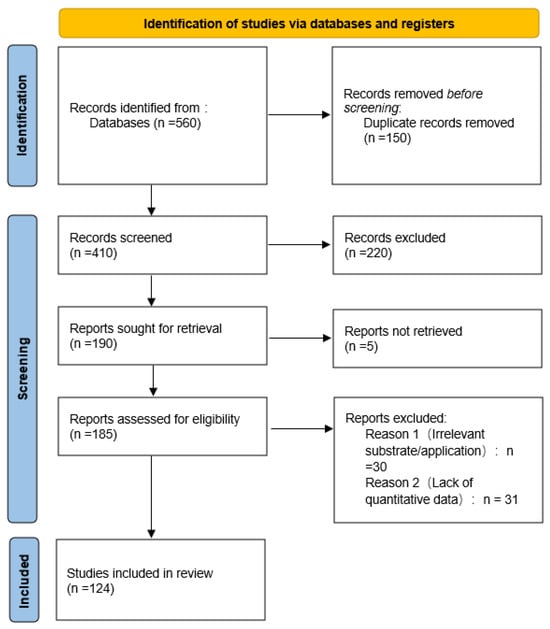
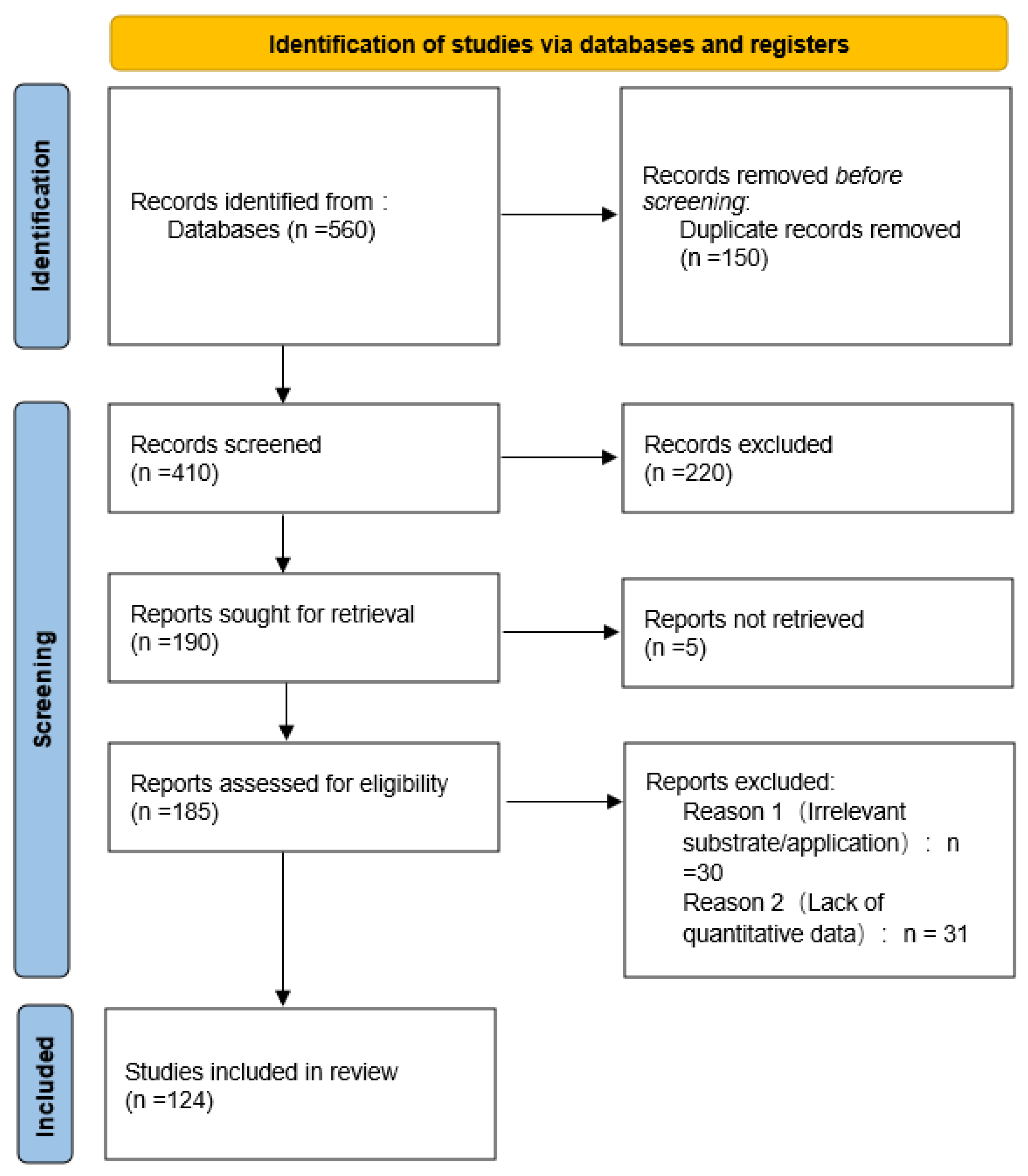

Disclaimer/Publisher’s Note: The statements, opinions and data contained in all publications are solely those of the individual author(s) and contributor(s) and not of MDPI and/or the editor(s). MDPI and/or the editor(s) disclaim responsibility for any injury to people or property resulting from any ideas, methods, instructions or products referred to in the content. |
© 2026 by the authors. Licensee MDPI, Basel, Switzerland. This article is an open access article distributed under the terms and conditions of the Creative Commons Attribution (CC BY) license.