


Abstract
California is currently navigating the confluence of two acute systemic challenges: a chronic housing affordability deficit and increasing grid instability driven by climate-induced volatility and the aggressive transition to variable renewable energy. This review posits that the answer lies in a novel technology convergence: the strategic integration of Accessory Dwelling Units (ADUs) with residential Battery Energy Storage Systems (BESSs) utilizing the “Photovoltaic-Energy Storage-Direct Current-Flexibility” (PEDF) architecture. We identify this ADU + BESS + PEDF nexus as a critical innovation that transforms the dwelling unit from a passive consumption endpoint into an active highly efficient DC-coupled “prosumer” node capable of providing critical grid services. Unlike traditional AC-coupled systems, the PEDF framework minimizes conversion losses and maximizes grid-interactive flexibility, establishing the ADU as a decentralized asset for grid stabilization. To validate this paradigm, I employ a stochastic financial simulation using the RShiny framework to assess the economic viability of prefabrication-based deployment strategies under Senate Bill 9 (SB 9) provisions for three investment scenarios: Acquisition-to-Rent, Acquisition–Development–Resale, and Long-Term-Asset-Retention. Benchmarked against a baseline of traditional in situ constructions globally, our results indicate that modular prefabrication reduces project timelines by 30–50% and cradle-to-site embodied carbon by up to 47%. Furthermore, financial modelling—benchmarked at a 7.5% nominal discount rate without discretionary state incentives—confirms that “Acquisition–Development–Resale” strategies yield Internal Rates of Return (IRR) exceeding 20%, while “Long-Term-Asset-Retention” achieves stabilized positive cash flow, validating the economic competitiveness of sustainable densification. Despite identifying implementation barriers—specifically the “split-incentive” dilemma in rental markets and emerging data sovereignty constraints—this review concludes that the BESS-powered PEDF-architecture ADU represents the fundamental atomic unit of a resilient, low-carbon urban dwelling infrastructure, necessitating aligned policy support to achieve scalable deployment.
1. Introduction
While climate change is driven by global atmospheric shifts, its most acute impacts on human well-being are felt locally through the increasing frequency of extreme weather events—such as prolonged heatwaves and wildfires—which directly threaten physical health and exacerbate mental stress through displacement and infrastructure instability [1,2]. These environmental pressures simultaneously impose unprecedented strain on local utility grids, creating an urgent imperative for a higher standard of affordable and energy-independent dwellings capable of sustaining habitability during systemic infrastructure failures [3,4]. Consequently, the delivery of sustainable and affordable habitable dwellings has transcended economic policy to become a fundamental humanitarian imperative, as the escalating crisis of unsheltered homelessness leaves vulnerable populations exposed to increasing hostile environmental conditions that are no longer survivable without adequate affordable housing [5,6]. Furthermore, the status quo of mass unsheltered living is untenable from a public health and social equity perspective [5], necessitating a rapid paradigm shift toward housing solutions that are not only economically accessible but also physically resilient enough to serve as sanctuary against climate change and volatility [7,8].
California currently stands at the precipice of two intersecting emergencies: a chronic housing affordability crisis and an increasingly volatile energy landscape driven by climate change. The state’s housing market remains the most expensive in the nation; as of the third quarter of 2025, the Legislative Analyst’s Office (LAO) reported that the median California home price is now more than double the national average for comparable mid-tier properties [9]. This disparity has resulted in a profound affordability gap, with the California Association of Realtors (C.A.R.) noting that in Q2 2025, only 15% of California households earned the minimum income required to purchase a median-priced home [10]. Furthermore, a seminal study by the McKinsey Global Institute estimated that California is in lack of approximately 3.5 million homes by 2025 to satisfy pent-up demand and meet the needs of a growing population [11].
Simultaneously, the state’s energy grid faces unprecedented strain. As climate-induced wildfires become more frequent, utilities have increasingly relied on Public Safety Power Shutoffs (PSPSs) to mitigate risk, a practice that left thousands of customers without power during critical high-heat events in late 2024 [12]. These distinct challenges—shelter and energy—are further complicated by aggressive state mandates, such as the 2025 update to Title 24, Part 6, which requires expanded photovoltaic and battery storage capabilities for new construction [13]. Consequently, the state is tasked with a complex objective: it must rapidly densify its housing stock to alleviate a shortfall of millions of units [14] while simultaneously ensuring that this new load does not destabilize a fragile electrical grid.
The escalating housing crisis in California, characterized by extreme affordability deficits, is causing critical sectoral displacement of essential workers, thereby necessitating localized, entrepreneurial solutions to bolster housing supply. The profound disconnect between essential worker compensation and regional housing costs poses a direct threat to California’s key local economies, a phenomenon acutely demonstrated in Napa Valley. While the wine industry generates a total economic impact of more than $11.7 billion annually for the county [15], the median home price—which was approximately $986,250 in 2022 [16]—has created untenable living costs for middle-income residents. This sectoral displacement is evidenced by the departure of over 8000 households earning under $100,000 since 2005, a critical loss that includes sommeliers, chefs, and other foundational service workers vital to the region’s global appeal [17]. This trend is not unique to Napa, as service and middle-income workers statewide face similar pressures, contributing to an overall outflow from California. Furthermore, this crisis exacerbates social equity issues, pushing essential frontline workers—such as custodians and healthcare aids—into severely overcrowded conditions, with roughly 21% of essential workers in Los Angeles County residing in overcrowded housing, double the rate of some other demographics [18]. Recognizing the imperative for a swift, decentralized response to retain these indispensable community members, Ryan O’Connell, a former wine industry professional in the region, established How to ADU. LLC. This formation represents a localized entrepreneurial effort designed to leverage regulatory reforms for the expedited creation of Accessory Dwelling Units (ADUs), thereby increasing affordable supply within the existing residential framework of the critically impacted region [19].
Characterized by extreme cost burdens and persistent grid instability, the California energy crisis constitutes another critical threat to residents’ energy security, thereby accelerating the imperative for decentralized resilience strategies at the dwelling level. This instability is immediately felt through the state’s exorbitant electricity costs, which currently hover at approximately 31.66 ¢ per kilowatt-hour (kWh)—a rate more than double that of many contiguous U.S. states [20]. Furthermore, this high cost is not matched by reliable service; major utilities have reported significant reliability deficits, with customers experiencing an average of nearly 11.9 h of downtime per year [20]. This utility-scale fragility is acutely worsened by climate-induced grid events. Public Safety Power Shutoffs (PSPSs), mandated during periods of extreme wildfire risk, cause widespread disruption; for example, a single event in July 2024 de-energized over 3000 customers to mitigate fire spread [20]. This confluence of financial burden and physical instability necessitates a rapid shift toward localized energy autonomy. The integration of Battery Energy Storage Systems (BESS) within the ADU framework is thus critical, ensuring the dwelling can achieve passive survivability and maintain essential loads during these increasingly common systemic failures [3,4].
Conventional approaches to these crises have largely been siloed. Housing policy has focused on zoning reform and density bonuses, while energy policy has targeted grid hardening and utility-scale renewables. For instance, California’s legislature enacted several pivotal laws that catalyzed the growth of Accessory Dwelling Units (ADUs), transforming them from a marginalized housing type into a primary component of the state’s housing solution. Key legislation, including AB 68 and AB 881 [21], mandated streamlined ministerial approval for ADUs, effectively removing subjective local review processes and requiring local jurisdictions to approve conforming applications within 60 days [21]. Concurrently, this legislative package removed previous hurdles like minimum lot size requirements and eliminated replacement parking requirements when a garage is converted to an ADU, accelerating the supply of affordable units [22]. This pro-housing stance is directly mirrored in the state’s aggressive energy policy, primarily executed through the Building Energy Efficiency Standards (Title 24, Part 6). The 2022 Energy Code first established the Solar Photovoltaic (PV) Mandate for virtually all new residential construction, ensuring all new ADUs contribute to clean energy generation. Crucially, the subsequent 2025 Energy Code (effective 1 January 2026) expands this mandate by requiring all newly constructed single-family buildings, including ADUs, with services greater than 125 amps to be BESS-Ready (§150.0 (s)) [23]. This mandate requires specific infrastructure, such as dedicated raceways and subpanels, ensuring the residence is prepared for cost-effective battery installation. Furthermore, the state uses financial incentives like the Self-Generation Incentive Program (SGIP), which allocates substantial funding (often up to $1.00 per Wh) through its Equity Resiliency budget to subsidize BESS for homeowners in High Fire-Threat Districts (HFTDs) who have experienced Public Safety Power Shutoffs [24]. This tandem approach—removing bureaucratic barriers to ADU creation while subsidizing the resilient infrastructure required for BESS—forms the legal and economic foundation for the proposed synergistic solution. Rapidly expanding housing supply without integrated energy resilience risks overwhelming local distribution infrastructure, while independent residential battery retrofits remain prohibitively expensive for the average homeowner. Despite of the policy incentives mentioned above, there is still a critical lack of integrated frameworks that treat housing density and energy resilience as a unified architectural and policy objective.
The Residential Accessory Dwelling Unit (ADU) coupled with a Battery Energy Storage System (BESS) represents a powerful decentralized, scalable, and synergistic solution capable of addressing California’s dual crises simultaneously. The housing component leverages existing single-family zoning to enable rapid, incremental densification and increase the housing stock, a strategy widely validated in the literature for its ability to enhance affordability and bypass contentious, land-intensive development [25,26,27]. Crucially, the integration of residential BESS transforms these new dwelling units into resilient prosumer nodes—a key concept within the literature on Distributed Energy Resources (DERs) [28]. The BESS provides on-site power autonomy during grid failures, directly mitigating risks from Public Safety Power Shutoffs (PSPS) and extreme weather events, an effectiveness that has been quantified by federal laboratory analysis [29]. Concurrently, it offers essential grid services, such as peak demand reduction and load shifting, necessary to stabilize the local utility infrastructure [4]. This synergy effectively links the proposed solution to both crises: the ADU provides the affordable, climate-resilient structure, and the residential BESS provides the energy security via grid-forming capability in island mode utilizing voltage-frequency droop control and IEEE 1547 [30] compliant ancillary support like Volt-VAR and Frequency-Watt during grid-connected operation, establishing a viable model for sustainable, bottom-up urban densification.
This review systematically addresses two primary research questions operationalized through specific quantitative performance indicators. The first objective examines whether the modular PEDF-ADU model can achieve financial parity with conventional development methodologies under current California regulatory frameworks—specifically Senate Bill 9—and prevailing market conditions; this economic feasibility is assessed via Internal Rate of Return (IRR) and Net Present Value (NPV) analyses conducted across distinct investment scenarios. The second objective investigates whether the transition to off-site volumetric prefabrication significantly mitigates the embodied carbon footprint associated with urban densification. To evaluate this, environmental impact is quantified using Cradle-to-Site Global Warming Potential (kg CO2e/m2), while process efficiency is measured via Construction Schedule Efficiency (weeks saved), both benchmarked against a baseline of conventional Type V-B site-built construction standards.
Furthermore, to ensure a rigorous and traceable evidence base, this review employed a systematic literature search protocol following the PRISMA (Preferred Reporting Items for Systematic Reviews and Meta-Analyses) guidelines [31]. A comprehensive search was conducted across four primary academic databases: Scopus, IEEE Xplore, Web of Science, and Google Scholar. Additionally, gray literature was sourced from authoritative government repositories, specifically the National Renewable Energy Laboratory (NREL), California Energy Commission (CEC), and the California Department of Housing and Community Development (HCD), to capture essential regulatory and technical reports not indexed in academic journals. The search strategy utilized a Boolean logic string combining three primary domains:
- (I)
- Housing Domain: (“Accessory Dwelling Unit” OR “ADU” OR “Backyard Cottage” OR “In-fill Housing”)
- (II)
- Energy Domain: (“Battery Energy Storage” OR “BESS” OR “Distributed Energy Resources” OR “Virtual Power Plant” OR “Residential Microgrid”)
- (III)
- Geographic/Policy Context: (“California Department of Housing and Community Development (HCD)” OR “Title 24” OR “Senate Bill 9” OR “Grid Resilience”)
The initial search yielded 428 records. After removing duplicates and applying title/abstract screening for relevance, 286 full-text articles were assessed. Ultimately, 184 sources met the strict inclusion criteria and were synthesized in this review, comprising 52 academic papers, 83 government/regulatory reports, and 49 industry white papers regarding modular construction and financial benchmarks.
Finally, this review paper is structured to systematically examine the synergistic relationship between accessory dwelling units (ADUs) and residential battery energy storage systems (BESS) within the context of California’s concurrent housing and energy crises, as intensified by climate change. The scope of this study is confined to residential deployment in California’s single-family zoning context and focuses on policy and technical frameworks established between 2016 and 2025. Following, Section 2 evaluates the potential of ADUs to alleviate the housing crisis, emphasizing their critical role in rapidly expanding housing supply and improving affordability in California. Next, Section 3 analyzes the theoretical foundations and regulatory frameworks governing ADU development. Then, Section 4 provides a critical review of the role of residential BESS in mitigating the energy crisis and examines how the integration of BESS with ADUs may enhance energy resilience and improve grid stability. Subsequently, Section 5 further investigates the interactions between residential BESS and the modern electrical grid. Building upon this, Section 6 proposes an innovative integrated synergy framework based on the Photovoltaic–Energy Storage–Direct Current–Flexibility (PEDF) system, positioning it as a unified solution to address California’s dual housing and energy challenges. Section 7 assesses the economic feasibility and incentive structures supporting the proposed framework, while Section 8 analyzes its environmental impacts and sustainability performance metrics. Section 9 evaluates the practical implementation barriers associated with the proposed framework, Section 10 identifies key research gaps and unresolved challenges within the current literature. Subsequently, and Section 11 outlines directions for future research. Finally, Section 12 presents the concluding remarks of this review.
2. Housing Crisis Alleviation Potentials Through ADUs
Contemporary scholarship identifies Accessory Dwelling Units (ADUs) as a highly scalable housing solution, primarily due to their ability to circumvent two critical development bottlenecks: land acquisition and infrastructure expansion. By densifying existing residential parcels, ADUs significantly reduce per-unit production costs compared to multifamily infill or greenfield developments. Chapple et al. [32] assessed California’s approximately 9 million single-family parcels, filtering for physical suitability and financial feasibility, to define a “Total Addressable Market” (TAM) of 1.5 million market-feasible new units in California, suggesting a massive capacity to address the state’s housing deficit without altering neighborhood morphology. This finding is corroborated by Wegmann and Chapple [33], who argue that single-family zones possess significant “absorptive capacity” for new units that remains underutilized (Figure 1 Architectural Typology of “Gentle Density”: A typical Detached Accessory Dwelling Unit (Detached ADU)).
Figure 1.
Architectural Typology of “Gentle Density”: A typical Detached Accessory Dwelling Unit (Detached ADU). Source: Photograph by the author. Conceptual definition adapted from Wegmann and Chapple [33]. Situated in the rear yard of a single-family lot, this detached typology increases housing capacity without altering the primary street-facing neighborhood character. This form of “gentle density” leverages existing land to increase housing capacity without altering the street-facing neighborhood character.
However, realistic buildout scenarios rely on converting this theoretical capacity into realized permitting throughput. As illustrated in Figure 2 (Longitudinal Trend of ADU Permit Issuance in California (2015–2023)), the ADU adoption rate has shifted from a stagnant baseline (<2000 units/year pre-2016) to an exponential growth trajectory following legislative deregulation. Specifically, during pre-reform period (2015–2016), ADU adoption rates remained negligible (0.01% of TAM), constrained by prohibitive impact fees and discretionary review. Nonetheless, during post-reform period (2017–2022), permitting throughput expanded by 1760%, reaching 24,857 permits annually by 2022 [26].
Figure 2.
Longitudinal Trend of ADU Permit Issuance in California (2015–2023). Source: Data aggregated from the California Department of Housing & Community Development (HCD) Annual Progress Reports [26].
This shift has materially altered the composition of California’s housing production. As of 2022, ADUs accounted for approximately 19% of all new housing units permitted state-wide [34], validating a “realistic buildout scenario” where distributed density functions as a primary, rather than niche, supply mechanism. Despite this high throughput, the cumulative buildout remains a small fraction (<2%) of the 1.5-million-unit TAM, indicating that “saturation” is not a near-term constraint; rather, the primary limits to scale are the infrastructure bottlenecks detailed in the following.
Furthermore, ADUs offer distinct infrastructure and sustainability advantages. Unlike greenfield projects requiring extensive capital investment in roads and utilities, ADUs leverage existing municipal infrastructure. Stacy et al. [35] note that this efficient land use reduces per capita carbon footprints by increasing density in transit-rich areas. Brown and Palmeri [36] extend this argument to operational energy, finding that the smaller footprint of ADUs (typically < 800 sq. ft.) results in lower energy demands compared to standard single-family homes. Economically, the absence of land costs makes ADUs a fiscally superior option for affordable housing production; Chapple et al. [34] find that while developing a deed-restricted affordable unit in the Bay Area exceeds $500,000, a private ADU can be constructed for approximately $150,000 to $250,000. Comprehensive comparison between traditional affordable housing project and ADU/JADU project is present in the below Table 1.
Table 1.
Comprehensive Comparison between Traditional Affordable Housing Project and ADU/JADU Project.
While ADUs offer clear advantages in civil infrastructure utilization—leveraging existing road networks and sewer mains that often operate below hydraulic capacity—the assumption that they completely “bypass” infrastructure expansion requires technical qualification. The “feasibility at scale” of mass ADU deployment is increasingly constrained by “Last Mile” utility distribution limits, specifically within the electrical domain.
Unlike water and sewer systems, which have wider capacity margins in low-density zones [33], the electrical distribution grid is often engineered with minimal headroom. Residential distribution transformers (typically 25–50 kVA pole-top units serving 4–8 homes) and 4 kV–12 kV feeder circuits are frequently near thermal saturation during peak demand windows. The addition of an ADU—effectively adding a new distinct load profile to an existing service drop—can trigger the need for substantial “service upgrades,” including Main Panel Upgrades (MPUs) to 200 A or 400 A service and utility-side transformer replacements. Without active load management, the “service upgrade rate” required to support 1.5 million new ADUs could impose prohibitive costs on the grid operator, challenging the premise of “low-infrastructure” housing.
Consequently, while ADUs bypass the need for new roads and transmission corridors, their scalability is functionally capped by feeder limits and transformer nameplate capacity. This physical reality creates a specific imperative: for ADUs to remain an infrastructure-light solution, they must decouple their load from the grid peak, validating the necessity of the BESS-integrated architectures proposed in this review.
From a statistical point of view, California’s ADU production has experienced a dramatic, exponential surge, often described as a “hockey stick” growth curve, directly mirroring the passage of key state legislation (Figure 2 Longitudinal Trend of ADU Permit Issuance in California (2015–2023)). Figure 2 clearly indicates that prior to the effective date of the 2016 reforms (SB 1069 and AB 2299) [37,38,39], ADU permitting was stagnant; in 2016, only 1336 ADU permits were issued statewide [26]. Following the implementation of these laws, which streamlined approval processes and reduced fee barriers, permits more than tripled to 5154 in 2017. This upward trajectory continued unabated, fueled by subsequent legislative packages in 2019 that further removed local restrictions. By 2022, the annual number of ADU permits had skyrocketed to 24,857 [26], representing a staggering 1760% increase in just six years. As of 2022, ADUs accounted for approximately 19% of all new housing units permitted in California [34], underscoring their rapid evolution from a niche housing type to a mainstream solution for the state’s housing shortage challenges.
Meanwhile, the legislative deregulation of ADUs has catalyzed a rapidly expanding “turnkey” construction industry, attracting significant venture capital into the sector to professionalize what was once a fragmented market of individual contractors. Prominent startups like Samara (incubated by Airbnb) [40,41] and Villa [42] have collectively raised over $100 million in recent funding rounds to scale prefabricated delivery models, responding to a market where ADUs now represent approximately 19% of all new housing production in California [34]. This industrialization of “backyard homes” signals a shift toward mass-produced, factory-built housing as a primary mechanism for urban infill.
Beyond their role in increasing housing stock, studies have also found that ADUs have emerged as a critical infrastructure for multigenerational living, allowing families to adapt to changing economic and caregiving needs without displacement. This “invisible density” functions as a private social safety net; a seminal survey by the Chapple et al. [43] revealed that 51% of ADU occupants are friends or family members of the homeowner, with 17% living rent-free and another 12% paying below-market rates. This arrangement directly counters displacement by providing affordable housing options within established support networks. Furthermore, the motivation to build is increasingly driven by caregiving needs. Recent data from Binette [44] indicates that among adults over age 50 considering an ADU, 58% cite “providing a home for a loved one in need of care” as their primary motivation. This aligns with recent consumer sentiment analysis by Samara [45], which found that 36% of California homeowners specifically intend to use ADUs to house aging parents or adult children, effectively using the units to bridge the gap between expensive assisted living facilities and the inaccessible entry-level housing market. Table 2 illustrates the dichotomy in ADU deployment. While legislative reforms have successfully incentivized a speculative market focused on maximizing density and rental yield, a significant portion of ADU production remains driven by social necessity—specifically, the need for intergenerational care and non-market housing solutions, reducing community social vulnerability and strengthening social fabric at the same time.
Table 2.
Comparative Analysis of ADU Deployment Models in California.
Lastly, to accurately dimension the requisite storage capacity, this study establishes a baseline energy demand profile for a standard 74 m2 (800 sq. ft.) all-electric detached ADU, modeled in compliance with Title 24 (2022) efficiency standards using EnergyPlus physics-based simulations [46]. The analysis spans two distinct California geographies to assess sensitivity: Climate Zone 4 (San Jose) representing mild coastal conditions, and Climate Zone 12 (Sacramento) representing high-demand inland conditions [47]. The simulated demand exhibits a characteristic “dual-peak” residential curve, featuring a minor morning peak driven by water heating and a dominant evening peak (17:00–21:00) driven by lighting, cooking, and HVAC loads; crucially, this evening peak coincides with the cessation of solar production, creating the severe supply-demand imbalance known as the “duck curve” that the BESS must bridge [48]. Regarding load composition, the all-electric transition fundamentally alters the end-use breakdown compared to mixed-fuel homes, with Space Conditioning (HVAC) constituting the largest variable load (35–45% annually), followed by Heat Pump Water Heating (25%) and plug loads (30%) [49]. Furthermore, the analysis reveals significant variance based on geography: while the mild CZ 4 averages a daily consumption of approximately 12–14 kWh—allowing a standard 10 kWh battery to provide near-full autonomy—the extreme summer cooling loads in CZ 12 could potentially push daily consumption to 18–22 kWh. This significant variance effectively derates the battery’s duration coverage by nearly 40% in inland regions, confirming that “one-size-fits-all” energy storage sizing is inadequate and necessitating the modular scalability inherent in the PEDF architecture that is discussed in the following Section 6 (PEDF Architecture Synergy: Photovoltaic-Energy Storage-Direct Current-Flexibility ADUs as a Unified Solution).
3. Legislative and Regulatory Framework for ADUs
The legislative history of Accessory Dwelling Units (ADUs) in California demonstrates a sustained and deliberate political commitment to easing the housing crisis through incremental densification. Starting with SB 1069 [37], the state initiated a fundamental shift away from local exclusionary zoning by easing parking requirements and restricting local authority to prohibit ADUs [37]. The quantitative impact of this foundational statute was immediate: statewide ADU permit issuance jumped from a stagnant baseline of 1269 units in 2016 to 4974 units in 2017—a 292% year-over-year increase directly attributable to the removal of utility connection fees and parking burdens [50]. This initial groundwork was significantly accelerated by a package of legislation effective in 2020. AB 68 and AB 881 introduced the critical concept of ministerial approval, requiring local jurisdictions to approve conforming ADU plans within 60 days, thereby stripping away subjective and time-consuming discretionary review [21]. In practice, this reduced average permitting timelines from 12–18 months (pre-2016) to approximately 3–5 months in most jurisdictions [21]. Concurrently, AB 68 eliminated minimum lot size requirements and significantly reduced or abolished impact fees for smaller units [51], addressing the economic and spatial constraints previously limiting homeowners. Analysis by the Terner Center indicates this waiver saved homeowners between $10,000 and $60,000 per project, depending on the municipality, effectively lowering the barrier to entry for middle-income households [52]. This cumulative body of law, which reached its zenith with measures like SB 9 [53], effectively standardized ADU regulation statewide, transforming the ADU from a marginalized housing option into a viable, market-based tool for increasing affordable housing supply [25].
The legislative momentum to facilitate ADU production has continued robustly beyond the foundational 2020 reforms, moving aggressively toward enabling “missing middle” housing types through streamlined processes. SB 684 (2023), known as the Starter Home Revitalization Act (effective July 2024), pioneered a CEQA-exempt, ministerial approval pathway for small-scale residential developments of 10 or fewer units/parcels [54]. This initial framework was immediately bolstered by SB 1123 (2024) (effective July 2025), which crucially expanded the streamlining benefit of SB 684 to include vacant lots zoned for single-family residential use [54]. These bills collectively aim to spur the creation of naturally affordable, entry-level homes by removing the lengthy discretionary review previously required under the Subdivision Map Act (SMA). Concurrently, SB 1211 (2024) (effective January 2025) delivered a massive expansion of ADU potential on multifamily parcels, significantly increasing the cap on detached ADUs from two to up to eight units [55]. Furthermore, it disallowed local agencies from requiring replacement parking when surface parking is converted, thereby unlocking immense potential in underutilized parking lots on existing apartment properties [56]. This sustained legislative effort by the state, summarized in Table 3, validates the ADU and its associated housing typologies as central to California’s housing supply strategy.
Table 3.
Summary of Key ADU and Starter Home Legislation.
While the legislative reforms described above have successfully streamlined land use permitting, the technical implementation of ADUs remains constrained by a fragmented regulatory framework where energy codes, interconnection rules, and safety standards often function in silos.
Energy Code (Title 24, Part 6): As of the 2022 and upcoming 2025 cycles, the California Energy Commission (CEC) treats detached ADUs as “new construction,” mandating solar photovoltaic (PV) systems [13,46]. Crucially, the 2025 Energy Code (Section 150.0 (s)) introduces a “BESS-Ready” mandate, requiring new single-family structures (including ADUs) to install dedicated raceways, 225-amp busbar ratings, and subpanels capable of supporting a future battery system with at least 60 amps of backup capacity [13]. This effectively codifies the “hardware” for resilience but does not mandate the storage asset itself.
Interconnection Standards (Rule 21): Connecting these distributed assets to the grid is governed by CPUC Rule 21, which mandates that all new inverters be “Smart Inverters” compliant with UL 1741-SB [57]. These devices must theoretically provide autonomous grid-support functions (e.g., volt-VAR optimization). However, for many ADU projects, the addition of PV + BESS triggers a “service upgrade” threshold—often requiring a Main Panel Upgrade (MPU) from 100 A to 200 A—which subjects the project to utility engineering review timelines that can exceed the statutory 60-day ministerial approval window [58].
Fire and Safety Codes (CRC R328/CFC 1207): Perhaps the most spatially restrictive constraints arise from the California Residential Code (CRC R328) [59] and Fire Code (CFC 1207) [60]. These codes stipulate that residential Energy Storage Systems (ESS) cannot be installed in habitable spaces (e.g., closets, bedrooms) and generally require a 3-foot separation from doors and windows directly entering the dwelling. For compact ADUs (often <600 sq. ft.) with limited exterior wall space, these spacing requirements frequently clash with architectural layouts, forcing expensive redesigns or the relocation of batteries to detached equipment pads that increase civil costs.
Additionally, although state legislation has successfully preempted local zoning authority, significant “soft” discretion remains vested in Local Building Officials (LBOs), creating a fragmented implementation landscape that directly impacts technical feasibility. This residual discretion manifests primarily through the interpretation of safety codes, which often act as de facto constraints on ADU design and energy integration. Specifically,
- Setback-Driven PV Limitations: While AB 68 relaxed zoning setbacks to four feet, fire safety regulations (California Residential Code R324.6) grant local fire marshals the authority to mandate specific roof access pathways—typically 3-foot clearances at ridges and eaves for emergency ventilation [59]. On the small roof plates characteristic of ADUs (<600 sq. ft.), these discretionary setbacks can reduce the “solar-viable” area by 30–40%, effectively capping the PV system size below what is required to offset the dwelling’s all-electric load [59].
- Service Upgrade Interpretations: The determination of whether an existing electrical service (e.g., 100 A) is sufficient to add an ADU often hinges on the LBO’s specific interpretation of NEC Article 220 load calculations. Some jurisdictions strictly enforce standard calculation methods that artificially inflate projected demand, triggering mandatory service upgrades (to 200 A) that impose thousands of dollars in costs and months of utility delays [61]. Conversely, “pro-housing” jurisdictions may accept alternative calculation methods (such as NEC 220.87, based on actual historical peak demand), thereby allowing projects to proceed on existing infrastructure [62].
- Inspection and “Soft” Delays: Finally, the statutory 60-day approval limit applies only to the issuance of the permit, not the construction phase. Local jurisdictions retain absolute control over inspection scheduling and field enforcement. Consequently, administrative bottlenecks in understaffed building departments frequently result in inspection lead times that extend project schedules by weeks or months, a variable “implementation tax” that is entirely immune to state streamlining mandates [34].
Consequently, while state zoning reforms have successfully established a “by-right” entitlement for the physical structure, the actual realization of an integrated “ADU + BESS” system remains obstructed by a fragmented compliance landscape. This disconnect creates a “double bind” for housing resilience: horizontally, projects must navigate unsynchronized technical mandates between the California Energy Commission, fire safety codes, and utility interconnection rules; vertically, they remain subject to the residual “soft” discretion of local building officials, who effectively re-regulate projects through the interpretive enforcement of setbacks, NEC load calculations, and inspection scheduling. Thus, despite the legislative intent to streamline housing production, the absence of a unified technical permitting pathway leaves decentralized resilience strategies vulnerable to a complex web of conflicting statutory requirements and jurisdictional bottlenecks.
4. Energy Crisis Alleviation Through BESS
The integration of residential BESS with ADUs is fundamentally driven by California’s legislative push for decentralized resilience, codified within the state’s stringent Building Energy Efficiency Standards (Title 24, Part 6). Specifically, the 2025 Energy Code (effective 1 January 2026) establishes a statewide “Energy Storage System (ESS) Ready” standard under Mandatory Measure §150.0 (s) [23]. This section requires that all newly constructed single-family dwellings (including detached ADUs) incorporate three critical infrastructure elements regardless of the chosen compliance pathway: (1) a main panel busbar rating of at least 225 amps to accommodate future load-side connections, (2) four dedicated circuit breakers or equivalent reserved space for ESS connection, and (3) physically designated locations for future battery and inverter placement [23]. These specific infrastructure requirements, detailed under §150.0 (s), ensures the installation of dedicated raceways, reserved panel space, and structural support during construction, which significantly lowers the future retrofit cost barrier for homeowners—an estimated reduction of $500 to $2000 per installation. This policy serves a critical dual objective: first, it enables rapid BESS adoption for dwelling-level power autonomy, directly mitigating risks from Public Safety Power Shutoffs (PSPS) and climate-induced grid events [29]. Second, by preparing the ADU to function as a prosumer node or Distributed Energy Resource (DER), the mandate facilitates participation in load shifting and demand response programs, thereby promoting localized grid stability and reducing reliance on carbon-intensive peaker plants [4,28]. This proactive regulatory approach is essential for ensuring that new housing stock contributes not only to supply but also to the state’s energy security targets.
The dual function of residential BESS is central to its value proposition, providing essential economic stabilization alongside dwelling security. BESS directly addresses the “Duck Curve” phenomenon characteristic of high solar penetration grids by storing Photovoltaic (PV) energy generated during low-demand midday hours for discharge during the grid’s high-demand evening peak. This crucial load shifting capability is projected to significantly reduce the need for expensive, high-emission natural gas infrastructure, which the state estimates can be offset more cost-effectively by distributed battery capacity [3,29]. It is estimated that residential BESS provides this crucial load shifting capability at a cost roughly 40% cheaper than constructing and operating new natural gas peaker plants to achieve the same capacity offset [63]. Beyond economics, BESS offers immediate financial and physical security, directly mitigating the risks of climate-induced grid failure. The massive economic cost of grid instability—estimated by the CPUC to have caused statewide losses between $10 billion and $26 billion during past major Public Safety Power Shutoff (PSPS) events—underscores the value of residential autonomy [64]. During climate-induced outages, such as Public Safety Power Shutoffs (PSPS), the battery enables the ADU to automatically island and sustain critical loads, thereby increasing the resilience and habitability of the dwelling unit for the resident. This function is so critical that incentive programs, such as the Self-Generation Incentive Program (SGIP) Equity Resiliency budget, specifically prioritize funding for these systems in high-risk areas to ensure vulnerable populations have access to reliable backup power during emergencies [24]. By providing dwelling-level energy resilience, ADU BESS installations shift the financial burden of reliability away from centralized utilities and onto decentralized, resilient assets, offering homeowners and tenants guaranteed power for critical loads during emergency periods.
Technically, the BESS-equipped ADU functions as a behind-the-meter Distributed Energy Resource (DER), governed by the CPUC Rule 21 interconnection tariff [57]. Unlike passive loads, these systems utilize “Smart Inverters” certified to UL 1741-SB, capable of autonomous grid-support functions [57]. Specifically, the inverter must execute Volt-VAR and Volt-Watt curves to mitigate voltage rise on local distribution feeders—a critical constraint in dense residential neighborhoods where high PV penetration can otherwise trigger inverter tripping [57].
However, the “operating mode” of these assets is strictly dictated by the economic signals of the Net Billing Tariff (NEM 3.0) [65]. Due to the drastic reduction in export compensation rates (approx. 75% lower than retail rates), the ADU BESS cannot operate in a simple “Solar Export” mode. Instead, the interconnection profile necessitates a “Self-Consumption” or “Time-of-Use (TOU) Arbitrage” mode. In this configuration, the inverter’s firmware is programmed to limit exports to zero during midday surplus hours (storing energy in the battery) and discharge only during the evening peak (16:00–21:00) to offset on-site consumption. This “non-export” or “limited-export” logic is essential for financial viability, effectively transforming the ADU from a grid-dependent load into a dispatchable, grid-following asset that minimizes stress on the utility transformer.
To substantiate the resilience benefits asserted above, this review defines a Standard Reference System (SRS) representative of a Title 24-compliant ADU deployment as an example. Model parameters were constrained by physical roof geometry (limiting PV to ~4 kW) and market hardware modularity (standardizing storage at ~10 kWh units). Load simulation utilizes NREL ResStock end-use profiles for California Climate Zone 12 to capture peak cooling demand [66,67]. Suppose the modeled system comprises a 4.0 kW DC photovoltaic array paired with a 10 kWh Lithium Iron Phosphate (LFP) battery, dimensioned to align with the constraints of a typical 74 m2 (800 sq. ft.) roof plate and load profile that aligns with the 2022 Title 24 Prescriptive Standards for an 800 sq. ft detached ADU [68]. Specifically, the simulation assumes a Round-Trip Efficiency (RTE) of 88%, accounting for DC-AC-DC conversion losses and cell hysteresis, alongside a usable Depth of Discharge (DoD) of 90%, which yields 9 kWh of effective capacity. Under standard grid-tied conditions, the system operates in “Time-of-Use Arbitrage” mode, sequestering solar surplus between 10:00 and 15:00 for discharge during the high-demand peak window of 16:00 to 21:00. However, in a modeled 24 h Public Safety Power Shutoff (PSPS) scenario within Climate Zone 12 (Sacramento) during summer conditions, the dispatch logic transitions to “Full Backup.” In this simulation, the BESS enters the evening peak at 17:00 with a 100% State of Charge (SOC). During the overnight discharge period from 17:00 to 08:00, critical loads—defined here as refrigeration, lighting, connectivity, and cycled HVAC—consume approximately 6–8 kWh. Accounting for inverter self-consumption, the battery reaches a nadir SOC of 15–20% by sunrise. Following the overnight discharge, the 4.0 kW array generates approximately 20–24 kWh on a clear summer day. This yield is sufficient to restore the 10 kWh battery to 100% SOC by 13:00 while simultaneously serving diurnal loads, thereby achieving indefinite autonomy for critical functions. This quantitative analysis demonstrates that while a standard 10 kWh system provides requisite resilience for critical loads, it operates with a narrow safety margin during extreme heat events where nocturnal HVAC demand persists. This explicitly validates the necessity for the modular, scalable capacity inherent in the PEDF architecture.
Finally, the inherently smaller scale of ADUs positions them as a critical element in achieving sustainable urban growth and reducing the per capita energy burden. Compared to the average new single-family home, the construction of an ADU is estimated to reduce the residential energy consumption per capita significantly [69]. This low-demand profile is coupled with a supply mandate: the state’s Title 24 Energy Codes prescriptively require solar Photovoltaic (PV) installation on new ADUs, guaranteeing clean power generation [13]. When BESS is integrated to store this mandated PV generation, the system promotes complete sustainable densification and aids California in meeting its rigorous climate mandates. This decentralized, zero-carbon energy model is essential for achieving the goal of reducing greenhouse gas emissions by 40% below 1990 levels by 2030 (SB 32), as well as advancing the mandate for 100% clean electricity by 2045 [70]. By providing the power necessary to support electrification—such as 240 V Level 2 EV charging and highly efficient heat pumps—the BESS-equipped ADU model ensures new housing stocks can contribute actively to the state’s aggressive decarbonization targets and goals.
5. Residential BESS and the Modern Grid
Residential Battery Energy Storage Systems (BESS) have evolved into highly sophisticated, bidirectional grid assets, predominantly utilizing Lithium Iron Phosphate (LFP) (LiFePO4) due to its superior thermal stability and cycle life. Under standard test conditions that typically defined as a 0.5 C charge/discharge rate at 25 °C—modern LFP cells frequently demonstrate a cycle life exceeding 6000 cycles at 90% Depth of Discharge before reaching the End-of-Life (EOL) threshold of 80% State of Health (SOH) retention [71]. This reliance on LFP has driven a global market expansion, which saw residential storage capacity grow by an average of 45% annually over the last three years [72]. The residential BESS system centers around two primary components: the Power Conversion System (PCS) and the battery module. The PCS, often integrated into a hybrid smart inverter, manages the bidirectional power flow between the DC battery and the AC household or grid, achieving high efficiency, typically exceeding 97%, during the critical power conversion [73]. The operational value of a typical residential BESS is derived from its three primary modes (Figure 3 A Schematic Configuration of a Typical DC-Coupled Residential Hybrid Inverter System):
Figure 3.
A Schematic Configuration of a Typical DC-Coupled Residential Hybrid Inverter System. Source: Diagram created by the author.
- Self-Consumption: Optimizing daily PV generation for use within the home, maximizing financial savings under various net metering tariffs.
- Backup Power Source: Providing seamless islanding and sustained power to critical loads during grid outages (e.g., PSPS events), ensuring dwelling habitability.
- Grid Services: Providing utility-directed services such as automate Demand Response (DR) and peak shifting, where the BESS discharges during periods of peak grid stress to stabilize local infrastructure [24].
Figure 3 (A Schematic Configuration of a Typical DC-Coupled Residential Hybrid Inverter System) shows a schematic configuration of a typical DC-Coupled residential hybrid inveter system. This topology represents the foundational hardware layer of the PEDF framework. By coupling the photovoltaic array and battery storage on a unified Direct Current (DC) bus, the system minimizes conversion losses typical of AC-coupled architectures. The hybrid smart inverter functions as the central “energy router,”, dynamically managing bidirectional power flow between the generation assets, the building load, and the utility grid. While the US market has historically been dominated by domestic or integrated incumbents like Tesla and Enphase, the global landscape is defined by massive vertically integrated conglomerates such as Sungrow and Canadian Solar. These manufacturers leverage immense economies of scale from the electric vehicle and utility-scale sectors to offer highly competitive residential solutions, such as Sungrow’s hybrid inverter-battery stacks and Canadian Solar’s EP Cube [74]. However, the entry of these foreign Tier-1 manufacturers into the US residential market is currently throttled by significant geopolitical and regulatory “headwinds.”
The primary obstacle is the protectionist trade framework, specifically the escalation of Section 301 tariffs, which were significantly increased in 2024 to target Chinese-origin batteries and critical minerals, effectively raising the landed cost of imported units by 25% or more [75]. Furthermore, the Inflation Reduction Act (IRA) creates a structural disadvantage for imported hardware; specifically, the 10% Domestic Content Bonus Credit incentivizes installers and homeowners to select systems with US-manufactured components, rendering foreign systems less financially attractive despite their lower raw hardware costs [76]. Beyond economics, “soft” barriers such as strict data security requirements for Virtual Power Plant (VPP) participation and rigorous UL 9540 safety certification standards continue to slow the penetration of non-domestic players, forcing global giants to navigate a complex compliance landscape to compete with established US incumbents [77].
While tariffs present a financial hurdle, the most formidable barrier for foreign manufacturers—particularly those based in China, such as Sungrow and Huawei—is the escalating regulatory scrutiny regarding Critical Infrastructure Protection (CIP) [78]. As residential BESS units are increasingly aggregated into Virtual Power Plants (VPPs), they effectively become distributed components of the bulk power system, creating a vast “attack surface” vulnerable to cyber-intrusions [79]. U.S. regulators and utilities cite fears that cloud-connected inverters managed by foreign servers could be exploited for data espionage or, in a worst-case scenario, coordinated to execute a “distributed denial of service” (DDoS) attack on the grid by simultaneously manipulating load or export settings [80]. Consequently, the 2024 National Defense Authorization Act (NDAA) restrictions often trickle down to the residential market; installers and aggregators are increasingly hesitant to deploy hardware that may be banned from federal funding or future utility VPP programs due to “foreign adversary” concerns [81]. This pushes the market toward manufacturers who can certify strict adherence to data sovereignty protocols, often requiring domestic data hosting and rigorous third-party penetration testing as a prerequisite for market entry [82].
The “Modern Grid” is characterized by a fundamental shift from a centralized, unidirectional delivery model to a decentralized, bidirectional network with high penetrations of variable renewable energy. This architecture requires residential BESS products to evolve from simple backup devices into active, “Grid-Interactive” assets capable of stabilizing voltage and frequency deviations in milliseconds. To support this, California’s Rule 21 interconnectivity standard now mandates that all BESS inverters be certified to UL 1741 SB (Smart Inverter) standards [57]. This certification requires the BESS to autonomously perform complex grid-support functions, such as Volt-Var optimization (adjusting reactive power to stabilize local voltage) and Frequency-Watt response (curtailing output during over-frequency events) without human intervention [83]. Furthermore, the modern grid requires standardized interoperability; BESS units must support the IEEE 2030.5 (SEP 2.0) communication protocol, which functions as the “universal translator” allowing utility operators to send pricing signals or dispatch commands to thousands of disparate residential batteries simultaneously. Without these advanced communication and autonomous control capabilities, a residential BESS product is functionally obsolete in the California market, as it cannot participate in the lucrative VPP markets that monetize these grid services [73].
Residential BESS units are essential decentralized energy assets that enable grid stability by performing three coordinated services: peak shaving, load shifting, and Demand Response (DR). These services create immense economic and infrastructural value for the utility and the collective ratepayer by reducing reliance on centralized, high-cost resources. The primary economic function of residential BESS is to manage the temporal mismatch between solar generation (midday) and household consumption (evening peak).
- Load Shifting Mechanism: Residential systems, typically sized between 15 kWh and 25 kWh (e.g., a Tesla Powerwall or Enphase IQ Battery) [84], automatically charge during midday when solar PV generation is high and Time-of-Use (TOU) rates are low. The stored energy is then seamlessly discharged between 4 PM and 9 PM to meet the home’s demand.
- Grid Stability Quantification: This collective action provides peak shaving or reduces the highest point of aggregated demand. Without this decentralized support, the California Independent System Operator (CAISO) must rapidly activate expensive, less efficient natural gas “peaker” plants to bridge the daily 15,000 MW (15 GW) solar ramp-down and evening load [63]. Studies indicate that BESS achieves this necessary peak capacity offset at a cost that is significantly 40% cheaper than building and operating new gas peaker plants [63].
- DR Program Participation: Demand Response programs allow utilities to communicate with BESS units via standardized protocols (like IEEE 2030.5) and briefly dispatch them during unexpected grid emergencies or predicted heatwaves. Homeowners are compensated for allowing the battery to discharge into their home (or the grid) for a critical few hours, which is vital for preventing rolling blackouts [83].
For residential BESS to function as active grid assets, they must operate within a rigid telemetry and control framework that bridges the gap between the individual dwelling and the bulk power system. In California, this “last mile” connectivity is governed by Common Smart Inverter Profile (CSIP) standards, which mandate that all inverters communicate via IEEE 2030.5 (SEP 2.0) [85].
- Telemetry and Control: To participate in Virtual Power Plants (VPPs), the BESS must transmit telemetry data (State of Charge, Real Power, Reactive Power) to an aggregator or Distributed Energy Resource Management System (DERMS) at 5 min intervals with a latency of less than 30 s. Control commands—such as a specific discharge setpoint (kW)—are pushed from the utility to the aggregator, which disaggregates the signal to individual devices via the cloud.
- Performance Metrics: Service performance is typically evaluated using a “10-in-10” baseline methodology. This calculates the “counterfactual” load by averaging the user’s consumption over the previous 10 non-event days. “Performance” is defined as the delta between this baseline and the metered load during the dispatch window.
- Compensation Mechanisms: The economic feasibility of “stacked” services is currently anchored by the Emergency Load Reduction Program (ELRP) and the Demand Side Grid Support (DSGS) program. These mechanisms compensate aggregators—and by extension, homeowners—at a rate of approximately $2.00 per kWh for energy discharged during grid emergencies (typically 4:00 PM–9:00 PM) [86]. Unlike rigid capacity markets, these “pay-for-performance” models allow ADU assets to stack resilience (holding charge) with spot-market participation without risking penalties for non-performance during non-critical hours.
The residential BESS also shifts the financial risk of reliability away from the utility. For example, by storing a typical 13.5 kWh battery’s capacity, an ADU can run its critical loads (refrigerator, lights, communication) for over 12 h during an outage. This prevents the significant economic damage caused by widespread grid failures, which have been estimated to cause statewide losses between $10 billion and $26 billion during past major Public Safety Power Shutoff (PSPS) events [64]. The islanding capability of the BESS ensures the ADU remains habitable during extended outages, fulfilling the basic security mandate that grid-resilient housing provides.
California’s energy policy mandates have created the legal and technical foundation for the widespread adoption of BESS in new construction, positioning DERs as the core of its decarbonization strategy. This push is formalized within the Building Energy Efficiency Standards (Title 24, Part 6), which is updated every three years with the dual goal of increasing efficiency and staying cost-effective for ratepayers [23]. The initial policy step was the Solar Photovoltaic (PV) Mandate, which became effective in 2020 for new residential construction. This mandate requires most new single-family homes and low-rise multifamily buildings to include a solar PV system sized to offset the building’s annual electricity usage [87]. Critically, this requirement applies to newly constructed ADUs of any size [87]. The mandate ensures that new housing stock is immediately carbon-reducing and provides the necessary DC energy source for a future BESS installation. Furthermore, the ability to pair BESS with PV allows builders to reduce the required solar system size, providing compliance flexibility and cost control [88].
The evolution of the code has shifted from merely requiring generation (PV) to mandating system-readiness for energy storage. The 2022 Energy Code introduced the Energy Storage System (ESS) Ready requirements, which mandate that all newly constructed single-family buildings (including new detached ADUs) must install the necessary electrical infrastructure to support a future battery system [87].
This requirement, detailed in §150.0 (s), ensures the following infrastructure is in place:
- Dedicated Raceway: A raceway (conduit) of at least one inch from the main service panel to a subpanel or designated location.
- Reserved Capacity: A minimum busbar rating of 225 amps in the main panelboard to handle the future BESS load.
- Critical Loads: Provision for at least four branch circuits to be supplied by the future ESS, ensuring critical functions like the refrigerator and lighting near egress are supported during an outage.
By enforcing the ESS-Ready mandate, the state significantly lowers the retrofit cost barrier for BESS installation and proactively ensures new housing stock is equipped for load flexibility and grid resilience. This strategy supports California’s long-term system cost (LSC) goals and its commitment to reducing peak cooling energy demand on the grid [89].
These mandates are fully aligned with the California Public Utilities Commission (CPUC) DER Action Plan, which seeks to modernize the electric grid and coordinate policies across proceedings related to affordability, load flexibility, and market integration [90]. The mandatory integration of PV and BESS readiness in new ADUs serves the DER Action Plan’s vision by:
- Maximizing Societal Value: Ensuring new housing contributes to statewide decarbonization goals.
- Promoting Reliability: Creating decentralized assets (BESS) that improve local grid reliability during high-stress periods.
- Encouraging Electrification: Strongly favoring electric heat pump systems and electric readiness, accelerating the shift away from natural gas in the built environment.
This comprehensive regulatory framework transforms the ADU from a simple housing unit into a strategic, grid-supporting dwelling asset, essential for the state’s transition to a high-DER future.
6. PEDF Architecture Synergy: Photovoltaic-Energy Storage-Direct Current-Flexibility ADUs as a Unified Solution
The deployment of PEDF (Photovoltaic-Energy Storage-Direct Current-Flexibility, PEDF) architecture within Accessory Dwelling Units (ADUs) offers a transformative, unified solution to California’s intersecting housing shortage and grid instability crises. By shifting ADUs from passive grid burdens to active, decentralized energy nodes, the PEDF framework leverages an internal DC distribution topology to eliminate redundant AC-DC conversion losses, thereby maximizing the efficiency of on-site solar capture and battery energy storage. PEDF (Photovoltaics, Energy storage, Direct current, and Flexibility) refers to a novel architecture power distribution system constructed via renewable energy generation (such as photovoltaics), energy storage, DC distribution, and flexible energy consumption to adapt to the requirements of carbon neutrality goals [91]. Figure 4 (The “PEDF” (Photovoltaic-Energy Storage-Direct Current-Flexibility) Architectural Framework) illustrates the fundamental configuration of the PEDF system. Unlike traditional AC-coupled homes, this architecture utilizes a central DC Bus bus topology (375 V/48 V) to directly link energy generation (PV) with storage and heavy loads (HVAC, EV Chargers). Specifically, the primary DC Bus (380 V) serves as the system backbone, connecting the 5–8 kWp Photovoltaic array via MPPT DC-DC boost converters and high-inductive loads such as Variable Frequency Drive (VFD) heat pumps and Level 2 EV chargers. For secondary DC Bus (48 V), a stepped-down rail powers low-voltage native DC loads, including LED lighting and IT infrastructure, eliminating the need for discrete AC-DC rectifiers at the point of connection. By keeping energy in Direct Current form, the system bypasses the “double-conversion” losses (DC-AC-DC) typical of standard appliances, potentially increasing round-trip system efficiency by 10–14% while simplifying the grid interface for demand response (Figure 4 The “PEDF” (Photovoltaic-Energy Storage-Direct Current-Flexibility) Architectural Framework). Specifically, the system deploys photovoltaic panels on ADU surfaces to fully utilize ADUs as producers of renewable energy (such as photovoltaics) is a crucial pathway for achieving low-carbon building development. Energy storage serves as a vital means for ADU energy accumulation and regulation, requiring a holistic consideration of storage methods at the ADU level; notably, electric vehicles parked in the vicinity can serve as effective energy storage resources. Furthermore, the application of Direct Current (DC) is a key approach for the efficient utilization of on-site photovoltaics and high-efficiency electromechanical equipment. Devices within the system are connected to the DC bus via DC/DC converters, thereby establishing a DC distribution system within the ADU. The ultimate goal of PEDF ADUs is to achieve comprehensive energy flexibility, transforming ADUs from mere passive loads in traditional energy systems into ‘three-in-one’ integrated complexes capable of renewable energy production, self-consumption, and energy regulation and storage. This transformation represents a critical function that ADUs must fulfill to meet the requirements for constructing a future low-carbon energy system.
Figure 4.
The “PEDF” (Photovoltaic-Energy Storage-Direct Current-Flexibility) Architectural Framework. Source: Diagram created by the author; conceptual framework adapted from Liu et al. [91].
Conventionally, the residential energy infrastructure is predicated on satisfying the operational requisites of the dwelling unit—encompassing thermal regulation and electrical loads—thereby relegating the residence to the role of a passive energy consumer. In this centralized paradigm, internal utilization demands are met exclusively through external energy importation, primarily via grid electricity and fossil fuel sources such as natural gas [92]. Consequently, energy conservation objectives within this framework are realized solely through the optimization of internal consumption systems, lacking the capacity for active generation or bidirectional flexibility. Under the strategic guidance of the ‘Dual Carbon’ mandates, residential energy systems are currently confronted with elevated developmental exigencies, necessitating a paradigm shift from fundamental energy conservation to comprehensive low-carbon innovation. These decarbonization imperatives dictate that dwelling units must decouple from traditional fossil fuel reliance, positioning the comprehensive electrification of residential energy consumption as the foundational step toward net-zero future. Furthermore, within the context of this electrification, it is imperative to reconceptualize the strategic role of the dwelling unit within the macro-energy architecture; consequently, enhancing the flexibility of residential energy systems has emerged as a critical operational objective.
The future electric power system is poised to transition into a net-zero infrastructure predominantly anchored by renewable energy sources, specifically wind and solar photovoltaics (PV). However, the continued expansion of these variable resources necessitates the resolution of critical implementation challenges, particularly regarding optimal spatial deployment, effective grid accommodation (assimilation), and the requirement for robust regulation and energy storage capabilities. Consequently, driven by the imperatives of low-carbon energy development, the strategic positioning of ADUs within the grid architecture has undergone a fundamental paradigm shift. While retaining their baseline function as energy consumers, dwelling units are now required to evolve into producers of renewable energy (e.g., photovoltaics) while simultaneously responding to external supply-side volatility through active demand-side regulation [93]. In essence, the dwelling unit is transforming from a singular passive load into an integrated entity capable of unified energy generation, consumption, and modulation [94]. The ‘Photovoltaic-Energy Storage-Direct Current-Flexibility’ (PEDF) building has been formally proposed as the novel residential energy system specifically designed to realize this objective [95] (Figure 5 Conceptual Framework of the Grid-Interactive “Flexibility” Mechanism). Spcifically, Figure 5 (Conceptual Framework of the Grid-Interactive “Flexibility” Mechanism) shows that by leveraging the thermal inertia of the dwelling unit envelope (center graph) and dispatchable battery storage (bottom right), the ADU acts as a “Virtual Power Plant” node. The system reshapes its aggregate demand profile (bottom left) from a volatile peak (dashed line) to a smoothed curve (solid line), providing essential Peak Shaving and Load Shifting services to the utility grid (Figure 5 Conceptual Framework of the Grid-Interactive “Flexibility” Mechanism).
Figure 5.
Conceptual Framework of the Grid-Interactive “Flexibility” Mechanism. Source: Diagram created by the author.
The construction of PEDF ADUs represents a pivotal challenge that this emerging technology must address. The dwelling system is not merely the combined application of solar photovoltaics or any single technology, nor can its objectives be achieved through a simplistic aggregation of ‘Photovoltaics,’ ‘Energy Storage,’ ‘Direct current,’ and ‘Flexibility.’ Rather, the rational construction of a PEDF system requires multi-faceted synergy. Only through such coordination can buildings be successfully transformed into ‘three-in-one’ integrated complexes within the energy system, uniting the functions of production, consumption, and regulation/storage. The detailed illustration regarding each part is elaborated in the following:
6.1. Solar Photovoltaics: Maximizing Feasible Deployment
The deployment of renewable energy technologies, particularly solar photovoltaics (PV), is fundamentally contingent upon available surface area. Photovoltaic modules require specific installation space to efficiently convert solar irradiation into clean, decarbonized electricity. Consequently, the building envelope—specifically the rooftop and facade—emerges as a critical, spatially defined resource. This inherent capacity serves as the foundational requirement for buildings to transition from being simple electrical loads to active renewable energy producers. Thus, determining the maximum potential contribution of dwelling units and quantifying their solar photovoltaic (PV) installation capacity are pivotal questions that must be addressed in the process of fully leveraging renewable resources and constructing the next-generation power system.
Studies found that the technical potential of solar photovoltaic (PV) capacity within California’s residential sector is immense, yet its deployment remains significantly below its full capability potentials [96,97]. Based on EIA [97], While the installed capacity in small residential systems surpassed 12 GW by late 2023, establishing the state as already a clean energy leader within the nation, the market for new residential solar installations saw a sharp 45% decline in 2024, stemming primarily from the transition to the state’s new net billing policy [98]. Quantifying the full, theoretical potential of approximate 10 billion square feet of total usable rooftop area reveals the scale of the untapped solar resource: analyses estimate that California possesses the technical potential to install 128.9 GW of rooftop solar panels on existing buildings that include commercial, residential, and industrial sectors, capable of generating enough energy around 273,750 GWh per year to offset nearly 100% of California’s total electricity consumption in 2022 [96,99]. Most of this potential resides within the residential domain, necessitating robust policy to drive utilization. This is achieved through the 2022 Energy Code’s PV mandate, which prescriptively requires every new residential dwelling unit, including Accessory Dwelling Units (ADUs), to install PV sized to offset its annual consumption [87]. This mandate guarantees continuous, incremental growth of the residential PV fleet, making the integration of Battery Energy Storage Systems (BESSs) essential to effectively shift the value of this vast, mandated resource toward the evening peak and ensure the state meets its ultimate goal of 100% clean energy by 2045.
To validate the “Producer” function of the ADU rather than relying on speculative potential, this study explicitly models the solar energy balance for a standard 74 m2 (800 sq. ft.) detached Accessory Dwelling Unit. For a typical gable-roofed ADU with a standard 4:12 pitch (18.4°) and east–west orientation, the gross roof area is approximately 92 m2. However, strict adherence to California Residential Code R324.6 (Fire Setbacks) mandates a 3-foot clearance at the ridge and eaves, which reduces this gross area by approximately 30% [59]. After applying these mandatory setbacks and excluding the north-facing plane, which incurs a generation penalty exceeding 20%, the net Solar Access Roof Area (SARA) is limited to approximately 26–30 m2. Utilizing high-efficiency monocrystalline modules with a power density of 210 W/m2, this specific SARA accommodates a maximum system size of 5.2 kW DC. This constraint is critical because it represents the physical upper limit of generation for this typology, regardless of theoretical site potential. To verify the energy balance, the system was simulated using NREL PVWatts V8 for Climate Zone 12 (Sacramento), assuming a conservative Total Solar Resource Fraction (TSRF) of 85% to account for shading from adjacent primary dwellings [100]. This model projects an annual yield of approximately 7900–8200 kWh/year. When compared against the NREL ResStock load profile for an all-electric, Title 24-compliant ADU—which averages 5500–6500 kWh/year—the ADU achieves a verified Net Positive Energy status on an annual basis [67]. However, the Seasonal Yield analysis reveals a critical temporal mismatch that defines the system’s operational requirements. While summer generation exceeds load by approximately 40%, creating the necessary surplus for storage and export, winter generation covers only 60–70% of the dwelling’s demand. This specific seasonal deficit validates the PEDF requirement for Grid Interactivity; the system cannot function as a fully off-grid island but must operate as a net-exporting distributed asset that relies on the grid for winter capacity support.
A second critical research vector for advancing building-integrated photovoltaics (BIPV) involves developing effective utilization strategies and optimizing the synergy between energy production and consumption. Specifically, at the scale of the individual dwelling unit, pivotal attention must be directed toward the precise temporal and quantitative matching between the unit’s photovoltaic generation profile, and its internal energy consumption demands. Given the varying energy consumption characteristics across building typologies, internal energy usage patterns exhibit considerable temporal volatility. Furthermore, photovoltaic generation capacity is influenced by multiple factors, including panel performance, installation methodology, and local solar irradiance. Consequently, the relationship between a dwelling unit’s internal load profile and its on-site PV generation necessitates in-depth scholarly inquiry. This analysis must move beyond a simplistic comparison of annual totals, focusing critically on the correlation between hourly consumption characteristics and hourly PV output profiles to accurately determine the potential for optimal dwelling unit self-consumption.
From the perspective of PEDF building construction requirements, it is essential to clearly define the pivotal role of buildings as renewable energy prosumers, distinguishing their primary orientation as either energy producers or self-consumption-dominated entities. Based on the electricity consumption characteristics of typical buildings, a quantitative characterization must be made regarding the hourly variation patterns between available photovoltaic generation resources and internal energy demand (Figure 6 Impact of Building Height and Load Density on Photovoltaic (PV) Self-Consumption Rates) [101]. Figure 6 (Impact of Building Height and Load Density on Photovoltaic (PV) Self-Consumption Rates) shows that for vertical commercial typologies—specifically office structures exceeding six stories—operational protocols frequently mandate a ‘zero-export’ or complete self-consumption strategy. This paradigm necessitates the total in situ absorption of photovoltaic generation, thereby precluding reverse power flows to the utility network. By maximizing the utilization of available on-site renewable solar resources, the system architecture is designed to mitigate bidirectional grid interaction; consequently, the external grid functions exclusively as a unidirectional supplier to satisfy residual load deficits, rather than serving as a buffering medium for excess generation. On the other hand, regarding high energy-intensity commercial typologies, such as retail complexes and shopping mall, structures exceeding three stories generally possess a load profile sufficient to achieve complete photovoltaic self-consumption. In contrast, low-rise structures (two stories or fewer), provided that available surface resources are maximally exploited for PV deployment, should be explicitly designated as critical energy producers. Beyond satisfying internal demand via effective energy storage strategies—which mitigate the temporal misalignment between solar generation and operational consumption—these units possess the capacity to export surplus energy. Consequently, for most of their operational duration, such low-rise entities can sustain a net-positive export status, supplying the external grid without requiring inbound power transmission.
Figure 6.
Impact of Building Height and Load Density on Photovoltaic (PV) Self-Consumption Rates: (a) Office Building; (b) Shopping Mall; (c) Apartment. Source: Adapted from Chen et al. [101].
Specifically, Figure 6 (Impact of Building Height and Load Density on Photovoltaic (PV) Self-Consumption Rates) further demonstrates that in contrast to high-density commercial structures with higher energy consumption profiles, low-rise residential dwelling entities—exemplified by Accessory Dwelling Units (ADUs)—exhibit a favorable surface-to-volume ratio, allowing on-site photovoltaic generation to frequently surpass dwelling units’ internal operational power demands because their roof generation capacity constantly exceeds daytime load. Unlike high-rise buildings which insantly absorb onsite generation, this structural surplus in low-density ADUs necessitates the integration of Battery Energy Storage System (BESS) to prevent curtailment and maximize the value of the PEDF architecture. Consequently, these units are uniquely positioned to evolve beyond simple self-sufficiency, functioning instead as potential net-positive distributed generation nodes that export surplus zero-carbon energy to support the broader utility grid. Therefore, we postulate that the vast majority of Accessory Dwelling Units (ADUs) possess the capacity to leverage on-site photovoltaic power resources to effectively resolve internal energy demands while simultaneously exporting surplus power to the utility network under the PEDF architecture framework. This capability identifies the ADU as a residential typology with profound photovoltaic utilization potential, positioning it to become a pivotal source of distributed clean energy within the future net-zero power system architecture.
Consequently, contingent upon variations in typology, functional program, and physical scale, the built environment can be broadly delineated into two distinct operational paradigms: those characterized by ‘self-generation with complete in situ absorption’ (zero-export) and those defined by ‘generation primarily for grid export’ (net-positive). It is posited that the vast preponderance of contemporary dwelling units’ stock will align with one of these two primary classifications. Even for the minority of structures occupying the intermediate spectrum, their operational profiles are expected to exhibit a distinct polarity, functioning predominantly as either net exporters or self-consumers during most operational intervals. Within the framework of the ‘Photovoltaic-Energy Storage-Direct Current-Flexibility’ (PEDF) architecture, the inherent attributes of ‘Energy Storage’ and ‘Flexibility’ can be strategically leveraged to augment on-site photovoltaic self-consumption. This optimization effectively mitigates the complex grid-interconnection challenges currently impeding the wide-scale deployment of distributed building photovoltaics. Premised on the mandate of ‘maximizing feasible deployment’, this system architecture simultaneously achieves high utilization rates—thereby mitigating solar curtailment—while ensuring a predominantly unidirectional interaction with the utility grid. Consequently, this operational stability constitutes a fundamental functional requirement of the PEDF residential dwelling unit and represents one of its most significant systemic advantages.
6.2. Energy Storage: Unlocking Latent Potential, Optimizing Configuration
The transition toward a next-generation power system, predominantly anchored by variable renewable energy (VRE) sources such as wind and solar photovoltaics, necessitates the resolution of inherent intermittency and volatility challenges, requiring the deployment of substantial regulation and energy storage resources [102]. Currently, the primary storage modalities under consideration encompass electrochemical batteries, thermal energy storage, pumped hydroelectric storage, compressed air energy storage (CAES), flywheels, and hydrogen. Each of these technologies corresponds to distinct temporal scales, applicable for addressing regulation requirements across varying capacities and durations. However, a significant economic disparity remains a critical bottleneck: regulation and storage technologies are currently prohibitively expensive relative to generation. For instance, while lithium-ion battery pack prices have fallen to approximately $0.14/Wh ($139/kWh), fully installed residential battery systems in the U.S. often command premiums exceeding $1.30/Wh ($1300/kWh) [103,104]. In stark contrast, photovoltaic generation—which allows for widespread, large-scale application—has achieved a dramatically lower cost basis, with module costs stabilizing around $0.30/W and utility-scale system costs approaching $1.00/W [105]. Consequently, the high capital cost of storage relative to generation constitutes a formidable barrier to the successful construction of a future low-carbon power system dominated by variable renewable energy.
Achieving the requisite grid-scale regulation for a net-zero power system via exclusive reliance on conventional assets, such as electrochemical batteries, entails prohibitive capital costs, underscoring the urgent need for economically viable flexibility alternatives. To address this cost barrier, two distinct pathways have emerged. The first prioritizes technological innovation to suppress the Levelized Cost of Storage (LCOS), a primary objective of federal initiatives like the U.S. Department of Energy’s ‘Energy Earthshots’ [102]. The second, and perhaps more immediate pathway, seeks to mitigate the aggregate demand for dedicated storage capacity by leveraging demand-side flexibility; herein, the building sector emerges as a pivotal, underutilized regulation resource. Under this paradigm, the definition of ‘energy storage’ must transcend traditional modalities—such as chemical batteries, compressed air, or hydrogen—to encompass the inherent ‘virtual storage’ capabilities of the built environment. Viewed through the lens of Grid-Interactive Efficient Buildings (GEBs) and the PEDF framework, diverse building sub-systems—ranging from HVAC thermal inertia to controllable electric loads—are re-conceptualized as distributed storage assets. Consequently, a rigorous re-characterization of these building components is essential to quantify their potential to function as active resources within the ‘Solar-Storage-DC-Flexibility’ system, effectively displacing the need for expensive dedicated storage hardware [106,107].
The spectrum of available energy storage modalities within the built environment—ranging from passive structural reservoirs to active mechanical systems—is delineated in Figure 7 (Taxonomy of Multi-Vector Distributed Energy Storage Resources within the ADU Dwelling Ecosystem). Figure 7 (Taxonomy of Multi-Vector Distributed Energy Storage Resources within the ADU Dwelling Ecosystem) illustrates a schema of a holistic “Virtual Power Plant” potential of an ADU. Beyond the dedicated electrochemical Battery (Figure 7 Center), the dwelling utilizes Active Thermal Storage (water tanks/phase change materials) and Passive Building Inertia (envelope/insulation) to decouple energy consumption from generation. This multi-vector approach allows the PEDF system to arbitrage energy across different physical domains (thermal vs. electrical), significantly increasing the total flexible capacity available for grid services compared to a battery energy storage-only system. Specifically in Figure 7 (Taxonomy of Multi-Vector Distributed Energy Storage Resources within the ADU Dwelling Ecosystem), the building envelope possesses significant thermal inertia, which, when synergized with HVAC operations, functions as a critical ‘passive’ storage resource. This is complemented by ‘active’ Thermal Energy Storage (TES) technologies, such as ice and chilled water systems, which are widely deployed in the U.S. commercial sector to execute peak load shifting strategies [108]. Extensive scholarship has validated the efficacy of utilizing the building fabric itself as a battery. For instance, Xu et al. (Lawrence Berkeley National Laboratory) demonstrated through field tests that optimized pre-cooling strategies could shift 80% to 100% of the electrical cooling load away from peak utility windows without generating occupant thermal comfort complaints [109]. Regarding air-side flexibility, Hao et al. established that Variable Air Volume (VAV) fan systems can modulate airflow to provide regulation services—reducing fan power significantly for durations up to an hour without compromising Indoor Air Quality (IAQ) [110]. Furthermore, predictive control studies by Henze et al. [111] confirm that leveraging a building’s intrinsic thermal mass can significantly flatten heating and cooling demand curves, achieving flexibility without additional capital investment [111]. Finally, the electrification of heating systems positions Heat Pumps as pivotal flexibility assets; specifically, Ground Source Heat Pumps (GSHP) effectively utilize the subsurface as a seasonal thermal battery, realizing long-duration energy transfer distinct from short-term diurnal shifts [112].
Figure 7.
Taxonomy of Multi-Vector Distributed Energy Storage Resources within the ADU Ecosystem. Source: Diagram developed by the author.
Beyond the established thermal storage capabilities of HVAC systems, the built environment encompasses a broader spectrum of underutilized flexibility assets, most notably Electric Vehicles (EVs) and miscellaneous electric loads (MELs) with internal storage. Preliminary behavioral studies indicate a high degree of spatiotemporal synchronization between EV charging patterns and building occupancy, effectively characterizing the EV as a ‘mobile building’ or transient energy reservoir [113]. Consequently, EVs are increasingly recognized not merely as transportation loads, but as critical bidirectional assets capable of providing robust regulation services to building energy systems through Vehicle-to-Building (V2B) and Vehicle-to-Grid (V2G) integration. While transportation and power systems literature has extensively documented the grid-level storage potential of EV fleets [114], a distinct gap remains in characterizing this resource from the building’s perspective. Specifically, further research is required to quantify the available battery capacity within a building’s distinct functional boundary and determine the magnitude of regulation services these ‘mobile nodes’ can reliably provide. Furthermore, the aggregation of decentralized appliance-level storage—such as uninterruptible power supplies (UPSs) and battery-integrated electronics—represents a theoretical but largely untapped reservoir of distributed storage. However, the effective orchestration of these dispersed, low-capacity assets and the quantification of their collective load-shifting potential remain areas necessitating rigorous empirical investigation [115].
Consequently, the building entity functions conceptually as a unified ‘Virtual Battery’ capable of bidirectional energy modulation, thereby establishing itself as a critical regulation node within the macro-energy infrastructure [116]. Premised on the maximization of these intrinsic flexibility assets—such as thermal inertia and EV integration—the sizing of electrochemical battery energy storage system (BESS) within the PEDF architecture demands a rigorous optimization strategy. The configuration must strike an economic balance: ensuring sufficient regulation capacity to meet dwelling-level resilience mandates while strictly minimizing capital expenditure by preventing the oversizing of redundant battery modules [117]. By re-conceptualizing miscellaneous electric loads and appliances as active storage resources, and subsequently unlocking their latent regulation potential, it is feasible to significantly attenuate the requisite capacity of dedicated, high-cost storage hardware. This paradigm shift not only optimizes the dwelling’s inherent regulation efficacy but also accelerates the fundamental transition of the residential unit from a passive consumption endpoint into a dynamic, Grid-Flexible Asset [107].
6.3. Direct Current: Hierarchical Power Conversion, Dynamic Adaptation to Volatility
The emergence of Low-Voltage Direct Current (LVDC) distribution architectures in the built environment is driven not only by intrinsic topological advantages but also by convergent structural shifts on both the supply and demand sides of the energy spectrum. On the supply side, the proliferation of distributed generation—predominantly Solar Photovoltaics (PV)—creates a native DC source (Figure 8 Typical Architecture of a dwelling unit DC Power Distribution System). Figure 8 (Typical Architecture of a dwelling unit DC Power Distribution System) clearly illustrates the multi-voltage stratifcaton necessary for high-performance DC dwelling units. While low-power loads (LEDs, sensors) operate on a safe 48 V tier, high-wattage inductive loads (HVAC, EV Chargers) connect directly to a high-voltage 375 V/750 V DC bus. Direct coupling via DC buses circumvents the need for multiple inversion stages, thereby optimizing the integration efficiency of renewable assets [118]. Concurrently, on the demand side, there is a pervasive transition toward DC-native end-use technologies. Modern high-efficiency building loads, including Light Emitting Diode (LED) illumination, Electronically Commutated (EC) motors for HVAC fans, and Variable Frequency Drive (VFD) centrifugal chillers, inherently operate on internal DC power [119]. While conventional Alternating Current (AC) networks necessitate multiple, loss-incurring rectification steps (AC-to-DC) to serve these loads, an LVDC architecture eliminates these redundant conversion stages. This results in a streamlined system topology that is thermodynamically superior and better aligned with the trajectory of high-efficiency equipment evolution [120].
Figure 8.
Typical Architecture of a dwelling unit DC Power Distribution System. Source: Diagram developed by the author.
The foundational architecture of Low-Voltage Direct Current (LVDC) distribution relies heavily on the standardization of voltage levels, protection protocols, and component selection. Historically, the lack of a unified consensus on optimal voltage thresholds for building applications has hindered widespread adoption, limiting discourse to theoretical explorations of topology design [121]. However, recent regulatory frameworks have begun to crystallize these parameters. In the United States, standards such as ANSI/EMerge Alliance and IEEE 2030.10 provide the critical design basis for DC microgrids, advocating for a stratified voltage architecture to balance efficiency with safety [122]. Contemporary design best practices recommend a three-tier voltage topology: utilizing higher voltages (e.g., 375 V or 750 V DC) for the primary distribution bus and heavy loads and stepping down to 48 V DC for plug loads and LED lighting [123]. Within the PEDF framework, this stratified approach enables the seamless integration of distributed assets; photovoltaic arrays, energy storage systems, and DC-native loads are coupled to the central DC bus via efficient DC/DC converters. Ultimately, the system interfaces with the external utility grid through a bidirectional AC/DC power conversion system, ensuring that power conversion is hierarchically optimized to meet the specific voltage requirements of generation, storage, and consumption endpoints [124].
A defining characteristic of the PEDF distribution architecture is the engineered tolerance for DC bus voltage fluctuations, which functions as a primary control mechanism for system stability. Unlike rigid AC regulation, DC microgrid standards—such as those outlined in IEEE 2030.10—delineate specific operational voltage windows to facilitate decentralized control. Typically, equipment is engineered to maintain full operational fidelity within a nominal band (e.g., 5% to 10%) while retaining survivability and ‘derated’ functionality during wider excursions (e.g., −20% to +7%) [122]. This voltage elasticity serves a dual function: first, it establishes the physical constraints for component durability; second, and more critically, it enables DC Bus Signaling (DBS). Through strategies such as droop control, the bus voltage level itself acts as a communication signal—indicating surplus or deficit power states—without the need for complex digital communication layers [125,126]. Consequently, modern DC-native end-use equipment must be engineered not only for robust voltage ride-through capabilities but also for active responsiveness. Advanced ‘smart’ loads can detect these voltage deviations and autonomously modulate their power consumption, thereby functioning as flexible resources that contribute to the system’s dynamic equilibrium [124].
To operationalize the PEDF architecture, the entire spectrum of end-use equipment—ranging from miscellaneous plug loads to heavy mechanical systems—must be engineered to accommodate the inherent voltage elasticity of the DC bus. Currently, the market for DC-ready technology is bifurcated by maturity. Low-power applications, such as Light Emitting Diode (LED) illumination and portable consumer electronics, have effectively standardized around DC inputs. Simultaneously, high-load appliances like refrigerators, washing machines, and HVAC compressors are increasingly transitioning toward Brushless Direct Current (BLDC) and Permanent Magnet Synchronous Motors (PMSM) to leverage their superior thermodynamic efficiency and variable-speed control capabilities [127]. Significant breakthroughs have also been realized in the ‘DC-ification’ of large-scale centrifugal chillers. However, realizing a comprehensive DC building ecosystem requires further technological evolution. Future product development must focus on eliminating redundant rectification stages in native-DC electronics—such as computers, televisions, and mobile devices—by redesigning power adapters to interface directly with the building’s DC distribution network [128]. Establishing this interoperable hardware ecosystem is a prerequisite for maximizing the systemic efficiency gains of the ‘Solar-Storage-DC-Flexibility’ framework.
Parallel to the optimization of end-use appliances, the large-scale deployment of PEDF architectures necessitates a robust ‘Balance of System’ (BOS) ecosystem, comprising specialized power conversion interfaces (DC/DC and AC/DC converters) and advanced protection hardware (e.g., solid-state DC circuit breakers, residual current detectors, and insulation monitoring devices). Currently, the power electronics landscape is fragmented, characterized by bespoke, application-specific converter designs that impede interoperability and scalability. To resolve this, the industry is transitioning toward a paradigm of ‘Hardware Standardization via Software Diversification.’ By categorizing converter topologies based on fundamental physical attributes—such as power rating, galvanic isolation, and bidirectional flow capability—manufacturers can produce universal, modular hardware units akin to Power Electronics Building Blocks (PEBBs) [129]. Distinct operational functionalities—whether Maximum Power Point Tracking (MPPT) for PV, charge management for BESS, or voltage regulation for loads—are subsequently implemented via the digital control layer. This architectural shift towards Software-Defined Power Electronics (SDPEs) allows for a decoupling of physical topology from application logic, establishing a scalable, universal framework essential for the mass marketization of building DC microgrids [130].
6.4. Flexibility: Comprehensive Mobilization, Active Grid Response
The paradigm of Building Energy Flexibility has emerged as a central vector of contemporary energy scholarship. This domain was formally codified by the International Energy Agency (IEA) EBC Annex 67 project (2014–2020), which defined energy flexibility as the capability of a building to modulate its energy demand and generation profile in response to local climate conditions, user needs, and grid requirements [131]. This adaptability is technically imperative for mitigating the stochastic volatility introduced by high-penetration variable renewable energy (VRE) supply.
The PEDF architecture operationalizes this through four specific quantitative metrics that determine grid value. First, Power Modulation Capacity (ΔP) defines the instantaneous magnitude of load deviation (kW) the ADU can achieve, which in the PEDF model is driven by the 5–10 kW bi-directional inverter limit. Second, Response Time (τ) measures the latency between the receipt of a utility dispatch signal and the physical actuation of the asset; for PEDF systems utilizing solid-state DC-DC converters, this is reduced to sub-cycle intervals (<20 ms), significantly faster than the 5 min telemetry traditionally required for demand response [132].
Third, the Ramp Rate (R) quantifies the velocity of this power change (kW/min). Unlike thermal power plants constrained by mechanical inertia, the electrochemical nature of the PEDF storage allows for near-instantaneous ramping (100% capacity in < 1 s), enabling participation in high-value Frequency Regulation markets. Finally, Shiftable Energy Capacity (Eshift) represents the integral of power modulation over time (kWh). For the standard ADU model, this is determined by the 10 kWh battery capacity plus the “virtual storage” of the thermal envelope, allowing for a sustained 4 h discharge window during the critical evening peak. By defining flexibility through these specific control parameters (ΔP, τ, R, Eshift), the PEDF architecture transitions the ADU from a passive load into a deterministic, high-performance grid resource.
Consequently, achieving operational flexibility constitutes the terminal objective of the PEDF architecture, which seeks to transmute the residential sector from static, inelastic load endpoints into dynamic, Grid-Interactive Efficient Dwelling Units (GEDUs). Realizing this transition requires a bipartite strategy: first, establishing a robust interface with the utility macro-grid to quantify specific regulation necessities (e.g., peak shedding, ramping); and second, deploying advanced internal control strategies to orchestrate distributed assets—ranging from HVAC thermal inertia to electrical storage—thereby executing precise load modulation in alignment with utility dispatch signals [116,133].
Analyzing current evolutionary trajectories, the future power infrastructure is transitioning toward a decarbonized paradigm anchored predominantly by Variable Renewable Energy (VRE) sources, with dispatchable resources serving complementary regulation roles. Realizing this vision necessitates a synchronized orchestration of generation, storage, distribution networks, and end-use loads—a framework often referred to as Integrated Grid Planning [134] (Figure 9 Operational Architecture of the PEDF Mechanism). Given the inherent stochasticity and intermittency of wind and solar generation, the supply side faces acute stability challenges that demand effective mitigation strategies. Crucially, if the demand side—specifically the dwelling units sector—can transition to an adaptive consumption model that mirrors these supply-side fluctuations, it effectively alleviates the capital-intensive requirement for utility-scale storage and regulation reserves. This dynamic establishes the fundamental significance of Grid-Interactive Efficient Buildings (GEBs), positioning them as essential flexible loads that provide ‘non-wires alternatives’ within the architecture of the future low-carbon electric grid [107,135] (Figure 9 Operational Architecture of the PEDF Mechanism).
Figure 9.
Operational Architecture of the PEDF Flexibiltiy Mechanism: (A) Comprehensive Mobilization for Internal Asset Coordination; and (B) Active Grid Response for External Market Participation. Source: Diagram developed by the author.
Specifically, Figure 9 (Operational Architecture of the PEDF Mechanism) shows a dual-layer framework that illustrates the Energy Management System (EMS) as the central intelligence node. Figure 9A indicates that the EMS first optimizes self-consumption by coordinating multi-vector assets (thermal storage, EV charging) to minimize the dwelling unit’s passive load, where Figure 9B shows that once internal needs are met, the EMS transitions to an “active agent”, responding to external Utility/ISO signals (Freqneucy Regulation, Demand Response) to monitize the ADU’s flexible capacity in wholesale markets, effectively functioning as a Virtual Power Plant (VPP) node. From the perspective of the utility grid or Independent System Operator (ISO), building energy flexibility theoretically constitutes a valuable dispatchable resource. However, the limited capacity and granularity of individual structures typically preclude their direct participation in wholesale electricity markets or system-level frequency regulation. Consequently, practical implementation necessitates the aggregation of multiple end-users into a unified ‘Load Aggregator’ to achieve the minimum capacity thresholds requisite for market entry (Figure 9B). This structural necessity elevates the operational architecture of the Aggregator-Grid interface to a critical research priority [136]. In the envisioned interactive paradigm, the ISO broadcasts dispatch signals to the aggregator, which functions as a hierarchical mediator (Figure 9B). The aggregator is responsible for decomposing the aggregate Demand Response (DR) target into granular sub-instructions, which are then disseminated to individual buildings for local control execution [116]. Optimally, these aggregators comprise a heterogeneous portfolio of building typologies with varying functional constraints and thermal inertias. This diversity enables the stochastic optimization of response baselines, allowing the aggregator to mitigate the risk of non-compliance by individual nodes. It is only through this collective architecture that the built environment can function as a bona fide flexible asset, effectively operating as a Virtual Power Plant (VPP) capable of competing with traditional generation resources in the dispatch network [137] (Figure 9).
In the context of Time-of-Use (TOU) tariff structures, the PEDF system is expected to function as an automated economic optimization engine, executing ‘peak shaving’ and ‘valley filling’ strategies to reshape the building’s power demand curve (P*) and minimize operational expenditures [138]. Beyond individual cost minimization, the PEDF architecture serves as a foundational node within a Virtual Power Plant (VPP) network, executing real-time control logic in response to aggregated dispatch setpoints (P*) broadcast by the utility or Independent System Operator (ISO). The magnitude of this regulation potential is best illustrated by the integration of electric mobility assets: a standard 10,000 m2 commercial facility hosting a fleet of 100 Electric Vehicles (EVs) can theoretically provide 0 to 2 MW of bidirectional regulation capacity via Vehicle-to-Grid (V2G) and Vehicle-to-Building (V2B) interfaces (Figure 9A). Notably, this capacity exists independently of additional contributions from onsite photovoltaics or passive building thermal mass, highlighting the immense latent flexibility of the electrified built environment [114,139].
The economic viability of the PEDF architecture is fundamentally predicated on Transactive Energy participation—specifically, the monetization of grid-interactive services through bidirectional interoperability. By modulating internal demand profiles to provide demand-side regulation, buildings can accrue significant revenue streams, effectively transforming from cost centers into profit-generating assets [140]. However, realizing this value proposition necessitates a regulatory paradigm shift wherein Independent System Operators (ISOs) and Regional Transmission Organizations (RTOs) formally recognize building aggregations as dispatchable resources comparable to traditional generation. This transition is currently being accelerated by federal mandates such as FERC Order 2222, which requires ISOs to remove barriers for Distributed Energy Resource (DER) aggregators to compete in wholesale markets [141]. At the state level, jurisdictions like California have operationalized these concepts through high-value compensation mechanisms. For instance, the Emergency Load Reduction Program (ELRP) in California explicitly compensates non-utility educational and commercial aggregators for voluntary load shedding during grid emergencies, offering a clearing price of $2000/MWh (approx. $2/kWh) for peak-shaving events—a valuation that significantly incentivizes the deployment of flexible, storage-integrated building systems [142].
To achieve genuine flexible Grid-Interactivity, the PEDF architecture must possess the autonomous capability to modulate its operation in response to dynamic dispatch setpoints (P*) broadcast by the utility or aggregator. The efficacy of this response relies heavily on robust Hierarchical Control Strategies that can orchestrate the diverse flexibility assets within the building—ranging from EV chargers to variable-speed HVAC drives—each of which possesses distinct ramping constraints and regulation capacities [143]. Unlike traditional centralized building management systems (BMS) that rely on complex, single-point communication links, the PEDF system utilizes DC Bus Signaling (DBS) as the primary control logic. In this decentralized paradigm, the DC bus voltage itself acts as a universal state-of-charge indicator: voltage deviations function as real-time pricing signals, triggering autonomous response from connected loads and storage assets based on pre-programmed Droop Control characteristics [124]. This architecture allows critical loads to be prioritized while deferrable loads automatically curtail during ‘low-voltage’ (supply-constrained) events, significantly reducing system complexity and enhancing the resilience of the local microgrid without reliance on continuous external communication [126].
7. Economic Feasibility and Incentives
The economic viability of ADU deployment in California is fundamentally predicated on the elimination of land acquisition costs, allowing homeowners to leverage existing equity to achieve superior returns on investment (ROI) and a significantly lower Levelized Cost of Housing (LCOH). Research by the Terner Center for Housing Innovation indicates that despite construction costs averaging $300–$400 per square foot, the generated Net Operating Income (NOI) in high-demand coastal regions yields capitalization rates that frequently exceed 6–8%, far outperforming standard single-family rental yields [34]. This intrinsic structural advantage is further catalyzed by a multi-layered state incentive framework designed to minimize “soft costs” and barriers to entry; specifically, the CalHFA ADU Grant Program has provided up to $40,000 in pre-development subsidies to support architectural and permitting phases [144], while legislative reform via SB 13 (2019) prohibited impact fees on units smaller than 750 square feet, reducing development costs by an estimated $10,000 to $20,000 per project [145]. Next, studies also found that the incorporation of residential BESS is essential for improving the efficiency of residential solar energy usage and further improve the energy efficiencies of the residential dwelling units [146]. Furthermore, long-term operational affordability is preserved under Proposition 13, which utilizes a “blended value” assessment strategy that adds only the value of the new improvement rather than triggering a prohibitive full property reassessment [147]. Finally, access to capital has been significantly expanded through lending modernization by Fannie Mae and Freddie Mac, which now allow borrowers to count 75% of projected rental income from the ADU toward qualifying income ratios, thereby democratizing access to this housing typology for middle-income households [148].
Beyond regulatory and energy-related advantages, significant returns on investment (ROI) are realized through the strategic application of prefabrication technology (also known as off-site or modular construction/manufacturing). This methodology shifts most in situ processes—traditionally subject to weather delays and site constraints—into a controlled manufacturing environment. The comparative advantages over conventional “stick-built” construction are quantifiable and substantial. On the one hand, modular construction can compress project schedules by 30% to 50% by allowing site preparation (grading, foundation) and vertical construction to proceed concurrently rather than sequentially, thereby accelerating the time-to-market and reducing carrying costs for investors [149,150]. On the other hand, the precision of factory-based manufacturing significantly reduces material waste. Studies indicate that modular methods can reduce overall construction waste by approximately 80% compared to traditional on-site methods, primarily by optimizing material cuts and recycling off cuts [151]. More importantly, lifecycle assessments (LCA) demonstrate that prefabricated housing generates 30% to 47% fewer greenhouse gas (GHG) emissions during the construction phase [152]. This reduction is attributed to fewer vehicle trips to the site, reduced on-site heavy machinery usage, and tighter building envelopes that lower long-term operational energy demand.
To empirically evaluate the financial viability of these architectural interventions, this study utilizes a proprietary prefabricated ADU model from DFQ Dwellings as a case study. We developed a stochastic financial simulation using the R Shiny application framework (Figure 10 Interactive User Interface of the ADU Financial Simulation Model developed by DFQ Dwellings.) to visualize performance metrics under the regulatory provisions of California Senate Bill 9 (SB 9) [53]. Figure 10 (Interactive User Interface of the ADU Financial Simulation Model developed by DFQ Dwellings) displays the dashboard that facilitates dynamic sensitivity analysis by allowing users to adjust critical boundary conditions (left bars) that affect the project’s financial return such as capital interest rates, insurance premiums, and market-specific rental yields ($/sqft) in real time. The visualization on the right plot of the interface provides instant feedback on the project’s financial results including operating cash flow and return of investment metrics, serving as the computational engine for various business strategies’ (details shown below) viability financial results discussed in the quantitative findings.
Figure 10.
Interactive User Interface of the ADU Financial Simulation Model developed by DFQ Dwellings. Source: Software tool developed by the author using the R Shiny Framework version 1.12.1.
- Strategy I: Operating Cash Flow Optimization (Acquisition-to-Rent)
- Definition: This strategy focuses on the acquisition of a standard single-family house (SFH) and its transformation into a single or dual-ADU lot using the DFQ Dwellings ADU product.
- Objective: The primary goal is the maximization of immediate operating cash flow. The asset is held specifically to generate monthly rental income from all dwelling units (primary Dwellings + ADUs), prioritizing capitalization rates (Cap Rate) and cash-on-cash return.
- Strategy II: Acquisition–Development–Resale (The “Buy–Build–Sell” Model)
- Definition: This strategy entails acquiring a single-family property, densifying the lot via the installation of DFQ Dwellings ADUs, and immediately divesting the asset.
- Objective: The focus is on capital appreciation and value-add development. By leveraging the arbitrage between the cost of construction and the increased market value of a multi-unit property, this strategy seeks to maximize short-term Return on Investment (ROI) upon resale.
- Strategy III: Long-Term Asset Retention (Buy–Hold–Rent)
- Definition: Like Strategy I, this involves acquisition and densification; however, the investment horizon is significantly longer.
- Objective: This hybrid approach seeks to balance rental income generation with long-term equity appreciation. It models the compound benefits of rental yield alongside the historical appreciation trends of California real estate, mitigating short-term market volatility.
To ensure the simulation reflects realistic market conditions to the maximum extent in high-demand California regions, specific global variables were established for the financial analysis. These parameters, summarized in Table 4, define the baseline values of global simulation environment variables.
Table 4.
Global Variables of Financial Analysis Modelling.
To facilitate a robust sensitivity analysis, the simulation environment within the R Shiny application establishes a set of global variables referenced across all modeling strategies. Each parameter is configured with a dynamic range, enabling users to isolate specific variables and observe the impact of their volatility on the final economic output.
Specifically, the Single-Family Home (SFH) Market Price is configurable between $500 and $1500 per square foot [153], while the primary dwelling size ranges from 750 to 1500 square feet, reflecting diverse housing stock [154]. The ADU Market Valuation is modeled as a percentage of the primary dwelling’s value, ranging from 60% to 80%, to account for the “contributory value” principle of appraisal [155]. The ADU footprint is adjustable between 600 and 1200 square feet, aligning with California Government Code §65,852.2 [156]. Furthermore, the unit density is variable between 1 and 2 ADUs per lot based on California Senate Bill SB9 [53], and financing costs (ADU mortgage) are configurable between 0% and 10% of total manufacturing costs [157]. The specific baseline global values selected for the case study analysis are detailed in Table 4. To ensure the robustness of the economic modeling, global baseline values were selected using a “Conservative Market Median” approach derived from 2024–2025 market data.
Complementing these global inputs, strategy-specific variables were defined to capture distinct operational and capital profiles (summarized in Table 5). For Strategy I (Acquisition-to-Rent), the model incorporates variable ranges for operational expenditures, including HOA fees ($0–$100/month) [158], insurance premiums (SFH: $0.65–$2.00/sq. ft.; ADU: $400–$1200/year) [159], and property tax rates (0.7–1.5% per year) [160], alongside revenue projections based on rental yields ranging from $2.50 to $4.50 per square foot [161]. Conversely, Strategy II (Acquisition–Development–Resale) focuses on capital expenditures, modeling ADU manufacturing costs ($0–$50,000 per unit) [162], DDP transportation ($20,000–$35,000 per unit) [162], and Permitting, Construction, and Commissioning (PCC) expenses ($25,000–$75,000 per unit) [163], adjusted for a holding period of 1–2 years and liquidation costs of 1–4% [164]. Finally, Strategy III (Long-Term Asset Retention) integrates maintenance liquidity requirements, estimated between $0 and $500 monthly for the primary residence [165] and up to $350 for the Accessory Dwelling Unit [166]. The baseline model parameters adopt a conservative “stress-test” approach that accounts for specific California market frictions. Specifically, rental yields of ADU are discounted to reflect the “shared-lot” privacy stigma, resale timelines are extended to 1.5 years to penalize for potential regulatory delays, and maintenance reserves are disproportionately weighted to capture the higher density of mechanical systems per square foot in ADUs compared to primary dwellings. Detailed baseline variables values used in strategy-specific financial analysis modelling are summarized in Table 5.
Table 5.
Baseline Values of Variables used in Financial Analysis Modelling.
For Cash Flow Analysis, the monthly income and financial costs are calculated as
where:
Monthly Income = SFH_Monthly_Rent_per_Sqft * SFH_Sqft + ADU_Monthly_Rent_per_Sqft * ADU_Sqft
- SFH_Monthly_Rent_per_Sqft: the monthly rent per square footage ($/sqft) of the single family home (main dwelling unit)
- SFH_Sqft: Square Footage (sqft) of the single family home (main dwelling unit)
- ADU_Monthly_Rent_per_Sqft: the monthly rent per square footage ($/sqft) of the ADU
- ADU_Sqft: Square Footage (sqft) of the ADU
Monthly Cost = SFH_Monthly_HOA + SFH_Insurance_per_Sqft * SFH_Sqft/12 + SFH_Property_Tax_Rate * SFH_Market_Price_per_Sqft * SFH_Sqft/12 + ADU_Insurance/12 + ADU_Property_Tax_Rate*ADU_Market_Price_as_Percentage_of_SFH* SFH_Market_Price_per_Sqft * ADU_Sqft/12 + (SFH_Market_Price_per_Sqft * SFH_Sqft * Financial_Interest_Rate + ADU_Mortgage_Costs * Number_ADU)/12
- SFH_Monthly_HOA: the monthly Homeowner Association fee ($/month) of the single family home (main dwelling unit)
- SFH_Insurance_per_Sqft: the insurance fee per square footage ($/Sqft) of the single family home (main dwelling unit)
- SFH_Perperty_Tax_Rate: the property tax rate (%) of the single family home (main dwelling unit) market value
- SFH_Market_Price_per_Sqft: the market price per square footage ($/sqft) of the single family home (main dwelling unit)
- ADU_Insurance: the annual insurance premium of ADU ($/year)
- ADU_Property_Tax_Rate: the property tax rate (%) of the ADU market value
- ADU_Market_Price_as_Percentage_of_SFH: the ADU market price per square footage as percentage of the single family home (main dwelling unit)’s market price per square footage (%)
- Financial_Interest_Rate: interest rate as of capital costs (%/year)
- ADU_Mortgage_Costs: the financial capital costs of manufacturing ADUs ($/year)
- Number_ADU: the number of ADUs
Next, for Acquisition–Development–Resale Analysis, the total costs for lot and total market value for the lot after development are calculated as
where:
Total_Costs_Lot = costs_SFH + costs_ADU + costs_financial_interests + costs_property_tax + selling_cost
costs_SFH = SFH_Market_Price_per_Sqft * SFH_Sqft
costs_ADU = (costs_ADU_manufacturing + costs_ADU_DDP + costs_ADU_PCC) * Number_ADU
costs_financial_interests = (Financial_Interest_Rate * costs_SFH + ADU_Mortgage_Costs * Number_ADU) * time_between_buy_sell
costs_property_tax = (SFH_Perperty_Tax_Rate * SFH_Marktet_Price_per_Sqft * SFH_Sqft + ADU_Property_Tax_Rate * ADU_Market_Price_as_Percentage_of_SFH * SFH_Market_Price_per_Sqft * ADU_Sqft) * time_between_buy_sell
selling_cost = sell_fee_cost_percentage * total_market_value_lot
- Total_Costs_Lot: all the capital costs during the acquisition–development–resale period that include single family home acquisition costs, the ADU manufacturing, logistic, and install/commissioning costs, single family home and ADU property tax costs, financial interests costs associated with the project development period, and the selling fee costs.
- costs_SFH: financial investment in single family home ($).
- costs_ADU: total financial costs of building an ADU on lot ($).
- costs_financial_interests: financial interests costs of acquiring the single family home and adding an ADU ($).
- costs_property_tax: the property tax costs of both single family home and ADU during the project development period ($).
- selling_cost: all the financial costs to sell the lot after the development ($).
- costs_ADU_manufacturing: financial cost of manufacturing an ADU ($)
- costs_ADU_DDP: financial cost of ADU logistics in Delivered Duty Paid (DDP) term ($)
- costs_ADU_PCC: financial cost of permitting, constructing, and commissioning an ADU ($)
- time_between_buy_sell: the time in years during project development period (year)
- sell_fee_cost_percentage: the financial costs to sell the developed lot as percentage of the total market value of the developed lot (%).
Total_Market_Value_Lot = costs_SFH + market_value_ADU * Number_ADU + rent_received
market_value_ADU = (ADU_Market_Price_as_Percentage_of_SFH * SFH_Market_Price_per_Sqft * ADU_Sqft) * Number_ADU
rent_received = (SFH_Monthly_Rent_per_Sqft * SFH_Sqft) * time_between_buy_sell *
- market_value_ADU: the market value of the ADU ($)
- rent_recevied: the total rents of the single family home received/collected during the project development period as an income ($).
Note: the market value of the single family home itself remains unchanged during the project development period.
Finally, for Long-Term Asset Retention Analysis, the monthly income and financial costs are calculated as similar to operating cash flow scenario, except that the long-term monthly maintenance costs are included in both single family home and ADUs
where:
Monthly Cost = SFH_Monthly_HOA + SFH_Insurance_per_Sqft * SFH_Sqft/12 + SFH_Property_Tax_Rate * SFH_Market_Price_per_Sqft * SFH_Sqft/12 + ADU_Insurance/12 + ADU_Property_Tax_Rate*ADU_Market_Price_as_Percentage_of_SFH* SFH_Market_Price_per_Sqft * ADU_Sqft/12 + (SFH_Market_Price_per_Sqft * SFH_Sqft * Financial_Interest_Rate + ADU_Mortgage_Costs * Number_ADU)/12 + SFH_Monthly_Maintenance + ADU_Monthly_Maintenance
- SFH_Monthly_Maintenance: the monthly maintenance cost of the single family home (main dwelling unit) ($/month).
- ADU_Monthly_Maintenance: the monthly maintenance cost of the ADU ($/month).
Note: The monthly income and all other values in the monthly cost are the same in the operating cash flow scenarios.
Figure 11 (Comparative Financial Analysis of Three ADU Investment Strategies) presents the comprehensive financial outputs of the simulation under baseline conditions, delineated across the three proposed investment strategies and differentiating between single-ADU and dual-ADU lot configurations. Specifically in Figure 11 (Comparative Financial Analysis of Three ADU Investment Strategies), the “dual-ADU” configuration consistently outperforms the single-ADU baseline, generating approximately 15% higher median cash flow due to land-use optimization. Notably, the “Market Value” always exceeds “Investment Cost” in all business scenarios, validating that prefabrication-based land densification with ADU creates immediate equity values on the land of California.
Figure 11.
Comparative Financial Analysis of Three ADU Investment Strategies: (a,b) Monthly Operating Cash Flow for Single vs. Dual-ADU Configurations. (c,d) Investment Cost vs. Market Value Created. (e,f) Holding Monthly Net Cash Flow Analysis. Source: Results derived from the financial simulation model.
Operating Cash Flow Analysis (Strategy I): Panels (a) and (b) illustrate the monthly net operating cash flow for the Acquisition-to-Rent strategy. The simulation indicates that while the single-ADU configuration (Panel a) yields a stable monthly net cash flow of approximately $2000, the dual-ADU scenario (Panel b) demonstrates superior financial efficacy. By maximizing the allowable density under SB 9, the dual-unit configuration generates a net monthly income approaching $4600, effectively more than doubling the yield of the single-unit project while only marginally increasing operating costs.
Capital Appreciation and Arbitrage (Strategy II): Panels (c) and (d) evaluate the Acquisition–Development–Resale strategy by juxtaposing Total Investment Cost against Total Market Value. For the single-ADU lot (Panel c), the total investment basis is approximately $1.0 million, with a projected market valuation approaching to $1.3 million, resulting in a gross equity margin of roughly $300,000. In contrast, the dual-ADU development (Panel d) requires a marginally higher capital outlay of approximately $1.13 million but commands a significantly higher market valuation of $1.7 million. This results in a gross profit margin of approximately $600,000, underscoring the substantial value-add potential of high-density prefabrication.
Long-Term Asset Retention (Strategy III): Finally, panels (e) and (f) characterize the Buy–Hold–Rent strategy, which incorporates long-term maintenance liabilities. Despite these additional operational expenditures, the model projects sustained positive liquidity. The single-ADU configuration (Panel e) retains a net monthly cash flow of approximately $1500, while the dual-ADU configuration (Panel f) maintains a robust net flow of nearly $4000. These figures confirm that even with conservative maintenance buffers, the asset class generates sufficient yield to support long-term capital accumulations and appreciations of dwellings equities.
A deterministic financial model, often calibrated to a specific high-cost locale such as Napa or the coastal zone, frequently fails to capture the economic heterogeneity inherent in California’s diverse real estate market. To mitigate this geographical bias, this study employs a sensitivity simulation that functions as a stress test across disparate economic regimes—ranging from high-rent coastal enclaves to moderate-yield inland regions. This is achieved by applying a positive-to-negative 20% variation to each variable independently (ceteris paribus) to isolate its marginal impact on the final performance metric. The results of this sensitivity analysis, visualized via the tornado diagram in Figure 12 (Sensitivity Analysis of Economic Performance), reveal a distinct dichotomy in risk profiles between the “Buy-and-Hold” long-term retention strategies (Strategies I & III) and the “Acquisition–Development–Resale” approach (Strategy II).
Figure 12.
Sensitivity Analysis of Economic Performance (Tornado Diagram): (a) Impact of ±20% parameter variation on Strategy I & III—Operating Cash Flow; (b) Impact on Strategy II (long-term retention) net profit.
Figure 12 (Sensitivity Analysis of Economic Performance) (a) shows that for the operational strategies, the net monthly cash flow is predominantly sensitive to the Single-Family Home (SFH) market price. Specifically, a 20% increase in the primary dwelling unit’s value (Figure 12a) results in the largest decrease in monthly cash flow. This counter-intuitive finding is driven by the structure of operating costs, where property taxes and implied capital costs (financial interest) are calculated as a percentage of the total asset value. Consequently, higher property values disproportionately inflate the holding costs relative to rental income, unless rents rise in perfect lockstep with asset appreciation (Figure 12a). Additionally, Figure 12 (Sensitivity Analysis of Economic Performance) (a) also reveals that the second most influential variables are the SFH Monthly Rent (positive driver) and Financial Interest Rate (negative driver). This again confirms that for long-term holders, the viability of the project is less dependent on construction costs and more dependent on the macroeconomic spread balance between capital borrowing costs and rental yields (Figure 12a).
On the other hand, Figure 12 (Sensitivity Analysis of Economic Performance) (b) displays that the risk profile shifts entirely from operating metrics to valuation metrics in the acquisition–development–resale strategy. Specifically, the single most critical variable determining net profit is the ADU Market Price as a Percentage of SFH (Figure 12 (Sensitivity Analysis of Economic Performance) (b)). This parameter represents the “contributory value” assigned by appraisers. A 20% negative variation in this ratio (red bar) collapses the net profit more significantly than any other factor, highlighting that the financial success of a flip hinges almost entirely on whether the post-construction appraisal values the ADU comparable to the main dwelling unit (e.g., 70% per sq. ft.) rather than discounting it heavily (e.g., 50% or less). Meanwhile, unlike the rental scenario, an increase in SFH Market Price positively impacts the resale profit. This is because the ADU’s terminal value is derived from the main home’s price per square footage; thus, a more valuable primary home lifts the resale value of the accessory unit, outweighing the increased holding costs during the short development period. Surprisingly, manufacturing costs and project development time show a relatively minor impacts compared to valuation parameters (Figure 12 (Sensitivity Analysis of Economic Performance) (b)). This finding suggests that while cost control is important, it is secondary to selecting a property in a neighborhood where ADU valuations are robust. Therefore, the impact of the development’s location surpasses the influence of the ADU’s manufacturing and construction costs.
8. Environmental Impact and Sustainability Metrics
To rigorously quantify the environmental performance of the PEDF architecture, this review conducts a comparative Process-Based Life Cycle Assessment (LCA) adhering to ISO 14040 and 14044 standards [167,168]. The Functional Unit (FU) is defined as a single 74 m2 (800 sq. ft.) detached Accessory Dwelling Unit with a design service life of 50 years, located in California Climate Zone 12 (Sacramento) [167]. The System Boundary encompasses a “cradle-to-grave” scope, explicitly modeling the Product Stage (Modules A1–A3: Raw Material Supply, Transport, and Manufacturing), the Construction Process Stage (Modules A4–A5: Transport to Site and Assembly), and the Operational Energy Use Stage (Module B6) [169]. Life Cycle Inventory (LCI) data is sourced from the Ecoinvent 3.8 database [170] and the NREL U.S. LCI Database [171], adapted to reflect regional grid emission factors. The Life Cycle Impact Assessment (LCIA) utilizes the TRACI 2.0 method [172] to calculate the primary impact category of Global Warming Potential (GWP100), measured in kg CO2 equivalent.
The assessment of embodied carbon utilizes a comparative framework between a Baseline Scenario (BS)—defined as a standard Title 24-compliant, site-built Type V-B light wood frame ADU—and the Proposed Scenario (PS) utilizing volumetric modular light-steel frame prefabricated ADU.
- Material Inventory & Waste: The Baseline Scenario assumes standard industry waste factors (e.g., 15% for lumber, 10% for drywall) based on on-site cutting inefficiencies. In contrast, the Proposed Scenario utilizes Computer-Numerically Controlled (CNC) framing and optimized nesting algorithms within the factory, which the inventory data confirms reduces aggregate solid waste by 83.2% in terms of mass.
- Transport and Logistics (Module A4): The model explicitly accounts for the variance in transport intensity. The Baseline implies roughly 40–50 independent vehicle trips (light-duty trucks for trades, heavy-duty for material delivery) over a 4-month schedule [173]. The proposed Scenario consolidates this into two heavy-lift transport legs (flatbed transport of modules) over 150 km [173].
- Net Impact Results: Sensitivity analysis reveals that while the modular approach incurs a higher carbon penalty per mile due to heavy transport loads, the drastic reduction in material waste and site vehicle trips yields a net decrease in Global Warming Potential (GWP) of 30% to 47% [150], provided the factory-to-site distance remains below the “Logistics Breakeven” threshold of approximately 500 km [173].
For the Operational Phase (B6), the carbon impact is not calculated using static annual averages, but rather through Long-Run Marginal Emission Rates (LRMERs) to reflect the specific carbon intensity of the California grid at the time of use. This approach is critical because the carbon intensity of the CAISO grid varies diurnally ranging from near-zero during midday solar curtailment to >400 kg CO2/MWh during the evening ramp when natural gas peakers are dispatched.
- Storage Arbitrage Value: although the Battery Energy Storage System (BESS) introduces a Round-Trip Efficiency (RTE) loss of ~12% (energy penalty), it generates a net carbon benefit by shifting consumption from high-intensity evening hours to zero-intensity midday hours.
- Curtailment Mitigation: without storage, excess diurnal generation is frequently curtailed (wasted) by the grid operator. The PEDF system captures this otherwise lost energy, effectively increasing the Marginal Carbon Abatement of the PV array.
- Seasonal Mismatch: The model explicitly accounts for seasonal variance. While the ADU achieves “Net-Zero” status on an annualized basis, the Seasonal Mismatch results in a carbon deficit during winter months (when imports are required) and a substantial carbon credit during summer months (when exports displace gas generation). The LCA integration confirms that even after accounting for RTE losses and manufacturing emissions (amortized over 6000 cycles), the BESS-equipped ADU achieves a net reduction of 3–4 tons of CO2e over a 20-year horizon compared to a non-storage solar-only dwelling unit.
Given the centrality of electrochemical storage to the PEDF framework, the sustainability accounting explicitly integrates the lifecycle impacts of the Lithium Iron Phosphate (LFP) battery modules. Unlike passive building materials, LFP batteries incur a significant “upfront carbon debt” due to the energy-intensive processing of cathode materials, modeled at 80–100 kg CO2e/kWh [174]. For a standard 10 kWh BESS system, this adds approximately 1 ton of CO2e to the dwelling’s embodied profile; however, the operational carbon abatement provided by grid load-shifting effectively amortizes this debt within 3 to 5 years depending on the local grid’s marginal emission intensity. To mitigate the environmental liability at the end of the 15-year service life, the framework assumes a Closed-Loop Recycling pathway (Modules C1–C4). Modern hydrometallurgical recycling processes for LFP chemistries can now recover over 90% of Lithium and Cobalt, significantly reducing the impact of raw material extraction for future generations [174]. The LCA assumes a credit for these recovered materials (Module D), which lowers the net lifecycle impact of the batter energy storage system by approximately 15% compared to a landfill scenario, ensuring the framework remains sustainable across the full cradle-to-cradle cycle [174].
9. Implementation Challenges and Barriers
Despite the robust theoretical synergy between ADUs and residential BESS, the translation of this framework into widespread deployment is obstructed by a complex matrix of financial, regulatory, and digital sovereignty barriers. The most immediate constraint is the disproportionate magnitude of “soft costs”—encompassing permitting, inspection, interconnection. According to the National Renewable Energy Laboratory (NREL) U.S. Solar Photovoltaic System and Energy Storage Cost Benchmark, which modeled costs based on a dataset of residential installers across 30 states, soft costs now account for approximately 64% of the total installed cost of a residential energy storage system in the U.S., driving the average price to over $1300/kWh installed, compared to hardware costs of roughly $400/kWh [104]. This economic barrier is further compounded by quantifiable interconnection latency. Analysis of Lawrence Berkeley National Laboratory (LBNL) interconnection data regarding California Rule 21 applications reveals a significant “long tail” in project approval timelines [175]. While the median approval time for standard projects is approximately 30 days, the distribution is highly skewed; for export-capable storage systems requiring “Supplemental Review” (often triggered by voltage constraints on ADU-dense distribution feeders), the 90th percentile of wait times extends beyond 85 days [175]. Specifically, to capture this volatility, the financial simulation (refer to Section 7, Equation (6)) explicitly models “Carrying Costs” as a function of the total capital basis and the prevailing interest rate (7.5%). An instance of 90-day administrative delay effectively increases the time_between_buy_sell variable by 0.25 years. Thus, for a standard dual-ADU project with a capital basis of $1.13 million (Figure 11d. Comparative Financial Analysis of Three ADU Investment Strategies), this delay generates approximately $21,180 in unrecoverable interest expenses during the idle “commissioning” phase. This schedule slippage directly erodes the project’s annualized Internal Rate of Return (IRR) by approximately 150–200 basis points, creating a quantifiable “Interconnection Penalty” that disproportionately impacts small-scale developers lacking the balance sheet to absorb extended holding periods. Consequently. these administrative delays significantly erode the project’s Internal Rate of Return (IRR) by increasing carrying costs for developers and deferring the revenue streams associated with VPP participation, creating a formidable barrier to entry for small-scale ADU aggregators and developers [176].
Moreover, a profound, emerging barrier to the PEDF architecture is the rigorous cybersecurity apparatus designed to limit the exposure of U.S. grid data to foreign supply chains. As residential BESS units evolve into active grid nodes (Virtual Power Plants), they fall under the purview of NERC CIP-013 (Supply Chain Risk Management) [177]. The compliance friction stems from the standard “Cloud-First” telemetry architecture of modern residential inverters, which typically utilize MQTT or HTTPs protocols to transmit granular data fields—including real-time frequency deviations (f), voltage magnitude (V), and household load profiles—directly to the manufacturer’s centralized cloud servers via the homeowner’s Wi-Fi. If these servers are domiciled in “foreign adversary” nations as defined by the 2024 National Defense Authorization Act, the asset is disqualified from federal funding and many utility VPP programs due to data sovereignty risks [81]. This regulatory environment imposes a quantifiable “Security Premium” estimated at 15–20% of the total hardware cost, derived from two distinct cost vectors. First, achieving UL 2900-2-2 (Software Cybersecurity for Power Systems) certification requires rigorous third-party penetration testing and source code audits, adding approximately $200–$400 to the unit cost of small-batch residential inverters [82]. Second, the exclusion of cost-competitive foreign suppliers forces integrators to migrate to “Trusted Supply Chain” vendors (e.g., domestic or allied-nation manufacturers). Market analysis indicates that these compliant inverters carry a Bill of Materials (BOM) premium of $0.10–$0.15 per watt compared to their non-compliant counterparts, directly inflating the system’s initial capital expenditure and counteracting the cost reductions achieved through manufacturing scale [85].
10. Potential Research Gaps & Challenges
While this review confirms the theoretical viability of the ADU + BESS + PEDF nexus, the transition from architectural concept to scalable urban infrastructure is hindered by distinct voids in the academic literature. To systematize these deficits, we classify the remaining research gaps along four dimensions: Technology, Economy, Society, and Policy.
10.1. Technology Gap: From Simulation to “Living Labs”
While current literature establishes the theoretical utility of DC-coupled PEDF architectures, the field relies disproportionately on stochastic simulations rather than empirical validation. There is a critical paucity of data derived from occupied “Living Labs” capable of quantifying the real-world round-trip efficiency of 375 V/48 V DC distribution networks under stochastic occupant load profiles. Consequently, future study should address the following research question like: To what extent does the empirical round-trip efficiency of a DC-coupled network in an occupied dwelling unit deviate from simulation-based baselines? I hypothesize that the observed round-trip efficiency will be statistically significantly lower (p < 0.05) than theoretical predictions, primarily attributable to constant conversion losses sustained during low-load intervals.
Furthermore, as residential energy storage systems are increasingly aggregated into Virtual Power Plants (VPPs), standard battery degradation models predicated on simple diurnal cycling—typically defined as predictable charge/discharge patterns constrained to 0.5 C with 80% depth-of-discharge-are demonstrating diminishing validity. Future inquiry must therefore characterize “VPP Fatigue” by modeling the cumulative impact of “stacked services,” into explicit duty cycle definitions for modeling. This requires evaluating the cumulative impact of high-frequency signal volatility, such as superimposing the PJM RegD regulation signal [178], alongside the stochastic high-power impulses of EV fast charging, characterized by acute 2 C to 3 C discharge events that defy standard thermal and electrochemical baselines [179].
Finally, from an international perspective, U.S.-centric research typically characterizes the Accessory Dwelling Unit (ADU) as a passive “grid-following” entity, contrasting with jurisdictions like Germany and Australia where high renewable penetration has necessitated mature grid-forming standards. To address this, future scholarship must empirically evaluate how California’s Rule 21 standards compare to more aggressive autonomous response protocols—such as those employed in South Australia—to determine their comparative efficacy in mitigating local voltage violations without latency.
10.2. Economics Gaps: The “Split-Incentive” Dilemma
The “soft costs” (permitting, inspection, interconnection, and customer acquisition) now account for approximately 64% of the total installed cost of a residential energy storage system in the U.S., driving the average price to over $1300/kWh installed, compared to hardware costs of roughly $400/kWh [104]. Interconnection delays further exacerbate this; under Rule 21, complex engineering reviews for export-capable storage systems often extend project timelines by 60 to 90 days, significantly eroding the internal rate of return (IRR) and increasing carrying costs for developers [176]. Future study should answer the following research question, such as: To what extent do interconnection latency periods correlate with the erosion of project bankability? I hypothesize that a 90-day interconnection delay reduces the Internal Rate of Return (IRR) by a statistically significant margin (p < 0.05), dropping the metric below the 8% hurdle rate typically required for third-party financing, largely due to increased carrying costs [176].
Further, there is misalignment of financial benefits in rental scenarios. Most existing techno-economic models assume an owner-occupier structure, which ignores the reality that most ADUs are rental products for investment profits. Consequently, with more penetrations of the VPP entities into the grid, there is a lack of research on algorithmic “revenue-sharing” models that transparently distribute VPP arbitrage profits between landlords (capital investors) and tenants (utility payers). Future research should investigate: What algorithmic mechanism optimizes the distribution of VPP arbitrage profit between landlords (capital investors) and tenants (utility payers)? Specifically, I hypothesize that a dynamic “Nash Bargaining” revenue-share algorithm will achieve higher aggregate system participation than static fixed-rent models, effectively resolving the “split-incentive” problem by aligning tenant behavior with grid signals.
Finally, from an international stand of point, research from Europe’s “Renewable Energy Communities” indicates a more advanced legal framework for shared energy ownership. Thus, future studies should comparatively analyze if the European cooperative model can be adapted to the hyper-individualized U.S. single-family zoning context. I hypothesize that adopting a community-based aggregation framework like European directives will likely reduce Customer Acquisition Costs (CAC) by 30% compared to the current individual household sales model, thereby mitigating the soft-cost barrier identified above.
10.3. Societal Gaps: Quantifying “Gentle Density” Social Vulnerability and Resilience
While the energy resilience of BESS has been well investigated, the social resilience of PEDF-based ADU deployment model remains under-researched. Future scholarship must move beyond anecdotal evidence to quantify how ADU densification influences intergenerational stability and displacement, research questions like does the “ADU + BESS + PEDF” model allow vulnerable elderly populations to “age in place” during climate extremes, or does it accelerate gentrification by raising property values need to be investigated and answered. I hypothesize that among fixed-income senior homeowners, the rental revenue generated by PEDF-equipped ADUs will correlate with a statistically significant increase in tenure duration compared to non-ADU households, effectively offsetting the displacement pressure caused by rising land values.
Furthermore, from an international perspective point of view, Japan offers a mature case study in multi-generational “gentle density” and disaster resilience that contrasts sharply with U.S. models. Future comparative analysis is required to determine: How does the efficacy of Japanese micro-zoning for localized resilience compared to California’s top-down SB9 approach in fostering community-level social cohesion during grid outages? I hypothesize that Japan’s decentralized “gentle density” framework yields significantly higher scores on the He et al. [180] “Social Fabric” index during post-disaster recovery phases compared to the centralized mandates of California’s SB9, suggesting that zoning flexibility is a critical variable in disaster response and recovery.
10.4. Policy Gaps: The Siloed Regulatory Landscape
A profound disconnect remains between housing policy (densification) and energy policy (grid modernization). As highlighted previously, “Data Sovereignty” is emerging as a critical non-tariff barrier. Consequently, future research must move beyond geopolitical rhetoric to empirically quantify the “compliance premium” of decoupling U.S. residential infrastructure from the dominant Chinese battery supply chain. Future study should investigate research questions like: To what extent does the exclusion of Chinese Original Equipment Manufacturers (OEMs) impact the Levelized Cost of Storage (LCOS) for U.S. residential microgrids? I hypothesize that strict supply chain decoupling will result in a statistically significant increase (p < 0.05) in hardware CapEx, exceeding 15%, which may negate the subsidy benefits provided by the Inflation Reduction Act’s domestic content adders.
Furthermore, in emerging economies such as those in Southeast Asia and Africa, microgrids are often a necessity due to grid unreliability, whereas in California, they are treated as a resilience “luxury”. Future comparative policy analysis is required to investigate the research question like: Do “leapfrog” regulatory frameworks in developing nations—which bypass centralized planning for decentralized nodes—achieve faster Distributed Energy Resource (DER) integration than California’s centralized utility models? Specifically, I hypothesize that decentralized “leapfrog” frameworks will demonstrate a statistically significant reduction in “time-to-interconnection” compared to California’s rigid Rule 21 process, suggesting that regulatory flexibility is a more significant determinant factor of deployment speed than grid sophistication.
11. Future Research Directions
To bridge the chasm between the theoretical potential of BESS-powered ADUs and their scalable deployment, future scholarship must pivot from static techno-economic assessments to dynamic, longitudinal, and interdisciplinary investigations. To elaborate this research gap, a Systematic Evidence Map (Table 6) is presented in the below Table 6, which categorizes existing literature gaps into three distinct scales: Building, Feeder, and Market. This map (Table 6) reveals a disproportionate reliance on short-term simulation, highlighting the critical need for the empirical evidence detailed below.
Table 6.
Evidence Map of DC-Coupled Architecture Research.
While the theoretical efficiency gains of DC-coupled (PEDF) architectures are well-established, there is a critical need for longitudinal field studies to validate these benefits in occupied dwellings. Future research should prioritize the deployment of “Living Labs”—fully instrumented ADUs occupied by real tenants—to gather high-fidelity data on the in situ performance of DC-native appliances and the actual round-trip efficiency of 375 V/48 V distribution networks under stochastic load profiles. Furthermore, researchers should employ Hardware-in-the-Loop (HIL) simulations to stress-test DC protection protocols and voltage stability algorithms before mass commercialization [95].
As residential batteries assume the role of active grid infrastructure, standard degradation models based on simple diurnal cycling are increasingly obsolete. Future work must develop robust multi-physics aging models that account for the complex thermal and electrochemical stresses imposed by “stacked service” duty cycles (e.g., simultaneous frequency regulation, EV fast-charging, and arbitrage). Research should aim to quantify the marginal degradation cost of each specific grid service, enabling the development of “health-aware” control algorithms that dynamically limit participation in VPP markets to preserve asset longevity [181]. Concurrently, as the grid edge becomes crowded, centralized cloud-control architectures will likely face insurmountable latency. Future research must explore Edge AI and decentralized control topologies where decision-making logic resides locally within the ADU’s inverter to mitigate feeder-level congestion.
To unlock the rental market, research must transcend engineering to address financial innovation. Scholars should investigate algorithmic revenue-sharing frameworks and “Green Lease” models that transparently distribute VPP revenues between landlords (capital investors) and tenants (utility payers). Promising directions include the application of Distributed Ledger Technology (Blockchain) to create immutable, automated smart contracts that split arbitrage profits in real-time based on a pre-agreed ratio, thereby aligning the incentives of all stakeholders [182].
As the grid edge becomes crowded with millions of distributed resources, centralized cloud-control architectures will likely face insurmountable latency and security bottlenecks. Future research must explore Edge AI and decentralized control topologies (such as peer-to-peer energy trading) where decision-making logic resides locally within the ADU’s inverter. Concurrently, cybersecurity research must pivot toward “Zero-Trust” architectures specifically designed for resource-constrained IoT devices, ensuring that residential microgrids can defend against sophisticated cyber-intrusions without requiring enterprise-grade hardware [82].
While the techno-economic impacts of ADU deployment are increasingly well-documented, a significant research gap remains regarding the sociological long-term effects of “gentle density” on neighborhood social cohesion. Future scholarship must move beyond anecdotal evidence to rigorously quantify how widespread ADU adoption influences intergenerational stability and socioeconomic integration as well as social fabric. Specifically, longitudinal studies are needed to evaluate whether ADUs successfully mitigate displacement for vulnerable demographics—such as the elderly seeking to “age in place” or service workers priced out of primary markets—or if they inadvertently accelerate gentrification through property value inflation. Research should aim to develop metrics for “Social Resilience” that parallel energy resilience, analyzing how the physical densification of single-family zones by large-scale deployments of ADUs correlate with community stability, mental health outcomes in multi-generational households, and the preservation of local workforce networks [180,183].
Finally, a critical research avenue lies in the factory-level integration of BESS and PV components within the prefabrication process. Current deployment models largely treat the energy system as an aftermarket add-on, reintroducing high labor costs and permitting variability. Future scholarship should investigate “Plug-and-Play” manufacturing protocols where the inverter, battery cabling, and DC-bus architecture are pre-installed and commissioned within the modular factory environment. Research must quantify the cost-reduction potential of this vertical integration—specifically regarding “soft cost” elimination—and develop standardized interconnect protocols that allow these pre-commissioned modules to legally bypass redundant local engineering reviews upon site delivery [184].
12. Conclusions
In this study, I conducted a comprehensive review of the synergistic potential of integrating Accessory Dwelling Units (ADUs) with residential Battery Energy Storage Systems (BESS) as a decentralized mitigation strategy for California’s concurrent socio-economic and infrastructural deficits. The synthesis of the legislative, technical, and economic evidence confirms that the convergence of housing densification and energy resilience is no longer a theoretical ideal, but a tangible necessity driven by the state’s “Dual Carbon” mandates and acute housing shortage.
The analysis in this review elucidates that while the legislative landscape—anchored by Senate Bill 9 and Assembly Bill 68—has successfully dismantled zoning barriers to scalability, the critical innovation lies in the architectural shift toward the ADU + BESS + PEDF nexus paradigm. By adopting the Photovoltaic-Energy Storage-Direct Current-Flexibility (PEDF) paradigm, this review argues that the traditional accessory dwelling unit can transition from a passive consumption endpoint into a flexible “Prosumer” node. Additionally, the review argues that this specific architectural integration provides the necessary mechanism to absorb the stochastic volatility of the modern renewable grid while ensuring dwelling-level survivability during climate-induced outages.
Economically, the stochastic financial simulations performed in this research validate the viability of this approach. Specifically, the financial simulation results show that the “Acquisition–Development–Resale” strategies yield Internal Rates of Return (IRR) exceeding 20%, while “Long-Term-Asset-Retention” can constantly achieve stabilized positive cash flow while retaining significant asset appreciations over 30% for the lot developed over time. It also demonstrated that the integration of modular prefabrication technology can compress project timelines by 30–50% and reduce embodied carbon by up to 47%, creating a favorable Return on Investment (ROI) profile for both “Acquisition–Development–Resale” and “Buy–Hold–Rent” strategies. Furthermore, Lifecycle Assessment (LCA) data indicates that the BESS-equipped ADU can achieve a net reduction of 3–4 tons of CO2e over a 20-year horizon compared to a non-storage solar-only accessory dwelling unit. These findings suggest that sustainable densification is both financially and environmentally competitive with traditional development models, provided that regulatory “soft cost” friction is minimized.
Nonetheless, this investigation identifies significant implementation friction that threatens widespread scalability. Specifically, this review highlights the “split-incentive” dilemma in rental markets, interconnection latency under Rule 21, and the escalating costs associated with cybersecurity and data sovereignty in a geopolitically constrained supply chain.
Ultimately, this review posits that the BESS-powered PEDF architectural ADU constitutes the fundamental atomic unit of the future resilient, low-carbon smart city. To fully realize this vision, future policy and research must pivot from siloed interventions toward an integrated framework where housing finance, grid modernization, and industrial manufacturing policy are aligned. It is concluded that democratizing access to this technology—through inclusive financing and standardized “Plug-and-Play” interconnect protocols—is essential to ensuring that the benefits of energy autonomy and housing stability are equitably distributed across California’s diverse demographic landscape.
To translate the techno-economic potential of the ADU + BESS model into market reality, policymakers must move beyond broad decarbonization mandates to pull specific regulatory levers. This review identifies four critical interventions required to align housing densification with grid modernization.
First, Current Rule 21 procedures often trigger complex engineering reviews for ADUs adding generation to existing service drops, causing 60–90-day delays. The CPUC should establish a “Greenbook Pre-Approval” pathway for PEDF-based ADUs. Specifically, systems utilizing UL 1741-SB certified smart inverters with “Power Control Systems” (PCS) locked to zero-export or limited-export modes should be eligible for a “Notification-Only” process, bypassing the need for study screens by legally guaranteeing no upstream grid impact.
Meanwhile, under current Title 24 Part 6 standards, energy storage is primarily treated as a load-flexibility asset. The California Energy Commission (CEC) should introduce a “Resilience Compliance Option” where BESS capacity (kWh) can trade off against stricter building envelope requirements. For example, developers could be permitted to use standard framing (2 × 4) instead of advanced framing (2 × 6) if they install a BESS capable of 12 h islanding, thereby lowering upfront construction costs while maximizing grid value.
To resolve the “split-incentive” dilemma, California Independent System Operator (CAISO) must fully harmonize participation models with FERC Order 2222 [185]. Current rules often require ADUs to be individually metered to participate in wholesale markets, which is cost prohibitive. Policy must mandate “Sub-Meter Settlement” protocols, allowing the ADU’s inverter data to serve as the “revenue-grade” meter for VPP settlements. This allows the tenant to be compensated for grid services without the landlord incurring the cost of a new utility service drop.
Furthermore, instead of capping ADU exports based on the “worst-case” annual peak (static hosting capacity), utilities should transition to Dynamic Operating Envelopes (DOEs). This allows PEDF systems to export at full capacity during 95% of the year and only curtail output during specific congestion events. This regulatory shift maximizes the “solar hosting capacity” of existing feeders without requiring expensive transformer upgrades, directly improving the LCOS of the ADU assets.
While this review establishes a strong theoretical and comprehensive techno-economic framework for PEDF-based ADUs, several critical limitations must frame the interpretation of these findings.
First, regarding grid impact, this study focuses exclusively on the “single-node” dynamics of the individual dwelling unit. I did not perform a feeder-level power flow simulation (e.g., using OpenDSS) to model the aggregate impact of high-penetration ADU clusters on distribution transformer aging or local voltage rise. Consequently, the “grid-friendly” behavior described here assumes an ideal interconnection and does not account for potential reverse-power flow constraints at the substation level.
Next, regarding data fidelity, the load profiles utilized in the techno-economic modeling are synthetic, generated via stochastic probability distributions rather than empirical metering. While these profiles align with standard DOE reference building models, they cannot fully capture the chaotic, irrational energy behaviors of actual low-income or multi-generational tenants (e.g., window opening habits, override of thermostat setpoints). The absence of empirical “Living Lab” data means the efficiency gains reported here represent a theoretical ceiling rather than a guaranteed operational baseline.
Finally, regarding sustainability metrics, the Lifecycle Assessment (LCA) data—specifically the “47% reduction in embodied carbon”—relies on secondary sources and industry-average Environmental Product Declarations (EPDs). Specifically, I did not conduct a primary “cradle-to-gate” carbon audit of a specific modular prefabrication factory. Therefore, the reported carbon abatement potential is sensitive to supply chain variability and assumes the use of low-carbon concrete and recycled steel, which may not be standard in all prefabrication manufacturing facilities. Future research must investigate the carbon footprints of the BESS-equipped prefabricated ADU in a more comprehensive manufacturing system/environment with extensive variabilities of supply chain scenarios and market environment conditions.
Funding
This research received no external funding.
Data Availability Statement
Dataset available on request from the authors.
Conflicts of Interest
Author Bowen He was employed by the company DFQ Dwellings Co., Ltd. The remaining authors declare that the research was conducted in the absence of any commercial or financial relationships that could be construed as a potential conflict of interest.
References
- He, B.; Ding, K.J. Global greenhouse gases emissions effect on extreme events under an uncertain future: A case study in Western Cape, South Africa. PLoS Clim. 2023, 2, e0000107. [Google Scholar] [CrossRef] [Scilit]
- He, B.; Ding, K.J. Localize the impact of global greenhouse gases emissions under an uncertain future: A case study in Western Cape, South Africa. Earth 2021, 2, 111–123. [Google Scholar] [CrossRef] [Scilit]
- Yee, C.H.; Widdifield, K.; Gill, L.; Deaver, P.; Cochran, J.; Merrill, J.; Emery, A.; Cooper, M.; Nyberg, M.; Neff, B.; et al. California Energy Resource and Reliability Outlook, 2025; California Energy Commission (CEC): Sacramento, CA, USA, 2025. [Google Scholar]
- California ISO. 2025 Summer Loads and Resources Assessment; California ISO: Folsom, CA, USA, 2025. [Google Scholar]
- Kushel, M.; Moore, T.; Birkmeyer, J.; Dhatt, Z.; Duke, Z.; Knight, K.R.; Ponder, K.Y. California Statewide Study of People Experiencing Homelessness; UCSF Benioff Homelessness and Housing Initiative: San Francisco, CA, USA, 2023. [Google Scholar]
- Mckoy, J. Extreme Heat May Substantially Raise Mortality Risk for People Experiencing Homelessness. BU School of Public Health. 2024. Available online: https://www.bu.edu/sph/news/articles/2024/extreme-heat-may-substantially-raise-mortality-risk-for-people-experiencing-homelessness/ (accessed on 13 December 2025).
- Cohen, O.; McTarnaghan, S.; Junod, A.N. Preserving, Protecting, and Building Climate-Resilient Affordable Housing. Urban Institute. 2024. Available online: https://www.urban.org/research/publication/preserving-protecting-and-building-climate-resilient-affordable-housing (accessed on 14 December 2025).
- Chimowitz, H. The Intersection of Climate Change and Homelessness. Community Solutions. 2024. Available online: https://community.solutions/research-posts/learning-brief-the-intersection-of-climate-change-and-homelessness/ (accessed on 1 November 2025).
- Legislative Analyst’s Office (LAO). California Housing Affordability Tracker: 4th Quarter 2025; Legislative Analyst’s Office (LAO): Sacramento, CA, USA, 2026. Available online: https://lao.ca.gov/LAOEconTax/Article/Detail/793 (accessed on 11 November 2025).
- California Association of Realtors (C.A.R.). Second Quarter 2025 Housing Affordability Report; California Association of Realtors (C.A.R.): Los Angeles, CA, USA, 2025. [Google Scholar]
- Woetzel, J.; Mischke, J.; Peloquin, S.; Weisfield, D. A Tool Kit to Close California’s Housing Gap: 3.5 Million Homes by 2025; McKinsey Global Institute: San Francisco, CA, USA, 2016. [Google Scholar]
- Pacific Gas and Electric Company. Public Safety Power Shutoff (PSPS) Report: September 30–October 1, 2024 De-Energization; Pacific Gas and Electric Company: San Francisco, CA, USA, 2025. [Google Scholar]
- California Energy Commission (CEC). 2025 Building Energy Efficiency Standards (Title 24, Part 6): Requirements for Photovoltaic Systems in New Residential Construction; California Energy Commission: Sacramento, CA, USA, 2025. [Google Scholar]
- California Housing Partnership. California Affordable Housing Needs Report 2025; California Housing Partnership: San Francisco, CA, USA, 2025. [Google Scholar]
- Vintners, N.V. The Economic Impact of Napa County’s Wine and Grape Industry. 2025. Available online: https://napavintners.com/downloads/ECONOMIC-IMPACT-REPORT-NVV-2022.pdf (accessed on 2 December 2025).
- CA LaborMarketInfo. Historical Data for Median Price of Existing Homes Sold in Napa County. California Employment Development Department. 2024. Available online: https://labormarketinfo.edd.ca.gov/ (accessed on 2 November 2025).
- California Department of Transportation (Caltrans). Napa County Economic Forecast. 2023. Available online: https://dot.ca.gov/-/media/dot-media/programs/transportation-planning/documents/new-state-planning/transportation-economics/socioeconomic-forecasts/2023/2023-pdf/napa-2023-a11y.pdf (accessed on 12 December 2025).
- Mejia, M.C.; Cha, P. Overcrowded Housing and COVID-19 Risk Among Essential Workers. Public Policy Institute of California (PPIC). 2020. Available online: https://www.ppic.org/blog/overcrowded-housing-and-covid-19-risk-among-essential-workers/ (accessed on 12 December 2025).
- Muizon, P. How Ryan O’Connell Became an ADU Housing Advocate After Cofounding NakedWines.com; Innovators of the Valley: San Francisco, CA, USA, 2024. [Google Scholar]
- SolarTechOnline. 2025 Grid Scorecard: Breaking Down Electricity Prices, Outages and Solar Growth. 2025. Available online: https://solartechonline.com/blog/2025-grid-scorecard/ (accessed on 12 December 2025).
- California Legislative Information. Bill Analysis of AB 68 and AB 881. 2020. Available online: https://leginfo.legislature.ca.gov/faces/billNavClient.xhtml?bill_id=201920200AB68 (accessed on 12 December 2025).
- Ting, P. AB 68 (2019): Details Elimination of Replacement Parking and Minimum Lot Size. CA YIMBY, 2019. Available online: https://cayimby.org/legislation/ab-68-2019/ (accessed on 12 December 2025).
- California Energy Commission (CEC). 2025 Single-Family Battery Energy Storage System (BESS) Ready (Factsheet §150.0(s)). 2025. Available online: https://www.energy.ca.gov/programs-and-topics/programs/building-energy-efficiency-standards (accessed on 12 December 2025).
- California Public Utilities Commission (CPUC). Self-Generation Incentive Program (SGIP) Factsheet. 2025. Available online: https://www.cpuc.ca.gov/industries-and-topics/electrical-energy/demand-side-management/self-generation-incentive-program (accessed on 12 December 2025).
- Legislative Analyst’s Office (LAO). The State’s Role in ADU Development: Regulatory and Policy Analysis; Legislative Analyst’s Office (LAO): Sacramento, CA, USA, 2024. [Google Scholar]
- California Department of Housing and Community Development (HCD). Annual Progress Report (APR) Data Dashboard. 2023. Available online: https://www.hcd.ca.gov/planning-and-community-development/annual-progress-reports (accessed on 12 December 2025).
- Tanrisever, I. Spillover effects of accessory dwelling unit development. Reg. Sci. Urban Econ. 2025, 114, 104136. [Google Scholar] [CrossRef] [Scilit]
- International Renewable Energy Agency (IRENA). Decentralized Renewable Energy: Status and Prospects; International Renewable Energy Agency: Abu Dhabi, United Arab Emirates, 2023. [Google Scholar]
- Odonkor, P.; Ashmore, S. The Resilience Atlas: Mapping residential battery storage performance under grid outage risk in the United States. J. Energy Storage 2025, 132, 117685. [Google Scholar] [CrossRef] [Scilit]
- 1547-2018; IEEE Standard for Interconnection and Interoperability of Distributed Energy Resources with Associated Electric Power Systems Interfaces. IEEE: Piscataway, NJ, USA, 2018.
- Page, M.J.; Mckenzie, J.E.; Bossuyt, P.M.; Boutron, I.; Hoffmann, T.C.; Mulrow, C.D.; Shamseer, L.; Tetzlaff, J.M.; Akl, E.A.; Brennan, S.E.; et al. The PRISMA 2020 statement: An updated guideline for reporting systematic reviews. BMJ 2021, 372, n71. [Google Scholar] [CrossRef] [Scilit]
- Chapple, K.; Lieberworth, A.; Hernandez, E.; Ganetsos, D.; Alvarado, A.; Morganet, J. The ADU Scorecard: Grading ADU Ordinances in California; Terner Center for Housing Innovation: Berkeley, CA, USA, 2020. [Google Scholar]
- Wegmann, J.; Chapple, K. Hidden density in single-family neighborhoods: Backyard cottages as an equitable smart growth strategy. J. Urban. 2014, 7, 307–329. [Google Scholar] [CrossRef] [Scilit]
- Chapple, K.; Garcia, D.; Valchuis, E.; Tucker, J. Reaching California’s ADU Potential: Progress to Date and the Need for ADU Finance; Terner Center for Housing Innovation: Berkeley, CA, USA, 2020. [Google Scholar]
- Stacy, C.P.; Noble, E.; Morales-Burnett, J.; Loet, L. Designing Accessory Dwelling Unit Regulations; Urban Institute: Washington, DC, USA, 2020. [Google Scholar]
- Brown, M.J.; Palmeri, J. Accessory Dwelling Units in Portland, Oregon: Evaluation and Interpretation of a Survey of ADU Owners; Oregon Department of Environmental Quality: Portland, OR, USA, 2014. [Google Scholar]
- Land Use: Zoning; Senate Bill No. 1069, Chapter 720, Statutes of 2016; California Legislature: Sacramento, CA, USA, 2016. Available online: https://leginfo.legislature.ca.gov/faces/billNavClient.xhtml?bill_id=201520160SB1069 (accessed on 12 November 2025).
- Planning and Zoning: Accessory Dwelling Units; California Government Code § 65852.2; California Legislature: Sacramento, CA, USA, 2016. Available online: https://leginfo.legislature.ca.gov/faces/codes_displaySection.xhtml?lawCode=GOV§ionNum=65852.2 (accessed on 11 December 2025).
- Land Use: Housing: 2nd Units; Assembly Bill No. 2299, Chapter 735, Statutes of 2016; California Legislature: Sacramento, CA, USA, 2016. Available online: https://leginfo.legislature.ca.gov/faces/billNavClient.xhtml?bill_id=201520160AB2299 (accessed on 11 November 2025).
- Samara. Samara Announces $34 Million Series B to Accelerate Housing Production. GlobeNewswire. 17 September 2025. Available online: https://www.globenewswire.com/news-release/2025/09/17/3151768/0/en/Samara-Announces-34-Million-Series-B-to-Accelerate-Housing-Production.html (accessed on 12 December 2025).
- Sorrells, M. New Venture from Airbnb’s Gebbia Raises $41M Series A; PhocusWire: New York, NY, USA, 2023. [Google Scholar]
- Villa. Villa Raises $40M to Fast-Track Construction of Attainable Housing; Newswire: Raleigh, NC, USA, 2025. [Google Scholar]
- Chapple, K.; Wegmann, J.; Mashhood, F.; Coleman, R. Jumpstarting the Market for Accessory Dwelling Units; Terner Center for Housing Innovation: Berkeley, CA, USA, 2017. [Google Scholar]
- Binette, J. 2024 Home and Community Preferences Survey; AARP Research: Washington, DC, USA, 2024. [Google Scholar]
- Samara. New Study Shows Californians Are pro-ADU: 66% of Homeowners Have Considered Adding ADUs; GlobeNewswire: El Segundo, CA, USA, 2024. [Google Scholar]
- California Energy Commission. 2022 Building Energy Efficiency Standards for Residential and Nonresidential Buildings (Title 24, Part 6); California Energy Commission: Sacramento, CA, USA, 2022. [Google Scholar]
- California Energy Commission. California Climate Zone Tool, Maps, and Information Supporting the California Energy Code; California Energy Commission: Sacramento, CA, USA, 2022. [Google Scholar]
- California Independent System Operator (CAISO). What the Duck Curve Tells Us About Managing a Green Grid; California Independent System Operator: Folsom, CA, USA, 2016. [Google Scholar]
- Wilson, E.; Parker, A.; Fontanini, A.; Present, E.; Reyna, J.; Adhikari, R.; Bianchi, C.; CaraDonna, C.; Dahlhausn, M.; Kim, J.; et al. End-Use Load Profiles for the U.S. Building Stock; NREL: Golden, CO, USA, 2019. [Google Scholar]
- California Department of Housing and Community Development (HCD). Housing Element Implementation (2018–2023) Dashboard; California Department of Housing and Community Development: Sacramento, CA, USA, 2024. [Google Scholar]
- Ting, P. AB 68: Housing Development: Accessory Dwelling Units; CA YIMBY: Sacramento, CA, USA, 2019. [Google Scholar]
- Raetz, H.; Garcia, D.; Decker, N. Residential Impact Fees in California; Terner Center for Housing Innovation: Berkeley, CA, USA, 2019. [Google Scholar]
- Housing Development: Approvals (The HOME Act); Senate Bill No. 9, Chapter 162, Statutes of 2021; California Legislature: Sacramento, CA, USA, 2021. Available online: https://leginfo.legislature.ca.gov/faces/billNavClient.xhtml?bill_id=202120220SB9 (accessed on 12 December 2025).
- California YIMBY. SB 1123: Analysis and Expansion of Starter Home Opportunities; California YIMBY: Sacramento, CA, USA, 2024. [Google Scholar]
- Skinner, N. SB 1211 (Skinner): Author’s Statement and Summary; California State Senate: Sacramento, CA, USA, 2024. [Google Scholar]
- Fogt, M.R.; Hutter, T.M.; Akerblom, M.R.; Nichols, M.; Patterson, B.N. New Law Expands Multifamily ADU Opportunities: SB 1211; Allen Matkins: Los Angeles, CA, USA, 2024. [Google Scholar]
- California Public Utilities Commission (CPUC). Electric Rule 21: Generating Facility Interconnections; California Public Utilities Commission (CPUC): San Francisco, CA, USA, 2023. [Google Scholar]
- SnapADU. ADU Electrical Requirements: Panels, Meters, Power for your ADU; SnapADU Design & Build: San Diego, CA, USA, 2025. [Google Scholar]
- California Building Standards Commission (CBSC). 2022 California Residential Code (Title 24, Part 2.5); California Building Standards Commission (CBSC): San Francisco, CA, USA, 2022. [Google Scholar]
- California Building Standards Commission (CBSC). 2022 California Fire Code (Title 24, Part 9); California Building Standards Commission (CBSC): San Francisco, CA, USA, 2022. [Google Scholar]
- Pecan Street Inc. Addressing an Electrification Roadblock: Residential Electric Panel Capacity; Pecan Street Inc.: Austin, TX, USA, 2022. [Google Scholar]
- National Fire Protection Association (NFPA). NFPA 70: National Electrical Code (2020 Edition); National Fire Protection Association (NFPA): Quincy, MA, USA, 2020. [Google Scholar]
- Fitzgerald, G.; Mandel, J.; Morris, J.; Touati, H. The Economics of Distributed Battery Energy Storage; Rocky Mountain Institute (RMI): Basalt, CO, USA, 2015. [Google Scholar]
- California Public Utilities Commission (CPUC). Utility PSPS Post-Event Reports; California Building Standards Commission (CBSC): San Francisco, CA, USA, 2020. [Google Scholar]
- California Public Utilities Commission (CPUC). Net Energy Metering and Net Billing (NEM 3.0); California Building Standards Commission (CBSC): San Francisco, CA, USA, 2022. [Google Scholar]
- National Renewable Energy Laboratory (NREL). End-Use Load Profiles for the U.S. Building Stock. NREL/TP-5500-80889; National Renewable Energy Laboratory: Golden, CO, USA, 2022. [Google Scholar]
- Wilson, E. ResStock: Residential Building Stock Analysis Tool; National Renewable Energy Laboratory: Golden, CO, USA, 2022. [Google Scholar]
- California Department of Housing and Community Development (HCD). Accessory Dwelling Unit Handbook; California Department of Housing and Community Development: Sacramento, CA, USA, 2024. [Google Scholar]
- Morales, M. The Forgotten Green Housing Option: Accessory Dwelling Units; Sightline Institute: Seattle, WA, USA, 2018. [Google Scholar]
- California Renewables Portfolio Standard Program: Emissions of Greenhouse Gases; Senate Bill No. 100, Chapter 312, Statutes of 2018; California Legislature: Sacramento, CA, USA, 2018. Available online: https://leginfo.legislature.ca.gov/faces/billNavClient.xhtml?bill_id=201720180SB100 (accessed on 15 November 2025).
- Stroe, D.I. Lifetime Models for Lithium-Ion Batteries Used in Virtual Power Plants. Ph.D. Thesis, Aalborg University, Aalborg, Denmark, 2014. [Google Scholar]
- BloombergNEF. 2025 Energy Storage Market Outlook; BloombergNEF: New York, NY, USA, 2025. [Google Scholar]
- 2030.5-2018; Smart Energy Profile Application Protocol. IEEE Standards Association: Piscataway, NJ, USA, 2024.
- Wood Mackenzie. Global Energy Storage Market Outlook Update: Q4 2024; Wood Mackenzie: Edinburgh, UK, 2025. [Google Scholar]
- Office of the United States Trade Representative (USTR). Four-Year Review of Actions in the Section 301 Investigation: China’s Acts, Policies, and Practices; Office of the United States Trade Representative: Washington, DC, USA, 2024. [Google Scholar]
- U.S. Department of Energy. Inflation Reduction Act of 2022: Domestic Content Bonus Credit Guidance, Notice 2025-08; U.S. Department of Energy: Washington, DC, USA, 2023. [Google Scholar]
- NREL. Distributed Energy Resource Interconnection Roadmap; U.S. Department of Energy: Washington, DC, USA, 2024. [Google Scholar]
- NERC. Reliability Standard CIP-013-2: Cyber Security—Supply Chain Risk Management; North American Electric Reliability Corporation: Atlanta, GA, USA, 2023. [Google Scholar]
- NREL. Cybersecurity Certification Recommendations for Interconnected Inverter-Based Resources; NREL: Golden, CO, USA, 2021. [Google Scholar]
- U.S. Department of Energy (DOE). Cybersecurity Considerations for Distributed Energy Resources on the U.S. Electric Grid. CESER; U.S. Department of Energy: Washington, DC, USA, 2022. [Google Scholar]
- U.S. Government Publishing Office. National Defense Authorization Act for Fiscal Year 2024; Pub. L. No. 118-31, 137 Stat. 136; U.S. Government Publishing Office: Washington, DC, USA, 2023. [Google Scholar]
- Tsikteris, S.; Pantaleon, O.D.; Tsiropoulou, E.E. Cybersecurity certification requirements for distributed energy resources. Energies 2024, 17, 5017. [Google Scholar] [CrossRef] [Scilit]
- California Public Utilities Commission (CPUC). Resolution E-5000: Clarification of Smart Inverter Phase 2 and 3 Requirements (UL 1741 SB); California Public Utilities Commission: San Francisco, CA, USA, 2019. [Google Scholar]
- NREL. Residential Battery Storage | Electricity: Cost and Performance. 2024. Available online: https://atb.nrel.gov/electricity/2024/residential_battery_storage (accessed on 12 December 2025).
- SunSpec Alliance. Common Smart Inverter Profile (CSIP): IEEE 2030.5 Implementation Guide (Version 2.1); SunSpec Alliance: San Ramon, CA, USA, 2018. [Google Scholar]
- California Public Utilities Commission (CPUC). Decision 21-12-015: Phase 2 Decision... to Implement Actions to Reduce Energy Demand; California Public Utilities Commission: San Francisco, CA, USA, 2021. [Google Scholar]
- California Energy Commission (CEC). 2022 Single-Family Solar PV; California Energy Commission: Sacramento, CA, USA, 2022. [Google Scholar]
- EnergySage. Solar Panel Cost In 2025. 2026. Available online: https://www.energysage.com/local-data/solar-panel-cost/ (accessed on 12 December 2025).
- Energy Code Ace. Single-family Buildings: What’s New in 2025; Energy Code Ace: San Ramon, CA, USA, 2025. [Google Scholar]
- California Public Utilities Commission (CPUC). Distributed Energy Resource (DER) Action Plan, Version 2.0; California Public Utilities Commission: San Francisco, CA, USA, 2022. [Google Scholar]
- Liu, X.; Jiang, Y.; Zhang, T.; Hao, B. Photovoltaics and energy storage integrated flexible direct current distribution systems of buildings. CSEE J. Power Energy Syst. 2022, 9, 829–845. [Google Scholar]
- Hirsh, R.F.; Jones, C.F. History’s contributions to energy research and policy. Energy Res. Soc. Sci. 2014, 1, 106–111. [Google Scholar] [CrossRef] [Scilit]
- Babatunde, O.M.; Munda, J.L.; Hamam, Y.J. Power system flexibility: A review. Energy Rep. 2020, 6, 101–106. [Google Scholar] [CrossRef] [Scilit]
- Hu, S.; Jiang, Y.; Yang, X.; Pan, Y.; Rong, X.; Hao, B.; Yang, Z.; Zhang, Y.; Yan, D. Ecological pathway to achieve carbon neutrality in China’s Building sector. Engineering 2025, 53, 40–57. [Google Scholar] [CrossRef] [Scilit]
- Vossos, V.; Gerber, D.L.; Gaillet-Tournier, M.; Nordman, B.; Brown, R.; Heredia, W.B.; Ghatpande, O.; Saha, A.; Arnold, G.; Frank, S.M. Adoption pathways for DC power distribution in buildings. Energies 2022, 15, 786. [Google Scholar] [CrossRef] [Scilit]
- NREL. Rooftop Solar Photovoltaic Technical Potential in the United States; NREL: Golden, CO, USA, 2016. [Google Scholar]
- EIA. U.S. California Residents are Increasingly Pairing Battery Storage with Solar Installations; U.S. Energy Information Administration: Washington, DC, USA, 2024. [Google Scholar]
- Plug It In. Solar, Solar & California: Analyzing the Year’s Biggest Trends in 2025; Plug It In Solar: Van Nuys, CA, USA, 12 May 2025. [Google Scholar]
- Abundance California. The Potential of Rooftop Solar; Abundance California: San Francisco, CA, USA, 2024. [Google Scholar]
- NREL. PVWatts Calculator Version 8.0; NREL: Golden, CO, USA, 2025. [Google Scholar]
- Chen, Q.; Kuang, Z.; Liu, X.; Zhang, T. Energy storage to solve the diurnal, weekly, and seasonal mismatch. Appl. Energy 2022, 118744. [Google Scholar] [CrossRef] [Scilit]
- U.S. Department of Energy. Pathways to Commercial Liftoff: Long Duration Energy Storage; U.S. Department of Energy: Washington, DC, USA, 2023. [Google Scholar]
- BloombergNEF. Lithium-Ion Battery Pack Prices Hit Record Low of $139/kWh; BloombergNEF: London, UK, 2023. [Google Scholar]
- Ramasamy, V.; Feldman, D.; Woodhouse, M. U.S. Solar Photovoltaic System and Energy Storage Cost Benchmarks, Q1 2024; NREL/TP-7A40-98159; NREL: Golden, CO, USA, 2024. [Google Scholar]
- SEIA; Wood Mackenzie. U.S. Solar Market Insight, Q2 2024; SEIA: Washington, DC, USA; Wood Mackenzie: Edinburgh, UK, 2024. [Google Scholar]
- Lawrence Berkeley National Laboratory. A National Roadmap for Grid-Interactive Efficient Buildings; Lawrence Berkeley National Laboratory: Berkeley, CA, USA, 2021. [Google Scholar]
- Neukomm, M.; Nubbe, V.; Fares, R. Grid-Interactive Efficient Buildings Technical Report Series; U.S. Department of Energy (DOE): Washington, DC, USA, 2019. [Google Scholar]
- Roth, K.; Brodrick, J. Seasonal energy storage. ASHRAE J. 2009, 51, 41–44. [Google Scholar]
- Xu, P.; Haves, P.; Piette, M.A.; Braun, J. Peak demand Reduction From Pre-Cooling with Zone Temperature Reset in an Office Building; Lawrence Berkeley National Laboratory: Berkeley, CA, USA, 2004. [Google Scholar]
- Hao, H.; Lin, Y.; Kowli, A.S.; Barooah, P.; Meyn, S. Ancillary service to the grid through control of fans in commercial building HVAC systems. IEEE Trans. Smart Grid 2017, 5, 2066–2074. [Google Scholar] [CrossRef] [Scilit]
- Henze, G.P.; Felsmann, C.; Knabe, G. Evaluation of optimal control for active and passive building thermal storage. Int. J. Therm. Sci. 2004, 43, 173–183. [Google Scholar] [CrossRef] [Scilit]
- Self, S.J.; Reddy, B.V.; Rosen, M.A. Geothermal heat pump systems: Status review. Appl. Energy 2013, 101, 341–348. [Google Scholar] [CrossRef] [Scilit]
- Sovacool, B.K.; Axsen, J.; Kempton, W. The future promise of vehicle-to-grid (V2G) integration. Annu. Rev. Environ. Resour. 2017, 42, 377–406. [Google Scholar] [CrossRef] [Scilit]
- Kempton, W.; Tomić, J. Vehicle-to-grid power fundamentals. J. Power Sources 2005, 144, 268–279. [Google Scholar] [CrossRef] [Scilit]
- Jadun, P.; McMillan, C.; Steinberg, D.; Muratori, M.; Vimmerstedt, L.; Mai, T. Electrification Futures Study: End-Use Electric Technology Cost and Performance Projections Through 2050; NREL/TP-6A20-70485; NREL: Golden, CO, USA, 2017. [Google Scholar]
- Hao, H.; Corbin, C.D.; Kalsi, K.; Pratt, R.G. Transactive control of commercial buildings for demand response. IEEE Trans. Power Syst. 2016, 32, 770–783. [Google Scholar] [CrossRef] [Scilit]
- Zahedi, A. A review of drivers, benefits, and challenges in integrating renewable energy sources. Renew. Sustain. Energy Rev. 2011, 15, 4775–4779. [Google Scholar] [CrossRef] [Scilit]
- Vossos, V.; Garbesi, K.; Shen, H. Energy savings from direct-DC in US residential buildings. Energy Build. 2014, 68, 223–231. [Google Scholar] [CrossRef] [Scilit]
- Sannino, A.; Postiglione, G.; Bollen, M.H. Feasibility of a DC network for commercial facilities. In Proceedings of the 2002 IEEE Industry Applications Conference. 37th IAS Annual Meeting, Pittsburgh, PA, USA, 13–18 October 2002. [Google Scholar]
- Glasgo, B.; Azevedo, I.L.; Hendrickson, C. How much electricity can we save by using direct current circuits in homes? Applied Energy 2016, 180, 66–75. [Google Scholar] [CrossRef] [Scilit]
- Rodriguez-Diaz, E.; Chen, F.; Vasquez, J.C.; Guerrero, J.M.; Burgos, R.; Boroyevich, D. Voltage-level selection of future two-level LVdc distribution grids. IEEE Electrif. Mag. 2016, 4, 20–28. [Google Scholar] [CrossRef] [Scilit]
- 2030.10-2016; IEEE Standard for DC Microgrids for Rural and Remote Electricity Access Applications. IEEE: Piscataway, NJ, USA, 2016.
- Savage, P.; Nordhaus, R.R.; Jamieson, S.P. “DC Microgrids: Benefits and Barriers.”. In From Silos to Systems: Issues in Clean Energy and Climate Change; Gentry, B.S., Ed.; Yale School of Forestry & Environmental Studies: New Haven, CT, USA, 2010; pp. 51–66. [Google Scholar]
- Dragičević, T.; Lu, X.; Vasquez, J.C.; Guerrero, J.M. DC microgrids—Part I: A review of control strategies. IEEE Trans. Power Electron. 2015, 31, 4876–4891. [Google Scholar]
- Justo, J.J.; Mwasilu, F.; Lee, J.; Jung, J.-W. AC-microgrids versus DC-microgrids with distributed energy resources: A review. Renew. Sustain. Energy Rev. 2013, 24, 387–405. [Google Scholar] [CrossRef] [Scilit]
- Haque, T.; Roy, T.K.; Faria, F.; Khatun, M.M.; Sarkar, T.; Hore, A.K. Power flow control in dc microgrids using an integral sliding mode control approach. In Proceedings of the 2021 International Conference on Automation, Control and Mechatronics for Industry 4.0 (ACMI), Rajshahi, Bangladesh, 8–9 July 2021. [Google Scholar]
- de Almeida, A.T.; Fong, J.A.; Ferreira, F.J. Energy-efficient industrial motor-driven systems and standards. In Proceedings of the 2024 IEEE/IAS 60th Industrial and Commercial Power Systems Technical Conference (I&CPS), Las Vegas, NV, USA, 19–23 May 2024. [Google Scholar]
- Garbesi, K. Catalog of DC Appliances and Power Systems; Lawrence Berkeley National Laboratory: Berkeley, CA, USA, 2012. [Google Scholar]
- Ericsen, T.; Tucker, A. Power Electronics Building Blocks and potential power modulator applications. In Proceedings of the Conference Record of the Twenty-Third International Power Modulator Symposium, Rancho Mirage, CA, USA, 25 June 1998. [Google Scholar]
- Zhou, L.; Preindl, M. Software-Defined Power Electronics; Springer Nature: Cham, Switzerland, 2024. [Google Scholar]
- Jensen, S.Ø.; Marszal-Pomianowska, A.; Lollini, R.; Pasut, W.; Knotzer, A.; Engelmann, P.; Stafford, A.; Reynders, G. IEA EBC annex 67 energy flexible buildings. Energy Build. 2017, 155, 25–34. [Google Scholar] [CrossRef] [Scilit]
- Junker, R.G.; Azar, A.G.; Lopes, R.A.; Lindberg, K.B.; Reynders, G.; Relan, R.; Madsen, H. Characterizing the energy flexibility of buildings and districts. Appl. Energy 2018, 225, 175–182. [Google Scholar] [CrossRef] [Scilit]
- Lopes, R.A.; Chambel, A.; Neves, J.; Aelenei, D.; Martins, J. A literature review of methodologies used to assess the energy flexibility of buildings. Energy Procedia 2016, 91, 1053–1058. [Google Scholar] [CrossRef] [Scilit]
- U.S. Department of Energy. Solar Futures Study. Office of Energy Efficiency and Renewable Energy; U.S. Department of Energy: Washington, DC, USA, 2021. [Google Scholar]
- Langevin, J.; Harris, C.B.; Reyna, J.L. Assessing the potential to reduce US building CO2 emissions 80% by 2050. Joule 2019, 3, 2403–2424. [Google Scholar] [CrossRef] [Scilit]
- Parag, Y.; Sovacool, B.K. Electricity market design for the prosumer era. Nat. Energy 2016, 1, 16032. [Google Scholar] [CrossRef] [Scilit]
- Burger, S.; Chaves-Avila, J.P.; Batlle, C.; Perez-Arriaga, I.J. A review of the value of aggregators in electricity systems. Renew. Sustain. Energy Rev. 2017, 77, 395–405. [Google Scholar] [CrossRef] [Scilit]
- Seddig, K.; Jochem, P.; Fichtner, W. Integrating renewable energy sources by electric vehicle fleets under uncertainty. Energy 2017, 141, 2145–2153. [Google Scholar] [CrossRef] [Scilit]
- Mwasilu, F.; Justo, J.J.; Kim, E.-K.; Do, T.D.; Jung, J.-W. Electric vehicles and smart grid interaction. Renew. Sustain. Energy Rev. 2014, 34, 501–516. [Google Scholar] [CrossRef] [Scilit]
- Pi, Z.; Li, X.; Ding, Y.; Zhao, M.; Liu, Z. Residential energy demand response management algorithm considering consumer usage patterns. In Proceedings of the 2021 33rd Chinese Control and Decision Conference (CCDC), Kunming, China, 22–24 May 2021. [Google Scholar]
- Zhou, E.; Hurlbut, D.; Xu, K. A Primer on FERC Order No. 2222: Insights for International Power Systems; National Renewable Energy Laboratory: Golden, CO, USA, 2021. [Google Scholar]
- Wiser, R.; O’Shaughnessy, E.; Barbose, G.; Cappers, P.; Gorman, W. Factors influencing recent trends in retail electricity prices in the United States. Electr. J. 2025, 38, 107516. [Google Scholar] [CrossRef] [Scilit]
- Guerrero, J.M.; Vasquez, J.C.; Matas, J.; De Vicuna, L.G.; Castilla, M. Hierarchical control of droop-controlled AC and DC microgrids. IEEE Trans. Ind. Electron. 2011, 58, 158–172. [Google Scholar] [CrossRef] [Scilit]
- California Housing Finance Agency. Accessory Dwelling Unit Grant Program: Program Overview and Impact Report; California Housing Finance Agency: Sacramento, CA, USA, 2023. [Google Scholar]
- Garcia, D. ADU Update: Early Lessons and Impacts of California’s State and Local Policy Changes; Terner Center for Housing Innovation: Berkeley, CA, USA, 2017. [Google Scholar]
- He, B.; Zheng, H.; Zhang, Q.; Zhao, A.; Tang, H.; Xi, P.; Wei, L.; Li, M.; Guan, Q. Toward a comprehensive economic comparison framework for solar projects: A case study of utility and residential scales. Sustainability 2024, 16, 10320. [Google Scholar] [CrossRef] [Scilit]
- Santa Clara County Assessor. Property Tax Assessment of New Construction: Accessory Dwelling Units; Santa Clara County Assessor: San Jose, CA, USA, 2024. [Google Scholar]
- Federal Housing Administration. Mortgagee Letter 2023-17: Revisions to Rental Income Policies for Accessory Dwelling Units; U.S Department of Housing and Urban Development (HUD): Washington, DC, USA, 2023. [Google Scholar]
- Bertram, N.; Funchs, S.; Mischke, J.; Palter, R.; Strube, G.; Woetzel, L. Modular Construction: From Projects to Products; McKinsey & Company: New York, NY, USA, 2019. [Google Scholar]
- Kamali, M.; Hewage, K. Life cycle performance of modular buildings: A critical review. Renew. Sustain. Energy Rev. 2016, 62, 1171–1183. [Google Scholar] [CrossRef] [Scilit]
- Loizou, L.; Barati, K.; Shen, X.; Li, B. Quantifying advantages of modular construction: Waste generation. Buildings 2021, 11, 622. [Google Scholar] [CrossRef] [Scilit]
- Kouhirostami, M.; Chini, A.R. Comparison of carbon emissions of modular and site-built residential construction. In Proceedings of the 2022 Modular and Off-Site Construction Summit, Edmonton, AB, Canada, 27–29 July 2022. [Google Scholar]
- Redfin Data Center. California Housing Market: Median Sale Price per Square Foot by County (2024–2025); Redfin Data Center: Seattle, WA, USA, 2025. [Google Scholar]
- Federal Reserve Bank of St. Louis (FRED). Housing Inventory: Median Home Size in Square Feet in Los Angeles County, CA (MEDSQUFEE6037); Federal Reserve Bank of St. Louis: St. Louis, MO, USA, 2026. [Google Scholar]
- Block Renovation. How Much Value Does an ADU Add in California Markets? ROI & Appraisal Guide; Block Renovation: Brooklyn, NY, USA, 2025. [Google Scholar]
- California Government Code § 65852.2. Planning and Zoning: Accessory Dwelling Units; California Legislature: Sacramento, CA, USA, 2024. Available online: https://leginfo.legislature.ca.gov/faces/codes_displaySection.xhtml?lawCode=GOV§ionNum=65852.2 (accessed on 5 December 2025).
- Patelco Credit Union. Accessory Dwelling Unit (ADU) HELOC & Construction Loan Rate Sheet (Q1 2025); Patelco Credit Union: Dublin, CA, USA, 2025. [Google Scholar]
- Realtor.com. 2025 HOA Fee Report: Rising HOA Dues Add to Homeowners’ Affordability Challenges; Realtor.com Economic Research: Santa Clara, CA, USA, 27 January 2026. Available online: https://mediaroom.realtor.com/2026-01-27-Nearly-44-of-U-S-Homes-for-Sale-Now-Carry-HOA-Fees-as-Dues-Continue-to-Climb,-Realtor-com-R-Finds (accessed on 29 January 2026).
- NerdWallet. The Average Home Insurance Cost in the U.S. for 2026. NerdWallet 2026. [Google Scholar]
- California State Board of Equalization. Annual Report 2023–24: Effective Property Tax Rates by County; California State Board of Equalization: Sacramento, CA, USA, 2024. [Google Scholar]
- RentCafe. California Rental Market Trends 2026: Average Rent per Square Foot; RentCafe: Santa Barbara, CA, USA; 2026.
- Arcadis. 2024 International Construction Costs Index; Arcadis: Amsterdam, The Netherlands, 2024. [Google Scholar]
- Freightos. Freightos Baltic Index (FBX): Global Freight Pricing & Market Rate Intelligence Trends; Freightos: Barcelona, Spain, 2025. [Google Scholar]
- Jaybhaye, H.; Coutinho, C. How Much are Seller Closing Costs in California in 2025? Houzeo: New York, NY, USA, 2025. [Google Scholar]
- State Farm. How Much to Budget for Home Maintenance; State Farm: Bloomington, IL, USA, 2024. [Google Scholar]
- New Avenue Homes. What Are the True Costs of an Accessory Dwelling? New Avenue Homes: Berkeley, CA, USA, 2024. [Google Scholar]
- 14040:2006; Environmental Management—Life Cycle Assessment—Principles and Framework. International Organization for Standardization (ISO): Geneva, Switzerland, 2006.
- ISO 14044:2006; Environmental Management—Life Cycle Assessment—Requirements and Guidelines. International Organization for Standardization (ISO): Geneva, Switzerland, 2006. Available online: https://www.iso.org/standard/38498.html (accessed on 18 November 2025).
- 15978:2011; Sustainability of Construction Works—Assessment of Environmental Performance of Buildings. European Committee for Standardization (CEN): Brussels, Belgium, 2011.
- Wernet, G.; Bauer, C.; Steubing, B.; Reinhard, J.; Moreno-Ruiz, E.; Weidema, B. The ecoinvent database version 3 (part I): Overview and methodology. Int. J. Life Cycle Assess. 2016, 21, 1218–1230. [Google Scholar] [CrossRef] [Scilit]
- NREL. U.S. Life Cycle Inventory Database; NREL: Golden, CO, USA, 2023. [Google Scholar]
- Bare, J.C. TRACI 2.0: The Tool for the Reduction and Assessment of Chemical and Other Environmental Impacts 2.0. Clean Tech. and Env. Policy 2011, 13, 687–696. [Google Scholar] [CrossRef] [Scilit]
- Quale, J.; Eckelman, M.J.; Williams, K.W.; Sloditskie, G.; Zimmerman, J.B. Construction matters: Comparing environmental impacts of building modular and conventional homes. J. Ind. Ecol. 2012, 16, 243–253. [Google Scholar] [CrossRef] [Scilit]
- He, B.; Zheng, H.; Tang, K.; Xi, P.; Li, M.; Wei, L.; Guan, Q. A comprehensive review of lithium-ion battery (LiB) recycling technologies and industrial market trend insights. Recycling 2024, 9, 9. [Google Scholar] [CrossRef] [Scilit]
- Barbose, G.; Darghouth, N.R.; O’Shaughnessy, E.; Forrester, S. Tracking the sun: Pricing and design trends for distributed photovoltaic systems in the United States; Lawrence Berkeley National Laboratory (LBNL): Berkeley, CA, USA, 2022. [Google Scholar]
- IREC. IREC Interconnetion Grades Highlight Reforms Needed to Support Clean Energy Growth; IREC: Midland, TX, USA; 2023.
- NERC. Reliability Standard CIP-013-1: Cyber Security—Supply Chain Risk Management; North American Electric Reliability Corporation (NERC): Atlanta, GA, USA, 2018. [Google Scholar]
- PJM Interconnection; Manual 2020. Available online: https://www.pjm.com/-/media/DotCom/documents/manuals/m12.pdf (accessed on 12 December 2025).
- Rosewater, D.M.; Ferreira, S. Energy Storage Models Firmed with Field Data and Rigorous Uncertainty Quantification; Sandia National Laboratories: Albuquerque, NM, USA, 2016. [Google Scholar]
- He, B.; Gilligan, J.M.; Camp, J.V. An index of social fabric for assessing community vulnerability to natural hazards. Int. J. Disaster Risk Reduct. 2023, 96, 103913. [Google Scholar] [CrossRef] [Scilit]
- Sanwal, D.; Gusain, D.; Leena, G.; Verma, M. Distributed energy resources: Issues and challenges. Int. J. Adv. Res. 2018, 6, 1127–1132. [Google Scholar] [CrossRef] [Scilit]
- Bird, S.; Hernández, D. Policy options for the split incentive: Increasing energy efficiency for low-income renters. Energy Policy 2012, 48, 506–514. [Google Scholar] [CrossRef] [Scilit] [PubMed]
- He, B.; Guan, Q. Investigating the effects of spatial scales on social vulnerability index. Risk Anal. 2024, 44, 2723–2739. [Google Scholar] [CrossRef] [Scilit] [PubMed]
- NREL. Safe and Fast Permitting Using NREL’s SolarAPP+ Continued to Grow Throughout 2023; NREL: Golden, CO, USA, 2024. [Google Scholar]
- Federal Energy Regulatory Commission (FERC). Order No. 2222: Participation of Distributed Energy Resource Aggregations in Markets Operated by RTOs/ISOs. 172 FERC 61,247, FERC: Washington, DC, USA, 2020.
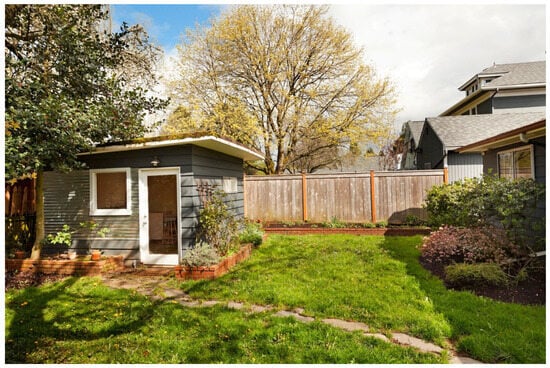
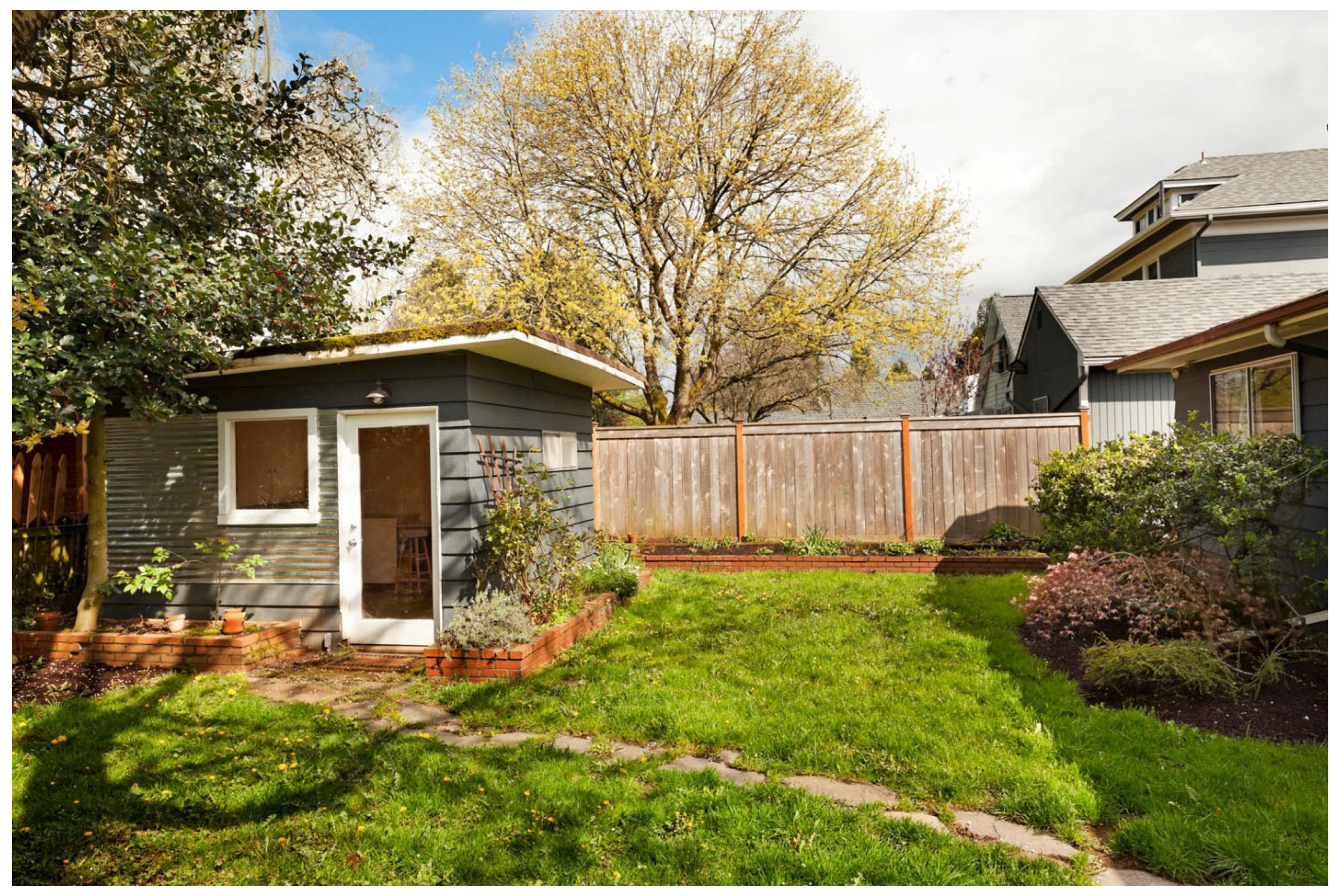
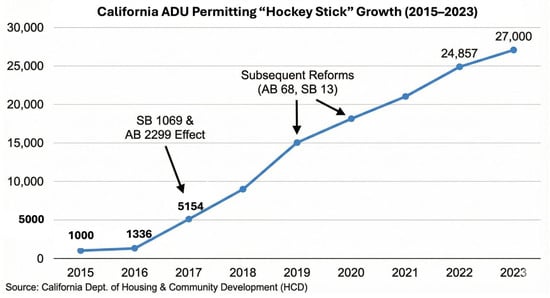
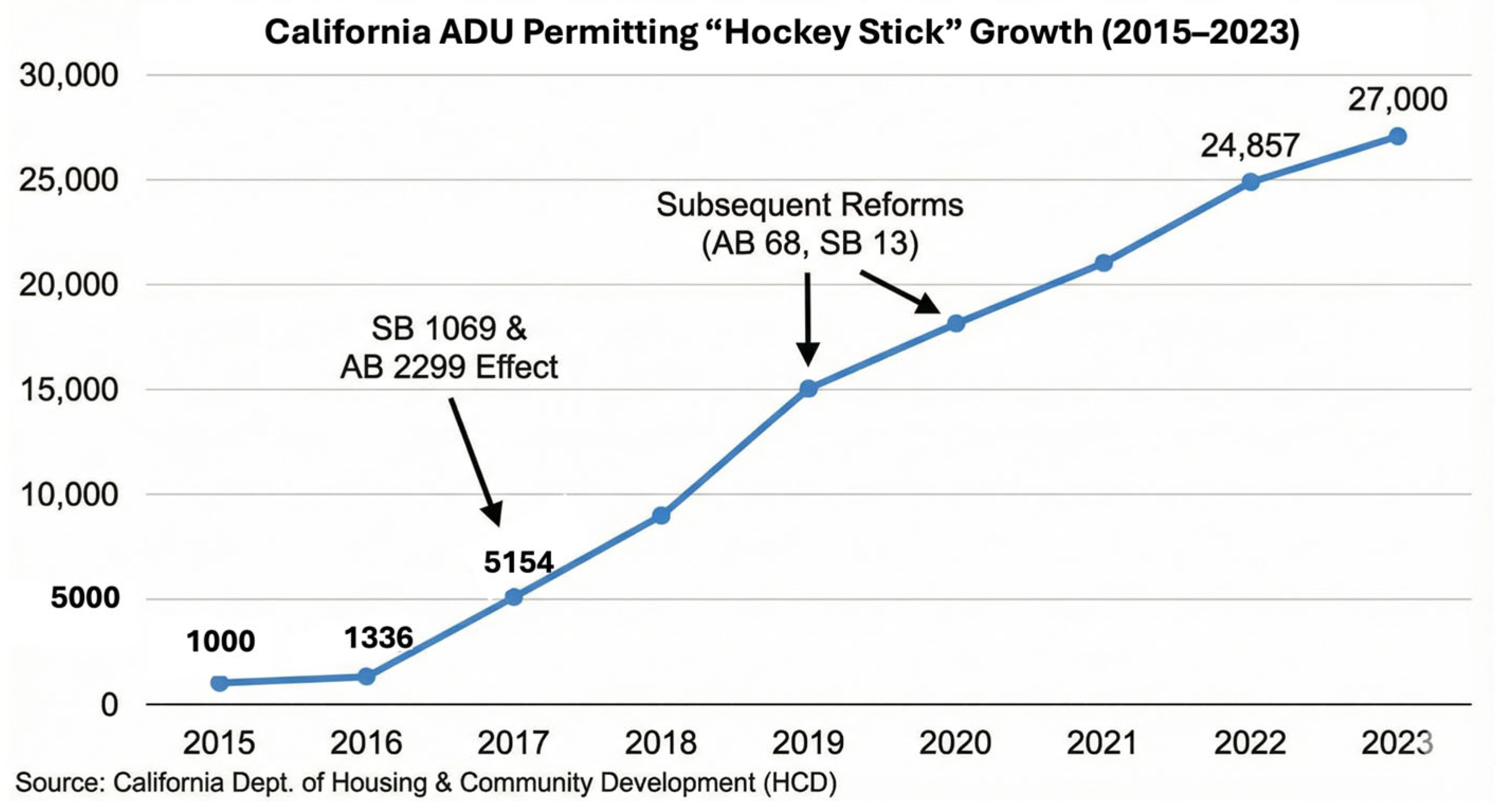
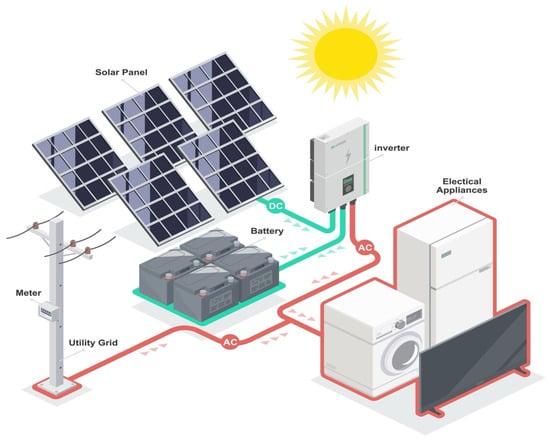
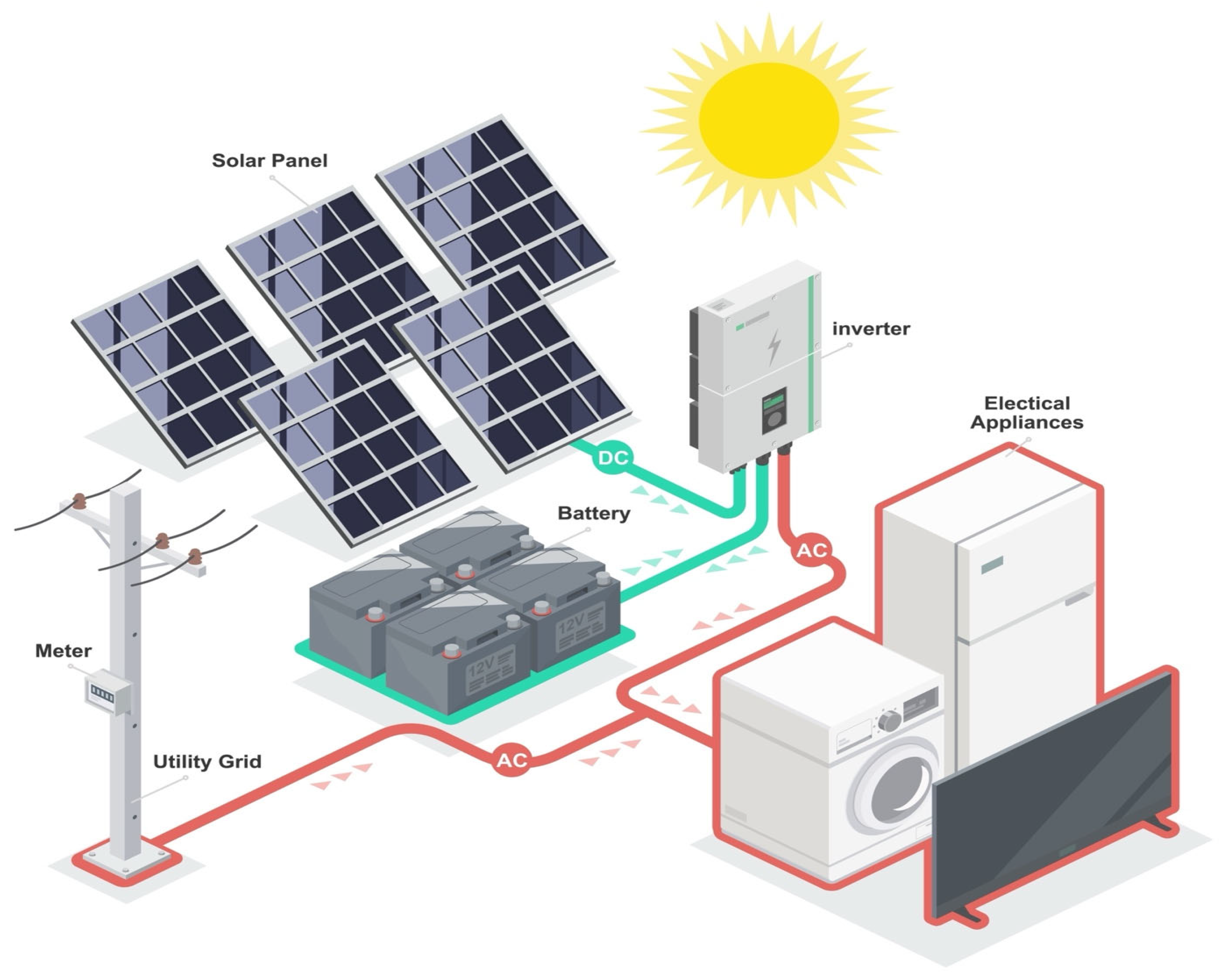
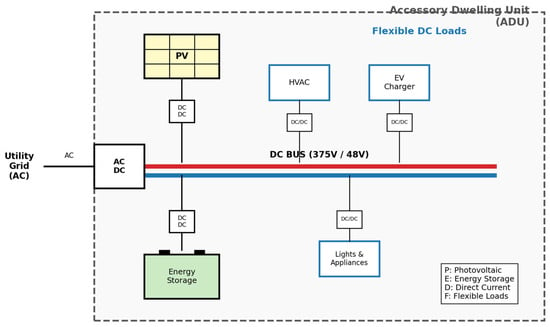
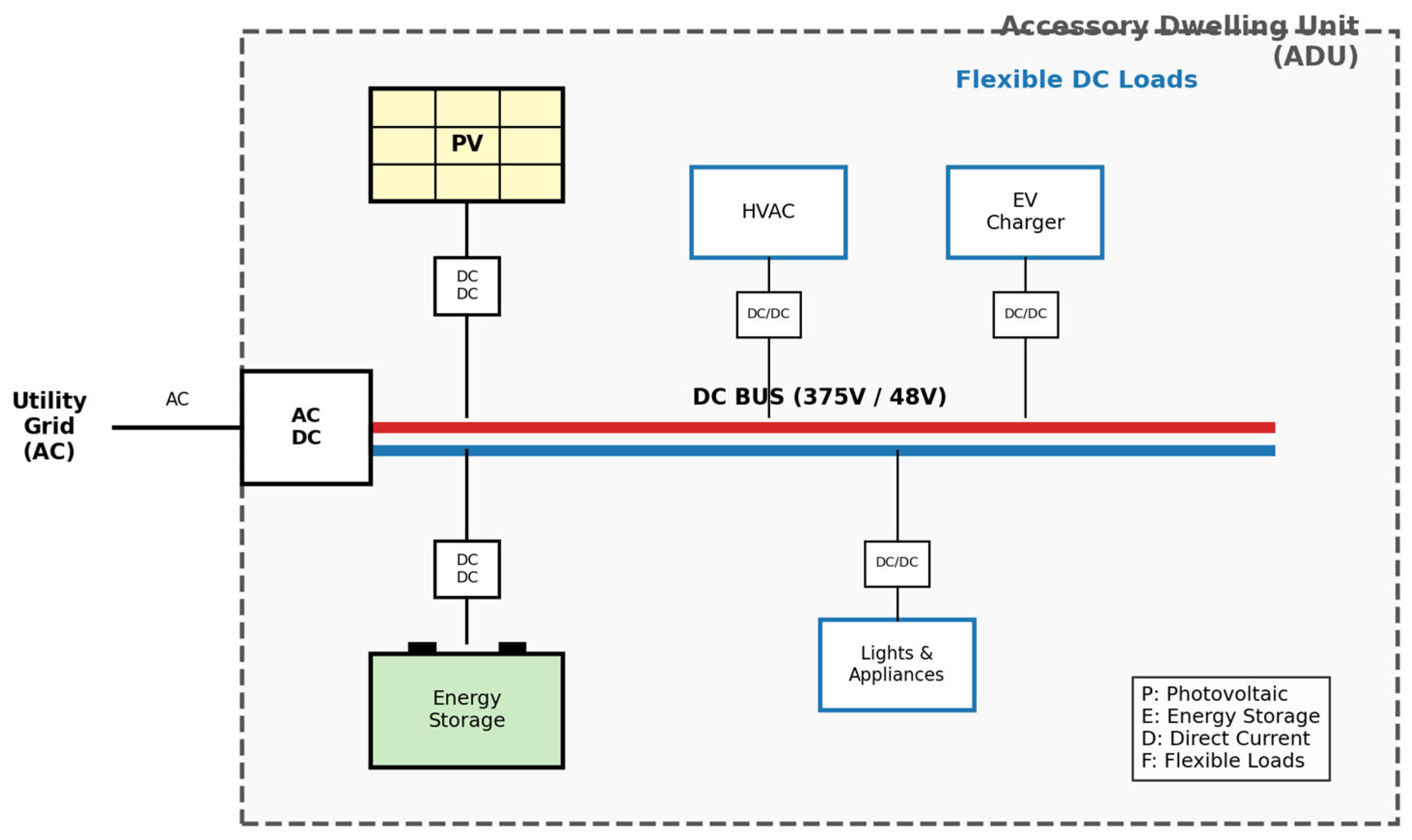
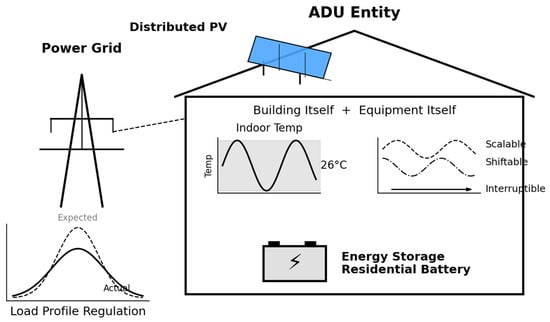
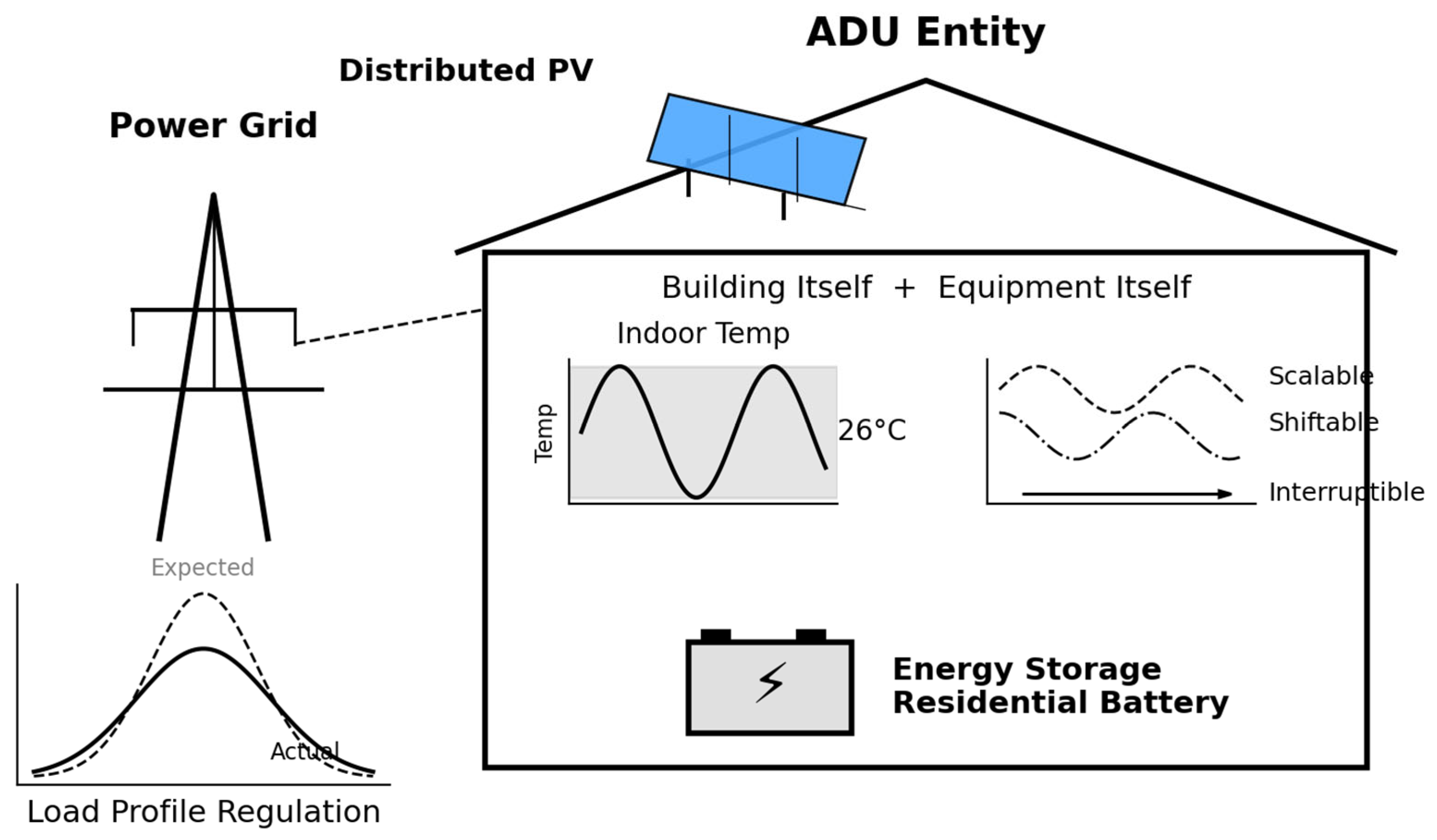
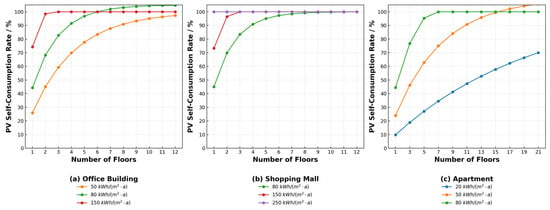
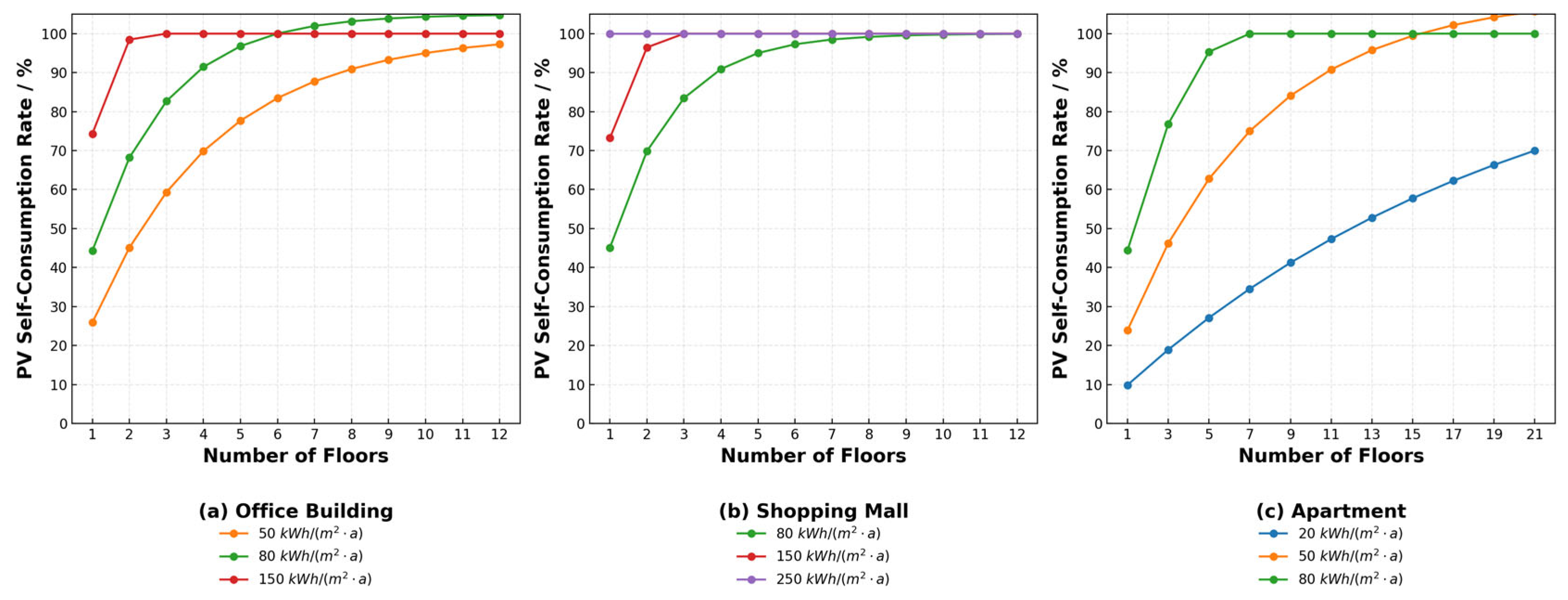
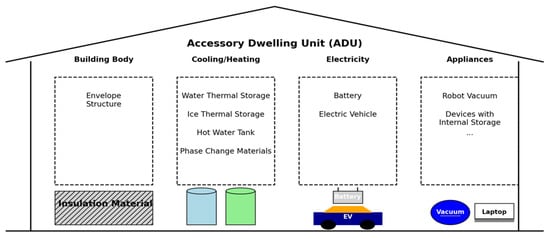
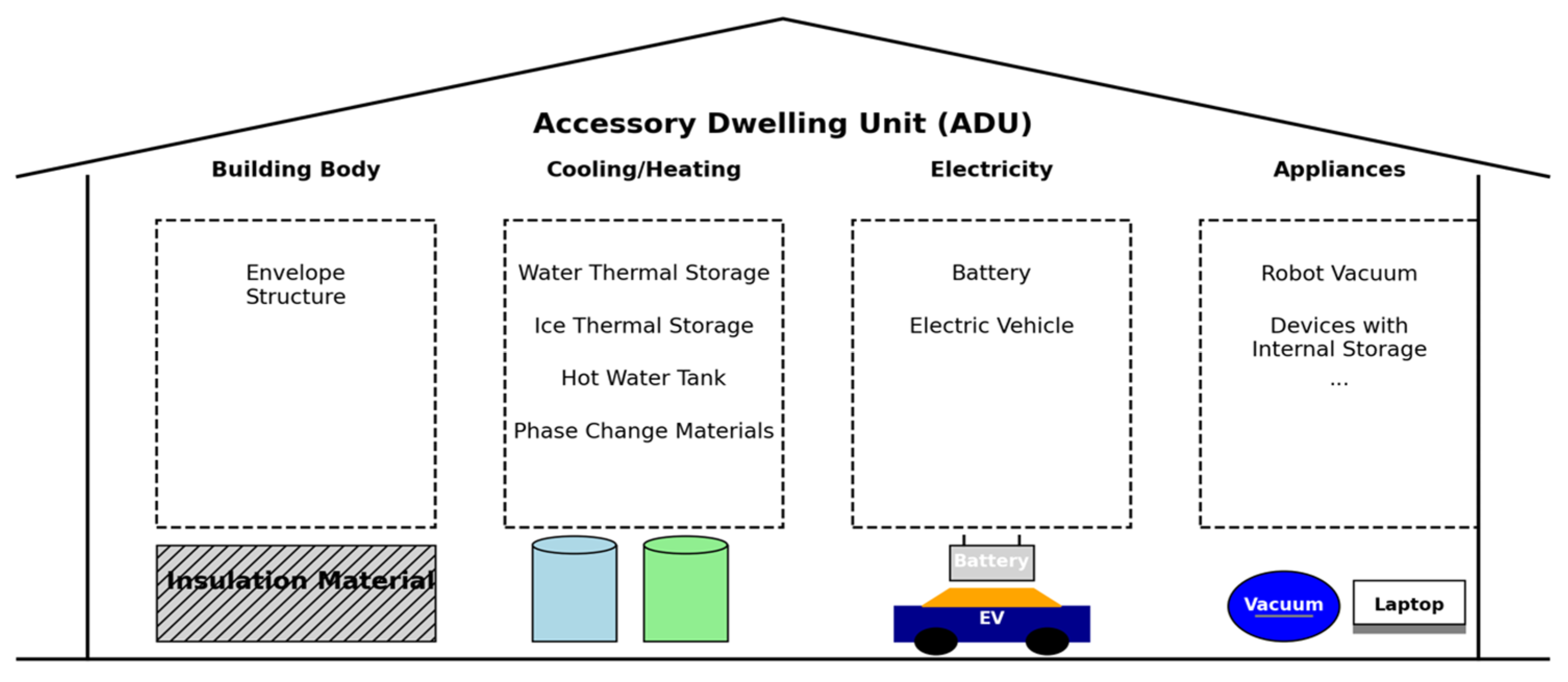
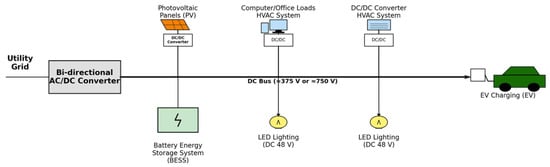
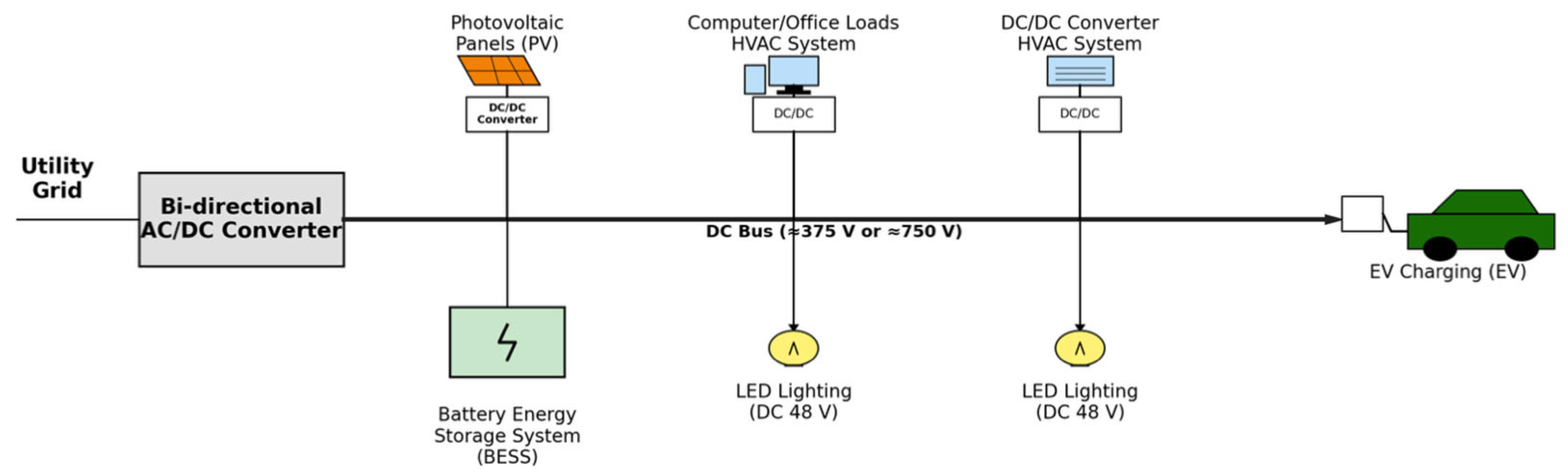
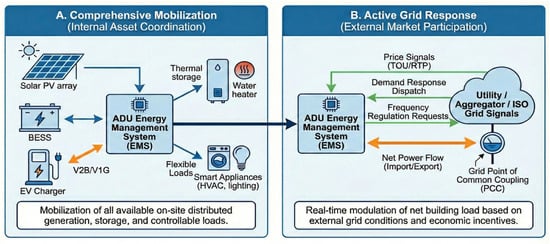
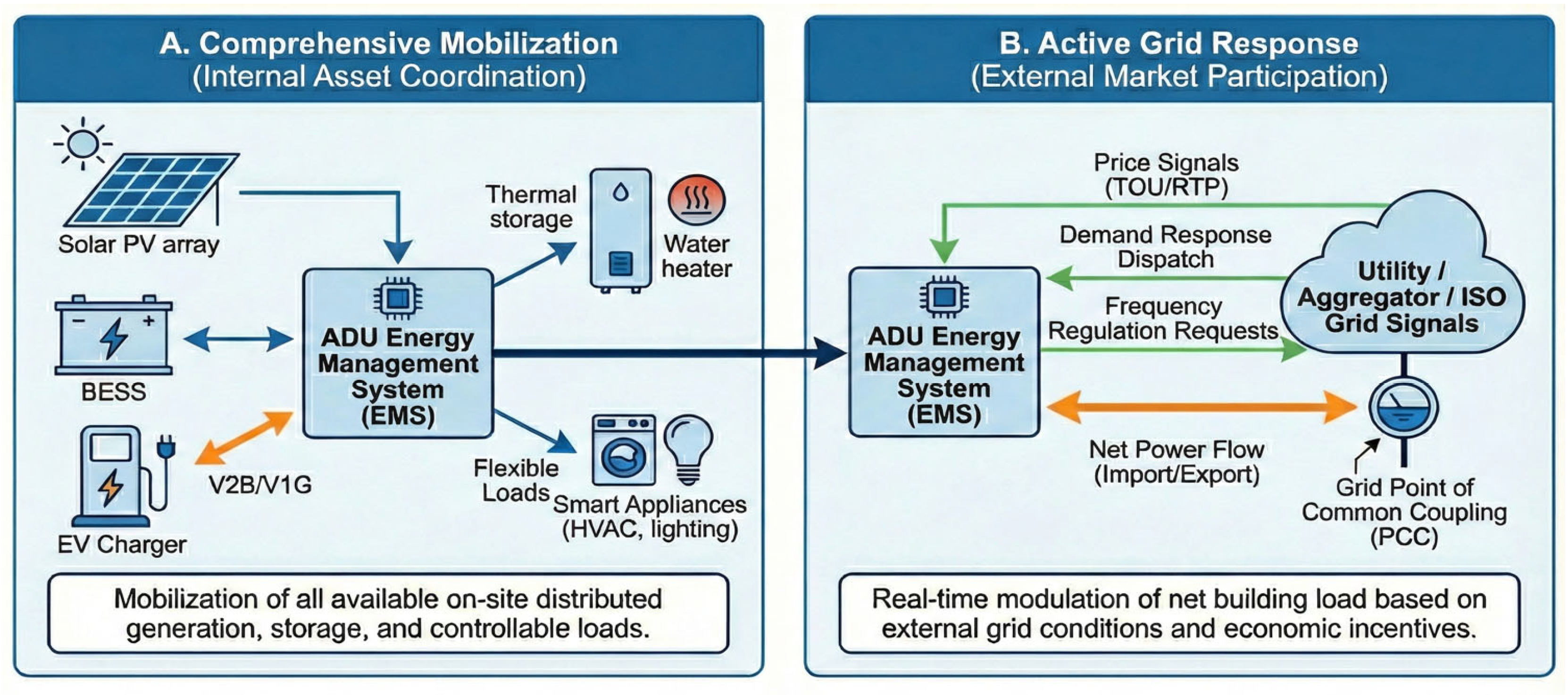
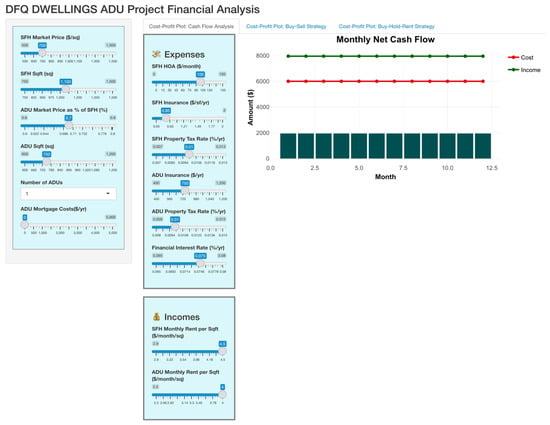
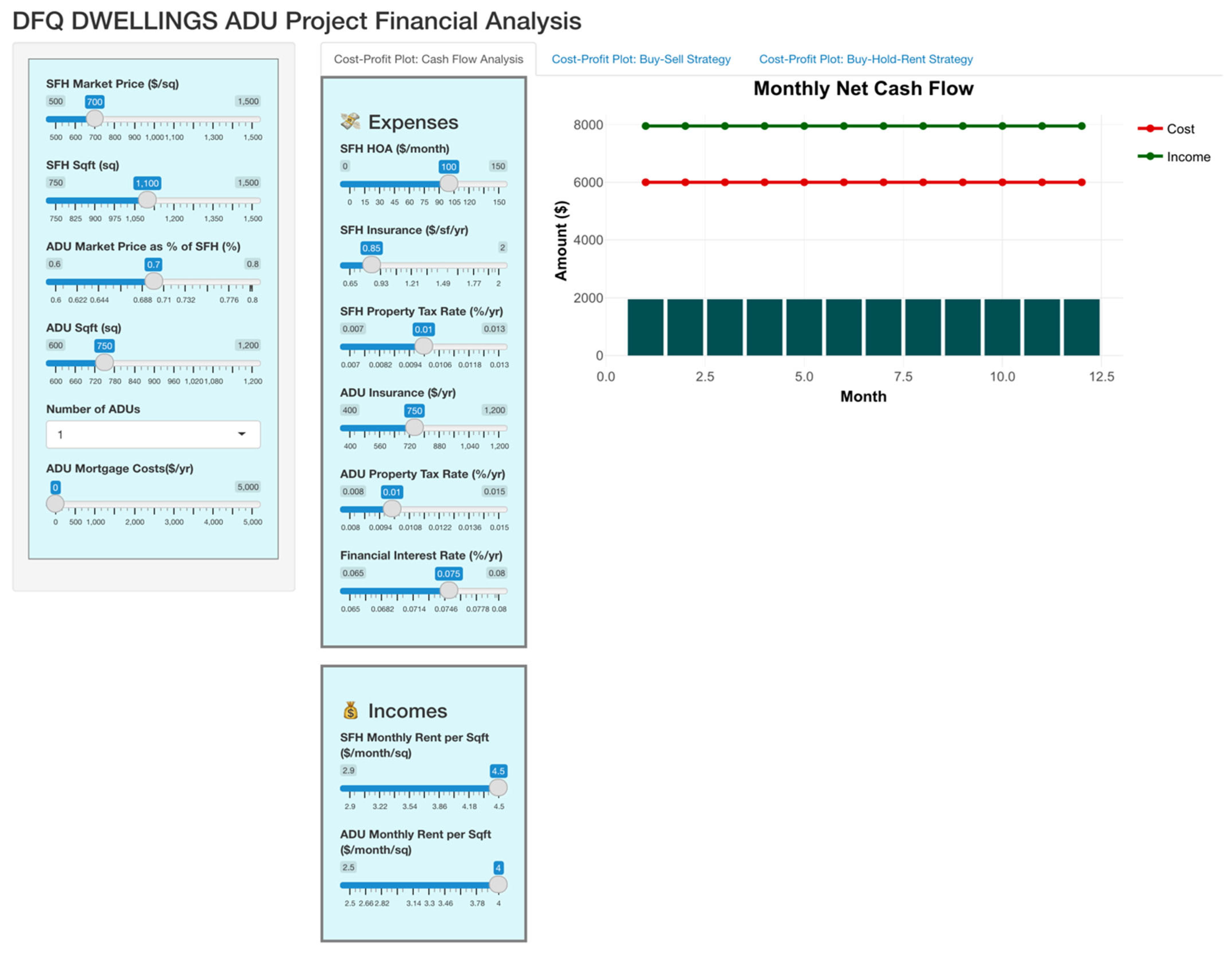
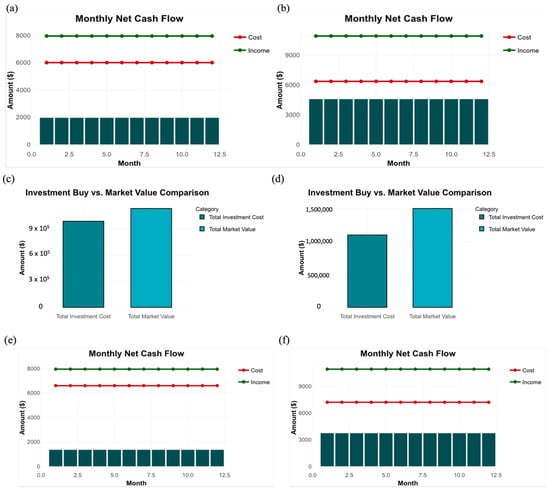
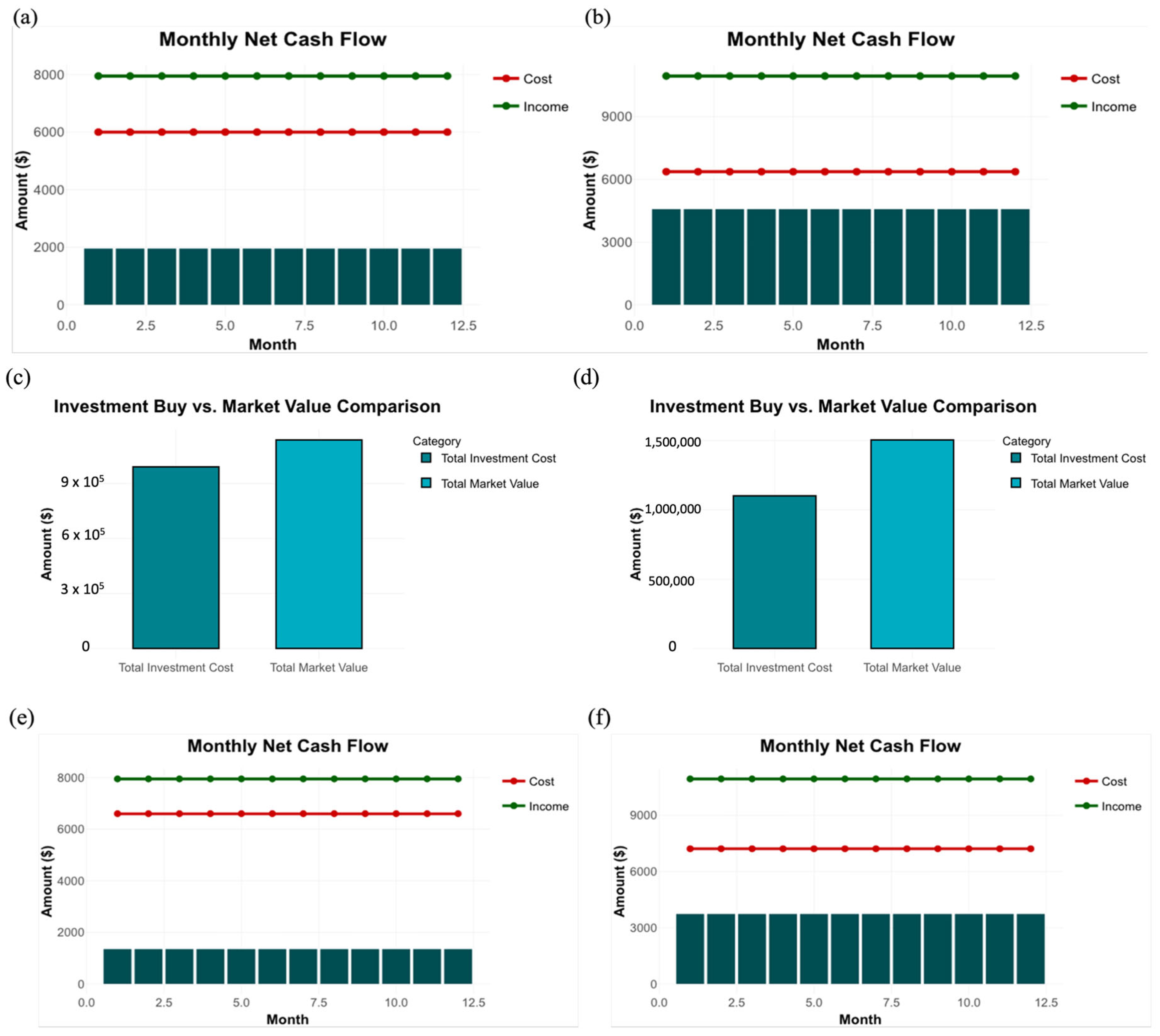
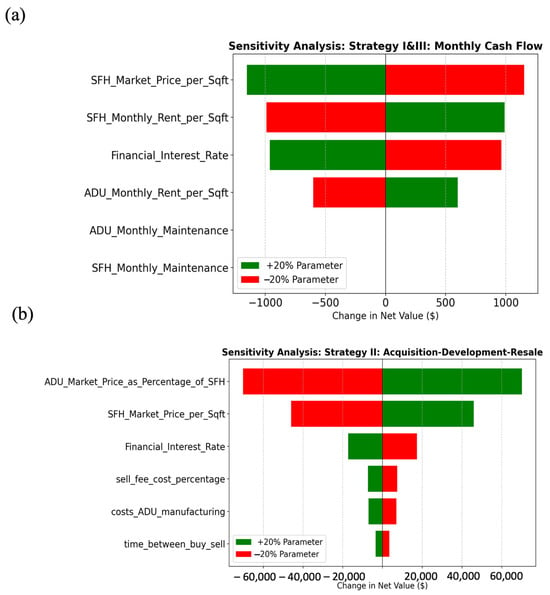
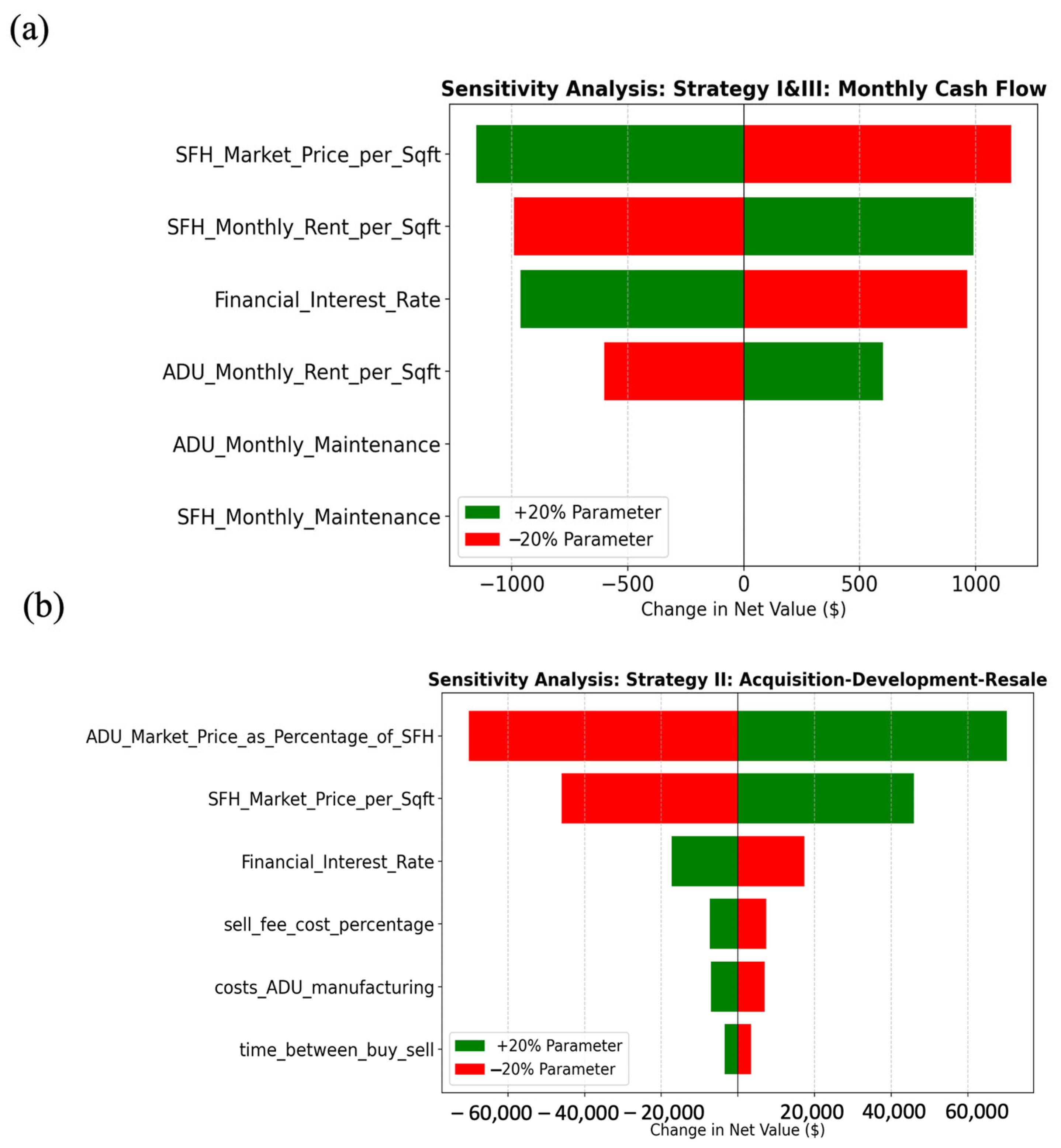

Disclaimer/Publisher’s Note: The statements, opinions and data contained in all publications are solely those of the individual author(s) and contributor(s) and not of MDPI and/or the editor(s). MDPI and/or the editor(s) disclaim responsibility for any injury to people or property resulting from any ideas, methods, instructions or products referred to in the content. |
© 2026 by the author. Licensee MDPI, Basel, Switzerland. This article is an open access article distributed under the terms and conditions of the Creative Commons Attribution (CC BY) license.