


Abstract
The widespread adoption of solar energy storage systems is transforming the global energy landscape, enabling more efficient use of renewable resources and enhancing energy resilience. The integration of residential batteries significantly enhances energy efficiency and sustainability by facilitating the storage of surplus renewable energy, providing reliable backup during power outages, and optimising energy consumption. This study explores the factors influencing end-user adoption of batteries, utilising the Unified Theory of Acceptance and Use of Technology 2 (UTAUT2) as a guiding framework to analyse adoption behaviours and determinants. This study employs a qualitative approach using semi-structured interviews with stakeholders divided into three categories: regulatory authorities, industry experts, and end-users. This study highlights key factors influencing battery adoption, such as energy independence, grid reliability, and environmental impact, while addressing challenges like regulatory inconsistencies and installer training. Study extends UTAUT2 to residential battery adoption, emphasising performance expectancy, facilitating conditions, and price value in decision-making and makes a methodological contribution by validating deeper qualitative insights into renewable technology adoption. The practical implications emphasise the need for designing targeted policies, such as subsidies and net metering, alongside developing user-centric systems that enhance affordability, usability, and consumer awareness to facilitate residential battery adoption.
1. Introduction
The Sustainable Development Goals (SDGs), established by the United Nations General Assembly in 2015, serve as a comprehensive framework for advancing global sustainability. Among these, SDG 7 aims to ensure universal access to modern energy services, increase the share of renewable energy in the global energy mix, and enhance energy efficiency [1]. Realising this goal is critical in the global effort to mitigate climate change, given that energy-related carbon dioxide emissions constitute a substantial share of global greenhouse gas emissions [2]. A fundamental shift from fossil fuel-based energy systems to low-carbon alternatives is imperative to achieving long-term sustainability objectives [3,4]. One of the central strategies in climate change mitigation has been the reduction in carbon emissions within centralised energy systems [5,6]. Despite notable progress in renewable energy deployment, prevailing consensus across mitigation scenarios suggests that a more rapid and comprehensive decarbonisation of the power sector is required within the coming decades to avert the most detrimental impacts of climate change [7]. Contemporary electricity systems are predominantly centralised, characterised by large-scale power generation facilities and extensive transmission and distribution networks [1,2]. However, the global electricity sector faces considerable challenges in transitioning to a low-carbon economy while simultaneously maintaining economic efficiency and social equity [4,7]. The rise in residential solar installations poses challenges for grid stability, which can be effectively addressed through energy storage technologies like batteries [7,8]. Batteries store surplus solar energy for use during peak demand or nighttime, reducing grid reliance [8]. Their adoption is influenced by social factors, such as societal trends and peer influence, and supported by facilitating conditions like affordability and incentives [9].
Western Australia (WA) presents a relevant case for applying the Unified Theory of Acceptance and Use of Technology (UTAUT) to renewable energy adoption, particularly in light of rising residential solar usage and related grid stability concerns [1,9]. In WA where rooftop solar contributes significantly to electricity generation, the focus is increasingly shifting from solar panel installations to battery adoption as a means to support grid stability [1,10]. The UTAUT model helps explain how expectations that energy storage will resolve grid issues can influence adoption by both consumers and utilities. This study explores the social, environmental, and economic factors driving battery acceptance. By examining performance expectancy, effort expectancy, social influence, and facilitating conditions, UTAUT provides insights into the adoption of renewable energy technologies and the barriers to their integration into the grid [6,11]. This study applies UTAUT to investigate the motivations, context, regulatory frameworks, and organisational dynamics influencing battery adoption in WA.
Researchers have utilised a range of theoretical models to explore the adoption of products, concepts, and technologies, such as the Theory of Reasoned Action [12], the Theory of Planned Behaviour [13], and more recently, the Unified Theory of Acceptance and Use of Technology 2 (UTAUT2) [14,15,16]. The UTAUT model provides a comprehensive structure comprising four core determinants of behavioural intention and actual behaviour: performance expectancy, effort expectancy, social influence, and facilitating conditions [17,18]. Behavioural intention is shaped positively by performance expectancy, effort expectancy, and social influence [17,19], while actual behaviour is driven by both behavioural intention and facilitating conditions. UTAUT consolidated constructs from earlier models and demonstrated a higher explanatory capacity, accounting for up to 70% of variance in user intentions. While providing valuable insights for management, it highlighted the need to explore broader organisational outcomes [20]. The framework was extended into UTAUT2, which incorporated seven constructs: performance expectancy, effort expectancy, social influence, facilitating conditions, hedonic motivation, price value, and habit [15]. This extension enhanced its applicability in consumer settings, explaining 74% of the variance in behavioural intention and 52% in technology use [18].
Meta-analysis of UTAUT2 and identified the strongest linkage between behavioural intention (BI) and use behaviour (UB) while also noting that the path from effort expectancy (EE) to BI, though reliable, was relatively weaker [18]. The meta-analysis study underscored the value of additional constructs such as trust and personal innovativeness while acknowledging limitations in incorporating moderators due to empirical constraints. A further reinforced UTAUT2’s theoretical robustness advocated for a multi-level framework to account for contextual factors influencing technology acceptance [18]. UTAUT framework expanded in the context of chatbot services by introducing perceived intelligence and anthropomorphism [18,19].
The findings revealed these factors significantly affected continuance intention, moderated by social self-efficacy. This evolution illustrates that although the foundational constructs of UTAUT remain significant, contemporary technological contexts demand the inclusion of new variables. For instance, UTAUT was used to study Moodle adoption and found that performance expectancy and social influence strongly influenced behavioural intention and actual usage [17]. While UTAUT is well-validated across organisational and educational contexts, limited research exists on its application across diverse cultural, geographical, and technological environments. Investigating its relevance in sectors like healthcare, public services, and among various demographics could enhance understanding of its adaptability [17,18]. Furthermore, most UTAUT research relies on quantitative methods revealing a gap for qualitative investigations that can offer richer insights into user experience and contextual dynamics [10,15,18].
This study examines the enablers and barriers influencing the transition from intention to actual technology use, an area less explored in prior research, which predominantly focused on behavioural intention. In the context of battery adoption, performance expectancy is defined as the degree to which users believe the technology will enhance their daily lives [17], with higher expectancy linked to increased adoption [19,21]. Effort expectancy involves the perceived ease of learning and using the technology [20,22], which similarly enhances adoption likelihood [18,23]. Hedonic motivation, linked to enjoyment and aesthetics, also influences adoption [17,18,23]. Social influence refers to perceived social expectations [15,19,21] and facilitating conditions involve perceived support infrastructure. Price value reflects the perceived cost–benefit trade-off [17,19] and habit pertains to prior experience and routine use [22].
This study applies the UTAUT2 framework to explore stakeholders’ perspectives on battery adoption through semi-structured interviews. Using the UTAUT framework, this study aims to investigate the motivations, context, methods, regulations, organisations, and linkages that influence and determine the adoption of batteries in WA. In this respect, this study will address the following research question: “What are the motivations, drivers, and obstacles that influence the adoption of batteries by end users?”
2. Materials and Methods
This study carried out semi-structured interviews to analyse the performance expectancy, effort expectancy, and facilitating conditions influencing the end-user acceptance of batteries, using the unified theory of acceptance and use of technology (UTAUT) framework. The stakeholders involved in the adoption of batteries were divided into three main categories—regulatory authorities, industry experts, and end-users. Regulatory authorities set safety and environmental standards, shaping market conditions [7,14]. Industry experts advance technology and production efficiency, meeting performance demands. End-users determine market viability through adoption patterns and feedback, guiding further improvements. The participants chosen for this study are listed in Table 1. A purposive sampling was employed in this study [24,25]. Participants were selected through social media and networking platforms such as LinkedIn and Meta (Facebook) and professional websites, such that the participants had a minimum of three years of experience with the technology [24,26].
Table 1.
Participants involved in this study.
Snowball sampling was employed to get in touch with more participants by relying on existing participants [24,25]. The interviews were conducted using a semi-structured interview guide comprising a main question along with probing questions designed to explore the various constructs of the framework. The complete interview guide used in this research is provided in the Supplementary Material. The semi-structured interviews were facilitated via Microsoft Teams platform [24,27]. A transcription software embedded in Microsoft Teams was used to transcribe semi-structured online-recorded interviews, and, after each interview, verbatim transcripts were downloaded, and the transcription was checked for accuracy [28]. NVivo version 14 software was used in the qualitative analysis of data [27]. The data were coded to identify themes leading to the end-user perceptions of performance expectancy, effort expectancy, and facilitating conditions. To minimise social desirability bias, a common limitation in interview-based research, this study ensured participant anonymity and offered flexible interview settings to encourage openness [29]. While these strategies mitigated the influence of social desirability, it could not be fully eliminated.
The qualitative data were analysed using a thematic coding approach aligned with the UTAUT framework through a systematic multi-step process. First, interview transcripts were reviewed to identify key terms that reflected participants’ experiences, perceptions, and motivations, such as high upfront cost, ease of installation, word-of-mouth referrals, and energy sharing. These terms were then restated into concise analytical meanings to capture the underlying intent of each response; for example, initial investment discourages adoption or batteries enable advanced energy systems. In the next stage, similar restatements were grouped into broader open codes representing recurring patterns across the dataset, including cost barriers, investment justification, technological progress, ease of use, social validation, and community-based infrastructure. Finally, these open codes were mapped onto higher-order UTAUT constructs to ensure theoretical alignment, with cost-related concerns classified under Price Value, technological benefits under Performance Expectancy, usability aspects under Effort Expectancy, social effects under Social Influence, infrastructural and institutional support under Facilitating Conditions, and symbolic or status-driven motivations under Hedonic Motivation. This structured coding process ensured analytical rigor while maintaining consistency between empirical evidence and the theoretical framework. The detailed coding process is shown in Table 2.
Table 2.
Coding of data based on UTAUT framework.
3. Results
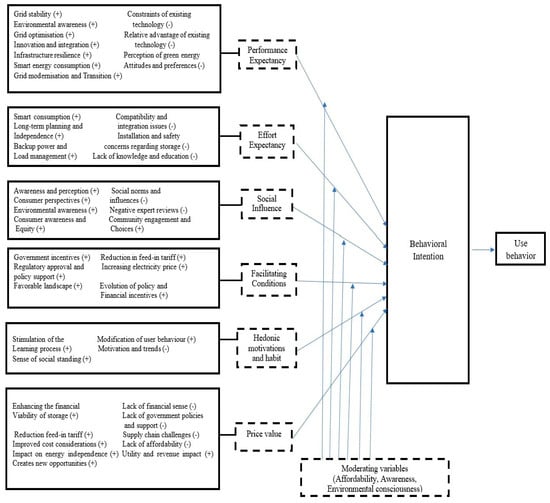
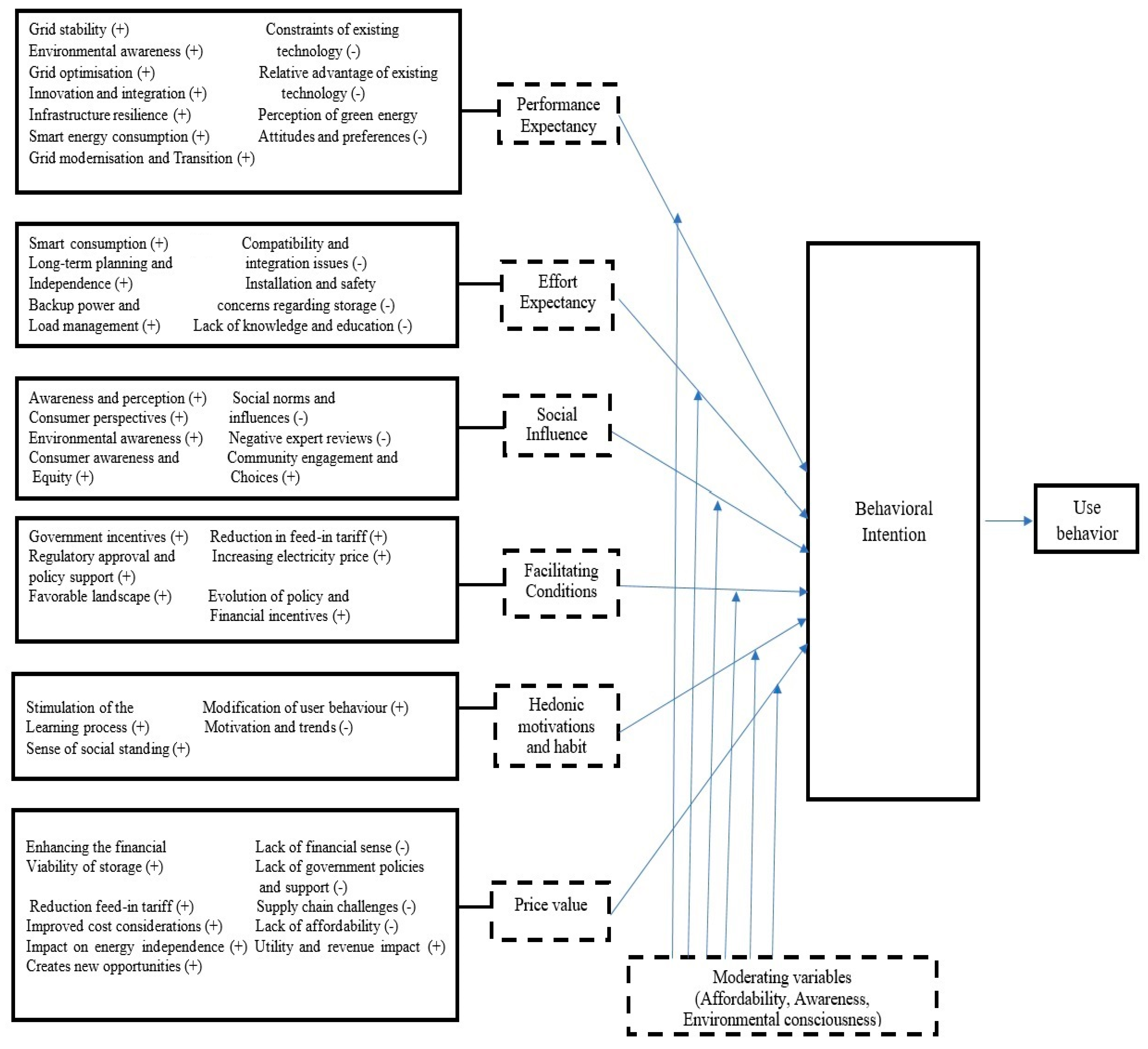
The findings of this study are consistent with previous research showing that the UTAUT framework is flexible and effective across different technologies and contexts. Although the main UTAUT constructs remain relevant, their influence varies depending on the application and user setting. For example, trust has been shown to play a key role in mobile banking adoption in Jordan, where security and reliability are major concerns [30]. In contrast, studies on mobile payment adoption in the hospitality sector have identified performance expectancy as the strongest factor, emphasizing the importance of usefulness and efficiency in service-based applications [31,32]. These differences highlight the need to adapt the UTAUT model to specific contexts rather than applying it uniformly. Overall, these findings support the use of UTAUT as a suitable theoretical framework for examining battery adoption in the present study. Figure 1 shows the conceptual model of factors based on the UTAUT2 framework for transition toward batteries.
Figure 1.
Household battery adoption analysed through UTAUT2 framework.
These factors have been extracted and coded as themes from the interviews with the core stakeholders, which are explained in detail in the following subsections (Section 3.1, Section 3.2, Section 3.3, Section 3.4, Section 3.5 and Section 3.6). The figure displays performance expectancy (Section 3.1) highlighting benefits such as grid stability, environmental and economic impact, technological advancements, efficient resource use, and community benefits; effort expectancy (Section 3.2) addressing ease of installation, knowledge, user interaction, and compatibility; social influence (Section 3.3) emphasising the role of word of mouth, peer interaction, and media in shaping transition; facilitating conditions (Section 3.4) focusing on incentives, sustainability goals, community batteries, and technological evolution; hedonic motivations and habit (Section 3.5) driven by social standing, brand loyalty, and early adopter behaviour and price value (explained in Section 3.6) evaluating financial savings and return on investment. These interconnected constructs collectively determine behavioural intention, leading to the actual use of the technology.
3.1. Performance Expectancy of Batteries
Performance expectancy, defined as the belief that using a technology will lead to improved outcomes, is influenced by multiple factors [33,34]. Participants in this study identified key expectations such as reducing energy costs, increasing property value, enhancing grid security and reliability, and promoting energy independence through solar and battery use [35,36]. Benefits also included economic savings, environmental impact, technological innovation, efficient resource use, and broader community advantages. Concerns around grid instability, such as voltage fluctuations and frequency variations due to rising solar penetration, further drive the appeal of battery storage [1]. Solar energy storage (SES) solutions offer a means to address these issues while supporting decentralisation and self-sufficiency [37]. Innovations like virtual power plants (VPPs) allow for managed energy sharing and export, benefiting both residential users and utilities. Key drivers of battery adoption in this dimension include system reliability, smart energy use, infrastructure resilience, and sustainability [31,38]. However, challenges remain, including technological limitations, the perceived adequacy of current systems, and scepticism toward new green technologies, which can impede adoption despite the potential benefits. Table 3 lists participants’ statements expressing expectations on the performance of the battery storage.
Table 3.
Participants’ perspectives on performance expectancy.
3.2. Effort Expectancy
Effort expectancy determines the perceived ease of use of a technology [31,36]. The greater the effortlessness in engaging the technology, the greater will be the rate of adoption of the technology [36]. The ease of installing the battery storage without needing additional adjustments reflects effort expectancy [31]. Concerns about the complexity of choosing the right solar provider and understanding the technology reflect effort expectancy [39]. Participants indicate that choosing and installing solar panels is an easy process, facilitated by trusting the advice of a known brand and having a good experience with the solar company. Factors influencing this ease include installation and usage simplicity, technical competence of the installers, technology integration and compatibility, and user interaction and management [38,40,41]. This study highlights that need for a straightforward and understandable installation process is essential for the end user to reflect effort expectancy. The technical competence of the installers plays a key role, as they directly interact with the consumer [30]. However, some installers lack adequate technical training, which hinders their ability to explain technology to consumers in simple terms. Despite this, participants consistently describe the installation process as smooth and straightforward, with continuous support from the solar retailing companies [38,42]. This reflects a low effort expectancy, as customers do not encounter significant challenges or complexities. Participants also report that integrating batteries into the system is “pretty straightforward” with no major difficulties. The professional and efficient approach of solar companies ensures a hassle-free process, making the adoption of solar technology highly accessible [41]. Table 4 lists the participants’ perspectives on the effort expectancy of batteries.
Table 4.
Participants’ perspectives on effort expectancy.
Battery adoption is hindered by the lack of standardised installation regulations, inadequate installer training, and limited manufacturer support, leading to poor installation experiences and reduced user confidence. While long-term planning, energy independence, and reliable backup solutions enhance perceived ease of use, several barriers remain. Negative factors influencing battery adoption within the effort expectancy dimension of the UTAUT framework include compatibility and integration issues, which complicate the connection of new technologies with existing systems, increasing setup, maintenance, and troubleshooting efforts. These include compatibility and integration challenges, safety concerns, limited user knowledge, and various technical issues, all of which increase perceived effort and complexity. Together, these factors negatively impact effort expectancy and slow the adoption of battery storage systems.
3.3. Social Influence
Social influence relates to the degree to which individuals perceive that important others believe they should use the new system. Influence from friends and neighbours who have adopted solar systems reflects social influence. Societal influence is crucial in the adoption and acceptance of any technology. Peer networks within communities have a significant role in shaping the social norms related to sustainable energy practices. Witnessing individuals embrace battery systems has a significant impact on social conduct and the level of approval, constituting a dynamic element of the behavioural environment [43]. Battery adoption among end users is significantly influenced by social factors, including family, friends, peer interactions, and media. Positive word of mouth, growing environmental awareness, and favourable media coverage support the shift toward green technologies, encouraging broader acceptance of batteries. Community engagement and shared responsibility also foster social norms that promote adoption. However, negative media narratives, safety concerns, and misinformation can create resistance, reduce social endorsement, and slow adoption. Table 5 depicts the participants’ perspectives on social influence.
Table 5.
The themes and categories obtained from the participants’ perspectives on social influence.
3.4. Facilitating Conditions
Since cost is a major barrier to the adoption of batteries, availability of incentives or rebates is the primary factor facilitating the adoption of batteries. The sustainability and climate change mitigation goals are laying path for increased awareness among consumers while encouraging the policymakers to envision incentives beneficial to battery adopters. A solar integrated storage offers more scope for savings on energy bills than solar alone, by reducing the excess energy from being fed back to the grid; however, the return on investment can be increased or made profitable to the end user only in an incentivised scenario [44]. Despite the cost barrier, the consumer awareness of the sustainability goals and climate change mitigation strategies can encourage early adoption. Technology evolution and innovative perspectives such as community batteries are also facilitating the adoption of batteries. Energy sharing within a community is an ideal strategy to distribute the effects of economic burden, associated risks, and benefits of batteries [45]. Technology evolution is necessary to provide adequate technical support and infrastructure to emerging ideas such as community batteries. Facilitating conditions refer to the resources and support available to users. The participants highlight the need for government support and better policies align with this construct. Effective policies, rebates, and subsidies can significantly impact the ease of adoption and the ability of users to acquire technology [46,47]. Participants emphasise the importance of government policy and subsidies in reducing battery costs and enhancing accessibility, aligning with the UTAUT construct of facilitating conditions. Policy support helps address financial barriers, making battery adoption more feasible for both consumers and businesses. Incentives, including reduced feed-in tariffs and electricity pricing adjustments, strengthen the economic attractiveness of renewable energy systems by lowering initial investment costs and improving long-term affordability. Overall, evolving policies and financial support play a key role in enabling wider adoption of battery technologies. Table 6 lists the participants’ perspectives on the factors facilitating the adoption of batteries.
Table 6.
The main themes and categories focusing on the facilitating factors for the transition.
3.5. Hedonic Motivation and Habit
Previous literature indicates the adoption of pro-environment technologies as a gesture of conveying consciousness about sustainability issues and commitment to renewable energy usage [36]. Hence, the hedonic aspects are relevant in boosting the decision to adopt batteries. The adoption of batteries will confer a sense of elevated social status. This is also related to the habits and identity of the end users. Early solar adopters, by habit, may be drawn to opt for early adoption of batteries, owing to their experience with solar and awareness of the benefits of a solar-integrated storage system [4]. End users consider the aesthetics, design, and visibility of batteries as important factors in adoption decisions. Brand confidence and alignment with social norms or habits also influence the choice of battery, with well-known brands fostering greater trust. Social factors such as brand recognition play a key role in shaping consumer preferences. Additionally, promoting sustainable energy behaviours that reflect personal values can make energy-saving practices more enjoyable, reinforcing positive habits over time and encouraging adoption [36,48]. Table 7 lists the participants’ perspectives on hedonic motivations and habit.
Table 7.
Participant’s perspectives on hedonic motivators and habit.
3.6. Price Value
The price value is a crucial attribute because the end user always takes into account the money and effort spent and the relative benefits of the technology before deciding to adopt it. Financial savings obtained from reduced energy bills are a factor motivating the adoption of batteries. Electricity retailers are encouraging battery adoption among the end users to lower peak demand and shield end consumers from rising electricity prices since a significant fraction of electricity retailers are unable to recover their expenses due to the increased wholesale cost of power [7,30]. The cost of batteries and the return on investment are unable to strike a balance at the moment. The return on investment is obtained only after ten to fifteen years, which is well above the warranty period of the battery. Hence, the price value attribute does not support the adoption of batteries. The value diminishes further when an end user takes into consideration the possible risks in adopting the battery, including economic burden and physical hazards such as the possibility of catching on fire [30,31]. Table 8 lists the participants’ perspectives on the price value of batteries. Lowering battery upfront costs improves their financial viability by offering long-term savings and making storage solutions more attractive. Dynamic feed-in tariffs and time-of-use pricing enhance economic appeal by reducing electricity bills and enabling revenue from surplus energy. Greater affordability and energy independence further boost financial returns [30]. Battery adoption can also impact utility revenue positively and create new income streams. However, unclear financial benefits, insufficient government support, supply chain issues, and high upfront costs can hinder adoption by reducing perceived value and affordability.
Table 8.
Participants’ perspectives on price value.
4. Discussion
The adoption of residential battery storage, analysed through the Unified Theory of Acceptance and Use of Technology 2 (UTAUT2) highlights key determinants influencing consumer decisions. In summary, price value remains a primary factor, as financial savings drive greater adoption, but high upfront costs and long return on investment periods act as deterrents. Incentives and innovative financial models can enhance affordability and perceived value. Performance expectancy also plays a crucial role, with consumers valuing energy independence and sustainability [11,14]. Advances such as Virtual Power Plants (VPPs) improve efficiency, yet ongoing concerns about grid instability and reliability persist. Effort expectancy influences adoption, as ease of installation and technical support foster consumer confidence, though regulatory inconsistencies and installer training gaps pose challenges. Social influence is another strong driver, as peer networks and media shape perceptions. Positive consumer experiences build trust, while misinformation hinders acceptance [2,14]. Facilitating conditions, including policy support and infrastructure, are essential to overcoming adoption barriers. Additionally, hedonic motivation and habit reinforce adoption, as early adopters influence broader societal trends [32,33]. By addressing financial, technological, and regulatory challenges while leveraging social and behavioural drivers, residential battery storage adoption rates can be improved, contributing to decentralised and sustainable energy transitions.
Within this broader context, policy interventions play a critical enabling role by shaping user behaviour, reducing adoption barriers, and reinforcing the determinants identified in this study. This study highlights the Western Australian Government’s Residential Battery Scheme as a key policy initiative promoting efficient energy use and sustainability, and links it to the various UTAUT constructs identified throughout this study. The scheme provides rebates of $500 to $750 per kWh and no-interest loans up to $10,000 for eligible households [3]. To qualify, applicants must own a home in WA with an active electricity account. Batteries must have at least 5 kWh capacity, be VPP-ready, and stay connected to the internet for smooth operation. This study’s findings align with the scheme’s objectives, supporting residential battery adoption within the UTAUT2 framework [15,34]. Performance expectancy is addressed by reducing grid reliance and promoting renewable energy. Effort expectancy is enhanced through financial incentives, simplifying adoption [19,34]. Facilitating conditions are reinforced through clear eligibility criteria and technological requirements, ensuring system compatibility with the energy network [17,19]. Collectively, these measures encourage greater participation in WA’s transition to sustainable, renewable energy.
4.1. Theoretical and Methodological Contributions
This study makes two theoretical contributions and one methodological contribution. Firstly, we extend the applicability of the UTAUT2 model to study the content of analysing consumer acceptance of residential battery storage within the renewable energy sector. While UTAUT2 has been used widely to study information systems and consumer technology adoption, its relevance to the theoretical advancement of energy-related technologies remains limited [33,34]. By validating key concepts such as performance expectancy, effort expectancy, social influence, facilitating conditions, hedonic motivations and habits, and price value in the context of residential batteries, this study demonstrates that UTAUT2 is a robust framework for understanding technology adoption in the energy sector, thus providing a foundation for future research on consumer adoption of energy innovations, including smart grids and electric vehicles [11,16,33].
Secondly, this study helps bridge the consumer behaviour and energy transition literature by linking facilitating conditions with external influences such as policy interventions and technology advancements [42]. Existing consumer adoption frameworks often focus on individual decision-making factors, whereas this study highlights the broader systemic influences, including subsidies, net metering policies, and energy trading mechanisms, all of which collectively shape behavioural intentions [32,34]. This theoretical insight advances the understanding of how macro-level factors influence micro-level adoption behaviours, offering a more holistic approach to studying energy technology adoption. This study also methodologically advances UTAT2 research. By incorporating qualitative research methods, this study addresses a critical gap in UTAUT2 applications, which are predominantly validated by quantitative studies [10,15,18]. The qualitative approach provides deeper insights into consumer motivations, concerns and battery adoption intentions and decisions that may not be captured through survey-based quantitative methodologies. Thus, exploratory studies in emerging technologies could further apply qualitative methods via the UTAUT2 model. This study goes beyond applying UTAUT2 by showing how its key factors can be perceived differently in the context of residential batteries. The findings indicate that facilitating conditions and price value are more influential than effort expectancy, which mainly acts as a supporting factor. The results also show that policy settings and regulatory support strongly shape how users perceive usefulness and value. This refines UTAUT2 by demonstrating that technology adoption in energy systems is driven not only by user perceptions but also by broader institutional and policy conditions.
4.2. Practical and Policy Implications
The study findings also have practical implications for policymakers, firms, manufacturers, and designers. Firstly, policymakers can leverage the study’s insights to develop targeted incentives, such as subsidies, rebates, and net metering policies, to enhance the affordability and perceived value of residential battery storage [42]. By improving facilitating conditions, governments can encourage wider adoption, leading to increased energy independence and reduced strain on the power grid. Additionally, aligning policies with emerging technologies like Virtual Power Plants (VPPs) can support a more decentralised and resilient energy system [45]. Secondly, firms offering residential battery solutions can tailor their marketing strategies by highlighting key adoption drivers such as performance expectancy, hedonic motivations, and price value [32,33]. Emphasising benefits like lower energy costs, increased energy security, and environmental impact can improve consumer perceptions. Additionally, promoting the ease of use and intuitive design of battery systems can address effort expectancy concerns, making the technology more appealing to homeowners [11,14,16]. Third, manufacturers and designers should prioritise user-friendly interfaces and seamless integration of residential batteries with smart home technologies and electric vehicles. By improving ease of use and ensuring compatibility with existing energy management systems, companies can enhance consumer adoption rates. Furthermore, developing innovative financing options, such as leasing models or pay-as-you-go systems, can help overcome financial barriers and accelerate market penetration.
5. Conclusions
The adoption of residential battery storage is a pivotal development in the transition to sustainable energy, enhancing grid stability, energy independence, and cost efficiency while enabling innovations such as Virtual Power Plants (VPPs). This study extends the UTAUT2 framework by identifying performance expectancy, facilitating conditions, and price value as key determinants of adoption. By integrating qualitative insights, the study findings provide a holistic understanding of psychological, social, and economic influences on consumer behaviour. The findings underscore the role of policy interventions such as subsidies, net metering, and energy trading, which are critical in overcoming financial barriers and accelerating decentralised energy transitions. Bridging consumer behaviour and energy transition literature, this research highlights the interplay between technological advancements and regulatory frameworks in shaping adoption. It reinforces UTAUT2’s applicability in renewable energy contexts while demonstrating the value of qualitative research. Future studies should employ longitudinal and cross-cultural approaches to capture evolving consumer behaviour amid technological and policy shifts to further the academic discourse of this evolving field of study.
Limitations and Suggestions for Future Research
This study aims to study the consumer acceptance of solar and storage technologies based on the multi-stakeholder perspective to better understand the ecosystem influencing household adoption decisions. Although end users constitute a smaller proportion of the sample, their perspectives were complemented by industry experts and regulatory stakeholders who directly shape the conditions under which consumer adoption occurs through pricing structures, system design, regulatory frameworks, and knowledge dissemination. Importantly, the inclusion of industry and regulatory participants was not intended to replace consumer perspectives but to contextualise them. In the context of residential solar, consumer decisions are strongly mediated by supply-side constraints, policy incentives, and technical feasibility. As such, insights from installers, network operators, and policymakers provide a greater understanding regarding barriers and enablers that consumers themselves may experience but not fully articulate. The primary objective of this study was to explore how UTAUT2 constructs evolve in the context of residential battery adoption, rather than to compare stakeholder perspectives. This study was therefore designed to examine common patterns of meaning across interviews, irrespective of participant category. Second, the sampling across stakeholder groups was purposive with the intention of capturing system-level insights rather than generating directly comparable sub-samples. The number of end users, industry actors, and regulators was not balanced for comparative analysis, and undertaking formal cross-group comparisons can lead to over-interpreting qualitative differences not supported by a corresponding equivalent sample depth. Many of the themes identified, such as performance expectancy, facilitating conditions, and perceived risk, were consistently expressed across stakeholder categories. Finally, this approach aligns with this study’s theoretical framing, which draws on UTAUT2 that focuses on influencing mechanisms and structures rather than direct comparison between stakeholder groups.
This study has several limitations that present avenues for further research. Firstly, it is limited to three participant groups: regulatory authorities, industry experts, and end users in a single state, which may not reflect broader geographic, demographic, or economic contexts [46,47]. Future studies should conduct inter-state and cross-country analyses and involve a wider participant base to improve generalisability [11]. Secondly, as this research captures perceptions at a single point in time, it does not consider how attitudes evolve with technological and policy changes [42]. To track changes in user perceptions, policy impacts, and adoption behaviour over time cross-sectional study could be adopted. Thirdly, while this study uses the UTAUT2 framework to assess behavioural intentions, it does not examine actual adoption or long-term use [36]. Future work should explore post-adoption behaviours to identify gaps between intentions and real-world practices which could adopt a comparative or mixed-method design that could more systematically examine divergences between consumer, industry, and regulatory perspectives [14,16]. Fourthly, as this study adopts a qualitative approach, future research could benefit from employing mixed-method designs to address more complex behavioural factors. In particular, combining interviews with surveys would enhance generalisability, allow for triangulation of findings, and strengthen the robustness of this study [11,14]. Fifthly, it briefly considers the interaction of residential batteries with technologies like EVs, smart homes, and VPPs [36]; further research should explore these interdependencies. Lastly, while hedonic and habitual behaviours are addressed, socio-cultural and psychological factors are not deeply examined. Future studies could incorporate behavioural economics and psychological models to better understand the role of trust, social norms, and risk perceptions in battery adoption.
Supplementary Materials
The following supporting information can be downloaded at: https://www.mdpi.com/article/10.3390/en19040919/s1, Supplementary Materials: Semi structured–Interview Guide.
Author Contributions
Conceptualization, N.J., S.A. and A.K.; Methodology, N.J.; Formal analysis, N.J.; Investigation, N.J.; Resources, N.J.; Data curation, N.J.; Writing—original draft, N.J.; Writing—review and editing, N.J., S.A. and A.K.; Supervision, S.A. and A.K.; Project administration, S.A. and A.K. All authors have read and agreed to the published version of the manuscript.
Funding
This research received no external funding.
Institutional Review Board Statement
This study was approved by the Human Research Ethics Committee (HREC) of Curtin University with approval reference number HRE2022-0655 approved on 5 December 2022.
Informed Consent Statement
Participation in this study was entirely voluntary, and both verbal and written informed consent were obtained from all participants involved in this study.
Data Availability Statement
The original contributions presented in this study are included in this article. Further inquiries can be directed to the corresponding author.
Conflicts of Interest
The authors declare no conflicts of interest.
Abbreviations
The following abbreviations are used in this manuscript:
| UTAUT | Unified Theory of Acceptance and Use of Technology |
| UTAUT2 | Unified Theory of Acceptance and Use of Technology 2 |
| SDG | Sustainable Development Goals |
| WA | Western Australia |
| EV | Electric Vehicle |
| VPP | Virtual Power Plant |
| V2G | Vehicle-to-Grid |
| V2H | Vehicle-to-Home |
| SES | Solar Energy Storage |
| DER | Distributed Energy Resources |
| CEC | Clean Energy Council |
| TOU | Time-of-Use |
| FiT | Feed-in Tariff/Feed-in Tariffs |
| BI | Behavioural Intention |
| UB | Use Behaviour |
References
- Basit, M.A.; Dilshad, S.; Badar, R.; Sami ur Rehman, S.M. Limitations, challenges, and solution approaches in grid-connected renewable energy systems. Int. J. Energy Res. 2020, 44, 4132–4162. [Google Scholar] [CrossRef] [Scilit]
- Khezri, M.; Heshmati, A.; Khodaei, M. Environmental implications of economic complexity and its role in determining how renewable energies affect CO2 emissions. Appl. Energy 2022, 306, 117948. [Google Scholar] [CrossRef] [Scilit]
- Western Australia. Energy Policy. Battery Storage Guidelines and Requirements: Battery Energy Storage Systems. 2024. Available online: https://www.wa.gov.au/system/files/2025-07/battery_energy_storage_systems_factsheet.pdf (accessed on 25 November 2024).
- Khezri, R.; Mahmoudi, A.; Haque, M.H. Optimal capacity of solar PV and battery storage for Australian grid-connected households. IEEE Trans. Ind. Appl. 2020, 56, 5319–5329. [Google Scholar] [CrossRef] [Scilit]
- Geels, F.W.; Schwanen, T.; Sorrell, S.; Jenkins, K.; Sovacool, B.K. Reducing energy demand through low carbon innovation: A sociotechnical transitions perspective and thirteen research debates. Energy Res. Soc. Sci. 2018, 40, 23–35. [Google Scholar] [CrossRef] [Scilit]
- Qadir, S.A.; Al-Motairi, H.; Tahir, F.; Al-Fagih, L. Incentives and strategies for financing the renewable energy transition: A review. Energy Rep. 2021, 7, 3590–3606. [Google Scholar] [CrossRef] [Scilit]
- Esplin, R.; Nelson, T. Redirecting solar feed in tariffs to residential battery storage: Would it be worth it? Econ. Anal. Policy 2022, 73, 373–389. [Google Scholar] [CrossRef] [Scilit]
- Agnew, S.; Dargusch, P. Consumer preferences for household-level battery energy storage. Renew. Sustain. Energy Rev. 2017, 75, 609–617. [Google Scholar] [CrossRef] [Scilit]
- Jayaraj, N.; Klarin, A.; Ananthram, S. The transition towards solar energy storage: A multi-level perspective. Energy Policy 2024, 192, 114209. [Google Scholar] [CrossRef] [Scilit]
- Baber, R.; Baber, P.; Narula, S. Examining the moderating role of online celebrity trustworthiness and risk propensity in UTAUT2 framework: A mixed-method approach. Int. J. Inf. Manag. Data Insights 2024, 4, 100239. [Google Scholar] [CrossRef] [Scilit]
- Zhang, L.; Yu, J.; Shi, Q.; Kong, Q. An evaluation of the economic benefits of rooftop distributed photovoltaic projects in the whole county in China. J. Clean. Prod. 2023, 432, 139744. [Google Scholar] [CrossRef] [Scilit]
- Nickerson, C. Theory of reasoned action (Fishbein and Ajzen, 1975). Simply Psychol. 2023, 1–11. [Google Scholar]
- Ajzen, I. The theory of planned behavior. Organ. Behav. Hum. Decis. Process. 1991, 50, 179–211. [Google Scholar] [CrossRef] [Scilit]
- Agarwal, R.; Bhadauria, A.; Swami, S.; Rajwnashi, R. Factors influence or inhibit the purchase intention towards rooftop solar: Using structural equation modeling and importance performance map analysis approach. J. Clean. Prod. 2023, 410, 137109. [Google Scholar] [CrossRef] [Scilit]
- Venkatesh, V.; Thong, J.Y.; Xu, X. Consumer acceptance and use of information technology: Extending the unified theory of acceptance and use of technology. MIS Q. 2012, 36, 157–178. [Google Scholar] [CrossRef] [Scilit]
- Wang, Y.; Wang, Z.; Huang, F.; Wang, Z.; Zhao, Y.; Shuai, J.; Shuai, C. Modeling behavioral factors influencing farmers’ willingness to adopt rooftop solar photovoltaic: Empirical evidence from rural China. J. Clean. Prod. 2023, 424, 138874. [Google Scholar] [CrossRef] [Scilit]
- Šumak, B.; Polancic, G.; Hericko, M. An empirical study of virtual learning environment adoption using UTAUT. In Proceedings of the 2010 Second International Conference on Mobile, Hybrid, and On-Line Learning, Saint Maarten, Netherlands Antilles, 10–16 February 2010; pp. 17–22. [Google Scholar] [CrossRef] [Scilit]
- Tamilmani, K.; Rana, N.P.; Wamba, S.F.; Dwivedi, R. The extended Unified Theory of Acceptance and Use of Technology (UTAUT2): A systematic literature review and theory evaluation. Int. J. Inf. Manag. 2021, 57, 102269. [Google Scholar] [CrossRef] [Scilit]
- Balakrishnan, J.; Abed, S.S.; Jones, P. The role of meta-UTAUT factors, perceived anthropomorphism, perceived intelligence, and social self-efficacy in chatbot-based services? Technol. Forecast. Soc. Change 2022, 180, 121692. [Google Scholar] [CrossRef] [Scilit]
- Venkatesh, V.; Morris, M.G.; Davis, G.B.; Davis, F.D. User acceptance of information technology: Toward a unified view. MIS Q. 2003, 27, 425–478. [Google Scholar] [CrossRef] [Scilit]
- Morosan, C.; DeFranco, A. It’s about time: Revisiting UTAUT2 to examine consumers’ intentions to use NFC mobile payments in hotels. Int. J. Hosp. Manag. 2016, 53, 17–29. [Google Scholar] [CrossRef] [Scilit]
- Alalwan, A.A.; Dwivedi, Y.K.; Rana, N.P. Factors influencing adoption of mobile banking by Jordanian bank customers: Extending UTAUT2 with trust. Int. J. Inf. Manag. 2017, 37, 99–110. [Google Scholar] [CrossRef] [Scilit]
- Sarker, P.; Hughes, L.; Malik, T.; Dwivedi, Y.K. Examining consumer adoption of social commerce: An extended META-UTAUT model. Technol. Forecast. Soc. Change 2025, 212, 123956. [Google Scholar] [CrossRef] [Scilit]
- Patton, M.Q. Qualitative Research & Evaluation Methods: Integrating Theory and Practice; Sage Publications: Thousand Oaks, CA, USA, 2014. [Google Scholar]
- Tongco, M.D.C. Purposive sampling as a tool for informant selection. Ethnobot. Res. Appl. 2007, 5, 147–158. [Google Scholar] [CrossRef] [Scilit]
- Atkinson, R.; Flint, J. Accessing hidden and hard-to-reach populations: Snowball research strategies. Soc. Res. Update 2001, 33, 1–4. [Google Scholar]
- Saunders, M.; Lewis, P.; Thornhill, A. Research Methods for Business Students; Pearson Education: London, UK, 2009. [Google Scholar]
- De Villiers, C.; Sharma, U. A critical reflection on the future of financial, intellectual capital, sustainability and integrated reporting. Crit. Perspect. Account. 2020, 70, 101999. [Google Scholar] [CrossRef] [Scilit]
- Chan, C.; Ananthram, S. Religion-based decision making in Indian multinationals: A multi-faith study of ethical virtues and mindsets. J. Bus. Ethics 2019, 156, 651–677. [Google Scholar] [CrossRef] [Scilit]
- Bayborodina, E.; Negnevitsky, M.; Franklin, E.; Washusen, A. Grid-scale battery energy storage operation in australian electricity spot and contingency reserve markets. Energies 2021, 14, 8069. [Google Scholar] [CrossRef] [Scilit]
- Filho, R.D.; Monteiro, A.C.; Costa, T.; Vasconcelos, A.; Rode, A.C.; Marinho, M. Strategic guidelines for battery energy storage system deployment: Regulatory framework, incentives, and market planning. Energies 2023, 16, 7272. [Google Scholar] [CrossRef] [Scilit]
- Khan, S.; Alam, S.; Arafat, M.Y. Effect of block-chain technology on purchase decision of organic food: Insights from extended technology adoption model. J. Clean. Prod. 2025, 513, 145653. [Google Scholar] [CrossRef] [Scilit]
- Lakshmanan, K.S.; Shanmugavel, N.; Sakthivelu, M.; Senthil, M. Investigating the behavioural intention towards electric vehicle: A dual factor approach using Sweeney and Soutar’s PERVAL scale and technology acceptance model. J. Clean. Prod. 2024, 484, 144345. [Google Scholar] [CrossRef] [Scilit]
- Shin, J.; Moon, S.; Cho, B.-H.; Hwang, S.; Choi, B. Extended technology acceptance model to explain the mechanism of modular construction adoption. J. Clean. Prod. 2022, 342, 130963. [Google Scholar] [CrossRef] [Scilit]
- Alipour, M.; Irannezhad, E.; Stewart, R.A.; Sahin, O. Exploring residential solar PV and battery energy storage adoption motivations and barriers in a mature PV market. Renew. Energy 2022, 190, 684–698. [Google Scholar] [CrossRef] [Scilit]
- Borragán, G.; Ortiz, M.; Böning, J.; Fowler, B.; Dominguez, F.; Valkering, P.; Gerard, H. Consumers’ adoption characteristics of distributed energy resources and flexible loads behind the meter. Renew. Sustain. Energy Rev. 2024, 203, 114745. [Google Scholar] [CrossRef] [Scilit]
- Burtt, D.; Dargusch, P. The cost-effectiveness of household photovoltaic systems in reducing greenhouse gas emissions in Australia: Linking subsidies with emission reductions. Appl. Energy 2015, 148, 439–448. [Google Scholar] [CrossRef] [Scilit]
- Mahmud, M.A.; Roy, T.K. Electricity supply systems for first nations communities in remote Australia: Evidence, consumer protections and pathways to energy equity. Energies 2025, 18, 5130. [Google Scholar] [CrossRef] [Scilit]
- Elmustapha, H.; Hoppe, T.; Bressers, H. Consumer renewable energy technology adoption decision-making; comparing models on perceived attributes and attitudinal constructs in the case of solar water heaters in Lebanon. J. Clean. Prod. 2018, 172, 347–357. [Google Scholar] [CrossRef] [Scilit]
- Syed, M.M.; Morrison, G.M.; Darbyshire, J. Energy allocation strategies for common property load connected to shared solar and battery storage systems in strata apartments. Energies 2020, 13, 6137. [Google Scholar] [CrossRef] [Scilit]
- Pan, X.; Khezri, R.; Mahmoudi, A.; Yazdani, A.; Shafiullah, G. Energy management systems for grid-connected houses with solar PV and battery by considering flat and time-of-use electricity rates. Energies 2021, 14, 5028. [Google Scholar] [CrossRef] [Scilit]
- Best, R.; Kent, D.; Lee, M. Solar battery rebates for Victorian homes: Eligibility and impacts. Energy Policy 2023, 178, 113594. [Google Scholar] [CrossRef] [Scilit]
- Wolske, K.S.; Gillingham, K.T.; Schultz, P.W. Peer influence on household energy behaviours. Nat. Energy 2020, 5, 202–212. [Google Scholar] [CrossRef] [Scilit]
- Zakeri, B.; Cross, S.; Dodds, P.E.; Gissey, G.C. Policy options for enhancing economic profitability of residential solar photovoltaic with battery energy storage. Appl. Energy 2021, 290, 116697. [Google Scholar] [CrossRef] [Scilit]
- Henni, S.; Staudt, P.; Weinhardt, C. A sharing economy for residential communities with PV-coupled battery storage: Benefits, pricing and participant matching. Appl. Energy 2021, 301, 117351. [Google Scholar] [CrossRef] [Scilit]
- Kowalska-Pyzalska, A. What makes consumers adopt to innovative energy services in the energy market? A review of incentives and barriers. Renew. Sustain. Energy Rev. 2018, 82, 3570–3581. [Google Scholar] [CrossRef] [Scilit]
- Kyriakopoulos, G.L.; Arabatzis, G. Electrical energy storage systems in electricity generation: Energy policies, innovative technologies, and regulatory regimes. Renew. Sustain. Energy Rev. 2016, 56, 1044–1067. [Google Scholar] [CrossRef] [Scilit]
- Alipour, M.; Stewart, R.A.; Sahin, O. Beyond the diffusion of residential solar photovoltaic systems at scale: Allegorising the battery energy storage adoption behaviour. Energies 2021, 14, 5015. [Google Scholar] [CrossRef] [Scilit]

Disclaimer/Publisher’s Note: The statements, opinions and data contained in all publications are solely those of the individual author(s) and contributor(s) and not of MDPI and/or the editor(s). MDPI and/or the editor(s) disclaim responsibility for any injury to people or property resulting from any ideas, methods, instructions or products referred to in the content. |
© 2026 by the authors. Licensee MDPI, Basel, Switzerland. This article is an open access article distributed under the terms and conditions of the Creative Commons Attribution (CC BY) license.