


Abstract
As a key vehicle for resource integration in the construction of new power systems, the virtual power plant (VPP) in China has moved beyond the demonstration and pilot stage and entered a critical transition toward standardized construction and market-oriented operation. This paper critically reviews the technological development trajectory and practical progress of VPPs in China. On the technology side, key advances are examined in three core domains: resource perception and adjustable-potential assessment; optimal dispatch and control strategies, covering centralized, distributed, and reinforcement-learning-based methods; and cloud–edge–terminal platform architectures together with information security. On the practice side, the paper traces policy evolution from the early demand-response pilots to the 2025 Guiding Opinions on Accelerating the Development of Virtual Power Plants, surveys grid-led and third-party-aggregator demonstration projects, and analyzes business models and pathways for participation in electricity markets. On this basis, the key challenges confronting Chinese VPPs in technical standardization, market access, regulatory frameworks, and data security are analyzed, and international experience from Europe (Next Kraftwerke and Flexitricity), North America (Order 2222 of the U.S. Federal Energy Regulatory Commission, FERC), and Australia (the Tesla VPP) is summarized. Finally, future development pathways are discussed along four directions: technological trends such as digital twins and the integration of large language models; the improvement of market mechanisms; the construction of policy and standards systems; and the cultivation of a multi-stakeholder industrial ecosystem.
1. Introduction
1.1. Research Background
Since the proposal and advancement of China’s “dual carbon” goals, the installed capacity of new energy sources such as wind and solar power has continued to grow rapidly. According to the 2025 China Electricity Market Development Report published by the National Energy Administration (NEA), the national installed wind and solar capacity achieved a “triple surpass” in 2025—exceeding coal-fired thermal power, exceeding thermal power as a whole, and exceeding the national maximum load—and accounted for more than 40% of the country’s total installed generation capacity [1]. The intermittency and variability of renewable energy pose major challenges to the safe and stable operation of power grids, and the pressure on grid peak shaving and frequency regulation has become increasingly acute. Against this background, how to integrate dispersed demand-side resources effectively and enhance grid flexibility has become a core issue in the construction of new power systems. In their review, Naval et al. [2] pointed out that the high penetration of renewable energy has profoundly changed the operational characteristics of power systems, such that traditional supply-side regulation measures can no longer meet the flexibility requirements of new power systems. Xie et al. [3] likewise emphasized the importance of grid resilience under a high penetration of renewable energy, noting that the virtual power plant (VPP), as an important means of enhancing grid resilience, offers broad research prospects.
The peak-to-valley difference in electricity load in China has continued to widen, with the growth of air-conditioning load during the summer peak period being particularly pronounced. Traditional supply-side regulation measures, such as coal-fired thermal power and pumped hydro storage, face the dual pressures of rising costs and insufficient flexibility. At the same time, the demand side hosts a large number of heterogeneous adjustable resources, including air conditioners, electric vehicles (EVs), distributed energy storage, and industrial interruptible loads. As a key vehicle for demand-side resource integration, the VPP aggregates dispersed resources into an equivalent power source that can be regulated in a unified manner through information technology and dispatch strategies, and has therefore emerged as an important pathway for resolving this contradiction. Mathieu et al. [4] demonstrated that, by establishing a physics-based aggregation model of thermostatically controlled loads, the response capability of large-scale air-conditioning load clusters can be assessed, thereby providing theoretical support for the flexible regulation of demand-side resources. From the perspective of large-scale EV participation in demand response, Cai et al. [5] constructed a multi-agent bi-level game dispatch model and demonstrated the value of vehicle-to-grid (V2G) technology in peak-valley regulation. With the rapid growth of EV ownership, the first batch of pilot projects for large-scale vehicle–grid interaction announced by the NEA—covering 9 cities and 30 projects [6]—marks the transition of V2G technology from the research stage to large-scale application.
The concept of the VPP was first proposed by European scholars. In 1997, Awerbuch [7] put forward the concept of the Virtual Utility, arguing that dispersed power resources could be integrated into a “virtual” utility through information technology; this concept subsequently evolved into that of the virtual power plant. In the EU FENIX project, Pudjianto et al. [8] systematically reviewed the technical architecture and market participation mechanisms of VPPs, laying the theoretical foundation for VPP development in Europe. The review by Marzbani et al. [9] comprehensively surveyed the optimization models and operational progress of VPPs and provided an important reference for subsequent research. China began to focus on the VPP field in the early 2010s; after more than a decade of development, significant progress has been made in technological research and development, demonstration projects, and policy frameworks. In particular, the issuance of the Guiding Opinions on Accelerating the Development of Virtual Power Plants in 2025 (hereinafter the Guiding Opinions) marked the entry of Chinese VPPs into a new stage of standardized construction and market-oriented operation.
1.2. Definition and Core Characteristics of Virtual Power Plants
The definition of the VPP has continued to evolve with technological development and the deepening of practice. Early definitions focused on aggregating distributed energy resources (DERs) into a controllable whole. Pudjianto et al. [8] defined a VPP as “an entity that aggregates distributed generation into a unified and controllable entity through information technology.” The International Electrotechnical Commission (IEC) technical specification IEC TS 63189-1:2023 defines a VPP as a system that, through information and communication technologies, aggregates resources such as DERs, energy storage devices, and adjustable loads, and that participates in power system operation and electricity market transactions as a unified power entity [10]. In 2025, the National Development and Reform Commission (NDRC) and the NEA jointly issued the Guiding Opinions, which define a VPP as an electricity operation organizational model that, based on the power system architecture and by applying modern information and communication, system integration, and control technologies, aggregates various dispersed resources such as DERs, adjustable loads, and energy storage, and that, as a new type of market entity, participates jointly in power system optimization and electricity market transactions [11]. This definition highlights the platform-based attributes and organizational characteristics of VPPs, indicating that the understanding of the VPP concept in China has matured. More recently, Esfahani et al. [12], in their systematic review, further pointed out that modern VPPs are no longer merely technical systems but organizational platforms integrating technology, commerce, and regulation.
The VPP is related to, yet distinct from, the concepts of the microgrid, demand response (DR), and the aggregator. A microgrid emphasizes autonomy within physical boundaries and can operate in both grid-connected and islanded modes, whereas a VPP is not constrained by physical boundaries and focuses on the logical aggregation of cross-regional resources. DR mainly concerns the response capability on the load side, while the resource scope of a VPP is broader, covering DERs, energy storage, and loads. In practice, DR can be regarded as a functional instrument of a VPP, whereas the VPP represents a more complete organizational form [13]. An aggregator is a commercial concept centered on the business model of resource aggregation, whereas a VPP encompasses both the technical system and the business model. In practice, the boundaries among these concepts are becoming blurred; in particular, no consensus has yet been reached on the relationship between DR and VPPs in the Chinese context.
From the perspective of technical architecture, a VPP typically comprises four layers: the resource layer, the communication layer, the platform layer, and the application layer. The resource layer covers various adjustable resources such as DERs, energy storage, and controllable loads. The communication layer is responsible for data transmission and the delivery of control commands between resources and the platform, employing communication technologies such as 5G and NB-IoT (Narrowband Internet of Things (NB-IoT) is a cellular IoT communication technology that supports wide-area connectivity for low-power devices. It features wide coverage, massive connectivity, low power consumption, and low cost, and is suitable for communication access in small-data, deep-coverage scenarios such as smart meters and intelligent terminals). The platform layer is the core of the VPP, handling resource aggregation, dispatch optimization, and market trading. The application layer addresses different application scenarios such as grid dispatch, market trading, and user services. This layered architecture enables a VPP to accommodate different types of resources and application scenarios flexibly, achieving full-chain coverage from resource perception to market trading. As technology develops, the VPP architecture continues to evolve toward greater openness, flexibility, and intelligence.
The core characteristics of VPPs can be summarized in four respects (see Figure 1): first, resource aggregation—the ability to manage and regulate distributed, heterogeneous resources in a unified manner; second, functional equivalence—participation in grid dispatch and market transactions as an equivalent power source; third, platform-based operation—reliance on information platforms for the online and offline management of, and trading in, resources; and fourth, market participation—engagement in multiple electricity markets as an independent market entity. The Guiding Opinions divides the functional positioning of VPPs into three aspects: grid regulation support, electricity market transactions, and the cultivation of new market entities [11]. This functional positioning is consistent with the international understanding of VPPs; as Marzbani et al. [9] noted, the core value of a VPP lies in transforming dispersed resources into dispatchable equivalent power sources while providing flexibility for the grid and economic value for users.
Figure 1.
Concept and core characteristics of the virtual power plant.
On the basis of this conceptual clarification, it is necessary to identify the core theoretical question on which the present review is grounded: from the perspective of the co-evolution of “technology–market–policy,” whether and how a VPP can transform dispersed, heterogeneous resources into an equivalent power source that is credible, dispatchable, and capable of generating sustainable benefits. This question can be decomposed into three sub-questions that have not yet been adequately resolved. First, at the resource level, how can the response capability of heterogeneous resources be perceived accurately and assessed credibly? Second, at the operational level, how can VPP dispatch decisions and market participation simultaneously ensure robustness and economic efficiency under the dual uncertainties of generation and load? Third, at the institutional level, how can market mechanisms and regulatory frameworks support the transition of VPPs from subsidy-driven operation to market-based sustainable operation? Around this core question, the present paper takes Chinese VPPs as its research object, and the review period mainly covers the development process from 2015 to the present. The remainder of the paper is organized as follows: Section 2 describes the review methodology and surveys domestic and international research trajectories; Section 3 reviews technological progress at three levels—resource perception, optimal dispatch, and platform architecture; Section 4 examines practical development from three dimensions—policy evolution, demonstration projects, and business models; Section 5 analyzes the challenges faced; Section 6 compares international experience; Section 7 outlines future development pathways; and Section 8 concludes the paper.
2. Literature Review
2.1. Review Methodology
This review follows a structured literature-selection protocol. Peer-reviewed articles were retrieved from Web of Science and Scopus, and Chinese-language literature, standards, and policy documents were retrieved from CNKI and official government websites, using search terms such as ‘virtual power plant’, ‘VPP’, ‘demand response’, ‘aggregator’, ‘optimal dispatch’, ‘electricity market’, and ‘flexibility’, combined with ‘China’ where applicable. The systematic coverage period is 2015 to the present, corresponding to the start of China’s new power system reform; earlier seminal works (e.g., [4,7,8]) are cited only to trace the conceptual and methodological origins of VPPs. The inclusion criteria were: (i) studies addressing VPP technologies, market mechanisms, or policy; (ii) official documents, standards, and pilot lists describing VPP practice in China; and (iii) sources published in English or Chinese. Editorials, abstracts without full text, and items not directly related to resource aggregation or VPP operation were excluded. The initial search returned over 200 records; after title and abstract screening and full-text assessment, about 60 studies and documents were retained.
The selected literature is organized along the ‘technology–market–policy’ co-evolution framework that structures this review: technology (resource perception, dispatch and control, and platform architecture), market (market access, business models, and pricing mechanisms), and policy (national and provincial instruments and standards). For Section 4, Chinese practice sources—policy documents, standards, pilot lists, and disclosures by grid companies and operators—are given priority; in Section 3, international methodological studies are cited only where they underpin methods adopted or validated in Chinese practice.
2.2. Research on VPP Concepts and Architecture
Research on VPPs has undergone an evolutionary process from concept proposal and architecture formulation to systematic review [14]. Awerbuch [7] proposed the concept of the “Virtual Utility” in 1997, pioneering the linkage between information technology and power resource integration. Based on the EU FENIX project, Pudjianto et al. [8] established the positioning of the VPP as a “virtual” power entity and laid the theoretical foundation for VPP development in Europe. The review by Marzbani et al. [9] systematically surveyed the optimization models and operational progress of VPPs. Bhuiyan et al. [15] reviewed the technological requirements and frameworks of next-generation VPPs from electrical, communication, and computing perspectives. In recent years, review studies have unfolded from multiple perspectives: Naval et al. [2] surveyed research progress on VPP models and market interaction from the perspective of VPP participation in electricity markets, and classified VPP business models into three categories—integrated energy services, electricity trading, and ancillary services; Xie et al. [3] examined the value of, and the challenges for, VPPs in enhancing grid resilience from a resilience perspective; the systematic review by Zare et al. [16] analyzed the interaction between VPP configurations and the electricity, carbon trading, and flexibility markets; and Esfahani et al. [12], from a theory-to-practice perspective, systematically reviewed key VPP technologies and their progress in real-world applications.
With regard to VPP security and technology research, the achievements of Chinese scholars have become increasingly abundant. Hu et al. [17] reviewed the cybersecurity risks and protection strategies of VPPs at the physical, communication, and application layers and proposed a multi-layer defense framework. In addition, several recent reviews have surveyed the VPP technology system from different angles: Guo et al. [18] reviewed the VPP technology system from the perspective of distributed energy, and Huang et al. [19] reviewed VPP response capability assessment and optimal dispatch methods, including the application of reinforcement learning and machine learning to VPP dispatch optimization, forecasting, and response assessment. Regarding dispatch optimization methods, Cao et al. [20] proposed a two-stage optimization method for VPPs that considers demand response and energy complementarity, providing a reference for the coordinated optimization of VPPs and multi-energy complementary systems. Taken together, these studies show that VPP research has progressively deepened from early conceptual and architectural exploration into specialized fields such as resource assessment, dispatch optimization, security protection, and market mechanisms.
2.3. Research on VPP Resource Modeling and Adjustable Potential Assessment
Flexible load modeling and adjustable-potential assessment constitute the foundation of VPP technology research. Mathieu et al. [4] proposed a physics-based aggregation modeling method for thermostatically controlled loads (TCLs); by establishing equivalent models of household thermal capacitance and thermal resistance, they achieved an aggregated response capability assessment of large-scale air-conditioning load clusters and validated the model with simulation and field data. More recently, Guo et al. [21] proposed a VPP optimal dispatch model combining carbon trading and green certificate trading, which considers both the static and the dynamic allocation of aggregation ratios and achieves the synergistic optimization of aggregation and dispatch. Chen et al. [22] proposed a data-driven enclosing polyhedron method for VPP energy scheduling, offering a new pathway for VPP dispatch optimization.
Regarding EV resource modeling and V2G applications, substantial research has been conducted internationally; early work on the optimal dispatch of EV charging laid the foundation for EVs to participate in dispatch as VPP resources. Cai et al. [5] constructed a multi-agent bi-level game model for the optimal charging and discharging dispatch of large-scale EVs under an electricity demand response mechanism, characterized users’ charging and discharging choice behavior on the basis of a logit protocol, and achieved the coordinated optimization of the bidirectional regulation capability of EV clusters. In China, the first batch of national vehicle–grid interaction pilots [6] marks the shift in V2G technology from research to large-scale application (see Section 1.1); the provincial priority resource categories are summarized in Section 4.1.
Chinese scholars have conducted extensive research on adjustable-potential assessment methods. The China Electric Power Research Institute (CEPRI) [23] established adjustable-potential estimation models covering multiple resource types, including DERs, industrial peak-shaving loads, industrial peak-regulation loads, and urban commercial and residential loads. Group standards such as T/CES 207-2023 Technical Requirements for Aggregated Regulation and Control of Multi-Energy Complementary Virtual Power Plants [24] have standardized assessment dimensions including response capacity, daily load factor, daily load fluctuation, usage consistency, usage frequency, response speed, and response capability. The review by Huang et al. [19] surveyed the latest research on aggregated resource response capability assessment, dispatch optimization models, and dispatch strategies, providing a reference for the selection of adjustable-potential assessment methods.
2.4. Research on VPP Optimal Dispatch Algorithms
VPP optimal dispatch algorithms represent one of the most active research directions in this field. The review by Singh et al. [25] comprehensively analyzed recent progress in VPP uncertainty management and market bidding strategies. In terms of centralized optimization, Li et al. [26] proposed a deep-reinforcement-learning-based hierarchical energy management method for VPPs, achieving coordinated optimization between VPPs and the grid through multi-agent collaboration and capturing the strategic interaction between VPPs as market participants and grid dispatchers. In terms of uncertainty handling, Zhang et al. [27] proposed a two-stage stochastic robust optimal dispatch model for VPPs that accounts for wind and solar uncertainties and is solved by the column-and-constraint generation (C&CG) algorithm, effectively reducing the risks arising from uncertainties in wind power, photovoltaic (PV) generation, and load forecasts; Lima et al. [28] compared the performance of risk-averse stochastic programming and adaptive robust optimization in VPP self-scheduling and market participation, analyzing the trade-off between solution quality and computational efficiency and providing a basis for algorithm selection in different scenarios.
In terms of distributed and decentralized control, distributed optimization based on the alternating direction method of multipliers (ADMM) is the main technical route. Zhang [29] proposed a multi-agent-reinforcement-learning-based collaborative dispatch method for VPPs. Kou et al. [30] proposed a distributed economic model predictive control (EMPC) method for multiple microgrid systems, achieving distributed convergence through iterative communication among agents. Luan et al. [31] proposed a multi-timescale blockchain-based VPP trading framework, providing a new scheme for energy trading among building-integrated PV prosumers. Han et al. [32] proposed a robust bidding model for VPPs containing multiple resource types, achieving a balance between risk and return in the spot market.
In recent years, reinforcement learning-based VPP dispatch methods have become a research hotspot, as exemplified by the hierarchical deep-reinforcement-learning and multi-agent approaches discussed above [26,29]. Liu et al. [33] proposed a dynamic aggregation strategy based on two-stage robust optimization to improve the flexible regulation capability of VPPs, and Chen et al. [34] proposed a two-stage scheduling strategy that accounts for the correlated uncertainty of distributed energy storage in extreme scenarios. Broader reviews of VPP operations and cutting-edge advancements [35,36] survey these developments alongside other methods, and a dedicated review of AI technologies in VPPs is provided by Liu and Gao [37]. The Shenzhen Institutes of Advanced Technology, Chinese Academy of Sciences, has conducted systematic research on VPP intelligent modeling, optimal dispatch, response assessment, and market mechanisms [38].
2.5. Research on VPP Market Mechanisms and Business Models
Research on VPP market mechanisms and business models has been a key direction in recent years. From the perspective of the interaction between VPP models and electricity markets, the review by Naval et al. [2] classified VPP business models into three categories: integrated energy services, electricity trading, and ancillary services. CEPRI [23] proposed a complete VPP business model framework covering resource screening, forecasting, and potential estimation. The Regulatory Assistance Project (RAP) [39] put forward policy recommendations encouraging VPPs to participate in green certificate trading, green power trading, and carbon emission trading, providing a pathway for realizing the low-carbon value of VPPs.
Regarding international market-mechanism research, FERC Order 2222 [40], issued by the U.S. Federal Energy Regulatory Commission (FERC), substantially advanced the market participation of DER aggregations by requiring regional transmission organizations (RTOs) to allow them to participate in energy, capacity, and ancillary service markets as independent market entities, although quantitative assessments of its market impact remain limited. The regulatory frameworks and operator-level cases of Europe, the United States, and Australia—including capacity, ownership, and revenue evidence—are examined in detail in Section 6.1.
Scholars have explored the pathways for VPP participation in electricity markets from multiple perspectives. With regard to participation in the ancillary service market, VPPs can obtain revenue by providing ancillary services such as frequency regulation, reserve, and peak shaving, although participation thresholds and compensation mechanisms still require improvement. With regard to participation in the spot market, VPPs can trade as independent market entities, but technical issues such as forecasting accuracy and settlement mechanisms must be resolved. With regard to participation in the capacity market, some scholars have examined the feasibility and mechanism design of VPP participation. With regard to participation in green trading markets, VPPs can aggregate renewable energy resources to take part in green certificate trading and carbon trading, thereby realizing environmental value. With regard to cross-market coordination, scholars have studied strategy optimization for VPPs participating simultaneously in multiple categories of electricity markets and have proposed risk management and revenue optimization methods for multi-market participation.
2.6. Review of the Literature
The above survey reveals four gaps in existing research. First, most reviews address a single dimension—either technology [3,12] or market mechanisms [16]—whereas the co-evolution of technology, market, and policy that characterizes Chinese VPP development lacks a systematic, dual-track review covering both technological progress and practical deployment. Second, most existing studies are model-driven; the integration of data-driven and model-driven approaches remains at an exploratory stage, and few reviews analyze how market rules and regulation shape the adoption of particular technical solutions. Third, research on single resource types such as industrial loads and EVs is abundant, whereas the collaborative aggregation of heterogeneous resource portfolios remains insufficiently studied. Fourth, the issuance of the Guiding Opinions in 2025 [11] marked a new stage of standardized construction and market-oriented operation that existing reviews have not yet captured. Against these gaps, the present paper makes three contributions: it integrates the technology and practice tracks within a single ‘technology–market–policy’ framework; it covers the post-2025 policy stage, including the first national pilot list [41]; and it distills international experience into concrete implications for China’s standardization, market design, and ecosystem cultivation, providing a systematic reference for policymakers, industry practitioners, and academic researchers.
3. Progress in the Technological Development of Virtual Power Plants in China
3.1. Resource Perception and Adjustable Potential Assessment
The resource perception of VPPs relies on intelligent terminals and Internet of Things (IoT) technologies. By deploying smart meters, intelligent terminals, sensors, and other devices on the user side, load operating states and environmental parameters can be collected in real time. With the development of the IoT, the widespread adoption of communication technologies such as NB-IoT and 5G has provided low-cost, low-power communication solutions for large-scale VPP resource access. China has established a relatively complete industrial chain in intelligent terminals and IoT perception technologies, with independent research and development capabilities spanning chips and modules through to system integration. T/CES 207-2023 Technical Requirements for Aggregated Regulation and Control of Multi-Energy Complementary Virtual Power Plants [24] provides technical specifications for DER output assessment and flexible load adjustability assessment, establishing a basis for the standardization of resource perception.
Flexible load modeling underpins adjustable-potential assessment. The physics-based aggregation approach for thermostatically controlled loads [4] and the data-driven scheduling interface of Chen et al. [22], both reviewed in Section 2.3, provide the methodological basis for such assessment, while CEPRI has established adjustable-potential estimation models for industrial peak-shaving and peak-regulation loads [23]. On the resource side, V2G technology has shifted from research to large-scale application under the first batch of national vehicle–grid interaction pilots [6]; the provincial priority resource categories are detailed in Section 4.1.
Adjustable-potential assessment is a prerequisite for VPP planning and dispatch. In this paper, adjustable potential is operationally defined by the dimensions standardized in T/CES 207-2023 [24]—response capacity, daily load factor, daily load fluctuation, usage consistency, usage frequency, response speed, and response capability—and VPP flexibility is defined as the adjustable power (in kW) that an aggregated portfolio can deliver within a specified response time and duration under reliability constraints; it is thus distinct from energy delivered (in kWh) and from installed generation capacity. The review by Huang et al. [19] provides a reference for the selection of assessment methods (see also Section 2.3).
3.2. Optimal Dispatch and Control Strategies
Centralized optimization remains the dominant route in grid-led Chinese VPP platforms, where global optimality is prioritized and communication infrastructure is strong. The uncertainty-handling approaches reviewed in Section 2.4—two-stage stochastic robust optimization [27] and the risk-averse stochastic versus adaptive robust comparison [28]—have so far been validated mainly in simulation studies, and their solution-quality–efficiency trade-off determines algorithm selection in practice (Table 1).
Table 1.
Comparison of VPP optimal dispatch method families.
Distributed and decentralized control [29,30,31,32] addresses the scalability limits of centralized dispatch by preserving the autonomy of individual entities and converging through iterative communication. In China, this family is mainly explored in multi-entity trading and third-party aggregator scenarios, and its convergence and stability at large scale remain to be validated (Table 1).
Learning-based dispatch remains at the research-to-demonstration stage in China (Table 1): the deep-reinforcement-learning and multi-agent approaches reviewed in Section 2.4 [26,29] have not yet been documented in large-scale commercial operation, and a dedicated review of AI technologies in VPPs surveys their application prospects and open challenges [37]. Training-data requirements and model generalization remain the main bottlenecks. Systematic research on intelligent modeling, optimal dispatch, response assessment, and market mechanisms is also being conducted by the Shenzhen Institutes of Advanced Technology, Chinese Academy of Sciences [38].
Table 1 compares the three method families. Centralized methods offer global optimality at the cost of scalability and suit province-level platforms with strong communication infrastructure; distributed methods scale better and preserve the autonomy of individual entities, but require convergence guarantees in large-scale deployments; and reinforcement learning methods excel in real-time sequential decision-making under uncertainty, yet depend on training-data quality and their generalization remains to be demonstrated. In Chinese practice, grid-led platforms have relied mainly on centralized and hierarchical optimization, whereas third-party aggregators increasingly experiment with learning-based methods.
At the level of industrial practice, China has established multiple VPP dispatch centers, achieving the transformation from theoretical research to engineering application. The VPP platforms of State Grid and China Southern Power Grid realize the aggregated management and coordinated control of multiple resource types and adjust dispatch strategies in real time according to grid operating conditions [42]. Third-party participation is expanding: the Guiding Opinions explicitly encourages private capital to invest in and operate VPPs [11]; named private operators in the first national pilot batch include Anhui Mingsheng Hengzhuo Technology Co., Ltd. (Hefei, China) (Hefei VPP project), GoodWe Power Supply Technology (Guangde) Co., Ltd. (Guangde, China) (Guangde VPP project), and Contemporary Amperex Technology Co., Limited (Ningde, China) (Ningde VPP project) [41]; and CEPRI’s business-model framework documents the resource screening, forecasting, and potential-estimation functions performed by such operators [23]. Detailed operational data of individual aggregators are not publicly disclosed, so the engineering evidence base for third-party dispatch performance remains limited; these practices nonetheless provide validation scenarios for theoretical research.
3.3. Platform Architecture and Information Security
VPP platform architectures generally adopt a cloud–edge–terminal collaborative design. The cloud is responsible for global optimal dispatch and large-scale computation, edge nodes handle local resource management and rapid response, and terminal devices perform data acquisition and execution control. This architecture simultaneously satisfies the global-optimization requirements of large-scale resource aggregation and the real-time requirements of local rapid response. Both State Grid and China Southern Power Grid have built VPP platforms that realize the aggregated management and coordinated dispatch of heterogeneous resources across regions [42]. CEPRI [23] proposed a complete technical support system covering platform architecture, resource screening, forecasting, and potential estimation.
The standardization of data acquisition and communication protocols underpins VPP interoperability. IEC TS 63189-1:2023 [10], published by the IEC, defines the terminology and architecture of VPPs. China has also accelerated the construction of its domestic standards system: GB/T 44241-2024 Specification for Virtual Power Plant Management and GB/T 44260-2024 Technical Specification for Virtual Power Plant Resource Configuration and Assessment [43,44] were issued in 2024 and standardize key links such as resource access and aggregated control. Group standards such as T/CES 207-2023 [24] provide more detailed technical guidance for industry practice.
Recently, research on blockchain-based VPP trading mechanisms has made new progress. Luan et al. [31] proposed a multi-timescale blockchain-based VPP trading framework, providing a new scheme for energy trading among building-integrated PV prosumers. As an intersection of cyber and power systems, VPPs face information security risks; Hu et al. [17] reviewed the cybersecurity risks of VPPs at the physical, communication, and application layers. Owing to its decentralized and tamper-proof features, blockchain technology is regarded as a promising direction for addressing VPP information security and trading trust issues [45], although it still faces performance and scalability challenges in practical application. User data privacy protection is another important issue, requiring a balance between data utilization and privacy protection.
4. Review of the Practical Development of Virtual Power Plants in China
4.1. Policy Evolution and Institutional Development
National-level VPP policies in China have evolved from concept proposal to systematic advancement. Early policies took DR as their main entry point; for example, the demand-side management policies introduced by the Ministry of Industry and Information Technology and other departments in the early 2010s laid a preliminary foundation for VPP development. Subsequently, with the advancement of new power system construction, the policy focus gradually shifted to VPPs. The most critical policy milestone is the Guiding Opinions (Fagai Nengyuan [2025] No. 357) [11], jointly issued by the NDRC and the NEA in March 2025, which is China’s first national-level policy document devoted specifically to VPPs. The Guiding Opinions clarifies the definition and functional positioning of VPPs and proposes that, by 2027, the VPP construction, operation, and management mechanism should be mature and standardized and the national regulation capacity—that is, the maximum adjustable power, in kW, that VPPs nationwide can deliver within a specified response window—should exceed 20 million kW, and that, by 2030, application scenarios should be further enriched and the regulation capacity should exceed 50 million kW. In February 2026, the NEA published the first batch of the pilot list for enhancing the construction capability of new power systems, which includes 10 pilot cities and 13 VPP projects [41]. In terms of project scale, national VPP construction has shifted from scattered pilots to large-scale promotion (see Section 4.2 for the specific data).
The NEA subsequently published a policy interpretation of the Guiding Opinions [46], further clarifying the functional positioning and safety requirements of VPPs. Under the guidance of national policy, multiple provinces and municipalities have launched VPP pilots (Table 2). Shanghai issued the Work Plan for the High-Quality Development of Virtual Power Plants [47], focusing on four resource categories: V2G, new-type energy storage, DERs, and air-conditioning loads. Shandong Province issued the Administrative Measures for the Construction and Operation of Virtual Power Plants in Shandong Province [48], proposing to achieve a regulation capacity of more than 2 million kW by 2027. The Jibei VPP project in Hebei was selected for the first batch of national pilots [41]. According to a report in China Energy News, as of March 2023 only provinces and municipalities such as Hebei, Shanghai, Shandong, Zhejiang, Henan, and Shanxi had launched pilot construction, with a total capacity of only 4.8 million kW [13]; by 2026, however, significant growth had been achieved.
Table 2.
Comparison of virtual power plant policies in selected provinces and municipalities of China.
The policy evolution of Chinese VPPs exhibits distinct phased characteristics. The first phase, from 2015 to 2020, was the concept introduction period, in which DR served as the main entry point and policy documents focused on macro-level guidance. The second phase, from 2020 to 2025, was the demonstration and pilot period, during which multiple provinces and municipalities launched VPP construction and pilots and the exploration of market mechanisms began. The third phase, from 2025 onward, is the standardized construction period; the issuance of the Guiding Opinions marks the entry of VPP development into a new stage, with the policy focus shifting from “pilot exploration” to “standardized construction.” This evolutionary logic is consistent with the overall pace of China’s power system reform and forms synergy with the Notice on Comprehensively Accelerating the Construction of Electricity Spot Markets [51].
4.2. Typical Demonstration Projects and Operational Practice
VPP demonstration projects in China are predominantly led by grid enterprises. State Grid Shanghai Municipal Electric Power Company began constructing the Shanghai VPP in the early 2010s, one of China’s earliest VPP demonstration projects; it uses commercial-building air-conditioning loads and energy storage as its main resources and achieves cross-regional resource aggregation and dispatch through its platform [42]. China Southern Power Grid built a VPP platform in Shenzhen, Guangdong, aggregating DERs, energy storage, and EVs; according to a report by China Daily, its adjustable capacity has exceeded 2.6 million kW [42]. The VPP project of State Power Investment Corporation Zero-Carbon Energy (Suzhou) Co., Ltd. (Suzhou, China) was selected for the first batch of pilots for enhancing the construction capability of new power systems announced by the NEA [41].
In addition to grid enterprises, multiple third-party aggregators have begun to participate in VPP construction. The Guiding Opinions explicitly encourages private enterprises and other social capital to participate in VPP investment, construction, and operation [11]. According to the NEA press conference of 27 April 2026, by the end of the first quarter of 2026, 535 VPPs had been built nationwide, of which private enterprises accounted for 45% [52]; as of the end of 2025, the tested maximum regulation capacity of Chinese VPPs had reached 16.85 million kW, an increase of about 70% year on year [52]. Several VPP projects invested and constructed by private enterprises were selected for the first batch of pilots for enhancing the construction capability of new power systems [41]. This change indicates that the VPP industrial ecosystem is shifting from grid dominance toward multi-stakeholder participation.
In terms of technical routes, grid-led projects emphasize deep integration with dispatch centers, whereas third-party aggregators explore different business models more flexibly. In terms of operational performance, the Shanghai VPP played a marked peak-shaving role during the summer peak period, and the Shenzhen VPP contributed significantly to peak shaving and frequency regulation [42]. With the implementation of the Guiding Opinions, project construction is shifting from demonstration pilots to standardized promotion.
In terms of regional distribution and development momentum, VPP construction in Shandong, Shanghai, Hebei, Zhejiang, and Shanxi leads the country, with air-conditioning loads, industrial loads, energy storage, EVs, and DERs as the main aggregated resource types. From a power-system perspective, the aggregate capability of built VPPs directly supports grid security: fast-responding aggregated resources reduce the need for spinning reserve, mitigate frequency deviations under high renewable penetration, and relieve peak-period stress, thereby improving the flexibility adequacy of the system [2,13]. With the in-depth implementation of the Guiding Opinions, VPP construction is shifting from demonstration pilots to standardized promotion, and more mature business models and market participation mechanisms are expected to take shape by 2027.
4.3. Business Models and Market Participation
The ancillary service market is one of the main pathways through which Chinese VPPs participate in the electricity market. In several regions, including East China, South China, and Shanxi, VPPs have already participated in ancillary service markets for frequency regulation and reserve. The Notice on Comprehensively Accelerating the Construction of Electricity Spot Markets (Fagai Ban Tigai [2025] No. 394) [51] requires the southern regional electricity spot market to launch continuous settlement trial operation, the Beijing–Tianjin–Hebei electricity market to create conditions for launching simulated trial operation, and the inter-provincial spot market to enable generation enterprises to participate in inter-provincial spot power purchasing. According to the 2025 China Electricity Market Development Report of the NEA, the national market-based electricity trading volume reached 6.64 trillion kWh in 2025, accounting for 64% of total societal electricity consumption [1]. This progress in marketization provides a basis for VPP participation in market trading.
With the construction of electricity spot markets, the conditions for VPP participation in spot markets are maturing. The 2025 China Electricity Market Development Report of the NEA [1] notes that, in 2025, provincial-level electricity spot markets achieved near-complete coverage, the “1 + 6” basic rule system was fully established, the southern regional electricity market launched continuous settlement trial operation, and normalized trading across grid operating regions was initiated nationwide. These developments lay the market groundwork for VPP participation in spot market trading.
PricewaterhouseCoopers predicted in its industry trend insight report [53] that, by 2025, VPP-regulated electricity would account for 2% of total societal electricity consumption, and that this share would reach 5% by 2030. Because official statistics on VPP-regulated electricity volume are not published, the forecast cannot be directly verified against actual outcomes, and we refrain from a quantitative ex-post assessment; qualitatively, the persistence of subsidy-dominated revenue structures and still-maturing market participation mechanisms suggests that the projected shares should be treated as indicative scenarios rather than committed trajectories. VPP revenue models mainly include DR subsidies, ancillary service fees, electricity-market trading revenue, and integrated-energy-service revenue. Naval et al. [2] classified VPP business models into three categories: integrated energy services, electricity trading, and ancillary services; CEPRI [23] proposed a business-model framework covering resource screening, forecasting, and potential estimation; and RAP [39] recommended encouraging VPP participation in green certificate, green power, and carbon emission trading to realize the low-carbon value of VPPs. At present, VPP revenue in various regions still relies mainly on DR subsidies, the share of market-based trading revenue remains low, and the sustainability of these business models remains to be verified; as noted by China Daily [42], despite frequent policy releases and clearly positive signals, VPP business models have not yet fully matured.
In terms of revenue structure, the revenue of Chinese VPPs currently comes mainly from DR subsidies, although some projects have begun to earn revenue by participating in ancillary service markets. With the construction of electricity spot markets, the share of revenue from VPP participation in spot market trading is expected to rise gradually. In terms of cost structure, the main costs of VPPs include platform construction and maintenance, resource access and communication, and operation and management; as technology matures and economies of scale emerge, unit costs are expected to decline gradually. In terms of the profit model, VPP operators earn revenue mainly by providing regulation services to the grid; in the future, they can diversify revenue through energy management services for users, participation in electricity market trading, and data services. In terms of risk, VPPs face multiple risks—policy, market, technology, and operational—and a sound risk management mechanism is therefore required. In terms of investment return, current VPP projects have relatively long payback periods and the sustainability of their business models remains to be verified; the payback period needs to be shortened through improved market mechanisms and policy support. Public disclosure of project-level revenue data remains limited; the discussion above therefore relies on aggregate statistics and policy documents rather than audited project accounts.
5. Challenges Facing the Development of Virtual Power Plants in China
5.1. Technical Challenges
Although China has issued national and group standards such as GB/T 44241-2024 Specification for Virtual Power Plant Management, GB/T 44260-2024 Technical Specification for Virtual Power Plant Resource Configuration and Assessment, and T/CIET 721-2024 Technical Specification for Virtual Power Plant Dispatch Systems [43,44,54], the VPP standards system remains incomplete. The access interfaces, communication protocols, and data formats of heterogeneous resources lack unified standards, resulting in interoperability barriers between the equipment and platforms of different manufacturers. Compared with Europe and the United States, the Chinese VPP standards system still lags behind in terms of openness and completeness. The publication of IEC TS 63189-1:2023 [10] provides a framework for international standardization, but the alignment between Chinese domestic standards and international standards still needs to be strengthened.
The accurate assessment of adjustable potential is a prerequisite for VPP planning and dispatch, yet the response characteristics of heterogeneous resources involve considerable uncertainty. Zhang et al. [27] pointed out that the uncertainties of wind power, PV generation, and load pose major challenges to VPP dispatch. Although robust and stochastic optimization methods have been widely studied [27,28], the quality of scenario generation for uncertain parameters and the solution efficiency remain bottlenecks in practical application. As resource scale grows, centralized optimization faces computational-complexity and real-time-performance limits; multi-agent-reinforcement-learning-based collaborative dispatch [29] offers a scalable alternative, but its convergence and stability in large-scale scenarios have not been fully established. Reinforcement learning methods [26,29] are strong in high-dimensional sequential decision-making, yet training-data requirements and model generalization remain barriers to deployment (see also the comparison in Table 1).
5.2. Market and Mechanism Challenges
The Rocky Mountain Institute noted in its insight report on electricity marketization reform and the electricity pricing system [55] that provincial-level electricity spot markets achieved near-complete coverage in 2025, providing a basis for market-based VPP trading. Although the Guiding Opinions [11] clarified the definition and functional positioning of VPPs, the identity positioning of VPPs remains insufficiently clear with respect to unified national market access. Compared with the U.S. FERC Order 2222 [40], which explicitly allows DER aggregations to participate as independent market entities, national-level market access rules for VPPs are still being unified. A report by China Daily [42] noted that, despite conceptual enthusiasm and frequent policy releases, VPP construction had been relatively quiet, with only a few provinces and municipalities such as Hebei, Shanghai, and Shandong having launched pilots as of 2023. This situation has improved markedly since 2025: provincial rules now explicitly grant VPPs independent market-entity status—the Shanxi Measures provide that VPPs participate in medium- and long-term, spot, and ancillary service markets as independent operating entities [50], and the Shandong Measures [48] and the Zhejiang rules [49] set out comparable access arrangements. What remains missing is a unified legal status at the national level, for example in the Electric Power Law, and harmonized market access rules across provinces.
With regard to market participation strategies, Singh et al. [25] systematically analyzed recent progress in VPP uncertainty management and market bidding strategies, providing a reference for the mechanism design of ancillary service markets. VPP revenue models still rely mainly on DR subsidies, and market-based pricing mechanisms are not yet sound. The Notice on Comprehensively Accelerating the Construction of Electricity Spot Markets requires the acceleration of spot market construction, but the specific rules for VPP participation in spot markets are still being formulated. The pricing mechanism of the ancillary service market also faces problems such as inconsistent compensation standards and non-transparent price signals. Market mechanisms are the key to VPP development [13], and the regional segmentation of China’s electricity market creates barriers to cross-regional VPP trading. Although the 2025 China Electricity Market Development Report of the NEA [1] notes that normalized trading across grid operating regions was initiated nationwide in 2025, cross-regional VPP trading mechanisms remain imperfect. Differences in market rules, price signals, and settlement mechanisms across regions increase the complexity of cross-regional VPP trading.
5.3. Policy and Data Security Challenges
Although the Guiding Opinions [11] clarified the positioning of VPPs at the policy level, their legal status, regulatory responsibilities, and safety responsibilities have not been fully defined in laws and regulations. The Guiding Opinions proposes incorporating VPPs into the electricity safety management system, but specific safety-management requirements still need to be refined, and the construction of China’s VPP regulatory framework remains at an earlier stage than in Europe and the United States. VPP operation requires large amounts of user data, yet data-sharing mechanisms are lacking. Cyber-security risks span the physical, communication, and application layers [17] (see also Section 3.3); blockchain-based solutions, while promising for data security and trading trust owing to their decentralized and tamper-proof features, remain constrained by performance and scalability [45], and user data privacy protection requires a balance between data utilization and privacy.
In addition, data quality and professional talent are important factors constraining VPP development. The precise dispatch of VPPs depends on high-quality user electricity consumption data, load characteristic data, and environmental parameter data; however, data collection standards are currently not unified and data quality varies, which affects the application of dispatch algorithms. Meanwhile, the VPP field requires interdisciplinary talent with an understanding of power systems as well as information technology, data science, and market trading. The professional talent cultivation system is at present imperfect, and the talent shortage has become a bottleneck constraining the rapid development of the VPP industry. In the future, collaborative cultivation between industry and academia should be strengthened to build a professional talent pool for the VPP field.
6. International Experience and Implications
6.1. Comparison of Key Features of VPP Development in Europe, the United States, and Australia
This section compares VPP development in Europe, the United States, and Australia along four dimensions: market access rules, revenue mechanisms, resource composition, and the role of the regulator (Table 3). Germany is a pioneer in Europe: Next Kraftwerke, the largest VPP operator in Europe (owned by Shell since 2021 [56]), manages an aggregated capacity of more than 9 GW and aggregates over 12,000 distributed resources [57], generating revenue mainly through participation in wholesale electricity and ancillary service markets, which represents the maturity of the European VPP business model. The research of Pudjianto et al. [8] based on the EU FENIX project laid the theoretical foundation for the technical architecture and market mechanisms of European VPPs. At the EU level, Directive (EU) 2019/944 establishes the right of independent aggregators to participate in electricity markets without the consent of suppliers and requires member states to enable demand response, providing the regulatory foundation for these commercial models [58]. In the United Kingdom, Flexitricity operates a VPP capacity exceeding 1 GW [59], participating in the market by aggregating industrial loads, energy storage, and generation equipment. A common feature across Europe is the presence of mature market mechanisms and clear policy frameworks, which provide a favorable environment for commercial VPP operation.
Table 3.
Comparison of international VPP development experience.
FERC Order 2222 [40], issued by the U.S. FERC in 2020, removed a key institutional barrier by requiring regional transmission organizations to allow DER aggregations to participate as independent market entities in energy, capacity, and ancillary service markets; its implementation has proceeded through RTO compliance filings, although systematic quantitative evidence on its market impact is still accumulating. U.S. VPP practice is mainly market-driven: the role of government lies chiefly in rule-making and regulation, while specific projects are built and operated by market entities. Australia has also made significant progress: the South Australian Tesla VPP project deploys rooftop PV and Powerwall storage for 50,000 households, with an aggregated capacity of 250 MW [60]; its acquisition by AGL in 2025 [61] indicates growing commercial interest in household VPP assets. The rule reforms of the Australian Energy Market Commission (AEMC) provide institutional safeguards for VPP market participation, allowing aggregated resources to participate in ancillary service and frequency control markets; in particular, the AEMC’s final rule on integrating energy storage systems into the National Electricity Market (2 December 2021) created a dedicated participant category for storage and hybrid aggregations [62].
6.2. Implications for China
The experience of Europe, the United States, and Australia suggests that clear market access rules and a multi-tiered market system are key to VPP development. The experience of the U.S. FERC Order 2222 [40] suggests that China should consolidate the market-entity status already granted at provincial level [48,50] into a nationally unified legal framework and harmonize access rules across provinces, so that VPPs can participate in multiple electricity markets as independent entities nationwide. The business model of Next Kraftwerke [57] in Germany illustrates how mature market mechanisms can support VPP operation, although operator-level profitability data are not publicly available and the evidence remains indicative. The Australian experience shows that the aggregation of household distributed resources is technically feasible. With regard to technical standards and regulatory frameworks, the European experience in VPP technical standards is worth drawing on; the publication of IEC TS 63189-1:2023 [10] provides a framework for international standardization, and China should strengthen the alignment of its domestic standards with international standards. As regards the regulatory framework, the U.S. FERC experience suggests that clear regulatory rules and market access conditions are the foundation for ensuring the market-oriented development of VPPs. The proposal in the Guiding Opinions to incorporate VPPs into the electricity safety management system represents an important step in this direction.
With regard to the cultivation of the industrial ecosystem, the experience of Europe, the United States, and Australia suggests that the participation of diverse entities is an important condition for the healthy development of the VPP industrial ecosystem. Next Kraftwerke [57] grew as an independent German operator before its acquisition by Shell in 2021 [56] this trajectory indicates that specialized operators can play a significant role in the VPP ecosystem, while the acquisition illustrates the entry of large energy groups into VPP operation. The acquisition of the Australian Tesla VPP project by AGL [61] suggests that large energy enterprises may accelerate the scaling of household VPP assets, although a single transaction is insufficient to establish this as a general pattern. The white paper on VPP development published by the China Electricity Council provides a framework for industrial ecosystem construction. The Guiding Opinions encourages private enterprises and other social capital to participate in VPP investment, construction, and operation [11], and private capital has substantially entered the field of VPP construction and operation (see Section 4.2), indicating that a pattern of multi-stakeholder participation is taking shape.
From the perspective of institutional design, Europe adopts a market-led model underpinned by EU-level market rules [58]; the United States removes barriers to VPP market participation through federal-level institutional design such as FERC Order 2222 [40]; and Australia promotes VPP development by combining AEMC rule reforms [62] with local government support. China currently relies mainly on policy guidance, while market-oriented mechanisms are still under construction. In the future, China should draw on international experience and, while improving the policy framework, accelerate the construction of market-oriented mechanisms, so as to form a development model that combines policy guidance with market driving forces. With regard to the choice of technical routes, different countries have adopted different paths according to their own resource endowments and grid characteristics—Europe focuses on the aggregation of distributed renewable energy, the United States emphasizes DER aggregation for participation in wholesale markets, and Australia concentrates on household energy storage and solar aggregation. China should select suitable technical routes on the basis of the characteristics of its own power system and resource distribution.
7. Pathways for Addressing Challenges and Future Outlook
7.1. Technological Development Trends
Driven by the needs of new power system construction, the key VPP technology system continues to evolve. From a theory-to-practice perspective, Esfahani et al. [12] pointed out that the synergy among technology, market, and regulation is key to the large-scale development of VPPs. Digital twin technology provides a new pathway for whole-life-cycle VPP management: a digital twin model enables real-time simulation and emulation of the physical system, providing decision support for resource aggregation, dispatch optimization, and market trading. Recent advances in digital-twin applications in power systems provide a technical basis for the digital upgrading of VPPs, although documented field deployments in Chinese VPPs remain limited.
The rapid development of new artificial intelligence (AI) technologies such as large language models (LLMs) provides new opportunities for the intelligent upgrading of VPPs. Reinforcement learning has been applied to VPP dispatch optimization [26,29], and a dedicated review of AI technologies in VPPs surveys these applications and their prospects [37], although most deployments remain at the research or pilot stage. LLMs are expected to add capabilities in load forecasting, user-behavior modeling, and intelligent customer service; the Shenzhen Institutes of Advanced Technology, Chinese Academy of Sciences [38], has explored pathways for integrating AI technologies with VPPs, and Huang et al. [19] reviewed the application of reinforcement learning and machine learning to dispatch optimization. With the popularization of EVs, V2G has become an important direction for VPP development, and the first batch of vehicle–grid interaction pilots [6] is accelerating its large-scale deployment. In the future, deep synergy among VPPs, V2G, and DERs will further unleash the regulation capability and economic value of VPPs.
Regarding the specific applications of digital twin technology, constructing a digital twin model of a VPP enables real-time mapping and simulation of the physical system, providing decision support for resource aggregation, dispatch optimization, and market trading. Digital twin technology can simulate system operating states under different dispatch strategies, assess the response capability and economics of VPPs, and provide visualization support for dispatch decisions. Digital twins can also be used for VPP planning and design, evaluating the effectiveness of different resource combination schemes through virtual simulation and providing a scientific basis for VPP construction. Regarding the application of LLMs, intelligent customer service systems based on LLMs can provide VPP participants with real-time trading information queries, strategy recommendations, and complaint handling services, lowering the threshold for user participation. LLMs can also be used for load forecasting and user behavior modeling, providing more accurate forecasts and personalized services by analyzing users’ historical consumption data and behavior patterns. In addition, LLM-based knowledge management systems can integrate policies and regulations, technical standards, and market rules in the VPP field, providing intelligent decision support for VPP operators. It should be emphasized that the digital-twin and LLM applications described above are largely prospective, as discussed in recent technology and AI reviews [15,37]; documented field deployments in VPP operation remain scarce, and their claimed benefits require empirical validation.
7.2. Pathways for Improving Market Mechanisms
The revenue model of Chinese VPPs is currently dominated by DR subsidies and needs to shift gradually toward market-based trading. The Notice on Comprehensively Accelerating the Construction of Electricity Spot Markets [51] requires the acceleration of spot market construction, and the 2025 China Electricity Market Development Report of the NEA [1] notes that provincial-level electricity spot markets achieved near-complete coverage in 2025, providing a market basis for the transition of VPPs to market-based trading. Building on the provincial rules that already grant VPPs independent market-entity status [48,49,50], national-level mechanisms should be unified and extended so that VPPs can trade across regions as independent entities, thereby completing the transformation from subsidy-driven to market-driven operation.
The realization of the low-carbon value of VPPs is an important support for their sustainable development. RAP [39] has proposed policy recommendations encouraging VPPs to participate in green certificate trading, green power trading, and carbon emission trading. China already has three types of markets—green certificate trading, green power trading, and carbon emission trading [39]; in the future, linkage mechanisms between VPPs and these three markets should be established more rapidly to realize the environmental value of VPPs. With the construction of a national unified electricity market, cross-regional VPP trading has become possible. The 2025 China Electricity Market Development Report of the NEA [1] notes that normalized trading across grid operating regions was initiated nationwide in 2025, providing a market basis for cross-regional VPP trading. In the future, the design of cross-regional trading mechanisms should be accelerated to achieve the optimal cross-regional allocation of VPP resources.
7.3. Policy Standards and the Cultivation of the Industrial Ecosystem
The issuance of the Guiding Opinions [11] laid the foundation for the VPP policy framework, but improvements are still needed at the level of laws and regulations. In the future, efforts should be made to clarify the legal status, regulatory responsibilities, and safety responsibilities of VPPs in laws and regulations such as the Electric Power Law, providing legal safeguards for the standardized development of VPPs. Although China has issued standards such as GB/T 44241-2024, GB/T 44260-2024, and T/CIET 721-2024 [43,44,54], the VPP standards system remains incomplete. Standards covering resource access, communication protocols, data formats, dispatch interfaces, and market trading should be formulated more rapidly in the future so as to form a complete standards system. At the same time, alignment with international standards such as IEC TS 63189 should be strengthened [10] to enhance the international influence of China’s VPP standards.
The white paper on VPP development published by the China Electricity Council provides a framework for industrial ecosystem construction. The Guiding Opinions encourages private enterprises and other social capital to participate in VPP investment, construction, and operation, and private enterprises have become an important participating force in VPP construction [41]. In the future, the participation of diverse entities should continue to be encouraged to build a full-chain ecosystem that includes resource owners, operators, service providers, and equipment manufacturers. The technology support system for VPPs oriented toward the dual carbon goals proposed by CEPRI [23] provides a reference for the construction of such an industrial ecosystem. With the in-depth implementation of the Guiding Opinions and the construction of a national unified electricity market, Chinese VPPs are expected to enter a fast track of standardized construction and market-oriented operation and to play a greater role in the construction of new power systems.
With regard to international cooperation and exchange, China should actively participate in the formulation of VPP standards by international standards organizations such as the IEC, so that China’s VPP practical experience and technical needs are reflected in international standards. At the same time, exchanges and cooperation with international VPP operators in Europe, North America, and Australia should be strengthened to learn from advanced operational experience and business models. With the deepening of China’s electricity market reform and the continuous maturation of VPP technology, China is expected to play a greater role in international VPP standard-setting and industrial ecosystem construction, contributing Chinese solutions to the low-carbon transformation of power systems worldwide.
Several limitations of this review should be acknowledged. First, project-level operational and revenue data of Chinese VPPs are not systematically disclosed, so parts of the analysis rely on aggregate statistics and policy documents. Second, because the review draws heavily on Chinese-language and policy sources, a certain bias toward the official perspective cannot be excluded. Third, capacity figures reported by different provinces and operators follow inconsistent statistical calibers, which complicates cross-project comparison. Finally, China’s VPP policy context is evolving rapidly; the data and policy status described in this paper are current as of the revision date and may change substantially in the near-future.
8. Conclusions
This paper critically reviews the technological development trajectory and the practical progress of VPPs in China. At the technical level, China has made significant progress in resource perception and adjustable-potential assessment, optimal dispatch algorithms, platform architecture, and information security, and the introduction of AI technologies such as reinforcement learning has brought new opportunities for VPP dispatch optimization. At the practical level, the issuance of the Guiding Opinions in 2025 marked the entry of Chinese VPPs into a new stage of standardized construction and market-oriented operation; VPP projects have been implemented on a large scale, and an industrial pattern with multi-stakeholder participation has taken initial shape.
The review answers the three sub-questions posed in Section 1 as follows. At the resource level, the response capability of heterogeneous resources can be perceived through IoT-enabled terminals and assessed against the standardized dimensions of T/CES 207-2023 [24], although assessment accuracy under uncertainty remains imperfect. At the operational level, no single dispatch paradigm simultaneously guarantees robustness and economic efficiency: centralized methods provide optimality but scale poorly, distributed methods scale but lack validated convergence at large scale, and reinforcement learning methods offer real-time adaptability at the cost of data dependence and limited generalization (Table 1). At the institutional level, the transition from subsidy-driven to market-based operation requires a nationally unified market-entity status (already granted at provincial level [48,50]), transparent pricing in ancillary and spot markets, and cross-regional trading rules, all of which are still maturing in China. These findings correspond to the gaps identified in Section 2.6.
While acknowledging these achievements, it should be recognized that the development of Chinese VPPs is still at an early stage, that gaps remain in comparison with the advanced international level, and that key challenges persist—the absence of a nationally unified market-entity status, incomplete pricing mechanisms, a standards system yet to be improved, and insufficient data security protection. Against this background, future efforts should be coordinated across the technological, market, policy, and industrial ecosystem dimensions: at the technical level, strengthening the integration of new AI technologies such as digital twins and LLMs with VPPs; at the market level, promoting the transition from DR subsidies to market-based trading and accelerating the construction of linkage mechanisms among green power trading, carbon trading, and VPPs; at the policy level, promoting the improvement of laws, regulations, and regulatory frameworks and accelerating the construction of a unified standards system; and at the level of the industrial ecosystem, encouraging the participation of diverse entities and building a full-chain ecosystem. Through multi-party synergy, Chinese VPPs are expected to play a greater role in the construction of new power systems.
Funding
This research was funded by the National Office for Philosophy and Social Sciences, grant number 22BJY127.
Data Availability Statement
No new data were created or analyzed in this study. Data sharing is not applicable to this article.
Acknowledgments
The authors acknowledge financial support from the General Project of the National Social Science Fund of China in 2022: Driving effects, potential impacts and coordinating pathways of the forcing mechanism from China’s “dual carbon” targets on its high-quality economic development [grant number: 22BJY127].
Conflicts of Interest
The authors declare no conflicts of interest.
References
- National Energy Administration. 2025 China Electricity Market Development Report; NEA: Beijing, China, 2026. Available online: http://www.nea.gov.cn/20260609/2d1bf220b5a642e2b1199a015bd6cf13/202606092d1bf220b5a642e2b1199a015bd6cf13_073fd3822bbbd048df9c5e8a6d3befc423.pdf (accessed on 3 November 2026).
- Naval, N.; Yusta, J.M. Virtual power plant models and electricity markets: A review. Renew. Sustain. Energy Rev. 2021, 149, 111393. [Google Scholar] [CrossRef] [Scilit]
- Xie, Y.; Zhang, Y. Virtual power plants for grid resilience: A concise overview of developments and challenges. IEEE/CAA J. Autom. Sin. 2024, 11, 329–343. [Google Scholar] [CrossRef] [Scilit]
- Mathieu, J.L.; Koch, S.; Callaway, D.S. State estimation and control of electric loads to manage real-time energy imbalance. IEEE Trans. Power Syst. 2013, 28, 430–440. [Google Scholar] [CrossRef] [Scilit]
- Cai, G.; Jiang, Y.; Huang, N.; Yang, D.; Pan, X.; Shang, W. Optimal dispatch of large-scale electric vehicle charging and discharging based on a multi-agent bi-level game under an electricity demand response mechanism. Proc. CSEE 2023, 43, 85–98. [Google Scholar]
- General Office of the National Development and Reform Commission; General Department of the National Energy Administration; General Office of the Ministry of Industry and Information Technology; General Office of the State Administration for Market Regulation. Notice on Publishing the First Batch of Pilot Projects for Large-Scale Vehicle-Grid Interaction Application, 2 April 2025. Available online: https://www.ndrc.gov.cn/xxgk/zcfb/tz/202504/t20250402_1396958.html (accessed on 3 November 2026).
- Awerbuch, S. The Virtual Utility: Accounting, Technology & Competitive Aspects of the Emerging Industry; Springer: Boston, MA, USA, 1997. [Google Scholar] [CrossRef] [Scilit]
- Pudjianto, D.; Ramsay, C.; Strbac, G. Virtual power plant and system integration of distributed energy resources. IET Renew. Power Gener. 2007, 1, 10–16. [Google Scholar] [CrossRef] [Scilit]
- Marzbani, F.; Osman, A.H.; Hassan, M.S. Advances in virtual power plant operations: A review of optimization models. IEEE Access 2025, 13, 131525–131548. [Google Scholar] [CrossRef] [Scilit]
- IEC TS 63189-1:2023; Virtual Power Plants—Part 1: Architecture and Functional Requirements. International Electrotechnical Commission: Geneva, Switzerland, 2023.
- National Development and Reform Commission; National Energy Administration. Guiding Opinions on Accelerating the Development of Virtual Power Plants, Fagai Nengyuan [2025] No. 357, March 2025. Available online: https://www.nea.gov.cn/20250411/94a805e55f064493901cab6196e0448d/c.html (accessed on 3 November 2026).
- Esfahani, M.; Alizadeh, A.; Cao, B.; Kamwa, I.; Xu, M. Bridging theory and practice: A comprehensive review of virtual power plant technologies and their real-world applications. Renew. Sustain. Energy Rev. 2025, 222, 115929. [Google Scholar] [CrossRef] [Scilit]
- Market Mechanisms Are the Key to the Development of Virtual Power Plants. China Energy News. 6 March 2023. Available online: https://paper.people.com.cn/zgnybwap/html/2023-03/06/content_25969891.htm (accessed on 3 November 2026).
- Kaiss, M.; Wan, Y.; Gebbran, D.; Vila, C.U.; Dragičević, T. Review on virtual power plants/virtual aggregators: Concepts, applications, prospects and operation strategies. Renew. Sustain. Energy Rev. 2025, 211, 115242. [Google Scholar] [CrossRef] [Scilit]
- Bhuiyan, E.A.; Hossain, M.Z.; Muyeen, S.M.; Fahim, S.R.; Sarker, S.K.; Das, S.K. Towards next generation virtual power plant: Technology review and frameworks. Renew. Sustain. Energy Rev. 2021, 150, 111358. [Google Scholar] [CrossRef] [Scilit]
- Zare, A.; Shafie-Khah, M.; Siano, P.; Lazaroiu, G.C. A systematic review of virtual power plant configurations and their interaction with electricity, carbon, and flexibility markets. Renew. Sustain. Energy Rev. 2026, 226, 116448. [Google Scholar] [CrossRef] [Scilit]
- Hu, J.; Zhang, Y.; Cai, Y.; Yu, Z.; Wang, Q. Review and prospect of cybersecurity research on virtual power plants. Proc. CSEE 2025, 45, 2876–2899. [Google Scholar] [CrossRef]
- Guo, K.J.; Gao, C.W.; Yan, X.Y. Review and prospect of virtual power plant research under new power systems. Power Demand Side Manag. 2024, 26, 49–57. [Google Scholar] [CrossRef]
- Huang, J.; Li, H.; Zhang, Z. Review of virtual power plant response capability assessment and optimization dispatch. Technologies 2025, 13, 216. [Google Scholar] [CrossRef] [Scilit]
- Cao, J.; Zheng, Y.; Han, X.; Yang, D.; Yu, J.; Tomin, N.; Dehghanian, P. Two-stage optimization of a virtual power plant incorporating with demand response and energy complementation. Energy Rep. 2022, 8, 7374–7385. [Google Scholar] [CrossRef] [Scilit]
- Guo, X.; Wang, L.; Ren, D. Optimal scheduling model for virtual power plant combining carbon trading and green certificate trading. Energy 2025, 318, 134750. [Google Scholar] [CrossRef] [Scilit]
- Chen, H.; Zhu, Y.; Liang, Z.; Chung, C.Y.; Yin, X.; Yang, H.; Chen, J. Energy scheduling of virtual power plants: A data-driven enclosing polyhedron method. IEEE Trans. Ind. Inform. 2024, 21, 1170–1179. [Google Scholar] [CrossRef] [Scilit]
- China Electric Power Research Institute. Research on the Technology Support System and Business Models of Virtual Power Plants Oriented Toward the Dual Carbon Goals; CEPRI: Beijing, China, 2023; Available online: https://www.nrdc.cn/Public/uploads/2023-11-20/655b21ecbf17d.pdf (accessed on 3 November 2026).
- T/CES 207-2023; Technical Requirements for Aggregated Regulation and Control of Multi-Energy Complementary Virtual Power Plants. China Electrotechnical Society: Beijing, China, 2023.
- Singh, K.N.; Goswami, A.K.; Choudhury, N.B.D.; Ustun, T.S.; Cali, U. Virtual power plants in modern power systems: A comprehensive review of uncertainty management and market bidding strategies. IEEE Access 2026, 14, 75331–75355. [Google Scholar] [CrossRef] [Scilit]
- Li, Y.; Chang, W.; Yang, Q. Deep reinforcement learning based hierarchical energy management for virtual power plant with aggregated multiple heterogeneous microgrids. Appl. Energy 2025, 382, 125333. [Google Scholar] [CrossRef] [Scilit]
- Zhang, X.; Liu, Y. Two-stage stochastic robust optimal scheduling of virtual power plants considering source load uncertainty. Eng. Rep. 2024, 6, e13005. [Google Scholar] [CrossRef] [Scilit]
- Lima, R.M.; Conejo, A.J.; Giraldi, L.; Le Maître, O.; Hoteit, I.; Knio, O.M. Risk-averse stochastic programming vs. adaptive robust optimization: A virtual power plant application. Inf. J. Comput. 2022, 34, 1795–1818. [Google Scholar] [CrossRef] [Scilit]
- Zhang, M. Multi-agent reinforcement learning for global virtual power plant collaborative scheduling. Future Technol. 2024, 5, 326–335. [Google Scholar] [CrossRef] [Scilit]
- Kou, P.; Liang, D.; Gao, L. Distributed EMPC of multiple microgrids for coordinated stochastic energy management. Appl. Energy 2017, 185, 939–952. [Google Scholar] [CrossRef] [Scilit]
- Luan, W.; Tian, L.; Zhao, B.; Ai, Q. A multi-timescale blockchain-based virtual power plant trading framework for building integrated photovoltaic prosumers. Appl. Energy 2025, 398. [Google Scholar] [CrossRef] [Scilit]
- Han, S.; Wu, W.L.; Guo, X.X.; Sun, L. Research on robust bidding model of virtual power plant with multi-type resources. Electr. Power Constr. 2020, 41, 20–29. [Google Scholar]
- Liu, X.; Li, Y.; Wang, L.; Tang, J.; Qiu, H.; Berizzi, A.; Valentin, I.; Gao, C. Dynamic aggregation strategy for a virtual power plant to improve flexible regulation ability. Energy 2024, 297, 131261. [Google Scholar] [CrossRef] [Scilit]
- Chen, R.; Liao, L.; Song, D.; Wei, C.; Yang, J.; Talaat, M.; Elkholy, M. Two-stage optimization scheduling strategy for virtual power plants considering the correlated uncertainty of distributed energy storage in extreme scenarios. Appl. Energy 2026, 409, 127477. [Google Scholar] [CrossRef] [Scilit]
- Gao, H.; Jin, T.; Feng, C.; Li, C.; Chen, Q.; Kang, C. Review of virtual power plant operations: Resource coordination and multidimensional interaction. Appl. Energy 2024, 357, 122284. [Google Scholar] [CrossRef] [Scilit]
- Gholami, K.; Arif, M.T.; Haque, M.E.; Arefi, A.; Muyeen, S. Comprehensive review of cutting-edge virtual power plant advancements for flexibility enhancement in future power grids. Energy Strategy Rev. 2025, 62, 101959. [Google Scholar] [CrossRef] [Scilit]
- Liu, X.; Gao, C. Review and Prospects of Artificial Intelligence Technology in Virtual Power Plants. Energies 2025, 18, 3325. [Google Scholar] [CrossRef] [Scilit]
- Shenzhen Institutes of Advanced Technology, Chinese Academy of Sciences. Smart Energy Research. Available online: https://itcn.siat.ac.cn/siat/itcn/yjdy/zhny/ (accessed on 3 November 2026).
- Regulatory Assistance Project. Several Suggestions on the Development of Virtual Power Plants: Incorporating Them into System Planning and Improving Market Participation; RAP: Montpelier, VT, USA, 2023; Available online: https://www.raponline.org/wp-content/uploads/2023/09/RAP-suggestions-on-the-development-of-virtual-power-plant.pdf (accessed on 3 November 2026).
- Federal Energy Regulatory Commission. FERC Order No. 2222: Participation of Distributed Energy Resource Aggregations in Markets. 2020. Available online: https://www.ferc.gov/media/ferc-order-no-2222-fact-sheet (accessed on 3 November 2026).
- National Energy Administration. Notice on Publishing the Pilot List for Enhancing the Construction Capability of New Power Systems (First Batch). 26 February 2026. Available online: http://www.nea.gov.cn/20260226/1f4744c9c2b44eb493f82a17f4603290/c.html (accessed on 3 November 2026).
- China Daily. China’s Virtual Power Plants Pave Way for Green Energy Transition. 8 April 2024. Available online: https://global.chinadaily.com.cn/a/202404/08/WS66138ffda31082fc043c0c43.html (accessed on 3 November 2026).
- GB/T 44241-2024; Specification for Virtual Power Plant Management. Standards Press of China: Beijing, China, 2024.
- GB/T 44260-2024; Technical Specification for Virtual Power Plant Resource Configuration and Assessment. Standards Press of China: Beijing, China, 2024.
- IEEE PES PSCCC. White Paper on Blockchain for Power Information and Communication; IEEE Power & Energy Society: Piscataway, NJ, USA, 2021; Available online: http://www.future-forum.org.cn/cn/leon/a/upfiles/file/202201/20220110170216411641.pdf (accessed on 3 November 2026).
- National Energy Administration. Policy Interpretation of the Guiding Opinions on Accelerating the Development of Virtual Power Plants. 11 April 2025. Available online: https://www.nea.gov.cn/20250411/1c7f1f1b87b946af95b6a3aacdfcc1f3/c.html (accessed on 3 November 2026).
- Shanghai Municipal Energy Working Leading Group Office. Work Plan for the High-Quality Development of Virtual Power Plants in Shanghai, Hu Fagai Nengyuan [2023] No. 293, 18 December 2023. Available online: https://fgw.sh.gov.cn/fgw_zxwyta/20260603/804a92518abb489db2823f3508f18f6f.html (accessed on 3 November 2026).
- Shandong Provincial Development and Reform Commission; Shandong Provincial Energy Administration. Administrative Measures for the Construction and Operation of Virtual Power Plants in Shandong Province. 2024. Available online: http://nyj.shandong.gov.cn/module/download/downfile.jsp?classid=0&filename=90728e13c13c467d931457d3b (accessed on 3 November 2026).
- Zhejiang Electricity Market Management Committee. Implementation Rules for the Operation and Management of Virtual Power Plants in Zhejiang Province (Trial), Zhejiang Electricity Market Announcement [2025] No. 2. 30 April 2025. Available online: https://nyj.shanxi.gov.cn/zfxxgk/fdzdgknr/gfxwj/xxyx_82093/202508/t20250826_9943241.shtml (accessed on 3 November 2026).
- Shanxi Provincial Energy Administration; National Energy Administration Shanxi Regulatory Office. Interim Measures for the Construction and Operation Management of Virtual Power Plants, Jin Nengyuan Gui [2025] No. 4. 18 August 2025. Available online: https://nyj.shanxi.gov.cn/zfxxgk/fdzdgknr/sjwj/202508/t20250826_9943242.shtml (accessed on 3 November 2026).
- General Office of the National Development and Reform Commission; General Department of the National Energy Administration. Notice on Comprehensively Accelerating the Construction of Electricity Spot Markets, Fagai Ban Tigai [2025] No. 394. 16 April 2025. Available online: https://www.ndrc.gov.cn/xxgk/zcfb/tz/202504/t20250429_1397488.html (accessed on 3 November 2026).
- National Energy Administration. Press Conference on the National Energy Situation in the First Quarter of 2026 (Tran-Script). 27 April 2026. Available online: https://www.nea.gov.cn/20260427/09f3dbc015664a74b9cbe2444c4891bf/c.html (accessed on 3 November 2026).
- PricewaterhouseCoopers China. A New Era of Energy: Insights into Virtual Power Plant Industry Trends; PwC: Shanghai, China, 2024; Available online: https://www.pwccn.com/zh/services/issues-based/esg/insight-into-virtual-power-plant-industry-trends-sep2024.html (accessed on 3 November 2026).
- T/CIET 721-2024; Technical Specification for Virtual Power Plant Dispatch Systems. CAIETC: Beijing, China, 2024.
- Rocky Mountain Institute. Insights into the 2025 Electricity Marketization Reform and the Electricity Pricing System: Ten Trends for Market Participants; RMI China: Beijing, China, 2025; Available online: https://rmi.org.cn/insights/2025powermarketreviewandoutlook/ (accessed on 3 November 2026).
- Next Kraftwerke. Shell Completes Acquisition of Next Kraftwerke. 1 August 2021. Available online: https://www.next-kraftwerke.com/news/shell-completes-acquisition-of-next-kraftwerke (accessed on 24 November 2026).
- Next Kraftwerke. Virtual Power Plant for Renewable Energies. Available online: https://www.next-kraftwerke.com/vpp (accessed on 3 November 2026).
- European Parliament; Council of the European Union. Directive (EU) 2019/944 on Common Rules for the Internal Market for Electricity and Amending Directive 2012/27/EU. 5 June 2019. Available online: https://eur-lex.europa.eu/eli/dir/2019/944/oj (accessed on 16 November 2026).
- Flexitricity. Demand Side Response and Virtual Power Plant. Available online: https://flexitricity.com/market-access (accessed on 3 November 2026).
- Government of South Australia. South Australian Virtual Power Plant. Available online: https://www.energymining.sa.gov.au/consumers/solar-and-batteries/south-australias-virtual-power-plant (accessed on 3 November 2026).
- AGL Energy. AGL Launches AGL Community Power and Acquires South Australia’s Virtual Power Plant from Tesla, July 2025. Available online: https://www.agl.com.au/about-agl/news-centre/2025/july/agl-launches-agl-community-power-and-acquires-south-australia-s-virtual-power-plant-savpp-from-tesla (accessed on 3 November 2026).
- Australian Energy Market Commission. Integrating Energy Storage Systems into the NEM; Rule Determination; AEMC: Sydney, Australia, 2021. Available online: https://www.aemc.gov.au/rule-changes/integrating-energy-storage-systems-nem (accessed on 16 November 2026).
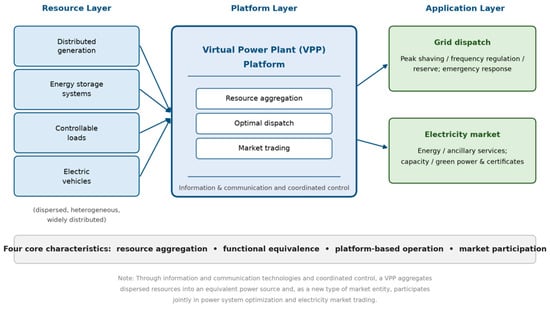
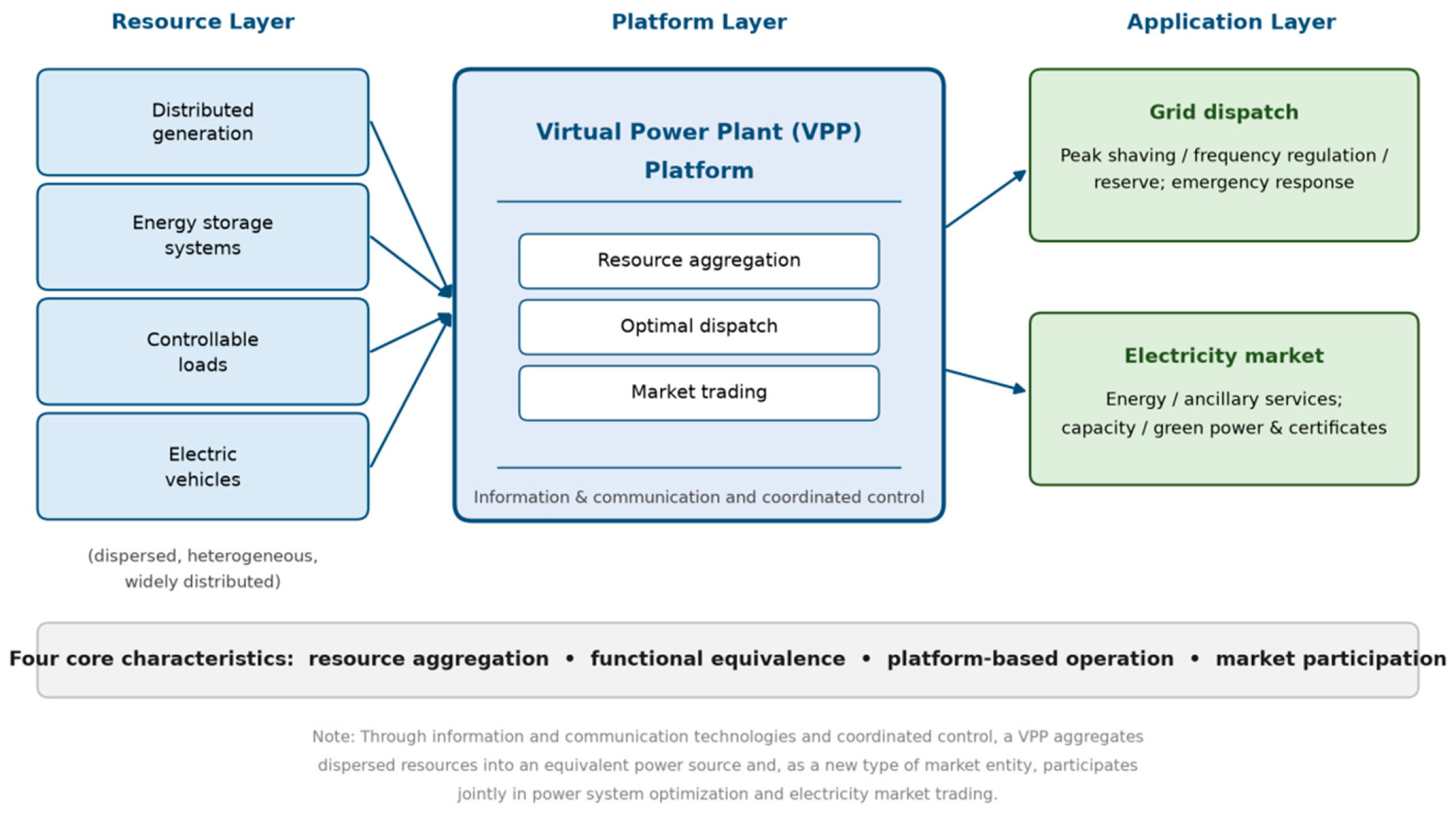

Disclaimer/Publisher’s Note: The statements, opinions and data contained in all publications are solely those of the individual author(s) and contributor(s) and not of MDPI and/or the editor(s). MDPI and/or the editor(s) disclaim responsibility for any injury to people or property resulting from any ideas, methods, instructions or products referred to in the content. |
© 2026 by the authors. Licensee MDPI, Basel, Switzerland. This article is an open access article distributed under the terms and conditions of the Creative Commons Attribution (CC BY) license.