


Abstract
Replacing sulfur hexafluoride (SF6) in electrical switchgear (ES) is an increasing priority for decarbonizing electricity transmission and distribution (T&D) because of its high global warming potential (GWP) and tightening fluorinated greenhouse gas regulations. This structured narrative review examines SF6-free solutions for T&D applications, focusing mainly on high-voltage (HV) ES while drawing on selected international and medium-voltage (MV) evidence, with the United Kingdom (UK) as the principal adoption context. No single alternative reproduces all SF6 characteristics, with trade-offs in thermal and dielectric performance, maintenance, environmental implications, decomposition products, safety, regulatory exposure, and life-cycle considerations. Natural-origin-gas insulation, alone or combined with vacuum interruption, avoids fluorinated insulating gases but may require higher pressure or design optimization. Fluorinated alternative gas mixtures can support compact equipment but may introduce low-temperature condensation, composition-control, decomposition-product, regulatory, supply-chain, and end-of-life (EoL) challenges that vary by mixture. Special and type tests, pilot projects, and early installations indicate feasibility for selected applications, although long-term independent field evidence and directly comparable life-cycle data remain limited for some HV applications. Overall, SF6-free technologies offer a credible pathway to replacing SF6 in ES. Technology selection should compare complete ES assemblies on an equivalent functional basis, supported by standardized testing, while large-scale adoption requires regulatory compliance, supply-chain readiness, application-specific design, whole-life assessment, and continued field validation.
1. Introduction
SF6 has for many decades been the dominant insulating and arc-extinguishing medium in ES. It has been widely used in power utility T&D, especially where space, high reliability, and high operational performance are essential because of its thermal stability and high dielectric strength for compact ES designs [1,2]. However, SF6 is also a potent greenhouse gas with an extremely high GWP and a very long atmospheric lifetime. In the context of accelerating climate commitments and tightening fluorinated gas (F-gas) regulations, continued reliance on SF6 is increasingly difficult to justify [3,4]. In the European Union (EU), Regulation (EU) 2024/573 introduces application- and voltage-dependent restrictions on putting new ES using F-gases into operation [4]. Great Britain operates under a separate domestic F-gas framework, while Northern Ireland remains linked to the EU regime [5,6,7]. Consequently, EU phase-out dates should not be presented as directly applicable across the whole of the UK. Recent regulatory developments are accelerating the phase-down of F-gases and creating stronger regulatory and commercial drivers for utilities, original equipment manufacturers, and system operators (SOs) to transition towards net-zero targets [4,8,9]. At the same time, the growth of electrification in transport, buildings, and industry, together with the rapid expansion of data centers and distributed renewable generation, is increasing the demand placed on T&D infrastructure. This makes decarbonizing grid assets, including ES, a strategic priority rather than a purely environmental preference [3,8].
In recent years, several alternatives to SF6 have been developed or have emerged [8,10,11,12]. Current SF6 alternative pathways include natural-origin gases that use O2 and N2 or CO2. A mixture of N2 and O2 (technical, dry, or clean air) is commonly combined with a vacuum current interrupter. Additionally, there are fluorinated alternative gas mixtures based on fluoronitriles (e.g., C4F7N) and fluoroketones (e.g., C5F10O) [9,13,14,15,16]. SF6 alternatives may provide electrical insulation, gas interruption, or both. CIGRÉ TB 802 treats insulation, switching, and current interruption as related but distinct functions, whereas CIGRÉ TB 871 expressly distinguishes gas-based interruption pathways from technical air-insulated vacuum circuit breakers (VCBs) [1,17]. Each SF6-free solution offers a different balance of thermal behavior, dielectric performance, environmental and safety impact, maintenance requirements, equipment footprint, and life-cycle considerations. Natural-origin-gas solutions generally provide environmental benefits, regulatory alignment, and easier handling, whereas fluorinated alternative gas mixtures can maintain a more compact form factor but introduce concerns related to decomposition by-products, toxicity, condensation risk, and EoL disposal [11,18,19].
Although several alternative technologies are now commercially available in limited voltage ratings, technology availability, operating experience, applicable voltage range, low-temperature capability, and long-term service evidence remain uneven across SF6 alternative pathways and manufacturers. It is therefore necessary to systematically assess maturity, regulatory readiness, safety, gas-handling aspects, and the suitability of each technology for different network applications [12]. For UK utilities, technology selection must also consider training, early-deployment complexity, maintenance procedures, pilot validation, supply-chain readiness, and compliance with applicable International Electrotechnical Commission (IEC) and British Standards (BS), system-operator specifications, and the distinct regulatory frameworks applying in Great Britain and Northern Ireland. Substation-level considerations include civil interfaces, insulation coordination, internal-arc performance, thermal limits, operating-temperature range, safety, reliability, service continuity, and long asset life [20,21,22,23,24].
This study reviews the principal SF6-free technologies for T&D ES, with primary emphasis on HV applications and selected MV examples where they provide relevant evidence on technology behavior, maturity, or adoption. The review evaluates the insulation medium and current-interruption technology as separate but interacting design choices, focusing on two promising options: natural-origin gases and fluorinated alternative gas mixtures. Due to the dynamic nature of this topic, the review is comparative rather than exhaustive: it does not cover all current or future developments, does not provide a full quantitative life-cycle assessment (LCA), and does not offer a universal ranking of products. The analysis focuses on key adoption criteria including environmental impact, dielectric and thermal performance, operational stability, by-products from decomposition, gas handling, and life-cycle considerations. The UK is used as the principal adoption context because SO specifications, network constraints, and the evolving F-gas regulatory framework influence implementation; international evidence is included where it informs technology readiness or application limits. This paper seeks to collate the available evidence in order to inform better technology choice and enable the effective deployment of SF6 alternatives to modernize the future grid infrastructure.
1.1. Review Methodology
This review used a structured narrative-review approach to identify, evaluate, and synthesize evidence on SF6 alternatives in ES. The literature search covered IEEE Xplore, ScienceDirect, and EBSCO. No fixed lower publication-date limit was applied because earlier publications were retained where they provided foundational evidence. More recent sources were prioritized for the regulatory context, commercial availability, applicable type testing, pilot projects, field deployment, operational experience, and technology maturity. The database search was supplemented by relevant CIGRÉ and IEC publications, official regulatory documents, utility and system-operator publications, and product- or project-specific technical documents where needed to verify equipment ratings, architecture, availability, or deployment status.
Sources were included where they provided relevant evidence on one or more of the following: insulation or current-interruption technology; dielectric, thermal, or switching performance; operating pressure or temperature; equipment ratings and application range; decomposition products; environmental and occupational-health implications; regulation; gas handling; monitoring and maintenance; life-cycle considerations; field maturity; system-operator requirements; or documented deployment experience. A stricter inclusion criterion was applied when comparing previous studies in Table 1. A source was retained in that table only where it directly compared at least two SF6 alternative gases, gas mixtures, technology pathways, or current-interruption approaches.
The extracted evidence was evaluated in relation to the conditions under which it was generated. Relevant variables included gas composition, concentration, pressure or density, temperature, electrode and enclosure geometry, electric-field distribution, voltage waveform, switching duty, equipment configuration, rated voltage, test method, service conditions, and life-cycle system boundary. The results obtained for pure gases, laboratory mixtures, isolated interrupters, or specific equipment designs were therefore not assumed to be directly transferable to complete ES assemblies or other operating conditions. Evidence was synthesized across six principal dimensions: (i) insulation medium and current-interruption technology; (ii) dielectric, thermal, and switching performance; (iii) environmental, health, safety, and regulatory considerations; (iv) gas handling, monitoring, maintenance, and EoL requirements; (v) type-test, pilot, installation, and operational maturity; and (vi) life-cycle and utility-adoption considerations.
Because the available studies use heterogeneous methods, test conditions, and functional units, the synthesis is comparative rather than meta-analytical. The review does not perform a product-specific comparative LCA. Instead, it identifies consistent findings, technology-specific trade-offs, evidence limitations, and application-dependent considerations relevant to technology selection and implementation. The principal limitations of this approach are its narrative source selection, the heterogeneity of the underlying evidence, uneven independent field experience among technologies and voltage levels, and the necessary use of manufacturer or project documentation for some product-specific and deployment claims. The review was therefore designed as a transparent comparative synthesis rather than a systematic review or quantitative meta-analysis.
1.2. Novelty and Contribution
The contribution of this review does not lie in first identifying or first comparing SF6 alternative gases and technologies. Previous reviews have established extensive evidence on dielectric properties, arc-quenching behavior, environmental characteristics, gas mixture performance, and selected life-cycle effects [2,12,14,25,26,27,28]. The distinctive contribution here is the integration of these previously fragmented evidence streams into an adoption-oriented synthesis that (i) separates the insulating medium from the current-interruption technology; (ii) compares natural-origin-gas and fluorinated mixture pathways; (iii) connects technical performance with environmental, regulatory, whole-life, field-maturity, and utility considerations; and (iv) positions the UK as the principal adoption context while using international evidence to test broader relevance.
Recent technology-specific special and type tests, field studies, and pilot publications are used later in the manuscript to demonstrate maturity but are not presented as comparative reviews unless they directly compare alternatives. Table 1 summarizes representative peer-reviewed studies and CIGRÉ technical publications that directly evaluate two or more alternative gases, mixtures, or switching pathways. The ratings in Table 1 describe how each source addresses the five comparison dimensions. “Substantive” indicates that the dimension is a principal analytical focus; “Partial” indicates meaningful but secondary coverage; and “Not principal” indicates that the dimension is absent or incidental. Inclusion requires direct comparison of at least two alternative media, mixtures, or ES pathways. These ratings describe scope, not source quality.
Table 1.
Comparison of selected technical publications and peer-reviewed comparative studies on SF6 alternatives with the present review.
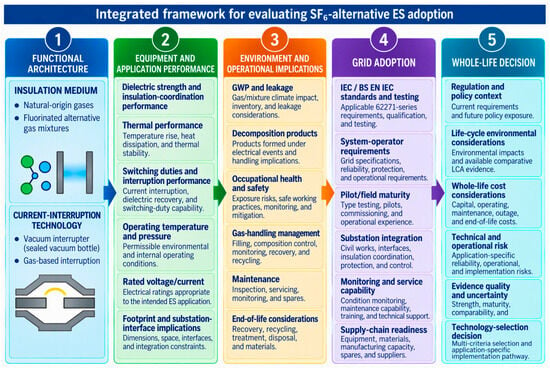
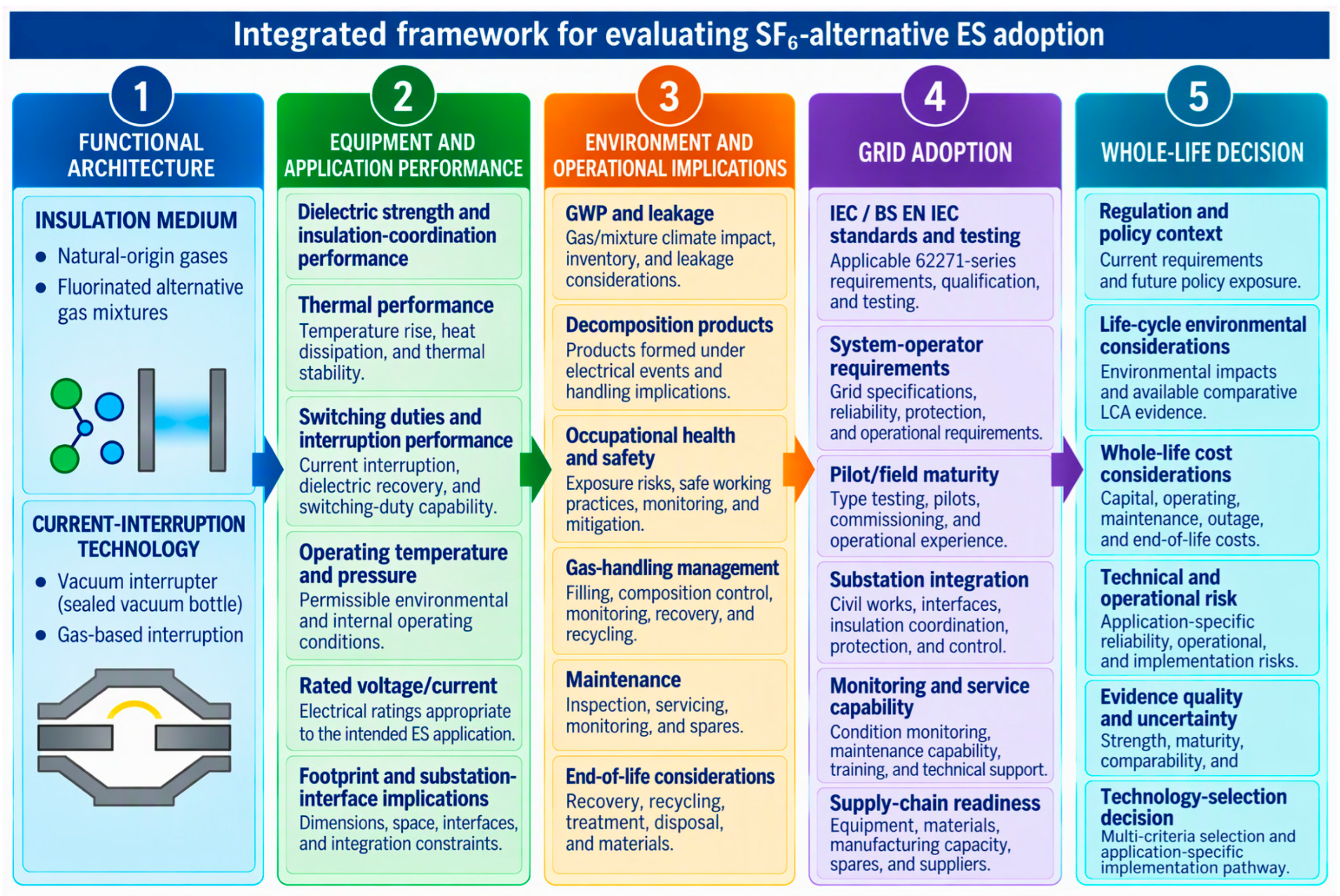
Figure 1 integrates these evidence streams into the conceptual framework used in the present review. It begins with the essential functional architecture of the insulation medium and the current-interruption technology and progresses through equipment performance, environmental and operational implications, grid-adoption readiness, and application-specific whole-life decision criteria. The resulting framework is intended to support context-specific interpretation rather than a universal technology ranking.
Figure 1.
Conceptual synthesis framework for context-specific evaluation of SF6 alternative ES.
The framework organizes comparative synthesis rather than prescribing a universally preferred technology. Its application depends on equipment rating, switching duty, service conditions, substation configuration, applicable regulation, SO requirements, evidence maturity, and the boundaries adopted for environmental and cost assessment. Evidence quality and uncertainty therefore apply across all stages.
2. SF6 Alternatives
Development of SF6-free technology with the motivation of finding more environmentally friendly alternatives has been ongoing for more than a decade, and several new technologies are already on the market and in operation in the grid. Moving towards SF6-free ES has system-wide impacts on the design, procurement, and operation of the whole ES system. The insulation system must withstand power-frequency, impulse, and transient voltages between energized parts and earth, whereas the interrupter must carry and interrupt normal and fault currents and recover sufficient dielectric strength. Vacuum is principally a current-interruption technology used within a sealed vacuum interrupter; it is not an insulating gas category. Natural-origin gases can provide external dielectric insulation and heat transfer and may be combined with vacuum interruption. Fluorinated alternative gas mixtures use a low concentration of a fluorinated component, such as C4-FN (C4F7N) or C5-FK (C5F10O), with a carrier gas. To support the deployment of alternatives to SF6 for ES, further understanding of the technical maturity and environmental impact, safety, and compatibility of alternative technologies with the UK T&D system is required. Table 2 summarizes key SF6-free insulating gas pathways currently available and relevant to the UK electricity grid. Pressure values are representative product or development examples rather than universal technology values. The specified pressure depends on equipment design, rated voltage, gas composition, minimum operating temperature, and reference temperature. Where the cited source does not state the pressure basis or reference temperature, no conversion or assumption has been made.
Table 2.
SF6 alternative pathways [4,31,32,33,34,35,36,37].
2.1. Standards and Regulations
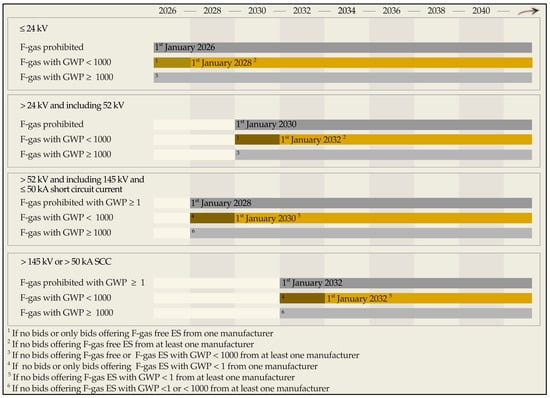
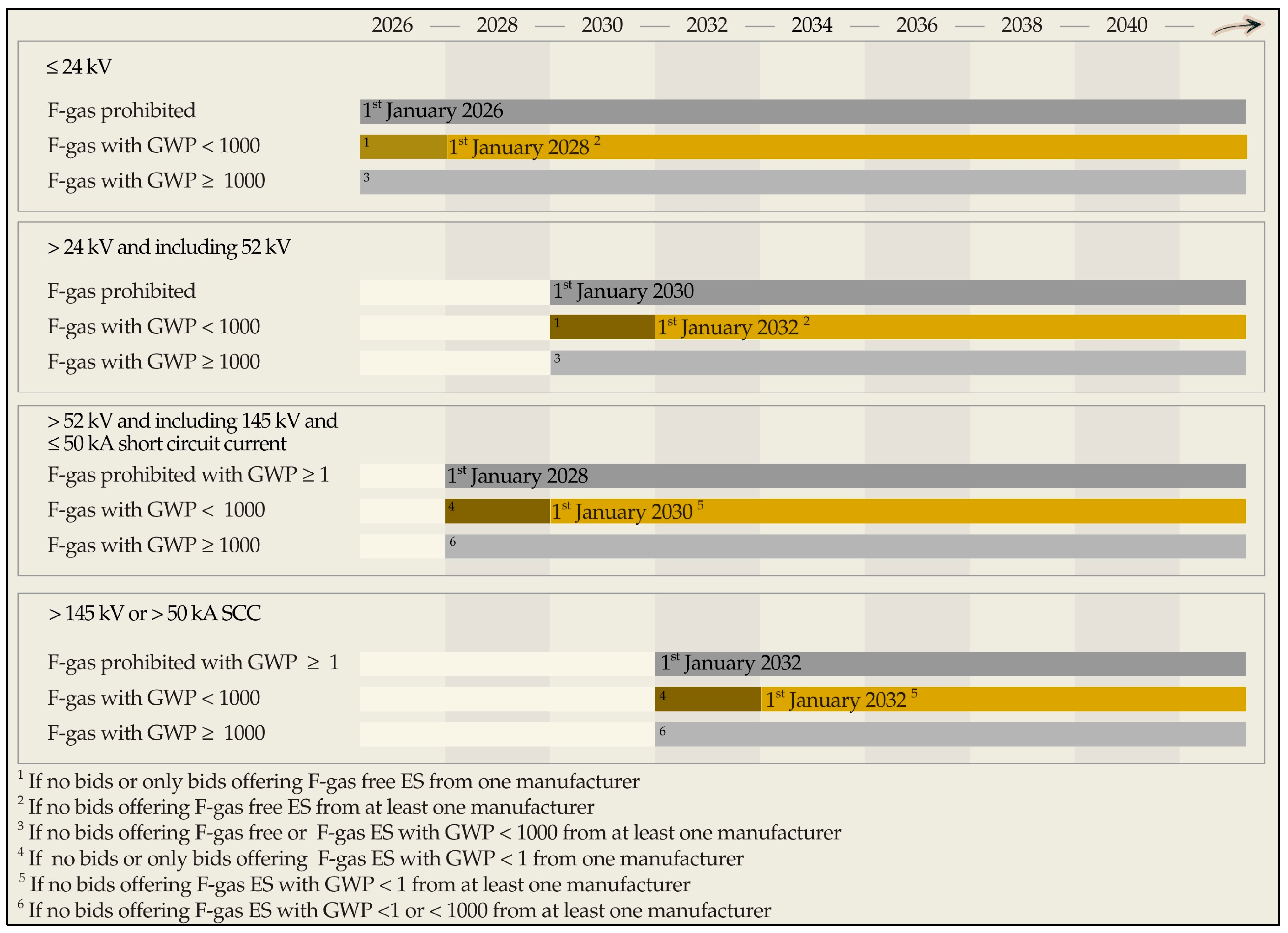
In 2024, the EU’s Regulation (EU) 2024/573 repealed Regulation (EU) No 517/2014 to further restrict high-GWP gases such as SF6 in new electrical equipment [4]. The new regulation requires a progressive phase-out of SF6 beginning in 2026, with specific restrictions on new ES applying in 2026, 2028, 2030, and 2032 according to voltage and current class and subject to specified derogations, as summarized in Figure 2. Also, in ES, the use of recycled or reclaimed SF6 should be increased wherever technically feasible to reduce the production of virgin SF6. Nevertheless, the updated EU F-gas Regulation states that the use of new ES containing F-gases should be prohibited where suitable alternatives are technically available and in accordance with Union competition policies. Additionally, if there is a need to extend existing ES equipment, it may be permissible to include one or more F-gas bays. The UK’s parallel legislative framework, the Fluorinated Greenhouse Gases Regulations 2015 (as amended under UK law), shares similar objectives focused on reducing emissions through substitution and improved containment measures.
Figure 2.
Phase-out requirements for F-gases in ES under Article 13(9), (11), and (12) of Regulation (EU) 2024/573 [4].
2.2. Insulation and Current-Interruption Requirements
ES is an essential component for the protection and the operation of power systems. One of the key features of ES is the capability to interrupt current while maintaining an adequate level of insulation to sustain voltage. When evaluating SF6 alternatives, the insulation medium and current-interruption technology should be assessed against the following target characteristics as applicable, recognizing that no single pathway necessarily satisfies every criterion [1,17,24,27]:
- 1.
- Low environmental impact, in order to meet the roadmap towards the net-zero target for 2050:
- Zero GWP;
- Zero ozone depletion potential (ODP).
- 2.
- Health and safety:
- Non-toxicity;
- Non-flammability.
- 3.
- Technical performance:
- Insulation function: providing dielectric insulation and sustaining HV;
- Interruption function: arc-quenching capability to interrupt currents up to several tens of kA and to recover dielectric strength;
- Heat dissipation property;
- Lifetime ≥ 40 years;
- Insulating gas stability (e.g., no chemical decomposition), retaining its properties over a long time and a wide range of operating ambient temperatures.
2.2.1. Dielectric Strength
The dielectric performance of insulating gases is a critical determinant of their suitability for use in ES. The actual dielectric strength of a gas is not a fixed constant but depends heavily on several factors [9,25,26,27,28,29,30]:
- Pressure: The dielectric strength increases significantly with increasing gas density and pressure. This relationship is generally described by Paschen’s law under certain conditions.
- Temperature: Changes in temperature affect gas density, which in turn influences the dielectric strength. Generally, the strength scales with mass density.
- Electrode geometry and gap distance: The shape and size of the electrodes and the distance between them affect the uniformity of the electric field and the breakdown voltage.
- Frequency/Voltage type: The results can vary depending on whether the applied voltage is AC, DC, or an impulse.
- Gas composition: Mixtures of gases often exhibit a synergistic effect, where the dielectric strength of the mixture can be higher than the sum of its parts.
- Moisture and contaminants: The presence of moisture, dust, or metallic particles can significantly reduce the dielectric strength by providing conductive paths.
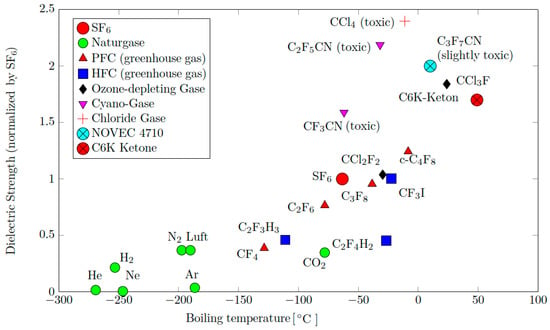
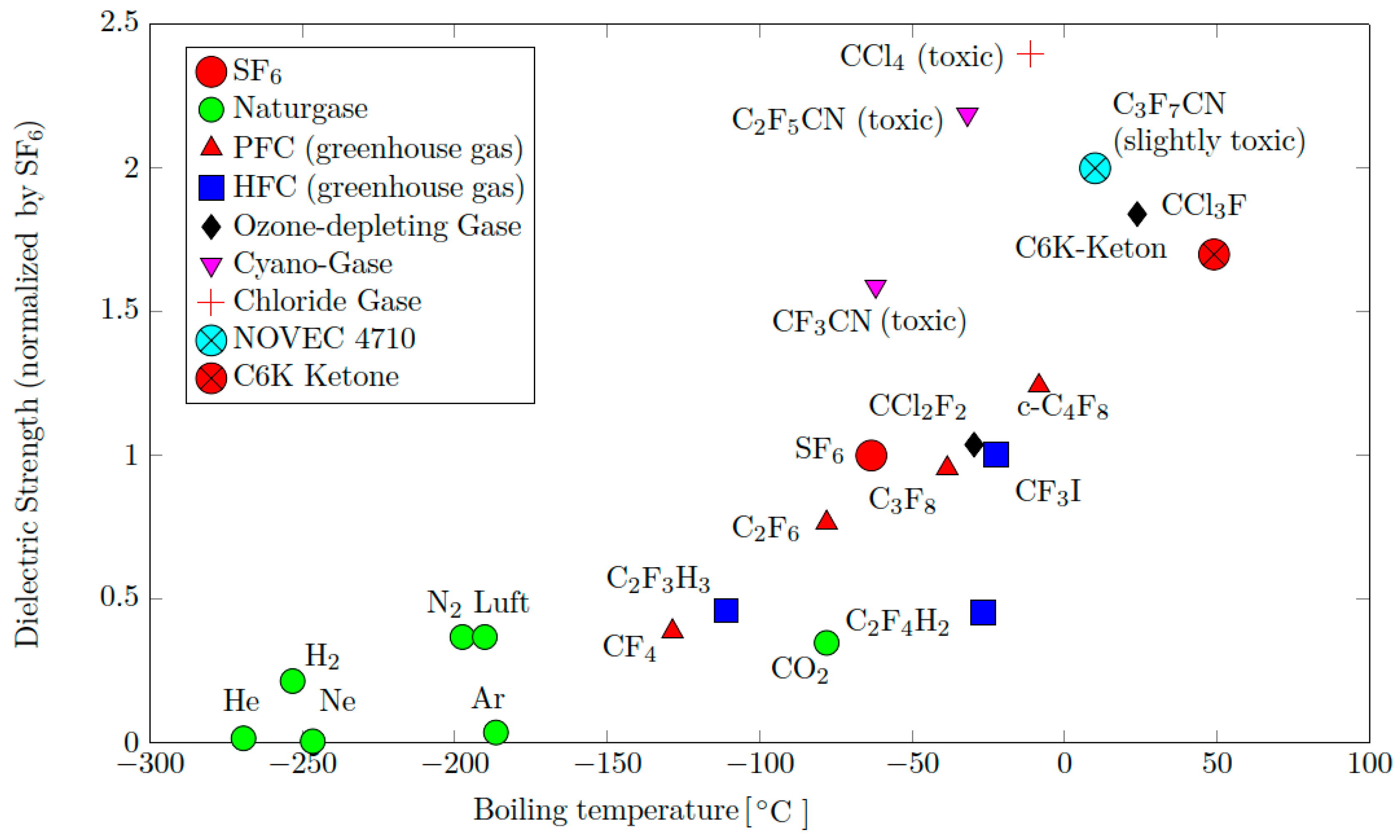
Figure 3 compares the dielectric strength and boiling temperature of candidate gases. However, the dielectric performance of an alternative cannot be represented by a single universal value. Pure C4-FN and C5-FK can exhibit high intrinsic dielectric strength, whereas practical ES uses dilute mixtures whose performance depends on component concentration, gas density, temperature, field uniformity, gap geometry, voltage waveform, surface condition, particles, and moisture. Values in Figure 3 refer to the stated pure gases and test basis and must not be interpreted as direct performance values for dilute mixtures or complete ES assemblies. Figure 3 is adapted from [38]. In HV systems, natural-origin gases generally require increased pressure, larger clearances, improved field grading, or other equipment-level optimization relative to SF6. Emerging alternatives have demonstrated promising characteristics when tested under IEC guidelines. An optimized ES design, such as electric-field uniformity measures and the right selection of pressure, depending on mixture composition, is essential to meet insulation requirements for ES applications [30,38]. Performance comparisons are valid only for the stated gas composition, density, temperature, geometry, waveform, and equipment configuration. Fluorinated mixtures may retain stable dielectric properties over a range of temperatures; however, it is important to monitor their behavior at low temperatures due to the risk of condensation.
Figure 3.
Dielectric-strength indicators versus normal boiling temperature for selected candidate gases [38].
Thermal performance should be assessed for the complete ES assembly on the temperature-rise basis of IEC 62271-1, rather than from gas properties alone. As current flows through the equipment, special attention must be paid to the maximum contact temperature to prevent aging phenomena caused by the generated heat, as outlined in IEC 62271-1 [39]. Additionally, the thermal resistance of the main conductor to the enclosure depends on the properties of the gas and the material used for the enclosure, and the increase in temperature of the enclosure mainly depends on the thermal resistance of the surrounding medium [2,17,39].
2.2.2. Performance in Service and During Operation
The stability of the ES gas is also a key parameter to ensure an expected service life of 40 years or more. SF6 is a very stable gas that naturally recombines quickly after decomposition by partial discharge or arc breaking [2]. Regarding natural-origin gases, tests in real environmental conditions and operating experience showed no abnormality and very stable behavior in service [40]. Under normal service conditions, natural-origin gases are chemically stable. However, electrical discharges, switching arcs, or thermal faults can temporarily dissociate the constituent gases and form condition-dependent products, including CO in CO2-containing mixtures and NOx or O3 in mixtures containing N2 and O2. In contrast, the fluorinated components of alternative gas mixtures are less stable under electrical stress than SF6. The short atmospheric lifetime reported for C5-FK (14 days) describes its degradation after release to the atmosphere. In-enclosure decomposition and recombination are governed by the electrical event, gas composition, temperature, pressure, moisture, materials, and reaction pathways. Arcing or discharge tests may consume part of the fluorinated component and generate gaseous or condensed by-products. For example, in one specific experimental arrangement, a 14 L tank with a load break switch at 630 A and 24 kV, 51% of the initial gas mixture (C5-FK + air) disappeared and more than 20 different fluorine by-products were generated [15]. An overpressure of 0.5 bar was also observed; this is a case-specific observation. Some reported by-products may present toxic, corrosive, or occupational-exposure hazards; therefore, leakage, maintenance, and EoL procedures should be based on the substances identified for the specific gas mixture and electrical event [15,41]. Table 3 presents decomposition products of the evaluated SF6 alternatives. The species listed in Table 3 are representative products reported under particular test or fault conditions and are not universal products of every gas mixture or operating event. Concentration and occupational significance must be assessed for the specific composition, equipment, electrical duty, moisture level, and analytical method.
Table 3.
Representative decomposition products reported under electrical or thermal stress [15,17,41,42].
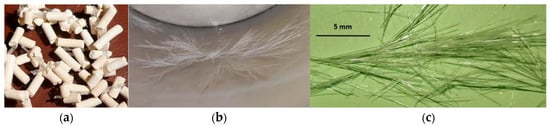
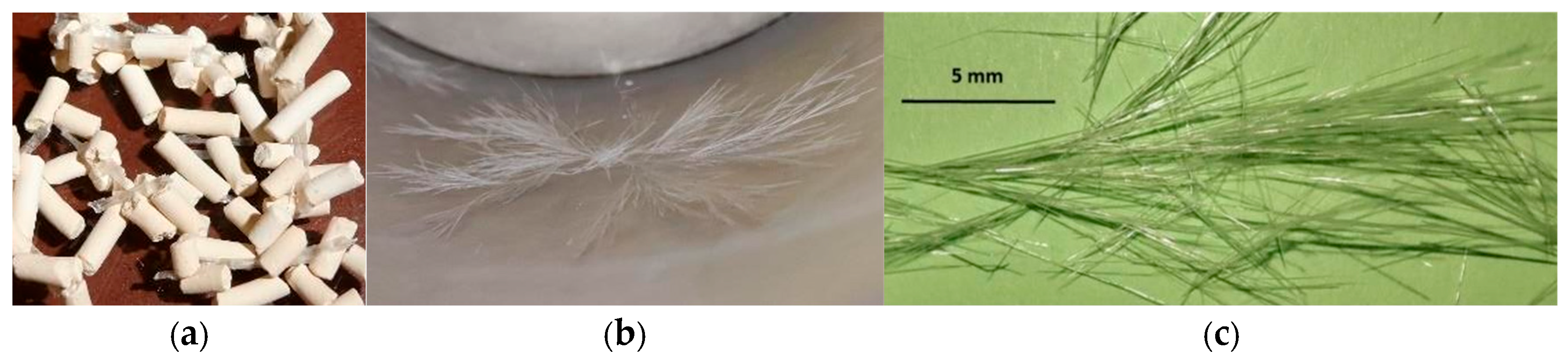
In another test setup, long-duration tests of commonly used ES modules with C4-FN gas mixtures, CO2, and O2 were successfully completed. The first test assessed their dielectric and thermal performance under simultaneous HV and current conditions. Subsequently, several locations showed the presence of crystalline decomposition products (amide and ligand) that resulted from the room-temperature hydrolysis of C4-FN, as shown in Figure 4. A flashover occurred in the location of the former amide agglomeration during the second test; hence, some materials promote the formation process [41]. Due to evaporation of the amide at a temperature of ≈20 °C and its toxicity, crystals should be handled with care, even if there is no visible crystal growth. However, at lower temperatures, the decomposition products in the gas phase are hard or impossible to detect and quantify. The ligand crystals follow the electric field, so partial discharge (PD) measurement requires a high degree of sensitivity.
Figure 4.
(a) Agglomerated desiccant with crystals observed after testing in a mixture of 5% C4-FN, 5% O2, and 90% CO2; (b,c) needle-shaped whiskers formed after testing in a mixture of 5% C4-FN and synthetic air [41].
2.2.3. Environmental, Health, and Safety
Manufacturers should provide procedures and comprehensive safety notes to users for handling and using these gases. ES manufacturers and users should be more vigilant about potential hazards where gases with uncertain track records during operational conditions or non-operational evaluations are used. Additionally, with increased pressure on sustainability targets, SF6-free ES may be installed, but further legislation may restrict their use in the future. In particular, C4-FN and C5-FK fall within broad structural definitions of per- and polyfluoroalkyl substances (PFAS) used by the OECD [43] and are relevant to the EU-wide PFAS restriction process under REACH. ECHA’s Committee for Risk Assessment adopted its opinion in March 2026, while the wider restriction process remains subject to completion of the scientific and legislative decision-making stages [44]. Separately, 3M states that it completed its exit from PFAS manufacturing at the end of 2025 [45]. This does not by itself establish the unavailability of every qualified C4-FN- or C5-FK-based supply route, but it strengthens the need to verify long-term gas availability, qualified replacement sources, refilling and analysis capability, service-equipment compatibility, and contractual support for the expected asset life. The toxicity of any alternative gas must be thoroughly assessed before large-scale approval [15,17,41]. The breakdown of mixtures containing fluoroketones and fluoronitriles is more complex than that of SF6 during arcing and other electrical events [15,41]. In addition to the issues of by-products, decomposition behavior in case of arc fault formation, and EoL gas disposal, the more recent literature also stresses material compatibility, toxicity of the decomposition products, and the safe recovery or scrubbing of the gas mixtures at EoL [5,18,19,20].
2.2.4. Gas Mixture Pathways Management
Using fluorinated alternative gas mixtures makes it easier to optimize the size of ES. Nevertheless, it is also true that it brings some challenges in the operating phase and maintenance. The reason is that the right proportion of the mixture components must be present for the initial gas filling of the ES with the fluorinated gas mixture [17,46]. In the case of low-rate gas leakage, it is essential to know the actual composition of the remaining gas before refilling with the accurate proportion. Density monitoring alone may be insufficient after leakage because dielectric performance and condensation margin depend on composition as well as total density. However, the partial pressure of the fluorinated part after refilling may be high enough for liquefaction to occur at low temperature. Consequently, the composition of such solutions is more complicated than natural-origin-gas solutions. Therefore, fluorinated mixture gases require careful handling during gas filling and transport.
In general, if the manufacturers are considering retro-filling, the retro-filling option may need to meet the following minimum criteria:
- Ensure that the current ES enclosures can mechanically support being filled with gas at higher pressures for some of the mixtures.
- Install replacement gaskets suitable for the new gas mixture.
- Change the molecular sieve to one that functions effectively with the by-products of the new gas mixture.
- Replace accessories such as couplers and monitoring devices.
If the ES is contaminated during operation, e.g., with decomposition products, then the gas must be removed and recycled. However, the recycling of F-gases including SF6 has not yet been discussed in full detail and requires more applied research and development.
In terms of gas availability, natural-origin gases consist of common atmospheric constituents (N2, O2, and CO2) and are not protected by patents, so their supply is not expected to depend on a single proprietary producer; however, gas purity, mixing capability, supply arrangements, and cost should be confirmed for each project. For fluorinated components, asset owners should also consider availability of original and replacement gas, refilling and analysis capability, compatibility of service equipment, supplier concentration, recovery and EoL routes, and contractual support over the expected asset life.
2.3. Vacuum Interrupter Technology
Vacuum interruption is well established in MV equipment and is increasingly applied at HV. In a VCB, current interruption and the subsequent dielectric recovery occur within a sealed vacuum interrupter. The operating mechanism, such as a spring or hydraulic mechanism, provides the mechanical movement needed to open and close the contacts. VCB product maturity depends on rating, switching duty, and design architecture. Single-break vacuum interrupters are available for selected sub-transmission and transmission applications, while higher-voltage and special-application demonstrations may use series or multi-break arrangements [1,47].
Evaluation of vacuum-based solutions should include short-circuit interruption, capacitive current switching and restrike probability, current chopping and associated switching overvoltage, mechanical endurance, and dielectric recovery [1,48]. X-ray emission may occur under elevated test voltage and is controlled through equipment design, shielding, and applicable test procedures [39,49]. Type tests, pilots, and commissioning evidence demonstrate feasibility for defined ratings and duties but do not, by themselves, establish equivalent long-term field reliability; field maturity varies with voltage level and switching duty [1,47]. Loss of vacuum integrity is a potentially latent interrupter failure mode and may not be detected by the density monitor of the surrounding insulating gas compartment. Vacuum-integrity assessment must therefore be considered separately from external insulating gas density monitoring [50].
3. Considerations for Technology Adoption
Substations may use air-insulated switchgear (AIS), GIS, or mixed-technology configurations incorporating separate AIS and GIS equipment. Hybrid switchgear represents a more integrated combination of selected AIS and GIS functions. SF6 replacement should therefore be evaluated at both equipment and substation levels. Table 4 compares AIS and GIS qualitatively. The comparison generalizes across designs; actual characteristics vary with voltage level, manufacturer, and site conditions. Mixed-technology ES is not shown in Table 4. Beyond the criteria in Table 4, AIS and GIS also differ in traveling-wave and very fast transient overvoltage (VFTO) behavior, surge-arrester location, earthing arrangements, and interfaces with cables, overhead lines, and transformers; these aspects should be assessed as part of the design phase. This includes system studies such as insulation coordination and breaker-switching transient studies at the substation level when an SF6-free solution is selected. When acquiring new equipment or upgrading existing equipment, utilities usually consider capital and time investments, effective planning, and employee training. Additionally, several important factors need to be addressed to support the adoption of this equipment. Due to its important role, ES must comply with various international standards. Standards for ES are primarily based on IEC publications, which are adopted in the EU as EN IEC standards and in the UK as BS EN IEC standards. These standards instill confidence in stakeholders regarding the safety and performance of products, which can be useful for equipment warranties in the event of malfunctions [39]. Essentially, ES should pass the type tests listed in the main international standards, such as IEC 62271-1 and IEC 62271-100 [39,48]. Type-test compliance is necessary, but it does not by itself demonstrate equivalent maintainability, restoration time, service continuity, or long-term availability [1,39,48]. Additionally, the standard product might need to be modified to fulfill the associated minimum operational requirements for system operation and to be integrated into the network. Some of these necessary requirements may not be covered by IEC but are essential for incorporating SF6 alternative ES into the SO network [51]. The adaptation and homologation process must be considered in alignment with the phase-out roadmap for SF6. Table 5 summarizes selected requirements for 420 kV class AIS circuit breaker (CB) equipment from three different European SOs.
Table 4.
Comparison of AIS and GIS [17,52].
Table 5.
Selected requirements for 420 kV class AIS CB equipment from three European SOs [51].
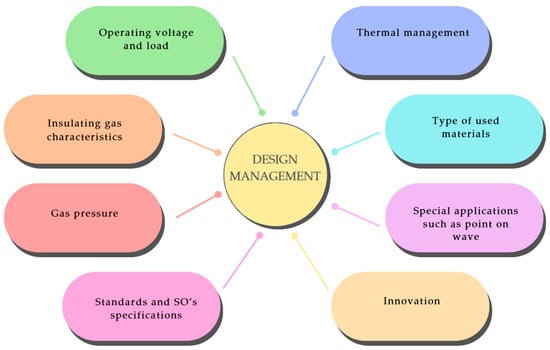
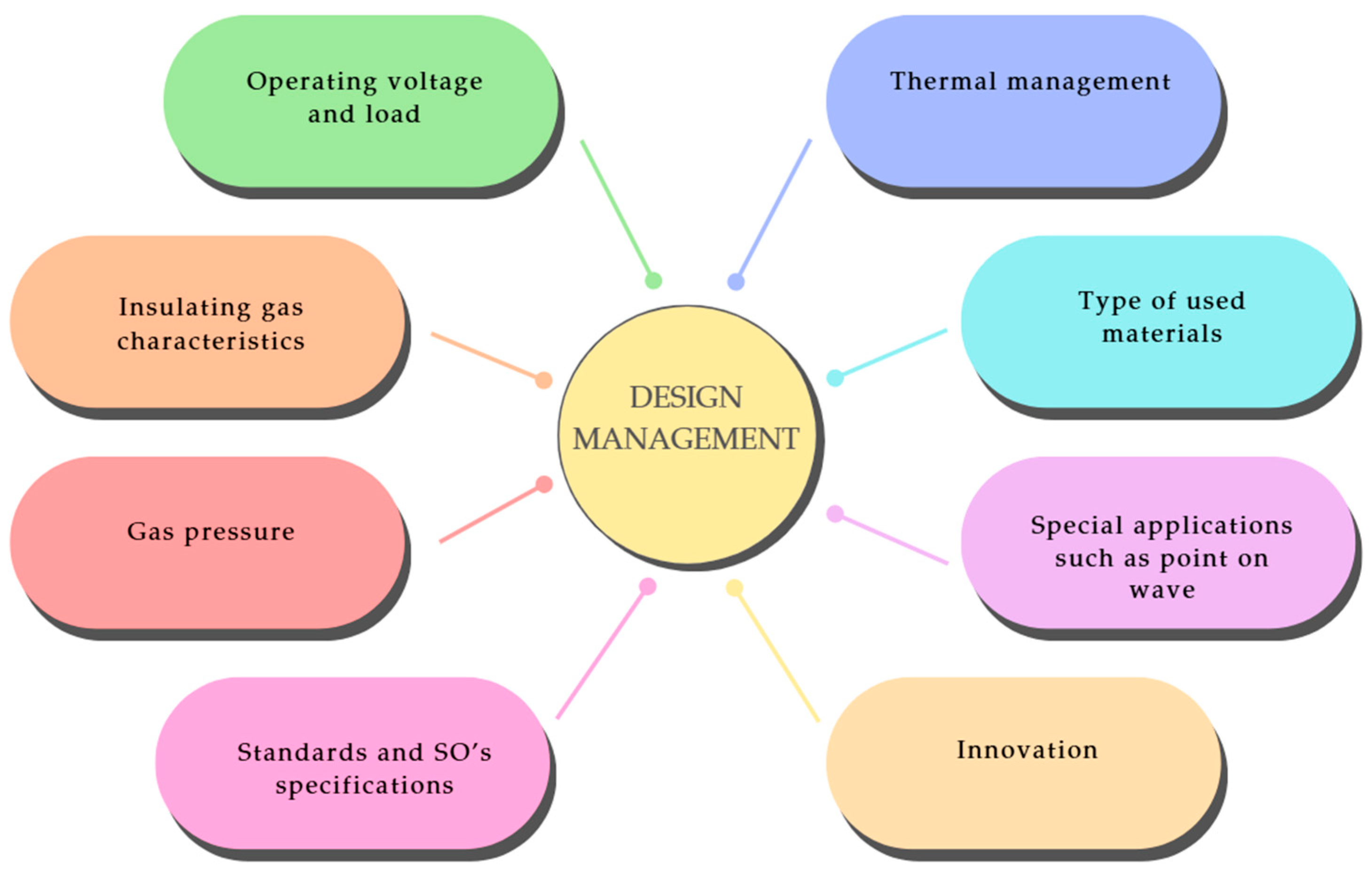
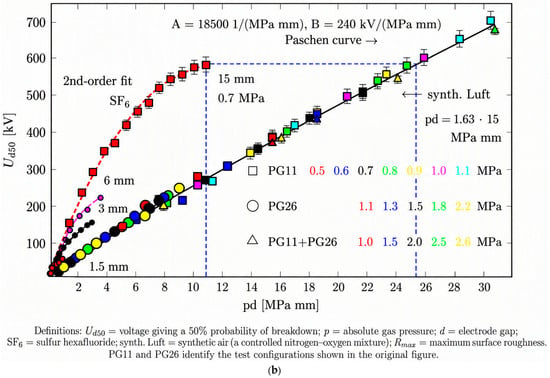
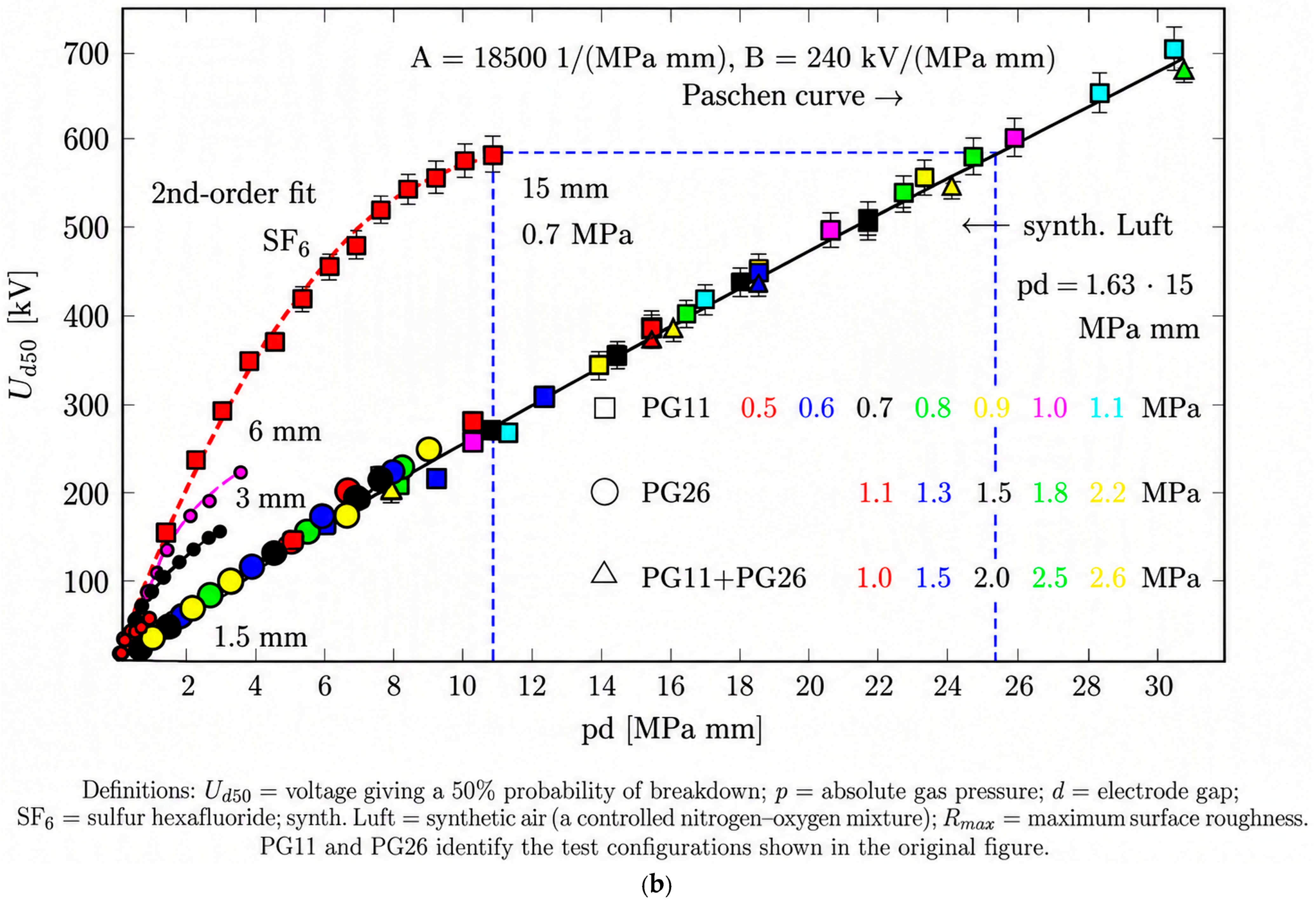
Transitioning to SF6 alternatives requires redesign of electrical substations to ensure the safe adoption of new technologies. This includes optimizing the design of ES. Therefore, several different design optimizations are illustrated in Figure 5. Consequently, gas substitution cannot be treated independently of other design and interfacing elements. For example, studies on HV ES equipment filled with SF6 gas have shown that increasing the pressure of gas enhances dielectric withstand under clean conditions. However, it also enhances sensitivity to particles that may be introduced during site installation. Paradoxically, the dielectric withstand at higher pressure is lower under polluted conditions. A similar observation was made during investigation tests with a C4-FN mixture [30,38]. ES is a key component for the reliability and safety of the electrical grid, in which CBs should be able to carry and break electrical currents under both normal and abnormal circuit conditions; therefore, replacing the gas SF6 with alternatives through only minor design modifications may not be possible.
Figure 5.
Summary of principal equipment- and application-level factors influencing SF6 alternative ES design management.
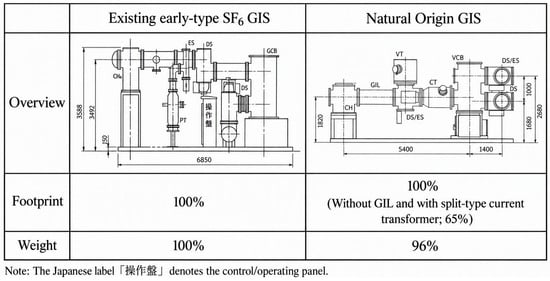
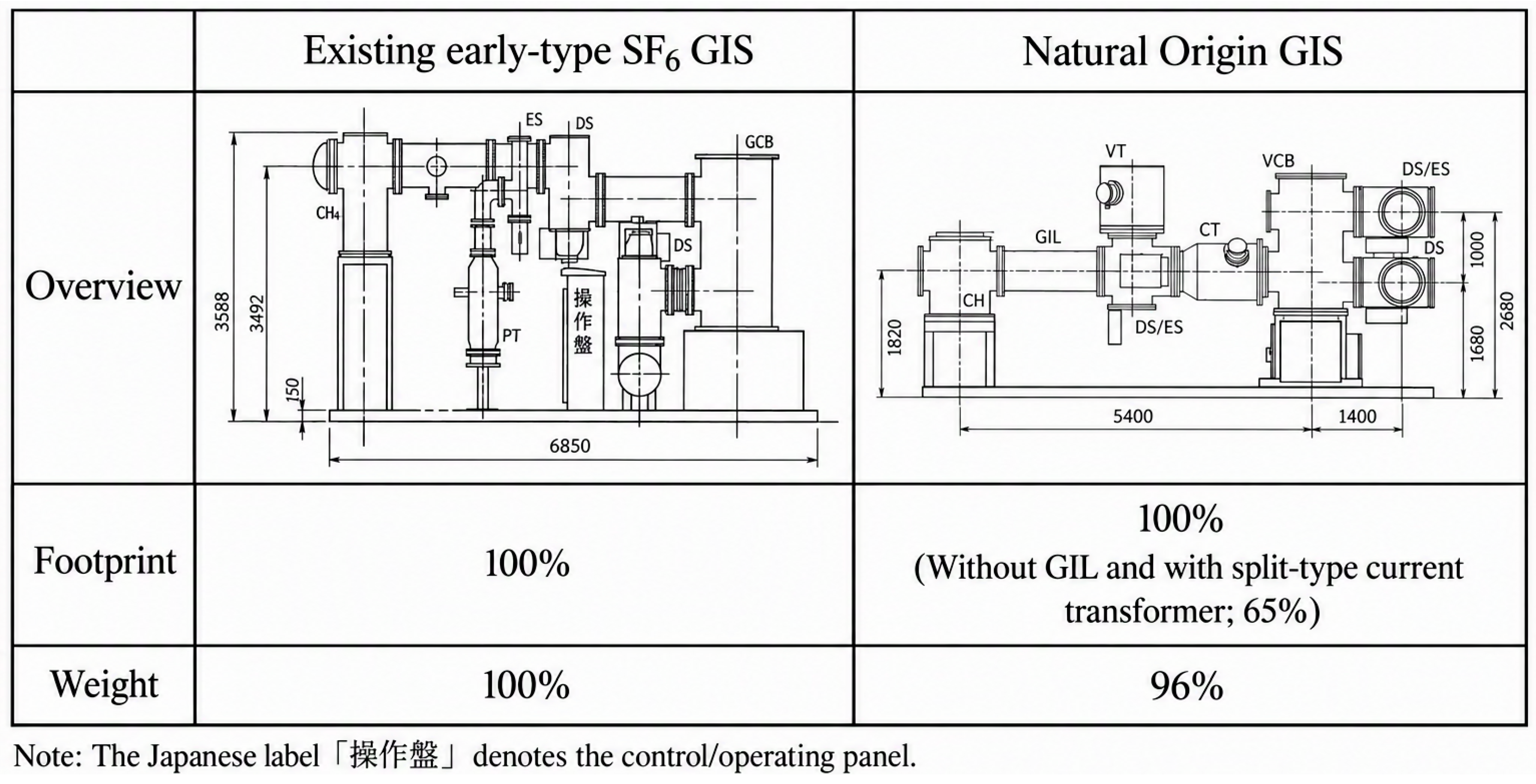
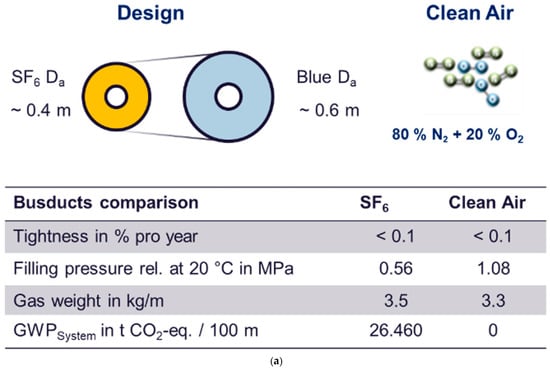
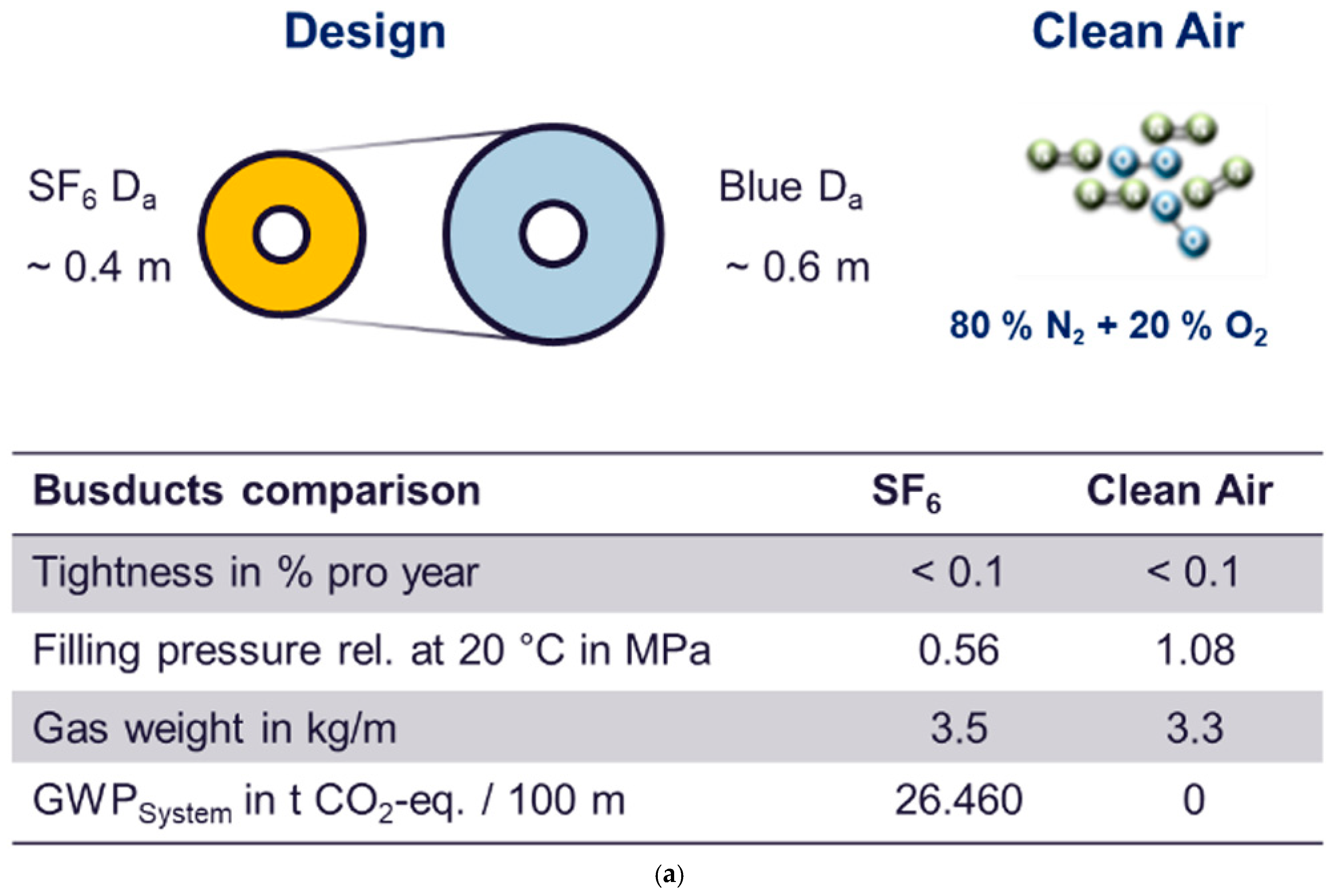
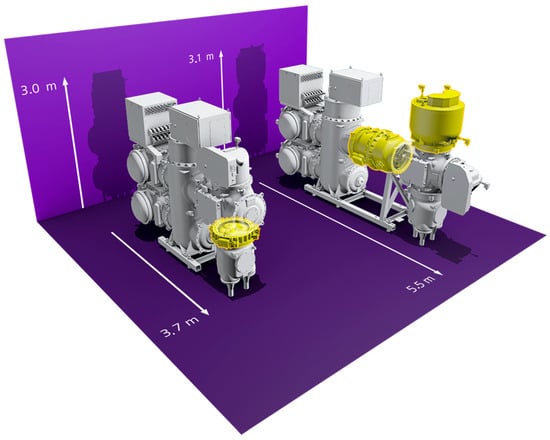
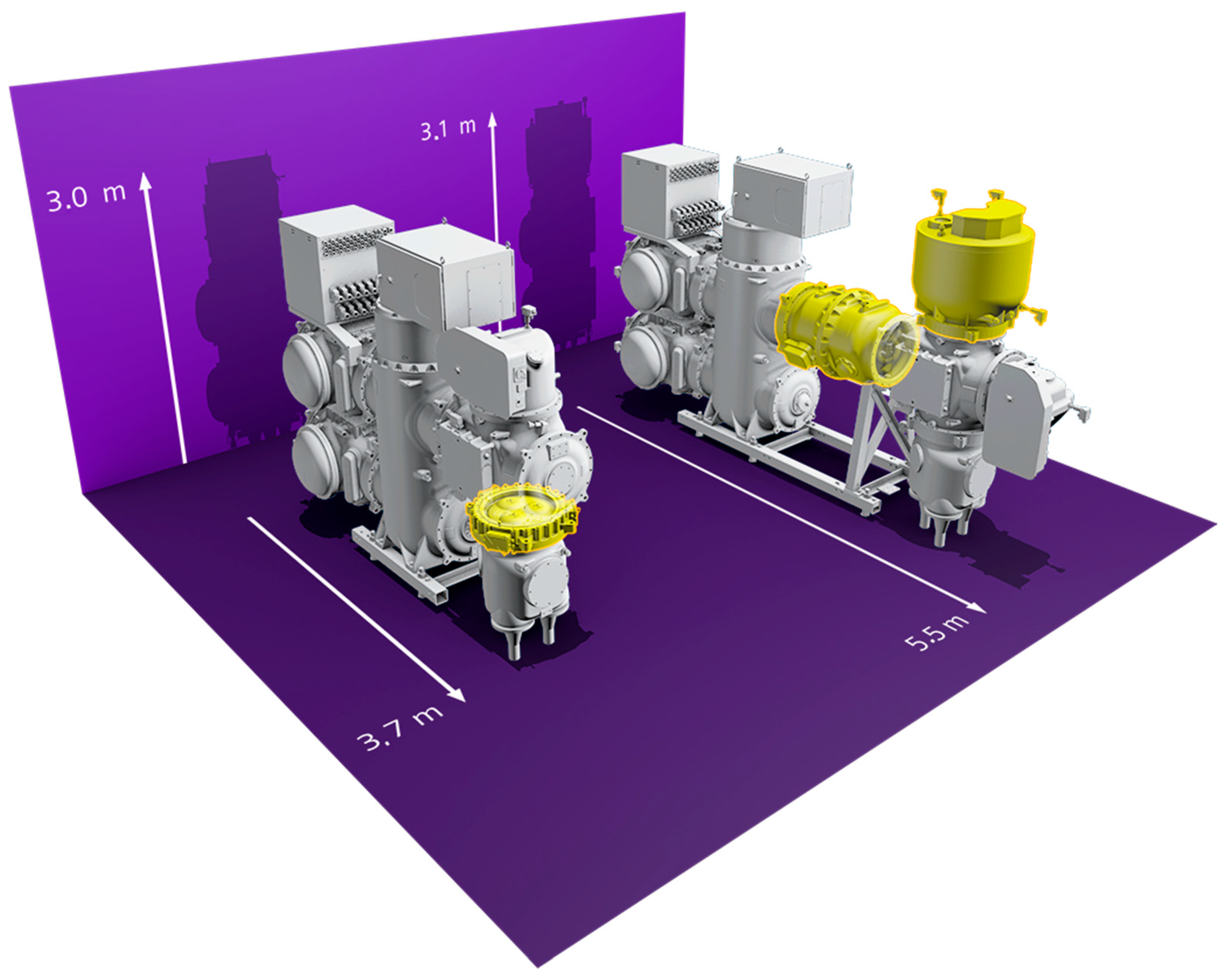
Some power system sites have limited space for equipment and operations. Therefore, the footprint of SF6 alternative equipment should be taken into account where space constraints exist. For breakers that use fluorinated alternative gases and VCBs, the footprint can be comparable to that of SF6 equipment when replacing aging (vintage) equipment in some cases, subject to equipment rating, design, and site constraints for each application. In the experience of Southern Company and PG&E with 72 kV SF6 breakers, replacement with vacuum breakers did not require significant changes to energy or infrastructure [9]. Another example demonstrates that the installation area for natural-origin-gas solutions is similar to that of existing early-type SF6 72 kV GIS, as shown in Figure 6 from a pilot installation at the Fuchu Substation. This layout also facilitates the replacement of existing facilities, including those in underground substations [53]. At the higher voltage class of 420 kV GIB, a design overview and comparison between an F-gas-free solution (natural-origin gas) and SF6 were presented in [31,54] and are shown in Figure 7.
Figure 6.
Layout and footprint comparison of the 72 kV natural-origin-gas GIS and the existing early-generation SF6 GIS at Fuchu Substation [53].
Figure 7.
Comparison between SF6 and clean/synthetic air (N2 and O2): (a) design overview for 420 kV GIB [54]; (b) dielectric strength [38].
Traditionally, voltages and currents have been measured using conventional voltage and current transformers. However, there is a growing demand for smaller geometries, especially for SF6-free ES technologies. This need has led to the development of non-conventional instrument transformers [31]. As a result, the need for interoperable and application-appropriate solutions is becoming increasingly evident. For HV ES, the state-of-the-art low-power instrument transformer (LPIT) offers an innovative solution for measurement and protection applications. This solution features a reduced size and weight compared to conventional transformers, making it more suitable for integration into ES systems, as illustrated in Figure 8.
Figure 8.
Comparison between the use of LPIT (left) and conventional transformers (right) setups in the SE 145 kV 8VN1 GIS [31].
The UK’s commitment to grid decarbonization and compliance with evolving F-gas regulations have spurred active exploration and early adoption of alternatives to SF6 for ES. While international progress in alternative insulation gases guides technological options, UK utilities and industry partners are working on pilot implementations and policy development. The U.S. EPA reported in 2020 that the documented adoption of both VCBs and CBs using fluorinated alternative gas mixtures was more prevalent in Europe, whereas VCBs showed greater market penetration than fluorinated alternative gas breakers in the United States [9].
The first stage of a pilot project is defining a set of minimum requirements that ES have to fulfill in order to be allowed to be installed on the grid. The second stage is to define a set of properties to cover the majority of market needs and applications where SF6 alternative pilot solutions will be implemented. The input for this task will be sourced from international standards and SO specifications, with feasibility confirmed by original equipment manufacturers. Once the installation is complete, a number of parameters will be logged and monitored during the pilot project operation to maximize its benefit. Application-specific monitoring may include the following [51]:
- Normal operation records, including capacitive current switching operation;
- Fault clearance records, including re-ignition and pre-strike behaviors, chopping current, rate of decay of dielectric strength and rise in dielectric strength, post-arc current, and contact erosion;
- All potential impacts of the new technology on other assets in the network;
- Gas density and partial discharge monitoring systems;
- An X-ray monitoring system;
- An online monitoring system;
- A large bandwidth transient recorder;
- Long-term aging of the interrupter.
In 2021, the first UK installation of an SF6-free, clean-air Siemens 8DJH 12 Blue GIS ring main unit, which utilizes a VCB and natural-origin gas, was undertaken [55]. This unit allows the substation to operate without any of the F-gas used in substations across the UK. From medium voltage to HV, the feasibility of VCB technology has been demonstrated at the 420 kV level for pilot projects. The product has been type-tested to cover the needs of SOs in Norway and France [56]. In this context, Table 6 provides examples of installations of SF6 alternative ES. These entries draw on manufacturer and SO sources, which support product ratings and project status but should not be used as sole evidence of long-term reliability.
Table 6.
SF6 alternative ES: examples of installations.
4. Life-Cycle and Implementation Considerations
SF6-free ES should be assessed over the complete asset life rather than solely through the initial purchase price. Environmental LCA and economic whole-life assessment address different but complementary questions. Environmental LCA evaluates potential impacts across defined life-cycle stages and system boundaries [61,62], whereas life-cycle costing (LCC) and total cost of ownership (TCO) consider acquisition, engineering, installation, operation, maintenance, outages, and EoL costs [63]. Comparisons should use equivalent electrical functions, ratings, service conditions, and life-cycle assumptions [62]. Early alternative products may have different, and in some cases higher, acquisition and project-integration costs than established SF6 equipment [9,14]; the direction and size of the difference depend on voltage rating, equipment type, supplier, market maturity, civil works, transport, installation, auxiliary systems, spares, commissioning, and outage requirements.
Operational and EoL implications differ by technology. All ES technologies require maintenance of operating mechanisms, primary-current paths, seals, bushings, secondary systems, and monitoring devices. Vacuum interruption can remove arc-extinguishing-gas service. Natural-origin-gas/vacuum designs avoid F-gas inventory, recovery, and destruction tasks, although pressurized designs may still require pressure monitoring, tightness verification, filling, and gas-quality checks. Fluorinated mixtures additionally carry the mixture-specific handling and composition-control requirements described in Section 2.2.4. EoL comparisons should include outage planning, gas recovery or safe depressurization, treatment of contaminated components, dismantling, material recovery, and documentation; technology-specific gas-handling tasks are described in Section 2.2.4.
Published life-cycle studies generally indicate that lower-GWP alternatives can reduce direct gas-related climate impacts relative to SF6. However, LCA results depend on the functional unit, installed gas mass, leakage assumptions, material inventory, electricity mix, service life, and EoL recovery. A recent comparative assessment of HV GIS LCAs similarly emphasized that transparent, harmonized assumptions are necessary for fair comparison across technologies and manufacturers [64]. The available evidence does not establish universal maintenance cost, EoL cost, environmental, or reliability advantages for equivalent HV products. Technology selection should therefore use project-specific environmental and economic scenarios rather than general rankings.
Regulatory exposure should also be included in whole-life cost assessment. In the EU, Regulation (EU) 2024/573 progressively restricts the putting into operation of ES using fluorinated greenhouse gases and imposes requirements for emission prevention, certified personnel, record keeping, gas recovery, and EoL management, with greenhouse gas quantities expressed in CO2-equivalent terms. In Great Britain, existing F-gas requirements similarly create compliance obligations for SF6 management and handling, with offenses and civil penalties available for non-compliance; Northern Ireland remains within the EU F-gas system [4,5,6]. These direct compliance costs, together with monitoring, documentation, training, recovery, supply-chain, future regulatory, and potential asset-transition risks, may increase the TCO exposure of SF6 and some fluorinated alternatives and thereby strengthen the economic case for F-gas-free ES; however, this does not establish that F-gas-free equipment is universally lower-cost. Accordingly, SOs should compare environmental life-cycle performance and total cost of ownership using equivalent electrical functions, ratings, service conditions, system boundaries, and asset-life assumptions.
5. Conclusions
SF6-free ES is technically feasible across an expanding range of applications, but technology suitability remains rating-, duty-, environment-, and evidence-specific. No single alternative reproduces all the characteristics of SF6; each pathway presents application-dependent trade-offs in dielectric and thermal performance, environmental impact, occupational health and safety, maintenance, gas management, and whole-life considerations.
Type tests, pilot projects, and early installations show that SF6-free ES is technically feasible for selected voltage ratings and applications. However, the evidence does not yet establish equivalent long-term field performance, maintainability, service continuity, or life-cycle outcomes for all HV applications. Manufacturer and project information supports product ratings and deployment status, whereas broader reliability and environmental conclusions require independent field data and transparent LCC. Technology selection should therefore compare complete ES assemblies on an equivalent functional basis, including rated voltage and current, short-circuit and switching duty, insulation and interruption functions, service conditions, footprint, monitoring, interfaces, maintenance, EoL management, and SO requirements.
The successful adoption of SF6-free solutions within the UK electricity network will depend not only on technical maturity but also on alignment with evolving F-gas regulations, utility specifications, supply-chain readiness, and whole-life economic performance. Overall, SF6-free ES appears to be emerging as a credible pathway for future T&D networks, and continued pilot installations, performance monitoring, and refinement of standards, materials, and gas-management practices will be critical to accelerate large-scale adoption while ensuring continued reliability, safety, and affordability.
This review has limitations. It is a structured narrative synthesis, and the available studies differ in gas composition, test conditions, equipment design, voltage rating, and life-cycle boundary; it therefore does not provide a quantitative meta-analysis, a full LCA, or a universal ranking of products. Manufacturer and project sources were used mainly for ratings and deployment status, and independent long-term field evidence remains limited for some HV applications. Future work should address (i) independent long-term field data on reliability, leakage, gas-composition drift, decomposition products, and failure modes; (ii) transparent LCA, LCC, and TCO studies based on equivalent functional units and common system boundaries; (iii) standardized testing of complete ES assemblies, including interruption, thermal, and aging performance under realistic service conditions; and (iv) SO-level implementation studies covering substation design, interfaces, monitoring, maintenance, training, supply-chain readiness, and EoL management.
Author Contributions
Conceptualization, A.-W.D.; methodology, A.-W.D.; validation, M.A. and A.H.; formal analysis, A.-W.D.; investigation, A.-W.D.; writing—original draft preparation, A.-W.D.; writing—review and editing, M.A. and A.H.; visualization, A.-W.D.; supervision, M.A. and A.H. All authors have read and agreed to the published version of the manuscript.
Funding
This research received no external funding.
Data Availability Statement
No new data were created or analyzed in this study. Data sharing is not applicable to this article.
Acknowledgments
This research has been funded by Cardiff University from the Cardiff University Institutional OA Fund.
Conflicts of Interest
The authors declare no conflicts of interest. The funders had no role in the design of the study; in the collection, analyses, or interpretation of data; in the writing of the manuscript; or in the decision to publish the results.
References
- CIGRÉ Working Group A3.41. Current Interruption in SF6-Free Switchgear; CIGRÉ Technical Brochure 871; CIGRÉ: Paris, France, 2022; Available online: https://www.e-cigre.org/publications/detail/871-current-interruption-in-sf6-free-switchgear.html (accessed on 1 November 2026).
- Li, X.; Zhao, H.; Murphy, A.B. SF6-alternative gases for application in gas-insulated switchgear. J. Phys. D Appl. Phys. 2018, 51, 153001. [Google Scholar] [CrossRef] [Scilit]
- International Energy Agency (IEA). Net Zero by 2050: A Roadmap for the Global Energy Sector; IEA: Paris, France, 2021; Available online: https://www.iea.org/reports/net-zero-by-2050 (accessed on 19 August 2026).
- European Parliament and Council. Regulation (EU) 2024/573 of 7 February 2024 on Fluorinated Greenhouse Gases, Amending Directive (EU) 2019/1937 and Repealing Regulation (EU) No 517/2014. Off. J. Eur. Union 2024, L 2024/573. Available online: https://eur-lex.europa.eu/eli/reg/2024/573/oj/eng (accessed on 19 June 2026).
- Department for Environment, Food & Rural Affairs; Environment Agency. How to Operate or Service Electrical Switchgear Containing SF6; GOV.UK: London, UK, 2014. Available online: https://www.gov.uk/guidance/how-to-operate-or-service-high-voltage-switchgear-containing-sf6 (accessed on 1 November 2026).
- UK Government. The Fluorinated Greenhouse Gases Regulations 2015; Statutory Instrument 2015 No. 310 (As Amended); The Stationery Office: London, UK, 2015. Available online: https://www.legislation.gov.uk/uksi/2015/310 (accessed on 1 November 2026).
- Environment Agency; Department for Environment, Food & Rural Affairs. Fluorinated Gas (F Gas): Guidance for Users, Producers and Traders; GOV.UK: London, UK, 2019. Available online: https://www.gov.uk/government/collections/fluorinated-gas-f-gas-guidance-for-users-producers-and-traders (accessed on 1 November 2026).
- Boychev, B. Comparison of SF6 alternative gases. In Proceedings of the 2022 14th Electrical Engineering Faculty Conference (BulEF 2022), Varna, Bulgaria, 14–17 September 2022; IEEE: Piscataway, NJ, USA, 2022; pp. 1–3. [Google Scholar] [CrossRef] [Scilit]
- United States Environmental Protection Agency (EPA). Moving Toward SF6-Free High Voltage Circuit Breakers: Considerations for Adopting Vacuum Breaker and Fluorinated Gas Alternative Technologies; EPA Report 430-R-20-007; U.S. Environmental Protection Agency: Washington, DC, USA, 2020; 7p. Available online: https://www.epa.gov/eps-partnership/resources-sf6-alternatives (accessed on 20 June 2026).
- Kronkalns, D.; Zemite, L. Evaluating SF6 alternatives in medium and high voltage switchgear. In Proceedings of the 2024 IEEE 65th Annual International Scientific Conference on Power and Electrical Engineering of Riga Technical University (RTUCON 2024), Riga, Latvia, 10–12 October 2024; IEEE: Piscataway, NJ, USA, 2024; pp. 20–27. [Google Scholar] [CrossRef] [Scilit]
- San, R.V.; Xiao, A.; Bonk, J.; DeLorme, M.; Owens, J.; Kurz, R. Evaluation of sustainable SF6 alternative gas mixtures used in electric power equipment. In Proceedings of CIRED 2021: The 26th International Conference and Exhibition on Electricity Distribution, Online Conference, 20–23 September 2021; IET: London, UK, 2022. [Google Scholar] [CrossRef] [Scilit]
- Seeger, M.; Smeets, R.; Yan, J.D.; Ito, H.; Claessens, M.; Dullni, E.; Franck, C.M.; Gentils, F.; Hartmann, W.; Kieffel, Y.; et al. Recent Development of Alternative Gases to SF6 for Switching Applications. Electra. 2017. Available online: https://www.e-cigre.org/publications/detail/rp-291-1-recent-development-of-alternative-gases-to-sf6-for-switching-applications.html (accessed on 20 August 2026).
- Espinazo, A.; Lombraña, J.I.; Asua, E.; Pereda-Ayo, B.; Alonso, M.L.; Alonso, R.M.; Cayero, L.; Izcara, J.; Izagirre, J. Diffusional behavior of new insulating gas mixtures as alternatives to the SF6-use in medium voltage switchgear. Appl. Sci. 2022, 12, 1436. [Google Scholar] [CrossRef] [Scilit]
- Billen, P.; Maes, B.; Larraín, M.; Braet, J. Replacing SF6 in electrical gas-insulated switchgear: Technological alternatives and potential life cycle greenhouse gas savings in an EU-28 perspective. Energies 2020, 13, 1807. [Google Scholar] [CrossRef] [Scilit]
- Preve, C.; Piccoz, D.; Maladen, R.; Casper, A.C.; Tahir, M.; Molony, R.L. Alternative gases to SF6 as breaking medium for switching performance: Measurement of the concentrations of by-products and assessment of the acute toxicity. In Proceedings of the 21st International Symposium on High Voltage Engineering (ISH 2019), Budapest, Hungary, 26–30 August 2019; Springer: Cham, Switzerland, 2020. [Google Scholar]
- Kieffel, Y.; Biquez, F.; Vigouroux, D.; Ponchon, P.; Schlernitzauer, A.; Magous, R.; Cros, G.; Owens, J.G. Characteristics of g3—An alternative to SF6. CIRED Open Access Proc. J. 2017, 2017, 54–57. [Google Scholar] [CrossRef] [Scilit]
- CIGRÉ Working Group B3.45. Application of Non-SF6 Gases or Gas-Mixtures in Medium Voltage and High Voltage Gas-Insulated Switchgear; CIGRÉ Technical Brochure 802; CIGRÉ: Paris, France, 2020; Available online: https://www.e-cigre.org/publications/detail/802-application-of-non-sf6-gases-or-gas-mixtures-in-medium-and-high-voltage-gas-insulated-switchgear.html (accessed on 1 November 2026).
- Kachelrieß, G.; Kawakita, K. SF6 End-of-Life Treatment of T&D Equipment (>1 kV) in Substations; CIGRE: Paris, France, 2021; Available online: https://www.cigre.org/article/GB/sf6-end-of-life-treatment-of-td-equipment-1kv-in-substations (accessed on 20 August 2026).
- Cui, Z.; Hao, Y.; Yang, L.; Li, L.; Wang, Y.; Zhou, C.; Zhang, X. Review on harmless abatement of SF6 waste gas. Proc. CSEE 2023, 43, 7720–7736. [Google Scholar] [CrossRef]
- Dullni, E.; Endre, T.; Kieffel, Y.; Coccioni, R. Reducing SF6 emissions from electrical switchgear. Carbon Manag. 2015, 6, 77–87. [Google Scholar] [CrossRef] [Scilit]
- Western Power Distribution. SF6 Alternatives Closedown Report; Project Reference: WPD_NIA_025; Western Power Distribution: Castle Donington, UK, 2018; Available online: https://commercial.nationalgrid.co.uk/downloads-view-reciteme/18853 (accessed on 22 June 2026).
- Frerk, M.; Ward, J.; Wood, J. Green Grids: Tackling SF6 Emissions on GB Electricity Networks; Sustainability First/ClimateWorks Foundation: London, UK, 2023. [Google Scholar]
- Chen, T. Retrofill Replacement of SF6 to Accelerate the Decarbonisation of Electricity Networks. Ph.D. Thesis, University of Manchester, Manchester, UK, July 2021. Available online: https://research.manchester.ac.uk/en/impacts/retrofill-replacement-of-sf6-to-accelerate-the-decarbonisation-of/ (accessed on 2 August 2026).
- Durocher, D.B.; Connor, L.T.; Haim, M.; de Jong, J. Safety by design: Solid insulated technologies challenge the use of SF6 in medium-voltage switchgear. In Proceedings of the 2015 IEEE IAS Electrical Safety Workshop (ESW 2015); IEEE: Piscataway, NJ, USA, 2015; pp. 1–9. [Google Scholar] [CrossRef] [Scilit]
- Rabie, M.; Franck, C.M. Assessment of eco-friendly gases for electrical insulation to replace the most potent industrial greenhouse gas SF6. Environ. Sci. Technol. 2018, 52, 369–380. [Google Scholar] [CrossRef] [Scilit] [PubMed]
- Beroual, A.; Haddad, A. Recent advances in the quest for a new insulation gas with a low impact on the environment to replace sulfur hexafluoride (SF6) gas in high-voltage power network applications. Energies 2017, 10, 1216. [Google Scholar] [CrossRef] [Scilit]
- CIGRÉ Working Group D1.51. Dry Air, N2, CO2 and N2/SF6 Mixtures for Gas-Insulated Systems; CIGRÉ Technical Brochure 730; CIGRÉ: Paris, France, 2018. [Google Scholar]
- Wang, Y.; Huang, D.; Liu, J.; Zhang, Y.; Zeng, L. Alternative environmentally friendly insulating gases for SF6. Processes 2019, 7, 216. [Google Scholar] [CrossRef] [Scilit]
- Zhang, B.; Xiong, J.; Chen, L.; Li, X.; Murphy, A.B. Fundamental physicochemical properties of SF6-alternative gases: A review of recent progress. J. Phys. D Appl. Phys. 2020, 53, 173001. [Google Scholar] [CrossRef] [Scilit]
- CIGRÉ Working Group D1.67. Electric Performance of New Non-SF6 Gases and Gas Mixtures for Gas-Insulated Systems; CIGRÉ Technical Brochure 849; CIGRÉ: Paris, France, 2021. [Google Scholar]
- Siemens Energy Global GmbH & Co. KG. 8VN1 Blue GIS™: Gas-Insulated Switchgear up to 145 kV; Siemens Energy Global GmbH & Co. KG: Erlangen, Germany, 2024; Available online: https://assets.siemens-energy.com/dam/f7263353-b2bc-4734-bdbf-b082003183b2/2020-11--8VN1-Blue-GIS-145kV-non-EU-final-pdf_Original%20file.pdf (accessed on 15 August 2026).
- Hitachi Energy. EconiQ™ Live Tank Circuit Breaker (LTA): Eco-Efficient High Voltage Circuit Breaker Using CO2/O2 Insulation Gas Mixture; Hitachi Energy: Zurich, Switzerland, 2024; Available online: https://vbik.se/onewebmedia/Aktiviteter/2024/20240424%20SF6%20replacement/LTA%20VBIK%202024-04-24.pdf (accessed on 22 June 2026).
- 3M Company. 3M™ Novec™ 4710 Insulating Gas; Technical Data; 3M: St. Paul, MN, USA, 2015; Available online: https://multimedia.3m.com/mws/mediawebserver?mwsId=SSSSSu9n_zu8l00xmxmBmxmSOv70k17zHvu9lxtD7xt1evSSSSSS- (accessed on 2 November 2026).
- 3M Company. 3M™ Novec™ 5110 Insulating Gas; Technical Data; 3M: St. Paul, MN, USA, 2015; Available online: https://multimedia.3m.com/mws/mediawebserver?mwsId=SSSSSu9n_zu8l00xmx_BnY_Uov70k17zHvu9lxtD7xt1evSSSSSS- (accessed on 2 November 2026).
- Hitachi Energy. EconiQ™ LTA: High-Voltage Technology and Innovation; HRO CIGRÉ: Zagreb, Croatia, 2023; Available online: https://hro-cigre.hr/wp-content/uploads/2023/12/5.-Hitachi-LTA-EconiQ.pdf (accessed on 1 November 2026).
- Perret, M.; Berteloot, T.; Kieffel, Y.; Ficheux, A.; Gatzsche, M.; Zehnder, L.; Böhm, M.; Claessens, M. C4-FN Mixtures for High-Voltage Equipment: Handbook; Edition 1.2; GE Vernova Grid Solutions SAS: Paris, France, 2024; ISBN 978-2-9588211-0-4. Available online: https://www.gevernova.com/electrification/sites/default/files/resources/products/reference/c4-fn_handbook.pdf (accessed on 1 November 2026).
- Mueller, P. Betriebserfahrung der Ersten 170-kV- und 24-kV-GIS mit Alternativem Isolationsmedium Basierend auf Ketonen [Operating Experience of the First 170 kV and 24 kV GIS with an Alternative Ketone-Based Insulation Medium]; Presentation; ewz: Zurich, Switzerland, 2016; Available online: https://new.abb.com/docs/librariesprovider27/distribution-grid-solutions/oen_def.pdf?sfvrsn=2 (accessed on 1 November 2026).
- Hopf, A. Elektrische Festigkeit von SF6 und Alternativen Isoliergasen (Luft, CO2, N2, O2 und C3F7CN-Gemisch) bis 2,6 MPa. Doctoral Dissertation, Technische Universität Ilmenau, Ilmenau, Germany, 2020. [Google Scholar] [CrossRef]
- IEC 62271-1:2017+A1:2021; High-Voltage Switchgear and Controlgear—Part 1: Common Specifications for Alternating Current Switchgear and Controlgear. International Electrotechnical Commission IEC: Geneva, Switzerland, 2021. Available online: https://webstore.iec.ch/en/publication/32982 (accessed on 5 November 2026).
- Kalter, A.; Becht, D.; Esser-Rank, K.; Halbach, P.; Hammer, T.; Haupt, H.; Woelke, B. Analysis of long-term effects during development of SF6-free gas insulated switchgear. In Proceedings of the 27th International Conference on Electricity Distribution (CIRED 2023), Rome, Italy, 12–15 June 2023; IET: London, UK, 2022; pp. 2617–2621. [Google Scholar] [CrossRef] [Scilit]
- Juhre, K.; Glaue, A.; Haupt, H.; Kessler, F. Long-term performance and decomposition of fluoronitrile-containing gas mixtures in gas-insulated systems. In Proceedings of the CIGRE A3/B3 Colloquium 2023, Birmingham, UK, 2023; Paper No. 124; CIGRE: Paris, France, 2023; Available online: https://cigre.org.uk/web-cont1001/uploads/Long-term-performance-and-decomposition-of-Fluoronitrile-containing-gas-mixtures-in-gas-insulated-systems.pdf (accessed on 24 August 2026).
- United States Environmental Protection Agency (EPA). Byproducts of Sulfur Hexafluoride (SF6) Use in the Electric Power Industry; U.S. Environmental Protection Agency: Washington, DC, USA, 2002.
- Organisation for Economic Co-operation and Development (OECD). Reconciling Terminology of the Universe of Per- and Polyfluoroalkyl Substances: Recommendations and Practical Guidance; OECD Series on Risk Management No. 61; OECD Publishing: Paris, France, 2021. [Google Scholar]
- European Chemicals Agency (ECHA). ECHA Supports PFAS Restriction with Targeted Derogations; ECHA: Helsinki, Finland, 2026. [Google Scholar]
- 3M Company. PFAS Operations and Innovation—Completion of Exit from PFAS Manufacturing; 3M: St. Paul, MN, USA, 2026. [Google Scholar]
- IEC 62271-4:2022; High-Voltage Switchgear and Controlgear—Part 4: Handling Procedures for Gases for Insulation and/or Switching. International Electrotechnical Commission IEC: Geneva, Switzerland, 2022. Available online: https://webstore.iec.ch/en/publication/64701 (accessed on 5 November 2026).
- Teichmann, J.; Kosse, S.; Koletzko, M.; Wenzel, N.; Giere, S.; Helbig, D.; Prucker, U.; Engel, M.; Wolf, C. 145/170 kV vacuum circuit breakers and clean-air instrument transformers. In Proceedings of the CIGRÉ Session 2018, Paris, France, 2018; Paper A3-311; CIGRE: Paris, France, 2018. [Google Scholar]
- IEC 62271-100:2021+A1:2024; High-Voltage Switchgear and Controlgear—Part 100: Alternating-Current Circuit-Breakers. International Electrotechnical Commission IEC: Geneva, Switzerland, 2024.
- Yan, J.; Liu, Z.; Geng, Y.; Zhang, S.; Zhang, Y. Investigation on X-radiation for 126 kV vacuum interrupters. Plasma Sci. Technol. 2016, 18, 577–582. [Google Scholar] [CrossRef] [Scilit]
- Bang, S.; Lee, H.-W.; Lee, B.-W. Real-time monitoring of the vacuum degree. Energies 2021, 14, 7891. [Google Scholar] [CrossRef] [Scilit]
- Nguyen, M.; Blanchet, G.; Templer, C. D3.1: Technical Requirements for the HVAC Pilot Installations; MISSION Project; SINTEF Energi AS: Trondheim, Norway, 2025. [Google Scholar] [CrossRef]
- IEC 62271-203:2022; High-Voltage Switchgear and Controlgear—Part 203: Gas-Insulated Metal-Enclosed Switchgear for Rated Voltages Above 52 kV. IEC: Geneva, Switzerland, 2022.
- Nakamura, K.; Tsukao, S.; Uchii, T.; Takao, S. Pilot projects and ongoing activities in Japan for phasing out SF6 gas. In Proceedings of the CIGRE B3/A3 Colloquium 2023, Birmingham, UK, 2023; Paper No. 114; CIGRE: Paris, France, 2023; Available online: https://cigre.org.uk/web-cont1001/uploads/Pilot-projects-and-ongoing-activities-in-Japan-for-phasing-out-SF6-gas-1.pdf (accessed on 24 August 2026).
- CIGRÉ. First F-gas-free and climate-neutral insulated 420 kV GIS busducts installation at TransnetBW. In Proceedings of the CIGRÉ Session 2022, Paris, France, 2022; Paper B3-11082; CIGRE: Paris, France, 2022; Available online: https://www.e-cigre.org/publications/detail/b3-11082-2022-first-f-gas-free-and-climate-neutral-insulated-420-kv-gis-busducts-installation-at-transnetbw.html (accessed on 24 August 2026).
- SP Energy Networks. We Are Trialling the UK’s First “Clean-Air” Substation. SP Energy Networks, 29 April 2021. Available online: https://www.spenergynetworks.co.uk/news/pages/clean_air_substation.aspx (accessed on 3 November 2026).
- Siemens Energy. LIFE Blue 420 kV GIS: SF6-Free High-Voltage Switchgear. Available online: https://www.siemens-energy.com/global/en/home/products-services/product/eu-life-blue-420kV-gis.html (accessed on 24 August 2026).
- SSEN Transmission. SSEN Transmission Leads the Way in Sustainable Grid Infrastructure by Being First to Implement Hitachi Energy’s New SF6-Free Switchgear Technology. Available online: https://www.ssen-transmission.co.uk/news/news--views/2024/8/ssen-transmission-leads-the-way-in-sustainable-grid-infrastructure-by-being-first-to-implement-hitachi-energys-new-sf6-free-switchgear-technology/ (accessed on 24 August 2026).
- SSEN Transmission. Teams Mark Progress on Installation of Eco-Friendly Grid Technology. Available online: https://www.ssen-transmission.co.uk/news/news--views/2025/3/teams-mark-progress-on-installation-of-eco-friendly-grid-technology/ (accessed on 3 November 2026).
- ABB. ABB Commissions World’s First Switchgear Installation with New Eco-Efficient Gas. 24 August 2015. Available online: https://new.abb.com/news/detail/13211/abb-commissions-worlds-first-switchgear-installation-with-new-eco-efficient-gas (accessed on 3 November 2026).
- National Grid. London Power Tunnels Substation Takes Delivery of Supergrid Transformers and UK-First SF6-Free Switchgear. Available online: https://www.nationalgrid.com/media-centre/press-releases/london-power-tunnels-substation-takes-delivery-supergrid-transformers-and-uk-first-sf6-free (accessed on 24 August 2026).
- ISO 14040:2006; Environmental Management—Life Cycle Assessment—Principles and Framework. International Organization for Standardization ISO: Geneva, Switzerland, 2006. Available online: https://www.iso.org/standard/37456.html (accessed on 7 November 2026).
- ISO 14044:2006; Environmental Management—Life Cycle Assessment—Requirements and Guidelines. International Organization for Standardization ISO: Geneva, Switzerland, 2006. Available online: https://www.iso.org/standard/38498.html (accessed on 1 November 2026).
- IEC 60300-3-3:2017; Dependability Management—Part 3-3: Application Guide—Life Cycle Costing. International Electrotechnical Commission IEC: Geneva, Switzerland, 2017. Available online: https://webstore.iec.ch/en/publication/31206 (accessed on 2 November 2026).
- Dirawieh, A.-W.; Albano, M.; Haddad, A.M. Comparative life cycle assessment of high voltage gas insulated switchgear. In Proceedings of the 2025 60th International Universities Power Engineering Conference (UPEC), London, UK, 2–5 September 2025; IEEE: Piscataway, NJ, USA, 2025. [Google Scholar] [CrossRef] [Scilit]

Disclaimer/Publisher’s Note: The statements, opinions and data contained in all publications are solely those of the individual author(s) and contributor(s) and not of MDPI and/or the editor(s). MDPI and/or the editor(s) disclaim responsibility for any injury to people or property resulting from any ideas, methods, instructions or products referred to in the content. |
© 2026 by the authors. Licensee MDPI, Basel, Switzerland. This article is an open access article distributed under the terms and conditions of the Creative Commons Attribution (CC BY) license.