


Abstract
Large-scale nuclear energy projects depend on credible governance arrangements to support international cooperation and address institutional and societal concerns surrounding nuclear energy development. This study applies the Qudrat-Ullah Nuclear Peace and Trust (Q-NPT) framework to examine the governance of the Egypt–Russia El Dabaa Nuclear Power Plant (ERENPP). The framework comprises four pillars—Trust, Equity, Transparency, and Inclusion—with institutional alignment treated as a cross-cutting dimension. Using a qualitative single-case study design and deductive content analysis, the study examines documentary evidence from intergovernmental agreements, financing arrangements, regulatory and international review documents, official project statements, media reports, civil-society publications, and relevant academic literature. The analysis distinguishes formal commitments and reported activities from implementation, stakeholder perceptions, and demonstrated outcomes. The findings identify formal bilateral and institutional arrangements relevant to trust and coordination, alongside governance questions concerning the disclosure of project information, the distribution of costs and benefits, and the scope and influence of stakeholder participation. Although documented consultation activities and regulatory milestones provide evidence of governance processes, they do not independently establish public confidence, equitable outcomes, or the effectiveness of stakeholder engagement. The study demonstrates how Q-NPT can structure documentary evidence across the four pillars, identify cross-pillar relationships, and make evidence gaps explicit without assigning an unsupported overall governance rating or inferring causal effects. It contributes a context-sensitive application of Q-NPT to cross-border nuclear energy governance and identifies priorities for further assessment, including accessible information disclosure, meaningful stakeholder engagement, institutional coordination, and transparent evaluation of project costs and benefits. The framework offers a complementary analytical approach for examining governance in nuclear energy partnerships and informing comparative research on energy-system development.
1. Introduction
Nuclear energy is an important option in the energy strategies of countries seeking to diversify electricity generation, strengthen energy security, and pursue lower-carbon development. Nuclear project development also requires attention to the assessment of potential hazards and the prioritization of energy investments, particularly where technical risks, economic considerations, and wider energy-policy objectives intersect [1,2,3]. Its deployment, however, involves governance challenges that extend beyond engineering, financing, and construction to include institutional coordination, public accountability, the distribution of costs and benefits, and stakeholder participation. These issues are particularly relevant to cross-border nuclear partnerships, in which host governments, technology providers, regulatory authorities, international organizations, and affected communities operate within different institutional and political contexts. Egypt’s El Dabaa Nuclear Power Plant, developed in cooperation with Russia, provides a relevant case for examining these governance dimensions within an emerging nuclear energy program [4].
Large-scale nuclear projects depend on interactions among multiple institutions and stakeholder groups over extended periods [5]. Governance therefore encompasses not only the formal allocation of responsibilities and the coordination of project activities, but also the transparency of decisions, the treatment of distributional concerns, and the opportunities available for stakeholders to participate. Previous research on nuclear energy governance has examined questions of risk, legitimacy, institutional capacity, and the political economy of nuclear development [6,7]. Research on international nuclear partnerships has also considered the financial, technological, and strategic dimensions of nuclear cooperation. These perspectives establish the importance of governance, but further analytical work is needed to examine how its relational, distributive, informational, and participatory dimensions can be considered together in a specific cross-border project.
One challenge is that formal governance commitments do not necessarily demonstrate how arrangements operate in practice or how affected stakeholders experience them. An intergovernmental agreement may establish responsibilities for cooperation, for example, without independently demonstrating the quality of implementation, the accessibility of project information, or the distribution of benefits. Similarly, a documented public hearing establishes that a consultation activity occurred but does not by itself demonstrate that participation was representative or that stakeholder input influenced decisions. A systematic approach to documentary analysis must therefore distinguish formal commitments, reported activities, implementation evidence, stakeholder perceptions, and demonstrated outcomes. This distinction is important when assessing governance in nuclear projects, where claims concerning public trust, equity, transparency, and institutional effectiveness require different forms of evidence.
The Qudrat-Ullah Nuclear Peace and Trust (Q-NPT) framework offers a complementary approach to examining these issues. It provides a governance architecture for integrating four pillars—Trust, Equity, Transparency, and Inclusion—into contemporary nuclear energy governance [8,9,10]. Trust concerns the credibility of commitments and the reliability of actors in nuclear cooperation. Equity draws attention to the distribution of project costs, risks, benefits, and opportunities, including access to knowledge and capabilities. Transparency concerns the availability, clarity, and timeliness of relevant information. Inclusion addresses opportunities for affected stakeholders to participate in governance processes. Institutional alignment is treated in this study as a cross-cutting dimension that concerns coordination among governmental, regulatory, and project institutions and the relationship between domestic arrangements and international commitments.
The four pillars are analytically distinct but potentially interrelated. Access to information may support scrutiny of commitments and decisions; inclusive processes may provide opportunities to raise distributional concerns; and institutional coordination may influence how governance commitments are implemented. These relationships provide analytical propositions for examining the El Dabaa project rather than presumed causal effects.
Previous applications of Q-NPT have examined nuclear governance in other national and partnership settings, including the UAE–South Korea partnership and Canadian nuclear energy governance [8]. These applications provide a foundation for extending the framework to a cross-border project involving different institutional and geopolitical circumstances. El Dabaa is a useful case for this purpose because it brings together bilateral cooperation, financing arrangements, regulatory oversight, international review, and engagement with affected communities. The project also raises questions about how commitments and reported activities can be assessed against the four Q-NPT pillars while recognizing the limits of the documentary record.
The El Dabaa project involves the Egyptian government and project authorities, Russia’s state nuclear corporation ROSATOM, Egyptian regulatory institutions, and the International Atomic Energy Agency (IAEA), among other actors. Its development includes the signing of implementation contracts in 2017, subsequent authorization and construction milestones, and later agreements associated with project implementation [11,12,13,14]. The study draws on intergovernmental and financing documents, official project and regulatory publications, international review materials, media reports, civil-society analysis, and academic literature to examine the project’s governance arrangements and identify relevant evidence gaps.
Against this background, this study applies Q-NPT to examine how documentary evidence concerning the El Dabaa partnership relates to Trust, Equity, Transparency, and Inclusion, and how institutional alignment cuts across these dimensions. Using a qualitative single-case design and deductive content analysis, it assesses documented governance arrangements, reported activities, and unresolved questions without assigning an unsupported overall governance rating or inferring causal effects.
The study makes three contributions. First, it contributes to research on cross-border nuclear governance by bringing relational, distributive, informational, and participatory concerns into a single analytical structure rather than treating governance solely through its technical, contractual, or financial dimensions. Second, it demonstrates the application of Q-NPT through a structured documentary-analysis procedure that makes the evidentiary basis and limitations of governance assessments explicit. Third, it contributes to energy systems governance research by examining how governance arrangements in a major nuclear infrastructure project can be analyzed in relation to institutional coordination, societal legitimacy, and the wider context of energy-system development, without presuming that specific system-level effects have been empirically established.
The remainder of the paper describes the research design and analytical procedure, presents the findings organized around the four Q-NPT pillars and cross-cutting institutional alignment, discusses their implications for nuclear energy governance, and concludes with the study’s contributions, limitations, and directions for further research.
2. Literature Review
Nuclear energy governance encompasses the institutional, political, economic, and societal arrangements through which nuclear projects are authorized, implemented, monitored, and evaluated. In cross-border partnerships, these arrangements involve governments, regulatory authorities, technology providers, international organizations, and affected communities, whose responsibilities, interests, and capacities may differ. Research on nuclear energy has examined technical and financial challenges alongside questions of risk, legitimacy, international cooperation, and public participation [6,7]. These strands of research provide important foundations for understanding nuclear governance and highlight the need to distinguish formal institutional arrangements, implementation practices, stakeholder perceptions, and observable outcomes.
An important starting point is the distinction between the Treaty on the Non-Proliferation of Nuclear Weapons (NPT) and the Qudrat-Ullah Nuclear Peace and Trust (Q-NPT) framework. The NPT is an international treaty organized around three central objectives: non-proliferation, disarmament, and the peaceful uses of nuclear energy. Q-NPT is a complementary governance framework concerned with integrating Trust, Equity, Transparency, and Inclusion into the analysis of nuclear energy governance. It does not replace the NPT, the IAEA safeguards system, national regulatory requirements, or other applicable nuclear institutions. Rather, it provides an additional analytical perspective for examining the relational, distributive, informational, and participatory dimensions of nuclear cooperation.
Q-NPT comprises four pillars: Trust, Equity, Transparency, and Inclusion [8,9,10]. Institutional alignment is treated in this study as a cross-cutting dimension rather than a fifth pillar. This distinction permits an examination of how coordination among institutions relates to each of the four pillars while preserving their conceptual differences. The following review situates the framework within research on nuclear partnerships and governance, considers each pillar, and identifies the specific contribution of applying Q-NPT to the El Dabaa project.
2.1. Challenges in Nuclear Energy Partnerships
Cross-border nuclear partnerships involve complex technologies, substantial financial commitments, long development timelines, and regulatory responsibilities distributed across multiple organizations. These characteristics create challenges concerning project coordination, safety oversight, financing, access to information, and the allocation of responsibilities. Nuclear cooperation is consequently not only a technical or commercial undertaking; it also requires institutional arrangements capable of managing interdependence among participating organizations and addressing the concerns of affected stakeholders [6,7].
The economic and policy dimensions of energy development also matter when evaluating nuclear partnerships. Research on energy-sector economic analysis and multi-criteria assessment of near-zero-emission energy projects provides complementary context for considering investment priorities, competing objectives, and the distribution of project-related costs and benefits [3,15]. These perspectives are particularly relevant to the Equity pillar, although economic assessments alone cannot establish the fairness of a particular project’s distributional arrangements.
The governance dimensions of these partnerships are related but analytically distinct. Trust concerns the credibility and reliability of actors and institutions. Equity concerns the distribution of costs, risks, benefits, and opportunities. Transparency concerns access to and understanding of relevant information. Inclusion concerns opportunities for affected stakeholders to participate in governance processes. Institutional coordination can influence how these dimensions are addressed, but it should be examined separately from the performance of the four pillars.
These distinctions provide the conceptual basis for applying Q-NPT to cross-border nuclear partnerships. The framework organizes the analysis around four complementary dimensions without presuming that they are equally evidenced in every case or that their interaction necessarily produces particular governance outcomes.
2.2. Trust in Nuclear Governance
Trust is relevant to nuclear governance because decisions involve specialized technical knowledge, long-term institutional responsibilities, and potential safety and environmental consequences. In cross-border partnerships, trust may operate at several levels: between participating states, among regulatory and project institutions, and between institutions and affected communities. These levels should be distinguished because evidence of interstate cooperation does not necessarily establish confidence in project operators or public trust in a project.
Formal agreements, clearly allocated responsibilities, regulatory oversight, and consistent communication may provide institutional foundations relevant to trust. However, institutional arrangements and demonstrated trust are conceptually different. Assessing whether commitments are regarded as credible also requires attention to implementation, institutional conduct, accountability, and the perceptions of relevant stakeholders. In particular, claims about public confidence require evidence that directly addresses public perceptions rather than inferences drawn from official statements, project milestones, or the existence of regulatory arrangements.
Within Q-NPT, trust is considered alongside equity, transparency, and inclusion [8,9,10]. Accessible information may enable stakeholders to scrutinize commitments, inclusive processes may provide opportunities for concerns to be expressed, and distributional arrangements may influence how the project is assessed by different groups. These relationships are analytical propositions rather than established causal effects.
For El Dabaa, this distinction is especially important. Governmental agreements and official statements can inform an assessment of formal cooperation, while media and civil-society publications may document particular concerns or criticisms. Neither source category independently establishes representative public opinion. Accordingly, the analysis distinguishes evidence of institutional cooperation from evidence concerning stakeholder confidence and avoids inferring the level or trajectory of public trust where direct evidence is unavailable.
2.3. Equity and Technology Transfer
Equity concerns the distribution of the costs, risks, benefits, and opportunities associated with nuclear energy development. In cross-border partnerships, these questions may involve financing responsibilities, access to technical knowledge, employment and training opportunities, local supplier participation, and the distribution of project-related benefits. Differences in technical expertise, financial resources, and bargaining capacity can make these issues particularly relevant when a host country works with a foreign technology provider.
Technology transfer and workforce development are often included in nuclear cooperation arrangements because they may create opportunities to develop domestic technical capabilities. Nevertheless, the assessment of equity requires attention to both the arrangements established and their implementation. Assessment of capability development requires evidence such as information on training delivered, participants’ roles, skills acquired, local participation in project activities, and the extent to which knowledge is retained and applied.
The distributional question also extends beyond the construction phase. Employment generated during construction may not translate into equivalent long-term employment once construction activity declines. Similarly, local procurement commitments do not establish the actual value or distribution of contracts awarded to domestic suppliers. Assessing longer-term equity therefore requires evidence on employment trajectories, supplier participation, capability retention, and the distribution of benefits over the project lifecycle. Where this information is unavailable, the distributional implications remain questions for further investigation rather than established outcomes.
Q-NPT places equity alongside trust, transparency, and inclusion [8,9]. Transparency can make financial and distributional arrangements more assessable, while inclusion can provide opportunities for affected groups to raise concerns about costs, risks, and benefits. Trust may be relevant to how these arrangements are perceived, but the direction and strength of such relationships require empirical examination.
Applied to El Dabaa, this perspective directs attention to documented financing arrangements, formal commitments concerning training and technical cooperation, available evidence of implementation, and reported concerns about the distribution of benefits. It also provides a basis for distinguishing the existence of contractual or policy provisions from evidence of their distributional effects.
2.4. Transparency and Public Perception
Transparency concerns the accessibility, clarity, completeness, and timeliness of information relevant to nuclear project decisions and governance. Relevant information may include legal agreements, financing arrangements, regulatory decisions, environmental assessments, safety-related reporting, and records of stakeholder consultation. Because such material may be technically complex, publication alone does not necessarily make information understandable or useful to affected stakeholders.
Project-specific technical and risk-assessment studies can provide evidence relevant to particular environmental or radiological hazard questions. For example, ElShafeey et al. [1] examined possible hazards associated with the El Dabaa Nuclear Power Plant using the FLEXPART model. Such technical analysis is relevant to understanding project-related risk questions, but it should be distinguished from evidence about the accessibility of project information, the completeness of environmental disclosure, or stakeholders’ perceptions of transparency.
Transparency has at least three analytically distinct dimensions. Formal disclosure concerns whether specified information has been made available; substantive transparency concerns the scope, clarity, completeness, and accessibility of that information; and perceived transparency concerns how stakeholders experience and evaluate disclosure practices. For example, publication of a financing agreement does not demonstrate that the full project-contract documentation is publicly accessible. Similarly, evidence that an environmental assessment was submitted or reviewed does not establish that the full assessment and its non-technical summary are available or that all relevant concerns have been resolved.
Transparency is also related to inclusion and trust without being interchangeable with either. Accessible information can support scrutiny and informed participation, while consultation can create opportunities for questions to be raised. The relationship between disclosure and participation therefore depends not only on whether information is published, but also on whether stakeholders can access, understand, and use it in governance processes.
For El Dabaa, transparency should therefore be examined through identifiable project-specific sources, including the relevant regulatory publications, environmental-assessment records, legal and financing documents, and documented consultation activities. General publications about nuclear energy can provide conceptual context, but they cannot substitute for project-specific evidence. Media and civil-society accounts may help identify contested issues, provided that their provenance, dates, and evidentiary limitations are made explicit.
The Q-NPT framework offers a structure for examining transparency in relation to trust, equity, and inclusion [8,9,10]. Its application in this study focuses on the availability and characteristics of documented information, reported disclosure activities, and gaps in the accessible evidence.
2.5. Institutional Alignment as a Cross-Cutting Dimension
Institutional alignment concerns coordination among the institutions responsible for nuclear project authorization, regulation, implementation, and oversight. In cross-border partnerships, relevant institutions may operate under different legal systems and organizational mandates. Coordination may involve the allocation of responsibilities, licensing procedures, technical cooperation, reporting requirements, and the relationship between national regulatory arrangements and international commitments.
Institutional alignment is relevant to the implementation of nuclear governance, but it should not be equated with the existence of bilateral agreements or references to international standards. Such documents can establish formal responsibilities and cooperation arrangements; they do not necessarily demonstrate consistent implementation, effective coordination, or the resolution of all regulatory questions. The analysis therefore distinguishes institutional design from evidence of institutional performance.
International review missions provide an additional source of evidence concerning the development of national nuclear infrastructure and regulatory arrangements. The IAEA’s Integrated Nuclear Infrastructure Review (INIR) mission to Egypt in 2019 examined the country’s progress in developing the infrastructure needed for a nuclear power program [16]. The IAEA’s Integrated Regulatory Review Service (IRRS) mission report for Egypt provides a complementary regulatory-review perspective [17]. These documents should be interpreted within the scope of their respective missions: they can inform an assessment of institutional arrangements and identified needs but should not be treated as comprehensive certification of every aspect of El Dabaa’s governance.
International guidance on contracting and ownership arrangements for new nuclear power plants also provides a useful basis for examining the allocation of responsibilities and risks among governments, project owners, suppliers, and other participating institutions [18]. In the El Dabaa analysis, this guidance informs the questions asked about contractual responsibilities, financing, and institutional coordination; it does not establish the detailed terms of the project’s EPC contract, which was not available for comprehensive examination in the assembled evidence set.
In this study, institutional alignment is a cross-cutting dimension of Q-NPT rather than a fifth pillar. This treatment allows coordination to be considered in relation to each of the four pillars. For example, institutional coordination may affect the handling and disclosure of information, the implementation of stakeholder-engagement processes, or the monitoring of commitments related to training and project benefits. These connections guide the analysis of institutional relationships without presuming that coordination has been effective or that it has produced particular outcomes.
The El Dabaa analysis draws on relevant intergovernmental documents, Egyptian regulatory publications, IAEA review materials, and documented project milestones to identify formal responsibilities, reported activities, and areas requiring further institutional attention. Each source must be interpreted according to its scope. An international review may identify progress and outstanding recommendations, for example, without certifying the overall adequacy of a national nuclear program or demonstrating that every project-related governance requirement has been met.
Treating institutional alignment as cross-cutting thus enables a more differentiated analysis of the institutional context in which trust, equity, transparency, and inclusion are addressed. It also prevents institutional coordination from being treated as a substitute for evidence concerning the other pillars.
2.6. Positioning Q-NPT Within Independent Governance Literature
Nuclear governance extends beyond technical safety and regulatory compliance to encompass institutional credibility, the distribution of costs and benefits, access to information, and stakeholder participation. Research on nuclear energy addresses these interconnected technical, economic, and societal dimensions [3,6,7,15]. Q-NPT is positioned within this broader literature as a complementary analytical framework that brings Trust, Equity, Transparency, and Inclusion into a common governance assessment without replacing established regulatory institutions or existing theoretical approaches.
Research on institutional trust and legitimacy distinguishes the existence of formal institutions from the confidence that actors place in them. Regulatory mandates and bilateral agreements establish institutional responsibilities but do not, by themselves, demonstrate public confidence or institutional credibility. Mah and Hills [19] highlight the relationship between nuclear policy consultation, trust, and the perceived legitimacy of decision-making. This literature informs the Q-NPT Trust pillar by directing attention to institutional conduct and stakeholder perceptions alongside formal cooperation.
The Equity pillar draws on energy justice scholarship, which examines fairness in the distribution of costs, risks, benefits, and opportunities, as well as the fairness of decision-making processes and recognition of affected groups [20,21]. In the El Dabaa case, this perspective directs attention to financing arrangements, employment and training commitments, technology transfer, and project-related opportunities. These dimensions provide a basis for examining distributional arrangements and their implementation without presuming equitable outcomes.
The Transparency pillar is informed by scholarship emphasizing the accessibility, clarity, completeness, and accountability associated with information disclosure. Hood and Heald [22,23] conceptualize transparency as multidimensional, extending beyond the volume of information published to its accessibility and usefulness for scrutiny. Similarly, the literature on participatory governance distinguishes opportunities for consultation from meaningful influence over decisions. Arnstein [24] differentiates consultation from forms of participation involving greater public influence, while Mah and Hills [19] examine the relationship between participation, trust, and policy outcomes. These perspectives inform the Q-NPT Transparency and Inclusion pillars by directing attention to the quality of disclosure and the substance of stakeholder participation.
Taken together, these bodies of literature establish the conceptual foundations of the four Q-NPT pillars while preserving their distinct meanings. Institutional alignment is treated as a cross-cutting dimension concerning coordination among governments, regulators, project organizations, and other relevant institutions, rather than as a fifth pillar. This study applies Q-NPT to documentary evidence concerning the Egypt–Russia El Dabaa Nuclear Power Plant project, distinguishing formal commitments, reported activities, institutional assessments, stakeholder claims, and demonstrated outcomes. The framework complements the NPT, IAEA safeguards, national regulatory requirements, and established energy justice and participatory governance approaches. Its application to a single documentary case does not establish causal relationships or universal applicability; comparative research and primary stakeholder evidence would be needed to examine its wider relevance across different institutional and geopolitical settings.
2.7. The Q-NPT Framework and Its Application to El Dabaa
Q-NPT provides an integrated analytical structure for examining Trust, Equity, Transparency, and Inclusion in nuclear energy governance while preserving their distinct meanings [8,9,10]. Institutional alignment is incorporated as a cross-cutting dimension to examine how coordination among relevant institutions relates to the four pillars. The framework complements existing nuclear governance arrangements, including the NPT, IAEA safeguards, and national regulatory systems.
Applying Q-NPT involves more than classifying documents under four pillars. It requires identifying relevant evidence, examining relationships among governance dimensions, and distinguishing formal commitments, reported activities, and demonstrated outcomes. Evidence may inform more than one pillar, while its interpretation depends on the nature and scope of the originating source. Accordingly, the analysis considers legal and official documents, regulatory and international review materials, project publications, and media and civil-society accounts according to their respective evidentiary contributions.
Previous applications of Q-NPT provide a foundation for examining its relevance across different nuclear governance settings [8,9,10]. Building on this work, the present study applies the framework to the Egypt–Russia El Dabaa nuclear partnership through a structured analysis of project-specific documentary evidence. It examines the four pillars individually and considers institutional alignment as a cross-cutting dimension, identifying documented commitments and activities, reported concerns, and relevant institutional findings.
The study’s contribution is to demonstrate how Q-NPT can organize and interpret evidence concerning multiple governance dimensions within a single cross-border nuclear partnership. By linking documentary evidence to the four pillars and institutional alignment, the application provides a structured basis for assessing El Dabaa’s governance arrangements and informing future comparative research, including potential comparison with Bangladesh’s Rooppur Nuclear Power Plant.
3. Methods
This study employs a qualitative single-case design to examine governance arrangements and challenges associated with the ERENPP. Case study methodology is appropriate for investigating complex, context-dependent phenomena in which the boundaries between a phenomenon and its institutional setting are not clearly defined [25]. El Dabaa was selected because it is Egypt’s first large-scale nuclear power project and involves cross-border cooperation in financing, technology provision, regulatory oversight, and stakeholder engagement. These characteristics provide a relevant setting for examining how nuclear-energy governance can be assessed through the Qudrat-Ullah Nuclear Peace and Trust (Q-NPT) framework.
The study uses qualitative documentary analysis to examine publicly available evidence concerning the project’s governance arrangements, implementation milestones, regulatory oversight, financing, information disclosure, and stakeholder engagement. The Q-NPT framework structures the analysis around four pillars: Trust, Equity, Transparency, and Inclusion. Institutional alignment is considered a cross-cutting dimension that connects legal and financial commitments, regulatory arrangements, stakeholder engagement, and lifecycle responsibilities. The analytical procedure is summarized in Figure 1.
Figure 1.
Analytical procedure using the Q-NPT framework.
3.1. Case Selection
El Dabaa was selected purposively because it provides a relevant case for examining governance in a major international nuclear-energy partnership. The project involves Egyptian public institutions and regulators, Russia’s nuclear-energy organizations, international oversight bodies, and stakeholders potentially affected by project development. Its financing arrangements, regulatory requirements [2], public consultation processes, and long-term operational responsibilities provide distinct areas in which the four Q-NPT pillars can be examined.
The case is used for analytical rather than statistical generalization. The objective is to assess how the Q-NPT framework helps organize and interpret documentary evidence concerning nuclear-energy governance, rather than to establish that the findings apply uniformly to other nuclear projects. The analysis also distinguishes the existence of formal governance arrangements from evidence of their implementation and from evidence of their effects.
3.2. Data Sources
The study draws on publicly accessible documentary sources relevant to the El Dabaa project, including Egyptian institutional and regulatory publications, Egypt–Russia legal and cooperation documents, International Atomic Energy Agency (IAEA) review materials, project announcements, media reports, civil-society analyses, and academic literature. Project-specific technical and contextual sources include a published hazard-assessment study, the IAEA’s Integrated Nuclear Infrastructure Review (INIR) report on Egypt, and international guidance on contracting and ownership arrangements for new nuclear power plants [1,16,18].
Document collection covered 2015–2026. Sources were identified through targeted searches of Egyptian and Russian institutional websites, IAEA and other international organization publications, academic literature, and established media and civil-society sources, supplemented by reference-list searches. Inclusion criteria covered materials addressing the project or bilateral partnership and providing substantive evidence on governance, financing, regulation, implementation, disclosure, stakeholder engagement, or the Q-NPT pillars. Duplicative, unrelated, insufficiently attributable, and non-substantive materials were excluded. General conceptual literature informed the analytical framework but was not counted as project-specific evidence unless it also addressed the case. The evidence inventory contains 45 coded evidence entries, linked to their originating sources and available document locators. These entries do not represent 45 unique documents, as individual documents may generate multiple evidence units, and an evidence unit may inform more than one Q-NPT pillar.
The sources serve distinct evidentiary purposes. Legal and official documents establish formal commitments, stated arrangements, and reported milestones; IAEA materials provide external review findings and recommendations within the scope of specific missions. The INIR and Integrated Regulatory Review Service (IRRS) materials address different aspects of nuclear governance: infrastructure development and regulatory oversight, respectively [16,17]. Media and civil-society sources document reported concerns and criticisms, while academic literature provides conceptual and contextual support.
Document availability varied. The full engineering, procurement, and construction (EPC) contract and the complete environmental impact assessment (EIA) or environmental and social impact assessment (ESIA) were not available for comprehensive examination. Accordingly, the analysis does not infer contractual provisions or environmental findings that could not be directly assessed; relevant discussion is limited to accessible sources reporting on these documents and associated disclosure or review procedures.
The categories in Table 1 identify the principal source types and their intended analytical uses; they do not imply that every source contains evidence for every pillar or that all referenced documents were available in full. Individual evidence units were linked to their originating sources and assessed according to the information actually available. Published project descriptions and official announcements provide contextual information about project development and reported milestones, but they do not substitute for direct examination of unavailable contractual or environmental documentation [12,26].
Table 1.
Documentary source categories and their analytical uses.
3.3. Analytical Framework
The analysis applies the four Q-NPT pillars as complementary dimensions of nuclear-energy governance. Each pillar is interpreted through observable documentary indicators, while recognizing that documentary evidence may provide stronger support for some indicators than for others.
Trust concerns the credibility of institutional commitments, the role of regulatory oversight, and the handling of reported concerns. Relevant indicators include documented cooperation arrangements, regulatory review findings, and evidence of stakeholder confidence or skepticism reported in the available sources. Formal commitments and official assurances are treated as evidence of stated arrangements, not as direct measurements of institutional or public trust.
Equity concerns the distribution of benefits, costs, risks, and responsibilities associated with the project. Relevant indicators include publicly documented financing and repayment arrangements, reported workforce-development or local-benefit initiatives, and reported concerns about the distribution of project-related costs and benefits. The analysis distinguishes the existence of an arrangement from evidence that its effects are equitable.
Transparency concerns the availability, accessibility, and clarity of information relevant to project governance. Indicators include the publication or disclosure of legal and financial documents, public communication about project milestones, the availability of environmental information, and reported limitations in access to information. Publication of one document is not taken as evidence that all relevant contractual, technical, or environmental information is publicly accessible.
Inclusion concerns opportunities for stakeholders and affected communities to participate in relevant processes and have their concerns considered. Indicators include documented public hearings, stakeholder-engagement arrangements, regulatory recommendations concerning participation, and reported community concerns. Evidence that a consultation occurred is distinguished from evidence about its representativeness, the quality of deliberation, or the influence of public input on decisions.
Institutional alignment is examined across the four pillars rather than treated as an additional pillar. It concerns the relationship among legal commitments, financing arrangements, regulatory responsibilities, stakeholder engagement, and long-term project obligations. This cross-cutting dimension helps identify potential inconsistencies, coordination requirements, and governance gaps without assuming that formal alignment necessarily demonstrates effective implementation.
These operational definitions provide a structured basis for examining the available documentary evidence. They do not presume that every indicator can be assessed conclusively from public documents.
3.4. Data Analysis Procedure
The study uses deductive qualitative content analysis informed by established methodological approaches [25,27]. The Q-NPT pillars and their operational definitions provide the initial coding framework. The analysis proceeds through four stages.
Stage 1: Documentary organization. Relevant documentary materials were organized by source type and their relevance to the project’s governance arrangements. The analysis considered the origin, purpose, and evidentiary role of each source. Official documents, external review materials, media reports, and civil-society analyses were not treated as interchangeable forms of evidence.
Stage 2: Identification and coding of evidence units. Distinct passages, events, reported arrangements, milestones, and claims were recorded as evidence units in a coded inventory, each assigned an identifier and linked to its source and available locator. The coding framework captured the relevant Q-NPT pillar(s), evidence category, neutral summary, analytical interpretation, and applicable limitations or verification notes. Evidence categories distinguished formal commitments and stated arrangements, documented or reported activities and milestones, financial arrangements, external review findings and recommendations, reported perceptions or disputed claims, and evidence gaps or source limitations. A single researcher conducted the coding using the predefined Q-NPT framework and operational definitions in Section 3.3; therefore, independent inter-coder reliability statistics were not calculated. Instead, a second-pass consistency review of all 45 evidence entries was conducted to assess the consistency of evidence categorization, pillar assignment, interpretation, and verification status against the source materials and available locators, with any identified ambiguities resolved using the established coding definitions.
Stage 3: Evidence assessment and comparison. Evidence units were examined in relation to their source, specificity, and verification status. Where possible, official statements and reported claims were compared with other relevant documentary materials. Differences between accounts were retained as analytical observations rather than automatically resolved in favor of one source. Repeated or overlapping entries were considered during synthesis so that the same underlying event or claim would not be interpreted as multiple independent confirmations. Where precise source locations or primary-document verification remained unresolved, the associated evidence was treated cautiously.
Stage 4: Pillar-level synthesis. The coded evidence was synthesized under Trust, Equity, Transparency, and Inclusion, with institutional alignment examined across the four dimensions. The synthesis identified documented arrangements, reported practices and concerns, and areas where the available evidence was insufficient for a firm conclusion. The findings were then compared across pillars to identify relationships and potential tensions—for example, between formal commitments and information accessibility, or between the existence of consultation procedures and evidence of meaningful participation.
The working evidence inventory contains 45 coded entries. This figure describes the size of the working inventory; it is not a measure of governance performance, evidence strength, or the relative importance of the pillars. Because entries may overlap and individual evidence units may inform more than one pillar, the analysis does not use raw entry counts to rank the pillars or calculate a composite governance score. Instead, the findings are presented through a qualitative synthesis supported by selected evidence identifiers and source citations.
The analytical approach distinguishes three levels of inference: formal commitments, evidence of reported or documented implementation, and evidence of outcomes or stakeholder perceptions. Evidence at one level is not assumed to establish another. Similarly, reported concerns are not treated as representative public opinion unless the underlying source supports that interpretation. These distinctions limit overinterpretation and clarify what can be concluded from documentary analysis. The four-stage analytical procedure is summarized in Figure 1, which illustrates how documentary materials were organized, coded, assessed, and synthesized using the Q-NPT framework.
3.5. Ethical Considerations
The study relies on publicly accessible documents and secondary sources and does not involve interviews, surveys, or direct participation by human subjects. Sources are cited to support traceability and appropriate attribution. Reported allegations, criticisms, and contested claims are attributed to their respective sources and are not presented as independently established facts unless corroborating evidence supports that characterization. The analysis also recognizes that publicly available information may not provide a complete account of confidential contractual arrangements or internal decision-making.
3.6. Methodological Limitations
Several limitations affect the scope of the analysis. First, the study relies on documentary evidence and does not include direct interviews, participant observation, or original public-opinion data. Consequently, it cannot independently establish the prevalence of stakeholder perceptions, the representativeness of reported community concerns, or the extent to which public input influenced project decisions.
Second, access to primary documents is incomplete. The full EPC contract and the complete EIA/ESIA were not available for comprehensive examination in the assembled evidence set. Some findings therefore concern publicly documented procedures, official statements, or secondary accounts rather than direct examination of the underlying documents. Where source locators or primary-source verification remain unresolved, conclusions must be interpreted accordingly.
Third, documentary sources differ in purpose, independence, and evidentiary strength. Official statements may describe intended arrangements or institutional positions, whereas media and civil-society reports may emphasize concerns or criticisms. Comparing these sources can reveal differences in accounts, but it does not automatically resolve factual disputes or constitute independent corroboration. The analysis therefore distinguishes documented facts, attributed claims, interpretations, and evidence gaps.
Fourth, a single-case design supports context-sensitive analysis but does not establish the generalizability of findings across nuclear-energy partnerships. The analysis also reflects the documentary record available within the study’s collection and verification process; subsequent project developments or newly accessible documents may change the assessment.
Taken together, these limitations constrain the strength and scope of the conclusions that can be drawn from the available evidence. The findings should therefore be understood as a structured documentary assessment of El Dabaa’s governance arrangements, rather than a comprehensive evaluation of stakeholder experiences or project outcomes. Further research using additional primary documents, interviews, stakeholder evidence, and comparative cases could extend and test the present analysis.
4. Results
Applying the Qudrat-Ullah Nuclear Peace and Trust (Q-NPT) framework to the El Dabaa project provides a structured assessment of the governance arrangements documented in the available evidence. The analysis examines four pillars—Trust, Equity, Transparency, and Inclusion—while treating institutional alignment as a cross-cutting dimension. The findings draw on legal and financing documents, regulatory and international review materials, official statements, media reports, and civil-society analyses, as recorded in the coded evidence inventory.
The results distinguish formal commitments from evidence of implementation and reported stakeholder concerns. They identify governance arrangements and potential areas of vulnerability, but do not assume that the existence of an agreement demonstrates effective implementation, that reported criticism represents public opinion, or that institutional arrangements establish successful governance outcomes. Table 2 summarizes the principal findings and their evidentiary limitations.
Table 2.
Q-NPT evidence synthesis for the El Dabaa nuclear power project.
4.1. Trust
The evidence indicates that bilateral commitments and formal institutional arrangements provide an important foundation for cooperation between Egypt and Russia. The coded evidence also identifies regulatory-capacity findings and more recent official responses to disputed safety allegations (C-001, C-028–C-031, C-044). Together, these materials highlight the importance of credible oversight, the implementation of stated commitments, and institutional responses to concerns in sustaining institutional credibility.
The principal finding is therefore that formal cooperation provides a basis for institutional trust, but the available documentary evidence is insufficient to establish the extent of trust across stakeholder groups. The distinction between bilateral commitments and societal confidence is important when evaluating the legitimacy of a long-term nuclear-energy partnership.
4.2. Equity
The equity analysis focuses on the distribution of financial obligations, risks, benefits, and opportunities associated with the project. The coded evidence includes information concerning the financing structure, amended loan-repayment arrangements, lifecycle funding considerations, and reported community concerns (C-010, C-012, C-021, C-026, C-045).
The financing and repayment arrangements establish important aspects of the project’s financial structure, while lifecycle funding considerations raise questions about the allocation of longer-term responsibilities. Reported community concerns add a further dimension to the assessment of how project-related costs and benefits are perceived and distributed.
The available evidence does not support a definitive conclusion that the project’s overall distribution of benefits, risks, and costs is either equitable or inequitable. In particular, the evidence should not be used to infer the extent of local industrial participation, the distribution of economic gains, or the adequacy of workforce-development outcomes without sufficiently specific supporting documentation.
The principal finding is that equity requires assessment beyond the existence of financing and cooperation arrangements. A fuller assessment would need to consider who bears financial and lifecycle risks, who receives the benefits, and how local communities and domestic institutions participate in those benefits.
4.3. Transparency
The transparency analysis examines the availability of project information, the disclosure of legal and financial arrangements, public communication, and the accessibility of information relevant to scrutiny. The coded evidence includes historical issues concerning loan disclosure and parliamentary presentation, a civil-society critique of the February 2017 community dialogue, and subsequent official statements (C-002, C-003, C-027, C-029–C-030).
The evidence identifies distinct transparency issues involving the disclosure of financing arrangements, the availability of broader project documentation, and access to technical information. It also highlights the importance of the quality and accessibility of information provided through public communication and dialogue.
The principal finding is that transparency involves more than formal disclosure or the occurrence of communication activities. The available evidence identifies concerns about information accessibility and public communication, particularly regarding the extent to which relevant project information can be scrutinized by stakeholders.
4.4. Inclusion
The inclusion analysis examines documented opportunities for public participation, stakeholder-engagement arrangements, and reported concerns associated with the project. The coded evidence includes a reported public hearing attended by more than 1200 people, stakeholder-management arrangements, a recommendation concerning the finalization of a regulatory stakeholder-involvement plan, and reported community concerns (C-004, C-005, C-040–C-042).
These sources identify formal consultation procedures and stakeholder-engagement arrangements as relevant components of the project’s governance structure. The reported hearing and institutional engagement arrangements provide evidence of opportunities for participation, while the stakeholder-involvement recommendation identifies an area for further institutional development.
The principal finding is that documented participation mechanisms provide evidence of opportunities for engagement, but do not, by themselves, establish the representativeness, deliberative quality, or decision-making influence of that participation. These questions remain important for assessing the relationship between procedural arrangements and the broader legitimacy of the project.
4.5. Cross-Pillar Relationships and Institutional Alignment
The four Q-NPT pillars are analytically distinct but interrelated. The evidence suggests several relationships that warrant attention without establishing causal effects.
First, trust and transparency are connected because the credibility of institutional commitments depends partly on whether relevant information is available for scrutiny. This relationship highlights the importance of examining formal cooperation alongside the accessibility of information about its implementation.
Second, equity and inclusion are related because the distribution of project costs and benefits may be evaluated differently by stakeholders depending on their opportunities to participate in relevant decisions. The available evidence identifies financing arrangements and reported community concerns but does not establish the causal relationship between participation and the distribution of benefits.
Third, institutional alignment cuts across all four pillars. The coded evidence concerning amended financing arrangements, regulatory-capacity findings, stakeholder-engagement recommendations, and lifecycle obligations indicates the need to examine the consistency of legal commitments, financial responsibilities, regulatory oversight, and public-engagement arrangements (C-026, C-028, C-039, C-042–C-045). These elements should be considered together because alignment in one area does not automatically demonstrate effective coordination across the project lifecycle.
Institutional alignment is therefore treated as a cross-cutting analytical dimension rather than a fifth Q-NPT pillar. The evidence supports examining the relationships among governance arrangements, but it does not justify a definitive claim that alignment is uniformly strong or that weaknesses in one pillar have caused particular project outcomes.
4.6. Summary of Results
The documentary analysis identifies formal bilateral commitments, financial arrangements, regulatory review activities, and stakeholder-engagement procedures as important elements of the El Dabaa governance context. It also identifies questions concerning the accessibility and completeness of information, the distribution of costs and benefits, the quality and influence of participation, and the relationship between regulatory arrangements and lifecycle responsibilities.
The evidence does not support a simple ranking of the four Q-NPT pillars or a composite judgment of overall governance performance. Instead, it indicates that each pillar requires a different evidentiary assessment. Formal commitments provide evidence of stated cooperation; financing records provide information about particular obligations; regulatory materials identify review findings and recommendations; and civil-society or media sources document reported concerns that require appropriate attribution and interpretation.
Overall, the Q-NPT analysis brings these different forms of evidence into a common analytical structure while preserving their distinct evidentiary status. It identifies documented governance arrangements, unresolved questions, and areas where additional primary documents or stakeholder evidence would strengthen the assessment.
Cross-cutting dimension—Institutional alignment. Evidence concerning financing amendments, regulatory capacity, stakeholder engagement, and lifecycle obligations (C-026, C-028, C-039, C-042–C-045) highlights the importance of examining relationships among legal commitments, financial responsibilities, regulatory oversight, and engagement arrangements. Institutional alignment is assessed across the four pillars and is not treated as a fifth pillar.
5. Discussion
The El Dabaa case illustrates the analytical value of examining cross-border nuclear-energy governance through the Qudrat-Ullah Nuclear Peace and Trust (Q-NPT) framework. Beyond identifying formal arrangements, the analysis raises broader questions about how institutional credibility, distributional responsibilities, information disclosure, and stakeholder participation contribute to the governance of long-term nuclear partnerships. This discussion interprets these findings in relation to the four Q-NPT pillars—Trust, Equity, Transparency, and Inclusion—and considers institutional alignment as a cross-cutting dimension. Rather than assigning an overall governance rating to El Dabaa, the discussion considers the implications of the findings for institutional practice, policy development, and the further application of Q-NPT.
5.1. Trust: Institutional Credibility and Partnership Reliability
The El Dabaa case highlights the distinction between formal bilateral cooperation and trust across the wider set of stakeholders associated with a nuclear-energy project. Intergovernmental agreements and documented cooperation arrangements provide evidence of institutional commitments between Egypt and Russia. However, such commitments do not independently establish the degree of confidence that regulators, project personnel, civil-society organizations, or affected communities place in project governance.
The broader significance for Q-NPT is that trust should be understood as an ongoing governance relationship rather than an automatic consequence of formal cooperation. Institutional credibility depends on the consistency between stated commitments and their implementation, the perceived reliability of oversight, and the manner in which concerns are addressed.
This distinction is important for interpreting trust within Q-NPT. Trust is not simply an attribute of a bilateral agreement; it is also related to the credibility of institutions and the extent to which their actions can be scrutinized. Transparency and inclusion may support trust by making information more accessible and providing opportunities for concerns to be raised. Nevertheless, the available documentary evidence does not establish the strength of these relationships in the El Dabaa case or demonstrate that public trust has increased over time.
For long-term nuclear-energy partnerships, this implies a need for sustained institutional attention to oversight, communication, and responsiveness throughout construction, operation, and subsequent project stages. Trust must be continually supported through credible institutional conduct rather than presumed from the existence of bilateral agreements.
5.2. Equity: Distribution of Benefits, Risks, and Responsibilities
The equity findings highlight the importance of examining the distribution of financial obligations, risks, benefits, and opportunities associated with cross-border nuclear cooperation. The El Dabaa evidence includes financing and repayment arrangements, lifecycle funding considerations, and reported community concerns (C-010, C-012, C-021, C-026, C-045). These materials identify relevant dimensions of distributional equity, but do not provide a comprehensive account of the project’s overall economic and social outcomes.
The theoretical implication is that equity in nuclear cooperation extends beyond the allocation of initial investment costs. It also concerns the distribution of long-term financial obligations, industrial opportunities, employment and training benefits, technological capabilities, and responsibilities associated with the project lifecycle.
Similarly, evidence of training or technology-transfer commitments, where documented, should be distinguished from evidence that the intended activities occurred or generated durable local capabilities. Claims concerning local procurement, workforce outcomes, and the distribution of economic gains therefore require specific supporting evidence.
This distinction also qualifies comparisons with other nuclear-energy partnerships. Research on local participation, workforce development, and institutional capacity can help identify relevant governance questions, but the experience of another country does not establish that equivalent measures have been implemented or achieved comparable outcomes in Egypt. Comparative work associated with Q-NPT may provide a basis for developing such questions, provided that the underlying evidence and contextual differences are made explicit [8].
For policy and project management, equity considerations therefore warrant systematic attention to local supplier participation, workforce development, technology-transfer implementation, and the allocation of long-term financial and lifecycle responsibilities. Such measures would provide a stronger basis for assessing whether the benefits and obligations of nuclear cooperation are distributed fairly. The present analysis does not establish that the project’s current arrangements are necessarily inequitable. Equity is therefore best understood as an empirical question about the distribution of costs, risks, opportunities, and benefits, rather than an outcome that can be inferred from the existence of cooperation agreements alone.
5.3. Transparency: Information Disclosure and Accountability
The El Dabaa case demonstrates the need to distinguish formal disclosure from the practical accessibility and comprehensibility of project information. The coded evidence concerning loan disclosure, parliamentary presentation, the 2017 community dialogue, and subsequent official statements illustrates different aspects of transparency (C-002, C-003, C-027, C-029–C-030).
The broader governance implication is that transparency should be assessed not only by whether information is released, but also by whether it is accessible, sufficiently complete, understandable, and available at relevant stages of project development.
The evidence also underscores the importance of source-specific interpretation. Official communications document institutional positions, whereas civil-society assessments may question the adequacy of disclosure or consultation. Comparing these accounts can identify differences in how transparency is understood and experienced, but conflicting accounts must be examined in context rather than automatically resolved in favor of either official or critical sources.
For Q-NPT, transparency is therefore not limited to whether information has been formally released. It also concerns whether information is sufficiently accessible, complete, and understandable to support scrutiny by relevant stakeholders. This interpretation connects transparency to accountability: disclosure creates opportunities for scrutiny, while accountability also requires institutions to explain decisions, clarify responsibilities, and respond to relevant questions.
A practical implication is to improve the accessibility of non-sensitive project information, explain technical and financial arrangements in language appropriate for non-specialist audiences, and clarify which documents are available and which remain unavailable. Where confidentiality or other restrictions apply, explaining their scope may help distinguish legitimate restrictions from gaps that warrant further disclosure. These measures could strengthen the conditions for scrutiny without assuming that disclosure alone will produce public trust.
5.4. Inclusion: Stakeholder Participation and Public Engagement
The inclusion findings focus on the existence of participation opportunities and the extent to which the available evidence demonstrates meaningful stakeholder involvement. The coded inventory includes a reported public hearing attended by more than 1200 people, stakeholder-management arrangements, a recommendation concerning a regulatory stakeholder-involvement plan, and reported community concerns (C-004, C-005, C-040–C-042).
The conceptual implication is that inclusion should be distinguished from the mere availability of consultation procedures. Meaningful inclusion involves opportunities for relevant stakeholder groups to access information, articulate concerns, receive responses, and understand how their contributions are considered in governance processes.
The distinction between procedural inclusion and meaningful influence is especially relevant for large infrastructure projects with technically complex and long-term implications. Participation can provide opportunities for stakeholders to raise concerns, but the governance significance of those opportunities depends partly on how concerns are recorded, considered, addressed, and communicated in subsequent decisions. The available documentary evidence does not permit a comprehensive assessment of these processes at El Dabaa.
The policy implication is to document engagement processes more systematically. This could include identifying participating stakeholder groups, making relevant information available before consultations, recording the issues raised, explaining how responses were considered, and communicating follow-up actions. Such practices would make it easier to assess the quality of participation over time.
Within Q-NPT, inclusion complements transparency and equity by drawing attention to whose perspectives are considered and how participation relates to the distribution of costs and benefits. It therefore provides an important procedural dimension of nuclear governance: decisions concerning large and long-lived infrastructure projects should be informed by opportunities for meaningful stakeholder engagement, rather than consultation being treated solely as a formal requirement.
5.5. Institutional Alignment and Inter-Pillar Dynamics
Institutional alignment is treated in this study as a cross-cutting dimension that connects the four Q-NPT pillars. The El Dabaa evidence points to the importance of examining legal commitments, financing arrangements, regulatory capacity, stakeholder engagement, and lifecycle responsibilities together (C-026, C-028, C-039, C-042–C-045). The presence of arrangements in these areas does not, by itself, demonstrate that they are consistently coordinated or that all responsibilities are adequately addressed.
The long time horizon of nuclear-energy projects makes this distinction important. Project commitments, regulatory requirements, financing obligations, and arrangements for waste management and decommissioning may involve different institutions and stages of implementation. Assessing alignment therefore requires attention not only to the existence of formal rules, but also to the clarity of responsibilities, the coordination of relevant institutions, and the availability of evidence concerning implementation. The present analysis identifies relevant coordination questions but does not establish that regulatory alignment is uniformly strong or weak across the project.
The interrelationships among the four pillars further demonstrate why institutional alignment should be considered across the governance architecture. Trust and transparency are connected through the credibility and scrutiny of institutional commitments. Equity and inclusion are related through the opportunities available to stakeholders to raise questions about the distribution of costs, benefits, and responsibilities. These relationships suggest that governance dimensions should not be assessed entirely in isolation.
These relationships should be interpreted as analytical propositions rather than demonstrated causal effects. The documentary evidence identifies areas where the pillars intersect, but it does not establish that a particular transparency gap caused a decline in trust, or that a participation mechanism produced a more equitable distribution of benefits. Testing such relationships would require additional evidence, potentially including longitudinal documentation and primary stakeholder research.
The broader contribution of Q-NPT is its ability to organize these connected governance questions within a common framework without reducing them to a single performance score. Institutional alignment helps connect the formal and operational dimensions of governance, while the four pillars direct attention to credibility, distribution, information, and participation. This structure can support systematic comparison across nuclear-energy projects, provided that the evidence base and operational definitions are made explicit in each application.
5.6. Policy and Managerial Implications
The findings suggest several areas for policy and managerial attention. These recommendations are derived from the governance questions identified in the documentary analysis; they should not be interpreted as evidence that the proposed measures are already in place or that their effects have been demonstrated at El Dabaa.
- Trust—Strengthen institutional credibility and oversight. Communicate the status of relevant commitments and regulatory activities clearly, explain how identified concerns are addressed, and distinguish institutional assurances from independently documented findings. This would make the basis for confidence more open to scrutiny.
- Equity—Monitor the distribution of costs, benefits, and responsibilities. Where relevant data are available, report local supplier participation, workforce-development outcomes, and the allocation of financial and lifecycle obligations. This would provide a stronger empirical basis for evaluating distributional equity.
- Transparency—Improve information accessibility and accountability. Make non-sensitive legal, financial, environmental, and regulatory information easier to locate and understand. Clearly identify unavailable documents and explain applicable disclosure limitations.
- Inclusion—Strengthen the documentation and follow-up of participation. Record the stakeholder groups involved, the principal concerns raised, the responses provided, and the extent to which issues were considered in subsequent processes. This would allow participation to be assessed beyond attendance figures or the existence of consultation procedures.
- Institutional alignment—Clarify coordination and lifecycle responsibilities. Review the consistency of legal and financial obligations, regulatory responsibilities, engagement processes, and long-term project requirements. Documenting how responsibilities are coordinated and reviewed over time would support a more transparent assessment of alignment.
These recommendations illustrate the potential diagnostic and policy-oriented value of Q-NPT. Their contribution lies in connecting specific governance questions to identifiable evidence needs and potential interventions. Their effectiveness would require evaluation rather than being assumed in advance. In particular, future assessment should examine whether the measures improve information accessibility, participation quality, distributional outcomes, institutional coordination, or stakeholder confidence.
5.7. Limitations and Future Research
The findings should be interpreted in light of the methodological limitations discussed in Section 3.6. In particular, the documentary basis of the study, incomplete access to certain primary project documents, differences in source purpose and evidentiary strength, and the absence of original stakeholder research constrain the conclusions that can be drawn about implementation, public perceptions, and governance outcomes.
The evidence base could be strengthened through future access to complete primary project documentation and continued comparison of official records with independent reporting. Later project announcements and supplementary-agreement reports can help update the chronology of implementation but should be assessed for their specific evidentiary contribution and not assumed to provide independent confirmation of every underlying claim [13,14].
The single-case design also limits the extent to which the findings can be generalized to other nuclear-energy partnerships. The study provides a context-specific application of Q-NPT, not a statistical test of the framework’s general validity or a causal evaluation of the effects of governance on project performance.
Future research could extend the analysis in three directions. First, comparative studies could apply the same operational definitions to other nuclear-energy partnerships and examine how differences in institutional settings, financing arrangements, and stakeholder-engagement processes shape the evidence available under each pillar. Second, longitudinal research could assess how commitments, implementation, regulatory arrangements, and stakeholder concerns evolve across project development and operation. Third, interviews, surveys, or other primary research methods could investigate how different stakeholder groups understand trust, equity, transparency, and inclusion, and whether reported participation affects perceptions or decisions.
Further research could also develop explicit indicators for selected Q-NPT dimensions where suitable data are available. Such work would need to distinguish measures of formal arrangements, implementation, stakeholder perceptions, and outcomes rather than combining them into a single score without justification. This would provide a stronger basis for examining potential relationships among the pillars and for evaluating the framework’s applicability across different nuclear-governance contexts.
Overall, the El Dabaa case demonstrates the diagnostic value of applying Q-NPT to a cross-border nuclear partnership. The framework provides a structured means of examining institutional credibility, distributional considerations, information disclosure, stakeholder participation, and institutional alignment. Further comparative and empirical research can establish how these dimensions operate across different nuclear-governance settings and under what conditions their relationships become more evident.
6. Conclusions
This study examined the governance of the El Dabaa nuclear power project through the Qudrat-Ullah Nuclear Peace and Trust (Q-NPT) framework. The analysis considered Trust, Equity, Transparency, and Inclusion as four distinct but interconnected pillars, with institutional alignment treated as a cross-cutting dimension. The findings show how bilateral agreements, financing arrangements, regulatory processes, and stakeholder-engagement activities provide a basis for examining the governance of a complex cross-border nuclear-energy partnership. They also identify governance questions concerning institutional credibility, the distribution of costs and benefits, information accessibility, and stakeholder participation.
The study contributes to nuclear-energy governance research by demonstrating how Q-NPT can organize diverse documentary evidence within an integrated analytical architecture. Its application to El Dabaa distinguishes formal commitments and reported activities from evidence of implementation and demonstrated outcomes. Institutional alignment further connects the four pillars by directing attention to coordination among governmental, regulatory, and project institutions. The framework complements existing nuclear governance arrangements and provides a structured basis for examining governance dimensions without assigning an unsupported overall performance rating or presuming causal relationships.
For policymakers and project managers, the findings underscore the importance of strengthening institutional oversight, improving access to relevant project information, documenting stakeholder participation and follow-up, and clarifying the distribution of financial and lifecycle responsibilities. Monitoring arrangements that distinguish formal commitments from implementation and stakeholder outcomes could provide a stronger basis for assessing governance performance over the project’s development and operation.
The conclusions are necessarily context-specific and subject to the documentary and case-study limitations discussed in Section 3.6. The available evidence does not establish the extent of public confidence, the overall equity of benefit distribution, or the influence of stakeholder participation on project decisions. Nor does the analysis demonstrate that particular governance arrangements have caused specific social, institutional, or energy-system outcomes.
Future research could extend this application through comparative studies of nuclear partnerships in different institutional settings, longitudinal assessments of governance arrangements, and primary research involving interviews and representative stakeholder surveys. Such studies could examine how the four Q-NPT pillars and institutional alignment evolve during project implementation and assess the conditions under which formal commitments translate into observable governance outcomes. They would also help evaluate the framework’s applicability across different nuclear-energy contexts.
In conclusion, Q-NPT provides a complementary governance architecture for integrating trust, equity, transparency, and inclusion into contemporary nuclear-energy governance. Its application to El Dabaa demonstrates its diagnostic value in organizing available evidence, identifying unresolved governance questions, and directing attention to priorities for further investigation. Its broader contribution lies in supporting systematic, context-sensitive assessments of nuclear partnerships and informing research on the relationships among institutional arrangements, societal legitimacy, and energy-system development.
Funding
This research received no external funding.
Data Availability Statement
All data is available in the cited sources.
Conflicts of Interest
The author declares no conflict of interest.
References
- ElShafeey, N.; Eid, M.M.; Mahmoud, A.S.; Zakey, A.S. Risk assessment of possible hazards of El Dabaa Nuclear Power Plant using FLEXPART model. Eng. Proc. 2023, 31, 86. [Google Scholar] [CrossRef] [Scilit]
- Egyptian Nuclear and Radiological Regulatory Authority (ENERA). Regulatory Framework for Nuclear Safety and Radiation Protection; ENERA: Cairo, Egypt, 2020; Available online: https://enrra.org/ (accessed on 3 March 2025).
- Halkos, G.E. Economic analysis and policies in the energy sector. Energies 2025, 18, 4214. [Google Scholar] [CrossRef] [Scilit]
- World Nuclear Association. Nuclear Power in Egypt; WNA: London, UK, 2026; Available online: https://world-nuclear.org/information-library/country-profiles/countries-a-f/egypt (accessed on 3 August 2026).
- Saygın, M. Stakeholder perceptions and strategic governance of large-scale energy projects: A case study of Akkuyu Nuclear Power Plant in Türkiye. Sustainability 2025, 17, 7821. [Google Scholar] [CrossRef] [Scilit]
- Sovacool, B.K. Contesting the Future of Nuclear Power: A Critical Global Assessment of Atomic Energy; Routledge: Abingdon, UK, 2011. [Google Scholar]
- Sovacool, B.K.; Valentine, S.V. The National Politics of Nuclear Power: Economics, Security and Governance; Routledge: Abingdon, UK, 2012. [Google Scholar]
- Qudrat-Ullah, H. Canada and the Q-NPT framework for a nuclear energy future: Embedding trust, equity and governance in energy transitions. Camb. Prism. Energy Transit. 2026, 2, e1. [Google Scholar] [CrossRef] [Scilit]
- Qudrat-Ullah, H. The Q-NPT: Redefining nuclear energy governance for sustainability. Energies 2025, 18, 2784. [Google Scholar] [CrossRef] [Scilit]
- Qudrat-Ullah, H. Advancing nuclear energy governance through strategic pathways for Q-NPT adoption. Energies 2025, 18, 4040. [Google Scholar] [CrossRef] [Scilit]
- Reuters. Rosatom Gets Green Light from Egypt to Build Dabaa Nuclear Plant. Available online: https://www.reuters.com/business/energy/rosatom-gets-green-light-egypt-build-dabaa-nuclear-plant-2022-06-29/ (accessed on 29 June 2022).
- Rosatom State Atomic Energy Corporation. Notice to Proceed Contracts Signed for El Dabaa NPP. Available online: https://rosatomnewsletter.com/2017/12/15/notice-to-proceed-contracts-signed-for-el-dabaa-npp/ (accessed on 15 December 2017).
- State Information Service. President El-Sisi and President Putin Participate in 1st Nuclear Unit RPV Installation Ceremony at El Dabaa Nuclear Power Plant; State Information Service: Cairo, Egypt, 2025. Available online: https://sis.gov.eg/en/media-center/news/president-el-sisi-president-putin-participate-in-1st-nuclear-unit-rpv-installation-ceremony/ (accessed on 6 April 2026).
- World Nuclear News. Supplementary Agreements SIGNED for El Dabaa project; WNA: London, UK, 2025; Available online: https://world-nuclear-news.org/articles/supplementary-agreements-signed-for-el-dabaa-project (accessed on 6 April 2026).
- Fahmy, H.; Abdelhady, R. Resetting priorities of near-zero emission energy projects: Multi-criteria analysis. Int. J. Sustain. Energy 2023, 42, 1453–1471. [Google Scholar] [CrossRef] [Scilit]
- IAEA. Integrated Nuclear Infrastructure Review (INIR) Mission to Egypt: Phase 2 2019, 27 October–6 November 2019; IAEA: Vienna, Austria, 2019; Available online: https://www.iaea.org/sites/default/files/documents/review-missions/inir2-egypt.pdf (accessed on 2 July 2026).
- IAEA. Integrated Regulatory Review Service (IRRS) Mission Report: Egypt; IAEA: Vienna, Austria, 2021; Available online: https://www.iaea.org (accessed on 5 April 2026).
- IAEA. Contracting and Ownership Approaches for New Nuclear Power Plants (IAEA-TECDOC-1750/Rev. 1); IAEA: Vienna, Austria, 2024; Available online: https://www.iaea.org/publications/15682/contracting-and-ownership-approaches-for-new-nuclear-power-plants (accessed on 5 April 2026).
- Mah, D.N.-Y.; Hills, P. Participatory governance for energy policy-making: A case study of the UK nuclear consultation in 2007. Energy Policy 2014, 74, 340–351. [Google Scholar] [CrossRef] [Scilit]
- Jenkins, K.E.H.; McCauley, D.; Heffron, R.; Stephan, H.; Rehner, R.W.M. Energy justice: A conceptual review. Energy Res. Soc. Sci. 2016, 11, 174–182. [Google Scholar] [CrossRef] [Scilit]
- Sovacool, B.K.; Dworkin, M.H. Energy justice: Conceptual insights and practical applications. Appl. Energy 2015, 142, 435–444. [Google Scholar] [CrossRef] [Scilit]
- Heald, D. Transparency as an instrumental value. In Transparency: The Key to Better Governance? Hood, C., Heald, D., Eds.; Oxford University Press: Oxford, UK, 2006; pp. 58–73. [Google Scholar] [CrossRef] [Scilit]
- Hood, C.; Heald, D. (Eds.) Transparency: The Key to Better Governance? Oxford University Press: Oxford, UK, 2006. [Google Scholar]
- Arnstein, S.R. A ladder of citizen participation. J. Am. Inst. Plan. 1969, 35, 216–224. [Google Scholar] [CrossRef] [Scilit]
- Yin, R.K. Case Study Research and Applications: Design and Methods, 6th ed.; Sage Publications: Thousand Oaks, CA, USA, 2018. [Google Scholar]
- Power Technology. El Dabaa Nuclear Power Plant (Egypt); Power Technology: London, UK, 2023. Available online: https://www.power-technology.com/projects/el-dabaa-nuclear-power-plant/ (accessed on 5 April 2026).
- Krippendorff, K. Content Analysis: An Introduction to Its Methodology, 4th ed.; Sage Publications: Thousand Oaks, CA, USA, 2018. [Google Scholar]
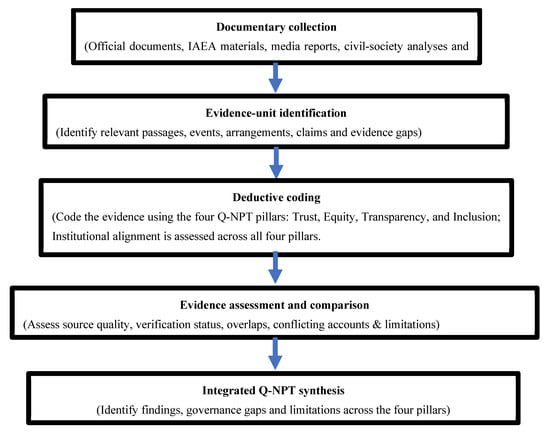
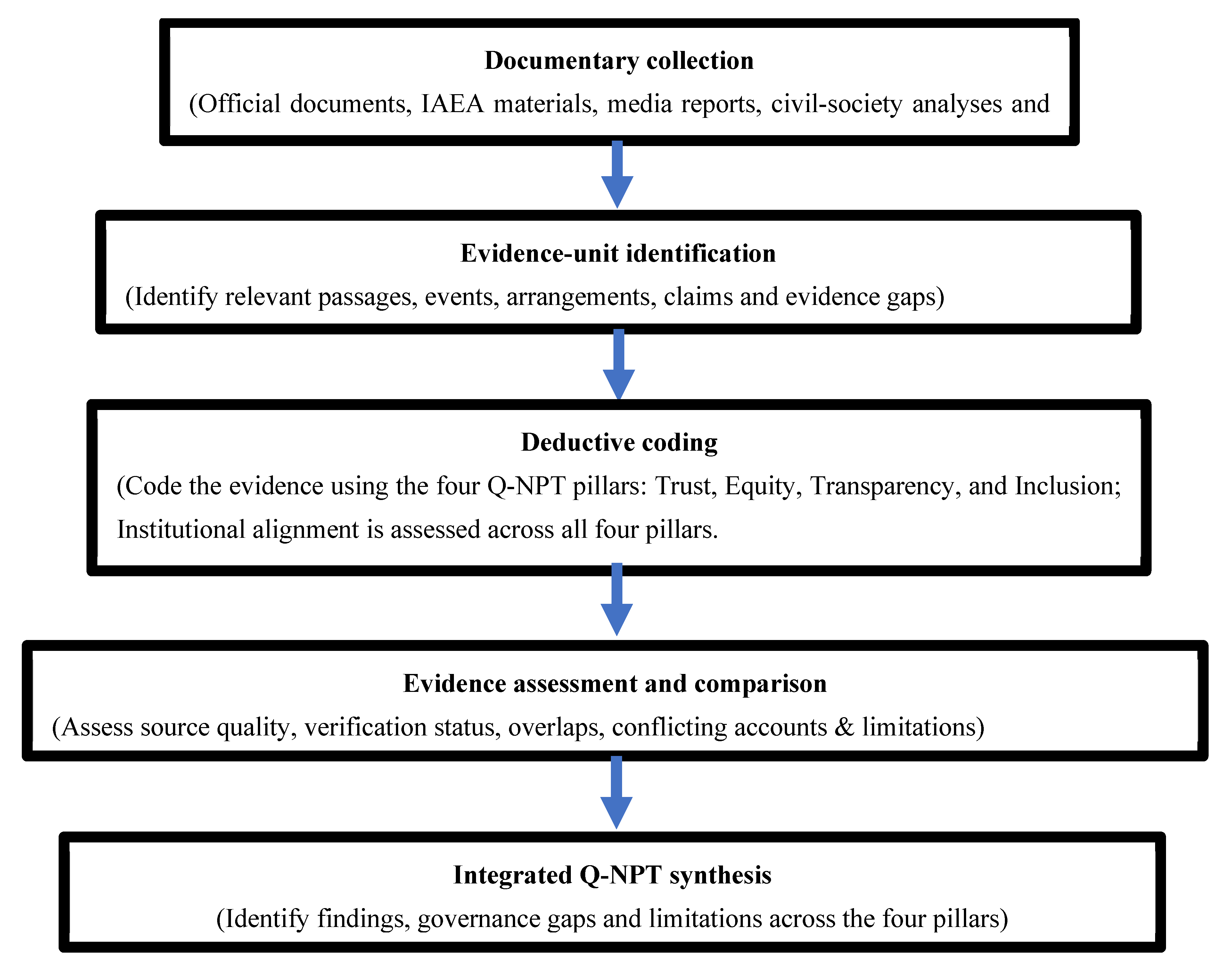

Disclaimer/Publisher’s Note: The statements, opinions and data contained in all publications are solely those of the individual author(s) and contributor(s) and not of MDPI and/or the editor(s). MDPI and/or the editor(s) disclaim responsibility for any injury to people or property resulting from any ideas, methods, instructions or products referred to in the content. |
© 2026 by the author. Licensee MDPI, Basel, Switzerland. This article is an open access article distributed under the terms and conditions of the Creative Commons Attribution (CC BY) license.