


Abstract
Power transformers are critical assets in modern power systems, and their reliability directly affects grid security, resilience, and continuity of electricity supply. Their condition progressively evolves under interacting electrical, thermal, mechanical, chemical, and environmental stresses, making reliable condition assessment and early detection of degradation essential for effective asset management. Over the past decades, a wide range of diagnostic techniques has been developed, including dissolved gas analysis (DGA), furan and other physicochemical analyses, dielectric response measurements, frequency response analysis (FRA), and partial discharge (PD) monitoring. While these techniques remain indispensable, no individual method provides a complete representation of transformer condition, and their isolated or periodic application offers limited capability for tracking degradation trajectories and supporting prognosis. This review critically examines the evolution of power transformer diagnostics from conventional condition-assessment techniques to Artificial Intelligence (AI), multi-source data integration, hybrid and physics-informed modelling, and Digital Twin technologies. Particular attention is given to the capabilities and limitations of machine-learning and deep-learning approaches, including data representativeness, generalization, interpretability, uncertainty, and field validation. The emerging role of hybrid physics–data models and Digital Twins in integrating measurements, asset history, physical knowledge, and data-driven inference is also examined. Key challenges related to field-data availability, standardization and interoperability, cybersecurity, explainable and trustworthy AI, and dynamic model updating are discussed. Finally, a perspective toward 2040 is presented, highlighting the expected transition from periodic and isolated diagnostics toward integrated monitoring, uncertainty-aware prognosis, and dynamically updated decision-support frameworks for transformer asset and fleet management.
1. Introduction
The global energy transition, characterized by the increasing integration of renewable energy sources, the electrification of end uses, and the development of smart grids, has positioned power transformers at the core of modern electrical infrastructures [1,2,3]. These assets play a vital role in transmission and distribution networks by ensuring voltage adaptation and the reliable delivery of electrical energy. At the same time, increasing renewable penetration, more variable loading profiles, bidirectional power flows, and growing expectations for asset utilization are imposing increasingly complex operating conditions on transformer fleets. Given their strategic importance, major transformer failures may compromise power system reliability, disrupt service continuity, and generate substantial technical, economic, and environmental consequences [4,5,6,7].
This issue is particularly concerning because a substantial portion of the global transformer fleet is aging, with many units operating at or beyond their originally anticipated service life [8,9]. However, chronological age alone is not a reliable indicator of transformer condition, since degradation strongly depends on loading history, thermal exposure, insulation condition, environmental stresses, design, and maintenance practices. In this context, reliable condition assessment and early fault detection have become essential priorities for power utilities and network operators.
Under the influence of electrical, mechanical, thermal, chemical and environmental stresses, insulating oil and cellulose paper are subjected to complex degradation processes that progressively alter their physicochemical, dielectric, and mechanical properties [10,11,12]. In parallel, other critical components, including windings, bushings, tap changers, and the cooling system, may experience degradation mechanisms that ultimately affect transformer reliability. Understanding these degradation mechanisms and continuously monitoring their evolution are therefore critical for transformer condition assessment and maintenance optimization.
To enable early fault detection and insulation condition assessment, numerous diagnostic techniques have been developed over the past decades. Among them, Dissolved Gas Analysis (DGA) remains one of the most widely used methods in the power industry for identifying thermal and electrical faults [12,13]. Other complementary techniques include Frequency Response Analysis (FRA) [14], partial discharge measurements [15], dielectric response methods [16,17,18], thermal monitoring [19] and chemical ageing markers, including furan based-indicators [20,21], each providing information on different aspects of transformer condition. Rather than being mutually substitutable, these techniques provide complementary information on electrical, thermal, mechanical, and insulation-related degradation processes.
Despite their effectiveness, these conventional approaches exhibit several limitations. Each technique provides only partial information regarding transformer condition and generally targets a specific degradation mechanism or fault signatures [4,10]. Moreover, the interpretation of diagnostic results often relies on empirical rules or expert knowledge, which may introduce uncertainty into the decision-making process [4,10]. In addition, the growing volume of data generated by online monitoring systems makes it increasingly difficult to exploit the available information using traditional approaches fully. These limitations have progressively shifted transformer diagnostics from isolated, threshold-based measurements toward integrated and data-driven condition assessment.
The emergence of digital technologies has profoundly transformed the field of transformer diagnostics. Advances in the Internet of Things (IoT), Big Data, data-driven monitoring, and artificial intelligence have paved the way for more powerful methods for data analysis and interpretation [22,23]. Machine Learning and Deep Learning techniques are now increasingly investigated for fault classification, health index estimation, remaining useful life prediction, and predictive maintenance support [22,23,24,25,26]. However, the very high diagnostic accuracies frequently reported in the literature do not necessarily translate into equivalent field performance. Limited and unbalanced datasets, lack of external validation, domain shift between transformer populations, model interpretability, and uncertainty quantification remain important barriers to practical deployment.
At the same time, data fusion approaches have gained increasing attention as a means of simultaneously exploiting information from multiple diagnostic techniques. These approaches provide a more comprehensive and robust view of transformer condition by reducing the uncertainties associated with individual methods [24,27]. As a result, they have become a major research focus in advanced transformer diagnostics. Their development represents an important intermediate step between conventional single-source diagnostics and integrated transformer health assessment frameworks.
More recently, the concept of the Digital Twin has attracted increasing interest within the energy sector [28,29]. Applied to power transformers, Digital Twins can integrate real-time monitoring data, physics-based models, expert knowledge, and artificial intelligence algorithms within a unified digital environment. Such integration can support predictive maintenance, risk assessment, operational optimization, and decision support throughout the transformer lifecycle [28,30]. Nevertheless, a clear distinction must be maintained between conventional digital models, digital shadows, and true Digital Twins involving continuous synchronization between the physical asset and its virtual representation. This distinction is particularly important because the term “Digital Twin” is increasingly, and sometimes inconsistently, used in transformer-monitoring literature.
Despite the significant advances achieved in intelligent diagnostics and digital transformer monitoring, several scientific and technological challenges remain. Limited availability of representative and high-quality field data, the absence of widely accepted Digital Twin architectures and interoperability frameworks, integration difficulties among heterogeneous systems, cybersecurity concerns, and the reliability and explainability of artificial intelligence models continue to represent major obstacles to large-scale deployment [28,31,32,33]. Model generalization across transformer designs and operating environments, uncertainty quantification, and the integration of physical knowledge into data-driven models also remain important research challenges. Addressing these challenges is essential for the development of high-performance, robust, and trustworthy monitoring systems.
Although several review papers have addressed transformer diagnostic techniques, DGA-based artificial intelligence, condition monitoring, and, more recently, Digital Twin technologies, these topics are frequently treated independently. A comprehensive perspective connecting the evolution from conventional diagnostics to multi-source data fusion, artificial intelligence, physics-informed models, and continuously updated Digital Twins remains comparatively limited. Moreover, the gap between high diagnostic performance reported in research studies and the requirements for reliable field deployment deserves greater critical attention.
Previous reviews have examined different aspects of power transformer diagnostics, including conventional fault detection methods, artificial intelligence, condition assessment, and intelligent monitoring. While these studies cover overlapping topics, they differ in their main objectives and in how they address the relationships among diagnostic techniques, predictive modeling, and practical implementation. To place the present review in context, Table 1 summarizes the main contributions of previous reviews and highlights the additional perspective offered by this work.
Table 1.
Comparison of previous reviews on power transformer diagnostics, condition assessment, and intelligent monitoring.
This review addresses this gap by critically examining the evolution of power transformer diagnostics from conventional condition-monitoring techniques toward integrated, intelligent, and predictive asset-management frameworks. Rather than treating conventional diagnostics, artificial intelligence, and Digital Twins as independent developments, the review analyzes their progressive convergence and identifies the technological and methodological requirements for moving from fault detection toward predictive and ultimately prescriptive transformer management. After highlighting the challenges associated with transformer aging and the technical and economic consequences of failures, the paper reviews the principal diagnostic techniques currently employed and discusses their limitations.
Particular attention is devoted to the contribution of artificial intelligence and recent developments in Digital Twin technologies for power transformers. Emphasis is placed on data fusion, model generalization, explainability, uncertainty quantification, physics–data integration, and the transition from research prototypes to field-deployable solutions. The major scientific and technological challenges as well as future perspectives in the field are also examined.
The remainder of this paper is organized as follows. Section 2 and Section 3 examine conventional diagnostic techniques and their limitations, particularly the incomplete picture provided by individual measurements and the need to combine complementary diagnostic information. Section 4 reviews AI-based approaches and multi-source data integration, with particular attention to the challenges of translating promising research results into reliable performance under real operating conditions. Section 5 discusses how physics-informed modeling and dynamically updated Digital Twins can support more comprehensive condition assessment and predictive maintenance. Section 6 addresses the challenges that continue to limit practical implementation, including data availability, model generalization, uncertainty quantification, explainability, interoperability, and cybersecurity. Section 7 outlines future research directions aimed at bridging these gaps and supporting the development of more reliable diagnostic and predictive frameworks for power transformers. Finally, Section 8 summarizes the main conclusions of this review.
2. Conventional Diagnostic Techniques
Power transformer condition assessment has traditionally relied on several conventional diagnostic techniques designed to monitor different physical, chemical, and electrical degradation mechanisms occurring during transformer operation. Conventional methods such as dissolved gas analysis (DGA), furanic compound analysis, frequency response analysis (FRA), partial discharge (PD) measurements, and dielectric response techniques have become widely adopted due to their ability to provide valuable information regarding insulation ageing, mechanical deformation, electrical faults, and thermal degradation processes. Importantly, these techniques should be regarded as complementary rather than competing approaches, since no individual diagnostic method provides a complete representation of transformer condition.
2.1. Dissolved Gas Analysis (DGA)
Dissolved Gas Analysis (DGA) is one of the most established techniques for assessing the condition of oil-filled power transformers and detecting incipient internal faults. Electrical and thermal stresses affecting the oil–paper insulation system generate characteristic gaseous decomposition products. Hydrogen (H2) and Hydrocarbon gases—including methane (CH4), ethane (C2H6), ethylene (C2H4), and acetylene (C2H2)—are primarily associated with the decomposition of insulating liquid under different fault conditions, whereas carbon monoxide (CO), and carbon dioxide (CO2) provide complementary information related to cellulose degradation [12,13]. The concentrations and relative distribution of these gases provide information on the degradation and fault processes occurring within the transformer. Table 2 summarizes the principal dissolved gases and the degradation or fault processes with which they are commonly associated. Low-energy electrical discharges, particularly partial discharges, are typically characterized by significant hydrogen generation, often accompanied by methane, whereas thermal faults generate hydrocarbon gases whose relative proportions depend on fault temperature. Acetylene is strongly associated with high-energy electrical discharges such as arcing [12,13].
Table 2.
Principal dissolved gases and commonly associated fault/degradation processes.
IEC 60599 and IEEE C57.104 provide widely used guidance for the interpretation of dissolved gases and transformer condition assessment, although their diagnostic criteria and recommended interpretation procedures are not identical. These interpretation frameworks are complemented by standardized analytical and sampling procedures, notably IEC 60567 and ASTM D3612, which support the reliable determination of dissolved-gas concentrations [12,34,35,36]. Several approaches are available for interpreting DGA results, including key-gas analysis, gas-ratio methods such as the Rogers and Dornenburg ratios, and graphical methods such as the Duval Triangle [13,37,38,39]. These approaches differ in their diagnostic boundaries, sensitivity to individual gases, and ability to distinguish single from combined fault conditions. Graphical approaches such as the Duval Triangle and Pentagon have gained particular attention because they provide intuitive fault classification while avoiding continuous graphical fault regions that overcome some of the indeterminate cases encountered with conventional gas-ratio methods. Nevertheless, conflicting diagnoses may still arise when different interpretation methods are applied to the same gas dataset, particularly for evolving or mixed faults. Owing to its extensive operational experience, standardized procedures, and established interpretation methods, DGA remains a central technique for power transformer condition assessment [13,40].
Beyond the limitations of individual interpretation methods, several intrinsic factors may influence the reliability of DGA-based diagnosis. In-service insulating oil contains not only gases generated by active faults but also ageing by-products resulting from long-term degradation of the insulation system. These by-products, together with fluid composition and inherent gassing tendency, may influence gas generation and consequently affect the diagnostic outcome of some DGA interpretation methods [41]. Diagnostic reliability is further affected by measurement uncertainty, since uncertainties associated with gas sampling and chromatographic quantification can propagate through empirical diagnostic boundaries and potentially modify the resulting fault classification [42]. Recent uncertainty-aware formulations of conventional DGA methods have consequently demonstrated the value of explicitly accounting for measurement uncertainty rather than treating measured gas concentrations as exact quantities.
The increasing use of alternative insulating liquids, particularly natural and synthetic esters, introduces an additional challenge because gas generation, solubility, and fault-gas patterns may differ from those established for mineral oil. Consequently, DGA criteria developed for conventional mineral-oil-filled transformers should not be transferred uncritically to alternative dielectric fluids. More generally, DGA interpretation remains fundamentally inferential: gases provide evidence of degradation or fault processes but do not necessarily identify their physical location, severity, or future evolution. This limitation partly explains the growing interest in combining DGA with complementary diagnostic indicators and data-driven interpretation methods.
2.2. Furan Analysis
Furan analysis is a widely used chemical diagnostic technique for assessing the condition of cellulose-based insulation in oil-immersed power transformers. It provides indirect information on the degradation of solid insulation without requiring access to the transformer windings. While DGA primarily provides information on gaseous products associated with, furan analysis of cellulose insulation. Thermal and electrical degradation processes, furan analysis provides complementary information specifically related to the degradation of cellulose insulation.
Under thermal and oxidative stresses, cellulose depolymerization generates several furanic compounds, including 2-furfuraldehyde (2-FAL), 5-hydroxymethyl-2-furfural, 2-furfuryl alcohol, 2-acetylfuran, and 5-methyl-2-furfural, which migrate from the paper insulation into the insulating oil, detectability, and established correlation with cellulose degradation make them useful ageing indicators [17,18]. Among these compounds, 2-FAL is the most commonly used ageing indicator because of its relative stability in oil and its relationship with cellulose degradation [17,43]. IEC 61198 specifies methods for the determination of 2-FAL and related furanic compounds in mineral insulating oils using high-performance liquid chromatography (HPLC) [44].
The main diagnostic interest of furan analysis lies in its relationship with the Degree of Polymerization (DP), an important indicator of the mechanical condition of cellulose insulation. Several empirical models have been proposed to estimate DP from the concentration of 2-FAL in transformer oil, including the Chendong, Stebbins, De Pablo, and Pahlavanpour models [45], as summarized in Table 3 [17,43,46,47]. These models were developed using different datasets and assumptions regarding cellulose type and ageing behaviour and may therefore provide different DP estimates for the same measured 2-FAL concentration.
Table 3.
Example empirical relationship between 2-FAL concentration and estimated cellulose condition [45].
As a practical condition-assessment framework, 2-FAL concentrations below 0.1 ppm, between 0.1–1 ppm, 1–10 ppm, and above 10 ppm have been associated, respectively, with DP ranges of approximately 700–1200, 450–700, 250–450, and below 250 [48]; however, these ranges should be regarded as indicative rather than universal conversion criteria [49].
However, correlations between 2-FAL concentration and DP should be interpreted cautiously. They are empirical and can be influenced by transformer design, oil volume, paper-to-oil ratio, thermal history, oil replacement or reclamation, and the partitioning and degradation of furanic compounds. Moreover, furan concentrations measured in the bulk oil reflect degradation products originating from the overall cellulose insulation and may therefore not accurately represent localized ageing at the winding hot-spot. Oil replacement or reclamation can further reduce the measured concentration of ageing markers without restoring the condition of the solid insulation, potentially complicating the interpretation of subsequent measurements. Consequently, 2-FAL should be regarded as an indirect indicator of cellulose ageing rather than a direct substitute for DP measurement. Cellulose degradation involves interacting physicochemical processes influenced by temperature, oxidation, moisture, and the formation and transport of ageing products. These interactions support a multiparametric interpretation of furan measurements [50,51].
Beyond furanic compounds, other oil-soluble ageing markers have been investigated to improve the assessment of cellulose degradation. Methanol (MeOH), in particular, has emerged as a promising marker because it is generated during cellulose chain scission and may provide sensitivity to earlier stages of paper degradation than 2-FAL [52,53]. The complementary interpretation of methanol, 2-FAL, carbon oxides, moisture, and other ageing indicators therefore represents a promising direction toward more robust multiparametric assessment of solid insulation condition.
The increasing use of ester-based insulating liquids also requires particular attention, since the generation, partitioning, and stability of cellulose ageing markers may differ from those observed in conventional mineral-oil systems [51].
2.3. Other Physicochemical Indicators of Insulation Condition
In addition to dissolved gases and furanic compounds, several physicochemical properties of insulating liquids provide complementary information on the condition of the transformer insulation system. Parameters such as moisture content, acidity, interfacial tension (IFT), breakdown voltage (BDV), resistivity, particle contamination, and oxidation-related characteristics are routinely or periodically evaluated to identify changes associated with insulation ageing, contamination, and deterioration of the dielectric liquid [54,55]. Although these indicators generally do not provide direct identification of a specific internal fault, their combined interpretation contributes significantly to the assessment of oil quality and the overall condition of the oil–paper insulation system.
Moisture is among the most critical parameters because of its strong influence on both dielectric performance and cellulose ageing. Water is distributed between the liquid and solid insulation and continuously migrates between these phases as transformer temperature and loading conditions change. Excessive moisture can reduce the dielectric strength of the insulation, accelerate cellulose depolymerization through hydrolysis, and increase the risk of bubble formation under elevated-temperature or overload conditions [56,57,58]. Moisture in insulating liquids is commonly determined using Karl Fischer titration, while online capacitive sensors increasingly enable continuous measurement of water activity or relative saturation. However, estimating the moisture content of cellulose from measurements performed in the liquid remains challenging because water solubility and oil–paper equilibrium are strongly temperature-dependent, and actual transformers may operate under non-equilibrium moisture conditions. Consequently, a single moisture concentration expressed in ppm should not be interpreted independently of oil type, temperature, relative saturation, and the dynamic moisture distribution within the insulation system.
Other physicochemical parameters provide complementary information on insulating-liquid degradation. Acidity, generally expressed as total acid number, increases as oxidation and ageing generate acidic degradation products, whereas interfacial tension tends to decrease with the accumulation of polar contaminants and oxidation products. Their combined evolution can therefore provide useful information on oil deterioration. Breakdown voltage, in contrast, provides an indication of the dielectric integrity of the liquid and is particularly sensitive to contaminants such as moisture, particles, and other impurities. Additional parameters—including resistivity, dielectric dissipation factor, colour, particle count, viscosity, inhibitor content, and oxidation stability—may further contribute to oil-condition assessment and maintenance decisions [54,59]. These properties are addressed by established IEC and ASTM test methods and are widely incorporated into transformer oil-monitoring programs.
Chemical ageing markers beyond conventional furanic compounds are also receiving increasing attention. Methanol, in particular, is generated during cellulose chain scission and has emerged as a complementary indicator of solid-insulation degradation, including during relatively early stages of cellulose ageing. Its interpretation may offer advantages in situations where 2-FAL concentrations are low, particularly for transformers containing thermally upgraded paper [49,60,61]. Nevertheless, as with furans, measured concentrations are influenced by oil–paper partitioning, transformer design, thermal history, and oil treatment, preventing the use of a universal concentration threshold for all transformer populations.
A wide range of additional laboratory and spectroscopic techniques, including UV-visible and infrared spectroscopy, turbidity measurements, particle characterization, and other chemical analyses, have also been investigated for transformer condition assessment [4,62]. Since these physicochemical techniques and their associated standardized test procedures have been comprehensively reviewed elsewhere, they are not discussed individually in the present paper. Instead, emphasis is placed on their role as complementary condition indicators that can be integrated with electrical, thermal, mechanical, and online monitoring data. Their principal value in the context of next-generation transformer diagnostics therefore lies not only in individual measurements, but increasingly in their combined interpretation within multiparametric health assessment, data-fusion, and predictive-monitoring frameworks.
2.4. Dielectric Response and Dissipation Factor Measurements
Dielectric response measurements provide valuable information on the condition of transformer oil–paper insulation by characterizing its polarization, conduction, and dielectric-loss behaviour under an applied electric field. Depending on the measurement domain, commonly used approaches include the dielectric dissipation factor (tan δ), Frequency Domain Spectroscopy (FDS), and Polarization and Depolarization Current (PDC) measurements. These techniques are particularly sensitive to moisture, ageing, oil conductivity, and other physicochemical changes affecting the dielectric properties of the insulation system [16,63]. The dielectric loss factor (tan δ), also referred to as the dissipation factor, is a well-established parameter for evaluating the dielectric condition of transformer insulation and other high-voltage equipment [63,64]. It reflects the dissipative component of the electrical response of an insulating material subjected to an alternating electric field. In an ideal dielectric, the current leads the applied voltage by 90°. In practical insulation systems, however, moisture, ageing products, contamination, and conductive impurities introduce resistive components that modify this phase relationship and increase dielectric losses [65,66]. Changes in tan δ can therefore provide information on the overall condition of the insulation system [63,66].
For insulating liquids, IEC 60247 specifies standardized procedures for determining the dielectric dissipation factor, relative permittivity, and DC resistivity [67]. Beyond single-frequency tan δ measurements, dielectric response techniques provide a more comprehensive characterization of the insulation system over a wider range of polarization and conduction processes. FDS evaluates the dielectric response over a broad frequency range, typically through the complex permittivity, or the corresponding frequency-dependent dissipation factor. Different regions of the dielectric spectrum exhibit different sensitivities to oil conductivity, interfacial polarization, moisture, and the condition of the cellulose insulation. FDS has consequently become an important non-destructive technique for assessing moisture and ageing in oil–paper insulation systems [68].
PDC provides complementary information in the time domain by measuring the polarization current following the application of a DC voltage and the subsequent depolarization current after removal of the applied voltage. The resulting current characteristics reflect conduction and polarization mechanisms within the composite insulation and can be used to assess parameters such as oil conductivity and moisture-related changes in the solid insulation [62,69]. FDS and PDC are fundamentally related representations of dielectric response and therefore provide complementary pathways for characterizing insulation condition.
In power transformers, tan δ primarily provides an indication of the overall dielectric condition of the insulation system rather than the location of a specific defect. Increased dielectric losses may be associated with moisture, oxidation products, sludge, conductive contaminants, and ageing of the oil–paper insulation system [64,70]. Tan δ measurements are commonly used during factory testing, commissioning, periodic maintenance, and condition assessment of transformer windings, bushings, and insulating liquids [71]. Compared with such single-frequency measurements, broadband dielectric-response techniques can provide substantially richer information on the processes contributing to insulation degradation and are particularly valuable when moisture assessment is required.
However, interpretation of dielectric response measurements is inherently multiparametric. Temperature, insulation geometry, oil conductivity, moisture content and distribution, ageing condition, and interfacial polarization can simultaneously influence the measured response. Temperature is particularly critical because both dielectric relaxation processes and insulation conductivity exhibit strong temperature dependence. Consequently, measurements obtained under different thermal conditions cannot be directly compared without appropriate temperature correction or normalization. Furthermore, separating the respective contributions of oil conductivity, cellulose moisture, and insulation ageing remains an important challenge when interpreting dielectric response data [68].
A single tan δ measurement should not be interpreted in isolation. Its diagnostic value is strengthened when measurements are compared with previous records obtained under comparable test conditions, allowing trends and abnormal variations in dielectric behaviour to be identified over time. Similarly, although FDS and PDC provide richer diagnostic information than a single dissipation-factor measurement, the inverse problem of deriving specific insulation-condition parameters from the measured dielectric response may not always have a unique solution. Their diagnostic reliability is therefore enhanced when dielectric measurements are combined with complementary information such as oil quality, moisture measurements, thermal history, chemical ageing markers, and other transformer condition indicators. This multiparametric interpretation provides an important pathway toward integrated condition assessment and data-driven diagnostic frameworks.
2.5. Frequency Response Analysis (FRA)
Frequency Response Analysis (FRA) is a well-established technique for assessing the mechanical integrity of transformer windings and detecting changes affecting their electrical characteristics. FRA is based on the application of a low-voltage signal over a broad frequency range and the measurement of the corresponding frequency-dependent response [72,73]. Transformer windings can be represented by a distributed network of resistive, inductive, and capacitive elements whose electrical characteristics are related to their physical geometry. Consequently, mechanical or electrical changes, including axial and radial winding deformation, hoop buckling, winding displacement or collapse, shorted turns, and core movement, can alter the measured frequency-response signature [72,73,74,75]. FRA is therefore particularly useful for assessing transformer integrity following transportation, through-faults, short-circuit events, or other conditions that may produce mechanical stresses.
In practice, FRA measurements cover a broad frequency range, and different portions of the response may be influenced by different transformer components and interactions [76]. Although characteristic frequency regions are often associated with particular transformer components, these boundaries are not universal and depend on transformer design, winding configuration, measurement setup, and test connections [72,73,77]. Changes in resonance frequencies, anti-resonances, amplitudes, or the overall shape of the FRA signature may therefore indicate changes in the transformer internal structure.
One of the main strengths of FRA is its sensitivity to mechanical changes that may not be identified through oil-based diagnostic techniques. Such deformations can affect the mechanical integrity and short-circuit withstand capability of transformer windings, making their detection important for condition assessment [78,79]. However, FRA interpretation remains largely comparative: measured signatures are generally evaluated against reference measurements, responses from equivalent phases, or corresponding units. The availability of suitable reference signatures and the need for expert interpretation therefore remain important considerations in practical FRA assessment. FRA measurements and their interpretation are supported by international guidance, particularly IEC 60076-18 [72] and IEEE Std C57.149-2012 [80].
Consequently, despite its high sensitivity to structural changes, FRA remains stronger as a change-detection technique than as a standalone tool for uniquely identifying and quantifying specific mechanical defects.
2.6. Partial Discharge (PD) Monitoring
Partial discharge (PD) monitoring is an important diagnostic approach for detecting localized defects within transformer insulation systems. PD corresponds to a localized electrical discharge that only partially bridges the insulation between conductors and generally develops in regions subjected to locally enhanced electric fields. Such activity may originate from voids, gas bubbles, cracks, sharp conductive regions, or degraded insulation interfaces. Depending on the discharge mechanism, PD activity can produce electrical pulses, electromagnetic radiation, acoustic emissions, optical signals, and chemical decomposition products, providing several complementary pathways for detection and characterization [81]. Consequently, PD monitoring provides valuable information on localized insulation degradation and its evolution.
PD detection methods can be broadly classified according to the physical quantities generated by discharge activity, including electrical, electromagnetic, acoustic, gas-based, optical, and hybrid techniques. Conventional electrical methods measure discharge-related current pulses and apparent charge and constitute the reference approach for standardized PD measurements, particularly according to IEC 60270 [82,83]. However, their application to online transformer monitoring may be affected by electromagnetic interference and difficulties in separating internal PD activity from external noise sources.
- Electromagnetic approaches, particularly ultra-high-frequency (UHF) techniques, detect high-frequency electromagnetic emissions associated with PD activity and are well suited to online monitoring because of their ability to discriminate PD signals from some forms of lower-frequency external interference [84].
- Acoustic methods detect ultrasonic waves generated by discharge events and can additionally support defect localization through time-of-arrival analysis [85]. Their sensitivity, however, may be influenced by attenuation, propagation paths, transformer geometry, and the location of the discharge source. Gas-based approaches provide indirect evidence of discharge activity through the analysis of decomposition gases dissolved in the insulating liquid and can therefore complement direct PD measurements [13,37].
- Optical sensing techniques, including Fiber Bragg Grating (FBG)-based and interferometric sensors, provide another means of detecting PD-related acoustic or strain disturbances while offering strong immunity to electromagnetic interference [86]. Optical-fiber-based sensing is particularly attractive for transformer applications because of its electrical passivity and potential for integration within high-field environments. Nevertheless, sensor placement, sensitivity, long-term stability, and interpretation of the measured signals remain important practical considerations.
- More recently, hybrid architectures combining several sensing principles have attracted increasing interest because complementary measurements can improve detection reliability, noise discrimination, and fault localization. Such multi-sensor configurations are also particularly relevant to advanced transformer monitoring and Digital Twin frameworks, in which heterogeneous data streams can be integrated for condition assessment [87].
PD measurements can be performed either offline under controlled test conditions or online during normal transformer operation. Offline measurements facilitate controlled characterization of discharge activity, whereas online monitoring enables the temporal evolution of PD behaviour to be observed under actual operating conditions. However, reliable online detection remains challenging because measurements may be affected by electromagnetic interference and other sources of noise present in substations. Effective filtering, source separation, and signal discrimination are therefore essential for distinguishing genuine PD activity from external disturbances [88].
While PD monitoring can provide high sensitivity to localized insulation defects, reliable diagnosis requires not only detection but also discrimination, classification, localization, and assessment of discharge severity. These tasks remain challenging under field conditions and have consequently become important application areas for advanced signal processing and machine-learning methods.
Overall, the conventional transformer diagnostic techniques reviewed above provide complementary rather than interchangeable information, since each method is sensitive to different electrical, thermal, mechanical, chemical, or insulation-ageing processes. Their respective strengths and limitations are summarized in Table 4. Importantly, no individual technique provides a complete representation of transformer condition, thereby motivating the integrated and multi-source diagnostic approaches discussed in the following sections.
Table 4.
Comparative Analysis of some Conventional Transformer Diagnostic Techniques.
3. Limitations of Conventional Diagnostic Approaches
Despite their maturity, reliability, and widespread industrial adoption, conventional transformer diagnostic techniques provide only partial and often fragmented information on asset condition. Although individual methods remain indispensable for transformer monitoring, important limitations emerge when they are considered within the context of continuous monitoring, predictive maintenance, and digitalized asset-management frameworks. These limitations concern not only measurement availability but also data integration, interpretation, prognostic capability, and uncertainty management. The most significant challenges are discussed below.
3.1. Periodic and Incomplete Temporal Condition Assessment
A major limitation of conventional transformer diagnostic practices is that condition assessment is still frequently based on measurements performed at predefined intervals rather than on continuous observation [62,71]. Tests conducted during scheduled inspections or maintenance outages provide valuable information on transformer condition at a given time, but essentially represent discrete snapshots of an evolving degradation process. Consequently, changes occurring between successive measurements may remain unnoticed, particularly when degradation develops rapidly or operating conditions vary significantly.
This limitation is particularly relevant for phenomena whose evolution may be strongly influenced by operating and environmental conditions, including thermal faults, moisture redistribution, partial discharge activity, and mechanically induced changes. Although online monitoring technologies are increasingly available for parameters such as dissolved gases and partial discharge activity, their deployment across transformer fleets remains constrained by economic, technical, and system-integration considerations [62]. Moreover, the availability of online measurements does not necessarily imply comprehensive continuous condition assessment, since individual monitoring systems often address only specific aspects of transformer behaviour.
The discontinuous nature of conventional condition assessment also restricts the ability to establish reliable degradation trends when measurements are sparse or irregular. This represents an important limitation for predictive maintenance and remaining useful life estimation, which benefit from sufficiently frequent longitudinal data to characterize degradation trajectories and identify departures from normal behaviour [20,62]. Maintenance decisions based on incomplete temporal information may therefore involve greater uncertainty regarding both the severity and progression of transformer degradation.
These limitations are driving the transition toward integrated Prognostics and Health Management (PHM) frameworks that combine conventional diagnostic measurements, online monitoring, historical information, and data-driven models. Such approaches can provide a more dynamic representation of transformer condition and establish the data foundation required for predictive monitoring and, ultimately, Digital Twin-based architectures [89]. However, continuous data acquisition alone is insufficient; the resulting heterogeneous data streams must also be contextualized, synchronized, and interpreted collectively, as discussed next.
3.2. Limited Multi-Source Data Integration and Data Fusion
Another important limitation of conventional transformer condition assessment is the fragmented use of diagnostic information. Individual techniques generally target specific degradation mechanisms and their results are often interpreted separately rather than combined within an integrated assessment framework [62,71,90]. This compartmentalized approach makes it difficult to capture the interactions among electrical, thermal, chemical, and mechanical processes that collectively determine transformer condition.
Indeed, no single diagnostic technique provides a complete representation of transformer health. Dissolved Gas Analysis (DGA) provides information on gaseous products associated with thermal and electrical faults, physicochemical indicators provide information on moisture, oil degradation, contamination, and solid-insulation ageing; dielectric response techniques characterize global insulation condition, Frequency Response Analysis (FRA) is sensitive to mechanical changes in windings and core structures, and Partial Discharge (PD) monitoring provides information on localized electrical insulation defects. When these heterogeneous indicators are considered independently, correlations among simultaneously evolving degradation mechanisms may be overlooked, thereby increasing uncertainty in condition assessment [25]. This limitation becomes particularly important when multiple degradation processes coexist and generate complex or overlapping diagnostic signatures.
Recent developments in transformer monitoring have therefore increasingly focused on combining complementary sensing technologies. Beheshti Asl et al. [87] reviewed advanced sensing approaches, including Fiber Bragg Grating (FBG) sensors, optical fiber sensors, wireless sensor networks, chemical sensors, ultra-high-frequency (UHF) sensors, and piezoelectric sensors for monitoring parameters related to partial discharge activity, thermal behaviour, core condition, and dissolved gases. However, increasing the number and diversity of sensors does not by itself ensure reliable condition assessment. Measurements obtained from heterogeneous sensing systems must also be synchronized, processed, and interpreted within a common framework to extract meaningful relationships among the different condition indicators.
The practical implementation of such multi-sensor monitoring systems also remains challenging. Sensors operating inside or around power transformers may be exposed to elevated temperatures, strong electromagnetic fields, moisture, vibration, and chemically aggressive environments. Long-term ageing, sensor drift, calibration requirements, and electromagnetic interference may consequently affect measurement quality and monitoring reliability [87]. These constraints emphasize that the challenge extends beyond sensor deployment to the reliable integration and interpretation of heterogeneous data.
Overcoming this fragmentation requires a transition from independent diagnostic measurements toward multi-source and multimodal data fusion, in which sensor measurements, laboratory analyses, operational histories, environmental conditions, maintenance records, and physics-based information can be jointly exploited. The principal challenge is therefore shifting from data acquisition toward data contextualization and fusion: determining how heterogeneous measurements with different sampling rates, uncertainties, physical meanings, and temporal resolutions can be combined into a coherent representation of transformer condition.
3.3. Dependence on Empirical Rules and Expert Interpretation
Conventional transformer diagnostic methods are largely interpreted using empirical rules, predefined thresholds, and expert knowledge [71]. For example, DGA relies on gas-ratio methods such as the Rogers and Dornenburg methods and graphical approaches such as the Duval Triangle [37,38,39]. Similarly, tan δ and furan measurements are commonly interpreted using reference values and trend analysis [15,18]. These methods are supported by extensive operational experience, but their interpretation can become difficult in the presence of complex or mixed faults [91].
Another limitation is that empirical criteria developed for specific transformer populations or operating conditions may not be directly applicable to transformers with different designs, insulation systems, loading histories, or service environments [71,92]. Diagnostic conclusions may therefore depend on both the measured parameters and the experience of the operator.
Expert knowledge remains indispensable in transformer diagnostics; however, its application may be difficult to formalize, reproduce, and scale consistently across large asset fleets. Furthermore, deterministic thresholds generally provide limited representation of diagnostic uncertainty, particularly when measurements lie near decision boundaries or when multiple degradation mechanisms coexist.
Interpretation can also become difficult when several degradation mechanisms occur simultaneously. Gas concentrations, dielectric losses, and ageing indicators may be affected by temperature, moisture, loading, and insulation condition. FRA interpretation mainly relies on the comparison of frequency-response signatures [74,77], while PD assessment often involves the interpretation of Phase-Resolved Partial Discharge (PRPD) patterns and may require considerable expertise [81,88].
These limitations highlight the need for diagnostic frameworks capable of combining established domain knowledge with quantitative and reproducible interpretation while explicitly accounting for ambiguity and uncertainty.
3.4. Limited Prognostic Capability and Uncertainty Quantification
Conventional transformer diagnostic techniques are primarily designed to detect abnormal conditions and identify existing degradation or fault mechanisms, rather than to predict their future evolution. DGA, furan analysis, dielectric measurements, FRA, and PD monitoring can provide valuable information regarding the current condition of a transformer; however, translating these observations into reliable estimates of degradation trajectories, failure probability, or Remaining Useful Life (RUL) remains challenging. This distinction between detection (recognizing the presence of an abnormal condition), diagnosis (identifying its nature or cause), and prognosis (anticipating its future evolution and consequences) is fundamental to the transition from condition-based toward predictive maintenance [25].
Prognostic assessment requires consideration of the dynamic interaction between transformer condition and operating stresses. Loading history, ambient and internal temperatures, moisture, insulation ageing, fault severity, maintenance interventions, and environmental conditions can influence degradation rates and may vary considerably throughout the transformer lifetime. Conventional threshold- or rule-based diagnostic approaches generally have limited capability to capture these time-dependent and interacting effects, particularly when historical measurements are sparse or irregular.
A further limitation concerns uncertainty quantification. Diagnostic measurements are affected by measurement uncertainty arising from sensors, sampling procedures, and laboratory variability, while diagnostic and prognostic models introduce additional uncertainty associated with model assumptions, parameter estimation, data representativeness, and incomplete knowledge of the transformer’s internal condition. Nevertheless, conventional diagnostic criteria frequently produce deterministic classifications or threshold-based decisions without explicitly quantifying the confidence associated with the resulting diagnosis or prognosis. For asset-management decisions, particularly those involving overload capability, maintenance prioritization, or end-of-life assessment, quantifying prediction uncertainty may be as important as the predicted condition itself.
These limitations have motivated increasing research into data-driven, probabilistic, and hybrid physics–data approaches aimed at extracting degradation patterns from historical and online monitoring data while incorporating operating conditions and physical knowledge. Such approaches do not inherently eliminate the limitations of conventional diagnostics; rather, their potential lies in integrating heterogeneous information, quantifying complex relationships, and supporting more dynamic condition assessment. They provide an important foundation for the transition toward AI-assisted prognostics, predictive maintenance, and ultimately dynamically updated Digital Twin frameworks.
4. Artificial Intelligence in Transformer Diagnostics
The limitations of conventional diagnostic approaches, together with the increasing availability of monitoring data, have stimulated extensive research into Artificial Intelligence (AI) for power transformer condition assessment. Machine-learning techniques can identify complex and nonlinear relationships among diagnostic variables and have been applied to fault detection and classification, insulation condition assessment, anomaly detection, and prognostic applications. Their ability to process heterogeneous data also makes them attractive for integrating information from multiple diagnostic sources. However, AI should not be regarded as an inherent replacement for conventional diagnostic knowledge: its performance depends strongly on data quality, representativeness, validation strategy, and the operating domain in which the model is deployed. This section reviews the main AI approaches applied to transformer diagnostics while critically examining their capabilities and limitations.
The evolution of AI-assisted transformer diagnostics is illustrated conceptually in Figure 1. Early applications primarily focused on automating fault classification using artificial neural networks, support vector machines, fuzzy logic, and expert systems. Subsequent developments introduced optimized and ensemble machine-learning approaches, followed by deep-learning architectures capable of automated feature extraction and temporal modelling. More recently, research has increasingly explored hybrid and physics-informed approaches that combine data-driven learning with domain knowledge and physical constraints. In parallel, growing attention to explainability, uncertainty, robustness, and model generalization reflects a broader transition toward trustworthy AI and its integration within Digital Twin frameworks. The time periods indicated in Figure 1 represent approximate and overlapping stages of technological emergence and adoption rather than strict chronological boundaries.
Figure 1.
Historical and prospective evolution of power transformer diagnostics, from conventional condition-assessment techniques and early AI-assisted fault classification toward deep, hybrid, physics-informed, and trustworthy AI approaches and their integration within Digital Twin frameworks. Time periods indicate approximate and overlapping stages of technological emergence and adoption rather than strict chronological boundaries.
4.1. Artificial Neural Networks (ANNs)
Artificial Neural Networks (ANNs) were among the earliest AI techniques extensively applied to transformer diagnostics because of their ability to approximate nonlinear relationships between multiple diagnostic indicators and transformer condition. Unlike conventional rule-based methods, ANNs learn these relationships from labelled examples and can simultaneously consider several input variables. They have consequently been investigated for DGA interpretation, FRA, insulation-ageing assessment, and PD pattern recognition.
DGA has been one of the principal application areas of ANN-based transformer diagnostics. Kalinda et al. [93] developed an ANN-based transformer fault diagnosis approach using Dissolved Gas Analysis (DGA) data and reported improved fault classification with reduced ambiguity compared with conventional empirical methods. Vasiliki et al. [94] investigated the use of optimization techniques for neural-network-based transformer fault diagnosis and showed that optimization can improve ANN convergence and classification performance. Siqi Liu et al. [95] proposed a self-organizing neural network with incremental learning for DGA-based fault diagnosis. The incremental learning strategy allowed the model to adapt as new operating data became available, illustrating the potential of adaptive neural networks for transformer monitoring. These studies illustrate the progression from conventional static ANN classifiers toward optimized and adaptive learning architectures for DGA interpretation.
ANNs have also been investigated to reduce the dependence of Frequency Response Analysis (FRA) interpretation on visual comparison and expert judgement. Orestes et al. [96] used neural networks to interpret FRA measurements for the identification of winding deformation and mechanical faults. Behkam et al. [97] proposed an ANN-based FRA framework for transformer defect detection in smart monitoring environments and reported improved fault classification performance. Y. Luo et al. [98] combined Principal Component Analysis (PCA) with an ANN to recognize winding deformation from characteristics extracted from FRA transfer functions. PCA was used to reduce the dimensionality of the FRA data before classification by the neural network. These approaches demonstrate the potential of ANNs for automated FRA interpretation, although their performance remains dependent on the representativeness of the fault signatures used during training.
Beyond fault classification, ANNs have been applied to the assessment of cellulose insulation ageing. Ghunem et al. [99] used an ANN to predict furan content in transformer oil and reported an average prediction accuracy of approximately 90%. Ancuța-Mihaela et al. [100] combined 2-furfuraldehyde (2-FAL) and methanol (MeOH) measurements with a neural network using a Bayesian training algorithm to assess the degradation state of solid insulation. Bonginkosi A. et al. [101] developed a feedforward backpropagation ANN for estimating the remaining Degree of Polymerization (DP) from 2-FAL concentration. The reported correlation coefficients were 0.958 for training, 0.915 for validation, 0.996 for testing, and 0.958 for the overall model. These applications illustrate the potential of ANNs to model relationships between indirect ageing markers and insulation condition. However, an important limitation is that an ANN trained using empirically estimated DP values may reproduce the assumptions and uncertainties of the underlying 2-FAL-DP relationship rather than provide an independent assessment of cellulose condition.
Partial Discharge (PD) pattern recognition represents another major application of neural networks. Mas’ud et al. [102] reviewed a broad range of neural-network architectures for this application, including supervised, self-organizing, probabilistic, modular, and ensemble approaches. The studies considered in their review frequently reported recognition accuracies above 90%, highlighting the potential of neural networks for automated PD pattern classification. However, such values should be interpreted in relation to the dataset, noise conditions, discharge sources, and validation strategy employed; high recognition accuracy on controlled laboratory datasets does not necessarily demonstrate equivalent performance under field conditions.
Overall, ANN applications demonstrate the ability of data-driven models to capture nonlinear relationships across diverse transformer diagnostic modalities, including DGA, FRA, chemical ageing markers, and PD measurements. Their principal contribution lies in transforming combinations of diagnostic indicators into quantitative classification or regression outputs that may be difficult to obtain using conventional empirical rules alone. Nevertheless, ANN performance is inherently linked to the data used for model development. Network architecture, hyperparameter selection, class imbalance, data quality, and representativeness can substantially influence reported performance, while extrapolation beyond the training domain remains uncertain. Moreover, ANNs may learn correlations embedded in the training data without necessarily capturing the underlying physical degradation mechanisms. These considerations are particularly important when AI outputs are intended to support high-consequence transformer maintenance decisions.
4.2. Support Vector Machines (SVMs)
Support Vector Machines (SVMs) have been widely investigated for transformer diagnostics because of their ability to perform classification and regression with relatively limited datasets and high-dimensional feature spaces. By identifying an optimal separating hyperplane between classes and using kernel functions when nonlinear decision boundaries are required, SVMs can model complex relationships between diagnostic indicators and transformer fault conditions. Their effectiveness nevertheless depends strongly on feature selection, kernel choice, and hyperparameter optimization.
DGA represents the most extensively investigated application of SVMs in transformer diagnostics. Early studies demonstrated that SVM-based classifiers could distinguish major thermal and electrical fault categories using dissolved-gas concentrations or gas ratios [103,104,105]. Subsequent research increasingly combined SVMs with optimization and data-processing techniques to improve classification performance. Optimization algorithms have been employed to tune SVM parameters, while data-processing strategies have been introduced to improve the representation of diagnostic information and enhance fault-classification performance [104,105]. This evolution reflects a broader transition from applying generic SVM classifiers directly to DGA measurements toward constructing optimized diagnostic pipelines in which feature representation and model configuration are jointly considered.
SVMs have also been applied to other transformer diagnostic modalities. For FRA, SVM-based approaches have been investigated for detecting and characterizing winding mechanical deformation from frequency-response characteristics. In particular, SVMs have been used to localize and quantify axial winding displacement [106], while related approaches have addressed the discrimination of winding deformation and structural fault conditions [107]. For PD diagnostics, SVMs have been used to classify discharge patterns using features extracted from Phase-Resolved Partial Discharge (PRPD) distributions and other signal representations [108,109]. These applications demonstrate the versatility of SVMs across diagnostic problems involving different types of transformer condition data.
An important advantage of SVMs is their suitability for diagnostic problems in which the number of labelled observations is relatively limited compared with the dimensionality of the feature space—a common situation in transformer condition monitoring. However, good performance on small datasets should not be confused with demonstrated field generalizability. Reported classification accuracy can be strongly influenced by dataset composition, class balance, feature preprocessing, and validation strategy. Moreover, models trained on data from a particular transformer population, laboratory configuration, or fault database may exhibit degraded performance when applied to transformers with different designs, operating conditions, or fault distributions.
Like other purely data-driven classifiers, conventional SVMs do not inherently incorporate the physical mechanisms underlying insulation degradation or fault-gas generation. Their diagnostic boundaries are learned from the available training data and may therefore reproduce biases, ambiguities, or uncertainties present in the underlying labels. SVM-based diagnosis is consequently most compelling when combined with appropriate domain-informed feature engineering, rigorous cross-validation, and independent validation on representative datasets.
4.3. Random Forest Algorithms
Random Forest (RF) is an ensemble learning method that combines multiple decision trees constructed from bootstrapped subsets of the training data and randomly selected feature subsets. Classification is typically obtained by aggregating the predictions of the individual trees, while regression outputs are generated by averaging their predictions. This ensemble strategy generally improves robustness and reduces the tendency of individual decision trees to overfit, making RF particularly attractive for transformer diagnostic problems involving nonlinear relationships, heterogeneous variables, and relatively limited datasets [110,111].
DGA has been one of the principal applications of RF in transformer diagnostics. RF-based models have been investigated for distinguishing thermal and electrical fault categories using dissolved-gas concentrations, gas ratios, and derived diagnostic features [111,112]. More recent studies have combined RF with feature-selection, optimization, and hybrid diagnostic strategies to improve classification robustness and identify the most informative gas-related variables [112,113]. An important advantage of RF in this context is its ability to estimate feature importance, providing some indication of which diagnostic variables contribute most strongly to model decisions. However, such importance measures describe statistical relevance within the available dataset and should not necessarily be interpreted as evidence of a causal physical relationship with the underlying fault mechanism.
RF has also been applied to PD classification, insulation condition assessment, and multiparametric transformer health evaluation [114,115]. In these applications, its ability to accommodate variables with different statistical characteristics makes it particularly suitable for combining chemical, electrical, thermal, and operational indicators. This capability is relevant to the transition from single-source fault classification toward multi-source condition assessment, where the objective is increasingly to exploit complementary diagnostic information rather than interpret each measurement independently.
Despite these advantages, RF performance remains strongly dependent on the quality and representativeness of the training data. Class imbalance, limited examples of rare failure modes, inconsistent diagnostic labels, missing measurements, and differences among transformer populations can substantially affect model performance. Moreover, although RF is often regarded as more interpretable than many neural-network architectures, feature-importance rankings alone do not provide a complete physical explanation of a diagnostic decision. Models developed and validated on a single database may therefore require careful external validation before being transferred to different transformer fleets or operating environments.
Overall, RF provides an effective compromise between predictive capability, robustness, computational complexity, and partial interpretability. Its value for transformer diagnostics is particularly promising when applied to heterogeneous diagnostic datasets and when combined with domain knowledge, rigorous validation, and uncertainty-aware decision frameworks.
4.4. Deep Learning Approaches
Deep learning has emerged as an important extension of conventional machine learning for transformer diagnostics, particularly as the volume, dimensionality, and temporal resolution of monitoring data have increased. Unlike many traditional ML approaches that rely heavily on manually engineered features, DL architectures can learn hierarchical representations directly from raw or minimally processed signals, images, spectra, and multivariate time-series data. Convolutional Neural Networks (CNNs), recurrent architectures such as Long Short-Term Memory (LSTM) networks, and, more recently, attention-based and Transformer models have consequently been investigated for transformer fault diagnosis, condition assessment, and prognostic applications [26,116].
CNNs have been particularly attractive for diagnostic data that can be represented as structured signals, images, or two-dimensional patterns. In PD diagnostics, CNNs can extract discriminative features directly from Phase-Resolved Partial Discharge (PRPD) patterns or time-frequency representations, reducing dependence on manually selected statistical descriptors [117,118]. Similar approaches have been investigated for FRA signatures, where convolutional architectures can identify local patterns and frequency-dependent characteristics associated with abnormal winding conditions [119]. Although high classification performance has frequently been reported, results obtained from controlled laboratory datasets should be distinguished from demonstrated robustness under field conditions, where noise, sensor variability, operating conditions, and previously unseen defect patterns may substantially alter the input distribution.
Temporal DL architectures provide an additional capability by explicitly exploiting the evolution of transformer condition over time. LSTM and related recurrent networks have been applied to sequential DGA measurements, and other time-dependent monitoring variables for fault evolution assessment and prognostic applications [120,121]. This represents an important conceptual progression beyond static fault classification because degradation is inherently dynamic. However, the usefulness of temporal models depends on the availability of sufficiently long, consistently sampled, and representative condition histories—requirements that are often difficult to satisfy for power transformers because severe faults are relatively rare and monitoring practices vary among utilities and assets.
More recently, attention mechanisms and Transformer-based architectures have attracted increasing interest because of their ability to capture long-range dependencies within complex sequential monitoring data and to assign different weights to diagnostically relevant portions of the input history [122,123,124]. Such architectures may be particularly promising for integrating heterogeneous monitoring streams, including dissolved gases, temperatures, loading conditions, environmental variables, and other sensor measurements. Nevertheless, their generally larger data and computational requirements raise questions regarding their suitability when labelled transformer fault and degradation datasets remain limited. Furthermore, attention weights should not automatically be interpreted as physical explanations of transformer behavior.
Hybrid DL architectures have also been proposed by combining convolutional, recurrent, attention-based, or conventional ML components. These combinations seek to exploit complementary capabilities—for example, CNNs for local feature extraction and LSTMs or Transformers for temporal dependencies. More broadly, hybrid approaches can incorporate diagnostic knowledge, signal-processing techniques, or physics-based models into the learning framework. This direction is particularly relevant for transformer applications, where purely data-driven models may otherwise learn statistical correlations without respecting known physical constraints or degradation mechanisms [116,124,125].
Transfer learning and domain-adaptation approaches offer a potential means of addressing data scarcity by transferring knowledge acquired from one dataset, transformer population, or operating domain to another. This is particularly attractive when large simulated or laboratory datasets are available but labelled field data remain scarce. However, differences between source and target domains may lead to negative transfer if the learned representations are not physically or statistically transferable. Demonstrating robust cross-transformer and cross-domain generalization therefore remains an important research requirement [126,127].
Despite their powerful representation-learning capabilities, DL models introduce important challenges. Their performance is strongly dependent on dataset size, quality, class balance, and representativeness, while their large number of trainable parameters can increase the risk of overfitting when only limited fault examples are available. Computational requirements, model transparency, uncertainty quantification, and transferability across transformer designs and operating environments also remain significant concerns. Consequently, the principal value of DL for transformer diagnostics should not be assessed solely through classification accuracy, but also through robustness to distribution shifts, external validation, interpretability, and the ability to support reliable decisions under realistic operating conditions.
4.5. Hybrid and Physics-Informed AI for Transformer Diagnostics
Despite the increasing predictive capabilities of machine-learning and deep-learning models, purely data-driven approaches remain constrained by the availability, quality, and representativeness of transformer condition data. This limitation is particularly important for power transformers, for which severe failure events are relatively rare, labelled field datasets are often limited, and operating conditions vary considerably among assets. Hybrid and physics-informed AI approaches have therefore emerged as a promising direction for combining the pattern-recognition capabilities of data-driven models with established diagnostic knowledge and physical understanding of transformer behavior.
Hybrid diagnostic approaches can operate at several levels. At the diagnostic-knowledge level, empirical rules and established interpretation methods can be combined with machine-learning classifiers rather than being entirely replaced by them. For example, information derived from conventional DGA methods can be incorporated into feature construction, hierarchical decision structures, or ensemble frameworks. Recent studies indicate that AI alone does not necessarily guarantee greater diagnostic reliability than established DGA methods; however, combining domain-specific diagnostic knowledge with optimized machine-learning models can improve classification consistency and robustness [128,129]. This suggests that conventional diagnostic knowledge and AI should increasingly be regarded as complementary rather than competing approaches.
A second form of hybridization involves combining data-driven models with physics-based representations of transformer behaviour. Thermal models, dielectric-response models, ageing laws, electromagnetic models, and other physically derived relationships can provide constraints, features, intermediate variables, or reference states for AI algorithms. Conversely, machine-learning models can be used to estimate difficult-to-measure parameters, correct model discrepancies, or learn residual behaviour that is not adequately represented by simplified physical models. Such physics–data integration can reduce the solution space available to the learning algorithm and potentially improve model plausibility and generalization when training data are limited [125,130].
Physics-informed machine learning extends this concept by embedding physical knowledge more directly into the learning process. Physical relationships may be introduced through constrained loss functions, model architecture, boundary or initial conditions, conservation principles, or physically meaningful latent variables. In transformer applications, potential examples include enforcing thermal relationships between loading, losses, ambient temperature, top-oil temperature, and winding hot-spot temperature; incorporating cellulose ageing kinetics into lifetime prediction; or constraining diagnostic outputs using known relationships among fault mechanisms and measured condition indicators. However, the term “physics-informed” should be used cautiously: the inclusion of physically meaningful input variables or post-processing rules alone does not necessarily constitute genuine physics-informed learning.
Hybrid approaches also provide an opportunity to address uncertainty more systematically. Measurement uncertainty, model-parameter uncertainty, incomplete observations, and uncertainty associated with data-driven predictions can potentially be propagated through probabilistic or Bayesian frameworks to provide confidence intervals or risk-based outputs rather than deterministic fault labels alone. This is particularly important for high-consequence asset-management decisions, where the confidence associated with a diagnosis or prognosis may be as relevant as the predicted condition itself [131,132,133].
Nevertheless, incorporating physics does not automatically guarantee superior performance. Physical models themselves contain assumptions, simplifications, uncertain parameters, and restricted applicability domains, and incorrectly specified constraints may bias rather than improve a learning model. Rigorous validation is therefore required to determine whether hybrid or physics-informed approaches provide genuine improvements in generalization, robustness, interpretability, and uncertainty management relative to purely data-driven alternatives. Ultimately, their principal potential lies in enabling diagnostic models that are not only accurate but also physically consistent and dynamically updateable—characteristics that are fundamental to the development of trustworthy Digital Twins for power transformers.
The AI approaches discussed above differ substantially in their data requirements, learning capabilities, interpretability, and suitability for different transformer diagnostic tasks. Table 5 provides a comparative assessment of the principal approaches, highlighting their main strengths, typical applications, and key limitations. Rather than identifying a universally superior algorithm, the comparison emphasizes that model selection should depend on the diagnostic objective, available data, required level of interpretability, and intended deployment conditions.
Table 5.
Comparative assessment of major AI approaches for Power Transformer Diagnostics.
4.6. Current Limitations of AI-Based Transformer Diagnostics
Despite the considerable progress achieved in AI-based transformer diagnostics, the transition from promising research results to reliable field deployment remains challenging [41,134]. Many reported models achieve high diagnostic performance under specific experimental or database conditions; however, such results do not necessarily demonstrate robustness across transformer populations, operating environments, measurement systems, and previously unseen fault conditions [134]. The principal limitations are therefore increasingly related not only to model architecture, but also to data representativeness, validation methodology, interpretability, uncertainty, and lifecycle management of deployed models.
Data availability and quality remain fundamental challenges. Power transformer failures are relatively rare, and utilities generally possess far more data representing normal operation than confirmed fault conditions [24,135]. Available datasets may consequently be small, imbalanced, incomplete, or heterogeneous, while diagnostic labels can themselves contain uncertainty because they are often derived from expert interpretation or conventional diagnostic criteria rather than confirmed internal inspection [24,124,136]. Missing measurements and inconsistencies in monitoring data can further complicate the construction of reliable datasets, motivating the development of dedicated data-reconstruction and imputation approaches [137,138]. Moreover, models trained on labels generated by empirical diagnostic methods may reproduce the assumptions and limitations of those methods rather than independently learn the underlying physical fault mechanisms [139]. Class imbalance and shortage of representative field-fault data are well-recognized limitations in AI-based transformer diagnostics.
Generalization represents a second major concern. Transformer design, age, insulation system, loading history, cooling configuration, sensor technology, environmental conditions, and maintenance practices vary substantially among assets and utilities. A model developed using data from a particular laboratory setup, transformer population, or public database may therefore experience a significant performance reduction when transferred to another domain [126,127]. Reported accuracies across published studies should consequently not be directly compared unless common datasets, fault classes, preprocessing procedures, and validation protocols are employed [41,134]. Rigorous evaluation should increasingly include independent test sets, validation across different transformer populations or operating domains, and, where possible, external datasets that are not involved in model training or parameter selection [24,127,140,141]. Recent critical assessments particularly emphasize distribution-aware validation and cross-fleet robustness rather than accuracy on a single dataset [134].
Interpretability and explainability are particularly important when AI outputs support high-consequence maintenance and operational decisions [142,143,144]. Although techniques such as feature-importance analysis, SHAP-based explanations, attention mechanisms, and other explainable-AI approaches can provide insight into model behavior [142,143,144], these explanations primarily describe how a model uses its inputs and should not automatically be interpreted as evidence of physical causation. Diagnostic decisions should therefore remain consistent with established transformer knowledge and, where appropriate, be supported by complementary measurements or physical models [134].
Uncertainty quantification remains insufficiently addressed in much of the AI-based transformer diagnostic literature [22,134]. Measurement uncertainty can propagate through data-driven models and affect the stability of learned decision boundaries, while classification probabilities produced by an algorithm are not necessarily calibrated measures of diagnostic confidence [134,145,146]. High classification accuracy therefore provides limited information on how a model will behave when confronted with noisy, incomplete, out-of-distribution, or previously unseen conditions. For practical asset management, AI systems should ideally provide not only a predicted fault or health state but also information on prediction confidence and applicability domain. The ability to recognize when a model lacks sufficient evidence to provide a reliable prediction may ultimately be as important as its ability to correctly classify known fault conditions. Recent reviews similarly identify uncertainty quantification and out-of-distribution behaviour as key requirements for reliable transformer PHM [26,134].
Finally, AI-based diagnostic models cannot necessarily be considered static once deployed. Changes in asset condition, sensors, operating practices, and data distributions can lead to model or data drift, potentially degrading diagnostic performance over time [26,134]. Continuous performance monitoring, controlled model updating, model traceability, and appropriate human oversight are therefore required for long-term operational deployment [26,134,147].
Overall, the principal challenge is no longer simply to demonstrate that AI can classify transformer faults with high accuracy, but to establish that AI-based diagnostic systems are transferable, uncertainty-aware, physically credible, explainable, and sufficiently robust for operational decision-making [42,124,127,134,142]. Addressing these requirements is essential for progressing from stand-alone AI models toward trustworthy predictive-maintenance systems and Digital Twins for power transformers.
The limitations discussed above highlight that advanced transformer condition assessment requires more than isolated diagnostic algorithms. A comprehensive framework must integrate continuously acquired data, physical models, diagnostic knowledge, AI-based inference, and asset history within a dynamically updated representation of the physical transformer. This requirement provides the conceptual basis for Digital Twin technology.
5. Digital Twin of Power Transformers
5.1. Fundamental Concepts
Recent reviews have highlighted the growing application of Digital Twin technologies across different industrial sectors, particularly for condition monitoring and predictive maintenance [148,149]. A Digital Twin (DT) can be broadly defined as a dynamic digital representation of a physical asset or system that is continuously or periodically updated through data exchanged with its physical counterpart [150]. The Digital Twin concept is generally structured around three main components: the physical entity, its virtual representation, and the data connection that enables synchronization between them [150]. This dynamic connection is a defining characteristic that distinguishes a Digital Twin from a conventional static digital model or standalone simulation [151,152].
For power transformers, the physical entity corresponds to the operating transformer, while the virtual representation may incorporate physics-based models, data-driven models, diagnostic knowledge, or hybrid combinations thereof. Measurements collected from the physical transformer are used to update the virtual representation, while model outputs can support condition assessment, prediction, and maintenance decision-making [153,154,155]. Conversely, the virtual representation can support diagnostic inference, simulation of operating scenarios, prediction of future condition, risk assessment, and maintenance decision-making. The Digital Twin should therefore be viewed not as a single model, but as an integrated and dynamically updated framework connecting measurements, models, asset history, and decision-support functions. The overall architecture and main functional components of a Digital Twin framework for power transformer condition monitoring and diagnostics are illustrated in Figure 2.
Figure 2.
Conceptual architecture of a Digital Twin framework for power transformer condition monitoring and diagnostics.
Unlike conventional diagnostic approaches based mainly on periodic measurements and the separate interpretation of condition indicators, Digital Twins provide a framework for integrating heterogeneous and time-varying information within a continuously evolving representation of transformer condition. Such information may include DGA, moisture and physicochemical indicators, dielectric-response measurements, PD activity, thermal and loading data, environmental conditions, and historical maintenance records [28,156]. Their integration with physical and data-driven models can support condition assessment, anomaly detection, scenario simulation, prognostics, and predictive maintenance.
However, a distinction should be made between a Digital Model, a Digital Shadow, and a Digital Twin. A Digital Model generally operates without automated data exchange with the physical asset, whereas a Digital Shadow incorporates automated data transfer from the physical system to its digital representation. A Digital Twin extends this concept through dynamic synchronization between the physical and virtual environments, potentially enabling model outputs to support operational or asset-management decisions [28,151,152]. This distinction is particularly important in the transformer literature, where advanced monitoring or simulation platforms are sometimes described as Digital Twins despite providing only partial synchronization with the physical asset.
Accordingly, the development of a transformer Digital Twin requires not only data acquisition and connectivity, but also appropriate models capable of representing and continuously updating the relevant physical and degradation processes of the asset.
5.2. Modelling Approaches for Power Transformer Digital Twins
The virtual representation constitutes a central component of a power transformer Digital Twin and may be constructed using physics-based, data-driven, or hybrid modelling approaches. The choice of modelling strategy depends on the intended application, available measurements, required spatial and temporal resolution, computational constraints, and the physical processes to be represented. For transformer condition monitoring, particular attention has been devoted to thermal and ageing models because temperature strongly influences insulation degradation and transformer lifetime. More recently, physics-informed and hybrid modelling approaches have been investigated to combine physical knowledge with continuously acquired operational data. The principal approaches relevant to transformer Digital Twins are discussed below.
5.2.1. Thermo-Electrical Coupling Models
Thermo-electrical modelling represents one of the most mature physics-based components of Digital Twin frameworks for power transformers because it establishes a direct relationship between electrical loading, cooling conditions, temperature distribution, and insulation ageing, as illustrated in Figure 3 [28,154,155]. Transformer insulation ageing is strongly influenced by temperature, particularly the winding hot-spot temperature, which affects the degradation rate of cellulose insulation according to Arrhenius-type relationships [58]. Thermo-electrical models generally use operating variables such as load current, ambient temperature, and cooling conditions to estimate the thermal state of the transformer. When continuously updated with operational measurements, such models can provide estimates of internal thermal states that are difficult or impractical to measure directly and can support thermal-stress assessment, insulation-ageing estimation, dynamic loading studies, and loss-of-life evaluation [58,154,157,158,159]. Novkovic et al. [160] developed a physics-based Dynamic Thermal–Hydraulic Network Model (DTHNM) for liquid-immersed power transformers to estimate temperature distributions within the transformer active part under dynamic loading conditions. Compared with simplified thermal models primarily focused on top-oil and winding hot-spot temperatures, the DTHNM provides a more detailed representation of heat transfer and oil-flow phenomena while maintaining a computational structure suitable for dynamic simulations. More recently, Radakovic et al. [161] developed a Dynamic Thermal Digital Twin of a liquid-immersed power transformer by combining detailed thermal-hydraulic modelling with operating data. The model represents distributed heat transfer, oil circulation, cooling-system operation, and temperature evolution under varying loading conditions. Its validation against transformer measurements showed improved temperature prediction compared with the conventional thermal models considered in the study [161]. These developments illustrate the progression from conventional thermal calculation toward dynamically updated thermal representations of the physical transformer. However, increasing model fidelity generally comes at the cost of greater parameterization, computational requirements, and dependence on detailed transformer design information. The appropriate level of model complexity should therefore be determined by the intended Digital Twin function: a detailed thermal-hydraulic representation may be valuable for internal temperature-field estimation, whereas reduced-order models may be more appropriate for real-time fleet-level monitoring and decision support [161,162].
Figure 3.
Conceptual workflow for thermo-electrical model within a power transformer Digital Twin.
5.2.2. Physics-Informed Neural Networks (PINNs)
Physics-Informed Neural Networks (PINNs) have emerged as an important approach in scientific machine learning by incorporating physical laws into the training of neural networks [163,164,165,166,167]. Unlike purely data-driven neural networks, PINNs can include governing equations, initial and boundary conditions, and other physical constraints in the learning process [165,166]. This allows observational data and physical knowledge to be used within the same modelling framework and can be particularly useful when measurement data are limited. These characteristics make PINNs relevant to Digital Twin applications, where models must remain consistent with the physical behaviour of the system while being updated from operational data [150,161]. For power transformers, the physical relationships incorporated into such models may describe thermal behaviour, fluid flow, electromagnetic phenomena, or insulation ageing.
Bragone et al. [167] investigated PINNs for thermal modelling of power transformers by incorporating heat-transfer equations and physical boundary conditions into the neural-network training process. Using operating measurements from power transformers, the model was used to estimate transformer temperatures, with predictions compared with results obtained using the Finite Volume Method (FVM). Bragone et al. [168] subsequently applied a physics-informed approach to transformer insulation ageing by incorporating an Arrhenius-based degradation model into the learning process. The framework was used to estimate ageing-related parameters, including the Degree of Polymerization (DP), activation energy, and factors associated with insulation condition.
Tang et al. [130] developed a PINN-based approach for reconstructing the internal temperature field of oil-immersed transformers. Heat-transfer equations together with initial and boundary conditions were incorporated into the model, allowing temperature distributions to be estimated from limited measurement information. The authors reported better prediction performance than the conventional deep neural network considered in their study, particularly under limited-data conditions. More recently, a self-adaptive Physics-Informed Neural Network (SA-PINN) was proposed in [169] for predicting the Degree of Polymerization of transformer insulation paper. The model incorporated an insulation degradation relationship into the learning process and was evaluated using field data from 83 power transformers. The study reported improved prediction performance compared with the conventional PINN and machine-learning models considered by the authors.
These studies demonstrate the potential of PINNs to estimate difficult-to-measure internal states while maintaining consistency with selected physical relationships. Nevertheless, PINNs should not be assumed to be inherently superior to either physics-based or data-driven models. Their performance depends on the adequacy of the governing equations, availability and quality of measurements, specification of boundary and initial conditions, and appropriate weighting of physics- and data-based terms during training. Their practical value for Digital Twins therefore requires evaluation not only in terms of prediction accuracy, but also computational efficiency, robustness under changing operating conditions, and capability for online model updating [28,130,166].
5.2.3. Hybrid Physics-Based and Data-Driven Models
Hybrid physics-based and data-driven models provide another important pathway for constructing transformer Digital Twins by combining explicit physical representations with information learned from operational measurements. Depending on the architecture, machine learning may be used to estimate uncertain model parameters, compensate for modelling discrepancies, identify residual behaviour, or extract condition information from sensor data, while physical models provide constraints and prior knowledge of transformer behaviour [170]. The respective contributions of physics and data can therefore be adapted to the available measurements, model complexity, and intended Digital Twin application.
Applications of such approaches to power transformers are beginning to appear. Duz et al. [171] developed a transformer monitoring framework combining several diagnostic measurements, including online Frequency Response Analysis (FRA), capacitive tap monitoring, thermal sensing, and Dissolved Gas Analysis (DGA), with machine-learning methods for anomaly detection. Random Forest classification was combined with Principal Component Analysis (PCA) for dimensionality reduction to process the monitoring data. Beheshti Asl et al. [172] investigated transformer winding deformation using Fiber Bragg Grating (FBG) measurements together with signal processing, physically derived vibration indicators, and machine-learning classifiers. Their approach combined CEEMDAN decomposition and wavelet-based denoising with SVM, Random Forest, and XGBoost models for fault discrimination and localization.
These studies illustrate the increasing convergence of physical information, heterogeneous diagnostic measurements, and data-driven modelling. However, not every hybrid diagnostic framework constitutes a Digital Twin in itself. To operate as part of a Digital Twin, the modelling framework must be connected to the physical asset through an updating mechanism that maintains the relevance of the virtual representation as transformer condition and operating conditions evolve.
Fully integrated hybrid Digital Twin implementations for power transformers nevertheless remain relatively limited. Important research questions concern model updating and parameter identification, generalization across transformer populations, computational requirements, uncertainty propagation, integration with field monitoring infrastructure, and long-term model validity. Hybrid modelling is therefore best regarded not as a replacement for physics-based or data-driven approaches, but as a framework for exploiting their complementary strengths within dynamically updated transformer representations.
The modelling approaches discussed above illustrate a broader evolution from isolated condition indicators toward integrated and dynamically updated representations of transformer condition. Table 6 summarizes this progression by comparing the general characteristics of conventional diagnostic, AI-based, and Digital Twin-oriented approaches. The comparison should not be interpreted as a strict hierarchy: Digital Twins build upon rather than replace conventional diagnostics and AI, integrating these capabilities according to the monitoring and decision-support objectives of the application.
Table 6.
Comparative Analysis of Conventional, AI-Based, and Digital Twin-Based Transformer Diagnostic Approaches.
As shown in Table 7, AI-based, physics-informed, and hybrid approaches have yielded promising results for different transformer diagnostic and monitoring tasks. Their reported metrics cannot, however, be ranked directly because the studies differ in target variables, data sources, sample sizes, validation protocols, and evaluation measures. In particular, results from laboratory or simulated data and internal test partitions do not establish transferability to other transformer designs or operating fleets. Independent external and longitudinal field validation, with transparent uncertainty reporting, remains essential before broader operational claims can be made.
Table 7.
Comparison of selected AI-based, physics-informed, hybrid, and thermal digital twin approaches for power transformer diagnostics.
6. Open Challenges
Despite rapid progress in sensing, AI, physics-based modelling, and Digital Twin technologies, their large-scale deployment for power transformer condition assessment remains constrained by several scientific, technological, and organizational challenges. Beyond achieving high diagnostic accuracy, practical implementations must operate reliably across heterogeneous transformer populations, integrate data and models from different sources, provide transparent and uncertainty-aware outputs, and satisfy interoperability and cybersecurity requirements. The principal challenges that must be addressed to enable trustworthy and scalable deployment are discussed below.
6.1. Limited Availability and Representativeness of Field Data
The development and validation of AI-based diagnostic systems and Digital Twins for power transformers depends strongly on the availability of representative field data [173,174,175]. However, access to operational transformer datasets remains limited because of confidentiality requirements, cybersecurity concerns, and the strategic value of equipment-related information for utilities and grid operators [30]. Consequently, many studies rely on laboratory measurements, simulated data, or datasets collected from a limited number of transformers, which may not fully represent the diversity of operating conditions encountered in the field [173,174,175].
A particular difficulty concerns data associated with rare and severe transformer faults. Because such events occur infrequently, relatively few representative examples are available for model development and validation [174,175]. Transformer datasets are therefore often dominated by normal operating conditions, resulting in class imbalance between normal and fault-related observations [175,176]. Under these conditions, high overall classification accuracy may coexist with poor detection of rare but operationally critical conditions. Moreover, diagnostic labels may themselves be uncertain when they originate from conventional interpretation methods rather than confirmed failure investigations.
Data availability is also important for the development and validation of Digital Twins. Their implementation requires information describing the transformer under different operating and environmental conditions, together with historical diagnostic and maintenance records [28,173]. Incomplete or fragmented information can limit model calibration, validation, and updating throughout transformer operation [30,173]. Wider access to representative industrial datasets will therefore require greater cooperation among utilities, transformer manufacturers, research institutions, and other stakeholders, together with secure mechanisms for data sharing and governance [30,175].
Several approaches have been investigated to reduce the impact of limited training data, including data augmentation and transfer learning [174,175]. However, these approaches do not eliminate the need for representative field measurements and appropriate validation under actual transformer operating conditions.
Improving the availability, diversity, and quality of transformer field data therefore remains an important requirement for the development of AI-based diagnostic systems and Digital Twins that can be evaluated under representative operating conditions.
6.2. Need for Standardization and Interoperability Frameworks
The increasing integration of AI and Digital Twin technologies creates a need for standardized frameworks covering data structures, semantic interoperability, communication interfaces, model validation, and performance evaluation [28,30,173]. Although international standards are well established for several conventional transformer diagnostic techniques, including Dissolved Gas Analysis (DGA), there is currently no widely adopted framework specifically covering the design, validation, interoperability, and deployment of AI-enabled Digital Twins for power transformers [28,30]. For AI models, the absence of common benchmark datasets and validation protocols additionally limits meaningful comparison among reported approaches.
Recent initiatives provide useful foundations. The Asset Administration Shell (AAS), for example, provides a standardized digital representation of industrial assets and supports structured information exchange and semantic interoperability [177]. However, generic industrial frameworks must still be mapped to transformer-specific asset information, diagnostic measurements, models, and lifecycle requirements before interoperable transformer DT implementations can be achieved.
Future standardization efforts should therefore address not only communication and data exchange, but also model provenance, versioning, uncertainty representation, validation criteria, and interfaces among sensing, physical modelling, AI, and asset-management systems. Such developments will be essential if Digital Twins are to evolve from customized research implementations toward scalable industrial solutions.
6.3. Cybersecurity and Data Integrity
The increasing connectivity required by AI-enabled monitoring and Digital Twins expands the cyber–physical attack surface of transformer monitoring systems. Machine-learning models can be exposed to adversarial attacks, including data poisoning and adversarial manipulation, in which training data or model inputs are intentionally modified to influence model outputs [178,179]. Such attacks may affect fault classification, condition assessment, and subsequent maintenance decisions, thereby reducing the reliability of AI-assisted transformer monitoring systems.
Digital Twins introduce additional cybersecurity concerns because their operation depends on data exchange between the physical transformer, sensing and communication systems, and its virtual representation. Their reliability therefore depends on the confidentiality, integrity, and availability of sensor measurements, communication channels, stored data, and computational models. Compromise of these components may affect data synchronization and the reliability of the information generated by the Digital Twin [30,173].
Cybersecurity should therefore be considered from the design stage of Digital Twin architectures for power transformers. Industrial frameworks such as the Asset Administration Shell (AAS) support structured and interoperable information exchange between digital representations of industrial assets [180,181]. In parallel, the NIST Cybersecurity Framework (CSF 2.0) [33] provides a general framework for managing cybersecurity risks, while IEC 62351 [182] addresses security for communication protocols used in power-system management and information exchange. These complementary frameworks and standards can provide useful foundations for incorporating cybersecurity requirements into transformer Digital Twin architectures.
Future transformer DT architectures will therefore require secure communication, access control, authentication, data-integrity verification, resilient model updating, and mechanisms for detecting anomalous or compromised data streams [183].
6.4. Explainability, Uncertainty, and Trustworthy Artificial Intelligence (XAI)
The increasing use of Artificial Intelligence (AI) models for power transformer diagnostics raises an important challenge related to model interpretability. Although machine-learning and deep-learning techniques have been successfully applied to fault classification, condition assessment, and Remaining Useful Life (RUL) prediction, many advanced models operate as black boxes, making their predictions difficult to interpret [31,184,185,186,187]. This limitation can hinder their acceptance in monitoring and decision-support applications where diagnostic results may influence maintenance and operational decisions.
Predictive performance alone is therefore not sufficient for the practical deployment of AI-based transformer diagnostic systems. Transparency, interpretability, robustness, and reliability are also important when AI outputs are used to support operational decisions [184,185,186,187].
Explainable Artificial Intelligence (XAI) provides methods for examining the factors that influence AI model predictions [184,188]. Techniques such as SHAP, LIME, feature-importance methods, attention mechanisms, and Grad-CAM can provide different forms of information about model behaviour and the contribution of input variables to diagnostic outputs [184,185,186,187,188]. Figure 4 illustrates the integration of XAI methods into an AI-enabled Digital Twin framework for power transformer condition monitoring and decision support.
Figure 4.
Conceptual integration of Explainable Artificial Intelligence and uncertainty assessment within an AI-enabled Digital Twin framework for power transformer condition monitoring and decision support.
As illustrated in Figure 4, multi-source transformer data, including DGA, FRA, Partial Discharge (PD), temperature, and load measurements, can be processed by AI models to produce outputs such as fault classification, condition assessment, and RUL estimation. XAI methods can then provide information about the factors contributing to these predictions. However, explaining a model prediction is not equivalent to demonstrating the physical cause of the diagnosed condition. Feature importance, SHAP values, or attention weights describe relationships within a model and should therefore be interpreted together with engineering knowledge and complementary diagnostic evidence. Despite recent progress, important limitations remain. Different XAI methods may provide different explanations for the same prediction, and their fidelity, stability, robustness, and practical relevance require careful evaluation [184,185,186,187]. Similarly, uncertainty estimates require appropriate calibration and validation before they can support risk-based maintenance decisions. Future research should therefore move beyond explainable AI alone toward trustworthy AI frameworks combining transparency, uncertainty awareness, physical consistency, robustness, and human oversight.
7. Future Outlook: Toward 2040
Looking toward 2040, power transformer diagnostics may undergo a more fundamental transition from predominantly separate condition-assessment techniques toward integrated, predictive, and risk-informed asset-management frameworks. This evolution is expected to be driven not by any single technology, but by the convergence of advanced sensing, multi-source data integration, Artificial Intelligence (AI), physics-based modelling, Digital Twins, cloud and edge computing, and secure communication infrastructures [26,30,124,189,190]. While many of these technologies are already emerging, the coming decade will determine whether they can progress from specialized and proof-of-concept implementations toward scalable, interoperable, and trustworthy solutions for transformer monitoring and asset management.
A major development is expected to be the transition from periodic condition assessment toward event-driven, and multi-source monitoring. Future monitoring systems could increasingly combine multi-source data, including electrical, dielectric, thermal, chemical, environmental, and operational information, to provide a more comprehensive representation of transformer condition. Such integration could support earlier fault detection and improve the information available for condition assessment and Remaining Useful Life (RUL) estimation [30,124,191]. Rather than interpreting DGA, PD, FRA, dielectric response, thermal measurements, and other indicators independently, their complementary information could be jointly exploited to identify evolving degradation patterns. This transition could progressively shift the diagnostic objective from detecting isolated abnormalities toward tracking condition trajectories and identifying changes before they develop into critical states.
A second important transition is expected from diagnosis toward prognosis and risk-informed decision support. Much of the current AI literature remains focused on fault classification, whereas future asset-management applications will increasingly require information on degradation rate, fault evolution, Remaining Useful Life (RUL), and the consequences of continued operation. Diagnostic systems should therefore progress beyond deterministic fault or condition labels toward time-dependent predictions accompanied by uncertainty estimates and explicit applicability domains. Achieving this objective will require longitudinal field datasets, rigorous temporal and cross-transformer validation, and models capable of distinguishing genuine degradation from variations associated with loading, temperature, environment, and normal operation [26,30,124,134].
AI is also expected to become increasingly integrated with physics-based modelling. Rather than relying exclusively on purely data-driven approaches, future diagnostic systems could combine operational data with physical knowledge of transformer behaviour. Physics-informed approaches, including Physics-Informed Neural Networks (PINNs), provide one possible framework for this integration by incorporating physical constraints into the learning process [130,166,167,168,169]. Hybrid physics–data approaches may be particularly valuable where field data are scarce but relevant physical relationships are available. Their future value, however, should be demonstrated through improved generalization, physical consistency, robustness, and uncertainty management under representative field conditions rather than solely through higher prediction accuracy on individual datasets.
Digital Twins could provide an integrating framework for these developments by combining field measurements, asset historical information, physics-based models, and diagnostic knowledge, and AI-based predictions within dynamically updated virtual representations. Toward 2040, transformer Digital Twins could progressively evolve from monitoring and state-estimation platforms toward predictive and scenario-based decision-support systems capable of evaluating “what-if” operating and maintenance strategies. Potential applications include dynamic loading assessment, ageing and loss-of-life estimation, maintenance planning, risk evaluation, and assessment of alternative operating scenarios [28]. Realizing these capabilities will require advances in model updating, explainability, uncertainty quantification, robustness, cybersecurity, interoperability, and model lifecycle management [28,124,183,185,187].
The practical use of these technologies will also depend on transformer size, operating environment, and asset criticality. Large power transformers in generating stations and transmission networks may justify extensive online monitoring and more detailed Digital Twin models because their failure can have significant operational and economic consequences [7,9]. In transmission and distribution substations, the balance between periodic testing and continuous monitoring will depend on the importance of each transformer, the available infrastructure, and maintenance priorities. Distribution transformers present a different challenge: their large numbers and lower individual economic value often make simpler monitoring solutions and fleet-level analysis more practical than detailed Digital Twins for every unit [30]. These differences highlight the need to tailor diagnostic strategies and Digital Twin architectures to the operating conditions, available data, and maintenance priorities of each application rather than adopting a single approach for all transformers [28].
Beyond individual assets, a longer-term opportunity lies in the development of fleet-level digital frameworks capable of exploiting information from populations of transformers while accounting for differences in design, age, insulation system, operating history, and environmental conditions [26,30,127]. Such frameworks could support fleet benchmarking, risk ranking, maintenance prioritization, and knowledge transfer between comparable assets. Transfer learning, domain adaptation, and potentially federated-learning approaches could contribute to this evolution by enabling knowledge acquired from different transformer populations or utilities to be exploited while addressing limitations associated with data scarcity, ownership, and confidentiality [126,127,192]. Nevertheless, demonstrating reliable transferability across heterogeneous transformer populations will remain a major prerequisite.
Human expertise is also expected to remain an essential component of this evolution. Rather than replacing transformer experts, future AI and Digital Twin systems are more likely to augment engineering decision-making by integrating large volumes of heterogeneous information, identifying patterns that warrant attention, quantifying uncertainty, and evaluating alternative scenarios. For high-consequence decisions, human-in-the-loop frameworks could provide an appropriate balance between automated analysis and engineering judgement [28,147,185]. This will require AI outputs to be transparent, traceable, physically credible, and presented in forms that support rather than obscure expert assessment.
Finally, the digital transformation of transformer monitoring could contribute to broader objectives related to power-system reliability, resilience, resource efficiency and sustainability. Improved condition assessment and predictive maintenance may help extend equipment service life, reduce unplanned outages, and improve the utilization of existing infrastructure [26,30,192]. These benefits will become increasingly relevant as power networks accommodate greater electrification and low-carbon generation toward the broader 2050 energy-transition horizon.
Looking beyond power transformers, similar approaches could also support the development of Digital Twins for synchronous generators. Combining physics-based models with operating data could improve condition monitoring and help detect developing faults in these machines. However, synchronous generators have their own degradation mechanisms, including stator insulation deterioration, rotor faults, and thermal and mechanical stresses. Extending transformer-oriented approaches to generators would therefore require dedicated models, suitable diagnostic indicators, and validation using operational data from synchronous generators [29,162].
Accordingly, the pathway toward 2040 can be viewed as a progression from periodic measurements to continuous and event-driven monitoring, from isolated diagnostic indicators to multi-source data fusion, from fault classification to uncertainty-aware prognosis, from purely data-driven AI to hybrid physics–data intelligence, and from stand-alone diagnostic algorithms to dynamically updated Digital Twins supporting asset- and fleet-level decisions.
8. Conclusions
This review has provided a critical analysis of the major approaches to power transformer condition monitoring and diagnostics, ranging from conventional diagnostic techniques to recent developments based on Artificial Intelligence (AI) and Digital Twin technologies.
Conventional diagnostic techniques remain essential because of their maturity, standardization, and widespread industrial use. However, no individual technique provides a complete representation of transformer condition, and periodic or independently interpreted measurements provide limited capability for tracking degradation trajectories and anticipating their future evolution. The challenge is therefore shifting from the acquisition of additional diagnostic indicators toward their effective integration, contextualization, and interpretation over time.
AI provides powerful capabilities for identifying nonlinear relationships, automating diagnostic interpretation, integrating heterogeneous information, and supporting condition assessment and prognosis. However, high predictive accuracy alone is insufficient to demonstrate operational reliability. Data representativeness, class imbalance, cross-transformer and cross-fleet generalization, uncertainty quantification, interpretability, and rigorous external validation remain critical requirements. Moreover, purely data-driven models should not be assumed to outperform established diagnostic knowledge, particularly when training labels themselves originate from empirical diagnostic criteria. Hybrid and physics-informed approaches therefore provide a promising pathway for combining the complementary strengths of physical knowledge and data-driven learning.
Digital Twins provide a broader framework within which these developments can converge by linking the physical transformer with dynamically updated digital representations incorporating monitoring data, asset history, physical models, and data-driven inference. Nevertheless, advanced monitoring or AI-enabled simulation should not automatically be considered a Digital Twin; dynamic updating and synchronization with the physical asset remain defining requirements. Wider industrial deployment will depend on representative field validation, model updating and lifecycle management, interoperability, cybersecurity, explainability, and explicit treatment of uncertainty.
Overall, the future of transformer diagnostics lies not in replacing conventional techniques with AI, but in progressively integrating established diagnostics, multi-source monitoring, physical modelling, and trustworthy AI into dynamically updated decision-support frameworks. Toward 2040, this convergence could support a transition from periodic condition assessment to continuous and event-driven monitoring, from isolated fault diagnosis to uncertainty-aware prognosis, and ultimately from stand-alone diagnostic tools to Digital Twin-enabled asset and fleet management.
Author Contributions
Conceptualization, K.G., J.S.N. and I.F.; Methodology, K.G., J.S.N. and I.F.; Funding acquisition, I.F.; Formal analysis, K.G., J.S.N. and I.F.; Writing—original draft, K.G., J.S.N. and I.F.; Writing—review and editing, K.G., J.S.N. and I.F.; Supervision, I.F. All authors have read and agreed to the published version of the manuscript.
Funding
Canada Research Chairs Program (CRC-2021-00453).
Data Availability Statement
No new data were created or analyzed in this study. Data sharing is not applicable to this article.
Conflicts of Interest
The authors declare no conflicts of interest.The authors declare that this study received funding from the Canada Research Chairs Program. The funder was not involved in the study design, data collection, analysis, or interpretation, manuscript preparation, or the decision to submit the article for publication.
References
- International Energy Agency (IEA). Electricity 2024: Analysis and Forecast to 2026; IEA: Paris, France, 2024; Available online: https://iea.blob.core.windows.net/assets/6b2fd954-2017-408e-bf08-952fdd62118a/Electricity2024-Analysisandforecastto2026.pdf (accessed on 2 August 2026).
- International Renewable Energy Agency (IRENA). World Energy Transitions Outlook 2024: 1.5 °C Pathway; IRENA: Abu Dhabi, United Arab Emirates, 2024; Available online: https://www.irena.org/-/media/Files/IRENA/Agency/Publication/2024/Nov/IRENA_World_energy_transitions_outlook_2024.pdf (accessed on 2 August 2026).
- Khalid, M. Smart Grids and Renewable Energy Systems: Perspectives and Grid Integration Challenges. Energy Strategy Rev. 2024, 51, 101299. [Google Scholar] [CrossRef] [Scilit]
- N’Cho, J.S.; Fofana, I.; Hadjadj, Y.; Beroual, A. Review of Physicochemical-Based Diagnostic Techniques for Assessing Insulation Condition in Aged Transformers. Energies 2016, 9, 367. [Google Scholar] [CrossRef] [Scilit]
- CIGRE Working Group A2.62. Analysis of AC Transformer Reliability; Technical Brochure 939; CIGRE: Paris, France, 2024. [Google Scholar]
- Fofana, I.; Sabau, J. Application of Petroleum-based oil in Power Transformer. In Natural Gas Research Progress; David, N., Michel, T., Eds.; Nova Science Publishers: New York, NY, USA, 2008. [Google Scholar]
- CIGRE Working Group A2.20. Economics of Transformer Management; Technical Brochure 248; CIGRE: Paris, France, 2004. [Google Scholar]
- CIGRE Working Group D1.53. Ageing of Liquid Impregnated Cellulose for Power Transformers; Technical Brochure 738; CIGRE: Paris, France, 2018. [Google Scholar]
- CIGRE Working Group A2.69. Guide for Transformer Maintenance; Technical Brochure 962; CIGRE: Paris, France, 2025. [Google Scholar]
- Fofana, I.; Hadjadj, Y. Electrical-Based Diagnostic Techniques for Assessing Insulation Condition in Aged Transformers. Energies 2016, 9, 679. [Google Scholar] [CrossRef] [Scilit]
- Rangel Bessa, A.; Farias Fardin, J.; Marques Ciarelli, P.; Frizera Encarnação, L. Conventional Dissolved Gases Analysis in Power Transformers: Review. Energies 2023, 16, 7219. [Google Scholar] [CrossRef] [Scilit]
- IEEE Std C57.104-2019; IEEE Guide for the Interpretation of Gases Generated in Mineral Oil-Immersed Transformers. Revision of IEEE Std C57.104-2008. IEEE: Piscataway, NJ, USA, 2019.
- Ali, M.S.; Abu Bakar, A.H.; Omar, A.; Abdul Jaafar, A.S.; Mohamed, S.H. Conventional Methods of Dissolved Gas Analysis Using Oil-Immersed Power Transformers for Fault Diagnosis: A Review. Electr. Power Syst. Res. 2023, 216, 109064. [Google Scholar] [CrossRef] [Scilit]
- Senobari, R.K.; Sadeh, J.; Borsi, H. Frequency Response Analysis (FRA) of Transformers as a Tool for Fault Detection and Location: A Review. Electr. Power Syst. Res. 2018, 155, 172–183. [Google Scholar] [CrossRef] [Scilit]
- Mondal, M.; Kumbhar, G.B. Detection, Measurement, and Classification of Partial Discharge in a Power Transformer: Methods, Trends, and Future Research. IETE Tech. Rev. 2018, 35, 483–493. [Google Scholar] [CrossRef] [Scilit]
- Morsalin, S.; Phung, T.B.; Danikas, M.; Mawad, D. Diagnostic Challenges in Dielectric Loss Assessment and Interpretation: A Review. IET Sci. Meas. Technol. 2019, 13, 767–782. [Google Scholar] [CrossRef] [Scilit]
- Feng, D.; Chen, G.; Yan, X.; Fu, X.; Liao, R. Furfural Analysis on Aging State Assessment of Oil-Immersed Transformers: A Review. IEEE Trans. Dielectr. Electr. Insul. 2023, 30, 2758–2768. [Google Scholar] [CrossRef] [Scilit]
- Zhang, E.; Liu, J.; Zhang, C.; Zheng, P.; Nakanishi, Y.; Wu, T. State-of-Art Review on Chemical Indicators for Monitoring the Aging Status of Oil-Immersed Transformer Paper Insulation. Energies 2023, 16, 1396. [Google Scholar] [CrossRef] [Scilit]
- Zhang, Y.; Tang, Y.; Liu, Y.; Liang, Z. Fault Diagnosis of Transformer Using Artificial Intelligence: A Review. Front. Energy Res. 2022, 10, 1006474. [Google Scholar] [CrossRef] [Scilit]
- Mashifane, L.D.; Mendu, B.; Monchusi, B.B. State-of-the-Art Fault Detection and Diagnosis in Power Transformers: A Review of Machine Learning and Hybrid Methods. IEEE Access 2025, 13, 48156–48172. [Google Scholar] [CrossRef] [Scilit]
- Abbasi, A.R. Fault Detection and Diagnosis in Power Transformers: A Comprehensive Review and Classification of Publications and Methods. Electr. Power Syst. Res. 2022, 209, 107990. [Google Scholar] [CrossRef] [Scilit]
- Zahra, S.T.; Imdad, S.K.; Khan, S.; Khalid, S.; Baig, N.A. Power Transformer Health Index and Life Span Assessment: A Comprehensive Review of Conventional and Machine Learning-Based Approaches. Eng. Appl. Artif. Intell. 2025, 139, 109474. [Google Scholar] [CrossRef] [Scilit]
- Msane, M.R.J.; Thango, B.A.; Ogudo, K.A. Condition Monitoring of Electrical Transformers Using the Internet of Things: A Systematic Literature Review. Appl. Sci. 2024, 14, 9690. [Google Scholar] [CrossRef] [Scilit]
- Zhang, Y.; Chen, H.C.; Du, Y.; Chen, M.; Liang, J.; Li, J.; Fan, X.; Yao, X. Power Transformer Fault Diagnosis Considering Data Imbalance and Data Set Fusion. High Volt. 2021, 6, 543–554. [Google Scholar] [CrossRef] [Scilit]
- Aizpurua, J.I.; Stewart, B.G.; McArthur, S.D.J.; Penalba, M.; Barrenetxea, M.; Muxika, E.; Ringwood, J.V. Probabilistic Forecasting Informed Failure Prognostics Framework for Improved RUL Prediction under Uncertainty: A Transformer Case Study. Reliab. Eng. Syst. Saf. 2022, 226, 108676. [Google Scholar] [CrossRef] [Scilit]
- Zemouri, R. Power Transformer Prognostics and Health Management Using Machine Learning: A Review and Future Directions. Machines 2025, 13, 125. [Google Scholar] [CrossRef] [Scilit]
- Lv, F.; Du, H.; Sun, H.; Wang, Z.; Li, Y. Power Transformer Fault Diagnosis Based on Data Fusion. In Proceedings of the 17th IFAC World Congress, Seoul, Republic of Korea, 6–11 July 2008; pp. 11013–11017. [Google Scholar]
- CIGRE Joint Working Group A2/D2.65. Digital Twins for Power Transformers—Concept and Future Perspectives; Technical Brochure 995; CIGRE: Paris, France, 2026. [Google Scholar]
- Song, Z.; Hackl, C.M.; Anand, A.; Thommessen, A.; Petzschmann, J.; Kamel, O.; Braunbehrens, R.; Kaifel, A.; Roos, C.; Hauptmann, S. Digital Twins for the Future Power System: An Overview and a Future Perspective. Sustainability 2023, 15, 5259. [Google Scholar] [CrossRef] [Scilit]
- Fischer, B.; Hofmeister, C.; Jung, J.; Gratza, M. Shared Digital Twins as Approach for the Data-Sovereign Collaboration Between TSO and 3rd Party in the Condition Assessment of a Transformer Fleet. In Proceedings of the CIGRE Paris Session 2024, Paris, France, 25–30 August 2024. Paper A2-PS2-11432. [Google Scholar]
- Adadi, A.; Berrada, M. Peeking Inside the Black-Box: A Survey on Explainable Artificial Intelligence (XAI). IEEE Access 2018, 6, 52138–52160. [Google Scholar] [CrossRef] [Scilit]
- Industrial Digital Twin Association (IDTA). Specification of the Asset Administration Shell—Part 1: Metamodel, IDTA-01001, Version 3.0.1; IDTA: Berlin, Germany, 2024; Available online: https://industrialdigitaltwin.org/wp-content/uploads/2024/06/IDTA-01001-3-0-1_SpecificationAssetAdministrationShell_Part1_Metamodel.pdf (accessed on 2 August 2026).
- National Institute of Standards and Technology (NIST). The NIST Cybersecurity Framework (CSF) 2.0; NIST Cybersecurity White Paper (CSWP) 29; NIST: Gaithersburg, MD, USA, 2024. [Google Scholar]
- IEC 60599:2022; Mineral Oil-Filled Electrical Equipment in Service—Guidance on the Interpretation of Dissolved and Free Gases Analysis. IEC: Geneva, Switzerland, 2022.
- IEC 60567:2023; Oil-Filled Electrical Equipment—Sampling of Free Gases and Analysis of Free and Dissolved Gases in Mineral Oils and Other Insulating Liquids—Guidance. IEC: Geneva, Switzerland, 2023.
- ASTM D3612-01; Standard Test Method for Analysis of Gases Dissolved in Electrical Insulating Oil by Gas Chromatography. ASTM International: West Conshohocken, PA, USA, 2001.
- Dornenburg, E.; Strittmatter, W. Monitoring Oil-Cooled Transformers by Gas Analysis. Brown Boveri Rev. 1974, 61, 238–247. [Google Scholar]
- Rogers, R.R. IEEE and IEC Codes to Interpret Incipient Faults in Transformers Using Gas-in-Oil Analysis. IEEE Trans. Electr. Insul. 1978, EI-13, 349–354. [Google Scholar] [CrossRef] [Scilit]
- Duval, M. A Review of Faults Detectable by Gas-in-Oil Analysis in Transformers. IEEE Electr. Insul. Mag. 2002, 18, 8–17. [Google Scholar] [CrossRef] [Scilit]
- Sun, H.-C.; Huang, Y.-C.; Huang, C.-M. A Review of Dissolved Gas Analysis in Power Transformers. Energy Procedia 2012, 14, 1220–1225. [Google Scholar] [CrossRef] [Scilit]
- Nanfak, A.; Samuel, E.; Fofana, I.; Meghnefi, F.; Ngaleu, M.G.; Kom, C.H. Traditional Fault Diagnosis Methods for Mineral Oil-Immersed Power Transformer Based on Dissolved Gas Analysis: Past, Present and Future. IET Nanodielectr. 2024, 7, 97–130. [Google Scholar] [CrossRef] [Scilit]
- Bouzar, M.; Fofana, I.; Rebaïne, D. Improving the Reliability of Dissolved Gas Analysis (DGA) Diagnostics Through Consideration of Measurement Device Uncertainty. IEEE Trans. Dielectr. Electr. Insul. 2025, 32, 2424–2432. [Google Scholar] [CrossRef] [Scilit]
- Ghoneim, S.M. The Degree of Polymerization in a Prediction Model of Insulating Paper and the Remaining Life of Power Transformers. Energies 2021, 14, 670. [Google Scholar] [CrossRef] [Scilit]
- IEC 61198:1993; Mineral Insulating Oils—Methods for the Determination of 2-Furfural and Related Compounds. IEC: Geneva, Switzerland, 1993.
- Costa, J.V.; da Silva, D.F.F.; Branco, P.J.C. Large-Power Transformers: Time Now for Addressing Their Monitoring and Failure Investigation Techniques. Energies 2022, 15, 4697. [Google Scholar] [CrossRef] [Scilit]
- Ali, M.S.; Abu Bakar, A.H.; Omar, A.; Abdul Jaafar, A.S.; Mohamed, S.H. Assessing Polymerization-Based Diagnostics for Transformer Insulation via Comparative Statistics. Energies 2025, 18, 5990. [Google Scholar] [CrossRef] [Scilit]
- De Pablo, A. Furfural and Ageing: How Are They Related? In Proceedings of the IEE Colloquium on Insulating Liquids, London, UK, 27 May 1999. Ref. No. 1999/119. [Google Scholar]
- Aciu, A.-M.; Nicola, C.-I.; Nicola, M.; Nițu, M.-C. Complementary Analysis for DGA Based on Duval Methods and Furan Compounds Using Artificial Neural Networks. Energies 2021, 14, 588. [Google Scholar] [CrossRef] [Scilit]
- CIGRÉ Joint Working Group A2/D1.46. Field Experience with Transformer Solid Insulation Ageing Markers; Technical Brochure 779; CIGRÉ: Paris, France, 2019. [Google Scholar]
- Adekunle, A.A.; Oparanti, S.O.; Fofana, I.; Picher, P.; Rodriguez-Celis, E.M.; Arroyo-Fernandez, O.H.; Meghnefi, F. Degradation Mechanisms of Cellulose-Based Transformer Insulation: The Role of Dissolved Gases and Macromolecular Characterisation. Macromol. 2025, 5, 20. [Google Scholar] [CrossRef] [Scilit]
- Fernández, O.H.A.; Fofana, I.; Jalbert, J.; Gagnon, S.; Rodriguez-Celis, E.M. Aging Characterization of Electrical Insulation Papers Impregnated with Synthetic Ester and Mineral Oil: Correlations between Mechanical Properties, Depolymerization and Some Chemical Markers. IEEE Trans. Dielectr. Electr. Insul. 2018, 25, 217–227. [Google Scholar] [CrossRef] [Scilit]
- Arroyo, O.H.; Fofana, I.; Jalbert, J.; Ryadi, M. Relationships between Methanol Marker and Mechanical Performance of Electrical Insulation Papers for Power Transformers under Accelerated Thermal Aging. IEEE Trans. Dielectr. Electr. Insul. 2015, 22, 3625–3632. [Google Scholar] [CrossRef] [Scilit]
- ASTM D8086-20; Standard Test Method for Determination of Methanol and Ethanol in Electrical Insulating Liquids of Petroleum Origin by Headspace (HS)-Gas Chromatography (GC) Using Mass Spectrometry (MS) or Flame Ionization Detection (FID). ASTM International: West Conshohocken, PA, USA, 2020.
- IEC 60422:2024; Mineral Insulating Oils in Electrical Equipment—Supervision and Maintenance Guidance. IEC: Geneva, Switzerland, 2024.
- IEEE Std C57.106-2015; IEEE Guide for Acceptance and Maintenance of Insulating Mineral Oil in Electrical Equipment. IEEE: New York, NY, USA, 2015.
- Arsad, S.R.; Ker, P.J.; Jamaludin, M.Z.; Choong, P.Y.; Lee, H.J.; Thiviyanathan, V.A.; Yang Ghazali, Y.Z. Water Content in Transformer Insulation System: A Review on the Detection and Quantification Methods. Energies 2023, 16, 1920. [Google Scholar] [CrossRef] [Scilit]
- Picher, P.; Gauvin, M.; Vouligny, L.; Zinflou, A.; Frenette, E.; Proulx, S.; Rajotte, C. Development and Implementation of Transformer Condition Monitoring Models for the Interpretation of Sensor and SCADA Data. In Proceedings of the CIGRE Session 2022, Paris, France, 28 August–2 September 2022. Paper 10269. [Google Scholar]
- IEC 60076-7:2018; Power Transformers—Part 7: Loading Guide for Mineral-Oil-Immersed Power Transformers. IEC: Geneva, Switzerland, 2018.
- IEC 60156:2025; Insulating Liquids—Determination of the Breakdown Voltage at Power Frequency—Test Method. IEC: Geneva, Switzerland, 2025.
- Jalbert, J.; Gilbert, R.; Denos, Y.; Gervais, P. Methanol: A Novel Approach to Power Transformer Asset Management. IEEE Trans. Power Deliv. 2012, 27, 514–520. [Google Scholar] [CrossRef] [Scilit]
- Jalbert, J.; Rodriguez-Celis, E.M.; Arroyo-Fernández, O.H.; Duchesne, S.; Morin, B. Methanol Marker for the Detection of Insulating Paper Degradation in Transformer Insulating Oil. Energies 2019, 12, 3969. [Google Scholar] [CrossRef] [Scilit]
- Jin, L.; Kim, D.; Abu-Siada, A.; Kumar, S. Oil-Immersed Power Transformer Condition Monitoring Methodologies: A Review. Energies 2022, 15, 3379. [Google Scholar] [CrossRef] [Scilit]
- CIGRE Task Force D1.01.09. Dielectric Response Methods for Diagnostics of Power Transformers; Technical Brochure 254; CIGRE: Paris, France, 2002. [Google Scholar]
- Wang, M.; Vandermaar, A.J.; Srivastava, K.D. Review of Condition Assessment of Power Transformers in Service. IEEE Electr. Insul. Mag. 2002, 18, 12–25. [Google Scholar] [CrossRef] [Scilit]
- Kuffel, E.; Zaengl, W.S.; Kuffel, J. High Voltage Engineering Fundamentals, 2nd ed.; Butterworth-Heinemann: Oxford, UK, 2000. [Google Scholar]
- Wadhwa, C.L. High Voltage Engineering, 2nd ed.; New Age International Publishers: New Delhi, India, 2006. [Google Scholar]
- IEC 60247:2004; Insulating Liquids: Measurement of Relative Permittivity, Dielectric Dissipation Factor (tan δ) and DC Resistivity. IEC: Geneva, Switzerland, 2004.
- Oparanti, S.O.; Brahami, Y.; Fofana, I.; Jafari, R.; Obebe, E.O. A Review of the Frequency Domain Spectroscopy of Oil-Impregnated Paper Insulation Systems in Transformers. Measurement 2026, 278, 121651. [Google Scholar] [CrossRef] [Scilit]
- Fofana, I.; Hemmatjou, H.; Farzaneh, M. Low Temperature and Moisture Effects on Polarization and Depolarization Currents of Oil-Paper Insulation. Electr. Power Syst. Res. 2010, 80, 91–97. [Google Scholar] [CrossRef] [Scilit]
- Zandbaaf, S.; Khanmohammadi Khorrami, M.R.; Ghahraman Afshar, M. Prediction of Dielectric Dissipation Factor by ATR-FTIR Spectroscopy Based on Multivariate Calibration Methods for Transformer Oil Samples in Power Industry. Infrared Phys. Technol. 2023, 128, 104528. [Google Scholar] [CrossRef] [Scilit]
- Mwinisin, P.; Mingotti, A.; Peretto, L.; Tinarelli, R.; Tefferi, M. Electrical Diagnosis Techniques for Power Transformers: A Comprehensive Review of Methods, Instrumentation, and Research Challenges. Sensors 2025, 25, 1968. [Google Scholar] [CrossRef] [Scilit] [PubMed]
- IEC 60076-18:2012; Power Transformers—Part 18: Measurement of Frequency Response. IEC: Geneva, Switzerland, 2012.
- CIGRE Working Group A2.26. Mechanical Condition Assessment of Transformer Windings Using Frequency Response Analysis (FRA); Technical Brochure 342; CIGRE: Paris, France, 2008. [Google Scholar]
- Saha, T.K.; Purkait, P. Frequency Response Analysis Interpretation for Winding Deformation of Power Transformers. In Transformer Ageing: Monitoring and Estimation Techniques; Wiley-IEEE Press: Hoboken, NJ, USA, 2017; pp. 303–328. [Google Scholar]
- Abu-Siada, A.; Radwan, I.; Abdou, A.F. 3D Approach for Fault Identification within Power Transformers Using Frequency Response Analysis. IET Sci. Meas. Technol. 2019, 13, 903–911. [Google Scholar] [CrossRef] [Scilit]
- Habibi, M.A.; Zain, A.A.; Sudarto, F.A.P.; Kusumawardana, A.; Wibawanto, S.; Gumilar, L.; Wicaksono, H. The Study of Sweep Frequency Response Analysis for Inspecting the Performance of Transformer. J. Phys. Conf. Ser. 2020, 1595, 012016. [Google Scholar] [CrossRef] [Scilit]
- Nnachi, G.U.; Nicolae, D.V. Diagnostic Methods of Frequency Response Analysis for Power Transformer Winding: A Review. In Proceedings of the 2016 IEEE International Power Electronics and Motion Control Conference (PEMC), Varna, Bulgaria, 25–28 September 2016; pp. 563–568. [Google Scholar]
- Faiz, J.; Naseri, H.; Tayyari Ilaghi, H.; Samimi, M.H. Frequency Response Analysis-Based Transformer Condition Monitoring Supported by Artificial Intelligence—A Review. IET Sci. Meas. Technol. 2025, 19, e70014. [Google Scholar] [CrossRef] [Scilit]
- Beheshti Asl, M.; Fofana, I.; Meghnefi, F. A Comprehensive Review of Transformer Winding Diagnostics: Integrating Frequency Response Analysis with Machine Learning Approaches. Energies 2025, 18, 1209. [Google Scholar] [CrossRef] [Scilit]
- IEEE Std C57.149-2012; IEEE Guide for the Application and Interpretation of Frequency Response Analysis for Oil-Immersed Transformers. IEEE: Piscataway, NJ, USA, 2012.
- Hussain, M.R.; Refaat, S.S.; Abu-Rub, H. Overview and Partial Discharge Analysis of Power Transformers: A Literature Review. IEEE Access 2021, 9, 64587–64605. [Google Scholar] [CrossRef] [Scilit]
- IEC 60270:2000; High-Voltage Test Techniques—Partial Discharge Measurements. IEC: Geneva, Switzerland, 2000.
- IEEE Std C57.113-2010; IEEE Recommended Practice for Partial Discharge Measurement in Liquid-Filled Power Transformers and Shunt Reactors. IEEE: Piscataway, NJ, USA, 2010.
- Chai, H.; Phung, B.T.; Mitchell, S. Application of UHF Sensors in Power System Equipment for Partial Discharge Detection: A Review. Sensors 2019, 19, 1029. [Google Scholar] [CrossRef] [Scilit] [PubMed]
- Rathod, V.B.; Kumbhar, G.B.; Bhalja, B.R. Partial Discharge Detection and Localization in Power Transformers Based on Acoustic Emission: Theory, Methods, and Recent Trends. IETE Tech. Rev. 2022, 39, 540–552. [Google Scholar] [CrossRef] [Scilit]
- Ma, G.; Wang, Y.; Qin, W.; Zhou, H.; Yan, C.; Jiang, J.; Ju, Y. Optical Sensors for Power Transformer Monitoring: A Review. High Volt. 2021, 6, 367–386. [Google Scholar] [CrossRef] [Scilit]
- Beheshti Asl, M.; Fofana, I.; Meghnefi, F. Review of Various Sensor Technologies in Monitoring the Condition of Power Transformers. Energies 2024, 17, 3533. [Google Scholar] [CrossRef] [Scilit]
- Kumar, A.S.; Gupta, R.P.; Udayakumar, K.; Venkatasami, A. Online Partial Discharge Detection and Location Techniques for Condition Monitoring of Power Transformers: A Review. In Proceedings of the 2008 International Conference on Condition Monitoring and Diagnosis (CMD 2008), Beijing, China, 21–24 April 2008; pp. 927–931. [Google Scholar]
- Adekunle, A.A.; Fofana, I.; Picher, P.; Rodriguez-Celis, E.M.; Arroyo-Fernandez, O.H. Analyzing Transformer Insulation Paper Prognostics and Health Management: A Modeling Framework Perspective. IEEE Access 2024, 12, 58349–58377. [Google Scholar] [CrossRef] [Scilit]
- Cao, H.; Zhou, C.; Meng, Y.; Shen, J.; Xie, X. Advancement in Transformer Fault Diagnosis Technology. Front. Energy Res. 2024, 12, 1437614. [Google Scholar] [CrossRef] [Scilit]
- Liu, Y.; Song, B.; Wang, L.; Gao, J.; Xu, R. Power Transformer Fault Diagnosis Based on Dissolved Gas Analysis by Correlation Coefficient-DBSCAN. Appl. Sci. 2020, 10, 4440. [Google Scholar] [CrossRef] [Scilit]
- Chan, T.H.; Chan, H.W. Machine Learning Model for Dissolved Gas Analysis: Methodological Review with a Case in Hong Kong. HKIE Trans. 2024, 31, 1–11. [Google Scholar] [CrossRef] [Scilit]
- Patekar, K.D.; Chaudhry, B. DGA Analysis of Transformer Using Artificial Neutral Network to Improve Reliability in Power Transformers. In Proceedings of the 2019 IEEE 4th International Conference on Condition Assessment Techniques in Electrical Systems (CATCON), Chennai, India, 21–23 November 2019; pp. 1–5. [Google Scholar]
- Rokani, V.; Kaminaris, S.D.; Karaisas, P.; Kaminaris, D. Power Transformer Fault Diagnosis Using Neural Network Optimization Techniques. Mathematics 2023, 11, 4693. [Google Scholar] [CrossRef] [Scilit]
- Liu, S.; Xie, Z.; Hu, Z. DGA-Based Fault Diagnosis Using Self-Organizing Neural Networks with Incremental Learning. Electronics 2025, 14, 424. [Google Scholar] [CrossRef] [Scilit]
- Aréu, O.H.; Menéndez, A.M.G.; Sánchez, J.I.H.; Valdés, E.S. Diagnosis of Faults in Power Transformers through the Interpretation of FRA Testing with Artificial Intelligence. In Proceedings of the 2018 IEEE International Autumn Meeting on Power, Electronics and Computing (ROPEC), Ixtapa, Mexico, 14–16 November 2018; pp. 1–5. [Google Scholar]
- Behkam, R.; Naderi, M.S.; Gharehpetian, G.B. Detection of Transformer Defects in Smart Environment Using Frequency Response Analysis and Artificial Neural Network Based on Data-Driven Systems. In Proceedings of the 2021 11th Smart Grid Conference (SGC), Tabriz, Iran, 7–9 December 2021; pp. 1–6. [Google Scholar]
- Luo, Y.; Ye, J.; Gao, J.; Chen, G.; Wang, G.; Liu, L.; Li, B. Recognition Technology of Winding Deformation Based on Principal Components of Transfer Function Characteristics and Artificial Neural Network. IEEE Trans. Dielectr. Electr. Insul. 2017, 24, 3922–3932. [Google Scholar] [CrossRef] [Scilit]
- Ghunem, R.A.; El-Hag, A.H.; Assaleh, K. Prediction of Furan Content in Transformer Oil Using Artificial Neural Networks (ANN). In Proceedings of the 2010 IEEE International Symposium on Electrical Insulation, San Diego, CA, USA, 6–9 June 2010; pp. 1–4. [Google Scholar]
- Aciu, A.-M.; Nițu, M.C.; Nicola, M.; Nicola, C.-I. Determination of the Condition of Solid Insulation in High-Power Transformers Based on 2-Furfuraldehyde and Methanol Markers Using Neural Networks. In Proceedings of the 2021 International Conference on Electromechanical and Energy Systems (SIELMEN), Iași, Romania, 6–8 October 2021; pp. 175–180. [Google Scholar]
- Thango, B.A.; Bokoro, P.N. Prediction of the Degree of Polymerization in Transformer Cellulose Insulation Using the Feedforward Backpropagation Artificial Neural Network. Energies 2022, 15, 4209. [Google Scholar] [CrossRef] [Scilit]
- Mas’ud, A.A.; Albarracín, R.; Ardila-Rey, J.A.; Muhammad-Sukki, F.; Illias, H.A.; Bani, N.A.; Munir, A.B. Artificial Neural Network Application for Partial Discharge Recognition: Survey and Future Directions. Energies 2016, 9, 574. [Google Scholar] [CrossRef] [Scilit]
- Souahlia, S.; Bacha, K.; Chaari, A. SVM-Based Decision for Power Transformers Fault Diagnosis Using Rogers and Doernenburg Ratios DGA. In Proceedings of the 10th International Multi-Conferences on Systems, Signals & Devices (SSD13), Hammamet, Tunisia, 18–21 March 2013; pp. 1–6. [Google Scholar]
- Benmahamed, Y.; Kherif, O.; Teguar, M.; Boubakeur, A.; Ghoneim, S.S.M. Accuracy Improvement of Transformer Faults Diagnostic Based on DGA Data Using SVM-BA Classifier. Energies 2021, 14, 2970. [Google Scholar] [CrossRef] [Scilit]
- Liu, G.; Liu, Y.; Li, H.; Liu, K.; Gao, J.; Zhong, L. Enhancing DGA Transformer Fault Diagnosis Using Data Reconstruction and GD-AHBA-SVM Model. IEEE Trans. Dielectr. Electr. Insul. 2024, 31, 2966–2973. [Google Scholar] [CrossRef] [Scilit]
- Muhammed, A.; Saji, P.; Mojiza, J.; Vinod, V.; Sunil Kumar, P.R. An Efficient Method to Localize and Quantify Axial Displacement in Transformer Winding Using Support Vector Machines. IEEE Trans. Ind. Appl. 2024, 60, 1827–1836. [Google Scholar] [CrossRef] [Scilit]
- Thango, B.A. Winding Fault Detection in Power Transformers Based on Support Vector Machine and Discrete Wavelet Transform Approach. Technologies 2025, 13, 200. [Google Scholar] [CrossRef] [Scilit]
- Firuzi, K.; Vakilian, M.; Phung, B.T.; Blackburn, T.R. Partial Discharges Pattern Recognition of Transformer Defect Model by LBP & HOG Features. IEEE Trans. Power Deliv. 2019, 34, 542–550. [Google Scholar] [CrossRef] [Scilit]
- Zhou, Y.; Liu, Y.; Wang, N.; Han, X.; Li, J. Partial Discharge Ultrasonic Signals Pattern Recognition in Transformer Using BSO-SVM Based on Microfiber Coupler Sensor. Measurement 2022, 201, 111737. [Google Scholar] [CrossRef] [Scilit]
- Breiman, L. Random Forests. Mach. Learn. 2001, 45, 5–32. [Google Scholar] [CrossRef] [Scilit]
- Prasojo, R.A.; Putra, M.A.A.; Ekojono; Apriyani, M.E.; Rahmanto, A.N.; Ghoneim, S.S.M.; Mahmoud, K.; Lehtonen, M.; Darwish, M.M.F. Precise Transformer Fault Diagnosis via Random Forest Model Enhanced by Synthetic Minority Over-Sampling Technique. Electr. Power Syst. Res. 2023, 220, 109361. [Google Scholar] [CrossRef] [Scilit]
- Zhou, L.; Fu, Z.; Li, K.; Wang, Y.; Rao, H. Power Transformer Fault Diagnosis Based on Random Forest and Improved Particle Swarm Optimization–Backpropagation–AdaBoost. Electronics 2024, 13, 4149. [Google Scholar] [CrossRef] [Scilit]
- Kari, T.; He, Z.; Rouzi, A.; Zhang, Z.; Ma, X.; Du, L. Power Transformer Fault Diagnosis Using Random Forest and Optimized Kernel Extreme Learning Machine. Intell. Autom. Soft Comput. 2023, 37, 691–705. [Google Scholar] [CrossRef] [Scilit]
- Wang, S.; Ping, C.; Xue, G. Transformer Partial Discharge Pattern Recognition Based on Random Forest. J. Phys. Conf. Ser. 2019, 1176, 062025. [Google Scholar] [CrossRef] [Scilit]
- Soliman, A.; Elhemaly, M.; Ghoneim, S.S.M. Integrating Machine Learning Models for Enhancing Power Transformer Health Assessment Based on the Insulating Paper State. Measurement 2025, 256, 118222. [Google Scholar] [CrossRef] [Scilit]
- Lin, J.; Yeo, L.Y.; Afrouzi, H.N.; Ektesabi, M.M.; Tavalaei, J. From Limited Data to Reliable Diagnosis: An Interpretable Deep Learning Framework for Transformer Fault Analysis. Int. J. Electr. Power Energy Syst. 2025, 172, 111227. [Google Scholar] [CrossRef] [Scilit]
- Do, T.-D.; Tuyet-Doan, V.-N.; Cho, Y.-S.; Sun, J.-H.; Kim, Y.-H. Convolutional-Neural-Network-Based Partial Discharge Diagnosis for Power Transformer Using UHF Sensor. IEEE Access 2020, 8, 207377–207388. [Google Scholar] [CrossRef] [Scilit]
- Basharan, V.; Gurusamy, K. An End-to-End Open-Set Incipient Fault Diagnosis Framework for Power Transformers Using Partial Discharge Measurements and Attention-Guided Multitask Contrastive Learning. Electr. Power Syst. Res. 2026, 261, 113485. [Google Scholar] [CrossRef] [Scilit]
- Chen, X.; Zhao, Z.; Guo, F.; Tan, S.; Wang, J. Diagnosis Method of Transformer Winding Mechanical Deformation Fault Based on Sliding Correlation of FRA and Series Transfer Learning. Electr. Power Syst. Res. 2024, 229, 110173. [Google Scholar] [CrossRef] [Scilit]
- Wang, L.; Littler, T.; Liu, X. Dynamic Incipient Fault Forecasting for Power Transformers Using an LSTM Model. IEEE Trans. Dielectr. Electr. Insul. 2023, 30, 1353–1361. [Google Scholar] [CrossRef] [Scilit]
- Zhong, M.; Cao, Y.; He, G.; Feng, L.; Tan, Z.; Mo, W.; Fan, J. Dissolved Gas in Transformer Oil Forecasting for Transformer Fault Evaluation Based on HATT-RLSTM. Electr. Power Syst. Res. 2023, 221, 109431. [Google Scholar] [CrossRef] [Scilit]
- Zhang, X.; Yang, K.; Zheng, L. Transformer Fault Diagnosis Method Based on TimesNet and Informer. Actuators 2024, 13, 74. [Google Scholar] [CrossRef] [Scilit]
- Zhang, X.; Zhang, Y.; Yang, Q. GRU-Dual Transformer–BiLSTM Fusion for Transformer Fault Diagnosis. Int. J. Circuit Theory Appl. 2026, 54, 2582–2600. [Google Scholar] [CrossRef] [Scilit]
- Huang, Y.; Huang, Z.; Chen, J. Multi-Source Data Fusion and Multi-Task Physics-Informed Transformer for Power Transformer Fault Diagnosis. Energies 2026, 19, 599. [Google Scholar] [CrossRef] [Scilit]
- Laneryd, T.; Bragone, F.; Morozovska, K.; Luvisotto, M. Physics Informed Neural Networks for Power Transformer Dynamic Thermal Modelling. IFAC-PapersOnLine 2022, 55, 49–54. [Google Scholar] [CrossRef] [Scilit]
- Duan, J.; He, Y.; Wu, X. Serial Transfer Learning (STL) Theory for Processing Data Insufficiency: Fault Diagnosis of Transformer Windings. Int. J. Electr. Power Energy Syst. 2021, 130, 106965. [Google Scholar] [CrossRef] [Scilit]
- Wang, W.; Xu, C.; Zhao, Y.; Sun, Q.; Jiang, M.; Zhang, F. Power Transformer Cross-Domain Fault Diagnosis Method Based on Dynamic Weight Balancing of Multidimensional Indicators and Deep Adversarial Networks. Measurement 2026, 258, 119425. [Google Scholar] [CrossRef] [Scilit]
- Abdelwahab, S.A.M.; Taha, I.B.M.; Fahim, R.; Ghoneim, S.S.M. Transformer Fault Diagnose Intelligent System Based on DGA Methods. Sci. Rep. 2025, 15, 8263. [Google Scholar] [CrossRef] [Scilit] [PubMed]
- Suwarno; Sutikno, H.; Prasojo, R.A.; Abu-Siada, A. Machine Learning Based Multi-Method Interpretation to Enhance Dissolved Gas Analysis for Power Transformer Fault Diagnosis. Heliyon 2024, 10, e25975. [Google Scholar] [CrossRef] [Scilit] [PubMed]
- Tang, P.; Zhang, Z.; Tong, J.; Long, T.; Huang, C.; Qi, Z. Predicting Transformer Temperature Field Based on Physics-Informed Neural Networks. High Volt. 2024, 9, 839–852. [Google Scholar] [CrossRef] [Scilit]
- Aizpurua, J.I.; Stewart, B.G.; McArthur, S.D.J.; Lambert, B.; Cross, J.G.; Catterson, V.M. Improved Power Transformer Condition Monitoring under Uncertainty through Soft Computing and Probabilistic Health Index. Appl. Soft Comput. 2019, 85, 105530. [Google Scholar] [CrossRef] [Scilit]
- Sarajcev, P.; Jakus, D.; Vasilj, J. Optimal Scheduling of Power Transformers Preventive Maintenance with Bayesian Statistical Learning and Influence Diagrams. J. Clean. Prod. 2020, 258, 120850. [Google Scholar] [CrossRef] [Scilit]
- Zhang, W.; Jiang, J.; Li, B.; Shen, S.; Lu, Y.; Tao, Y.; Fan, L. Residual Lifetime Evaluation of Power Transformers Based on Data Fusion and Wiener Model. IEEE Trans. Power Deliv. 2023, 38, 4189–4201. [Google Scholar] [CrossRef] [Scilit]
- Bouzar, M.; Brahami, Y.; Fofana, I.; Picher, P.; Duval, M.; Meghnefi, F.; Lavoie, M.-A. Bridging the Accuracy–Robustness Gap in AI-Based Dissolved Gas Analysis for Power Transformer Diagnostics: A Critical Review. Appl. Sci. 2026, 16, 7545. [Google Scholar] [CrossRef] [Scilit]
- Gupta, C.K.; Belikov, J.; Briosso, E.; Baimel, D.; Levron, Y.; Mishra, P.; Heistrene, L. Class Imbalance in ML-Based Dissolved Gas Analysis for Transformer Fault Diagnosis: A Review. Electr. Power Syst. Res. 2026; p. 113909, in press. [CrossRef] [Scilit]
- Lopes, S.M.A.; Flauzino, R.A.; Altafim, R.A.C. Incipient Fault Diagnosis in Power Transformers by Data-Driven Models with Over-Sampled Dataset. Electr. Power Syst. Res. 2021, 201, 107519. [Google Scholar] [CrossRef] [Scilit]
- Cai, Z.; Tang, Z.; Xu, B.; Li, T. Research on the Filling of Missing Monitoring Data under DC Bias Condition of Power Transformer. Electr. Power Syst. Res. 2024, 231, 110343. [Google Scholar] [CrossRef] [Scilit]
- Lee, S.-Y.; Oh, J.-S.; Park, J.-D.; Lee, D.-H.; Park, T.-S. Autoencoder-Based Missing Data Imputation for Enhanced Power Transformer Health Index Assessment. Energies 2026, 19, 244. [Google Scholar] [CrossRef] [Scilit]
- Kim, S.; Park, J.; Kim, W.; Jo, S.-H.; Youn, B.D. Learning from Even a Weak Teacher: Bridging Rule-Based Duval Method and a Deep Neural Network for Power Transformer Fault Diagnosis. Int. J. Electr. Power Energy Syst. 2022, 136, 107619. [Google Scholar] [CrossRef] [Scilit]
- Zhang, X.; Song, Y.; Xu, C. FO-FCGFNet: A Fractional-Order Image Processing and Fractal Complexity-Guided Intelligent Estimation Method for Fault Diagnosis in Oil-Immersed Transformer Complex Systems. Fractal Fract. 2026, 10, 587. [Google Scholar] [CrossRef] [Scilit]
- Kherif, O.; Benmahamed, Y.; Teguar, M.; Boubakeur, A.; Ghoneim, S.S.M. Accuracy Improvement of Power Transformer Faults Diagnostic Using KNN Classifier with Decision Tree Principle. IEEE Access 2021, 9, 81693–81701. [Google Scholar] [CrossRef] [Scilit]
- Liao, W.; Zhang, Y.; Cao, D.; Ishizaki, T.; Yang, Z.; Yang, D. Explainable Fault Diagnosis of Oil-Immersed Transformers: A Glass-Box Model. IEEE Trans. Instrum. Meas. 2024, 73, 2506204. [Google Scholar] [CrossRef] [Scilit]
- Zhang, D.; Li, C.; Shahidehpour, M.; Wu, Q.; Zhou, B.; Zhang, C.; Huang, W. A Bi-Level Machine Learning Method for Fault Diagnosis of Oil-Immersed Transformers with Feature Explainability. Int. J. Electr. Power Energy Syst. 2022, 134, 107356. [Google Scholar] [CrossRef] [Scilit]
- Li, T.; Chen, J.; Liu, T.; Sun, C.; Zhao, Z.; Chen, X.; Yan, R. Explainable Artificial Intelligence Based Intelligent Fault Diagnosis: A Systematic Review from Applications to Insights. Reliab. Eng. Syst. Saf. 2026, 267, 111935. [Google Scholar] [CrossRef] [Scilit]
- Taha, I.B.M.; Mansour, D.-E.A.; Ghoneim, S.S.M.; Elkalashy, N.I. Conditional Probability-Based Interpretation of Dissolved Gas Analysis for Transformer Incipient Faults. IET Gener. Transm. Distrib. 2017, 11, 943–951. [Google Scholar] [CrossRef] [Scilit]
- Wang, L.; Littler, T.; Liu, X. Gaussian Process Multi-Class Classification for Transformer Fault Diagnosis Using Dissolved Gas Analysis. IEEE Trans. Dielectr. Electr. Insul. 2021, 28, 1703–1712. [Google Scholar] [CrossRef] [Scilit]
- National Institute of Standards and Technology (NIST). Artificial Intelligence Risk Management Framework (AI RMF 1.0); NIST AI 100-1; National Institute of Standards and Technology: Gaithersburg, MD, USA, 2023. [Google Scholar] [CrossRef] [Scilit]
- Chen, S.; Turanoglu Bekar, E.; Bokrantz, J.; Skoogh, A. AI-Enhanced Digital Twins in Maintenance: Systematic Review, Industrial Challenges, and Bridging Research–Practice Gaps. J. Manuf. Syst. 2025, 82, 678–699. [Google Scholar] [CrossRef] [Scilit]
- Ma, S.; Flanigan, K.A.; Bergés, M. State-of-the-Art Review and Synthesis: A Requirement-Based Roadmap for Standardized Predictive Maintenance Automation Using Digital Twin Technologies. Adv. Eng. Inform. 2024, 62, 102800. [Google Scholar] [CrossRef] [Scilit]
- Bae, C.; Choi, E.; Lee, S. Technologies, Applications, and Challenges of Digital Twin across Industries: A Systematic Review of the State-of-the-Art Literature. IEEE Access 2025, 13, 152843–152869. [Google Scholar] [CrossRef] [Scilit]
- Kritzinger, W.; Karner, M.; Traar, G.; Henjes, J.; Sihn, W. Digital Twin in Manufacturing: A Categorical Literature Review and Classification. IFAC-PapersOnLine 2018, 51, 1016–1022. [Google Scholar] [CrossRef] [Scilit]
- Grieves, M.; Vickers, J. Digital Twin: Mitigating Unpredictable, Undesirable Emergent Behavior in Complex Systems. In Transdisciplinary Perspectives on Complex Systems; Kahlen, F.-J., Flumerfelt, S., Alves, A., Eds.; Springer: Cham, Switzerland, 2017; pp. 85–113. [Google Scholar]
- Wang, T.; Li, Z.; Wang, Z.; Liu, J.; Matharage, S.Y.; Wang, Z. Transformer Digital Twin Development Framework and Functionality Demonstration. In Proceedings of the 2024 IEEE International Conference on High Voltage Engineering and Applications (ICHVE), Berlin, Germany, 18–22 August 2024; pp. 1–4. [Google Scholar]
- Wu, T.; Yang, F.; Farooq, U.; Li, X.; Jiang, J. An Online Learning Method for Constructing Self-Update Digital Twin Model of Power Transformer Temperature Prediction. Appl. Therm. Eng. 2024, 237, 121728. [Google Scholar] [CrossRef] [Scilit]
- Kestelyn, X.; Denis, G.; Champaney, V.; Hascoet, N.; Ghnatios, C.; Chinesta, F. Towards a Hybrid Twin for Infrastructure Asset Management: Investigation on Power Transformer Asset Maintenance Management. In Proceedings of the 2022 7th International Advanced Research Workshop on Transformers (ARWtr), Baiona, Spain, 23–26 October 2022; pp. 109–114. [Google Scholar]
- Yao, H.; Zhang, X.; Guo, Q.; Miao, Y.; Guan, S. Fault Diagnosis Method for Oil-Immersed Transformers Integrated Digital Twin Model. Sci. Rep. 2024, 14, 20355. [Google Scholar] [CrossRef] [Scilit] [PubMed]
- Tenbohlen, S.; Coenen, S.; Djamali, M.; Müller, A.; Samimi, M.H.; Siegel, M. Diagnostic Measurements for Power Transformers. Energies 2016, 9, 347. [Google Scholar] [CrossRef] [Scilit]
- IEEE Std C57.91-2011; IEEE Guide for Loading Mineral-Oil-Immersed Transformers and Step-Voltage Regulators. IEEE: Piscataway, NJ, USA, 2012.
- Radakovic, Z.R.; Sorgic, M.S. Basics of Detailed Thermal-Hydraulic Model for Thermal Design of Oil Power Transformers. IEEE Trans. Power Deliv. 2010, 25, 790–802. [Google Scholar] [CrossRef] [Scilit]
- Novkovic, M.; Radakovic, Z.; Torriano, F.; Picher, P. Proof of the Concept of Detailed Dynamic Thermal-Hydraulic Network Model of Liquid-Immersed Power Transformers. Energies 2023, 16, 3808. [Google Scholar] [CrossRef] [Scilit]
- Radakovic, Z.; Picher, P.; Novkovic, M.; Torriano, F. Dynamic Thermal Digital Twin of Liquid-Immersed Power Transformer. IEEE Access 2025, 13, 153308–153319. [Google Scholar] [CrossRef] [Scilit]
- Haida, M.; Stebel, M.; Lasek, P.; Fingas, R.; Krok, R.; Bodys, J.; Palacz, M.; Smolka, J.; Jachymek, P.; Adamczyk, W. A Hybrid Reduced-Order Model of a Large-Scale Generator and Power Transformer Applied in an Artificial Intelligence-Supported Power Plant Control System. Energy Convers. Manag. 2025, 333, 119788. [Google Scholar] [CrossRef] [Scilit]
- Cuomo, S.; Di Cola, V.S.; Giampaolo, F.; Rozza, G.; Raissi, M.; Piccialli, F. Scientific Machine Learning through Physics-Informed Neural Networks: Where We Are and What’s Next. J. Sci. Comput. 2022, 92, 88. [Google Scholar] [CrossRef] [Scilit]
- Farea, A.; Yli-Harja, O.; Emmert-Streib, F. Understanding Physics-Informed Neural Networks: Techniques, Applications, Trends, and Challenges. AI 2024, 5, 1534–1557. [Google Scholar] [CrossRef] [Scilit]
- Raissi, M.; Perdikaris, P.; Karniadakis, G.E. Physics-Informed Neural Networks: A Deep Learning Framework for Solving Forward and Inverse Problems Involving Nonlinear Partial Differential Equations. J. Comput. Phys. 2019, 378, 686–707. [Google Scholar] [CrossRef] [Scilit]
- Karniadakis, G.E.; Kevrekidis, I.G.; Lu, L.; Perdikaris, P.; Wang, S.; Yang, L. Physics-Informed Machine Learning. Nat. Rev. Phys. 2021, 3, 422–440. [Google Scholar] [CrossRef] [Scilit]
- Bragone, F.; Morozovska, K.; Hilber, P.; Laneryd, T.; Luvisotto, M. Physics-Informed Neural Networks for Modelling Power Transformer’s Dynamic Thermal Behaviour. Electr. Power Syst. Res. 2022, 211, 108447. [Google Scholar] [CrossRef] [Scilit]
- Bragone, F.; Oueslati, K.; Laneryd, T.; Luvisotto, M.; Morozovska, K. Physics-Informed Neural Networks for Modeling Cellulose Degradation in Power Transformers. In Proceedings of the 2022 21st IEEE International Conference on Machine Learning and Applications (ICMLA), Nassau, Bahamas, 12–14 December 2022; pp. 1365–1372. [Google Scholar]
- Alquennah, A.N.; AlShaikh Saleh, M.; Ghrayeb, A.; Refaat, S.S.; Abu-Rub, H.; Al-Hajri, M. Self-Adaptive Physics-Informed Neural Network for Power Transformer Insulation Paper Degradation Based on Emsley’s Model. IEEE Trans. Power Deliv. 2026, 41, 1298–1311. [Google Scholar] [CrossRef] [Scilit]
- Wang, J.; Li, Y.; Gao, R.X.; Zhang, F. Hybrid Physics-Based and Data-Driven Models for Smart Manufacturing: Modelling, Simulation, and Explainability. J. Manuf. Syst. 2022, 63, 381–391. [Google Scholar] [CrossRef] [Scilit]
- Duz, F.H.d.S.; Zacarias, T.G.; Ribeiro Junior, R.F.; Steiner, F.M.; Assuncao, F.d.O.; Bonaldi, E.L.; Borges-da-Silva, L.E. Smart Monitoring of Power Transformers in Substation 4.0: Multi-Sensor Integration and Machine Learning Approach. Sensors 2025, 25, 5469. [Google Scholar] [CrossRef] [Scilit] [PubMed]
- Beheshti Asl, M.; Fofana, I.; Meghnefi, F.; Brahami, Y. Hybrid Physics-Machine Learning Diagnostics of Transformer Winding Deformations Using FBG Sensors. Electr. Power Syst. Res. 2026, 256, 112940. [Google Scholar] [CrossRef] [Scilit]
- Tao, F.; Zhang, H.; Liu, A.; Nee, A.Y.C. Digital Twin in Industry: State-of-the-Art. IEEE Trans. Ind. Inform. 2019, 15, 2405–2415. [Google Scholar] [CrossRef] [Scilit]
- Aslan, B.; Balci, S.; Kayabasi, A.; Aslan, M.F.; Sinay, M. Artificial Intelligence and Deep Learning Approaches for Fault Diagnosis in Power Systems: A Comprehensive Survey. Next Energy 2026, 12, 100703. [Google Scholar] [CrossRef] [Scilit]
- Dladla, V.M.N.; Thango, B.A. Fault Classification in Power Transformers via Dissolved Gas Analysis and Machine Learning Algorithms: A Systematic Literature Review. Appl. Sci. 2025, 15, 2395. [Google Scholar] [CrossRef] [Scilit]
- Johnson, J.M.; Khoshgoftaar, T.M. Survey on Deep Learning with Class Imbalance. J. Big Data 2019, 6, 27. [Google Scholar] [CrossRef] [Scilit]
- Plattform Industrie 4.0. Details of the Asset Administration Shell, Part 1—The Exchange of Information Between Partners in the Value Chain of Industrie 4.0 (Version 3.0); Plattform Industrie 4.0. 2022. Available online: https://www.plattform-i40.de/IP/Redaktion/EN/Downloads/Publikation/Details_of_the_Asset_Administration_Shell_Part1_V3.pdf?__blob=publicationFile&v=1 (accessed on 7 August 2026).
- Goodfellow, I.J.; Shlens, J.; Szegedy, C. Explaining and Harnessing Adversarial Examples. In Proceedings of the 3rd International Conference on Learning Representations (ICLR 2015), San Diego, CA, USA, 7–9 May 2015. [Google Scholar]
- Biggio, B.; Roli, F. Wild Patterns: Ten Years after the Rise of Adversarial Machine Learning. Pattern Recognit. 2018, 84, 317–331. [Google Scholar] [CrossRef] [Scilit]
- Rahal, J.R.; Schwarz, A.; Sahelices, B.; Weis, R.; Duque Antón, S. The Asset Administration Shell as Enabler for Predictive Maintenance: A Review. J. Intell. Manuf. 2025, 36, 19–33. [Google Scholar] [CrossRef] [Scilit]
- Zhang, J.; Ellwein, C.; Heithoff, M.; Michael, J.; Wortmann, A. Digital Twin and the Asset Administration Shell: An Analysis of the Three Types of AASs and Their Feasibility for Digital Twin Engineering. Softw. Syst. Model. 2025, 24, 771–793. [Google Scholar]
- IEC 62351:2026; SER—Power Systems Management and Associated Information Exchange—Data and Communications Security—All Parts. IEC: Geneva, Switzerland, 2026.
- Azeroual, M.; Moughraoui, F.Z.; El Iysaouy, L.; Mimouni, A.; El Amrani, A.; El Markhi, H. Cybersecurity Challenges and Defense Strategies for Next-Generation Power Systems. Cyber-Phys. Energy Syst. 2026, 2, 36–49. [Google Scholar] [CrossRef] [Scilit]
- Arrieta, A.B.; Díaz-Rodríguez, N.; Del Ser, J.; Bennetot, A.; Tabik, S.; Barbado, A.; Garcia, S.; Gil-Lopez, S.; Molina, D.; Benjamins, R.; et al. Explainable Artificial Intelligence (XAI): Concepts, Taxonomies, Opportunities and Challenges toward Responsible AI. Inf. Fusion 2020, 58, 82–115. [Google Scholar] [CrossRef] [Scilit]
- Rawal, A.; McCoy, J.; Rawat, D.B.; Sadler, B.M.; Amant, R.S. Recent Advances in Trustworthy Explainable Artificial Intelligence: Status, Challenges, and Perspectives. IEEE Trans. Artif. Intell. 2022, 3, 852–866. [Google Scholar] [CrossRef] [Scilit]
- Yang, W.; Wei, Y.; Wei, H.; Chen, Y.; Huang, G.; Li, X.; Li, R.; Yao, N.; Wang, X.; Gu, X.; et al. Survey on Explainable AI: From Approaches, Limitations and Applications Aspects. Hum.-Cent. Intell. Syst. 2023, 3, 161–188. [Google Scholar] [CrossRef] [Scilit]
- Kaya, O.; Shah, A.F.M.S.; Karabulut, M.A.; Karahan, S.N.; Osmanca, M.S.; Acır, N. Explainable Artificial Intelligence (XAI): Concepts, Applications, Challenges, and Future Perspectives. IEEE Access 2026, 14, 27394–27417. [Google Scholar] [CrossRef] [Scilit]
- Gunning, D.; Stefik, M.; Choi, J.; Miller, T.; Stumpf, S.; Yang, G.-Z. XAI—Explainable Artificial Intelligence. Sci. Robot. 2019, 4, eaay7120. [Google Scholar] [CrossRef] [Scilit] [PubMed]
- International Energy Agency (IEA). Electricity Grids and Secure Energy Transitions; IEA: Paris, France, 2023. [Google Scholar]
- Barreto, N.E.M.; Aoki, A.R. Cyber-Physical Power System Digital Twins—A Study on the State of the Art. Energies 2025, 18, 5960. [Google Scholar] [CrossRef] [Scilit]
- Rasheed, A.; San, O.; Kvamsdal, T. Digital Twin: Values, Challenges and Enablers from a Modeling Perspective. IEEE Access 2020, 8, 21980–22012. [Google Scholar] [CrossRef] [Scilit]
- McMahan, H.B.; Moore, E.; Ramage, D.; Hampson, S.; Agüera y Arcas, B. Communication-Efficient Learning of Deep Networks from Decentralized Data. In Proceedings of the 20th International Conference on Artificial Intelligence and Statistics (AISTATS), Fort Lauderdale, FL, USA, 20–22 April 2017; Volume 54, pp. 1273–1282. [Google Scholar]
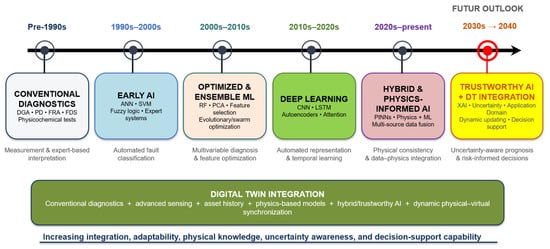
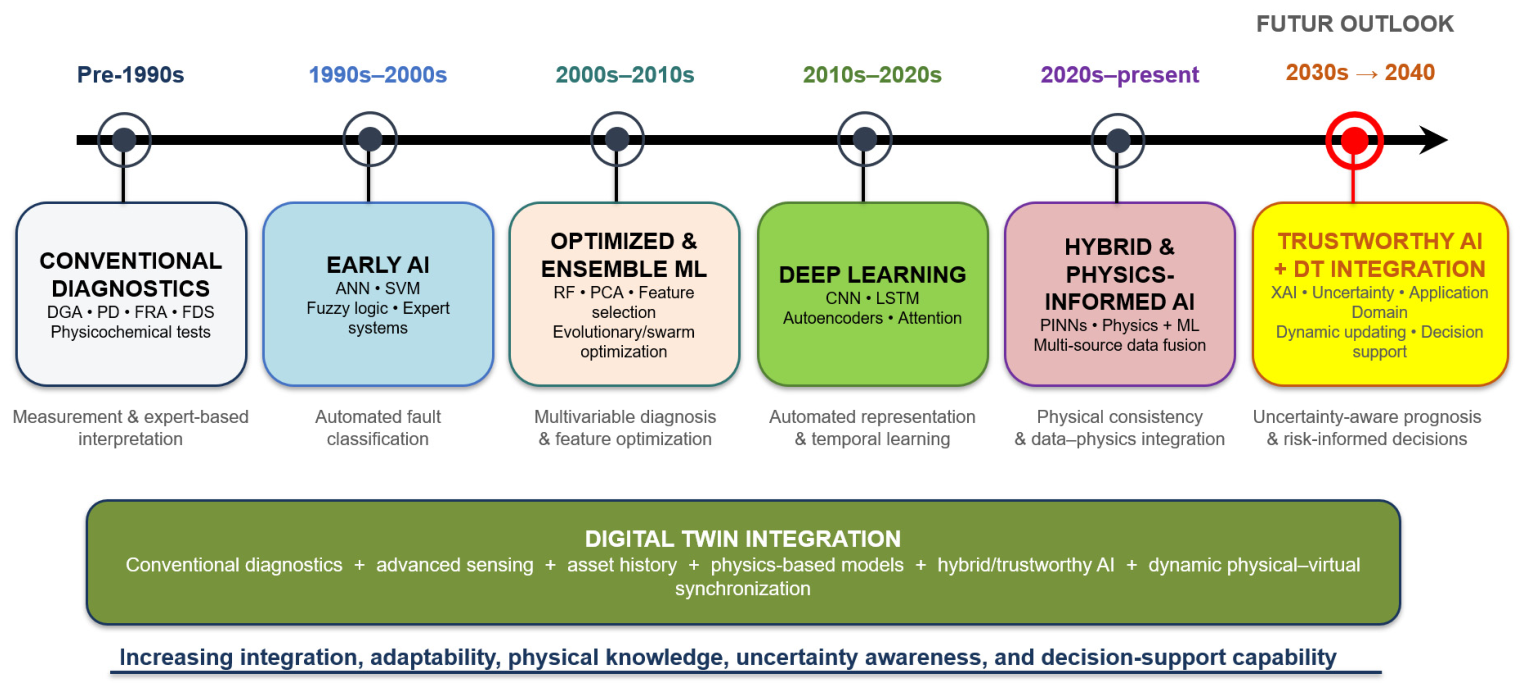
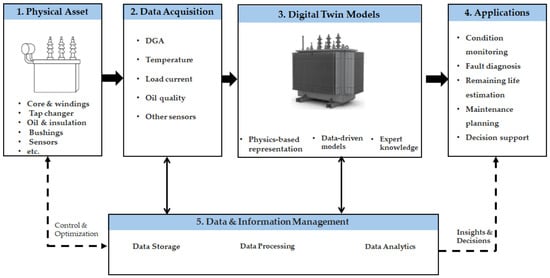
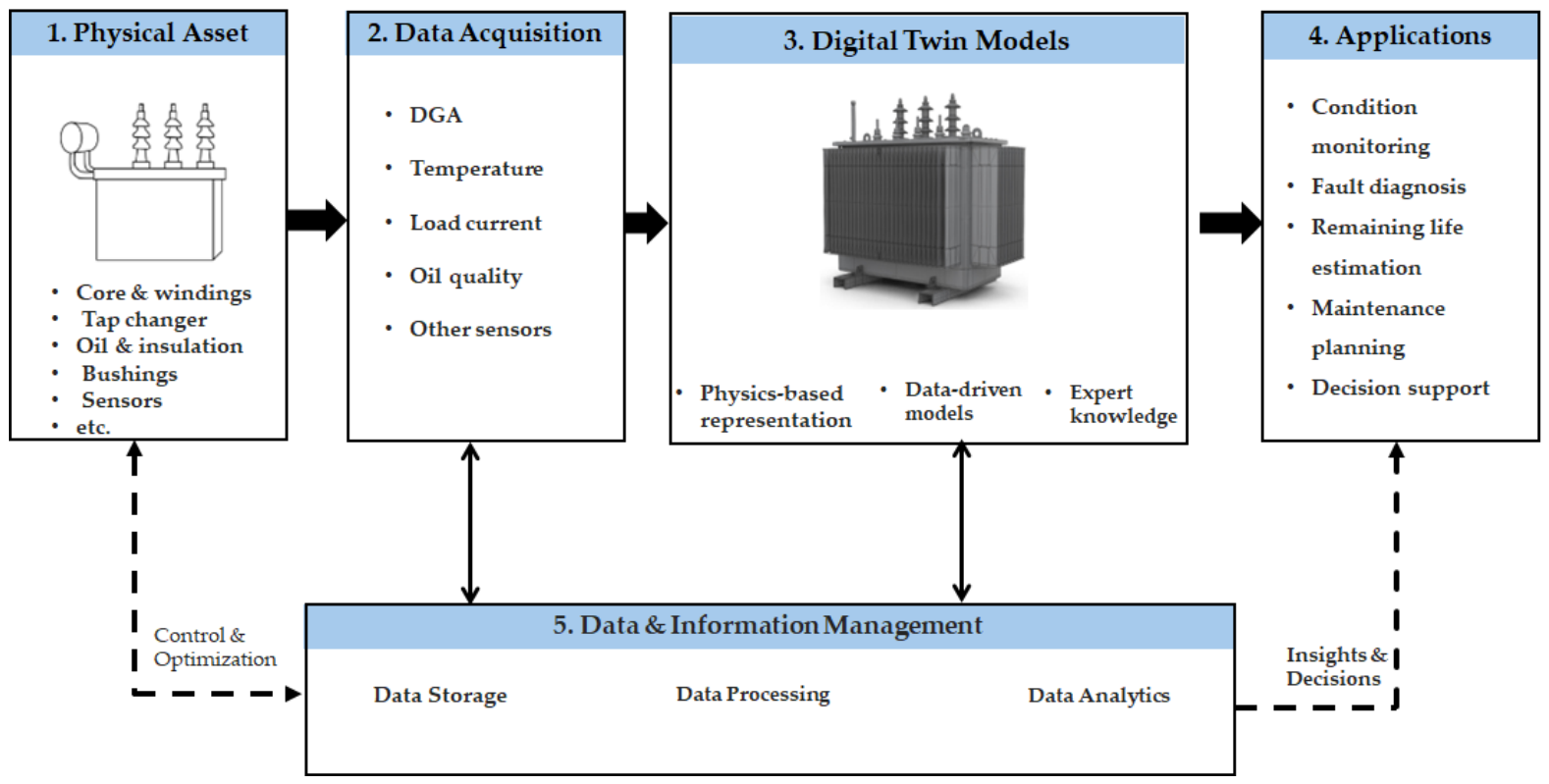
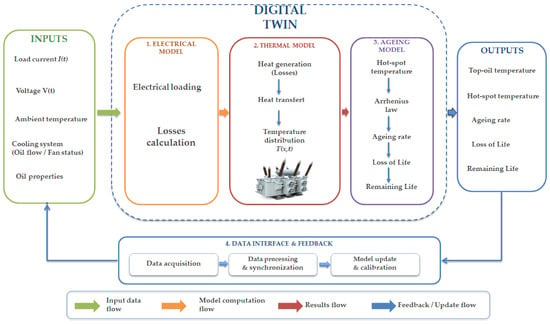
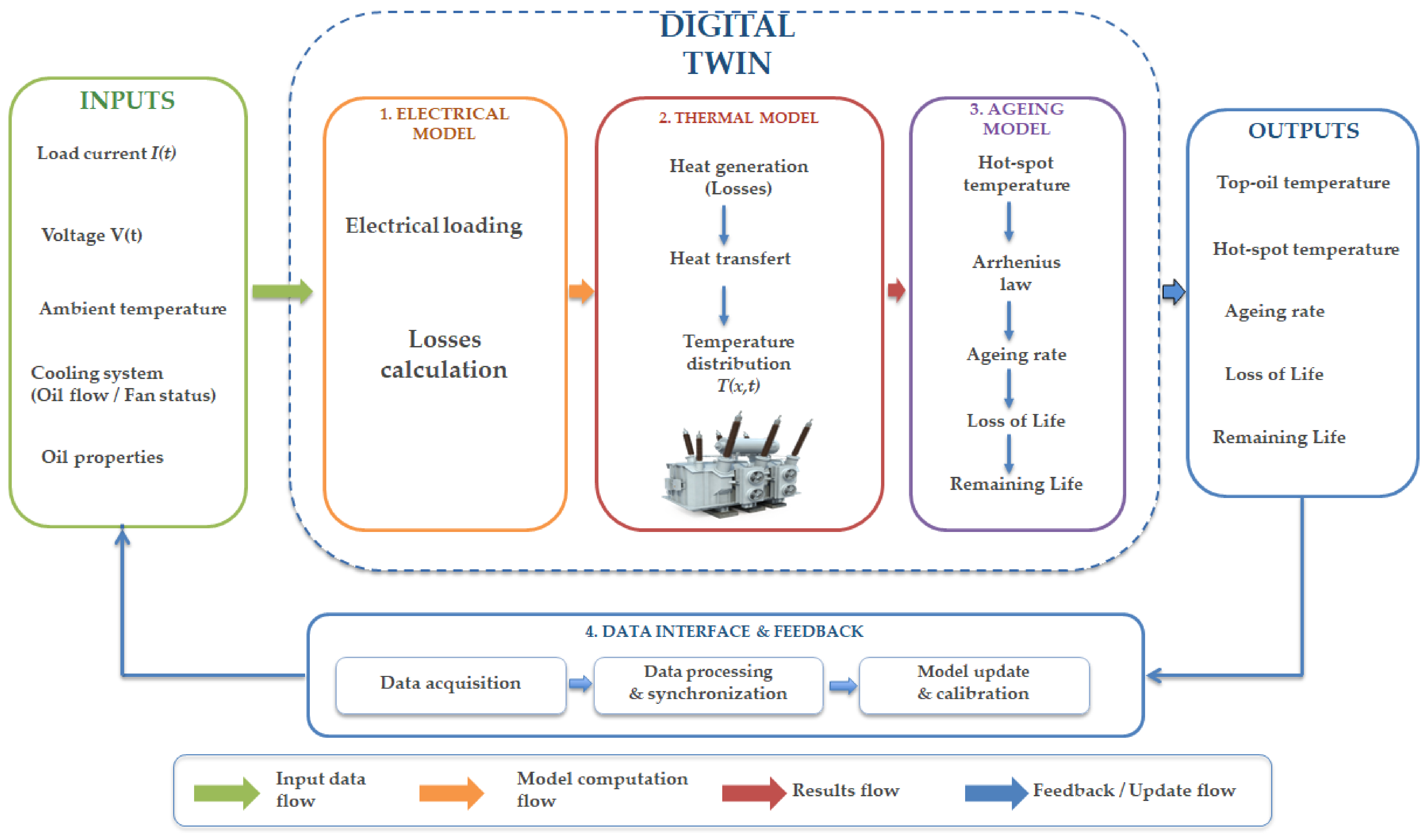
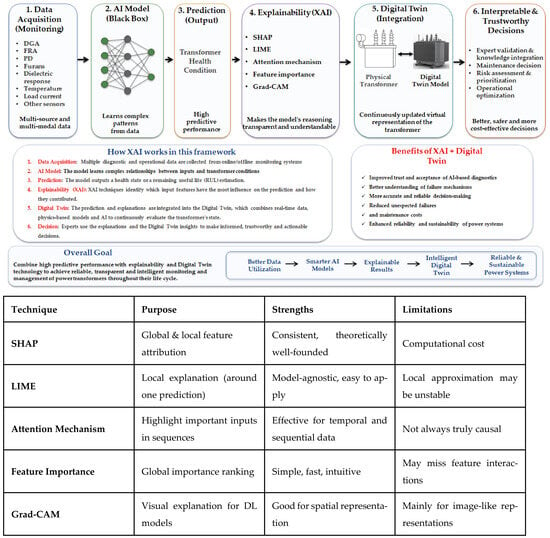
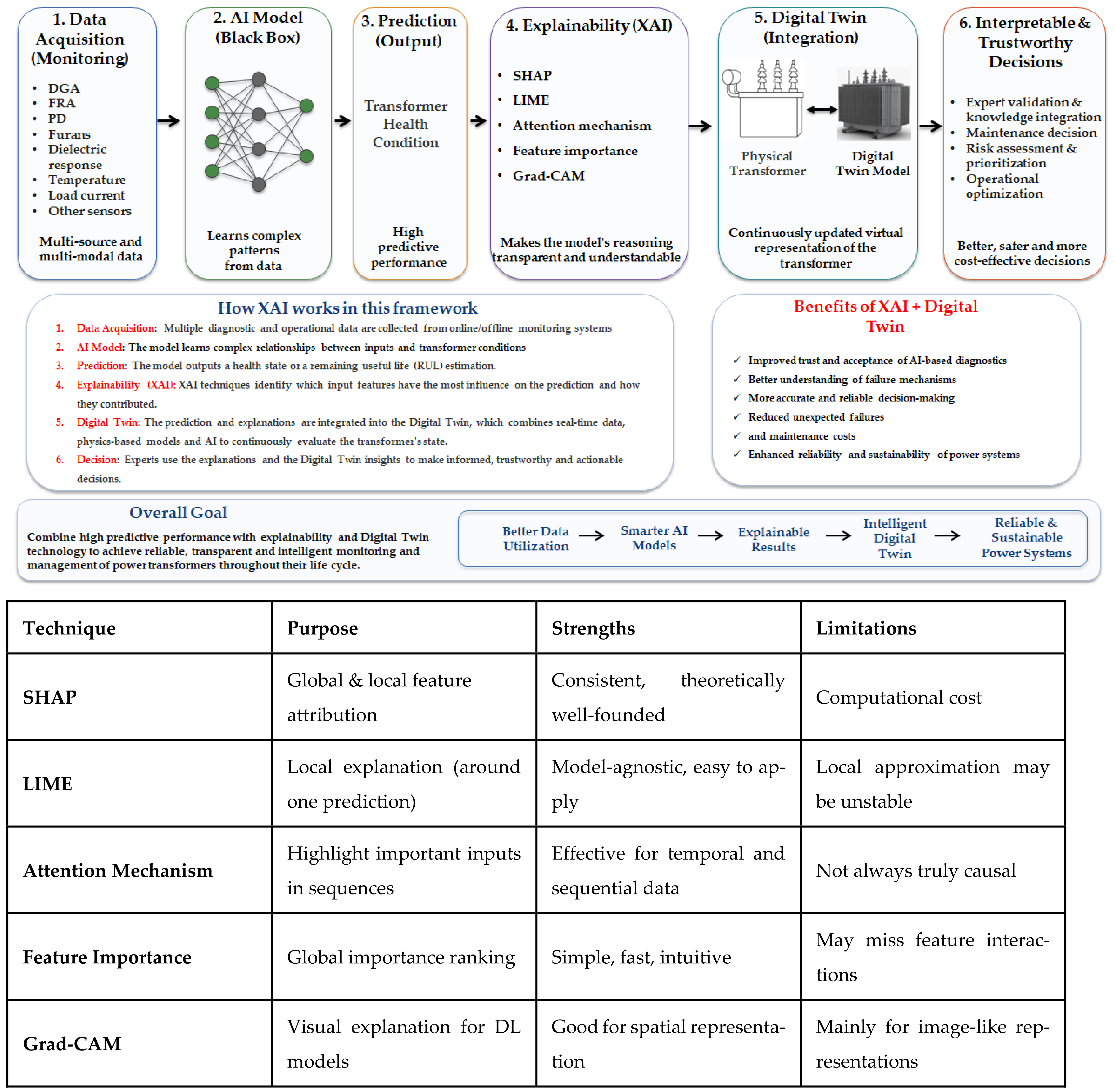

Disclaimer/Publisher’s Note: The statements, opinions and data contained in all publications are solely those of the individual author(s) and contributor(s) and not of MDPI and/or the editor(s). MDPI and/or the editor(s) disclaim responsibility for any injury to people or property resulting from any ideas, methods, instructions or products referred to in the content. |
© 2026 by the authors. Licensee MDPI, Basel, Switzerland. This article is an open access article distributed under the terms and conditions of the Creative Commons Attribution (CC BY) license.