


Abstract
As the core technology of the new energy revolution, lithium-ion batteries have broad development prospects and significant strategic importance. With continuous improvements in energy density, enhanced safety, and breakthroughs in fast-charging technology, lithium-ion batteries will play a more substantial role in fields such as new energy vehicles and energy storage. Nevertheless, the development of the lithium-ion battery industry still faces safety issues related to thermal runaway risks. The intense exothermic reactions during thermal runaway can release flammable gases, potentially leading to uncontrolled combustion or explosions, thereby posing major safety threats. This paper reviews the analysis of gas composition and patterns during lithium-ion battery thermal runaway under different conditions, as well as research on gas explosion characteristics. It introduces advanced methods for gas detection and suppression during thermal runaway and summarizes studies on the chemical kinetic mechanisms and predictive models of gas generation during thermal runaway. These studies provide a scientific basis for improving the reliability of renewable energy storage systems and formulating and refining battery safety standards.
1. Introduction
The escalating global demand for renewable energy sources intensifies the imperative to reduce reliance on fossil fuels. Lithium-ion batteries, benefiting from high energy density and extended cycle longevity, are emerging as the predominant power source for electric vehicles and energy storage systems [1,2,3,4,5,6,7,8]. Nevertheless, under abusive conditions, including thermal, electrical, and mechanical stresses, along with their synergistic effects, lithium-ion batteries are susceptible to critical safety hazards, typically exhibiting thermal runaway (TR) [9,10,11,12,13,14,15,16,17,18,19,20,21]. The violent exothermic reactions during TR release combustible gases, potentially triggering uncontrolled combustion or explosions, thereby posing substantial safety threats. Consequently, comprehensive research on the compositional analysis and concentration of TR-generated gases, flammability boundary investigations, flame-retardant additive development, and proactive detection strategies are paramount for ensuring lithium-ion battery system safety.
Contemporary time-resolved X-ray imaging techniques have enabled micron-scale visualization of internal features under abuse conditions, encompassing electrode displacement, gas cavity formation, and structural failure [22,23,24,25,26,27,28,29]. Most such studies are performed in synchrotron facilities, where exceptional photon flux and detector capabilities achieve sub-millisecond temporal resolution [30,31,32,33,34]. However, the confined field of view of these experiments, typically limited to millimeter-scale battery cross-sections, restricts analysis to small batteries or localized regions of larger units. Thermal runaway persists as a pivotal safety challenge for lithium-ion batteries, underscoring the necessity for advanced diagnostics to elucidate its dynamic progression for early intervention.
Many studies have focused on the impact of the state of charge (SOC) on the thermal runaway characteristics and gas explosion performance of lithium-ion batteries. However, existing research predominantly concentrates on single-stage thermal runaway analysis, specific temperature points, and final gas composition analysis, failing to systematically investigate the mechanisms of gas production at each stage of thermal runaway under different SOC conditions. This limitation makes it difficult to reveal the complete evolution law of thermal runaway gas generation. Additionally, research on the dynamic characteristics of TR gas production and its associated fire and explosion risks remains in its early stages. The thermal runaway process of lithium-ion batteries releases large amounts of flammable gases. The heat released during gas combustion can cause neighboring batteries to overheat and fail, triggering a chain reaction of thermal runaway in multiple cells. This may lead to large-scale battery failure and escalate into violent explosions. Therefore, determining the explosion characteristics of gases produced during thermal runaway and effectively assessing the hazardous consequences of thermal runaway are critical technical pathways for promoting the safe use of power lithium-ion batteries.
The combustion of electrolyte vapors and battery venting gases (BVG) poses a severe risk of thermal runaway or explosions in lithium-ion batteries, underscoring the critical need for flame inhibition strategies. Introducing flame retardants into the electrolyte system has emerged as a promising approach to mitigate this issue. These additives can significantly suppress flame jet propagation without compromising the battery electrochemical functionality. The mechanism involves the thermal breakdown of retardants, which releases intermediate compounds capable of instantaneously neutralizing combustion-derived free radicals, thereby disrupting the flame propagation chain. Nevertheless, existing studies on electrolyte-based flame retardants predominantly depend on qualitative combustion assessment methods.
This paper reviews the analysis of gas composition and patterns during thermal runaway in different lithium-ion batteries under various conditions, as well as studies on gas explosion characteristics. It introduces multiple advanced methods for gas detection and suppression during thermal runaway and summarizes research on the chemical kinetic mechanisms and predictive models of gas production during thermal runaway. The aim is to comprehensively outline the research progress in the field of gas production during lithium-ion battery thermal runaway, providing a foundation for future studies in lithium-ion battery safety.
2. Analysis of the Gas Production Process and Gas Composition During Battery Thermal Runaway
The gas generation issue in lithium-ion batteries is one of the key problems affecting battery safety and lifespan [35]. When a lithium-ion battery approaches thermal runaway, the increase in internal gas leads to rising pressure. Once the pressure reaches the release threshold of the safety valve, it opens, causing battery venting and gas release [36,37,38,39]. If the released gas reaches its explosive limit range and comes into contact with sufficient oxidizers, ignition by high-temperature materials from thermal runaway will trigger gas combustion and explosion.
Thermal runaway in lithium-ion batteries occurs when the battery undergoes mechanical abuse, thermal abuse, or electrical abuse, triggering exothermic chain reactions between electrode materials and electrolytes. This leads to uncontrolled temperature rise, ultimately resulting in combustion or explosion [40]. The main side reactions in this process typically include the decomposition of the solid electrolyte interphase (SEI), reactions between the anode and electrolyte, separator melting, decomposition of cathode materials, electrolyte reactions, and binder-related reactions [41,42,43], accompanied by significant heat and gas generation. The combustible gases generated due to battery aging and short circuits mainly include C2H4, CO2, O2, CO, CO2, and HF. The specific reaction processes are as follows:
(1) The decomposition of the SEI film generates C2H4, CO2, and O2.
(2) The reaction between the anode and the electrolyte produces a series of hydrocarbon compounds.
(3) The decomposition of cathode materials releases a significant amount of O2.
(4) Electrolyte reactions involve solvent oxidation and lithium salt decomposition, producing gases such as CO, CO2, and HF.
(5) The reaction of binders like PVDF generates H2.
2.1. Gas Generation During Thermal Runaway Caused by Thermal Abuse
Qian et al. [44] conducted thermal runaway experiments on a 50 Ah lithium iron phosphate (LFP) battery. The results showed that after the safety valve opens, the LFP battery experiences electrolyte and gas venting, with a secondary eruption occurring approximately 20 min later. The thermal runaway process releases about 4.5 mol of gas, primarily consisting of CO2, CH4, H2, and CO as shown in Figure 1. Wang et al. [45] investigated the differences in gas generation behavior during thermal runaway of LFP batteries at different states of charge. It illustrates the gas temperature variations at different heights above the safety valve outlet for batteries at 50% SOC and 100% SOC after thermal runaway. For the 50% SOC battery, the gas temperature remained above 50 °C for about 500 s, with a relatively lower peak temperature of 173.2 °C. In contrast, the 100% SOC battery had a shorter duration of high-temperature gas but a higher peak temperature of 325.7 °C. Additionally, the thermal runaway flame persisted longer in the 50% SOC battery, though the total heat released during combustion differed by only 5.18 MJ between the two SOC levels. Liu et al. [46] found that 50% SOC LFP batteries do not produce H2 during thermal runaway, while the generation of highly toxic CO and HF increases with SOC. Further, Liu et al. [47] studied the thermal runaway behavior of a large-capacity 243 Ah LFP battery at different SOC levels and compared the effects of ignition on the thermal runaway process. The study revealed that the production of HCl and NH3 gases during combustion is independent of SOC, while other gases increase with SOC. Moreover, ignition accelerates the process from safety valve opening to thermal runaway compared to flame-free combustion, exacerbating the severity of thermal runaway.
Figure 1.
Flammable gas composition of the vent gases [44].
The energy density of the battery itself significantly influences its gas generation behavior during thermal runaway. In a study by Wang et al. [48], Batteries A and B both used LiNi0.9Co0.05Mn0.05O2 as the cathode material, with Battery A having lower capacity but higher energy density than Battery B. The results showed that the gas concentrations during thermal runaway for both batteries, ranked from highest to lowest, were CO, CO2, H2, C2H4, and CH4, with total venting time lasting 32 s. However, Battery A exhibited a higher pressure peak, indicating greater explosion risk. Additionally, it took only 1 s for the safety valve to open and fill the laboratory with smoke, and Battery A, with higher energy density, showed more severe thermal runaway and more pronounced flame jet. Furthermore, Wang et al. [49] found that higher energy density in NCM (Nickel Cobalt Manganese) and LFP batteries leads to higher CO concentrations and lower H2 concentrations during thermal runaway. Compared to NCM cathodes, the Lix(Ni0.80Co0.15Al0.05)O2 (NCA) cathode contains aluminum, which inhibits structural collapse at high SOC, improving cycling stability [50]. However, NCA batteries have a much higher heat release rate during thermal runaway than NCM batteries [51], indicating poorer thermal stability. Golubkov et al. [52] found that fully charged NCA batteries undergo particularly violent thermal runaway when heated, reaching a maximum temperature of 1075 °C and releasing up to 317 mmol of gas. In contrast, fully charged LFP batteries experience milder thermal runaway, with a peak temperature of only 448 °C and significantly less gas released. When the SOC is reduced to 0%, thermal runaway does not occur even when heated to around 250 °C, demonstrating that both NCA and LFP batteries require charging to trigger thermal runaway. Additionally, NCA batteries produce more CO and H2 during thermal runaway than LFP batteries, and their generation increases with SOC. Wang et al. [53] discovered that compared to LFP batteries, NCA batteries have a lower lower flammability limit (LFL) and wider flammability range (RF) for post-thermal runaway gases, resulting in a higher flammability hazard index. Furthermore, using CO2 as a diluent can effectively reduce the combustibility of thermal runaway gases, thereby enhancing battery safety.
Qian et al. [54] conducted gas generation research on NCM811 lithium-ion batteries at 100% SOC and found that when the battery temperature approaches uncontrollability, the heating rate and gas generation rate do not exhibit a linear relationship. The opening of the internal safety valve depends on the pressure generated by the gas inside. Real-time monitoring of gas release during lithium-ion battery thermal runaway reveals that the electrolyte solution is the primary component of gas vented from the battery before thermal runaway [55]. The electrolyte occupies a significant portion of the lithium-ion battery, and its instability stems from the solvent and lithium salt. Nearly all chemical reactions occurring in lithium-ion batteries are related to the electrolyte solution [56]. Currently, commercial batteries predominantly use lithium hexafluorophosphate (LiPF6) salt solutions due to their excellent conductivity, but they readily decompose at high temperatures, releasing toxic and corrosive gases [57]. Kerr et al. [58] determined that LiPF6 begins decomposing at approximately 80 °C. Once decomposition occurs, it releases toxic gases such as HF and flammable gases like CO, CH2, and C2H4. Simultaneously, the various chemical reactions involved release substantial heat, causing lithium-ion batteries to swell and leak.
Xie [59] conducted experimental studies on the thermal runaway phenomena and combustion properties of venting gases emitted from high-capacity lithium-ion batteries across varying states of charge (SOC). A commercially available 280Ah LiFePO4 cathode prismatic cell was subjected to thermal runaway via external heating in an enclosed test chamber, with periodic gas sampling performed using gas chromatography-mass spectrometry (GC-MS). The findings revealed a marked escalation in TR intensity when SOC surpassed 50%. Comparative analysis of 25%, 50%, and 75% SOC conditions revealed that the peak battery temperatures were 92.3 °C, 251.1 °C and 330.7 °C, accompanied by respective gas emission increments of 95.8 L, 275.7 L and 713.1 L. A total of 15, 19, and 36 gas components were identified at SOC levels of 25%, 50%, and 75%, respectively. High SOC conditions are characterized by diminished CO2 levels and heightened H2 concentration. Explosion limit assessments showed that 25% and 50% SOC conditions had similar lower explosion limits, which were slightly higher than that of 75% SOC. In contrast, their upper explosion limits were much greater than the 4.7% to 6.6% range for 75% SOC. Among these, the 50% SOC condition posed the highest explosion risk for gas mixtures.
A detailed examination of venting gas composition plays a pivotal role in unraveling and isolating the intricate chain reactions associated with thermal runaway processes. The molar distribution proportions of gases emitted from the battery upon completion of 25–75% SOC tests demonstrate consistent core components despite SOC-dependent variations in specific species. During the heat-releasing process, lithium interacts with hydrocarbon intermediates formed through electrolyte decomposition, resulting in enhanced CH4 generation. Moreover, a pronounced H2 concentration spike was detected in the reaction’s final stages, markedly intensifying the explosion hazard. Furthermore, prolonged elevated temperatures additionally promote H2 buildup, heightening the probability of gas-phase deflagration.
2.2. Gas Generation During Thermal Runaway Caused by Electricity Abuse
Chu et al. [60] conducted experimental research on the gas generation characteristics of LFP batteries under overcharging conditions. The results showed that the primary gas products during thermal runaway of LFP batteries are CO, H2, CO2, hydrocarbons, and a significant amount of electrolyte vapor, with H2 and CO2 being the most concentrated. Additionally, gas sensors first captured H2, followed by CO and CH4. The detection of H2 occurred 271 s earlier than smoke and 579 s before thermal runaway onset. Therefore, capturing characteristic gases like H2 enables early warning of battery thermal runaway. Wang et al. [61] compared the venting behavior differences in an 86 Ah LFP battery under overcharging and overheating conditions. The results indicated that electrolyte evaporation is the main cause of safety valve opening during overheating, while overcharging triggers venting due to increased gas from internal side reactions. The total gas production under overheating was higher than under overcharging. The XFED (the critical concentration of irritant gas) peak of mixed gases under overheating was significantly higher than under overcharging, indicating greater gas toxicity during overheating. However, before thermal runaway, the XFED of mixed gases was <1 under overheating but >1 under overcharging (1211 s prior). This suggests that even without thermal runaway, vented gases under overcharging pose non-negligible toxicity risks.
Qian et al. [62] investigated the thermal runaway characteristics of cylindrical LFP batteries at different charging rates (0.5 C, 1 C, 1.5 C, and 2 C). Overcharging at 2 C posed the highest thermal runaway risk, with the total heat generation being the highest. The XFED value of smoke from thermal runaway at 2 C reached 0.49, meaning that thermal runaway of just two batteries could cause severe health damage. Additionally, H2 and CO content increased significantly with charging rate, while CO2 decreased. The lower explosion limit (LEL) of mixed gases also decreased with higher charging rates, indicating elevated explosion risks at high rates. Han et al. [63] studied the gas generation characteristics of 18650-type NCM111 batteries during thermal runaway triggered by high-temperature overcharging. The results demonstrated that overcharging at high temperatures exacerbates thermal runaway hazards: the critical temperature for thermal runaway decreases, total heat and gas production increase, and the proportion of flammable gases (H2, CO, CH4) rises significantly.
2.3. Gas Generation During Thermal Runaway Caused by Mechanical Abuse
Friedrich et al. [64] compared the gas generation characteristics of different batteries under heating and nail penetration tests in air and nitrogen atmospheres. Compared to thermal treatment, nail penetration resulted in less gas production. Additionally, thermal treatment in air produced more total gas than in nitrogen. In terms of gas toxicity, thermal treatment generated more toxic gases than nail penetration, with LFP batteries exhibiting the highest toxicity when thermally treated in nitrogen. The most toxic compounds identified included HF, COF2, acrolein, CO, formaldehyde, HCl, and electrolyte solvents. Christensen et al. [65] investigated the gas generation properties of a 56.3 Ah NCM111 battery after nail penetration. The results showed that CO was the predominant gas produced during thermal runaway, reaching approximately 1700 ppm. Both SO2 and CO peaked at 3 min post-puncture, indicating similar reaction sources. Ouyang et al. [66] studied the gas generation behavior during thermal runaway in a 156 Ah NCM523 prismatic cell and a 52 Ah NCM622 pouch cell under four triggering methods. Compared to other triggering methods, H2 and CO percentages were lowest in oven heating, while C2H4 volume was more than twice as high as in other methods. For the pouch cell, CO2 constituted over 29% of the gas volume across all triggering methods, with CO accounting for around 23%. Consistent with the prismatic cell, H2 production in the pouch cell during oven heating was 20%, lower than under other triggering methods.
Zhang [67] investigated the venting process during nail-induced thermal runaway of 18650-type Li(Ni1/3Co1/3Mn1/3)O2 batteries at different states of charge (SOCs). The study assessed the severity of TR and subsequent explosion risks for batteries at varying SOC levels. The composition of battery venting gas (BVG) after TR was measured using gas chromatography (GC) for different SOC batteries. The results indicated that for batteries with SOC ranging from 50% to 120%, the primary components of BVG were CO2, CO, and H2, followed by CH4, C2H4, C2H6, and C2H2. As SOC increased, the proportion of flammable components (CO, H2, CH4, C2H4) in BVG rose, while CO2 proportion decreased. This is attributed to more vigorous decomposition reactions during TR at higher SOC levels, leading to greater production of flammable gases and fewer inert gases.
2.4. Chemical Reaction Kinetics of Gas Generation Process
The primary chain-branching and radical-generating reactions (notably R38, R84, and R10) through CHEMKIN-based computational modeling incorporating sensitivity and yield assessments were revealed [68]. The heightened H2 and C2H4 concentrations at 3 MPa venting pressure catalyzed these reactions, resulting in amplified radical generation, expanded flammability boundaries, and enhanced flame propagation velocity. These conclusions demonstrate that elevated venting pressures intensify explosion risks. Consequently, the study proposes implementing reduced safety valve venting pressures in battery designs to constrain reactive gas accumulation, thereby mitigating environmental and public exposure to secondary explosion hazards.
Analysis of the Rate-of-Production (ROP) profiles for H, O, and OH radicals demonstrates that escalating safety valve rupture pressure markedly amplifies radical generation during gas combustion. The transition from 1 MPa to 3 MPa pressure triggers a dramatic surge in radical formation rates across all species, characterized by more pronounced peak intensities. At 3 MPa, the ROP maxima for H, O, and OH radicals attain their highest values, signifying the most active chain reaction pathways. This confirms that elevated rupture pressures intensify the BVG chain branching reactions, thereby hastening combustion, a conclusion which is corroborated by experimental data showing heightened explosion pressures and accelerated pressure rise dynamics. Furthermore, augmenting the equivalence ratio from ϕ =1.0 to ϕ =1.4 substantially boosts radical generation. Fuel-rich conditions supply greater quantities of reactive intermediates, elevating concentrations of all radical species. Among these, hydrogen atom production exhibits exceptional sensitivity to yield ratios, with the ϕ =1.4 ROP peak substantially exceeding its ϕ =1.0 counterpart. This observation corroborates established knowledge regarding elevated H radical concentrations in fuel-rich environments.
Yu [69] demonstrates the reactivity assessment of varying dimethyl carbonate (DMC) concentrations on Minimum Ignition Energy (Emin). To isolate individual reaction impacts, the sensitivity coefficients underwent normalization: the principal chain-branching reaction R10 was reduced to 20% of its original value, whereas the DMC dehydrogenation reaction’s scale factor was set at 50%. Bio-Gasification Gas (BVG) ignition operates through dual chain-branching mechanisms: R10 and R33. DMC incorporation modifies this process via dual-action modulation. Enhanced H radical consumption through R33 pathway boosts OH generation. HO2 conversion to O2 via three pathways diminishes system reactivity. Notably, DMC chain-initiating reactions exhibit pronounced negative sensitivity coefficients, indicating substantial inhibitory effects on ignition processes.
At a 0.3% DMC concentration, the sensitivity of reaction R10 maintains near-constancy, whereas R33 demonstrates pronounced promotion. The inhibitory influences of R32, R34, R35, and DMC dehydrogenation reactions remain comparatively mild, resulting in an overall net promotion. When the DMC dosage escalates to 3.5%, the R33 promotion effect persists, yet the sensitivity coefficients of DMC dehydrogenation reactions (R481 and R484) undergo substantial escalation, generating marked inhibition. This induces a transitional shift in DMC Relative Reaction Efficiency (RRE) from predominantly promoting to dominantly inhibiting characteristics.
3. Method for Gas Composition and Flow Field Analysis During Battery Thermal Runaway Process
3.1. Gas Chromatography-Mass Spectrometry and Fourier Transform Infrared Spectroscopy
Currently, two methods [70,71,72] are commonly used to determine the gas composition released during thermal runaway in lithium-ion batteries: gas chromatography-mass spectrometry (GC-MS) and Fourier transform infrared spectroscopy (FTIR). Gas chromatography-mass spectrometry (GC-MS) separates gas components in a chromatographic column based on differences in boiling points and polarity. Then, mass spectrometry analysis is performed: the separated components enter the mass spectrometer, undergo ionization and mass filtering, and gas components are identified by comparing against characteristic spectral libraries. Golubkov et al. [73] studied the gas generation characteristics of three commercial 18650-type lithium-ion batteries with cathode materials of LiFePO4, Li(Ni0.45Co0.1Mn0.45)O2, LiCoO2, and a mixture of Li(Ni0.5Co0.25Mn0.25)O2. GC/MS analysis revealed that their gas compositions were broadly similar, primarily consisting of CO, CO2, H2, CH4, C2H4, etc., with CO, CO2, and H2 accounting for over 70% of the total gas. Yu et al. [74] used a TG-FTIR-GC/MS spectrometer to investigate the pyrolysis behavior of lithium-ion battery cathode materials. FTIR analysis showed that CO2 release increased with temperature within the range of 195 °C to 928 °C, while the release of H2O and fluorine derivatives declined when the temperature exceeded 599 °C.
3.2. Optical Diagnostic Method
Gupta [27] developed a optical diagnostic method to analyze the gas release and the ignition process as shown in Figure 2. The enhanced contrast between the luminous flame and darker fragments enables clear visualization of particles within the combustion zone, with key fragments marked by arrows and enclosed in bounding boxes. In contrast to extensively researched thermal and electrical abuse conditions, the research introduces an innovative methodology to analyze the multi-dimensional signal progression during nail-puncture-triggered thermal runaway (TR) in 18650-type Li(Ni1/3Co1/3Mn1/3)O2 cells across varying states of charge [67]. The experimental setup comprised a fixed-volume combustion chamber integrated with a motorized nail penetration mechanism and a schlieren imaging system. Comprehensive monitoring captured six-dimensional signals: electrical potential, recoil force, internal pressure, thermal profile, visual records, and venting gas constituents. Advanced optical diagnostics enabled precise quantification of key venting and combustion metrics including exhaust velocity, emission trajectory, and flame front velocity. The findings reveal that across all SOC test conditions, recoil force emerges as the most consistent precursor for mechanically abused thermal runaway scenarios. Within the 50–120% SOC range, high-velocity venting induced shockwave formation adjacent to the safety valve. A critical threshold at 70% SOC triggered flame jetting phenomena, with flame propagation rates exceeding 50% SOC values by tenfold. Moreover, elevated SOC levels correlated with heightened gas output, accompanied by an expanding concentration of flammable constituents (e.g., H2 and CH4). This compositional shift progressively reduces the flammability threshold boundaries, consequently amplifying combustion risks.
Figure 2.
High temporal resolution sequences from the camera (a–e) identiffed in the thermal runaway of the cells [27].
Pfaff [75] proposed a novel laboratory diagnostic method that combines high-speed full-battery X-ray imaging with abuse testing to enable real-time analysis of internal thermal runaway dynamics. Figure 3 shows selected frames from the sequence, illustrating the spatio-temporal evolution of electrode stack decomposition driven by internal pressure and temperature gradients during internal propagation. Orange arrows indicate the subsequent dominant diffusion direction, and the spatial distribution contour is represented by red curves. In the early stage (0.8 to 1.6 s), TR propagation was predominantly concentrated in the initial nail intrusion zone, with electrode layer decomposition advancing along the electrode stack plane surface, primarily laterally toward the venting area. Grayscale thresholding between intact and delaminated electrode regions revealed decomposition signs in 9.4%, 14.2%, and 29.4% of electrode layer areas at 1.2, 1.7, and 2.5 s, respectively. At 2.5 s (1.7 s after TR onset), a distinct structural pattern emerged, showing a secondary propagation channel beneath the venting area, distinct from the initial reaction channel formed along the left (penetrated) side of the battery (2.7 to 3.0 s). The newly formed gas channel became the primary path for material jetting, manifested as gas flow and reaction product ejection. By 3.49 s, segmentation analysis indicated 50.4% of the projected surface area showed signs of damage. The resulting propagation pattern exhibited a dendritic branching structure (3.7 to 3.9 s), a hallmark of asymmetric failure dynamics.
Figure 3.
Visualization of electrode layer decomposition during TR, based on X-ray frames (a) Spatial distribution of regions exceeding the decomposition threshold. (b) Temporal progression of decomposition across the electrode area. (c) Quantitative evolution of the total decomposed area relative to the visible electrode material [75].
3.3. Hydrogen Gas Sensor
Before thermal runaway occurs, batteries release internal gases as pressure builds up, with trace amounts of hydrogen detectable (ranging from tens to hundreds of parts per million). Gardner [76] revealed that employing chemically sensitive field-effect transistors for targeted hydrogen detection offers dependable pre-warning of imminent thermal runaway across diverse battery chemistries and abuse scenarios. It demonstrated consistent hydrogen presence in venting gases preceding thermal runaway events. Minute hydrogen detection exhibited superior reliability compared to conventional temperature, voltage, and pressure monitoring systems. In every instance where abusive conditions were terminated upon initial hydrogen detection, thermal runaway was effectively mitigated. These conclusions validate trace hydrogen sensing as an actionable early-warning mechanism for thermal runaway prevention.
Figure 4 presents comparative data on hydrogen concentration, electrical potential, and surface temperature measurements in two distinct thermal runaway scenarios: thermal overstress of a cylindrical cell and overcharge of a pouch cell. Subsequent to venting, apparent thermal efficiency declines due to cooling through electrolyte vaporization. Following venting procedures, hydrogen concentration within the test chamber persistently increases. At around 30 min, the internal reaction transitions to self-sustaining mode, accelerating the cell surface temperature rise rate. Thermal runaway occurs 23.9 min after initial hydrogen detection, while the battery in parallel with the heated one does not experience thermal runaway.
Figure 4.
Hydrogen gas measurement from lithium-ion cells prior to thermal runaway (A) Overheating a cylindrical 2170 cell. (B) Overcharging a pouch cell at 1 C [76].
The tests demonstrate that hydrogen detection serves as an actionable signal, and terminating the stress source can prevent a stressed lithium-ion battery from entering thermal runaway. Hydrogen was detected in the venting gases across all tested SOC levels, confirming its reliability as an early-warning indicator. The amount of hydrogen emitted shows a weak correlation with SOC (State of Charge). Due to differences in the test chamber used here (larger size compared to Figure 5), the initial gas cloud diffuses to a uniform value within the chamber, resulting in variations in hydrogen concentration curves.
Figure 5.
Thermal runaway mitigation with trace hydrogen detection in NCA cathode cells. The SoC of (A) 10%, (B) 50%, and (C) 100% [76].
Jia [77] investigated gas diffusion behavior during the thermal runaway process of LFP batteries through experiments and numerical simulations. The response time and gas concentration of external hydrogen and carbon monoxide detectors were tested experimentally. Simulations were used to reveal the evolution of gas diffusion inside the battery container and the effects of ventilation. The results show that the gases produced by thermal runaway of a single cell within the battery pack mainly accumulate in the upper layer of the pack, and the diffusion rate of H2 is significantly higher than that of CO. Comparing gas diffusion behavior under ventilated and non-ventilated conditions, it was found that within 10 s after the safety vent opened, the diffusion behaviors of hydrogen and carbon monoxide were similar. After 100 s, the gas concentrations gradually stabilized and began to decline. The non-uniform spatial distribution of gases also affects the calculation of gas explosion limits.
4. The Flammability of Gas Production During Battery Thermal Runaway
4.1. The Explosive Limits of Gas Generated from Battery Thermal Runaway
Based on the existing research results, Guo et al. calculated the flammability range of CEG and found that the flammability range of lithium-ion batteries increases with the rise in state of charge (SOC) [78]. Baird et al. [79] quantified the lower explosion limit (LEL) of NCM lithium-ion batteries, with its LEL range varying between 7.6% and 9.0% as SOC changes. Wang [80] et al. conducted qualitative and quantitative analyses of the combustion and explosion characteristics of gases released during thermal runaway of batteries with different cathode materials, including maximum temperature, peak overpressure, explosion index, lower and upper explosion limits, laminar burning speed, and minimum extinguishing concentration. Thermal runaway hazard ranking: NCM811 > NCM622 > NCM523 > NCM111 > LiFePO4, with NCM811 being the most hazardous among these lithium-ion batteries. The gas mixture released during thermal runaway primarily consists of CH4, H2, C2H4, CO, CO2, and C2H6. LFP batteries release gases with the highest proportion of H2 and C2H4 (up to 51%), while NCM batteries contain up to 60% CO2. Gas explosions are likely to cause severe damage and injuries.
Based on the analysis of BVG composition, Zhang [67] calculated the corresponding flammability limits. It illustrates the BVG generation volume and its upper/lower flammability limits (UEL and LEL) for batteries at different SOC levels. As SOC increases, BVG production rises: reaching a maximum of 0.18 mol at 120% SOC compared to only 0.09 mol at 50% SOC. Notably, the lower flammability limit (LFL) decreases with higher SOC, consistent with observations in the literature [81]. This trend primarily stems from the increasing proportion of H2 in BVG at elevated SOC (its high combustibility reduces the overall LFL). In contrast, the upper flammability limit (UFL) initially remains relatively stable with rising SOC before showing a slight decline [82]. The key factor driving UFL reduction is an increase in CH4 concentration because, in contrast to other flammable gases like H2 and CO, CH4 has a UFL of only 15%. When SOC rises from 50% to 120%, CH4 proportion significantly increases from 1.17% to 6.54%, while H2 and CO show less than 3% growth. This change slightly lowers the overall UFL of the BVG mixture.
Zhao [83] presents the flammable limits of combustible gases with different SOCs as shown in Figure 6. Through combined experimental and numerical analysis [84,85], Wang et al. demonstrated that DDT (deflagration to detonation transition) occurs in pouch batteries during overcharging (despite not directly capturing shockwaves). Although this study focused on single-cell testing, the results confirmed shockwave formation and indicated higher DDT risks under mechanical abuse (especially in sealed module environments). Therefore, optimizing safety valve design to reduce initial venting velocity is critical for mitigating detonation risks.
Figure 6.
Flammability limits of 18,650 lithium-Ion battery with different SOCs [83].
Chen et al. [86] found that the primary gas released from LCO (Lithium cobalt oxide) batteries after the safety valve opens is organic electrolyte vapor, and before thermal runaway occurs, the concentration of organic electrolyte vapor increases over time. When thermal runaway happens, a large amount of reactive gas is expelled. As the battery state of charge increases, more side reactions occur inside the battery, leading to a greater variety of gas products. Since an inert gas (N2) environment inhibits the oxidation of flammable gases, under the same SOC conditions, more types of gases are produced during thermal runaway in a N2 environment compared to an air environment. Calculations show that the lower explosion limit (LEL) of gases produced during LCO battery thermal runaway is lower than that of CH4, while its upper explosion limit (UEL) is higher than CH4, indicating that the explosion risk of the gas mixture produced during thermal runaway is higher than that of CH4. Wang et al. [87] studied the combustion and explosion risks of thermal runaway venting gases in 18650-type LCO batteries at different SOC levels. The results indicate that with increasing SOC, the LEL of gases from LCO battery thermal runaway tracks the alkane content, showing an initial rise followed by a decline. In contrast, the UEL tracks the unsaturated hydrocarbon content, demonstrating an initial fall followed by a rise. At a battery SOC of 50%, the LEL reaches its maximum (10.98%) while the UEL reaches its minimum (40.06%). This leads to the lowest overall risk of combustion and explosion for the gas mixture at this specific state. Dai et al. [88] compared the gas generation characteristics and explosion risks of thermal runaway between LFP and NCM batteries. The study shows that the peak temperature during thermal runaway increases in the order: LFP < NCM523 < NCM622 < NCM811 + NCM523. In terms of gas production, for LFP batteries, H2 content is higher than CO, whereas for NCM batteries, CO and CO2 account for a larger proportion, and the higher the Ni content, the greater the total content of CO and CO2, and the lower the H2 content. In terms of explosion risk, LFP batteries have a lower LEL than NCM batteries, indicating that LFP batteries pose a higher explosion risk after thermal runaway. Additionally, as Ni content increases, the explosion risk of NCM batteries decreases.
Xie [59] reveals that the Flammability Threshold (LFL) for 25% and 50% SOC conditions ranges between 10 and 14%, whereas it drops markedly to approximately 5% at 75% SOC. A diminished LFL signifies that a reduced minimum concentration of combustible constituents is sufficient to maintain combustion, thereby enhancing the mixture ignitability. The research further examines the dynamic transformation of gas composition during thermal runaway and its influence on the Upper Flammability Boundary (UFL) and global combustion characteristics. Notably, the UFL for 25% and 50% SOC maintains comparability (55–65%), with divergence manifesting exclusively in the reaction’s latter phases: the 25% SOC UFL escalates, while its 50% SOC counterpart declines, in correlation with CO2 fluctuation variations. The proliferation of inert gases attenuates flammable gas and oxygen concentrations while sequestering combustion-derived thermal energy, consequently impeding flame spread. Diminished CO2 levels augment the reactivity between flammable gases and oxygen, enabling combustion across broader concentration ranges (elevating UFL). Inversely, heightened CO2 concentrations depress the UFL. The pronounced UFL decline at 75% SOC is attributed to accelerated oxygen depletion driven by vigorous exothermic reactions, which obstructs combustion in high-density gas mixtures. Contradictorily, despite elevated thermal intensity at 75% SOC, the Fire Hazard Index (FHI) demonstrates the non-linear hierarchy, highlighting the non-monotonic correlation between SOC and combustibility. This necessitates integrated assessment of gas-phase reaction dynamics and thermal effects, rather than SOC-centric risk evaluation. Furthermore, elevated concentrations of complex hydrocarbons (e.g., C2H6 and CO) demonstrate either chemical passivity or partial combustion tendencies, collectively depressing the UFL.
The FHI is determined by the ratio of the Reactivity Fraction (RF) to the Lower Explosion Limit (LEL). A wider RF corresponds to a higher FHI. For 25% SOC, the FHI gradually rises from 3.14 to 3.48 during the main reaction phase (500 to 5300 s) but drops by 17.8% to 2.86 in the final stage, primarily due to the narrowing of the RF caused by the release of large amounts of inert gases (CO2). For 50% and 75% SOC, the FHI shows an upward trend throughout the reaction: at 50% SOC, it sharply increases from 3.72 to 4.98 (a 33.5% rise) in the final phase (4100 to 5000 s), directly linked to the higher UFL (due to increased H2 and reduced CO2) and lower LFL. At 75% SOC, the FHI starts at a lower value (due to higher LFL) but remains relatively stable during the reaction, rising rapidly from 3.13 to 3.99 (a 27.5% increase) in the final stage (2300 to 2900 s). The more intense and rapid thermal runaway at higher SOC leads to continuous temperature increases, more gas venting, and higher UFL, thereby driving up the FHI.
Sun [89] conducted a comparative assessment of the explosion hazards associated with three gas types released under varying safety valve opening pressure conditions. It demonstrates that the 3 MPa pressure setting exhibits a substantially reduced Lower Explosion Limit (LEL) compared to 1 MPa and 2 MPa configurations, alongside an elevated Upper Explosion Limit (UEL). Explosion dynamics principles establish that a diminished LEL threshold signifies ignition can occur at reduced concentrations of flammable gas, making the mixture more prone to entering the explosive range.
Zhang et al. [90] conducted research on the explosion limits of thermal runaway gases in low-pressure environments inspired by aviation applications. They collected thermal runaway gases from lithium-ion batteries under different pressures and SOC states, analyzed their compositions, and calculated the explosion limits using an improved Le-Chatelier method based on gas component concentrations. At an environmental pressure of 30 kPa, the explosion limit ranges for thermal runaway gases of lithium-ion batteries at 25% SOC and 100% SOC were 6.58% to 24.38% and 8.01% to 53.35%, respectively. At 101 kPa, the ranges were 6.08% to 22.58% for 25% SOC and 8.89% to 46.81% for 100% SOC. These results demonstrate that as SOC increases, the thermal runaway reaction becomes more intense, releasing more flammable gases and widening the explosion limit range. Lower environmental pressure during thermal runaway leads to insufficient oxygen in the surrounding air, reducing the combustion consumption of flammable gases released by the battery. Consequently, the proportion of flammable and inert gases in the air increases, further widening the explosion limit range with decreasing pressure. In summary, the potential explosion risk of thermal runaway gases in lithium-ion batteries rises with increasing SOC and decreasing environmental pressure.
4.2. Heat Release and Laminar Combustion Rate of Gas Generated from Battery Thermal Runaway
The vented gases from LFP batteries exhibit reduced flammability thresholds, elevated explosion overpressures, and enhanced explosion indices compared to other battery types [80]. The laminar combustion velocity of LFP-released gases surpasses both NCM battery emissions and pure CH4. Among NCM variants, NCM523 and NCM111 demonstrate the highest laminar flame speeds for vented gases. Fundamental analysis identifies ethylene (C2H4) and hydrogen (H2) as the primary determinants governing explosion intensity and combustion hazard severity.
Extensive research has been conducted on theoretical calculations of explosion limits for thermal runaway gases. Chu et al. [68] initially used improved theoretical models like the Le-Chatelier equation to estimate the explosion limits of mixed gases under ambient temperature and pressure. They then applied the Zabetakis equation to adjust for varying initial pressures and temperatures, studying their effects on the explosion limits of flammable gas mixtures, with results validated through actual experiments. The research shows that theoretical models like the Le-Chatelier equation provide highly accurate results for calculating the lower explosion limit (LEL), making these models suitable for estimating and analyzing explosion limits of mixed flammable gases in pressure testing environments.
The Le-Chatelier principle and the Critical Adiabatic Flame Temperature (CAFT) method when evaluating calculation approaches for explosion limits of lithium-ion battery pyrolysis gases were compared [91]. They noted that the Le-Chatelier principle may introduce errors when assessing explosion limits of battery thermal runaway gases, as this method is designed for hydrocarbon explosion limit calculations, whereas gases produced during thermal runaway include not only hydrocarbons but also hydrogen, carbon monoxide, and inert gases like carbon dioxide. On the other hand, the CAFT method is used to determine the LFL of air-flammable gas-diluent mixtures. In standard CAFT applications, the critical temperature for hydrocarbon mixtures is set at 1573 K. However, this temperature is unsuitable for hydrogen-containing mixtures, limiting the CAFT method’s applicability in calculating explosion limits for thermal runaway gases.
Researchers have explored alternative methods to refine and apply the Le-Chatelier principle. Bounaceur et al. [92] improved the CAFT method by using a weighted sum of adiabatic temperatures for each flammable gas to characterize the adiabatic critical temperature of mixed gases. Results obtained using the Bounaceur method outperformed those from unmodified Le-Chatelier and CAFT methods. Chen et al. [93] employed gas chromatography-mass spectrometry to investigate the effects of heating power and temperature on gas components during thermal runaway in LiNixMnyCozO2 lithium-ion batteries. They applied an improved Le-Chatelier formula for theoretical explosion limit calculations based on detected gas components, with experimental validation showing errors in LFL calculations below 5%. The explosion limits of thermal runaway gases decrease with increasing heating power and peak temperature, heightening the explosion risk of these gases.
The flammability limits of gaseous mixtures in air fundamentally reflect the equilibrium between enthalpy release and thermal dissipation within the system [87]. The combustive energy of flammable gases can be quantified via oxygen consumption, which is mathematically equivalent to the total thermal energy lost by the gas-air system. This energy balance principle governs the reaction limit state at the UEL, justifying the adoption of the oxygen consumption method for its determination.
The oxygen consumption method is based on the principle that regardless of the reaction process, the heat released per unit mass of oxygen consumed remains approximately constant. This principle not only applies to most oxygen-based strong oxidation-reduction reactions but also to the reaction limit state at the UEL. Theoretical calculations of the explosion limits for thermal runaway gases reveal that the UEL of lithium-ion battery thermal runaway gases initially decreases and then increases with rising battery SOC. This trend is related to differences in CO and flammable hydrocarbon content produced during thermal runaway at different SOC levels. At low SOC, reactions are more complete, with the pyrolysis gas primarily consisting of CO2, while CO and flammable hydrocarbons account for a smaller proportion. At high SOC, thermal runaway reactions are more intense and incomplete, resulting in higher CO and lower CO2 production. Additionally, more reactive lithium ions at the anode undergo reduction and nucleophilic reactions with the electrolyte, generating more unsaturated hydrocarbons. This further expands the explosion limit range of thermal runaway gases.
If the gases generated during thermal runaway in lithium-ion batteries are not effectively vented, the heat released from combustion of these gases in the presence of ignition sources or high-temperature objects can cause heating and failure of adjacent batteries, potentially leading to large-scale battery failure and severe explosions. Quantitative assessment of the consequences of hazardous gas explosions serves as critical input for aircraft system safety design. Currently, research on the evaluation of hazardous consequences for lithium-ion batteries remains limited.
Zhang et al. [94] induced thermal runaway in lithium-ion batteries at different states of charge (SOC) under N2 environments through external heating and proposed using a gas explosion index-based lithium-ion battery venting index for quantitative analysis of gas explosion hazards. Wang et al. [95] developed a safety assessment scoring system based on battery overcharging behavior and thermal runaway characteristics, evaluating battery safety using four parameters: thermal runaway onset time, duration of maximum temperature difference (MTD) exceeding 10 °C, peak thermal runaway temperature, and maximum temperature rise rate. Kim et al. [96] primarily used cone calorimeters to measure heat release rates related to thermal runaway fire risk assessment and introduced a comprehensive parameter incorporating peak heat release rate and duration to evaluate fire and explosion hazards. Shan et al. [97] assessed lithium-ion battery thermal runaway risks using a risk matrix method, analyzing shockwave overpressure from thermal runaway explosions, where pressure represented consequence severity and temperature represented probability.
Somandepalli et al. [98] experimentally measured explosion range and severity using a 20 L combustion chamber, finding that lithium-ion batteries have a wider explosion limit range than methane. By ignoring gas-air mixtures in the chamber with chemical igniters, they determined the explosion limits of thermal runaway gases, with the lower explosion limit at approximately 6.3%. The open-source chemical kinetics modeling tool Cantera is used to estimate the lower explosion limit, laminar flame speed, and maximum overpressure of lithium-ion batteries, quantitatively assessing their explosion hazards [78]. Li et al. [99] externally heated NCA (LiNi0.8Co0.15Al0.05O2) and LFP lithium-ion batteries to induce thermal runaway, studying the combustion and explosion characteristics of released gases, including flammability limits, flammability hazard index (FHI), and fire safety thresholds. The FHI was defined as the ratio of the difference between upper and lower flammability limits to the lower limit.
Additionally, Li et al. [99] based on 29 thermal runaway tests conducted by Essl et al. [100], Golubkov [52], Lammer et al. [101], and Zhang et al. [102] in inert atmospheres, quantitatively reported the three fire boundaries of the thermal runaway gas fire triangle for four mainstream battery types. The study found that ignition temperature varies significantly depending on ignition source type. Therefore, controlling SOC and/or selecting appropriate battery types can alter the concentration of gas-oxygen mixtures required for thermal runaway combustion, effectively reducing the probability of ignition in practical applications.
4.3. Ignitability and Explosion Characteristics of Gas Generated from Battery Thermal Runaway
Hu [103] developed a three-dimensional simulation model with integrated multi-venting structures to comprehensively understand the explosion risks of thermal runaway in lithium-ion batteries within containers. Through numerical analysis, the study focused on the venting overpressure risks caused by interactions between battery obstacles and venting structures. The results showed that different areas of the container exhibited single-peak, double-peak, and triple-peak configurations composed of peaks Pb, Pcv, and Pmf. The central and ends of the container were dominated by Pmfa and Pcv peaks, significantly impacting explosion hazards. The external triple-peak structure was primarily influenced by the peak external explosion overpressure Pee. When one end of the container was ignited, the Pee peak at the other end became more pronounced with a lagging effect. The real hazard of venting dynamic pressure stemmed from energy accumulation, and external explosions further delayed the decline in external dynamic pressure, expanding the hazard range.
Yu [69] investigated the forced ignition properties of Battery Venting Gas (BVG) across varying State-of-Charge (SOC) conditions by evaluating the Minimum Ignition Energy (Emin) and Adiabatic Flame Temperature (Tad) at three equivalence ratios (ϕ: 0.5, 1.0, 1.25). The findings reveal that lean-mixture conditions (ϕ = 0.5) yield the globally minimal Emin values for BVG/air mixtures, with Emin progressively escalating as ϕ rises to reach its peak at rich conditions (ϕ = 1.25). A critical observation across all ϕ ranges demonstrates that Emin declines with ascending SOC, attaining its nadir at 132% SOC before reversing this trend at higher SOC levels. This inflection point stems from elevated CO2 concentrations in BVG at 143% SOC, which diminish combustion heat output and consequently elevate the energy threshold required for ignition.
The data confirm that Tad reaches its minimum under lean conditions (ϕ = 0.5) and maximum at stoichiometric ϕ = 1.0. Across all ϕ scenarios, Tad exhibits consistent growth with SOC, peaking at 132% SOC. In synthesis, ascending SOC correlates with both decreasing Emin and increasing Tad, reflecting substantial enhancement in mixture reactivity. Lean conditions (ϕ = 0.5) maintain the overall lowest Emin thresholds, suggesting that BVG diffusing into ambient air near its lower flammability limit exhibits minimal ignition resistance, thereby presenting heightened susceptibility to accidental ignition.
5. Gas Combustion Suppression and Gas Production Prediction Model
5.1. Gas Combustion Suppression
Wang [104] demonstrates the laminar flame speed (LFS) and flame temperature (AFT) of venting-air mixtures with added HFC-227ea fire extinguant under ambient conditions. When ϕ = 0.7–1.2, the LFS of venting-air mixtures decreases with increasing Xa, with varying rates of reduction. This is due to the competitive relationship between the exothermic reaction of small amounts of HFC-227ea increasing the heat release rate and the inhibitory effect of fluorine-containing substances on radical chain termination reactions. The LFS on the fuel-rich combustion side is more sensitive to lower Xa values. At Xa = 0.01, under conditions of ϕ = 0.7, 0.8, 0.9, 1.0, 1.1, and 1.2, the LFS decreases by 15.36%, 16.08%, 17.20%, 18.96%, 21.55%, and 24.80%, respectively. Additionally, as Xa continues to increase, the rate of LFS reduction gradually stabilizes, as the inhibitory effect of fluorine-containing substances becomes dominant.
At low dimethoxy methane (DMC) concentrations (0.3%), incremental DMC addition results in diminished Minimum Ignition Energy (Emin) and elevated Adiabatic Flame Temperature (Tad). Conversely, when DMC content surpasses this threshold, continued augmentation triggers a systematic Emin increase and Tad reduction. This demonstrates that DMC exerts a mild promotion effect on ignition below 0.3% concentration, transitioning to inhibition at higher levels. To elucidate DMC influence on forced ignition dynamics, the temporal variations in Chemical Heat Release (Qchem) and Ignition Zone Center Temperature (Tcent) across DMC concentrations were present. It confirms Qchem positive correlation with DMC content. A notable paradox: 0.3% DMC yields marginally higher Tcent than the pure BVG/air system, while 3.5% DMC produces lower Tcent. This indicates that despite Qchem enhancement at higher DMC concentrations, the simultaneous Tcent depression manifests an inhibitory mechanism. Li [105] developed a kinetics model based on elementary reactions and identified the key inhibition pathway. Phosphorus-containing substances reduced the concentration of active free radicals through an inhibitory cyclic mechanism, thereby suppressing the overall reaction rate, as shown in Figure 7 and Figure 8.
Figure 7.
Laminar flame speed and flame temperature of vent gas/air [105].
Figure 8.
Variations in chemical heat release and ignition zone center temperature of BVG with different DMC ratios [105].
5.2. Gas Production Prediction Model
Establishing thermal runaway models for lithium-ion batteries to investigate their gas generation characteristics can reduce experimental costs, improve time efficiency, mitigate hazards and accident risks, while offering excellent flexibility and scalability [106]. Weber et al. [107] developed a chemical predictive model for lithium-ion battery thermal runaway to assess the impact of battery capacity on temperature evolution and gas generation processes under thermal runaway conditions. The study found that the model could predict peak temperatures (with an error of ±15 °C) and onset temperatures (±10 °C) for all batteries with capacities ≥15 Ah. Experimentally measured gas release during thermal runaway was 2.39 L/Ah, whereas the model predicted 2.79 L/Ah, demonstrating its ability to accurately forecast gas generation within a small error margin. Additionally, the model revealed that batteries with higher energy density produce more gas, while those with higher power density exhibit elevated hydrocarbon content and CO2/CO ratios but lower H2 concentrations. Weber et al. [108] coupled battery thermal resistance with gas generation during thermal runaway, proposing a 3D heat transfer model for pouch cells. The results showed that total thermal resistance of gas production increases linearly with gas volume until the safety valve opens. Santhanagopalan et al. [109] numerically simulated venting and gas generation behaviors during thermal runaway in 18650-type NCA batteries. The study indicated that internal pressure rises with SOC (reaching up to 4.25 bar at 100% SOC), and at higher SOC levels, heat from internal gas-phase reactions dominates.
6. Conclusions
1. This paper reviews the thermal runaway process of lithium-ion batteries under conditions such as mechanical abuse, thermal abuse, and electrical abuse. This includes the decomposition of the solid electrolyte interphase, reactions between the anode and electrolyte, separator melting, decomposition of cathode materials, reactions of the electrolyte and binder, among others, which generate various flammable gases such as H2, C2H4, O2, CO, and HF.
2. The review also examines the analysis of gas production characteristics during thermal runaway using methods like gas chromatography, infrared spectroscopy, optical diagnostics, and hydrogen sensors. These approaches provide new insights into the mechanisms of thermal runaway and can serve as scalable diagnostic tools for assessing structural failure and safety testing in large-format lithium-ion batteries. Additionally, they establish trace hydrogen sensing as an early actionable intelligence source for preventing thermal runaway.
3. The potential explosion risk of gases produced during lithium-ion battery thermal runaway increases with the State of Charge (SOC) and decreases in ambient pressure. H2 and C2H4 in the gas mixture are decisive factors influencing the severity of explosion and combustion hazards. The explosion limits of these gases gradually decrease with higher heating power and peak temperatures, elevating their explosion risk. The combustion of thermally runaway gases upon exposure to an ignition source or high-temperature object releases heat. If the gases are not effectively released, this heat can cause adjacent batteries to overheat and fail, potentially leading to large-scale battery failures and severe explosions.
4. The review also discusses the effects of adding fire suppressants at room temperature on the laminar flame speed and flame temperature of gases produced during thermal runaway. Developing thermal runaway models for lithium-ion batteries to study their gas production characteristics can reduce experimental costs, improve time efficiency, minimize hazards and accident risks.
Author Contributions
Conceptualization, writing—original draft preparation, writing—review and editing, Y.C. (Yong Cao); investigation, data curation, C.W., Y.C. (Yuwu Cai), J.X., X.Z. and Q.L.; resources, supervision, Y.C. (Yuming Chen) and B.L. All authors have read and agreed to the published version of the manuscript.
Funding
This research was funded by the Jiangsu Market Supervisory Authority Scientific Research Project (Grant No. KJ2024006 and KJ2025007).
Data Availability Statement
No new data were created or analyzed in this study.
Conflicts of Interest
The authors declare no conflicts of interest.
References
- Yu, M.; Hu, G.; Li, H.; Yang, D.; Liang, X.; Wang, J.; Li, C.; Yao, Y.; Diao, S.; Liu, D. Thermal runaway behaviors and microscopic reaction mechanism of lithium-ion batteries under the overcharge condition. Chem. Eng. Sci. 2026, 321, 122967. [Google Scholar] [CrossRef] [Scilit]
- Yang, J.; Ye, W.; Li, W.; Yang, Y.; Niu, J.; Xie, J.; Zhang, Q. Probabilistic multi-hazard coupling assessment framework for thermal runaway of aviation lithium-ion batteries: Integrating fuzzy logic and Monte Carlo simulation. J. Energy Storage 2026, 141, 119137. [Google Scholar] [CrossRef] [Scilit]
- Sun, X.; Sun, P.; Dong, Y.; Zheng, B. Zero-spreading of thermal runaway in lithium-ion battery modules using composite phase change firewalls. Int. Commun. Heat Mass Transf. 2026, 170, 110036. [Google Scholar] [CrossRef] [Scilit]
- Zhang, Y.; Mo, T.; Wu, X.; Yu, H.; Mao, B. Comparative study of gas generation during thermal runaway in high-capacity sodium-ion batteries and lithium iron phosphate battery for energy storage applications. J. Power Sources 2026, 662, 238780. [Google Scholar] [CrossRef] [Scilit]
- Wang, L.; Jia, S.; Yang, Z.; Huang, N.; Han, M.; Wen, B.; Xu, C.; Liu, M.; Li, Z. Non-intrusive Pd-coated fiber Bragg grating sensors for hydrogen monitoring during lithium-ion battery thermal runaway. Measurement 2026, 259, 119692. [Google Scholar] [CrossRef] [Scilit]
- Li, W.; Peng, J.; Gao, Z.; Shi, J.; Burke, A.F.; Zhao, J. Phase-resolved evaluation of thermal runaway in lithium-ion batteries via an entropy-weighted multi-criteria framework. J. Energy Storage 2026, 141, 119292. [Google Scholar] [CrossRef] [Scilit]
- Liu, J.; Jin, X.; Zhang, H.; Zhao, K.; Wang, Z. Thermal runaway and combustion of LiFeO4 lithium-ion battery induced by electric-thermal coupling abuse. J. Energy Storage 2026, 141, 119271. [Google Scholar] [CrossRef] [Scilit]
- Yang, Y.; Li, Q.; Lu, H.; Xu, K.; Yuan, C.; Li, G. Research on the ignition energy of the ejected mixture from thermal runaway of lithium-ion batteries under higher temperature. J. Loss Prev. Process Ind. 2026, 99, 105798. [Google Scholar] [CrossRef] [Scilit]
- Wang, B.; Kannan, P.; Liao, Y.-T.; Kwon, B.; Premnath, V.; Jeevarajan, J. A numerical model for simulating thermal runaway propagation between lithium-ion battery cells with detailed heat transfer analysis. Int. J. Heat Mass Transf. 2026, 256, 128073. [Google Scholar] [CrossRef] [Scilit]
- Liu, X.; Shi, D.; Ouyang, D.; Meng, D.; He, J.; Zhi, M.; Wang, X. Thermal runaway behavior of lithium-ion cells under aircraft cargo cabin conditions: Effects of state of charge, battery chemistry and capacity. J. Energy Storage 2026, 141, 119381. [Google Scholar] [CrossRef] [Scilit]
- Sun, S.; Brown, W.; Tan, X.; Rui, B.; Xiong, G.; Wang, Y.; Zeng, D.; Xu, J. Aging matters: How degradation pathways govern thermal runaway in lithium-ion batteries. J. Energy Chem. 2026, 114, 10–21. [Google Scholar] [CrossRef] [Scilit]
- Fan, H.; Zhang, J.; Zhang, G.; Jiang, L.; Jiang, W.; He, Z.; Wang, X.; Wen, Y.; Xu, N. Thermal runaway studies of power lith-ium-ion batteries under various abusive conditions: A review. Appl. Therm. Eng. 2026, 283, 128945. [Google Scholar] [CrossRef] [Scilit]
- Lin, S.; Cao, Y.; Li, Y.; Zheng, K.; Tang, Y.; Jiang, J. Combustion and explosion reaction kinetics of thermal runaway gases from three lithium-ion batteries with different metal-oxide cathodes. Fuel 2026, 404, 136256. [Google Scholar] [CrossRef] [Scilit]
- Shang, R.; Peng, S.; Long, X.; Zhu, Y.; Liu, P. Effect of charging rate on multi-dimensional signal evolution during elec-tro-thermal coupling-induced thermal runaway in lithium-ion batteries. Int. J. Therm. Sci. 2026, 220, 110344. [Google Scholar] [CrossRef] [Scilit]
- Xu, P.; Li, J.; Wang, W.; Li, J.; Zhong, B.; Lu, Y.; Zeng, R.; Cui, H.; Yu, H. Investigating overcharge-induced thermal runaway of lithium batteries using a coupled electrochemical-thermal-venting model. J. Energy Storage 2026, 141, 119266. [Google Scholar] [CrossRef] [Scilit]
- He, L.; Zheng, Y.; Tong, L.; Zhang, L.; Lin, G.; Huang, Y.; Liu, X. Thermoregulating phase-change composite separators with thermal runaway suppression for safe and high-performance lithium-ion batteries. J. Colloid Interface Sci. 2026, 702, 138825. [Google Scholar] [CrossRef] [Scilit] [PubMed]
- Li, K.; Ren, H.; Zhang, H.; Min, Q.; Yan, J.; Li, C.; Song, L.; He, Q.; Mohtaram, S. Reversible overcharge threshold and mul-ti-parameter early warning strategy for thermal runaway prevention in lithium-ion batteries. Appl. Therm. Eng. 2026, 284, 129083. [Google Scholar] [CrossRef] [Scilit]
- Li, Q.; Zhang, Y.; Mao, B.; Huang, Z. Effects of electrolyte vapor condensation on the transport characteristics of gas-aerosol ejecta from lithium iron phosphate batteries thermal runaway. J. Energy Storage 2026, 141, 119232. [Google Scholar] [CrossRef] [Scilit]
- Jiang, T.; Zhou, Z.; Wu, F.; Liu, Y.; Li, S.; Lei, S.; Bi, M. DFT study of transition metal-doped HfS2 monolayers for detection of thermal runaway gases in lithium-ion batteries. Surf. Sci. 2026, 763, 122852. [Google Scholar] [CrossRef] [Scilit]
- Li, F.; Huang, X.; Xue, F.; Zhao, J.; Cheng, X.; Zhang, H.; Fu, Y. Study on the influence of Aviation hydraulic oil leakage on the thermal runaway characteristics of Lithium-ion batteries. J. Energy Storage 2026, 141, 119435. [Google Scholar] [CrossRef] [Scilit]
- Zhou, G.; Huang, Q.; Wei, Z.; Guo, B.; Hu, Q.; Zhang, P.; Lu, H.; Zhang, Q. Multifunctional ceramic-reinforced nanocomposite hydrogel for thermal runaway propagation blocking and heat dissipation of lithium-ion battery modules. Fuel 2026, 404, 136257. [Google Scholar] [CrossRef] [Scilit]
- Heenan, T.M.; Tan, C.; Hack, J.; Brett, D.J.; Shearing, P.R. Developments in X-ray tomography characterization for electro-chemical devices. Mater. Today 2019, 31, 69–85. [Google Scholar] [CrossRef] [Scilit]
- Jin, C.; Sun, Y.; Zheng, Y.; Yao, J.; Wang, Y.; Lai, X.; Xu, C.; Wang, H.; Zhang, F.; Li, H.; et al. In situ observation of thermal runaway propagation in lithium-ion battery electrodes triggered by high-frequency induction heating. Cell Rep. Phys. Sci. 2023, 4, 101465. [Google Scholar] [CrossRef] [Scilit]
- Kong, L.; Hu, X.; Gui, G.; Su, Y.; Pecht, M. Computed Tomography Analysis of Li-Ion Battery Case Ruptures. Fire Technol. 2020, 56, 2565–2578. [Google Scholar] [CrossRef] [Scilit]
- Kisters, T.; Kuder, J.; Töpel, A.; Langkemper, R.; Nau, S.; Schopferer, S. Strain-rate dependence of the failure behavior of Lithium-Ion pouch cells under impact loading. J. Energy Storage 2021, 41, 102901. [Google Scholar] [CrossRef] [Scilit]
- Böttcher, N.; Dayani, S.; Markötter, H.; Bau, A.; Setzchen, M.; Schmidt, A.; Kowal, J.; Krug von Nidda, J. High Precision Nail-Penetration Setup for the Controlled Thermal Runaway Initiation of Lithium-Ion Cells at Very Low Temperatures. Energy Technol. 2024, 12, 2301379. [Google Scholar] [CrossRef] [Scilit]
- Gupta, V.; Dunn, M.J.; Macfarlane, A.R.W.; Xiao, T.; Farooq, A.; Masri, A.R. Analysis of ejecta ignition and velocity from 18650 Li-ion battery cells during thermal runaway. J. Power Sources 2025, 653, 237697. [Google Scholar] [CrossRef] [Scilit]
- Venturelli, M.; Broche, L.; Buckwell, M.; Pfaff, J.; Fordham, A.; Kirchner-Burles, C.; Reid, H.T.; Gedara, M.T.; Schopferer, S.; Finegan, D.P.; et al. Insights into thermal runaway mecha-nisms: Fast tomography analysis of metal agglomerates in lithium-ion batteries. J. Energy Storage 2025, 131, 117122. [Google Scholar] [CrossRef] [Scilit]
- Fransson, M.; Broche, L.; Buckwell, M.; Pfaff, J.; Reid, H.; Kirchner-Burles, C.; Pham, M.; Moser, S.; Rack, A.; Nau, S.; et al. Sidewall breach during lithium-ion battery thermal runaway triggered by cell-to-cell propagation visualized using high-speed X-ray imaging. J. Energy Storage 2023, 71, 108088. [Google Scholar] [CrossRef] [Scilit]
- Finegan, D.P.; Darcy, E.; Keyser, M.; Tjaden, B.; Heenan, T.M.M.; Jervis, R.; Bailey, J.J.; Malik, R.; Vo, N.T.; Magdysyuk, O.V.; et al. Characterising thermal runaway within lithium-ion cells by inducing and monitoring internal short circuits. Energy Environ. Sci. 2017, 10, 1377–1388. [Google Scholar] [CrossRef] [Scilit]
- Berwal, P.; Mehrotra, A.; Lee, Y.; Yoh, J.J. Dimensionless thermal safety framework for nickel-enriched lithium-ion batteries: From runaway onset to extinction thresholds. J. Power Sources 2026, 661, 238614. [Google Scholar] [CrossRef] [Scilit]
- Charbonnel, J.; Darmet, N.; Deilhes, C.; Broche, L.; Reytier, M.; Thivel, P.-X.; Vincent, R. Safety Evaluation of All-Solid-State Batteries: An Innovative Methodology Using In Situ Synchrotron X-ray Radiography. ACS Appl. Energy Mater. 2022, 5, 10862–10871. [Google Scholar] [CrossRef] [Scilit]
- Fransson, M.; Broche, L.; Reid, H.T.; Patel, D.; Rack, A.; Shearing, P.R. Investigating thermal runaway dynamics and integrated safety mechanisms of micro-batteries using high-speed X-ray imaging. Appl. Energy 2024, 369, 123070. [Google Scholar] [CrossRef] [Scilit]
- Fransson, M.; Pfaff, J.; Broche, L.; Buckwell, M.; Kirchner-Burles, C.; Reid, H.T.; Schopferer, S.; Rack, A.; Finegan, D.P.; Shearing, P.R. Exploring thermal runaway propagation in Li-ion batteries through high-speed X-ray imaging and thermal analysis: Impact of cell chemistry and electrical connections. J. Power Sources 2024, 617, 234916. [Google Scholar] [CrossRef] [Scilit]
- Teng, X.; Zhan, C.; Bai, Y.; Ma, L.; Liu, Q.; Wu, C.; Wu, F.; Yang, Y.; Lu, J.; Amine, K. In Situ Analysis of Gas Generation in Lithium-Ion Batteries with Different Carbonate-Based Electrolytes. ACS Appl. Mater. Interfaces 2015, 7, 22751–22755. [Google Scholar] [CrossRef] [Scilit]
- Zhang, Y.; Wang, H.; Li, W.; Li, C. Quantitative identification of emissions from abused prismatic Ni-rich lithium-ion batteries. eTransportation 2019, 2, 100031. [Google Scholar] [CrossRef] [Scilit]
- Finegan, D.P.; Schelkle, M.; Rack, J.B.; Tjaden, B.; Hunt, I.; Mason, T.J.; Millichamp, J.; Di Michiel, M.; Offer, G.J.; Hinds, G.; et al. In-operando high-speed tomography of lithium-ion batteries during thermal runaway. Nat. Commun. 2015, 6, 6924. [Google Scholar] [CrossRef] [Scilit]
- Wang, H.; Zhang, Y.; Li, C.; Li, W.; Ouyang, M. Venting process of lithium-ion power battery during thermal runaway under medium state of charge. Energy Storage Sci. Technol. 2019, 8, 1076. [Google Scholar]
- Zhang, J.; Long, T.; Sun, X.; He, L.; Yang, J.; Wang, J.; Wang, Z.; Huang, Y.; Zhang, L.; Zhang, Y. Mechanism investigation on microstructure degradation and thermal runaway propagation of batteries undergoing high-rate cycling process. J. Energy Chem. 2026, 113, 1013–1029. [Google Scholar] [CrossRef] [Scilit]
- Feng, X.; Ren, D.; He, X.; Ouyang, M. Mitigating thermal runaway of lithium-ion batteries. Joule 2020, 4, 743–770. [Google Scholar] [CrossRef] [Scilit]
- McKerracher, R.D.; Guzman-Guemez, J.; Wills, R.G.; Sharkh, S.M.; Kramer, D. Advances in Prevention of Thermal Runaway in Lithium-Ion Batteries. Adv. Energy Sustain. Res. 2021, 2, 2000059. [Google Scholar] [CrossRef] [Scilit]
- Wang, Z.; Zhu, L.; Liu, J.; Wang, J.; Yan, W. Gas sensing technology for the detection and early warning of battery thermal runaway: A review. Energy Fuels 2022, 36, 6038–6057. [Google Scholar] [CrossRef] [Scilit]
- Wang, K.; Ouyang, D.; Qian, X.; Yuan, S.; Chang, C.; Zhang, J.; Liu, Y. Early Warning Method and Fire Extinguishing Technology of Lithium-Ion Battery Thermal Runaway: A Review. Energies 2023, 16, 2960. [Google Scholar] [CrossRef] [Scilit]
- Qian, F.; Wang, H.; Li, M.; Li, C.; Shen, H.; Wang, J.; Li, Y.; Ouyang, M. Thermal Runaway Vent Gases from High-Capacity Energy Storage LiFePO4 Lithium Iron. Energies 2023, 16, 3485. [Google Scholar] [CrossRef] [Scilit]
- Wang, S.; Song, L.; Li, C.; Tian, J.; Jin, K.; Duan, Q.; Wang, Q. Experimental study of gas production and flame behavior induced by the thermal runaway of 280 Ah lithium iron phosphate battery. J. Energy Storage 2023, 74, 109368. [Google Scholar] [CrossRef] [Scilit]
- Liu, P.; Liu, C.; Yang, K.; Zhang, M.; Gao, F.; Mao, B.; Li, H.; Duan, Q.; Wang, Q. Thermal runaway and fire behaviors of lithium iron phosphate battery induced by over heating. J. Energy Storage 2020, 31, 101714. [Google Scholar] [CrossRef] [Scilit]
- Liu, P.; Li, Y.; Mao, B.; Chen, M.; Huang, Z.; Wang, Q. Experimental study on thermal runaway and fire behaviors of large format lithium iron phosphate battery. Appl. Therm. Eng. 2021, 192, 116949. [Google Scholar] [CrossRef] [Scilit]
- Shi, C.; Wang, H.; Shen, H.; Wang, J.; Li, C.; Li, Y.; Xu, W.; Li, M. Thermal runaway characteristics and gas analysis of LiNi0.9Co0.05Mn0.05O2 batteries. Batteries 2024, 10, 84. [Google Scholar] [CrossRef] [Scilit]
- Yang, X.; Wang, H.; Li, M.; Li, Y.; Li, C.; Zhang, Y.; Chen, S.; Shen, H.; Qian, F.; Feng, X. Experimental Study on Thermal Runaway Behavior of Lithium-Ion Battery and Analysis of Combustible Limit of Gas Production. Batteries 2022, 8, 250. [Google Scholar] [CrossRef] [Scilit]
- Nunes de Oliveira Lima, A.M.; Espinosa, D.C.R.; Botelho Junior, A.B.; Tenório, J.A.S. NCA-type lithium-ion battery: A review of separation and purification technologies for recycling metals. J. Sustain. Metall. 2024, 10, 1036–1050. [Google Scholar] [CrossRef] [Scilit]
- Doughty, D.H.; Roth, E.P. A general discussion of Li ion battery safety. Electrochem. Soc. Interface 2012, 21, 37. [Google Scholar] [CrossRef] [Scilit]
- Golubkov, A.W.; Scheikl, S.; Planteu, R.; Voitic, G.; Hacker, V. Thermal runaway of commercial 18650 Li-ion batteries with LFP and NCA cathodes-impact of state of charge and overcharge. RSC Adv. 2015, 5, 57171–57186. [Google Scholar] [CrossRef] [Scilit]
- Li, W.; Wang, H.; Zhang, Y.; Ouyang, M. Flammability characteristics of the battery vent gas: A case of NCA and LFP lithium-ion batteries during external heating abuse. J. Energy Storage 2019, 24, 100775. [Google Scholar] [CrossRef] [Scilit]
- Qin, P.; Sun, J.; Wang, Q. A new method to explore thermal and venting behavior of lithium-ion battery thermal runaway. J. Power Sources 2021, 486, 229357. [Google Scholar] [CrossRef] [Scilit]
- Larsson, F.; Bertilsson, S.; Furlani, M.; Albinsson, I.; Mellander, B.-E. Gas explosions and thermal runaways during external heating abuse of commercial lithium-ion graphite-LiCoO2 cells at different levels of ageing. J. Power Sources 2018, 373, 220–231. [Google Scholar] [CrossRef] [Scilit]
- Duan, J.; Tang, X.; Dai, H.; Yang, Y.; Wu, W.; Wei, X.; Huang, Y. Building Safe Lithium-Ion Batteries for Electric Vehicles: A Review. Electrochem. Energy Rev. 2020, 3, 1–42. [Google Scholar] [CrossRef] [Scilit]
- Kalhoff, J.; Eshetu, G.G.; Bresser, D.; Passerini, S. Safer Electrolytes for Lithium-Ion Batteries: State of the Art and Perspectives. ChemSusChem 2015, 8, 2154. [Google Scholar] [CrossRef] [Scilit] [PubMed]
- Sloop, S.E.; Kerr, J.B.; Kinoshita, K. The role of Li-ion battery electrolyte reactivity in performance decline and self-discharge. J. Power Sources 2003, 119–121, 330–337. [Google Scholar] [CrossRef] [Scilit]
- Xie, W.; Zhang, L. Experimental study on thermal runaway and venting gas explosion hazards in prismatic lithium-ion batteries at different states of charge. Process Saf. Environ. Prot. 2025, 198, 107118. [Google Scholar] [CrossRef] [Scilit]
- Yang, M.; Rong, M.; Ye, Y.; Yang, A.; Chu, J.; Yuan, H.; Wang, X. Comprehensive analysis of gas production for commercial LiFePO4 batteries during overcharge-thermal runaway. J. Energy Storage 2023, 72, 108323. [Google Scholar] [CrossRef] [Scilit]
- Jia, Z.; Wang, S.; Qin, P.; Li, C.; Song, L.; Cheng, Z.; Jin, K.; Sun, J.; Wang, Q. Comparative investigation of the thermal runaway and gas venting behaviors of large-format LiFePO4 batteries caused by overcharging and overheating. J. Energy Storage 2023, 61, 106791. [Google Scholar] [CrossRef] [Scilit]
- Wang, K.; Wu, D.; Chang, C.; Zhang, J.; Ouyang, D.; Qian, X. Charging rate effect on overcharge-induced thermal runaway characteristics and gas venting behaviors for commercial lithium iron phosphate batteries. J. Clean. Prod. 2024, 434, 139992. [Google Scholar] [CrossRef] [Scilit]
- Guo, Q.; Liu, S.; Zhang, J.; Huang, Z.; Han, D. Effects of charging rates on heat and gas generation in lithium-ion battery thermal runaway triggered by high temperature coupled with overcharge. J. Power Sources 2024, 600, 234237. [Google Scholar] [CrossRef] [Scilit]
- Diaz, F.; Wang, Y.; Weyhe, R.; Friedrich, B. Gas generation measurement and evaluation during mechanical processing and thermal treatment of spent Li-ion batteries. Waste Manag. 2019, 84, 102–111. [Google Scholar] [CrossRef] [Scilit]
- Christensen, P.A.; Milojevic, Z.; Wise, M.S.; Ahmeid, M.; Attidekou, P.S.; Mrozik, W.; Dickmann, N.A.; Restuccia, F.; Lambert, S.M.; Das, P.K. Thermal and mechanical abuse of electric vehicle pouch cell modules. Appl. Therm. Eng. 2021, 189, 116623. [Google Scholar] [CrossRef] [Scilit]
- Xu, C.; Fan, Z.; Zhang, M.; Wang, P.; Wang, H.; Jin, C.; Peng, Y.; Jiang, F.; Feng, X.; Ouyang, M. A comparative study of the venting gas of lithium-ion batteries during thermal runaway triggered by various methods. Cell Rep. Phys. Sci. 2023, 4, 101705. [Google Scholar] [CrossRef] [Scilit]
- Zhang, J.; Li, S.; Guo, Q.; Xu, C.; Huang, Z.; Han, D. Multidimensional signal evolution during nail-penetration-induced thermal runaway in lithium-ion batteries with different states of charge: An optical Investigation. Energy 2025, 334, 137320. [Google Scholar] [CrossRef] [Scilit]
- Chu, Y.; Li, X.; Chen, Z.; Liu, H.; Fang, J. The study of the flammability limits of the multicomponent gas in the containment pressure test. Nucl. Sci. Eng. 2023, 43, 151–158. [Google Scholar]
- Yu, J.; Feng, J.; Wang, Z. Forced ignition of lithium-ion batteries vent gases containing dimethyl carbonate and di (2, 2, 2triffuoroethyl) carbonate. J. Energy Storage 2025, 134, 118251. [Google Scholar] [CrossRef] [Scilit]
- Yang, H.; Zhuang, G.V.; Ross, P.N. Thermal stability of LiPF6 salt and Li-ion battery electrolytes containing LiPF6. J. Power Sources 2006, 161, 573–579. [Google Scholar] [CrossRef] [Scilit]
- Zhu, H.; Cheng, Z.; Liu, W.; Zhang, L.; Sun, D.; Jiang, Z.; Yuan, Z.; Shen, Y.; Meng, F. PPb-level In2O3 composite EMC sensor with amorphous LaSnO3-x interface barrier regulation and its bimetallic synergistic catalysis for thermal runaway detection in lithium batteries. Sens. Actuators B Chem. 2026, 447, 138843. [Google Scholar] [CrossRef] [Scilit]
- Gachot, G.; Ribière, P.; Mathiron, D.; Grugeon, S.; Armand, M.; Leriche, J.-B.; Pilard, S.; Laruelle, S. Gas Chromatography/Mass Spectrometry As a Suitable Tool for the Li-Ion Battery Electrolyte Degradation Mechanisms Study. Anal. Chem. 2011, 83, 478–485. [Google Scholar] [CrossRef] [Scilit]
- Golubkov, A.W.; Fuchs, D.; Wagner, J.; Wiltsche, H.; Stangl, C.; Fauler, G.; Voitic, G.; Thalera, A.; Hacker, V. Thermal-runaway experiments on consumer Li-ion batteries with metal-oxide and olivin-type cathodes. RSC Adv. 2014, 4, 3633–3642. [Google Scholar] [CrossRef] [Scilit]
- Yu, S.; Xiong, J.; Wu, D.; Lü, X.; Yao, Z.; Xu, S.; Tang, J. Pyrolysis characteristics of cathode from spent lithium-ion batteries using advanced TG-FTIR-GC/MS analysis. J. Hazard. Mater. 2020, 27, 40205–40209. [Google Scholar] [CrossRef] [Scilit] [PubMed]
- Pfaff, J.; Kuder, J.; Popko, G.; Kisters, T.; Nau, S.; Schopferer, S. High-speed X-ray imaging of thermal runaway in large-format lithium-ion cells: In-situ analysis of structural failure. Future Batter. 2025, 8, 100117. [Google Scholar] [CrossRef] [Scilit]
- Gardner, D.W.; Charles, G.; Nguyen, T.; Javey, A.; Fahad, H.M. Mitigating lithium-ion cell thermal runaway via selective trace H2 sensing. Cell Rep. Phys. Sci. 2025, 6, 102859. [Google Scholar] [CrossRef] [Scilit]
- Jia, Z.; Wang, S.; Qin, P.; Li, C.; Jin, K.; Sun, J.; Wang, Q. Investigation of gas diffusion behavior and detection of 86 Ah LiFePO4 batteries in energy storage systems during thermal runaway. Process Saf. Environ. Prot. 2024, 184, 579–588. [Google Scholar] [CrossRef] [Scilit]
- Guo, C.; Zhang, Q. Determination on explosion limit of pyrolysis gas released by lithium-ion battery and its risk analysis. J. Saf. Sci. Technol. 2016, 12, 46–49. [Google Scholar]
- Baird, A.R.; Archibald, E.J.; Marr, K.C.; Ezekoye, O.A. Explosion hazards from lithium-ion battery vent gas. J. Power Sources 2020, 446, 227257. [Google Scholar] [CrossRef] [Scilit]
- Wang, H.; Xu, H.; Zhang, Z.; Wang, Q.; Jin, C.; Wu, C.; Xu, C.; Hao, J.; Sun, L.; Du, Z.; et al. Fire and explosion characteristics of vent gas from lithium-ion batteries after thermal runaway: A comparative study. eTransportation 2022, 13, 100190. [Google Scholar] [CrossRef] [Scilit]
- Ma, B.; Liu, J.; Yu, R. Study on the flammability limits of lithium-ion battery vent gas under different initial conditions. ACS Omega 2020, 5, 28096–28107. [Google Scholar] [CrossRef] [Scilit] [PubMed]
- Shan, T.; Zhu, X.; Wang, Z. Understanding the boundary and mechanism of gas-induced explosion for lithium-ion cells: Experimental and theoretical analysis. J. Energy Chem. 2023, 86, 546–558. [Google Scholar] [CrossRef] [Scilit]
- Zhao, J.; Xing, K.; Jiang, X.; Shu, C.-M.; Sun, X. Thermal Runaway Critical Threshold and Gas Release Safety Boundary of 18,650 Lithium-Ion Battery in State of Charge. Processes 2025, 13, 2175. [Google Scholar] [CrossRef] [Scilit]
- Cheng, J.; Zhang, B.; Liu, H.; Wang, F. The precursor shock wave and flame propagation enhancement by CO2 injection in a methane-oxygen mixture. Fuel 2021, 283, 118917. [Google Scholar] [CrossRef] [Scilit]
- Zhang, X.; Wei, H.; Zhou, L.; Cai, X.; Deiterding, R. Relationship of flame propagation and combustion mode transition of end-gas based on pressure wave in confined space. Combust. Flame 2020, 214, 371–386. [Google Scholar] [CrossRef] [Scilit]
- Zhang, Q.; Liu, T.; Hao, C.; Qu, Y.; Niu, J.; Wang, Q.; Chen, D. In situ Raman investigation on gas components and explosion risk of thermal runaway emission from lithium-ion battery. J. Energy Storage 2022, 56, 105905. [Google Scholar] [CrossRef] [Scilit]
- Zhang, Q.; Niu, J.; Zhao, Z.; Wang, Q. Research on the effect of thermal runaway gas components and explosion limits of lithium-ion batteries under different charge states. J. Energy Storage 2022, 45, 103759. [Google Scholar] [CrossRef] [Scilit]
- Wei, G.; Huang, R.; Zhang, G.; Jiang, B.; Zhu, J.; Guo, Y.; Han, G.; Wei, X.; Dai, H. A comprehensive insight into the thermal runaway issues in the view of lithium-ion battery intrinsic safety performance and venting gas explosion hazards. Appl. Energy 2023, 349, 121651. [Google Scholar] [CrossRef] [Scilit]
- Sun, H.; Li, G.; Yuan, C. Experimental and kinetic study of thermal runaway gas explosion characteristics under different safety vent bursting pressures of 18650 battery. Chem. Eng. J. 2025, 525, 170166. [Google Scholar] [CrossRef] [Scilit]
- Zhang, W.; Hao, C.; Liu, T.; Qu, Y.; Zhang, Q.; Chen, D. Influence of aviation pressure environment on explosion limit of pyrolysis gas from lithium-ion batteries. J. Saf. Sci. Technol. 2022, 18, 155–162. [Google Scholar]
- Peng, R.; Ping, P.; Wang, G.; He, X.; Kong, D.; Gao, W. Numerical investigation on explosion hazards of lithium-ion battery vented gases and deflagration venting design in containerized energy storage system. Fuel 2023, 351, 128782. [Google Scholar] [CrossRef] [Scilit]
- Bounaceur, R.; Glaude, P.A.; Sirjean, B.; Fournet, R.; Molière, M. Prediction of flammability limits of gas mixtures containing inert gases under variable temperature and pressure conditions. J. Hazard. Mater. 2017, 324, 110–120. [Google Scholar]
- Chen, S.; Wang, Z.; Wang, J.; Tong, X.; Yan, W. Lower explosion limit of the vented gases from li-ion batteries thermal runaway in high temperature condition. J. Loss Prev. Process Ind. 2020, 63, 104–112. [Google Scholar] [CrossRef] [Scilit]
- Zhang, Y.J.; Wang, H.W.; Li, W.F.; Li, C.; Ouyang, M. Quantitative analysis of eruption process of abused prismatic Ni-rich automotive batteries based on in-chamber pressure. J. Energy Storage 2020, 31, 101617. [Google Scholar] [CrossRef] [Scilit]
- Wang, Z.P.; Yuan, J.; Zhu, X.Q.; Wang, H.; Xu, S. Overcharge-to-thermal-runaway behavior and safety assessment of com-mercial lithium-ion cells with different cathode materials: A comparison study. J. Energy Chem. 2021, 55, 484–498. [Google Scholar] [CrossRef] [Scilit]
- Kim, S.W.; Park, S.G.; Lee, E.J. Assessment of the explosion risk during lithium-ion battery fires. J. Loss Prev. Process Ind. 2022, 80, 104851. [Google Scholar] [CrossRef] [Scilit]
- Shan, T.; Wang, Z.; Zhu, X.; Wang, H.; Zhou, Y.; Wang, Y.; Zhang, J.; Sun, Z. Explosion behavior investigation and safety assessment of large-format lithium-ion pouch cells. J. Energy Chem. 2022, 72, 241–257. [Google Scholar] [CrossRef] [Scilit]
- Somandepalli, V.S.R.; Marr, K.C.; Horn, Q.C. Quantification of Combustion Hazards of Thermal Runaway Failures in Lithium-Ion Batteries. SAE Int. J. Altern. Powertrains 2014, 3, 98–104. [Google Scholar] [CrossRef] [Scilit]
- Li, W.; Rao, S.; Xiao, Y.; Gao, Z.; Chen, Y.; Wang, H.; Ouyang, M. Fire boundaries of lithium-ion cell eruption gases caused by thermal runaway. iScience 2021, 24, 102401. [Google Scholar] [CrossRef] [Scilit]
- Essl, C.; Golubkov, A.W.; Gasser, E.; Nachtnebel, M.; Zankel, A.; Ewert, E.; Fuchs, A. Comprehensive Hazard Analysis of Failing Automotive Lithium-Ion Batteries in Overtemperature Experiments. Batteries 2020, 6, 30. [Google Scholar] [CrossRef] [Scilit]
- Lammer, M.; Königseder, A.; Hacker, V. Holistic methodology for characterisation of the thermally induced failure of commercially available 18650 lithium ion cells. RSC Adv. 2017, 7, 24425–24429. [Google Scholar] [CrossRef] [Scilit]
- Zhang, Y.; Wang, H.; Li, W.; Li, C.; Ouyang, M. Size distribution and elemental composition of vent particles from abused prismatic Ni-rich automotive lithium-ion batteries. J. Energy Storage 2019, 26, 100991. [Google Scholar] [CrossRef] [Scilit]
- Hu, Q.; Yang, H.; Wang, K.; Wang, X.; Yan, K.; Yuan, M.; Qian, X. Explosion-venting overpressure structures and hazards of lithium-ion batteries thermal runaway gas induced by multiple vents of energy storage system container. J. Energy Storage 2024, 99, 113173. [Google Scholar] [CrossRef] [Scilit]
- Wang, S.; Gong, X.; Shao, R.; Xu, L.; Li, Y.; He, F.; Wang, Q.; Wang, X.; Wang, H.; Xu, C.; et al. Suppression effects of different extinguishing agents on vent gases fires from lithium-ion batteries after thermal runaway: A comprehensive experimental and numerical study. Fire Saf. J. 2024, 148, 104227. [Google Scholar] [CrossRef] [Scilit]
- Li, H.; Lu, J.; Wang, J.; Yang, L. Study on extinguishing performance and suppression mechanism of thermal runaway combustible gas flame of lithium battery by NH4H2PO4 water mist. Case Stud. Therm. Eng. 2025, 71, 106208. [Google Scholar]
- Xiao, Z.; Jiang, L.; Song, L.; Zhao, T.; Xiao, M.; Yan, Q.; Li, L. Research progress on interfacial problems and solid-state electrolytes in lithium batteries. J. Energy Storage 2024, 96, 112696. [Google Scholar] [CrossRef] [Scilit]
- Weber, N.; Schuhmann, S.; Tübke, J.; Nirschl, H. Chemical thermal runaway modeling of lithium-ion batteries for prediction of heat and gas generation. Energy Technol. 2023, 11, 2300565. [Google Scholar] [CrossRef] [Scilit]
- Weber, N.; Schuhmann, S.; Löwe, R. On the effect of gas generation on heat transfer during thermal runaway of pouch cells. Energy Adv. 2024, 3, 1697–1709. [Google Scholar] [CrossRef] [Scilit]
- Kim, J.; Mallarapu, A.; Finegan, D.P.; Santhanagopalan, S. Modeling cell venting and gas-phase reactions in 18,650 lithium ion batteries during thermal runaway. J. Power Sources 2021, 489, 229496. [Google Scholar] [CrossRef] [Scilit]
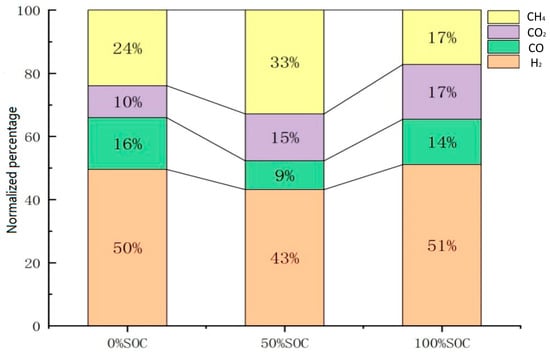
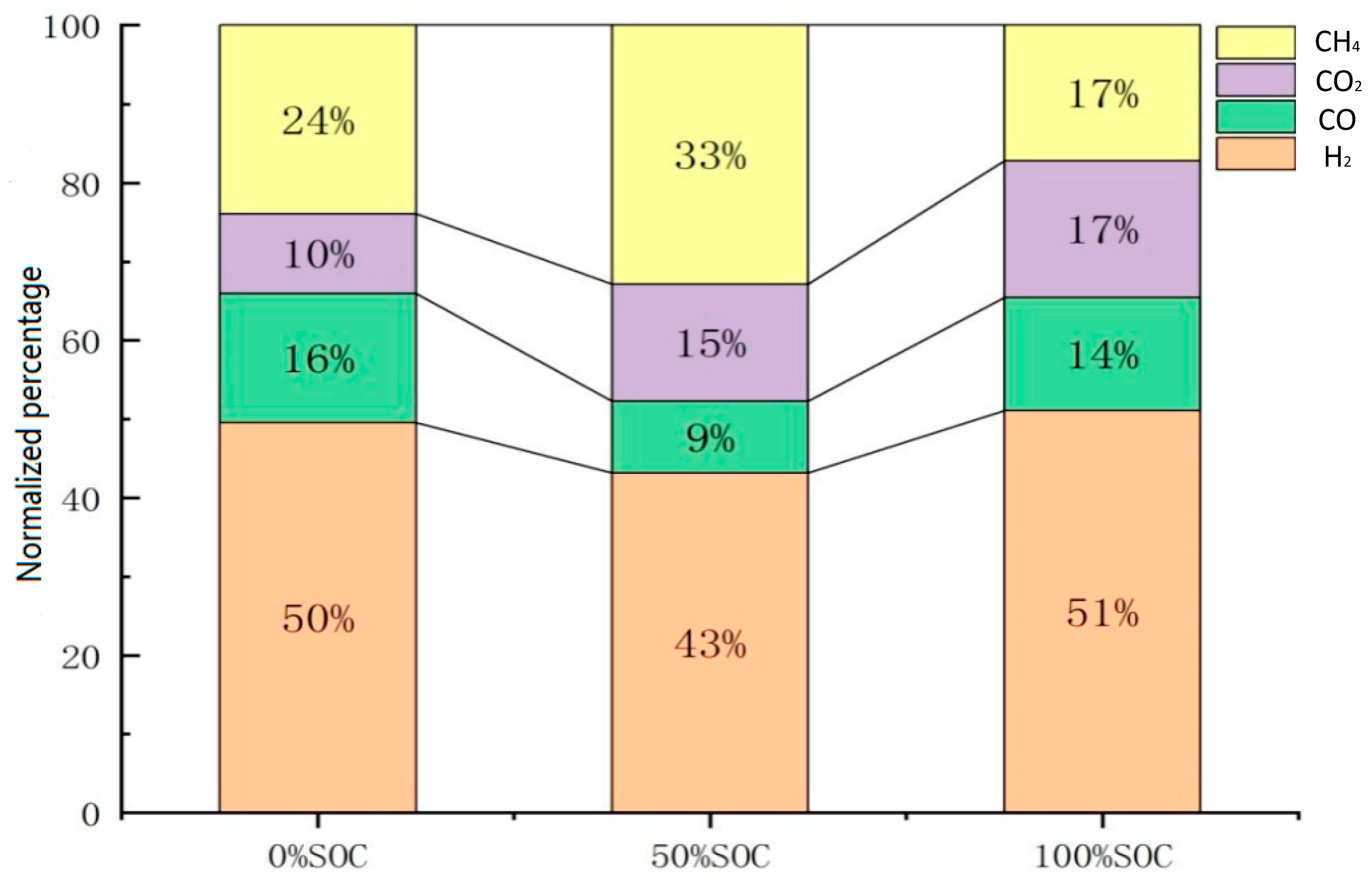
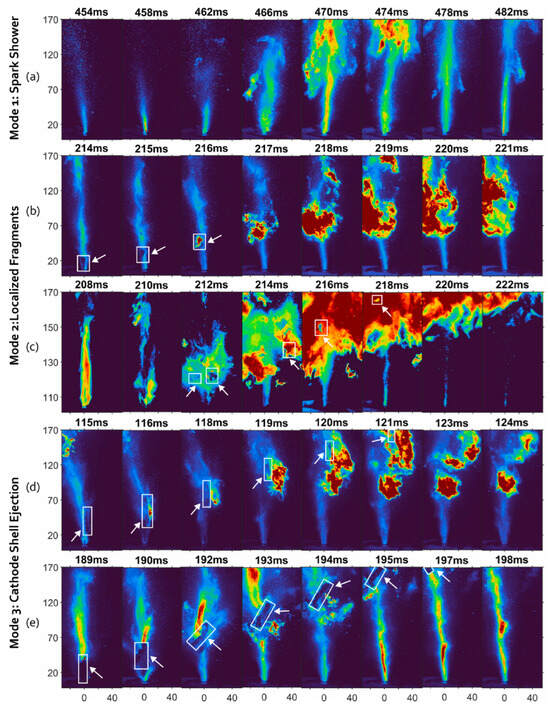
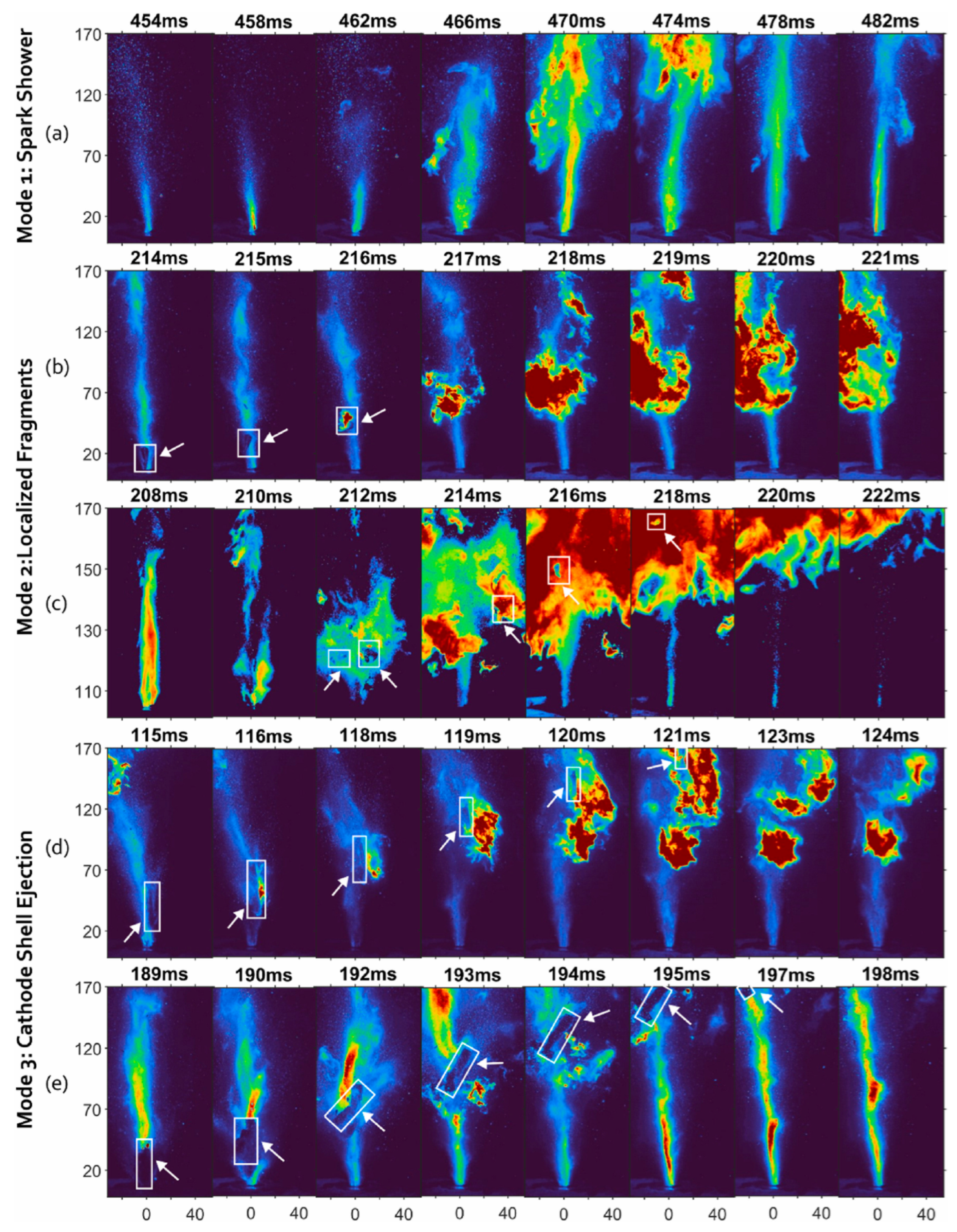
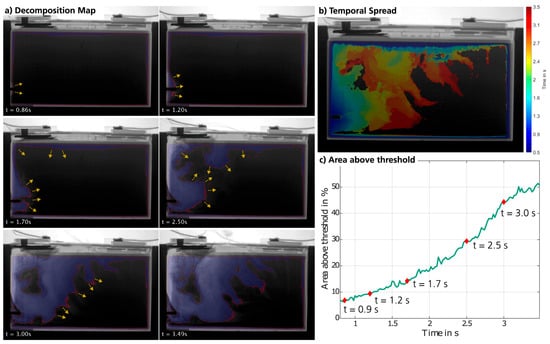
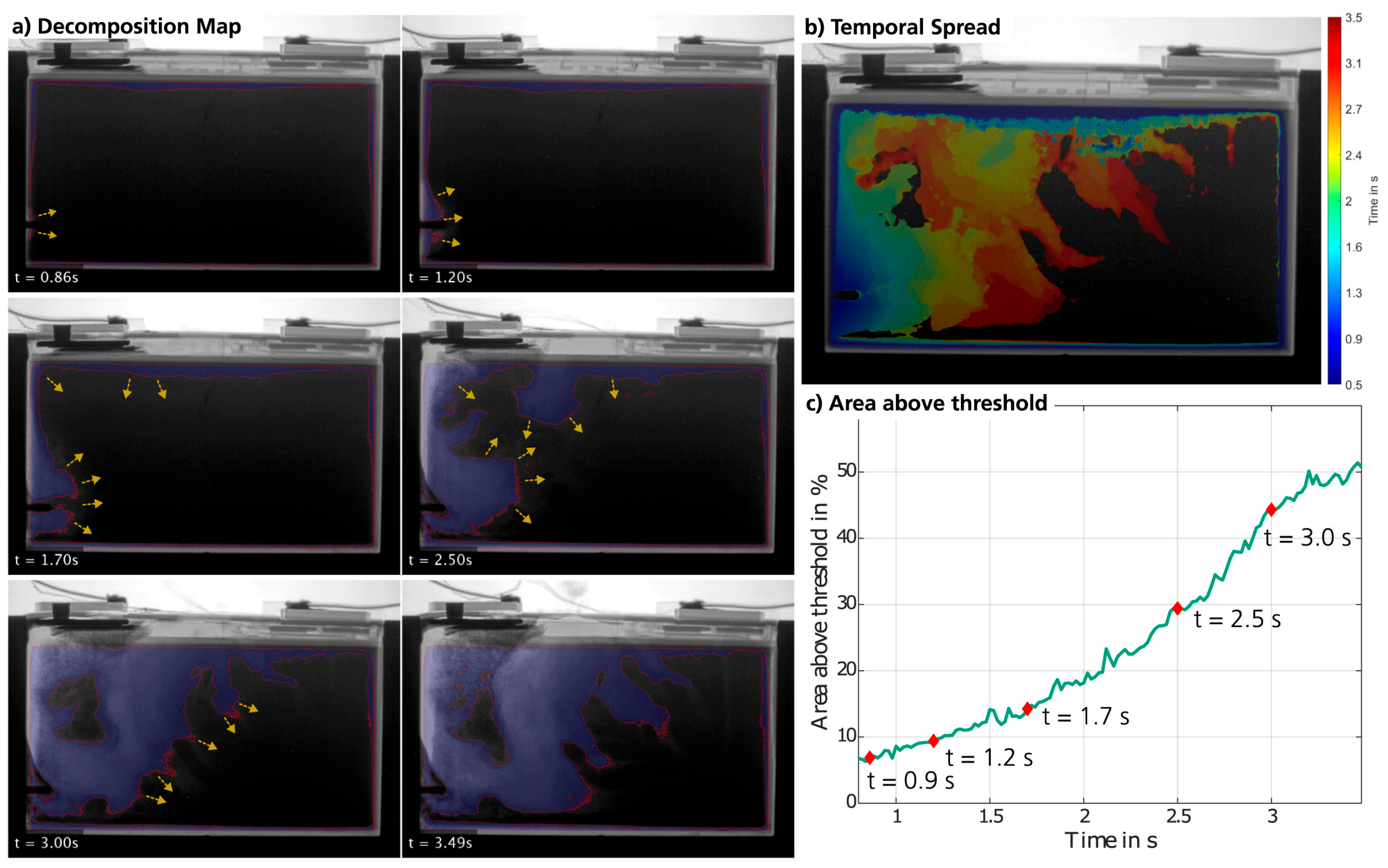
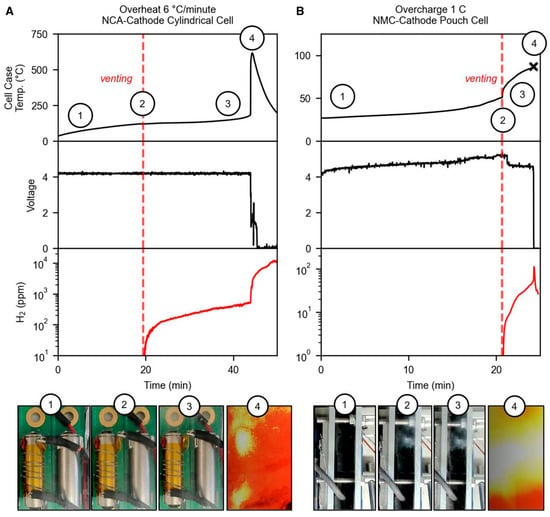
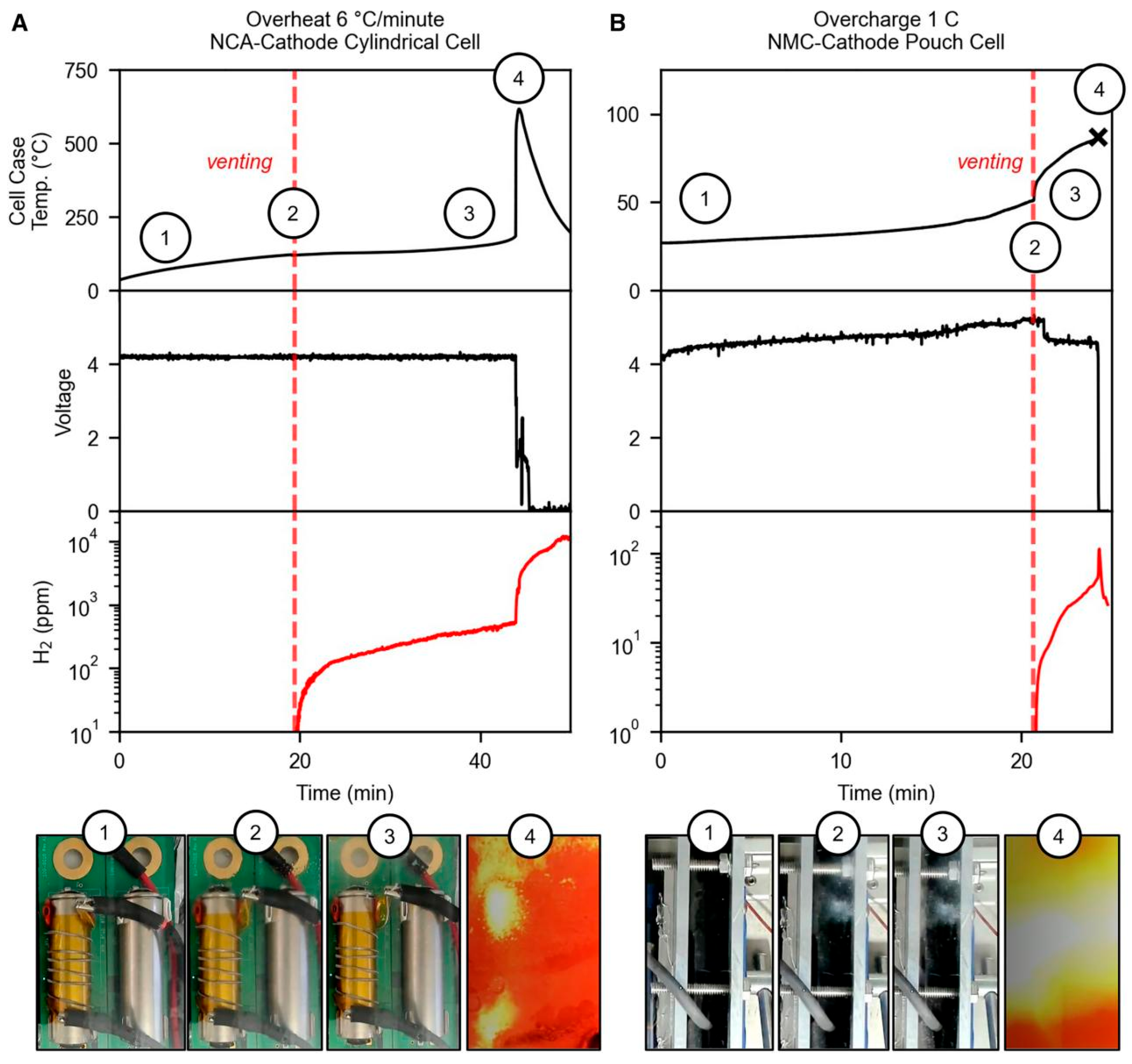
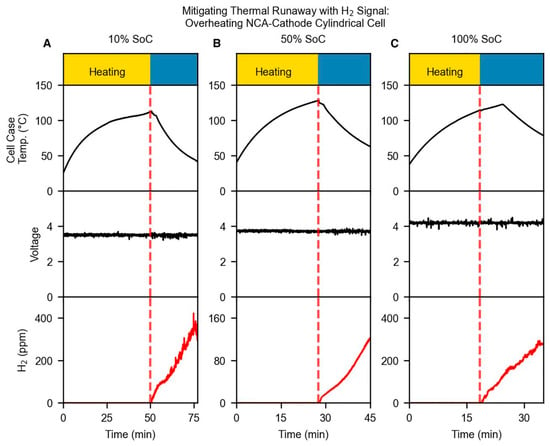
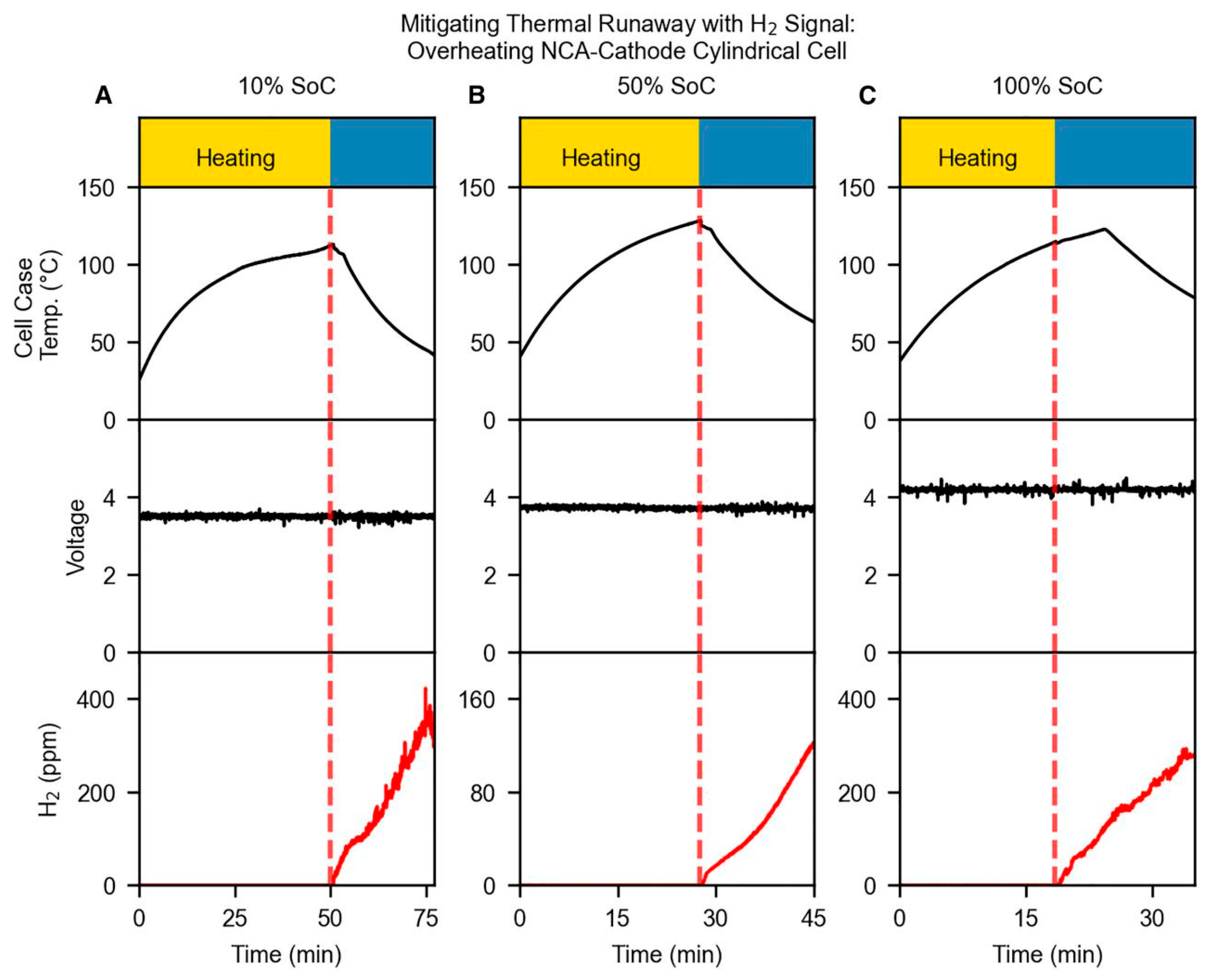
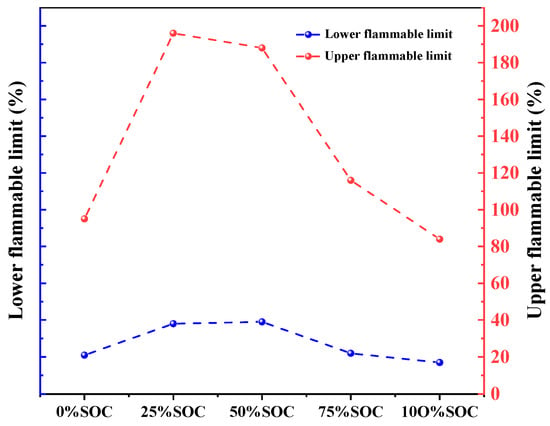
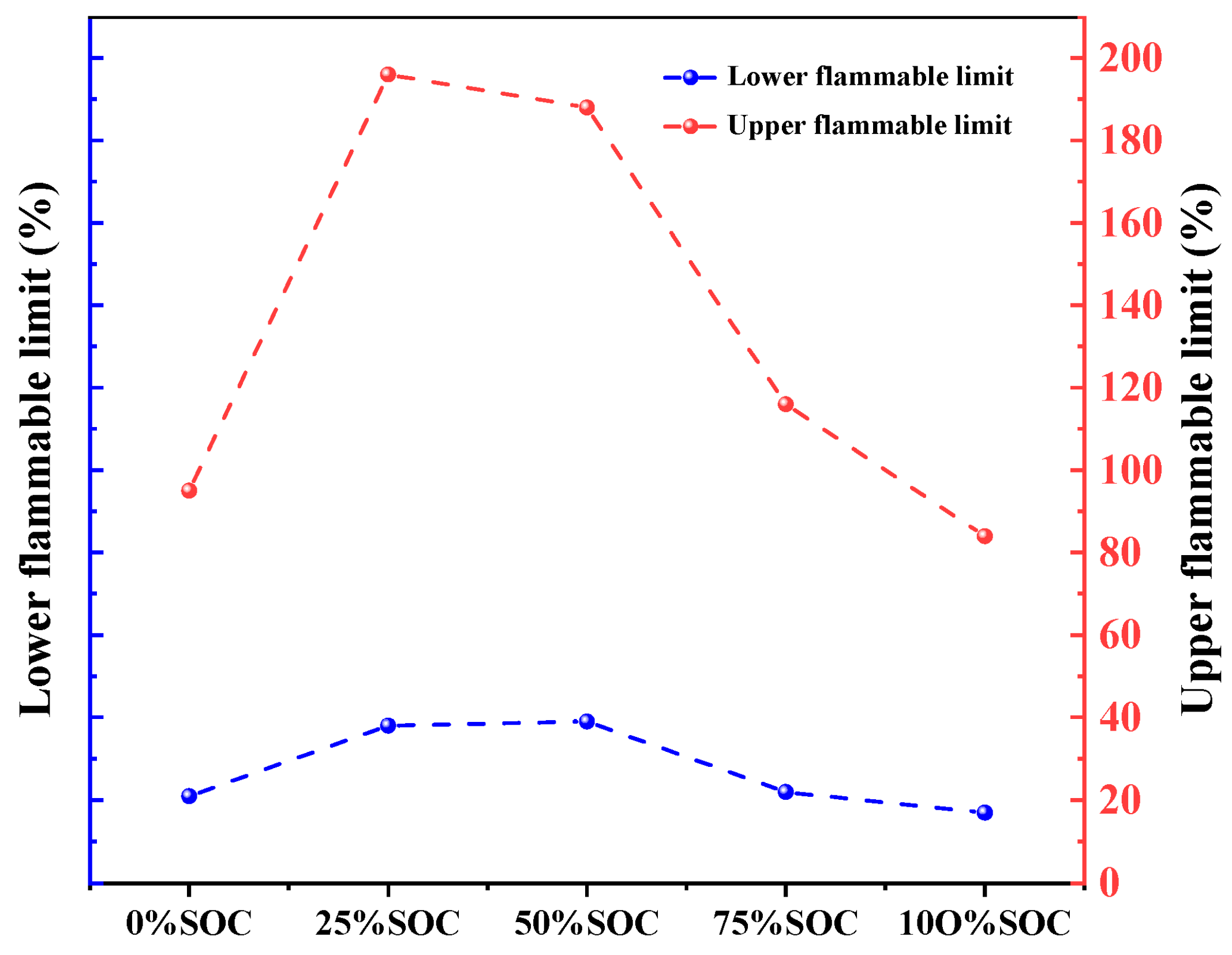
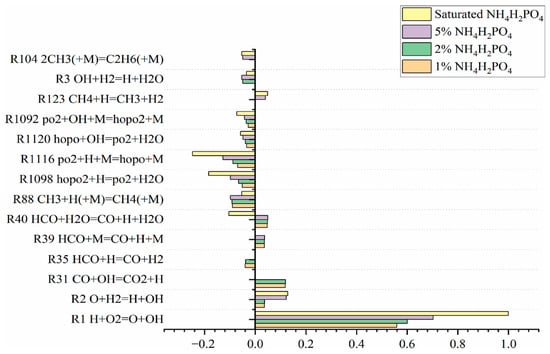
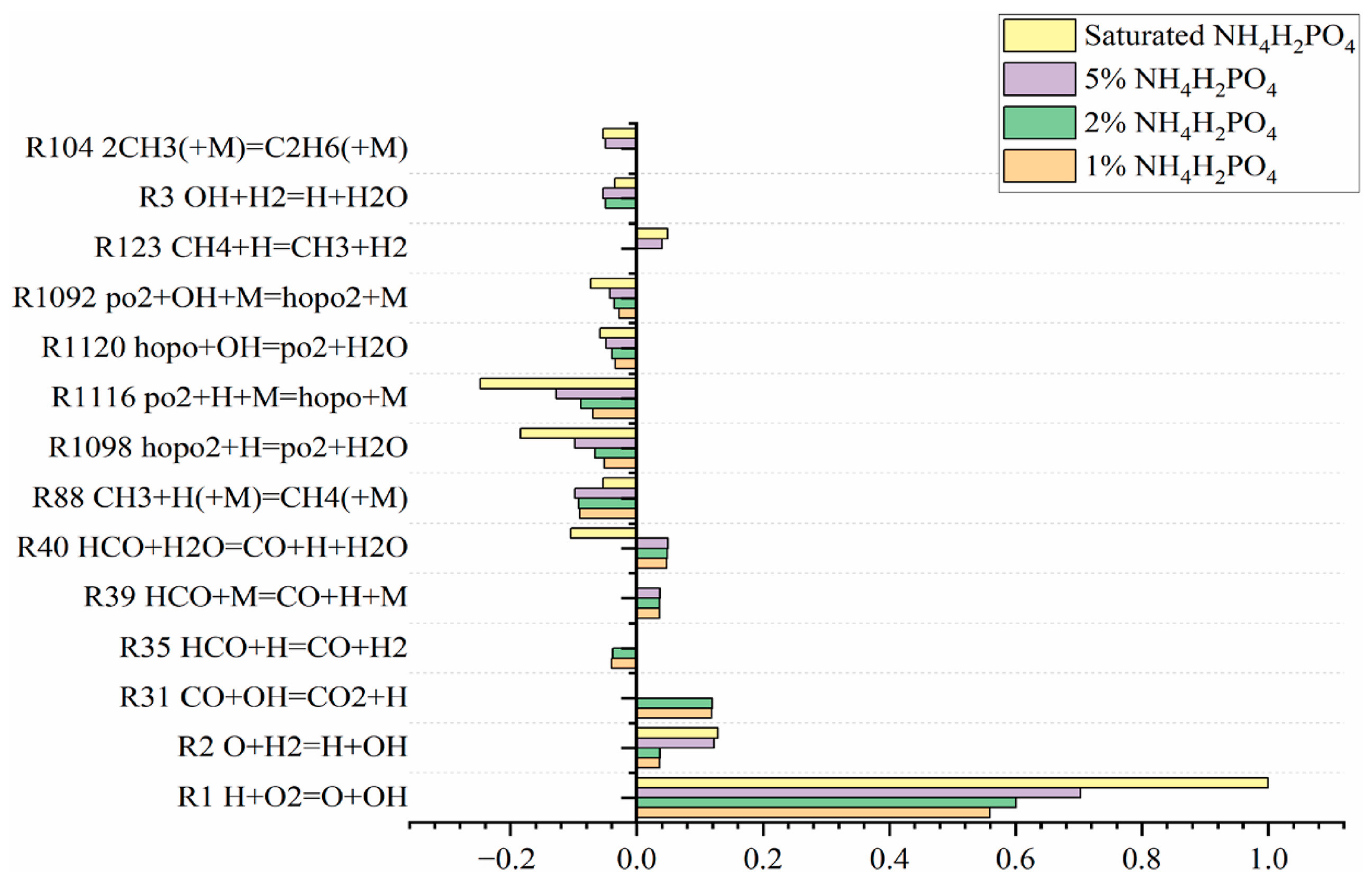
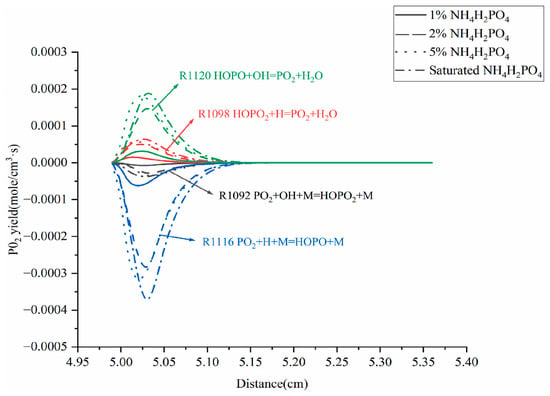
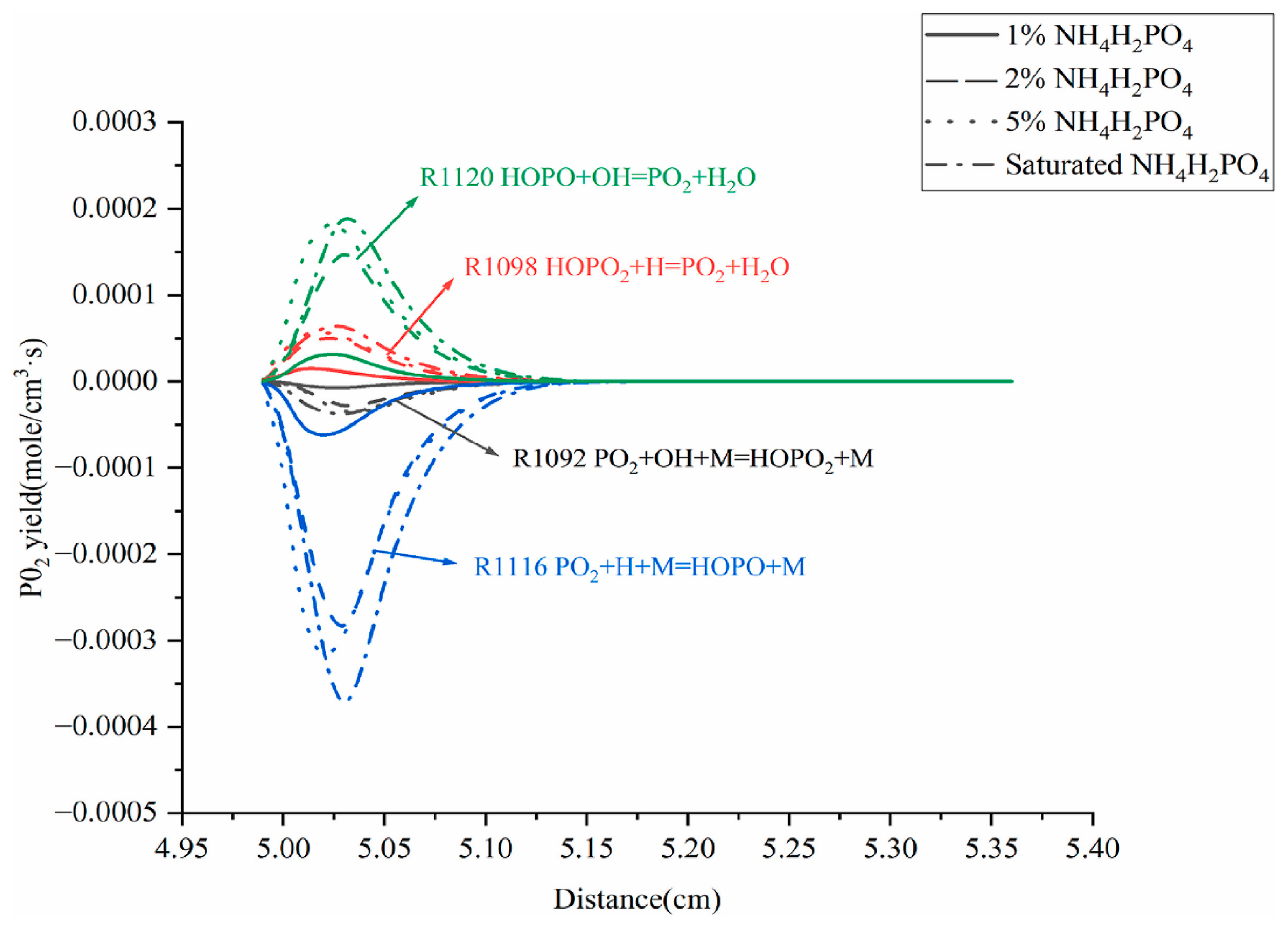
Disclaimer/Publisher’s Note: The statements, opinions and data contained in all publications are solely those of the individual author(s) and contributor(s) and not of MDPI and/or the editor(s). MDPI and/or the editor(s) disclaim responsibility for any injury to people or property resulting from any ideas, methods, instructions or products referred to in the content. |
© 2026 by the authors. Licensee MDPI, Basel, Switzerland. This article is an open access article distributed under the terms and conditions of the Creative Commons Attribution (CC BY) license.