


Abstract
The energy management strategy (EMS) of fuel cell hybrid electric vehicles (FCHEVs) plays an important role in determining both hydrogen economy and the state-of-charge (SOC) regulation and prevention of over-charge/discharge. Existing fuzzy logic-based EMS typically employs a single fuzzy logic controller with fixed SOC thresholds, which struggles to adapt to complex and varying driving conditions. To address this limitation, this paper proposes a dual-fuzzy logic control strategy comprising a primary fuzzy logic controller (FLC1) and a secondary fuzzy logic controller (FLC2), which operate in coordination to achieve refined power distribution through ΔSOC adjustment, defined as the difference between the state of charge (SOC) of a power battery and its ideal SOC (ISOC). A series of systematic simulations are conducted under different ISOC coefficients (0.45, 0.50, 0.55, 0.60, and 0.65), and the results are compared with those obtained from the switch-fuzzy control strategy. The findings indicate that an ISOC of 0.55 yields the optimal comprehensive performance. Building on this, an extremum-seeking control (ESC) algorithm is introduced to perform online adaptive optimization of the ISOC. A comprehensive cost function that integrates hydrogen consumption, power loss, and SOC deviation is constructed to dynamically adjust the ISOC. Simulation verification is conducted on the MATLAB/Simulink R2024b and AVL CRUISE co-simulation platform under the New European Driving Cycle (NEDC). Results demonstrate that the ESC adaptive strategy achieves hydrogen consumption reductions of 10.0%, 34.6%, and 45.7% under initial SOC conditions of 35%, 75%, and 85%, respectively, compared with the switch-fuzzy control. Furthermore, it delivers an additional 1.21% hydrogen saving over the optimal dual-fuzzy control at an initial SOC of 75%. Notably, the ISOC update in the proposed strategy does not require prior knowledge of future driving cycles, and the optimization itself is performed online. However, the ESC hyperparameters (perturbation amplitude, frequency, filter time constants, integrator gain) and the cost function weights are pre-calibrated offline based on typical operating conditions, and the real-time cost evaluation relies on component efficiency signals derived from the vehicle model, providing a practical and intelligent upgrade pathway for fuzzy logic-based EMS in FCHEV applications.
1. Introduction
Driven by the global transition in energy structures and the pursuit of carbon neutrality targets, new energy vehicles have become a core developmental direction for the automotive industry [1]. Renewable and low-carbon energy generation technologies, such as photovoltaic, wind power, hydropower, and fuel cells, have attracted widespread attention as promising alternatives to conventional power generation. Developing clean transportation technologies is equally as crucial as improving power generation because vehicles relying on internal combustion engines (ICE) are one of the main causes of the persistent problem of air pollution [2]. In this context, fuel cell hybrid electric vehicles (FCHEVs) have emerged as a pivotal solution for medium-to-heavy duty applications and long-range mobility, effectively combining the high energy density and rapid refueling capabilities of hydrogen fuel cells with the high efficiency and dynamic responsiveness of electric drivetrains [3].
The performance of FCHEVs depends, to a large extent, on the effectiveness of their energy management strategy (EMS) [4]. Existing EMS methodologies can be broadly classified into three categories: rule-based, optimization-based, and learning-based approaches. Rule-based strategies, though simple and robust, are inherently sub-optimal due to their limited adaptability to dynamically changing driving conditions. Global optimization techniques, such as dynamic programming (DP) [5,6,7] and Pontryagin’s minimum principle (PMP), provide a theoretical performance benchmark; however, they are non-causal and computationally prohibitive for online implementation. The widespread deployment of MPC in automotive energy storage applications remains constrained by several critical challenges, including substantial computational overhead, sensitivity to model inaccuracies, and the requirement for extensive parameter tuning, which are critical limitations in cost-sensitive and safety-critical automotive systems [8].
Recent advances in intelligent vehicle control include a hierarchical reinforcement learning framework that co-optimizes eco-driving and energy management, achieving a 30.28% energy efficiency improvement [9], and an adaptive MPC with UKF for PEMFC purge control, realizing precise water regulation with enhanced purge efficiency [10]. Compared with these computationally intensive (RL) or model-dependent (MPC) approaches, our proposed ESC-based strategy offers a complementary real-time optimization solution. It performs online ISOC adaptation without requiring a precise system model or prior knowledge of the driving cycle, while its low computational burden makes it suitable for cost-sensitive automotive controllers. This positions our method as a practical and robust alternative to more complex state-of-the-art techniques.
Fuzzy logic controllers (FLC) have been effectively used in controlling systems because of their capability to manage uncertainty and complexity [11,12]. Rostami R M S et al. designed a three-loop control strategy for hybrid electric vehicles based on reinforcement learning fuzzy control, reducing the root-mean-square error by 21.05% with stronger system robustness [13]. Zheng Y et al. used grid search and cross-validation to optimize and train a least squares support vector machine for driving condition identification, with the fuzzy logic controller incorporating condition identification demonstrating better power distribution capability [14]. Kaleybar H. J. et al. developed an improved fuzzy logic-based energy management system for fuel cell hybrid locomotives [15]. Rezk H et al. combined proportional–integral control with fuzzy control to construct a hybrid PIFLC strategy, achieving total performance index improvements of 3.43% and 9.1% [16]. Accordingly, this paper develops a switching fuzzy control strategy as the fundamental comparative strategy.
Extremum-seeking control (ESC) is a model-free optimization strategy that solely relies on real-time measurements to drive a system to its optimal operating conditions. This method has been successfully applied in various practical domains, including mechanical systems [17], autonomous vehicles [18], and robots [19]. Researchers have developed various enhancements, including fast ESC, ESC under parameter uncertainties, nonsmooth ESC, fractional-order ESC, sampled-data ESC, lie bracket approximation-based ESC, adaptive gain ESC, stochastic ESC, proportional–integral ESC, global ESC, ESC for multi-variable systems, prescribed-time ESC, safe ESC, event-triggered ESC, and ESC applied to PDEs, among others [20,21,22,23,24,25,26,27].
To overcome the limitations of existing fuzzy logic-based EMS that rely on fixed SOC thresholds or a single fuzzy logic controller, this paper proposes an adaptive energy management strategy integrating dual-fuzzy logic with ESC. The main contributions include:
(1) A dual-fuzzy logic control architecture is designed, where the primary fuzzy logic controller (FLC1) performs global SOC regulation and the secondary fuzzy logic controller (FLC2) performs local precise power distribution.
(2) The influence of different ideal state-of-charge (ISOC) values (0.45–0.65) on the performance of the dual-fuzzy control strategy is systematically investigated, and within this discrete set, the value of 0.55 is identified as providing the most favorable multi-dimensional performance trade-off through comprehensive evaluation of hydrogen consumption, SOC balance, and power loss.
(3) An ESC-based online adaptive optimization strategy for the ISOC of the dual-fuzzy control strategy is introduced, constructing a multi-objective cost function incorporating fuel cell energy consumption, power loss, and SOC deviation.
(4) A co-simulation platform based on MATLAB/Simulink R2024b and AVL CRUISE is established, and systematic validation is conducted under the New European Driving Cycle (NEDC).
To assess the practicality of the proposed ESC-based EMS for real-time implementation, the computational cost was evaluated on the co-simulation platform (MATLAB/Simulink R2024b and AVL CRUISE, running on an Intel Core i7-10700 CPU @ 2.90 GHz with 16 GB RAM). The control interval was set to 0.01 s, consistent with typical automotive ECU sampling rates. The average computation time per step was 0.23 ms for the dual-fuzzy control strategy and 0.41 ms for the ESC adaptive strategy, with maximum recorded times of 0.35 ms and 0.58 ms, respectively. Both values are well below the 10 ms control interval, indicating sufficient computational margin for real-time execution on modern automotive-grade microcontrollers. The additional computational burden introduced by the ESC algorithm (approximately 0.18 ms per step) primarily arises from the sine/cosine generation, multiplication, and filtering operations associated with the standard Simulink Extremum-seeking control block, all of which are basic arithmetic operations that can be efficiently implemented in fixed-point DSPs or FPGAs. These results confirm that the proposed ESC-based EMS satisfies real-time implementation requirements without imposing prohibitive computational overhead.
2. Methods
2.1. Vehicle Model and Simulation Platform
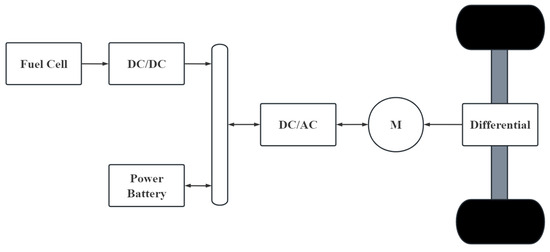
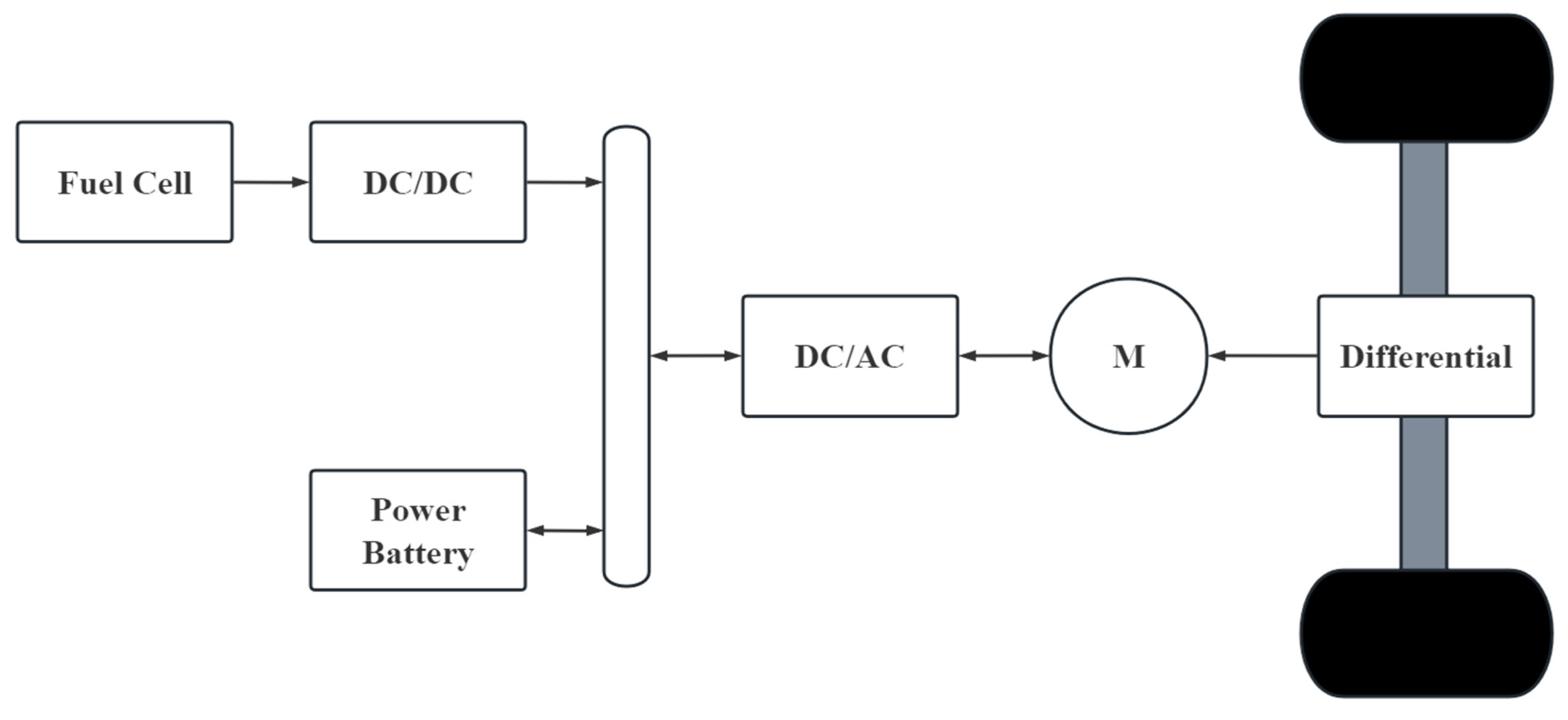
This paper takes a certain fuel cell hybrid electric passenger car as the research object, adopting a fuel cell plus power battery hybrid powertrain topology, as shown in Figure 1. The fuel cell is connected to the DC bus via a DC/DC converter, the power battery is directly connected to the DC bus, and the drive motor draws power from the DC bus through an inverter to drive the wheels. The main vehicle parameters are listed in Table 1, and the dynamic performance indicators are provided in Table 2.
Figure 1.
Powertrain system configuration of the fuel cell hybrid electric vehicle.
Table 1.
Parameters of the fuel cell hybrid electric vehicle.
Table 2.
Dynamic performance indicators of the fuel cell hybrid electric vehicle.
The vehicle simulation model was built on the AVL CRUISE (Version 2019-R1) software platform, including modules for vehicle longitudinal dynamics, fuel cell system, power battery, drive motor, DC/DC converter, and vehicle control unit. CRUISE adopts a forward simulation architecture, where the cockpit model outputs accelerator pedal and brake pedal positions based on the deviation between target vehicle speed and actual vehicle speed. After the vehicle control unit makes power distribution decisions, it controls the operating states of each powertrain component. The energy management control strategy was developed in MATLAB/Simulink R2024b, and the Simulink model was compiled into a dynamic link library (DLL) using Simulink Coder and the AVL-provided GRT target compilation toolchain, achieving co-simulation through the CRUISE MATLAB DLL interface. The control logic was implemented using Stateflow state machines and fuzzy logic toolbox controllers.
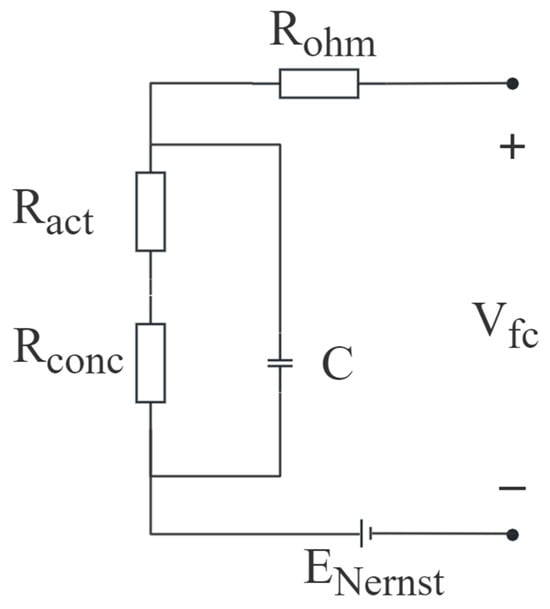
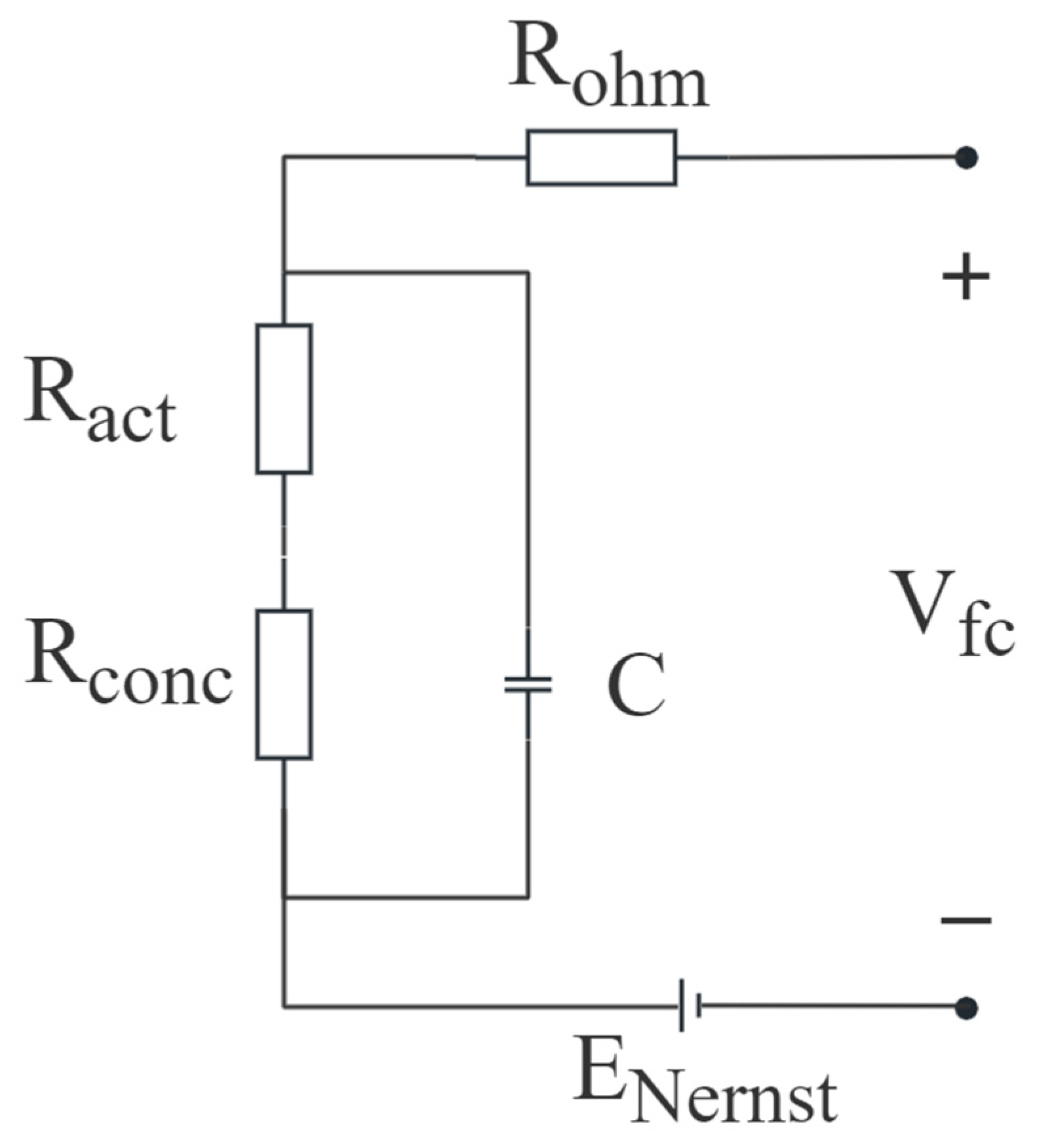
This study selects proton exchange membrane fuel cells (PEMFC) and constructs the fuel cell model based on equivalent circuit theory [28]. The simplified equivalent circuit model of a single fuel cell is shown in Figure 2. Where Rohm is the ohmic polarization equivalent resistance; Ract is the activation polarization equivalent resistance; Rconc is the concentration polarization equivalent resistance; C is the double-layer charge equivalent capacitance; ENernst is the fuel cell nominal voltage; and Vfc is the actual output voltage of a single fuel cell electrochemical model.
Figure 2.
Fuel cell equivalent circuit model.
During actual operation, the current density of the PEMFC undergoes dynamic changes, causing its actual output voltage to be lower than the nominal value; while under no-load conditions, its output voltage is relatively higher. The difference between the two is termed overpotential. The generation of overpotential is primarily caused by three factors: activation polarization, ohmic polarization, and concentration polarization. Therefore, the actual output voltage of a single fuel cell electrochemical model is:
where Vact is the activation polarization voltage loss; Vohm is the ohmic polarization voltage loss; and Vconc is the concentration polarization voltage loss.
The power battery employs an equivalent internal resistance model [29]. This model features a clear circuit structure and convenient modeling, meeting the requirements of battery parameter matching and energy management strategy analysis for the powertrain system in this study. The battery state of charge (SOC) is calculated using the Coulomb counting method. The drive motor selected is a permanent magnet synchronous motor (PMSM), which offers advantages including high efficiency, simple control, wide speed range, high reliability, and high specific power, and is widely applied in new energy vehicles [30,31].
2.2. Switch-Fuzzy Control Strategy
The switch-fuzzy control adopts a single Mamdani-type fuzzy logic controller combined with a switch logic decision mechanism. This strategy determines the fuel cell on/off states through SOC thresholds (20% and 80%): when SOC < 20%, the fuel cell is activated to charge the battery; when 20% ≤ SOC < 80%, the fuel cell output is dynamically regulated based on demand power and SOC state; when SOC ≥ 80%, the fuel cell is shut down and the battery supplies power independently. The inputs to the fuzzy logic controller are the vehicle demand power Preq (universe of discourse [0, 1] corresponding to actual values [0, 110] kW) and the battery SOC (universe of discourse [0, 1] corresponding to actual values [0.3, 0.9]), and the output is the fuel cell output power Pfc (universe of discourse [0, 1] corresponding to actual values [0, 65] kW).
Based on the results of vehicle parameter matching, the actual values are proportionally mapped to their respective normalized universe of discourse. The maximum vehicle demand power is 110 kW; accordingly, the range of Preq is [0, 110], normalized to a universe of discourse of [0, 1]. The battery SOC ranges from 0.3 to 0.9, with a corresponding normalized universe of [0, 1]. Similarly, the fuel cell output power varies between 0 and 65 kW, also mapped to a normalized universe of [0, 1].
The fuzzy subsets are set as {NB, NS, Z, PS, PB} for the system demand power Preq; as {NB, NS, Z, PS, PB} for SOC; and as {NB, NM, NS, Z, PS, PM, PB} for fuel cell output power. For the system demand power Preq, NB, NS, Z, PS, and PB represent very small, small, medium, large, and very large demand power, respectively. For the battery state of charge SOC, NB, NS, Z, PS, and PB represent very low, low, medium, high, and very high SOC values, respectively. For the fuel cell output power, NB, NM, NS, Z, PS, PM, and PB represent very small, small, moderately small, medium, moderately large, large, and very large, respectively. The fuzzy control table for fuel cell output power regulation is presented in Table 3.
Table 3.
Primary fuzzy logic controller (FLC1) strategy.
The switch-fuzzy control strategy under NEDC conditions can effectively reduce hydrogen consumption compared with conventional single-fuzzy control and power loss. In this paper, it is included solely as a comparative reference strategy for comprehensive performance evaluation.
2.3. Dual-Fuzzy Logic Energy Management Strategy
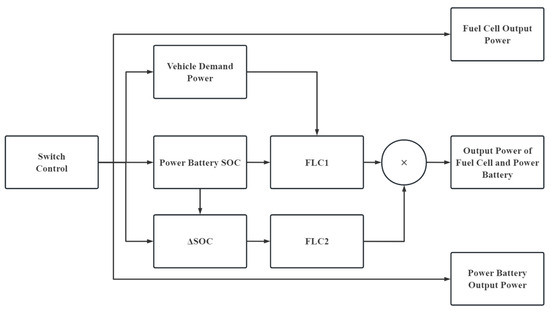
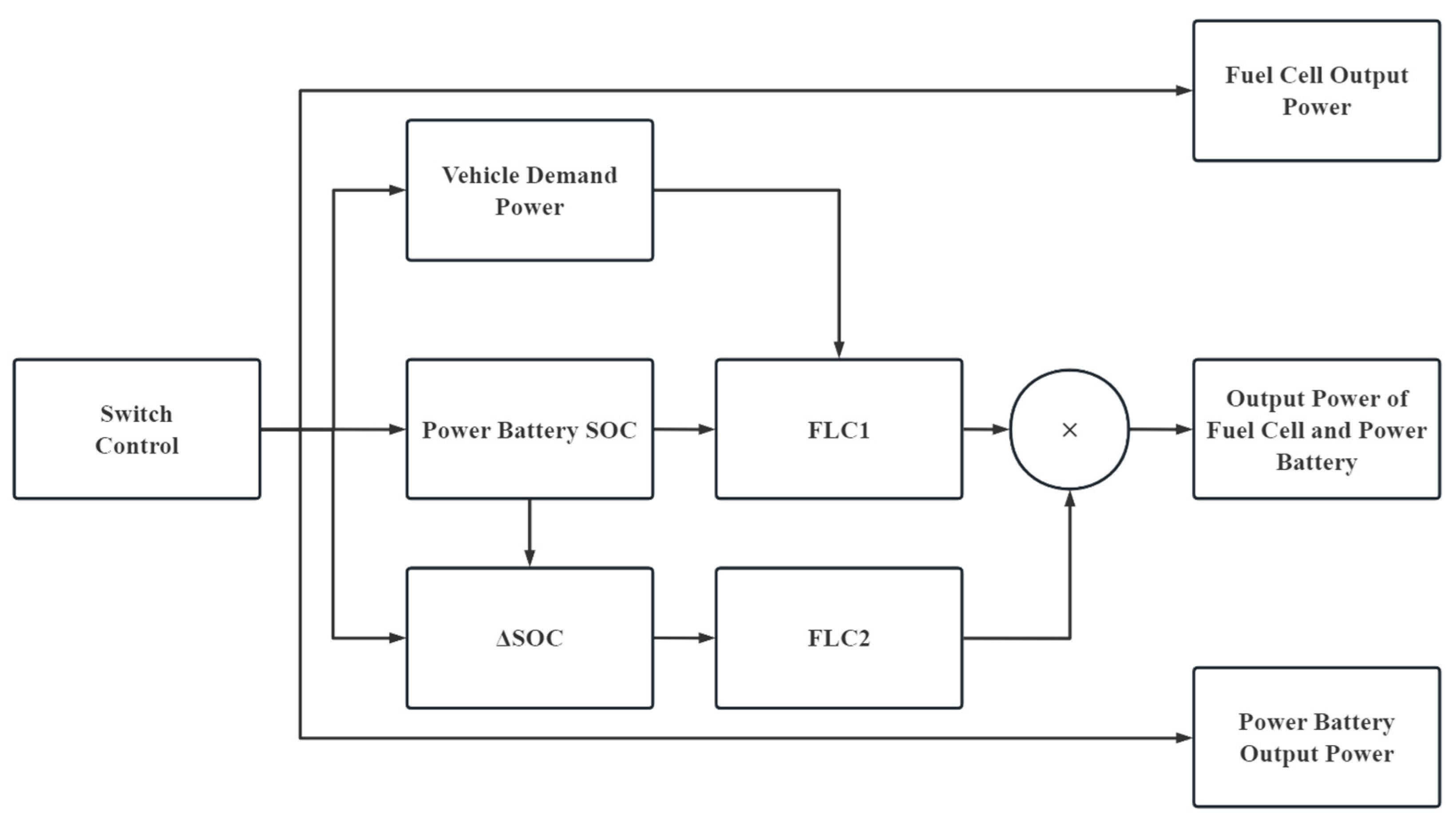
The dual-fuzzy logic energy management strategy employed in this paper consists of two Mamdani-type fuzzy logic controllers working in collaboration. Its overall technical roadmap is illustrated in Figure 3. Unlike the single-fuzzy control strategy, the dual-fuzzy control strategy introduces primary–secondary dual fuzzy logic controllers, performing refined energy distribution management at two levels: global SOC regulation and local power distribution. During system operation, a Stateflow state machine determines the current operating mode (pure electric drive, fuel cell drive, hybrid drive) based on vehicle operating state (driving/braking) and battery SOC level, and then the dual-fuzzy logic controllers perform specific power distribution calculations.
Figure 3.
Technical roadmap of the dual-fuzzy logic energy management strategy.
The primary fuzzy logic controller (FLC1) uses the fuzzy logic controller from the switch-fuzzy control strategy. The secondary fuzzy logic controller (FLC2) takes the difference ΔSOC between the battery SOC and the ideal state of charge (ISOC) as its input variable. The universe of discourse of the ΔSOC membership function is set to [−0.5, 0.5]. The universe of discourse of the output coefficient α is set to [0, 1.2]. Both ΔSOC and the output coefficient α variables are divided into three fuzzy subsets: negative (N), zero (Z), and positive (B). Each variable continues to adopt a combination of trapezoidal and triangular membership functions. The corresponding fuzzy control rules are specified in Table 4.
Table 4.
Secondary fuzzy logic controller (FLC2) strategy.
The dual-fuzzy control strategy, through the synergistic coordination of the primary and secondary fuzzy logic controllers, achieves refined regulation of FCHEV power distribution. The primary fuzzy logic controller adjusts the fuel cell operating range from a global perspective based on SOC status, while the secondary fuzzy logic controller performs precise power distribution from a local perspective based on instantaneous power demand. However, the core parameter ISOC of this strategy is a fixed constant, and its value directly affects the power distribution behavior of the controller and the comprehensive performance of the system. Therefore, systematic simulation studies are needed to determine the optimal ISOC value.
2.4. ESC-Based Adaptive SOC Optimization Strategy
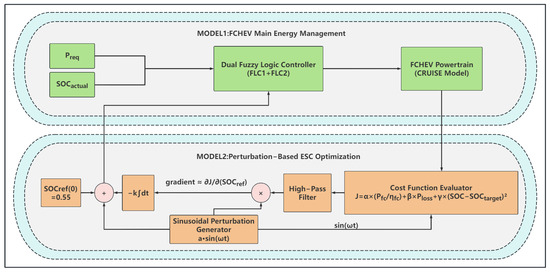
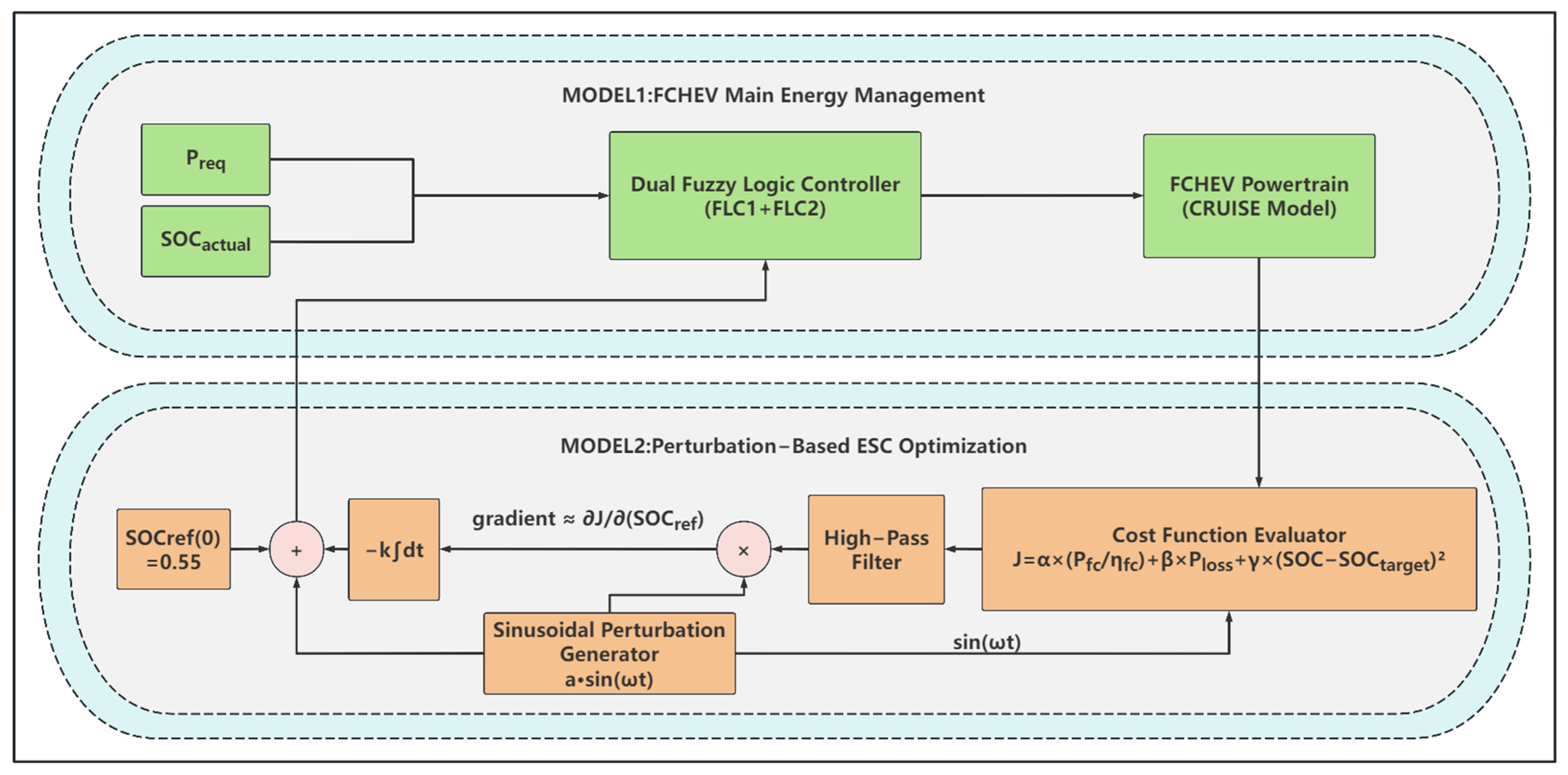
To overcome the limitation of a fixed ISOC value in the dual-fuzzy control strategy, the extremum-seeking control (ESC) algorithm on the basis of the aforementioned dual-fuzzy control strategy is introduced to perform online adaptive optimization of the ISOC value. The core idea of the ESC algorithm is to superimpose a small-amplitude sinusoidal perturbation signal on the control input, measure the corresponding frequency component in the system output to estimate the gradient of the cost function, and then iteratively adjust the control input along the negative gradient direction to ultimately drive the system to operate at the minimum point of the cost function. The working principle of the ESC adaptive optimization system is illustrated in Figure 4.
Figure 4.
Schematic diagram of the ESC extremum-seeking adaptive SOC optimization principle.
The ESC adaptive optimization subsystem is embedded in the Simulink control model, and its working principle is as follows:
(1) Extremum-Seeking Control (ESC) Mechanism
In the energy management of fuel cell hybrid electric vehicles, the selection of ISOC directly affects hydrogen consumption, power loss, and battery SOC stability. Traditional offline optimization methods (such as genetic algorithms, GA) can find the optimal ISOC value under given driving cycles, but cannot adapt to variations in actual operating conditions. Extremum-seeking control (ESC) is a real-time optimization method with the following advantages:
Real-time adaptive: The ISOC value can be continuously optimized during the simulation process, automatically adapting to changes in operating conditions.
Low computational burden: Only basic mathematical operations (sine/cosine, multiplication/addition, filtering) are involved, facilitating embedding into control strategies.
Convergence guarantee: Under the condition of satisfying frequency separation, ESC can converge to the minimum point of the cost function.
Active perturbation: The controller superimposes a small sinusoidal wave (amplitude 0.02, frequency 0.3 rad/s) on the ISOC value, analogous to a blind person using a cane to probe the ground while walking. The perturbation amplitude of 0.02 is selected to balance gradient signal detectability against SOC constraint violations, while the frequency of 0.3 rad/s satisfies the ESC frequency-separation principle—faster than system dynamics yet slower than the sampling rate to avoid aliasing.
Gradient extraction: The gradient of system performance with respect to SOC is extracted through demodulation techniques.
Therefore, the proposed method is not a ‘fully model-free’ black-box optimizer. Instead, it is a practical, cycle-predictive-free adaptive scheme where the optimization direction is determined online, while the optimization infrastructure is established offline. This distinguishes it from global optimization methods (e.g., DP or MPC) that rely heavily on a priori knowledge of the entire driving cycle or an accurate future prediction model.
(2) Comprehensive Cost Function
The algorithm finds the optimal solution by minimizing the following cost function J:
α = 0.5 (hydrogen consumption weight): Makes the vehicle more hydrogen-efficient.
β = 0.3 (power loss weight): Reduces internal losses of the fuel cell and battery.
γ = 0.2 (SOC deviation weight): Ensures that the battery charge does not deviate too far from the target point.
Weight selection and cost interpretation: The weights α = 0.5, β = 0.3, and γ = 0.2 were selected based on engineering priorities, with hydrogen consumption being the primary economic metric for FCHEVs, followed by system losses and SOC regulation. Equation (2) defines the instantaneous cost J(t) evaluated at each sampling instant. The ESC algorithm seeks to find the ISOC value that minimizes the accumulated cost over the entire driving cycle. This is achieved through ESC’s gradient estimation and iterative adjustment mechanism. While a formal sensitivity analysis of the weighting coefficients could further refine the selection, the current configuration is justified by engineering priorities and has been validated through simulation under multiple initial SOC conditions.
2.5. Simulation Conditions and Evaluation Metrics
The simulation tests employ the NEDC. To comprehensively evaluate the performance of each control strategy under different battery initial states, three initial SOC conditions were set: 35% (low SOC, corresponding to a charge-depleted state), 75% (medium-high SOC, corresponding to daily commuting conditions), and 85% (high SOC, corresponding to fully charged departure conditions). For the dual-fuzzy control strategy, five ISOC values (0.45, 0.50, 0.55, 0.60, 0.65) were tested under each of the three initial SOC conditions to study the influence of ISOC variation on system performance, totaling 15 test groups. For the ESC adaptive optimization strategy, tests were conducted under the three initial SOC conditions based on the optimal ISOC of 0.55, totaling 3 test groups.
The performance of each control strategy is evaluated from the following three dimensions: (1) total hydrogen consumption (demanded hydrogen mass, kg), reflecting the energy consumption level of the fuel cell system; (2) SOC variation (ΔSOC, %), reflecting the charge–discharge balance status of the power battery; and (3) average total system power loss (average power loss, kW), reflecting the comprehensive level of DC/DC converter losses, battery internal resistance losses, and wiring losses.
3. Results and Discussion
3.1. Vehicle Speed Tracking Validation
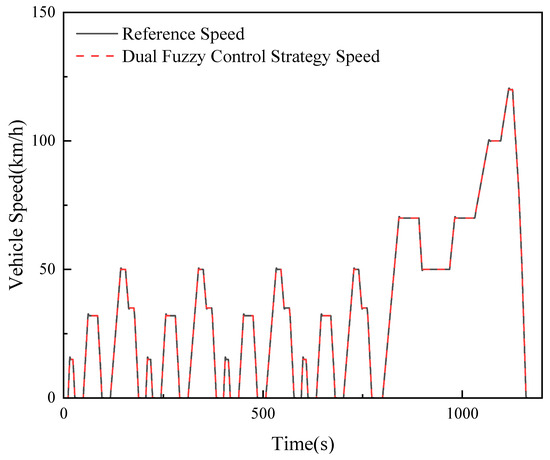
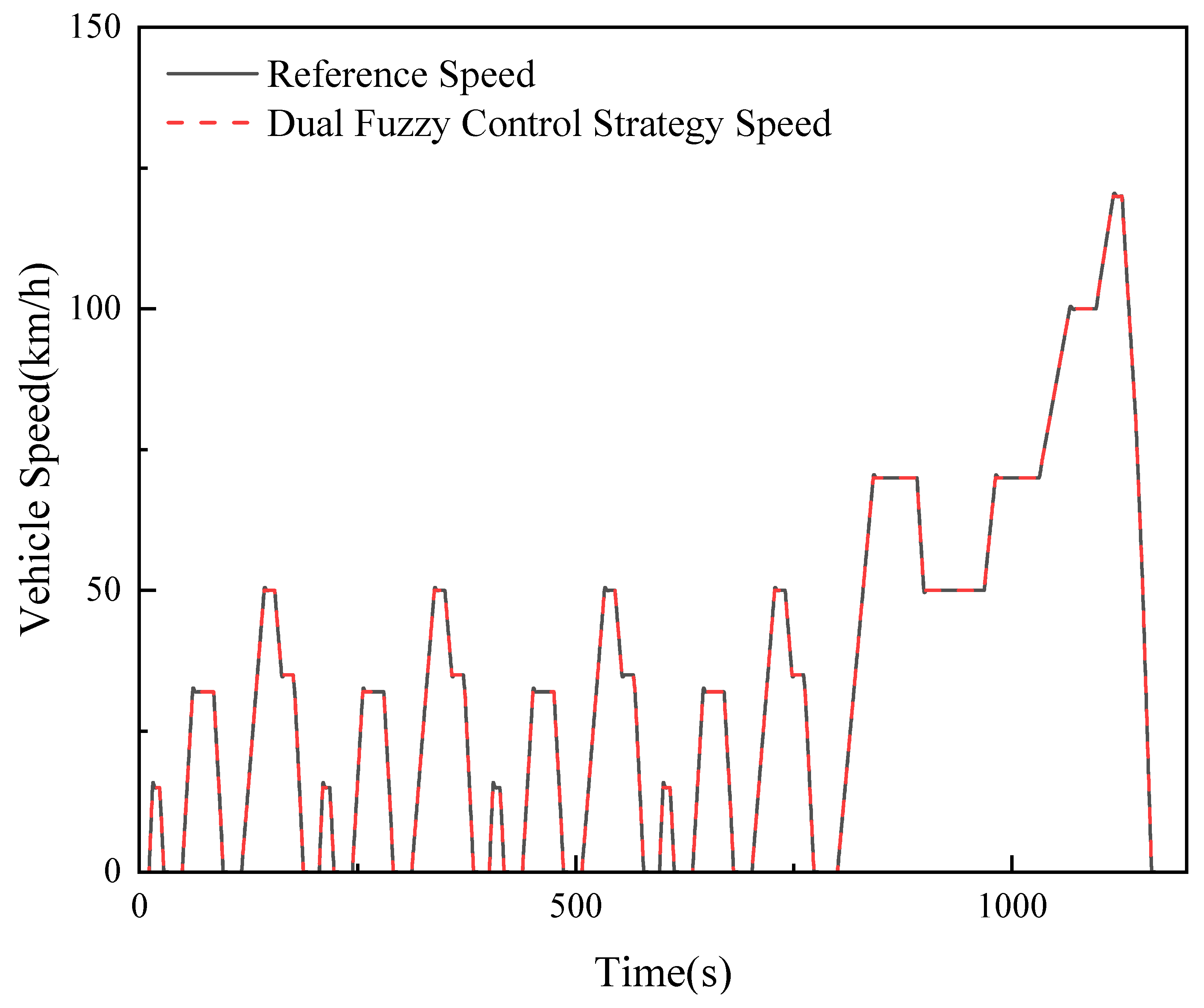
It is verified that the constructed vehicle simulation model and all the proposed control strategies can satisfy the basic dynamic performance requirements of the vehicle. Figure 5 presents the comparison results between the simulated vehicle speed and reference target speed of the dual fuzzy control strategy under the NEDC driving cycle. As illustrated in the figure, the simulated speed of this strategy is highly consistent with the reference target speed. This indicates that the FCHEV system can accurately track the target speed under the NEDC driving cycle, the powertrain parameters are reasonably matched, and the dynamic performance meets the relevant requirements.
Figure 5.
Vehicle speed tracking curves under the NEDC driving cycle.
3.2. Dual-Fuzzy Control ΔSOC Optimization Analysis
To investigate the influence of the ΔSOC on the performance of the dual-fuzzy control strategy and to determine the optimal coefficient, simulations were conducted under three initial SOC levels (35%, 75%, 85%) with five ISOC values (0.45, 0.50, 0.55, 0.60, 0.65), and compared with the switch-fuzzy control strategy. Table 5 summarizes the key performance indicators under all test conditions.
Table 5.
The dual-fuzzy control strategy under different ISOC and comparison with switch-fuzzy control.
Several important trends can be observed from Table 5. Under any initial SOC condition, hydrogen consumption exhibits a monotonically increasing trend with increasing ISOC. Taking 35% initial SOC as an example, as the ISOC increases from 0.45 to 0.65, hydrogen consumption increases from 0.3787 kg to 0.4252 kg, an increase of approximately 12.3%. The underlying reason for this phenomenon is that a higher ISOC value means the controller expects to maintain a higher battery charge level; consequently, the fuel cell must output more power to charge the battery, thereby consuming more hydrogen. The corresponding SOC change also increases from +28.24% to +33.40%, which corroborates this explanation.
In terms of power loss, lower ISOC results in higher power loss (e.g., at 35% initial SOC, the power loss with the 0.45 coefficient is 0.1642 kW), and higher ISOC results in lower power loss (the 0.65 coefficient yields 0.0663 kW), representing a reduction of approximately 59.6%. This trend holds under the 75% and 85% initial SOC conditions as well. Notably, when the ISOC increases from 0.55 to 0.60 and 0.65, the reduction in power loss tends to saturate (0.0149 kW to 0.0150 kW at 75% initial SOC), while hydrogen consumption continues to increase. This indicates the existence of a trade-off point near which the comprehensive performance is optimal.
It should be noted that the selection of ISOC = 0.55 as the preferred value is based on a comprehensive engineering trade-off analysis rather than on a single normalized objective function. As observed from Table 5, a lower ISOC (0.45–0.50) reduces hydrogen consumption but causes larger SOC swings and significantly higher power losses (e.g., at 75% initial SOC, the average power loss decreases by 89.8% from ISOC = 0.45 to 0.55). Conversely, higher ISOC values (0.60–0.65) further reduce power losses, but this benefit saturates beyond 0.55 (only 5.6% further reduction from 0.55 to 0.65), while hydrogen consumption continues to increase monotonically (approximately 12.3% increase at 35% initial SOC from 0.45 to 0.65). Therefore, ISOC = 0.55 achieves the best compromise by maintaining stable SOC trajectories, low power loss, and moderate hydrogen consumption across all three initial SOC levels, effectively avoiding the drawbacks of both overly low and overly high ISOC settings. While a formal Pareto-based optimization or systematically normalized cost function could further refine the selection, the current choice represents the optimal solution within the tested discrete range under the evaluated driving conditions.
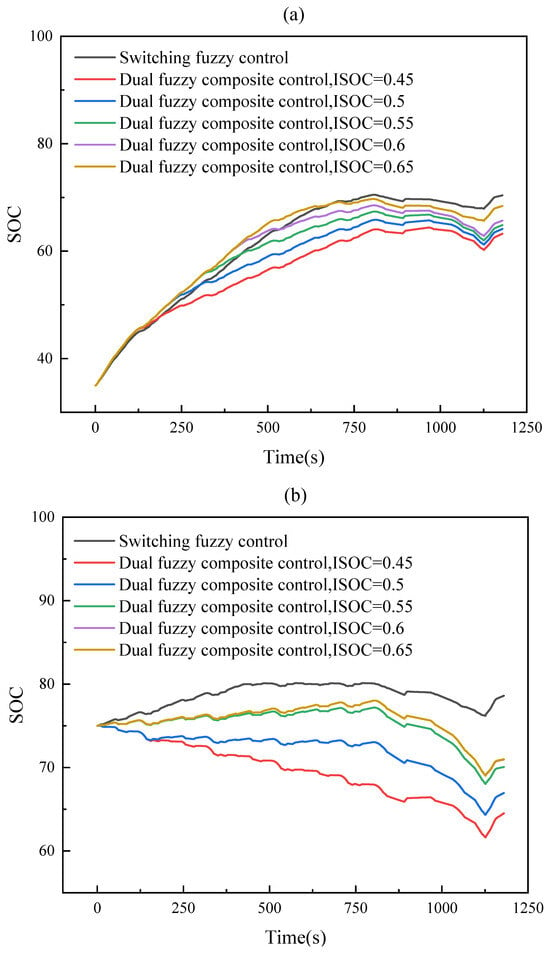
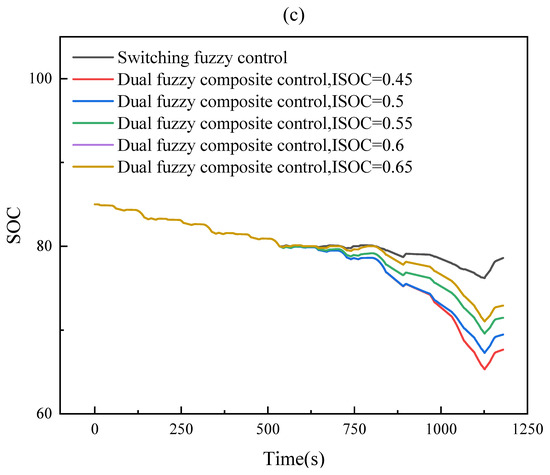
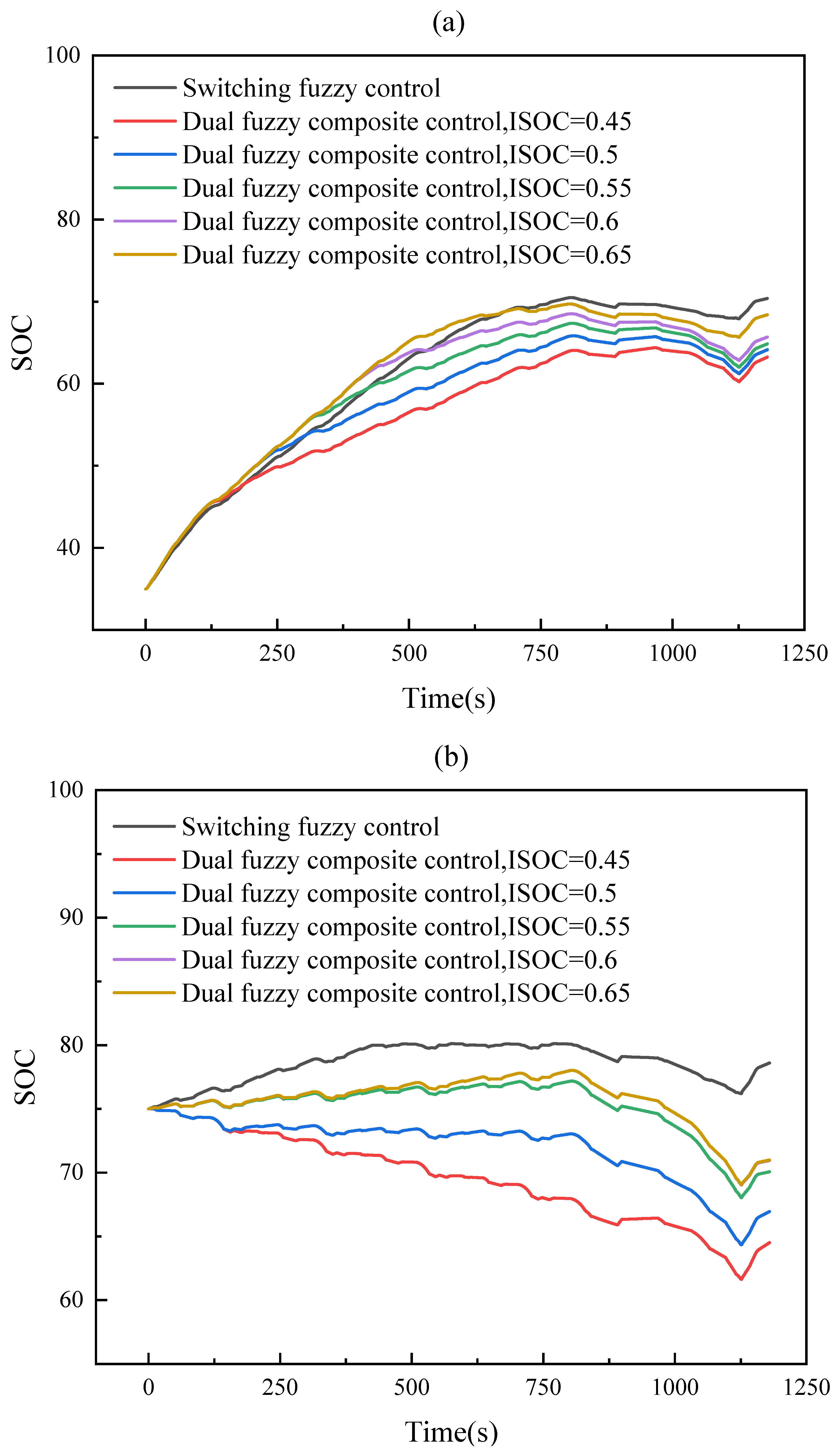
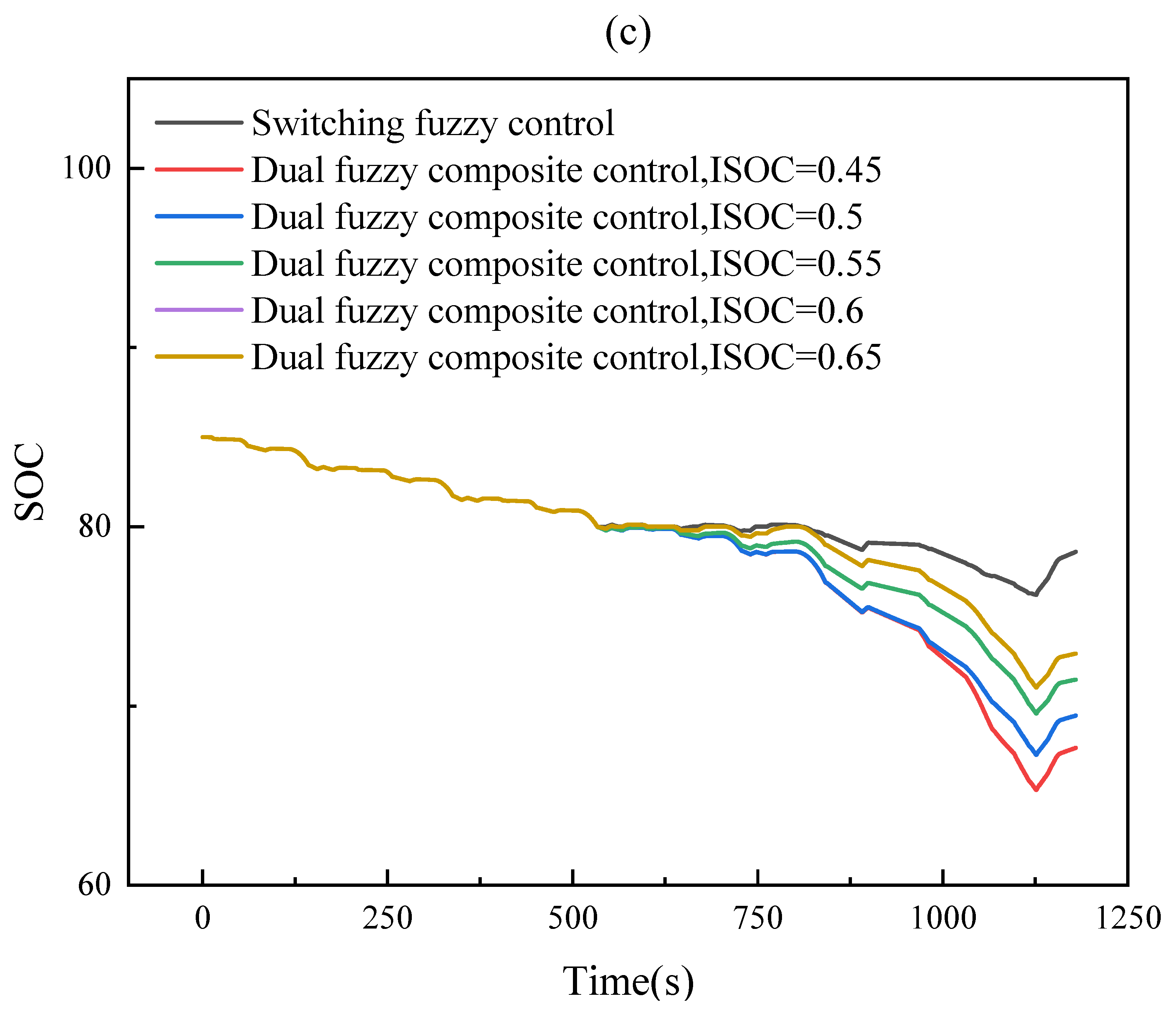
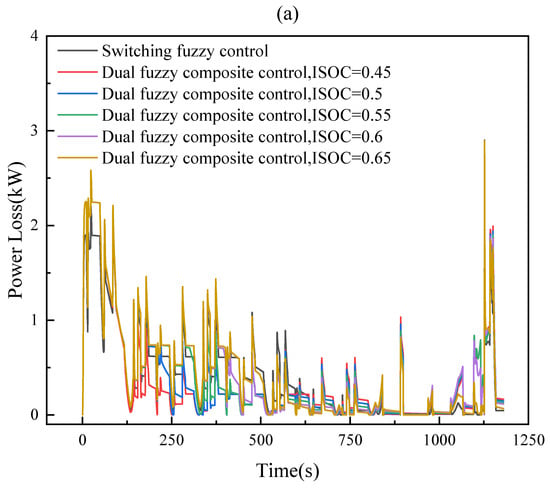
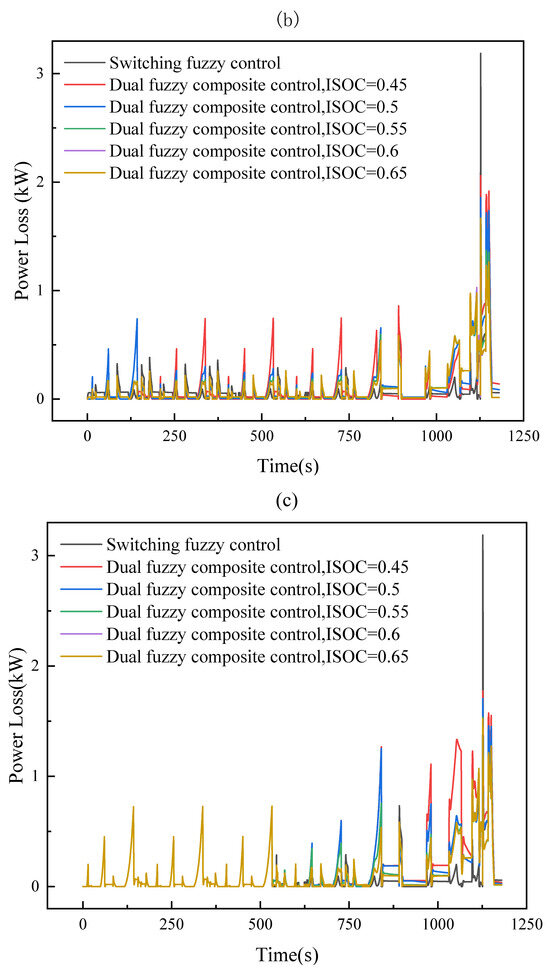
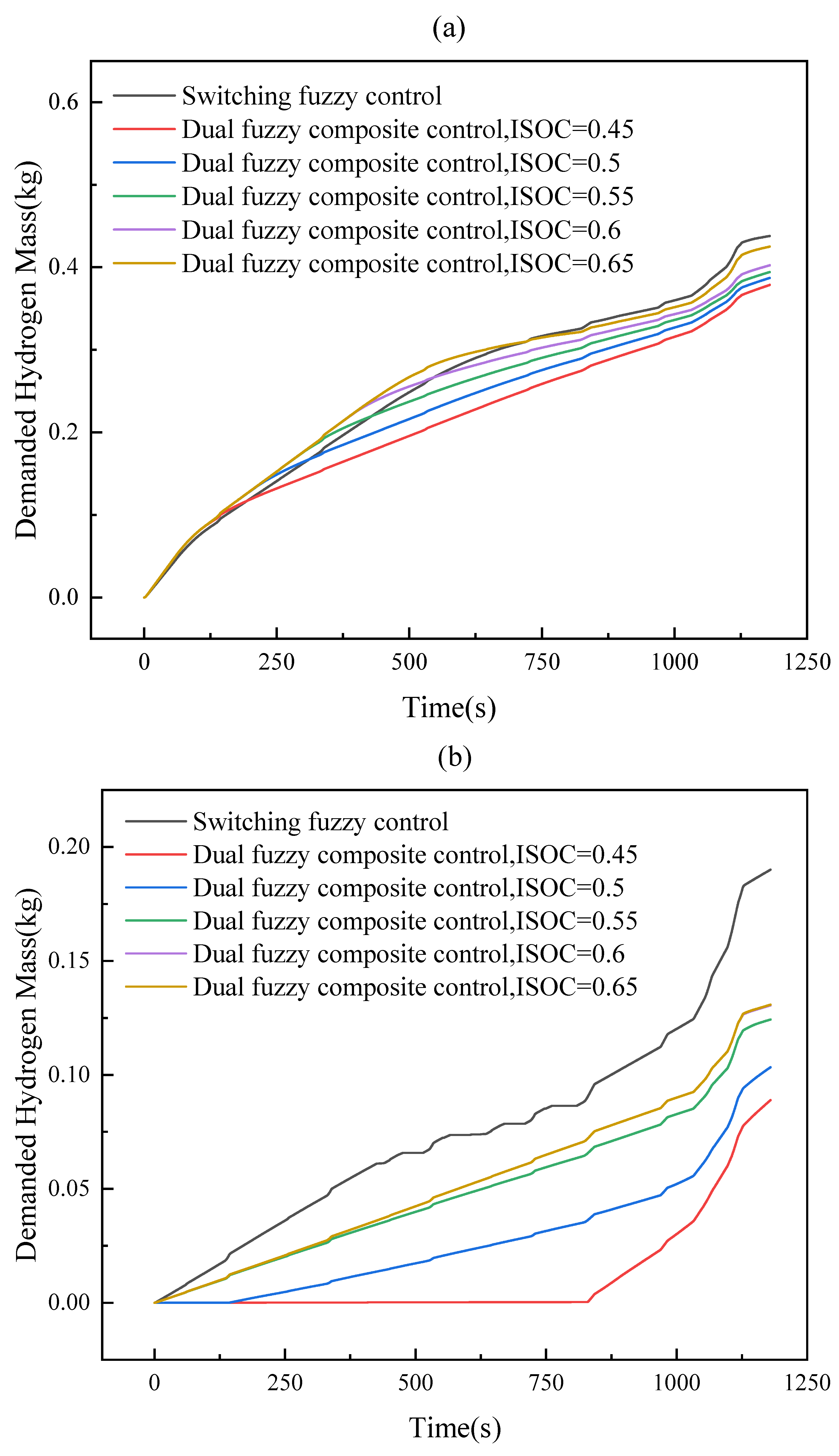
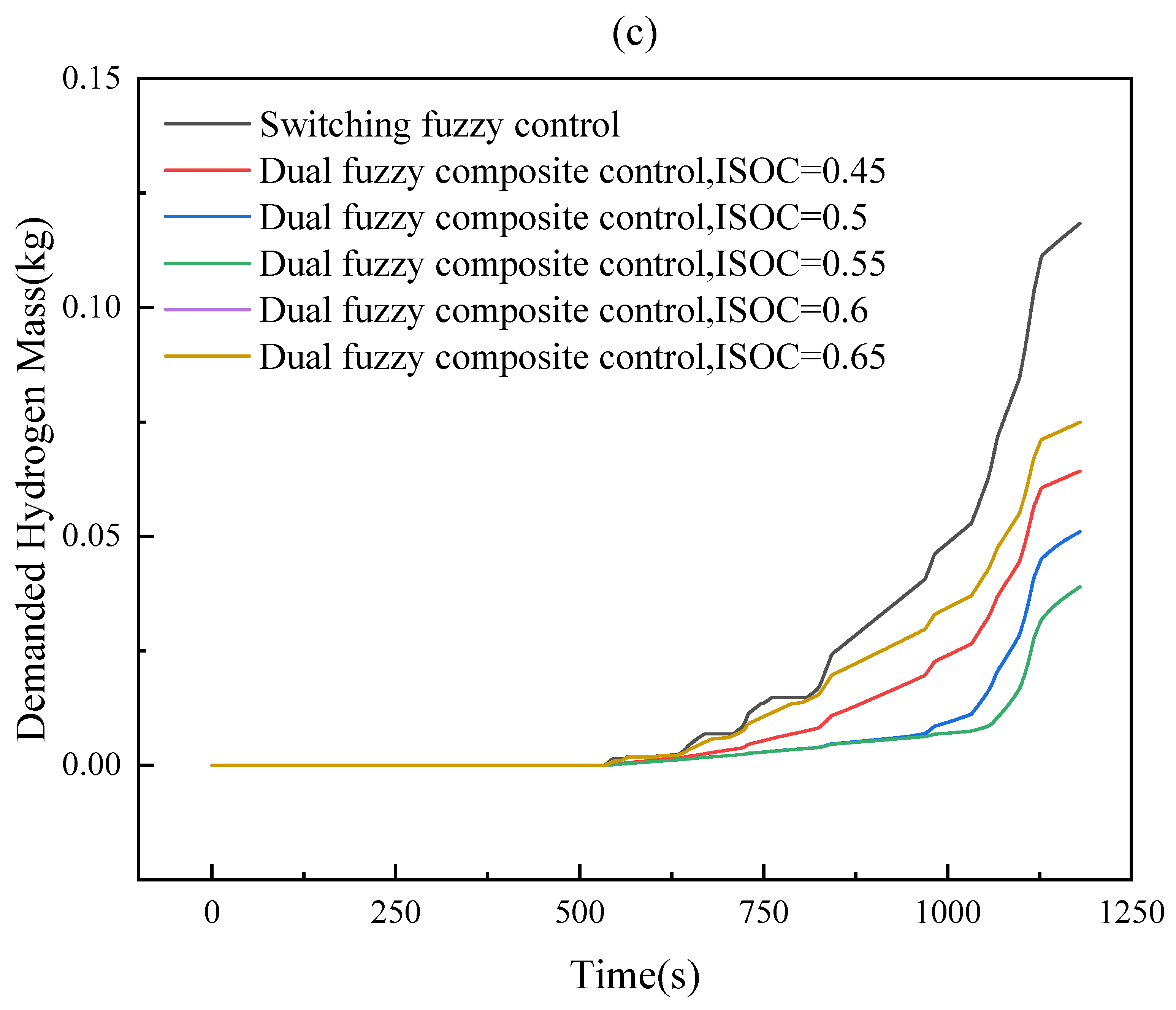
It should be noted that the comparison of hydrogen consumption is presented alongside SOC variation and power loss as part of a multi-dimensional performance evaluation. The reported hydrogen-saving percentages reflect the actual hydrogen consumption under each control strategy’s natural operation, and should be interpreted in the context of the corresponding SOC trajectories and power loss characteristics presented in Figure 6, Figure 7 and Figure 8.
Figure 6.
Comparison of SOC trajectories for different ISOC values under different initial SOC conditions. (a) SOC = 35%, (b) SOC = 75%, and (c) SOC = 85%.
Figure 7.
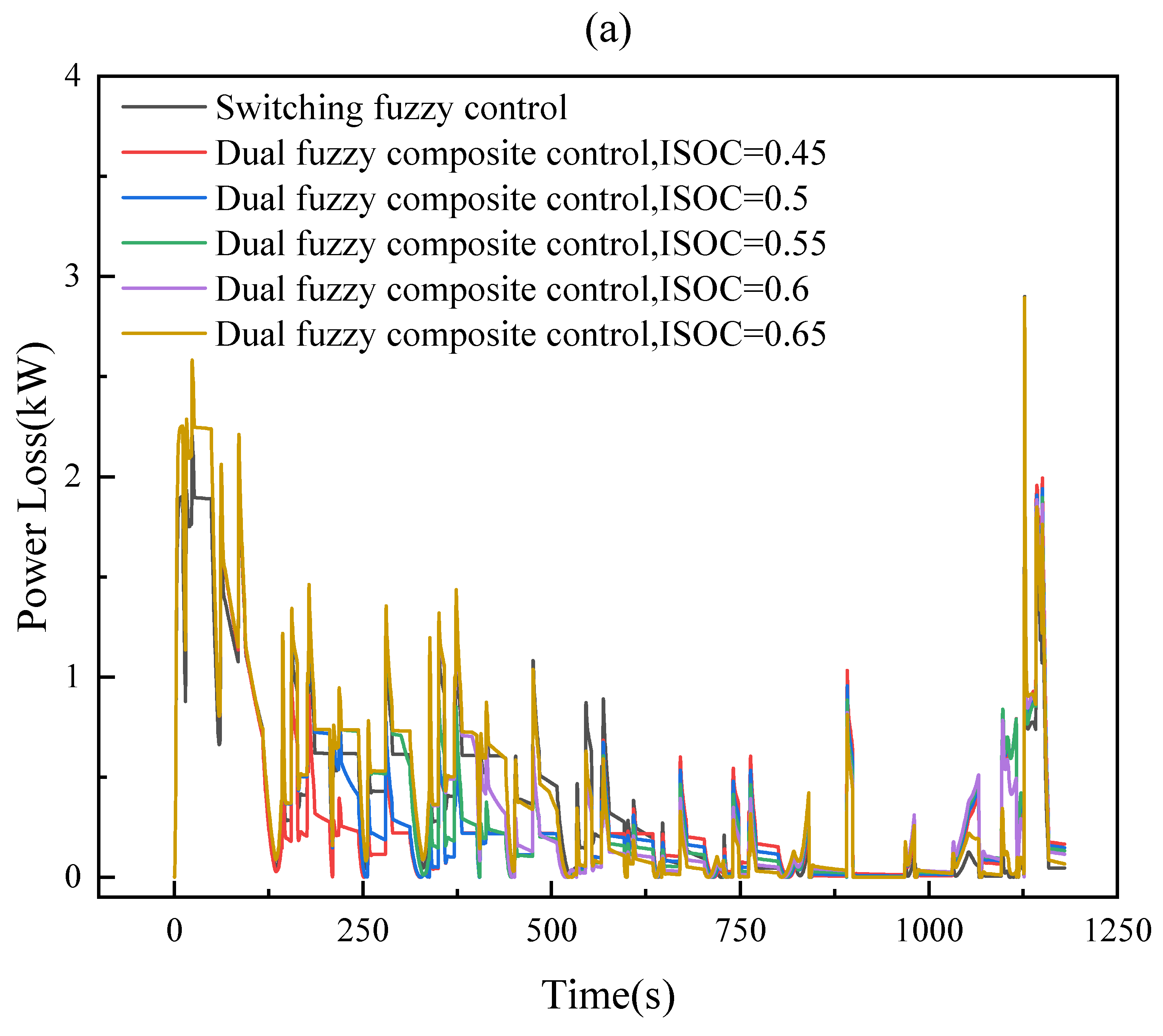
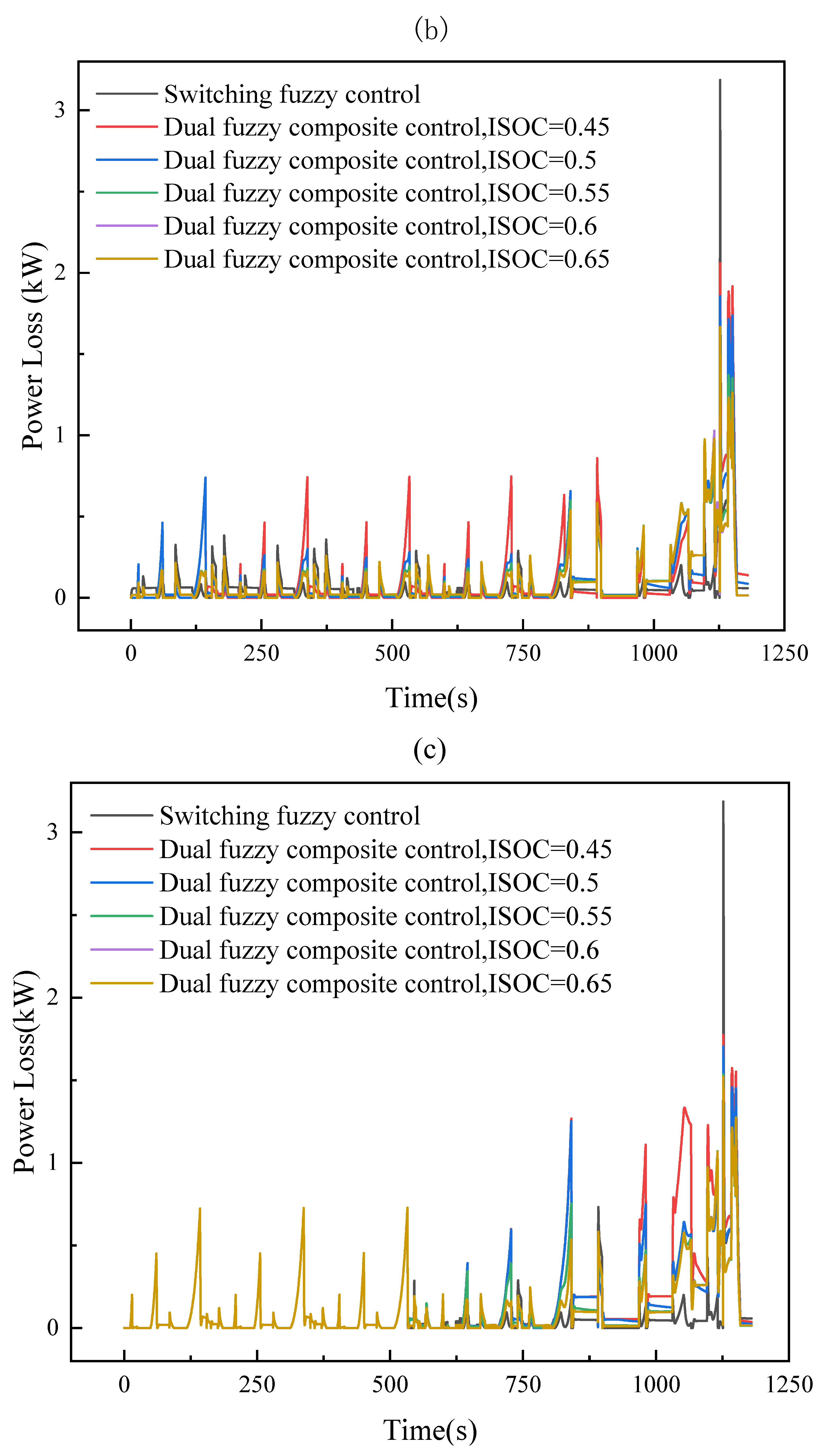
Power loss comparison for different ISOC coefficients under different initial SOC conditions. (a) SOC = 35%, (b) SOC = 75%, and (c) SOC = 85%.
Figure 8.
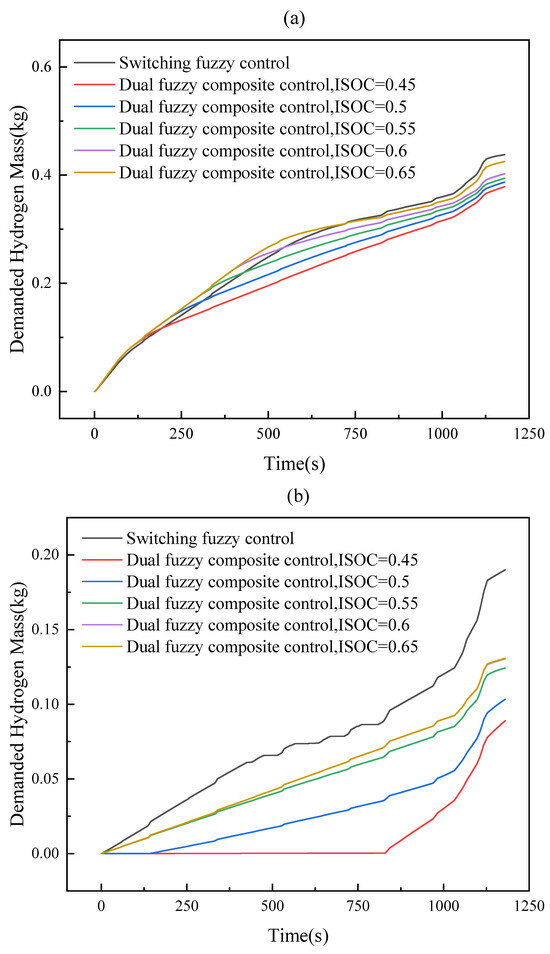
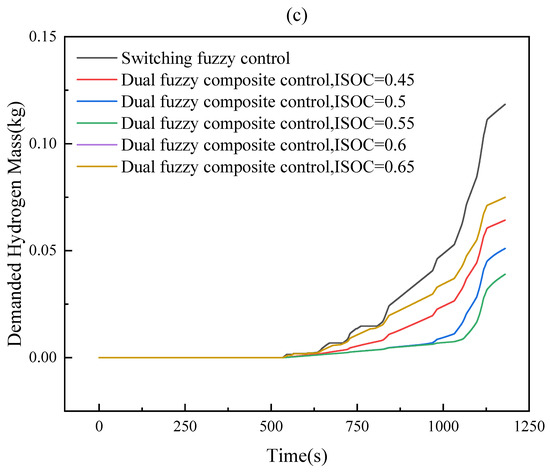
Demanded hydrogen mass comparison for different ISOC coefficients under different initial SOC conditions. (a) SOC = 35%, (b) SOC = 75%, and (c) SOC = 85%.
Figure 6 shows the SOC trajectory comparison between the switch-fuzzy control strategy and the dual-fuzzy control strategy with different ISOC under the three initial SOC conditions (35%, 75%, 85%).
Figure 6 demonstrates that at 35% low initial SOC, all dual-fuzzy control strategies drive the SOC through a significant upward process—charging from 35% to approximately 63–68%. As the ISOC increases, the final SOC also rises: the 0.45 yields a final SOC of approximately 63.24%, while the 0.65 yields approximately 68.40%, spanning a difference of about 5 percentage points over the entire cycle. At 75% medium initial SOC, the SOC trajectories of different strategies show divergent behavior, with the 0.45 SOC dropping markedly to 64.52% with the most aggressive discharging, and the 0.65 SOC is basically maintained at approximately 71%. At 85% high initial SOC, all strategies exhibit a downward SOC trend, but with significantly different decline magnitudes: the 0.45 shows the largest SOC drop (−17.34%), while the 0.65 shows the smallest drop (−12.07%).
Figure 7 presents the power loss comparison between the switch-fuzzy control strategy and the dual-fuzzy control strategy with different ISOC under the three initial SOC conditions.
Figure 7 demonstrates that low ISOC strategies (0.45, 0.50) generate prominent high power loss peaks. The cycle-averaged power losses under the 75% initial SOC condition are 0.1392 kW (ISOC = 0.45), 0.0865 kW (0.50), 0.0142 kW (0.55), 0.0149 kW (0.60), and 0.0150 kW (0.65), representing reductions of 89.8% from ISOC = 0.45 to ISOC = 0.55, but only 5.6% further reduction from 0.55 to 0.65. Increasing ISOC to 0.60 and 0.65 can significantly suppress power loss peaks. However, the loss-reduction effect gradually saturates after ISOC exceeds 0.55, showing obvious diminishing marginal benefits—further raising the ISOC threshold barely improves the system loss performance.
Figure 8 presents the hydrogen consumption comparison of different control strategies under the three initial SOC conditions.
Figure 8 demonstrates that the switch-fuzzy control strategy consistently exhibits the highest hydrogen consumption across all operating conditions. The hydrogen-saving percentages of each dual-fuzzy case relative to the switch-fuzzy strategy are 13.6% (ISOC = 0.45), 11.6% (0.50), 10.0% (0.55), 8.1% (0.60), and 2.9% (0.65) at 35% initial SOC; 53.2%, 45.6%, 34.6%, 31.4%, and 31.2%, respectively; 67.1%, 56.9%, 45.7%, 36.7%, and 36.7% at 75% initial SOC at 85% initial SOC, respectively. The hydrogen consumption of the dual-fuzzy control strategy increases monotonically with increasing ISOC.
Comprehensive analysis shows that low ISOC (0.45, 0.50) reduces hydrogen consumption but causes drastic SOC swings, high power loss, and insufficient driving endurance, while high ISOC (0.60, 0.65) cuts power loss yet raises hydrogen consumption with poor fuel economy, and the power loss optimization effect saturates beyond ISOC = 0.55 with marginal benefits declining. ISOC = 0.55 delivers the optimal trade-off of stable SOC, low power loss, and moderate hydrogen consumption under all tested initial SOC levels, eliminating the drawbacks of extreme ISOC values and the weak overall.
Compared with the switch-fuzzy control strategy, the dual-fuzzy control strategy (ISOC = 0.55) achieves hydrogen consumption reductions of 10.0% (35% initial SOC), 34.6% (75% initial SOC), and 45.7% (85% initial SOC), fully demonstrating the economic advantages brought by the refined power distribution achieved through primary–secondary dual-level collaborative control.
Detailed WLTC simulation results are provided in the Supplementary Materials (Figures S1–S4).
3.3. Performance Analysis of the ESC Adaptive Optimization Strategy
Based on determining the optimal ISOC of 0.55, the ESC algorithm is further introduced to perform online adaptive optimization of the ISOC in the dual-fuzzy control strategy. To evaluate the performance of the ESC strategy, comparative tests were conducted under the three initial SOC conditions (35%, 75%, 85%) against the dual-fuzzy control strategy with a fixed ISOC (0.55) as the baseline.
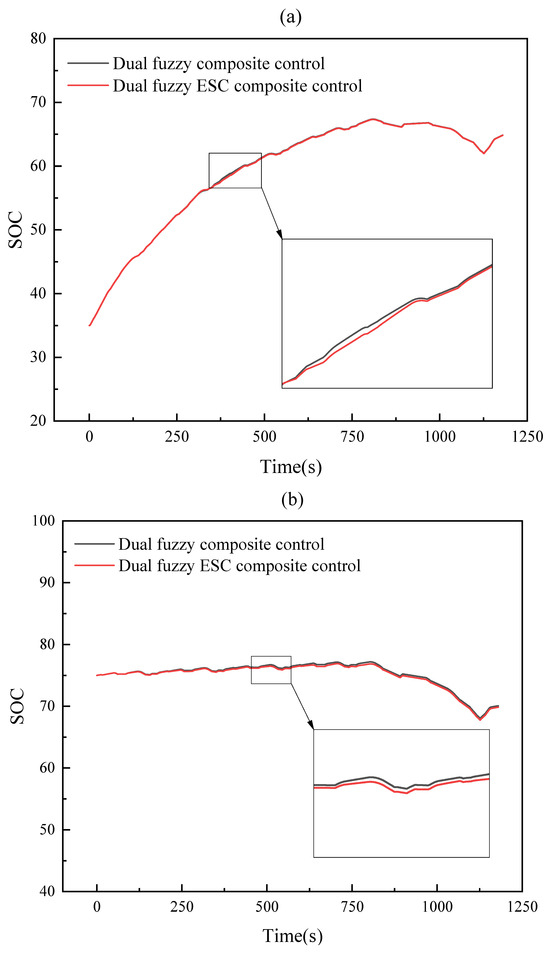
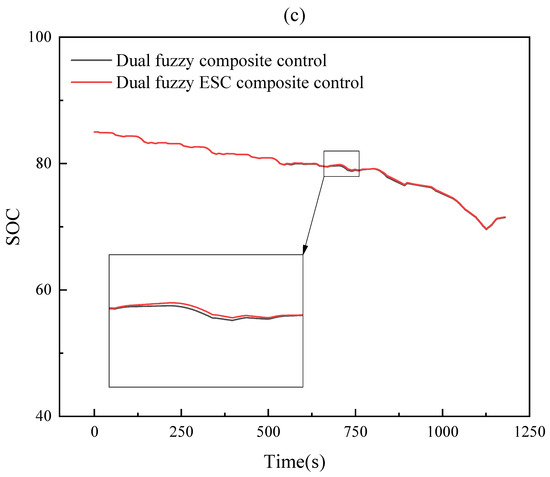
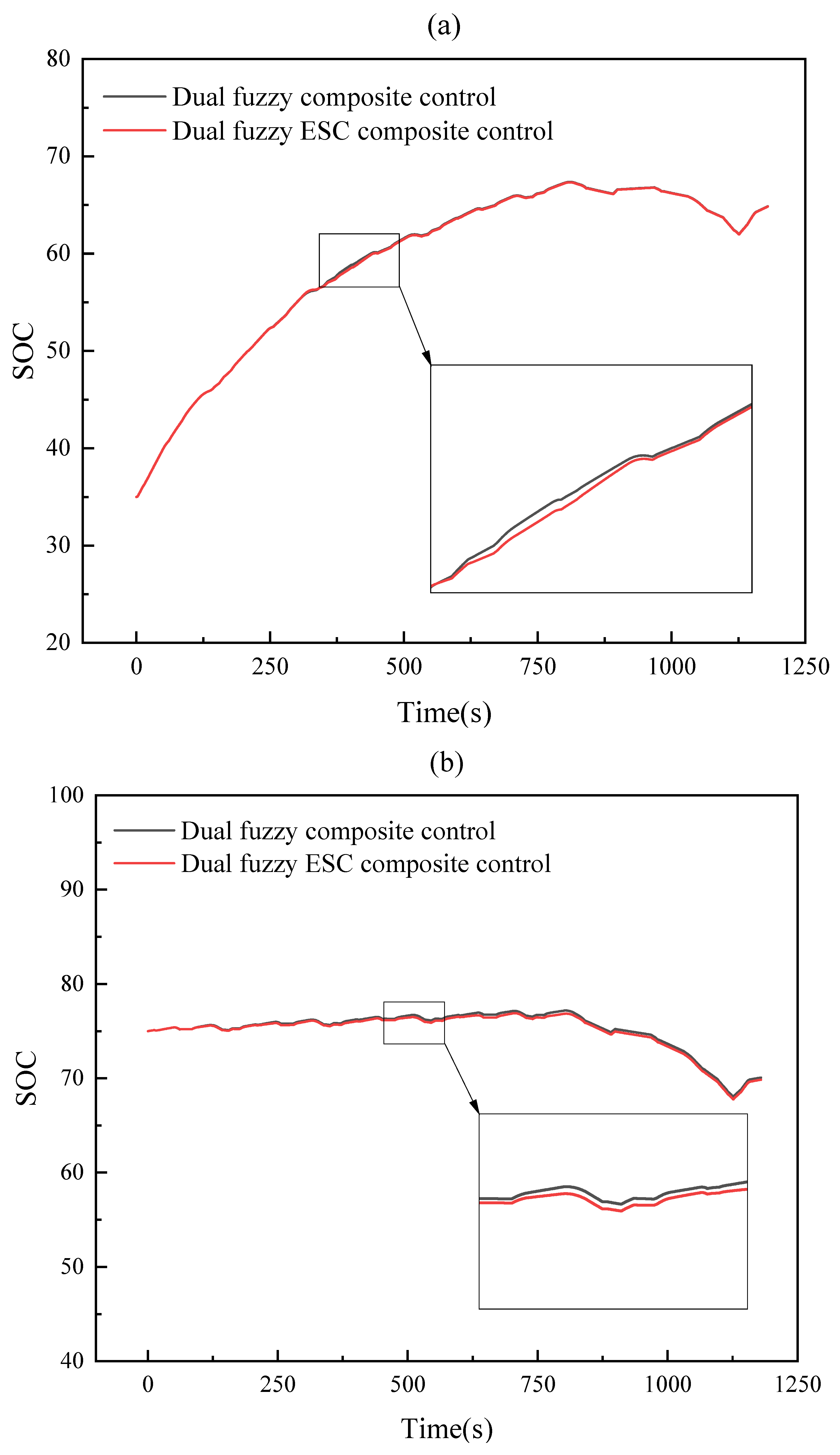
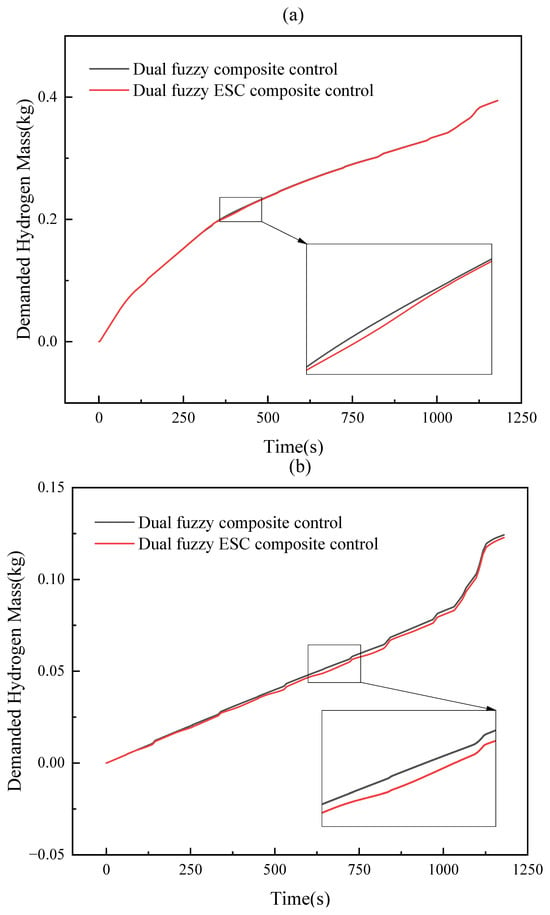
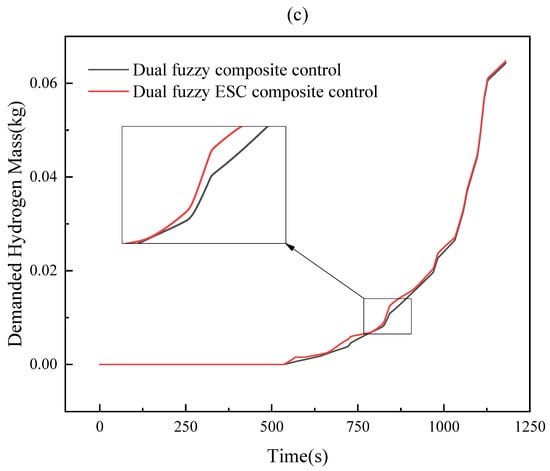
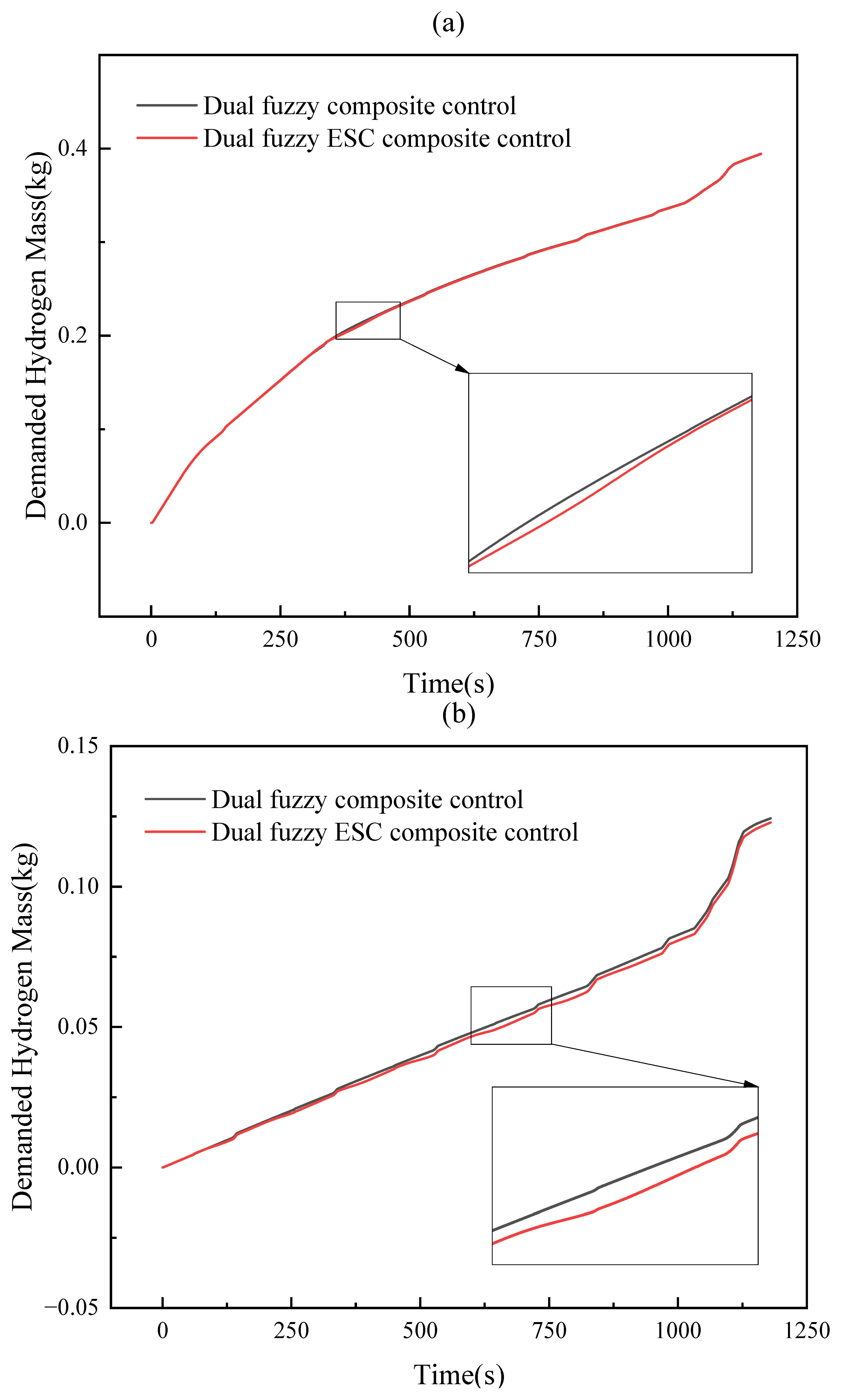
At 35% initial SOC, the performance of the two strategies is very close: the hydrogen consumption of the ESC strategy is 0.3942 kg, which is approximately 0.05% lower than that of the dual-fuzzy control (0.3944 kg); the final SOC values are 64.84% and 64.86%, respectively, showing almost no difference. This indicates that under the low initial SOC and strong charging demand condition, both strategies are charging the battery at maximum charging capacity, and the optimization space of the ESC algorithm is limited.
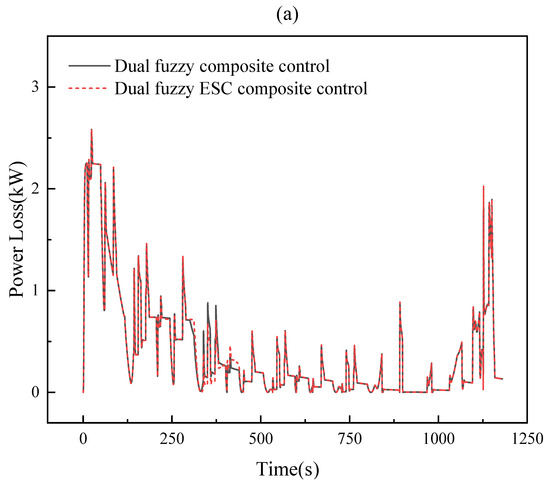
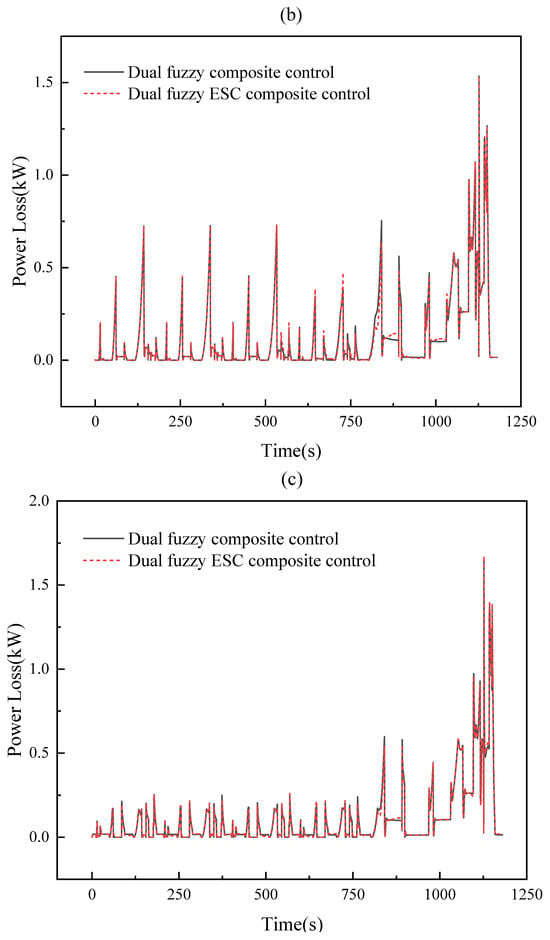
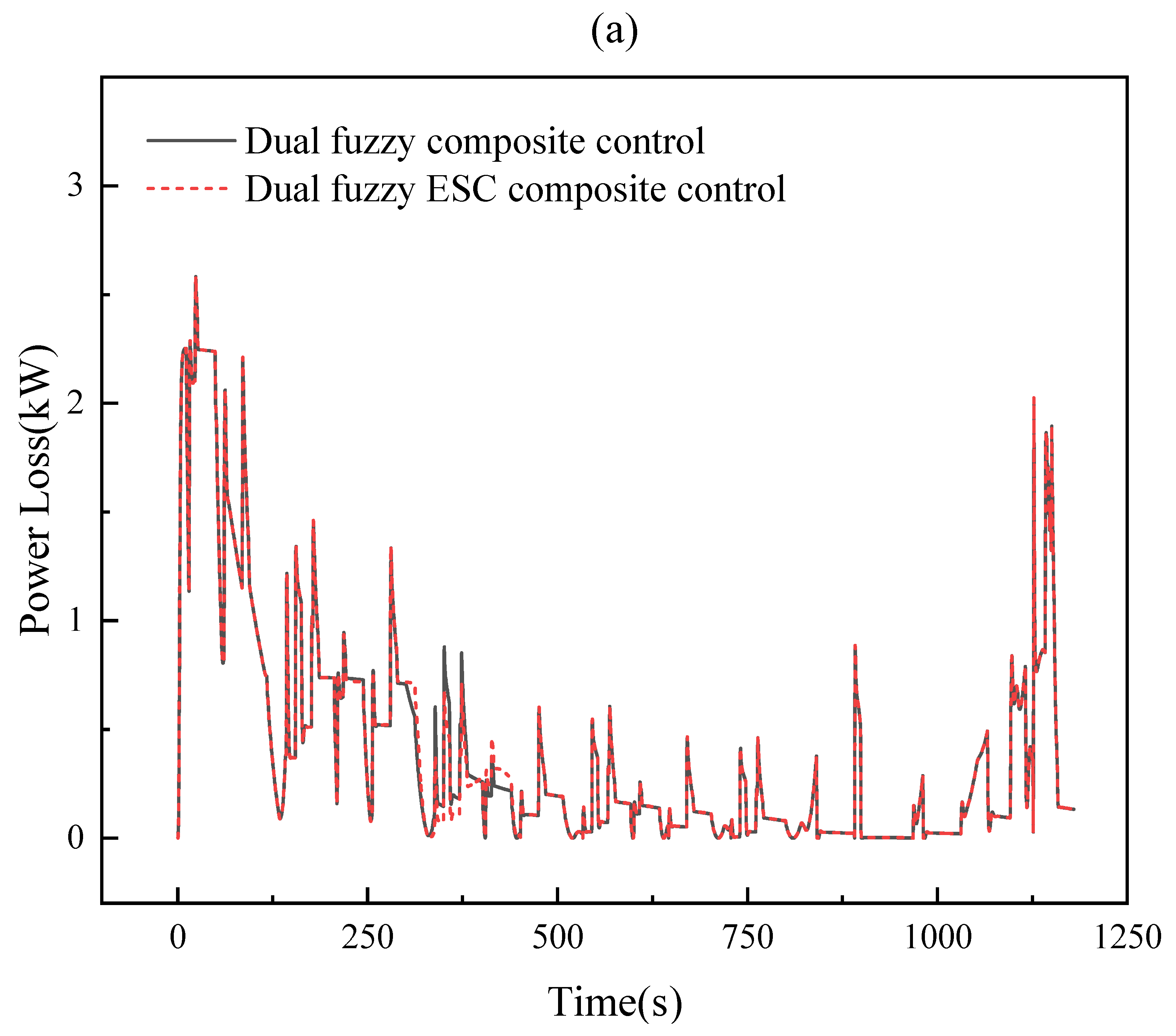
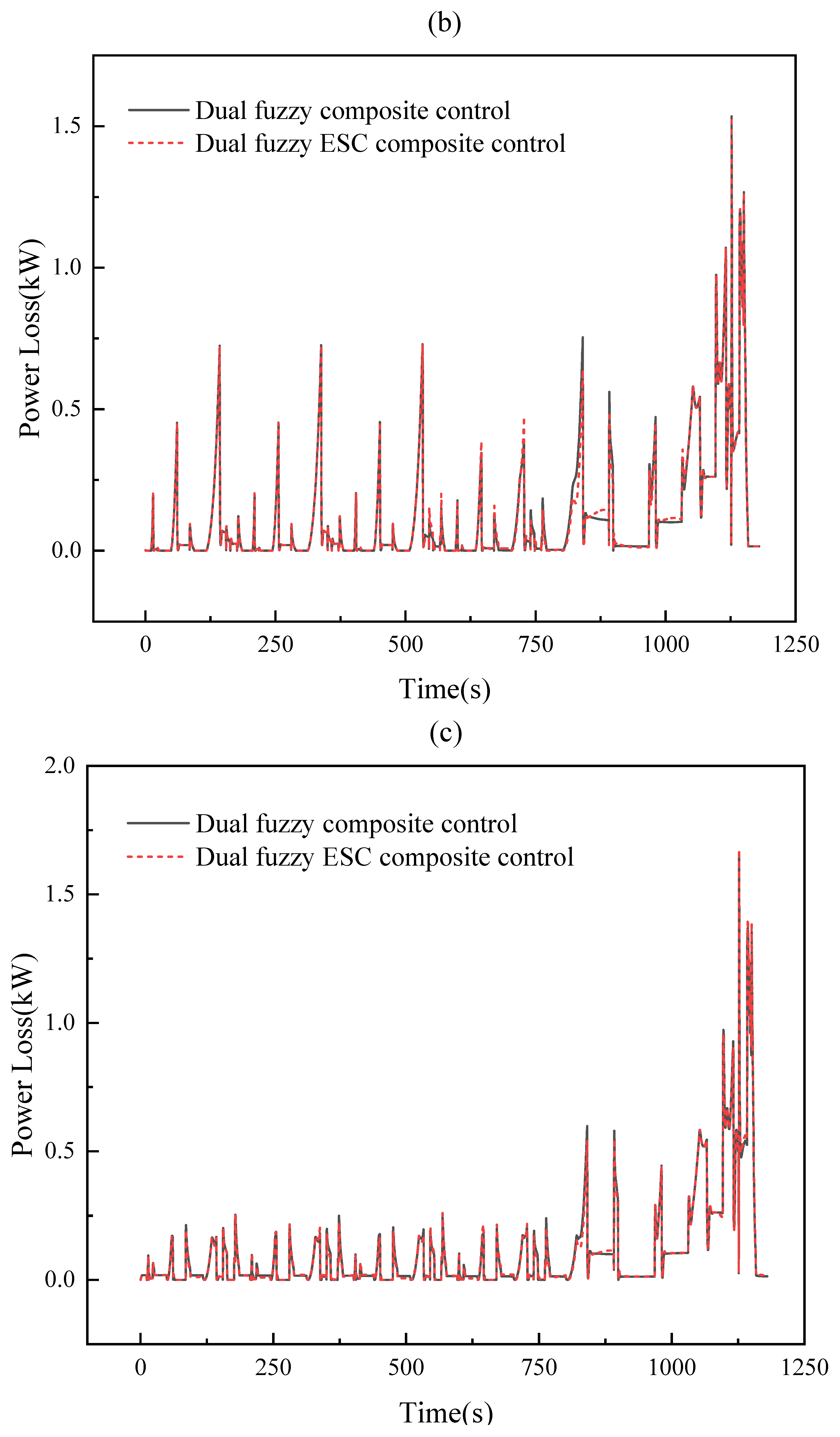
At 75% initial SOC, the ESC strategy demonstrates more pronounced advantages: hydrogen consumption is 0.1228 kg, which is 1.21% lower than that of the dual-fuzzy control (0.1243 kg); the final SOC is 69.85%, slightly lower than the baseline strategy’s 70.07%. This indicates that the ESC strategy, under this operating condition, can more reasonably regulate the fuel cell output power, reducing unnecessary energy consumption while satisfying SOC maintenance requirements, thereby achieving a better balance between hydrogen economy and SOC maintenance. Although power loss increases slightly (+21.8%), the absolute value remains at a low level (0.0173 kW vs. 0.0142 kW), which is within an acceptable range.
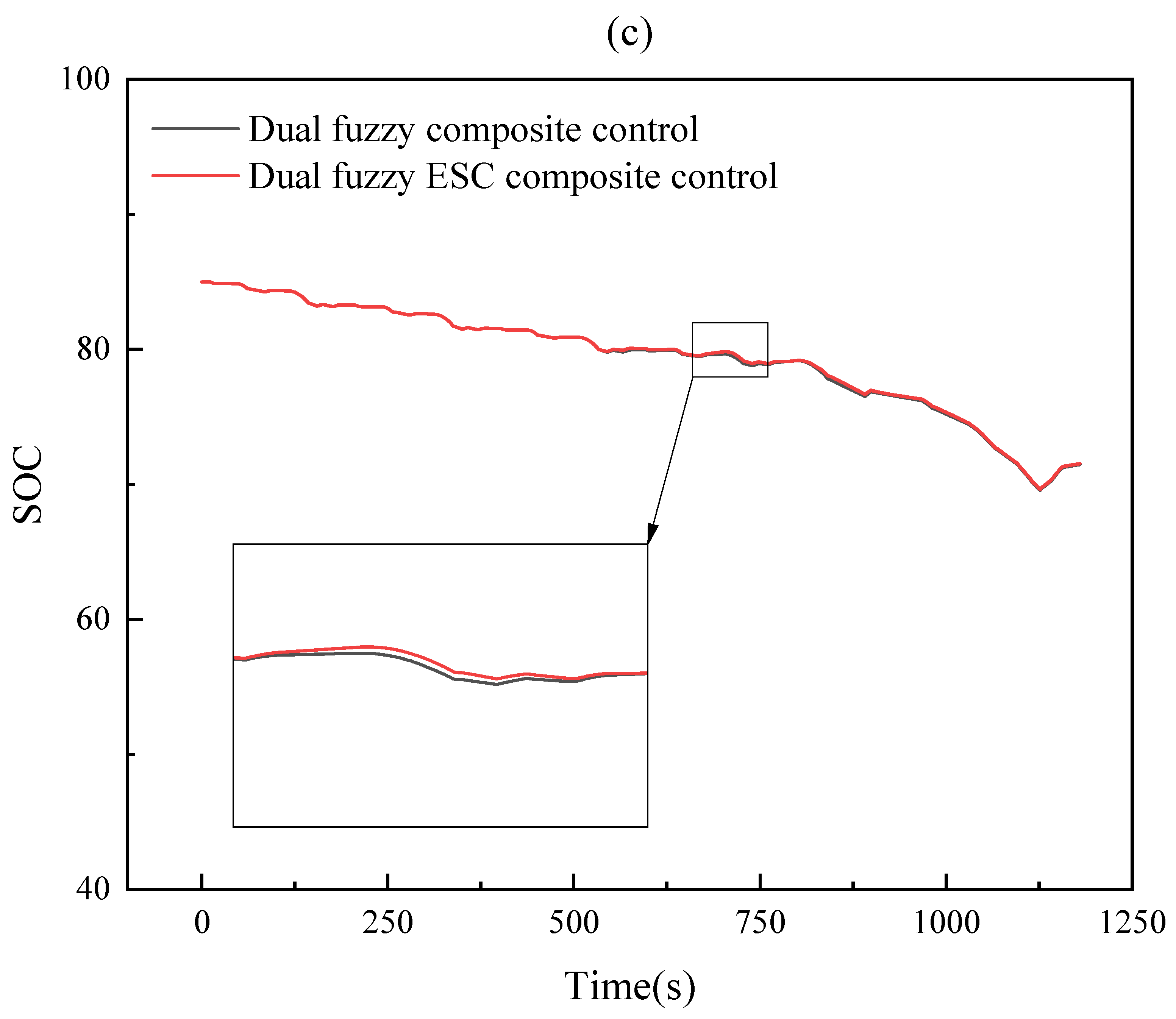
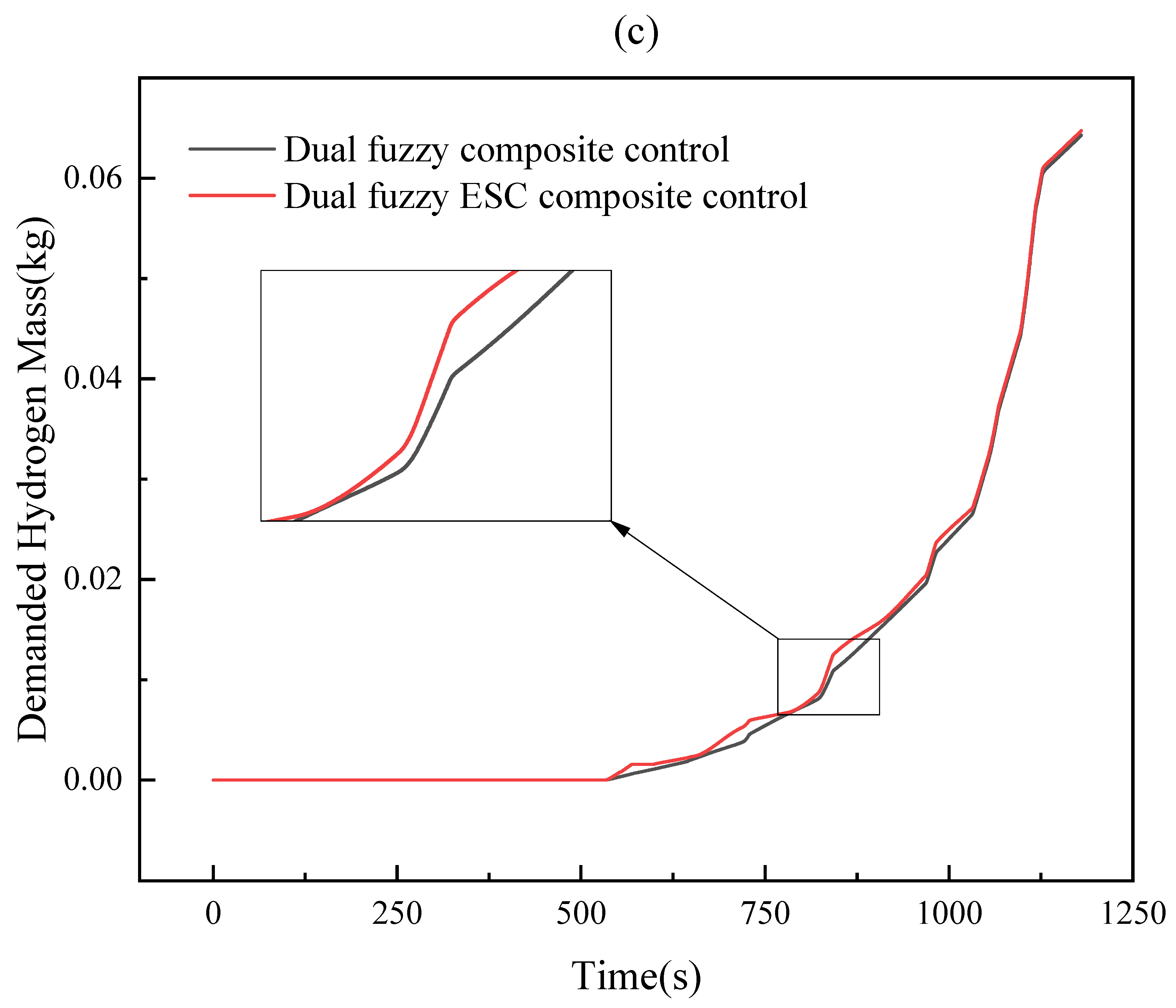
At 85% high initial SOC, the hydrogen consumption of the ESC strategy (0.0647 kg) is essentially equivalent to that of the dual-fuzzy control (0.0643 g) (+0.62%), but the final SOC of the ESC strategy (71.54%) is slightly higher than that of the dual-fuzzy control (71.48%). This means that the ESC strategy maintains battery charge better at almost the same energy consumption level, indirectly indicating that the ESC algorithm, under this operating condition, tends to moderately adjust the ISOC to reduce battery discharge depth, thereby benefiting battery life extension.
Figure 9 shows the SOC trajectory comparison between the ESC adaptive optimization strategy and the dual-fuzzy control (ISOC = 0.55) under the three initial SOC conditions.
Figure 9.
SOC trajectory comparison of the ESC optimization scheme and dual fuzzy control scheme under (a) SOC = 35%, (b) SOC = 75%, and (c) SOC = 85%.
Figure 10 shows the power loss comparison between the two strategies under the three initial SOC conditions.
Figure 10.
Comparison of power loss evolution trajectories of the ESC optimization strategy and dual fuzzy control strategy at (a) SOC = 35%, (b) SOC = 75%, and (c) SOC = 85%.
Figure 11 shows the hydrogen consumption comparison between the two strategies under the three initial SOC conditions.
Figure 11.
Comparison of variation trajectories of demanded hydrogen mass between the ESC optimization scheme and dual fuzzy control scheme under (a) SOC = 35%, (b) SOC = 75%, and (c) SOC = 85%.
3.4. Comprehensive Comparative Analysis of Three Control Strategies
Table 6 presents a systematic comprehensive comparison of the switch-fuzzy control strategy, the dual-fuzzy control strategy (ISOC = 0.55), and the ESC adaptive optimization strategy across three dimensions: hydrogen consumption, final SOC, and power loss.
Table 6.
Comprehensive performance comparison of three control strategies.
The following main findings can be derived from Table 6:
Hydrogen economy: Both the dual-fuzzy control strategy (with ISOC = 0.55) and the ESC optimization strategy achieve significantly lower hydrogen consumption than the switch-fuzzy control strategy under all operating conditions. At 35% initial SOC, both strategies achieve a 10.0% reduction; at 75% initial SOC, reductions are 34.6% and 35.4%, respectively; and at 85% initial SOC, reductions are 45.7% and 45.4%, respectively. The ESC adaptive optimization strategy achieves an additional 1.21% reduction in hydrogen consumption compared with the dual-fuzzy control at 75% initial SOC, validating the effectiveness of ESC-based online optimization.
SOC management: The switch-fuzzy control strategy tends to actively charge to maintain high SOC levels (final SOC between 70% and 79%), which results in significantly higher hydrogen consumption. The final SOC of the dual-fuzzy control and ESC strategies is closer to the intermediate range of 60–72%, indicating that these two strategies better utilize the battery’s available capacity and reduce unnecessary charging behavior. The final SOC of the ESC strategy at 75% initial SOC (69.85%) is slightly lower than that of the dual-fuzzy control (70.07%), indicating that ESC more fully utilizes battery power while ensuring reasonable SOC, thereby reducing the burden on the fuel cell.
Power loss characteristics: At 35% low initial SOC, the power loss of the switch-fuzzy control (0.0457 kW) is significantly lower than that of the dual-fuzzy control (0.1322 kW) and ESC (0.1326 kW). This is because the switch-fuzzy control strategy, under this operating condition, tends to charge directly at high power, making the charging path more direct. However, under the 75% and 85% conditions, the power loss of the dual-fuzzy control and ESC strategies (0.0142–0.0175 kW) is significantly lower than that of the switch-fuzzy control (0.0581 kW), demonstrating that the dual-fuzzy control strategy has superior power loss characteristics in the medium-to-high SOC range.
4. Conclusions
To address the limitation of fixed SOC reference values in the energy management strategy of fuel cell hybrid electric vehicles, this paper first designs a dual-fuzzy logic control strategy, achieving refined power distribution through the collaborative operation of a primary fuzzy logic controller (FLC1) and a secondary fuzzy logic controller (FLC2). Second, the influence of different ISOC values (0.45–0.65) on the performance of the dual-fuzzy control strategy is systematically investigated, and the optimal ISOC of 0.55 is identified. On this basis, an ESC-based adaptive online optimization method for the SOC reference value is proposed. Through systematic simulation verification on the MATLAB/Simulink and AVL CRUISE co-simulation platform under the NEDC driving cycle, the following main conclusions are obtained:
(1) The effectiveness of the dual-fuzzy logic energy management strategy is designed and validated. Under the three initial SOC conditions (35%, 75%, 85%), the dual-fuzzy control strategy achieves hydrogen consumption reductions of 10.0%, 34.6%, and 45.7%, respectively, compared with the switch-fuzzy control strategy, fully demonstrating the economic advantages brought by primary–secondary dual-level fuzzy collaborative control.
(2) ISOC has a significant influence on the performance of the dual-fuzzy control strategy. As ISOC increases from 0.45 to 0.65, hydrogen consumption exhibits a monotonically increasing trend (approximately 12.3% increase at 35% initial SOC), while power loss shows a decreasing trend (approximately 59.6% reduction), indicating the existence of a trade-off interval with optimal comprehensive performance. Integrating the three dimensions of hydrogen consumption, SOC balance, and power loss, ISOC = 0.55 performs best among the five discrete values investigated in this study, achieving the most favorable balance among SOC maintenance, hydrogen economy, and power loss for the tested scenarios. It is acknowledged that the optimality of this value is limited to the considered discrete set; future work will employ a continuous optimization framework to identify the globally optimal ISOC under a wider range of operating conditions.
(3) The ESC adaptive optimization strategy achieves real-time online adjustment of the ISOC value on the basis of the dual-fuzzy control (ISOC = 0.55). At 75% initial SOC, the ESC strategy achieves an additional 1.21% reduction in hydrogen consumption compared with the dual-fuzzy control, with a slightly lower final SOC (69.85% vs. 70.07%), indicating that the ESC strategy more fully utilizes battery power while ensuring reasonable SOC. The ESC strategy can autonomously adapt to different battery initial states without requiring prior knowledge of driving cycles.
(4) The systematic comparison of the three control strategies demonstrates that the switch-fuzzy control strategy, despite its simple structure, exhibits significantly higher hydrogen consumption and the worst comprehensive performance; the dual-fuzzy control strategy achieves significant performance improvement through refined two-level power distribution, serving as an effective baseline strategy; and the ESC adaptive strategy further achieves online optimization of the ISOC value on the basis of the dual-fuzzy control, attaining the best balance among hydrogen economy, SOC maintenance, and operating condition adaptability, making it suitable as an intelligent upgrading solution for existing fuzzy logic EMS.
Limitations and Future Work
Several limitations of the present study should be acknowledged, along with corresponding future work. First, all evaluations are performed purely in simulation without experimental validation; to address this, future work will include hardware-in-the-loop or vehicle-level experimental testing. Second, the NEDC is used as the primary driving cycle, while more aggressive cycles such as WLTC and US06 have not been systematically examined; therefore, our subsequent research will extend the evaluation to these cycles and real-world driving profiles. Third, component degradation, including fuel cell catalyst degradation and battery capacity fade, is not modeled in the current framework; we plan to integrate degradation models into the cost function to enable health-conscious energy management.
Supplementary Materials
The following supporting information can be downloaded at: https://www.mdpi.com/article/10.3390/en19174010/s1, Figure S1: Velocity tracking performance under the WLTC driving cycle (desired velocity vs. actual vehicle velocity); Figure S2: Cumulative demanded hydrogen mass of the fuel cell system over the WLTC cycle; Figure S3: Transient electrical power loss of the powertrain during the WLTC driving cycle; Figure S4: Battery state of charge (SOC) profile under the WLTC driving cycle; All results are obtained from the AVL CRUISE simulation model under the WLTC driving cycle, providing detailed transient data of the fuel cell hybrid powertrain.
Author Contributions
X.Z. designed the research scheme, constructed simulation models, conducted simulation experiments, processed and analyzed data, and drafted the manuscript; A.T. conceived the research direction, supervised the research scheme, and revised and finalized the manuscript; K.L. participated in the comparative analysis of fuzzy control strategies for switches and assisted with data processing and figure preparation; J.Z. took part in data collection and sorting the literature; R.L. engaged in data analysis and sorting the literature. All authors have read and agreed to the published version of the manuscript.
Funding
Jilin Province Development and Reform Commission of China (2023C019).
Data Availability Statement
The original contributions presented in this study are included in the article/Supplementary Materials. Further inquiries can be directed to the corresponding author.
Conflicts of Interest
The authors declare no conflicts of interest.
References
- Wang, Y.; Chen, K.S.; Mishler, J.; Cho, S.C.; Adroher, X.C. A review of polymer electrolyte membrane fuel cells: Technology, applications, and needs on fundamental research. Appl. Energy 2010, 88, 981–1007. [Google Scholar] [CrossRef] [Scilit]
- Morsi, Y.A.; Hasaneen, K.M.; Rahim, N.A.; Abdelqawee, I.M. A robust energy management strategy for fuel cell and ultracapacitor hybrid electric vehicles under uncertainty via a jellyfish-search-based approach. Sci. Rep. 2025, 15, 37361. [Google Scholar] [CrossRef] [Scilit] [PubMed]
- He, S.; Mai, W.; Jiang, J.; Tian, J.; Lin, W.; Ke, S.; Chen, S.; Guo, R.; Chung, C.Y. Operation of Ultrafast Charging Stations With Virtual Batteries on Voltage Constraints Using Physics-Informed Neural Network. IEEE Trans. Transp. Electrif. 2025, 11, 13871–13885. [Google Scholar] [CrossRef] [Scilit]
- Qi, J.; Lei, Z.; Xu, H.; Su, M. Review of energy management strategy for fuel cell hybrid electric vehicle. Proc. Inst. Mech. Eng. Part D J. Automob. Eng. 2025. OnlineFirst. [Google Scholar] [CrossRef] [Scilit]
- Xiong, R.; Cao, J.; Yu, Q.; He, H.; Sun, F. Critical Review on the Battery State of Charge Estimation Methods for Electric Vehicles. IEEE Access 2018, 6, 1832–1843. [Google Scholar] [CrossRef] [Scilit]
- Zou, S.; Zhang, J.; Liu, Y.; Yang, Y.; Zhou, Y.; Peng, J.; Wang, G. Dynamic programming-based model predictive control of energy management for a novel plug-in hybrid electric vehicle. Energies 2026, 19, 2487. [Google Scholar] [CrossRef] [Scilit]
- Song, Z.; Hofmann, H.; Li, J.; Han, X.; Ouyang, M. Optimization for a hybrid energy storage system in electric vehicles using dynamic programing approach. Appl. Energy 2015, 139, 151–162. [Google Scholar] [CrossRef] [Scilit]
- Slimene, M.B.; Khlifi, M.A. An adaptive equivalent consumption minimization strategy with traffic preview for fuel cell hybrid electric vehicles. Sci. Rep. 2026, 16, 59702. [Google Scholar] [CrossRef] [Scilit] [PubMed]
- Li, M.; Wan, X.; Wu, J.; Yan, M.; He, H. Enhancing fuel cell electric vehicle efficiency with an information-bridged hierarchical reinforcement learning method. IEEE Trans. Intell. Transp. Syst. 2025, 26, 16076–16089. [Google Scholar] [CrossRef] [Scilit]
- Pei, Y.; Chen, F. Real-time water content regulation in PEMFC shutdown via MPC with SH-AUKF-based state feedback: Towards improved efficiency and reduced energy consumption. eTransportation 2025, 25, 100461. [Google Scholar] [CrossRef] [Scilit]
- Liang, J.; Feng, J.; Lu, Y.; Yin, G.; Zhuang, W.; Mao, X. A direct yaw moment control framework through robust T-S fuzzy approach considering vehicle stability margin. IEEE/ASME Trans. Mechatron. 2023, 29, 166–178. [Google Scholar] [CrossRef] [Scilit]
- Begum, B.; Jena, N.K.; Sahu, B.K.; Ray, P.; Bajaj, M.; Singh, A.R.; Blazek, V. Application of an intelligent fuzzy logic based sliding mode controller for frequency stability analysis in a deregulated power system using OPAL-RT platform. Energy Rep. 2024, 11, 510–534. [Google Scholar] [CrossRef] [Scilit]
- Rostami, S.M.R.; Al Shibaany, Z.; Kay, P.; Karimi, H.R. Deep reinforcement learning and fuzzy logic controller codesign for energy management of hydrogen fuel cell powered electric vehicles. Sci. Rep. 2024, 14, 30917. [Google Scholar] [CrossRef] [Scilit] [PubMed]
- Zheng, Y.; He, F.; Shen, X.; Jiang, X. Energy Control Strategy of Fuel Cell Hybrid Electric Vehicle Based on Working Conditions Identification by Least Square Support Vector Machine. Energies 2020, 13, 426. [Google Scholar] [CrossRef] [Scilit]
- Hamed, J.K.; Morris, B.; Huan, L.; Dario, Z. Fuel Cell Hybrid Locomotive with Modified Fuzzy Logic Based Energy Management System. Sustainability 2022, 14, 8336. [Google Scholar] [CrossRef] [Scilit]
- Rezk, H.; Fathy, A. Combining proportional integral and fuzzy logic control strategies to improve performance of energy management of fuel cell electric vehicles. Int. J. Thermofluids 2025, 26, 101076. [Google Scholar] [CrossRef] [Scilit]
- Suttner, R. Extremum-seeking control for a class of mechanical systems. IEEE Trans. Autom. Control 2022, 68, 1200–1207. [Google Scholar] [CrossRef] [Scilit]
- Wang, Z.; Zhou, X.; Wang, J. Extremum-seeking-based adaptive model-free control and its application to automated vehicle path tracking. IEEE/ASME Trans. Mechatron. 2022, 27, 3874–3884. [Google Scholar] [CrossRef] [Scilit]
- Meh, J.; Meng, Q.H.; Tao, J.; Hou, H.R. Robot odor source localization in indoor environments based on gradient adaptive extremum seeking search. Build. Environ. 2023, 229, 109983. [Google Scholar] [CrossRef] [Scilit]
- Liu, W.; Huo, X.; Ma, K.; Chen, S. Performance Improvement in Fast Extremum Seeking With Adaptive Phase Compensator and High-Gain Optimizer. IEEE Trans. Syst. Man Cybern. Syst. 2021, 52, 6774–6788. [Google Scholar] [CrossRef] [Scilit]
- Liu, W.; Huo, X.; Ma, K.; Sun, W. Improved Gradient Estimation for Fast Extremum Seeking: A Parametric Proportional-Integral Observer-Based Approach. IEEE Trans. Syst. Man Cybern. Syst. 2023, 53, 7656–7667. [Google Scholar] [CrossRef] [Scilit]
- Poveda, J.I.; Krstić, M. Nonsmooth Extremum Seeking Control With User-Prescribed Fixed-Time Convergence. IEEE Trans. Autom. Control 2021, 66, 6156–6163. [Google Scholar] [CrossRef] [Scilit]
- Hazeleger, L.; Nešić, D.; van de Wouw, N. Sampled-data extremum-seeking framework for constrained optimization of nonlinear dynamical systems. Automatica 2022, 142, 110415. [Google Scholar] [CrossRef] [Scilit]
- Danielson, C.; Bortoff, S.A.; Chakrabarty, A. Extremum Seeking Control with an Adaptive Gain Based On Gradient Estimation Error. arXiv 2021. [Google Scholar] [CrossRef] [Scilit]
- Yilmaz, C.T.; Krstić, M. Prescribed-Time Extremum Seeking for Delays and PDEs Using Chirpy Probing. IEEE Trans. Autom. Control 2024, 69, 7710–7725. [Google Scholar] [CrossRef] [Scilit]
- Williams, A.; Scheinker, A.; Huang, E.C.; Taylor, C.; Krstic, M. Experimental Safe Extremum Seeking for Accelerators. IEEE Trans. Control Syst. Technol. 2024, 32, 1881–1890. [Google Scholar] [CrossRef] [Scilit]
- Rodrigues, V.H.P.; Oliveira, T.R.; Hsu, L.; Diagne, M.; Krstic, M. Event-triggered and periodic event-triggered extremum seeking control. Automatica 2025, 174, 112161. [Google Scholar] [CrossRef] [Scilit]
- Lin, R.H.; Xi, X.N.; Wang, P.N.; Wu, B.D.; Tian, S.M. Review on hydrogen fuel cell condition monitoring and prediction methods. Int. J. Hydrogen Energy 2018, 44, 5488–5498. [Google Scholar] [CrossRef] [Scilit]
- Zhang, F.C.; Tian, A.H.; Zhang, K.H.; Zhang, X.F.; Zhang, Z.D. Research on energy management strategy of SUV fuel cell hybrid electric vehicle based on improved finite state machine. J. Jilin Inst. Chem. Technol. 2025, 42, 73–81. (In Chinese) [Google Scholar] [CrossRef]
- Chen, Y. Types and Control Technology of Drive Motors for New Energy Vehicles. In Key Technologies on New Energy Vehicles; Springer Nature: Singapore, 2023; pp. 23–93. [Google Scholar]
- Mehrasa, M.; Gholinezhadomran, H.; Tarassodi, P. Robust model-based control and stability analysis of PMSM drive with DC-link voltage and parameter variations. Results Control Optim. 2024, 17, 100469. [Google Scholar] [CrossRef] [Scilit]

Disclaimer/Publisher’s Note: The statements, opinions and data contained in all publications are solely those of the individual author(s) and contributor(s) and not of MDPI and/or the editor(s). MDPI and/or the editor(s) disclaim responsibility for any injury to people or property resulting from any ideas, methods, instructions or products referred to in the content. |
© 2026 by the authors. Licensee MDPI, Basel, Switzerland. This article is an open access article distributed under the terms and conditions of the Creative Commons Attribution (CC BY) license.