


Abstract
This study examines the structural drivers of Hungary’s electricity import dependence and assesses how domestic generation, regional trade exposure, and system-level constraints shape electricity security. The analysis combines a targeted literature review with secondary electricity-system data and applies four indicators: the electricity import dependence ratio, the self-sufficiency ratio, the Herfindahl–Hirschman import concentration index, and a normalized Shannon diversification index. The electricity import dependence ratio declined from 30.5% in 2019 to 20.5% in 2025, while the self-sufficiency ratio increased from 77.5% to 85.9%. In contrast, the import concentration index increased from 0.338 to 0.471 across comparable January–September periods, and the three largest import partners accounted for 93.75% of imports during January–September 2025. These findings indicate that lower aggregate import dependence coexisted with persistent import-side exposure due to high corridor concentration and only modest diversification of annual domestic generation output. In the selected regional comparison, Hungary remained among the more import-exposed electricity systems. Greater flexibility, storage, grid modernization, and import-corridor diversification are therefore relevant priorities for strengthening electricity security.
1. Introduction
Hungary’s electricity system is undergoing a structural transformation shaped by changing generation patterns, increasing electrification, regional market integration, and growing requirements for supply security. These developments make electricity import dependence a central issue in assessing the resilience of the national power system. Hungary’s position within the interconnected Central European electricity market creates both opportunities for regional balancing and exposure to external supply conditions. Therefore, the structural drivers of import dependence must be examined together with domestic generation trends, cross-border trade patterns, and system-level constraints [1]. Since the late 1990s, the electricity sector of Hungary has undergone substantial transformations. This has included the shift of the Hungarian electricity sector from a centralized planning model to a liberalized model that is driven by increasing levels of EU energy policy [2,3]. The developments in the Hungarian electricity sector reflect broader trends in Central and Eastern Europe, which include increasing emphasis placed upon energy security, sustainability and efficiency in the electricity markets [4,5]. Moreover, the significance of the position of Hungary is exacerbated by the increasing demand for electricity, aged generation capacity and a need to achieve a balance between fulfilling environmental obligations and ensuring supply availability [6,7]. Domestic electricity production declined by approximately 6.5% between 2010 and 2020, whereas the level of domestic electricity consumption increased by approximately 10%. This trend has led to an increase in Hungary’s dependence on imported electricity [7,8]. Existing research indicates the complexity of the Hungarian electricity balance and the degree to which the levels of import dependence, regulatory challenges and limitations of the existing infrastructure affect both the supply security and performance of the electricity market [9,10]. Nevertheless, one of the most significant gaps in the literature is the relationship between the historical development of electricity production, current barriers to importing electricity and the present regulatory structure that governs the electricity market [11]. Although some studies point out the potential of renewable energy and nuclear power for the diversification of supply [7,12], other studies indicate ongoing risks associated with geopolitical dependence and limited cross-border integration [13,14].
Although the dependency on foreign energy sources and the transition of Hungary to an electricity-based economy have received widespread attention, a lack of comprehensive empirical data exists regarding the structural determinants of Hungary’s import dependence. Specifically, the relationships between the domestic generation modes, regional import exposure and the vulnerability of the electricity systems have not been sufficiently examined in a uniform theoretical and methodological framework. Therefore, it is currently unknown whether Hungary’s import dependence should be understood as a primary market-based outcome or as a structural electricity security risk.
Moreover, previous studies have generally examined electricity import dependence, domestic generation, energy security, or renewable integration separately. However, few studies have integrated electricity import dependence, self-sufficiency, import concentration, and generation-mix diversification within a single analytical framework to evaluate structural electricity vulnerability. Addressing this gap constitutes the main contribution of the present study. Unlike broader multidimensional energy-security frameworks that incorporate economic, environmental, social, and resilience dimensions, the present approach focuses specifically on four electricity-system indicators that can be calculated consistently from official data. It therefore complements, rather than replaces, broader energy-security and vulnerability assessment frameworks [15,16,17].
This study contributes to the literature in three ways. Firstly, it offers an updated and comprehensive analysis of Hungary’s electricity system, focusing specifically on the structural electricity security implications of import dependence as opposed to viewing import dependence as a temporary market phenomenon. Secondly, the study connects the focused literature on Hungary with descriptive secondary data relating to the electricity system, thus connecting the theoretical interpretation of the structural characteristics of the electricity system with empirical patterns at the system level. Thirdly, the descriptive results show that lower import dependence may coexist with continued structural exposure when domestic self-sufficiency remains incomplete and electricity imports are concentrated among a limited number of regional corridors. Consequently, this study provides a descriptive, indicator-based assessment of Hungary’s electricity import dependence and related dimensions of structural vulnerability. The analysis identifies persistent patterns and changes in electricity-system indicators but does not estimate causal relationships, test specific causal mechanisms, or provide an operational reliability assessment. The term structural vulnerability is therefore used to describe persistent exposure associated with import reliance, import concentration, limited domestic self-sufficiency, and constraints in the diversification of domestic generation capacity.
The study addresses the following research questions:
- RQ 1:
- What structural factors account for Hungary’s continued electricity import dependence?
- RQ 2:
- To what extent do domestic generation trends and the current composition of electricity production in Hungary impact the country’s electricity security?
- RQ 3:
- How does Hungary’s electricity import exposure compare to neighboring countries in the region, and what implications does this have for its relative structural vulnerability?
- RQ 4:
- How do the concentration of electricity imports and the diversification of the domestic generation mix influence Hungary’s structural electricity vulnerability?
2. Materials and Methods
This study combines the literature focused on Hungary with an empirical description of the Hungarian electricity system. The literature was used to identify the main dimensions of structural electricity vulnerability considered in the analysis, specifically electricity import dependence, limitations in domestic generation, and the institutional and operational characteristics of electricity-system management.
2.1. Study Design and Period Selection
This study applies a descriptive, indicator-based research design. The empirical analysis covers the period from 2019 to 2025, which was selected to provide a consistent recent observation window covering the pre-crisis period, the 2020–2022 disruptions in European energy markets, and the subsequent adjustment period. The selected timeframe allows recent changes in Hungary’s electricity import exposure and domestic generation structure to be assessed using comparable official datasets. However, the seven-year observation period is not interpreted as sufficient for establishing long-term causal relationships or statistically confirmed structural trends. The results are therefore interpreted as persistent patterns and directional changes within the observed period.
2.2. Conceptualization of Structural Vulnerability
Energy security can be understood as the low vulnerability of vital energy systems, where vulnerability reflects the combination of exposure to risks and the capacity of the system to respond to or withstand disruptions [15]. Energy vulnerability is similarly interpreted as the exposure of an energy system to adverse events and changes that may affect its functioning [16]. Building on these approaches, electricity import dependence in this study refers to the measurable extent to which domestic electricity availability relies on net imports. Electricity import vulnerability is understood more broadly as the susceptibility of the electricity system to disruptions or constraints affecting external supply. Structural vulnerability refers to persistent exposure arising from the configuration of the electricity system rather than from a single short-term market event. Operationally, it is assessed through the combined interpretation of import dependence, domestic self-sufficiency, import concentration, and generation-mix diversification. No single indicator or numerical threshold is treated as sufficient to classify the system as structurally vulnerable. Instead, the assessment examines whether several dimensions consistently indicate continued exposure during the observed period. The indicators are not aggregated into a composite index and do not provide a probabilistic measure of supply disruption.
The literature was used to develop the conceptual background for interpreting the empirical results; however, this study does not aim to provide a systematic literature review. The literature was selected purposively based on its relevance to electricity import dependence, energy security, generation diversification, regional electricity integration, and the Hungarian electricity system. Priority was given to peer-reviewed studies, official institutional reports, and recent publications directly supporting the conceptual interpretation of the selected indicators. The empirical analysis is based on four quantitative indicators: electricity import dependence, domestic self-sufficiency, import concentration and domestic generation-mix diversification. The indicators were calculated for Hungary using official electricity balance and cross-border flow data. The electricity import dependence ratio and the self-sufficiency ratio were derived from annual electricity balance data, while the import concentration index was calculated from partner-country import shares. Generation-mix diversification was assessed using a normalized Shannon diversity index. Similar dependence, concentration, and diversity metrics are widely used in the energy security literature [17].
The empirical analysis covers the period from 2019 to 2025. Annual electricity-balance data were used to calculate the electricity import dependence ratio and the self-sufficiency ratio, while annual generation data by technology were used to calculate the normalized Shannon diversity index. For the import concentration analysis, monthly ENTSO-E cross-border electricity-flow data were harmonized to the January–September period in each year and subsequently aggregated by partner country. Electricity quantities were expressed in gigawatt-hours, while the calculated indicators were reported as ratios, percentages, or normalized index values. No interpolation or extrapolation was applied.
Taken together, the four indicators provide a multidimensional descriptive assessment of electricity-related structural vulnerability. The electricity import dependence ratio shows how vulnerable an economy is to fluctuations in international trade. The self-sufficiency ratio represents how well an economy can meet its own needs for electricity. The import concentration index provides insight into the corridor-specific nature of international trade. Lastly, the System Diversification Index shows the variety of ways that electricity is generated domestically. Because electricity structural vulnerability exists based on the inter-relationship between reliance upon international markets, domestic production levels, supply concentrations and domestic generation structures, these indicators were considered together.
2.3. Electricity Import Dependence Ratio (EID)
The electricity import dependence ratio measures the extent to which domestic electricity availability relies on net imports. It was calculated as:
where is annual electricity imports, is annual electricity exports, and is the annual electricity volume available for domestic use in year t. Higher values indicate stronger dependence on external electricity supply. This logic is consistent with the broader energy dependency approach used in energy security and sustainable energy assessment studies [18]. According to Eurostat electricity balances, refers to the total amount of electricity available for domestic consumption after accounting for production, international exchanges, and balance adjustments. This standardized balance item was used as the denominator of the electricity import dependence ratio.
2.4. Self-Sufficiency Ratio (SSR)
The self-sufficiency ratio measures the degree to which domestic electricity needs can be covered by domestic production. It was calculated as:
where is annual domestic electricity generation and is the annual electricity available for the internal market in year t. Values below 1 indicate that domestic electricity generation was insufficient to fully cover annual domestic electricity availability and that net imports contributed to meeting internal demand during the given year. Although persistent values below 1 may indicate structural import dependence, the indicator itself reflects annual electricity balance conditions rather than structural dependence alone. Values above 1 indicate that domestic generation is sufficient to cover domestic electricity availability. Self-sufficiency is a standard energy-security-related adequacy measure in the literature [19].
2.5. Import Concentration Index (Import HHI)
The Herfindahl–Hirschman Index (HHI) was used to assess the concentration of Hungary’s electricity import structure:
where denotes the share of partner country i in Hungary’s total electricity imports during the January–September period of year t and n denotes the number of partner countries included in the calculation. To ensure temporal comparability, the same nine-month observation period was applied consistently to each year from 2019 to 2025. Higher HHI values indicate a more concentrated import structure and, consequently, greater exposure to a limited number of cross-border suppliers or corridors. The HHI is a well-established measure of concentration in energy security and diversification studies [17].
2.6. System Diversification Index (SDI)
To evaluate the diversity of domestic electricity generation, I calculated a normalized Shannon diversity index:
where denotes the share of generation technology k in total domestic electricity generation in year t, and K denotes the fixed number of generation categories included in the analysis. Ten generation categories were applied consistently in each year from 2019 to 2025. The SDI was calculated using a fixed set of ten consistently available generation categories; consequently, the indicator reflects diversification within the selected harmonized category structure rather than the complete accounting coverage of all residual generation categories. The unnormalized Shannon entropy was calculated as and divided by its theoretical maximum, ln(K), to obtain an index ranging from 0 to 1. Generation categories with a zero share were assigned a contribution of zero, following the convention that 0ln(0) = 0. The use of a fixed set of categories ensures that changes in the index reflect changes in the distribution of generation shares rather than changes in the number of categories considered. Higher values indicate a more evenly diversified generation mix, while lower values indicate stronger concentration in a limited number of technologies. Shannon-type indices are frequently applied in electricity and energy security studies to quantify diversification [20].
Eurostat electricity balance data were used to calculate the electricity import dependence ratio and the self-sufficiency ratio. ENTSO-E cross-border electricity flow data were used to derive partner-country import shares and the Herfindahl–Hirschman Index. Generation data obtained from MEKH supported the assessment of domestic generation structure, while EMBER data were used for the regional comparison of net electricity imports as a share of demand. All indicator calculations and data-harmonization procedures were performed in Microsoft Excel. Power BI was used for data visualization and figure preparation. The processed data and complete calculation procedures for the EID, SSR, import HHI, and SDI are provided in Supplementary Files S1–S3.
2.7. Robustness Check
To strengthen the interpretation of import-side vulnerability, the concentration results were assessed not only through the Herfindahl–Hirschman Index but also through the cumulative share of the three largest import partners during January–September 2025. This supplementary assessment shows whether the concentration indicated by the HHI is also reflected in the combined share of the dominant regional import corridors. The robustness check therefore supports the interpretation of import concentration from both an index-based and a partner-share perspective.
2.8. Data Harmonization
Electricity-balance and generation data were harmonized at the annual level for the calculation of the electricity import dependence ratio, the self-sufficiency ratio, and the System Diversification Index. For the import concentration analysis, ENTSO-E records were filtered to retain monthly observations in which Hungary was the destination country and the partner country was recorded as exporting electricity to Hungary. Because data for 2025 were available only through September at the time of data extraction, January–September observations were used consistently for every year from 2019 to 2025. Monthly electricity-flow volumes were summed by partner country within each harmonized nine-month period. Partner-country shares were calculated by dividing each partner’s aggregated import volume by the total import volume for the corresponding period, and these shares were used to calculate the HHI. No averaging, interpolation, or extrapolation was applied.
2.9. Regional Case Selection
The regional comparison includes Hungary and its neighboring countries because these electricity systems are connected through cross-border infrastructure and operate within an increasingly integrated European electricity market. Cross-border interconnection capacity and network constraints influence the volume and direction of electricity exchanges and therefore affect national import positions [5,21]. The comparator group was selected on geographical and system-integration grounds rather than through statistical matching. The purpose of the comparison is to position Hungary’s import exposure within its immediate regional context, not to establish causal effects or control for all country-specific differences. Differences in generation portfolios, domestic resource endowments, interconnection capacities, market structures, and national energy policies may substantially affect each country’s net import position [5,21]. Accordingly, the regional comparison is interpreted as a descriptive positioning exercise rather than as evidence that the observed differences between countries are caused by import dependence alone.
The regional comparison uses net electricity imports as a share of electricity demand, based on EMBER data. This indicator differs methodologically from the Hungarian electricity import dependence ratio, which is calculated from Eurostat electricity-balance data as net imports divided by electricity available to the internal market. Accordingly, the regional comparison is used exclusively as a positioning exercise and not as a direct numerical comparison with Hungary’s EID values.
2.10. Integrated Interpretation of Indicators
As an additional interpretive layer, the indicator results can also be read as a qualitative vulnerability profile rather than as isolated numerical outcomes. In this sense, higher import dependence, lower self-sufficiency, stronger import concentration, and limited diversification of annual generation output jointly indicate greater structural exposure. This interpretive logic is not intended to construct a formal composite index, but to support the integrated reading of the indicator set in the discussion and summary assessment.
3. Results
3.1. Regional Comparison of Electricity Import Dependence
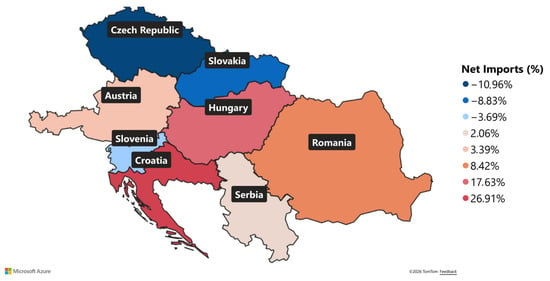
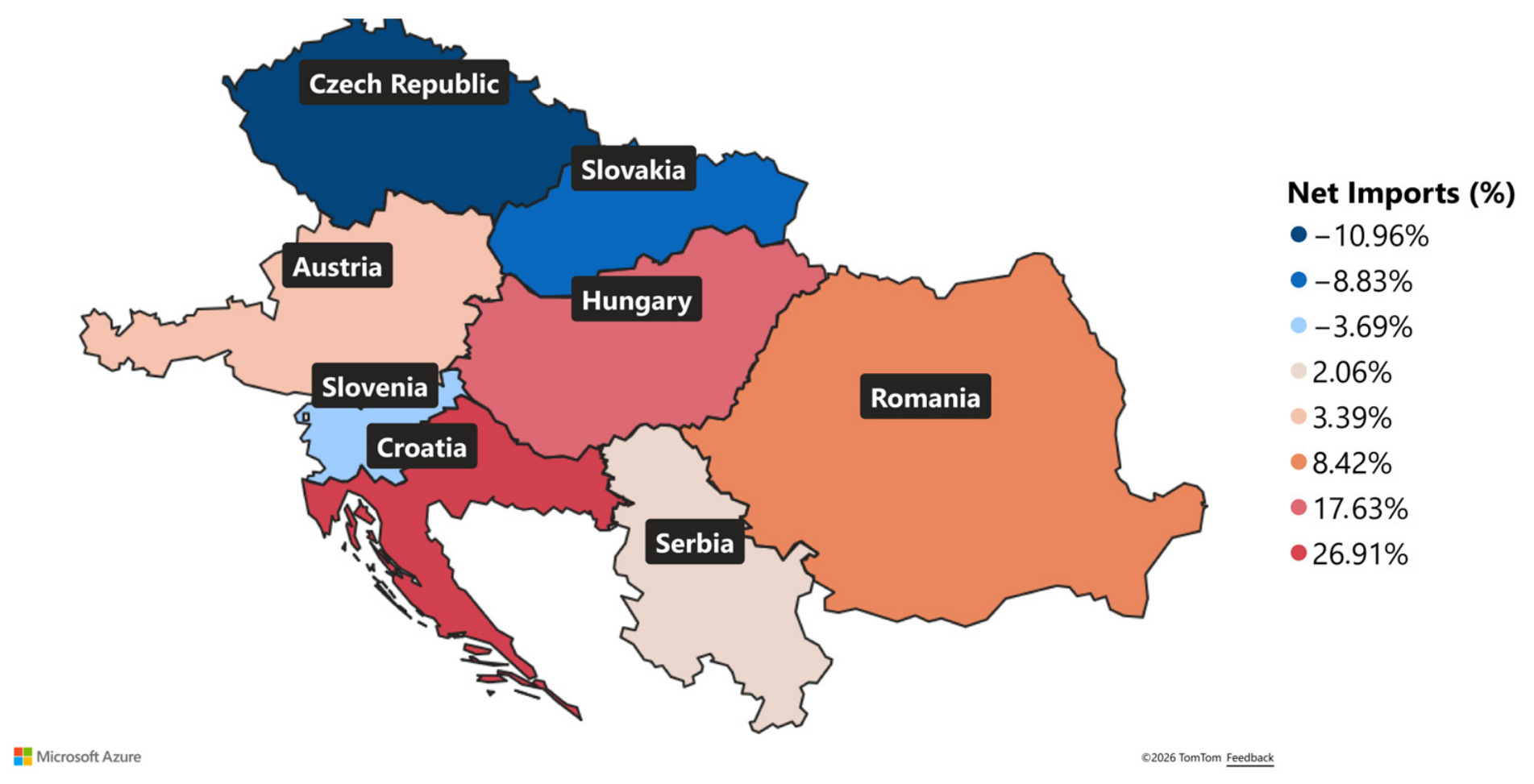
Figure 1 presents net electricity imports as a share of electricity demand in Hungary and its neighboring countries in 2025. Negative values indicate net-export positions, whereas positive values indicate net-import positions. The Czech Republic (−11%), Slovakia (−9%), and Slovenia (−4%) were net exporters. Austria (3%), Serbia (2%), and Romania (8%) recorded relatively moderate net-import shares. Hungary (18%) and Croatia (27%) had the highest net-import shares within the selected group. Hungary therefore occupied the second most import-exposed position after Croatia in this descriptive regional comparison.
Figure 1.
Net electricity imports as a share of demand in Hungary and neighboring countries, 2025. Source: Author’s own calculation based on dataset of EMBER [22].
The regional positioning exercise indicates that Hungary occupied a relatively unfavorable position within its immediate regional context in 2025. Several neighboring electricity systems were close to balance or were net exporters, whereas Hungary and Croatia recorded considerably higher net-import shares. This result is interpreted only as a descriptive comparison of national positions in 2025 and not as evidence that the observed cross-country differences were caused by structural vulnerability.
3.2. Electricity Situation of Hungary, Based on Secondary Data
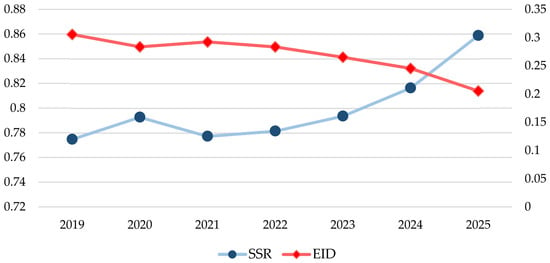
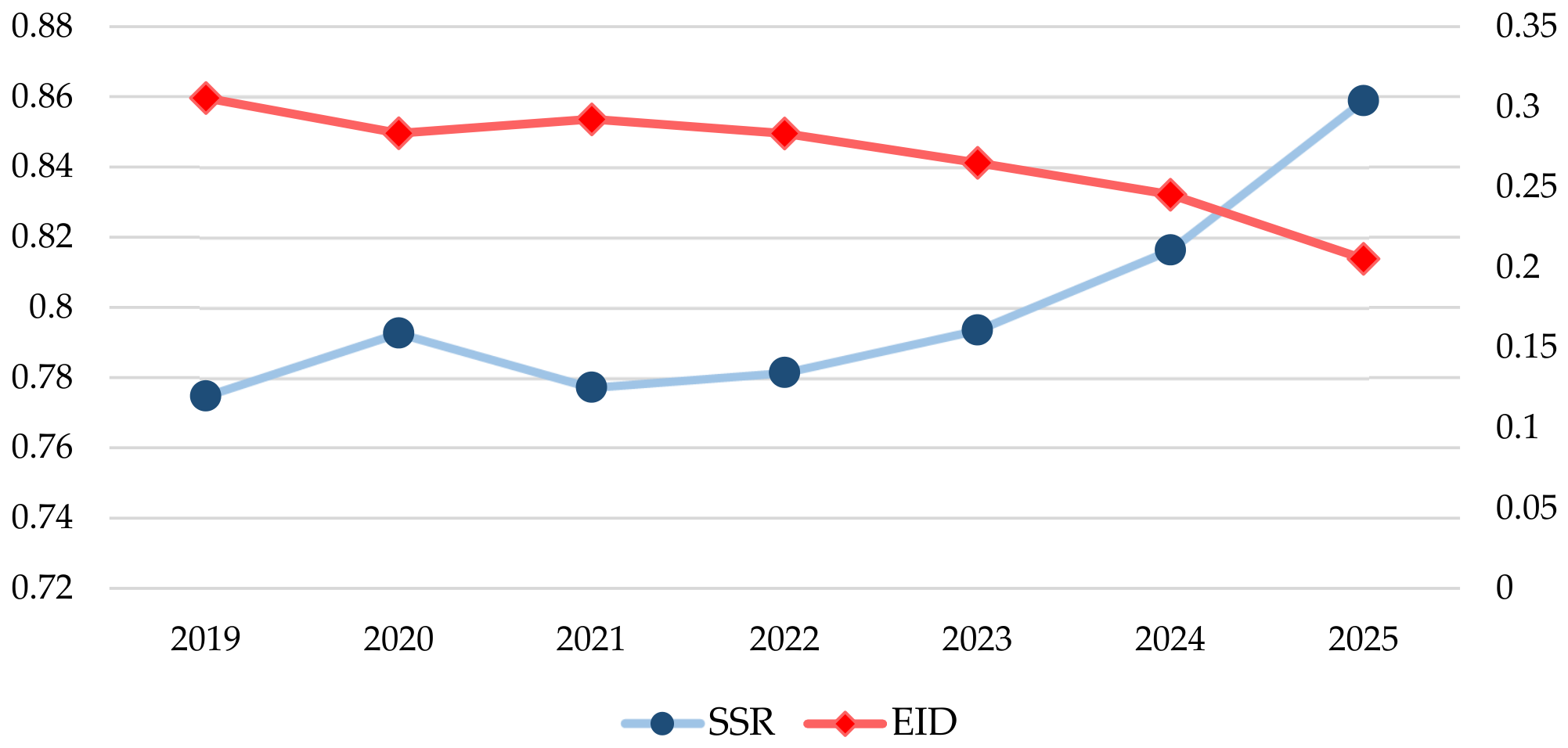
As shown in Figure 2, the indicators show mixed changes in Hungary’s electricity-related structural exposure between 2019 and 2025. Electricity dependence ratio (EID) decreased from the level of about 30.5% in 2019 to the level of about 20.5% in 2025, with minor deviations in the years 2020–2023. The EID therefore indicates a decline in Hungary’s annual net import dependence during the observed period. However, the descriptive analysis does not establish whether this change resulted from persistent structural adjustment or from temporary changes in electricity demand, weather-dependent domestic generation, fuel-price conditions, or regional market developments [23,24,25]. This trend is also confirmed by the self-sufficiency ratio (SSR), which grew from the level of about 77.5% in 2019 to the level of about 85.9% in 2025. The increase in SSR indicates that domestic electricity generation was able to cover a larger share of internal market demand. Nonetheless, the ratio is lower than complete self-sufficiency. Thus, it confirms that Hungary remained dependent on foreign supplies until the end of the studied period.
Figure 2.
Hungary’s electricity self-sufficiency ratio (SSR) and electricity import dependence ratio (EID), 2019–2025. Source: Author’s own calculation based on dataset of [26].
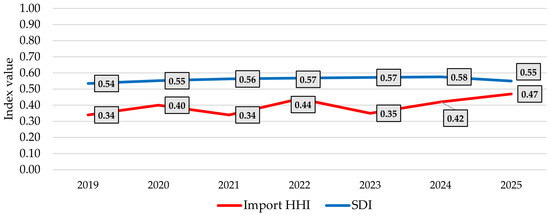
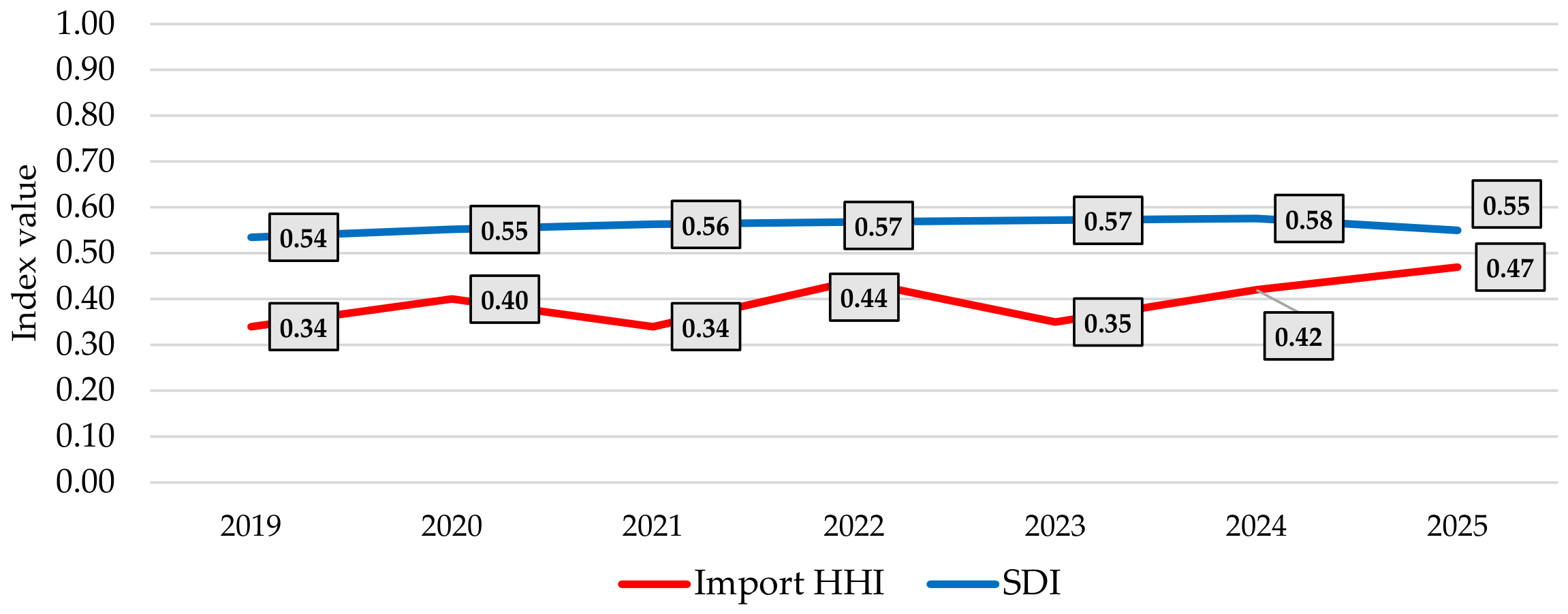
As shown in Figure 3, the development of the import concentration index indicates that Hungary’s electricity import structure remained concentrated throughout the observed period. Based on the harmonized January–September observations, the HHI increased from 0.338 in 2019 to 0.471 in 2025. Relatively high values were also recorded in 2022 (0.442) and 2024 (0.421). The increase indicates that partner-country shares became more uneven and that Hungary’s import structure became increasingly dependent on a limited number of regional supply corridors. This concentration was particularly associated with the Slovak and Austrian directions.
Figure 3.
Electricity import concentration and domestic generation-mix diversification in Hungary, 2019–2025. Note: Both indicators are presented on a common scale from 0 to 1. HHI values are based on January–September electricity flows for each year, while SDI values are based on annual generation data. Source: Author’s own calculation based on dataset of [26,27], 2019–2025.
The normalized Shannon diversity index increased from approximately 0.535 in 2019 to 0.576 in 2024, before declining to approximately 0.550 in 2025. The overall change between 2019 and 2025 was therefore modest and does not indicate a substantial transformation of the generation structure.
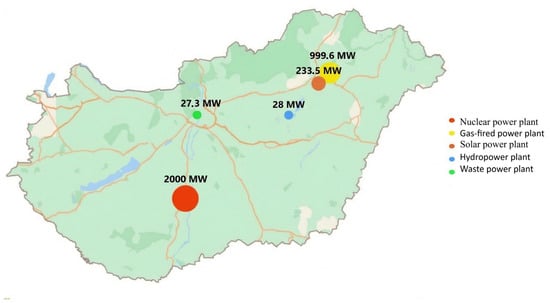
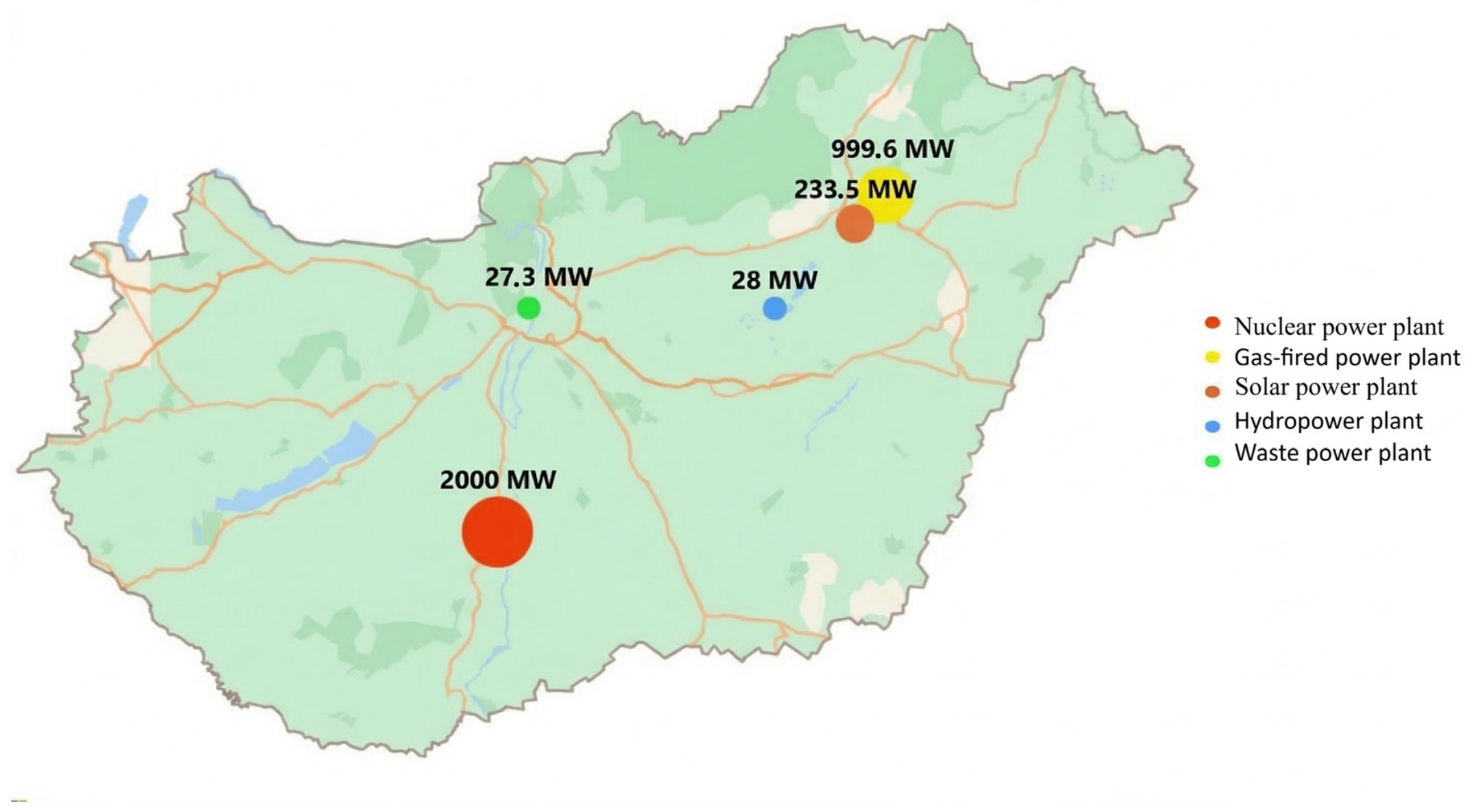
The SDI captures diversification in annual electricity generation, whereas installed capacities provide a different perspective on the domestic generation structure. Figure 4 provides an illustrative overview of selected category-leading Hungarian power plants reported by MEKH. The Paks Nuclear Power Plant has the largest installed capacity, at 2000 MW. The Tisza Power Plant in Tiszaújváros is identified as the largest fossil-fuel-based thermal power plant, with an installed capacity of 999.6 MW and natural gas as its primary fuel. Mezőcsát is the largest solar power plant, with 233.5 MW of installed capacity, while the Kisköre Hydropower Plant has a capacity of 28 MW and the Budapest Waste-to-Energy Plant has a capacity of 27.3 MW. Because the source identifies category-leading facilities rather than the complete national power-plant portfolio, the figure is used only to illustrate differences between selected technologies and installed capacities. It does not provide a formal measure of capacity concentration, adequacy, reliability, or dispatchability.
Figure 4.
Selected category-leading Hungarian power plants by type, location, and installed capacity, 2025. Source: Author’s own calculation based on dataset of [28].
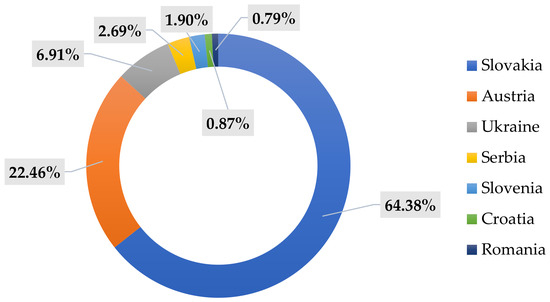
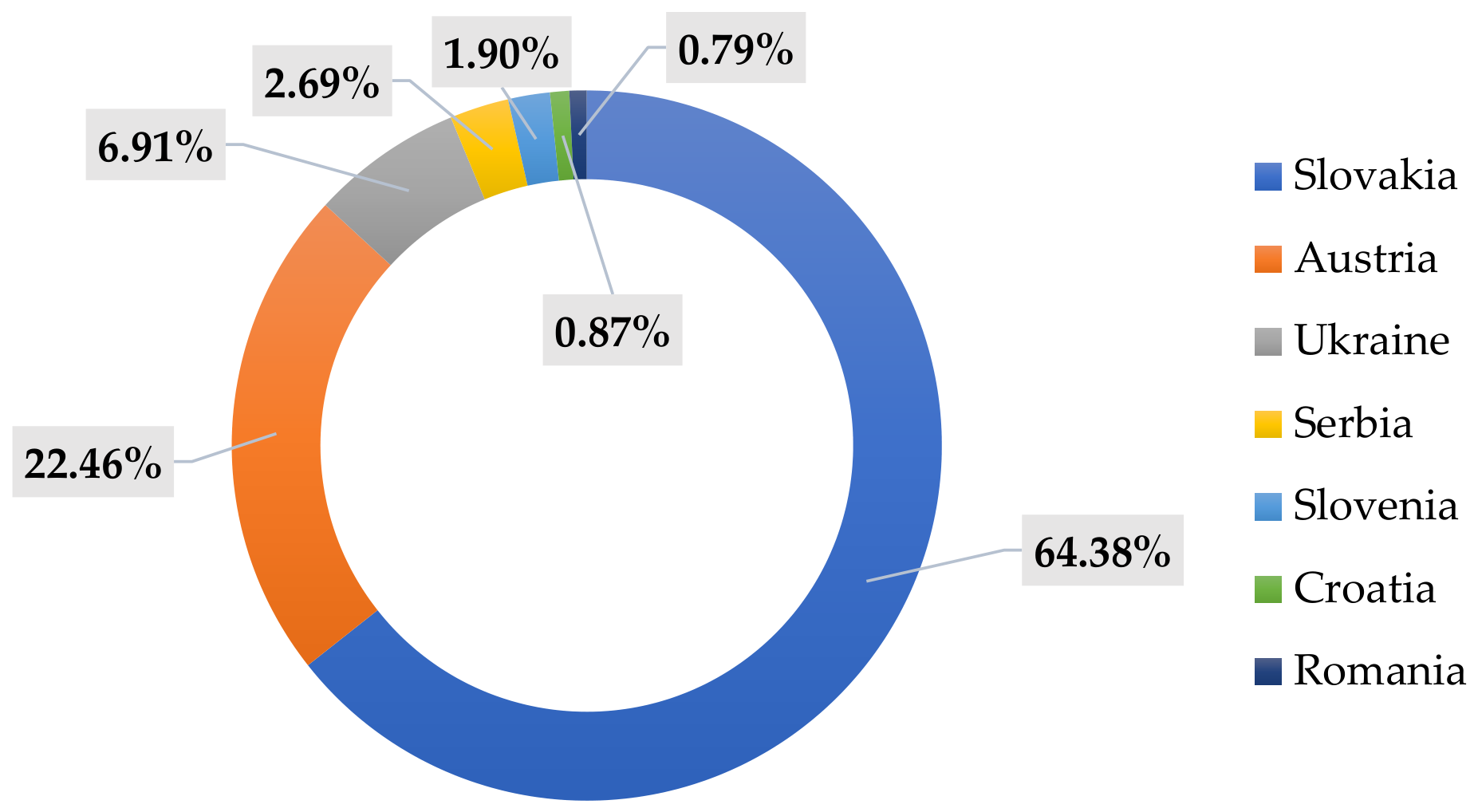
As shown in Figure 5, Hungary’s electricity import structure was highly concentrated during January–September 2025. Based on monthly cross-border flow data aggregated for this period, Slovakia accounted for the largest share of Hungary’s electricity imports, at 64.38%, followed by Austria at 22.46% and Ukraine at 6.91%. The remaining partners had substantially smaller shares: Serbia accounted for 2.69%, Slovenia for 1.90%, Croatia for 0.87%, and Romania for 0.79%. The HHI was 0.471 for the same period, while the three largest import partners jointly accounted for 93.75% of total imports. These results confirm that Hungary’s import exposure was strongly concentrated and dependent on a narrow set of regional electricity corridors.
Figure 5.
Shares of Hungary’s electricity imports by partner country, January–September 2025. Source: Author’s own calculation based on ENTSO-E data [27].
Table 1 summarizes the changes in the four quantitative indicators between 2019 and 2025. The EID, SSR, and SDI values are based on annual data, whereas the HHI values refer to the harmonized January–September periods of the respective years.
Table 1.
Summary of Hungary’s electricity vulnerability indicators, 2019 and 2025.
4. Discussion
Taken together, the results indicate that Hungary’s electricity system remained exposed to several persistent vulnerabilities during the 2019–2025 period. The EID declined, and the SSR improved, yet the HHI increased from 0.338 to 0.471 across comparable January–September periods. This pattern shows that lower aggregate import dependence coexisted with greater concentration among supplying countries and regional corridors. Such a result is consistent with vulnerability-based energy security frameworks, which distinguish the overall level of dependence from the system’s exposure to disruptions and its capacity to respond to them [15,29]. The findings therefore support interpreting electricity import dependence as a persistent source of exposure within the observed period, but they do not demonstrate a specific long-term causal mechanism. Recent hourly electricity-market simulations for Hungary similarly suggest that net import exposure may persist even under expanded nuclear and solar generation capacities, although the present study does not test this mechanism directly [30].
The results also highlight the different system-level roles of nuclear and weather-dependent solar generation. Nuclear power provides a substantial share of stable domestic electricity production, while the expansion of solar generation increases the importance of balancing resources, storage, grid development, and demand-side flexibility. Previous studies of the Hungarian electricity system similarly identify growing flexibility and storage requirements associated with increasing solar penetration and changing generation structures [30,31,32]. These findings indicate a need to coordinate stable low-carbon generation with flexible system resources. However, the present analysis does not quantify generation adequacy, balancing requirements, or the operational contribution of individual technologies.
The results further indicate that diversification of annual generation output should not be equated with diversification of firm or dispatchable capacity. The SDI is based on annual generation shares, whereas firm capacity concerns the expected contribution of generation resources to system reliability and dispatchable capacity concerns the controllability of generation under changing system conditions. These dimensions may therefore evolve differently [33,34]. Figure 4 illustrates selected category-leading facilities and differences in installed capacity across generation technologies. Because the MEKH source does not represent the complete national power-plant portfolio, the figure does not provide a basis for evaluating national capacity concentration, capacity adequacy, or operational reliability.
From a policy perspective, the indicator results point to several complementary priorities. The improvement in the EID and SSR suggests that strengthening domestic generation can reduce aggregate import dependence, while the increase in the HHI indicates that the geographical concentration of electricity imports should also be considered. Cross-border trade remains an important component of regional electricity-market integration, but exposure to a limited number of dominant corridors may increase vulnerability to disruptions or network constraints [5,17]. The modest change in the SDI further indicates that generation diversification should be accompanied by storage, balancing resources, demand-side flexibility, and grid development. These resources are widely identified as important for integrating variable renewable generation and maintaining system flexibility [30,35]. Accordingly, the results support a coordinated policy approach combining domestic generation development, import-corridor diversification, storage deployment, and grid modernization.
Hungary’s electricity vulnerability should also be evaluated within the broader context of the overall uncertainty of energy supply in the region. However, this current analysis addresses the structural properties of the electricity system and not short-term external shocks. Therefore, external crises are viewed as contextual multipliers of pre-existing vulnerabilities, rather than as independent causes of these vulnerabilities [29]. Ultimately, the results of this study suggest that the energy transition and energy security are not mutually exclusive objectives. This is especially true for Central and Eastern Europe, where the expansion of renewable generation may occur at a greater rate than the modernization of the grid, the installation of storage, and the establishment of a predictable regulatory environment. Therefore, the expansion of low-carbon generation does not automatically eliminate structural vulnerabilities. The observed changes in the EID, HHI, and SDI should not be interpreted as unambiguous evidence of causal structural transformation. Annual electricity balances may be influenced by changes in electricity demand, weather-dependent generation, fuel-price conditions, and developments in interconnected regional markets [23,24,25,36]. Weather variability affects both renewable electricity generation and electricity demand, while cross-border interconnections transmit changes in generation, demand, prices, and network conditions between national electricity markets [23,24,36]. Moreover, diversification measured from annual generation shares does not directly represent the diversification of installed, firm, or dispatchable capacity, as alternative diversification criteria may describe different dimensions of the power system [33]. Accordingly, the results are interpreted as evidence of persistent exposure and directional change within the observed period, while cyclical and market-based explanations cannot be excluded.
There are several limitations to this study. First, the indicators used to evaluate the vulnerability of the electricity system provide a descriptive and not a causal analysis of the system’s vulnerabilities. Second, the use of annual secondary data does not allow the analysis to identify monthly, seasonal, or diurnal patterns in electricity imports, demand, and weather-dependent generation. Annual aggregation may conceal periods of high import exposure, peak-demand conditions, renewable-generation fluctuations, and short-term balancing requirements, all of which can materially affect electricity-system operation [23,36]. Consequently, the results describe annual patterns but should not be interpreted as an assessment of seasonal adequacy, peak-period vulnerability, dispatch conditions, or operational reliability. In addition, the import concentration analysis is based on January–September observations for each year in order to maintain comparability with the available 2025 data. Consequently, the HHI results do not capture potential fourth-quarter changes or seasonal shifts in the geographical structure of electricity imports. Third, the regional comparison is intended only to position Hungary relative to its neighboring countries and does not constitute a comparative panel analysis. Fourth, the selected power plant examples illustrate category-leading facilities but do not represent the complete national portfolio and therefore cannot support conclusions about national capacity concentration, adequacy, or reliability.
5. Conclusions
This study provides a descriptive, indicator-based assessment of Hungary’s electricity import dependence and related dimensions of structural vulnerability between 2019 and 2025. Regarding RQ1, the results indicate that continued import exposure is associated with incomplete domestic self-sufficiency and a strongly concentrated import structure. These findings identify persistent patterns of exposure but do not establish causal relationships between the individual factors.
Regarding RQ2, the increase in the self-sufficiency ratio and the decline in the electricity import dependence ratio indicate that domestic generation covered a larger share of electricity availability during the observed period. However, the modest and unstable change in the System Diversification Index indicates only limited diversification of annual generation output and does not provide evidence about the diversification of installed, firm, or dispatchable capacity. The continued expansion of weather-dependent generation therefore increases the relevance of flexibility, storage, balancing capacity, and grid development for electricity-system security [30,31,32].
Regarding RQ3, the regional positioning exercise shows that Hungary remained among the more import-exposed electricity systems in its immediate regional context in 2025. This comparison should not be interpreted as a causal or statistically controlled cross-country analysis, as national generation portfolios, resource endowments, interconnection capacities, and policy frameworks differ substantially.
Regarding RQ4, the increase in the HHI across comparable January–September periods and the 93.75% cumulative share of the three largest import partners in January–September 2025 indicates a highly concentrated import structure. At the same time, the limited change in the SDI suggests only modest diversification of annual domestic generation output. The combined interpretation of these indicators therefore indicates that lower aggregate import dependence does not necessarily imply lower structural exposure when import concentration remains high, and the diversification of annual generation output is limited.
The main contribution of this study is the integrated descriptive assessment of import dependence, self-sufficiency, import concentration, and generation diversification within a single analytical framework. The results support a policy approach that combines domestic capacity development, greater system flexibility, storage deployment, grid modernization, and reduced dependence on a narrow set of import corridors. However, longer time series, seasonal or hourly data, and formal adequacy or causal modeling would be required to determine whether the observed patterns represent statistically confirmed long-term structural change.
Supplementary Materials
The following supporting information can be downloaded at https://www.mdpi.com/article/10.3390/en19153554/s1. File S1: Electricity import dependence ratio (EID) and self-sufficiency ratio (SSR) calculations for Hungary, 2019–2025; File S2: Harmonized January–September electricity import concentration (HHI) calculations for Hungary, 2019–2025, including partner-country import shares for January–September 2025; File S3: Normalized Shannon System Diversification Index (SDI) calculations for Hungary, 2019–2025.
Funding
This research received no external funding.
Data Availability Statement
The datasets used in this study are publicly available from Eurostat, ENTSO-E, EMBER, and MEKH. The processed calculation files supporting the analyses and results are provided as Supplementary Materials to this article.
Conflicts of Interest
The author declares no conflicts of interest.
References
- De Rosa, M.; Gainsford, K.; Pallonetto, F.; Finn, D.P. Diversification, concentration and renewability of the energy supply in the European Union. Energy 2022, 253, 124097. [Google Scholar] [CrossRef] [Scilit]
- Kerekes, L.; Szörényi, G.; Diallo, A. Volt és van feszültség–A villamosenergia-szektor szabályozásának fordulópontjai Magyarországon= Electric tango–Turning points in the regulation of the Hungarian electricity sector. Veztud.-Bp. Manag. Rev. 2019, 50, 4–18. [Google Scholar] [CrossRef] [Scilit]
- Pesic, R.V.; Ürge-Vorsatz, D. Restructuring of the Hungarian Electricity Industry. Post-Communist Econ. 2001, 13, 85–99. [Google Scholar] [CrossRef] [Scilit]
- OECD. OECD Economic Surveys: Hungary 2024; OECD Publishing: Paris, France, 2024. [Google Scholar] [CrossRef] [Scilit]
- Berényi, L.; Pintér, É.; Deutsch, N. Dependency and diversity—Electricity transition and security in the Visegrad Group countries (V4). Electr. J. 2024, 37, 107439. [Google Scholar] [CrossRef] [Scilit]
- IEA. Energy Policies of IEA Countries: Hungary 2011. In Energy Policies of IEA Countries; OECD Publishing: Paris, France, 2011. [Google Scholar] [CrossRef] [Scilit]
- Bozsik, N.; Szeberényi, A.; Bozsik, N. Examination of the Hungarian Electricity Industry Structure with Special Regard to Renewables. Energies 2023, 16, 3826. [Google Scholar] [CrossRef] [Scilit]
- Brucker, B.; Jóna, L.; Szemerédi, E. Magyarország energiapiacának átfogó elemzése az Európai Unió változó prioritásainak tükrében= Comprehensive analysis of the Hungarian energy market in the context of changing EU priorities. Tér és Társad. 2024, 38, 155–182. [Google Scholar] [CrossRef] [Scilit]
- Kriszbacher, G.; Tóth, B. A magyarországi villamosenergia-rendszer alaphálózati sérüléseinek hatása az ország nemzetközi energiafüggőségére. In Szemelvények a Katonai Műszaki Tudományok Eredményeiből V.: Hallgatói és Oktatói Kötet; Ludovika Egyetemi Kiadó: Budapest, Hungary, 2025. [Google Scholar] [CrossRef] [Scilit]
- Gulyás, T.; Palkovics, L.; Gondola, C. Analysis of potential energy transition schemes in Hungary: From natural gas to electricity. Chem. Eng. Trans. 2024, 114, 871–876. [Google Scholar] [CrossRef]
- Czirfusz, M. Financialization, dependence, and state regulation: The accumulation strategies of German energy companies in Hungary. Eur. Urban Reg. Stud. 2024, 31, 230–244. [Google Scholar] [CrossRef] [Scilit]
- Weiner, C. Pathways for a Low-Carbon Electricity System in Poland and Hungary. In From Economic to Energy Transition: Three Decades of Transitions in Central and Eastern Europe; Mišík, M., Oravcová, V., Eds.; Springer International Publishing: Cham, Switzerland, 2021; pp. 211–245. [Google Scholar]
- Rokicki, T.; Bórawski, P.; Szeberényi, A. The Impact of the 2020–2022 Crises on EU Countries’ Independence from Energy Imports, Particularly from Russia. Energies 2023, 16, 6629. [Google Scholar] [CrossRef] [Scilit]
- Lawyer, E.; Carlson, E.L. Evaluation of Energy Security in Select Eastern European Countries. In 2023 19th International Conference on the European Energy Market (EEM); IEEE: New York, NY, USA, 2023; pp. 1–8. [Google Scholar] [CrossRef] [Scilit]
- Cherp, A.; Jewell, J. The concept of energy security: Beyond the four As. Energy Policy 2014, 75, 415–421. [Google Scholar] [CrossRef] [Scilit]
- Gatto, A.; Busato, F. Energy vulnerability around the world: The global energy vulnerability index (GEVI). J. Clean. Prod. 2020, 253, 118691. [Google Scholar] [CrossRef] [Scilit]
- Chalvatzis, K.J.; Ioannidis, A. Energy supply security in the EU: Benchmarking diversity and dependence of primary energy. Appl. Energy 2017, 207, 465–476. [Google Scholar] [CrossRef] [Scilit]
- Brodny, J.; Tutak, M. The comparative assessment of sustainable energy security in the Visegrad countries. A 10-year perspective. J. Clean. Prod. 2021, 317, 128427. [Google Scholar] [CrossRef] [Scilit]
- Pinar, M. Convergence in energy self-sufficiency: The role of renewable energy, fossil fuel rents, energy efficiency and gross domestic product per capita. Energy 2025, 326, 136285. [Google Scholar] [CrossRef] [Scilit]
- Triguero-Ruiz, F.; Avila-Cano, A.; Trujillo Aranda, F. Measuring the diversification of energy sources: The energy mix. Renew. Energy 2023, 216, 119096. [Google Scholar] [CrossRef] [Scilit]
- Saez, Y.; Mochon, A.; Corona, L.; Isasi, P. Integration in the European electricity market: A machine learning-based convergence analysis for the Central Western Europe region. Energy Policy 2019, 132, 549–566. [Google Scholar] [CrossRef] [Scilit]
- EMBER. Net Electricity Imports as a Share of Demand. 2026. Available online: https://archive.ourworldindata.org/20260304-094028/grapher/electricity-imports-share-demand.html (accessed on 23 May 2026).
- Staffell, I.; Pfenninger, S. The increasing impact of weather on electricity supply and demand. Energy 2018, 145, 65–78. [Google Scholar] [CrossRef] [Scilit]
- Keles, D.; Dehler-Holland, J.; Densing, M.; Panos, E.; Hack, F. Cross-border effects in interconnected electricity markets—An analysis of the Swiss electricity prices. Energy Econ. 2020, 90, 104802. [Google Scholar] [CrossRef] [Scilit]
- Zakeri, B.; Staffell, I.; Dodds, P.E.; Grubb, M.; Ekins, P.; Jääskeläinen, J.; Cross, S.; Helin, K.; Castagneto Gissey, G. The role of natural gas in setting electricity prices in Europe. Energy Rep. 2023, 10, 2778–2792. [Google Scholar] [CrossRef] [Scilit]
- Eurostat. Net Electricity Generation by Type of Fuel—Monthly Data. 2026. Available online: https://ec.europa.eu/eurostat/databrowser/view/nrg_cb_pem__custom_20571505/default/table (accessed on 23 May 2026).
- ENTSO-E. Physical Energy & Power Flows. 2026. Available online: https://www.entsoe.eu/data/power-stats/ (accessed on 2 June 2026).
- MEKH. Annual Data. 2026. Available online: https://www.mekh.hu/eves-adatok (accessed on 2 June 2026).
- Schmitz, R.; Flachsbarth, F.; Plaga, L.S.; Braun, M.; Härtel, P. Energy security and resilience: Revisiting concepts and advancing planning perspectives for transforming integrated energy systems. Energy Policy 2025, 207, 114796. [Google Scholar] [CrossRef] [Scilit]
- Biró, B.; Aszódi, A. Investigating the role of nuclear power and battery storage in Hungary’s energy transition using hourly resolution electricity market simulations. Heliyon 2024, 10, e29841. [Google Scholar] [CrossRef] [Scilit] [PubMed]
- Molnár, A.J.; Szücs, B. The effects of increasing solar energy sources in the Hungarian electricity system. In Proceedings of the 2022 8th International Youth Conference on Energy (IYCE), 6–9 July 2022; IEEE: New York, NY, USA, 2022; pp. 1–6. [Google Scholar]
- Horváth, G.; Szegedi, S.; Zakar, M.; Póka, C.; Tóth, T. A hazai lakossági villamosenergia szektor paradigmaváltása és a napelemes HMKE-k. Földrajzi Közlemények 2023, 147, 202–217. [Google Scholar] [CrossRef] [Scilit]
- Kharbach, M. Diversification criteria for power systems. Energy Policy 2016, 90, 183–186. [Google Scholar] [CrossRef] [Scilit]
- Brito-Pereira, P.; Rodilla, P.; Mastropietro, P.; Batlle, C. Self-fulfilling or self-destroying prophecy? The relevance of de-rating factors in modern capacity mechanisms. Appl. Energy 2022, 314, 118939. [Google Scholar] [CrossRef] [Scilit]
- Alizadeh, M.I.; Parsa Moghaddam, M.; Amjady, N.; Siano, P.; Sheikh-El-Eslami, M.K. Flexibility in future power systems with high renewable penetration: A review. Renew. Sustain. Energy Rev. 2016, 57, 1186–1193. [Google Scholar] [CrossRef] [Scilit]
- Collins, S.; Deane, P.; Ó Gallachóir, B.; Pfenninger, S.; Staffell, I. Impacts of Inter-annual Wind and Solar Variations on the European Power System. Joule 2018, 2, 2076–2090. [Google Scholar] [CrossRef] [Scilit] [PubMed]

Disclaimer/Publisher’s Note: The statements, opinions and data contained in all publications are solely those of the individual author(s) and contributor(s) and not of MDPI and/or the editor(s). MDPI and/or the editor(s) disclaim responsibility for any injury to people or property resulting from any ideas, methods, instructions or products referred to in the content. |
© 2026 by the author. Licensee MDPI, Basel, Switzerland. This article is an open access article distributed under the terms and conditions of the Creative Commons Attribution (CC BY) license.