


Abstract
Renewable energy communities (RECs) are legally recognised instruments of decentralised energy transition, but their scaling remains limited by a separation between governance design, economic appraisal, and multi-criteria decision analysis (MCDM/A). This systematic review applies a conservative explicit-reporting coupling diagnostic to 322 REC studies from a 2014–2026 corpus. The diagnostic identifies 267 unilateral studies (82.9%), 55 bilateral studies (17.1%), and no study satisfying the strict trilateral criterion at the title/abstract/metadata reporting threshold. A loosened-keyword sensitivity test identified two weak trilateral candidates, but the manual construct-validity audit did not support reclassifying them as strong trilateral studies. The result is therefore interpreted as a conditional and conservative signal of limited visible integration, not as proof that no body-text-level integration exists. The paper argues that the observed separation is not only methodological but also institutional. It therefore proposes second-level renewable energy cooperatives as federated decision-support entities that pool data stewardship, distributional economic appraisal, stakeholder-weighted MCDM/A, and auditable cooperative voting packages while preserving local REC control. The model converts the explicit-reporting gap into a testable governance architecture for REC scaling.
1. Introduction
Renewable energy communities (RECs) and citizen energy communities (CECs) were formalised in European law through Directive (EU) 2018/2001 and Directive (EU) 2019/944 [1,2]. The post-2018 literature has grown rapidly, but it still treats three decision dimensions mostly in isolation: governance design, economic appraisal, and MCDM/A.
This paper asks how explicitly the REC literature couples these three dimensions, and whether second-level renewable energy cooperatives can provide the missing institutional carrier for such coupling. The review therefore combines a systematic diagnostic with a constructive governance proposal.
Three research questions follow:
- RQ1. How is the REC governance-economics-MCDM/A literature distributed across unilateral, bilateral, and trilateral coupling-intensity classes?
- RQ2. Which bilateral interfaces dominate the field, which interfaces remain underdeveloped, and what do these distributions imply for REC scaling?
- RQ3. How can a second-level cooperative governance model use MAMCA/group-MCDM/A, distributional economic appraisal, and cooperative voting rules to convert the identified trilateral gap into an auditable decision architecture?
The contribution differs from prior REC reviews by making integration itself the object of analysis. Existing reviews cover business models, governance heterogeneity, peer-to-peer markets, energy citizenship, or MCDM/A applications; this paper asks whether these strands are jointly operationalised and proposes a federated cooperative mechanism for doing so. Recent statistical, systematic-review, and bibliometric assessments of the energy-community field further motivate this review [3,4,5].
1.1. Why Second-Level Cooperatives, and Why Now
The three anchor dimensions reflect the actual decision burden carried by RECs. A community investment is simultaneously a question of membership and voting rights, tariff and risk allocation, and stakeholder-weighted prioritisation. Second-level cooperatives are relevant because they can pool the technical functions that individual local RECs rarely possess alone.
The timing is favourable. The Clean Energy Package transpositions have made REC governance and performance observable, while MAMCA and group-MCDM/A now provide mature tools for stakeholder-sensitive decision support [6,7]. The unresolved issue is institutional integration, not the absence of isolated methods.
1.2. Roadmap of the Paper
2. Materials and Methods
2.1. Protocol and Reporting Standard
The review followed the PRISMA 2020 statement for systematic reviews [8]. The protocol restricts the scope to studies that explicitly engage at least one of three decision dimensions (governance, economics, MCDM/A) in REC or REC-adjacent contexts (energy cooperatives, citizen energy communities, local energy markets, collective self-consumption schemes).
2.2. Search Strategy
Three databases were queried: Scopus, Web of Science Core Collection, and Crossref REST. The search horizon was 1 January 2018 to 17 May 2026. Boolean strings were structured around two anchor clauses joined by AND:
(“renewable energy community” OR “citizen energy community” OR “energy cooperative” OR “energy community” OR “local energy market” OR “collective self-consumption” OR “energy citizenship”) AND (governance OR participation OR cooperative OR “business model” OR tariff OR investment OR appraisal OR “multi-criteria” OR MCDA OR AHP OR TOPSIS OR PROMETHEE OR “fuzzy decision” OR MAMCA)
Records were retrieved using the database APIs; duplicates were removed using the Crossref-normalised DOI as the primary key.
2.3. Inclusion and Exclusion Criteria
Inclusion required: (i) peer-reviewed article or review; (ii) English language; (iii) explicit topical match with a REC or REC-adjacent organisational form; (iv) topical match with at least one of the three decision dimensions (governance, economics, MCDM/A). Exclusion removed: editorials; datasets-only entries; code-only entries; technology-only optimisation papers without governance, economic, or MCDM/A content. The full criterion set is reported in Table 1.
Table 1.
PRISMA inclusion and exclusion criteria for the narrow subset.
2.4. Screening Flow
Title/abstract screening retained records whose anchors matched both the REC clause and at least one decision-dimension term. Full-text eligibility required methods and results that explicitly addressed the relevant decision dimension(s); studies that mentioned a dimension only as context were excluded. The screening flow is reported in Figure 1.
Figure 1.
PRISMA 2020 flow diagram for the narrow subset that underpins the review and the coupling diagnostic.
Figure 1 reports the reconstructed PRISMA-2020 flow for the narrow subset. Counts refer to the reconstructed protocol that produced the present 322-reference set. The initial identification stage retrieved 1466 records under the focused Boolean string in Section 2.2; the figure is smaller than the broad-corpus count (2412) by approximately 39%, reflecting the narrower scope of the second clause. After duplicate removal (324) and other removals (67), 1075 records entered the screening stage, of which 634 were excluded at title-and-abstract screening and 441 reports were sought for retrieval. Twenty-two records were not retrieved, leaving 419 reports assessed for eligibility. Full-text eligibility excluded 97 records, returning 322 included studies. The drop-off pattern is similar to the broad corpus in proportional terms, which is reassuring: the narrow-subset protocol is internally consistent with the broad-corpus protocol and does not introduce a selection bias of its own. The 97-record full-text exclusion includes a higher proportion of optimisation papers that mention an REC context only superficially; these are out of scope for the trilateral diagnostic and are correctly removed.
Table 1 catalogues the inclusion and exclusion criteria for the narrow subset. The title-and-abstract screening row requires explicit engagement with at least one of three decision dimensions (governance, economics, MCDM/A) in addition to the REC anchor. The eligibility row at full-text adds the methods-plus-results requirement that the relevant dimension be treated substantively rather than as background context; this is the screening rule that drives the empirical finding that engineering-only papers (which often mention an REC setting in the introduction but treat governance, economics, and MCDM/A as fixed parameters) are excluded.
2.5. Thematic Tagging and the Coupling Rubric
Each included reference was tagged for Governance, Economics, and MCDM/A using a conservative explicit-signal rubric applied to title, abstract, and journal-level metadata after full-text eligibility had been confirmed. This rule was selected to measure visible integration at the reporting level, not to claim exhaustive recovery of every body-text discussion. A dimension was counted only when its presence was unambiguous at the explicit-reporting layer. Mixed-methods studies were coded according to the dimensions substantively operationalised in their methods and results: qualitative case-study or interview material was coded as Governance only when it addressed membership, decision rights, participation, accountability, inclusion, or institutional design; Economic coding required explicit tariff, market, appraisal, business-model, or distributional evaluation; and MCDM/A coding required a formal weighting, ranking, prioritisation, or multi-criteria aggregation procedure. Narrative references to a third dimension were not sufficient for trilateral classification unless the dimension was treated as a primary analytical variable.
2.6. Inter-Rater Reliability
Rule stability was tested by re-applying tightened and loosened keyword variants to the 322-reference subset. Agreement with the loosened variant was very high (mean Cohen’s kappa = 0.96), while the tightened variant reduced agreement, as expected, because borderline economic and governance signals became harder to classify. These kappa values assess coding stability, not construct validity. Construct validity is addressed separately through the manual full-text audit reported in Section 2.7.
2.7. Manual Validation and Construct-Validity Audit
To reduce the risk that the explicit-reporting rule under-captures substantive integration, the rule-based classification was supplemented by a manual construct-validity audit. The audit inspected all records classified as bilateral under the canonical rule (n = 55), the two weak trilateral candidates produced by the loosened-keyword sensitivity test, and a stratified validation sample of unilateral studies across Governance, Economics, and MCDM/A. The audit asked whether the full text treated all three dimensions as primary variables, jointly varied or co-designed them in methods or results, and discussed their interaction as part of the study’s analytical contribution.
The audit confirmed that the strict trilateral count should be interpreted as an explicit-reporting and strong-coupling result. Several papers discuss a third dimension narratively in the body text, but those mentions generally function as contextual framing rather than as jointly operationalised governance-economic-MCDM/A designs. Consequently, no record was upgraded to the strong trilateral category. The finding is therefore conditional: it indicates that strong, visible, and methodologically explicit trilateral integration is rare in the screened corpus; it does not claim that no article contains any weaker form of body-text-level cross-dimensional discussion.
2.8. Reproducibility
The DOI subset, tagging files, and scripts for Figure 2, Figure 3, Figure 4, Figure 5 and Figure 6 and Table 2, Table 3, Table 4 and Table 5 are provided in the reproducibility archive. The pipeline is deterministic and reproduces the reported counts from the deposited inputs.
Figure 2.
Annual publication distribution of the 322-reference subset (governance ∪ economics ∪ MCDM/A).
Figure 3.
Top 15 source journals in the narrow subset (n = 322).
Figure 4.
Trilateral coupling diagnostic for the 322-reference REC subset. G intersect E intersect D is zero under the strict rule. The loosened-keyword test identifies two weak candidates, but neither satisfies the full trilateral threshold of Table 2.
Figure 5.
Coupling-intensity distribution across the 322-reference REC subset.
Figure 6.
Methodological clustering across the 322-reference subset.
Table 2.
Coupling-intensity rubric.
Table 3.
Governance dimensions in the REC literature.
Table 4.
Economic appraisal methods in the REC literature.
Table 5.
MCDM/A methods in the REC literature.
2.9. Protocol Limitations and Conservative Reading
The protocol gives conservative lower-bound coupling counts. Loosened keywords increase the bilateral count from 55 to 68 and identify two weak trilateral candidates, but neither meets the strong-coupling threshold after manual audit. The qualitative finding is therefore retained in a narrower form: explicit, strong trilateral coupling is rare at the reporting and operationalisation threshold used here. The result should not be read as a definitive absence of all substantive integration in the literature; it is a transparent diagnostic of visible and auditable integration.
3. Results—Three Sub-Fields Characterised
3.1. Corpus Size and Time Distribution
Figure 2 reports the annual publication distribution of the 322-reference subset. The focused REC subset derives from the 2018–2026 search defined in Section 2.2, whereas the fitted publication-trend line and its 2026–2030 projection are computed on the wider 2014–2025 cooperative-energy series from which the subset is drawn. The distribution echoes the wider cooperative-energy ramp from 2018 to 2022–2023, then stabilises. Compared with the wider 537-reference pool from which it is drawn (60.0% of the pool), the subset is over-represented in 2020–2023 (the post-transposition academic engagement years) and under-represented in 2014–2017.
The 2026 year is excluded from the fit because it is in progress as of the build date (May 2026); partial-year data would deflate the trend artificially and bias the forecast. 2026–2030 (5 yearly points) generated by a statsmodels SARIMAX(1,1,0) + ETS-damped ensemble with 1000 parametric-bootstrap replications; gold bars are the ensemble mean and the surrounding bands report the 80% and 95% credible intervals, which widen with the horizon as expected from the short series. The trajectory suggests a plateau through 2030 conditional on no new regulatory shock, consistent with the 2024–2025 consolidation pattern.
The subset distribution in Figure 2 mirrors the broader cooperative-energy ramp but is differentially weighted towards the post-Directive years 2020–2023. This shift reflects two structural facts. First, the formal codification of RECs and CECs in the Clean Energy Package created a regulatory category that academic studies could anchor to without ambiguity, which lowered the cost of entry for governance-focused research after 2019 [1,2]. Second, the methodological maturity of P2P-market design, distributional CBA, and MAMCA reached a point in 2020–2022 where empirical demonstration on REC cases became feasible at scale [6,7,9]. The 2024–2025 plateau suggests that the field is now in a consolidation phase, which is consistent with the present review’s diagnostic finding that trilateral coupling is the consolidation step that has not yet occurred.
3.2. Source Journals
Figure 3 reports the top 15 source journals within the subset. The leading hosts are Renewable and Sustainable Energy Reviews, Energy Policy, Energies, Sustainability, Energy Research & Social Science, Applied Energy, and Energy. The top-journal pattern is similar to but more interdisciplinary than the wider pool: Energy Policy and Energy Research & Social Science are more prominent here than in the broader 537-reference set, reflecting the governance and social-acceptance emphasis of the narrow scope.
Figure 3 shows that the journal-rank distribution within the subset shifts measurably towards governance-focused titles. Energy Policy and Energy Research & Social Science rise relative to their share in the broad corpus, reflecting that the subset is filtered for the explicit engagement with governance, economics, or MCDM/A. The dominance of Renewable and Sustainable Energy Reviews persists because review articles by definition span multiple dimensions and therefore are over-represented in any subset that screens for multi-dimensional engagement. The presence of Applied Energy in the top journals, even after engineering-only optimisation papers were excluded at full-text, indicates the substantial volume of P2P-trading and tariff-design work in the journal that has been picked up by the protocol because of its explicit economic content [10,11,12].
3.3. Governance and the Participatory-Design Literature
The governance dimension of the REC literature is anchored in three streams. The first is the legal-organisational stream that distinguishes RECs from CECs from classical cooperatives from collective self-consumption schemes from virtual prosumer aggregates [1,13,14]. The second is the participation and acceptance stream that examines member motivations, civic identification, trust in cooperative boards, and stakeholder objectives [15,16,17]. The third is the energy-justice and energy-citizenship stream that asks whether REC outcomes are equitable across members and across non-members in the host community [18,19,20]. Across these three streams, eight governance dimensions are repeatedly addressed: membership structure, decision rights, surplus distribution, risk bearing, inclusion design, stakeholder roles, conflict resolution, and performance reporting. The dimensions are catalogued in Table 3.
Table 3 catalogues eight governance dimensions that recur across the corpus, each with sub-dimensions, an operationalisable variable, and an exemplar reference cluster. The table is structured to support the trilateral coupling diagnostic: every dimension can in principle be varied across study designs and observed for distributional consequences. The operational-variable column is methodologically central because it enables the bridging from qualitative governance variation to quantitative economic and MCDM/A appraisal. Two dimensions deserve specific commentary in this context. Inclusion design is the dimension most likely to drive distributional outcomes within RECs and therefore couples most strongly to distributional economic appraisal. Decision rights are the dimension that determines whether MCDM/A weightings respect the cooperative principle, and therefore couple most strongly to stakeholder-weighted decision support.
Three additional empirical strands now run alongside the three streams. Recent broad assessments of REC key performance indicators provide an empirical synthesis of the field’s measurement infrastructure [21], while socio-technical-transition models have been formally linked to integrated assessment-model frameworks for energy systems [22]. Stakeholder objectives and energy citizenship have been operationalised through Q-method and survey instruments that quantify previously qualitative constructs [16], and digital twins that connect cooperative governance with operational data have appeared in industrial REC contexts [23].
Two consolidated findings emerge from the governance literature. First, REC outcomes (member retention, distributional fairness, durability over time) depend on design choices that are not technical but institutional [18,24,25]. Second, the legal-economic instrument of consumer stock ownership has been proposed as a prototype that aligns ownership share, decision-making weight, and risk bearing without requiring uniform capital contribution [26]; its uptake is uneven across Member States and remains under-evaluated empirically.
The complete governance-tagged subset of the corpus, in addition to the studies discussed above, comprises [27,28,29,30,31,32,33,34,35,36,37,38,39,40,41,42,43,44,45,46,47,48,49,50,51,52,53,54,55,56,57,58,59,60,61,62,63,64,65,66,67,68,69,70,71,72,73,74,75,76,77,78,79,80,81,82,83,84,85,86,87,88,89,90,91,92,93,94,95,96,97,98,99,100,101,102,103,104,105,106,107,108,109,110,111,112,113,114,115,116,117,118,119,120,121,122,123,124,125,126,127].
3.4. Economics, the Appraisal and Market-Design Literature
The economic dimension is structured around two principal questions. The first is investment appraisal at the scheme level: whether a given REC configuration is financially viable under realistic tariff and regulatory conditions, and how the financial return is allocated across members [128,129,130]. The second is market design: how to structure peer-to-peer trading, community-pool clearing, demand-response valuation, and capacity tariffs to align member behaviour with the network constraint and the collective welfare objective [9,11,131].
The economic-appraisal sub-stream is methodologically mature within the corpus: LCOE, NPV/IRR, lifecycle cost analysis, distributional CBA, tariff-design simulation, P2P-market mechanisms, community-pool clearing, demand-response valuation, energy-poverty diagnostics, and business-model templates are all represented [132,133,134]. Bilateral-contract networks and grid-aware P2P trading frameworks operationalise the network-externality treatment [135,136,137]. Recent work has extended these mechanisms to integrated multi-energy and digital-twin contexts that include thermal carriers and building-level energy management [138,139,140]. Table 4 catalogues the principal methods, their typical study questions, and their limitations in REC settings.
Table 4 catalogues nine economic-appraisal methods with their typical study question, output, and limitations in REC settings. The methods are arranged in increasing order of complexity, from single-project appraisal (LCOE; NPV/IRR) through scheme-level appraisal (LCC; CBA; tariff design) to market-mechanism appraisal (P2P simulation; community-pool clearing; demand-response valuation; energy-poverty diagnostic; business-model template). The limitations column shows that the methodological frontier is not in the existence of methods but in their integration with governance variation: distributional CBA is the only entry whose explicit purpose is to surface governance-driven distributional consequences, and even there the integration with stakeholder MCDM/A is rare in the corpus.
Recent methodological extensions enrich the economics sub-stream in three directions worth flagging before the consolidated findings. First, the micro-economic assessment of behind-the-metre PV-and-battery configurations has matured into a residential-scale appraisal tradition [141,142,143] that complements the wider business-model catalogue. Second, aggregator-mediated bidding has been formalised for prosumer participation in wholesale energy and ancillary-services markets [144,145,146] alongside fair P2P trading between residential and commercial multi-energy systems [147] and blockchain-based decentralised flexibility markets [148]. Third, the techno-economic optimisation of local systems has begun to internalise governance constraints through joint-investment redistribution [149], prosumer-flexibility scheduling [150], and MILP-based REC optimisation strategies [151]. Energy-poverty diagnostics have been operationalised through vulnerability indices [152] and PED-stakeholder-perception surveys [153]. Together these streams populate the boundary at which economic appraisal meets governance and decision support.
Two consolidated findings emerge from the economics literature. First, the magnitude and structure of regulated charges applied to internally shared electricity is the dominant lever determining whether a REC delivers net financial benefit to members [128,129]; this is a regulatory-design finding that economic appraisal alone cannot resolve. Second, peer-to-peer market designs that admit storage participation deliver substantially higher consumer surplus than peer-to-peer-only configurations because storage arbitrages the intra-day price dispersion that pure prosumer trading cannot resolve [11,154,155]. Distributed-ledger settlement layers have been proposed as a substrate for community-level market operation, although market-clearing rules dominate ledger choice in shaping outcomes [156,157].
The complete economics-tagged subset of the corpus, in addition to the studies discussed above, comprises [158,159,160,161,162,163,164,165,166,167,168,169,170,171,172,173,174,175,176,177,178,179,180,181,182,183,184,185,186,187,188,189,190,191,192,193,194,195,196,197,198,199,200,201,202,203,204,205,206,207,208,209,210,211,212,213,214,215,216,217,218,219,220,221,222,223,224,225,226,227,228,229,230,231,232,233,234,235,236,237,238,239,240,241,242,243,244].
3.5. MCDM/A and Decision-Support Literature in REC Contexts
The MCDM/A dimension is the youngest of the three within the REC corpus. The methodological catalogue is well-developed in the wider energy literature [245,246,247], but its instantiation inside REC studies is comparatively recent and largely demonstrative. AHP, fuzzy AHP, TOPSIS, PROMETHEE, ELECTRE, VIKOR, MAUT, DEMATEL, BWM, MAMCA, and various hybrid combinations all appear in the corpus, but typically as method development on synthetic or generic criteria rather than as instantiated REC decision-support tools [248,249,250,251].
Four additional MCDM/A strands in the corpus deserve note. Sustainability evaluation of generation technologies has been extensively performed with multi-criteria methods [252,253]. Risk assessment of renewable-energy investments through modified failure-mode-and-effect-analysis approaches forms a distinct sub-stream [254]. Site-selection studies for tidal current and other renewable plants have used GIS-MCDM combinations [255]. Coalition formation for community storage as a multi-criteria network design problem has been explored recently [256]. Across these strands, the methodological catalogue is broad; the question is which methods are most suited to cooperative-governance settings.
The principal exception is multi-actor multi-criteria analysis (MAMCA), which has been explicitly developed for and applied to the REC setup [6,7]. MAMCA is the recognisable bridging instrument between MCDM/A and governance because it admits per-stakeholder weighting and therefore respects the cooperative principle that different participants may have different objectives. Participatory MCDM/A more broadly has been applied to energy-transition planning [257,258] and to renewable-energy-strategy comparisons across urban areas [259,260,261,262]. Reviews of MCDM/A in renewable-energy investment decisions [250] and in sustainability transitions [248] converge on the same observation: methodological richness is not the binding constraint; alignment with cooperative governance is. For REC governance, the relevant property of an MCDM/A method is whether it can accommodate per-stakeholder weighting at the elicitation stage (a cooperative-principle requirement) and whether its aggregation rule preserves that information through to the ranking. Methods that satisfy both are candidates for the governance-MCDM/A interface; methods that satisfy neither populate the methodology-only stream described in Section 3.5. The MCDM/A literature applied to REC contexts is catalogued in Table 5 along that axis.
Table 5 catalogues nine MCDM/A methods with stakeholder elicitation, REC application examples, and caveats. The classical pairs (AHP/fuzzy AHP; TOPSIS; PROMETHEE/ELECTRE; VIKOR) appear with single-actor weighting and are documented in REC contexts only sparsely. The genuinely cooperative-aligned methods are MAMCA and group-decision variants; these are the methods most likely to populate the governance-MCDM/A interface and therefore the strongest candidates for inclusion in a trilateral design. The hybrid combinations (DEMATEL + ANP + TOPSIS; fuzzy AHP + VIKOR) are methodologically richer but also more demanding of stakeholder time, which limits their applicability in RECs with limited expert capacity. The methodological catalogue is sufficient for the cooperative-energy domain in the sense that no fundamentally new method needs to be invented; the gap is in the alignment of existing methods with the cooperative principle.
A consolidated finding from the MCDM/A literature is that the principal methodological gap is not in the variety of methods available but in their integration with governance design and economic appraisal. The variety is sufficient; the alignment with the other two decision dimensions is insufficient.
The complete decision-support-tagged subset of the corpus, in addition to the studies discussed above, comprises Refs. [263,264,265,266,267,268,269,270,271,272,273,274,275,276,277,278,279,280,281,282,283,284,285,286,287,288,289,290,291,292,293,294,295,296,297,298,299,300,301,302,303,304,305,306].
Having fixed the within-dimension methodology for governance, economics, and MCDM/A in Section 3.3, Section 3.4 and Section 3.5, the diagnostic now reads across them. The cross-dimensional reading is the principal contribution of the paper.
4. The Trilateral Coupling Diagnostic
4.1. The Diagnostic Distribution
Figure 4 reports the diagnostic as a three-way Venn-like diagram. The numbers in each region count studies that engage exactly that combination of dimensions explicitly in the title or journal. Figure 4 is the principal visual of the paper. The three circles correspond to the three decision dimensions (Governance, Economics, MCDM/A); the regions of overlap correspond to bilateral and trilateral combinations; the centre region is the empty trilateral cell. The counts in each region are read directly from the diagnostic and are reproducible from the deposited inputs. The visual emphasis is intentional: the empty centre is the empirical anomaly this review documents. Three contextual observations frame the reading. First, the G-only region (107) and the E-only region (104) are nearly equal in size, reflecting the parallel maturity of the two single-discipline streams. Second, the D-only region (56) is smaller, reflecting the comparatively recent emergence of MCDM/A in the REC context relative to governance and economics. Third, the bilateral regions sum to 55, of which the G∩E region (43) is dominant, confirming that the governance-economics literature is the most developed cross-disciplinary combination but also indicating that the field has yet to bring MCDM/A into the cooperative-energy mainstream.
Unilateral studies (one of G/E/D explicit) dominate; bilateral studies couple two of three; trilateral studies couple all three. The trilateral cell is empty under the title-level signal.
Figure 5 re-expresses the data of Figure 4 as a bar chart that emphasises the coupling-intensity distribution. The 82.9% unilateral majority is the most striking feature: more than four in five REC studies engage only one of the three decision dimensions explicitly. The 17.1% bilateral minority is consistent with the broader trend in cooperative-energy research towards cross-disciplinary work but is sharply concentrated in the governance-economics pair. The 0.0% trilateral cell is the principal finding; its empirical robustness is discussed in Section 5.5.
4.2. Empirical Findings
The diagnostic returns three findings:
Finding 1. The unilateral majority. A total of 267 studies (82.9%) are unilateral: they engage one of the three dimensions explicitly and treat the other two as context. Within the unilaterals, the largest sub-class is governance-only (107 studies, 33.2% of the subset), followed by economics-only (104, 32.3%) and MCDM/A-only (56, 17.4%). This pattern reflects the disciplinary anchors of the three sub-fields: governance studies in Energy Policy and Energy Research & Social Science [2,5,125]; economic appraisal in Applied Energy and Energy Economics [126,127,243]; MCDM/A in Energies, Sustainability, and method-focused titles [249,250,307].
Finding 2. The bilateral minority. A total of 55 studies (17.1%) are bilateral. The most common bilateral combination is governance-economics (43 studies, 13.4% of the subset), followed by economics-MCDM/A (7, 2.2%) and governance-MCDM/A (5, 1.6%). The governance-economics bias is consistent with the well-developed business-model literature [132,133,244,308,309] and with the body of work on distributional appraisal of cooperative schemes [18,24,310]. The thinness of the governance-MCDM/A pair is partially counter-balanced by the MAMCA literature [6,7,250], but MAMCA remains a single methodological route rather than a methodological family.
Finding 3. The trilateral gap. No studies, to the author’s knowledge, satisfy the strict trilateral criterion of Section 2.5. A reproducible loosened-keyword sensitivity test identifies two candidates for partial trilateral coupling under more permissive screening; both arise from broader keyword nets rather than from explicit body-text co-treatment, and neither couples all three dimensions in the strong sense of the rubric (Table 2, score 3). This is the principal empirical contribution of the paper, and it is honest about its conditioning: the absence is rubric-dependent and corpus-bounded, not a metaphysical claim that no REC study has ever combined the three dimensions in any sense. Under the strict reporting standard adopted here, the trilateral cell is empty.
4.3. Eight Archetypes
The diagnostic can be reorganised into eight archetypes, reported in Table 6. The first seven describe existing unilateral and bilateral work; the eighth names the missing trilateral design.
Table 6.
Author-developed typology of REC research archetypes under the trilateral coupling diagnostic.
Table 6 is an author-developed research-positioning typology derived from the coupling diagnostic. It is not a direct extraction table; it shows what each study type captures, what it omits, and why second-level cooperative evidence should target the missing strong-trilateral archetype.
4.4. Methodological Clustering Across the Subset
Figure 6 reports the methodological clustering across the subset. The heatmap shows, for each of twelve method families that recur in the REC literature, the number of subset references that mention the family in the title or journal, broken down by which of the three dimensions the reference is tagged for.
Rows are method families; columns are the three decision dimensions; cell values count subset references mentioning the family in the title or journal under each dimensional tag. Figure 6 reads as a heatmap of which method families serve which decision dimensions in the subset. Several patterns emerge. AHP/ANP and TOPSIS dominate the MCDM/A column but barely touch governance or economics, reflecting their use as method-development demonstrations rather than as REC decision tools. PROMETHEE/ELECTRE and Fuzzy/Grey extensions are similarly concentrated in the MCDM/A column.
The MAMCA/Multi-Actor row appears in both the governance and MCDM/A columns, confirming MAMCA’s bridging role; this row is the single most informative finding in the heatmap because it shows that one method family is already operating cross-dimensionally. Cost–benefit and tariff/pricing rows are concentrated in the economics column with mild cross-over to governance via business-model studies. P2P/LEM also concentrates on economics with limited cross-over to governance. Game theory appears in both governance and economics columns, reflecting cooperative game-theoretic work on coalition formation and Shapley-value allocation. Energy-justice and acceptance/citizenship rows are concentrated in the governance column with limited engagement from MCDM/A methods, which is the third structural finding of this paper and a direct precursor to the trilateral coupling gap.
The clustering reveals four patterns. First, AHP/ANP and TOPSIS appear primarily in MCDM/A-tagged studies, with limited cross-over to governance or economics [247,311]. Second, MAMCA/multi-actor methods appear in governance-tagged studies and MCDM/A-tagged studies, confirming MAMCA’s bridging role [6,7]. Third, CBA/investment and tariff/pricing appear primarily in economics-tagged studies, with cross-over to governance via business-model studies [132,312,313,314]. Fourth, energy-justice and acceptance keywords are concentrated in governance-tagged studies, with limited engagement from MCDM/A-method studies [310,315,316].
4.5. Why the Trilateral Gap Matters for Second-Level Cooperative Governance
The trilateral gap explains why many REC studies are academically useful but operationally hard to scale. They answer one part of the decision problem while leaving the other parts fixed or implicit.
A governance-only study cannot tell whether outcomes derive from statutes, tariffs, asset economics, or the decision procedure. A second-level cooperative reduces this ambiguity by applying a common protocol across member RECs.
The proposed model therefore treats integration as an institutional function: local REC data, economic appraisal, stakeholder-weighted MCDM/A, and voting packages are prepared in one auditable workflow.
For regulators and funders, this matters because bilateral evidence can support isolated decisions, while trilateral evidence can support tariff design, investment prioritisation, and accountability requirements.
Section 5 converts the descriptive diagnostic into this governance architecture.
5. Second-Level Cooperative MCDM/A Governance Model
The diagnostic identifies an empty cell; this section proposes the institutional response. A second-level renewable energy cooperative is defined as a federated decision-support layer that serves local RECs without replacing their democratic authority.
5.1. Institutional Architecture: From Local RECs to Second-Level Cooperative Decision Support
Figure 7 presents the model. Local RECs and allied actors supply documented inputs; the second-level cooperatives process them through governance, economic-appraisal, MCDM/A, and audit/data-trust units; outputs return to local members as ranked alternatives, distributional tables, voting packages, and regulatory evidence briefs.
Figure 7.
Second-level cooperative MCDM/A governance model for trilateral REC integration.
The architecture rests on subsidiarity, methodological pooling, and auditability. Local RECs retain final authority; the second-level layer hosts specialised appraisal and MCDM/A capacity; and every criterion, weight, tariff assumption, and distributional result remains traceable.
The novelty is institutional rather than mathematical. Existing methods are recombined inside a cooperative federation that can make governance, economics, and decision support mutually visible.
Figure 8 summarises the three-stage design workflow for trilateral REC studies within the second-level cooperative model.
Figure 8.
Three-stage design workflow for trilateral REC studies within the second-level cooperative model.
5.2. Pilot-Case and Federation-Selection Logic
Trilateral studies require cases with both governance and economic data. Figure 9 therefore identifies the preferred selection zone: cases with strong governance-data availability and strong economic-data availability, to which MCDM/A can be added without relying on speculative assumptions.
Figure 9.
Pilot-case selection matrix.
The dashed zone marks cases suitable for full trilateral interrogation. Weaker cases remain useful for unilateral or bilateral analysis but should not be over-claimed as evidence for integrated REC scaling.
Candidate pilot archetypes include mature cooperatives, post-Directive pilots, island systems, municipal-led communities, storage-centred schemes, peer-to-peer communities, and energy-poverty-oriented RECs. These cases expose different governance-economic-MCDM/A tensions without requiring an additional table. The validation logic reduces to a minimum three-phase sequence that moves from diagnostic evidence to empirical trilateral pilots and policy-ready scaling; it is described in text rather than as a separate roadmap figure. The short phase re-screens bilateral studies and publishes a common protocol. The medium phase tests five to eight REC or second-level cooperative pilots. The long phase compares federated evidence across jurisdictions and evaluates regulatory uptake. This condensed agenda preserves the analytical logic while removing proposal-style operational detail.
5.3. Transferability Statement
The model is European in evidential base but portable in structure. Transfer requires a legal setting where local cooperative-energy organisations can delegate analytical functions to a federation while retaining member control.
5.4. Three Short Illustrations
The three illustrations show how the model would operate in cases with different starting conditions: a mature cooperative, an existing MAMCA evidence-based, and a recent post-Directive REC framework.
5.4.1. Illustration A—Som Energia (Spain)
Som Energia illustrates the mature-cooperative pathway [17]. A second-level study could vary entry costs, surplus allocation, and vulnerable-consumer provisions, then test their distributional and stakeholder-weighted consequences.
5.4.2. Illustration B—Flemish Energy Communities (Belgium)
Flemish energy communities illustrate the MAMCA-first pathway [6,7,16]. Existing stakeholder-weighting work could be extended by adding distributional CBA and explicit governance variants.
5.4.3. Illustration C—Italian REC Pilot (Post-2020 Regulation)
Italian REC pilots illustrate the post-regulatory pathway [308,317]. Recent legal codification offers fresh governance templates and economic data, making them strong candidates for trilateral testing.
5.4.4. What the Three Illustrations Show in Common
Across all three illustrations, the audit trail is the binding feature: weights must be linked to governance authority, and ranked alternatives must be linked to distributional economic consequences.
The model becomes strongest when several cases are assessed in parallel under a second-level cooperative or federation, because cross-case comparison then becomes methodologically credible.
5.5. SWOT Analysis of the Trilateral Diagnostic and of REC Decision-Support Research
Figure 10 and Figure 11 provide a paired SWOT reading: one for the contribution and one for the wider REC decision-support field. Their purpose is diagnostic, not promotional.
Figure 10.
SWOT of the trilateral coupling diagnostic and second-level cooperative MCDM/A model as a research instrument.
Figure 11.
SWOT of REC decision-support research as represented by the 2014–2026 corpus.
The contribution’s weaknesses mainly concern rubric conservatism and methodological judgement; its opportunities concern replicable protocols, federated data infrastructures, and policy-relevant evidence generation.
Read together, the SWOT figures show that the field’s weakness is not a lack of methods but a lack of explicit trilateral coupling. This reinforces the need for a governance carrier.
The critical risk is coordination failure. The analytical methods exist, but without an institutional carrier, they remain fragmented across projects, disciplines, and local cases.
5.6. Bringing the Model Back to the Diagnostic
The model responds directly to the empty trilateral cell. Its defensibility rests on three properties: it is grounded in the reviewed corpus, it preserves local cooperative authority, and it makes every analytical choice auditable.
The main risk is technocratic drift. The model addresses this through subsidiarity, explicit voting packages, stakeholder-weight audit trails, and final approval by local members rather than the second-level body.
6. Discussion
6.1. Reading the Trilateral Gap as an Institutional Gap
The trilateral gap is institutional, not merely bibliometric. It shows that no dominant research routine yet makes governance design, economic appraisal, and MCDM/A jointly visible in a way that local RECs, regulators, and funders can use.
Unilateral and bilateral studies persist because they match journal scopes, disciplinary incentives, and local data constraints. A second-level cooperative changes the unit of analysis by pooling data, expertise, and decision procedures across communities.
The strict zero-trilateral result should therefore be read as a warning about visible field organisation, not as a universal statement about every body-text discussion in the literature. If the field wants evidence that can guide real cooperative scaling, it needs either studies embedded in second-level cooperative structures or research designs that simulate the same federated decision-support functions.
The empirical finding of no studies satisfying the strict trilateral criterion at the title-level signal can be read in two complementary ways. The first reading is methodological: REC scholars typically pick a disciplinary anchor and treat the other two dimensions as context, which is the path most rewarded by single-discipline journal selection. The second is structural: the REC literature has not yet developed a stable methodological vocabulary that integrates governance, economics, and MCDM/A at the level of methods and results rather than at the level of discussion. On the second reading, the gap is a vocabulary gap rather than a content gap.
The two readings have different implications. The methodological reading suggests that incentives, journal selection, peer-review demographics, and funding-agency programmes are the binding constraints, and that trilateral work would emerge faster under a research-programme call that explicitly required it. The structural reading suggests that vocabulary investment is the binding constraint, and that trilateral work requires bridging concepts (such as coupling intensity, governance-readiness, or distributional MCDM/A weighting) that have to be formalised before trilateral studies become writable.
The present paper proposes coupling intensity as one such bridging concept. Coupling intensity is operationalised through the rubric in Table 2: a study with coupling intensity 3 (trilateral) treats all three dimensions as primary variables, varies them jointly or co-designs them, and analyses their interaction. The rubric is intentionally strict; relaxations are possible (for example, coupling intensity 2.5 for studies that treat two dimensions as primary and one as a co-varying but non-primary control) but should be reported as such.
6.2. Implications for REC Practice
For REC designers, the trilateral diagnostic can be read as a self-assessment tool. A scheme that engages a governance question without a coordinated economic appraisal or decision-support procedure has coupling intensity 1; the design is exposed to the under-identification risk noted in Section 4.5. A scheme that combines a governance question with a tariff appraisal but does not formalise the decision-support procedure has coupling intensity 2; it is methodologically better but still under-identified along the third axis. A scheme that varies governance design, runs distributional economic appraisal under each design, and applies a stakeholder-weighted MCDM/A to the joint design-appraisal space has coupling intensity 3; it is the target archetype.
6.3. Implications for REC Scholarship
For REC scholars, the trilateral diagnostic suggests three short-horizon research items. The first is the documentation of existing partial-trilateral cases: re-reading the bilateral studies in the corpus to identify those where the third dimension is implicitly present but not explicitly engaged [4,5]. The second is the design of explicitly trilateral studies on a small set of well-instrumented REC cases (for example, the Som Energia cooperative in Spain [17], the Flemish energy community cases [16] and selected Austrian and German REC demonstrators) [318,319]. The third is the development of bridging concepts beyond MAMCA: in particular, distributional MCDM/A weightings that internalise energy-justice considerations within the criterion set rather than treating them as ex-post adjustments [310,315].
6.4. Regulatory Implications
For regulators, the diagnostic suggests three medium-horizon implications. First, the regulatory treatment of internally shared electricity is the dominant lever for REC economic viability [128,129,308], but the lever is currently being pulled with limited governance and decision-support visibility. Trilateral scholarship would inform regulator decisions about where to set the lever. Second, vulnerable-consumer inclusion design is currently coordinated weakly across Member States [18,24,310,315]; a trilateral methodology would make it possible to compare inclusion designs on welfare grounds rather than on advocacy grounds. Third, member-driven decision-support procedures (MAMCA, group AHP, citizen-jury MCDM/A) are not currently legible to regulators as evidence; trilateral studies that link such procedures to economic outcomes would create a basis for regulatory recognition [6,7,320,321].
6.5. SDG Mapping
The diagnostic maps directly to SDG 7, SDG 10, SDG 11, SDG 12, SDG 13, SDG 16, and SDG 17. The strongest links are affordable clean energy, reduced inequalities, sustainable communities, climate action, institutional accountability, and partnerships. Table 7 maps the diagnostic to the relevant United Nations Sustainable Development Goals.
Table 7.
Conceptual mapping of the coupling diagnostic to the United Nations Sustainable Development Goals.
6.6. Limitations and Boundary Conditions
Five limitations of the present analysis are acknowledged. First, the rule-based tagging of Section 2.5 is by design a conservative lower bound on coupling intensity; under a reproducible loosened-keyword sensitivity test the bilateral count rises by 23.6% (55 → 68) and two trilateral candidates appear (0 → 2), but the qualitative finding, that trilateral coupling is rare under the standard of explicit reporting that journal review expects, is not reversed: neither of the two loose-net trilateral candidates satisfies the strong-coupling threshold of Table 2 (score 3). Second, the coupling rubric is intentionally strict; alternative rubrics that accept body-text-only engagement of the third dimension would identify more bilateral and trilateral cases. Third, the corpus is European-centric; the diagnostic is structurally portable to non-European REC contexts, but its empirical instantiation in those contexts requires a separate non-European corpus build that the present paper has not undertaken (consistent with Section 5.3). Fourth, the diagnostic does not distinguish between strong and weak instances of bilateral or trilateral coupling; a refinement that scores coupling on a continuous scale (0 to 3) would yield a more nuanced reading. Fifth, the publication-trend forecast in Figure 2 is computed on a twelve-point yearly series spanning 2014–2025, drawn from the wider cooperative-energy corpus rather than the focused 2018–2026 REC subset (2026 is excluded from the fit because it is in progress as of the build date); the 95% credible bands widen materially past 2028, and the trajectory is conditional on no new regulatory shock to the field. The forecast should be read as a directional consolidation indicator, not as a precise count.
6.7. Detailed Analysis of the Bilateral Concentration
The bilateral counts in the diagnostic deserve closer reading. Of the 55 bilateral studies, 43 (78%) couple governance and economics, seven (13%) couple economics and MCDM/A, and five (9%) couple governance and MCDM/A. The governance-economics concentration is partially explained by the business-model literature [132,308,312], which by construction integrates governance type (cooperative vs. commercial vs. platform-mediated) with cash-flow and surplus-allocation analysis. The economics-MCDM/A pair is partially explained by a small set of multi-criteria appraisal studies that include economic indicators alongside technical and environmental ones [322,323]. The governance-MCDM/A pair is almost entirely the MAMCA literature [6,7], with a few participatory-planning variants on the edges [257,324].
This concentration pattern has a structural reading. Governance and economics couple naturally because both are policy-facing and share an audience (regulators, business analysts, cooperative directors). Economics and MCDM/A couple naturally because both are quantitative and share a methodological vocabulary (indicator weighting, objective function). Governance and MCDM/A couple unnaturally because they belong to different epistemic communities (qualitative social science vs. quantitative decision theory) and require a bridging methodology. MAMCA has been developed only by a small set of authors with specific cross-disciplinary training. The trilateral cell is empty because no comparable bridging methodology yet exists that integrates all three communities at once.
6.8. Could a Bridging Institutional Methodology Be Designed?
The structural reading suggests that the trilateral gap is not just a literature-density observation but a methodology-design opportunity. What would a trilateral methodology look like? Three candidate ingredients can be identified from the corpus.
The first ingredient is MAMCA itself [6,7], which provides per-stakeholder weighting and therefore respects the cooperative principle that participants may have different objectives. MAMCA on its own is bilateral (governance + MCDM/A); to become trilateral it needs explicit economic-appraisal integration.
The second ingredient is distributional cost–benefit analysis [18,19,24,310,315], which decomposes net societal benefit by member sub-group and therefore exposes the distributional consequences of governance design. Distributional CBA on its own is bilateral (governance + economics); to become trilateral it needs MCDM/A integration that respects the distributional decomposition [322,325].
The third ingredient is cooperative game-theoretic appraisal [317,326,327,328,329], which allocates costs and benefits to coalition members according to formal fairness axioms (efficiency, individual rationality, monotonicity). Cooperative game theory on its own is bilateral (governance + economics with strong MCDM/A proximity); to become trilateral it needs explicit MCDM/A aggregation that goes beyond the single-objective coalitional value [330].
A trilateral methodology could combine these three ingredients into a single procedure: per-stakeholder weighting (MAMCA), distributional decomposition (distributional CBA), and coalitional fair-allocation (cooperative game theory). The combined procedure has not been developed in the corpus and is a candidate for short-horizon methodological work.
6.9. Why the Gap Matters for Regulators and Funders
For regulators and funders, the trilateral gap is a portfolio signal. The highest marginal contribution now lies in demonstrator studies that integrate governance, economics, and MCDM/A under real cooperative decision rules.
6.9.1. Methodological Reflections on the Trilateral Diagnostic
The trilateral diagnostic deserves a short methodological reflection. The diagnostic is a coarse instrument by design: it asks whether each study explicitly engages each of three dimensions, and it returns an integer score in {0, 1, 2, 3}. Coarse instruments have specific virtues and specific limitations, both of which the present paper has been careful to acknowledge.
The principal virtue of a coarse instrument is that it produces an unambiguous answer to a well-defined question. The question, how is the REC literature distributed across the trilateral decision space, is answered with a clear distribution (107/104/56 unilateral; 43/7/5 bilateral; 0 trilateral). The diagnostic does not depend on the assessor’s judgement about the quality of each study; it depends only on the explicit engagement signal. Coarseness is therefore a defence against motivated reasoning, in either direction.
The principal limitation of a coarse instrument is that it cannot distinguish between strong and weak instances of bilateral or trilateral coupling. A bilateral G+E study that integrates governance variation with distributional CBA at the methods level is, on the diagnostic, indistinguishable from a bilateral G+E study that mentions governance in the introduction and runs an NPV calculation. This limitation is real but is partially mitigated by the rubric in Table 2, which gives an explicit criterion for what counts as primary engagement (the dimension must be treated as a variable in methods and results, not as a fixed parameter).
A natural refinement would be a continuous-score diagnostic on a scale of, say, 0.0 to 3.0, with intermediate values like 1.5 corresponding to studies that engage one dimension primarily and a second dimension secondarily. This refinement would surface the within-class heterogeneity that the coarse instrument hides. It would, however, require manual full-text scoring rather than rule-based title screening, which would limit the corpus size on which the refinement can be applied. A staged approach is therefore appropriate: the coarse instrument on the full subset (this paper), followed by the continuous-score refinement on a representative sub-sample (future work).
A second remark concerns the relationship between the diagnostic and the framework. The diagnostic is descriptive; the framework is prescriptive. The empty cell is what links them; it is the descriptive finding that gives the framework something to address.
6.9.2. The Audit-Trail Requirement and Its Consequences
The audit-trail requirement that the three-stage workflow encode that each MCDM/A criterion weight be defensible as a governance commitment beyond its status as an analytical choice is the operational pivot of the framework and warrants a short discussion.
The requirement responds to a long-standing critique of MCDM/A: that criterion weights are technically determined by elicitation procedures but politically determined by who participates in the elicitation. The cooperative-energy context makes this critique unusually pointed because cooperative members are by construction the rightful determiners of cooperative weights, and any criterion weight that cannot be linked to a governance rule is suspect. The audit-trail requirement operationalises this critique: it requires the trilateral study author to explicitly link each weight to a rule, which forces the author to either justify the weight against the governance template or to revise it.
The consequence for trilateral studies is that they become legibly defensible to two different audiences. The methodological audience can verify that the MCDM/A procedure was correctly applied. The governance audience can verify that the criterion weights respect the cooperative principle. The combined verification is what legitimacy means in the cooperative-energy context, and it is what bilateral studies, which satisfy one verification but not both, currently lack.
The consequence for regulators is that trilateral evidence becomes admissible in regulatory consultations in a way that bilateral evidence is not. A bilateral G+E study reporting that REC governance type X delivers higher net welfare than type Y is informative but is open to the challenge that the welfare metric is analyst-defined. A trilateral G+E+D study reporting the same finding with stakeholder-weighted MCDM/A criteria is harder to challenge because the welfare metric is stakeholder-defined and audit-traceable to governance rules. This is the regulatory pay-off of trilateral methodology; designing trilateral evidence for regulatory consultation is therefore a priority.
6.9.3. Regional and Cross-Jurisdictional Considerations
The corpus is European-centred but regionally uneven. Northern and Western Europe provide mature cooperative traditions and pre-existing federative structures; Southern Europe provides newer post-Directive REC experimentation; Central and Eastern European contexts often face different cooperative-legitimacy and institutional-capacity constraints; islands and peripheral systems provide strong testbeds for local autonomy, grid constraints, and social acceptance.
Transferability therefore differs by context. Mature cooperative countries can build on existing federations; newer REC jurisdictions may need newly created second-level structures, and island systems may require smaller but more operationally integrated federations. The model is most directly transferable where cooperative or community-energy law permits local entities to delegate technical, financial, and procedural functions while retaining member control.
Outside Europe, analogous arrangements may lack REC/CEC legal status. Community solar programmes, municipal utilities, rural electric cooperatives, Indigenous energy initiatives, and private aggregator models may perform similar functions under different legal forms. The model is therefore transferable as an institutional architecture, but its statutory form must be adapted to national cooperative, electricity-market, municipal-law, and energy-justice frameworks.
The zero-trilateral finding is well grounded within the European post-Directive corpus and the REC-adjacent search strategy used here. Extending the finding globally would require a separate search strategy that explicitly captures non-European community-energy traditions, including municipal utility governance, rural electrification cooperatives, Indigenous energy sovereignty, community solar, and local flexibility markets.
The trilateral diagnostic has so far been applied to a European-centric corpus, and the framework has been illustrated on European pilot archetypes (Som Energia, Flemish energy communities, Italian REC pilots). The principal cross-jurisdictional consideration is whether the trilateral gap is intrinsic to the cooperative-energy problem or specific to the European post-Directive landscape.
Two pieces of indirect evidence suggest that the gap is intrinsic. First, the methodological asymmetries between governance, economics, and MCDM/A, that they belong to different epistemic communities and are typically published in non-overlapping journal sets, are observed in the wider energy literature beyond Europe, including the U.S. rural-electrification cooperative literature [14,331], the emerging Latin American community-microgrid literature [261,332], and analogous arrangements in Mediterranean and Pakistani contexts [262,333]. If the asymmetries are universal, the absence of joint governance-economics-decision-support treatment should also be universal. Second, the methodological apparatus required for trilateral coupling. MAMCA, distributional CBA, and cooperative game theory have been independently developed in disciplinary communities that span jurisdictions; the absence of trilateral integration is not a European phenomenon [248,334].
Two pieces of indirect evidence suggest that the gap is at least partly specific to Europe. First, the European Clean Energy Package has created an unusually structured opportunity for trilateral studies by codifying RECs and CECs in law, which is not paralleled in most non-European jurisdictions. The absence of similar codification elsewhere makes the demand for trilateral studies higher in Europe than elsewhere, which means that the European literature should be the first to fill the gap and that the gap is therefore most visible (and most actionable) in the European setting. Second, the post-2018 ramp in cooperative-energy publication has been disproportionately European-led, which means that the diagnostic’s European-centric corpus may understate the trilateral activity that has been undertaken outside Europe in non-English-language outlets that the present search did not retrieve.
6.10. Relationship to Prior Reviews
The contribution complements rather than displaces the prior REC reviews. Reis et al. [132] review business models and treat economics as the principal axis; they engage governance contextually but not MCDM/A. Bauwens et al. [13] clarify REC definitions and review governance heterogeneity, but do not screen for economic appraisal or MCDM/A. Sousa et al. [131] review peer-to-peer trading; their analysis is economics-anchored and partially admits MCDM/A, but not governance. Hanke et al. [18] examine energy justice across seventy-one European cases and engage governance and (distributional) economics, approaching bilateral coupling but not trilateral. The present paper is the first to apply the trilateral diagnostic explicitly to the REC literature and to publish the resulting null finding. Further corpus studies bearing on the regional, regulatory, and methodological scope of this review—spanning cross-jurisdictional cooperative-energy arrangements, Member-State transposition records, and adjacent decision-analytic work—include [335,336,337,338].
7. Conclusions
This review shows that the weakness of REC research is not the absence of governance, economic, or MCDM/A knowledge. It is the limited visibility of studies that makes the three dimensions jointly operational under an explicit and auditable strong-coupling design.
The paper proposes second-level renewable energy cooperatives as the missing governance carrier. Local RECs retain democratic authority, while the second-level layer pools data stewardship, economic appraisal, stakeholder-weighted MCDM/A, and auditable voting packages.
The diagnostic is deliberately conservative: 267 studies are unilateral, 55 are bilateral, and none satisfies the strict trilateral criterion at the explicit-reporting threshold. The dominant bilateral interface is governance-economics; the weakest interfaces involve MCDM/A.
The implications are practical. Regulators can use second-level cooperatives as evidence intermediaries; scholars can test trilateral designs under explicit protocols; practitioners can access shared analytical capacity without surrendering local control.
Regional relevance is uneven but important. Mature cooperative environments, post-Directive REC jurisdictions, islands, peripheral systems, and municipal-led communities each offer different entry points for applying the model.
The main limitation is that the model remains review-derived. Its next test is empirical: a real REC federation or second-level cooperative should co-design governance variants, distributional economic appraisal, MCDM/A weighting, and cooperative voting in one documented process.
A single well-documented trilateral case would not close the field, but it would change the benchmark. It would show that REC scaling can be studied as a coupled institutional-economic-decision problem rather than as three adjacent studies.
Second-level renewable energy cooperatives are therefore proposed as the practical route for closing the governance-economics-decision support loop in REC research and implementation.
Funding
This research received no external funding.
Institutional Review Board Statement
Not applicable.
Informed Consent Statement
Not applicable.
Data Availability Statement
The PRISMA-screened DOI list, tagging files, and figure/table generation scripts are available in the reproducibility archive described in the manuscript.
Acknowledgments
The author thanks the producers of the prior synthesis efforts on which the present subset is built.
Conflicts of Interest
The author declares no conflicts of interest.
Abbreviations
The following abbreviations are used in this manuscript:
| AHP | Analytic Hierarchy Process |
| BWM | Best-Worst Method |
| CBA | Cost–Benefit Analysis |
| CEC | Citizen Energy Community |
| DEMATEL | Decision-Making Trial and Evaluation Laboratory |
| DOI | Digital Object Identifier |
| DR | Demand Response |
| ELECTRE | ÉLimination Et Choix Traduisant la REalité |
| ESG | Environmental, Social and Governance |
| IRR | Internal Rate of Return |
| LCOE | Levelised Cost Of Energy |
| LEM | Local Energy Market |
| MAMCA | Multi-Actor Multi-Criteria Analysis |
| MAUT | Multi-Attribute Utility Theory |
| MCDM/A | Multi-Criteria Decision Analysis |
| NPV | Net Present Value |
| P2P | Peer-to-Peer |
| PRISMA | Preferred Reporting Items for Systematic Reviews and Meta-Analyses |
| PROMETHEE | Preference Ranking Organization METHod for Enrichment Evaluations |
| PV | Photovoltaic |
| REC | Renewable Energy Community |
| SDG | Sustainable Development Goal |
| SLC | Second-Level Cooperative |
| TOPSIS | Technique for Order Preference by Similarity to Ideal Solution |
| ToU | Time-of-Use |
| VIKOR | VIseKriterijumska Optimizacija I Kompromisno Resenje |
References
- Lowitzsch, J.; Hoicka, C.E.; van Tulder, F.J. Renewable energy communities under the 2019 European Clean Energy Package—Governance model for the energy clusters of the future? Renew. Sustain. Energy Rev. 2020, 122, 109489. [Google Scholar] [CrossRef] [Scilit]
- Hoicka, C.E.; Lowitzsch, J.; Brisbois, M.C.; Kumar, A.; Ramirez Camargo, L. Implementing a just renewable energy transition: Policy advice for transposing the new European rules for renewable energy communities. Energy Policy 2021, 156, 112435. [Google Scholar] [CrossRef] [Scilit]
- Wierling, A.; Schwanitz, V.J.; Zeiß, J.P.; Bout, C.; Candelise, C.; Gilcrease, W.; Gregg, J.S. Statistical Evidence on the Role of Energy Cooperatives for the Energy Transition in European Countries. Sustainability 2018, 10, 3339. [Google Scholar] [CrossRef] [Scilit]
- Lode, M.L.; te Boveldt, G.; Coosemans, T.; Ramirez Camargo, L. A transition perspective on Energy Communities: A systematic literature review and research agenda. Renew. Sustain. Energy Rev. 2022, 163, 112479. [Google Scholar] [CrossRef] [Scilit]
- Koltunov, M.; De Vidovich, L. Energy communities in social sciences: A bibliometric analysis and systematic literature review. Renew. Sustain. Energy Rev. 2025, 220, 115871. [Google Scholar] [CrossRef] [Scilit]
- Lode, M.L.; te Boveldt, G.; Macharis, C.; Coosemans, T. Application of Multi-Actor Multi-Criteria Analysis for Transition Management in Energy Communities. Sustainability 2021, 13, 1783. [Google Scholar] [CrossRef] [Scilit]
- Heuninckx, S.; Macharis, C.; te Boveldt, G.; Lode, M.L.; Coosemans, T. The impact of MAMCA as a stakeholder engagement tool during the setup of an energy community. Heliyon 2024, 10, e23068. [Google Scholar] [CrossRef] [Scilit] [PubMed]
- Page, M.J.; McKenzie, J.E.; Bossuyt, P.M.; Boutron, I.; Hoffmann, T.C.; Mulrow, C.D.; Shamseer, L.; Tetzlaff, J.M.; Akl, E.A.; Brennan, S.E.; et al. The PRISMA 2020 statement: An updated guideline for reporting systematic reviews. BMJ 2021, 372, n71. [Google Scholar] [CrossRef] [Scilit] [PubMed]
- Capper, T.; Gorbatcheva, A.; Mustafa, M.A.; Bahloul, M.; Schwidtal, J.M.; Chitchyan, R.; Andoni, M.; Robu, V.; Montakhabi, M.; Scott, I.J.; et al. Peer-to-peer, community self-consumption, and transactive energy: A systematic literature review of local energy market models. Renew. Sustain. Energy Rev. 2022, 162, 112403. [Google Scholar] [CrossRef] [Scilit]
- Mengelkamp, E.; Gärttner, J.; Rock, K.; Kessler, S.; Orsini, L.; Weinhardt, C. Designing microgrid energy markets. Appl. Energy 2018, 210, 870–880. [Google Scholar] [CrossRef] [Scilit]
- Long, C.; Wu, J.; Zhou, Y.; Jenkins, N. Peer-to-peer energy sharing through a two-stage aggregated battery control in a community Microgrid. Appl. Energy 2018, 226, 261–276. [Google Scholar] [CrossRef] [Scilit]
- Tushar, W.; Saha, T.K.; Yuen, C.; Azim, M.I.; Morstyn, T.; Poor, H.V.; Niyato, D.; Bean, R. A coalition formation game framework for peer-to-peer energy trading. Appl. Energy 2020, 261, 114436. [Google Scholar] [CrossRef] [Scilit]
- Bauwens, T.; Schraven, D.; Drewing, E.; Radtke, J.; Holstenkamp, L.; Gotchev, B.; Yildiz, Ö. Conceptualizing community in energy systems: A systematic review of 183 definitions. Renew. Sustain. Energy Rev. 2022, 156, 111999. [Google Scholar] [CrossRef] [Scilit]
- Brummer, V. Community energy—Benefits and barriers: A comparative literature review of Community Energy in the UK, Germany and the USA, the benefits it provides for society and the barriers it faces. Renew. Sustain. Energy Rev. 2018, 94, 187–196. [Google Scholar] [CrossRef] [Scilit]
- Bauwens, T.; Devine-Wright, P. Positive energies? An empirical study of community energy participation and attitudes to renewable energy. Energy Policy 2018, 118, 612–625. [Google Scholar] [CrossRef] [Scilit]
- Heuninckx, S.; te Boveldt, G.; Macharis, C.; Coosemans, T. Stakeholder objectives for joining an energy community: Flemish case studies. Energy Policy 2022, 162, 112808. [Google Scholar] [CrossRef] [Scilit]
- Pellicer-Sifres, V.; Belda-Miquel, S.; Cuesta-Fernandez, I.; Boni, A. Learning, transformative action, and grassroots innovation: Insights from the Spanish energy cooperative Som Energia. Energy Res. Soc. Sci. 2018, 42, 100–111. [Google Scholar] [CrossRef] [Scilit]
- Hanke, F.; Guyet, R.; Feenstra, M. Do renewable energy communities deliver energy justice? Exploring insights from 71 European cases. Energy Res. Soc. Sci. 2021, 80, 102244. [Google Scholar] [CrossRef] [Scilit]
- McCauley, D.; Ramasar, V.; Heffron, R.J.; Sovacool, B.K.; Mebratu, D.; Mundaca, L. Energy justice in the transition to low carbon energy systems: Exploring key themes in interdisciplinary research. Appl. Energy 2019, 233–234, 916–921. [Google Scholar] [CrossRef] [Scilit]
- Szulecki, K.; Overland, I. Energy democracy as a process, an outcome and a goal: A conceptual review. Energy Res. Soc. Sci. 2020, 69, 101768. [Google Scholar] [CrossRef] [Scilit]
- Giannuzzo, L.; Demetrio Minuto, F.; Schiera, D.S.; Branchetti, S.; Petrovich, C.; Gessa, N.; Frascella, A.; Lanzini, A. Assessment of renewable energy communities: A comprehensive review of key performance indicators. Energy Rep. 2025, 13, 6609–6630. [Google Scholar] [CrossRef] [Scilit]
- Hirt, L.F.; Schell, G.; Sahakian, M.; Trutnevyte, E. A review of linking models and socio-technical transitions theories for energy and climate solutions. Environ. Innov. Soc. Transit. 2020, 35, 162–179. [Google Scholar] [CrossRef] [Scilit]
- Walmsley, T.G.; Patros, P.; Yu, W.; Young, B.R.; Burroughs, S.; Apperley, M.; Carson, J.K.; Udugama, I.A.; Aeowjaroenlap, H.; Atkins, M.J.; et al. Adaptive digital twins for energy-intensive industries and their local communities. Digit. Chem. Eng. 2024, 10, 100139. [Google Scholar] [CrossRef] [Scilit]
- Hanke, F.; Lowitzsch, J. Empowering Vulnerable Consumers to Join Renewable Energy Communities—Towards an Inclusive Design of the Clean Energy Package. Energies 2020, 13, 1615. [Google Scholar] [CrossRef] [Scilit]
- Wittmayer, J.M.; Hielscher, S.; Fraaije, M.; Avelino, F.; Rogge, K. A typology for unpacking the diversity of social innovation in energy transitions. Energy Res. Soc. Sci. 2022, 88, 102513. [Google Scholar] [CrossRef] [Scilit]
- Lowitzsch, J. Consumer Stock Ownership Plans (CSOPs)—The Prototype Business Model for Renewable Energy Communities. Energies 2019, 13, 118. [Google Scholar] [CrossRef] [Scilit]
- Liu, X.; Yan, Z.; Wu, J. Optimal coordinated operation of a multi-energy community considering interactions between energy storage and conversion devices. Appl. Energy 2019, 248, 256–273. [Google Scholar] [CrossRef] [Scilit]
- Zhou, C.; Jia, H.; Jin, X.; Mu, Y.; Yu, X.; Xu, X.; Li, B.; Sun, W. Two-stage robust optimization for space heating loads of buildings in integrated community energy systems. Appl. Energy 2023, 331, 120451. [Google Scholar] [CrossRef] [Scilit]
- McCauley, D.; Heffron, R. Just transition: Integrating climate, energy and environmental justice. Energy Policy 2018, 119, 1–7. [Google Scholar] [CrossRef] [Scilit]
- Azarova, V.; Cohen, J.; Friedl, C.; Reichl, J. Designing local renewable energy communities to increase social acceptance: Evidence from a choice experiment in Austria, Germany, Italy, and Switzerland. Energy Policy 2019, 132, 1176–1183. [Google Scholar] [CrossRef] [Scilit]
- Devine-Wright, P.; Wiersma, B. Understanding community acceptance of a potential offshore wind energy project in different locations: An island-based analysis of ‘place-technology fit’. Energy Policy 2020, 137, 111086. [Google Scholar] [CrossRef] [Scilit]
- Geels, F.W. Disruption and low-carbon system transformation: Progress and new challenges in socio-technical transitions research and the Multi-Level Perspective. Energy Res. Soc. Sci. 2018, 37, 224–231. [Google Scholar] [CrossRef] [Scilit]
- Wolsink, M. Social acceptance revisited: Gaps, questionable trends, and an auspicious perspective. Energy Res. Soc. Sci. 2018, 46, 287–295. [Google Scholar] [CrossRef] [Scilit]
- Creamer, E.; Taylor Aiken, G.; van Veelen, B.; Walker, G.; Devine-Wright, P. Community renewable energy: What does it do? Walker and Devine-Wright (2008) ten years on. Energy Res. Soc. Sci. 2019, 57, 101223. [Google Scholar] [CrossRef] [Scilit]
- Batel, S. Research on the social acceptance of renewable energy technologies: Past, present and future. Energy Res. Soc. Sci. 2020, 68, 101544. [Google Scholar] [CrossRef] [Scilit]
- Vanegas Cantarero, M.M. Of renewable energy, energy democracy, and sustainable development: A roadmap to accelerate the energy transition in developing countries. Energy Res. Soc. Sci. 2020, 70, 101716. [Google Scholar] [CrossRef] [Scilit]
- Gjørtler Elkjær, L.; Horst, M.; Nyborg, S. Identities, innovation, and governance: A systematic review of co-creation in wind energy transitions. Energy Res. Soc. Sci. 2021, 71, 101834. [Google Scholar] [CrossRef] [Scilit]
- Leonhardt, R.; Noble, B.; Poelzer, G.; Fitzpatrick, P.; Belcher, K.; Holdmann, G. Advancing local energy transitions: A global review of government instruments supporting community energy. Energy Res. Soc. Sci. 2022, 83, 102350. [Google Scholar] [CrossRef] [Scilit]
- Dall-Orsoletta, A.; Cunha, J.; Araújo, M.; Ferreira, P. A systematic review of social innovation and community energy transitions. Energy Res. Soc. Sci. 2022, 88, 102625. [Google Scholar] [CrossRef] [Scilit]
- Bielig, M.; Kacperski, C.; Kutzner, F.; Klingert, S. Evidence behind the narrative: Critically reviewing the social impact of energy communities in Europe. Energy Res. Soc. Sci. 2022, 94, 102859. [Google Scholar] [CrossRef] [Scilit]
- Lukkarinen, J.P.; Salo, M.; Faehnle, M.; Saarikoski, H.; Hyysalo, S.; Auvinen, K.; Lähteenoja, S.; Marttila, T. Citizen energy lost in sustainability transitions: Knowledge co-production in a complex governance context. Energy Res. Soc. Sci. 2023, 96, 102932. [Google Scholar] [CrossRef] [Scilit]
- Fouladvand, J. Why and how can agent-based modelling be applied to community energy systems? A systematic and critical review. Energy Res. Soc. Sci. 2024, 114, 103572. [Google Scholar] [CrossRef] [Scilit]
- Kuu-Park, G.; Kohtala, C.; Juntunen, J.K.; Hyysalo, S. Materiality in community energy innovation: A systematic literature review of hands-on material engagement in energy transition. Energy Res. Soc. Sci. 2024, 114, 103616. [Google Scholar] [CrossRef] [Scilit]
- Gianaroli, F.; Preziosi, M.; Ricci, M.; Sdringola, P.; Ancona, M.A.; Melino, F. Exploring the academic landscape of energy communities in Europe: A systematic literature review. J. Clean. Prod. 2024, 451, 141932. [Google Scholar] [CrossRef] [Scilit]
- Gjorgievski, V.Z.; Cundeva, S.; Georghiou, G.E. Social arrangements, technical designs and impacts of energy communities: A review. Renew. Energy 2021, 169, 1138–1156. [Google Scholar] [CrossRef] [Scilit]
- Nolden, C.; Barnes, J.; Nicholls, J. Community energy business model evolution: A review of solar photovoltaic developments in England. Renew. Sustain. Energy Rev. 2020, 122, 109722. [Google Scholar] [CrossRef] [Scilit]
- Sovacool, B.K.; Furszyfer Del Rio, D.D. “We’re not dead yet!”: Extreme energy and transport poverty, perpetual peripheralization, and spatial justice among Gypsies and Travellers in Northern Ireland. Renew. Sustain. Energy Rev. 2022, 160, 112262. [Google Scholar] [CrossRef] [Scilit]
- Upham, D.P.; Sovacool, P.B.; Ghosh, D.B. Just transitions for industrial decarbonisation: A framework for innovation, participation, and justice. Renew. Sustain. Energy Rev. 2022, 167, 112699. [Google Scholar] [CrossRef] [Scilit]
- Rodrigues, S.D.; Garcia, V.J. Transactive energy in microgrid communities: A systematic review. Renew. Sustain. Energy Rev. 2023, 171, 112999. [Google Scholar] [CrossRef] [Scilit]
- Kubli, M.; Puranik, S. A typology of business models for energy communities: Current and emerging design options. Renew. Sustain. Energy Rev. 2023, 176, 113165. [Google Scholar] [CrossRef] [Scilit]
- Petrovich, B.; Kubli, M. Energy communities for companies: Executives’ preferences for local and renewable energy procurement. Renew. Sustain. Energy Rev. 2023, 184, 113506. [Google Scholar] [CrossRef] [Scilit]
- Barone, G.; Buonomano, A.; Forzano, C.; Palombo, A.; Russo, G. The role of energy communities in electricity grid balancing: A flexible tool for smart grid power distribution optimization. Renew. Sustain. Energy Rev. 2023, 187, 113742. [Google Scholar] [CrossRef] [Scilit]
- Giarmanà, E. Managing renewable electricity within collective self-consumption schemes: A systematic private law approach. Renew. Sustain. Energy Rev. 2023, 188, 113896. [Google Scholar] [CrossRef] [Scilit]
- Ghaemi, S.; Anvari-Moghaddam, A. Local energy communities with strategic behavior of multi-energy players for peer-to-peer trading: A techno-economic assessment. Sustain. Energy Grids Netw. 2023, 34, 101059. [Google Scholar] [CrossRef] [Scilit]
- Geels, F.W. Micro-foundations of the multi-level perspective on socio-technical transitions: Developing a multi-dimensional model of agency through crossovers between social constructivism, evolutionary economics and neo-institutional theory. Technol. Forecast. Soc. Change 2020, 152, 119894. [Google Scholar] [CrossRef] [Scilit]
- Zatti, M.; Guermandi, F.; Bovera, F. Techno-economic impact of collective self-consumption on different energy-related investments for a condominium. E3S Web Conf. 2021, 238, 05006. [Google Scholar] [CrossRef] [Scilit]
- Ruggieri, G.; Brogi, C.; Usuelli, M. Empowering sustainable energy communities: The case of cooperative ènostra. J. Energy Nat. Resour. Law 2025, 43, 543–569. [Google Scholar] [CrossRef] [Scilit]
- Carley, S.; Konisky, D.M.; Atiq, Z.; Land, N. Energy infrastructure, NIMBYism, and public opinion: A systematic literature review of three decades of empirical survey literature. Environ. Res. Lett. 2020, 15, 093007. [Google Scholar] [CrossRef] [Scilit]
- Boon, W.; Edler, J. Demand, challenges, and innovation. Making sense of new trends in innovation policy. Sci. Public Policy 2018, 45, 435–447. [Google Scholar] [CrossRef] [Scilit]
- Shrestha, A.; Bishwokarma, R.; Chapagain, A.; Banjara, S.; Aryal, S.; Mali, B.; Thapa, R.; Bista, D.; Hayes, B.P.; Papadakis, A.; et al. Peer-to-Peer Energy Trading in Micro/Mini-Grids for Local Energy Communities: A Review and Case Study of Nepal. IEEE Access 2019, 7, 131911–131928. [Google Scholar] [CrossRef] [Scilit]
- Toderean, L.; Chifu, V.R.; Cioara, T.; Anghel, I.; Pop, C.B. Cooperative Games over Blockchain and Smart Contracts for Self-Sufficient Energy Communities. IEEE Access 2023, 11, 73982–73999. [Google Scholar] [CrossRef] [Scilit]
- Cui, S.; Wang, Y.-W.; Shi, Y.; Xiao, J.-W. An Efficient Peer-to-Peer Energy-Sharing Framework for Numerous Community Prosumers. IEEE Trans. Ind. Inform. 2020, 16, 7402–7412. [Google Scholar] [CrossRef] [Scilit]
- Morstyn, T.; McCulloch, M.D. Multiclass Energy Management for Peer-to-Peer Energy Trading Driven by Prosumer Preferences. IEEE Trans. Power Syst. 2019, 34, 4005–4014. [Google Scholar] [CrossRef] [Scilit]
- Cui, S.; Wang, Y.-W.; Li, C.; Xiao, J.-W. Prosumer Community: A Risk Aversion Energy Sharing Model. IEEE Trans. Sustain. Energy 2020, 11, 828–838. [Google Scholar] [CrossRef] [Scilit]
- Wilkins, D.J.; Chitchyan, R.; Levine, M. Peer-to-Peer Energy Markets: Understanding the Values of Collective and Community Trading. In Proceedings of the 2020 CHI Conference on Human Factors in Computing Systems; ACM: New York, NY, USA, 2020; pp. 1–14. [Google Scholar]
- Perger, T.; Auer, H. Dynamic participation in local energy communities with peer-to-peer trading. Open Res. Eur. 2022, 2, 5. [Google Scholar] [CrossRef] [Scilit]
- Brambati, F.; Ruscio, D.; Biassoni, F.; Hueting, R.; Tedeschi, A. Predicting acceptance and adoption of renewable energy community solutions: The prosumer psychology. Open Res. Eur. 2022, 2, 115. [Google Scholar] [CrossRef] [Scilit] [PubMed]
- Blanke, J.; Belda Gonzalez, A.; D’Oca, S.; Niederkofler, M.; Nordlund, E. European small-town Renewable Energy Communities: Participatory design of supporting tools as a vehicle to engage and understand local communities and their energy related concerns. Open Res. Eur. 2022, 2, 129. [Google Scholar] [CrossRef] [Scilit]
- Dragan, I.; Dakal, A.; Antonova, L. Standardization as a Key Factor in the Implementation of Public Policy Directions. Public Adm. Local Gov. 2023, 31–37. [Google Scholar] [CrossRef] [Scilit] [PubMed]
- Srigiri, S.R.; Dombrowsky, I. Analysing the Water-Energy-Food Nexus from a Polycentric Governance Perspective: Conceptual and Methodological Framework. Front. Environ. Sci. 2022, 10, 725116. [Google Scholar] [CrossRef] [Scilit]
- Arcoverde, G.F.B.; Menezes, J.A.; Paz, M.G.A.; Barros, J.D.; Guidolini, J.F.; Branco, E.A.; De Andrade, P.R.; Pulice, S.M.P.; Ometto, J.P.H.B. Sustainability assessment of Cerrado and Caatinga biomes in Brazil: A proposal for collaborative index construction in the context of the 2030 Agenda and the Water-Energy-Food Nexus. Front. Phys. 2023, 10, 1060182. [Google Scholar] [CrossRef] [Scilit]
- Bode, A. To what extent can community energy mitigate energy poverty in Germany? Front. Sustain. Cities 2022, 4, 1005065. [Google Scholar] [CrossRef] [Scilit]
- Chantrel, S.P.M.; Surmann, A.; Erge, T.; Thomsen, J. Participative Renewable Energy Community—How Blockchain-Based Governance Enables a German Interpretation of RED II. Electricity 2021, 2, 471–486. [Google Scholar] [CrossRef] [Scilit]
- Horstink, L.; Wittmayer, J.M.; Ng, K.; Luz, G.P.; Marín-González, E.; Gährs, S.; Campos, I.; Holstenkamp, L.; Oxenaar, S.; Brown, D. Collective Renewable Energy Prosumers and the Promises of the Energy Union: Taking Stock. Energies 2020, 13, 421. [Google Scholar] [CrossRef] [Scilit]
- Tavella, C.; Spoerndli, C.; Beu, D.; Ceclan, A. CoME EASY—Synchronizing European Energy Award with Other Initiatives. Case Study: Romanian Local Communities. Energies 2021, 14, 6248. [Google Scholar] [CrossRef] [Scilit]
- Trivedi, R.; Patra, S.; Sidqi, Y.; Bowler, B.; Zimmermann, F.; Deconinck, G.; Papaemmanouil, A.; Khadem, S. Community-Based Microgrids: Literature Review and Pathways to Decarbonise the Local Electricity Network. Energies 2022, 15, 918. [Google Scholar] [CrossRef] [Scilit]
- Vivian, J.; Chinello, M.; Zarrella, A.; De Carli, M. Investigation on Individual and Collective PV Self-Consumption for a Fifth Generation District Heating Network. Energies 2022, 15, 1022. [Google Scholar] [CrossRef] [Scilit]
- Ponomarenko, T.; Reshneva, E.; Mosquera Urbano, A.P. Assessment of Energy Sustainability Issues in the Andean Community: Additional Indicators and Their Interpretation. Energies 2022, 15, 1077. [Google Scholar] [CrossRef] [Scilit]
- Ceglia, F.; Marrasso, E.; Pallotta, G.; Roselli, C.; Sasso, M. The State of the Art of Smart Energy Communities: A Systematic Review of Strengths and Limits. Energies 2022, 15, 3462. [Google Scholar] [CrossRef] [Scilit]
- Chaudhry, S.; Surmann, A.; Kühnbach, M.; Pierie, F. Renewable Energy Communities as Modes of Collective Prosumership: A Multi-Disciplinary Assessment Part II—Case Study. Energies 2022, 15, 8936. [Google Scholar] [CrossRef] [Scilit]
- Aranzabal, I.; Gomez-Cornejo, J.; López, I.; Zubiria, A.; Mazón, J.; Feijoo-Arostegui, A.; Gaztañaga, H. Optimal Management of an Energy Community with PV and Battery-Energy-Storage Systems. Energies 2023, 16, 789. [Google Scholar] [CrossRef] [Scilit]
- Saini, V.K.; Purohit, C.S.; Kumar, R.; Al-Sumaiti, A.S. Proof of Work Consensus Based Peer to Peer Energy Trading in the Indian Residential Community. Energies 2023, 16, 1253. [Google Scholar] [CrossRef] [Scilit]
- Matos, M.; Almeida, J.; Gonçalves, P.; Baldo, F.; Braz, F.J.; Bartolomeu, P.C. A Machine Learning-Based Electricity Consumption Forecast and Management System for Renewable Energy Communities. Energies 2024, 17, 630. [Google Scholar] [CrossRef] [Scilit]
- Piras, G.; Muzi, F.; Ziran, Z. Open Tool for Automated Development of Renewable Energy Communities: Artificial Intelligence and Machine Learning Techniques for Methodological Approach. Energies 2024, 17, 5726. [Google Scholar] [CrossRef] [Scilit]
- Kyriakopoulos, G.L. Energy Communities Overview: Managerial Policies, Economic Aspects, Technologies, and Models. J. Risk Financ. Manag. 2022, 15, 521. [Google Scholar] [CrossRef] [Scilit]
- Araujo-Vizuete, G.; Robalino-López, A. A Systematic Roadmap for Energy Transition: Bridging Governance and Community Engagement in Ecuador. Smart Cities 2025, 8, 80. [Google Scholar] [CrossRef] [Scilit]
- Jackson, M.; Stewart, R.A.; Fielding, K.S.; Cochrane, J.; Beal, C.D. Collaborating for Sustainable Water and Energy Management: Assessment and Categorisation of Indigenous Involvement in Remote Australian Communities. Sustainability 2019, 11, 427. [Google Scholar] [CrossRef] [Scilit]
- Wuebben, D.; Romero-Luis, J.; Gertrudix, M. Citizen Science and Citizen Energy Communities: A Systematic Review and Potential Alliances for SDGs. Sustainability 2020, 12, 10096. [Google Scholar] [CrossRef] [Scilit]
- Ehrtmann, M.; Holstenkamp, L.; Becker, T. Regional Electricity Models for Community Energy in Germany: The Role of Governance Structures. Sustainability 2021, 13, 2241. [Google Scholar] [CrossRef] [Scilit]
- Swarnakar, P.; Singh, M.K. Local Governance in Just Energy Transition: Towards a Community-Centric Framework. Sustainability 2022, 14, 6495. [Google Scholar] [CrossRef] [Scilit]
- Ceglia, F.; Marrasso, E.; Samanta, S.; Sasso, M. Addressing Energy Poverty in the Energy Community: Assessment of Energy, Environmental, Economic, and Social Benefits for an Italian Residential Case Study. Sustainability 2022, 14, 15077. [Google Scholar] [CrossRef] [Scilit]
- Losada-Puente, L.; Blanco, J.A.; Dumitru, A.; Sebos, I.; Tsakanikas, A.; Liosi, I.; Psomas, S.; Merrone, M.; Quiñoy, D.; Rodríguez, E. Cross-Case Analysis of the Energy Communities in Spain, Italy, and Greece: Progress, Barriers, and the Road Ahead. Sustainability 2023, 15, 14016. [Google Scholar] [CrossRef] [Scilit]
- Ahmed, S.; Ali, A.; D’Angola, A. A Review of Renewable Energy Communities: Concepts, Scope, Progress, Challenges, and Recommendations. Sustainability 2024, 16, 1749. [Google Scholar] [CrossRef] [Scilit]
- Borroy Vicente, S.; Fernández, G.; Galan, N.; Llombart Estopiñán, A.; Salani, M.; Derboni, M.; Giuffrida, V.; Hernández-Callejo, L. Assessment of the Technical Impacts of Electric Vehicle Penetration in Distribution Networks: A Focus on System Management Strategies Integrating Sustainable Local Energy Communities. Sustainability 2024, 16, 6464. [Google Scholar] [CrossRef] [Scilit]
- Filho, J.J.d.S.; Gaspar, P.D.; Paço, A.d.; Marcelino, S.M. Governance-Centred Industrial Symbiosis for Circular Economy Transitions: A Rural Forest Biomass Hub Framework Proposal. Sustainability 2025, 17, 5659. [Google Scholar] [CrossRef] [Scilit]
- Soutullo, S.; Seco, O.; Sánchez, M.N.; Lima, R.; Montagnino, F.M.; Pignatta, G.; Etminan, G.; Bukovszki, V.; Ashrafian, T.; Andreucci, M.B.; et al. A Qualitative Methodology for Identifying Governance Challenges and Advancements in Positive Energy District Labs. Urban Sci. 2025, 9, 288. [Google Scholar] [CrossRef] [Scilit]
- Sifakis, N.; Savvakis, N.; Daras, T.; Tsoutsos, T. Analysis of the Energy Consumption Behavior of European RES Cooperative Members. Energies 2019, 12, 970. [Google Scholar] [CrossRef] [Scilit]
- Sifakis, N.; Daras, T.; Tsoutsos, T. How Much Energy Efficient are Renewable Energy Sources Cooperatives’ Initiatives? Energies 2020, 13, 1136. [Google Scholar] [CrossRef] [Scilit]
- Malakhatka, E.; Shafqat, O.; Sandoff, A.; Thuvander, L. Positive energy districts and energy communities: How living labs create value. Build. Cities 2025, 6, 783–799. [Google Scholar] [CrossRef] [Scilit]
- Hamann, K.R.S.; Bertel, M.P.; Ryszawska, B.; Lurger, B.; Szymański, P.; Rozwadowska, M.; Goedkoop, F.; Jans, L.; Perlaviciute, G.; Masson, T.; et al. An interdisciplinary understanding of energy citizenship: Integrating psychological, legal, and economic perspectives on a citizen-centred sustainable energy transition. Energy Res. Soc. Sci. 2023, 97, 102959. [Google Scholar] [CrossRef] [Scilit]
- Grabowski, J.; Ropęga, J.; Walecka, A.; Wiśniewska, M. Using Energy Policies to Shape Local Competitive Advantages. Energies 2023, 16, 7503. [Google Scholar] [CrossRef] [Scilit]
- Tushar, W.; Yuen, C.; Saha, T.K.; Morstyn, T.; Chapman, A.C.; Alam, M.J.E.; Hanif, S.; Poor, H.V. Peer-to-peer energy systems for connected communities: A review of recent advances and emerging challenges. Appl. Energy 2021, 282, 116131. [Google Scholar] [CrossRef] [Scilit]
- Busch, H.; Ruggiero, S.; Isakovic, A.; Hansen, T. Policy challenges to community energy in the EU: A systematic review of the scientific literature. Renew. Sustain. Energy Rev. 2021, 151, 111535. [Google Scholar] [CrossRef] [Scilit]
- Soeiro, S.; Ferreira Dias, M. Renewable energy community and the European energy market: Main motivations. Heliyon 2020, 6, e04511. [Google Scholar] [CrossRef] [Scilit] [PubMed]
- Soeiro, S.; Ferreira Dias, M. Energy cooperatives in southern European countries: Are they relevant for sustainability targets? Energy Rep. 2020, 6, 448–453. [Google Scholar] [CrossRef] [Scilit]
- Lazdins, R.; Mutule, A.; Zalostiba, D. PV Energy Communities—Challenges and Barriers from a Consumer Perspective: A Literature Review. Energies 2021, 14, 4873. [Google Scholar] [CrossRef] [Scilit]
- Barbaro, S.; Napoli, G. Towards a participatory energy transition. Critical issues and potentials of regulatory and financial instruments for Renewable Energy Communities (RECs) in Italy. Valori Valutazioni 2024, 35, 69–95. [Google Scholar] [CrossRef] [Scilit]
- Radtke, J. Understanding the Complexity of Governing Energy Transitions: Introducing an Integrated Approach of Policy and Transition Perspectives. Environ. Policy Gov. 2025, 35, 595–614. [Google Scholar] [CrossRef] [Scilit]
- Bauwens, T. Analyzing the determinants of the size of investments by community renewable energy members: Findings and policy implications from Flanders. Energy Policy 2019, 129, 841–852. [Google Scholar] [CrossRef] [Scilit]
- Hewitt, R.J.; Bradley, N.; Baggio Compagnucci, A.; Barlagne, C.; Ceglarz, A.; Cremades, R.; McKeen, M.; Otto, I.M.; Slee, B. Social Innovation in Community Energy in Europe: A Review of the Evidence. Front. Energy Res. 2019, 7, 31. [Google Scholar] [CrossRef] [Scilit]
- Gregg, J.S.; Nyborg, S.; Hansen, M.; Schwanitz, V.J.; Wierling, A.; Zeiss, J.P.; Delvaux, S.; Saenz, V.; Polo-Alvarez, L.; Candelise, C.; et al. Collective Action and Social Innovation in the Energy Sector: A Mobilization Model Perspective. Energies 2020, 13, 651. [Google Scholar] [CrossRef] [Scilit]
- Jansma, S.R.; Long, L.A.N.; Lee, D. Understanding Energy Citizenship: How Cultural Capital Shapes the Energy Transition. Energies 2023, 16, 2106. [Google Scholar] [CrossRef] [Scilit]
- Lennon, B.; Dunphy, N.P.; Sanvicente, E. Community acceptability and the energy transition: A citizens’ perspective. Energy Sustain. Soc. 2019, 9, 35. [Google Scholar] [CrossRef] [Scilit]
- Corsini, F.; Certomà, C.; Dyer, M.; Frey, M. Participatory energy: Research, imaginaries and practices on people’ contribute to energy systems in the smart city. Technol. Forecast. Soc. Change 2019, 142, 322–332. [Google Scholar] [CrossRef] [Scilit]
- Pellegrini-Masini, G.; Pirni, A.; Maran, S. Energy justice revisited: A critical review on the philosophical and political origins of equality. Energy Res. Soc. Sci. 2020, 59, 101310. [Google Scholar] [CrossRef] [Scilit]
- Lennon, B.; Dunphy, N.; Gaffney, C.; Revez, A.; Mullally, G.; O’Connor, P. Citizen or consumer? Reconsidering energy citizenship. J. Environ. Policy Plan. 2019, 22, 184–197. [Google Scholar] [CrossRef] [Scilit]
- Nguyen, M.T.; Batel, S. Which energy citizenship in positive energy districts? A governmentality social psychological analysis of participatory governance. J. Environ. Policy Plan. 2023, 26, 117–130. [Google Scholar] [CrossRef] [Scilit]
- Hoppe, T.; De Vries, G. Social Innovation and the Energy Transition. Sustainability 2018, 11, 141. [Google Scholar] [CrossRef] [Scilit]
- Lu, X.; Liu, Z.; Ma, L.; Wang, L.; Zhou, K.; Feng, N. A robust optimization approach for optimal load dispatch of community energy hub. Appl. Energy 2020, 259, 114195. [Google Scholar] [CrossRef] [Scilit]
- Tushar, W.; Saha, T.K.; Yuen, C.; Liddell, P.; Bean, R.; Poor, H.V. Peer-to-Peer Energy Trading with Sustainable User Participation: A Game Theoretic Approach. IEEE Access 2018, 6, 62932–62943. [Google Scholar] [CrossRef] [Scilit]
- Middelhauve, L.; Terrier, C.; Marechal, F. Decomposition Strategy for Districts as Renewable Energy Hubs. IEEE Open Access J. Power Energy 2022, 9, 287–297. [Google Scholar] [CrossRef] [Scilit]
- Zhang, Y.; Robu, V.; Cremers, S.; Norbu, S.; Couraud, B.; Andoni, M.; Flynn, D.; Poor, H.V. Modelling the formation of peer-to-peer trading coalitions and prosumer participation incentives in transactive energy communities. Appl. Energy 2024, 355, 122173. [Google Scholar] [CrossRef] [Scilit]
- Abi Ghanem, D.; Crosbie, T. The Transition to Clean Energy: Are People Living in Island Communities Ready for Smart Grids and Demand Response? Energies 2021, 14, 6218. [Google Scholar] [CrossRef] [Scilit]
- AlHashmi, M.; Chhipi-Shrestha, G.; Nahiduzzaman, K.M.; Hewage, K.; Sadiq, R. Framework for Developing a Low-Carbon Energy Demand in Residential Buildings Using Community-Government Partnership: An Application in Saudi Arabia. Energies 2021, 14, 4954. [Google Scholar] [CrossRef] [Scilit]
- Fouladvand, J.; Ghorbani, A.; Mouter, N.; Herder, P. Analysing community-based initiatives for heating and cooling: A systematic and critical review. Energy Res. Soc. Sci. 2022, 88, 102507. [Google Scholar] [CrossRef] [Scilit]
- Avilés, C.; Oliva, S.; Watts, D. Single-dwelling and community renewable microgrids: Optimal sizing and energy management for new business models. Appl. Energy 2019, 254, 113665. [Google Scholar] [CrossRef] [Scilit]
- Zhang, W.; Valencia, A.; Gu, L.; Zheng, Q.P.; Chang, N.-B. Integrating emerging and existing renewable energy technologies into a community-scale microgrid in an energy-water nexus for resilience improvement. Appl. Energy 2020, 279, 115716. [Google Scholar] [CrossRef] [Scilit]
- Fina, B.; Auer, H. Economic Viability of Renewable Energy Communities under the Framework of the Renewable Energy Directive Transposed to Austrian Law. Energies 2020, 13, 5743. [Google Scholar] [CrossRef] [Scilit]
- Gjorgievski, V.Z.; Velkovski, B.; Minuto, F.D.; Cundeva, S.; Markovska, N. Energy sharing in European renewable energy communities: Impact of regulated charges. Energy 2023, 281, 128333. [Google Scholar] [CrossRef] [Scilit]
- Rodrigues, D.L.; Ye, X.; Xia, X.; Zhu, B. Battery energy storage sizing optimisation for different ownership structures in a peer-to-peer energy sharing community. Appl. Energy 2020, 262, 114498. [Google Scholar] [CrossRef] [Scilit]
- Sousa, T.; Soares, T.; Pinson, P.; Moret, F.; Baroche, T.; Sorin, E. Peer-to-peer and community-based markets: A comprehensive review. Renew. Sustain. Energy Rev. 2019, 104, 367–378. [Google Scholar] [CrossRef] [Scilit]
- Reis, I.F.; Gonçalves, I.; A.R. Lopes, M.; Henggeler Antunes, C. Business models for energy communities: A review of key issues and trends. Renew. Sustain. Energy Rev. 2021, 144, 111013. [Google Scholar] [CrossRef] [Scilit]
- Andreolli, F.; D’Alpaos, C.; Moretto, M. Valuing investments in domestic PV-Battery Systems under uncertainty. Energy Econ. 2022, 106, 105721. [Google Scholar] [CrossRef] [Scilit]
- Ansarin, M.; Ghiassi-Farrokhfal, Y.; Ketter, W.; Collins, J. A review of equity in electricity tariffs in the renewable energy era. Renew. Sustain. Energy Rev. 2022, 161, 112333. [Google Scholar] [CrossRef] [Scilit]
- Morstyn, T.; Teytelboym, A.; Mcculloch, M.D. Bilateral Contract Networks for Peer-to-Peer Energy Trading. IEEE Trans. Smart Grid 2019, 10, 2026–2035. [Google Scholar] [CrossRef] [Scilit]
- Tushar, W.; Yuen, C.; Mohsenian-Rad, H.; Saha, T.; Poor, H.V.; Wood, K.L. Transforming Energy Networks via Peer-to-Peer Energy Trading: The Potential of Game-Theoretic Approaches. IEEE Signal Process. Mag. 2018, 35, 90–111. [Google Scholar] [CrossRef] [Scilit]
- Piazza, G.; Delfino, F.; Bergero, S.; Di Somma, M.; Graditi, G.; Bracco, S. Economic and environmental optimal design of a multi-vector energy hub feeding a Local Energy Community. Appl. Energy 2023, 347, 121259. [Google Scholar] [CrossRef] [Scilit]
- Papatsounis, A.G.; Botsaris, P.N.; Katsavounis, S. Thermal/Cooling Energy on Local Energy Communities: A Critical Review. Energies 2022, 15, 1117. [Google Scholar] [CrossRef] [Scilit]
- Agostinelli, S.; Cumo, F.; Guidi, G.; Tomazzoli, C. Cyber-Physical Systems Improving Building Energy Management: Digital Twin and Artificial Intelligence. Energies 2021, 14, 2338. [Google Scholar] [CrossRef] [Scilit]
- Pang, K.Y.; Liew, P.Y.; Woon, K.S.; Ho, W.S.; Wan Alwi, S.R.; Klemeš, J.J. Multi-period multi-objective optimisation model for multi-energy urban-industrial symbiosis with heat, cooling, power and hydrogen demands. Energy 2023, 262, 125201. [Google Scholar] [CrossRef] [Scilit]
- Aniello, G.; Shamon, H.; Kuckshinrichs, W. Micro-economic assessment of residential PV and battery systems: The underrated role of financial and fiscal aspects. Appl. Energy 2021, 281, 115667. [Google Scholar] [CrossRef] [Scilit]
- Kanteh Sakiliba, S.; Wu, J.; Bolton, N.; Sooriyabandara, M. The Energy Performance and Techno-Economic Analysis of Zero Energy Bill Homes. Energy Build. 2020, 228, 110426. [Google Scholar] [CrossRef] [Scilit]
- Laitinen, A.; Lindholm, O.; Hasan, A.; Reda, F.; Hedman, Å. A techno-economic analysis of an optimal self-sufficient district. Energy Convers. Manag. 2021, 236, 114041. [Google Scholar] [CrossRef] [Scilit]
- Iria, J.; Soares, F.; Matos, M. Optimal supply and demand bidding strategy for an aggregator of small prosumers. Appl. Energy 2018, 213, 658–669. [Google Scholar] [CrossRef] [Scilit]
- Iria, J.; Soares, F.; Matos, M. Optimal bidding strategy for an aggregator of prosumers in energy and secondary reserve markets. Appl. Energy 2019, 238, 1361–1372. [Google Scholar] [CrossRef] [Scilit]
- Zhou, Y.; Wu, J.; Long, C. Evaluation of peer-to-peer energy sharing mechanisms based on a multiagent simulation framework. Appl. Energy 2018, 222, 993–1022. [Google Scholar] [CrossRef] [Scilit]
- Jing, R.; Xie, M.N.; Wang, F.X.; Chen, L.X. Fair P2P energy trading between residential and commercial multi-energy systems enabling integrated demand-side management. Appl. Energy 2020, 262, 114551. [Google Scholar] [CrossRef] [Scilit]
- Antal, C.; Cioara, T.; Antal, M.; Mihailescu, V.; Mitrea, D.; Anghel, I.; Salomie, I.; Raveduto, G.; Bertoncini, M.; Croce, V.; et al. Blockchain based decentralized local energy flexibility market. Energy Rep. 2021, 7, 5269–5288. [Google Scholar] [CrossRef] [Scilit]
- Norbu, S.; Couraud, B.; Robu, V.; Andoni, M.; Flynn, D. Modelling the redistribution of benefits from joint investments in community energy projects. Appl. Energy 2021, 287, 116575. [Google Scholar] [CrossRef] [Scilit]
- Mashlakov, A.; Pournaras, E.; Nardelli, P.H.J.; Honkapuro, S. Decentralized cooperative scheduling of prosumer flexibility under forecast uncertainties. Appl. Energy 2021, 290, 116706. [Google Scholar] [CrossRef] [Scilit]
- Cosic, A.; Stadler, M.; Mansoor, M.; Zellinger, M. Mixed-integer linear programming based optimization strategies for renewable energy communities. Energy 2021, 237, 121559. [Google Scholar] [CrossRef] [Scilit]
- Papada, L.; Kaliampakos, D. Development of vulnerability index for energy poverty. Energy Build. 2019, 183, 761–771. [Google Scholar] [CrossRef] [Scilit]
- Hearn, A.X. Positive energy district stakeholder perceptions and measures for energy vulnerability mitigation. Appl. Energy 2022, 322, 119477. [Google Scholar] [CrossRef] [Scilit]
- Lüth, A.; Zepter, J.M.; Crespo del Granado, P.; Egging, R. Local electricity market designs for peer-to-peer trading: The role of battery flexibility. Appl. Energy 2018, 229, 1233–1243. [Google Scholar] [CrossRef] [Scilit]
- Zhang, C.; Wu, J.; Zhou, Y.; Cheng, M.; Long, C. Peer-to-Peer energy trading in a Microgrid. Appl. Energy 2018, 220, 1–12. [Google Scholar] [CrossRef] [Scilit]
- Andoni, M.; Robu, V.; Flynn, D.; Abram, S.; Geach, D.; Jenkins, D.; McCallum, P.; Peacock, A. Blockchain technology in the energy sector: A systematic review of challenges and opportunities. Renew. Sustain. Energy Rev. 2019, 100, 143–174. [Google Scholar] [CrossRef] [Scilit]
- Khorasany, M.; Dorri, A.; Razzaghi, R.; Jurdak, R. Lightweight blockchain framework for location-aware peer-to-peer energy trading. Int. J. Electr. Power Energy Syst. 2021, 127, 106610. [Google Scholar] [CrossRef] [Scilit]
- Cuisinier, E.; Bourasseau, C.; Ruby, A.; Lemaire, P.; Penz, B. Techno-economic planning of local energy systems through optimization models: A survey of current methods. Int. J. Energy Res. 2020, 45, 4888–4931. [Google Scholar] [CrossRef] [Scilit]
- Köbrich, D.; Marín, L.G.; Muñoz-Carpintero, D.; Ahumada, C.; Sáez, D.; Sumner, M.; Jiménez-Estévez, G. A robust distributed energy management system for the coordinated operation of rural multi-microgrids. Int. J. Energy Res. 2022, 46, 19775–19795. [Google Scholar] [CrossRef] [Scilit]
- Mavromatidis, G.; Orehounig, K.; Carmeliet, J. Uncertainty and global sensitivity analysis for the optimal design of distributed energy systems. Appl. Energy 2018, 214, 219–238. [Google Scholar] [CrossRef] [Scilit]
- Mavromatidis, G.; Orehounig, K.; Carmeliet, J. Design of distributed energy systems under uncertainty: A two-stage stochastic programming approach. Appl. Energy 2018, 222, 932–950. [Google Scholar] [CrossRef] [Scilit]
- Heidari, A.; Mortazavi, S.S.; Bansal, R.C. Stochastic effects of ice storage on improvement of an energy hub optimal operation including demand response and renewable energies. Appl. Energy 2020, 261, 114393. [Google Scholar] [CrossRef] [Scilit]
- Dehghani, N.L.; Jeddi, A.B.; Shafieezadeh, A. Intelligent hurricane resilience enhancement of power distribution systems via deep reinforcement learning. Appl. Energy 2021, 285, 116355. [Google Scholar] [CrossRef] [Scilit]
- Liebensteiner, M.; Naumann, F. Can carbon pricing counteract renewable energies’ cannibalization problem? Energy Econ. 2022, 115, 106345. [Google Scholar] [CrossRef] [Scilit]
- Ma, R.; Cai, H.; Ji, Q.; Zhai, P. The impact of feed-in tariff degression on R&D investment in renewable energy: The case of the solar PV industry. Energy Policy 2021, 151, 112209. [Google Scholar] [CrossRef] [Scilit]
- Georgarakis, E.; Bauwens, T.; Pronk, A.-M.; AlSkaif, T. Keep it green, simple and socially fair: A choice experiment on prosumers’ preferences for peer-to-peer electricity trading in the Netherlands. Energy Policy 2021, 159, 112615. [Google Scholar] [CrossRef] [Scilit]
- Chersoni, G.; DellaValle, N.; Fontana, M. Modelling thermal insulation investment choice in the EU via a behaviourally informed agent-based model. Energy Policy 2022, 163, 112823. [Google Scholar] [CrossRef] [Scilit]
- Bouzarovski, S.; Petrova, S. A global perspective on domestic energy deprivation: Overcoming the energy poverty–fuel poverty binary. Energy Res. Soc. Sci. 2015, 10, 31–40. [Google Scholar] [CrossRef] [Scilit]
- Bayulgen, O. Localizing the energy transition: Town-level political and socio-economic drivers of clean energy in the United States. Energy Res. Soc. Sci. 2020, 62, 101376. [Google Scholar] [CrossRef] [Scilit]
- Robinson, C.; Mattioli, G. Double energy vulnerability: Spatial intersections of domestic and transport energy poverty in England. Energy Res. Soc. Sci. 2020, 70, 101699. [Google Scholar] [CrossRef] [Scilit]
- Silva, C.; Faria, P.; Vale, Z.; Corchado, J.M. Demand response performance and uncertainty: A systematic literature review. Energy Strategy Rev. 2022, 41, 100857. [Google Scholar] [CrossRef] [Scilit]
- Hao, C.H.; Wesseh, P.K.; Wang, J.; Abudu, H.; Dogah, K.E.; Okorie, D.I.; Osei Opoku, E.E. Dynamic pricing in consumer-centric electricity markets: A systematic review and thematic analysis. Energy Strategy Rev. 2024, 52, 101349. [Google Scholar] [CrossRef] [Scilit]
- Fose, N.; Singh, A.R.; Krishnamurthy, S.; Ratshitanga, M.; Moodley, P. Empowering distribution system operators: A review of distributed energy resource forecasting techniques. Heliyon 2024, 10, e34800. [Google Scholar] [CrossRef] [Scilit] [PubMed]
- Korsavi, S.S.; Zomorodian, Z.S.; Tahsildoost, M. Energy and economic performance of rooftop PV panels in the hot and dry climate of Iran. J. Clean. Prod. 2018, 174, 1204–1214. [Google Scholar] [CrossRef] [Scilit]
- Geissdoerfer, M.; Morioka, S.N.; de Carvalho, M.M.; Evans, S. Business models and supply chains for the circular economy. J. Clean. Prod. 2018, 190, 712–721. [Google Scholar] [CrossRef] [Scilit]
- Saidani, M.; Yannou, B.; Leroy, Y.; Cluzel, F.; Kendall, A. A taxonomy of circular economy indicators. J. Clean. Prod. 2019, 207, 542–559. [Google Scholar] [CrossRef] [Scilit]
- Morstyn, T.; Savelli, I.; Hepburn, C. Multiscale design for system-wide peer-to-peer energy trading. One Earth 2021, 4, 629–638. [Google Scholar] [CrossRef] [Scilit]
- Sameti, M.; Haghighat, F. Optimization of 4th generation distributed district heating system: Design and planning of combined heat and power. Renew. Energy 2019, 130, 371–387. [Google Scholar] [CrossRef] [Scilit]
- Mathur, N.; Singh, S.; Sutherland, J.W. Promoting a circular economy in the solar photovoltaic industry using life cycle symbiosis. Resour. Conserv. Recycl. 2020, 155, 104649. [Google Scholar] [CrossRef] [Scilit]
- Ghosh, T.; Hanes, R.; Key, A.; Walzberg, J.; Eberle, A. The Circular Economy Life Cycle Assessment and Visualization Framework: A Multistate Case Study of Wind Blade Circularity in United States. Resour. Conserv. Recycl. 2022, 185, 106531. [Google Scholar] [CrossRef] [Scilit]
- Kim, K.; Park, H.; Kim, H. Real options analysis for renewable energy investment decisions in developing countries. Renew. Sustain. Energy Rev. 2017, 75, 918–926. [Google Scholar] [CrossRef] [Scilit]
- Nowotarski, J.; Weron, R. Recent advances in electricity price forecasting: A review of probabilistic forecasting. Renew. Sustain. Energy Rev. 2018, 81, 1548–1568. [Google Scholar] [CrossRef] [Scilit]
- Mavromatidis, G.; Orehounig, K.; Carmeliet, J. A review of uncertainty characterisation approaches for the optimal design of distributed energy systems. Renew. Sustain. Energy Rev. 2018, 88, 258–277. [Google Scholar] [CrossRef] [Scilit]
- Yan, X.; Ozturk, Y.; Hu, Z.; Song, Y. A review on price-driven residential demand response. Renew. Sustain. Energy Rev. 2018, 96, 411–419. [Google Scholar] [CrossRef] [Scilit]
- Brockway, P.E.; Sorrell, S.; Semieniuk, G.; Heun, M.K.; Court, V. Energy efficiency and economy-wide rebound effects: A review of the evidence and its implications. Renew. Sustain. Energy Rev. 2021, 141, 110781. [Google Scholar] [CrossRef] [Scilit]
- Siksnelyte-Butkiene, I.; Streimikiene, D.; Lekavicius, V.; Balezentis, T. Energy poverty indicators: A systematic literature review and comprehensive analysis of integrity. Sustain. Cities Soc. 2021, 67, 102756. [Google Scholar] [CrossRef] [Scilit]
- Mousavi, S.; Hellsmark, H.; Söderholm, P. How can pilot and demonstration plants drive market formation? Lessons from advanced biofuel development in Europe. Technol. Forecast. Soc. Change 2023, 194, 122703. [Google Scholar] [CrossRef] [Scilit]
- Diez-Cañamero, B.; Mendoza, J.M.F. Circular economy performance and carbon footprint of wind turbine blade waste management alternatives. Waste Manag. 2023, 164, 94–105. [Google Scholar] [CrossRef] [Scilit] [PubMed]
- Morstyn, T.; Farrell, N.; Darby, S.J.; McCulloch, M.D. Using peer-to-peer energy-trading platforms to incentivize prosumers to form federated power plants. Nat. Energy 2018, 3, 94–101. [Google Scholar] [CrossRef] [Scilit]
- Liu, G.; Ferrari, M.F.; Chen, Y. A Mixed integer linear programming-based distributed energy management for networked microgrids considering network operational objectives and constraints. IET Energy Syst. Integr. 2023, 5, 320–337. [Google Scholar] [CrossRef] [Scilit]
- Kaur, D.; Islam, S.N.; Mahmud, M.A.; Haque, M.E.; Dong, Z.Y. Energy forecasting in smart grid systems: Recent advancements in probabilistic deep learning. IET Gener. Transm. Distrib. 2022, 16, 4461–4479. [Google Scholar] [CrossRef] [Scilit]
- Shi, Z.; Liang, H.; Huang, S.; Dinavahi, V. Multistage robust energy management for microgrids considering uncertainty. IET Gener. Transm. Distrib. 2019, 13, 1906–1913. [Google Scholar] [CrossRef] [Scilit]
- Khorasany, M.; Mishra, Y.; Ledwich, G. Hybrid trading scheme for peer-to-peer energy trading in transactive energy markets. IET Gener. Transm. Distrib. 2019, 14, 245–253. [Google Scholar] [CrossRef] [Scilit]
- Kwateng, Y.S.A.; Qiu, D.; Strbac, G. Incentivising peers in local transactive energy markets: A case study for consumers, prosumers and prosumagers. IET Smart Grid 2024, 7, 672–694. [Google Scholar] [CrossRef] [Scilit]
- Jothi, E.; Abbas, A.H.R.; Bisht, D.; Mani, A.; Velusudha, N.T.; Dhabliya, D. Distributed Generation Planning in Multi-Energy Microgrids. E3S Web Conf. 2024, 540, 10017. [Google Scholar] [CrossRef] [Scilit]
- Raghoo, P.; Shah, K. Bridging theory and practice in peer-to-peer energy trading: Market mechanisms and technological innovations. Environ. Res. Infrastruct. Sustain. 2025, 5, 012001. [Google Scholar] [CrossRef] [Scilit]
- Hyusein, A.; Cek, K. ESG strategies and corporate financial performance: A comparison of the US energy and renewable energy industries. Int. J. Energy Sect. Manag. 2024, 19, 977–999. [Google Scholar] [CrossRef] [Scilit]
- Zia, M.F.; Benbouzid, M.; Elbouchikhi, E.; Muyeen, S.M.; Techato, K.; Guerrero, J.M. Microgrid Transactive Energy: Review, Architectures, Distributed Ledger Technologies, and Market Analysis. IEEE Access 2020, 8, 19410–19432. [Google Scholar] [CrossRef] [Scilit]
- Hosseinnezhad, V.; Hayes, B.; O’regan, B.; Siano, P. Practical Insights to Design a Blockchain-Based Energy Trading Platform. IEEE Access 2021, 9, 154827–154844. [Google Scholar] [CrossRef] [Scilit]
- Ali, L.; Azim, M.I.; Peters, J.; Bhandari, V.; Menon, A.; Tiwari, V.; Green, J.; Muyeen, S.M. Blockchain-Based Local Energy Market Enabling P2P Trading: An Australian Collated Case Study on Energy Users, Retailers and Utilities. IEEE Access 2022, 10, 124429–124447. [Google Scholar] [CrossRef] [Scilit]
- Zhu, X.; Ruan, G.; Geng, H.; Liu, H.; Bai, M.; Peng, C. Multi-Objective Sizing Optimization Method of Microgrid Considering Cost and Carbon Emissions. IEEE Trans. Ind. Appl. 2024, 60, 5565–5576. [Google Scholar] [CrossRef] [Scilit]
- Cui, S.; Wang, Y.-W.; Liu, X.-K.; Wang, Z.; Xiao, J.-W. Economic Storage Sharing Framework: Asymmetric Bargaining-Based Energy Cooperation. IEEE Trans. Ind. Inform. 2021, 17, 7489–7500. [Google Scholar] [CrossRef] [Scilit]
- Lian, J.; Ren, H.; Sun, Y.; Hammerstrom, D.J. Performance Evaluation for Transactive Energy Systems Using Double-Auction Market. IEEE Trans. Power Syst. 2019, 34, 4128–4137. [Google Scholar] [CrossRef] [Scilit]
- Cui, S.; Wang, Y.-W.; Xiao, J.-W. Peer-to-Peer Energy Sharing Among Smart Energy Buildings by Distributed Transaction. IEEE Trans. Smart Grid 2019, 10, 6491–6501. [Google Scholar] [CrossRef] [Scilit]
- Cui, S.; Wang, Y.-W.; Shi, Y.; Xiao, J.-W. A New and Fair Peer-to-Peer Energy Sharing Framework for Energy Buildings. IEEE Trans. Smart Grid 2020, 11, 3817–3826. [Google Scholar] [CrossRef] [Scilit]
- Zhao, Z.; Guo, J.; Luo, X.; Lai, C.S.; Yang, P.; Lai, L.L.; Li, P.; Guerrero, J.M.; Shahidehpour, M. Distributed Robust Model Predictive Control-Based Energy Management Strategy for Islanded Multi-Microgrids Considering Uncertainty. IEEE Trans. Smart Grid 2022, 13, 2107–2120. [Google Scholar] [CrossRef] [Scilit]
- Lüdeke-Freund, F.; Gold, S.; Bocken, N.M.P. A Review and Typology of Circular Economy Business Model Patterns. J. Ind. Ecol. 2018, 23, 36–61. [Google Scholar] [CrossRef] [Scilit]
- He, S. Blockchain-Powered Peer-to-Peer Energy Trading: A Comprehensive Framework for Secure, Transparent, and Direct Transactions in the Energy Sector Optimization Algorithm. Maint. Reliab. 2025, 27, 201172. [Google Scholar] [CrossRef] [Scilit]
- Valencia, G.; Rodriguez, K.N.; Torregroza Matos, G.R.; Acevedo, C.; Duarte Forero, J. Implementation of the ISO 50001 standard to sustainable energy and economic saving the industrial sector. Sci. Tech. 2020, 25, 261–268. [Google Scholar] [CrossRef] [Scilit]
- Zheng, B.; Fan, Y.; Wei, W.; Xu, Y.; Huang, S.; Mei, S. Distribution Optimal Power Flow with Energy Sharing via a Peer-To-Peer Transactive Market. Front. Energy Res. 2021, 9, 701149. [Google Scholar] [CrossRef] [Scilit]
- Du, P.; Liu, Z.; Huang, B.; Jing, G.; Feng, L.; Yang, C. Blockchain Based Peer-To-Peer Energy Trading Between Wind Power Producer and Prosumers in Short-Term Market. Front. Energy Res. 2022, 10, 923292. [Google Scholar] [CrossRef] [Scilit]
- Arévalo, P.; Ochoa-Correa, D.; Villa-Ávila, E.; Iñiguez-Morán, V.; Astudillo-Salinas, P. Systematic Review of Hierarchical and Multi-Agent Optimization Strategies for P2P Energy Management and Electric Machines in Microgrids. Appl. Sci. 2025, 15, 4817. [Google Scholar] [CrossRef] [Scilit]
- Baig, M.J.A.; Iqbal, M.T.; Jamil, M.; Khan, J. Blockchain-Based Peer-to-Peer Energy Trading System Using Open-Source Angular Framework and Hypertext Transfer Protocol. Electronics 2023, 12, 287. [Google Scholar] [CrossRef] [Scilit]
- Aghmadi, A.; Mohammed, O.A. Operation and Coordinated Energy Management in Multi-Microgrids for Improved and Resilient Distributed Energy Resource Integration in Power Systems. Electronics 2024, 13, 358. [Google Scholar] [CrossRef] [Scilit]
- Adams, S.; Brown, D.; Cárdenas Álvarez, J.P.; Chitchyan, R.; Fell, M.J.; Hahnel, U.J.J.; Hojckova, K.; Johnson, C.; Klein, L.; Montakhabi, M.; et al. Social and Economic Value in Emerging Decentralized Energy Business Models: A Critical Review. Energies 2021, 14, 7864. [Google Scholar] [CrossRef] [Scilit]
- Junlakarn, S.; Kokchang, P.; Audomvongseree, K. Drivers and Challenges of Peer-to-Peer Energy Trading Development in Thailand. Energies 2022, 15, 1229. [Google Scholar] [CrossRef] [Scilit]
- Ali, S.A.; Hussain, A.; Haider, W.; Rehman, H.U.; Kazmi, S.A.A. Optimal Energy Management System of Isolated Multi-Microgrids with Local Energy Transactive Market with Indigenous PV-, Wind-, and Biomass-Based Resources. Energies 2023, 16, 1667. [Google Scholar] [CrossRef] [Scilit]
- Zahraoui, Y.; Korõtko, T.; Rosin, A.; Agabus, H. Market Mechanisms and Trading in Microgrid Local Electricity Markets: A Comprehensive Review. Energies 2023, 16, 2145. [Google Scholar] [CrossRef] [Scilit]
- Sousa-Dias, D.; Amyot, D.; Rahimi-Kian, A.; Mylopoulos, J. A Review of Cybersecurity Concerns for Transactive Energy Markets. Energies 2023, 16, 4838. [Google Scholar] [CrossRef] [Scilit]
- Evens, M.; Ercoli, P.; Arteconi, A. Blockchain-Enabled Microgrids: Toward Peer-to-Peer Energy Trading and Flexible Demand Management. Energies 2023, 16, 6741. [Google Scholar] [CrossRef] [Scilit]
- Jasiński, J.; Kozakiewicz, M.; Sołtysik, M. Analysis of the Economic Soundness and Viability of Migrating from Net Billing to Net Metering Using Energy Cooperatives. Energies 2024, 17, 1330. [Google Scholar] [CrossRef] [Scilit]
- Mohammad Zaheri, D.; Nazerian Salmani, S.; Shahnia, F.; Wang, H.; Su, X. A Two-Stage Hybrid Stochastic–Robust Coordination of Combined Energy Management and Self-Healing in Smart Distribution Networks Incorporating Multiple Microgrids. Energies 2024, 17, 4281. [Google Scholar] [CrossRef] [Scilit]
- Hinkelman, K.; Flores Garcia, J.D.; Anbarasu, S.; Zuo, W. A Review of Multi-Energy Systems from Resiliency and Equity Perspectives. Energies 2025, 18, 4536. [Google Scholar] [CrossRef] [Scilit]
- Fan, C.; Khazaei, H.; Musilek, P. BPET: A Unified Blockchain-Based Framework for Peer-to-Peer Energy Trading. Future Internet 2024, 16, 162. [Google Scholar] [CrossRef] [Scilit]
- Ibebuchi, C.C. Day-Ahead Energy Price Forecasting with Machine Learning: Role of Endogenous Predictors. Forecasting 2025, 7, 18. [Google Scholar] [CrossRef] [Scilit]
- Orozco, R.; Grundmann, P. Readiness for Innovation of Emerging Grass-Based Businesses. J. Open Innov. Technol. Mark. Complex. 2022, 8, 180. [Google Scholar] [CrossRef] [Scilit]
- Qayyum, F.; Alkanhel, R.; Muthanna, A. Maximizing Efficiency in Energy Trading Operations through IoT-Integrated Digital Twins. Sensors 2023, 23, 9656. [Google Scholar] [CrossRef] [Scilit] [PubMed]
- Arsenopoulos, A.; Marinakis, V.; Koasidis, K.; Stavrakaki, A.; Psarras, J. Assessing Resilience to Energy Poverty in Europe through a Multi-Criteria Analysis Framework. Sustainability 2020, 12, 4899. [Google Scholar] [CrossRef] [Scilit]
- Bortoluzzi, M.; Furlan, M.; Colombo, S.G.; Amaral, T.M.; de Souza, C.C.; dos Reis Neto, J.F.; de França, J.F. Combining Value-Focused Thinking and PROMETHEE Techniques for Selecting a Portfolio of Distributed Energy Generation Projects in the Brazilian Electricity Sector. Sustainability 2021, 13, 11091. [Google Scholar] [CrossRef] [Scilit]
- Ziegler, R.; Poirier, C.; Lacasse, M.; Murray, E. Circular Economy and Cooperatives—An Exploratory Survey. Sustainability 2023, 15, 2530. [Google Scholar] [CrossRef] [Scilit]
- Sun, Z.; Tavakoli, S.; Khalilpour, K.; Voinov, A.; Marshall, J.P. Barriers to Peer-to-Peer Energy Trading Networks: A Multi-Dimensional PESTLE Analysis. Sustainability 2024, 16, 1517. [Google Scholar] [CrossRef] [Scilit]
- Casamassima, L.; Bottecchia, L.; Bruck, A.; Kranzl, L.; Haas, R. Economic, social, and environmental aspects of Positive Energy Districts—A review. WIREs Energy Environ. 2022, 11, e452. [Google Scholar] [CrossRef] [Scilit]
- Bjarghov, S.; Farahmand, H.; Doorman, G. Capacity subscription grid tariff efficiency and the impact of uncertainty on the subscribed level. Energy Policy 2022, 165, 112972. [Google Scholar] [CrossRef] [Scilit]
- Soto, E.A.; Bosman, L.B.; Wollega, E.; Leon-Salas, W.D. Peer-to-peer energy trading: A review of the literature. Appl. Energy 2021, 283, 116268. [Google Scholar] [CrossRef] [Scilit]
- Mahmudi, S. The Financial Metrics and Risk Management Tools in Supporting Renewable Energy Invertsment. Int. J. Acad. Res. Bus. Soc. Sci. 2022, 12, 223–233. [Google Scholar] [CrossRef] [Scilit] [PubMed]
- Murnandityo, A.; Setiawan, E.A.; Fajardhani. Study and model development of renewable energy investment feasibility under willingness and ability to pay approach. IOP Conf. Ser. Earth Environ. Sci. 2018, 105, 012032. [Google Scholar] [CrossRef] [Scilit]
- Obileke, K.; Mukumba, P. Techno-Economic Evaluation of Wind and Bio-Energy Systems for Sustainable Development: A Systematic Review. Energy Sci. Eng. 2025, 13, 2179–2202. [Google Scholar] [CrossRef] [Scilit]
- Khorasany, M.; Mishra, Y.; Ledwich, G. A Decentralized Bilateral Energy Trading System for Peer-to-Peer Electricity Markets. IEEE Trans. Ind. Electron. 2020, 67, 4646–4657. [Google Scholar] [CrossRef] [Scilit]
- Khorasany, M.; Paudel, A.; Razzaghi, R.; Siano, P. A New Method for Peer Matching and Negotiation of Prosumers in Peer-to-Peer Energy Markets. IEEE Trans. Smart Grid 2021, 12, 2472–2483. [Google Scholar] [CrossRef] [Scilit]
- Tushar, W.; Saha, T.K.; Yuen, C.; Morstyn, T.; Nahid-Al-Masood; Poor, H.V.; Bean, R. Grid Influenced Peer-to-Peer Energy Trading. IEEE Trans. Smart Grid 2020, 11, 1407–1418. [Google Scholar] [CrossRef] [Scilit]
- Guerrero, J.; Gebbran, D.; Mhanna, S.; Chapman, A.C.; Verbič, G. Towards a transactive energy system for integration of distributed energy resources: Home energy management, distributed optimal power flow, and peer-to-peer energy trading. Renew. Sustain. Energy Rev. 2020, 132, 110000. [Google Scholar] [CrossRef] [Scilit]
- Pompei, L.; Mannhardt, J.; Nardecchia, F.; Pastore, L.M.; de Santoli, L. A Different Approach to Develop a District Heating Grid Based on the Optimization of Building Clusters. Processes 2022, 10, 1575. [Google Scholar] [CrossRef] [Scilit]
- Rangu, S.K.; Lolla, P.R.; Dhenuvakonda, K.R.; Singh, A.R. Recent trends in power management strategies for optimal operation of distributed energy resources in microgrids: A comprehensive review. Int. J. Energy Res. 2020, 44, 9889–9911. [Google Scholar] [CrossRef] [Scilit]
- Hilevych, K. Comparative Analysis of the Implementation of Business Models of Prosumers with Renewable Energy Sources. Power Eng. Econ. Tech. Ecol. 2023, 71, 275998. [Google Scholar] [CrossRef] [Scilit]
- Cinelli, M.; Burgherr, P.; Kadziński, M.; Słowiński, R. Proper and improper uses of MCDA methods in energy systems analysis. Decis. Support Syst. 2022, 163, 113848. [Google Scholar] [CrossRef] [Scilit]
- Siksnelyte, I.; Zavadskas, E.K.; Streimikiene, D.; Sharma, D. An Overview of Multi-Criteria Decision-Making Methods in Dealing with Sustainable Energy Development Issues. Energies 2018, 11, 2754. [Google Scholar] [CrossRef] [Scilit]
- Karatop, B.; Taşkan, B.; Adar, E.; Kubat, C. Decision analysis related to the renewable energy investments in Turkey based on a Fuzzy AHP-EDAS-Fuzzy FMEA approach. Comput. Ind. Eng. 2021, 151, 106958. [Google Scholar] [CrossRef] [Scilit]
- Wang, Z.; Xu, G.; Wang, H.; Ren, J. Distributed energy system for sustainability transition: A comprehensive assessment under uncertainties based on interval multi-criteria decision making method by coupling interval DEMATEL and interval VIKOR. Energy 2019, 169, 750–761. [Google Scholar] [CrossRef] [Scilit]
- Gribiss, H.; Aghelinejad, M.M.; Yalaoui, F. Configuration Selection for Renewable Energy Community Using MCDM Methods. Energies 2023, 16, 2632. [Google Scholar] [CrossRef] [Scilit]
- Estévez, R.A.; Espinoza, V.; Ponce Oliva, R.D.; Vásquez-Lavín, F.; Gelcich, S. Multi-Criteria Decision Analysis for Renewable Energies: Research Trends, Gaps and the Challenge of Improving Participation. Sustainability 2021, 13, 3515. [Google Scholar] [CrossRef] [Scilit]
- Park, H.-A.; Byeon, G.; Son, W.; Jo, H.-C.; Kim, J.; Kim, S. Digital Twin for Operation of Microgrid: Optimal Scheduling in Virtual Space of Digital Twin. Energies 2020, 13, 5504. [Google Scholar] [CrossRef] [Scilit]
- Manirambona, E.; Talai, S.M.; Kimutai, S.K. Sustainability evaluation of power generation technologies using Multi-Criteria Decision Making: The Kenyan case. Energy Rep. 2022, 8, 14901–14914. [Google Scholar] [CrossRef] [Scilit]
- Cinelli, M.; Coles, S.R.; Kirwan, K. Analysis of the potentials of multi criteria decision analysis methods to conduct sustainability assessment. Ecol. Indic. 2014, 46, 138–148. [Google Scholar] [CrossRef] [Scilit]
- Ilbahar, E.; Kahraman, C.; Cebi, S. Risk assessment of renewable energy investments: A modified failure mode and effect analysis based on prospect theory and intuitionistic fuzzy AHP. Energy 2022, 239, 121907. [Google Scholar] [CrossRef] [Scilit]
- Shao, M.; Zhao, Y.; Sun, J.; Han, Z.; Shao, Z. A decision framework for tidal current power plant site selection based on GIS-MCDM: A case study in China. Energy 2023, 262, 125476. [Google Scholar] [CrossRef] [Scilit]
- Ghaddar, B.; Ljubić, I.; Qiu, Y. Three network design problems for community energy storage. Networks 2024, 84, 420–445. [Google Scholar] [CrossRef] [Scilit]
- Hewitt, R.J.; de Boer, C.; Flacke, J. Participatory development of digital support tools for local-scale energy transitions: Lessons from two European case studies. Glob. Transit. 2020, 2, 138–149. [Google Scholar] [CrossRef] [Scilit]
- Urquiza, A.; Amigo, C.; Billi, M.; Espinosa, P. Participatory Energy Transitions as Boundary Objects: The Case of Chile’s Energía2050. Front. Energy Res. 2018, 6, 134. [Google Scholar] [CrossRef] [Scilit]
- Barbaro, S.; Napoli, G. Energy Communities in Urban Areas: Comparison of Energy Strategy and Economic Feasibility in Italy and Spain. Land 2023, 12, 1282. [Google Scholar] [CrossRef] [Scilit]
- Ruggieri, G.; Gambassi, R.; Zangheri, P.; Caldera, M.; Verde, S.F. Key Economic Drivers Enabling Municipal Renewable Energy Communities’ Benefits in the Italian Context. Buildings 2023, 13, 2940. [Google Scholar] [CrossRef] [Scilit]
- Tapia, L.D.D.; Velásquez, P.C.M.; Duque, D.F.M. Optimizing Energy Alternatives in Colombia’s Isolated Regions: A Multi-Criteria Evaluation. Int. J. Energy Econ. Policy 2025, 15, 270–283. [Google Scholar] [CrossRef] [Scilit]
- Vogiatzoglou, A.; Alexakis, K.; Askounis, D. Multi-Criteria Optimization of a Standalone Photovoltaic System in Cyprus (Techno-Economic Analysis). Energies 2025, 18, 2953. [Google Scholar] [CrossRef] [Scilit]
- Kaya, İ.; Çolak, M.; Terzi, F. A comprehensive review of fuzzy multi criteria decision making methodologies for energy policy making. Energy Strategy Rev. 2019, 24, 207–228. [Google Scholar] [CrossRef] [Scilit]
- Ilbahar, E.; Cebi, S.; Kahraman, C. A state-of-the-art review on multi-attribute renewable energy decision making. Energy Strategy Rev. 2019, 25, 18–33. [Google Scholar] [CrossRef] [Scilit]
- Adu, T.F.; Mensah, L.D.; Rockson, M.A.D.; Kemausuor, F. Decision support systems for waste-to-energy technologies: A systematic literature review of methods and future directions for sustainable implementation in Ghana. Heliyon 2025, 11, e42353. [Google Scholar] [CrossRef] [Scilit] [PubMed]
- Lindfors, A. Assessing sustainability with multi-criteria methods: A methodologically focused literature review. Environ. Sustain. Indic. 2021, 12, 100149. [Google Scholar] [CrossRef] [Scilit]
- Solangi, Y.A.; Longsheng, C.; Shah, S.A.A. Assessing and overcoming the renewable energy barriers for sustainable development in Pakistan: An integrated AHP and fuzzy TOPSIS approach. Renew. Energy 2021, 173, 209–222. [Google Scholar] [CrossRef] [Scilit]
- Bilgili, F.; Zarali, F.; Ilgün, M.F.; Dumrul, C.; Dumrul, Y. The evaluation of renewable energy alternatives for sustainable development in Turkey using intuitionistic fuzzy-TOPSIS method. Renew. Energy 2022, 189, 1443–1458. [Google Scholar] [CrossRef] [Scilit]
- Kumar, A.; Sah, B.; Singh, A.R.; Deng, Y.; He, X.; Kumar, P.; Bansal, R.C. A review of multi criteria decision making (MCDM) towards sustainable renewable energy development. Renew. Sustain. Energy Rev. 2017, 69, 596–609. [Google Scholar] [CrossRef] [Scilit]
- Mardani, A.; Zavadskas, E.K.; Khalifah, Z.; Zakuan, N.; Jusoh, A.; Nor, K.M.; Khoshnoudi, M. A review of multi-criteria decision-making applications to solve energy management problems: Two decades from 1995 to 2015. Renew. Sustain. Energy Rev. 2017, 71, 216–256. [Google Scholar] [CrossRef] [Scilit]
- Campos-Guzmán, V.; García-Cáscales, M.S.; Espinosa, N.; Urbina, A. Life Cycle Analysis with Multi-Criteria Decision Making: A review of approaches for the sustainability evaluation of renewable energy technologies. Renew. Sustain. Energy Rev. 2019, 104, 343–366. [Google Scholar] [CrossRef] [Scilit]
- Neofytou, H.; Nikas, A.; Doukas, H. Sustainable energy transition readiness: A multicriteria assessment index. Renew. Sustain. Energy Rev. 2020, 131, 109988. [Google Scholar] [CrossRef] [Scilit]
- Wang, Y.; Xu, L.; Solangi, Y.A. Strategic renewable energy resources selection for Pakistan: Based on SWOT-Fuzzy AHP approach. Sustain. Cities Soc. 2020, 52, 101861. [Google Scholar] [CrossRef] [Scilit]
- Grondin, D.; Tang, C.; Barney, A.; François, A.; Polatidis, H.; Benne, M.; Morel, B. Long-term energy scenario ranking with MCDA analysis: The case of Reunion Island. Smart Energy 2025, 17, 100171. [Google Scholar] [CrossRef] [Scilit]
- Sahabuddin, M.; Khan, I. Multi-criteria decision analysis methods for energy sector’s sustainability assessment: Robustness analysis through criteria weight change. Sustain. Energy Technol. Assess. 2021, 47, 101380. [Google Scholar] [CrossRef] [Scilit]
- Habibi, S.; Effatnejad, R.; Hedayati, M.; Hajihosseini, P. Stochastic energy management of a microgrid incorporating two-point estimation method, mobile storage, and fuzzy multi-objective enhanced grey wolf optimizer. Sci. Rep. 2024, 14, 1667. [Google Scholar] [CrossRef] [Scilit] [PubMed]
- Jamwal, A.; Agrawal, R.; Sharma, M.; Kumar, V. Review on multi-criteria decision analysis in sustainable manufacturing decision making. Int. J. Sustain. Eng. 2020, 14, 202–225. [Google Scholar] [CrossRef] [Scilit]
- Chen Jong, F.; Mohamud Ahmed, M. Multi-Criteria Decision-Making Solutions for Optimal Solar Energy Sites Identification: A Systematic Review and Analysis. IEEE Access 2024, 12, 143458–143484. [Google Scholar] [CrossRef] [Scilit]
- Liaqat, M.; Adnan, M.; Ahmad, M.; Iqbal, M.S.; Ahmad, F.; Ud Din, S. Hybrid Multi-Criteria Decision Framework for Prosumers Energy Storage Systems in Smart Grids. IEEE Access 2024, 12, 188046–188071. [Google Scholar] [CrossRef] [Scilit]
- Zlaugotne, B.; Zihare, L.; Balode, L.; Kalnbalkite, A.; Khabdullin, A.; Blumberga, D. Multi-Criteria Decision Analysis Methods Comparison. Environ. Clim. Technol. 2020, 24, 454–471. [Google Scholar] [CrossRef] [Scilit]
- Galvez, D.; Enjolras, M.; Camargo, M.; Boly, V.; Claire, J. Firm Readiness Level for Innovation Projects: A New Decision-Making Tool for Innovation Managers. Adm. Sci. 2018, 8, 6. [Google Scholar] [CrossRef] [Scilit]
- Broniewicz, E.; Ogrodnik, K. A Comparative Evaluation of Multi-Criteria Analysis Methods for Sustainable Transport. Energies 2021, 14, 5100. [Google Scholar] [CrossRef] [Scilit]
- Daugavietis, J.E.; Soloha, R.; Dace, E.; Ziemele, J. A Comparison of Multi-Criteria Decision Analysis Methods for Sustainability Assessment of District Heating Systems. Energies 2022, 15, 2411. [Google Scholar] [CrossRef] [Scilit]
- Shafiee, M. Wind Energy Development Site Selection Using an Integrated Fuzzy ANP-TOPSIS Decision Model. Energies 2022, 15, 4289. [Google Scholar] [CrossRef] [Scilit]
- Ziemba, P. Application Framework of Multi-Criteria Methods in Sustainability Assessment. Energies 2022, 15, 9201. [Google Scholar] [CrossRef] [Scilit]
- Francis, C.; Hansen, P.; Guðlaugsson, B.; Ingram, D.M.; Thomson, R.C. Weighting Key Performance Indicators of Smart Local Energy Systems: A Discrete Choice Experiment. Energies 2022, 15, 9305. [Google Scholar] [CrossRef] [Scilit]
- Tafula, J.E.; Justo, C.D.; Moura, P.; Mendes, J.; Soares, A. Multicriteria Decision-Making Approach for Optimum Site Selection for Off-Grid Solar Photovoltaic Microgrids in Mozambique. Energies 2023, 16, 2894. [Google Scholar] [CrossRef] [Scilit]
- Hassan, I.; Alhamrouni, I.; Azhan, N.H. A CRITIC–TOPSIS Multi-Criteria Decision-Making Approach for Optimum Site Selection for Solar PV Farm. Energies 2023, 16, 4245. [Google Scholar] [CrossRef] [Scilit]
- García-Orozco, S.; Vargas-Gutiérrez, G.; Ordóñez-Sánchez, S.; Silva, R. Using Multi-Criteria Decision Making in Quality Function Deployment for Offshore Renewable Energies. Energies 2023, 16, 6533. [Google Scholar] [CrossRef] [Scilit]
- Chatzikonstantinidis, K.; Giama, E.; Fokaides, P.A.; Papadopoulos, A.M. Smart Readiness Indicator (SRI) as a Decision-Making Tool for Low Carbon Buildings. Energies 2024, 17, 1406. [Google Scholar] [CrossRef] [Scilit]
- Mathebula, J.; Mbuli, N. Application of TOPSIS for Multi-Criteria Decision Analysis (MCDA) in Power Systems: A Systematic Literature Review. Energies 2025, 18, 3478. [Google Scholar] [CrossRef] [Scilit]
- Kokkinos, K.; Karayannis, V. Supportiveness of Low-Carbon Energy Technology Policy Using Fuzzy Multicriteria Decision-Making Methodologies. Mathematics 2020, 8, 1178. [Google Scholar] [CrossRef] [Scilit]
- Solangi, Y.A.; Tan, Q.; Mirjat, N.H.; Valasai, G.D.; Khan, M.W.A.; Ikram, M. An Integrated Delphi-AHP and Fuzzy TOPSIS Approach toward Ranking and Selection of Renewable Energy Resources in Pakistan. Processes 2019, 7, 118. [Google Scholar] [CrossRef] [Scilit]
- Papapostolou, A.; Karakosta, C.; Apostolidis, G.; Doukas, H. An AHP-SWOT-Fuzzy TOPSIS Approach for Achieving a Cross-Border RES Cooperation. Sustainability 2020, 12, 2886. [Google Scholar] [CrossRef] [Scilit]
- Mishra, A.R.; Rani, P.; Pandey, K.; Mardani, A.; Streimikis, J.; Streimikiene, D.; Alrasheedi, M. Novel Multi-Criteria Intuitionistic Fuzzy SWARA–COPRAS Approach for Sustainability Evaluation of the Bioenergy Production Process. Sustainability 2020, 12, 4155. [Google Scholar] [CrossRef] [Scilit]
- Siksnelyte-Butkiene, I.; Streimikiene, D.; Balezentis, T.; Skulskis, V. A Systematic Literature Review of Multi-Criteria Decision-Making Methods for Sustainable Selection of Insulation Materials in Buildings. Sustainability 2021, 13, 737. [Google Scholar] [CrossRef] [Scilit]
- Ramezanzade, M.; Karimi, H.; Almutairi, K.; Xuan, H.A.; Saebi, J.; Mostafaeipour, A.; Techato, K. Implementing MCDM Techniques for Ranking Renewable Energy Projects under Fuzzy Environment: A Case Study. Sustainability 2021, 13, 12858. [Google Scholar] [CrossRef] [Scilit]
- Yousefi, H.; Motlagh, S.G.; Montazeri, M. Multi-Criteria Decision-Making System for Wind Farm Site-Selection Using Geographic Information System (GIS): Case Study of Semnan Province, Iran. Sustainability 2022, 14, 7640. [Google Scholar] [CrossRef] [Scilit]
- Halder, B.; Banik, P.; Almohamad, H.; Al Dughairi, A.A.; Al-Mutiry, M.; Al Shahrani, H.F.; Abdo, H.G. Land Suitability Investigation for Solar Power Plant Using GIS, AHP and Multi-Criteria Decision Approach: A Case of Megacity Kolkata, West Bengal, India. Sustainability 2022, 14, 11276. [Google Scholar] [CrossRef] [Scilit]
- Xue, X.; Zhang, Q.; Cai, X.; Ponkratov, V.V. Multi-Criteria Decision Analysis for Evaluating the Effectiveness of Alternative Energy Sources in China. Sustainability 2023, 15, 8142. [Google Scholar] [CrossRef] [Scilit]
- Stojčić, M.; Zavadskas, E.K.; Pamučar, D.; Stević, Ž.; Mardani, A. Application of MCDM Methods in Sustainability Engineering: A Literature Review 2008–2018. Symmetry 2019, 11, 350. [Google Scholar] [CrossRef] [Scilit]
- Dipto, A.S.; Bari, M.A.A.; Nabil, S.T. Sustainability Analysis of Different Types of Power Plants Using Multi-Criteria Decision Analysis Methods. J. Eng. Adv. 2020, 1, 94–100. [Google Scholar] [CrossRef] [Scilit]
- Siksnelyte-Butkiene, I.; Zavadskas, E.K.; Streimikiene, D. Multi-Criteria Decision-Making (MCDM) for the Assessment of Renewable Energy Technologies in a Household: A Review. Energies 2020, 13, 1164. [Google Scholar] [CrossRef] [Scilit]
- Kandakoglu, A.; Frini, A.; Ben Amor, S. Multicriteria decision making for sustainable development: A systematic review. J. Multi-Criteria Decis. Anal. 2019, 26, 202–251. [Google Scholar] [CrossRef] [Scilit]
- Mecca, B. Assessing the sustainable development: A review of multi-criteria decision analysis for urban and architectural sustainability. J. Multi-Criteria Decis. Anal. 2023, 30, 203–218. [Google Scholar] [CrossRef] [Scilit]
- Roostaie, S.; Nawari, N. The DEMATEL approach for integrating resilience indicators into building sustainability assessment frameworks. Build. Environ. 2022, 207, 108113. [Google Scholar] [CrossRef] [Scilit]
- Strantzali, E.; Aravossis, K. Decision making in renewable energy investments: A review. Renew. Sustain. Energy Rev. 2016, 55, 885–898. [Google Scholar] [CrossRef] [Scilit]
- Cielo, A.; Margiaria, P.; Lazzeroni, P.; Mariuzzo, I.; Repetto, M. Renewable Energy Communities business models under the 2020 Italian regulation. J. Clean. Prod. 2021, 316, 128217. [Google Scholar] [CrossRef] [Scilit]
- Fleischhacker, A.; Auer, H.; Lettner, G.; Botterud, A. Sharing Solar PV and Energy Storage in Apartment Buildings: Resource Allocation and Pricing. IEEE Trans. Smart Grid 2019, 10, 3963–3973. [Google Scholar] [CrossRef] [Scilit]
- Jenkins, K.; McCauley, D.; Heffron, R.; Stephan, H.; Rehner, R. Energy justice: A conceptual review. Energy Res. Soc. Sci. 2016, 11, 174–182. [Google Scholar] [CrossRef] [Scilit]
- Gouraizim, M.; Makan, A.; El Ouarghi, H. A CAR-PROMETHEE-based multi-criteria decision-making framework for sustainability assessment of renewable energy technologies in Morocco. Oper. Manag. Res. 2023, 16, 1343–1358. [Google Scholar] [CrossRef] [Scilit]
- Iazzolino, G.; Sorrentino, N.; Menniti, D.; Pinnarelli, A.; De Carolis, M.; Mendicino, L. Energy communities and key features emerged from business models review. Energy Policy 2022, 165, 112929. [Google Scholar] [CrossRef] [Scilit]
- Lei, Q.; Li, L.; Ni, T. Techno-Economic Comparison of Solar and Geothermal Energy-based Systems: A Case Study in Western Sichuan. E3S Web Conf. 2023, 409, 05016. [Google Scholar] [CrossRef] [Scilit]
- Başaran, K.; Koç, İ. PV/T System Application for Renewable Heat and Electric Energy in Buildings: Performance and Techno-Economic Analysis. Isı Bilim. Tek. Derg. 2024, 44, 359–373. [Google Scholar] [CrossRef] [Scilit]
- van Bommel, N.; Höffken, J.I. Energy justice within, between and beyond European community energy initiatives: A review. Energy Res. Soc. Sci. 2021, 79, 102157. [Google Scholar] [CrossRef] [Scilit]
- Menegatto, M.; Bobbio, A.; Freschi, G.; Zamperini, A. The Social Acceptance of Renewable Energy Communities: The Role of Socio-Political Control and Impure Altruism. Climate 2025, 13, 55. [Google Scholar] [CrossRef] [Scilit]
- Moncecchi, M.; Meneghello, S.; Merlo, M. A Game Theoretic Approach for Energy Sharing in the Italian Renewable Energy Communities. Appl. Sci. 2020, 10, 8166. [Google Scholar] [CrossRef] [Scilit]
- Algarvio, H. The Role of Local Citizen Energy Communities in the Road to Carbon-Neutral Power Systems: Outcomes from a Case Study in Portugal. Smart Cities 2021, 4, 840–863. [Google Scholar] [CrossRef] [Scilit]
- Lode, M.L.; Felice, A.; Martinez Alonso, A.; De Silva, J.; Angulo, M.E.; Lowitzsch, J.; Coosemans, T.; Ramirez Camargo, L. Energy communities in rural areas: The participatory case study of Vega de Valcarce, Spain. Renew. Energy 2023, 216, 119030. [Google Scholar] [CrossRef] [Scilit]
- Srinivasa Rao, K.S.; Isarani, L.; Kumar, G.; Jain, K. Examining energy democracy and energy citizenship in advancing participatory energy transitions: A comprehensive review. Multidiscip. Rev. 2024, 6, 2023ss040. [Google Scholar] [CrossRef] [Scilit]
- Thiele, J.; Wiehe, J.; von Haaren, C. Participation 3.0 in the implementation of the energy transition—Components and effectiveness of an interactive dialogue tool (Vision:En 2040). PLoS ONE 2024, 19, e0299270. [Google Scholar] [CrossRef] [Scilit] [PubMed]
- Witt, T.; Klumpp, M. Multi-Period Multi-Criteria Decision Making under Uncertainty: A Renewable Energy Transition Case from Germany. Sustainability 2021, 13, 6300. [Google Scholar] [CrossRef] [Scilit]
- Taylan, O.; Alamoudi, R.; Kabli, M.; AlJifri, A.; Ramzi, F.; Herrera-Viedma, E. Assessment of Energy Systems Using Extended Fuzzy AHP, Fuzzy VIKOR, and TOPSIS Approaches to Manage Non-Cooperative Opinions. Sustainability 2020, 12, 2745. [Google Scholar] [CrossRef] [Scilit]
- Stober, D.; Suškevičs, M.; Eiter, S.; Müller, S.; Martinát, S.; Buchecker, M. What is the quality of participatory renewable energy planning in Europe? A comparative analysis of innovative practices in 25 projects. Energy Res. Soc. Sci. 2021, 71, 101804. [Google Scholar] [CrossRef] [Scilit]
- Rigo, P.D.; Rediske, G.; Rosa, C.B.; Gastaldo, N.G.; Michels, L.; Neuenfeldt Júnior, A.L.; Siluk, J.C.M. Renewable Energy Problems: Exploring the Methods to Support the Decision-Making Process. Sustainability 2020, 12, 10195. [Google Scholar] [CrossRef] [Scilit]
- Han, L.; Morstyn, T.; McCulloch, M. Incentivizing Prosumer Coalitions with Energy Management Using Cooperative Game Theory. IEEE Trans. Power Syst. 2019, 34, 303–313. [Google Scholar] [CrossRef] [Scilit]
- Han, L.; Morstyn, T.; McCulloch, M.D. Scaling up Cooperative Game Theory-Based Energy Management Using Prosumer Clustering. IEEE Trans. Smart Grid 2021, 12, 289–300. [Google Scholar] [CrossRef] [Scilit]
- Bandeiras, F.; Gomes, Á.; Gomes, M.; Coelho, P. Application and Challenges of Coalitional Game Theory in Power Systems for Sustainable Energy Trading Communities. Energies 2023, 16, 8115. [Google Scholar] [CrossRef] [Scilit]
- Li, Y.; Wang, B.; Yang, Z.; Li, J.; Chen, C. Hierarchical stochastic scheduling of multi-community integrated energy systems in uncertain environments via Stackelberg game. Appl. Energy 2022, 308, 118392. [Google Scholar] [CrossRef] [Scilit]
- Chang, H.-C.; Ghaddar, B.; Nathwani, J. Shared community energy storage allocation and optimization. Appl. Energy 2022, 318, 119160. [Google Scholar] [CrossRef] [Scilit]
- Bauwens, T.; Huybrechts, B.; Dufays, F. Understanding the Diverse Scaling Strategies of Social Enterprises as Hybrid Organizations: The Case of Renewable Energy Cooperatives. Organ. Environ. 2019, 33, 195–219. [Google Scholar] [CrossRef] [Scilit]
- Meena, N.K.; Yang, J.; Zacharis, E. Optimisation framework for the design and operation of open-market urban and remote community microgrids. Appl. Energy 2019, 252, 113399. [Google Scholar] [CrossRef] [Scilit]
- Öztok, M.; Menlik, T. Energy Economy and Carbon Emission Potential Comparison of Heating Systems by Using Multi Criteria Decision Making Methods (AHP, VIKOR and TOPSIS). Gazi J. Eng. Sci. 2022, 8, 320–335. [Google Scholar] [CrossRef] [Scilit]
- Carriere, T.; Kariniotakis, G. An Integrated Approach for Value-Oriented Energy Forecasting and Data-Driven Decision-Making Application to Renewable Energy Trading. IEEE Trans. Smart Grid 2019, 10, 6933–6944. [Google Scholar] [CrossRef] [Scilit]
- Dell’Anna, F. An ELECTRE TRI B-Based Decision Framework to Support the Energy Project Manager in Dealing with Retrofit Processes at District Scale. Sustainability 2023, 15, 1250. [Google Scholar] [CrossRef] [Scilit]
- Wahlund, M.; Palm, J. The role of energy democracy and energy citizenship for participatory energy transitions: A comprehensive review. Energy Res. Soc. Sci. 2022, 87, 102482. [Google Scholar] [CrossRef] [Scilit]
- Weckesser, T.; Dominković, D.F.; Blomgren, E.M.V.; Schledorn, A.; Madsen, H. Renewable Energy Communities: Optimal sizing and distribution grid impact of photo-voltaics and battery storage. Appl. Energy 2021, 301, 117408. [Google Scholar] [CrossRef] [Scilit]
- Inês, C.; Guilherme, P.L.; Esther, M.-G.; Swantje, G.; Stephen, H.; Lars, H. Regulatory challenges and opportunities for collective renewable energy prosumers in the EU. Energy Policy 2020, 138, 111212. [Google Scholar] [CrossRef] [Scilit]
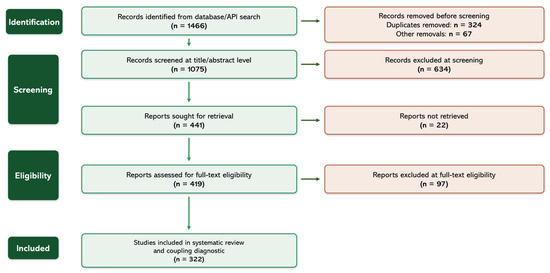
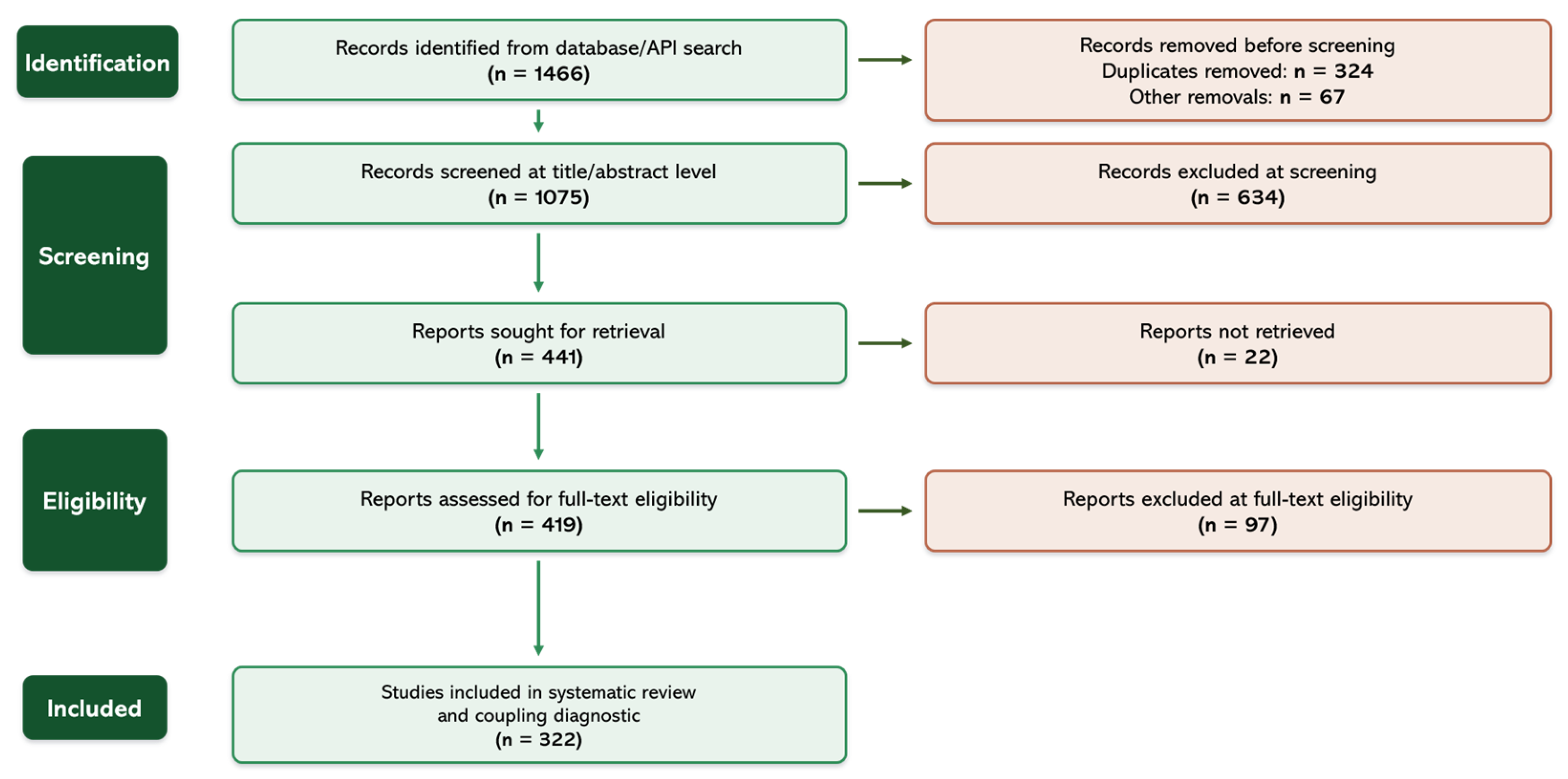
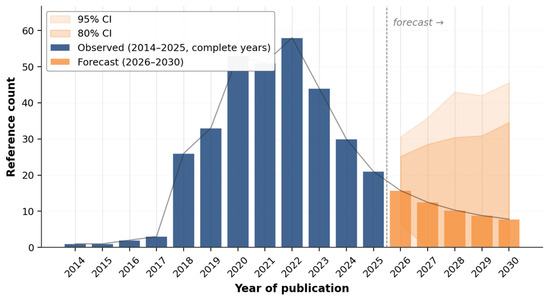
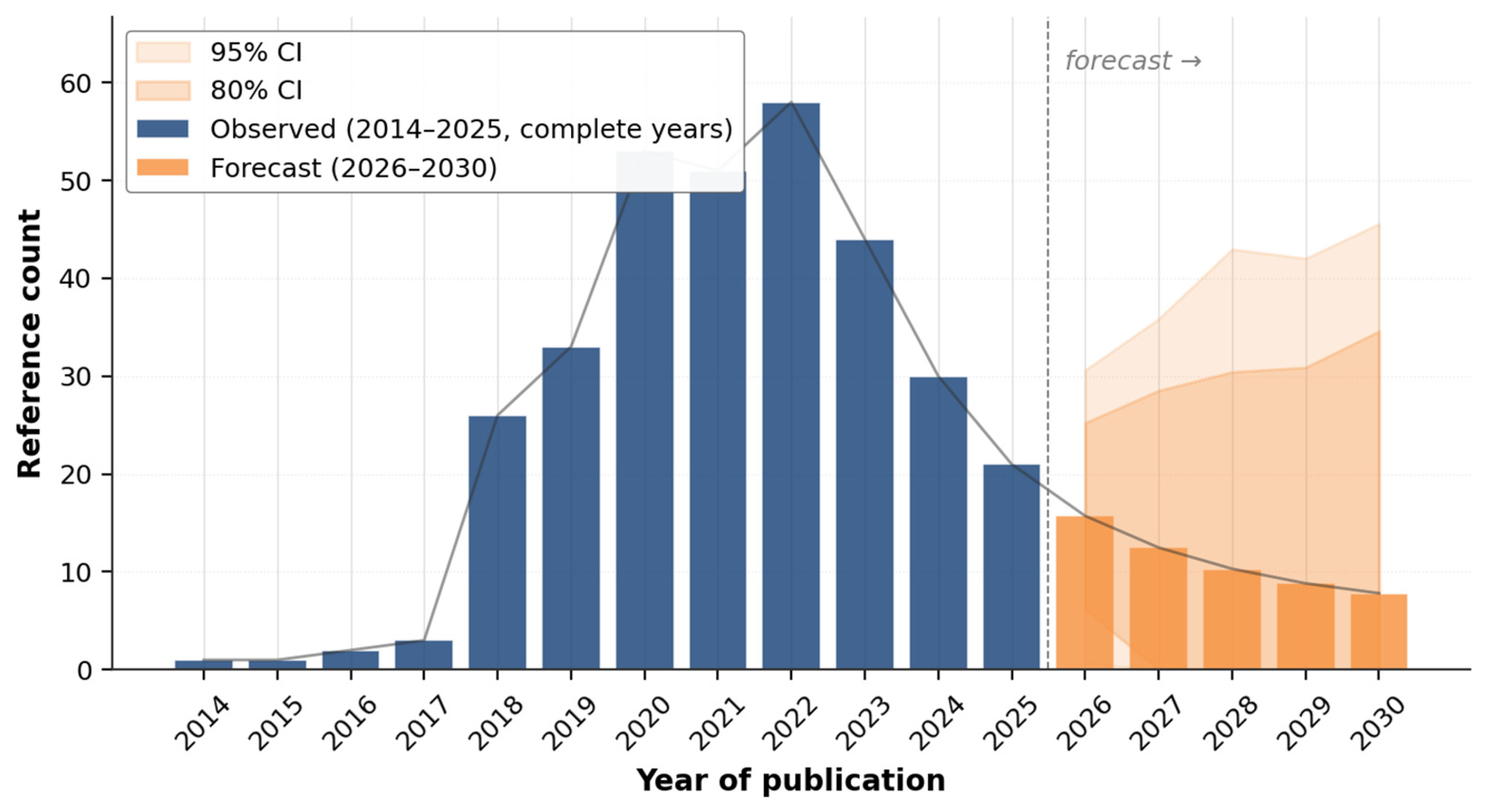
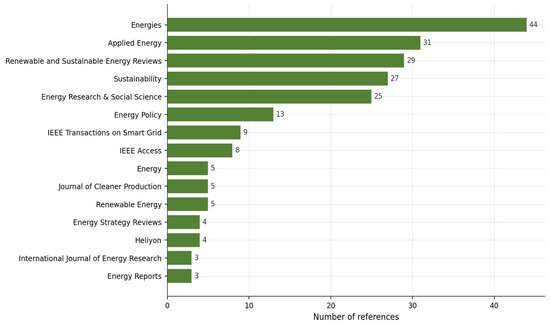
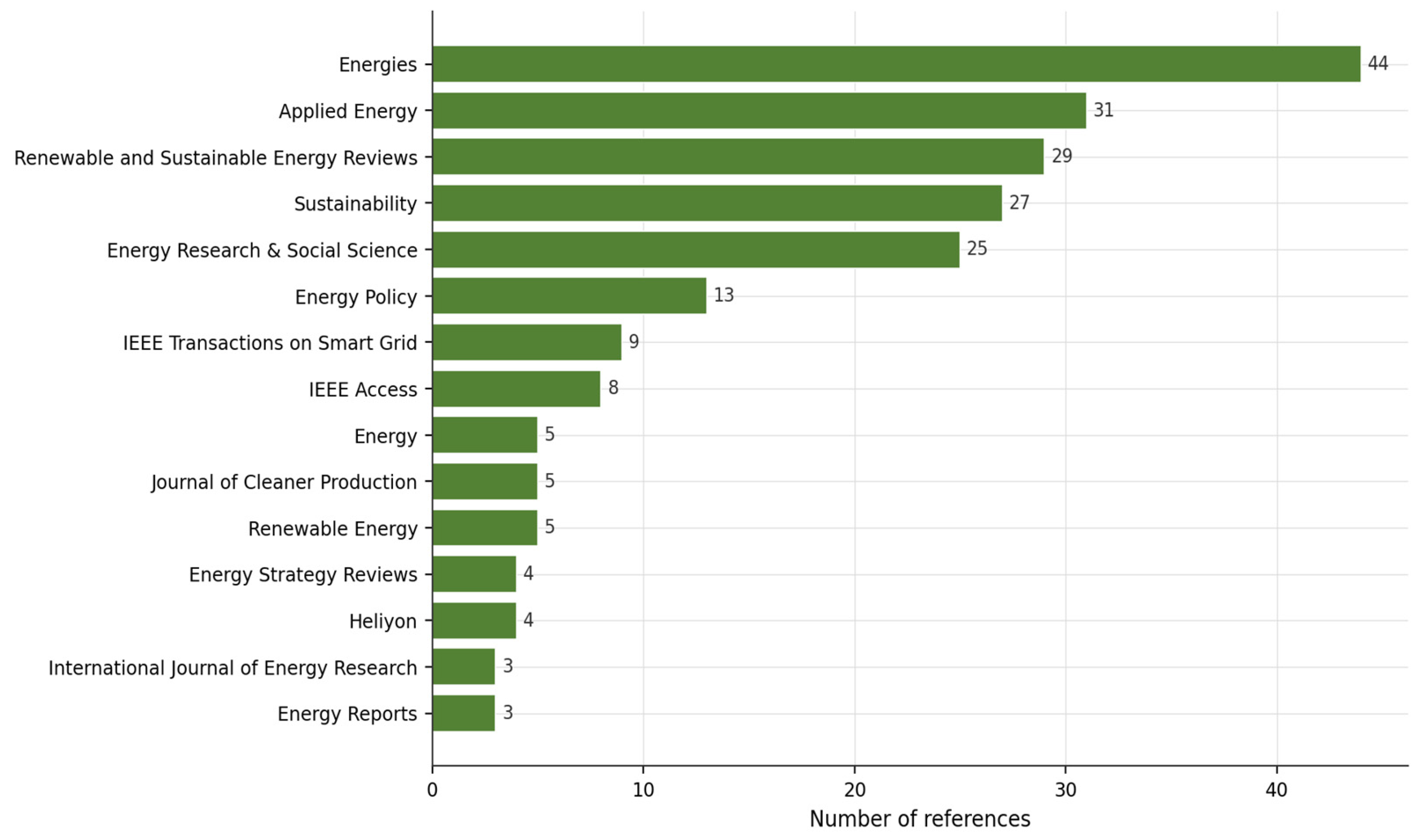
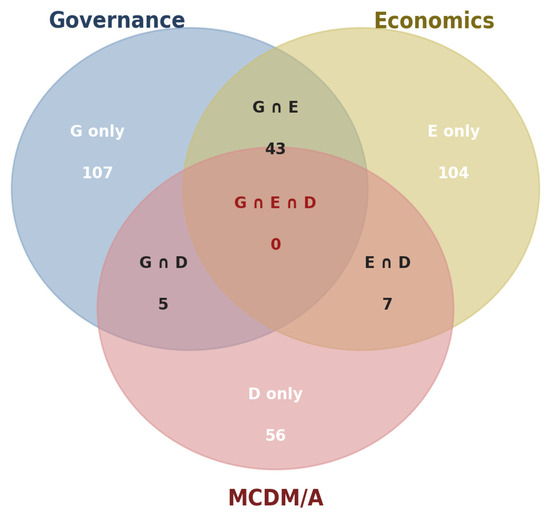
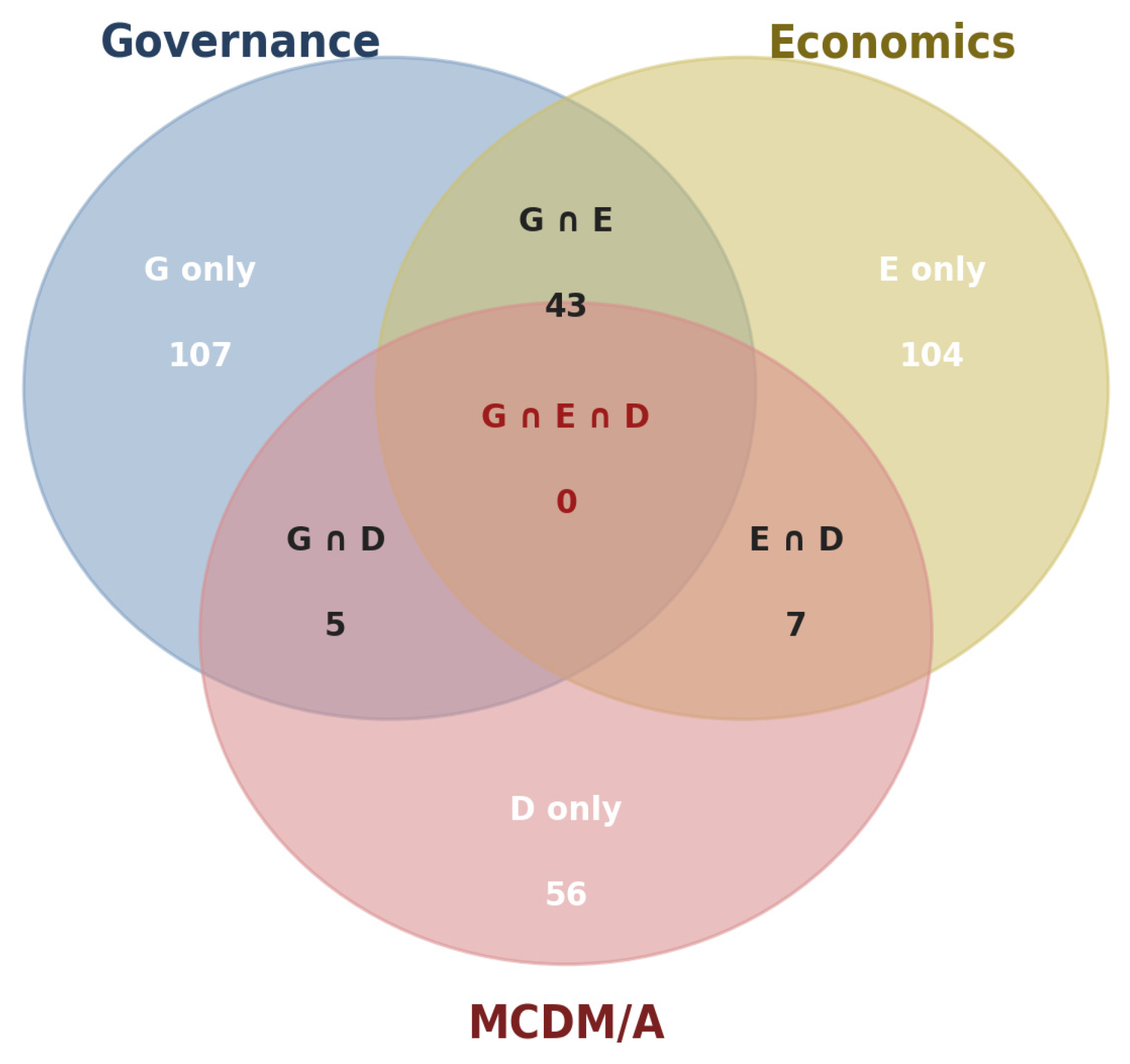
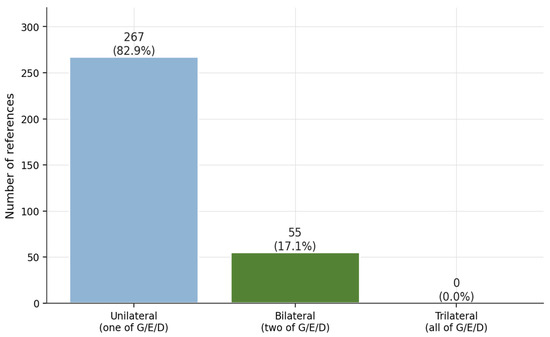
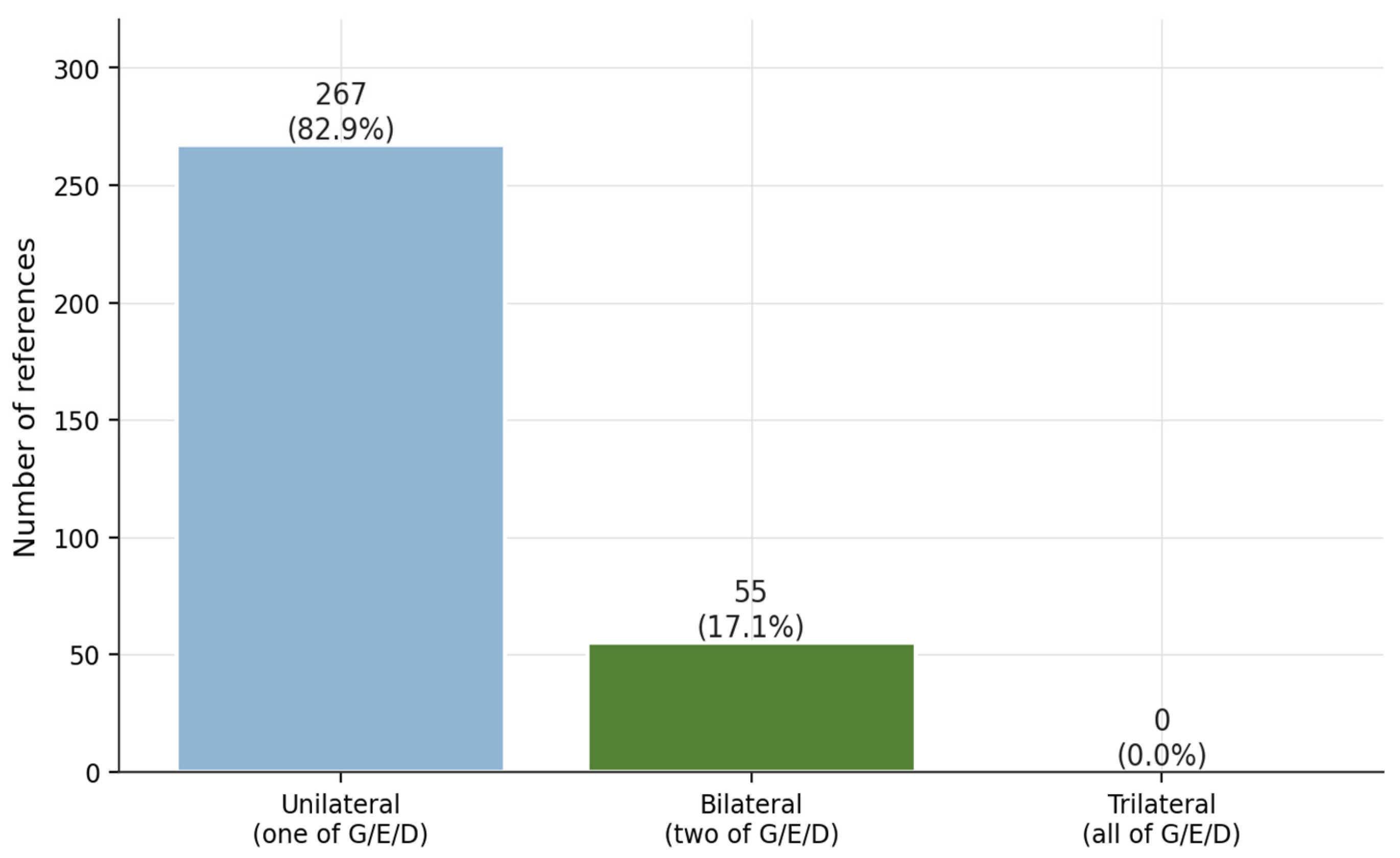
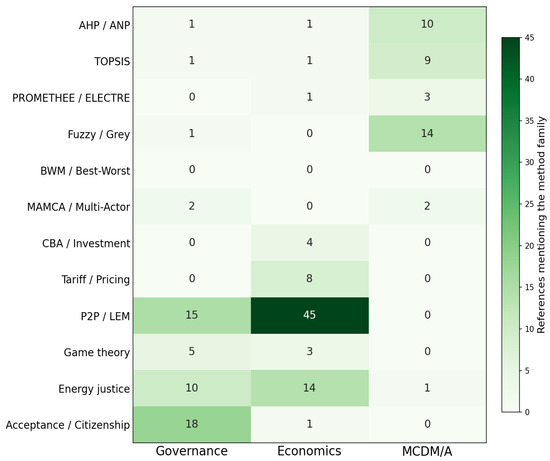
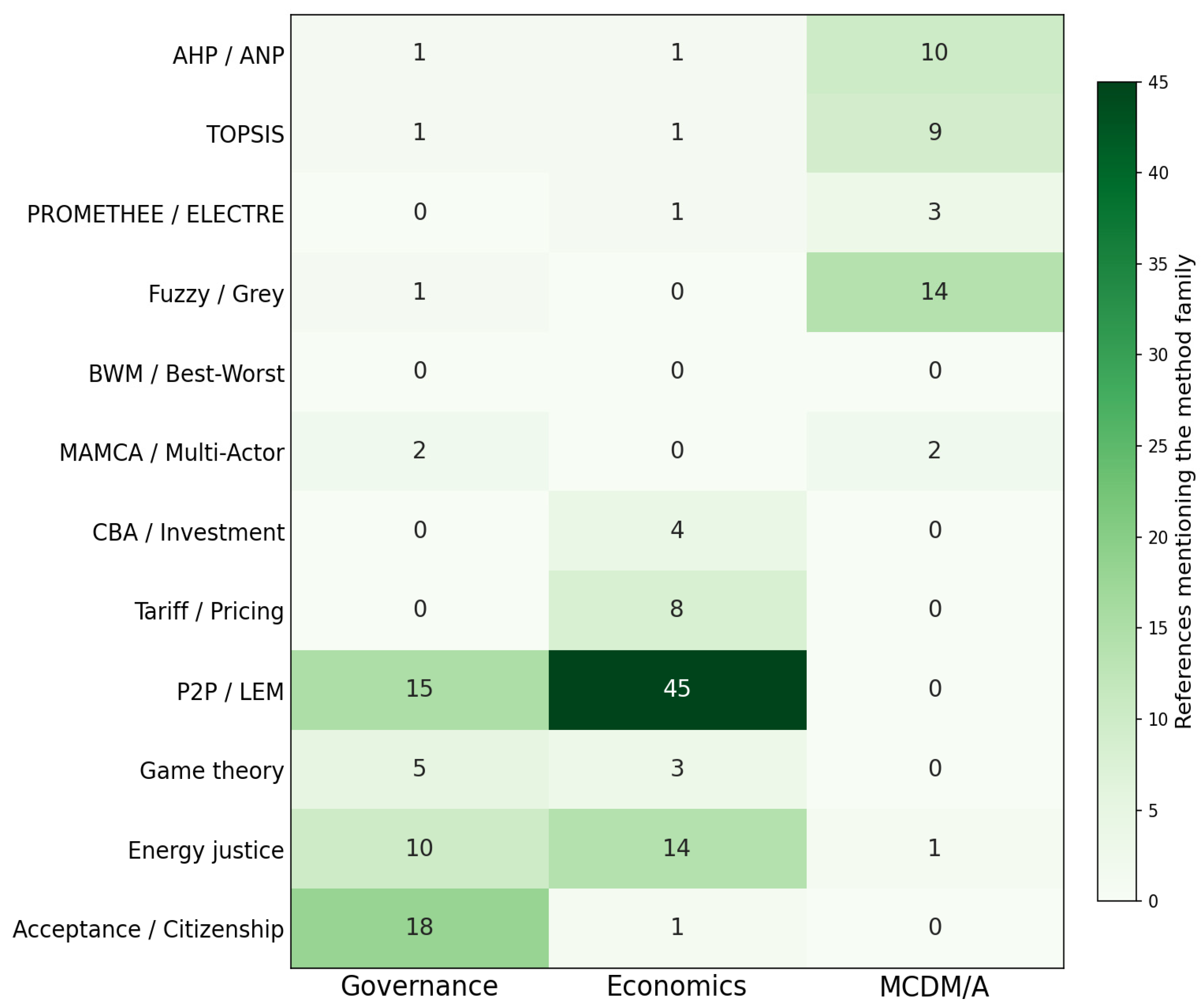
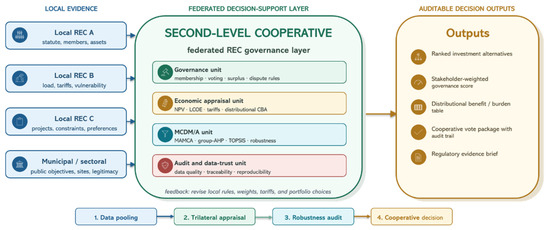
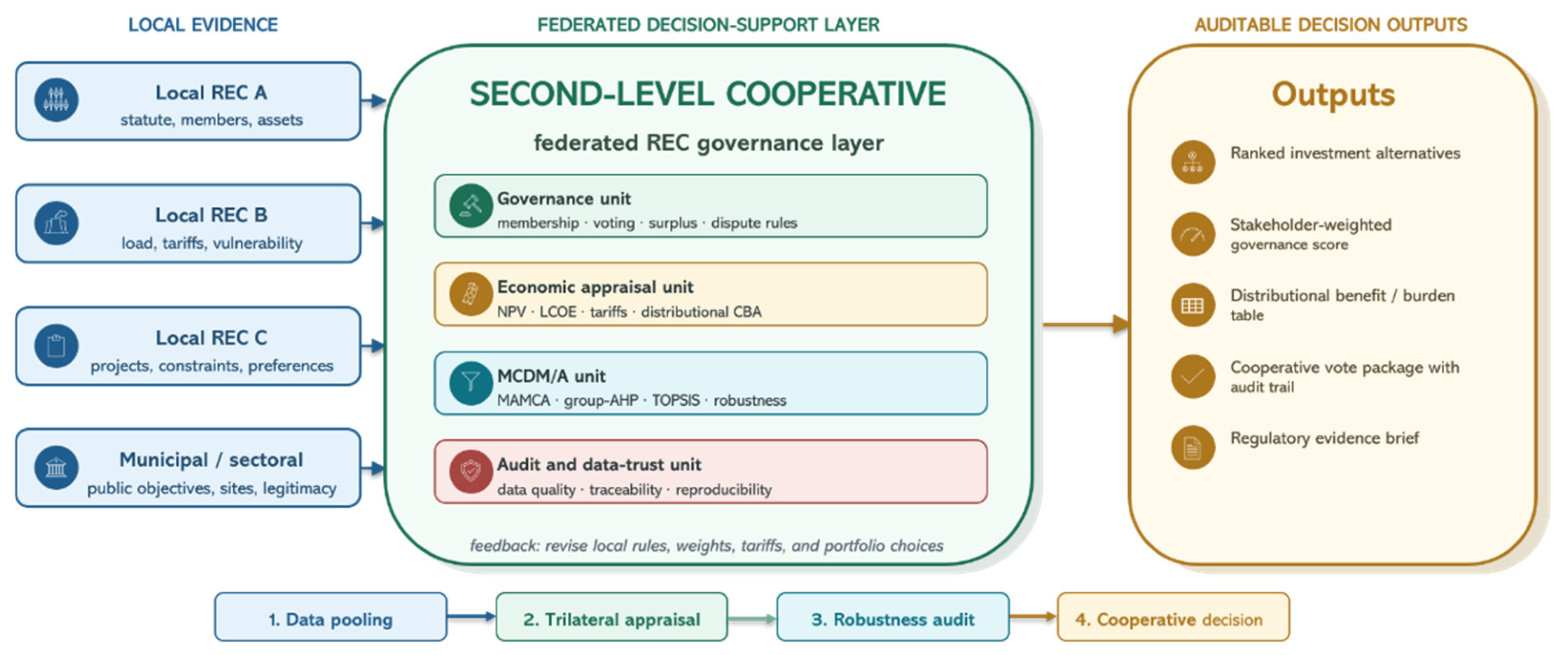
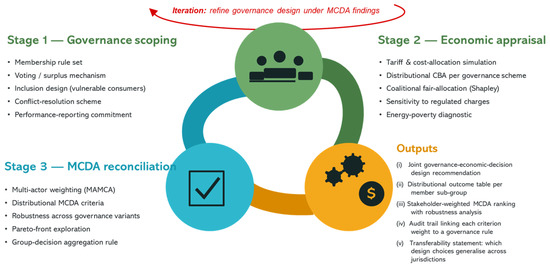
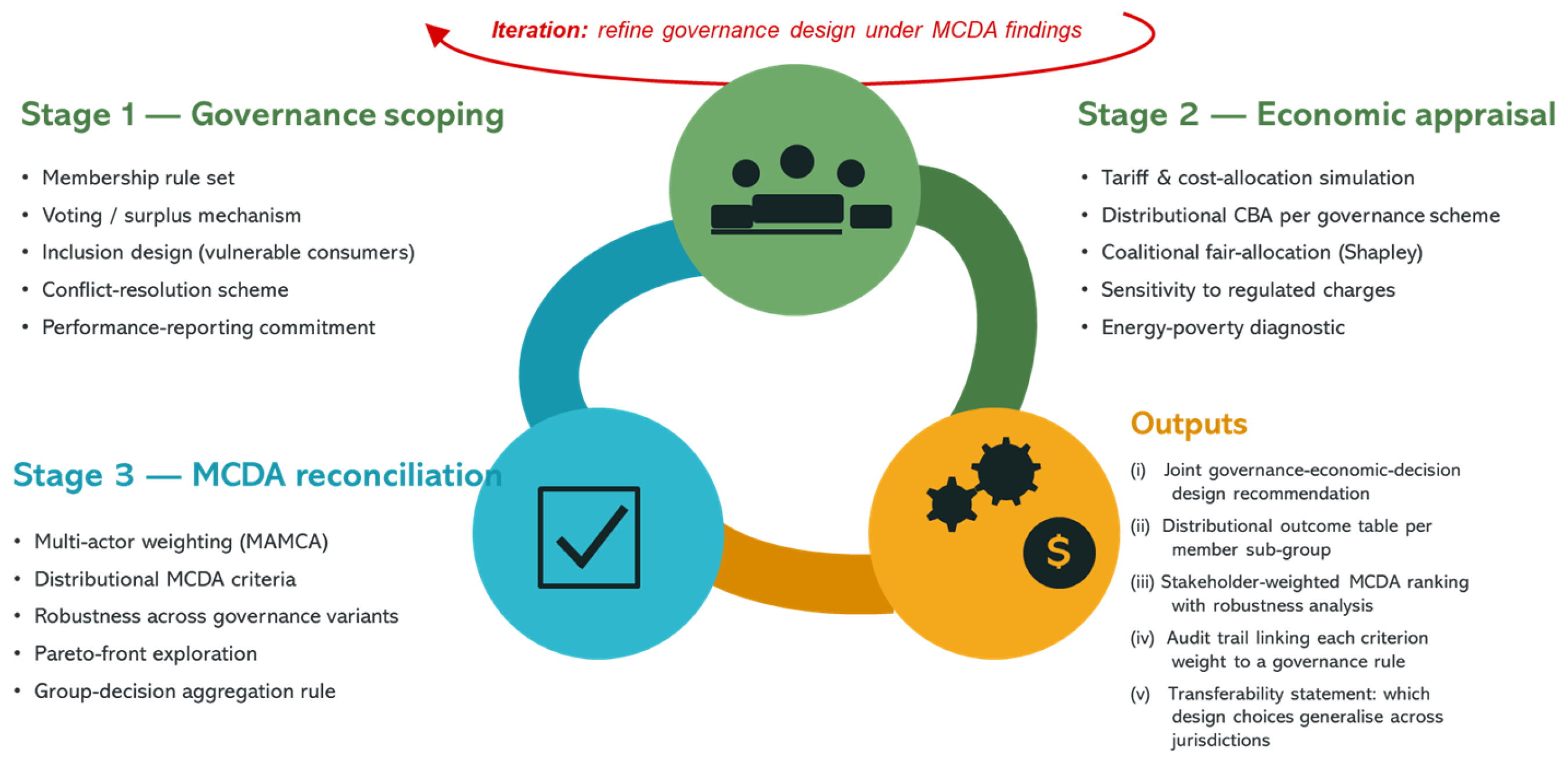
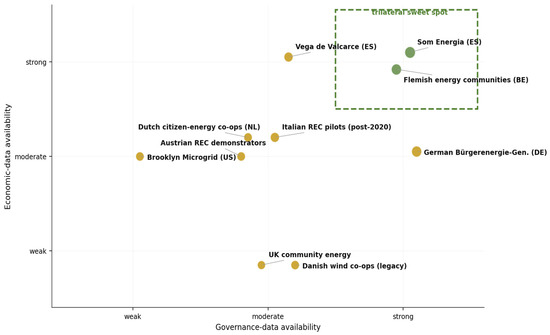
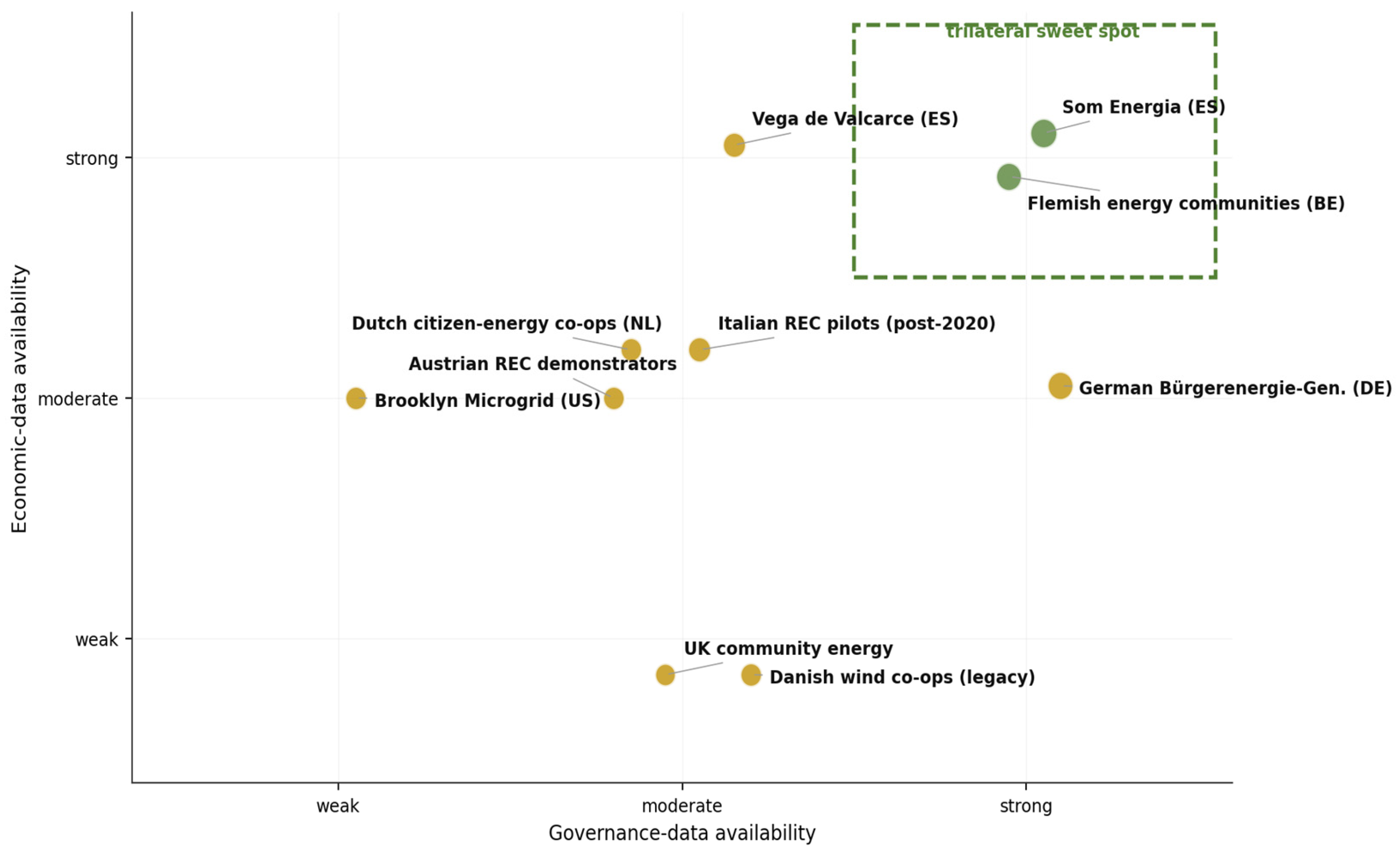
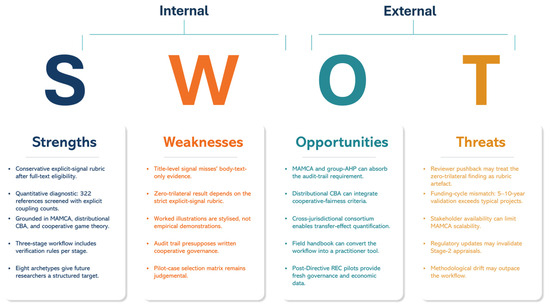
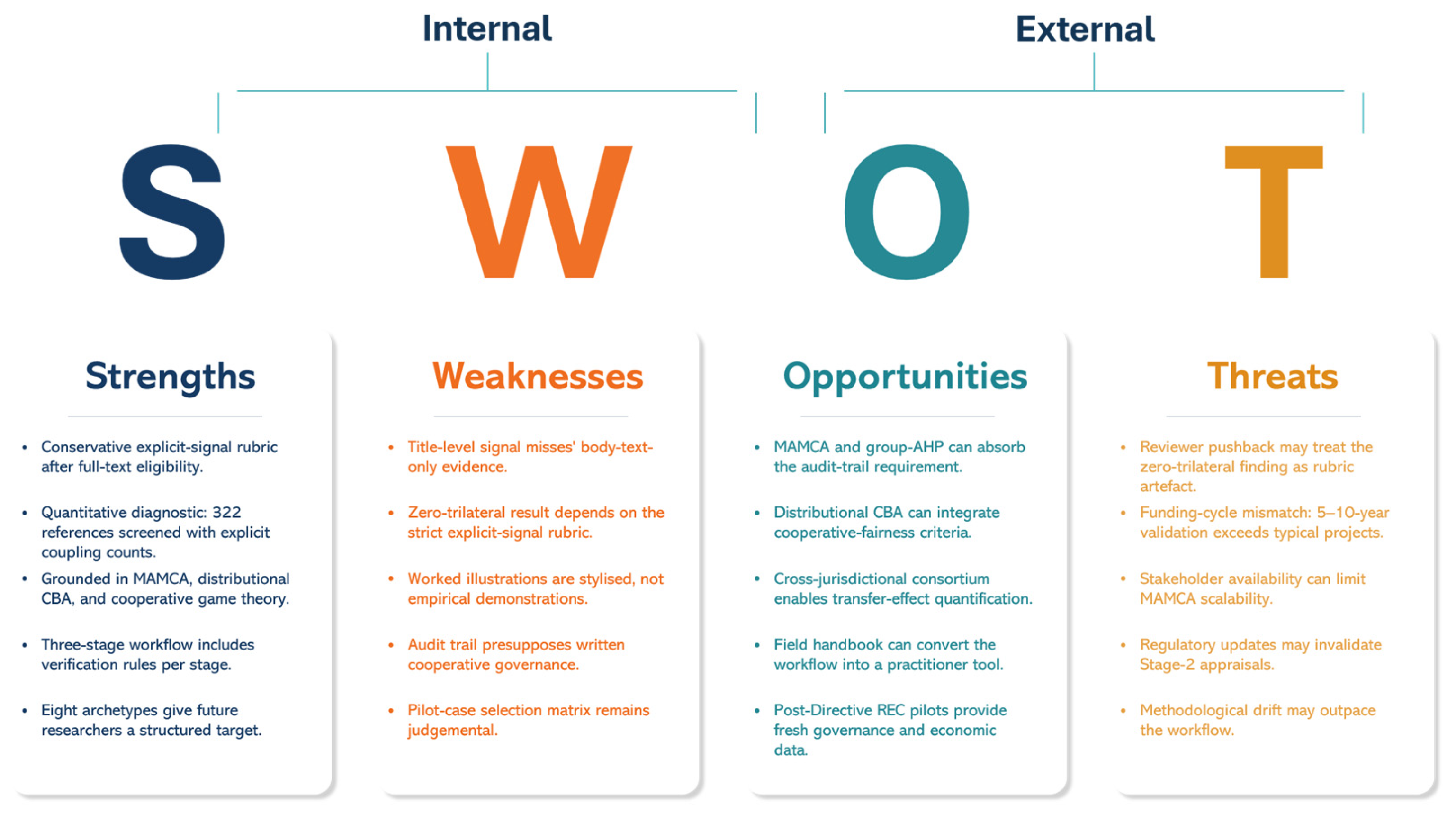
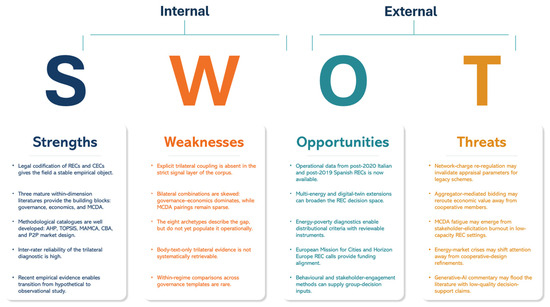
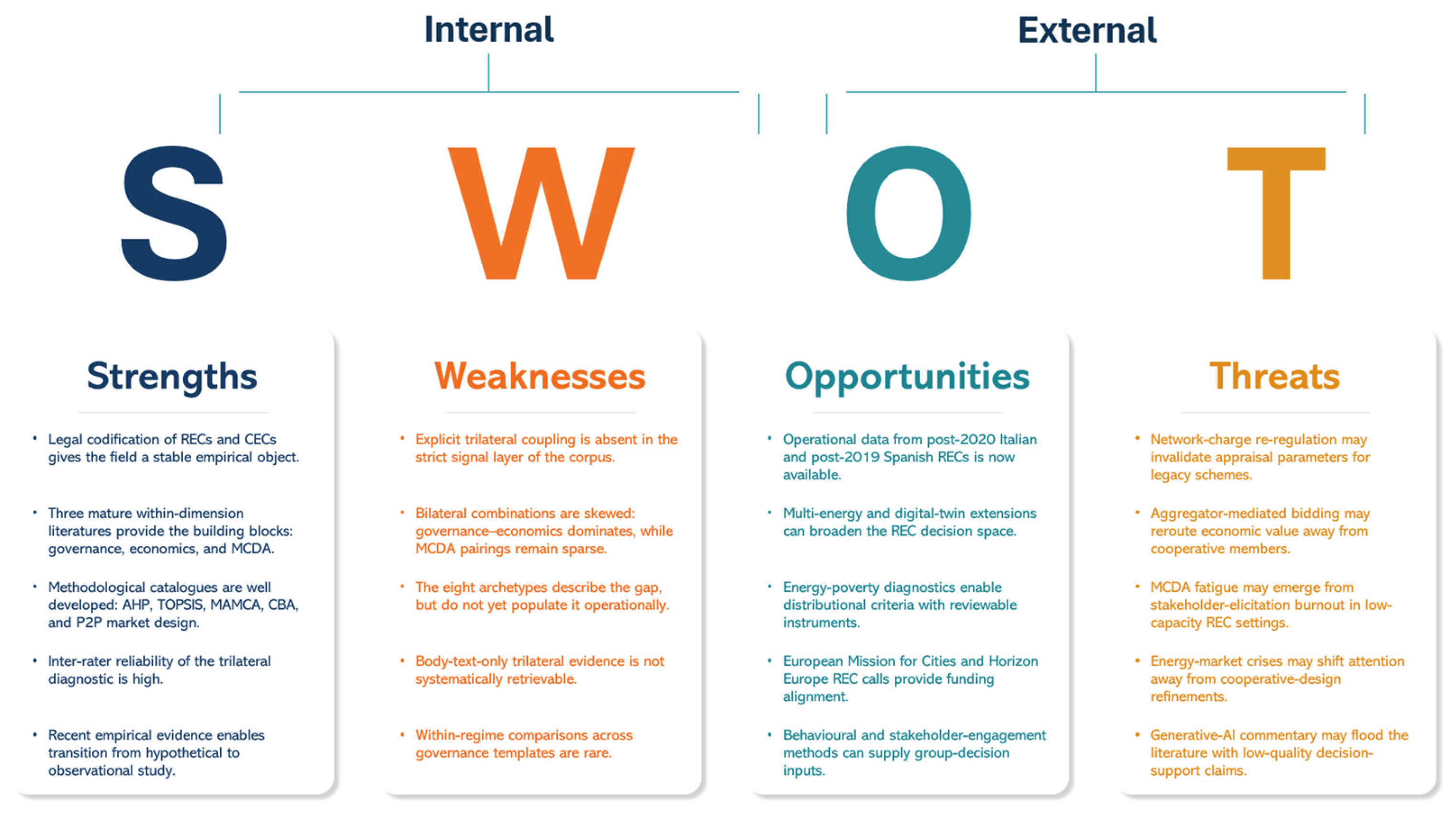

Disclaimer/Publisher’s Note: The statements, opinions and data contained in all publications are solely those of the individual author(s) and contributor(s) and not of MDPI and/or the editor(s). MDPI and/or the editor(s) disclaim responsibility for any injury to people or property resulting from any ideas, methods, instructions or products referred to in the content. |
© 2026 by the author. Licensee MDPI, Basel, Switzerland. This article is an open access article distributed under the terms and conditions of the Creative Commons Attribution (CC BY) license.