


Abstract
The Erdaoling Mining area, located in Inner Mongolia, NW China, is recognized for its considerable potential in coalbed methane (CBM) exploration and development. However, the complex structures in this region have significant influences on coal reservoir characteristics, particularly pore structure features. This study focuses on the No. 2 coal seam of the Middle Jurassic Yan’an Formation. Three structural patterns were classified based on the existing structural characteristics of the study area. Coal samples of No. 2 coal seam were collected from different structural positions, and were subjected to low-temperature CO2 adsorption (LTCO2A), low-temperature N2 adsorption/desorption (LTN2A), low-field nuclear magnetic resonance (LF-NMR), and scanning electron microscopy (SEM) experiments, so that the structural controlling effects on pore structure would be revealed. Quantitative analysis results indicate that in terms of asymmetric syncline, from the limb to the core, the total porosity and movable fluid porosity of the coal decreased by 1.47% and 0.31%, respectively, reaching their lowest values at the core. Meanwhile, the dominant pore type shifted from primarily one-end closed pores to “ink-bottle” pores, indicating increased pore complexity. In the fold-thrust structure, the micropore specific surface area, micropore volume, mesopore specific surface area, mesopore volume, and total porosity show clear correlations with variations in coal seam structure. These parameters all reach their maximum values in the fault-cut zone at the center of the syncline, measuring 268.26 m2/g, 0.082 cm3/g, 0.601 m2/g, 1.262 cm3/g, and 4.2%, respectively. Simple pore types, like gas pores and vesicular pores, were identified in the syncline limbs, while open pores, “ink-bottle” pores, and complex multiporous types were mainly developed at fault locations, indicating that faults significantly increase the complexity of coal reservoir pore types. For the broad and gentle syncline and small-scale reverse fault combination, porosity exhibits a decreasing trend from the syncline limbs toward the core. Specifically, the mesopore specific surface area and movable fluid porosity increased by 52.24% and 43.69%, respectively, though no significant effect on micropores was observed. The syncline core in this structural setting developed normal gas pore clusters and tissue pores, with no occurrence of highly complex or heterogeneous pore types, indicating that neither the broad gentle syncline nor the small-scale faulting significantly altered the pore morphology. Comparatively, the broad and gentle syncline and small-scale reverse fault combination was determined to exert the strongest modification on pore structures of coal reservoir, followed by the asymmetric syncline, while the broad syncline alone demonstrated minimal influence.
1. Introduction
Pore structure is the critical coal reservoirs’ parameter, and is the essential research object for elucidating the enrichment and accumulation mechanisms of coalbed methane. In recent years, researchers have conducted extensive studies on the factors influencing pore structure. Modern research on pore structure of coal reservoirs highly relies on multi-technology integration. The combined application of multiple techniques and full-scale pore characterization comprehensively reveals the pore structure characteristics from the nanometer to micrometer scale. Some scholars have achieved comprehensive characterization of the full-scale pore network in coal samples through high-pressure mercury intrusion porosimetry (MIP), low-temperature CO2 adsorption, and low-temperature N2 adsorption methods, clarifying the development characteristics of storage and seepage spaces in coal reservoirs [1]. Some researchers have applied deep learning models for intelligent pore identification and parameter extraction from scanning electron microscopy (SEM) images, significantly improving the efficiency and accuracy of acquiring pore morphological parameters, representing a new trend in quantitative pore characterization [2]. It is evident that employing multiple testing techniques for the quantitative characterization of full-scale pore structures is one of the emerging trends in coalbed methane (CBM) reservoir research.
The formation and evolution of pore structures result from the comprehensive effects of multiple geological factors. Recent studies have deepened the understanding of pore structure controls from various aspects, including macroscopic coal types, coal rank, maceral composition, magmatic activity, and tectonic processes. Some research teams have systematically revealed the controlling effect of macroscopic coal types on the pore structure and heterogeneity of deep coal reservoirs, emphasizing the fundamental role of coal composition (vitrinite, inertinite, ash yield) [3,4,5]. They applied fractal theory to quantify the complexity of the pore system. However, there remains a lack of quantitative cross-scale characterization of pores, and consideration of the distinctive conditions in deep environments needs to be strengthened [6]. Research indicates that low-rank coal exhibits higher total pore volume [3,7,8], while the porosity and specific surface area display a “high-low-high” trend with increasing coal rank [9,10], reaching minima near a vitrinite reflectance of 2.3% [11]. Research in this field remains constrained by limitations such as the fragmentation of characterization techniques, a superficial understanding of pore morphology and connectivity, and an approach divorced from in situ conditions. Regarding coal maceral impacts, vitrinite in bituminous coal has more micropores while the inertinite holds more mesopores and macropores [10,11]. For instance, Gurba et al. observed that magmatic intrusion in the Gunnedah Basin, Australia, enhanced micropores and microfractures, substantially influencing gas adsorption capacity [12], The specificity of its geological context limits its generalizability, and pore characterization techniques are confined to conventional methods, making it difficult to delineate the evolution mechanisms of micropores, which play a critical role in coalbed methane adsorption. Furthermore, structural effects profoundly reshape coal microstructure by stress-induced fracturing, molecular structure reorganization, and nanopore alternation [13,14]. Current research on structural controls of pore structures predominantly focuses on tectonically deformed coals [15,16]. Currently, research on the control of tectonic processes (across different structural locations) on reservoir pore structures remains relatively understudied, particularly in complex geological settings like the Erdaoling Mining Area that have undergone multi-phase tectonic evolution. Existing studies offer limited theoretical reference or predictive models for such contexts.
Most coal fields in China have undergone post-depositional structural deformation [17], with coal reservoirs in complex structural zones exhibiting intricate structure. The influence of diverse structural patterns on pore structure characteristics remains a critical unresolved issue. The Erdaoling mining area, located within the Helan Mountain structural belt of Northwest China, is bounded by the Xiaosongshan fault and Muhulu anticline, forming a dustpan-shaped depression. In recent years, significant progress has been made in exploring the Middle Jurassic Yan’an Formation for CBM [18]. The primary target coal seams exhibit high total pore volume and porosity, along with strong gas adsorption capacity [19]. Despite these advantages, the pore structure of coal reservoirs is strongly influenced by structures, yet systematic studies on these structural controls are conspicuously absent, highlighting an urgent need for targeted research.
In response to the complex geological background of multi-phase tectonic evolution in the Erdaoling Mining Area, previous studies have primarily focused on basic characteristics of coal quality and porosity, failing to elucidate the influence of tectonic settings on coal reservoir properties. Moreover, research on pore structures in the study area lacked comprehensive multi-scale and multi-technique validation [20,21]. Therefore, this study focuses on the pore structure of the No. 2# coal seam in the Yan’an Formation within the Erdaoling Mining area of Inner Mongolia, NW China, aiming to elucidate the controlling effects of distinct structural conditions on coal reservoir’ pore structure by using field structural observations, profile sampling, low-temperature CO2 and N2 adsorption, and low-field nuclear magnetic resonance (LF-NMR) experiments.
2. Geological Setting
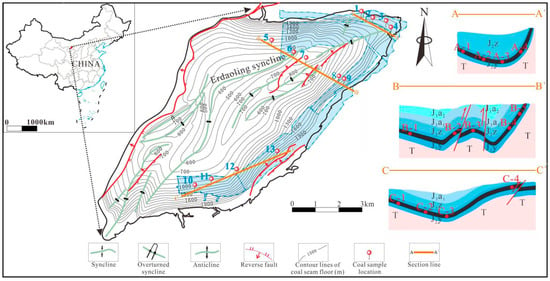
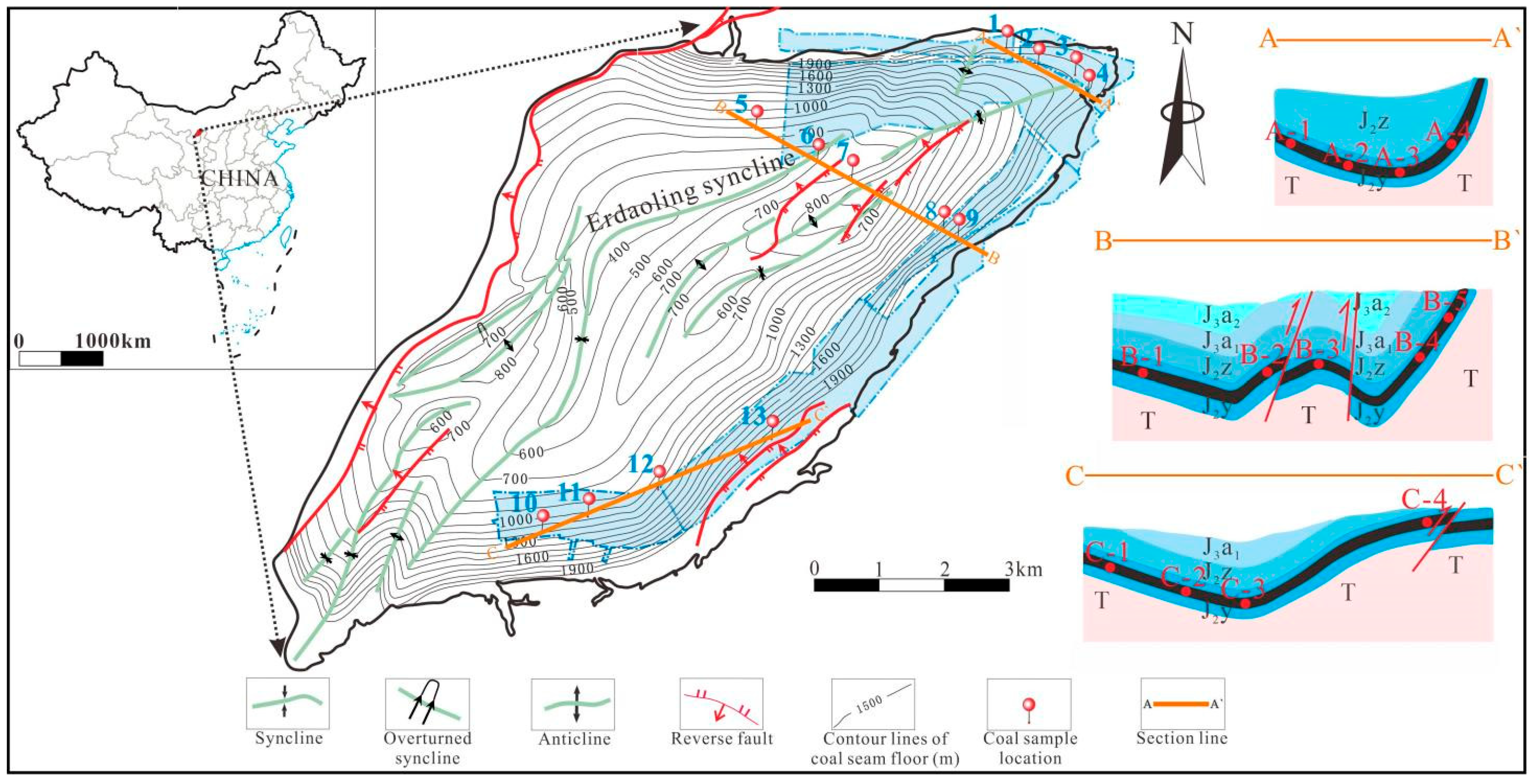
The Erdaoling mining area is situated in the central segment of the Helan Mountain fault-fold belt along the western margin of the Ordos Basin, NW China (Figure 1). The target coal-bearing strata in this area belong to the Yan’an Formation of the Middle Jurassic. The No. 2# coal seam of the Yan’an Formation is stably developed throughout the study area, with the burial depth ranging from 103 to 1474 m. The dominant structure of the mining area is defined as the Erdaoling syncline, which forms a rhombic basin-like geometry with primary structural trends oriented NE-SW (Figure 1). The northwestern and southeastern limbs of the syncline exhibit simple structures, characterized by well-developed secondary folds and numerous steeply dipping reverse faults. The current geological framework of the study area includes synclinal structures, anticlinal structures, and fold-thrust nappe structures. Based on the present structural configuration, three distinct structural patterns were classified (Figure 1): Profile A-A’ represents the asymmetric syncline structure, Profile B-B’ exemplifies the fold-thrust structures, and Profile C-C’ characterizes the broad and gentle syncline and small-scale reverse fault combination.
Figure 1.
Structural outline map and major structural styles of the study area.
3. Sample and Experiment Methods
3.1. Fundamental Information of the Samples
Based on three sections with different combination styles, samples were collected from various structural positions of the same coal seam (No. 2# coal seam) in the Yan’an Formation to ensure that the material composition of the samples is the same. The sampling location information is shown in Table 1. Coal seam 2# demonstrates a mean vitrinite reflectance (Rₒ) of 2.24% with dominant vitrinite content averaging 68.96% and inertinite at 23.58%. Proximate analysis reveals 0.74% moisture (air-dried basis), 11.61% ash yield, and dry ash-free basis constituents of 9.12% volatile matter alongside 78.98% fixed carbon.
Table 1.
Sample location information.
3.2. Experimental Methods and Procedure
3.2.1. Low-Temperature CO2 Adsorption (LTCO2A) Experiments
Low-temperature gas adsorption experiments were conducted using an surface area and porosity analyzer (Model: ASAP-2460), which was purchased from Micromeritics Instrument Corporation, located in Norcross, GA, USA. The coal samples were crushed to a particle size of 60–80 mesh (0.25–0.18 mm). Tests were performed in accordance with the Chinese National Standard GB/T 21650.3-2011 and international standard ISO 15901-3:2007 [22,23], including low-temperature CO2 adsorption (at 273 K) and low-temperature N2 adsorption (at 77 K) measurements.
Low-temperature CO2 adsorption experiments are primarily employed for the precise characterization of micropores, particularly ultra-micropores (<0.7 nm). LTCO2A experiments were performed on 1–2 g of powdered coal samples. Prior to testing, the samples were oven-dried at 120 °C for approximately 12 h and then placed in a dilatometer for vacuuming to remove air, free water, and other impurities. High-purity CO2 is used as the adsorbate, with a molecular kinetic diameter of only 0.33 nm. The tests are conducted at 273 K (0 °C) under controlled conditions using an ice-water bath. At this temperature, CO2 molecules possess higher thermal kinetic energy, enabling them to overcome diffusion barriers and rapidly access and fill extremely narrow micropores. The analysis is based on micropore filling theory, and methods such as Density Functional Theory (DFT) or the Dubinin–Radushkevich (D–R) model are typically applied to calculate the pore size distribution [1,24,25,26,27,28,29].
3.2.2. Low-Temperature N2 Adsorption (LTN2A) Experiments
Low-temperature N2 adsorption–desorption experiments are primarily used to characterize mesopores (2–50 nm) and partially macropores (>50 nm) [30,31,32,33]. The pretreatment process is similar to that of low-temperature CO2 adsorption experiments. High-purity N2 is used as the adsorbate, and the tests are conducted at 77 K (−196 °C). The adsorption behavior of N2 molecules under relative pressure (P/P0) follows the BET multilayer adsorption theory (for calculating the total specific surface area) and the capillary condensation theory (for analyzing mesopores). By examining the shape of the adsorption–desorption isotherms and the hysteresis loops, pore types can be identified. The Barrett–Joyner–Halenda (BJH) model is typically employed to calculate the mesopore size distribution [34,35]. The determination formulas are as follows:
BET Specific Surface Area of Pores:
where P: partial pressure of N2, MPa; Va: actual N2 adsorption amount per unit sample, cm3/g; P0: saturation vapor pressure of N2, MPa; Vm: monolayer saturated adsorption capacity of N2, cm3/g; C: Constant.
BJH Pore Volume and Pore Size Distribution:
where T: temperature, K; θ: contact angle between adsorbate and sample; rk: Kelvin radius, nm; : surface tension of adsorbate, N/m; V: molar volume of adsorbate (N2), cm3/mol; R: universal gas constant, J/mol·K.
3.2.3. Low-Field Nuclear Magnetic Resonance (LF-NMR) Experiment
LF-NMR experiments typically analyze the pore fluid characteristics of coal rocks through the transverse relaxation time T2 of hydrogen nuclei [36]. This technique is characterized by its rapid and non-destructive nature, enabling the characterization of the in situ integrity of pores and fractures. The experiments were conducted using a Nuclear Magnetic Resonance Analyzer (Model: MacroMR12-150H-I) at the National Key Laboratory of Coal and Coalbed Methane Co-mining in Jincheng, Shanxi, which was procured from Suzhou Niumag Analytical Instrument Corporation, located in Suzhou city, China, and was coupled with Niumag NMR Core Analysis software (Version 1.0) for T2 spectrum analysis of the samples. Coal samples with dimensions of 25 mm × 25 mm × 50 mm (cylindrical) were prepared and subjected to saturated-centrifugation experiments after pretreatment. This process enabled the acquisition of both 100% water-saturated T2 spectra and irreducible water T2 spectra. Relevant parameters were derived through analytical calculations based on the Coates model [37,38].
3.2.4. Scanning Electron Microscopy (SEM) Experiment
Fingernail-sized flake samples (long axis ≤ 0.5 cm) were sectioned from coal cores and sputter-coated with gold layer to enhance conductivity. Pore morphology on coal surfaces was characterized using a ZEISS GeminiSEM 300 field-emission scanning electron microscope (FE-SEM) (Oberkochen, Germany). Based on genetic classification of pore types, the spatial distribution patterns and morphological characteristics of pore networks were analyzed.
4. Results
4.1. Pore Structures Characterizations via LTCO2A
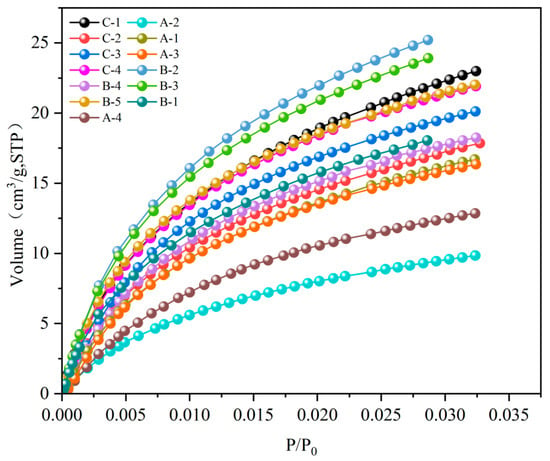
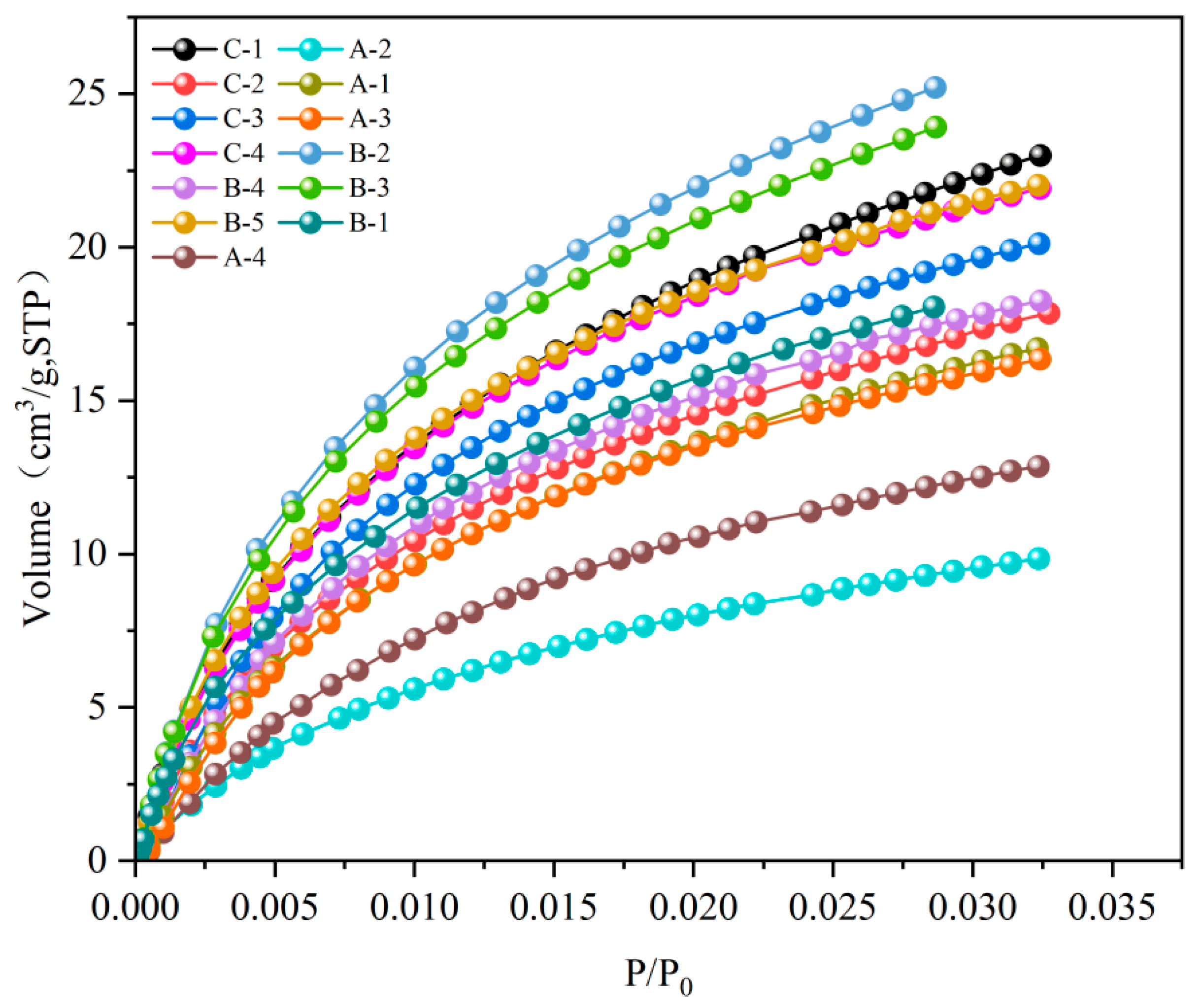
Low-temperature CO2 adsorption experiments primarily provide parameters characterizing the micropore structure (pore size < 2 nm). Compared with previous research findings [20], earlier studies in the area were limited by technological constraints and mainly revealed information about macropores and mesopores. In contrast, current techniques enable precise characterization of the detailed distribution of micropores (<2 nm) through low-temperature CO2 adsorption experiments. The corresponding adsorption isotherms are shown in Figure 2, and the calculated characteristic parameters of the micropores are presented in Table 2. The CO2 adsorption isotherms of coal samples from different structural locations exhibit consistent morphology, all showing a slightly upward-convex shape. The adsorption capacity of the samples increases rapidly in the low relative pressure region, indicating a high abundance of small-sized pores in the study area. Previous studies have demonstrated that micropores provide substantial sites for coalbed methane adsorption. The maximum CO2 adsorption capacity of the coal samples reveals the most critical adsorption space in the reservoir—the micropore structure [20]. The maximum CO2 adsorption capacities of all samples in the study area range from 9.86 to 25.22 cm3·g−1. These results quantitatively characterize the quality of micropore development in the coal reservoirs of the Erdaoling mining area as follows: central region (B-2, 25.22 cm3·g−1) > southern region (C-1, 22.99 cm3·g−1) > northern region (A-1, 16.36 cm3·g−1), revealing strong internal heterogeneity within the reservoir.
Figure 2.
CO2 adsorption isotherm of different coal samples in the study areas (273.15 K).
Table 2.
Micropore characteristic parameters derived from CO2 adsorption experiments.
The micropore structural parameters (pore volume, specific surface area, and pore size distribution for pores <2 nm in diameter) were calculated using the DFT model. The results indicate that the specific surface area of micropores ranges from 43.77 to 268.26 m2/g, and the micropore volume ranges between 0.014 and 0.082 cm3/g (Table 2). The specific surface areas of pores in the ranges of 0.4–2.0 nm and 2–100 nm were determined using CO2 and N2 adsorption methods, respectively. The results demonstrate that the specific surface area in the study area is predominantly contributed by micropores, accounting for more than 99% of the total, which is consistent with previous research findings [20].
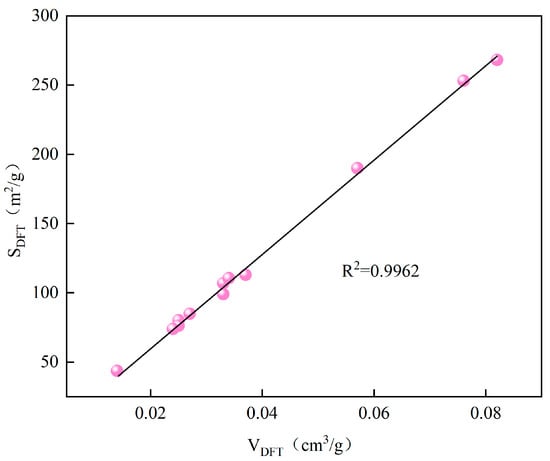
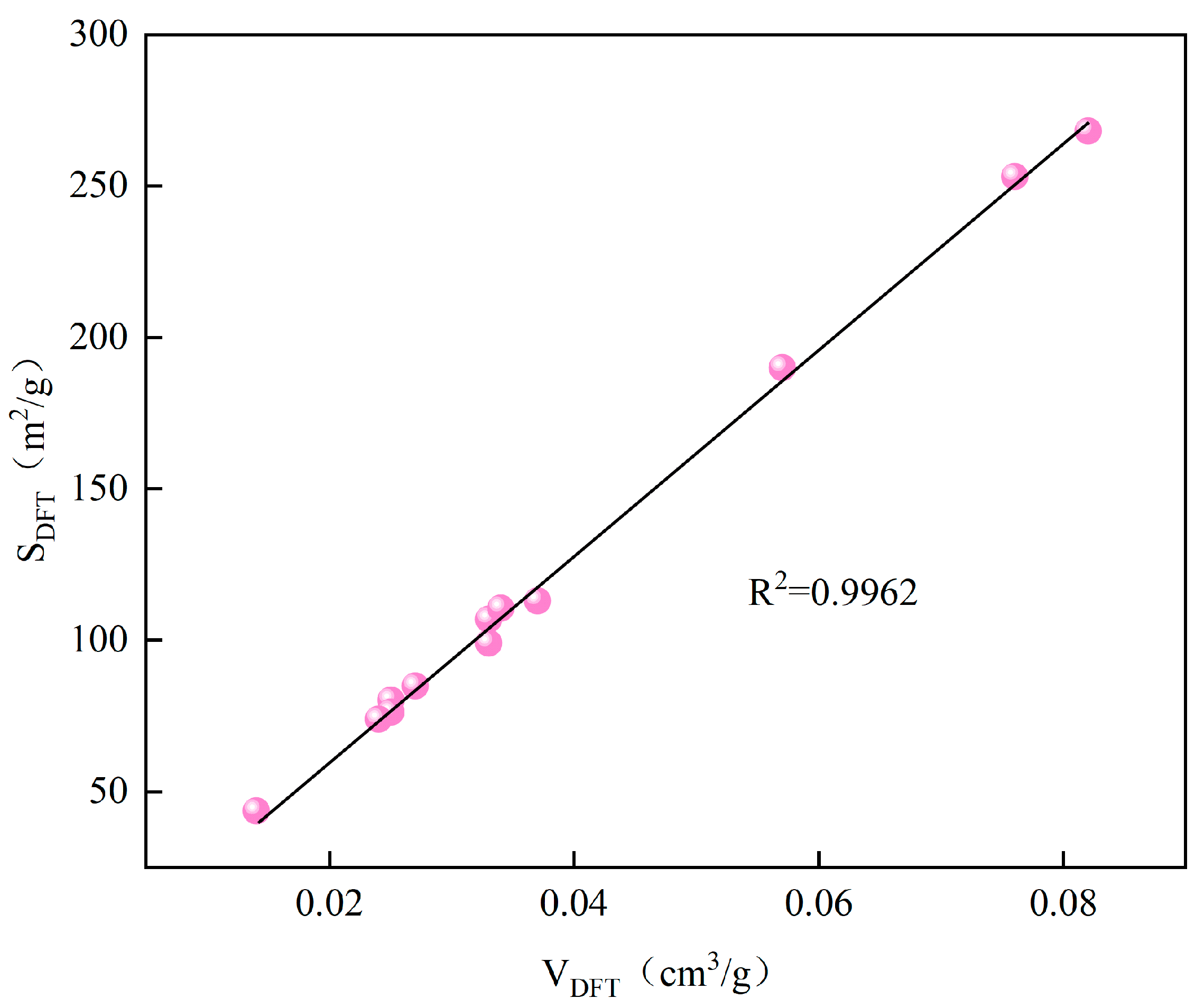
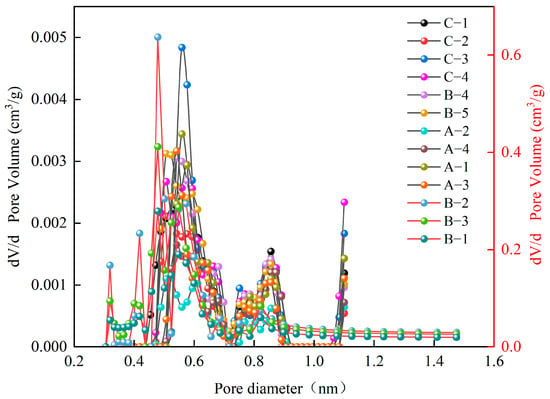
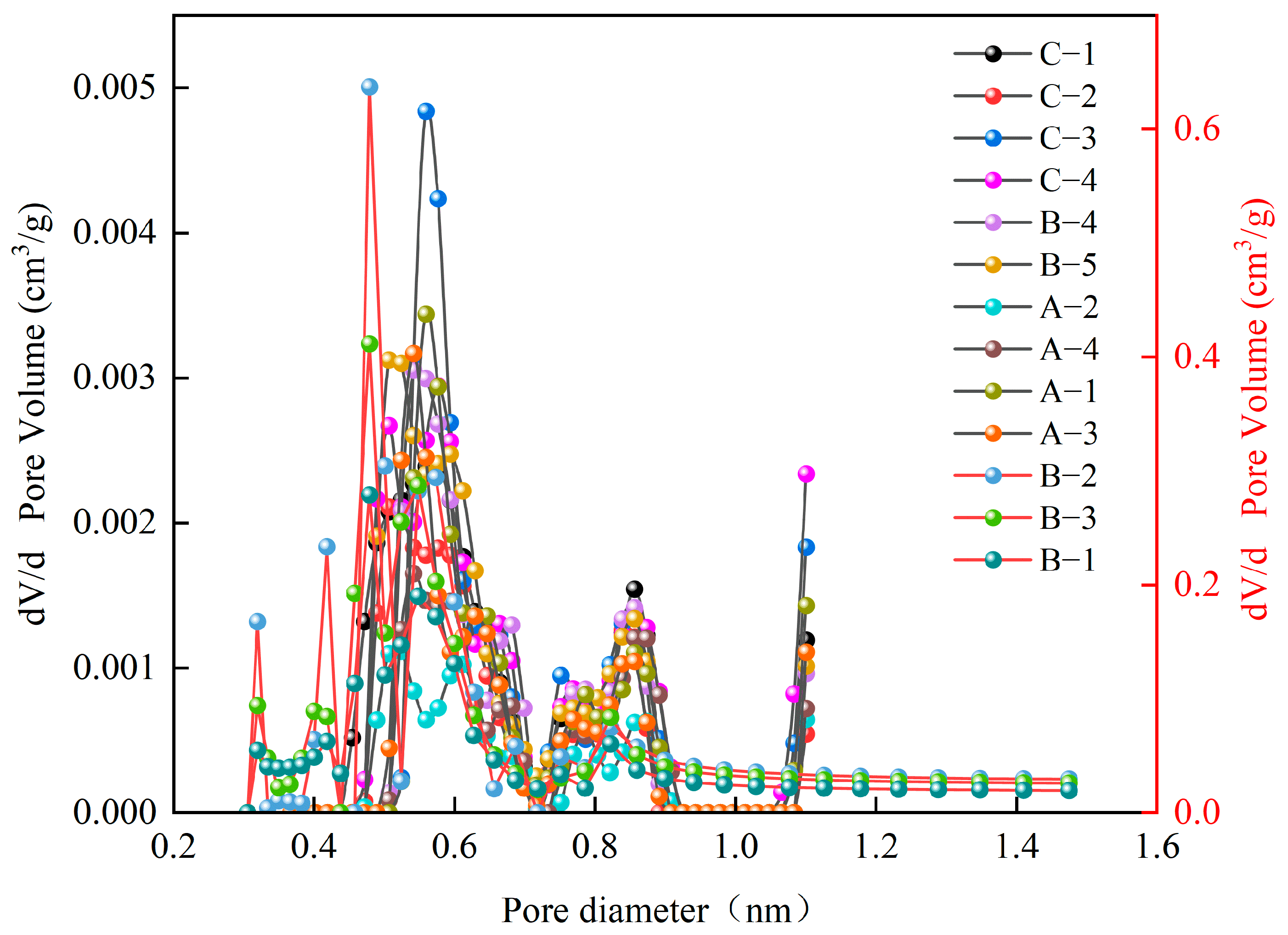
Furthermore, a strong linear correlation (R2 = 0.9962) exists between micropore volume and specific surface area (Figure 3), indicating synchronized distribution characteristics of these two parameters. Simultaneously, the pore size distribution of coal samples reveals dominant peaks within two ranges: 0.2–0.7 nm and 0.7–0.9 nm (Figure 4), with the majority concentrated in the 0.2–0.7 nm range. This distribution aligns with the variation trend observed in adsorption curves, reflecting a higher abundance of pores with in the 0.2–0.7 nm range.
Figure 3.
Relationships between micropore volume and micropore-specific surface area.
Figure 4.
Micropore size distribution.
4.2. Pore Structure Characterizations via LTN2A
The LTN2A experiment primarily characterizes mesopore structure (2–50 nm in diameter). The calculated pore structure parameters are listed in Table 3. The BET surface areas of the coal samples range from 0.10 to 0.60 m2/g (avg. 0.25 m2/g). The BJH total pore volumes range between 0.51 and 1.57 × 10⁻³ cm3/g (avg. 0.95 × 10⁻³ cm3/g), with average pore diameters spanning 3.46–38.70 nm. Compared with the CO2-derived pore structure parameters, micropores exhibit more development than mesopores across different structural locations, providing a greater contribution to the total pore volume. This finding shows certain discrepancies with some previous studies in the Erdaoling mining area [20], suggesting that it may more accurately reflect the true pore structure characteristics of the coal reservoir in this region and highlighting the limitations of relying solely on a single adsorption technique for evaluating reservoir micropores.
Table 3.
Mesopore structure parameters derived from N2 adsorption experiments.
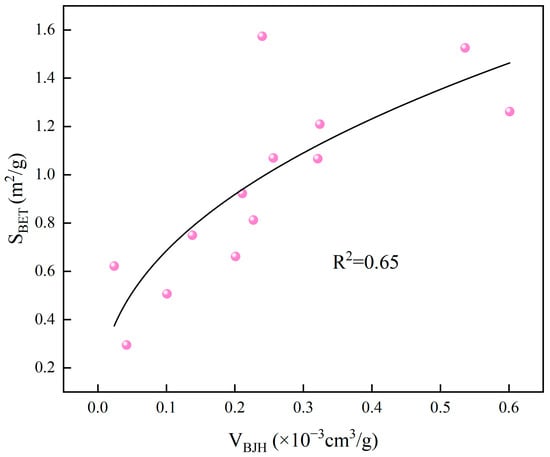
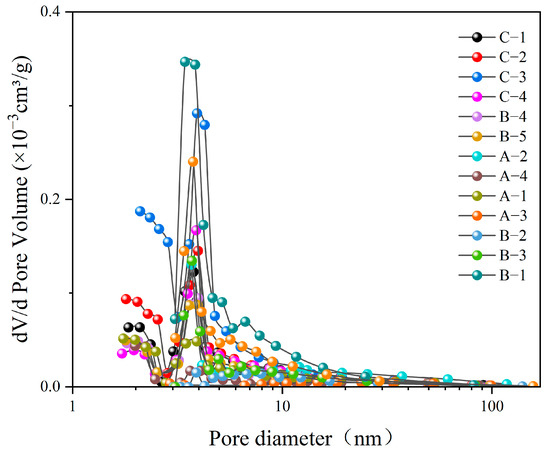
A correlation analysis of mesopore structure parameters in the 2–50 nm range revealed a positive relationship between pore volume and specific surface area within this interval (Figure 5). Figure 6 shows that the BJH pore size distribution derived from N2 adsorption exhibits a high proportion of pores with an average pore diameter <10 nm. Among these, the gentle limb of the syncline (B-1) and the syncline core (A-3 and C-3) display the highest mesopore peaks, while the steep limb of the syncline (B-2 and A-4) shows the lowest mesopore peaks, reflecting differences in mesopore structure across various structural locations.
Figure 5.
Relationship between mesopore volume and mesopore-specific surface Area.
Figure 6.
Mesopore size distribution.
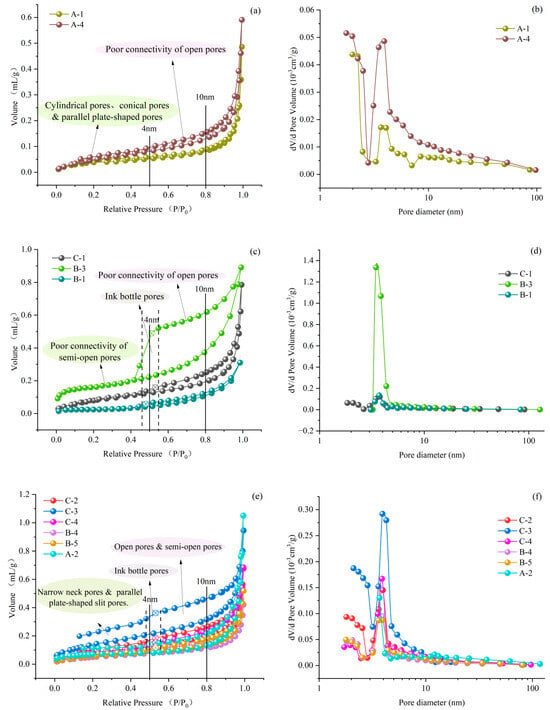
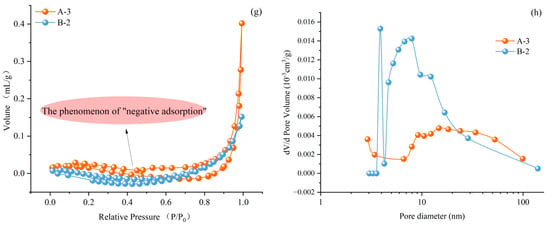
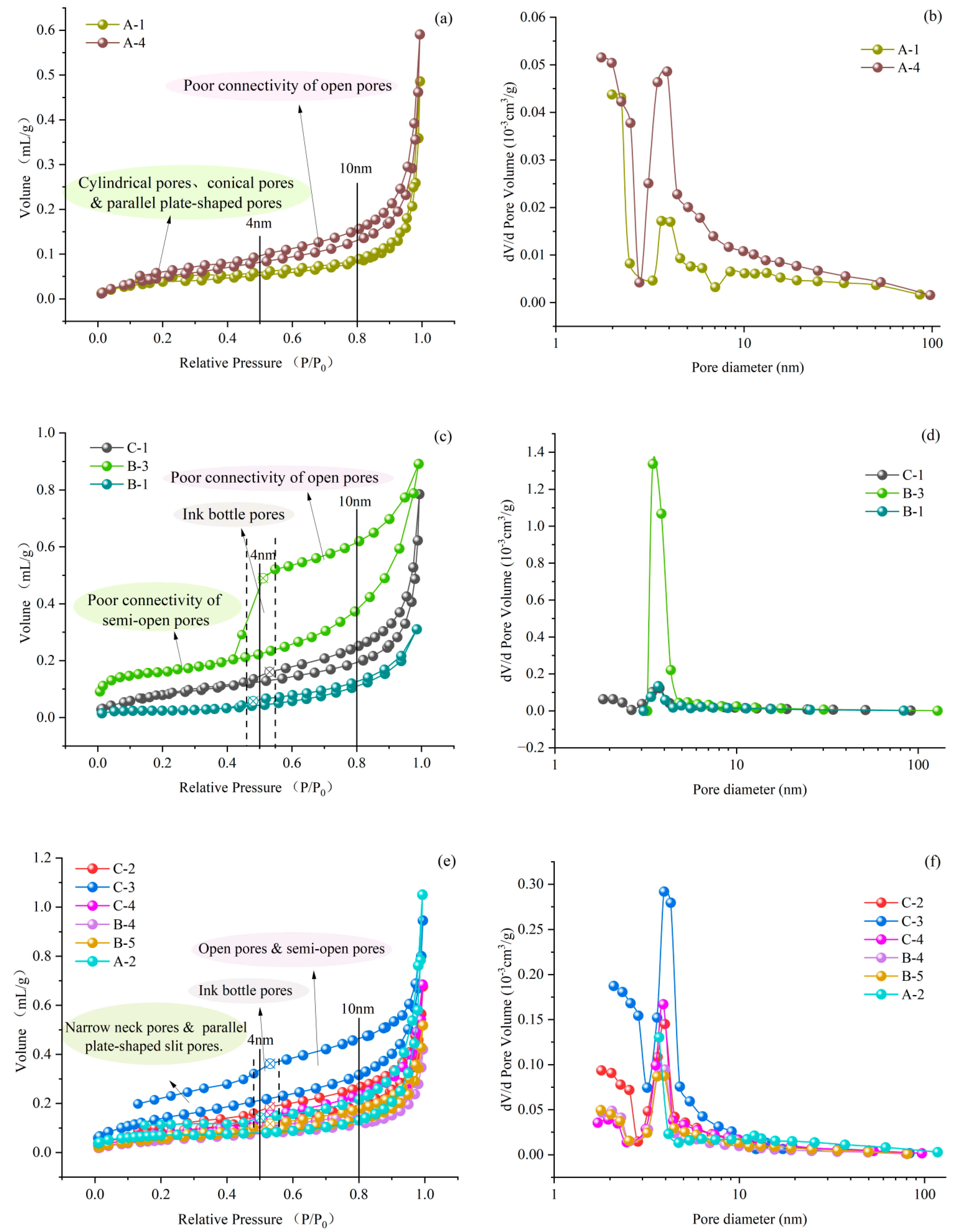
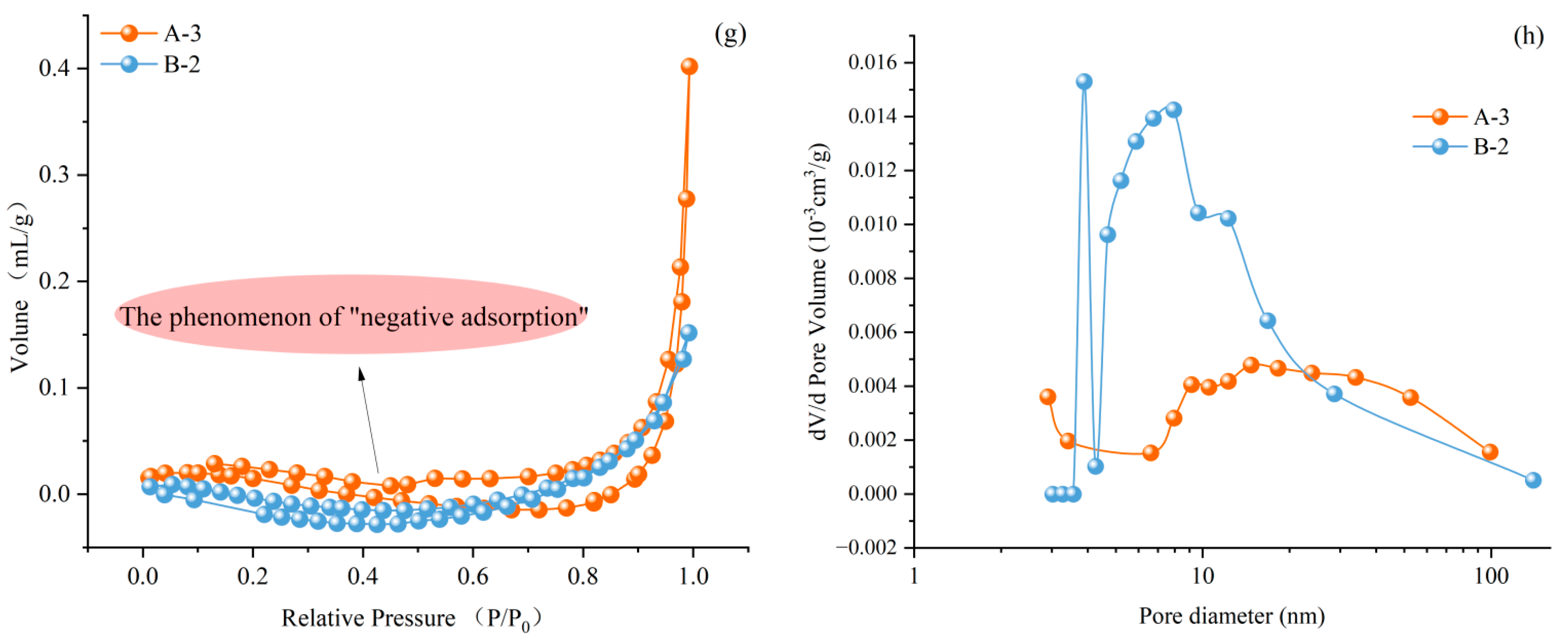
Low-temperature N2 adsorption–desorption experiments are based on the BET multilayer adsorption theory and capillary condensation theory. According to the IUPAC classification of adsorption isotherms [39,40,41,42], the nitrogen adsorption isotherms of coal typically belong to Type II in the BET classification. Their characteristic is a slow increase in adsorption quantity at low relative pressure (monolayer adsorption), a significant rise in adsorption quantity at medium to high relative pressure (multilayer adsorption and capillary condensation), and often the absence of a clear saturation plateau at high pressure, indicating the presence of a substantial amount of macropores in the sample. The “hysteresis loop” generated by the capillary condensation effect is an intuitive clue for pore morphology identification, and its shape characteristics are closely related to the geometry and connectivity of the pores. Referencing the principles established by previous studies for classifying pore types based on N2 adsorption–desorption experiments [43,44,45,46,47], the pore characteristics of coal samples in the study area within this range were categorized into four types (Figure 7): One-end closed pore type (Type I); Open-pore and ink-bottle pore type (Type II); One-end closed pore and ink-bottle pore type (Type III); Complex pore type (Type IV).
Figure 7.
Characteristics of N2 adsorption–desorption isotherms (left) and pore size distribution (right) of different samples in the study area. (a,b) are Type I: One-end closed pores; (c,d) are Type II: Open-pores and one-end closed pores and “ink-bottle” pores; (e,f) are Type III: Open-pores and slit-shaped pores and “ink-bottle” pores; (g,h) are Type IV: Complex pores.
To analyze the characteristics of curves at different stages, the relative pressure ranges were categorized into three regimes: Low-pressure regime (P/P0 < 0.1), Medium-pressure regime (0.1 < P/P0 < 0.9), and High-pressure regime (P/P0 > 0.9). The different pore types of each sample can be analyzed as follows.
Type I: One-end Closed pores, which includes Samples A-1 and A-4. The adsorption curves of A-1 and A-4 exhibit gradual increases in the low and medium-pressure regimes, with a rapid rise near P/P0 = 0.9. The adsorption and desorption curves for these samples are nearly parallel, showing negligible adsorption hysteresis loops. This indicates that the dominant pore type in these samples is unconnected one-end closed pores, with minimal or no open interconnected pores. The pore structure primarily consists of semi-open pores, such as cylindrical pores, conical pores, and parallel plate-shaped pores.
Type II: Open-pores and one-end closed pores and “ink-bottle” pores, which includes Samples C-1, B-3, and B-1. Similarly to Type I curves, the adsorption curves of these samples exhibit gradual increases in adsorption capacity during low and medium-pressure regimes, with a rapid rise near P/P0 = 0.9. However, a distinct inflection point appears on the desorption curve at P/P0 ≈ 0.5. In the low-pressure regime (P/P0 < 0.5), the adsorption and desorption curves nearly overlap, while a pronounced adsorption hysteresis loop emerges in the high-pressure regime (P/P0 > 0.5). According to the Kelvin Equation (3), P/P0 = 0.5 corresponds to pore diameters of 4 nm. This indicates that pores > 4 nm contain open interconnected pores and a small fraction of narrow-necked “ink-bottle” pores, whereas pores < 4 nm predominantly exhibit semi-open pores.
where T: Temperature, K; rk: Kelvin radius, nm; γ: Surface tension of adsorbate, N/m; V: Molar volume of adsorbate (N2), cm3/mol; R: Universal gas constant, J/mol·K.
Type III: Open-pores and slit-shaped pores and “ink-bottle” pores, which includes Samples C-2, C-3, C-4, B-4, B-5, and A-2. The adsorption curves are similar to those of the previous two types, while the desorption curves exhibit pronounced hysteresis loops in the high-pressure regime (P/P0 > 0.5). A subtle pressure inflection point (P/P0 = 0.5) is observed on the desorption curve (Mainly characterized by open-ended cylindrical pores and open-sided parallel plate-shaped pores), indicating that the mesopores contain abundant open interconnected pores, with “ink-bottle”-shaped pores dominating near 4 nm. Non-connected and closed-end pores are negligible, as they do not contribute to adsorption–desorption hysteresis or desorption curve inflections. Notably, the adsorption/desorption curves fail to close at very low pressures. This phenomenon is attributed to the extreme development of micropores, predominantly ink bottle and parallel plate-shaped slit pores, which exhibit poor pore connectivity.
Type IV: Complex pore structures type, which includes Samples A-3 and B-2. The adsorption curves of these samples exhibit an anomalous “negative adsorption” phenomenon in the low and medium-pressure regimes, where adsorption capacity decreases as relative pressure increases. That is because the pores amount in this range is much less than that in other size, as previous studies reported [48]. This suggests heterogeneous mesopore structures and uneven pore size distributions in these coal samples. Notably, the desorption curve exhibits a sharp decline at P/P0 = 0.9–1.0 and a sudden drop at P/P0 = 0.5, followed by a re-increase in adsorption capacity at low pressures. The irregular morphology of the adsorption/desorption curves highlights the complexity and diversity of pore structures in these coal samples.
In conclusion, Pore morphology serves as a key indicator for assessing the complexity of pore development and connectivity. By comparing the types of adsorption–desorption curves, the main pore morphologies identified in the study area include dead-end pores, open pores, ink-bottle pores, and slit-shaped pores. Summarizing previous research findings, their degree of development significantly influences the adsorption capacity of coal. Based on the size and variation in the adsorption/desorption hysteresis loops, it is possible to roughly determine whether the dominant pore types in the coal reservoir are favorable for gas storage or gas transport. Specifically, ink-bottle pores exhibit strong adsorption capacity, which is beneficial for coalbed methane (CBM) storage, but their desorption and diffusion performance are poor. Dead-end pores and slit-shaped pores are favorable for both the storage and diffusion of CBM. Open pores and connected macropores facilitate the desorption and diffusion of CBM but are detrimental to its storage [49,50]. The experimental methods used in this study cannot assess their spatial distribution within the coal matrix.
4.3. Pore Structural Characteristics via LF-NMR
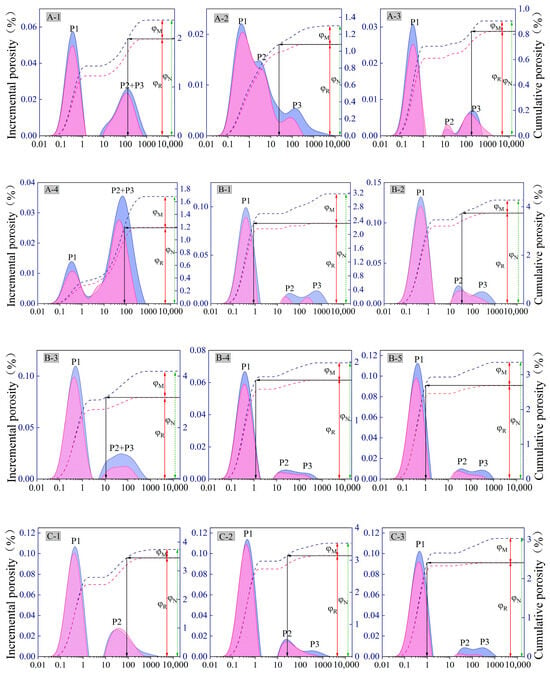
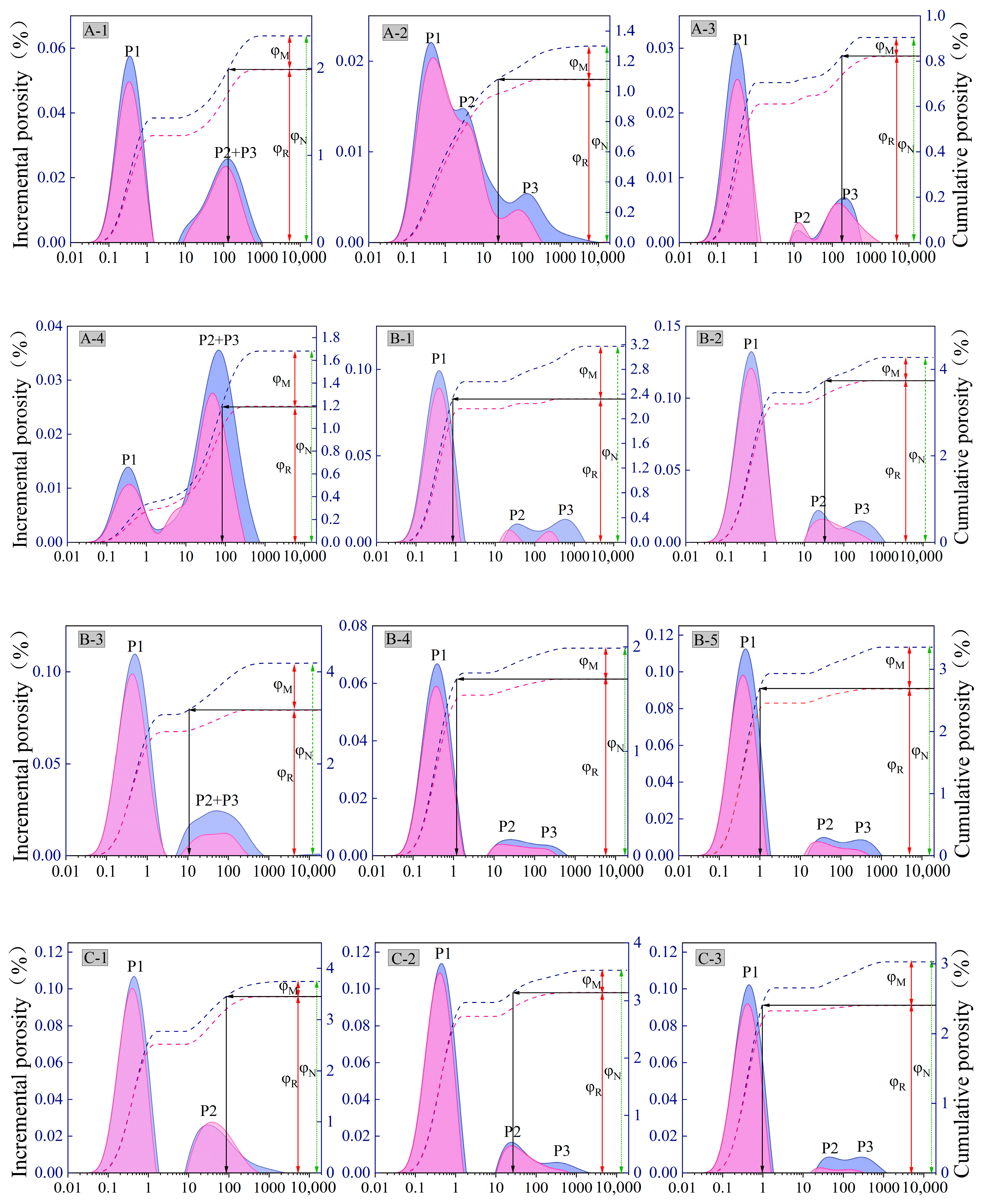
Nuclear Magnetic Resonance (NMR) enables a broader range of pore size testing. The T2 spectra distributions from LF-NMR saturated-centrifugation experiments for coal samples collected from different structural locations in the study area are shown in Figure 8. The NMR T2 spectra can reflect the proportion of different pore types, pore size distribution, pore content, and pore connectivity [51,52]. and total porosity and movable fluid porosity calculated from the data are listed in Table 4.
Figure 8.
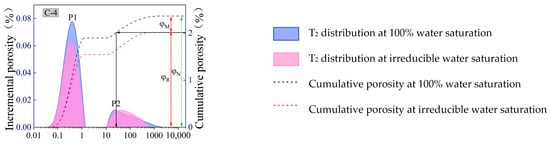
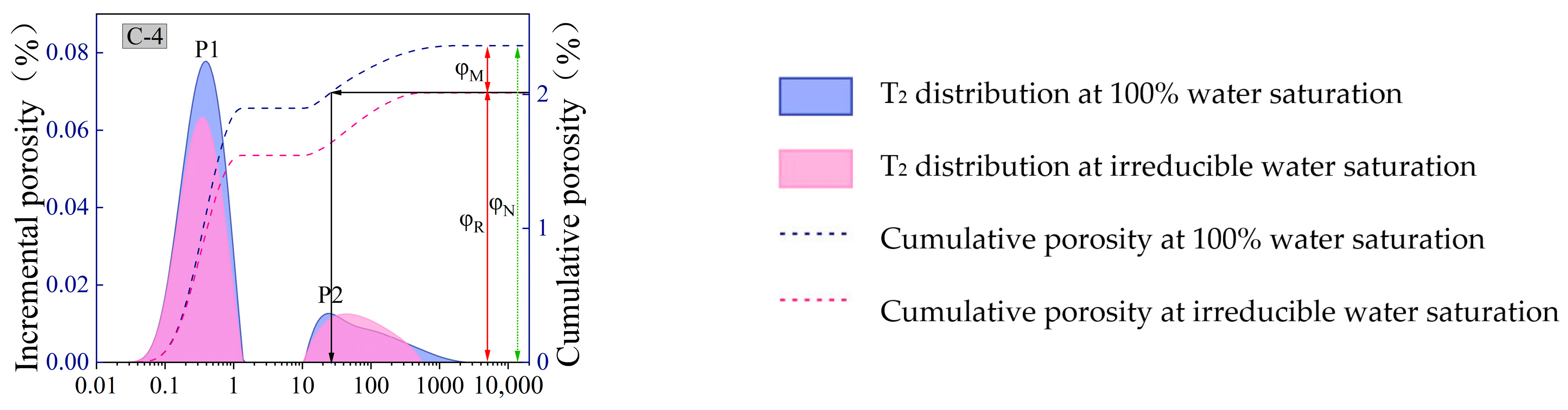
T2 spectrum distribution characteristics of representative samples from different structural locations based on LF-NMR saturated-centrifugation experiments. (A-1) Distal part of the gently dipping limb of the syncline; (A-2) Gently dipping limb of the syncline; (A-3) Core of the syncline; (A-4) Steeply dipping limb of the syncline; (B-1) Gently dipping limb of the syncline; (B-2) Hanging wall of the reverse fault; (B-3) Fault-bounded blocks; (B-4) Relatively steeper limb of the syncline; (B-5) Steeply dipping limb of the syncline; (C-1) Distal part of the western limb of the syncline; (C-2) Gently dipping limb of the syncline; (C-3) Core of the syncline; (C-4) Hanging wall of the reverse fault.
Table 4.
LF-NMR-Based pore structural characteristics of coal samples.
NMR T2 spectra of coal samples from the study area under water-saturated conditions exhibit bimodal and trimodal pore structures. The peak time ranges are 0.25–2.5 ms (P1 peak), 2.5 ms < T2 < 50 ms (P2 peak), and 50–500 ms (P3 peak), corresponding primarily to adsorption pores (pore diameter < 100 nm), seepage pores (0.1–100 μm), and fractures (pore diameter > 100 μm), respectively. Continuous size distribution between T2 spectral peaks indicates good pore connectivity [53]. These results demonstrate poor connectivity between adsorption pores versus seepage pores and fractures, while good connectivity exists between seepage pores and fractures. The morphology of the P1 peak spectrum showed little change before and after centrifugation, whereas significant changes occurred in the P2 and P3 peak spectra. This indicates that movable fluids were primarily stored within the seepage pores and fractures (Figure 6). The NMR porosity of the coal samples ranges from 0.90 to 4.28% (average: 2.76%), while the movable fluid porosity (φM) ranges from 0.08 to 1.03% (average: 0.48%). The bound fluid porosity (φR) ranges from 0.82 to 3.74% (average: 2.28%), which is shown in Table 4. Notably, the bound fluid porosity consistently exceeds the movable fluid porosity across all samples, indicating low permeability characteristics of the coal reservoirs in the study area.
4.4. Characteristics of the SEM Pore System
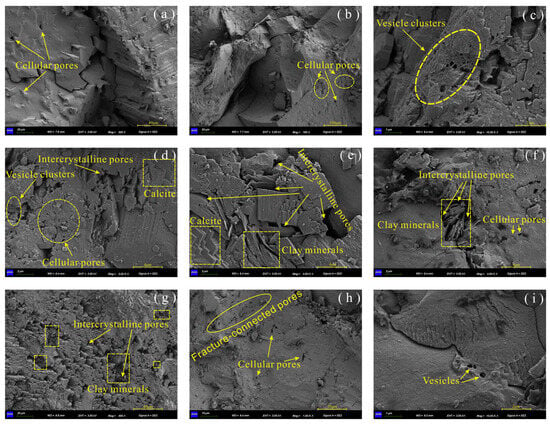
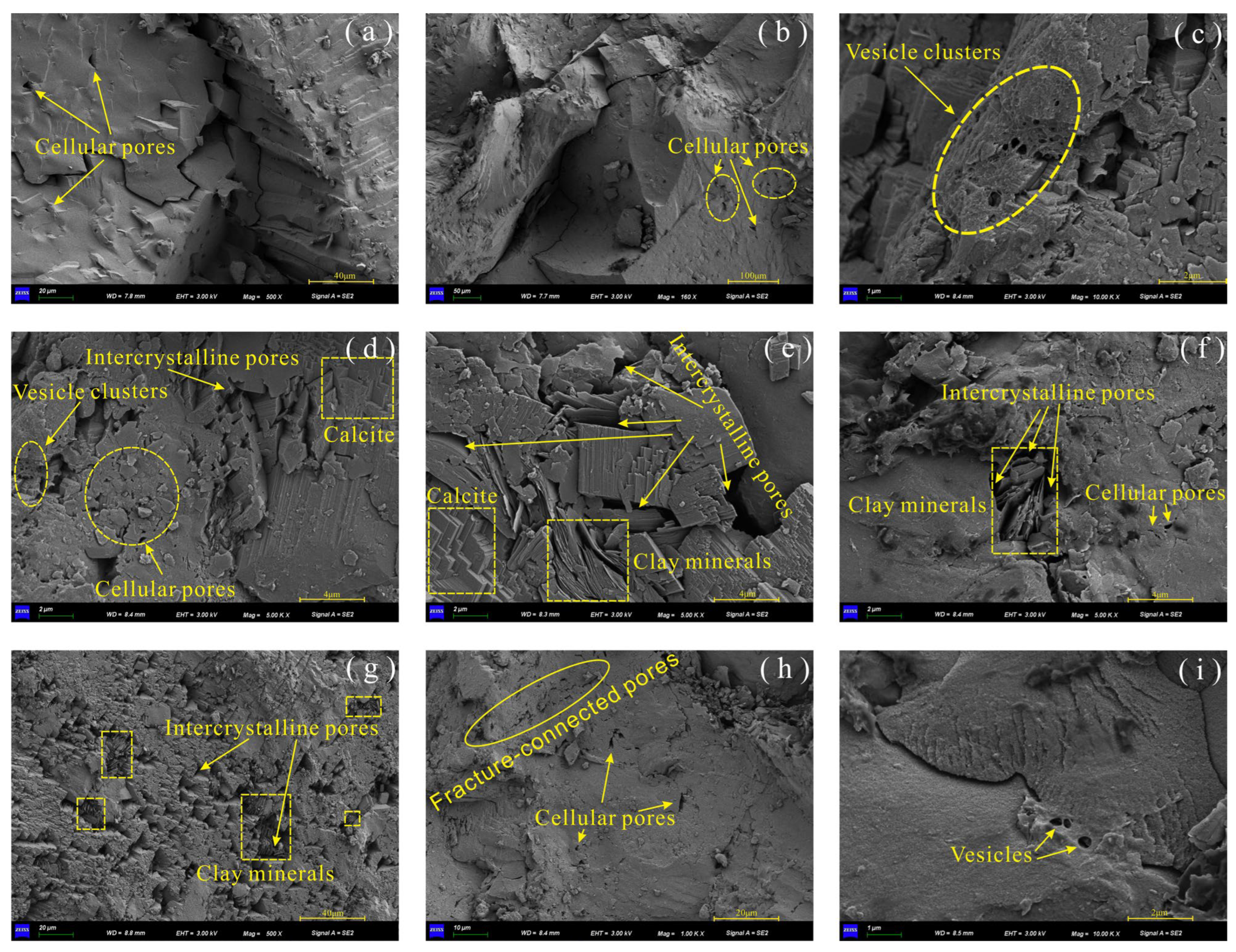
Genetic types of pores in coal reservoirs can be classified into primary pores, metamorphic pores, epigenetic pores, and mineral-related pores [54,55,56]. Based on scanning electron microscopy (SEM) observations, the pore types in the No. 2 coal reservoir of the Yan’an Formation in the Erdaoling Mining Area were qualitatively characterized, as shown in Figure 9, The analysis revealed the presence of cellular pores (Figure 9a,b,d,h), which predominantly occur in fusinite and represent preserved plant tissue structures inherited during coalification. These pores appear circular or irregular in shape under SEM, and some show connectivity through fractures. Gas Vesicles (Figure 9c,d,i) were also identified, formed during coal metamorphism through gas generation and accumulation. These appear as circular or bubble-like clusters under microscopy. Additionally, Intercrystalline pores (Figure 9d–g) were observed, resulting from the dissolution of soluble minerals by long-term interaction with gas and water. Some of these pores are filled with calcite and clay minerals [57].
Figure 9.
Scanning electron microscope (SEM) characterization of pore features. Section A (Sample A-1): (a); Section A (Sample A-2): (b); Section B (Sample B-1): (c–h); Section C (Sample C-3): (i).
5. Discussion
Based on the three structural patterns classified and combined with the pore structure characteristics of coal reservoirs obtained from low-temperature gas (CO2/N2) adsorption experiments and LF-NMR experiments, a comprehensive investigation was conducted to explore the structural controls on pore characteristics in the study area.
5.1. Controlling Effects of Asymmetric Syncline on Pore Structure
The asymmetric syncline (Profile A-A’) is characterized by gently folded strata, relatively stable thickness, an extensive syncline core, a gently dipping western limb, and a relatively steep eastern limb. The intact core of the syncline is generally recognized as a favorable zone for CBM accumulation [58]. Coal samples collected from this structural zone include A-1 (distal part of the gently dipping limb of the syncline), A-2 (gently dipping limb of the syncline), A-3 (core of the syncline), and A-4 (steeply dipping limb of the syncline), as shown in Figure 1.
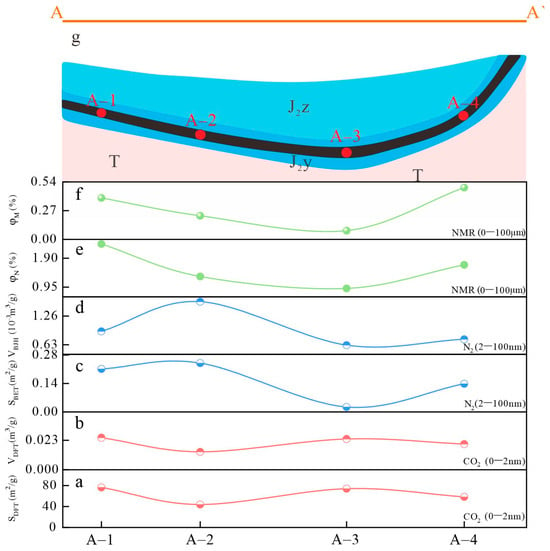
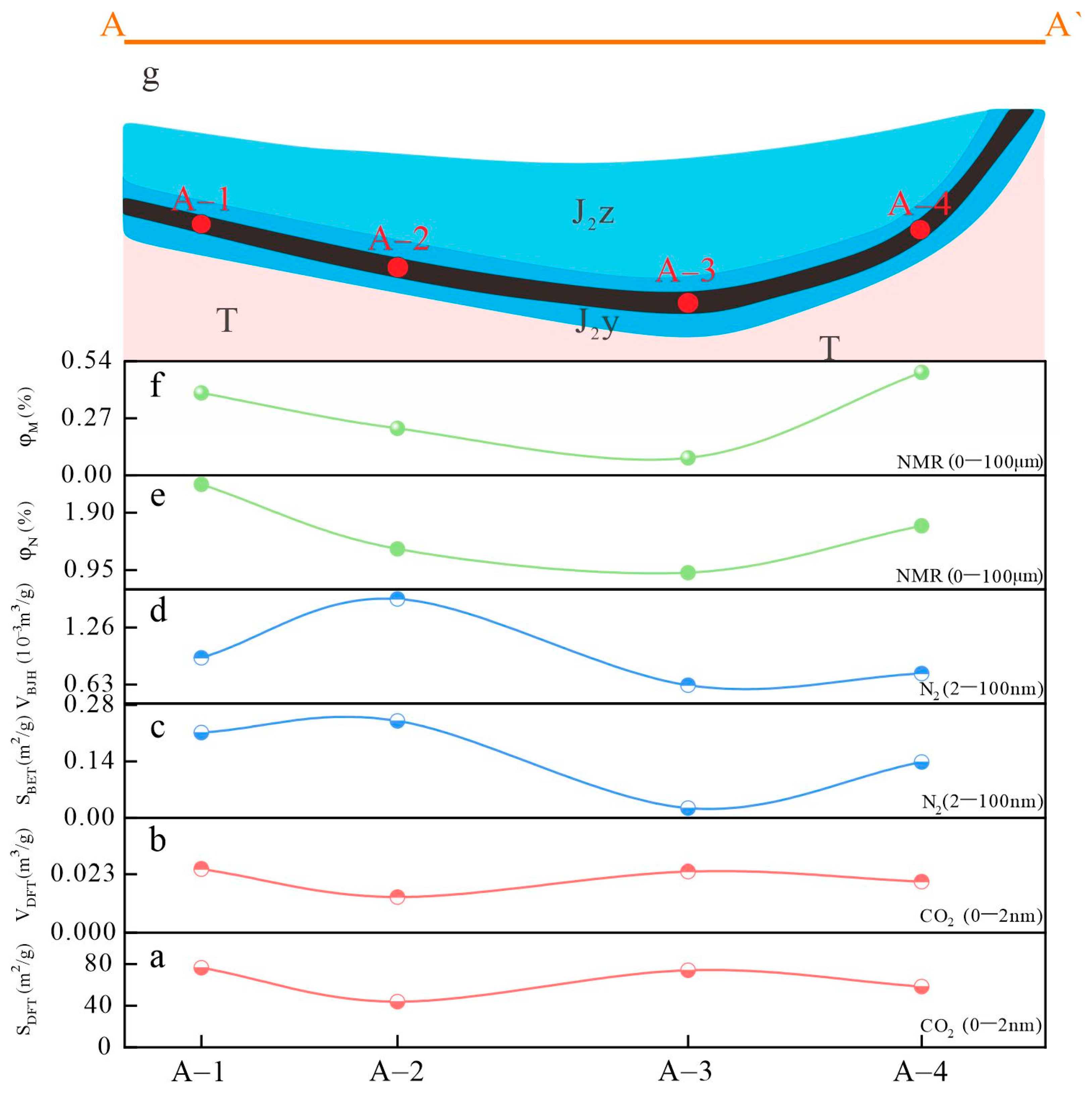
The pore structure parameters of coal samples from different structural positions in the asymmetric syncline (Profile A-A’) are illustrated in Figure 10. In contrast, the specific surface area (Figure 10a) and micropore volume (Figure 10b) obtained from low-temperature CO2 adsorption experiments did not exhibit minima in the syncline core but instead reached their lowest values in the gently dipping limb (A-2). Furthermore, the specific surface area (0.024 m2/g) (Figure 10c) and mesopore volume (0.622 × 10⁻³ cm3/g) (Figure 10d), derived from low-temperature N2 adsorption experiments, also decreased to minima in the syncline core (A-3). From the syncline limbs to the syncline core, both the porosity (Figure 10e) and movable fluid porosity (Figure 10f), as determined by NMR experiments, progressively decrease. These trends align closely with the undulating morphology of the coal seam. The lowest values of total porosity (0.90%) and movable fluid porosity (0.08%) were observed in the syncline core (A-3). This suggests that during the formation of the asymmetric syncline, compressive stress in the syncline core primarily altered pore structures at the mesopore scale and larger (e.g., reduced porosity, movable fluid porosity, and mesopore volume), while pores smaller than 2 nm (micropores) remained unaffected.
Figure 10.
Pore structure characteristics of Section A-A′. (a) DFT-specific surface area based on low-temperature CO2 adsorption experiments; (b) DFT pore volume based on low-temperature CO2 adsorption experiments; (c) BET-specific surface area based on low-temperature N2 adsorption experiments; (d) BJH pore volume based on low-temperature N2 adsorption experiments; (e) Total porosity based on LF-NMR water-saturated centrifugal experiments; (f) Movable fluid porosity based on LF-NMR water-saturated centrifugal experiments; (g) Section A-A′.
In terms of pore types, the coal reservoirs at the limbs of the asymmetric syncline (Samples A-1, A-4) predominantly develop single-end closed pores. SEM observations of Sample A-1 confirm the presence of diagnostic cellular pores (relict plant tissue pores). Moving toward the syncline core, the coal reservoir near the core (Sample A-2) develops both single-end closed pores and additional “ink-bottle” pores, with SEM imaging further revealing persistent cellular pores in this domain. At the syncline core (Sample A-3), pore types transition entirely to complex pores. This progression indicates that during the formation of the asymmetric syncline, compressive stress in the syncline core not only reduced the volume of mesopores and larger pores (>2 nm) but also intensified the complexity of pore types.
5.2. Controlling Effects of Fold-Thrust on Pore Structure
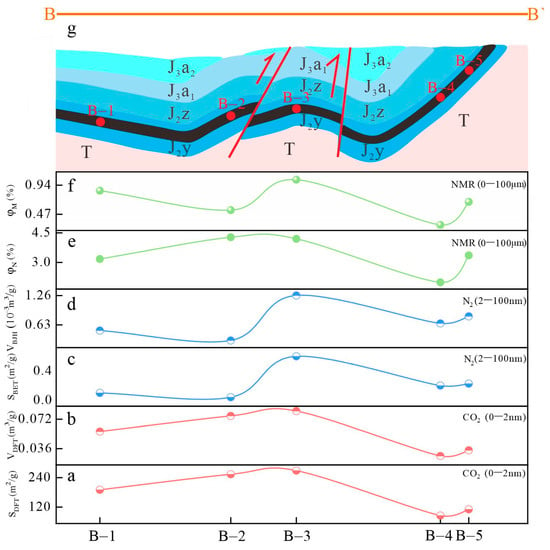
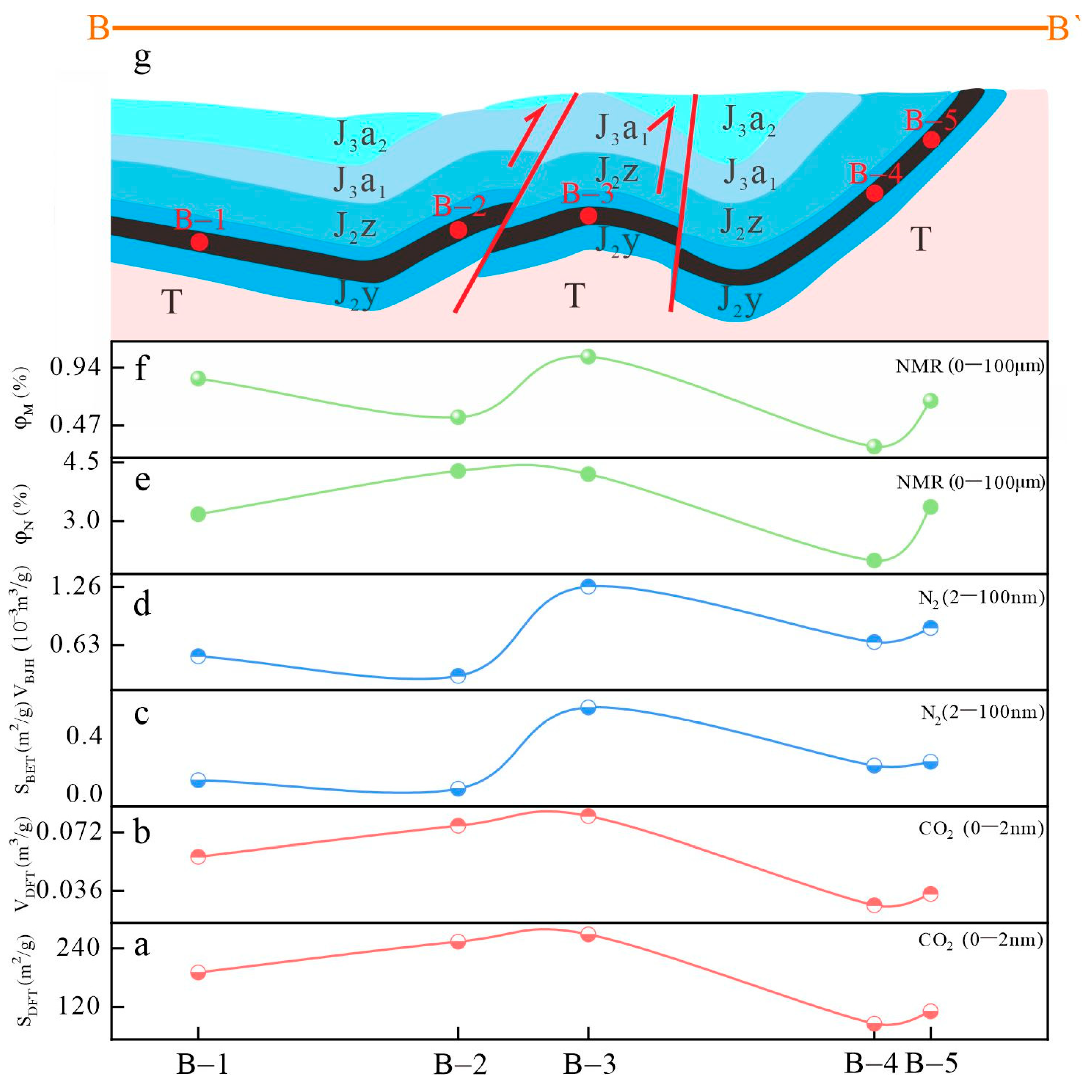
The fold-thrust structure combination (Profile B-B’) is characterized by superimposed folding and reverse faulting, where the syncline was subjected to continuous compressive stress, leading to the formation of a reverse fault. The fault block developed by the fault-cut strata was further deformed into a minor anticline. Coal samples collected from this structural profile include B-1 (gently dipping limb of the syncline), B-2 (hanging wall of the reverse fault), B-3 (fault-blocked blocks), B-4 (relatively steeper limb of the syncline), and B-5 (steeply dipping limb of the syncline).
The pore structure characteristics of coal samples from different structural positions in Profile B-B’ are illustrated in Figure 11. It is demonstrated that the specific surface area (Figure 11a) and micropore volume (Figure 11b) derived from low-temperature CO2 adsorption experiments, along with the porosity (Figure 11e) obtained from NMR experiments, exhibit nearly identical trends and correlate with structural variations in the coal seam. Specifically, the micropore volume (0.082 cm3/g), micropore specific surface area (268.26 m2/g), and porosity (4.2%) reach their highest values in the anticline section within the fault-bounded block (B-3). Based on low-temperature N2 adsorption experiments, the variation trends of micropore specific surface area (0.601 m2/g) (Figure 11c), pore volume (1.262 × 10⁻³ cm3/g) (Figure 11d), and movable fluid porosity (1.03%) in coal samples exhibited a consistent pattern, all reaching their highest values in the anticline section within the fault-bounded block (B-3). This suggests that within the fault block formed by reverse faulting through the syncline, porosity, mesopore volume, and micropore volume are significantly enhanced due to structural deformation.
Figure 11.
Pore structure characteristics of Section B-B′. (a) DFT-specific surface area based on low-temperature CO2 adsorption experiments; (b) DFT pore volume based on low-temperature CO2 adsorption experiments; (c) BET-specific surface area based on low-temperature N2 adsorption experiments; (d) BJH pore volume based on low-temperature N2 adsorption experiments; (e) Total porosity based on LF-NMR water-saturated centrifugal experiments; (f) Movable fluid porosity based on LF-NMR water-saturated centrifugal experiments; (g) Section B-B′.
In terms of pore types, the coal reservoirs in this structural profile predominantly develop Type II, III, and IV pore structures. Open pores, “ink-bottle” pores, and complex multi-porous structures are extensively developed in fault-cut zones of the coal reservoirs (B-3), indicating that fault activity significantly enhances the complexity of pore types. SEM observations demonstrate that the reservoir segment hosting Sample B-1 develops characteristic vesicles (thermogenic bubble-shaped pores), cellular pores, and intercrystalline pores, alongside the presence of calcite and clay minerals. Critically, microfractures establish interconnected pore networks within this system.
5.3. Controlling Effects of Broad and Gentle Syncline and Small-Scale Reverse Fault on Pore Structure
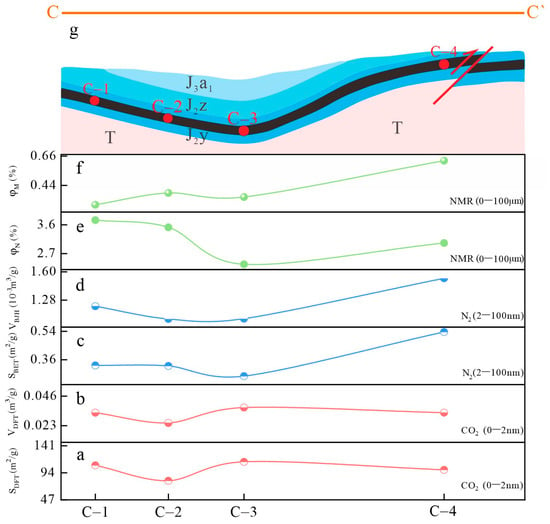
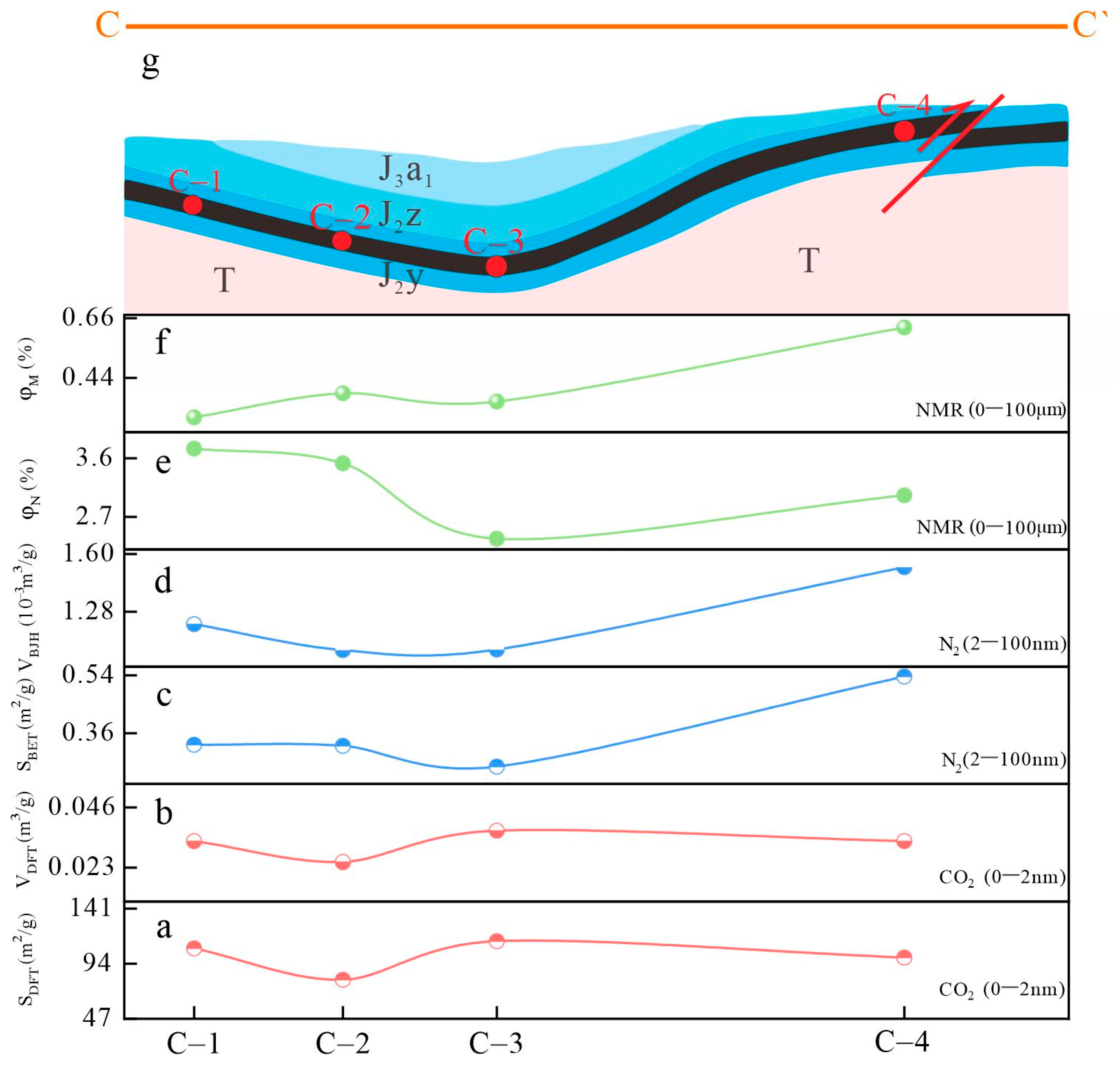
The broad and gentle syncline and small-scale reverse fault combination (Profile C-C’) is dominated by a reverse fault cutting through the right limb of the syncline. Coal samples collected from this structural profile include C-1 (distal part of the western limb of the syncline), C-2 (gently dipping limb of the syncline), C-3 (core of the syncline), and C-4 (hanging wall of the reverse fault).
The pore structure characteristics of coal samples from different structural positions in Profile C-C’ are illustrated in Figure 12. In contrast, the specific surface area (113.131 m2/g) (Figure 12a) and pore volume (0.037 cm3/g) (Figure 12b) from low-temperature CO2 adsorption experiments attain their maxima in the syncline core (C-3), with no significant correlation to structural morphology. Based on low-temperature N2 adsorption experiments, the specific surface area (0.536 m2/g) (Figure 12c) and pore volume (3.03 × 10⁻³ cm3/g) (Figure 12d) of the coal samples reached their highest values at the fault location (C-4). The total porosity (Figure 12e) obtained from NMR experiments exhibits a clear correlation with the structural morphology of the coal seam, showing a decreasing trend from the syncline limbs (C-1) to the syncline core (C-3), with porosity ranging from 3.75% to 2.36%. The movable fluid porosity (Figure 12f) remains relatively stable across the broad and gentle syncline but is sharply enhanced near the fault. Notably, similar to the asymmetric syncline, neither the broad syncline nor the reverse fault significantly affects micropores, suggesting that broad and gentle syncline and small-scale reverse fault primarily alters pore structures at the mesopore and macropore scale. These findings indicate that the broad and gentle syncline alone exerts minimal influence on movable fluid porosity, mesopore volume, and specific surface area, while the presence of the reverse fault drastically enhances these parameters.
Figure 12.
Pore structure characteristics of Section C-C′. (a) DFT-specific surface area based on low-temperature CO2 adsorption experiments; (b) DFT pore volume based on low-temperature CO2 adsorption experiments; (c) BET-specific surface area based on low-temperature N2 adsorption experiments; (d) BJH pore volume based on low-temperature N2 adsorption experiments; (e) Total porosity based on LF-NMR water-saturated centrifugal experiments; (f) Movable fluid porosity based on LF-NMR water-saturated centrifugal experiments; (g) Section C-C′.
In terms of pore types, sample C-1 is dominated by open pores and “ink-bottle” pores, whereas samples C-2, C-3 (core of the syncline), and C-4 primarily develop single-end closed pores and “ink-bottle” pores, SEM observations confirm that the reservoir segment hosting Sample C-3 develops vesicles. This observation indicates that neither the broad and gentle syncline nor the small-scale faults induce significant alterations in pore types, suggesting limited structural controls on pore types.
5.4. Differential Modification of Pore Architecture Heterogeneity: A Comparative Analysis of Structural Styles in Tectonic and Diagenetic Contexts
Overall, the compressional stress in the hinge zone of the asymmetric syncline altered the pore structures at the mesopore scale and larger, but did not affect micropores smaller than 2 nm. In the fold-thrust structure, reverse faulting through the syncline significantly enhanced porosity, mesopore volume, and micropore volume. For the broad and gentle syncline and small-scale reverse fault combination, the fault sharply increased movable fluid porosity, mesopore volume, and specific surface area, whereas the broad syncline alone exhibited negligible impacts on pore structures of coal reservoirs. Compared to other structural styles, the fault-bounded blocks formed within the fold-thrust structural assemblage are capable of maximizing the pore structural parameters of micropores. From the perspective of pore types, the pore systems become increasingly complex in closer proximity to the hinge zone of the asymmetric syncline. In the broad and gentle syncline-reverse fault combination, fault activity markedly intensified pore type heterogeneity. Conversely, neither the broad syncline nor small-scale faults induced notable changes in pore types.
Comparative analysis reveals that the fold-thrust structure exerts the most intense alteration on coal pore structures, evidenced by the largest variations in porosity (2.15-fold), mesopore volume (4.2-fold), and micropore volume (3.0-fold). This was followed by asymmetric synclines (2.6-fold, 2.5-fold, and 1.8-fold changes, respectively), while broad gentle structures had the least impact (1.6-fold, 1.4-fold, and 1.48-fold changes). In summary, the fold-thrust structure exerted the most pronounced modification on pore structures, followed by the asymmetric syncline, while the broad and gentle syncline and small-scale reverse fault demonstrated minimal impact.
6. Conclusions
This study focuses on No. 2# coal seam of the Middle Jurassic Yan’an Formation occurred in the Erdaoling mining area, Inner Mongolia, NW China. Based on the three structural combination styles within the study area, coal samples were collected from different structural positions to investigate the controlling effects of geological structures on pore structure characteristics in coal reservoirs. The research findings are summarized as follows:
- In the asymmetric syncline, the total porosity and movable fluid porosity of coal decreased by 1.47% and 0.31%, respectively, from the limb to the core, accompanied by a shift in the dominant pore type from one-end closed to more complex “ink-bottle” pores.
- In the fold-thrust structure, key parameters of coal, including micropore-specific surface area, micropore volume, mesopore-specific surface area, mesopore volume, and total porosity, reached their maximum values 268.26 m2/g, 0.082 cm3/g, 0.601 m2/g, 1.262 cm3/g, and 4.2%, respectively. Simple pore types occur on the limbs, while faults promote complex pore types, significantly increasing pore structure complexity in coal reservoirs.
- In broad and gentle syncline and small-scale reverse fault combination, porosity decreases progressively from the syncline limbs toward the core. The mesopore surface area and movable fluid porosity rose by 52.24% and 43.69%, respectively, with minimal impact on micropores. Notably, these structural features do not significantly alter pore types.
- The fold-thrust structure caused the most significant alteration in pore structure parameters, with ratios of maximum-to-minimum values for porosity, mesopore volume, and micropore volume reaching 2.15, 4.2, and 3.0, respectively. These ratios were lower for asymmetric synclines (2.6, 2.5, 1.8), indicating moderate alteration, and were lowest in broad and gentle syncline and small-scale reverse fault combination (1.6, 1.4, 1.48), confirming minimal structural influence.
Author Contributions
Conceptualization, A.W.; data curation, H.L. (Huimin Lv) and Z.D.; funding acquisition, H.L.; investigation and methodology, W.G. and D.Y.; project administration, H.L. (Heng Li) and H.L. (Haitao Lin); writing—original draft, H.L. (Heng Li); writing—review and editing, H.L. (Huimin Lv) and X.F.; supervision, A.W. All authors have read and agreed to the published version of the manuscript.
Funding
This study was financially supported by the Inner Mongolia Coal Exploration Unconventional Energy Co, Ltd. (DKJT-JB-08 and 21-1-NY02), and the National Natural Science Foundation of China (grant No. 42472232, 42072197, 41972174), and the Fundamental Research Funds for the Central Universities (grant no. 2025ZKPYDC02).
Data Availability Statement
The data used to support the findings of this study are included within the article.
Conflicts of Interest
Authors Heng Li, Haitao Lin and Dongfang Yu were employed by the company Inner Mongolia Coal Exploration Unconventional Energy Co., Ltd. The remaining authors declare that the research was conducted in the absence of any commercial or financial relationships that could be construed as a potential conflict of interest.
References
- Wang, J.W.; Xu, H.; Liu, Y.N.; Zhang, B.; Xu, Y.Y.; Liu, D.; Zong, P.; Wang, Y.Q.; Song, X.J. Development characteristics of storage-seepage spaces and water production capacity evaluation of deep coal reservoirs in Linxing-Shenfu area, Ordos Basin. Pet. Geol. Exp. 2025, 47, 54–63. [Google Scholar]
- Wang, A.M.; Gao, Y.C.; Zou, J.C.; Zhao, Z.Y.; Cao, D.Y. Quantitative characterization of pore structure in coal-measure shale based on deep learning. Coal Sci. Technol. 2023, 51, 183–190. [Google Scholar]
- Wang, A.M.; Zhao, M.; Li, X.; Cao, D.Y.; Wei, Y.C.; Wang, L. Pressure effects on molecular evolution: Differences between vitrinite and inertinite in coal. Fuel Process. Technol. 2024, 256, 108066. [Google Scholar] [CrossRef] [Scilit]
- Ren, P.F.; Chen, L.; Luo, W.Q.; Zheng, W.R.; Hu, X.; Yi, C.; Wang, X.J.; Pu, Z.C. Pore structure and heterogeneity characteristics of deep coal reservoirs constrained by macroscopic coal types. Nat. Gas Geosci. 2025, 36, 1706–1717. [Google Scholar]
- Tang, Y.; Wang, H. Experimental investigation on microstructure evolution and spontaneous combustion properties of secondary oxidation of lignite. Process Saf. Environ. Prot. 2019, 124, 143–150. [Google Scholar] [CrossRef] [Scilit]
- Xin, F.D.; Xu, H.; Tang, D.Z.; Cao, C. Differences in accumulation patterns of low-rank coalbed methane in China under the control of the first coalification jump. Fuel 2022, 324, 124657. [Google Scholar] [CrossRef] [Scilit]
- Tao, S.; Chen, S.D.; Tang, D.Z.; Zhao, X.; Xu, H.; Li, S. Material composition, pore structure and adsorption capacity of low-rank coals around the first coalification jump: A case of eastern Junggar Basin, China. Fuel 2018, 211, 804–815. [Google Scholar] [CrossRef] [Scilit]
- Wang, A.M.; Cao, D.Y.; Wei, Y.C.; Nie, J.; Oin, R.F. Comparison of nanopore evolution in vitrinite and inertinite in coalbed methane reservoirs during coalification. J. Nat. Gas Sci. Eng. 2020, 78, 103289. [Google Scholar] [CrossRef] [Scilit]
- Tang, S.L.; Tang, D.Z.; Tao, S.; Sun, B.; Zhang, A.B.; Zhang, T.Y.; Pu, Y.F.; Zhi, Y.H. CO2-enriched CBM accumulation mechanism for low-rank coal in the southern Junggar Basin, China. Int. J. Coal Geol. 2022, 253, 103955. [Google Scholar] [CrossRef] [Scilit]
- Qiao, P.; Ju, Y.W.; Yu, K.; Ju, L.T.; Xiao, L.; Feng, H.Y.; Yao, Y.B.; Nie, B.S.; Li, X.; Tian, J.J.; et al. Nanoscale quantitative characterization of microstructure evolution of partly graphitized high rank coal: Evidence from AFM and HRTEM. Fuel 2022, 324, 124802. [Google Scholar] [CrossRef] [Scilit]
- Wang, A.M.; Wei, Y.C.; Cao, D.Y.; Ding, L.Q.; Zhao, M. Effect of different functional groups on CH4 adsorption heat and surface free energy of vitrinite during coalification. Appl. Surf. Sci. 2022, 597, 153748. [Google Scholar] [CrossRef] [Scilit]
- Gurba, L.W.; Weber, C.R. Effects of igneous intrusions on coalbed methane potential, Gunnedah Basin, Australia. Int. J. Coal Geol. 2001, 46, 113–131. [Google Scholar] [CrossRef] [Scilit]
- Yang, H.; Bi, W.Y.; Zhang, Y.G.; Yu, J.K.; Yan, J.W.; Lei, D.J.; Ma, Z.N. Effect of tectonic coal structure on methane adsorption. J. Environ. Chem. Eng. 2021, 9, 106294. [Google Scholar] [CrossRef] [Scilit]
- Xie, H.G.; Li, X.J. Microstructure and nanomechanical characterization of tectonic coal based on SEM, AFM, XRD and DSI. Surf. Int. 2024, 46, 104158. [Google Scholar] [CrossRef] [Scilit]
- Shu, Y.; Sang, S.X.; Jin, Y.; Zheng, H.M. Multi-scale reservoir response characteristics of coalbed methane development through stress relief via horizontal well cavity completion in tectonically deformed coals. Fuel 2025, 381, 133600. [Google Scholar] [CrossRef] [Scilit]
- Wang, K.; Guo, L.; Xu, C.; Wang, W.J.; Yang, T.; Lin, S.S.; Cai, Y.B. Multiscale characteristics of pore-fracture structures in coal reservoirs and their influence on coalbed methane (CBM) transport: A review. Geo. Sci. Eng. 2024, 242, 213181. [Google Scholar] [CrossRef] [Scilit]
- Cao, D.Y.; Wang, A.M.; Ning, S.Z.; Li, H.T.; Guo, A.J.; Chen, L.M.; Liu, K.; Tan, J.Q.; Zheng, Z.H. Coalfield structure and structural controls on coal in China. Int. J. Coal Sci. Technol. 2020, 7, 220–239. [Google Scholar] [CrossRef] [Scilit]
- An, H.T.; Sun, S.Q. Coal Seam Gas Occurrence Law in Erdaoling Mining Area of Helan Mountains Coal filed. Saf. Coal Mines. 2012, 43, 102–104. (In Chinese) [Google Scholar]
- Zhang, K.; Sang, S.X.; Huang, H.Z.; Sang, H.T.; Shi, W. Analysis of Influence Factors on Coalbed Gas Content in Erdaoling Mine Area, Inner Mongolia. Coal Geol. China 2011, 23, 25–28. (In Chinese) [Google Scholar]
- Guo, X.B.; Zhang, S.Y.; Chen, Y.H. Characteristics of pore structure in coal reservoir of Erdaoling Mining Area, Inner Mongolia. Coal Geol. China 2003, 6, 32–34. [Google Scholar]
- Chen, M.Y.; Lyu, J.E. Characteristics and formation conditions of high-quality coal in Erdaoling Mining Area, Inner Mongolia. Coal Geol. China 2015, 27, 19–21. [Google Scholar]
- GB/T 21650.3-2011; Pore Size Distribution and Porosity of Solid Materials by Mercury Porosimetry and Gas Adsorption—Part 3: Analysis of Micropores by Gas Adsorption. General Administration of Quality Supervision, Inspection and Quarantine of the People’s Republic of China (AQSIQ). Standardization Administration of China (SAC): Beijing, China, 2011.
- ISO 15901-3:2007; Pore Size Distribution and Porosity of Solid Materials by Mercury Porosimetry and Gas Adsorption—Part 3: Analysis of Micropores by Gas Adsorption. International Organization for Standardization (ISO): Geneva, Switzerland, 2007.
- Zhang, J.J. Study on Pore-Fracture Structure and Dynamic Porosity-Permeability of Multi-Layer Combined Production in Medium-High Rank Coal Reservoirs. Ph.D. Thesis, China University of Mining and Technology, Xuzhou, China, 2020. [Google Scholar]
- Deng, Z.; Wang, H.Y.; Jiang, Z.X.; Ding, R.; Li, Y.Z.; Wang, T. Influence of pore-fracture structure on coalbed methane occurrence in deep coal reservoirs: A case study of Daning-Jixian Block, eastern Ordos Basin. Coal Sci. Technol. 2024, 52, 106–123. [Google Scholar]
- Jiang, L.L.; Tian, L.; Chen, Z.X.; Wang, Z.C.; Huang, W.K.; Chai, X.L. Microscopic pore structure and multi-scale fractal characteristics of shale under supercritical CO2 treatment: A case study from Subsection 73 of Yanchang Formation, Ordos Basin. Nat. Gas Geosci. 2025, 36, 533–553. [Google Scholar]
- An, F.H.; Cheng, Y.P.; Wu, D.M.; Wang, L. The effect of small micropores on methane adsorption of coals from Northern China. Adsorption 2013, 19, 83–90. [Google Scholar] [CrossRef] [Scilit]
- Bai, G.; Zhang, H.J.; Zhang, X.; Fan, C.J.; Wang, J.; Wei, J.; Zhang, Y.L. Simulation study of competitive adsorption of CH4/CO2 and CH4/N2 in anthracite coal. Energy Rep. 2024, 12, 6082–6092. [Google Scholar] [CrossRef] [Scilit]
- Salmachi, A.; Zeinijahromi, A.; Algarni, M.S.; Abahussain, N.A.; Alqahtani, S.A.; Badalyan, A.; Rezaee, M.; Rajabi, M. Experimental study of the impact of CO2 injection on the pore structure of coal: A case study from the Bowen Basin, Australia. Int. J. Coal Geol. 2023, 275, 104314. [Google Scholar] [CrossRef] [Scilit]
- Xu, Q.L.; Huang, W.H.; Liu, B.; Yang, Y.H.; Lu, X.X. Analysis of physical characteristics of No. 15 coal reservoir in southern Qinshui Basin. Saf. Coal Mines. 2015, 46, 160–163. [Google Scholar]
- Zhang, S.H.; Tang, D.Z.; Tang, S.H.; Xu, H.; Lin, W.J.; Zhang, B. Micro-pore structure characteristics and influencing factors of coal reservoirs in the eastern margin of Ordos Basin. Acta Geol. Sin. 2008, 82, 1341–1349. [Google Scholar]
- Zhou, Y. Study on Main Controlling Factors of Pores and Gas-Bearing Capacity of Coal Reservoirs in Typical Mining Areas of Liupanzhong Middle-Rank Coal and Bijie High-Rank Coal, Guizhou. Ph.D. Thesis, Guizhou University, Guiyang, China, 2024. [Google Scholar]
- Luo, L. Study on Microstructure and Adsorption Characteristics of Coal Reservoirs in Taiyuan Xishan Coalfield. Ph.D. Thesis, Taiyuan University of Technology, Taiyuan, China, 2022. [Google Scholar]
- Li, C.; Qin, Y.; Guo, T.; Shen, J.; Yang, Y. Supercritical methane adsorption in coal and implications for the occurrence of deep coalbed methane based on dual adsorption modes. Chem. Eng. J. 2023, 474, 145931. [Google Scholar] [CrossRef] [Scilit]
- Li, Q.; Zhang, R.; Cai, Y.D.; Yin, T.T.; Qiu, F.; Xu, S.B. CH4 adsorption capacity of coalbed methane reservoirs induced by microscopic differences in pore structure. Unconv. Res. 2024, 4, 100097. [Google Scholar] [CrossRef] [Scilit]
- Ni, X.M.; Zhang, J.S.; Xu, X.K.; Wang, B.Y. Molecular structure characterization of middle-high rank coal via 13C NMR, XPS, and FTIR spectroscopy. China Geol. 2024, 7, 702–713. [Google Scholar] [CrossRef] [Scilit]
- Adenutsi, C.D.; Li, Z.P.; Xu, Z.C.; Sun, L.L. Influence of net confining stress on NMR T2 distribution and two-phase relative permeability. J. Pet. Sci. Eng. 2019, 178, 766–777. [Google Scholar] [CrossRef] [Scilit]
- Xu, Y.L.; Li, X.L.; Wu, X.K.; Zheng, W.; Zhou, B.; Tong, J. Experimental study on pore fluid characteristics of fractured sandstone based on nuclear magnetic resonance technology. J. Pet. Sci. Eng. 2022, 214, 110408. [Google Scholar] [CrossRef] [Scilit]
- Loucks, R.G.; Reed, R.M.; Ruppel, S.C.; Hammes, U. Spectrumof pore types and networks in mudrocks and a descriptiveclassification for matrix -related mudrock pores. AAPG Bull. 2012, 96, 1071–1098. [Google Scholar] [CrossRef] [Scilit]
- Cai, Y.D.; Liu, D.M.; Pan, Z.J.; Yao, Y.B.; Li, J.Q.; Qiu, Y.K. Pore structure and its impact on CH4 adsorption capacity and flow capability of bituminous and subbituminous coals from Northeast China. Fuel 2013, 103, 258–268. [Google Scholar] [CrossRef] [Scilit]
- Dantas, S.; Struckhoff, K.C.; Thommes, M.; Neimark, A.V. Phase behavior and capillary condensation hysteresis of carbon dioxide in mesopores. Langmuir 2019, 35, 11291–11298. [Google Scholar] [CrossRef] [Scilit]
- Jiang, W.P.; Song, X.D.; Zhong, L.W. Research on the pore properties of different coal body structure coals and the effects on gas outburst based on the low-temperature nitrogen adsorption method. J. China Coal Soc. 2011, 36, 609–614. [Google Scholar]
- Chen, P.; Tang, X.Y. Study on characteristics of micropores in coal by low-temperature nitrogen adsorption method. J. China Coal Soc. 2001, 26, 552–556. [Google Scholar]
- Li, N.N. Comparative Study on Differences of Pore-Fracture Structures in Middle-High Rank Coal Reservoirs. Ph.D. Thesis, Anhui University of Science and Technolog, Anhui, China, 2024. [Google Scholar]
- Hou, H.H.; Cruz, P.E.; Chen, H.Z.; Hu, B.; He, Q.; Huang, X.Q. Physical properties characterization and favorable deep zone prediction of middle-high rank coal reservoirs in Huaibei Coalfield. Unconv. Oil Gas 2025, 12, 9–18. [Google Scholar]
- Qin, Q.H. Study on Physical Properties Characterization of Middle-High Rank Coal Reservoirs in Typical Mining Areas of North China Basin. Ph.D. Thesis, Liaoning Technical University, Liaoning, China, 2022. [Google Scholar]
- Tiantian, F. Comparative Study on Physical Properties Development Characteristics of Coal Reservoirs in Eastern Ordos Basin and Qinshui Basin. Ph.D. Thesis, China University of Geosciences, Beijing, China, 2022. [Google Scholar]
- Zhang, X.D.; Ding, Z.; Wang, B.; Zhang, S. The multi-stage adsorption characteristics of coals with different ranks under the condition of cryogenic liquid nitrogen. J. Henan Polytech. Univ. (Nat. Sci.). 2016, 35, 775–781. (In Chinese) [Google Scholar]
- Fang, X.L.; Cai, Y.D.; Liu, D.M. Study on methane diffusion characteristics based on low-field nuclear magnetic resonance method. Coal Geol. China 2021, 33, 31–38. [Google Scholar]
- Yan, B.Z.; Wang, Y.B.; Feng, Q.T.; Yang, X.C. Division of coalbed methane enrichment in Qinshui Basin based on geological controlling factors. J. China Coal Soc. 2008, 10, 1102–1106. [Google Scholar]
- Chu, Y.P.; Zhang, D.M.; Wang, M.; Liu, H.; Wu, X.Y.; Zhai, P.P.; Shen, T. Experimental study on damage evolution law of pore structure in liquid nitrogen freeze-thaw coal based on NMR and mercury intrusion methods. Chin. J. Rock Mech. Eng. 2022, 41, 1820–1831. [Google Scholar]
- Hou, Y.T.; Li, Y.; Zhang, T.; Yu, J.; Zhang, H.F.; Wang, L.; Hu, A.P.; Lin, D.F.; He, Z.T.; Zhao, Y.X.; et al. Pore characteristics and controlling factors of No. 8 coal in Benxi Formation, Jingbian area, Ordos Basin. Drill. Prod. Technol. 2025, 48, 189–196. [Google Scholar]
- Yao, Y.B.; Liu, D.M.; Cai, Y.D.; Li, J.Q. Advanced characterization of pores and fractures in coals by nuclear magnetic resonance and X-ray computed tomography. Sci. China Earth Sci. 2010, 53, 854–862. [Google Scholar] [CrossRef] [Scilit]
- Zhang, H. Genetic pore types in coal and their research. J. China Coal Soc. 2001, 40, 44. (In Chinese) [Google Scholar]
- Zhang, H.; Li, X.Y. Application of Scanning Electron Microscopy in Coal Petrology. J. Chin. Electron Microsc. Soc. 2004, 4, 467. [Google Scholar]
- Ko, L.T.; Ruppel, S.C.; Loucks, R.G.; Hackley, P.C.; Zhang, T.; Shao, D. Pore-types and pore-networkevolution in Upper Devonian-Lower Mississippian Woodford and Mississippian Barnettmudstones: Insights from laboratory thermal maturation and organic petrology. Int. J. Coal Geol. 2018, 190, 3–28. [Google Scholar] [CrossRef] [Scilit]
- Li, C.C. Pore Characteristics of Low-Rank Coal Reservoirs in Erlian Basin: Case Studies from Jiergalangtu Sag and Huolinhe Sag. Unconv. Oil Gas 2022, 9, 37–45. (In Chinese) [Google Scholar]
- Lin, J.Y.; Zuo, Y.J.; Rong, P.; Wen, Z.J.; Chen, Q.G.; Chen, B.; Sun, W.J.B.; Zheng, L.L.; Tian, R.J.; Jiao, Y. The influence of tectonic action on the characteristics of microcrystalline and pore structure of anthracite in Qianbei Coalfield. J. Mol. Struct. 2025, 1325, 140983. [Google Scholar] [CrossRef] [Scilit]

Disclaimer/Publisher’s Note: The statements, opinions and data contained in all publications are solely those of the individual author(s) and contributor(s) and not of MDPI and/or the editor(s). MDPI and/or the editor(s) disclaim responsibility for any injury to people or property resulting from any ideas, methods, instructions or products referred to in the content. |
© 2025 by the authors. Licensee MDPI, Basel, Switzerland. This article is an open access article distributed under the terms and conditions of the Creative Commons Attribution (CC BY) license (https://creativecommons.org/licenses/by/4.0/).