Article

Bifurcation Stability Analysis of the Synchronverter in a Microgrid
by
Juan Segundo Ramírez
,
Josué Hernández Ramírez
,
Nancy Visairo Cruz
and
Rafael Peña Gallardo
*
Facultad de Ingeniería, Universidad Autónoma de San Luis Potosí, San Luis Potosí 78290, Mexico
*
Author to whom correspondence should be addressed.
Energies 2022, 15(21), 7992; https://doi.org/10.3390/en15217992
Submission received: 23 September 2022 / Revised: 7 October 2022 / Accepted: 10 October 2022 / Published: 27 October 2022

Abstract

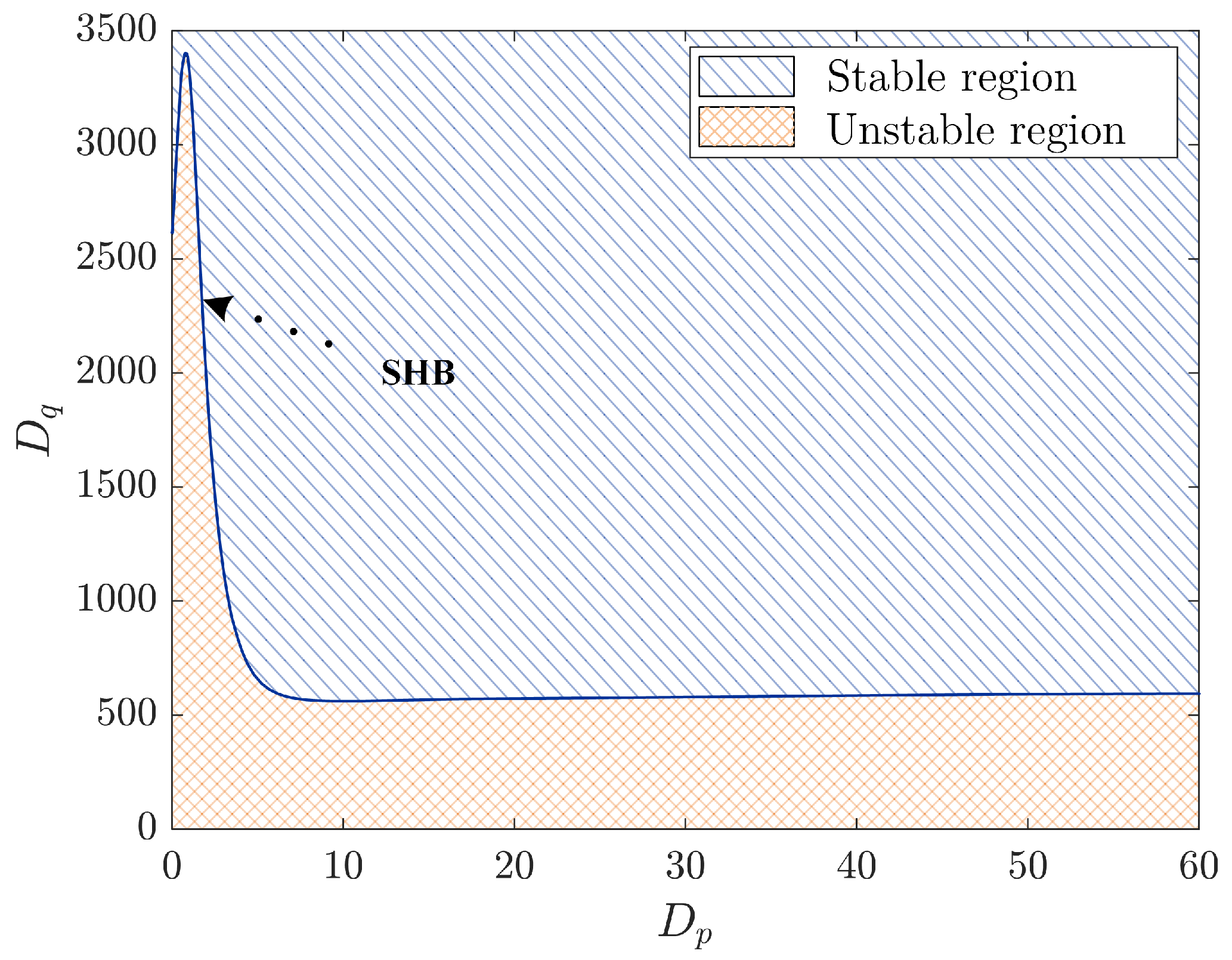
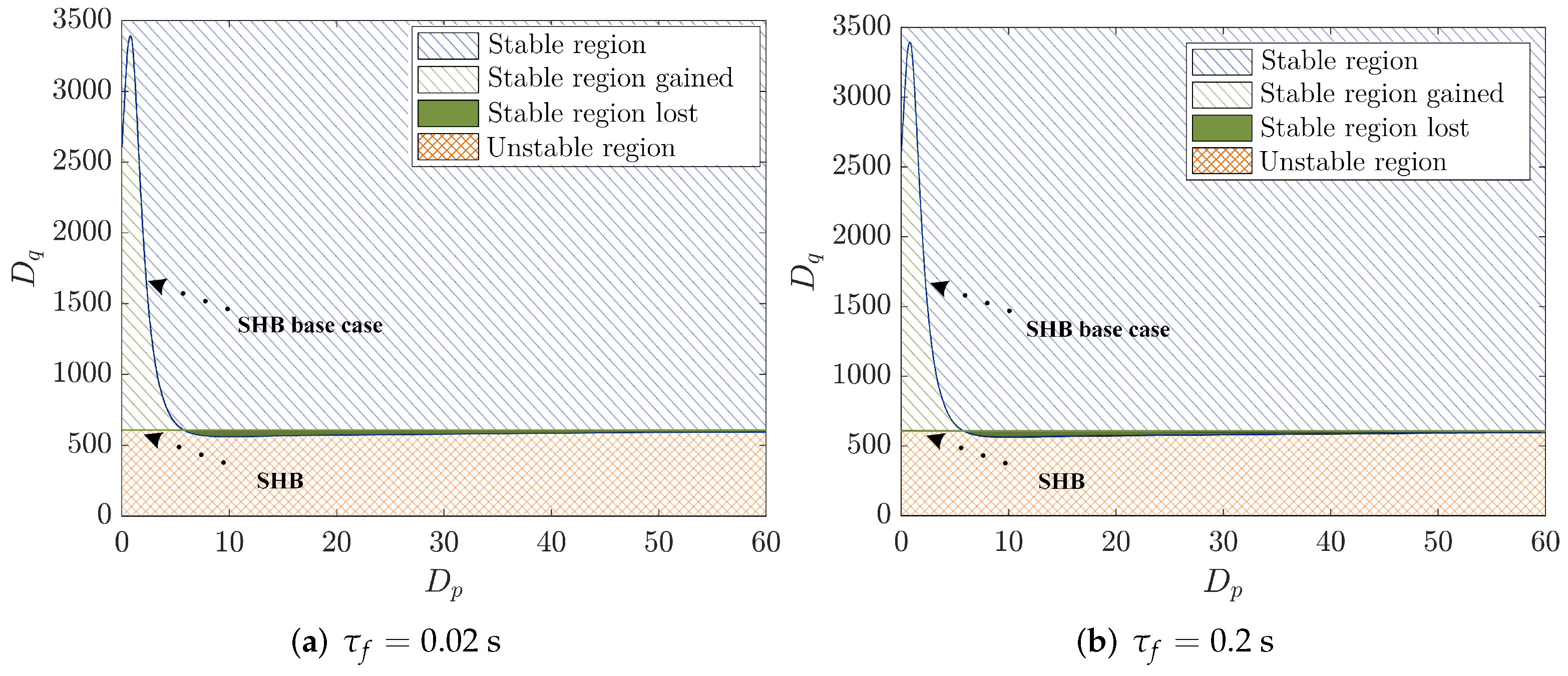
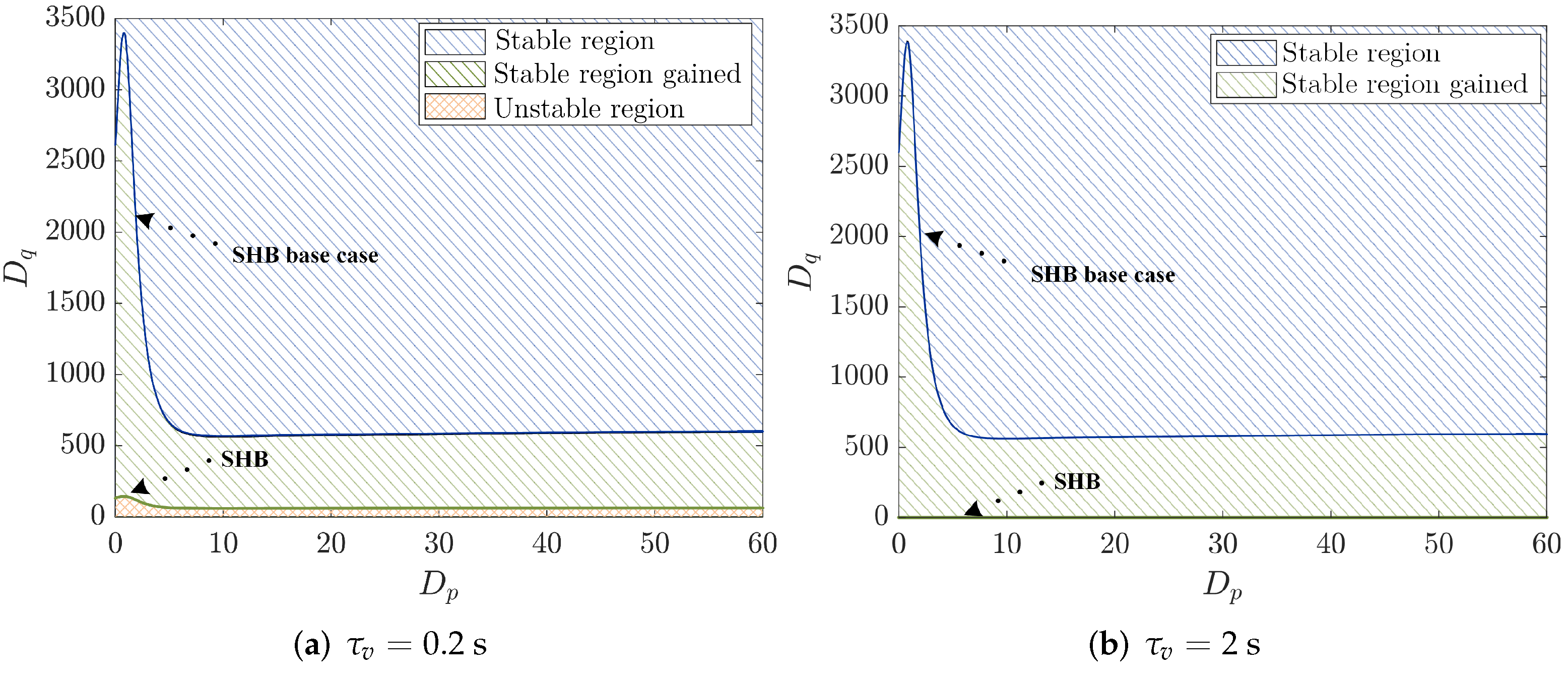
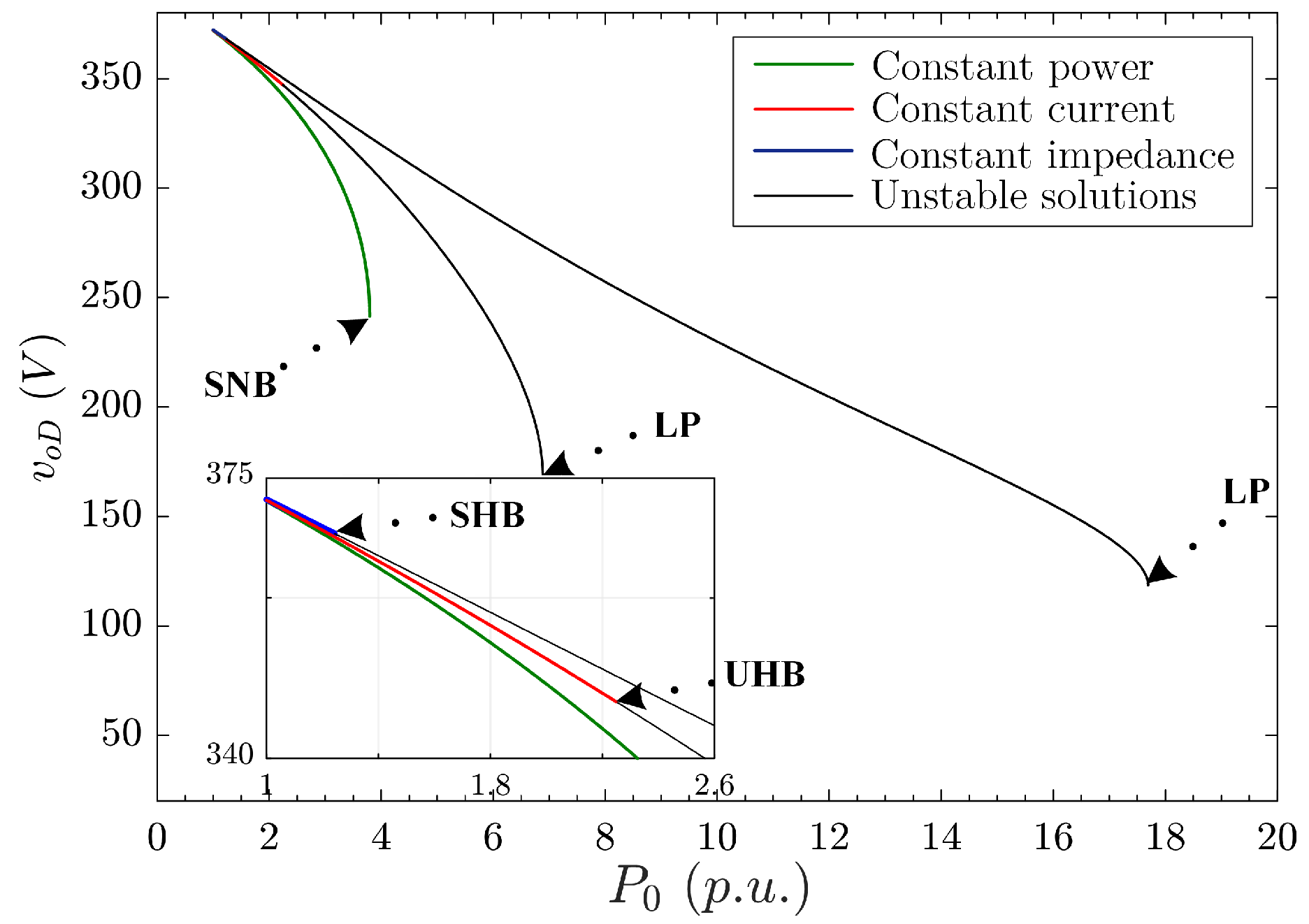
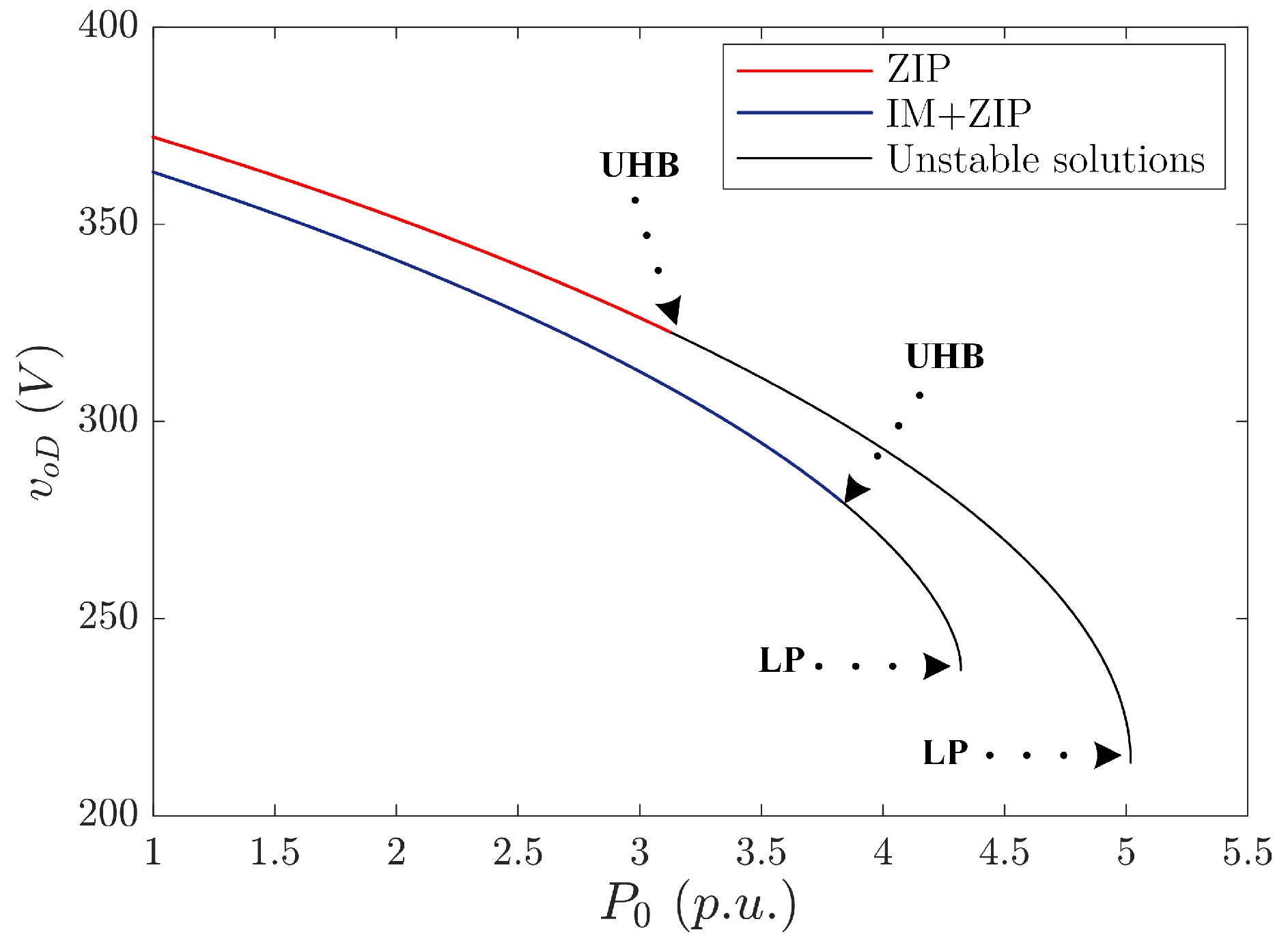
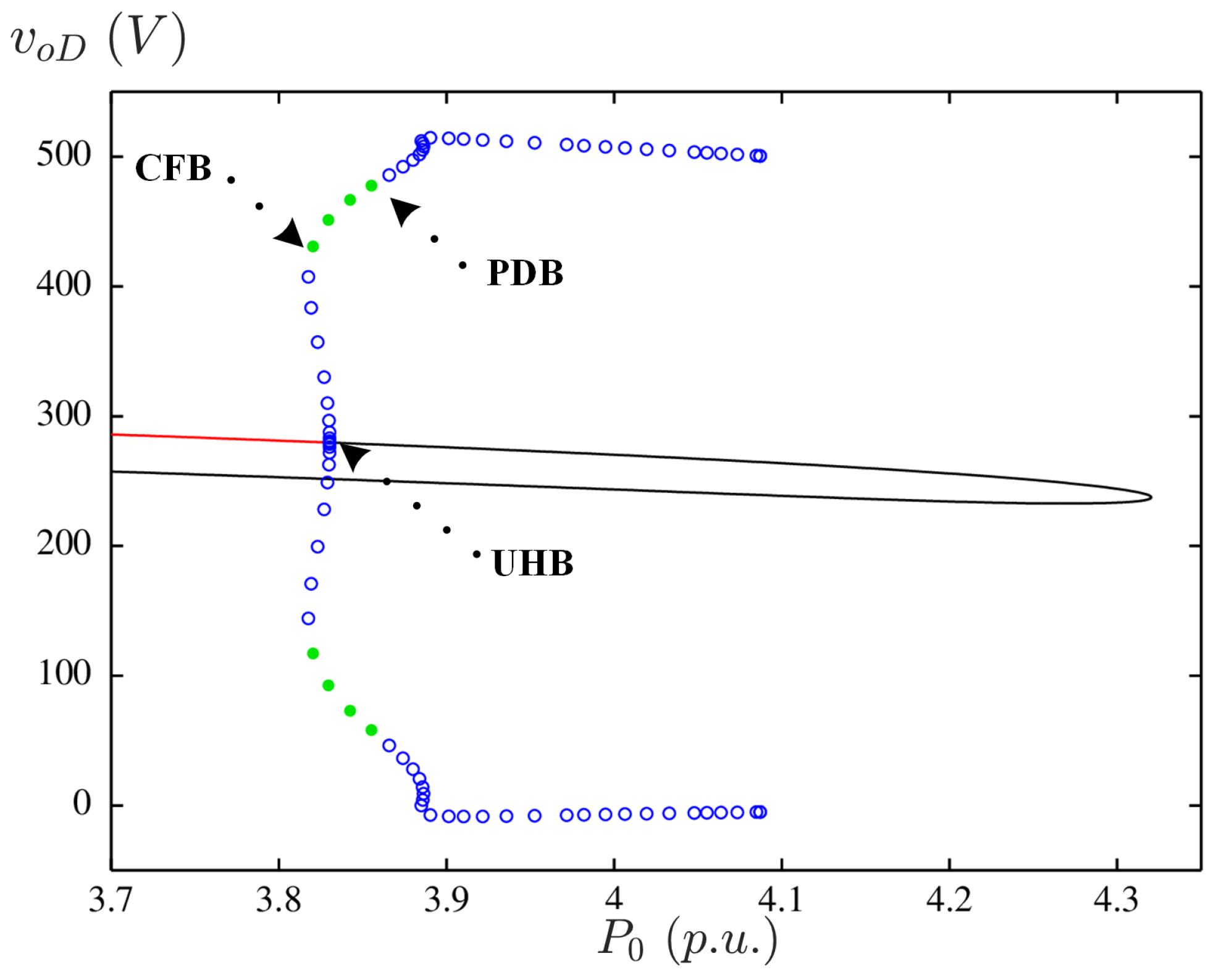
Synchronized converters are being studied as a viable alternative to address the transition from synchronous generation to power-electronics-based generation systems. One of the important features that make the synchronous generator an unrivaled alternative for power generation is its stability properties and inherent inertial response. This work presents a stability analysis of a synchronverter-based system conducted through the bifurcation theory to expose its stability regions in a grid-connected configuration with an aggregate load model conformed by a ZIP model and an induction motor model. One and two-parameter bifurcation diagrams on the gain, load, and Thévenin equivalent plane are computed and analyzed. All the results confirm the strong stability properties of the syncronverter. Some relevant findings are that the reduction in a droop gain or time constant results in Hopf bifurcations and inertia reduction, but the increase in the time constant leads to decoupling between the reactive and active power loops. It is also found that the increment of a specific time constant (τf>0.02 s) increases the stability region on the droop gains plane to all positive values. It is also found that a low lagging power factor reduces the feasible operating and stable operating regions. For a lagging power factor above 0.755, subcritical Hopf bifurcation disappears, and also, the feasible operating solution overlaps the stability region. Finally, it is also found how the Thévenin equivalent affects the stability and that the stability boundary is delimited by Hopf bifurcations. The bifurcation diagrams are numerically computed using XPP Auto software.
Keywords: bifurcation; eigenvalues; inertia; AC microgrid; planning methods; stability; synchronverter bifurcation; eigenvalues; inertia; AC microgrid; planning methods; stability; synchronverter