


Abstract
Malaysia’s energy intensity (GWh/GDP) shows an increasing trend since the 1990s, leading to the government’s efforts to promote energy efficiency via policies such as the National Energy Efficiency Action Plan (NEEAP), which includes the Energy Performance Contracting (EPC) initiative. This paper reviews recent publications in industrial Combined Heat and Power (CHP) with a focus on international case studies relevant to Malaysian industries that use industrial steam and highlights trends within the research area. It also provides the basis for more case studies to be performed in the Malaysian industry to improve energy efficiency while also supporting further academic research in the area. Additionally, the paper documents the importance of data collection and analysis as well as demand forecasting, not only for a better understanding of industrial energy systems but also to increase profitability since system loads may vary throughout a typical year. A multi-criteria and comprehensive approach is recommended in future case studies to ensure energy efficiency, economic returns and environmental impact are considered to ensure long-term sustainability. A summary of barriers to CHP implementation in the industry is also included to provide a broad understanding of industrial CHP.
1. Introduction
There is widespread academic and industrial interest in the energy efficiency field, as evidenced by the variety and quantity of publications in this domain on an international level. There is a strong basis for this interest—the International Energy Agency (IEA) [1] considers energy efficiency as the “first fuel” among energy transitions since it was estimated in 2018 that the efficiency approach by itself can potentially trigger the peaking of GHG emissions by 2020. It also further found that a total of 3.5 GT of CO2 emissions were abated globally between 2015 and 2018 as a result of efficiency measures. This figure was equivalent to the total energy emissions from Japan over the referenced timeframe (IEA, 2018) [1]. Energy efficiency provides three key benefits—limiting climate change, improving economic returns and maintaining energy supply security.
Globally, the industrial sector consumed approximately 54% of total delivered energy in 2016, making it the single biggest consumer of delivered energy worldwide (US EIA, 2016) [2]. In the Malaysian context, the country’s energy intensity (GWh/GDP) shows an increasing trend since the 1990s (MEC, 2018) [3], leading to the government’s efforts to promote energy efficiency via policies such as the National Energy Efficiency Action Plan (NEEAP), which includes the Energy Performance Contracting (EPC) initiative (MESTECC, 2015) [4]. The Malaysian industrial sector consumed 28% of the total final energy in the country in 2018, making it the second-largest final energy consumer after transportation (MEC, 2019) [5]. In addition to being a major energy-consuming sector, there are also vast opportunities to improve energy demand and total emissions from industrial activities, as concluded by BoroumandJazi et al. (2013) [6]. Additionally, Malaysia (and other developing Southeast Asian countries) is lagging behind the G8 countries in industrial energy efficiency—defined as units of energy consumed per unit of industrial output (Rahman et al., 2016) [7]. It is, therefore, pertinent to focus energy efficiency efforts on the industrial sector in Malaysia. A common denominator among the energy-intensive industries is the usage of steam systems, either for process heating, electricity generation or both. Steam turbine technology has been in use for power generation since 1884, making it today a mature technology offering high flexibility (both in configuration and output capacity)—these advantages are the reason steam systems are widely in use even today for power generation and industrial purposes (US EPA, 2017) [8].
2. Assessment of Related Literature
The literature review section intends to balance breadth and depth in summarizing recent publications on energy efficiency and CHP applications, with particular emphasis on energy-intensive industries that are relevant to Malaysia’s economy.
The aim of this paper is to summarize recent research into industrial CHP with a focus on case studies involving industrial steam that are relevant to the Malaysian context. It also intends to identify recent trends in industrial CHP to highlight interesting opportunities in applications and research. A cross-industry viewpoint was selected to identify energy efficiency best practices and findings from various industries.
This paper is organized into three sections. Firstly, the concept of CHP and its typical applications in industry are introduced together with relevant background information. Secondly, a sampling of case studies is presented, highlighting key findings as well as recent trends in fuel sources, network usage of excess heat and tools for evaluation and optimization of scenarios. Thirdly, the barriers against CHP implementation are presented to provide a balanced viewpoint on the subject. The perceived research gaps are also highlighted here for consideration in future academic research.
2.1. Combined Heat and Power (CHP) and Combined Cooling, Heat and Power (CCHP)
Combined Heat and Power (CHP) or cogeneration involves the simultaneous production of electricity and thermal (or mechanical) energy, thus increasing the amount of useful energy per unit of fuel. The key argument for CHP is the improved overall energy efficiency of about 60% to 80% in the case of power plants, compared to the average of 33% for thermal plants (Athawale et al., 2016) [9]. Additionally, there is vast untapped potential for CHP—a report by ICF (2013) [10] estimated about 56 GW of untapped CHP potential in the US industrial sector alone. The excess energy from industrial processes (either electricity or heat) could be used internally by the source plant or distributed to other external facilities (Svensson et al., 2019) [11] for financial benefit.
According to US EPA (2017) [8], the two main approaches for CHP in the industry include:
- (a)
- Converting surplus thermal energy from an industrial process (e.g., a steam boiler and distribution) into electricity (or mechanical energy) using back-pressure steam turbines (BSTs), extraction steam turbines (ESTs) or condensing steam turbines (CSTs). BSTs are used when steam is also required for the industrial process—only a part of the energy in the steam is extracted for electricity. CSTs are used when process steam is not required, and the steam is dedicated to electricity production. Finally, ESTs are a variant of BSTs, which extract a higher amount of energy for electricity production.
- (b)
- Converting waste heat from a thermal power generation process (e.g., gas turbine exhaust heat) into electricity using a steam turbine or into useful thermal energy via steam distribution for heating. This concept is commonly known as Combined Cycle Gas Turbine (CCGT) (US EPA, 2017) [8].
In both the scenarios for CHP described previously, the fuel input into the system is maintained, but the useful energy is improved by extracting useful thermal energy simultaneously with the useful electrical energy, or vice versa. This nature of CHP, therefore, requires the introduction of the power-to-heat ratio, which can be used as a performance indicator to compare and characterize CHP systems (Birru et al., 2018) [12]. Frangopoulos (2012) [13] cited several typical power-to-heat ratios, e.g., 0.95 for combined cycle gas turbines with heat recovery, 0.75 for internal combustion engines, 0.55 for gas turbines with heat recovery and 0.45 for back-pressure steam turbines.
Combined Cooling, Heat and Power (CCHP) or trigeneration is the progression from CHP—simultaneously extracting electricity, heat and cooling from the same source of fuel, by further exploiting the residual waste heat using thermally driven heat pumps or desiccant technology. Since more useful work is exploited per unit of fuel, CCHP achieves more overall energy efficiency compared to CHP (Al Moussawi et al., 2016) [14]. Similar to CHP systems, CCHP can be implemented via a large variety of technologies, ranging from the commonly used and mature internal combustion engines (ICE) and gas turbines to the relatively recent solid oxide fuel cell (SOFC), as explained by Segurado et al. (2019) [15]. While there are certain merits to CCHP technology, the additional cooling function and associated equipment will inevitably entail higher capital investment, a larger footprint in industrial sites and increased complexity for system design and optimization—for example, Machalek et al. (2020) [16] highlighted the increasing failure risk and complexity with the addition of equipment into existing systems.
2.2. Fuel Sources
The most common fuel for CHP applications is natural gas, owing to its cost-efficiency and position as the “cleanest” source of fossil fuels (Kavvadias et al., 2010) [17]. However, there is growing interest and research into the use of biomass fuels for CHP systems. This is especially true in industries where biomass fuel is available on-site as a process by-product or waste. Shabbir et al. (2016) [18] cited the example of rice husk as a biomass fuel that supports sustainability while also being cost-efficient for rural electrification as part of their study on CHP application in paper mills. Other examples include sugarcane bagasse for sugar mills (Mane, 2016) [19]; (Birru et al., 2018) [12], cassava waste from cassava starch plants (Yin et al., 2019) [20], or sugarcane straw (Watanabe et al., 2020) [21]. Biomass fuels also provide the added benefit of reducing net carbon emissions (Atkins et al., 2017) [22]. However, it should be noted that the moisture content in biomass fuels has a strong influence on process efficiency, as highlighted by Machalek et al. (2020) [16]. Biomass is also considered a potential fuel source for CCHP applications, where Segurado et al. (2019) [15] explored the feasibility of biomass gasification; however, the authors reported reduced economic performance compared to natural gas and recommended further optimization to improve techno-commercial competitivity.
Despite the advantages of natural gas and biomass in standalone applications, research by Shabbir et al. (2016) [18] highlighted that systems with dual-fuel capability (i.e., combining fossil fuel and biomass) might be a better solution compared to biomass-only systems due to improved fuel flexibility, availability and reliability. This finding is consistent with the work from Booneimsri et al. (2018) [23] on the critical benefits of multiple fuel sources towards improving CHP capacity factors and the eventual impact on economic returns.
2.3. Case Studies—Target Industries and Evaluation Criteria
Energy-intensive industries are naturally the primary targets for CHP applications. A prime example is the petrochemical industry, where Chen et al. (2013) [24] concluded that BSTs and CSTs are competitive options to reduce plant OPEX. Tantisattayakul et al. (2016) [25] performed a broader assessment of 35 energy efficiency techniques with data from seven different petrochemical plants in Thailand, concluding that CHP provides the highest capacity to reduce energy consumption and greenhouse gas emissions. Pirmohamadi et al. (2019) [26] considered various configurations involving BSTs, CSTs and GTs with an exergetic approach and found BSTs and GTs to provide the most optimal exergetic performance.
CHP in palm oil mills (POMs) is another relevant topic to Malaysia, given its position as the second-largest producer of crude palm oil (CPO) in the world (Booneimsri et al., 2018) [23]. The authors studied a POM in Thailand and proposed an improved CHP concept to recover more waste heat and operate with multiple fuel sources—pressed palm fiber (PPF) when CPO is produced and empty fruit bunches (EFB) when CPO is not produced, boosting annual operation hours and economics. They also cited that ESTs are compatible with a bigger range of steam demand scenarios.
The sugar industry is more common in developing countries and offers a significant opportunity for energy efficiency (Birru et al., 2018) [12]. Mane (2016) [19] reported 5 GW of installed export capacity to the grid from Indian sugar plants with CHP. Birru et al., 2016 [27] estimated that retrofitting Brazilian sugar mills with energy efficiency concepts (including CHP) can unlock 9.6 TWh of electricity generation to the grid—almost 2% of the country’s electrical generation. However, the same authors also cautioned that there was little information in the literature on how much of the technical energy gain potential in sugar mills was actually realized post-modification, recommending more efforts in documenting actual energy performance. Brazil and India (the two largest sugarcane producers) are being referenced by other developing countries with sugar industries, such as Jamaica (Contreras-Lisperguer et al., 2018) [28].
Shabbir et al. (2016) [18] argued that CHP is well suited for the paper industry due to the requirement for continuous heat and power to operate an energy-intensive industrial process, concluding that gas turbine CHP provides the highest energy utilization factor with the lowest Annualized Life Cycle Cost (ALCC). Svensson et al. (2019) [11] also identified the pulp and paper industry as a significant consumer of energy and remarked on its suitability for CHP and potential to provide electricity to other sectors.
Irungu et al. (2017) [29] highlighted the energy intensity in the cement industry and studied the application of CHP in a cement plant. Their work evaluated the electricity generation potential from waste gases and found that annual electricity costs could be reduced by 33% while also providing energy resilience since the plant’s location in Kenya reportedly suffered from poor grid reliability. This adds yet another dimension to the benefits of CHP—the ability to partially or wholly mitigate electricity supply risks in critical process equipment.
Papers related to power generation applications were also consulted since CHP was originally implemented in large thermal power installations and therefore considered a valuable source of insight on this subject. Gvozdenac et al. (2017) [30] proposed a modification to the evaluation of a CHP plant’s total efficiency by using the power loss coefficient, the referred value of high-efficiency cogeneration and a broader daily measurement of key parameters in a plant for improved transparency. Sayyaadi et al. (2019) [31] proposed an ANFIS (adaptive neuro-fuzzy inference system) model to retrofit a thermal power plant and enable real-time system optimization with the end goal of maximizing the plant’s operating profits. The advancement of real-time system optimization indicates the capability to continuously adapt to changing operating conditions—this may provide a significant advantage to industries operating in increasingly competitive environments.
Vellini et al. (2020) [32] found that the food industry’s high consumption of both electricity and heat makes it a suitable candidate for CHP and, through a case study, identified the GT-based CHP configuration to be the best suited for technical, economic and environmental parameters. They also found that the BST and CST configurations in the case study could not match the total electrical demand of the process, resulting in the requirement to rely on the grid supply for top-up electricity—this can be explained using the power-to-heat ratio previously introduced in this paper.
There are numerous other records of industrial CHP case studies, with examples summarized in Table 1.
Table 1.
Example case studies by industry.
The studies can be organized into three main groups (Table 2)—thermodynamic, techno-economic analysis and comprehensive evaluations, which consider technical, economic and environmental/social factors (also known as the triple bottom line). These indicate a trend towards a more sustainable and longer-term evaluation of energy efficiency solutions.
Table 2.
Examples of the 3 main case study groups.
A single criteria approach can mislead the case study—for example, the cheapest solution with the lowest upfront CAPEX may not provide a reasonable improvement in total efficiency, thus defeating the purpose of the retrofit. Conversely, the solution offering the highest energy efficiency via advanced equipment may also be CAPEX-intensive and impose an extended payback period. The multi-criteria approach solves this problem by preventing “blind spots” and forcing a comprehensive view. Additionally, the three main groups will also have sub-criteria that may not be of equal importance—this can be addressed by introducing weightage to the different components, resulting in a multi-criteria weighted approach.
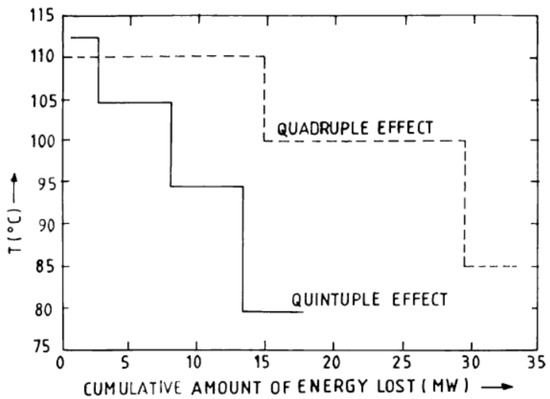
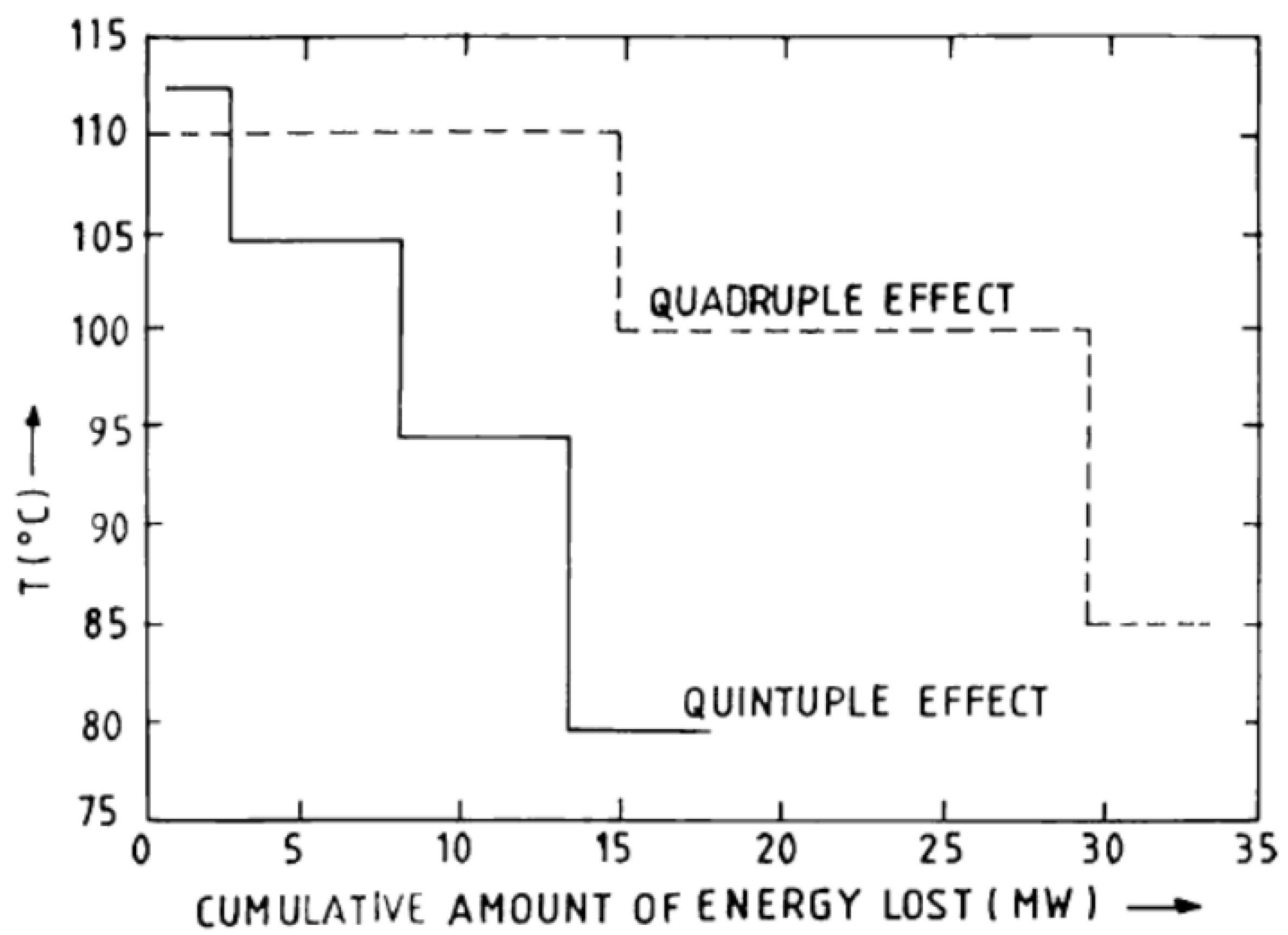
In the case of Raghu Ram and Banerjee (2003) [42], a graph between the temperature of the evaporator vessel and the cumulative amount of exergy lost is drawn for both cases and shown in Figure 1 so as to prove the analysis and to establish that the cumulative amount of exergy lost in the evaporators decreases from 33.5 to 17.6 MW if the quadruple effect is modified to a quintuple effect.
Figure 1.
Comparison of the amount of exergy lost. Reprinted with permission from [26]. Copyright 2022 Elsevier.
The case study approaches previously described consider technical (energy), financial, environmental, industrial or composite criteria to quantify performance. These categories and parameters are summarized in Table 3.
Table 3.
Performance categories and parameters.
Svensson et al. (2019) [11] argued that case studies will continue to be necessary to construct generic models since industrial plants differ due to technology, age, process layout and extent of heat recovery (even within the same industry). However, this heterogeneity also implies limited repeatability of results. Additionally, ambient conditions can influence results—a striking example is the consideration of the techno-economic performance of a CHP plant in Siberia, where the ambient temperature is −40 °C. González-Díaz et al. (2017) [45] explained that a reduction in ambient temperature improves the overall efficiency of a combined cycle plant due to increased air density and consequently higher mass flow into a gas turbine (GT).
These points indicate a research gap in addressing the limited comparability among the results of different case studies—a balance between targeted problem-solving and comparability of results is required. A potential solution to this dilemma is the creation of an additional reference for future case studies by assuming standard conditions as prescribed by the International Organization for Standardization (ISO). This approach could improve the comparability of results regardless of geographic location.
2.4. Network Usage of Waste Heat
Waste heat represents a significant energy resource that remains to be fully exploited—Forman et al. (2016) [46] found that 72% of primary energy consumption worldwide is lost post-conversion and that waste heat is generally the major form of energy loss. A common approach in CHP application involves internal consumption of the extracted electrical or thermal energy, e.g., to offset or entirely replace grid consumption (Irungu et al., 2017) [29] or to extract waste heat for process heating (Ozturk et al., 2020) [38]. However, it is also possible to have surplus electricity or heat due to operational variability. While surplus electricity can be exported to the grid using the appropriate metering equipment, external use of surplus heat is less common in industrial settings, as noted by Moser et al. (2020) [47], who studied the technical potential of industrial waste heat in Austria. The authors identified several barriers, such as the high cost of heat pipes and uncertainty on the existence of the parties involved, especially in industrial settings. Svensson et al. (2019) [11] studied the characterization of excess industrial heat in Sweden and noted the challenge related to the availability of reliable and accurate information in the industrial sector. Additionally, Forman et al. (2016) [46] found a large variability in global waste heat temperatures and noted that this results in variability in the resulting Carnot efficiency potential since lower waste heat temperatures imply lower efficiency from a heat engine. They also highlighted other challenges, such as a mismatch between heat demand and supply due to timing, location and magnitude. Despite these obstacles, network usage of industrial waste heat provides an opportunity to improve industrial energy efficiency and should be considered in CHP systems.
2.5. Importance of Industry Data and Demand Forecasting
Research challenges are still evident despite substantial studies completed on energy efficiency and CHP topics. For example, Forman et al. (2016) [46] remarked on the rarity of detailed data on energy conversion and losses from fuels to end use, notably on burner units. Birru et al. (2018) [12] highlighted the limited availability of actual post-modification energy performance data in the sugar industry. Svensson et al. (2019) [11] explained that the variety of approaches and differing assumptions are reasons for large variances in estimated potential. This raises a valid question on the accuracy of technical potential estimates and the link to actual operational data.
Athawale et al. (2016) [9] investigated the subpar capacity factors observed in CHP plants in the state of New York in the U.S. and highlighted the importance of pre-engineering with accurate forecasting of electricity and heating demand for the plant over a full year for economic viability. They further noted industry guidelines for CHP plants’ economic feasibility, citing numbers ranging between 4000 and 5000 operating hours per year. These findings are consistent with the paper by Shabbir et al. (2016) [18], where the annual operating hours were found to strongly influence the profitability of the CHP case study, with their example of 7320 h permitting surplus electricity export and citing the typical annual threshold of 4500 h. Booneimsri et al., 2018 [23] found similar results in their case study on palm oil mills (POMs), reporting that their proposed retrofit to the POM cogeneration model could improve annual electricity output to the grid, owing in part to the significant improvement to the plant’s annual operating hours—from 4351 to 7500 h annually. Watanabe et al. (2020) [21] also noted the strong influence of the annual operating period on the feasibility of retrofitting scenarios—stating the example of a sugarcane plant retrofit with negative NPV if the plant only operated during the harvest season. A critical link is therefore evident between the demand data used for engineering design, the actual capacity factor achieved during operations and resulting economic performance. It should be noted that the scarcity of industrial case study data is not only present for CHP applications but also applicable for CCHP implementation, where Segurado et al. (2019) [15] highlighted the prevalence of case studies based on theoretical approaches rather than experimental or field data.
2.6. Optimization Methods and Tools
The typical CHP retrofit case study involves multiple design scenarios involving:
- (a)
- Equipment sizing and quantity,
- (b)
- Equipment technology (e.g., BST, CST, EST, GT),
- (c)
- Operating strategy (e.g., generate all electricity in-house or partially import from the grid).
The complexity of optimization is directly proportional to the number of design cases and constraints, which justifies the need to leverage the latest technological and numerical methods. There are numerous papers on the application of recent numerical modeling methods and computing capabilities to develop optimization simulation tools or frameworks to improve industrial plant efficiency.
Zhao et al. (2019) [48] highlighted that equipment inefficiencies and varying process conditions are significant hurdles when implementing conventional mathematical programming techniques and therefore selected the data-driven robust optimization (DDRO) approach to optimize steam systems in ethylene plants. They reported that this model could provide a more robust solution compared to a deterministic model. Sayyaadi et al. (2019) [31] proposed a promising application of the adaptive neuro-fuzzy inference system (ANFIS) tool for real-time optimization of a steam power plant on the basis of speed, accuracy and simplicity. The various optimization methods and authors are summarized in Table 4.
Table 4.
Optimization methods used in energy efficiency case studies.
Some researchers also chose to use commercially available software to evaluate scenarios. The software is summarized in Table 5. It is important to note that the software is not considered equivalent and are suited for specific niche applications. For example, SimaPro is focused on lifecycle analysis for studies on sustainability and environmental reporting (SimaPro, 2020) [51].
Table 5.
Modeling and optimization software used in previous research and case studies.
2.7. Barriers to CHP Implementation
There are multiple beneficial aspects of CHP implementation in industry, mainly along the technical, economic and environmental metrics, as previously highlighted. However, it is somewhat paradoxical that there is also evidence that CHP adoption targets have not been achieved (Gvozdenac et al., 2017) [30]. Svensson et al. (2019) [11] remarked that there are numerous papers highlighting the significant untapped potential in excess industrial heat, including in developed countries such as Sweden. This situation suggests that there are barriers preventing CHP adoption.
Gvozdenac et al. (2017) [30] found that ambiguous policies and incongruence among various regulatory directives on CHP contributed to the situation in the European context. Additionally, Irungu et al. (2017) [29] stated that high upfront capital costs are among the factors preventing CHP adoption in the cement industry in Kenya. Birru et al. (2018) [12] also identified the cost factor of modern equipment as a barrier and further noted that CHP application in the sugar industry is hindered since numerous traditional sugarcane mills were initially constructed to be self-sufficient and therefore do not have connections to the national grid. The authors added that the seasonal nature of sugarcane production prevents it from being a constant and reliable source for the electricity grid while also impacting the development economics and payback model. The factors highlighted here are important and should be considered as part of any CHP proposal for both the greenfield and retrofit scenarios.
This review of the literature provided a broad and comprehensive understanding of energy efficiency research areas in recent years. Further research in CHP will contribute towards limiting climate change, maintaining energy security and improving industrial economic performance—this contribution will be valid not just across international borders but also across industrial segments.
3. Research Gaps
Three research gaps were identified during this review—firstly, the demand for industrial case study information, which can be used to develop and validate generic and broader models. The issue of limited data availability is apparent even in industrialized countries. Secondly, the limited comparability of case study data implies the need for the inclusion of a standardized case study scenario in future studies (for example, by assuming standardized ambient conditions for the particular industrial plant) in addition to the core case study. Thirdly, the limited information currently available on energy efficiency case studies in the Malaysian industry.
4. Conclusions
This paper recommends and justifies the basis for further case studies to be performed on CHP applications in Malaysian industries to address the research gaps related to broader data availability on CHP in industrial applications, the comparability of results from these studies and provide additional case studies data with a Malaysian context.
The literature review considered international and regional publications, which were then filtered to select topics oriented toward energy-intensive industries present in Malaysia—these included the petrochemical/refining, palm oil, sugar, cement, food, paper and textile industries. Research trends of interest in industrial CHP include the application of biomass fuels, a network approach to using excess industrial heat and advanced numerical methods to optimize CHP configurations.
Further case studies will not only benefit the industrial plants involved by reducing energy intensity and costs but also encourage cooperation between industry players and academia by providing valuable references for future benchmarking and research work. From a broader perspective, the CHP application will enhance technical performance and economic competitiveness in the Malaysian industry and improve energy security in Malaysia by reducing fossil fuel consumption while reducing the environmental footprint due to greenhouse gases.
Author Contributions
S.G.P.: conceptualization, writing—original draft, writing—editing. V.K.V.: conceptualization, supervision, writing—review. J.K.: writing—review. M.M.A.: writing—review. All authors have read and agreed to the published version of the manuscript.
Funding
This research received no external funding.
Acknowledgments
The last author, Mohamed M. Awad, acknowledges the support of the Faculty of Engineering, Mansoura University, Mansoura, Egypt.
Conflicts of Interest
The authors declare that they have no known competing financial interests or personal relationships that could have appeared to influence the work reported in this paper.
References
- International Energy Agency (IEA). IEA Energy Efficiency; International Energy Agency: Paris, France, 2018.
- Industrial Sector Energy Consumption; US Energy Information Administration (US EIA): Washington DC, USA, 2016; Chapter 7.
- Malaysian Energy Commission (MEC). Malaysia Energy Information Hub; MEC: Putrajaya, Malaysia, 2018. Available online: https://meih.st.gov.my/statistics (accessed on 20 February 2020).
- Ministry of Energy, Science, Technology, Environment and Climate Change (MESTECC) Malaysia: Putrajaya, Malaysia, 2015. Available online: https://www.mestecc.gov.my/web/wp-content/uploads/2019/04/13.-National-Energy-Efficiency-Action-Plan-english-only.pdf (accessed on 10 February 2020).
- Malaysian Energy Commission (MEC). Malaysia Energy Information Hub—Energy Commission; MEC: Putrajaya, Malaysia, 2019. Available online: https://meih.st.gov.my/documents/10620/c7e69704-6f80-40ae-a764-ad0acf4a844d (accessed on 15 March 2020).
- BoroumandJazi, G.; Rismanchi, B.; Saidur, R. A review on exergy analysis of industrial sector. Renew. Sustain. Energy Rev. 2013, 27, 198–203. [Google Scholar] [CrossRef] [Scilit]
- Rahman, S.; Noman, A.H.; Shahari, F.; Aslam, M.; Gee, C.S.; Isa, C.R.; Pervin, S. Efficient energy consumption in industrial sectors and its effect on environment: A comparative analysis between G8 and Southeast Asian emerging economies. Energy 2016, 97, 82–89. [Google Scholar] [CrossRef] [Scilit]
- Catalog of CHP Technologies; United States Environmental Protection Agency (US EPA): Washington, DC, USA, 2017.
- Athawale, R.; Felder, F.A.; Goldman, L.A. Do Combined Heat and Power plants perform? Case study of publicly funded projects in New York. Energy Policy 2016, 97, 618–627. [Google Scholar] [CrossRef] [Scilit]
- The Opportunity for CHP in the United States; ICF International: Fairfax, VA, USA; American Gas Association (AGA): Washington, DC, USA, 2013.
- Svensson, E.; Morandin, M.; Harvey, S. Characterization and visualization of industrial excess heat for different levels of on-site process heat recovery. Int. J. Energy Res. 2019, 43, 7988–8003. [Google Scholar] [CrossRef] [Scilit]
- Birru, E.; Erlich, C.; Martin, A. Energy performance comparisons and enhancements in the sugar cane industry. Biomass Convers. Biorefinery 2018, 9, 267–282. [Google Scholar] [CrossRef] [Scilit]
- Frangopoulos, C.A. A method to determine the power to heat ratio, the cogenerated electricity and the primary energy savings of cogeneration systems after the European Directive. Energy 2012, 45, 52–61. [Google Scholar] [CrossRef] [Scilit]
- Al Moussawi, H.; Fardoun, F.; Louahlia-Gualous, H. Review of tri-generation technologies: Design evaluation, optimization, decision-making, and selection approach. Energy Convers. Manag. 2016, 120, 157–196. [Google Scholar] [CrossRef] [Scilit]
- Segurado, R.; Pereira, S.; Correia, D.; Costa, M. Techno-economic analysis of a trigeneration system based on biomass gasification. Renew. Sustain. Energy Rev. 2019, 103, 501–514. [Google Scholar] [CrossRef] [Scilit]
- Machalek, D.; Henning, M.; Mohammadi, K.; Powell, K.M. Economic and environmental impacts of a non-traditional combined heat and power system for a discrete manufacturing facility. J. Clean. Prod. 2020, 265, 121816. [Google Scholar] [CrossRef] [Scilit]
- Kavvadias, K.C.; Tosios, A.P.; Maroulis, Z.B. Design of a combined heating, cooling and power system: Sizing, operation strategy selection and parametric analysis. Energy Convers. Manag. 2010, 51, 833–845. [Google Scholar] [CrossRef] [Scilit]
- Shabbir, I.; Mirzaeian, M. Feasibility analysis of different cogeneration systems for a paper mill to improve its energy efficiency. Int. J. Hydrogen Energy 2016, 41, 16535–16548. [Google Scholar] [CrossRef] [Scilit]
- Mane, S.D. Cogeneration in Indian Sugar Industry: A Review. Int. J. Sci. Eng. Appl. Sci. (IJSEAS) 2016, 2, 30–40. [Google Scholar]
- Yin, Y.; Ma, Z.; Nong, G.; Wang, S. Strategies of energy management in a cassava starch plant for increasing energy and economic efficiency. J. Clean. Prod. 2019, 234, 1296–1305. [Google Scholar] [CrossRef] [Scilit]
- Watanabe, M.D.; Morais, E.R.; Cardoso, T.F.; Chagas, M.F.; Junqueira, T.L.; Carvalho, D.J.; Bonomi, A. Process simulation of renewable electricity from sugarcane straw: Techno-economic assessment of retrofit scenarios in Brazil. J. Clean. Prod. 2020, 254, 120081. [Google Scholar] [CrossRef] [Scilit]
- Atkins, M.J.; Walmsley, T.G.; Philipp, M.; Walmsley, M.R.; Neale, J.R. Carbon emissions efficiency and economics of combined heat and power in new zealand, Chemical Engineering Transactions. AIDIC Ital. Assoc. Chem. Eng. 2017, 61, 733–738. [Google Scholar] [CrossRef] [Scilit]
- Booneimsri, P.; Kubaha, K.; Chullabodhi, C. Increasing power generation with enhanced cogeneration using waste energy in palm oil mills. Energy Sci. Eng. 2018, 6, 154–173. [Google Scholar] [CrossRef] [Scilit]
- Chen, C.-L.; Lin, C.-Y.; Lee, J.-Y. Retrofit of steam power plants in a petroleum refinery. Appl. Therm. Eng. 2013, 61, 7–16. [Google Scholar] [CrossRef] [Scilit]
- Tantisattayakul, T.; Soontharothai, J.; Limphitakphong, N.; Pharino, C.; Chavalparit, O.; Kanchanapiya, P. Assessment of energy efficiency measures in the petrochemical industry in Thailand. J. Clean. Prod. 2016, 137, 931–941. [Google Scholar] [CrossRef] [Scilit]
- Pirmohamadi, A.; Ghazi, M.; Nikian, M. Optimal design of cogeneration systems in total site using exergy approach. Energy 2019, 166, 1291–1302. [Google Scholar] [CrossRef] [Scilit]
- Birru, E.; Erlich, C.; Herrera, I.; Martin, A.; Feychting, S.; Vitez, M.; Abdulhadi, E.B.; Larsson, A.; Onoszko, E.; Hallersbo, M.; et al. A Comparison of Various Technological Options for Improving Energy and Water Use Efficiency in a Traditional Sugar Mill. Sustainability 2016, 8, 1227. [Google Scholar] [CrossRef] [Scilit]
- Contreras-Lisperguer, R.; Batuecas, E.; Mayo, C.; Díaz, R.; Pérez, F.J.; Springer, C. Sustainability assessment of electricity cogeneration from sugarcane bagasse in Jamaica. J. Clean. Prod. 2018, 200, 390–401. [Google Scholar] [CrossRef] [Scilit]
- Irungu, S.N.; Muchiri, P.; Byiringiro, J.B. The generation of power from a cement kiln waste gases: A case study of a plant in Kenya. Energy Sci. Eng. 2017, 5, 90–99. [Google Scholar] [CrossRef] [Scilit]
- Gvozdenac, D.; Urošević, B.G.; Menke, C.; Urošević, D.; Bangviwat, A. High efficiency cogeneration: CHP and non-CHP energy. Energy 2017, 135, 269–278. [Google Scholar] [CrossRef] [Scilit]
- Sayyaadi, H.; Baghsheikhi, M. Retrofit of a steam power plant using the adaptive neuro-fuzzy inference system in response to the load variation. Energy 2019, 175, 1164–1173. [Google Scholar] [CrossRef] [Scilit]
- Vellini, M.; Gambini, M.; Stilo, T. High-efficiency cogeneration systems for the food industry. J. Clean. Prod. 2020, 260, 121133. [Google Scholar] [CrossRef] [Scilit]
- Zhang, B.J.; Xu, T.; He, C.; Chen, Q.L.; Luo, X.L. Material stream network modeling, retrofit and optimization for raw natural gas refining systems. J. Clean. Prod. 2017, 142, 3419–3436. [Google Scholar] [CrossRef] [Scilit]
- Chen, H.; Xiao, Y.; Xu, G.; Xu, J.; Yao, X.; Yang, Y. Energy-saving mechanism and parametric analysis of the high back-pressure heating process in a 300 MW coal-fired combined heat and power unit. Appl. Therm. Eng. 2019, 149, 829–840. [Google Scholar] [CrossRef] [Scilit]
- Tang, S.; Tang, G.; He, X.; Zheng, L.; Yu, C.; Xu, H. Research and Application of New Condensing Extraction Backpressure heating Technology of 330 MW Unit. In Proceedings of the 2nd International Symposium on Architecture Research Frontiers and Ecological Environment (ARFEE 2019), Guilin, China, 20–22 December 2019; Zhou, P., He, Y., Weerasinghe, R., Eds.; E3S Web of Conferences. EDP Sciences: Les Ulis, France, 2020; Volume 143, p. 2047. [Google Scholar] [CrossRef] [Scilit]
- Zhang, T. Methods of Improving the Efficiency of Thermal Power Plants. J. Phys. Conf. Ser. 2020, 1449, 12001. [Google Scholar] [CrossRef] [Scilit]
- Kamate, S.C.; Gangavati, P.B. Cogeneration in Sugar Industries: Technology Options and Performance Parameters—A Review. Cogener. Distrib. Gener. J. 2009, 24, 6–33. [Google Scholar] [CrossRef] [Scilit]
- Ozturk, E.; Cinperi, N.C.; Kitis, M. Improving energy efficiency using the most appropriate techniques in an integrated woolen textile facility. J. Clean. Prod. 2020, 254, 120145. [Google Scholar] [CrossRef] [Scilit]
- Palacios-Bereche, R.; Pereira, P.A.; Nebra, S.A.; Oliveira, C.; Rabi, J. Energetic evaluation of cogeneration systems in sugar cane plants in Brazil case studies. Proc. ECOS 2009, 2009, 449–458. [Google Scholar]
- Bhagwat, S.S.; Pohekar, S.D. Thermal Analysis of Sugar Industry Boiler. Int. J. Res. Sci. Eng. Technol. 2017, 4, 1–3. [Google Scholar] [CrossRef]
- Nandaliarasyad, N.; Maulana, D.T.; Darmanto, P.S. Study of Development Scenarios for Bottoming Unit Binary Cycle to Utilize Exhaust Steam from Back Pressure Turbine Geothermal Power Plant. IOP Conf. Ser. Earth Environ. Sci. 2020, 417, 12017. [Google Scholar] [CrossRef] [Scilit]
- Raghu Ram, J.; Banerjee, R. Energy and cogeneration targeting for a sugar factory. Appl. Therm. Eng. 2003, 23, 1567–1575. [Google Scholar] [CrossRef] [Scilit]
- Hasanbeigi, A.; Harrell, G.; Schreck, B.; Monga, P. Moving beyond equipment and to systems optimization: Techno-economic analysis of energy efficiency potentials in industrial steam systems in China. J. Clean. Prod. 2016, 120, 53–63. [Google Scholar] [CrossRef] [Scilit]
- Kamarudin, N.; Yen, L.P.; Jusoh, N.W.C.; Ho, W.S.; Lim, J.S. Organic rankine cycle and steam turbine for intermediate temperature waste heat recovery in total site integration. Malays. J. Fundam. Appl. Sci. 2019, 15, 125–130. [Google Scholar] [CrossRef] [Scilit]
- González-Díaz, A.; Alcaráz-Calderón, A.M.; González-Díaz, M.O.; Méndez-Aranda, A.; Lucquiaud, M.; González-Santaló, J.M. Effect of the ambient conditions on gas turbine combined cycle power plants with post-combustion CO2 capture. Energy 2017, 134, 221–233. [Google Scholar] [CrossRef] [Scilit]
- Forman, C.; Muritala, I.K.; Pardemann, R.; Meyer, B. Estimating the global waste heat potential. Renew. Sustain. Energy Rev. 2016, 57, 1568–1579. [Google Scholar] [CrossRef] [Scilit]
- Moser, S.; Lassacher, S. External use of industrial waste heat - An analysis of existing implementations in Austria. J. Clean. Prod. 2020, 264, 121531. [Google Scholar] [CrossRef] [Scilit]
- Zhao, L.; Zhong, W.; Du, W. Data-Driven Robust Optimization for Steam Systems in Ethylene Plants under Uncertainty. Processes 2019, 7, 744. [Google Scholar] [CrossRef] [Scilit]
- Zhang, W.; Gu, F.; Dai, F.; Gu, X.; Yue, F.; Bao, B. Decision framework for feasibility analysis of introducing the steam turbine unit to recover industrial waste heat based on economic and environmental assessments. J. Clean. Prod. 2016, 137, 1491–1502. [Google Scholar] [CrossRef] [Scilit]
- Andiappan, V.; Ng, D.K.S.; Tan, R.R. Design Operability and Retrofit Analysis (DORA) framework for energy systems. Energy 2017, 134, 1038–1052. [Google Scholar] [CrossRef] [Scilit]
- SimaPro Database Manual; SimaPro: Amersfoort, The Netherlands, 2020.
- Antonova, A.; Vorobiev, A.; Uvarov, A. Technical and Economic Analysis of the Combined-Cycle Plant with Back-Pressure Steam Turbine. In Proceedings of the MATEC Web of Conferences—The Fifth International Youth Forum, Tomsk, Russia, 9–13 October 2017; Kozyreva, A.A., Zhdanova, A.O., Kuznetsov, G.V., Eds.; EDP Sciences: Les Ulis, France, 2017; Volume 141, p. 1024. [Google Scholar] [CrossRef] [Scilit]
- Foxon, K.M.; Starzak, M. Upgrading the utility plant module for the generic sugar mill model. Int. Sugar J. 2018, 91, 294–309. [Google Scholar]
- Starzak, M.; Davis, S.B. MATLAB® modelling of a sugar mill: Model development and validation. Int. Sugar J. 2017, 119, 442–452. [Google Scholar]

Publisher’s Note: MDPI stays neutral with regard to jurisdictional claims in published maps and institutional affiliations. |
© 2022 by the authors. Licensee MDPI, Basel, Switzerland. This article is an open access article distributed under the terms and conditions of the Creative Commons Attribution (CC BY) license (https://creativecommons.org/licenses/by/4.0/).