Article

Experimental Investigation on Permeability Evolution of Dolomite Caprock under Triaxial Compression


1
State Key Laboratory of Hydraulic and Mountain River Engineering, Sichuan University, Chengdu 610065, China
2
CNPC Key Laboratory of Oil and Gas Underground Storage Engineering, Langfang 065007, China
3
State Key Experiments in Geotechnical Mechanics and Engineering, Chinese Academy of Sciences, Institute of Rock and Soil Mechanics, Wuhan 430071, China
4
Heilongjiang Ground Pressure & Gas Control in Deep Mining Key Laboratory, Heilongjiang University of Science and Technology, Harbin 150022, China
*
Author to whom correspondence should be addressed.
Energies 2020, 13(24), 6535; https://doi.org/10.3390/en13246535
Submission received: 15 October 2020 / Revised: 27 November 2020 / Accepted: 2 December 2020 / Published: 11 December 2020

Abstract

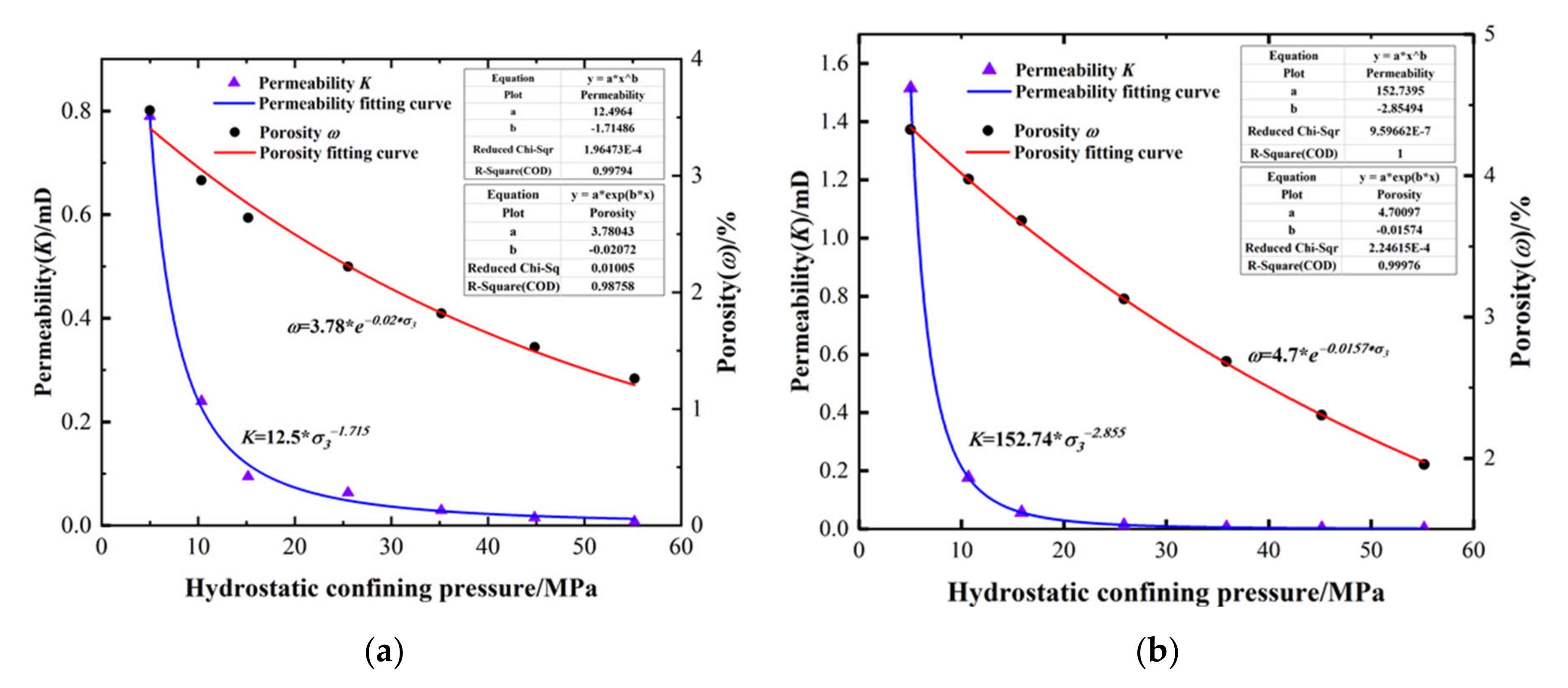
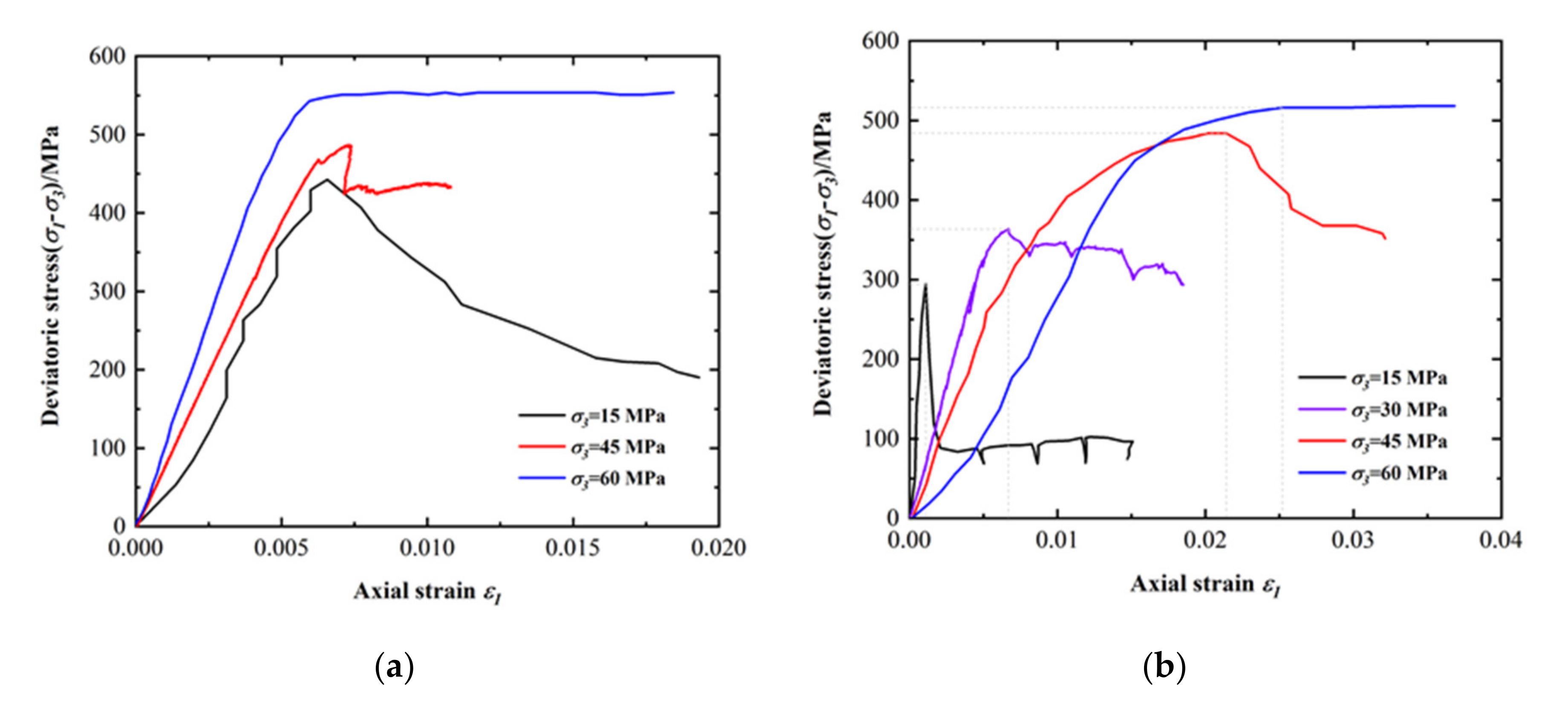
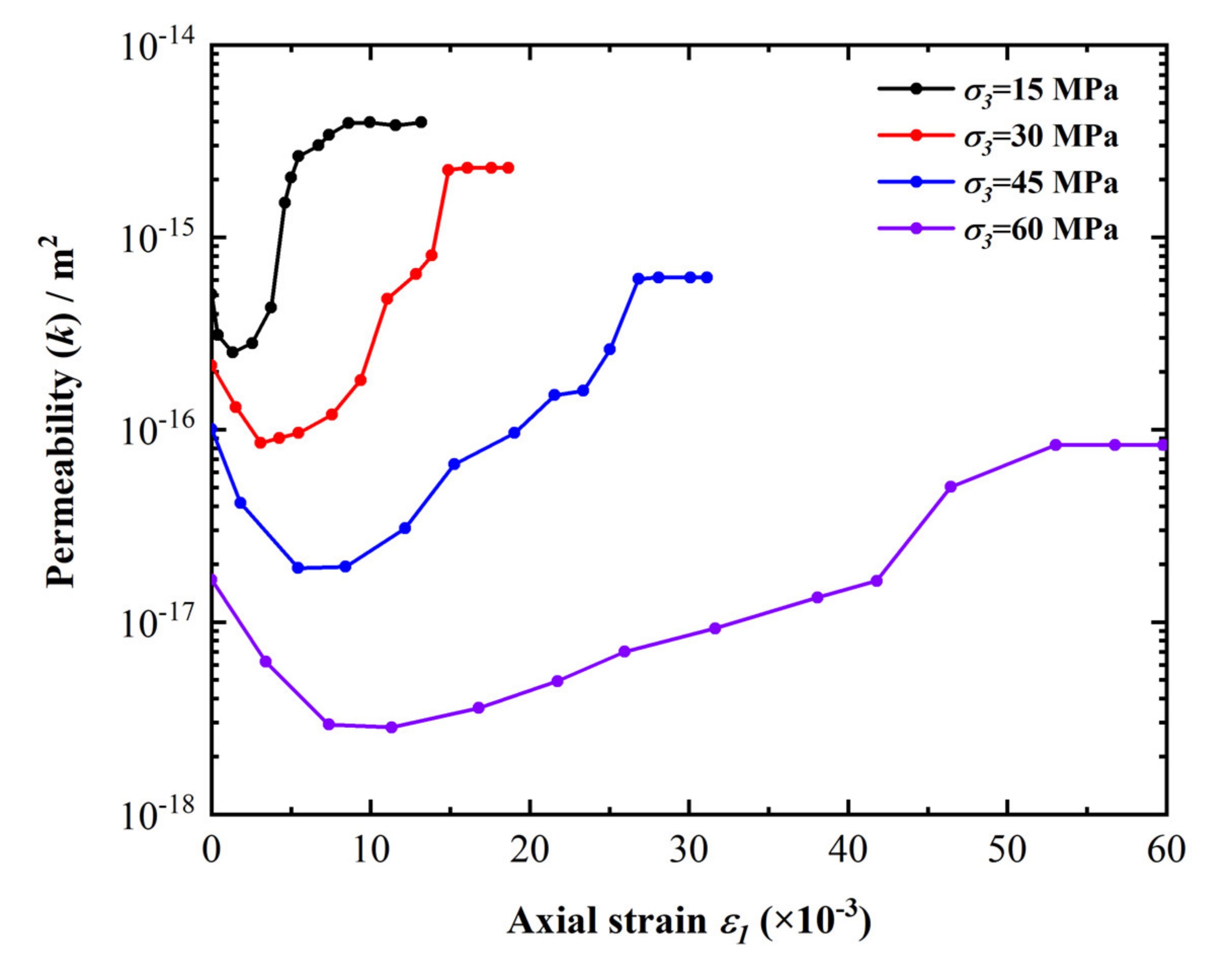
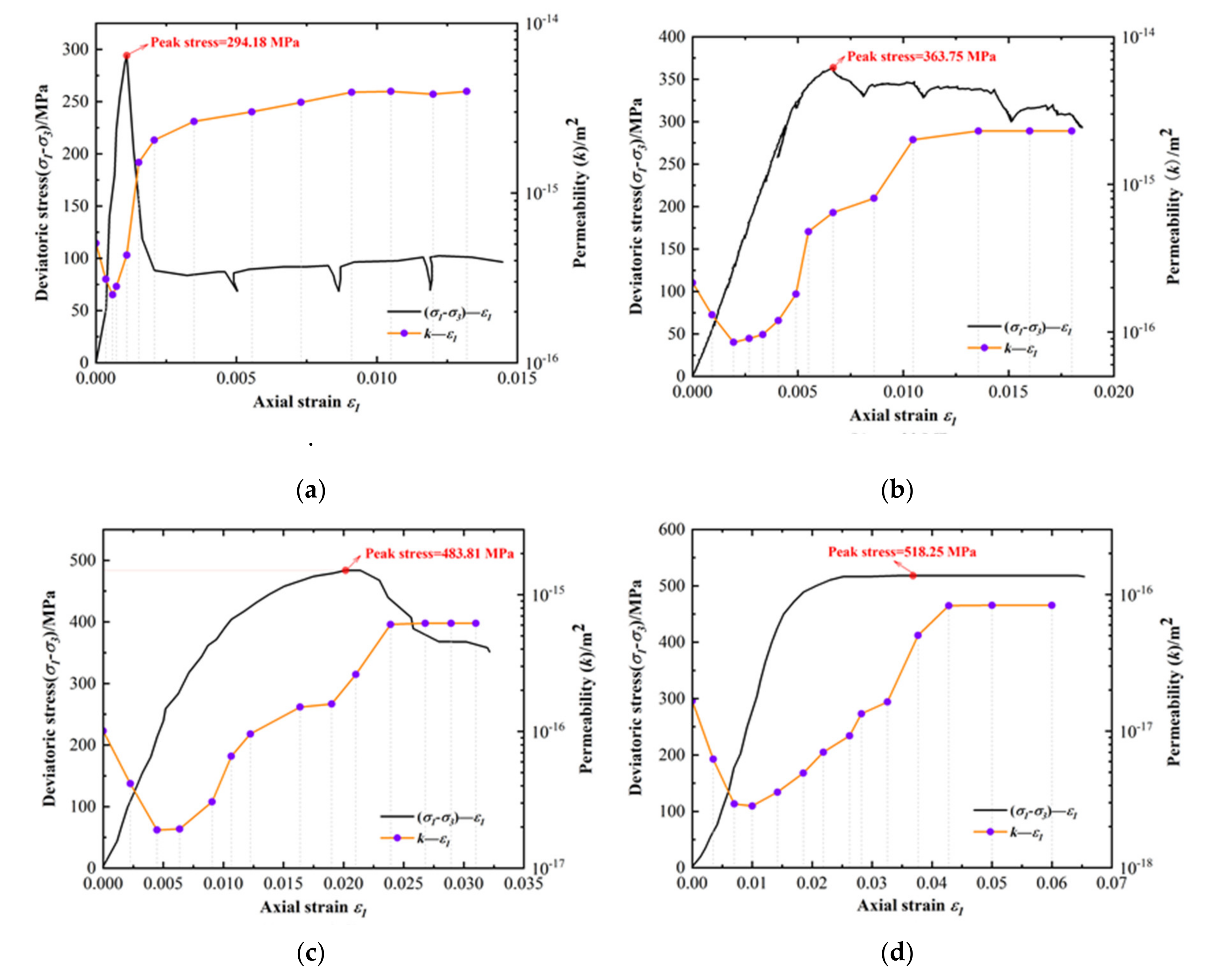
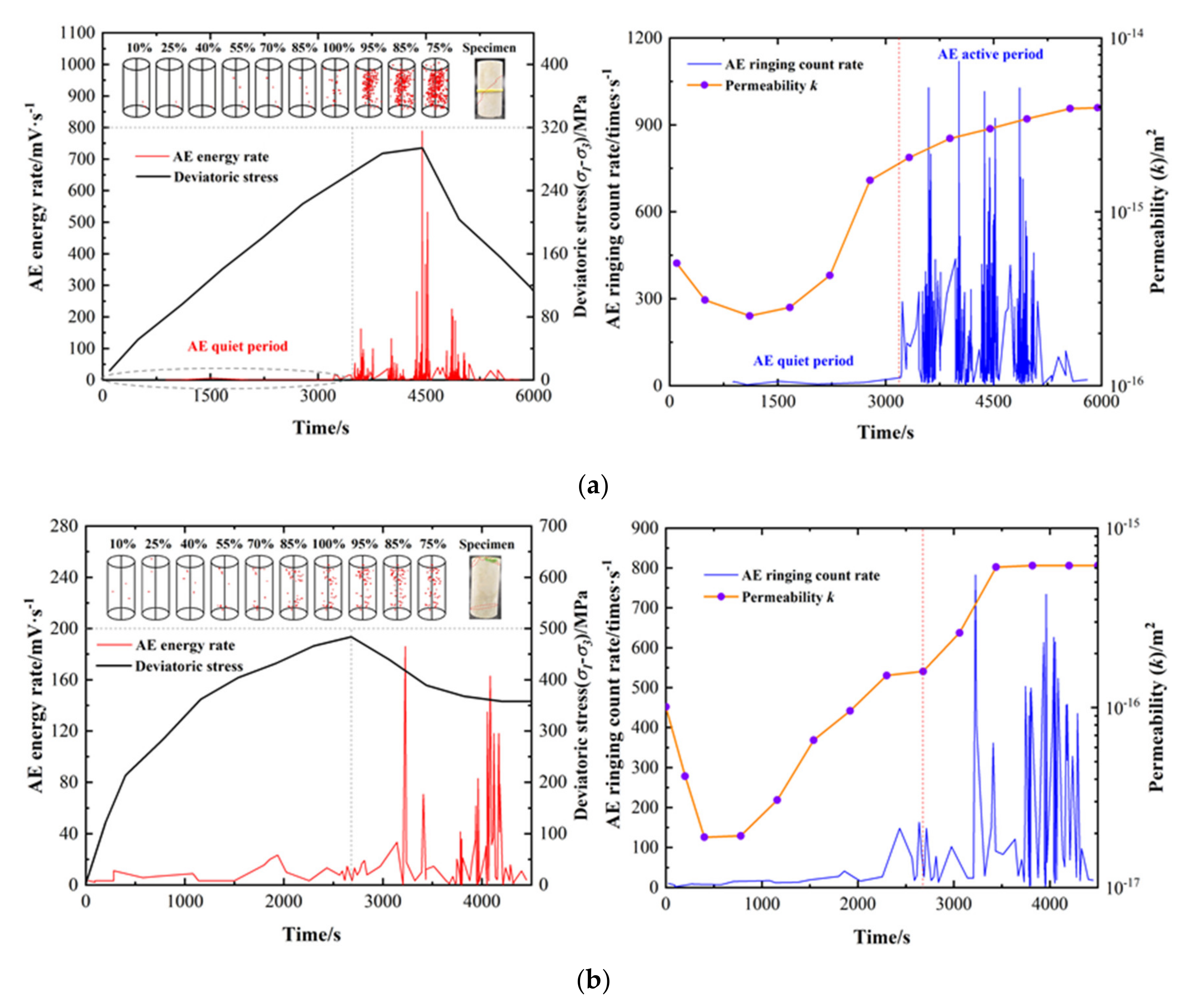
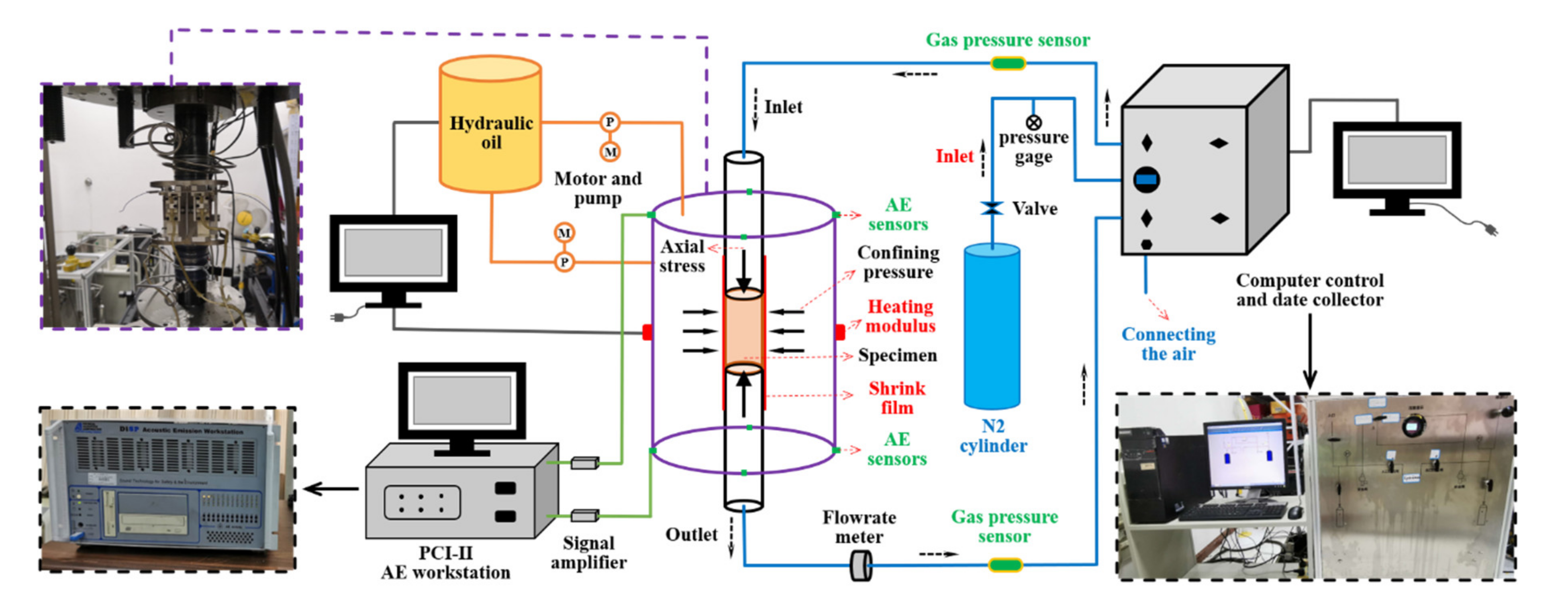
In order to study the influence of different confining pressures on the stability and airtightness of dolomite underground gas storage, a permeability test under hydrostatic confining pressure, conventional triaxial compression test and gas–solid coupling test under triaxial compression were carried out on MTS815 test machine. During the tests, an acoustic emission (AE) monitoring system was also employed to estimate the rock damage. The experimental results showed that the relationships between permeability, porosity and hydrostatic confining pressure were exponential function and power function, respectively. Increasing confining pressure reduced the porosity and permeability of dolomite, and increased its triaxial compressive strength, but the addition of nitrogen reduced the compressive strength of dolomite by 10~30%, the higher the confining pressure, the smaller the difference. Compared with the maximum permeability under 15 MPa, confining pressure in the gas–solid coupling experiment, the maximum permeability under confining pressure of 30, 45, and 60 MPa is reduced by 42.0%, 84.4%, and 97.9%, respectively. In addition, the AE activity of dolomite decreases significantly with the increase in confining pressure, which also delayed the arrival of the AE active period.
Keywords: dolomite; confining pressure effect; permeability characteristics; acoustic emission dolomite; confining pressure effect; permeability characteristics; acoustic emission