Article

Performance Review of Three Car Integrated ABS Types: Development of a Tire Independent Wheel Speed Control


by
Margherita Montani
1,*,
Daniele Vitaliti
2,
Renzo Capitani
1 and
Claudio Annicchiarico
2
1
Department of Industrial Engineering of Florence, University of Florence, 50139 Florence, Italy
2
Meccanica 42 s.r.l., Florence University Incubator, 50019 Sesto Fiorentino, Italy
*
Author to whom correspondence should be addressed.
Energies 2020, 13(23), 6183; https://doi.org/10.3390/en13236183
Submission received: 29 October 2020 / Revised: 20 November 2020 / Accepted: 22 November 2020 / Published: 24 November 2020
(This article belongs to the Section A1: Smart Grids and Microgrids)

Abstract

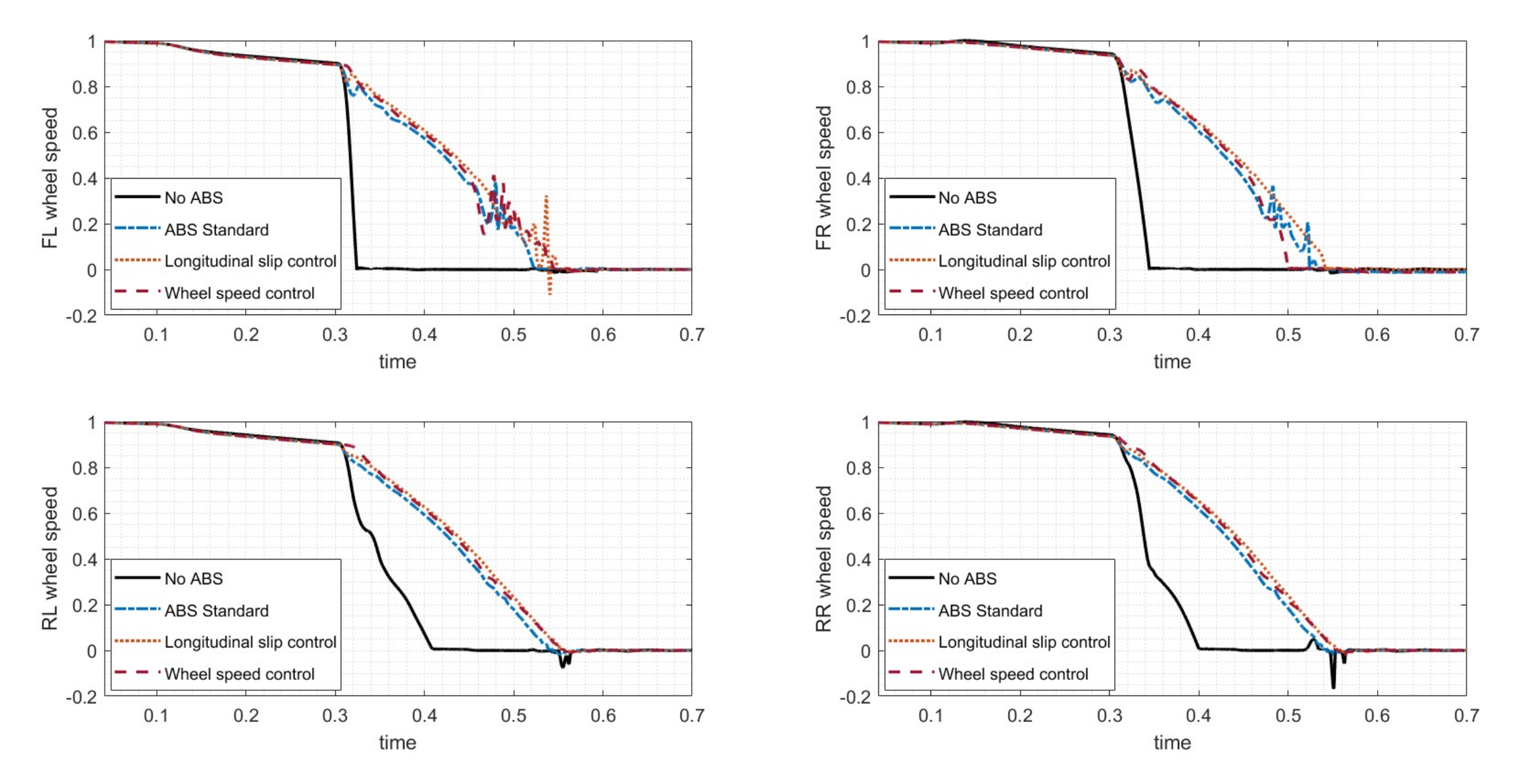
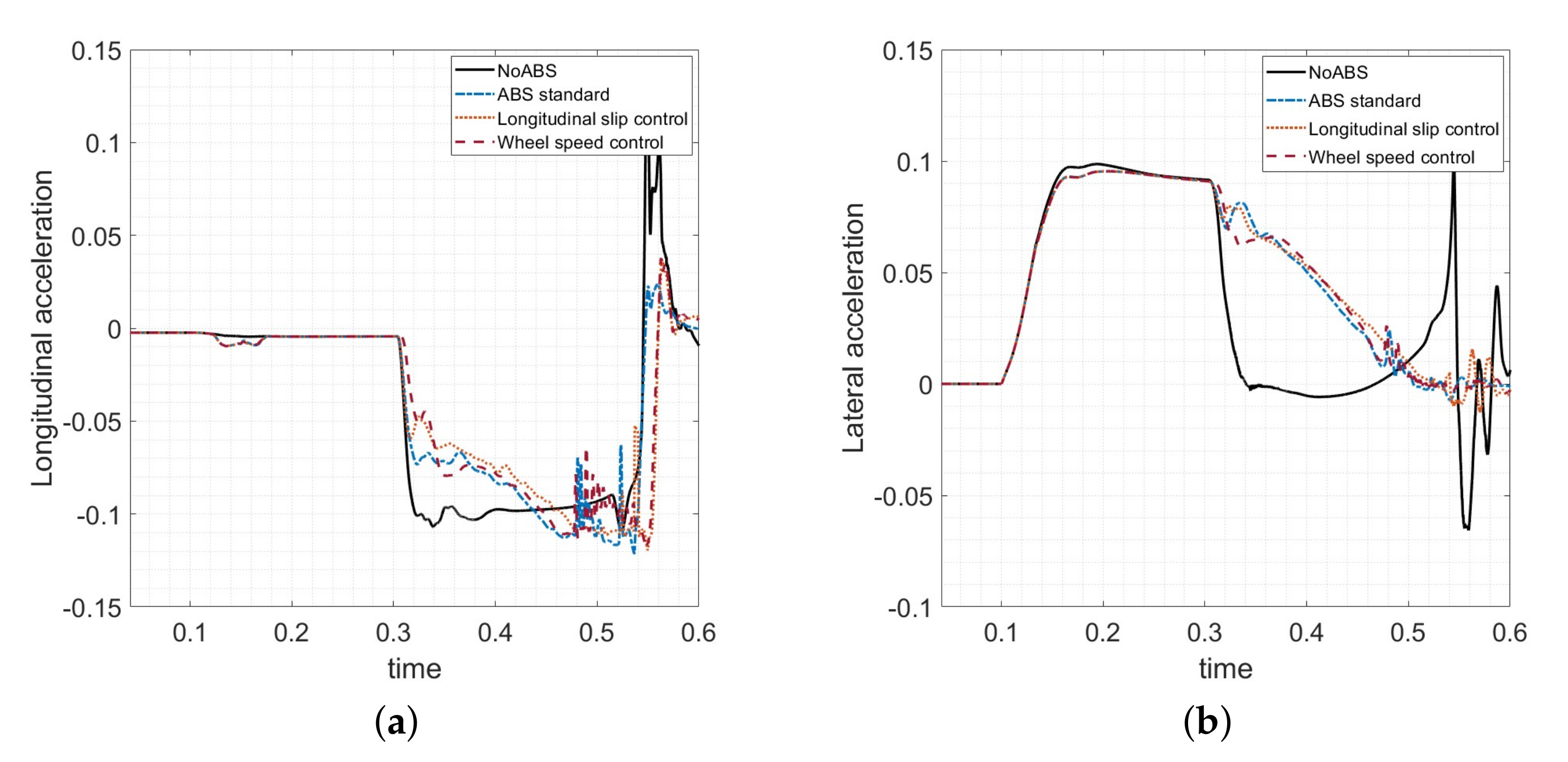
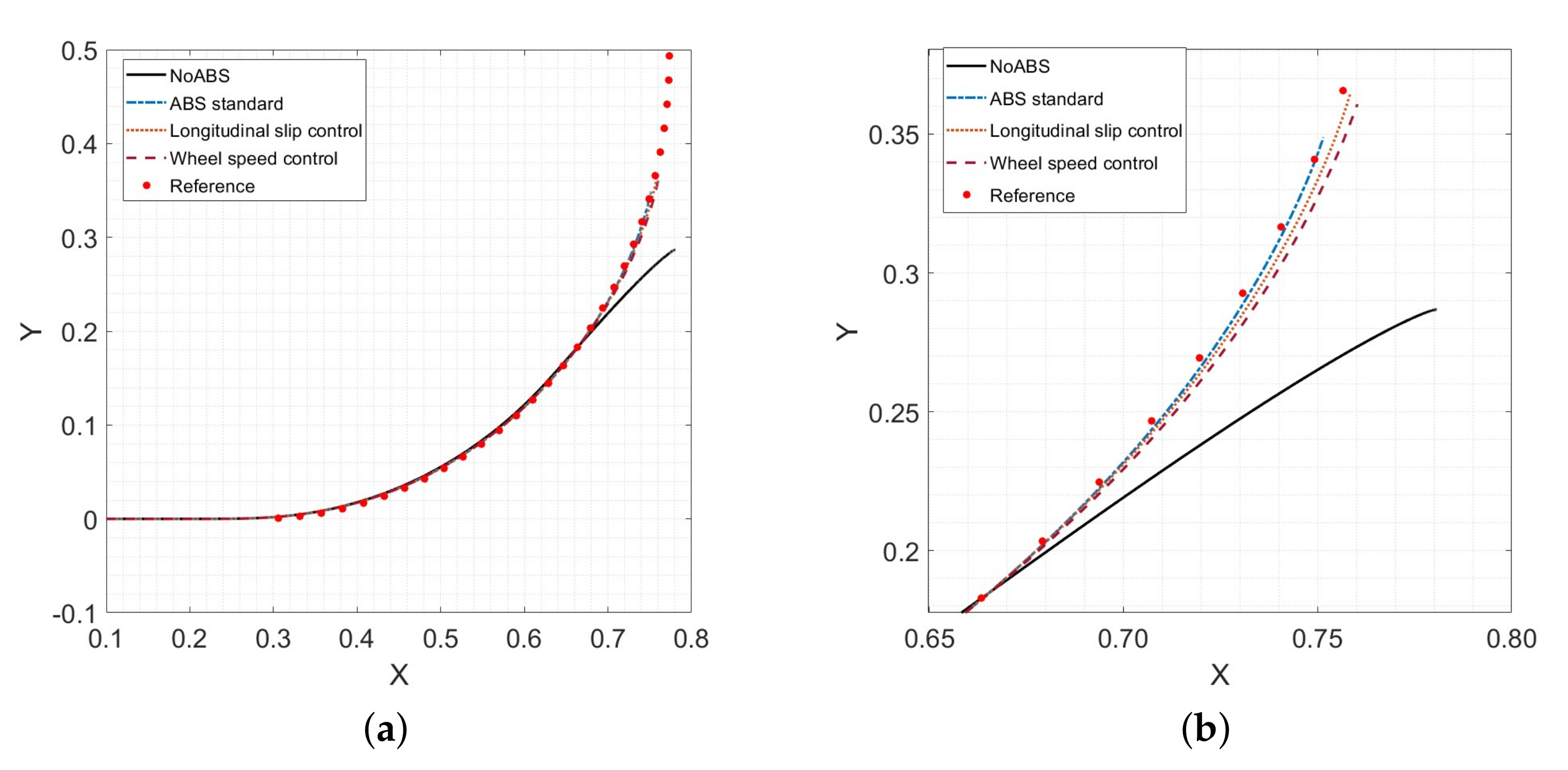
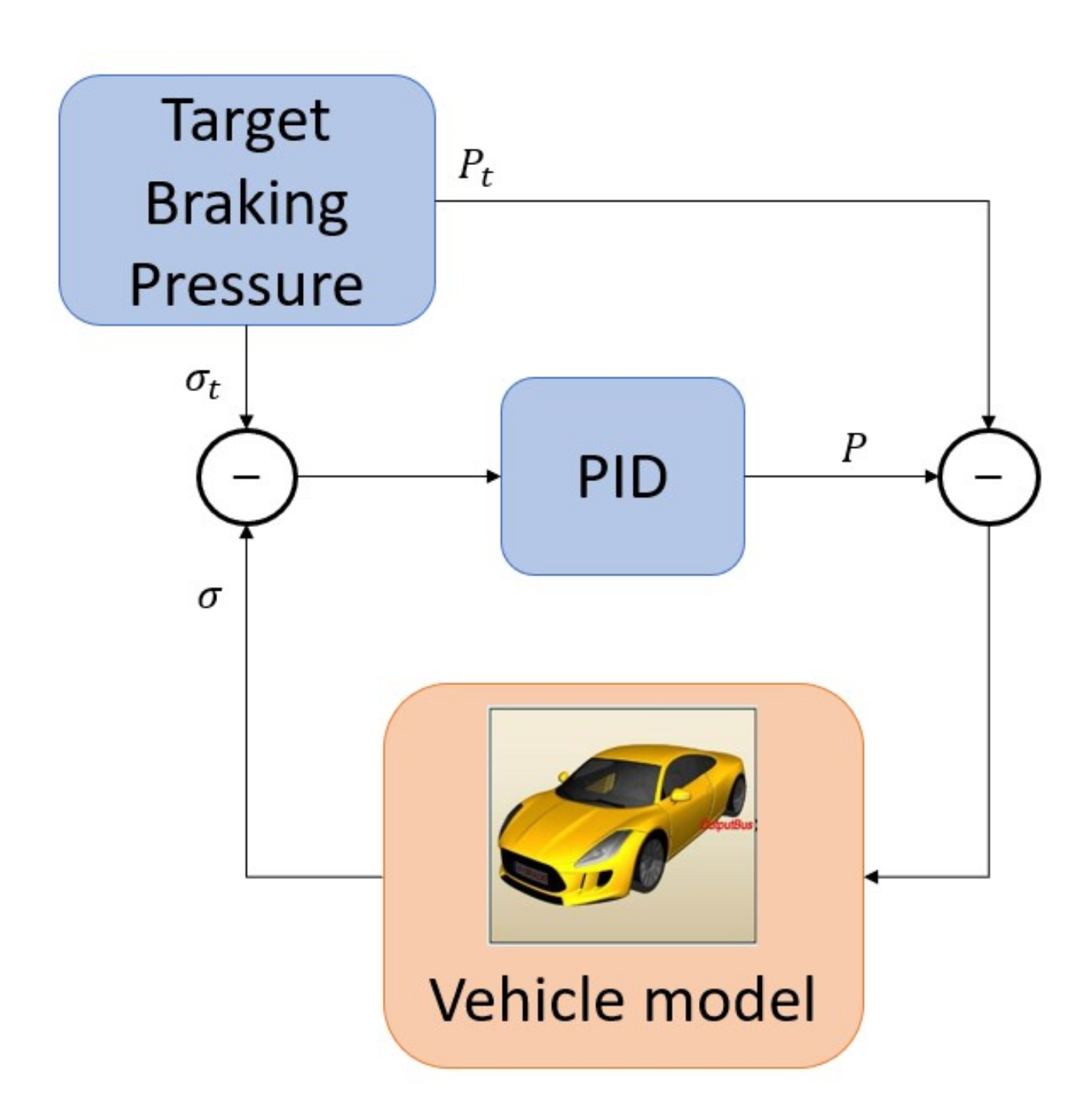
This study concerns the development and testing of three types of Anti-lock Brake Systems (ABS): a standard on-off wheel’s acceleration control; a wheel’s longitudinal slip controller based on a discrete Proportional-Integral-Derivative (PID) control; and a novel type of ABS that involves controlling the wheel’s speed through a discrete PID. This work was developed inside a wider project that will lead to the implementation of stability control systems in a prototype car. For this reason, the typologies of ABS must not require extra sensors compared to those in standard vehicles: Inertial Measurement Unit (IMU) and 4-wheel speed sensors. Furthermore, they must be easily integrated with other controls and electronic components in terms of sampling time and values. The standard ABS seems more appropriate than the others two because it uses only parameters defined by sensors and it has a simple architecture that does not have the problem of computational time. However, in recent years, cars have been equipped with Electro-Hydraulic-Braking (EHB) units that improve the performance of the system controls. In fact, it is possible to use a control that allows actuators to follow a continuous target and smooth out pressure actions. Even if the longitudinal Slip Controller has a simple architecture and uses a PID control, it is limited to using quantities estimated instead of measured: the tires’ friction coefficient, the tires’ longitudinal stiffness, and the car’s speed. Therefore, the use of a Wheel Speed Controller is the right compromise to link the advantages of both controllers by following the braking pressure continuously and not needing to know the condition and properties of the tires. The results of tests carried out in a Hardware-In-the-Loop (HiL) system are showed and involved a complex vehicle model implemented in real-time.
Keywords: longitudinal control; ABS; vehicle stability control; discrete PID; wheel speed control longitudinal control; ABS; vehicle stability control; discrete PID; wheel speed control